Advanced PDMS Surface Modification Techniques for Enhanced Drug Analysis in Microfluidics
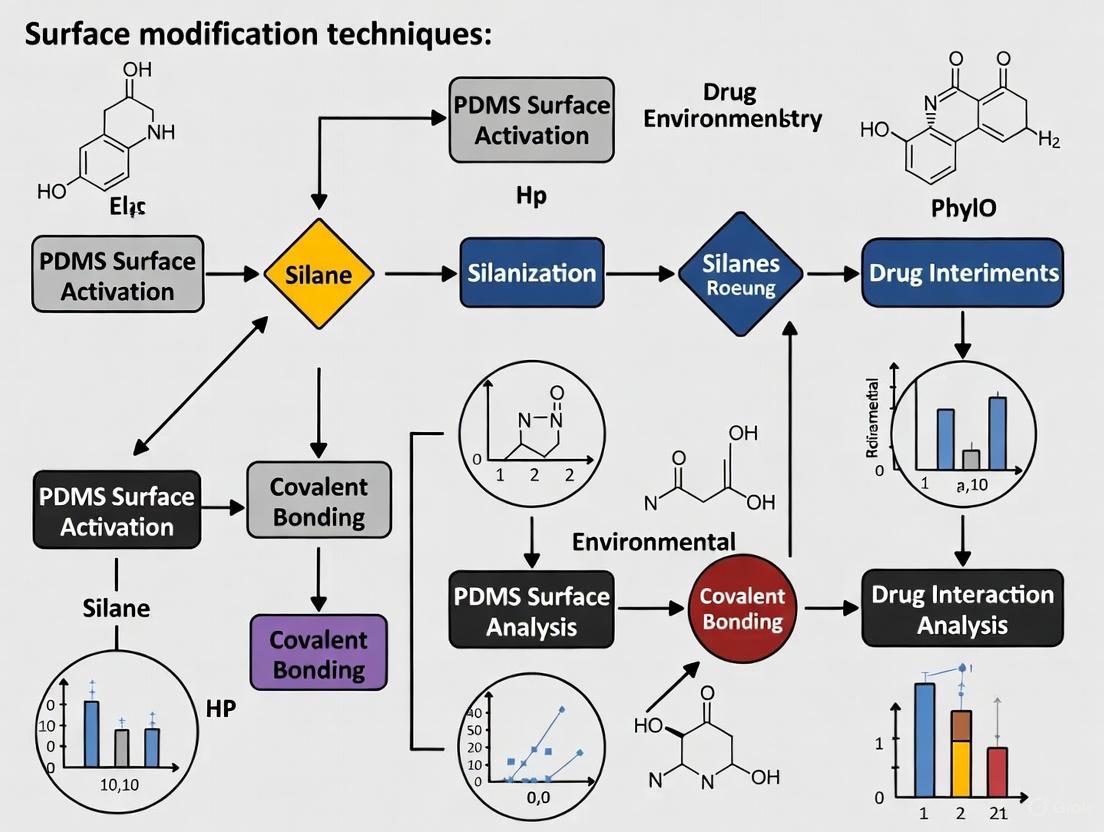
This article provides a comprehensive overview of surface modification techniques for polydimethylsiloxane (PDMS) microfluidic chips, specifically tailored for applications in drug analysis.
Advanced PDMS Surface Modification Techniques for Enhanced Drug Analysis in Microfluidics
Abstract
This article provides a comprehensive overview of surface modification techniques for polydimethylsiloxane (PDMS) microfluidic chips, specifically tailored for applications in drug analysis. We explore the fundamental challenge of PDMS hydrophobicity, which leads to the undesirable absorption of small molecules and proteins, thereby skewing analytical results. The scope ranges from established methods like plasma treatment and polymer coatings to innovative, long-lasting strategies using smart copolymers and covalent bonding. A strong emphasis is placed on methodological selection for specific drug analysis tasks, troubleshooting common issues like hydrophobic recovery, and the critical evaluation of technique performance through analyte recovery studies and biocompatibility testing. This resource is designed to equip researchers and drug development professionals with the knowledge to implement robust and reliable PDMS-based microfluidic systems for precise drug delivery, metabolism studies, and toxicity screening.
Why Surface Modification is Critical for Accurate Drug Analysis in PDMS Microfluidics
The Inherent Hydrophobicity of PDMS and Its Impact on Drug Analysis
This technical support center provides troubleshooting guides and FAQs for researchers addressing the challenge of polydimethylsiloxane (PDMS) hydrophobicity in microfluidic drug analysis.
Core Scientific Background and Data
The Fundamental Problem
PDMS is a dominant material in microfluidics due to its biocompatibility, optical transparency, and ease of fabrication [1] [2]. However, its inherent hydrophobicity (native water contact angle of ~110°) leads to significant nonspecific adsorption of proteins and absorption of small, hydrophobic molecules [2] [3]. In drug analysis, this results in compound loss, distorted pharmacokinetic (PK) data, and unreliable experimental outcomes [4] [5]. The exceptionally high surface-to-volume ratio in microfluidic channels amplifies this issue [4].
Quantitative Analysis of Small-Molecule Sorption
The following table summarizes empirical data on the recovery of various compounds from PDMS, highlighting how molecular properties influence sorption.
Table 1: Compound Recovery from PDMS and Influencing Molecular Properties
| Compound Name | LogP (Lipophilicity) | Key Molecular Properties Influencing Sorption | Approximate Recovery in PDMS | Reference / Context |
|---|---|---|---|---|
| Caffeine | -0.07 | Low logP, Polar | High (No significant sorption) [4] | Static sorption study [4] |
| Primidone | 0.91 | Low logP | High (No significant sorption) [4] | Static sorption study [4] |
| Amlodipine | 3.00 | Moderate logP | Very Low (2.8%) [4] | Static sorption study [4] |
| Melatonin | 1.60 | Low logP, TPSA | Significantly lower in PDMS vs. COC [4] | Static sorption study [4] |
| Mexiletine | 2.15 | Moderate logP | Significantly lower in PDMS vs. COC [4] | Static sorption study [4] |
| Imipramine | 4.80 | High logP, High RBC | Extreme Loss (to 0.0384 µM from 100 µM) [4] | Static sorption study [4] |
| Loperamide | 5.13 | High logP, High RBC | Extreme Loss, Slow Washout (37.8% in 5h) [4] | Static sorption study [4] |
Molecular Property Key: LogP = Partition Coefficient; RBC = Rotatable Bond Count; TPSA = Topological Polar Surface Area.
The relationship between these molecular properties and their sorption in PDMS can be visualized as a decision pathway.
Frequently Asked Questions (FAQs) and Troubleshooting
FAQ 1: My drug recovery rates are consistently low. How can I confirm PDMS sorption is the cause?
Answer: To confirm PDMS sorption is the primary issue, please follow this diagnostic workflow.
FAQ 2: Which surface treatment is most effective for improving recovery of a wide range of small molecules?
Answer: Based on a systematic evaluation of 11 treatments for 21 biologically relevant small molecules, the positively charged polymer Polybrene provided the best overall recovery. Most analytes showed greater than 50% recovery, with up to 92% recovery for some compounds [1]. This treatment was successfully applied to investigate secretion from pancreatic islets, enabling the detection of 20 target analytes [1].
Table 2: Comparison of Common PDMS Surface Modification Strategies
| Modification Strategy | Typical Application Method | Key Advantages | Key Limitations / Considerations |
|---|---|---|---|
| Polybrene | Dynamic coating; perfused through the device [1] | High recovery for diverse analytes; relatively simple application [1] | Creates a positively charged surface; effectiveness may vary with analyte charge [1] |
| Pluronic F127, PEO, PEG (Bulk) | Surfactant is mixed into PDMS prepolymer before curing [3] | More stable hydrophilic surface; integrated into the bulk material [3] | Can alter PDMS's mechanical/optical properties; potential for leaching [3] |
| Pluronic F127, PEO, PEG (Surface) | Surface immersion of cured PDMS in surfactant solution [3] | Simple; does not alter bulk PDMS properties [3] | Less permanent; may be removed by flow over time [3] |
| Oxygen Plasma | Exposure of PDMS surface to oxygen plasma | Rapid, strong initial hydrophilicity; used for bonding [2] | Hydrophobic recovery occurs within minutes to hours [2] |
FAQ 3: Air bubbles are constantly clogging my hydrophobic channels. How can I prevent and remove them?
Answer: Bubbles are a common issue in hydrophobic PDMS channels. The following integrated approach is recommended:
Prevention is Key:
- Degas Liquids: Always degas buffers and samples under vacuum before use [6].
- Proper Priming: Pre-wet the device by priming with a low-surface-tension liquid like 70% ethanol, followed by your aqueous buffer [7].
- Check Fittings: Ensure all tubing connections are leak-tight to prevent air from being drawn in [6].
- Chip Design: Avoid acute angles in channel design, which can trap bubbles [6].
Corrective Measures:
- Pressure Pulses: If using a pressure controller, apply short, high-pressure pulses to dislodge trapped bubbles [6].
- Back-Flushing: Temporarily reverse the flow direction to push bubbles back toward the inlet [8].
- Solvent Flush: For stubborn bubbles, flush with a 70% ethanol solution [7].
- Microwave Method (For Clogs): In severe cases of clogging, flushing with solvent and then heating the chip in a microwave (with metal parts removed) for ~5 minutes can help clear blockages [8].
FAQ 4: Are there alternative materials to PDMS that avoid these sorption issues?
Answer: Yes, Cyclic Olefin Copolymer (COC) is a prominent alternative. It offers excellent optical properties, chemical stability, and most importantly, significantly lower sorption of small lipophilic molecules compared to PDMS [4]. For example, after 24 hours, the concentration of imipramine (logP=4.80) dropped to 0.0384 µM in PDMS but only to 31.5 µM in COC devices [4]. However, COC is less gas-permeable and not as suitable for rapid prototyping as PDMS. The choice of material should be a deliberate decision based on the specific requirements of the experiment and the properties of the target analytes.
Detailed Experimental Protocols
Protocol: Assessing Compound Loss in PDMS Devices
This protocol is adapted from methods used to evaluate drug recovery for ADME studies [5].
- Device Preparation: Use a standard PDMS/glass microfluidic device. If testing a treatment method, apply it to the experimental group only.
- Perfusion Setup: Load a syringe with a known concentration (e.g., 100 µM) of your target compound in the desired buffer. Connect it to the device inlet via tubing. Place a collection vial at the outlet.
- Sample Collection: Perfuse the compound through the device at a defined flow rate (e.g., 6 µL/min). Collect the effluent from the outlet over a defined period (e.g., 30-minute fractions) [1].
- Analysis: Analyze the concentration of the compound in the collected fractions using a quantitative method such as Liquid Chromatography-Mass Spectrometry (LC-MS) or High-Performance Liquid Chromatography (HPLC) [1] [4].
- Calculation: Calculate the percentage recovery by comparing the measured concentration in the outlet fraction to the concentration of a reference standard that was not perfused through the chip.
Protocol: Surface Modification of PDMS using Polybrene
This protocol is based on the treatment identified as most effective for a diverse set of small molecules [1].
- Solution Preparation: Prepare a fresh aqueous solution of 1,5-Dimethyl-1,5-diazaundecamethylene polymethobromide (Polybrene).
- Device Priming: After bonding and standard priming, ensure the PDMS device is filled with water.
- Treatment Perfusion: Perfuse the Polybrene solution through the entire microfluidic network of the device. The specific concentration and flow conditions should be optimized for your device geometry.
- Incubation: Allow the solution to incubate within the channels for a sufficient period to coat the surface.
- Rinsing: Before running experiments, flush the channels thoroughly with your assay buffer or water to remove any non-adsorbed Polybrene.
The Scientist's Toolkit: Key Reagents and Materials
Table 3: Essential Research Reagents for Addressing PDMS Sorption
| Item Name | Function / Application | Key Notes |
|---|---|---|
| Polybrene | Positively charged polymer for dynamic surface coating. | Shown to provide the best overall recovery for a diverse set of small molecules [1]. |
| Pluronic F127 | Triblock copolymer surfactant for bulk or surface modification. | Improves wettability, reduces protein adsorption; used to create hydrophilic devices for blood plasma separation [3]. |
| Polyethylene Glycol (PEG) / Polyethylene Oxide (PEO) | Hydrophilic polymer for surface passivation. | Can be used in bulk mixing or surface immersion to create a non-fouling, hydrophilic surface [3]. |
| Cyclic Olefin Copolymer (COC) Chips | Alternative polymer substrate with low small-molecule sorption. | A material choice to circumvent the PDMS sorption problem entirely for certain applications [4]. |
| LC-MS / HPLC System | Analytical instrumentation for quantifying compound concentration and recovery. | Essential for empirically measuring drug loss and validating the effectiveness of any surface treatment [1] [4] [5]. |
Small-Molecule Partitioning and Nonspecific Protein Adsorption
Polydimethylsiloxane (PDMS) is a cornerstone material in microfluidics and organ-on-chip technology, prized for its optical transparency, gas permeability, and ease of fabrication [9] [2]. However, its inherent hydrophobicity and porous nature lead to two significant challenges in quantitative drug analysis: the nonspecific adsorption of proteins and the partitioning of small hydrophobic molecules into the polymer bulk [2]. These phenomena can severely compromise experimental outcomes by depleting analyte concentrations, fouling surfaces, and introducing unpredictable variables [9] [4]. This guide addresses these issues within the broader context of surface modification techniques, providing troubleshooting and protocols to enhance data reliability for researchers and drug development professionals.
FAQs: Core Challenges and Concepts
What causes small-molecule absorption in PDMS devices?
Small hydrophobic molecules diffuse into the PDMS polymer matrix due to the material's inherent porosity and hydrophobicity [9]. This partitioning is governed by multiple factors, with lipophilicity (logP) being a primary driver. Molecules with higher logP values show significantly greater sorption [4]. For instance, one study found that after 24 hours, the concentration of imipramine (logP=4.80) dropped from 100 µM to 0.0384 µM in PDMS devices, whereas it was maintained at 31.5 µM in cyclic olefin copolymer (COC) devices [4]. Other influential molecular properties include rotatable bond count, molecular weight, and topological polar surface area [4].
How does nonspecific protein adsorption affect my experiments?
Nonspecific protein adsorption onto PDMS surfaces is a form of fouling that can critically alter experimental conditions [2]. It leads to:
- Uncontrollable changes in local solute concentrations near surfaces [2].
- Reduced detection sensitivity and altered separation performance in analytical assays [2].
- Mediation of subsequent undesirable bioreactions that affect cell-based studies and biomarker detection [2].
Are there material alternatives to PDMS that avoid these issues?
Yes, cyclic olefin copolymer (COC) has emerged as a promising alternative. It is chemically stable, exhibits excellent optical properties, and, most importantly, shows significantly lower sorption of small hydrophobic molecules [4]. Washout studies demonstrate that COC facilitates much easier desorption of compounds. For example, the cumulative washout of loperamide over 5 hours was 71.5% for COC compared to only 37.8% for PDMS [4].
Can surface modifications completely prevent small-molecule partitioning?
Current evidence suggests that surface modifications can mitigate but not completely eliminate molecule partitioning [9]. The effectiveness depends on the specific molecule, solvent, and modification method. Research indicates that reduced surface hydrophobicity does not always directly correlate with reduced partitioning, suggesting that PDMS porosity and other bulk properties also play critical roles [9].
Troubleshooting Guides
Guide 1: Diagnosing Small-Molecule Absorption
| Symptom | Possible Causes | Investigation Methods |
|---|---|---|
| Inexplicable decrease in analyte concentration over time [9] | Absorption of hydrophobic analytes into PDMS bulk [9] | HPLC-MS analysis of outflow concentration [4] |
| Cross-contamination between subsequent experiments | Previous compounds leaching out of PDMS (slow release) [4] | Washout studies with mass spectrometry [4] |
| Inconsistent drug response in Organ-on-Chip models | Unpredictable drug concentration loss in channels [10] | Finite element modeling incorporating absorption parameters [10] |
Corrective Actions:
- Switch Materials: For critical quantitative work with hydrophobic drugs, consider switching to a low-sorption material like COC [4].
- Pre-saturate Channels: Pre-flow a high-concentration solution of the test molecule to saturate PDMS absorption sites before the actual experiment [9].
- Apply a Robust Coating: Implement a sol-gel coating or a stable surfactant treatment to create a diffusion barrier [9].
Guide 2: Addressing Nonspecific Protein Adsorption
| Symptom | Possible Causes | Investigation Methods |
|---|---|---|
| Reduced efficiency in biomolecule detection (e.g., proteins) [11] | Proteins adsorbing to channel walls, reducing solution concentration [2] | Fluorescence tagging and confocal microscopy of channel surfaces |
| Poor cell adhesion or atypical growth in channels [11] | Uncontrolled protein layer forming on PDMS, affecting cell-matrix interactions [2] | Cell viability and adhesion assays compared to controlled surfaces |
| Unstable electroosmotic flow (EOF) in separation techniques | Hydrophobic recovery altering surface charge after plasma treatment [2] | Zeta potential measurements; monitoring EOF stability over time |
Corrective Actions:
- Surface Grafting: Covalently graft hydrophilic polymers like polyethylene glycol (PEG) to create an anti-fouling layer [2] [11].
- Dynamic Coating: Use surfactant solutions like Pluronic F127, which adsorb to PDMS and create a hydrophilic, protein-resistant layer [9] [11].
- Optimized Plasma Treatment: While oxygen plasma treatment alone is temporary, it can be a crucial first step before applying more stable coatings like silanization [9].
Experimental Protocols
Protocol 1: Evaluating Small-Molecule Partitioning by Fluorescence Spectroscopy
This protocol provides a quantitative method to assess the absorption of fluorescent molecules into PDMS, adapted from recent studies [9].
Research Reagent Solutions
| Reagent | Function | Application Note |
|---|---|---|
| PDMS Sylgard 184 | Device substrate | Standard 10:1 base-to-curing agent ratio [9] |
| Rhodamine B or Nile Red | Fluorescent small-molecule tracer | Nile Red shows strong solvent-dependent partitioning [9] |
| Phosphate-Buffered Saline (PBS) | Aqueous biological buffer | Contrast with organic solvents like ethanol [9] |
| Ethanol | Organic solvent | Used to study solute/solvent pairing effects [9] |
| Pluronic F127 | Surfactant for surface modification | Test as a potential anti-absorption coating [9] [11] |
Methodology:
- Device Fabrication: Fabricate PDMS microfluidic devices containing a long serpentine channel (e.g., 35 cm length, 1 mm width, 0.5 mm height) via soft lithography and bond to a glass slide [9].
- Solution Preparation: Prepare solutions of the fluorescent tracer (e.g., Rhodamine B at 1 µM and 20 µM) in both PBS and ethanol [9].
- Flow Experiment: Connect a syringe filled with the test solution to the device inlet via PTFE tubing. Use a syringe pump to perfuse the solution through the device at a constant flow rate. Collect the outflow in a syringe to prevent evaporation [9].
- Quantitative Analysis: Measure the fluorescence intensity of the solution before entering the device (I~in~) and after exiting the device (I~out~) using a fluorescence spectrometer. Calculate the relative concentration remaining in solution as (I~out~/I~in~) × 100% [9].
- Data Interpretation: Expect significantly higher partitioning (lower relative concentration) at lower concentrations (e.g., 1 µM) and in aqueous solvents compared to organic solvents [9].
Protocol 2: Assessing Coating Stability via Water Contact Angle
This method evaluates the longevity and effectiveness of surface modifications intended to increase PDMS hydrophilicity and reduce fouling [11].
Methodology:
- PDMS Sample Preparation: Prepare control PDMS samples by mixing base and curing agent (10:1 w/w), degassing, and curing at 80°C for 1 hour. Cut into blocks (e.g., 3 × 2.5 cm) [11].
- Apply Modification:
- Contact Angle Measurement: Use a contact angle goniometer. Dispense a 10 µL sessile water droplet on the PDMS surface and measure the water contact angle (WCA) immediately [11].
- Stability Monitoring: Track the WCA over time (e.g., 0, 24, 48, 72 hours, up to 3 months) to assess hydrophobic recovery. A stable, low WCA indicates a durable hydrophilic modification [11].
Table 1: Small-Molecule Recovery in PDMS vs. COC Microfluidic Chips
Static incubation data (24 hours, 100 µM starting concentration) highlights the impact of material choice and molecular properties on sorption [4].
| Compound | LogP | Molecular Weight (Da) | Recovery in PDMS (%) | Recovery in COC (%) |
|---|---|---|---|---|
| Caffeine (CAF) | -0.07 | 194.2 | ~100 | ~100 |
| Primidone (PRI) | 0.91 | 218.3 | ~85 | ~90 |
| Melatonin (MEL) | 1.60 | 232.3 | ~15 | ~85 |
| Mexiletine (MEX) | 2.15 | 179.3 | ~5 | ~65 |
| Amlodipine Besylate (AML) | 3.00 | 567.1 | 2.8 | 18.1 |
| Imipramine (IMI) | 4.80 | 280.4 | 0.038 | 31.5 |
| Loperamide (LOP) | 5.13 | 477.0 | < 0.1 | ~25 |
Table 2: Performance of PDMS Surface Modification Techniques
A comparison of common modification strategies for mitigating small-molecule and protein adsorption [9] [11].
| Modification Technique | Method Type | Initial WCA (Approx.) | Stability & Longevity | Key Findings / Effectiveness |
|---|---|---|---|---|
| Oxygen Plasma | Surface | < 30° [2] | Poor (Hydrophobic recovery in minutes/hours) [2] | Temporary solution; useful as a pre-treatment step. |
| Sol-Gel Coating | Bulk | Not Specified | Good | Hindered diffusion of Rhodamine B into PDMS bulk [9]. |
| Pluronic F127 Adsorption | Surface/Bulk | < 50° [11] | Moderate | Reduced nonspecific protein adsorption; stability depends on method [11]. |
| Paraffin Coating | Surface | Not Specified | Moderate | Slightly decreased partitioning of Nile Red [9]. |
| PEO/PEG Grafting | Bulk/Surface | < 50° [11] | Good | Enhanced wettability for days, improved plasma separation [11]. |
| APTES Silanization | Surface | Not Specified | Fair | Requires optimized protocol; can introduce other interactions [9]. |
Surface Properties of PDMS and Their Impact on Drug Recovery, Cell Culture, and Assay Sensitivity
Frequently Asked Questions (FAQs)
FAQ 1: How does the native surface of PDMS affect drug recovery in microfluidic assays?
The native polydimethylsiloxane (PDMS) surface is highly porous and hydrophobic, which causes significant absorption of small molecules. This is a major issue for drug analysis, as it leads to the loss of analytes, dampening of signals, and ultimately, inaccurate quantitative results. Hydrophobic molecules, including many drugs, dyes (like Rhodamine B), and hormones, are particularly susceptible to this absorption, with some studies showing over 90% of a compound being absorbed into the PDMS bulk within 24 hours [12]. This partitioning results in poor recovery of analytes and inaccurate delivery of chemicals to cells, compromising drug screening and secretion analysis studies [1].
FAQ 2: Why is cell culture problematic on standard PDMS surfaces?
Cell culture on PDMS faces two primary challenges: poor cell adhesion and chemical contamination. The inherent hydrophobicity of PDMS provides a suboptimal surface for cell adhesion and spreading [3]. Furthermore, PDMS is not fully crosslinked, leading to the leaching of unreacted silicone oligomers into the surrounding cell culture medium. These oligomers can cause cell toxicity, alter gene expression, and interfere with fluorescence-based assays, thereby confounding experimental outcomes [12].
FAQ 3: What causes assay instability and inconsistent fluid flow in PDMS devices?
A key factor is the unstable surface wettability of PDMS. While plasma treatment can make PDMS temporarily hydrophilic, the surface undergoes hydrophobic recovery, reverting to its hydrophobic state within hours [13] [12]. This instability leads to inconsistent capillary flow, trapping of air bubbles, and poor droplet stability in droplet-based microfluidics, which undermines the reliability and reproducibility of assays, especially in long-term experiments [3] [12].
FAQ 4: Are there scalable manufacturing solutions for PDMS microfluidics beyond soft lithography?
Yes, Liquid Silicone Rubber Injection Molding (LSR-IM) is an industrial method for mass-producing PDMS devices. While soft lithography is manual and prone to batch-to-batch variability, LSR-IM uses automated, high-pressure injection to create devices with superior reproducibility of surface and bulk properties. This process significantly reduces variance in key properties like Young's modulus and can decrease the absorption of small molecules, bridging the gap between prototyping and mass production [14].
Troubleshooting Guides
Issue: Low Analytic/Drug Recovery
Problem: You are detecting low levels of target drugs or metabolites in your microfluidic assay.
Possible Causes and Solutions:
Cause 1: Absorption of hydrophobic molecules into the PDMS bulk.
- Solution: Implement a surface treatment that creates a barrier. Coating the PDMS surface with the positively charged polymer polybrene has been shown to provide excellent recovery for a wide range of biologically relevant small molecules, with recoveries of up to 92% for many analytes [1].
- Protocol:
- After device fabrication and oxygen plasma bonding, flush the channels with a solution of polybrene.
- Allow the solution to incubate in the channels for a set period (e.g., 1 hour).
- Rinse thoroughly with the solvent or buffer used in your experiment to remove any unbound polymer [1].
Cause 2: Nonspecific adsorption of proteins or analytes to the hydrophobic surface.
- Solution: Render the surface permanently hydrophilic through bulk modification or surface coating.
- Protocol (Bulk Modification with PEO):
- During PDMS preparation, add polyethylene oxide (PEO) surfactant directly to the PDMS mixture at a recommended concentration of 2.5% (v/v).
- Mix thoroughly and degas as usual.
- Cure the PDMS to create a device with inherent hydrophilic properties (Water Contact Angle < 50°) that last for several days [3].
Issue: Poor Cell Adhesion and Viability
Problem: Cells are not adhering properly to the PDMS surface or showing signs of toxicity.
Possible Causes and Solutions:
Cause 1: Native PDMS hydrophobicity discourages cell attachment.
- Solution: Use oxygen plasma treatment to create a temporary hydrophilic surface that improves cell adhesion. Note that this effect is not permanent, and hydrophobic recovery begins shortly after treatment [13] [15].
- Protocol:
- Place your PDMS device in a plasma chamber.
- Evacuate the chamber and expose the device to oxygen plasma for a set time (e.g., 1-5 minutes).
- Immediately introduce your cell culture medium into the channels after treatment to promote cell adhesion [15].
Cause 2: Leaching of toxic PDMS oligomers.
- Solution: Consider alternative materials or ensure thorough curing. For mass production, injection-molded PDMS has shown excellent biocompatibility with complex 3D models like tumor spheroids and explants, with no significant differences in cell proliferation compared to standard PDMS [14].
Issue: Unstable Fluid Flow and Bubble Trapping
Problem: Capillary flow is inconsistent, or air bubbles are frequently trapped in your microchannels.
Possible Causes and Solutions:
- Cause: Unstable surface wettability and high hydrophobicity.
- Solution: Utilize a surfactant-based surface treatment to achieve stable hydrophilicity.
- Protocol (Surface Immersion with Pluronic F127):
- Fabricate and bond your PDMS device.
- Prepare an aqueous solution of the triblock copolymer Pluronic F127.
- Immerse the device or flush the channels with the solution for several hours.
- Rinse with water. This coating facilitates capillary movement, reduces cell wall adhesion, and minimizes bubble trapping [3].
Data Presentation: Surface Treatment Efficacy
The table below summarizes quantitative data on the performance of different PDMS surface treatments for improving small molecule recovery, a critical factor in drug analysis.
Table 1: Efficacy of PDMS Surface Treatments for Small Molecule Recovery
| Treatment Method | Key Mechanism | Performance & Analytic Recovery | Key Advantages | Key Limitations |
|---|---|---|---|---|
| Polybrene Coating [1] | Introduces a positive surface charge | - Provided the best recovery among 11 tested treatments.- Most analytes showed >50% recovery, with up to 92% recovery. | Effective for a diverse range of analyte structures. | Performance can vary depending on the specific analyte. |
| PEO Bulk Modification [3] | Makes the PDMS bulk hydrophilic | - Achieved a stable Water Contact Angle (WCA) below 50° for several days. | - Improved wettability facilitates fluid flow.- Reduces cell aggregation and bubble trapping. | Alters the bulk properties of PDMS. |
| Oxygen Plasma [15] | Creates a thin, hydrophilic silica-like layer | - Can reduce the advancing contact angle from 120° (hydrophobic) to as low as 10° (super-hydrophilic). | Simple, fast, and widely accessible. | Hydrophobic recovery occurs within hours, making the surface treatment temporary [13] [12]. |
| Injection-Molded PDMS (LSR-IM) [14] | Industrial process with consistent cross-linking | - Can achieve equal or lower small molecule absorption than soft-lithography PDMS.- Greatly improved reproducibility (5-fold reduction in variance of Nile Red absorption). | High reproducibility and suitability for mass production. | Requires industrial equipment and specific grades of PDMS. |
Experimental Protocol: Evaluating Surface Treatments for Drug Recovery
This protocol outlines a method to test the effectiveness of different surface treatments in minimizing small molecule absorption, based on procedures used in recent studies [1].
1. Objective: To quantify the recovery percentage of target analytes from treated versus untreated PDMS microfluidic devices.
2. Materials:
- Microfluidic Devices: Treated and untreated PDMS/glass devices.
- Analytes: A panel of 21 biologically relevant small molecules with diverse chemical structures (e.g., drugs, metabolites).
- Pumping System: A syringe pump for precise fluid control.
- Analysis Instrumentation: Liquid Chromatography–Mass Spectrometry (LC-MS).
3. Procedure:
- Step 1: Device Preparation. Fabricate multiple PDMS devices using soft lithography. Apply the surface treatments to be tested (e.g., polybrene coating, PEO bulk modification) to the experimental groups, leaving one group untreated as a control.
- Step 2: Sample Perfusion. Perfuse a known concentration of your analyte mixture through each device at a constant flow rate (e.g., 6 µL/min).
- Step 3: Fraction Collection. Collect the effluent from the device outlet in timed fractions (e.g., 30-minute intervals).
- Step 4: LC-MS Analysis. Derivatize and analyze the collected fractions using LC-MS to determine the concentration of each analyte that passed through the device without being absorbed.
- Step 5: Data Calculation. Calculate the percent recovery for each analyte using the formula:
% Recovery = (Concentration in Effluent / Initial Concentration) × 100
4. Expected Outcome: Effectively treated devices will show significantly higher recovery percentages for the target analytes compared to the untreated control, indicating reduced absorption into the PDMS.
Workflow Visualization
The following diagram illustrates the logical decision-making process for selecting a surface modification strategy based on the primary application goal.
Surface Modification Strategy Selection
The Scientist's Toolkit: Research Reagent Solutions
Table 2: Essential Materials for PDMS Surface Modification
| Reagent/Material | Function in Surface Modification |
|---|---|
| Polybrene [1] | A positively charged polymer coated onto the PDMS surface to significantly reduce the absorption of a wide range of small molecules, thereby improving analytic recovery. |
| Polyethylene Oxide (PEO) [3] | A surfactant used in bulk modification or surface immersion to make PDMS hydrophilic, improving wettability and reducing bubble trapping. |
| Pluronic F127 [3] | A triblock copolymer surfactant used to coat PDMS surfaces, enhancing hydrophilicity and creating a more biocompatible surface that resists protein adsorption. |
| Sylgard 184 [14] | The standard two-part PDMS kit used for prototyping microfluidic devices via soft lithography. |
| Injection-Moldable PDMS Resins (e.g., SILASTIC MS1002/MS1003) [14] | Industrial-grade PDMS materials designed for Liquid Silicone Rubber Injection Molding (LSR-IM), enabling mass production with high reproducibility. |
PDMS Surface Modification for Enhanced Drug Analysis
This technical support center addresses the fundamental challenges in polydimethylsiloxane (PDMS) surface modification for microfluidic devices used in drug analysis research. The inherent hydrophobicity, fouling propensity, and small molecule absorption of PDMS significantly impact experimental reliability and data accuracy. This guide provides targeted solutions for researchers and drug development professionals to overcome these challenges through proven surface modification techniques.
Troubleshooting Common PDMS Surface Issues
FAQ: Addressing Hydrophobicity and Wettability
Why does my aqueous solution form droplets instead of flowing smoothly through the PDMS microchannel? This occurs due to the intrinsic hydrophobicity of PDMS, which has a water contact angle of approximately 108°±7° [16]. The methyl groups (-CH3) on the PDMS surface create low surface energy, resisting interactions with polar liquids like aqueous solutions [17].
How can I achieve stable hydrophilic surfaces for consistent fluid flow? Traditional surface activation methods provide immediate but often temporary solutions. For longer-lasting hydrophilicity, consider chemical grafting or bulk modification with additives:
Table: Comparison of PDMS Wettability Modification Methods
| Method | Initial Contact Angle | Aged Contact Angle (Time) | Key Advantages | Limitations |
|---|---|---|---|---|
| Oxygen Plasma Treatment [17] | 17°–46° | 50°–115° (after 6 hours) | Low cost, easy implementation, compatibility with sensitive materials | Fast hydrophobic recovery, limited penetration depth |
| UV-Ozone Treatment [17] | 10°–40° | 40°–95° (after 30 days) | Quick process, room temperature operation | Temporary modification, potential polymer degradation |
| Surfactant Addition (Pluronic F127, PEG, PEO) [17] [3] | 18°–68° | Varies by surfactant and concentration | Ease of application, immediate effect, versatility | Uniformity challenges, potential leaching |
| TMSPMA Silane Treatment [18] | ~60° (permanently modified) | Maintains hydrophilicity | Permanent modification, enhanced bonding strength | Multi-step process, requires chemical handling |
My plasma-treated PDMS surface has recovered its hydrophobicity. How can I prevent this? Hydrophobic recovery is a common phenomenon where migrated uncrossed oligomers from the PDMS bulk repopulate the modified surface [13]. To minimize this:
- Perform immediate bonding after plasma treatment
- Store activated devices in deionized water
- Use chemical grafting (e.g., silanization with TMSPMA) for permanent modification [18]
- Consider bulk modification with hydrophilic additives during PDMS preparation [3]
FAQ: Enhancing Biocompatibility for Drug Analysis
How does PDMS affect drug bioavailability in my assays? PDMS readily absorbs small hydrophobic molecules, significantly reducing their free concentration in solution [19]. This absorption varies by compound and is not exclusively determined by hydrophobicity (LogP), potentially involving topological polar surface area as a factor [19].
What modification strategies can prevent drug absorption?
- Apply anti-fouling coatings: Poly(ethylene glycol) (PEG) and polyzwitterionic materials create steric repulsion and hydration layers that resist molecular adsorption [20]
- Use lipid-based coatings (e.g., LipoCoat): These have shown effectiveness in partially obviating compound absorption [19]
- Implement covalent grafting: Chemical bonding of hydrophilic polymers provides more stable protection against absorption
What are the key biocompatibility factors for regulatory consideration? According to FDA guidelines, biocompatibility assessment should consider [21]:
- Nature and type of tissue contact (direct/indirect)
- Contact duration and frequency
- Device materials in final finished form
- Evaluation of the whole device, not just component materials
Table: Anti-fouling Coating Materials for PDMS
| Coating Material | Mechanism of Action | Application Method | Effectiveness |
|---|---|---|---|
| Poly(ethylene glycol) (PEG) [20] | Steric repulsion, low interfacial energy | Physical adsorption, covalent attachment, graft copolymerization | High protein resistance, reduced drug absorption |
| Polyzwitterionic materials [20] | Hydration layer formation via electrostatic interactions | Surface-initiated atom transfer radical polymerization (SI-ATRP) | Excellent resistance to nonspecific protein adsorption |
| Quaternized PDMAEMA [22] | Antimicrobial cationic groups | SI-ATRP with subsequent quaternization | Significant reduction in bacterial and cell adhesion |
| Pluronic surfactants (PEO-PPO-PEO) [20] | Hydrophobic PPO adsorption, hydrophilic PEO extension | Physical adsorption, gradient-induced migration | Reduced electroosmotic flow, steady protein levels |
FAQ: Preventing Biofouling and Nonspecific Adsorption
Why do proteins and cells adhere to my PDMS device, compromising my drug analysis results? Nonspecific protein adsorption initiates fouling on PDMS surfaces primarily through hydrophobic interactions [20]. The adsorbed proteins can undergo conformational changes and denaturation, leading to irreversible adsorption and subsequent cell/bacterial attachment [20].
What are the most effective anti-fouling surface modifications?
- PEG-based coatings: Provide protein resistance due to weakly basic ether linkages and low polymer-water interfacial energy [20]
- Zwitterionic polymers: Form tightly bound hydration layers via electrostatic interactions [20]
- Quaternary ammonium compounds: Offer antimicrobial activity while reducing protein adsorption [22]
How can I create stable, long-lasting anti-fouling surfaces? Chemical grafting methods provide more durable solutions than physical adsorption:
- Surface-initiated ATRP: Allows controlled growth of polymer brushes (e.g., PEG, QPDMAEMA) [22]
- Silane coupling: Creates covalent bonds between PDMS and coating materials [18]
- Multi-layer approaches: Combine electrostatic interactions with crosslinking for enhanced stability [20]
Experimental Protocols for PDMS Surface Modification
Protocol 1: Permanent Surface Modification with TMSPMA Silane
This protocol describes a chemical treatment method for permanent PDMS surface modification, particularly effective for enhancing bonding strength in microfluidic devices [18].
Materials Needed:
- PDMS (Sylgard 184 or equivalent)
- TMSPMA (3-(trimethoxysilyl) propyl methacrylate) silane reagent
- Ethanol (absolute)
- Deionized water
- Oxygen plasma system
Procedure:
- Fabricate PDMS microchannels using standard soft lithography techniques.
- Prepare silane solution by mixing ethanol (88 wt.%), deionized water (6 wt.%), and TMSPMA (6 wt.%).
- Treat PDMS surface by immersing in the silane solution for varying durations (30-60 minutes typically optimal).
- Wash and dry the treated PDMS samples to remove excess silane.
- Activate surface with oxygen plasma treatment (30-60 seconds).
- Complete thermal bonding by bringing activated surfaces into contact and heating at 80°C for 1 hour.
Key Parameters:
- Optimal bonding strength (≈500 kPa) achieved with 60-minute silane treatment [18]
- Modified surfaces maintain hydrophilicity permanently
- Enables device reuse without leakage or detachment issues
Protocol 2: Anti-fouling Coating with Quaternized Polymer Brushes
This protocol describes creating cationic antimicrobial surfaces on PDMS substrates [22].
Materials Needed:
- PDMS substrates
- Piranha solution (H2SO4/H2O2, 3:1 v/v)
- 3-aminopropyltrimethoxysilane
- 2-bromoisobutyryl bromide (BIBB)
- Dimethylaminoethyl methacrylate (DMAEMA)
- Copper bromide (CuBr), CuBr₂, 2,2-bipyridine (BiPy)
- Ethyl bromide
Procedure:
- Oxidize PDMS surfaces in piranha solution to convert surface Si-CH₃ groups to Si-OH groups.
- Immobilize ATRP initiator through silanization reaction with aminosilane and subsequent reaction with BIBB.
- Graft PDMAEMA brushes via surface-initiated ATRP using DMAEMA monomer, CuBr/CuBr₂ catalyst system, and BiPy ligand.
- Quaternize tertiary amino groups by reacting PDMAEMA-grafted surfaces with ethyl bromide.
- Characterize modified surfaces using contact angle measurements, XPS, and ATR-FTIR.
Performance Characteristics:
- Significant reduction in protein adsorption and bacterial adhesion
- Maintained hydrophilicity over extended periods
- Enhanced biocompatibility for biomedical applications
Research Reagent Solutions
Table: Essential Materials for PDMS Surface Modification
| Reagent/Chemical | Function | Application Examples |
|---|---|---|
| TMSPMA Silane [18] | Chemical coupling agent | Permanent surface hydrophilization, enhanced bonding |
| Pluronic F127 [3] | Triblock copolymer surfactant | Wettability enhancement, protein resistance |
| Poly(ethylene glycol) [20] [3] | Anti-fouling polymer | Reduction of nonspecific adsorption, biocompatibility |
| Poly(ethylene oxide) [3] | Hydrophilic additive | Bulk modification for sustained wettability |
| Quaternized PDMAEMA [22] | Cationic antimicrobial polymer | Anti-fouling surfaces, reduction of bacterial adhesion |
| Oxygen Plasma [17] | Surface oxidation | Immediate hydrophilicity, introduction of silanol groups |
| UV-Ozone [17] | Surface oxidation | Hydrophilicity enhancement, contamination removal |
Workflow Visualization
PDMS Surface Modification Decision Workflow
Surface Modification Protocol Flowchart
Effective PDMS surface modification is essential for reliable drug analysis in microfluidic systems. The methods detailed in this technical support center address the fundamental challenges of wettability control, biocompatibility enhancement, and fouling prevention. Selection of appropriate modification strategies should consider the specific application requirements, contact duration with biological samples, and needed permanence of surface properties. Implementation of these protocols will significantly improve experimental consistency and data quality in pharmaceutical research applications.
A Practical Guide to PDMS Modification Methods for Drug Analysis Applications
Troubleshooting Guide
This guide addresses common issues encountered when using plasma, UV, and thermal methods for surface-modifying PDMS microfluidic chips.
Plasma Treatment Troubleshooting
| Problem | Possible Causes | Solutions & Verification Methods |
|---|---|---|
| No Plasma Formation | - Vacuum pressure too high (>1,500 mTorr) [23]- Electrical circuit fault [23]- Blown fuse [23] | - Check vacuum pump; ensure pressure is between 200-800 mTorr [23]- Perform fluorescent bulb test to check RF circuit [23]- Inspect and replace fuses if needed [23] |
| Poor Adhesion After Treatment | - Hydrophobic recovery of PDMS [13]- Surface re-contamination after treatment [24] | - Process bonding or coating immediately after treatment [25]- Ensure clean, oil-free compressed air supply [25] |
| Short Treatment Lifetime | - Natural hydrophobic recovery of PDMS [13] | - Use higher power or longer treatment time [13]. For PDMS, the activation effect is strong initially but fades, settling at a level higher than pre-treatment [25]. |
| Inconsistent Surface Activation | - Varying distance from nozzle- Uneven surface geometry | - Maintain consistent 1-2 cm distance between nozzle and surface [25]- For complex geometries, use a nozzle designed to infiltrate grooves [25] |
UV Treatment Troubleshooting
| Problem | Possible Causes | Solutions & Verification Methods |
|---|---|---|
| Poor Curing/Modification | - Low UV light intensity [26]- Cloudy quartz sleeve (devitrification) [26]- Old UV lamp [26] [27] | - Check system power settings (V/A) [26]- Clean quartz sleeve with isopropanol; replace if devitrified [26]- Replace lamp after 1,000-1,500 hours; use UV test strips to verify intensity [26] |
| UV Lamp Not Igniting | - Air leak in lamp envelope [26]- Faulty ballast [27] | - Use high-frequency tester; constricted purple/blue arc indicates a leak [26]- Replace lamp; if problem persists, check/replace ballast [27] |
| Lamp Overheating/Deformation | - Poor air circulation in UV system [26]- Contaminated cooling airflow [26] | - Ensure proper cooling function; keep lamp below 850°C (1,562°F) [26]- Use clean, dry compressed air for cooling [26] |
Thermal Treatment Troubleshooting
| Problem | Possible Causes | Solutions & Verification Methods |
|---|---|---|
| Surface Decarburization | - Incorrect furnace atmosphere (low carbon potential) [28]- Presence of oxygen or water vapor [29] | - Use carbon probes for real-time atmosphere control [28]- Ensure furnace door seals are intact; use clean, dry gases [29] [28] |
| Oxidation/Scaling | - Excess oxygen in furnace atmosphere [28] | - Check all door seals and pneumatic cylinders for leaks [29]- Use a reducing atmosphere (e.g., hydrogen) [29] |
| Distortion/Warping | - Non-uniform heating or cooling [30]- Suboptimal quenching [28] | - Use controlled heating/cooling rates and proper part fixturing [30]- Select correct quenchant and ensure sufficient agitation [28] |
Frequently Asked Questions (FAQs)
Plasma Treatment
Q: What are the main advantages of atmospheric plasma treatment for PDMS? A: Atmospheric plasma operates at ambient pressure, eliminating the need for vacuum chambers. It provides versatile, localized treatment for complex geometries, uses environmentally safe gases, and significantly enhances surface adhesion for bonding [25].
Q: How long does the hydrophilic activation of PDMS last after plasma treatment? A: The effect is strongest immediately after treatment and gradually fades due to PDMS's hydrophobic recovery. For optimal results, subsequent steps like bonding should be performed directly after treatment. However, plasma activation offers superior long-term stability compared to other pre-treatment methods [25] [13].
Q: Can plasma treat complex, three-dimensional chip geometries? A: Yes. Plasma flames can infiltrate grooves and small areas. The pre-treatment effect can even be enhanced in corners, allowing for effective treatment of both flat surfaces and intricate shapes [25].
UV Treatment
Q: Why is my UV treatment no longer effective, even with a new lamp? A: The quartz sleeve that protects the lamp may be dirty, preventing UV light from reaching the surface. Clean the sleeve regularly with isopropanol. Also, ensure the water is pre-filtered to a level of 5 microns or less if treating liquids, as particles can shield contaminants [27].
Q: How can I extend the lifetime of my UV lamp? A: Avoid frequent on/off power cycling, as the ignition surge erodes electrodes. Use the system's standby mode (running at low power) during production shifts. Implement a consistent maintenance program for the lamp and entire UV system [26].
Thermal Treatment
Q: What causes brittle failures after heat treatment? A: Brittle fractures are often due to inadequate or omitted tempering. After quenching, steel is in a highly stressed state. Tempering is crucial to reduce these stresses and achieve the desired toughness. For high-alloy steels, a double temper may be necessary [28].
Q: How can I ensure consistent results in my heat treatment process? A: Implement rigorous process documentation and control. Use precise temperature control systems with regular calibration. Record all parameters like furnace temperature, atmosphere composition, and quench times to ensure batch-to-batch repeatability and simplify troubleshooting [28].
Experimental Protocol: PDMS Surface Treatment for Enhanced Analyte Recovery
This protocol details the surface treatment of PDMS microfluidic devices with 1,5-Dimethyl-1,5-diazaundecamethylene polymethobromide (Polybrene) based on research demonstrating its effectiveness in improving the recovery of small molecules for drug analysis [1].
Materials (The Scientist's Toolkit)
| Item | Function |
|---|---|
| PDMS (e.g., Sylgard 184) | Elastomeric base material for microfluidic device fabrication. |
| Polybrene | Positively charged polymer coating that reduces small-molecule partitioning into PDMS. |
| Oxygen Plasma System | Activates PDMS surface for bonding and increases hydrophilicity prior to coating. |
| Liquid Chromatography-Mass Spectrometry (LC-MS) | Analytical method for quantifying analyte recovery and performance. |
| Spin Coater | Used to create uniform PDMS layers of specific thickness on a master mold. |
| SU-8 Photoresist & Silicon Wafer | For creating a master mold with patterned microfluidic channels. |
Workflow Diagram
Step-by-Step Procedure
PDMS Device Fabrication:
- Pour a degassed mixture of PDMS monomer and curing agent (typically 10:1 ratio) over an SU-8 master mold that defines your microfluidic channels.
- Cure for at least 2 hours at 70°C, then remove from the mold and post-cure for another 2 hours at 100°C [1].
Device Bonding:
- Activate the PDMS device and a clean glass slide using oxygen plasma.
- Bring the activated surfaces into immediate contact to form an irreversible seal.
- Heat the bonded device at 70°C for at least 2 hours to strengthen the bond before applying the Polybrene treatment [1].
Surface Treatment with Polybrene:
- Prepare an aqueous solution of Polybrene.
- Introduce the Polybrene solution into the channels of the bonded PDMS/glass device.
- Allow the solution to incubate within the channels for a specified period to enable adsorption onto the PDMS surface.
- Rinse the channels thoroughly with purified water to remove any unbound polymer and then dry [1].
Characterization and Validation:
- Surface Characterization: Measure the water contact angle to confirm the treatment has modified the surface properties. Polybrene treatment yields a less hydrophilic surface compared to other methods [1].
- Performance Testing: Perfuse a solution containing your target analytes through the treated device. Collect the effluent and analyze it using Liquid Chromatography-Mass Spectrometry (LC-MS). Compare the results to an untreated device to quantify the improvement in analyte recovery [1].
Logical Troubleshooting Pathway for Plasma Treatment
The following diagram outlines a systematic approach to diagnosing and resolving a failure to generate plasma.
Troubleshooting Guide: Frequently Encountered Problems & Solutions
FAQ 1: How can I prevent the hydrophobic recovery of my PDMS microchannels after plasma treatment?
Problem: After oxygen plasma treatment to make PDMS hydrophilic, the surface reverts to its hydrophobic state over time (hours to days), compromising fluid flow and biomolecule adsorption properties.
Solutions:
- Apply a Permanent Coating: Instead of relying on plasma treatment alone, use it as a priming step to enable subsequent grafting of stable hydrophilic polymers. Polyethylene glycol (PEG) grafting is highly effective at creating a durable anti-fouling surface [13] [3].
- Use Bulk Modification: Add hydrophilic surfactants like Pluronic F127, PEG, or Polyethylene oxide (PEO) directly into the PDMS mixture before curing. This method can provide wettability for several days, though it may slightly alter the bulk mechanical properties of PDMS [3].
- Employ a Polydopamine Adhesive Layer: A thin film of polymerized dopamine (pDA) can be deposited on PDMS from an alkaline aqueous solution. This pDA layer is highly stable and provides a universal platform for further covalent immobilization of amine or thiol-terminated ligands like PEG-peptide conjugates [31] [32].
FAQ 2: What is the best method to conjugate multiple functional ligands (e.g., a targeting peptide and a PEG layer) onto a PDMS or polymer nanoparticle surface?
Problem: The surface lacks reactive chemical groups, making multi-step conjugation chemistry complex, inefficient, and detrimental to the integrity of sensitive components like drug-loaded nanoparticles.
Solutions:
- Adopt a Polydopamine-Mediated Coating: This is a simple and versatile two-step method. First, prime-coat the surface with polymerized dopamine (pDA) by incubating in a weak alkaline dopamine solution (e.g., 0.5 mg/mL, pH 8.5). Second, incubate the pDA-coated surface with ligands containing nucleophilic groups (e.g., primary amines from peptides like RGD or TAT) for covalent immobilization [31] [32].
- Leverage Cleavable PEG Linkers: For stimuli-responsive applications, conjugate PEG to the surface using a peptide linker (e.g., GPLGVRGC) that is cleavable by enzymes such as Matrix Metalloproteinase-2 (MMP-2). This allows the PEG "stealth" layer to be removed in the tumor microenvironment, exposing cell-interactive ligands [31].
FAQ 3: My microfluidic device is experiencing nonspecific protein adsorption or cell adhesion, leading to channel clogging and assay interference. How can I create an anti-fouling surface?
Problem: The inherent hydrophobicity of materials like PDMS causes uncontrolled adsorption of biomolecules, which can activate coagulation pathways in blood-contacting applications or foul sensors [33].
Solutions:
- Graft PEG or PEO: Surfaces modified with PEG or its low-molecular-weight counterpart, PEO, demonstrate a superior ability to resist protein adsorption. This creates a hydrated brush layer that sterically hinders biomolecule approach [3] [32].
- Utilize Triblock Copolymer Surfactants: Surface modification with Pluronic F127 (PEO-PPO-PEO) is highly effective. Its PPO block anchors to hydrophobic surfaces while the PEO blocks extend into the solution, providing excellent anti-fouling properties [3].
- Coat with a Betaine Polymer: After a polydopamine prime coat, functionalize the surface with a polymer like poly(carboxybetaine methacrylate) (pCB), which is known for its potent anti-fouling effect due to its zwitterionic nature [32].
FAQ 4: How can I quantitatively compare the effectiveness and stability of different wettability modification methods?
Problem: It is difficult to objectively judge which surface treatment is best for a specific application.
Solutions and Key Metrics: Routinely characterize your modified surfaces using the following quantitative assays. The table below summarizes expected outcomes for different methods on PDMS.
Table: Comparative Performance of PDMS Surface Modification Techniques
| Modification Method | Initial Water Contact Angle (WCA) | Stability (Hydrophobic Recovery) | Key Advantages |
|---|---|---|---|
| Oxygen Plasma | ~20° or lower [3] | Poor (Recovers within hours) [13] | Fast, simple, excellent initial hydrophilicity |
| Bulk PEO addition (2.5%) | <50° [3] | Several days [3] | Simple, no extra processing step post-curing |
| Polydopamine Coating | Significant reduction [31] [32] | High (Forms a stable layer) [31] [32] | Universal platform for secondary functionalization |
| PEG Grafting | Significant reduction [13] [3] | High (Covalent bonding) [13] | Excellent, long-term anti-fouling properties |
Experimental Protocols:
- Water Contact Angle (WCA) Measurement: This is the standard method for assessing surface wettability. A lower WCA indicates higher hydrophilicity. Measure the WCA immediately after modification and track it over days to assess stability [3] [14].
- Capillary Flow Studies: Fabricate a simple microchannel and observe the spontaneous wicking of a fluid (e.g., water or blood). A hydrophilic surface will show faster and more uniform capillary flow, reducing bubble trapping and cell aggregation [3].
- Protein Adsorption Test: Flow a fluorescently tagged protein (e.g., BSA) through the modified channel. After rinsing, image the channel using fluorescence microscopy. Lower fluorescence intensity indicates better anti-fouling performance [33].
Diagram: Experimental Workflow for Surface Coating Evaluation. This flowchart outlines a logical sequence of assays to systematically evaluate the performance and stability of a surface modification.
Experimental Protocols for Key Techniques
Protocol: Modifying PDMS Hydrophilicity via Bulk Surfactant Mixing
This protocol is adapted from a study on PDMS modification for blood plasma separation [3].
1. Materials:
- PDMS Sylgard 184 kit
- Surfactant: PEO, PEG, or Pluronic F127
- Deionized water
- Petri dish, spatula, vacuum desiccator, oven
2. Method:
- Prepare PDMS Mixture: Mix the PDMS base and curing agent in a 10:1 (w/w) ratio. Blend thoroughly with a spatula until a whitish color is obtained.
- Add Surfactant: Add the selected surfactant (e.g., PEO) at the desired concentration (e.g., 2.5% v/v) to the PDMS mixture. Mix vigorously to ensure homogeneous distribution.
- Degas: Place the mixture in a vacuum desiccator until all air bubbles are removed.
- Cure: Pour the mixture into a Petri dish and cure in an oven at 80°C for 1 hour.
- Characterize: Cut the cured PDMS into test samples. Perform Water Contact Angle (WCA) measurements and capillary flow studies to confirm and quantify the enhanced hydrophilicity.
Protocol: Surface Functionalization via Polydopamine Coating and Ligand Immobilization
This protocol is adapted from methods used for functionalizing polymeric nanoparticles [31] [32].
1. Materials:
- Dopamine hydrochloride
- Tris-HCl buffer (10 mM, pH 8.5)
- Ligand with primary amine group (e.g., TAT peptide: GRKKRRQRRRGYKC-NH₂)
- Orbital shaker or stirrer
2. Method:
- Prime-Coating with pDA:
- Prepare a dopamine solution at 0.5 mg/mL in Tris-HCl buffer (pH 8.5).
- Immerse the substrate (e.g., PDMS chip or PLGA nanoparticles) in the dopamine solution.
- Incubate for 3 hours at room temperature with gentle shaking. The solution will darken, indicating polymerization.
- Remove the substrate and rinse thoroughly with deionized water to remove any non-adherent dopamine aggregates. The surface is now coated with polymerized dopamine (pDA).
- Ligand Immobilization:
- Prepare a solution of your amine-terminated ligand (e.g., 0.1-1 mg/mL) in a suitable buffer (e.g., PBS or Tris-HCl, pH ~8).
- Immerse the pDA-coated substrate in the ligand solution.
- Incubate for 4-12 hours at room temperature with gentle shaking.
- Remove the substrate and rinse thoroughly with buffer and water to remove unbound ligand.
Diagram: Polydopamine Surface Functionalization Workflow. This two-step process provides a versatile method for immobilizing various ligands on material surfaces.
The Scientist's Toolkit: Research Reagent Solutions
Table: Essential Reagents for Surface Modification and Grafting
| Reagent | Chemical Nature | Primary Function in Surface Modification |
|---|---|---|
| Polyvinyl Alcohol (PVA) | Synthetic, hydrophilic polymer [34] | Used in electrospinning for drug delivery fiber mats; known for biocompatibility and biodegradability. Less common for PDMS modification but valuable for creating composite polymer structures. |
| Polyethylene Glycol (PEG) / Polyethylene Oxide (PEO) | Polyether, hydrophilic polymer [3] | The gold standard for creating anti-fouling surfaces. Reduces protein adsorption and cell adhesion. PEG is low molecular weight; PEO is high molecular weight. |
| Pluronic F127 | Triblock copolymer (PEO-PPO-PEO) [3] | A surfactant that physically adsorbs to hydrophobic surfaces via its PPO block, presenting a protein-repellent PEO brush layer. |
| Dopamine Hydrochloride | Catecholamine neurotransmitter [31] [32] | Precursor for polydopamine (pDA), a universal, adherent coating that enables secondary covalent immobilization of ligands. |
| TAT Peptide | Cell-penetrating peptide (GRKKRRQRRR) [31] | A model ligand immobilized on surfaces (e.g., via pDA) to promote cellular uptake of nanoparticles or interaction with cells in microchannels. |
| MMP-2 Substrate Peptide | Peptide (e.g., GPLGVRGC) [31] | Used as a cleavable linker between a surface and PEG. Allows for enzyme-responsive "de-shielding" of hidden functional groups in target microenvironments. |
Frequently Asked Questions (FAQs)
Q1: What are the primary advantages of using bulk modification over surface treatments like plasma?
Bulk modification involves adding PDMS-PEG copolymers or surfactants directly to the PDMS prepolymer before curing. The key advantage is the creation of a long-lasting hydrophilic surface. Unlike plasma treatment, which suffers from rapid hydrophobic recovery (often within hours), bulk modification can maintain hydrophilicity for extended periods—up to twenty months for PDMS-PEG copolymers. It also eliminates the need for specialized equipment and additional post-processing steps, integrating seamlessly into existing fabrication workflows [35] [17].
Q2: Why is my surfactant-modified PDMS becoming cloudy, and how can I prevent it?
Cloudiness indicates a compatibility issue between the surfactant and the PDMS matrix, often leading to phase separation. This is particularly common with triblock copolymers like Pluronic F127. To prevent this:
- Choose a compatible additive: PDMS-PEG block copolymers are specifically designed for better compatibility with the PDMS network.
- Optimize concentration: Lower the surfactant percentage. Cloudiness often occurs at higher concentrations (e.g., above 0.16% for Pluronic) [35].
- Ensure thorough mixing: Aggressive mixing and prolonged degassing can help achieve a more homogeneous blend [11].
Q3: How does bulk modification reduce non-specific protein adsorption?
PDMS-PEG additives spontaneously segregate to the polymer-water interface when the device is in use. The hydrophilic poly(ethylene glycol) (PEG) segments form a hydration layer and create a steric barrier at the surface. This barrier effectively reduces the non-specific adsorption of proteins like albumin, lysozyme, and immunoglobulin G, which is crucial for the accuracy of bioanalytical assays and drug analysis [35] [36].
Q4: I am working with cell cultures. Are these bulk additives biocompatible?
Yes, when selected correctly. PDMS-PEG block copolymers have demonstrated excellent biocompatibility in applications such as liver-on-a-chip models using primary rat hepatocytes, with no adverse effects on cell viability [35]. However, some water-soluble surfactants (e.g., certain Pluronics) can leach out over time and potentially rupture cells. It is critical to choose an additive that integrates into the PDMS network, like PDMS-PEG, to minimize leaching [35] [11].
Troubleshooting Guides
Problem: Inconsistent Hydrophilicity Across the Microfluidic Channel
- Possible Cause 1: Inadequate mixing of the additive into the PDMS prepolymer.
- Solution: Mix the prepolymer and additive vigorously for an extended period using a mechanical mixer or by hand with a spatula until a uniform, non-streaky mixture is achieved. Always degas the mixture after mixing to remove air bubbles [11].
- Possible Cause 2: The additive is leaching out of the PDMS matrix during use.
Problem: Altered Mechanical Properties or Transparency
- Possible Cause: The concentration of the additive is too high.
- Solution: Reduce the additive concentration. For PDMS-PEG, concentrations between 0.25% and 2% (w/w) typically maintain acceptable optical transparency and mechanical properties. High concentrations of PEGMEM (above 1%) may require longer curing times to ensure proper cross-linking and preserve material integrity [35] [36].
Problem: Poor Device Bonding After Bulk Modification
- Possible Cause: Surfactant migration to the surface intended for bonding can interfere with plasma activation.
- Solution: Optimize the plasma treatment parameters (time and power). Ensure the bonding surface is clean and free of excess, unbound surfactant before the plasma step [35].
The following tables summarize key performance metrics for different bulk modification additives, as reported in the literature.
Table 1: Performance Comparison of Bulk Modification Additives
| Additive Type | Example Additive | Optimal Concentration | Water Contact Angle (WCA) | Hydrophilicity Duration | Key Advantages & Disadvantages |
|---|---|---|---|---|---|
| PDMS-PEG Block Copolymer | PDMS-PEG [35] | 0.25 - 2% (w/w) | 23.6° ± 1° | Up to 20 months | Adv: Long-lasting, good biocompatibility, integrated into network. Disadv: May require longer curing at high conc. |
| Triblock Copolymer | Pluronic F127 [35] [11] | ~0.16% (w/w) | 63° (after 24h soak) | Medium-term (days/weeks) | Adv: Effective hydrophilicity. Disadv: Can cause cloudiness; potential for leaching. |
| Polymer Surfactant | Polyethylene Oxide (PEO) [11] | 2.5% (v/v) | < 50° | Several days | Adv: Good for capillary-driven flow. Disadv: Leaching possible over time. |
| Amphiphilic Copolymer | PEGMEM [36] | 0.5% (w/w) | < 95° | Stable | Adv: Reduces protein adsorption by ~70%. Disadv: Specific commercial sourcing. |
Table 2: Impact on Non-Specific Protein Adsorption
| Additive Type | Reduction in Albumin Adsorption | Reduction in Lysozyme Adsorption | Reduction in IgG Adsorption |
|---|---|---|---|
| PDMS-PEG Block Copolymer [35] | Considerably reduced | Considerably reduced | Considerably reduced |
| PEGMEM (0.5% w/w) [36] | --- | --- | ~70% decrease |
Experimental Protocols
Protocol 1: Bulk Modification with PDMS-PEG Block Copolymer
This protocol describes the standard method for creating hydrophilic PDMS by blending a PDMS-PEG block copolymer additive before curing [35].
Research Reagent Solutions & Essential Materials
| Item | Function/Description |
|---|---|
| PDMS Base & Curing Agent (e.g., Sylgard 184) | The elastomer matrix. |
| PDMS-PEG Block Copolymer | Amphiphilic additive that segregates to the surface upon aqueous contact. |
| Spatula & Mixing Cup | For mechanical mixing of components. |
| Vacuum Desiccator | For degassing the PDMS mixture to remove air bubbles. |
| Oven | For thermal curing of PDMS. |
Step-by-Step Methodology:
- Weighing: Weigh out the PDMS base and the PDMS-PEG block copolymer to achieve the desired final concentration (e.g., 0.5% to 2.0% w/w of the total mixture) [35].
- Initial Mixing: Combine the PDMS base and the PDMS-PEG additive in a mixing cup. Mix thoroughly with a spatula until the additive is fully and uniformly dispersed.
- Adding Cross-linker: Add the PDMS curing agent at the standard recommended ratio (e.g., 10:1 base-to-curing-agent ratio) to the mixture.
- Vigorous Mixing: Mix all components aggressively until the mixture appears uniform. This is critical for ensuring even distribution of the additive.
- Degassing: Place the mixing cup in a vacuum desiccator until all air bubbles introduced during mixing are removed.
- Curing: Pour the degassed mixture into a mold or Petri dish and cure in an oven at 80°C for 1-2 hours. Note that higher additive concentrations may require extended curing times [35] [36].
Protocol 2: Bulk Modification with Non-Ionic Surfactants (e.g., PEO, Pluronic)
This protocol outlines the addition of surfactant solutions to the PDMS prepolymer [11].
Research Reagent Solutions & Essential Materials
| Item | Function/Description |
|---|---|
| PDMS Base & Curing Agent | The elastomer matrix. |
| Surfactant (e.g., PEO, Pluronic F127, PEG) | Hydrophilic additive to lower surface energy. |
| Scale & Volumetric Tools | For accurate measurement of solids and liquids. |
| Spatula & Mixing Cup | For mechanical mixing. |
| Vacuum Pump & Oven | For degassing and curing. |
Step-by-Step Methodology:
- Solution Preparation: Prepare a stock solution of the surfactant if it is not already in liquid form.
- Weighing/Metering: Weigh or measure the required volume of surfactant to achieve the target percentage (e.g., 1%, 2.5%, 5%, or 10% w/v of the total PDMS mixture volume) [11].
- Combining with PDMS Base: Add the surfactant to the PDMS base in a mixing cup. Mix thoroughly until the solution is fully incorporated and the mixture is homogenous.
- Adding Cross-linker: Introduce the curing agent at the standard ratio and mix again.
- Degassing and Curing: Degas the mixture in a vacuum pump to remove bubbles. Pour the mixture into a mold and cure in an oven at 80°C for 1 hour [11].
Workflow and Relationship Diagrams
Bulk Modification Workflow
Additive Mechanism and Effect Relationship
Frequently Asked Questions (FAQs)
Q1: Why is surface modification of PDMS necessary for Organ-on-a-Chip (OoC) applications?
The inherent hydrophobicity of PDMS poses significant challenges for biological applications. Its hydrophobic nature (water contact angle of ~110°) leads to poor wetting, inefficient fluid flow, air bubble trapping, and non-uniform reagent distribution [11]. Crucially, it can result in nonspecific adsorption of biomolecules like proteins and drugs, which interferes with assays and reduces the reliability of drug analysis [36] [11]. Surface modification is essential to create a hydrophilic, biocompatible surface that promotes proper cell adhesion, reduces unwanted molecule absorption, and ensures the device functions as intended [13] [11] [37].
Q2: What are the primary methods to make PDMS hydrophilic, and how do I choose?
The main approaches can be categorized into surface treatments and bulk modifications. The choice depends on your application's requirement for stability, biocompatibility, and functionality.
Table 1: Comparison of Primary PDMS Hydrophilization Methods
| Method | Mechanism | Advantages | Limitations & Hydrophobic Recovery | Best For |
|---|---|---|---|---|
| Oxygen Plasma [36] [38] | Introduces polar silanol (Si-OH) groups via oxidation. | Fast, highly effective, widely accessible. | Rapid hydrophobic recovery (hours to days); prolonged treatment can cause cracking [37] [38]. | Immediate bonding and short-term hydrophilicity. |
| Surfactant Addition (Bulk) [36] [11] | Amphiphilic molecules (e.g., PEO, Pluronic F127) are mixed into PDMS prepolymer. | Simpler, more stable than plasma (days to weeks) [11]. | Surfactant can leach out over time; may require optimization of concentration [11]. | Applications requiring stable hydrophilicity without complex equipment. |
| Surface Coating (e.g., TEOS Glass Coating) [36] | Forms a silica-like layer on the PDMS surface. | Excellent chemical resistance; prevents swelling and absorption of small hydrophobic molecules [36]. | Multi-step, complex protocol; uses hazardous chemicals (TEOS) [36]. | Long-term studies with organic solvents or hydrophobic drugs. |
| PEGMEM Bulk Modification [36] | Amphiphilic copolymer self-organizes at PDMS/water interface. | Creates a stable hydrophilic surface for up to 20 months; reduces protein adsorption [36]. | Alters bulk properties; requires longer curing times at higher concentrations [36]. | Long-term cell culture and highly protein-adsorptive assays. |
Q3: How can I monitor metabolite secretion in my Organ-on-a-Chip device in real-time?
Integrated biosensors are the key to real-time, in-line monitoring of metabolites. The two primary biosensing modalities suited for OoC platforms are electrochemical and optical sensors [39].
Table 2: Biosensing Modalities for Metabolite Monitoring in OoCs
| Biosensor Type | Measured Analytes | Principle of Operation | Key Features |
|---|---|---|---|
| Electrochemical (Amperometric) [39] [40] | Dissolved Oxygen (DO), Glucose, Lactate | Measures current from a redox reaction (e.g., enzyme-based detection of glucose/lactate, or oxygen reduction). | Easily integrated, wide dynamic range, high sensitivity (e.g., 322 nA mM⁻¹ mm⁻² for glucose) [39]. |
| Electrochemical (EIS) [39] | Cytokines (e.g., IL-6, TNF-α), Organ-specific biomarkers (e.g., Albumin) | Measures impedance change upon biomolecule binding to immobilized antibodies/aptamers. | High selectivity and specificity; very low limit of detection (e.g., 0.01 ng/mL for GST-α) [39]. |
| Optical [39] | pH, Dissolved Oxygen (DO) | Measures changes in light properties (e.g., absorption of phenol red for pH, luminescence quenching for O₂). | Label-free, minimally invasive; can be read without direct electrical contact. |
| Transepithelial/Transendothelial Electrical Resistance (TEER) [39] | Barrier Integrity (e.g., in gut-, BBB-on-a-chip) | Measures electrical resistance across a cellular monolayer. | Gold standard for label-free, real-time assessment of barrier formation and integrity. |
The following diagram illustrates the logical decision-making process for selecting a surface modification method based on your experimental goals.
Diagram 1: Decision Workflow for PDMS Surface Modification Method Selection
Troubleshooting Guides
Problem: Rapid Hydrophobic Recovery After Plasma Treatment
Issue: The PDMS surface reverts to being hydrophobic within hours or days, causing flow problems and affecting cell culture.
Solutions:
- Storing in DI Water: After plasma treatment, immediately submerge the treated PDMS circuit in deionized (DI) water and store it in a vacuum chamber. This can maintain hydrophilicity for up to 7 days [36].
- Use an Alternative Method: For longer-term experiments, avoid relying solely on plasma. Opt for a bulk modification method like adding PEGMEM (0.25-2% w/w) to the PDMS prepolymer before curing, which can provide stability for up to 20 months [36], or use a surfactant like PEO at 2.5% (v/v) which has been shown to maintain a contact angle below 50° for several days [11].
- Optimize Plasma Parameters: Ensure you are using adequate exposure times (e.g., 300-500 seconds) and consider the impact of subsequent bonding and heat treatment, which can accelerate recovery [36] [38].
Problem: Nonspecific Adsorption of Proteins or Drugs
Issue: Your target analytes or drug compounds are being absorbed by the PDMS, skewing your experimental results.
Solutions:
- Apply a Glass-like Coating: The TEOS immersion method creates a silica nanoparticle-filled matrix that prevents the absorption of small hydrophobic molecules (like many drugs) while maintaining oxygen permeability [36].
- Bulk Modification with PEGMEM: This method significantly reduces nonspecific protein adsorption (e.g., a 70% decrease with 0.5% w/w PEGMEM) [36].
- Use Surface-Active Agents: Incorporate non-ionic surfactants like Brij-35 or Tween-20 during device fabrication via in-molding techniques to create a hydrophilic barrier [36].
Problem: Poor or Unstable Cell Adhesion
Issue: Cells are not attaching properly or forming a confluent monolayer on the PDMS surface.
Solutions:
- Plasma Treatment + Extracellular Matrix (ECM) Coating: Use oxygen plasma to create a temporarily hydrophilic surface, then immediately coat with ECM proteins like collagen, fibronectin, or laminin to provide anchoring points for cells [37].
- Bulk Modification with Surfactants: Hydrophilic channels created by bulk modification with PEO or similar surfactants have been shown to enhance cell adhesion [11].
- Serum Coating: A simple method is to coat the channels with fetal bovine serum (FBS) or bovine serum albumin (BSA) to promote cell attachment [37].
Problem: Low Efficiency in Biosensing or Plasma Separation
Issue: Weak sensor signals or poor sample purity in applications like blood plasma separation.
Solutions:
- Ensure Stable Wettability: For plasma separation, unstable hydrophilicity can cause cell adhesion and aggregation. Using a stable hydrophilic modification like PEO at 2.5% (v/v) reduces red blood cell adhesion and air bubble trapping, leading to higher sample purity [11].
- Functionalize Sensor Surfaces: For electrochemical biosensors, proper immobilization of enzymes or antibodies is critical. This often involves creating self-assembled monolayers on gold electrodes and using carbodiimide chemistry (EDC/NHS) to covalently link the biorecognition elements [39].
The Scientist's Toolkit: Research Reagent Solutions
Table 3: Essential Reagents for PDMS Surface Modification and OoC Applications
| Reagent / Material | Function / Application | Key Details |
|---|---|---|
| Tetraethyl orthosilicate (TEOS) [36] | Creates a glass-like coating inside PDMS channels to prevent small molecule absorption and increase chemical resistance. | Hazardous chemical; requires safety protocols. A 1-hour immersion is a common starting point [36]. |
| Pluronic F127 [11] [41] | A triblock copolymer surfactant used for bulk modification or surface immersion to render PDMS hydrophilic. Also used in antibacterial hydrogel coatings. | Offers low toxicity and immunogenic response. Effective at concentrations of 1-10% (w/v) [11] [41]. |
| Poly(ethylene glycol) (PEG) & Derivatives (PEO, PEGMEM) [36] [11] | Gold standard for creating hydrophilic, protein-resistant surfaces via bulk modification or grafting. | PEGMEM at 0.5-2% (w/w) provides long-term stability. PEO is effective at 2.5% (v/v) for blood plasma separation devices [36] [11]. |
| EDC & NHS Cross-linkers [39] [41] | Carbodiimide chemistry for covalent immobilization of biomolecules (antibodies, aptamers, peptides) onto sensor surfaces or coatings. | Essential for functionalizing electrochemical impedance sensors and creating antibacterial peptide coatings [39] [41]. |
| Extracellular Matrix (ECM) Proteins (Collagen, Laminin, Fibronectin) [37] | Coating applied to modified PDMS surfaces to promote specific and stable cell adhesion for Organ-on-a-Chip models. | Applied after plasma treatment or other modifications to provide a biological substrate for cells [37]. |
Solving Common Problems: Hydrophobic Recovery and Long-Term Stability
Understanding and Mitigating Hydrophobic Recovery
Polydimethylsiloxane (PDMS) is a cornerstone material in microfluidics, particularly for drug analysis research and organ-on-a-chip applications, due to its excellent biocompatibility, optical transparency, and ease of fabrication [42]. However, its inherent hydrophobicity poses significant challenges for assays requiring aqueous solutions. Surface modification techniques, such as oxygen plasma treatment, are routinely employed to render PDMS hydrophilic, but this effect is often temporary. The phenomenon where treated PDMS surfaces gradually revert to their hydrophobic state is known as hydrophobic recovery [17] [38]. This guide provides troubleshooting advice and foundational knowledge to help researchers understand, manage, and mitigate hydrophobic recovery in their microfluidic experiments.
FAQs on Hydrophobic Recovery
What is hydrophobic recovery and why does it occur? Hydrophobic recovery is the process where a modified, hydrophilic PDMS surface loses its wettability and returns to a hydrophobic state over time. This occurs due to several interconnected mechanisms [17] [38]:
- Reorientation of Polar Groups: The hydrophilic silanol (Si-OH) groups created during surface treatment reorient from the surface into the bulk of the PDMS material.
- Diffusion of Uncrosslinked Oligomers: Low molecular weight, hydrophobic PDMS chains from the bulk material migrate to the surface, covering the hydrophilic groups.
- Condensation Reactions: Neighboring silanol groups can react with each other to form hydrophobic siloxane (Si-O-Si) bonds again.
Why is hydrophobic recovery a critical problem in drug analysis research? For drug analysis using microfluidic devices like organs-on-chips, uncontrolled hydrophobic recovery can severely compromise data reliability [4] [42].
- Altered Drug Concentrations: The porous, hydrophobic PDMS can absorb small, lipophilic drug molecules, distorting pharmacokinetic data and leading to inaccurate efficacy or toxicity assessments [4].
- Inconsistent Fluid Flow: Changing wettability causes flow instabilities, bubble trapping, and non-uniform cell culture environments, reducing experimental reproducibility [3].
- Poor Cell Adhesion: Many cells adhere poorly to hydrophobic surfaces, which can affect the formation of realistic tissue barriers in organ models [17].
How long does hydrophobic recovery typically take? The rate of recovery depends on the modification method and storage conditions. For common techniques like oxygen plasma, recovery begins almost immediately.
- Oxygen Plasma: Surfaces can recover to a water contact angle of 50°–115° within just 6 hours after treatment [17].
- UV-Ozone: While initially very effective (reducing contact angles to 10°–40°), surfaces can regain significant hydrophobicity (40°–95°) within 30 days [17].
Troubleshooting Guides
Problem 1: Rapid Hydrophobic Recovery After Plasma Treatment
Issue: Your plasma-treated PDMS device becomes hydrophobic again before your experiment is complete.
Solutions:
- Immediate Use: Bond and use the device immediately after plasma treatment. Do not store treated devices in air for extended periods [43].
- Post-Treatment Hydration: After treatment, store the PDMS device in deionized water. This slows the reorientation of polar groups and the diffusion of hydrophobic chains [44].
- Apply a Stable Coating: Use a permanent hydrophilic coating, such as Polyvinyl Alcohol (PVA), to shield the surface. The protocol involves:
Problem 2: Absorption of Small Molecule Drugs
Issue: Your analytical results show inconsistent drug concentrations, suggesting absorption into the PDMS.
Solutions:
- Use Alternative Materials: For critical drug studies, consider materials with lower sorption, such as cyclic olefin copolymer (COC) [4].
- Apply a Barrier Coating: Coat the PDMS with a non-absorbing layer.
- Polybrene Coating: A positively charged polymer coating was found to provide excellent recovery (>50% and up to 92%) for a wide range of small molecules [1].
- PEG-based Surfactants: Incorporate surfactants like Pluronic F127 or polyethylene glycol (PEG) into the PDMS bulk or as a surface coating to reduce protein and molecule adsorption [3].
Problem 3: Inconsistent Flow and Bubble Trapping
Issue: Aqueous solutions do not wick smoothly through microchannels, leading to air bubbles and unstable flow.
Solutions:
- Bulk Modification with Surfactants: Mix a surfactant directly into the PDMS prepolymer before curing. For example, adding 2.5% (v/v) Polyethylene oxide (PEO) to PDMS created a hydrophilic surface (contact angle <50°) that lasted for several days, facilitating capillary flow and reducing bubble formation [3].
- Ensure Uniform Coating: For dip or spray coatings, optimize the withdrawal rate and solution concentration to achieve a uniform film without defects [43].
Experimental Protocols for Mitigation
Protocol 1: Bulk Modification of PDMS with Surfactants
This method provides a longer-lasting hydrophilic effect compared to surface treatments alone [3].
- Prepare PDMS Mixture: Mix the PDMS base and curing agent at your desired ratio (e.g., 10:1 or 5:1 w/w).
- Add Surfactant: Weigh the surfactant (e.g., PEO, Pluronic F127, or PEG) and add it to the liquid PDMS mixture at a concentration of 1–5% w/v.
- Mix and Degas: Stir thoroughly until the surfactant is fully incorporated, then degas in a vacuum chamber to remove bubbles.
- Cure: Pour the mixture into a mold or Petri dish and cure in an oven at 80°C for 1 hour or as per the PDMS manufacturer's instructions.
Protocol 2: Assessing Hydrophobic Recovery via Contact Angle
Monitoring the water contact angle (WCA) over time is the standard method for quantifying hydrophobic recovery.
- Sample Preparation: Create flat PDMS slabs using standard or modified procedures.
- Surface Treatment: Apply the modification technique (e.g., plasma, UV-ozone) to the PDMS surface.
- Initial Measurement: Immediately after treatment, place a deionized water droplet (1-2 µL) on the surface and measure the static contact angle using a goniometer.
- Aging and Re-measurement: Store the samples under controlled conditions (e.g., air, water, buffer). Measure the WCA at regular intervals (e.g., 1 hour, 6 hours, 1 day, 7 days) to track the recovery profile [17] [3].
Data Presentation
Table 1: Comparison of PDMS Hydrophilization Methods and Their Recovery
Table summarizing key techniques to modify PDMS wettability, their initial effectiveness, and limitations regarding hydrophobic recovery.
| Method | Initial WCA (Approx.) | Hydrophobic Recovery | Key Advantages | Key Limitations & Challenges |
|---|---|---|---|---|
| Oxygen Plasma [17] [38] | 17° – 46° | Rapid; WCA 50°–115° after 6 hours. Fast and inexpensive. | Temporary effect; can cause surface cracking. | |
| UV-Ozone [17] | 10° – 40° | Moderate; WCA 40°–95° after 30 days. Quick process, operates at room temperature. | Temporary modification; potential for material degradation. | |
| Surfactant Addition [17] [3] | 18° – 68° | Slow, lasting several days. Simple application, immediate effect, versatile. | Potential for surfactant leaching; uniformity challenges. | |
| PVA Coating [44] | Very Low (<10°) | Highly stable; lasts for weeks. Robust, long-lasting, and versatile with surfactants. | Requires multiple coating cycles for optimal stability. | |
| Nanomaterial Incorporation [17] | Tunable (<150°) | Can be permanent if crosslinked. Can improve mechanical properties; long-lasting. | Dispersion challenges in PDMS; can be expensive. |
Table 2: Research Reagent Solutions for PDMS Modification
A toolkit of common reagents used to mitigate hydrophobic recovery and their primary functions.
| Reagent | Function / Description | Application Note |
|---|---|---|
| Polyvinyl Alcohol (PVA) [44] | A hydrophilic polymer that forms a stable, cross-linked coating on PDMS. | Ideal for creating durable hydrophilic channels for aqueous flow. |
| Pluronic F127 [3] | A triblock copolymer (PEO-PPO-PEO) that reduces protein adsorption and improves wettability. | Biocompatible; often used in bulk modification or as a coating. |
| Polyethylene Glycol (PEG) [3] | A polyether compound known for its hydrophilicity and protein resistance. | Used to enhance biocompatibility and reduce molecular adsorption. |
| Polybrene [1] | A positively charged polymer used to create a coating that minimizes small molecule absorption. | Highly effective for improving recovery of analytes in bioanalysis. |
| Silica Nanoparticles [17] | Nanomaterials that can be incorporated to alter surface roughness and energy. | Used to create superhydrophilic or superhydrophobic surfaces. |
Visualization of Hydrophobic Recovery
Mechanism of PDMS Hydrophobic Recovery
Strategies for Enhancing Coating Durability and Surface Stability
FAQs: PDMS Surface Modification Fundamentals
1. Why is surface modification necessary for PDMS in drug analysis? PDMS is naturally hydrophobic, which can lead to the absorption of small drug molecules and analytes into the device material. This results in poor recovery rates and inaccurate analytical readings. Surface modification enhances hydrophilicity, reduces nonspecific binding, and is crucial for obtaining reliable data in drug analysis research [1] [3].
2. What does "hydrophobic recovery" mean, and how can it be mitigated? Hydrophobic recovery is the tendency of a modified PDMS surface to revert to its original hydrophobic state over time. This occurs because the flexible PDMS polymer chains reorientate, and low-molecular-weight silicone oligomers migrate from the bulk to the surface. Mitigation strategies include using cross-linking surface coatings, grafting polymers, or employing surfactants that form more stable hydrophilic layers to delay this process [13].
3. How do I choose between bulk modification and surface immersion methods? The choice depends on the application's requirements for stability, uniformity, and the potential impact on PDMS's mechanical properties.
- Bulk Modification: Surfactants are mixed directly into the PDMS prepolymer before curing. This can provide a more uniform effect throughout the material but may alter its optical or mechanical properties and can lead to surfactant leaching over time [3].
- Surface Immersion: A cured PDMS device is immersed in a surfactant solution. This method is simpler and leaves the bulk properties unchanged, but the hydrophilic effect may be less durable and require re-treatment [3].
Troubleshooting Guide for PDMS Surface Modification
| Problem | Probable Cause | Recommended Solution |
|---|---|---|
| Low Analytic Recovery | Hydrophobic surface causing small-molecule absorption [1]; Ineffective surface treatment [1]. | Apply a surface treatment like polybrene, which provided >50% recovery for most analytes, up to 92% [1]. Ensure the treatment method is compatible with your target molecules. |
| Rapid Hydrophobic Recovery | Use of transient modification methods (e.g., air plasma alone); High mobility of PDMS polymer chains [13]. | Employ methods that create a stable barrier layer, such as cross-linked polymer coatings (e.g., PEG) or surfactant treatments that chemically graft to the surface [13] [3]. |
| Non-Uniform Coating/Flow | Inconsistent surface wettability; Improper flow during modification [3]. | For bulk modification, ensure surfactants are thoroughly mixed. For surface methods, ensure complete and even immersion or plasma treatment. Characterize with Water Contact Angle (WCA) measurements [3]. |
| Trapped Air Bubbles | Highly hydrophobic channels resist wetting by aqueous solutions [3]. | Render the channels hydrophilic before use. A PEO surfactant treatment achieving a WCA of <50° can facilitate bubble-free filling [3]. |
| Cell Adhesion or Biomolecule Adsorption | Unmodified PDMS surface is not biocompatible for specific applications [3]. | Use coatings that resist protein adsorption, such as Pluronic F127 or PEG/PEO, which create a non-fouling, hydrophilic barrier [3]. |
Experimental Protocol: Surface Treatment with Polybrene for Enhanced Analytic Recovery
This protocol is adapted from a study that identified polybrene as a highly effective treatment for recovering diverse small molecules from PDMS/glass microfluidic devices [1].
Materials (Research Reagent Solutions)
| Reagent / Material | Function / Specification |
|---|---|
| PDMS (Sylgard 184) | Base elastomer for device fabrication [3]. |
| Polybrene (1,5-Dimethyl-1,5-diazaundecamethylene polymethobromide) | Positively charged polymer for surface coating to reduce analyte partitioning [1]. |
| Oxygen Plasma System | For initial surface activation and bonding [1]. |
| HPLC-grade Water & Solvents | For preparing solutions and cleaning [1]. |
Procedure
- Device Fabrication: Fabricate your PDMS microfluidic device using standard soft lithography techniques and bond it to a glass slide using oxygen plasma treatment [1].
- Treatment Solution Preparation: Prepare an aqueous solution of polybrene at the concentration determined optimal in the source study [1].
- Application: Flush the entire microfluidic network (channels and outlet capillary) with the polybrene solution. Ensure all internal surfaces are thoroughly coated.
- Incubation: Allow the device to incubate with the solution for a specified period to facilitate adsorption of the polymer onto the PDMS and glass surfaces.
- Rinsing and Drying: Gently flush the device with a clean, compatible buffer or HPLC-grade water to remove any unbound polybrene. Dry the channels with a clean gas stream if necessary for your application [1].
Validation and Data
The effectiveness of this treatment was quantitatively evaluated by measuring the recovery of 21 different small molecules using liquid chromatography-mass spectrometry (LC-MS). The results, summarized in the table below, demonstrate its superiority over untreated devices for a wide range of analytes [1].
Table: Analytic Recovery from Polybrene-Treated PDMS/Glass Devices
| Analytic Group | Example Compounds | Typical Recovery after Polybrene Treatment |
|---|---|---|
| Various Small Molecules | 21 biologically relevant metabolites | >50% recovery for most analytes, with up to 92% recovery for specific compounds [1]. |
Experimental Protocol: Bulk Modification with PEO for Hydrophilic Microchannels
This protocol details a method for creating inherently hydrophilic PDMS devices, which is advantageous for applications like blood plasma separation or where consistent fluid flow is critical [3].
Materials (Research Reagent Solutions)
| Reagent / Material | Function / Specification |
|---|---|
| PDMS (Sylgard 184) | Base elastomer [3]. |
| Polyethylene Oxide (PEO) | Surfactant for bulk hydrophilication [3]. |
| Petri Dish | For casting PDMS slabs [3]. |
| Vacuum Pump & Oven | For degassing and curing [3]. |
Procedure
- PDMS Mixture: Prepare the PDMS base and curing agent at a standard ratio (e.g., 10:1 w/w) [3].
- Additive Incorporation: Add PEO surfactant directly to the liquid PDMS mixture at a concentration of 2.5% (v/v). Mix thoroughly until the solution appears homogeneous [3].
- Degassing and Curing: Degas the mixture in a vacuum chamber to remove entrapped air bubbles. Pour it into a mold or Petri dish and cure in an oven at 80°C for 1 hour [3].
- Characterization: Verify the success of the modification by measuring the Water Contact Angle (WCA). This treatment has been shown to achieve a WCA lower than 50° for several days, confirming sustained hydrophilicity [3].
Validation and Data
The modified PDMS was characterized using Water Contact Angle (WCA) measurements and capillary flow studies. The primary data point is the significant reduction in WCA, confirming a successful shift from a hydrophobic to a hydrophilic surface state [3].
Table: Wettability of PEO-Modified PDMS
| PDMS Type | Modification Method | Water Contact Angle (WCA) | Key Outcome |
|---|---|---|---|
| Standard (Control) | None | ~110° [3] | Hydrophobic, poor wetting |
| Modified | PEO 2.5% (v/v) Bulk | <50° for several days [3] | Hydrophilic, facilitates aqueous flow |
Optimizing Modification Protocols for Different Microfluidic Architectures
Troubleshooting Guides
Problem 1: Hydrophobic Recovery in Plasma-Treated Channels
Problem Description: After oxygen plasma treatment, the microfluidic channels revert to a hydrophobic state within hours or days, causing poor wetting, flow instabilities, and air bubble entrapment during biological assays [11] [36].
Root Cause Analysis:
- Low molecular weight oligomers from the PDMS bulk migrate to the surface [13]
- Reorientation of surface chemical groups away from the hydrophilic state [13]
- Inadequate post-treatment storage conditions accelerating recovery [36]
Solutions:
- Immediate Post-Treatment Hydration: Submerge plasma-treated devices in deionized water and store at 4°C. This maintains hydrophilicity for up to 7 days [36].
- Chemical Grafing: After plasma activation, immerse devices in 2% (v/v) polyethylenimine solution for 1 hour to create a more stable hydrophilic layer [13].
- Surfactant Addition: Add 0.5-2% (w/w) PEGMEM amphiphilic copolymer to PDMS prepolymer before curing. This creates a stable hydrophilic surface lasting up to 20 months [36].
Problem 2: Small Molecule Absorption Affecting Drug Analysis
Problem Description: Hydrophobic drug compounds (e.g., amodiaquine) absorb into PDMS, reducing effective concentrations and compromising drug response studies in organ-on-chip models [45].
Root Cause Analysis:
- High log P values indicate greater PDMS absorption potential [45]
- Porous PDMS matrix allows diffusion of small hydrophobic molecules [45] [42]
- Lack of protective surface barrier against compound penetration [36]
Solutions:
- TEOS Coating: Immerse PDMS devices in pure tetraethyl orthosilicate (TEOS) for 1 hour, followed by methylamine solution immersion for 15 hours. This creates a silica nanoparticle barrier that reduces drug absorption while maintaining oxygen permeability [36].
- Borosilicate Glass Coating: Apply borosilicate active solution through channels followed by thermal treatment at 160°C. This creates a chemically resistant glass-like layer that prevents swelling and absorption [36].
- Computational Modeling: Implement finite element models incorporating drug diffusion coefficients and partition coefficients to predict spatial and temporal concentration profiles, enabling concentration calibration [45].
Problem 3: Inconsistent Surface Modification in Complex Architectures
Problem Description: Multi-channel devices, organs-on-chip with membranes, and high-aspect-ratio channels show non-uniform surface modification, leading to variable experimental results [11] [45].
Root Cause Analysis:
- Limited reagent diffusion into complex geometries [11]
- Shadow effects during plasma treatment [36]
- Variable surfactant concentration across channel networks [11]
Solutions:
- Surfactant In-Molding: Incorporate 2.5% (v/v) polyethylene oxide (PEO) surfactant into PDMS bulk before curing. This ensures uniform hydrophilicity throughout complex channel networks [11].
- Sequential Flow Modification: For devices with porous membranes, sequentially flow modification reagents through all channels at 0.04 mL/min for 10 minutes each, ensuring complete surface coverage [36].
- Optimized Plasma Parameters: Extend plasma treatment to 300-500 seconds in a commercial plasma cleaner for deeper channel modification [36].
Problem 4: Cell Adhesion Issues in Biological Applications
Problem Description: Poor or inconsistent cell attachment in microfluidic devices used for cell culture, organ-on-chip models, and blood analysis [11].
Root Cause Analysis:
- Residual hydrophobic domains affecting protein adsorption [11]
- Incomplete surface activation in specific channel regions [11]
- Non-uniform coating deposition [11]
Solutions:
- Combined Corona and Protein Treatment: Use corona discharge (15-20 seconds) followed by immediate fibronectin coating (50 μg/mL for 1 hour) to enhance cell adhesion [36].
- Gradient Surface Activation: For directional cell growth, create oxygen plasma gradients by controlling exposure time across channel regions [13].
- Polymer Adsorption: Treat surfaces with 0.1 mg/mL poly-L-lysine for 30 minutes to improve electrostatic interactions for cell attachment [13].
Performance Comparison of Surface Modification Techniques
Table 1: Quantitative Comparison of PDMS Surface Modification Methods
| Method | Contact Angle Change | Duration of Effect | Key Applications | Limitations |
|---|---|---|---|---|
| Oxygen Plasma | 110° → ~60° [36] | Days [36] | General hydrophilization, Bonding | Rapid hydrophobic recovery |
| Bulk PEO (2.5%) | 110° → <50° [11] | Several days [11] | Blood plasma separation | Potential optical property changes |
| PEGMEM (0.5-2%) | Below 95° [36] | Up to 20 months [36] | Long-term cell culture | Longer curing time required |
| TEOS Coating | Not specified | Permanent [36] | Drug analysis, Organic solvents | Hazardous chemicals, Multi-step process |
| Surfactant In-Molding | Significant reduction [36] | Weeks [36] | Complex architectures | Potential surfactant leaching |
Table 2: Protocol Recommendations for Different Microfluidic Applications
| Application | Recommended Method | Optimal Parameters | Validation Method |
|---|---|---|---|
| Blood Plasma Separation | Bulk PEO Modification [11] | 2.5% (v/v) PEO, 10:1 PDMS ratio [11] | WCA <50°, Capillary flow studies [11] |
| Organ-on-Chip Drug Testing | TEOS Coating [36] | 1 hour TEOS immersion, 15 hours methylamine [36] | Mass spectrometry of outflow concentrations [45] |
| Long-term Cell Culture | PEGMEM Modification [36] | 1% (w/w) in PDMS prepolymer [36] | Cell viability >90% at 72 hours [36] |
| Multi-layer Devices | Sequential Plasma Treatment [36] | 300-500 seconds, Hydration storage [36] | Uniform dye adsorption test [13] |
| High-Throughput Screening | Surfactant In-Molding [36] | Brij-35 or Tween-20 in fabrication [36] | Consistent flow rate measurements [11] |
Experimental Protocols
Protocol 1: Bulk PDMS Modification with Surfactants
Application: Microfluidic devices for blood plasma separation and cell culture [11]
Materials:
- PDMS Sylgard 184 base and curing agent
- Surfactants: PEO, Pluronic F127, or PEG
- Petri dishes, spatula, vacuum pump, oven
Methodology:
- Prepare PDMS mixture at 10:1 or 5:1 (w/w) base to curing agent ratio [11]
- Add surfactant at 1%, 2.5%, 5%, or 10% (w/v) based on total PDMS volume [11]
- Mix thoroughly until homogeneous using mechanical stirring [11]
- Degas in vacuum pump until all bubbles are removed [11]
- Pour into Petri dish and cure at 80°C for 1 hour [11]
- Cut into appropriate sizes for device fabrication [11]
Quality Control:
- Perform water contact angle measurements immediately after fabrication and at regular intervals [11]
- Conduct capillary flow studies in fabricated microchannels [11]
- For blood separation devices, test plasma separation efficiency [11]
Protocol 2: TEOS Coating for Drug Analysis Devices
Application: Organ-on-chip models for drug testing where compound absorption must be minimized [36]
Materials:
- Pure tetraethyl orthosilicate (TEOS)
- Ethanol, deionized water
- Methylamine solution (4% v/v in DI water)
- Oven (80-95°C)
Methodology:
- Immerse PDMS device in pure TEOS for 1 hour with constant agitation for first 5 minutes [36]
- Remove device and rinse with pure ethanol followed by DI water [36]
- Immediately immerse in 4% (v/v) methylamine solution for at least 15 hours [36]
- Remove device and rinse with DI water [36]
- Immerse in DI water for 24 hours, changing water twice [36]
- Dry in oven at 80-95°C for 1 hour [36]
Quality Control:
- Verify no crystal formation under microscopy [36]
- Test oxygen permeability if relevant for application [36]
- Validate with known absorbable compounds (e.g., camptothecin) [36]
Workflow Diagrams
Surface Modification Protocol Selection Workflow
Surface Modification Troubleshooting Flowchart
The Scientist's Toolkit: Research Reagent Solutions
Table 3: Essential Materials for PDMS Surface Modification
| Reagent/Material | Function | Application Examples | Key Considerations |
|---|---|---|---|
| PEO (Polyethylene oxide) | Bulk surfactant for hydrophilicity [11] | Blood plasma separation devices [11] | Optimal at 2.5% (v/v); maintains optical properties [11] |
| Pluronic F127 | Triblock copolymer surfactant [11] | Biocompatible surface coatings [11] | Low toxicity; reduces protein adsorption [11] |
| PEGMEM | Amphiphilic copolymer for stable modification [36] | Long-term cell culture devices [36] | 0.5-2% (w/w) in prepolymer; 20-month stability [36] |
| TEOS (Tetraethyl orthosilicate) | Silica nanoparticle coating [36] | Drug testing devices to prevent absorption [36] | Hazardous; requires methylamine treatment [36] |
| Tween-20/Brij-35 | Non-ionic surfactants for in-molding [36] | Complex channel architectures [36] | Fast modification; potential leaching concerns [36] |
| Poly-L-lysine | Polymer for enhanced cell adhesion [13] | Cell culture and organ-on-chip models [13] | 0.1 mg/mL for 30 minutes; improves electrostatic binding [13] |
Frequently Asked Questions (FAQs)
Q1: Which surface modification method provides the longest-lasting hydrophilicity for long-term cell culture studies?
PEGMEM modification demonstrates exceptional long-term stability, maintaining hydrophilic surfaces for up to 20 months when added at 0.5-2% (w/w) to the PDMS prepolymer before curing. This method is particularly suitable for extended organ-on-chip studies and prolonged cell culture experiments where consistent surface properties are critical [36].
Q2: How can I accurately quantify drug concentrations in PDMS organ-on-chip devices despite absorption issues?
Implement a combined experimental and computational approach:
- Experimentally measure drug diffusivity in PDMS and determine partition coefficients through mass spectrometric analysis of outflow concentrations [45]
- Develop a 3D finite element model incorporating absorption, adsorption, convection, and diffusion parameters [45]
- Use the model to simulate spatial and temporal drug concentration profiles throughout the device [45] This approach quantitatively estimates actual drug concentrations experienced by cells without prior knowledge of log P values [45].
Q3: What is the most effective method for modifying complex multi-layer microfluidic architectures with internal membranes?
Surfactant in-molding provides the most uniform modification for complex architectures. This one-step process involves:
- Coating the fabrication template with 10% (wt/v in IPA) surfactant solution (Brij-35, Tween-20, or a-Wet) [36]
- Allowing to dry overnight at room temperature [36]
- Applying PDMS prepolymer and curing for 24 hours [36] The surfactant becomes entrapped during vulcanization through adsorption, hydrophobic binding, and entanglement at the PDMS interface [36].
Q4: Which surface modification technique best preserves PDMS's oxygen permeability while preventing drug absorption?
TEOS coating maintains nearly identical oxygen transport rates as untreated PDMS while significantly reducing drug absorption. The 1-hour TEOS immersion protocol creates a silica nanoparticle barrier that prevents absorption of compounds like camptothecin and kinase inhibitors while preserving the oxygen permeability essential for cell viability in organ-on-chip models [36].
This guide provides targeted troubleshooting support for researchers using polydimethylsiloxane (PDMS) microfluidic devices in drug analysis. A core challenge in this field is balancing the well-known advantages of PDMS—including its optical clarity, gas permeability, and ease of prototyping—with its inherent material limitations, such as hydrophobic recovery and small molecule absorption, which can critically compromise drug studies [16]. The content herein, framed within a thesis on surface modification techniques, offers detailed protocols and solutions to these specific problems, enabling more reliable and reproducible experimental outcomes.
Troubleshooting Guide: Common PDMS Challenges in Drug Analysis
This section addresses the most frequent issues encountered when using PDMS for drug-related microfluidic applications. The following table summarizes the problems, their underlying causes, and recommended solutions.
| Problem | Root Cause | Recommended Solution |
|---|---|---|
| Small Molecule Absorption [45] [1] [12] | Hydrophobic nature and porous structure of PDMS absorbs analytes, reducing effective drug concentration. | Surface treatment with Polybrene or other coatings [1]; Use of alternative materials like Flexdym [12]. |
| Hydrophobic Recovery [3] [16] | Temporary hydrophilicity from plasma treatment is lost as low-molecular-weight chains migrate to the surface. | Bulk modification with surfactants (e.g., PEO) [3]; Dynamic coating with Pluronic F127 [3]. |
| Oligomer Leaching [12] | Unreacted silicone oligomers from the polymer matrix leach into the fluidic stream. | Extensive post-curing; Solvent extraction (e.g., with ethanol); Use of alternative, fully cross-linked polymers [12]. |
| Poor Scalability & Reproducibility [46] [12] | Manual fabrication steps (mixing, degassing, curing) introduce batch-to-batch variability. | Adopt rapid prototyping with hot embossing for thermoplastics like Flexdym [12]; Implement rigorous, standardized curing protocols [46]. |
| Swelling with Organic Solvents [16] | PDMS is chemically incompatible with many organic solvents, leading to device deformation. | Select alternative solvents; Use solvent-resistant polymers (e.g., COC, PMMA) for solvent-based assays [16]. |
Experimental Protocol: Bulk Modification of PDMS with PEO
This protocol is adapted from a study on modifying PDMS for enhanced hydrophilicity in blood plasma separation, which is directly relevant to handling complex biological samples in drug analysis [3].
Objective: To create a hydrophilic PDMS matrix by incorporating Polyethylene Oxide (PEO) into the bulk polymer before curing, resulting in a more stable hydrophilic surface compared to plasma treatment alone.
Materials:
- PDMS Sylgard 184 Kit (base and curing agent)
- Polyethylene Oxide (PEO), (e.g., MW ~100,000)
- Petri dishes
- Vacuum desiccator
- Oven
Methodology:
- Weigh and Mix: Weigh the PDMS base. Add PEO surfactant at a concentration of 2.5% (w/v) relative to the total expected volume of the PDMS mixture [3].
- Mechanical Mixing: Use a spatula to mix the PEO and PDMS base thoroughly by mechanical force until the surfactant is evenly distributed and the mixture attains a uniform, whitish color.
- Add Curing Agent: Introduce the PDMS curing agent at a standard 10:1 (base:curing agent) ratio. Mix thoroughly.
- Degas: Place the mixture in a vacuum desiccator for approximately 30-45 minutes until all air bubbles are removed.
- Cure: Pour the degassed mixture into a Petri dish and cure it in an oven at 80°C for 1 hour [3].
Expected Outcome: This treatment can yield a PDMS surface with a water contact angle lower than 50°, maintaining this hydrophilic state for several days without compromising the polymer's optical properties, thereby facilitating aqueous fluid flow and reducing cell/bubble adhesion [3].
Frequently Asked Questions (FAQs)
1. Is PDMS truly biocompatible for cell culture and drug testing? While PDMS is broadly considered biocompatible and non-toxic, its tendency to absorb small molecules (like certain drugs and hormones) and leach uncrosslinked oligomers can alter the cellular microenvironment. This can lead to skewed experimental results, such as changed cell viability or gene expression profiles [12] [16]. For critical quantitative studies, surface modification or the use of alternative materials is recommended.
2. What is the most effective surface treatment to prevent drug absorption? A systematic study evaluating 11 different treatments found that coating with Polybrene, a positively charged polymer, provided the best overall recovery for a wide range of biologically relevant small molecules. In some cases, recovery rates exceeded 90% [1]. The efficacy varies by analyte, so the optimal treatment should be validated for the specific drug being studied.
3. Can I use PDMS for organic solvents in pharmaceutical synthesis? Generally, no. PDMS swells and deforms when exposed to many organic solvents (e.g., toluene, acetone) [16]. This compromises the structural integrity of the microchannels and the accuracy of the experiment. For applications involving organic solvents, consider materials with higher chemical resistance, such as thermoset polyester (TPE) or glass.
4. How can I predict and model drug loss in my PDMS Organ-Chip device? A combined experimental and computational approach can be used. This involves developing a 3D finite element model that incorporates drug absorption, adsorption, convection, and diffusion. By experimentally measuring the drug's diffusion coefficient in PDMS and its partition coefficient, you can simulate the spatial and temporal concentration profile of the drug within the chip, accounting for losses [45].
5. What are the main advantages of alternatives like Flexdym over PDMS? Materials like the thermoplastic elastomer Flexdym are designed to offer the ease of prototyping of PDMS while overcoming its key limitations. The primary advantages include minimal small molecule absorption, high scalability for mass production, stable surface properties without hydrophobic recovery, and easy bonding, leading to excellent reproducibility [12].
Research Reagent Solutions
The following table lists key reagents used to modify and improve PDMS performance in microfluidic devices for drug analysis.
| Reagent | Function/Benefit | Key Application Note |
|---|---|---|
| Polybrene | Positively charged polymer coating that significantly reduces absorption of small molecules into PDMS [1]. | Showed superior performance in recovery of diverse analytes; up to 92% recovery reported. Ideal for quantitative secretion studies [1]. |
| Pluronic F127 | Triblock copolymer surfactant used for dynamic surface coating or bulk modification to enhance hydrophilicity [3]. | Known for low toxicity and immunogenic response. Effective in reducing nonspecific protein adsorption [3]. |
| Polyethylene Oxide (PEO) | Surfactant for bulk modification, creating a stable hydrophilic PDMS matrix [3]. | A 2.5% (v/v) bulk mixture maintained a water contact angle <50° for days, ideal for blood plasma separation and aqueous flows [3]. |
| Oxygen Plasma | Surface activation technique for immediate hydrophilicity and irreversible bonding to glass or other substrates [46]. | Hydrophobicity recovers quickly (hours); use immediately for bonding or as a primer for further surface coatings [16]. |
Experimental Workflow for Addressing Drug Absorption
The following diagram illustrates a systematic workflow to diagnose and mitigate the issue of small molecule absorption in PDMS devices, integrating the solutions discussed in this guide.
Evaluating Performance: Analytic Recovery, Biocompatibility, and Comparative Efficacy
Troubleshooting Guides
Guide 1: Addressing Hydrophobic Recovery in PDMS Microfluidic Chips
Problem: After successful surface treatment (e.g., plasma), the Water Contact Angle (WCA) of a PDMS chip increases over time, indicating a loss of hydrophilicity.
Background: Hydrophobic recovery is a well-documented phenomenon in PDMS where its surface, after being rendered hydrophilic, gradually reverts to its native hydrophobic state. This occurs due to the reorientation of polymer chains and the diffusion of low-molecular-weight siloxanes from the bulk to the surface [13] [17].
Troubleshooting Steps:
- Confirm the Problem: Measure the WCA immediately after treatment and at 24-hour intervals. A steady increase in WCA confirms hydrophobic recovery.
- Evaluate Surface Treatment Method: Some methods are more prone to rapid recovery than others.
- Implement a Permanent Hydrophilic Strategy: For applications requiring long-term stability, consider bulk modification techniques.
- Bulk Modification with Surfactants: Mix surfactants like Pluronic F127, Polyethylene Glycol (PEG), or Polyethylene Oxide (PEO) directly into the PDMS prepolymer before curing. Adding 2.5% (w/v) PEO, for example, can maintain a WCA below 50° for several days [11].
- Incorporate Nanomaterials: Disperse nanoparticles (e.g., silica) into the PDMS matrix. This can provide a more long-lasting modification of wettability and improve mechanical properties [17].
- Optimize Storage Conditions: Store treated PDMS submerged in deionized (DI) water. One study showed that storing oxygen plasma-treated PDMS in DI water for up to 7 days helped maintain the hydrophilic state by removing air bubbles and keeping the temperature constant [36].
Guide 2: Troubleshooting Low or Variable Analyte Recovery in PDMS-Based Bioanalysis
Problem: The measured concentration of a target drug analyte is consistently lower than the known spiked concentration, or results show high variability between samples.
Background: Low analyte recovery is the net result of losses that can happen at multiple stages of sample preparation and analysis. For hydrophobic analytes, nonspecific binding (NSB) to the walls of PDMS microchannels or other labware is a major contributor [47].
Troubleshooting Steps:
- Identify the Source of Loss: Systematically evaluate where the analyte is being lost using the Pre-Spike/Post-Spike method [48].
- Pre-Spike: Spike the analyte into the biological matrix before sample preparation and measure the peak area.
- Post-Spike: Extract the blank biological matrix first, then spike the analyte into the extracted eluent to simulate 100% recovery.
- Calculate % Recovery:
% Recovery = (Peak Area of Pre-Spike / Average Peak Area of Post-Spike) × 100[48]. - A low recovery indicates losses during extraction, often due to NSB or incomplete liberation from the matrix.
- Mitigate Nonspecific Binding (NSB):
- PDMS Surface Modification: Render the microchannel walls hydrophilic to minimize hydrophobic interactions. Bulk modification with PEG or PEO has been shown to reduce nonspecific protein adsorption [11] [36].
- Use Anti-Adsorptive Agents: Add agents to the sample or buffer to block adsorption sites. These can include proteins like Bovine Serum Albumin (BSA), detergents like Tween 20, or surfactants like CHAPS [47].
- Use Low-Adsorption Labware: Employ vials and tips made from materials specifically treated to minimize binding [47].
- Check for Matrix Effects: Co-eluting matrix components can suppress or enhance the analyte signal in the mass spectrometer.
- Calculate Matrix Effect:
Matrix Effect = [1 - (Peak Area of Post-Spike / Average Peak Area of Neat Blank)] × 100[48]. - A positive value indicates ion suppression; a negative value indicates enhancement. A value of 3-6% is considered a small suppressive effect [48].
- Solution: Optimize the sample clean-up procedure or chromatographic separation to remove interfering compounds.
- Calculate Matrix Effect:
Frequently Asked Questions (FAQs)
Q1: What is the acceptable range for Water Contact Angle to ensure proper fluid flow in my PDMS microchannel? A: While the native WCA of PDMS is around 110° [11] [36], for efficient capillary-driven flow of aqueous solutions, the WCA should typically be below 90° (hydrophilic). Modifications can bring the WCA down to 60° or lower [36]. For a super-hydrophilic surface that facilitates rapid wetting, a WCA of less than 10° is targeted [17].
Q2: My analyte recovery is acceptable, but I have high matrix effect. What should I optimize first? A: When recovery is good but matrix effect is high, the issue is typically in the final analytical step rather than the extraction. Your primary focus should be on improving the chromatographic separation to shift the retention time of your analyte away from the region where interfering compounds (like phospholipids or salts) elute. Secondly, you can review and optimize your sample clean-up protocol to remove more of the interfering matrix components before injection [47] [48].
Q3: Can I use Water Contact Angle to predict cell adhesion or protein adsorption on my modified PDMS surface? A: While WCA is a useful metric for wettability, it is not a reliable predictor of complex biological interactions like cell adhesion or protein adsorption. Studies on diverse material libraries have failed to find a simple relationship between WCA and cellular attachment. Biological response is governed by specific surface chemistry and functionality, not just overall wettability. A hydrophilic surface modified with poly(ethylene glycol) may resist protein adsorption, while another hydrophilic surface with amine groups may promote cell adhesion [49].
Q4: How long does the hydrophilic surface last after oxygen plasma treatment? A: The effect is temporary. Hydrophobic recovery begins immediately. The surface can revert to a moderately hydrophobic state (WCA > 80°) within hours to a few days. The rate of recovery depends on treatment parameters and storage conditions. For a longer-lasting effect, combine plasma treatment with other methods like wet chemical grafting or use bulk modification techniques instead [13] [17].
Table 1: Efficacy of Different PDMS Surface Modification Techniques
This table summarizes the typical Water Contact Angle (WCA) achievable by various methods and their stability over time, based on experimental data.
| Modification Method | Immediate WCA (°) After Treatment | WCA (°) After Aging (Time) | Key Advantages | Key Limitations |
|---|---|---|---|---|
| Oxygen Plasma [36] [17] | ~60° (from 112°) | ~115° (after 6 hours) [17] | Low cost, fast, easy to implement | Fast hydrophobic recovery, temporary |
| UV-Ozone Treatment [17] | 10° - 40° | 40° - 95° (after 30 days) | Quick process, operates at room temperature | Temporary modification, potential for material degradation |
| Bulk Modification with PEO (2.5%) [11] | <50° | <50° (for several days) | More stable than plasma alone, easy fabrication | Surfactant may leach out over time |
| Surface Coating (e.g., Glass-like) [36] | Highly hydrophilic (varies) | Stable long-term | Chemically resistant, prevents swelling & absorption | Multi-step, complex fabrication process |
Table 2: Common Reagents for Surface Modification and Analyte Recovery
This table lists key reagents used to modify PDMS surfaces or to improve analyte recovery in bioanalytical workflows.
| Reagent / Material | Function / Purpose | Example Application / Note |
|---|---|---|
| Pluronic F127 [11] | A surfactant used to render PDMS hydrophilic; reduces protein adsorption. | Used in bulk modification or surface immersion of PDMS microfluidic devices. |
| Polyethylene Glycol (PEG) [11] [36] | A polymer used to increase hydrophilicity and create protein-resistant surfaces. | Can be added to PDMS prepolymer (PEGMEM) or used in surface coatings. |
| Bovine Serum Albumin (BSA) [47] | A protein used as an anti-adsorptive agent to block nonspecific binding sites on surfaces. | Added to samples or buffers to minimize analyte loss to labware walls. |
| Tween 20 [47] [36] | A non-ionic surfactant used to prevent nonspecific binding in assays and solutions. | Used as an additive in buffers to improve recovery of hydrophobic analytes. |
| Tetraethyl orthosilicate (TEOS) [36] | A chemical precursor for creating a rigid, glass-like coating inside PDMS channels. | Used in sol-gel processes to enhance chemical resistance and reduce absorption. |
Experimental Protocols
Protocol 1: Determining Analyte Recovery and Matrix Effect
This protocol follows the established methodology for LC-MS/MS bioanalysis [48].
Workflow Overview:
Materials:
- Blank biological matrix (e.g., plasma, urine)
- Stock solution of the analyte of interest
- All solvents and materials for your extraction method (e.g., Supported Liquid Extraction plates)
- LC-MS/MS system
Procedure:
- Pre-Spike Samples (n ≥ 3):
- Spike a known concentration of the analyte (e.g., 10, 50, 100 ng/mL) into the blank biological matrix.
- Process these samples through the entire sample preparation and extraction protocol.
- Analyze via LC-MS/MS and record the peak areas for the analyte.
Post-Spike Samples (n ≥ 3):
- Process aliquots of the blank biological matrix through the entire extraction protocol, but do not add the analyte beforehand.
- After elution, spike the same known concentrations of the analyte into the extracted eluent.
- This represents 100% recovery. Process these samples through the remaining steps (e.g., drying, reconstitution).
- Analyze via LC-MS/MS and record the peak areas.
Neat Blank Samples (n ≥ 3):
- Spike the known concentrations of the analyte directly into the pure elution solvent (bypassing the matrix and extraction).
- Process these samples through the drying and reconstitution steps.
- Analyze via LC-MS/MS and record the peak areas. This represents the baseline signal without any matrix.
Calculations:
- % Recovery = (Average Peak Area of Pre-Spike / Average Peak Area of Post-Spike) × 100
- % Matrix Effect = [1 - (Average Peak Area of Post-Spike / Average Peak Area of Neat Blank)] × 100
- A positive value indicates ion suppression; a negative value indicates ion enhancement [48].
Protocol 2: Hydrophilic Modification of PDMS via Bulk Surfactant Mixing
This protocol describes integrating surfactants into PDMS before curing to create a stable hydrophilic bulk material [11].
Workflow Overview:
Materials:
- PDMS Sylgard 184 kit (base and curing agent)
- Surfactant: e.g., Polyethylene Oxide (PEO), Pluronic F127, or PEG.
- Weighing balance, mixing containers, spatula
- Vacuum desiccator, oven
- Petri dish or desired mold
- Contact Angle Goniometer
Procedure:
- Mix PDMS: Weigh the PDMS base and curing agent in a 10:1 (w/w) ratio into a mixing cup.
- Add Surfactant: Add the selected surfactant at the desired concentration (e.g., 1%, 2.5%, 5%, or 10% w/v based on the total PDMS mixture volume) [11].
- Mechanical Mixing: Use a spatula to mix thoroughly until the mixture achieves a uniform, whitish color.
- Degas: Place the mixture in a vacuum desiccator until all air bubbles are removed.
- Cure: Pour the degassed mixture into a Petri dish or mold. Cure in an oven at 80°C for 1 hour.
- Characterize: Once cured, demold the PDMS. The WCA can be measured immediately and monitored over time to assess stability. Expect a WCA below 50° with 2.5% PEO, for example [11].
Troubleshooting Guide: Addressing Small Molecule Recovery in PDMS Microfluidic Devices
Common Problem: Low Recovery of Small Molecules
User Question: "I'm getting unexpectedly low recovery rates for small molecule drugs in my PDMS microfluidic experiments. What could be causing this and how can I improve recovery?"
Expert Answer: Low small molecule recovery in PDMS microfluidic devices primarily occurs due to molecule absorption into the bulk PDMS material, particularly for lipophilic compounds. The porous, hydrophobic nature of PDMS causes partitioning of small molecules, leading to inaccurate concentration measurements and delivery issues [1] [4].
Primary Causes and Solutions:
- Lipophilic molecules (high logP): Implement surface treatments like polybrene coating or consider alternative materials like cyclic olefin copolymer (COC)
- Untreated PDMS surfaces: Apply surface modification techniques before experiments
- Inadequate washout between experiments: Extend flushing protocols or use specialized cleaning solutions
Common Problem: Inconsistent Results Between Experiments
User Question: "Why am I getting inconsistent recovery results when running the same experiment multiple times with different small molecules?"
Expert Answer: Inconsistency arises because different small molecules interact with PDMS surfaces in distinct ways based on their physicochemical properties. Recovery rates vary significantly across compounds, even with the same surface treatment [1].
Key Factors Causing Variability:
- Lipophilicity (logP): Higher logP values correlate with increased absorption
- Molecular weight and rotatable bond count: Influence diffusion into PDMS bulk
- Hydrogen bond acceptors and topological polar surface area: Affect surface interactions
- Compound-specific behavior: Each molecule has unique absorption characteristics
Quantitative Recovery Data for Small Molecules in PDMS
Recovery Performance of PDMS Surface Treatments
Table 1: Comparison of small molecule recovery rates across different PDMS treatments
| Treatment Method | Best Performing Analytes | Recovery Range | Key Advantages | Limitations |
|---|---|---|---|---|
| Polybrene (PB) | Diverse small molecules | >50% up to 92% | Best overall performance with diverse analytes | Less hydrophilic surface |
| Oxygen Plasma | Hydrophilic compounds | Variable (short-term) | Immediate hydrophilicity | Rapid hydrophobic recovery |
| Polydopamine (PDA) with Collagen | Cell culture applications | 3x improved cell adhesion | Covalent binding, stable | Complex application |
| PEO Surfactant (2.5%) | Blood plasma separation | WCA <50° for days | Sustained hydrophilicity | Requires optimization |
Compound-Specific Recovery Behavior
Table 2: Recovery variations by molecular properties in PDMS vs. COC materials
| Compound | logP Value | PDMS Recovery | COC Recovery | Key Molecular Properties Affecting Sorption |
|---|---|---|---|---|
| Caffeine (CAF) | -0.07 | No significant difference | No significant difference | Low lipophilicity minimizes differences |
| Imipramine (IMI) | 4.80 | Decreased to 0.0384 µM | 31.5 µM | High logP, rotatable bond count |
| Loperamide (LOP) | 5.13 | 37.8% cumulative washout | 71.5% cumulative washout | High lipophilicity, molecular weight |
| Amlodipine (AML) | 3.00 | 2.8% recovery | 18.1% recovery | Moderate lipophilicity |
Experimental Protocols for Recovery Benchmarking
Protocol 1: Evaluating Surface Treatments for Small Molecule Recovery
Based on: ACS Measurement Science Au (2023) study testing 11 device treatments with 21 biologically relevant small molecules [1]
Materials and Methods:
- Device Fabrication: Create PDMS devices using SU8 2025 negative epoxy photoresist spin-coated on silicon wafers (25 μm feature height)
- PDMS Preparation: Use 1:10 activator-to-monomer ratio, degassed, cured at 70°C for 2+ hours, then 100°C for 2+ hours
- Bonding: Oxygen plasma activation for bonding to glass slides
- Treatment Application: Apply polybrene or alternative treatments to both PDMS and outlet capillary
- Recovery Testing: Perfuse analytes through one inlet at 6 μL/min, collect 30-minute fractions from outlet capillary
- Analysis: Liquid chromatography-mass spectrometry (LC-MS) for quantification
Key Parameters to Monitor:
- Water contact angle measurements for surface hydrophilicity
- Recovery rates for each analyte (>50% recovery target)
- Consistency across multiple compound types
Protocol 2: Static Sorption Assessment in Microfluidic Devices
Based on: Scientific Reports (2025) methodology for evaluating small molecule sorption [4]
Procedure:
- Prepare microfluidic channels in both PDMS and COC materials
- Introduce 100 μM compound solutions into channels
- Incubate for 24 hours at 37°C with 95% humidity
- Collect samples from channels after incubation
- Analyze recovery concentrations using HPLC-MS
- Normalize signals to reference samples
- Conduct statistical analysis across replicates (n=4)
Critical Steps:
- Maintain consistent temperature and humidity
- Include reference samples for normalization
- Test multiple compounds with varying physicochemical properties
- Analyze using redundancy analysis (RDA) for molecular property correlations
Research Reagent Solutions for Recovery Optimization
Table 3: Essential reagents for PDMS surface modification and recovery testing
| Reagent/Chemical | Function | Application Notes |
|---|---|---|
| Polybrene (1,5-dimethyl-1,5-diazaundecamethylene polymethobromide) | Positively charged polymer for surface coating | Optimal for diverse small molecules; provides >50% recovery for most analytes |
| Polydopamine (PDA) | Covalent binding linker for ECM proteins | Enhances cell adhesion (3x improvement); stable coating |
| PEO Surfactant | Hydrophilic surface modification | Use at 2.5% (v/v) for sustained hydrophilicity (WCA <50° for days) |
| Pluronic F127 | Triblock copolymer surfactant | Low toxicity, reduces protein adsorption |
| Oxygen Plasma | Surface oxidation | Immediate hydrophilicity but rapid hydrophobic recovery |
| Polyethylene glycol (PEG) | Surface modification | Improves biocompatibility, reduces nonspecific binding |
Experimental Workflow for Recovery Benchmarking
Experimental Workflow for Recovery Optimization
FAQ: Addressing Researcher Questions
How do I choose between PDMS and alternative materials like COC for my small molecule experiments?
Answer: Material selection depends on your specific small molecule properties and experimental goals:
- Choose PDMS when: You need gas permeability, elasticity, optical clarity, and are working with hydrophilic compounds or can implement effective surface treatments
- Choose COC when: Working with lipophilic compounds (high logP), requiring minimal sorption, chemical stability, and UV transparency
- Critical consideration: Lipophilic molecules with logP >3 show substantial sorption in PDMS, with recovery differences up to 100-fold compared to COC [4]
Why does polybrene perform better than hydrophilic treatments for diverse small molecules?
Answer: Interestingly, polybrene creates a positively charged surface rather than a highly hydrophilic one, yet provides superior recovery across diverse compounds. This suggests that surface charge interactions may be more important than hydrophilicity alone for preventing small molecule absorption. The mechanism appears to involve electrostatic repulsion or creating a barrier that limits diffusion into the PDMS bulk, rather than just modifying wettability [1].
How long do surface treatments remain effective, and when should they be reapplied?
Answer: Treatment longevity varies significantly:
- Oxygen plasma: Hydrophobic recovery begins within minutes to hours
- PEO surfactant (2.5%): Maintains WCA <50° for several days
- Polydopamine with collagen: Stable for months at room temperature
- Polybrene: Effective for experimental duration but may require reapplication between uses
For critical applications, characterize treatment effectiveness immediately before experiments, especially for oxygen plasma which degrades rapidly [43] [3] [38].
Assessing Biocompatibility for Cell-Based Drug Testing Platforms
Troubleshooting Guide: Common PDMS Biocompatibility Issues
This guide addresses frequent challenges researchers face when assessing biocompatibility in PDMS-based microfluidic devices for drug testing.
Why is cell adhesion poor in my PDMS microfluidic device?
Problem: Cells are not attaching uniformly or demonstrating weak adhesion to PDMS surfaces.
Explanation: Native PDMS is inherently hydrophobic (water contact angle ~110°), creating a suboptimal surface for cell attachment and proliferation [50] [11]. Cells adhere best to surfaces that mimic their natural extracellular matrix (ECM) environment.
Solutions:
- Implement surface modification: Covalently bind extracellular matrix (ECM) proteins like collagen to the PDMS surface using a polydopamine (PDA) linker, which has been shown to improve cell adhesion approximately threefold compared to untreated PDMS [50].
- Use hydrophilic additives: Incorporate PDMS-PEG block copolymers (0.25-2%) into the PDMS prepolymer before curing. This creates a stable hydrophilic surface (contact angles as low as 23.6°) without requiring post-processing [35].
- Apply surfactant coatings: Treat devices with surfactants like Pluronic F127, polyethylene glycol (PEG), or polyethylene oxide (PEO) via bulk mixing or surface immersion methods to reduce hydrophobicity [11].
Prevention: Always characterize surface wettability using water contact angle measurements after modification and before cell introduction. Ensure modified devices are used within their stable hydrophilic period.
How do I reduce nonspecific protein adsorption in microfluidic channels?
Problem: Biomolecules (e.g., proteins, therapeutic drugs) adsorb nonspecifically to channel walls, reducing assay accuracy and drug availability.
Explanation: The hydrophobic nature of PDMS causes rapid, uncontrolled adsorption of proteins, interfering with analyte transport, separation performance, and detection sensitivity [35].
Solutions:
- Apply PDMS-PEG coatings: Surfaces modified with PDMS-PEG block copolymers demonstrate considerably reduced non-specific adsorption of albumin, lysozyme, and immunoglobulin G [35].
- Optimize coating stability: Select methods that provide long-term stability. PDMS-PEG modified samples have retained hydrophilicity for up to twenty months, while plasma treatments may degrade due to hydrophobic recovery [35].
Prevention: Test protein adsorption characteristics of modified surfaces using model proteins relevant to your application before running critical experiments.
What causes air bubble trapping in microfluidic channels, and how can I prevent it?
Problem: Air bubbles become trapped during device priming, disrupting fluid flow and creating unstable cell culture environments.
Explanation: Hydrophobic PDMS surfaces resist wetting by aqueous solutions, promoting bubble formation and retention at the solid-liquid interface [11].
Solutions:
- Enhance hydrophilicity: Implement surface modification techniques that significantly reduce water contact angles. Devices modified with 2.5% PEO surfactant maintained contact angles below 50° for several days, facilitating bubble-free fluid flow [11].
- Use degassed devices: Place devices under vacuum before introducing aqueous solutions to remove trapped air.
- Implement proper priming protocols: Prime devices with ethanol or isopropanol before aqueous solutions, as alcohols wet PDMS surfaces more effectively.
Prevention: Characterize capillary flow rates in modified devices to confirm improved wetting behavior before cell culture experiments.
Why do I observe inconsistent results between experiments?
Problem: High variability in cell response and drug efficacy data between experimental replicates.
Explanation: Inconsistencies can stem from multiple sources, including edge effects in multi-well platforms, variable cell density, pipetting inaccuracies, and unstable surface properties [51].
Solutions:
- Standardize cell culture conditions: Optimize and maintain consistent cell density. Generate a standard curve with differing cell numbers to determine optimal density for your specific assay [51].
- Control environmental factors: Regulate temperature and CO₂ levels precisely, as small variations significantly impact cell viability and assay outcomes. Avoid edge effects by pre-incubating plates at room temperature before placing them in the incubator [51].
- Validate assay quality: Calculate Z'-factor statistics to quantify assay robustness. Z'-factor >0.5 is generally acceptable for high-throughput screening, accounting for both signal dynamic range and variability [51].
- Ensure surface consistency: Use surface modification methods with demonstrated long-term stability to minimize batch-to-batch variation.
Prevention: Implement strict quality control measures, including regular pipette calibration and using appropriate controls (positive, negative, and no-cell controls) in every experiment [51].
Surface Modification Techniques for Enhanced Biocompatibility
Table 1: Comparison of PDMS Surface Modification Methods
| Method | Mechanism | Performance | Stability | Key Applications |
|---|---|---|---|---|
| Polydopamine (PDA) with Collagen [50] | Covalent binding via PDA polymerization and amine group interaction | ~3x improved cell adhesion; tunable surface topography | Stable under shear stress; suitable for dynamic cultures | Organ-on-chip models; primary cell culture |
| PDMS-PEG Block Copolymer [35] | Surface segregation of amphiphilic copolymer | Contact angle: 23.6°±1°; reduced protein adsorption | Retained hydrophilicity >20 months | Long-term cell studies; drug screening |
| Surfactant Addition (PEO, PEG, Pluronic) [11] | Bulk modification or surface immersion | Contact angle <50°; reduced bubble trapping | Several days to weeks depending on formulation | Blood plasma separation; diagnostic devices |
| Oxygen Plasma Treatment [50] | Surface oxidation introducing hydroxyl groups | Temporary hydrophilicity | Limited (hydrophobic recovery) | Rapid prototyping; short-term studies |
Table 2: Troubleshooting Matrix for Common Biocompatibility Issues
| Problem | Primary Solution | Alternative Approach | Validation Method |
|---|---|---|---|
| Poor Cell Adhesion | PDA-mediated collagen coating [50] | PDMS-PEG bulk modification [35] | Cell counting; viability staining |
| Protein Adsorption | PDMS-PEG block copolymer [35] | Surfactant coatings [11] | Fluorescently labeled protein tracking |
| Bubble Trapping | PEO surfactant treatment [11] | Ethanol priming protocol | Visual inspection; flow rate consistency |
| High Experiment Variability | Standardize cell density & Z'-factor monitoring [51] | Implement environmental controls [51] | Z'-factor calculation; control reference values |
Experimental Protocols
Protocol 1: Polydopamine-Mediated Collagen Coating for Enhanced Cell Adhesion
Purpose: Create a stable, covalently bound collagen layer on PDMS surfaces to improve cell adhesion approximately threefold [50].
Materials:
- PDMS microfluidic devices
- Dopamine hydrochloride
- Phosphate-buffered saline (PBS), pH 8.5
- Collagen solution (type I recommended)
- Peristaltic pump (for dynamic coating) or static incubation setup
Procedure:
- Prepare dopamine solution: Dissolve dopamine hydrochloride in PBS (pH 8.5) at concentrations of 1-5 mg/mL [50].
- Apply PDA coating:
- Rinse: Thoroughly flush devices with PBS (pH 7.4) and deionized water after coating.
- Bind collagen: Introduce collagen solution to PDA-coated surfaces and incubate to allow covalent binding.
- Characterize: Verify coating using water contact angle measurement and atomic force microscopy [50].
Validation: Culture primary human bronchial epithelial cells (HBECs) or other relevant cell types in treated devices. Assess adhesion density and morphology after 24-72 hours compared to unmodified controls [50].
Protocol 2: PDMS-PEG Block Copolymer Bulk Modification
Purpose: Create intrinsically hydrophilic PDMS devices with long-term stability without post-processing [35].
Materials:
- PDMS base and curing agent (Sylgard 184 recommended)
- PDMS-PEG block copolymer
- Standard PDMS fabrication equipment
Procedure:
- Prepare mixture: Blend PDMS-PEG block copolymer with PDMS prepolymer at concentrations of 0.25-2% (w/w) [35].
- Complete PDMS preparation: Add cross-linker at standard ratios (10:1 or 5:1 base:curing agent) and mix thoroughly.
- Degas and cure: Degas mixture under vacuum and cure at standard conditions (e.g., 85°C for 1 hour) [35].
- Characterize: Verify hydrophilicity using water contact angle measurements. Expected contact angles as low as 23.6°±1° [35].
Validation: Test protein adsorption using fluorescently labeled albumin, lysozyme, or immunoglobulin G. Assess biocompatibility using relevant cell models (e.g., primary rat hepatocytes for liver-on-chip applications) [35].
The Scientist's Toolkit: Essential Research Reagents
Table 3: Key Reagents for PDMS Surface Modification and Biocompatibility Assessment
| Reagent/Category | Function | Application Notes |
|---|---|---|
| Polydopamine [50] | Universal coating for covalent protein binding | Use alkaline conditions (pH 8.5); polymerization time affects thickness |
| PDMS-PEG Block Copolymer [35] | Amphiphilic additive for permanent hydrophilicity | 0.25-2% concentration effective; integrates during device fabrication |
| Pluronic F127 [11] | Triblock copolymer surfactant for wettability | Particularly effective for reducing protein adsorption |
| Polyethylene Oxide (PEO) [11] | Hydrophilic polymer for surface modification | 2.5% concentration effective for blood plasma separation devices |
| Extracellular Matrix Proteins [50] | Natural substrate for cell adhesion | Collagen, fibronectin; covalent binding preferred over physical adsorption |
| Primary Cells [50] | Biologically relevant models | HBECs, hepatocytes; more sensitive to surface properties than cell lines |
| Calcein AM [50] | Viability and adhesion staining | Fluorescent dye for quantitative assessment of cell adhesion and viability |
Workflow Visualization
Biocompatibility Assessment Workflow
Surface Modification Strategy Hierarchy
Comparative Analysis of Chemical, Physical, and Bulk Modification Methods
This technical support resource is designed for researchers working with Polydimethylsiloxane (PDMS) microfluidic devices in drug analysis. The native hydrophobicity of PDMS poses significant challenges, including nonspecific protein adsorption, absorption of hydrophobic drug molecules, and inefficient flow of aqueous solutions [52] [3]. This guide provides a comparative analysis of surface modification techniques, complete with troubleshooting FAQs and detailed protocols to help you select and implement the most appropriate method for your research.
Modification Methods at a Glance
The table below summarizes the core characteristics of the three primary modification strategies.
Table 1: Comparison of PDMS Surface Modification Methods
| Method Category | Specific Technique | Mechanism of Action | Key Advantages | Key Limitations & Challenges |
|---|---|---|---|---|
| Physical | Oxygen Plasma / UV-Ozone | Oxidizes surface methyl groups to create a hydrophilic silica-like (SiOx) layer [52]. | Rapid, cleanroom-compatible, creates silanol groups for bonding [52] [46]. | Hydrophobic recovery within hours to days due to polymer chain migration [13] [52]. |
| Physical | Polymer Adsorption (e.g., PVA) | Physisorption of hydrophilic polymers onto the PDMS surface [44]. | Simple, quick, and robust; suitable for droplet generation [44]. | Coating stability can be influenced by flow and solution conditions. |
| Chemical | Surface Grafting (e.g., PEG) | Covalent attachment of molecules to the activated PDMS surface [13] [52]. | Durable surface coating, high resistance to protein adsorption [52]. | Multi-step process requiring specific chemistry; potential complex pretreatment [52]. |
| Bulk | Surfactant Addition (e.g., PEO) | Blending surfactants into PDMS prepolymer before curing; surfactants migrate to surface [3]. | Permanent modification, no post-processing, simplifies fabrication [3]. | Can alter PDMS's mechanical/optical properties; surfactant may leach out over time [3]. |
FAQs and Troubleshooting Guide
Q1: My plasma-treated PDMS device is becoming hydrophobic again within a few days. How can I slow down this hydrophobic recovery?
A: Hydrophobic recovery is a common issue where low molecular weight (LMW) polymer chains migrate from the bulk to the surface, covering the hydrophilic groups [52].
- Immediate Solution: After plasma treatment, keep the device in deionized water. This physically hinders the migration of polymer chains.
- Preventive Strategy: Prior to plasma treatment, perform a thermal aging step or solvent extraction (e.g., with ethanol or hexane) on the cured PDMS. This removes the LMW chains responsible for recovery, leading to a more stable hydrophilic surface for over a week [52].
- Alternative Method: Consider a PVA deposition method. After plasma treatment, immediately flush channels with a Polyvinyl Alcohol (PVA) solution, then blow dry and heat. This forms a stable hydrophilic coating that withstands oil exposure, making it ideal for droplet microfluidics [44].
Q2: I need a permanently hydrophilic surface for a long-term cell culture study. Which method should I use?
A: For long-term applications, bulk modification is often the most suitable choice.
- Recommended Protocol: Use the bulk mixture method with a surfactant like PEO. Add PEO to the PDMS prepolymer at a concentration of 2.5% (w/v) before degassing and curing. This method has been shown to maintain a water contact angle below 50° for several days, facilitates fluid flow, and reduces cell adhesion and bubble trapping [3]. The modification is inherent to the material, avoiding the surface recovery issues of plasma treatment.
Q3: My drug analysis results are inconsistent, and I suspect hydrophobic drug molecules are absorbing into the PDMS walls. How can I prevent this?
A: Absorption of small hydrophobic drugs is a major limitation of PDMS in pharmaceutical research [45].
- Surface Solution: Implement a chemical surface graft with a dense layer of Poly(ethylene glycol) (PEG). PEG creates a hydrophilic, protein-resistant barrier that reduces nonspecific adsorption of biomolecules and drugs [52].
- Computational Approach: For precise quantification, adopt a combined simulation and experimental approach. Develop a finite element model that incorporates drug absorption, adsorption, convection, and diffusion. By experimentally measuring the drug's diffusivity and partition coefficient in PDMS, you can simulate its spatial and temporal concentration profile within the chip, accounting for losses to the PDMS [45].
Q4: I am getting leaks when bonding my PDMS device, especially to non-glass substrates. What could be wrong?
A: Leaks are frequently related to surface roughness or contamination.
- Roughness Issue: Conventional O2 plasma bonding is highly sensitive to surface roughness. If your mold (e.g., 3D printed) or substrate has high roughness, plasma bonding will likely fail [53].
- Novel Solution: Use a flowable, one-component silicone rubber as an adhesive. This material cures at room temperature, forms a robust seal without plasma, and is effective for bonding PDMS to itself, copper, or epoxy (FR4), even on rough surfaces [53].
- Check for Contamination: Ensure the PDMS surface is free from wax or oil contamination before bonding, as these can also prevent a good seal [53].
Detailed Experimental Protocols
Protocol 1: Robust Hydrophilic Coating via PVA Deposition
This protocol is optimized for creating oil-in-water droplet generators [44].
- Surface Activation: Place your PDMS device in a plasma cleaner and oxidize it (e.g., 100 W, 1 min, 20 sccm O2 flow).
- PVA Solution Preparation: Prepare a 1 wt% PVA in Milli-Q water. Stir at room temperature for 40 min, gradually heat to 100°C with stirring, and then maintain at 65°C overnight.
- Coating: Immediately after plasma treatment, use a plastic syringe to fill the microchannels with the warm PVA solution. Let it sit for 10 minutes at room temperature.
- Drying and Curing: Thoroughly purge the channels with pressurized nitrogen to remove the solution. Then, place the device on a hotplate at 110°C for 15 minutes to remove residual moisture and complete the adsorption.
- Note: For applications with phospholipids, repeat the coating process 3 times for optimal, bubble-free performance [44].
Protocol 2: Bulk Modification of PDMS with PEO Surfactant
This method is ideal for devices requiring persistent hydrophilicity, such as those for blood plasma separation [3].
- Mixture Preparation: Prepare the PDMS prepolymer and curing agent at a 10:1 (w/w) ratio.
- Add Surfactant: Add PEO surfactant at 2.5% (w/v) of the total PDMS mixture volume.
- Mixing and Degassing: Blend the mixture thoroughly with a spatula until a consistent color is achieved. Degas in a vacuum chamber until all air bubbles are removed.
- Curing: Pour the mixture into a mold or Petri dish and cure in an oven at 80°C for 1 hour.
- Characterization: The modified PDMS should exhibit a water contact angle (WCA) lower than 50°, which will persist for several days [3].
The Scientist's Toolkit: Essential Research Reagents
Table 2: Key Reagents for PDMS Surface Modification
| Reagent | Function / Application | Key Consideration |
|---|---|---|
| Pluronic F127 | Triblock copolymer surfactant for bulk modification or adsorption; excellent for reducing protein fouling [3]. | Known for low toxicity and immunogenic response, ideal for biological applications [3]. |
| Poly(ethylene glycol) (PEG) | Gold-standard polymer for covalent grafting to create non-fouling, hydrophilic surfaces [52]. | The molecular weight and functional end-group dictate the density and stability of the surface layer. |
| Poly(vinyl alcohol) (PVA) | Hydrophilic polymer for physical adsorption; creates stable coatings for droplet microfluidics [44]. | The degree of hydrolysis impacts its solubility in water and the stability of the adsorbed layer. |
| (3-Aminopropyl)triethoxysilane (APTES) | Silane coupling agent; used to create an amine-functionalized surface for subsequent covalent grafting [52]. | Solutions must be prepared fresh before use due to high reactivity and sensitivity to moisture. |
| Poly(ethylene oxide) (PEO) | Additive surfactant for bulk modification; migrates to the surface to render it hydrophilic [3]. | Effective at low percentages (e.g., 2.5%); higher concentrations may alter PDMS's mechanical properties. |
Experimental Workflow and Decision Pathway
The following diagram illustrates the logical process for selecting a surface modification strategy based on your experimental requirements.
Conclusion
Surface modification is not merely an optional enhancement but a fundamental requirement for deploying PDMS microfluidics in reliable drug analysis. This synthesis of current research demonstrates that while no single technique is universally superior, methods like PDMS-PEG copolymer blending and robust coatings such as polyvinyl alcohol (PVA) offer compelling combinations of long-term hydrophilicity, high analyte recovery, and excellent biocompatibility. The future of PDMS in drug development lies in the creation of more stable, application-specific surfaces that can withstand dynamic fluidic environments and complex biological matrices. As organ-on-a-chip and personalized medicine models advance, the next generation of surface modifications will be pivotal in providing predictive, human-relevant data for drug efficacy and toxicity screening, ultimately accelerating the translation of microfluidic technologies from the lab to the clinic.
References
- 1. Evaluation of Surface Treatments of PDMS Microfluidic ... [https://pmc.ncbi.nlm.nih.gov/articles/PMC10588933/]
- 2. Recent advances in nonbiofouling PDMS surface ... [https://pmc.ncbi.nlm.nih.gov/articles/PMC5501164/]
- 3. Polydimethylsiloxane Surface Modification of Microfluidic ... [https://www.mdpi.com/2073-4360/16/10/1416]
- 4. Sorption and release of small molecules in PDMS ... [https://www.nature.com/articles/s41598-025-97111-2]
- 5. Addressing the ADME Challenges of Compound Loss in a ... [https://www.mdpi.com/1999-4923/16/3/296]
- 6. Air bubbles and microfluidics, how to deal with it [https://elveflow.com/microfluidic-reviews/air-bubbles-and-microfluidics/]
- 7. Integrating Microfluidic Chips into Your Laboratory Workflow [https://conductscience.com/integrating-microfluidic-chips-into-your-laboratory-workflow/?srsltid=AfmBOooPajxJxQTGYPAMSSavwou1b5-wNrOPYYpmiuVhB3MZid_4wJb-]
- 8. A simple trick to open up clogged microfluidic chip [https://blogs.rsc.org/chipsandtips/2013/07/18/a-simple-trick-to-open-up-clogged-microfluidic-chip/]
- 9. Partitioning of Small Hydrophobic Molecules into ... [https://pmc.ncbi.nlm.nih.gov/articles/PMC9148048/]
- 10. Simulating drug concentrations in PDMS microfluidic organ ... [https://emulatebio.com/resources/simulating-drug-concentrations-in-pdms-microfluidic-organ-chips-publication/]
- 11. Polydimethylsiloxane Surface Modification of Microfluidic ... [https://pmc.ncbi.nlm.nih.gov/articles/PMC11125454/]
- 12. Why You Should Think Twice Before Using PDMS in ... [https://eden-microfluidics.com/news-events/why-not-pdms-microfluidics-alternative/]
- 13. PDMS surface wettability modification and its applications [https://www.sciencedirect.com/science/article/pii/S0167732225011559]
- 14. Mass fabrication of PDMS microfluidic devices by injection ... [https://www.nature.com/articles/s41598-025-16863-z]
- 15. Plasma Surface Modification of PDMS-Glass Microfluidic ... [https://www.mdpi.com/2076-3417/13/11/6365]
- 16. Properties and Applications of PDMS for Biomedical ... [https://pmc.ncbi.nlm.nih.gov/articles/PMC8788510/]
- 17. A Review of Methods to Modify the PDMS Surface ... [https://pmc.ncbi.nlm.nih.gov/articles/PMC11205751/]
- 18. A surface treatment method for improving the attachment of ... [https://www.nature.com/articles/s41598-023-45429-0]
- 19. Small molecule absorption by PDMS in the context of drug ... [https://www.sciencedirect.com/science/article/pii/S0006291X16319179]
- 20. Anti-fouling Coatings of Poly(dimethylsiloxane) Devices for ... [https://pmc.ncbi.nlm.nih.gov/articles/PMC4414934/]
- 21. Basics of Biocompatibility: Information Needed for ... [https://www.fda.gov/medical-devices/biocompatibility-assessment-resource-center/basics-biocompatibility-information-needed-assessment-fda]
- 22. Antifouling properties of poly(dimethylsiloxane) surfaces ... [https://www.sciencedirect.com/science/article/abs/pii/S092777651200481X]
- 23. FAQ [https://harrickplasma.com/support/faq/]
- 24. FAQ [https://www.sciplasma.com/faq]
- 25. FAQ [https://www.plasmatreat.com/en/what-is-plasma/faq]
- 26. UV Lamp Troubleshooting [https://www.alpha-cure.com/knowledge-centre/uv-lamp-troubleshooting]
- 27. 8 REASONS Why YOURS ISN'T WORKING [https://waterestore.ca/blogs/news/ultraviolet-troubleshooting-8-reasons-why-yours-isnt-working?srsltid=AfmBOoqLK74iiCSVD4OCCStz5vUEc7QLPSsCmDXG8whl9G3cvpNkHci6]
- 28. 5 Heat Treating Pitfalls — And How To Avoid Them [https://www.heattreattoday.com/5-heat-treating-pitfalls-and-how-to-avoid-them/]
- 29. Troubleshooting Generated Atmospheres for Heat-treatment [https://themonty.com/troubleshooting-generated-atmospheres-for-heat-treatment/]
- 30. Troubleshooting Common Issues in Metal Heat Treatment [https://www.linkedin.com/pulse/troubleshooting-common-issues-metal-heat-treatment-caro-chan-ni08f]
- 31. Polydopamine-based surface modification for the ... [https://pmc.ncbi.nlm.nih.gov/articles/PMC3700573/]
- 32. Polydopamine-Based Simple and Versatile Surface ... [https://pmc.ncbi.nlm.nih.gov/articles/PMC4107448/]
- 33. Challenge of material haemocompatibility for microfluidic ... [https://www.frontiersin.org/journals/bioengineering-and-biotechnology/articles/10.3389/fbioe.2023.1249753/full]
- 34. Electrospun PVA Fibers for Drug Delivery: A Review [https://www.mdpi.com/2073-4360/15/18/3837]
- 35. Simple Surface Modification of Poly(dimethylsiloxane) via ... [https://www.nature.com/articles/s41598-019-43625-5]
- 36. Surface Modification Techniques for PDMS Microfluidic ... [https://simplemicrofluidics.com/diy-microfluidics-prototyping/surface-modification-techniques-for-pdms-microfluidic-circuits/]
- 37. Surface and Bulk Modification of PDMS [https://www.ufluidix.com/microfluidic-technical-knowledgebase/surface-and-bulk-modification-of-pdms/]
- 38. A Review of Methods to Modify the PDMS Surface ... [https://www.mdpi.com/2072-666X/15/6/670]
- 39. State of the art in integrated biosensors for organ - on - a - chip ... [https://pmc.ncbi.nlm.nih.gov/articles/PMC10193909/]
- 40. Microfluidic organ - on - chip system for multi-analyte monitoring of... [https://pubs.rsc.org/en/content/articlehtml/2022/lc/d1lc00689d]
- 41. Multifunctional Surface Modification of PDMS for ... [https://pmc.ncbi.nlm.nih.gov/articles/PMC9682518/]
- 42. Recent Progress in PDMS-Based Microfluidics Toward ... [https://www.mdpi.com/2079-6374/15/2/76]
- 43. PDMS Surface Modification for Microfluidic Chips [https://www.te.com/en/industries/medical-technologies/ivd-microfluidic-solutions/articles-overview/hydrophobic-vs-hydrophilic.html]
- 44. Hydrophilic surface modification of PDMS for droplet ... [https://www.nature.com/articles/micronano201691]
- 45. Simulating drug concentrations in PDMS microfluidic organ ... [https://pmc.ncbi.nlm.nih.gov/articles/PMC8440455/]
- 46. A practical guide to rapid-prototyping of PDMS-based ... [https://www.sciencedirect.com/science/article/abs/pii/S000326702030934X]
- 47. Analyte Recovery in LC-MS/MS Bioanalysis: An Old Issue ... [https://pmc.ncbi.nlm.nih.gov/articles/PMC8864627/]
- 48. How to determine recovery and matrix effects for your ... [https://www.biotage.com/blog/how-to-determine-recovery-and-matrix-effects-for-your-analytical-assay]
- 49. Water contact angle is not a good predictor of biological ... [https://pmc.ncbi.nlm.nih.gov/articles/PMC7613460/]
- 50. Surface Modification of PDMS-Based Microfluidic Devices ... [https://pmc.ncbi.nlm.nih.gov/articles/PMC7911361/]
- 51. 10 Tips for Successful Cell Based Assays [https://www.enzo.com/note/10-tips-for-successful-cell-based-assays/]
- 52. Surface molecular property modifications for poly ... [https://pmc.ncbi.nlm.nih.gov/articles/PMC2847407/]
- 53. Surface roughness in microfluidic device fabrication [https://pubs.rsc.org/en/content/articlehtml/2025/ra/d5ra02701b?page=search]