Advanced Strategies for Identifying and Overcoming Matrix Effects in Complex Water Analysis
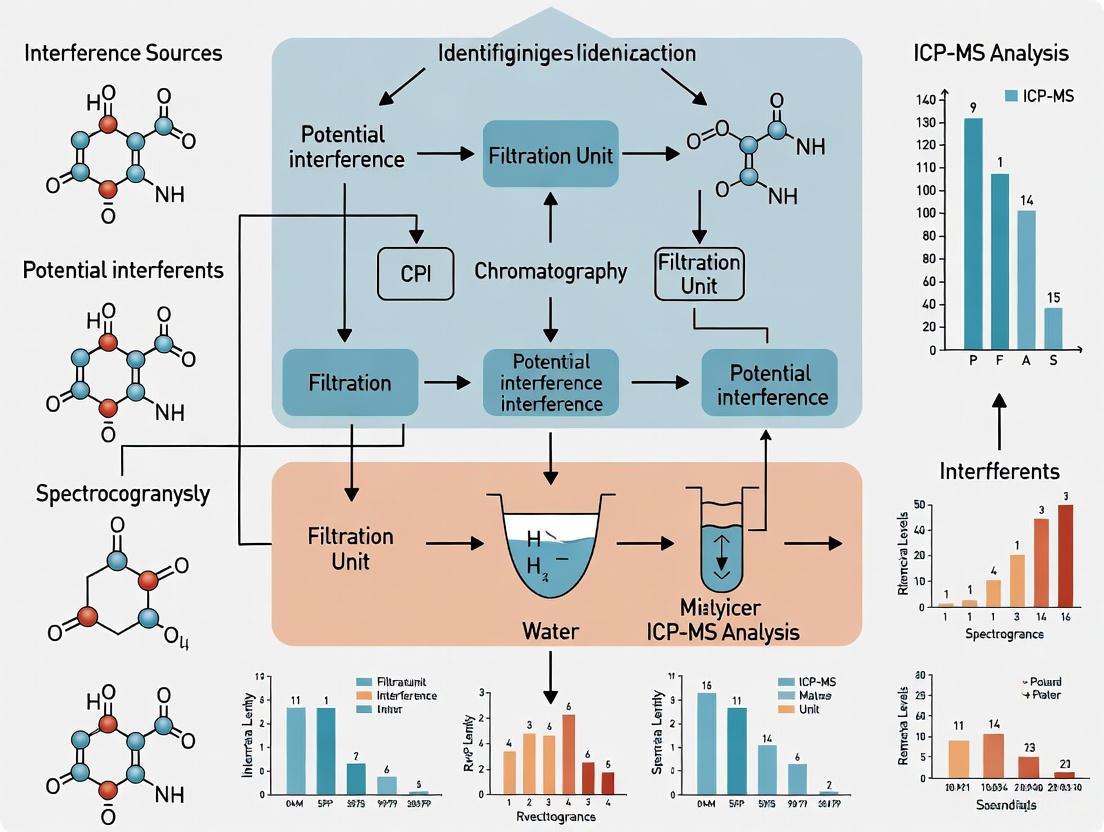
This article provides a comprehensive overview of modern methodologies for detecting and mitigating analytical interference in complex water matrices, a critical challenge for researchers and pharmaceutical development professionals.
Advanced Strategies for Identifying and Overcoming Matrix Effects in Complex Water Analysis
Abstract
This article provides a comprehensive overview of modern methodologies for detecting and mitigating analytical interference in complex water matrices, a critical challenge for researchers and pharmaceutical development professionals. It explores the foundational sources of interference, such as high salinity and organic matter, and details advanced analytical techniques including LC-MS/MS and UHPLC-MS/MS. The content offers practical troubleshooting guidance and a comparative validation of targeted versus non-targeted screening methods, synthesizing key insights to support the development of robust, sensitive, and reliable analytical protocols for environmental and biomedical research.
Understanding Matrix Effects: The Core Challenge in Complex Water Analysis
Complex water matrices, such as wastewater and produced water (PW) from oil and gas operations, represent a significant analytical challenge for researchers and environmental scientists. These waters are characterized by a diverse mixture of inorganic salts, dissolved organic matter, biological constituents, and anthropogenic chemicals, which together create a high potential for analytical interference [1] [2]. This interference, often termed the "matrix effect," can suppress or enhance instrument signals, leading to inaccurate quantification, false positives, or false negatives. With the increasing regulatory focus on contaminant monitoring—such as the new European Union Urban Wastewater Directive (2024/3019) mandating advanced treatment for micropollutant removal—the development of robust analytical methods capable of handling these complex samples is more critical than ever [3]. This technical support center provides troubleshooting guides and FAQs to help researchers identify, understand, and mitigate the matrix effects that impede accurate analysis.
Defining the Matrices: Composition and Challenges
Wastewater Effluent
Modern wastewater treatment plants increasingly employ advanced processes like ozonation to remove organic micropollutants. However, this process can generate toxic by-products, most notably bromate, especially when treating bromide-containing wastewater [3]. Bromate is classified as a possible human carcinogen (IARC Group 2B) and poses both ecological and health risks. The analysis of bromate in wastewater is complicated by the matrix's complex composition, which includes dissolved organic matter, various anions, and a fluctuating chemical composition that can reduce the accuracy, reliability, and reproducibility of results [3].
Table 1: Key Challenges in Wastewater Analysis
| Challenge | Impact on Analysis | Common Contaminants of Concern |
|---|---|---|
| Formation of Ozonation By-Products (e.g., Bromate) | Introduces toxic analytes at low concentrations requiring sensitive detection [3]. | Bromate (BrO₃⁻) |
| Complex & Fluctuating Matrix | Reduces accuracy, reliability, and reproducibility of analytical results [3]. | Dissolved Organic Matter (DOM), Anions |
| High Sensitivity Requirements | Necessitates methods with limits of quantification far below toxicological thresholds [3]. | Organic Micropollutants (OMPs) |
Produced Water (PW)
Produced water is the largest waste stream associated with oil and gas production and is considered one of the most complex aqueous mixtures [1]. Its matrix is composed of native constituents from the geologic formation, chemical additives from fracturing fluids, and ubiquitous bacteria.
Table 2: Characteristic Composition of Produced Water from Different U.S. Basins [1]
| Geologic Basin | Average TDS (g/L) | Average DOC (mg/L) | Key Matrix Challenges |
|---|---|---|---|
| Bakken, Barnett, Permian | >140 | ~100 | High salinity, metals, hydrocarbons |
| Niobrara | ~40 | ~1000 | High dissolved organic carbon |
| Marcellus | Varies temporally | Varies temporally | High salinity, radioactive elements, chemical additives |
The high salinity and organic content in PW can cause severe ion suppression during analysis techniques like Liquid Chromatography with Mass Spectrometry (LC-MS), diminishing the sensitivity and accuracy of measurements, particularly for low molecular weight organic compounds such as ethanolamines [2]. There are currently no standardized methods approved by the U.S. EPA for the comprehensive analysis of PW, and traditional water quality methods are often unsuitable for such highly saline waters [1].
Troubleshooting Guide: Identifying and Mitigating Matrix Effects
Matrix effects occur when compounds co-eluting with the analyte interfere with the ionization process in a detector, causing suppression or enhancement [4]. The following FAQs address common issues and solutions.
FAQ 1: How can I detect if my sample has matrix effects?
Answer: Two established methods can be used to detect matrix effects:
- Post-Extraction Spike Method: This method involves comparing the signal response of an analyte spiked into a neat mobile phase with the signal response of an equivalent amount of the same analyte spiked into a blank sample matrix that has already undergone extraction. The difference in response indicates the extent of the matrix effect [4].
- Post-Column Infusion Method: A solution of the analyte is continuously infused into the HPLC eluent via a T-connector. A blank sample extract is then injected into the chromatographic system. A variation (dip or enhancement) in the baseline signal of the infused analyte indicates the retention times at which ionization suppression or enhancement is occurring due to co-eluting matrix components [4].
FAQ 2: My LC-MS analysis is showing signal suppression. What are the main strategies to fix this?
Answer: Signal suppression in LC-MS is a common symptom of matrix effects. A systematic approach to troubleshooting and mitigation is recommended [5]. The following workflow outlines key strategies:
Diagram: Troubleshooting LC-MS Signal Suppression
Detailed Strategies:
- Improve Sample Cleanup: Techniques like Solid-Phase Extraction (SPE) are highly effective. For example, a method for analyzing ethanolamines in produced water used SPE to desalt samples, which significantly mitigated ion suppression caused by high salinity [2].
- Optimize Chromatography: Modify the chromatographic method to achieve better separation of the analyte from interfering matrix components. This can be done by adjusting the mobile phase gradient, pH, or using different column chemistries (e.g., mixed-mode columns) [4].
- Use Appropriate Internal Standards: The gold standard for correcting matrix effects in LC-MS is the use of stable isotope-labeled internal standards (SIL-IS). These compounds have nearly identical chemical properties and retention times as the analyte but a different mass, allowing them to correct for ionization suppression or enhancement [4] [2]. If SIL-IS are unavailable or too expensive, the standard addition method can be a viable alternative [4].
FAQ 3: I am analyzing metals in high-salinity produced water using ICP-MS. How do I handle spectral interferences?
Answer: Inductively Coupled Plasma Mass Spectrometry (ICP-MS) analysis of saline waters is prone to polyatomic spectral interferences (e.g., 40Ar35Cl+ on 75As+). The primary tool to mitigate this is collision/reaction cell (CRC) technology [6]. These cells, placed before the mass analyzer, use gases like helium (collision mode) or hydrogen/ammonia (reaction mode) to remove interfering ions through kinetic energy discrimination or chemical reactions, allowing the target analyte to be measured accurately [6]. For extreme matrices, sample dilution or pre-concentration methods may also be necessary to bring the total dissolved solid content to a level manageable by the instrument (<0.2%) [6].
Detailed Experimental Protocol: LC-MS/MS Analysis of Ethanolamines in Produced Water
This protocol, adapted from de Vera et al. (2025), details a robust method for quantifying low molecular weight organic compounds (ethanolamines) in the complex matrix of produced water, specifically addressing matrix effects [2].
1. Sample Preparation: Solid-Phase Extraction (SPE)
- Materials: Oasis MCX SPE cartridges (mixed-mode, cation exchange), methanol, ammonium hydroxide, formic acid, and purified water.
- Procedure:
- Conditioning: Condition the MCX cartridge with 6 mL of methanol followed by 6 mL of purified water acidified to pH 2 with formic acid.
- Loading: Acidify the produced water sample to pH 2 and load it onto the conditioned cartridge.
- Washing: Wash the cartridge with 6 mL of purified water (pH 2) and then with 6 mL of methanol. This step removes interfering salts and neutral organic compounds.
- Elution: Elute the target ethanolamines with 12 mL of 5% ammonium hydroxide in methanol.
- Concentration: Evaporate the eluate to dryness under a gentle stream of nitrogen and reconstitute the residue in 1 mL of purified water for LC-MS/MS analysis.
2. Instrumental Analysis: LC-MS/MS with Mixed-Mode Chromatography
- LC Conditions:
- Column: Acclaim Trinity P1 (a mixed-mode column combining anion-exchange, cation-exchange, and reversed-phase mechanisms).
- Mobile Phase: A) 100 mM ammonium formate (pH 3.0) and B) acetonitrile.
- Gradient: Use a gradient program to achieve optimal separation of the ethanolamines.
- MS Conditions:
- Ionization: Positive electrospray ionization (ESI+).
- Mode: Multiple Reaction Monitoring (MRM). Use the precursor and product ions specific to each ethanolamine (e.g., for MEA: m/z 62.1 -> 45).
- Internal Standards: Use a suite of stable isotope-labeled standards for each target ethanolamine (e.g., d4-MEA, d8-DEA, 13C4-MDEA, etc.) added to the sample prior to extraction. This corrects for SPE losses, instrument variability, and most importantly, residual matrix effects [2].
The Scientist's Toolkit: Essential Research Reagents and Materials
Table 3: Key Reagents and Materials for Analyzing Complex Water Matrices
| Item | Function/Benefit | Example Application |
|---|---|---|
| Stable Isotope-Labeled Internal Standards (SIL-IS) | Gold standard for correcting matrix effects; behaves identically to analyte during sample prep and analysis. | LC-MS/MS quantification of ethanolamines in produced water [2]. |
| Mixed-Mode Chromatography Columns | Combines multiple separation mechanisms (e.g., ion-exchange + reversed-phase) for better separation of polar compounds in complex matrices. | Separating ethanolamines in saline produced water [2]. |
| Solid-Phase Extraction (SPE) Cartridges | Pre-concentrates analytes and removes interfering matrix components like salts and dissolved organic matter. | Desalting and cleaning up produced water samples prior to LC-MS analysis [2]. |
| Collision/Reaction Gases (He, H₂, NH₃) | Used in ICP-MS collision/reaction cells to eliminate polyatomic spectral interferences. | Accurate measurement of arsenic in saline water by removing ArCl⁺ interference [6]. |
| Specialized Buffers & Mobile Phase Additives | Optimize chromatography and ionization efficiency; can help shift analyte retention times away from interference zones. | Using ammonium formate buffer for LC-MS analysis of polar organics [2]. |
In the analysis of complex water matrices, the accuracy of results is frequently compromised by matrix effects, where components of the sample itself interfere with the measurement of the target analyte [7]. For researchers in drug development and environmental science, understanding and mitigating the primary sources of interference—namely high salinity, organic matter, and particulates—is critical for method validation and obtaining reliable data. This guide provides targeted troubleshooting and experimental protocols to identify and reduce these common interferences.
Troubleshooting Guides & FAQs
Frequently Asked Questions
Q1: What exactly is "matrix interference" in analytical chemistry? Matrix interference refers to the combined effect of all components in a sample other than the analyte on its measurement [7]. In practical terms, substances in the sample can alter the signal of your target compound, leading to either ion suppression or ion enhancement in techniques like LC-MS, and ultimately causing inaccurate quantitative results [7] [8].
Q2: How does organic matter, like dissolved humic substances, interfere with analysis? Fluorescent Dissolved Organic Matter (FDOM), comprising humic acid (HA), fulvic acid (FA), and degraded fulvic acid (DFA)-like substances, can strongly bind to trace metals and other analytes [9]. This binding influences their mobility, solubility, and detection in the aquifer. Furthermore, DOM can produce disinfection byproducts during water treatment and has been linked to synergistic effects in conditions like arsenicosis [9].
Q3: Why is high salinity a problem for my water analysis? High salinity, indicated by elevated electrical conductivity (EC), can directly interfere with instrument detection and, more critically, can enhance the dissolution and mobilization of other contaminants [9]. Research on coastal groundwater has shown positive correlations between salinity, FDOM, and elevated levels of trace metals, creating a complex co-contamination scenario that is difficult to disentangle [9].
Q4: What are some general strategies to minimize these interferences? Strategies can be divided into two approaches [7]:
- Minimizing ME: Adjust MS parameters, optimize chromatographic separation, or improve sample clean-up procedures. This is crucial when high sensitivity is required.
- Compensating for ME: Use calibration approaches such as isotope-labeled internal standards, matrix-matched calibration, or surrogate matrices.
Troubleshooting Common Issues
Problem: Inconsistent recovery rates or inaccurate quantification during trace metal analysis in coastal water samples.
| Possible Cause | Diagnostic Experiments | Recommended Solution |
|---|---|---|
| High Salinity & FDOM Complexation | Perform spike-recovery experiments with and without a chelating agent. Analyze samples using PARAFAC modeling to identify FDOM constituents [9]. | Use standard addition calibration or matrix-matched calibration. Employ a selective extraction step to separate metals from the saline matrix [7]. |
| Particulate Matter | Centrifuge an aliquot and compare results to the untreated sample. Filter samples through a 0.45µm membrane. | Implement a filtration or centrifugation step prior to analysis. Ensure the filter membrane is compatible with your analytes to avoid adsorption [8]. |
| Ion Suppression in LC-MS from Organics | Perform a post-column infusion experiment to identify regions of ion suppression in the chromatogram [7]. | Optimize the chromatographic method to separate the analyte peak from the retention time zone of suppression. Improve sample clean-up to remove interfering organic compounds [7]. |
Problem: Poor reproducibility and high background signal in spectrophotometric analysis.
| Possible Cause | Diagnostic Experiments | Recommended Solution |
|---|---|---|
| Colloidal or Dissolved Organic Matter | Scan a blank sample (matrix without analyte) to establish a baseline. Dilute the sample and observe if the signal response becomes linear. | Dilute the sample into an assay-compatible buffer. Use a background subtraction method during calibration. Perform a buffer exchange to remove interfering components [8]. |
| Suspended Particulates | Measure the turbidity of the sample. Inspect the sample cuvette for light scattering. | Use centrifugation or filtration to clarify the sample. For colorimetric assays, use a reagent blank to correct for background absorbance. |
Experimental Protocols
Protocol 1: Evaluating Matrix Effects via Post-Column Infusion
Purpose: To qualitatively identify regions of ion suppression or enhancement in a chromatographic run for LC-MS methods [7].
Methodology:
- Preparation: Set up the LC-MS system with the analytical column and mobile phase.
- Infusion Setup: Connect a T-piece between the column outlet and the MS ionization source. Using a syringe pump, continuously infuse a standard solution of the analyte at a constant concentration post-column.
- Injection: Inject a prepared, blank sample extract (a real sample from which the analyte has been removed or is not present) into the LC system.
- Data Analysis: Monitor the total ion chromatogram from the MS. A stable signal indicates no matrix effect. A dip in the signal (suppression) or a peak (enhancement) at specific retention times indicates where matrix components co-eluting with the analyte are interfering with ionization [7].
Protocol 2: Quantifying Matrix Effects via Post-Extraction Spike
Purpose: To quantitatively assess the magnitude of matrix effect (ME) for a given analyte and matrix [7].
Methodology:
- Prepare Samples:
- (A) Standard in Solvent: Spike a known concentration of the analyte into a pure, compatible solvent.
- (B) Post-Extraction Spike: Spike the same concentration of the analyte into a blank matrix sample that has already undergone the complete extraction and clean-up procedure.
- Analysis: Analyze both samples (A and B) using the developed analytical method.
- Calculation: Calculate the Matrix Effect (ME) as a percentage using the formula:
- ME (%) = (Peak Area of B / Peak Area of A) × 100
- An ME of 100% indicates no matrix effect. <100% indicates ion suppression, and >100% indicates ion enhancement [7].
Research Reagent Solutions
The following reagents and materials are essential for developing robust methods to overcome interference in water matrices.
| Research Reagent | Function & Application |
|---|---|
| Isotope-Labeled Internal Standards | Used to compensate for matrix effects by factoring in the same sample preparation and ionization losses as the native analyte, thereby improving accuracy [7]. |
| Solid Phase Extraction (SPE) Cartridges | For sample clean-up and pre-concentration. Selective sorbents (e.g., C18, ion-exchange) can remove salts, particulates, and specific organic interferents [7]. |
| Chelating Agents (e.g., EDTA) | Used in trace metal analysis to break metal-organic complexes and free metals for detection, or to mask metals that interfere with other analyses. |
| PARAFAC Modeling | A statistical tool used to decompose complex fluorescence data from water samples, allowing researchers to identify and quantify specific FDOM components like humic and fulvic acids [9]. |
| Buffer Exchange Columns | Used to efficiently desalt samples and transfer analytes from a complex matrix (like high-salinity water) into an assay-compatible buffer, reducing ionic interference [8]. |
Diagrams & Workflows
Diagram 1: Matrix Effect Evaluation Workflow
Diagram 2: Interference Mechanisms in Water Matrices
The Impact of Matrix Effects on Sensitivity and Accuracy in Trace Analysis
Matrix effects are a critical challenge in trace analysis, referring to the influence of the sample matrix—all components other than the analyte—on the analytical signal. These effects can cause either signal suppression or enhancement, leading to inaccurate quantification, reduced method sensitivity, and compromised data reliability [10].
In trace analysis, where detecting low analyte concentrations is paramount, matrix effects become particularly problematic. They arise from co-eluting compounds that interfere with the ionization process in techniques like LC-MS, or through other physical and chemical interactions in various analytical methods [4]. The complexity of real-world samples, especially complex water matrices, amplifies these challenges, making understanding and mitigating matrix effects essential for generating valid analytical data.
FAQ: Understanding Matrix Effects
What are matrix effects and what causes them? Matrix effects refer to the influence of the sample matrix on the analytical signal, resulting in either an enhancement or suppression of the signal. The causes are multifaceted and include:
- Presence of interfering substances such as salts, proteins, and organic matter
- Sample inhomogeneity
- Instrumental factors including ionization efficiency in MS detectors
- Method-specific factors such as chromatographic conditions [10] In LC-MS, matrix effects primarily occur when compounds co-eluted with the analyte interfere with the ionization process, causing ionization suppression or enhancement [4].
How do matrix effects impact trace analysis results? Matrix effects can significantly compromise analytical results through:
- Inaccurate quantification (both overestimation and underestimation)
- Reduced sensitivity and specificity
- Increased method variability
- Compromised method robustness and reliability [10] In environmental testing, matrix effects can render results "suspect" and unusable for regulatory compliance purposes [11].
Can matrix effects be eliminated completely? While it is challenging to eliminate matrix effects completely, analysts can take proactive steps to minimize their influence through effective strategies and best practices including sample preparation, method optimization, and quality control measures [10]. Complete elimination is rarely possible, so the focus should be on characterization, minimization, and correction [4].
How can I detect matrix effects in my analytical method? Several approaches exist for detecting matrix effects:
- Post-extraction spike method: Compares the signal response of an analyte in neat mobile phase with the signal response of an equivalent amount of the analyte spiked into a blank matrix sample after extraction [4]
- Post-column infusion method: A constant flow of analyte is infused into the HPLC eluent while injecting blank sample extract to identify regions of ionization suppression/enhancement [4] [12]
- Recovery-based methods: Comparing laboratory control sample (LCS) and matrix spike (MS) recoveries can quantify matrix effect magnitude: ME (%) = MS Recovery/LCS Recovery × 100 [11]
Troubleshooting Guide: Identifying and Solving Matrix Effect Problems
Detection and Assessment
Table 1: Methods for Detecting and Assessing Matrix Effects
| Method | Principle | Applications | Advantages | Limitations |
|---|---|---|---|---|
| Post-extraction Spiking [4] | Compare analyte response in neat solvent vs. post-extraction spiked matrix | LC-MS, GC-MS applications | Quantitative assessment; follows actual sample preparation | Requires blank matrix; challenging for endogenous analytes |
| Post-column Infusion [4] [12] | Constant analyte infusion during blank matrix injection | Method development; LC-MS/GC-MS | Identifies retention times affected by matrix effects | Qualitative; requires specialized equipment |
| Standard Addition [4] | Analyze sample with multiple standard additions | All techniques, especially useful for complex matrices | Doesn't require blank matrix; corrects for matrix effects | Time-consuming; not practical for high-throughput |
| Matrix Factor Calculation [13] | MF = Peak response in presence of matrix / Peak response in neat solution | Bioanalytical method validation | Quantitative; can be IS-normalized | Requires multiple matrix lots for statistical power |
Mitigation Strategies
Table 2: Strategies for Mitigating Matrix Effects
| Strategy | Technical Approach | Effectiveness | Implementation Complexity |
|---|---|---|---|
| Sample Clean-up [10] [14] | SPE, dμSPE, liquid-liquid extraction | High | Medium |
| Chromatographic Optimization [4] | Improve separation, adjust mobile phase, change column | Medium to High | Medium |
| Internal Standardization [13] [15] [4] | Stable isotope-labeled IS, co-eluting structural analogues | High (with appropriate IS) | Low to Medium |
| Sample Dilution [4] | Dilute sample to reduce interference concentration | Low to Medium | Low |
| Standard Addition [4] | Add known analyte amounts to sample | High | High |
Experimental Protocols
Comprehensive Matrix Effect Assessment (LC-MS)
This protocol provides a systematic approach for assessing matrix effects, recovery, and process efficiency in a single experiment, based on methodologies from recent literature [13].
Materials and Reagents:
- Analytical standards: High-purity target analytes
- Internal standards: Stable isotope-labeled analogues when available
- Matrix lots: At least 6 different lots of blank matrix (e.g., various water sources)
- Mobile phases: LC-MS grade solvents with appropriate additives
- Sample preparation materials: SPE cartridges, filtration units
Experimental Design:
- Prepare three sample sets according to Matuszewski's approach [13]:
- Set 1: Standards in neat solution (no matrix)
- Set 2: Standards spiked into matrix post-extraction
- Set 3: Standards spiked into matrix pre-extraction
For each set, analyze at least two concentration levels (low and high QC) with multiple replicates (n≥3) across different matrix lots.
Include corresponding blank samples for each set and matrix lot to subtract endogenous baseline signals.
Calculation and Interpretation:
- Matrix Effect (ME): ME = (Peak area Set 2 / Peak area Set 1) × 100
- ME < 100% indicates ion suppression
- ME > 100% indicates ion enhancement
- Recovery (RE): RE = (Peak area Set 3 / Peak area Set 2) × 100
- Process Efficiency (PE): PE = (Peak area Set 3 / Peak area Set 1) × 100
Acceptance Criteria: According to international guidelines, the coefficient of variation for the IS-normalized matrix factor should be <15% across different matrix lots [13].
Magnetic Adsorbent-Based Matrix Cleanup
This protocol describes a dispersive micro solid-phase extraction (dμSPE) approach using modified magnetic adsorbents to remove matrix interferences while preserving target analytes, adapted from recent research on analyzing primary aliphatic amines in complex samples [14].
Materials:
- Magnetic adsorbent: Mercaptoacetic acid-modified Fe₃O₄ (MAA@Fe₃O₄)
- Derivatization reagent: Butyl chloroformate (BCF)
- Extraction solvent: Chloroform, 1,1,1-trichloroethane, or similar
- Buffers: pH adjustment solutions (NaOH, HCl)
- Complexing agent: Disodium EDTA to prevent precipitation of cations
Procedure:
- Sample Preparation: To 5 mL of water sample, add 10 mg of EDTA and adjust pH to 10 using NaOH solution.
- Matrix Cleanup: Add 15 mg of MAA@Fe₃O₄ magnetic adsorbent to the sample.
- Extraction: Vortex the mixture for 2 minutes to ensure complete interaction.
- Separation: Separate the adsorbent using a magnet and transfer the supernatant to a new vial.
- Derivatization and Extraction: For amine analysis, combine the supernatant with 1 mL of BCF derivatization reagent and 100 μL of extraction solvent in a separate tube.
- Vortex: Vortex the mixture for 1 minute for simultaneous derivatization and extraction.
- Analysis: Inject the organic phase into GC-FID for analysis.
Performance Metrics:
- Matrix Removal Efficiency: 92-97% analyte recovery without matrix interference [14]
- Enrichment Factors: 420-525
- Precision: RSD 1.4-2.7%
Advanced Correction Techniques
Post-Column Infusion of Standards (PCIS)
For untargeted analysis, the PCIS technique shows promise for correcting matrix effects. The method involves:
Selection of PCIS: Choose standards that represent different chemical classes in your analysis. Recent research demonstrates that artificial matrix effect (MEart) creation can help select optimal PCIS with 89% agreement with biological matrix effect (MEbio) selection [12].
Implementation:
- Infuse a mixture of standards post-column during sample analysis
- Monitor signal variations for these standards
- Use the response patterns to correct matrix effects in unknown features
Scoring System: Develop a scoring system that balances relative and absolute matrix effects to select the most appropriate PCIS for each feature [12].
Internal Standard Selection Strategy
Table 3: Internal Standard Options for Matrix Effect Correction
| Internal Standard Type | Examples | Advantages | Limitations | Effectiveness for ME Correction |
|---|---|---|---|---|
| Stable Isotope-Labeled (SIL-IS) [4] | Deuterated, ¹³C, ¹⁵N analogs | Excellent correction; nearly identical behavior | Expensive; not always available | High |
| Structural Analogues [4] | Similar retention, different MRM | Good correction; more available | May not perfectly match ME | Medium to High |
| Echo-peak [4] | Same compound, repeated injection | Compensates for instrumental drift | Doesn't correct for co-eluting ME | Low |
| Post-column Infused Standards [12] | Multiple chemical classes | Corrects for temporal ME variations | Complex implementation | Medium to High |
Essential Research Reagent Solutions
Table 4: Key Reagents and Materials for Matrix Effect Management
| Reagent/Material | Function | Application Examples | Key Considerations |
|---|---|---|---|
| MAA@Fe₃O₄ Magnetic Adsorbent [14] | Selective matrix removal | PAAs in water samples; complex matrices | pH-dependent performance; reusable for 5 cycles |
| Stable Isotope-Labeled Standards [13] [4] | Internal standardization for quantification | LC-MS/MS bioanalysis | Should co-elute with target analytes |
| Alkyl Chloroformates [14] | Derivatization of polar compounds | Primary aliphatic amines | Forms stable carbamate derivatives |
| Mixed-Mode SPE Cartridges | Comprehensive sample clean-up | Multi-residue methods | Combine reversed-phase and ion-exchange mechanisms |
| HILIC Chromatography Columns | Retention of polar compounds | Polar metabolites; pharmaceuticals | Alternative to reversed-phase for early eluting compounds |
Regulatory Considerations and Quality Control
Quality Control Protocols:
- Matrix Spike/Matrix Spike Duplicate (MS/MSD): Analyze with each batch of samples to monitor matrix effects [11]
- Laboratory Control Samples (LCS): Compare with MS recovery to calculate matrix effect magnitude [11]
- Multiple Matrix Lots: Test at least 6 different matrix lots for comprehensive assessment [13]
Acceptance Criteria:
- ICH M10: For each individual matrix lot, accuracy within ±15% of nominal concentration and precision <15% [13]
- EMA: CV <15% for matrix factor [13]
- CLSI C62-A: CV <15% for peak areas; evaluate absolute matrix effect based on total error allowable limits [13]
Data Reporting:
- Clearly flag data affected by matrix effects
- Report the magnitude of matrix effects (ME%)
- Document all corrective actions taken
Systematic Review of Common Interferents in Pharmaceutical and Environmental Analysis
Analytical interference presents a significant challenge in ensuring the accuracy, reproducibility, and sensitivity of analytical methods used in pharmaceutical and environmental research. Matrix effects (MEs) represent a primary form of interference in liquid chromatography-mass spectrometry (LC-MS), occurring when compounds co-eluting with the analyte alter ionization efficiency in the source, leading to either ion suppression or enhancement [7] [4]. These effects are particularly pronounced in complex matrices such as biological fluids, environmental water samples, and pharmaceutical formulations, where numerous compounds with varying polarities and chemical properties coexist [7]. The identification and mitigation of these interferents are crucial for developing robust analytical methods that produce reliable data for regulatory submissions and environmental monitoring.
Within the context of water matrices research, interferents can originate from various sources, including inorganic salts, organic matter, pharmaceuticals, personal care products, and industrial chemicals. These compounds can compete for ionization, form adducts, or otherwise interfere with the accurate quantification of target analytes. Understanding the nature of these interferents and implementing strategies to detect, quantify, and minimize their impact is fundamental to advancing analytical science in both pharmaceutical development and environmental protection [16] [7].
Troubleshooting Guides and FAQs
Frequently Asked Questions
Q1: What are the most common signs of matrix effects in LC-MS analysis? A1: The most common indicators include:
- Unusual loss of sensitivity or signal suppression for target analytes
- Poor reproducibility and precision in quantitative results
- Inconsistent calibration curves
- Unexplained enhancement of analyte signals
- Significant variation in analyte response between different sample matrices [7] [4]
Q2: How can I quickly assess whether my method is susceptible to matrix effects? A2: The post-column infusion method provides a qualitative assessment. It involves infusing a constant flow of analyte into the LC eluent while injecting a blank matrix extract. Variations in the baseline signal indicate regions of ionization suppression or enhancement throughout the chromatographic run, helping identify where analytes should not elute [7] [4].
Q3: What is the most effective approach to compensate for matrix effects when a blank matrix is unavailable? A3: For endogenous compounds where a true blank matrix is unavailable, several approaches exist:
- Use the standard addition method which doesn't require a blank matrix
- Employ surrogate matrices with demonstrated similar MS response to the original matrix
- Apply background subtraction techniques
- Utilize isotope-labeled internal standards when commercially available and affordable [7]
Q4: Are certain ionization techniques more prone to matrix effects? A4: Yes, electrospray ionization (ESI) is generally more susceptible to matrix effects compared to atmospheric pressure chemical ionization (APCI) because ionization occurs in the liquid phase in ESI, where interfering compounds can directly impact the process. APCI, where ionization occurs in the gas phase, is typically less affected by many common matrix interferents [7].
Q5: What strategic approach should I take when developing a new method where sensitivity is crucial? A5: When high sensitivity is required, focus on minimizing matrix effects through:
- Optimization of MS parameters
- Refinement of chromatographic conditions to improve separation
- Implementation of efficient sample clean-up procedures
- Potential use of a divert valve to prevent highly contaminated fractions from entering the ion source [7]
Troubleshooting Common Problems
Problem: Inconsistent accuracy and precision across different sample batches
Solution Approach:
- Evaluate relative matrix effects by analyzing multiple lots of the matrix spiked with analyte.
- Implement a stable isotope-labeled internal standard (SIL-IS) if not already in use, as this represents the gold standard for compensation.
- Optimize sample preparation to remove interfering compounds more consistently. Solid-phase extraction (SPE) with selective sorbents or liquid-liquid extraction (LLE) with improved selectivity may help.
- Adjust chromatographic conditions to shift the retention time of the analyte away from regions of significant interference identified via post-column infusion [7] [4].
Problem: Significant signal suppression despite sample dilution
Solution Approach:
- Investigate the sample clean-up procedure – current methods may be insufficient for the specific interferents.
- Consider alternative ionization techniques – switching from ESI to APCI may reduce susceptibility to certain matrix effects.
- Evaluate mobile phase additives – some additives can contribute to signal suppression; alternatives like ammonium acetate or ammonium hydroxide may be preferable to formic acid in some cases.
- Implement a more selective extraction technique, such as molecular imprinted polymers (MIPs) if available for your analytes [7].
Problem: Lack of blank matrix for method development
Solution Approach:
- Apply the standard addition method for quantification, which is particularly useful for endogenous compounds.
- Identify and validate a surrogate matrix that demonstrates similar MS response characteristics.
- Use the background subtraction method by analyzing unspiked samples and subtracting the endogenous response.
- Explore the slope ratio analysis technique, which evaluates matrix effects across a range of concentrations [7].
Detection and Assessment of Matrix Effects
Method Comparison Table
Table 1: Methods for Detecting and Assessing Matrix Effects
| Method Name | Description | Type of Output | Key Limitations | Applicability |
|---|---|---|---|---|
| Post-Column Infusion [7] [4] | Constant infusion of analyte during LC analysis of blank matrix extract | Qualitative identification of suppression/enhancement regions | Does not provide quantitative data; requires additional hardware | Ideal for initial method development to identify problematic retention times |
| Post-Extraction Spike [7] [4] | Comparison of analyte response in neat solution versus spiked matrix | Quantitative assessment (matrix factor) | Requires blank matrix; single concentration level | Suitable for validation when blank matrix is available |
| Slope Ratio Analysis [7] | Comparison of calibration curves in neat solution versus matrix across multiple concentrations | Semi-quantitative assessment across concentration ranges | Requires matrix-matched standards at multiple levels | Useful for comprehensive evaluation of matrix effects across the calibration range |
| Relative Matrix Effects Evaluation [7] | Assessment of variability in matrix effects across different matrix lots | Quantitative measure of consistency | Labor-intensive; requires multiple matrix sources | Critical for validating method robustness with samples from different sources |
Experimental Protocols
Protocol 1: Post-Column Infusion for Qualitative Assessment of Matrix Effects
Principle: This method enables visual identification of chromatographic regions affected by ion suppression or enhancement by monitoring the signal of a constantly infused analyte during the analysis of a blank matrix extract [7].
Procedure:
- Prepare a standard solution of the target analyte at a concentration within the analytical range.
- Using a T-piece connector, set up a post-column infusion system that mixes the column effluent with the continuously infused analyte solution before entering the MS detector.
- Inject a blank matrix extract (e.g., sample processed without the analyte) onto the LC system.
- Monitor the analyte signal throughout the chromatographic run.
- Identify regions where the signal deviates from baseline (suppression appears as valleys, enhancement as peaks) in the resulting chromatogram.
- Use this information to adjust method conditions so target analytes elute in regions with minimal interference.
Protocol 2: Post-Extraction Spike Method for Quantitative Assessment
Principle: This approach quantitatively measures matrix effects by comparing the analytical response of an analyte in a pure solution to its response when added to a processed blank matrix [7] [4].
Procedure:
- Prepare a set of standard solutions in neat mobile phase at various concentrations.
- Obtain a blank matrix sample and process it through the entire sample preparation procedure.
- Spike the processed blank matrix with the same concentrations of analyte as the neat standards.
- Analyze both sets (neat standards and post-extraction spiked samples) using the LC-MS method.
- Calculate the matrix factor (MF) for each concentration using the formula: MF = Peak area of analyte in spiked matrix / Peak area of analyte in neat solution
- A matrix factor of 1 indicates no matrix effects, <1 indicates suppression, and >1 indicates enhancement.
- The CV of matrix factors across different matrix lots should be <15% to demonstrate minimal relative matrix effects.
Strategies for Minimizing and Compensating for Matrix Effects
Decision Framework for Addressing Matrix Effects
Diagram 1: Strategic approach for addressing matrix effects based on method requirements and resource availability.
Research Reagent Solutions Table
Table 2: Essential Reagents and Materials for Overcoming Matrix Effects
| Reagent/Material | Function/Purpose | Application Context |
|---|---|---|
| Stable Isotope-Labeled Internal Standards (SIL-IS) | Gold standard for compensating matrix effects; behave identically to analytes during extraction and analysis but are distinguishable by MS | Quantitative bioanalysis, environmental tracing, pharmaceutical studies [4] |
| Molecularly Imprinted Polymers (MIPs) | Provide highly selective extraction; designed to recognize specific analyte structures while excluding interferents | Selective sample clean-up when commercial sources become available [7] |
| Various SPE Sorbents (C18, mixed-mode, HLB, etc.) | Remove interfering compounds during sample preparation; different sorbents target different interferent classes | Sample clean-up in pharmaceutical, environmental, and food analysis [7] [4] |
| Matrix-Matched Calibration Standards | Compensate for matrix effects by preparing calibration standards in processed blank matrix | Quantitative analysis when blank matrix is available [7] |
| Surrogate Matrices | Alternative matrices with demonstrated similar behavior to the original matrix for calibration | Analysis of endogenous compounds when true blank matrix is unavailable [7] |
Methodologies for Interferent Reduction
Sample Preparation Optimization Efficient sample preparation represents the first line of defense against matrix effects. Solid-phase extraction (SPE) with selective sorbents can effectively remove many interferents, particularly when the sorbent chemistry is matched to the properties of both the analyte and known interferents [4]. The development of molecularly imprinted technology (MIP) promises even greater selectivity, though commercial availability remains limited [7]. For highly complex matrices, a combination of extraction techniques or additional clean-up steps may be necessary to achieve sufficient purity while maintaining adequate analyte recovery.
Chromatographic Method Adjustments Chromatographic separation represents a powerful approach to minimize matrix effects by temporally separating analytes from interferents. Key parameters to optimize include:
- Mobile phase composition: Adjusting pH, organic modifier, or buffer concentration to shift retention times
- Column chemistry: Selecting stationary phases with different selectivity (e.g., HILIC vs. reversed-phase)
- Gradient profile: Modifying the steepness and shape of the gradient to create windows of minimal interference
- Run time: Extending the separation to improve resolution of analytes from matrix components [7] [4]
Mass Spectrometric Parameter Optimization Adjusting MS parameters can reduce susceptibility to matrix effects:
- Source temperature: Optimization can improve desolvation and reduce interference from less volatile compounds
- Ion source design: Alternative source geometries may offer improved robustness to matrix effects
- Collision energy: Fine-tuning can improve selectivity in MRM transitions
- Source gas flows: Optimizing nebulizer, heater, and curtain gas flows can improve ionization efficiency [7]
Regulatory and Quality Considerations
In pharmaceutical analysis, regulatory guidelines emphasize the importance of investigating and documenting matrix effects during method validation. The International Conference on Harmonisation (ICH) guidelines provide framework for method validation, with recent increased focus on matrix effects assessment [17]. Similarly, in environmental analysis, initiatives like the Pharmaceutical Strategy for Europe are strengthening requirements for environmental risk assessment, which inherently includes robust analytical methods free from significant interference [16].
Method validation must include assessment of both absolute matrix effects (the impact on analyte response in a single matrix lot) and relative matrix effects (the variation of this impact across different matrix lots) to ensure method reliability [7]. Documentation should include the experimental approach used to assess matrix effects, results from multiple matrix lots, and strategies implemented to mitigate any significant effects observed.
The emergence of new pharmaceutical compounds and environmental contaminants necessitates ongoing method development and validation to address novel interferents. A systematic approach to identifying, quantifying, and controlling for matrix effects ensures that analytical methods remain fit-for-purpose in this evolving landscape, supporting both pharmaceutical development and environmental protection goals [16].
Cutting-Edge Analytical Techniques and Sample Preparation Strategies
Solid-Phase Extraction (SPE) for Clean-up and Analyte Concentration
Troubleshooting Guides
FAQ 1: Why is my analyte recovery low, and how can I improve it?
Low analyte recovery is one of the most common problems in SPE. The issue can stem from several points in the extraction process [18] [19] [20].
Analyte not retained during sample loading: If the analyte is found in the loading or wash fraction, it indicates insufficient retention [19] [20] [21].
- Cause: The analyte may have a greater affinity for the sample solution than for the sorbent [22]. The sample solvent might be too strong, or the sorbent choice may be incorrect for the analyte's chemistry [18] [21].
- Solutions:
- Adjust the sample pH to ensure the analyte is in a neutral form for reversed-phase SPE or in a charged form for ion-exchange SPE to increase affinity for the sorbent [22] [18] [21].
- Dilute the sample with a weaker solvent to reduce the sample solvent strength [22] [20] [21].
- Decrease the sample loading flow rate to increase interaction time with the sorbent [22] [20].
- Choose a sorbent with greater selectivity for your analytes [22] [18].
Analyte not eluting after retention: If the analyte is retained but not eluting, it is "stuck" on the sorbent [20].
- Cause: The elution solvent may be too weak to disrupt analyte-sorbent interactions, the elution volume may be insufficient, or the sorbent may be too retentive [22] [18] [19].
- Solutions:
- Increase the strength of the elution solvent (e.g., higher organic percentage) [22] [18] [19].
- Increase the volume of elution solvent [22] [18].
- Elute the analyte using two separate small aliquots instead of one large volume [22] [23].
- Change the pH or polarity of the eluting solvent to ensure greater affinity for the analytes [22].
- Switch to a less retentive sorbent (e.g., C4 instead of C18) [18] [19] [20].
FAQ 2: What causes poor reproducibility between SPE experiments?
Inconsistent results can be frustrating and are often related to technique or cartridge handling [18] [20] [24].
- Cause: The most common reasons include the sorbent bed drying out before sample loading, inconsistent or excessive flow rates, cartridge overload, or using a wash solvent that is too strong, causing partial elution of the analyte [22] [18] [20].
- Solutions:
- Prevent column drying: Never let the conditioned sorbent bed dry out before sample loading. If it does, re-condition the column [22] [18] [23].
- Control flow rate: Maintain a slow, consistent flow rate during sample loading and elution. A typical recommended flow rate is around 1 mL/min [18] [23] [20]. Using a manifold or pump can help standardize this [18].
- Avoid overloading: Ensure the sample mass or volume does not exceed the cartridge's capacity. Reduce the sample volume or use a cartridge with more sorbent or higher capacity [22] [18] [20].
- Optimize wash step: Ensure the wash solvent is strong enough to remove impurities but not so strong that it elutes your target analyte [18] [20].
FAQ 3: How can I improve sample cleanliness when interferences co-elute with my analyte?
Unsatisfactory cleanup occurs when interfering compounds are not sufficiently removed during the wash steps [18] [19].
- Cause: The wash solvent may not be selective enough, the sorbent may not be optimal for separating the analyte from the matrix, or sample pre-treatment may be inadequate [18] [19] [20].
- Solutions:
- Optimize the wash solvent: The wash solvent should have the maximum strength possible to elute impurities without displacing the analyte [19] [20]. For reversed-phase SPE, using water-immiscible solvents like hexane or ethyl acetate can dramatically improve cleanliness for some matrices, as they elute many non-polar interferences while retaining the analyte [19] [24].
- Select a more selective sorbent: Consider switching to a sorbent with a different selectivity. Ion-exchange and mixed-mode sorbents often provide superior cleanup for charged analytes in complex water matrices compared to standard reversed-phase sorbents [18] [19] [25].
- Pre-treat the sample: For complex water matrices, pre-treatment such as filtration or centrifugation is essential to remove particulate matter that can clog the cartridge [22] [23]. For samples with high organic content, liquid-liquid extraction may be needed as a pre-step to remove lipids and fats [19] [20].
Key Data for SPE Method Development
Sorbent Capacity Guidelines
Understanding sorbent capacity is critical to prevent breakthrough and analyte loss. The following table summarizes approximate adsorption capacities for different sorbent types [18].
| Sorbent Type | Typical Capacity | Example Calculation for 100 mg Sorbent |
|---|---|---|
| Silica-based | ≤ 5% of sorbent mass | 5 mg maximum analyte load |
| Polymeric | ≤ 15% of sorbent mass | 15 mg maximum analyte load |
| Ion-exchange | 0.25–1.0 mmol/g | 0.025–0.1 mmol for a 100 mg cartridge |
SPE Cartridge Selection and Elution Volumes
Choosing the right cartridge size is vital for efficiency. The table below provides typical parameters for different cartridge volumes [23].
| Cartridge Volume | Typical Sorbent Mass | Minimum Elution Volume |
|---|---|---|
| 1 mL | 50 - 100 mg | 0.1 - 0.2 mL |
| 3 mL | 200 - 500 mg | 1 - 3 mL |
| 6 mL | 500 - 1000 mg | 2 - 6 mL |
Standard SPE Workflow and Troubleshooting Logic
The following diagram illustrates the four critical steps of a standard SPE protocol, which forms the basis for any troubleshooting activity [23] [26].
Troubleshooting Decision Pathway
When an experiment fails, follow this logical pathway to diagnose and resolve the most common SPE problems [20] [21] [24].
The Scientist's Toolkit: Essential Research Reagent Solutions
The table below details key materials and their functions for implementing robust SPE methods, particularly in the context of cleaning up complex water samples [22] [18] [23].
| Item | Function & Application |
|---|---|
| Reversed-Phase Sorbents (C18, C8) | Retains non-polar/ moderately polar analytes via hydrophobic interactions. Ideal for isolating organic contaminants from water matrices [26]. |
| Ion-Exchange Sorbents (SAX, SCX) | Retains charged analytes via electrostatic interactions. Effective for removing ionic interferents or concentrating ionic analytes from water [18] [26]. |
| Mixed-Mode Sorbents | Combines reversed-phase and ion-exchange mechanisms. Provides superior selectivity for analytes containing both non-polar and ionizable groups [19] [26] [25]. |
| Polymeric Sorbents (e.g., HLB) | Hydrophilic-Lipophilic Balanced copolymers. Offer higher capacity and better retention for a wider range of analytes compared to silica-based sorbents [18]. |
| Methanol / Acetonitrile | Common organic solvents used for conditioning reversed-phase sorbents and as strong elution solvents [22] [23]. |
| Buffers (e.g., Phosphate, Acetate) | Used to adjust and control sample pH, which is critical for optimizing retention and elution, especially for ionizable compounds [23] [21]. |
In the analysis of complex water matrices for pharmaceutical contaminants, achieving superior separation is paramount for accurate results. Ultra-High-Performance Liquid Chromatography (UHPLC) and Mixed-Mode Liquid Chromatography (LC) provide the high resolution, sensitivity, and speed necessary for this task. However, analysts often encounter technical challenges, such as signal interference and system pressure abnormalities, that can compromise data quality. This technical support center provides targeted troubleshooting guides and FAQs to help researchers identify and resolve these issues, ensuring the reliability of their environmental monitoring data.
Troubleshooting Guides
Resolving Pressure Problems
System pressure is a key indicator of LC system health. Abnormal pressure—too high, too low, or erratic—often signals an underlying issue [27].
Establishing a Pressure Reference: To diagnose a problem, first establish a reference point for "normal" pressure [27].
- System Reference Pressure: Measure pressure using a new, standard column (e.g., 150 mm x 4.6 mm, 5-µm C18) with a 50:50 methanol-water mobile phase at a set flow rate and temperature.
- Method Reference Pressure: Measure and record the pressure at the start of your specific method's batch run. Tracking this over time helps anticipate issues.
Symptom: Persistently High Pressure
- Isolate the Blockage: Progressively loosen fittings starting from the column outlet, moving upstream to the column inlet, in-line filter, and pump outlet. Note the pressure after each step to locate the blockage [27].
- Most Common Cause: A blocked in-line frit or guard column frit from accumulated sample or mobile phase debris. Using a 0.5-µm porosity frit (0.2-µm for sub-2-µm columns) before the column is recommended as an inexpensive, first-line defense [27].
- Solution: Replace the in-line or guard column frit. If the column frit is blocked, back-flushing the column (reversing flow direction to waste) can be effective about one-third of the time [27].
- Other Causes: Blocked tubing or injection valve. Replace tubing or disassemble and clean the valve [27].
Symptom: Persistently Low Pressure
This typically indicates a pump problem, air in the pump, or a leak [27].
- Check the Obvious: Verify the flow rate setting and ensure mobile phase reservoirs are sufficiently full [27].
- Purge the Pump: Open the purge valve and flush with 5-10 mL of mobile phase to remove bubbles [27].
- Verify Pump Delivery: Perform a timed collection of mobile phase into a volumetric flask to confirm the flow rate is within ±1% of the set point [27].
Addressing Peak Shape and Integration Issues
Poor peak shape directly affects integration accuracy and quantification.
Symptom: Tailing Peaks
- Common Cause for Basic Compounds: Silanol interaction with the stationary phase [28].
- Solutions:
- Other Causes: Column void (replace column) or excessive extra-column volume (use shorter, narrower internal diameter capillaries) [28].
Symptom: Fronting Peaks
- Common Causes: Blocked frit, channels in the column, or column overload [28].
- Solutions: Replace the pre-column frit; reduce the amount of sample injected [28].
Identifying and Mitigating Analytical Interferences
In complex water matrices, interference can lead to inaccurate quantification. The following workflow provides a systematic approach for identification and mitigation.
Interference Identification Protocols:
- Post-Column Infusion for Matrix Effects (Qualitative): Infuse a constant flow of your analyte into the MS while injecting a prepared blank sample matrix. A dip or rise in the steady signal indicates regions of ion suppression or enhancement in the chromatogram, revealing where your analyte is vulnerable [29] [30].
- Post-Extraction Spike for Matrix Effects (Quantitative): Spike your analyte at known concentrations into two sets of samples: 1) a clean solvent, and 2) an extracted blank matrix. Calculate the matrix effect (ME) as:
ME% = (Peak Area in Matrix / Peak Area in Solvent) * 100. Values significantly less than 100% indicate suppression, greater than 100% indicate enhancement [29] [30]. - Dilution Assay for Ionization Interference: Prepare and analyze a series of sample dilutions. A non-linear response (e.g., peak area does not scale proportionally with dilution) can signal ionization interference between co-eluting compounds, such as a drug and its metabolite [31].
Interference Mitigation Strategies:
- Optimize Sample Preparation: This is the most effective way to reduce matrix effects [30].
- Liquid-Liquid Extraction (LLE): Effectively removes phospholipids and proteins. Using a double LLE (e.g., hexane followed by methyl tert-butyl ether) can further improve selectivity [30].
- Solid-Phase Extraction (SPE): Use selective phases like mixed-mode cation-exchange polymers or zirconia-coated sorbents that specifically retain phospholipids, allowing the target analyte to be selectively eluted [30].
- Hybrid Techniques: Combine sample preparation methods (e.g., PPT/SPE or LLE/SPE) for superior clean-up [30].
- Improve Chromatographic Separation: Adjust the LC method to move the analyte away from regions of interference.
- Optimize the Gradient: Alter the gradient profile to shift the analyte's retention time out of suppression zones identified by post-column infusion [29].
- Use Mixed-Mode Chromatography: Utilize columns that combine multiple separation mechanisms (e.g., reversed-phase and ion-exchange) to achieve better resolution of analytes from isobaric interferences [28].
- Dilute the Sample: A simple dilution can reduce the concentration of interferents below the threshold where they cause significant signal variation [31].
- Use a Stable Isotope-Labeled Internal Standard (SIL-IS): A SIL-IS co-elutes with the analyte and experiences the same matrix effects, perfectly compensating for them during quantification. Note that deuterated analogs can sometimes have slightly different retention times; 13C- or 15N-labeled IS are ideal [29] [31] [30].
Frequently Asked Questions (FAQs)
Q1: What are the main advantages of UHPLC over HPLC for environmental water analysis? UHPLC systems use columns packed with smaller particles (e.g., 1.8 µm) and operate at much higher pressures (>6000 psi). This provides higher peak capacity, improved resolution of complex mixtures, and faster analysis times, which is crucial for high-throughput laboratories analyzing hundreds of water samples daily [32]. This also enhances sensitivity for detecting trace-level pharmaceuticals [33].
Q2: Our calibration curves are showing unexpected non-linearity. What could be the cause? Non-linearity can be caused by ionization interference between a drug and its metabolites or other co-eluting compounds in the sample. These interferents compete for charge during the ESI process, altering the analyte's response. This risk is higher in fast, generic chromatographic methods with limited separation [31]. Perform a dilution assay to diagnose this issue.
Q3: How can I reduce high baseline noise when using a Charged Aerosol Detector (CAD)? Ensure your mobile phases are free of non-volatile additives and are prepared from high-purity, LCMS-grade solvents. Non-volatile contaminants are a primary source of noise and high background current in CAD. Also, check for column bleed, especially when operating near the column's pH or temperature limits [34].
Q4: What is the best internal standard to use for compensating for matrix effects in LC-MS/MS? A stable isotope-labeled internal standard (SIL-IS) is the gold standard. It has nearly identical chemical and chromatographic properties as the analyte, so it undergoes the same ionization suppression/enhancement, providing optimal compensation during quantification [29] [30].
Q5: We are seeing signal interference between a drug and its metabolite. What strategies can help? A three-pronged approach is effective: 1) Improve chromatographic separation to resolve the drug and metabolite; 2) Dilute the sample to reduce the absolute amount of interferent; and 3) Use a stable isotope-labeled internal standard (with labels that don't impact retention, like 13C) for accurate correction [31].
The Scientist's Toolkit: Key Reagents & Materials for UHPLC-MS/MS of Water Matrices
The following table details essential materials for developing robust methods for pharmaceutical analysis in water.
| Item | Function & Importance in Interference Reduction |
|---|---|
| Mixed-Mode SPE Cartridges | Sorbents combining reversed-phase and ion-exchange mechanisms selectively retain analytes while excluding phospholipids and other ionic interferences, significantly reducing matrix effects [30]. |
| Stable Isotope-Labeled Internal Standards (SIL-IS) | The most effective way to compensate for matrix effects; the SIL-IS co-elutes with the analyte and experiences identical ionization suppression/enhancement, ensuring quantitative accuracy [29] [30]. |
| UHPLC Columns (1.8 µm particles) | Provides high-resolution separation, critical for resolving target pharmaceuticals from isobaric interferences and matrix components in complex water samples [32]. |
| LC-MS Grade Solvents & Volatile Additives | High-purity solvents minimize baseline noise and contaminant introduction. Volatile additives (e.g., ammonium formate, formic acid) are essential for MS compatibility and Charged Aerosol Detection [33] [34]. |
| In-Line Filters (0.5 µm or 0.2 µm) | Placed after the autosampler, they protect the expensive analytical column from particulate debris, preventing high backpressure and blockages [27]. |
| Zirconia-Coased Phospholipid Removal Plates | A specialized sample preparation tool that selectively binds and removes phospholipids, a major cause of ion suppression in ESI-MS, during protein precipitation [30]. |
Frequently Asked Questions (FAQs)
Q1: What are the main types of interferences in mass spectrometry analysis of complex water matrices, and how do they affect my data? Matrix interference stems from diverse chemical components in samples, such as oils, fats, proteins, and pigments [35]. In complex water matrices like wastewater, these can co-elute with your target analytes and cause:
- Ion Suppression or Enhancement: Matrix components can alter the ionization efficiency of your target analytes in the electrospray source, leading to artificially low or high signals [36].
- Instrument Contamination: Non-volatile residues can build up on the ion source and other components, forcing frequent cleaning, increasing downtime, and reducing sensitivity [35].
- Chimeric Spectra: In MS/MS, the quadrupole's isolation window (typically ~0.4 to a few Daltons) may not resolve isobaric compounds, leading to co-fragmentation and complex, mixed MS/MS spectra that are difficult to interpret [37].
Q2: When should I choose Data-Independent Acquisition (DIA) over Data-Dependent Acquisition (DDA) for my untargeted screening of water samples? The choice hinges on your goal: comprehensiveness versus spectral clarity [38].
- Use DIA (e.g., SWATH, SONAR) when your priority is to fragment all detectable ions in a sample without bias. This ensures no precursor is missed and allows for retrospective data mining. However, DIA data is complex, and deconvoluting the relationship between precursors and fragment ions can be challenging without chromatographic separation [38].
- Use DDA when your priority is to obtain clean, high-quality MS/MS spectra for confident compound identification. DDA selectively fragments the most intense or pre-defined precursor ions. This is ideal for targeted screening and suspect screening, where cleaner spectra improve database matching and annotation rates [38] [39].
Q3: How can I improve the quality of my MS/MS spectra when analyzing co-eluting, isobaric compounds? Advanced acquisition strategies can help deconvolute these "chimeric" spectra.
- Incremental Quadrupole Acquisition: Techniques like IQAROS (Incremental Quadrupole Acquisition to Resolve Overlapping Spectra) can be applied. The method involves moving the quadrupole isolation window in small, millidalton steps across the mass range of the co-eluting precursors. The modulated signals of the precursors and their fragments are then mathematically deconvoluted to reconstruct cleaner, individual MS/MS spectra for each compound [37].
- Chromatographic Optimization: If time allows, improving the chromatographic separation (e.g., different column chemistry, adjusting the gradient) is the most effective way to physically separate the isobars before they reach the mass spectrometer [36].
Q4: What are the key instrumental and software trends that help manage complex samples and data? Recent advancements focus on robustness, efficiency, and intelligence.
- Instrument Design: New LC-MS/MS systems feature advanced ion sources with protective curtain gases and easy-clean designs to handle dirtier samples with minimal preparation and reduced downtime [35] [40].
- Software and AI: Artificial intelligence (AI) and machine learning (ML) are being integrated for automated system checks, baseline stability monitoring, and data processing. AI-native software can help flag suspicious data and perform sophisticated deconvolution of complex spectra [35] [40].
Troubleshooting Guides
Table 1: Troubleshooting Signal and Data Quality Issues
| Symptom | Possible Cause | Solution |
|---|---|---|
| Low or inconsistent signal intensity across samples | Severe ion suppression from sample matrix. | - Dilute the sample [39].- Use a more extensive sample clean-up (e.g., SPE, LLE) [36].- Employ a stable isotope-labeled internal standard (SIL-IS) to correct for suppression [36]. |
| Frequent instrument downtime; source requires cleaning after few samples | High load of non-volatile matrix components (e.g., fats, polymers) in samples. | - Simplify sample prep with filtration or centrifugation [35].- Use an LC-MS/MS system designed with robust source components to trap contaminants [35].- Incorporate an online clean-up step to divert matrix away from the MS [36]. |
| Poor identification scores despite good MS1 data; chimeric MS2 spectra | Co-fragmentation of isobaric or co-eluting precursors in DDA mode. | - Apply a deconvolution technique like IQAROS for direct infusion, or use ion mobility separation if available [37].- Optimize chromatography to increase separation [38].- For targeted work, use a triple quadrupole in SRM mode for higher selectivity [41]. |
| Inability to find MS2 spectra for low-abundance features in untargeted DDA | The feature did not meet the intensity threshold or was excluded due to a fast MS scan cycle. | - Use an exclusion list to prevent high-abundance ions from being repeatedly selected [38].- Widen the mass window for precursor selection to include more ions, but be mindful of potential for more chimeric spectra [38].- Consider switching to a DIA method to ensure all ions are fragmented [38]. |
Table 2: Optimizing DDA Parameters for Complex Matrices
Based on Q-TOF or Orbitrap instruments [38].
| Parameter | Consideration | Recommendation for Complex Matrices |
|---|---|---|
| Cycle Time | Total time to acquire one MS1 and multiple MS2 spectra. | Keep it short (e.g., 1-3 seconds) to ensure enough data points across a chromatographic peak while still acquiring meaningful MS2 spectra. |
| Precursor Selection | Criteria for selecting ions for MS2. | Use a dynamic intensity threshold. Consider using an "exclusion list" for known, high-abundance matrix ions to allow selection of lower-abundance target analytes. |
| Mass Isolation Window | The m/z width isolated by the quadrupole for fragmentation. | A narrower window (e.g., 1-2 Da) reduces co-fragmentation but may lower signal. A wider window increases sensitivity but also the risk of chimeric spectra. |
| Collision Energy | Energy applied to fragment the precursor ion. | Use a collision energy ramp or stepped energy to capture a wider range of fragment ions, providing more structural information. |
Experimental Protocols
Protocol 1: Resolving Isobaric Interferences in Direct Infusion with IQAROS
Application: Deconvoluting chimeric MS2 spectra from co-fragmenting precursors when chromatographic separation is not available, as in high-throughput direct infusion metabolomics [37].
Principle: The quadrupole isolation window is moved incrementally across the m/z range encompassing the precursors of interest. This modulates their intensities and the intensities of their associated fragment ions. A linear regression model is then used to deconvolute the data and reconstruct pure fragment spectra for each precursor [37].
Materials:
- High-resolution mass spectrometer (e.g., Orbitrap) with electrospray ionization (ESI) [37].
- IQAROS software or script for data acquisition and deconvolution [37].
Procedure:
- MS1 Analysis: Perform a full scan to identify the m/z values and intensities of the precursor ions of interest and their potential isobaric interferences.
- Define Acquisition Parameters:
- Set the center of the quadrupole isolation window to the lowest m/z value of the precursor cluster.
- Define the number of incremental steps and the step size (e.g., 0.1 Da) to cover the entire m/z range of the precursors.
- Set a narrow isolation width (e.g., 0.4 Da).
- Incremental Acquisition: At each step, acquire MS2 spectra. The transmission of each precursor and its fragments will be modulated as the window moves.
- Data Deconvolution: Process the acquired data using the dedicated algorithm (e.g., linear regression model) to assign fragment ions to the correct precursor based on their co-modulation.
Protocol 2: DDA Method Setup for Untargeted Screening of Water Samples
Application: Comprehensive untargeted analysis of water samples (e.g., wastewater, surface water) to identify and characterize unknown microplastics, pharmaceuticals, and other contaminants [38] [42].
Materials:
- LC-MS system with a high-resolution mass analyzer (Q-TOF or Orbitrap) [38].
- C18 or phenylhexyl reversed-phase LC column [39].
- Mobile phases: e.g., (A) water with 0.1% formic acid, (B) methanol or acetonitrile with 0.1% formic acid [39].
Procedure:
- Sample Preparation: Perform protein precipitation or a dilute-and-shoot procedure to remove particulates and some matrix components. For complex wastewater, solid-phase extraction (SPE) may be necessary for preconcentration and clean-up [39] [42].
- Chromatography: Use a wide enough gradient (e.g., 5-95% B over 15-20 minutes) to separate compounds of varying polarity [39].
- MS1 Acquisition:
- Set the MS1 resolution to >30,000 (FWHM) for accurate mass measurement.
- Set the scan range to cover the expected m/z of target compounds (e.g., 50-1500 m/z).
- DDA Parameters:
- Cycle Time: Aim for a total cycle time of 1-3 seconds, comprising one MS1 scan and 5-10 MS2 scans.
- Intensity Threshold: Set a threshold to ignore background noise.
- Charge State Exclusion: Exclude ions with charge states not expected for small molecules (e.g., >2+).
- Dynamic Exclusion: Use a short exclusion time (e.g., 10-15 seconds) to prevent re-triggering on the same ion across its chromatographic peak.
- Isolation Window: Set to 1-2 Da.
- Collision Energy: Use a stepped or ramped energy (e.g., 20, 35, 50 eV) to generate diverse fragments.
Method Selection and Logical Workflow
The Scientist's Toolkit: Research Reagent Solutions
Table 3: Key Reagents and Materials for Analysis of Complex Water Matrices
| Item | Function | Example Application |
|---|---|---|
| Solid-Phase Extraction (SPE) Cartridges | Pre-concentrates target analytes and removes interfering matrix components from large-volume water samples. | Extraction of nonsteroidal anti-inflammatory drugs (NSAIDs) from drinking water and wastewater [36]. |
| Stable Isotope-Labeled Internal Standards (SIL-IS) | Corrects for analyte loss during sample preparation and matrix effects during ionization, improving quantitative accuracy. | Quantitation of lysosphingolipid bases using 13C-labeled internal standards; preferred over deuterated standards to avoid chromatographic isotope effects [36]. |
| Formic Acid (LC-MS Grade) | A common mobile phase additive that promotes protonation of analytes in positive electrospray ionization mode, enhancing signal. | Used in mobile phases for the chromatographic separation of compounds in reversed-phase LC-MS for forensic toxicology [39] and metabolomics [37]. |
| Enzymatic Digestion Reagents | A green chemistry approach to break down organic biological matter in samples (e.g., wastewater sludge), reducing protein and fat interference. | Sample preparation for microplastics analysis in sludge to remove organic non-plastic interferences [42]. |
| Density Separation Reagents | Isolate microplastics from inorganic and heavier organic materials in solid samples like sediments or sludge based on density. | Treatment approaches for microplastics in solid matrices like sludge and landfills [42]. |
In the analysis of complex water matrices, sample preparation is a critical step that can significantly influence the accuracy, reliability, and environmental impact of analytical results. Traditional methods often involve large volumes of hazardous solvents and energy-intensive processes. This technical support center focuses on two advanced green preparation techniques—Ultrasound-Assisted Extraction (UAE) and Enzymatic Digestion (ED)—that effectively minimize analytical interference while aligning with sustainability principles. These methods are particularly valuable for researchers investigating emerging contaminants such as microplastics and bioactive compounds in complex water samples, where matrix effects can severely compromise data quality.
Frequently Asked Questions (FAQs): Core Concepts and Troubleshooting
Q1: What are the primary advantages of using Ultrasound-Assisted Extraction (UAE) over conventional extraction methods for water samples?
A1: UAE utilizes ultrasonic cavitation to dramatically enhance mass transfer and solute diffusivity, leading to higher extraction yields of target analytes with reduced solvent consumption and shorter processing times. For instance, in the extraction of flavonoids from plant materials, UAE with Deep Eutectic Solvents (DES) achieved a 45.2% higher yield compared to conventional 50% ethanol extraction [43]. This efficiency is particularly beneficial for extracting organic contaminants from complex water matrices where they may be bound to particulate matter.
Q2: How does enzymatic digestion help reduce analytical interference in complex water samples?
A2: Enzymatic digestion employs specific enzymes to selectively break down complex organic matrices—such as humic substances, proteins, and biological debris—that can co-extract with target analytes and cause significant interference during instrumental analysis. For example, proteinase K has been successfully used to completely digest hair samples, eliminating matrix effects that traditionally cause inconsistent recovery in cortisol analysis [44]. This approach is particularly valuable for microplastics analysis in wastewater, where organic interference can obscure detection.
Q3: What are the key factors to consider when optimizing a UAE method for complex matrices?
A3: Critical optimization parameters for UAE include ultrasonic power, extraction time, temperature, solvent composition, and liquid-to-solid ratio. Response Surface Methodology (RSM) has been successfully employed to identify optimal conditions. For antioxidant extraction from Mucuna pruriens pods, the optimized UAE conditions were 10 minutes, 30% ethanol, and 80% ultrasound amplitude, which significantly outperformed traditional decoction methods [45]. Similarly, for elemental analysis in cane syrups, a simplex-centroid mixture design identified optimal solvent compositions for different metals [46].
Q4: Can UAE and enzymatic digestion be combined for more effective sample preparation?
A4: Yes, these techniques can be integrated sequentially for challenging matrices. UAE first disrupts cell structures and increases surface area, followed by enzymatic digestion to break down specific interfering components. This combined approach is particularly effective for solid samples suspended in water matrices, where both physical and biochemical barriers must be addressed to isolate target analytes effectively.
Q5: What are common indicators of incomplete enzymatic digestion, and how can they be addressed?
A5: Incomplete digestion typically manifests as high analytical variance, low recovery rates, and visible particulate matter. For hair cortisol analysis, incomplete digestion resulted in 19% lower measured cortisol concentrations compared to fully digested samples [44]. Optimization strategies include increasing digestion time, adjusting enzyme-to-substrate ratio, incorporating reducing agents like dithioerythritol (DTE), and ensuring proper pH control in the digestion buffer.
Troubleshooting Guide: Common Experimental Challenges and Solutions
Table 1: Troubleshooting UAE for Complex Water Matrices
| Problem | Potential Causes | Solutions |
|---|---|---|
| Low extraction yield | Suboptimal ultrasonic parameters; Incompatible solvent system; Particle size too large | Optimize power and time using RSM; Test different DES compositions [43]; Reduce sample particle size |
| Inconsistent results between replicates | Uneven temperature distribution; Variable probe positioning; Sample heterogeneity | Use ultrasonic bath instead of probe; Standardize vessel geometry; Increase sample homogeneity |
| High background interference | Co-extraction of matrix components; Solvent impurities; Excessive extraction time | Incorporate clean-up steps; Use higher purity solvents; Reduce extraction duration |
| Degradation of target analytes | Excessive ultrasonic power; Prolonged exposure; High temperatures | Reduce power settings; Optimize time; Implement cooling system |
Table 2: Troubleshooting Enzymatic Digestion Protocols
| Problem | Potential Causes | Solutions |
|---|---|---|
| Incomplete digestion | Insufficient enzyme activity; Suboptimal pH; Presence of inhibitors | Increase enzyme concentration; Verify buffer pH; Add reducing agents like DTE [44] |
| Low recovery of analytes | Non-specific binding; Enzyme-analyte interactions; Inactivation during process | Add carrier proteins; Change enzyme type; Implement gentle purification |
| High process variability | Inconsistent temperature control; Variable incubation times; Manual handling errors | Use calibrated water baths; Automate timing; Standardize technician training |
| Enzyme inactivation | Denaturation by co-solvents; Temperature shock; Proteolytic contamination | Check solvent compatibility; Pre-equilibrate reagents; Use high purity enzymes |
Detailed Experimental Protocols
Ultrasound-Assisted Extraction with Deep Eutectic Solvents
Application: Extraction of flavonoid enzyme inhibitors from complex matrices [43]
Reagents and Materials:
- Choline chloride (hydrogen bond acceptor)
- 1,4-butanediol (hydrogen bond donor)
- Distilled water
- Target plant material or particulate matter from water samples
- 50% ethanol (for comparison)
Equipment:
- Desktop CNC ultrasonic cleaner (e.g., KQ-500 DE)
- Magnetic stirrer with heating capability
- Vacuum filtration setup
- Scanning Electron Microscope (for validation)
Procedure:
- DES Preparation: Combine choline chloride and 1,4-butanediol in a 1:3 molar ratio. Heat to 80°C with magnetic stirring for 30-120 minutes until a clear, homogeneous liquid forms. Add 43% water content to adjust viscosity.
Sample Preparation: Grind sample to pass through 50-mesh sieve. For water samples, first filter and transfer particulate matter to solid matrix.
Extraction: Mix sample with DES at 50 mL/g liquid-to-solid ratio. Subject to ultrasound at 80°C for 48 minutes.
Separation: Centrifuge at 4200 rpm for 10 minutes. Collect supernatant and filter.
Analysis: Total flavonoid content can be determined using Al(NO₃)₃–NaNO₂ colorimetric method with rutin as standard [43].
Validation: SEM analysis confirms effective cell wall disruption, showing pronounced structural damage compared to untreated samples.
Enzymatic Digestion for Matrix Removal
Application: Complete digestion of proteinaceous matrices for analyte liberation [44]
Reagents:
- Proteinase K (2 mg/mL in digestion buffer)
- Digestion buffer: 0.1 M Tris buffer, pH 7.2
- Dithioerythritol (DTE, 6 mg/mL)
- Sodium dodecyl sulfate (SDS, 20 mg/mL)
- Internal standards appropriate for target analytes
Equipment:
- Temperature-controlled water bath or incubator
- Vortex mixer
- Centrifuge
- LC-MS/MS system
Procedure:
- Buffer Preparation: Freshly prepare digestion buffer containing 2 mg/mL proteinase K, 6 mg/mL DTE, and 20 mg/mL SDS in 0.1 M Tris buffer, pH 7.2.
Sample Preparation: For hair samples, use approximately 10 mg. For water samples with high organic content, concentrate particulate matter.
Digestion: Combine sample with digestion buffer (1:10-1:20 ratio). Incubate overnight at 37°C with gentle agitation.
Clean-up: Extract target analytes with organic solvents (e.g., MTBE). Evaporate under nitrogen and reconstitute in appropriate LC-MS compatible solvent.
Analysis: Quantify using 2D LC-MS/MS with relevant calibration standards.
Validation: Complete digestion is confirmed by clear solution formation. Method shows high reproducibility with intra-day precision of 3.6% and inter-day precision of 6.5% [44].
Workflow Visualization
Graph 1: Comprehensive UAE-DES Workflow for Complex Matrices
Graph 2: Enzymatic Digestion Workflow for Matrix Removal
Research Reagent Solutions
Table 3: Essential Reagents for Green Sample Preparation Methods
| Reagent/Category | Function/Application | Examples & Notes |
|---|---|---|
| Deep Eutectic Solvents | Green extraction media with tunable properties | ChCl-1,4-butanediol (1:3) for flavonoids [43]; Adjustable water content (30-50%) for polarity modification |
| Enzymes for Digestion | Specific matrix breakdown and interference removal | Proteinase K for proteinaceous materials [44]; Trypsin/GluC for proteomic applications [47] |
| Hydrogen Bond Donors | DES components for specific analyte selectivity | 1,4-butanediol, glycerol, lactic acid, ethylene glycol [43] |
| Reducing Agents | Enhance enzymatic efficiency and protein unfolding | Dithioerythritol (DTE) at 6 mg/mL in digestion buffer [44] |
| Surfactants | Improve solvent penetration and mass transfer | SDS (20 mg/mL) in enzymatic digestion buffers [44] |
| Ultrasound Coupling Media | Efficient energy transfer during UAE | Water-ethanol mixtures (0-100%) [45]; Aqueous solutions with 1.19 mol L⁻¹ HNO₃ for metals [46] |
Frequently Asked Questions
1. What are the primary benefits of filtering samples before analysis? Filtration is a critical sample preparation step that serves two main purposes: protecting analytical instrumentation and improving data quality. By removing particulate matter, filtration prevents clogging of expensive HPLC columns and other sensitive system components, thereby extending their operational life and reducing costs [48]. Furthermore, it enhances analytical accuracy by removing contaminants that can falsify results, leading to more consistent, reproducible data with improved peak resolution, minimized background noise, and increased sensitivity for detecting lower analyte concentrations [48].
2. I am analyzing environmental water samples. Should I be concerned about analyte loss during filtration? Yes, analyte loss is a significant and often underappreciated risk. A comprehensive literature review revealed that approximately 40% of contaminants of emerging concern (CECs) are susceptible to significant loss (>20%) during the filtration of wastewater [49]. Losses for individual compounds can range from less than 1% to over 95%, potentially leading to a substantial underestimation of the total analyte mass in a sample, which is critical for accurate risk assessment and mass-loading calculations [49].
3. Which types of analytes are most susceptible to loss during filtration? Analyte loss is driven by sorption to suspended solids in the sample or onto the filter membrane itself. Hydrophobic compounds and ionizable pharmaceuticals are particularly vulnerable [49] [50]. For instance, a study on mycotoxins found that alternariol (AOH) and its monomethyl ether (AME) can be almost completely lost due to adsorption onto certain filter membranes, potentially leading to a severe underestimation of exposure in food surveys [50]. The chemical nature of the analyte, the filter membrane material, and the sample pH all influence the degree of loss.
4. How can I choose the right syringe filter for my application? Selecting the correct syringe filter involves considering three key factors [48]:
- Sample Composition: The filter material must be chemically compatible with your sample. Aqueous solutions and organic solvents require different membrane materials (e.g., RC, Nylon, PTFE). Ensure the filter is free of extractables, like PFAS, that could leach into your sample [48].
- Pore Size: A 0.45 µm pore size is sufficient for most applications. For samples containing very fine particles or for ultra-high pressure liquid chromatography (UHPLC), a 0.2 µm pore size is recommended [48].
- Sample Volume: The filter diameter should be appropriate for the volume being processed to ensure efficient and effective filtration [48].
5. What can I do to compensate for or measure analyte loss in my methods? If analyte loss is suspected, several strategies can be employed:
- Modeling: Sorption models can predict losses for many organic compounds, helping to correct mass loadings [49].
- Filter Wash: After filtering the aqueous sample, wash the filter with an organic solvent (e.g., acetonitrile/methanol) to recover adsorbed analytes for analysis [50].
- Internal Standards: Use stable isotopically labeled internal standards, which experience the same matrix effects and losses as the target analytes, to correct for signal suppression/enhancement and recovery issues [7].
- Standard Addition: This method, where known quantities of the analyte are added to the sample, directly corrects for matrix-induced effects [51].
Troubleshooting Guides
Problem: Inaccurate Quantification Due to Analyte Loss on Filter Membranes
1. Background and Mechanism Analyte loss occurs primarily through adsorption or absorption onto the filter membrane material or onto the suspended solids removed by filtration. This is not just a theoretical concern; studies demonstrate dramatic losses for specific compounds. For example, mycotoxins like alternariol (AOH) and alternariol monomethyl ether (AME) showed near-complete loss when passed through certain syringe filters [50]. The extent of loss depends on hydrophobic interactions, ionic interactions, and the specific chemical properties of both the analyte and the filter membrane [49] [50].
2. Experimental Protocol: Evaluating Filter-Induced Analyte Loss This protocol helps you quantify the loss for your specific analytes and filter type.
- Objective: To determine the percentage recovery of target analytes after filtration with different membrane materials.
Materials:
- Standard solution of your target analytes
- Syringe filters of different membrane materials (e.g., Nylon, PVDF, PTFE, Regenerated Cellulose (RC), PES)
- HPLC vials and syringes
- LC-MS/MS system for quantification
Procedure:
- Prepare a standard solution of your analytes at a known concentration in a solvent that matches your sample matrix.
- Without filtering, dilute an aliquot of this standard solution and analyze it by LC-MS/MS to establish the "theoretical" peak area (A~theoretical~).
- Filter a separate aliquot of the standard solution using one of the test filters. Discard the first few drops to equilibrate the membrane.
- Collect the filtrate, dilute it equivalently to the unfiltered standard, and analyze it to get the "filtered" peak area (A~filtered~).
- Repeat steps 3-4 for each type of filter membrane you wish to test.
- Calculation: Calculate the percent recovery for each analyte and filter type using the formula: > Recovery (%) = (A~filtered~ / A~theoretical~) × 100
Interpretation: A recovery of 90-110% is generally acceptable. Significantly lower recovery indicates substantial analyte loss on that particular filter membrane, and an alternative membrane material should be selected.
3. Solution and Prevention
- Select an Alternative Membrane: If you observe significant loss with one filter material, test another. Regenerated cellulose (RC) is often noted for its low binding properties and compatibility with a wide range of solvents [48].
- Wash the Filter: After filtering your sample, pass a small volume of a stronger, compatible solvent (e.g., acetonitrile) through the filter to elute any adsorbed analytes and combine this wash with your filtrate [50].
- Use a Correction Factor: If the loss is consistent and reproducible, you can establish a recovery correction factor to apply to your final quantitative results [52].
- Bypass Filtration: If the analysis aims to determine the total mass load of an analyte (both dissolved and particulate-bound), and the sample is not prone to clogging instrumentation, consider analyzing without filtration and using an alternative clean-up method if necessary [49].
Problem: Signal Suppression or Enhancement in LC-MS Due to Matrix Effects
1. Background and Mechanism Matrix effects (ME) in LC-MS occur when co-eluting compounds from the sample matrix alter the ionization efficiency of the target analytes in the mass spectrometer source. This can cause either suppression or enhancement of the analyte signal, leading to inaccurate quantification [7]. These effects are particularly pronounced in complex sample matrices like wastewater, biological fluids, or food extracts.
2. Experimental Protocol: Post-Column Infusion for Qualitative ME Assessment This method provides a visual map of ion suppression/enhancement regions throughout the chromatographic run.
- Objective: To identify retention time zones affected by ion suppression or enhancement.
Materials:
- LC-MS system with a post-column T-piece
- Blank sample extract (a processed sample without the analytes)
- Solution of target analytes for infusion
- Syringe pump
Procedure:
- Connect a syringe pump containing a solution of your analytes to a T-piece installed between the HPLC column outlet and the MS inlet.
- Start a constant infusion of the analyte solution via the syringe pump.
- Inject the blank sample extract onto the LC column. As the blank matrix elutes from the column, it mixes with the constantly infused analytes and enters the MS.
- Monitor the signal of the infused analytes. A stable signal indicates no matrix effects. A dip in the signal indicates ion suppression, while a peak indicates ion enhancement, at those specific retention times [7].
Workflow Diagram: The following diagram illustrates the post-column infusion setup.
3. Solution and Prevention
- Improve Sample Clean-up: Use techniques like Solid-Phase Extraction (SPE) to remove more matrix interferences before injection [36].
- Optimize Chromatography: Adjust the LC method to shift the retention time of your analyte away from the major suppression/enhancement zones identified by the post-column infusion experiment.
- Use Appropriate Internal Standards: Stable isotope-labeled internal standards are the gold standard for compensating for ME because they co-elute with the analyte and experience identical ionization effects [7].
- Dilute the Sample: A simple dilution can reduce the concentration of matrix interferents below the threshold where they cause significant effects [51].
- Switch Ionization Sources: Atmospheric Pressure Chemical Ionization (APCI) is often less prone to matrix effects than Electrospray Ionization (ESI) [7].
Data Presentation
Table 1: Analyte Loss During Wastewater Filtration for Selected Compounds This table, based on a review of 20 peer-reviewed studies, shows the variability of filtration loss for different types of contaminants of emerging concern (CECs). Data represents the mass fraction lost due to sorption to suspended solids during filtration [49].
| Analyte | Class | Filtration Loss (Mass Fraction) |
|---|---|---|
| Atenolol | Pharmaceutical | <1% |
| Caffeine | Stimulant | ~5-15% |
| Sulfamethoxazole | Pharmaceutical | ~10-20% |
| Estradiol | Hormone | ~30-60% |
| Acenaphthene | Polycyclic Aromatic Hydrocarbon | >95% |
Table 2: Recovery Efficiency of Different Syringe Filter Membranes for Alternaria Mycotoxins This data, from a controlled laboratory study, highlights how filter membrane material can drastically affect the recovery of specific, sensitive analytes. AOH = Alternariol; AME = Alternariol Monomethyl Ether [50].
| Membrane Material | Pore Size (µm) | Recovery of AOH | Recovery of AME |
|---|---|---|---|
| Regenerated Cellulose (RC) | 0.45 | ~60% | ~40% |
| Polyethersulfone (PES) | 0.2 | ~30% | ~20% |
| Nylon | 0.2 | ~5% | ~5% |
| Polytetrafluorethylene (PTFE) | 0.22 | ~80% | ~70% |
| Glass Fiber/Cellulose Acetate | 0.2 | ~15% | ~10% |
The Scientist's Toolkit: Essential Research Reagent Solutions
Table 3: Key Materials for Filtration and Mitigation of Analytical Interference
| Item | Function | Key Considerations |
|---|---|---|
| Syringe Filters | Clarification of small-volume samples for HPLC/LC-MS. | Choose membrane (RC, Nylon, PTFE) and pore size (0.2/0.45 µm) based on sample chemistry and analytical goal [48] [53]. |
| Regenerated Cellulose (RC) Filters | Low-protein-binding filtration of aqueous and organic solutions. | Recommended for general use to minimize analyte adsorption for a wide range of compounds [48] [50]. |
| Stable Isotope-Labeled Internal Standards | Compensates for matrix effects and analyte loss during sample preparation. | Corrects for ionization suppression/enhancement in MS and inaccurate recovery [7]. |
| Solid-Phase Extraction (SPE) Cartridges | Sample clean-up and pre-concentration. | Removes matrix interferents before injection, reducing matrix effects and protecting the LC column [36]. |
| Centrifugal Filters | Concentration and desalting of macromolecules (proteins, nucleic acids). | Operates based on molecular weight cut-off (MWCO); an alternative to filtration for some applications [53]. |
Experimental Workflow for Robust Method Development
The following diagram outlines a systematic workflow for developing a sample preparation method that accounts for filtration-related risks, ensuring more accurate and reliable data.
Proven Strategies for Mitigating Interference and Enhancing Method Robustness
Frequently Asked Questions (FAQs)
What is ion suppression and why is it a problem in LC-MS analysis? Ion suppression is a matrix effect that occurs during liquid chromatography-mass spectrometry (LC-MS) analysis where co-eluting compounds reduce or enhance the ionization of your target analyte. This happens in the LC-MS interface before ions reach the mass analyzer [54]. It is a major problem because it can dramatically decrease accuracy, precision, and sensitivity, potentially leading to false negatives, false positives, and highly variable data. In extreme cases, ion suppression can exceed 90% for some metabolites [55].
How do stable isotope-labeled internal standards (SIL IS) combat ion suppression? Stable isotope-labeled internal standards (e.g., containing ²H, ¹³C, or ¹⁵N) are chemically identical to your target analyte but have a different mass. When added to your sample, a SIL IS co-elutes with the analyte and experiences the same ion suppression effects during ionization. Because the MS can distinguish the standard from the analyte based on mass, the signal from the standard can be used to accurately correct the signal of the analyte, compensating for the loss due to suppression [36] [56].
When should I use ¹³C-labeled over ²H-labeled internal standards? ¹³C-labeled internal standards are often preferred for critical applications because they exhibit nearly identical chromatography to the native analyte, ensuring perfect co-elution. Deuterated (²H) standards can exhibit a deuterium isotope effect, causing them to elute slightly earlier than the analyte in reversed-phase LC, especially with high-resolution UPLC systems. This separation reduces their effectiveness in correcting for ionization suppression [57] [36]. However, ¹³C-labeled standards are less commercially available and often more costly [57].
What are the key characteristics of a good stable isotope-labeled internal standard? A high-quality SIL IS should have [58]:
- Stable Label: The isotope label should be positioned on non-exchangeable sites within the molecule. Deuterium labels on heteroatoms (O, N) or alpha to carbonyl groups can exchange with protons from the solvent.
- Sufficient Mass Difference: The mass difference from the native analyte should be adequate to avoid spectral overlap (typically ≥ 3 mass units for small molecules).
- High Isotopic Purity: The standard should be free of the unlabeled species to avoid interference with the analyte signal.
- Structural Integrity: The label should be on the portion of the molecule that produces the fragment ion used for quantification in MS/MS.
Besides using internal standards, what other strategies can help reduce ion suppression? Using SIL IS is the most effective way to compensate for ion suppression, but you can also work to reduce it at the source:
- Sample Clean-up: Techniques like solid-phase extraction (SPE) or liquid-liquid extraction can remove matrix interferents [36] [59].
- Improved Chromatography: Optimizing the LC method to achieve better separation of the analyte from interfering compounds [54].
- Sample Dilution: Diluting the sample can reduce the concentration of suppression-causing matrix components, though this may impact sensitivity [55].
- Changing Ionization Mode: Switching from electrospray ionization (ESI) to atmospheric-pressure chemical ionization (APCI) can sometimes reduce suppression, as APCI is generally less susceptible [54].
Key Experimental Protocols
Protocol for Detecting Ion Suppression via Post-Column Infusion
This method helps you visualize which regions of your chromatogram are affected by ion suppression [54].
- Prepare a Standard Solution: Dissolve your analyte of interest in the mobile phase at a consistent concentration (e.g., 10 µM).
- Set Up Infusion: Use a syringe pump to continuously infuse this standard solution into the column effluent post-column, but before the mass spectrometer inlet.
- Run the LC-MS Method: Inject a blank, processed sample extract (e.g., a sample that has undergone your standard preparation protocol but does not contain the analyte).
- Analyze the Results: As the blank sample elutes from the column, you will observe a constant baseline signal from the infused standard. A drop in this baseline signal indicates the elution of matrix components that are causing ion suppression. A stable, flat baseline indicates no suppression in that region.
The following diagram illustrates the setup and expected outcome of this experiment.
Protocol for Comparing the Effectiveness of ¹³C vs. ²H-Labeled Standards
This experiment validates whether your chosen internal standard adequately corrects for suppression.
- Prepare Calibration Standards: Create a set of calibration standards in a clean solvent. Spike all standards with the same known amount of your SIL IS (e.g., ¹³C-labeled).
- Prepare Matrix-matched Standards: Prepare the same set of calibration standards in your sample matrix (e.g., wastewater extract). Spike these with the same amount of the same SIL IS.
- Analyze and Compare: Analyze both sets of standards by LC-MS/MS. For the matrix-matched set, also prepare and analyze a set spiked with a ²H-labeled IS for comparison.
- Calculate and Plot:
- For the clean solvent set, plot the analyte/IS response ratio against the nominal analyte concentration. This is your reference.
- For the matrix-matched sets, plot the analyte/IS response ratio for both the ¹³C and ²H IS against the nominal concentration.
- Interpret Results: A method where the matrix-matched calibration curve overlaps with the solvent-based curve indicates excellent compensation for matrix effects. A method where the curves differ shows poor compensation. The standard that provides the closest overlap to the solvent curve is the most effective [57].
The table below summarizes key performance differences between deuterated and carbon-13 labeled internal standards, based on published studies.
Table 1: Comparison of Deuterated vs. Carbon-13 Labeled Internal Standards
| Parameter | Deuterated Standards (²H) | Carbon-13 Labeled Standards (¹³C) | Experimental Context |
|---|---|---|---|
| Chromatographic Retention | Slightly earlier elution than analyte (deuterium effect) [57] [36]. | Co-elution with analyte under various conditions [57]. | UPLC-MS/MS analysis of amphetamine and methamphetamine [57]. |
| Ability to Compensate for Ion Suppression | Reduced due to separation from analyte [57]. | Improved, as perfect co-elution ensures same suppression [57]. | UPLC-MS/MS analysis of amphetamine and methamphetamine [57]. |
| Label Stability | Potential for loss via H/D exchange with solvent, depending on position [58]. | High; no chemical exchange under typical conditions [58]. | General design principles for SIL IS [58]. |
| Typical Cost & Availability | Commonly available and lower cost [58]. | Fewer commercially available; higher cost [57] [58]. | General market observations [57] [58]. |
The following table illustrates the extent of ion suppression that can be observed across different analytical conditions and its impact on data quality.
Table 2: Observed Ion Suppression Across Different LC-MS Conditions
| Chromatographic System | Ionization Mode | Ion Source Condition | Observed Ion Suppression Range | Impact on Coefficient of Variation (CV) | Citation |
|---|---|---|---|---|---|
| RPLC-MS (C18) | Positive | Cleaned | 8.3% (for Phenylalanine) | Corrected with IROA Workflow [55]. | [55] |
| Ion Chromatography (IC) MS | Negative | Not Specified | >97% (for Pyroglutamylglycine) | Corrected with IROA Workflow [55]. | [55] |
| HILIC, RPLC, ICMS | Positive & Negative | Uncleaned | Significantly greater than cleaned source | CVs ranged from 1% to 20% before correction [55]. | [55] |
The Scientist's Toolkit: Essential Research Reagents & Materials
Table 3: Key Reagents and Materials for Combating Ion Suppression
| Item | Function/Purpose | Key Considerations |
|---|---|---|
| Stable Isotope-Labeled Internal Standard (SIL IS) | Compensates for analyte loss during preparation and ion suppression during MS analysis. | Choose ¹³C/¹⁵N-labeled for best performance. Ensure mass difference ≥ 3 amu and high isotopic purity [57] [58] [56]. |
| IROA Internal Standard (IROA-IS) | A specialized library of ¹³C-labeled standards for non-targeted metabolomics; measures and corrects for ion suppression for a wide array of metabolites. | Used in a specific workflow (IROA TruQuant) with companion algorithms for data normalization and correction [55]. |
| Solid Phase Extraction (SPE) Cartridges | Sample clean-up to remove matrix interferents (e.g., lipids, proteins) that cause ion suppression. | Select sorbent chemistry based on target analytes. A combination of sorbents may be needed for broad-range analysis [36] [59]. |
| Post-Column Infusion Kit (Syringe Pump, T-union) | Essential for performing the post-column infusion experiment to visually identify chromatographic regions affected by ion suppression. | Allows for continuous introduction of analyte standard into the MS flow path [54]. |
In the analysis of complex water matrices, achieving accurate results requires meticulous sample preparation to isolate target analytes from interfering substances. Pressurized Liquid Extraction (PLE) has emerged as a powerful technique for this purpose, utilizing elevated temperatures and pressures to enhance extraction efficiency while reducing solvent consumption and processing time compared to traditional methods [60]. A critical aspect of optimizing PLE lies in the strategic selection of dispersing agents and extraction solvents, which directly impact the selectivity, sensitivity, and reproducibility of the subsequent analysis. This technical support center provides targeted guidance to overcome common challenges in PLE method development, specifically framed within research dedicated to identifying and reducing analytical interferences.
Troubleshooting Guides
Common PLE Issues and Solutions
| Problem Symptom | Potential Cause | Recommended Solution |
|---|---|---|
| Low analyte recovery | Strong analyte-matrix interaction; inefficient solvent penetration. | Increase extraction temperature; use a stronger or more selective solvent; incorporate a conditioning or wetting step; add a modifier to the solvent [60] [61]. |
| Poor reproducibility | Channeling in the extraction cell due to fine, packed particles. | Use a dispersing agent (diatomaceous earth, sand) to break up the sample and create a more uniform flow path [60] [62]. |
| High background interference in analysis | Co-extraction of matrix components (e.g., lipids, humic acids). | Incorporate an in-cell clean-up step by adding an adsorbent (e.g., Florisil, alumina, silica gel) layered with the sample [60] [59]. |
| Cell clogging during extraction | Sample contains too much moisture or has a paste-like consistency. | Mix the sample thoroughly with a drying agent like diatomaceous earth prior to loading [60] [62]. |
| Significant matrix effects in LC-MS | Incomplete removal of ion-suppressing compounds during extraction. | Optimize the clean-up sorbent; employ a stable isotope-labeled internal standard; dilute the final extract if sensitivity allows [7] [4]. |
FAQs on Dispersant and Solvent Selection
Q1: What is the primary function of a dispersing agent in PLE? A1: The main role of a dispersing agent is to prevent the aggregation of sample particles, thereby increasing the surface area exposed to the solvent. This ensures uniform solvent flow through the sample, prevents channeling, and facilitates more efficient and reproducible extraction [60]. Common agents include diatomaceous earth (DE), quartz sand, and other inert materials.
Q2: How does the choice of dispersant affect my extraction? A2: An appropriate dispersant creates a homogeneous, porous bed within the extraction cell. This is crucial for consistent penetration of the pressurized solvent. Using an insufficient amount or an unsuitable dispersant can lead to poor solvent contact, channeling, and low recovery, ultimately compromising the accuracy of your results [60].
Q3: Which factors should I consider when selecting an extraction solvent? A3: Solvent selection should be guided by the "like-dissolves-like" principle, considering the polarity of your target analytes. PLE offers broad solvent compatibility, including ethanol, methanol, acetone, acetonitrile, water, and their mixtures [60] [61]. The solvent should efficiently disrupt analyte-matrix bonds while minimizing the co-extraction of interferences. Green chemistry principles encourage the use of less hazardous solvents like ethanol-water mixtures where possible [62].
Q4: Can I perform a clean-up step during the PLE process itself? A4: Yes, one of the key advantages of PLE is the capability for in-cell clean-up. By placing a layer of an adsorbent material (e.g., Florisil, alumina, silica gel, or C18) above or mixed with the sample, many interfering matrix components can be retained during the extraction process. This simplifies the workflow and can significantly reduce background interference in chromatographic analysis [60].
Q5: How can I reduce matrix effects for LC-MS analysis during PLE sample preparation? A5: Matrix effects, where co-eluting compounds suppress or enhance analyte ionization, are a major challenge. Strategies include:
- In-cell clean-up: Using adsorbents selective for the interfering compounds (e.g., lipids) [59].
- Optimized solvent selectivity: Choosing a solvent that extracts the analyte but leaves the interferents behind.
- Internal standards: Using stable isotope-labeled internal standards, which experience the same matrix effects as the analytes and thus can compensate for them [7] [4].
The Scientist's Toolkit: Research Reagent Solutions
The following table details key materials used in PLE for optimizing sample clean-up and extraction.
| Item | Function in PLE | Application Notes |
|---|---|---|
| Diatomaceous Earth (DE) | A common dispersing and drying agent. It creates a free-flowing powder from wet or sticky samples, preventing cell clogging and ensuring efficient solvent contact [60] [62]. | Ideal for most solid and semi-solid matrices. It is chemically inert and does not typically interfere with the analysis. |
| Quartz Sand | An alternative dispersing agent used to break up sample aggregates and increase the surface area for extraction [60]. | A cost-effective option, but should be of high purity to avoid introducing contaminants. |
| Florisil (Magnesium Silicate) | An adsorbent used for in-cell clean-up. It effectively retains polar interferences such as lipids, pigments, and other organic compounds from non-polar extracts [60]. | Commonly used in pesticide and environmental contaminant analysis. Activity level is important. |
| Silica Gel | A polar adsorbent for in-cell clean-up. Used to remove various polar interferents like fatty acids and carbohydrates [59]. | Its high polarity makes it suitable for cleaning up extracts for non-polar analyte determination. |
| C18 (Octadecylsilane) | A non-polar adsorbent used for in-cell clean-up. It can retain non-polar interferents from a polar solvent, effectively cleaning up the extract [59]. | Useful for reverse-phase clean-up approaches. |
| Ethanol | A green, food-grade extraction solvent suitable for medium to polar compounds. It is preferred in nutraceutical and natural product extraction [61] [62]. | Often mixed with water to adjust polarity. It is less toxic and more environmentally friendly than many alternatives. |
| Acetone | A versatile, mid-polarity solvent effective for a wide range of organic compounds. | Can be substituted for ethyl acetate in some methods to overcome UV detection interferences [63]. |
| Ethyl Acetate | A common solvent for extracting medium-polarity compounds. | Can cause significant UV absorption, which may interfere with UV detection in chromatography, masking analyte peaks [63]. |
| Acidified Water/Solvents | Solvents modified with acids like o-phosphoric or formic acid. The low pH helps in the extraction of stable acidic compounds, such as anthocyanins [62]. | Crucial for the extraction of pH-sensitive analytes to prevent degradation and improve recovery. |
Workflow and Strategy Diagrams
PLE Optimization Workflow
Matrix Effects Mitigation Strategy
Matrix-Matching Calibration and Standard Addition Techniques
Troubleshooting Guides
Common Problems and Solutions
Problem: Inaccurate quantification despite a perfect calibration curve with pure solvent standards.
- Symptoms: Poor spike recovery, inconsistent results between different sample batches, and a high coefficient of variation in repeated measurements.
- Causes: The sample matrix (e.g., organic matter, salts, dissolved gases in water) is altering the analytical signal of the target analyte, a phenomenon known as the "matrix effect" [64] [7]. This can cause either suppression or enhancement of the signal [4] [7].
- Solutions:
- Apply Standard Addition: Add known quantities of the analyte directly to the sample aliquots [65] [66] [67]. This calibrates within the sample's own matrix, effectively compensating for the effect.
- Use Matrix-Matched Calibration: Prepare your calibration standards in a blank matrix that is chemically similar to your unknown samples [68] [69] [70].
- Employ an Internal Standard: Use a stable isotope-labeled internal standard (SIL-IS) if available, or a structural analogue that co-elutes with the analyte [4] [7].
- Optimize Sample Preparation: Dilute the sample, use clean-up techniques like solid-phase extraction, or perform buffer exchange to reduce the concentration of interfering components [4] [7] [70].
Problem: Selecting an inappropriate blank matrix for matrix-matched calibration.
- Symptoms: The calibration curve does not improve accuracy; recoveries remain outside acceptable limits (e.g., 80-120%).
- Causes: The chosen blank matrix does not adequately replicate the chemical and physical properties of the unknown samples [69] [7].
- Solutions:
- Source a Representative Blank: Use a sample from the same source as your unknowns but stripped of the target analyte. For water matrices, this could be a background water sample from the same location that has been treated with activated carbon [69].
- Use a Surrogate Matrix: If a true blank is unavailable, demonstrate that a surrogate matrix (e.g., artificial urine, purified water with added salts) provides an equivalent MS response for the analyte [7].
- Validate with Spike-Recovery: Perform spike-recovery experiments at multiple concentrations within the working range to confirm the effectiveness of the matrix-matched calibration [70].
Problem: Signal drift or high background during standard addition analysis.
- Symptoms: Non-linear standard addition plots, high background signal that affects the y-intercept, and poor precision in the calculated unknown concentration.
- Causes: Translational matrix effects (background interference independent of the analyte) or instrumental drift during analysis [67].
- Solutions:
- Background Subtraction: Measure and subtract the background signal from both unknown and standard addition solutions before performing the regression [67].
- Maintain Constant Total Volume: Ensure all standard addition aliquots are diluted to the same final volume to maintain identical matrix and viscosity conditions [66] [67].
- Use Internal Standardization: Incorporate an internal standard to correct for instrumental drift and variations in sample introduction [4] [7].
Comparison of Techniques
Table 1: Choosing Between Matrix-Matched Calibration and Standard Addition
| Aspect | Matrix-Matched Calibration | Standard Addition |
|---|---|---|
| Principle | Calibration standards are prepared in a blank matrix similar to the sample [69]. | Known amounts of analyte are added directly to the sample aliquots [66]. |
| Best For | High-throughput analysis where sample matrix is relatively consistent and a blank matrix is available [68] [69]. | Unique, variable, or complex matrices where a blank is difficult or impossible to obtain [69] [66]. |
| Key Advantage | High throughput; efficient for analyzing many samples with a similar matrix [68]. | Directly accounts for the specific matrix of each individual sample, highly accurate [65] [67]. |
| Key Limitation | Requires a suitable blank matrix; difficult to exactly match the matrix for every sample [4] [7]. | Time-consuming, requires more sample, and increases reagent consumption [66]. |
| Handles Translational Background? | No, background interference must be addressed separately [67]. | No, background signal must be subtracted prior to extrapolation [67]. |
Detailed Experimental Protocols
Protocol 1: Standard Addition for LC-MS Analysis of Pharmaceuticals in Wastewater
This protocol is designed to accurately quantify trace levels of pharmaceutical compounds in a complex wastewater matrix, where matrix effects can cause significant ion suppression [4] [7].
Workflow Overview
Step-by-Step Procedure
Sample Preparation:
Standard Addition Spiking:
- To the flasks, add increasing volumes (e.g., 0, 25, 50, 100, 150 µL) of a certified standard solution of the target pharmaceutical. The standard solution concentration should be selected to span the expected concentration range in the sample [66] [67].
- Label each flask clearly to track the amount of standard added.
Dilution to Volume:
- Dilute all aliquots to the 10 mL mark with the initial mobile phase (or a compatible solvent) to ensure all solutions have the same final volume and similar matrix properties [67].
LC-MS Analysis:
Data Analysis and Calculation:
- Plot a graph with the added analyte concentration on the x-axis and the corresponding instrument response on the y-axis [66].
- Perform a linear regression analysis to obtain the equation of the line (y = mx + b).
- The absolute value of the x-intercept (where y=0) represents the original concentration of the analyte in the sample, Cx. Calculate it as: Cx = |b/m| [66] [67].
Protocol 2: Matrix-Matched Calibration for HPTLC Analysis of Monosodium Glutamate (MSG)
This protocol, adapted from a food analysis study, demonstrates how matrix matching can be applied to complex seasoning powders, a principle directly transferable to complex water matrices like industrial effluents [68].
Workflow Overview
Step-by-Step Procedure
Blank Matrix Preparation:
- Obtain or prepare a blank matrix that is free of the analyte but mimics the sample. For a wastewater sample, this could be a "background" water from the same source treated with activated carbon to remove the target analytes, or an artificially reconstituted water with similar ionic strength and organic content [69] [7].
Calibration Standard Preparation:
- Prepare a stock solution of the pure analyte (e.g., MSG).
- Dilute this stock solution serially with the blank matrix to create at least five calibration standards covering the expected concentration range in the samples [68].
Sample Solution Preparation:
- Prepare the unknown samples by dissolving or extracting them in a solvent compatible with the blank matrix. If necessary, perform a clean-up step (e.g., filtration, SPE) to avoid damaging the analytical instrument [70].
HPTLC Analysis:
- Apply the matrix-matched standards and prepared sample solutions as bands on an HPTLC plate (e.g., silica gel 60 F254).
- Develop the plate in an appropriate mobile phase (e.g., propanol–acetic acid–water mixture for MSG) in a saturated chamber [68].
Derivatization and Detection:
- Dry the plate thoroughly and derivatize it with a suitable reagent (e.g., ninhydrin for MSG) to make the analyte bands visible.
- Capture the plate image using a digital scanner or processor under visible light [68].
Quantification:
- Measure the peak areas/volumes of the analyte bands from the standards.
- Construct a calibration curve by plotting the analyte concentration against the measured response. A quadratic fitting is often more accurate than a linear one for HPTLC data [68].
- Use this curve to determine the concentration of the analyte in the unknown sample solutions.
Frequently Asked Questions (FAQs)
Q1: When should I use standard addition instead of a regular calibration curve? Use standard addition when you are analyzing samples with complex or variable matrices and a blank matrix for matrix-matched calibration is unavailable. It is the preferred method when you suspect significant matrix effects that could bias your results, as it calibrates directly within the sample itself [65] [66] [67]. It is also ideal for one-off or unique samples.
Q2: What is the biggest drawback of the standard addition method? The primary drawback is that it is time-consuming and resource-intensive. It requires multiple aliquots of the same sample to be prepared and analyzed, which increases consumption of both the sample and reagents. This makes it less practical for high-throughput laboratories analyzing large numbers of samples [66].
Q3: Can I use a surrogate matrix if I cannot find a perfect blank? Yes, but it requires careful validation. You must demonstrate that the surrogate matrix (e.g., artificial saliva, reconstituted water) provides an equivalent analytical response for the analyte compared to the original sample matrix. This is typically done through spike-recovery experiments to ensure accuracy [7].
Q4: How can I assess if my method is suffering from matrix effects? Two common techniques are:
- Post-extraction Spike Method: Compare the signal of an analyte spiked into a blank sample extract to its signal in a pure solvent. A difference indicates matrix effect [4] [7].
- Post-column Infusion: Infuse analyte into the LC eluent while injecting a blank sample extract. A dip or rise in the baseline at the analyte's retention time indicates ion suppression or enhancement [4] [7].
The Scientist's Toolkit: Essential Research Reagents & Materials
Table 2: Key Materials for Matrix Effect Compensation
| Item | Function/Application |
|---|---|
| Certified Reference Materials (CRMs) | Provides traceable and accurate standards for calibration in techniques like ICP analysis, ensuring data reliability [65]. |
| Stable Isotope-Labeled Internal Standards (SIL-IS) | The gold standard for compensating matrix effects in LC-MS/MS. It corrects for analyte loss during preparation and ionization suppression/enhancement [4] [7]. |
| Blank Matrix | A critical component for matrix-matched calibration. It is used to prepare calibration standards that mimic the sample's chemical environment [69] [7]. |
| Solid-Phase Extraction (SPE) Cartridges | Used for sample clean-up to remove interfering matrix components (e.g., proteins, phospholipids, salts) prior to analysis, thereby reducing matrix effects [7] [70]. |
| Appropriated Mobile Phase Additives | Additives like formic acid can improve chromatographic separation in LC-MS, helping to resolve the analyte from co-eluting interferents and minimize matrix effects [4]. |
FAQs: Fundamental Differences and Selection
Q1: What is the core difference in how ESI and APCI create ions, and why does it matter for complex matrices?
ESI is a condensed-phase process where ions already present in the liquid solution are transferred to the gas phase. Analyte droplets are charged and desolvated. This mechanism makes ESI particularly susceptible to ion suppression from co-eluting matrix components that compete for charge or disrupt droplet evaporation [71] [54].
APCI is a gas-phase process. The liquid effluent is vaporized in a heated nebulizer, and a chemical ionization reagent plasma (created by a corona discharge needle) protonates or deprotonates the analyte molecules in the gas phase. This makes APCI generally less susceptible to matrix effects from non-volatile or less volatile interferences, as they may not efficiently transfer into the gas phase [72] [54].
Q2: For my complex water samples, when should I choose ESI over APCI, and vice versa?
The choice depends heavily on the chemical nature of your target analytes and the specific matrix.
Use Electrospray Ionization (ESI) for:
Use Atmospheric Pressure Chemical Ionization (APCI) for:
- Less polar, low-to-medium molecular weight compounds [73].
- Analytes that are thermally stable enough to survive the vaporization process (typically temperatures up to 600°C) [75].
- Compounds that are challenging for ESI, including some steroids and lipids [73].
- Situations with severe ion suppression in ESI; switching to APCI can often mitigate the issue [72] [54].
The table below summarizes the key characteristics for comparison.
| Feature | Electrospray Ionization (ESI) | Atmospheric Pressure Chemical Ionization (APCI) |
|---|---|---|
| Ionization Process | Condensed-phase (ion evaporation from charged droplets) [54] | Gas-phase (chemical ionization) [54] |
| Analyte Polarity | Moderate to high [73] | Low to moderate [73] |
| Thermal Stability | Suitable for thermally labile compounds [74] | Requires some thermal stability [74] |
| Typical Flow Rates | Optimal at lower flows (µL/min to 0.2 mL/min), can be pneumatically assisted for higher flows [76] | Tolerant of higher flow rates (e.g., 0.2-1.0 mL/min) [77] |
| Susceptibility to Matrix Effects | Generally higher [71] [72] [54] | Generally lower [72] [54] |
| Common Adducts | [M+H]+, [M+Na]+, [M-H]- [76] | [M+H]+, [M-H]- |
Q3: Can the same instrument be used for both ESI and APCI?
Yes, many modern LC-MS systems are equipped with dual or interchangeable sources. This allows researchers to quickly switch between ESI and APCI to achieve the best sensitivity for a wide range of compounds within a single analytical run or for different methods [74].
Troubleshooting Guides
Troubleshooting Matrix Effects & Signal Instability
Problem: Low or inconsistent analyte signal, poor reproducibility, and inaccurate quantification due to matrix interference.
Solution: A multi-faceted approach involving source selection, parameter tuning, and sample preparation.
Step 1: Diagnose the Problem
- Perform a Post-Column Infusion Test: Continuously infuse a standard of your analyte into the MS while injecting a blank, but otherwise fully processed, sample extract. A drop in the baseline signal at the retention time of your analyte indicates ion suppression from co-eluting matrix components [54].
- Compare Standard in Solvent vs. Matrix: Spike your analyte into a post-extraction blank matrix and compare the signal to a pure solvent standard at the same concentration. A significant signal difference indicates matrix effects [54].
Step 2: Select and Optimize the Ion Source
- If using ESI and observing strong suppression, consider switching to APCI. APCI's gas-phase ionization mechanism often experiences less severe matrix effects [72] [54].
- Optimize source positioning. For ESI, the sprayer position relative to the sampling cone can significantly impact sensitivity. More polar analytes often benefit from the sprayer being farther from the cone, while larger hydrophobic analytes may need it to be closer [76].
Step 3: Tune Critical Instrument Parameters The table below lists key parameters to optimize for mitigating matrix effects.
| Parameter | ESI Optimization for Complex Matrices | APCI Optimization for Complex Matrices |
|---|---|---|
| Source Temperature | Increase to improve desolvation (e.g., 100°C and above) [76]. | Optimize vaporizer temperature (stepwise up to 600°C) [75]. |
| Gas Flow Rates | Tune nebulizing and desolvation gas flows to achieve a stable spray and efficient droplet desolvation [76]. | Adjust nebulizing and desolvation gas flows for efficient vaporization (low flows around 200 L/h might be sufficient) [75]. |
| Capillary/Corona Voltage | Optimize voltage for a stable spray; lower voltages can reduce discharge and unwanted side reactions [76]. | Adjust corona pin current for best sensitivity (typically 2-5 µA) [75]. Avoid voltages leading to glow discharge [75]. |
| Cone Voltage | Increase to decluster heavily hydrated ions and reduce baseline noise (typical range 10-60 V) [76]. | Similar to ESI, used for declustering (typical range 10-60 V) [76]. |
Step 4: Improve Sample Cleanup and Chromatography
- Implement selective sample preparation. Techniques like liquid-liquid extraction (LLE) have been shown to be more efficient at removing matrix interferences compared to simple protein precipitation or some solid-phase extraction (SPE) methods [72].
- Improve chromatographic separation. A better LC separation that resolves the analyte from the bulk of the matrix interference is one of the most effective ways to reduce matrix effects [54].
- Dilute the sample. A simple dilution of the final extract can reduce the concentration of interfering compounds below the threshold where they cause significant suppression [74].
Experimental Protocol: Post-Column Infusion for Matrix Effect Assessment
Objective: To identify chromatographic regions where matrix components cause ion suppression or enhancement.
Materials:
- LC-MS/MS system with ESI or APCI source
- Syringe pump for post-column infusion
- HPLC column and mobile phases appropriate for your analysis
- Blank sample matrix (e.g., processed water sample)
- Standard solution of the target analyte
Methodology:
- Infusion Setup: Connect the syringe pump to the system via a T-union between the HPLC column outlet and the MS ion source. Infuse a constant, low concentration of your analyte standard [54].
- Establish Baseline: With the LC pump running a standard gradient method and the infusion pump on, inject a pure solvent (e.g., mobile phase A). You should observe a stable, continuous signal for your analyte.
- Inject Blank Matrix: Inject a processed blank matrix extract (a sample that has undergone all preparation steps but contains no analyte).
- Data Analysis: Observe the MS signal in real-time. Any dip (suppression) or peak (enhancement) in the stable baseline indicates the elution of matrix components that are affecting the ionization of your analyte [54]. Note the retention times of these affected regions.
The Scientist's Toolkit: Research Reagent Solutions
The following table lists essential materials and strategies used to combat matrix effects in quantitative LC-MS analysis.
| Reagent / Strategy | Function & Application |
|---|---|
| Stable Isotope-Labeled Internal Standards (SIS) | The gold standard. Co-elutes with the native analyte, experiences identical matrix effects, and compensates for them in quantification [71]. |
| Matrix-Matched Calibration | Calibration standards are prepared in a blank matrix extract to mimic the matrix effects in unknown samples. A practical but sometimes imperfect solution [71]. |
| Analyte Protectants (GC-MS) | Specific to GC-MS. Compounds (e.g., sugars) added to cover active sites in the inlet, reducing analyte degradation and improving peak shape [71]. |
| Restricted Access Media (RAM) | An on-line SPE material that excludes macromolecules based on size, allowing direct injection of complex samples like plasma [72]. |
| Graphitized Carbon SPE | Used for efficient cleanup of complex food matrices to remove interfering compounds for the analysis of contaminants like perchlorate [71]. |
| Alternative Ionization Sources | Having both ESI and APCI probes available allows method development scientists to quickly test and select the source with lower matrix effects for their application [74]. |
Handling Co-eluting Compounds and Spectral Interferences in HRMS
In the analysis of complex water matrices, co-eluting compounds and spectral interferences present significant challenges for accurate identification and quantification using High-Resolution Mass Spectrometry (HRMS). These interferences can lead to false positives, inaccurate concentration measurements, and compromised data quality, particularly when monitoring emerging contaminants at trace levels. This technical support center provides practical troubleshooting guides and FAQs to help researchers overcome these analytical hurdles, with a specific focus on environmental water research.
Troubleshooting Guides
Understanding Co-elution and Spectral Interferences
What are co-eluting compounds and spectral interferences?
Co-eluting compounds are analytes that exit the chromatography column at the same time, potentially causing merged or overlapping signals in the mass spectrometer. Spectral interferences occur when these co-eluting substances affect the ionization efficiency or produce similar mass spectral data, leading to:
- Ion suppression/enhancement: Matrix components altering ionization efficiency of target analytes [7]
- False positives: Interfering compounds with similar mass transitions being misidentified as target analytes [78]
- Inaccurate quantification: Signal suppression or enhancement affecting concentration measurements [7]
- Reduced spectral quality: Composite MS/MS spectra containing fragments from multiple compounds [79]
FAQ: Common Interference Issues
Q1: Why am I getting false positive identifications for target compounds in complex water samples?
False positives frequently occur when isobaric or isomeric compounds co-elute with your target analytes, especially in complex environmental matrices like wastewater or surface water [80]. These interferences share similar mass-to-charge ratios and fragmentation patterns, making them difficult to distinguish using conventional LC-HRMS approaches.
Solutions:
- Implement ion mobility separation (IMS) to add a collision cross section (CCS) dimension for improved selectivity [81] [80]
- Optimize chromatographic separation by adjusting gradient programs, mobile phase composition, or column chemistry [82]
- Utilize high-resolution mass filters (≤5 ppm mass accuracy) to distinguish interferences from target compounds [78]
Q2: How can I reduce matrix effects causing ion suppression in environmental water samples?
Matrix effects occur when co-eluting compounds alter ionization efficiency in the ESI source, particularly challenging in samples with high organic content or variable salt concentrations [7].
Solutions:
- Improve sample clean-up using selective solid-phase extraction (SPE) cartridges [82] [36]
- Dilute samples to reduce matrix component concentration [7]
- Implement internal standard calibration with stable isotope-labeled analogs [7]
- Change ionization source from ESI to APCI for reduced susceptibility to matrix effects [7]
Q3: My MS/MS spectral library matches are poor for compounds in wastewater extracts. What could be wrong?
Complex wastewater matrices often cause co-fragmentation of multiple compounds in Data Dependent Acquisition (DDA) modes, producing composite spectra that don't match clean reference spectra [79]. This is particularly problematic for Data Independent Acquisition (DIA) where all ions in a selected m/z range are fragmented simultaneously [79].
Solutions:
- Apply ion mobility separation to reduce spectral complexity before fragmentation [80]
- Optimize LC separation to increase temporal separation of compounds
- Use reference standards to build in-house spectral libraries with matrix-matched calibration [79]
- Employ in silico fragmentation tools (MSFinder, CFM-ID) as complementary identification aids [79]
Q4: How can I distinguish genuine PFAS compounds from matrix interferences in water samples?
Short-chain PFAS compounds like PFBA and PFPeA are particularly susceptible to interferences from naturally occurring compounds in environmental matrices [78]. These interferences can produce false positives even when using MS/MS transitions due to similar fragmentation patterns.
Solutions:
- Utilize HRMS accurate mass measurements (±5 ppm) to distinguish PFAS from interferents [78]
- Identify characteristic interference fragments and monitor them as exclusion markers
- Implement additional sample clean-up steps targeting specific interferents [78]
- Use orthogonal analytical techniques for confirmation of suspect compounds
Experimental Protocols & Methodologies
Protocol: Evaluating Matrix Effects in Water Samples
Purpose: To qualitatively and quantitatively assess matrix effects during method development for complex water matrices [7].
Materials:
- HRMS system (Q-TOF or Orbitrap)
- UHPLC system with appropriate column
- Post-column infusion pump (if available)
- Blank water matrix (e.g., ultrapure water)
- Representative environmental water samples
- Target analyte standards
Procedure:
Post-column infusion for qualitative assessment [7]:
- Inject blank water sample extract
- Infuse analyte standard post-column via T-piece
- Monitor signal suppression/enhancement regions
- Record retention time zones affected by matrix effects
Post-extraction spike for quantitative assessment [7]:
- Prepare calibration standards in solvent and matrix
- Compare slope ratios between solvent and matrix-matched calibrations
- Calculate matrix effect (ME) using formula: ME (%) = (Slopematrix/Slopesolvent - 1) × 100
Data Interpretation:
- ME > 0 indicates ion enhancement
- ME < 0 indicates ion suppression
- |ME| > 25% typically requires mitigation strategies
Protocol: Ion Mobility Enhanced HRMS for Interference Reduction
Purpose: Utilize ion mobility separation to resolve co-eluting compounds and reduce spectral interferences in complex water samples [81] [80].
Materials:
- LC-IMS-HRMS system (e.g., TIMS-TOF, DTIMS-Orbitrap)
- Appropriate LC column for application
- Nitrogen or helium as drift gas
- CCS calibration standards
- Water samples and target analytes
Procedure:
System Setup:
- Establish LC method suitable for target compounds
- Optimize IMS parameters (wave velocity, gas flow)
- Calibrate CCS values using reference compounds [80]
Data Acquisition:
- Acquire data with IMS enabled
- Use parallel accumulation-serial fragmentation (PASEF) if available [80]
- Include blank injections and quality controls
Data Processing:
- Extract ion chromatograms (EIC) and mobilograms (EIM)
- Apply CCS filtering (±3% of reference value) [80]
- Use four-dimensional data (m/z, RT, CCS, intensity) for identification
Validation:
- Compare results with IMS-off data
- Assess reduction in spectral complexity
- Evaluate improvement in identification confidence
Data Presentation
Performance Comparison of Identification Tools
Table 1: Comparison of compound identification success rates for different software tools using DDA and DIA spectra (adapted from [79])
| Identification Tool | Type | DDA Success Rate (Solvent) | DDA Success Rate (Matrix) | DIA Success Rate (Solvent) | DIA Success Rate (Matrix) |
|---|---|---|---|---|---|
| mzCloud | Spectral Library | 84% | 88% | 66% | 31% |
| MSfinder | In Silico Tool | >75% | >75% | 72% | 75% |
| CFM-ID | In Silico Tool | >75% | >75% | 72% | 63% |
| Chemdistiller | In Silico Tool | >75% | >75% | 66% | 38% |
Matrix Effect Evaluation Methods
Table 2: Comparison of matrix effect evaluation methods for LC-HRMS analysis [7]
| Method | Description | Type of Assessment | Blank Matrix Required | Key Applications |
|---|---|---|---|---|
| Post-Column Infusion | Continuous infusion of analyte during blank matrix injection | Qualitative | No | Identify suppression/enhancement regions in chromatogram |
| Post-Extraction Spike | Compare response in solvent vs. spiked matrix | Quantitative | Yes | Calculate precise matrix effect percentage |
| Slope Ratio Analysis | Compare calibration slopes in solvent vs. matrix | Semi-quantitative | Yes | Evaluate ME across concentration range |
| Relative ME Evaluation | Assess variability across different matrix lots | Quantitative | Yes | Determine method ruggedness |
Workflow Visualization
Comprehensive Troubleshooting Workflow
Diagram 1: Systematic troubleshooting workflow for addressing co-elution and spectral interference issues in HRMS analysis
Enhanced Separation Strategies
Diagram 2: Multi-dimensional separation and identification strategy for complex water matrices
The Scientist's Toolkit
Essential Research Reagent Solutions
Table 3: Key reagents and materials for interference reduction in HRMS analysis of water samples
| Reagent/Material | Function | Application Examples | Considerations |
|---|---|---|---|
| Solid-Phase Extraction Cartridges | Sample clean-up and preconcentration | Oasis HLB, C18, graphitized carbon for PFAS [82] [78] | Select sorbent based on target analyte polarity and matrix composition |
| Stable Isotope-Labeled Internal Standards | Compensation of matrix effects | ¹³C or ¹⁵N labeled analogs [7] | Prefer over deuterated standards to avoid retention time shifts |
| LC Columns with Different Selectivities | Chromatographic resolution of co-eluting compounds | HILIC, reversed-phase, ion-pairing [82] | Have multiple column chemistries available for method development |
| Ion Mobility Calibration Standards | CCS value calibration and quality control | Tunemix compounds with known CCS values [80] | Regular calibration essential for reproducible results |
| Matrix Matched Calibration Standards | Accurate quantification in presence of matrix effects | Prepared in blank matrix extracts [7] | Requires access to appropriate blank matrices |
| Reference Standard Compounds | Method development and confirmation | Target analytes and suspected interferents [79] | Essential for building in-house databases and method validation |
Effective management of co-eluting compounds and spectral interferences in HRMS analysis of complex water matrices requires a systematic approach combining sample preparation optimization, chromatographic separation enhancement, and advanced instrumental techniques. The implementation of ion mobility separation provides a particularly powerful tool for increasing selectivity and confidence in compound identification through collision cross section measurements. By applying the troubleshooting strategies, experimental protocols, and analytical workflows outlined in this technical guide, researchers can significantly improve data quality and reliability in environmental water analysis.
Benchmarking Performance: Targeted vs. Non-Targeted Screening Approaches
This technical support center is designed within the context of advanced research on identifying and reducing analytical interference in complex water matrices. It provides targeted troubleshooting and methodological guidance for scientists employing two premier mass spectrometry technologies: Triple Quadrupole (QqQ) and Orbitrap. The content is structured to address common experimental challenges, ensuring data accuracy and reliability in environmental pharmaceutical monitoring.
Instrument Selection Guide: QqQ vs. Orbitrap
The choice between a QqQ and an Orbitrap mass spectrometer is fundamental and depends on the specific goals of the analytical method. The table below summarizes their core characteristics to guide your selection.
Table 1: Key Operational Characteristics of QqQ and Orbitrap Mass Spectrometers
| Feature | Triple Quadrupole (QqQ) [83] | Orbitrap [83] |
|---|---|---|
| Primary Strength | High sensitivity and selectivity for targeted quantification | High-resolution and accurate mass (HRAM) for untargeted screening and identification |
| Typical Workflow | Targeted analysis (e.g., known compounds) | Untargeted screening, discovery, and retrospective analysis |
| Quantitative Performance | Robust, with excellent linear dynamic range and low limits of quantification (LOQ) | Good for quantification, especially with high-resolution parallel reaction monitoring (PRM) |
| Qualitative Performance | Limited to pre-defined transitions | Excellent for identifying unknowns and confirming structures |
| Scanning Modes | Selected Reaction Monitoring (SRM), Product Ion Scan, Neutral Loss | Full Scan, Data-Dependent Acquisition (DDA), Data-Independent Acquisition (DIA), PRM |
| Resolution | Unit resolution | High to ultra-high resolution (e.g., up to 280,000 for Q Exactive Plus) |
Supporting Data: A recent methods comparison study aligns with these instrumental characteristics. For the quantification of 74 pharmaceuticals in environmental waters, targeted MS/MS (on a QqQ-like platform) demonstrated the best overall performance, with the lowest median LOQ (0.54 ng/L) and highest trueness (median 101%) [84]. Conversely, high-resolution full scan (HRFS) on an Orbitrap-based platform, while having higher LOQs, provided valuable broader screening capabilities and the power for retrospective data analysis [84].
Platform Selection Workflow
The following diagram outlines the decision-making process for selecting the appropriate mass spectrometry platform based on your analytical objectives.
Troubleshooting Guides & FAQs
General LC-MS Issues
FAQ: My electrospray ionization (ESI) spray needle frequently clogs. What could be the cause and solution?
- Problem: Clogging of the H-ESI spray needle.
- Possible Cause: The primary cause is the presence of non-volatile components in the injected samples. These can come from the samples themselves if not properly cleaned up, or from the use of non-volatile buffers in the mobile phase. Clogging is worsened when using a divert valve, as the stopped flow causes solvent in the hot needle to evaporate, depositing non-volatiles on the inner wall [85].
- Solution:
- Modify Sample Preparation: Improve sample clean-up procedures to remove non-volatile salts and components [85].
- Use Volatile Buffers: Replace non-volatile buffers (e.g., phosphate buffers) with volatile alternatives (e.g., ammonium formate, ammonium acetate) [85].
- Add Make-up Flow: If using a divert valve, install a second HPLC pump to supply a clean solvent ("make-up flow") to the needle when the column eluent is diverted to waste, preventing evaporation and buildup [85].
FAQ: The system vacuum was lost due to a power failure. What should I do?
- Problem: System was vented because of a main power failure.
- Solution:
- Automatic Restart: Once power returns, the system may start up automatically. If the vacuum was lost, the system will need to re-establish vacuum [85].
- Bake-out: If the system has been vented, it is necessary to perform a system "bake-out" to obtain the operating vacuum. Follow the manufacturer's guidelines in the operator's manual [85].
- Prevention: For frequent or unattended power failures, install an uninterruptible power supply (UPS) or a power fail detector [85].
Data Quality & Matrix Effects
FAQ: I am observing significant signal suppression or enhancement for my analytes in complex water samples. How can I manage this?
- Problem: Matrix Effects (ME) causing ion suppression or enhancement, leading to inaccurate quantification.
- Background: Matrix effects are a recognized challenge in LC-MS/MS, particularly with ESI sources. They are caused by co-eluting matrix components that alter the ionization efficiency of the target analytes. These effects are compound-specific and can vary significantly between different water matrices (e.g., wastewater vs. tap water) [86] [87].
- Solution Strategy:
- Improved Sample Clean-up: Implement additional purification steps, such as Solid-Phase Extraction (SPE). Using mixed-mode cartridges (e.g., MCX) can effectively remove phospholipids and other interferents [88] [86].
- Chromatographic Optimization: Improve the separation to shift the retention times of analytes away from the region where the bulk of matrix components elute [87].
- Use of Internal Standards: The most effective way to compensate for matrix effects is to use a stable, isotopically labeled internal standard (IS) for each analyte. The IS experiences the same matrix-induced suppression/enhancement as the analyte, correcting for it [87].
- Post-extraction Spiking & Standard Addition: For methods without a suitable IS, use the post-extraction addition method or standard addition to quantify the matrix effect and correct for it [87].
- Sample Dilution: Diluting the sample extract can reduce the concentration of interfering compounds to a level where they no longer significantly impact ionization [87].
Table 2: Summary of Troubleshooting Common MS Problems
| Problem | Possible Cause | Recommended Solution |
|---|---|---|
| Needle Clogging [85] | Non-volatile salts/components in sample or mobile phase | Improve sample clean-up; use volatile buffers; add make-up flow with divert valve |
| Poor Vacuum [85] | Power failure; vacuum leak | Perform system bake-out; check for leaks; install UPS |
| Turbomolecular Pump Overheating [85] | Pump is blocked; failure of cooling fans | Shut down MS; call service engineer |
| Signal Suppression/Enhancement [86] [87] | Co-eluting matrix components in ESI source | Use isotope-labeled IS; optimize chromatography; improve SPE clean-up; dilute sample |
| High Background Noise | Contaminated ion source or inlet | Perform thorough source cleaning and maintenance |
Experimental Protocols for Complex Water Matrices
Standard Protocol for Pharmaceutical Residue Analysis
This protocol is adapted from methodologies used for the determination of pharmaceuticals and other micropollutants in complex aqueous matrices [84] [88] [87].
1. Sample Collection and Preparation:
- Collect water samples (e.g., wastewater effluent, river water) in clean glass or plastic containers.
- If immediate analysis is not possible, filter samples (e.g., 0.45 μm glass fiber filter) and acidify if necessary to preserve the analytes. Store at 4°C or freeze.
2. Solid-Phase Extraction (SPE) for Clean-up and Pre-concentration:
- SPE Cartridge: Use mixed-mode cation exchange (MCX) or reversed-phase sorbents (e.g., Oasis HLB, 200 mg/6 mL) [88].
- Conditioning: Condition the cartridge with 5-6 mL of methanol followed by 5-6 mL of ultrapure water (or acidified water, e.g., pH 2) [88].
- Loading: Load the sample (e.g., 100-500 mL) at a steady flow rate (e.g., 5-10 mL/min).
- Washing: Wash with 5-10 mL of acidified water (e.g., 1% formic acid) to remove interfering polar compounds [88].
- Drying: Dry the cartridge under vacuum for 10-20 minutes to remove residual water.
- Elution: Elute analytes with 5-10 mL of an organic solvent such as methanol or acetonitrile. For mixed-mode cartridges, elution with 5% ammoniated methanol is effective [88].
- Concentration: Evaporate the eluate to near dryness under a gentle stream of nitrogen or using a rotary evaporator at 35°C. Reconstitute the dry residue in 1.0 mL of initial mobile phase (e.g., 0.2% formic acid in 50% acetonitrile) [88]. Filter through a 0.22 μm membrane prior to LC-MS analysis.
3. LC-MS/MS Analysis:
- Chromatography: Utilize a UPLC system with a reversed-phase C18 column (e.g., 2.1 x 100 mm, 1.7-1.8 μm). Use a binary mobile phase gradient with water (A) and acetonitrile or methanol (B), both modified with 0.1% formic acid.
- Mass Spectrometry:
- For QqQ: Operate in Selected Reaction Monitoring (SRM) mode for optimal sensitivity. Optimize compound-specific parameters like collision energy for each transition.
- For Orbitrap: Operate in full-scan mode (e.g., 70,000-140,000 resolution) for suspect screening, or in Parallel Reaction Monitoring (PRM) mode for targeted quantification.
The Scientist's Toolkit: Key Research Reagents
The following reagents are critical for successful analysis and minimizing matrix effects.
Table 3: Essential Reagents for Pharmaceutical Analysis in Water
| Reagent / Material | Function | Example & Notes |
|---|---|---|
| Mixed-Mode SPE Cartridges | Sample clean-up and pre-concentration; removes a wide range of interferents. | Oasis MCX, SelectCore MCX; provides retention for basic compounds via cation exchange and hydrophobics via reversed-phase [88]. |
| Isotopically Labeled Internal Standards | Compensates for matrix effects and losses during sample preparation; ensures quantification accuracy. | D5-diazepam, C13-labeled analogs; should be added to the sample at the very beginning of preparation [88] [87]. |
| LC-MS Grade Solvents | Used for mobile phases and sample preparation to minimize background contamination and ion suppression. | Acetonitrile, Methanol, Water; high purity is essential for low-noise baselines [88]. |
| Volatile Mobile Phase Additives | Enables efficient LC separation and ionization in the MS source without leaving non-volatile residues. | Formic Acid, Ammonium Formate, Ammonium Acetate; preferred over non-volatile buffers like phosphate [85] [88]. |
Workflow for Managing Matrix Effects
The systematic approach below is crucial for achieving accurate results when analyzing pharmaceuticals in complex water samples.
Frequently Asked Questions (FAQs) on Fundamental Concepts
Q1: What is the key difference between Limit of Detection (LOD) and Limit of Quantitation (LOQ)?
The LOQ is the lowest concentration of an analyte that can be quantitatively determined with acceptable precision and trueness, whereas the LOD is the lowest concentration that can be detected but not necessarily quantified. The requirements for LOQ are stricter, typically requiring a signal-to-noise ratio of 10:1, compared to 3:1 for LOD. Furthermore, at the LOQ, the method must demonstrate defined accuracy (e.g., ±20% trueness) and precision (e.g., 20% RSD) [89] [90].
Q2: How are accuracy, trueness, and precision related?
Accuracy is an umbrella term defined as the closeness of agreement between a test result and an accepted reference value. It is composed of two components:
- Trueness: The closeness of agreement between the average value from a large set of test results and the accepted reference value. It is expressed as bias.
- Precision: The closeness of agreement between independent test results obtained under stipulated conditions. It is a measure of random error and does not depend on the true value. A method can be precise (repeatable) but not accurate if it is biased [91].
Q3: Why are matrix effects particularly problematic in LC-MS/MS analysis, and how can they be identified?
Matrix effects refer to the alteration of analyte ionization efficiency caused by co-eluting components from the sample matrix. This can lead to signal suppression or enhancement, compromising the accuracy, precision, and sensitivity of the method [92] [93] [7]. Matrix effects are common in complex samples like wastewater, plasma, and sediments. They can be identified qualitatively using a post-column infusion experiment, which reveals regions of ion suppression or enhancement in the chromatogram [93] [7].
Troubleshooting Guides
Troubleshooting LOQ Determination
Problem: The calculated LOQ is unacceptably high for the intended application, or the method fails to meet precision and trueness criteria at the desired LOQ.
| Problem & Symptom | Potential Root Cause | Corrective Action |
|---|---|---|
| High imprecision at low concentrations: High %RSD in replicate measurements at low levels. | Inadequate signal-to-noise ratio; insufficient method sensitivity; instrumental instability. | 1. Increase analyte signal: Optimize MS parameters or chromatographic separation. 2. Pre-concentrate the sample during extraction if possible. 3. Use a more selective sample cleanup to reduce background noise [89]. |
| Poor trueness (bias) at low concentrations: Average recovery is outside the acceptable range (e.g., 80-120%). | Loss of analyte during sample preparation; insufficient selectivity leading to interference; matrix effects. | 1. Evaluate and correct for matrix effects (see Section 2.3). 2. Use a more efficient extraction technique to improve recovery. 3. Verify the selectivity of the method to ensure no interferences are contributing to the signal [89] [91]. |
| Inconsistent LOQ values across validation runs. High day-to-day variability in precision and trueness. | Insufficient method robustness; LOQ determined under repeatability conditions only. | 1. Determine the LOQ under intermediate precision conditions (different days, operators, instruments) [89] [91]. 2. Determine the LOQ at least five times over a longer period and use the most conservative (highest) value as the method's performance level [89]. |
Experimental Protocol: Determining LOQ via Precision and Trueness
This is the recommended approach as it estimates LOQ by its exact definition [89].
- Preparation: Prepare matrix-matched samples spiked with the analyte at multiple low concentration levels (e.g., 3-5 levels).
- Analysis: Analyze at least 5-10 replicates at each concentration level under intermediate precision conditions (e.g., different days, different operators) [89] [91].
- Calculation: For each concentration level, calculate the precision (as % Relative Standard Deviation, %RSD) and the trueness (as %Bias or %Recovery).
- Determination: The LOQ is the lowest concentration level at which both precision (%RSD ≤ 20%) and trueness (e.g., %Recovery between 80-120%) meet the pre-defined acceptance criteria [89] [90].
Troubleshooting Trueness and Precision
Problem: Method accuracy is compromised, evidenced by high bias in recovery experiments or poor reproducibility.
| Problem & Symptom | Potential Root Cause | Corrective Action |
|---|---|---|
| Consistently high or low bias across all concentration levels. | Systematic error in the method, such as incomplete extraction, analyte degradation, or incorrect calibration standard preparation. | 1. Use a certified reference material (CRM) to assess trueness independently [91]. 2. Verify calibration standards and their traceability. 3. Optimize extraction parameters (e.g., solvent, pH, time) to improve recovery. |
| Poor precision (high %RSD) across replicates. | Uncontrolled variations in the analytical process, such as inconsistent sample preparation, instrumental drift, or human error. | 1. Use internal standards (especially stable isotope-labeled ones) to correct for variability in sample preparation and ionization [90] [93]. 2. Automate sample preparation steps to improve repeatability. 3. Implement stricter system suitability tests to ensure instrument stability [91]. |
| Precision and trueness are acceptable for standards but not for real samples. | Matrix effects are interfering with the analysis, affecting the analyte differently in samples versus pure solvent [92] [93]. | 1. See troubleshooting guide for Matrix Effects (2.3). 2. Use matrix-matched calibration standards instead of solvent-based standards [91] [7]. |
Experimental Protocol: Assessing Accuracy Using a Certified Reference Material (CRM)
This is a high-confidence method for verifying method accuracy [91].
- Selection: Obtain a CRM that is representative of your sample matrix and has certified values for your analyte(s) of interest.
- Analysis: Analyze the CRM a minimum of 7 times (preferably 10 or more) under intermediate precision conditions (different days, operators, etc.) [91].
- Statistical Evaluation: Calculate the mean value (
x-mean_lab) and standard deviation (s_lab) from your measurements. Compare your result to the certified value (x_ref) with its stated uncertainty (u_ref) using an appropriate statistical test (e.g., a t-test that incorporates both uncertainties). - Decision: If the calculated t-value (
t_cal) is less than or equal to the critical t-value (t_α/2,ν), the method's bias is not statistically significant, confirming trueness [91].
Troubleshooting Matrix Effects
Problem: Signal suppression or enhancement leads to inaccurate quantification, especially when comparing standards in solvent to samples.
| Problem & Symptom | Potential Root Cause | Corrective Action |
|---|---|---|
| Signal suppression/enhancement observed in post-column infusion. | Co-elution of matrix components (e.g., salts, phospholipids, humic acids) with the analyte. | 1. Improve chromatographic separation to shift the analyte's retention time away from the interfering region [93] [7]. 2. Optimize the sample clean-up procedure to remove more of the interfering matrix components [15] [93]. |
| Poor reproducibility in matrix effect assessment across different sample lots. | The composition of the sample matrix is highly variable. | 1. Use a stable isotope-labeled internal standard (SIL-IS). This is the most effective way to compensate for matrix effects, as the SIL-IS experiences nearly identical suppression/enhancement as the analyte [94] [93]. 2. Switch ionization sources. Atmospheric Pressure Chemical Ionization (APCI) is often less susceptible to matrix effects than Electrospray Ionization (ESI) [94] [7]. |
| Recovery is good in spiked samples, but quantification of real samples is inaccurate. | The matrix effect is not being adequately corrected for by the current calibration method. | 1. Switch from solvent-based calibration to matrix-matched calibration [7]. 2. Use the standard addition method, where standards are spiked directly into the sample [91]. |
Experimental Protocol: Quantifying Matrix Effect using the Post-Extraction Spike Method
This is the "golden standard" for quantitative matrix effect assessment [93] [7].
- Preparation:
- Set A: Prepare analyte in neat solution (e.g., mobile phase).
- Set B: Take several lots (at least 6) of blank matrix extract and spike them with the analyte at the same concentration(s) as Set A.
- Analysis: Analyze all samples (Set A and Set B) using the LC-MS/MS method.
- Calculation: For each lot and concentration, calculate the Matrix Factor (MF).
MF = (Peak area of analyte in spiked matrix extract) / (Peak area of analyte in neat solution)IS-normalized MF = MF_(analyte) / MF_(IS)- An MF < 1 indicates signal suppression; MF > 1 indicates enhancement.
- Interpretation: The method is considered free of significant matrix effects if the IS-normalized MF is consistent and close to 1 (e.g., 0.8-1.2) across different matrix lots [93].
The Scientist's Toolkit: Essential Research Reagents & Materials
| Item | Function in Analysis | Key Consideration |
|---|---|---|
| Certified Reference Materials (CRMs) | Provides an accepted reference value with known uncertainty to assess method trueness and establish traceability [91]. | Ensure the CRM matrix is well-matched to your samples. |
| Stable Isotope-Labeled Internal Standards (SIL-IS) | The most effective way to compensate for matrix effects and variability in sample preparation. The SIL-IS co-elutes with the analyte and behaves identically during analysis [94] [93]. | Label should be robust (e.g., ^13C, ^15N) to avoid label exchange. Should be added to the sample as early as possible. |
| Matrix-Matched Calibration Standards | Calibration standards prepared in a blank sample matrix to mimic the composition of real samples, helping to compensate for matrix effects [91] [7]. | Requires a reliable source of blank matrix. The blank must be thoroughly analyzed to confirm the absence of the target analytes. |
| Alternative Ionization Sources (e.g., APCI) | APCI is less prone to certain matrix effects compared to the more common ESI source, as ionization occurs in the gas phase rather than the liquid phase [94] [7]. | Consider switching from ESI to APCI if matrix effects cannot be mitigated through cleanup or chromatography. |
| Selective Sorbents for SPE | Used in solid-phase extraction to selectively retain the analyte or remove interfering matrix components like phospholipids or organic matter, thereby reducing matrix effects [15] [7]. | Sorbent choice (e.g., mixed-mode, HLB, dedicated phospholipid removal) must be optimized for the specific analyte and matrix. |
The analysis of pharmaceuticals and other chemical residues in complex water matrices, such as wastewater and surface water, presents significant challenges due to profound analytical interference. These interferences, stemming from the diverse organic and inorganic constituents in environmental samples, can suppress or enhance analyte signals, leading to inaccurate quantification and identification. This case study, framed within broader thesis research on identifying and reducing these interferences, evaluates the performance of three mass spectrometry-based approaches: targeted tandem mass spectrometry (MS/MS), high-resolution full scan (HRFS), and data-independent acquisition (DIA). The objective is to provide a practical guide for researchers navigating the selection, implementation, and troubleshooting of these methods for multi-residue analysis in complex aqueous environmental samples [95].
Technical Comparison of MS/MS, HRFS, and DIA
A direct method comparison study for 74 pharmaceuticals in four environmental water matrices (tap water, river water, influent, and effluent wastewater) provides critical performance data. The table below summarizes the key characteristics and validation results for the three analytical approaches [95].
Table 1: Performance Comparison of MS/MS, HRFS, and DIA for Pharmaceutical Analysis in Water
| Feature | MS/MS (QqQ - TSQ Quantiva) | HRFS (Orbitrap - Q Exactive) | DIA (Orbitrap - Q Exactive) |
|---|---|---|---|
| Primary Acquisition Mode | Selected Reaction Monitoring (SRM) | High-Resolution Full Scan (70,000 FWHM) | Data-Independent Acquisition (17,500 & 70,000 FWHM) |
| Key Strength | Excellent sensitivity and robustness for targeted quantification | Broad screening capability, retrospective analysis | Comprehensive fragmentation data, retrospective analysis |
| Median LOQ (ng/L) | 0.54 | Higher than MS/MS | Higher than MS/MS |
| Trueness (Median %) | 101 | Acceptable for 63% of compounds | Acceptable for 81% of compounds |
| Precision | Best | Higher variability | Higher variability |
| Matrix Effects | Minimal | Compound- and matrix-specific | Compound- and matrix-specific |
| Best Suited For | Routine regulatory monitoring of target compounds | Suspect and non-target screening | Suspect screening and identification of unknowns |
Experimental Protocol for Method Comparison
The following workflow was employed to generate the comparative data, providing a replicable experimental framework [95]:
- Sample Collection: Twenty-four-hour time-proportional composite samples were collected from a municipal wastewater treatment plant (influent and effluent) and a river (Živný Stream, Czech Republic). Tap water was also included.
- Sample Preparation: 1 mL of water sample was processed using an on-line solid-phase extraction (SPE) system, eliminating the need for separate, manual SPE.
- Liquid Chromatography:
- Extraction Column: Accucore aQ (10 mm × 2.1 mm i.d., 3 μm).
- Analytical Column: Accucore aQ (50 mm × 2.1 mm i.d., 2.6 μm).
- Mobile Phases: (A) Water with 0.1% formic acid; (B) Acetonitrile with 0.1% formic acid.
- Gradient: 5% B to 100% B over 8 minutes.
- Flow Rate: 0.3 mL/min.
- Total Run Time: 13 minutes.
- Mass Spectrometry: Analysis was performed in parallel on two platforms:
- Targeted MS/MS: Thermo Scientific TSQ Quantiva triple quadrupole, with H-ESI in positive mode. Two SRM transitions per analyte.
- HRFS and DIA: Thermo Scientific Q Exactive Orbitrap, with H-ESI in positive mode.
- HRFS Parameters: Resolving power 70,000 FWHM, m/z range 100-1000.
- DIA Parameters: Two scan events with isolation windows of 100 Da and 500 Da, stepped NCE (30, 80).
Figure 1: Experimental workflow for the comparative analysis of pharmaceuticals in water.
Troubleshooting Guides & FAQs
This section addresses specific, high-impact issues users might encounter during their experiments, with solutions grounded in the case study data and broader principles.
Sensitivity and Signal Issues
Q1: My method sensitivity (LOQ) for many pharmaceuticals is worse than expected, particularly on my Orbitrap system. What steps can I take to improve it?
- Confirm Method Suitability: The study confirms that MS/MS (QqQ) inherently provides the lowest LOQs (median 0.54 ng/L). If your application requires sub-ng/L quantification for many targets, MS/MS is the most suitable platform. For Orbitrap systems, expect moderately higher LOQs in exchange for wider screening capability [95].
- Minimize Contamination: Signal suppression and instability can be caused by alkali metal ion adduction. To mitigate this:
- Use plastic containers for mobile phases and samples instead of glass.
- Use high-purity, MS-grade solvents and additives.
- Use freshly purified water not exposed to glass.
- Flush the LC system with 0.1% formic acid in water overnight to remove metal ions from the flow path [96].
- Optimize Sample Cleanup: The high organic content and particulate matter in influent wastewater cause severe matrix effects. The use of on-line SPE with a dedicated extraction column, as done in the case study, is a highly effective way to clean up samples and pre-concentrate analytes automatically, directly improving sensitivity [95].
Q2: My data shows high variability and poor precision in complex matrices like wastewater. How can I improve reproducibility?
- Employ Internal Standards: The consistent use of mass-labeled internal standards (ISs) is critical. They correct for losses during sample preparation and compensate for matrix-induced ionization suppression or enhancement. The referenced study used an IS for each analyte to achieve high trueness and precision [95].
- Systematic Troubleshooting: Adhere to the fundamental troubleshooting principle: "Change one thing at a time." If precision is poor, do not simultaneously change the column, mobile phase pH, and source cleaning procedures. Instead, isolate the variable. For example, first check the performance of the LC system with a standard in a simple matrix, then gradually introduce complexity to identify the root cause [96].
Data Acquisition and Analysis
Q3: When should I choose DIA over HRFS or targeted MS/MS for my environmental screening project?
The choice depends on the project's primary goal. The following table outlines the ideal application for each approach based on the case study findings [95].
Table 2: Selecting an MS Acquisition Strategy for Environmental Screening
| Project Goal | Recommended Approach | Rationale |
|---|---|---|
| Routine monitoring of a defined list of target compounds | Targeted MS/MS | Provides the best sensitivity, precision, and lowest LOQs for reliable quantification. |
| Broad screening for suspects and unknowns with simple data interpretation | High-Resolution Full Scan (HRFS) | Excellent for detecting a wide range of compounds; data can be retrospectively mined for new suspects. |
| In-depth screening requiring confirmatory fragmentation data for unknowns | Data-Independent Acquisition (DIA) | Provides comprehensive MS/MS data for all ions, aiding in the identification of non-target compounds without pre-defined lists. |
Q4: For non-target screening, I am overwhelmed by the number of features detected. How can I prioritize them for identification?
Prioritization is essential in non-target screening (NTS). A structured tutorial suggests several strategies to manage data complexity [97]:
- Target and Suspect Screening: Start by screening against extensive libraries of known or suspected compounds.
- Process-Driven Comparison: Compare samples from different locations or times (e.g., upstream vs. downstream of a WWTP). Features that appear or increase significantly downstream are high-priority.
- Chemistry-Driven Prioritization: Use high-resolution data properties to flag features of concern, such as halogenated compounds (indicative of many pesticides and pharmaceuticals) or potential transformation products.
- Effect-Directed Analysis (vEDA): Combine chemical analysis with biological assay data or virtual (in silico) toxicity predictions to prioritize features with potential biological effects.
The Scientist's Toolkit: Research Reagent Solutions
The following table details key materials and reagents used in the featured case study, which are essential for replicating this work or developing similar methods [95].
Table 3: Essential Research Reagents and Materials for Multi-Residue Water Analysis
| Item | Function / Purpose | Example from Case Study |
|---|---|---|
| Pharmaceutical Analytical Standards & Mass-Labeled IS | Quantification and correction for matrix effects; ensures analytical accuracy. | 74 pharmaceutical standards and corresponding ISs (>98% purity). |
| LC-MS Grade Solvents & Additives | Minimizes background noise and contamination; essential for stable baseline and sensitivity. | Methanol, Acetonitrile (LiChrosolv Hypergrade); Formic Acid (LC/MS grade). |
| On-line SPE & Analytical Columns | Automated sample cleanup, pre-concentration, and chromatographic separation of analytes. | Accucore aQ columns (for extraction and analysis). |
| High-Purity Water | Serves as the base for mobile phases and standards; purity is critical for low LOQs. | Ultra-pure water from Aqua-MAX-Ultra system. |
FAQs: Integrating Regulatory Validation and Sustainability
1. How can I justify a simplified sample preparation method for a complex water matrix under ICH Q2(R2) without compromising data quality?
ICH Q2(R2) emphasizes that validation should be based on the "intended purpose of the analytical procedure" [98]. For complex water matrices, you can justify simplified preparation by demonstrating that the method effectively controls for matrix interference. A robust LC-MS/MS system designed to handle dirtier samples can allow for reduced cleanup steps [35]. Your validation must prove that the simplified method meets all predefined performance criteria for accuracy, precision, and specificity despite the matrix components [98] [99]. Incorporate a "matrix factor" study into your validation to quantitatively demonstrate that the method is not adversely affected.
2. What green chemistry principles directly apply to reducing waste in analytical method development?
The first principle, Prevention, is paramount: it is better to prevent waste than to treat or clean up waste after it has been created [100]. This can be achieved by several other principles:
- Safer Solvents and Auxiliaries: The use of alternative solvents like water, supercritical CO₂, or bio-based solvents can significantly reduce toxicity and waste [100] [101].
- Atom Economy: While more relevant to synthesis, the concept encourages maximizing the incorporation of materials into the desired output, minimizing by-products [100].
- Design for Energy Efficiency: Employing energy-efficient techniques like microwave-assisted or ultrasound-assisted extraction reduces the overall environmental footprint [101].
3. I am experiencing signal suppression/enhancement in my LC-MS/MS analysis of water samples. How can I troubleshoot this within a validated method framework?
Signal suppression or enhancement is a classic symptom of matrix interference [35]. Your troubleshooting should be systematic:
- Assess the Extraction Process: The complexity of your sample (oils, fats, pigments) can coat instrumentation and cause issues. Evaluate if a simple filtration or centrifugation step can mitigate this without a full, wasteful cleanup [35].
- Verify Instrument Performance: Ensure protective systems like curtain gases are functioning correctly to block large molecules from entering the detector [35].
- Re-validate the Critical Change: If you modify the sample prep or instrument method to address the issue, you must re-validate the affected parameters. For matrix interference, specificity and accuracy (via spike-recovery experiments) are the most critical validation parameters to reassess [98] [99].
4. How do the principles of Green Sample Preparation (GSP) support the goals of ICH Q2(R2)?
The ten principles of GSP directly facilitate the robust, high-quality validation required by ICH Q2(R2) by promoting more efficient and reliable methods [102]. Key synergies include:
- Miniaturization and Automation: Using smaller sample sizes and automated systems not only reduces solvent and reagent consumption (green goal) but also enhances reproducibility and minimizes human error (validation goal) [102].
- Safer Solvents and Reagents: This GSP principle improves operator safety and reduces environmental impact. From a validation perspective, it can also lead to cleaner samples and less instrument downtime, supporting consistent performance [35].
- High Sample Throughput: GSP encourages fast methods, which aligns with the ICH Q2(R2) focus on the method's fitness for its intended purpose in a routine control laboratory environment [98] [102].
Troubleshooting Guides
Guide 1: Addressing Matrix Interference in Complex Water Samples
Matrix interference from compounds like oils, proteins, and pigments can co-elute with your analyte, causing inaccurate quantification [35]. The following workflow provides a systematic approach to diagnosis and solution.
Experimental Protocol: Matrix Factor Study
- Objective: To quantitatively assess the impact of the sample matrix on analyte ionization efficiency in LC-MS/MS.
- Procedure:
- Prepare a set of post-extraction spiked samples: Take a cleaned extract of your blank matrix (e.g., purified water) and spike it with your target analyte at known concentrations.
- Prepare a set of neat solutions in mobile phase: Create standard solutions at the same concentrations as in step 1, but dissolved in pure mobile phase.
- Analyze all samples by LC-MS/MS.
- Calculation: Matrix Factor (MF) = Peak area of analyte in post-extraction spiked sample / Peak area of analyte in neat solution.
- An MF of 1 indicates no interference. Significant deviation from 1 indicates suppression (<1) or enhancement (>1). An MF with high variability (%RSD) is also a sign of inconsistent matrix effects.
Guide 2: Reducing Solvent Waste in Analytical Procedures
High solvent consumption is a major environmental and cost concern. The following table outlines common issues and green solutions that can be integrated into method development and validation.
| Problem | Green Chemistry Principle Violated | Proposed Solution | Validation Data Required |
|---|---|---|---|
| High volumes of toxic solvents (e.g., acetonitrile, methanol) used in extraction. | Safer Solvents and Auxiliaries [100]. | Switch to a miniaturized technique (e.g., µ-SPE, SPME) or use a greener solvent alternative (e.g., ethanol, water) [102] [101]. | Accuracy & Precision: Demonstrate equivalent or better recovery and repeatability with the new solvent/system. Specificity: Confirm no loss of selectivity. |
| Large waste generation from lengthy isocratic HPLC methods. | Prevention of Waste [100]. | Re-develop the method using fast chromatography (e.g., UPLC, core-shell columns) or gradient elution to reduce run time and solvent volume [101]. | Precision & Linearity: Show that the faster method maintains data quality. System Suitability: Ensure resolution and peak shape meet criteria. |
| Manual, multi-step sample prep leading to high reagent use and variable results. | Energy Efficiency and Prevention [100]. | Automate the sample preparation process using a liquid handling robot. This improves reproducibility and can often optimize reagent volumes [102] [35]. | Robustness: Test the method's performance under small, deliberate variations in the automated process. Precision: Demonstrate improved repeatability. |
Experimental Protocol: Method Scaling for Solvent Reduction
- Objective: To reduce the solvent consumption of an existing HPLC or UPLC method while maintaining chromatographic resolution.
- Procedure:
- Initial System Suitability: Run the original method and confirm it meets all system suitability criteria (resolution, tailing factor, etc.).
- Scale Column Dimensions: Switch to a column with a smaller internal diameter (e.g., from 4.6 mm to 2.1 mm) and/or shorter length while keeping the same stationary phase chemistry.
- Adjust Flow Rate: Linearly scale the flow rate based on the change in column cross-sectional area to maintain similar linear velocity. (New Flow Rate = Original Flow Rate × (New Column Radius² / Original Column Radius²)).
- Re-optimize Gradient (if applicable): Adjust the gradient time table to maintain the same number of column volumes, preserving the separation profile.
- Validate Performance: Perform a partial validation per ICH Q2(R2) on the scaled method, focusing on specificity (resolution of critical pairs), precision, and linearity to ensure performance is equivalent to the original method [98].
The Scientist's Toolkit: Research Reagent & Material Solutions
This table details key materials used in developing green and robust analytical methods for complex matrices.
| Item | Function & Green/Scientific Rationale |
|---|---|
| Bio-based Solvents (e.g., Ethanol, Cyrene) | Replaces more toxic and petrochemical-derived solvents like acetonitrile or DMF. Rationale: Derived from renewable feedstocks and often have better biodegradability, aligning with the principle of safer solvents and auxiliaries [100] [101]. |
| Solid-Phase Microextraction (SPME) Fibers | A solvent-free sample preparation technique for extraction and concentration of analytes. Rationale: Eliminates the need for large volumes of organic solvents (Prevention), is easily automated, and can be directly coupled to chromatographs for simplified analysis [102]. |
| In-Line Filtration Devices | Small, disposable filters that remove particulate matter from samples prior to injection. Rationale: A simple and low-waste step that protects the analytical column and instrument from matrix-related fouling, reducing downtime and maintenance (a source of waste) [35]. |
| Protected Phase Chromatography Columns | Analytical columns with a guard layer or embedded chemistry that traps unwanted matrix components (e.g., proteins, fats). Rationale: Extends column lifetime and maintains data quality when analyzing complex samples, reducing the frequency of column replacement and associated waste [35]. |
Troubleshooting Guide: Common Issues and Solutions
FAQ 1: What steps can I take to minimize matrix effects (MEs) in my LC-MS analysis of complex water samples?
Matrix effects in LC-MS, which cause ionization suppression or enhancement, are a major challenge in complex water matrices like produced water [7]. The following workflow outlines a strategic approach to manage this issue.
The optimal strategy depends on whether your analysis requires high sensitivity [7].
When Sensitivity is Crucial: The goal is to minimize MEs.
- Adjust MS Parameters: Optimize source temperatures and gas flows. Using APCI instead of ESI can sometimes reduce MEs, as ionization occurs in the gas phase and is less prone to suppression from liquid-phase interferents [7].
- Improve Chromatographic Separation: Modify the mobile phase or gradient to achieve better separation of the analyte from co-eluting interferents.
- Optimize Sample Clean-up: Employ selective extraction techniques to remove interfering compounds before analysis [7].
When Sensitivity is Less Critical: The goal is to compensate for MEs using calibration.
- If Blank Matrix is Available: Use isotope-labeled internal standards or matrix-matched calibration standards. The internal standard should be as similar as possible to the analyte [7].
- If Blank Matrix is Not Available: Employ surrogate matrices, background subtraction, or standard addition methods [7].
FAQ 2: My machine learning model for water quality prediction is overfitting. What can I do, especially with a small dataset?
Overfitting is a common issue where a model performs well on training data but poorly on unseen test data. This is particularly prevalent with small datasets and complex models like deep Convolutional Neural Networks (CNNs) [103].
- Simplify the Model Architecture: For smaller datasets, a less complex model is preferable. One study on remote sensing found that a simpler feature extraction approach based on multi-threshold binarization outperformed deeper CNN models on small datasets while also being five times faster [103].
- Use Feature Selection and Extraction: Instead of feeding all spectral or chromatographic data directly into a model, use techniques like Recursive Feature Elimination (RFE) to identify and use only the most informative features or bands. This reduces noise and computational complexity [104].
- Employ Ensemble Methods and Regularization: Models like Random Forest or boosted trees (e.g., XGBoost, CatBoost) are inherently more robust to overfitting. A study predicting water treatment plant features found CatBoost and XGBoost to be highly effective and less prone to overfitting, achieving low error rates even under varying conditions [105].
- Apply Data Augmentation: Artificially increase the size and diversity of your training set by adding noise or creating slightly modified versions of your existing data [103].
FAQ 3: How can I diagnose and correct for spectral interference in my hyperspectral imaging or LIBS data?
Spectral interference occurs when the signal from an element or compound of interest is overlapped by signals from other components, leading to biased results [106]. This is a key challenge in techniques like Laser-Induced Breakdown Spectroscopy (LIBS) imaging.
- Diagnose with Principal Component Analysis (PCA): Apply PCA to a restricted spectral range around your analyte's wavelength. The presence of multiple significant principal components in this narrow region is a strong indicator of spectral interference, as it suggests more than one source of variation in the signal [106].
- Correct with Multivariate Curve Resolution (MCR-ALS): After diagnosis, use Multivariate Curve Resolution-Alternating Least Squares (MCR-ALS) on the same narrow spectral range. This chemometric tool can "unmix" the complex signal into the pure contributions of the analyte and the interferent, allowing for the generation of a corrected, unbiased distribution image [106].
Experimental Protocols for Key Techniques
Protocol 1: Evaluating Matrix Effects in LC-MS via Post-Column Infusion
This method provides a qualitative assessment of ion suppression/enhancement throughout a chromatographic run [7].
- Setup: Connect a syringe pump containing a standard solution of your analyte to a T-piece between the HPLC column outlet and the MS inlet.
- Infusion: Start a constant infusion of the analyte standard at a known concentration.
- Injection: Inject a blank sample extract (e.g., a processed produced water sample with no analyte) onto the LC column and run the chromatographic method as usual.
- Data Analysis: Monitor the analyte signal from the syringe pump. A stable signal indicates no matrix effects. A dip or peak in this signal indicates regions of ion suppression or enhancement, respectively, caused by co-eluting compounds from the blank matrix [7].
Protocol 2: Developing a Machine Learning Model with Optimized Feature Selection
This protocol uses Recursive Feature Elimination (RFE) to create efficient models, as demonstrated in hyperspectral stress detection [104].
- Data Acquisition & Preprocessing: Collect your hyperspectral or other multi-dimensional data. Perform necessary preprocessing like noise removal, normalization, and handling of missing values.
- Recursive Feature Elimination (RFE): Use an algorithm (e.g., a decision tree or SVM) within the RFE process to rank the importance of all features (e.g., spectral bands). The least important features are recursively eliminated until the optimal subset is identified.
- Index/Feature Formation: Create new, powerful composite features from the selected optimal bands. For example, the Machine Learning-Based Vegetation Index (MLVI) and Hyperspectral Vegetation Stress Index (H_VSI) were developed this way for early crop stress detection [104].
- Model Training and Validation: Use the newly created indices or selected features to train a classifier (e.g., a 1D CNN). Validate the model's performance on a held-out test set to ensure generalizability.
The performance of various machine learning models and analytical systems cited in the troubleshooting guides is summarized below.
Table 1: Performance Metrics of Featured Machine Learning Models
| Model/System | Application Context | Key Performance Metric | Value | Reference |
|---|---|---|---|---|
| Multi-spectral Thermal Imaging + ANN | Neurological disorder detection | Diagnostic Accuracy | 88.6% | [107] |
| Area Under Curve (AUC) | 0.923 | [107] | ||
| CNN with MLVI/H_VSI Indices | Crop stress severity classification | Classification Accuracy | 83.40% | [104] |
| CatBoost Model | Water treatment plant inflow prediction | Mean Absolute Percentage Error (MAPE) | 1.33% | [105] |
| XGBoost Model | Water treatment plant inflow prediction | Mean Absolute Percentage Error (MAPE) | 1.59% | [105] |
| Multi-threshold Binarization + Classifier | Remote sensing image classification | Training/Inference Time | ~5x faster than deep CNNs | [103] |
Table 2: Analytical System Specifications for Complex Matrix Analysis
| System Parameter | Multi-spectral Thermal Imaging [107] | Hyperspectral Index Development [104] |
|---|---|---|
| Spectral Bands | LWIR, MWIR, NIR | NIR, SWIR1, SWIR2 |
| Key Measured Properties | Surface & deep tissue temperature changes | Plant water status, canopy structure, biochemical properties |
| Calibration Accuracy | Within ±0.5 °C (15-35°C range) | N/A |
| Noise Performance (NETD) | LWIR: 28.5 mK, MWIR: 24.3 mK, NIR: 22.1 mK | N/A |
| Data Processing Advantage | Reduces diagnostic time from 45 min to 245 ms | Enables stress detection 10-15 days earlier than conventional indices |
The Scientist's Toolkit: Research Reagent Solutions
Table 3: Essential Materials and Tools for Advanced Analytical Experiments
| Item | Function/Application | Key Consideration |
|---|---|---|
| Isotope-Labeled Internal Standards | Compensates for matrix effects in quantitative LC-MS by accounting for analyte loss during sample preparation and signal suppression/enhancement during analysis [7]. | The standard should be an exact chemical analog of the analyte, ideally with stable isotopes (e.g., ^2H, ^13C) to ensure identical chemical behavior. |
| Fabry-Pérot Interference Filters | Enables precise multispectral imaging by providing superior spectral resolution and stability in snapshot multispectral image sensors [108]. | More precise and stable than organic color filters, making them suitable for high-performance, miniaturized sensors for mobile or handheld devices. |
| Multivariate Curve Resolution-Alternating Least Squares (MCR-ALS) | A chemometric tool for diagnosing and correcting spectral interferences in techniques like LIBS imaging [106]. | It works by decomposing the experimental data matrix into pure contributions of constituents, effectively "unmixing" overlapped signals. |
| Recursive Feature Elimination (RFE) | A machine learning feature selection technique used to identify the most informative spectral bands from large datasets (e.g., hyperspectral data) [104]. | Improves model interpretability, reduces computational overhead, and prevents overfitting by eliminating redundant or irrelevant variables. |
| Precision-Controlled Black Body Source | Used for the thermal sensitivity characterization and calibration of thermal imaging systems [107]. | Essential for achieving high accuracy in temperature measurement, as used in systems with NETD values below 30 mK. |
Conclusion
Effectively managing matrix effects is paramount for obtaining reliable data in the analysis of complex water samples, particularly for pharmaceutical monitoring and environmental risk assessment. The integration of robust sample preparation, advanced instrumentation like UHPLC-MS/MS, and strategic use of internal standards forms the cornerstone of accurate quantification. Looking ahead, the convergence of high-resolution mass spectrometry for non-targeted screening with machine learning for data analysis presents a powerful pathway for future method development. These advancements will not only enhance our understanding of contaminant fate and transport but also directly inform biomedical research on drug degradation, metabolite formation, and the environmental impact of pharmaceuticals, ultimately supporting the development of safer and more sustainable drug products.
References
- 1. A Critical Review of Analytical Methods for Comprehensive ... [https://www.mdpi.com/2073-4441/13/2/183]
- 2. Mitigating matrix effects in oil and gas wastewater analysis [https://pubs.rsc.org/en/content/articlehtml/2025/em/d4em00716f]
- 3. Importance and challenges of bromate analysis in wastewater [https://enveurope.springeropen.com/articles/10.1186/s12302-025-01261-z]
- 4. Strategies for the Detection and Elimination of Matrix ... [https://www.chromatographyonline.com/view/strategies-detection-and-elimination-matrix-effects-quantitative-lc-ms-analysis]
- 5. 5 Steps to Follow for Troubleshooting Experiments [https://blog.edvotek.com/2022/06/21/5-steps-to-follow-for-troubleshooting-experiments/]
- 6. Eliminating Matrix Interference in ICP-MS: Proven Methods [https://eureka.patsnap.com/report-eliminating-matrix-interference-in-icp-ms-proven-methods]
- 7. Compensate for or Minimize Matrix Effects? Strategies ... [https://pmc.ncbi.nlm.nih.gov/articles/PMC7412464/]
- 8. What is Matrix Interference and How Does It Affect Testing? [https://www.arborassays.com/what-is-matrix-interference/?srsltid=AfmBOor2_AzGvOGmW2ryTczk8gCJ1oioEWFrNuAg6P8z7DSRxmaIZrHW]
- 9. Salinity-induced fluorescent dissolved organic matter ... [https://www.sciencedirect.com/science/article/abs/pii/S0045653521005221]
- 10. in Instrumental Matrix Effects Analysis [https://www.numberanalytics.com/blog/ultimate-guide-to-matrix-effects-in-instrumental-analysis]
- 11. A Look at Matrix Effects | LCGC International [https://www.chromatographyonline.com/view/look-matrix-effects]
- 12. Matrix Effects in Untargeted LC-MS Metabolomics [https://www.sciencedirect.com/science/article/pii/S0021967325008520]
- 13. Systematic Assessment of Matrix Effect, Recovery, and ... [https://pmc.ncbi.nlm.nih.gov/articles/PMC12613129/]
- 14. Decreasing matrix effects for accurate analysis of primary ... [https://www.nature.com/articles/s41598-025-92919-4]
- 15. Method development and comprehensive study of matrix ... [https://www.sciencedirect.com/science/article/pii/S0021967324008781]
- 16. Continuous improvement towards environmental protection for pharmaceuticals: advancing a strategy for Europe - PMC [https://pmc.ncbi.nlm.nih.gov/articles/PMC12297009/]
- 17. A Systematic Review Of Impurity Profiling And Stability Studies In Pharmaceutical Drug Substances » Article [https://journals.stmjournals.com/article/article=2025/view=228643/]
- 18. Common Problems in Solid-Phase Extraction: A Practical ... [https://www.welch-us.com/blogs/knowleage-base/common-problems-in-solid-phase-extraction-a-practical-troubleshooting-guide]
- 19. Three Common SPE Problems | LCGC International [https://www.chromatographyonline.com/view/three-common-spe-problems-0]
- 20. How to Solve Common Challenges in Solid-Phase Extraction [https://www.silicycle.com/articles/how-to-solve-common-challenges-in-solid-phase-extraction/]
- 21. Sample Prep Tech Tip: Troubleshooting SPE [https://www.phenomenex.com/knowledge-center/spe-knowledge-center/troubleshooting-spe?srsltid=AfmBOoprVryDTyUaExJm46Ij1xq73wwwGOp5ZNNl3d_yrBir5GpKaQPG]
- 22. Chromatography Troubleshooting Guides-Solid Phase ... [https://www.thermofisher.com/us/en/home/industrial/chromatography/chromatography-learning-center/chromatography-consumables-resources/chromatography-troubleshooting-guides/chromatography-troubleshooting-guides-spe.html]
- 23. Solid Phase Extraction Guide [https://www.thermofisher.com/us/en/home/industrial/chromatography/chromatography-sample-preparation/sample-preparation-consumables/solid-phase-extraction-consumables/spe-guide.html]
- 24. Three Most Common Problems Regard to Solid Phase ... [https://www.hawach.com/news/three-most-common-problems-regard-to-spe.html]
- 25. A Universal, Optimized SPE Protocol for Clean-up of ... [https://www.waters.com/nextgen/xg/fr/library/application-notes/2015/a-universal-optimized-spe-protocol-for-clean-up-of-tryptic-peptides-in-protein-bioanalysis.html?srsltid=AfmBOooI3S5mPTDMLUEstPNGrT2i8IZKUlyiSF7Cvevj8ExnHlYNjVTF]
- 26. What is Solid-Phase Extraction? [https://www.phenomenex.com/knowledge-center/spe-knowledge-center/a-comprehensive-approach-anlyte-purification-complex-samples?srsltid=AfmBOopJJwWEiuI_eSXr-S4F_Y4FeCauxRhG9L7OhJmxAWmoAbGEe_Rv]
- 27. Troubleshooting Basics, Part II: Pressure Problems [https://www.chromatographyonline.com/view/troubleshooting-basics-part-ii-pressure-problems]
- 28. HPLC Troubleshooting Guide [https://www.thermofisher.com/us/en/home/industrial/chromatography/chromatography-learning-center/high-performance-liquid-chromatography-hplc-support/hplc-troubleshooting.html]
- 29. Interference Testing and Mitigation in LC-MS/MS Assays [https://myadlm.org/cln/articles/2017/august/interference-testing-and-mitigation-in-liquid-chromatography-tandem-mass-spectrometry-assays]
- 30. Innovations and Strategies of Sample Preparation ... [https://www.chromatographyonline.com/view/innovations-and-strategies-of-sample-preparation-techniques-to-reduce-matrix-effects-during-lc-ms-ms-bioanalysis]
- 31. Signal interference between drugs and metabolites in LC ... [https://pmc.ncbi.nlm.nih.gov/articles/PMC11340582/]
- 32. Environmental Applications of a UHPLC System [https://www.labcompare.com/10-Featured-Articles/989-Environmental-Applications-of-a-UHPLC-System-The-Evolution-of-Chromatography/]
- 33. Development and validation of a green/blue UHPLC-MS ... [https://www.nature.com/articles/s41598-025-15614-4]
- 34. HPLC-CAD Method Development Tips [https://www.thermofisher.com/us/en/home/industrial/chromatography/chromatography-learning-center/liquid-chromatography-information/hplc-system-components/how-hplc-detectors-work/charged-aerosol-detection/charged-aerosol-detection-cad-method-development-tips.html]
- 35. Overcoming Matrix Interference in LC-MS/MS [https://www.sepscience.com/overcoming-matrix-interference-in-lc-ms-ms-12015]
- 36. Overview of Methods and Considerations for Handling ... [https://www.chromatographyonline.com/view/overview-methods-and-considerations-handling-complex-samples]
- 37. Resolving isobaric interferences in direct infusion tandem ... [https://pmc.ncbi.nlm.nih.gov/articles/PMC9286799/]
- 38. Eight key rules for successful data‐dependent acquisition in ... [https://pmc.ncbi.nlm.nih.gov/articles/PMC10078780/]
- 39. High-resolution mass spectrometry screening in forensic ... [https://www.sciencedirect.com/science/article/abs/pii/S2352007824002956]
- 40. 2025 ASMS: New Mass Spectrometry Technologies to ... [https://www.labx.com/resources/2025-asms-new-mass-spectrometry-technologies-to-confront-the-next-wave-of-complex-challen/5428]
- 41. Mass Spectrometry Learning Center [https://www.thermofisher.com/us/en/home/industrial/mass-spectrometry/mass-spectrometry-learning-center.html]
- 42. Sustainable analytical approaches for microplastics in ... [https://www.sciencedirect.com/science/article/pii/S2772582025000312]
- 43. Green ultrasound‑assisted deep eutectic solvent extraction ... [https://pmc.ncbi.nlm.nih.gov/articles/PMC12412317/]
- 44. Enzymatic digestion of hair increases extraction yields ... [https://pmc.ncbi.nlm.nih.gov/articles/PMC12122607/]
- 45. Optimization of ultrasound-assisted extraction ... [https://pubs.rsc.org/en/content/articlelanding/2025/fb/d5fb00206k]
- 46. Green and fast ultrasound-assisted extraction procedures ... [https://www.sciencedirect.com/science/article/pii/S0889157523003691]
- 47. In-capillary enzymatic digestion beyond trypsin for the ... [https://www.sciencedirect.com/science/article/pii/S0003267025008918]
- 48. The importance of sample preparation and filtration [https://www.bioanalysis-zone.com/the-importance-of-sample-preparation-and-filtration-an-interview-with-stephanie-schweizer_sartorius/]
- 49. Comparison of sorption models to predict analyte loss ... [https://www.sciencedirect.com/science/article/abs/pii/S0048969721077020]
- 50. Microfiltration results in the loss of analytes and affects ... [https://pmc.ncbi.nlm.nih.gov/articles/PMC7536153/]
- 51. How to Mitigate Matrix Effects in ICP-MS for Complex ... [https://www.drawellanalytical.com/how-to-mitigate-matrix-effects-in-icp-ms-for-complex-sample-analysis/]
- 52. What is Bioburden Recovery Efficiency and How to ... [https://www.steris-ast.com/resources/techtips/what-is-bioburden-recovery-efficiency-and-how-to-approach-lower-than-desired-recovery-results]
- 53. Sample Preparation by Filtration [https://www.sigmaaldrich.com/US/en/applications/analytical-chemistry/sample-preparation/filtration?srsltid=AfmBOoo76V6E2QpGLfSi9SQru1HRtgCUxPPIvXpNAcz5rSuCTnpW4BCV]
- 54. : A Major Concern in Mass Spectrometry Ion Suppression [https://www.chromatographyonline.com/view/ion-suppression-major-concern-mass-spectrometry]
- 55. correction and... | Nature Communications Ion suppression [https://www.nature.com/articles/s41467-025-56646-8?error=cookies_not_supported&code=40752ae6-259d-49f9-974a-8fe25fee27cc]
- 56. What can stable isotope internal standards do? [https://www.musechem.com/blog/what-can-stable-isotope-internal-standards-do/?srsltid=AfmBOor0L6MHXolfPsEFI9v8wLLUEr9-shA-LgxM5K4BUJo54c04q23L]
- 57. ¹³C labelled internal --a solution to minimize standards ... ion [https://pubmed.ncbi.nlm.nih.gov/22119139/]
- 58. Designing Stable Isotope Labeled Internal Standards [https://acanthusresearch.com/generalblog/designing-stable-isotope-labeled-internal-standards/]
- 59. Sample preparation techniques for suspect and non-target ... [https://www.sciencedirect.com/science/article/pii/S0045653521027788]
- 60. Pressurized Liquid Extraction: A Powerful Tool to ... [https://pmc.ncbi.nlm.nih.gov/articles/PMC10217656/]
- 61. PLE – Natural Products Extraction [https://www.fms-inc.com/plant-extraction/]
- 62. Green sample preparation for anthocyanin extraction from ... [https://pmc.ncbi.nlm.nih.gov/articles/PMC12276115/]
- 63. How can I overcome chromatography solvent detection ... [https://www.biotage.com/blog/how-can-i-overcome-chromatography-solvent-detection-interferences]
- 64. Matrix Effect Assessment via Matrix Matching Strategy ... [https://www.sciencedirect.com/science/article/abs/pii/S0003267025010864]
- 65. A Guide to Standard Addition Testing for ICP Analysis [https://www.inorganicventures.com/blog/news/a-guide-to-standard-addition-testing-for-icp-analysis]
- 66. Standard Addition Procedure in Analytical Chemistry [https://alpha-measure.com/standard-addition-method/]
- 67. Standard addition [https://en.wikipedia.org/wiki/Standard_addition]
- 68. Matrix-matching calibration as a new approach for ... [https://www.sciencedirect.com/science/article/pii/S0889157524011876]
- 69. Calibration Strategy, Matrix-Matched And Standard Addition [https://eureka.patsnap.com/report-matrix-effects-quantitation-calibration-strategy-matrix-matched-and-standard-addition]
- 70. What is Matrix Interference and How Does It Affect Testing? [https://www.arborassays.com/what-is-matrix-interference/?srsltid=AfmBOooHKaOfKLBdXYbI35VYQaMCeqZ1d6Z9jyjRkzrxMSfP9UAE8oeR]
- 71. Important Considerations Regarding Matrix Effects When Developing Reliable Analytical Residue Methods Using Mass Spectrometry | LCGC International [https://www.chromatographyonline.com/view/important-considerations-regarding-matrix-effects-when-developing-reliable-analytical-residue-method]
- 72. Matrix effect in LC-ESI-MS and LC-APCI-MS with off-line ... [https://www.sciencedirect.com/science/article/pii/S0021967304014773]
- 73. Performance comparison of electrospray ionization and ... [https://pubmed.ncbi.nlm.nih.gov/27935129/]
- 74. LC–MS/MS with ESI and APCI Sources for Meeting California Cannabis Pesticide and Mycotoxin Residue Regulatory Requirements | Cannabis Science and Technology - Cannabis Industry News, Insights [https://www.cannabissciencetech.com/view/lcmsms-esi-and-apci-sources-meeting-california-cannabis-pesticide-and-mycotoxin-residue-regulatory]
- 75. How to tune up for APCI or ESCI mode - WKB7804 - Waters [https://support.waters.com/KB_Inst/Mass_Spectrometry/WKB7804_How_to_tune_up_for_APCI_or_ESCI_mode]
- 76. 10 Tips for Electrospray Ionisation LC-MS [https://www.elementlabsolutions.com/uk/chromatography-blog/post/10-tips-for-electrospray-ionisation-lc-ms]
- 77. How to modify ParameterSettings for APCI “Compound ... [https://sciex.com/support/knowledge-base-articles/how-to-modify-parametersettings-for-apci-compound-optimization-in-analyst_en_us]
- 78. Per- and Polyfluoroalkyl Substances (PFAS) or Interference ... [https://www.chromatographyonline.com/view/per--and-polyfluoroalkyl-substances-pfas-or-interference-using-high-resolution-mass-spectrometry-as-an-investigative-tool-in-food-analysis]
- 79. Comparison of Compound Identification Tools Using Data ... [https://pmc.ncbi.nlm.nih.gov/articles/PMC10383988/]
- 80. Trapped Ion Mobility Improves Annotation Accuracy in LC ... [https://pmc.ncbi.nlm.nih.gov/articles/PMC12613149/]
- 81. Ion mobility separation coupled to high-resolution mass ... [https://www.sciencedirect.com/science/article/pii/S2214158824000151]
- 82. Liquid chromatography-high resolution mass spectrometry ... [https://www.sciencedirect.com/science/article/pii/S2772577425000114]
- 83. Top Mass Spectrometry Instruments Compared: Features, ... [https://www.metwarebio.com/top-mass-spectrometry-technologies-comparison/]
- 84. Evaluation of targeted and high-resolution mass ... [https://www.sciencedirect.com/science/article/pii/S2215016125005102]
- 85. Exactive Plus Orbitrap Mass Spectrometer – Troubleshooting [https://www.thermofisher.com/us/en/home/technical-resources/technical-reference-library/mass-spectrometry-support-center/liquid-chromatography-mass-spectrometry-instruments-support/exactive-plus-orbitrap-mass-spectrometer-support/exactive-plus-orbitrap-mass-spectrometer-support-troubleshooting.html]
- 86. Biological Matrix Effects in Quantitative Tandem Mass ... [https://pmc.ncbi.nlm.nih.gov/articles/PMC4695332/]
- 87. Occurrence and Consequences of Matrix Effects in ... [https://link.springer.com/article/10.1007/s11270-024-07221-2]
- 88. Construction and Comparison of UPLC-QE-Orbitrap-MS ... [https://pmc.ncbi.nlm.nih.gov/articles/PMC12524225/]
- 89. 9.4. Estimation of LoQ – Validation of liquid ... [https://sisu.ut.ee/lcms_method_validation/94-estimation-loq/]
- 90. Limit of Quantitation - an overview [https://www.sciencedirect.com/topics/nursing-and-health-professions/limit-of-quantitation]
- 91. Assessment of Accuracy in Chromatographic Analysis [https://www.chromatographyonline.com/view/assessment-accuracy-chromatographic-analysis]
- 92. Matrix Effect - an overview [https://www.sciencedirect.com/topics/engineering/matrix-effect]
- 93. Assessment of matrix effect in quantitative LC-MS bioanalysis [https://pmc.ncbi.nlm.nih.gov/articles/PMC11352789/]
- 94. Characterizing and Compensating for Matrix Effects Using ... [https://pubmed.ncbi.nlm.nih.gov/18290635/]
- 95. Evaluation of targeted and high-resolution mass ... [https://pmc.ncbi.nlm.nih.gov/articles/PMC12538075/]
- 96. Troubleshooting Everywhere! An Assortment of Topics from ... [https://www.chromatographyonline.com/view/troubleshooting-everywhere-an-assortment-of-topics-from-pittcon-2025]
- 97. Prioritization strategies for non-target screening in ... [https://www.sciencedirect.com/science/article/pii/S0021967325002924]
- 98. ICH Q2(R2) Validation of analytical procedures [https://www.ema.europa.eu/en/ich-q2r2-validation-analytical-procedures-scientific-guideline]
- 99. Q2(R2) Validation of Analytical Procedures March 2024 [https://www.fda.gov/regulatory-information/search-fda-guidance-documents/q2r2-validation-analytical-procedures]
- 100. 12 Principles of Green Chemistry [https://www.acs.org/green-chemistry-sustainability/principles/12-principles-of-green-chemistry.html]
- 101. Green Analytical Chemistry—Recent Innovations [https://www.mdpi.com/2673-4532/6/1/10]
- 102. The ten principles of green sample preparation [https://www.sciencedirect.com/science/article/pii/S0165993622000139]
- 103. Features extraction from multi-spectral remote sensing ... [https://www.nature.com/articles/s41598-023-46785-7]
- 104. MLVI-CNN: a hyperspectral stress detection framework ... [https://pmc.ncbi.nlm.nih.gov/articles/PMC12484074/]
- 105. Explainable machine learning methods for predicting water ... [https://www.sciencedirect.com/science/article/pii/S259012302400183X]
- 106. Diagnosis and correction methods for spectral interference ... [https://www.sciencedirect.com/science/article/abs/pii/S0584854723001453]
- 107. Machine learning in multi-spectral thermal imaging for ... [https://www.sciencedirect.com/science/article/abs/pii/S0306456525000592]
- 108. What is Multispectral Imaging (MSI)? [https://spectricity.com/spectricity-insights/what-is-multispectral-imaging/]