Advances in In-Situ Monitoring of Environmental Pollutants: Real-Time Techniques for Public Health and Biomedical Research
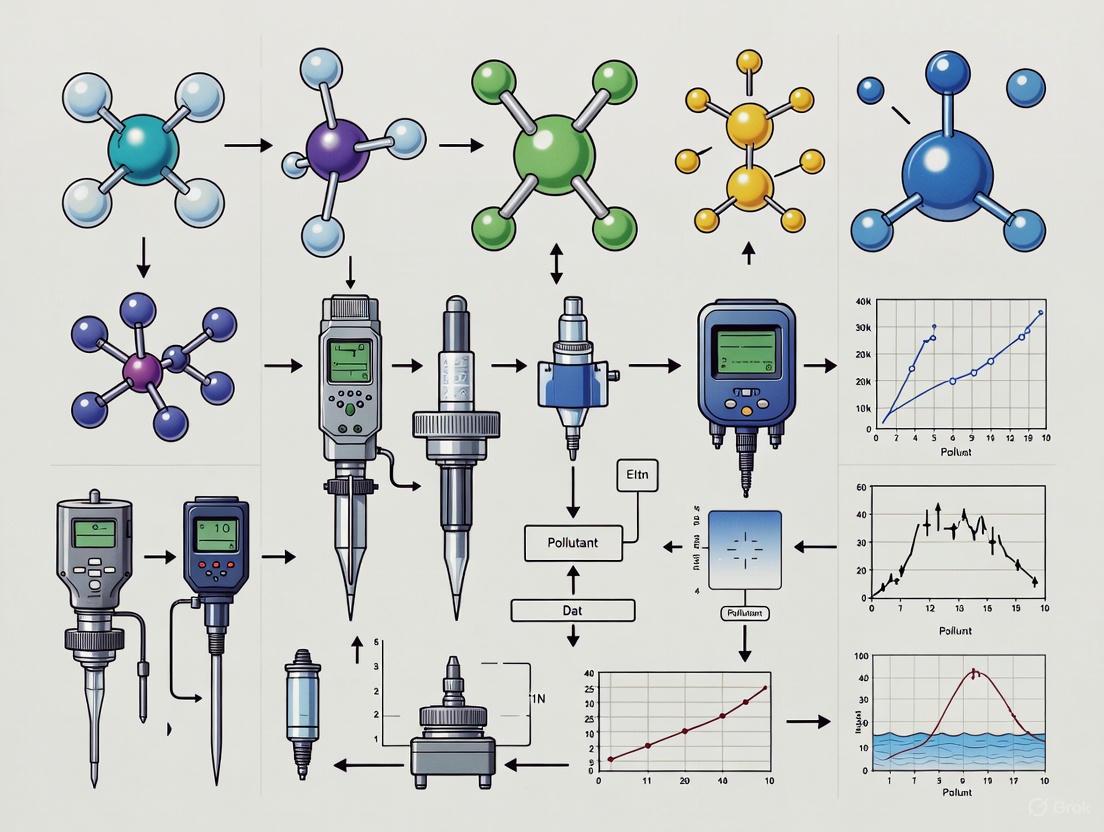
This article provides a comprehensive review of cutting-edge in-situ monitoring techniques for environmental pollutants, tailored for researchers, scientists, and drug development professionals.
Advances in In-Situ Monitoring of Environmental Pollutants: Real-Time Techniques for Public Health and Biomedical Research
Abstract
This article provides a comprehensive review of cutting-edge in-situ monitoring techniques for environmental pollutants, tailored for researchers, scientists, and drug development professionals. It explores the foundational principles driving the shift from traditional lab-based methods to real-time, on-site analysis. The scope spans from established methodologies like chemical sensors and biosensors to emerging technologies such as biomonitoring and big data integration. Critical challenges including sensor stability, data integration, and environmental variability are addressed, alongside a comparative analysis of technique validation. The synthesis underscores the profound implications of these advancements for ensuring environmental health, enhancing the reproducibility of biomedical research, and informing toxicological risk assessment in drug development.
The Critical Need for Real-Time Data: Foundational Principles of In-Situ Pollutant Monitoring
In the field of environmental pollutant research, the ability to accurately and timely assess contamination is paramount for public health protection and effective remediation strategies [1]. For decades, the standard approach has relied on traditional laboratory methods, which involve collecting physical samples from the field and transporting them to a central facility for analysis. While these methods are valuable for their sensitivity and accuracy, they are constrained by complex preparation, potential sample degradation, and significant delays between sampling and result availability [1] [2]. In contrast, in-situ monitoring represents a paradigm shift, enabling real-time, on-site measurement of pollutants directly within their environmental matrix. This Application Note defines in-situ monitoring, details its protocols, and systematically contrasts it with traditional laboratory analysis, providing researchers with a framework for selecting appropriate methodologies for environmental pollutant research.
Core Concepts and Definitions
In-Situ Monitoring
In-situ monitoring refers to the direct, on-site analysis of environmental samples—be it air, water, or soil—without the need for removal and transport to a centralized laboratory. This approach leverages field-portable instruments to gather data in real-time or near-real-time, providing immediate insight into environmental conditions [2]. A key application is the real-time tracking of dynamic processes, such as monitoring natural labile copper (Cu') during the growth of a marine diatom to understand its bioavailability [3].
Traditional Laboratory Methods
Traditional methods involve the collection of grab or composite samples from a field site, followed by their preservation, transportation, and subsequent processing in a controlled laboratory setting. These analyses often involve sophisticated, stationary instruments and require extensive sample preparation [2] [4]. They have historically been the foundation for regulatory compliance and environmental quality assessment.
Comparative Analysis: In-Situ vs. Laboratory Methods
The following table summarizes the fundamental differences between these two approaches, highlighting key operational and performance characteristics.
Table 1: Comparison of In-Situ Monitoring and Traditional Laboratory Methods
| Characteristic | In-Situ Monitoring | Traditional Laboratory Methods |
|---|---|---|
| Analysis Location | On-site, in the field [2] | Off-site, in a centralized laboratory [2] |
| Time to Results | Real-time or near-real-time [5] [2] | Delayed (hours to weeks) due to transport and queuing [6] |
| Sample Preparation | Minimal or none; direct measurement [2] | Extensive (e.g., preservation, extraction, purification) [4] |
| Spatial Resolution | High; enables dense, strategic sampling and mapping of plumes [2] | Lower; constrained by cost and logistics of sample collection [7] |
| Temporal Resolution | High; capable of continuous monitoring to capture dynamics [5] | Low; typically discrete snapshots in time [7] |
| Data Utility | Rapid decision-making, early warning systems, process control [5] [8] | Regulatory compliance, reference data, method development [4] |
| Cost Structure | Lower operational cost per data point; higher initial instrument investment [2] | High per-sample cost due to labor, preparation, and disposal [2] |
| Environmental Footprint | Greener; minimal reagent use and analytical waste [2] | Higher; generates significant solvent and consumable waste [2] |
| Key Limitations | Higher detection limits, potential field interferences, limited multiplexing [2] | Sample degradation during transport, poor temporal representation, high cost of dense sampling [7] [2] |
Experimental Protocols
Protocol for In-Situ Monitoring of Bioavailable Copper in Aquatic Systems
This protocol is adapted from recent research on monitoring natural labile copper (Cu') during the growth of marine diatoms [3].
Principle
A functionalized iridium-needle electrode (Ir-NE) is used for voltammetric determination. The electrode is coated with agarose gel (AG-gel) as a protective layer and gold nanoparticles (AuNPs) which provide excellent electro-catalytic capacity. This setup allows for separation-catalysis detection, offering high sensitivity and anti-biofouling capability for direct, real-time measurement in a complex culture medium [3].
Research Reagent Solutions & Essential Materials
Table 2: Key Reagents and Materials for In-Situ Copper Monitoring
| Item | Function/Brief Explanation |
|---|---|
| Iridium-needle electrode (Ir-NE) | Base sensor platform for voltammetric measurements. |
| Gold Nanoparticles (AuNPs) | Functional coating that enhances sensitivity via electro-catalytic activity. |
| Agarose Gel (AG-gel) | Forms a protective layer on the electrode, enhancing stability and lifespan while providing anti-biofouling properties. |
| Culture Medium | The environmental matrix (e.g., for marine diatom Phaeodactylum tricornutum). |
| Standard Cu' Solutions | Used for calibration and quantification of labile copper concentration. |
Workflow Diagram
The following diagram illustrates the sequential workflow for this in-situ monitoring experiment.
Step-by-Step Procedure
- Electrode Fabrication: Prepare the iridium-needle electrode (Ir-NE) substrate.
- Functionalization: Modify the electrode surface by depositing AuNPs followed by a coating of AG-gel. This enhances sensitivity, stability, and anti-biofouling properties [3].
- Calibration: Calibrate the functionalized electrode using standard solutions of labile copper (
Cu') in a matrix similar to the sample to establish a quantitative relationship. - In-Situ Deployment: Place the calibrated electrode directly into the culture medium containing the growing marine diatom (Phaeodactylum tricornutum).
- Real-Time Measurement: Initiate continuous or frequent voltammetric measurements to track changes in
Cu'concentration throughout the diatom's growth cycle. - Data Analysis: Correlate the measured
Cu'concentrations or theCu'/TdCuratio with algal cell density to assess copper bioavailability [3].
Protocol for Traditional Laboratory Analysis of Pollutants in Water
This generalized protocol is indicative of methods used for regulated compounds like PFAS (Per- and polyfluoroalkyl substances) in drinking water [4].
Principle
Solid-phase extraction (SPE) is used to isolate, concentrate, and purify target analytes from a large volume of water. The extracted analytes are then separated and quantified using liquid chromatography–tandem mass spectrometry (LC–MS/MS) [4].
Workflow Diagram
The multi-stage, time-intensive process for traditional laboratory analysis is outlined below.
Step-by-Step Procedure
- Field Sampling: Collect a representative water sample in a pre-cleaned container. Samples may be composited over time.
- Preservation & Transport: Chemically preserve the sample (e.g., by adjusting pH) to prevent degradation and ship it on ice to a certified analytical laboratory. This step can introduce a delay of days.
- Sample Preparation (SPE): In the laboratory, pass the water sample through a conditioned SPE cartridge to adsorb the target pollutants. The cartridge is then washed with solvents to elute the concentrated analytes. This process is time-consuming (can take "four hours to a day") and generates organic waste [4].
- Instrumental Analysis (LC-MS/MS): Inject the extract into the LC-MS/MS system. The liquid chromatography column separates the complex mixture, and the mass spectrometer identifies and quantifies the specific pollutants.
- Data Processing & Reporting: Analyze the raw data, apply quality control checks, and generate a formal report. The entire process from sampling to final result can take days to weeks.
The Scientist's Toolkit: Key Technology Enablers
The advancement of in-situ monitoring is driven by several key technologies that form the modern environmental scientist's toolkit.
Table 3: Key Enabling Technologies for Modern Environmental Monitoring
| Technology | Function/Brief Explanation | Key Feature |
|---|---|---|
| Field-Portable XRF | On-site elemental analysis of solids (e.g., soil, sediments) for heavy metals [2]. | Non-destructive; provides immediate results for site screening. |
| Portable GC-MS | On-site separation and identification of volatile organic compounds (VOCs) in air, water, and soil [2]. | Gold-standard identification in the field; crucial for emergency response. |
| Biosensors | Biological recognition element (e.g., enzyme, antibody) coupled to a transducer for specific pollutant detection [1]. | High specificity and potential for miniaturization. |
| IoT Sensors | Networks of small, connected sensors that transmit data wirelessly for real-time tracking of parameters like temperature, pH, and specific ions [8] [9]. | Enables large-scale, continuous monitoring networks. |
| Advanced Spectrometers | Portable versions of UV-Vis, NIR, and Raman spectrometers for on-site molecular analysis [2]. | Versatile for a range of organic and inorganic pollutants. |
The contrast between in-situ monitoring and traditional laboratory methods is stark, representing a trade-off between speed, spatial/temporal resolution, and operational cost versus the ultimate sensitivity and regulatory acceptance often associated with established lab techniques [1] [2]. In-situ monitoring is indispensable for dynamic risk assessment, rapid site characterization, and understanding real-world biogeochemical processes where timely data is critical. Traditional methods remain essential for validation, compliance with specific regulations, and analyzing complex mixtures at trace levels.
The future of environmental pollutant research lies in interdisciplinary approaches and the intelligent integration of these complementary methodologies [1] [7]. Field-based studies capture essential ecosystem feedbacks, while controlled laboratory experiments reveal underlying mechanisms. Bridging this divide, through techniques like data assimilation and the development of more robust and sensitive field instruments, will be crucial for comprehensive public health protection and environmental stewardship [7].
The increasing anthropogenic load on environmental systems has necessitated the development of advanced in-situ monitoring techniques for detecting and quantifying key pollutants. Heavy metals, volatile organic compounds (VOCs), pharmaceuticals, and emerging contaminants represent significant risks to ecosystem integrity and human health due to their persistence, toxicity, and bioaccumulative potential [10] [11]. Traditional laboratory-based analysis methods, while accurate, often lack the temporal and spatial resolution required for comprehensive environmental assessment, particularly given the complex dispersion patterns of these contaminants in aquatic systems [3] [10]. This application note synthesizes current methodologies and protocols for in-situ monitoring of these pollutant classes, framed within a research context emphasizing real-time detection, spatial analysis, and advanced sensing technologies. The integration of geographic information systems (GIS), nano-enabled sensors, and advanced spectroscopic methods is transforming environmental monitoring from a descriptive to a predictive, integrative framework for environmental governance [10].
Application Notes
The monitoring of heavy metals (HMs) in aquatic environments has evolved significantly through the integration of geographic information systems (GIS) and advanced sensing technologies. GIS applications enable the spatial assessment and management of HMs across multiple scales, from localized aquifers to regional hydrological systems [10].
Spatial Monitoring Framework: A typical GIS-based environmental assessment for heavy metals involves a multi-stage process: (1) collection of water samples and chemical analysis to quantify HM concentrations; (2) georeferencing using GPS coordinates; (3) system development and integration through GIS software with specialized hydrological applications; and (4) spatial analysis to identify high-risk areas and model contaminant dispersion [10]. Case studies demonstrate that concentrations of certain heavy metals frequently surpass World Health Organization (WHO) thresholds, posing substantial risks to human health and aquatic ecosystems [10].
In-situ Metal Speciation Monitoring: Beyond total metal concentration, understanding metal bioavailability requires speciation analysis. A novel iridium-needle electrode (Ir-NE) functionalized with agarose gel (AG-gel) and gold nanoparticles (AuNPs) has been developed for the real-time in-situ monitoring of natural labile copper (Cu') in marine environments [3]. This sensor successfully achieved real-time in-situ monitoring of Cu' in the culture medium of the marine diatom Phaeodactylum tricornutum, demonstrating that Cu' or the Cu' to total dissolved Cu ratio (Cu'/TdCu) may be a more accurate indicator of copper bioavailability to marine diatoms than total dissolved copper (TdCu) [3].
Table 1: Advanced Monitoring Technologies for Heavy Metals in Aquatic Systems
| Technology/Method | Key Features | Target Analytes | Spatial Application Scale |
|---|---|---|---|
| GIS-based Spatial Modeling [10] | Integration with statistical techniques, remote sensing, and machine learning; predictive capability | Multiple heavy metals (e.g., Pb, Cd, Hg, As) | Local aquifers to regional hydrological systems |
| Functionalized Electrodes (AG-gel/AuNPs/Ir-NE) [3] | In-situ, real-time monitoring; high sensitivity; anti-biofouling capability; measures metal speciation | Labile copper and other bioavailable metal species | Microenvironments (e.g., algal culture media, sediment-water interface) |
| Passive Sampling Devices [12] | Time-integrated data; accumulates trace metals over time; improves detection of low-concentration metals | Broad range of metal contaminants | Point sources (e.g., industrial outfalls, stormwater discharges) |
Volatile Organic Compounds (VOCs) as Diagnostic Tools
VOC detection has important applications in clinical diagnostics and environmental monitoring, with a marked shift toward sensor-based approaches that offer rapid, cost-effective, and non-invasive analysis [13] [14].
Clinical Diagnostics via Bacterial VOC Profiling: In clinical wound management, quantifying VOCs released by bacteria provides a promising, non-invasive method for early infection detection [13]. This approach allows for continuous monitoring without invasive procedures, reducing patient discomfort and infection risk. Sensor technologies, including array-based, nano, and microsensors, are particularly advantageous over conventional spectroscopy methods due to their rapidity, affordability, and precision [13]. These sensors detect specific VOC biomarkers associated with bacterial metabolism, enabling prompt intervention.
Advanced VOC Sensing Technologies: Conventional VOC detection techniques like gas chromatography-mass spectrometry (GC-MS) are being supplemented or replaced by advanced sensing devices based on optical, electrochemical, and chemoresistive materials [14]. These advanced sensors demonstrate significant potential for non-invasive early diagnosis and disease monitoring through exhaled breath analysis, without compromising the accuracy and specificity of conventional techniques [14].
Table 2: Comparison of Conventional and Advanced VOC Detection Techniques
| Technique Category | Example Techniques | Key Advantages | Primary Limitations |
|---|---|---|---|
| Conventional Methods [14] | Gas Chromatography-Mass Spectrometry (GC-MS), Proton-Transfer-Reaction Mass Spectrometry (PTR-MS), Selected-Ion Flow-Tube Mass Spectrometry (SIFT-MS) | High accuracy and specificity; gold standard for compound identification | Often laboratory-bound; time-consuming; expensive equipment; requires skilled operators |
| Advanced Sensing Approaches [13] [14] | Optical, Electrochemical, and Chemoresistive Sensors; Array-based, Nano, and Micro-sensors | Rapid, cost-effective, non-invasive, precise; potential for point-of-care and continuous in-situ monitoring | Ongoing development to match the full specificity and multi-analyte capability of conventional methods |
Pharmaceutical Residues and Emerging Contaminants
Pharmaceutical residues and other emerging contaminants (ECs) represent a growing environmental concern, as they often escape conventional wastewater treatment processes and pose risks of endocrine disruption and antimicrobial resistance (AMR) [15] [16] [11].
Global Occurrence and Risk: A global synthesis of data from 101 peer-reviewed publications evaluated the occurrence of 20 pharmaceuticals in sewage treatment plants (STPs) [15]. Analgesics/anti-inflammatory drugs were found at the highest cumulative concentrations, particularly in North and South America. Compounds such as diclofenac, ibuprofen, sulfamethoxazole, and ciprofloxacin were frequently detected at high concentrations, sometimes exceeding 100,000 ng/L in STP influent [15]. While ibuprofen and naproxen showed high removal efficiencies (>80%), compounds like diazepam, carbamazepine, azithromycin, and clindamycin demonstrated persistence through conventional treatment [15].
API Contamination Hotspots from Manufacturing: Although direct releases from pharmaceutical manufacturing account for only about 2% of the total pharmaceutical load in the environment, they can create significant local contamination "hotspots" due to high concentrations of active pharmaceutical ingredients (APIs) [16]. This is particularly relevant given the geographical concentration of API production in regions like India and China, where a significant proportion of watersheds face medium to high water stress and wastewater treatment infrastructure may be limited [16]. These point-source discharges are a noted contributor to environmental antibiotic resistance [16].
Beyond PFAS: The Next Generation of Emerging Contaminants: Regulatory and research focus is expanding beyond PFAS to include other classes of ECs [12] [11]. These include:
- Nanomaterials and Engineered Nanoparticles (e.g., fullerenes, metal oxides) with complex environmental behavior and potential for bioaccumulation [12] [11].
- Microplastics and Nanoplastics, which are ubiquitous in aquatic environments and can adsorb organic pollutants, facilitating their transport [12] [11].
- Persistent Additives and Novel Industrial Chemicals, such as flame retardants and plasticizers [12].
Table 3: Selected Pharmaceuticals in Global Wastewater and Their Removal Efficiency Data synthesized from 101 peer-reviewed publications on global pharmaceutical pollution [15]
| Pharmaceutical Compound | Therapeutic Class | Maximum Reported Influent Concentration (ng/L) | Typical Removal Efficiency in Conventional STPs |
|---|---|---|---|
| Diclofenac | Analgesic/Anti-inflammatory | >100,000 | Variable; often persistent |
| Ibuprofen | Analgesic/Anti-inflammatory | >100,000 | High (>80%) |
| Sulfamethoxazole | Antibiotic | >100,000 | Variable |
| Ciprofloxacin | Antibiotic | >100,000 | Moderate to High |
| Carbamazepine | Anticonvulsant | Data Not Specified | Low / Persistent (Negative Removal Observed) |
| Diazepam | Anxiolytic | Data Not Specified | Low / Persistent (Negative Removal Observed) |
Experimental Protocols
Protocol: In-situ Monitoring of Bioavailable Copper in Marine Microenvironments
Objective: To achieve real-time, in-situ monitoring of natural labile copper (Cu') during the growth of a marine diatom, Phaeodactylum tricornutum, using a functionalized iridium-needle electrode [3].
Principle: The protocol employs an agarose gel (AG-gel) and gold nanoparticle (AuNPs) modified iridium-needle electrode (AG-gel/AuNPs/Ir-NE). The AG-gel acts as a protective layer, enhancing stability and lifespan, while the AuNPs provide excellent electrocatalytic capacity for voltammetric determination. This setup enables a separation-catalysis detection mechanism that offers high sensitivity and anti-biofouling capability [3].
Diagram 1: In-situ Cu' Monitoring Workflow
Materials and Reagents:
- Iridium-needle electrode (Ir-NE) [3]
- Gold nanoparticle (AuNP) suspension (for electrode functionalization) [3]
- Agarose gel (AG-gel) (for protective coating) [3]
- Marine diatom Phaeodactylum tricornutum culture
- Synthetic or natural seawater culture medium
- Copper standard solutions for calibration
- Voltammetric analyzer (e.g., potentiostat)
Procedure:
Electrode Fabrication and Functionalization:
- Clean and polish the iridium-needle electrode substrate.
- Electrodeposit or drop-cast gold nanoparticles (AuNPs) onto the electrode surface to enhance electrocatalytic activity.
- Apply a thin, uniform layer of agarose gel (AG-gel) over the AuNPs-modified surface. This gel layer acts as a protective barrier, conferring anti-biofouling properties and enhancing electrode stability for long-term in-situ deployment [3].
- Validate electrode performance using standard copper solutions.
Experimental Setup and Deployment:
- Inoculate Phaeodactylum tricornutum in culture medium under controlled conditions (e.g., light, temperature).
- Calibrate the functionalized AG-gel/AuNPs/Ir-NE sensor in the culture medium prior to diatom inoculation.
- Immerse the validated sensor directly into the diatom culture vessel for in-situ monitoring.
Real-time Measurement and Data Acquisition:
- Conduct voltammetric measurements (e.g., square-wave anodic stripping voltammetry) at predetermined time intervals throughout the diatom growth period.
- Continuously record the voltammetric signals corresponding to the concentration of natural labile copper (Cu').
Data Analysis and Correlation:
- Convert the electrochemical signals into Cu' concentrations using the pre-established calibration curve.
- Periodically measure and record the cell density of P. tricornutum.
- Perform correlation analysis between the measured Cu' concentrations (and the Cu'/TdCu ratio) and the diatom cell density to assess the relationship between copper bioavailability and algal growth [3].
Protocol: GIS-Based Spatial Assessment of Heavy Metal Contamination
Objective: To monitor and manage heavy metal (HM) contamination in water resources by assessing spatial distribution patterns, identifying pollution hotspots, and evaluating associated environmental and health risks [10].
Principle: This protocol uses geographic information systems (GIS) to integrate, visualize, and analyze georeferenced data on heavy metal concentrations in water. It combines spatial analysis with statistical techniques and machine learning to model contamination and inform management decisions [10].
Diagram 2: GIS-Based HM Assessment Workflow
Materials and Software:
- GPS device for precise sample location logging
- Water sampling equipment (bottles, filters, preservatives)
- Analytical instrumentation (e.g., ICP-MS, AAS) for HM quantification
- GIS software (e.g., ArcGIS, QGIS)
- Spatial database management system
- (Optional) Hydrological modeling applications (e.g., HEC-RAS, SWMM) and statistical/ML software (e.g., R, Python) [10]
Procedure:
Data Collection and Georeferencing:
- Design a sampling strategy covering the water resource of interest (e.g., river, lake, aquifer).
- Collect water samples following standardized protocols, ensuring chain of custody.
- Analyze samples in the laboratory using validated methods (e.g., ICP-MS) to quantify concentrations of target heavy metals.
- Record the geographic coordinates (latitude/longitude) of each sampling point using a GPS device, creating a georeferenced dataset [10].
System Development and Integration:
- Input the georeferenced heavy metal data into the GIS software.
- Develop a spatial database incorporating additional relevant layers, such as land use (industrial, agricultural), hydrological features, soil types, and population density.
- Integrate specialized hydrological or hydraulic models if required for predicting contaminant transport [10].
Spatial Analysis and Modeling:
- Use GIS interpolation techniques (e.g., kriging, inverse distance weighting) to generate continuous spatial distribution maps (thematic maps) of individual heavy metal concentrations.
- Identify contamination hotspots by overlaying concentration data with regulatory thresholds (e.g., WHO limits).
- Perform statistical and machine learning analysis to correlate heavy metal concentrations with potential anthropogenic sources (e.g., proximity to industrial discharges, agricultural runoff) [10].
- Conduct health risk evaluations by modeling exposure pathways for nearby populations.
Visualization and Reporting:
- Create interactive maps, charts, and dashboards to effectively communicate findings.
- Synthesize results into a decision support system to provide actionable insights for environmental managers, policymakers, and public health authorities [10].
The Scientist's Toolkit: Research Reagent Solutions
Table 4: Essential Reagents and Materials for Pollutant Monitoring
| Research Reagent/Material | Function/Application | Key Characteristics |
|---|---|---|
| Gold Nanoparticles (AuNPs) [3] | Electrode functionalization for enhanced electrocatalytic detection of metals. | High surface-area-to-volume ratio; excellent conductivity; can be synthesized in controlled sizes. |
| Agarose Gel (AG-gel) [3] | Protective coating for in-situ electrodes; provides anti-biofouling properties. | Hydrophilic polymer; forms a porous, protective layer; enhances sensor stability and lifespan. |
| Passive Samplers (POCIS, Chemcatcher) [12] | Time-integrated sampling of trace organic contaminants (e.g., pharmaceuticals) from water. | Accumulates contaminants over time; provides a more representative picture of pollution levels than grab sampling. |
| Specialized GIS Software & Databases [10] | Platform for spatial data integration, analysis, and visualization of pollutant distribution. | Enables management of georeferenced data; supports advanced spatial analysis and modeling. |
| High-Resolution Mass Spectrometry (HRMS) [12] | Non-targeted screening for unknown emerging contaminants and transformation products. | High mass accuracy and resolution; enables identification of compounds not in standard target lists. |
| Reverse Osmosis (RO) & Nanofiltration Membranes [17] | Advanced treatment for removing micropollutants and salts from pharmaceutical wastewater. | High rejection rates for contaminants; key component in achieving high-purity water standards and Zero Liquid Discharge. |
Accurate detection and monitoring of environmental pollutants are paramount for effective public health initiatives and disease prevention [1]. The selection of sampling methodology is a critical determinant in data quality, influencing the reliability of risk assessments and the efficacy of mitigation strategies. For decades, grab sampling has been a conventional technique for environmental monitoring. However, its inherent limitations, particularly its inability to capture temporal variations in pollutant concentrations, have become increasingly apparent. This has created a significant demand for monitoring solutions that offer high temporal resolution, enabling researchers to observe dynamic changes and trends in contaminant levels over time [18]. This document outlines the core limitations of grab sampling, underscores the importance of temporal resolution, and provides detailed protocols for implementing advanced, continuous monitoring techniques.
Limitations of Grab Sampling
Grab sampling involves the collection of a discrete environmental sample (e.g., water, air) at a specific location and point in time. While modern systems offer improved safety and efficiency [19], the fundamental constraints of this method remain.
Core Technical and Methodological Constraints
- Snapshot-in-Time Data: Grab samples provide only a single data point, potentially missing short-term peaks, cyclical fluctuations, and transient pollution events that could be critical for risk assessment [20].
- Risk of Unrepresentative Data: The "snapshot" nature means concentrations can be highly susceptible to temporary conditions, leading to data that may not accurately represent average or worst-case exposure scenarios [21].
- Limited Scope for Identification: Grab sampling is poorly suited for non-targeted screening, as it may miss contaminants that are present intermittently. Studies show passive sampling can identify a higher number of contaminants, such as pharmaceuticals and pesticides, compared to grab sampling [20].
- Potential for Sample Degradation: Between sample collection and laboratory analysis, the integrity of the sample may be compromised through chemical or biological processes, despite preservation efforts [21].
- High Long-Term Costs: Although a single grab sample may seem inexpensive, the cumulative cost of numerous samples over time—reportedly ranging from $100 to $1,000 per sample for off-site analysis—can be substantial, especially for long-term monitoring programs [21].
Comparative Analysis: Grab vs. Passive Sampling
The following table summarizes a key study comparing grab and passive sampling techniques for identifying contaminants of emerging concern (CECs) in wastewater effluent (WWE) and river water.
Table 1: Comparative performance of grab and passive sampling in a non-target screening study [20].
| Parameter | Grab Sampling | Passive Sampling |
|---|---|---|
| Total Compounds Identified (WWE) | Lower (e.g., missed 5 compounds found by passive samplers) | Higher (85 compounds identified) |
| Total Compounds Identified (River Water) | Variable (17-24, depending on date) | More consistent (47 compounds identified) |
| Ion Abundance / Signal Quality | Lower, leading to poorer quality MS2 spectra | Higher, providing better quality MS2 spectra for identification |
| Isotopic Pattern Match | Poorer (e.g., <80% for some compounds) | Superior (e.g., 4 out of 4 isotopes present) |
| Number of Fragments in MS2 | Lower | Higher |
| Susceptibility to Concentration Fluctuations | High | Low (integrates over time) |
The Critical Need for Temporal Resolution
Temporal resolution refers to the frequency at which measurements are taken over time. High temporal resolution is crucial for understanding the dynamics of environmental systems.
Impact on Modeling Accuracy
Research demonstrates that incorporating temporal dependencies significantly enhances the predictive accuracy of air pollution models. A 2025 study on urban air pollution modeling found that including temporal lag features (autocorrelation) dramatically improved model performance [18].
Table 2: Impact of temporal autocorrelation on machine learning model performance for predicting pollutant concentrations [18].
| Pollutant | Model Scenario | RMSE (µg/m³) | Performance Change |
|---|---|---|---|
| PM₁₀ | Without temporal lags | 92.56 | - |
| With temporal lags (AR) | 68.59 | 25.9% RMSE Reduction | |
| PM₂.₅ | Without temporal lags | 61.10 | - |
| With temporal lags (AR) | 37.30 | 38.9% RMSE Reduction | |
| NOx | Without temporal lags | 7.90 | - |
| With temporal lags (AR) | 12.10 | 53.2% RMSE Increase |
The pollutant-specific nature of these results—where temporal data benefited PM predictions but not NOx—underscores the need for a tailored, resolution-aware modeling strategy [18].
Benefits for Public Health and Policy
High temporal resolution data provides a robust foundation for evidence-based decision-making, enabling:
- Refined Public Health Advisories: Real-time data allows for dynamic health warnings, such as during acute pollution events.
- Effective Source Attribution: Identifying patterns in pollution levels helps pinpoint specific sources and their operational timelines.
- Optimized Remediation Efforts: Continuous monitoring can assess the real-time effectiveness of cleanup actions, allowing for immediate adjustments.
- Comprehensive Risk Assessment: Capturing peak exposures and cumulative doses leads to more accurate evaluations of human and ecological health risks.
Experimental Protocols for Advanced Temporal Monitoring
Protocol: Non-Target Screening with Passive Samplers and HRMS
This protocol is adapted from methodologies used to identify pharmaceuticals, pesticides, and their transformation products in water [20].
1. Sampling Deployment
- Materials: Passive sampling devices (e.g., POCIS), grab sample bottles, field filters, coolers, chain-of-custody forms.
- Procedure:
- Deploy passive samplers in the water body for a defined period (e.g., 14 days).
- In parallel, collect grab samples at the time of deployment and retrieval.
- Record in-situ parameters (pH, temperature, dissolved oxygen).
- Store samples on ice and transport to the laboratory promptly for analysis.
2. Sample Preparation and Analysis
- Materials: Liquid Chromatography system coupled to a High-Resolution Mass Spectrometer (LC-HRMS), solid phase extraction (SPE) apparatus, analytical standards.
- Procedure:
- Extraction: Process passive samplers and grab samples using SPE to concentrate analytes.
- Instrumental Analysis: Analyze extracts using LC-HRMS in Data-Dependent Acquisition (DDA) mode. Use a C18 column with a water/acetonitrile gradient elution.
- Quality Control: Include procedural blanks and quality control samples spiked with internal standards.
3. Data Processing and Compound Identification
- Materials: HRMS data processing software, spectral libraries (e.g., mzCloud, NIST).
- Procedure:
- Process raw HRMS data to perform peak picking, alignment, and deconvolution.
- Identify compounds by matching acquired MS2 spectra to spectral libraries (Level 2a identification) [20].
- Increase confidence by employing retention time prediction models where possible.
- For final confirmation, analyze authentic analytical standards (Level 1 identification).
Protocol: In-Situ Monitoring with Micro-Chemical Sensors
This protocol outlines the use of in-situ sensors for real-time monitoring of volatile organic compounds (VOCs) [21].
1. Sensor System Deployment
- Materials: Chemiresistor sensor array in a waterproof housing, data logging system, power supply, deployment fixture.
- Procedure:
- Calibrate the sensor array in the laboratory using training sets of target VOCs to establish a response pattern library.
- Emplace the sensor package in the subsurface or water column using a dedicated well or deployment fixture.
- Connect to a power source and data logger configured for continuous or frequent intermittent measurement.
2. Data Acquisition and Transmission
- Materials: Remote data transmission hardware (e.g., cellular or satellite modem).
- Procedure:
- Program the data logger to record electrical resistance measurements from each chemiresistor at set intervals (e.g., every 15 minutes).
- Transmit data in near real-time to a central server for access and analysis.
3. Data Analysis and Contaminant Characterization
- Materials: Data analysis software with pattern recognition capabilities, contaminant transport models.
- Procedure:
- Analyze the time-dependent resistance data using pattern recognition algorithms to identify and quantify specific VOCs based on the calibration training set.
- Use the temporal data series in inverse modeling with contaminant transport models to characterize the source location and composition.
Visualization of Methodologies
Workflow for Advanced Pollutant Monitoring
In-Situ Chemiresistor Sensing Mechanism
The Scientist's Toolkit: Essential Research Reagents and Materials
Table 3: Key materials and reagents for advanced environmental pollutant monitoring.
| Item | Function/Application |
|---|---|
| Passive Samplers (e.g., POCIS) | Time-integrative sampling of hydrophilic contaminants from water; provides a cumulative picture of exposure over deployment period [20]. |
| Chemiresistor Sensor Array | In-situ, real-time detection of VOCs; consists of polymers that swell upon VOC exposure, changing electrical resistance [21]. |
| LC-HRMS System | High-confidence identification of unknown pollutants and transformation products through accurate mass measurement and structural fragmentation [20]. |
| Discrete Interval Sampler | Collects no-purge, discrete groundwater samples from specific depths without agitation, preserving sample integrity for VOCs [22]. |
| Solid Phase Extraction (SPE) Cartridges | Concentration and clean-up of water samples prior to instrumental analysis, improving detection limits for trace-level pollutants [20]. |
| Deuterated Internal Standards | Correction for matrix effects and analyte loss during sample preparation and analysis, improving quantitative accuracy in mass spectrometry [20]. |
| Authentic Analytical Standards | Unambiguous confirmation of contaminant identity (Level 1 identification) and instrument calibration for quantitative analysis [20]. |
In-situ monitoring techniques provide critical, real-time data on environmental pollutants, serving as a foundational element for public health initiatives, quantitative risk assessment, and targeted disease prevention strategies. The ability to detect and measure contaminants directly in the environment enables a proactive approach to safeguarding human health. These monitoring data feed directly into the public health intervention model, which is structured across multiple tiers of prevention—from primordial efforts aimed at eliminating risk factors from populations to tertiary measures that manage established chronic diseases [23]. This document outlines detailed protocols and applications for leveraging in-situ monitoring within this public health framework, providing researchers and scientists with the methodologies to translate environmental data into actionable health protections.
Public Health Frameworks and the Role of Environmental Monitoring
Public health interventions are systematically categorized into several levels of prevention, each representing a different stage for applying strategies to avoid or mitigate disease. The continuous, real-time data provided by advanced in-situ monitoring technologies are vital for informing actions at every stage [24] [23].
Levels of Prevention and Corresponding Monitoring Applications
The table below delineates how in-situ monitoring data directly supports interventions at each stage of prevention.
Table 1: Linking In-Situ Monitoring Data to Levels of Prevention
| Level of Prevention | Goal of Intervention | Application of In-Situ Monitoring Data |
|---|---|---|
| Primordial [23] | Establish conditions that minimize future health risks for entire populations. | Identifying geographic areas with high baseline levels of air or water pollutants (e.g., PM2.5, heavy metals) to inform land-use planning and environmental policies. |
| Primary [23] | Reduce or eliminate risk factors in healthy individuals to prevent disease onset. | Triggering public health advisories (e.g., air quality alerts) to warn susceptible populations to reduce exposure during high-pollution events. |
| Secondary [23] | Detect and treat existing disease in its earliest, often asymptomatic, stages. | Pinpointing hotspots of known contaminants (e.g., carcinogens) to target community-level health screening programs for early detection of related illnesses. |
| Tertiary [23] | Manage established chronic disease to prevent complications and disability. | Tracking compliance with environmental regulations in areas with vulnerable populations (e.g., those with pre-existing heart or lung disease) to prevent exacerbations. |
Protocol: Human Health Risk Assessment Informed by In-Situ Data
The following protocol is adapted from the United States Environmental Protection Agency's (EPA) framework for conducting a Human Health Risk Assessment (HHRA) [25]. It integrates specific methodologies for utilizing in-situ monitoring data at each step to enhance the assessment's accuracy and relevance.
Planning and Scoping
Objective: To define the purpose, scope, and technical approach of the risk assessment.
- Key Activities:
- Identify the Population at Risk: Determine if the assessment will focus on the general population, sensitive lifestages (e.g., children, pregnant women), or highly exposed subgroups [25].
- Define the Environmental Hazard of Concern: Select the specific chemical, radiation, or biological pollutant to be assessed. In-situ monitoring is crucial for identifying the contaminants most prevalent in the area of interest [25] [26].
- Delineate the Exposure Scenario: Identify potential exposure pathways (air, water, soil) and routes (inhalation, ingestion, dermal contact) using local environmental data from sensors [25].
Step 1: Hazard Identification
Objective: To determine whether exposure to a stressor can cause an increase in the incidence of specific adverse health effects and characterize the quality of the evidence [25].
- Experimental Protocol:
- Data Collection: Gather evidence from:
- Epidemiological Studies: Statistical evaluations of human populations to find associations between exposure and effect. In-situ data provides critical, spatially-resolved exposure information that strengthens these studies [25].
- Toxicological Studies: Data from controlled animal studies (e.g., on rats, mice) are used to infer potential human hazard when human data is unavailable [25].
- Mode of Action (MoA) Analysis: Evaluate the sequence of key biological events, from cellular interaction to the adverse health outcome (e.g., cancer formation) [25].
- Weight of Evidence (WOE) Characterization: Synthesize all data to assign a qualitative descriptor (e.g., "Carcinogenic to humans," "Suggestive evidence of carcinogenic potential") to the stressor [25].
- Data Collection: Gather evidence from:
Step 2: Dose-Response Assessment
Objective: To quantify the relationship between the dose of a stressor and the probability or severity of the associated adverse health effect [25].
- Experimental Protocol & Data Analysis:
- Critical Effect Selection: Review all studied effects and select the adverse effect (or its precursor) that occurs at the lowest dose as the basis for risk assessment [25].
- Data Modeling: Fit mathematical models to the experimental dose-response data. The choice of model depends on the MoA:
- Linear Model: Often used for carcinogens, assuming no safe threshold.
- Non-Linear Model (e.g., Threshold): Used for non-cancer effects, identifying a dose below which no adverse effect is expected.
- Point of Departure (POD) Identification: Determine the dose level from the data that corresponds to a low, measurable effect (e.g., a Benchmark Dose). The POD is then extrapolated to estimate risk at lower, environmentally relevant exposure levels measured by in-situ monitors [25].
Table 2: Key Dose-Response Metrics and Calculations
| Metric | Definition | Application in Risk Assessment |
|---|---|---|
| Benchmark Dose (BMD) | A statistical lower confidence limit for a dose that produces a predetermined change in response rate (e.g., 10% effect). | Used as the Point of Departure (POD) for extrapolation to human exposure levels, providing a more robust alternative to the No-Observed-Adverse-Effect-Level (NOAEL). |
| Reference Dose (RfD) | An estimate (with uncertainty spanning an order of magnitude) of a daily oral exposure to the human population that is likely to be without risk of deleterious effects. | Calculated as RfD = POD / (Uncertainty Factors). Used to assess non-cancer risks from chronic exposure. |
| Cancer Slope Factor (SF) | An upper-bound estimate of risk per unit intake of a chemical over a lifetime (mg/kg/day). | Used to estimate cancer risk: Risk = Exposure (mg/kg/day) × SF. A risk of 1E-6 indicates a 1 in 1,000,000 chance of developing cancer. |
Step 3: Exposure Assessment
Objective: To estimate the magnitude, frequency, duration, and route of exposure for the defined population [25]. This is the stage where in-situ monitoring directly feeds into the quantitative risk assessment.
- Experimental Protocol:
- Environmental Concentration Measurement: Deploy in-situ monitoring technologies (e.g., electrochemical biosensors for heavy metals, low-cost sensor pods for particulate matter) in relevant media (air, water, soil) to collect real-time concentration data [24] [26].
- Exposure Factor Evaluation: Collect data on human behavior patterns:
- Inhalation rates
- Ingestion of water and food
- Time-activity patterns (e.g., time spent outdoors)
- Body weight
- Exposure Calculation: Combine concentration and exposure factor data to estimate average daily dose (ADD).
- Formula:
ADD = (C × IR × EF × ED) / (BW × AT) - Where: C = Concentration (from monitoring), IR = Intake Rate, EF = Exposure Frequency, ED = Exposure Duration, BW = Body Weight, AT = Averaging Time.
- Formula:
Step 4: Risk Characterization
Objective: To integrate information from hazard identification, dose-response assessment, and exposure assessment to estimate the likelihood and severity of adverse health effects in the population [25].
- Data Analysis and Synthesis:
- Risk Estimation:
- For Non-Cancer Effects: Calculate the Hazard Quotient (HQ).
HQ = ADD / RfD. An HQ > 1 indicates potential for adverse effects. - For Cancer Effects: Calculate excess cancer risk.
Risk = ADD × SF.
- For Non-Cancer Effects: Calculate the Hazard Quotient (HQ).
- Uncertainty and Variability Analysis: Describe major sources of uncertainty (e.g., animal-to-human extrapolation) and population variability.
- Risk Communication: Summarize the findings, assumptions, and public health implications in a clear, transparent manner for risk managers and stakeholders.
- Risk Estimation:
The following workflow diagram illustrates the integrated process of a Human Health Risk Assessment driven by in-situ monitoring.
The Scientist's Toolkit: Research Reagent Solutions & Essential Materials
The following table details key reagents, materials, and technologies essential for conducting in-situ environmental monitoring and the associated public health research.
Table 3: Essential Research Tools for In-Situ Monitoring and Health Analysis
| Item / Technology | Function / Application |
|---|---|
| Whole-Cell Biosensors [26] | Genetically modified microorganisms that produce a measurable signal (e.g., light, fluorescence, electric current) in response to specific pollutants (e.g., hydrocarbons, heavy metals) or general toxicity. |
| Electrochemical Sensors [26] | Compact devices that measure electrical changes (current, potential) induced by chemical reactions with target pollutants. Ideal for in-situ measurements due to their portability and adaptability for on-line systems. |
| Low-Cost Sensor Pods (IoT) [24] | Networks of compact, often wireless, sensors that measure parameters like particulate matter (PM), ozone (O₃), and nitrogen dioxide (NO₂) at high spatial density, enabling community-level exposure assessment. |
| Reference Materials & Standards [24] [27] | Certified materials with known concentrations of pollutants, used for calibrating monitoring equipment and ensuring the quality and reliability (Quality Assurance/Quality Control) of generated data. |
| Data Standards (e.g., from E-Enterprise) [27] [28] | Common formats and definitions for environmental data elements. They ensure consistency, improve public access, and allow for seamless data sharing and integration across agencies and platforms. |
| Quality Control (QC) Samples [24] | Duplicate samples, blanks, and spikes processed alongside field samples to monitor precision, accuracy, and potential contamination during sample collection and analysis. |
Case Study: UCMR - A Regulatory Application of Monitoring Data
The Unregulated Contaminant Monitoring Rule (UCMR) program by the U.S. EPA is a prime example of a systematic, national-level public health initiative driven by environmental monitoring data [29].
- Objective: To collect nationwide occurrence data for contaminants suspected to be present in drinking water but lacking health-based standards. This data directly supports the EPA Administrator's decision on whether to regulate a contaminant [29].
- Protocol and Workflow:
- Contaminant Selection: Contaminants are prioritized from the Contaminant Candidate List (CCL) based on health effects information (e.g., carcinogenicity), public interest (e.g., PFAS), and the availability of a validated analytical method [29].
- Mandated Monitoring: Nationwide public water systems (PWSs) are required to collect water samples and analyze them for the list of UCMR contaminants. The program includes all large PWSs and a representative sample of small PWSs [29].
- Data Management and Analysis: All analytical results are stored in a National Contaminant Occurrence Database (NCOD). EPA uses this data to determine the frequency and levels of exposure across the U.S. population [29].
- Public Health Impact: The UCMR provides the critical occurrence data needed to make science-based regulatory decisions, ultimately protecting public health by identifying and controlling emerging drinking water contaminants [29].
On the Front Lines: A Guide to Current In-Situ Monitoring Technologies and Their Applications
Chemical sensor arrays, particularly those based on chemiresistors, have emerged as powerful tools for the in-situ monitoring of environmental pollutants, offering a robust solution for real-time, on-site detection of Volatile Organic Compounds (VOCs) [21]. These systems are crucial for characterizing contaminated sites, such as those regulated by the Superfund program or containing underground storage tanks, where traditional laboratory analyses are often prohibitively expensive and time-consuming [21].
The fundamental operating principle of a chemiresistor is a change in electrical resistance upon exposure to a target chemical analyte. A typical chemiresistor is fabricated by depositing a sensing material—often a polymer composite mixed with conductive carbon particles—onto electrode structures [21]. When VOC molecules interact with the sensing film, they are absorbed, causing the film to swell physically. This swelling increases the average distance between the conductive particles within the composite, thereby reducing the number of electrical pathways and increasing the overall electrical resistance of the film [21]. This process is fully reversible; upon removal of the VOC, the polymer desorbs the analyte, shrinks back to its original state, and the electrical resistance returns to its baseline value. The core mechanism of a chemiresistor is illustrated below.
The unique power of this technology lies in the use of a sensor array comprising multiple chemiresistors, each coated with a slightly different sensing material (e.g., different polymers). This creates a unique "fingerprint" response pattern for different VOCs or mixtures, enabling sophisticated pattern recognition algorithms to identify and quantify specific pollutants with high accuracy [21] [30].
Experimental Protocols
Protocol for Fabrication of a Polymer-Composite Chemiresistor Array
This protocol details the creation of a basic chemiresistor array for VOC detection, suitable for laboratory validation and field deployment in environmental monitoring [21].
- Objective: To fabricate a multi-element chemiresistor array using polymer-carbon composite sensing films.
- Summary: An "ink" is prepared by dispersing conductive carbon particles within a polymer solution. This ink is precisely deposited onto a micro-fabricated electrode array, forming the core sensing elements.
Materials & Equipment:
- Substrate with patterned electrode array (e.g., gold or platinum interdigitated electrodes on silicon or alumina).
- Non-conductive polymer(s) (e.g., Polyepichlorohydrin, Polyisobutylene, Polysiloxane derivatives).
- Conductive carbon black particles.
- Suitable solvent (e.g., Tetrahydrofuran, Toluene, Cyclohexane).
- Precision micro-syringe or automated deposition system.
- Analytical balance.
- Ultrasonic bath.
- Vacuum oven or controlled hotplate.
Step-by-Step Procedure:
- Ink Formulation: For each unique polymer type, prepare a sensing ink. Dissolve the selected polymer in the solvent at a concentration of 1-5% (w/w). Subsequently, add conductive carbon black at a ratio of 1:2 to 1:4 (carbon:polymer, w/w) to the solution. Sonicate the mixture for 30-60 minutes to ensure homogeneous dispersion.
- Sensor Deposition: Mount the electrode array substrate securely. Using a micro-syringe or automated dispenser, deposit a small, controlled volume (typically 0.1 - 1 µL) of a specific polymer-carbon ink onto the active area of individual electrode pairs. Repeat this process, using a different polymer-based ink for each sensor element to create a diverse array.
- Film Curing: Place the deposited array in a vacuum oven or on a hotplate at a mild temperature (e.g., 40-60°C) for 1-2 hours. This step evaporates the solvent, leaving behind a stable, cross-linked polymer-carbon composite film.
- Baseline Stabilization: Before first use, condition the sensor array by exposing it to a stream of dry, purified air or nitrogen for several hours while monitoring the resistance signals. This ensures stable baseline readings.
Protocol for Field Deployment and In-Situ Monitoring of VOCs
This protocol outlines the procedure for deploying a packaged chemiresistor array for subsurface VOC monitoring, a key application in environmental remediation and public health protection [21].
- Objective: To deploy a chemiresistor array for long-term, in-situ characterization of VOC contaminants in the vadose zone.
- Summary: The sensor array is housed in a specialized, waterproof package and installed in a monitoring well to provide real-time data on VOC presence and concentration.
Materials & Equipment:
- Packaged chemiresistor array (e.g., housed in a stainless-steel package with a gas-permeable membrane).
- Data acquisition system with remote communication capabilities (e.g., cellular or satellite modem).
- Power supply (e.g., battery with solar panel).
- Groundwater monitoring well for vadose zone access.
- Calibrated gas standards for field validation.
Step-by-Step Procedure:
- Pre-Deployment Calibration: Prior to deployment, perform a laboratory calibration of the sensor array. Expose the array to known concentrations of target VOCs (e.g., TCE, benzene, toluene) to generate a "training set" of response patterns. Use this data to train a pattern recognition model (e.g., Principal Component Analysis or machine learning classifier) [21] [31].
- Sensor Emplacement: Lower the packaged sensor array into the monitoring well to the desired depth within the vadose zone. Seal the well head to prevent atmospheric interference and secure the associated data and power cables.
- System Activation: Power on the data acquisition system. Initiate continuous or periodic resistance measurements from all sensors in the array. The system should transmit data to a central server at predefined intervals.
- Data Analysis & Validation: Monitor incoming data streams remotely. The trained pattern recognition model will automatically process the array's fingerprint responses to identify detected VOCs and estimate their concentrations. Periodically validate sensor readings by comparing them with concurrent soil-gas sample analyses performed via traditional laboratory methods (e.g., Gas Chromatography-Mass Spectrometry).
The overall workflow, from sensor response to data interpretation, is summarized below.
Performance Data and Analysis
The performance of a chemiresistor array is characterized by its sensitivity, selectivity, and stability. The following tables consolidate key quantitative data from sensor array studies [32] and list commonly targeted VOCs in environmental monitoring [21].
Table 1: Representative Performance of a Chemiresistor Array for Gas Discrimination (Adapted from UCSD Dataset) [32]
| Target Gas | Concentration Range (ppmv) | Typical Classification Accuracy* | Key Features for Identification | ||
|---|---|---|---|---|---|
| Ethanol | 5 - 1000 | Up to 99.8% | Characteristic response pattern across 16 sensors with 128 features. | ||
| Ethylene | 5 - 1000 | Up to 99.8% | Distinct fingerprint from steady-state and transient response features. | ||
| Ammonia | 5 - 1000 | 100% | Unique dynamic response (exponential moving average features). | ||
| Acetaldehyde | 5 - 1000 | 100% | Specific normalized resistance change ( | ΔR | ) pattern. |
| Acetone | 5 - 1000 | Up to 99.5% | Identified via combined steady-state and decay transient features. | ||
| Toluene | 5 - 1000 | Up to 99.7% | Recognized by its unique multi-sensor fingerprint. |
Note: Accuracy achieved using trained classifiers (e.g., SVM) on a 128-dimensional feature vector under controlled conditions.
Table 2: Common VOC Targets in Environmental Monitoring and Their Sources [21]
| Volatile Organic Compound (VOC) | Class | Typical Environmental Sources |
|---|---|---|
| Trichloroethylene (TCE) | Halogenated Hydrocarbon | Industrial solvent, metal degreaser, groundwater contaminant. |
| Benzene | Aromatic Hydrocarbon | Petroleum products, industrial chemical production. |
| Toluene, Xylene | Aromatic Hydrocarbon | Gasoline, solvents, paints, thinners. |
| Carbon Tetrachloride (CT) | Halogenated Hydrocarbon | Former solvent, refrigerant, precursor in chemical production. |
| Chloroform | Halogenated Hydrocarbon | By-product of water chlorination, solvent. |
| Hexane, Octane | Aliphatic Hydrocarbon | Gasoline, petroleum solvents. |
The Scientist's Toolkit: Research Reagents and Materials
Table 3: Essential Materials for Chemiresistor Array Development and Deployment
| Item | Function / Application |
|---|---|
| Interdigitated Electrode (IDE) Arrays | Provides the foundational transducer platform; the comb-like structure maximizes contact area with the sensing film for sensitive resistance measurements. |
| Diverse Polymer Libraries | Creates cross-reactive sensor arrays. Different polymers (e.g., polysiloxanes, polyethers) swell to different extents for various VOCs, generating unique fingerprint patterns. |
| Conductive Carbon Black | The conductive filler in the composite; its dispersion within the polymer matrix forms a percolation network whose resistance is modulated by polymer swelling. |
| Volatile Organic Compound Standards | Used for calibrating sensor arrays and generating training sets. High-purity standards are essential for developing accurate quantification and classification models. |
| Data Acquisition System with Multi-Channel Readout | Simultaneously measures and records resistance changes from all sensors in the array, enabling real-time fingerprint capture. |
| Stainless-Steel Sensor Package with Gas-Permeable Membrane | Protects the delicate sensor elements from harsh subsurface environments (e.g., moisture, soil) while allowing target VOCs to diffuse to the sensing films [21]. |
| Pattern Recognition Software | The analytical brain of the system. Uses algorithms (e.g., PCA, LDA, machine learning) to decode the complex fingerprint data from the array for VOC identification and concentration estimation [31]. |
The sustainable monitoring of environmental pollutants requires rapid, sensitive, and on-site screening techniques. Biosensors that incorporate whole-cell bioreporters, such as naturally bioluminescent bacteria, represent a promising technological solution for the rapid toxicity assessment of water samples [33]. These sensors leverage the physiological response of living organisms to provide a biologically relevant measure of toxicity, complementing conventional chemical analysis.
The bacterium Aliivibrio fischeri is a well-established bioreporter for toxicological studies. Its bioluminescence, a result of the enzymatic activity of luciferase encoded by the lux operon, is directly tied to cellular metabolic health [33]. When exposed to toxic substances, the metabolic disruption leads to a measurable decrease in light output, providing a rapid and functional measure of toxicity. Traditional methods based on A. fischeri (e.g., ISO 11348) require laboratory infrastructure and skilled personnel. Recent advances have successfully transitioned this assay into a portable, sustainable paper biosensor format, integrating sample analysis with smartphone-based detection and artificial intelligence (AI) for data interpretation, thus enabling effective in-situ monitoring [33].
Application Notes
This section outlines the core principles and performance data of the luminescent bacterial biosensor for toxicity screening.
Operating Principle
The biosensor operates on the principle of toxicity-induced quenching of bioluminescence. The A. fischeri bacteria are immobilized in a hydrogel matrix on a paper substrate. In the presence of a toxicant, the cellular metabolism is compromised, leading to a reduction in the synthesis of the luciferase enzyme or its substrates (FMNH2 and a long-chain aldehyde). This results in a dose-dependent decrease in bioluminescence intensity, which is captured using a smartphone camera and quantified by a dedicated AI application [33].
Analytical Performance
The performance of the A. fischeri paper biosensor was evaluated against several classes of environmental contaminants. The following table summarizes its sensitivity for key pollutants.
Table 1: Analytical performance of the A. fischeri paper biosensor for selected contaminants.
| Contaminant | Class | Limit of Detection (LOD) |
|---|---|---|
| Microcystin-LR | Cyanotoxin | 0.23 ppb [33] |
| Sodium Hypochlorite (NaClO) | Disinfectant | 0.1 - 4.0 ppm (tested range) [33] |
| 3,5-Dichlorophenol | Organochlorine | 1.0 - 6.0 ppm (tested range) [33] |
| Lead (from Lead Nitrate) | Heavy Metal | 5.0 - 100 ppb (tested range) [33] |
The biosensor has been successfully applied to the analysis of real water samples, including tap water and industrial wastewater, showing promising results for on-site screening applications [33]. The integration of an on-board calibration curve and an AI-powered application allows for accurate quantification and minimizes interferences from varying smartphone camera resolutions [33].
Experimental Protocols
Biosensor Fabrication and Assay Procedure
Below is the detailed methodology for fabricating the paper biosensor and performing the toxicity assay.
Protocol: Fabrication of the Bioluminescent Paper Biosensor and Toxicity Assay
Principle: Immobilize Aliivibrio fischeri in an agarose hydrogel on a wax-patterned paper support to create a ready-to-use biosensor for toxicity screening based on bioluminescence quenching.
Research Reagent Solutions and Essential Materials:
Table 2: Key research reagents and materials.
| Item | Function/Specification |
|---|---|
| Aliivibrio fischeri | Naturally bioluminescent bioreporter strain (e.g., strain from Prof. Stefano Girotti) [33]. |
| Whatman 1 CHR paper | Cellulose chromatography paper used as the support for the biosensor [33]. |
| Lysogeny Broth (LB) Medium | Culture medium for growing A. Fischeri, supplemented with high salinity (30 g/L NaCl) [33]. |
| Agarose | Polysaccharide used to form a hydrogel matrix for bacterial entrapment (0.5% w/v final concentration) [33]. |
| Wax Printer | (e.g., Phaser 8400 office) Used to create hydrophobic barriers on the paper, defining hydrophilic wells [33]. |
| Cardboard Dark Box | Used during signal acquisition to eliminate ambient light interference [33]. |
| Smartphone with AI App | (e.g., OnePlus 6T) Equipped with a custom application (e.g., "Scentinel") for image capture and data analysis [33]. |
Procedure:
Sensor Design and Fabrication:
- Design a circular flower-like pattern with one central and six peripheral hydrophilic wells (5 mm diameter) using presentation software (e.g., PowerPoint).
- Print the pattern onto Whatman paper using a wax printer.
- Heat the printed paper at 150°C for 1 minute to allow the wax to penetrate and form hydrophobic barriers.
- Seal the back of the sensor with adhesive tape to prevent leakage [33].
Bacterial Culture and Immobilization:
- Culture A. fischeri in LB medium with high salinity at 19°C with orbital shaking (140 rpm) until the optimal cell density is reached (OD600 ~5.0) [33].
- Prepare a 3% (w/v) agarose solution in sterile water by heating.
- Cool the agarose solution to approximately 60°C.
- Mix 80 μL of the 3% agarose with 420 μL of the bacterial suspension (OD600 = 5.0). The final mixture will be approximately 0.5% (w/v) agarose and at a suitable temperature (~30°C) for the cells [33].
- Immediately pipette 20 μL of the bacteria-agarose mixture into each hydrophilic well of the paper sensor.
- Allow the hydrogel to solidify by equilibrating the sensor at room temperature (25°C) for 30 minutes. The biosensor is now ready for use [33].
Toxicity Assay Execution:
- Dispense a 30 μL volume of standard solution (for calibration) or the unknown water sample into the respective wells.
- Incubate the sensor at room temperature for 15 minutes.
- Place the sensor inside a cardboard dark box to avoid external light interference.
- Capture an image of the sensor using a smartphone camera with predefined settings (e.g., 30-second integration time, ISO 1600) [33].
- Analyze the image using the custom Android application (e.g., "Scentinel"), which uses an AI algorithm to interpolate the bioluminescent signal from the sample well against the on-board calibration curve and report a quantitative result, such as toxicity equivalents [33].
Visualizations
Biosensor Workflow and Signaling Pathway
The following diagram illustrates the complete experimental workflow, from biosensor preparation to result analysis, and integrates the underlying biological signaling pathway of bioluminescence in A. fischeri.
lux Operon Regulation and Toxicity Mechanism
This diagram provides a more detailed view of the genetic regulation and biochemical pathway responsible for light production, and how toxicants interfere with this process.
Surface-Enhanced Raman Spectroscopy (SERS) has emerged as a powerful analytical technique for the in-situ monitoring of environmental pollutants, transforming the landscape of environmental and food safety analysis. SERS enhances the inherently weak Raman scattering signals from molecules adsorbed onto or in close proximity to nanostructured metallic surfaces, typically gold or silver [34]. This phenomenon provides a significant enhancement in sensitivity, enabling the detection of contaminants at trace concentrations directly in the field, which is a critical capability for modern environmental research [35] [36]. The technique's power lies in its combination of molecular fingerprinting specificity, high sensitivity, and the potential for rapid, on-site analysis, making it exceptionally suitable for monitoring pollutants like pesticides and antibiotics in complex environmental matrices.
Principles of SERS
The remarkable sensitivity of SERS stems from two primary enhancement mechanisms. The electromagnetic (EM) mechanism is the dominant contributor, where the excitation of localized surface plasmon resonances in plasmonic nanostructures generates intense local electromagnetic fields, known as "hot spots" [35] [34]. When analyte molecules are located within these hot spots, their Raman signals can be enhanced by factors as high as 10^7 to 10^10 [35] [37]. The chemical enhancement (CM) mechanism involves a charge-transfer process between the analyte molecule and the metal surface, which can further increase the signal, though to a lesser extent than the EM mechanism [35]. For effective SERS detection, analytes must be in close proximity or adsorb to the substrate surface, and the substrate itself must be robust with a long lifetime and provide reproducible enhancements [35].
Application Notes: SERS for Environmental Pollutant Monitoring
The following table summarizes recent, advanced SERS applications for detecting environmental pollutants in the field, showcasing the technique's versatility and high sensitivity.
Table 1: Advanced SERS Applications for In-Situ Environmental Monitoring
| Target Analyte(s) | SERS Substrate / Platform | Sample Matrix | Detection Limit / Performance | Key Innovation / Feature |
|---|---|---|---|---|
| Thiram, Carbendazim (CBZ), Nitrofurazone (NFZ) | Flexible Cellulose Nano Fiber (CNF) / Gold Nanorod@Silver (GNR@Ag) [36] | Fruit surfaces (e.g., apples, chili peppers) | Thiram: 10⁻¹¹ M [36] | Flexibility for direct application on non-planar surfaces; Hydrophilic substrate with hydrophobic PDMS for evaporation enrichment, boosting sensitivity by 465% [36] |
| Various Pesticides | Biorecognition-element combined substrates (e.g., antibodies, aptamers) [35] | Food and environmental samples | Not specified; improves selectivity in complex matrices [35] | Integration of biorecognition molecules (antibodies, aptamers) with SERS substrates to create highly specific biosensors [35] |
| Sulfamethazine (SMT) | Recyclable SERS-DGT device with Au@g-C₃N₄ nanosheets [38] | Water | 1.031 - 761.9 ng mL⁻¹ [38] | Integrates in-situ sampling, pretreatment, detection, and photodegradation; Device is recyclable (4 cycles) [38] |
| Doxorubicin (Model Drug) | GO-Fe₃O₄@Au@Ag Nanocomposites [39] | In-vivo tumor microenvironments | Enables real-time monitoring of drug release [39] | pH-responsive drug release with real-time SERS monitoring; Also allows for MR imaging and photothermal therapy [39] |
| Pesticides | Gold Nanodomes; Nanoplasmonic Slot Waveguides [37] | Laboratory analysis | High SERS enhancement factors [37] | Comparison of free-space and waveguide-based SERS platforms; Waveguide approach suitable for lab-on-a-chip integration [37] |
Key Material Innovations
Table 2: Essential Research Reagent Solutions for SERS Substrate Fabrication
| Material / Reagent | Function in SERS Application |
|---|---|
| Gold (Au) and Silver (Ag) Nanoparticles | The most common plasmonic materials used to create SERS substrates. Their size, shape (e.g., nanospheres, nanorods), and composition are tuned to optimize surface plasmon resonance for maximum signal enhancement [35] [36]. |
| Graphene Oxide (GO) & g-C₃N₄ Nanosheets | Two-dimensional materials used as supports. They improve substrate stability, prevent nanoparticle aggregation, enhance adsorption of aromatic pollutants via π-π interactions, and can contribute to chemical enhancement and photocatalytic degradation of analytes [35] [39] [38]. |
| Magnetic Nanoparticles (e.g., Fe₃O₄) | Used in core-shell structures (e.g., Fe₃O₄@Au@Ag) to enable magnetic separation and preconcentration of analytes from complex samples, simplifying sample preparation and improving detection limits [35] [39]. |
| Biorecognition Elements (Antibodies, Aptamers) | Molecules engineered to bind specifically to a target pollutant. They are combined with SERS substrates to create highly selective biosensors that can identify specific analytes within complex mixtures like food extracts or environmental water [35]. |
| Cellulose Nanofibers (CNF) | Form a flexible, highly absorbent, and hydrophilic substrate backbone. This enables the creation of flexible SERS sensors that can conform to non-planar surfaces, such as the skin of fruits [36]. |
| Raman Reporters (e.g., 4-MPBA, 4-ATP) | Molecules with a strong, known Raman signature used to functionalize SERS probes. They can act as internal standards or, in traceable drug delivery systems, their signal change can indirectly monitor the release of a therapeutic agent [39] [36]. |
Experimental Protocols
This protocol details the use of a flexible, absorbent sensor for direct application on food surfaces.
Workflow: On-Site Pesticide Detection
Materials:
- SERS Substrate: Flexible CNF/GNR@Ag sensor.
- Equipment: Portable or handheld Raman spectrometer (e.g., 785 nm laser excitation).
- Reagents: Methanol or ethanol for pesticide extraction.
- Accessories: Hole-punched hydrophobic Polydimethylsiloxane (PDMS) film.
Procedure:
- Substrate Fabrication:
- Synthesize gold nanorods (GNRs) via a seed-mediated growth method.
- Coat the GNRs with a silver shell (GNR@Ag) of optimized thickness to maximize "hot spot" formation.
- Integrate the GNR@Ag nanostructures with cellulose nanofibers (CNF) using a vacuum filtration method to form the flexible sensor film [36].
- Sample Collection & Analyte Enrichment:
- Extract pesticides from the surface of an apple or chili pepper using a small volume of solvent.
- Apply the extract to the hydrophilic CNF/GNR@Ag sensor.
- Place the hole-punched hydrophobic PDMS film on top of the sample droplet. This creates a localized evaporation effect, driving the microfluidic flow and concentrating the analyte molecules within the small hole area, which significantly enhances the SERS signal [36].
- SERS Measurement:
- Place the prepared sensor directly under the portable Raman spectrometer.
- Focus the laser beam onto the enriched area under the PDMS hole.
- Acquire SERS spectra with an appropriate integration time (e.g., 1-10 seconds).
- Data Analysis:
- Identify the characteristic Raman fingerprint peaks of the target pesticide (e.g., Thiram).
- Perform quantitative analysis by constructing a calibration curve of peak intensity versus known pesticide concentration.
This protocol describes an all-in-one device for passive sampling and sensing of antibiotics in water bodies.
Workflow: In-Situ Antibiotic Sensing
Materials:
- SERS-DGT Device: Consisting of a binding gel with Au@g-C₃N₄ nanosheets, a diffusive gel, and a filter membrane.
- Equipment: Handheld Raman spectrometer, Xenon lamp for regeneration.
- Reagents: Au@g-C₃N₄ nanosheet suspension (synthesized via in-situ growth of Au nanoparticles on g-C₃N₄).
Procedure:
- Device Preparation:
- Synthesize the Au@g-C₃N₄ nanosheet suspension, which serves as the binding agent with SERS activity and photocatalytic properties.
- Assemble the SERS-DGT device by loading the Au@g-C₃N₄NS suspension into the device's binding layer, covered by a diffusive gel and a protective membrane [38].
- Device Deployment and Sampling:
- Deploy the SERS-DGT device in the water body (e.g., a pond) for a predetermined time (24 to 180 hours). During this period, antibiotic molecules (e.g., Sulfamethazine, SMT) diffuse through the membrane and gel and are bound and enriched by the Au@g-C₃N₄NS [38].
- In-Situ Sensing:
- Retrieve the device from the water.
- Directly place the device's binding layer under the handheld Raman spectrometer for SERS measurement without any elution steps. The accumulated SMT is detected and quantified based on its SERS fingerprint [38].
- Device Regeneration (Recycling):
- After measurement, expose the used binding phase to a Xenon lamp. The Au@g-C₃N₄NS acts as a photocatalyst, degrading the adsorbed SMT antibiotics.
- Confirm degradation via the disappearance of the SMT SERS signal. The device can then be redeployed. This cycle has been validated for up to four reuses without significant performance loss [38].
Surface-Enhanced Raman Spectroscopy represents a paradigm shift in the field of in-situ environmental monitoring. The development of innovative substrates—such as flexible cellulose-based sensors, integrated lab-on-a-chip waveguides, and multifunctional, recyclable platforms like the SERS-DGT device—has dramatically improved the sensitivity, selectivity, and practicality of SERS for real-world applications [36] [37] [38]. The integration of biorecognition elements further augments its capability to detect specific pollutants in complex matrices [35]. As these protocols and application notes demonstrate, SERS has evolved from a laboratory technique into a robust tool capable of on-site, quantitative detection of environmental pollutants at trace levels, offering researchers and environmental professionals a powerful method for ensuring food safety and environmental health.
Within the framework of advancing in-situ monitoring techniques for environmental pollutants research, the integration of cutting-edge molecular tools with participatory science frameworks presents a transformative opportunity. This application note details two synergistic approaches: environmental DNA (eDNA) metabarcoding for comprehensive biodiversity-based pollution assessment and community-based (CB) qPCR monitoring for targeted pathogen detection. Environmental DNA refers to genetic material that organisms shed into their surroundings (e.g., water, soil, sediment), which can be collected and analyzed to determine species presence without direct observation [40]. Metabarcoding allows for the simultaneous identification of many species from a single eDNA sample, providing a powerful lens for ecosystem health assessment [41]. Complementarily, community-based biomonitoring leverages the capacity of local stakeholders to collect robust scientific data, drastically improving the spatial and temporal coverage of monitoring programs [42]. This document provides a comparative analysis of these methods, detailed experimental protocols, and a toolkit for their implementation, framing them within the practical context of modern environmental research.
Comparative Analysis of Method Performance
The selection of an appropriate biomonitoring strategy depends on specific research objectives, whether they are focused on broad ecological community assessment or targeted quantification of specific bioindicators. The table below summarizes the key characteristics of eDNA metabarcoding against community-based qPCR.
Table 1: Performance Comparison of eDNA Metabarcoding and Community-Based qPCR Monitoring
| Parameter | eDNA Metabarcoding | Community-Based qPCR |
|---|---|---|
| Primary Application | Holistic biodiversity assessment; detection of invasive, endangered, or cryptic species [41] [40] | Targeted, quantitative detection of specific indicators (e.g., fecal indicator bacteria like Enterococcus spp.) [42] |
| Typical Specimens | Water, sediment, soil [43] [40] | Water (recreational, freshwater, marine) [42] |
| Key Advantage | Captures a much broader taxonomic richness (>3x more OTUs than traditional methods); non-invasive [44] [41] | Enables same-day, decentralized results for public health protection; high community engagement [42] |
| Throughput | High (multi-species from one sample) [43] | High for targeted indicator(s) |
| Quantitative Correlation | Strong for dominant taxa (e.g., PMC method vs. morphological abundance, p<0.01) [44] | High reliability vs. gold standard (72.8% beach management decision concordance with EPA Method 1611) [42] |
| Best for Pollutant Research | Inferring impacts via shifts in community composition and phylogenetic diversity [44] [41] | Direct, rapid monitoring of human health hazards from fecal contamination [42] |
Application Notes and Experimental Protocols
Protocol 1: Passive eDNA Sampling for Stream Biodiversity Assessment
This protocol outlines a method for assessing stream benthic macroinvertebrate diversity using a passive mid-channel (PMC) eDNA approach, which has been shown to outperform both traditional kick-net surveys and other eDNA methods in lotic systems [44].
The following diagram illustrates the complete workflow, from field deployment to bioinformatic analysis.
Diagram 1: Workflow for passive eDNA sampling in streams.
Materials and Reagents
- Passive Membrane Samplers: Composed of a sterile membrane enclosed in a protective casing to filter and retain eDNA from the water column over time [44].
- DNA Extraction Kit: Suitable for environmental samples (e.g., DNeasy PowerSoil Pro Kit or equivalent).
- PCR Reagents: Including a proof-reading DNA polymerase, dNTPs, and appropriate primer sets for metabarcoding (e.g., for invertebrates: COI marker) [41].
- High-Throughput Sequencer: Such as Illumina MiSeq or NovaSeq platforms.
Step-by-Step Procedure
- Field Deployment: Securely anchor the passive membrane sampler in the mid-channel of the stream, ensuring it is fully submerged in flowing water. Avoid areas of stagnation or immediate point-source contamination.
- Sample Retrieval: After a deployment period of 24-48 hours, carefully retrieve the sampler using sterile gloves. Place the membrane into a sterile, pre-labeled container and preserve it immediately on dry ice or in a -20°C freezer until DNA extraction.
- DNA Extraction: In a dedicated clean laboratory, follow the manufacturer's instructions for the DNA extraction kit to isolate total genomic DNA from a sub-section of the membrane. Include negative extraction controls.
- Metabarcoding PCR: Amplify the target barcode region(s) using a multi-mark approach to maximize taxonomic coverage. Use a limited number of PCR cycles to reduce bias. Perform reactions in triplicate and pool them to mitigate PCR stochasticity. Include negative PCR controls.
- Library Preparation and Sequencing: Prepare sequencing libraries following standard protocols for your sequencing platform. Use a dual-indexing strategy to allow for sample multiplexing. Sequence on an appropriate high-throughput platform to achieve sufficient depth (e.g., >50,000 reads per sample).
- Bioinformatic Analysis:
- Demultiplexing: Assign raw sequences to respective samples based on their unique barcodes.
- Quality Filtering & Denoising: Use pipelines like DADA2 or USEARCH to quality-filter reads, remove chimeras, and infer exact amplicon sequence variants (ASVs) or cluster into operational taxonomic units (OTUs) at a 97% similarity threshold.
- Taxonomic Assignment: Classify sequences against curated reference databases (e.g., BOLD, SILVA) using tools like BLAST or RDP Classifier. Critically evaluate assignments based on statistical confidence.
Protocol 2: Community-Based qPCR for Recreational Water Quality
This protocol describes a decentralized model for quantifying fecal indicator bacteria using qPCR, enabling same-day public health advisories for recreational waters [42].
The decentralized community-based model facilitates rapid, local sample processing and analysis.
Diagram 2: Workflow for community-based qPCR water quality monitoring.
Materials and Reagents
- Portable qPCR Instrument: Such as a Biomeme two3 or Allen iQ.
- Water Sampling Bottles: Sterile, single-use.
- Commercial DNA Extraction Kit: Optimized for water samples and compatible with field use (e.g., Biomeme eDNA Sample Prep Kit).
- qPCR Master Mix: Pre-mixed, stabilized reagents containing DNA polymerase, dNTPs, and buffer.
- TaqMan Probe Assay: Specific for the target indicator (e.g., Enterococcus spp., as per U.S. EPA Method 1611) [42].
Step-by-Step Procedure
- Training: Community partners undergo standardized training from the central research team on sample collection, DNA extraction, qPCR setup, and data upload protocols.
- Field Sampling: Collect a water sample (e.g., 100 mL) from a defined depth in the recreational water body using a sterile bottle.
- DNA Extraction: At the satellite community laboratory, extract DNA from a defined volume of the water sample (e.g., 50-100 mL after filtration or a direct aliquot for commercial field kits) strictly following the provided protocol.
- qPCR Setup: Prepare the qPCR reaction mix on a pre-chilled cooler block. Each reaction should contain master mix, primer-probe set, and the extracted DNA template. Include a positive control (standard of known concentration) and a non-template negative control.
- qPCR Run: Load the reactions into the portable qPCR machine and start the pre-programmed run (e.g., U.S. EPA Method 1611 cycling conditions).
- Data Analysis and Upload: The portable instrument software automatically calculates the concentration of the target in the original sample (e.g., Enterococcus Cell Equivalents per volume of water). The community partner uploads the results to a centralized data-sharing platform.
- Decision Making: Local authorities use the pre-established qPCR criteria values (e.g., U.S. EPA 2012 Recreational Water Quality Criteria) to make same-day beach management decisions.
The Scientist's Toolkit: Research Reagent Solutions
Successful implementation of these biomonitoring approaches relies on a suite of essential reagents and materials. The following table catalogs key solutions for the featured experiments.
Table 2: Essential Research Reagents and Materials for Biomontoring Protocols
| Item Name | Function / Application | Example Use Case |
|---|---|---|
| Passive Membrane Sampler | Filtering and retaining eDNA from water columns over time for integrative sampling. | Deployment in streams for benthic macroinvertebrate diversity assessment [44]. |
| Metabarcoding Primer Sets | Amplifying variable genomic regions for taxonomic discrimination of broad groups. | Using COI primers for animals or 18S rRNA for eukaryotes in eDNA metabarcoding [41]. |
| DNA Extraction Kit (Environmental) | Isolating high-quality, inhibitor-free genomic DNA from complex matrices like soil, water, and sediment. | Extracting eDNA from water filters or sediment cores for downstream analysis [44] [40]. |
| TaqMan Probe-based qPCR Assay | Enabling specific, quantitative detection of a target DNA sequence. | Quantifying Enterococcus spp. for recreational water quality monitoring [42]. |
| Synthetic DNA Standard | Creating a standard curve for absolute quantification in qPCR. | Determining the exact copy number of a target gene in a community-based qPCR assay [42]. |
| Portable qPCR Instrument | Performing rapid, on-site quantitative PCR outside a central lab. | Enabling community partners to conduct decentralized, same-day water quality testing [42]. |
| High-Throughput Sequencer | Generating millions of DNA sequences in parallel for deep community profiling. | Sequencing amplified eDNA barcodes from multiple samples simultaneously [41]. |
| Bioinformatic Pipeline (e.g., DADA2) | Processing raw sequencing data into clean, denoised, and taxonomically classified datasets. | Converting Illumina fastq files into an Amplicon Sequence Variant (ASV) table for ecological analysis [41]. |
The integration of eDNA metabarcoding and community-based qPCR represents a powerful, dual-pronged approach for modern in-situ environmental monitoring. eDNA metabarcoding offers an unparalleled, comprehensive view of ecological communities, allowing researchers to infer the impacts of pollutants through subtle shifts in biodiversity and phylogenetic structure [44] [41]. In parallel, community-based qPCR democratizes the monitoring process, providing a framework for rapid, targeted, and geographically expansive surveillance of specific public health hazards, thereby making science more accessible and actionable [42]. By adopting the detailed application notes and protocols provided herein, researchers and environmental professionals can leverage these advanced biomonitoring tools to enhance the resolution, efficiency, and societal relevance of their work in environmental pollutants research.
The accurate monitoring of environmental pollutants is paramount for public health protection and disease prevention [1]. Modern integrated monitoring networks address the complexity and variety of contemporary pollutants by synergistically combining remote sensing technologies, Geographic Information Systems (GIS), and in-situ sensor networks. This paradigm moves beyond traditional, fragmented monitoring methods by creating a unified data-to-decision pipeline, enabling real-time, longitudinal assessment of environmental quality across diverse geographic and industrial contexts [31] [45]. The framework is particularly vital for research on in-situ monitoring of environmental pollutants, as it provides the foundational architecture for collecting, managing, and interpreting complex chemical and biological data. These systems are revolutionizing environmental surveillance by offering scalable, cost-effective, and actionable insights for researchers and policymakers, ultimately supporting broader goals of sustainable environmental management and public health security [1] [46].
The expansion of human activities has led to a sharp increase in the complexity and variety of environmental pollutants, including heavy metals, persistent organic pollutants, and emerging contaminants, which pose significant threats to human well-being [1]. Traditional detection technologies, while valuable, are often constrained by complex sample preparation, poor selectivity, and a lack of standardized methods [1]. An integrated monitoring approach overcomes these limitations by establishing a cohesive system where disparate data sources are not merely collected but are fused into a coherent information model.
The core of this approach lies in a multi-layer architecture, exemplified by frameworks successfully implemented in critical environmental management scenarios such as reservoir safety [45]. This architecture typically consists of four functional layers:
- Perception Layer: Establishes a multi-platform, three-dimensional monitoring network.
- Data Layer: Manages and fuses heterogeneous data through correlation mechanisms.
- Model Layer: Supports decision-making through cross-coupled analytical frameworks.
- Application Layer: Implements forecasting, warning, simulation, and planning functions.
This conceptual framework is highly generalizable and provides a systematic methodology for monitoring environmental pollutants, transforming raw data into actionable intelligence for risk assessment and mitigation.
System Architecture and Component Integration
The effectiveness of an integrated monitoring network hinges on a robust architectural design that ensures seamless data flow from acquisition to application. The following diagram illustrates the core four-layer architecture and the logical relationships between its components.
Detailed Layer Functions
Perception Layer: This foundational layer establishes a three-dimensional, multi-platform collaborative monitoring network [45]. It integrates satellite remote sensing, unmanned aerial vehicles (UAVs), and a dense array of in-situ sensors (water quality sondes, air particulate monitors, soil moisture and chemistry sensors). This configuration enables comprehensive data acquisition across spatial scales, from basin-wide coverage via satellites to high-resolution local data from UAVs and continuous point measurements from fixed ground sensors [45].
Data Layer: This layer addresses the critical challenge of multi-source heterogeneous data integration [45]. It ingests diverse data types—from structured time-series from GNSS sensors to unstructured text reports and TB-level UAV point cloud data—and employs multi-level correlation mechanisms (physical, semantic, application) to create a unified information model [45]. This process is essential for overcoming the "data island" effect, where valuable information remains siloed and underutilized.
Model Layer: Here, chemometric and other analytical models are applied to the fused data to extract meaningful patterns and insights [31]. This includes using multivariate statistical techniques like Principal Component Analysis (PCA) and Factor Analysis (FA) for identifying pollution sources, Cluster Analysis (CA) for grouping similar pollution events, and regression models for predicting pollutant dispersion and impact [31]. This layer transforms pre-processed data into actionable knowledge.
Application Layer: The final layer closes the loop between data and action. It utilizes virtual-physical mapping and dynamic reasoning to implement a closed-loop management system encompassing forecasting, warning, simulation, and planning [45]. For researchers, this translates into interactive dashboards, risk maps, and predictive tools that directly support environmental assessment and intervention strategies.
Quantitative Comparison of Monitoring Platforms
The integrated network leverages the unique strengths of various monitoring platforms. The table below provides a quantitative comparison of their characteristics, which is crucial for designing a cost-effective and comprehensive monitoring strategy.
Table 1: Technical Comparison of Monitoring Platforms in an Integrated Network
| Monitoring Platform | Spatial Coverage | Temporal Resolution | Key Measurable Parameters | Primary Strengths | Inherent Limitations |
|---|---|---|---|---|---|
| Satellite Remote Sensing | Regional to Global (km² scale) [45] | Days to Weeks [45] | Land use/cover, water body area/turbidity, inundation range, Aerosol Optical Depth [47] [45] | Macroscopic, synoptic views; historical data archives | Low temporal resolution; limited by cloud cover; indirect measurement of some parameters |
| Unmanned Aerial Vehicles (UAVs) | Local to Site (m² to km² scale) [45] | Hours to Days (On-demand) [45] | High-res topography, localized heavy rain, shoreline changes, crop stress zones [47] [45] | High spatial resolution & flexibility; rapid deployment for emergencies | Limited flight time/battery life; payload capacity constraints; regulatory restrictions |
| In-Situ Sensor Networks | Point-specific (cm² to m² scale) | Minutes to Seconds (Continuous/Real-time) [45] | pH, dissolved oxygen, turbidity, nutrient levels, heavy metals, water level, flow velocity [31] [45] | Highly accurate, direct measurements; continuous, real-time data | Spatially discrete; high density required for area coverage; maintenance intensive |
Core Analytical and Chemometric Protocols
The data generated by integrated networks are typically multidimensional and complex. Chemometrics provides the mathematical and statistical tools to extract meaningful information from this data. The workflow for applying these techniques is methodical.
Protocol for Source Identification using Multivariate Analysis
This protocol is designed to identify and apportion the sources of environmental pollutants in a study area.
- Objective: To identify major pollution sources and quantify their contribution to environmental samples using chemometric techniques.
- Materials: Composite environmental samples (water, soil, or air particulate matter), analytical instrumentation (e.g., ICP-MS for metals, GC-MS for organics), statistical software (e.g., R, Python with scikit-learn, or commercial packages).
- Procedure:
- Sample Collection & Analysis: Collect a statistically significant number of samples (N > 50 is often recommended for robust models) from the study area. Analyze all samples for a consistent suite of target pollutants (e.g., heavy metals, ion concentrations, organic compounds) [31].
- Data Matrix Preparation: Construct a data matrix where rows represent individual samples and columns represent the measured concentrations of each pollutant. Ensure data quality through rigorous cleaning and handling of missing values or outliers.
- Exploratory Data Analysis (EDA): Perform Hierarchical Agglomerative Cluster Analysis (HACA) to identify spatial patterns and group samples with similar pollution characteristics into clusters (e.g., low, moderate, and high pollution) [31].
- Source Identification via PCA/FA: Apply Principal Component Analysis (PCA) or Factor Analysis (FA) to the normalized dataset. These techniques reduce data dimensionality and extract a smaller number of components (factors) that explain the variance in the data. Each component is interpreted as a potential pollution source based on the pollutants that load heavily on it (e.g., a component with high loadings for Pb, Zn, and Cd may be interpreted as vehicular emissions) [31].
- Source Apportionment: Use a multivariate receptor model like Positive Matrix Factorization (PMF) or Chemical Mass Balance (CMB). These models quantify the contribution of each identified source to every individual sample.
- Validation: Validate the model results using discriminant analysis (DA) to confirm the significance of the identified clusters and by comparing model-predicted concentrations with measured values [31].
Protocol for Real-Time In-Situ Monitoring with Biosensors
This protocol outlines the deployment of in-situ biosensors for continuous pollutant monitoring.
- Objective: To deploy a biosensor network for real-time, continuous monitoring of a specific pollutant (e.g., a pesticide or heavy metal) in a water body.
- Materials: Commercial or lab-developed biosensor units, data logger/transmitter, calibration solutions, deployment apparatus (buoys, fixed mounts).
- Procedure:
- Sensor Calibration: Prior to deployment, calibrate each biosensor unit in the laboratory using a series of standard solutions with known concentrations of the target analyte. Establish a calibration curve (signal response vs. concentration).
- Field Deployment: Securely deploy the sensor arrays at pre-determined strategic locations (e.g., near discharge points, upstream/downstream of a suspected source). Ensure the sensor's sensing element is fully immersed and positioned in flowing water if possible, to ensure representative sampling [45].
- Data Acquisition & Transmission: Configure the data logger to record measurements at a set frequency (e.g., every 15 minutes). The system should transmit data in near real-time via cellular, satellite, or radio link to a central data repository as outlined in the system architecture [45].
- Data Quality Control: Implement an automated quality control (QC) protocol. This can include checking for sensor drift by comparing periodic readings from a co-located reference sensor or by triggering an alarm if values exceed a physically plausible range.
- Data Integration & Alerting: Integrate the incoming data stream into the central GIS platform. Set automated thresholds based on environmental quality standards. If a threshold is exceeded, the system should trigger an alert to researchers for immediate verification and response.
Essential Research Reagent Solutions and Materials
The implementation of integrated monitoring networks relies on a suite of essential tools and reagents. The following table catalogs key items critical for experimental and deployment protocols in environmental pollutant research.
Table 2: Research Reagent Solutions and Essential Materials for Integrated Monitoring
| Item Name / Category | Function / Purpose | Specific Application Example |
|---|---|---|
| Chemometric Software (R, Python, PLS-Toolbox) | Multivariate data analysis, pattern recognition, and model development. | Performing PCA to identify latent pollution sources from complex water quality datasets [31]. |
| Cloud-Native Geospatial Tools (PySTAC, ODC) | Accessing, managing, and analyzing large-scale satellite and remote sensing data in the cloud. | Calculating land productivity metrics using NASA's Harmonized Landsat data for SDG monitoring [48]. |
| In-Situ Raman Spectroscopy | Real-time, in-situ molecular identification and quantification of pollutants. | Monitoring salt disproportionation or identifying specific chemical pollutants in water [31]. |
| Planar Microwave Sensors | Continuous, in-situ monitoring of water composition by detecting shifts in resonant frequencies. | Detecting trace metal pollutants (Pb, Cd, As, Hg) in mining-impacted freshwater systems [31]. |
| Solid Phase Microextraction (SPME) Fibers | Minimally invasive, passive sampling of chemical signatures from the environment. | Untargeted exometabolomic profiling of marine sponges for environmental surveillance [31]. |
| Multi-Parameter Water Quality Sondes | Simultaneous in-situ measurement of key physicochemical parameters. | Deployed from USVs or fixed stations to measure pH, dissolved oxygen, turbidity, chlorophyll a, etc. [45]. |
| AI-Driven Analysis Platforms | Automated image analysis, feature recognition, and forecasting from remote sensing data. | Classifying ocean phenomena (eddies, oil spills) from satellite imagery or forecasting their dynamics [48]. |
Data Integration, Visualization, and Decision Support
The integration of heterogeneous data is a cornerstone of this framework. A GIS serves as the central nervous system, providing a platform for spatial data management, analysis, and visualization. It synthesizes multiple data sources—from satellite imagery and drone surveys to soil sensors and climate models—producing actionable maps and analytics for precision decision-making [47]. Effective visualization is key to communicating complex data, as highlighted in [49]. Choosing the correct method is critical:
- Tables are ideal for presenting precise numerical values for direct comparison [49].
- Charts and Graphs, such as line charts for trends over time or bar charts for comparing categories, are superior for revealing patterns, relationships, and trends [49].
This integrated data foundation enables the development of sophisticated decision support systems. These systems, as demonstrated in the reservoir management case study, employ a progressive closed-loop mechanism of "forecasting-warning-simulation-planning" [45]. This allows researchers and managers to not only understand the current state of the environment but also to anticipate future risks, test intervention strategies in simulated environments, and implement optimized plans, thereby transitioning from passive monitoring to proactive environmental management.
Navigating Practical Challenges: Optimization Strategies for Reliable In-Situ Data
Ensuring Sensor Stability and Performance in Harsh Environmental Conditions
The accurate in-situ monitoring of environmental pollutants is fundamentally dependent on the stability and performance of sensor systems deployed in challenging conditions. Harsh environments—characterized by extreme temperatures, high pressures, corrosive media, and complex physical interferences—can significantly degrade sensor accuracy, response time, and operational lifespan [50]. For researchers and scientists focused on environmental pollutants, understanding and mitigating these factors is critical for collecting reliable, long-term data. The instability of sensor performance under such conditions remains a primary obstacle to their widespread adoption for regulatory and high-precision research applications [51] [50].
This document outlines standardized application notes and experimental protocols to evaluate and ensure sensor performance. The guidance is framed within the context of a broader thesis on in-situ monitoring techniques, providing a structured methodology for researchers to validate their sensing systems before and during deployment in field studies.
Performance Challenges and Key Metrics in Harsh Environments
Sensor performance in harsh environments is quantified against several key metrics, each susceptible to specific environmental stressors. The table below summarizes the primary challenges and their impacts on common sensor types used for environmental monitoring.
Table 1: Key Performance Challenges for Sensors in Harsh Environments
| Environmental Stressor | Impact on Sensor Performance | Commonly Affected Sensor Types |
|---|---|---|
| High Temperature [50] | Signal drift, decreased sensitivity, shortened lifespan, material degradation. | Electrochemical gas sensors, Optical sensors, Polymer-based chemiresistors. |
| High Pressure [50] | Physical deformation of sensing elements, calibration shift. | Pressure sensors, MEMS-based sensors, Acoustic sensors. |
| Corrosive Media [50] | Chemical degradation of sensing surfaces and protective housings, sensor poisoning. | Metal-oxide semiconductors, Electrochemical cells, Catalytic bead sensors. |
| High Humidity & Water Saturation [52] [21] | Swelling of polymer layers, electrical short circuits, altered chemical reaction rates. | Chemiresistors, Optical sensors with exposed elements. |
| Severe Mechanical Vibration [50] | Physical damage to sensitive components, loose connections, signal noise. | Optical alignment systems, delicate acoustic sensors. |
| Electromagnetic Interference (EMI) [50] | Data distortion or loss, increased signal-to-noise ratio. | Sensors with long wire leads, low-power electronic signals. |
Quantifying sensor performance requires tracking specific metrics against these challenges. The U.S. EPA's performance targets for air sensors, though designed for a non-regulatory context, provide a robust framework for evaluation [53] [52]. Key metrics include:
- Accuracy: The closeness of sensor measurements to a true value, often assessed via correlation analysis against a reference instrument [54] [52].
- Precision: The closeness of agreement between repeated measurements from the same sensor under unchanged conditions.
- Sensitivity: The ability to discriminate between small changes in the target analyte concentration.
- Selectivity: The ability to respond exclusively to the target analyte in the presence of potential interferents [55].
- Long-term Stability: The ability to maintain performance characteristics over an extended period, minimizing signal drift [51].
Sensor Technologies and Robust Packaging Solutions
Different sensing mechanisms offer varying degrees of resilience. The selection of an appropriate sensing technology is the first step in ensuring stability.
Table 2: Sensing Technologies and Their Resilience to Harsh Environments
| Sensor Technology | Basic Principle | Resistance to Harsh Environments | Typical Pollutant Targets |
|---|---|---|---|
| Mechanical Sensors [50] | Measure changes in electrical properties (resistance, capacitance) due to mechanical stress. | Can be designed for high-pressure environments but may be vulnerable to physical abrasion and corrosion. | Particulate Matter (PM), VOCs via corrosivity. |
| Optical Sensors [55] [50] | Measure changes in light properties (absorbance, fluorescence, reflectance) upon interaction with a target. | Generally robust against EMI; fibers can be packaged for high temp/pressure, but lenses can be fouled. | Heavy metals, VOCs, Pathogens, Gases (O3, NO2). |
| Acoustic Wave Sensors [50] | Measure changes in the properties of a sound wave (velocity, amplitude) due to interaction with a target. | Piezoelectric materials can be vulnerable to extreme temperatures but are often resistant to corrosion. | VOCs, Moisture, Thin-film degradation. |
| Electrochemical Sensors [55] | Measure electrical current or potential generated by a chemical reaction. | Liquid electrolytes can freeze or evaporate; performance is highly temperature-dependent. | Gases (CO, SO2, NO2), Heavy metals. |
| Micro-Chemical Sensors (e.g., Chemiresistors) [55] [21] | Measure change in electrical resistance of a polymer/carbon composite upon absorption of a chemical. | The core sensing mechanism is solid-state, but polymers can swell excessively in high humidity and be degraded by specific chemicals. | Volatile Organic Compounds (VOCs) like TCE, benzene, toluene. |
Packaging and Housing Strategies
Advanced packaging is critical to protect the core sensing element. The micro-chemical sensor package developed by Sandia National Laboratories for subsurface VOC monitoring is a prime example. Its housing is constructed from stainless steel, designed to protect the chemiresistor array from completely water-saturated conditions and physical stress, thereby enabling long-term, real-time in-situ monitoring [21]. Similarly, sensors deployed in underground or underwater environments require robust, hermetic sealing to prevent ingress of moisture, corrosive salts, or fine particulates that can damage electronics or foul sensitive surfaces [50].
Experimental Protocols for Performance Validation
A rigorous, multi-stage testing protocol is essential to verify sensor performance before field deployment. The following protocols are adapted from EPA guidelines and recent research literature [53] [52] [50].
Protocol 1: Laboratory-Based Robustness Testing
Objective: To evaluate the intrinsic stability and resilience of the sensor under controlled, extreme environmental conditions in a laboratory setting.
Materials and Equipment:
- Sensor unit(s) under test (minimum of 3 identical units recommended).
- Environmental chamber (capable of controlling temperature and relative humidity).
- Reference gas generator or analyte source (e.g., for VOCs, heavy metal solutions).
- Data acquisition system.
- Reference instrument (e.g., FRM/FEM monitor for air pollutants, certified calibrated spectrometer for water pollutants).
Methodology:
- Baseline Characterization: Place all sensors and the reference instrument in the environmental chamber under standard conditions (e.g., 20°C, 50% RH). Introduce a range of known analyte concentrations and record the sensor responses. Establish a baseline calibration curve for each sensor.
- Temperature Stress Test: Set the chamber to a sequence of temperatures (e.g., -10°C, 20°C, 40°C, 60°C). At each temperature plateau, maintain stability and introduce at least 3 different analyte concentrations. Record the sensor response and recovery time.
- Humidity Stress Test: At a moderate temperature (e.g., 20°C), set the chamber to a sequence of relative humidity levels (e.g., 20%, 40%, 60%, 85%). Repeat the analyte introduction and data recording at each RH level.
- Long-Term Drift Test: Under constant, moderate environmental conditions, continuously expose the sensor to a low, constant analyte concentration or a daily cycle of concentrations. Log the sensor output over a minimum period of 30 consecutive days without recalibration.
Data Analysis:
- Calculate key performance metrics (accuracy, precision) at each stress condition and compare them to baseline.
- Quantify signal drift over the long-term test by performing a linear regression on the sensor output over time.
Protocol 2: Field Calibration and Performance Evaluation
Objective: To calibrate and assess sensor performance in the real deployment environment, compensating for site-specific interferences and sensor drift.
Materials and Equipment:
- Deployed sensor nodes.
- Mobile or fixed reference monitoring station (e.g., a high-precision air quality monitor, a water quality sonde).
- Power supply and data telemetry system for remote locations.
Methodology:
- Co-location Period: Co-locate the sensor nodes within 20 meters of the reference station, with sampling inlets at a similar height (+/- 1 meter) for a minimum of 30 consecutive days [52].
- Data Synchronization: Ensure timestamps of sensor and reference data are synchronized.
- Calibration Model Development: Use the co-located data to develop a field calibration model. This may involve:
- Direct Calibration: Simple linear regression (SLR) or multiple linear regression (MLR) using reference data [51].
- Advanced Calibration: Machine learning models (e.g., Random Forest, Neural Networks) that incorporate environmental data (temperature, humidity) to correct for cross-sensitivities.
- Performance Assessment: After applying the calibration model, calculate performance metrics (e.g., R², Root Mean Square Error - RMSE) against the reference data to validate the model's effectiveness.
- Recalibration Schedule: Establish a periodic recalibration schedule based on observed drift rates, which may involve proxy-based or transfer calibration techniques if a permanent reference is unavailable [51].
Data Analysis, Validation, and Communication
Data Quality Assurance and Fusion
Collected sensor data must undergo rigorous quality assurance (QA) checks. This includes flagging and removing physically impossible values, identifying periods of sensor malfunction (e.g., power loss), and detecting outliers based on statistical methods [51]. For large-scale deployments, data fusion techniques are employed. This involves integrating data from multiple sensors (a sensor network) and other sources (e.g., satellite remote sensing, meteorological models) to create a more accurate and spatially comprehensive picture of pollutant distribution than any single sensor could provide. A major challenge is the realistic quantification of uncertainty for each data point before fusion [51].
Visualization and Early Warning Platforms
Integrated monitoring platforms are essential for translating sensor data into actionable intelligence. These platforms typically feature:
- Real-Time Data Dashboards: Visualizing current and historical pollutant levels from all deployed sensors on a geographic map.
- Automated Alert Systems: Triggering warnings via SMS or email when pollutant concentrations exceed predefined thresholds.
- Data Analysis Tools: Providing built-in functions for trend analysis and generating compliance reports [54] [50].
Such platforms play a key role in enabling real-time perception and intelligent decision-making for environmental management and public health protection [50].
The Researcher's Toolkit: Essential Reagents and Materials
The table below lists key materials and reagents essential for developing, testing, and deploying stable environmental sensors.
Table 3: Essential Research Reagents and Materials for Sensor Stability
| Item Name | Function/Application | Specific Example/Justification |
|---|---|---|
| Reference Standard Materials | Calibration and validation of sensor accuracy against a known quantity. | Certified gas cylinders (e.g., for O3, NO2); Standard solutions for heavy metals (e.g., Pb, Hg, Cd). |
| Stainless Steel/PEEK Housings | Protect the sensor core from physical damage, water, and corrosion. | Sandia's microsensor package uses stainless steel for water-saturated subsurface environments [21]. |
| Conductive Carbon-Polymer Composites | The active sensing element in chemiresistors for VOC detection. | Swells reversibly upon VOC absorption, changing electrical resistance [21]. |
| Advanced Piezoresistive Materials | Sensing element for mechanical sensors in high-pressure environments. | Used in pressure sensors for down-hole or deep-sea monitoring [50]. |
| Quality Assurance/Quality Control (QA/QC) Kits | For routine maintenance and performance validation in the field. | May include spare filters, cleaning solutions, and portable reference check sources. |
Ensuring the stability and performance of sensors in harsh environmental conditions is a multi-faceted challenge that requires a systematic approach—from selecting the appropriate technology and designing robust packaging to implementing rigorous laboratory and field validation protocols. The experimental frameworks and guidelines provided here, drawn from leading research and regulatory bodies, offer a pathway for researchers to generate high-quality, reliable data for in-situ monitoring of environmental pollutants. As the field advances, future developments in multi-parameter fusion, autonomous calibration, and edge intelligence will further enhance the resilience and utility of these critical environmental monitoring tools.
Overcoming Biofouling and Material Degradation for Long-Term Deployment
Biofouling (the accumulation of microorganisms, plants, algae, and animals on submerged surfaces) and material degradation (the deterioration of material properties over time) present significant challenges for the long-term deployment of environmental monitoring equipment [56] [57]. These processes compromise data integrity, sensor functionality, and structural integrity, directly impacting the validity of long-term environmental pollutants research. This document provides application notes and experimental protocols to overcome these challenges, enabling reliable in-situ monitoring for environmental science.
Quantitative Impact Assessment
The following tables summarize the documented effects of biofouling and material degradation on monitoring systems.
Table 1: Documented Impacts of Biofouling on System Performance
| System Affected | Impact of Biofouling | Quantitative Effect | Citation |
|---|---|---|---|
| Ship Hulls | Increased hydrodynamic drag and fuel consumption | - Power increase up to 86% for severe macrofouling- 93% increase in drag from barnacles- 36% average power increase over 60 months | [58] [59] |
| Marine Sensors | Data inaccuracy and signal distortion | - Wave buoy data errors >30%- CTD sensor failure within 2 weeks in peak fouling season | [60] |
| Tidal Turbines | Reduced energy conversion efficiency | - 1 mm of fouling reduces lift coefficient by ~15%- Lift-to-drag ratio decrease up to 90% | [60] |
| Reverse Osmosis Membranes | Reduced water flux and efficiency | Decreased permeability requiring frequent cleaning/replacement | [61] |
Table 2: Common Polymer Degradation Products and Their Reported Effects
| Polymer Material | Primary Degradation Pathways | Key Degradation Products | Reported Toxicological Effects |
|---|---|---|---|
| Polyvinyl Chloride (PVC) | Photo-oxidation, Thermal degradation | Hydrogen chloride, Chlorinated hydrocarbons, Dioxins | Bioaccumulation, toxicity in aquatic ecosystems [62] |
| Polystyrene (PS) | Photo-oxidation, Thermal degradation | Styrene monomers, Benzaldehyde, Aromatic compounds | Ingestion risks for marine organisms [62] |
| Polyethylene (PE) | UV-initiated oxidation, Fragmentation | Alkanes, Alkenes, Ketones, Carboxylic acids | Persistence as microplastics, ingestion and entry into food chain [62] |
| Polycarbonate (PC) | Hydrolysis, Photo-oxidation | Bisphenol A (BPA), Phenolic compounds | Endocrine disruption [62] |
Experimental Protocols
Protocol: In-situ Biofouling Monitoring using Underwater Imaging
This protocol enables non-destructive, visual assessment of biofouling development on deployed surfaces [58].
1. Research Reagent Solutions & Essential Materials
| Item | Specification/Function |
|---|---|
| Underwater ROV or Camera | e.g., Chasing M2; 4K/12MP camera, 100m depth rating, 4000 lumen lights for illumination [58]. |
| Test Coupons / Panels | Stainless steel (e.g., 316), PVC, or other relevant materials; standard size (e.g., 20x20 cm) [59]. |
| Image Analysis Software | Fiji/ImageJ for quantifying surface coverage and biofouling thickness [59]. |
| Calibration Scales | Rulers or color charts mounted in frame for spatial and color reference. |
| Sample Storage | Sterile microcentrifuge tubes (e.g., 5 mL) and lyophilizer for biomass preservation [59]. |
2. Procedure
- Step 1: Panel Deployment. Deploy clean test panels on a monitoring structure at the study site. Maintain panels vertically submerged at target depth (e.g., 1-1.3 m) [59].
- Step 2: Image Acquisition. At regular intervals (e.g., monthly), capture high-resolution images of panel surfaces using the ROV/camera. Maintain consistent distance, lighting, and angle.
- Step 3: Image Analysis.
- Convert images to 8-bit grayscale and then to binary format using Fiji/ImageJ.
- Use the "Analyze Particles" function to calculate the percentage of surface area covered by biofouling [59].
- Step 4: Biomass Sampling (Optional). Scrap pre-defined grids on the panel surface using a sterile blade. Collect biomass for downstream analysis (e.g., DNA metabarcoding). Lyophilize and store at -80°C [59].
- Step 5: Data Correlation. Correlate image-derived fouling coverage with sensor performance metrics (e.g., data drift, signal-to-noise ratio) from co-deployed instruments.
Protocol: Biofilm Monitoring in Enclosed Systems (e.g., Pipes)
This protocol uses a custom Biofilm Monitoring Device (BMD) for non-destructive sampling in systems like water pipes [63].
1. Research Reagent Solutions & Essential Materials
| Item | Specification/Function |
|---|---|
| BMD Tubing | Polyurethane tubes (e.g., 8 mm external diameter), cut into 53 mm sections. Provides a uniform surface for biofilm growth [63]. |
| Flow Control Valve | Installed on BMD outlet to maintain a consistent, representative flow rate. |
| Sodium Dodecyl Sulfate (SDS) Solution | 2% (w/v) solution for sterilizing BMD components via sonication prior to deployment [63]. |
| Flow Cytometer | For enumerating Total Cell Count (TCC) and Intact Cell Count (ICC) from flushed biofilm, providing a rapid measure of biofouling rate [63]. |
2. Procedure
- Step 1: BMD Assembly and Sterilization. Connect multiple tube sections in series with spacers. Sterilize the entire assembly by sonication in 2% SDS solution [63].
- Step 2: Field Deployment. Connect the BMD inlet to a tapping point on the target system (e.g., a drinking water pipe). Install the unit horizontally or vertically, depending on the system being modeled.
- Step 3: Controlled Flow. Use the outlet valve to set and maintain a specific flow rate (e.g., 0.5 - 2 L/min) to simulate relevant hydraulic conditions [63].
- Step 4: Biofilm Sampling. At designated time points, remove one or more tube sections under aseptic conditions.
- Step 5: Cell Enumeration. Flush the biofilm from the tube section and analyze the suspension using flow cytometry to determine TCC and ICC, generating a biofouling rate curve over time [63].
Prevention and Mitigation Strategies
Advanced Antifouling Coatings and Materials
Table 3: Emerging Antifouling Technologies for Sensor Protection
| Technology | Mechanism of Action | Advantages | Considerations |
|---|---|---|---|
| Biomimetic Coatings | Replicates natural surface structures (e.g., shark skin) or chemical defenses found in marine organisms [61]. | Eco-friendly, non-biocidal, long-term potential. | Durability and cost of large-scale application. |
| Antifouling Hydrogels | Creates a hydrated, soft surface that prevents firm adhesion of organisms [61]. | Sustainable, does not release harmful substances. | Mechanical strength and long-term stability in dynamic environments. |
| Dual-Functional RO Membranes | Incorporates materials with sustained antibacterial and anti-adhesion properties [61]. | Broad-spectrum, sustained activity reduces maintenance. | Specific to membrane-based systems and sensors. |
| Fouling-Release Coatings | Low surface energy creates weak bond with adhesives of fouling organisms, allowing easy removal [57]. | Non-toxic, effective against a range of organisms. | Requires periodic shear force (e.g., water flow) for cleaning. |
Material Selection and Design for Durability
Material degradation is accelerated by the corrosive marine environment and microbial activity. Sulfate-reducing bacteria (SRB) in biofilms can induce microbiologically influenced corrosion (MIC) on metals, creating localized "micro-batteries" that accelerate pitting [60]. When selecting materials for long-term deployment:
- Polymers: Consider resistance to hydrolysis, UV radiation (photo-oxidation), and thermal degradation. The higher-order structure (crystallinity, crosslinking) significantly influences degradation rate [62].
- Metals: Implement cathodic protection systems and be aware that biofilms can shield surfaces, deplete oxygen, and create corrosive microenvironments, accelerating localized corrosion [60].
- Coatings: Use protective barrier coatings (e.g., epoxy resins) designed for marine environments. Research is advancing both the toughness and degradability/recyclability of thermoset polymers like epoxy resins for more sustainable lifecycle management [64].
Visualization of Processes and Workflows
Biofouling Succession Process
Mitigation Strategy Workflow
The accurate detection and monitoring of environmental pollutants are paramount for disease prevention and public health initiatives [1]. Modern environmental science relies on data from a large spectrum of monitoring technologies, from whole-cell biosensors and nanotechnology to multi-omics and big data analysis platforms [1] [26]. However, the value of this data is often undermined by significant data integration hurdles. True data interoperability—the ability of different systems to exchange, interpret, and use data cohesively—is critical for building effective environmental monitoring networks that provide solid data support for public health decisions [65] [1]. This document outlines the core challenges and provides application notes and protocols to achieve seamless interoperability between disparate monitoring systems.
Quantifying the Interoperability Challenge
The challenges of data interoperability can be categorized and quantified. The following table summarizes the primary types of interoperability, their associated hurdles, and the resulting impact on environmental monitoring efforts.
Table 1: Classification of Data Interoperability Challenges in Environmental Monitoring
| Interoperability Type | Core Challenge | Common Manifestation in Monitoring Systems | Impact on Research & Public Health |
|---|---|---|---|
| Syntactic Interoperability [65] | Incompatible data formats and structures [66] | Data from biosensors (electrochemical signals), spectrometers (spectral data), and satellites (geospatial imagery) in proprietary or mismatched formats (XML, JSON, binary) [1]. | Prevents automated data aggregation; manual consolidation delays analysis for time-sensitive pollutant tracking [65]. |
| Semantic Interoperability [65] [67] | Lack of unified data meaning and context [67] | The same pollutant (e.g., PM2.5) reported under different names or units (µg/m³, ppm) across sensor networks and public health databases [67]. | Leads to flawed risk assessments and misinformed public health policies due to incorrect data interpretation [1]. |
| Organizational Interoperability [65] | Misaligned business processes and policies [65] | Varying data sharing protocols and privacy policies between university research labs, government agencies (e.g., EPA), and private sensor manufacturers [66]. | Hampers cross-institutional collaboration, leaving critical insights locked in silos and slowing response to environmental health threats [65] [66]. |
Experimental Protocols for Achieving Interoperability
Overcoming these hurdles requires a systematic approach. The following protocols provide a methodological pathway for integrating disparate environmental monitoring systems.
Protocol: Syntactic and Semantic Harmonization of Pollutant Data
This protocol establishes a consistent method for normalizing data formats and meanings from diverse sources, such as electrochemical biosensors, SERS instruments, and public health databases.
I. Materials and Reagents Table 2: Essential Research Reagent Solutions for Data Interoperability
| Item Name | Function/Application | Example Specifications |
|---|---|---|
| Data Standardization Engine | Executes transformation rules to convert diverse data formats (e.g., instrument raw data) into a standardized schema (e.g., JSON-LD). | Apache NiFi, custom Python/Pandas scripts with defined data contracts. |
| Controlled Vocabulary | Provides a common set of terms and definitions to ensure all systems interpret data entities consistently. | Schema.org extensions, EDAM ontology, or custom-defined environmental pollutant ontologies. |
| Metadata Management Solution | Creates, stores, and manages technical, operational, and business metadata to provide context for data points. | OpenMetadata, Atlan, or custom solutions integrated with data lakes. |
II. Methodology
Data Source Profiling:
- Extract a representative sample dataset from each source system (e.g., biosensor output, public health database export).
- Document the native data format (e.g., CSV, binary, XML), structure, encoding, and delimiter.
- Identify key data entities (e.g.,
Pollutant,Concentration,Location,Timestamp).
Schema Definition & Mapping:
- Define a canonical, standardized data model (e.g., using Avro or Protobuf schema) for all environmental data.
- Map each source system's data fields to the corresponding fields in the canonical model.
- Document all transformation rules required for this mapping (e.g.,
Source_UnittoCanonical_Unitconversion).
Semantic Annotation:
- Annotate each field in the canonical model with a URI from a controlled vocabulary or ontology (e.g., defining
Pollutantashttps://example.org/ontology#Pollutant). - This links the data to a universally understood concept, ensuring consistent interpretation.
- Annotate each field in the canonical model with a URI from a controlled vocabulary or ontology (e.g., defining
Implementation & Validation:
- Implement the transformation logic within a data standardization engine.
- Validate the output by running test datasets from all source systems and verifying the correctness of the resulting standardized records.
Protocol: Secure Data Collaboration for Cross-Jurisdictional Analysis
This protocol enables the joint analysis of sensitive environmental and health data from different organizations or regions without sharing the raw, underlying data, thus addressing privacy and regulatory concerns [66].
I. Materials and Reagents
- Privacy-Enhancing Technology (PET) Platform: A software platform supporting techniques like Homomorphic Encryption or Secure Multi-Party Computation (e.g., Duality Technologies platform) [66].
- Federated Learning Framework: A framework that allows model training across decentralized data holders, such as TensorFlow Federated.
- Secure Computation Nodes: Dedicated, isolated servers or trusted execution environments for each participating organization to run the PET protocols.
II. Methodology
Problem Formulation & Alignment:
- Collaborating institutions (e.g., Hospital A and Research Lab B) agree on a specific research question (e.g., "Correlate heavy metal concentration in water sources with incidence of specific health outcomes").
- Jointly define the computational model and the required input parameters from each party's dataset.
Data Preparation:
- Each party locally standardizes their data according to Protocol 3.1.
- Features for the model are aligned (e.g.,
ZIP Code,Date,Arsenic_Level_PPB). Personal Identifiable Information (PII) is removed.
Implementation of Secure Computation:
- Option A (Homomorphic Encryption): Institution A encrypts its data and sends it to Institution B. B performs computations on the encrypted data without decrypting it, returns the encrypted result to A, which then decrypts it [66].
- Option B (Secure Multi-Party Computation): Both institutions engage in a cryptographic protocol where they jointly compute the model. Throughout this process, no party sees the other's raw input data; they only learn the final aggregated result [66].
Result Reconciliation & Interpretation:
- The output of the secure computation (e.g., a correlation coefficient or model parameter) is analyzed by all parties.
- This enables collaborative insight generation while maintaining compliance with regulations like GDPR and HIPAA [66].
Visualization of Interoperability Workflows
The following diagrams, created using the specified color palette, illustrate the logical relationships and workflows for achieving data interoperability.
Data Interoperability Workflow
Secure Data Collaboration Model
The accurate, in-situ monitoring of environmental pollutants is paramount for public health protection and ecological risk assessment [1]. However, a significant challenge persists in balancing the need for high-precision data with the economic constraints of long-term monitoring programs. This application note explores the integration of advanced, cost-effective sensor technologies and streamlined protocols that do not compromise on data quality. We detail specific methodologies for implementing Micro-Electro-Mechanical Systems (MEMS)-based multi-parameter sensors and in-situ fluorometric sensors, providing researchers with validated, actionable frameworks for deploying these solutions in field studies. The protocols emphasize how strategic technology selection and robust validation can achieve the sensitivity and accuracy required for critical environmental research while ensuring long-term economic viability.
The expanding complexity and variety of environmental pollutants—from heavy metals and persistent organic pollutants to emerging contaminants and biological agents—demand detection techniques that are both highly sensitive and broadly deployable [1]. Traditional analytical methods, such as laboratory-based chromatography and spectrometry, are often constrained by complex sample preparation, high operational costs, and the inability to provide real-time data, limiting their utility for large-scale or continuous in-situ monitoring [1] [68]. The core challenge for modern researchers is to overcome the traditional trade-off between precision and cost.
Emerging technological paradigms are disrupting this balance. The integration of miniaturized sensor systems, Internet of Things (IoT) platforms, and advanced materials is creating a new class of monitoring tools that offer high accuracy with significantly reduced lifecycle costs [69] [54] [70]. For instance, MEMS technology enables the batch fabrication of sensors that are not only portable and mass-producible but also demonstrate exceptional accuracy, such as ±0.1 °C for temperature and ±2% RH for humidity [69]. Similarly, the use of in-situ fluorometric sensors for parameters like Chlorophyll-a provides high-frequency data that supports long-term ecological research at a fraction of the cost of discrete sampling and laboratory analysis [71]. This document provides a detailed roadmap for leveraging these innovations.
Quantitative Comparison of Detection Technologies
The selection of an appropriate monitoring technology requires a clear understanding of its performance specifications and associated costs. The table below summarizes key metrics for several advanced, cost-effective technologies suitable for in-situ deployment.
Table 1: Performance and Cost Analysis of Selected In-Situ Monitoring Technologies
| Technology/Method | Target Analyte(s) | Reported Accuracy/Precision | Key Economic Advantages |
|---|---|---|---|
| MEMS-based Multi-Parameter Sensor [69] | Temperature, Humidity, Conductivity (as Cl⁻ proxy) | Temp: ±0.1°CHumidity: ±2% RHConductivity: ±0.1 mS/cm | Miniaturization, mass production potential, long-term stability reduces replacement costs. |
| In-Situ Fluorometric Sensor (Cyclops7) [71] | Chlorophyll-a (Phytoplankton biomass) | Strong correlation with lab-based methods (spectrophotometry, microscopy). | Real-time data eliminates discrete sampling & lab analysis costs; enables early bloom detection. |
| Conductivity-based Cl⁻ Estimation [69] | Chloride Ion Deposition | Strong linear correlation with Cl⁻ concentration in salt fog. | Fast response, long-term stability, and eliminates need for complex reference electrodes. |
| Nanomaterial-Enhanced Sensors [1] | Heavy metals, Organic Pollutants | Enhanced sensitivity for low-concentration detection. | High sensitivity enables use of lower-cost platform systems; graphene-based materials can be cost-effective. |
Application Notes & Experimental Protocols
Protocol A: High-Precision Multi-Parameter Monitoring in Corrosive Environments
This protocol details the deployment and validation of a MEMS-based integrated sensor for monitoring temperature, humidity, and conductivity in salt spray environments, a common challenge in coastal and aerospace corrosion studies [69].
Research Reagent & Essential Materials
Table 2: Essential Materials for MEMS Sensor Fabrication and Deployment
| Item Name | Function/Description |
|---|---|
| MEMS Sensor Chip | Core platform integrating temperature, humidity, and conductivity sensing units onto a single chip. |
| Polyimide (PI) Film | A stable, humidity-sensitive material used in the capacitive humidity sensor; offers excellent temperature resistance and chemical stability. |
| Interdigital Electrodes | Electrode structures for the conductivity and time-of-wetness detection, enabling dual-function measurement. |
| Salt Spray Calibration Solutions | Solutions with known salinity (e.g., 3.2-3.7%) and ion composition to calibrate sensor response and establish the conductivity-Cl⁻ correlation. |
| Online Testing System | A self-developed data acquisition system for high-precision, real-time data collection and compensation to improve stability. |
Step-by-Step Methodology
Sensor Calibration:
- Temperature Unit: Calibrate against a NIST-traceable reference thermometer across the expected operational range (e.g., -10°C to 60°C).
- Humidity Unit: Place the sensor in controlled humidity chambers generating known relative humidity levels (e.g., 20%, 50%, 80% RH) and record the capacitive response of the Polyimide film.
- Conductivity Unit: Immerse the interdigital electrodes in standard conductivity solutions (e.g., KCl standards). Apply a high-frequency alternating signal and record impedance to calculate cell constant and establish a conductivity curve.
Field Deployment and Data Acquisition:
- Deploy the sensor in the target environment (e.g., a coastal marine atmosphere or an aerospace test site).
- Connect the sensor to the online testing system for continuous power supply and real-time data logging.
- The system should implement data compensation algorithms to account for any cross-sensitivities, such as the effect of temperature on conductivity readings.
Data Validation and Analysis:
- For Corrosion Assessment: Use the positive correlation between temperature, humidity, and conductivity to calculate the thickness of the surface electrolyte liquid film. This is critical for determining corrosion rates.
- Critical Threshold Determination: Monitor changes in liquid film resistance to macroscopically distinguish the phase transition boundary between dry and wet states. This allows for real-time matching with corrosion kinetics parameters as outlined in standards like ISO 9223 [69].
- Chloride Ion Estimation: Utilize the pre-established calibration curve to convert real-time conductivity measurements into Cl⁻ concentration and dynamic deposition rates.
The workflow for this protocol is systematized in the following diagram:
Figure 1: Workflow for MEMS-based multi-parameter sensor deployment and data analysis.
Protocol B: High-Frequency Monitoring of Algal Pigments in Freshwater
This protocol outlines the use of in-situ fluorometric sensors to support long-term ecological research (LTER) on lakes by providing high-frequency data on Chlorophyll-a as a proxy for phytoplankton biomass [71].
Research Reagent & Essential Materials
Table 3: Essential Materials for In-Situ Fluorometric Monitoring
| Item Name | Function/Description |
|---|---|
| In-Situ Fluorometric Sensor (e.g., Cyclops7) | Sensor deployed on a buoy or profiler to measure in-vivo fluorescence of Chlorophyll-a in real-time. |
| Laboratory Fluorometer (e.g., FluoroProbe) | Instrument for validating sensor data and providing detailed phytoplankton group analysis from discrete water samples. |
| Sample Collection Equipment | Niskin bottles or similar for collecting discrete water samples at specific depths coinciding with sensor measurements. |
| Solvents & Labware for Extraction | Reagents (e.g., acetone or ethanol) and labware for standard UV-VIS spectrophotometric analysis of Chlorophyll-a (ISO 10260). |
| Microscopy Setup | Microscope, counting chambers, and identification keys for phytoplankton community composition analysis. |
Step-by-Step Methodology
Sensor Deployment and Configuration:
- Install the fluorometric sensor on a stationary buoy or profiling system at a depth representative of the euphotic zone (e.g., 1-2 meters).
- Configure the data logger for high-frequency measurements (e.g., every 15 minutes) to capture diel cycles and short-lived bloom events.
Discrete Sample Collection for Validation:
- Establish a regular schedule (e.g., bi-weekly or monthly) for collecting discrete water samples at the sensor's depth.
- Collect samples for three parallel analyses: a. In-vivo fluorescence using the laboratory fluorometer. b. Chlorophyll-a concentration via solvent extraction and UV-VIS spectrophotometry. c. Phytoplankton community composition via microscopy identification and enumeration.
Data Validation and Integration:
- Perform correlation analyses between the in-situ sensor's fluorescence readings and the Chlorophyll-a concentrations obtained from laboratory spectrophotometry.
- Account for Community Composition: Analyze how shifts in the phytoplankton community (e.g., dominance of greens vs. cyanobacteria) affect the sensor's performance, as the fluorescence yield can be taxon-dependent.
- Integrate the high-frequency sensor data with the discrete biological and chemical data to build a comprehensive picture of phytoplankton dynamics, capturing short-term events that would be missed by discrete sampling alone.
The workflow for this validation-centric protocol is as follows:
Figure 2: Workflow for validating and integrating in-situ fluorometric sensor data.
Discussion: Strategic Implementation for Economic Viability
The protocols detailed above demonstrate that high precision and cost-effectiveness are not mutually exclusive. The economic advantage is realized through several key strategies:
- Reduced Operational Overhead: In-situ sensors minimize the need for recurrent fieldwork, sample transportation, and labor-intensive laboratory analyses [71]. The MEMS sensor's long-term stability and the fluorometer's ability to operate autonomously are crucial for reducing the total cost of ownership.
- Proactive Decision-Making: High-frequency data enables the detection of episodic events (e.g., pollutant spills, algal blooms) that are often missed by discrete sampling. This allows for more timely and targeted interventions, potentially avoiding far more costly remediation efforts later [72] [71].
- Leveraging IoT and Data Analytics: Integrating these sensors into IoT platforms facilitates real-time data transmission to cloud-based systems. This allows for the application of big data analytics and machine learning to identify trends, predict events, and optimize monitoring networks, thereby maximizing the value extracted from each data point [1] [54] [70].
A critical success factor is the commitment to rigorous validation, as shown in Protocol B. While sensor data is continuous and cost-effective, its accuracy must be regularly confirmed against standard laboratory methods to ensure data integrity for research and regulatory purposes [71].
Achieving a balance between high-precision detection and economic viability is a cornerstone of scalable and sustainable environmental monitoring. The adoption of MEMS-based sensors for multi-parameter physical-chemical data and in-situ fluorometers for biological indicators provides a powerful, complementary toolkit for researchers. By following the detailed application notes and protocols outlined in this document, scientists can implement these cost-effective solutions with confidence. This approach not only advances in-situ monitoring techniques for pollutant research but also ensures that high-quality data is accessible for protecting public health and ecosystems over the long term.
Addressing Spatial and Temporal Variability in Pollutant Distribution
Understanding the spatiotemporal distribution of environmental pollutants is critical for accurate risk assessment and protecting public health [1]. Traditional monitoring methods, reliant on sparse, stationary stations, often fail to capture fine-scale variations in pollutant levels across urban landscapes [73]. This protocol details advanced in-situ monitoring techniques that combine mobile monitoring strategies with hierarchical modeling to quantify and analyze this complex variability. The integrated approach outlined below provides researchers with a framework for collecting high-resolution data and translating it into robust exposure estimates, essential for epidemiological studies and environmental policy [74].
Quantitative Foundations of Pollutant Variability
The following data, derived from a mobile monitoring campaign in an urban setting, illustrates typical spatial and temporal patterns for particulate matter (PM) and black carbon (BC) [73].
Table 1: Summary of Average Daily Pollutant Concentrations from a Mobile Monitoring Campaign
| Pollutant | Mean Concentration (±SD) | Notes |
|---|---|---|
| PM~1~ | 11.55 ± 5.34 μg/m³ | |
| PM~2.5~ | 13.48 ± 5.59 μg/m³ | Constituted ~84% of PM~10~ |
| PM~10~ | 16.13 ± 5.80 μg/m³ | |
| Black Carbon (BC) | 1.56 ± 0.39 μg/m³ | Comprised ~11.6% of observed PM~2.5~ |
Table 2: Hotspot Analysis of Pollutant Distribution
| Analysis Dimension | Key Finding | Interpretation |
|---|---|---|
| Spatial Distribution | Hotspots for PM and BC were most prevalent in the North Delaware, River Wards, and North planning districts. | Pollution is not evenly distributed; specific industrial or high-traffic areas show statistically significant clustering of high concentrations [73]. |
| Temporal Distribution | A plurality (30.19%) of detected hotspots occurred between 8:00 AM - 9:00 AM. | Pollution levels demonstrate strong diurnal patterns, often correlating with peak traffic hours [73]. |
Experimental Protocols for Mobile Monitoring
This section provides a detailed methodology for implementing a mobile air pollution monitoring campaign, as utilized in recent research [73].
Protocol: Vehicular Mobile Monitoring of Particulate Matter and Black Carbon
Application: This protocol is designed for mapping the spatiotemporal distribution of airborne particulate matter (PM) and black carbon (BC) in an urban environment at a fine spatial scale.
Experimental Workflow:
Detailed Methodology:
Planning and Route Design:
- Objective: Develop a driving route that provides a representative sample of the urban landscape.
- Procedure: a. Perform a stratified random selection of points representing diverse urban structures (e.g., residential, commercial, industrial, parklands) [73]. b. Incorporate points of interest, such as known emission sources (e.g., EPA Toxics Release Inventory sites), existing air quality stations, and areas with high rates of pollution-sensitive health outcomes (e.g., asthma) [73]. c. Use GIS software (e.g., ESRI ArcGIS Network Analyst) to create an optimized driving route that connects the selected points. The total route should be drivable within a single day (e.g., ~150 miles). Split the total area into two segments for manageable daily data collection [73].
Equipment Calibration and Setup:
- Instrumentation:
- Aerosol Spectrometer: For measuring PM concentrations across multiple size fractions (e.g., Grimm Portable Laser Aerosol Spectrometer) [73].
- Black Carbon Monitor: For measuring BC concentration (e.g., MicroAeth MA200) [73].
- GPS Units: Two units for redundant geolocation tracking (e.g., Trimble Juno 3B with R1 GNSS receivers) [73].
- Setup: a. Calibrate all instruments according to manufacturer specifications prior to the campaign [73]. b. Secure instrumentation inside a weatherproof box attached to the roof of a vehicle (~1.5 m height). Connect instrument inlets to an isokinetic sampling probe (diameter 1.5 mm) to ensure representative aerosol sampling [73].
- Instrumentation:
Data Collection:
- Schedule: Conduct measurements over multiple days (e.g., 12 days) excluding periods of inclement weather like rain, which can damage equipment and alter pollution profiles [73].
- Execution: Begin daily runs between 6:00 AM and 7:00 AM. Drive the predetermined route at an average speed of 15-20 mph (24-32 km/h) to balance spatial resolution and coverage. Data is captured at different temporal resolutions: GPS every 1 second, BC every 5 seconds, and PM every 6 seconds [73].
Data Processing and Analysis:
- Synchronization: Synchronize pollutant concentration data with GPS coordinates using timestamps.
- Aggregation: Calculate average pollutant concentrations (e.g., weekly averages) using completeness criteria (e.g., requiring 75% of data points) [74].
- Hot Spot Analysis: Use spatial statistical methods, such as Getis-Ord Gi* analysis, to identify locations with statistically significant clustering of high values (hotspots) and low values (coldspots) [73].
- Spatiotemporal Modeling: Employ hierarchical models to integrate mobile monitoring data with routine station data and spatial covariates, capturing both temporal trends and spatial residuals [74].
Analytical Framework for Spatiotemporal Data
Conceptual Framework for Hierarchical Modeling:
To address the limitations of simple spatial interpolation, advanced hierarchical models have been developed. These models combine the high temporal resolution data from routine government monitoring stations with the high spatial resolution data from short-term field campaigns (as described in Protocol 3.1) [74]. The model workflow involves:
- Data Integration: The spatiotemporal field of pollutant concentrations is first decomposed into a mean (seasonal/long-term trend) and a residual component [74].
- Covariate Modeling: The mean trend is modeled using non-linear generalized additive models (GAMs) that incorporate local covariates such as traffic density, land-use type, and meteorological data (e.g., wind) [74]. These covariates can explain beyond 35% of the variance for long-term average trends.
- Residual Analysis: The spatially-correlated residuals, which account for local variations not explained by the covariates (~20-30% of variance), are analyzed using co-kriging techniques [74].
- Output: This process generates high-resolution, weekly concentration estimates with high cross-validation accuracy (R² of 0.84 for NO~2~ in a Los Angeles case study) [74].
Key Statistical Considerations:
- Temporal Autocorrelation: Ecological and pollution data collected through time are often serially correlated. Ignoring this can inflate Type I errors. Methods like generalized least squares (GLS) that incorporate correlation structures should be used [75].
- Spatial Autocorrelation: Data points close in space are often more similar than those farther apart. Techniques like kriging, co-kriging, and the inclusion of spatial random fields in hierarchical models address this issue [74] [75].
- Multiple Drivers: Analyses should consider and, where possible, control for other important non-climate drivers of change (e.g., land-use change, economic factors) to isolate the effect of the pollutants or processes under study [75].
The Scientist's Toolkit: Research Reagent Solutions
Table 3: Essential Materials and Instruments for Mobile Air Pollution Monitoring
| Item | Function | Example/Specification |
|---|---|---|
| Portable Laser Aerosol Spectrometer | Measures mass and number concentrations of particulate matter across multiple size fractions (e.g., 0.25–10 μm). | Grimm Model 11-C [73]. |
| MicroAethalometer | Measures real-time black carbon (BC) concentration, a key indicator of combustion-related pollution. | MicroAeth MA200 [73]. |
| GPS Receiver with GNSS | Provides precise, high-frequency geolocation data for spatial mapping of measurements. | Trimble Juno 3B with R1 GNSS receiver (1-second intervals) [73]. |
| Isokinetic Sampling Probe | Ensures representative sampling of aerosols by matching the airspeed in the probe with the ambient airspeed. | 1.5 mm diameter probe [73]. |
| GIS Software with Network Analyst | For route planning, spatial data management, hot spot analysis, and visualization. | ESRI ArcGIS [73]. |
| Statistical Software with GAM & Spatial Analysis | For conducting hierarchical modeling, generalized additive models, and kriging. | R packages such as mgcv, sp, gstat [74] [75]. |
| Land-use and Traffic Data | Critical spatial covariates for land use regression (LUR) and hierarchical models to improve prediction accuracy. | Sources: Local government agencies, transportation departments (e.g., Caltrans), and land-use maps (e.g., from SCAG) [74]. |
Benchmarking Performance: A Comparative Analysis of In-Situ Monitoring Techniques
The accurate monitoring of environmental pollutants relies on a fundamental understanding of key analytical performance metrics. Sensitivity, selectivity, response time, and limit of detection (LoD) are critical parameters that determine the effectiveness and reliability of any sensing technology used for in-situ environmental monitoring [76] [77]. These metrics provide researchers with standardized criteria for evaluating and comparing the performance of diverse detection platforms, from laboratory-grade instruments to field-deployable sensors [1] [78].
As environmental monitoring increasingly shifts toward real-time, in-situ applications, the demand for sensing technologies that excel across all these metrics has grown significantly. This document provides a structured comparison of these essential performance parameters and detailed experimental protocols to guide researchers in evaluating sensing platforms for environmental pollutant detection.
Defining the Core Comparative Metrics
The table below defines the four core metrics and their significance in environmental monitoring contexts.
Table 1: Fundamental Performance Metrics for Environmental Pollutant Detection
| Metric | Technical Definition | Significance in Environmental Monitoring | Ideal Value Characteristics |
|---|---|---|---|
| Sensitivity | The magnitude of output signal change per unit change in analyte concentration (e.g., slope of calibration curve) [76]. | High sensitivity enables detection of low-level pollutants critical for early warning systems and regulatory compliance [1]. | A steeper calibration slope indicates higher sensitivity. |
| Selectivity | The ability of a sensor to distinguish the target analyte from other interfering substances in a sample matrix [76] [79]. | Essential for accurate measurement in complex environmental samples (e.g., soil, water) with multiple contaminants [77]. | Minimal response to non-target analytes, even at high concentrations. |
| Response Time | The time required for the sensor output to reach a specified percentage (e.g., 90%) of its final steady-state value upon analyte exposure [76]. | Critical for real-time monitoring and rapid detection of hazardous leakages or sudden pollution events [79]. | Shorter times (often seconds) are preferred for dynamic monitoring. |
| Limit of Detection (LoD) | The lowest concentration of an analyte that can be reliably distinguished from a blank sample [80]. | Determines the capability to detect trace-level pollutants, often at parts-per-billion (ppb) or lower concentrations [1] [79]. | As low as possible, must meet or exceed regulatory reporting limits. |
Quantitative Performance Comparison of Sensing Technologies
The performance of sensing technologies varies significantly based on their underlying detection principle and the materials used. The following table summarizes typical performance ranges for various sensor technologies used in environmental applications.
Table 2: Comparative Performance of Environmental Sensing Technologies
| Sensing Technology | Typical Analytes | Sensitivity Range | Selectivity Mechanism | Response Time | Reported LoD |
|---|---|---|---|---|---|
| Field-Effect Transistor (FET) Gas Sensors [76] | Toxic gases, VOCs | High (significant Δ drain current) | Material-specific interaction (e.g., organic polymers, MOx) [76] | Seconds to minutes | Low ppm to ppb levels [76] |
| Chemiluminescence Immunoassay (CLIA) [81] | Pathogens (TORCH), specific proteins | Enhanced by nanomaterials (e.g., Au NPs) | Antibody-Antigen specific binding [81] | Minutes (including incubation) | High sensitivity for antibodies [81] |
| Biosensors (Whole-Cell) [77] | Heavy metals, Organic pollutants | Varies (based on genetic construct) | Biological recognition (e.g., regulatory proteins, operons) [77] | Minutes to hours | Varies (e.g., for Cd, Hg, toluene) [77] |
| Optical Hydrogen Sensors [79] | Hydrogen (H₂) | High | Physical transduction (e.g., reflectance, interference) [79] | Fast (often < 10 s) | As low as 0.1 ppm [79] |
| qPCR [80] | Nucleic Acids (pathogens, biomarkers) | Very High (exponential amplification) | Primer sequence complementarity | 1-2 hours (total process) | As low as a few DNA copies [80] |
Detailed Experimental Protocols
Protocol for Determining LoD and LoQ in qPCR
This protocol, adapted from international guidelines, details the determination of LoD and LoQ for quantitative Real-Time PCR (qPCR), a highly sensitive technique for detecting nucleic acid biomarkers of environmental pathogens [80].
1. Principle: LoD is the lowest number of DNA copies per reaction that can be detected with ≥95% probability. LoQ is the lowest concentration that can be quantified with acceptable precision and accuracy [80].
2. Reagents and Materials:
- Calibrated DNA Standard: Precisely quantified DNA (e.g., NIST Standard SRM 2372).
- qPCR Master Mix: Contains DNA polymerase, dNTPs, and optimized buffer.
- Sequence-Specific Primers and Probe for the target gene.
- Nuclease-Free Water.
- qPCR Instrument (e.g., IntelliQube, standard thermal cyclers).
3. Procedure: Step 1: Preparation of Dilution Series
- Prepare a logarithmic dilution series of the DNA standard (e.g., 1 to 2048 copies/μL) in nuclease-free water. Use low-binding tubes to minimize adsorption losses.
Step 2: Amplification
- Run all standard dilutions in a high number of replicates (n ≥ 64 for low-concentration samples) [80].
- Include no-template controls (NTCs) in every run.
- Use a standardized thermocycling protocol (e.g., 50 cycles of 95°C for 10 s, 60°C for 30 s).
Step 3: Data Collection and Analysis
- Set a consistent threshold in the exponential phase of amplification across all runs to obtain Cq values for each well.
- For LoD Estimation:
- For each dilution, calculate the proportion of positive replicates (Cq < cut-off).
- Fit a logistic regression model to the proportion of detected replicates versus the log2 (concentration) [80].
- The LoD is the concentration corresponding to a 95% probability of detection from the fitted curve.
- For LoQ Estimation:
- Calculate the coefficient of variation (CV) for the measured concentrations of replicates at each dilution level.
- The LoQ is the lowest concentration where the CV is below an acceptable threshold (e.g., 20-25%), indicating sufficient precision for quantification.
Protocol for Enhancing Sensitivity via Gold Nanoparticle-Enhanced Chemiluminescence
This protocol describes a method to significantly enhance the sensitivity of a chemiluminescence immunoassay (CLIA) for detecting pathogen antibodies, a model applicable to various environmental pollutant assays [81].
1. Principle: Gold nanoparticles (Au NPs) catalyze and enhance the light emission from the luminol–H₂O₂ reaction, leading to a stronger signal for the target analyte [81].
2. Reagents and Materials:
- Au NP Solution (~4.5 × 10⁻⁵ mmol/L, cured for 3 days) [81].
- Luminol Solution.
- Hydrogen Peroxide (H₂O₂) Solution.
- Capture Antigen or antibody specific to the target (e.g., TORCH antigens).
- Sample Serum or environmental extract.
- Chemiluminescence Plate Reader or dedicated immunoassay analyzer (e.g., Axceed-P200).
3. Procedure: Step 1: Optimization of Au NP Conditions
- Concentration: Test Au NP concentrations between 2~8 × 10⁻⁵ mmol/L to identify the optimal signal-to-noise ratio (4.5 × 10⁻⁵ mmol/L was found optimal) [81].
- Curing Time: Use Au NPs cured for 3 days for maximum catalytic activity [81].
- Addition Order: Add the Au NP solution to the reaction mixture after the addition of luminol, as the order was found to have no significant effect on the final signal [81].
Step 2: Immunoassay Execution
- Coat a microplate with the capture antigen and block remaining sites.
- Add the sample serum/environmental extract to the well, allowing target antibodies to bind.
- Wash thoroughly to remove unbound material.
- Add the Au NP-enhanced luminol–H₂O₂ chemiluminescence substrate solution.
- Incubate in the dark for a specified time (e.g., 15 minutes).
Step 3: Signal Detection and Analysis
- Measure the chemiluminescence intensity (Relative Light Units - RLU) using the plate reader.
- Compare the signal to a calibration curve generated with standards of known concentration.
- The enhancement is validated by a statistically significant increase (p < 0.001) in the luminescence value compared to the same assay without Au NPs [81].
Workflow and Signaling Pathway Diagrams
qPCR LoD/LoQ Determination
Sensor Development Pathway
The Researcher's Toolkit: Essential Reagents and Materials
Table 3: Key Research Reagent Solutions for Sensor Development and Evaluation
| Reagent/Material | Function/Application | Example Use Case |
|---|---|---|
| Gold Nanoparticles (Au NPs) | Signal enhancement in optical assays via catalytic activity [81]. | Enhancing chemiluminescence in immunoassays for pathogen detection [81]. |
| Graphene & Derivatives (rGO) | High-surface-area conductive material for electronic sensors [76] [82]. | Channel material in FET gas sensors for VOC detection [76] [79]. |
| Metal-Organic Frameworks (MOFs) | Porous materials with high surface area and tunable chemistry for selective adsorption [76] [82]. | Selective capture and preconcentration of specific gaseous pollutants [76] [79]. |
| Primers & Probes | Target-specific recognition for nucleic acid amplification (qPCR) [80]. | Detection and quantification of specific pathogen DNA in environmental samples [80]. |
| Whole-Cell Biosensors | Biological recognition elements using engineered microorganisms [77]. | Reporting bioavailability and toxicity of heavy metals or organic pollutants in water/soil [77]. |
| Calibrated DNA Standards | Absolute quantification and performance validation in qPCR [80]. | Determining the LoD and LoQ of a qPCR assay for a new environmental biomarker [80]. |
The expansion of human activities has led to increased complexity and variety of environmental pollutants, making their accurate detection and monitoring paramount for public health protection [1]. In-situ monitoring techniques provide real-time, high-resolution data on pollutant distribution, offering significant advantages over traditional laboratory analysis for rapid environmental assessment. However, the data generated by these field techniques require rigorous validation against standard laboratory methods to ensure their accuracy and reliability for regulatory decision-making and risk assessment.
Validation establishes the correlation between in-situ results and reference methods, addressing challenges such as environmental interference, sensor drift, and matrix effects. This protocol outlines comprehensive procedures for validating field data from in-situ monitoring techniques for environmental pollutants, ensuring data quality and fostering confidence in their application within environmental research and remediation projects.
In-Situ Monitoring Technologies and Principles
In-situ monitoring encompasses a diverse array of technologies capable of real-time or near-real-time detection and quantification of environmental pollutants. These technologies operate on distinct physical and chemical principles, each with specific applications and performance characteristics suitable for different monitoring scenarios.
Electrochemical sensors are among the most extensively used technologies for gaseous pollutant monitoring, offering advantages such as relatively fast response times, linear response to concentration, and exceptional sensitivity with detection limits reaching parts per billion (ppb) levels [83]. These sensors function by detecting electrical current changes resulting from chemical reactions at the electrode surface, providing direct measurements of pollutant concentrations.
Optical techniques represent another major category of in-situ monitoring tools. Laser-Induced Fluorescence enables real-time, in-situ field screening of hydrocarbons in undisturbed subsurface environments, providing highly detailed, qualitative to semiquantitative information about the distribution of subsurface petroleum contamination containing polycyclic aromatic hydrocarbons (PAHs) [84]. Surface-Enhanced Raman Spectroscopy (SERS) offers enhanced sensitivity for identifying chemical structures and concentrations based on light scattering signatures [1].
Immunoassay technologies utilize antibody-antigen interactions to identify and quantify specific organic compounds and some metallic analytes in field settings. These kits are widely deployed due to their specificity, rapid results, and simplicity of use without requiring sophisticated instrumentation [84].
Direct-push sensing platforms advance sampling devices and sensors hydraulically into the subsurface without drilling, enabling high-resolution vertical profiling of contamination. Coupled with technologies like Membrane Interface Probes for volatile organic compound detection, these systems provide detailed characterization of contaminant distribution in soil and groundwater [84].
Experimental Protocols for Method Validation
Side-by-Side (SBS) Co-Location Validation Protocol
Objective: To establish correlation coefficients between in-situ sensor measurements and standard laboratory analysis through controlled co-location testing.
Materials and Equipment:
- In-situ monitoring sensors (e.g., electrochemical sensors, optical sensors)
- Reference-grade monitoring equipment
- Data logging systems
- Environmental chambers (for controlled testing)
- Certified reference materials
- Sample collection equipment (vials, preservatives, chain-of-custody forms)
- Shipping coolers and ice packs
Procedure:
- Pre-deployment Calibration: Calibrate all in-situ sensors according to manufacturer specifications using certified reference standards. Document all calibration parameters including sensitivity factors and baseline values [83].
Experimental Co-location:
- Deploy in-situ sensors adjacent to reference monitoring equipment in representative environmental conditions
- Ensure sampling inlets are positioned at equivalent heights and locations to avoid spatial variability artifacts
- For groundwater applications, deploy sensors and sampling ports at identical depth intervals
Parallel Sampling and Analysis:
- Collect discrete samples at predetermined intervals (e.g., hourly, daily) alongside continuous sensor measurements
- Preserve samples according to Standard Methods guidelines
- Transport samples to accredited laboratory under chain-of-custody protocols
- Analyze samples using EPA reference methods (e.g., Method 524.2 for VOCs, Method 6010D for metals)
Data Collection:
- Record continuous sensor measurements at specified intervals (e.g., 1-minute, 15-minute averages)
- Document environmental parameters (temperature, humidity, pressure) simultaneously
- Maintain detailed field logs noting any operational events or environmental disturbances
Duration: Maintain co-location for sufficient duration to capture expected concentration ranges and environmental conditions, typically 5-10 days based on pollutant variability [83].
In-Situ Baseline Calibration (b-SBS) Protocol
Objective: To implement remote calibration of sensor networks using statistically-derived sensitivity parameters without continuous co-location with reference monitors.
Principle: This approach establishes universal sensitivity values for batches of similar sensors while allowing for individual baseline calibration, leveraging the physical characteristics of electrochemical sensors and statistical analysis of calibration coefficients across sensor populations [83].
Procedure:
- Population Sensitivity Analysis:
- Conduct multiple co-location trials (5-10 days each) with a representative subset of sensors (n≥30 recommended)
- Calculate sensitivity coefficients for each sensor during each trial period
- Perform statistical analysis to determine median sensitivity values across the population
Universal Parameter Application:
- Apply population median sensitivity values to all sensors of the same type and target analyte
- For NO₂ sensors: 3.57 ppb/mV
- For NO sensors: 1.80 ppb/mV
- For CO sensors: 2.25 ppb/mV
- For O₃ sensors: 2.50 ppb/mV [83]
Individual Baseline Calibration:
- Calculate baseline values using the 1st percentile method on recent measurement data
- Apply the formula:
Concentration = Universal_Sensitivity × (Sensor_Output - Baseline) - Recalibrate baselines semi-annually based on observed drift characteristics [83]
Validation:
- Perform periodic spot verification with reference methods
- Compare sensor network data against nearby regulatory monitoring stations
- Target performance metrics: R² ≥ 0.70, RMSE reduction ≥ 50% compared to uncalibrated data [83]
Quality Assurance and Control Measures
Field Blanks and Controls:
- Collect trip blanks for volatile organic analysis
- Prepare equipment blanks for metal analysis
- Implement positive controls with known concentration standards
Precision and Accuracy Assessment:
- Calculate relative percent difference between duplicate samples (target < 25%)
- Determine accuracy through recovery of matrix spike samples (acceptance: 70-130%)
- Document method detection limits and quantitation limits
Data Quality Indicators:
- Completeness: Target ≥ 80% of planned data points
- Comparability: Ensure consistent methods across sampling events
- Representativeness: Verify that samples reflect environmental conditions
Data Analysis and Correlation Methodology
Statistical Treatment for Method Correlation
Regression Analysis:
- Perform ordinary least squares regression between sensor measurements and reference laboratory results
- Calculate correlation coefficients (R²) for linear relationships
- Determine slope and intercept values with 95% confidence intervals
Error Metrics:
- Compute root mean square error (RMSE):
RMSE = √[Σ(Predicted - Observed)²/n] - Calculate mean absolute error (MAE)
- Determine normalized statistical parameters for concentration-dependent errors
Performance Targets: Based on USEPA Air Sensor Performance Targets and Testing Protocols:
- Target R² values: 0.70 for NO₂, 0.80 for O₃ and CO [83]
- RMSE reduction target: >50% after calibration implementation
- Data completeness: >80% of scheduled measurements
Data Normalization and Environmental Compensation
Environmental Factor Correction:
- Develop multivariate regression models incorporating temperature and humidity effects
- Apply correction factors based on controlled environmental chamber testing
- Validate compensated data against reference methods
Signal Processing:
- Implement smoothing algorithms to reduce high-frequency noise
- Apply time-alignment procedures to account for sensor response lag
- Utilize outlier detection methods based on statistical thresholds
Comparative Performance of Monitoring Technologies
Table 1: Performance Metrics of In-Situ Monitoring Technologies After Validation
| Technology | Target Analytes | Detection Range | Accuracy vs. Lab Methods | Field Precision | Common Limitations |
|---|---|---|---|---|---|
| Electrochemical Sensors | NO₂, NO, CO, O₃ | ppb to ppm | R²: 0.70-0.99 after calibration [83] | 5-15% RSD | Cross-sensitivity, drift requiring semi-annual recalibration [83] |
| Laser-Induced Fluorescence | PAHs, hydrocarbons | Qualitative to semiquantitative | High spatial resolution | NA | Semiquantitative without site-specific calibration [84] |
| Immunoassay Test Kits | Specific organics, limited metals | Low ppb to ppm | 80-120% recovery against reference | 10-20% RSD | Compound-specific, limited multiplexing [84] |
| Membrane Interface Probes | VOCs | ppb to ppm | High correlation for screening (R²>0.85) | 5-10% RSD | Semiquantitative, requires confirmation samples [84] |
| Fiber Optic Chemical Sensors | Various based on coating | ppt to ppb | Laboratory validation required | Varies with application | Limited field validation data [84] |
Table 2: Validation Results for Electrochemical Sensor Network Using b-SBS Calibration
| Pollutant | Number of Sensors | Median R² (Uncalibrated) | Median R² (b-SBS Calibrated) | RMSE Improvement | Validation Duration |
|---|---|---|---|---|---|
| NO₂ | 73 | 0.48 | 0.70 (+45.8%) | 52.6% reduction (16.02 to 7.59 ppb) | 6 months [83] |
| O₃ | 47 | 0.52 | 0.76 (+46.2%) | 48.3% reduction | 6 months [83] |
| CO | 35 | 0.45 | 0.68 (+51.1%) | 55.1% reduction | 6 months [83] |
| NO | 29 | 0.49 | 0.72 (+46.9%) | 50.8% reduction | 6 months [83] |
Implementation Workflow
The following workflow diagram illustrates the comprehensive process for validating in-situ monitoring data against laboratory reference methods:
Diagram 1: Workflow for validating in-situ monitoring data against laboratory standards. The process begins with study design, progresses through parallel measurement campaigns, and culminates in deployed validated systems with ongoing quality assurance.
The Researcher's Toolkit: Essential Materials and Reagents
Table 3: Essential Research Reagents and Materials for In-Situ Monitoring Validation
| Item | Specification | Application | Quality Control |
|---|---|---|---|
| Certified Reference Materials | NIST-traceable, matrix-matched | Sensor calibration, accuracy verification | Documented purity, expiration dating |
| Electrolyte Solutions | Analytical grade, oxygen-scavenged | Electrochemical sensor operation | Pre-testing for contaminant background |
| Calibration Gas Standards | NIST-traceable, ±2% accuracy | Gas sensor calibration at multiple points | Regular verification against secondary standards |
| Immunoassay Test Kits | Compound-specific, lot-certified | Rapid field screening for target analytes | Positive and negative controls with each batch |
| Preservative Solutions | ACS grade, prepared weekly | Sample stabilization for laboratory analysis | Testing for analyte background |
| Sampling Vials | Certified clean, appropriate material | Discrete sample collection for lab correlation | Blank testing from each shipment lot |
| Membrane Interfaces | Material-specific to target analytes | VOC sampling with direct-push systems | Pre-deployment response testing |
| Optical Reference Standards | Wavelength-certified | Validation of spectroscopic systems | Regular recalibration against primary standards |
| Quality Control Samples | Matrix spikes, duplicates, blanks | Ongoing data quality assessment | Acceptance criteria established a priori |
The validation framework presented establishes a robust methodology for correlating in-situ monitoring results with standard laboratory analysis, addressing a critical need in environmental pollution research. The implementation of structured co-location studies, statistical correlation analysis, and ongoing quality assurance protocols enables researchers to confidently deploy in-situ monitoring technologies while ensuring data quality and regulatory acceptance.
The b-SBS calibration approach demonstrates particular promise for large-scale sensor networks, offering a cost-effective solution that maintains accuracy while reducing operational burdens associated with traditional calibration methods [83]. Future developments in sensor technology, data analytics, and standardization will further enhance the reliability and application of in-situ monitoring for environmental protection and public health initiatives.
Successful implementation of these validation protocols requires adherence to documented procedures, comprehensive training of field personnel, and transparent reporting of all quality control data. Through rigorous application of these methods, in-situ monitoring technologies can provide validated, decision-quality data for environmental assessment and remediation programs.
Volatile Organic Compounds (VOCs) represent a diverse group of carbon-based chemicals that readily evaporate at room temperature, originating from both anthropogenic sources (industrial processes, vehicle emissions) and biogenic sources (vegetation) [85] [86]. Effective monitoring of these compounds is crucial for assessing environmental pollution, ensuring public health safety, and understanding atmospheric chemistry processes such as ozone formation [87]. Among the various monitoring techniques available, sensor arrays and passive samplers have emerged as prominent tools for in-situ VOC detection, each offering distinct advantages and limitations. This application note provides a detailed comparative analysis of these two methodologies, supported by experimental protocols and performance data, to guide researchers and scientists in selecting appropriate techniques for environmental pollutant research.
Sensor arrays, often referred to as electronic noses, consist of multiple gas sensors that collaboratively detect complex VOC mixtures through cross-sensitive responses and pattern recognition algorithms [88]. In contrast, passive samplers operate without external power, collecting VOCs through diffusional or permeation processes onto a sorbent medium over extended periods [89] [90]. Understanding the operational principles, performance characteristics, and appropriate application contexts for each technology is essential for designing effective environmental monitoring campaigns.
Sensor Arrays (Electronic Noses)
Sensor arrays mimic the biological olfactory system through engineered components that perform detection, signal processing, and pattern recognition [88]. The fundamental components include a gas sensor array with multiple sensing elements, a signal processing unit, and pattern recognition algorithms powered by machine learning techniques. When exposed to VOC mixtures, each sensor in the array produces a partially overlapping response profile, collectively generating a unique "fingerprint" for different chemical environments [88].
The operational principle relies on the cross-sensitivity of sensors, where each sensor responds to multiple analytes rather than a single target compound. This multidimensional response data enables the identification of complex VOC mixtures that would be indistinguishable to individual sensors. Advanced machine learning algorithms, including Support Vector Machines (SVM), Random Forests (RF), Artificial Neural Networks (ANN), and Principal Component Analysis (PCA), convert these sensor signals into distinguishable patterns for accurate VOC identification and classification [88]. These systems can achieve high diagnostic accuracy; for instance, e-nose systems have demonstrated over 90% accuracy in discriminating between lung cancer and healthy breath samples [88].
Recent advancements in sensor technology have incorporated novel materials and engineering approaches to enhance performance. Single-atom engineered sensors have emerged as a promising frontier, offering unparalleled atom and energy efficiency with maximal exposure to active sites [91]. These sensors exhibit superior sensitivity, selectivity, and tunability compared to conventional nanoparticle and bulk sensors, with applications across chemiresistive gas sensors, metal oxide semiconductors, microelectromechanical systems, field effect transistors, and electrochemical sensors [91].
Passive Samplers
Passive samplers operate on the fundamental principle of diffusional mass transfer, where VOC molecules move from areas of higher concentration (ambient air) to lower concentration (sorbent surface) through molecular diffusion [89] [90]. Unlike active sampling methods that require pumps to draw air through collection media, passive samplers rely solely on this concentration gradient for analyte collection, eliminating the need for external power and moving parts [90].
These devices typically consist of a sorbent medium housed within a protective body that incorporates a defined diffusion path. The sorbent (e.g., activated charcoal, Tenax, graphitized carbon black) acts as a "perfect sink" by trapping VOC molecules upon contact, maintaining the concentration gradient throughout the sampling period [85] [89]. Proper sampler design ensures that the diffusion path length is sufficient to minimize wind turbulence effects while allowing predictable analyte uptake based on Fick's first law of diffusion [90].
Various configurations are available, including badge-type samplers with short diffusion paths and tubular designs with longer, more defined diffusion distances. Badge-type samplers often incorporate membranes or porous plugs to control wind effects, while tubular designs like the Radiello sampler provide more consistent performance under varying airflow conditions [89] [90]. The quantification approach depends on sampler design; devices with well-characterized diffusion paths can calculate concentrations directly from Fick's law, while others require empirical calibration against reference methods [90].
Recent innovations have explored smartphone-based color evaluation of passive samplers, particularly for devices that incorporate colorimetric reagents [90]. This approach enables rapid, field-based quantification through digital image analysis of color changes occurring during VOC exposure, potentially expanding accessibility and reducing analysis costs.
Table 1: Fundamental Characteristics of Sensor Arrays and Passive Samplers
| Characteristic | Sensor Arrays | Passive Samplers |
|---|---|---|
| Operating Principle | Cross-sensitive sensor responses with pattern recognition | Diffusional mass transfer to sorbent medium |
| Power Requirements | Required for sensor operation and data processing | None during sampling |
| Data Output | Real-time or near-real-time digital signals | Time-weighted average concentration |
| Sampling Duration | Continuous monitoring | Extended periods (days to months) |
| Selectivity Mechanism | Multivariate pattern recognition algorithms | Sorbent chemistry and diffusion barrier properties |
| Typical Form Factors | Portable handheld devices, fixed stations | Badges, tubes, radial designs |
Performance Comparison and Case Studies
Analytical Performance Metrics
The performance of VOC monitoring technologies can be evaluated through multiple metrics, including sensitivity, selectivity, temporal resolution, and operational requirements. Sensor arrays typically offer higher temporal resolution, providing data in near-real-time with response times ranging from minutes to seconds, enabling the tracking of dynamic concentration changes [88] [92]. In contrast, passive samplers provide time-integrated measurements that average concentrations over the entire deployment period, which can range from days to months [89] [90].
In terms of sensitivity, laboratory-based analysis of passive sampler sorbents can achieve parts-per-trillion (ppt) detection limits through thermal desorption and GC-MS analysis, making them suitable for detecting trace-level VOCs in background concentrations [85]. Sensor arrays generally demonstrate parts-per-billion (ppb) to parts-per-million (ppm) sensitivity, sufficient for many environmental and industrial applications but potentially limiting for low-concentration scenarios [88] [86]. However, advancements in sensor materials, such as single-atom engineered surfaces and nanomaterial coatings, are progressively improving detection limits [91].
Selectivity presents a distinct challenge for both approaches. Sensor arrays leverage cross-sensitivity patterns and machine learning algorithms to distinguish complex mixtures without identifying individual compounds [88]. Passive samplers coupled with laboratory analysis (e.g., GC-MS) can provide specific compound identification and quantification across a wide range of VOCs, though this requires subsequent laboratory processing [85] [89]. The selectivity of colorimetric passive samplers is determined by the specific chemical reactions employed, which may target individual compounds or compound classes [90].
Table 2: Performance Comparison of Sensor Arrays and Passive Samplers
| Performance Metric | Sensor Arrays | Passive Samplers |
|---|---|---|
| Temporal Resolution | Minutes to seconds | Days to months (time-integrated) |
| Limit of Detection | ppb to ppm range | ppt to ppb range (with lab analysis) |
| Selectivity | Pattern-based mixture identification | Compound-specific (with lab analysis) |
| Simultaneous Compounds | Multiple through fingerprinting | Wide range with appropriate sorbents |
| Sampling Rate | 1-100+ samples per hour | Single sample over deployment period |
| Accuracy | ±10-30% (varies with calibration) | ±10-30% (for validated methods) |
| Precision | 5-15% RSD | 5-15% RSD |
Environmental Monitoring Case Studies
Industrial Park Monitoring with Sensor Networks
A comprehensive study demonstrated the application of high-density VOC sensor networks for identifying emission hotspots in industrial parks [92]. Researchers deployed sensor arrays across three distinct areas: a package printing industrial park (103 sites/km²), a fine chemical industrial park (8.57 sites/km²), and an urban comparison area. The system provided high spatiotemporal resolution data, enabling real-time tracking of VOC variations and identification of primary pollution sources.
The sensor network revealed significantly elevated VOC concentrations in industrial areas compared to the urban environment, with hourly averages of 320±262 ppb in the package printing park and 155±62 ppb in the fine chemical park [92]. By integrating VOC concentration contour maps with meteorological data, researchers precisely identified major polluting facilities and pollution periods, validated through downwind GC-MS analysis. This case study highlights the strength of sensor arrays in real-time source identification and pollution tracking across extensive industrial areas.
Long-Term Indoor Air Assessment with Passive Samplers
A year-long evaluation of passive samplers for indoor air monitoring assessed the performance of various sampler types over extended deployment periods [89]. The study evaluated charcoal-based passive samplers (Radiello 130), Waterloo Membrane Samplers (WMSTM), and SKC 575 samplers with secondary diffusive covers in a test house with known vapor intrusion issues.
Results demonstrated compound-dependent performance over extended deployments. For benzene, hexane, and trichloroethylene (TCE), passive samplers maintained acceptable accuracy (±30% bias) for up to three months, while toluene and tetrachloroethylene (PCE) demonstrated uniform uptake rates over the entire one-year period [89]. Chloroform measurements exceeded the ±30% acceptance criterion after just four weeks of exposure, highlighting the importance of compound-specific validation for extended sampling campaigns. This research confirms the utility of passive samplers for long-term exposure assessment and time-integrated concentration measurements.
Hybrid Approach: Event-Based Monitoring System
An innovative approach combining both technologies has been developed in a portable modular sensor and multitube sequential sampling system [85]. This hybrid system integrates real-time monitoring using a gas sensor array with quality-assured active sampling onto sorbent tubes. The sensor module continuously monitors ambient air, while the sampler module automatically initiates active sampling when sensor signals exceed predefined thresholds.
This event-triggered design provides significant advantages for monitoring industrial accidents, chemical hazards, or rapidly changing emission scenarios [85]. The system records comprehensive operational parameters (temperature, humidity, sample volume, inlet pressure) to ensure quality assurance and detect malfunctions during unsupervised long-term operation. Powered by a lightweight battery with solar panel recharging capability, this integrated platform demonstrates how complementary technologies can be combined to overcome individual limitations, providing both real-time alerting and analytically rigorous sample collection for definitive laboratory analysis.
Experimental Protocols
Protocol for Sensor Array Deployment and Operation
Objective: To deploy a sensor array system for real-time VOC monitoring and source identification in an industrial setting.
Materials:
- Sensor array system (e.g., electronic nose) with multiple sensor types (MOS, PID, ECS, or SAW)
- Power supply (battery or line power) with backup
- Data logging system (onboard storage or wireless transmission)
- Calibration standards for target VOCs
- Meteorological sensors (temperature, humidity, wind speed/direction)
- Laptop or mobile device for system configuration
Procedure:
Pre-deployment Calibration:
- Expose sensor array to zero air (purified air) to establish baseline signals
- Challenge system with standard concentrations of target VOCs (e.g., 50 ppb, 100 ppb, 200 ppb)
- Record response patterns for each concentration level
- Train machine learning algorithm using calibration data sets
- Validate system performance with independent standard concentrations
Field Deployment:
- Select monitoring locations based on preliminary survey or modeling results
- Install sensor array in weatherproof housing with appropriate inlet protection
- Position sampling inlet at breathing height (1.5-2 m above ground)
- Ensure unrestricted airflow around sampling inlet
- Secure power connections and verify data acquisition
Data Collection:
- Set sampling frequency based on monitoring objectives (e.g., 1-5 minute intervals)
- Record sensor responses along with meteorological parameters
- Implement data quality checks (signal stability, noise levels)
- Transmit data to central repository or store locally with backup
Data Processing and Analysis:
- Preprocess raw signals (baseline correction, normalization)
- Extract features from response patterns (response magnitude, kinetics, recovery rates)
- Apply trained pattern recognition algorithm to classify VOC mixtures
- Generate concentration maps using spatial interpolation
- Correlate VOC patterns with wind data to identify source directions
Maintenance and Quality Assurance:
- Perform periodic zero and span checks (weekly or biweekly)
- Document any sensor drift or performance degradation
- Clean inlets and replace filters according to manufacturer specifications
- Verify proper operation of all system components
Sensor Array Deployment Workflow
Protocol for Passive Sampler Deployment and Analysis
Objective: To deploy passive samplers for long-term, time-integrated VOC monitoring in indoor or outdoor environments.
Materials:
- Passive samplers (e.g., Radiello, SKC, Waterloo Membrane Sampler)
- Protective shelters or deployment mounts
- Field blanks (sealed samplers transported to site but not exposed)
- Chain-of-custody forms and sample labels
- Cooler and ice packs for sample transport
- GC-MS system with thermal desorption unit
Procedure:
Sampler Preparation:
- Inspect samplers for damage or contamination
- Record sampler identification numbers
- Remove protective caps immediately before deployment
- Reserve field blanks (do not remove caps)
Field Deployment:
- Select deployment locations avoiding direct sources and obstructions
- Mount samplers in protective shelters with vertical orientation
- Position 1.5-2 m above ground level for ambient air monitoring
- Record deployment details (date, time, location, weather conditions)
- Deploy duplicate samplers at 10% of locations for quality control
Sample Retrieval:
- Note retrieval date and time to calculate exposure duration
- Replace protective caps securely on samplers
- Complete chain-of-custody documentation
- Place samples in clean, sealed containers
- Store samples at 4°C during transport to laboratory
Laboratory Analysis:
- Condition thermal desorption tubes according to method specifications
- Desorb samples at optimized temperatures (250-350°C)
- Transfer analytes to GC-MS system via heated transfer line
- Separate compounds using temperature-programmed GC column
- Identify VOCs by mass spectral libraries and retention times
- Quantify using multipoint calibration curves
Data Calculation and Reporting:
- Subtract field blank values from sample concentrations
- Calculate air concentrations using sampler-specific uptake rates
- Apply temperature and pressure corrections if required
- Report results with uncertainty estimates and quality control data
Passive Sampler Deployment and Analysis Workflow
The Scientist's Toolkit: Essential Research Reagents and Materials
Table 3: Essential Materials for VOC Monitoring Research
| Item | Function | Application Notes |
|---|---|---|
| Sorbent Tubes (Tenax TA, Carbograph, Charcoal) | Adsorptive enrichment of VOCs from air | Select based on target compounds; multibed tubes broaden range [85] [89] |
| Passive Samplers (Radiello, SKC, WMS) | Time-integrated VOC collection without power | Different geometries suit various applications; validate for extended deployments [89] |
| Gas Sensor Arrays (MOS, PID, ECS, SAW) | Real-time detection of VOC mixtures | Provide cross-sensitive responses for pattern recognition [88] |
| Thermal Desorption Unit | Transfer of collected VOCs to analytical instruments | Enables preconcentrated sample introduction to GC-MS [85] |
| GC-MS System | Separation, identification, and quantification of VOCs | Gold standard for definitive compound analysis [86] [89] |
| Calibration Standards | Quantification and method validation | Required for both sensor calibration and GC-MS quantification [89] |
| Zero Air Generator | Baseline establishment and system purging | Provides VOC-free air for calibration and blank generation [89] |
| Passive Sampler Shelters | Weather protection during field deployment | Shields from precipitation while allowing air exchange [89] |
| Data Logging Systems | Recording of sensor responses and environmental parameters | Essential for temporal correlation and quality assurance [85] |
Sensor arrays and passive samplers represent complementary approaches for VOC monitoring, each with distinct advantages that suit different research objectives and operational constraints. Sensor arrays provide real-time monitoring capabilities, high temporal resolution, and rapid identification of pollution patterns, making them ideal for source tracking, emergency response, and dynamic process studies [88] [92]. Passive samplers offer ultra-trace detection limits, compound-specific quantification, time-integrated measurements, and unattended operation without power requirements, making them suitable for long-term exposure assessment, regulatory compliance monitoring, and spatial mapping studies [89] [90].
The choice between these technologies should be guided by specific research questions, monitoring objectives, and resource constraints. For comprehensive understanding, a tiered monitoring approach that combines both technologies can provide both real-time insights and definitive analytical data. Emerging hybrid systems that integrate real-time sensing with automated sample collection represent the next evolution in VOC monitoring, leveraging the strengths of both approaches to overcome individual limitations [85].
Future advancements in sensor technology, particularly through single-atom engineering and machine learning algorithms, will continue to enhance the performance and applicability of both sensor arrays and passive samplers [91]. Similarly, innovations in sampler design, sorbent materials, and analysis techniques will further improve the accuracy, convenience, and information yield of passive sampling approaches. By understanding the capabilities and appropriate applications of each technology, researchers can design more effective monitoring strategies to address the complex challenges of environmental VOC assessment.
The Role of Effect-Based Methods (EBMs) in Isolating Causality from Correlation
Traditional chemical monitoring of environmental pollutants, which relies on measuring concentrations of predefined priority substances, often establishes correlations between specific chemicals and observed ecological degradation. However, it frequently fails to prove cause-and-effect relationships, particularly in complex mixtures of contaminants present in real-world environments [93]. Effect-Based Methods (EBMs) represent a paradigm shift in environmental monitoring by directly measuring biological effects in exposed test systems, thereby providing a powerful tool for isolating causality from mere correlation [94]. By using living organisms (in vivo), cells (in vitro), or biomolecules (in vitro) as detection tools, EBMs integrate the effects of all bioactive chemicals in a sample—including unknown compounds and transformation products—and account for mixture interactions that traditional chemical analysis cannot capture [95] [96]. This approach is particularly valuable for implementing the European Water Framework Directive (WFD) and other regulatory frameworks aiming to achieve a non-toxic environment [93].
Conceptual Framework: How EBMs Isolate Causal Relationships
EBMs isolate causality by linking observed biological effects directly to exposure, bypassing the inferential gap of correlation-based chemical monitoring. The mechanistic foundation for this lies in the Adverse Outcome Pathway (AOP) framework, which organizes causal linkages from a molecular initiating event (MIE) through key cellular events to an adverse outcome at the organism or population level [97] [98]. For instance, the activation of a specific biological receptor, such as the estrogen receptor, is a molecular initiating event that can be measured in vitro and is causally linked through a defined pathway to reproductive impairment in fish populations [98].
The following diagram illustrates the conceptual workflow for establishing causality using EBMs, contrasting it with the limitations of traditional correlation-based approaches.
Figure 1: Conceptual workflow comparing traditional correlation-based monitoring and causality-based Effect-Based Methods.
EBMs effectively separate the effects of chemical toxicity from other environmental stressors (e.g., habitat degradation, temperature). A seminal study linking ecological and ecotoxicological data from 30 river sites demonstrated that while macroinvertebrate communities showed strong, ecologically relevant responses to a toxicity gradient derived from EBMs, these biological responses were often non-specific and influenced by multiple stressors [99]. The EBMs, however, were able to isolate the toxicity of chemical mixtures from other confounding stressors, confirming their unique value in causal attribution [99].
Key Effect-Based Methods and Their Application
Categories of EBMs
EBMs encompass a suite of tools applicable at different levels of biological organization, from subcellular to community levels. The main categories include:
- In vitro bioassays: These use cell lines, organelles, or biomolecules to detect specific biological effects (e.g., receptor binding, enzyme inhibition). They are highly sensitive and specific to modes of action (MoAs) [100] [95].
- In vivo bioassays: These utilize whole living organisms (e.g., caged fish, amphibians, invertebrates) under laboratory or field (caged) conditions to assess apical endpoints like survival, growth, and reproduction [101] [98].
- Biomarkers: Measurable biological responses in wild or deployed organisms (e.g., enzyme activities, genetic expression, histopathology) that indicate exposure or effects [101] [98].
- Community-level indices: Metrics derived from native biological communities (e.g., SPEAR index for macroinvertebrates) that reflect toxic stress [93] [99].
Quantitative Assessment Using Effect-Based Trigger Values (EBTs)
A critical component for translating bioassay responses into actionable information is the use of Effect-Based Trigger values (EBTs). EBTs are bioassay-specific effect thresholds that differentiate between acceptable and unacceptable water quality, analogous to Environmental Quality Standards (EQS) for individual chemicals [96].
The table below summarizes exemplary EBTs for various bioassays, which are essential for interpreting results and identifying sites where biological effects indicate a causal need for management intervention.
Table 1: Exemplary Effect-Based Trigger Values (EBTs) for various bioassays in surface water [96].
| Endpoint | Assay Name | Reference Compound | Ecological EBT (BEQ) | Interpretation of Exceedance |
|---|---|---|---|---|
| Estrogenic Activity | Yeast Estrogen Screen (YES) | 17β-Estradiol (E2) | 0.1 ng E2/L | Potential endocrine disruption in fish |
| Anti-Estrogenic Activity | Yeast Estrogen Screen | - | Proposed | Potential disruption of endocrine function |
| Dioxin-Like Activity | DR CALUX | 2,3,7,8-TCDD | 0.1 pg TCDD/L | Potential for toxic effects from persistent organic pollutants |
| Baseline Toxicity | Microtox (Aliivibrio fischeri) | - | Under development | Indicator of general, non-specific chemical burden |
| Photosynthesis Inhibition | PAM Fluorometry | Diuron | 10 ng Diuron/L | Potential impact on algal communities |
Temporal and Spatial Considerations for Causality
The dynamic nature of chemical pollution necessitates understanding both temporal and spatial variations when using EBMs to establish causality. A study in the Gersprenz catchment (Germany) that conducted four sampling campaigns over a year found that certain effects, like estrogenicity, showed significant temporal variation, while others, such as baseline toxicity and mutagenicity, were relatively constant [95]. This consistency strengthens the causal inference for the latter endpoints. Spatially, the study confirmed a strong causal link between point sources and effects, showing that ecotoxicity increased significantly downstream of wastewater treatment plants (WWTPs) during every sampling campaign [95]. Integrating spatial and temporal data through tools like the ToxPi (Toxicological Priority Index) framework allows for robust sample prioritization and clearer causal diagnosis [100].
Detailed Experimental Protocols
Protocol 1: Effect-Based Screening of Water Samples for Liver Toxicity and Endocrine Disruption
This protocol outlines a high-throughput, mechanism-based approach for groundwater or surface water samples, integrating multiple endpoints to identify causal toxicity drivers [100].
1. Sample Collection and Preparation:
- Collection: Collect water grab samples in pre-cleaned 1L amber glass bottles. Store at 4°C in the dark and process within 24 hours.
- Extraction: Enrich hydrophobic contaminants via Solid Phase Extraction (SPE).
- Filter samples through glass fiber filters (e.g., 1.5 μm pore size).
- Condition OASIS HLB cartridges (200 mg) with n-heptane, acetone, methanol, and ultrapure water.
- Load 1L of filtered sample onto the cartridge.
- Dry cartridges under nitrogen and elute with methyl tert-butyl ether and methanol.
- Add a keeper solvent (e.g., 200 μL DMSO), evaporate under nitrogen, and store extracts at -25°C.
2. Bioassay Battery Testing:
- Cell Models: Apply extracts to relevant cell lines, such as HepG2 (human liver carcinoma) for hepatotoxicity and H295R (human adrenocortical carcinoma) for endocrine disruption.
- Endpoint Measurement:
- High-Throughput Screening (HTS): Use microplate readers for high-throughput cytotoxicity assessment.
- High-Content Screening (HCS): Use automated microscopy to measure sublethal endpoints like mitochondrial reactive oxygen species (ROS) production, apoptosis, and nuclear morphology.
- Steroid Hormone Production: Quantify concentrations of estradiol and testosterone in H295R cell culture media via ELISA or LC-MS/MS.
3. Data Integration and Causality Analysis:
- ToxPi Analysis: Input normalized bioassay endpoint data (cytotoxicity, ROS, apoptosis, hormone levels) into the ToxPi tool.
- Prioritization: Allow ToxPi to generate composite scores and visually rank samples based on their integrated bioactivity profile, identifying those with the highest potential risk for further investigation.
The following workflow diagram visualizes this multi-step protocol.
Figure 2: Experimental workflow for effect-based screening of water samples.
Protocol 2: In Vitro Bioassay Battery for Surface Water Monitoring
This protocol describes a standardized battery for routine monitoring of surface waters, focusing on a broad range of MoAs [95] [99].
1. Sampling and Enrichment:
- Follow the SPE procedure described in Protocol 1, Section 1.
2. In Vitro Bioassay Testing:
- Baseline Toxicity (Non-Specific Narcosis):
- Assay: Microtox assay using Aliivibrio fischeri.
- Procedure: Measure inhibition of bacterial luminescence after exposure to serial dilutions of the sample extract. Calculate EC50 values relative to the enrichment factor.
- Endocrine Activity:
- Assays: Yeast-based reporter gene assays (e.g., Yeast Estrogen Screen (YES), Yeast Anti-Estrogen Screen, Yeast Androgen Screen).
- Procedure: Expose yeast strains transfected with human hormone receptors to sample extracts. Measure reporter gene (e.g., lacZ) activity. Quantify activity as Bioanalytical Equivalents (BEQ) of reference hormones (e.g., 17β-estradiol).
- Dioxin-Like Activity:
- Assay: DR CALUX (Chemical-Activated Luciferase Gene Expression) assay.
- Procedure: Expose rat or human hepatoma cells to sample extracts. Measure luciferase activity induced via the AhR pathway. Report results as BEQ of 2,3,7,8-TCDD.
- Mutagenicity:
- Assay: Ames MPF assay (miniaturized format).
- Procedure: Incubate sample extracts with Salmonella typhimurium strains with/without metabolic activation. Count revertant colonies and compare to negative controls.
3. Data Interpretation:
- Compare the measured BEQ values for each assay to its corresponding EBT (see Table 1).
- Samples with effects exceeding EBTs indicate a high probability of causally relevant chemical pollution and should be prioritized for further management action or source identification.
The Scientist's Toolkit: Key Research Reagent Solutions
The successful implementation of EBMs relies on a standardized set of reagents and tools. The following table details essential materials for setting up a core EBM laboratory.
Table 2: Essential research reagents and materials for Effect-Based Methods.
| Reagent/Material | Function/Application | Exemplary Specifications |
|---|---|---|
| OASIS HLB Cartridges | Solid Phase Extraction (SPE) for broad-spectrum enrichment of organic contaminants from water. | 200 mg sorbent, 6 cc cartridge [95] |
| Reporter Gene Cell Lines | Detecting specific receptor-mediated effects (e.g., endocrine disruption, dioxin-like activity). | DR CALUX (Rat hepatoma), YES (S. cerevisiae), MDA-kb2 (Human breast carcinoma) [96] [98] |
| H295R Cell Line | Screening for endocrine disruption via modulation of steroid hormone production (estradiol, testosterone). | Human adrenocortical carcinoma cell line [100] |
| Aliivibrio fischeri (Microtox) | Assessing baseline (non-specific) toxicity of environmental samples. | Freeze-dried, bioluminescent bacteria [95] [99] |
| ToxPi Software | Data integration and visual prioritization of samples based on multiple bioassay endpoints. | Open-source computational framework [100] |
Application Notes: Integrating EBMs into Monitoring and Regulation
Effect-Directed Analysis (EDA) for Identifying Causality Drivers
When EBMs indicate a significant toxic effect, Effect-Directed Analysis (EDA) is the logical next step to identify the specific causal compounds. EDA fractionates a complex environmental extract and applies bioassays to isolate the toxic fractions, which are then subjected to detailed chemical analysis [94] [93]. This reverses the traditional approach by starting with the effect and working backward to identify the causative chemicals, thereby providing unambiguous evidence of causality.
Strengths and Limitations in Practice
While EBMs are powerful for establishing that a causal relationship exists, they have limitations. For instance, an evaluation of EBMs for metals concluded that many proposed methods lacked specificity, being sensitive to metals but also to other classes of toxicants, and had weak links to effects at the whole-organism level [97]. This highlights the importance of selecting well-validated EBMs with clear AOPs for the stressors of concern. Furthermore, variability in non-chemical stressors can confound EBM data if not properly accounted for in the study design [97].
Establishing Standardized Protocols and Regulatory Frameworks for Method Adoption
Environmental pollutant monitoring has become increasingly critical for public health protection and regulatory compliance [1]. The complexity and variety of environmental pollutants have grown substantially due to expanding human activities and industrial production, creating an urgent need for robust in-situ monitoring techniques that provide real-time, accurate data for risk assessment [1] [102]. Establishing standardized protocols within clear regulatory frameworks is essential for ensuring data quality, comparability, and reliability across different monitoring initiatives [103] [104]. These frameworks provide the structured systems of rules, permits, standards, and guidelines that govern how environmental monitoring should be conducted to effectively protect both the natural environment and public health [104].
This document outlines comprehensive application notes and experimental protocols for adopting advanced in-situ monitoring techniques within established regulatory boundaries. It provides researchers, scientists, and drug development professionals with practical guidance for implementing these methods while maintaining compliance with relevant environmental regulations [105] [103]. The integration of emerging technologies such as artificial intelligence, IoT, and advanced sensor systems has transformed environmental monitoring capabilities, but their effective deployment requires careful standardization to ensure data quality and regulatory acceptance [1] [102].
Regulatory Framework Foundations
Environmental regulatory frameworks establish the foundational requirements that monitoring protocols must address. These frameworks operate at international, national, and local levels, creating a multi-layered system of environmental protection [103] [104].
Table 1: Key Components of Environmental Regulatory Frameworks
| Component | Description | Research Significance |
|---|---|---|
| Legislation and Laws | Foundational statutes enacted by legislative bodies that establish broad legal basis for environmental protection [104]. | Defines compliance boundaries and mandated monitoring parameters for research design. |
| Regulations and Rules | Detailed rules developed by regulatory agencies to implement broader legislation [104]. | Provides specific technical standards for monitoring equipment, methods, and data quality. |
| Permitting and Licensing | Systems requiring authorization before engaging in activities with environmental impact [104]. | Determines legal requirements for research activities involving potential pollutant release. |
| Monitoring and Reporting | Requirements for regulated entities to monitor environmental performance and report data [104]. | Establishes data format, frequency, and quality standards for research data collection. |
| Enforcement and Penalties | Mechanisms to ensure compliance, including inspections, fines, and legal actions [104]. | Defines consequences for non-compliance in research activities. |
In the United States, the Environmental Protection Agency (EPA) serves as the primary federal agency responsible for protecting human health and the environment through enforcement of laws such as the Clean Air Act and Clean Water Act [105] [103]. The EPA's compliance monitoring program includes activities such as inspections, evaluations, and data collection to determine whether facilities obey environmental laws and regulations [105]. Similar frameworks exist in other regions, such as the European Union's Air Quality Framework Directive (2008/50/EC) which sets air quality objectives and standards for specific pollutants [103].
For researchers, understanding these frameworks is essential not only for compliance but also for ensuring that collected data will be recognized by regulatory bodies. The Standardized Monitoring Framework approach promulgated by the EPA aims to standardize, simplify, and consolidate monitoring requirements across contaminant groups, reducing variability within monitoring requirements for chemical and radiological contaminants [106].
Advanced Monitoring Technologies and Methodologies
Recent technological advancements have significantly expanded capabilities for in-situ environmental pollutant monitoring. These technologies offer enhanced sensitivity, selectivity, and real-time data acquisition compared to traditional laboratory-based methods [1].
Sensor-Based Monitoring Platforms
Electrochemical sensors have emerged as particularly valuable tools for monitoring gaseous pollutants in ambient air, offering fast response times, linear response to concentration, and exceptional sensitivity with detection limits reaching parts per billion levels [83]. These sensors operate by measuring electrical signals generated by chemical reactions between target gases and sensing electrodes, with the signal strength proportional to pollutant concentration [83].
The HeatSuite platform represents an innovative approach to multimodal environmental monitoring, integrating sensors for local environmental conditions with physiological response measurements in free-living individuals [107]. This platform demonstrates the feasibility of comprehensive at-home monitoring of at-risk populations during environmental exposure scenarios, showing compliance rates of 77-94% for physiological and perceptual metrics over 28-day deployments [107].
Table 2: Performance Characteristics of Advanced Monitoring Technologies
| Technology | Target Pollutants | Detection Limits | Key Advantages |
|---|---|---|---|
| Electrochemical Sensors [83] | NO₂, NO, O₃, CO | Parts per billion (ppb) | Fast response, linear concentration response, high sensitivity |
| Fiber Optic Chemical Sensors (FOCS) [84] | Various air/water analytes | Varies by analyte | Remote sensing capability, resistance to electromagnetic interference |
| Laser-Induced Fluorescence [84] | Petroleum hydrocarbons with PAHs | Qualitative to semiquantitative | Real-time, in-situ field screening of subsurface contamination |
| Immunoassay Technologies [84] | Organic compounds, metallic analytes | Varies by antibody specificity | High specificity, rapid field analysis, simple operation |
| X-Ray Fluorescence [84] | Metals in soil/sediment | Varies by element | Simultaneous multi-element analysis, field-portable options |
AI and IoT-Driven Monitoring Systems
Artificial intelligence and Internet of Things technologies have revolutionized environmental pollution monitoring by enabling real-time data analysis, pattern recognition, and predictive modeling [102]. AI algorithms can process data from sensor networks to provide real-time information on pollutant levels and predict future trends, enhancing early warning capabilities [102].
Machine learning approaches have been successfully applied to monitoring various pollutants, including:
- Particulate matter (PM): Using low-cost sensors with AI analysis for real-time monitoring [102]
- Heavy metals: Forecasting removal effectiveness from soil using fuzzy logic, evolutionary, and hybrid models [102]
- Hazardous chemicals: E-nose technologies with pattern recognition algorithms for identifying chemicals based on unique signatures [102]
These AI-driven systems typically follow a three-phase structure: (1) data inputs from sensors, (2) AI algorithm processing, and (3) monitoring or decision support outputs [102]. The effectiveness of these systems depends heavily on data quality and volume, with performance improving with larger, more diverse datasets [102].
Standardized Calibration Protocol for Sensor Networks
Calibration is a critical component for ensuring data quality in environmental monitoring networks, particularly for large-scale deployments where traditional calibration methods face scalability challenges [83]. The following protocol outlines a standardized approach for calibrating electrochemical sensor networks based on recent research.
In-Situ Baseline Calibration (b-SBS Method)
The in-situ baseline calibration method provides a cost-effective solution for maintaining data quality across distributed sensor networks without requiring physical co-location with reference monitors for recalibration [83]. This approach is grounded in the physical characteristics of electrochemical sensors and uses statistical analyses of calibration coefficients across sensor populations.
Experimental Protocol: Sensor Calibration and Validation
Purpose: To establish and validate a standardized approach for calibrating electrochemical sensor networks for gaseous pollutants (NO₂, NO, O₃, CO) using population-level characteristics.
Materials and Equipment:
- Electrochemical sensors (MAS-AF300 or equivalent)
- Reference-grade monitors (RGMs) for target pollutants
- Data logging infrastructure
- Statistical analysis software (R, Python, or equivalent)
Procedure:
Initial Co-location Period:
- Co-locate all sensors with reference-grade monitors for 5-10 days
- Collect concurrent measurements at 1-minute intervals
- Maintain standard environmental conditions (20-30°C, 30-70% RH)
Sensitivity Coefficient Calculation:
- For each sensor, calculate sensitivity (a) using linear regression:
Concentration = a × Sensor Output + b - Validate linearity with R² values (>0.7 for NO₂, >0.8 for O₃ and CO per EPA targets)
- Compile sensitivity values across the sensor population (n>100 recommended)
- For each sensor, calculate sensitivity (a) using linear regression:
Universal Parameter Establishment:
- Analyze distribution of sensitivity coefficients using statistical measures (mean, median, CV)
- Select median values as universal sensitivity parameters:
- NO₂: 3.57 ppb/mV
- NO: 1.80 ppb/mV
- CO: 2.25 ppb/mV
- O₃: 2.50 ppb/mV
- Verify coefficient of variation (CV) values <20% indicating high consistency
Baseline Calibration Application:
- Apply universal sensitivity values to all sensors in network
- Determine baseline values using 1st percentile method on deployment data
- Implement semi-annual recalibration based on observed drift characteristics
Performance Validation:
- Compare calibrated sensor data with reference monitors
- Calculate performance metrics (R², RMSE)
- Target improvements: 45% increase in R², 50% reduction in RMSE
Quality Assurance/Quality Control:
- Screen for sensor hardware failure before analysis
- Remove maintenance period data from calibration datasets
- Validate using holdout dataset not used in calibration
- Implement continuous data integrity checks
Table 3: Calibration Performance Metrics for Pollutant Sensors
| Pollutant | Sample Size | R² Range | CV of Sensitivity | Recommended Calibration Frequency | Baseline Drift (6 months) |
|---|---|---|---|---|---|
| NO₂ [83] | 151 | 0.62-0.99 | 15% | Semi-annual | ±5 ppb |
| NO [83] | 102 | 0.66-0.98 | 16% | Semi-annual | ±5 ppb |
| CO [83] | 132 | 0.60-0.97 | 16% | Semi-annual | ±100 ppb |
| O₃ [83] | 143 | 0.61-0.99 | 22% | Semi-annual | ±5 ppb |
Compliance Monitoring Framework
Regulatory compliance monitoring encompasses all activities performed to determine whether facilities adhere to environmental laws and regulations [105]. Understanding this framework is essential for researchers developing monitoring methods that will meet regulatory standards.
EPA Compliance Monitoring Approaches
The United States EPA employs several formal compliance monitoring approaches [105]:
Inspections: Visits to facilities or sites to gather compliance information through:
- Interviewing facility representatives
- Reviewing records and reports
- Taking photographs
- Collecting samples
- Observing operations
Clean Air Act Evaluations:
- Full Compliance Evaluations (FCE): Comprehensive assessment of compliance status addressing all regulated pollutants at all emission units
- Partial Compliance Evaluations (PCE): Focused assessment on subset of pollutants, requirements, or emission units
Record Reviews: Examination of records at government offices to determine compliance, including:
- Discharge Monitoring Reports (Clean Water Act)
- Title V permit certifications (Clean Air Act)
Information Requests: Formal, written requests for information about facility operations, records, or reports to verify compliance status
Civil Investigations: Extraordinary, detailed assessments requiring significantly more time than typical inspections, warranted when potential serious, widespread, or continuing violations exist
Environmental Audit Protocols
The EPA's Audit Policy provides incentives for regulated entities to voluntarily discover, disclose, and correct violations through self-auditing [105]. Researchers involved with industrial partners should be aware of these protocols, which include:
- Environmental Audit Protocols: Assist regulated community in developing self-audit programs
- New Owner Policy: Incentives for new owners to audit recently acquired facilities and disclose pre-acquisition violations
- Self-Disclosure System: Framework for voluntary disclosure of discovered violations
Implementation Strategy for Research Applications
Successful adoption of standardized monitoring protocols requires careful planning and execution across multiple dimensions. The following implementation strategy provides a roadmap for researchers integrating these approaches into environmental pollutant studies.
Technology Selection Framework
Selecting appropriate monitoring technologies requires balancing multiple factors including regulatory requirements, technical capabilities, and practical constraints.
Table 4: Research Reagent Solutions for Environmental Monitoring
| Technology Category | Specific Examples | Research Application | Regulatory Compliance |
|---|---|---|---|
| Electrochemical Sensors [84] [83] | Mini Air Station (MAS-AF300) | Ambient air quality monitoring, source apportionment | EPA Air Sensor Performance Targets |
| Direct-Push Platforms [84] | Membrane Interface Probes, Geotechnical Sensors | Subsurface characterization, vapor intrusion studies | RCRA, CERCLA requirements |
| Open Path Technologies [84] | UV-DOAS, OP-FTIR, LIDAR | Fenceline monitoring, area source characterization | CAA compliance monitoring |
| Biosensors [1] | Nanomaterial-enhanced sensors | Emerging contaminant detection, rapid screening | Method development for evolving regulations |
| Passive Samplers [84] | Diffusive samplers for VOCs | Groundwater monitoring, trend analysis | Drinking water standard compliance |
Data Quality Assurance Protocol
Ensuring data quality is fundamental for regulatory acceptance and scientific validity. The following protocol outlines key steps for maintaining data quality throughout the monitoring lifecycle.
Quality Assurance Procedure
Purpose: To establish systematic approach for ensuring environmental monitoring data quality throughout project lifecycle.
Materials: Quality Assurance Project Plan (QAPP) template, calibration standards, data management system, documentation protocols.
Procedure:
Pre-Deployment Phase:
- Develop comprehensive QAPP following EPA guidelines
- Document all measurement objectives and data quality indicators
- Establish calibration schedules and procedures
- Define data management and backup protocols
Deployment Phase:
- Implement thermal mapping of monitoring environment
- Establish optimal sensor placement through spatial analysis
- Document all deployment conditions and locations
- Implement continuous data integrity monitoring
Operation Phase:
- Execute regular calibration according to established schedule
- Perform routine maintenance and document all activities
- Monitor environmental conditions affecting sensor performance
- Implement automated data validation checks
Data Processing Phase:
- Apply standardized calibration coefficients
- Perform statistical validation of data distributions
- Flag outliers and anomalies for review
- Calculate measurement uncertainty
Reporting Phase:
- Compile all data with complete metadata
- Document all quality control activities and results
- Report data quality indicators with final results
- Archive raw and processed data according to protocol
Acceptance Criteria:
- Data completeness: ≥90% of scheduled measurements
- Measurement precision: CV <20% for replicate measurements
- Calibration verification: Within ±10% of reference values
- Documentation: 100% of required metadata elements
The establishment of standardized protocols and regulatory frameworks for environmental monitoring method adoption represents a critical advancement in environmental science and public health protection. The integration of emerging technologies such as AI-driven sensors, IoT networks, and advanced calibration methods within established regulatory frameworks enables more effective, efficient, and reliable environmental pollutant monitoring [1] [102] [83].
Successful implementation requires careful attention to regulatory requirements, technological capabilities, and quality assurance principles throughout the monitoring lifecycle. The protocols outlined in this document provide researchers with practical guidance for adopting these methods while maintaining compliance and data quality. As environmental monitoring technologies continue to evolve, ongoing collaboration between researchers, regulatory agencies, and technology developers will be essential for ensuring that standardized protocols remain current with both scientific advances and regulatory needs.
Future directions in environmental monitoring will likely involve greater integration of multi-omics approaches, big data analytics, and citizen science initiatives within the regulatory framework [1]. By establishing robust protocols today, researchers contribute to the foundation for these future advancements, ultimately enhancing our ability to monitor, understand, and mitigate the impacts of environmental pollutants on human health and ecosystems.
Conclusion
The advancement of in-situ monitoring techniques marks a paradigm shift in environmental health science, moving from intermittent snapshots to a dynamic, real-time understanding of pollutant exposure. The integration of advanced sensors, biosensors, and biomonitoring provides a powerful, multi-faceted toolkit that is essential for accurate public health risk assessment. For biomedical researchers and drug development professionals, these technologies are critical for contextualizing experimental results, as environmental instabilities in culture conditions can significantly impact cellular responses and reproducibility. Future progress hinges on interdisciplinary collaboration to further develop cost-effective, portable, and standardized solutions. The ongoing integration of in-situ data with multi-omics and big data analytics promises to unlock unprecedented insights into the complex interactions between environmental pollutants, ecosystem health, and human disease, ultimately leading to more robust biomedical research and effective public health interventions.
References
- 1. Advances in environmental pollutant detection techniques [https://www.sciencedirect.com/science/article/pii/S0160412025001163]
- 2. Advantages and limitations of the use of field portable ... [https://www.sciencedirect.com/science/article/abs/pii/S0013935115001632]
- 3. In situ monitoring of natural labile copper during the growth ... [https://pubmed.ncbi.nlm.nih.gov/40516684/]
- 4. Environmental Method Development: Key Challenges and ... [https://www.chromatographyonline.com/view/environmental-method-development-key-challenges-and-unmet-needs]
- 5. The Benefits of Real-Time Environmental Monitoring [https://www.sensoscientific.com/the-benefits-of-real-time-environmental-monitoring/]
- 6. A review of the state-of-the-art wastewater quality ... [https://www.sciencedirect.com/science/article/pii/S2214714424002939]
- 7. Challenges in upscaling laboratory studies to ecosystems ... [https://pmc.ncbi.nlm.nih.gov/articles/PMC10100248/]
- 8. AI for Environmental Monitoring: Benefits, Uses & Innovation [https://www.sandtech.com/insight/ai-for-environmental-monitoring/]
- 9. A systematic review of real-time data monitoring and its ... [https://www.sciencedirect.com/science/article/pii/S0195925524000039]
- 10. GIS Applications in Monitoring and Managing Heavy Metal ... [https://www.mdpi.com/2076-3417/15/19/10332]
- 11. Understanding emerging contaminants in water and ... [https://www.sciencedirect.com/science/article/pii/S2772416625001664]
- 12. Beyond PFAS: The Next Wave of Emerging Contaminants ... [https://www.novagrouppacific.com.au/articles/beyond-pfas-the-next-wave-of-emerging-contaminants-to-watch-2025-2030]
- 13. Volatile organic compounds (VOCs) detection for the ... [https://www.sciencedirect.com/science/article/pii/S0039914025004813]
- 14. Volatile organic compound sensing: Conventional to ... [https://pubmed.ncbi.nlm.nih.gov/41033731/]
- 15. Global pharmaceutical pollution in waterways [https://www.sciencedirect.com/science/article/pii/S2405665025001192]
- 16. Water quality in the pharmaceutical value chain [https://www.erm.com/insights/water-quality-in-the-pharmaceutical-value-chain-addressing-api-contamination-at-the-source/]
- 17. Pharmaceutical Water Trends & Quality Standards 2025 [https://www.pharmanow.live/pharma-manufacturing/pharmaceutical-water-trends]
- 18. Unravelling the importance of spatial and temporal ... [https://www.nature.com/articles/s41598-025-13639-3]
- 19. Grab Sampling System Advantages and Disadvantages [https://northerncal.swagelok.com/blog/grab-sampling-system-advantages-and-disadvantages-snc]
- 20. Use of Passive and Grab Sampling and High-Resolution ... [https://pmc.ncbi.nlm.nih.gov/articles/PMC9146997/]
- 21. Micro-Chemical Sensors for In-Situ Monitoring of Volatile ... [https://www.sandia.gov/sensor/]
- 22. 6. Nonpassive Grab Sampling Technologies [https://psu-1.itrcweb.org/6-nonpassive-grab-sampling-technologies/]
- 23. Prevention Strategies - StatPearls - NCBI Bookshelf - NIH [https://www.ncbi.nlm.nih.gov/books/NBK537222/]
- 24. Effective Pollution Strategies Monitoring [https://www.numberanalytics.com/blog/effective-pollution-monitoring-strategies]
- 25. Conducting a Human Health Risk Assessment [https://www.epa.gov/risk/conducting-human-health-risk-assessment]
- 26. On-line and in biosensors for situ monitoring environmental pollution [https://pubmed.ncbi.nlm.nih.gov/14623041/]
- 27. Data Standards | US EPA [https://www.epa.gov/data/data-standards]
- 28. Data Standards for Continuous Monitoring Data [https://e-enterprisefortheenvironment.net/projects/data-standards-for-continuous-monitoring-data/]
- 29. Learn About the Unregulated Contaminant Monitoring Rule [https://www.epa.gov/dwucmr/learn-about-unregulated-contaminant-monitoring-rule]
- 30. Sensor Arrays: A Comprehensive Systematic Review - PMC [https://pmc.ncbi.nlm.nih.gov/articles/PMC12390142/]
- 31. Advanced Chemometric Techniques for Environmental ... [https://www.mdpi.com/2227-9040/13/7/268]
- 32. Gas Sensor Array Drift Dataset [https://archive.ics.uci.edu/ml/datasets/gas+sensor+array+drift+dataset]
- 33. An All-in-One Sustainable Smartphone Paper Biosensor for ... [https://pmc.ncbi.nlm.nih.gov/articles/PMC12392259/]
- 34. What is Surface-enhanced Raman Scattering (SERS)? [https://www.horiba.com/usa/scientific/technologies/raman-imaging-and-spectroscopy/raman-explained-faq/what-is-surface-enhanced-raman-scattering-sers/]
- 35. Surface-enhanced Raman spectroscopy as a tool for food and ... [https://pubs.rsc.org/en/content/articlehtml/2025/na/d5na00539f]
- 36. Ultra-sensitive, on-site pesticide detection for ... [https://www.sciencedirect.com/science/article/pii/S0304389425001098]
- 37. Comparison of Free-Space and Waveguide-Based SERS ... [https://www.mdpi.com/2079-4991/9/10/1401]
- 38. A recyclable SERS-DGT device for in-situ sensing of ... [https://www.sciencedirect.com/science/article/abs/pii/S0043135424002094]
- 39. Real-time SERS monitoring anticancer drug release along ... [https://pmc.ncbi.nlm.nih.gov/articles/PMC10031148/]
- 40. Environmental DNA (eDNA): A review of ecosystem ... [https://link.springer.com/article/10.1007/s10531-025-03112-y]
- 41. Environmental DNA Metabarcoding in Marine Ecosystems [https://pmc.ncbi.nlm.nih.gov/articles/PMC12649856/]
- 42. Assessing the reliability of community-based qPCR monitoring ... [https://journals.plos.org/water/article?id=10.1371/journal.pwat.0000309]
- 43. eDNA Species Detection & Biodiversity Surveys [https://www.naturemetrics.com/species-detection]
- 44. The eDNA methods outperforming the traditional method in ... [https://www.sciencedirect.com/science/article/pii/S1470160X25011860]
- 45. An Integrated Multi-Sensor Information System for Real ... [https://pmc.ncbi.nlm.nih.gov/articles/PMC12473976/]
- 46. Environmental Monitoring and Assessment [https://link.springer.com/journal/10661]
- 47. Applications Of Geographic Information Systems In ... [https://farmonaut.com/remote-sensing/applications-of-geographic-information-systems-in-agriculture-2025]
- 48. Tutorials - IGARSS 2025 [https://www.2025.ieeeigarss.org/tutorials.php]
- 49. Chart vs table vs graph: which one to use and when? [https://www.synergycodes.com/blog/chart-vs-table-vs-graph-which-one-to-use-and-when]
- 50. A Review of the Research Progress of Sensor Monitoring ... [https://www.mdpi.com/1424-8220/25/20/6308]
- 51. Evolving trends in application of low-cost air quality sensor ... [https://www.nature.com/articles/s41612-025-01216-4]
- 52. Frequently Asked Questions for Reports on Air Sensor ... [https://www.epa.gov/air-sensor-toolbox/frequently-asked-questions-reports-air-sensor-performance-testing-protocols]
- 53. Air Sensor Performance Targets and Testing Protocols [https://www.epa.gov/air-sensor-toolbox/air-sensor-performance-targets-and-testing-protocols]
- 54. Top Environmental Monitoring Systems ESTEL ... [https://blog.outdoortelecomcabinet.com/top-environment-monitoring-systems-2025/]
- 55. Emerging sensor technologies for detecting pollutants in ... [https://www.sciencedirect.com/science/article/abs/pii/S0010854525004199]
- 56. Material Degradation Mechanisms → Term [https://fashion.sustainability-directory.com/term/material-degradation-mechanisms/]
- 57. Antibiofouling Coatings For Marine Sensors: Progress and ... [https://pmc.ncbi.nlm.nih.gov/articles/PMC11959602/]
- 58. Preventative Biofouling Monitoring Technique for ... [https://www.mdpi.com/2071-1050/15/7/6260]
- 59. Monitoring of biofouling communities in a Portuguese port ... [https://www.nature.com/articles/s41598-020-70307-4]
- 60. Biofouling prevention and control technology for marine engineering equipment: from traditional methods to intelligent interface engineering - ScienceDirect [https://www.sciencedirect.com/science/article/abs/pii/S0025326X25014006]
- 61. Advancements in Biofouling Prevention Technologies in 2025 – Ship Universe [https://www.shipuniverse.com/news/advancements-in-biofouling-prevention-technologies-in-2025/]
- 62. Degradation of Polymer Materials in the Environment and Its ... [https://pmc.ncbi.nlm.nih.gov/articles/PMC11478708/]
- 63. Non-invasive Biofouling Monitoring to Assess Drinking Water ... [https://pmc.ncbi.nlm.nih.gov/articles/PMC8581547/]
- 64. Toward sustainable thermosets: Advances in toughening ... [https://www.sciencedirect.com/science/article/pii/S2666386425004540]
- 65. Data Interoperability: Principles, Challenges, Best Practices [https://www.acceldata.io/blog/data-interoperability-key-principles-challenges-and-best-practices]
- 66. Integrating Disparate Data Sources: Challenges and ... [https://dualitytech.com/blog/integrating-disparate-data-sources/]
- 67. Solving Data Interoperability Challenges with Record ... [https://dataladder.com/solving-data-interoperability-challenges-with-record-matching/]
- 68. 新型样品前处理材料在环境污染物分析检测中的研究进展 [https://pmc.ncbi.nlm.nih.gov/articles/PMC9404022/]
- 69. High precision integrated sensors for multi-parameter ... [https://www.nature.com/articles/s41378-025-00988-2]
- 70. Environmental Monitoring Market Regulatory Trends 2025 [https://www.linkedin.com/pulse/environmental-monitoring-market-regulatory-trends-nzffe/]
- 71. High-frequency monitoring through in-situ fluorometric ... [https://www.frontiersin.org/journals/environmental-science/articles/10.3389/fenvs.2022.1058515/full]
- 72. Master Rapid Detection of Environmental Pollutants in 4 ... [https://examples.tely.ai/master-rapid-detection-of-environmental-pollutants-in-4-steps/]
- 73. Frontiers | Mobile Monitoring of Air Pollution Reveals Spatial and... [https://www.frontiersin.org/journals/built-environment/articles/10.3389/fbuil.2021.648620/full]
- 74. Estimating Spatiotemporal Variability of Ambient Air Pollutant ... [https://pmc.ncbi.nlm.nih.gov/articles/PMC3627373/]
- 75. Quantitative approaches in climate change ecology - PMC [https://pmc.ncbi.nlm.nih.gov/articles/PMC3597248/]
- 76. Enhancing sensitivity, selectivity, and intelligence of gas ... [https://www.sciencedirect.com/science/article/abs/pii/S1001074224004017]
- 77. A review of biosensor for environmental monitoring [https://pmc.ncbi.nlm.nih.gov/articles/PMC10308875/]
- 78. Lab vs. field instruments—when to use both [https://environmentalbiophysics.org/lab-vs-field-instruments/]
- 79. Artificial Intelligence of Things in Hydrogen Sensing [https://pmc.ncbi.nlm.nih.gov/articles/PMC12327029/]
- 80. Methods to determine limit of detection and ... [https://pmc.ncbi.nlm.nih.gov/articles/PMC5496743/]
- 81. Effect of Gold Nanoparticles on Luminescence Enhancement ... [https://pmc.ncbi.nlm.nih.gov/articles/PMC11643928/]
- 82. Next-Generation Chemical Sensors: The Convergence of ... [https://www.mdpi.com/2227-9040/13/9/345]
- 83. In-situ baseline calibration approach for enhanced data ... [https://www.nature.com/articles/s41612-025-01184-9]
- 84. Characterization and Monitoring Technology Guides for ... [https://www.epa.gov/remedytech/characterization-and-monitoring-technology-guides-cleaning-contaminated-sites]
- 85. Toward an Event-Based and Quality-Assured Air Sampling [https://pmc.ncbi.nlm.nih.gov/articles/PMC12590459/]
- 86. Advances in Volatile Organic Compounds Detection [https://www.technologynetworks.com/analysis/articles/advances-in-volatile-organic-compounds-detection-401978]
- 87. Reconstructing the VOC–Ozone Research Framework ... [https://www.mdpi.com/2071-1050/17/16/7512]
- 88. A Review of Machine Learning-Assisted Gas Sensor Arrays in ... [https://pmc.ncbi.nlm.nih.gov/articles/PMC12384702/]
- 89. Long-Term Performance of Passive Volatile Organic ... [https://www.mdpi.com/2076-3298/12/8/267]
- 90. Smartphone-Based Color Evaluation of Passive Samplers ... [https://www.mdpi.com/2073-4433/15/4/451]
- 91. Single-atom engineered sensors for volatile organic ... [https://www.sciencedirect.com/science/article/pii/S0927796X25001342]
- 92. Identification of VOC emission hotspots in industrial parks ... [https://www.sciencedirect.com/science/article/pii/S0160412025003794]
- 93. how to support the EU strategy for a non-toxic environment? [https://pmc.ncbi.nlm.nih.gov/articles/PMC6132835/]
- 94. Pioneering an effect-based early warning system for ... [https://www.sciencedirect.com/science/article/pii/S0165993624003844]
- 95. Temporal and spatial variations in the effect-based ... [https://enveurope.springeropen.com/articles/10.1186/s12302-024-00992-9]
- 96. Effect‐Based Trigger Values Are Essential for the Uptake of ... [https://academic.oup.com/etc/article/42/3/714/7729549]
- 97. Evaluation of effects‐based methods as monitoring tools ... [https://pmc.ncbi.nlm.nih.gov/articles/PMC10084288/]
- 98. Biological Effects–Based Tools for Monitoring Impacted ... [https://www.cambridge.org/core/journals/environmental-practice/article/biological-effectsbased-tools-for-monitoring-impacted-surface-waters-in-the-great-lakes-a-multiagency-program-in-support-of-the-great-lakes-restoration-initiative/56D4D22F1D0CFEF2BB2AAB89DC9CCA4F]
- 99. Macroinvertebrate communities respond strongly but non- ... [https://www.sciencedirect.com/science/article/pii/S0269749124010443]
- 100. Focus on liver toxicity pathways and endocrine disruption [https://www.sciencedirect.com/science/article/pii/S0304389425023489]
- 101. Assessing chemical pollution with biomonitoring approaches ... [https://enveurope.springeropen.com/articles/10.1186/s12302-025-01110-z]
- 102. Artificial intelligence and IoT driven technologies for ... [https://www.frontiersin.org/journals/environmental-science/articles/10.3389/fenvs.2024.1336088/full]
- 103. The legal framework for monitoring pollution - Envira [https://envira.global/the-legal-framework-for-monitoring-pollution/]
- 104. Environmental Regulatory Frameworks → Term [https://pollution.sustainability-directory.com/term/environmental-regulatory-frameworks/]
- 105. Monitoring Compliance | US EPA [https://www.epa.gov/compliance/monitoring-compliance]
- 106. The Standardized Monitoring Framework: A Quick ... [https://www.epa.gov/dwreginfo/standardized-monitoring-framework-quick-reference-guide]
- 107. Evaluating compliance with HeatSuite for monitoring in situ ... [https://www.nature.com/articles/s41746-025-01608-z]