Advancing Environmental Hazard Assessment: A Comprehensive Guide to QSAR Model Development and Validation
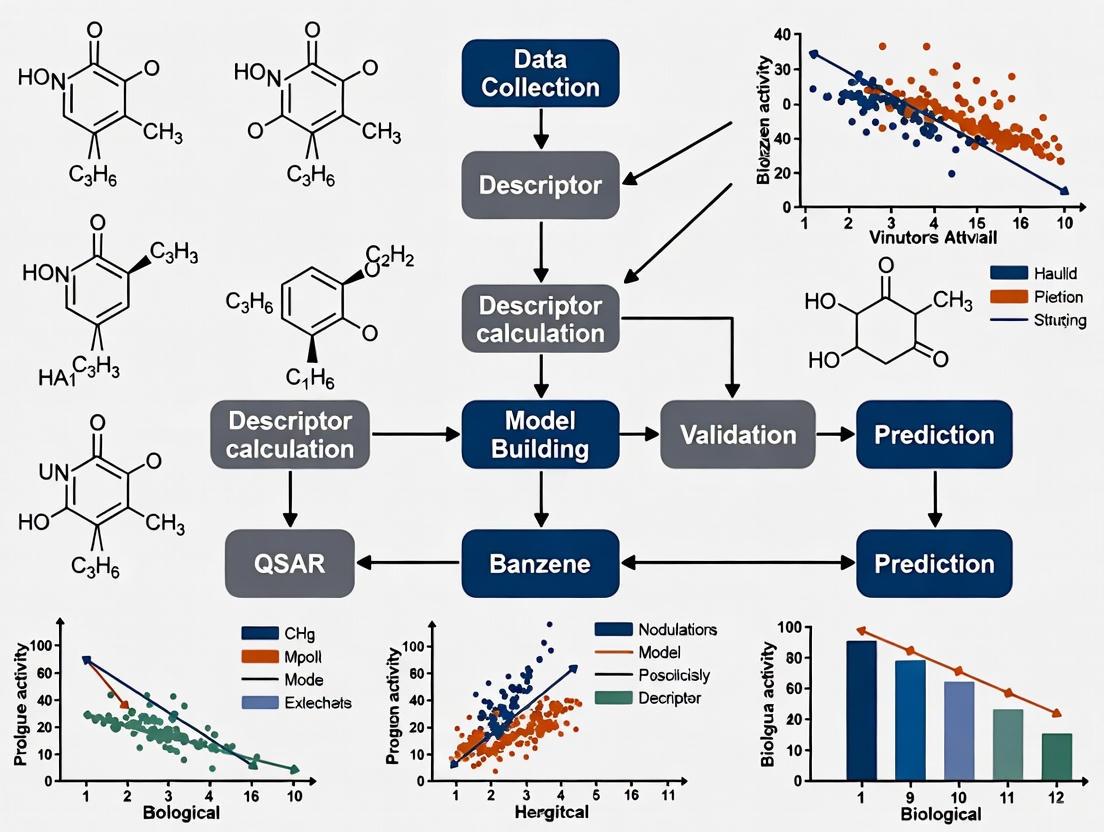
This article provides researchers, scientists, and drug development professionals with a comprehensive overview of Quantitative Structure-Activity Relationship (QSAR) model development for environmental chemical hazard assessment.
Advancing Environmental Hazard Assessment: A Comprehensive Guide to QSAR Model Development and Validation
Abstract
This article provides researchers, scientists, and drug development professionals with a comprehensive overview of Quantitative Structure-Activity Relationship (QSAR) model development for environmental chemical hazard assessment. It explores the foundational principles driving the shift from animal testing to New Approach Methodologies (NAMs), details advanced machine learning and meta-learning techniques for model building, and addresses critical troubleshooting for sparse data and applicability domains. The content systematically covers rigorous validation protocols and comparative analysis of model performance, with practical applications illustrated through case studies on endocrine disruption, aquatic toxicity, and cosmetic ingredient assessment. This resource supports the development of robust, reliable computational tools for predicting chemical hazards and filling data gaps in regulatory decision-making.
The Foundation of QSAR: Principles, Drivers, and Current Landscape in Environmental Toxicology
New Approach Methodologies (NAMs) represent a suite of innovative scientific tools and frameworks designed to modernize chemical safety assessment. These methodologies, which include in vitro models, computational approaches, and high-throughput screening methods, are increasingly critical for environmental chemical hazard assessment, particularly as we face the challenge of evaluating thousands of chemicals lacking complete toxicological profiles [1]. The drive toward NAMs is fueled by both ethical imperatives to reduce animal testing and the scientific need for more human-relevant data, as traditional animal models often demonstrate poor predictivity for human toxicity, with rates as low as 40-65% [2]. Within this paradigm, Quantitative Structure-Activity Relationship (QSAR) modeling stands as a cornerstone computational tool, enabling researchers to predict chemical hazards based on structural properties without additional animal experimentation.
The integration of NAMs into regulatory frameworks is already underway. Agencies including the U.S. Environmental Protection Agency (EPA), the European Chemicals Agency (ECHA), and Health Canada are developing structured approaches to implement these methods [1]. For instance, Health Canada's HAWPr computational toolkit automates chemical prioritization by integrating diverse data streams like ToxCast assay results and OECD QSAR Toolbox predictions, establishing a data hierarchy that prioritizes in vivo > in vitro > in silico evidence while assigning confidence levels to computational predictions [3]. This transition toward a new testing paradigm aligns with the principles of Next Generation Risk Assessment (NGRA), an exposure-led, hypothesis-driven approach that integrates various NAMs to evaluate chemical safety [2].
Application Notes: QSAR and Integrated Approaches
QSAR for Predicting Thyroid Hormone System Disruption
The application of QSAR models for identifying endocrine-disrupting chemicals demonstrates their significant value in environmental hazard assessment. A recent review spanning 2010-2024 identified eighty-six different QSARs specifically developed to predict thyroid hormone (TH) system disruption, highlighting the research community's substantial investment in this area [4]. These models typically focus on Molecular Initiating Events (MIEs) within the Adverse Outcome Pathway (AOP) framework for TH disruption, such as chemical binding to thyroid receptors or transport proteins.
Successful QSAR development for this endpoint requires careful consideration of several components:
- Endpoint Selection: Models target specific MIEs like thyroperoxidase inhibition or transthyretin binding rather than apical adverse outcomes.
- Chemical Domain Definition: Establishing clear applicability boundaries ensures reliable predictions for structurally similar compounds.
- Descriptor Mechanistic Interpretation: Molecular descriptors must have biological relevance to TH system disruption pathways.
- Validation Protocols: Both internal (cross-validation) and external (hold-out test sets) validation are essential for assessing predictive performance.
The review also identified critical research gaps needing attention, including limited models for certain TH disruption mechanisms and insufficient coverage of diverse chemical classes, pointing toward necessary future development directions [4].
Integrated Approaches to Testing and Assessment (IATA)
The true power of NAMs emerges when QSAR models are integrated within broader Integrated Approaches to Testing and Assessment (IATA) frameworks. These approaches combine multiple data sources – in silico, in chemico, and in vitro – to reach robust hazard conclusions while minimizing animal use [1]. The Organisation for Economic Co-operation and Development (OECD) actively promotes IATA as a mechanism for regulatory decision-making, particularly for complex toxicity endpoints where single-assay replacements are insufficient.
A demonstrated application involved the crop protection products Captan and Folpet, where a multiple NAM testing strategy comprising 18 in vitro studies successfully identified these chemicals as contact irritants, producing risk assessments consistent with those derived from traditional mammalian test data [2]. This case exemplifies how defined combinations of NAMs can provide sufficient evidence for regulatory decisions without additional animal testing.
Quantitative Implementation Data
Table 1: Current Implementation Status of Selected NAMs in Hazard Assessment
| Methodology | Familiarity & Use Level | Primary Applications | Regulatory Adoption Status |
|---|---|---|---|
| QSARs/Read-Across | High familiarity and use | Prioritization, hazard identification | Established in OECD Toolbox, EPA TSCA, Health Canada HAWPr |
| Transcriptomics | Emerging use | Point of Departure (POD) derivation, mechanism screening | EPA's ETAP workflow, Corteva Agriscience case studies |
| Organ-on-Chip | Limited but growing | ADME modeling, complex toxicity | FDA pilot programs, first IND approval (NCT04658472) |
| -Omics Approaches | Seldom used | AOP development, biomarker discovery | OECD OORF reporting framework, Health Canada tPOD approaches |
Table 2: Performance Metrics of Alternative Methods for Thyroid Hormone Disruption Prediction
| Model Type | Endpoint | Accuracy Range | Chemical Space | Regulatory Readiness |
|---|---|---|---|---|
| QSAR | Thyroperoxidase inhibition | 75-89% | Mostly phenols | Medium |
| Molecular Docking | Transthyretin binding | 80-85% | Diverse structures | Low-Medium |
| In Vitro Assays | Receptor binding/activity | 70-82% | Broad applicability | Medium-High |
| Integrated Testing Strategy | Overall TH disruption | >90% | Limited validation set | High |
Survey data indicates significant heterogeneity in the familiarity and use of specific NAMs across different sectors. While QSARs represent one of the most established and widely used approaches, particularly in regulatory contexts, other promising methodologies like transcriptomics and microphysiological systems show substantial potential but currently have more limited implementation [5] [3].
Experimental Protocols
Protocol 1: QSAR Model Development for Thyroid Hormone Disruption Prediction
Objective
To develop a validated QSAR model for predicting chemical disruption of the thyroid hormone system through competitive binding to transthyretin.
Materials and Reagents
Table 3: Research Reagent Solutions for QSAR and Computational Analysis
| Reagent/Software | Function | Specifications |
|---|---|---|
| OECD QSAR Toolbox | Chemical grouping, analogue identification | Version 4.5 or higher |
| Dragon Descriptor Software | Molecular descriptor calculation | Latest version with 5000+ descriptors |
| KNIME Analytics Platform | Workflow integration and model building | With chemistry extensions |
| R/Python | Statistical analysis and machine learning | Caret (R) or Scikit-learn (Python) |
| Transthyretin Binding Assay Data | Model training and validation | IC50 values from published literature |
| Chemical Structures | Model input | SMILES notation, purified structures |
Methodology
Step 1: Data Curation and Preparation
- Compile a dataset of chemicals with experimentally determined transthyretin binding affinities (IC50 values) from peer-reviewed literature.
- Standardize chemical structures using IUPAC conventions, removing duplicates and salts, and generating optimized 3D conformations.
- Critical Consideration: Ensure chemical diversity to build a robust model with broad applicability.
Step 2: Molecular Descriptor Calculation and Selection
- Calculate molecular descriptors using appropriate software (e.g., Dragon).
- Apply pre-filtering to remove constant and near-constant descriptors.
- Use multivariate analysis (e.g., Principal Component Analysis) and expert knowledge to select descriptors mechanistically relevant to protein binding.
- Validation Check: Assess descriptor redundancy using correlation matrices.
Step 3: Dataset Division and Applicability Domain Definition
- Split data into training (≈70%), validation (≈15%), and test (≈15%) sets using rational methods (e.g., Kennard-Stone) to ensure representative distribution.
- Define the model's applicability domain using approaches such as leverage and Euclidean distance to identify compounds for which predictions are reliable.
Step 4: Model Building and Internal Validation
- Employ multiple machine learning algorithms (e.g., Random Forest, Support Vector Machines, Partial Least Squares Regression).
- Optimize hyperparameters through cross-validation on the training set.
- Assess internal performance using Q² and R² values from cross-validation.
Step 5: External Validation and Reporting
- Evaluate the final model on the held-out test set using OECD validation principles.
- Calculate key performance metrics: R²ₑₓₜ, Q²ₑₓₜ, RMSE, and MAE.
- Prepare complete documentation following OECD QSAR Model Reporting Format.
Diagram 1: QSAR Model Development Workflow
Protocol 2: Integrated Testing Strategy for Thyroid Disruption
Objective
To implement a tiered testing strategy that combines QSAR predictions with in vitro assays for comprehensive thyroid hormone disruption assessment without animal testing.
Materials and Reagents
- Pre-validated QSAR models for thyroid-related endpoints
- Transthyretin (TTR) binding assay kit
- Thyroperoxidase (TPO) inhibition assay system
- Thyroid receptor beta (TRβ) reporter gene assay
- Relevant positive and negative controls
Methodology
Tier 1: Computational Prioritization
- Screen chemicals using multiple QSAR models for key MIEs in thyroid disruption AOP.
- Apply structural alerts for thyroid disruption identified from existing databases.
- Criteria for Progression: Chemicals predicted positive by ≥2 computational methods advance to Tier 2.
Tier 2: In Vitro Confirmation
- Perform TTR binding assay following standardized protocol with 8-point concentration series.
- Conduct TPO inhibition assay for chemicals showing TTR binding activity.
- Quality Control: Include reference chemicals in each assay run.
Tier 3: Mechanistic Characterization
- For chemicals positive in Tier 2, implement TRβ reporter gene assay to assess receptor activation/suppression.
- Consider additional mechanistic assays based on chemical structure and prior results.
Data Integration and WoE Assessment
- Combine results from all tiers using a predefined scoring system.
- Apply WoE approach to classify thyroid disruption potential.
- Reporting: Document all data and decision points for regulatory submission.
Diagram 2: Tiered Testing Strategy for Thyroid Disruption
Technical and Regulatory Considerations
Overcoming Barriers to NAM Implementation
Despite their promise, NAMs face several implementation barriers that have slowed regulatory adoption. These include scientific and technical challenges, regulatory inertia, and perceptions that NAM-derived data may not gain regulatory acceptance [2]. A key scientific concern involves the benchmarking of NAMs against traditional animal data, which creates a circular problem where novel human-relevant methods are judged against potentially flawed animal models [2].
Successful cases of NAM implementation offer valuable insights for overcoming these barriers. The development of Defined Approaches (DAs) – specific combinations of data sources with fixed data interpretation procedures – has facilitated regulatory acceptance for endpoints like skin sensitization and eye irritation [2]. These DAs are now codified in OECD Test Guidelines (e.g., OECD TG 467, 497), providing clear frameworks for standardized application [2].
Regulatory Confidence Building
Building regulatory confidence in NAMs requires addressing several critical aspects:
- Demonstration of Reliability and Relevance: NAMs must consistently produce reliable results relevant to human biology across different chemical classes.
- Development of Performance Standards: Standardized assessment criteria help evaluate NAM performance for specific applications.
- Generation of Public Data: Open-access databases of NAM data for reference chemicals facilitate independent validation.
- Development of IATA Case Studies: Real-world examples demonstrating successful NAM application strengthen regulatory trust.
Initiatives like the European Partnership for the Assessment of Risks from Chemicals (PARC) and the EPA's Transcriptomic Assessment Product (ETAP) represent structured efforts to build this evidence base [3] [1]. The HAWPr toolkit from Health Canada exemplifies how regulatory agencies are already integrating NAMs into practical workflows for chemical prioritization and screening [3].
The rise of New Approach Methodologies represents a fundamental transformation in environmental chemical hazard assessment, with QSAR model development playing a central role in this paradigm shift. The protocols and application notes presented here provide actionable frameworks for implementing these approaches in research and regulatory contexts. As the field evolves, the integration of QSAR with emerging technologies like transcriptomics, organ-on-chip systems, and artificial intelligence will further enhance our ability to predict chemical hazards using human-relevant mechanisms while progressively reducing reliance on animal testing. The ongoing challenge remains to standardize these approaches, build regulatory confidence through validation studies, and train a new generation of scientists in these innovative methodologies.
Global regulatory policies are fundamentally transforming chemical hazard and risk assessment, creating a powerful driver for the adoption of Quantitative Structure-Activity Relationship (QSAR) models. Motivated by the pursuit of a "toxic-free environment" and the operationalization of Safe and Sustainable by Design (SSbD) frameworks, regulatory bodies are increasingly mandating the use of New Approach Methodologies (NAMs) to overcome the limitations of traditional animal testing and address data gaps for thousands of chemicals [6] [7]. The European Union's Chemicals Strategy for Sustainability and ambitious Zero Pollution Action Plan exemplify this shift, creating an urgent need for reliable, predictive in-silico tools [7]. QSAR methodologies, which mathematically link a chemical's molecular structure to its biological activity or properties, have consequently moved from a supportive role to a central position in regulatory science [8] [9]. This application note details the essential protocols and frameworks for developing QSAR models that meet rigorous regulatory standards for environmental chemical hazard assessment, enabling researchers to contribute to the design of safer, more sustainable chemicals.
Regulatory Frameworks and Quantitative Requirements
International regulatory frameworks have established clear, quantitative principles to ensure the scientific validity and regulatory acceptability of (Q)SAR models. The foundational guidance from the Organisation for Economic Co-operation and Development (OECD) has been augmented by a new assessment framework to increase regulatory uptake.
Table 1: Core Principles of the OECD (Q)SAR Validation and Assessment Frameworks
| Principle | Description | Regulatory Impact |
|---|---|---|
| Defined Endpoint | "A defined endpoint" must be specified, ensuring the model's purpose is unambiguous [10]. | Enforces scientific clarity and prevents misuse of models for unintended endpoints. |
| Unambiguous Algorithm | "An unambiguous algorithm" is required for model building and prediction [10]. | Ensures transparency, reproducibility, and reliability of predictions. |
| Defined Applicability Domain | "A defined domain of applicability" specifies the chemical space and data on which the model is valid [10]. | Critical for determining when a model can be reliably used for a new chemical, preventing over-extrapolation. |
| Appropriate Validation | "Measures of goodness-of-fit, robustness, and predictivity" must be provided [10]. | Quantifies the model's performance and reliability for regulatory decision-making. |
| Mechanistic Interpretation | "A mechanistic interpretation, if possible," is encouraged [8]. | Increases scientific confidence in the model by linking descriptors to biological or toxicological mechanisms. |
A significant recent development is the OECD (Q)SAR Assessment Framework (QAF), which provides structured guidance for regulators to evaluate the confidence and uncertainties in (Q)SAR models and their predictions [11]. The QAF establishes new principles for evaluating individual predictions and results from multiple predictions, offering a pathway to increase regulatory acceptance by providing "clear requirements to meet for (Q)SAR developers and users" [11].
QSAR Model Development: Application Protocol
This protocol provides a detailed methodology for constructing a validated QSAR model suitable for use in environmental hazard assessment, aligned with regulatory standards.
Stage 1: Data Curation and Preparation
Objective: To compile and standardize a high-quality dataset of chemical structures and associated biological activities.
- Dataset Collection: Compile structures and associated activity data (e.g., LC50, EC50) from reliable public or proprietary databases. Ensure the dataset covers a diverse chemical space relevant to the assessment [9] [12].
- Data Cleaning and Preprocessing:
- Standardize chemical structures: Remove salts, normalize tautomers, and handle stereochemistry consistently [9].
- Handle duplicates: Resolve multiple activity entries for the same structure, for example, by taking the mean or median value [12].
- Convert biological activities to a common unit and scale, typically using logarithmic transformations (e.g., pLC50 = -logLC50) [9].
- Data Splitting: Divide the cleaned dataset into a training set (for model building), a validation set (for hyperparameter tuning), and an external test set (for final model evaluation). The external test set must be strictly reserved and not used in any model training steps [9].
Stage 2: Molecular Descriptor Calculation and Selection
Objective: To generate quantitative numerical representations of the molecular structures and select the most relevant features.
- Descriptor Calculation: Use software tools such as PaDEL-Descriptor, Dragon, or RDKit to calculate a wide array of molecular descriptors. These can include constitutional, topological, geometric, and electronic descriptors [9].
- Feature Selection:
- Apply feature selection methods to reduce dimensionality and avoid overfitting.
- Filter Methods: Rank descriptors based on their individual correlation with the activity [9].
- Wrapper/Embedded Methods: Use algorithms like genetic algorithms or LASSO regression to select the most informative descriptor subset [9] [12].
- The goal is to remove a high percentage (e.g., 62-99%) of redundant or irrelevant data to improve model performance [12].
Stage 3: Model Building and Training
Objective: To construct a mathematical model that relates the selected molecular descriptors to the biological endpoint.
- Algorithm Selection: Choose an appropriate algorithm based on the dataset's characteristics and the relationship's complexity.
- Model Training: Train the model using only the training set. If using a validation set, use it to tune the model's hyperparameters [9].
Stage 4: Model Validation and Application
Objective: To rigorously assess the model's predictive performance and define its limits of use.
- Internal Validation: Perform k-fold cross-validation (e.g., 5-fold) or leave-one-out cross-validation on the training set to estimate model robustness [9].
- External Validation: Test the final model on the held-out external test set to obtain a realistic measure of its predictive power on unseen chemicals [9] [12].
- Define Applicability Domain (AD): Establish the chemical space where the model can make reliable predictions. This is a critical requirement for regulatory acceptance [10] [9].
Diagram 1: QSAR modeling workflow.
Advanced Application: Machine Learning for Ecosystem-Level Hazard Prediction
Advanced machine learning techniques are now being deployed to bridge critical data gaps in ecotoxicology on an unprecedented scale, enabling ecosystem-level hazard assessment.
Protocol: Pairwise Learning for Chemical Hazard Distribution (CHD)
Objective: To predict ecotoxicity (e.g., LC50) for any combination of chemical and species, filling data gaps for millions of untested (chemical, species) pairs [7].
Methodology:
- Input Data Matrix Construction: Compile a sparse matrix of experimental LC50 values, where rows represent chemicals and columns represent species. Coverage in such a matrix is typically very low (~0.5%) [7].
- Bayesian Matrix Factorization:
- Treat the problem as a matrix completion task.
- Represent each (chemical, species, exposure duration) triplet as a sparse binary feature vector.
- Employ a Factorization Machine model, as represented by the equation:
y(x) = w_0 + ∑(w_i x_i) + ∑∑(x_i x_j ∑(v_i,k v_j,k))[7] - Here, the global bias (
w_0), species/chemical/duration bias terms (w_i), and factorized pairwise interactions (v_i,k) are learned. - The pairwise interactions specifically capture the "lock and key" effect between individual species and chemicals.
- Output Generation and Application:
- Generate a fully populated matrix of Predicted LC50s.
- Use this matrix to construct novel hazard assessment tools:
- Hazard Heatmaps: Visualize the predicted sensitivity of all species to all chemicals.
- Species Sensitivity Distributions (SSD): Create SSDs for any chemical based on 1,000+ species, far exceeding the data available from traditional testing.
- Chemical Hazard Distributions (CHD): A new format showing the distribution of a chemical's hazard across all tested species [7].
Diagram 2: Regulatory QSAR framework.
The Scientist's Toolkit: Essential Research Reagents and Solutions
Table 2: Essential Software and Computational Tools for QSAR Modeling
| Tool/Resource | Type | Function in QSAR Development |
|---|---|---|
| PaDEL-Descriptor | Software | Calculates molecular descriptors and fingerprints for batch chemical structures [9]. |
| KNIME | Workflow Platform | Provides an open-source, graphical environment for building and automating complex QSAR modeling workflows [12]. |
| OECD QSAR Assessment Framework (QAF) | Guidance Document | Provides structured criteria for evaluating the confidence in (Q)SAR models and predictions for regulatory purposes [11]. |
| libfm | Software Library | Implements factorization machines for advanced pairwise learning tasks, such as predicting chemical-species interactions [7]. |
| Applicability Domain (AD) | Methodological Concept | Defines the chemical space where a QSAR model is valid, a critical requirement for regulatory acceptance [10] [9]. |
The field of environmental chemical hazard assessment is undergoing a profound transformation, driven by the integration of artificial intelligence (AI) and machine learning (ML). The application of these technologies is experiencing exponential growth, reshaping how environmental chemicals are monitored and their hazards evaluated for human health and ecosystems [13]. This growth is characterized by a notable surge in publications, dominated by environmental science journals, with China and the United States leading research output [13]. The research landscape has evolved from modest annual publication numbers to a rapidly accelerating field, with output nearly doubling from 2020 to 2021 and reaching hundreds of publications annually [13]. This expansion reflects a broader shift within toxicology from an empirical science to a data-rich discipline ripe for AI integration, enabling the analysis of complex, high-dimensional datasets that characterize modern chemical research [13]. Within this landscape, Quantitative Structure-Activity Relationship (QSAR) modeling, enhanced by ML, has emerged as a particularly powerful development for predicting the toxicological or pharmacological activities of chemicals based on their structural information [14].
Quantitative Landscape Analysis
Publication Growth and Geographic Distribution
Systematic analysis of the research landscape reveals distinct patterns in publication growth and geographic contributions. A bibliometric analysis of 3,150 peer-reviewed articles from the Web of Science Core Collection demonstrates an exponential publication surge from 2015 onward [13]. Until 2015, annual publication output remained modest with fewer than 25 papers per year, indicating limited engagement from research institutions [13]. A notable shift occurred in 2020, when publications rose sharply to 179, nearly doubling to 301 in 2021, and exceeding 719 publications in 2024 [13]. This trajectory highlights the field's accelerating momentum and growing global interest.
The research contribution spans 4,254 institutions across 94 countries [13]. The table below summarizes the contributions of the top 10 countries, indicating both publication volume and collaborative intensity through Total Link Strength (TLS).
Table 1: Top 10 Contributing Countries to ML in Environmental Chemical Research
| Country | Number of Publications | Total Link Strength (TLS) |
|---|---|---|
| People's Republic of China | 1,130 | 693 |
| United States | 863 | 734 |
| India | 255 | Information missing |
| Germany | 232 | Information missing |
| England | 229 | Information missing |
| Other contributing countries | Smaller proportions | Information missing |
Source: Adapted from [13]
At the institutional level, the Chinese Academy of Sciences leads with 174 publications over the past decade, followed by the United States Department of Energy with 113 publications [13].
Thematic Research Clusters and Methodological Trends
Co-citation and co-occurrence analyses have identified eight major thematic clusters within the research landscape [13]. These clusters are centered on:
- ML model development
- Water quality prediction
- Quantitative structure-activity applications
- Per-/polyfluoroalkyl substances (PFAS)
- Risk assessment applications
Among algorithms, XGBoost and random forests emerge as the most frequently cited models [13]. A distinct risk assessment cluster indicates the migration of these tools toward dose-response and regulatory applications, reflecting the field's evolving maturity [13].
Table 2: Prominent ML Algorithms and Their Applications in Environmental Hazard Assessment
| Machine Learning Algorithm | Example Applications | Key Characteristics |
|---|---|---|
| XGBoost (Extreme Gradient Boosting) | QSAR models for microplastic cytotoxicity prediction [15]; Aquatic toxicity prediction [16] | Superior prediction performance; handles complex non-linear relationships [15] |
| Random Forests | Predicting toxicity endpoints; identifying molecular fragments impacting nuclear receptors [16] | Robust performance; can be combined with explainable AI techniques [16] |
| Support Vector Machines (SVM) | Prediction of specific toxicity endpoints [17] | Effective for classification tasks |
| Multilayer Perceptron (MLP) / Deep Learning | Identification of lung surfactant inhibitors [16]; Multi-modal toxicity prediction [17] | Capable of learning complex hierarchical feature representations |
| Vision Transformer (ViT) | Processing molecular structure images in multi-modal frameworks [17] | Advanced architecture for image-based feature extraction |
Application Notes: Advanced ML Approaches in Hazard Assessment
Direct Toxicity Classification Strategy
Conventional QSAR approaches typically predict specific toxicity values (e.g., LC50) before classifying chemicals into hazard categories. Researchers have developed an innovative alternative that skips the explicit toxicity value prediction step altogether [18]. This approach uses machine learning for direct classification of chemicals into predefined toxicity categories based on molecular descriptors [18].
Experimental Protocol: Direct Classification Workflow
- Data Collection: Compile experimental acute toxicity data (e.g., 96h LC50 values for fish toxicity).
- Category Definition: Define toxicity categories according to regulatory systems (e.g., Globally Harmonized System).
- Descriptor Calculation: Compute molecular descriptors for each chemical.
- Model Training: Train ML models to directly map molecular descriptors to toxicity categories.
- Validation: Validate model performance using hold-out test sets.
This strategy demonstrated a fivefold decrease in incorrect categorization compared to conventional QSAR regression models and explained approximately 80% of variance in test set data [18].
Multimodal Deep Learning for Toxicity Prediction
Advanced frameworks now integrate multiple data modalities to enhance prediction accuracy. One approach combines chemical property data with 2D molecular structure images using a Vision Transformer (ViT) for image-based features and a Multilayer Perceptron (MLP) for numerical data [17]. A joint fusion mechanism effectively combines these features, significantly improving predictive performance for multi-label toxicity classification [17].
Experimental Protocol: Multimodal Framework Implementation
- Data Curation:
- Collect molecular structure images from databases (e.g., PubChem, eChemPortal).
- Compile corresponding chemical property data (numerical and categorical features).
- Image Processing:
- Utilize a pre-trained Vision Transformer (ViT-Base/16) fine-tuned on molecular structures.
- Extract 128-dimensional feature vectors from molecular images.
- Tabular Data Processing:
- Process chemical property data using a Multi-Layer Perceptron.
- Generate 128-dimensional feature vectors from numerical data.
- Feature Fusion:
- Concatenate image and tabular feature vectors to create a 256-dimensional fused vector.
- Model Training & Validation:
- Train the integrated model for multi-label toxicity prediction.
- Evaluate using accuracy, F1-score, and Pearson Correlation Coefficient.
This approach has demonstrated an accuracy of 0.872, F1-score of 0.86, and PCC of 0.9192 [17].
ML-Driven QSAR for Microplastics Toxicity Assessment
The prediction of microplastics (MPs) cytotoxicity represents a specialized application of ML-driven QSAR. Research has focused on five common MPs in the environment: polyethylene (PE), polypropylene (PP), polystyrene (PS), polyvinyl chloride (PVC), and polyethylene terephthalate (PET) [15].
Experimental Protocol: MPs Toxicity Prediction
- Material Characterization:
- Analyze MPs morphology using scanning electron microscopy.
- Measure Z-average size and zeta potential in suspension.
- Cytotoxicity Testing:
- Expose BEAS-2B human bronchial epithelial cells to MPs.
- Assess cell viability using CCK-8 assay.
- Descriptor Selection:
- Utilize physical-chemical descriptors: Z-average size, polymer type, zeta potential, shape, exposure concentration.
- Model Development:
- Apply six ML algorithms: MLR, RF, KNN, SVM, GBDT, XGB.
- Compare model performance using training and test set R² values.
- Feature Importance Analysis:
- Apply Embedded Feature Importance, Recursive Feature Elimination, and SHapley Additive exPlanations.
- Identify critical features dominating toxicity prediction.
In this application, the XGBoost model showed the best prediction ability with R² values of 0.9876 (training) and 0.9286 (test), with particle size consistently identified as the most critical feature affecting toxicity prediction [15].
Visualization of Workflows and Relationships
Direct Toxicity Classification Strategy
Direct Toxicity Classification
Multimodal Deep Learning Framework
Multimodal Deep Learning Framework
ML-QSAR for Microplastics
ML-QSAR for Microplastics Assessment
The Scientist's Toolkit: Research Reagent Solutions
Table 3: Essential Research Materials and Computational Tools for ML in Environmental Hazard Assessment
| Tool/Resource | Function | Application Example |
|---|---|---|
| BEAS-2B Cell Line | In vitro model for respiratory toxicity testing | Assessing cytotoxicity of inhaled microplastics and environmental pollutants [15] |
| Microplastics Standards | Reference materials for toxicity testing | PE, PP, PS, PVC, PET standards for controlled exposure studies [15] |
| Molecular Descriptors | Numerical representation of chemical structures | Feature input for QSAR and direct classification models [18] |
| Toxicity Databases | Repositories of experimental toxicity data | PubChem, ChEMBL, ACToR, Tox21/ToxCast for model training [19] |
| SHAP (SHapley Additive exPlanations) | Explainable AI method for model interpretation | Identifying key features (e.g., particle size) in microplastics toxicity [15] |
| Vision Transformer (ViT) | Deep learning architecture for image processing | Analyzing 2D molecular structure images in multimodal learning [17] |
| Federated Learning Framework | Privacy-preserving distributed ML approach | Training models on sensitive data without centralization [19] |
Emerging Trends and Future Directions
The research landscape continues to evolve with several emerging trends. Explainable AI (XAI) is gaining prominence to interpret "black box" models, improving transparency for regulatory and public health decision-making [16]. Techniques like Local Interpretable Model-agnostic Explanations (LIME) are being combined with Random Forest classifiers to identify molecular fragments impacting specific nuclear receptors [16]. Large Language Models (LLMs) fine-tuned on toxicological data show potential for automating data extraction, organization, and summarization, reducing manpower and time while maintaining regulatory compliance [19]. Research is also expanding to include mixture toxicity prediction [20] [16], life-cycle environmental impact assessment [21], and the integration of omics technologies for mechanistic insights [22]. These advancements collectively address critical gaps in chemical coverage and health integration while fostering international collaboration to translate ML advances into actionable chemical risk assessments [13].
Thyroid Hormone System Disruption (THSD) represents a critical endpoint in the ecological risk assessment of environmental chemicals. The thyroid hormone (TH) system is essential for regulating growth, development, and metabolism in aquatic vertebrates, and its disruption by chemicals can lead to severe population-relevant adverse outcomes [23]. This application note details the experimental and computational methodologies for assessing chemical-induced THSD in aquatic species, framed within the broader context of developing Quantitative Structure-Activity Relationship (QSAR) models for environmental hazard assessment. The integration of in vivo assays and New Approach Methodologies (NAMs), particularly QSARs, is crucial for advancing the identification of Thyroid Hormone System Disrupting Compounds (THSDCs) while reducing reliance on animal testing [4] [23] [5].
Key Endpoints and Biomarkers for THSD Assessment
The assessment of THSD relies on measuring specific molecular, biochemical, and morphological endpoints along the Hypothalamic-Pituitary-Thyroid (HPT) axis. The following table synthesizes the critical endpoints identified from recent studies, particularly in zebrafish embryos and other fish models.
Table 1: Critical Endpoints for Assessing Thyroid Hormone System Disruption in Aquatic Species
| Endpoint Category | Specific Biomarker/Parameter | Measurement Technique | Biological Significance |
|---|---|---|---|
| Hormone Levels | Whole-body Thyroxine (T4) and Triiodothyronine (T3) levels | ELISA, RIA | Direct measure of systemic thyroid hormone status [24] [25] |
| Gene Expression | DEIO1, DEIO2, TRα, TTR, UGT1ab | qPCR, Transcriptomics | Key genes in HPT axis regulating hormone activation, transport, and metabolism [24] [25] |
| Receptor Binding | Binding affinity to TSHβ, TR | Molecular Docking | Predicts direct interference with thyroid hormone receptors and synthesis [24] [25] |
| Oxidative Stress | SOD, CAT, GSH, MDA levels, CYP1A1 activity | Enzymatic assays, Spectrophotometry | Indicates secondary toxicity pathways linked to endocrine disruption [24] [25] |
| Developmental Toxicity | Melanin deposition, locomotor activity, developmental abnormalities | Morphological analysis, behavioral assays (e.g., larval locomotion) | Functional adverse outcomes resulting from TH disruption [24] [25] |
| Immunotoxicity | Immune-related gene expression, pathogen resistance challenge | qPCR, survival assays | Connects TH disruption to impaired immune function and reduced fitness [26] |
Experimental Protocol: In Vivo Assessment in Zebrafish Embryos
The following protocol details a standardized methodology for assessing THSD and associated multi-toxicity endpoints in zebrafish (Danio rerio) embryos, based on the study of the fungicide hymexazol [24] [25].
Materials and Reagents
Table 2: Research Reagent Solutions for THSD Assessment
| Item | Function/Description | Example/Catalog Consideration |
|---|---|---|
| Zebrafish Embryos | Model organism for vertebrate development and toxicity testing. | Wild-type AB or TU strain, 2-4 hours post-fertilization (hpf). |
| Test Chemical | The substance under investigation for thyroid-disrupting potential. | Hymexazol (CAS: 10004-44-1) or other environmental chemical. Prepare stock solution in solvent. |
| E3 Medium | Standard medium for maintaining zebrafish embryos. | 5 mM NaCl, 0.17 mM KCl, 0.33 mM CaCl₂, 0.33 mM MgSO₄, pH 7.2-7.4. |
| Dimethyl Sulfoxide (DMSO) | Vehicle solvent for poorly water-soluble chemicals. | High-purity grade. Final concentration in test medium should not exceed 0.1% (v/v). |
| RNA Extraction Kit | Isolation of high-quality total RNA from pooled embryos/larvae. | e.g., TRIzol reagent or commercial spin-column kits. |
| cDNA Synthesis Kit | Reverse transcription of RNA to cDNA for qPCR analysis. | Kits containing reverse transcriptase, random hexamers, and dNTPs. |
| qPCR Master Mix | SYBR Green or TaqMan-based mix for quantitative gene expression analysis. | Includes DNA polymerase, dNTPs, buffer, and fluorescent dye. |
| ELISA Kits | Quantification of whole-body T3 and T4 hormone levels. | Species-specific or broad-range kits validated for zebrafish. |
| SOD/CAT/GSH Assay Kits | Colorimetric or fluorometric measurement of oxidative stress markers. | Commercial kits based on standard enzymatic methods. |
Step-by-Step Procedure
Embryo Collection and Exposure:
- Collect healthy zebrafish embryos at the 2-4 cell stage (2-4 hpf). Manually clean and stage the embryos under a stereomicroscope.
- Prepare a concentration range of the test chemical (e.g., hymexazol) by serially diluting the stock solution in DMSO into E3 medium. Include a solvent control (0.1% DMSO v/v) and a blank control (E3 medium only).
- Randomly distribute 20-30 embryos per well into 24-well plates, with each well containing 2 mL of the respective test solution or control.
- Incubate the plates at 28 ± 0.5°C with a 14h:10h light:dark cycle until 120 hpf. Renew the test solutions daily to ensure stable chemical concentration.
- Observe and record mortality and gross morphological malformations (e.g., pericardial edema, yolk sac edema, spinal curvature) daily.
Sampling and Homogenization:
- At 120 hpf, randomly pool 30-50 larvae from each treatment group.
- For biochemical and molecular analyses, snap-freeze the pools in liquid nitrogen and store at -80°C. For hormone analysis, whole-body homogenates are prepared in ice-cold phosphate-buffered saline (PBS) using a motorized homogenizer. The homogenate is then centrifuged (e.g., 10,000 × g for 10 min at 4°C), and the supernatant is aliquoted for subsequent assays.
Endpoint Measurement:
- Thyroid Hormone Quantification: Use commercial ELISA kits to measure T3 and T4 levels in the supernatant according to the manufacturer's instructions. Measure absorbance using a microplate reader.
- Gene Expression Analysis (qPCR):
- Extract total RNA from pooled larvae using a commercial kit. Assess RNA purity and integrity.
- Synthesize cDNA from 1 µg of total RNA using a reverse transcription kit.
- Perform qPCR reactions in triplicate using a master mix and gene-specific primers for target genes (e.g., DEIO1, DEIO2, TRα, TTR, UGT1ab, MITFB, TYR) and reference genes (e.g., β-actin, gapdh).
- Analyze data using the comparative 2^–ΔΔCq method to determine relative gene expression.
- Oxidative Stress Biomarkers: Use commercial kits to measure the activity of Superoxide Dismutase (SOD) and Catalase (CAT), and the levels of Glutathione (GSH) and Malondialdehyde (MDA) in the supernatant, following the provided protocols.
- Behavioral Assessment: At 120 hpf, transfer individual larvae to a 96-well plate. After an acclimation period, record larval movement (total distance traveled, activity duration) using an automated video-tracking system.
Molecular Docking (In Silico Supplement):
- To predict the binding affinity of the test chemical to key proteins like TSHβ, retrieve the 3D crystal structure of the target protein from the Protein Data Bank (PDB).
- Prepare the protein and ligand (test chemical) structures using appropriate software (e.g., AutoDock Tools), including adding hydrogens and assigning charges.
- Define a grid box encompassing the active site of the protein.
- Perform docking simulations using software like AutoDock Vina.
- Analyze the resulting docking poses and binding energies to evaluate the potential for direct molecular interaction.
QSAR Model Development for Predicting THSD
The adverse outcome pathway (AOP) framework provides a structured basis for developing QSAR models that predict molecular initiating events (MIEs) leading to THSD [4] [26]. A simplified AOP links THSD to reduced pathogen resistance in fish, demonstrating population-relevant outcomes [26].
Data Curation and Endpoint Selection
For QSAR modeling, data from standardized in vivo tests, such as the fish endocrine screening assays [23] or the zebrafish embryo multi-endpoint assay described above, serve as the primary source of experimental training data. The critical endpoints from Table 1, particularly the binding affinity to key targets (MIE) and the significant downregulation of genes like DEIO2, are suitable endpoints for model development [24] [4] [25].
Model Building and Validation
A recent review of 86 QSAR models for THSD highlights the importance of the Applicability Domain (AD) and model transparency [4]. The following workflow outlines the core process for developing a regulatory-grade QSAR model.
Table 3: Comparison of QSAR Modeling Approaches for THSD Prediction
| Modeling Aspect | Options and Best Practices | Considerations for THSD |
|---|---|---|
| Chemical Classes | Diverse training sets covering pesticides, industrial chemicals, PFAS [27] [13] | Avoid extrapolation outside the model's Applicability Domain (AD) [4] [28] |
| Molecular Descriptors | 2D/3D molecular descriptors, fingerprints | Selection should be mechanistically interpretable related to thyroid pathways [4] |
| Algorithms | XGBoost, Random Forests, Support Vector Machines (SVM) [13] | XGBoost and Random Forests are most cited for environmental chemical ML [13] |
| Validation | Internal (cross-validation) and external validation | Essential for assessing predictive power and regulatory acceptance [4] [28] |
| Applicability Domain (AD) | Defining the chemical space where the model is reliable | A critical component of the new OECD QSAR Assessment Framework (QAF) [29] |
| Endpoint | Molecular initiating events (MIEs) in the AOP [4] | e.g., Binding to TH receptor, inhibition of thyroid peroxidase |
Integrated Testing Strategy and Regulatory Context
A key recommendation in the field is to integrate data from various sources within a weight-of-evidence approach. The OECD Conceptual Framework outlines a tiered testing strategy from Level 1 (QSARs and existing data) to Level 5 (life-cycle studies) [23]. The experimental and computational protocols described herein provide critical data for the lower tiers of this framework, enabling prioritization for higher-tier testing.
The recent introduction of the OECD QSAR Assessment Framework (QAF) provides a transparent and consistent checklist for regulators and industry to evaluate QSAR results, thereby boosting confidence in their use for meeting regulatory requirements under programs like REACH and reducing animal testing [29]. While familiarity and use of NAMs like QSARs are high, barriers remain for the adoption of more complex methodologies, underscoring the need for robust and well-documented protocols [5].
The integration of Quantitative Structure-Activity Relationship (QSAR) modelling with the Adverse Outcome Pathway (AOP) framework represents a paradigm shift in modern toxicology and environmental hazard assessment [30]. This synergy offers a powerful, mechanistic-based strategy for predicting the toxicological effects of chemicals while reducing reliance on traditional animal testing [31] [32]. QSAR models predict the biological activity of chemicals based on their structural features, quantified as molecular descriptors [33]. When focused on predicting molecular initiating events (MIEs) within AOPs, these models provide a chemically agnostic method to prioritize compounds for further experimental evaluation, enabling significant resource savings in safety assessment [31] [34]. This Application Note details the essential concepts, descriptors, and protocols for developing QSAR models within an AOP context for environmental chemical hazard assessment.
Core Concepts
Quantitative Structure-Activity Relationships (QSAR)
QSAR is a computational methodology that establishes a quantitative relationship between a chemical's structure, described by molecular descriptors, and its biological activity or toxicity [33]. The fundamental principle is that the biological activity of a new, untested chemical can be inferred from the known activities of structurally similar compounds.
A robust QSAR model intended for regulatory use must adhere to the OECD Principles, which require:
- A defined endpoint
- An unambiguous algorithm
- A defined domain of applicability
- Appropriate measures of goodness-of-fit, robustness, and predictivity
- A mechanistic interpretation, if possible [33]
Adverse Outcome Pathways (AOPs)
An AOP is a conceptual framework that describes a sequential chain of causally linked events at different biological levels of organization, beginning with a Molecular Initiating Event (MIE) and leading to an Adverse Outcome (AO) of regulatory relevance [31] [32]. The MIE is the initial interaction of a chemical with a biomolecule, which is followed by a series of intermediate Key Events (KEs), connected by Key Event Relationships (KERs) [35]. The AOP framework is chemically agnostic, meaning a single pathway can describe the potential toxicity of multiple chemicals capable of interacting with the same MIEs [31]. This makes AOPs exceptionally valuable for structuring and contextualizing QSAR predictions.
Table 1: Core Components of an Adverse Outcome Pathway
| Component | Description | Role in QSAR Integration |
|---|---|---|
| Molecular Initiating Event (MIE) | The initial chemical-biological interaction (e.g., binding to a protein, inhibition of an enzyme). | Primary endpoint for QSAR model development. |
| Key Event (KE) | A measurable change in biological state that is essential for progression to the adverse outcome. | Can serve as a secondary endpoint for intermediate QSAR models. |
| Key Event Relationship (KER) | The causal or correlative link between two Key Events. | Informs the assembly of multiple QSAR models into a predictive network. |
| Adverse Outcome (AO) | The toxic effect of regulatory concern at the individual or population level. | The ultimate hazard being predicted through the integrated model. |
Integrating QSAR and AOPs
Integrating QSAR with AOPs involves developing computational models to predict chemical activity against specific MIEs or KEs [30]. This approach simplifies complex systemic toxicities into more manageable, single-target predictions that QSAR models can effectively capture [31]. For instance, instead of building a single, complex model to predict "liver steatosis," one would develop individual QSAR models for MIEs like "aryl hydrocarbon receptor antagonism" or "peroxisome proliferator-activated receptor gamma activation," which are known initiators in the steatosis AOP network [31]. This strategy provides a mechanistically grounded context for QSAR predictions, significantly enhancing their interpretability and utility in risk assessment [34].
Molecular Descriptors in QSAR
Molecular descriptors are numerical representations of a molecule's structural and physicochemical properties that serve as the independent variables in a QSAR model [33]. The choice of descriptor is critical as it determines the model's mechanistic interpretability and predictive capability.
Table 2: Key Categories and Examples of Molecular Descriptors
| Descriptor Category | Description | Example Descriptors | Mechanistic Interpretation |
|---|---|---|---|
| Physicochemical | Describe atomic and molecular properties arising from the structure. | LogP (lipophilicity), pKa, water solubility [33]. |
LogP influences passive cellular absorption and bioavailability. High LogP may indicate potential for bioaccumulation. |
| Electronical | Describe the electronic distribution within a molecule, influencing interactions with biological targets. | Hammett constant (σ), dipole moment, HOMO/LUMO energies [33]. | The Hammett constant predicts how substituents affect the electron density of a reaction center, relevant for binding to enzymes or receptors. |
| Topological | Describe the molecular structure based on atom connectivity, without 3D coordinates. | Molecular weight, number of hydrogen bond donors/acceptors, rotatable bonds, molecular connectivity indices [33]. | Used in "rule-based" filters like Lipinski's Rule of Five to assess drug-likeness and potential oral bioavailability [33]. |
| Structural Fragments | Represent the presence or absence of specific functional groups or substructures. | Molecular fingerprints, presence of aniline, nitro, or carbonyl groups. | Can serve as structural alerts for specific toxicities (e.g., anilines for methemoglobinemia). |
| Geometrical | Describe the 3D shape and size of a molecule. | Molecular volume, surface area, polar surface area (PSA) [33]. | Polar Surface Area (PSA) is a key predictor for a compound's ability to permeate cell membranes and cross the blood-brain barrier. |
Experimental Protocols
Protocol 1: Developing a QSAR Model for an MIE
This protocol outlines the steps for building a robust classification QSAR model to predict activity against a specific MIE target, such as a receptor or enzyme.
1. Define the Endpoint and Collect Bioactivity Data
- Endpoint Definition: Clearly define the MIE and the biological activity (e.g., "PPAR-γ inactivation," "TLR4 activation") [35].
- Data Source: Manually extract relevant bioactivity data from public databases such as ChEMBL [31] or PubChem [35]. Prioritize data for Homo sapiens where available.
- Activity Threshold: Convert continuous bioactivity values (e.g., IC₅₀, EC₅₀) into a binary classification (active/inactive). A common threshold is 10,000 nM (or 10 µM); compounds with activity < 10,000 nM are classified as "active," while those ≥ 10,000 nM are "inactive" [31].
2. Curate and Prepare the Dataset
- Curation: Remove duplicates and records flagged with data validity issues [31].
- Standardization: Standardize chemical structures (e.g., neutralize charges, remove salts) and generate canonical representations (e.g., SMILES).
- Calculate Descriptors: Use cheminformatics software (e.g., RDKit, PaDEL) to calculate a wide range of molecular descriptors for all compounds.
- Data Splitting: Split the curated dataset into a training set (∼80%) for model building and a hold-out test set (∼20%) for final validation.
3. Model Building and Validation
- Address Class Imbalance: If the dataset is imbalanced, apply techniques like the Synthetic Minority Oversampling Technique (SMOTE) to the training set to generate synthetic samples for the minority class [30].
- Algorithm Selection: Train multiple machine learning algorithms (e.g., Random Forest, Support Vector Machines, Gradient Boosting) on the training data [31] [30].
- Hyperparameter Tuning: Optimize model parameters using cross-validation on the training set.
- Model Validation: Assess the performance of the optimized models on the hold-out test set using metrics such as Balanced Accuracy (BA), sensitivity, and specificity. A BA > 0.80 is indicative of high predictive performance [31] [30].
- Define Applicability Domain (AD): Establish the chemical space region where the model can make reliable predictions. Methods like leverage or distance-based approaches can be used.
4. Model Application and Interpretation
- Screening: Use the validated model to screen new environmental chemicals for potential MIE activity.
- Interpretation: Analyze the importance of molecular descriptors in the model to gain mechanistic insight into the structural features associated with the MIE.
Protocol 2: Contextualizing QSAR Predictions Using an AOP Network
This protocol describes how to use AOP knowledge to frame and interpret QSAR predictions for a higher-level hazard, such as pulmonary fibrosis or thyroid hormone system disruption [35] [36].
1. Identify Relevant AOPs
- Consult the AOP-Wiki (https://aopwiki.org/) to identify established AOPs or AOP networks leading to the adverse outcome of interest (e.g., AOP 347 for pulmonary fibrosis) [35].
- Map all MIEs and KEs within the network.
2. Develop or Curate QSAR Models for Key MIEs
- For each critical MIE in the AOP network (e.g., PPAR-γ inactivation and TLR4 activation in AOP 347), either develop a novel QSAR model following Protocol 1 or select existing, validated models from the literature [35].
3. Apply the QSAR Battery for Screening
- Screen the chemical(s) of interest against each QSAR model in the battery.
- Record the prediction (active/inactive) and the associated reliability measure (e.g., within the applicability domain).
4. Conduct a Weight-of-Evidence Assessment
- Integrate the predictions from all relevant QSAR models.
- A chemical predicted to active multiple MIEs within a shared AOP network is considered to have a higher potential to cause the downstream adverse outcome [34] [35].
- This contextualized prediction provides a more robust and mechanistically grounded hazard prioritization than a single model output.
Visualizing Workflows and Pathways
QSAR Model Development Workflow
The following diagram illustrates the key stages in developing a QSAR model for an MIE.
Diagram Title: QSAR Model Development Workflow
AOP Contextualization of QSAR Predictions
This diagram shows how multiple QSAR models, each predicting an MIE, are integrated within an AOP network to forecast an adverse outcome.
Diagram Title: QSAR Model Integration in an AOP Network
Table 3: Key Resources for QSAR and AOP Research
| Resource / Reagent | Type | Function and Application |
|---|---|---|
| ChEMBL Database | Database | A manually curated database of bioactive molecules with drug-like properties. It is a primary source of high-quality bioactivity data for MIE target modelling [31]. |
| AOP-Wiki | Knowledgebase | The central repository for collaborative AOP development, providing detailed information on MIEs, KEs, KERs, and supporting evidence [31]. |
| PubChem BioAssay | Database | A public repository of biological assays, providing chemical structures and bioactivity data for developing and testing QSAR models [35]. |
| RDKit | Software | An open-source cheminformatics toolkit used for calculating molecular descriptors, fingerprinting, and molecular standardization in QSAR workflows. |
| OECD QSAR Toolbox | Software | A software application designed to help users group chemicals into categories and fill data gaps by (Q)SAR approaches, with integrated AOP knowledge. |
| SMOTE | Algorithm | A synthetic data generation technique used to balance imbalanced training datasets in machine learning, improving model performance for minority classes [30]. |
Building Predictive Models: Advanced Techniques and Practical Applications
The application of machine learning (ML) in Quantitative Structure-Activity Relationship (QSAR) modeling has revolutionized the approach to environmental chemical hazard assessment. By leveraging computational power and algorithmic sophistication, researchers can now predict the potential toxicity and environmental impact of chemicals with increasing accuracy, reducing reliance on resource-intensive animal testing [4]. This evolution from classical statistical methods to advanced ML algorithms enables the handling of complex, high-dimensional chemical datasets, capturing nonlinear relationships that traditional linear models cannot adequately address [37].
Within environmental hazard assessment, ML-based QSAR models serve as crucial New Approach Methodologies (NAMs) that support the principles of green toxicology by minimizing experimental testing. Regulatory agencies like the European Chemicals Agency (ECHA) acknowledge properly validated QSAR models as suitable for fulfilling information requirements for physicochemical properties and certain environmental toxicity endpoints [38]. The ongoing development of these models aligns with the adverse outcome pathway (AOP) framework, allowing researchers to link molecular initiating events to adverse effects at higher levels of biological organization [4].
Machine Learning Algorithm Portfolio for QSAR Modeling
Algorithm Comparison and Performance Metrics
Multiple machine learning algorithms have been successfully applied to QSAR modeling, each with distinct strengths, limitations, and optimal use cases. The selection of an appropriate algorithm depends on factors including dataset size, descriptor dimensionality, required interpretability, and the specific prediction task (regression or classification).
Table 1: Comparison of Machine Learning Algorithms Used in QSAR Modeling
| Algorithm | Best Use Cases | Key Advantages | Performance Examples | Interpretability |
|---|---|---|---|---|
| Random Forest (RF) | Large, noisy datasets, feature importance analysis [39] [40] | Robust to outliers, built-in feature selection, handles collinearity well [37] | Adj. R²test = 0.955 for nano-mixture toxicity prediction [39] | Medium (feature importance) |
| Multilayer Perceptron (MLP) | Complex nonlinear relationships, pattern recognition [41] | High predictive accuracy, learns intricate patterns | 96% accuracy, F1=0.97 for lung surfactant inhibition [41] | Low (black-box) |
| Support Vector Machines (SVM) | High-dimensional data with limited samples [41] [37] | Effective in high-dimensional spaces, versatile kernels | Strong performance with lower computation costs [41] | Medium |
| Logistic Regression | Linear classification, baseline modeling [41] | Computational efficiency, probabilistic output, simple implementation | Good performance with low computation costs [41] | High |
| Gradient-Boosted Trees (GBT) | Predictive accuracy competitions, structured data [41] | High predictive power, handles mixed data types | Evaluated for lung surfactant inhibition [41] | Medium |
Advanced and Emerging Approaches
Beyond the classical ML algorithms, the field of QSAR modeling is witnessing rapid advancement through sophisticated learning paradigms:
Graph Neural Networks (GNNs) represent molecules as graph structures, directly learning from atomic connections and molecular topology. These deep descriptors capture hierarchical chemical features without manual engineering, offering superior performance for complex endpoint prediction [37].
Prior-Data Fitted Networks (PFNs) leverage transformer architectures pretrained on extensive tabular datasets, enabling rapid predictions without extensive hyperparameter tuning. This approach is particularly valuable for small dataset scenarios common in specialized toxicity endpoints [41].
Meta-Learning approaches allow models to leverage knowledge across multiple related prediction tasks, improving performance for endpoints with limited training data. While not explicitly detailed in the search results, this represents the natural evolution toward more sophisticated AI-integrated QSAR modeling [37].
Application Notes: Implementing ML-QSAR for Specific Environmental Hazards
Thyroid Hormone System Disruption Prediction
Thyroid hormone (TH) system disruption represents a significant concern in environmental toxicology due to the critical role of thyroid hormones in metabolism, growth, and brain development [4]. A recent review identified 86 different QSAR models developed between 2010-2024 specifically for predicting TH system disruption, focusing primarily on molecular initiating events (MIEs) within the adverse outcome pathway framework [4].
Protocol 1: Random Forest Implementation for TH Disruption Prediction
Data Compilation: Collect known TH-disrupting chemicals from dedicated databases such as the THSDR (Thyroid Hormone System Disruptor Database) or specialized literature compilations.
Descriptor Calculation: Generate molecular descriptors using tools like RDKit or Mordred, focusing particularly on descriptors related to endocrine activity (e.g., structural alerts for thyroid receptor binding, transporter inhibition potential) [4] [41].
Model Training: Implement Random Forest regression or classification using scikit-learn with key hyperparameters:
Validation: Apply rigorous k-fold cross-validation (typically 5-fold) and external validation with hold-out test sets to ensure model robustness and generalizability [40].
Applicability Domain Assessment: Define the chemical space where the model provides reliable predictions using distance-based methods or leverage approaches [4].
Nano-Mixture Toxicity Prediction to Daphnia magna
The unique challenge of predicting mixture toxicity, particularly for engineered nanomaterials like TiO₂ nanoparticles, requires specialized modeling approaches that account for interactions between components [39].
Protocol 2: Nano-Mixture QSAR Development
Mixture Descriptor Formulation: Create mixture descriptors (Dmix) that combine quantum chemical descriptors of individual components using mathematical operations (e.g., arithmetic means, weighted sums) based on concentration ratios [39].
Algorithm Selection: Employ Random Forest as the primary algorithm due to its demonstrated success with mixture datasets (achieving Adj.R²test = 0.955 ± 0.003 for TiO₂-based nano-mixtures) [39].
Web Application Deployment: Implement trained models in user-friendly web interfaces using R Shiny or Python Flask to enable accessibility for environmental risk assessors without programming expertise [39].
Validation with Experimental Data: Compare predictions against experimental EC50 values for Daphnia magna immobilization to ensure ecological relevance [39].
Placental Transfer Prediction for Environmental Chemicals
Assessing the transfer of environmental chemicals across the placenta is critical for understanding developmental toxicity risks. ML-QSAR models offer a non-invasive approach to predict this important exposure pathway [42].
Protocol 3: Placental Transfer Modeling
Data Curation: Compile cord to maternal serum concentration ratios from scientific literature, ensuring consistent measurement protocols and chemical identification [42].
Descriptor Selection: Calculate 214+ molecular descriptors using Molecular Operating Environment (MOE) software, emphasizing physicochemical properties relevant to placental transfer (e.g., log P, molecular weight, hydrogen bonding capacity) [42].
Model Building: Compare multiple algorithms including Partial Least Squares (PLS) and SuperLearner, with PLS demonstrating superior performance (external R² = 0.73) for this specific endpoint [42].
Applicability Domain Verification: Use the Applicability Domain Tool v1.0 or similar software to ensure predictions fall within the validated chemical space [42].
Experimental Protocols and Workflows
Standardized QSAR Modeling Workflow
The development of reliable ML-QSAR models follows a systematic workflow that aligns with OECD validation principles to ensure regulatory acceptance and scientific robustness [40].
Model Validation and Documentation Protocol
Comprehensive validation and documentation are essential for regulatory acceptance of ML-QSAR models, particularly following OECD guidelines [40] [38].
Principle 0: Data Characterization
- Data Quality Assessment: Implement rigorous curation of chemical structures and associated biological data, resolving identifier inconsistencies and removing duplicates [40].
- Structural Verification: Verify chemical structures through cyclic conversion between molecular file formats and InChI keys to ensure consistency [40].
- Data Provenance: Document original data sources, measurement conditions, and any normalization procedures applied [40].
Defined Endpoint (OECD Principle 1)
Unambiguous Algorithm (OECD Principle 2)
Applicability Domain (OECD Principle 3)
Validation Metrics (OECD Principle 4)
Mechanistic Interpretation (OECD Principle 5)
Successful implementation of ML-QSAR models requires access to specialized software tools, databases, and computational resources that facilitate model development, validation, and deployment.
Table 2: Essential Research Reagents and Computational Tools for ML-QSAR
| Tool Category | Specific Tools/Solutions | Function/Purpose | Access |
|---|---|---|---|
| Descriptor Generation | RDKit, Mordred, PaDEL, DRAGON [41] [37] | Calculate molecular descriptors from chemical structures | Open-source & Commercial |
| Machine Learning Libraries | scikit-learn, XGBoost, PyTorch, TensorFlow [41] [37] | Implement ML algorithms for model development | Open-source |
| Model Interpretability | SHAP, LIME [37] | Explain model predictions and identify important features | Open-source |
| Chemical Databases | eChemPortal, AqSolDB, DSSTox [40] | Source chemical structures and associated property/toxicity data | Public & Regulatory |
| Validation Tools | Applicability Domain Tool, QSARINS [42] [40] | Assess model applicability domain and validation metrics | Open-source & Commercial |
| Deployment Platforms | R Shiny, Python Flask, KNIME [39] [37] | Create user-friendly interfaces for model deployment | Open-source |
The integration of machine learning algorithms into QSAR modeling represents a paradigm shift in environmental chemical hazard assessment, enabling more accurate, efficient, and ethical evaluation of potential hazards. From robust ensemble methods like Random Forests to advanced deep learning approaches, these computational tools provide powerful capabilities for predicting diverse toxicity endpoints while reducing reliance on animal testing.
Successful implementation requires careful attention to OECD validation principles, comprehensive documentation, and clear definition of applicability domains to ensure regulatory acceptance. As the field continues to evolve, emerging approaches including graph neural networks, meta-learning, and improved interpretability methods will further enhance our ability to assess chemical hazards computationally, ultimately supporting safer chemical design and more efficient risk assessment paradigms.
Leveraging Meta-Learning for Knowledge Transfer Across Species and Endpoints
In the field of environmental chemical hazard assessment, the necessity to predict toxicological effects for thousands of chemicals across diverse biological species presents a fundamental challenge, exacerbated by stringent ethical policies aiming to reduce animal testing. Quantitative Structure-Activity Relationship (QSAR) models have emerged as crucial in silico tools for addressing these data sparsity issues. However, building robust, species-specific models for many ecologically relevant organisms remains difficult due to the inherently low-resource nature of available toxicity data, where many tasks involve few associated compounds [43]. Meta-learning, a subfield of artificial intelligence dedicated to "learning to learn," offers a transformative approach by enabling knowledge sharing across related prediction tasks [43] [44]. This framework allows models to leverage information from data-rich species to improve predictive performance for data-poor species, thereby accelerating chemical safety assessment and supporting the goals of regulatory programs like the European Union's Registration, Evaluation, Authorisation and Restriction of Chemicals (REACH) [43].
Meta-Learning Paradigms in Ecotoxicology
Core Methodologies and Comparative Performance
Meta-learning techniques facilitate knowledge transfer across related toxicity prediction tasks, each typically corresponding to a different species or toxicological endpoint. Several state-of-the-art approaches have been benchmarked for aquatic toxicity modeling, demonstrating significant advantages over traditional single-task learning [43].
Table 1: Performance Comparison of Meta-Learning Approaches for Aquatic Toxicity QSAR Modeling
| Meta-Learning Approach | Key Mechanism | Recommended Use Case | Performance Notes |
|---|---|---|---|
| Multi-Task Learning (MTL) | Jointly learns multiple tasks using a single model, enabling knowledge sharing across tasks [43]. | Low-resource settings with multiple related species [43]. | Multi-task random forest matched or exceeded other approaches and robustly produced good results [43] [45]. |
| Model-Agnostic Meta-Learning (MAML) | Learns optimal initial model weights that can be rapidly adapted to new tasks with few gradient steps [43] [44]. | Rapid adaptation to new, data-scarce species or endpoints [44]. | Effective when source and target tasks show significant similarity; performance can be compromised by negative transfer [44]. |
| Fine-Tuning | Pre-trains a model on all available source tasks, then fine-tunes the model on a specific target task [43]. | Scenarios with a sufficiently large and relevant source domain [43]. | Established knowledge-sharing technique that generally outperforms single-task approaches [43]. |
| Transformational Machine Learning | Learns multi-task-specific compound representations that encapsulate general consensus on biological activity [43]. | Integrating diverse activity data to create enriched molecular representations. | Provides an alternative knowledge-sharing mechanism; performance benchmarked against other methods [43]. |
These meta-learning strategies directly address the "low-resource" challenge prevalent in ecotoxicology, where data for many species is sparse. Empirical benchmarks demonstrate that established knowledge-sharing techniques consistently outperform single-task modeling approaches [43].
Mitigating Negative Transfer
A significant challenge in transfer learning, including meta-learning applications, is negative transfer—the phenomenon where knowledge transfer from a source domain decreases performance in the target domain [44]. This typically occurs when source and target tasks lack sufficient similarity. A novel meta-learning framework has been proposed to algorithmically balance this issue by identifying an optimal subset of source domain training instances and determining weight initializations for base models [44]. This approach combines task and sample information with a unique meta-objective: optimizing the generalization potential of a pre-trained model in the target domain. In proof-of-concept applications predicting protein kinase inhibitors, this method resulted in statistically significant increases in model performance and effective control of negative transfer [44].
Application Notes: Protocol for Cross-Species Aquatic Toxicity Modeling
Experimental Workflow for Multi-Task Meta-Learning
The following protocol outlines the end-to-end process for developing a meta-QSAR model for predicting aquatic toxicity across multiple species, based on benchmarked methodologies [43].
Detailed Protocol Steps
Data Collection and Curation
- Data Source: Compile aquatic toxicity data from the ECOTOX knowledgebase, which contained 24,816 assays, 351 separate species, and 2,674 chemicals in a recent benchmark study [43].
- Curation Steps: Standardize molecular structures, remove duplicates, and aggregate multiple measurements for the same chemical-species pair using geometric means when appropriate [43] [44].
- Endpoint Harmonization: Focus on mortality-based toxicity endpoints (e.g., LC50, EC50) across exposure durations, while recording specific experimental conditions for each assay [43].
Molecular Representation
- Featurization: Generate Extended Connectivity Fingerprints (ECFP4) with a fixed size of 4,096 bits from canonical SMILES strings using cheminformatics toolkits like RDKit [44].
- Descriptor Alternatives: Consider additional molecular descriptors (e.g., topological, physicochemical) to enrich feature representation, though fingerprints have demonstrated strong performance [43].
Meta-Task Formulation
- Task Definition: Define each prediction task as estimating toxicity for a specific species [43].
- Train-Test Splitting: Implement a meta-learning split where species in the meta-test set are held out during meta-training to evaluate cross-species generalization [43] [46].
- Low-Resource Simulation: For robustness testing, artificially downsample data to simulate few-shot learning scenarios with limited assays per species [43].
Model Selection and Training
- Algorithm Choice: Based on empirical benchmarks, implement a Multi-Task Random Forest as the primary model, which has shown robust performance in low-resource aquatic toxicity settings [43] [45].
- Alternative Models: Consider multi-task neural networks or MAML for specific applications, though random forests provide a strong baseline [43].
- Training Regimen: For MAML, use an inner-loop learning rate of 0.01 and outer-loop rate of 0.001, with 5-10 gradient steps for adaptation to new species [44].
Validation and Applicability Domain
- Validation Strategy: Employ both internal (cross-validation) and external (hold-out set) validation following QSAR best practices [43].
- Applicability Domain: Assess model confidence by evaluating chemical similarity to training compounds, ensuring predictions fall within a defined chemical space [43] [4].
Table 2: Key Research Reagent Solutions for Meta-QSAR Development
| Resource Category | Specific Tool/Source | Function in Meta-QSAR Pipeline |
|---|---|---|
| Toxicity Databases | ECOTOX Knowledgebase [43] | Primary source of curated aquatic toxicity data across multiple species and endpoints. |
| Chemical Databases | ChEMBL [44], BindingDB [44] | Sources of bioactivity data for pre-training or transfer learning applications. |
| Cheminformatics Tools | RDKit [44] | Open-source toolkit for molecular standardization, fingerprint generation, and descriptor calculation. |
| Meta-Learning Libraries | PyTorch, TensorFlow | Deep learning frameworks with custom implementations for MAML and multi-task architectures. |
| Molecular Representations | ECFP4 Fingerprints [44] | Standardized molecular featurization enabling comparison across chemical classes. |
| Benchmarking Data | Protein Kinase Inhibitor Data [44] | Curated dataset for validating transfer learning approaches in biochemical domains. |
Advanced Implementation: A Framework to Mitigate Negative Transfer
Combined Meta-Transfer Learning Architecture
For challenging scenarios where source and target species exhibit significant physiological or metabolic differences, a specialized framework combining meta-learning with transfer learning has demonstrated efficacy in mitigating negative transfer [44].
Protocol for Negative Transfer Mitigation
This protocol implements the framework illustrated above, specifically designed to control negative transfer in cross-species toxicity prediction [44].
Problem Formulation:
- Let the target dataset (inhibitors of a data-reduced species) be ( T^{(t)} = \left{\left(xi^t,yi^t,s^t\right)\right} ), where ( x ) represents the molecule, ( y ) is the toxicity label, and ( s ) is a species representation.
- Let the source dataset (containing toxicity data for multiple species excluding the target) be ( S^{(-t)} = \left{\left(xj^k,yj^k,s^k\right)\right}_{k \neq t} ) [44].
Meta-Model Configuration:
- Implement a meta-model ( g ) with parameters ( \varphi ) that learns to assign weights to individual source data points based on their relevance to the target task.
- The meta-model uses both molecular features (( x )) and species representations (( s )) to determine instance weights [44].
Base Model Pre-Training:
- Train a base model ( f ) (e.g., neural network) with parameters ( \theta ) on the source data ( S^{(-t)} ) using a weighted loss function, where weights are provided by the meta-model.
- The loss function is formulated as: ( L{source} = \sum{j} g(xj^k, s^k; \varphi) \cdot \ell(f(xj^k; \theta), y_j^k) ), where ( \ell ) is a standard regression or classification loss [44].
Meta-Optimization:
- The base model ( f ) pre-trained on weighted source data is used to predict the activity states of compounds in the target training dataset.
- Calculate the validation loss on the target data, using this loss to update the meta-model ( g ) in an outer optimization loop [44].
Fine-Tuning and Validation:
- Finally, fine-tune the optimized model on the limited target species data.
- Validate model performance on held-out test compounds from the target species, comparing against baseline transfer learning without meta-weighting [44].
Meta-learning represents a paradigm shift in ecological QSAR modeling, transforming the fundamental approach from building isolated single-species models to developing integrated systems that leverage knowledge across the tree of life. The protocols and frameworks outlined herein provide practical roadmaps for implementing these advanced AI techniques in environmental hazard assessment. By enabling accurate toxicity prediction for data-poor species through strategic knowledge transfer from data-rich organisms, meta-learning directly addresses critical challenges in chemical safety evaluation while aligning with the 3Rs principles (Replacement, Reduction, and Refinement) to minimize animal testing. As these methodologies continue to evolve, they promise to enhance the regulatory acceptance of in silico approaches and support more efficient, ethical, and comprehensive chemical risk assessment frameworks.
The quantitative Read-Across Structure-Activity Relationship (q-RASAR) model represents a significant advancement in computational toxicology by integrating the strengths of traditional Quantitative Structure-Activity Relationship (QSAR) with the chemical intuition of read-across approaches. This hybrid methodology has emerged as a powerful tool for addressing complex toxicological endpoints while reducing reliance on animal testing, aligning with the global push toward New Approach Methodologies (NAMs) [47] [48]. The fundamental premise of q-RASAR rests on combining conventional molecular descriptors from QSAR with similarity- and error-based metrics derived from read-across hypotheses, creating models with enhanced predictive accuracy and mechanistic interpretability [47] [49].
The evolution of q-RASAR responds to critical needs in environmental hazard assessment, where regulatory agencies face the challenge of evaluating tens of thousands of chemicals with limited experimental data [49]. Traditional QSAR models, while valuable, often face limitations in handling structurally diverse compounds, while read-across approaches can be subjective. The q-RASAR framework systematically addresses these limitations by incorporating similarity-derived features that capture relationships between target compounds and their analogues, resulting in more robust predictions for data-poor chemicals [47] [50]. This integration has proven particularly valuable for complex endpoints like developmental and reproductive toxicity (DART) and acute aquatic toxicity, where multiple mechanistic pathways contribute to the overall toxicological profile [47] [49].
Theoretical Foundations and Mechanistic Basis
Integration of QSAR and Read-Across Principles
The q-RASAR approach operates on the principle that predictive performance can be enhanced by combining physicochemical descriptors from QSAR with similarity-based features from read-across. Traditional QSAR models establish mathematical relationships between a chemical's molecular structure (represented by descriptors) and its biological activity or toxicity [51] [52]. These descriptors encode essential structural and physicochemical properties that influence chemical behavior, including electronic, steric, and hydrophobic characteristics [51]. Read-across, conversely, is founded on the concept that structurally similar compounds (analogues) exhibit similar biological properties [48] [53].
In q-RASAR modeling, these approaches are synergistically combined through the calculation of similarity-derived features that quantitatively represent the relationship between a target compound and its closest analogues in chemical space [47] [49]. These features may include similarity measures (e.g., Tanimoto coefficients, Euclidean distances), error estimates from preliminary predictions, and concordance metrics between similar compounds [49]. The resulting hybrid model captures both the intrinsic molecular properties (through QSAR descriptors) and the relative position in chemical space (through read-across metrics), providing a more comprehensive representation of the factors governing toxicological outcomes [47].
Mathematical Formulation
The general mathematical framework for a q-RASAR model can be represented as:
Activity = f(D₁, D₂, ..., Dₙ, S₁, S₂, ..., Sₘ)
Where:
D₁, D₂, ..., Dₙare traditional QSAR descriptors representing molecular structure and propertiesS₁, S₂, ..., Sₘare similarity-based features derived from read-across hypothesesfis the mathematical function (often derived through multiple linear regression or machine learning algorithms) that maps these descriptors to the biological activity [47] [49] [51]
The similarity-based features (Sᵢ) are computed using various approaches, including Laplacian kernel, Gaussian kernel, and Euclidean distance measures, which quantify the relationship between a target compound and a defined number of source chemicals [47]. This integrated approach has demonstrated statistically significant improvements in predictive performance compared to traditional QSAR or read-across methods alone, with enhanced model transferability and applicability domain characterization [47] [49].
Protocol for q-RASAR Model Development
Data Collection and Curation
Step 1: Endpoint Selection and Data Acquisition
- Identify the specific toxicological endpoint for modeling (e.g., zebrafish acute toxicity, developmental toxicity)
- Collect high-quality experimental data from authoritative databases such as:
- Ensure data consistency by applying strict curation criteria:
Step 2: Chemical Structure Standardization
- Prepare canonical molecular representations using standardized workflows
- Remove duplicates and salts to ensure unique chemical entities
- Verify structural integrity through manual inspection where necessary
- Apply SMILES or InChI notation for consistent structural representation [51] [52]
Table 1: Data Collection Requirements for q-RASAR Modeling
| Component | Specifications | Quality Controls |
|---|---|---|
| Dataset Size | Minimum 20-30 compounds for initial modeling; >100 for robust models | Ensure sufficient diversity in chemical space |
| Activity Data | Continuous values preferred (e.g., LC₅₀, IC₅₀, NOAEL) | Standardize units; verify experimental conditions |
| Structural Diversity | Represent multiple chemical classes | Assess using PCA or clustering techniques |
| Experimental Quality | Adherence to OECD test guidelines or equivalent | Document testing protocols and reliability measures |
Descriptor Calculation and Feature Selection
Step 3: Molecular Descriptor Calculation
- Compute comprehensive sets of molecular descriptors using software such as:
- PaDEL-Descriptor (open source) [52]
- Dragon (commercial)
- CDK (Chemical Development Kit)
- Include various descriptor types:
- Constitutional descriptors: molecular weight, atom counts, bond counts
- Topological descriptors: connectivity indices, molecular graphs
- Geometrical descriptors: surface area, volume, shape indices
- Electronic descriptors: partial charges, HOMO/LUMO energies, polarizability
- Quantum chemical descriptors (where computationally feasible) [51] [52]
Step 4: Similarity Feature Generation
- Calculate similarity-based features using read-across principles:
- Identify k-nearest neighbors for each compound in the dataset
- Compute similarity measures using appropriate metrics:
- Tanimoto coefficient based on structural fingerprints
- Euclidean distance in descriptor space
- Gaussian kernel similarities
- Derive error-based metrics from preliminary predictions
- Calculate concordance measures between similar compounds [47] [49]
Step 5: Feature Selection and Optimization
- Apply feature selection techniques to reduce dimensionality:
- Genetic algorithms for global optimization
- Stepwise regression for linear models
- Variable importance measures from random forests
- Select optimal descriptor sets that maximize predictive ability while minimizing redundancy
- Validate selection stability through bootstrap or cross-validation procedures [51] [52]
Model Development and Validation
Step 6: Dataset Splitting
- Partition data into training, test (validation), and external validation sets using:
Step 7: Model Construction
- Develop multiple model types using various algorithms:
- Multiple Linear Regression (MLR) for interpretable models
- Partial Least Squares (PLS) Regression for correlated descriptors
- Artificial Neural Networks (ANN) for complex nonlinear relationships
- Random Forests or Support Vector Machines (SVM) for enhanced predictive performance [51]
- For q-RASAR specifically, integrate both conventional descriptors and similarity-based features in the modeling framework [47] [49]
Step 8: Model Validation
- Apply rigorous validation protocols adhering to OECD principles:
- Internal validation using cross-validation techniques (leave-one-out, k-fold)
- External validation with hold-out test sets not used in model development
- Statistical metrics for regression models:
Table 2: Validation Metrics and Acceptance Criteria for q-RASAR Models
| Validation Type | Key Metrics | Acceptance Criteria |
|---|---|---|
| Internal Validation | Q² (cross-validated R²), R², RMSE | Q² > 0.5, R² > 0.6, acceptable error range |
| External Validation | R²pred, RMSEext, Q²F1, Q²F2, Q²F3 | R²pred > 0.5, Q²F1/F2/F3 > 0.5 |
| Randomization Test | Y-randomization (R², Q²) | Significant degradation in scrambled models |
| Applicability Domain | Leverage, distance-based measures | Clear definition of reliable prediction space |
Applicability Domain and Uncertainty Characterization
Step 9: Define Applicability Domain
- Establish the model's applicability domain using:
- Implement conformity assessment to flag predictions outside the reliable application space
Step 10: Uncertainty Quantification
- Assess prediction uncertainty through:
- Conformal prediction methods providing confidence intervals
- Bootstrap resampling to estimate prediction variance
- Error propagation from similarity measures and descriptor uncertainty [54]
- Document limitations and potential sources of error for transparent reporting
Experimental Workflow and Implementation
The following diagram illustrates the comprehensive q-RASAR model development workflow:
Case Study: Application in Environmental Hazard Assessment
Zebrafish Acute Toxicity Modeling
A recent application of q-RASAR modeling demonstrated superior performance in predicting acute toxicity to Danio rerio (zebrafish) across multiple exposure durations (2, 3, and 4 hours) [49]. Researchers curated high-quality LC₅₀ data from the US EPA's ToxValDB, resulting in curated datasets of 97 (2h), 45 (3h), and 356 (4h) compounds. They developed three QSAR and three q-RASAR models for comparative analysis.
The q-RASAR approach consistently outperformed traditional QSAR across all exposure durations, with statistically significant improvements observed for the 3-hour dataset in both parametric and non-parametric tests, and for the 4-hour dataset in non-parametric analysis [49]. The enhanced performance was attributed to the incorporation of similarity-based descriptors that captured essential relationships between structurally related compounds, allowing for more accurate extrapolation across chemical classes.
Table 3: Performance Comparison of QSAR vs. q-RASAR for Zebrafish Acute Toxicity
| Model Type | Dataset | R² Training | R² Test | Q² | RMSE |
|---|---|---|---|---|---|
| QSAR | 2-hour (n=97) | 0.78 | 0.71 | 0.69 | 0.48 |
| q-RASAR | 2-hour (n=97) | 0.85 | 0.79 | 0.77 | 0.39 |
| QSAR | 3-hour (n=45) | 0.72 | 0.65 | 0.62 | 0.52 |
| q-RASAR | 3-hour (n=45) | 0.81 | 0.76 | 0.74 | 0.41 |
| QSAR | 4-hour (n=356) | 0.81 | 0.75 | 0.73 | 0.45 |
| q-RASAR | 4-hour (n=356) | 0.88 | 0.82 | 0.80 | 0.35 |
Developmental and Reproductive Toxicity (DART) Assessment
In another significant application, researchers developed four hybrid computational models for DART assessment using data from rodent and rabbit studies for adult and fetal life stages separately [47]. The models integrated traditional QSAR features with similarity-derived features obtained from read-across hypotheses, demonstrating enhanced predictive quality and transferability compared to conventional approaches.
The hybrid DART models exhibited improved statistical quality, with the integrated method boosting both predictivity and model applicability for this complex toxicological endpoint [47]. This approach effectively addressed the challenges associated with DART modeling, where multiple biological pathways and mechanisms contribute to the overall toxicological profile, making traditional QSAR approaches less reliable.
Table 4: Essential Computational Tools for q-RASAR Modeling
| Tool/Resource | Type | Function | Access |
|---|---|---|---|
| OECD QSAR Toolbox | Software | Read-across and category formation | Commercial |
| PaDEL-Descriptor | Software | Molecular descriptor calculation | Open Source |
| EPA CompTox Dashboard | Database | Chemical toxicity data and properties | Free Access |
| US EPA AIM Tool | Software | Analog Identification Methodology | Free Access |
| ProQSAR Framework | Software | Reproducible QSAR modeling workflow | Open Source |
| EFSA Read-Across Guidance | Framework | Regulatory guidance for read-across | Free Access |
| ICE (NICEATM) | Database | Integrated Chemical Environment data | Free Access |
| ToxValDB | Database | Aggregated toxicity data | Free Access |
Regulatory Considerations and Implementation Framework
The implementation of q-RASAR models in regulatory contexts requires adherence to established principles for chemical safety assessment. Regulatory bodies including the European Chemicals Agency (ECHA), EFSA, and the U.S. EPA have developed frameworks supporting the use of integrated approaches for data gap filling [48] [50] [38].
EFSA's recent guidance on read-across provides a structured workflow encompassing problem formulation, target substance characterization, source substance identification and evaluation, data gap filling, uncertainty assessment, and comprehensive reporting [48]. This framework emphasizes transparency, scientific justification, and rigorous uncertainty analysis - all essential components for successful q-RASAR implementation in regulatory decision-making.
The U.S. EPA's revised read-across framework incorporates advancements in problem formulation, systematic review, target chemical profiling, and expanded analogue identification based on both chemical and biological similarities [50]. This approach allows for identifying a more comprehensive pool of analogues and integrates New Approach Methodologies (NAMs) to enhance expert judgment for chemical grouping and read-across justification.
For regulatory submissions, q-RASAR models should be thoroughly documented including:
- Comprehensive description of both conventional and similarity-based descriptors
- Clear definition of the applicability domain with appropriate boundary characterization
- Uncertainty quantification with confidence estimates for predictions
- Mechanistic interpretation supporting biological plausibility
- Validation results meeting accepted statistical standards [48] [52] [38]
The integration of QSAR with read-across in q-RASAR models represents a paradigm shift in computational toxicology, offering enhanced predictive performance for environmental hazard assessment. This hybrid approach leverages the strengths of both methodologies while mitigating their individual limitations, resulting in more reliable predictions for data-poor chemicals. The structured protocols outlined in this document provide researchers with a comprehensive framework for developing, validating, and implementing q-RASAR models aligned with regulatory expectations. As chemical safety assessment continues evolving toward animal-free methodologies, q-RASAR approaches are poised to play an increasingly central role in protecting human health and the environment while reducing reliance on traditional toxicity testing.
Per- and polyfluoroalkyl substances (PFAS) constitute a large and heterogeneous class of human-made chemicals characterized by strong carbon-fluorine bonds, which impart unique properties such as amphipathic nature, chemical stability, and thermal resistance [55]. These "forever chemicals" persist in environmental matrices and bioaccumulate in living organisms, leading to global contamination and human exposure through multiple pathways including contaminated water, food, and consumer products [55] [56].
A critical health concern associated with PFAS exposure is thyroid hormone system disruption. Human transthyretin (hTTR), a thyroid hormone distributor protein responsible for transporting thyroxine (T4) in the bloodstream, has been identified as a key molecular target for PFAS [55]. The competition between PFAS and T4 for binding to hTTR represents a molecular initiating event in adverse outcome pathway networks for thyroid system disruption [55]. This interference is particularly concerning during fetal development, as thyroid hormones regulate brain differentiation and central nervous system formation [55].
The assessment of hTTR disruption by PFAS presents significant challenges due to the scarcity of experimental data, particularly for emerging and short-chain variants [55]. Traditional animal testing methods are resource-intensive and raise ethical concerns, creating an urgent need for New Approach Methodologies (NAMs) such as Quantitative Structure-Activity Relationship (QSAR) models to accelerate hazard assessment and support regulatory decisions [55] [4].
QSAR Model Development
Model Specifications and Performance
The development of robust QSAR models for predicting hTTR disruption by PFAS requires careful consideration of dataset quality, descriptor selection, and validation protocols. Recent advances have produced models with significantly improved predictive capabilities and broader applicability domains compared to earlier efforts [55].
Table 1: Performance Metrics of QSAR Models for hTTR Disruption by PFAS
| Model Type | Dataset Size | Validation Method | Performance Metrics | Values |
|---|---|---|---|---|
| Classification | 134 PFAS | Bootstrapping, External Validation | Training Accuracy | 0.89 |
| Test Accuracy | 0.85 | |||
| Regression | 134 PFAS | External Validation, Randomization | R² | 0.81 |
| Q²loo | 0.77 | |||
| Q²F3 | 0.82 |
The models summarized in Table 1 demonstrate significant improvements over previous QSAR approaches, which were limited by smaller datasets (24-44 PFAS), restricted applicability domains, and the use of proprietary software [55]. The current models were developed using the largest dataset available to date (134 PFAS) with experimental hTTR binding affinities consistently measured, enabling more rigorous validation procedures and broader structural coverage [55].
Validation Framework
Robust validation is essential for establishing reliable QSAR models. The validation framework for hTTR disruption models incorporates multiple complementary approaches:
- Internal validation using leave-one-out cross-validation (Q²loo) assesses model stability [55] [57]
- External validation with test sets evaluates predictive ability for new chemicals [55]
- Bootstrapping techniques check for overfitting by resampling the training data [57]
- Randomization procedures (Y-scrambling) ensure models do not reflect chance correlations [55]
- Applicability domain assessment defines the chemical space where predictions are reliable [4]
The rm² metric serves as a stringent validation parameter that considers actual differences between observed and predicted values without reference to training set means, providing a more rigorous assessment of predictivity than traditional metrics [58]. For datasets with wide response value ranges, this metric is particularly valuable for model selection [58].
Application Protocol
Workflow for hTTR Disruption Prediction
The following protocol outlines a systematic approach for predicting hTTR disruption by PFAS using QSAR models, incorporating both classification and regression components in a sequential strategy.
Chemical Structure Input and Preparation
- Structure representation: Input PFAS structures using Simplified Molecular Input Line Entry System (SMILES) notation or molecular structure files
- Descriptor calculation: Compute molecular descriptors using open-source tools to ensure reproducibility and transparency
- Structural preprocessing: Apply consistent atom typing, bond characterization, and geometry optimization protocols
Applicability Domain Assessment
- Leverage analysis: Calculate leverage values to identify compounds falling outside the model's structural domain
- Similarity assessment: Evaluate structural similarity to training set compounds using appropriate metrics
- Domain definition: Apply the model only to compounds within the predefined applicability domain to ensure reliable predictions [4]
Classification QSAR Application
- Model application: Input calculated descriptors into the classification QSAR model to predict hTTR binding potential
- Probability estimation: Obtain probability scores for binding classification in addition to binary outcomes
- Quality control: Verify that probability thresholds align with model optimization criteria (typically 0.5 for balanced datasets)
Regression QSAR Application
- Binding affinity prediction: For PFAS classified as binders, apply regression QSAR to predict binding affinity values
- Potency quantification: Express results as relative potency factors compared to T4 or reference PFAS
- Interpretation: Identify PFAS with binding affinity stronger than the natural ligand T4 (49 PFAS identified in prior studies) [55]
Uncertainty Quantification and Reporting
- Prediction intervals: Calculate confidence intervals for regression predictions based on model uncertainty
- Reliability assessment: Classify predictions as 'good', 'moderate', or 'bad' based on composite reliability scores [57]
- Documentation: Report all assumptions, limitations, and uncertainty estimates alongside predictions
Data Interpretation and Decision Making
Table 2: Structural Categories of PFAS with High hTTR Binding Affinity
| Structural Category | Representative Compounds | Relative Binding Affinity | Toxicity Concern |
|---|---|---|---|
| Perfluoroalkyl ether-based | Hexafluoropropylene oxide dimer acid (GenX) | High | Elevated |
| Perfluoroalkyl carbonyl | Perfluorooctanoic acid (PFOA) | Medium to High | Established |
| Perfluoroalkane sulfonyl | Perfluorooctanesulfonic acid (PFOS) | High | Established |
| Short-chain PFAS | Perfluorobutanoic acid (PFBA) | Variable | Emerging |
Interpretation of QSAR predictions should consider the following aspects:
- Potency classification: Compare predicted binding affinities to reference compounds (e.g., T4, PFOA, PFOS)
- Structural alerts: Identify specific molecular features associated with increased binding potency
- Risk prioritization: Rank PFAS based on predicted binding affinity for further testing or regulatory attention
- Mixture considerations: Acknowledge potential additive or synergistic effects in real-world exposure scenarios
The Scientist's Toolkit
Table 3: Key Research Tools for PFAS-hTTR Binding Assessment
| Tool Category | Specific Tools/Resources | Application Purpose | Key Features |
|---|---|---|---|
| QSAR Software | Non-commercial QSAR implementations | Prediction of hTTR disruption | Open-source, transparency |
| Small Dataset Modeler | QSAR development with limited data | Exhaustive double cross-validation | |
| Descriptor Tools | Open-source descriptor calculators | Molecular representation | Non-proprietary algorithms |
| Validation Suites | Intelligent Consensus Predictor | Model selection and prediction improvement | Combines multiple models |
| Prediction Reliability Indicator | Quality assessment of predictions | Classifies prediction reliability | |
| Data Resources | OECD List of PFAS | Chemical prioritization | Regulatory relevance |
| ToxBench ERα Binding Dataset | Method benchmarking | AB-FEP calculated affinities [59] |
Experimental Validation Techniques
While QSAR models provide valuable screening tools, experimental validation remains essential for confirming predictions:
- Competitive fluorescence displacement assays: Recommended by EURL ECVAM for measuring binding to hTTR [55]
- Radiolabeled [¹²⁵I]-T4 in vitro binding assays: Historical use but currently not validated by EURL ECVAM [55]
- TTR-TRβ CALUX assay: Alternative method but not currently validated by EURL ECVAM [55]
- Absolute binding free energy perturbation (AB-FEP): High-accuracy computational method with experimental comparable accuracy (RMSE ~1.1 kcal/mol) but computationally intensive [59]
QSAR models for predicting PFAS toxicity to human transthyretin represent valuable New Approach Methodologies that can accelerate hazard assessment and support regulatory decisions. The protocol outlined in this document provides a systematic framework for applying these models, from initial structure input through final risk prioritization.
The key advantages of the current QSAR generation include their development on larger datasets (134 PFAS), rigorous validation using multiple strategies, implementation in non-commercial software, and broader applicability domains compared to previous models. These features enhance model reliability and facilitate wider application for screening and prioritization purposes.
Future directions in this field should focus on expanding model applicability to a broader range of PFAS structures, incorporating mixture toxicity considerations, developing advanced validation protocols using metrics such as rm², and integrating QSAR predictions with other NAMs within adverse outcome pathway frameworks. Such advances will further strengthen the role of computational methods in environmental chemical hazard assessment.
The assessment of aquatic toxicity is a critical component of environmental hazard evaluation for chemical substances, mandated by regulatory frameworks worldwide such as the Toxic Substances Control Act (TSCA) in the United States and REACH in the European Union. Traditional reliance on animal testing presents significant ethical concerns, resource constraints, and time limitations, driving the need for more efficient predictive approaches. Quantitative Structure-Activity Relationship (QSAR) models have emerged as powerful in silico tools that predict chemical toxicity based on molecular structures and properties, aligning with the global push for New Approach Methodologies (NAMs). This case study examines the development, application, and validation of QSAR modeling for predicting aquatic toxicity endpoints, specifically focusing on a model for fish acute toxicity as required for regulatory compliance under TSCA and international chemical management programs. We demonstrate how QSAR approaches integrate with whole effluent toxicity testing and standardized OECD test guidelines to provide a robust framework for chemical safety assessment while reducing animal testing through the principles of Replacement, Reduction, and Refinement (3Rs) [60] [4].
Computational Methods: QSAR Model Development
Model Development Workflow
The development of a validated QSAR model follows a structured workflow that ensures regulatory acceptance and scientific rigor. This process adheres to the principles for the validation of QSAR models established by the Organisation for Economic Co-operation and Development (OECD) [61].
Data Collection and Curated Databases
The foundation of any reliable QSAR model is a high-quality, curated dataset of experimental values for the toxicity endpoint of interest. For aquatic toxicity modeling, this typically involves acute toxicity values (LC50/EC50) for fish, Daphnids, and algae.
Table 1: Essential Data Components for QSAR Model Development
| Data Component | Description | Source Examples |
|---|---|---|
| Chemical Structures | Standardized molecular structures in canonical SMILES or InChI format | EPA CompTox Chemistry Dashboard, ECHA database |
| Experimental Toxicity Data | Acute toxicity values (LC50/EC50) with standardized exposure durations | EPA ECOTOX database, OECD HPV database |
| Physicochemical Properties | Log P, water solubility, molecular weight, pKa | Experimental measurements, calculated descriptors |
| Test Conditions | Temperature, pH, water hardness, test species | Original study documentation |
| Quality Indicators | Reliability scores, methodological appropriateness | Klimisch scoring system |
For the case study model, we compiled a dataset of 487 organic chemicals with experimentally determined 96-hour LC50 values for fathead minnow (Pimephales promelas), sourced from the EPA ECOTOX database and following OECD Test Guideline 203 for fish acute toxicity testing [62]. All data underwent rigorous curation, including structure standardization, duplicate removal, and assignment of quality scores based on the Klimisch system to ensure only reliable data was included in the modeling set.
Molecular Descriptors and Feature Selection
Molecular descriptors quantitatively characterize chemical structures and properties that influence toxicological behavior. The model incorporated the following descriptor classes:
- Constitutional descriptors: Molecular weight, atom counts, bond counts
- Topological descriptors: Connectivity indices, molecular graph representations
- Geometrical descriptors: Molecular dimensions, surface areas
- Electrostatic descriptors: Partial charges, dipole moments
- Quantum chemical descriptors: HOMO/LUMO energies, ionization potentials
- Physicochemical properties: Log P (octanol-water partition coefficient), water solubility
Feature selection was performed using a combination of genetic algorithms and stepwise regression to identify the most predictive descriptor subset while minimizing redundancy and overfitting. The final model incorporated six key descriptors that represent hydrophobicity, electrophilicity, and molecular size parameters known to influence aquatic toxicity.
Algorithm Selection and Model Training
Multiple machine learning algorithms were evaluated during model development, including partial least squares regression, random forest, and support vector machines. Based on performance metrics and interpretability, a random forest ensemble approach was selected for the final model. The dataset was partitioned using a 70:30 split for training and external validation sets, with five-fold cross-validation applied to the training set to optimize hyperparameters and assess model stability.
Table 2: Performance Metrics for QSAR Model Validation
| Validation Type | Metric | Training Set | External Validation Set | Acceptance Criteria |
|---|---|---|---|---|
| Internal Validation | R² | 0.89 | - | >0.6 |
| Q² (LOO-CV) | 0.85 | - | >0.5 | |
| External Validation | R² | - | 0.82 | >0.6 |
| RMSE | - | 0.48 log units | <0.6 log units | |
| MAE | - | 0.35 log units | <0.5 log units |
Applicability Domain Characterization
The applicability domain defines the chemical space where the model can provide reliable predictions. For this model, the applicability domain was characterized using:
- Range-based method: Defining boundaries for each descriptor
- Leverage approach: Using Williams plot to identify influential chemicals
- Distance-based method: Assessing similarity to training set compounds
The final applicability domain covers chemicals containing functional groups including C-C, -C≡C-, -C6H5, -OH, -CHO, -O-, C=O, -CO(O)-, -COOH, -CN, N-, -NH2, -NH-C(O)-, -NO2, -NC-N, N-N, -N=N-, -S-, -S-S-, -SH, -SO3, -SO4, -PO4, and halogens (F, Cl, Br, I) [61]. Chemicals falling outside the applicability domain are flagged as requiring experimental assessment.
Experimental Protocols: Validation Testing
Whole Effluent Toxicity Testing
While QSAR models predict chemical-specific toxicity, Whole Effluent Toxicity testing evaluates the combined effect of complex wastewater mixtures on aquatic organisms, accounting for additive, synergistic and antagonistic interactions among multiple constituents [62].
Protocol 1: Acute Toxicity Test for Freshwater Fish
- Objective: Determine the acute toxicity of effluents or single chemicals to freshwater fish species.
- Test Organism: Fathead minnow (Pimephales promelas), age <24 hours post-hatch for larval tests or juvenile forms for definitive tests.
- Test Duration: 48-96 hours, static renewal or flow-through conditions.
Experimental Design:
- Acquire test organisms from in-house culture facilities or certified commercial suppliers with established quality assurance programs [62].
- Acclimate organisms to test conditions for at least 7 days prior to testing.
- Prepare five effluent concentrations plus control using serial dilution.
- Randomly assign 10-20 organisms to each test chamber.
- Maintain temperature at 25°C ± 1°C with a 16:8 light:dark photoperiod.
- Renew test solutions every 24 hours for static renewal tests.
- Do not feed organisms during acute tests.
- Record mortality at 24, 48, 72, and 96 hours.
- Calculate LC50 values using probit analysis or linear interpolation methods.
Quality Control:
- Control survival must be ≥90%
- Dissolved oxygen maintained at ≥60% saturation
- Temperature variation ≤±1°C
- pH maintained within 6.5-8.5 units
- Reference toxicant tests conducted quarterly
Protocol 2: Chronic Toxicity Test for Freshwater Invertebrates
- Objective: Determine chronic toxicity of effluents or chemicals to freshwater invertebrates.
- Test Organism: Ceriodaphnia dubia, <24 hours old at test initiation.
- Test Duration: 7-8 days with daily renewal of test solutions.
- Endpoints: Survival and reproduction.
Experimental Design:
- Collect neonates (<24 hours old) from cultured populations.
- Prepare five effluent concentrations plus control water.
- Randomly assign one organism to each test chamber (10 replicates per concentration).
- Renew test solutions and feed organisms (YCT + algae) daily.
- Transfer adults to fresh solutions daily and count offspring.
- Maintain temperature at 25°C ± 1°C with 16:8 light:dark cycle.
- Record survival and number of young produced per adult.
- Calculate IC25 for reproduction using regression analysis.
Quality Control:
- Control survival must be ≥80%
- Average young per female in control ≥15
- Dissolved oxygen ≥60% saturation
- Reference toxicant tests conducted monthly
Fish Embryo Acute Toxicity Test
The Fish Embryo Acute Toxicity test represents a 3Rs-compliant approach that can provide data for QSAR model validation while reducing animal use [60].
Protocol 3: Fish Embryo Acute Toxicity Test
- Objective: Determine acute toxicity of chemicals to fish embryos.
- Test Organism: Zebrafish (Danio rerio) embryos, 2-4 hours post-fertilization.
- Test Duration: 96 hours, static conditions.
Experimental Design:
- Collect fertilized embryos and wash with reconstituted water.
- Examine embryos under stereomicroscope; select normally developed embryos.
- Prepare chemical solutions in reconstituted water at five concentrations.
- Place one embryo per well in 24-well plates (20 replicates per concentration).
- Incubate at 26°C ± 1°C with 12:12 light:dark cycle.
- Assess lethal and sublethal endpoints every 24 hours.
- Record coagulation, lack of somite formation, lack of detachment of tail bud, and lack of heartbeat.
- Calculate EC50 based on multiple endpoints.
Endpoint Measurements:
- Coagulation of fertilized eggs
- Lack of somite formation
- Lack of detachment of the tail bud from the yolk sac
- Lack of heartbeat
Quality Control:
- Control embryo survival ≥90%
- Positive control reference chemical tested quarterly
- Temperature maintained at 26°C ± 1°C
Integration of Modeling and Testing
Tiered Testing Strategy
A tiered testing approach efficiently integrates computational predictions with experimental validation, optimizing resources while ensuring comprehensive hazard assessment.
Regulatory Submission Framework
For TSCA compliance, the integration of QSAR predictions with experimental data requires specific documentation and assessment protocols. The Environmental Protection Agency provides default values for exposure assessment when chemical-specific data are unavailable, which must be considered in the overall regulatory framework [63].
Essential Documentation for Regulatory Submissions:
QSAR Model Validation Package
- Detailed description of the algorithm and training data
- Applicability domain definition
- Validation performance metrics
- Mechanistic interpretation of descriptors
Experimental Validation Data
- Complete test reports following GLPs
- Raw data and statistical analysis
- Quality assurance/quality control documentation
- Reference substance testing results
Integrated Assessment Report
- Comparison of predicted vs. experimental results
- Weight-of-evidence conclusion
- Risk assessment based on exposure scenarios
- Proposed classification and labeling
The Scientist's Toolkit: Research Reagents and Materials
Table 3: Essential Research Reagents and Materials for Aquatic Toxicity Assessment
| Item | Function | Application Notes |
|---|---|---|
| Test Organisms | Biological indicators for toxicity assessment | Ceriodaphnia dubia, Daphnia magna, Pimephales promelas (fathead minnow), Oncorhynchus mykiss (rainbow trout) maintained in certified culture systems [62] |
| Reconstituted Water | Standardized medium for tests | Prepared with specific hardness, alkalinity, and pH per EPA guidelines to ensure reproducibility |
| YCT Diet | Nutrition for test organisms | Yeast-Cerophyll-Trout chow mixture for Daphnids; formulated diets for fish species |
| Reference Toxicants | Quality control verification | Sodium chloride, sodium pentachlorophenolate, or copper sulfate for regular performance verification |
| Chemical Analysis Equipment | Concentration verification | HPLC, GC-MS for measuring actual test concentrations in addition to nominal values |
| Water Quality Instruments | Environmental parameter monitoring | Dissolved oxygen meters, pH meters, conductivity meters, thermometers for continuous monitoring |
| Automated Dosing Systems | Precise chemical delivery | Flow-through or proportional diluter systems for maintaining accurate exposure concentrations |
| Data Analysis Software | Statistical analysis | Probit analysis, linear regression, hypothesis testing software for calculating LC50/EC50 values |
| Cryopreservation Equipment | Sample preservation | For tissue banking for optional 'omics' endpoints as per updated OECD guidelines [60] |
This case study demonstrates a comprehensive framework for aquatic toxicity modeling that integrates QSAR predictions with targeted experimental validation to meet regulatory requirements under TSCA and international chemical management programs. The tiered testing strategy optimizes resource utilization while embracing the 3Rs principles through reduced animal testing. The continuous evolution of OECD test guidelines, including the incorporation of advanced mechanistic endpoints and non-animal methods, supports the expanding role of QSAR models in regulatory decision-making [60]. As regulatory agencies increasingly accept NAMs, the integration of computational toxicology with strategic experimental testing provides a robust, scientifically sound approach to chemical hazard assessment that protects human health and aquatic ecosystems while promoting sustainable innovation.
Overcoming Challenges: Data Gaps, Applicability Domains, and Model Reliability
Addressing Data Sparsity in Low-Resource Scenarios
Data sparsity presents a significant challenge in the development of robust Quantitative Structure-Activity Relationship (QSAR) models for environmental chemical hazard assessment. Traditional modeling approaches require extensive, high-quality labeled data to achieve reliable predictive performance, which is often unavailable for emerging contaminants or novel chemical structures. This application note details current methodologies and experimental protocols designed to overcome data limitations, enabling accurate QSAR model development even in ultra-low data regimes. These approaches are particularly valuable for environmental risk assessment of compounds like phenylurea herbicides and cosmetic ingredients, where experimental data is scarce but regulatory requirements demand thorough safety evaluation [64] [28].
Application Notes
Multi-Task Learning with Adaptive Checkpointing
Multi-task learning (MTL) represents a paradigm shift in addressing data scarcity by leveraging correlations among related molecular properties. However, conventional MTL often suffers from negative transfer (NT), where updates from one task detrimentally affect another, particularly under conditions of severe task imbalance. Adaptive Checkpointing with Specialization (ACS) has emerged as a sophisticated training scheme that effectively mitigates NT while preserving the benefits of inductive transfer [65].
The ACS architecture employs a shared, task-agnostic graph neural network (GNN) backbone combined with task-specific multi-layer perceptron (MLP) heads. During training, validation loss for each task is continuously monitored, and the best backbone-head pair is checkpointed whenever a task achieves a new minimum validation loss. This approach enables each task to ultimately obtain a specialized model while still benefiting from shared representations during training [65].
In practical applications for predicting sustainable aviation fuel properties, ACS has demonstrated the capability to learn accurate models with as few as 29 labeled samples—a data regime where single-task learning fails completely. Comparative studies on molecular property benchmarks show that ACS matches or surpasses state-of-the-art supervised methods, achieving an average 11.5% improvement over node-centric message passing methods and outperforming single-task learning by 8.3% [65].
Advanced (Q)SAR Model Implementation
Quantitative Structure-Activity Relationship models have become indispensable tools for predicting the environmental fate and hazard profiles of chemicals when experimental data is limited. Recent comparative studies have identified optimal model selections for specific assessment goals, with performance varying significantly based on the target property and chemical domain [28].
Table 1: Optimal (Q)SAR Models for Environmental Property Prediction
| Assessment Goal | Recommended Models | Performance Notes |
|---|---|---|
| Persistence | Ready Biodegradability IRFMN (VEGA), Leadscope (Danish QSAR), BIOWIN (EPISUITE) | Highest performance for biodegradation prediction |
| Bioaccumulation (Log Kow) | ALogP (VEGA), ADMETLab 3.0, KOWWIN (EPISUITE) | Most appropriate for lipophilicity estimation |
| Bioaccumulation (BCF) | Arnot-Gobas (VEGA), KNN-Read Across (VEGA) | Optimal for bioconcentration factor prediction |
| Mobility | OPERA v.1.0.1, KOCWIN-Log Kow (VEGA) | Relevant for soil sorption coefficient estimation |
For predicting environmental risk limits of phenylurea herbicides, QSAR models developed using both multiple linear regression (MLR) and random forest (RF) methods have demonstrated strong performance, with RF models showing superior predictive capability (R² = 0.90) compared to MLR approaches (R² = 0.86). These models successfully identified key molecular descriptors affecting toxicity, including spatial structural descriptors, electronic descriptors, and hydrophobicity descriptors [64].
Machine Learning-Assisted Non-Target Analysis
The integration of machine learning with non-target analysis (NTA) using high-resolution mass spectrometry has created powerful workflows for identifying emerging environmental contaminants despite limited prior knowledge. ML algorithms enhance NTA by optimizing computational workflows, improving chemical structure identification, enabling advanced quantification methods, and providing enhanced toxicity prediction capabilities [66].
These approaches are particularly valuable for detecting pharmaceuticals, pesticides, and industrial chemicals that lack analytical standards. By interpreting complex HRMS datasets, ML-assisted NTA can identify structural features and activity relationships even when reference standards are unavailable, effectively addressing data gaps for novel or emerging contaminants [66].
Experimental Protocols
Protocol: ACS Implementation for Molecular Property Prediction
Purpose: To implement Adaptive Checkpointing with Specialization for predicting molecular properties in low-data regimes.
Materials:
- Molecular structures in SMILES format
- Graph neural network framework (PyTorch Geometric/DGL)
- Task-specific labeled data (even with high sparsity)
Procedure:
- Data Preparation:
- Convert molecular structures to graph representations with nodes (atoms) and edges (bonds)
- Apply Murcko-scaffold splitting to ensure fair evaluation [65]
- Implement loss masking for missing labels to maximize data utilization
Model Architecture Setup:
Training Configuration:
- Implement validation loss monitoring for each task
- Configure checkpointing triggered when task achieves new validation minimum
- Set optimization parameters compatible with multi-task gradient dynamics
Specialization Phase:
- For each task, select checkpointed backbone-head pair with lowest validation loss
- Freeze specialized models for deployment
Validation: Perform time-split validation to assess real-world performance and avoid inflated estimates from random splits [65]
Protocol: QSAR Model Development for Environmental Risk Limits
Purpose: To develop QSAR models for predicting environmental risk limits (HC5) of chemical compounds.
Materials:
- ORCA software for quantum chemical calculations
- Dragon software for molecular descriptor calculation
- Environmental concentration data for target chemicals
- Species sensitivity data for HC5 derivation
Procedure:
- HC5 Derivation:
Descriptor Calculation:
- Optimize molecular geometries using ORCA
- Calculate electronic, spatial, and hydrophobic descriptors using Dragon
- Select key descriptor classes: spatial structural, electronic, hydrophobicity [64]
Model Development:
- Implement multiple linear regression with descriptor selection
- Configure random forest regression with optimized parameters
- Validate models using OECD principles, including applicability domain assessment [64]
Risk Assessment:
- Calculate risk quotients using monitored environmental concentrations
- Identify high-risk compounds (risk quotient >1) for prioritization
- For phenylurea herbicides, 10 compounds showed risk quotients of 4.39-2977.68 [64]
Protocol: Data Quality Assurance for Sparse Datasets
Purpose: To ensure data quality and reliability despite sparse labeling and missing values.
Materials:
- Statistical software with missing data analysis capabilities
- Little's MCAR test implementation
- Data cleaning and validation pipelines
Procedure:
- Data Cleaning:
Missing Data Analysis:
- Perform Little's Missing Completely at Random test
- For MCAR data, apply appropriate imputation (estimation maximization, mean scores)
- For non-MCAR data, analyze missingness patterns for potential bias [67]
Anomaly Detection:
- Run descriptive statistics for all measures
- Verify data within expected ranges (e.g., Likert scale boundaries)
- Identify and correct deviations before analysis [67]
Psychometric Validation:
Workflow Visualization
ACS Training Workflow
QSAR Model Development Process
Research Reagent Solutions
Table 2: Essential Computational Tools for Sparse Data QSAR Modeling
| Tool/Software | Type | Primary Function | Application Context |
|---|---|---|---|
| VEGA Platform | Software Suite | Integrated QSAR Models | Persistence, bioaccumulation, and mobility prediction [28] |
| EPI Suite | Software Suite | Environmental Property Estimation | BIOWIN and KOWWIN models for fate prediction [28] |
| ORCA | Quantum Chemistry | Molecular Descriptor Calculation | Electronic property computation for QSAR [64] |
| Dragon | Molecular Modeling | Descriptor Calculation | Comprehensive molecular descriptor generation [64] |
| ADMETLab 3.0 | Web Platform | ADMET Property Prediction | Bioaccumulation potential (Log Kow) [28] |
| T.E.S.T. | Software Tool | Toxicity Estimation | Environmental toxicity endpoints [28] |
| Danish QSAR | Database | Regulatory QSAR Models | Leadscope models for persistence [28] |
| ACS Framework | ML Algorithm | Multi-Task Learning | Ultra-low data property prediction [65] |
The methodologies and protocols detailed in this application note provide robust solutions for addressing data sparsity in QSAR model development for environmental chemical hazard assessment. Through adaptive multi-task learning, optimized model selection, and rigorous data quality assurance, researchers can develop reliable predictive models even in extreme low-data scenarios. These approaches enable continued environmental risk assessment and regulatory decision-making for emerging contaminants despite inherent data limitations, representing significant advances in computational toxicology and environmental chemistry.
Defining and Assessing the Applicability Domain (AD) for Reliable Predictions
In the field of Quantitative Structure-Activity Relationship (QSAR) modeling for environmental chemical hazard assessment, the Applicability Domain (AD) represents the boundaries within which a model's predictions are considered reliable [68]. It defines the chemical, biological, or functional space covered by the training data used to build the model [69]. The fundamental principle is that predictions for compounds within the AD are generally more reliable, as the model is primarily valid for interpolation within the training data space rather than extrapolation beyond it [68]. According to the Organisation for Economic Co-operation and Development (OECD) principles, defining the AD is a mandatory requirement for validating QSAR models used for regulatory purposes [68]. This is particularly critical in environmental hazard contexts, where models are used to fill data gaps left by animal testing bans, such as in the assessment of cosmetic ingredients [28].
Algorithms and Methods for Defining the AD
No single, universally accepted algorithm exists for defining an applicability domain; however, several established methods characterize the interpolation space of a model [68]. These methods can be broadly categorized into two groups: novelty detection (which flags unusual objects independent of the classifier) and confidence estimation (which uses information from the trained classifier) [70].
Table 1: Common Methods for Defining the Applicability Domain
| Method Category | Specific Techniques | Key Characteristics | Best Use Cases |
|---|---|---|---|
| Range-Based & Geometric | Bounding Box, Convex Hull [68] | Defines a geometric boundary around training data; simple to implement but may include large, empty regions [68] [71]. | Initial, rapid assessment of model scope. |
| Distance-Based | Euclidean, Mahalanobis, Tanimoto distance (on Morgan fingerprints/ECFP) [68] [72] | Measures similarity between a query compound and training set compounds. Error increases with distance [72]. | QSAR models where molecular similarity principle applies [72]. |
| Density-Based | Kernel Density Estimation (KDE) [71] | Accounts for data sparsity and handles complex, non-connected ID regions naturally [71]. | Complex feature spaces with multiple, disjointed reliable prediction regions. |
| Leverage-Based | Hat matrix of molecular descriptors [68] | Identifies influential compounds in the model's descriptor space. | Regression-based QSAR models. |
| Consensus & Ensemble | Standard Deviation of ensemble predictions [68] [73] | Uses the variation in predictions from multiple models to estimate reliability. | Improving robustness of AD designation [73]. |
| Class Probability Estimation | Built-in probabilities from classifiers like Random Forests [70] | Directly estimates the probability of class membership, inversely related to error probability. | Binary classification models; often performs best in benchmarks [70]. |
A recent, general approach for machine learning models in materials science uses Kernel Density Estimation (KDE) to assess the distance between data points in feature space [71]. This method overcomes limitations of convex hulls and simple distance measures by naturally accounting for data sparsity and allowing for arbitrarily complex geometries of ID regions [71]. Studies have shown that class probability estimates from classifiers, such as Classification Random Forests, consistently perform well in differentiating reliable from unreliable predictions [70].
Experimental Protocol for AD Assessment
This protocol outlines a standardized procedure for defining and assessing the Applicability Domain of a QSAR classification model, suitable for predicting environmental hazards such as endocrine disruption or persistence of chemicals.
Phase 1: Data Preparation and Model Training
- Dataset Curation: Collect and curate a dataset of chemicals with experimentally determined endpoints (e.g., thyroid hormone disruption [4], biodegradability [28]). Ensure structural diversity and quality of data.
- Descriptor Calculation: Compute molecular descriptors (e.g., using tools like DRAGON) or generate molecular fingerprints (e.g., ECFP/Morgan fingerprints [72]).
- Data Splitting: Split the dataset into a training set (e.g., 80%) for model building and a test set (e.g., 20%) for external validation. A scaffold split is recommended to assess extrapolation capability [72].
- Model Training: Train the selected QSAR classification model (e.g., Random Forest, Support Vector Machine) using the training set and its descriptors/fingerprints.
Phase 2: Defining the Applicability Domain
- Selection of AD Method: Choose one or more AD methods from Table 1. For classification models, using the model's built-in class probability estimate is highly recommended [70]. For a more general approach, consider using Kernel Density Estimation (KDE) on the training set's feature space [71].
- Threshold Determination: Using the training data and cross-validation, establish a threshold for the chosen AD measure.
- For a KDE-based approach, this involves fitting a KDE model to the training data and setting a minimum density threshold. Test data with a density below this threshold is considered Out-of-Domain (OD) [71].
- For a class probability-based approach, a minimum probability threshold (e.g., 0.7) can be set. Predictions with probabilities below this threshold are considered unreliable [70].
- Domain Characterization: Document the final AD boundaries based on the selected method and threshold. This becomes part of the model's definition.
Phase 3: Model Validation with AD
- Prediction and Domain Assessment: Use the trained model to predict the endpoint for all compounds in the test set. For each prediction, calculate the chosen AD measure.
- Performance Evaluation: Separate the test set predictions into two groups: In-Domain (ID) and Out-of-Domain (OD), based on the threshold from Phase 2.
- Calculation of Metrics: Calculate performance metrics (e.g., Accuracy, Sensitivity, Specificity, AUC ROC) separately for the ID predictions and for the entire test set.
- Benchmarking: The effectiveness of the AD is demonstrated by a significant improvement in the performance metrics for the ID subset compared to the overall test set. High residual magnitudes and unreliable uncertainty estimates are expected for the OD group [71].
The following workflow diagram illustrates the logical sequence of the protocol:
Table 2: Key Resources for QSAR Model and Applicability Domain Development
| Tool / Resource | Type | Primary Function in AD/QSAR | Example Use Case |
|---|---|---|---|
| VEGA Platform | Software Platform | Provides validated QSAR models with assessed Applicability Domains for environmental endpoints [28]. | Predicting ready biodegradability and bioaccumulation (Log Kow) of cosmetic ingredients [28]. |
| ECFP (Morgan) Fingerprints | Molecular Representation | Encodes molecular structure as a bitstring; used for Tanimoto distance calculation, a common AD measure [72]. | Defining the structural AD based on similarity to the training set. |
| OECD QSAR Toolbox | Software Application | Aids in grouping chemicals into categories for read-across and defining the category's applicability domain [69]. | Filling data gaps for chemical safety assessment without animal testing. |
| Kernel Density Estimation (KDE) | Statistical Algorithm | Estimates the probability density of the training data in feature space to define ID/OD regions [71]. | Creating a nuanced AD that accounts for data sparsity and complex geometries. |
| Random Forest Classifier | Machine Learning Algorithm | A powerful classification method that provides built-in class probability estimates, which are excellent for confidence-based AD [70]. | Building a classification model for thyroid hormone disruption with a reliable AD [4]. |
| Read-Across Framework | Methodology | Uses data from similar source substances (the "domain") to predict the target substance's toxicity [69]. | Assessing the safety of a data-poor chemical by leveraging data from close structural analogues. |
Defining the Applicability Domain is not an optional step but a core component of developing robust and reliable QSAR models for environmental chemical hazard assessment. By systematically implementing and reporting the AD using established protocols—such as those based on class probabilities, KDE, or structural similarity—researchers can clearly communicate the boundaries of their models. This practice is essential for building trust in model predictions, ensuring their proper use in regulatory decision-making, and ultimately advancing the goals of animal-free chemical safety assessment.
Identifying and Avoiding Regrettable Substitutions in Chemical Alternatives Assessment
A regrettable substitution occurs when a chemical identified as problematic is replaced with an alternative that subsequently reveals different or unanticipated hazards, ultimately failing to reduce overall risk [74]. This phenomenon represents a significant failure in chemical design and assessment, often resulting from incomplete hazard characterization or a narrow focus on a single endpoint of concern. Historical cases, such as the replacement of Bisphenol A (BPA) with Bisphenol S (BPS) in "BPA-free" products, demonstrate how substitutions can perpetuate similar hazards—in this case, endocrine activity [74]. The systematic avoidance of such outcomes is therefore paramount to advancing green chemistry and sustainable molecular design.
Quantitative Structure-Activity Relationship (QSAR) modeling serves as a critical pillar in preventing regrettable substitutions by enabling the predictive hazard assessment of novel chemical structures early in the design process. The pursuit of universally applicable QSAR models capable of reliably predicting the activity of diverse molecules remains a central challenge in computational chemistry [75]. Such models are indispensable for comprehensive alternatives assessment, as they help close data gaps and facilitate a proactive, rather than reactive, approach to chemical hazard evaluation.
A Protocol for Comprehensive Alternatives Assessment
A robust alternatives assessment framework is the primary defense against regrettable substitution. The U.S. Environmental Protection Agency's Design for the Environment (DfE) program outlines a systematic, multi-step process for identifying and evaluating safer chemicals [76]. The core workflow integrates hazard assessment, life cycle thinking, and functionality to guide decision-makers toward truly safer alternatives.
Workflow for Safer Chemical Substitution
The following diagram illustrates the integrated workflow for alternatives assessment, combining the DfE steps with life cycle and QSAR components to minimize the risk of regrettable substitution.
Detailed Experimental Protocol for Hazard Assessment
Objective: To systematically evaluate and compare the human health and environmental hazards of a chemical of concern and its potential alternatives.
Materials:
- Chemical structures and identities (CAS numbers) for all substances
- Computational resources for QSAR modeling
- Access to chemical hazard databases (e.g., ECHA, NIH NLM, IARC)
- Modeling platforms (e.g., OECD QSAR Toolbox, EPA EPI Suite)
Procedure:
Endpoint-Based Hazard Characterization [77]:
- Evaluate each chemical against a comprehensive suite of 23+ human and environmental health endpoints.
- Core human health endpoints must include: acute and repeated dose toxicity, carcinogenicity, mutagenicity, reproductive/developmental toxicity, neurotoxicity, and sensitization/irritation.
- Core environmental health endpoints must include: acute and chronic aquatic toxicity, persistence, and bioaccumulation.
Data Gathering and Quality Assessment [76] [77]:
- Compile existing experimental data from authoritative sources (e.g., ECHA, EPA, IARC, academic journals).
- Assess data quality based on study design, fitness for purpose, replicability, and reliability.
- Apply the "weight of scientific evidence" approach, transparently integrating all relevant information.
QSAR Modeling to Address Data Gaps [75]:
- For endpoints with missing experimental data, employ QSAR models to generate predictive hazard assessments.
- Utilize multiple modeling platforms to enable predictions and cross-verification.
- Apply read-across techniques using structurally similar compounds with robust data.
Hazard Classification and Confidence Assessment [76]:
- Assign hazard concern levels (high, moderate, low) for each endpoint based on DfE Alternatives Assessment Criteria.
- Document the confidence level for each assignment, noting decisions based on limited or conflicting evidence.
- Flag endpoints where predictions are based on QSAR without experimental validation.
Comparative Hazard Profiling:
- Create a comparative matrix of all chemicals across all assessed endpoints.
- Identify alternatives with significantly improved hazard profiles, particularly for the endpoints of concern for the chemical being replaced.
- Screen for alternatives that introduce new significant hazards or have incomplete profiles for critical endpoints.
QSAR Model Development and Application Protocol
The development of reliable QSAR models is fundamental to predicting chemical hazards and preventing regrettable substitutions, particularly for novel chemicals with limited experimental data.
Workflow for QSAR Model Development
The QSAR development process requires careful attention to data quality, descriptor selection, and model validation to ensure predictive reliability.
Experimental Protocol for QSAR Modeling
Objective: To develop validated QSAR models for predicting key toxicity endpoints relevant to alternatives assessment.
Materials:
- Curated chemical structure-activity datasets
- Cheminformatics software (e.g., RDKit, PaDEL-Descriptor)
- Machine learning frameworks (e.g., Scikit-learn, TensorFlow)
- Access to high-performance computing resources for complex calculations
Procedure:
Dataset Curation [75]:
- Compile experimental bioactivity/toxicity data from public databases (e.g., PubChem, ChEMBL) and regulatory sources.
- Ensure chemical structure standardization (tautomer standardization, salt removal, stereochemistry consideration).
- Apply rigorous data quality filters based on experimental protocols and measurement consistency.
- For environmental toxicology, include diverse endpoints: aquatic toxicity, biodegradation, bioaccumulation potential.
Molecular Descriptor Calculation and Selection [75]:
- Calculate comprehensive molecular descriptors encompassing 1D (molecular weight, atom counts), 2D (topological, connectivity indices), and 3D (geometric, conformational) features.
- Include quantum chemical descriptors (HOMO/LUMO energies, polarizability) when electronic properties influence activity.
- Apply feature selection techniques (genetic algorithms, recursive feature elimination) to identify optimal descriptor subsets.
- Address descriptor collinearity through methods like principal component analysis.
Model Training with Robust Validation [54]:
- Implement scaffold-based data splitting using Bemis-Murcko scaffolds to evaluate extrapolation capability.
- Train multiple algorithm types: traditional (random forest, support vector machines) and advanced (graph neural networks, deep learning).
- Apply hyperparameter optimization using Bayesian optimization or grid search.
- Utilize nested cross-validation to prevent overfitting and obtain realistic performance estimates.
Model Evaluation and Applicability Domain [54]:
- Calculate performance metrics (RMSE, ROC-AUC, accuracy) on hold-out test sets.
- Implement conformal prediction to generate prediction intervals and quantify uncertainty.
- Define applicability domain using methods like leverage, k-nearest neighbors, or distance-based approaches.
- Flag predictions for compounds outside the model's applicability domain.
Model Interpretation and Reporting:
- Employ feature importance analysis (SHAP, LIME) to identify structural features driving predictions.
- Document model provenance: training data, descriptors, algorithms, parameters, and validation results.
- Generate human-readable reports suitable for regulatory submission or decision support.
Essential Research Toolkit
Successful implementation of alternatives assessment requires both methodological frameworks and practical tools. The following table summarizes key resources for preventing regrettable substitutions.
Table 1: Research Toolkit for Chemical Alternatives Assessment
| Tool Category | Specific Tool/Resource | Function and Application | Key Features |
|---|---|---|---|
| Assessment Frameworks | EPA DfE Alternatives Assessment [76] | Seven-step process for identifying safer chemicals | Hazard evaluation criteria, stakeholder engagement guide |
| IC2 Alternatives Assessment Guide [78] | Comprehensive guidance for conducting assessments | Three flexible frameworks, exposure assessment module | |
| GreenScreen for Safer Chemicals [76] | Hazard assessment methodology for chemical alternatives | Benchmark-based scoring, full hazard profile assessment | |
| Computational Tools | OECD QSAR Toolbox [77] | Grouping, profiling, and filling data gaps | Read-across capability, extensive database, regulatory acceptance |
| ProQSAR Framework [54] | Reproducible QSAR modeling workflow | Modular pipeline, conformal prediction, applicability domain | |
| CLiCC (Chemical Life Cycle Collaborative) [79] | Life cycle impact and hazard assessment | Web-based tool, machine learning predictions, uncertainty quantification | |
| Data Resources | SciveraLENS [77] | Chemical hazard assessment and list screening | 23+ endpoint assessments, regulatory list tracking, CHA reports |
| CleanGredients [76] | Database of safer chemicals | Pre-screened chemicals meeting Safer Choice criteria | |
| EPA CompTox Chemicals Dashboard [76] | Aggregated data for chemical risk assessment | Curated physicochemical, toxicity, and exposure data |
Quantitative Data and Case Studies
Performance Metrics for QSAR Models
Recent advances in QSAR modeling have demonstrated significant improvements in predictive performance across key toxicity endpoints, as evidenced by the ProQSAR framework which achieved state-of-the-art results on standard benchmarks [54].
Table 2: QSAR Model Performance on Standard Benchmarks
| Dataset | Endpoint Type | ProQSAR Performance | Comparison with Previous Methods | Key Advancement |
|---|---|---|---|---|
| FreeSolv | Solvation free energy (regression) | RMSE: 0.494 | Improvement from 0.731 (graph method) | Superior descriptor-based performance |
| ESOL | Water solubility (regression) | Part of suite RMSE: 0.658 ± 0.12 | State-of-the-art for descriptor-based methods | Balanced performance across diverse endpoints |
| ClinTox | Clinical toxicity (classification) | ROC-AUC: 91.4% | Top performance on this benchmark | Effective toxicity prediction for drug candidates |
| BBB Penetration | Blood-brain barrier (classification) | Competitive performance | Maintained strong performance across endpoints | Applicability to complex ADMET properties |
Documented Cases of Regrettable Substitution
Analysis of historical substitutions provides critical lessons for improving assessment methodologies. The following table summarizes documented cases where chemical replacements resulted in unanticipated hazards.
Table 3: Documented Cases of Regrettable Substitution
| Original Chemical | Primary Concern | Replacement Chemical | New Concern Identified | Assessment Failure |
|---|---|---|---|---|
| Bisphenol A (BPA) | Endocrine disruption | Bisphenol S (BPS) | Endocrine activity [74] | Narrow focus on single exposure route; inadequate hazard screening |
| Methylene chloride | Acute toxicity, carcinogenicity | 1-Bromopropane (nPB) | Carcinogenicity, neurotoxicity [74] | Replacement with structurally similar hazardous chemical |
| Trichloroethylene (TCE) | Carcinogenicity | 1-Bromopropane (nPB) | Neurotoxicity, carcinogenicity [74] | Incomplete comparative hazard assessment |
| Polybrominated diphenyl ethers (PBDEs) | Persistence, neurotoxicity | Tris (2,3-dibromopropyl) phosphate | Carcinogenicity, aquatic toxicity [74] | Focus on flame retardancy without full environmental impact assessment |
| γ-Hexachloro-cyclohexane | Neurotoxicity | Imidacloprid | Bee colony collapse [74] | Lack of ecological impact assessment beyond target organisms |
Preventing regrettable substitutions requires a multi-faceted approach that integrates robust hazard assessment methodologies, predictive QSAR modeling, life cycle thinking, and transparent decision-making processes. The protocols outlined in this document provide a framework for researchers and product developers to systematically evaluate chemical alternatives while minimizing unintended consequences. As QSAR methodologies continue to advance—with improvements in deep learning architectures, larger and higher-quality datasets, and more sophisticated applicability domain characterization—their utility in predicting potential hazards prior to chemical commercialization will only increase. By adopting these comprehensive assessment strategies, the scientific community can transition from reactive chemical regulation to proactive molecular design, ultimately enabling the development of truly safer chemicals and sustainable materials.
In Quantitative Structure-Activity Relationship (QSAR) modeling for environmental chemical hazard assessment, a critical choice researchers face is whether to employ a qualitative (classification/SAR) or quantitative (regression/QSAR) approach. Qualitative models predict categorical outcomes, such as classifying a chemical as "active" or "inactive," while quantitative models predict continuous numerical values, such as inhibitory concentration (IC50) or binding affinity (Ki) [80]. The selection between these models significantly impacts the interpretation of results and their utility in regulatory decision-making. This application note outlines the core differences, validation methodologies, and comparative performance of these approaches, providing a structured protocol for their application within a broader thesis on QSAR model development.
Comparative Performance of Qualitative (SAR) and Quantitative (QSAR) Models
A direct comparison of models built using the same data, descriptors, and algorithms reveals a trade-off between the interpretability of quantitative models and the predictive accuracy of qualitative models.
Table 1: Comparison of Qualitative SAR and Quantitative QSAR Models for Antitarget Prediction
| Metric | Qualitative SAR Models | Quantitative QSAR Models |
|---|---|---|
| Primary Output | Classification (e.g., Active/Inactive) | Continuous value (e.g., pIC50, pKi) |
| Balanced Accuracy | Higher (0.80-0.81) [80] | Lower (0.73-0.76) [80] |
| Sensitivity | Generally higher [80] | Generally lower [80] |
| Specificity | Generally lower [80] | Generally higher [80] |
| Common Metrics | Balanced Accuracy, Sensitivity, Specificity | R², RMSE [80] [81] |
| Applicability Domain | Typically broader coverage [80] | May have a narrower scope [80] |
Table 2: Key Statistical Parameters for QSAR Model Validation
| Parameter | Description | Interpretation | Notes |
|---|---|---|---|
| R² (Coefficient of Determination) | Proportion of variance in the activity explained by the model. | Values closer to 1.0 indicate a better fit. | Alone, it is not sufficient to indicate model validity [82]. |
| RMSE (Root Mean Square Error) | Measure of the average difference between predicted and experimental values. | Lower values indicate higher predictive accuracy. | Used for quantitative model validation [80]. |
| Q² (Cross-Validated R²) | Estimate of the model's predictive ability via internal validation (e.g., Leave-One-Out). | Values > 0.5 are generally acceptable. | Assesses model robustness [81]. |
| r₀² and r'₀² | Metrics for regression through the origin for observed vs. predicted values. | Should be close for the model to be valid. | Part of external validation criteria [82]. |
Experimental Protocols for Model Development and Validation
Protocol 1: Development of a Quantitative (QSAR) Model
This protocol details the steps for creating a validated 2D-QSAR model using standard software like Molecular Operating Environment (MOE).
1. Data Curation and Preparation - Source experimental biological activity data (e.g., IC50, Ki) from public databases like ChEMBL [80] [83]. Use a consistent unit (e.g., nM) and relation (e.g., "=") [80]. - For compounds with multiple reported values, use the median value to characterize the activity and maintain chemical space diversity [80]. - Transform the activity data into a suitable form for regression, typically pIC50 = -log10(IC50(M)) [80].
2. Descriptor Calculation and Selection - Calculate a wide range of 2D molecular descriptors (e.g., ~192 in MOE) for every compound. Common descriptors include [81]: - apol: Sum of atomic polarizabilities. - logP(o/w): Octanol/water partition coefficient (hydrophobicity). - TPSA: Topological polar surface area. - a_acc: Number of hydrogen bond acceptors. - Weight: Molecular weight. - Select the most relevant descriptors using statistical filters within the software (e.g., "QuaSAR-Contingency" in MOE). Retain descriptors with a high contingency coefficient (>0.6) and other relevant coefficients (>0.2) [81].
3. Model Building and Internal Validation - Perform regression analysis (e.g., multiple linear regression, partial least squares) on the training set to build the model. - Evaluate the model fit using R² and RMSE [81]. - Validate the model's robustness using cross-validation, such as the leave-one-out (LOO) method, to obtain a Q² value [81].
4. External Validation and Prediction - Use the developed model to predict the activity of a held-out test set of compounds. - Calculate the correlation coefficient (r²) between the experimental and predicted activities of the test set to evaluate external predictive power [81]. - Ensure predictions fall within the model's applicability domain [84].
Protocol 2: Development of a Qualitative (SAR) Model
This protocol outlines the creation of a classification model, which can be applied to the same dataset as Protocol 1 by introducing an activity threshold.
1. Data Binarization - Using the curated dataset of chemical structures and experimental activities, define a threshold to classify compounds as "active" or "inactive." A common threshold for inhibition is 1 μM [80].
2. Model Training and Cross-Validation - Calculate molecular descriptors as in Protocol 1. - Use a machine learning algorithm suitable for classification (e.g., Random Forest, k-Nearest Neighbor) [83]. - Employ a five-fold cross-validation procedure [80]: - Split the dataset into five unique parts. - Iteratively use four parts for training and one part for testing. - This generates five different training/test sets for robust validation.
3. Performance Evaluation - For each cross-validation fold, calculate performance metrics based on the confusion matrix (True/False Positives/Negatives). - Report balanced accuracy, sensitivity, and specificity averaged across all folds [80].
Workflow Visualization
The Scientist's Toolkit: Key Research Reagents and Materials
Table 3: Essential Computational Tools and Data Sources for QSAR in Environmental Hazard Assessment
| Item / Resource | Type | Function / Application | Reference / Example |
|---|---|---|---|
| ChEMBL Database | Public Database | Source of curated chemical structures and bioactivity data for model training. | [80] |
| GUSAR Software | Software Tool | Creates (Q)SAR models using QNA and MNA descriptors and self-consistent regression. | [80] |
| MOE (Molecular Operating Environment) | Software Suite | Platform for calculating 2D descriptors, QSAR model building, and validation. | [81] |
| Dragon | Software Tool | Calculates a large number of molecular descriptors for QSAR analysis. | [82] |
| Quantitative Neighbourhoods of Atoms (QNA) Descriptors | Molecular Descriptor | Whole-molecule descriptors capturing electronic and topological properties. | [80] |
| Applicability Domain | Methodology | Defines the chemical space where the model's predictions are considered reliable. | [84] [85] |
Uncertainty Quantification for Individual Predictions
In environmental chemical hazard assessment, the reliability of Quantitative Structure-Activity Relationship (QSAR) predictions is paramount. Uncertainty Quantification (UQ) provides a framework to evaluate the confidence in these individual predictions, supporting regulatory decisions and prioritizing chemicals for further testing. UQ is particularly crucial for data-poor chemicals, such as per- and polyfluoroalkyl substances (PFAS), ionizable organic chemicals, and substances with complex multifunctional structures, where model extrapolation is often necessary [86] [87]. This document outlines the core principles, methodologies, and practical protocols for implementing UQ for individual predictions within a QSAR model development framework.
The predictive uncertainty of QSAR models arises from multiple sources, broadly categorized as epistemic uncertainty (related to limitations in the training data and model structure) and aleatoric uncertainty (stemming from inherent noise in the experimental data used for training) [88]. A comprehensive UQ strategy must address both. Furthermore, uncertainty can be expressed either explicitly, through defined metrics and intervals, or implicitly, through qualitative descriptions in scientific texts, with implicit expression being notably more frequent in the QSAR literature [89].
Understanding the sources of uncertainty is the first step in its quantification. The following table summarizes the primary sources and their characteristics.
Table 1: Key Sources of Uncertainty in QSAR Predictions
| Source Category | Specific Source | Description | Primary Type |
|---|---|---|---|
| Data-Related | Data Balance & Sparsity | Underrepresentation of certain chemical classes in training data [89]. | Epistemic |
| Experimental Noise | Inherent variability in the underlying experimental (bio)activity data [88]. | Aleatoric | |
| Spatial/Temporal Variability | Fluctuations in environmental concentration data for emerging contaminants [90]. | Aleatoric | |
| Model-Related | Model Performance & Robustness | Overall goodness-of-fit, robustness, and predictivity of the model [89] [91]. | Epistemic |
| Model Relevance & Plausibility | Mechanistic interpretability and biological/chemical plausibility of the model [89]. | Epistemic | |
| Applicability Domain (AD) | The chemical/response space where the model is expected to be reliable [86] [87]. | Epistemic | |
| Operational | Sample Analysis | Pitfalls in advanced analytical techniques for trace-level contaminants [90]. | Aleatoric |
| Sample Collection | Non-representative sampling (e.g., grab vs. passive sampling) [90]. | Aleatoric |
Methodologies for Uncertainty Quantification
A diverse toolkit of methodologies exists for UQ, each with distinct strengths and theoretical foundations.
Primary UQ Methods
Table 2: Summary of Primary Uncertainty Quantification Methods
| Method Category | Specific Method | Underlying Principle | Key Output(s) | Strengths | Limitations |
|---|---|---|---|---|---|
| Bayesian Approaches | Bayesian Neural Networks | Model weights are probability distributions; uncertainty is derived from the posterior predictive distribution [88]. | Predictive variance (decomposable into aleatoric and epistemic) [88]. | Strong theoretical foundation; decomposes uncertainty. | Computationally intensive; can be overconfident on out-of-distribution examples [88]. |
| Monte Carlo Dropout (MCDO) | Approximates Bayesian inference by applying dropout at test time [92]. | Variance from multiple stochastic forward passes. | Less computationally demanding than full ensembles. | A rough approximation of Bayesian inference. | |
| Ensemble Methods | Model Ensemble | Trains multiple models; uncertainty is the variance of their predictions [88] [92]. | Predictive variance across ensemble members. | Simple to implement; highly effective. | Computationally expensive to train multiple models. |
| Distance-Based Methods | Applicability Domain (AD) | Quantifies the distance of a query chemical from the model's training set [88]. | Distance metrics (e.g., leverage, similarity). | Intuitive; directly addresses model extrapolation. | Ambiguity in distance measures and threshold definitions [88]. |
| Self-Estimation Methods | Mean-Variance Estimation (MVE) | Model is trained to simultaneously predict a mean and variance for each input [88] [92]. | Predictive variance for each molecule. | Captures heteroscedastic (input-dependent) noise. | Risk of miscalibration without proper validation. |
| Validation Methods | Double Cross-Validation | Nested cross-validation for unbiased error estimation under model uncertainty [91]. | Robust estimate of prediction errors. | Efficient data use; reliable error estimation. | Validates the modelling process, not a single final model [91]. |
Hybrid and Consensus Frameworks
No single UQ method is universally superior. Hybrid frameworks that combine multiple methods have shown robust performance by leveraging their complementarity [88]. For instance, a consensus model ( U^*C = f(U1^C, \ldots Ut^C) ) can integrate estimates from t different quantification methods ( Q1, \ldots, Qt ) [88]. This approach can mitigate the tendency of Bayesian methods to be overconfident on out-of-distribution data by incorporating distance-based metrics that explicitly account for distributional uncertainty [88].
Experimental Protocols
This section provides detailed, actionable protocols for key UQ experiments.
Protocol: Implementing Double Cross-Validation
Objective: To obtain a reliable and unbiased estimate of prediction errors for QSAR models, especially when model selection and variable selection are involved [91].
Materials: A dataset of chemicals with measured endpoint values (e.g., bioactivity, physicochemical property).
Workflow:
Outer Loop (Model Assessment):
- Randomly split the entire dataset into
kdisjoint folds (e.g., k=5 or 10). - For each fold
i(where i=1 to k):- Set fold
iaside as the test set. - Use the remaining k-1 folds as the training set for the inner loop.
- Set fold
- Randomly split the entire dataset into
Inner Loop (Model Building & Selection):
- Using only the training set from the outer loop, perform a second, independent cross-validation.
- This inner loop is used to train models with different parameters (e.g., variable subsets, hyperparameters) and select the best-performing model based on the lowest cross-validated error.
- The model selection process is thus confined entirely to the training set.
Model Evaluation:
- The model selected in the inner loop is used to predict the held-out test set from the outer loop.
- The prediction errors on this test set are recorded. This estimate is unbiased because the test set was not involved in any part of the model selection process.
Iteration and Averaging:
- Steps 1-3 are repeated for all
kfolds in the outer loop. - The prediction errors from all test set iterations are averaged to produce a final, robust estimate of the model's prediction error [91].
- Steps 1-3 are repeated for all
Protocol: Developing a Hybrid UQ Framework
Objective: To combine distance-based and Bayesian UQ methods to achieve more robust uncertainty estimates, particularly for out-of-domain chemicals [88].
Materials: A trained predictive model (e.g., Graph Convolutional Neural Network), training set data, and a set of query chemicals.
Workflow:
Individual Uncertainty Estimation:
- For a given query chemical, calculate uncertainty using at least two distinct methods:
- Bayesian Method: For example, use Monte Carlo Dropout (MCDO) to obtain an uncertainty estimate ( U{MCDO} ) based on predictive variance.
- Distance-Based Method: Calculate the chemical's distance to the model's training set (e.g., using molecular fingerprints or latent space representation) to obtain an applicability domain-based estimate ( U{AD} ).
- For a given query chemical, calculate uncertainty using at least two distinct methods:
Calibration (Optional but Recommended):
- Use a held-out validation set to perform post-hoc calibration on the individual uncertainty estimates. This improves the calibration of the final uncertainty scores [88].
Consensus Modeling:
- Combine the individual uncertainty estimates ( U1, U2, \ldots, U_t ) into a single, more robust consensus estimate ( U^* ).
- The consensus model
fcan be a simple average, a weighted average (based on method performance on the validation set), or a more sophisticated machine learning model [88].
Validation:
Protocol: Performance Benchmarking of QSPR Software
Objective: To compare the prediction accuracy and uncertainty metrics of different QSPR software packages for physical-chemical properties [86] [87].
Materials: A curated database of experimental physical-chemical property data (e.g., for log KOW, log KOA, log KAW). Software packages to be evaluated (e.g., IFSQSAR, OPERA, EPI Suite).
Workflow:
Data Preparation:
- Compile, merge, and filter experimental data from reliable sources. Ensure the final dataset is external to the training data of all evaluated models.
Prediction and UQ Collection:
- For each software and each chemical in the external dataset, record the predicted property value and its associated uncertainty metric (e.g., 95% Prediction Interval - PI95).
Validation of Uncertainty Metrics:
- Analyze how well the software's reported uncertainty captures the external experimental data.
- For example, calculate the percentage of external data points that fall within the reported PI95. A well-calibrated UQ method should capture approximately 95% of the external data. Studies have shown that while IFSQSAR's PI95 captured 90% of external data, OPERA and EPI Suite required a factor increase of at least 4 and 2, respectively, to achieve similar coverage [86] [87].
Analysis and Reporting:
The Scientist's Toolkit
Table 3: Essential Research Reagents and Computational Tools for UQ
| Category / Item | Function / Description | Example Use Case in UQ |
|---|---|---|
| Software & Platforms | ||
| IFSQSAR | QSPR software providing explicit prediction intervals (PI95) from RMSEP [86] [87]. | Benchmarking prediction uncertainty for partition coefficients. |
| OPERA | Open-source QSAR model suite providing estimates of prediction ranges and applicability domain [87] [28]. | Consensus modelling for bioaccumulation assessment. |
| EPI Suite | Widely used predictive software for physical-chemical properties and environmental fate [86] [28]. | Industry-standard baseline for model comparison. |
| VEGA Platform | Integrates multiple QSAR models with applicability domain assessment [28] [93]. | Hazard assessment for cosmetic ingredients and endocrine disruption. |
| Chemprop | Deep learning package for molecular property prediction with built-in UQ methods (Ensemble, MCDO) [88] [92]. | Implementing and benchmarking Bayesian and ensemble UQ. |
| Methodological Tools | ||
| Applicability Domain (AD) | Defines the chemical space where the model is reliable, based on chemical similarity, leverage, etc. [86] [87]. | First-line filter to identify unreliable extrapolations. |
| Double Cross-Validation | Validation technique providing reliable error estimates under model uncertainty [91]. | Gold-standard for estimating prediction errors during model development. |
| Consensus Prediction | Combines predictions and uncertainties from multiple models or methods [88] [28]. | Improving robustness and reliability of final UQ estimates. |
| Data Resources | ||
| Curated Experimental Databases | High-quality, filtered datasets for validation (e.g., for log KOW, biodegradation) [86] [87]. | Essential for the external validation of model predictions and UQ. |
Ensuring Model Reliability: Validation Protocols and Performance Benchmarking
The Organisation for Economic Co-operation and Development (OECD) validation principles provide a standardized framework for establishing the scientific credibility and regulatory acceptability of new or updated test methods for hazard assessment. These principles are particularly crucial for new approach methodologies (NAMs), including (Quantitative) Structure-Activity Relationships ((Q)SARs), which serve as alternatives to traditional animal testing. The primary purpose of this framework is to ensure that chemical safety data generated through these methods are reliable, reproducible, and relevant for regulatory decision-making on a global scale [94]. Consistent application of these principles facilitates the Mutual Acceptance of Data (MAD), a system that prevents duplicative testing, saves resources, and reduces trade barriers [95].
Within the context of QSAR model development for environmental chemical hazard assessment, adherence to these principles is not merely best practice but a prerequisite for regulatory uptake. The OECD guidance documents establish a synopsis of the current state of test method validation, acknowledging that this is a "rapidly changing and evolving area" of science [94]. While initially designed for biology-based tests, the core principles of validation are equally applicable to in silico models and other computational approaches, providing a structured path from model development to regulatory application [94] [11].
Core Principles of the OECD Validation Framework
The OECD validation framework is built upon a set of core principles that guide the evaluation of any new test method. For QSAR models, these principles are adapted to address the unique aspects of computational prediction.
Foundational Principles for Test Method Validation
The foundational principles outlined in the OECD Guidance Document ensure that new or updated test methods meet internationally recognized scientific standards. These principles are designed to establish the scientific validity of a method, confirming that it is fit-for-purpose for a specific regulatory context. Key considerations include the reliability and relevance of the test method. Reliability refers to the methodological consistency of the test results, while relevance addresses the scientific meaningfulness and usefulness of the test for a particular purpose [94]. Although the principles were originally written for biology-based tests, their conceptual foundation extends to computational methods, including QSAR models [94].
The (Q)SAR Assessment Framework (QAF)
To specifically address computational approaches, the OECD has developed the (Q)SAR Assessment Framework (QAF). The QAF provides targeted guidance for regulators when evaluating QSAR models and their predictions during chemical assessments [11]. Its primary objective is to establish consistent principles for evaluating both the models themselves and the individual predictions they generate, including results derived from multiple predictions. The framework builds upon existing validation principles while introducing new ones tailored to the unique characteristics of in silico methods.
The QAF identifies specific assessment elements that lay out criteria for evaluating the confidence and uncertainties in QSAR models and predictions. This structured approach allows for transparent evaluation while maintaining the flexibility needed to adapt to different regulatory contexts and purposes [11]. By providing clear requirements for model developers, users, and regulatory assessors, the QAF aims to increase regulatory uptake and acceptance of QSAR predictions in chemical hazard assessments, marking a significant step forward for computational toxicology.
Table 1: Core Components of the OECD Validation Framework for QSAR Models
| Framework Component | Description | Key Objective |
|---|---|---|
| Test Method Validation [94] | General principles for establishing scientific validity of new test methods. | Ensure reliability and relevance for hazard assessment. |
| (Q)SAR Assessment Framework (QAF) [11] | Specific guidance for regulatory assessment of (Q)SAR models and predictions. | Establish confidence and evaluate uncertainties in computational predictions. |
| Modular Approach [11] | Assessment elements identified for all validation principles. | Enable flexible application across different regulatory contexts. |
| Transparency and Consistency [11] | Framework for consistent and transparent evaluation of models. | Provide clear requirements for developers and clear evaluation criteria for regulators. |
Application Notes for QSAR Model Development
Establishing Scientific Validity for Regulatory Use
For a QSAR model to be considered valid under the OECD principles, it must satisfy multiple scientific criteria. The model must be associated with a defined endpoint that is biologically or toxicologically relevant to the hazard assessment. Furthermore, the model must take the form of an unambiguous algorithm, ensuring that the predictive process is transparent and reproducible. A defined domain of applicability is crucial to clarify the chemical structural space for which the model is intended to provide reliable predictions. The model must also demonstrate appropriate measures of goodness-of-fit, robustness, and predictivity to establish its performance characteristics. Finally, a mechanistic interpretation, if possible, enhances the scientific validity and regulatory acceptance of the model [11].
Implementing the (Q)SAR Assessment Framework
The QAF provides a practical structure for both developers and regulatory assessors to evaluate QSAR models. For model developers, implementing the QAF means designing models with regulatory assessment in mind from the earliest stages. This includes documenting not just the model's performance, but also its development process, applicability domain, and uncertainty quantification. The framework encourages a proactive approach to validation, where developers anticipate regulatory needs and address potential weaknesses in the model. For regulatory users applying existing models, the QAF provides a checklist to determine whether a model and its specific predictions are suitable for informing a particular regulatory decision, ensuring that the regulatory context is appropriately considered [11].
Experimental Protocols
Protocol for QSAR Model Validation According to OECD Principles
This protocol provides a step-by-step methodology for validating QSAR models to meet OECD principles for regulatory acceptance in environmental chemical hazard assessment.
1.0 Objective: To establish a standardized procedure for developing and validating QSAR models that comply with OECD validation principles, facilitating regulatory acceptance for chemical hazard assessment.
2.0 Scope: Applicable to QSAR models predicting physicochemical properties, environmental fate, ecotoxicity, and human health effects for environmental chemicals.
3.0 Materials and Reagents: Table 2: Essential Research Reagent Solutions for QSAR Development
| Item | Specification | Function/Purpose |
|---|---|---|
| Chemical Database | Curated database with experimental data (e.g., ECOTOX, PubChem) | Provides high-quality training and test data for model development and validation. |
| Molecular Descriptor Software | PaDEL-Descriptor, DRAGON, or similar | Generates quantitative representations of molecular structures for model input. |
| Chemometrics/Modeling Software | KNIME, R, Python with scikit-learn, or commercial platforms | Performs statistical analysis, algorithm training, and model validation. |
| Applicability Domain Tool | AMBIT, CAESAR, or custom implementation | Defenes the chemical space where the model can make reliable predictions. |
| Model Validation Suite | QSAR Model Reporting Format (QMRF), QSAR Prediction Reporting Format (QPRF) | Standardizes model reporting and facilitates regulatory review. |
4.0 Procedure:
4.1 Endpoint Definition and Data Curation
- 4.1.1 Define the specific hazard endpoint (e.g., fish acute toxicity, biodegradation) and its regulatory context.
- 4.1.2 Collect and curate a high-quality dataset from reliable experimental sources. The dataset must be representative of the chemical space of interest.
- 4.1.3 Apply stringent quality control: remove duplicates, correct erroneous structures, standardize endpoint values and units.
- 4.1.4 Split the dataset randomly into training set (∼80%) for model development and test set (∼20%) for external validation.
4.2 Algorithm Development and Unambiguous Implementation
- 4.2.1 Select appropriate molecular descriptors (e.g., constitutional, topological, electronic).
- 4.2.2 Choose a modeling algorithm (e.g., Multiple Linear Regression, Partial Least Squares, Random Forest, Support Vector Machine) suitable for the data structure.
- 4.2.3 Develop the model on the training set using the selected algorithm. The algorithm must be fully documented and implemented in a way that produces identical results given the same input.
4.3 Applicability Domain Characterization
- 4.3.1 Define the Applicability Domain (AD) using methods such as:
- Leverage-based approaches (eological distance in descriptor space)
- Range-based methods (covering the range of descriptor values)
- Probability density-based methods
- 4.3.2 Implement the AD in the final model to flag predictions for chemicals falling outside the reliable chemical space.
4.4 Model Performance Validation
- 4.4.1 Internal Validation (using training set):
- Perform cross-validation (e.g., 5-fold or 10-fold) and calculate performance metrics: R², Q²cv, Root Mean Square Error (RMSE).
- 4.4.2 External Validation (using held-out test set):
- Predict endpoints for the test set chemicals, which were not used in model building.
- Calculate key performance metrics: R²ext, RMSEext, and Concordance Correlation Coefficient.
4.5 Mechanistic Interpretation
- 4.5.1 Analyze the model's descriptors to provide a plausible biological or toxicological rationale for the prediction, where possible.
- 4.5.2 Relate descriptor importance to known molecular mechanisms of action for the endpoint.
5.0 Documentation and Reporting:
- 5.1 Document the entire process following the QSAR Model Reporting Format (QMRF) template.
- 5.2 For specific predictions, complete a QSAR Prediction Reporting Format (QPRF) to ensure transparency.
Protocol for Regulatory Assessment Using the QAF
This protocol guides regulatory assessors in evaluating QSAR models and predictions according to the OECD (Q)SAR Assessment Framework.
1.0 Objective: To provide a consistent and transparent methodology for regulatory assessment of QSAR models and their predictions to support chemical hazard evaluation.
2.0 Scope: Applicable to regulatory reviews of QSAR predictions submitted for chemical notification, registration, or prioritization.
3.0 Procedure:
3.1 Principle 1: Assessment of the (Q)SAR Model
- 3.1.1 Verify the model has a scientific basis and defined purpose.
- 3.1.2 Confirm the model has a defined algorithm and is scientifically acceptable.
- 3.1.3 Check that the Applicability Domain is clearly described.
- 3.1.4 Review validation results (goodness-of-fit, robustness, predictivity).
- 3.1.5 Assess whether a mechanistic interpretation is provided.
3.2 Principle 2: Assessment of the (Q)SAR Prediction
- 3.2.1 Verify the chemical structure is correct and within the model's Applicability Domain.
- 3.2.2 Confirm the prediction was generated according to the defined algorithm.
- 3.2.3 Evaluate the reliability of the prediction based on its position within the Applicability Domain and any uncertainty measures.
3.3 Principle 3: Assessment of Multiple (Q)SAR Predictions
- 3.3.1 When multiple predictions are used, assess the consistency across results.
- 3.3.2 Evaluate the redundancy or complementarity of different models.
- 3.3.3 Apply a weight-of-evidence approach to integrate results from multiple models.
4.0 Decision Matrix:
- Accept for regulatory use: All assessment elements for the relevant principles are satisfactorily met.
- Accept with qualifications: Most assessment elements are met, with minor uncertainties documented.
- Not accepted for regulatory use: Critical assessment elements are not met, or significant uncertainties exist.
Integration with OECD Test Guidelines and Regulatory Frameworks
The OECD Test Guidelines (TGs) are internationally recognized as standard methods for chemical safety testing. The validation principles described in this document are directly linked to the development and updating of these guidelines. The OECD Guidelines for the Testing of Chemicals are split into five sections: Physical Chemical Properties; Effects on Biotic Systems; Environmental Fate and Behaviour; Health Effects; and Other Test Guidelines [95]. These guidelines are continuously expanded and updated to reflect scientific progress, including the integration of NAMs that align with the 3Rs Principles (Replacement, Reduction, and Refinement of animal testing) [95].
Recent updates to the OECD Test Guidelines demonstrate the practical integration of validated alternative methods. For instance, Test Guideline 442C, 442D, and 442E were updated to "allow in vitro and in chemico methods to be used as alternate sources of information, and to include a new Defined Approach for the determination of point of departure for skin sensitization potential" [95]. This evolution showcases how validated methodologies, following the OECD principles, are formally incorporated into standardized testing regimens. The Mutual Acceptance of Data (MAD) system, underpinned by these Test Guidelines and the principles of Good Laboratory Practice (GLP), ensures that data generated from these accepted methods are recognized across OECD member and adhering countries, thereby reducing redundant testing and facilitating international regulatory cooperation [95].
Table 3: Examples of OECD Test Guideline Updates Incorporating New Approach Methodologies (NAMs)
| Updated Test Guideline | Nature of Update | Relevance to NAMs and 3Rs |
|---|---|---|
| TG 442C, D, E [95] | Allow use of in vitro and in chemico methods as alternate information sources; new Defined Approach for skin sensitization. | Directly incorporates non-animal methods for skin sensitization assessment. |
| TG 467 [95] | Updated to include a new Defined Approach for surfactant chemicals. | Provides a standardized integrated testing strategy for a specific chemical class. |
| Multiple TGs [95] | Updated to allow collection of tissue samples for omics analysis. | Enables incorporation of advanced molecular tools for mechanistic understanding. |
| TG 406 [95] | Updated to introduce a sub-categorisation criterion for skin sensitisers for the ELISA_BrDU method. | Refines existing methods to provide more detailed hazard characterization. |
The OECD Validation Principles provide an indispensable, dynamic framework for the development and regulatory acceptance of QSAR models and other New Approach Methodologies in environmental chemical hazard assessment. By adhering to the structured approach outlined in the guidance documents and the specific (Q)SAR Assessment Framework (QAF), researchers and regulatory professionals can ensure that computational models are scientifically robust, transparently applied, and fit for regulatory purpose. The ongoing evolution of OECD Test Guidelines to incorporate these validated methods underscores a fundamental shift toward more efficient, human-relevant, and mechanistic-based chemical safety assessment. As the scientific landscape continues to advance, this framework will remain critical for bridging the gap between innovative science and protective regulatory decision-making on a global scale.
Within the framework of Quantitative Structure-Activity Relationship (QSAR) modeling for environmental chemical hazard assessment, establishing confidence in a model's predictive power is paramount. These computational tools are critically applied in the risk assessment of diverse chemicals, from phenylurea herbicides in aquatic environments to petroleum hydrocarbons, where they aid in prioritizing high-risk substances and deriving environmental safety thresholds [64] [96]. The reliability of these predictions hinges on rigorous validation, primarily achieved through two paradigms: cross-validation (internal validation) and external validation. Cross-validation provides an initial estimate of a model's robustness by assessing performance on variations of the training data [97]. In contrast, external validation is the ultimate benchmark for predictivity, as it evaluates the model on a completely independent set of compounds that were not involved in the model-building process [98] [82]. This application note details established protocols and best practices for employing these validation strategies to ensure the development of reliable QSAR models for ecological risk assessment.
Defining the Validation Paradigms
Cross-Validation (Internal Validation)
Cross-validation is a resampling technique used to assess how the results of a QSAR model will generalize to an independent dataset, specifically during the model training and selection phase. It is primarily used to evaluate the model's robustness—its sensitivity to changes in the composition of the training data. The core principle involves repeatedly partitioning the original training set into a sub-training set and a sub-test set, building a model on the sub-training set, and predicting the compounds in the sub-test set.
Common methodologies include:
- Leave-One-Out (LOO) Cross-Validation: Sequentially removes one compound at a time, builds a model with the remaining N-1 compounds, and predicts the omitted compound.
- Leave-Many-Out / k-Fold Cross-Validation: Partitions the training data into k subsets of roughly equal size. A model is built on k-1 subsets and validated on the remaining subset. This process is repeated k times [98] [97].
- Cluster Cross-Validation: A more stringent method where compounds are first clustered based on structural similarity (e.g., using Tanimoto similarity and agglomerative hierarchical clustering). The resulting clusters are then distributed across folds, ensuring that structurally similar compounds are kept together during the split, which provides a more challenging and realistic estimate of predictive performance [97].
External Validation
External validation is the process of testing a finalized QSAR model on a set of compounds that were entirely excluded from the model development process, including the descriptor selection, model training, and internal validation steps. This provides the most credible estimate of a model's predictive power for new, previously unseen chemicals [98] [99]. For regulatory acceptance and reliable application in environmental hazard assessment, such as prioritizing endocrine-disrupting chemicals or deriving Predicted No-Effect Concentrations (PNECs), external validation is indispensable [99] [96]. It answers the critical question: "Can this model accurately predict the activity of not yet synthesized or tested compounds?" [98] [82].
The following workflow outlines the standard procedure for model development and validation, highlighting the distinct roles of cross-validation and external validation.
Statistical Parameters for Validation
A model's performance in both cross-validation and external validation is quantified using a suite of statistical parameters. The table below summarizes the key metrics, their formulas, and the accepted thresholds that indicate a valid model.
Table 1: Key Statistical Parameters for QSAR Model Validation
| Parameter | Formula / Description | Validation Role | Recommended Threshold | ||
|---|---|---|---|---|---|
| Coefficient of Determination (R²) | R² = 1 - (SSₑᵣᵣₒᵣ/SSₜₒₜₐₗ) | Goodness-of-fit for training set; predictivity for test set. | External: R² > 0.6 is common, but insufficient alone [98]. | ||
| Concordance Correlation Coefficient (CCC) | CCC = \frac{2 \sum (Yi - \bar{Y})(\hat{Yi} - \bar{\hat{Y}})}{\sum (Yi - \bar{Y})^2 + \sum (\hat{Yi} - \bar{\hat{Y}})^2 + n(\bar{Y} - \bar{\hat{Y}})^2} | Measures the agreement between experimental and predicted values (precision and accuracy). | External: CCC > 0.8 [98] [82]. | ||
| slopes (k, k') | Slopes of regression lines through origin (exp vs. pred, and vice versa). | Checks for systematic bias in predictions. | External: 0.85 < k < 1.15 or 0.85 < k' < 1.15 [98]. | ||
| rₘ² Metric | rₘ² = r² (1 - √(r² - r₀²)) | A combined measure of correlation and agreement with the line through the origin. | Higher values indicate better predictive ability [98] [82]. | ||
| Global Accuracy (GA) / Balanced Accuracy (BA) | GA = (TP+TN)/(P+N); BA = (Sensitivity+Specificity)/2 | For classification models; GA is overall correctness, BA accounts for class imbalance. | Value closer to 1.0 indicates better performance [97]. | ||
| Matthew's Correlation Coefficient (MCC) | MCC = \frac{(TP \times TN - FP \times FN)}{\sqrt{(TP+FP)(TP+FN)(TN+FP)(TN+FN)}} | A robust classification metric that is informative even with imbalanced classes. | Range: -1 to +1; +1 indicates perfect prediction [97]. | ||
| Area Under ROC Curve (AUC) | Plots True Positive Rate vs. False Positive Rate. | Measures the ability of a classification model to distinguish between classes. | AUC > 0.9 is excellent, 0.8-0.9 is good [97]. | ||
| Absolute Average Error (AAE) & Standard Deviation (SD) | AAE = mean( | Experimental - Predicted | ); SD = standard deviation of errors. | Assesses the magnitude and spread of prediction errors. | Roy's Criteria: AAE ≤ 0.1 × training set range and AAE + 3×SD ≤ 0.2 × training set range for "good" prediction [98] [82]. |
Protocols for Validation
Protocol for Reliable External Validation
This protocol outlines the steps for the external validation of a QSAR model, based on an analysis of 44 published models and established criteria [98] [82].
Materials:
- A curated dataset of chemicals with experimentally measured biological activity or toxicity.
- Molecular descriptors calculated for all compounds.
- Statistical software (e.g., SPSS, R, Python) or specialized QSAR software.
Procedure:
- Data Splitting: Randomly split the full dataset into a training set (typically 70-80%) and an external test set (20-30%). Ensure the test set remains completely untouched and unused in any model building steps thereafter.
- Model Training: Develop the QSAR model using only the training set data. This includes all steps of descriptor selection and algorithm parameter optimization.
- Prediction: Use the finalized model to predict the activity/toxicity values for the compounds in the external test set.
- Statistical Analysis: Calculate the statistical parameters listed in Table 1 by comparing the experimental values of the test set compounds with their model-predicted values.
- Evaluate Against Multiple Criteria: Do not rely on a single metric. A model is considered externally valid if it passes several established criteria, for example:
- Golbraikh and Tropsha Criteria: (a) R² > 0.6, (b) slopes k and/or k' are between 0.85 and 1.15, and (c) |(r² - r₀²)|/r² < 0.1 [98] [82].
- Roy's Criteria based on Errors: (a) AAE of test set ≤ 0.1 × (training set activity range), and (b) AAE + 3×SD of test set ≤ 0.2 × (training set activity range) [98] [82].
- Concordance Correlation Coefficient (CCC): CCC > 0.8 [98] [82].
Troubleshooting:
- Poor Performance on Test Set: This indicates overfitting or that the test set chemicals are outside the model's applicability domain. Re-evaluate the model's descriptors and training set diversity.
- Inconsistent Metrics: Some metrics (e.g., R²) may be acceptable while others (e.g., k, rₘ²) are not. This often points to a systematic bias in the predictions. Relying on R² alone is insufficient to prove validity [98].
Protocol for Robust Cross-Validation
This protocol describes the implementation of k-fold and cluster cross-validation to assess model robustness during training.
Materials:
- The designated training set (the external test set must be excluded).
- Software capable of performing k-fold and/or cluster cross-validation (e.g., scikit-learn in Python).
Procedure:
- Standard k-Fold Cross-Validation:
- a. Randomly shuffle the training set and partition it into k folds of approximately equal size.
- b. For each unique fold: i. Designate the current fold as the validation fold. ii. Combine the remaining k-1 folds into a sub-training set. iii. Train a model on the sub-training set. iv. Predict the compounds in the validation fold. v. Record the prediction for each compound.
- c. After iterating through all k folds, every compound in the original training set has received a prediction.
- d. Calculate cross-validated R² (Q²) or classification metrics (e.g., BA, MCC) from the collected predictions.
- Cluster Cross-Validation (Recommended):
- a. Calculate Structural Descriptors: Compute molecular fingerprints (e.g., PubChem fingerprints) for all compounds in the training set.
- b. Perform Clustering: Use a clustering algorithm (e.g., agglomerative hierarchical clustering with complete linkage) to group compounds based on their structural similarity (e.g., Tanimoto distance) [97].
- c. Distribute Clusters: Set a maximum distance threshold (e.g., 0.7) to define clusters. Distribute the resulting clusters randomly into k folds. This ensures that structurally similar compounds are placed in the same fold.
- d. Validate: Proceed with steps b-d of the k-fold protocol above, using the folds created from the clusters.
- Analysis: A high Q² and good balanced accuracy from cross-validation suggest the model is robust and not overfitted to a specific data split. Cluster cross-validation typically yields a more conservative and realistic performance estimate [97].
Table 2: Key Software and Computational Tools for QSAR Validation
| Tool / Resource | Function / Utility | Relevance to Validation |
|---|---|---|
| Dragon / ORCA Software | Calculation of molecular descriptors from chemical structures. | Generates the independent variables (predictors) used to build the QSAR model. Essential for both model development and defining the chemistry space [98] [64]. |
| Molconn-Z | Computes 2D topological descriptors for chemical structures. | Used in developing models for specific endpoints like estrogen receptor binding, providing the foundational structural parameters [99]. |
| SPSS / R / Python (scikit-learn) | Statistical analysis and machine learning programming environments. | Used to calculate key validation parameters (R², CCC, etc.), perform data splitting, and execute cross-validation and external validation protocols [98] [97] [100]. |
| VEGA Platform | A standalone tool for predicting chemical toxicity and properties. | Provides established models (e.g., for estrogen receptor binding) that can be used as benchmarks when developing and validating new models [101]. |
| Decision Forest (DF) | A consensus QSAR method that combines multiple Decision Tree models. | An example of an advanced machine learning algorithm used to develop robust models. Its consensus approach helps minimize overfitting and cancel random noise [99]. |
| SHapley Additive exPlanations (SHAP) | A method for interpreting the output of complex machine learning models. | Critical for explainable AI in QSARs. It helps researchers understand which molecular descriptors are driving a specific prediction, increasing trust in the model [100]. |
Defining the Applicability Domain
A critically important concept, often overlooked, is the Applicability Domain (AD). The AD is a theoretical region in the chemical space defined by the model's training set. Predictions are reliable only for compounds that fall within this domain [99]. A model's predictive accuracy and confidence for unknown chemicals vary according to how well the training set represents them [99]. Assessing "prediction confidence" and "domain extrapolation" is vital for defining a model's reliable application scope, especially for regulatory purposes [99]. Modern approaches for AD construction now take feature importance into account, further refining reliability estimates [100]. The following diagram illustrates the relationship between prediction confidence, the applicability domain, and the reliability of a QSAR prediction.
In the context of QSAR model development for environmental hazard assessment, both cross-validation and external validation are indispensable, yet they serve distinct purposes. Cross-validation is an essential tool during model development for estimating robustness and reducing overfitting. However, external validation is the non-negotiable standard for establishing a model's actual predictive power and readiness for application in regulatory decisions or risk prioritization [98] [99]. The key to success lies in employing a multifaceted validation strategy: using cluster cross-validation for a realistic robustness check, rigorously testing on a held-out external set, and evaluating the results against a consensus of statistical metrics—not just R². Finally, explicitly defining the model's Applicability Domain and reporting prediction confidence are critical practices that separate professionally validated, reliable QSAR models from mere academic exercises.
This application note provides a comparative analysis of three Quantitative Structure-Activity Relationship (QSAR) software platforms—VEGA, EPI Suite, and ADMETLab—within the context of environmental chemical hazard assessment. The analysis is based on functionality, predictive endpoints, regulatory application, and operational protocols, providing researchers with guidance for selecting and implementing these tools in chemical safety and drug development research.
Table 1: Platform Overview and Primary Applications
| Feature | VEGA | EPI Suite | ADMETLab |
|---|---|---|---|
| Primary Focus | Toxicity, Ecotoxicity, Environmental Fate [102] | Physicochemical Properties & Environmental Fate [103] | Pharmacokinetics & Toxicity (ADMET) [104] |
| Core Strength | Read-across & structural alerts [102] | Comprehensive fate profiling [103] | Drug-likeness & systemic ADMET evaluation [104] |
| Regulatory Use | Used by ECHA for REACH [102] | EPA-endorsed for screening [103] | Research & development [104] |
| Accessibility | Free download [102] | Free download (EPA) [103] | Free web server [104] |
VEGA QSAR
VEGA provides a collection of QSAR models to predict toxicological (tox), ecotoxicological (ecotox), environmental (environ), and physico-chemical properties. A key feature is its integration with ToxRead, a software that assists users in making reproducible read-across evaluations by identifying similar chemicals, structural alerts, and relevant common features [102].
US EPA EPI Suite
EPI Suite is a Windows-based suite of physical/chemical property and environmental fate estimation programs developed by the U.S. Environmental Protection Agency and the Syracuse Research Corp. (SRC). It is a screening-level tool that should not be used if acceptable measured values are available. It uses a single input to run numerous estimation programs and includes a database of over 40,000 chemicals [103].
ADMETLab
ADMETLab is a freely available web platform for the systematic evaluation of Absorption, Distribution, Metabolism, Excretion, and Toxicity (ADMET) properties of chemical compounds. It is built upon a comprehensive database and robust QSAR models, offering modules for drug-likeness analysis, systematic ADMET assessment, and similarity searching [104].
Comparative Performance and Validation
Independent benchmarking studies provide critical insights into the predictive performance of various computational tools. A 2024 study evaluating twelve software tools confirmed the adequate predictive performance of the majority of selected tools, with models for physicochemical (PC) properties (R² average = 0.717) generally outperforming those for toxicokinetic (TK) properties (R² average = 0.639 for regression) [105].
Table 2: Predictive Endpoint and Performance Comparison
| Endpoint Category | VEGA | EPI Suite | ADMETLab | Performance Notes |
|---|---|---|---|---|
| Physicochemical Properties | Limited | Comprehensive (LogP, WS, VP, MP/BP) [103] | Key properties (LogS, LogD, LogP) [106] | PC models generally show higher predictivity (Avg. R²=0.717) [105] |
| Environmental Fate | PBT assessment [102] | Extensive (Biodegradation, BCF, STP) [103] | Not a primary focus | - |
| Toxicokinetics (ADME) | Limited | Limited (e.g., Dermal permeation) [103] | Comprehensive (31+ endpoints) [104] | TK models show lower predictivity (Avg. R²=0.639) [105] |
| Toxicity | Core strength (Various tox endpoints) [102] | Aquatic toxicity (ECOSAR) [103] | Core strength (hERG, Ames, DILI, etc.) [106] | - |
| Typical Application | Regulatory hazard identification (e.g., REACH) [102] | Chemical screening & prioritization [103] | Drug candidate screening & optimization [104] | - |
A specific study on Novichok agents highlighted the variability in model performance across different properties. OPERA and Percepta were most accurate for boiling and melting points, while EPI Suite and TEST excelled in vapor pressure estimates. Predictions for water solubility showed significant variability, underscoring the need for careful model selection and consensus approaches [107].
Experimental Protocols
General Workflow for Chemical Hazard Assessment
The following diagram outlines a generalized workflow for conducting a chemical hazard assessment using QSAR platforms, integrating steps specific to the profiled tools.
Protocol 1: Environmental Fate Screening with EPI Suite
Principle: Predict key physicochemical properties and environmental fate parameters for initial chemical screening [103] [108].
Procedure:
- Input Preparation: Obtain the chemical's SMILES string. For unknown structures, use a structure-drawing program or an online translator like the NCI/CACTUS service [108].
- Software Operation:
- Launch EPI Suite and enter the chemical identifier (Name, CAS No.) or the SMILES string into the main interface.
- Click the "Calculate" button to run all property estimations with a single input [108].
- Data Interpretation:
- Review the summary output for estimated values of LogKow, water solubility, biodegradation probability, and BCF.
- Switch to "Full" output mode for detailed results from individual modules (e.g., KOWWIN, BIOWIN, BCFBAF) [103] [108].
- Use the Level III Fugacity model (LEV3EPI) to determine the likely environmental compartment (air, water, soil, sediment) the chemical will partition into [103].
Protocol 2: Toxicity Profiling and Read-Across with VEGA
Principle: Use QSAR models and read-across to fill data gaps for toxicity endpoints [102].
Procedure:
- Input: Provide the chemical structure via SMILES or CAS number.
- Model Selection: Choose from available QSAR models for specific toxicity endpoints (e.g., mutagenicity, repeated dose toxicity).
- Reliability Assessment: For each prediction, evaluate the reliability metrics provided by VEGA, which include the applicability domain and the similarity of the target substance to compounds in the model's training set.
- Read-Across with ToxRead: Use the integrated ToxRead software to visualize the most similar compounds, identify common structural alerts, and assess the feasibility of a read-across argument [102].
Protocol 3: Systemic ADMET Evaluation with ADMETLab
Principle: Perform a high-throughput, systematic evaluation of a compound's ADMET profile and drug-likeness for early-stage candidate screening [104] [106].
Procedure:
- Input: Input the SMILES string of one or multiple compounds into the web server.
- Module Selection:
- Druglikeness Analysis: Select from multiple rules (Lipinski, Ghose, Veber, etc.) to assess compound suitability for oral administration.
- ADMET Evaluation: Submit the compound for prediction across 31 ADMET endpoints, including Caco-2 permeability, Pgp inhibition, CYP450 interactions, and hERG toxicity [104] [106].
- Result Interpretation: Review the color-coded results dashboard. Predictions are often accompanied by confidence indicators, allowing researchers to quickly identify potential liabilities in a compound's profile [104].
Table 3: Key Computational Reagents and Resources
| Tool/Resource | Function/Description | Relevance in QSAR Workflow |
|---|---|---|
| SMILES String | Simplified Molecular-Input Line-Entry System; a textual representation of a molecule's structure [108]. | The universal input format for all profiled platforms. Essential for representing chemical structure in silico. |
| QSAR Toolbox | A free software for chemical grouping, read-across, and data gap filling. Provides access to numerous databases and profilers [109]. | A complementary tool for in-depth mechanistic profiling and category formation, supporting assessments in VEGA and EPI Suite. |
| Applicability Domain (AD) | The response and chemical structure space in which the model makes predictions with a given reliability [105]. | A critical concept for interpreting predictions from any QSAR model; determines whether a prediction for a specific compound is reliable. |
| Weight of Evidence (WoE) | A framework for combining results from multiple sources (e.g., different models, read-across) to reach a more robust conclusion. | Mitigates the limitations of individual models. Using VEGA, EPI Suite, and ADMETLab together facilitates a stronger WoE assessment. |
The integration of these platforms creates a powerful, tiered assessment strategy. The following diagram illustrates the synergistic relationship between the tools in a comprehensive chemical evaluation framework.
VEGA, EPI Suite, and ADMETLab are not mutually exclusive but are complementary tools that address different aspects of chemical hazard and risk assessment. EPI Suite serves as a foundational tool for understanding a chemical's basic behavior and environmental fate. VEGA provides critical toxicological data with a strong regulatory context, ideal for environmental hazard assessment. ADMETLab offers a more specialized focus on properties crucial for pharmaceutical development.
For a robust assessment, a Weight of Evidence (WoE) approach that integrates predictions from these multiple platforms is highly recommended. This integrated strategy leverages the distinct strengths of each platform, providing a more reliable and comprehensive evaluation for both environmental chemical hazard assessment and drug development.
In the field of environmental chemical hazard assessment, the development of robust Quantitative Structure-Activity Relationship (QSAR) models is crucial for predicting the toxicological effects of chemicals while aligning with the "3Rs" (replacement, reduction, and refinement) principle to minimize animal testing. The reliability of these models depends heavily on rigorous validation, ensuring their predictive capability for new, untested chemicals. Without proper validation, QSAR models risk generating misleading predictions that could compromise environmental risk assessments and regulatory decisions. Among various validation metrics, the Concordance Correlation Coefficient (CCC) has emerged as a particularly stringent and informative measure for evaluating model performance, especially in contexts such as predicting thyroid hormone system disruption and aquatic toxicity for regulatory frameworks like the Toxic Substances Control Act (TSCA) [4] [49].
This application note provides a comprehensive overview of key validation metrics for QSAR models, with detailed protocols for their calculation and interpretation. By integrating these methodologies into model development workflows, researchers can enhance the reliability of computational tools used in environmental hazard assessment of chemicals.
Comparative Analysis of QSAR Validation Metrics
Key Validation Metrics and Their Thresholds
Various statistical parameters have been proposed for the external validation of QSAR models, each with distinct advantages and limitations. The most commonly employed metrics in ecotoxicological QSAR studies are summarized in the table below.
Table 1: Key Metrics for External Validation of QSAR Models
| Metric | Formula/Description | Threshold for Predictive Model | Key Interpretation |
|---|---|---|---|
| Concordance Correlation Coefficient (CCC) [98] [110] | ( \text{CCC} = \frac{{2\sum\limits{{\text{i} = 1}}^{{\text{n}{\text{EXT}}}} {\left( {\text{Y}{i} - \overline{\text{Y}}} \right)\left( {\text{Y}{\text{i}^{\prime}} - \overline{\text{Y}}{\text{i}^{\prime}} } \right)} }}{{\sum\limits{{\text{i} = 1}}^{{\text{n}{\text{EXT}}}} {\left( {\text{Y}{\text{i}} - \overline{\text{Y}}} \right)^2} + \sum\limits{{\text{i} = 1}}^{{\text{n}{\text{EXT}}}} {\left( {\text{Y}{\text{i}^{\prime}} - \overline{\text{Y}}{\text{i}^{\prime}} } \right)^2 + \text{n}{\text{EXT}} \left( {\text{Y}{\text{i}^{\prime}} - \overline{\text{Y}}_{\text{i}^{\prime}} } \right)^2} }} ) | CCC > 0.8 [98] | Measures both precision and accuracy (deviation from line of identity). A more restrictive measure. |
| Golbraikh and Tropsha Criteria [98] | 1. ( r^2 > 0.6 ) 2. ( 0.85 < K < 1.15 ) or ( 0.85 < K' < 1.15 ) 3. ( \frac{r^2 - r0^2}{r^2} < 0.1 ) or ( \frac{r^2 - r0'^2}{r^2} < 0.1 ) | All three conditions must be satisfied [98] | A set of conditions evaluating correlation and regression slopes through the origin. |
| Roy's ( r_m^2 ) (RTO) [98] | ( r{m}^{2} = r^{2} \left( {1 - \sqrt{ r^{2} - r{0}^{2} } } \right) ) | No universal threshold, but higher values indicate better agreement. | Based on regression through origin (RTO). Commonly used but has statistical debates regarding RTO calculation. |
| Roy's Criteria (Range-Based) [98] | Good prediction: 1. AAE ≤ 0.1 × training set range 2. AAE + 3 × SD ≤ 0.2 × training set range | Both criteria must be met [98] | Uses Absolute Average Error (AAE) in the context of the training set data range. |
Relative Merits of CCC in Ecotoxicology
While the coefficient of determination ((r^2)) alone is insufficient to confirm model validity, the Concordance Correlation Coefficient (CCC) provides a more comprehensive assessment. The CCC evaluates both precision (the degree of scatter around the best-fit line) and accuracy (the deviation of that line from the 45° line of perfect agreement) in a single metric [111] [110]. This dual capability makes it particularly valuable for environmental hazard assessment, where predicting the exact magnitude of effect is critical.
Comparative studies have demonstrated that CCC is one of the most restrictive and precautionary validation metrics. It shows broad agreement (approximately 96%) with other measures in accepting predictive models while being more stable in its assessments. This stability is crucial for regulatory applications, such as prioritizing chemicals under TSCA or filling ecotoxicological data gaps for thousands of compounds, as demonstrated in zebrafish toxicity modeling [49] [110]. The CCC's conceptual simplicity and stringent nature have led to its proposal as a complementary, or even alternative, measure for establishing the external predictivity of QSAR models in ecotoxicology [110].
Experimental Protocols for Metric Calculation and Interpretation
Protocol for Calculating the Concordance Correlation Coefficient
Purpose: To quantitatively assess the agreement between experimental and QSAR-predicted activity values for an external test set of chemicals.
Materials and Software:
- Statistical software (e.g., R, Python with appropriate packages, SPSS)
- Dataset containing paired experimental ((Yi)) and model-predicted ((Y{i'})) values for the external test set.
Procedure:
- Data Preparation: Organize the paired experimental and predicted values for the external test set ((n_{\text{EXT}}) chemicals) in a two-column format.
- Compute Means and Variances: Calculate the mean ((\overline{Y})) and variance of the experimental values, and the mean ((\overline{Y}_{i'})) and variance of the predicted values.
- Calculate Pearson Correlation Coefficient (ρ): Compute the Pearson correlation coefficient between the experimental and predicted values.
- Apply CCC Formula: Input the calculated values into the CCC formula: ( \text{CCC} = \frac{{2 \times \rho \times \sigma{Y} \times \sigma{Y'}}}{{\sigma{Y}^2 + \sigma{Y'}^2 + (\overline{Y} - \overline{Y}{i'})^2}} ) Where ( \sigma{Y} ) and ( \sigma_{Y'} ) are the standard deviations of the experimental and predicted values, respectively [111] [98].
- Interpretation: A CCC value > 0.8 is generally indicative of an acceptable predictive model. Values closer to 1.0 represent stronger agreement [98].
Protocol for Multi-Metric Validation (Golbraikh-Tropsha)
Purpose: To systematically evaluate model predictivity using a set of three complementary criteria.
Procedure:
- Criterion I - Coefficient of Determination: Calculate the coefficient of determination ((r^2)) between the experimental and predicted values for the test set. The model passes if (r^2 > 0.6) [98].
- Criterion II - Regression Slopes: Calculate the slopes of the regression lines through the origin ((K) for experimental vs. predicted, and (K') for predicted vs. experimental). The model passes if both (K) and (K') are between 0.85 and 1.15 [98].
- Criterion III - Coefficient of Determination through Origin: Calculate the differences ((r^2 - r0^2)/r^2) and ((r^2 - r0'^2)/r^2). The model passes if both values are less than 0.1 [98].
- Overall Assessment: A model is considered predictive only if it satisfies all three criteria simultaneously.
Workflow for QSAR Model Validation and Application
The following workflow integrates the calculation and interpretation of these metrics into a comprehensive model validation and application pipeline, common in environmental hazard assessment.
Table 2: Key Resources for QSAR Model Development and Validation
| Item/Resource | Function/Description | Application Context |
|---|---|---|
| ToxValDB (US EPA) | A comprehensive database integrating ecotoxicology data from sources like ECOTOX and ECHA. | Primary source for curating experimental toxicity data (e.g., zebrafish LC50) for model training and testing [49]. |
| Dragon Software | Calculates a wide array of molecular descriptors from chemical structures. | Generation of independent variables (structural, physicochemical) for QSAR model development [98]. |
| CompTox Chemicals Dashboard (US EPA) | Provides access to chemical structures, properties, and toxicity data for thousands of compounds. | Chemical identifier mapping, data sourcing, and finding compounds for external prediction [49]. |
| Statistical Software (R, Python) | Provides environments for implementing multiple linear regression, machine learning algorithms, and calculating validation metrics. | Core platform for building QSAR/q-RASAR models and executing validation protocols [111] [98]. |
| Read-Across Tools | Facilitates the inference of toxicity for a target chemical based on data from similar (source) chemicals. | Used in conjunction with QSAR in hybrid q-RASAR models to improve predictive reliability and reduce errors [49]. |
| Applicability Domain Assessment | Defines the chemical space area where the model's predictions are considered reliable. | Critical step after validation to ensure any new predictions are made within the model's scope and limitations [4]. |
Advanced Application: Integrating CCC in Hybrid (q-RASAR) Models
Recent advances in computational ecotoxicology highlight the utility of CCC in validating sophisticated modeling approaches. The integration of QSAR with read-across techniques in quantitative Read-Across Structure-Activity Relationship (q-RASAR) models represents a powerful hybrid method. In these models, conventional molecular descriptors are combined with similarity- and error-based metrics (e.g., average similarity, standard deviation in activity of analogs, and concordance coefficients) to enhance predictive performance [49].
For instance, in predicting acute aquatic toxicity to Danio rerio (zebrafish), q-RASAR models have demonstrated statistically significant superior predictive performance over traditional QSAR models across multiple short-term exposure durations (2, 3, and 4 hours) [49]. In such studies, the CCC serves as a critical metric for quantifying this improvement in agreement between predicted and experimental values. The application of these validated models to predict toxicity for over 1100 external compounds lacking experimental data effectively addresses significant ecotoxicological data gaps, supporting regulatory prioritization and risk assessment under frameworks like TSCA [49]. This underscores the practical value of robust validation metrics in enabling ethical, cost-effective, and large-scale chemical screening aligned with green chemistry and animal testing reduction goals.
The assessment of chemical hazards in aquatic environments is a critical component of environmental toxicology and regulatory science. Traditional quantitative structure-activity relationship (QSAR) models, typically built as single-task learners, face significant challenges in predicting aquatic toxicity accurately, especially when toxicity data for specific species or endpoints is scarce. Meta-learning, a subfield of machine learning described as "learning to learn," has emerged as a powerful framework to address these limitations by enabling knowledge transfer across related toxicity prediction tasks [112]. This approach allows models to leverage information from multiple, related datasets to improve performance on new, low-resource tasks. Within the broader thesis of QSAR development for environmental chemical hazard assessment, this application note provides a comprehensive benchmarking analysis and detailed protocols for comparing meta-learning and single-task modeling approaches in aquatic toxicity prediction.
Results & Comparative Analysis
Quantitative Performance Benchmarking
Table 1: Benchmarking Performance of Meta-Learning vs. Single-Task Models for Aquatic Toxicity Prediction
| Model Type | Specific Approach | Test Species/Endpoint | Performance Metrics | Key Advantage |
|---|---|---|---|---|
| Multi-task Random Forest [45] | Knowledge-sharing across species | Multiple aquatic species | Matched or exceeded other approaches in low-resource settings | Robust performance and good results in low-resource settings |
| Multi-task DNN (ATFPGT-multi) [113] | Multi-level features fusion | Four distinct fish species | AUC improvements of 9.8%, 4%, 4.8%, and 8.2% over single-task | Superior accuracy from multi-task learning |
| Stacked Ensemble Model [114] | Ensemble of six ML/DL methods | O. mykiss, P. promelas, D. magna, P. subcapitata, T. pyriformis | AUC: 0.75–0.92; Average precision: 0.66–0.89 | Increased precision by 12-22% over best single models |
| Single-Task Models [113] | Independent models per species | Four distinct fish species | Lower AUC compared to multi-task (baseline) | Task-specific optimization |
Critical Insights and Model Selection
Meta-learning techniques consistently outperform conventional single-task models, particularly for low-resource toxicity prediction tasks commonly encountered in environmental hazard assessment [45]. The primary strength of meta-learning lies in its ability to share information and learn common patterns across different but related prediction tasks, such as toxicity for various aquatic species or exposure durations. A multi-task deep neural network (ATFPGT-multi) that integrates molecular fingerprints and graph features demonstrated significant AUC improvements over single-task counterparts across four fish species [113]. For scenarios requiring high interpretability and robust performance on small datasets, Multi-task Random Forest provides an excellent balance [45]. When dealing with diverse chemical structures and requiring high predictive accuracy for well-represented species, stacked ensemble models offer superior performance [114].
Experimental Protocols
Protocol 1: Building a Multi-Task Aquatic Toxicity Prediction Model
Objective: To develop a single model capable of predicting acute toxicity for multiple aquatic species simultaneously by leveraging shared knowledge across tasks.
Materials:
- Hardware: Computer with GPU (e.g., NVIDIA RTX series) for efficient deep learning model training.
- Software: Python 3.8+, with libraries: PyTorch or TensorFlow, RDKit, scikit-learn, Pandas.
- Data: Curated toxicity datasets (LC50/EC50) for multiple aquatic species (e.g., from ECOTOX database [114]).
Procedure:
Data Collection and Curation:
- Collect acute toxicity values (e.g., 96h LC50 for fish, 48h EC50 for Daphnia magna) from reliable databases like EPA's ECOTOX [114].
- Ensure each compound record includes toxicity values for multiple target species and standardize chemical structures (SMILES notation).
Chemical Representation:
- Molecular Descriptors: Calculate a comprehensive set of molecular descriptors (e.g., 1,875 descriptors using PaDEL software) including topological, electronic, and constitutional descriptors [114].
- Molecular Graphs: Represent each molecule as a graph with atoms as nodes and bonds as edges. Encode atom features (e.g., atom type, degree) using RDKit to create an atom feature matrix (X) and an adjacency matrix (A) [114].
Model Architecture (Multi-task DNN):
- Implement a multi-task deep neural network (e.g., ATFPGT-multi) that fuses multi-level features [113].
- Input Branch 1: Process molecular fingerprints/descriptors through fully connected layers.
- Input Branch 2: Process molecular graph features using Graph Attention Convolutional Neural Networks (GACNN) to capture structural information [114].
- Shared Hidden Layers: Pass the concatenated features from both branches through shared fully connected layers to learn common representations across all toxicity tasks.
- Task-Specific Output Heads: Employ separate output layers for each prediction task (e.g., one for O. mykiss, one for D. magna) to generate species-specific toxicity predictions [113].
Model Training and Validation:
- Loss Function: Use a combined loss function, typically a weighted sum of the mean squared error (MSE) for each task-specific output.
- Validation: Perform k-fold cross-validation (e.g., 5-fold) to assess model performance and generalization ability rigorously [113].
- Hyperparameter Tuning: Optimize hyperparameters (learning rate, layer sizes, etc.) using validation set performance.
Protocol 2: Benchmarking Against Single-Task Baselines
Objective: To rigorously evaluate the performance gains of the multi-task model by comparing it against single-task models trained on individual species datasets.
Procedure:
Baseline Model Construction:
- For each aquatic species in the dataset, train a separate single-task model (e.g., ATFPGT-single) using an identical architecture and chemical representation as the multi-task model, but with only one task-specific output head [113].
- Ensure each single-task model is trained on the same data subset for that species as used in the multi-task model.
Performance Comparison:
- Evaluate both multi-task and single-task models on a held-out test set containing unseen compounds.
- Compare key performance metrics: Area Under the Curve (AUC), Average Precision, Root Mean Square Error (RMSE).
- Statistical Significance: Perform statistical tests (e.g., paired t-test) to confirm that performance improvements of the multi-task model are significant.
Workflow & Conceptual Diagrams
Meta-Learning Workflow for Aquatic Toxicity
Meta-Learning Workflow Diagram
Multi-Task vs Single-Task Model Architecture
Model Architecture Comparison
Table 2: Key Computational Tools and Data Resources for Aquatic Toxicity Modeling
| Tool/Resource | Type | Primary Function | Relevance to Aquatic Toxicity Modeling |
|---|---|---|---|
| RDKit [114] | Software Library | Cheminformatics and ML | Calculates molecular descriptors and fingerprints from chemical structures for model input. |
| PaDEL Software [114] | Software Tool | Molecular Descriptor Calculation | Generates a comprehensive set of 1,875 molecular descriptors for quantitative structure-toxicity analysis. |
| ECOTOX Database [114] | Data Repository | Curated Toxicity Data | Provides experimental aquatic toxicity data (LC50/EC50) for multiple species, essential for model training. |
| AquaticTox Server [114] | Web-Based Tool | Toxicity Prediction | Offers pre-built ensemble models for predicting acute toxicity in various aquatic organisms via a user-friendly interface. |
| TensorFlow/PyTorch [114] | ML Framework | Deep Learning Model Development | Provides the flexible backend for building and training complex multi-task and meta-learning architectures. |
| Scikit-learn [114] | ML Library | Traditional Machine Learning | Implements base learners (RF, SVM) for ensemble models and provides utilities for data preprocessing and validation. |
Conclusion
The development and refinement of QSAR models represent a paradigm shift in environmental hazard assessment, enabling efficient, ethical, and data-driven chemical safety evaluation. The integration of advanced machine learning, particularly meta-learning and hybrid q-RASAR approaches, significantly enhances predictive accuracy, especially for challenging endpoints like thyroid hormone disruption and aquatic toxicity. Rigorous validation, careful attention to applicability domains, and standardized performance metrics are paramount for building scientific and regulatory confidence. Future progress hinges on expanding chemical domain coverage, systematically integrating human health data, adopting explainable AI workflows, and fostering international collaboration. These computational tools will play an increasingly vital role in supporting green chemistry initiatives, safe and sustainable by design (SSbD) frameworks, and proactive chemical management worldwide.
References
- 1. Advancing human health risk assessment: the role of new ... [https://www.frontiersin.org/journals/toxicology/articles/10.3389/ftox.2025.1632941/full]
- 2. New approach methodologies (NAMs): identifying and ... [https://pmc.ncbi.nlm.nih.gov/articles/PMC10964841/]
- 3. Advancing NAMs for Risk Assessment: Perspectives from SOT ... [https://www.jhutoxicologypolicyresearch.org/tox-blog/blog43]
- 4. A Review of Quantitative Structure-Activity Relationship ... [https://pubmed.ncbi.nlm.nih.gov/41012420/]
- 5. New approach methodologies in human health risk ... [https://www.sciencedirect.com/science/article/pii/S0160412025000303]
- 6. Next generation risk assessment and new approach ... [https://www.sciencedirect.com/science/article/pii/S0300483X25001702]
- 7. Improving the Ecotoxicological Hazard Assessment of ... [https://pmc.ncbi.nlm.nih.gov/articles/PMC12355940/]
- 8. Quantitative structure–activity relationship [https://en.wikipedia.org/wiki/Quantitative_structure%E2%80%93activity_relationship]
- 9. A Beginner's Guide to QSAR Modeling in Cheminformatics ... [https://neovarsity.org/blogs/cheminformatics-qsar-beginner-guides]
- 10. Quantitative structure–activity relationship-based ... [https://pmc.ncbi.nlm.nih.gov/articles/PMC9300454/]
- 11. The OECD (Q)SAR Assessment Framework: A tool for ... [https://www.sciencedirect.com/science/article/pii/S2468111324000288]
- 12. An automated framework for QSAR model building - PMC [https://pmc.ncbi.nlm.nih.gov/articles/PMC5770354/]
- 13. Mapping the Rise in Machine Learning in Environmental ... [https://pmc.ncbi.nlm.nih.gov/articles/PMC12567794/]
- 14. Application of QSAR models based on machine learning ... [https://www.sciencedirect.com/science/chapter/edited-volume/abs/pii/B9780443153396000060]
- 15. Machine learning-driven QSAR models for predicting the ... [https://www.sciencedirect.com/science/article/abs/pii/S0300483X24001999]
- 16. Artificial Intelligence and Machine Learning for ... [https://pmc.ncbi.nlm.nih.gov/articles/PMC12538322/]
- 17. Multimodal deep learning for chemical toxicity prediction ... [https://www.nature.com/articles/s41598-025-95720-5]
- 18. Using machine learning to improve the toxicity assessment ... [https://www.uva.nl/en/shared-content/faculteiten/en/faculteit-der-natuurwetenschappen-wiskunde-en-informatica/news/2022/12/using-machine-learning-to-improve-the-toxicity-assessment-of-chemicals.html]
- 19. The future of large language models in toxicological risk ... [https://www.publichealthtoxicology.com/The-future-of-large-language-models-in-toxicological-risk-assessment-Opportunities,202241,0,2.html]
- 20. Applying quantitative structure-activity relationship (QSAR) ... [https://www.sciencedirect.com/science/article/pii/S0269749124022747]
- 21. Machine Learning Models for Rapid Prediction of ... [https://www.sciencedirect.com/science/article/pii/S2950155525000485]
- 22. AI and ML-Based Risk Assessment of Chemicals [https://digitalcommons.odu.edu/biology_fac_pubs/614/]
- 23. Evaluation of in vivo fish and amphibian endocrine test ... [https://academic.oup.com/etc/article/44/6/1477/8068823]
- 24. Thyroid disruption and the association with multi-toxicity ... [https://www.sciencedirect.com/science/article/pii/S0147651325010425]
- 25. Thyroid disruption and the association with multi-toxicity ... [https://pubmed.ncbi.nlm.nih.gov/40683229/]
- 26. Immunotoxicity of thyroid hormone system disrupting ... [https://www.sciencedirect.com/science/article/pii/S0166445X25000748]
- 27. ECHA Weekly - 8 October 2025 [https://echa.europa.eu/view-article/-/journal_content/title/echa-weekly-8-october-2025]
- 28. Comparative Study of (Q)SAR Models for Predicting the ... [https://www.sciencedirect.com/science/article/pii/S3050620425000491]
- 29. QSAR Framework to Replace Animal Testing [https://apaengineering.com/compliance-news/qsar-framework-to-replace-animal-testing]
- 30. Exploring QSAR Modeling for Adverse Outcome Pathways [https://www.medvolt.ai/blog/exploring-qsar-modeling-for-adverse-outcome-pathways-a-comprehensive-approach]
- 31. Quantitative structure–activity relationships of chemical ... [https://pmc.ncbi.nlm.nih.gov/articles/PMC11539312/]
- 32. Building and Applying Quantitative Adverse Outcome ... [https://pmc.ncbi.nlm.nih.gov/articles/PMC6771761/]
- 33. 定量构效关系(Quantitative Structure-Activity Relationships ... [https://cadd-tutorial.readthedocs.io/zh_CN/latest/QSAR.html]
- 34. Using adverse outcome pathways to contextualise (Q)SAR ... [https://www.sciencedirect.com/science/article/abs/pii/S0890623822000107]
- 35. Novel QSAR Models for Molecular Initiating Event ... [https://pmc.ncbi.nlm.nih.gov/articles/PMC8002424/]
- 36. A Review of Quantitative Structure–Activity Relationship ... [https://www.mdpi.com/2305-6304/13/9/799]
- 37. AI-Integrated QSAR Modeling for Enhanced Drug Discovery [https://pmc.ncbi.nlm.nih.gov/articles/PMC12525248/]
- 38. QSAR models - ECHA - European Union [https://echa.europa.eu/support/registration/how-to-avoid-unnecessary-testing-on-animals/qsar-models]
- 39. Developing random forest based QSAR models for ... [https://www.sciencedirect.com/science/article/pii/S2452074822000052]
- 40. PMC Search Update - PubMed Central [https://pmc.ncbi.nlm.nih.gov/articles/PMC10357388/]
- 41. Evaluation of Machine Learning Based QSAR Models for ... [https://pmc.ncbi.nlm.nih.gov/articles/PMC11667287/]
- 42. Quantitative Structure-Activity Relationship (QSAR) ... [https://www.sciencedirect.com/science/article/pii/S2468111321000578]
- 43. The Bigger Fish: A Comparison of Meta-Learning QSAR ... [https://pmc.ncbi.nlm.nih.gov/articles/PMC10666535/]
- 44. A meta-learning framework to mitigate negative transfer in ... [https://www.nature.com/articles/s41598-025-22058-3]
- 45. A Comparison of Meta-Learning QSAR Models on Low ... [https://pubmed.ncbi.nlm.nih.gov/37315216/]
- 46. Structure-enhanced graph meta learning for few-shot gene ... [https://pmc.ncbi.nlm.nih.gov/articles/PMC12636225/]
- 47. Development of hybrid models by the integration ... [https://pmc.ncbi.nlm.nih.gov/articles/PMC11621937/]
- 48. Guidance on the use of read‐across for chemical safety ... [https://pmc.ncbi.nlm.nih.gov/articles/PMC12301701/]
- 49. Integrative QSAR and q-RASAR Models for Danio rerio ... [https://www.sciencedirect.com/science/article/abs/pii/S0304389425026299]
- 50. A Revised Read-across Framework and its Application for the ... [https://assessments.epa.gov/risk/document/&deid%3D362781]
- 51. Advancing QSAR models in drug discovery for best ... [https://www.sciencedirect.com/science/article/abs/pii/S0169743925002291]
- 52. QSAR Modeling Techniques: A Comprehensive Review Of ... [https://journals.stmjournals.com/ijci/article=2025/view=212193/]
- 53. Read-Across: A Practical New Approach Methodology for ... [https://www.intertek.com/blog/2025/07-23-read-across/]
- 54. ProQSAR: A Modular and Reproducible Framework for ... [https://chemrxiv.org/engage/chemrxiv/article-details/68e6a58abc2ac3a0e0f1aaed]
- 55. New QSAR Models to Predict Human Transthyretin ... [https://www.mdpi.com/2305-6304/13/7/590]
- 56. Summary - Guidance on PFAS Exposure, Testing, and Clinical ... [https://www.ncbi.nlm.nih.gov/books/NBK584702/]
- 57. Prediction reliability of QSAR models: an overview of various... [https://link.springer.com/article/10.1007/s00204-022-03252-y]
- 58. On the use of the metric rm² as an effective tool for validation of... [https://pubmed.ncbi.nlm.nih.gov/22587764/]
- 59. ToxBench: A Binding Affinity Prediction Benchmark with AB ... [https://arxiv.org/html/2507.08966v1]
- 60. OECD Issues Major Updates to Environmental Fate & Fish ... [https://bluefrogscientific.com/chemical-regulatory-news-and-views/oecd-issues-major-updates-environmental-fate-fish-toxicity-test]
- 61. Development of a QSAR model for predicting aqueous ... [https://pubs.rsc.org/en/content/articlelanding/2017/em/c6em00707d]
- 62. Comprehensive aquatic toxicology services: WET testing ... [https://www.alsglobal.com/en/News-and-publications/2025/11/Comprehensive-aquatic-toxicology-services-WET-testing]
- 63. EPA Releases New Default Values for TSCA Chemical ... [https://www.labmanager.com/epa-releases-new-default-values-for-tsca-chemical-assessments-to-help-labs-strengthen-compliance-34660]
- 64. QSAR Model Development for the Environmental Risk ... [https://pubmed.ncbi.nlm.nih.gov/40490404/]
- 65. Molecular property prediction in the ultra‐low data regime [https://www.nature.com/articles/s42004-025-01592-1]
- 66. Advancing non-target analysis of emerging environmental ... [https://www.sciencedirect.com/science/article/pii/S0160412025001552]
- 67. Quantitative Data Quality Assurance, Analysis and Presentation [https://pmc.ncbi.nlm.nih.gov/articles/PMC12056448/]
- 68. Applicability domain [https://en.wikipedia.org/wiki/Applicability_domain]
- 69. Applicability domain of read-across | Committee on Toxicity [https://cot.food.gov.uk/Summary%20of%20the%20EFSA%20Scientific%20Opinion%20on%20the%20Guidance%20on%20the%20use%20of%20Read-across%20for%20Chemical%20Safety%20Assessment%20in%20Food%20and%20Feed%20-%20Applicability%20domain%20of%20read-across]
- 70. Efficiency of different measures for defining the applicability ... [https://jcheminf.biomedcentral.com/articles/10.1186/s13321-017-0230-2]
- 71. A general approach for determining applicability domain of ... [https://www.nature.com/articles/s41524-025-01573-x]
- 72. Applicability domains are common in QSAR but irrelevant ... [https://variational.ai/blog/applicability-domains-are-common-in-qsar-but-irrelevant-for-conventional-ml-tasks/]
- 73. Study of the Applicability Domain of the QSAR ... [https://pmc.ncbi.nlm.nih.gov/articles/PMC6278359/]
- 74. Avoiding Regrettable Substitutions: Green Toxicology for ... [https://pmc.ncbi.nlm.nih.gov/articles/PMC9432817/]
- 75. A review of quantitative structure-activity relationship [https://www.sciencedirect.com/science/article/abs/pii/S0169743924002181]
- 76. Design for the Environment Alternatives Assessments [https://www.epa.gov/saferchoice/design-environment-alternatives-assessments]
- 77. Assessments in SciveraLENS [https://www.enhesa.com/sustainable-chemistry/support/user-guide-sciveralens/assessments-in-sciveralens/]
- 78. Alternatives Assessment Guide (v1.2) [https://www.theic2.org/alternatives-assessment-guide/]
- 79. Empowering chemical alternative assessment through life ... [https://www.sciencedirect.com/science/article/abs/pii/S0959652625000393]
- 80. Comparison of Quantitative and Qualitative (Q)SAR Models ... [https://www.frontiersin.org/journals/pharmacology/articles/10.3389/fphar.2018.01136/full]
- 81. The Generation and Validation of QSAR Model [https://bio-protocol.org/exchange/minidetail?id=9718697&type=30]
- 82. Comparison of various methods for validity evaluation ... [https://pmc.ncbi.nlm.nih.gov/articles/PMC9396839/]
- 83. Development and experimental validation of 3D QSAR ... [https://www.sciencedirect.com/science/article/pii/S2405844024057876]
- 84. Recent trends in statistical QSAR modeling of environmental ... [https://pubmed.ncbi.nlm.nih.gov/22945576/]
- 85. A (Comprehensive) Review of the Application ... [https://www.mdpi.com/2076-3417/15/3/1206]
- 86. Quantifying uncertainty in predicted chemical partition ... [https://pubs.rsc.org/en/content/articlelanding/2025/em/d5em00357a]
- 87. Quantifying uncertainty in predicted chemical partition ratios ... [https://pubs.rsc.org/en/content/articlehtml/2025/em/d5em00357a]
- 88. A hybrid framework for improving uncertainty quantification ... [https://pmc.ncbi.nlm.nih.gov/articles/PMC8454160/]
- 89. Analysis of implicit and explicit uncertainties in QSAR ... [https://www.sciencedirect.com/science/article/pii/S0273230024001570]
- 90. Addressing the Uncertainties in the Environmental Analysis ... [https://www.mdpi.com/2073-4441/17/2/215]
- 91. Reliable estimation of prediction errors for QSAR models ... [https://jcheminf.biomedcentral.com/articles/10.1186/s13321-014-0047-1]
- 92. Evaluating uncertainty-based active learning for accelerating ... [https://jcheminf.biomedcentral.com/articles/10.1186/s13321-023-00753-5]
- 93. A Review of Quantitative Structure–Activity Relationship ... [https://pmc.ncbi.nlm.nih.gov/articles/PMC12474327/]
- 94. Guidance Document on the Validation and International ... [https://www.oecd.org/en/publications/guidance-document-on-the-validation-and-international-acceptance-of-new-or-updated-test-methods-for-hazard-assessment_e1f1244b-en.html]
- 95. Guidelines for the Testing of Chemicals [https://www.oecd.org/en/topics/sub-issues/testing-of-chemicals/test-guidelines.html]
- 96. Quantitative structure-activity relationship model ... [https://www.sciencedirect.com/science/article/pii/S2405844024028391]
- 97. Statistical validation of the QSAR models [https://bio-protocol.org/exchange/minidetail?id=5912540&type=30]
- 98. Comparison of various methods for validity evaluation of ... [https://bmcchem.biomedcentral.com/articles/10.1186/s13065-022-00856-4]
- 99. Assessment of Prediction Confidence and Domain ... [https://pmc.ncbi.nlm.nih.gov/articles/PMC1277118/]
- 100. Bio-QSARs 2.0: Unlocking a new level of predictive power ... [https://www.sciencedirect.com/science/article/pii/S0160412024001934]
- 101. Machine learning-based 3D-QSAR models for predicting ... [https://www.sciencedirect.com/science/article/pii/S3050787125000137]
- 102. in Silico Models [https://www.vegahub.eu/portfolio-types/in-silico-models/]
- 103. EPI Suite™-Estimation Program Interface [https://www.epa.gov/tsca-screening-tools/epi-suitetm-estimation-program-interface]
- 104. Home-ADMElab: ADMET Prediction|ADMET Predictor|QSAR ... [https://admet.scbdd.com/]
- 105. Comprehensive benchmarking of computational tools for ... [https://jcheminf.biomedcentral.com/articles/10.1186/s13321-024-00931-z]
- 106. Interpretation-ADMElab: ADMET Prediction [https://admet.scbdd.com/home/interpretation/]
- 107. Preliminary prediction of toxicologically relevant ... [https://www.sciencedirect.com/science/article/abs/pii/S0009279725002741]
- 108. How to Use US EPA EPI Suite to Predict Chemical ... [https://www.chemsafetypro.com/Topics/CRA/How_to_Use_US_EPA_EPI_Suite_to_Predict_Chemical_Substance_Properties.html]
- 109. QSAR Toolbox [https://qsartoolbox.org/]
- 110. Real external predictivity of QSAR models: how to evaluate ... [https://pubmed.ncbi.nlm.nih.gov/21800825/]
- 111. Step-by-Step Guide to Using the Concordance Correlation ... [https://python-bloggers.com/2024/10/step-by-step-guide-to-using-the-concordance-correlation-coefficient/]
- 112. Understanding Meta-Learning: Techniques, Benefits & ... [https://www.lyzr.ai/glossaries/meta-learning/]
- 113. Multi-task aquatic toxicity prediction model based on ... [https://www.sciencedirect.com/science/article/pii/S2090123224002261]
- 114. AquaticTox: A Web-Based Tool for Aquatic Toxicity Evaluation ... [https://pmc.ncbi.nlm.nih.gov/articles/PMC11503919/]