Agricultural and Industrial Pollutants: Assessing Ecosystem Health Risks and Biomedical Implications
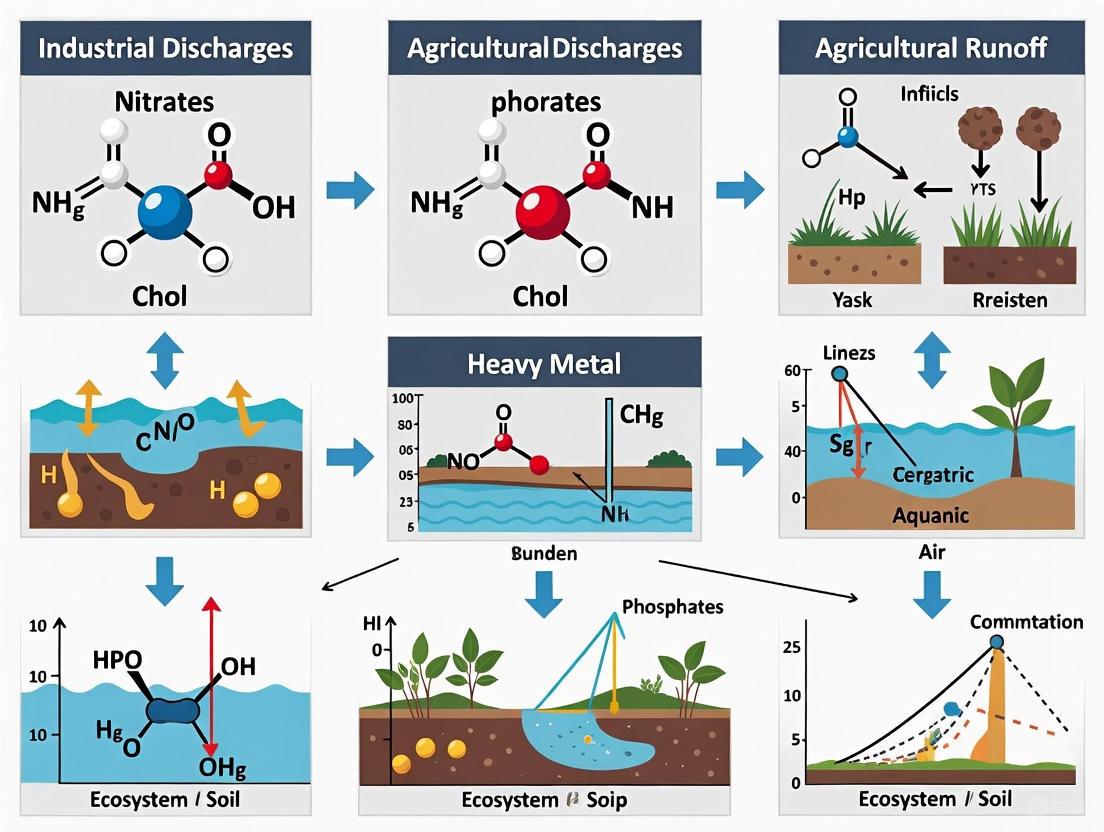
This article provides a comprehensive analysis of the impacts of industrial discharges and agricultural runoff on ecosystem health, with a specific focus on implications for biomedical research and drug development.
Agricultural and Industrial Pollutants: Assessing Ecosystem Health Risks and Biomedical Implications
Abstract
This article provides a comprehensive analysis of the impacts of industrial discharges and agricultural runoff on ecosystem health, with a specific focus on implications for biomedical research and drug development. It explores the foundational science behind pollutant pathways and health effects, examines advanced methodological approaches for monitoring and risk assessment, discusses optimization strategies for pollution mitigation, and validates findings through comparative case studies and regulatory frameworks. Aimed at researchers, scientists, and drug development professionals, the synthesis offers critical insights into the environmental origins of health risks and outlines future directions for interdisciplinary research.
Understanding the Contaminant Landscape: Sources, Pathways, and Direct Ecological Damage
Aquatic ecosystems worldwide face a mounting crisis from two interconnected classes of pollutants: agricultural nutrients and industrial toxins. These contaminants form a complex "pollution spectrum" that threatens freshwater and marine environments, biodiversity, and human health. Within the context of ecosystem health research, understanding this spectrum requires examining not only the distinct characteristics of each pollutant type but also their synergistic effects when they co-occur in environmental compartments. This technical guide provides a comprehensive framework for researchers investigating the multifaceted impacts of these pollutants, with specific methodological protocols for quantifying exposure levels and biological effects.
The environmental burden from anthropogenic activities has created a scenario where many water bodies must simultaneously process excess nutrients (nitrogen and phosphorus) from agricultural runoff while dealing with persistent, bioaccumulative toxic substances from industrial discharges. This combination often triggers complex ecological cascades that challenge traditional single-stressor research models. This whitepaper establishes standardized approaches for characterizing this pollution spectrum, enabling more predictive assessments of ecosystem vulnerability and resilience.
Quantitative Profiling of Pollutant Classes
The Agricultural Nutrient Profile
Agricultural runoff represents a diffuse nonpoint source pollution characterized by high loads of nitrogen and phosphorus, which drive eutrophication in receiving waters. According to recent research, Illinois and Iowa are the greatest contributors of nutrients to the Gulf of Mexico, with nonpoint sources (primarily agriculture) contributing 80% of the nitrogen and approximately half of the phosphorus to rivers and streams [1]. This nutrient loading has created a persistent hypoxic zone in the Gulf of Mexico measured at 6,334 square miles in 2024, with a historical maximum of 8,776 square miles recorded in 2017 [1].
The timing and form of nutrient application significantly impact runoff dynamics. Studies demonstrate that nitrate losses to tile drainage systems are substantially higher when nitrogen fertilizer is applied in fall rather than spring ahead of corn planting [1]. Surprisingly, research also indicates that soybean production aggravates nitrate losses through microbial decomposition of crop residues and soil organic matter when soil microbial communities exhaust easily accessible carbon sources [1].
Table 1: Agricultural Nutrient Pollutants and Ecosystem Impacts
| Pollutant Class | Primary Sources | Environmental Measurement | Ecosystem Impacts |
|---|---|---|---|
| Nitrogen (Nitrates) | Synthetic fertilizers, manure, legume crops | 80% of nitrogen in IL rivers from nonpoint agricultural sources [1] | Gulf of Mexico dead zone (6,334 sq mi), algal blooms, hypoxia |
| Phosphorus | Synthetic fertilizers, manure | ~50% of phosphorus in IL rivers from agricultural sources [1] | Freshwater eutrophication, algal toxin production |
| Combined Nutrient Load | Tile drainage, surface runoff | Fall application increases nitrate losses versus spring [1] | Reduced biodiversity, fish kills, altered ecosystem structure |
Industrial Toxin Signatures
Industrial discharges introduce heavy metals and persistent toxic substances into aquatic systems, creating distinct contamination signatures based on industrial processes. A comprehensive river system assessment within an industrial zone revealed a clear pollution pattern, with zinc consistently demonstrating the highest concentration across all sample types [2]. The study employed highly sensitive analytical techniques to establish pollution trends, finding the concentration order in water samples was Zn > Cu > Ni > Cr > As > Pb > Hg > Cd, while in plants the order was Zn > Cr > Cu > Pb > Ni > As > Hg > Cd, and in sediments Zn > Cu > Pb > Ni > As > Hg [2].
Unlike agricultural nutrients, industrial toxins often bioaccumulate in biological tissues and persist in sediments for decades, creating long-term ecological impacts even after pollution sources are controlled. These contaminants directly affect aquatic organism health at multiple biological levels, from cellular and physiological processes to population and community dynamics.
Table 2: Industrial Heavy Metal Pollutants and Ecological Risks
| Heavy Metal | Concentration Trend (Water) | Concentration Trend (Sediment) | Ecological & Health Risks |
|---|---|---|---|
| Zinc (Zn) | Highest concentration [2] | Highest concentration [2] | Aquatic toxicity, impaired reproduction |
| Copper (Cu) | Second highest [2] | Second highest [2] | Gill damage, oxidative stress in fish |
| Nickel (Ni) | Third highest [2] | Fourth highest [2] | Chronic toxicity to invertebrates |
| Chromium (Cr) | Fourth highest [2] | Not in top 5 in sediments [2] | Carcinogenic potential, developmental effects |
| Arsenic (As) | Fifth highest [2] | Fifth highest [2] | Human carcinogen, cardiovascular effects |
| Lead (Pb) | Sixth highest [2] | Third highest [2] | Neurotoxin, bioaccumulates in food webs |
| Mercury (Hg) | Seventh highest [2] | Sixth highest [2] | Neurotoxin, biomagnification |
| Cadmium (Cd) | Lowest concentration [2] | Not detected in trend [2] | Renal toxicity, osteoporosis |
Methodological Framework for Pollution Assessment
Analytical Techniques for Pollutant Quantification
Precise measurement of pollutant concentrations across environmental matrices requires sophisticated analytical instrumentation. The following protocols detail standardized methodologies for comprehensive pollution assessment.
Heavy Metal Analysis via ICP-MS and INAA
Instrumentation Principle: Inductively Coupled Plasma-Mass Spectrometry (ICP-MS) utilizes high-temperature argon plasma to atomize and ionize samples, followed by mass separation and detection of specific isotopes. Instrumental Neutron Activation Analysis (INAA) involves sample irradiation to produce radionuclides, whose decay characteristics enable element identification and quantification [2].
Sample Preparation Protocol:
- Collect water samples in pre-cleaned HDPE bottles acidified to pH < 2 with ultrapure HNO₃
- Obtain sediment samples using a grab sampler, followed by freeze-drying and homogenization
- Harvest plant specimens, separating roots from shoots, washing with deionized water, and oven-drying at 70°C
- Digest 0.5g of solid samples with 10mL HNO₃:H₂O₂ (5:1) in microwave-assisted digestion system
- Dilute digestates to 50mL with ultrapure water and filter through 0.45μm membrane before analysis
Quality Assurance/Quality Control Measures:
- Include procedural blanks, certified reference materials (NIST 1640a for water, NIST 2702 for sediments), and duplicate samples
- Establish calibration curves with minimum R² = 0.999 for all target analytes
- Verify analytical accuracy with recovery rates of 85-115% for certified values
- Monitor instrument sensitivity with internal standards (e.g., Sc, Y, In, Bi)
Analysis Parameters:
- RF Power: 1550 W
- Nebulizer Gas Flow: 0.85-0.95 L/min
- Analysis Mode: Spectrum for qualitative, TQuant for quantitative
- Integration Time: 0.5-1.0 seconds per mass
- Detection Limits: Sub-μg/L for most elements [2]
Nutrient Loading Assessment in Agricultural Systems
Field Monitoring Design:
- Establish edge-of-field monitoring stations with automated water samplers
- Install flow-proportional sampling triggered by stage height or volume
- Collect samples across hydrographs, with intensified sampling during storm events
- Measure nitrate (NO₃-N), ammonium (NH₄-N), and soluble reactive phosphorus (SRP)
Analytical Methods:
- Nitrate: Cadmium reduction method (EPA 353.2) or ion chromatography
- Ammonium: Salicylate method (EPA 350.1)
- Phosphorus: Ascorbic acid method (EPA 365.1)
- Total Nitrogen and Phosphorus: Persulfate digestion followed by colorimetric analysis
Data Interpretation:
- Calculate nutrient loads using flow-weighted mean concentrations
- Express yields as mass per unit drainage area (kg/ha/year)
- Compare seasonal patterns related to fertilizer application and hydrology
Experimental Design for Ecosystem Impact Assessment
Controlled mesocosm studies provide critical data on the ecological effects of pollutants across biological organization levels.
Mesocosm Establishment:
- Configure 12-24 replicate aquatic mesocosms (1,000-2,000L)
- Establish native sediment and biological communities (phytoplankton, periphyton, invertebrates, fish)
- Allow systems to stabilize for 60-90 days before dosing
- Implement factorial designs crossing nutrient gradients with metal mixtures
- Include reference systems without contaminant additions
Response Variable Measurement:
- Water Quality: Daily measurement of dissolved oxygen, pH, conductivity, temperature
- Nutrient Cycling: Weekly analysis of N and P species, chlorophyll a
- Community Structure: Biweekly sampling of plankton, monthly benthic invertebrate assessment
- Bioaccumulation: Tissue analysis from caged organisms at experiment termination
- Ecosystem Function: Measure primary production, respiration, decomposition rates
Statistical Analysis:
- Multivariate analysis (RDA, PERMANOVA) for community responses
- Dose-response modeling for threshold determinations
- Path analysis for direct and indirect effect quantification
- Time-series analysis for recovery trajectories
Research Visualization: Analytical Workflows
Comprehensive Environmental Assessment Pathway
The following diagram illustrates the integrated approach for assessing combined impacts of agricultural and industrial pollutants on aquatic ecosystem health:
Diagram Title: Pollution Impact Assessment Workflow
Pollutant Fate and Transport Pathways
Understanding the movement and transformation of pollutants through environmental compartments is essential for predicting exposure scenarios:
Diagram Title: Pollutant Fate and Transport Pathways
The Researcher's Toolkit: Essential Reagents and Methodologies
Comprehensive pollution impact research requires specialized reagents, reference materials, and analytical standards to ensure data quality and comparability across studies.
Table 3: Essential Research Reagents and Reference Materials
| Reagent/Reference Material | Technical Specification | Research Application | Quality Assurance Role |
|---|---|---|---|
| Certified Reference Materials (CRMs) | NIST 1640a (Natural Water), NIST 2702 (Marine Sediment) | Calibration verification, accuracy assessment | Establish method recovery rates (85-115% acceptance) |
| Multi-element Stock Standards | 10-100 mg/L in 2% HNO₃, certified concentrations | ICP-MS/ICP-OES calibration | Primary instrument calibration traceable to NIST |
| Isotopic Tracers | Enriched stable isotopes (^65Cu, ^68Zn, ^111Cd) | Isotope dilution mass spectrometry | Correct for matrix effects, improve quantification |
| High-Purity Acids | Trace metal grade HNO₃, HCl (ppb level contaminants) | Sample digestion/preservation | Minimize background contamination |
| Certified Nutrient Standards | NO₃-N, NH₄-N, PO₄-P in aqueous matrix | Nutrient analyzer calibration | Ensure accurate nutrient quantification |
| Solid Phase Extraction Cartridges | C18, chelating resins, ion exchange media | Sample cleanup/preconcentration | Matrix elimination, analyte enrichment |
| Preservation Reagents | Zn acetate, H₂SO₄, HgCl₂, chloroform | Sample stabilization before analysis | Maintain analyte integrity during storage |
| Quality Control Materials | Laboratory fortified blanks, matrix spikes | Batch quality control | Monitor contamination, matrix effects |
Mitigation Approaches and Research Gaps
Agricultural Nutrient Intervention Strategies
Research demonstrates varying efficacy levels for different nutrient mitigation approaches:
Cover Cropping: Winter cover crops like cereal rye demonstrate 40% reductions in tile nitrate when grown ahead of soybean [1]. The "Fall Covers for Spring Savings" program in Illinois provides incentives for this practice [1].
Constructed Wetlands: Strategically placed wetlands achieve approximately 50% removal of tile nitrate while providing ancillary ecosystem benefits, though topographic constraints limit widespread implementation [1].
Bioreactors: Woodchip-filled trenches facilitating denitrification currently show <20% nitrate removal efficiency in field evaluations, though soil cap modifications may improve performance [1].
Diverse Crop Rotations: Corn-soybean-wheat rotations with double-cropped soybean following wheat and cereal rye after corn reduced tile nitrate losses over 30% while maintaining profitability in a six-year study [1].
Industrial Pollution Control Technologies
Advanced treatment technologies can significantly reduce industrial pollutant discharges:
Membrane Filtration: Reverse osmosis and nanofiltration effectively remove dissolved metals and inorganic contaminants.
Advanced Oxidation Processes: Utilize hydroxyl radicals to degrade persistent organic pollutants often co-discharged with metals.
Electrochemical Treatment: Electrocoagulation and electrooxidation can precipitate and transform heavy metals.
Adsorption Media: Specialty sorbents like ion-exchange resins, activated alumina, and functionalized clays target specific metal ions.
Critical Research Frontiers
Substantial knowledge gaps remain in several key areas:
- Synergistic Effects: Limited understanding of interactive impacts between nutrient enrichment and metal toxicity
- Ecosystem Recovery Trajectories: Insufficient data on restoration timelines following pollution abatement
- Nanoparticle Impacts: Emerging concerns about engineered nanomaterial effects in polluted ecosystems
- Climate Change Interactions: Uncertainties regarding how warming waters and altered hydrology will affect pollutant bioavailability
- Biomonitoring Advancements: Need for sensitive ecological indicators that provide early warning of ecosystem stress
The pollution spectrum spanning agricultural nutrients to industrial toxins presents complex challenges for ecosystem health research and environmental management. Effective mitigation requires integrated approaches that address both pollutant classes simultaneously, recognizing their interconnected impacts on aquatic ecosystems. Future research priorities should focus on developing multi-stressor assessment frameworks, validating innovative treatment technologies, and establishing evidence-based policies that incentivize pollution prevention at the watershed scale. Standardized methodologies, such as those presented in this technical guide, provide the foundation for generating comparable data across systems and temporal scales, ultimately supporting more effective ecosystem protection strategies.
Natural water purification is a critical ecosystem service, wherein biological, chemical, and physical processes within aquatic environments filter out pollutants and degrade organic matter. However, this service is experiencing significant disruption and collapse due to anthropogenic pressures. Framed within a broader thesis on the impact of industrial discharges and agricultural runoff on ecosystem health, this technical guide examines the mechanisms of this collapse. The influx of pollutants from these diffuse and point sources is overwhelming the self-purification capacity of freshwater and marine systems, leading to severe consequences for biodiversity, human health, and water security. This document provides a detailed analysis for researchers and scientists, integrating current data, experimental methodologies for monitoring, and visualizing the complex pathways of disruption.
Quantitative Impact of Key Pollutants
The following tables summarize the primary pollutants from industrial and agricultural activities, their direct effects on water purification mechanisms, and the resultant ecosystem-level consequences.
Table 1: Key Pollutants and Their Direct Impact on Purification Processes
| Pollutant Category | Source | Impact on Purification Mechanism | Key Measurable Parameters |
|---|---|---|---|
| Excessive Nutrients (N, P) | Agricultural fertilizer runoff, untreated municipal wastewater [3] | Drives eutrophication; algal blooms deplete dissolved oxygen (DO), causing hypoxic "dead zones" and disrupting microbial communities [3]. | Chlorophyll-a, DO concentration, Secchi depth [4]. |
| Organic Matter | Food processing, pulp/paper mills, municipal sewage [3] | Increases biological oxygen demand (BOD), depleting DO and suffocating aerobic decomposers essential for breaking down waste [3]. | BOD, Chemical Oxygen Demand (COD), DO [3]. |
| Suspended Solids | Construction, soil erosion, industrial discharges | Blocks sunlight, reduces photosynthesis in aquatic plants, smothers benthic organisms and their habitats. | Total Suspended Solids (TSS), Turbidity (NTU). |
| Heavy Metals | Mining, smelting, industrial manufacturing | Toxicity disrupts enzyme functions in aquatic flora and fauna; bioaccumulates in the food web. | Concentrations of Pb, Hg, Cd, As (e.g., mg/L). |
| Emerging Contaminants / Inactive Ingredients | Herbicide formulations, pharmaceuticals [5] | Inert ingredients (e.g., amines) can transform during water disinfection into hazardous by-products like nitrosamines [5]. | Precursor concentration, DBP formation potential [5]. |
Table 2: Documented Ecosystem Consequences of Purification Collapse
| Ecosystem Consequence | Underlying Cause | Documented Example / Scale |
|---|---|---|
| Eutrophication & Hypoxia | Nutrient over-enrichment leading to algal blooms and subsequent oxygen depletion [3]. | >90% of rivers in Poland threatened by eutrophication; dead zones in Gulf of Mexico [3]. |
| Biodiversity Loss | Toxicity, habitat smothering, and oxygen deprivation [3]. | Changes in freshwater community structure; loss of sensitive species (e.g., certain fish, macroinvertebrates) [3]. |
| Human Health Risks | Pathogens and toxic chemicals entering water bodies used for recreation, irrigation, or drinking [3]. | Use of polluted water in irrigation linked to infectious diseases (e.g., hepatitis A, E. coli) [3]. |
| Disruption of Treatment Plants | High or toxic pollutant loads can overwhelm engineered treatment systems. | Emergency discharge of 3.65 million m³ of untreated wastewater in Warsaw, Poland [3]. |
Experimental Protocols for Monitoring and Analysis
Tracking Agricultural Contaminant Precursors
Objective: To quantify and characterize the role of inactive ingredients in agricultural runoff as precursors for hazardous disinfection by-products (DBPs) in drinking water [5].
Methodology:
- Source Analysis: Compile inventory of commonly used herbicides, focusing on both active and inactive formulation components (e.g., stabilizing amines). Use agricultural agency data and sales records to estimate regional usage rates [5].
- Field Sampling: Collect water samples from agricultural drainage ditches, receiving streams, and nearby water treatment plant intakes. Sampling should be stratified by region and time (e.g., pre- and post-application seasons) to account for spatial and temporal variability [5].
- Laboratory Analysis:
- Targeted Analysis: Use Liquid Chromatography coupled with Tandem Mass Spectrometry (LC-MS/MS) to quantify specific amine-based compounds.
- DBP Formation Potential (FP) Assay: Subject water samples to controlled chlorination (or other disinfection methods) under standardized conditions (pH, chlorine dose, contact time, temperature). Subsequently, measure the formation of nitrogenous DBPs (N-DBPs), such as nitrosamines, using Gas Chromatography-Mass Spectrometry (GC-MS) [5].
- Data Correlation: Statistically correlate the concentrations of identified precursor amines in environmental samples with the measured N-DBP FP to establish their relative importance compared to other known precursors (e.g., from pharmaceuticals).
Machine Learning-Based Water Quality Dynamic Prediction
Objective: To develop a robust predictive model for water quality parameters, enabling proactive management.
Methodology (as per the integrated LSTM framework) [4]:
- Data Collection & Pre-processing: Collect high-frequency time-series data for multiple water quality parameters (e.g., DO, COD~Mn~, Water Temperature (WT), pH, electrical conductivity) from automated monitoring stations [4].
- Data Denoising: Apply techniques like Wavelet Transform (WL) or Complete Ensemble Empirical Mode Decomposition with Adaptive Noise (CEEMDAN) to reduce noise and reveal underlying patterns in non-stationary time-series data [4].
- Feature Selection: Use statistical analyses (e.g., mutual information, correlation analysis) to identify the key driving factors (e.g., WT is a key driver for DO) and select the most relevant input features for the model [4].
- Model Building & Training:
- Architecture: Implement a Long Short-Term Memory (LSTM) neural network. LSTM's gated structure (input, forget, output gates) is adept at capturing long-term temporal dependencies in time-series data [4].
- Data Partitioning: Partition the time-series dataset chronologically into training and testing sets, avoiding random splitting to preserve temporal context [4].
- Training: Train the LSTM model on the historical sequence data to learn the mapping between input features (e.g., past WT, pH, flow) and target outputs (e.g., future DO concentration).
- Model Validation & Deployment:
- Performance Evaluation: Validate the model on the testing set using metrics like R², Root Mean Square Error (RMSE), and Mean Absolute Error (MAE). Studies show LSTM can achieve R² > 0.99 for DO prediction [4].
- Application: The trained model can be used for multi-step-ahead forecasting of water quality, providing early warnings for degradation events and supporting management decisions for large-scale hydrological projects [4].
Signaling Pathways and Workflow Visualizations
Pollutant Impact Pathway on Aquatic Ecosystems
The following diagram illustrates the causal pathway through which industrial and agricultural discharges disrupt the natural water purification ecosystem service.
Predictive Modeling Experimental Workflow
This diagram outlines the integrated machine learning framework for predicting water quality dynamics, a key tool for researching ecosystem service disruption.
The Scientist's Toolkit: Research Reagent Solutions
This table details essential reagents, materials, and tools required for conducting advanced research in water ecosystem disruption.
Table 3: Key Research Reagents and Materials
| Item / Solution | Function / Application | Technical Specification / Rationale |
|---|---|---|
| LC-MS/MS Grade Solvents | Used for extraction and analysis of emerging organic contaminants (e.g., herbicide amines, pharmaceuticals) from water samples [5]. | High purity (>99.9%) minimizes background interference and enhances detection sensitivity and accuracy in mass spectrometry [5]. |
| Disinfection By-Product (DBP) Standards | Certified reference materials for nitrosamines and other DBPs. Used for calibrating GC-MS/MS systems and quantifying compounds in FP assays [5]. | Enables precise and accurate quantification of trace-level hazardous compounds; essential for method validation and data comparability. |
| LSTM-Based Modeling Framework | A predictive computational tool for modeling complex, non-linear water quality dynamics using time-series data [4]. | Superior to traditional models (e.g., ARIMA) for capturing temporal dependencies; demonstrated R² > 0.99 for DO prediction [4]. |
| Multi-Parameter Water Quality Sondes | In-situ sensors for continuous, high-frequency monitoring of key parameters (DO, pH, COD~Mn~, conductivity, temperature, turbidity) [4]. | Provides the dense, high-quality time-series data required for training and validating robust machine learning models [4]. |
| Wavelet Transform Toolbox | A computational data denoising technique (e.g., in Python or MATLAB) applied to raw sensor data before model training [4]. | Mitigates the challenge of non-stationarity in time-series data, improving the predictive performance and stability of LSTM models [4]. |
| Chlorination Reagents | Sodium hypochlorite solution and pH buffers for conducting standardized DBP Formation Potential (FP) tests in the laboratory [5]. | Allows for simulation of drinking water treatment conditions to assess the precursor potential of environmental samples under controlled settings [5]. |
Industrial discharges and agricultural runoff represent significant pathways for the introduction of harmful substances into ecosystems, driving complex environmental degradation processes. This technical guide examines three interconnected mechanisms—eutrophication, bioaccumulation, and toxicity—that mediate the impact of these anthropogenic activities on ecosystem health. These mechanisms operate across multiple biological scales, from molecular interactions to ecosystem-level dynamics, presenting substantial challenges for environmental risk assessment and mitigation. Understanding their underlying processes is crucial for researchers and environmental professionals developing intervention strategies and regulatory frameworks. This whitepaper synthesizes current scientific knowledge on these mechanisms, with a specific focus on quantitative assessment methods, experimental approaches, and implications for ecological and human health within the context of persistent pollutant exposure.
Eutrophication: Nutrient Over-enrichment of Aquatic Systems
Definition and Primary Causes
Eutrophication is a process in which nutrients accumulate in a body of water, resulting in an increased growth of organisms that may deplete the oxygen in the water [6]. While eutrophication occurs naturally over geological timescales, cultural eutrophication caused by human activities has dramatically accelerated this process globally [6]. The primary nutrients driving eutrophication are phosphorus (P) in freshwater ecosystems and nitrogen (N) in marine environments [6].
The main anthropogenic sources of these nutrients include:
- Agricultural runoff containing fertilizers and animal wastes [7] [6]
- Untreated or partially treated sewage and wastewater [8] [6]
- Industrial discharges and atmospheric deposition of nitrogen from combustion processes [6]
Agricultural non-point source pollution has been identified as a dominant contributor to eutrophication, responsible for approximately 52% and 54% of total nitrogen and phosphorus loading, respectively, in China's Taihu Lake Basin [7]. Similarly, in the United States, agricultural runoff is considered the primary source of nutrients in impaired lakes and streams [7].
Mechanistic Pathways and Ecological Impacts
The eutrophication process follows a sequential mechanistic pathway that fundamentally alters aquatic ecosystems:
Table 1: Ecological Effects of Eutrophication
| Effect Type | Primary Manifestations | Ecological Consequences |
|---|---|---|
| Primary Production | Increased phytoplankton biomass; Algal blooms | Shading of benthic plants; Shift in dominant primary producers |
| Community Structure | Changes in macrophyte species composition; Decreased biodiversity | Loss of habitat-forming species; Simplified food webs |
| Water Quality | Dissolved oxygen depletion; Increased turbidity | Hypoxic/anoxic conditions; Fish kills; Loss of desirable species |
| Toxin Production | Proliferation of toxic cyanobacteria; Harmful algal blooms | Shellfish poisoning; Human health risks; Livestock mortality |
The progression begins with nutrient enrichment from agricultural and industrial sources, which stimulates rapid growth of phytoplankton and algae, leading to algal blooms [8] [6]. These blooms limit light penetration to submerged aquatic vegetation while simultaneously producing oxygen during daylight hours through photosynthesis. However, when the algae die, their decomposition by heterotrophic bacteria consumes dissolved oxygen, potentially creating hypoxic (low oxygen) or anoxic (no oxygen) conditions [6]. These oxygen-depleted "dead zones" cause suffocation and death of fish and other aerobic organisms, resulting in substantial ecological degradation [9] [6].
Eutrophication also drives significant biodiversity loss through competitive exclusion. Normally limiting nutrients become abundant, allowing competitive species to invade and outcompete native inhabitants [6]. This process has been documented in New England salt marshes, where nutrient enrichment alters competitive hierarchies and community structure [6].
Assessment Methodologies and Metrics
Eutrophication assessment has evolved from simple individual parameters to comprehensive multi-metric indexes. Key analytical approaches include:
Traditional Nutrient Limitation Bioassays:
- Principle: Determine whether N, P, or both nutrients limit algal growth through controlled nutrient addition experiments
- Methodology: Collection of water samples followed by laboratory incubation with nutrient amendments (N, P, N+P) while monitoring chlorophyll-a concentration or algal biomass accumulation
- Historical Context: Pioneered at the Experimental Lakes Area in Ontario, Canada, in the 1970s, providing definitive evidence that freshwater systems are typically phosphorus-limited [6]
Modern Comprehensive Assessment: Contemporary eutrophication assessment employs multiple complementary metrics:
- Nutrient concentrations: Total phosphorus (TP), total nitrogen (TN), N:P ratios
- Biological response indicators: Chlorophyll-a, phytoplankton composition and biomass, submerged aquatic vegetation coverage
- System-level parameters: Dissolved oxygen dynamics, water transparency (Secchi depth), hypolimnetic oxygen depletion rates
The development of total nutrient status indexes represents a significant advancement in eutrophication assessment, integrating multiple parameters into a unified framework for more robust ecosystem evaluation [10].
Table 2: Quantitative Assessment of Nutrient Loss from Agricultural Runoff
| Agricultural System | Fertilizer Application (kg ha⁻¹ year⁻¹) | Runoff Loss Rate (%) | Annual Nutrient Discharge (kg ha⁻¹ year⁻¹) |
|---|---|---|---|
| Conventional Cropland | 196 N, 87 P | 9.5% N, 3.3% P | 18.62 N, 2.87 P |
| Paddy Soils | 210 N, 36 P | 5.9% N, 0.52% P | 12.39 N, 0.18 P |
Note: Data compiled from multiple agricultural systems showing significant variation in nutrient runoff based on management practices [7].
Bioaccumulation and Biomagnification
Fundamental Concepts and Definitions
Bioaccumulation refers to the gradual increase of toxic chemicals in the body tissues of living organisms over time, occurring when chemical uptake exceeds the rate of elimination through excretion or catabolism [11]. This process is particularly concerning for Persistent Organic Pollutants (POPs) and heavy metals that resist metabolic breakdown [11].
Biomagnification (or bioamplification) describes the progressive concentration of chemical toxins at successively higher trophic levels in a food chain [11]. While bioaccumulation occurs within individual organisms, biomagnification operates across trophic transfers, resulting in the highest concentrations in apex predators.
The biological half-life of chemical toxins is a critical determinant of bioaccumulation potential—substances with longer half-lives present greater poisoning risks even when environmental concentrations are low [11].
Pathways and Mechanisms
The bioaccumulation and biomagnification process follows a predictable pathway through aquatic ecosystems:
Figure 1: Bioaccumulation and Biomagnification Pathways in Aquatic Ecosystems
The process begins when POPs such as organochlorine pesticides (DDT), industrial chemicals (PCBs), and heavy metals enter water bodies from industrial and agricultural sources [11]. These contaminants are absorbed by primary producers like phytoplankton directly from water, accumulating in their tissues at concentrations exceeding environmental levels [11]. With each trophic transfer, contaminants become more concentrated, resulting in apex predators accumulating toxins at levels millions of times higher than the surrounding water [11].
Case Study: Minamata Disease
The Minamata disaster in Japan represents a classic case study of bioaccumulation and biomagnification. Between 1932 and 1968, the Chisso Corporation discharged industrial waste containing mercury into Minamata Bay [11]. The inorganic mercury was transformed by microbial activity into methylmercury (MeHg), which subsequently bioaccumulated in fish and shellfish [11].
Marine products from the bay showed extremely high mercury contamination levels (5.6-35.7 ppm), with residents of the Shiranui coastline exhibiting hair mercury concentrations as high as 705 ppm [11]. The resulting mercury poisoning caused severe neurological symptoms including ataxia, sensory disturbance, dysarthria, and auditory and visual impairment in humans and other animals [11]. As of March 2001, 2,265 officially recognized cases of Minamata disease were documented, including 1,784 deaths [11].
Global Regulation of Persistent Organic Pollutants
The Stockholm Convention, signed in 2001 by the United States and 90 other countries including the European Union, represents a landmark international treaty to eliminate or reduce the production, use, and release of 12 priority POPs [11]. The original "dirty dozen" included:
- Pesticides: DDT, endrin, dieldrin, chlordane, aldrin, toxaphene, mirex, hexachlorobenzene, and heptachlor
- Industrial chemicals: Polychlorinated biphenyls (PCBs) and hexachlorobenzene
- By-products: Polychlorinated dibenzo-p-dioxins, hexachlorobenzene, and polychlorinated dibenzofurans
By 2017, sixteen additional POPs had been added to the treaty, reflecting growing recognition of their global threat [11].
Toxicity Mechanisms of Key Pollutants
Heavy Metal Toxicity
Heavy metals such as lead (Pb), chromium (Cr), arsenic (As), cadmium (Cd), mercury (Hg), zinc (Zn), copper (Cu), cobalt (Co), and nickel (Ni) persist indefinitely in the environment, posing significant toxicological threats [12]. While some metals (Cu, Zn, Cr, Ni, Co, Mo, Fe) function as essential micronutrients at appropriate concentrations, all metals become toxic at elevated levels [12].
Table 3: Heavy Metal Toxicity Mechanisms and Effects
| Metal | Primary Toxicity Mechanisms | Biological Effects |
|---|---|---|
| Cadmium (Cd) | Antagonism with calcium absorption; disruption of cell proliferation, differentiation, and apoptosis | Skeletal deformities; developmental障碍; carcinogenic (lung, prostate, kidney cancers) |
| Lead (Pb) | Inhibition of acetylcholinesterase (AChE); stimulation of reactive oxygen species (ROS) | Neurotoxicity; oxidative stress; reduced glutathione (GSH) levels |
| Mercury (Hg) | Particularly methylmercury; binding to sulfhydryl groups; lipid membrane disruption | Reduced sperm motility; DNA damage; embryonic developmental defects; neurotoxicity |
| Arsenic (As) | disruption of ATP production; oxidative stress; DNA damage | Skin lesions; cardiovascular disease; neurotoxicity; various cancers |
Heavy metals induce toxicity through multiple interconnected mechanisms:
- Oxidative stress via generation of reactive oxygen species (ROS) that damage cellular components [12]
- Enzyme inhibition through binding to active sites or protein denaturation [12]
- DNA damage and disruption of genetic material, potentially leading to mutagenesis and carcinogenesis [12]
- Disruption of ion regulation, particularly through competition with essential cations like calcium [12]
The developmental stage significantly influences metal susceptibility, with younger organisms typically more vulnerable. For example, zebrafish larvae showed increased skeletal malformations when exposed to CdCl₂, with toxicity enhanced at higher water temperatures [12].
Antibiotic Toxicity and Resistance
Antibiotics entering aquatic environments through agricultural runoff, aquaculture, and wastewater discharges pose emerging threats to ecosystem health. China, as the world's largest antibiotic producer and consumer, used approximately 162,000 tons of 36 frequently detected antibiotics in 2013 alone—roughly nine times the consumption of the United States [12]. An estimated 58% of administered antibiotics are excreted unchanged or as metabolites into the environment [12].
Key antibiotic classes detected in water environments include:
- Sulfonamides
- Chloramphenicols
- Quinolones
- Tetracyclines
- Macrolides
Environmental antibiotics exert selective pressure on microbial communities, driving the development and proliferation of antibiotic resistance genes [9]. This selection disrupts native microbial community structure and function, potentially compromising essential ecosystem processes mediated by bacterial communities [12]. Furthermore, antibiotics can directly affect non-target organisms across trophic levels, though these impacts remain inadequately characterized, particularly for chronic, low-level exposures typical of environmental scenarios.
Combined Toxicity of Complex Mixtures
Environmental pollutants rarely occur in isolation, forming complex mixtures that may interact to produce unexpected toxicological outcomes. Heavy metals and antibiotics frequently co-occur in aquatic systems receiving both industrial and agricultural inputs [12]. Their combined effects may manifest as:
- Additive toxicity: The combined effect equals the sum of individual effects
- Synergistic toxicity: The combined effect exceeds the sum of individual effects
- Antagonistic toxicity: The combined effect is less than the sum of individual effects
Research indicates that cadmium and antibiotic combinations can produce synergistic developmental toxicity in zebrafish embryos [12]. Similarly, copper nanoparticles combined with tetracycline exhibit enhanced toxicity to aquatic bacteria compared to either contaminant alone [12]. These interactions highlight the critical need for mixture toxicity assessment in environmental risk evaluation, as regulatory frameworks based on single-substance toxicity may substantially underestimate ecological risks.
Experimental Approaches and Assessment Methodologies
Standardized Ecotoxicological Testing
Current ecotoxicological assessment employs standardized test organisms and endpoints to evaluate contaminant effects:
Acute Toxicity Testing:
- Organisms: Daphnia magna (water flea), Danio rerio (zebrafish), Pseudokirchneriella subcapitata (green algae)
- Endpoints: Lethality (LC50), immobilization (EC50), growth inhibition (IC50)
- Duration: 24-96 hours depending on species and protocol
Chronic Toxicity Testing:
- Organisms: As above, plus additional model species relevant to specific ecosystems
- Endpoints: Reproduction, growth, development, teratogenicity, genotoxicity
- Duration: Days to weeks, encompassing critical life stages
Molecular Biomarkers:
- Oxidative stress: Glutathione (GSH), superoxide dismutase (SOD), catalase (CAT), lipid peroxidation (MDA)
- Neurotoxicity: Acetylcholinesterase (AChE) inhibition
- Detoxification: Glutathione S-transferase (GST), metallothioncins
- Cellular damage: DNA strand breaks, micronuclei formation, apoptosis markers
Advanced Analytical Techniques
Mass Spectrometry Imaging (MSI) has emerged as a powerful tool for visualizing the spatial distribution of contaminants and their biological effects in tissue samples [13]. Key MSI modalities include:
Table 4: Mass Spectrometry Imaging Techniques for Contaminant Analysis
| Technique | Mass Analyzer | Applicable Analytes | Spatial Resolution | Limitations |
|---|---|---|---|---|
| MALDI-MSI | TOF MS | Metabolites, proteins, peptides, drugs, pollutants | 5.0 μm (vacuum), 1.4 μm (ambient) | Matrix application required; ion suppression in low mass compounds |
| DESI-MSI | TOF MS | Compounds <2000 Da | Up to 10 μm | Lower spatial resolution |
| SI-MSI | TOF MS | Elements, compounds <1000 Da | 0.05-1.0 μm | Instrument expense; ion fragmentation |
| LA-ICP-MSI | TOF MS | Elements | Up to 5.0 μm | Matrix and fractionation effects |
MSI enables simultaneous detection of numerous endogenous and exogenous compounds while preserving their spatial information in biological tissues [13]. This capability provides unique insights into contaminant distribution, metabolism, and resulting physiological effects at the tissue and cellular levels.
Experimental Workflow for Combined Toxicity Assessment
Figure 2: Experimental Workflow for Assessing Pollutant Mixture Toxicity
This integrated approach combines traditional toxicity endpoints with advanced molecular and spatial analyses to characterize complex mixture interactions. The workflow begins with systematic experimental design, proceeds through tiered exposure studies, and culminates in data integration to model contaminant interactions and identify key toxicity pathways.
The Scientist's Toolkit: Essential Research Reagents and Methods
Table 5: Key Research Reagents and Methods for Environmental Toxicology Research
| Reagent/Method | Category | Primary Application | Technical Considerations |
|---|---|---|---|
| Daphnia magna | Model organism | Acute toxicity screening (immobilization); reproductive effects | 48-hour acute tests; 21-day chronic reproduction tests |
| Danio rerio (Zebrafish) | Model organism | Developmental toxicity; neurotoxicity; teratogenicity | Embryonic development complete at 96 hpf; transparent embryos ideal for visualization |
| Metallothionein antibodies | Biochemical reagent | Biomarker for metal exposure and detoxification | Protein levels increase with metal exposure; indicates physiological response |
| Acetylcholinesterase assay kit | Biochemical assay | Neurotoxicity assessment | Enzyme inhibition indicates pesticide or metal neurotoxicity |
| Reactive Oxygen Species (ROS) detection probes | Chemical probes | Oxidative stress measurement | DCFH-DA commonly used; fluorescence indicates oxidative stress |
| COMET assay reagents | Genotoxicity testing | DNA damage assessment | Single-cell gel electrophoresis visualizes DNA strand breaks |
| LC-MS/MS systems | Analytical instrument | Quantification of antibiotics, pesticides, and metabolites | High sensitivity and specificity; requires method development for new compounds |
| MALDI-MSI matrix compounds | MSI reagents | Facilitate desorption/ionization in mass spectrometry imaging | DHB, CHCA common for small molecules; matrix selection critical for sensitivity |
This toolkit represents essential resources for investigating eutrophication, bioaccumulation, and toxicity mechanisms. Selection of appropriate model organisms, biochemical assays, and analytical methods should align with specific research questions and contaminant properties.
Eutrophication, bioaccumulation, and toxicity represent interconnected mechanisms through which industrial discharges and agricultural runoff impact ecosystem health. Eutrophication driven by nitrogen and phosphorus inputs disrupts aquatic ecosystem structure and function through oxygen depletion and habitat degradation. Bioaccumulation and biomagnification processes concentrate persistent pollutants through food webs, threatening apex predators and human consumers. Complex toxicity mechanisms, particularly from contaminant mixtures, present challenges for ecological risk assessment and regulatory control.
Addressing these interconnected threats requires integrated approaches spanning source control, environmental monitoring, and advanced toxicological assessment. Future research priorities should include:
- Enhanced understanding of mixture toxicity interactions under environmentally relevant conditions
- Development of sensitive biomarkers for early detection of ecosystem stress
- Advanced modeling approaches to predict bioaccumulation potential of emerging contaminants
- Innovative treatment technologies for nutrient and contaminant removal from agricultural and industrial wastewater
By elucidating the mechanistic basis of these key harm pathways, researchers and environmental professionals can develop more effective strategies for protecting ecosystem health in the face of increasing anthropogenic pressures.
This whitepaper provides a technical analysis of ecosystem collapse in three major river basins—the Ganges (India), Citarum (Indonesia), and Mississippi (United States). Framed within broader research on industrial discharge and agricultural runoff impacts, this assessment examines the synergistic effects of multiple stressors on aquatic ecosystem health. Using standardized risk assessment protocols, including indicators from the IUCN Red List of Ecosystems framework, we document severe degradation across all three systems despite their geographical and socioeconomic differences. The analysis reveals that converging pressures from chemical pollution, nutrient loading, and hydrological modification have pushed these ecosystems toward critical thresholds, with profound implications for biodiversity, human health, and water security. Evidence-based solutions and research methodologies are presented to guide conservation interventions and monitoring efforts for researchers and environmental health professionals.
Ecosystem collapse represents the endpoint of severe degradation, where essential structures, processes, and biodiversity are irreversibly lost, compromising ecosystem service delivery. The International Union for Conservation of Nature (IUCN) Red List of Ecosystems (RLE) provides a standardized framework for assessing collapse risk, using indicators across distributional, abiotic, and biotic dimensions [14]. Climate change amplifies these risks by altering hydrological regimes and increasing extreme events, thereby reducing ecosystem resilience [14]. For river ecosystems, collapse manifests through biodiversity loss, hypoxic conditions, and functional impairment, often triggered by synergistic pressures from industrial, agricultural, and urban pollution sources.
Comparative Case Studies
Ganges River Basin, India
Pollution Profile and Stressors
The Ganges River exemplifies ecosystem collapse driven by multifaceted pollution pressures affecting over 500 million people across its 2,525-kilometer course [15]. The basin faces compounding stressors from industrial discharge, untreated sewage, agricultural runoff, and religious practices [16] [17].
Industrial pollution originates from approximately 1,100 industrial units along its banks, including tanneries, textile mills, and chemical plants that discharge untreated effluents containing heavy metals like mercury, lead, and cadmium [15] [17]. Municipal sewage from major population centers represents another primary stressor, with over 80% of wastewater entering the river untreated [15]. This creates dangerously high levels of fecal coliform bacteria, often measuring hundreds of times above safe bathing limits [17]. Agricultural runoff introduces pesticides and fertilizers that drive eutrophication, while religious practices contribute solid waste including floral offerings and non-biodegradable materials [16].
Table 1: Key Pollution Indicators in the Ganges River
| Parameter | Level/Measurement | Ecological Impact |
|---|---|---|
| Fecal Coliform | Hundreds of times above safe limits | Waterborne disease transmission [17] |
| Heavy Metals | Mercury, lead, cadmium exceeding safety standards | Bioaccumulation in aquatic food webs [15] |
| BOD/COD | Elevated levels indicating organic pollution | Oxygen depletion, habitat degradation [17] |
| Antibiotic-Resistant Bacteria | Present in multiple stretches | Public health crisis, "superbugs" [15] |
Ecosystem Collapse Indicators
The Ganges exhibits multiple indicators of ecosystem collapse, including massive fish die-offs, loss of endemic species like the Ganges river dolphin, and functional impairment of natural purification processes [15] [17]. Economic impacts include healthcare costs from waterborne diseases, reduced agricultural productivity from contaminated irrigation, and diminished tourism potential [17]. The government's Namami Gange Programme has achieved limited success due to inadequate sewage infrastructure, weak enforcement of regulations, and insufficient public participation in conservation efforts [18] [17].
Citarum River Basin, Indonesia
Pollution Profile and Stressors
The Citarum River in West Java, Indonesia, represents one of the most severely degraded river ecosystems globally, with pollution primarily driven by industrial concentration, particularly from textile manufacturing [19]. Over 2,000 textile factories discharge untreated wastewater containing synthetic dyes, chemical finishing agents, and heavy metals directly into the river system [15]. Mercury levels in the river have been measured at 100 times international safety standards, creating severe toxicological risks [15].
The river's degradation reflects decades of unregulated industrial growth without corresponding investment in wastewater infrastructure. Additional stressors include untreated domestic sewage and agricultural runoff containing pesticides and herbicides [19]. The solid waste burden is extreme, with plastic debris and other materials creating physical barriers to flow and navigation.
Table 2: Pollution Sources and Impacts in the Citarum River
| Pollutant Category | Specific Contaminants | Human Health Impact |
|---|---|---|
| Industrial Chemicals | Heavy metals (lead, mercury, cadmium), textile dyes | Skin diseases, respiratory problems, cancer risks [19] |
| Domestic Waste | Untreated sewage, plastic debris | Gastrointestinal infections, skin irritation [15] [19] |
| Agricultural Runoff | Pesticides, herbicides | Developmental disorders, chronic poisoning [19] |
Ecosystem Collapse Indicators
The Citarum River exhibits advanced ecosystem collapse, with complete loss of commercial fisheries due to toxic conditions and oxygen depletion [19]. Biodiversity has dramatically declined, with most native species unable to survive in the polluted waters. The river's natural sediment composition has been altered by accumulated industrial waste, fundamentally changing benthic habitats [19]. Social impacts include economic losses from damaged agriculture, increased healthcare burdens, and the marginalization of traditional riverside communities [19].
Mississippi River Basin, United States
Pollution Profile and Stressors
The Mississippi River Basin faces a different collapse profile dominated by non-point source agricultural pollution across the American heartland [20] [21]. Intensive farming practices, particularly for corn (maize) production, drive massive inputs of nitrogen and phosphorus fertilizers into the watershed [20]. Additional agricultural stressors include pesticide contamination, soil erosion, and runoff from Concentrated Animal Feeding Operations (CAFOs) [21].
Unlike point source pollution, agricultural runoff represents a diffuse challenge that remains largely exempt from Clean Water Act regulations, creating significant governance challenges [20] [21]. The basin's natural hydrology has been extensively modified through channelization, levee construction, and dam installation, compromising natural floodplain connectivity and sediment transport processes [21].
Ecosystem Collapse Indicators
The primary collapse indicator for the Mississippi River is the annual formation of a hypoxic "Dead Zone" in the Gulf of Mexico, which measured approximately 8,000 square miles in recent years [15] [21]. This hypoxic zone forms when excess nutrients from the river stimulate algal blooms that deplete oxygen through decomposition, creating conditions unsuitable for most marine life [20]. Within the river itself, biodiversity loss manifests through fish kills, harmful algal blooms, and impaired drinking water sources [21]. The ecological damage creates economic impacts through reduced fisheries productivity, increased water treatment costs, and lost recreational value [21].
Assessment Methodologies and Research Protocols
IUCN Red List of Ecosystems Framework
The IUCN RLE framework provides standardized protocols for assessing ecosystem collapse risk through multiple criteria [14] [22]. The following workflow outlines the application of this framework to river ecosystems:
Field Assessment and Monitoring Protocols
Water Quality Sampling Protocol
Objective: Quantify pollutant concentrations and assess compliance with water quality standards across river basins.
Methodology:
- Site Selection: Establish monitoring stations upstream and downstream of major pollution point sources (industrial discharges, municipal outfalls, agricultural regions)
- Sampling Frequency: Collect samples quarterly, with increased frequency during seasonal high-flow events
- Core Parameters:
- Physical: Temperature, turbidity, conductivity, total suspended solids
- Chemical: pH, dissolved oxygen, biochemical oxygen demand (BOD), chemical oxygen demand (COD), nutrients (nitrogen, phosphorus), heavy metals (mercury, lead, chromium, cadmium), pesticides, emerging contaminants
- Biological: Fecal coliform bacteria, antibiotic-resistant genes, chlorophyll-a
- Quality Assurance: Implement field blanks, duplicates, and certified reference materials to ensure data quality
Ecological Health Assessment Protocol
Objective: Evaluate biotic integrity and ecosystem function through biological indicators.
Methodology: 1. Fish Community Assessment: - Conduct electrofishing surveys at standardized reaches - Measure species richness, abundance, biomass, and functional composition - Calculate Index of Biotic Integrity (IBI) scores - Examine fish for deformities, lesions, tumors as indicators of toxic exposure 2. Benthic Macroinvertebrate Sampling: - Collect composite samples using D-frame nets - Identify to genus or species level where possible - Calculate multivariate metrics (diversity, EPT index, tolerance measures) 3. Ecosystem Function Metrics: - Measure leaf litter decomposition rates - Assess nutrient uptake using stable isotope additions - Quantify primary production and community respiration
The Scientist's Toolkit: Essential Research Reagents and Materials
Table 3: Essential Research Materials for River Ecosystem Assessment
| Reagent/Equipment | Technical Function | Application Context |
|---|---|---|
| YSI EXO2 Multiparameter Sonde | In-situ measurement of dissolved oxygen, pH, conductivity, temperature, turbidity, chlorophyll | Continuous water quality monitoring at fixed stations [17] |
| ICP-MS System | Detection of heavy metals (Hg, Pb, Cd, Cr) at parts-per-trillion levels | Quantifying industrial pollutant concentrations [15] [17] |
| HPLC with Fluorescence Detection | Analysis of pesticide residues and polycyclic aromatic hydrocarbons (PAHs) | Tracking agricultural chemical fate and transport [21] |
| qPCR Instrument | Quantification of fecal indicator bacteria (E. coli, Enterococcus) and antibiotic resistance genes | Assessing sewage contamination and public health risks [15] [17] |
| Stable Isotope Analyzer | Measurement of δ¹⁵N and δ¹³C ratios in biotic tissues | Tracing nutrient pollution sources through food webs [20] |
| GF/F Filters (0.7μm) | Particulate matter collection for chlorophyll-a, nutrient, and suspended solids analysis | Assessing eutrophication status and sediment loads [20] |
| D-frame Kick Nets | Standardized benthic macroinvertebrate collection | Biological monitoring and index development [22] |
Data Integration and Risk Analysis
Effective ecosystem risk assessment requires integrating diverse data sources to evaluate collapse risk. The following diagram illustrates the relationship between primary stressors, ecological mechanisms, and collapse indicators across the three river basins:
Quantitative Risk Assessment
The IUCN Red List of Ecosystems framework utilizes five criteria to evaluate ecosystem collapse risk [14] [22]:
- Criterion A: Current reduction in distribution
- Criterion B: Restricted geographic distribution
- Criterion C: Environmental degradation
- Criterion D: Disruption of biotic processes
- Criterion E: Quantitative modeling of collapse risk
For river ecosystems, Criterion C (environmental degradation) typically provides the strongest evidence of collapse risk, measured through:
- Water quality indices exceeding regulatory thresholds
- Sediment contaminant concentrations
- Biological integrity scores
- Nutrient loading rates
Uncertainty evaluation should acknowledge data limitations, especially for non-point source pollution tracking and emerging contaminant impacts [22].
Conservation and Restoration Strategies
Policy and Regulatory Interventions
Effective governance requires strengthened regulatory frameworks with robust enforcement mechanisms. The Clean Water Act's exemption for agricultural runoff represents a critical regulatory gap that must be addressed through state-level nutrient reduction strategies [21]. For industrial pollution, zero-discharge standards for priority pollutants and mandatory effluent treatment protocols are essential [15] [19]. Economic instruments including pollution taxes, water quality trading programs, and conservation subsidies can incentivize compliance [20].
Technological and Infrastructure Solutions
Investment in wastewater treatment infrastructure represents a fundamental priority, particularly in rapidly urbanizing regions [15] [19]. Advanced treatment technologies including membrane filtration, advanced oxidation, and constructed wetlands can remove multiple pollutant classes simultaneously [19]. For agricultural pollution, precision farming technologies, buffer strips, and wetland restoration can significantly reduce nutrient loads [20] [21]. Real-time water quality monitoring networks enhance regulatory capacity and early warning systems [23].
Integrated River Basin Management
Sustainable solutions require cross-sectoral coordination at the river basin scale, addressing the water-food-energy-ecosystems nexus [23]. Participatory approaches that engage farmers, industries, municipalities, and civil society in co-developing management strategies enhance implementation and compliance [21] [23]. Environmental flow assessments ensure that water allocation policies maintain ecological functions while meeting human needs [23].
The Ganges, Citarum, and Mississippi River case studies demonstrate that ecosystem collapse results from synergistic interactions among multiple stressors, with industrial discharges and agricultural runoff playing predominant roles. Despite differing socioeconomic contexts, all three basins exhibit similar collapse trajectories including biodiversity loss, hypoxic conditions, and impaired ecosystem services.
Critical research priorities include:
- Advanced contaminant tracking to identify pollution sources and transport pathways
- Ecosystem resilience thresholds to establish scientifically-defensible management targets
- Climate change interactions with existing stressors to forecast future collapse risks
- Remediation effectiveness evaluation to guide optimized intervention strategies
- Economic valuation of ecosystem services to justify conservation investments
Preventing complete ecosystem collapse in these and other major river basins requires immediate, science-based intervention combining regulatory strength, technological innovation, and inclusive governance. The methodologies and frameworks presented herein provide researchers and practitioners with standardized approaches for assessing collapse risk and guiding conservation investments.
Linking Environmental Degradation to Zoonotic and Waterborne Disease Risks
Environmental degradation, driven by industrial discharges and agricultural runoff, is a significant driver of ecological change that directly influences the emergence and transmission of zoonotic and waterborne diseases. This nexus represents a critical interface where ecosystem health, human activity, and pathogen dynamics converge [24] [25]. The deterioration of natural systems through pollution, habitat fragmentation, and biodiversity loss alters the delicate balance between pathogens, hosts, and the environment, creating new pathways for disease transmission [26] [25]. Understanding these interconnected relationships is paramount for researchers and public health professionals developing strategies to mitigate disease risks in an increasingly altered planet.
The "One Health" paradigm emphasizes the inextricable links between ecosystem health, animal health, and human well-being, highlighting that environmental degradation is not merely an ecological concern but a fundamental determinant of public health [26]. Within this framework, industrial and agricultural activities serve as primary drivers of environmental change, releasing contaminants that reshape microbial communities, compromise ecosystem services, and create conditions favorable for pathogen proliferation and transmission [24] [27]. This technical guide examines the mechanisms through which these environmental changes influence disease risks, providing researchers with methodologies and analytical frameworks for investigating these complex relationships.
Mechanisms Linking Environmental Degradation to Disease Emergence
Agricultural Intensification and Zoonotic Spillover
Agricultural intensification significantly modifies landscapes and ecological relationships, increasing the risk of zoonotic disease emergence through multiple pathways. The conversion of natural habitats to agricultural land reduces biodiversity and brings wildlife, livestock, and humans into closer proximity, facilitating pathogen spillover at these newly created interfaces [25]. This habitat destruction and fragmentation is a major cause of viruses jumping from wildlife to humans [28].
Industrial agriculture amplifies these risks through several specific mechanisms:
- Concentrated Animal Feeding Operations (CAFOs): These facilities house thousands of animals in close confinement, generating immense quantities of waste (1.4 billion tons annually in the U.S. alone) that contains high pathogen loads [27]. Waste storage lagoons can leak or rupture during storms, releasing pathogens and pharmaceuticals into water systems [27].
- Antibiotic Resistance: The extensive use of antibiotics in industrial agriculture contributes to the development of antimicrobial resistance in environmental microorganisms, potentially creating reservoirs of drug-resistant genes that can be transferred to human pathogens [26].
- Nutrient Pollution: Runoff from fertilized fields carries excess nitrogen and phosphorus into water bodies, driving eutrophication that creates favorable conditions for pathogen survival and transmission [27].
Table 1: Agricultural Drivers of Zoonotic and Waterborne Disease Risk
| Agricultural Practice | Environmental Impact | Pathogen/Health Concern |
|---|---|---|
| Deforestation for Agriculture | Habitat destruction, wildlife-human interface expansion | Increased zoonotic spillover risk (e.g., novel viruses) [25] [28] |
| CAFO Waste Management | Surface and groundwater contamination with pathogens, pharmaceuticals, heavy metals | Multiple pathogens (100+ identified in swine waste); antibiotic resistance [27] |
| Synthetic Fertilizer Application | Eutrophication, algal blooms, hypoxia | Creation of pathogen-friendly environments; toxin production [27] |
| Pesticide Use | Soil and water contamination; disruption of aquatic ecosystems | Direct toxicity; ecosystem imbalance favoring disease vectors [24] |
Industrial Pollution and Microbial Ecology
Industrial discharges introduce complex mixtures of chemical pollutants into ecosystems, exerting selective pressures that reshape microbial communities and their functional attributes. The emerging field of microbial ecotoxicology investigates these interactions between pollutants and microorganisms, revealing several pathways through which industrial pollution influences disease risks [26].
Key mechanisms include:
- Pollution-Induced Community Tolerance (PICT): Exposure to chemical pollutants selects for tolerant microbial populations, often associated with decreased diversity and functional redundancy within ecosystems [26]. This loss of diversity may reduce the resilience of ecological systems to further disturbances and potentially create niches for pathogen establishment.
- Heavy Metal Selection Pressure: Industrial activities discharge heavy metals (e.g., mercury, lead, arsenic, cadmium) that persist in sediments and accumulate in aquatic organisms [29]. These metals can co-select for metal and antibiotic resistance in environmental bacteria, contributing to the spread of multidrug-resistant pathogens [26].
- Biofilm Formation and Pathogen Protection: Chemical pollutants can stimulate biofilm formation in environmental bacteria, providing protected microenvironments where pathogens persist and potentially exchange genetic material, including antibiotic resistance genes [26].
The concept of "ecological costs of adaptation" illustrates the trade-offs wherein microbial communities that adapt to tolerate pollutants often experience a reduction in diversity and potentially a loss of functions important for ecosystem health [26]. This compromise to ecosystem integrity represents an indirect pathway through which industrial pollution may ultimately enhance disease transmission risks.
Water Pollution and Waterborne Disease Transmission
Water pollution creates direct pathways for human exposure to pathogens through contaminated drinking water, recreational activities, and consumption of contaminated seafood. The interface between industrial and agricultural pollutants and waterborne disease transmission involves both direct contamination with pathogens and indirect effects on aquatic ecosystems that favor disease transmission [30] [27].
Major transmission pathways include:
- Fecal Contamination: Inadequate sanitation and animal waste management introduce enteric pathogens directly into water sources [31] [30]. An estimated 1.1 billion people lack access to safe drinking water due to improper sanitation, resulting in approximately 2.2 million annual deaths from waterborne diseases [30].
- Nutrient-Driven Ecosystem Changes: Agricultural runoff rich in nitrogen and phosphorus drives eutrophication, leading to algal blooms that deplete oxygen and create "dead zones" where normal aquatic life cannot survive [27]. Some algal blooms produce biotoxins that directly harm human health, while others create environmental conditions that favor the survival and transmission of waterborne pathogens.
- Groundwater Contamination: Pathogens and pollutants from surface activities can infiltrate aquifers, creating persistent reservoirs of contamination in drinking water sources [30]. This is particularly concerning in areas relying on private wells, which are not regulated under EPA clean water standards and rarely undergo routine testing [27].
Table 2: Major Waterborne Pathogens and Their Environmental Sources
| Pathogen Category | Example Pathogens | Health Impacts | Primary Environmental Sources |
|---|---|---|---|
| Bacterial | Vibrio cholerae, Salmonella typhi, Campylobacter jejuni, Escherichia coli | Cholera, typhoid fever, gastroenteritis, hemorrhagic colitis | Human/animal waste, sewage overflows, agricultural runoff [31] [30] |
| Viral | Hepatitis A, Rotavirus | Hepatitis, gastroenteritis | Human fecal contamination, inadequate wastewater treatment [30] |
| Protozoan | Giardia lamblia, Cryptosporidium parvum, Entamoeba histolytica | Giardiasis, cryptosporidiosis, amoebic dysentery | Human/animal feces, contaminated surface water, sewage [31] [30] |
Quantitative Data on Environmental Drivers and Disease Burden
Systematic analysis of the relationship between environmental degradation and disease risk requires integration of quantitative data across multiple dimensions. The following tables summarize key metrics that enable researchers to quantify these relationships and prioritize intervention strategies.
Table 3: Quantitative Indicators Linking Agricultural Activity to Disease Risk
| Indicator | Measured Impact | Data Source/Region | Implications for Disease Risk |
|---|---|---|---|
| Manure Generation | 1.4 billion tons/year from CAFOs in U.S. [27] | U.S. Environmental Protection Agency | Massive reservoir of potential pathogens and antibiotic resistance genes |
| Nitrate Groundwater Contamination | 53% of Delaware groundwater >5 mg/L nitrates [27] | State groundwater surveys | Indicator of fecal contamination; direct health risk (methemoglobinemia) |
| Gulf of Mexico Dead Zone | 8,000+ square miles (variable by year) [27] | NOAA monitoring | Ecosystem disruption creating conditions favorable for pathogenic bacteria |
| Pesticide Runoff | 88% of waterborne illnesses linked to poor hygiene, sanitation, unsafe water [31] | WHO/UNICEF estimates | Chemical stressors on aquatic ecosystems; potential direct toxicity |
Table 4: Industrial Pollution Metrics with Health Implications
| Pollutant Category | Environmental Concentration | Ecological/Health Impact | Monitoring Approach |
|---|---|---|---|
| Heavy Metals | Variable by water body and metal (e.g., Hg, Pb, Cd) | Bioaccumulation in food chain; neurological, renal damage; co-selection for antibiotic resistance [29] | Atomic absorption spectroscopy, ICP-MS of water/sediments/biota |
| Nutrient Pollutants | N and P from fertilizers and detergents | Eutrophication, algal blooms, hypoxia, biodiversity loss [27] | Colorimetric analysis (spectrophotometry) of N, P compounds |
| Persistent Organic Pollutants | PCBs, dioxins, PAHs in sediments | Endocrine disruption, carcinogenicity, immune system suppression [30] | GC-MS, HPLC with appropriate detection methods |
| Pharmaceutical Residues | ng-μg/L range in surface waters | Antibiotic resistance development; physiological effects on aquatic organisms [26] | LC-MS/MS, immunoassay techniques |
Methodologies for Investigating Environment-Disease Relationships
Microbial Ecotoxicology Approaches
Investigating the interactions between environmental pollutants and microbial communities requires integrated methodologies that span molecular to ecosystem levels. The following experimental protocols provide frameworks for assessing how environmental degradation alters microbial communities and influences pathogen dynamics.
Protocol 1: Pollution-Induced Community Tolerance (PICT) Assessment
The PICT approach detects whether microbial communities have been exposed to and affected by pollutants, based on the principle that previously exposed communities develop increased tolerance to the contaminant of concern [26].
Experimental Workflow:
- Sample Collection: Collect environmental samples (water, sediment, soil) from both reference (unpolluted) and contaminated sites.
- Community Exposure: Divide each sample into multiple aliquots and expose to a concentration gradient of the target pollutant (e.g., heavy metal, pesticide, antibiotic).
- Functional Response Measurement: Quantify microbial community function using:
- Substrate-Induced Respiration: Measure CO₂ production after adding an easily degradable substrate.
- Enzyme Activities: Assess hydrolytic enzymes (e.g., phosphatase, β-glucosidase) using fluorogenic substrates.
- Nitrogen Transformation: Measure potential nitrification rates.
- Dose-Response Modeling: Calculate EC₅₀ values (concentration causing 50% inhibition) for each sample.
- Statistical Analysis: Compare EC₅₀ values between reference and contaminated sites using t-tests or ANOVA. Significantly higher EC₅₀ values at contaminated sites indicate developed tolerance.
Interpretation: Developed tolerance in contaminated sites suggests that pollutants have exerted selective pressure, altering community composition and potentially ecosystem functioning. PICT is often associated with decreased microbial diversity, which may reduce functional resilience to additional stressors [26].
Protocol 2: Pathogen Survival and Transport in Agricultural Systems
This protocol assesses how agricultural practices influence pathogen persistence and movement through watersheds, critical for understanding waterborne disease risks.
Experimental Design:
- Source Tracking: Apply microbial source tracking (MST) markers (e.g., host-specific Bacteroidales, mitochondrial DNA) to identify contamination sources (human, bovine, poultry, swine).
- Mesocosm Studies: Establish controlled aquatic mesocosms simulating agricultural runoff conditions with varying:
- Nutrient levels (N, P from synthetic fertilizers)
- Organic matter content (from manure amendments)
- Turbidity (from soil erosion)
- Pathogen Inoculation: Introduce target pathogens (e.g., E. coli O157:H7, Cryptosporidium parvum) or appropriate surrogates at environmentally relevant concentrations.
- Persistence Monitoring: Sample water and sediment over time to quantify:
- Pathogen Survival: Using culture methods (for bacteria) and molecular detection (qPCR for viruses/protozoa).
- Genetic Markers: For antibiotic resistance genes (e.g., tetM, blaCTX-M) using qPCR.
- Transport Modeling: Apply hydrological models to predict pathogen movement through watersheds under different rainfall scenarios.
Analytical Methods:
- Culture-Based Enumeration: Membrane filtration with selective media for bacterial pathogens.
- Molecular Detection: DNA/RNA extraction followed by qPCR/qRT-PCR for pathogen quantification and viability assessment (using propidium monoazide pretreatment).
- Microbial Community Analysis: 16S rRNA amplicon sequencing to assess overall microbial community shifts in response to agricultural pollutants.
Zoonotic Spillover Risk Assessment
Assessing the risk of zoonotic disease emergence at the agriculture-wildlife interface requires interdisciplinary approaches that integrate ecological, microbiological, and epidemiological methods.
Protocol 3: Landscape Epidemiology and Pathogen Surveillance
This protocol provides a framework for monitoring pathogen prevalence at human-wildlife-livestock interfaces created by agricultural expansion and environmental change [25].
Field Methods:
- Stratified Sampling Design: Establish transects across habitat gradients:
- Pristine habitat → Habitat edge → Agricultural land → Human settlements
- Multi-Host Sampling: Collect samples from:
- Wildlife: Small mammals (rodents, bats), birds, and other relevant reservoir species
- Livestock: Domestic animals at the interface (cattle, poultry, swine)
- Humans: High-risk populations (farm workers, hunters, rural communities)
- Sample Types: Blood (serology, molecular detection), feces (pathogen shedding), ectoparasites (ticks, fleas)
- Environmental Sampling: Soil, water, and vegetation at sampling sites
Laboratory Analysis:
- Pathogen Detection: Multiplex qPCR panels for known zoonotic pathogens
- Metagenomic Sequencing: For unbiased pathogen discovery in wildlife and environmental samples
- Serological Testing: ELISA or neutralization assays to detect previous exposure
- Whole Genome Sequencing: Of isolated pathogens to assess genetic relatedness across hosts and spatial locations
Data Integration:
- Geospatial Analysis: Map pathogen detections relative to landscape features (land use, vegetation cover, water sources)
- Statistical Modeling: Use generalized linear mixed models to identify environmental and ecological predictors of pathogen prevalence
- Network Analysis: Construct transmission networks based on pathogen genetic similarity and host movement data
Research Reagent Solutions for Environmental Pathogen Detection
Table 5: Essential Research Reagents for Environmental Disease Ecology Studies
| Reagent Category | Specific Products/Assays | Research Application | Technical Considerations |
|---|---|---|---|
| Nucleic Acid Extraction Kits | DNeasy PowerSoil Pro Kit, QIAamp DNA Stool Mini Kit, ZymoBIOMICS DNA Miniprep Kit | DNA extraction from complex environmental matrices (soil, sediment, feces) | Efficiency varies by matrix; include inhibition controls in downstream applications [26] |
| qPCR/qRT-PCR Master Mixes | Environmental Master Mix (inhibitor-resistant), TaqMan Environmental Master Mix, OneStep RT-PCR kits | Quantitative detection of pathogens and antibiotic resistance genes in environmental samples | Use inhibitor-resistant formulations; include standard curves for absolute quantification [26] |
| Microbial Source Tracking Markers | Host-specific Bacteroidales assays, HF183 (human), CowM2 (bovine), Pig-2-Bac (swine) | Identifying fecal contamination sources in water bodies | Validate markers for specific geographic regions; use multiplex approaches [27] |
| Viability PCR Reagents | Propidium monoazide (PMA), ethidium monoazide (EMA) | Differentiating viable vs. non-viable pathogens in environmental samples | Optimize dye concentration and light exposure for different sample types [26] |
| Metagenomic Sequencing Kits | Illumina DNA Prep, Nextera XT DNA Library Prep, ZymoBIOMICS Sequencing Service | Comprehensive pathogen detection and microbial community analysis | Sufficient sequencing depth required for rare pathogens; computational resources for bioinformatics [32] |
| Culture Media for Pathogen Isolation | CHROMagar orientations, XLD agar, mFC agar, Brain Heart Infusion with antibiotics | Selective cultivation of pathogens from environmental samples | Combine with molecular confirmation; some pathogens may be viable but non-culturable [31] [30] |
Conceptual Framework and Visualization
The relationship between environmental degradation and disease risk operates through interconnected pathways that span ecological, microbiological, and human social systems. The following conceptual model illustrates these complex relationships and highlights potential intervention points.
The scientific evidence unequivocally demonstrates that environmental degradation, particularly from industrial and agricultural sources, significantly alters disease ecology and increases risks of zoonotic and waterborne disease transmission. These relationships operate through multiple interconnected pathways including: (1) direct contamination of water sources with pathogens and pollutants; (2) selection for antibiotic-resistant and stress-tolerant microorganisms; (3) ecological changes that increase human-wildlife-livestock interactions; and (4) disruption of natural ecosystem services that typically suppress pathogen transmission.
Critical research gaps remain in understanding the complex interactions at these interfaces. Priority research areas include:
- Longitudinal Studies: Integrated environmental and epidemiological monitoring across degradation gradients to quantify dose-response relationships
- Mechanistic Understanding: Molecular-level studies of how specific pollutants influence pathogen evolution, virulence, and transmission dynamics
- Intervention Evaluation: Rigorous assessment of environmental management strategies (e.g., improved wastewater treatment, sustainable agricultural practices) for reducing disease risks
- Predictive Modeling: Development of integrated models that incorporate environmental, ecological, and social data to forecast disease emergence risks under different development scenarios
Addressing these research priorities will require greater collaboration across traditional disciplinary boundaries, bringing together environmental scientists, microbiologists, epidemiologists, and policy experts. Only through such integrated approaches can we effectively mitigate the disease risks associated with environmental degradation and move toward more sustainable relationships with our planetary systems.
Advanced Analytical and Monitoring Frameworks for Ecosystem Health Assessment
The continuous input of chemicals from industrial discharges and agricultural runoff has led to the widespread distribution of novel pollutants in aquatic and terrestrial ecosystems [33]. These substances, including pharmaceuticals, endocrine disruptors, and persistent organic pollutants like per- and polyfluoroalkyl substances (PFAS), pose significant risks to ecosystem health and human safety [34]. A global inventory has tallied over 350,000 chemicals and substances, with current monitoring approaches typically detecting only a small fraction of these compounds [35]. The transformation of these parent compounds in the environment further complicates the analytical challenge, as some transformation products exhibit greater toxicity or persistence than their original precursors [34].
Traditional target analytical methods, which rely on reference standards and optimized detection parameters for a predefined set of compounds, are insufficient for monitoring this vast and unknown chemical space [34] [35]. In response, the environmental analytical community has developed advanced approaches known as suspect screening (searching for compounds from predefined lists) and non-target screening (NTS) to comprehensively detect, identify, and prioritize previously unknown chemicals of concern [35]. These techniques leverage high-resolution mass spectrometry (HRMS) to enable the detection of a much broader range of organic compounds, including transformation products, without requiring reference standards upfront [35]. This technical guide provides environmental researchers, scientists, and analytical professionals with comprehensive methodologies for implementing these cutting-edge techniques within ecosystem health research frameworks.
Analytical Foundations: From Targeted to Non-Targeted Approaches
The evolution from targeted to non-targeted screening represents a paradigm shift in environmental analytical chemistry. Target analysis focuses on quantifying specific predefined analytes with method optimizations that provide high sensitivity and selectivity for those particular compounds [35]. In contrast, suspect screening aims to identify potential compounds contained within suspect lists (with thousands of entries) by matching their accurate mass and fragmentation patterns, while non-target screening attempts to identify all detectable compounds in a sample without prior knowledge [35].
The fundamental difference between these approaches lies in their coverage of the chemical domain and their analytical requirements. Targeted methods excel at quantifying known pollutants with high precision and low detection limits but offer no information about unexpected chemicals. Suspect and non-target screening employ generic sample preparation and broad chromatographic separation to cover the largest possible range of compounds with diverse physicochemical properties [35]. Liquid chromatography coupled to high-resolution tandem mass spectrometry (LC-HRMS/MS) has become the cornerstone technique for NTS of polar organic contaminants, typically utilizing reversed-phase (e.g., C18) columns with generic gradients (e.g., 0-100% methanol) and electrospray ionization (ESI) in both positive and negative modes [35].
For non-polar compounds, gas chromatography (GC) coupled to mass spectrometry remains relevant, particularly with electron ionization (EI) which provides reproducible fragmentation spectra searchable against extensive libraries like the NIST database containing over 350,000 spectra [35]. The strategic selection of instrumentation and method parameters depends heavily on the specific research question, target matrices, and compounds of interest, requiring careful consideration of the trade-offs between comprehensiveness, sensitivity, and identification confidence.
Technical Workflows and Methodologies
Comprehensive Non-Target Screening Workflow
The following diagram illustrates the complete non-target screening workflow, from sample preparation to final reporting:
Sample Preparation and Data Acquisition
Effective sample preparation for NTS requires generic extraction methods that minimize compound losses while maintaining compatibility with subsequent analytical steps. For liquid environmental samples (water, wastewater), straight injection may be suitable for highly concentrated samples, while solid-phase extraction (SPE) using materials capable of different interactions (e.g., ion exchange, Van der Waals forces) can broaden the range of enrichable compounds for more dilute samples [35]. For solid matrices (sediment, soil, biota), extraction with organic solvents such as methanol or acetonitrile (for LC) or hexane/acetone mixtures (for GC) is typically employed [35].
Data acquisition employs liquid or gas chromatography coupled to high-resolution tandem mass spectrometry (LC/GC-HRMS/MS) to separate complex mixtures and provide precise mass measurements. High-resolution mass spectrometers—including Orbitrap, Time-of-Flight (TOF), and Fourier Transform Ion Cyclotron Resonance (FT-ICR) instruments—deliver the mass accuracy (<5 ppm) and resolution (>20,000) necessary to determine elemental compositions with high confidence [35] [36]. Data-dependent acquisition (DDA) typically triggers MS/MS fragmentation for the most abundant ions, while data-independent acquisition (DIA) fragments all ions within selected isolation windows, providing more comprehensive fragmentation data [35].
Data Processing and Compound Identification
The data processing workflow begins with feature detection using computational platforms like XCMS, MZmine, or MS-DIAL to pick chromatographic peaks, align features across samples, and remove background interference [35]. The key data for each feature includes retention time, accurate mass, isotope pattern, and when available, fragment ion spectra.
Molecular formula annotation calculates possible elemental compositions from the accurate mass measurement, typically requiring mass errors <5 ppm and consideration of isotopic patterns for increased confidence [35]. Subsequent compound identification employs multiple complementary approaches:
- Database searching compares acquired MS/MS spectra against spectral libraries (e.g., NIST, MassBank, mzCloud) using similarity metrics [35].
- In-silico fragmentation tools (e.g, CSI:FingerID, CFM-ID) predict fragmentation patterns from chemical structures to propose identities when no spectral match exists [35].
- Retention time prediction models based on quantitative structure-retention relationships (QSRR) provide additional orthogonal evidence for compound identification [35].
The confidence of identification follows a ranking system from Level 1 (confirmed structure with reference standard) to Level 5 (exact mass of interest), with most non-target identifications initially reaching Level 2a (probable structure based on spectral library match) or Level 3 (tentative candidate) [35].
Advanced Techniques: Molecular Networking
Molecular Networking Principles and Workflow
Molecular networking represents a powerful data-driven approach for visualizing and organizing complex MS/MS data by clustering structurally related molecules [34]. This technique is based on the principle that compounds with similar chemical structures produce similar fragmentation spectra [34]. By calculating spectral similarities and visualizing them as networks, researchers can efficiently group unknown compounds into molecular families and propagate structural annotations within clusters, significantly enhancing the ability to identify novel pollutants and their transformation products.
The following diagram illustrates the molecular networking workflow and its application to novel pollutant identification:
Molecular networking employs spectral similarity algorithms, particularly the modified cosine similarity, which considers both fragment ion matches and neutral loss patterns to establish connections between MS/MS spectra [34]. The Global Natural Products Social Molecular Networking (GNPS) platform serves as the primary computational environment for creating and analyzing molecular networks, providing workflow options including Classical Molecular Networking, Feature-Based Molecular Networking (FBMN), and Ion Identity Molecular Networking (IIMN) [34]. Feature-Based Molecular Networking integrates chromatographic alignment and peak detection from tools like MZmine or MS-DIAL, enabling the incorporation of retention time and quantitative information into the network analysis [34].
Application to Transformation Product Identification
Molecular networking excels at identifying transformation products (TPs) of environmental pollutants, as TPs typically retain structural similarities to their parent compounds and therefore produce related fragmentation spectra [34]. When a known parent compound (e.g., a specific pesticide or pharmaceutical) is spiked into environmental samples or subjected to transformation studies, its TPs will typically cluster in the same molecular family within the network, facilitating their discovery and structural characterization [34].
A notable application demonstrated the identification of 30 previously unreported antimicrobial transformation products in pharmaceutical wastewater, revealing hydroxylation, deamination, alkylation, oxidation, and acetylation as predominant transformation pathways [34]. Similarly, molecular networking analysis of water samples from riverbank filtration sites enabled the annotation of 43 antihypertensive drugs and their transformation products, including four novel TPs, providing crucial insights into their degradation behavior under different redox conditions [34].
Essential Research Reagents and Instrumentation
Successful implementation of suspect and non-target screening requires access to specialized instrumentation, analytical tools, and computational resources. The following table summarizes the key components of the NTS research toolkit:
Table 1: Essential Research Toolkit for Suspect and Non-Target Screening
| Category | Item/Technology | Function/Purpose | Examples/Options |
|---|---|---|---|
| Sample Preparation | Solid-Phase Extraction (SPE) | Pre-concentration of analytes from liquid samples | Mixed-mode cartridges for broad polarity range |
| Organic Solvents | Extraction of solid matrices | Methanol, acetonitrile (LC-MS); Hexane, acetone (GC-MS) | |
| Chromatography | LC Columns | Compound separation | Reversed-phase (C18) with broad gradient (0-100% organic) |
| GC Columns | Separation of volatile compounds | Phenylmethylpolysiloxane with temperature programming | |
| Mass Spectrometry | HRMS Instrument | Accurate mass measurement | Orbitrap, TOF, FT-ICR [36] |
| Ionization Source | Sample ionization | ESI, APCI (LC); EI, CI (GC) [35] | |
| Data Processing | Feature Detection | Chromatographic peak picking | XCMS, MZmine, MS-DIAL [34] [35] |
| Molecular Networking | MS/MS data organization and visualization | GNPS platform [34] | |
| Compound Identification | Spectral Libraries | MS/MS spectrum matching | NIST, MassBank, mzCloud [35] |
| Chemical Databases | Candidate structure search | PubChem, ChemSpider [35] | |
| Quality Assurance | Internal Standards | Retention time and signal stability | Stable isotope-labeled compounds [35] |
| Blank Samples | Contamination assessment | Procedural blanks, solvent blanks [35] |
Quantitative Data Analysis and Pollutant Prioritization
Following compound identification, quantitative analysis and pollutant prioritization are essential for assessing environmental relevance. While traditional quantification requires reference standards, semi-quantification approaches estimate concentrations using response factors of structurally similar compounds or default assumptions [35]. The NORMAN Network has developed a confidence scale for identification, providing a standardized framework for reporting results [35].
Prioritization strategies combine detection frequency, concentration estimates, and toxicological concerns to rank identified compounds for further investigation. Effect-directed analysis (EDA) integrates bioassay testing with chemical analysis to directly link biological effects to specific compounds, though this falls outside the scope of pure chemical screening approaches [35].
Table 2: Pollutant Prioritization Framework in Non-Target Screening
| Prioritization Criteria | Specific Metrics | Application in Ecosystem Health Assessment |
|---|---|---|
| Detection Frequency & Occurrence | - Detection frequency across sites- Spatial distribution patterns | Identifies widespread contaminants from agricultural runoff or industrial discharge [33] |
| Estimated Concentration | - Peak intensity/area- Semi-quantification models | Highlights predominant pollutants in ecosystems [35] |
| Toxicological Potential | - Structural alerts for toxicity- Read-across from known toxicants | Flags compounds with potential ecological or human health risks [34] |
| Persistence & Bioaccumulation | - Prediction models (PBT, vPvB)- Chemical structure analysis | Identifies persistent organic pollutants that may accumulate in food chains [33] |
| Trend Analysis | - Temporal concentration trends- Seasonal variations | Detects emerging contamination patterns from changing agricultural/industrial practices [35] |
Suspect and non-target screening represent transformative approaches for comprehensively characterizing complex environmental mixtures resulting from industrial discharges and agricultural runoff [33] [35]. By leveraging advanced HRMS instrumentation, sophisticated data processing workflows, and innovative visualization techniques like molecular networking, these methods enable researchers to move beyond the constraints of targeted analysis and uncover previously unrecognized environmental contaminants [34] [35].
Successful implementation requires careful consideration of all analytical steps—from representative sampling and generic extraction to high-quality data acquisition and computational processing [35]. As these techniques continue to evolve through collaborative efforts and technological innovations, they will play an increasingly vital role in understanding the complex interplay between chemical pollution and ecosystem health, ultimately supporting more effective environmental monitoring and evidence-based regulatory decisions [35]. The NORMAN Network's guidance provides a valuable foundation for harmonizing these approaches across the scientific community, enhancing data quality, comparability, and reliability for ecosystem health assessment [35].
The continuous emission of chemicals from industrial discharges and agricultural runoff poses a significant threat to ecosystem health and public safety [37] [33]. These pollution sources introduce diverse contaminants, including heavy metals from manufacturing, organic chemicals from industrial processes, and nutrients/pesticides from farmland, into aquatic and terrestrial environments [33]. Assessing the ecological risk of these numerous substances through experimental methods alone is prohibitively expensive, time-consuming, and raises ethical concerns regarding animal testing [38] [39].
Quantitative Structure-Activity Relationship (QSAR) modeling has emerged as a powerful computational tool that connects a chemical's structure to its biological activity or physicochemical properties, enabling the prediction of behavior and potential risk for untested compounds [39]. This guide explores the integration of robust QSAR methodologies into ecological risk assessment frameworks, providing researchers and regulatory scientists with advanced strategies for prioritizing chemical risks associated with industrial and agricultural pollution.
Theoretical Foundations of QSAR
Core Principles and Evolution
QSAR is fundamentally based on the principle that the biological activity of a molecule can be correlated with its physicochemical properties or structural descriptors through mathematical models [39]. The relationship is expressed as Biological activity = f(physicochemical parameters) [39].
The discipline has evolved through several generations of complexity:
- 1D-QSAR: Correlates global molecular properties (e.g., pKa, log P) with activity.
- 2D-QSAR: Utilizes structural patterns and topological descriptors in two-dimensional space.
- 3D-QSAR: Extends analysis to three-dimensional molecular fields, such as steric and electrostatic potentials, which are crucial for understanding receptor-ligand interactions [40] [39].
- 4D-QSAR: Incorporates multiple representations of ligand conformations over time [39].
Molecular Interaction Fields (MIFs) in 3D-QSAR
In 3D-QSAR, the core concept involves calculating Molecular Interaction Fields (MIFs) that represent how a molecule is "perceived" by its biological receptor in 3D space [40]. These fields are typically calculated using probe atoms placed at regularly spaced grid points surrounding the molecule:
- Electrostatic Field: Calculated using Coulomb's law, represents interactions between charged or polar groups and acts over relatively long distances [40].
- Steric Field: Describes non-electrostatic, van der Waals interactions between non-bonded atoms, becoming particularly important at short ranges where it controls the final binding step [40].
These fields can be visualized as iso-potential surfaces and statistically correlated with biological activity using methods like CoMFA (Comparative Molecular Field Analysis) [40].
Regulatory Frameworks and Validation Principles
For QSAR models to be accepted for regulatory purposes, they must adhere to internationally recognized validation principles. The OECD (Organisation for Economic Co-operation and Development) has established a (Q)SAR Assessment Framework (QAF) to provide a systematic and harmonized approach for the regulatory assessment of QSAR models and predictions [41].
According to OECD guidelines, a valid QSAR model should fulfill the following conditions:
- A defined endpoint - The biological or toxicological effect being predicted must be clearly specified.
- An unambiguous algorithm - The mathematical procedure for generating predictions must be transparent.
- A defined domain of applicability - The model should clearly identify the chemical space for which it can reliably predict.
- Appropriate measures of goodness-of-fit, robustness, and predictivity - Statistical performance must be adequately demonstrated.
- A mechanistic interpretation, where possible - The model should provide insight into the underlying biological phenomenon [41] [39].
QSAR Methodologies for Environmental Risk Assessment
Integrated Workflow for Risk Prioritization
The following diagram illustrates the comprehensive QSAR-based workflow for prioritizing chemical risks from environmental pollutants:
Advanced Methodological Approaches
Quantitative Read-Across Structure-Property Relationship (q-RASPR)
The q-RASPR approach represents a significant advancement that integrates chemical similarity information used in read-across with traditional QSPR models [42]. This hybrid methodology has been successfully applied to predict the physicochemical properties and environmental behaviors of persistent organic pollutants (POPs), specifically polychlorinated biphenyls (PCBs) and polybrominated diphenyl ethers (PBDEs) [42].
By utilizing similarity-based descriptors alongside conventional structural descriptors, q-RASPR improves prediction accuracy, particularly for compounds with limited experimental data. The method selectively excludes structurally distinct outlier compounds from similarity assessments within the training set, enhancing statistical model precision [42].
Integration with Molecular Docking
For compounds with known biological targets, combining QSAR with molecular docking provides enhanced mechanistic insight. This approach was successfully demonstrated in designing novel radiotracers for Parkinson's disease, where a QSAR model with robust statistical performance (R² = 0.7554, Q²LOO = 0.6800, external R² = 0.7090) was integrated with docking methodologies to verify correct coupling and interactions with the target protein [43].
Expanding Applicability Domains with Active Learning
Traditional QSAR models have a limited applicability domain - if structures of interest differ substantially from the chemical space used for training, reliable predictions cannot be made [44]. Novel approaches using active learning strategies leverage phenotypic information (e.g., Cell Painting images) to expand the applicability domain and improve model performance for toxicological endpoints like mitochondrial toxicity [44].
Experimental Protocols and Data Requirements
Key Environmental Parameters for Risk Assessment
Understanding the environmental fate and effects of pollutants requires modeling specific physicochemical and toxicological parameters. The table below summarizes critical endpoints for assessing chemicals from industrial discharges and agricultural runoff:
Table 1: Key Environmental Parameters for QSAR Modeling of Pollutants
| Parameter | Description | Environmental Significance | Typical Units |
|---|---|---|---|
| log Koc | Organic carbon-water partition coefficient | Affinity for soil/sediment organic matter; affects mobility & bioavailability | Logarithmic |
| log Koa | Octanol-air partition coefficient | Potential for air-organic phase partitioning & long-range transport | Logarithmic |
| log BCF | Bioconcentration factor | Accumulation potential in aquatic organisms from water | Logarithmic |
| ln kOH | Gas-phase oxidation rate constant with hydroxyl radicals | Atmospheric degradation potential & persistence | Natural log |
| log t1/2 | Photodegradation half-life | Environmental persistence under UV radiation | Logarithmic (time) |
| EC50/LC50 | Effective/Lethal Concentration (50%) | Acute toxicity to aquatic organisms | mol/L or mg/L |
Dataset Preparation and Model Development Protocol
Phase 1: Data Collection and Curation
- Compound Selection: Compile a structurally diverse set of chemicals representing the pollutant classes of interest (e.g., PCBs, PBDEs, pesticides, heavy metal complexes) [42] [43].
- Endpoint Data Collection: Gather experimental values for target endpoints from reliable sources (e.g., peer-reviewed literature, regulatory databases).
- Chemical Structure Representation: Generate standardized structure representations (e.g., SMILES notation) and ensure proper geometry optimization [43].
Phase 2: Descriptor Calculation and Selection
- Descriptor Generation: Use software such as Dragon to calculate molecular descriptors ranging from 0D (constitutional) to 3D (geometrical) descriptors [43].
- Descriptor Filtering: Remove descriptors with constant or near-constant values, low standard deviation (<5%), and high pairwise correlation (>85%) to reduce dimensionality and avoid overfitting [43].
Phase 3: Model Building and Validation
- Dataset Division: Split data into training set (for model development) and test set (for external validation), typically using a 70-80%/20-30% ratio.
- Model Construction: Apply multiple linear regression (MLR) or machine learning algorithms using genetic algorithm (GA) for variable selection [43].
- Statistical Validation: Evaluate model performance using:
- Applicability Domain: Define the chemical space where the model can reliably predict, typically based on leverage and residual analysis [44].
Essential Research Reagents and Computational Tools
Table 2: Essential Research Reagents and Computational Tools for QSAR Modeling
| Item | Function/Application | Example Tools/Resources |
|---|---|---|
| Chemical Databases | Source of structural and experimental data for model building | Binding Database, EPI Suite, USEtox database |
| Descriptor Calculation Software | Generation of molecular descriptors from chemical structures | Dragon Software, PaDEL-Descriptor |
| Chemoinformatics Platforms | Integrated environments for QSAR model development and validation | QSARINS (QSAR-Insubria), KNIME, Orange |
| Statistical Analysis Software | Data analysis, model building, and validation | R, Python (scikit-learn), MATLAB |
| High-Performance Computing (HPC) | Resource-intensive calculations (docking, 3D-QSAR) | University clusters, cloud computing services |
| Toxicity Assay Systems | Experimental validation of predicted toxicological endpoints | Glu/Gal assay for mitochondrial toxicity, Algal growth inhibition tests |
Case Studies and Applications
USEtox Characterization Factors for Plastic Additives
A compelling case study demonstrated the use of QSAR to populate ecotoxicity characterization factors (CFs) in the USEtox model for life cycle impact assessment [38]. For an inventory of 210 plastic additives, only 41 had existing characterization factors in the USEtox database. Using QSAR-predicted substance data, an additional 89 characterization factors could be calculated, substantially improving substance coverage for ranking based on ecotoxicity potential [38].
This approach enabled prioritization of chemicals within large datasets where experimental data were lacking, though the study noted that the choice of QSAR model significantly influenced reliability, with large discrepancies sometimes observed between characterisation factors based on estimated versus experimental data [38].
Predictive Modeling for Persistent Organic Pollutants (POPs)
The q-RASPR approach has been successfully applied to predict the environmental properties and fate of persistent organic pollutants, specifically PCBs and PBDEs [42]. By integrating similarity-based descriptors with conventional QSPR approaches, these models demonstrated enhanced predictive accuracy in estimating parameters such as:
- Octanol-air partition coefficients (log KOA)
- Bioconcentration factors (log BCF)
- Photodegradation rate constants (log k) [42]
The models were assessed using internal cross-validation and external testing, showing significant improvements in predictive reliability compared to conventional QSPR models [42].
Challenges and Future Directions
Current Limitations
Despite significant advances, several challenges remain in the widespread application of QSAR for ecological risk prioritization:
- Data Quality and Availability: Limited high-quality experimental data for many environmental pollutants, particularly for specific endpoints and under environmentally relevant conditions [38].
- Model Applicability Domain: Traditional QSAR models struggle with chemicals structurally different from the training set, limiting their utility for novel pollutants [44].
- Mechanistic Interpretation: While OECD principles recommend mechanistic interpretation where possible, many models remain primarily correlative, providing limited insight into underlying biological processes [41] [39].
Emerging Trends and Opportunities
- Integration of Novel Data Sources: Incorporating high-throughput screening data and phenotypic information from assays like Cell Painting to expand applicability domains and improve model accuracy [44].
- Multimodal Learning Approaches: Combining structural descriptors with image-based phenotypic profiles to leverage the strengths of both chemistry-informed and phenotype-informed models [44].
- Advanced Machine Learning Techniques: Implementation of deep learning architectures and active learning strategies to continuously improve model performance with targeted experimental data [44].
- Regulatory Acceptance: Growing recognition and standardization of QSAR approaches within regulatory frameworks like the OECD QSAR Assessment Framework, promoting consistent and scientifically sound application [41].
QSAR modeling represents a powerful methodology for prioritizing chemical risks associated with industrial discharges and agricultural runoff, enabling researchers and regulators to focus resources on the most concerning pollutants. By integrating advanced approaches such as q-RASPR, molecular docking, and active learning, the field continues to evolve toward more accurate, reliable, and mechanistically informative predictions.
As chemical pollution continues to threaten ecosystem health, the strategic application of validated QSAR methodologies within established regulatory frameworks offers a pathway to more efficient and effective chemical risk assessment and management. The ongoing development of robust computational models, coupled with strategic experimental validation, will further enhance our ability to protect human and environmental health from the impacts of industrial and agricultural chemicals.
The escalating impact of industrial discharges and agricultural runoff on ecosystem health demands a paradigm shift in environmental monitoring. This technical guide details how the integration of Internet of Things (IoT) sensors, artificial intelligence (AI), and advanced remote sensing is enabling a new era of real-time, data-driven environmental assessment. These technologies facilitate the precise tracking of pollutant pathways, the dynamic analysis of their effects on biota, and provide the high-resolution data necessary for informed intervention and policy-making, ultimately protecting vulnerable ecosystems and supporting public health research.
IoT Sensor Networks for In-Situ Environmental Monitoring
IoT sensor networks provide the critical, high-resolution ground-truth data required to monitor environmental parameters in real-time. Deployed directly in fields, water bodies, and along industrial perimeters, these sensors offer continuous surveillance of ecosystem health indicators [45].
Core Sensor Types and Deployed Parameters
The table below summarizes the primary IoT sensor types used in environmental monitoring and the specific parameters they track, which are vital for assessing the impact of agricultural and industrial contaminants [45].
| Sensor Category | Measured Parameters | Direct Application in Ecosystem Health Research |
|---|---|---|
| Environmental Sensors [45] | Soil moisture, salinity, pH, temperature, rainfall, air humidity [45] | Tracks leaching of fertilizers (nutrient loading) and changes in soil chemistry from acidic industrial discharges. |
| Plant Health Sensors [45] | Chlorophyll content, leaf water potential [45] | Provides early detection of plant stress induced by heavy metals, chemical runoff, or soil degradation. |
| Smart Imaging Sensors (RGB, Multispectral, Hyperspectral) [45] | Spectral reflectance patterns [45] | Enables large-scale mapping of pollution plumes, algal blooms from nutrient runoff, and vegetation health. |
Technical Protocol: Deploying a Distributed Sensor Network for Water Quality Monitoring
Objective: To establish a network of IoT sensors for detecting and monitoring agricultural nutrient runoff in a watershed in real-time.
Materials & Reagents:
- Nitrate & Phosphate Sensors: Optical or ion-selective electrode sensors for direct measurement of key agricultural nutrients [45].
- pH and Conductivity Sensors: To monitor water acidity and dissolved ion content, indicators of industrial discharge [45].
- Data Loggers & Communication Modules: LPWAN (Low-Power Wide-Area Network) modules (e.g., LoRaWAN) for long-range, low-power data transmission from remote areas [45].
- Power Systems: Solar-powered units with battery storage to ensure continuous operation in field conditions [45].
Methodology:
- Strategic Sensor Placement: Deploy sensors at predetermined GPS coordinates downstream from known agricultural zones and potential industrial outflow points.
- Calibration and Deployment: Field-calibrate all sensors using standard solutions before secure, submerged deployment.
- Data Acquisition Configuration: Program data loggers to record measurements at 15-minute intervals, transmitting aggregated data hourly to a central cloud gateway via LPWAN [45].
- Data Integration: Ingest streaming sensor data into a cloud-based or on-premise data platform, tagging each data point with a timestamp and geolocation for spatiotemporal analysis.
AI and Machine Learning for Predictive Ecosystem Modeling
The continuous data streams from IoT networks and remote platforms are processed using AI and machine learning (ML) models to move from simple monitoring to predictive analytics and causal understanding [45] [46].
Machine Learning Applications in Environmental Science
ML algorithms are trained on historical and real-time data to identify complex, non-linear relationships between pollutant sources and their environmental effects [46].
| ML Algorithm/Task | Specific Function in Ecosystem Research | Research Outcome |
|---|---|---|
| Automated Machine Learning (AutoML) [45] | Automates model selection and tuning to predict crop yield under stress from soil contaminants [45]. | Generates robust models with minimal human intervention, accelerating research. |
| Stacked Ensemble Models [46] | Integrates satellite data with ground sensor readings to improve the accuracy of Gross Primary Productivity (GPP) estimates in affected ecosystems [46]. | Provides a more reliable measure of ecosystem carbon dynamics under pollution stress. |
| Reinforcement Learning (RL) [45] | Powers adaptive systems for dynamic resource optimization, such as controlling smart gates in constructed wetlands to maximize pollutant retention [45]. | Enables autonomous, real-time management of remediation systems. |
Experimental Protocol: Developing an ML Model for Predicting Algal Blooms
Objective: To create a machine learning model that predicts the likelihood of harmful algal blooms (HABs) triggered by agricultural nutrient runoff.
Workflow Overview:
Methodology:
- Data Collection & Preprocessing: Assemble a multimodal dataset including historical satellite-derived chlorophyll-a concentrations (as a proxy for algal biomass), IoT sensor readings of water-borne nitrates and phosphates, and water temperature data [46].
- Feature Engineering & Model Training: The combined dataset is used to train a model, such as a Random Forest for its interpretability or a Long Short-Term Memory (LSTM) network to capture temporal dependencies. The model learns to predict chlorophyll-a levels based on the input features [46].
- Model Deployment & Validation: The trained model is deployed to operate on real-time data streams. Its predictions are continuously validated against new satellite passes and in-situ measurements, creating a feedback loop for model refinement [45].
Remote Sensing for Macro-Scale Ecosystem Surveillance
Remote sensing provides the synoptic, large-scale view necessary to track pollution across vast geographic areas, complementing the granular data from ground-based IoT sensors [46].
Remote Sensing Platforms and Data Types
Different platforms and sensors offer varying trade-offs between resolution, coverage, and revisit time, making them suitable for diverse research applications [46].
| Platform & Sensor Type | Spatial/Temporal Resolution | Ecosystem Monitoring Application |
|---|---|---|
| UAVs (Drones) with Multispectral Cameras [46] | Very High Spatial (cm), On-Demand Temporal | Mapping sediment runoff into water bodies and assessing plant health in small, critical zones. |
| Satellites (e.g., MODIS) [46] | Coarse Spatial (250m-1km), High Temporal (Daily) | Monitoring large-scale phenomena like the expansion of algal blooms in lakes or coastal areas. |
| Aerial Hyperspectral Imaging [46] | High Spatial (m), Low Temporal (Project-Based) | Identifying specific chemical signatures of pollutants in soil and water by detecting narrow spectral bands. |
Experimental Protocol: UAV-Based Mapping of Nutrient Stress in Vegetation
Objective: To use UAV-mounted sensors to detect and map nutrient deficiency or chemical stress in vegetation resulting from poor soil health or contamination.
Materials & Reagents:
- Research Reagent Solutions: The key materials for this protocol are the sensing platforms and data processing tools themselves.
- UAV (Drone) Platform: A stable, GPS-enabled drone capable of autonomous flight planning.
- Multispectral Sensor: A camera that captures data in specific non-visible wavelengths (e.g., Near-Infrared, Red-Edge) crucial for assessing plant physiology [46].
- Spectral Calibration Panel: A ground target with known reflectance properties for radiometric calibration of imagery.
- Photogrammetry Software: Software to stitch images into an orthomosaic and calculate vegetation indices.
Methodology:
- Flight Planning: Program a autonomous flight grid over the area of interest, ensuring sufficient image overlap (e.g., 80% frontlap, 70% sidelap).
- Data Collection: Execute the flight under consistent, clear-sky lighting conditions. Capture the calibration panel image before and after the flight.
- Data Processing: Use photogrammetry software to create a georeferenced orthomosaic. Calculate vegetation indices like NDVI (Normalized Difference Vegetation Index) or NDRE (Normalized Difference Red Edge Index) from the multispectral bands to quantify chlorophyll content and identify areas of stress [46].
- Analysis & Ground-Truthing: Correlate the identified stress zones with ground-truthed data from soil samples analyzed in the lab for nutrient levels or contaminant concentrations.
The Integrated Monitoring Framework: A Pathway to Causality
The greatest power of these technologies is realized when they are fused into a single analytical framework. This integration allows researchers to move beyond correlation and toward establishing causality in ecosystem degradation [45] [46].
Logical Workflow of an Integrated Monitoring System:
This framework illustrates how data from various sources converges. For example, a satellite might detect a chlorophyll anomaly in a river (possible algal bloom), which triggers an autonomous UAV to survey the area, while simultaneous IoT sensor data reveals a spike in nitrate levels. AI models then correlate these events with recent rainfall and upstream agricultural activity, providing a causal link between specific farming practices and the ecological event [45] [46]. This integrated evidence is indispensable for developing targeted remediation strategies and effective environmental policies.
The Scientist's Toolkit: Essential Research Reagent Solutions
The following table details key materials, both physical and computational, required for implementing the advanced monitoring protocols described in this guide.
| Item Name | Type | Critical Function in Environmental Monitoring |
|---|---|---|
| Multispectral Sensor [46] | Hardware | Mounted on UAVs to capture reflectance data at specific wavelengths, enabling the calculation of vegetation indices for plant health assessment. |
| LPWAN Communication Module [45] | Hardware | Enables long-range, low-power data transmission from remote IoT sensor nodes, facilitating wide-area sensor network deployment. |
| Soil Moisture & NPK Sensor [45] | Hardware | Provides real-time, in-situ measurements of soil water content and key nutrients (Nitrogen, Phosphorus, Potassium), critical for tracking fertilizer runoff. |
| AutoML Framework [45] | Software | Automates the process of selecting and optimizing the best machine learning model, reducing the barrier to entry for researchers without deep ML expertise. |
| Radiometric Calibration Panel | Hardware | A physical reference target with known reflectance properties, used to calibrate aerial and UAV imagery for accurate, quantifiable analysis. |
Integrating the One Health Approach in Monitoring Program Design
The One Health approach recognizes that the health of humans, animals, plants, and the wider environment are closely linked and interdependent [47]. Applying this holistic framework to monitoring program design is critical for addressing complex environmental threats stemming from industrial discharges and agricultural runoff, which transcend single-sector solutions. Traditional monitoring often focuses on isolated parameters within a single medium (e.g., water chemistry), potentially missing synergistic effects and ecosystem-wide impacts. This technical guide outlines the principles, methodologies, and protocols for designing integrated monitoring programs that can capture the complex interactions between anthropogenic pollutants and ecosystem health, providing a robust evidence base for researchers, scientists, and drug development professionals working at the environment-health interface.
Core Principles of One Health Monitoring Design
Effective One Health monitoring programs are built upon several foundational pillars that distinguish them from conventional approaches.
- Multisectoral Collaboration: Successful implementation hinges on coordinated efforts across disciplines (e.g., environmental science, veterinary medicine, public health) and sectors (e.g., agriculture, industry, water management) [47]. This requires breaking down traditional silos to establish shared goals, vocabulary, and data standards.
- System Equilibrium Focus: Monitoring must assess whether actions taken to improve one aspect of the system (e.g., reducing human pathogen load) create unintended trade-offs in another (e.g., increasing chemical contaminants harmful to wildlife) [47]. The ultimate aim is to achieve a sustainable socio-ecological equilibrium.
- Holistic Integration: Data collection should be designed to facilitate integration across environmental compartments (water, sediment, biota) and biological kingdoms (human, animal, plant) to reveal transmission pathways and exposure routes [47]. This enables a more complete understanding of pollutant fate and effects.
- Long-Term Perspective: Program design must account for the extended timelines required to observe meaningful ecological and health outcomes, which often extend far beyond typical project funding cycles [47]. This includes building in flexibility for adaptive management as new threats emerge.
Quantifying the Challenge: Industrial and Agricultural Stressors
Designing a targeted monitoring program begins with a clear understanding of the primary stressors. The tables below summarize key pollutants from agricultural and industrial sources, their environmental fates, and known ecological impacts.
Table 1: Major Agricultural Pollutants and Their Impacts
| Pollutant Category | Primary Sources | Environmental Fate | Documented Ecosystem Impacts |
|---|---|---|---|
| Excess Nutrients (Nitrogen, Phosphorus) | Chemical fertilizers, livestock manure [48] [49] | Runoff to surface water, infiltration to groundwater [48] | Eutrophication, algal blooms, hypoxic "dead zones" [48] [50] |
| Pesticides & Herbicides | Crop protection chemicals [48] | Adsorption to soil particles, runoff, leaching [50] | Toxicity to non-target organisms (fish, invertebrates), bioaccumulation [50] |
| Pathogens (E.g., E. coli, Salmonella) | Livestock manure, land application of waste [49] | Transport via runoff, contamination of water supplies [50] | Disease outbreaks in wildlife and humans, beach/shellfish bed closures [48] [50] |
| Sediment | Soil erosion from tilled or bare fields [48] [50] | Runoff, sedimentation in water bodies [48] | Smothering of aquatic habitats (e.g., coral reefs, breeding grounds), reduced light penetration [48] |
Table 2: Characteristic Industrial Pollutants and Monitoring Findings
| Pollutant Category | Typical Industrial Sources | Persistence & Bioaccumulation | Documented Ecological Signatures |
|---|---|---|---|
| Heavy Metals (As, Pb, Hg, Cr, etc.) | Metal plating, chemical manufacturing, plastics production [2] [51] | High persistence in sediments, potential for bioaccumulation [2] | Statistical trends of Zn > Cu > Ni > Cr > As > Pb > Hg in water and sediment; changes in benthic community structure [2] [51] |
| Volatile Organic Compounds (VOCs) | Solvents, plastics manufacturing, chemical synthesis [51] | Variable persistence, high mobility in air and water | Community dominance (3-4 taxa comprising >70% of individuals in nekton and plankton) [51] |
| Semi-Volatile Organic Compounds (SVOCs) | Plastics production (e.g., phthalates), combustion processes [51] | High persistence, potential for bioaccumulation | Long-term declines in benthic infauna abundance, biomass, and diversity [51] |
| Polycyclic Aromatic Hydrocarbons (PAHs) | Incomplete combustion, petroleum processing [51] | High persistence in sediments, bioaccumulation | Shift in sediment composition (increased sandiness over time) correlated with distance from discharge [51] |
Designing an Integrated Monitoring Framework: A Multimatrix Approach
A comprehensive One Health monitoring program must track pollutants across multiple environmental matrices and biological communities to assess exposure pathways and effects. The workflow below outlines the key components and their logical relationships.
Site Selection and Sampling Strategy
Sampling design should strategically target areas of expected impact and appropriate reference sites. The Lavaca Bay industrial monitoring program exemplifies this with a fixed-point design including 16 stations at varying distances from a pollution source (e.g., A: nearest, B, C, D, R: reference 3810m away), sampled quarterly over 27 years [51]. This robust spatial and temporal framework allows for the discrimination of local discharge effects from broader environmental trends. For agricultural watersheds, sampling should target critical source areas where runoff potential is highest, such as sloped fields with high soil erosion risk and locations immediately downstream of concentrated animal feeding operations (CAFOs) [48].
Core Analytical Protocols and Methodologies
The following section details standardized protocols for measuring key parameters relevant to One Health monitoring.
Protocol 4.2.1: Water Quality and Contaminant Analysis
This protocol covers the collection and analysis of water samples for conventional chemistry and contaminant screening.
- Field Collection: Collect surface water samples using a non-contaminating submersible plastic pump, lowered and raised through the water column to obtain a vertically integrated sample [51]. For dissolved metals (except Hg and Se), field-filter samples immediately through a 0.45-μm filter cartridge into acid-washed containers. Preserve samples on ice and in the dark until laboratory analysis.
- Chemical Analysis:
- Nutrients: Analyze for nitrate (NO₃⁻), nitrite (NO₂⁻), ammonium (NH₄⁺), and phosphate (PO₄³⁻) using colorimetric methods (e.g., automated flow injection analysis).
- Metals: Utilize Inductively Coupled Plasma-Mass Spectrometry (ICP-MS) for sensitive determination of heavy metals (As, Pb, Hg, Cr, Cu, Cd, Ni, Zn) as demonstrated in river pollution assessment [2]. Instrumental Neutron Activation Analysis (INAA) can serve as a complementary confirmatory technique [2].
- Organic Contaminants: Employ Gas Chromatography-Mass Spectrometry (GC-MS) and Liquid Chromatography-Mass Spectrometry (LC-MS) for target analysis of pesticides, VOCs, SVOCs, PAHs, and pharmaceuticals [51].
- Quality Assurance/Quality Control (QA/QC): Include field blanks, trip blanks, and duplicate samples (e.g., at a rate of 10%) to assess potential contamination and analytical precision [51].
Protocol 4.2.2: Sediment and Porewater Analysis
Sediment acts as a long-term sink for pollutants, providing a integrated record of contamination.
- Sample Collection: Acquire sediment cores using a grab sampler or corer. Sub-section cores for different analyses (e.g., chemistry, biology). Porewater can be extracted from sediment cores via centrifugation or suction-based porewater squeezers.
- Chemical Analysis: Process and analyze sediment samples similarly to water for metals and organic contaminants. Normalize data to sediment grain size (e.g., % sand, silt, clay) and organic carbon content, as these factors strongly influence contaminant binding [51].
- Biological Analysis: Benthic Infauna Monitoring: Sieve sediment cores (e.g., through a 0.5 mm mesh) to collect resident organisms. Preserve samples in buffered formalin or ethanol. In the laboratory, identify organisms to the lowest practical taxonomic level (typically species or family) and enumerate them to calculate standard metrics: species abundance, biomass, and diversity indices (e.g., Shannon-Wiener, Simpson) [51]. Long-term declines in these metrics are a key indicator of chronic ecosystem stress.
Protocol 4.2.3: Biological Community and Tissue Analysis
Assessing pollutants in living organisms reveals bioavailability and trophic transfer potential.
- Plankton Community Analysis: Collect plankton via horizontal or vertical net tows. Preserve a sub-sample for taxonomic identification and enumeration under a microscope to assess community composition [51]. A shift towards pollution-tolerant species is a classic bioindicator.
- Tissue Residue Analysis: Collect target species (e.g., filter-feeding bivalves like oysters, fish) from monitoring areas. Excise specific tissues (e.g., muscle, liver) and homogenize. Analyze homogenates using methods described in Protocol 4.2.1 to determine concentrations of contaminants in biota, enabling assessment of bioaccumulation and biomagnification [50].
Data Integration, Visualization, and Analysis
A One Health approach generates complex, multidimensional datasets. Effective integration and visualization are critical for interpretation and communication.
Data Presentation and Statistical Analysis
- Frequency Distribution Tables: For quantitative data like contaminant concentrations or species counts, begin analysis by organizing data into a frequency distribution table. Determine the range (highest value - lowest value) and divide it into 6-16 equal class intervals [52] [53]. The frequency is the number of observations falling within each interval.
- Statistical Trend Analysis: Apply time-series analysis to long-term data to identify significant trends (e.g., decreasing benthic diversity, increasing nutrient concentrations). Multivariate statistics (e.g., Principal Component Analysis - PCA) can help reduce dimensionality and identify correlated variables and potential common sources [54].
Information Visualization for One Health Data
Leveraging human visual perception is key to analyzing large, complex datasets [54].
- Histograms: Use to represent the frequency distribution of a single quantitative variable (e.g., concentration of a metal across all sampling sites). The horizontal axis is a number line divided into class intervals, and the area of each bar represents the frequency [52] [53].
- Comparative Frequency Polygons: To compare two sets of data (e.g., pollutant concentrations near an industrial discharge vs. reference sites), a frequency polygon is ideal. It is created by plotting points at the midpoint of each class interval at a height equal to the frequency and connecting the points with straight lines [53]. Multiple polygons on the same graph allow for clear visual comparison.
- Line Diagrams: Best suited for displaying trends over time, such as the progression of a nutrient load or the decline of a sensitive species population across multiple sampling years [52].
- Geospatial Mapping: Plotting data onto maps is essential for identifying spatial patterns, hotspots of contamination, and the geographical relationship between pollution sources and biological effects.
The Researcher's Toolkit: Essential Reagents and Materials
Table 3: Key Research Reagents and Materials for One Health Monitoring
| Item/Category | Specification/Example | Primary Function in Monitoring |
|---|---|---|
| ICP-MS Calibration Standards | Multi-element standard solutions for metals | Calibrating the ICP-MS instrument for accurate quantification of metal concentrations in water, sediment, and tissue [2]. |
| GC-MS/LS-MS Reagents | Pesticide-grade solvents (hexane, acetone); analytical standards for target organic compounds | Sample extraction, preparation, and calibration for analysis of pesticides, pharmaceuticals, and other organic contaminants [51]. |
| Microscopy Supplies | Buffered formalin, ethanol, Rose Bengal stain | Preservation and staining of plankton and benthic infauna samples to facilitate taxonomic identification and enumeration [51]. |
| Field Sampling Kits | Acid-washed HDPE bottles, 0.45-μm filter cartridges, coolers with ice | Collection and preservation of water and sediment samples without introducing contamination, maintaining sample integrity [51]. |
| Molecular Biology Reagents | Primers/probes for pathogenic bacteria (e.g., E. coli, Salmonella), DNA extraction kits | qPCR-based detection and quantification of specific pathogens in water samples, providing higher specificity than culture-based methods [50]. |
| Nutrient Analysis Kits | Colorimetric reagents for nitrogen and phosphorus species | Quantification of nutrient concentrations in water samples, key for assessing eutrophication potential [48]. |
Designing monitoring programs through a One Health lens is not merely an additive process but a transformative one that demands a fundamental shift from discrete problem-solving to integrated system management. The protocols and frameworks outlined herein provide a roadmap for capturing the complex interplay between industrial and agricultural stressors and ecosystem health. Success depends on committing to long-term, multisectoral collaboration, investing in standardized, multi-matrix monitoring, and prioritizing data integration and visualization. By adopting this holistic approach, the scientific community can generate the robust evidence needed to guide effective interventions that safeguard the health of ecosystems, animals, and humans alike.
Effect-Directed Analysis (EDA) is a powerful, hypothesis-driven framework that integrates biological testing with chemical analysis to identify the specific substances responsible for observed toxic effects in complex environmental mixtures. This approach is critical for diagnosing ecosystem health impacts caused by pollutants from industrial discharges and agricultural runoff [55]. This guide details the core principles, methodologies, and applications of EDA for researchers and scientists.
Industrial and agricultural activities are primary sources of environmental contaminants. Industrial effluents can introduce heavy metals and organic compounds into river systems [2], while agricultural runoff is a leading cause of water pollution through eutrophication from excess nutrients like nitrogen and phosphorus [56]. These stressors can lead to severe ecological consequences, including algal blooms, dead zones, and long-term declines in benthic community dynamics [51] [56]. EDA moves beyond merely quantifying chemical concentrations to directly linking specific pollutants to their biological effects, providing actionable insights for environmental management and remediation.
The EDA Workflow: A Step-by-Step Guide
The EDA process is an iterative cycle of fractionation, biotesting, and chemical analysis designed to reduce the complexity of environmental samples and isolate causative toxicants.
Core Workflow Diagram
The following diagram illustrates the iterative, multi-stage process of a typical EDA investigation.
Key Phases Explained
Sample Collection & Preparation: Environmental samples (water, sediment, biota) are collected from impacted sites. For instance, long-term monitoring near an industrial discharge can track trends in contaminant levels and biological responses over decades [51]. Samples are often extracted to concentrate organic contaminants.
Fractionation: The crude extract is separated into chemically simpler fractions using techniques like liquid chromatography. This reduces mixture complexity and helps isolate bioactive compounds [55].
Biotesting & Bioassay Guidance: Fractionated samples are tested in bioassays. The biological activity, not just chemical concentration, directs the subsequent fractionation and analysis steps [55]. Only the fractions that show significant biological effects are selected for further investigation.
Chemical Analysis & Identification: Active fractions undergo detailed chemical characterization using techniques like inductively coupled plasma-mass spectrometry (ICP-MS) for metals [2] and high-resolution mass spectrometry for organic compounds. This enables tentative identification of potential toxicants.
Effect Confirmation: The definitive step where the suspected compound is obtained as a pure standard and tested in the same bioassay. Confirmation is achieved when the pure compound's effect matches that of the original active fraction [55].
EDA in Action: Industrial and Agricultural Case Studies
Industrial Discharge Impact Assessment
A study of a river within an industrial zone used Instrumental Neutron Activation Analysis (INAA) and ICP-MS to determine heavy metal concentrations in water, plants, and sediments [2]. The trend in pollution concentration in water was found to be Zn > Cu > Ni > Cr > As > Pb > Hg > Cd. This quantitative data, derived from EDA, helps pinpoint the specific metals of concern for a given industrial effluent.
Table 1: Heavy Metal Concentration Trends in an Industrial River System
| Sample Matrix | Observed Pollution Trend (Highest to Lowest) |
|---|---|
| Water | Zn > Cu > Ni > Cr > As > Pb > Hg > Cd |
| Plants | Zn > Cr > Cu > Pb > Ni > As > Hg > Cd |
| Sediments | Zn > Cu > Pb > Ni > As > Hg |
Agricultural Runoff and Eutrophication
Agricultural runoff introduces nutrients that cause eutrophication and harmful algal blooms (HABs), leading to hypoxia and dead zones [56]. While EDA often focuses on synthetic organic chemicals, the nutrients themselves can be considered "causative toxicants" driving these ecosystem-level effects. The Mississippi River/Gulf of Mexico Hypoxia Task Force aims to reduce the Gulf's dead zone through nutrient reduction strategies, including cover cropping, wetland restoration, and improved fertilizer management [56].
Essential Bioassays and Biomarkers for EDA
Bioassays are the cornerstone of EDA, providing the diagnostic power to guide the identification process. The choice of bioassay depends on the endpoints of ecological concern.
The Zebrafish Model in EDA
The zebrafish (Danio rerio) is a versatile vertebrate model increasingly used in EDA [55]. Its advantages include small size, rapid development, transparency of embryos, and high fecundity. Bioassays with zebrafish embryos and early larvae are particularly valuable as they combine organism-level relevance with the practicality of small-scale, low-volume testing, minimizing sample use and reducing workload [55].
Plant-Based Toxicity Assessment
Although underutilized, estuarine and marine vascular plants are highly vulnerable to environmental chemicals and can serve as excellent bioindicators [57]. Phytotoxicity studies using native coastal plants can be highly relevant for assessing the impact of estuarine sediments and wastes, though standard test protocols are still being developed [57].
Endpoint-Specific Bioassays
Moving beyond general toxicity to mechanism-specific endpoints enhances the diagnostic power of EDA. Bioassays can be designed to detect specific modes of action, such as endocrine disruption, neurotoxicity, or genotoxicity. This mechanistic focus facilitates the integration of EDA into Adverse Outcome Pathway (AOP) frameworks and weight-of-evidence approaches [55].
Table 2: Key Bioassay Types and Their Application in EDA
| Bioassay Type / Model | Key Endpoints | Utility in EDA | Considerations |
|---|---|---|---|
| Zebrafish Embryo/Larva | Acute toxicity, developmental malformations, specific molecular endpoints (e.g., genotoxicity), behavior [55]. | High; organism-level integration, potential for high-throughput, identifies bioaccumulative substances. | Requires small sample volumes; culture and testing protocols are established. |
| In Vitro Assays | Receptor-mediated activity (e.g., estrogenicity), cytotoxicity, specific enzyme inhibition. | High for screening; high-throughput, mechanism-specific. | May miss prodrugs or compounds that require metabolic activation. |
| Plant-Based Assays | Seed germination, root elongation, growth inhibition, chlorophyll content [57]. | Moderate; relevant for primary producer impacts, underdeveloped for estuarine/marine species. | Standardized protocols for marine plants are needed; low variability in endpoints is key. |
Analytical Techniques for Toxicant Identification
The chemical analysis phase of EDA relies on sophisticated instrumentation to identify compounds in active fractions.
- Inductively Coupled Plasma-Mass Spectrometry (ICP-MS): Used for the highly sensitive detection and quantification of trace metals and elements in environmental samples [2].
- Instrumental Neutron Activation Analysis (INAA): A nuclear technique used for multi-element analysis without complex sample digestion, often employed alongside ICP-MS for data validation [2].
- High-Resolution Mass Spectrometry (HR-MS): Essential for non-target screening of organic contaminants, providing accurate mass measurements that enable the tentative identification of unknown compounds.
The Researcher's Toolkit: Essential Reagents and Materials
Table 3: Key Research Reagent Solutions for EDA
| Reagent / Material | Function in EDA | Specific Example / Note |
|---|---|---|
| Dimethyl Sulfoxide (DMSO) | A common carrier solvent for introducing hydrophobic sample extracts into aqueous bioassay systems [55]. | High concentrations may be needed for complex extracts, prompting research into alternatives like passive dosing. |
| Reference Toxicants | Positive controls used to validate bioassay performance and responsiveness. | Examples include known concentrations of heavy metals (e.g., Zn, Cu) or specific organic toxicants. |
| Culture Media | To sustain test organisms during exposure periods. | Specific recipes are required for different models (e.g., zebrafish, algae, plants). |
| Solid Phase Extraction (SPE) Cartridges | For sample clean-up and pre-concentration of analytes from water samples prior to fractionation and analysis. | Various stationary phases (e.g., C18, HLB) are used to capture different classes of contaminants. |
| Fraction Collector | Automated instrumentation that collects eluent from chromatography systems into discrete vials, creating the fractions for biotesting. | Critical for high-resolution fractionation of complex samples. |
Methodologies and Experimental Protocols
Zebrafish Embryo Acute Toxicity Test (FET) Protocol
This is a widely used bioassay in EDA for its robustness and low sample volume requirement [55].
- Sample Preparation: Solubilize environmental extracts or fractions in a carrier solvent like DMSO, ensuring the final concentration in the test medium is low (e.g., ≤0.1%) to avoid solvent toxicity [55].
- Organism Exposure: Place fertilized zebrafish embryos (e.g., 20 per fraction) into multi-well plates containing the test solution. Include a negative control (water/solvent only) and a positive control (reference toxicant).
- Incubation: Incubate embryos at 26±1°C for 96 hours without feeding.
- Endpoint Assessment: At 24, 48, 72, and 96 hours post-fertilization (hpf), observe embryos under a microscope for lethal (coagulation, lack of heartbeat) and sublethal (lack of somite formation, non-detachment of tail, lack of heartbeat) endpoints.
- Data Analysis: Calculate the percentage of affected embryos in each fraction. Fractions showing a statistically significant effect compared to the control are considered "active" and prioritized for further chemical analysis.
Workflow for Identifying Toxicants in a Complex Discharge
The following diagram maps the logical decision-making process from effect detection to toxicant confirmation, integrating the components discussed throughout this guide.
Strategies for Mitigation, Remediation, and Building Resilient Ecosystems
The health of global aquatic ecosystems is under significant pressure from anthropogenic activities, primarily through pathways such as agricultural runoff and controlled industrial discharges. These nonpoint and point sources introduce a complex mixture of pollutants—including excess nutrients, sediment, heavy metals, and organic contaminants—that can fundamentally alter biological community structures and degrade habitat quality [48] [51]. This guide details the scientific basis for Best Management Practices (BMPs), provides standardized monitoring protocols for assessing their efficacy, and frames these practices within the context of ecosystem health research, offering investigators a structured approach to quantifying environmental impact.
Agricultural Best Management Practices (BMPs)
Agricultural runoff is a leading cause of water quality impairment in rivers, lakes, and wetlands [48]. Each year, approximately half a million tons of pesticides, 12 million tons of nitrogen, and 4 million tons of phosphorus fertilizer are applied in the continental United States, a significant portion of which may leave fields as runoff [48] [50]. The resulting eutrophication, algal blooms, and hypoxic "dead zones," such as the 6,000-square-mile zone in the Gulf of Mexico, exemplify the critical need for effective source control [50].
Core Agricultural BMPs and Their Functions
The following table summarizes the primary BMPs for mitigating agricultural pollution.
Table 1: Best Management Practices for Controlling Agricultural Runoff
| Practice Category | Specific BMP | Primary Function & Mechanism | Key Pollutants Controlled |
|---|---|---|---|
| Nutrient Management | Nutrient Management Plans [48] [50] | Applies fertilizers based on soil testing and crop needs to maximize uptake and minimize excess. | Nitrogen, Phosphorus |
| Conservation Tillage / No-Till [48] [58] | Leaves crop residue on soil surface to reduce erosion and improve water infiltration. | Sediments, Nutrients, Pesticides | |
| Erosion & Runoff Control | Cover Crops [48] | Plants non-cash crops to hold soil in place and uptake residual nutrients during off-seasons. | Sediments, Nutrients |
| Grassed Waterways [48] | Stabilizes channels where water concentrates to slow flow and filter runoff. | Sediments | |
| Physical Buffers | Vegetative Buffer Strips [48] [58] | Creates a vegetated zone between fields and water bodies to filter runoff and absorb pollutants. | Sediments, Nutrients, Pesticides |
| Constructed Wetlands [58] | Provides a managed area for runoff to slow, allowing sediments to settle and nutrients to be processed. | Nutrients, Sediments, Pesticides | |
| Technology & Irrigation | Drip Irrigation [48] [50] | Delivers water directly to plant roots, minimizing runoff volume and associated pollutant transport. | Sediments, Nutrients, Pesticides |
| Precision Agriculture [59] [50] | Uses GPS, sensors, and data analytics to apply water and inputs with extreme precision. | Nutrients, Pesticides |
Research and Monitoring Protocols for Agricultural BMP Efficacy
To validate the performance of agricultural BMPs within a research framework, investigators can employ the following experimental and monitoring approaches.
1. Watershed-Scale Nutrient and Sediment Monitoring
- Objective: Quantify the reduction in pollutant loads from a watershed following BMP implementation.
- Methodology:
- Experimental Design: Use a paired-watershed or upstream/downstream monitoring approach. Establish baseline water quality conditions for at least one year prior to BMP implementation.
- Sampling: Collect flow-proportional water samples during storm events and baseflow conditions. Sample at the outflow of the target watershed and a control watershed.
- Key Analytes:
- Nutrients: Analyze for Nitrate-Nitrogen (NO₃-N), Ammonium-Nitrogen (NH₄-N), and Total Phosphorus (TP) using standard colorimetric methods (e.g., EPA Methods 353.2, 350.1, and 365.1).
- Sediment: Measure Total Suspended Solids (TSS) via filtration and gravimetric analysis (EPA Method 160.2).
- Data Analysis: Calculate pollutant loads (mass per time) and compare pre- and post-BMP implementation periods, statistically accounting for variations in flow and precipitation [48].
2. In-Field Assessment of Soil Health and Infiltration
- Objective: Measure the improvement in soil physical properties resulting from practices like conservation tillage or cover cropping.
- Methodology:
- Soil Sampling: Collect undisturbed soil cores from treated and control fields.
- Analysis:
- Soil Organic Matter (SOM): Measure via loss-on-ignition.
- Aggregate Stability: Assess using a wet-sieving apparatus.
- Infiltration Rate: Determine with a double-ring infiltrometer.
- Statistical Analysis: Compare means between treatment and control groups using t-tests or ANOVA to determine significant improvements [48].
The logical flow for implementing and validating agricultural BMPs in a research context is outlined below.
Industrial Source Control and Pollution Prevention
Unlike diffuse agricultural runoff, industrial pollution often originates from point sources, such as discharge pipes. The U.S. Environmental Protection Agency (EPA) defines Pollution Prevention (P2) as any practice that reduces or eliminates pollution at its source prior to recycling, treatment, or disposal [60]. This source-control approach is often more cost-effective and environmentally sound than managing waste after it is created.
Core Industrial P2 and BMP Strategies
Industrial strategies focus on process modification, operational controls, and advanced treatment.
Table 2: Best Management Practices for Industrial Source Control and Pollution Prevention
| Strategy Category | Specific BMP/P2 Practice | Primary Function & Mechanism | Common Pollutants Addressed |
|---|---|---|---|
| Process Modification | Material Substitution | Replacing toxic raw materials with less hazardous alternatives. | Toxic Organic Compounds, Heavy Metals |
| Equipment Redesign | Modifying systems to be closed-loop, reducing waste generation. | Various Industrial Chemicals | |
| Operational Controls | Preventive Maintenance | Regular inspection and repair of equipment to prevent leaks and spills. | Hydrocarbons, Solvents |
| Improved Inventory Control | Ordering precise chemical quantities to minimize shelf degradation and disposal. | Various Chemicals | |
| Wastewater Treatment | In-plant Treatment & Recycling | Treating process water for reuse, reducing both water intake and effluent volume. | Metals, Nutrients, Organics |
| End-of-Pipe Filtration | Using membranes or media filters to remove particulate and dissolved contaminants. | Suspended Solids, Metals | |
| Spill & Runoff Control | Secondary Containment | Building berms or dikes around storage tanks to contain accidental releases. | Oils, Fuels, Chemicals |
| Stormwater Management | Using retention ponds and sediment fences to control contaminated runoff. | Sediments, Hydrocarbons |
Research and Monitoring Protocols for Industrial Discharge Impact
Long-term ecological monitoring is critical for assessing the impact of industrial discharges and the effectiveness of control technologies.
1. Comprehensive Receiving Water Monitoring Program
- Objective: Determine if an industrial discharge has a measurable long-term impact on the health of the receiving aquatic ecosystem.
- Methodology (as demonstrated in a 27-year study of Lavaca Bay, Texas [51]):
- Station Design: Establish a network of fixed-point sampling stations at varying distances from the discharge point (e.g., zones of initial dilution, mixing zones, and reference stations). Reference stations should be located in areas not influenced by the discharge to establish natural background conditions.
- Sampling Matrices and Frequency: Collect samples quarterly or seasonally over multiple years to account for climatic and seasonal variation.
- Water & Porewater: Analyze for conventional parameters (salinity, temperature, dissolved oxygen, pH, turbidity) and contaminants (trace metals, SVOCs, VOCs).
- Sediment: Analyze grain size (e.g., % sand/silt/clay), organic content, and contaminant concentrations.
- Biological Communities: Sample across multiple trophic levels, including:
- Infaunal Benthos: For abundance, biomass, and diversity.
- Plankton: Phytoplankton, zooplankton, and ichthyoplankton for community structure.
- Nekton: Fish and decapods via trawl and gill nets.
- Chemical Analysis:
- Trace Metals: Utilize Inductively Coupled Plasma Mass Spectrometry (ICP-MS) and Instrumental Neutron Activation Analysis (INAA) for high-sensitivity determination of elements like As, Pb, Hg, Cr, Cu, Cd, Ni, and Zn [2].
- Organic Contaminants: Employ Gas Chromatography-Mass Spectrometry (GC-MS) for SVOCs and VOCs.
- Data Analysis: Use multivariate statistics (e.g., PERMANOVA, PCA) to identify trends in biological community structure relative to station distance from the discharge and changes in abiotic parameters over time. A key finding may be that biological communities and sediment characteristics change with distance from the discharge, but that reference stations are critical for distinguishing anthropogenic stress from natural variation [51].
2. Toxicity Reduction Evaluation (TRE)
- Objective: Identify the specific causative agents of toxicity in a complex effluent.
- Methodology:
- Toxicity Testing: Use standardized whole-effluent toxicity (WET) tests with organisms like Ceriodaphnia dubia (a water flea) or Pimephales promelas (fathead minnow) to measure acute and chronic toxicity.
- Toxicity Identification Evaluation (TIE): A phased approach that physically and chemically manipulates the effluent sample (e.g., pH adjustment, filtration, aeration) to characterize the properties of the toxicants.
- Chemical Analysis: Focus analytical resources on the toxicant fraction identified in the TIE to confirm the identity and concentration of the causative chemicals.
The workflow for a long-term industrial impact study integrates these components.
The Scientist's Toolkit: Key Reagents and Materials for Environmental Monitoring
The following table details essential reagents, materials, and instruments used in the experimental protocols cited for assessing ecosystem health.
Table 3: Research Reagent Solutions for Pollution Impact Studies
| Item Name | Specifications / Standard Method | Primary Function in Research Context |
|---|---|---|
| ICP-MS Calibration Standards | Multi-element standard solutions (e.g., for As, Cd, Cr, Cu, Pb, Hg, Ni, Zn). | Quantifying trace metal concentrations in water, sediment, and tissue samples with high sensitivity [2]. |
| GC-MS Columns & Reagents | Fused silica capillary column (e.g., Rxi-5Sil MS), extraction solvents (Dichloromethane, Hexane). | Separating, identifying, and quantifying semi-volatile organic compounds (SVOCs) and volatile organic compounds (VOCs) [51]. |
| Water Quality Field Kits | Probes/sensors for Dissolved Oxygen, pH, Specific Conductance, Turbidity. | Measuring in-situ conventional parameters to characterize the physical-chemical environment during sampling events [51]. |
| Benthic Sampling Equipment | Van Veen or Ponar grab sampler (e.g., 0.1 m² bite). | Collecting standardized, quantitative samples of infaunal benthic organisms from soft sediments for community analysis [51]. |
| Plankton Nets | Paired nets (e.g., 163 μm for zooplankton, 202 μm for ichthyoplankton). | Concentrating planktonic organisms from a known volume of water for community structure and abundance studies [51]. |
| Whole Effluent Toxicity (WET) Test Kits | Cultured test organisms (C. dubia, P. promelas), reconstituted dilution water, food. | Conducting standardized bioassays to determine the aggregate toxic effect of a complex wastewater effluent on aquatic life. |
| Filtration Apparatus | 0.45 μm membrane filters, vacuum pump and flask. | Field-filtering water samples for "dissolved" metal analysis and preparing samples for Total Suspended Solids (TSS) determination [51]. |
The implementation of scientifically grounded BMPs in agriculture and P2 strategies in industry is fundamental to mitigating the impacts of human activity on ecosystem health. This guide has outlined specific practices, provided detailed experimental protocols for their validation, and highlighted the advanced analytical tools required for impact assessment. For researchers, the convergence of conservation science, long-term ecological monitoring, and advanced analytical chemistry provides a powerful framework for not only documenting degradation but also for proving the efficacy of interventions aimed at restoring and protecting our vital aquatic resources.
Within the broader context of researching the impact of industrial discharges and agricultural runoff on ecosystem health, green infrastructure (GI) presents a critical, sustainable strategy for maintaining ecological security and sustainable development [61]. The natural environment is foundational to human health and well-being, and GI—comprising all natural, semi-natural, and artificially constructed green spaces—functions as an interconnected network that conserves natural ecosystem values and functions [62]. This technical guide focuses on two pivotal GI solutions: Constructed Wetlands (CWs) and Riparian Buffers. These systems perform essential ecosystem services, from intercepting non-point source pollutants to regulating water quantity and quality, thereby directly countering the degradation caused by agricultural and industrial activities [62] [63]. Their implementation is a fundamental component of a meso- and macro-level public health and environmental protection strategy.
Constructed Wetlands for Agricultural and Agro-Industrial Wastewater
Constructed wetlands (CWs) are engineered systems that leverage natural processes involving wetland vegetation, soils, and their associated microbial assemblages to treat wastewater. They are recognized as a cost-effective and low-energy solution for managing agricultural runoff and agro-industrial wastewater [64].
Removal Mechanisms and Treatment Efficiency
The removal of pollutants in CWs occurs through a complex combination of physical, chemical, and biological processes [65].
- Physical processes include the sedimentation and filtration of suspended solids.
- Chemical processes involve adsorption and precipitation, which are particularly relevant for phosphorus and certain pesticides.
- Biological processes are primarily responsible for the removal of nitrogen and organic matter through microbial degradation, plant uptake, and volatilization [64].
The treatment efficiency of CWs varies significantly based on the type of pollutant and the specific design of the system. The table below summarizes average removal efficiencies for various pesticide types and nutrients.
Table 1: Treatment Performance of Constructed Wetlands for Various Pollutants
| Pollutant Category | Specific Pollutant | Average Removal Efficiency | Key Influencing Factors |
|---|---|---|---|
| Pesticides (by use) | Insecticides | Highest | Pesticide physicochemical properties, wetland type, vegetation [65] |
| Fungicides | Intermediate | ||
| Herbicides | Lowest | ||
| Pesticides (by chemistry) | Pyrethroid | >90% | |
| Organophosphorus | High | ||
| Triazole | Intermediate | ||
| Amide | Intermediate | ||
| Triazine | Low | ||
| Ureas | Lowest | ||
| Nutrients | Biochemical Oxygen Demand (BOD) | Up to 87% [66] | Temperature, hydraulic retention time [66] |
| Suspended Solids (SS) | Up to 86% [66] | ||
| Nitrate/Nitrite | 26% - 68% [66] | ||
| Ammonium | 34% - 42% [66] | ||
| Reactive Phosphorus | 12% - 31% [66] |
Key Design Parameters and Operational Protocols
The performance of a CW is highly dependent on its design and operational conditions. Key parameters include:
- Wetland Type: Subsurface flow CWs generally outperform surface flow systems in pesticide removal, as they promote more contact between wastewater and substrate-based microbial communities [65].
- System Configuration: Multi-cell systems arranged in-series enhance treatment by preventing short-circuiting and creating distinct redox zones for different pollutant removal pathways [64].
- Vegetation: The presence of wetland plants is crucial. They provide surface area for microbial biofilms, transport oxygen to the root zone, and directly uptake nutrients [64].
- Hydraulic Regime: Factors such as hydraulic loading rate and retention time are critical. Operational strategies like effluent recirculation can improve performance by increasing contact time and promoting redox conditions favorable for denitrification [64].
- Artificial Aeration: The introduction of air, particularly in intensive systems, can significantly enhance the removal of organic matter and ammonium by maintaining aerobic conditions [64].
Table 2: Constructed Wetlands: Key Experimental Reagents and Analytical Methods
| Research Reagent / Analytical Method | Function in Field Research |
|---|---|
| Automatic Samplers | Collects water samples at high frequency during storm events to capture pollutant dynamics [66]. |
| Standard Methods for Water Analysis | Quantifies concentrations of BOD, SS, TN, TP, nitrate/nitrite, and ammonium [66]. |
| Microbial Community Analysis (e.g., DNA sequencing) | Characterizes the composition and dynamics of microbial communities responsible for pollutant degradation [64]. |
| Vegetation Survey Protocols | Assesses plant health, species diversity, and coverage, which are linked to treatment performance and habitat value [66]. |
The following diagram illustrates the typical workflow for establishing and monitoring a constructed wetland for research or application purposes.
Riparian Buffers for Mitigating Agricultural Runoff
Riparian buffers are vegetated areas, ideally forested, located adjacent to streams, rivers, lakes, and wetlands. They function as a natural barrier, intercepting and treating surface runoff and subsurface flow from upland areas before they enter water bodies [67] [63].
Scientific Foundation and Ecosystem Services
The conservation benefits of riparian buffers, particularly forested ones, are well-documented [63]. They provide a multitude of eco-services:
- Water Quality Improvement: Buffers remove sediment, nutrients (nitrogen and phosphorus), and other pollutants through filtration, plant uptake, and microbial processes like denitrification [67] [63].
- Erosion and Flood Control: Vegetation stabilizes stream banks, prevents erosion, and reduces downstream flooding by slowing overland flow and promoting infiltration [63].
- Thermal Regulation: Shade from canopy cover moderates stream temperature, which is critical for aquatic life like fish [67].
- Habitat and Biodiversity: They provide essential food and habitat for terrestrial and aquatic wildlife, form ecological corridors, and supply organic matter (leaf litter) that fuels aquatic ecosystems [67] [63].
Design, Function, and Performance Metrics
The effectiveness of a riparian buffer is directly related to its design, with width and vegetation being the most critical factors.
Table 3: Recommended Riparian Buffer Widths for Specific Functions
| Ecosystem Service / Function | Recommended Minimum Width (Feet) | Mechanism of Action |
|---|---|---|
| Sediment Control | 30 - 98 | Physical filtration and deposition of suspended solids [63]. |
| Nutrient Removal (Nitrogen/Phosphorus) | 49 - 164 | Plant uptake, microbial denitrification (for N), and adsorption to soil particles (for P) [63]. |
| Pesticide Removal | 49 - 328 | Microbial decomposition and chemical degradation [63]. |
| Temperature Regulation | 30 - 230 | Shading from canopy cover [63]. |
| Terrestrial Habitat | 150 - 330 | Providing sufficient area for food, cover, and movement [63]. |
The design of riparian buffers can be adapted to topography. Beyond simple stream-side buffers, effective designs include fingered buffers (extending up dry channels), arm and hand buffers (for branched drainage networks), and detached buffers placed where waters converge on hillsides [67].
The primary mechanisms for pollutant removal are:
- Sediment and Phosphorus Removal: As runoff water slows down, suspended sediments settle out. Approximately 80% of phosphorus, which binds tightly to soil particles, is filtered in this way [67].
- Nitrogen Removal: This is a more complex biochemical process. Bacteria and fungi in the buffer soil convert nitrogen into mineral forms used by plants or gaseous forms (via denitrification) that are released to the atmosphere [67].
- Pesticide Degradation: Pesticides are broken down through microbial decomposition and other chemical and biological transformations [67].
Table 4: Riparian Buffer Research: Essential Field Toolkit
| Research Tool / Metric | Function in Field Research |
|---|---|
| Vegetation Survey Transects | Quantifies plant species composition, density, and canopy cover across the buffer width. |
| Soil Core Samplers | Collects soil samples at various depths and distances from the stream to analyze nutrient and pollutant sequestration. |
| Shallow Groundwater Wells (Piezometers) | Monitors subsurface flow and collects water samples for nutrient analysis (e.g., nitrate) to measure denitrification. |
| Erosion Pins & Cross-Section Surveys | Measures stream bank stability and erosion rates over time. |
| In-Stream Temperature Loggers | Records continuous water temperature data to assess the thermal regulation function of the canopy. |
The logical relationship between riparian buffer design, its core functions, and the resulting ecosystem services is depicted below.
Socio-Economic Considerations and Implementation Challenges
The adoption of CWs and riparian buffers is not solely a technical issue; it is influenced by economic, social, and practical factors.
For Constructed Farm Wetlands (CFWs), while they represent a more cost-effective alternative to conventional treatment in the long run, initial construction costs can be significant, ranging from £20,000 to £50,000 per hectare, with annual maintenance costs of £900 to £1,500 per hectare [66]. Key barriers to farmer adoption include land availability, existing farm infrastructure, and the need for adequate financial support and clear information on maintenance [66].
Similarly, the implementation of riparian buffers involves economic trade-offs, as the land taken out of production is often the most fertile and well-watered [67]. Their value is often intuitive and incalculable in direct monetary terms, relying on a societal valuation of clean water. Wider, forested buffers provide greater benefits, but their establishment can be controversial due to the perceived loss of productive land [63]. Effective protection often requires regulatory frameworks or incentives that encourage sustainable land management practices.
The integrity of global aquatic ecosystems is under sustained threat from industrial discharges and agricultural runoff. These pollution pathways introduce a complex mixture of contaminants—including nutrients, heavy metals, persistent organic pollutants (POPs), and emerging contaminants—into water bodies, triggering cascading effects on ecosystem structure and function. Research into these impacts relies on a robust understanding of the regulatory frameworks designed to mitigate them. This technical guide examines two cornerstone policy regimes—the United States Clean Water Act (CWA) and the international Stockholm Convention on Persistent Organic Pollutants—analyzing their provisions as both tools for environmental protection and subjects for scientific research on ecosystem health. The guide provides researchers with a detailed analysis of these regulatory levers, supported by quantitative data, standardized monitoring protocols, and visualization tools essential for designing studies on pollution impact and remediation efficacy.
Analytical Framework: Core Regulatory Mechanisms
The Clean Water Act (CWA): A Technology and Quality-Based Framework
Enacted in 1972, the Clean Water Act (CWA) is the primary federal law governing water pollution in the United States, with the objective to "restore and maintain the chemical, physical, and biological integrity of the Nation's waters" [68]. Its regulatory architecture combines technology-based effluent limits with water quality standards, creating a multi-layered defense against water pollution.
National Pollutant Discharge Elimination System (NPDES): The CWA prohibits the discharge of pollutants from point sources into waters of the United States without an NPDES permit [69] [68]. These permits, issued by the EPA or authorized states, impose technology-based effluent limitations. The CWA establishes a tiered approach for these limitations, requiring industrial dischargers to implement the Best Available Technology (BAT) economically achievable and publicly owned treatment works (POTWs) to achieve secondary treatment [69] [68].
Technology-Based Effluent Limitations Guidelines (ELGs): The EPA publishes industry-specific ELGs that form the basis for NPDES permit conditions. These guidelines categorize pollutants and prescribe control technologies [69]:
- Conventional Pollutants: Include fecal coliform, total suspended solids, and biochemical oxygen demand (BOD) [69].
- Toxic Pollutants: Include heavy metals and organic compounds that can cause "death, disease, behavioral abnormalities, cancer, [or] genetic mutations" in organisms [69].
- Non-Conventional Pollutants: Include all pollutants not listed as conventional or toxic, such as nitrogen and phosphorus [69].
Water Quality-Based Standards: If technology-based controls are insufficient to meet the water quality standards of a receiving water body, the NPDES permit must impose more stringent, water quality-based effluent limits. This safety net is crucial for protecting ecosystems in already-impaired watersheds [70].
Table 1: Clean Water Act Key Provisions and Ecosystem Research Implications
| CWA Provision | Regulatory Mechanism | Relevant Pollutants Controlled | Ecosystem Health Research Focus |
|---|---|---|---|
| NPDES Permit System [69] [68] | Technology-based effluent limits for point sources. | Heavy metals, BOD, suspended solids, nutrients, oils. | Efficacy of control technologies; pollutant load reduction in receiving waters. |
| Water Quality Standards [70] | Ambient water quality criteria for surface waters. | All contaminants affecting chemical, physical, biological integrity. | Development of cause-effect relationships between stressors and aquatic life. |
| Total Maximum Daily Load (TMDL) [70] | Pollution budget for impaired waters. | Nutrients, sediment, pathogens, thermal pollution. | Watershed-scale modeling; source attribution; ecosystem recovery trajectories. |
| CWA Section 319 [48] | Grants and programs for nonpoint source management. | Agricultural nutrients, pesticides, sediment. | Effectiveness of Best Management Practices (BMPs); nonpoint source tracking. |
The Stockholm Convention: A Global Framework for Chemical Elimination
The Stockholm Convention on Persistent Organic Pollutants (POPs) is an international treaty that entered into force in 2004, targeting chemicals that pose significant global risks to humans and ecosystems [71]. Its core objective is to protect human health and the environment from POPs—chemical substances that persist in the environment, bioaccumulate through the food web, and exhibit toxic properties.
Regulatory Strategy: The Convention mandates measures to eliminate or restrict the production, use, import, and export of intentionally produced POPs. It also requires parties to minimize releases of unintentionally produced POPs (e.g., dioxins and furans) and manage POPs waste in an environmentally sound manner [71].
Ecosystem Health Rationale: POPs resist degradation, enabling long-range environmental transport to regions far from their source. Their propensity to bioaccumulate in living tissues and biomagnify up the food chain poses severe risks to wildlife and humans, including cancer, damage to nervous and immune systems, and reproductive disorders [71]. These characteristics make them a critical subject for research on long-term ecosystem health and transboundary pollution.
Table 2: Selected Persistent Organic Pollutants (POPs) under the Stockholm Convention and Ecosystem Impacts
| POPs Category | Example Compounds | Primary Historical Sources | Documented Ecosystem Health Impacts |
|---|---|---|---|
| Pesticides [71] | Aldrin, DDT, Chlordane, Toxaphene. | Agricultural pest control. | Reproductive failure in birds (e.g., eggshell thinning); immune suppression; bioaccumulation in aquatic food webs. |
| Industrial Chemicals [71] | Polychlorinated Biphenyls (PCBs), Hexachlorobenzene. | Electrical equipment, plastics, solvents. | Carcinogenic and endocrine-disrupting effects in fish and mammals; long-term soil and sediment contamination. |
| By-Products [71] | Dioxins, Furans. | Waste incineration, industrial processes. | Developmental abnormalities, endocrine disruption, and immunotoxicity in aquatic and terrestrial organisms. |
Empirical research on the impact of industrial and agricultural discharges depends on access to high-quality, quantitative data. The following tables synthesize key pollutants and their documented effects, providing a baseline for experimental design and hypothesis testing.
Table 3: Major Contaminants from Industrial Wastewater and Documented Ecological Effects
| Contaminant Class | Key Parameters | Direct Ecosystem Impact | Secondary/Trophic Impacts |
|---|---|---|---|
| Nutrients [3] [72] | Nitrogen (N), Phosphorus (P). | Eutrophication; algal blooms; hypoxia/anoxia. | Fish kills; loss of biodiversity; dead zones. |
| Heavy Metals [72] | Mercury, Lead, Cadmium. | Acute toxicity to aquatic flora and fauna. | Bioaccumulation and biomagnification; neurological and reproductive damage in predators. |
| Organic Pollutants [72] | Pesticides, Solvents, Oils. | Direct toxicity; reduced biodiversity; disruption of food webs. | Endocrine disruption (e.g., feminization of fish); reproductive failure. |
| Suspended Solids [3] | Total Suspended Solids (TSS). | Increased turbidity; reduced light penetration; smothered benthic habitats. | Impaired predator-prey interactions; loss of spawning grounds. |
The scale of nonpoint source pollution, particularly from agriculture, is a major driver of ecosystem degradation. In the United States, agricultural runoff is the leading source of impairment to rivers and streams [48]. Annually, approximately 12 million tons of nitrogen and 4 million tons of phosphorus fertilizer are applied to crops in the continental United States, a significant portion of which can be lost to waterways [48]. A specific case study in Poland illustrates that over 90% of rivers still face threats from eutrophication caused by untreated municipal and agricultural wastewater [3].
Experimental Methodologies for Ecosystem Health Research
Workflow for Assessing Regulatory Policy Impact on Ecosystem Health
The following diagram outlines a standardized research workflow for evaluating the effects of a regulatory framework, like the CWA or Stockholm Convention, on ecosystem health. This integrated approach connects policy analysis with field and laboratory science.
Detailed Methodologies for Key Analyses
Water Quality Monitoring and Trend Analysis
Objective: To assess compliance with water quality standards and detect long-term trends in pollutant concentrations in response to regulatory actions.
Protocol:
- Site Selection: Stratify sampling sites based on proximity to regulated point sources (e.g., NPDES-permitted outfalls) and dominant nonpoint sources (e.g., agricultural watersheds). Include reference sites in minimally impacted areas for comparison [73].
- Sampling Frequency: Employ high-frequency, in situ sensors (e.g., for pH, dissolved oxygen, turbidity) combined with discrete grab samples for laboratory analysis of parameters like nutrients, metals, and specific organic compounds. Frequency should be aligned with flow conditions (e.g., baseflow vs. storm events) [74].
- Core Parameters:
- Data Analysis: Utilize statistical process control (e.g., control charts) and time-series analysis (e.g., Mann-Kendall trend test) to identify significant changes in water quality pre- and post-implementation of regulatory measures [73].
Sediment Core Analysis for Historical POPs Contamination
Objective: To reconstruct the historical deposition and inventory of POPs in an aquatic ecosystem, providing a timeline of contamination relative to the adoption of the Stockholm Convention.
Protocol:
- Core Collection: Collect intact sediment cores using a gravity corer or box corer from depositional zones of lakes or reservoirs. Minimize disturbance to preserve stratigraphic integrity.
- Sectioning: Section the core at fine intervals (e.g., 0.5-1 cm) in a controlled atmosphere to prevent contamination. Use established chronologies (e.g., Pb-210, Cs-137 dating) to assign a date to each sediment layer.
- Extraction and Cleanup: Freeze-dry and homogenize sediment sections. Perform accelerated solvent extraction (ASE) or Soxhlet extraction using appropriate solvent mixtures (e.g., hexane:acetone). Purify extracts using cleanup columns (e.g., silica gel, Florisil) to remove interfering organic matter.
- Instrumental Analysis: Quantify target POPs (e.g., PCBs, DDT, dioxins) using Gas Chromatography coupled with Mass Spectrometry (GC-MS). Compare concentrations against dated layers to build a depositional history and identify trends following regulatory restrictions.
Ecotoxicological Bioassays for Whole Effluent Toxicity (WET)
Objective: To determine the aggregate toxic effect of a complex wastewater discharge on representative aquatic organisms, as required under the CWA's NPDES permitting.
Protocol:
- Test Organisms: Use standardized, sensitive species such as the water flea (Ceriodaphnia dubia), fathead minnow (Pimephales promelas), or green alga (Raphidocelis subcapitata).
- Experimental Design: Conduct static-renewal or flow-through tests. Prepare a series of dilutions of the effluent (e.g., 100%, 50%, 25%, 12.5%, 6.25%) using a reconstituted dilution water as control.
- Endpoint Measurement:
- Acute Toxicity: Measure mortality (for C. dubia and P. promelas) after 48-hour exposure.
- Chronic Toxicity: Measure survival and reproduction (for C. dubia) or survival and growth (for P. promelas) after 7-day exposure. For algae, measure growth inhibition after 96-hour exposure.
- Data Interpretation: Calculate the LC₅₀ (median lethal concentration) or IC₂₅ (concentration causing 25% inhibition) to determine the No Observed Effect Concentration (NOEC) and Lowest Observed Effect Concentration (LOEC). Results are used by regulators to set WET limits in NPDES permits.
The Scientist's Toolkit: Essential Research Reagents and Materials
Table 4: Key Reagents and Materials for Water Quality and Ecotoxicology Research
| Item | Specification/Example | Primary Function in Research |
|---|---|---|
| GC-MS System | Gas Chromatograph-Mass Spectrometer | Separation, identification, and quantification of volatile/semi-volatile organic pollutants (e.g., POPs, pesticides) [72]. |
| ICP-MS System | Inductively Coupled Plasma-Mass Spectrometer | Ultra-trace level quantification of heavy metals (e.g., Hg, Pb, Cd) in water, sediment, and tissue samples. |
| In Situ Sonde | Multi-parameter water quality probe (e.g., YSI EXO) | High-frequency, continuous measurement of parameters like dissolved oxygen, pH, conductivity, turbidity, and chlorophyll-a [74]. |
| Culture Media | EPA-recommended media for C. dubia, P. promelas | Culturing and maintenance of standard test organisms for Whole Effluent Toxicity (WET) testing. |
| Certified Reference Materials (CRMs) | NIST-traceable sediment, water, tissue CRMs | Quality assurance/quality control (QA/QC); calibration and verification of analytical instrument accuracy and precision. |
| Solid Phase Extraction (SPE) Cartridges | C18, HLB, Ion-Exchange sorbents | Concentration and cleanup of water samples prior to analysis for organic micro-pollutants and pharmaceuticals. |
Emerging Research Frontiers and Technologies
The field of water quality research is being transformed by new technologies that address critical monitoring gaps.
Earth Observation (EO) and Remote Sensing: Satellite-based remote sensing holds immense potential to complement in situ monitoring, especially in remote, transboundary, or data-poor regions. EO can map parameters like turbidity, chlorophyll-a, and dissolved organic matter over large spatial scales, providing data for tracking SDG Indicator 6.3.2 (ambient water quality) [74]. However, its effective application requires calibration and validation with in situ data, posing a "dependency paradox" that must be managed through integrated monitoring designs [74].
Advanced Wastewater Treatment and Circularity: Innovations are focusing on not just treating wastewater but recovering resources. Electro-ceramic membranes, for instance, enable the recovery of up to 98% of water from heavily polluted industrial wastewater for reuse, simultaneously addressing pollution and water scarcity [9]. Research into the efficiency and economic feasibility of such technologies is critical for their adoption.
Addressing Nonpoint Source Pollution: Controlling agricultural runoff, the leading cause of river and stream impairment in the U.S. [48], requires research into the effectiveness of Best Management Practices (BMPs). These include conservation tillage, cover crops, vegetated buffer strips, and precision nutrient management. Studies quantifying the water quality benefits of these systems at the watershed scale are essential for informing policies like the USDA's National Water Quality Initiative [48].
The Clean Water Act and the Stockholm Convention represent powerful, complementary policy levers for mitigating the impacts of industrial and agricultural pollution on ecosystem health. The CWA's focus on discharge control and ambient water quality provides a framework for managing a wide spectrum of pollutants at national scales, while the Stockholm Convention's targeted, global approach is critical for addressing the insidious threat of persistent, bioaccumulative toxins. For researchers, these frameworks are not just subjects of study but foundational elements that define exposure scenarios, remediation endpoints, and monitoring priorities. By employing the standardized methodologies, data resources, and emerging technologies outlined in this guide, scientists can generate the rigorous, evidence-based assessments needed to evaluate policy efficacy, illuminate ecosystem response, and guide the future evolution of environmental protection strategies in a rapidly changing world.
Economic Instruments and Incentives for Adopting Cleaner Technologies
Within the broader research on the impact of industrial discharges and agricultural runoff on ecosystem health, a critical challenge persists: translating the documented environmental degradation into effective policy action. Industrial wastewater, often released untreated, introduces heavy metals, toxic chemicals, and oxygen-depleting substances into aquatic environments, severely damaging water quality and freshwater ecosystems [3]. Similarly, agricultural runoff, laden with excess nitrogen and phosphorus from fertilizers, is a primary driver of eutrophication, creating algal blooms and dead zones in water bodies worldwide [15]. Addressing these persistent pollution sources requires moving beyond mere identification of the problems to implementing scalable and efficient solutions. This guide focuses on the role of economic instruments—market-based policy tools designed to create financial incentives for polluters to adopt cleaner technologies. By aligning economic motivations with environmental goals, these instruments offer a promising pathway to mitigate the documented impacts on ecosystem health and support the attainment of sustainability targets.
A Framework of Economic Instruments
Economic instruments for environmental protection are policy tools that use market-based mechanisms to influence behavior by altering the costs and benefits of different choices. They aim to internalize the external costs of pollution, making it more financially attractive for industries and agricultural entities to reduce their environmental footprint. The following table summarizes the core types of instruments relevant to combating industrial and agricultural pollution.
Table 1: Key Economic Instruments for Cleaner Technology Adoption
| Instrument Type | Mechanism of Action | Primary Application | Key Examples |
|---|---|---|---|
| Carbon Pricing | Puts a price on greenhouse gas emissions to incentivize reduction [75]. | Industrial decarbonization, energy transition. | Carbon Tax, Emissions Trading Systems (Cap-and-Trade) [75]. |
| Green Taxes & Subsidies | Taxes activities that harm the environment; subsidies support beneficial ones [75]. | Addressing pollution (e.g., on waste, emissions); promoting renewable energy. | Waste taxes, feed-in tariffs for renewables, tax credits for clean tech [75]. |
| Tradable Permits | Sets a cap on total pollution, allowing trade of permits to emit [75]. | Managing regional air/water pollutant loads. | Cap-and-Trade systems for air pollutants [75]. |
| Accelerated Depreciation & Tax Credits | Reduces tax liability to lower the net cost of clean investments [76]. | Spurring investment in clean technology manufacturing and industrial decarbonization. | Immediate expensing of clean tech; refundable tax credits for strategic projects [76]. |
Carbon Pricing Mechanisms
Carbon pricing is a cornerstone of climate policy and directly influences industrial emissions. It operates on two main models:
- Carbon Tax: A direct fee imposed on the production, distribution, or use of fossil fuels based on their carbon content. This provides a predictable price signal, encouraging a shift to cleaner energy sources and more efficient processes [75].
- Cap-and-Trade (Emissions Trading System): This system sets a firm limit (cap) on the total amount of greenhouse gases that can be emitted by covered entities. Companies are issued permits equivalent to the cap and can buy or sell these permits on a market. This creates a carbon price while guaranteeing a specific environmental outcome [75]. Successful implementations include Sweden's carbon tax and the European Union's Emissions Trading System (EU ETS) [75].
Green Taxes, Subsidies, and Modern Fiscal Incentives
Beyond carbon, a wider array of fiscal tools can target various pollutants.
- Green Taxes: Levied on environmentally harmful activities, such as pollution or waste generation. For instance, a tax on industrial wastewater discharge based on pollutant load would directly incentivize pretreatment and cleaner production [75].
- Subsidies and Tax Incentives: These are designed to make clean technologies more financially viable. A prominent modern example is the European Commission's 2025 Recommendation on Tax Incentives for the Clean Industrial Deal, which advocates for:
- Accelerated Depreciation up to Immediate Expensing: Allows companies to deduct the full cost of eligible clean technology investments in the year of purchase, dramatically improving initial cash flow and reducing the barrier to investment [76].
- Targeted Tax Credits: Provide a direct reduction in corporate tax liability for investments in specific sectors, such as the manufacturing of clean technologies or industrial decarbonization projects. The recommendation encourages making these credits refundable to ensure startups and non-profitable firms can also benefit [76].
These instruments are designed to be targeted, simple for companies to use, and provide timely support for investment decisions [76].
Quantitative Data on Practices and Policies
To evaluate the potential impact of policies that incentivize sustainable practices, it is useful to examine data on the adoption and effects of those practices themselves. The following table synthesizes projected data on key agricultural practices for 2025, which are often the target of subsidies or other support mechanisms. This data provides a benchmark for researchers assessing the potential efficacy of similar incentives in the industrial sector.
Table 2: Projected 2025 Environmental Effects of Key Agricultural Practices Data sourced from Farmonaut's 2025 sustainability trends analysis [77].
| Practice | Positive Effects on Biodiversity (Est. % increase) | Estimated Impact on Soil Quality | Predicted Water Usage Reduction (%) | Potential Climate Benefit (CO₂ reduction, tons/ha) | Adoption Rate in 2025 (Est. % of farms) |
|---|---|---|---|---|---|
| Precision Irrigation | +8–12% | Slight improvement via erosion reduction | 25–45% | 0.2–0.4 | 42% |
| Crop Rotation | +22–30% | Major increase in organic matter, microbial health | 12–18% | 0.7–1.1 | 63% |
| Agroforestry | +25–40% | Substantial restoration of soil fertility and carbon | 18–30% | 2.0–3.8 | 26% |
| Integrated Pest Management | +9–14% | Protects soil food web by reducing chemical input | 2–6% | 0.3–0.5 | 44% |
| Reduced Tillage | +12–18% | Major soil structure and carbon retention | 6–12% | 1.0–1.5 | 38% |
| Organic Amendments | +15–23% | Enriches soil biota, boosts nutrient cycling | 3–8% | 0.8–1.2 | 33% |
Experimental Protocols for Policy Impact Analysis
Researchers evaluating the effectiveness of economic instruments require robust methodologies. The following protocols outline standardized approaches for assessing policy impacts, both in controlled settings and in the wider economy.
Protocol: Controlled Experiment on Tax Incentive Efficacy for Technology Adoption
Aim: To quantitatively measure the causal effect of a specific tax incentive (e.g., accelerated depreciation) on a firm's decision to invest in a cleaner wastewater treatment technology. Methodology:
- Recruitment: Recruit a representative sample of industrial facility managers or CFOs.
- Randomization: Randomly assign participants into a control group and one or more treatment groups.
- Intervention:
- Control Group: Presented with a baseline investment scenario for a new filtration system with standard depreciation rules.
- Treatment Group(s): Presented with the identical scenario but with the addition of an accelerated depreciation schedule or an investment tax credit for the clean technology [76].
- Data Collection: Measure the primary outcome: the participants' stated likelihood of approving the investment on a Likert scale. Collect data on secondary outcomes like perceived payback period and return on investment.
- Data Analysis: Employ statistical tests (e.g., ANOVA) to compare the investment likelihood and perceived financial metrics between the control and treatment groups. This isolates the effect of the incentive.
Protocol: Field Study on the Ecological Impact of a Subsidy for Precision Agriculture
Aim: To evaluate the real-world impact of a subsidy for precision irrigation technology on water quality and ecosystem health in a watershed affected by agricultural runoff. Methodology:
- Site Selection: Identify two comparable agricultural watersheds—one where a subsidy for precision irrigation technology has been widely adopted (intervention watershed) and one where it has not (control watershed) [77].
- Baseline Monitoring: For one growing season prior to the subsidy's introduction, collect weekly water samples from multiple points in both watersheds. Analyze for key parameters: nitrate (NO₃⁻), phosphate (PO₄³⁻), total suspended solids, and pesticide concentrations.
- Post-Intervention Monitoring: Continue the same water quality monitoring protocol for multiple growing seasons after the subsidy is implemented in the intervention watershed.
- Data Analysis: Use a Difference-in-Differences (DiD) statistical model to compare changes in water pollutant levels in the intervention watershed against the changes in the control watershed over the same period. This model helps control for external factors (e.g., weather) and attribute observed water quality changes to the subsidy-driven adoption of precision agriculture.
Protocol: Data Cleaning for Policy Evaluation Datasets
Aim: To ensure the reliability and validity of statistical analyses performed on large datasets related to policy adoption and environmental outcomes. Methodology:
- Screening for Anomalies: Examine the dataset for missing values, outliers, and inconsistent entries (e.g., pollutant concentration values that are negative or impossibly high).
- Handling Missing Values: Diagnose the mechanism of missingness (e.g., completely at random, at random, not at random). Apply appropriate techniques such as multiple imputation, which creates several complete datasets based on the distribution of the existing data, to preserve statistical power and reduce bias [78].
- Identifying and Correcting Outliers: Use multivariate statistical methods (e.g., Mahalanobis distance) to identify data points that are extreme across multiple variables. Diagnose whether these are errors (to be corrected or removed) or valid extreme values (to be retained) [78].
- Documentation: Fully document all data cleaning steps and decisions to ensure the research process is transparent and reproducible [78].
Visualizing Policy Pathways and Research Workflows
Economic Instrument Decision Pathway
The following diagram illustrates a logical pathway for selecting and implementing economic instruments, from policy design to environmental outcome.
Research Workflow for Policy Impact Analysis
This diagram outlines a generalized experimental workflow for a researcher studying the impact of an economic instrument on ecosystem health.
The Scientist's Toolkit: Research Reagent Solutions
For researchers embarking on empirical studies in this field, a suite of analytical tools and data resources is essential. The following table details key "research reagents" and their functions in conducting robust policy and environmental impact analysis.
Table 3: Essential Research Tools for Policy and Environmental Impact Analysis
| Tool / Resource | Function in Research |
|---|---|
| Water Quality Probes & Kits | For field studies: Measure key physicochemical parameters (e.g., BOD, COD, nitrate, phosphate, heavy metals) in water samples to quantify pollutant loads from industrial/agricultural sources [3] [15]. |
| Precision Agriculture Data Platforms | For field studies: Provide satellite imagery, weather data, and sensor analytics to monitor and verify the adoption and effectiveness of subsidized practices (e.g., reduced water usage from precision irrigation) on a large scale [77]. |
| Carbon Footprinting Tools | For policy evaluation: Enable tracking and calculation of greenhouse gas emissions from industrial or agricultural entities before and after the implementation of carbon pricing policies [77]. |
| Statistical Software (R, Python, Stata) | For data analysis: Perform advanced statistical analyses, including Difference-in-Differences modeling, multiple imputation for missing data, and multivariate outlier detection, to derive causal inferences from complex datasets [78]. |
| Blockchain Traceability Solutions | For supply chain studies: Provide transparent and immutable data on the adoption of certified sustainable practices within a supply chain, allowing researchers to link economic incentives to on-the-ground actions [77]. |
Community-Led Initiatives and the Role of Public Awareness in Sustainable Practices
The degradation of aquatic ecosystems from industrial discharges and agricultural runoff represents a critical challenge for environmental scientists and public health professionals. These pollution sources introduce a complex mixture of nutrient pollutants, heavy metals, and organic chemicals into freshwater systems, triggering cascading effects throughout ecosystems [33]. While traditional research has focused on quantifying physicochemical parameters, a paradigm shift toward incorporating community-led initiatives offers a promising approach for both monitoring and mitigating these impacts. This technical guide examines how structured public participation and awareness campaigns can complement conventional scientific methods in addressing watershed pollution, providing researchers with frameworks for designing interdisciplinary studies that bridge the gap between laboratory findings and community action.
The scientific context for this work rests on well-established impacts of anthropogenic pollution on ecosystem health. Industrial discharge introduces heavy metals such as lead (Pb), mercury (Hg), and cadmium (Cd), which persist in sediments and undergo bioaccumulation in aquatic organisms [33]. Simultaneously, agricultural runoff rich in nitrogen (N) and phosphorus (P) drives eutrophication, creating hypoxic conditions that devastate aquatic life, as evidenced by the annually recurring Gulf of Mexico dead zone which spans approximately 6,000 square miles [33]. Within this context, community-led initiatives emerge not merely as advocacy efforts but as valuable sources of distributed monitoring data and localized intervention points that can be systematically studied and integrated into comprehensive ecosystem management strategies.
Conceptual Model of Human-Ecological System Interactions
The DPSCR4 (Drivers–Pressures–Stressors–Condition–Responses) framework provides a comprehensive conceptual model for understanding the coupled human-ecological system dynamics relevant to community-led initiatives [79]. This integrated assessment framework identifies the natural and anthropogenic drivers, pressures, and stressors affecting ecosystems and the resulting ecological conditions manifested as effects on valued ecosystem components. The framework further elucidates four types of societal and ecological responses: reduction of pressures and stressors, remediation of existing stressors, active ecosystem restoration, and natural ecological recovery [79].
For researchers studying community initiatives, this framework offers a structured approach to conceptualizing how local interventions interact with broader environmental challenges. The DPSCR4 model enables scientists to position community-led actions within the broader context of environmental management strategies, tracing pathways from anthropogenic activities through to ecological consequences and ultimately to targeted responses.
Diagram 1: DPSCR4 Framework for Community-Led Environmental Action
Pollutant Characteristics and Ecological Impacts
The contrasting characteristics of industrial and agricultural pollutants necessitate different monitoring approaches and intervention strategies, each offering unique opportunities for community involvement. The table below summarizes key pollutants, their sources, and measurable ecological impacts.
Table 1: Characteristics of Major Pollutants from Industrial and Agricultural Sources
| Parameter | Agricultural Runoff | Industrial Discharge |
|---|---|---|
| Primary Pollutants | Nitrogen (N), Phosphorus (P), pesticides, sediments [33] | Heavy metals (Pb, Hg, Cd), organic chemicals, thermal pollutants [33] |
| Sources | Farms, ranches, agricultural fields [33] | Manufacturing plants, power stations, mining operations [33] |
| Environmental Impact | Algal blooms, eutrophication, loss of aquatic life [33] | Toxicity to aquatic organisms, bioaccumulation, habitat destruction [33] |
| Measurement Approaches | Nutrient concentration assays, chlorophyll-a measurements, turbidity monitoring [80] | Metal concentration analysis, bioaccumulation studies, toxicity testing [80] |
| Community Monitoring Potential | High (visual assessment of algal blooms, simple test kits) [81] | Moderate to low (requires specialized equipment for contaminant detection) [81] |
The ecological impacts of these pollutants are quantifiable through both chemical and biological assessment methods. Eutrophication from excess nutrients leads to dissolved oxygen depletion, creating hypoxic conditions that affect survival and reproduction of aquatic species [3]. Industrial pollutants like heavy metals accumulate in tissues of organisms, leading to biomagnification through food chains and potentially causing neurological disorders, reproductive problems, and cancer in humans consuming contaminated seafood [33]. Climate change exacerbates these impacts, with increased rainfall intensity leading to more runoff of sediments, nutrients, and pathogens into water bodies [82].
Community-Led Methodologies for Water Quality Assessment
Bioassessment Protocols for Community Science
Bioassessment provides a valuable methodology for community-led monitoring of water quality, enabling volunteers to contribute meaningful data on ecosystem health. This approach assesses biological integrity through comparison of observed conditions with reference sites, using aquatic organisms as indicators of environmental quality [80]. The multi-metric analysis technique involves several measurable characteristics and classifies reference sites that are predefined according to physical and geographic attributes [80].
The experimental workflow for community bioassessment programs involves careful study design, standardized sampling protocols, and structured data analysis. Researchers can train community participants in proper specimen collection, preservation, and documentation techniques to ensure data quality. The critical decisions in designing a bioassessment project include:
- Multivariate versus multi-metric approaches: Multi-metric analysis classifies predefined ecoregions, while multivariate categorizes sites by taxonomic composition [80]
- Inclusion versus exclusion of rare taxa: Excluding rare taxa may introduce bias but can simplify community identification efforts [80]
- Low versus high taxonomic resolution: High resolution provides more accurate assessment but requires greater expertise [80]
For community applications, a multi-metric approach with moderate taxonomic resolution often provides the optimal balance between scientific rigor and practical implementation by trained volunteers.
Diagram 2: Community Bioassessment Experimental Workflow
The Scientist's Toolkit: Research Reagent Solutions for Community Monitoring
Effectively engaging communities in water quality assessment requires providing appropriate tools and methodologies that balance technical accuracy with practical implementation. The following table details key research reagents and materials suitable for community-led environmental monitoring programs.
Table 2: Essential Research Materials for Community Water Quality Assessment
| Research Material | Technical Function | Application in Community Initiatives |
|---|---|---|
| Macroinvertebrate Sampling Kits | Collection and preservation of benthic organisms for bioassessment [80] | Community volunteers collect organisms from streams and rivers for pollution tolerance indexing |
| Chemical Test Strips | Semi-quantitative detection of nutrients (nitrates, phosphates) and heavy metals [81] | Rapid field assessment of key pollutants from agricultural and industrial sources |
| Portable Dissolved Oxygen Meters | Electrochemical measurement of oxygen concentration in water bodies [3] | Monitoring hypoxia resulting from eutrophication in lakes and coastal areas |
| Secchi Disks | Measurement of water transparency as proxy for algal biomass and turbidity [3] | Simple visual assessment of eutrophication status in lakes and slow-moving rivers |
| Field Microscopes | Identification and enumeration of phytoplankton and zooplankton [80] | Detection of harmful algal blooms and assessment of base food web integrity |
| DNA Collection and Preservation Kits | Stabilization of environmental DNA for molecular analysis [80] | Community collection of eDNA for professional laboratory analysis of biodiversity |
These tools enable communities to gather scientifically valuable data while building meaningful engagement with local water resources. The data collected can provide early warning of pollution events, track long-term trends in water quality, and document the effectiveness of conservation measures. When combined with professional laboratory analysis for parameters requiring sophisticated instrumentation, these community-collected data significantly expand the spatial and temporal coverage of water quality monitoring networks.
Strategic Implementation of Public Awareness Campaigns
Evidence-Based Framework for Awareness Initiatives
Raising public awareness represents a critical component of community-led environmental protection, particularly for addressing complex issues like industrial pollution and agricultural runoff. Effective campaigns utilize multiple communication channels and engagement strategies to reach diverse audiences. Based on analysis of successful initiatives, the most impactful approaches include:
Community Workshops and Seminars: These events educate residents about sustainability practices through interactive sessions with expert speakers, regularly scheduled programming at accessible local venues, and incorporated feedback mechanisms [83]. Technical content can include training on pollution source identification, environmental monitoring techniques, and data interpretation methods relevant to local concerns.
Local Clean-Up Events: Organized clean-ups directly engage residents in remediation efforts while fostering environmental responsibility [84]. These events provide opportunities for hands-on education about pollution sources and impacts, particularly when coupled with waste characterization activities that identify predominant pollutants in local waterways.
Citizen Science Projects: Community members collect and analyze data on local water quality, providing valuable information for scientists and policymakers while increasing public understanding and engagement [81]. These projects transform abstract environmental concepts into tangible experiences, building support for evidence-based decision making.
Social Media Environmental Campaigns: Digital platforms enable sharing of facts, tips, and stories that inspire action, with engaging content such as videos and infographics increasing message reach [84]. Strategic campaigns can translate complex scientific findings into accessible formats, driving participation in monitoring and advocacy efforts.
School Program Integration: Incorporating sustainability into school curricula instills lifelong environmental habits through developmentally appropriate activities, field trips, and student projects [83]. These programs cultivate future environmental stewards while spreading awareness to families and communities.
The effectiveness of awareness campaigns can be quantified through pre- and post-intervention knowledge assessments, tracking of behavioral changes (e.g., adoption of best management practices), and monitoring participation rates in conservation programs. Research indicates that combining multiple approaches creates synergistic effects, with educational initiatives reinforcing hands-on activities and digital outreach amplifying traditional engagement methods [83].
Global Case Studies in Community-Led Water Conservation
Evidence from implemented initiatives worldwide demonstrates the efficacy of community-led approaches in addressing diverse water quality challenges. These case studies provide valuable models for designing context-specific interventions while highlighting transferable principles applicable across settings.
Table 3: documented Community-Led Water Conservation Initiatives
| Initiative Location | Intervention Type | Methodology | Documented Outcomes |
|---|---|---|---|
| Rajasthan, India [85] | Rainwater harvesting | Community construction of check dams and recharge wells | Replenished groundwater reserves, enhanced water availability |
| Arid Regions, Kenya [85] | Community water committees | Establishment of trained committees for water source management | Equitable water access, conserved local ecosystems |
| New South Wales, Australia [85] | Permaculture implementation | Water-sensitive design including rainwater harvesting and greywater recycling | Adoption of water-wise behaviors, transformed agricultural landscapes |
| Indonesia [85] | River cleanup mobilization | Volunteer-based waste collection and recycling from polluted rivers | Improved water quality, enhanced environmental stewardship |
| Urban Brazil [85] | Community-managed wastewater treatment | Decentralized treatment systems using biofiltration and constructed wetlands | Reduced pollution, provided irrigation water, improved public health |
These case studies illustrate how community-led initiatives successfully address specific local challenges while generating knowledge with broader applicability. The Indian rainwater harvesting example demonstrates how traditional knowledge combined with community mobilization can combat water scarcity, while the Brazilian wastewater treatment initiative shows how decentralized, nature-based solutions can overcome infrastructure limitations in underserved urban areas. Common success factors across these diverse contexts include genuine community ownership, appropriate technological solutions, integration of local knowledge with scientific expertise, and linkages to broader support networks.
Community-led initiatives and strategic public awareness campaigns offer powerful approaches for addressing the complex challenges posed by industrial discharges and agricultural runoff. When properly designed and implemented, these efforts generate scientifically valuable data, complement regulatory frameworks, and foster environmental stewardship. The methodologies and frameworks presented in this guide provide researchers with structured approaches for engaging communities in meaningful environmental protection while maintaining scientific rigor.
Future research directions should focus on refining citizen science methodologies, developing more accessible monitoring technologies, quantifying the ecological outcomes of community interventions, and exploring how local initiatives can scale to address regional and global environmental challenges. By bridging the gap between professional science and community action, researchers can significantly expand our capacity to understand, monitor, and protect vulnerable aquatic ecosystems from anthropogenic pollution.
Evaluating Intervention Efficacy and Synthesizing Global Lessons
This whitepaper provides a comparative analysis of two distinct yet critically important environmental restoration paradigms: the use of beneficial sediment reuse for wetland restoration in California, USA, and the multifaceted approaches to arsenic mitigation in Bangladesh. Framed within the context of a broader thesis on industrial discharges and agricultural runoff, this analysis examines the technical methodologies, quantitative outcomes, and research frameworks employed to address these complex ecosystem health challenges. For researchers and scientists, this document serves as a technical guide to the experimental protocols, monitoring regimes, and material solutions applicable to environmental health research and its potential intersections with public health toxicology.
California Wetlands Restoration: Combating Habitat Loss
The San Francisco Bay Sediment & Soil Beneficial Reuse Action Plan (SWAP) represents a foundational strategy for using sediment and soil to sustain and adapt the Bay’s wetlands in the face of increased shoreline flooding from sea level rise [86]. The core challenge is historical: an estimated 85-95% of the Bay’s original wetlands have been lost due to diking, draining, filling, and development [86]. The strategy redefines sediment, typically dredged from Bay Area ports and harbors, from a waste product into a valuable asset for building climate-resilient natural infrastructure [86].
Quantitative Restoration Targets: The scale of the need is immense. To restore the Bay’s wetlands and mudflats by 2100, the region requires more than 450 million cubic yards of sediment, a volume equating to nearly 700 Salesforce Towers [86]. This effort aligns with the Regional Shoreline Adaptation Plan's guidance for local jurisdictions to prioritize nature-based solutions [86].
Table 1: Key Metrics for California Wetlands Restoration
| Metric | Value/Detail | Significance |
|---|---|---|
| Historical Wetland Loss | 85-95% | Leaves region vulnerable to shoreline flooding [86] |
| Sediment Requirement (by 2100) | >450 million cubic yards | Volume equivalent to ~700 Salesforce Towers [86] |
| Project Funding (2025, Federal) | $3 million (Statewide) | National Coastal Wetlands Conservation Grant [87] |
| Exemplar Project Duration | Since 2001 (Montezuma Wetlands) | Demonstrates long-term viability of beneficial reuse [86] |
Experimental and Monitoring Protocols: Sediment Reuse
The methodology for wetland restoration via beneficial reuse is a multi-stage, collaborative process.
- Site Selection and Baseline Assessment: Prioritize historically diked and degraded wetland areas, such as the Montezuma Wetlands in Suisun Marsh [86]. Conduct pre-restoration topographic, hydrographic, and biological surveys to establish baseline conditions.
- Sediment Sourcing and Characterization: Secure sediment from maintenance dredging of shipping channels, ports, and harbors. Excess soil from local construction projects is also a potential source [86]. Sediment must be tested for contaminants to ensure suitability for the sensitive wetland environment.
- Placement and Contouring: Hydraulic or mechanical placement of sediment is conducted to achieve target elevations conducive to the establishment of tidal marsh vegetation. Contouring recreates the complex geomorphology of natural wetlands, including channels and marsh plains.
- Ecological Development: Following sediment placement, the site is typically planted with native wetland vegetation (e.g., Spartina foliosa, Salicornia virginica) to stabilize the sediment and accelerate habitat development. Natural colonization from adjacent wetlands is also encouraged.
- Long-term Performance Monitoring: Implement a robust monitoring program tracking:
- Geomorphic Evolution: Sediment stability, elevation gain relative to sea-level rise.
- Ecological Development: Colonization by infaunal benthos, fish, and bird species; vegetation community structure [86].
- Water Quality: Turbidity, nutrient levels, and potential contaminant flux.
Bangladesh Arsenic Mitigation: A Public Health Emergency
Exposure Crisis and Intervention Strategies
Bangladesh faces a severe public health crisis due to widespread geogenic arsenic contamination in groundwater, affecting an estimated 75-80 million people [88]. This contamination, discovered in the 1990s, is termed the "largest mass poisoning in history" by the WHO, with levels often exceeding the national standard (50 μg/L) and WHO guideline (10 μg/L) [89] [88]. Chronic exposure leads to skin lesions, cancers, and cardiovascular diseases [88].
Mitigation strategies have evolved to include a combination of approaches:
- Water Source Switching: Promoting the use of deep tubewells that tap into safer aquifers and rainwater harvesting systems [89] [88].
- Well Testing and Labeling: Large-scale testing of shallow tube wells and labeling them as safe or unsafe, which prompted many households to switch sources [89].
- Technological Interventions: Deployment of arsenic removal technologies for household or community-level water treatment [88].
Quantitative Health Impact: A landmark 20-year cohort study of nearly 11,000 adults in Bangladesh provided the first individual-level evidence that reducing arsenic exposure lowers mortality risk. The study found that participants whose urinary arsenic levels dropped from high to low had a up to 50% lower risk of death from heart disease, cancer, and other chronic illnesses compared to those with continued exposure [89]. The average arsenic concentration in relied-upon wells fell by ~70% over the study period [89].
Table 2: Key Metrics for Bangladesh Arsenic Mitigation
| Metric | Value/Detail | Significance |
|---|---|---|
| Population at Risk | 75-80 million | Scale of public health emergency [88] |
| Mortality Risk Reduction | Up to 50% | From lowering arsenic exposure [89] |
| Decline in Well Arsenic | ~70% (2000-2017 avg.) | Result of mitigation efforts in study area [89] |
| Key Safety Measure | Rainwater harvesting | Effective countermeasure to reduce health risks [88] |
Experimental and Monitoring Protocols: Health and Exposure Studies
The robust evidence linking arsenic reduction to improved health outcomes comes from longitudinal studies employing rigorous methodologies.
- Cohort Design and Participant Recruitment: The Health Effects of Arsenic Longitudinal Study (HEALS) exemplifies this approach, enrolling a large prospective cohort (~11,000 adults) from an endemic area [89]. Participants are selected based on residence and use of a known water source.
- Exposure Assessment: This is a multi-modal process:
- Water Testing: Arsenic levels in all participant tube wells are quantitatively measured using techniques like Atomic Absorption Spectrometry or Inductively Coupled Plasma Mass Spectrometry.
- Biological Monitoring: Periodic collection of urine samples from participants to measure internal dose of arsenic via urinary arsenic speciation. This is a more accurate biomarker of exposure [89].
- Health Outcome Ascertainment: Active surveillance is conducted to record causes of death and morbidity (e.g., skin lesions, cardiovascular disease, cancers) through regular interviews and verification via medical records [89] [88].
- Data Analysis: Advanced statistical models (e.g., Cox proportional hazards models) are used to estimate hazard ratios for mortality based on changes in exposure, adjusting for confounders like age, smoking, and socioeconomic status [89].
The Role of Industrial and Agricultural Stressors
Both case studies exist within a framework of significant anthropogenic environmental pressure.
- Agricultural Runoff as a Diffuse Stressor: Agricultural runoff is a leading cause of water quality impairment, transporting sediments, nutrients (nitrogen, phosphorus), pesticides, and bacteria [49] [48]. These pollutants can cause eutrophication, algal blooms, and hypoxia, stressing aquatic ecosystems [48] [90]. While not the primary driver in the San Francisco Bay wetland story, it is a pervasive background stressor. In Bangladesh, the interaction of arsenic with other contaminants from agriculture in coastal zones is an area of ongoing research.
- Industrial Discharges and Legacy Pollution: The long-term monitoring of Lavaca Bay, Texas, near a Formosa Plastics Corporation facility, illustrates the challenges in attributing ecosystem decline to industrial discharges. While the study found that conventional water quality parameters and biological community structure near the discharge site followed similar trends to reference stations, it also highlighted a critical methodological limitation: 99.9% of 424,671 measurements of organic contaminants were non-detectable due to analytical methods being insensitive to ambient concentrations [51]. This underscores the challenge of fully assessing the impact of complex industrial effluents on ecosystem health.
The Scientist's Toolkit: Key Research Reagents and Materials
Table 3: Essential Materials and Analytical Tools for Field Research
| Item / Reagent Solution | Function in Research |
|---|---|
| Composite Sediment Samplers | Collect representative samples of dredged material for contaminant screening and grain-size analysis prior to beneficial reuse [86] [51]. |
| Native Wetland Plant Species (e.g., Spartina, Salicornia) | Used in revegetation efforts to stabilize placed sediment and jump-start ecological succession in restored wetlands [86]. |
| ICP-MS (Inductively Coupled Plasma Mass Spectrometry) | Gold-standard analytical instrument for precise quantification of trace metals, including arsenic, in water, sediment, and tissue samples [51] [89]. |
| Ultrasonic Liquid Chromatography System | Enables speciation of arsenic forms (e.g., As(III), As(V)) in water and urine samples, critical for understanding toxicity and removal mechanisms [89]. |
| Field Test Kits for Arsenic | Provide rapid, semi-quantitative screening of well water arsenic levels, enabling large-scale community well testing and labeling programs [89]. |
| Macrobenthic Sampling Gear (e.g., Van Veen Grab) | Standardized equipment for collecting infaunal benthic organisms, a key indicator group for monitoring wetland and estuarine ecosystem health [51]. |
Conceptual Workflow and Pathway Diagrams
The following diagrams illustrate the core logical relationships and experimental pathways in the two case studies.
Wetland Restoration via Beneficial Reuse
Wetland Restoration Workflow
Arsenic Exposure and Mitigation Pathway
Arsenic Exposure and Mitigation
The comparative analysis of California's wetland restoration and Bangladesh's arsenic mitigation reveals two sophisticated, data-driven responses to severe environmental challenges. While their primary objectives differ—habitat creation versus public health protection—both exemplify the critical importance of long-term, systematic monitoring, adaptive management, and interdisciplinary collaboration. The success in Bangladesh demonstrates that even amidst a crisis of monumental scale, targeted interventions supported by rigorous scientific evidence can yield profound reductions in mortality risk within a generation. Conversely, the California project showcases a proactive, nature-based strategy to build resilience against climate change by re-engineering material flows. For the global research community, these case studies provide validated experimental protocols, monitoring frameworks, and material toolkits that can be adapted to address complex ecosystem health problems worldwide, particularly those exacerbated by industrial and agricultural pressures.
Regulatory benchmarking serves as a critical tool for evaluating and improving the effectiveness of policies designed to protect ecosystem health from industrial and agricultural pollution. Evidence-based decision-making (EBDM) represents a systematic approach that uses empirical evidence to inform policy development, implementation, and evaluation, marking a significant departure from traditional models reliant on anecdote or political expediency [91]. Within the context of ecosystem protection, benchmarking enables policymakers to identify emerging regulatory issues and reach well-informed decisions regarding contamination from industrial discharges and agricultural runoff.
The interconnection between water systems and ecosystem health necessitates robust regulatory frameworks. Healthy ecosystems provide vital services including natural water filtration, groundwater recharge, and water flow regulation, all essential for maintaining safe and sustainable drinking water [37]. Conversely, ecosystem degradation intensifies health challenges and economic impacts, underscoring the urgent need for effective regulatory systems. International organizations like the Organisation for Economic Co-operation and Development (OECD) have established that using sound evidence lends credibility to and fosters public trust in governments' regulatory decisions [92].
For researchers and scientists investigating the impacts of industrial and agricultural pollutants, understanding regulatory benchmarking frameworks is essential for translating research findings into effective policy interventions. These frameworks provide standardized methodologies for assessing regulatory performance, enabling comparative analysis across jurisdictions and sectors, particularly in addressing complex transboundary challenges like water contamination [91].
Theoretical Foundations of Regulatory Benchmarking
Core Principles and Concepts
Regulatory benchmarking operates on the fundamental principle that comparing policies and institutional practices against established standards enhances policy outcomes through identifying improvements and adopting best practices [93]. The theoretical underpinnings of policy benchmarking are rooted in comparative analysis, based on the premise that learning from others' experiences can significantly enhance policy outcomes.
The OECD Recommendation of the Council on Regulatory Governance and Policy identifies the use of regulatory impact assessment as a cornerstone for ensuring that proposed rules are based on thorough analysis and evidence [92]. This approach allows regulators to determine if specific regulatory interventions are justified by market failures and guides them in defining desired regulatory outcomes and public policy options to achieve them [91].
Evidence-based decision-making in the regulatory context involves consulting multiple sources of information before making decisions to plan, implement, and alter public policies and programmes [91]. For environmental protection specifically, this entails using rigorous, data-driven analysis to guide the development and implementation of policies addressing the complex challenges posed by industrial discharges and agricultural runoff.
Typology of Policy Benchmarks
Policy benchmarks can be categorized into distinct types based on their application and the aspects of policy they measure [93]:
Table: Types of Policy Benchmarks
| Benchmark Type | Focus Area | Application in Environmental Health |
|---|---|---|
| Performance Benchmarks | Outcomes | Reduction in pollutant concentrations in water bodies; improvement in ecosystem health indicators |
| Process Benchmarks | Efficiency/Effectiveness | Streamlining of permit processes; time taken for compliance verification |
| Structural Benchmarks | Underlying frameworks | Strengthening of legal frameworks for wastewater discharge; institutional capacity for monitoring |
The effectiveness of benchmarking can be represented mathematically as an improvement in policy outcomes over time, given by the expression:
[ \text{Effectiveness} = \frac{\text{Actual Outcome}}{\text{Benchmark Outcome}} \times 100 ]
This quantitative approach enables precise measurement of regulatory performance against established standards, providing researchers and policymakers with clear metrics for evaluation.
International Benchmarking Frameworks and Applications
Key International Frameworks
International organizations have developed sophisticated benchmarking frameworks to assess and improve regulatory practices across countries. The OECD Regulatory Policy Outlook provides comprehensive data on regulatory practices and governance, offering a pathway for governments to improve regulation for people, the planet, and the future [94]. This framework monitors three principles of regulatory policy – evidence-based decision making, stakeholder engagement, and evaluation – providing comparative data across OECD members.
The International Telecommunication Union (ITU) has developed key benchmarks including the ICT Regulatory Tracker, the G5 Benchmark, and more recently, the ITU Unified Benchmarking Framework as presented in the ITU Global Digital Regulatory Outlook 2023 [91]. Built on five policy and regulatory strategies, the Unified Framework focuses on how to adopt and implement effective, pro-market regulation crafted through a "thorough, evidence-based approach to emerging issues" [91].
The African Union (AU) Digital Transformation Strategy 2020-2030 establishes a regionally harmonized framework for an inclusive digital economy, with a key pillar being effective governance solutions to address digitalization and emerging technologies [91]. This strategy recommends that national governments "rethink regulatory approaches and adopt models that are agile, iterative, and collaborative to face the challenges posed by emerging technologies and the fourth Industrial Revolution," as well as develop "outcome-based regulations" [91].
Evidence-Based Decision Making in Practice
Evidence-based decision making (EBDM) represents a cornerstone of effective regulatory benchmarking, particularly for environmental health regulations addressing complex contamination issues. EBDM may be defined as "a process whereby multiple sources of information, including statistics, data and the best available research evidence and evaluations, are consulted before making a decision to plan, implement, and alter public policies and programmes" [91].
In the context of regulating industrial and agricultural pollutants, EBDM uses rigorous, data-driven analysis to guide policy development and implementation. This approach leverages various systems and methodological tools to assess complex technology topics from a policy and regulatory perspective [91]. Several countries have implemented innovative EBDM approaches:
- Rwanda developed a National Evidence-Based Policy, Planning, Analysis and Monitoring and Evaluation system through a programme with the United Nations to assist the Ministry of Finance and Economic Planning [91].
- Canada adopted a government-wide policy that federal regulators must follow when developing regulations, which identifies EBDM as a key principle in which "proposals and decisions are based on evidence, robust analysis of costs and benefits, and the assessment of risk, while being open to public scrutiny" [91].
- Lithuania, for the first time, set out a forward plan of legislative initiatives from 2021 to 2024, including major initiatives for which Regulatory Impact Assessments (RIAs) would be performed. It also strengthened legal requirements to use data to justify legislative initiatives and assess their anticipated impacts, including requiring that policymakers embed indicators for measuring future outcomes [92].
The following diagram illustrates the evidence-based decision-making process in regulatory development:
Figure 1: Evidence-Based Decision-Making Process in Regulatory Development
Current International Practices and Trends
OECD data reveals significant trends in regulatory benchmarking practices over the past decade [92] [94]:
- Countries are considering more evidence on potential social and environmental impacts, alongside economic impacts, when designing rules.
- Almost two-thirds of OECD Members now systematically assess the preferred regulatory option against non-regulatory alternatives.
- Progressively more OECD Members are systematically adopting post-implementation review practices, including comparing actual versus intended impacts, as well as identifying unintended consequences of rules.
- 82% of OECD countries require systematic stakeholder engagement when making regulations.
- However, only 41% are required to consider agile and flexible design options when making regulations, and merely 30% are required to systematically consider how their regulations impact other countries.
These trends indicate a gradual shift toward more evidence-based, inclusive, and forward-looking regulatory approaches, though significant gaps remain in cross-border coordination and adaptive regulation design.
Benchmarking Methodologies for Ecosystem Health Regulations
Regulatory Impact Assessment (RIA) Frameworks
Regulatory Impact Assessment (RIA) serves as a critical methodology for benchmarking regulatory effectiveness in environmental health protection. RIA involves systematic analysis of the potential effects of proposed regulations, enabling comparison of alternative approaches and identification of the option that delivers the highest net benefit for society [92]. Traditionally focused on economic impacts, RIAs increasingly include assessments of social and environmental consequences, making them particularly valuable for regulations addressing industrial discharges and agricultural runoff.
Several OECD Members have recently reformed their RIA frameworks to enhance environmental protection [92]:
- Finland adopted renewed RIA guidelines in 2022, extending requirements to include assessment of macroeconomic, financial, and indirect costs, with a government competence network for impact assessment established to support law drafters.
- Israel established a new body, the Israeli Regulatory Authority, which policymakers must consult when conducting RIA, with the Authority reviewing and providing public opinion on RIA quality.
- The Netherlands adopted a new RIA framework requiring policymakers to complete a scan questionnaire covering impacts related to people, society, and the environment, helping identify mandatory and suggested assessment modules based on the scale of anticipated impacts.
The RIA process for environmental regulations typically incorporates specific methodologies for quantifying the impacts of pollutants, including environmental risk assessment, cost-benefit analysis, and stakeholder impact analysis. These methodologies enable regulators to benchmark proposed regulations against established environmental standards and previous regulatory interventions.
Data Collection and Evidence Standards
Effective regulatory benchmarking relies on rigorous data collection comported with established principles governing evidence quality. Evidence used in EBDM processes can be classified into two main types (quantitative and qualitative) derived from two main sources (internal and external) [91]:
Table: Types and Sources of Evidence in Regulatory Decision-Making
| Evidence Type | Description | Examples in Environmental Health |
|---|---|---|
| Quantitative Data | Numerical, measurable data analyzed statistically | Pollutant concentration measurements, health outcome statistics, compliance rates |
| Qualitative Data | Descriptive, contextual data from subjective perspectives | Stakeholder feedback, case studies, expert opinions on ecosystem impacts |
| Internal Sources | Collected from within government | Regulatory monitoring data, compliance inspection reports, interagency research |
| External Sources | Collected from outside government | Academic research, industry self-reports, non-governmental organization studies |
Regardless of type or source, evidence collected for regulatory benchmarking should adhere to fundamental principles of being appropriate/relevant, accurate/credible, and transparent/objective [91]. Evidence must directly address the regulatory issue and be fit-for-purpose, with local context and applicability. For international benchmarking, this means adapting comparative data to local legal frameworks, capacities, and needs.
Risk-Based Regulatory Approaches
Risk-based regulatory enforcement represents a sophisticated benchmarking methodology that maximizes regulatory impact by prioritizing resources based on potential risk. Risk-based approaches use data and risk analysis to bridge the gap from regulatory design to implementation by identifying higher-risk areas where non-compliance could be most harmful [92] [94]. This methodology allows policymakers to plan targeted interventions to mitigate negative outcomes while optimizing regulatory enforcement resources.
The OECD notes that risk-based regulatory enforcement encourages businesses to develop internal risk management practices and promotes collaboration and trust between regulators and the regulated community [92]. However, implementation gaps remain, with over half of OECD Members not allowing enforcement authorities to base activities on risk criteria [92].
For regulations addressing industrial discharges and agricultural runoff, risk-based approaches might prioritize monitoring of facilities with history of non-compliance, industries with inherently hazardous processes, or geographic areas with sensitive ecosystems. The United Kingdom's implementation of evidence-based strategies for anti-money laundering regulations provides a transferable model, where regulators use evidence from national risk assessments, sectoral risk analyses, and financial intelligence to identify high-risk areas and prioritize regulatory actions accordingly [92].
Application to Industrial Discharges and Agricultural Runoff
Regulatory Challenges in Pollution Control
Regulating industrial discharges and agricultural runoff presents distinctive challenges that complicate traditional regulatory approaches. These pollution sources involve multiple contamination pathways, diverse pollutant types, and diffuse sources that resist conventional command-and-control regulatory models. Industrial wastewater alone contains complex mixtures of heavy metals, toxic organic compounds, and other contaminants that vary by industry type [95] [3].
The One Health approach offers a comprehensive framework to address these challenges by recognizing the interconnections between human, animal, and environmental health, particularly within potable water systems and ecosystem protection [37]. This integrated perspective is essential for developing effective regulations, as ecosystem degradation and polluted water systems intensify health challenges and economic impacts through complex pathways.
Specific regulatory challenges include:
- Standardization of monitoring systems for diverse contaminant types across multiple jurisdictions [37]
- Climate change impacts that alter precipitation patterns and contamination dynamics [37]
- Limited financial resources and inadequate infrastructure in developing countries [37]
- Technological limitations in detecting and treating emerging contaminants
These challenges necessitate regulatory benchmarking approaches that are adaptive, evidence-based, and coordinated across traditional jurisdictional boundaries.
Quantitative Benchmarking Data for Pollution Regulations
Effective benchmarking of environmental regulations requires specific quantitative data on pollutant levels, ecosystem impacts, and regulatory performance. Research on industrial discharges provides concrete benchmarking data that regulators can employ for standard-setting and performance measurement:
Table: Heavy Metal Concentrations in Industrial Discharge Benchmarking
| Heavy Metal | Concentration Detected (mg/L) | Potential Ecosystem Impacts | Regulatory Considerations |
|---|---|---|---|
| Iron (Fe) | 6.68 | Aquatic toxicity, water discoloration | Monitoring requirements, treatment standards |
| Nickel (Ni) | 6.65 | Bioaccumulation, plant growth inhibition | Risk-based discharge limits |
| Zinc (Zn) | 5.65 | Aquatic organism toxicity | Technology-based standards |
| Chromium (Cr) | 4.53 | Carcinogenicity, ecosystem disruption | Permitting thresholds |
| Copper (Cu) | 2.87 | Algal growth inhibition, aquatic toxicity | Compliance monitoring protocols |
| Manganese (Mn) | 2.23 | Neurological effects, water quality degradation | Best available technology requirements |
| Lead (Pb) | 1.55 | Bioaccumulation, human health impacts | Enforcement priorities |
| Cadmium (Cd) | 1.49 | Renal toxicity, soil contamination | Cross-media transfer regulations |
Data source: Analysis of effluent samples from industrial facility [95]
For agricultural runoff, research has identified specific treatment technologies and their effectiveness for pesticide removal [96]. Constructed wetlands lead treatment approaches, followed by algal photobioreactors, with advanced oxidation processes like photo Fenton method effectively addressing specific pesticides including triazine, methyl parathion, fenuron, and diuron [96]. Algal biorectors extensively treat wide range of pesticides including 2,4-Dichlorophenoxyacetic acid, 2-methyl-4-chlorophenoxyacetic acid, alachlor, diuron, chlorpyrifos, endosulfan, and imidacloprid, especially at lower hydraulic retention time of 2-6 hours [96].
Emerging Technologies in Regulatory Monitoring
Technological innovations are transforming regulatory monitoring and enforcement capabilities for industrial and agricultural pollution. Emerging technologies significantly enhance the implementation of evidence-based regulatory frameworks [37]:
- Internet of Things (IoT) devices enable real-time water quality monitoring, delivering essential data for efficient water resource management
- Artificial Intelligence (AI) and machine learning enhance predictive modeling for water quality, helping stakeholders anticipate and address potential risks
- Remote sensing technologies provide comprehensive spatial monitoring of pollution plumes and ecosystem impacts
- Real-time water quality monitoring systems detect anomalies and contaminants, enabling prompt interventions to avert health crises
These technologies allow for more effective implementation of integrated regulatory approaches, fostering informed decision-making and optimizing resource allocation [37]. The growing adoption of AI in compliance functions is particularly noteworthy, with organizations implementing governance frameworks to ensure ethical, defensible use of these tools [97].
The following diagram illustrates the integrated assessment workflow for regulating industrial and agricultural discharges:
Figure 2: Integrated Assessment Workflow for Discharge Regulation
The Researcher's Toolkit: Methods and Reagents
Experimental Protocols for Regulatory Benchmarking
Researchers evaluating regulatory effectiveness for contamination control require standardized experimental protocols that generate comparable, reproducible data. Key methodological approaches include:
Heavy Metal Analysis Protocol
- Sample Collection: Composite samples collected from multiple outlet points to ensure representative sampling [95]
- Preservation Methods: Acidification to pH <2 with nitric acid to prevent precipitation and adsorption of metals
- Analytical Technique: Inductively Coupled Plasma Mass Spectrometry (ICP-MS) or Atomic Absorption Spectroscopy (AAS)
- Quality Control: Use of certified reference materials, method blanks, and duplicate analyses to ensure data quality
- Data Interpretation: Comparison with regulatory standards and background concentrations to assess significance
Pesticide Fate and Transport Assessment
- Field Monitoring: Sampling across hydraulic gradient to assess pesticide migration patterns [96]
- Treatment Efficiency Evaluation: Measurement of pesticide concentrations before and after treatment interventions
- Advanced Oxidation Process (AOP) Assessment: Evaluation of photo Fenton method effectiveness for specific pesticide classes including triazine, methyl parathion, fenuron, and diuron [96]
- Bioreactor Performance Monitoring: Assessment of algal bioreactor efficiency across hydraulic retention times (2-6 hours) for pesticides including 2,4-Dichlorophenoxyacetic acid, 2-methyl-4-chlorophenoxyacetic acid, alachlor, diuron, chlorpyrifos, endosulfan, and imidacloprid [96]
Ecosystem Impact Assessment
- Bioaccumulation Studies: Measurement of contaminant concentrations in trophic transfer organisms [98]
- Toxicological Testing: Assessment of physiological impacts on model organisms including oxidative stress, inflammation, and hormonal imbalances [98]
- Biodiversity Monitoring: Longitudinal studies of species diversity and community structure in affected ecosystems [37]
- Habitat Quality Assessment: Evaluation of sediment composition, water quality parameters, and ecosystem service provision [37]
Essential Research Reagents and Materials
Research on regulatory effectiveness for contamination control requires specific reagents and materials that enable accurate assessment of pollutant levels and ecosystem impacts:
Table: Essential Research Reagents for Contamination Assessment
| Research Reagent/Material | Function | Application Examples |
|---|---|---|
| Certified Reference Materials | Quality assurance and calibration of analytical instruments | Verification of heavy metal analysis accuracy [95] |
| Passive Sampling Devices | Time-integrated monitoring of hydrophobic contaminants | Measurement of bioavailable pesticide concentrations [96] |
| Molecular Biology Kits | Assessment of genetic and physiological responses in biota | Quantification of oxidative stress markers in aquatic organisms [98] |
| Isotope-Labeled Standards | Quantification of contaminant transformation pathways | Tracing pesticide degradation products in treatment systems [96] |
| Biosensors | Real-time monitoring of specific contaminants | Detection of algal bloom toxins in agricultural runoff [37] |
| Cell Culture Assays | High-throughput toxicity screening | Assessment of cytotoxic effects of industrial discharge mixtures [98] |
Regulatory benchmarking provides essential methodologies for developing, implementing, and evaluating policies aimed at protecting ecosystem health from industrial and agricultural contamination. The frameworks established by international organizations like the OECD and ITU offer standardized approaches for evidence-based decision making that enables comparative assessment and continuous improvement of regulatory interventions.
Future directions in regulatory benchmarking for environmental health include greater integration of emerging technologies like AI and IoT into monitoring and enforcement frameworks, increased emphasis on cross-border regulatory coordination to address transboundary contamination, and development of more adaptive regulatory approaches that can respond to rapidly changing environmental conditions and scientific understanding [94] [93].
For researchers and scientists, understanding these international benchmarking frameworks is essential for generating policy-relevant data that can inform regulatory decisions. By aligning research methodologies with regulatory benchmarking requirements, the scientific community can significantly enhance the translation of research findings into effective policies that protect ecosystem health from industrial discharges and agricultural runoff.
The increasing pressures from climate change, urbanization, and industrial expansion make adoption of collaborative, cross-disciplinary regulatory strategies increasingly urgent. By recognizing the interconnectedness of human, animal, and environmental health through frameworks like One Health, and employing rigorous benchmarking methodologies, regulators and researchers can work together to safeguard water systems and ecosystems for future generations [37].
Quantifying Health and Economic Co-Benefits of Successful Pollution Reduction
The degradation of ecosystem health, driven significantly by industrial discharges and agricultural runoff, presents a critical global challenge. These pollution sources introduce excess nutrients, heavy metals, and synthetic chemicals into aquatic and terrestrial systems, disrupting ecological balance and imposing substantial costs on human societies [33]. Quantifying the subsequent health and economic co-benefits of pollution reduction is therefore not merely an academic exercise but a vital tool for guiding evidence-based public health and environmental policy. Framing this quantification within the context of ecosystem impact research allows for a holistic understanding of the interconnected pathways through which pollution control measures yield returns, from improved biodiversity to reduced healthcare expenditures and enhanced labor productivity [99]. This whitepaper synthesizes current methodologies, key quantitative findings, and emerging research tools to provide a technical guide for researchers and scientists working at the intersection of environmental science, public health, and economics.
Quantitative Evidence of Co-Benefits
A growing body of evidence demonstrates that the economic benefits of pollution control consistently outweigh the implementation costs. These benefits are realized through two primary, interconnected pathways: the avoidance of healthcare costs and gains in economic productivity, both stemming from improved public health.
The table below consolidates key quantitative findings from recent studies, highlighting the significant scale of co-benefits associated with various pollution control strategies.
Table 1: Quantified Health and Economic Co-benefits of Pollution Reduction
| Policy/Intervention | Health Benefits | Economic Valuation & Co-Benefits | Source/Context |
|---|---|---|---|
| US Clean Air Act | 2,300,000 premature deaths prevented; 200,000 heart attacks prevented; 17 million lost workdays avoided [100]. | 30:1 Benefit-Cost Ratio ($30 benefit for every $1 invested); 250% growth in US GDP alongside 74% reduction in air pollution since 1970 [99] [100]. | Analysis of historical regulatory impact [100]. |
| Net Zero Pathway (UK Building & Transport Sectors) | Reduction in air pollution (PM({2.5}), NO(2)) attributable to low-carbon heating and electric vehicle adoption [101]. | £21.3 billion (buildings) and £9.1 billion (transport) in health benefits by 2050; Break-even on costs achieved earlier when health benefits are included [101]. | Projection modeling comparing net-zero and business-as-usual scenarios [101]. |
| Global Air Pollution Control | Improved mortality and morbidity rates, particularly from reduced particulate matter (PM) exposure [102]. | 70% of reviewed studies reported benefits exceeded costs; Broader environmental and social benefits were also identified [102]. | Systematic review of 104 cost-benefit analyses [102]. |
| Reduced Ozone & PM in US Agriculture | N/A (Environmental quality improvement) | ~20% of increase in U.S. corn and soybean yield gains (~$5 billion/year) linked to improved air quality (1999-2019) [99]. | Analysis of agricultural productivity [99]. |
| Emission Reductions in Europe & US | 54,000 and 27,500 premature deaths avoidable in Europe and the US, respectively, from a 20% global anthropogenic emission reduction [103]. | Economic valuation of health impacts estimated at €300 billion in Europe and $145 billion in the US (2010 data) [103]. | Multi-model ensemble in the AQMEII3 framework [103]. |
The pollutants originating from the focal sources of this thesis—agricultural and industrial activities—have distinct and significant impacts:
- Agricultural Runoff: This is a primary source of nutrient pollutants (Nitrogen (N) and Phosphorus (P)), which lead to eutrophication [33]. This process depletes oxygen in water bodies, creating "dead zones" that harm aquatic life and disrupt fisheries. The associated economic costs include lost fishery revenue, increased water treatment costs, and reduced recreational value [33] [99].
- Industrial Discharge: This pathway introduces heavy metals (e.g., Lead (Pb), Mercury (Hg)) and organic chemicals into ecosystems [33]. These pollutants are persistent, bioaccumulate in food webs, and are associated with severe human health outcomes, including cancer, neurological disorders, and reproductive problems [33]. The health costs and lost productivity from these diseases constitute a major economic burden.
Methodologies for Quantifying Co-Benefits
Quantifying health and economic co-benefits requires an interdisciplinary approach that connects emissions data to health outcomes and monetary valuation. The following methodologies represent standard and advanced protocols in the field.
Core Experimental and Modeling Workflow
The "Impact Pathway Approach" (IPA) is a foundational methodology used in many health impact assessments [102]. The logical workflow for a comprehensive co-benefits assessment is outlined below.
Diagram 1: Co-Benefits Assessment Workflow
Detailed Methodological Protocols
Protocol 1: Health Impact Assessment via the Impact Pathway Approach (IPA) [102] [103]
- Emission Modeling: Develop a high-resolution emission inventory for the target pollutants (e.g., NO(x), SO(2), PM({2.5}), NH(3)) under a baseline scenario and one or more intervention scenarios (e.g., emission reductions). Region-specific data on agricultural fertilizer use, livestock, and industrial point sources is critical.
- Atmospheric Modeling: Use regional Chemistry-Transport Models to simulate the dispersion, chemical transformation, and deposition of pollutants. Models should be validated against ground-based monitoring network data.
- Exposure Assessment: Overlay modeled gridded concentration fields with high-resolution population data to calculate the population-weighted exposure.
- Health Impact Calculation: Apply concentration-response functions (CRFs) from epidemiological studies (e.g., from the American Cancer Society cohort or WHO meta-analyses) to estimate the change in incidence of health endpoints. The core formula is:
ΔCases = Pop × ΔC × βWhereΔCasesis the change in health outcomes,Popis the exposed population,ΔCis the change in pollutant concentration, andβis the CRF coefficient. - Endpoint Inclusion: Include mortality (e.g., all-cause, cardiopulmonary) and morbidity endpoints (e.g., hospital admissions for respiratory and cardiovascular disease, asthma exacerbations, lost workdays).
Protocol 2: Economic Valuation of Health Outcomes [102] [99] [100]
- Cost-of-Illness (COI) for Morbidity: Calculate direct costs (e.g., hospitalization, medication) and indirect costs (e.g., lost productivity from work absences) associated with each morbidity endpoint.
- Value of Statistical Life (VSL) for Mortality: Use VSL estimates, typically derived from revealed-preference or stated-preference studies, to monetize the reduced risk of premature mortality. VSL values are often transferred from established regulatory analyses (e.g., by the US EPA) and adjusted for income elasticity.
- Benefit Aggregation and Net Benefit Calculation: Sum the monetized health benefits across all endpoints. Compare the total benefits to the estimated costs of the pollution control intervention (e.g., technology installation, operational expenses) to calculate the net benefit and the benefit-cost ratio (BCR):
BCR = Total Benefits / Total Costs
Signaling Pathways and Biological Mechanisms
Understanding the pathophysiological pathways linking pollutant exposure to human health outcomes is crucial for justifying the concentration-response functions used in quantitative models. The primary mechanisms are inflammation and oxidative stress.
Pathophysiological Pathways from Exposure to Disease
Pollutants like PM(_{2.5}) can reach the deep lung and alveoli, entering systemic circulation, while ultrafine particles can translocate directly to the brain via the olfactory nerve. This triggers systemic effects far beyond the initial point of exposure [104].
Diagram 2: Health Impact Mechanisms
The Scientist's Toolkit: Research Reagents and Materials
Research in this field relies on a combination of environmental monitoring, laboratory analysis, and computational tools. The following table details essential reagents and materials used in exposure assessment and health effects research.
Table 2: Key Research Reagent Solutions for Pollution and Health Studies
| Research Tool | Function and Application |
|---|---|
| Gas Chromatography-Mass Spectrometry (GC-MS) | Used to identify and quantify specific organic pollutants (e.g., pesticides, PFAS) in water, soil, and biological tissue samples with high sensitivity [33]. |
| Inductively Coupled Plasma Mass Spectrometry (ICP-MS) | Employed for multi-element analysis to detect and measure heavy metal concentrations (e.g., Lead, Mercury, Cadmium) in environmental and biological samples [33]. |
| Enzyme-Linked Immunosorbent Assay (ELISA) Kits | Used to measure biomarkers of effect in biological samples, such as pro-inflammatory cytokines (e.g., IL-6, TNF-α) or stress hormones, in response to pollutant exposure [104]. |
| Cell Culture Models (e.g., Lung Epithelial Cells) | In vitro systems used to study the cytotoxic and pro-inflammatory effects of pollutant extracts at a cellular level, allowing for mechanistic studies [104]. |
| Epidemiological Datasets (e.g., Cohort Studies) | Large, longitudinal datasets linking individual-level health records to environmental exposure data are crucial for deriving concentration-response functions [102] [103]. |
| Regional Chemistry-Transport Models (CTMs) | Computational software frameworks that simulate the emission, atmospheric chemistry, transport, and deposition of air pollutants, providing spatially-resolved concentration data [103]. |
The integration of environmental and public health data is a critical frontier in understanding the full impact of anthropogenic pollution on human populations. Focusing on industrial discharges and agricultural runoff—two primary drivers of ecosystem degradation—this whitepaper provides a technical framework for correlating environmental exposure data with clinical health outcomes. The methodologies and tools detailed herein are designed to equip researchers and drug development professionals with the capacity to quantify causal pathways, identify at-risk populations, and inform both therapeutic research and public health intervention strategies. The adoption of an interdisciplinary One Health approach, which recognizes the interconnectedness of human, animal, and environmental health, is paramount to this endeavor [37].
Industrial discharges and agricultural runoff introduce a complex mixture of contaminants—including heavy metals, nitrates, phosphorus, pesticides, and organic chemicals—into aquatic ecosystems [15] [33]. These pollutants degrade water quality, disrupt ecological balance through mechanisms like eutrophication, and pose significant risks to human health via contaminated drinking water and food sources [37] [15]. The Ganges River in India, for example, is documented to contain toxic chemicals exceeding safety standards by over 1,000 times, creating a direct public health crisis for the millions relying on it [15].
However, establishing definitive causal links between specific environmental pollutants and population-level health outcomes remains a significant challenge. Data systems have traditionally operated in silos; environmental monitoring occurs independently of clinical data collection in electronic health records (EHRs) [105] [106]. This whitepaper outlines a robust technical framework to bridge this gap, enabling researchers to move from correlation to causation through validated, reproducible methodologies.
Core Methodologies for Data Collection and Validation
This section details the experimental and observational protocols for gathering and validating data from both environmental and clinical domains.
Environmental Exposure Assessment Protocols
Water Quality Sampling and Analysis:
- Sample Collection: Implement a longitudinal sampling design from pre-defined points in river systems, particularly downstream of identified industrial clusters (e.g., tanneries, chemical plants) and agricultural watersheds. Samples should be collected at regular intervals and following major precipitation events to capture peak runoff conditions [15] [33].
- Analytical Techniques:
- Nutrient Pollutants (N, P): Analyze using Colorimetric Methods (e.g., Cadmium Reduction for Nitrate, Ascorbic Acid Method for Phosphate) via Flow Injection Analysis or Ion Chromatography. This quantifies the primary drivers of eutrophication [33].
- Heavy Metals (Pb, Hg, Cd): Utilize Inductively Coupled Plasma Mass Spectrometry (ICP-MS). This technique provides high sensitivity and multi-element detection for tracking industrial contaminants [15] [33].
- Pesticides and Organic Chemicals: Employ Gas Chromatography or Liquid Chromatography coupled with Tandem Mass Spectrometry (GC-MS/MS, LC-MS/MS). These methods enable the identification and quantification of a broad spectrum of organic micropollutants.
- Physical and Bulk Chemical Parameters: Deploy in-situ sensors for real-time measurement of Turbidity, pH, Dissolved Oxygen, and Conductivity [37].
Geospatial Data Integration:
- Correlate point-source water quality data with satellite-derived remote sensing data from sources like NASA or the Copernicus Land Monitoring Service. This allows for the modeling of non-point source pollution, such as agricultural runoff, across large watersheds [105]. Parameters like Total Suspended Solids (TSS) and Chlorophyll-a concentrations can be remotely sensed to identify algal blooms indicative of nutrient pollution [105].
Public Health Outcome Analysis Protocols
EHR Data Extraction and Harmonization:
- Extract de-identified patient data based on diagnostic codes (ICD-10/11) for conditions linked to environmental exposures. These include methemoglobinemia (from nitrate contamination), neurological disorders (from heavy metals like lead and mercury), cancers, and waterborne infectious diseases [37] [105] [33].
- Key patient variables to include are: geographic location (zip code or census tract), age, sex, diagnosis codes, date of diagnosis, and medication history.
- Data harmonization is critical. Utilize standards like Fast Healthcare Interoperability Resources (FHIR) to normalize data structure from disparate EHR systems, enabling the creation of a unified cohort for analysis [105].
Statistical and Epidemiological Modeling:
- Geospatial Linking: Link patient data to environmental exposure data using residential postcodes or census tracts, creating a unified dataset for analysis [105].
- Regression Analysis: Employ Multivariate Regression Models to control for confounders such as socio-economic status, age, and smoking history. This helps isolate the effect of environmental pollutants on health outcomes.
- Time-Series Analysis: Conduct Longitudinal Cohort Studies to investigate the relationship between temporal variations in pollutant levels (e.g., seasonal agricultural runoff) and the incidence of related health conditions.
- Advanced Modeling: For complex, multi-factorial relationships, Machine Learning algorithms (e.g., random forests, gradient boosting) can identify non-linear patterns and interaction effects between multiple pollutants and health endpoints [37].
Quantitative Data Synthesis
The following tables synthesize key pollutant data and associated health risks critical for interdisciplinary research.
Table 1: Key Pollutants from Agricultural and Industrial Sources
| Pollutant Category | Specific Examples | Primary Sources | Key Environmental Impacts | Documented Human Health Risks |
|---|---|---|---|---|
| Nutrient Pollutants | Nitrogen (N), Phosphorus (P) | Agricultural fertilizer runoff [33] | Eutrophication, algal blooms, hypoxic "dead zones" [15] [33] | Methemoglobinemia ("blue baby syndrome") from nitrates [37] |
| Heavy Metals | Lead (Pb), Mercury (Hg), Cadmium (Cd) | Industrial discharge from manufacturing, mining, tanneries [15] [33] | Bioaccumulation in aquatic food webs, ecosystem toxicity [15] | Neurological damage, developmental disorders, kidney failure, cancer [15] [33] |
| Pesticides/Herbicides | Atrazine, Glyphosate | Agricultural runoff from crop spraying [33] | Toxicity to non-target aquatic organisms [33] | Suspected endocrine disruption, carcinogenicity [33] |
| Organic Chemicals | Solvents, PCBs, Dyes | Industrial discharge from chemical processing, textile factories [15] [33] | Persistent organic pollution, water toxicity | Skin irritation, respiratory problems, cancer [15] |
| Pathogens & Bacteria | E. coli, Antibiotic-resistant bacteria | Untreated sewage, livestock waste [37] [15] | Transmission of waterborne diseases | Cholera, hepatitis, gastrointestinal illnesses [37] [15] |
Table 2: Documented Pollution Levels in Select River Systems
| River System | Key Documented Pollutants | Reported Concentration / Level | Public Health Context |
|---|---|---|---|
| Ganges River, India | Heavy metals, antibiotic-resistant bacteria, untreated sewage [15] | Toxic chemicals exceed safety standards by >1000x; classified as "unsafe for bathing" [15] | Regular outbreaks of waterborne diseases (cholera, hepatitis) in riverside communities [15] |
| Citarum River, Indonesia | Mercury, synthetic dyes, chemical waste [15] | Mercury levels 100x above international safety standards [15] | Elevated cancer risks and developmental disorders in dependent populations [15] |
| Mississippi River, USA | Nitrogen, Phosphorus (from agricultural runoff) [15] [33] | Contributes to an ~8,000 sq mile hypoxic zone in the Gulf of Mexico [15] | Health risks primarily mediated through impacts on marine ecosystems and seafood safety |
The Scientist's Toolkit: Research Reagent Solutions
Table 3: Essential Research Reagents and Materials for Environmental Health Research
| Item | Function / Application |
|---|---|
| ICP-MS Calibration Standards | Certified reference materials for accurate quantification of heavy metal concentrations in water and biological samples. |
| LC-MS/MS Grade Solvents | High-purity solvents for the extraction and analysis of pesticides and organic pollutants, minimizing background interference. |
| DNA/RNA Extraction Kits | For microbiome analysis of water samples (e.g., identifying antibiotic-resistant genes) or transcriptomic studies in human cohorts. |
| ELISA Kits for Protein Biomarkers | To measure specific biomarkers of exposure or effect in human serum/plasma samples (e.g., markers of inflammation, oxidative stress). |
| Stable Isotope-Labeled Internal Standards | Used in mass spectrometry-based assays to correct for matrix effects and ensure precise quantification of analytes. |
Visualizing the Interdisciplinary Workflow
The following diagram illustrates the integrated data workflow from source to analysis, a cornerstone of the interdisciplinary validation process.
Integrated Data Workflow
The logic of correlating specific pollutants to health outcomes via biological pathways is a key analytical challenge.
Pollutant to Health Outcome Pathway
Implementation Challenges and Future Directions
Despite the clear technical rationale, several formidable barriers impede the widespread implementation of this integrated approach.
- Data Silos and Interoperability: The most significant challenge is the fragmentation of data across environmental agencies and healthcare providers, often using incompatible systems. Adopting FHIR standards for health data and promoting open data APIs for environmental databases are critical steps forward [105].
- Financial and Incentive Structures: Currently, lack of reimbursement models for integrating environmental data into clinical care stifles innovation. Aligning financial incentives with preventive public health is necessary [105] [106].
- Technological Infrastructure: Leveraging Internet of Things (IoT) sensors for real-time water quality monitoring and Artificial Intelligence (AI) for predictive modeling of public health risks represents the future direction of this field [37]. These technologies can transform static datasets into dynamic early-warning systems.
- Community Engagement: Successful integration requires community-driven monitoring and the incorporation of local knowledge to ensure that research and interventions are equitable and context-specific [37].
The interdisciplinary validation of environmental data with public health outcomes is no longer a theoretical concept but a practical imperative. The frameworks, protocols, and tools outlined in this whitepaper provide a roadmap for researchers to definitively link industrial and agricultural pollution to human health impacts. By systematically implementing these methodologies, the scientific community can generate the high-quality evidence needed to drive evidence-based drug discovery, targeted public health interventions, and smarter environmental regulations, ultimately safeguarding ecosystem and human health in an increasingly stressed world.
Gaps and Inconsistencies in Current Risk Assessment Models for Emerging Contaminants
The protection of ecosystem health from industrial and agricultural pollution is a paramount global challenge. Emerging contaminants (ECs), a class of synthetic or naturally occurring chemicals not routinely monitored or regulated, pose a significant threat to aquatic and terrestrial ecosystems worldwide [107] [108]. These substances, which include pharmaceuticals, personal care products, endocrine-disrupting compounds, and microplastics, enter the environment primarily through industrial discharges and agricultural runoff [33] [109]. Despite their pervasive presence and potential for harm, current frameworks for ecological risk assessment contain critical gaps and inconsistencies that hinder accurate evaluation of their impact. This whitepaper delineates the principal shortcomings in existing models and outlines advanced methodological approaches to bridge these gaps, providing a technical guide for researchers and scientists engaged in environmental toxicology and chemical safety.
Defining the Challenge: Emerging Contaminants in the Environment
Emerging contaminants originate from diverse sources and enter ecosystems through multiple pathways, creating complex exposure scenarios.
- Agricultural Runoff: Water flowing over agricultural lands carries pollutants like fertilizers (nitrogen and phosphorus), pesticides, and herbicides into nearby water bodies. This runoff is a primary driver of eutrophication, leading to algal blooms that deplete oxygen and create dead zones [33].
- Industrial Discharge: Manufacturing plants, power stations, and mining operations release pollutants including heavy metals (e.g., lead, mercury), organic chemicals, and thermal pollution directly into aquatic systems [33] [109].
- Urban and Domestic Sources: Inadequately treated urban sewage and improper domestic waste disposal introduce pathogens, pharmaceuticals, and personal care products into water bodies [109].
Key Classes of Emerging Contaminants
The diversity of ECs complicates both monitoring and risk assessment. Major classes include:
- Microplastics: Small plastic particles (<5 mm) that are persistent and ubiquitous, posing physical harm and potential contaminant transfer through the food chain [107].
- Per- and Polyfluoroalkyl Substances (PFAS): Synthetic chemicals used in firefighting foams and consumer products that are persistent and bioaccumulative, facing increased regulatory scrutiny [108].
- Pharmaceuticals and Personal Care Products (PPCPs): A diverse group of chemicals that can have unintended effects on non-target organisms and contribute to antibiotic resistance [107].
- Endocrine Disruptors: Chemicals such as bisphenol A and certain pesticides that interfere with hormonal systems in humans and wildlife, leading to reproductive and developmental disorders [107].
Critical Gaps in Current Risk Assessment Frameworks
Current risk assessment paradigms, largely designed for single-chemical evaluation, struggle to address the complexities of emerging contaminants. The following table summarizes the core methodological gaps identified in contemporary models.
Table 1: Core Gaps in Current Risk Assessment Models for Emerging Contaminants
| Gap Category | Specific Challenge | Impact on Risk Assessment |
|---|---|---|
| Analytical Limitations | Reliance on targeted analysis; inability to identify "unknown" contaminants [110]. | Incomplete contaminant spectrum; underestimation of true chemical burden and mixture effects. |
| Mixture Toxicity | Traditional single-chemical approach; inability to predict additive, synergistic, or antagonistic effects [107]. | Underestimation of cumulative risks from complex real-world exposures. |
| Bioaccumulation Potential | Difficulty assessing bioaccumulation for data-poor chemicals; limited long-term monitoring data [107]. | Failure to predict contaminant magnification through food webs and long-term ecological impacts. |
| Data Gaps & Uncertainties | Limited toxicity data; lack of standardized testing protocols; incomplete exposure scenarios [107]. | High uncertainty in risk characterization; impedes development of protective regulations. |
| Regulatory Hurdles | Slow pace of regulatory acceptance for New Approach Methodologies (NAMs); balancing innovation with safety [107] [110]. | Delayed implementation of improved assessment strategies; continued reliance on outdated models. |
The Analytical Limitation: "Known Unknowns" and "Unknown Unknowns"
Targeted analytical methods are quantitative and robust but are limited to a predefined set of chemicals, covering only a fraction of known chemical substances [110]. This creates a fundamental blind spot, as risk cannot be assessed for contaminants that are not measured. Non-targeted analysis (NTA) using high-resolution mass spectrometry (HRMS) has emerged as a powerful tool for identifying previously unknown contaminants, but its quantitative application in risk assessment remains limited [110]. The reliance on targeted methods thus ensures that the "known unknowns" and "unknown unknowns" of environmental chemistry are excluded from formal risk evaluations.
The Complexity of Mixture Toxicity
Emerging contaminants are rarely present in isolation; they exist in the environment as complex mixtures whose combined toxicity cannot be reliably predicted from the properties of individual components [107]. Current risk assessment frameworks, which predominantly focus on single chemicals, may significantly underestimate the risks associated with co-exposure to multiple contaminants. The potential for synergistic effects, where the combined effect is greater than the sum of individual effects, presents a particular challenge that is not routinely accounted for in standard models.
Advanced Methodologies for Bridging the Gaps
Quantitative Non-Targeted Analysis (qNTA)
To move from hazard identification to risk characterization, qualitative NTA data must be translated into quantitative estimates. Quantitative NTA (qNTA) aims to bridge this gap by deriving concentration estimates for chemicals detected in non-targeted screening [110]. This involves sophisticated calibration techniques and data processing workflows that allow for the transition from mere detection to quantitation, thereby directly supporting exposure assessment and risk-based prioritization.
Table 2: Key Research Reagent Solutions for Advanced Contaminant Analysis
| Research Reagent / Technology | Primary Function | Application in EC Risk Assessment |
|---|---|---|
| High-Resolution Mass Spectrometry (HRMS) | Precisely measures mass-to-charge ratio of ions; enables identification of unknown compounds [110]. | Non-targeted screening for identification of previously unknown ECs in environmental samples. |
| Effect-Directed Analysis (EDA) | Fractionates complex environmental samples and uses bioassays to identify bioactive components [110]. | Pinpoints specific drivers of toxicity within complex mixtures of contaminants. |
| MS-Ready Database (e.g., EPA Comptox) | Maps analytical data from NTA to chemical substances in regulatory databases [110]. | Links contaminants identified via NTA to existing hazard information for risk characterization. |
| In Vitro Bioassays | Uses cell lines or biomolecules to assess specific toxicological endpoints (e.g., endocrine disruption). | High-throughput hazard identification for data-poor chemicals; reduces reliance on animal testing. |
| Passive Sampling Devices | Accumulates contaminants from water or soil over time, providing a time-integrated picture of exposure. | Measures bioavailable fractions of ECs, improving the accuracy of exposure estimates. |
Integrated Workflows: Combining NTA with Effect-Directed Analysis
An even more powerful approach is the integration of NTA with Effect-Directed Analysis (EDA). In this workflow, complex environmental samples are first fractionated, and each fraction is screened for bioactivity using in vitro assays. Subsequently, NTA is employed to identify the specific chemicals within the bioactive fractions [110]. This methodology was successfully used, for instance, to identify a quinone transformation product responsible for lethality in coho salmon from tire rubber extracts [110]. This integrated protocol directly links observed adverse effects to specific chemical culprits in a complex mixture.
Diagram 1: EDA-NTA Integrated Workflow
A Conceptual Framework for Modernized Risk Assessment
Incorporating these advanced methodologies requires an evolution of the traditional risk assessment paradigm. The following diagram outlines a conceptual framework that integrates NTA and NAMs to create a more holistic and proactive system for evaluating emerging contaminants.
Diagram 2: Modernized Risk Assessment Framework
The gaps and inconsistencies in current risk assessment models for emerging contaminants are significant, stemming from analytical limitations, the complexity of mixture toxicity, and critical data gaps. These challenges are exacerbated by the primary pollution pathways of industrial discharge and agricultural runoff, which continually introduce complex chemical mixtures into ecosystems. Addressing these shortcomings is imperative for the protection of ecosystem health. The path forward requires a paradigm shift from single-chemical, targeted approaches to integrated strategies that leverage quantitative non-targeted analysis, effect-directed analysis, and new approach methodologies. By adopting the advanced frameworks and protocols outlined in this whitepaper, the scientific community can develop more robust, predictive, and comprehensive risk assessments. This will ultimately enable better-informed regulatory decisions and more effective protection of global ecosystems from the insidious threat of emerging contaminants.
Conclusion
The intricate links between industrial and agricultural pollution and ecosystem health present a clear and present danger, directly influencing the emergence and prevalence of human health disorders. A robust, integrated One Health strategy that synergizes advanced monitoring, proactive mitigation, and stringent policy is paramount for building ecosystem resilience. For biomedical researchers and drug development professionals, this underscores the critical need to incorporate environmental exposure data into disease etiology models and drug discovery pipelines. Future efforts must prioritize interdisciplinary collaboration, the development of rapid assays for novel pollutant toxicity, and targeted research into the mechanisms by which these environmental stressors contribute to chronic and infectious disease burdens, ultimately paving the way for preventative public health solutions.
References
- 1. news.illinois.edu/how-do-we-solve-the-problem-of-agricultural- nutrient ... [https://news.illinois.edu/how-do-we-solve-the-problem-of-agricultural-nutrient-runoff/]
- 2. Assessment of the health of a river ecosystem due to the impact of... [https://link.springer.com/article/10.1007/s10967-007-0903-9]
- 3. The Hidden Dangers of Untreated Industrial Wastewater Discharge ... [https://genesiswatertech.com/blog-post/environmental-impacts-of-untreated-industrial-wastewater-discharge/]
- 4. Machine learning-based evolution of water quality prediction model: An integrated robust framework for comparative application on periodic return and jitter data - ScienceDirect [https://www.sciencedirect.com/science/article/abs/pii/S0269749125002076]
- 5. Inactive components in agricultural may be... | ScienceDaily runoff [https://www.sciencedaily.com/releases/2025/04/250415160355.htm]
- 6. - Wikipedia Eutrophication [https://en.wikipedia.org/wiki/Eutrophication]
- 7. Recent advances in control technologies for non-point source pollution with nitrogen and phosphorous from agricultural runoff: current practices and future prospects | Applied Biological Chemistry | Full Text [https://applbiolchem.springeropen.com/articles/10.1186/s13765-020-0493-6]
- 8. sciencedirect.com/topics/social-sciences/ eutrophication [https://www.sciencedirect.com/topics/social-sciences/eutrophication]
- 9. Runoff pollution: What it is, why it matters and how we can stop it | World Economic Forum [https://www.weforum.org/stories/2025/04/runoff-pollution-environmental-solutions/]
- 10. and assessment of water Mechanisms eutrophication [https://pubmed.ncbi.nlm.nih.gov/18357622/]
- 11. What Is Bioaccumulation And How Is It Different From... [https://www.worldatlas.com/articles/what-is-bioaccumulation-and-how-is-it-different-from-biomagnification.html]
- 12. 重金属与抗 生 素 污 的联合 染 作用 毒 进展 Research Progress on... 性 研 究 [https://image.hanspub.org/Html/46025.htm]
- 13. 质谱成像技术在环境 污 分析及 染 中的应用进展 - PMC 物 毒 性 研 究 [https://pmc.ncbi.nlm.nih.gov/articles/PMC10877477/]
- 14. Assessing risk of ecosystem collapse in a changing climate | Nature Climate Change [https://www.nature.com/articles/s41558-025-02324-y]
- 15. The most polluted rivers of 2024- 2025 [https://www.lgsonic.com/insights-the-worlds-most-polluted-river-a-2024-2025-report/]
- 16. Water River : Check Causes, Factors, and Pollution Polluted Rivers [https://testbook.com/geography/river-water-pollution]
- 17. How Polluted Is the Ganges ? - The Institute for Environmental... [https://iere.org/how-polluted-is-the-ganges/]
- 18. India’s Water Future: The Next Environmental Priority [https://shop.rainyfilters.com/blogs/page/water-next-environmental-focus-for-india]
- 19. Where is the world's dirtiest river ? - The Institute for Environmental... [https://iere.org/where-is-the-worlds-dirtiest-river/]
- 20. Pollution on the Mississippi River | Lake Forest College [https://www.lakeforest.edu/academics/majors-and-minors/environmental-studies/pollution-on-the-mississippi-river]
- 21. Agriculture | Mississippi River Collaborative [https://www.msrivercollab.org/focus-areas/agriculture/]
- 22. Selecting and applying indicators of ecosystem collapse for risk assessments - PubMed [https://pubmed.ncbi.nlm.nih.gov/29528525/]
- 23. River Basin Management – FutureWater [https://www.futurewater.eu/expertise/river-basin-management/]
- 24. Solutions to environmental | Zuno Carbon degradation [https://www.zunocarbon.com/blog/environmental-degradation-a-strategic-lens-for-esg-leaders]
- 25. emergence linked to Zoonosis intensification and... agricultural [https://pubmed.ncbi.nlm.nih.gov/23671097/]
- 26. Editorial: Microbial Ecotoxicology - PMC [https://pmc.ncbi.nlm.nih.gov/articles/PMC7333374/]
- 27. How Industrial Agriculture Causes Water Pollution - FoodPrint [https://foodprint.org/issues/how-industrial-agriculture-affects-our-water/]
- 28. Human Activities: Environmental Stability's Worst Enemies | CyClimate [https://cyclimate.com/article/which-human-activity-negatively-affects-the-stability-of-the-environment]
- 29. How Water Impurities Affect The Environment ? A Guaide In 2025 - Jay Water Management Pvt. Ltd. [https://www.jaywater.com/common-water-impurities/]
- 30. Impact of Water Pollution on Waterborne Infections: Emphasizing Microbial Contamination and Associated Health Hazards in Humans | Discover Water [https://link.springer.com/article/10.1007/s43832-025-00198-x]
- 31. The Most Common Waterborne Diseases: Understanding and Prevention [https://www.yashodahospitals.com/blog/the-most-common-waterborne-diseases/]
- 32. Toward Understanding Microbial Ecology to Restore a Degraded Ecosystem - PMC [https://pmc.ncbi.nlm.nih.gov/articles/PMC10001736/]
- 33. Revision Notes - Agricultural and runoff | Sparkl industrial discharge [https://www.sparkl.me/learn/collegeboard-ap/environmental-science/agricultural-runoff-and-industrial-discharge/revision-notes/213]
- 34. 基于分子网络技术识别新污染物及其转化产物的研究进展 - PMC [https://pmc.ncbi.nlm.nih.gov/articles/PMC11686472/]
- 35. NORMAN guidance on suspect and non - target in... screening [https://link.springer.com/article/10.1186/s12302-023-00779-4]
- 36. Advancements and Emerging Techniques in Mass Spectrometry: A Comprehensive Review | LCGC International [https://www.chromatographyonline.com/view/advancements-and-emerging-techniques-in-mass-spectrometry-a-comprehensive-review]
- 37. Integrated One Health Strategies for Sustainable Potable Water... [https://www.gjournals.org/2025/03/12/020425018-onwudiegwu-and-izah/]
- 38. The potential to use QSAR to populate ecotoxicity characterisation factors for simplified LCIA and chemical prioritisation | The International Journal of Life Cycle Assessment [https://link.springer.com/article/10.1007/s11367-018-1452-x]
- 39. – Quantitative -based computational... structure activity relationship [https://pmc.ncbi.nlm.nih.gov/articles/PMC9300454/]
- 40. 3D-QSAR - Drug Design Org [https://www.drugdesign.org/chapters/3d-qsar/]
- 41. (Q) SAR Assessment Framework: Guidance for the regulatory... | OECD [https://www.oecd.org/en/publications/q-sar-assessment-framework-guidance-for-the-regulatory-assessment-of-quantitative-structure-activity-relationship-models-and-predictions-second-edition_bbdac345-en.html]
- 42. The q-RASPR approach for predicting the property and fate of persistent organic pollutants | Scientific Reports [https://www.nature.com/articles/s41598-024-84778-2]
- 43. Combining QSAR and Molecular Docking for the Methodological Design of Novel Radiotracers Targeting Parkinson’s Disease | MDPI [https://www.mdpi.com/2076-3417/15/15/8134]
- 44. Leveraging Cell Painting Images to Expand the Applicability Domain and Actively Improve Deep Learning Quantitative Structure–Activity Relationship Models - PMC [https://pmc.ncbi.nlm.nih.gov/articles/PMC10354798/]
- 45. Integrating IoT and machine learning for sustainable precision... sensors [https://link.springer.com/article/10.1007/s44279-025-00247-y]
- 46. Frontiers | Editorial: Advancements in agricultural monitoring with AI ... [https://www.frontiersin.org/journals/remote-sensing/articles/10.3389/frsen.2025.1664060/full]
- 47. Navigating One in research-for-development: Reflections on the... Health [https://pmc.ncbi.nlm.nih.gov/articles/PMC10963858/]
- 48. Nonpoint Source: Agriculture | US EPA [https://www.epa.gov/nps/nonpoint-source-agriculture]
- 49. Environmental impacts of agricultural runoff | | Wisconsin DNR [https://dnr.wisconsin.gov/topic/Nonpoint/AgEnviromentalImpact.html]
- 50. Agricultural Runoff: Causes, Effects, and Solutions for Cleaner Water [https://krakensense.com/blog/agricultural-runoff]
- 51. Influence of an industrial on long-term dynamics of abiotic... discharge [https://pmc.ncbi.nlm.nih.gov/articles/PMC9613729/]
- 52. Presentation of Quantitative Data | PSM Made Easy [https://ihatepsm.com/blog/presentation-quantitative-data]
- 53. Presenting Quantitative Data Graphically | Mathematics for the Liberal Arts [https://courses.lumenlearning.com/waymakermath4libarts/chapter/presenting-quantitative-data-graphically/]
- 54. Information Visualization Techniques in Bioinformatics during the Postgenomic Era - PMC [https://pmc.ncbi.nlm.nih.gov/articles/PMC2957900/]
- 55. The value of zebrafish as an integrative model in effect - directed ... [https://enveurope.springeropen.com/articles/10.1186/s12302-015-0040-y]
- 56. Impact on the Environment : Agricultural – Health, Work and... Runoff [https://pressbooks.uiowa.edu/hwe-cph-3400-0a04/chapter/impact-on-the-environment-agricultural-runoff/]
- 57. Use of plants for toxicity assessment of estuarine ecosystems [https://pubmed.ncbi.nlm.nih.gov/11351417/]
- 58. Controlling Nonpoint Source Pollution: Pollution Tutorial [https://oceanservice.noaa.gov/education/tutorial_pollution/015controlling.html]
- 59. Top 5 AgTech Trends for 2025 : Advancing Regenerative Agriculture ... [https://www.agmatix.com/blog/top-5-agtech-trends-for-2025-whats-next-for-regenerative-agriculture/]
- 60. Pollution Prevention | US EPA [https://www.epa.gov/trinationalanalysis/pollution-prevention]
- 61. The impact of green infrastructure on ecosystem quality based on explainable machine learning: a case study of Shanxi Province, China | Scientific Reports [https://www.nature.com/articles/s41598-025-17261-1]
- 62. Green Infrastructure, Ecosystem Services, and Human Health - PMC [https://pmc.ncbi.nlm.nih.gov/articles/PMC4555311/]
- 63. A Scientific Foundation for Shaping Riparian Protection... Buffer [https://library.weconservepa.org/guides/132-a-scientific-foundation-for-shaping-riparian-buffer-protection-regulations]
- 64. Application of constructed for treating wetlands ... agricultural runoff [https://link.springer.com/article/10.1007/s10750-017-3315-z]
- 65. Research advances in using constructed to wetlands ... remove [https://pubmed.ncbi.nlm.nih.gov/30912396/]
- 66. farm Constructed (CFWs) designed for remediation of... wetlands [https://era.ed.ac.uk/handle/1842/3806]
- 67. sciencedirect.com/topics/agricultural-and-biological-sciences/ riparian ... [https://www.sciencedirect.com/topics/agricultural-and-biological-sciences/riparian-buffers]
- 68. - Wikipedia Clean Water Act [https://en.wikipedia.org/wiki/Clean_Water_Act]
- 69. ( Clean ) | Bureau of Ocean Energy Management Water Act CWA [https://www.boem.gov/environment/environmental-assessment/clean-water-act-cwa]
- 70. : Policy Implications Clean Water Act [https://www.numberanalytics.com/blog/clean-water-act-policy-implications]
- 71. nea.gov.sg/corporate-functions/resources/legislation-international-law... [https://www.nea.gov.sg/corporate-functions/resources/legislation-international-law/multilateral-environmental-agreements/chemical-safety/stockholm-convention]
- 72. Analyzing the Impacts of Industrial Wastewater Discharges on Receiving Water Bodies [https://www.boquinstrument.com/a-news-analyzing-the-impacts-of-industrial-wastewater-discharges-on-receiving-water-bodies.html]
- 73. A Comprehensive Dataset of Surface Water Quality Spanning 1940-2023 for Empirical and ML Adopted Research - PMC [https://pmc.ncbi.nlm.nih.gov/articles/PMC11885518/]
- 74. Frontiers | Unlocking the global benefits of Earth Observation to address the SDG 6 in situ water quality monitoring gap [https://www.frontiersin.org/journals/remote-sensing/articles/10.3389/frsen.2025.1549286/full]
- 75. Climate Change Economic Instruments [https://www.numberanalytics.com/blog/climate-change-economic-instruments-guide]
- 76. European Commission makes recommendations on tax incentives to... [https://taxation-customs.ec.europa.eu/news/european-commission-makes-recommendations-tax-incentives-accelerate-clean-industrial-transition-2025-07-02_en]
- 77. Environment: Agriculture Trends & Effects Ecosystems 2025 [https://farmonaut.com/blogs/agriculture-ecosystems-environment-2025-trends-effects]
- 78. A Primer of Data Cleaning in Quantitative Research: Handling Missing Values and Outliers - PubMed [https://pubmed.ncbi.nlm.nih.gov/40145308/]
- 79. Conceptual Framework for Assessing Ecosystem Health - PMC [https://pmc.ncbi.nlm.nih.gov/articles/PMC6852332/]
- 80. Measuring Ecosystem Health Through Bioassessment — EcoAnalysts, Inc. [https://www.ecoanalysts.com/news/measuring-ecosystem-health]
- 81. How can community - led address initiatives issues? water quality [https://www.tutorchase.com/answers/ib/geography/how-can-community-led-initiatives-address-water-quality-issues]
- 82. Climate Change Impacts on Freshwater Resources | US EPA [https://www.epa.gov/climateimpacts/climate-change-impacts-freshwater-resources]
- 83. Top 10 Strategies to Boost Sustainability Awareness Locally [https://www.winssolutions.org/top-10-strategies-to-boost-sustainability-awareness-locally-check-now/]
- 84. 10 Ways to Promote Environmental Awareness| Green City Times [https://www.greencitytimes.com/10-ways-to-promote-environmental-awareness/]
- 85. Empowering Communities: Global Initiatives in Community - led ... [https://www.linkedin.com/pulse/empowering-communities-global-initiatives-community-led-saevc]
- 86. BCDC releases Action Plan to advance wetland through... restoration [https://www.bcdc.ca.gov/2025/03/26/bcdc-releases-action-plan-to-advance-wetland-restoration-through-beneficial-reuse-of-sediment-and-soil/]
- 87. Service Awards $3 Million To Protect and Restore Coastal Wetlands ... [https://www.fws.gov/press-release/2025-01/service-awards-3-million-protect-and-restore-coastal-wetlands-california]
- 88. Frontiers | Arsenic health risks and interaction with salinity in coastal... [https://www.frontiersin.org/journals/public-health/articles/10.3389/fpubh.2025.1610311/full]
- 89. Reducing Arsenic in Drinking Water Cuts Risk of Death, Even After... [https://news.climate.columbia.edu/2025/11/17/arsenic-chronic-illness-bangladesh/]
- 90. Agricultural Runoff - an overview | ScienceDirect Topics [https://www.sciencedirect.com/topics/earth-and-planetary-sciences/agricultural-runoff]
- 91. Evidence-based approaches in digital policy , regulation and... [https://digitalregulation.org/evidence-based-approaches-in-digital-policy-regulation-and-governance/]
- 92. Regulating for effectiveness: OECD Regulatory Policy Outlook 2025 | OECD [https://www.oecd.org/en/publications/oecd-regulatory-policy-outlook-2025_56b60e39-en/full-report/regulating-for-effectiveness_e4e30799.html]
- 93. Uncovered Policy Benchmarks [https://www.numberanalytics.com/blog/policy-benchmarks-uncovered]
- 94. OECD Regulatory Policy Outlook 2025 | OECD [https://www.oecd.org/en/publications/2025/04/oecd-regulatory-policy-outlook-2025_a754bf4c.html]
- 95. Analyzing Toxic Heavy Metals in Industrial ... - IRE Journals Discharge [https://www.irejournals.com/paper-details/1707034]
- 96. Fate of pesticides in agricultural runoff treatment systems: Occurrence, impacts and technological progress - PubMed [https://pubmed.ncbi.nlm.nih.gov/37689336/]
- 97. Global compliance risk 2025 survey | White & Case LLP benchmarking [https://www.whitecase.com/insight-our-thinking/2025-global-compliance-risk-benchmarking-survey]
- 98. Frontiers | Ecophysiology and Microplastics: Unveiling the Impacts on... [https://www.frontiersin.org/research-topics/69373/ecophysiology-and-microplastics-unveiling-the-impacts-on-organismal-function-and-ecosystem-health]
- 99. What are the economic of air impacts ? pollution [https://www.clarity.io/blog/a-deep-dive-economic-impacts-of-air-pollution]
- 100. Economics of Pollution Reduction [https://www.bc.edu/bc-web/centers/schiller-institute/sites/masscleanair/articles/econ.html]
- 101. Climate change policies reduce air pollution and increase physical... [https://ukerc.ac.uk/publications/climate-change-policies-reduce-air-pollution-and-increase-physical-activity-benefits-costs-inequalities-and-indoor-exposures/]
- 102. The costs, health and economic of air impact control... pollution [https://ghrp.biomedcentral.com/articles/10.1186/s41256-024-00373-y]
- 103. Assessment and economic valuation of air pollution impacts on human health over Europe and the United States as calculated by a multi-model ensemble in the framework of AQMEII3 - PMC [https://pmc.ncbi.nlm.nih.gov/articles/PMC6070159/]
- 104. Effects of air pollution exposure on social behavior: a synthesis and call for research | Environmental Health | Full Text [https://ehjournal.biomedcentral.com/articles/10.1186/s12940-021-00761-8]
- 105. Journal of Medical Internet Research - Integration of Environmental ... [https://www.jmir.org/2025/1/e76396]
- 106. of Integration into electronic environmental records for... data health [https://pubmed.ncbi.nlm.nih.gov/40768257/]
- 107. Challenges in regulating and monitoring emerging contaminants [https://fiveable.me/ecotoxicology/unit-13/challenges-regulating-monitoring-emerging-contaminants/study-guide/MkLHUYylly5hA5I6]
- 108. : Key Litigation & Regulatory Emerging in Contaminants Risks 2025 [https://natlawreview.com/article/litigation-minute-emerging-contaminants-whats-horizon]
- 109. Water Pollution in India: Causes, Effects, and... - GeeksforGeeks [https://www.geeksforgeeks.org/social-science/water-pollution-in-india/]
- 110. non-targeted analysis: Bridging the gap between... Quantitative [https://pmc.ncbi.nlm.nih.gov/articles/PMC8979303/]