Chemical Water Quality Index (CWQI): A Comprehensive Framework for River Basin Assessment and Management
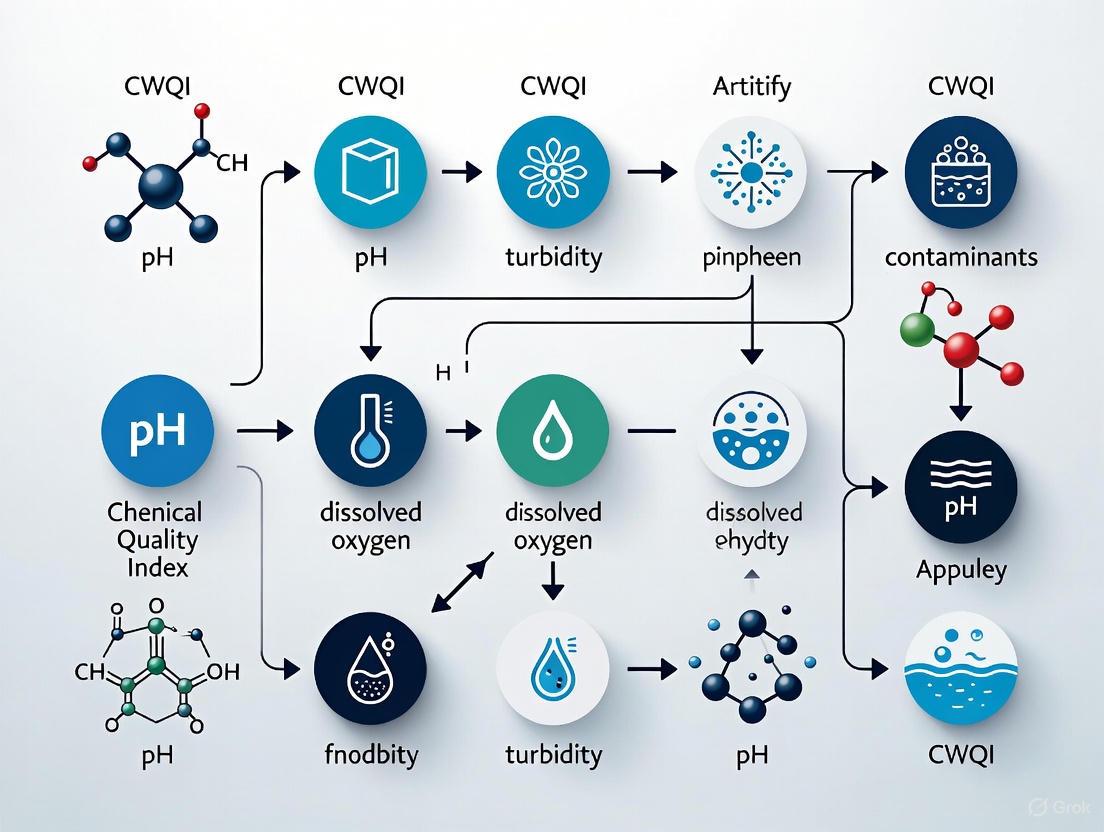
This article provides a comprehensive analysis of the Chemical Water Quality Index (CWQI) as a critical tool for quantifying and monitoring river basin quality.
Chemical Water Quality Index (CWQI): A Comprehensive Framework for River Basin Assessment and Management
Abstract
This article provides a comprehensive analysis of the Chemical Water Quality Index (CWQI) as a critical tool for quantifying and monitoring river basin quality. It explores the foundational principles and historical evolution of water quality indices, detailing various methodological approaches and their practical application in diverse environmental contexts. The content addresses common challenges in CWQI implementation and offers optimization strategies, including integration with advanced statistical and simulation techniques. A comparative evaluation of different index models highlights their respective strengths and limitations for specific scenarios. Tailored for researchers, scientists, and environmental professionals, this review synthesizes current research trends and future directions, emphasizing the role of robust water quality assessment in supporting sustainable water resource management and environmental protection policies.
The Evolution and Core Principles of Water Quality Indices
The chemical water quality index (CWQI) framework is an indispensable tool for quantifying the health of river basins, transforming complex hydro-chemical data into simple, actionable insights for researchers, scientists, and environmental managers. The evolution of these indices from simple arithmetic aggregations to sophisticated, data-driven models represents a significant advancement in environmental science. This progression addresses the growing challenges of water pollution, scarcity, and the need for sustainable management policies. This application note details the historical development, methodological protocols, and modern computational frameworks that define current CWQI practices, providing a comprehensive resource for professionals engaged in water resource research and protection.
Historical Evolution of Water Quality Indices
The development of water quality indices (WQIs) spans over six decades, marked by significant methodological innovations aimed at improving accuracy, reducing subjectivity, and adapting to regional specificities. The following table summarizes the key historical milestones in WQI development.
Table 1: Historical Milestones in Water Quality Index Development
| Year | Index Name (Developer) | Key Parameters | Aggregation Method | Significance and Innovation |
|---|---|---|---|---|
| 1965 | Horton's Index [1] [2] | 10 variables (e.g., DO, pH, coliforms, chloride) [1] | Weighted arithmetic mean [2] | First formal WQI framework; established core steps: parameter selection, rating, weighting, and aggregation [1]. |
| 1970 | NSF WQI (Brown et al.) [1] [2] | 9 variables (DO, FC, pH, BOD, etc.) [1] | Geometric mean [1] [2] | Introduced geometric aggregation for sensitivity to exceeding norms; involved a panel of 142 experts for weighting [1]. |
| 1987 | Dinius Index [1] | Not Specified | Multiplicative aggregation [1] | Developed a WQI expressed as a percentage, where 100% represented perfect water quality [1]. |
| 2001 | CCME WQI [1] | Varies by application | Statistical (F1, F2, F3 factors) [3] | Modified the BCWQI; endorsed for national use in Canada; flexible in parameters and objectives [1]. |
| 2007 | Malaysian WQI [1] | 6 variables (DO, BOD, COD, etc.) [1] | Additive aggregation with expert weights [1] | Utilized rating curves and expert panel opinions for weighting, ranging from 0 (polluted) to 100 (clean) [1]. |
| 2017 | West Java WQI (WJWQI) [1] | 9 of 13 original variables (e.g., SS, COD, DO, phenol) [1] | Multiplicative (same as NSF) [1] | Incorporated statistical screening to reduce parameter redundancy and minimize model uncertainty [1]. |
The historical development reveals a continuous effort to refine parameter selection, weighting techniques, and aggregation functions to enhance the accuracy and reliability of water quality assessments for river basin management.
Modern Frameworks: The Integration of Machine Learning
Traditional WQI models, while useful, face persistent challenges related to uncertainty in parameter weighting, aggregation functions, and model transparency [4]. The most significant recent advancement is the integration of machine learning (ML) and data-driven approaches to optimize the CWQI framework.
Machine Learning-Optimized WQI Framework
Machine learning algorithms are now employed to identify critical water quality indicators and assign objective weights, moving beyond reliance on expert opinion. A comparative optimization framework using algorithms like Extreme Gradient Boosting (XGBoost), Random Forest (RF), and Support Vector Machines (SVM) has demonstrated superior performance in scoring accuracy and reducing uncertainty [4] [5]. For instance, XGBoost achieved 97% accuracy for river sites in a study of the Danjiangkou Reservoir [4]. These models process large datasets to determine the relative importance of features, thereby optimizing which parameters are most critical for an accurate assessment [4].
Diagram 1: ML-Optimized WQI Workflow
Novel Aggregation Functions and Explainable AI
New aggregation functions, such as the Bhattacharyya mean WQI model (BMWQI) coupled with the Rank Order Centroid (ROC) weighting method, have been developed to significantly outperform traditional models in reducing uncertainty [4]. Furthermore, the use of Explainable AI (XAI) tools like SHapley Additive exPlanations (SHAP) is becoming integral to the modern CWQI framework. SHAP helps interpret the decisions of complex ML models, identifying and quantifying the contribution of each water quality parameter to the final index score, thereby enhancing the model's transparency and trustworthiness for policymakers [6] [3].
Experimental Protocols for CWQI Development and Application
Protocol 1: Developing a Machine Learning-Optimized CWQI
This protocol outlines the procedure for creating a robust chemical water quality index using machine learning, suitable for river basin assessment.
- Objective: To develop a data-driven CWQI that minimizes subjectivity and uncertainty in parameter selection and weighting.
Materials: Historical water quality dataset, computational environment (e.g., Python with scikit-learn, XGBoost libraries).
Procedure:
- Parameter Selection and Data Collection:
- Collect a minimum of 5 years of monthly water quality data from monitoring stations within the river basin [4].
- Parameters should include, but not be limited to: Total Phosphorus (TP), Ammonia Nitrogen (AN), Dissolved Oxygen (DO), pH, temperature, turbidity, biochemical oxygen demand (BOD), and chemical oxygen demand (COD) [4] [5].
- Data Preprocessing and Sub-Index Transformation:
- Clean the data to handle missing values and outliers.
- Transform the raw concentration of each parameter into a sub-index value (Si) on a common scale (e.g., 0-100) using established rating curves or functions [4].
- Feature Selection using Machine Learning:
- Objective Weight Assignment:
- Use the Rank Order Centroid (ROC) method to assign weights based on the feature importance ranking derived from XGBoost [4].
- Index Aggregation:
- Aggregate the weighted sub-indices using a robust function. The Bhattacharyya Mean (BMWQI) is recommended for its performance in reducing eclipsing effects [4].
- Model Validation and Interpretation:
- Validate the model's predictive accuracy against a holdout dataset.
- Apply SHAP analysis to interpret the model output and confirm the influence of key parameters [6].
- Parameter Selection and Data Collection:
Protocol 2: Rapid Water Quality Assessment Using a Minimal Parameter Set
This protocol is designed for situations requiring quick evaluation, such as sudden pollution events, where time and cost are constraints [5].
- Objective: To predict WQI values and grades accurately using a minimal set of key water parameters.
Materials: Field test kits or portable meters for TP, AN, and DO.
Procedure:
- Field Measurement:
- At the sampling site, measure the concentrations of the key parameters: Total Phosphorus (TP), Ammonia Nitrogen (AN), and Dissolved Oxygen (DO) [5].
- WQI Prediction:
- Input the measured values of TP, AN, and DO into a pre-trained Random Forest (RF) or XGBoost (XGB) model [5].
- The model will output both a continuous WQI value and a corresponding water quality grade (e.g., "Good," "Medium").
- Accuracy Assessment:
- Note that studies have shown this 3-parameter model can achieve R² values up to 0.98 in the training phase and prediction accuracies for WQI grades exceeding 85% [5].
- Field Measurement:
The Scientist's Toolkit: Essential Reagents and Computational Solutions
Table 2: Key Research Reagent Solutions for CWQI Studies
| Item Name | Function/Application | Technical Specifications |
|---|---|---|
| Multi-Parameter Water Quality Meter | Simultaneous in-situ measurement of key physicochemical parameters (pH, EC, DO, TDS, temperature) [3]. | Calibrated portable device (e.g., AZ Instrument 86031 Combo); essential for field validation and data collection [3]. |
| ICP-OES Instrument | Precise quantification of major and trace elements (e.g., Ca, Mg, Na, K, Cu, Pb, P, Cr) in water samples [3]. | High-sensitivity spectrometer (e.g., Spectro Blue); critical for detecting metal pollution and nutrient loading [3]. |
| UV-VIS Spectrophotometer with Test Kits | Analysis of nutrient concentrations (nitrite, nitrate, phosphate) using photometric methods [3]. | Device with specific test kits (e.g., WTW PhotoLab 7600); allows for rapid, precise nutrient analysis [3]. |
| XGBoost Algorithm | Machine learning library for feature selection, model training, and WQI prediction/optimization [4] [5]. | An optimized distributed gradient boosting library; provides state-of-the-art performance in ranking feature importance and predictive accuracy [4]. |
| SHAP (SHapley Additive exPlanations) | A game theory-based Python library to interpret the output of ML models used in the CWQI framework [6]. | Explains the magnitude and direction (positive/negative) of each parameter's contribution to the final WQI score, ensuring model transparency [6]. |
Diagram 2: Evolution from Traditional to Modern WQI
The Chemical Water Quality Index (CWQI) serves as a vital tool for transforming complex water quality data into a single, comprehensible value, enabling effective communication with decision-makers and the public regarding the health of river basins [7]. A robust CWQI provides a methodological framework for tracking chemical changes along a river course, identifying contamination hotspots, and evaluating long-term trends in the context of environmental policies [7]. The development of a reliable CWQI hinges on four fundamental pillars: the careful selection of parameters, the transformation of raw data onto a common scale (scaling), the assignment of relative importance (weighting), and the mathematical amalgamation of these values into a single index (aggregation) [1]. This document outlines detailed application notes and protocols for implementing these components within a research framework aimed at quantifying river basin quality.
Parameter Selection
Parameter selection is the foundational step in constructing a CWQI, as it determines the index's ability to accurately reflect the chemical state of a water body. The selection must be tailored to the specific river basin, considering local environmental conditions, pollution sources, and the intended use of the water.
Methodological Approaches
Table 1: Methodologies for Parameter Selection
| Method | Description | Application Context |
|---|---|---|
| Expert Judgment | Selection based on historical use, regulatory significance, and expert consensus [1]. | Baseline studies; established monitoring programs. |
| Statistical Filtering (PCA/Correlation) | Use of Principal Component Analysis (PCA) or correlation analysis to identify key parameters explaining data variance [8]. | Data-rich environments; identifying parameters with co-variance. |
| Machine Learning (XGBoost/RF) | Employing algorithms like Extreme Gradient Boosting (XGBoost) or Random Forest (RF) to rank parameters by feature importance [4]. | Large, complex datasets; objective identification of critical indicators. |
| Recursive Feature Elimination (RFE) | Iteratively constructing models and removing the weakest parameters until the optimal set is identified [4]. | High-dimensional data; optimizing model performance by reducing redundancy. |
Experimental Protocol: Machine Learning-Driven Parameter Selection
Objective: To objectively identify the most critical chemical parameters influencing water quality in a target river basin using the XGBoost algorithm.
Materials:
- Software: Python or R programming environment with libraries for XGBoost and scikit-learn.
- Data: A high-quality dataset of water quality parameters (e.g., pH, DO, BOD, nutrients, heavy metals) from multiple sampling sites and times.
Procedure:
- Data Preparation: Compile a dataset where each row represents a sampling event and each column a water quality parameter. The dataset should be cleaned of missing values and outliers.
- Model Training: Train an XGBoost regression or classification model on the dataset. The model will learn patterns that predict overall water quality status.
- Feature Importance Extraction: After training, extract the
feature_importances_attribute from the model. This provides a score for each parameter, indicating its relative contribution to the model's predictions. - Parameter Ranking: Rank the parameters from highest to lowest based on their importance scores.
- Final Selection: Select the top-performing parameters (e.g., top 8-10) that cumulatively explain the majority of the variance for inclusion in the CWQI. Studies have shown this method can achieve parameter selection with high predictive accuracy [4].
Scaling (Data Transformation)
Scaling, or sub-index creation, converts parameters with different units and magnitudes into a standardized, dimensionless scale, typically 0 to 100, where higher values represent better water quality.
Scaling Techniques
Table 2: Common Scaling Functions for Water Quality Parameters
| Function Type | Formula / Approach | Applicable Parameters | Advantages/Limitations |
|---|---|---|---|
| Linear | ( Si = \frac{C{max} - Ci}{C{max} - C_{min}} \times 100 ) | Parameters with a linear relationship to quality (e.g., Dissolved Oxygen may use an inverse relationship) [1]. | Simple to implement; may not reflect non-linear biological responses. |
| Non-linear (Curve-based) | Pre-defined rating curves specific to each parameter (e.g., NSF curves) [1]. | Parameters like pH, fecal coliforms where quality changes non-linearly with concentration. | More accurately represents environmental impact; requires established, validated curves. |
| Logarithmic | ( Si = a \times \log(Ci) + b ) | Parameters where the impact diminishes with increasing concentration [1]. | Useful for certain toxic substances; requires calibration. |
Where ( Si ) is the sub-index value for parameter ( i ), ( Ci ) is the measured concentration, and ( C{max} ) and ( C{min} ) are the maximum and minimum concentrations for the scaling range.
Experimental Protocol: Establishing Linear Sub-Indices
Objective: To transform raw concentration data for selected parameters onto a uniform 0-100 scale.
Materials:
- Data: Raw concentration data for each selected parameter.
- Guidelines: Regulatory standards (e.g., WHO, EPA) or historical min/max values for the basin to define ( C{max} ) and ( C{min} ).
Procedure:
- Define Scaling Boundaries: For each parameter, establish ( C{max} ) (concentration representing poorest quality, assigned ( Si = 0 )) and ( C{min} ) (concentration representing best quality, assigned ( Si = 100 )) based on environmental quality standards or dataset extremes.
- Apply Linear Scaling: For each measurement, compute the sub-index value using the linear formula from Table 2.
- Directionality Check: Ensure the formula is applied correctly. For most parameters (e.g., Total Phosphorus), higher concentration means lower quality, so the formula in Table 2 is appropriate. For parameters like Dissolved Oxygen, the relationship is inverse, and the formula may need to be adjusted (e.g., ( Si = \frac{Ci - C{min}}{C{max} - C_{min}} \times 100 )).
Weighting
Weighting assigns a relative importance value to each parameter, reflecting its impact on overall water quality. Weights are typically normalized to sum to 1.
Weighting Methods
Table 3: Comparison of Weighting Methodologies
| Method | Description | Procedure | Considerations |
|---|---|---|---|
| Expert-Based | Weights assigned by a panel of experts based on perceived environmental or health significance [1]. | Delphi method; structured surveys and consensus-building. | Incorporates experience; can be subjective and difficult to replicate. |
| Statistical (PCA) | Weights derived from the variance explained by each parameter in a Principal Component Analysis [1]. | Weights are proportional to the factor loadings or eigenvalues of the principal components. | Data-driven; objective; may not directly align with ecological importance. |
| Rank Order Centroid (ROC) | A systematic method based on the ranked importance of parameters [4]. | If parameters are ranked 1 to n, weight for parameter i is: ( wi = (1/n) \sum{k=i}^{n} (1/k) ) | Simpler than full pairwise comparisons; provides a robust approximation. |
| Machine Learning-Informed | Weights are based on the feature importance scores derived from algorithms like XGBoost [4]. | Normalize the feature importance scores from the model so that they sum to 1. | Highly objective and tailored to the specific dataset; requires technical expertise. |
Experimental Protocol: Rank Order Centroid (ROC) Weighting
Objective: To assign weights to parameters that have been ranked by importance.
Materials:
- Ranked Parameter List: A list of the selected parameters, sorted from most to least important (ranking can be from expert opinion or machine learning output).
Procedure:
- Rank Parameters: Establish a definitive rank order for the
nparameters (1 = most important, n = least important). - Calculate ROC Weights: For each parameter at rank
i, calculate its weight using the formula: ( wi = \frac{1}{n} \sum{k=i}^{n} \frac{1}{k} ) For example, for the top-ranked parameter (i=1) among 4 parameters: ( w_1 = (1/4) * (1/1 + 1/2 + 1/3 + 1/4) = 0.5208 ). - Normalization Check: Verify that the sum of all ( w_i ) equals 1 (or 100 if using percentages).
Aggregation
Aggregation is the final step that combines the scaled and weighted sub-indices into a single CWQI value. The choice of aggregation function is critical as it is a major source of model uncertainty [4].
Aggregation Functions
Table 4: Common Aggregation Functions in CWQI Development
| Function | Formula | Characteristics | Uncertainty Issues |
|---|---|---|---|
| Weighted Linear Aggregation (WLA) | ( CWQI = \sum{i=1}^{n} wi S_i ) | Most common and simple; assumes parameters are compensatory [1]. | Eclipsing: Can mask an individual poor parameter score if others are good. |
| Weighted Geometric Aggregation | ( CWQI = \prod{i=1}^{n} Si^{w_i} ) | Less compensatory; more sensitive to low values in any parameter [1]. | Ambiguity: Can be sensitive to the number of parameters and the value of weights. |
| Weighted Harmonic Mean | ( CWQI = \frac{1}{\sum{i=1}^{n} \frac{wi}{S_i}} ) | Even more punitive to low scores than the geometric mean. | Rigidity: Can be overly harsh, leading to consistently low scores. |
| Bhattacharyya Mean (BMWQI) | A generalized mean designed to reduce eclipsing and ambiguity [4]. | Developed to minimize uncertainty; outperforms classical functions in some studies [4]. | Complexity: More computationally intensive and less intuitive. |
Experimental Protocol: Implementing Weighted Linear Aggregation
Objective: To compute the final CWQI value by combining all sub-indices and their weights.
Materials:
- Data Table: A complete table containing the sub-index values (( Si )) and their corresponding normalized weights (( wi )) for all parameters at a given sampling site and time.
Procedure:
- Data Verification: Ensure that all ( Si ) values are on the same scale (e.g., 0-100) and that the sum of ( wi ) is 1.
- Multiplication: For each parameter, calculate the product of its sub-index value and its weight (( wi \times Si )).
- Summation: Sum all the products from the previous step across all parameters.
- Interpretation: The resulting CWQI value (on a 0-100 scale) can be classified into water quality categories (e.g., Excellent: 90-100, Good: 70-89, etc.).
Integrated Workflow and Visualization
The development and application of a CWQI follow a logical, sequential workflow from data acquisition to the final index and its interpretation. The following diagram illustrates this integrated process and the key decision points within the CWQI framework.
The Researcher's Toolkit
Table 5: Essential Research Reagent Solutions and Materials
| Item | Function/Description | Application Example |
|---|---|---|
| Multi-Parameter Probe | In-situ measurement of key physical-chemical parameters (pH, Dissolved Oxygen, Conductivity, Temperature). | Initial field-based water quality screening and continuous monitoring [8]. |
| ICP-MS (Inductively Coupled Plasma Mass Spectrometry) | Highly sensitive analytical technique for quantifying trace metal concentrations (e.g., As, Pb, Cu, Zn) in water samples [8]. | Detection and source apportionment of dissolved heavy metals in urban rivers [8]. |
| XGBoost Algorithm | A powerful, scalable machine learning algorithm based on gradient boosting, used for feature selection and weighting [4]. | Identifying critical indicators (e.g., Total Phosphorus, ammonia nitrogen) from a large dataset of water quality parameters [4]. |
| CCME WQI Template | A standardized WQI framework developed by the Canadian Council of Ministers of the Environment, known for its flexibility [1] [8]. | Benchmarking and comparing the performance of a newly developed CWQI model [8]. |
| AFAR-WQS Toolbox | An open-source MATLAB toolbox for rapid water quality simulation in large, complex river basins [8]. | Real-time evaluation and prioritization of sanitation investments in a basin-scale management context [8]. |
| eDNA Metabarcoding | A molecular technique that uses environmental DNA (eDNA) to assess aquatic biodiversity and ecosystem health [8]. | Developing a multi-species biotic integrity index (Mt-IBI) to complement chemical data with biological assessment [8]. |
Key Chemical Parameters Driving Water Quality Assessments
The chemical water quality index (CWQI) serves as a critical tool for transforming complex water quality data into a single, comprehensible value, enabling researchers and water resource managers to quantify the health of river basins effectively [1]. The development of a robust CWQI framework hinges on the precise selection and measurement of key chemical parameters that most accurately reflect anthropogenic pressures and natural processes [9]. While foundational indices like the National Sanitation Foundation WQI (NSF-WQI) established a core set of parameters, contemporary research emphasizes that parameter selection must be adaptive and site-specific to address unique regional pollution challenges, such as agricultural runoff in Malaysia or industrial discharge in Sri Lanka [9] [10]. This protocol details the essential chemical parameters, standardized methods for their measurement, and advanced statistical techniques for integrating them into a reliable CWQI framework for river basin research.
Key Chemical Parameters and Their Significance
The selection of parameters is the first and most crucial step in CWQI development. A mixed system, which combines a core set of universally important parameters with additional site-specific ones, is often the most effective approach [11]. The table below summarizes the core chemical parameters that are fundamental to most river basin assessments.
Table 1: Key Chemical Parameters for River Water Quality Assessment
| Parameter | Environmental Significance | Common Measurement Methods | Primary Sources |
|---|---|---|---|
| Dissolved Oxygen (DO) | Indicator of aquatic ecosystem health; low levels cause hypoxia [12]. | Electrochemical sensor, Winkler titration [12]. | Respiration, organic pollution. |
| Biochemical Oxygen Demand (BOD) | Measures biodegradable organic matter; high values indicate organic pollution [9] [12]. | 5-day BOD test [13]. | Sewage, agricultural runoff. |
| Chemical Oxygen Demand (COD) | Measures oxidizable organic and inorganic chemicals [9]. | Colorimetry, reflux titration [12]. | Industrial effluent, sewage. |
| pH | Affects solubility of metals and toxicity of ammonia [9] [12]. | Potentiometry with glass electrode [12]. | Geological weathering, acid rain. |
| Ammoniacal Nitrogen (NH₃-N) | Indicates recent organic pollution; toxic to aquatic life in unionized form [9]. | Colorimetry, ion-selective electrode [12]. | Sewage, fertilizer runoff. |
| Nitrate (NO₃⁻) | Nutrient causing eutrophication; health risk in drinking water [12]. | Ion chromatography, colorimetry [12]. | Fertilizers, sewage, atmospheric deposition. |
| Total Phosphorus (TP) | Key nutrient limiting eutrophication in freshwater systems [13]. | Acid digestion followed by colorimetry [12]. | Fertilizers, detergents, sewage. |
| Total Suspended Solids (TSS) | Affects light penetration, smothers benthic habitats [9]. | Gravimetric analysis [10]. | Soil erosion, urban runoff. |
| Electrical Conductivity (EC) | Indicator of total dissolved ions and salinity [10]. | Conductivity meter [12]. | Geological weathering, seawater intrusion. |
| Heavy Metals (e.g., Cu, Pb, Zn) | Toxicity to aquatic life and human health [8]. | ICP-MS, ICP-AES [8]. | Industrial discharge, mining. |
Beyond this core set, additional parameters like chloride, total coliforms, and specific toxicants (e.g., cyanide, pharmaceuticals) may be incorporated based on the dominant land use and pollution sources in the river basin [9] [11]. For instance, the Malaysian WQI (WQIMY) excludes heavy metals and coliforms, which has raised concerns about its adequacy in capturing pollution from the industrial and agricultural sectors [9].
Experimental Protocols for Parameter Measurement and CWQI Development
Adherence to standardized protocols is essential for generating consistent, comparable, and high-quality data for CWQI calculation. The following workflow outlines the comprehensive process from planning to index calculation.
Diagram 1: CWQI Development Workflow
Field Sampling Protocol
Objective: To collect representative water samples from pre-determined locations within the river basin.
Materials:
- Sampling Bottles: A range of specific, decontaminated containers (e.g., BOD bottles for DO, amber bottles for light-sensitive analyses) [14].
- Water Sampler: Kemmerer or Van Dorn sampler for collecting integrated or depth-specific samples.
- Multiparameter Probe: For in-situ measurement of pH, temperature, dissolved oxygen (DO), electrical conductivity (EC), and turbidity [14] [12].
- GPS Unit: For precise geolocation of sampling sites [14].
- Cooler with Ice Packs: To maintain samples at 4°C during transport [14].
Procedure:
- Site Selection: Establish a sampling grid that covers the main river channel, major tributaries, and points upstream and downstream of potential pollution sources (e.g., industrial discharges, agricultural areas) [9] [10]. For example, a study in the Kelani River Basin used 12 sites to assess the impact of an industrial zone [10].
- In-situ Measurements: Calibrate the multiparameter probe according to the manufacturer's instructions. Measure and record pH, temperature, DO, and EC directly at the sampling site [14].
- Sample Collection: Collect water samples at a depth of 30 cm from the surface, unless depth profiling is required. Rinse all sample bottles three times with the site water before collecting the final sample [14].
- Sample Preservation: Immediately after collection, preserve samples as needed (e.g., acidification for metal analysis, freezing for nutrient analysis). Place all samples in a cooler at 4°C.
- Documentation: Record all site information, weather conditions, and observations in a field notebook. Label all bottles clearly with site ID, date, time, and parameter.
- Transport: Transport samples to the laboratory as quickly as possible, ideally within 24 hours of collection.
Laboratory Analysis of Key Parameters
Objective: To accurately determine the concentrations of selected chemical parameters using standardized analytical methods.
Table 2: Standardized Analytical Methods for Key Parameters
| Parameter | Standard Method | Brief Procedure Summary | Key Reagents/Equipment |
|---|---|---|---|
| BOD₅ | APHA 5210B | Samples are diluted, seeded, and incubated at 20°C for 5 days. DO is measured before and after incubation. | BOD bottles, DO meter, incubator [12]. |
| COD | APHA 5220B | Sample is refluxed with a strong oxidant (potassium dichromate) in sulfuric acid. The amount of oxidant consumed is measured. | COD digester, spectrophotometer [12]. |
| NH₃-N | APHA 4500-NH₃ | Phenate or Nessler method. Ammonia reacts with alkaline phenol and hypochlorite to form indophenol blue, measured colorimetrically. | Spectrophotometer, alkaline phenol [12]. |
| Nitrate (NO₃⁻) | APHA 4500-NO₃⁻ | Can involve cadmium reduction, where nitrate is reduced to nitrite and measured colorimetrically, or ion chromatography. | Spectrophotometer, cadmium coils, or ion chromatograph [12]. |
| Total Phosphorus (TP) | APHA 4500-P | Sample is digested with persulfate to convert all phosphorus forms to orthophosphate, which is then measured using the ascorbic acid method. | Autoclave or block digester, spectrophotometer [12]. |
| Heavy Metals | APHA 3120/3125 | Inductively Coupled Plasma Mass Spectrometry (ICP-MS) or Atomic Absorption Spectrometry (AAS). Sample is nebulized and atomized for detection. | ICP-MS/AAS, high-purity acids [8]. |
Statistical Analysis and Parameter Weighting using PCA
Objective: To objectively determine the relative importance (weight) of each parameter for the CWQI calculation, avoiding subjective expert judgment.
Protocol based on Principal Component Analysis (PCA) [11]:
- Data Preparation: Compile a matrix of all measured water quality parameters from all sampling sites and events. Address missing data using appropriate imputation techniques. Log-transform data if necessary to achieve normal distribution.
- PCA Execution: Perform PCA on the normalized data matrix using statistical software (e.g., R, SPSS, MATLAB). The PCA will extract new, uncorrelated variables (principal components, PCs) that explain the maximum variance in the original dataset.
- Component Selection: Retain PCs with eigenvalues greater than 1 (Kaiser's criterion) or that cumulatively explain a substantial portion (e.g., >75-80%) of the total variance [14] [11].
- Weight Calculation:
- For each retained PC, examine the factor loadings for each parameter. High loadings indicate a strong contribution of that parameter to the component.
- Calculate the communality for each parameter, which represents the proportion of its variance explained by the retained PCs.
- The final weight (wᵢ) for each parameter is calculated by normalizing its communality value so that the sum of all weights equals 1 [11]: wᵢ = Communalityᵢ / Σ(Communality).
- As demonstrated in a study on the Huong River, this method successfully derived weights for 11 parameters from three principal components that explained 67% of the total variance [11].
CWQI Calculation and Aggregation
Objective: To aggregate the sub-indices and their weights into a single, meaningful CWQI value.
Protocol based on the Multiplicative Aggregation Method [9] [11]:
- Define Sub-Indices (qᵢ): Transform the measured concentration of each parameter into a sub-index value on a common scale (0-100). This can be done using linear interpolation based on national water quality standards (e.g., Vietnam's Technical Regulations) [11]. For a parameter where a higher value indicates better quality (like DO), the function is increasing; for a parameter where a lower value indicates better quality (like BOD), the function is decreasing.
- Apply Multiplicative Aggregation: Use the following formula to calculate the final CWQI [11]: CWQI = Π (qᵢ)^{wᵢ} where qᵢ is the sub-index of the i-th parameter and wᵢ is its calculated weight.
- Interpretation: Classify the water quality based on the final CWQI value. For example:
- 90-100: Excellent
- 70-89: Good
- 50-69: Moderate/Fair
- 25-49: Poor
- 0-24: Very Poor
The Scientist's Toolkit: Essential Research Reagents and Materials
Table 3: Essential Reagents and Materials for CWQI Studies
| Item | Specification/Function | Application Example |
|---|---|---|
| Multiparameter Water Quality Probe | Integrated sensor for in-situ measurement of pH, DO, EC, temperature. | Field characterization; essential for parameters that change rapidly after sampling [12]. |
| ICP-MS Calibration Standards | Certified reference materials for accurate quantification of trace metals. | Preparation of calibration curves for heavy metal analysis (e.g., As, Pb, Cu) [8]. |
| COD Digestion Reagents | Pre-mixed solutions of potassium dichromate, sulfuric acid, and catalyst. | Oxidizing organic and inorganic matter in water samples during COD analysis [12]. |
| BOD Nutrient Buffer Pillows | Pre-measured salts (phosphate buffer, MgSO₄, CaCl₂, FeCl₃) for BOD dilution water. | Ensuring optimal microbial activity and neutral pH in BOD tests [12]. |
| Sterile Membrane Filtration Set | 0.45 μm membranes for microbiological (e.g., coliform) and TSS analysis. | Concentrating bacteria for counting; filtering samples for gravimetric TSS analysis [10]. |
| PCA Statistical Software | Software packages (e.g., R, SPSS, MATLAB's AFAR-WQS toolbox) for multivariate analysis. | Objective parameter selection and weighting for site-specific CWQI development [11] [8]. |
A scientifically defensible Chemical Water Quality Index relies on a rigorous, multi-step process. This begins with the strategic selection of parameters that reflect basin-specific pressures, followed by strict adherence to standardized field and laboratory protocols. The incorporation of statistical methods like PCA for objective parameter weighting significantly enhances the robustness and local relevance of the index. By following these detailed application notes and protocols, researchers can generate reliable, comparable data to build effective CWQI frameworks, thereby providing a critical evidence base for the management and preservation of river basin health.
The Role of CWQI in Environmental Policy and Decision-Making
The Chemical Water Quality Index (CWQI) has emerged as a critical tool for water resources management, providing a means to evaluate and communicate the suitability of water bodies for various uses such as drinking, aquatic life, and recreation [15]. As a simple, flexible, and widely applicable approach for quantifying water quality, the CWQI transforms complex water quality data into a single value that ranges from 0 to 100, where higher values indicate better water quality [7] [1]. This methodological framework serves as an operational tool that supports decision-making by tracking the evolution of water chemistry along river courses, assessing the contribution of different solutes to overall quality, detecting contamination hotspots, and exploring long-term trends in relation to environmental policies [7] [16]. The development of the CWQI represents a significant advancement in the field of water quality assessment, building upon historical indices such as the Horton Index (1965), the National Sanitation Foundation Index (NSF), and the Canadian Water Quality Index (CCME WQI) [1]. Within the context of a broader thesis on chemical water quality index frameworks for river basin research, this article details the application of CWQI in environmental policy, supported by experimental protocols, case studies, and advanced computational approaches.
CWQI Framework and Policy Integration
Core Components and Calculation Methodology
The CWQI framework is structured around a systematic process that converts raw water quality monitoring data into a comprehensive index value. The calculation of the CWQI, particularly following the Canadian Water Quality Index (CCME WQI) methodology, involves three fundamental measures of variance from selected water quality objectives: Scope (F1), Frequency (F2), and Amplitude (F3) [15] [17].
- Scope (F1) represents the percentage of variables that do not meet their objective at least once during the time period under consideration ("failed variables"), relative to the total number of variables measured:
F1 = (Number of failed variables / Total number of variables) × 100[15]. - Frequency (F2) represents the percentage of individual tests that do not meet objectives:
F2 = (Number of failed tests / Total number of tests) × 100[15]. - Amplitude (F3) represents the amount by which failed tests do not meet their objectives. It is calculated in three steps:
- The excursion is calculated whenever a test value does not meet its objective. When the test value must not exceed the objective:
excursion = (Failed test value / Objective) - 1. When the test value must not fall below the objective:excursion = (Objective / Failed test value) - 1. - The normalized sum of excursions (nse) is calculated as:
nse = (∑ excursion) / (Total number of tests). - F3 is then calculated as:
F3 = (nse / (0.01 × nse + 0.01))[15].
- The excursion is calculated whenever a test value does not meet its objective. When the test value must not exceed the objective:
The final CWQI value is derived using the formula: CWQI = 100 - (√(F1² + F2² + F3²) / 1.732). The divisor 1.732 normalizes the resultant values to a range between 0 and 100, where 0 represents the "worst" water quality and 100 represents the "best" water quality meeting all objectives consistently [15] [17]. These values are then classified into categorical rankings for intuitive interpretation, as detailed in Table 1.
Table 1: CWQI Score Interpretation and Classification
| CWQI Value | Classification | General Description |
|---|---|---|
| 95–100 | Excellent | Water quality is protected with a virtual absence of threat or impairment; conditions very close to natural or pristine levels. |
| 80–94 | Good | Water quality is protected with only a minor degree of threat or impairment; conditions rarely depart from natural or desirable levels. |
| 65–79 | Fair | Water quality is usually protected but occasionally threatened or impaired; conditions sometimes depart from natural or desirable levels. |
| 45–64 | Marginal | Water quality is frequently threatened or impaired; conditions often depart from natural or desirable levels. |
| 0–44 | Poor | Water quality is almost always threatened or impaired; conditions usually depart from natural or desirable levels. |
Integration into Environmental Policy and Decision-Making
The CWQI provides a critical evidence base for environmental policy development and regulatory decision-making. Its simplicity and effectiveness enable policymakers to translate complex scientific data into actionable information [7]. Key policy applications include:
- Regulatory Compliance and Performance Tracking: The index enables consistent procedures for jurisdictions to report water quality information to both management and the public, facilitating transparency and accountability in water resource management [17]. For instance, in the Arno River Basin, Italy, CWQI application over three decades revealed that despite increasing anthropogenic pressures, water chemistry remained relatively stable, suggesting that regulatory measures helped prevent further degradation [7] [16].
- Pollution Hotspot Identification and Management: The spatial application of CWQI helps identify specific reaches where water quality deteriorates, enabling targeted interventions. Studies have consistently shown deterioration downstream of urban centers like Florence, primarily linked to chloride, sodium, and sulphate inputs from urban, industrial, and agricultural activities [7].
- Long-term Trend Analysis and Policy Evaluation: By exploring long-term trends, the CWQI provides a mechanism to assess the effectiveness of existing environmental policies and inform necessary updates. This is particularly relevant in the context of global change and increasing anthropogenic pressures [7] [18].
- Adaptive Management under Climate Change: Regulatory bodies are increasingly recognizing the need to update Water Quality Standards (WQS) considering climate change impacts, such as altered pollutant bioavailability and toxicity due to temperature increases. The CWQI serves as a tool to monitor these changes and evaluate the efficacy of adaptive management strategies [18].
Advanced Methodologies and Computational Approaches
Machine Learning Optimization of CWQI
Recent advancements have integrated machine learning (ML) to enhance the accuracy, reduce uncertainty, and optimize the parameter selection of traditional WQI models, including CWQI [4]. These approaches address common limitations such as eclipsing (where poor performance in one indicator is masked by good performance in others) and ambiguity (where the index misclassifies water quality despite all parameters being acceptable) [19].
Table 2: Machine Learning Models for WQI Optimization
| ML Algorithm | Key Application | Reported Performance |
|---|---|---|
| Extreme Gradient Boosting (XGBoost) | Identification of critical water quality indicators; prediction of WQI scores. | 97% accuracy for river sites (logarithmic loss: 0.12) [4]. Demonstrated best prediction performance in Yuhuan City (RMSE: 0.7081, MAE: 0.4702, Adj.R²: 0.6400) [20]. |
| Random Forest (RF) | Feature importance analysis; water quality classification and prediction. | Superior performance with 90.50% accuracy, 99.87% sensitivity, and 74.56% specificity in surface water assessment [19]. |
| Support Vector Regression (SVR) | Regression analysis for WQI prediction. | Good performance in comparative studies, though often outperformed by ensemble methods like XGBoost and RF [20]. |
| Decision Trees (DT) | Development of interpretable models for WQI calculation. | Used in DEMATEL-based WQI frameworks and as base learners in Random Forest models [19]. |
| SHAP (Shapley Additive exPlanations) | Interpretability analysis to quantify the contribution of each variable to the model's prediction. | Identified Total Phosphorus (TP), Ammonia Nitrogen (NH3-N), and Chemical Oxygen Demand (COD) as having significant impact on WQI prediction in Yuhuan City [20]. |
The optimization framework often involves comparing multiple machine learning algorithms, weighting methods, and aggregation functions. For example, a six-year comparative study in riverine and reservoir systems found that a newly proposed WQI model coupling the Bhattacharyya mean with the Rank Order Centroid (ROC) weighting method significantly outperformed other models in reducing uncertainty [4]. The integration of ML techniques not only improves prediction accuracy but also helps identify site-specific key water quality indicators, thereby optimizing monitoring efficiency and costs [4] [19].
Experimental Protocol: CWQI Assessment with ML Optimization
This protocol provides a detailed methodology for conducting a comprehensive water quality assessment using the CWQI framework enhanced by machine learning, suitable for river basin research.
1. Study Design and Site Selection
- Objective Definition: Clearly define the water use to be assessed (e.g., aquatic life, drinking water) as this determines the water quality guidelines and objectives to be used [17].
- Basin Characterization: Conduct a geospatial analysis of the river basin using GIS to understand land use patterns (urban, agricultural, industrial) and hydrology.
- Stratified Sampling Site Selection: Select sampling sites to represent upstream (reference), mid-basin, and downstream sections, ensuring coverage of potential pollution hotspots and mixed-use areas. The number of sites should be statistically sufficient; case studies have utilized between 10 to 31 monitoring sites [20] [15] [19].
2. Field Sampling and Data Collection
- Parameter Selection: Monitor a comprehensive suite of physicochemical and biological parameters. Core parameters often include: Temperature, pH, Dissolved Oxygen (DO), Biochemical Oxygen Demand (BOD), Chemical Oxygen Demand (COD), Total Phosphorus (TP), Ammonia Nitrogen (NH3-N), Nitrate, Chloride, Total Coliforms, Turbidity, and Total Suspended Solids (TSS) [20] [1] [15].
- Temporal Frequency: Collect samples regularly (e.g., monthly or quarterly) over a period of several years (typically 3-6 years) to capture seasonal variations and long-term trends [4] [19].
- Quality Assurance/Quality Control (QA/QC): Adhere to standard methods for water sample collection, preservation, and analysis. Implement field blanks, duplicates, and calibration checks for all instruments.
3. Data Preprocessing and CWQI Calculation
- Data Cleansing: Handle missing data using appropriate statistical techniques (e.g., imputation).
- Sub-index Transformation: Transform the raw data of each parameter into a common scale (sub-index) from 0 to 100 based on established water quality guidelines for the designated water use [1].
- CWQI Computation: Calculate the F1 (Scope), F2 (Frequency), and F3 (Amplitude) factors as described in Section 2.1. Compute the final CWQI score and classify the water quality according to the categories in Table 1 [15] [17].
4. Machine Learning Model Development and Optimization
- Feature Selection: Employ ML algorithms like XGBoost or Random Forest combined with Recursive Feature Elimination (RFE) to identify the most critical water quality parameters driving the index outcome, thereby reducing model complexity and monitoring costs [4].
- Model Training and Validation: Split the dataset (e.g., 80% training, 20% testing). Utilize k-fold cross-validation (e.g., 10-fold) to train and tune the hyperparameters of various ML models (XGBoost, RF, SVR, etc.).
- Model Evaluation: Compare model performance using metrics such as Root Mean Square Error (RMSE), Mean Absolute Error (MAE), and Adjusted Coefficient of Determination (Adj. R²) [20].
- Interpretability Analysis: Apply SHAP analysis to the best-performing model to quantitatively explain the contribution of each water quality parameter to the final CWQI prediction, providing actionable insights for management [20].
5. Data Integration, Visualization, and Reporting
- Geospatial Mapping: Use GIS techniques (e.g., Inverse Distance Weighted (IDW) interpolation) to create spatial maps of CWQI scores and key parameter concentrations across the river basin, highlighting pollution gradients and critical areas [19].
- Trend Analysis: Perform statistical analysis on long-term data to identify significant trends in CWQI and key parameters, correlating them with changes in land use or the implementation of environmental policies.
- Reporting: Prepare comprehensive reports for decision-makers, including visualizations, identified pollution sources, and targeted recommendations for remediation and policy adjustment.
Figure 1: CWQI Assessment and ML Optimization Workflow. The red dashed line indicates the optional direct reporting of the basic CWQI result, while the green line shows the enhanced pathway integrating machine learning.
Case Studies and Research Applications
CWQI in River Basin Management
- Arno River Basin, Italy: A foundational application of CWQI tracked the geochemical evolution of the Arno River over three decades (1988-2017). Results indicated good to fair quality in upstream reaches, with clear deterioration downstream of Florence. The primary contaminants identified were chloride, sodium, and sulphate from urban, industrial, and agricultural activities. This long-term analysis demonstrated that despite increasing anthropogenic pressures, regulatory measures likely prevented further degradation, showcasing the role of CWQI in evaluating policy effectiveness [7] [16].
- Mahanadi River, India: An integrated study employed a Decision-Making Trial and Evaluation Laboratory (DEMATEL)-based WQI alongside machine learning models (Random Forest, Decision Tree). The study found that 31.58% of sampled locations had poor or very poor water quality, strongly associated with human activities including excessive water use, fertilizer application, agricultural runoff, and industrial expansion. The RF algorithm demonstrated superior performance (90.50% accuracy) in classifying water quality, highlighting the utility of ML-enhanced frameworks for smart surface water governance [19].
CWQI in Lake System Assessment
- Mariout Lake, Egypt: CWQI was applied to assess the degree of pollution in Mariout Lake from 2010 to 2014. The calculated CWQI values ranged from 13.13 to 63.42, classifying the lake's water quality between "Poor" and "Marginal." The study identified pressures from unplanned development, pollution, and land reclamation, with significant impacts from sewage disposal and agricultural drainage. The use of CWQI provided a clear, synthesized assessment that communicated the severe deterioration of the lake ecosystem to decision-makers and the public [15].
- Danjiangkou Reservoir, China: A six-year comparative study optimized WQI for both riverine and reservoir systems. Key findings revealed that the critical indicators for rivers were Total Phosphorus (TP), permanganate index, and ammonia nitrogen, while for the reservoir area, TP and water temperature were most significant. This case underscores the importance of tailoring WQI models, including CWQI, to specific water body types for accurate assessment and effective management [4].
The Scientist's Toolkit: Essential Research Reagents and Materials
Table 3: Key Research Reagent Solutions and Essential Materials for CWQI Studies
| Item | Function/Application |
|---|---|
| Multi-Parameter Water Quality Probe | In-situ measurement of core parameters including pH, Dissolved Oxygen (DO), Temperature, Electrical Conductivity (EC), and Turbidity. |
| Spectrophotometer and Test Reagent Kits | Laboratory quantification of key chemical parameters such as Total Phosphorus (TP), Ammonia Nitrogen (NH3-N), Nitrate (NO₃⁻), and Chemical Oxygen Demand (COD). |
| BOD Incubator and Apparatus | Standardized measurement of Biochemical Oxygen Demand (BOD) over a 5-day period at 20°C, a critical indicator of organic pollution. |
| Membrane Filtration Apparatus & Culture Media | Analysis of bacteriological indicators (Total Coliforms, Fecal Coliforms) to assess contamination from sewage and fecal matter. |
| Canadian Water Quality Guidelines | Reference documents providing the water quality objectives for protecting various water uses (aquatic life, drinking, agriculture), essential for calculating F1, F2, and F3. |
| CWQI Calculator (CCME or Regional Version) | A software tool (e.g., Excel-based spreadsheet) that automates the calculation of the F1, F2, and F3 factors and the final CWQI score [17]. |
| Machine Learning Software Environment (e.g., Python with scikit-learn, XGBoost libraries) | Platform for developing, training, and validating ML models for WQI optimization, feature selection, and predictive modeling [4] [20]. |
| Geographic Information System (GIS) Software | Used for spatial analysis, site selection, and creating interpolated maps of water quality parameters and CWQI scores across the study basin [19]. |
Figure 2: Interrelationship between policy, assessment, tools, and outcomes in the CWQI framework.
The Chemical Water Quality Index (CWQI) serves as a robust and adaptable framework that plays an indispensable role in bridging the gap between complex water quality data and actionable environmental policy. Its standardized methodology allows for the consistent tracking of water quality trends, the spatial identification of pollution hotspots, and the post-implementation assessment of regulatory measures. The integration of advanced computational techniques, particularly machine learning and geospatial analysis, has significantly enhanced the precision and explanatory power of the CWQI, enabling more targeted and cost-effective river basin management. As freshwater resources face escalating pressures from urbanization, industrial activity, agriculture, and climate change, the continued evolution and application of the CWQI framework will be critical for informing evidence-based policies, fostering sustainable water resource management, and safeguarding aquatic ecosystems for future generations. Future developments should focus on further reducing model uncertainties, integrating biological indicators for a more holistic assessment, and enhancing the framework's capacity to separate natural from anthropogenic drivers of water quality change.
Implementing CWQI: Methodologies and Real-World Case Studies
Water Quality Indices (WQIs) are mathematical tools designed to convert complex water quality data into a single, comprehensible value that represents the overall water quality status [1] [21]. Since their inception in the 1960s, these indices have become fundamental instruments in water resource management, providing a standardized method for evaluating the health of water bodies like rivers, lakes, and reservoirs [1] [22]. The primary purpose of a WQI is to simplify the communication of technical water quality information to policymakers, managers, and the general public, thereby supporting informed decision-making [23] [21]. The core structure of most WQI models involves four consecutive stages: (1) selection of relevant water quality parameters, (2) transformation of raw parameter data into dimensionless sub-indices, (3) assignment of weighting factors to each parameter to reflect its relative importance, and (4) aggregation of the sub-indices using a specific formula to compute the final index value [21] [22]. This document provides detailed application notes and protocols for three major index models—the National Sanitation Foundation WQI (NSF WQI), the Canadian Council of Ministers of the Environment WQI (CCME WQI), and the Oregon Water Quality Index (OWQI)—framed within the context of developing a robust Chemical Water Quality Index (CWQI) framework for river basin research.
The following table summarizes the key characteristics of the three major WQI models discussed in this protocol.
Table 1: Comparative Overview of Major WQI Models
| Feature | NSF WQI | CCME WQI | Oregon WQI (OWQI) |
|---|---|---|---|
| Origin | United States (1970) [1] | Canada (2001) [1] | United States [23] |
| Primary Aggregation Method | Weighted Arithmetic Mean [21] | Statistical (F1, F2, F3 scores) [21] | Unweighted Harmonic Mean [23] |
| Typical Number of Parameters | 9 (subject to modification) [23] | Flexible (minimum of 4) [21] | 8 (subject to modification) [23] |
| Index Range | 0 to 100 [21] | 0 to 100 [21] | 0 to 100 [23] |
| Key Advantage | Widely recognized and used globally [23] | Highly flexible in parameter selection [21] | Highly sensitive to significant impacts [21] |
| Key Disadvantage | Can lose data nuance and struggle with uncertainty [21] | Can lose information on single variables [21] | Cannot fully evaluate all toxic elements [21] |
The National Sanitation Foundation Water Quality Index (NSF WQI)
Background and Principle
The NSF WQI, developed in 1970 in the United States, is one of the most widely used and recognized water quality indices globally [1] [21]. Its development was supported by the National Sanitation Foundation, utilizing the Delphi technique to incorporate expert opinion on parameter selection and weighting [24]. The principle behind this index is to aggregate measurements of key water quality variables through a weighted arithmetic mean, providing a single value that reflects the water's overall quality and its potential uses, such as for aquatic life or public supply [21]. Its generalized structure has made it a reference point for the development of many subsequent indices [23].
Calculation Protocol and Formula
The calculation of the NSF WQI involves summing the products of the sub-index value and the assigned weight for each parameter [21]. The standard formula is:
Where:
- Qi = Sub-index value for the i-th parameter (derived from a standard rating curve)
- Wi = Weight assigned to the i-th parameter
- The sum of all weights (Σ Wi) should ideally be 1 [24]
Table 2: NSF WQI Standard Parameters and Weights
| Parameter | Standard Weight (Wi) |
|---|---|
| Dissolved Oxygen (DO) | 0.17 |
| Fecal Coliforms | 0.16 |
| pH | 0.11 |
| Biochemical Oxygen Demand (BOD) | 0.11 |
| Temperature | 0.10 |
| Total Phosphate | 0.10 |
| Nitrate | 0.10 |
| Turbidity | 0.08 |
| Total Solids | 0.07 |
Weights are based on the standard model and may require proportional adjustment if parameters are omitted [23] [21].
Interpretation and Water Quality Classification
The final NSF WQI value, which falls between 0 and 100, is interpreted using a standard classification scale [21].
Table 3: NSF WQI Water Quality Rating Scale
| WQI Value Range | Rating of Water Quality |
|---|---|
| 91 - 100 | Excellent |
| 71 - 90 | Good |
| 51 - 70 | Medium |
| 26 - 50 | Bad |
| 0 - 25 | Very Bad |
Workflow Diagram
The following diagram illustrates the sequential protocol for calculating the NSF WQI.
The Canadian Council of Ministers of the Environment WQI (CCME WQI)
Background and Principle
The CCME WQI was endorsed in 2001 as a modification of the British Columbia Water Quality Index [1]. It was designed to evaluate water quality by measuring the frequency and amplitude of deviations from pre-established water quality guidelines or objectives [21]. A key strength of this model is its flexibility; it can be applied with a variety of parameters and tailored to specific local water quality guidelines, making it adaptable for different jurisdictions and uses, particularly the protection of aquatic life [21]. This flexibility makes it highly suitable for research contexts where monitoring programs may track differing parameters over time or space.
Calculation Protocol and Formula
The CCME WQI is based on three factors, which are combined into a single value. The calculation steps are as follows:
- Scope (F1): Represents the percentage of parameters that do not meet their objectives (failed parameters).
F1 = (Number of failed variables / Total number of variables) * 100 - Frequency (F2): Represents the percentage of individual tests that do not meet objectives.
F2 = (Number of failed tests / Total number of tests) * 100 - Amplitude (F3): Represents the amount by which failed tests do not meet their objectives.
- The calculation involves
excursion_i = (Failed test value_i / Objective_i) - 1for each failed test. - The
nse(normalized sum of excursions) is then calculated asnse = (Σ excursion_i) / Total number of tests. - Finally,
F3 = (nse / (0.01 * nse + 0.01))
- The calculation involves
The final CCME WQI value is calculated as:
The divisor 1.732 scales the vector length to a range of 0 to 100, as the theoretical maximum for √(F1² + F2² + F3²) is 173.2 [21].
Interpretation and Water Quality Classification
The CCME WQI value is interpreted using a distinct five-class categorization system [21].
Table 4: CCME WQI Water Quality Rating Scale
| WQI Value Range | Rating of Water Quality |
|---|---|
| 95 - 100 | Excellent |
| 80 - 94 | Good |
| 65 - 79 | Fair |
| 45 - 64 | Marginal |
| 0 - 44 | Poor |
Workflow Diagram
The following diagram illustrates the statistical calculation process for the CCME WQI.
The Oregon Water Quality Index (OWQI)
Background and Principle
The Oregon Water Quality Index (OWQI) is a model developed to provide a single value representing the overall water quality of a river or stream [23]. Its distinctive feature is the use of an unweighted harmonic mean formula for aggregation, which makes it particularly sensitive to individual parameters that indicate poor water quality [23] [21]. This high sensitivity is a double-edged sword; it is effective for identifying significant pollution impacts but may also mean the index is less forgiving of single-parameter anomalies. It has been tested in various regions, including Indonesia, where it consistently rated river quality as "Very Bad," demonstrating its stringent nature [23].
Calculation Protocol and Formula
The OWQI typically utilizes eight parameters. Unlike the NSF WQI, it does not assign different weights to each parameter. The formula for the OWQI is an unweighted harmonic mean:
Where:
- SI = Sub-index value for each parameter. These sub-index values are derived from standardized transformation curves specific to each of the eight parameters.
This aggregation method inherently gives more influence to the lowest sub-index values, making the final score highly sensitive to any parameter that indicates poor water quality [23].
Interpretation and Water Quality Classification
While a standard OWQI rating table was not explicitly detailed in the search results, research applications show that it produces a value from 0 to 100, where lower values indicate worse water quality. For instance, a study on the Citarum River reported OWQI values ranging from 11.5 to 25.8, which were uniformly classified as "'Very Bad' water quality" [23].
Case Study Application: Upstream Citarum River
A 2022 study provides a direct comparative application of these three indices, evaluating the water quality of the Upstream Citarum River using nine years of monitoring data (2011-2019) [23]. The results clearly demonstrate how the choice of index model influences the final water quality assessment.
Table 5: Comparative WQI Application on Upstream Citarum River (2011-2019) [23]
| WQI Model | Calculated WQI Value Ranges | Corresponding Water Quality Ratings |
|---|---|---|
| NSF WQI | 35.920 to 65.696 | 'Bad' to 'Fair' |
| CCME WQI | 12.134 to 68.808 | 'Poor' to 'Fair' (with most 'Marginal' or 'Poor') |
| Oregon WQI | 11.528 to 25.782 | Consistently 'Very Bad' |
This case study highlights a critical finding for researchers: different WQI models can yield significantly different classifications for the same dataset. The NSF WQI provided the most optimistic assessment, while the OWQI was the most stringent. The study concluded that the NSF WQI was the most suitable for the Citarum River, considering the results and the respective advantages and disadvantages of each method [23]. This underscores the importance of model selection in the context of a specific research framework and regional conditions.
The Scientist's Toolkit: Essential Reagents and Materials
For researchers implementing these WQI protocols in laboratory and field settings, the following reagents and materials are fundamental for obtaining accurate parameter measurements.
Table 6: Key Research Reagent Solutions and Materials for WQI Parameter Analysis
| Reagent / Material | Primary Function / Application |
|---|---|
| Winkler Reagents (Manganous Sulfate, Alkali-Iodide-Azide, Sulfuric Acid, Sodium Thiosulfate) | Standard titration method for precise determination of Dissolved Oxygen (DO) concentration. |
| Nessler's Reagent | Colorimetric determination of Ammonia Nitrogen, forming a yellow-brown complex measurable by spectrophotometry. |
| Buffer Solutions (pH 4.01, 7.00, 10.01) | Essential for the calibration and verification of pH meters to ensure accurate pH measurement. |
| COD Digestion Vials (containing Potassium Dichromate, Sulfuric Acid, Mercuric Sulfate) | Used in closed-reflux digestion for the chemical oxidation of organic matter to determine Chemical Oxygen Demand (COD). |
| Membrane Filtration Apparatus & Media (e.g., m-Endo Agar) | Standard method for the enumeration of Fecal and Total Coliform bacteria in water samples. |
| Spectrophotometer & Associated Chemical Kits | For quantitative analysis of various parameters (e.g., Nitrate, Phosphate, BOD) via colorimetric methods. |
Step-by-Step Calculation Procedures and Data Requirements
The Chemical Water Quality Index (CWQI) is a methodological framework designed to provide a simple, flexible, and widely applicable approach for quantifying water quality in river basins [7] [16]. Its development addresses the critical need for reliable and user-friendly tools to support decision-making in water resource management amid global change and increasing anthropogenic pressures [7]. The primary objectives of implementing a CWQI are to: (i) track the evolution of water chemistry along a river course, (ii) assess the contribution of different solutes to overall quality, (iii) detect contamination hotspots, and (iv) explore long-term trends in relation to environmental policies [7] [16]. This framework has been successfully applied in diverse contexts, including the Arno River Basin in Italy, demonstrating its operational value for sustainable river management [7].
Methodological Foundations of Water Quality Indices
Historical Development
Water quality indices emerged in the 1960s as tools for river quality assessment [1]. Horton (1965) established the foundational approach, selecting ten variables and developing a system for rating water quality through index numbers [1]. Subsequent developments included the work of Brown et al. (1970), who established a WQI with nine variables using arithmetic weighting, later refined in 1973 to use geometric aggregation for improved sensitivity when variables exceed norms [1]. The evolution of WQI methodologies has continued with various organizations worldwide developing specialized indices tailored to regional priorities and environmental conditions [1].
Core Conceptual Framework
The CWQI framework operates on the principle of integrating multiple water quality parameters into a single numerical value that simplifies complex data for interpretation [1]. This value typically ranges from 0 to 100, representing a spectrum from poor to excellent water quality [1] [25]. The index development process involves four fundamental stages: (1) parameter selection, (2) transformation of raw data to a common scale, (3) assignment of parameter weights, and (4) aggregation of sub-index values [1]. This structured approach ensures that the resulting index comprehensively reflects the chemical status of water bodies while remaining accessible to diverse stakeholders.
Calculation Procedures for CWQI
Parameter Selection and Data Requirements
The initial step in CWQI calculation involves selecting appropriate chemical parameters that significantly influence water quality. Based on successful applications, core parameters typically include chloride, sodium, sulphate, dissolved oxygen, pH, and nutrients such as nitrate and phosphate [7] [8] [25]. The selection should reflect the specific anthropogenic pressures and natural conditions of the river basin under investigation. For example, in the Arno River Basin application, chloride, sodium, and sulphate were particularly significant for identifying deterioration downstream of urban areas [7].
Figure 1: CWQI Calculation Workflow. This diagram illustrates the four fundamental stages in calculating the Chemical Water Quality Index.
Data Transformation and Normalization
Raw parameter measurements must be transformed into a common scale, typically 0-100, through the development of rating curves or sub-index functions [1]. Each parameter's concentration is converted to a sub-index value that represents its relative contribution to water quality. For example, in the Malaysian WQI, specific curves were established to transform the actual value of each variable into a non-dimensional sub-index value [1]. This normalization process allows for the integration of diverse parameters with different measurement units and scales into a unified index.
Weight Assignment Procedure
Parameters are assigned weighting factors based on their relative importance for overall water quality and ecosystem health [1]. The weighting reflects environmental significance and potential human health impacts. The general principle is that "the higher the assigned weight, the more impact it has on the water quality index" [1]. Weight assignment often incorporates expert opinion and statistical analysis of parameter interactions. The sum of all weighting factors typically equals 1, ensuring proportional contribution of each parameter to the final index value.
Index Aggregation Methods
The transformed and weighted parameters are combined into a single index value through aggregation functions. Common approaches include:
- Additive aggregation: Sub-index values multiplied by their weights are summed [1]
- Geometric aggregation: Uses the product of values, making the index more sensitive when any parameter exceeds norms [1]
- Multiplicative aggregation: Similar to geometric but with different mathematical formulation [1]
- Logarithmic aggregation: Reduces the need for sub-indices and standardization [1]
The choice of aggregation method significantly influences the final index value and its sensitivity to parameter deviations.
Experimental Protocols for CWQI Implementation
Site Selection and Sampling Strategy
Implementing CWQI requires a strategic sampling approach that captures spatial and temporal variations in river basin quality. Sampling should be conducted at multiple points along the river continuum, including upstream reference sites, potentially impacted areas downstream of urban/industrial centers, and convergence points of major tributaries [7] [8]. The application in the Arno River Basin utilized geochemical data from four distinct periods (1988–1989, 1996–1997, 2002–2003 and 2017), enabling analysis of long-term trends [7]. Sampling frequency should account for seasonal variations, with collections during both high-flow and low-flow seasons to capture hydrological influences on water chemistry [8].
Analytical Methods for Core Parameters
Standardized analytical protocols ensure data quality and comparability. The following table summarizes essential parameters and their determination methods:
Table 1: Analytical Methods for Key Water Quality Parameters
| Parameter | Standard Method | Significance | Reference |
|---|---|---|---|
| Major Ions (Cl⁻, Na⁺, SO₄²⁻) | Ion Chromatography | Indicator of urban, industrial, and agricultural inputs | [7] |
| Dissolved Oxygen | Electrochemical or Winkler Method | Indicator of ecosystem health and organic pollution | [1] |
| Nutrients (NO₃⁻, PO₄³⁻) | Spectrophotometry | Indicator of agricultural runoff and eutrophication risk | [8] |
| pH | Electrochemical Measurement | Affects chemical mobility and toxicity | [1] |
| Heavy Metals (As, Pb, Cr) | ICP-MS | Indicator of industrial pollution and health risks | [8] [25] |
| Total Dissolved Solids | Gravimetric Analysis | Measure of overall ionic content | [26] |
Quality Assurance and Control Procedures
Implement rigorous quality control measures including:
- Field blanks and replicates to assess contamination and precision
- Certified reference materials to verify analytical accuracy
- Ionic balance checks to ensure data reliability using the formula:
IBE = (∑cations - ∑anions)/(∑cations + ∑anions) × 100%[27] - Standardized sampling protocols for container preparation, preservation, and holding times
Research Reagent Solutions and Essential Materials
Table 2: Essential Research Reagents and Materials for CWQI Implementation
| Category | Specific Items | Function/Application |
|---|---|---|
| Field Sampling Equipment | Niskin bottles, Peristaltic pumps, Depth samplers | Representative sample collection at various depths |
| Sample Preservation | Nitric acid (trace metal grade), Chloroform, Chemical preservatives | Stabilization of specific parameters until analysis |
| Analytical Standards | Certified ion standards, Certified reference materials (CRM), Calibration standards | Instrument calibration and data quality verification |
| Laboratory Analysis | Ion Chromatography system, ICP-MS, Spectrophotometer, pH/conductivity meters | Quantitative determination of chemical parameters |
| Data Quality Control | Field blanks, Trip blanks, Replicate samples, Internal standards | Assessment of contamination, precision, and accuracy |
Data Interpretation and Application
Index Scoring and Classification
CWQI scores are typically interpreted using a classification system that relates numerical values to water quality categories:
Figure 2: CWQI Scoring Interpretation. This diagram shows the typical classification system for interpreting CWQI scores, ranging from poor to excellent water quality.
Spatial and Temporal Analysis
The CWQI enables sophisticated analysis of water quality patterns across river basins. In the Arno River Basin application, results indicated "good to fair quality in upstream reaches, with clear deterioration downstream of Florence" [7]. This spatial pattern was primarily linked to "chloride, sodium, and sulphate inputs from urban, industrial, and agricultural activities" [7]. Temporal analysis revealed that "despite increasing anthropogenic pressures, water chemistry remained relatively stable over three decades, suggesting that regulatory measures helped to prevent further degradation" [7].
Contaminant Source Identification
Multivariate statistical techniques, particularly Principal Component Analysis (PCA) and correlation analysis, are essential for identifying contamination sources and their contributions to overall water quality degradation [8]. These methods help distinguish between geogenic (natural) and anthropogenic (human) sources of contaminants, supporting targeted management interventions.
Advanced Methodological Integration
Complementary Assessment Approaches
Modern water quality assessment increasingly integrates CWQI with complementary methodologies:
- Hydrochemical analysis to identify dominant processes controlling water chemistry [8]
- Multivariate statistics (PCA, factor analysis) to identify contaminant sources [8]
- Biological assessment using eDNA metabarcoding and multi-species biotic integrity indices [8]
- Health risk assessment using Monte Carlo simulation for probabilistic risk estimation [8]
Addressing Methodological Limitations
Current research directions focus on overcoming CWQI limitations through:
- Integration with biological indicators for comprehensive ecosystem assessment [7]
- Use of longer, high-resolution datasets to capture seasonal variability [7]
- Development of sophisticated indices that account for parameter interactions and statistical methods [1]
- Separation of natural and anthropogenic drivers through advanced modeling approaches [7]
The CWQI framework represents a powerful tool for quantifying river basin quality when implemented with rigorous methodology and appropriate data requirements. Its continued refinement and integration with complementary assessment approaches will further enhance its utility for supporting sustainable water resource management decisions.
The Arno River Basin in Central Italy exemplifies the challenges of managing water resources under significant anthropogenic pressure. This case study applies a Chemical Water Quality Index (CWQI) framework to track the river's geochemical evolution from its source to the mouth, providing a quantitative assessment of its deteriorating quality due to urban, industrial, and agricultural influences. The analysis integrates geochemical data and stable isotope signatures to identify specific pollution sources and processes, offering a model for systematic river basin quality research [28] [29].
Key Quantitative Data
The geochemical composition of the Arno River undergoes a clear transition along its flow path, as summarized in the following tables.
Table 1: Spatial Evolution of Water Chemistry in the Arno River Basin
| Parameter | Source Characteristics | Mouth Characteristics | Key Changes |
|---|---|---|---|
| Dominant Geochemical Facies | Ca-HCO3 [28] [29] | Na-Cl(SO4) [28] [29] | Shift from rock weathering to seawater intrusion/anthropogenic input |
| Major Contributing Tributaries & Impact | - | Ombrone & Usciana: Introduce anthropogenic pollutants [28] [29] | Widespread quality deterioration from tributary inputs |
| Elsa: Supplies geogenic sulfate [28] [29] | |||
| Chemical Water Quality Index (CWQI) | Not specified in sources, but implied to be better | Indicates "increasing quality deterioration" [28] [29] | Confirms overall degradation of water quality |
Table 2: Concentrations and Isotopic Composition of Nitrogen Species
| Analyte | Maximum Concentration | Isotopic Signature Application | Implied Primary Sources/Predominant Process |
|---|---|---|---|
| Dissolved Nitrate (NO3-) | 63 mg/L [28] [29] | δ15N-NO3, δ18O-NO3 [28] [29] | Soil organic nitrogen; Sewage and domestic wastes [28] [29] |
| Dissolved Nitrite (NO2-) | 9 mg/L [28] [29] | δ15N-NO2, δ18O-NO2 [28] [29] | Nitrification process [28] [29] |
Experimental Protocols
Field Sampling and Hydrochemical Characterization
- Sample Collection: Collect water samples from the main river channel and its major tributaries (e.g., 26 samples as in the Arno study). Samples must be collected in pre-cleaned polyethylene bottles [28] [29].
- Field Filtration: Filter samples immediately in the field using a 0.45 µm membrane filter to remove suspended particles and preserve the dissolved fraction.
- Sample Preservation: For nutrient analysis (nitrate, nitrite), refrigerate samples at 4°C or freeze. For cation analysis, acidify filtrates to pH < 2 with ultrapure nitric acid to prevent adsorption and precipitation [8].
- In-situ Parameters: Measure key physicochemical parameters on-site using calibrated portable meters: pH, electrical conductivity (EC), dissolved oxygen (DO), and temperature [8].
- Major Ion Analysis: In the laboratory, analyze major cations (Ca2+, Mg2+, Na+, K+) via Inductively Coupled Plasma Mass Spectrometry (ICP-MS). Analyze major anions (Cl-, SO42-, HCO3-) via Ion Chromatography (IC) or titration (for HCO3-) [8].
Isotopic Analysis of Nitrate and Nitrite
- Analytical Technique: Determine the isotopic composition (δ15N and δ18O) of dissolved nitrate (NO3-) and nitrite (NO2-) using the bacterial denitrifier method or through chemical conversion, followed by analysis via Isotope Ratio Mass Spectrometry (IRMS) [28] [29].
- Source Apportionment: Input the measured δ15N-NO3 and δ18O-NO3 values into an N-source apportionment model (e.g., a Bayesian mixing model) to quantitatively estimate the proportional contributions of different nitrogen sources [28] [29].
Application of the Chemical Water Quality Index (CWQI)
The following workflow details the computation of the flexible CWQI, which overcomes flaws of previous indices like arbitrary weight assignment [30].
The Scientist's Toolkit: Research Reagent Solutions
Table 3: Essential Reagents and Materials for Water Quality Studies
| Item | Function/Application |
|---|---|
| 0.45 µm Membrane Filters | Field filtration of water samples to define the "dissolved" fraction by removing suspended particles. |
| Ultrapure Nitric Acid (HNO₃) | Acidification of filtered samples for cation and metal preservation to prevent loss onto container walls. |
| Reference Materials for Isotope Analysis | Certified standards for δ15N and δ18O used to calibrate the Isotope Ratio Mass Spectrometer (IRMS) and ensure data accuracy. |
| ICP-MS Calibration Standards | Multi-element standard solutions for calibrating the ICP-MS instrument to quantify major cation and trace metal concentrations. |
| Ion Chromatography Eluents | Chemical solutions (e.g., carbonate/bicarbonate) used as the mobile phase in Ion Chromatography to separate and quantify anions (Cl⁻, SO₄²⁻, NO₃⁻). |
Integrated Data Interpretation Pathway
The effective application of the CWQI framework requires the integration of diverse data streams, from initial collection to final management insights, as illustrated below.
The Citarum River in West Java, Indonesia, represents a critical case study in river basin quality assessment. As the largest river in West Java, its watershed area covers 6,614 km², providing essential ecosystem services—including drinking water, irrigation, and flood protection—for approximately 25 million people [31]. The river also supports major economic activities, flowing through three reservoirs and generating about 1,400 MW of electricity for Java and Bali [31]. However, the Citarum faces severe pollution challenges from multiple sources, including industrial discharge, agricultural runoff, and domestic waste [32]. This application note examines the assessment of the Citarum's water quality through multiple chemical water quality indices (WQIs), providing researchers with structured protocols and comparative analyses to inform river basin management strategies.
Water Quality Status of the Citarum River
The degradation of the Citarum River's water quality stems from three primary pollution sources:
Industrial Discharge: Approximately 1,900 industries, predominantly textile manufacturing facilities, operate along the riverbanks [32]. An estimated 90% lack adequate wastewater treatment, releasing 34,000 tonnes of untreated chemical runoff annually, containing heavy metals including lead, mercury, cadmium, and chromium [32]. Documentary evidence reveals industries use "ghost drains" to discharge 280 tonnes of toxins daily into the river system [33].
Agricultural Runoff: Farming activities contribute significantly to pollution through excessive pesticide application and nutrient loading. Farmers often exceed recommended safety limits for chemical application, leading to leaching of pesticides and fertilizers into the river [32]. This contributes to eutrophication, with nitrate and total phosphate identified as key parameters in water quality assessments [34].
Domestic and Livestock Waste: Residential areas discharge 35.5 tonnes of human waste and 65 tonnes of livestock waste into the river daily [32]. This organic pollution causes algal blooms, oxygen depletion, and uncontrolled growth of water hyacinth that blocks light for aquatic organisms [31]. Fecal coliform bacteria levels have been measured at 5,000 times safe exposure limits, creating substantial public health risks [32].
Quantitative Water Quality Assessment
Recent studies utilizing different indexing methods have generated the following assessments of the Upper Citarum River's water quality:
Table 1: Comparative Water Quality Assessment of Upper Citarum River Using Different Indices
| Assessment Method | Value Range | Quality Classification | Reference |
|---|---|---|---|
| Overall Index of Pollution (OIP) | 3.71 - 11.20 | "Poor" to "Moderate" | [35] |
| Said Water Quality Index | 0.67 - 2.34 | "Poor" to "Good" | [35] |
| Pollution Index (PI) | 4.15 - 8.13 | "Moderately Polluted" to "Heavily Polluted" | [35] |
| Newly Developed WQI | 31.71 - 48.36 | "Poor" to "Moderate" | [34] |
| Storet Method | -50 to -33 | Not Meeting Quality Standards | [34] |
| NSF Method | 21.49 - 48.44 | "Poor" to "Moderate" | [34] |
Spatial analysis consistently reveals a pattern of deteriorating water quality from upstream to downstream sections. Upstream conditions generally rate as "good" to "moderately polluted," while downstream sections are classified as "heavily polluted" to "severely polluted" across multiple indices [35]. Key parameters consistently falling below quality standards include biochemical oxygen demand (BOD), dissolved oxygen (DO), and total and fecal coliform levels [35].
Assessment Protocols and Methodologies
Comparative Index Application Protocol
Objective: To systematically assess river water quality using multiple indexing methods for comprehensive quality characterization.
Materials:
- Water sampling equipment (sterile bottles, preservatives)
- Field measurement instruments (DO meter, pH meter, conductivity meter)
- Laboratory equipment for BOD, COD, heavy metal, and coliform analysis
- Data processing software (Microsoft Excel, GIS, SPSS) [35]
Procedure:
Site Selection and Sampling:
- Establish monitoring points along the river course (minimum 4 points for regional assessment)
- Collect water samples during dry and wet seasons to account for seasonal variation
- Preserve samples according to standard protocols for each parameter
Parameter Analysis:
- Measure physical parameters (TSS, color, temperature) onsite or in laboratory
- Analyze oxygen-related parameters (DO, BOD, COD) using standard methods
- Quantify nutrient levels (nitrate, total phosphate) through spectrophotometric methods
- Determine microbial contamination (fecal coliform) using membrane filtration
- Test for heavy metals (Pb, Cr, Zn, Cd) via atomic absorption spectrometry
Data Processing:
- Apply each indexing method to the same dataset
- For OIP: Calculate using prescribed formulae and classification thresholds
- For Said-WQI: Apply specific transformation and aggregation rules
- For PI: Compute against regulatory standards
- Conduct spatial analysis using GIS to visualize pollution gradients
Results Interpretation:
- Compare classifications across different indices
- Identify consistent patterns and discrepancies
- Correlate pollution levels with potential sources
- Generate comprehensive water quality status report
Table 2: Key Parameters for Citarum River Water Quality Assessment
| Parameter Category | Specific Parameters | Weight in Custom WQI | Significance |
|---|---|---|---|
| Physical Characteristics | TSS, Color, pH | 0.07, 0.038, 0.059 | Indicator of erosion, industrial discharge |
| Oxygen Regime | BOD, COD, DO | 0.139, 0.094, 0.088 | Organic pollution level, aquatic health |
| Eutrophication Potential | Nitrate, Total Phosphate | 0.096, 0.105 | Nutrient loading, algal bloom potential |
| Health Hazards | Fecal Coliform | 0.313 | Microbial contamination, pathogen risk |
Custom WQI Development Protocol
Objective: To develop a tailored Water Quality Index specific to the Upper Citarum River using Analytical Hierarchy Process (AHP) and Delphi technique.
Materials:
- Expert panel (minimum 10 water sector professionals)
- Questionnaire instruments for Delphi process
- AHP data collection forms
- Statistical analysis software (SPSS)
Procedure:
Parameter Selection via Delphi Method:
- Conduct first-round interviews with panelists to identify potential parameters
- Develop and administer structured questionnaires
- Analyze responses to identify consensus parameters
- Conduct second-round Delphi to finalize parameter list
Weight Assignment via AHP:
- Structure hierarchy of water quality decision problem
- Collect pairwise comparison data from experts
- Compute consistency ratios to validate responses
- Calculate final weights for each parameter using eigenvector method
Index Validation:
- Apply newly developed WQI to historical water quality data
- Compare results with existing indexing methods (Storet, PI, NSF)
- Assess correlation and classification consistency
- Refine weighting based on statistical analysis
The Delphi-AHP approach for the Citarum River identified nine critical parameters with the following weights: TSS (0.07), color (0.038), pH (0.059), BOD (0.139), COD (0.094), DO (0.088), nitrate (0.096), total phosphate (0.105), and fecal coli (0.313) [34]. This customized WQI provides a more accurate assessment tool specifically calibrated to the Citarum's unique pollution profile.
Workflow Visualization
Diagram 1: Citarum River assessment workflow showing the sequential process from data collection to final reporting.
Advanced Assessment Techniques
Machine Learning Optimization Protocol
Objective: To enhance WQI accuracy and reduce uncertainty through machine learning algorithms.
Materials:
- Historical water quality dataset (minimum 5 years)
- Machine learning software (Python with scikit-learn, XGBoost)
- Feature selection algorithms (Recursive Feature Elimination)
Procedure:
Data Preparation:
- Compile historical water quality monitoring data
- Handle missing values through appropriate imputation
- Normalize parameter values to standard scales
Feature Selection:
- Apply Extreme Gradient Boosting (XGBoost) to assess parameter importance
- Implement Recursive Feature Elimination (RFE) to identify critical indicators
- Validate selected parameters through cross-correlation analysis
Model Optimization:
- Test multiple aggregation functions (8 standard types)
- Compare weighting methods (5 standard approaches)
- Evaluate using Bhattacharyya mean WQI model (BMWQI) with Rank Order Centroid weighting
- Assess performance through logarithmic loss metrics and accuracy scores
Research demonstrates that XGBoost achieves 97% accuracy for river site classification with a logarithmic loss of 0.12, significantly outperforming other algorithms [4]. The optimized BMWQI model reduces uncertainty with eclipsing rates of 17.62% for rivers, providing more reliable water quality assessments [4].
Ecological Health Assessment Protocol
Objective: To evaluate biological integrity of the Citarum River using biotic indices.
Materials:
- Benthic macroinvertebrate sampling equipment (D-nets, sorting trays)
- Taxonomic identification guides
- Microscopic analysis equipment
Procedure:
Biological Sampling:
- Collect benthic macroinvertebrates from standardized habitats
- Preserve specimens in appropriate solutions
- Identify to family or genus level using taxonomic keys
Index Application:
- Calculate Cumulative Biotic Index (CBI) scores
- Compare with other biotic indices (BMWP, ASPT)
- Correlate biological metrics with chemical water quality parameters
The CBI and other biotic indices provide complementary biological assessment that integrates cumulative effects of pollutants, offering insights into ecological health beyond chemical measurements alone [36].
Research Reagent Solutions
Table 3: Essential Research Materials for Citarum River Assessment
| Item | Specification | Application | Significance |
|---|---|---|---|
| Sterile Sampling Bottles | 500ml-1000ml, chemical-resistant | Water sample collection | Maintain sample integrity, prevent contamination |
| Chemical Preservatives | Acidification compounds, cold chain supplies | Sample stabilization | Preserve original parameter values until analysis |
| Membrane Filtration Kits | 0.45μm membranes, incubation equipment | Fecal coliform analysis | Quantify microbial contamination levels |
| Atomic Absorption Spectrometer | Heavy metal detection capability | Trace metal analysis | Detect toxic industrial discharges |
| GIS Software | Spatial analysis functionality | Data mapping and visualization | Identify pollution gradients and hotspot areas |
| Statistical Analysis Package | SPSS or equivalent | Data processing and validation | Ensure statistical significance of findings |
| Machine Learning Platform | Python with XGBoost library | Model optimization | Enhance prediction accuracy and feature selection |
The multi-index assessment of the Citarum River demonstrates the critical importance of selecting appropriate methodologies for accurate water quality characterization. The comparative analysis reveals that while different indices may yield varying classifications, integrated application provides a more comprehensive understanding of pollution status and trends.
Implementation of the Citarum Harum operation in 2018 represents a significant governmental initiative to address the river's pollution challenges, combining military efforts with expert knowledge for reforestation, toxin extraction, wastewater regulation, and environmental education [32]. Recent national data indicates modest improvements in Indonesian river quality, with the 2025 Water Quality Index reaching 71.78, though falling slightly short of the 72.02 target [37].
For researchers and water resource managers, the protocols outlined in this application note provide a structured framework for ongoing monitoring and assessment. The integration of traditional indexing methods with advanced machine learning approaches and custom WQI development offers a pathway toward more accurate, reliable water quality evaluation essential for effective river basin management and restoration planning.
Spatial and Temporal Analysis for Trend Detection
Within the framework of a Chemical Water Quality Index (CWQI), the detection and interpretation of trends over time and space are fundamental for assessing the health of river basins and the effectiveness of environmental policies. Spatial and temporal analysis provides the methodological backbone for transforming raw water chemistry data into actionable insights, enabling researchers to track the evolution of water quality, identify contamination hotspots, and evaluate the impact of anthropogenic pressures [7] [16]. This document outlines detailed application notes and protocols for conducting robust trend detection, supporting a broader thesis on advancing CWQI frameworks.
The reliability of any CWQI is contingent upon the quality of the data and the rigor of the analytical techniques applied [38]. This guide provides a comprehensive workflow from data acquisition to advanced statistical and geospatial analysis, equipping researchers with the tools to perform credible and impactful trend assessments.
Conceptual Framework: The Role of Trend Detection in CWQI
Integrating trend analysis into a CWQI framework moves beyond static assessments, offering a dynamic view of a river system's health. This involves:
- Tracking Geochemical Evolution: Monitoring changes in water chemistry along a river's course and over time to understand natural baselines and anthropogenic influences [7].
- Identifying Pollution Hotspots: Using spatial analysis to pinpoint locations with significantly degraded water quality, which can indicate point sources of pollution [7] [39].
- Evaluating Policy and Management Interventions: Analyzing long-term trends to determine if regulatory measures are successfully preventing degradation or improving water quality [7] [16].
- Assessing Anthropogenic Impact: Linking trends in water quality parameters to changes in land use patterns, such as urbanization and agricultural intensification [39].
Experimental and Analytical Protocols
Data Acquisition and Pre-Processing Protocol
Objective: To collect, compile, and assure the quality of water chemistry data suitable for spatial and temporal trend analysis.
Methodology:
- Data Sourcing: Primary data can be obtained through field sampling campaigns [39]. Secondary data can be sourced from public repositories like the Water Quality Portal (WQP), which aggregates over 430 million records from U.S. federal, state, and tribal agencies [40].
- Parameter Selection: Select parameters aligned with the CWQI framework. Common parameters include dissolved oxygen (DO), pH, biochemical oxygen demand (BOD), nutrients (Nitrate, Phosphate, Ammonia), chloride, sodium, sulphate, and heavy metals (Arsenic, Lead) [7] [1] [39].
- Spatio-Temporal Design:
- Spatial: Establish sampling sites along the river course (upstream, midstream, downstream) and within tributaries to capture spatial gradients [39]. Use tools like ArcGIS for catchment delineation [39].
- Temporal: Conduct sampling across multiple seasons (e.g., wet, dry, agricultural) to account for seasonal variability [39]. Collect multi-year data (e.g., over decades) to assess long-term trends [7].
- Data Quality Control (QC):
- Outlier Detection: Implement a framework to identify and handle data outliers that may impact model reliability. Utilize machine learning techniques such as Isolation Forest (IF) and Kernel Density Estimation (KDE) to detect anomalies within the dataset [38].
- Validation: Compare ML results using common statistical measures (e.g., R²) to validate the impact of outliers on final CWQI scores [38].
Protocol for Spatial Analysis and Hotspot Detection
Objective: To identify and visualize spatial patterns and locations of significant water quality impairment.
Methodology:
- Data Aggregation: Aggregate water quality data and calculated CWQI scores by sampling location.
- Spatial Interpolation: Use geostatistical techniques (e.g., Kriging, Inverse Distance Weighting) in a GIS environment (e.g., ArcGIS, QGIS) to create continuous surfaces of CWQI values or individual parameter concentrations across the river basin.
- Land Use Correlation:
- Acquire land use data (e.g., from satellite imagery with 30m resolution) [39].
- Quantify land use composition (e.g., % of urban area, paddy fields, dry land, woodland) within the drainage area of each sampling site [39].
- Perform Redundancy Analysis (RDA) to examine the influence of different land use types on water quality parameters across spatial scales [39]. This identifies which land uses are the primary drivers of specific pollutants.
- Hotspot Identification: Visually and statistically identify areas where CWQI scores fall below a predetermined threshold (e.g., "poor" quality) or where specific pollutants consistently exceed regulatory limits.
Protocol for Temporal Trend Analysis
Objective: To detect and quantify statistically significant trends in CWQI and its constituent parameters over time.
Methodology:
- Data Preparation: Compile a time series dataset of CWQI scores and key parameters. The dataset should cover multiple years and, ideally, multiple sampling points to strengthen the analysis [7].
- Seasonal Decomposition: Decompose the time series into trend, seasonal, and residual components to separate long-term trends from seasonal cycles.
- Statistical Trend Testing:
- Method: Apply the Mann-Kendall test, a non-parametric method robust against non-normal data and missing values, to assess the monotonic trend.
- Metric: Calculate the Theil-Sen slope to estimate the magnitude of the trend (rate of change per year).
- Change Point Analysis: Use techniques like Pettitt's test to identify specific years where a significant shift in the mean or variance of the water quality time series occurred. This can help correlate trends with specific events (e.g., new regulations, urbanization).
Protocol for Data-Driven CWQI Modeling and Uncertainty Assessment
Objective: To leverage machine learning for efficient WQI prediction and to evaluate the model's robustness.
Methodology:
- Model Development: Train machine learning models (e.g., regression trees, neural networks) using historical water quality parameters to predict CWQI scores.
- Impact of Outliers: Systematically evaluate the model's sensitivity to input data outliers using the framework described in section 3.1. Compare model performance (e.g., R²) and final WQI ratings with and without detected outliers [38].
- Uncertainty Quantification: Calculate model uncertainty contributions (e.g., via confidence intervals or bootstrapping) to understand the reliability of the final assessment. Studies suggest that robust models can contribute <1% uncertainty despite data outliers [38].
The Scientist's Toolkit: Essential Research Reagents & Solutions
Table 1: Key Research Tools for Spatial-Temporal Water Quality Analysis.
| Tool/Solution Name | Type/Function | Key Application in Trend Detection |
|---|---|---|
| Water Quality Portal (WQP) [40] | Data Repository | Primary source for downloading historical and current water quality data for trend analysis. |
| R with dataRetrieval Package [40] | Statistical Software & Library | Programmatically access and retrieve data from the WQP for efficient data compilation. |
| ArcGIS Hydro Tools [39] | Geospatial Software | Delineate watersheds and drainage areas for each sampling site to correlate land use with water quality. |
| Isolation Forest (IF) Algorithm [38] | Machine Learning Tool | Detect anomalies and outliers in water quality datasets to improve data quality and model accuracy. |
| EPANET [41] | Hydraulic & Water Quality Modeler | Model the movement and fate of drinking water constituents within distribution systems; useful for understanding trends in managed water systems. |
| Redundancy Analysis (RDA) [39] | Multivariate Statistical Method | Identify and visualize the primary land use factors driving variations in water quality parameters across space and time. |
Workflow Visualization
The following diagram outlines the end-to-end process for conducting spatial and temporal trend detection within a CWQI framework.
Data-Driven Model Assessment Pathway
This diagram details the specific protocol for evaluating the impact of data quality on data-driven CWQI models.
Data Presentation and Analysis
Representative Water Quality Parameters for Trend Analysis
Table 2: Key water quality parameters for CWQI-based trend detection, their significance, and common sources. [7] [1] [39]
| Parameter Category | Specific Parameter | Environmental Significance & Rationale for Monitoring | Common Anthropogenic Sources |
|---|---|---|---|
| Nutrients | Total Nitrogen (TN), Nitrate (NO₃⁻), Ammonia (NH₄⁺), Total Phosphate | Indicators of eutrophication potential; high concentrations can lead to algal blooms and oxygen depletion. | Agricultural fertilizer runoff, wastewater discharge [39]. |
| Major Ions | Chloride (Cl⁻), Sodium (Na⁺), Sulphate (SO₄²⁻) | Indicators of salinization, industrial pollution, and groundwater intrusion. | Road de-icing, industrial effluents, agricultural runoff [7]. |
| Oxygen Balance | Dissolved Oxygen (DO), Biochemical Oxygen Demand (BOD), Chemical Oxygen Demand (COD) | Measures of organic pollution and the ability of a water body to support aquatic life. | Discharge of untreated sewage, organic industrial waste [1] [39]. |
| Heavy Metals | Arsenic (As), Lead (Pb), Mercury (Hg) | Potent toxicants with carcinogenic and non-carcinogenic health risks; persistent in the environment. | Mining residues, industrial wastewater, historical pesticide use [39]. |
| Physical & General | pH, Total Suspended Solids (TSS), Temperature | Determines suitability for aquatic life and influences chemical reaction rates. | Industrial discharge, soil erosion, thermal pollution [1]. |
Case Study Data: Spatial-Temporal Patterns
Table 3: Example findings from spatial-temporal analyses, illustrating common patterns and their interpretations. [7] [39]
| Basin / Case Study | Spatial Pattern | Temporal Pattern | Interpretation & Implied Driver |
|---|---|---|---|
| Arno River, Italy (CWQI Application) | Good to fair quality upstream; clear deterioration downstream of Florence [7]. | Relative stability over three decades despite increasing anthropogenic pressure [7]. | Urban and industrial point sources drive spatial decline; effective regulatory measures prevent further temporal degradation [7] [16]. |
| Songliao River Basin, China (Multi-Parameter) | Nutrients (TN, NO₃⁻, NH₄⁺) strongly correlated with paddy fields and building areas [39]. | Substantially higher concentrations of TN, NO₃⁻ and NH₄⁺ in the dry season [39]. | Agricultural and urban land use are key drivers; seasonal flow variation affects pollutant dilution and concentration [39]. |
| Naoli River, China (Heavy Metal Risk) | Not specified in abstract. | Carcinogenic risk for children exceeded acceptable limits in the agricultural season [39]. | Arsenic from agricultural practices (e.g., pesticides, fertilizers) poses a seasonal health risk [39]. |
Overcoming Challenges and Enhancing CWQI Accuracy
Addressing Data Limitations and Parameter Selection Bias
The Chemical Water Quality Index (CWQI) serves as a vital tool for transforming complex water chemistry data into a single, comprehensible value, enabling effective water quality assessment and communication for river basin management [7] [1]. However, the reliability of any CWQI is fundamentally constrained by two core methodological challenges: data limitations and parameter selection bias. Data limitations encompass issues of data scarcity, poor spatio-temporal resolution, and the high costs associated with comprehensive monitoring campaigns [42] [43]. Parameter selection bias arises from the subjective choice of which chemical parameters to include in the index, a process heavily reliant on expert judgment that can inadvertently eclipse critical pollution signals if influential parameters are omitted or improperly weighted [42]. This application note provides a structured framework and detailed protocols to identify, quantify, and mitigate these challenges, thereby enhancing the scientific robustness of CWQI applications in river basin research.
Experimental Design & Protocols
A robust experimental design for a CWQI study must proactively address data and parameter biases through strategic planning. The following protocols outline key stages from basin characterization to data collection.
Protocol 1: Basin Characterization & Preliminary Site Selection
Objective: To define the study area, identify potential pollution hotspots, and select preliminary sampling locations based on a systematic assessment of anthropogenic pressures.
- Materials: Geographic Information System (GIS) software, land use/land cover (LULC) data, demographic data, industrial registries, and geological maps.
- Procedure:
- Delineate the River Basin: Use digital elevation models (DEM) in a GIS environment to delineate the watershed boundaries of the target river basin.
- Map Anthropogenic Pressures: Overlay LULC data to identify and map key potential pollution sources, including:
- Identify Preliminary Sampling Sites: Select sites along the river course to ensure representation of:
- Upstream Pristine Conditions: Areas with minimal anthropogenic impact to establish a baseline.
- Point Source Influences: Locations immediately downstream of identified pressure points (e.g., wastewater discharge points, industrial outfalls).
- Mixed Influence Zones: Downstream areas where cumulative effects can be assessed.
- Longitudinal Gradient: Sites at regular intervals to track water chemistry evolution along the river's course [7].
Protocol 2: Strategic Sampling Campaign Design
Objective: To collect water samples that capture both spatial and temporal variability in water chemistry, thereby mitigating data limitations related to resolution and completeness.
- Materials: Pre-cleaned sample bottles, portable multi-parameter probes (for in-situ measurements), GPS device, cold storage containers, and a chain-of-custody forms.
- Procedure:
- Determine Sampling Frequency: To capture seasonal variability, design campaigns to cover distinct hydrological seasons (e.g., wet, dry, and agricultural seasons) [39]. High-frequency (e.g., monthly) sampling is ideal, but even bi-annual or quarterly sampling can reveal critical trends if consistently maintained over time [7].
- In-Situ Measurement: At each sampling site, before collecting water samples, measure and record field parameters that are subject to rapid change:
- Temperature (°C)
- pH
- Dissolved Oxygen (DO, mg/L)
- Specific Conductance (EC, µS/cm)
- Water Sample Collection:
- Collect water samples in pre-cleaned bottles appropriate for the target analytes (e.g., amber glass bottles for trace metals).
- Collect samples from the main flow of the river, avoiding stagnant areas.
- For composite sampling, collect multiple sub-samples across the channel and combine them.
- Preserve samples immediately as required (e.g., acidification for metals, cooling for nutrients).
- Label all samples clearly and complete chain-of-custody forms.
- Sample Transport and Analysis: Transport samples to an accredited laboratory under appropriate chilled conditions. Analyze for a comprehensive suite of parameters, including major ions, nutrients, and heavy metals (see Table 1).
Data Analysis & Workflow
Once data is collected, a structured analytical workflow is essential to manage parameter selection and derive meaningful insights from the CWQI.
Workflow Visualization: From Data to Decision-Making
The following diagram illustrates the integrated workflow for addressing data limitations and parameter selection bias in a CWQI study.
Protocol 3: Data-Driven Parameter Selection & Weighting
Objective: To complement expert judgment with statistical methods for objective parameter selection and weighting, thereby reducing selection bias.
- Materials: Statistical software (e.g., R, Python with scikit-learn, SPSS), dataset of measured water quality parameters.
- Procedure:
- Data Preprocessing: Clean the dataset to handle missing values (using imputation techniques if necessary) and normalize the data to a common scale (e.g., 0-100) to facilitate comparison [1].
- Principal Component Analysis (PCA):
- Perform PCA on the normalized dataset of all measured parameters.
- Identify the principal components (PCs) that explain the majority of the variance in the data (e.g., >80% cumulative variance).
- Parameter Selection: Select parameters that exhibit high loadings (e.g., |loading| > 0.7) on the significant PCs. This identifies the most influential parameters driving water quality variation [43] [44].
- Hierarchical Cluster Analysis (HCA):
- Use HCA to group parameters based on their correlation or similarity across sampling sites.
- Parameters that cluster tightly are often influenced by similar sources or processes. This can help in identifying redundant parameters, potentially reducing the final parameter set without significant information loss [44].
- Weight Assignment: Instead of relying solely on expert opinion, use data-driven methods to assign weights. The Rank Order Centroid (ROC) method is a promising approach that systematically converts a ranked parameter list into a set of weights, reducing subjective bias [45].
Protocol 4: CWQI Calculation and Trend Analysis
Objective: To compute the CWQI and analyze long-term trends and spatial patterns to assess the effectiveness of environmental policies.
- Materials: Processed and validated water quality dataset, CWQI calculation formula (e.g., arithmetic or geometric aggregation).
- Procedure:
- Sub-index Calculation: Transform the concentration of each selected parameter into a sub-index value using standardized rating curves or functions [1].
- Index Aggregation: Aggregate the sub-indices into a final CWQI value using a chosen method (e.g., weighted arithmetic mean). Be consistent with the aggregation function to ensure comparability over time [1].
- Spatial Trend Mapping: Use GIS software to map CWQI values at different sampling locations along the river course. This visually identifies contamination hotspots, such as areas with clear deterioration downstream of urban centers [7].
- Long-Term Trend Analysis: For datasets spanning multiple years, apply statistical trend tests (e.g., Mann-Kendall test) to the CWQI time series at key locations. This helps evaluate whether water quality is improving, degrading, or remaining stable, providing evidence on the impact of regulatory measures [7].
Application Notes & Implementation
Successfully implementing a CWQI framework requires careful consideration of context and limitations.
- Context is Critical: The optimal parameter set is not universal. A parameter critically important in an agricultural basin (e.g., nitrate) may be less so in a highly urbanized one (e.g., lead). Always tailor parameter selection to the specific pressures of the river basin under study [7] [39].
- Addressing the "Eclipsing Problem": The eclipsing problem occurs when a single poor-quality parameter is masked in the final aggregated index score. Data-driven parameter selection methods that preserve information have shown potential to mitigate this issue [42]. Consider presenting results not only as a single index value but also as a profile of the sub-indices to avoid missing critical impairments.
- Leveraging Machine Learning (ML) Judiciously: While ML models can predict WQI with high accuracy, using them solely to reduce the number of parameters is not a standalone solution. ML should be integrated with a comprehensive research goal, such as identifying key drivers of pollution or forecasting water quality under future scenarios [42] [43].
- Overcoming Data Scarcity: In data-scarce regions, employ a minimal WQI approach that focuses on a few low-cost, readily measurable, yet highly informative parameters. This approach has been successfully demonstrated to reduce costs while maintaining assessment utility [42].
The Scientist's Toolkit: Research Reagent Solutions
Table 1: Essential Materials and Analytical Techniques for CWQI Development.
| Item/Category | Specification / Key Parameters | Function in CWQI Framework |
|---|---|---|
| Field Sampling Kit | Pre-cleaned HDPE/Glass bottles, portable multi-parameter probe (for pH, EC, DO, T), GPS, cooler. | Ensures representative sample collection, maintains sample integrity, and provides crucial in-situ data for validation [39]. |
| Major Ions Analysis | Ion Chromatography (IC) or ICP-OES. Parameters: Cl⁻, SO₄²⁻, Na⁺, K⁺, Ca²⁺, Mg²⁺. | Quantifies salinity, identifies pollution from urban/industrial wastewater (e.g., Cl⁻, Na⁺, SO₄²⁻) [7] [44]. |
| Nutrient Analysis | Spectrophotometry / Autoanalyzer. Parameters: NO₃⁻, NO₂⁻, NH₄⁺, PO₄³⁻. | Assesses eutrophication potential and identifies agricultural runoff impact [39]. |
| Heavy Metals Analysis | Graphite Furnace Atomic Absorption Spectroscopy (GF-AAS) or ICP-MS. Parameters: As, Pb, Cr, Cd, Cu, Zn. | Evaluates toxic metal pollution from industrial and mining activities; critical for human health risk assessment [44] [39]. |
| Statistical Software | R (with factoextra, nFactors packages) or Python (with scikit-learn, pandas). |
Enables data-driven parameter selection (PCA, HCA) and robust weight assignment, mitigating expert bias [42] [43]. |
| Geographic Information System (GIS) | ArcGIS, QGIS. | Visualizes spatial patterns of water quality, identifies hotspots, and correlates CWQI with land use patterns [44] [39]. |
The escalating pressure on global freshwater resources from anthropogenic activities necessitates robust frameworks for assessing river basin quality. A Chemical Water Quality Index (CWQI) serves as a critical tool for transforming complex water chemistry data into a single, comprehensible value for policymakers and scientists alike [16] [1]. The integration of multivariate statistical techniques with Geographic Information Systems (GIS) provides a powerful paradigm for deconvoluting the complex spatial and temporal patterns of water pollution and attributing it to specific causes. This integration moves beyond simple description to enable predictive modeling and targeted management, forming a cornerstone for advanced environmental research and policy development [46]. This protocol outlines detailed procedures for applying these integrated techniques within a CWQI framework, providing researchers with a structured approach to quantify and visualize river basin quality.
Quantitative Foundations: Key Data and Parameters
The development of an integrated assessment relies on a clear understanding of the core parameters and analytical methods involved. The following tables summarize the essential components.
Table 1: Core Water Quality Parameters for CWQI Development [46] [39] [47]
| Parameter Category | Specific Parameters | Significance in Water Quality Assessment |
|---|---|---|
| Physicochemical | Temperature, pH, Dissolved Oxygen (DO), Electrical Conductivity (EC), Total Dissolved Solids (TDS) | Determine habitat suitability, influence chemical reaction rates, and indicate general water health. |
| Nutrients | Nitrate (NO₃⁻), Ammonia Nitrogen (NH₄⁺), Total Phosphorus (TP), Phosphate (PO₄³⁻) | Key indicators of eutrophication potential, often linked to agricultural runoff and sewage discharge. |
| Major Ions | Calcium (Ca²⁺), Magnesium (Mg²⁺), Sodium (Na⁺), Potassium (K⁺), Chloride (Cl⁻), Sulfate (SO₄²⁻) | Inform on geochemical weathering processes and anthropogenic influences like mining or industrial discharge. |
| Heavy Metals | Arsenic (As), Lead (Pb), Cadmium (Cd), Chromium (Cr), Zinc (Zn) | Toxic to aquatic life and human health; indicate industrial and mining pollution [46] [47]. |
Table 2: Summary of Advanced Analytical Techniques
| Technique | Primary Function | Key Outputs | Application Context |
|---|---|---|---|
| Principal Component Analysis (PCA) | Data dimensionality reduction; identification of latent factors controlling water chemistry. | Principal Components (PCs), Factor Loadings, Score Plots. | Differentiates between natural and anthropogenic pollution sources [46] [47]. |
| Inverse Distance Weighting (IDW) | Spatial interpolation of point data to create continuous surfaces of water quality parameters. | Raster maps showing spatial distribution (e.g., concentration gradients). | Visualizes pollution hotspots and plume dispersion in a river system [46]. |
| Extreme Gradient Boosting (XGBoost) | Machine learning-based feature selection and WQI model optimization. | Parameter importance scores, optimized WQI scores. | Identifies the most critical water quality parameters, reducing model complexity and cost [4]. |
Integrated Methodological Workflow
The synergy of multivariate statistics and GIS follows a logical sequence, from data collection to final visualization and interpretation. The diagram below outlines this integrated workflow.
Figure 1: Integrated workflow for combining multivariate statistics and GIS in water quality assessment.
Experimental Protocol: Integrated Assessment of a River Basin
This protocol provides a step-by-step guide for implementing the workflow shown in Figure 1.
Site Selection and Water Sample Collection
- Objective: To obtain a representative dataset that captures spatial and temporal variations in water quality across the river basin.
- Procedure:
- Basin Delineation: Using a GIS platform (e.g., ArcGIS, QGIS), delineate the river basin and its sub-catchments using a Digital Elevation Model (DEM) and hydrological tools.
- Stratified Sampling: Select sampling sites (recommended: 10-40 sites) to represent different land use types (e.g., upstream forest, midstream agriculture, downstream urban/industrial) [46] [39]. Include sites at confluences of major tributaries.
- Sample Collection: Collect water samples in pre-rinsed polyethylene bottles. For heavy metal analysis, preserve samples with 1 mL of concentrated nitric acid per liter [47].
- In-situ Measurements: Record parameters like temperature, pH, dissolved oxygen (DO), and electrical conductivity (EC) on-site using calibrated portable meters.
- Temporal Replication: Conduct sampling across different seasons (e.g., wet, dry, agricultural) to capture temporal dynamics [46] [39].
Laboratory Analysis and Data Preparation
- Objective: To generate accurate concentration data for key physicochemical parameters, nutrients, and heavy metals.
- Procedure:
- Analyze samples in the laboratory for parameters listed in Table 1 using standard methods (e.g., ICP-MS for heavy metals, ion chromatography for anions, spectrophotometry for nutrients) [39].
- Perform Quality Assurance/Quality Control (QA/QC) including analysis of blanks, duplicates, and certified reference materials.
- Compile all data into a structured spreadsheet. Each row represents a sampling site/event, and each column represents a water quality parameter.
- Screen for missing data and outliers. Normalize the dataset if necessary to avoid bias from parameters with large variances in PCA.
Multivariate Statistical Analysis using PCA
- Objective: To reduce data dimensionality and identify the potential sources and key parameters governing water quality variation.
- Procedure:
- Input the normalized dataset of all measured parameters into statistical software (e.g., R, SPSS, PAST).
- Execute PCA on the correlation matrix to extract Principal Components (PCs).
- Interpretation:
- Screen Plot: Retain PCs with eigenvalues >1 for interpretation [47].
- Loading Plot: Examine the factor loadings. Parameters with loadings > |0.6| - |0.7| on a given PC are considered highly influential. A PC with high loadings for NO₃⁻ and TP may be interpreted as an "agricultural nutrient source" [46].
- Score Plot: Plot PC scores to visualize clustering of sampling sites, which may group based on similar pollution sources or land use.
GIS-Based Spatial Interpolation and Mapping
- Objective: To visualize the spatial distribution of key water quality parameters and the computed CWQI.
- Procedure:
- Create a GIS point layer of sampling sites, with attribute data containing the concentration of each parameter and the results from PCA.
- Apply Inverse Distance Weighting (IDW): For each key parameter (e.g., those identified by PCA or XGBoost), use the IDW tool in the GIS software to interpolate a continuous raster surface. The power parameter is typically set to 2 [46].
- Calculate and Map CWQI: Develop a CWQI formula. A common approach is:
CWQI = Σ (Sub-index_i * Weight_i)WhereSub-index_iis a normalized value for parameter i, andWeight_iis its assigned importance weight, which can be derived from expert opinion, PCA loadings, or machine learning feature importance [4] [1]. Calculate the CWQI for each sampling site and interpolate it across the basin using IDW. - Overlay with Land Use: Integrate a land use/land cover (LULC) map. Perform a spatial correlation or Redundancy Analysis (RDA) to quantitatively link water quality patterns to specific land uses (e.g., correlation between nitrate and agricultural areas) [46] [39].
The Scientist's Toolkit: Research Reagent Solutions
Table 3: Essential Reagents, Software, and Analytical Tools for Water Quality Research
| Item | Specification / Function | Application Note |
|---|---|---|
| Polyethylene Sample Bottles | Pre-cleaned, acid-washed; prevents sample contamination and adsorption of analytes. | Use separate bottles for nutrient and metal analysis. For metals, acid-wash and pre-preserve with HNO₃ [47]. |
| Concentrated Nitric Acid (HNO₃) | Trace metal grade; preserves metal ions in solution by digesting organic matter and preventing precipitation. | Add 1 mL per liter of sample for effective preservation [47]. |
| Certified Reference Materials (CRMs) | Materials with known analyte concentrations; essential for verifying analytical accuracy and precision. | Use CRMs specific to surface water matrices for instrument calibration and validation of results. |
| Multiparameter Probe | Measures temperature, pH, DO, EC, TDS in-situ; provides immediate, non-consumptive data. | Calibrate sensors (especially pH and DO) immediately prior to each field campaign. |
| GIS Software (e.g., QGIS, ArcGIS) | Platform for spatial data management, interpolation (IDW), map algebra, and overlay analysis with LULC data. | The IDW tool is a standard function in most GIS software suites and is effective for visualizing parameter distributions [46]. |
| Statistical Software (e.g., R, Python, SPSS) | Executes advanced multivariate analyses like PCA, correlation matrices, and machine learning algorithms (XGBoost). | R and Python offer extensive packages (e.g., FactoMineR, scikit-learn) for robust statistical modeling and feature selection [4]. |
Concluding Remarks
The integration of multivariate statistics and GIS provides an unparalleled, powerful framework for advancing river basin quality research within a CWQI context. This approach transforms disconnected data points into a coherent narrative about the state of a water resource, identifying not just what is polluted, but why and where. The protocols detailed herein offer a replicable roadmap for researchers to generate scientifically defensible evidence, which is critical for informing effective water resource management policies, targeting conservation efforts, and ultimately safeguarding aquatic ecosystems and human health under increasing anthropogenic pressure.
Incorporating Monte Carlo Simulations for Probabilistic Risk Assessment
Monte Carlo Simulation (MCS) represents a computational algorithm that relies on repeated random sampling to obtain numerical results for probabilistic assessment. In the context of chemical water quality index (CWQI) frameworks for river basin research, MCS has emerged as a vital tool for quantifying uncertainty and variability in water quality assessments. This approach enables researchers to address the inherent uncertainties in environmental data, providing a more robust probabilistic risk assessment compared to traditional deterministic methods. The application of MCS allows for the propagation of uncertainty through complex CWQI models, generating probability distributions of potential outcomes rather than single-point estimates [48] [49].
The fundamental principle of MCS in water quality research involves treating key input parameters—such as contaminant concentrations, exposure parameters, and toxicity values—as probability distributions rather than fixed values. Through thousands of iterations, each randomly sampling from these input distributions, MCS produces a comprehensive probabilistic output that characterizes the likelihood and magnitude of potential risks. This methodological approach has been successfully implemented across diverse river basins worldwide, including studies in China's East Tiaoxi River [48], Egypt's northwestern desert [49], Nigeria's Ossiomo River [50], and Iran's Urmia Lake Basin [51].
Theoretical Framework and Key Concepts
Probability Distributions for Input Parameters
The foundation of MCS relies on appropriate selection of probability distributions for input parameters. Commonly used distributions in water quality risk assessment include:
- Log-normal distribution: Frequently used for contaminant concentrations and exposure factors
- Uniform distribution: Applied when only minimum and maximum values are known
- Triangular distribution: Utilized when minimum, maximum, and most likely values are available
- Normal distribution: Suitable for parameters with symmetric variation around a mean value
For CWQI applications, the single factor pollution index (Pi) for each parameter is calculated as Pi = Ci/C0, where Ci represents the measured concentration and C0 represents the standard value according to water quality guidelines [48]. The comprehensive CWQI is then derived as the average of all single factor indices: CWQI = (1/n)∑Pi.
Probabilistic Risk Metrics
MCS enables calculation of several key probabilistic risk metrics:
- Hazard Quotient (HQ): Ratio of exposure concentration to reference dose
- Hazard Index (HI): Sum of HQs for multiple contaminants or exposure pathways
- Carcinogenic Risk (CR): Probability of developing cancer from lifetime exposure
- Exceedance Probability: Likelihood that a risk value exceeds a regulatory threshold
Application Notes: Implementation in River Basin Assessment
Case Study 1: East Tiaoxi River, China
Table 1: Monte Carlo-CWQI Implementation in East Tiaoxi River Basin
| Aspect | Implementation Details |
|---|---|
| Study Parameters | TN, NH₄⁺-N, TP, ∑n-Alks, ∑PAHs |
| Simulation Iterations | Thousands of repetitions for statistical significance |
| Key Findings | CWQI values >0.7 indicated moderate to serious pollution; TN and petroleum hydrocarbons identified as primary contributing factors |
| Spatial Analysis | Identification of critical zones in middle and lower reaches affected by shipping activities |
| Methodological Advantage | Overcoming limitations of limited sample size through probabilistic prediction |
In this comprehensive study, researchers established a Monte Carlo-CWQI model incorporating five pollutant indicators. The approach demonstrated that petroleum hydrocarbons, previously overlooked in conventional assessments, significantly impacted water quality in specific river sections. The probabilistic framework enabled identification of the main influencing factors through Spearman rank correlation coefficient analysis, providing crucial information for targeted management strategies [48].
Case Study 2: Ossiomo River, Nigeria
Table 2: Health Risk Assessment Using MCS in Ossiomo River
| Assessment Component | Results | Risk Interpretation |
|---|---|---|
| Water Quality Index | Station 1: 66.38 (Poor); Stations 2-4: >100 (Unsuitable) | Water unsuitable for human consumption |
| Hazard Quotient (Cr) | 2.55 (>1.0) | Significant non-carcinogenic risk |
| Hazard Index (Ingestion) | 4.35 (>1.0) | High risk via drinking water exposure |
| Carcinogenic Risk | Cd: 1.22 × 10⁰ | Greatly exceeds USEPA target of 1.0 × 10⁻⁶ to 1.0 × 10⁻⁴ |
This study highlighted the value of MCS in quantifying both non-carcinogenic and carcinogenic health risks associated with heavy metals in river water. The probabilistic assessment revealed that direct ingestion posed significant health risks, with chromium and cadmium identified as primary concern contaminants. The findings supported recommendations for sustainable farming practices and industrial waste treatment to mitigate identified risks [50] [52].
Case Study 3: Shiraz Drinking Water, Iran
Research conducted on Shiraz drinking water sources employed MCS for non-carcinogenic risk assessment of fluoride and nitrate. The study incorporated fuzzy multi-criteria group decision-making methods integrated with GIS technology. Key findings indicated that nitrate concentrations posed potential adverse effects for infants, children, and teenagers (Hazard Quotients >1), while fluoride remained below risk thresholds for all age groups. Sensitivity analysis revealed that ingestion rate and exposure duration positively correlated with risk increase, while body weight showed an inverse relationship [53].
Experimental Protocols
Comprehensive Protocol for MCS in CWQI Assessment
Phase I: Pre-Assessment Planning
Problem Formulation
- Define assessment objectives and spatial boundaries
- Identify target contaminants based on watershed characteristics
- Establish regulatory benchmarks and risk thresholds
Data Requirements Analysis
- Determine required parameters for CWQI calculation
- Identify data gaps and collection priorities
- Establish quality assurance/quality control protocols
Phase II: Field Sampling and Laboratory Analysis
Sampling Design
- Strategically locate sampling points representing river basin heterogeneity
- Establish sampling frequency accounting for seasonal variations
- Implement chain-of-custody procedures for sample integrity
Analytical Methods
- Utilize standardized methods (e.g., APHA, ISO) for parameter quantification
- Conduct duplicate analyses and calibration verification
- Maintain detailed records of analytical conditions and detection limits
Phase III: Monte Carlo Simulation Implementation
Phase IV: Risk Characterization and Reporting
Probabilistic Output Analysis
- Calculate percentiles and confidence intervals
- Generate cumulative distribution functions for risk metrics
- Perform sensitivity and uncertainty analysis
Interpretation and Communication
- Contextualize results relative to regulatory standards
- Identify critical contaminants and exposure pathways
- Develop science-based recommendations for risk management
Specialized Protocol for Health Risk Assessment
The Scientist's Toolkit: Essential Research Reagents and Materials
Table 3: Essential Research Materials for MCS in Water Quality Assessment
| Category | Specific Items | Application Purpose |
|---|---|---|
| Field Sampling Equipment | Mercury-in-glass thermometer, Extech meter probes, Winkler A and B solutions, Polyethylene sample bottles, Nitric acid for preservation | On-site measurement of basic parameters (temperature, pH, EC, DO) and sample collection with appropriate preservation |
| Laboratory Analytical Instruments | HACH UV/VIS Spectrophotometer, Atomic Absorption Spectrophotometer, High Performance Liquid Chromatography, Gas Chromatography, Flame photometer | Quantification of heavy metals, nutrients, hydrocarbons, and other contaminants at required detection limits |
| Chemical Reagents | EDTA for hardness determination, AgNO₃ for chloride titration, Sulfuric acid for sample acidification, Dichloromethane for PAH extraction | Sample preparation, preservation, and analytical procedures following standard methods |
| Computational Tools | Python with statistical libraries, R programming environment, GIS software (ArcGIS), Monte Carlo simulation packages | Statistical analysis, spatial mapping, and implementation of probabilistic simulation algorithms |
| Reference Materials | Certified reference materials, Standard solutions for calibration, Quality control samples | Ensuring analytical accuracy, precision, and method validation throughout the assessment |
Data Analysis and Interpretation Framework
Sensitivity Analysis Techniques
Sensitivity analysis represents a critical component of MCS implementation, identifying which input parameters contribute most significantly to output variability. The following approaches are recommended:
- Correlation Analysis: Calculating Spearman rank correlation coefficients between input parameters and model outputs
- Regression-Based Methods: Applying standardized regression coefficients to quantify parameter influence
- Variance-Based Methods: Utilizing Sobol indices to decompose output variance by input contributions
In the East Tiaoxi River assessment, sensitivity analysis revealed that TN, NH₄⁺-N, and TP exhibited higher sensitivity compared to other indicators, guiding prioritization of management interventions [48] [54].
Probabilistic Risk Interpretation
The interpretation of MCS results requires careful consideration of probabilistic concepts:
- Exceedance Probability: The likelihood that a risk value exceeds a regulatory threshold
- Confidence Intervals: Range of values containing the true risk estimate with a specified probability
- Uncertainty Characterization: Distinguishing between variability (natural heterogeneity) and uncertainty (limited knowledge)
For carcinogenic risk assessment, the USEPA target risk range of 1.0 × 10⁻⁶ to 1.0 × 10⁻⁴ provides a benchmark for evaluating MCS outputs, with values exceeding this range indicating potential concern [50] [49].
The integration of Monte Carlo simulations within chemical water quality index frameworks represents a significant advancement in river basin quality assessment. This approach provides a robust methodological foundation for quantifying uncertainty, characterizing probabilistic risks, and informing science-based management decisions. The documented applications across diverse geographical contexts demonstrate the versatility and utility of MCS for addressing complex water quality challenges.
Future developments in this field will likely focus on enhanced computational efficiency, integration with artificial intelligence approaches [55], and expanded incorporation of spatial-temporal dynamics through coupling with GIS technologies. As methodological refinements continue, MCS will play an increasingly vital role in supporting sustainable river basin management and protection of water resources for future generations.
Developing Customized Indices for Regional Specificity
The development of a Chemical Water Quality Index (CWQI) provides a robust, user-friendly tool for quantifying water quality over time and space, supporting critical decision-making in water resource management [7]. A customized CWQI framework is essential for adapting to regional-specific conditions, as it allows for the accurate tracking of water chemistry evolution, assessment of contaminant contributions, and detection of pollution hotspots unique to a particular river basin [7]. This protocol outlines a comprehensive methodology for developing regionally specific CWQIs, enabling researchers and environmental professionals to create tailored assessment tools that account for local geochemical backgrounds, anthropogenic pressures, and regulatory priorities.
Core Principles and Conceptual Framework
The fundamental principle behind customizing a water quality index is the transformation of complex, multi-parameter water chemistry data into a single, simplified value that ranges from 0 to 100, enhancing communication with stakeholders and policymakers [1]. This customization process requires careful consideration of regional hydrological characteristics, dominant pollution sources, and specific water use objectives. The adaptation framework ensures that the selected parameters, their weighting, and the aggregation method reflect the regional specificity of the basin under investigation, thereby increasing the index's accuracy and practical utility for local river management.
Table 1: Historical Evolution of Water Quality Indices Highlighting Adaptation Approaches
| Index Name (Developer/Year) | Key Parameters | Aggregation Method | Regional Adaptation Features |
|---|---|---|---|
| Horton Index (1965) | 10 variables including DO, pH, coliforms, conductivity | Arithmetic mean with weighting | Initial parameter selection based on local conditions [1] |
| NSF WQI (Brown et al., 1970) | 9 variables including DO, BOD, nitrates, turbidity | Geometric aggregation | Flexible parameter weighting based on regional priorities [1] |
| CCME WQI (2001) | Variable selection based on local guidelines | Statistical deviation from objectives | Adaptable to regional water quality guidelines [1] |
| CWQI (Recent Applications) | Solutes relevant to local contamination sources | Flexible framework | Tracks evolution along river course; detects regional hotspots [7] |
Methodological Protocol for Regional CWQI Development
Phase I: Parameter Selection and Regional Relevance Assessment
Objective: Identify and select chemical parameters that most accurately reflect the regional water quality issues and anthropogenic pressures of the target river basin.
Procedure:
- Conduct a preliminary basin characterization including:
- Land use analysis (urban, industrial, agricultural areas)
- Identification of potential point and non-point pollution sources
- Assessment of natural geochemical background based on local geology
- Evaluation of existing regulatory standards and water use classifications
Compile historical water quality data from relevant monitoring programs, research institutions, and regulatory agencies. Utilize resources such as the Water Quality Portal (WQP), which provides access to over 430 million water quality records from multiple agencies [40].
Apply statistical screening to identify parameters that show significant spatial or temporal variation using:
- Principal Component Analysis (PCA) to identify dominant variance factors
- Correlation analysis to eliminate redundant parameters
- Cluster analysis to group monitoring sites with similar characteristics
Select final parameters based on:
- Relevance to regional contamination sources
- Statistical significance in explaining water quality variance
- Measurement feasibility and cost considerations
- Regulatory importance and stakeholder concerns
Table 2: Example Parameter Selection for Different Regional Contexts
| Regional Context | Essential Parameters | Supplementary Parameters | Rationale for Selection |
|---|---|---|---|
| Urban-Industrial Basin | Chloride, Sodium, Sulfate, BOD, Heavy Metals | Ammonia Nitrogen, COD, Phenols | Reflects industrial discharges, urban runoff [7] |
| Agricultural Basin | Nitrates, Total Phosphate, Pesticides, Turbidity | Ammonia Nitrogen, pH, Conductivity | Addresses agricultural runoff, fertilizer leaching [1] |
| Mining-Affected Basin | Heavy Metals (Cu, Zn, Pb, Hg), Sulfate, pH | Arsenic, Cadmium, Cyanide, Iron | Captures acid mine drainage, metal contamination [1] |
| Protected Natural Area | DO, pH, Temperature, Turbidity, Nutrients | Color, Suspended Solids, Conductivity | Monitors minimal anthropogenic impact [1] |
Phase II: Data Transformation and Sub-Index Development
Objective: Transform raw parameter measurements into unitless sub-index values using rating curves tailored to regional conditions and water quality objectives.
Procedure:
- Establish parameter-specific rating curves for each selected variable:
- Define quality thresholds (excellent, good, fair, poor, very poor) based on:
- Regional regulatory standards
- Ecological protection goals
- Human health protection guidelines
- Natural background concentrations
- Assign sub-index values (0-100) to each quality threshold
- Develop continuous functions (linear, logarithmic, or segmented) between thresholds
- Define quality thresholds (excellent, good, fair, poor, very poor) based on:
Apply transformation to raw data using the established rating curves:
- For each monitoring site and sampling event
- For each selected parameter
- Document any censored data (e.g., values below detection limits)
Validate sub-index consistency through:
- Expert panel review
- Comparison with biological indicator data (when available)
- Sensitivity analysis of threshold effects
Phase III: Weight Assignment Reflecting Regional Priorities
Objective: Assign relative weights to each parameter that reflect their relative importance for water quality assessment in the specific regional context.
Procedure:
- Select appropriate weighting methodology based on available resources and data:
- Expert Judgment Approach: Convene a panel of local experts to assign weights through:
- Delphi technique (iterative anonymous rating)
- Analytical Hierarchy Process (pairwise comparisons)
- Statistical Approach: Derive weights from data using:
- Principal Component Analysis (factor loadings)
- Multiple Regression (against overall water quality perception)
- Public Participation Approach: Incorporate stakeholder preferences through:
- Surveys of water users and residents
- Participatory workshops with community representatives
- Expert Judgment Approach: Convene a panel of local experts to assign weights through:
Normalize weights to ensure they sum to 1.0 (or 100%)
Document weighting rationale for transparency and reproducibility
Phase IV: Index Aggregation and Validation
Objective: Combine the weighted sub-indices into a final CWQI value using an appropriate aggregation function and validate the index performance.
Procedure:
- Select aggregation function based on desired index properties:
- Additive Aggregation:
CWQI = Σ(wi × SIi)where wi is weight and SIi is sub-index- Advantages: Simplicity, transparency
- Disadvantages: Compensation effect (poor scores masked by good scores)
- Multiplicative Aggregation:
CWQI = Π(SIi^wi)- Advantages: Sensitivity to critical parameters
- Disadvantages: Complexity, less intuitive interpretation
- Root Mean Square Approach:
CWQI = √[Σ(wi × SIi²)]- Advantages: Balanced sensitivity across parameter range
- Minimum Operator Approach:
CWQI = min(SI1, SI2, ..., SIn)- Advantages: Conservative, reflects worst-case condition
- Additive Aggregation:
- Validate the customized CWQI through:
- Spatial validation: Apply to independent monitoring sites within the same basin
- Temporal validation: Test predictive capability with future monitoring data
- Comparative validation: Correlate with biological indices or independent water quality assessments
- Sensitivity analysis: Test index response to parameter variations
Application Case Study: Arno River Basin, Italy
Regional Context and Customization Approach
The Arno River Basin in Tuscany, Italy, represents an exemplary application of a customized CWQI framework. As one of the largest and most impacted catchments in central Italy, this basin exhibits distinct regional characteristics including upstream agricultural areas, the major urban center of Florence, and significant industrial activities [7]. The customization process addressed these specific conditions through parameter selection focused on solutes associated with urban, industrial, and agricultural contamination sources.
Implementation and Findings
Parameter Selection: The customized CWQI for the Arno River Basin prioritized parameters including chloride, sodium, and sulphate, which were identified as key indicators of anthropogenic inputs in this specific regional context [7].
Spatial Pattern Analysis: Application of the customized index revealed:
- Good to fair water quality in upstream reaches
- Clear deterioration downstream of the Florence urban area
- Contamination hotspots specifically linked to urban, industrial, and agricultural inputs [7]
Temporal Trend Assessment: Long-term application using data from four periods (1988–1989, 1996–1997, 2002–2003 and 2017) demonstrated:
- Relative stability of water chemistry over three decades
- Effectiveness of regulatory measures in preventing further degradation despite increasing anthropogenic pressures [7]
Methodological Protocol for Temporal Analysis
Objective: Implement the customized CWQI for long-term trend assessment to evaluate the effectiveness of management interventions and changing anthropogenic pressures.
Procedure:
- Compile historical data series from multiple monitoring campaigns
- Apply consistent CWQI calculation across all time periods using standardized methods
- Conduct statistical trend analysis using:
- Mann-Kendall test for monotonic trends
- Seasonal Kendall test for accounting seasonal variations
- Sen's slope estimator for trend magnitude quantification
- Correlate trends with management interventions and changes in anthropogenic activities
- Project future water quality scenarios based on established trends
Essential Research Reagent Solutions and Computational Tools
Table 3: Research Reagent Solutions for CWQI Implementation
| Tool/Category | Specific Solution | Function in CWQI Development | Implementation Example |
|---|---|---|---|
| Data Access Tools | Water Quality Portal (WQP) | Access to 430+ million water quality records from multiple agencies [40] | Compilation of historical water quality data for parameter selection |
| Data Analysis Tools | TADA (Tools for Automated Data Analysis) | R-based tools for efficient compilation and evaluation of WQP data [40] | Statistical screening of parameters; trend analysis |
| Data Retrieval Libraries | dataRetrieval R Package | Programmatic access to Water Quality Portal data [40] | Automated data collection for regular CWQI updates |
| Visualization Platforms | How's My Waterway | EPA's public information viewer integrating WQP data [40] | Communication of CWQI results to stakeholders |
| Screening Tools | Water Quality Indicators (WQI) Tool | Identification of pollutant hotspots based on monitoring data [40] | Preliminary assessment for parameter selection |
| Specialized Assessment Tools | Cyanobacteria Assessment Network (CyAN) | Early warning indicator system for algal blooms [40] | Inclusion of ecological health parameters in CWQI |
| Regional Data Tools | Estuary Data Mapper (EDM) | Access to historic and current estuary condition data [40] | CWQI development for estuarine systems |
| Comprehensive Tools | Freshwater Explorer | Interactive mapping for water quality parameters across all 50 U.S. states [40] | Regional comparison and benchmarking of CWQI results |
Advanced Protocol: Integration with Biological Indicators and Future Directions
Protocol for Bio-Chemical Index Integration
Objective: Enhance the regional specificity of CWQI by integrating chemical and biological assessment approaches for a comprehensive water quality evaluation.
Procedure:
- Concurrent monitoring design:
- Coordinate chemical and biological sampling at identical sites and time periods
- Ensure compatible spatial and temporal scales for both data types
Statistical integration approaches:
- Multivariate analysis (RDA, CCA) to identify chemical parameters driving biological impairment
- Development of stressor-response relationships between CWQI and biological metrics
- Creation of integrated classification schemes combining chemical and biological status
Validation of integrated assessment:
- Test predictive capability of chemical-based index for biological condition
- Identify threshold CWQI values associated with biological impairment
- Refine parameter weights based on biological response relationships
Emerging Methodological Innovations
High-Frequency Monitoring Integration: Future CWQI development should incorporate high-resolution sensor data to capture seasonal variability and transient pollution events that may be missed through traditional monitoring approaches [7].
Source Apportionment Techniques: Advanced statistical methods including receptor modeling and stable isotope analysis enable separation of natural and anthropogenic drivers, enhancing the diagnostic capability of customized indices [7].
Machine Learning Applications: Artificial intelligence approaches can optimize parameter selection, weighting, and aggregation functions based on complex, non-linear relationships in water quality data.
Climate Resilience Assessment: Adaptation of CWQI frameworks to incorporate climate change vulnerability indicators and predictive scenarios for sustainable river management under changing climatic conditions.
The Chemical Water Quality Index (CWQI) has long served as a fundamental tool for quantifying the health of river basins, transforming complex water chemistry data into a simple, communicable value for decision-makers [7]. However, traditional frameworks based solely on physicochemical parameters provide an incomplete assessment, as they cannot fully capture ecosystem health or the cumulative impacts of complex stressors [56]. Contemporary research underscores an urgent need to evolve these indices beyond their conventional boundaries. This application note details protocols for integrating multi-taxonomic biological indicators and high-resolution, data-driven methodologies into the established CWQI framework. This evolution is critical for creating a more robust, ecologically relevant, and future-proof water quality assessment system capable of addressing modern challenges such as emerging contaminants and the effects of climate change [7] [56] [18].
Quantitative Data Synthesis: Advancing Beyond Traditional Metrics
The following tables synthesize core quantitative findings from recent research, highlighting the performance gains from integrating biological data and machine learning into water quality assessment.
Table 1: Performance Comparison of Water Quality Assessment Frameworks
| Framework Name | Core Innovation | Key Performance Metrics | Reported Advantages |
|---|---|---|---|
| BE-WQI (Biological-Enhanced WQI) [56] | Integration of abiotic indicators with multi-taxonomic biological community data (eDNA) and machine learning. | Objectively determined weights via game theory; strong correlation between eDNA-derived indices and water quality conditions. | Provides a more reliable reflection of ecological status; reduces subjectivity in weight assignment. |
| XGBoost-Optimized WQI [4] | Application of machine learning (XGBoost) for feature selection and model optimization. | 97% accuracy for river sites (logarithmic loss: 0.12); significantly reduced model uncertainty. | High predictive accuracy; identifies critical water quality parameters efficiently. |
| BMWQI (Bhattacharyya Mean WQI) [4] | Novel aggregation function coupled with Rank Order Centroid (ROC) weighting. | Eclipsing rates of 17.62% (rivers) and 4.35% (reservoirs). | Effectively reduces eclipsing and ambiguity problems in final index score. |
| CCME WQI [57] [24] | Evaluates scope (F1), frequency (F2), and amplitude (F3) of objective excursions. | Index score from 0 (worst) to 100 (best). | Flexible; widely applied and understood; incorporates frequency of violations. |
Table 2: Key Pollutants and Biological Indicators Identified in Recent Studies
| Study Context / Location | Identified Critical Pollutants | Relevant Biological Indicators / Findings | Data Source |
|---|---|---|---|
| Arno River Basin, Italy [7] | Chloride, Sodium, Sulphate (downstream of urban areas). | N/A (Traditional CWQI study). | Published geochemical data (1988-2017). |
| Danjiangkou Reservoir, China [4] | Total Phosphorus (TP), Permanganate Index, Ammonia Nitrogen (rivers); TP, Water Temperature (reservoir). | N/A (Machine learning-based parameter selection). | Six-year monthly monitoring data (2017-2022). |
| Songliao River Basin, China [39] | Total Nitrogen (TN), Nitrate (NO₃⁻), Ammonium (NH₄⁺); Carcinogenic Arsenic. | Land use (e.g., paddy fields, building areas) strongly correlated with nutrients and Chl-a. | Field observations (2019-2020). |
| Irtysh River Basin [8] | Dissolved Oxygen, Total Nitrogen. | eDNA metabarcoding and a multi-species biotic integrity index (Mt-IBI) showed high sensitivity to ecological changes. | eDNA from 52 sites. |
| South-to-North Water Diversion Project, China [56] | 25 abiotic indicators, including emerging contaminants. | eDNA metabarcoding of multi-taxonomic communities; network complexity and taxonomic abundance used for weighting. | Large-scale synchronous eDNA and environmental monitoring. |
Experimental Protocols for an Integrated Assessment Framework
This section provides a detailed, step-by-step methodology for implementing a future-proofed water quality assessment that integrates biological and high-resolution data.
Protocol: Synchronized Field Sampling for Abiotic and Biotic Data
Objective: To collect co-located water samples for physicochemical analysis and eDNA metabarcoding, ensuring data integrity for subsequent correlation and model development [56].
Materials:
- Sterile, single-use water sampling bottles (e.g., Nalgene) for physicochemical analysis.
- Dedicated eDNA sampling kits (including sterile, DNA-free water collection bottles or filters, e.g., Sterivex-GP polyethersulfone membrane filters).
- GPS device.
- Portable water quality meter (for in-situ parameters: DO, pH, Temperature, Conductivity).
- Cooler with ice packs for sample preservation.
- Field data sheet.
Procedure:
- Site Selection: Choose sampling points that represent a gradient of anthropogenic pressure (e.g., upstream, midstream, downstream of potential contamination sources) [39].
- In-situ Measurement: Using the portable meter, record DO, pH, temperature, and conductivity directly at the sampling point.
- Physicochemical Sample Collection:
- Rinse the sample bottle three times with source water.
- Collect water sample as per standard protocols for laboratory analysis of nutrients (TN, TP), major ions, heavy metals, and emerging contaminants [56] [39].
- Preserve samples as required (e.g., acidification for metals, cooling for nutrients) and immediately place on ice.
- eDNA Sample Collection:
- Using a filtration system: Wear sterile gloves. Using a new, sterile filter unit, filter a defined volume of water (e.g., 1-2 L) through the membrane using a peristaltic pump. Avoid touching the filter funnel interior. After filtration, seal the filter unit and store it at -20°C in the dark.
- Using a grab sample: Collect water in a sterile, DNA-free bottle, keep it cool and dark, and filter it in a laboratory setting within 24 hours.
- Documentation: Record all sample IDs, coordinates, time, date, and field observations on the data sheet.
Protocol: Laboratory Processing and eDNA Metabarcoding
Objective: To generate high-resolution taxonomic data from water samples for incorporation into the biological assessment.
Materials:
- DNA extraction kit (e.g., DNeasy PowerWater Kit, Qiagen).
- PCR reagents and targeted primers for multiple taxonomic groups (e.g., 16S rRNA for bacteria/archaea, 18S rRNA for eukaryotes, COI for macroinvertebrates, 12S rRNA for fish).
- High-throughput sequencing platform (e.g., Illumina MiSeq).
- Bioinformatic pipelines (e.g., QIIME 2, DADA2 for sequence processing).
Procedure:
- DNA Extraction: Extract total genomic DNA from the eDNA filters following the manufacturer's protocol, including negative extraction controls to monitor for contamination.
- Library Preparation:
- Amplify the target genetic markers using the selected primers with attached sequencing adapters and sample-specific barcodes.
- Purify the PCR products and quantify them.
- Pool the barcoded amplicons in equimolar ratios to create a single sequencing library.
- Sequencing: Sequence the library on the chosen high-throughput platform to generate raw sequence reads.
- Bioinformatic Analysis:
- Demultiplexing: Assign sequences to samples based on their unique barcodes.
- Quality Filtering & Denoising: Remove low-quality sequences and chimeras, and infer exact amplicon sequence variants (ASVs).
- Taxonomic Assignment: Classify ASVs against reference databases (e.g., SILVA, Greengenes, BOLD) to determine taxonomic identity.
- Data Normalization: Generate biological matrices (e.g., OTU/ASV tables) containing taxonomic abundances per sample.
Protocol: Machine Learning-Optimized Index Development
Objective: To construct a robust Biological-Enhanced WQI (BE-WQI) by objectively integrating abiotic and biotic data.
Materials:
- Software: R or Python with relevant libraries (e.g.,
scikit-learn,XGBoost,Pandas). - Datasets: Normalized abiotic parameter data and derived biological metrics (e.g., diversity indices, taxonomic abundance, co-occurrence network metrics).
Procedure:
- Feature Selection:
- Use the XGBoost algorithm combined with Recursive Feature Elimination (RFE) to identify the most critical abiotic parameters that influence biological community structure [4].
- Train the XGBoost model on the abiotic data and rank features by their importance.
- Iteratively remove the least important features until an optimal subset is identified.
- Biological Metric Calculation: From the eDNA data, calculate relevant biological metrics for each sample, such as:
- Objective Weight Assignment using Game Theory:
- Determine the weights for the selected abiotic indicators by integrating their influence on the biological community [56].
- Model the contribution of each abiotic parameter to the variation in biological metrics (diversity, network structure).
- Use a cooperative game theory approach (e.g., Shapley value) to resolve the contributions from multiple biological metrics into a single, objective weight for each abiotic parameter.
- Aggregation and Classification:
- Aggregate the sub-indices of the selected parameters using the objectively derived weights. The Bhattacharyya Mean (BMWQI) has been shown to be an effective aggregation function for reducing uncertainty [4].
- Classify the final BE-WQI scores into water quality status categories (e.g., Excellent, Good, Poor) based on established thresholds or cluster analysis.
Framework Visualization: Integrated Data-to-Decision Workflow
The following diagram illustrates the logical flow and integration points of the protocols described above, from data collection to the final assessment.
Diagram Title: Integrated WQI Framework Workflow
The Scientist's Toolkit: Essential Research Reagents and Solutions
Table 3: Key Research Reagents and Materials for Integrated Water Quality Assessment
| Item Name | Function / Application | Key Considerations |
|---|---|---|
| Sterivex-GP Filter Cartridges | On-site filtration of water samples for eDNA collection. | Polyethersulfone membrane is effective for capturing diverse biomass; sterile and self-contained to prevent contamination. |
| DNeasy PowerWater Kit | Extraction of high-quality genomic DNA from environmental water filters. | Optimized for difficult environmental samples; includes inhibitors removal steps. |
| Metabarcoding PCR Primers | Amplification of target gene regions for specific taxonomic groups (e.g., 16S, 18S, COI). | Selection of primers is critical for taxonomic resolution and bias; must be tailored to the ecosystem of interest. |
| Illumina Sequencing Reagents | High-throughput sequencing of prepared amplicon libraries. | Enables massive parallel sequencing, providing the depth of coverage needed for complex community analysis. |
| XGBoost Library (Python/R) | Machine learning algorithm for feature selection and model optimization. | Effectively handles complex, non-linear relationships between water quality parameters and biological responses. |
| Portable Multi-Parameter Meter | In-situ measurement of key physicochemical parameters (DO, pH, Temp, Conductivity). | Provides immediate, high-resolution environmental context that is essential for interpreting biological data. |
Comparative Analysis and Validation of CWQI Models
The chemical assessment of river basins is a critical component of environmental management and public health protection. Water Quality Indices (WQIs) serve as vital tools for researchers and water resource professionals by transforming complex water parameter data into simplified numerical scores that communicate overall water quality status [1]. Among the numerous WQIs developed globally, the National Sanitation Foundation Water Quality Index (NSF WQI), the Canadian Council of Ministers of the Environment Water Quality Index (CCME WQI), and the Oregon Water Quality Index (OWQI) represent three prominent methodologies with distinct structures and applications [22] [58]. This application note provides a detailed comparative analysis and experimental protocol for employing these indices within a chemical water quality index (CWQI) framework for river basin research, aiding scientists in selecting and applying the most appropriate tool for their specific monitoring objectives.
Theoretical Foundation and Index Structures
Historical Development and Core Principles
The development of Water Quality Indices began in the 1960s with Horton's work, which established the fundamental concept of aggregating multiple water quality parameters into a single index value [1]. This approach has evolved into a standardized four-step process common to most WQI models: (1) parameter selection, (2) transformation of raw data into sub-indices, (3) assignment of parameter weights, and (4) aggregation of sub-indices into a final score [1] [22]. These indices are designed to reduce the complexity of water quality data, facilitating clearer communication with policymakers and stakeholders [58].
Comparative Structural Framework
The NSF WQI, CCME WQI, and OWQI, while sharing a common conceptual foundation, employ distinct calculation methodologies, parameter selections, and classification scales, leading to potential differences in water quality assessment outcomes [58].
Table 1: Fundamental Characteristics of the Three Water Quality Indices
| Feature | NSF WQI | CCME WQI | Oregon WQI (OWQI) |
|---|---|---|---|
| Origin | USA (1970) [59] | Canada (2001) [1] | USA (Oregon) [58] |
| Primary Aggregation Method | Additive (Weighted Sum) [59] | Multiplicative (Root Mean Square) [58] | Unweighted Harmonic Mean [58] |
| Typical Parameter Count | 9 [59] | Flexible (varies by study) | 8 [58] |
| Index Scale | 0 (Very Bad) to 100 (Excellent) [59] | 0 (Poor) to 100 (Excellent) [58] | 10 (Poor) to 100 (Excellent) [58] |
| Key Parameters | DO, Fecal Coliform, pH, BOD, Nitrate, Total Phosphate, Turbidity, Total Solids, Temperature Change [59] | Varies by application; often includes core physical-chemical parameters [22] | Temperature, DO, pH, BOD, Total Solids, Fecal Coliform, Nitrate + Nitrite, Total Phosphate [58] |
Comparative Performance Analysis
Performance in Scientific Studies
A comparative study conducted in three ephemeral rivers in the Mediterranean region (Northern Greece) provides direct insight into the relative performance and stringency of the NSF WQI, CCME WQI, and OWQI [58]. The research applied these indices to rivers Laspias, Kosynthos, and Lissos, which were subject to agricultural runoff and wastewater effluent.
Table 2: Comparative Performance Assessment in Mediterranean Ephemeral Rivers [58]
| Index | Relative Stringency | Classification of Kosynthos & Lissos Rivers | Classification of Laspias River | Noted Characteristics |
|---|---|---|---|---|
| OWQI | Most Stringent | Lowest quality class | Lowest quality class | Most conservative assessment |
| NSF WQI | Moderately Stringent | Slightly lower class | Slightly higher class than OWQI | Intermediate classification |
| CCME WQI | Least Stringent | Highest quality class | Higher classes | Most lenient assessment |
The study concluded that for the water quality of ephemeral streams in the Mediterranean, the Oregon WQI is the strictest, followed by the NSF WQI, and then the CCME WQI and other indices [58]. This variance underscores the importance of index selection, as the same water body can receive different quality classifications depending on the WQI employed.
Suitability for River Basin Assessment
- NSF WQI: Its strength lies in its standardized structure and wide recognition, making it suitable for general water quality ranking and comparison between different river basins [59] [58]. The explicit weighting factors and Q-value curves provide a consistent methodology.
- CCME WQI: This index offers high flexibility, as it can be adapted to use a variable number of parameters tailored to local guidelines and specific river basin concerns [22]. It is particularly useful for assessing compliance with site-specific water quality objectives.
- OWQI: The unweighted harmonic square mean aggregation makes the OWQI highly sensitive to individual poor parameter values [58]. This makes it a valuable tool for identifying pollution hotspots in a river basin where even a single parameter failure is critical.
Experimental Protocols for Index Application
Generalized WQI Development Workflow
The following diagram illustrates the core four-stage workflow common to the development and calculation of most WQIs, including the NSF, CCME, and Oregon indices.
Step-by-Step Calculation Protocols
- Parameter Selection and Measurement: Collect water samples and analyze for the nine core parameters: Dissolved Oxygen (DO), Fecal Coliform, pH, Biochemical Oxygen Demand (BOD), Temperature Change, Total Phosphate, Nitrate, Turbidity, and Total Solids.
- Sub-Index Generation (Q-Values): For each parameter, convert the raw analytical result into a Quality Value (Q-Value) ranging from 0 to 100 using the established NSF rating curves (e.g., for Fecal Coliform, 12 CFU/100mL corresponds to a Q-value of 72).
- Weight Application: Multiply each Q-value by its fixed weighting factor:
- DO (0.17), Fecal Coliform (0.16), pH (0.11), BOD (0.11), Temperature Change (0.10), Total Phosphate (0.10), Nitrate (0.10), Turbidity (0.08), Total Solids (0.07).
- Index Aggregation: Sum all the weighted sub-index values to obtain the final NSF WQI score.
- Classification: Excellent (90-100), Good (70-90), Medium (50-70), Bad (25-50), Very Bad (0-25).
- Scope Definition (F1): Determine the number of variables not meeting water quality guidelines (failed variables,
n_fail). CalculateF1 = (n_fail / total_variables) * 100. - Frequency Definition (F2): Determine the number of tests where guidelines are not met (failed tests,
n_fail_test). CalculateF2 = (n_fail_test / total_tests) * 100. - Amplitude Definition (F3): Calculate the amount by which failed tests deviate from their guidelines. This is often computed using an "excursion" method.
- For a parameter that should not exceed a guideline:
excursion_i = (Failed Test Value / Guideline) - 1. - For a parameter that should not fall below a guideline:
excursion_i = (Guideline / Failed Test Value) - 1. - Sum the excursions for all failed tests:
sum_excursion = Σ(excursion_i). F3 = (sum_excursion / total_tests) / (0.01 * sum_excursion / total_tests + 0.01).
- For a parameter that should not exceed a guideline:
- Index Aggregation: Combine the three factors into the final index:
CCME WQI = 100 - [ (sqrt(F1^2 + F2^2 + F3^2) / 1.732) ]. The divisor 1.732 normalizes the result to a 0-100 scale.
- Parameter Selection: The index uses 8 core parameters: Temperature, Dissolved Oxygen (DO), pH, Biochemical Oxygen Demand (BOD), Total Solids, and Fecal Coliform are common; the specific 8 must be confirmed from Oregon DEQ documentation.
- Sub-Index Generation: Unlike NSF, the OWQI typically does not use individual Q-value curves. The raw data for all parameters are used directly in the aggregation function.
- Index Aggregation: The OWQI employs an unweighted harmonic square mean, which makes it sensitive to low values in any single parameter. The formula is:
OWQI = sqrt( Σ(1 / SI_i^2) ), wherenis the number of parameters andSI_iis the sub-index value for the i-th parameter (derived from a scaling function). A key feature is the lack of subjective weighting.
The Scientist's Toolkit: Essential Reagents and Materials
Table 3: Key Research Reagents and Equipment for WQI Parameter Analysis
| Reagent / Equipment | Primary Function in CWQI Analysis |
|---|---|
| pH Meter & Buffers | Calibration and measurement of hydrogen ion concentration (pH), a key parameter in all three indices [59] [58]. |
| Dissolved Oxygen Probe & Reagents | Electrochemical or Winkler titration method for measuring Dissolved Oxygen (DO), a critically weighted parameter [59]. |
| Incubator & BOD Apparatus | Maintaining constant temperature (e.g., 20°C) for the 5-day Biochemical Oxygen Demand (BOD) test [59]. |
| Membrane Filtration System & Culture Media | Quantification of Fecal Coliform bacteria, a high-weight microbiological contaminant indicator [59]. |
| Spectrophotometer & Phosphate/Nitrate Reagents | Colorimetric analysis of nutrient concentrations (Total Phosphate, Nitrate), key indicators of agricultural runoff [59] [58]. |
| Nephelometer (Turbidity Meter) | Measurement of water turbidity, an indicator of suspended solids [59]. |
| Conductivity Meter & Oven | Measurement of Total Dissolved Solids (TDS) and/or Total Solids, often via conductivity correlation or gravimetric analysis [60] [59]. |
The choice between the NSF, CCME, and Oregon WQIs is not a matter of selecting the "best" index, but rather the most appropriate tool for the specific research context and communication goal.
- For standardized, widely recognized assessments: The NSF WQI provides a robust, traditional framework suitable for general water quality status reporting and comparisons across diverse geographical regions [59].
- For flexibility and compliance-based monitoring: The CCME WQI is ideal for assessing water quality against local regulatory guidelines or objectives, as it easily accommodates a customized set of parameters [22]. Its relatively more lenient classification can be useful for tracking progress towards goals [58].
- For identifying critical pollution impacts: The Oregon WQI, with its stringent harmonic mean aggregation, is highly effective for pinpointing water bodies impaired by even a few pollutants and for research requiring a conservative, protective assessment [58].
Researchers integrating a CWQI into a river basin study should explicitly state the rationale for their chosen index, acknowledge its inherent biases, and consider applying multiple indices to provide a more nuanced understanding of the aquatic system's health.
Interpreting Divergent Results from Different Index Models
The Chemical Water Quality Index (CWQI) and other Water Quality Index (WQI) models serve as vital tools for transforming complex water quality data into simplified, numerical scores that support decision-making in river basin management [16] [1]. These indices integrate multiple physical, chemical, and biological parameters into single values, typically ranging from 0 to 100, to provide a comprehensive assessment of water quality status [1]. The proliferation of different WQI models, each with distinct methodologies for parameter selection, weighting, and aggregation, can however lead to divergent results when applied to the same dataset. Understanding the sources of these discrepancies is crucial for researchers, scientists, and environmental professionals who rely on these indices for environmental impact assessments, regulatory compliance, and remediation strategies.
The fundamental purpose of WQI models is to reduce complex water quality information into simplified formats that are accessible to policymakers, resource managers, and the public [1]. Since Horton's pioneering work in the 1960s, numerous WQI variants have emerged globally, including the National Sanitation Foundation Index (NSF-WQI), Canadian Water Quality Index (CWQI), and many region-specific adaptations [1] [17]. This methodological diversity, while allowing customization to local conditions, creates challenges when comparing results across studies or making basin-wide management decisions based on different index models. This protocol provides a systematic framework for interpreting divergent results from different index models within the context of river basin quality research.
Comparative Analysis of WQI Model Frameworks
Historical Development and Methodological Variations
The evolution of WQI models reflects continuous refinement in response to scientific advances and management needs. Early indices established the core structure of parameter selection, weighting, and aggregation that remains foundational to contemporary models [1]. The historical progression of key models demonstrates how methodological choices can significantly influence final index scores and classifications:
Table 1: Evolution of Key Water Quality Index Models
| Index Name | Development Period | Key Parameters | Aggregation Method | Scale Range |
|---|---|---|---|---|
| Horton Index [1] | 1965 | 10 parameters including DO, pH, coliforms | Arithmetic mean | 0-100 |
| NSF-WQI [1] | 1970-1973 | 9 parameters (DO, coliforms, pH, BOD, etc.) | Geometric mean | 0-100 |
| CCME WQI [1] [17] | 2001 | Flexible based on guidelines | Based on objective excursions | 0-100 |
| Malaysian WQI [1] | 2007 | 6 parameters (DO, BOD, COD, etc.) | Additive aggregation | 0-100 |
| West Java WQI [1] | 2017 | 9 of 13 original parameters | Multiplicative aggregation | 5-100 (5 classes) |
More recent developments have focused on reducing uncertainty and improving model transparency. The Bhattacharyya mean WQI model (BMWQI) coupled with the Rank Order Centroid (ROC) weighting method has demonstrated significant advancements in reducing uncertainty, showing eclipsing rates for rivers and reservoirs at 17.62% and 4.35%, respectively [4]. Contemporary research also integrates machine learning algorithms such as Extreme Gradient Boosting (XGBoost) and Random Forest (RF) to optimize parameter selection and weighting, achieving prediction accuracies exceeding 97% in some applications [5] [4].
Core Methodological Components Leading to Divergence
Divergent results between WQI models primarily stem from differences in three fundamental components: parameter selection, weighting approaches, and aggregation functions. Understanding these technical differences is essential for proper interpretation of conflicting results.
Parameter selection varies significantly across models based on intended application and regional priorities. While some models employ extensive parameter lists (e.g., 22 parameters in comprehensive basin studies [39]), others optimize for efficiency using minimal key parameters. Research in Jiangsu Province, China, identified total phosphorus (TP), ammonia nitrogen (AN), and dissolved oxygen (DO) as key parameters that could predict WQI values with high accuracy (R² = 0.98 and 0.91 for training and testing phases, respectively) using Random Forest and XGBoost models [5]. This parameter reduction approach must be balanced against potential loss of comprehensiveness, as certain models may overlook critical pollutants relevant to specific basin conditions.
Weighting methodologies assign relative importance to different parameters and represent a major source of variation. Approaches range from expert opinion-based weighting to statistically-derived weights using principal component analysis or machine learning feature importance [1] [4]. Comparative studies have demonstrated that the choice of weighting method can significantly alter final index scores, particularly when parameters show contrasting spatial or temporal trends [4].
Aggregation functions mathematically combine parameter subindices into final scores and represent another source of divergence. Different functions (arithmetic mean, geometric mean, logarithmic, etc.) have varying sensitivities to extreme values [1]. For example, geometric means are more sensitive when any single parameter exceeds normative values, potentially resulting in more conservative ratings compared to arithmetic means [1]. Recent innovations in aggregation functions, such as the Bhattacharyya mean, specifically aim to reduce eclipsing problems where poor performance in one parameter may be masked by acceptable performance in others [4].
Experimental Protocols for Model Comparison
Protocol for Systematic Model Comparison
This protocol provides a standardized methodology for comparing different WQI models applied to the same river basin dataset, enabling researchers to identify sources of divergence and assess model consistency.
Table 2: Essential Research Reagents and Computational Tools for WQI Comparison Studies
| Category | Specific Tool/Parameter | Function/Purpose | Example Sources |
|---|---|---|---|
| Field Measurement Equipment | Multiparameter water quality sondes | In-situ measurement of pH, DO, EC, temperature | Standard hydrological equipment |
| Laboratory Analysis | Total phosphorus, ammonia nitrogen, heavy metals | Quantification of key chemical parameters | [5] [39] |
| Reference Materials | CCME water quality guidelines | Baseline for objective comparison | [17] |
| Computational Tools | R, Python with scikit-learn | Statistical analysis and machine learning | [5] [4] |
| Specialized Software | CCME CWQI Calculator | Standardized index calculation | [17] |
| GIS Platforms | ArcGIS, QGIS | Spatial analysis and mapping | [39] [61] |
Procedure:
Site Selection and Sampling: Establish monitoring stations representing diverse land use influences (urban, agricultural, forested). The study design should incorporate spatial gradients, with examples including 39 sites across three rivers in the Songliao River Basin [39] or 17 rivers in coastal Jiangsu Province [5]. Sampling should cover multiple seasons (wet, dry, agricultural) to capture temporal variability [39].
Parameter Selection and Analysis: Analyze a comprehensive set of parameters encompassing physical (temperature, turbidity), chemical (nutrients, heavy metals, oxygen demand), and biological indicators (fecal coliforms). Include both conventional parameters (pH, DO, BOD) and region-specific contaminants of concern (heavy metals, specific pesticides) [39] [61].
Multi-Model Application: Calculate WQI values using at least three different established models (e.g., CCME WQI, NSF-WQI, and a region-specific model). Ensure consistent application of each model's prescribed methodology without modification [1] [17].
Statistical Comparison: Conduct correlation analysis between model results and identify outliers where classification discrepancies occur (e.g., "Good" vs. "Fair" ratings). Calculate percentage agreement in water quality classifications across models [5].
Sensitivity Analysis: Systematically vary input parameters to determine which factors most significantly influence divergent results. Identify parameters with the highest weight differentials across models [4].
Machine Learning Validation: Apply algorithms (Random Forest, XGBoost) to identify parameters with highest predictive importance and compare with expert-assigned weights in conventional models [5] [4].
Figure 1: Experimental workflow for comparative analysis of WQI models, highlighting key methodological components that contribute to divergent results.
Protocol for Managing and Interpreting Divergent Results
When WQI models produce conflicting classifications for the same water body, this protocol provides a systematic approach for interpretation and resolution.
Procedure:
Characterize the Nature of Divergence: Categorize discrepancies by type (e.g., class boundary differences, parameter sensitivity variations, or spatial pattern contradictions). For example, a river reach might be classified as "Good" by one model but "Fair" by another [5] [61].
Trace Parameter-Level Contributions: Identify specific parameters contributing most significantly to divergences by examining sub-index values and weights. In the Arno River Basin study, chloride, sodium, and sulphate were identified as primary drivers of downstream quality deterioration [16].
Contextualize with Land Use and Anthropogenic Pressures: Correlate model divergences with watershed characteristics. Use GIS analysis to relate spatial patterns in WQI differences to land use factors (urbanization, agricultural intensity) [39]. Studies have demonstrated that building areas and paddy fields show strong correlations with nutrients and chlorophyll-a, while woodland correlates with better oxygen conditions [39].
Assess Temporal Consistency: Evaluate whether model divergences persist across seasonal variations. Analyze multiple sampling events to determine if discrepancies are consistent or variable [39].
Validate with Independent Data: Compare model outputs with direct measures of ecological condition (e.g., biological indicators, sediment quality) or human health risk assessments where available [39].
Develop Decision Rules for Model Selection: Create guidelines for selecting appropriate models based on study objectives (regulatory compliance, trend analysis, pollution hotspot identification) and local conditions [16] [61].
Case Studies and Applications
Documented Cases of Model Divergence
Several studies illustrate how different WQI models can produce varying assessments of the same water bodies:
In a study of coastal cities in Jiangsu Province, China, researchers found that while 80% of records were classified as "Good" and "Medium" quality, notable variations existed between areas, with mean WQI values of approximately 55.3–72.0 for Nantong and 56.4–67.3 for Yancheng using the same assessment framework [5]. The absence of "Excellent" ratings across all stations highlighted potential methodological limitations in capturing high-quality conditions.
Research in urban areas of Lahore, Pakistan, demonstrated how the same methodology applied to different locations produced divergent classifications. The average WQI was 59.66 for Site 1 (classified as "poor") and 77.30 for Site 2 (classified as "very poor"), with these differences primarily attributed to deteriorating infrastructure, old water supply pipelines, and improper waste disposal rather than natural variations [61].
A six-year comparative study in riverine and reservoir systems in China found that key indicators differentially influenced WQI models depending on system type. For rivers, total phosphorus (TP), permanganate index, and ammonia nitrogen were most significant, while in reservoirs, TP and water temperature were identified as key parameters [4]. This demonstrates how the same model may yield different interpretations when applied to contrasting aquatic environments.
Interpretation Framework for Divergent Results
The following diagram illustrates a systematic approach for interpreting divergent results from different index models:
Figure 2: Decision framework for investigating and interpreting divergent WQI model results, highlighting key analytical pathways.
Advanced Technical Considerations
Machine Learning Approaches to Resolution
Recent advances in machine learning offer promising approaches for resolving model divergences and optimizing index performance:
Feature Importance Analysis: Algorithms like Random Forest and XGBoost provide quantitative measures of parameter importance, which can be compared against expert-assigned weights in conventional models. Studies have demonstrated that machine learning models can achieve high prediction accuracy (R² > 0.98) using minimal parameter sets, suggesting opportunities for model simplification without sacrificing accuracy [5].
Uncertainty Quantification: Machine learning techniques can quantify uncertainty in WQI predictions, helping to contextualize divergent results. For example, prediction accuracy for different water quality grades varies, with one study reporting 90% accuracy for "Medium" and "Low" grades but only 70% for "Good" classifications [5].
Hybrid Modeling: Integrating traditional WQI frameworks with machine learning prediction creates opportunities for leveraging the strengths of both approaches. The optimized WQI model using XGBoost achieved 97% accuracy for river sites (logarithmic loss: 0.12), significantly outperforming conventional approaches [4].
Implementation in River Basin Management
Effective application of WQI models in river basin management requires thoughtful consideration of model selection and interpretation:
Model Selection Guidelines: Choose models based on specific management objectives. For regulatory compliance, use models aligned with jurisdictional requirements (e.g., CCME WQI in Canada [17]). For trend analysis, select models with minimal temporal sensitivity. For pollution hotspot identification, choose models with high spatial resolution.
Communication Strategies: Present divergent results transparently, explaining methodological differences and their implications. Visual tools such as GIS mapping facilitate communication of complex inter-model relationships [61].
Adaptive Management: Use multiple models initially to establish baseline consistency, then streamline assessment protocols based on model performance. The Arno River Basin study demonstrated how long-term WQI application could track changes over three decades, revealing that water chemistry remained relatively stable despite increasing anthropogenic pressures, suggesting regulatory measures prevented further degradation [16].
Interpreting divergent results from different WQI models requires systematic understanding of methodological differences and their contextual relevance. By applying the protocols outlined in this document, researchers can transform methodological challenges into opportunities for more nuanced water quality assessment. Future developments should focus on integrating machine learning optimization with traditional indices, creating hybrid models that balance scientific rigor with practical applicability. Such advances will strengthen the CWQI framework as an essential tool for sustainable river basin management amid growing anthropogenic pressures and climate change challenges.
Validation Through Hydrogeochemical Modeling and Ionic Ratios
Within the framework of a Chemical Water Quality Index (CWQI) for river basin research, validation is a critical step to ensure that the index accurately reflects the complex hydrogeochemical reality of the system. A CWQI simplifies multiple water quality parameters into a single value, providing a user-friendly tool for tracking water quality evolution and supporting decision-making [7] [16]. However, without robust validation, the index risks oversimplifying the geochemical processes governing water composition. This document outlines application notes and protocols for using hydrogeochemical modeling and ionic ratios to validate that a CWQI is not merely a statistical abstraction but a meaningful representation of the basin's geochemical state, thereby confirming that it responds correctly to both natural biogeochemical processes and anthropogenic pressures [7] [62].
Theoretical Background: Linking CWQI to Geochemical Processes
The primary geochemical processes influencing water chemistry, and therefore CWQI scores, in a river basin can be categorized as follows:
- Water-Rock Interactions: Silicate and carbonate weathering are fundamental controls on groundwater and surface water chemistry. For instance, the weathering of silicate minerals (e.g., in granitic aquifers) to secondary clays typically produces a Ca-HCO₃ water type and releases ions like Na⁺, K⁺, and Ca²⁺ into the water [62]. These processes contribute to the natural background concentrations of major ions, which form the baseline upon which anthropogenic effects are superimposed.
- Ion Exchange: As water moves through an aquifer, ions in the water can exchange with ions adsorbed on clay mineral surfaces. This process can alter the sodium absorption ratio (SAR) and other ionic relationships, which can be detected using specific ionic ratios [63] [62].
- Anthropogenic Inputs: Agricultural, urban, and industrial activities introduce excess ions such as chloride (Cl⁻), sodium (Na⁺), sulfate (SO₄²⁻), nitrate (NO₃⁻), and phosphorus (P) into water bodies [7] [16]. These inputs are a major cause of CWQI deterioration in downstream reaches.
- Precipitation/Dissolution Reactions: The equilibrium-driven formation or dissolution of mineral phases like calcite (CaCO₃), dolomite (CaMg(CO₃)₂), and gypsum (CaSO₄·2H₂O) directly controls the concentrations of Ca²⁺, Mg²⁺, SO₄²⁻, and alkalinity in the water [64].
Understanding and quantifying these processes provides the mechanistic basis for validating a CWQI. If a CWQI score decreases (worsens) downstream, validation involves confirming that this trend is correlated with geochemical evidence of increasing anthropogenic inputs, rather than just natural hydrochemical evolution.
Application Notes: An Integrated Validation Workflow
The following workflow integrates ionic ratios and geochemical modeling to validate a CWQI. The process is iterative, where findings from one step can refine the focus of subsequent steps.
Phase I: Hydrochemical Characterization and Ionic Ratio Analysis
This initial phase uses graphical methods and ionic ratios to develop a preliminary conceptual model of the system.
- Objective: To identify the dominant water types, mixing processes, and potential sources of major ions.
- Prerequisites: A dataset of major ions (Ca²⁺, Mg²⁺, Na⁺, K⁺, HCO₃⁻, Cl⁻, SO₄²⁻, NO₃⁻) from spatially distributed water samples, ideally covering different seasons and land-use types.
Protocol 1.1: Piper Diagram Plotting
- Calculate the percentage reacting values for cations and anions.
- %Ca = (Ca²⁺ / (Ca²⁺+Mg²⁺+Na⁺+K⁺)) * 100
- %Na+K = ((Na⁺+K⁺) / (Ca²⁺+Mg²⁺+Na⁺+K⁺)) * 100
- %Cl = (Cl⁻ / (Cl⁻+SO₄²⁻+HCO₃⁻)) * 100
- %HCO3 = (HCO₃⁻ / (Cl⁻+SO₄²⁻+HCO₃⁻)) * 100
- Plot the cation and anion data on the respective ternary fields of the Piper diagram.
- Interpret the diamond-shaped field to classify water types (e.g., Ca-HCO₃, Na-Cl, mixed type). Samples clustering together likely share a common evolutionary pathway.
Protocol 1.2: Key Ionic Ratio Analysis Calculate the following ratios from your water chemistry data and interpret them using the table below.
Table 1: Common Ionic Ratios for Hydrogeochemical Validation
| Ionic Ratio | Formula | Interpretation | Relevance to CWQI |
|---|---|---|---|
| Sodium Adsorption Ratio (SAR) | Na⁺ / √((Ca²⁺+Mg²⁺)/2) |
Indicates the relative activity of Na⁺ ions in water; high values suggest ion exchange or seawater intrusion. | High SAR can affect agricultural water quality, a parameter potentially included in CWQI. |
| Chloride-Sulfate Molar Ratio | Cl⁻ / SO₄²⁻ |
Helps distinguish salinity sources (e.g., wastewater vs. agricultural return flow). | Aids in identifying contamination sources that drive CWQI degradation [7]. |
| Weathering Ratio | (Na⁺ + K⁺) / (Na⁺ + K⁺ + Ca²⁺) |
Assesses the relative contribution of silicate weathering to water chemistry. | Helps separate natural background ion concentration from anthropogenic inputs [62]. |
| Ca/Mg Ratio | Ca²⁺ / Mg²⁺ |
Can help distinguish between calcite and dolomite dissolution. | Useful for validating models of carbonate equilibrium. |
The following diagram illustrates the logical workflow for this integrated validation approach:
Diagram 1: Integrated workflow for validating a CWQI using hydrogeochemical methods.
Phase II: Geochemical Modeling
Geochemical modeling provides a quantitative framework to test the hypotheses generated from ionic ratios.
- Objective: To quantify the net masses of minerals that have dissolved or precipitated along flow paths and to calculate the equilibrium state of the water with respect to mineral phases.
Protocol 2.1: Speciation and Saturation Index Calculation
- Software Selection: Choose a geochemical code such as PHREEQC [65] [64] [62], GEMS [66] [67], or ORCHESTRA [67].
- Database Selection: Select an appropriate thermodynamic database (e.g.,
phreeqc.dat,wateq4f.dat,cemdata18for cement systems [65] [67]). The database must be valid for your temperature and salinity range [64]. - Input: For each water sample, input the pH, temperature, pe/Eh (if available), and analytical concentrations of major elements.
- Output: The model will output the distribution of aqueous species and the Saturation Index (SI) for relevant minerals.
SI = log(IAP/KT), where IAP is the Ion Activity Product and KT is the solubility constant.SI ~ 0suggests equilibrium,SI < 0undersaturation (potential for dissolution), andSI > 0oversaturation (potential for precipitation).
Protocol 2.2: Inverse Geochemical Modeling
- Define Flow Path: Select two water samples from the same flow path (e.g., an upstream and a downstream sample, or two groundwater samples along a hydraulic gradient).
- Define Phases: Based on SI calculations and geological knowledge, select a set of potential mineral and gas phases that may be reacting in the system (e.g., Calcite, CO₂(g), Dolomite, Gypsum, Halite, Ion Exchange species).
- Model Execution: Run the inverse model in the software (e.g., PHREEQC). The model will calculate the net mass transfer (amount dissolved or precipitated) of each phase required to evolve the initial water into the final water.
- Model Validation: A valid model must honor mass-balance for all elements and have a plausible reaction pathway. The modeled mass transfers should be consistent with the observed changes in CWQI constituent concentrations.
Table 2: Comparison of Common Geochemical Modeling Tools
| Software | Primary Method | Key Features | Common Applications |
|---|---|---|---|
| PHREEQC [65] [64] | Law of Mass Action (LMA) | Speciation, saturation indices, reaction path, inverse modeling, 1D transport. | Widely used for water-rock interactions, contaminant hydrology, and model coupling. |
| GEMS [66] [67] | Gibbs Energy Minimization (GEM) | Predicts the most stable equilibrium assemblage directly. Handles complex solid solutions well. | Cement chemistry [65], nuclear waste disposal, complex thermodynamic systems. |
| ORCHESTRA [67] | Law of Mass Action / GEM | Integrated within environmental modeling frameworks; flexible. | Sorption processes, reactive transport in soils and sediments. |
The Scientist's Toolkit: Essential Reagents and Materials
Table 3: Key Research Reagent Solutions and Materials
| Item / Reagent | Function / Application | Protocol / Note |
|---|---|---|
| 0.45 μm Membrane Filter | Field filtration of water samples to remove suspended particles and preserve dissolved ion chemistry. | Protocol 1.2: Filtration should be performed on-site immediately after sample collection. |
| Ultra-pure HNO₃ (TraceMetal Grade) | Acidification of samples for cation and trace metal analysis to prevent adsorption and precipitation. | Acidify to pH < 2. Follow safety protocols for handling strong acids. |
| H₂SO₄ for TN/TP Analysis | Acidification and preservation of samples for nutrient (Total Nitrogen, Total Phosphorus) analysis. | Required for methods like alkaline potassium persulfate digestion [68]. |
| C18 Solid-Phase Extraction Cartridges | Extraction and concentration of non-polar organic contaminants (e.g., PAHs, n-Alkanes) from water samples. | Essential for including petroleum hydrocarbons in a comprehensive CWQI [68]. |
| Cation/Anion Standards for IC | Calibration of Ion Chromatography systems for accurate quantification of major cations and anions. | Necessary for generating the high-quality input data required for reliable modeling. |
| Thermodynamic Database | The parameter file containing mineral solubility constants and species data for geochemical modeling (e.g., phreeqc.dat). |
Not a physical reagent, but a critical "digital reagent." Must be selected and validated for the specific system [64]. |
Advanced Integration: Machine Learning for Model Acceleration
For large-scale or high-resolution CWQI studies involving thousands of geochemical simulations, Machine Learning (ML) can be used to create surrogate models. These ML models are trained on data generated by traditional geochemical codes like PHREEQC or GEMS [67]. Once trained, they can predict geochemical outputs (e.g., saturation indices, mineral mass transfers) several orders of magnitude faster, enabling sophisticated uncertainty and sensitivity analysis for the CWQI validation framework [67]. The benchmarked speedup of ML-based geochemical surrogates ranges from one to four orders of magnitude compared to conventional simulations [67].
The validation of a Chemical Water Quality Index through hydrogeochemical modeling and ionic ratios transforms it from a simple numerical score into a powerful, scientifically-grounded diagnostic tool. This integrated approach ensures that the CWQI accurately captures the fundamental processes—both natural and anthropogenic—that control water quality in a river basin. The protocols outlined here provide a clear roadmap for researchers to confirm that a deteriorating CWQI downstream is linked to geochemically-identified contamination hotspots, thereby providing robust evidence to support targeted remediation and sustainable river basin management policies [7] [16] [62].
Linking CWQI with Ecological and Health Risk Indices (HPI, HI, RI)
The Chemical Water Quality Index (CWQI) serves as a vital tool for summarizing complex water quality data into a single, comprehensible value, enabling rapid assessment of water body health. However, to fully understand the implications for ecosystem stability and public health, the CWQI must be integrated with specialized ecological and health risk indices. This protocol details the methodology for linking the Canadian Water Quality Index (CWQI) with the Heavy Metal Pollution Index (HPI), the Hazard Index (HI), and the Ecological Risk Index (RI). This integrated framework provides a holistic assessment for river basin management, aligning with the broader thesis objective of developing a comprehensive CWQI framework for quantifying river basin quality [44].
Conceptual Framework and Inter-index Relationships
The relationship between the CWQI and risk indices is foundational for a multi-tiered assessment. The CWQI offers a broad overview of general water quality, while the HPI, HI, and RI provide targeted evaluations of specific threats. Figure 1 illustrates the logical workflow for integrating these indices, from data collection to final risk characterization.
Figure 1. Logical workflow for integrating CWQI with ecological and health risk indices. The process begins with comprehensive data collection, proceeds through parallel index calculation, and culminates in a synthesized risk characterization.
The conceptual linkage is demonstrated in practical studies. For instance, a CWQI value of 44.8 for the Danube River indicated water was "unsuitable for drinking," a classification substantiated by detailed risk assessments that identified elevated carcinogenic risks for lead and chromium in children [44]. Similarly, in the Talagang District, a "poor" WQI categorization was directly linked to higher Hazard Index (HI) values for children, confirming greater vulnerability to non-carcinogenic health risks [69]. These cases confirm that a poor or marginal CWQI often signals the need for deeper investigation using HPI, HI, and RI.
Quantitative Data Synthesis from Case Studies
Table 1 consolidates key findings from recent international studies that applied this integrated assessment approach, providing a benchmark for interpreting index values.
Table 1. Comparative summary of integrated water quality and risk assessments from global case studies.
| Location (Source) | CWQI/WQI Value & Category | HPI/Heavy Metal Status | Ecological Risk (RI) | Human Health Risk (HI/CR) |
|---|---|---|---|---|
| Danube River, Hungary [44] | CWQI: 44.8 (Unsuitable for drinking) | Metal Pollution Index (MPI): < 0.3 (Low contamination) | RI: 0.5 (Low ecological risk) | HI < 1 (Minimal non-carcinogenic risk); Elevated CR for Pb and Cr in children |
| Talagang District, Pakistan [69] | WQI: 27.46% of samples "Poor" | Information not specified | Information not specified | HI > 1 for children (Higher non-carcinogenic risk) |
| Lake Chapala, Mexico [70] | WQI: 178 (Poor) | HPI: 88.6 (Moderate to high contamination) | PERI: High ecological risk from heavy metals | HI via ingestion > 1 (High non-carcinogenic risk); Negligible carcinogenic risk |
| Lahore, Pakistan [71] | WQI > 100 (Unfit for drinking) | Arsenic levels higher than standards | Information not specified | Carcinogenic Risk (Arsenic): High risk for adults and children (4.60 and 4.37 × 10⁻³) |
Detailed Experimental Protocols
Protocol 1: Calculating the Canadian Water Quality Index (CWQI)
The CWQI evaluates water quality by its deviation from established guidelines [44].
Procedure:
- Parameter Selection (Scope): Define the water use objective (e.g., drinking, aquatic life, irrigation). Select relevant water quality parameters (e.g., pH, TDS, nitrates, heavy metals) and their corresponding guideline values (e.g., WHO, national standards) [1].
- Data Collection: Collect a minimum of four sampling campaigns per site per year. Analyze samples for all selected parameters using standard methods [69].
- Calculation:
- F1 (Scope): Calculate the proportion of parameters (number of failed parameters / total number of parameters) that exceed water quality guidelines.
- F2 (Frequency): Calculate the proportion of individual tests (number of failed tests / total number of tests) that exceed guidelines.
- F3 (Amplitude): Calculate the extent of guideline excursion.
- For each failed test, calculate
Excursion_i = (Failed Test Value_i / Guideline Value_i) - 1. - Sum the excursions of all failed tests:
Total_Excursion = Σ(Excursion_i). - Calculate
F3 = (Total_Excursion / Total Number of Tests).
- For each failed test, calculate
- Aggregation: Compute the final CWQI value using the formula:
CWQI = 100 - [ √( (F1)² + (F2)² + (F3)² ) / 1.732 ]The divisor 1.732 normalizes the resultant to a range of 0 to 100. - Classification: Categorize water quality based on the resulting score (e.g., Excellent: 95-100; Good: 80-94; Fair: 60-79; Marginal: 45-59; Poor: 0-44) [44].
Protocol 2: Assessing Heavy Metal Pollution and Ecological Risk
This protocol uses the Heavy Metal Pollution Index (HPI) and the Ecological Risk Index (RI) to evaluate metal-specific threats to ecosystems [70].
Procedure:
- Heavy Metal Analysis: Analyze water or sediment samples for target heavy metals (e.g., As, Cd, Cr, Hg, Pb) using Inductively Coupled Plasma Optical Emission Spectrometry (ICP-OES) or Atomic Absorption Spectrophotometry (AAS) [72] [69].
- Heavy Metal Pollution Index (HPI) Calculation:
- For each metal
i, calculate a sub-index (S_i) by dividing its measured concentration (M_i) by its permissible standard value (S_id):S_i = M_i / S_id. - Assign a weight (
W_i) to each metal, typically the inverse of the standard value (W_i = 1 / S_id). - Calculate the overall HPI using the formula:
HPI = ( Σ (W_i * S_i) / Σ W_i ) * KwhereKis a constant, often 2 or 1 depending on the formulation. Higher HPI values indicate greater pollution [70].
- For each metal
- Ecological Risk Index (RI) Calculation:
- Calculate the contamination factor for each metal
i:CF_i = (Measured Concentration_i / Background Pre-industrial Concentration_i). - Multiply the
CF_iby the toxic response factor (Tr_i) for each metal to get the ecological risk factor (E_r_i):E_r_i = Tr_i * CF_i. (Toxic response factors, e.g., Hg=40, Cd=30, As=10, Pb=Cu=Ni=5, Cr=2, Zn=1). - Sum the
E_r_ivalues of all metals to obtain the comprehensive RI:RI = Σ E_r_i - Classify ecological risk as
Low(RI < 150),Moderate(150 ≤ RI < 300),Considerable(300 ≤ RI < 600), orVery High(RI ≥ 600) [72].
- Calculate the contamination factor for each metal
Protocol 3: Conducting a Human Health Risk Assessment
This protocol assesses non-carcinogenic and carcinogenic risks to humans from oral ingestion of contaminated water, following the US EPA methodology [71] [69].
Procedure:
Average Daily Dose (ADD) Calculation: Calculate the chronic daily intake for both carcinogenic and non-carcinogenic effects, typically via the ingestion pathway.
ADD = (C * IR * EF * ED) / (BW * AT)Where:C= Concentration of metal in water (mg/L)IR= Ingestion rate (L/day)EF= Exposure frequency (days/year)ED= Exposure duration (years)BW= Body weight (kg)AT= Averaging time (days; for non-carcinogens: AT = ED * 365 days, for carcinogens: AT = 70 years * 365 days)
Non-Carcinogenic Risk (Hazard Index - HI) Calculation:
- For each metal, calculate the Hazard Quotient (HQ):
HQ = ADD / RfD, whereRfDis the reference dose for that metal (mg/kg-day). - Sum the HQs for all metals to obtain the Hazard Index (HI):
HI = Σ HQ. - An
HI ≤ 1indicates negligible non-carcinogenic risk, while anHI > 1suggests a potential risk [69].
- For each metal, calculate the Hazard Quotient (HQ):
Carcinogenic Risk (CR) Calculation:
- For each carcinogenic metal (e.g., As, Cr, Pb), calculate the Carcinogenic Risk:
CR = ADD * SF, whereSFis the oral slope factor for that metal (mg/kg-day)⁻¹. - Sum individual CR values for total carcinogenic risk (TCR).
- Risk levels are typically judged as
Acceptable(TCR < 1×10⁻⁶),Negligible(1×10⁻⁶ ≤ TCR ≤ 1×10⁻⁴), orHigh(TCR > 1×10⁻⁴) [71].
- For each carcinogenic metal (e.g., As, Cr, Pb), calculate the Carcinogenic Risk:
Figure 2 visualizes the detailed workflow for the health risk assessment protocol.
Figure 2. Detailed workflow for Human Health Risk Assessment, showing the parallel calculation of non-carcinogenic (Hazard Index) and carcinogenic risks from the same initial data.
The Scientist's Toolkit: Essential Reagents and Materials
Table 2 lists key reagents, materials, and instruments essential for conducting the analyses described in these protocols.
Table 2. Essential research reagents and materials for integrated water quality and risk assessment.
| Item/Category | Specification/Example | Function/Application |
|---|---|---|
| Sample Containers | Polyethylene bottles, glass bottles (acid-washed) | Collection and storage of water samples to prevent contamination and adsorption of metals. |
| Chemical Reagents | Nitric Acid (HNO₃), Hydrochloric Acid (HCl) | Acid digestion/preservation of water and sediment samples for heavy metal analysis [72] [69]. |
| Field Measurement Tools | Multi-parameter probe (pH, EC, TDS), Turbidimeter | In-situ measurement of fundamental physicochemical parameters [69]. |
| Analytical Instruments | ICP-OES, ICP-MS, Atomic Absorption Spectrophotometer (AAS) | Accurate quantification of trace heavy metal concentrations in digested samples [72] [69]. |
| Reference Materials | Certified Reference Materials (CRMs) e.g., NIST SRM 8704 | Quality assurance and control; verification of analytical method accuracy and precision [72]. |
| Statistical Software | R, SPSS, PRIMER | Performing multivariate statistical analyses (e.g., PCA) and advanced calculations like Monte Carlo simulations for probabilistic risk assessment [44]. |
Benchmarking Against International Standards and Regulatory Frameworks
Water Quality Indices (WQIs) serve as critical tools for transforming complex water quality data into simple, numerical value that effectively communicates the health of a water body to policymakers, researchers, and the public [1]. The development of these indices began in the 1960s with Horton's pioneering work, which established a system for rating water quality through index numbers [1]. Since then, numerous WQI frameworks have emerged globally, including the National Sanitation Foundation WQI (NSF-WQI) in the United States, the Canadian Council of Ministers of the Environment WQI (CCME WQI), and various regional adaptations [1]. These indices provide standardized methodologies for assessing water quality against established benchmarks, enabling consistent evaluation across different geographical and regulatory contexts.
The regulatory landscape for water quality is continuously evolving, particularly in the European Union where recent developments reflect ongoing efforts to balance environmental protection with practical implementation. In 2025, EU member states agreed on revisions to the Water Framework Directive that adjusted standards for pharmaceutical contaminants in groundwater and extended compliance timelines [73]. Simultaneously, stricter regulations are being implemented under the Urban Wastewater Treatment Directive (UWWTD) and Industrial Emissions Directive (IED), which now mandate energy neutrality for treatment plants by 2045 and require industries to adopt Best Available Techniques (BAT) for minimizing hazardous substance emissions [74]. These regulatory frameworks establish the standards against which water quality indices must be benchmarked, ensuring their relevance for both assessment and compliance purposes.
International Water Quality Index Frameworks: A Comparative Analysis
Established International WQI Frameworks
Table 1: Comparison of Major International Water Quality Indices
| Index Name | Origin/Region | Key Parameters | Aggregation Method | Scale/Range | Primary Application |
|---|---|---|---|---|---|
| NSF-WQI | USA (Brown et al., 1970) | DO, coliforms, pH, BOD, nitrates, phosphates, temperature, turbidity, solids | Geometric mean | 0-100 | General surface water assessment |
| CCME WQI | Canada (2001) | Varies based on objectives | Root mean square | 0-100 | Multi-purpose compliance monitoring |
| Malaysian WQI (MWQI) | Malaysia (2007) | DO, BOD, COD, NH3-N, SS, pH | Additive | 0-100 | River classification system |
| West Java WQI (WJWQI) | Indonesia (2017) | Temperature, SS, COD, DO, nitrite, total phosphate, detergent, phenol, chloride | Multiplicative | 5-100 (5 classes) | Comprehensive pollution assessment |
| Chemical WQI (CWQI) | Italy (2025) | Chloride, sodium, sulphate, major ions | Flexible framework | Not specified | Tracking geochemical evolution |
The NSF-WQI, developed by Brown et al. in 1970, represents one of the most widely recognized frameworks, utilizing nine key parameters combined through geometric aggregation to minimize the compensatory effects between parameters [1]. The CCME WQI, an adaptation of the British Columbia Water Quality Index, employs a root mean square aggregation method that is particularly sensitive to parameters that exceed guidelines, making it valuable for regulatory compliance assessment [1]. Regional adaptations like the Malaysian WQI and West Java WQI demonstrate how base frameworks are modified to address local pollution concerns, with the latter incorporating parameters specifically relevant to industrial and agricultural pollution in Indonesia [1].
The recently developed Chemical Water Quality Index (CWQI) represents a methodological advancement designed specifically to track the evolution of water chemistry along river courses, identify contamination hotspots, and assess long-term trends in relation to environmental policies [7] [16]. Applied successfully in the Arno River Basin in Italy, this framework demonstrated its utility in detecting water quality deterioration downstream of urban areas like Florence, primarily linked to chloride, sodium, and sulphate inputs from urban, industrial, and agricultural activities [7]. Despite increasing anthropogenic pressures, the application of CWQI revealed that water chemistry remained relatively stable over three decades, suggesting that regulatory measures helped prevent further degradation [16].
EU Regulatory Framework for Water Quality
The Water Framework Directive (WFD) establishes the cornerstone of EU water protection policy, requiring all member states to achieve "good status" for all water bodies [73]. Recent implementation reports indicate significant challenges, with only 39.5% of surface waters achieving "good ecological status" and approximately 26.8% reaching "good chemical status" [73]. The 2025 revisions to the WFD have introduced notable changes, including:
- Adjusted thresholds for pharmaceutical contaminants in groundwater
- A narrowed scope for substance-specific regulation rather than broad caps
- Extended compliance timelines for member states [73]
Complementing the WFD, the Urban Wastewater Treatment Directive (UWWTD) has been updated to mandate energy neutrality in wastewater treatment plants by 2045 and introduces stricter thresholds for pollutants including nitrogen, phosphorus, microplastics, and pharmaceuticals [74]. The Industrial Emissions Directive (IED) emphasizes the adoption of Best Available Techniques (BAT) to minimize emissions, including pollutants in wastewater discharges, with facilities required to meet stricter standards for hazardous substances [74]. These regulatory developments create a complex compliance landscape that water quality assessment frameworks must navigate.
Experimental Protocols for WQI Implementation and Benchmarking
Protocol 1: Basin-Scale Water Quality Assessment Using CWQI
Objective and Scope
This protocol provides a standardized methodology for implementing the Chemical Water Quality Index (CWQI) framework to assess spatial-temporal variations in river basin quality and benchmark findings against international standards [7] [16]. The protocol is designed for researchers monitoring geochemical evolution under changing anthropogenic pressures and regulatory environments.
Materials and Equipment
Table 2: Essential Research Reagent Solutions and Materials
| Item/Category | Specification | Function/Application |
|---|---|---|
| Sample Containers | HDPE bottles, 1L capacity; pre-cleaned with nitric acid | Sample collection and storage for metal analysis |
| Preservation Reagents | Sulfuric acid (pH<2), nitric acid, zinc acetate | Stabilization of specific parameters (BOD, metals) |
| Field Measurement Equipment | Multi-parameter probe (DO, pH, EC, temperature) | In-situ parameter measurement |
| Laboratory Analysis | ICP-MS, Ion Chromatography, Spectrophotometry | Determination of major ions, heavy metals, nutrients |
| Reference Standards | Certified Reference Materials (CRMs) | Quality assurance/quality control |
| GIS Software | ArcGIS with hydrological tools | Watershed delineation and land use analysis |
Procedure
Basin Characterization and Site Selection: Delineate the river basin using GIS hydrological tools. Select sampling sites representing upstream, midstream, and downstream locations, ensuring coverage of varying land use patterns (agricultural, urban, industrial, and natural areas) [39].
Sampling Campaign Design: Conduct coordinated sampling across multiple seasons (wet, dry, and agricultural seasons) to capture temporal variations [39]. Implement quality assurance protocols including field blanks, duplicates, and certified reference materials.
Parameter Selection and Analysis: Analyze a comprehensive set of parameters including physico-chemical indicators (DO, pH, EC, temperature), major ions (chloride, sodium, sulphate), nutrients (TN, NO3-, NH4+, TP), and heavy metals (arsenic, lead, mercury) [7] [39]. Selection should align with both the CWQI framework and relevant regulatory requirements [73] [74].
Data Transformation and Weighting: Convert raw parameter values into sub-indices using established rating curves. Assign weights to parameters based on their relative importance for intended water use and regulatory priorities, potentially employing expert panels or statistical methods [1].
Index Calculation and Validation: Apply the CWQI aggregation function to compute final index values. Validate results through comparison with biological indicators and historical data where available [7] [16].
Benchmarking Against Standards: Compare CWQI values with both international WQI frameworks (NSF-WQI, CCME WQI) and regulatory standards (EU WFD, UWWTD) to contextualize findings [1] [73] [74].
Statistical Analysis and Interpretation: Employ multivariate statistical techniques (Principal Component Analysis, Redundancy Analysis) to identify relationships between land use patterns, anthropogenic activities, and water quality parameters [39].
Diagram 1: CWQI Implementation Workflow
Protocol 2: Machine Learning-Optimized WQI Development
Objective and Scope
This protocol outlines a methodology for optimizing Water Quality Index frameworks using machine learning algorithms to reduce model uncertainty, enhance predictive accuracy, and identify critical parameters for targeted monitoring [4]. The approach is particularly valuable for developing region-specific WQIs aligned with international standards while addressing local environmental conditions.
Materials and Software Requirements
- Computational Environment: Python/R programming platforms with machine learning libraries (scikit-learn, XGBoost, TensorFlow)
- Datasets: Long-term, high-resolution water quality monitoring data (minimum 3-5 years for seasonal pattern capture)
- Feature Selection Tools: Recursive Feature Elimination (RFE), Principal Component Analysis (PCA)
- Validation Frameworks: k-fold cross-validation, holdout validation sets
Procedure
Data Collection and Preprocessing: Compile historical water quality datasets with comprehensive parameter coverage. Address missing values through appropriate imputation techniques and normalize data to standard scales [4].
Feature Importance Analysis: Implement machine learning algorithms (XGBoost, Random Forest) to rank parameters by their relative importance for water quality classification. Extreme Gradient Boosting (XGBoost) has demonstrated superior performance, achieving up to 97% accuracy for river sites [4].
Parameter Selection: Apply Recursive Feature Elimination (RFE) combined with XGBoost to identify the most informative parameters, reducing monitoring costs while maintaining assessment accuracy [4].
Weight Optimization: Compare multiple weighting methods (Rank Order Centroid, entropy-based, expert judgment) to determine optimal parameter weights that minimize model uncertainty [4].
Aggregation Function Testing: Evaluate multiple aggregation functions (arithmetic, geometric, harmonic means) and novel approaches like the Bhattacharyya mean WQI model (BMWQI) to identify the most robust method for reducing eclipsing and ambiguity [4].
Model Validation: Validate optimized WQI models against independent datasets and compare performance with established international indices using accuracy, precision, and uncertainty metrics [4].
Implementation and Monitoring: Deploy the optimized WQI for ongoing water quality assessment, establishing protocols for periodic model refinement as new data becomes available [4].
Diagram 2: ML-Optimized WQI Development
Data Analysis and Interpretation Framework
Spatial-Temporal Analysis of Water Quality Parameters
The application of CWQI in river basins requires careful analysis of spatial and temporal patterns. Research in the Songliao River Basin demonstrated distinct seasonal variations, with substantially high concentrations of TN, NO3-, and NH4+ during the dry season [39]. Spatial analysis revealed clear deterioration downstream of urban areas, with parameters like chloride, sodium, and sulphate showing significant increases below urban centers [7] [39].
Redundancy Analysis (RDA) has proven effective for examining the influence of land use patterns on water quality across different seasons and spatial scales [39]. Studies have identified consistent relationships between specific parameters and land use types:
- DO and COD show strong correlation with dry land and woodland
- Nutrients and Chl-a demonstrate strong correlation with paddy fields and building areas [39] These relationships enable targeted management interventions based on dominant land use within watersheds.
Health Risk Assessment Integration
Beyond conventional quality assessment, modern WQI frameworks should incorporate human health risk evaluations, particularly for heavy metal contamination. Research in the Naoli River basin calculated a heavy metal risk for children at 8.44E-05 year⁻¹ during the agricultural season, exceeding acceptable limits, with carcinogenic arsenic identified as the primary contributor [39]. This highlights the importance of integrating health risk assessment into comprehensive water quality evaluation frameworks.
The benchmarking of Chemical Water Quality Index frameworks against international standards and regulatory requirements provides a robust foundation for sustainable river basin management. The protocols outlined herein enable researchers to:
- Implement standardized assessment methodologies comparable across regions
- Identify critical parameters driving water quality degradation
- Evaluate compliance with evolving regulatory frameworks
- Communicate complex water quality data to stakeholders effectively
Future developments should focus on integrating biological indicators with chemical parameters, capturing seasonal variability through high-resolution datasets, and separating natural from anthropogenic drivers [7] [16]. Additionally, the integration of machine learning approaches holds significant promise for reducing model uncertainty and enhancing predictive capability [4]. As regulatory frameworks continue to evolve, particularly in the EU with recent revisions to the Water Framework Directive [73], WQI methodologies must remain adaptable to ensure continued relevance for both scientific research and policy support.
Conclusion
The Chemical Water Quality Index (CWQI) represents a versatile and powerful framework for synthesizing complex hydrochemical data into actionable insights for river basin management. Its effectiveness is demonstrated through diverse global applications, from tracking long-term trends in European rivers to identifying pollution hotspots in rapidly developing regions. Future advancements should focus on integrating CWQI with biological assessment methods, leveraging high-resolution sensor networks for real-time monitoring, and developing adaptive indices that can account for emerging contaminants and climate change impacts. For the biomedical and clinical research community, robust water quality assessment is fundamental, as it ensures the integrity of water sources used in pharmaceutical production and clinical applications, ultimately supporting public health protection and sustainable development goals. The continued refinement of CWQI methodologies will enhance their utility as indispensable tools for environmental scientists, policymakers, and industry professionals committed to water resource stewardship.
References
- 1. A comprehensive review of water quality indices (WQIs) [https://pmc.ncbi.nlm.nih.gov/articles/PMC10006569/]
- 2. Water Quality Indices: Challenges and Application Limits in ... [https://www.mdpi.com/2073-4441/11/2/361]
- 3. From Indices to Algorithms: A Hybrid Framework of Water ... [https://www.mdpi.com/2073-4441/17/21/3050]
- 4. Optimizing water quality index using machine learning [https://www.nature.com/articles/s41598-025-10187-8]
- 5. Assessing and predicting water quality index with key water ... [https://pmc.ncbi.nlm.nih.gov/articles/PMC11263670/]
- 6. A quantitative assessment framework for water-related ... [https://pmc.ncbi.nlm.nih.gov/articles/PMC11914810/]
- 7. A quality index-based methodological perspective to ... [https://www.sciencedirect.com/science/article/pii/S0013935125024028]
- 8. Water Quality Assessment of River Basins: New Insights ... [https://www.mdpi.com/2073-4441/17/8/1207]
- 9. A framework for assessing the adequacy of Water Quality ... [https://www.sciencedirect.com/science/article/abs/pii/S004896972035511X]
- 10. A Case Study in the Kelani River Basin, Sri Lanka [https://www.mdpi.com/2311-5521/7/5/147]
- 11. A case study to the Huong river in Thua Thien Hue province ... [https://pmc.ncbi.nlm.nih.gov/articles/PMC9477372/]
- 12. Water Quality Parameters and Measurement Methods [https://www.ysi.com/parameters?srsltid=AfmBOoqsvyBaaGQhSC3IXv-h4gtpsjvF1WYrjCZuc6PBDNY-gWYzkSR_]
- 13. Case study in the Erdao Songhua River Basin, China [https://www.sciencedirect.com/science/article/pii/S1470160X21005963]
- 14. Water quality index calculated from biological, physical and ... [https://pmc.ncbi.nlm.nih.gov/articles/PMC6763510/]
- 15. Water quality assessment based on CWQI and NDWI ... [https://medcraveonline.com/MOJES/water-quality-assessment-based-on-cwqi-and-ndwi-indices-in-mariout-lake-egypt.html]
- 16. A quality index-based methodological perspective to ... [https://pubmed.ncbi.nlm.nih.gov/41106656/]
- 17. Canadian Water Quality Index (CWQI) [https://www.gov.nl.ca/eccc/waterres/watermonitoring/indices/cwqi]
- 18. Updating Water Quality Standards Criteria Considering ... [https://www.mdpi.com/2071-1050/17/12/5422]
- 19. An optimization based framework for water quality ... [https://link.springer.com/article/10.1007/s44274-025-00327-2]
- 20. Prediction of Water Quality Index of Island Counties Under ... [https://www.mdpi.com/2077-1312/13/3/539]
- 21. Methods for River Water Quality Index Explained [https://waterlyst.com/articles/river-water-quality-index-methods]
- 22. A review of water quality index models and their use for ... [https://www.sciencedirect.com/science/article/pii/S1470160X20311572]
- 23. Water quality index assessment methods for surface water [https://pmc.ncbi.nlm.nih.gov/articles/PMC9287781/]
- 24. A Review on Water Quality Indices [https://www.sciepublish.com/article/pii/447]
- 25. Assessment of Multi-Depth Water Quality Dynamics in an ... [https://www.mdpi.com/2076-3417/15/13/7425]
- 26. Drinking Water Regulations and Contaminants [https://www.epa.gov/sdwa/drinking-water-regulations-and-contaminants]
- 27. Spatial assessment of groundwater quality using CCME ... [https://link.springer.com/article/10.1007/s13201-022-01677-5]
- 28. Nitrogen and oxygen isotopes in nitrate and nitrite in the ... [https://www.sciencedirect.com/science/article/pii/S1001074225001706]
- 29. Nitrogen and oxygen isotopes in nitrate and nitrite in the ... [https://pubmed.ncbi.nlm.nih.gov/41005882/]
- 30. Development and testing of a new flexible, easily ... [https://pubmed.ncbi.nlm.nih.gov/37875050/]
- 31. The Irony of the Citarum River [https://cleancurrentscoalition.org/the-irony-of-the-citarum-river/]
- 32. Pollution Past and Present: The Citarum River [https://www.environmentcareconsortium.org/blog/2022/2/25/pollution-past-and-present-the-citarum-river]
- 33. Deadly Waters. Citarum: Indonesian river keeps textile ... [https://www.water-alternatives.org/index.php/cwd/item/103-citarum2]
- 34. development of a tailored water quality index for the Upper ... [https://pubmed.ncbi.nlm.nih.gov/40451946/]
- 35. The water quality of the Upper Citarum: Applying ... [https://www.sciencedirect.com/science/article/pii/S2405844025000702]
- 36. Performance of the Cumulative Biotic Index (CBI) and other ... [https://www.sciencedirect.com/science/article/pii/S2666445325000339]
- 37. Indonesia sees modest gains in river water quality [https://en.antaranews.com/news/386985/indonesia-sees-modest-gains-in-river-water-quality]
- 38. Data-driven evolution of water quality models: An in-depth ... [https://www.sciencedirect.com/science/article/pii/S0043135424004019]
- 39. Spatial–temporal variations of river water quality under ... [https://www.nature.com/articles/s41598-025-20876-z]
- 40. Water Quality Data Download [https://www.epa.gov/waterdata/water-quality-data-download]
- 41. EPANET | US EPA [https://www.epa.gov/water-research/epanet]
- 42. A critical analysis of parameter choices in water quality ... [https://www.sciencedirect.com/science/article/pii/S004313542400678X]
- 43. A Review of Water Quality Forecasting and Classification ... [https://www.mdpi.com/2073-4441/17/15/2243]
- 44. Hydrochemical evaluation and risk assessment of the ... [https://link.springer.com/article/10.1007/s12665-025-12597-3]
- 45. A novel water quality index based on data-driven approaches [https://www.sciencedirect.com/science/article/pii/S1470160X25007800]
- 46. Integrating GIS–Based Inverse Distance Weighting and ... [https://link.springer.com/article/10.1007/s11270-025-08641-4]
- 47. Combined Multivariate Statistical Techniques and Water ... [https://pmc.ncbi.nlm.nih.gov/articles/PMC10583851/]
- 48. Water quality assessment of east Tiaoxi River, China ... [https://www.nature.com/articles/s41598-022-14293-9]
- 49. New approach into human health risk assessment ... [https://www.nature.com/articles/s41598-023-50000-y]
- 50. Probabilistic risk assessment and water quality index of ... - PMC [https://pmc.ncbi.nlm.nih.gov/articles/PMC8638567/]
- 51. Comprehensive risk assessment of river basins using Fault ... [https://www.sciencedirect.com/science/article/abs/pii/S0022169419306948]
- 52. Probabilistic risk assessment and water quality index of a ... [https://peerj.com/articles/12487/]
- 53. An ontology-based study on water quality: probabilistic risk ... [https://pubmed.ncbi.nlm.nih.gov/36289114/]
- 54. Coupling Monte Carlo simulation with CRITIC-enhanced ... [https://ui.adsabs.harvard.edu/abs/2024WatSu..24..601Y/abstract]
- 55. Application of Monte Carlo simulation and artificial neural ... [https://www.sciencedirect.com/science/article/pii/S2405844024169186]
- 56. Construction of a comprehensive water quality assessment ... [https://www.sciencedirect.com/science/article/abs/pii/S0022169425017202]
- 57. Application of CCME Water Quality Index to monitor ... [https://pubmed.ncbi.nlm.nih.gov/16474922/]
- 58. Comparative Assessment of the Application of Four Water ... [https://www.mdpi.com/2073-4441/15/8/1443]
- 59. BASIN: The National Sanitation Foundation Water Quality Index [https://bcn.boulder.co.us/basin/watershed/wqi_nsf.html]
- 60. Assessing surface water quality in Hungary's Danube ... [https://www.nature.com/articles/s41598-024-69312-8]
- 61. Assessment of drinking water quality using ... [https://www.nature.com/articles/s41598-024-63296-1]
- 62. Hydrogeochemical conceptualization of granitic-urban area ... [https://pmc.ncbi.nlm.nih.gov/articles/PMC12496274/]
- 63. An integrated method of ionic ratios, inverse geochemical ... [https://www.sciencedirect.com/science/article/pii/S2214581825007852]
- 64. Validation of hydrogeochemical databases for problems in ... [https://geothermal-energy-journal.springeropen.com/articles/10.1186/s40517-018-0106-3]
- 65. Using PHREEQC to model cement hydration [https://www.sciencedirect.com/science/article/abs/pii/S0950061821038617]
- 66. GEMS Development Team - GEMS PSI - Paul Scherrer Institut [https://gems.web.psi.ch/teamhist.html]
- 67. Geochemistry and machine learning: methods and ... [https://link.springer.com/article/10.1007/s12665-024-12066-3]
- 68. Water quality assessment of east Tiaoxi River , China, based on... [https://www.nature.com/articles/s41598-022-14293-9?error=cookies_not_supported&code=b7578505-471a-4cb1-9097-ee3905e0c1a4]
- 69. Assessment of water quality and health hazards using ... [https://www.nature.com/articles/s41598-025-89932-y]
- 70. Assessment of Water Quality, Ecological and Health Risks ... [https://hal.science/hal-05110695]
- 71. Water Quality Index and Human Health Risk Assessment of ... [https://pmc.ncbi.nlm.nih.gov/articles/PMC10385057/]
- 72. Source and Ecological Risk Assessment of Potentially ... [https://www.mdpi.com/2073-445X/14/1/32]
- 73. EU countries agree to dilute rules on water quality standards [https://www.euronews.com/my-europe/2025/09/24/eu-countries-agree-to-dilute-rules-on-water-quality-standards]
- 74. Wastewater regulations for European industrial ... [https://aquacycl.com/blog/wastewater-regulations-for-european-industrial-dischargers-2025/]