Circular Chemistry: A Foundational Guide to Sustainable Drug Development and a Greener Pharma Industry
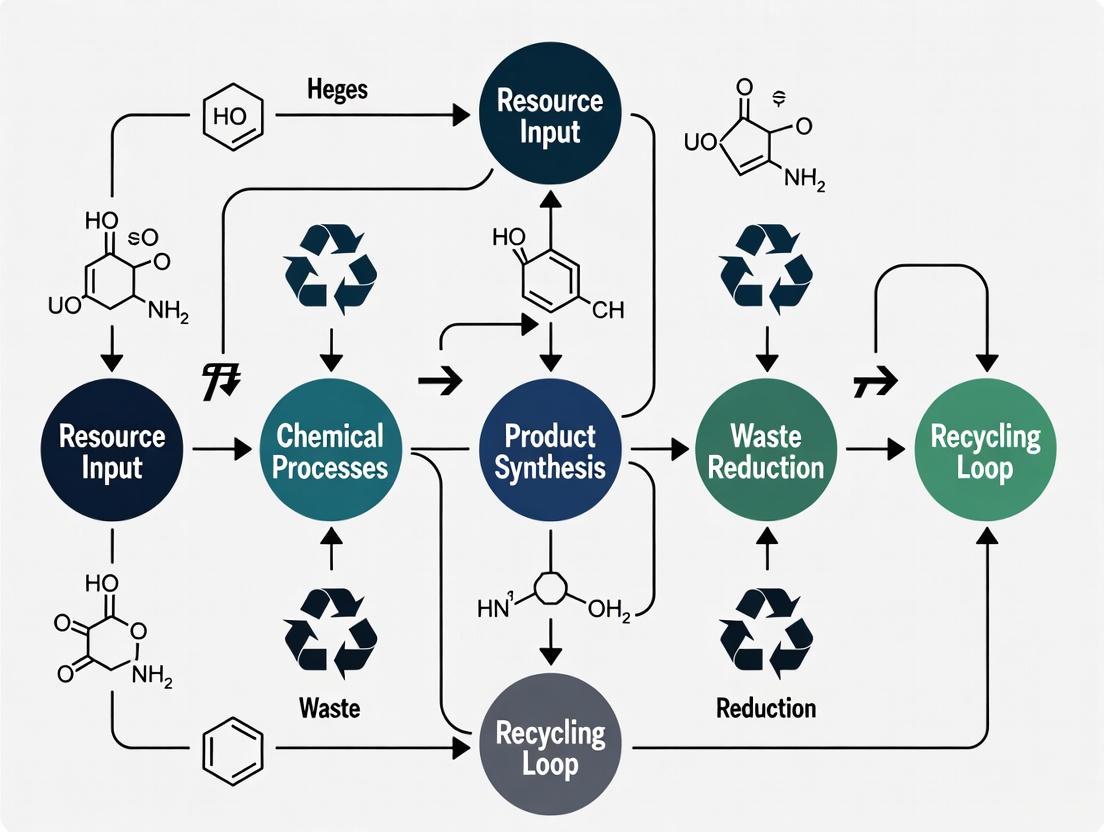
This article provides a comprehensive overview of circular chemistry, a transformative framework designed to eliminate waste and maximize resource efficiency in the chemical sector.
Circular Chemistry: A Foundational Guide to Sustainable Drug Development and a Greener Pharma Industry
Abstract
This article provides a comprehensive overview of circular chemistry, a transformative framework designed to eliminate waste and maximize resource efficiency in the chemical sector. Tailored for researchers, scientists, and drug development professionals, it explores the core principles of moving from a linear 'take-make-waste' model to a circular system that keeps molecules in use. The content delves into practical methodologies like green solvent selection and biocatalysis, addresses key implementation challenges, and presents validation tools such as Life Cycle Assessment. By integrating circular chemistry with green chemistry and safe-by-design principles, this guide aims to equip pharmaceutical professionals with the knowledge to build more sustainable, resilient, and environmentally responsible R&D pipelines and supply chains.
From Linear to Circular: Redefining Chemistry for a Sustainable Future
Circular chemistry represents a fundamental paradigm shift in the design and execution of chemical processes, moving decisively away from the traditional linear 'take-make-waste' model that has characterized the chemical industry for decades. This transformative framework aims to redesign chemical processes and products to achieve maximal resource efficiency, minimize waste generation, and enable the continuous circulation of materials at their highest possible value [1]. Within broader sustainable development research, circular chemistry provides a molecular-level implementation strategy for circular economy principles, directly addressing global challenges such as resource depletion, environmental pollution, and climate change [2]. For researchers and drug development professionals, this approach is not merely an environmental consideration but a comprehensive reimagining of chemical synthesis that aligns long-term economic viability with ecological responsibility, demanding innovation in catalyst design, solvent selection, and process intensification.
The chemical sector, as a billion-dollar global business, currently relies heavily on fossil-fuel-based feedstocks and energy-intensive production processes, generating significant chemical waste products and toxic pollutants [3]. Circular chemistry seeks to dismantle this unsustainable system by introducing a regenerative model where materials are kept in continuous cycles of use. For the pharmaceutical and specialty chemical industries, this transition presents both a substantial challenge and a tremendous opportunity for innovation, requiring new metrics and assessment methodologies to evaluate sustainability from the earliest stages of research and development [4].
Core Principles and Fundamental Concepts
The Foundational Pillars of Circular Chemistry
Circular chemistry is built upon three interconnected pillars that collectively redefine the approach to chemical design and production, creating a closed-loop system that mimics natural cycles [1] [2]:
Eliminate Waste and Pollution: This principle involves designing out negative impacts from the outset, rather than managing them after they occur. It addresses the release of greenhouse gases, hazardous substances, and all forms of environmental pollution through fundamental redesign of chemical reactions and processes. This preemptive approach contrasts sharply with traditional end-of-pipe solutions in the linear model [2].
Circulate Products and Materials: This pillar focuses on maintaining molecules and materials at their highest utility and value at all times through intelligent design. It encompasses strategies ranging from product longevity and reuse to remanufacturing and recycling, with the goal of preserving embedded energy, labor, and material value through multiple use cycles [1].
Regenerate Natural Systems: Beyond minimizing harm, circular chemistry aims to actively enhance and restore natural environments. This includes utilizing renewable resources, returning biological nutrients to ecosystems, and employing energy from renewable sources, thereby creating a positive feedback loop that strengthens natural capital [2].
Contrasting Linear and Circular Models
The fundamental distinction between the traditional linear model and the circular approach manifests at every stage of chemical production and product life cycle, as detailed in Table 1.
Table 1: Comparative Analysis of Linear versus Circular Chemistry Models
| System Component | Linear Model ('Take-Make-Waste') | Circular Chemistry Model |
|---|---|---|
| Feedstock Sourcing | Virgin fossil resources (crude oil, natural gas) [1] | Renewable, bio-based, or waste feedstocks (biomass, CO₂, plastic waste) [1] |
| Process Design | Energy-intensive, high-waste generation, hazardous solvents | Energy-efficient, minimal byproducts, benign solvents [1] |
| Product Use Phase | Single-use or limited lifespan | Designed for durability, reuse, and recovery [1] |
| End-of-Life Management | Disposal (landfill, incineration) [1] | Recovery, purification, and reuse/recycling [1] |
| Toxicology Considerations | Often an afterthought | Safer chemicals designed from the outset [1] |
| Economic Driver | Volume of virgin material processed | Value preservation through multiple cycles [2] |
Material Flow Management: Biological and Technical Cycles
A critical conceptual framework in circular chemistry involves the separation of material flows into two distinct cycles, often visualized in the "butterfly diagram" developed by the Ellen MacArthur Foundation [2]:
Biological Cycles: These encompass materials that can safely biodegrade and re-enter natural systems after use, such as bio-based polymers, agricultural residues, and other organic compounds. In these cycles, the focus is on cascading uses that extract maximum value before ultimately returning nutrients to biological systems [2].
Technical Cycles: These involve materials that cannot safely enter the environment, including metals, plastics, and synthetic chemicals. For these materials, circular chemistry designs recovery, reuse, and recycling systems to maintain them in continuous production and use cycles, preventing environmental contamination and resource depletion [2].
Implementation Framework and Methodologies
Technological Enablers and Process Innovations
The practical implementation of circular chemistry relies on several advanced technological approaches that enable the transition from linear to circular systems:
Advanced Recycling Techniques: Moving beyond mechanical recycling, chemical recycling methods including depolymerization, solvolysis, and pyrolysis can handle mixed or contaminated waste streams, breaking them down into molecular building blocks for new products. These processes are particularly valuable for complex pharmaceutical intermediates and polymer-based materials [1].
Catalysis for Renewable Feedstocks: The development of novel catalytic systems specifically designed for non-fossil feedstocks is essential. These catalysts must efficiently handle the different chemical structures and impurities present in biomass, CO₂, and waste streams while maintaining high selectivity and yield [1].
Process Intensification and Flow Chemistry: Continuous flow systems enable more efficient, safer chemical synthesis with reduced resource consumption and waste generation. For pharmaceutical applications, flow chemistry offers improved heat and mass transfer, enhanced safety profiles for hazardous reactions, and easier integration with separation and purification units [4].
Experimental Protocol: Chemical Recycling of Polyethylene Terephthalate (PET)
The chemical recycling of PET through depolymerization serves as an illustrative example of circular chemistry principles in practice, with particular relevance to pharmaceutical packaging and equipment:
Table 2: Experimental Protocol for PET Depolymerization via Glycolysis
| Experimental Step | Methodological Details | Circular Principle Addressed |
|---|---|---|
| Collection & Sorting | Gather PET waste (containers, packaging); manual or automated sorting by polymer type and color | Resource Recovery |
| Pre-treatment | Wash with biodegradable detergents; grind to 2-5mm flakes; remove contaminants and labels | Preparing Waste as Feedstock |
| Depolymerization (Glycolysis) | React PET flakes with excess ethylene glycol (molar ratio 1:4-8) with transesterification catalyst (e.g., zinc acetate, 0.5-1.0 wt%) at 180-240°C for 2-6 hours under nitrogen atmosphere with continuous stirring | Chemical Transformation for Circularity |
| Purification | Separate bis(2-hydroxyethyl) terephthalate (BHET) monomer through crystallization, dissolution, or column chromatography; remove catalysts and oligomers | Enabling High-Value Reuse |
| Repolymerization | Polycondensation of purified BHET at 250-290°C under vacuum with antimony-based catalyst to produce new PET resin | Closing the Material Loop |
This protocol demonstrates the technical feasibility of molecular-level recycling, though challenges remain in energy efficiency, catalyst recovery, and economic viability at scale—active areas of research in green chemistry [1].
The Scientist's Toolkit: Essential Research Reagent Solutions
Implementing circular chemistry in research and development requires specific reagents and materials designed to enable circularity:
Table 3: Key Research Reagent Solutions for Circular Chemistry
| Reagent/Material | Function in Circular Chemistry | Application Examples |
|---|---|---|
| Bio-based Solvents (e.g., Cyrene, ethyl lactate) | Replace petroleum-derived toxic solvents; biodegradable with lower environmental impact [4] | Extraction, reaction medium, chromatography |
| Depolymerization Catalysts (e.g., zinc acetate, enzyme cocktails) | Selective cleavage of polymers into monomers for chemical recycling [1] | PET, PLA, and other polymer recycling |
| CO₂ Capture Sorbents (e.g., MOFs, amine-functionalized silica) | Convert waste CO₂ into valuable carbon feedstock for chemical synthesis [1] | Carbonate, polyurethane, and methanol production |
| Redox-Active Biomolecules (e.g., flavins, NADH analogs) | Enable biocatalytic transformations under mild conditions using renewable energy [4] | Pharmaceutical intermediate synthesis |
| Dynamic Cross-linkers (e.g., Diels-Alder adducts, disulfide bridges) | Create recyclable and self-healing polymer networks with controlled lifespans [1] | Sustainable packaging, drug delivery systems |
Assessment Methods and Integration with Broader Frameworks
Early-Phase Sustainability Assessment
For researchers developing new chemical processes, early-phase sustainability assessment is crucial as most environmental impacts are determined during initial design stages [4]. The systematic review by Waniek et al. identified 53 methods suitable for early-phase assessment, which can be categorized into several distinct approaches:
Green Chemistry Metrics: Established parameters including E-factor, atom economy, and process mass intensity provide quantitative measures of material and energy efficiency, allowing researchers to compare alternative synthetic routes during initial development [4].
Life Cycle Assessment (LCA): While traditionally data-intensive for early-stage research, streamlined LCA approaches enable preliminary evaluation of environmental impacts across the entire chemical life cycle, from feedstock extraction to end-of-life management [4].
Multi-Criteria Decision Analysis (MCDA): These frameworks integrate multiple sustainability dimensions—environmental, economic, and social—allowing researchers to balance competing objectives when designing circular chemical processes [4].
The integration of these assessment methods from the earliest stages of research ensures that circular principles are embedded in process design rather than added as subsequent modifications.
Synergistic Integration with Green Chemistry and SSbD
Circular chemistry does not exist in isolation but rather functions most effectively when integrated with complementary frameworks. As highlighted by Slootweg, the combination of green chemistry, circular chemistry, and Safe and Sustainable by Design (SSbD) creates a comprehensive approach to sustainable chemical development [5]:
Green Chemistry focuses on reducing waste and pollution at the molecular level through the famous 12 principles, providing the foundational approach to designing safer chemical transformations [5].
Circular Chemistry emphasizes resource efficiency and recycling, ensuring materials remain in productive use through multiple life cycles [5].
Safe and Sustainable by Design (SSbD) prioritizes human and environmental safety throughout the product life cycle, ensuring that circular solutions do not create unintended negative consequences [5].
This integrated approach ensures that molecules and materials are not only produced efficiently but are also inherently safe and designed for continuous circulation through the economy.
Applications in Pharmaceutical and Specialty Chemical Sectors
The pharmaceutical and specialty chemical industries face particular challenges and opportunities in implementing circular chemistry due to complex synthesis pathways, stringent regulatory requirements, and high-value products. Several promising applications demonstrate the potential in these sectors:
Continuous Flow Manufacturing: The adoption of continuous processing in pharmaceutical manufacturing represents a significant shift from traditional batch processes, enabling improved material efficiency, reduced solvent use, and easier integration of recycling loops for catalysts and reagents [4].
Bio-based Synthetic Pathways: Developing synthetic routes that utilize bio-based platform chemicals instead of petroleum-derived precursors reduces dependence on fossil resources while often providing superior chirality and functionality for pharmaceutical applications [1].
Solvent and Catalyst Recovery Systems: Implementing closed-loop recovery and purification systems for solvents and homogeneous catalysts significantly reduces waste generation and material costs in specialty chemical production [1].
Design of Degradable Pharmaceuticals: Applying circular principles to pharmaceutical design itself, including the development of active pharmaceutical ingredients (APIs) that degrade into benign substances after use, addresses the emerging challenge of pharmaceutical pollution in water systems [1].
For drug development professionals, these applications not only reduce environmental impact but can also provide economic advantages through reduced material costs, simplified waste management, and improved process robustness.
Visualizing Circular Chemistry Systems
The following diagram illustrates the fundamental material flows in a circular chemistry system, contrasting the linear and circular approaches while highlighting the interconnected cycles of technical and biological materials:
Circular Chemistry Material Flow Diagram
The workflow for implementing circular chemistry in research and development involves multiple decision points and iterative optimization, as shown in the following process map:
Circular Chemistry R&D Implementation Workflow
Circular chemistry represents more than a technical adjustment to chemical practice; it constitutes a fundamental reimagining of how we design, produce, and manage chemicals and materials in alignment with natural systems. For researchers, scientists, and drug development professionals, this paradigm offers a framework to address pressing sustainability challenges while fostering innovation in chemical synthesis, catalysis, and process design. The transition from linear 'take-make-waste' models to circular systems requires interdisciplinary collaboration, new assessment methodologies, and a life-cycle perspective that considers molecular fate from feedstock to end-of-life.
While significant technical and economic barriers remain—particularly in scaling emerging technologies and achieving cost parity with established linear processes—the integration of circular chemistry with green chemistry principles and Safe and Sustainable by Design frameworks provides a comprehensive approach to building a chemical industry that operates within planetary boundaries. For the research community, this represents both a profound responsibility and an unprecedented opportunity to shape a sustainable future through molecular innovation.
The transition from a linear "take-make-waste" industrial model to a circular framework is imperative for sustainable development, particularly in material-intensive sectors like the chemical and pharmaceutical industries [6]. This paradigm shift is anchored in three interdependent core principles: using waste as a feedstock, implementing sustainable synthesis methodologies, and overarching design for circularity. These principles collectively aim to create a closed-loop economic production system that minimizes waste generation, energy consumption, and fresh raw material requirements while maximizing resource efficiency and economic, social, and environmental benefits [7]. For researchers and drug development professionals, embedding these principles into R&D workflows is no longer optional but a fundamental component of responsible science that aligns with global sustainability goals, including the United Nations Sustainable Development Goals (SDGs) [8] [9]. This guide provides a technical foundation for applying these principles within research contexts, complete with quantitative metrics, experimental considerations, and standardized assessment protocols.
Core Principle 1: Waste as a Feedstock
The "waste-as-a-feedstock" principle repositions waste streams not as terminal liabilities but as valuable resources for new production cycles. This is a cornerstone of circular chemistry, enabling a regenerative system that decouples economic activity from the consumption of finite resources [10].
Potential waste feedstocks are diverse, and their appropriate characterization is the first critical step in any experimental protocol.
- Lignocellulosic Biomass: Derived from agricultural and forestry residues (e.g., straw, bagasse, wood chips), it is primarily composed of cellulose, hemicellulose, and lignin. It can be a feedstock for biofuels, chemical commodities, and polymers without competing with food security [7].
- Plastic Packaging Waste: A complex mixture of polymers (e.g., PET, PE, PP) that can be processed via mechanical or chemical recycling pathways [11].
- Municipal Solid Waste (MSW): A highly heterogeneous stream that can be processed through gasification or other thermochemical methods to produce syngas, oils, or hydrogen [10].
- Other Industrial and Specialty Wastes: This category includes end-of-life materials from various sectors, including electronic waste (e-waste) rich in critical minerals [8] and waste from the fashion industry containing valuable metals like palladium [8].
Quantitative Analysis of Carbon Circularity
The Carbon Flow and Circular Diagram (CFCD) method is a unified framework designed to assess plastic recycling by integrating carbon circularity, carbon neutrality, and fossil energy independence [11]. It visualizes carbon flows by mapping inputs and outputs across various pathways. The following table summarizes key performance metrics for different waste processing methods, as demonstrated in a study of plastic packaging waste in Japan.
Table 1: Carbon Circularity and Energy Metrics for Plastic Waste Recycling Pathways [11]
| Recycling Pathway | Application Example | Carbon Circularity Preserved | Energy Benefit | Key Findings |
|---|---|---|---|---|
| Catalytic Cracking | Chemical recycling of plastics | 56.8% | Moderate | Preserves the highest carbon circularity among methods studied. |
| Mechanical Recycling | Reprocessing plastic waste | Moderate | Moderate | Achieves moderate carbon circularity and climate benefit. |
| High-Efficient Energy Recovery | Waste-to-energy | Poor | Substantial | Delivers substantial climate and energy benefits but poor circularity. |
| Gasification | Ammonia production | Largely ineffective | 57.9 MJ/kg waste | Yields the highest energy benefit yet is ineffective for carbon circularity. |
| Carbon Capture & Utilization | Chemical production | Emerging as a key strategy | Data not specified | Identified as a key strategy for improving carbon circularity. |
Experimental Protocol: Life Cycle Assessment for Waste Valorization
Rigorous Life Cycle Assessment (LCA) is indispensable for quantifying the net environmental gains or trade-offs of a waste-to-resource pathway [10].
Methodology:
- Goal and Scope Definition: Clearly define the system boundary. A critical decision is whether to apply the "zero-burden assumption," where waste is considered free of upstream environmental burdens, or to allocate a portion of the original product's impacts to the waste stream [10].
- Inventory Analysis (LCI): Compile energy, water, and material inputs, and emission outputs for all processes within the system boundary. For waste feedstocks, precise composition data (e.g., % polymer types, % biogenic carbon) is crucial.
- Impact Assessment (LCIA): Evaluate the LCI data against impact categories (e.g., Global Warming Potential, Resource Depletion). The treatment of biogenic carbon (often assumed to be carbon-neutral) must be explicitly stated, as this significantly influences the climate impact results [10].
- Interpretation: Analyze results to identify hotspots, trade-offs, and comparison to a defined benchmark (e.g., virgin production or alternative waste disposal). The choice of functional unit (e.g., "per kg of waste treated" vs. "per kg of product produced") alters the interpretation and must align with the study's goal [10].
Core Principle 2: Sustainable Synthesis
Sustainable synthesis focuses on designing chemical reactions and processes that minimize environmental and human health impacts across their life cycle. It operationalizes the principles of green chemistry within a circular context [7].
Foundational Frameworks
- Green Chemistry: The 12 principles of green chemistry provide a foundational guideline for designing chemical syntheses that minimize the use and generation of hazardous substances [7]. This includes employing safer solvents, designing for energy efficiency, and prioritizing renewable feedstocks.
- Safe and Sustainable by Design (SSbD): This framework prioritizes product life cycle safety and sustainability from the initial design phase, ensuring that chemicals and materials are not only efficient but also inherently low-risk [6]. Its effectiveness is maximized when integrated with green and circular chemistry, rather than applied in isolation [6].
Key Methodologies and Reagent Solutions
Sustainable synthesis employs a suite of advanced reagents and methodologies to replace conventional, often more hazardous, approaches.
Table 2: Research Reagent Solutions for Sustainable Synthesis
| Reagent / Material | Function in Synthesis | Sustainable Advantage |
|---|---|---|
| Biocatalysts (Enzymes) | Catalyzing specific chemical reactions (e.g., hydrolysis, esterification). | High selectivity reduces byproducts; operate under mild conditions (e.g., ambient temperature, neutral pH), saving energy [7]. |
| Metabolic Engineering & Synthetic Biology | Engineering microbial hosts to produce high-value fine chemicals from renewable feedstocks. | Enables efficient synthesis routes for complex molecules from sugars or plant biomass, creating closed-loop bioprocesses [7]. |
| Bio-based Solvents | Replacing traditional petroleum-derived solvents (e.g., DMF, DMSO). | Derived from renewable biomass (e.g., ethanol, lactic acid); often less toxic and biodegradable, reducing environmental impact [8]. |
| Pinene-derived Monomers | Serving as building blocks for polymers and coatings. | Bio-based alternative to fossil-derived polymers, demonstrating performance parity with improved sustainability [8]. |
| Chemically Recyclable Thermosets | Creating polymers that can be broken down into their original monomers. | Enables circularity for materials like epoxy resins, which are traditionally non-recyclable, designing out waste [8]. |
Experimental Protocol: Sustainability Assessment with GREENSCOPE
The GREENSCOPE (Gauging Reaction Effectiveness for the ENvironmental Sustainability of Chemistries with a multi-Objective Process Evaluator) tool is a sustainability assessment methodology that can be used to evaluate and optimize chemical manufacturing processes [7].
Methodology:
- Define Process and Indicators: Clearly define the chemical process to be assessed. Select relevant sustainability indicators from the GREENSCOPE taxonomy within the environmental, efficiency, energy, and economic (4E) domains. Examples include:
- Environmental: GHG emissions, waste generation per mass of product.
- Efficiency: Atom economy, reaction yield.
- Energy: Energy intensity, % energy recovered.
- Economic: Operating cost, value of products [7].
- Gather Process Data: Collect data for the chosen indicators from experimental runs, pilot plants, or process simulations.
- Calculate Sustainability Scores: For each indicator, calculate a sustainability score as a percentage between a predefined worst-case (0%) and best-case (100%) target.
- Interpret and Optimize: Use the resulting sustainability profile to identify areas for process improvement, compare alternative synthesis routes, and make informed decisions toward a more sustainable and circular process [7].
Core Principle 3: Design for Circularity
Design for circularity moves beyond optimizing individual molecules or reactions to encompass the entire product system. It ensures that materials can be maintained, reused, refurbished, and recycled at their end-of-life (EoL), creating a closed-loop system [12].
Strategies for Circular Design
- Design for Durability and Reuse: Creating chemical products and materials that are robust and long-lasting, facilitating multiple use cycles.
- Design for Disassembly and Recycling: Formulating products and selecting materials so that components can be easily separated and fed into high-quality recycling streams. For plastics, this includes designing for chemical recycling processes like alcoholysis, aminolysis, and hydrolysis, which break down polymers into their monomers for producing new, high-value chemicals [7].
- Hazard Characterization and Elimination: A critical, yet often overlooked, component. In a circular economy, the use of hazardous chemicals creates circular, hazardous pollution. Proactive chemical hazard assessments are essential to identify and eliminate substances of concern, protecting human health and ensuring the safety of recirculated feedstocks [12].
Enabling Systems and Policy Frameworks
Technological innovation must be supported by systemic shifts in regulation and economic models.
- Effective Regulatory Foundations: Regulations like the EU's REACH and the U.S. TSCA mandate risk assessments of chemicals, supporting the development and selection of safer chemicals and promoting circular practices like recycling and reuse [7].
- Industrial Symbiosis: This strategy involves different industrial facilities, often in geographic proximity, collaborating to use each other's end-of-life streams or by-products as raw materials, thereby minimizing waste and virgin resource consumption [7].
- Extended Producer Responsibility (EPR): EPR programs incentivize chemical producers and brand owners to design products with their EoL stage in mind, fostering greater reuse and recyclability [7].
Integrated Workflow and Visualization
The three core principles are not sequential steps but interconnected activities that inform each other throughout the research and development lifecycle. The following diagram synthesizes these principles into a single, integrated workflow for circular chemistry research.
The workflow illustrates how the end-of-life of one product cycle directly feeds into the feedstock characterization of the next, creating a continuous R&D loop aligned with circular economy principles. This integrated approach, combining technical innovation with systemic thinking and safety-by-design, is fundamental to advancing sustainable development in chemical and pharmaceutical research [6] [7] [12].
The transition towards a sustainable and circular chemical industry necessitates a move beyond isolated methodologies. While frameworks such as green chemistry, circular chemistry, and Safe-and-Sustainable-by-Design (SSbD) have individually advanced sustainability goals, their siloed application presents limitations. This technical guide posits that the integration of Green Chemistry and SSbD principles forms a critical synergy, creating a foundational framework for achieving the objectives of circular chemistry within sustainable development research. For researchers and drug development professionals, this integrated approach provides a comprehensive methodology for designing chemical products and processes that are inherently low-hazard, resource-efficient, and safe and sustainable across their entire life cycle. By leveraging the molecular-level design focus of green chemistry and the comprehensive assessment framework of SSbD, this synergy accelerates the industrial transition towards a circular economy.
The chemical industry's traditional "take-make-waste" model poses significant socio-environmental challenges, underscoring the urgent need for a paradigm shift [6]. In response, several strategic frameworks have emerged:
- Green Chemistry: Focuses on reducing waste and pollution at the molecular level through its 12 principles, which include waste prevention, atom economy, and designing safer chemicals [13] [14].
- Circular Chemistry: Emphasizes resource efficiency, recycling, and closing material loops to maintain the utility of products and materials.
- Safe and Sustainable-by-Design (SSbD): A voluntary, pre-market approach that integrates safety and sustainability considerations along a product's entire life cycle, from sourcing to end-of-life [15] [16].
However, their effectiveness remains suboptimal when these frameworks operate in isolation, hindering the realization of a fully sustainable and circular chemical industry [6]. Green chemistry provides the essential molecular-level design tools—the "how"—to make chemicals and processes more sustainable [17]. Conversely, SSbD provides a broader assessment framework—the "what"—ensuring that these innovations are evaluated for their holistic safety and sustainability impacts. This guide details how their synergistic application can overcome existing barriers and significantly enhance the chemical industry's sustainability profile.
Core Principles and Their Convergence
The Foundational Pillars of Green Chemistry
Green chemistry, formally established through its 12 principles, is the design of chemical products and processes that reduce or eliminate the use or generation of hazardous substances [14]. It is a preventive, upstream approach that applies across a chemical's life cycle. Key principles most relevant to SSbD integration include:
- Prevention: It is better to prevent waste than to treat or clean up waste after it is formed [13].
- Atom Economy: Synthetic methods should maximize the incorporation of all materials into the final product, minimizing waste atoms [13].
- Less Hazardous Chemical Syntheses: Synthetic methods should use and generate substances with little or no toxicity to human health and the environment [13].
- Designing Safer Chemicals: Chemical products should be designed to preserve efficacy while reducing toxicity [13].
- Safer Solvents and Auxiliaries: The use of auxiliary substances should be made unnecessary wherever possible and innocuous when used.
- Design for Degradation: Chemical products should be designed so that at the end of their function they break down into innocuous degradation products [14].
The Comprehensive Framework of Safe-and-Sustainable-by-Design
The European Commission's SSbD framework is a two-phase, iterative process aimed at guiding the innovation process for chemicals and materials [15]. Its goals are to:
- Steer innovation towards clean and sustainable industries.
- Substitute or minimize substances of concern.
- Minimize impacts on health, climate, and environment across the entire life cycle [15].
The framework is structured into a (re-)design phase and an assessment phase, which are applied iteratively as data becomes available [15]. The assessment phase comprises multiple steps focusing on hazard, exposure, and life cycle impacts.
Synergistic Integration for a Circular Economy
The synergy between these frameworks is not merely additive but multiplicative. Green chemistry offers the mechanistic molecular-level tools and synthetic strategies to fulfill the ambitious goals set by the SSbD assessment. When a researcher makes molecular-level decisions, without the tools to understand the sustainability implications (Green Chemistry), it is unlikely they will successfully achieve SSbD objectives [17]. SSbD, in turn, provides a structured pathway to ensure that the principles of green and circular chemistry are applied cohesively and evaluated against a multi-criteria benchmark, thereby avoiding "SSbD-washing" akin to greenwashing [18].
The following conceptual diagram illustrates this synergistic relationship:
Synergy of Chemistry Frameworks
Quantitative Metrics and Assessment Methodologies
A robust, integrated framework requires quantitative metrics to evaluate performance. The table below summarizes key metrics derived from green chemistry and SSbD aligned with circularity goals.
Table 1: Key Quantitative Metrics for an Integrated Framework
| Metric Category | Specific Metric | Description | Application in Integrated Framework |
|---|---|---|---|
| Process Efficiency | Process Mass Intensity (PMI) [13] | Total mass of materials used per unit of product (e.g., kg/kg API). | A core green chemistry metric used in SSbD life cycle assessment (Step 4) to measure resource efficiency. |
| Atom Economy [13] | (FW of desired product / FW of all reactants) x 100 | A molecular-level design metric predicting waste generation; informs early SSbD assessment. | |
| Environmental Impact | E-Factor [13] | Total waste produced per unit of product. | Complements PMI; used in SSbD to evaluate environmental footprint and waste management. |
| Life Cycle Assessment (LCA) [15] | Evaluation of environmental impacts across the entire life cycle. | The core SSbD methodology (Step 4) for quantifying global warming potential, ecotoxicity, etc. | |
| Hazard & Safety | Hazard-Based Cut-offs [19] | Assessment against specific hazard criteria (e.g., CMR, PBT). | A key SSbD screening step (Step 1) to minimize intrinsic hazard, aligning with Green Chemistry Principles 3-5. |
| Quantitative Structure-Activity Relationship (QSAR) [18] | In-silico models for predicting toxicity based on chemical structure. | A high-throughput screening tool for early-stage hazard assessment in both Green Chemistry and SSbD. |
The SSbD Assessment Protocol
The European Commission's SSbD framework outlines a multi-step, iterative assessment protocol that seamlessly incorporates Green Chemistry principles [15]. The workflow below details this iterative process:
SSbD Assessment Workflow
Detailed Experimental & Assessment Methodologies:
Iterative (Re)Design and Scoping: The process begins by defining the goal, scope, and system boundaries for the chemical or material. This includes its intended function, which is critical for evaluating alternatives and trade-offs [15] [19].
Tiered Safety and Sustainability Assessment:
- Step 1: Hazard Assessment: Evaluate the intrinsic human health and environmental hazards of the chemical/material. This step uses in silico (Q)SAR models, in vitro New Approach Methodologies (NAMs), and existing regulatory data to apply hazard-based cut-off criteria [18] [19]. This directly operationalizes Green Chemistry Principles 3 (Less Hazardous Syntheses) and 4 (Designing Safer Chemicals).
- Step 2 & 3: Exposure Assessment: Assess potential exposure for workers during production and for consumers and the environment during use. This involves modeling and monitoring to understand release pathways and exposure levels, aligning with Green Chemistry Principle 12 (Minimizing Accident Potential) [15].
- Step 4: Life Cycle Assessment (LCA): Conduct a quantitative assessment of environmental impacts across the entire life cycle, from feedstock sourcing to end-of-life. This step uses metrics like PMI and E-factor to evaluate climate change, resource use, and ecotoxicity, directly linking to Green Chemistry Principles 1 (Prevention), 2 (Atom Economy), and 7 (Renewable Feedstocks) [15] [16].
Decision-Making and Re-design: The results from the assessment phases are evaluated against predefined SSbD criteria. If the chemical fails to meet the criteria, the process returns to the (re)design phase, where Green Chemistry principles are applied to innovate and improve the design [15]. This iterative loop is central to achieving a truly safe and sustainable product.
Implementation Strategy for Researchers
The Scientist's Toolkit: Essential Reagents and Solutions
For researchers, particularly in drug development, implementing this integrated framework requires a specific toolkit. The following table details key research reagent solutions and their functions in developing safer and more sustainable processes.
Table 2: Research Reagent Solutions for Integrated Framework Implementation
| Reagent/Material Category | Specific Examples | Function in Green Chemistry & SSbD |
|---|---|---|
| Safer Solvents | 2-Methyltetrahydrofuran (2-MeTHF), Cyrene (dihydrolevoglucosenone), Water [13] [14] | Replaces hazardous solvents like dichloromethane and DMF. Reduces toxicity (Principle 5) and improves life cycle impact (SSbD Step 4). |
| Renewable Feedstocks | Lignin-derived phenolics [20], 5-Hydroxymethylfurfural (HMF) [20], Erythritol [20] | Biobased platform chemicals that reduce reliance on fossil fuels (Principle 7) and lower carbon footprint in SSbD LCA. |
| Catalysts | Immobilized enzymes [20], Earth-abundant metal catalysts (Fe, Ru) [20], Photocatalysts | Enable efficient, selective transformations with low waste (Principle 9). Enzymes offer high specificity and biodegradable alternatives. |
| Design for Degradation Aids | Hydrolyzable esters, Cleavable linkers (e.g., hydrazone) | Incorporated into molecular design to ensure chemicals break down into innocuous substances after use (Principle 10), addressing SSbD end-of-life concerns. |
A Practical Framework for Integration
Bridging the silos between R&D, sustainability, and safety departments within an organization is critical [16]. The following actionable protocol guides the integrated application of Green Chemistry and SSbD:
- Start with Molecular-Level Design (Green Chemistry): At the earliest stage of R&D, use the 12 principles as a checklist. Prioritize synthetic routes with high atom economy, select safer solvents from guides, and design target molecules to be effective yet minimally toxic.
- Conduct Early-Stage Screening (SSbD): Use computational tools ((Q)SAR, molecular modeling) to predict hazards (SSbD Step 1) for the intended chemical and its byproducts. This provides early warnings and guides redesign before significant resources are invested.
- Apply Iterative Assessment: As the process develops, iteratively apply the SSbD assessment steps. Use simple LCA models with estimated PMI and E-factor data to understand the environmental footprint (SSbD Step 4). This iterative process aligns with the stage-gate innovation model common in pharmaceutical R&D [18].
- Embrace Transdisciplinary Collaboration: Foster collaboration between synthetic chemists, toxicologists, process engineers, and LCA specialists. This ensures that safety and sustainability are not afterthoughts but are embedded throughout the innovation process [16] [19].
- Address Trade-offs Transparently: No solution is perfect. An integrated approach allows for the identification and management of trade-offs (e.g., a slightly lower yield for a significantly safer process) through a systematic and transparent decision-making process [19].
The critical synergy between Green Chemistry and the SSbD framework provides a powerful, cohesive strategy for advancing circular chemistry and sustainable development. Green chemistry offers the foundational, molecular-level "how-to" for designing safer and more efficient chemical processes, while SSbD provides the comprehensive, holistic "what-to-assess" to ensure these innovations are truly safe and sustainable from cradle to grave. For researchers and drug development professionals, adopting this integrated methodology is no longer optional but essential. It accelerates the industrial transition towards a circular economy, minimizes the production and use of substances of concern, and ultimately fosters the development of a chemical industry that is resilient, sustainable, and capable of meeting the needs of future generations [6] [16]. The path forward requires continued collaboration between academia, industry, and policy to refine the tools, data, and educational frameworks needed to make this integrated approach standard practice.
The Business and Ethical Imperative for the Pharmaceutical Industry
The pharmaceutical industry, dedicated to improving human health, faces a paradoxical challenge: its operations and products can adversely affect the environmental foundations that sustain health. The industry's environmental footprint is significant, with the global medtech sector emitting 13% more greenhouse gases than the automotive industry despite being 28% smaller [21]. This creates a critical imperative to align ecological responsibility with therapeutic innovation. The concept of a circular economy provides a transformative framework for this alignment, moving from a traditional linear model of "take-make-dispose" to a restorative, closed-loop system [22] [23]. This whitepaper examines the business and ethical case for integrating circular chemistry principles into pharmaceutical research, development, and supply chains, arguing that environmental stewardship is not merely an ethical obligation but a catalyst for innovation, resilience, and long-term value creation in a world increasingly focused on sustainability.
The pharmaceutical lifecycle generates environmental impacts at every stage—from raw material extraction and manufacturing to distribution, consumption, and disposal. Understanding the scale and nature of these impacts is the first step toward mitigating them.
Table 1: Environmental Impact Areas of the Pharmaceutical Industry [21] [22] [24]
| Impact Area | Key Statistics & Examples | Primary Environmental Consequences |
|---|---|---|
| Greenhouse Gas Emissions | Medtech sector emissions exceed automotive industry by 13% [21]. | Contribution to climate change, which is itself a major health threat. |
| Pharmaceutical Waste | ~50,000 tons of waste/year from US home healthcare products alone; 90% of US households dispose of medicines in trash or wastewater [21] [22]. | Contamination of water systems and soil; drug-resistant microbes; ecological damage. |
| Packaging Waste | Heavy reliance on complex, single-use plastics and mixed materials [24]. | Resource depletion; landfill overflow; microplastic pollution. |
| Water Consumption & Pollution | Water-intensive manufacturing; release of active pharmaceutical ingredients (APIs) and solvents [24]. | Strain on local water resources; contamination of aquatic ecosystems. |
A core ethical dilemma lies in the tension between immediate patient needs and long-term environmental health. The industry's primary mandate is to deliver life-saving medicines, yet the environmental consequences of doing so can undermine public health on a global scale, for example, through the contribution to antimicrobial resistance (AMR) and ecosystem damage [25] [23]. This positions the transition to circular models not as an optional "green" initiative, but as a fundamental component of the industry's social license to operate.
The Circular Chemistry Framework in Pharmaceutical Research
Circular chemistry is an overarching philosophy that operationalizes the principles of a circular economy within chemical research and production. It aims to design waste out of systems, keep materials in use for as long as possible, regenerate natural systems, and improve resource efficiency [23]. For pharmaceutical research and development (R&D), this represents a paradigm shift from a molecule-to-disposal linear pathway to a holistic, cradle-to-cradle mindset.
Core Principles and Their R&D Application
The transition to a circular pharmaceutical economy can be guided by the 9R framework, which provides a hierarchy of strategies from most to least favorable [22].
Table 2: The 9R Framework Applied to Pharmaceutical R&D and Manufacturing [22] [23]
| R-Strategy | Application in Pharma R&D & Manufacturing |
|---|---|
| Refuse & Rethink | Rethink drug delivery systems to require less material (e.g., concentrated formulations). Refuse the use of hazardous solvents in new synthetic pathways. |
| Reduce | Reduce material and energy inputs through process intensification and continuous manufacturing. |
| Reuse & Repair | Design medical devices for sterilization and safe reuse. Implement solvent recovery and reuse systems. |
| Refurbish & Remanufacture | Refurbish diagnostic or imaging equipment to extend its lifecycle. |
| Repurpose | Explore new therapeutic uses for molecular byproducts from synthesis. |
| Recycle | Develop recyclable packaging from mono-materials and establish take-back programs. |
| Recover | Recover energy from non-recyclable waste through controlled processes. |
Visualizing the Circular R&D Workflow
The following diagram illustrates the integrated, cyclical workflow of a circular chemistry approach in pharmaceutical research, contrasting it with discrete linear stages.
Figure 1: Circular Chemistry R&D Workflow. This diagram shows a continuous, integrated R&D process where end-of-life considerations directly inform new molecular design, creating a closed-loop system (represented by the red feedback arrow).
Experimental Protocols for Sustainable Drug Development
Integrating circularity requires tangible methodologies at the earliest stages of drug discovery. The following protocols provide a roadmap for embedding sustainability into core R&D activities.
Protocol 1: Environmental Fate Assessment in Early Drug Design
Objective: To evaluate and prioritize new chemical entities (NCEs) based on their potential environmental impact, particularly biodegradability and toxicity to aquatic life, during the lead optimization phase.
Methodology:
- In-silico Prediction: Utilize quantitative structure-activity relationship (QSAR) models and software tools to predict key parameters:
- Biodegradability: Estimate the likelihood of microbial breakdown in the environment.
- Ecotoxicity: Predict toxicity to fish, daphnia, and algae.
- Bioaccumulation Potential: Estimate the log P (octanol-water partition coefficient) to assess accumulation in fatty tissues.
- In-vitro Biodegradation Assay: For shortlisted lead compounds, conduct a standardized OECD 301 ready biodegradability test. This involves exposing the API to a defined inoculum of microorganisms in a closed system and measuring the dissolved organic carbon disappearance over 28 days. A compound is considered "readily biodegradable" if it achieves >60% degradation within 10 days of the pass level being reached.
- Decision Gate: Integrate results into the lead candidate selection scorecard. Favor compounds with higher predicted biodegradability and lower ecotoxicity, balancing these environmental factors with traditional efficacy and safety profiles.
Protocol 2: Green Chemistry Synthesis Route Selection
Objective: To systematically compare and select the most resource-efficient and environmentally benign synthetic route for an Active Pharmaceutical Ingredient (API).
Methodology:
- Route Scouting & Atom Economy Calculation: Identify 2-3 viable synthetic routes. For each, calculate the Atom Economy for each step and the overall process: Atom Economy = (Molecular Weight of Desired Product / Σ Molecular Weights of All Reactants) × 100% A higher percentage indicates less inherent waste.
- Process Mass Intensity (PMI) Determination: For each route, calculate the total mass of materials used per unit mass of API produced. PMI = (Total Mass of Materials in kg / Mass of API in kg) Lower PMI signifies higher resource efficiency.
- Solvent & Reagent Greenness Assessment: Classify all solvents and reagents using a recognized guide (e.g., CHEM21 Green Solvent Guide). Penalize routes that rely heavily on hazardous (e.g., chlorinated) or non-recoverable solvents.
- Scoring Matrix: Create a weighted matrix that scores each route on Atom Economy, PMI, solvent greenness, and energy requirements. The route with the highest aggregate score represents the most circular and sustainable option.
The Researcher's Toolkit for Circular Chemistry
Implementing these protocols requires a specific set of tools and reagents designed to minimize environmental impact while maintaining scientific rigor.
Table 3: Research Reagent Solutions for Circular Chemistry
| Tool/Reagent Category | Function & Rationale | Circular Advantage |
|---|---|---|
| Bio-Based & Renewable Feedstocks | Starting materials derived from biomass (e.g., sugars, plant-based oils) instead of petrochemicals. | Reduces dependency on fossil fuels, lowers carbon footprint, and utilizes regenerative resources [23]. |
| Benign Alternative Solvents | Water, supercritical CO₂, cyrene, or 2-methyltetrahydrofuran (2-MeTHF) as replacements for toxic traditional solvents. | Reduces environmental and health hazards, simplifies waste stream management, and often enables safer processes [23]. |
| Catalytic Reagents (e.g., Enzymes, Heterogeneous Catalysts) | Highly selective catalysts that drive reactions under milder conditions and with less waste. | Improves atom economy, reduces energy consumption, and can often be recovered and reused multiple times, minimizing reagent waste [23]. |
| Life Cycle Assessment (LCA) Software | Digital tools for modeling the environmental impact of a product or process from cradle to grave. | Enables data-driven decision-making by quantifying carbon footprint, water use, and other impacts early in R&D, guiding the development of more sustainable molecules and processes [23]. |
| Closed-Loop Solvent Recovery Systems | Bench-scale systems for distilling and purifying used solvents for immediate reuse in the lab. | Drastically reduces solvent waste generation and procurement of virgin materials, closing the loop on a major waste stream in chemical research [26]. |
The Business Case: From Operational Efficiency to Market Leadership
Beyond its ethical foundation, the circular model presents a compelling business case grounded in risk mitigation, cost savings, and new value creation.
Quantitative Financial and Operational Benefits
Adopting circular strategies directly impacts the bottom line by optimizing resource use and reducing waste-related costs.
Table 4: Financial and Operational Benefits of Circular Strategies [21] [26] [24]
| Circular Strategy | Business Benefit | Exemplar Case |
|---|---|---|
| Green Chemistry & Solvent Recovery | 15-20% carbon savings per drug batch; significant cost savings from reduced raw material purchase and waste disposal [26]. | Pharmaceutical companies practicing green chemistry show minimized waste and associated cost savings [21]. |
| Energy Efficiency & Renewable Integration | 30-40% carbon savings per manufacturing site; long-term stability in energy costs and reduced exposure to fossil fuel price volatility [26]. | Novartis, Pfizer, and AstraZeneca have set ambitious carbon neutrality targets, driving investments in renewables and site efficiency [26] [24]. |
| Waste Management & Process Intensification | Up to 25% reduction in greenhouse gases from operations; lower logistics and material costs [26]. | Transition to continuous manufacturing from batch processing reduces waste and energy consumption [26]. |
| Packaging Optimization | Reduction in material costs; enhanced brand reputation and compliance with evolving packaging regulations. | A shift towards lightweight, mono-material, and recycled-content packaging reduces resource use and waste [23]. |
Strategic Market Advantages
The business value extends beyond direct cost savings to encompass critical strategic advantages:
- Enhanced Innovation & Competitiveness: The constraints of circularity drive creative problem-solving, leading to novel synthetic pathways, drug delivery systems, and business models. Open innovation challenges, like the Novo Nordisk Innovation Challenge for circular injector pens, provide access to groundbreaking startup technologies [21].
- Supply Chain Resilience: Diversifying feedstocks to include bio-based or recycled sources and implementing reverse logistics for packaging reduces dependence on scarce virgin resources and mitigates supply chain disruption risks [27].
- Talent Attraction & Investor Confidence: A strong sustainability mandate is increasingly important for attracting top talent and meeting the environmental, social, and governance (ESG) criteria demanded by investors [24]. Over 80% of chemical companies report that the circular economy is embedded in their corporate strategy [27].
The imperative for the pharmaceutical industry is clear: it must heal the planet as it heals patients. The linear "take-make-dispose" model is ethically untenable and economically obsolete. The transition to a circular model, underpinned by the principles of green chemistry, is not a distant ideal but a present-day necessity and opportunity.
This journey requires a systemic, collaborative effort. Researchers and scientists are tasked with designing benign molecules and efficient processes from the outset. Industry leaders must champion this transition, embedding circularity into corporate strategy and fostering open innovation. Regulators need to create a supportive framework with clear incentives for sustainable practices, such as incorporating environmental criteria into decision-making processes [28] [27]. Finally, healthcare providers and patients play a role through responsible prescribing, use, and disposal of medicines.
By embracing the business and ethical imperative of circularity, the pharmaceutical industry can reaffirm its fundamental mission. It can ensure that its legacy is not only one of life-saving breakthroughs but also of a healthy, sustainable planet for generations to come. The question is no longer if the industry must go green, but how swiftly and intelligently it can execute this vital transformation [26].
Implementing Circularity: Strategies and Technologies for Drug Development
Green Solvent Selection and Alternatives in Pharma Synthesis
The integration of green chemistry principles and circular economy concepts is transforming pharmaceutical manufacturing, positioning solvent selection as a critical determinant of environmental sustainability. Solvents typically constitute over 50% of materials used in pharmaceutical processes, generating significant waste and environmental impact throughout their lifecycle [29] [30]. Within the framework of circular chemistry, which emphasizes waste minimization, resource efficiency, and regenerative systems, the strategic selection of green solvents represents a fundamental research frontier. The transition from traditional volatile organic compounds (VOCs) to sustainable alternatives aligns with global sustainability initiatives such as the Green Pharmacy Initiative, Pharmaceuticals in the Environment (PiE), and regulations including REACH, driving innovation in drug development practices [31] [32]. This paradigm shift addresses not only environmental concerns but also economic factors, as inefficient solvent use contributes substantially to the approximately £1.15 billion and 12.5 years required to bring a new drug to market [31].
Green Solvent Fundamentals: Categories and Properties
Classification of Green Solvents
Green solvents encompass diverse categories designed to reduce environmental and health impacts while maintaining efficacy in pharmaceutical applications. These alternatives are characterized by low toxicity, biodegradability, renewable feedstocks, and reduced emission profiles compared to conventional solvents [32] [33].
Table 1: Major Categories of Green Solvents and Their Pharmaceutical Applications
| Solvent Category | Representative Examples | Key Properties | Pharmaceutical Applications |
|---|---|---|---|
| Bio-based Solvents | Dimethyl carbonate, limonene, ethyl lactate | Low toxicity, biodegradable, low VOC emissions | Extraction, reaction media, cleaning processes [32] |
| Water-based Systems | Aqueous solutions of acids, bases, alcohols | Non-flammable, non-toxic, universally available | Extraction, reaction media, crystallizations [32] [33] |
| Supercritical Fluids | Supercritical CO₂ (scCO₂) | Non-toxic, recyclable, tunable density/solvation | Selective extraction of bioactive compounds, purification [32] [33] |
| Deep Eutectic Solvents (DES) | Choline chloride-urea mixtures | Biodegradable, low-cost, tunable properties | Extraction, organic synthesis, catalysis [32] [33] |
| Ionic Liquids | Various organic cation-anion combinations | Negligible volatility, thermally stable, tunable | Catalysis, separations, electrochemical processes [33] |
| Organic Carbonates | Dimethyl carbonate (DMC) | Non-toxic, biodegradable | Polycarbonate production, organic synthesis [33] |
Advantages of Green Solvent Adoption
The strategic implementation of green solvents across pharmaceutical manufacturing processes delivers multifaceted benefits that align with circular chemistry principles:
Environmental Benefits: Green solvents significantly reduce ecological impact through lower toxicity profiles, enhanced biodegradability, and minimized VOC emissions, thereby decreasing air pollution and environmental persistence [33]. For instance, bio-based solvents like ethyl lactate and d-limonene offer reduced environmental hazards throughout their lifecycle [32].
Economic Advantages: While initial production costs may be higher for some alternatives, green solvents provide long-term economic benefits through resource efficiency, reduced waste treatment expenses, and lower disposal costs [33]. Solvents like supercritical CO₂ and water are particularly valuable due to their recyclability and minimal raw material consumption [33].
Process Enhancements: Many green solvents offer superior performance characteristics, including higher selectivity, improved efficiency, and customizable properties for specific applications [33]. Ionic liquids and deep eutectic solvents exemplify this tunability, enabling optimization for particular synthetic or separation processes [33].
Strategic Frameworks for Green Solvent Selection
Comprehensive Assessment Methodologies
Effective green solvent selection requires multidimensional evaluation frameworks that integrate environmental, health, safety, and technical criteria. Several systematic approaches have been developed to guide this decision-making process:
CHEM21 Selection Guide: This widely adopted framework evaluates solvents based on safety, health, and environmental impacts, categorizing them as "recommended," "problematic," or "hazardous" [34]. The system incorporates flash point, boiling point, toxicity classifications, and environmental fate parameters aligned with the Global Harmonized System, providing a standardized assessment methodology for pharmaceutical applications [34].
Life Cycle Assessment (LCA) Approach: Comprehensive LCA evaluates solvent impacts across their entire lifecycle, from production through use and disposal [35] [30]. The GreenSOL guide, specifically tailored for analytical chemistry, employs this methodology to evaluate 49 common and 9 deuterated solvents across multiple impact categories, assigning composite scores from 1 (least favorable) to 10 (most recommended) [35].
Data-Driven Platforms: Advanced computational platforms like SolECOs (Solution ECOsystems) integrate predictive modeling with sustainability assessment for systematic solvent screening [31]. This platform incorporates a comprehensive solubility database containing 1,186 active pharmaceutical ingredients (APIs) and 30 solvents, using machine learning models to predict solubility profiles alongside environmental impact indicators [31].
Quantitative Sustainability Metrics
Table 2: Comparative Greenness Assessment of Common Pharmaceutical Solvents
| Solvent | CHEM21 Category | Health Score | Safety Score | Environmental Score | Life Cycle Impact |
|---|---|---|---|---|---|
| Water | Recommended | 1 | 1 | 3 | Low [34] |
| Ethanol | Recommended | 3 | 3 | 3 | Low [34] |
| Ethyl Acetate | Recommended | 3 | 3 | 5 | Moderate [34] |
| Heptane | Problematic | 3 | 4 | 5 | Moderate [34] |
| Acetone | Problematic | 3 | 4 | 5 | Moderate [34] |
| Dichloromethane | Hazardous | 5 | 1 | 7 | High [34] |
| DMF | Hazardous | 5 | 3 | 5 | High [34] |
| Acetonitrile | Hazardous | 5 | 3 | 5 | High [34] |
Computational and Experimental Screening Methodologies
Theoretical Screening Approaches
Computational methods enable efficient pre-screening of solvent candidates, significantly reducing experimental requirements and accelerating development timelines:
COSMO-RS (Conductor-like Screening Model for Real Solvents): This quantum chemistry-based approach predicts thermodynamic properties, including solubility, activity coefficients, and partition coefficients, directly from molecular structure information [29] [36]. The method has demonstrated effectiveness in screening green solvent alternatives for APIs such as sulfamethizole, successfully identifying 4-formylomorpholine as a sustainable replacement for problematic solvents like DMF [36].
Machine Learning Integration: Advanced platforms like SolECOs incorporate hybrid modeling approaches combining machine learning with theoretical methods [31]. These include Polynomial Regression Model-based Multi-Task Learning Network (PRMMT) for diverse design requirements, Point-Adjusted Prediction Network (PAPN) for specific temperature solubility prediction, and Modified Jouyban-Acree-based Neural Network (MJANN) for binary solvent system design [31].
Hansen Solubility Parameters: These empirical parameters enable prediction of solute-solvent interactions based on dispersion forces, polar interactions, and hydrogen bonding [34]. The approach facilitates preliminary screening of solvent candidates likely to exhibit favorable dissolution characteristics for specific API chemistries.
Experimental Validation Protocols
Robust experimental methodologies are essential for validating computational predictions and ensuring solvent performance under realistic processing conditions:
Solubility Determination via Shake-Flask Method: This standardized protocol involves preparing saturated API solutions in candidate solvents with excess solid phase, followed by equilibration with continuous agitation (typically 24 hours at controlled temperature) [36]. Subsequently, samples are filtered using preheated syringes and PTFE filters (0.22 μm), with analyte concentration determined spectrophotometrically following appropriate dilution [36].
Solid-State Characterization: Comprehensive analysis of solid residues recovered after solubility experiments is critical for identifying potential solvate formation or polymorphic transformations [36]. Differential Scanning Calorimetry (DSC) thermograms obtained at 5 K/min heating rate under nitrogen flow (20 mL/min) and Fourier Transform Infrared Spectroscopy with Attenuated Total Reflectance (FTIR-ATR) provide complementary data on crystal structure and intermolecular interactions [36].
Synergistic Effect Evaluation: For binary solvent systems, systematic composition screening identifies optimal mixtures exhibiting non-additive solubility enhancement [29]. Notably, aqueous-organic mixtures frequently demonstrate synergistic effects, with maximum solubility observed at intermediate compositions rather than pure organic solvent [29] [36].
Implementation Strategies and Circular Chemistry Integration
The Scientist's Toolkit: Essential Research Reagents
Table 3: Key Reagents and Materials for Green Solvent Research
| Reagent/Material | Specifications | Function in Research | Sustainability Considerations |
|---|---|---|---|
| 4-Formylomorpholine (4FM) | Purity ≥0.99 | Green alternative to DMF/DMSO for solubility enhancement [29] [36] | Biodegradable, low toxicity profile |
| Ethyl Lactate | Bio-based, purity ≥0.95 | Renewable solvent for extraction and reaction media [32] [33] | Derived from renewable resources, biodegradable |
| Supercritical CO₂ | Food grade, 99.9% purity | Environmentally benign extraction and purification medium [32] [33] | Non-toxic, recyclable, minimal waste generation |
| Deep Eutectic Solvents | Custom formulations | Tunable solvents for specialized applications [32] [33] | Low cost, biodegradable components |
| Dimethyl Carbonate | Purity ≥0.99 | Green aprotic solvent replacement for halogenated compounds [32] [33] | Biodegradable, low eco-toxicity |
Binary Solvent System Optimization
Strategic implementation of binary solvent systems, particularly aqueous-organic mixtures, represents a powerful approach for balancing solubility requirements with sustainability objectives:
Synergistic Solvation Phenomena: Many aqueous-organic binary systems exhibit non-linear solubility behavior with maximum API dissolution at intermediate compositions [29]. For instance, salicylamide demonstrates significantly enhanced solubility in aqueous-4-formylomorpholine mixtures at approximately 0.6 mole fraction organic solvent [29]. Similar synergistic effects have been documented for sulfamethizole in 1,4-dioxane-water systems and paracetamol in ethanol-water mixtures [36].
Environmental Impact Reduction: Partial replacement of organic solvents with water substantially improves environmental profiles while maintaining functionality [29]. This approach directly supports circular chemistry principles by minimizing VOC emissions, reducing fossil resource consumption, and enhancing biodegradability of waste streams [29] [33].
Overcoming Implementation Challenges
Despite significant advances, several challenges impede widespread green solvent adoption in pharmaceutical manufacturing:
Scalability and Commercial Viability: Many promising green solvents face limitations in consistent quality, reliable supply chains, and economic feasibility at industrial scales [33]. Comprehensive techno-economic assessments integrating production costs, purification requirements, and recycling infrastructure are essential for identifying truly viable alternatives [30].
Performance Optimization: Green solvents must demonstrate robust performance across diverse process conditions, including extreme temperatures, pressures, and chemical environments [33]. Systematic evaluation of chemical compatibility, storage stability, and recyclability is necessary for successful technology transfer from research to manufacturing [30].
Regulatory Compliance: Integration of green solvents into approved pharmaceutical manufacturing processes requires extensive documentation and potentially additional safety studies [32]. Proactive engagement with regulatory agencies and alignment with established guidelines (ICH Q8-Q12) facilitates smoother technology adoption [31].
The strategic selection and implementation of green solvents represents a cornerstone of circular chemistry principles within pharmaceutical synthesis. By integrating computational prediction tools, comprehensive sustainability assessment frameworks, and robust experimental validation protocols, researchers can systematically identify solvent alternatives that balance technical requirements with environmental responsibility. Future advances will likely focus on expanding databases to include additional bio-based solvents, incorporating renewable feedstock pathways in life cycle assessment, and integrating real-time process data for adaptive solvent design [31]. The continued collaboration between academia, industry, and regulatory bodies remains essential for accelerating the adoption of these sustainable technologies, ultimately contributing to the development of greener pharmaceutical manufacturing processes aligned with circular economy objectives.
Leveraging Biocatalysis and Enzymatic Processes for Efficient Manufacturing
The transition from a linear, petrol-dependent economy to a circular bioeconomy is one of the most pressing challenges in sustainable development research. Within this paradigm shift, biocatalysis—the use of enzymes or whole cells to catalyze chemical transformations—has emerged as a foundational technology. By leveraging the precision of biological catalysts, manufacturing processes can achieve unprecedented levels of efficiency and sustainability while aligning with the principles of circular chemistry [37]. Enzymes operate under mild conditions, minimize the need for hazardous chemicals, reduce energy consumption, and generate less waste compared to traditional chemical catalysts [38]. Their inherent selectivity enables highly efficient transformations that are essential for producing complex molecules in sectors ranging from pharmaceuticals to bio-based chemicals [39].
The integration of biocatalysis within circular chemistry frameworks creates powerful synergies for achieving the United Nations Sustainable Development Goals (SDGs), particularly those related to responsible consumption and production, climate action, and life on land [37]. This alignment is achieved through biocatalysis's ability to utilize renewable feedstocks, including single-carbon (C1) building blocks like CO2, and convert them into value-added products, thereby closing the carbon loop [40] [41]. This technical guide examines advanced biocatalytic strategies, engineering methodologies, and industrial applications that enable efficient and sustainable manufacturing processes.
Enzyme Engineering and Performance Optimization
The natural catalytic properties of enzymes often require enhancement to meet the demanding conditions of industrial processes. Enzyme engineering has therefore become indispensable for improving key performance characteristics such as stability, activity, selectivity, and substrate range.
Directed Evolution and Rational Design
Directed evolution simulates natural Darwinian evolution in laboratory settings through iterative cycles of mutagenesis and screening [42]. This approach has revolutionized enzyme optimization without requiring comprehensive structural knowledge.
- Genetic Library Creation: Diverse mutant libraries are generated using methods such as error-prone PCR, DNA shuffling, and in vivo mutagenesis platforms (e.g., OrthoRep, MORPHING, PACE) [42].
- High-Throughput Screening (HTS): Automated systems rapidly assay thousands of variants for desired traits like thermal stability, organic solvent tolerance, or altered substrate specificity [42].
- Advanced Integration: Modern directed evolution increasingly incorporates computational tools and rational design elements to guide library creation and improve screening efficiency, a strategy known as semi-rational design [42].
Rational design employs structural knowledge and computational modeling to make targeted mutations at specific amino acid residues. This approach requires detailed understanding of enzyme structure-function relationships but can achieve significant improvements with fewer variants [38].
Table 1: Key Enzyme Engineering Techniques and Their Industrial Applications
| Engineering Technique | Key Features | Industrial Application Examples |
|---|---|---|
| Directed Evolution | Random mutagenesis followed by screening; no prerequisite structural knowledge needed [42]. | Enhanced substrate specificity, enantioselectivity, and thermal stability for hydrolases and oxidoreductases [42] [38]. |
| Rational Design | Site-directed mutagenesis based on structural and mechanistic knowledge [38]. | Optimization of active site residues in methane monooxygenases (MMOs) for improved CH4 conversion [41]. |
| Semi-Rational Design | Combines elements of both directed evolution and rational design [42]. | Engineering of formolase variants for enhanced two-carbon or four-carbon activity from formaldehyde [41]. |
Enzyme Immobilization
Immobilization techniques significantly enhance the operational stability and reusability of enzymes, which is critical for economic viability in manufacturing. By fixing enzymes onto solid supports or within matrices, immobilization improves resistance to temperature and pH extremes, allows for easy recovery and reuse, and enables continuous processing [42] [38].
Co-immobilization is particularly advantageous for multi-enzyme cascade reactions. The spatial proximity of sequentially acting enzymes can improve overall reaction efficiency by channeling intermediates between active sites [43]. The kinetic benefits of co-immobilization are most pronounced when the Km (Michaelis constant) of the second enzyme (E2) is lower than that of the first enzyme (E1), i.e., KM2 < KM1. Optimal enzyme ratios in co-immobilized systems differ from those used for free or individually immobilized enzymes, necessitating specific optimization based on final yield rather than just initial reaction rates [43].
Advanced Biocatalytic Strategies for Sustainable Manufacturing
Utilization of C1 Building Blocks
The valorization of single-carbon (C1) building blocks like CO2, carbon monoxide (CO), and methane (CH4) represents a frontier in circular chemistry. Biocatalytic routes offer promising pathways for converting these abundant, often waste-derived gases into value-added products [41].
- Enzymatic CO2 Fixation: In vitro synthetic pathways, such as the Crotonyl-CoA/Ethylmalonyl-CoA/Hydroxybutyryl-CoA (CETCH) cycle, have been developed to fix CO2 continuously. This cycle, involving 17 enzymes, converts CO2 into organic molecules at rates of 5 nmol CO2 per min per mg of protein [41]. Other systems, like the reductive glyoxylate and pyruvate synthesis (rGPS) cycle and the malyl-CoA-glycerate (MCG) pathway, produce key metabolites like acetyl-CoA and malate from CO2 [41].
- Methane Bioconversion: Methane monooxygenases (MMOs), found in methanotrophic bacteria, catalyze the conversion of CH4 to methanol. Both soluble (sMMO) and particulate (pMMO) forms exist, with recent breakthroughs enabling heterologous expression of sMMO in E. coli, opening avenues for engineering and application [41].
- Formaldehyde Condensation: Engineered formolase enzymes can catalyze the carboligation of formaldehyde (HCHO) into higher-value sugars, such as erythrulose, providing a route for incorporating C1 units into more complex carbon skeletons [41].
The diagram below illustrates the integration of C1 utilization within a broader circular economy model, connecting waste C1 sources to valuable products via biocatalytic conversion.
C1 Valorization via Biocatalysis
Multi-Enzyme Cascade Reactions
Enzyme cascades mimic natural metabolic pathways by coupling multiple enzymatic steps into a single, integrated process. This approach offers significant advantages [44] [43]:
- Enhanced Atom Economy: Intermediates are directly channeled to subsequent reactions, minimizing purification steps and losses.
- Process Intensification: One-pot reactions reduce reactor volume, solvent use, and processing time.
- Shifted Equilibrium: The continuous removal of an intermediate by a subsequent reaction can drive unfavorable reactions forward.
The optimization of such cascades requires careful consideration of the biocatalyst formulation. As highlighted in kinetic studies, co-immobilization of enzymes can be superior to using individually immobilized enzymes, especially when mass transport limitations exist and when the Km of the second enzyme is lower than that of the first enzyme [43].
Experimental Protocols for Key Biocatalytic Processes
Protocol for Directed Evolution of a Hydrolase for Enhanced Thermostability
This protocol outlines a standard directed evolution workflow to improve the thermal stability of an enzyme, such as a lipase or protease, for industrial application [42].
- Parental Gene Selection: Clone the gene encoding the wild-type hydrolase with acceptable baseline activity into an appropriate expression plasmid (e.g., pET-based vector for E. coli).
- Genetic Diversity Generation:
- Perform error-prone PCR using Taq polymerase under sub-optimal conditions (e.g., unbalanced dNTP concentrations, Mn2+ addition) to achieve a mutation rate of 1-3 base substitutions per kilobase.
- Alternatively, use DNA shuffling to recombine homologous genes from different species.
- Library Transformation and Expression:
- Transform the mutated DNA library into a suitable microbial host (E. coli BL21(DE3) is common).
- Plate transformants on agar plates with selective antibiotic. A library size of 10,000-50,000 clones is typically generated.
- High-Throughput Screening for Thermostability:
- Pick individual colonies into 96-well deep-well plates containing culture medium and induce protein expression.
- Lyse cells and subject the crude cell extracts to a defined heat challenge (e.g., 60°C for 30 minutes).
- Assay residual hydrolytic activity using a fluorogenic or chromogenic substrate (e.g., p-nitrophenyl ester) in a plate reader.
- Select the top 0.5-1% of variants showing the highest residual activity post-heat challenge.
- Iteration and Characterization:
- Use the best-performing variant from the first round as the template for subsequent rounds of mutagenesis and screening (typically 3-5 rounds).
- Express and purify the final evolved enzyme variant. Characterize its biochemical properties, including half-life at target temperature, optimal pH, and specific activity, comparing them to the wild-type enzyme.
Protocol for Optimizing a Two-Enzyme Co-immobilized System
This methodology details the development and kinetic optimization of a co-immobilized two-enzyme cascade (E1: A→B; E2: B→C), considering critical parameters identified in recent studies [43].
- Biocatalyst Formulation Preparation:
- Free Enzymes: Purify E1 and E2 to homogeneity. Use as a baseline.
- Individually Immobilized Enzymes: Immobilize E1 and E2 separately on a solid support (e.g., Eupergit C, chitosan beads, or functionalized silica) using standard covalent attachment or adsorption methods.
- Co-immobilized Enzymes: Immobilize a mixture of E1 and E2 onto the same support particles, ensuring spatial proximity.
- Determination of Kinetic Constants:
- For each enzyme (E1 and E2) in free form, determine the Michaelis constant (Km) and the maximum reaction velocity (Vmax) for their respective substrates (A for E1, B for E2) under standardized conditions.
- Dynamic Simulation and Experimental Optimization:
- Use kinetic modeling software to simulate the cascade reaction over time for different enzyme ratios (E1:E2) and formulations. Input the determined Km and Vmax values.
- The primary optimization metric should be the time required to reach a target high yield (e.g., 95%) of product C, not the initial reaction rate [43].
- Experimentally test the top 3-5 enzyme ratios predicted by the simulation for each formulation (free, individual, co-immobilized).
- Mass Transfer Assessment:
- Experimentally evaluate the impact of external and internal mass transfer by varying stirring speed and particle size of the immobilized catalysts.
- Calculate a modified Thiele modulus to quantify the relative magnitude of mass transport limitations versus reaction rate [43].
- Validation under Process Conditions:
- Validate the performance of the optimal co-immobilized biocatalyst formulation in a bench-scale reactor under the intended process conditions (e.g., substrate concentration, temperature, flow rate for packed-bed reactors).
The Scientist's Toolkit: Essential Reagents and Materials
Table 2: Key Research Reagent Solutions for Biocatalysis Development
| Reagent/Material | Function and Application | Examples and Notes |
|---|---|---|
| Expression Vectors & Hosts | Platform for enzyme production and library expression. | pET vectors in E. coli BL21; P. pastoris for eukaryotic enzymes; specialized hosts for complex enzymes [41]. |
| Mutagenesis Kits | Creating genetic diversity for directed evolution. | Kits for error-prone PCR (e.g., Genemorph II); DNA shuffling kits; site-directed mutagenesis kits [42]. |
| Enzyme Immobilization Supports | Solid carriers to enhance enzyme stability and reusability. | Eupergit C, epoxy-activated Sepabeads, chitosan, functionalized silica, magnetic nanoparticles [42] [38]. |
| C1 Substrate Gases | Feedstocks for circular chemistry processes. | High-purity CO2, CH4, CO; often used in pressurized bioreactors or in conjunction with electrochemical conversion [41]. |
| Cofactor Regeneration Systems | Maintaining stoichiometry of redox reactions in vitro. | Enzyme-coupled (e.g., FDH/NADH); substrate-coupled (e.g., isopropanol/ADH); phosphite/NAD+ [44]. |
| High-Throughput Screening Assays | Rapid identification of improved enzyme variants. | Chromogenic/fluorogenic substrates (e.g., pNP-esters); pH indicators; coupled enzyme assays in microtiter plates [42]. |
Biocatalysis is a transformative force for efficient and sustainable manufacturing, fundamentally aligned with the principles of circular chemistry. The convergence of advanced enzyme engineering, innovative process design using C1 building blocks, and the strategic implementation of multi-enzyme cascades provides a robust toolkit for researchers and drug development professionals. By optimizing biocatalyst performance and process integration, the manufacturing sector can drastically reduce its environmental footprint, valorize waste streams, and transition toward a truly circular bioeconomy. The continued advancement of this field hinges on interdisciplinary collaboration, blending molecular biology, chemical engineering, and computational sciences to unlock the full potential of enzymatic processes.
Adopting Continuous Manufacturing Over Traditional Batch Processes
The manufacturing landscape in the pharmaceuticals and specialty chemicals industries is undergoing a significant transformation, moving from traditional batch processes toward continuous manufacturing (CM). This shift is not merely operational but represents a fundamental realignment with the principles of circular chemistry and sustainable development. Where batch processing follows a start-stop approach with discrete quantities of materials moving through production steps together, continuous manufacturing operates as an uninterrupted flow from raw materials to finished product [45] [46]. This transition is particularly relevant for researchers and drug development professionals seeking to implement more sustainable, efficient, and responsive production systems that align with circular economy objectives of eliminating waste, circulating products and materials, and regenerating natural systems [47].
The broader context of circular chemistry provides a compelling framework for this evolution. Traditional linear "take-make-waste" models in the chemical industry are increasingly recognized as unsustainable [48]. Continuous manufacturing offers a pathway to operationalize circular principles through enhanced resource efficiency, reduced waste generation, and optimized energy utilization [6]. As regulatory agencies like the FDA provide specific guidance for continuous manufacturing of drug substances and products [49], researchers and pharmaceutical professionals have an unprecedented opportunity to integrate these advanced manufacturing approaches with sustainability objectives.
Technical Comparison: Batch vs. Continuous Manufacturing
Fundamental Operational Differences
Batch and continuous manufacturing represent two distinct approaches to production with characteristic operational profiles:
Batch Process Manufacturing: This method involves producing goods in discrete batches, where a specific quantity of products moves through each production step together as a single unit. No part of the batch advances to the next stage until the entire batch has completed the current step [46]. This approach is characterized by a defined start and end point for each production run [45].
Continuous Process Manufacturing: This method features a non-stop production flow where raw materials are continuously fed into the system and finished products emerge continuously without interruption. The process operates indefinitely without discrete start and stop points between production units [45] [50].
Comparative Analysis of Technical Attributes
The following table summarizes the key technical differences between batch and continuous manufacturing approaches:
Table 1: Technical Comparison of Batch vs. Continuous Manufacturing
| Attribute | Batch Manufacturing | Continuous Manufacturing |
|---|---|---|
| Production Rate & Volume | Slower due to stop-start cycle; limited to batch capacity; smaller output [45] | Higher speed through 24/7 operation; massive volumes at consistent rate [45] [46] |
| Flexibility | High flexibility for product variations; equipment easily reconfigured [45] [46] | Limited flexibility; specialized for specific products; changeovers require significant reconfiguration [45] |
| Quality Control Approach | Testing at end of each batch; adjustments between batches [45] [46] | Real-time monitoring throughout process; immediate detection/correction of issues [45] [46] |
| Equipment & Maintenance | Simpler, smaller equipment; easier maintenance between runs; more frequent wear from start-stop cycles [45] | Specialized, complex equipment; proactive maintenance critical; significant downtime costs from failures [45] |
| Cost Structure | Higher unit costs due to lower rates, frequent cleaning/maintenance [45] | Lower unit costs from higher volumes, reduced cleaning/maintenance fees [45] |
| Sustainability Profile | Higher waste per unit; less energy efficient [46] | Reduced waste per unit; better energy persistence; contributes to sustainability goals [46] [48] |
Continuous Manufacturing in Pharmaceutical Applications
Regulatory Framework and Compliance
The adoption of continuous manufacturing in pharmaceutical applications operates within a well-defined regulatory framework. The FDA has issued specific guidance (Q13) covering scientific and regulatory considerations for the development, implementation, operation, and lifecycle management of continuous manufacturing of drug substances and drug products [49]. This guidance builds upon existing International Council for Harmonization (ICH) Quality guidelines and provides clarification on CM concepts specific to pharmaceutical applications.
Current Good Manufacturing Practice (CGMP) regulations provide the foundation for pharmaceutical quality systems. The "C" in CGMP stands for "current," requiring companies to use up-to-date technologies and systems to comply with regulations [51]. This flexibility in regulations allows manufacturers to implement modern approaches like continuous manufacturing while maintaining compliance with quality standards that assure drug safety, efficacy, and quality.
Implementation Methodology for Pharmaceutical Continuous Manufacturing
The transition from batch to continuous manufacturing in pharmaceutical production requires a systematic approach:
Process Design and Development: Begin with comprehensive process understanding and identification of critical process parameters (CPPs) and critical quality attributes (CQAs). Employ process analytical technology (PAT) for real-time monitoring and control [49].
Equipment Qualification and System Integration: Implement integrated systems with appropriate sensors and controls for continuous processing. Design equipment for sustained operation with minimal downtime, incorporating redundancy strategies for critical components [45].
Control Strategy Implementation: Develop robust control strategies that may include feedforward and feedback controls, real-time release testing, and statistical process control. Establish protocols for handling process upsets and deviations [49].
Regulatory Submission Preparation: Document the continuous manufacturing process comprehensively, including description of the manufacturing system, control strategy, and validation approach as outlined in FDA Q13 guidance [49].
The following diagram illustrates the fundamental differences in workflow between batch and continuous pharmaceutical manufacturing:
Circular Chemistry Framework for Continuous Manufacturing
Principles of Circular Chemistry in Manufacturing
Circular chemistry represents a transformative approach that aligns with continuous manufacturing methodologies. Unlike traditional linear models that follow a "take-make-use-dispose" pattern, circular chemistry emphasizes waste elimination, resource circulation, and natural system regeneration [48] [47]. The twelve principles of circular chemistry introduced by Keijer et al. in 2019 provide a comprehensive framework for implementation [48]:
- Collect and use waste as a resource
- Maximize atom circulation
- Optimize resource efficiency
- Strive for energy persistence
- Enhance process efficiency
- Eliminate out-of-plant toxicity
- Target optimal design for end-of-life
- Assess full lifecycle sustainability
- Apply the ladder of circularity
- Sell service rather than product
- Reject lock-in and incentivize innovation
- Unify industry and policy frameworks
Integration of Continuous Manufacturing with Circular Chemistry
Continuous manufacturing enables several key circular chemistry principles through its operational characteristics:
Resource Efficiency and Atom Economy: Continuous systems typically demonstrate higher atom economy and reduced waste generation compared to batch processes. The steady-state operation allows for precise stoichiometric control and minimized byproduct formation [6].
Energy Persistence and Process Efficiency: Continuous manufacturing facilitates heat integration and energy recovery, significantly reducing the energy footprint per unit of product. The constant operation avoids energy losses associated with repeated start-up and shutdown cycles [48].
Waste Valorization and Material Circulation: The consistent output streams from continuous processes enable more effective waste collection and repurposing. Byproducts can be continuously separated and potentially reintegrated as process inputs [7].
The relationship between continuous manufacturing and circular chemistry principles is illustrated below:
Experimental Methodology and Implementation Protocols
Research Reagent Solutions for Continuous Manufacturing
The implementation of continuous manufacturing requires specific reagents and materials designed for sustained operation. The following table details key research reagent solutions and their functions in continuous manufacturing systems:
Table 2: Essential Research Reagents and Materials for Continuous Manufacturing
| Reagent/Material | Function in Continuous Manufacturing | Application Notes |
|---|---|---|
| Heterogeneous Catalysts | Enable continuous flow reactions; easily separated from product stream | Designed for long-term stability under continuous operation [7] |
| Supported Reagents | Facilitate simplified purification in flow systems; immobilized on solid supports | Reduce downstream processing requirements [6] |
| Process Analytical Technology (PAT) Tools | Enable real-time monitoring of critical quality attributes | Includes in-line spectrometers, sensors for temperature/pressure [49] |
| Advanced Solvent Systems | Designed for recycling within continuous processes; lower environmental impact | Bio-derived or green solvents with improved safety profiles [7] |
| Stable Intermediate Compounds | Engineered for enhanced stability in continuous reaction sequences | Reduce decomposition during residence time in flow systems [49] |
Protocol for Transitioning from Batch to Continuous Manufacturing
A systematic approach to implementing continuous manufacturing ensures successful technology transfer:
Phase 1: Feasibility Assessment
- Conduct laboratory-scale batch experiments to identify critical process parameters
- Perform preliminary continuous flow experiments using microreactor systems
- Assess economic viability and sustainability metrics using tools like GREENSCOPE [7]
- Evaluate regulatory pathway and documentation requirements [49]
Phase 2: Process Development
- Design continuous flow system with integrated unit operations
- Establish design space for critical process parameters using Quality by Design (QbD) principles
- Develop control strategy with appropriate PAT and automation systems
- Optimize for resource efficiency and waste minimization [6]
Phase 3: Scale-up and Validation
- Implement at pilot scale with gradual throughput increase
- Validate real-time release testing methodologies
- Establish continuous verification protocols for ongoing process assessment
- Document environmental footprint reduction compared to batch process [7]
Sustainability Assessment and Quantitative Analysis
Environmental and Economic Impact Metrics
The adoption of continuous manufacturing demonstrates significant advantages in sustainability metrics compared to traditional batch processing. The following table summarizes key quantitative benefits:
Table 3: Sustainability and Economic Comparison of Manufacturing Approaches
| Performance Metric | Batch Manufacturing | Continuous Manufacturing | Improvement Factor |
|---|---|---|---|
| Resource Efficiency | Lower atom economy; higher E-factor | Improved atom economy; lower E-factor | 30-50% reduction in waste [48] |
| Energy Consumption | Higher energy per unit product due to cyclic operation | Lower specific energy through heat integration | 20-40% reduction [46] |
| Production Footprint | Larger equipment for equivalent capacity | Reduced physical footprint through intensification | 50-90% size reduction [45] |
| Water Usage | Higher water consumption for cleaning between batches | Minimal cleaning requirements during operation | 50-80% reduction [7] |
| Cost Structure | Higher unit costs: labor, cleaning, downtime | Lower unit costs: automation, efficiency, scale | 25-60% cost reduction [45] [50] |
Lifecycle Assessment Methodology
Comprehensive sustainability evaluation of continuous manufacturing implementations should include:
System Boundary Definition: Establish cradle-to-gate boundaries including raw material extraction, manufacturing process, and waste management [7].
Inventory Analysis: Quantify all energy and material inputs and environmental releases across the lifecycle [52].
Impact Assessment: Evaluate specific impact categories including global warming potential, resource depletion, ecotoxicity, and human health impacts [6].
Circularity Metrics: Assess performance against circular economy indicators including material circularity index, recycling rates, and renewable resource utilization [47].
The adoption of continuous manufacturing over traditional batch processes represents a strategic alignment with the principles of circular chemistry and sustainable development. The technical advantages of CM—including enhanced efficiency, reduced waste generation, and improved resource utilization—directly support the transition from linear "take-make-waste" models to circular systems where materials are continuously circulated and natural systems are regenerated [48] [47].
For researchers, scientists, and drug development professionals, implementing continuous manufacturing requires both technical adaptation and philosophical alignment with sustainability principles. The integration of green chemistry, circular chemistry, and safe-by-design frameworks creates a powerful synergy that significantly enhances the sustainability profile of chemical manufacturing [6]. As regulatory frameworks continue to evolve to support continuous manufacturing [49], and as assessment tools like GREENSCOPE advance the quantification of sustainability metrics [7], the pharmaceutical and specialty chemicals industries have an unprecedented opportunity to lead the transition toward a circular economy.
The future of manufacturing lies in systems that simultaneously optimize economic viability, operational efficiency, and environmental sustainability. Continuous manufacturing, particularly when implemented within the comprehensive framework of circular chemistry, offers a pathway to achieve these interconnected objectives while maintaining the rigorous quality standards required for pharmaceutical products and specialty chemicals.
Sourcing Renewable Raw Materials and Bio-based Feedstocks
The transition from a linear "take-make-waste" model to a circular chemical economy represents a fundamental paradigm shift in sustainable development research. This whitepaper provides an in-depth technical examination of sourcing renewable raw materials and bio-based feedstocks, a cornerstone of circular chemistry. For researchers and scientists, particularly in drug development, understanding these feedstocks' origin, processing, and integration is critical for designing sustainable production systems. We detail the classification of feedstocks, quantitative sustainability assessments, advanced experimental protocols for feedstock characterization, and the essential toolkit for navigating this evolving landscape, providing a comprehensive guide to implementing circular principles from the ground up.
Circular chemistry is a conceptual framework that redesigns chemical processes and products for resource efficiency, waste minimization, and continuous material circulation [1]. It stands in direct opposition to the traditional linear model, seeking instead to keep molecules and materials in use for multiple life cycles. The sourcing of renewable raw materials is the critical first step in this closed-loop system, determining the sustainability and circularity of the entire subsequent value chain.
For the pharmaceutical and fine chemicals industries, this shift is not merely an environmental imperative but a strategic one. It mitigates supply chain risks associated with finite fossil resources, aligns with increasingly stringent regulatory frameworks like REACH and TSCA [7], and responds to growing market demand for sustainable products. Using renewable and waste feedstocks can significantly reduce the environmental footprint of chemical manufacturing [7], impacting everything from bulk drug substances to complex excipients.
Feedstock Classification and Sourcing Strategies
Renewable feedstocks for bio-based production systems can be broadly categorized into conventional and next-generation sources. Their suitability depends on factors such as geographic location, technological readiness, and the specific requirements of the end product.
Conventional and Sugar-Based Feedstocks
These are well-established in biotechnological processes. They include food-grade carbohydrates like sucrose from sugarcane and glucose from corn starch, as well as molasses, a by-product of sugar refining. Molasses has been ranked highly for its economic and environmental performance [53].
Lignocellulosic Biomass
This category encompasses non-food biomass such as agricultural residues (e.g., corn stover, wheat straw), dedicated energy crops, and wood chips. Lignocellulosic biomass is composed of cellulose, hemicellulose, and lignin and can be a feedstock for biofuels, chemical commodities, and polymers without competing with food security [7]. A key challenge is its recalcitrance to degradation, requiring pre-treatment before conversion.
Organic Waste Streams
Utilizing waste as a feedstock is a core principle of circular chemistry [1]. This includes:
- Food Waste (FW): Rich in organic matter and nutrients supportive of microbial growth, making it an excellent substrate for fermentation [54].
- Agricultural Residues: Mixed organic residues used extensively in anaerobic digestion.
- Used Cooking Oil (UCO): A common feedstock for biofuels like hydrotreated vegetable oil (HVO), which yields bioproducts like bionaphtha [55].
Next-Generation Feedstocks (NGFs)
With the need to reduce greenhouse gas emissions and enhance circularity, new raw materials have emerged [53]. These include:
- Carbon Dioxide (CO₂): Captured from industrial emissions for use as a carbon source.
- Glycerol: A by-product of biodiesel production.
- C1 Feedstocks: Such as methane, methanol, and formic acid.
Table 1: Economic and Environmental Performance Ranking of Selected Feedstocks
| Feedstock | Relative Economic Performance | Relative Environmental Performance | Key Considerations |
|---|---|---|---|
| Molasses | High | High | By-product of sugar industry; cost-effective [53] |
| Sucrose | High | Moderate | Food-grade; potential for food competition |
| Glycerol (waste) | Moderate | High | Availability tied to biodiesel production [53] |
| Carbon Dioxide | Variable | High | Potential for carbon capture and utilization (CCU); technology dependent [53] |
| Glucose | Moderate | Moderate | Derived from food crops; high purity [53] |
| Lignocellulosic Biomass | Lower (currently) | High | High recalcitrance; requires pre-treatment [7] |
| Food Waste | Low | High | Complex composition; requires robust pre-processing [54] |
Quantitative Assessment of Feedstock Sustainability
Selecting a feedstock requires a data-driven approach that evaluates both economic and environmental impacts across the entire lifecycle. Techno-economic analysis (TEA) and Life Cycle Assessment (LCA) are the cornerstone methodologies for this.
Techno-Economic Analysis (TEA)
TEA assesses the economic viability of a process. A key metric is the unit production cost of the feedstock, which is highly variable. For instance, bionaphtha, a bio-based feedstock for chemicals, has historically carried a price premium of $800-$900/mt over fossil-based naphtha, a significant barrier to commoditization [55]. The pricing of feedstocks like used cooking oil (UCO), which averaged $1,206/mt in July 2025, is a major driver of these costs [55].
Life Cycle Assessment (LCA) and Software Tools
LCA software is increasingly critical for quantifying the environmental impacts of feedstocks from cradle-to-grave, evaluating carbon emissions, water use, land impacts, and energy consumption [56]. This software provides transparency and actionable insights, allowing researchers to compare the full environmental footprint of, for example, bio-ethylene derived from bionaphtha versus its fossil-based counterpart.
Table 2: Key Quantitative Metrics for Feedstock Sustainability Assessment
| Assessment Method | Key Metrics | Application Example |
|---|---|---|
| Techno-Economic Analysis (TEA) | Unit production cost ($/kg or $/mt), Minimum Selling Price (MSP), Capital Expenditure (CAPEX), Operating Expenditure (OPEX) | Comparing the cost of glucose vs. food waste hydrolysate as a fermentation feedstock [53]. |
| Life Cycle Assessment (LCA) | Global Warming Potential (GWP), Abiotic Resource Depletion, Water Consumption, Land Use, Eutrophication Potential | Evaluating the carbon footprint of biofuels from lignocellulosic biomass vs. conventional fuels [56]. |
| Circularity Assessment | Resource Efficiency, Recycled/ Renewable Content, End-of-Life Recovery Rate, Material Circularity Indicator (MCI) | Assessing the performance of a value chain for bio-based materials within a Circular Value Chain Canvas [57]. |
Experimental Protocols for Feedstock Characterization and Processing
Robust, reproducible experimental protocols are essential for transitioning feedstocks from concept to viable raw material. The following details a key methodology for the physical processing of lignocellulosic biomass.
Advanced Computational Modelling for Biomass Milling Optimization
Objective: To predict and optimize the milling behavior of lignocellulosic biomass (e.g., corn stover) to achieve a consistent particle size distribution for efficient downstream conversion. Background: Unlike uniform mineral particles, biomass particles vary widely in shape, density, and internal structure, making them difficult to mill consistently and leading to clogged equipment and inefficient processing [58].
Materials and Equipment:
- Lignocellulosic biomass (e.g., corn stover, wheat straw)
- Laboratory-scale or industrial-scale milling equipment (e.g., hammer mill, knife mill)
- Sieve shaker and standardized sieve set
- Moisture analyzer or oven
- Computational resources for running Discrete Element Method (DEM) and Machine Learning (ML) models
Methodology:
- Sample Preparation and Baseline Characterization:
- Reduce the biomass feedstock to a manageable size manually.
- Determine the initial moisture content using a moisture analyzer (e.g., using a standard oven method at 105°C until constant weight).
- Measure and record the initial particle size distribution via sieve analysis.
Design of Experiments (DoE) for Milling Trials:
- Define independent variables: mill speed, feed rate, discharge screen size, and biomass moisture content.
- Define dependent variables: specific energy consumption (kWh/t) and output particle size distribution (D10, D50, D90).
- Execute milling trials according to the DoE matrix, collecting data for each run.
Data Acquisition for Model Training:
- For each milling trial, record the specific energy consumption.
- Perform sieve analysis on the output material to determine the particle size distribution.
- This dataset forms the baseline for computational model training.
Computational Model Development and Calibration:
- Discrete Element Modelling (DEM): Develop a DEM model to simulate the motion and interaction of thousands of biomass particles within the mill. Calibrate the model's contact parameters (e.g., coefficient of restitution, friction) using data from the baseline trials.
- Machine Learning (ML) Model: Train a deep neural operator model using the experimental data. The model inputs are the independent variables (screen size, moisture, etc.), and the outputs are the predicted particle size distribution and energy consumption.
Model Validation and Prediction:
- Validate the computational models by comparing their predictions with a separate set of experimental milling trials not used in training.
- Use the validated models to run in-silico experiments and predict optimal milling parameters (e.g., identifying that discharge screen size and moisture content have a greater influence on particle size than mill speed [58]) to achieve a target particle size with minimal energy input.
Visualization of the Circular Chemistry Workflow
The following diagram illustrates the integrated workflow for sourcing and utilizing renewable feedstocks within a circular chemistry framework, highlighting the role of advanced computational modeling.
The Scientist's Toolkit: Research Reagent Solutions
Engaging with renewable feedstocks requires a specific set of tools and reagents to effectively characterize, process, and convert these materials.
Table 3: Essential Research Reagents and Materials for Feedstock Analysis
| Research Reagent / Material | Function and Application |
|---|---|
| Standardized Enzyme Cocktails | For the controlled saccharification of lignocellulosic biomass into fermentable sugars (e.g., cellulases, hemicellulases). Critical for assessing feedstock digestibility. |
| Specialized Catalysts | Heterogeneous and homogeneous catalysts optimized for converting non-fossil feedstocks. This includes zeolites for pyrolysis or novel catalysts for depolymerizing plastics or converting CO₂ [1]. |
| ISCC Certified Reference Materials | Certified reference materials for bio-based feedstocks (e.g., different types of used cooking oil) to ensure compliance with International Sustainability and Carbon Certification (ISCC) standards, a key market requirement [55]. |
| Anaerobic Digestion Inoculum | A standardized, methanogen-rich microbial consortium used as a starter culture for anaerobic fermentation experiments to produce biogas or volatile fatty acids from organic waste [54]. |
| LCA Software Platforms | Software tools (e.g., GREENSCOPE, SimaPro, OpenLCA) to conduct life cycle assessments, providing data-driven insights into the environmental impacts of feedstock selection and process design [56] [7]. |
Sourcing renewable raw materials and bio-based feedstocks is a complex, multidisciplinary endeavor central to the success of circular chemistry. This guide underscores that there is no universal "best" feedstock; selection must be guided by rigorous, quantitative sustainability assessments tailored to specific geographic and technological contexts. The integration of advanced tools—from computational modeling and LCA software to novel catalysts and standardized reagents—empowers researchers to overcome traditional barriers of cost and performance. For the pharmaceutical and chemical industries, mastering this foundational element is the key to building resilient, sustainable, and circular production systems that align with the broader goals of sustainable development.
Advanced Recycling and Waste Minimization Techniques
This technical guide examines advanced recycling technologies and waste minimization strategies through the lens of circular chemistry principles. As global chemical pollution threatens planetary boundaries, transitioning from linear "take-make-dispose" models to circular systems becomes imperative for sustainable development. This whitepaper provides researchers and drug development professionals with comprehensive methodological frameworks, quantitative assessment tools, and experimental protocols for implementing circular approaches in chemical research and industrial applications. By integrating quantitative metrics with practical methodologies, we establish a foundation for evaluating recycling effectiveness and optimizing resource utilization across chemical processes.
Circular chemistry represents a transformative approach to chemical research and production that emphasizes waste minimization, resource efficiency, and molecular recycling. Unlike traditional linear models that follow a "take-make-use-dispose" pattern, circular chemistry aims to create closed-loop systems where waste becomes feedstock for new processes [48]. This paradigm shift is critical for addressing the triple planetary crisis of climate change, biodiversity loss, and pollution, particularly given that the chemical industry accounts for 7.4% of global greenhouse gas emissions and 10% of the world's total energy demand [59].
The fundamental principles of circular chemistry extend beyond traditional green chemistry by incorporating systems-thinking approaches that consider entire material lifecycles. Key principles include collecting and using waste as resource, maximizing atom circulation, optimizing resource efficiency, striving for energy persistence, and designing products for optimal end-of-life recovery [48]. These principles align with the United Nations' Global Framework on Chemicals, which establishes 28 targets for sustainable management of chemicals and waste throughout their lifecycle [59].
For researchers in chemical and pharmaceutical development, implementing circular principles requires both technological innovation and rigorous assessment methodologies. This guide provides the technical foundation for integrating these approaches into research and development workflows, with particular emphasis on quantitative metrics that capture both material quantity and quality throughout recycling processes.
Advanced Recycling Technologies
Advanced recycling technologies, also called chemical recycling, employ chemical processes to break plastic waste and other materials down to their molecular building blocks. These technologies enable the production of virgin-quality materials from waste streams that are unsuitable for traditional mechanical recycling [60] [61]. The table below compares major advanced recycling technologies and their characteristics.
Table 1: Advanced Recycling Technologies and Applications
| Technology Type | Process Description | Feedstock Compatibility | Output Products | Current Scale |
|---|---|---|---|---|
| Chemical Recycling | Converts plastic waste back to molecular building blocks using chemical reactions [60] | Broader range of plastics, including mixed and multi-layer materials [61] | Virgin-quality plastics, synthetic oils, chemical feedstocks [61] | Commercial scale (e.g., 80M lb/year facility in Baytown, Texas [60]) |
| Anaerobic Digestion | Breaks down organic waste in oxygen-free tanks [62] | Food waste, other organic materials [62] | Biogas (electricity, heat, fuel), nutrient-rich digestate [62] | Widely implemented for organic waste management |
| Advanced Sorting Systems | Uses AI, computer vision, and machine learning to identify and sort materials [62] | Multiple waste streams, including recyclables and e-waste [62] | Segregated materials ready for recycling | Increasing deployment in material recovery facilities |
| Urban Mining | Extracts precious metals and rare earth elements from electronic waste [62] | Discarded electronics, electrical equipment [62] | Gold, silver, palladium, rare earth elements [62] | Emerging technology with growing adoption |
Process Integration and Complementarity
Advanced recycling technologies do not replace mechanical recycling but rather complement it by handling waste streams that are economically or technically challenging for traditional processes [61]. Mechanical recycling remains the preferred option for single-stream, relatively clean plastic waste due to its lower energy requirements and operational simplicity. However, advanced recycling enables the processing of mixed, multi-layer, or contaminated plastics that would otherwise be destined for incineration or landfill [60] [61].
The environmental advantages of advanced recycling include significantly lower lifecycle emissions compared to virgin plastic production from fossil resources [61]. A 2023 study by Argonne National Laboratory confirmed that advanced recycling technologies offer substantially reduced carbon footprints while enabling the production of high-quality materials suitable for sensitive applications including food packaging, healthcare equipment, and pharmaceutical products [61].
For research applications, advanced recycling principles can be applied to solvent recovery, catalyst regeneration, and molecular repurposing in pharmaceutical synthesis. The following diagram illustrates the integration of advanced recycling within a comprehensive circular system for research and industrial applications:
Waste Minimization Strategies
Source Reduction and Process Optimization
Waste minimization in research and industrial chemical processes begins with source reduction through conscientious application of innovative or alternative procedures [63]. For pharmaceutical and chemical researchers, this entails modifying experimental protocols, substituting hazardous materials, and optimizing reaction conditions to minimize waste generation at the source. Key strategies include:
- Chemical Substitution: Replacing hazardous chemicals with safer alternatives, such as substituting SYBR Safe, GelRed, or GelGreen for ethidium bromide in molecular biology applications, or replacing mercury thermometers with alcohol-based alternatives [63].
- Process Scaling: Testing ideas and reactions on the smallest practical scale to minimize disposal costs while maintaining scientific validity [63].
- Inventory Management: Maintaining up-to-date chemical inventories, rotating stock to prevent expiration, and ordering the smallest container size necessary for intended use [63].
- Experimental Optimization: Reviewing experimental protocols to ensure chemical usage is minimized and implementing proper techniques for weighing and transferring chemicals to reduce spills and associated clean-up waste [63].
Design of Experiments for Waste Reduction
Design of Experiments (DOE) provides a systematic statistical framework for understanding and optimizing complex manufacturing and research processes to drastically reduce waste at its source [64]. Unlike traditional one-factor-at-a-time approaches, DOE enables simultaneous testing of multiple variables and their interactions, leading to more efficient process optimization and waste reduction.
Table 2: DOE Methodologies for Waste Minimization
| DOE Methodology | Application Context | Key Advantages | Implementation Considerations |
|---|---|---|---|
| Full Factorial Designs | Early-stage process development with limited factors [64] | Tests all possible factor combinations; captures all interactions [64] | Number of experimental runs grows exponentially with additional factors |
| Fractional Factorial Designs | Screening numerous factors to identify significant variables [64] | Reduces experimental runs while identifying critical factors [64] | Confounds some interactions; requires careful design |
| Response Surface Methodology (RSM) | Process optimization and refinement [64] | Models relationship between factors and responses to find optimal settings [64] | Requires prior knowledge of critical factors; multiple iterations may be needed |
| Taguchi Methods | Manufacturing processes requiring robustness [64] | Makes processes insensitive to uncontrollable variations [64] | Focuses on mean performance and variation; specialized orthogonal arrays |
The implementation of DOE for waste minimization follows a structured approach: (1) define problem and objectives with specific waste reduction metrics; (2) identify key input factors and output responses; (3) select appropriate experimental design; (4) execute experiments systematically; (5) analyze results using statistical methods like ANOVA; (6) implement optimized settings; and (7) validate changes and pursue continuous improvement [64].
The following workflow diagram illustrates the application of DOE methodology to waste minimization challenges in research and development settings:
Quantitative Assessment Methods
Recycling Effectiveness Indicator
Conventional recycling rates based solely on mass balance fail to capture qualitative aspects of recycling outcomes, potentially encouraging quantity over quality [65]. The Recycling Effectiveness (RE) indicator addresses this limitation by integrating both quantitative and qualitative aspects using statistical entropy analysis. This approach measures the concentrating or diluting effect of recycling processes on target materials, providing a more comprehensive assessment of recycling performance [65].
The statistical entropy (H) is calculated as:
[ H = -\sum{i=1}^{n} \frac{mi}{m{total}} \cdot \log2 \left( \frac{mi}{m{total}} \right) ]
Where (mi) represents the mass of the target material in output stream i, and (m{total}) is the total mass of the target material in all output streams. The Recycling Effectiveness (RE) is then derived as:
[ RE = \left( 1 - \frac{H}{H_{max}} \right) \cdot \text{Mass Recovery Rate} ]
Where (H_{max}) represents the maximum possible entropy for a perfectly mixed system. This metric ranges from 0 (no recycling) to 1 (perfect recycling of pure materials), effectively combining both quantity and quality aspects in a single indicator [65].
Comparative Performance Metrics
The application of different assessment methods reveals significant variations in recycling performance evaluation. The table below compares conventional mass-based metrics with the enhanced Recycling Effectiveness indicator:
Table 3: Comparison of Recycling Assessment Metrics
| Assessment Metric | Calculation Method | Key Advantages | Limitations |
|---|---|---|---|
| Conventional Recycling Rate | Mass of recycled output ÷ Total waste input [65] | Simple calculation; easy implementation [65] | Neglects quality aspects; may encourage downcycling [65] |
| Recycling Effectiveness (RE) | ((1 - H/H_{max}) ×) Mass Recovery Rate [65] | Integrates quantity and quality; promotes high-value recycling [65] | Requires more detailed output composition data [65] |
| Life Cycle Assessment (LCA) | Environmental impacts across full lifecycle [66] | Comprehensive environmental impact assessment [66] | Data-intensive; complex implementation [66] |
| Material Flow Analysis (MFA) | Tracking material flows through systems [65] | Identifies material losses and inefficiencies [65] | Does not directly measure environmental impacts [65] |
Case studies applying the RE indicator to plastic packaging recycling demonstrate its enhanced analytical capabilities. In one comparison, two recycling processes with identical 75% mass recovery rates showed RE values of 0.68 and 0.59, revealing significant differences in output quality that would remain undetected using conventional metrics [65]. This approach enables researchers and waste managers to optimize processes for both quantity and quality of recycled materials.
Experimental Protocols and Methodologies
Laboratory-Scale Waste Minimization Protocol
Objective: Implement waste minimization strategies for chemical synthesis processes at laboratory scale.
Materials and Equipment:
- Green alternative assessment tool (e.g., MIT Green Alternatives Wizard) [63]
- Analytical balance (precision ±0.1 mg)
- Chemical inventory management system
- Distillation apparatus for solvent recovery
- Neutralization reagents appropriate for process waste
Procedure:
- Pre-Experimental Assessment
Process Optimization
- Implement reaction condition screening using fractional factorial DOE to identify critical waste-generating factors [64]
- Optimize identified critical factors using Response Surface Methodology to minimize waste generation [64]
- Establish real-time monitoring of resource consumption and waste generation
Post-Experimental Processing
- Segregate waste streams by compatibility and recycling potential [63]
- Implement solvent recovery through distillation for reuse [63]
- Neutralize hazardous by-products following established benchtop neutralization procedures [63]
- Document waste generation rates and characteristics for continuous improvement
Validation:
- Compare waste generation metrics before and after implementation
- Assess economic impact through reduced raw material and disposal costs
- Evaluate environmental impact using life cycle assessment principles
Recycling Effectiveness Assessment Protocol
Objective: Quantitatively evaluate recycling process performance using statistical entropy-based Recycling Effectiveness indicator.
Materials and Equipment:
- Representative samples from all process output streams
- Analytical equipment for material composition analysis (e.g., FTIR, GC-MS, elemental analysis)
- Mass measurement instrumentation
- Statistical analysis software
Procedure:
- Sample Collection and Preparation
- Collect representative samples from all output streams of recycling process
- Determine total mass of each output stream (mi)
- Analyze material composition to determine concentration of target material in each stream
Data Collection and Calculation
- Calculate mass of target material in each output stream: (m{target,i} = mi \cdot c_i)
- Determine total mass of target material in all outputs: (m{target,total} = \sum m{target,i})
- Calculate mass recovery rate: (MRR = \frac{m{target,total}}{m{target,input}})
Statistical Entropy Calculation
- Calculate statistical entropy: (H = -\sum{i=1}^{n} \frac{m{target,i}}{m{target,total}} \cdot \log2 \left( \frac{m{target,i}}{m{target,total}} \right))
- Determine maximum entropy: (H{max} = \log2(n)), where n is number of output streams
- Compute Recycling Effectiveness: (RE = \left(1 - \frac{H}{H_{max}}\right) \cdot MRR)
Data Interpretation and Optimization
- Compare RE values across different process conditions or technologies
- Identify output streams with highest quality losses for targeted process improvements
- Integrate RE assessment with economic and environmental metrics for comprehensive evaluation
Validation:
- Verify mass balance closure within acceptable limits (±5%)
- Conduct replicate analyses to determine measurement uncertainty
- Correlate RE values with independent quality assessments of recycled materials
Research Reagent Solutions for Circular Chemistry
Implementing circular chemistry principles in research requires specialized reagents and materials designed for recovery, reuse, and minimal environmental impact. The following table details key solutions for research applications:
Table 4: Research Reagent Solutions for Circular Chemistry Applications
| Reagent Category | Specific Examples | Circular Function | Application Context |
|---|---|---|---|
| Green Alternative Reagents | SYBR Safe, GelRed, GelGreen (replacing ethidium bromide) [63] | Reduced toxicity and hazardous waste generation [63] | Molecular biology, gel electrophoresis |
| Recyclable Catalysts | Immobilized enzyme systems, magnetic nanoparticle-supported catalysts | Enable recovery and reuse through designed separation | Synthetic chemistry, pharmaceutical production |
| Distillable Solvents | Low-boiling point solvents (e.g., ethyl acetate, hexane), azeotropic mixtures | Facilitate solvent recovery through distillation [63] | Extraction, reaction media, chromatography |
| Bio-based Starting Materials | Plant-derived solvents, renewable feedstocks | Reduce dependence on finite resources [48] | Green synthesis, sustainable material development |
| Designer Solvents | Ionic liquids, deep eutectic solvents with tailored properties | Enable multiple reuse cycles with minimal purification | Specialist synthesis, electrochemistry |
| Degradable Linkers and Protecting Groups | Photocleavable groups, enzymatically-cleavable linkers | Facilitate molecular disassembly and recovery | Polymer science, pharmaceutical synthesis |
Advanced recycling technologies and waste minimization techniques represent essential components of circular chemistry frameworks needed to transform chemical research and industrial practices. By moving beyond traditional linear models and embracing systems-thinking approaches, researchers and drug development professionals can significantly reduce environmental impacts while maintaining scientific innovation and economic viability.
The methodologies presented in this technical guide—from advanced recycling processes and DOE optimization to statistical entropy-based assessment—provide practical tools for implementing circular principles across research and development activities. As the chemical industry faces increasing pressure to address its environmental footprint, these approaches enable quantitative evaluation and continuous improvement of recycling effectiveness and waste reduction performance.
Future advancements in circular chemistry will require increased collaboration across disciplines and sectors, policy frameworks that incentivize circular practices, and continued innovation in molecular design for recyclability. By adopting these principles and methodologies, researchers can contribute to the fundamental transformation needed to align chemical practices with planetary boundaries and sustainability goals.
Navigating the Challenges: Barriers and Solutions in Circular Pharma
Overcoming Economic Hurdles and Achieving Scale-Up Viability
The transition from a linear "take-make-use-dispose" model to a circular framework represents one of the most significant challenges and opportunities in modern sustainable chemistry [48]. Within the context of sustainable development research, circular chemistry emerges as a transformative approach that aims to eliminate waste, maximize atom circulation, and optimize resource efficiency at the molecular level [48]. While environmental benefits provide strong ethical motivation, widespread adoption depends critically on overcoming economic hurdles and achieving scale-up viability in commercial applications, particularly within research-intensive sectors like pharmaceutical development.
The fundamental thesis underlying this transition posits that circular chemistry must evolve from isolated pilot demonstrations into integrated, profitable business models to achieve meaningful impact. This whitepaper examines the primary economic barriers to implementation and presents evidence-based strategies for scaling circular approaches in pharmaceutical research and development, with specific analytical frameworks and experimental protocols to guide researchers and development professionals.
Key Economic Barriers to Circular Chemistry Implementation
The implementation of circular chemistry principles faces several distinct economic challenges that must be addressed to achieve commercial viability. These barriers intersect technical, financial, and operational dimensions, creating complex hurdles for researchers and organizations.
Consumer Adoption and Market Acceptance
A significant gap exists between theoretical support for sustainable principles and practical adoption in research and development settings. Globally, 70-80% of consumers express concern about sustainability, yet only 2-7% demonstrate willingness to pay more for sustainable options [67]. This discrepancy manifests similarly in pharmaceutical research, where decision-makers balance environmental benefits against cost, convenience, and proven efficacy. Familiarity with circular models such as chemical recycling, solvent recovery, and material repurposing remains limited within the research community, creating initial resistance to implementation [67].
Operational Complexity and Infrastructure Requirements
Circular chemistry introduces novel operational complexities across the research and development value chain. Chemical processes must be redesigned for circularity, materials must be sourced from recovered streams, and product flows must be managed across multiple lifecycles [67]. These challenges are particularly pronounced in pharmaceutical development, where:
- Material Purity Requirements: Strict regulatory standards create barriers for using recovered solvents or reagents in drug formulation [68]
- Infrastructure Gaps: Nearly one-third of materials are not collected by appropriate management systems, especially in developing countries where waste infrastructure is limited [69]
- Technical Limitations: Many current recycling technologies degrade material quality; only 2% of plastics are recycled into products of similar quality [69]
Investment Barriers and Policy Misalignment
The initial investment required for circular chemistry infrastructure presents a substantial economic hurdle, particularly when operating within traditional linear business models. Additionally, regulatory frameworks often unintentionally incentivize wasteful behaviors through measures such as restrictive expiration date labeling requirements that don't account for actual material stability under proper storage conditions [69]. This creates disincentives for implementing circular approaches that might extend material usefulness beyond arbitrary date markers.
Table 1: Primary Economic Barriers to Circular Chemistry Implementation
| Barrier Category | Specific Challenges | Impact on Scale-Up Viability |
|---|---|---|
| Market Factors | Low willingness to pay for circular options; limited consumer awareness; value-convenience tradeoffs | Reduced market share and price premiums for circular products |
| Technical Infrastructure | Limited recycling technology; material purity degradation; complex reverse logistics | Higher implementation costs and quality assurance challenges |
| Financial Investment | High upfront capital requirements; longer return horizons; R&D costs | Reduced attractiveness to investors compared to linear alternatives |
| Regulatory Environment | Misaligned incentives; chemical registration barriers; disposal vs. reuse policies | Increased compliance costs and administrative burdens |
Business Models for Economically Viable Circular Chemistry
Successful circular implementations demonstrate that with careful planning and execution, circular models can drive growth, profitability, and sustainability simultaneously. Examples from multiple sectors show circular offerings can deliver 15-20% topline growth and 10-15% material cost savings while maintaining margins comparable to linear models [67].
Product-Service System Integration
The transformation from product-selling to service-provision models represents a fundamental business model innovation that aligns economic incentives with circular outcomes. In pharmaceutical research, this may manifest as:
- Chemical Leasing Models: Reagent suppliers provide ongoing chemical management services rather than simple product transactions
- Equipment Service Contracts: Manufacturers retain ownership of research instruments while providing analytical services
- Performance-Based Models: Payment structures tied to research outcomes rather than material volumes
Hilti's Fleet Management program provides an illustrative case study, where the company provides tools as a service with regular maintenance, repairs, and performance guarantees, creating economic incentives for durability and reparability [67].
Circular Supply Chain Integration
Integrating circular flows within pharmaceutical supply chains requires reengineering traditional material pathways. Successful implementations typically include:
- Supplier Partnerships: Collaborative development of take-back systems for solvent containers, packaging, and research materials
- Industrial Symbiosis: Utilizing waste streams from one process as feedstocks for another
- Standardized Material Protocols: Establishing common chemical mixtures to enable efficient recycling, as demonstrated by lithium-ion battery manufacturers working to standardize chemical compositions to improve recyclability [69]
Table 2: Economic Analysis of Circular Business Models in Research Settings
| Business Model | Economic Advantages | Implementation Requirements | Pharmaceutical Research Applications |
|---|---|---|---|
| Product-Service Systems | Stable recurring revenue; reduced material costs; customer loyalty | New pricing expertise; customer education; service infrastructure | Analytical instrument service contracts; chemical management services |
| Resource Recovery | Lower feedstock costs; waste reduction savings; new revenue streams | Reverse logistics; processing facilities; quality control systems | Solvent recovery programs; catalyst reclamation; packaging reuse |
| Product Life Extension | Higher margin repair/refurbishment services; brand loyalty | Diagnostic capabilities; repair expertise; parts inventory | Laboratory instrument refurbishment; glassware reconditioning; equipment calibration services |
| Sharing Platforms | Increased asset utilization; access to broader customer base | Digital platform; coordination systems; quality standards | Shared analytical facilities; specialized equipment pooling; reagent exchange programs |
Methodologies for Scaling Circular Chemistry Applications
Experimental Protocol: Assessment of Circular Material Flows in Pharmaceutical Research
This protocol provides a standardized methodology for quantifying circular economy potential in pharmaceutical research settings.
Objective: To evaluate the technical and economic feasibility of implementing circular chemistry principles for solvent recovery in pharmaceutical research laboratories.
Materials and Equipment:
- Mixed solvent waste streams from research processes
- Fractional distillation apparatus (Pilot-scale system recommended)
- Gas chromatography-mass spectrometry (GC-MS) for purity analysis
- Economic assessment template (Including capital and operational costs)
Procedure:
- Material Characterization: Collect and categorize solvent waste streams by chemical composition, volume, and contamination profile
- Separation Optimization: Establish optimal distillation parameters for recovering high-purity solvents
- Quality Validation: Test recovered solvents against research-grade specifications for critical applications
- Economic Modeling: Calculate net present value (NPV) and return on investment (ROI) incorporating:
- Capital equipment costs
- Operational expenses (energy, labor, maintenance)
- Avoided procurement costs for virgin solvents
- Waste disposal cost reductions
- Lifecycle Assessment: Quantify environmental benefits including carbon emission reductions and resource conservation
Validation Metrics:
- Purity recovery rates (>95% for research applications)
- Cost recovery period (<3 years for economic viability)
- Resource efficiency improvements (>50% reduction in virgin material consumption)
Digital Integration for Circular Economy Implementation
Digital solutions play a critical role in enhancing value chain efficiency and enabling economically viable circular implementations [67]. Key applications include:
- Inventory Tracking Systems: Digital management of chemical inventories to facilitate reuse and redistribution of research materials
- Predictive Analytics: Forecasting demand for recovered materials to optimize collection and processing schedules
- Omnichannel Platforms: Integrating circular options into standard procurement interfaces to increase researcher adoption
Digital Integration for Circular Material Flows
The Researcher's Toolkit: Essential Solutions for Circular Chemistry
Implementing circular chemistry principles requires specific reagents, materials, and analytical approaches designed to facilitate recovery, reuse, and recycling while maintaining research integrity.
Table 3: Research Reagent Solutions for Circular Chemistry Implementation
| Reagent/Material | Function in Circular Applications | Implementation Considerations |
|---|---|---|
| Bio-based Solvents | Replace petroleum-derived solvents with renewable alternatives | Compatibility with existing processes; performance validation; cost analysis |
| Designer Solvents (e.g., Ionic Liquids) | Tunable properties for specific separations and reactions | Recovery efficiency; stability across multiple use cycles; toxicity profiling |
| Solid Supported Reagents | Facilitate recovery and reuse through heterogeneous systems | Loading capacity; leaching potential; reactivity maintenance |
| Catalytic Systems | Enable efficient transformations with minimal waste | Metal recovery protocols; ligand design for durability; activity retention |
| Circular Polymer Materials | Sustainable packaging and consumables with closed-loop pathways | Degradation profiles; recycling compatibility; contamination resistance |
Strategic Implementation Framework
Pathway to Scalable Circular Integration
Achieving scale-up viability requires a systematic approach that addresses both technical and economic factors simultaneously. The following workflow outlines a proven pathway for implementing circular chemistry in research environments:
Circular Chemistry Scale-Up Pathway
Economic Optimization Strategies
- Strategic Prioritization: Focus initial circular implementations on high-volume, high-cost materials where recovery provides maximum economic benefit [67]
- Phased Investment: Utilize existing infrastructure until circular revenue reaches approximately 10% of total revenue before making significant capital investments [67]
- Policy Engagement: Advocate for coherent policy frameworks that create economic incentives for circular chemistry adoption [48]
Overcoming economic hurdles and achieving scale-up viability in circular chemistry requires a fundamental rethinking of traditional business models and research approaches. The strategies outlined in this whitepaper demonstrate that circularity, when properly implemented, can deliver both environmental benefits and economic value. For researchers and pharmaceutical development professionals, the integration of circular principles represents not merely a sustainability initiative, but a strategic imperative for long-term viability in an increasingly resource-constrained world.
The successful scale-up of circular chemistry depends on continued innovation in both technical domains and business models, supported by policy frameworks that align economic incentives with sustainable outcomes. As the field evolves, the organizations that lead in implementing these approaches will likely secure significant competitive advantages while contributing meaningfully to global sustainable development goals.
Addressing Regulatory Compliance and Knowledge Gaps
The transition toward a circular economy is fundamentally reshaping the chemical industry, moving it away from a traditional linear "take-make-waste" model [6]. Within this transformation, circular chemistry has emerged as a unifying framework that integrates the waste and hazard reduction principles of green chemistry with the resource efficiency and closed-loop aims of the circular economy [70] [6]. For researchers, scientists, and drug development professionals, navigating this shift presents dual challenges: adhering to an increasingly complex regulatory landscape that mandates new accountability standards, and addressing significant methodological knowledge gaps in assessing and implementing circular practices. Governments worldwide are making Life Cycle Assessments (LCA) mandatory to address climate impact, reinforcing the necessity for businesses to integrate LCA into compliance strategies, with direct implications for the chemical sector [71]. Simultaneously, the development of the "Global Framework on Chemicals" (GFC) with its 28 targets addressing the complete lifecycle of chemicals underscores the urgent need for measurable progress indicators and standardized methodologies [59]. This technical guide provides a comprehensive framework for addressing these compliance and knowledge challenges through advanced metrics, standardized experimental protocols, and integrated assessment tools tailored for research and development applications.
The Evolving Regulatory Landscape
Global Regulatory Trends and Frameworks
The regulatory environment for chemicals management is undergoing rapid internationalization and standardization. Several key frameworks and trends are shaping compliance requirements for researchers and industry professionals:
- Global Framework on Chemicals (GFC): Established in 2023, this comprehensive plan presents 28 targets jointly addressing the complete lifecycle of chemicals, creating a need for standardized indicators to monitor implementation progress [59].
- Expanding REACH Requirements: Chemical registration systems continue to evolve globally, with Ukraine implementing its own REACH system effective January 2025, requiring full substance registration by January 2026 [72].
- Safe and Sustainable by Design (SSbD): Emerging as a critical policy framework, particularly for nanomaterials and novel materials, emphasizing the need to integrate safety and circularity considerations during the design phase [8] [6].
- Transition to Non-Animal Methods: Regulatory transformation is underway to enable animal-free safety assessment of chemicals through the adoption of New Approach Methodologies (NAMs) and Next Generation Risk Assessment [72].
Table 1: Key Global Regulatory Frameworks Impacting Circular Chemistry
| Framework | Geographic Scope | Key Compliance Requirements | Timeline |
|---|---|---|---|
| Global Framework on Chemicals | International | Implementation of 28 lifecycle targets; Development of progress indicators | Launched 2023 |
| EU REACH Revision | European Union | Revised registration requirements; Enhanced substance evaluation | Proposal expected Q1 2026 |
| Ukrainian REACH | Ukraine | Pre-registration (2025); Full registration of substances | Registration by Jan 2026 |
| Strategic Approach to International Chemicals Management | International | Sound management of chemicals and waste throughout lifecycle | Ongoing implementation |
Quantitative Metrics for Regulatory Compliance
Demonstrating regulatory compliance and sustainability performance requires robust quantitative metrics. The following evidence-based indicators, developed through international stakeholder workshops involving all six UN regions, provide a standardized approach for measuring progress toward circular chemistry objectives [59]:
Table 2: Core Indicator Framework for Sustainable Chemistry Progress
| Indicator Category | Specific Metrics | Compliance Application |
|---|---|---|
| Resource Efficiency | Material consumption per unit output; Renewable feedstock percentage; Energy intensity of processes | REACH registration dossiers; Sustainability reporting |
| Hazard Reduction | Volume of hazardous chemicals used/sold; Processes implementing green chemistry principles | GHS classification; Safety Data Sheets; Risk assessment |
| Circular Performance | Recycling and recovery rates; End-of-life material circularity; Waste generation intensity | Extended Producer Responsibility; Product environmental footprint |
| Health & Environmental Impact | Greenhouse gas emissions; Toxicity-weighted emissions; Biodiversity impact assessment | Environmental permitting; Climate disclosure reporting |
The implementation of these indicators enables researchers to align with the Global Framework on Chemicals objectives while addressing the triple planetary crisis of climate change, biodiversity loss, and pollution [59]. Furthermore, these metrics facilitate the integration of circular chemistry principles with the United Nations Sustainable Development Goals, particularly SDG 12 (Responsible Consumption and Production) and SDG 13 (Climate Action) [8].
Methodologies for Addressing Knowledge Gaps
Experimental Protocol: Cytotoxicity Assessment for Reaction Selection
Principle: The tox-Scapes methodology provides a rapid, visually intuitive tool for identifying chemical reaction pathways with the lowest toxicological impact, addressing a critical knowledge gap in traditional mass-based sustainability metrics [73]. This approach enables researchers to select safer synthetic routes early in development phases.
Materials and Equipment:
- Human cell lines (e.g., HEK293, HepG2)
- Microplate reader for absorbance measurement
- Cell culture incubator (37°C, 5% CO₂)
- 96-well tissue culture plates
- Test compounds (reaction components: catalysts, solvents, substrates)
- Cell culture medium and reagents for cell maintenance
- MTT reagent (3-(4,5-dimethylthiazol-2-yl)-2,5-diphenyltetrazolium bromide)
- DMSO for solubilization
Procedure:
- Cell Seeding: Plate cells in 96-well plates at optimal density (e.g., 1×10⁴ cells/well) and incubate for 24 hours to allow attachment.
- Compound Treatment: Prepare serial dilutions of test compounds (catalysts, solvents, reagents) in culture medium. Replace medium with compound-containing medium.
- Exposure Period: Incubate cells with test compounds for 48 hours under standard conditions (37°C, 5% CO₂).
- Viability Assessment: Add MTT reagent (0.5 mg/mL final concentration) and incubate for 4 hours. Carefully remove medium and solubilize formed formazan crystals with DMSO.
- Data Acquisition: Measure absorbance at 570 nm using a microplate reader. Calculate cell viability relative to untreated controls.
- Dose-Response Analysis: Generate dose-response curves for individual reaction components and complete reaction mixtures. Calculate half-maximal cytotoxic concentration (CC₅₀) values.
- Tox-Scape Visualization: Plot CC₅₀ values for all reaction components using radar charts or heat maps to identify toxicity drivers and select optimal synthetic pathways.
Data Interpretation: The methodology was validated using 864 Buchwald-Hartwig amination reaction pathways, identifying specific catalysts (e.g., [Pd(IPr)(Py)Cl₂]) that contributed significantly to overall toxicity, while tetrahydrofuran was identified as a solvent that minimized overall toxicity [73]. This experimental approach enables researchers to rapidly screen multiple synthetic routes and select those with improved safety profiles early in development.
The Twelve Goals of Circular Analytical Chemistry
The framework for Circular Analytical Chemistry (CAC) addresses critical knowledge gaps in aligning analytical practices with circular economy principles [70]. Unlike Green Analytical Chemistry, which focuses primarily on reducing environmental impact of analytical methods, CAC aims to transform the entire analytical system toward resource efficiency and closed-loop operations.
Circular Analytical Chemistry Framework
Implementation Framework:
- Designing for Circularity: Develop analytical products and methods designed for durability, repair, disassembly, and reuse. Prioritize standardized components to facilitate maintenance and refurbishment [70].
- Resource Management: Implement renewable energy sources in analytical laboratories; minimize water consumption through closed-loop cooling systems; establish material tracking systems to maximize circulation of materials at their highest value.
- Waste Transformation: Apply waste hierarchy principles—prioritizing prevention, reuse, and recycling over disposal; establish by-product synergy networks where laboratory waste streams become resources for other processes.
- Collaborative Networks: Foster multi-stakeholder alliances across academia, industry, and government to create enabling ecosystems for circular analytical chemistry implementation.
Integrated Compliance Strategy
Synergistic Framework Implementation
Addressing regulatory compliance and knowledge gaps effectively requires integrating multiple complementary frameworks rather than applying them in isolation [6]. Research demonstrates that the synergistic application of green chemistry, circular chemistry, and Safe and Sustainable by Design (SSbD) principles creates a comprehensive approach that overcomes the limitations of individual frameworks.
The following dot language diagram illustrates the integrated relationships between these frameworks and their collective contribution to sustainable development goals:
Integrated Chemistry Framework
Research Reagent Solutions for Circular Chemistry
Implementing circular chemistry principles requires specific research reagents and materials designed for sustainability and safety. The following table details essential solutions for conducting circular chemistry research:
Table 3: Research Reagent Solutions for Circular Chemistry Applications
| Reagent/Material | Function | Circular Advantage | Application Example |
|---|---|---|---|
| Bio-based solvents | Reaction medium | Renewable feedstocks; Reduced toxicity | Tetrahydrofuran minimizing "overall toxicity" in Buchwald-Hartwig amination [73] |
| Heterogeneous catalysts | Reaction acceleration | Reusability; Separation efficiency | Recyclable palladium catalysts for C-N cross-coupling reactions [73] |
| Bio-based epoxy thermosets | Polymer matrix | Chemically recyclable; Renewable sources | Sustainable composite materials as alternative to non-recyclable plastics [8] |
| Pinene-derived monomers | Polymer building blocks | Bio-based replacement for fossil derivatives | Sustainable coatings without performance compromise [8] |
| Food waste by-products | Extraction solvents | Valorization of waste streams | Palladium recovery from discarded jewelry [8] |
Addressing regulatory compliance and knowledge gaps in circular chemistry requires a multifaceted approach that integrates evolving global frameworks, standardized assessment methodologies, and innovative research reagents. The synergistic application of green chemistry, circular chemistry, and Safe and Sustainable by Design principles enables researchers to navigate complex regulatory requirements while advancing fundamental sustainability goals. The experimental protocols and metrics outlined in this guide provide actionable pathways for implementing circular principles in research and development settings, particularly for drug development professionals and chemical researchers. As global circularity metrics reveal concerning trends—with only 6.9% of materials entering the global economy being secondary materials—the imperative for transformative approaches in chemical research and development has never been greater [74]. By adopting these integrated frameworks and methodologies, researchers can contribute meaningfully to overcoming current implementation barriers and accelerating the transition toward a circular, sustainable chemical industry.
Technological Barriers in Chemical Recycling and Purification
The chemical industry's traditional "take-make-waste" model poses significant socio-environmental challenges, creating an urgent need for a shift toward sustainable frameworks like circular chemistry [6]. Circular chemistry moves beyond the linear principles of traditional green chemistry by treating waste as a resource and prioritizing the minimization of resource and energy input from the very beginning of production [48]. In this context, chemical recycling emerges as a crucial technological pathway for repurposing plastic waste by depolymerizing it into valuable intermediates for repolymerization or conversion into high-value products [75].
Chemical recycling is particularly vital for managing the complex plastic waste streams that mechanical recycling cannot effectively process. Figure 1 illustrates the position of chemical recycling within the broader circular economy framework for plastics, working alongside mechanical recycling to maintain material circulation. However, the path to commercial viability is fraught with technological barriers related to catalysis, process efficiency, and purification. This review assesses these barriers within the context of a circular economy, which requires not just technological innovation but also cohesive policy and unified industry effort to reject lock-in and adapt production methods despite higher initial costs and longer development times [48].
Current Technological Landscapes and Quantitative Performance
Advanced recycling technologies are developing across three primary domains: chemical recycling, biological degradation, and enhanced sorting techniques [76]. Chemical recycling employs methods like depolymerization and pyrolysis to break down heterogeneous polymers into recoverable monomers, thereby mitigating the constraints of mechanical methods on mixed waste streams [76].
A prospective material flow analysis for Europe in 2030 provides a quantitative outlook on the potential contribution of these technologies. The analysis suggests that with the implementation of both mechanical and chemical recycling, the overall plastic recycling rate could reach 73-80%, with the highest achievable plastic-to-plastic recycling rate estimated at 61% (46% from mechanical recycling and 15% from chemical recycling) [77]. This underscores the complementary, rather than competing, roles of mechanical and chemical processes in a circular system.
Table 1: Projected Contribution of Recycling Technologies to Plastic Waste Management in Europe (2030)
| Metric | Mechanical Recycling | Chemical Recycling to Plastic | Chemical Recycling to Chemicals | Chemical Recycling to Fuel | Total Recycling Rate |
|---|---|---|---|---|---|
| Projected Rate | 41-46% | 15-38% | 19-35% | 3-6% | 73-80% |
Despite this potential, significant barriers remain. The chemical industry is responsible for 7.4% of global greenhouse gas emissions and 10% of the world's total energy demand [59], highlighting the critical need for chemical recycling processes that are not only effective but also energy-efficient and low-emission.
Analysis of Key Technological Barriers
Catalysis and Process Efficiency
A primary barrier in chemical recycling is the development of catalysts and processes that achieve high yield and selectivity while lowering energy input [75]. Catalysts must be highly efficient, selective, and stable under process conditions to depolymerize specific polymers from complex waste streams. The energy intensity of processes like pyrolysis and gasification remains a major hurdle for economic viability and environmental sustainability. Research is focused on integrating renewable electricity and solar energy to enhance recycling efficiency and reduce the carbon footprint of these operations [75].
Feedstock Heterogeneity and Contamination
Real-world plastic waste is a heterogeneous mixture of different polymer types (e.g., PE, PP, PVC, PET, PS) often contaminated with food residues, paper, pigments, inks, and other materials [76]. This variability poses a significant challenge for chemical recycling, which often requires a consistent feedstock to operate efficiently and prevent catalyst poisoning or undesired side reactions. The presence of PVC, for example, can release corrosive hydrochloric acid during thermal processes, damaging equipment and affecting product quality.
Separation and Purification Challenges
The products of chemical recycling, whether monomers, oligomers, or chemical feedstocks, require extensive purification to be suitable for repolymerization or other high-value applications. The complex mixture of outputs often necessitates energy-intensive separation steps like distillation. Impurities can severely compromise the quality of new plastics made from recycled materials. Advanced separation techniques are needed to improve the efficiency and cost-effectiveness of this critical barrier. Figure 2 outlines a general experimental workflow for evaluating a chemical recycling process, highlighting the central role of purification and analysis.
Scalability and Economic Viability
While many chemical recycling technologies have been proven at lab or pilot scale, scaling them to an industrial level capable of processing thousands of tons of plastic waste annually presents profound challenges. Barriers include high capital and operational costs, the need for continuous process optimization, and securing a consistent supply of waste plastic. Techno-economic analysis is crucial for evaluating the feasibility and scalability of these technologies [75]. The high costs of recycling often discourage manufacturers and investors, creating a major roadblock to widespread implementation [76].
Experimental Protocols for Evaluating Recycling Technologies
To systematically assess and overcome these barriers, standardized testing and rigorous experimental protocols are essential. The following methodologies are commonly employed in the field.
Protocol for Catalytic Pyrolysis of Polyolefins
This protocol assesses the efficiency of a catalyst in converting polyethylene (PE) or polypropylene (PP) into liquid fuels or monomers.
- Feedstock Preparation: Shred post-consumer PE or PP waste to particles of 2-5 mm. Wash with detergent solution and deionized water to remove surface contaminants, then dry at 80°C for 12 hours.
- Catalyst Loading: Place 1.0 g of catalyst (e.g., Zeolite ZSM-5) in a fixed-bed reactor. Pre-treat the catalyst under a nitrogen flow at 500°C for 1 hour to remove moisture and impurities.
- Reaction Procedure: Feed 10.0 g of prepared plastic particles into the reactor. Purge the system with nitrogen to create an inert atmosphere. Heat the reactor to the target temperature (e.g., 450-550°C) at a controlled ramp rate (e.g., 10°C/min) and maintain for a set reaction time (e.g., 30-60 minutes).
- Product Collection and Analysis: Condense the volatile products in a series of cold traps maintained at 0°C and -20°C. Collect non-condensable gases in a gas bag.
- Liquid Yield: Weigh the condensed liquid to determine yield.
- Gas Chromatography (GC): Analyze the composition of the liquid and gas products using GC with a flame ionization detector (FID) and mass spectrometer (MS) to identify and quantify hydrocarbons.
- Catalyst Characterization: Analyze the spent catalyst using techniques like Thermogravimetric Analysis (TGA) to measure coke deposition and Scanning Electron Microscopy (SEM) to observe physical changes.
Protocol for Enzymatic Depolymerization of PET
This protocol evaluates the efficacy of engineered enzymes in depolymerizing polyethylene terephthalate (PET) into its monomers.
- Substrate Preparation: Use amorphous, post-consumer PET flakes (particle size <500 µm). To increase accessibility, pre-treat the flakes by heating above the glass transition temperature (Tg) or by mild alkaline treatment.
- Reaction Setup: Prepare a 50 mM phosphate buffer solution at the optimal pH for the enzyme (e.g., pH 8.0). Place 100 mg of PET flakes and 10 mL of buffer into a temperature-controlled bioreactor.
- Enzymatic Reaction: Add the engineered enzyme (e.g., leaf-branch compost cutinase variant) to the reactor at a concentration of 1-5 mg enzyme/g PET. Incubate with constant agitation (e.g., 150 rpm) at the optimal temperature (e.g., 65-70°C) for 24-72 hours.
- Product Quantification and Analysis: Periodically sample the reaction medium.
- High-Performance Liquid Chromatography (HPLC): Analyze the supernatant using HPLC to separate, identify, and quantify the monomers terephthalic acid (TPA) and ethylene glycol (EG) by comparing their retention times and UV spectra to known standards.
- Mass Loss: After the reaction, filter the remaining PET solid, dry, and weigh to determine the extent of mass loss due to depolymerization.
Protocol for Solvent-Based Purification of Recycled Monomers
This protocol describes a method for purifying monomers obtained from chemical recycling processes to achieve polymer-grade quality.
- Crude Monomer Dissolution: Dissolve the crude monomer mixture (e.g., from glycolysis of PET) in a suitable hot solvent (e.g., dimethyl sulfoxide or deionized water).
- Filtration: Filter the hot solution through a sequence of filters (e.g., 10 µm, then 0.45 µm) to remove insoluble impurities, pigments, and catalyst residues.
- Crystallization: Cool the filtrate slowly to induce crystallization of the target monomer. For TPA, this can involve acidification of the aqueous solution to its isoelectric point.
- Solid-Liquid Separation: Collect the crystals via vacuum filtration or centrifugation.
- Washing and Drying: Wash the crystals with a small amount of cold, pure solvent to remove adhered mother liquor. Dry the purified monomer under vacuum at an elevated temperature (e.g., 80°C) until constant weight is achieved.
- Purity Analysis: Analyze the final product using HPLC to determine monomer purity. Techniques like Nuclear Magnetic Resonance (NMR) spectroscopy and Melting Point determination can provide additional confirmation of chemical structure and purity.
The Researcher's Toolkit: Essential Reagents and Materials
Table 2: Key Research Reagent Solutions for Chemical Recycling Experiments
| Reagent/Material | Function in Research | Common Examples |
|---|---|---|
| Heterogeneous Catalysts | Crack polymer chains into smaller molecules; increase selectivity for desired products. | Zeolites (ZSM-5, Y-Zeolite), silica-alumina, base catalysts (MgO, CaO). |
| Engineered Enzymes | Biocatalysts that selectively depolymerize specific polymers under mild conditions. | Leaf-branch compost cutinase (LCC), PETase, MHETase. |
| Solvents for Purification | Dissolve monomers or oligomers for separation from impurities and subsequent recrystallization. | Dimethyl sulfoxide (DMSO), N-Methyl-2-pyrrolidone (NMP), deionized water. |
| Process Solvents | Act as a medium for chemical depolymerization reactions like glycolysis or hydrolysis. | Ethylene glycol, methanol, sodium hydroxide solution. |
| Analytical Standards | Used to calibrate instruments for accurate identification and quantification of reaction products. | Certified reference materials for Terephthalic Acid (TPA), Ethylene Glycol (EG), common hydrocarbons. |
Visualizing the Pathways and Workflows
The following diagrams, generated with DOT language and a restricted color palette, illustrate the core concepts and experimental workflows discussed in this review.
Figure 1: Circular Economy Pathway. This diagram contrasts the linear economy model with a circular one, highlighting the synergistic roles of mechanical and chemical recycling in closing the material loop for plastics [6] [48] [77].
Figure 2: Chemical Recycling Workflow. A generalized experimental workflow for chemical recycling and purification, from feedstock preparation to the final purified output, underscoring the critical, multi-step nature of the process [76] [75].
Chemical recycling holds transformative potential for achieving a circular plastic economy by breaking down waste into its molecular building blocks. However, its path is impeded by significant technological barriers, including the need for more efficient and selective catalysts, robust processes to handle heterogeneous feedstocks, and energy-intensive purification steps. Overcoming these challenges requires a multi-faceted approach grounded in rigorous experimental research, as outlined in the provided protocols.
The future of chemical recycling depends on continued innovation in basic science, integrated with techno-economic and life-cycle assessments to ensure solutions are not only technically feasible but also economically viable and environmentally sustainable [75]. As the principles of circular chemistry advocate, success will ultimately rely on unified collaboration among researchers, industry, and policymakers to create a coherent framework that incentivizes this critical transition [48] [59].
The Role of Digitalization, AI, and Industry 4.0 in Optimizing Circular Systems
The transition from a linear "take-make-use-dispose" economic model to a circular one is fundamental to achieving sustainable development. This transition is particularly critical in the chemical sector, where traditional processes are deeply rooted in the use of finite resources and generate significant waste [48]. Within this context, circular chemistry emerges as a revolutionary paradigm, aiming to design chemical processes and products that minimize resource consumption and waste generation by closing material loops at the molecular level [48]. The principles of circular chemistry go beyond those of green chemistry by explicitly focusing on waste as a resource and maximizing atom circulation [48].
Simultaneously, the Fourth Industrial Revolution (Industry 4.0) brings a suite of digital technologies—including Artificial Intelligence (AI), the Internet of Things (IoT), and blockchain—that provide the necessary capabilities to manage the complexity of circular systems. This whitepaper explores the synergistic intersection of these domains, articulating how digitalization, AI, and Industry 4.0 are not merely supportive tools but essential enablers for optimizing circular systems within the framework of circular chemistry and sustainable development.
Theoretical Foundation: Circular Chemistry and the Digital Imperative
Circular chemistry requires a fundamental redesign of chemical systems. Its principles, which include collecting and using waste, maximizing atom circulation, and striving for energy persistence, create inherently complex systems that are difficult to manage with traditional methods [48]. The integration of digital technologies addresses this complexity by providing the data-driven intelligence needed to implement these principles effectively.
The convergence of digital and circular transformations, often termed "twin transformation," synergistically links both processes, using their respective strengths to promote each other [78]. For manufacturing companies, this integration in procurement and supply chain management can lead to significant competitive advantages, including increased resilience and reduced dependency on virgin materials [78].
Core Digital Technologies and Their Applications in Circular Systems
Industry 4.0 technologies serve as the foundational enablers for creating intelligent, transparent, and efficient circular systems. Their roles can be categorized into several key functions.
Data Acquisition and System Integration via IoT
The Internet of Things (IoT) provides the sensory nervous system for a circular economy. Networks of sensors and connected devices enable real-time tracking of materials, products, and assets throughout their lifecycles [79] [80]. This capability is crucial for establishing transparency and traceability, which are prerequisites for closing material loops.
- Lifecycle Monitoring: IoT sensors can monitor the condition, performance, and location of products in use, providing critical data for predictive maintenance and informing decisions about repair, remanufacturing, or optimal timing for recovery [81].
- Waste Stream Characterization: In waste-to-energy conversion and recycling processes, IoT systems can analyze the composition of material flows, enabling more efficient sorting and recovery of valuable components [79].
Intelligence and Optimization through Artificial Intelligence
AI acts as the cognitive brain of circular systems, transforming raw data into actionable insights and automated decisions. Its capabilities are manifested in several key areas:
- Predictive Analytics: AI can analyze sensor data from connected devices to predict when a product or component will require servicing, thereby extending its useful life and preventing premature disposal [81] [82].
- Reverse Logistics and Sorting: In circular supply chains, which involve the return and redistribution of products and parts, AI-powered systems can automatically evaluate a returned item, determine its condition, and decide its next life stage—whether that is refurbishment, resale, or disassembly for material recovery [81].
- Molecular-Level Design: For circular chemistry, AI-driven process modeling and analytics can enhance R&D activities, helping to design new molecules and materials that are easier to recycle and degrade after use, thus supporting the principle of "maximize atom circulation" [48] [80].
Trust and Transparency via Blockchain
Blockchain technology provides the immutable ledger for circular systems, creating trust and verification in complex, multi-stakeholder supply chains.
- Digital Product Passports: Blockchain can underpin digital product passports, which provide a comprehensive history of a product's components, materials, and environmental impact. This is essential for verifying the use of recycled content and ensuring the proper end-of-life handling of chemicals and materials [78].
- Supply Chain Transparency: It enables the secure and transparent sharing of data across ecosystems, allowing all participants—from raw material suppliers to recyclers—to track the provenance and flow of materials, a capability identified as critical for future circular ecosystems [78] [80].
The interplay of these technologies within a circular system can be visualized as a continuous, intelligent loop.
Quantitative Analysis of Digital Technology Impact
The integration of digital technologies into circular systems yields measurable benefits across environmental and economic dimensions. The following table synthesizes key performance indicators and potential outcomes as identified in the literature.
Table 1: Measurable Impacts of Digital Technologies on Circular Economy Performance
| Performance Category | Key Metric | Impact of Digital Technology | Supporting Technology |
|---|---|---|---|
| Resource Efficiency | Reduction in virgin material use | Enabled by cascade reuse paradigms and recycling of end-of-life materials [79] | AI-driven material recovery, IoT-enabled tracking |
| Material availability & supply security | Increased resilience and reduced dependency on critical suppliers [78] | Digital platforms for material marketplaces | |
| Environmental Performance | Carbon footprint (CO₂e) | Significant reduction through reuse, repair, and recycling strategies [79] [78] | AI for logistics optimization, IoT for energy management |
| Waste generation | Minimized via waste-to-energy conversion and closed-loop material cycles [79] | AI for waste stream analysis, IoT for process control | |
| Economic & Operational Value | Product lifetime & value retention | Extended via predictive maintenance and lifetime extension strategies [79] [81] | AI-powered analytics, IoT condition monitoring |
| Supply chain complexity & cost | Managed via autonomous negotiation, logistics, and contract execution [81] | AI agents, Blockchain for smart contracts |
Experimental and Methodological Protocols
Implementing digital circular systems requires structured methodologies. The following protocols, derived from industry and research practices, provide a guide for developing and testing these systems.
Protocol 1: Implementing a Digital Product Passport for Chemicals and Materials
Objective: To create a verifiable digital record of a chemical product's composition, origin, and lifecycle history to enable safe and efficient recycling, remanufacturing, and recovery.
Materials and Reagents:
- Blockchain Platform: A decentralized ledger (e.g., Ethereum, Hyperledger) for immutable data storage.
- IoT Sensors: Temperature, humidity, and shock sensors to record storage and transport conditions.
- Unique Identifier: A QR code, RFID tag, or molecular taggant for product instance identification.
- Data Standards: Common schema (e.g., based on Catena-X automotive network standards) for interoperability [78].
Methodology:
- Tagging: Affix a unique identifier to the product or its container during manufacturing.
- Data Structuring: Define and create a standardized data template containing key attributes: molecular structure, percentage of recycled content, hazardous properties, disassembly guidelines, and approved recycling pathways.
- Data Recording: Log critical lifecycle events onto the blockchain. This includes:
- Manufacturing Phase: Batch ID, manufacturer details, material safety data sheet (SDS), and carbon footprint.
- Usage Phase (via IoT): Record environmental conditions and any modifications.
- End-of-Life Phase: Scan the identifier upon collection and record the final disposition (recycled, remanufactured, recovered for energy).
- Access Control: Implement a permissioned blockchain or access control layer to ensure that sensitive data is only available to authorized stakeholders (e.g., recyclers, regulators).
Validation: The success of the implementation can be measured by the reduction in material sent to landfill, the increase in the percentage of materials successfully recirculated, and the time saved in determining appropriate end-of-life pathways.
Protocol 2: AI-Driven Recovery of End-of-Life Components (Dismantling-as-a-Service)
Objective: To systematically dismantle complex end-of-life products (e.g., vehicles, electronics) using AI to identify and direct components for optimal reuse and material recovery.
Materials and Reagents:
- Computer Vision System: High-resolution cameras and image processing hardware.
- AI/ML Model: A pre-trained convolutional neural network (CNN) for component identification and condition assessment.
- Robotic Dismantling Tools: Automated arms equipped with various tools for non-destructive disassembly.
- Centralized Data Lake: A repository for historical data on product failures, component conditions, and resale values.
Methodology:
- Product Identification: Scan the product upon receipt to access its digital passport and technical blueprint.
- Automated Component Recognition: Use the computer vision system to capture images of the product. The AI model analyzes these images to:
- Identify and locate high-value components.
- Assess visible damage, corrosion, or wear.
- Cross-reference with the digital passport for service history.
- Recovery Decision Automation: The AI system assigns a "next life" value score to each component, recommending:
- Direct Reuse: For components in good condition.
- Refurbishment/Remanufacturing: For components with specific, repairable faults.
- Material Recycling: For components that are end-of-life.
- Execution: The system generates a disassembly workflow. This can guide human operators or be executed by robotic systems to carefully remove prioritized components.
- Feedback Loop: The outcome of the dismantling process (e.g., actual condition vs. predicted condition) is fed back into the data lake to continuously retrain and improve the AI model.
Validation: Key performance indicators include the percentage of components successfully directed to reuse/refurbishment streams, the economic value recovered per unit, and the reduction in CO₂ emissions compared to traditional shredding and recycling.
The Scientist's Toolkit: Key Reagents and Digital Solutions
The following table details essential digital and analytical "reagents" required for research and implementation in this field.
Table 2: Essential Research Reagents and Digital Solutions for Digital Circular Systems
| Item | Function / Application |
|---|---|
| Multilateral Data Sharing Platforms (e.g., Catena-X) | Provides a standardized, secure ecosystem for cross-company data exchange along the value chain, essential for tracking materials and carbon emissions [78]. |
| AI-Powered Circular Analytics | Software suites capable of processing lifecycle assessment (LCA) data, predicting material degradation, and optimizing reverse logistics networks [81] [82]. |
| Blockchain Development Framework (e.g., Hyperledger Fabric) | A toolkit for building permissioned blockchain networks to create transparent and auditable records for digital product passports and supply chain provenance [78]. |
| IoT Sensor Kits (Temperature, Vibration, Location) | Hardware for collecting real-world data on product usage, condition, and location, providing the foundational data layer for AI analytics [79] [80]. |
| Life Cycle Assessment (LCA) Software | Digital tool for quantifying the environmental impact of products and processes, enabling the "Assess Sustainability" principle of circular chemistry [48]. |
| Digital Twin Software | Creates a virtual replica of a physical product, process, or supply chain to simulate performance, test circular scenarios, and predict outcomes without real-world waste [80]. |
The integration of digitalization, AI, and Industry 4.0 technologies is not an optional upgrade but a fundamental prerequisite for realizing the ambitious goals of a circular economy, particularly within the exacting domain of circular chemistry. These technologies provide the capabilities to manage the inherent complexity of closing material loops, transforming waste into resources, and designing molecules and products for perpetual cycles of use.
The synergistic relationship between AI and circularity creates a powerful virtuous cycle: AI supports scalable, intelligent circular operations, while circular models produce the data-rich environments where AI can learn and excel [81]. For researchers and professionals in drug development and chemical sciences, embracing this "twin transformation" is critical for pioneering sustainable solutions. The future of sustainable development depends on a fundamental redesign of our industrial systems, and this redesign will be both guided by the principles of circular chemistry and enabled by the powerful tools of the digital age.
Measuring Success: Validating and Comparing Circular Approaches
In the transition towards a circular economy, circular chemistry principles aim to redefine chemical processes and products by minimizing waste and maximizing resource efficiency. Within this framework, Material Flow Analysis (MFA) and Life Cycle Assessment (LCA) emerge as critical methodological pillars for quantifying environmental performance and guiding sustainable development research. MFA provides a systematic account of material flows and stocks within defined system boundaries, enabling researchers to identify inefficiencies and opportunities for closing material loops [83]. LCA complements this by offering a comprehensive environmental impact profile across a product's entire life cycle, from raw material extraction to end-of-life management [84] [85]. For researchers and drug development professionals, these tools provide the empirical foundation needed to transition from linear, waste-intensive processes to sustainable, circular material management, aligning with the core objectives of circular chemistry.
Material Flow Analysis (MFA): Tracking Resource Metabolism
Core Principles and Methodological Framework
Material Flow Analysis is a systematic method for quantifying the flows and stocks of materials or substances in a well-defined system. It is considered a core method of industrial ecology and is fundamental to studying anthropogenic metabolism [83]. The analysis is based on two fundamental scientific principles: the systems approach and mass balance [83].
The methodology typically involves several key steps, particularly at the organizational level relevant to chemical and pharmaceutical research:
- System Definition: Establishing the system boundary, processes, material flows between processes, and stocks of materials within processes [83].
- Data Collection: Gathering information on material inputs, outputs, and accumulation using an archetype approach to handle heterogeneous data [86].
- Flow Quantification: Tracking material movements through production systems using mass balance equations [87].
- Uncertainty Analysis: Incorporating techniques like bootstrapping and Monte Carlo Simulation to enhance reliability [86].
- Interpretation: Identifying inefficiencies, resource optimization opportunities, and circular economy strategies [88].
Key Metrics and Indicators in MFA
MFA generates several critical metrics that support decision-making in circular chemistry applications. The most fundamental is the mass balance, where total inputs must equal the sum of outputs and accumulation, ensuring accounting accuracy [87]. Resource efficiency indicators track the ratio of valuable products to total material inputs, highlighting process optimization opportunities [87]. Recycling and recovery rates quantify the proportion of materials being recirculated within the system, a key metric for circular economy performance [88]. Additionally, waste generation indicators help identify hotspots for waste reduction strategies [89].
Research Applications in Chemical and Pharmaceutical Contexts
MFA enables pharmaceutical researchers to track solvents, catalysts, and active pharmaceutical ingredients (APIs) throughout manufacturing processes. This visibility is crucial for identifying resource leakages, optimizing material yields, and implementing closed-loop recycling strategies for valuable materials [87]. In supply chain sustainability, MFA can be integrated with supply chain management to improve demand forecasting and lifetime-based inflow management, as demonstrated in plastic supply chain research [88]. For process optimization, MFA helps pinpoint specific unit operations with high material losses, enabling targeted process improvements that reduce both environmental impact and production costs [87].
Life Cycle Assessment (LCA): Evaluating Environmental Impacts
Methodological Framework and Standards
Life Cycle Assessment is a standardized methodology that provides a comprehensive, quantitative evaluation of the environmental impacts of a product, process, or service throughout its entire life cycle. The International Organization for Standardization (ISO) provides the framework for LCA in standards ISO 14040 and ISO 14044, which ensure methodological rigor and consistency [84] [85].
The assessment follows four distinct phases:
- Goal and Scope Definition: Defining the purpose, functional unit, system boundaries, and intended audience of the study [84] [85].
- Life Cycle Inventory (LCI): Collecting and quantifying data on inputs (energy, materials, water) and outputs (emissions, waste) for all processes within the system boundaries [85].
- Life Cycle Impact Assessment (LCIA): Translating inventory data into potential environmental impacts using standardized impact categories [85] [90].
- Interpretation: Analyzing results, checking sensitivity and consistency, and providing conclusions and recommendations [84] [85].
Life Cycle Models and System Boundaries
The scope of an LCA is determined by the selected system boundaries, which define which life cycle stages are included in the assessment. The most common models include:
- Cradle-to-Grave: Encompasses the entire life cycle from raw material extraction ("cradle") through manufacturing, transportation, use, to final disposal ("grave") [84] [85].
- Cradle-to-Gate: Includes stages from resource extraction to the factory gate ("gate"), excluding product use and end-of-life phases [84] [91] [85]. This approach is common for business-to-business environmental product declarations.
- Cradle-to-Cradle: A circular model where the end-of-life phase is a recycling process, making materials reusable for new products [84] [85].
- Gate-to-Gate: Focuses on a single value-adding process within a larger production chain, useful for internal process optimization [84].
Environmental Impact Categories
LCA translates inventory data into multiple environmental impact categories to provide a comprehensive picture of potential effects. The Product Environmental Footprint (PEF) method covers 16 impact categories, which are periodically updated to reflect scientific advancements [90]. Key categories relevant to circular chemistry include:
Table 1: Key Environmental Impact Categories in Life Cycle Assessment
| Impact Category | Description | Primary Contributors | Unit of Measurement |
|---|---|---|---|
| Climate Change | Contribution to global warming via greenhouse gas emissions | Combustion of fossil fuels | kg CO₂ equivalent |
| Resource Use, Fossils | Depletion of non-renewable fossil resources | Coal, oil, natural gas extraction | MJ |
| Resource Use, Minerals & Metals | Depletion of non-renewable mineral and metal resources | Mining activities | kg Sb (antimony) equivalent |
| Human Toxicity | Potential impacts on human health from toxic substances | Emissions to air, water, and soil | CTUh (Comparative Toxic Unit) |
| Freshwater Ecotoxicity | Potential toxic impacts on freshwater ecosystems | Emissions of persistent toxic substances | CTUe (Comparative Toxic Unit) |
| Water Use | Depletion of available water resources | Water abstraction from lakes, rivers, groundwater | m³ (related to local scarcity) |
| Land Use | Impacts from transformation of land for human use | Agriculture, urbanization, mining | Points (Pts) |
| Particulate Matter | Adverse health impacts from fine particle emissions | NOx, SO₂, direct PM emissions | kg PM2.5 equivalent |
Application in Pharmaceutical Development
LCA provides drug development professionals with a systematic approach to quantify and reduce the environmental footprint of pharmaceutical products. A comparative LCA of oral solid dosage form manufacturing processes (direct compression, roller compaction, high shear granulation, and continuous direct compression) revealed that for small batch sizes, direct compression produced tablets with the lowest carbon footprint, while at larger batch sizes, continuous direct compression became the most carbon-efficient platform [91]. The study highlighted that formulation process yields had the greatest impact on overall carbon footprint due to the high embedded energy of the active pharmaceutical ingredient (API) [91]. Furthermore, LCA models combined with systems modeling can optimize processes to meet robust product quality attributes while simultaneously minimizing the drug product carbon footprint [91].
Comparative Analysis: MFA and LCA Synergies in Circular Chemistry
Complementary Methodological Features
While MFA and LCA are distinct methodologies, their integration provides a powerful framework for advancing circular chemistry goals. MFA serves as a foundational element that can be incorporated within LCA studies, particularly in the life cycle inventory phase [92]. However, MFA can also stand alone as a procedure to illustrate material and energy flow balances without the comprehensive impact assessment phase of LCA [92].
Table 2: Comparative Analysis of MFA and LCA Features
| Feature | Material Flow Analysis (MFA) | Life Cycle Assessment (LCA) |
|---|---|---|
| Primary Focus | Tracking physical flows and stocks of materials [83] | Assessing environmental impacts across multiple categories [84] |
| Methodological Standard | No single universal standard; approach is question-dependent [92] | Standardized via ISO 14040/14044 [84] [85] |
| Core Principle | Mass balance [83] | Environmental impact potential |
| Typical Output | Flow diagrams (e.g., Sankey), resource efficiency metrics [87] | Impact category scores (e.g., kg CO₂ eq, CTUh) [90] |
| Circular Economy Application | Identifying material loop closure opportunities [88] | Evaluating trade-offs between circular strategies [85] |
| Spatial Scope | Often applied at organizational or supply chain level [86] | Can model global, regional, or product-level systems [84] |
Integrated Application Framework
For circular chemistry applications, MFA and LCA should be viewed as complementary rather than competing methodologies. MFA is particularly valuable for internal process optimization and resource efficiency improvements, helping researchers understand the physical movement of chemicals and materials through manufacturing systems [87]. LCA provides the essential environmental impact context, ensuring that material flow optimizations do not create burden shifts to other life cycle stages or impact categories [85]. The integrated application follows a logical sequence: MFA first identifies hotspots of material inefficiency, then LCA evaluates the environmental consequences of different intervention strategies, creating a decision-support system for sustainable process design [92].
Essential Tools and Research Reagents for MFA and LCA
Software and Analytical Tools
Implementing MFA and LCA in circular chemistry research requires specialized software tools that enable modeling, calculation, and visualization of complex material and environmental flow data.
Table 3: Essential Software Tools for MFA and LCA Implementation
| Tool Name | Primary Application | Key Features | Relevance to Circular Chemistry |
|---|---|---|---|
| SimaPro | LCA [85] | Comprehensive database, multi-criteria assessment | Modeling complex chemical processes and supply chains |
| OpenLCA | LCA [85] | Open-source, modular architecture | Accessible sustainability assessment for research institutions |
| GaBi | LCA & MFA [87] | Business-oriented interface, process data integration | Optimizing chemical manufacturing processes |
| Umberto | MFA & Energy Flow [87] | Visual process modeling, material tracking | Analyzing material efficiency in chemical production systems |
| STAN | MFA [83] | Data validation and reconciliation | Ensuring mass balance accuracy in material flow studies |
The reliability of MFA and LCA studies depends heavily on the quality of underlying data. Key databases include:
- ecoinvent: A comprehensive database containing thousands of datasets for materials, energy, transport, and waste management [85].
- Agri-Footprint: Specialized database for agricultural and bio-based products, relevant for bio-based chemistry applications [85].
- ELCD: European reference database providing core LCIA data [85].
- US LCI: Database for North American processes, supporting regional specificity in assessments [85].
The Researcher's Toolkit: Key Analytical Components
Successful implementation of MFA and LCA in circular chemistry requires both methodological rigor and practical tools:
- Functional Unit Definition: A critical, normalized basis for comparing systems (e.g., "per kg of API produced" or "per dose of medication") [84] [91].
- Allocation Procedures: Methodological rules for partitioning environmental impacts between co-products and recycled content, essential for accurate circular system modeling [84].
- Uncertainty Analysis Tools: Statistical methods (Monte Carlo simulation, bootstrapping) to quantify and communicate result reliability [86].
- Impact Assessment Methods: Standardized characterization models (e.g., USEtox for toxicity) that translate emissions into impact scores [90].
- Data Quality Assessment: Protocols for evaluating the age, geographical representativeness, and technological alignment of source data [85].
Material Flow Analysis and Life Cycle Assessment provide the essential quantitative foundation for implementing circular chemistry principles in pharmaceutical research and sustainable development. MFA offers the physical accounting framework necessary for understanding material metabolism and identifying circular opportunities, while LCA delivers the comprehensive environmental perspective required to avoid burden shifting and make truly sustainable decisions. For drug development professionals and researchers, mastering these methodologies and their integrated application is no longer optional but imperative for designing chemical processes and products that align with circular economy objectives. The continued refinement of MFA and LCA tools, databases, and methods will further enhance their value in guiding the transition toward sustainable material management in the chemical and pharmaceutical sectors.
The pharmaceutical industry, a cornerstone of global health, is undergoing a paradigm shift from a traditional linear 'take-make-dispose' model towards a circular economy framework. This transition is driven by the need to mitigate the sector's substantial environmental footprint, characterized by extensive waste generation, high energy consumption, and reliance on hazardous chemicals [93]. Circular chemistry represents a fundamental re-evaluation of the pharmaceutical industry's processes, integrating principles of green chemistry, engineering, and resource circulation to decouple value creation from finite resource consumption and environmental degradation [94] [6]. This in-depth technical guide examines how leading pharmaceutical companies are implementing circular chemistry strategies, framing these actions within the broader context of sustainable development research. For researchers and drug development professionals, this synthesis of theory and practical case studies provides both a strategic overview and technical insights into the scalable application of circular principles.
The core objective of circular chemistry in pharmaceuticals is to create a regenerative system that minimizes waste and maximizes resource utilization across the entire drug lifecycle [94]. This involves a systemic approach that encompasses sustainable molecular design, green manufacturing processes, waste valorization, and the establishment of reverse logistics for product recovery. The transition is not merely an environmental obligation but a strategic imperative for economic viability, enhanced safety, and improved public perception within the evolving pharmaceutical landscape [93]. This guide explores these dimensions through specific corporate initiatives, analytical frameworks, and technical protocols that are defining the future of sustainable pharmaceutical production.
Theoretical Framework: Fundamentals of Circular Chemistry
The Convergence of Green and Circular Chemistry
Circular chemistry in the pharmaceutical sector builds upon the foundational principles of green chemistry but expands their scope to create closed-loop systems. While green chemistry primarily focuses on reducing hazardous substance use and generation at the design stage, circular chemistry emphasizes keeping resources in use for as long as possible, extracting their maximum value, then recovering and regenerating products and materials at the end of their service life [6]. This integrated approach recognizes that truly sustainable pharmaceutical production requires both pollution prevention and resource efficiency throughout the value chain.
The theoretical underpinnings of this framework draw from the 12 Principles of Green Chemistry, which provide the fundamental roadmap for molecular-level sustainability [95]. These principles include waste prevention, atom economy, less hazardous chemical syntheses, and designing for degradation. When combined with circular economy principles, they create a powerful synergistic framework for systemic change in pharmaceutical manufacturing [93] [6]. The most advanced implementations recognize that green, circular, and safe-by-design (SSbD) frameworks are most effective when integrated rather than applied in isolation [6].
The Pharmaceutical Linear Model vs. Circular Model
The traditional linear pharmaceutical model follows a sequential process of resource extraction, manufacturing, distribution, consumption, and disposal [94]. This model creates significant environmental challenges, including resource depletion, pollution from manufacturing processes, greenhouse gas emissions from transportation, and hazards from improper drug disposal. In contrast, the circular pharmaceutical model emphasizes sustainable design, green chemistry, waste reduction and valorization, extended producer responsibility, and reverse logistics [94]. The following conceptual diagram illustrates the fundamental differences between these two models.
Corporate Case Studies: Implementing Circular Chemistry
Orion: Material Efficiency and Industrial Symbiosis
Orion Pharma has developed comprehensive circular economy strategies that operate within the constraints of pharmaceutical safety regulations. Their approach focuses on material efficiency and innovative partnerships to create industrial symbiosis networks [96]. A key initiative involves optimizing manufacturing processes through a material efficiency index, which allows for quantitative comparison of different pharmaceutical processes and enables the design of manufacturing methods that minimize material requirements [96].
Orion's most technically advanced circular chemistry application involves solvent reuse and by-product synergies. The company offers solvents that are no longer suitable for pharmaceutical production to partners for use as auxiliary fuels in their manufacturing processes [96]. This strategy reduces waste generation while helping partners lower their climate emissions. In a more sophisticated example of industrial symbiosis, Fermion (Orion's subsidiary) collaborates with Genecor International, where waste ethanol from Fermion's processes is utilized in a joint waste treatment process to reduce the nitrogen load in the Baltic Sea [96]. This case demonstrates how pharmaceutical by-products can be transformed into resources for other industrial processes, creating mutual environmental benefits.
Experimental Protocol: Material Efficiency Index Assessment
System Boundary Definition: Delineate the pharmaceutical process to be assessed, including all input materials, energy flows, and output products and waste streams.
Mass Balance Calculation: Quantify all material inputs (API precursors, excipients, solvents, catalysts) and outputs (final product, by-products, waste solvents, process residues) using analytical techniques including HPLC for component quantification and gravimetric analysis for total mass determination.
Index Formulation: Calculate the Material Efficiency Index (MEI) using the formula: MEI = (Mass of desired product / Total mass of inputs) × 100%. Establish baseline MEI for current manufacturing processes.
Process Optimization: Identify opportunities for improvement through solvent substitution, catalyst recovery, or process intensification. Evaluate alternative synthetic routes using green chemistry metrics (Atom Economy, E-factor).
Comparative Analysis: Apply the MEI to different pharmaceutical processes to identify the most material-efficient manufacturing approach, considering both technical feasibility and regulatory constraints.
Merck: Green Chemistry and Process Innovation
Merck has established itself as a leader in implementing green chemistry principles through fundamental process innovation, particularly in the synthesis of sitagliptin, the active ingredient in Januvia, a diabetes medication [95]. The company redesigned the synthetic route to eliminate hazardous reagents while significantly reducing waste and cutting water and energy usage [95]. This case exemplifies how atom economy and waste reduction principles can be successfully applied to complex pharmaceutical manufacturing.
A key technical advancement in Merck's approach was the implementation of enzyme-based processes that work under mild conditions, reducing energy consumption and waste generation [95]. The application of biocatalysis enabled cleaner and more selective chemical transformations compared to traditional synthetic approaches. This transition required sophisticated enzyme engineering and optimization of reaction conditions to maintain productivity while improving environmental performance.
Experimental Protocol: Biocatalytic Process Development
Enzyme Screening: Identify potential biocatalysts (commercial enzymes, metagenomic libraries, or engineered variants) for the target transformation using high-throughput screening methodologies with 96-well plates and robotic liquid handling systems.
Reaction Optimization: Systematically optimize critical reaction parameters including pH (6.0-9.0), temperature (20-45°C), co-solvent percentage (0-30%), substrate concentration (5-100 mM), and enzyme loading (1-10 mg/mL) using design of experiments (DoE) approaches.
Process Intensification: Develop continuous-flow biocatalytic systems by immobilizing enzymes on solid supports (e.g., EziG carriers, chitosan beads) and packing into fixed-bed reactors. Optimize flow rates (0.1-2.0 mL/min) and residence time distribution.
Analytical Monitoring: Implement Process Analytical Technology (PAT) using in-line FTIR, HPLC, and mass spectrometry to monitor reaction progress, intermediate formation, and by-product generation in real-time.
Life Cycle Assessment: Quantify environmental improvements through comparative LCA evaluating E-factor, process mass intensity, carbon footprint, and energy consumption against traditional synthetic routes.
Pfizer: Waste Reduction and Solvent Management
Pfizer has implemented comprehensive green chemistry initiatives that resulted in a 50% reduction in waste generation across multiple manufacturing processes [95]. The company's approach focuses on atom-efficient reactions and reducing the use of solvents and reagents, which has led to significant resource savings and cost reduction. Pfizer's achievements demonstrate that environmental and economic objectives can be aligned through carefully designed circular chemistry strategies.
A critical element of Pfizer's success has been the systematic evaluation and substitution of hazardous solvents with safer alternatives. This methodology follows the principles of green chemistry, specifically focusing on the use of safer solvents and auxiliaries [95]. The company has established internal guidelines and assessment tools to evaluate the environmental, health, and safety profiles of solvents, enabling chemists to make informed decisions during process development.
Analytical Framework: Evaluating Circular Chemistry Performance
Quantitative Metrics for Circular Chemistry Assessment
The implementation of circular chemistry strategies requires robust quantitative metrics to evaluate performance and guide optimization. The table below summarizes key performance indicators derived from the case studies and their measurement methodologies.
Table 1: Quantitative Metrics for Assessing Circular Chemistry Performance in Pharmaceuticals
| Metric | Definition | Measurement Methodology | Industry Benchmark |
|---|---|---|---|
| E-Factor | Total waste produced per unit of product (kg/kg) | Mass balance of all inputs vs. products; HPLC for composition | Pharmaceutical target: <25-100 [93] |
| Atom Economy | Molecular weight of product divided by molecular weights of all reactants (%) | Theoretical calculation based on reaction stoichiometry | Ideal: 100% [95] |
| Material Efficiency Index | Mass of desired product divided by total mass inputs (%) | Gravimetric analysis of process streams | Company-specific baselines [96] |
| Process Mass Intensity | Total mass used in process per unit of product (kg/kg) | Lifecycle inventory of all materials | Lower indicates better performance [93] |
| Renewable Feedstock Percentage | Proportion of starting materials from renewable sources (%) | Carbon-14 dating for biobased content; mass balance | Leading implementations: >30% |
| Solvent Recovery Rate | Percentage of solvents recycled or recovered (%) | Mass balance of solvent inputs vs. virgin solvent requirement | Advanced systems: >80% [96] |
Research Reagent Solutions for Circular Chemistry
The implementation of circular chemistry requires specialized reagents and materials that enable sustainable processes. The following table details key research reagent solutions and their functions in advancing circular pharmaceutical manufacturing.
Table 2: Essential Research Reagent Solutions for Circular Chemistry Applications
| Reagent/Material | Function in Circular Chemistry | Application Example |
|---|---|---|
| Immobilized Enzymes | Biocatalysts for selective transformations under mild conditions | Merck's sitagliptin synthesis using transaminases [95] |
| Supported Metal Catalysts | Heterogeneous catalysis for easy recovery and reuse | Continuous flow hydrogenation with packed bed reactors |
| Green Solvents (Cyrene, 2-MeTHF) | Safer alternatives to hazardous traditional solvents | Replacement of dichloromethane in extraction processes [95] |
| Supercritical CO₂ | Non-toxic, tunable reaction medium for extraction and reactions | Decaffeination, extraction of natural products |
| Ionic Liquids | Recyclable reaction media with negligible vapor pressure | Solvents for biocatalysis, separations |
| Agricultural Waste Derivatives | Renewable feedstocks for chemical synthesis | Production of platform chemicals from lignin [93] |
| Polymer Supports | Solid phases for reagent immobilization and recycling | Supported reagents for combinatorial chemistry |
Integrated Workflow for Circular Chemistry Implementation
The application of circular chemistry principles in pharmaceutical development requires a systematic approach that integrates multiple methodologies and considerations. The following workflow diagram illustrates the key decision points and processes for implementing circular chemistry from discovery through manufacturing.
Challenges and Future Directions in Pharmaceutical Circular Chemistry
Technical and Regulatory Barriers
The widespread implementation of circular chemistry in the pharmaceutical industry faces several significant challenges. Regulatory hurdles present substantial barriers, as stringent regulations governing drug safety and efficacy can impede innovation in sustainable packaging and manufacturing processes [94]. Changes to formulations or packaging require lengthy and costly regulatory approvals, creating disincentives for circular innovations [97] [94]. The complex nature of pharmaceutical waste streams, which include APIs, excipients, packaging materials, and contaminated materials, makes effective collection, sorting, and treatment technically challenging and expensive [94].
The economic viability of circular initiatives remains a concern, as upfront investments in sustainable technologies and infrastructure can be significant, while returns on investment may be long-term and less direct [94]. Additionally, technical difficulties in purifying waste streams to pharmaceutical standards limit the use of recycled materials in primary packaging and direct contact applications [96]. As noted in studies of the UK's pharmaceutical reverse supply chains, lack of coordination between parties and poor incentive systems can hinder proper collection and treatment of pharmaceutical waste [98].
Emerging Opportunities and Research Frontiers
Despite these challenges, significant opportunities are emerging to advance circular chemistry in pharmaceuticals. The integration of artificial intelligence and machine learning (AI/ML) shows particular promise for drug design, predictive toxicology, automated reaction optimization, and sustainable supply chain management [93]. Digital technologies and data analytics can improve supply chain transparency, optimize resource utilization, and track product lifecycles, facilitating the implementation of circular economy initiatives [94].
Advanced recycling and purification technologies may eventually overcome current limitations in material reuse. Research into novel separation techniques, including membrane technologies and advanced chromatography, could enable the recovery of high-purity materials from waste streams [96]. The development of continuous-flow API synthesis represents another frontier, offering improvements in efficiency, waste reduction, and energy savings compared to traditional batch processes [93].
Extended Producer Responsibility (EPR) schemes are emerging as powerful policy tools to incentivize pharmaceutical companies to take responsibility for the end-of-life management of their products [94]. These schemes can involve establishing take-back programs for unused medications and packaging, funding waste collection and treatment infrastructure, and promoting consumer awareness. When combined with reverse logistics systems, EPR creates economic incentives for designing products with circularity in mind.
The case studies presented in this technical guide demonstrate that circular chemistry is transitioning from theoretical concept to practical implementation in leading pharmaceutical companies. Through strategies including green chemistry principles, process intensification, industrial symbiosis, and waste valorization, companies like Orion, Merck, and Pfizer are proving that circular approaches can deliver both environmental and economic benefits. These implementations represent a fundamental shift from the traditional linear model to a system that views waste as a resource and designs negative impacts out of pharmaceutical manufacturing.
For researchers and drug development professionals, the methodologies and metrics outlined provide a framework for evaluating and implementing circular chemistry strategies. The successful cases highlight that while technical and regulatory challenges remain, the systematic application of circular principles through integrated workflows can overcome these barriers. As the pharmaceutical industry continues to face increasing pressure to reduce its environmental footprint, circular chemistry offers a pathway to align the essential mission of developing life-saving medicines with the imperative of environmental sustainability. The ongoing integration of digital technologies, advanced recycling methods, and policy innovations will further accelerate this transition, positioning circular chemistry as a cornerstone of sustainable pharmaceutical development.
The synthesis of Active Pharmaceutical Ingredients (APIs) is a critical process in pharmaceutical manufacturing, with the choice of synthesis pathway having profound implications on efficiency, environmental impact, and cost. A linear synthesis approach follows a sequential, step-by-step process where starting materials undergo consecutive reactions, with each step dependent on the completion and purification of the previous one. This traditional method, often described as a "take-make-waste" model, frequently results in substantial resource consumption and waste generation [99] [100]. In contrast, circular synthesis represents a paradigm shift toward sustainable practices, drawing inspiration from circular economy principles that aim to eliminate waste and pollution, circulate products and materials, and regenerate nature [101]. This approach emphasizes the redesign of synthetic routes to maximize atom economy, incorporate renewable feedstocks, and enable the recovery and reuse of materials throughout the process.
The transition from linear to circular processes represents a fundamental redesign of pharmaceutical manufacturing aligned with the core principles of circular chemistry. This shift is driven by increasing regulatory pressure, growing environmental concerns, and the recognition that sustainable practices can coexist with economic viability [102]. As molecular complexity in APIs continues to increase—with some modern compounds requiring more than 20 synthetic steps compared to approximately 8 steps on average in 2006—the limitations of traditional linear synthesis become increasingly apparent [103]. This article provides a comprehensive technical comparison of these competing approaches, examining their fundamental principles, quantitative performance metrics, and implementation frameworks to guide researchers and drug development professionals in advancing sustainable API synthesis.
Fundamental Principles and Comparative Framework
Linear Synthesis: A Traditional Approach
Linear synthesis in API manufacturing is characterized by a sequential, multi-step process where each reaction step depends directly on the intermediate produced in the preceding step. This approach suffers from inherent inefficiencies due to the compounding effect of yield losses at each stage and the generation of significant waste streams [99]. In a typical linear synthesis with yields of 80% at each step, the overall yield drops dramatically as the number of steps increases—approximately 26.2% for a 6-step process and only 16.8% for an 8-step process [99]. Each intermediate compound (B, C, D, etc.) must be purified from reaction by-products and unreacted starting materials before proceeding to the subsequent step, resulting in cumulative resource consumption, substantial solvent use, and complex waste management challenges.
The linear economy model underpinning this approach extracts finite resources to create products that are ultimately discarded, creating environmental burdens throughout the API lifecycle [101]. From a regulatory perspective, linear synthesis often requires more steps to be performed under current Good Manufacturing Practices (cGMP), increasing compliance costs and reporting requirements. While regulators may favor this approach for its ability to minimize quality risks through multiple purification steps that control impurities, manufacturers increasingly seek to reduce the number of GMP steps to lower costs, decrease process variation reporting, and increase operational flexibility [99].
Circular Synthesis: A Sustainable Paradigm
Circular synthesis represents a transformative approach that aligns with circular economy principles by designing waste and pollution out of API manufacturing processes, keeping products and materials in use, and regenerating natural systems [101]. This methodology incorporates several key strategies, including atom economy optimization, renewable feedstock integration, waste valorization, and material circulation loops. Unlike linear processes, circular approaches emphasize the design of synthetic routes that minimize or eliminate off-target synthesis of hazardous impurities while maximizing resource efficiency throughout the product lifecycle [99] [100].
The implementation of circular principles in API synthesis demonstrates that sustainability and profitability are not mutually exclusive objectives. As noted by experts in the field, "Sustainability includes economics. It's not either/or—it's and/and" [103]. The transition to circular models is facilitated by advanced technologies including flow chemistry, biocatalysis, and AI-powered synthesis planning, which enable more precise control over reaction parameters, reduce hazardous reagent usage, and facilitate the integration of recycling operations [104] [102]. Companies like Dolphin Pharmaceutical have pioneered circular approaches through solvent recovery systems that reclaim over 90% of solvents for reuse and transformation of waste streams into valuable secondary products, such as fertilizer additives for agricultural use [100].
Quantitative Analysis of Synthesis Pathways
Yield and Efficiency Comparison
The structural differences between linear and parallel (a key enabler of circular) synthesis routes have profound impacts on overall process efficiency and yield. The compounding nature of yield losses in linear synthesis creates significant economic and environmental disadvantages as molecular complexity increases.
Table 1: Yield Comparison Between Linear and Parallel Synthesis Routes
| Linear Synthesis | Yield per Step | Cumulative Yield | Parallel Synthesis | Yield per Step | Cumulative Yield |
|---|---|---|---|---|---|
| A → B | 80.0% | 80.0% | A → B | 80.0% | 80.0% |
| B → C | 80.0% | 64.0% | C' → D' | 80.0% | 80.0% |
| C → D | 80.0% | 51.2% | E' → F' | 80.0% | 80.0% |
| D → E | 80.0% | 41.0% | G' → H' | 80.0% | 80.0% |
| E → F | 80.0% | 32.8% | B + D' → I | 80.0% | 64.0% |
| F → G | 80.0% | 26.2% | F' + H' → J | 80.0% | 64.0% |
| G → H | 80.0% | 21.0% | I + J → Final API | 80.0% | 51.2% |
| H → Final API | 80.0% | 16.8% | |||
| Total Yield | 16.8% | Total Yield | 51.2% |
Data Source: Neuland Labs API Synthesis Analysis [99]
As demonstrated in Table 1, parallel synthesis strategies maintain significantly higher cumulative yields (51.2%) compared to linear approaches (16.8%) for processes of similar complexity. This efficiency advantage stems from the parallel preparation of molecular fragments that are subsequently combined, reducing the propinquity effect where each additional step compounds yield losses and impurity accumulation [99]. The dramatic difference in overall yield directly translates to reduced raw material consumption, lower waste generation, and improved economic performance.
Resource Efficiency and Environmental Impact Metrics
The implementation of circular principles in API manufacturing delivers substantial improvements in resource efficiency and environmental performance indicators, as demonstrated by real-world case studies from industry leaders.
Table 2: Environmental Impact Metrics of Circular vs. Linear API Synthesis
| Performance Metric | Linear Synthesis | Circular Synthesis | Improvement | Case Study Reference |
|---|---|---|---|---|
| Solvent Consumption | Baseline | 50-80% reduction | 50-80% | Dolphin Pharma [100] |
| Water Usage | Baseline | 50-70% reduction | 50-70% | Dolphin Pharma [100] |
| Reaction Time | Baseline | 40% reduction | 40% | Dolphin Pharma [100] |
| Carbon Emissions | Baseline | 40% reduction | 40% | Dolphin Pharma [100] |
| Solvent Recycling Rate | 0-10% | 80-90% | 800-900% | Thermo Fisher [102] |
| Process Mass Intensity | 150-1000 | Significant reduction | Not quantified | Thermo Fisher [102] |
| Energy Consumption | Baseline | 35% reduction | 35% | Dolphin Pharma [100] |
The quantitative advantages of circular approaches extend beyond environmental benefits to include significant economic gains. For instance, Dolphin Pharmaceutical's implementation of biocatalysis in cardiovascular drug synthesis reduced solvent consumption by 50%, decreased reaction time by 40%, and enhanced overall yield while guaranteeing consistent API quality [100]. Similarly, Thermo Fisher Scientific's circular initiatives enabled the recycling of over 80% of key solvent components in a complex ternary mixture, avoiding the disposal of approximately 1,500 metric tons of waste while maintaining target yield and quality profiles [102].
Enabling Technologies for Circular API Synthesis
Advanced Synthesis Technologies
The implementation of circular principles in API manufacturing is facilitated by several transformative technologies that enable more efficient, controlled, and sustainable synthesis pathways:
Flow Chemistry: Continuous flow reactors offer significant advantages over traditional batch processes for API synthesis, including superior control of reaction parameters, enhanced safety for handling hazardous reagents, and the ability to telescope multiple steps without intermediate isolation [104]. Flow systems enable precise stoichiometry control through regulated flow rates of reactants and facilitate reactions with highly unstable intermediates that would be challenging to manage in batch processes. The technology also allows for process intensification, reducing the environmental footprint of API manufacturing through minimized solvent consumption, improved energy efficiency, and smaller physical infrastructure requirements [104] [102].
Biocatalysis: The application of enzymes and biological catalysts revolutionizes API synthesis by enabling highly selective transformations under mild conditions, reducing the need for hazardous reagents and protecting groups [100]. Biocatalytic processes typically operate at ambient temperature and pressure, significantly lowering energy consumption compared to traditional chemical synthesis. Furthermore, enzymes derived from renewable biological sources align with circular economy principles by replacing petrochemical-derived catalysts and minimizing the generation of toxic waste streams [100] [105].
AI-Powered Synthesis Planning: Advanced computational approaches, including artificial intelligence and machine learning, are transforming route scouting and optimization for circular API synthesis. Lonza's AI-enabled route scouting service exemplifies this approach, integrating custom building block libraries with extensive reaction databases and predictive retrosynthesis capabilities to identify optimal synthetic pathways [103]. In one case study, this approach transformed a seven-step synthesis with seven isolations into a streamlined four-step route with only four isolations, saving 4-6 weeks of lab time, reducing required starting materials by 70%, and identifying starting materials that were 50% cheaper [103].
Circular Integration Technologies
The effective implementation of circular economy principles in API manufacturing requires sophisticated integration technologies that enable resource recovery and material circulation:
Solvent Recycling Systems: Advanced solvent recovery technologies, including multicolumn distillation, reverse osmosis, and multi-effect distillation, enable the closure of material loops in API manufacturing [100] [106]. These systems employ thermodynamic modeling, multiscale simulations, and experimental validations to achieve high-purity solvent recovery. For example, Thermo Fisher Scientific's systematic approach to solvent recycling enabled the recovery of 5,000 tons of material in 2019, with savings increasing to 1,540 tons by 2023 through improved recycling techniques [106].
Process Analytical Technology (PAT): Advanced monitoring and control systems are essential for maintaining quality attributes while implementing circular approaches that incorporate recycled materials. These technologies include in-line sensors for real-time monitoring of critical process parameters, automated sampling systems, and sophisticated data analytics platforms that enable adaptive process control [102]. The integration of PAT facilitates the establishment of control strategies for recycled solvents and intermediates, ensuring final API quality while maximizing resource efficiency.
Waste Valorization Technologies: Circular API synthesis employs innovative approaches to transform traditional waste streams into valuable co-products. These technologies include catalytic processes for converting chemical by-products into marketable materials, biological treatment systems for processing aqueous waste streams, and thermal methods for recovering energy from non-recyclable organic fractions [100]. Dolphin Pharmaceutical's transformation of API manufacturing waste into fertilizer additives for agricultural use exemplifies this approach, creating additional value streams while eliminating waste disposal [100].
Experimental Protocols and Implementation Framework
Methodology for Transitioning to Circular Synthesis
Implementing circular principles in API synthesis requires a systematic approach to process redesign and optimization. The following experimental protocol provides a framework for transitioning from linear to circular synthesis:
Route Scouting and Retrosynthetic Analysis: Begin with a comprehensive analysis of the existing linear synthetic route using AI-powered retrosynthesis tools and expert evaluation to identify opportunities for parallel synthesis strategies, biocatalytic steps, and atom-economic transformations [103]. This phase should prioritize the identification of convergent synthetic pathways that enable the parallel synthesis of molecular fragments, reducing the overall step count and minimizing cumulative yield losses. The evaluation should also assess the potential for using renewable starting materials derived from biomass instead of petrochemical feedstocks [105].
Solvent System Optimization and Recycling Planning: Develop simplified solvent systems designed for recoverability and reuse, replacing complex solvent mixtures with simpler alternatives that facilitate purification and recycling [102]. Implement thermodynamic modeling and multiscale simulations to design efficient separation processes, such as azeotropic distillation with entrainers for breaking difficult separations in ternary solvent mixtures. Establish a control strategy for defining critical quality attributes of recycled solvents to ensure their suitability for reuse in the manufacturing process [102].
Process Intensification and Telescoping: Identify opportunities to telescope multiple synthetic steps without intermediate isolation, reducing purification requirements and minimizing solvent consumption [104]. Implement continuous flow reactors to enhance heat and mass transfer, improve reaction control, and enable safe handling of hazardous intermediates. Design the process to operate at high space-time yields, minimizing equipment size and energy consumption while maintaining or improving overall throughput [104] [102].
Waste Stream Characterization and Valorization: Conduct comprehensive analysis of all waste streams to identify valuable components that can be recovered, recycled, or transformed into marketable co-products [100]. Develop strategies for converting chemical by-products into useful materials, such as the transformation of organic residues into fertilizer additives or the recovery of precious metal catalysts for reuse. Implement circular economy principles by designing the entire process to eliminate waste rather than treating it after generation [100] [101].
Research Reagent Solutions for Circular Synthesis
The successful implementation of circular API synthesis requires specialized reagents and materials designed for sustainability and recyclability.
Table 3: Essential Research Reagents for Circular API Synthesis
| Reagent/Material | Function in Circular Synthesis | Key Characteristics | Application Examples |
|---|---|---|---|
| Immobilized Enzymes | Biocatalytic transformations | Reusable, high selectivity, mild reaction conditions | Asymmetric synthesis, kinetic resolutions |
| Heterogeneous Catalysts | Facilitate chemical transformations | Recoverable, reusable, minimal metal leaching | Hydrogenation, cross-coupling reactions |
| Renewable Starting Materials | Feedstocks from biomass | Biodegradable, non-toxic, reduced carbon footprint | Carbohydrate-derived chiral pools, bio-based acids |
| Recyclable Solvents | Reaction media | Low toxicity, easily separable, stable to recycling | 2-MeTHF, cyrene, dimethyl isosorbide |
| Flow-Compatible Reagents | Continuous processing | Soluble, non-fouling, stable under flow conditions | In situ reagent generation, supported reagents |
The selection of appropriate reagents and materials is critical for designing circular API synthesis processes. For example, immobilized enzymes enable multiple reuse cycles while maintaining high catalytic activity and selectivity, significantly reducing waste generation compared to traditional stoichiometric reagents [100]. Similarly, solvents like 2-methyltetrahydrofuran (2-MeTHF), derived from renewable resources, offer improved environmental profiles and facilitate recycling due to favorable physical properties, including azeotrope formation and low miscibility with water [102].
The transition from linear to circular processes in API synthesis represents both an imperative for sustainable development and an opportunity for improved economic performance. As demonstrated through quantitative comparisons, circular approaches based on parallel synthesis, advanced technologies, and waste valorization deliver superior yields, reduced resource consumption, and decreased environmental impact compared to traditional linear methods. The integration of enabling technologies—including flow chemistry, biocatalysis, AI-powered synthesis planning, and advanced recycling systems—facilitates this transition while maintaining the stringent quality standards required for pharmaceutical products.
The implementation of circular economy principles in API manufacturing aligns with broader sustainability goals while addressing practical business considerations. As evidenced by industry case studies, circular approaches can reduce solvent consumption by 50-80%, decrease water usage by 50-70%, and lower carbon emissions by 40% while simultaneously improving process economics [100]. Furthermore, regulatory frameworks such as ICH Q12 are evolving to support sustainable post-approval changes, creating an enabling environment for the adoption of circular practices in commercial API manufacturing [102].
For researchers, scientists, and drug development professionals, the adoption of circular synthesis principles requires a fundamental shift in process design philosophy—from waste treatment to waste prevention, from linear sequences to convergent syntheses, and from virgin materials to circular flows. By embracing this paradigm shift and leveraging the experimental protocols and technical frameworks outlined in this analysis, the pharmaceutical industry can accelerate its transition toward a sustainable future where API manufacturing contributes positively to both human health and environmental stewardship.
Assessing Environmental and Economic Impact Through Circularity Indicators
The transition from a linear "take-make-dispose" model to a Circular Economy (CE) represents a paradigm shift within the chemical industry, prioritizing resource circulation and waste minimization [107]. Assessing this transition requires robust circularity indicators that can quantify both environmental and economic benefits. However, the choice of indicator is critically important; while mass-based metrics are common, they often fail to capture the full environmental picture, necessitating the complementary use of impact-based assessments [108]. This guide provides researchers and drug development professionals with a technical framework for implementing these assessments, contextualized within the broader pursuit of sustainable development in chemical sciences.
The core challenge lies in the fact that circularity does not automatically equate to sustainability [108]. A chemical process can achieve a high mass recycling rate while still generating significant environmental impacts through energy-intensive recovery processes. Therefore, a multi-metric approach, integrating material flow analysis (MFA) with life cycle assessment (LCA), is essential for a holistic evaluation [108]. This guide details the protocols and tools for such an integrated assessment, enabling scientists to accurately gauge the true impact of their circular chemistry initiatives.
Theoretical Foundation: Key Circularity Indicators
Circularity indicators simplify complex systems into quantifiable metrics. For researchers, selecting the appropriate indicator is the first step in designing a meaningful assessment. The indicators can be broadly categorized into mass-based and impact-based metrics, each with distinct purposes and limitations.
Mass-Based vs. Impact-Based Indicators
- Mass-Based Indicators: These metrics measure the flow of mass through a system. A common example is the recycling rate, which calculates the proportion of material recycled from the total waste generated [108]. Another prominent mass-based indicator is the Material Circularity Indicator (MCI) proposed by the Ellen MacArthur Foundation, which assesses the circularity of a product based on the linear flow of materials and their utilization [109]. The primary strength of these indicators is their simplicity and ease of calculation. However, their major weakness is the omission of environmental consequences; they do not account for the energy inputs, emissions, or resource quality degradation associated with recycling processes [108] [109].
- Impact-Based Indicators: These metrics evaluate the environmental performance of circular strategies. A key example is the Retained Environmental Value (REV), which measures the share of environmental impact from virgin material production that is retained through circular use of a product or its material [108]. Unlike mass-based indicators, REV is calculated using LCA methodology, incorporating impacts across categories such as climate change and resource depletion. This provides a more accurate picture of whether a circular strategy genuinely contributes to sustainability goals [108].
Critical Limitations of Existing Metrics
Even widely adopted metrics like the MCI have documented methodological weaknesses [109]. These include:
- A single-cycle view that overlooks the nonlinear, multi-cycle retention benefits of materials.
- An oversimplified 50:50 waste-allocation rule that can lead to significant errors in circularity scoring.
- Insufficient differentiation between internal and external recycling streams.
- Insensitivity to energy requirements and infrastructure burdens, as well as material quality degradation over time [109].
These limitations highlight the necessity of using a suite of indicators rather than relying on a single metric. The framework proposed in this guide is designed to overcome these shortcomings by integrating multiple perspectives.
Quantitative Data Comparison of Circularity Indicators
The following tables synthesize key quantitative findings from circularity assessment case studies, providing researchers with benchmark data for their own work.
Table 1: Comparative Results from a Solvent Circularity Case Study [108]
| Metric Category | Specific Indicator | Result | Interpretation |
|---|---|---|---|
| Mass-Based Circularity | Recycling Rate | > 95% | Indicates near-total mass recovery within the system. |
| Impact-Based Circularity | Retained Environmental Value (REV) | ~52% | Reveals that less than half of the environmental impact is offset despite high mass recovery. |
Table 2: Methodological Comparison of Circularity Indicators [108] [109] [110]
| Indicator | Primary Basis | Key Strength | Key Weakness |
|---|---|---|---|
| Recycling Rate | Mass Flow Analysis (MFA) | Simple, widely understood, easy to track. | Ignores environmental impact of recycling process and quality loss. |
| Material Circularity Indicator (MCI) | Product-level MFA | Useful for product design and comparison. | Oversimplifies allocation; insensitive to energy and equipment impacts. |
| Retained Environmental Value (REV) | Life Cycle Assessment (LCA) | Quantifies true environmental benefit/savings. | Requires more complex LCA data and methodology. |
| Process Circularity Index (ProCI) | Multi-component MFA & LCA | Holistic, considers materials, energy, water, and emissions. | Customizable framework requires definition of system boundaries. |
Experimental Protocols for Circularity Assessment
Implementing a robust circularity assessment requires a structured, multi-stage methodology. The following protocol, derived from established practices in the field, provides a detailed roadmap for researchers.
Stage 1: Goal and Scope Definition
- Objective: Clearly define the purpose of the assessment, the system to be studied (e.g., a specific solvent recovery process, a polymer recycling pathway), and the intended audience for the results.
- System Boundaries: Determine the cradle-to-gate or cradle-to-grave boundaries of the analysis. Explicitly state which unit processes are included (e.g., raw material extraction, transportation, chemical production, waste collection, recycling, disposal) [108].
- Functional Unit: Define a quantitative benchmark that all inputs and outputs are normalized against, enabling fair comparisons. For a solvent study, this could be "the treatment of 1 metric ton of spent solvent mixture."
Stage 2: Data Collection and Material Flow Analysis (MFA)
- Primary Data Acquisition: Gather primary data from the company or laboratory on all relevant material flows. This includes [108]:
- Types and quantities of new/purchased chemicals (e.g., virgin solvents).
- Types, quantities, and composition of waste streams generated from production.
- Quantities of regenerated materials (e.g., distilled solvents).
- Quantities and destinations of recycling residues and final waste for disposal (e.g., incineration, wastewater treatment).
- Material Flow Modeling: Construct a quantitative model of these flows. This involves balancing inputs and outputs to ensure mass conservation and visually mapping the system, as shown in the workflow diagram below [108].
Stage 3: Life Cycle Assessment (LCA) for Impact-Based Metrics
- Life Cycle Inventory (LCI): Compile an inventory of all energy and material inputs (e.g., electricity, natural gas) and environmental releases (e.g., CO2, wastewater) associated with the defined system [108].
- Life Cycle Impact Assessment (LCIA): Translate the LCI data into potential environmental impacts using established impact categories and characterization models (e.g., IPCC method for climate change).
- Calculate Retained Environmental Value (REV): The REV is calculated using the following relationship [108]:
REV = (Environmental Impact of Virgin Material Production - Environmental Impact of Recycling Process) / Environmental Impact of Virgin Material ProductionA higher REV indicates a greater retention of environmental value through the circular strategy.
Stage 4: Data Synthesis and Interpretation
- Comparative Analysis: Contrast the results of the mass-based indicators (e.g., recycling rate) with the impact-based indicators (e.g., REV). Analyze the reasons for any discrepancies, which are often due to energy-intensive recycling processes [108].
- Identify Improvement Levers: Use the results to pinpoint opportunities for optimization. For example, a high recycling rate with a low REV suggests that switching to renewable energy for the recycling process (e.g., distillation) or sourcing bio-based virgin feedstocks could significantly reduce the overall environmental footprint [108].
Visualization of the Integrated Assessment Framework
The interplay between MFA and LCA is central to a comprehensive circularity assessment. The following diagram illustrates the logical workflow and the critical points of integration between these two methodologies, leading to a final, synthesized assessment.
The Scientist's Toolkit: Essential Reagents and Methodologies
For researchers embarking on circularity assessments, the following "toolkit" details the essential methodological components and their functions.
Table 3: Research Reagent Solutions for Circularity Assessment
| Tool/Method | Function in Circularity Assessment |
|---|---|
| Material Flow Analysis (MFA) | A systematic methodology for quantifying the flows and stocks of materials within a defined system. It is the foundational tool for calculating all mass-based circularity indicators [108]. |
| Life Cycle Assessment (LCA) | A standardized methodology (e.g., ISO 14040/14044) for evaluating the environmental impacts associated with all stages of a product's life. It is essential for calculating impact-based indicators like REV [108]. |
| Circularity Indicators (MCI, REV, ProCI) | Standardized metrics that translate complex MFA and LCA data into a single score or set of scores, enabling comparison between different processes or tracking performance over time [108] [109] [110]. |
| Solvent Recycling Technologies (e.g., Distillation) | Core unit operations that enable circularity by regenerating spent solvents for reuse. The environmental efficiency of these technologies is a major determinant of the final REV [108]. |
| Renewable Feedstocks | Bio-based or CO2-derived inputs that replace fossil-based virgin materials. Their use in primary production or recycling processes is a key lever for improving the REV of a circular system [108] [107]. |
| Industrial Symbiosis Databases | Tools for identifying opportunities where waste or by-products from one process can be used as a resource in another, thereby closing material loops at an inter-industrial level [107]. |
Conclusion
Circular chemistry represents a fundamental and necessary evolution for the pharmaceutical industry, moving it toward a model that is not only innovative but also regenerative and resilient. The integration of its principles with green chemistry and safe-by-design frameworks provides a powerful, synergistic approach to tackling the sector's environmental impact. For researchers and drug development professionals, the adoption of circular methodologies—from green solvents and biocatalysis to continuous manufacturing and advanced recycling—is key to reducing waste, conserving finite resources, and building more sustainable supply chains. Future success hinges on embracing digital tools, fostering cross-disciplinary collaboration, and aligning R&D pipelines with the overarching goals of the European Green Deal and UN Sustainable Development Goals. By championing this integrated approach, the biomedical community can lead the way in delivering life-saving drugs without compromising the health of the planet.
References
- 1. Circular Chemistry → Term [https://climate.sustainability-directory.com/term/circular-chemistry/]
- 2. The circular economy in detail [https://www.ellenmacarthurfoundation.org/the-circular-economy-in-detail-deep-dive]
- 3. Transforming to a sustainable and circular chemical sector [https://www.sciencedirect.com/science/article/pii/S2590332224002069]
- 4. a systematic review of early phase sustainability assessments ... [https://pubs.rsc.org/en/content/articlehtml/2025/gc/d5gc02565f]
- 5. The three paradigms of sustainable chemistry - HIMS [https://hims.uva.nl/content/news/2024/05/the-three-paradigms-of-sustainable-chemistry.html]
- 6. Sustainable chemistry: Green, circular, and safe-by-design [https://www.sciencedirect.com/science/article/pii/S2590332224001969]
- 7. Designing a safer circular economy of chemicals - PMC [https://pmc.ncbi.nlm.nih.gov/articles/PMC11580829/]
- 8. Introduction to the circular economy themed collection [https://pubs.rsc.org/en/content/articlehtml/2025/su/d5su90007g]
- 9. Green Chemistry, Circular Economy, and Sustainability [https://www.intechopen.com/welcome/d7d38da79a665df4d229c6bc17dcce31]
- 10. A Comparative Analysis of Waste-as-a-Feedstock ... [https://www.mdpi.com/2673-4141/6/4/74]
- 11. Quantifying the carbon circularity, climate and energy ... [https://www.sciencedirect.com/science/article/pii/S0921344925004264]
- 12. Creating a Safe and Circular Future with Sustainable ... [https://member.changechemistry.org/news/creating-a-safe-and-circular-future-with-sustainable-chemistry]
- 13. 12 Principles of Green Chemistry [https://www.acs.org/green-chemistry-sustainability/principles/12-principles-of-green-chemistry.html]
- 14. Basics of Green Chemistry [https://www.epa.gov/greenchemistry/basics-green-chemistry]
- 15. Safe and sustainable by design - Research and innovation [https://research-and-innovation.ec.europa.eu/research-area/industrial-research-and-innovation/chemicals-and-advanced-materials/safe-and-sustainable-design_en]
- 16. Accelerating the industrial transition with safe-and- ... [https://pubs.rsc.org/en/content/articlelanding/2025/su/d4su00809j]
- 17. Green Chemistry as the Foundation of Sustainability and ... [https://sage.nelson.wisc.edu/events/green-chemistry-as-the-foundation-of-sustainability-and-the-circular-economy/]
- 18. Mapping the current landscape of Safe-by-Design reviews, ... [https://www.sciencedirect.com/science/article/pii/S0160412023005780]
- 19. Optimizing the implementation of safe and sustainable by ... [https://pmc.ncbi.nlm.nih.gov/articles/PMC12335962/]
- 20. Green Chemistry: A Framework for a Sustainable Future - PMC [https://pmc.ncbi.nlm.nih.gov/articles/PMC8246463/]
- 21. The business case for a circular medtech sector [https://matter.health/posts/the-business-case-for-a-circular-medtech-sector/]
- 22. Can We Create a Circular Pharmaceutical Supply Chain ... [https://pmc.ncbi.nlm.nih.gov/articles/PMC7712437/]
- 23. Circular Economy in Pharma → Term [https://lifestyle.sustainability-directory.com/term/circular-economy-in-pharma/]
- 24. Green Pharma: How the Pharmaceutical Industry Is ... [https://www.cornerstone-group.com/2024/04/12/green-pharma-how-the-pharmaceutical-industry-is-embracing-sustainability/]
- 25. Major Ethical Forces that affect the Pharmaceutical Industry [https://www.pharmafocusamerica.com/clinical-trials/major-ethical-forces-that-affect-the-pharmaceutical-industry]
- 26. Top 10 Carbon Reduction Strategies for ... [https://www.pharmafocusamerica.com/articles/top-10-carbon-reduction-strategies-pharma-2025]
- 27. Chemical industry's circularity study reveals 5 urgent ... [https://cefic.org/news/chemical-industrys-circularity-study-reveals-5-urgent-actions-to-scale-the-transition/]
- 28. Environmental considerations along the life cycle of ... [https://www.sciencedirect.com/science/article/pii/S092809872400054X]
- 29. New Screening Protocol for Effective Green Solvents ... [https://www.mdpi.com/1420-3049/27/10/3323]
- 30. The green solvent: a critical perspective - PMC [https://pmc.ncbi.nlm.nih.gov/articles/PMC8482956/]
- 31. SolECOs : a data-driven platform for sustainable and ... [https://pubs.rsc.org/en/content/articlehtml/2025/gc/d5gc04176g]
- 32. Eco-friendly alternatives to conventional solvents [https://www.sciencedirect.com/science/article/pii/S2772826925000859]
- 33. Green Analytical Approaches and Eco-Friendly Solvents [https://www.orientjchem.org/vol41no2/green-analytical-approaches-and-eco-friendly-solvents-advancing-industrial-applications-and-environmental-sustainability-a-comprehensive-review/]
- 34. Solvent Selection from the Green Perspective [https://www.chromatographyonline.com/view/solvent-selection-from-the-green-perspective]
- 35. GreenSOL: Green Solvent Guide for Analytical Chemistry ... [https://www.sciencedirect.com/science/article/pii/S0165993625003991]
- 36. Experimental and Theoretical Screening for Green ... [https://pmc.ncbi.nlm.nih.gov/articles/PMC8539550/]
- 37. From green to circular chemistry paved by biocatalysis [https://pubs.rsc.org/en/content/articlehtml/2023/gc/d3gc01878d]
- 38. Enzymes as Catalysts in Industrial Biocatalysis: Advances ... [https://www.mdpi.com/2073-4344/15/9/891]
- 39. An Update: Enzymatic Synthesis for Industrial Applications [https://pubmed.ncbi.nlm.nih.gov/40241335/]
- 40. Biocatalysis-driven CO2 valorization: Innovations and ... [https://www.sciencedirect.com/science/article/pii/S2772656825000764]
- 41. Industrial applicability of enzymatic and whole-cell ... [https://www.nature.com/articles/s41467-025-60777-3]
- 42. Enzyme Engineering: Performance Optimization, Novel ... [https://pmc.ncbi.nlm.nih.gov/articles/PMC11639928/]
- 43. Co-immobilized enzymes advantages depend on ... [https://www.sciencedirect.com/science/article/pii/S0009250925010401]
- 44. Advancing Biocatalysis Education: Sustaining the Future of ... [https://pmc.ncbi.nlm.nih.gov/articles/PMC12308368/]
- 45. Continuous vs. Batch Process: What Are the Differences? — Katana [https://katanamrp.com/blog/continuous-vs-batch-process/]
- 46. Batch vs Continuous Manufacturing Production | ATS [https://www.advancedtech.com/blog/batch-vs-continuous-manufacturing/]
- 47. The Circular Economy | Definition & Model Explained [https://www.ellenmacarthurfoundation.org/topics/circular-economy-introduction/overview]
- 48. From Linear to Circular: Chemistry's Pathway to Sustainability [https://www.lindau-nobel.org/blog-from-linear-to-circular/]
- 49. Q13 Continuous Manufacturing of Drug Substances and ... [https://www.fda.gov/regulatory-information/search-fda-guidance-documents/q13-continuous-manufacturing-drug-substances-and-drug-products]
- 50. Evaluating Batch versus Continuous Processing for Enhanced Production Efficiency [https://oxmaint.com/blog/post/batch-versus-continuous-processing]
- 51. Facts About the Current Good Manufacturing Practice ... [https://www.fda.gov/drugs/pharmaceutical-quality-resources/facts-about-current-good-manufacturing-practice-cgmp]
- 52. Implementing circular economy activities in manufacturing ... [https://www.sciencedirect.com/science/article/pii/S0007850624001239]
- 53. Ranking economic and environmental performance of ... [https://www.sciencedirect.com/science/article/pii/S2590262825000048]
- 54. Bioprocessing of Waste for Renewable Chemicals and ... [https://www.mdpi.com/1996-1073/16/9/3873]
- 55. Bio-Chemicals 2025 [https://www.spglobal.com/commodity-insights/en/news-research/special-reports/chemicals/bio-chemicals-2025]
- 56. Top renewable fuels trends to watch out in 2025 [https://p6technologies.com/renewable-fuels-trends-2025/]
- 57. A circular economy framework for the assessment of bio- ... [https://www.sciencedirect.com/science/article/pii/S2949839224000427]
- 58. Researchers develop advanced modelling to improve ... [https://www.bioenergy-news.com/news/researchers-develop-advanced-modelling-to-improve-biomass-milling-efficiency/]
- 59. Metrics are the key: development of criteria and indicators for ... [https://pubs.rsc.org/en/content/articlehtml/2025/su/d5su00135h]
- 60. Advanced recycling technology [https://corporate.exxonmobil.com/what-we-do/materials-for-modern-living/advanced-recycling-technology]
- 61. Advanced recycling technologies offer new methods to ... [https://www.bicmagazine.com/departments/hse/advanced-recycling-tech-offer-new-methods/]
- 62. 10 Waste Management Technologies in 2025 [https://www.zters.com/blog/10-waste-management-technologies-in-2025]
- 63. Waste Minimization - Environmental Health & Safety [https://ehs.ucsc.edu/waste-management/waste-minimization/]
- 64. A Strategic Approach To Minimizing Waste In Manufacturing [https://enertherm-engineering.com/design-of-experiments-a-strategic-approach-to-minimizing-waste-in-manufacturing/]
- 65. Implementing the dimension of quality into ... [https://www.sciencedirect.com/science/article/abs/pii/S0956053X20300921]
- 66. How Can Data Improve Recycling Programs? → Question [https://pollution.sustainability-directory.com/question/how-can-data-improve-recycling-programs/]
- 67. Scaling Circularity into Profitable Business Models [https://www.bcg.com/publications/2025/scaling-circularity-into-profitable-business]
- 68. Best Practices for Color Coding [https://www.pharmtech.com/view/best-practices-color-coding]
- 69. Barriers to a Circular Economy: 5 Reasons the ... [https://www.wri.org/insights/barriers-circular-economy-5-reasons-world-wastes-so-much-stuff-and-why-its-not-just]
- 70. The twelve goals of circular analytical chemistry [https://www.sciencedirect.com/science/article/abs/pii/S0165993624001687]
- 71. LCA Trends 2025 : Shaping the Future of Applied Chemistry [https://www.linkedin.com/pulse/lca-trends-2025-shaping-future-applied-chemistry-h2d-global-hdhde]
- 72. CIRS Chemical Conference Regulation : Key Highlights 2025 [https://www.complianceandrisks.com/cr-news/from-molecules-to-mandates-insights-from-the-cirs-global-chemical-regulation-conference-2025/]
- 73. Tox-Scapes: A visual and quantitative tool for selecting ... [https://www.sciencedirect.com/science/article/abs/pii/S0959652625013204]
- 74. Circularity Gap Report 2025 [https://circulareconomy.europa.eu/platform/en/knowledge/circularity-gap-report-2025]
- 75. Advancing chemical recycling for waste plastic conversion [https://www.sciencedirect.com/science/article/pii/S2666386425005090]
- 76. Advanced technologies for plastic waste recycling [https://pubs.rsc.org/en/content/articlehtml/2025/ra/d5ra06715d]
- 77. How much can chemical recycling contribute to plastic ... [https://www.sciencedirect.com/science/article/pii/S0921344923000538]
- 78. Circular Economy Enabled by Digitization [https://industry-science.com/en/articles/circular-economy-digitization/]
- 79. AI-driven digital circular economy with material and energy ... [https://www.sciencedirect.com/science/article/pii/S2666546825000400]
- 80. The Future of Digitalization in the Chemical Industry [https://www.deloitte.com/us/en/Industries/energy/articles/future-of-digitalization-in-the-chemical-industry.html]
- 81. Mastering the circular economy and AI to stay competitive [https://www.weforum.org/stories/2025/08/why-you-must-master-the-circular-economy-and-ai-to-stay-competitive-by-2030/]
- 82. Artificial intelligence capabilities for circular business models [https://www.sciencedirect.com/science/article/pii/S0040162523008740]
- 83. Material flow analysis [https://en.wikipedia.org/wiki/Material_flow_analysis]
- 84. Life Cycle Assessment (LCA) – Everything you need to know [https://ecochain.com/blog/life-cycle-assessment-lca-guide/]
- 85. Life cycle assessment: key concepts, types and tools [https://baisma.com/en/life-cycle-assessment-concepts-types-tools/]
- 86. Methodology for material flow analysis at the ... [https://www.sciencedirect.com/science/article/pii/S0959652624030130]
- 87. Software | Material Flow Analysis Tool [https://avestaconsulting.net/blogs/software/material-flow-analysis-tool/]
- 88. Material Flow Analysis for Demand Forecasting and ... [https://www.mdpi.com/2305-6290/9/3/105]
- 89. Key material flow indicators in the EU-27 [https://www.eea.europa.eu/en/analysis/publications/europes-circular-economy-in-facts/key-material-flow-indicators-in-the-eu-27]
- 90. Life Cycle Assessment & the EF methods - Green Forum [https://green-forum.ec.europa.eu/green-business/environmental-footprint-methods/life-cycle-assessment-ef-methods_en]
- 91. Life cycle assessment of pharmaceutical tablet manufacturing [https://www.sciencedirect.com/science/article/pii/S2590156725000805]
- 92. Life Cycle Assessment (LCA) and material flow analyses [https://www.ifeu.de/en/methods-tools/life-cycle-assessment-and-material-flow-analyses]
- 93. Embracing Sustainable Processes in the Pharmaceutical ... [https://scifiniti.com/3079-1421/1/2025.0013]
- 94. Circular Economy Pharmaceuticals → Term [https://climate.sustainability-directory.com/term/circular-economy-pharmaceuticals/]
- 95. Principles of green chemistry: Advancing pharma ... [https://instituteofsustainabilitystudies.com/insights/guides/principles-of-green-chemistry-advancing-pharma-sustainability/]
- 96. Circular economy [https://www.orionpharma.com/sustainability/environment/circular-economy/]
- 97. White paper on circular economy [https://www.efpia.eu/news-events/the-efpia-view/efpia-news/white-paper-on-circular-economy/]
- 98. Circular economy application in pharmaceutical supply ... [https://www.sciencedirect.com/science/article/pii/S0377221725003662]
- 99. 6 Properties of API Synthesis that Affect Yield, Delivery Date & Purity [https://www.neulandlabs.com/en/insights/stories/6-properties-api-synthesis-affect-yield-delivery-date-purity]
- 100. How Sustainable Innovation in API Manufacturing in 2025 [https://dolphinpharma.com/how-sustainable-innovation-in-api-manufacturing/]
- 101. Circular Economy Principles [https://www.ellenmacarthurfoundation.org/circular-economy-principles]
- 102. Implementing Green Chemistry into API Manufacturing [https://themedicinemaker.com/issues/2025/articles/aug/implementing-green-chemistry-into-api-manufacturing/]
- 103. AI-powered synthesis planning: revolutionizing ... [https://www.elsevier.com/connect/ai-powered-synthesis-planning-revolutionizing-sustainability-and-efficiency]
- 104. Understanding flow chemistry for the production of active pharmaceutical ingredients - PMC [https://pmc.ncbi.nlm.nih.gov/articles/PMC8867129/]
- 105. Active pharmaceutical ingredient (API) chemicals: a critical ... [https://pmc.ncbi.nlm.nih.gov/articles/PMC8973766/]
- 106. Green Chemistry for Sustainable API development [https://www.patheon.com/us/en/insights-resources/blog/green-chemistry-for-sustainable-api-development-and-manufacturing.html]
- 107. Circular Economy in Chemistry → Term [https://pollution.sustainability-directory.com/term/circular-economy-in-chemistry/]
- 108. Circularity assessment in a chemical company. Evaluation ... [https://www.sciencedirect.com/science/article/abs/pii/S0921344924000521]
- 109. Advancing circularity metrics: Revisiting the Ellen ... [https://www.sciencedirect.com/science/article/pii/S0921344925005592]
- 110. A novel circular economy framework: Assessing process ... [https://www.sciencedirect.com/science/article/pii/S0921344924006736]