CRISPR-on-a-Chip: Smartphone-Integrated Platforms for Next-Generation Point-of-Care Diagnostics
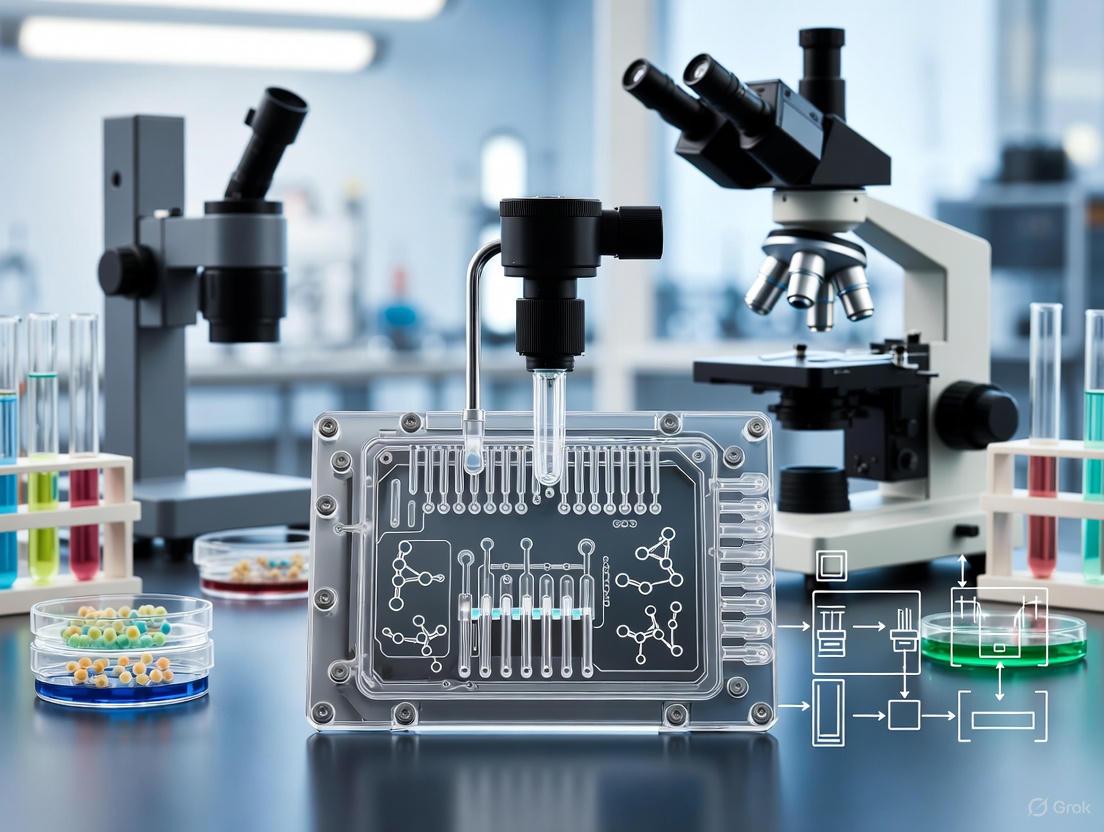
This article explores the convergence of CRISPR-Cas biosensing, lab-on-a-chip (LOC) microfluidics, and smartphone imaging to create powerful, decentralized diagnostic platforms.
CRISPR-on-a-Chip: Smartphone-Integrated Platforms for Next-Generation Point-of-Care Diagnostics
Abstract
This article explores the convergence of CRISPR-Cas biosensing, lab-on-a-chip (LOC) microfluidics, and smartphone imaging to create powerful, decentralized diagnostic platforms. Tailored for researchers, scientists, and drug development professionals, it provides a comprehensive analysis—from the foundational principles of key Cas enzymes (Cas9, Cas12, Cas13) and microfluidic fabrication to the implementation of smartphone-based optical detection. The content details practical methodologies, addresses critical troubleshooting for real-world application, and offers a comparative validation against traditional techniques. The synthesis of these fields promises to transform biomedical research and clinical diagnostics by enabling rapid, ultrasensitive, and equipment-free detection of pathogens, cancer biomarkers, and genetic disorders at the point of need.
The Building Blocks: Unraveling the Core Technologies Behind CRISPR, LOC, and Smartphone Integration
CRISPR-Cas systems, functioning as adaptive immune mechanisms in prokaryotes, have been repurposed into powerful tools for molecular diagnostics. Their programmability, high specificity, and sensitive nucleic acid detection capabilities are now being integrated with microfluidic lab-on-a-chip platforms and smartphone-based imaging, paving the way for revolutionary point-of-care diagnostic solutions [1] [2] [3].
Molecular Mechanisms: From Immunity to Diagnostics
The natural biological function of CRISPR-Cas systems provides the foundation for its diagnostic applications.
The Adaptive Immune System in Prokaryotes
Clustered Regularly Interspaced Short Palindromic Repeats (CRISPR) and CRISPR-associated (Cas) proteins constitute an adaptive immune system in bacteria and archaea that defends against invasive genetic elements like viruses and plasmids [1] [2]. This immune function operates in three distinct stages:
- Adaptation: The system captures short fragments of DNA from invading elements and integrates them as novel "spacers" into the host's CRISPR locus, creating a genetic memory of past infections [1] [4].
- crRNA Biogenesis: The CRISPR locus is transcribed and processed into short CRISPR RNAs (crRNAs), each containing a sequence complementary to a previously encountered invader [1] [4].
- Interference: The crRNAs guide Cas proteins to recognize and cleave complementary nucleic acids from subsequent invasions, thereby neutralizing the threat [1] [4].
A critical component for self versus non-self discrimination in some CRISPR systems is the Protospacer Adjacent Motif (PAM), a short, system-specific DNA sequence adjacent to the target protospacer that must be present for the Cas nuclease to recognize and cleave the foreign DNA [1].
Key Cas Effectors and Their Diagnostic Mechanisms
The core principle of CRISPR diagnostics lies in the programmable nucleic acid targeting by different Cas effectors, each with unique properties. The following table compares the primary Cas proteins used in diagnostics:
Table 1: Comparison of Key Cas Effectors in Diagnostics
| Cas Protein | System Type | Target Nucleic Acid | Cleavage Activity | Primary Diagnostic Use |
|---|---|---|---|---|
| Cas9 [3] | Type II | DNA | cis-cleavage (target-specific) | DNA binding and identification; requires PAM sequence. |
| Cas12 (e.g., Cas12a) [5] [3] | Type V | DNA | cis-cleavage & trans-cleavage of ssDNA | Ultrasensitive DNA detection via collateral cleavage of reporter molecules. |
| Cas13 (e.g., Cas13a) [5] [3] | Type VI | RNA | cis-cleavage & trans-cleavage of ssRNA | Highly sensitive RNA detection (e.g., viral RNAs) via collateral cleavage. |
The trans-cleavage (or collateral cleavage) activity of Cas12 and Cas13 is the cornerstone of many diagnostic applications. Upon recognizing its specific target DNA, the Cas12a complex becomes activated and indiscriminately cleaves surrounding single-stranded DNA (ssDNA) reporters [5] [3]. Similarly, target-specific activation of Cas13a triggers non-specific cleavage of single-stranded RNA (ssRNA) reporters [5] [3]. This collateral cleavage provides a powerful signal amplification mechanism that can be coupled with various readout methods.
Diagram 1: Cas12a trans-cleavage activation pathway. This collateral cleavage of reporter molecules enables highly sensitive detection.
Quantitative Performance of CRISPR Diagnostics
CRISPR-Cas systems have demonstrated exceptional performance in detecting a wide range of pathogens, rivaling and sometimes surpassing traditional methods like PCR in speed and portability.
Table 2: Diagnostic Performance of CRISPR-Cas Systems for Pathogen Detection
| CRISPR System | Target Pathogen | Limit of Detection (LOD) | Sensitivity | Specificity | Reference |
|---|---|---|---|---|---|
| Cas12 (DETECTR) | SARS-CoV-2 [6] | 10 copies/μL | ~95% | ~98% | [6] |
| Cas12 (DETECTR) | HPV [6] | 10 copies/μL | 95% | 98% | [6] |
| Cas12 | Mycobacterium tuberculosis [6] | 3.13 CFU/mL | 88.3% | 94.6% | [6] |
| Cas13 (SHERLOCK) | Zika Virus [6] | Attomolar (aM) | Attomolar | ~100% | [6] |
| Cas13 (SHERLOCK) | Dengue Virus [6] | 1 aM | 95% | 98% | [6] |
Application Notes & Experimental Protocols
The integration of CRISPR diagnostics with microfluidics and smartphone readouts creates a powerful, portable lab-on-a-chip system.
Protocol: CRISPR-Cas12a-Based Visual Detection of SARS-CoV-2 with Smartphone Readout
This protocol details the detection of SARS-CoV-2 nucleic acids using Cas12a's trans-cleavage activity, resulting in a colorimetric change measured with a smartphone [7].
Principle: Target DNA activates Cas12a-crRNA, triggering collateral cleavage of a linker ssDNA that would otherwise crosslink DNA-functionalized gold nanoparticles (AuNPs). Cleavage prevents AuNP aggregation, keeping the solution red. Intact linker DNA causes aggregation, turning the solution purple after centrifugation [7].
Diagram 2: Workflow for visual SARS-CoV-2 biosensor. Target-activated Cas12a cleaves the linker ssDNA, preventing AuNP aggregation and yielding a red supernatant for positive samples.
Materials and Reagent Setup
Table 3: Research Reagent Solutions for Visual SARS-CoV-2 Biosensor
| Reagent / Material | Function / Description | Example Concentration |
|---|---|---|
| LbCas12a Nuclease [7] | The effector enzyme that performs target-specific and collateral cleavage. | 200 nM |
| Target-Specific crRNA [7] | Guide RNA that confers specificity by recognizing the SARS-CoV-2 N gene. | 250 nM |
| Linker ssDNA [7] | A short single-stranded DNA sequence that bridges two AuNP probes; cleaved by activated Cas12a. | 25 nM |
| DNA-Functionalized AuNPs [7] | Gold nanoparticles conjugated with oligonucleotides complementary to the linker ssDNA. Visual signal reporters. | 5.0 nM |
| HEPES Buffer [7] | Reaction buffer providing optimal pH and ionic conditions for Cas12a activity. | 5 mM HEPES, 150 mM NaCl, 10 mM MgCl₂, pH 7.6 |
| Smartphone with Color Picker App [7] | Portable device for quantitative readout of colorimetric results. | N/A |
Step-by-Step Procedure
Sample Preparation and Amplification:
- Extract RNA from patient throat swab samples.
- Perform reverse transcription of RNA into cDNA.
- Amplify the target SARS-CoV-2 N gene sequence using PCR with specific primers [7].
CRISPR-Cas12a Reaction Assembly:
- Prepare the cleavage reaction in a total volume of 50 μL HEPES buffer.
- Add the following components:
- 200 nM LbCas12a
- 250 nM crRNA (designed against the N gene)
- 25 nM linker ssDNA
- 5 μL of the PCR-amplified product (target dsDNA)
- Mix thoroughly by pipetting and incubate at 37°C for 15 minutes to allow for target recognition and trans-cleavage [7].
Gold Nanoparticle Aggregation Test:
- After incubation, transfer the entire 50 μL reaction to a new tube.
- Add 25 μL of AuNPs-DNA1 and 25 μL of AuNPs-DNA2 (both at 5.0 nM).
- Mix well and incubate at 37°C for 5 minutes to allow for hybridization [7].
Signal Development and Readout:
- Centrifuge the mixture at 3500 rpm for 1 minute to pellet any aggregated AuNPs.
- Observe the color of the supernatant:
- Positive Result: The supernatant remains red, indicating that the linker ssDNA was cleaved, preventing aggregation.
- Negative Result: The supernatant is colorless; the intact linker ssDNA causes AuNP aggregation and precipitation [7].
- Capture an image of the supernatant tubes under uniform daylight or a standard lamp.
- Use a smartphone application (e.g., Color Picker) to analyze the Lightness value in the HSL color model for quantitative analysis [7].
Protocol: Qualitative and Quantitative PCR Detection of the Cas12a (Cpf1) Gene
This protocol is essential for the regulatory screening and quality control of gene-edited products, detecting the presence of the Cas12a transgene itself [8].
Principle: Conventional PCR and quantitative PCR (qPCR) are used to detect a specific sequence of the Cas12a (Cpf1) gene in plant genomic DNA, allowing for the identification of gene-edited crops [8].
Materials and Reagent Setup
- Samples: Genomic DNA extracted from gene-edited cotton or other crops, and non-edited control plants [8].
- Primers and Probes: Pre-designed and screened primers and TaqMan probes specific to the Cpf1 gene sequence [8].
- PCR Master Mix: Contains Taq polymerase, dNTPs, and buffer [8].
- qPCR Instrument: Equipment capable of real-time fluorescence detection.
Step-by-Step Procedure
DNA Extraction:
- Weigh 100 mg of plant leaf tissue powder.
- Extract genomic DNA using a commercial plant DNA extraction kit according to the manufacturer's instructions.
- Quantify DNA concentration and purity using a spectrophotometer [8].
Qualitative PCR Setup:
- Prepare a 25 μL reaction system containing:
- 10× PCR Buffer (Mg²⁺ Plus): 2.5 μL
- dNTP Mixture: 2 μL
- Forward and Reverse Primers (10 μmol/L each): 0.5 μL each
- Taq DNA Polymerase: 0.25 μL
- Template DNA: 2 μL (≈ 50 ng)
- Nuclease-free water: to 25 μL
- Perform PCR amplification with the following cycling conditions:
- Initial Denaturation: 95°C for 5 min
- 35 Cycles of:
- Denaturation: 95°C for 30 s
- Annealing: 60°C for 30 s (temperature may require optimization)
- Extension: 72°C for 30 s
- Final Extension: 72°C for 5 min [8].
- Analyze the PCR products by agarose gel electrophoresis to confirm the presence/absence of the Cpf1 amplicon.
- Prepare a 25 μL reaction system containing:
Quantitative PCR (qPCR) Setup:
- Prepare a 20 μL reaction system using a commercial probe master mix.
- Add template DNA and the specific Cpf1 primers and probe.
- Run the qPCR with standard cycling conditions (e.g., 95°C for 10 min, followed by 40 cycles of 95°C for 15 sec and 60°C for 1 min) [8].
- Limit of Detection: The qPCR method can detect down to 14 copies of the Cpf1 gene, providing a highly sensitive quantitative assessment [8].
The Integrated Future: CRISPR, Microfluidics, and Smartphone Imaging
The true potential for point-of-care diagnostics is realized by converging CRISPR biochemistry with engineering platforms.
- Microfluidic Integration: Microfluidic devices automate and miniaturize complex CRISPR workflows, integrating steps like cell lysis, nucleic acid amplification, and the CRISPR reaction into a single, disposable chip. This enables high-throughput screening, reduces reagent consumption, and improves reproducibility [4]. Centrifugal microfluidic platforms have been developed specifically for quantifying Cas9 protein levels and nuclease activity, which is crucial for safety and quality control in therapeutic applications [4].
- Smartphone-Based Biosensing: Smartphones serve as portable, powerful analytical instruments. They can quantitatively analyze signals from fluorescence, colorimetry (as in the AuNP protocol) [7], or chemiluminescence [9] using their built-in cameras and dedicated apps. This allows for on-site result interpretation and data sharing, making professional-grade diagnostics accessible in remote or resource-limited settings [7] [9].
- Artificial Intelligence (AI): AI and machine learning algorithms are being leveraged to enhance CRISPR diagnostics by optimizing guide RNA design, predicting potential off-target effects, and automating the analysis of complex diagnostic data, thereby improving accuracy and scalability [5] [6].
Diagram 3: Integrated LOC system workflow. This system automates the entire diagnostic process from sample to result, with a smartphone providing the final readout.
Clustered Regularly Interspaced Short Palindromic Repeats (CRISPR) and their associated (Cas) proteins have emerged as a revolutionary tool in molecular diagnostics, moving beyond their original genome-editing applications. These systems offer unprecedented specificity, programmability, and compatibility with various detection platforms, making them ideal for developing next-generation diagnostic tools [10]. The core functionality of these systems in diagnostics hinges on two distinct types of enzymatic cleavage activities: cis-cleavage (target-specific) and trans-cleavage (non-specific collateral). Cis-cleavage refers to the precise cutting of a target nucleic acid sequence at a location specified by the guide RNA. In contrast, trans-cleavage describes the rampant, non-specific cleavage of surrounding nucleic acids that occurs after a Cas protein binds to its specific target [5] [11]. This application note delineates the characteristics of key Cas effectors—Cas9, Cas12, and Cas13—focusing on their cleavage mechanisms and providing detailed protocols for their use in diagnostics, particularly within the integrated context of lab-on-a-chip (LOC) platforms and smartphone-based imaging.
Classification and Core Mechanisms of Cas Proteins
CRISPR-Cas systems are broadly categorized into two classes. Class 1 (including types I, III, and IV) utilize multi-protein complexes for target interference, while Class 2 (including types II, V, and VI) employ single, large Cas effectors, making them simpler and more adaptable for diagnostic applications [10] [12]. This note focuses on three primary Class 2 effectors:
- Cas9 (Type II): Functions with a guide RNA (gRNA or sgRNA) and requires a protospacer adjacent motif (PAM) sequence (e.g., 5'-NGG-3' for Streptococcus pyogenes Cas9) adjacent to the target DNA. It is primarily known for its cis-cleavage activity, creating double-stranded breaks in target DNA [10] [13].
- Cas12 (Type V): Also targets DNA and requires a PAM (often T-rich). Upon recognition and cis-cleavage of its target DNA, it exhibits nonspecific trans-cleavage activity, degrading single-stranded DNA (ssDNA) molecules in the vicinity [5] [14].
- Cas13 (Type VI): Unique for targeting RNA and does not require a canonical PAM but may have protospacer flanking site (PFS) preferences. Similar to Cas12, upon binding and cis-cleavage of its target RNA, it activates potent trans-cleavage of surrounding single-stranded RNA (ssRNA) [5] [11].
The following table provides a quantitative comparison of these core effectors.
Table 1: Comparative Analysis of Key Cas Effectors for Diagnostics
| Feature | Cas9 | Cas12 | Cas13 |
|---|---|---|---|
| Class / Type | Class 2, Type II | Class 2, Type V | Class 2, Type VI |
| Target Nucleic Acid | dsDNA | dsDNA, ssDNA | ssRNA |
| Cleavage Activity | cis- (Primary) | cis- & trans- (ssDNA) | cis- & trans- (ssRNA) |
| PAM / PFS Requirement | Yes (PAM, e.g., 5'-NGG-3') | Yes (PAM, e.g., 5'-TTTV-3') | Less Stringent (PFS) |
| Key Diagnostic Signal | Target strand displacement or PAM generation [15] | Collateral ssDNA degradation | Collateral ssRNA degradation |
| Primary Diagnostic Platforms | CANARY-like detection [11] | DETECTR, HOLMES [5] [14] | SHERLOCK [5] [11] |
Visualizing Core Cleavage Mechanisms
The diagram below illustrates the fundamental difference between the cis- and trans-cleavage mechanisms utilized by these Cas effectors in diagnostic assays.
Experimental Protocols for Diagnostic Assays
This section provides detailed methodologies for setting up diagnostic assays using Cas12 and Cas13, whose trans-cleavage activity is the cornerstone of platforms like DETECTR and SHERLOCK.
Protocol 1: Cas12-based DNA Detection (DETECTR)
Principle: The Cas12a-crRNA complex binds to a target DNA sequence, triggering its collateral cleavage activity. This leads to the degradation of a fluorescently quenched ssDNA reporter, generating a fluorescent signal [14] [16].
Workflow:
Sample Preparation and Nucleic Acid Extraction:
- Extract DNA from the sample (e.g., swabs, blood, tissue) using a commercial kit.
- If the target is at low concentration, include an isothermal pre-amplification step such as Recombinase Polymerase Amplification (RPA) or Loop-Mediated Isothermal Amplification (LAMP) using specific primers for the target gene [5].
CRISPR-Cas12a Reaction Setup:
- Prepare the reaction mix on ice. A typical 25 µL reaction may contain:
- 1x NEBuffer 2.1 or a suitable commercial CRISPR reaction buffer.
- 50-100 nM of purified Cas12a protein (e.g., LbaCas12a).
- 50-100 nM of target-specific crRNA.
- 500 nM of fluorescent ssDNA reporter (e.g., 5'-6-FAM-TTATT-IBFQ-3').
- 1-5 µL of the extracted or pre-amplified DNA template.
- Nuclease-free water to volume.
- Mix gently by pipetting and centrifuge briefly.
- Prepare the reaction mix on ice. A typical 25 µL reaction may contain:
Incubation and Signal Detection:
- Transfer the reaction tube to a pre-heated thermal cycler or dry bath at 37°C.
- Incubate for 15-60 minutes.
- Measure fluorescence in real-time using a plate reader (Ex: 485 nm, Em: 525 nm) or use an endpoint measurement. For LOC integration, the reaction can be run in a microfluidic chamber with an integrated LED and photodetector [16].
Protocol 2: Cas13-based RNA Detection (SHERLOCK)
Principle: The Cas13-crRNA complex binds to a target RNA sequence, activating its collateral cleavage of ssRNA reporters, leading to a fluorescent signal [11] [14].
Workflow:
Sample Preparation and Target Amplification:
- Extract total RNA from the sample.
- Perform a reverse transcription-recombinase polymerase amplification (RT-RPA) or reverse transcription-LAMP (RT-LAMP) to amplify the target RNA sequence. This step simultaneously converts RNA to DNA and amplifies it, providing a DNA template for subsequent T7 transcription.
T7 Transcription & CRISPR-Cas13 Reaction:
- The amplified DNA product should be flanked by a T7 promoter sequence. Include T7 RNA polymerase in the reaction mix to transcribe the DNA amplicons into RNA.
- The CRISPR-Cas13 reaction mix typically includes:
- 1x Cas13 reaction buffer.
- 50-100 nM of LwaCas13a or PsmCas13b protein.
- 50-100 nM of target-specific crRNA.
- 500 nM of fluorescent ssRNA reporter (e.g., 5'-6-FAM-UUUUUU-IBFQ-3').
- The transcription reaction product.
- Incubate at 37°C for 15-60 minutes and monitor fluorescence as described in Protocol 1.
Workflow for Integrated LOC and Smartphone Detection
The following diagram outlines the complete workflow for a sample-to-answer diagnostic test integrating CRISPR chemistry with a lab-on-a-chip and smartphone detection.
Integration with Lab-on-a-Chip and Smartphone Imaging
The true potential of CRISPR diagnostics for point-of-care testing is realized through integration with LOC systems and smartphone-based detection.
Lab-on-a-Chip Platforms: LOC devices miniaturize and automate complex biochemical operations like nucleic acid extraction, amplification, and the CRISPR reaction onto a single chip [17]. Microfluidic chips fabricated from polymers like PDMS (polydimethylsiloxane) or PMMA (polymethyl methacrylate) are ideal. They enable precise fluid control, reduce reagent volumes (lowering cost), and decrease analysis time while increasing sensitivity [17]. For instance, a PDMS chip integrated with a CRISPR/Cas13a assay has been demonstrated for SARS-CoV-2 RNA detection [17].
Smartphone as Detection Hub: Modern smartphones are a powerful detection platform due to their high-resolution cameras, powerful processors, and global connectivity [16]. For diagnostic applications:
- The smartphone camera, often coupled with a simple optical attachment, can capture fluorescence or colorimetric changes from the LOC chip.
- A custom-developed mobile application can process the captured image or video to quantify the signal intensity, perform background subtraction, and interpret the result (positive/negative) [16].
- The result can be timestamped, geotagged, and transmitted to healthcare providers or central databases, facilitating epidemiological surveillance.
This convergence of CRISPR diagnostics, microfluidics, and smartphone technology creates a portable, user-friendly, and highly accessible diagnostic tool suitable for field use, home testing, and resource-limited settings.
The Scientist's Toolkit: Essential Reagents and Materials
Table 2: Key Research Reagent Solutions for CRISPR Diagnostics
| Reagent / Material | Function | Example Notes & Considerations |
|---|---|---|
| Recombinant Cas Proteins | Core effector enzyme for target recognition and cleavage. | Available from commercial suppliers (e.g., NEB, IDT). Choose high-purity, nuclease-free Cas9, Cas12a/b, or Cas13a/b based on the target (DNA/RNA). |
| crRNA / gRNA | Programmable RNA guide that confers target specificity. | Can be synthesized chemically (for short crRNAs) or transcribed in vitro. Design is critical for specificity and efficiency; use online tools and consider seed regions [15]. |
| Fluorescent Reporters | Signal generation upon trans-cleavage. | For Cas12: Quenched ssDNA probes (e.g., FAM-TTATT-BHQ1). For Cas13: Quenched ssRNA probes (e.g., FAM-UUUUUU-BHQ1). |
| Isothermal Amplification Kits | Pre-amplification of target to attomolar sensitivity. | RPA (TwistAmp) or LAMP kits are commonly used. Essential for detecting low-abundance targets in clinical samples [11]. |
| Microfluidic Chips | Miniaturized platform for integrating assay steps. | Custom-fabricated from PDMS, PMMA, or glass. Can include pre-loaded reagents in lyophilized form for long-term storage [17]. |
| Smartphone with App | Portable detection and data analysis hub. | Requires a dedicated app for signal quantification. Can be paired with a simple 3D-printed accessory to house the chip and ensure consistent imaging conditions [16]. |
Lab-on-a-Chip (LOC) devices are miniaturized platforms that integrate one or multiple laboratory functions onto a single chip, typically only millimeters to a few square centimeters in size, to achieve automation and high-throughput screening [18]. These systems can handle extremely small fluid volumes down to less than picoliters [18]. The core technology enabling LOCs is microfluidics, the science and engineering of manipulating small volumes of fluids (typically nanoliters to picoliters) within micrometre-scale channels [17] [19]. When a LOC device integrates the complete sequence of laboratory processes to perform chemical analysis, it is often referred to as a micro total analysis system (µTAS) [17] [18].
The fundamental principle of microfluidics is that fluid behavior differs significantly at the microscale compared to macroscale environments. At these tiny dimensions, fluid flow is predominantly laminar, meaning fluids flow in parallel layers without turbulence, allowing highly predictable behavior and precise control [19]. This laminar flow regime, characterized by a low Reynolds number, enables sensitive measurements and controlled reactions that are ideal for biological and chemical analysis [19].
Historical Development and Materials
Evolution of LOC Technology
The origins of microfluidics are linked to the development of microelectronics in the 1950s, when researchers adapted photolithography to fabricate micro-sized transistors [17]. The first functional LOC was created in 1979 at Stanford University—a miniaturized gas chromatography system [17] [18]. However, significant LOC research began in the late 1980s with the development of microfluidics and soft-lithography techniques for producing polymer chips [17]. Throughout the 1990s, researchers focused on miniaturizing biochemical operations and developing complete micro total analysis systems (µTAS), integrating all steps from sample collection to final analysis on a single chip [17].
Table 1: Evolution of Lab-on-a-Chip Technology
| Time Period | Key Development | Impact |
|---|---|---|
| 1950s | Adaptation of photolithography from microelectronics | Enabled fabrication of micro-sized structures |
| 1979 | First LOC for gas chromatography (Stanford University) | Demonstrated feasibility of miniaturized analytical systems |
| Late 1980s-1990s | Development of soft-lithography and polymer chips | Made LOC fabrication more accessible; expanded applications to biochemistry |
| 1990s | Concept of Micro Total Analysis Systems (µTAS) | Vision of complete integration from sample to answer |
| 2000s-Present | Genomics applications, point-of-care diagnostics | Commercialization and specialization for specific applications |
LOC Materials and Fabrication
LOC devices have been fabricated from various materials, each with distinct advantages and limitations for specific applications:
Silicon: The original LOC material, silicon offers resistance to organic solvents, simplicity in metal deposition, and high thermal conductivity. However, it is expensive, not optically transparent (except for IR), and requires clean room fabrication [17].
Glass: Glass is optically transparent, chemically inert, biologically compatible, and exhibits low non-specific adsorption. Like silicon, it typically requires clean room facilities for processing [17].
PDMS (Polydimethylsiloxane): This transparent, flexible elastomer is cheap and easy to use for prototyping via casting. It allows integration of microvalves and is gas-permeable for cell culture. Limitations include aging, absorption of hydrophobic molecules, and incompatibility with high-throughput industrial fabrication [17].
Thermoplastics (PMMA, PS): Transparent and chemically inert, thermoplastics are compatible with lithography and good candidates for industrial production through hot embossing or injection molding [17].
Paper: Paper-based LOCs are emerging as ultra-low-cost platforms ideal for diagnostics in resource-limited settings, leveraging capillary action for fluid transport [17].
Printed Circuit Boards (PCBs): Lab-on-PCB devices benefit from commercially available substrates with integrated electronics, sensors, and actuators, offering potential for low-cost disposable devices [18].
Fundamental Advantages and Challenges
Advantages of Miniaturization
LOC technology offers several compelling advantages over conventional laboratory systems:
- Low fluid volumes: Reduced consumption of expensive reagents and minimal waste generation [18]
- Faster analysis: Short diffusion distances and small heat capacities enable rapid heating/cooling and quicker responses [18]
- Enhanced process control: Faster system response improves control over experimental conditions [18]
- Compactness and integration: Multiple functions can be integrated into a small footprint [18]
- Massive parallelization: Compact design enables high-throughput analysis [18]
- Lower fabrication costs: Economical mass production enables disposable chips [18]
- Safety: Smaller fluid volumes and stored energies enhance safety when working with hazardous materials [18]
Technical Challenges and Limitations
Despite these advantages, LOC development faces several challenges:
- Complex fabrication: Micro-manufacturing often requires specialized equipment and expertise [18]
- Fluidic control complexity: Precise control of multiple pumps and connectors can be difficult [18]
- Surface-dominated effects: Capillary forces, surface roughness, and chemical interactions become more significant at small scales [18]
- Detection sensitivity: Some detection principles may not scale down favorably, leading to signal-to-noise challenges [18]
- Standardization issues: Many LOC applications remain proof-of-concept without standardized validation [20]
Integration with CRISPR-Cas Systems
The integration of CRISPR-Cas systems with LOC technology represents a cutting-edge advancement in molecular diagnostics. CRISPR (Clustered Regularly Interspaced Short Palindromic Repeats) is a naturally occurring bacterial defense mechanism that has been adapted for precise gene editing [4]. The CRISPR-Cas system functions through three main stages: adaptation (acquiring foreign DNA spacers), expression (processing CRISPR RNAs), and interference (targeting and degrading invading genetic material) [4].
CRISPR-Cas Mechanisms
The most widely used CRISPR system employs the Cas9 enzyme, which acts as "molecular scissors" to cut DNA at specific locations guided by RNA [4]. When guided to a target DNA sequence, Cas9 induces a double-strand break that can be repaired by the cell's natural repair mechanisms [4]. Key requirements for Cas9 activity include:
- Guide RNA: A fused molecule of crRNA and tracrRNA that directs Cas9 to the target sequence [4]
- PAM Sequence: A proto-spacer-adjacent motif (typically NGG) that initiates the recognition process [4]
For diagnostic applications, Cas13a has been particularly valuable as it targets RNA rather than DNA and exhibits collateral cleavage activity that can be harnessed for sensitive detection [17] [21].
Recent Advances in CRISPR-LOC Integration
Recent research has demonstrated powerful synergies between CRISPR and LOC technologies:
Digital CRISPR Detection: A centrifugal digital microfluidic platform integrated with CRISPR-Cas9/Cas13a enabled detection of MRSA DNA (0.7 copies/μL) and H1N1 RNA (1.2 copies/μL) within 20 minutes without nucleic acid preamplification [21].
CRISPR-Cas13a Mobile Detection: Integration of CRISPR-Cas13a into a PDMS chip with mobile phone microscopy detected SARS-CoV-2 RNA at concentrations as low as 100 copies per μL in 30 minutes [17].
Electrochemical CRISPR Detection: Electronic microfluidic devices combined with CRISPR/Cas benefit from specific cleavage and electrochemical signal outputs for ultrasensitive detection of infectious diseases [17].
Smartphone Imaging Integration
The combination of LOC devices with smartphone-based imaging creates powerful point-of-care diagnostic systems. An ideal mobile health (mHealth) platform includes three core components: a microfluidic chip for sample processing, a mobile device for sensing, and machine intelligence for data analysis [22].
Imaging Modalities for LOC Detection
Smartphone-based LOC imaging primarily utilizes two modalities:
Bright Field Imaging: Includes both lens-free and lensed approaches, suitable for detecting colorimetric changes, cells, and parasites [22].
Fluorescence Imaging: Offers higher sensitivity and specificity through fluorescent labeling, though requires additional optical components [22].
Table 2: Smartphone Imaging Modalities for LOC Detection
| Imaging Modality | Advantages | Limitations | Best For |
|---|---|---|---|
| Lens-Based Bright Field | Good resolution, familiar operation | Limited field of view, requires precise alignment | Cell counting, colorimetric assays |
| Lens-Free Bright Field | Large field of view, simple setup | Lower resolution, computational reconstruction required | Large parasites, agglutination assays |
| Fluorescence Imaging | High sensitivity, specific labeling | Requires excitation sources, emission filters | Low abundance biomarkers, multiplex detection |
Experimental Protocol: Smartphone-based CRISPR-LOC Detection
Objective: Detect nucleic acid targets using CRISPR-Cas system integrated with smartphone-based LOC.
Materials:
- Microfluidic chip (PDMS or thermoplastic)
- Smartphone with camera and dedicated app
- CRISPR reagents (Cas enzyme, guide RNA, reporters)
- Sample containing target nucleic acid
- 3D-printed smartphone adapter (optional)
- External lens (if needed for magnification)
- LED light source (for fluorescence imaging)
Procedure:
Chip Preparation:
- Fabricate microfluidic channels using soft lithography or hot embossing
- Functionalize detection chambers with capture probes if required
- Validate fluidic control (passive capillary action or active pumping)
Reagent Preparation:
- Prepare CRISPR-Cas enzyme (Cas9, Cas12, or Cas13) at optimal concentration
- Design and synthesize guide RNA complementary to target sequence
- Incorporate fluorescent reporter system (e.g., FAM-quencher probes)
Sample Loading:
- Introduce sample (≤10 µL) into chip inlet port
- Add CRISPR reagents to appropriate chambers
- Seal ports to prevent evaporation during incubation
On-Chip Reaction:
- Allow sample and reagents to mix via diffusion or controlled flow
- Incubate at 37°C for 15-30 minutes using integrated heaters or ambient temperature
- CRISPR activation and collateral cleavage of reporters occurs if target is present
Smartphone Detection:
- Mount chip in smartphone imaging adapter
- Illuminate with appropriate light source (LED for fluorescence)
- Capture image using smartphone camera
- Process image using dedicated app for signal quantification
Data Analysis:
- Convert pixel intensity to concentration values using calibration curve
- Apply machine learning algorithms for pattern recognition if needed
- Report results with confidence metrics
Applications in Diagnostic and Drug Development
Diagnostic Applications
LOC technology has demonstrated particular value in several diagnostic domains:
Infectious Disease Detection: Rapid identification of pathogens including SARS-CoV-2, HIV, and malaria using minimal sample volumes [23] [22]
Cancer Diagnostics: Early detection of cancer biomarkers through microfluidic ELISA and CRISPR-based approaches in liquid biopsies [24] [25]
Environmental Monitoring: Detection of contaminants like BDE-47 (a polybrominated diphenyl ether) in environmental samples [23]
Global Health: Point-of-care diagnostics for resource-limited settings, including paper-based LOCs for ultra-low-cost testing [17] [18]
Drug Discovery and Development
LOC systems are revolutionizing pharmaceutical research through:
Organ-on-a-Chip Models: Microphysiological systems that mimic human organs for more predictive drug testing [20] [25]
High-Throughput Screening: Miniaturized platforms for rapid screening of compound libraries with significant reagent reduction [20] [25]
Toxicity Testing: Advanced models for hepatotoxicity assessment and cardiotoxicity screening [25]
Personalized Medicine: Patient-specific tissue models for tailored therapeutic approaches [25]
Essential Research Reagent Solutions
Successful implementation of LOC platforms requires careful selection of reagents and materials optimized for microfluidic environments.
Table 3: Essential Research Reagents for CRISPR-LOC Development
| Reagent Category | Specific Examples | Function in LOC System | Considerations for Miniaturization |
|---|---|---|---|
| CRISPR Enzymes | Cas9, Cas12, Cas13 | Target recognition and signal amplification | Concentration optimization for small volumes |
| Guide RNAs | Target-specific crRNA | Specificity for diagnostic target | Stability in microfluidic environment |
| Reporters | Fluorescent probes, electrochemical reporters | Signal generation | Compatibility with detection modality |
| Surface Coatings | BSA, PEG, pluronics | Prevent non-specific adsorption | Surface-to-volume ratio effects |
| Polymer Substrates | PDMS, PMMA, PS | Chip fabrication | Optical properties, biocompatibility |
| Cell Culture Media | Specialized formulations | Organ-on-chip models | Metabolite exchange in microenvironments |
Future Perspectives
The convergence of LOC technology with CRISPR systems and smartphone-based detection represents a paradigm shift in diagnostic testing and biological research. Future developments will likely focus on:
Increased Integration: Combining sample preparation, amplification (if needed), and detection in fully automated systems [17] [21]
Artificial Intelligence: Enhanced image analysis and diagnostic decision-making through machine learning algorithms [22] [19]
Multiplexing Capabilities: Simultaneous detection of multiple targets from single samples through advanced microfluidic design [24] [21]
Wearable Integration: Continuous monitoring platforms through skin-worn microfluidic devices [19]
Sustainable Materials: Development of biodegradable polymers and reduced waste generation [19]
The synergistic combination of microfluidic LOCs with CRISPR technology and mobile health platforms is poised to dramatically improve diagnostic accessibility, speed, and accuracy, ultimately transforming healthcare delivery and biomedical research.
The convergence of smartphone technology, microfluidics, and CRISPR-based biosensing is revolutionizing point-of-need molecular diagnostics. Smartphones integrate powerful processors, high-resolution cameras, and pervasive connectivity into a globally accessible platform, enabling the transformation of specialized laboratory analyses into portable, user-friendly tools [16]. When coupled with the precise nucleic acid targeting capabilities of CRISPR-Cas systems, these smartphone-based analytical devices provide a powerful solution for rapid, sensitive, and quantitative detection of pathogens in clinical, agricultural, and food safety settings [5] [26].
Lab-on-a-chip (LoC) technology, which miniaturizes and integrates multiple laboratory functions onto a single chip, processes small fluid volumes, thereby reducing reagent costs and analysis times while enhancing operational efficiency and portability [27]. The integration of smartphones with these microfluidic systems and CRISPR diagnostics creates a synergistic platform that minimizes reliance on bulky instrumentation and specialized personnel, making sophisticated molecular analysis feasible outside traditional laboratories [16] [28]. This technical note details the application of this integrated platform, providing validated protocols and analytical performance data to guide researchers in developing and implementing these innovative detection systems.
Experimental Protocols
This section provides detailed methodologies for implementing smartphone-based CRISPR detection systems, derived from published research.
Protocol 1: CRISPR-Cas12a-mediated Detection ofSalmonella typhimuriumwith Multi-Indicator Colorimetry
This protocol describes a sensitive detection method for S. typhimurium utilizing Cas12a's collateral activity and a smartphone for colorimetric signal readout [26] [29].
- 1. Sample Preparation and DNA Extraction
- Culture S. typhimurium following standard microbiological techniques.
- Extract genomic DNA from the bacterial culture or spiked food samples (e.g., chicken) using a commercial kit or boiling method. For field use, a simplified lysis buffer can be employed.
- 2. Nucleic Acid Amplification
- Perform isothermal amplification using Recombinase Polymerase Amplification (RPA) or Recombinase-Aided Amplification (RAA).
- Reaction Setup: Combine 25-50 ng of extracted DNA with RPA/recombinase enzyme, primers (designed to target a specific S. typhimurium gene sequence), and rehydration buffer in a total volume of 50 µL.
- Incubation: Incubate the reaction tube at 37-42 °C for 15-25 minutes using a portable, battery-powered heat block.
- 3. CRISPR-Cas12a Detection
- Cas12a/crRNA Complex Formation: Pre-incubate 10 µL of 1 µM Cas12a enzyme with 10 µL of 1 µM crRNA (designed to be complementary to the amplified target) in 1× NEBuffer at 25 °C for 10 minutes.
- Collateral Cleavage Reaction: Add the entire RPA amplicon (2.5 µL) to the pre-formed Cas12a/crRNA complex. Introduce 1 µL of 10 µM single-stranded DNA (ssDNA) reporter molecules and 0.5 µL of urease to the mixture.
- Incubation: Incubate at 37 °C for 20-30 minutes to allow for target-activated collateral cleavage and the subsequent enzymatic reaction.
- 4. Smartphone-based Signal Readout
- pH Change Visualization: Following the CRISPR reaction, place 5 µL of the solution onto a multi-indicator pH millidisc (composed of cresol red, bromocresol blue, and bromothymol blue). The urease enzyme catalyzes urea hydrolysis, producing a pH change that induces a color shift on the millidisc.
- Image Acquisition and Analysis: Capture an image of the millidisc using a smartphone camera under consistent lighting conditions. Analyze the image using a custom-developed smartphone application (e.g., the "DeepFood" mini-program on the WeChat platform). The app quantifies the RGB (Red, Green, Blue) values and calculates an enhanced signal-to-noise ratio (Senh) for improved sensitivity.
Protocol 2: Amplification-free Detection of SARS-CoV-2 with CRISPR-Cas13a and Mobile Phone Microscopy
This protocol outlines a direct RNA detection method for SARS-CoV-2, bypassing the need for nucleic acid amplification, and uses a smartphone-based fluorescence microscope [30].
- 1. Sample Collection and Preparation
- Collect a nasal swab sample and place it in viral transport media.
- Perform RNA extraction using a simple lysis buffer or a commercial quick-extraction protocol. The extracted RNA is used directly without a reverse transcription or amplification step.
- 2. One-step CRISPR-Cas13a Reaction
- Reaction Setup: In a single tube, mix the following components:
- Extracted RNA sample.
- Cas13a enzyme.
- Guide RNA (crRNA) specific to a conserved region of the SARS-CoV-2 RNA genome.
- A quenched fluorescent reporter molecule (e.g., an RNA oligonucleotide coupled to a fluorophore and a quencher).
- Appropriate reaction buffer.
- Incubation: Incubate the reaction mixture at 37 °C. If the target SARS-CoV-2 RNA is present, Cas13a becomes activated and cleaves the reporter molecule, separating the fluorophore from the quencher and generating a fluorescent signal.
- Reaction Setup: In a single tube, mix the following components:
- 3. Smartphone Fluorescence Detection
- Device Setup: Place the reaction tube into a custom-built, smartphone-attachable device. This device contains:
- A laser or LED light source (e.g., blue or green) to excite the fluorophore.
- A set of lenses to focus the excitation light and collect the emitted fluorescence.
- An emission filter to block the excitation light and allow only the fluorescence signal to pass through to the smartphone camera.
- Image Acquisition: The smartphone camera, acting as a microscope, captures the fluorescent signal from the reaction tube. The exposure time and focus are controlled via a custom application.
- Data Processing: The smartphone app analyzes the captured image to quantify the fluorescence intensity. This quantitative readout correlates with the viral load in the original sample, providing a result in under 30 minutes.
- Device Setup: Place the reaction tube into a custom-built, smartphone-attachable device. This device contains:
Research Reagent Solutions and Materials
The following table details the key reagents and materials essential for developing smartphone-integrated CRISPR diagnostics.
Table 1: Essential Research Reagents and Materials for Smartphone-CRISPR Platforms
| Item Name | Function/Description | Application Example |
|---|---|---|
| Cas12a (Cpf1) Nuclease | CRISPR-associated enzyme; upon binding to target dsDNA via crRNA, exhibits non-specific trans-cleavage activity against ssDNA reporters [5]. | Detection of DNA targets (e.g., Salmonella [26], plant pathogens [31]). |
| Cas13a Nuclease | CRISPR-associated enzyme; upon binding to target RNA via crRNA, exhibits collateral trans-cleavage activity against ssRNA reporters [5]. | Direct detection of RNA viruses (e.g., SARS-CoV-2 [30]). |
| Guide RNA (crRNA) | A short, synthetic RNA that programs the Cas protein by binding to a specific target nucleic acid sequence, ensuring high detection specificity [5]. | Species-specific pathogen identification. |
| Isothermal Amplification Kits (RPA/RAA) | Enzyme mixes for isothermal nucleic acid amplification (at 37-42°C), eliminating the need for thermal cyclers and enabling field-use [26] [31]. | Pre-amplification of target DNA for enhanced sensitivity. |
| Fluorescent Reporter Probes | ssDNA or ssRNA oligonucleotides labeled with a fluorophore and quencher; cleavage by activated Cas12/Cas13 produces a fluorescent signal [30]. | Signal generation in fluorescence-based detection systems. |
| Colorimetric pH Indicators | A mixture of pH-sensitive dyes (e.g., cresol red, bromocresol blue) that change color in response to pH shifts induced by enzymatic reactions (e.g., urease) [26]. | Visual signal readout, often quantified by smartphone cameras. |
| Polydimethylsiloxane (PDMS) | A biocompatible, transparent, and gas-permeable polymer widely used for fabricating microfluidic Lab-on-a-Chip devices via soft lithography [27] [28]. | Manufacturing of microfluidic chips for sample preparation and analysis. |
Analytical Performance Data
The quantitative performance of smartphone-based CRISPR diagnostics from recent studies is summarized below.
Table 2: Analytical Performance of Smartphone-CRISPR Detection Systems
| Target Analyte | CRISPR System | Readout Method | Limit of Detection (LoD) | Time-to-Result | Reference |
|---|---|---|---|---|---|
| Salmonella typhimurium | Cas12a | Smartphone colorimetry (multi-indicator disc) | 7.26 CFU/mL (in buffer); 1.41 × 10² CFU/mL (in chicken) | ~60-90 min (end-to-end) | [26] [29] |
| SARS-CoV-2 Virus | Cas13a | Smartphone fluorescence microscopy | Not explicitly stated; capable of measuring viral load. | <5 min (high viral load); <30 min (all samples) | [30] |
| Late Blight Pathogen (P. infestans) | Cas12a | Smartphone fluorescence | ~2 pg/µL genomic DNA | ~60-90 min (end-to-end) | [31] |
| General Pathogen Model | Cas12a/Cas13 | Smartphone colorimetry (RAVI platform) | Comparable to benchtop CRISPR methods | 30-45 min (chemistry only) | [31] |
Workflow and Signaling Pathways
The following diagrams illustrate the core molecular mechanism and the integrated experimental workflow for smartphone-CRISPR diagnostics.
CRISPR-Cas12a Nucleic Acid Detection Mechanism
Diagram 1: CRISPR-Cas12a Nucleic Acid Detection Mechanism. This diagram illustrates the core molecular mechanism. The binding of the Cas12a-guide RNA complex to its target DNA activates its non-specific trans-cleavage activity, leading to the degradation of reporter molecules and subsequent signal generation detectable by a smartphone.
Integrated Smartphone-CRISPR Diagnostic Workflow
Diagram 2: Integrated Smartphone-CRISPR Diagnostic Workflow. This diagram outlines the end-to-end process from sample collection to result analysis, highlighting the integration of biochemical reactions with smartphone-based data acquisition and processing.
CRISPR-based diagnostics offer a paradigm shift in molecular detection, yet their translation from laboratory settings to real-world point-of-care (POC) applications faces significant technical and operational challenges. This application note explores the strategic integration of Lab-on-a-Chip (LOC) microsystems and smartphone-based imaging as a synergistic platform that effectively overcomes the limitations of conventional CRISPR diagnostics. We detail how this convergence addresses requirements for portability, cost-effectiveness, and operational simplicity while maintaining the high sensitivity and specificity of CRISPR-Cas systems. Through structured protocols, quantitative comparisons, and workflow visualizations, we provide researchers with a framework for developing next-generation diagnostic platforms suitable for resource-limited settings, clinical environments, and field deployment.
Clustered Regularly Interspaced Short Palindromic Repeats (CRISPR) and CRISPR-associated (Cas) systems have emerged as powerful tools for molecular diagnostics beyond their genome-editing applications [5]. The core innovation lies in the programmable nature of Cas enzymes (e.g., Cas12, Cas13, Cas9) that, when guided by specific CRISPR RNAs (crRNAs), can recognize and cleave target nucleic acids with exceptional specificity [3]. For diagnostic purposes, the trans-cleavage activity of certain Cas proteins (such as Cas12 and Cas13) is particularly valuable, as it enables collateral degradation of reporter molecules, generating amplified, detectable signals upon target recognition [32] [33].
Despite their transformative potential, conventional CRISPR diagnostics face several implementation challenges:
- Equipment dependency: Traditional fluorescence-based readouts often require bulky, expensive instrumentation [34]
- Operational complexity: Multi-step protocols involving separate amplification and detection stages increase contamination risks and require trained personnel [35]
- Environmental sensitivity: Enzymatic activity of Cas proteins can be compromised under non-ideal field conditions [5]
- Infrastructure requirements: Centralized laboratory settings limit deployment in resource-limited environments [34]
The integration of LOC systems and smartphone technology presents a comprehensive solution to these limitations by miniaturizing and automating diagnostic workflows while leveraging the ubiquitous connectivity and computational power of mobile devices [36] [7].
Technological Foundations
CRISPR-Cas Mechanisms for Diagnostic Applications
Table 1: Key CRISPR-Cas Enzymes and Their Diagnostic Applications
| Cas Enzyme | Target Type | Cleavage Activity | PAM Requirement | Primary Diagnostic Use |
|---|---|---|---|---|
| Cas9 (Type II) | dsDNA | cis-cleavage only | Yes (5'-NGG-3') | Nucleic acid recognition without signal amplification [3] |
| Cas12a (Type V) | dsDNA, ssDNA | cis- and trans-cleavage (ssDNA) | Yes (5'-TTTV-3') | DNA detection via non-specific ssDNA degradation [3] [35] |
| Cas13a (Type VI) | RNA | cis- and trans-cleavage (ssRNA) | No | RNA detection via non-specific ssRNA degradation [3] [33] |
| Cas12b (Type V) | dsDNA | cis- and trans-cleavage (ssDNA) | Yes | Stable at higher temperatures, compatible with LAMP [3] |
The collateral cleavage activity of Cas12 and Cas13 forms the foundation of most CRISPR diagnostic applications. Upon recognition of its target sequence guided by crRNA, these enzymes undergo conformational changes that activate their non-specific nuclease domains, enabling them to cleave surrounding reporter molecules [5] [3]. This activity serves as a signal amplification mechanism, allowing detection of minute quantities of target nucleic acids.
Lab-on-a-Chip Microsystems
LOC technology miniaturizes and integrates laboratory functions onto a single chip-scale device, typically employing microfluidics to manipulate small fluid volumes (nanoliter to microliter range) [36]. Key advantages include:
- Miniaturization: Consolidates diagnostic functions into a compact format, reducing reagent consumption by up to 90% compared to conventional methods [36]
- Automation: Enables "sample-to-answer" workflows within a self-contained system, minimizing manual intervention [35]
- Portability: Compact dimensions and low power requirements enable field deployment [36]
- Multiplexing: Microfluidic architectures allow parallel processing of multiple samples or targets [36]
The global LOC market, valued at USD 6.97 billion in 2024 and projected to reach USD 17.14 billion by 2034, reflects growing adoption across diagnostic applications [36].
Smartphone Imaging and Connectivity
Smartphones provide an ideal detection platform for CRISPR diagnostics due to their:
- High-resolution cameras: Capable of detecting colorimetric, fluorescent, and luminescent signals [7]
- Computational power: Enable real-time image processing, data analysis, and result quantification
- Connectivity: Facilitate result sharing, remote consultation, and epidemiological mapping [7]
- Ubiquity: Reduce per-test costs by leveraging existing hardware [7]
The integration of these three technological domains creates a synergistic diagnostic platform that exceeds the capabilities of its individual components.
Integrated System Advantages: Quantitative Comparison
Table 2: Performance Comparison Between Traditional, CRISPR-Only, and Integrated Diagnostic Platforms
| Parameter | Traditional PCR | CRISPR-Only Diagnostics | LOC-Smartphone CRISPR Platform |
|---|---|---|---|
| Sensitivity | 1-10 copies/μL [34] | 1-10 copies/μL [34] [7] | 1-10 copies/μL (single-copy detection demonstrated) [7] |
| Time-to-Result | 1-4 hours [35] | 30-90 minutes [5] | 30-90 minutes (∼90 minutes for SARS-CoV-2 detection) [7] |
| Equipment Cost | High (>$10,000 for thermocyclers) [34] | Moderate ($1,000-$5,000 for readers) [34] | Low (leverages smartphone, <$500 for LOC device) [36] [7] |
| Portability | Limited (lab-bound) | Moderate (portable readers available) | High (handheld, field-deployable) [36] |
| User Skill Requirement | High (trained technicians) | Moderate (technical training needed) | Low (minimal training, automated workflows) [35] |
| Multiplexing Capability | Limited without specialized systems | Moderate with reporter design | High (microfluidic design enables parallel detection) [36] |
| Sample/Reagent Consumption | High (microliter-milliliter range) | Moderate (microliter range) | Low (nanoliter-microliter range) [36] |
The data demonstrates that integrated LOC-smartphone CRISPR platforms maintain the sensitivity of gold-standard methods while significantly improving accessibility, cost-effectiveness, and operational simplicity.
Experimental Protocols
Protocol 1: CRISPR-Cas12a-mediated Detection of Viral DNA with Smartphone Readout
This protocol details the detection of SARS-CoV-2 N gene using Cas12a trans-cleavage activity and gold nanoparticle aggregation visualized via smartphone [7].
Research Reagent Solutions
Table 3: Essential Materials and Reagents
| Item | Specification | Function | Source/Example |
|---|---|---|---|
| Cas Enzyme | LbaCas12a (100 nM final concentration) | Target recognition and trans-cleavage activation | New England Biolabs [7] |
| crRNA | SARS-CoV-2 N gene-specific (250 nM final concentration) | Guides Cas to target sequence | Synthesized commercially [7] |
| Linker ssDNA | 25 nM final concentration | Connects AuNP-DNA probes for aggregation | HPLC-purified, sequence-specific [7] |
| AuNP-DNA Probes | 5 nM, 15nm diameter | Visual signal generation through aggregation | Synthesized with thiol-modified DNA [7] |
| Amplification Primers | SARS-CoV-2 N gene-specific | Target pre-amplification | Designed against conserved regions [7] |
| Buffer System | HEPES (5 mM, pH 7.6) with 150 mM NaCl, 10 mM MgCl₂ | Optimal Cas12a activity | Standard molecular biology supplier [7] |
| Smartphone with Color Picker App | Standard smartphone with camera | Signal detection and quantification | Custom or commercial color analysis apps [7] |
Step-by-Step Procedure
Nucleic Acid Extraction and Amplification
- Extract viral RNA from patient samples (e.g., throat swabs) using standard silica-column or magnetic-bead methods
- Perform reverse transcription and PCR amplification using SARS-CoV-2 N gene-specific primers to generate dsDNA amplicons
- Verify amplification success through gel electrophoresis if necessary
CRISPR-Cas12a Reaction Setup
- Prepare reaction mixture containing:
- 200 nM LbCas12a
- 250 nM crRNA
- 25 nM linker ssDNA
- Target DNA (PCR amplicon) in varying concentrations
- HEPES buffer (5 mM HEPES, 150 mM NaCl, 10 mM MgCl₂, pH 7.6)
- Incubate at 37°C for 15 minutes to allow target recognition and trans-cleavage activation
- Heat-inactivate at 65°C for 5 minutes
- Prepare reaction mixture containing:
Gold Nanoparticle Aggregation Detection
- Mix 50 μL of CRISPR reaction with 25 μL each of AuNPs-DNA1 and AuNPs-DNA2 solutions (both 5.0 nM)
- Incubate at 37°C for 5 minutes to allow aggregation
- Centrifuge at 3500 rpm for 1 minute to precipitate aggregates
- Observe color changes in supernatant: red indicates positive (dis-aggregated), colorless indicates negative (aggregated)
Smartphone Imaging and Analysis
- Capture images of samples under consistent lighting conditions using smartphone camera
- Use Color Picker App to convert RGB images to greyscale
- Analyze lightness values in user-selected regions of interest
- Compare sample values to positive and negative controls for result determination
Figure 1: CRISPR-Smartphone Detection Workflow
Protocol 2: One-Pot LOC Platform for Multiplexed Pathogen Detection
This protocol describes an integrated approach combining RPA amplification with Cas12 detection in a single microfluidic chamber for multiplexed pathogen identification.
Research Reagent Solutions
Table 4: LOC-Specific Reagents and Components
| Item | Specification | Function | Source/Example |
|---|---|---|---|
| LOC Device | Microfluidic chip with reaction chambers | Miniaturized platform for assay integration | Custom fabrication [36] [35] |
| Isothermal Amplification Mix | RPA or LAMP reagents | Target amplification at constant temperature | Commercial kits [34] [35] |
| CRISPR Reagents | Cas12, crRNAs, fluorescent reporters | Target detection and signal generation | Lyophilized for stability [35] |
| Portable Heater | Compact, precise temperature control | Maintains isothermal conditions | Peltier-based system [35] |
| Smartphone Adapter | Custom 3D-printed holder | Positions phone for consistent imaging | Custom design [7] |
Step-by-Step Procedure
LOC Device Preparation
- Load lyophilized CRISPR reagents into designated microfluidic chambers
- Pre-load RPA or LAMP master mix into amplification zones
- Ensure proper alignment of fluidic channels and reaction chambers
Sample Introduction and Amplification
- Introduce extracted nucleic acid sample (1-5 μL) through sample inlet port
- Activate on-chip pumps or use capillary action to route sample to amplification chamber
- Initiate isothermal amplification (RPA at 37-42°C for 30 minutes or LAMP at 55-65°C for 30 minutes)
- Allow amplified products to flow into detection chambers containing CRISPR reagents
CRISPR Detection and Signal Generation
- Incubate at 37°C for 15 minutes to allow Cas12 activation and collateral cleavage
- Monitor fluorescent reporter cleavage in real-time or at endpoint
- Use smartphone camera with appropriate filters to capture fluorescence
Result Interpretation and Data Management
- Process images using smartphone app for signal quantification
- Compare results to built-in calibration curves for target quantification
- Generate reports and optionally transmit data to healthcare systems via connectivity features
Figure 2: LOC-Based Diagnostic System Architecture
Technical Considerations and Optimization Strategies
Reaction Synchronization in One-Pot Systems
A primary challenge in integrated CRISPR-LOC systems is preventing premature Cas activation during amplification. Several strategies address this issue:
- Physical compartmentalization: Using microfluidic designs that physically separate amplification and detection chambers until the appropriate reaction stage [35]
- Chemical inhibitors: Employing Cas-specific inhibitors that are degraded or inactivated during amplification [35]
- Temperature phasing: Designing workflows where Cas activity is minimized at amplification temperatures and activated at detection temperatures [35]
Signal Optimization for Smartphone Detection
Maximizing detection sensitivity with smartphone cameras requires:
- Contrast enhancement: Using high-contrast reporters (e.g., gold nanoparticles versus fluorescent dyes) for better visual detection [7]
- Background reduction: Implementing microfluidic designs that minimize background interference
- Image processing algorithms: Developing specialized apps that optimize exposure, focus, and color balance for specific assay types [7]
Platform Stability and Shelf-Life
For field deployment, reagent stability is crucial:
- Lyophilization formulations: Developing stable dry reagent formats that maintain activity without refrigeration [34]
- Material compatibility: Ensuring microfluidic materials don't inhibit enzymatic reactions or adsorb essential components [36]
- Environmental robustness: Validating performance across expected temperature and humidity ranges [5]
The strategic convergence of CRISPR diagnostics, LOC technology, and smartphone imaging creates a synergistic platform that effectively addresses the limitations of traditional molecular diagnostics. This integration enables sensitive, specific, rapid, and cost-effective detection of nucleic acid targets in formats accessible to non-specialists and deployable in resource-limited settings.
Future developments will likely focus on enhanced multiplexing capabilities, integration with artificial intelligence for improved result interpretation, and expanded applications beyond infectious diseases to include cancer biomarkers, genetic disorders, and environmental monitoring [5] [36]. As these technologies continue to mature and converge, they hold the potential to democratize access to precision diagnostics and transform approaches to global health challenges.
- PMC (2025) CRISPR‐driven diagnostics: Molecular mechanisms, clinical applications, and future trajectories [5]
- PMC (2022) CRISPR-Based Diagnostics: Challenges and Potential Solutions [34]
- MDPI Biosensors (2025) CRISPR-Cas-Based Diagnostics in Biomedicine: Principles, Applications, and Future Trajectories [3]
- Trends in Genetics (2025) Expanding horizons of CRISPR applications beyond genome editing [32]
- Chemical Communications (2025) CRISPR–Cas based platforms for RNA detection: fundamentals and applications [33]
- Biosensors and Bioelectronics (2021) A smartphone-based visual biosensor for CRISPR-Cas powered SARS-CoV-2 detection [7]
- Cervicorn Consulting (2024) Lab-on-a-Chip Market Analysis [36]
- Biosensors and Bioelectronics (2025) CRISPR-based one-pot detection: A game-changer in nucleic acid analysis [35]
From Concept to Bench: Assembling and Applying Integrated CRISPR-LOC-Smartphone Systems
The integration of CRISPR-Cas diagnostics with smartphone-based readouts represents a transformative advancement in point-of-care testing (POCT), enabling precise molecular analysis outside traditional laboratory settings [5] [37]. This technological synergy addresses a critical need for diagnostic tools that are rapid, sensitive, and deployable in resource-limited environments, aligning with the World Health Organization's ASSURED criteria for ideal diagnostics [5] [38]. The core of this approach leverages the programmable nucleic acid recognition capability of CRISPR systems, particularly the trans-cleavage activity of Cas12a, combined with the ubiquitous imaging and computing power of smartphones to create a complete "sample-to-answer" system [31] [26].
This application note details a standardized workflow for detecting pathogen-specific nucleic acids, using a CRISPR-Cas12a based assay that transitions from crude sample to quantitative result using a smartphone as the primary detection instrument. The protocol is particularly suited for field-deployable diagnostics in both clinical and agricultural settings, such as detecting foodborne pathogens like Salmonella typhimurium or plant pathogens like Alternaria solani causing early blight in potatoes [31] [26].
Technical Background
CRISPR-Cas12a Molecular Mechanism
The CRISPR-Cas12a system, a cornerstone of this workflow, operates through a sequence-specific recognition mechanism followed by non-specific collateral cleavage activity [5] [8]. Unlike Cas9, Cas12a (also known as Cpf1) recognizes T-rich PAM sequences and requires only a CRISPR RNA (crRNA) for guidance, without the need for a trans-activating crRNA [8]. Upon formation of the Cas12a-crRNA-target DNA ternary complex, the enzyme undergoes conformational changes that activate its non-specific single-stranded DNA (ssDNA) nuclease activity [5]. This collateral cleavage, termed trans-cleavage, enables robust signal amplification by degrading reporter molecules in solution, forming the basis for detection [5] [26].
Smartphone-Based Detection Modalities
Smartphone-based readouts for CRISPR assays primarily utilize two detection modalities: fluorescence and colorimetry [37] [31]. Fluorescence detection typically employs ssDNA reporters with fluorophore-quencher pairs that separate upon Cas12a cleavage, emitting fluorescence under specific excitation [31]. This approach requires simple optical components including LEDs and emission filters aligned with the smartphone camera [31]. Colorimetric detection, alternatively, can leverage pH-responsive multi-indicator systems that produce diverse color changes measurable through smartphone RGB analysis [26]. The smartphone serves not only as an imaging device but also as a computational platform through custom-developed applications that automate image analysis and result interpretation [37] [26].
Integrated Workflow Protocol
The integrated pathway from sample to result encompasses four critical stages: sample preparation, nucleic acid amplification, CRISPR-Cas detection, and smartphone readout, with the entire process requiring 60-90 minutes to complete [31]. The following workflow diagram illustrates the complete integrated system:
Sample Preparation and Nucleic Acid Extraction
Objective: To rapidly isolate pathogen DNA from complex samples with minimal equipment while removing potential inhibitors of downstream enzymatic reactions [31].
Detailed Protocol:
- Sample Collection: For leaf tissue (e.g., potato early blight detection), press a sterile polyvinyl alcohol (PVA) microneedle patch onto suspect leaves using defined contact pressure and dwell time (approximately 1 minute) [31]. For bacterial samples (e.g., Salmonella), use appropriate collection methods relevant to the sample matrix.
- Crude Lysis: Transfer the microneedle patch or collected sample to a microtube containing 100-200 µL of lysis buffer. Simplified lysis buffers typically contain surfactants and chelating agents. Heat at 65°C for 5-10 minutes if necessary for difficult samples [31].
- Clarification: Briefly centrifuge or use a cellulose dipstick to remove particulates and inhibitors like phenolics and polysaccharides. This step is crucial for plant tissues rich in inhibitory compounds [31].
Technical Notes:
- Microneedle sampling demonstrates higher yield than classical CTAB extraction for field applications and reduces operator variability [31].
- The clarified lysate can be used directly in subsequent amplification without traditional DNA purification [31].
Nucleic Acid Amplification via RPA
Objective: To isothermally amplify pathogen-specific DNA sequences to detectable levels, enabling subsequent CRISPR-Cas recognition [31].
Detailed Protocol:
- Prepare RPA Master Mix: Combine the following components in a microtube:
- 29.4 µL of rehydration buffer
- 2.4 µL of forward primer (10 µM)
- 2.4 µL of reverse primer (10 µM)
- 5 µL of crude nucleic acid extract
- 10.8 µL of nuclease-free water
- Initiate Amplification: Add the provided magnesium acetate solution (2.5 µL of 280 mM) to the tube, mix briefly by pipetting, and immediately place in a portable heater or battery-powered heating block at 39-42°C for 20-25 minutes [31].
Technical Notes:
- Primer design should target species-specific genomic regions (e.g., ITS regions or unique gene markers) to ensure detection specificity [31].
- RPA produces short amplicons (<500 bp) ideal for subsequent CRISPR detection [31].
- To prevent amplicon contamination in field settings, consider sealed-tube chemistries or incorporate dUTP-UNG carryover prevention systems [31].
CRISPR-Cas12a Detection Reaction
Objective: To specifically detect amplified target sequences through Cas12a's collateral cleavage activity, generating a measurable signal [26].
Detailed Protocol:
- Prepare CRISPR Reaction Mix: Combine the following components:
- 10 µL of 10× NEBuffer
- 10 µL of Cas12a enzyme (1 µM final concentration)
- 10 µL of crRNA (1 µM final concentration, designed against target sequence)
- 10 µL of ssDNA reporter (e.g., 1 µM FQ-labeled reporter for fluorescence or specific reagents for colorimetry)
- 50 µL of nuclease-free water
- Combine with Amplicon: Add 10 µL of the RPA amplification product to the CRISPR reaction mix.
- Incubate for Detection: Maintain the reaction at 37°C for 10-20 minutes to allow for target recognition and signal generation [31] [26]. For colorimetric pH-based detection, the multi-indicator millidisc can be incorporated at this stage [26].
Technical Notes:
- crRNA should be designed to recognize conserved, species-specific regions and tested against related non-target species to ensure specificity [31].
- The progress of the reaction can be monitored in real-time for kinetic measurements [26].
Smartphone Readout and Analysis
Objective: To quantify the detection signal using smartphone-based imaging and provide an interpreted result [26].
Detailed Protocol:
- Hardware Setup:
- For fluorescence detection: Place the reaction tube in a small, 3D-printed cradle containing a blue LED excitation source and an appropriate emission filter aligned with the smartphone camera [31].
- For colorimetric detection: Place the multi-indicator pH millidisc or reaction solution against a neutral background under consistent lighting conditions [26].
- Image Acquisition: Using a custom-developed smartphone application (e.g., DeepFood or MagicEye), capture an image of the detection reaction. The app should automatically set appropriate focus and exposure settings [26].
- Signal Analysis: The application performs automated analysis by:
- Converting the image to appropriate color space (RGB for colorimetry, intensity for fluorescence)
- Comparing signal intensity against built-in standard curves or negative controls
- Applying machine learning algorithms if implemented for pattern recognition
- Calculating target concentration based on pre-established calibration [37] [26]
- Result Interpretation: The application displays a qualitative (positive/negative) or quantitative result (e.g., pathogen concentration), which can be GPS-tagged and synced to data platforms for epidemiological monitoring [31].
Technical Notes:
- For colorimetric assays, the application should perform automatic white-balance correction to compensate for variable ambient lighting conditions [31].
- Incorporating internal standards in each reaction improves quantification accuracy [26].
Performance Metrics and Optimization
Analytical Performance
Table 1 summarizes the key performance characteristics of the integrated smartphone-CRISPR workflow based on current implementations for pathogen detection.
Table 1: Performance Metrics of Smartphone-CRISPR Diagnostics
| Parameter | Performance Characteristic | Experimental Notes |
|---|---|---|
| Limit of Detection | ~2 pg/µL genomic DNA [31]7.26 CFU/mL for S. typhimurium in buffer [26] | Target copy number affects LoD |
| Time to Result | 60-90 minutes (end-to-end) [31]30-45 minutes (RPA + Cas12a only) [31] | Includes sample prep, amplification, and detection |
| Specificity | High (distinguishes closely related species) [31] | Dependent on careful crRNA design |
| Signal-to-Noise Ratio | 7.11 (with enhanced signal type) [26] | Improvement from 3.38 with standard detection |
Troubleshooting Guide
Table 2 addresses common challenges encountered when implementing the integrated workflow and provides practical solutions.
Table 2: Troubleshooting Common Implementation Challenges
| Challenge | Potential Cause | Solution |
|---|---|---|
| Weak or No Signal | Sample inhibitors | Add clarification step, optimize lysis buffer [31] |
| Enzyme inhibition | Include BSA in reaction buffer, dilute sample [31] | |
| Suboptimal temperatures | Use controlled heating devices [31] | |
| False Positive Results | Amplicon contamination | Use sealed tubes, dUTP-UNG system [31] |
| Non-specific amplification | Redesign primers, optimize RPA conditions [31] | |
| Variable Signal Intensity | Inconsistent lighting | Use integrated lighting, app correction [31] [26] |
| Reaction temperature fluctuations | Implement stable heating method [31] |
The Scientist's Toolkit: Essential Research Reagents and Materials
Successful implementation of the integrated workflow requires specific reagents and equipment. The following table details the essential components and their functions.
Table 3: Essential Research Reagents and Materials for Smartphone-CRISPR Workflow
| Component | Function | Specifications & Notes |
|---|---|---|
| Cas12a Enzyme | Target recognition and trans-cleavage | Also known as Cpf1; commercial sources available [8] |
| crRNA | Sequence-specific guidance | Designed against pathogen-specific genomic regions [31] |
| RPA Kit | Isothermal nucleic acid amplification | Includes rehydration buffer, enzymes, magnesium acetate [31] |
| ssDNA Reporter | Signal generation | FQ-labeled for fluorescence; specific systems for colorimetry [26] |
| Multi-indicator Millidisc | Colorimetric signal visualization | Contains cresol red, bromocresol blue, bromothymol blue [26] |
| Portable Heater | Temperature control for RPA/CRISPR | Battery-powered, maintains 39-42°C [31] |
| Smartphone Cradle | Optical alignment | 3D-printed, with LED and filter for fluorescence [31] |
| Analysis Software | Signal quantification | Custom app (e.g., DeepFood, MagicEye) [26] |
This application note provides a comprehensive protocol for implementing an integrated workflow from sample lysis to smartphone readout using CRISPR-Cas12a technology. The system delivers sensitive, specific pathogen detection in field settings with minimal equipment requirements, typically generating results within 90 minutes [31]. The modular nature of the workflow allows adaptation to various pathogens through redesign of amplification primers and crRNAs, while the smartphone readout provides a versatile platform for both qualitative and quantitative analysis [26].
Future developments in this area will likely focus on further miniaturization and automation, potentially through microfluidic integration [39], enhanced lyophilized reagent formulations for cold-chain independence, and more sophisticated smartphone applications leveraging artificial intelligence for improved image analysis and result interpretation [37]. As the technology matures, these integrated systems promise to make sophisticated molecular diagnostics increasingly accessible across healthcare, agricultural, and environmental monitoring applications.
The selection between CRISPR-Cas12 and CRISPR-Cas13 systems constitutes a fundamental decision point in developing pathogen diagnostics for integrated lab-on-a-chip platforms. These programmable nucleases offer distinct mechanisms tailored to DNA versus RNA targets, enabling precise detection of diverse pathogens. The table below summarizes the core characteristics of each system to guide selection.
Table 1: Core Characteristics of Cas12 and Cas13 Systems
| Feature | Cas12 System (e.g., Cas12a) | Cas13 System (e.g., Cas13a) |
|---|---|---|
| Primary Target | Double-stranded DNA (dsDNA) or single-stranded DNA (ssDNA) [5] [40] | Single-stranded RNA (ssRNA) [40] |
| Collateral Cleavage Substrate | Single-stranded DNA (ssDNA) [5] [40] | Single-stranded RNA (ssRNA) [40] |
| PAM Requirement | Yes (e.g., T-rich for Cas12a) [5] | No PAM; requires a Protospacer Flanking Site (PFS) or has no flanking sequence preference [41] [40] |
| Key Diagnostic Platform | DNA Endonuclease Targeted CRISPR Trans Reporter (DETECTR) [5] [42] | Specific High Sensitivity Enzymatic Reporter UnLOCKing (SHERLOCK) [5] [40] |
| Ideal Pathogen Detection | DNA viruses, bacteria with DNA genomes, fungal pathogens [5] [42] | RNA viruses (e.g., SARS-CoV-2, Zika), bacterial messenger RNA (mRNA) [43] [40] |
Molecular Mechanisms and Signaling Pathways
The operational principles of Cas12 and Cas13 are defined by their target-specific recognition and subsequent collateral cleavage activity, which is harnessed for signal generation.
Cas12 Mechanism for DNA Detection
Cas12 is an RNA-guided nuclease that targets DNA sequences. Its activity is triggered when a guide RNA (crRNA) directs the Cas12 protein to a complementary DNA sequence adjacent to a Protospacer Adjacent Motif (PAM) [5]. Upon binding to the target DNA, the Cas12 protein undergoes a conformational change that activates its collateral cleavage (trans-cleavage) activity, indiscriminately degrading nearby single-stranded DNA (ssDNA) molecules [5] [40]. This collateral effect is the cornerstone of its diagnostic application.
Cas13 Mechanism for RNA Detection
Cas13 is an RNA-guided nuclease that specifically targets RNA sequences. Unlike Cas12, it does not require a PAM sequence but may have preferences for specific bases flanking the target site (PFS) [41] [40]. When the Cas13-crRNA complex binds to its target RNA, it activates a potent collateral RNase activity, non-specifically cleaving any surrounding single-stranded RNA (ssRNA) [40]. This activity is exploited for detection using engineered RNA reporters.
Quantitative Performance Comparison
The integration of Cas12 and Cas13 with isothermal amplification methods enables ultra-sensitive detection suitable for point-of-care diagnostics. The following table compares their performance in validated diagnostic platforms.
Table 2: Performance Metrics in Pathogen Detection
| Parameter | Cas12-based DETECTR | Cas13-based SHERLOCK |
|---|---|---|
| Reported Sensitivity | ~10 copies/μL (SARS-CoV-2) [43], ~2 pg/μL genomic DNA (Late blight) [31] | Attomolar (10⁻¹⁸ M) level sensitivity [5] |
| Assay Time (from sample to result) | 30 - 60 minutes [43] [31] | Within 1 hour [5] [41] |
| Amplification Method | RPA, LAMP [43] [31] | RPA, RT-LAMP [43] [40] |
| Readout Compatibility | Fluorescence, Lateral Flow Assay (LFA), smartphone colorimetry/fluorimetry [43] [31] | Fluorescence, LFA, smartphone colorimetry [43] [44] |
| Clinical Performance (Example) | 95% Sensitivity, 100% Specificity (SARS-CoV-2, DETECTR) [43] | High specificity for single-nucleotide variants [41] [45] |
Experimental Protocols
This section provides detailed protocols for detecting pathogens using Cas12 and Cas13 systems, optimized for integration with smartphone-based imaging.
Protocol A: DNA Virus Detection via Cas12
Target: Double-stranded DNA genomes of viruses (e.g., HPV) or bacteria. Principle: Target DNA is amplified isothermally. The amplicons activate Cas12, which then cleaves a reporter to generate a signal [43] [42].
Workflow Diagram:
Step-by-Step Procedure:
- Sample Preparation:
- Isothermal Amplification (RPA/LAMP):
- Prepare a 50 μL RPA or LAMP reaction mix containing specific forward and reverse primers targeting the pathogen's DNA.
- Add 5-10 μL of the crude lysate (or purified DNA) as template.
- Incubate at a constant temperature (39-42°C for RPA, ~65°C for LAMP) for 20-25 minutes to amplify the target DNA [43] [31].
- CRISPR-Cas12 Detection:
- Prepare the CRISPR detection mix containing:
- Cas12a enzyme (e.g., LbaCas12a)
- crRNA designed to target the amplified DNA sequence
- Fluorescent (e.g., FAM/TAMRA-quenched) or colorimetric ssDNA reporter
- Suitable reaction buffer
- Transfer 2-5 μL of the amplification product to the detection mix.
- Incubate at 37°C for 10-20 minutes to allow for target recognition and collateral cleavage [31].
- Prepare the CRISPR detection mix containing:
- Signal Detection via Smartphone:
- For Fluorescent Readout: Place the reaction tube in a dark box with a blue LED excitation light and a filter. Use a smartphone camera to capture the fluorescence. Signal intensity can be quantified using dedicated apps [31] [44].
- For Colorimetric Readout: Capture an image of the reaction tube under uniform ambient light. Use a smartphone app (e.g., MagicEye) to analyze the color change against a reference [31].
Protocol B: RNA Virus Detection via Cas13
Target: RNA viruses (e.g., SARS-CoV-2) or bacterial mRNA. Principle: Target RNA is first reverse transcribed to DNA, amplified isothermally, and then transcribed back to RNA. The RNA amplicons activate Cas13's collateral cleavage [43] [40].
Workflow Diagram:
Step-by-Step Procedure:
- Sample Preparation and Lysis: (Identical to Protocol A, Step 1).
- Reverse Transcription and Isothermal Amplification (RT-RPA/RT-LAMP):
- Prepare a 50 μL RT-RPA or RT-LAMP reaction mix. The mix includes reverse transcriptase, recombinase/polymerase (RPA) or Bst polymerase (LAMP), and gene-specific primers.
- Add the crude lysate as template.
- Incubate at a constant temperature (39-42°C for RT-RPA, ~65°C for RT-LAMP) for 20-25 minutes. This step simultaneously converts RNA to cDNA and amplifies the DNA [43].
- In-vitro Transcription (Optional but recommended for sensitivity):
- For systems like SHERLOCK, the DNA amplicon from the previous step is used as a template for T7 RNA polymerase. This enzyme generates abundant RNA transcripts, which serve as the ultimate target for Cas13 activation [40].
- CRISPR-Cas13 Detection:
- Prepare the CRISPR detection mix containing:
- Cas13a enzyme (e.g., LwaCas13a)
- crRNA designed to target the pathogen's RNA sequence
- Fluorescent (e.g., FAM/QUENCHER-quenched) or colorimetric ssRNA reporter
- Transfer 2-5 μL of the amplification/transcription product to the detection mix.
- Incubate at 37°C for 10-20 minutes [43].
- Prepare the CRISPR detection mix containing:
- Signal Detection via Smartphone: (Identical to Protocol A, Step 4).
The Scientist's Toolkit: Research Reagent Solutions
Table 3: Essential Reagents and Materials for CRISPR Diagnostics
| Item | Function/Description | Example Use Case |
|---|---|---|
| Cas12a (Cpf1) Enzyme | RNA-guided DNase; provides target-specific DNA binding and collateral ssDNA cleavage [5] [42]. | Detection of DNA viruses and bacteria [42]. |
| Cas13a (e.g., LwCas13a) | RNA-guided RNase; provides target-specific RNA binding and collateral ssRNA cleavage [40]. | Detection of RNA viruses like SARS-CoV-2 [43] [44]. |
| crRNA (Guide RNA) | Custom-designed RNA sequence that confers specificity by guiding the Cas protein to the target nucleic acid [5]. | Different crRNAs are designed for each pathogen or SNP of interest [41]. |
| ssDNA Fluorescent Reporter | A short, quenched ssDNA oligonucleotide; cleavage by activated Cas12 produces a fluorescent signal [5] [40]. | Signal generation in DETECTR and similar Cas12 assays [42]. |
| ssRNA Fluorescent Reporter | A short, quenched ssRNA oligonucleotide; cleavage by activated Cas13 produces a fluorescent signal [40]. | Signal generation in SHERLOCK and similar Cas13 assays [40]. |
| RPA/LAMP Kits | Isothermal amplification kits that exponentially amplify nucleic acids at a constant temperature without thermocycling [43] [31]. | Pre-amplification of target nucleic acids to achieve attomolar sensitivity [5] [43]. |
| Lateral Flow Strips | Paper-based strips for visual detection; often used with biotin- and FAM-labeled reporters [43]. | Equipment-free, yes/no readout for field diagnostics [43]. |
| Smartphone Fluorimeter | A low-cost, portable dark box with an LED light source and an emission filter, designed to hold a smartphone for imaging [31] [44]. | Quantitative fluorescent signal readout for lab-on-a-chip devices [31]. |
The integration of CRISPR-Cas systems into lab-on-a-chip (LOC) platforms, coupled with smartphone-based imaging, represents a transformative approach for developing portable, low-cost diagnostic tools. The performance of these integrated systems is profoundly influenced by the choice of fabrication material, which affects everything from biochemical compatibility to optical clarity and manufacturing scalability. This application note provides a detailed comparison of three primary LOC material classes—polydimethylsiloxane (PDMS), thermoplastics, and paper—within the context of CRISPR-Cas integrated LOCs with smartphone detection. We summarize key properties in structured tables and provide detailed experimental protocols to guide researchers and drug development professionals in selecting and implementing the optimal material for their specific application needs.
Material Properties and Comparative Analysis
The table below summarizes the fundamental properties of PDMS, thermoplastics, and paper, highlighting their suitability for CRISPR-LOC applications.
Table 1: Comparative Properties of LOC Fabrication Materials
| Property | PDMS | Thermoplastics (e.g., COC, PMMA) | Paper |
|---|---|---|---|
| Optical Transparency | High (∼90%, 390-780 nm) [46] | High (PMMA, COC) [47] | Opaque |
| Biocompatibility | High; mild foreign body reaction [46] | High (evidenced from labware) [47] | High (cellulose-based) [48] |
| Gas Permeability | High (beneficial for cell culture) [49] | Low | High (porous structure) |
| Surface Chemistry | Inherently hydrophobic [46] [50] | Inherently hydrophobic [47] | Inherently hydrophilic [48] |
| Primary Fabrication Method | Soft-lithography [46] | Injection molding, hot embossing [47] [51] | Wax printing, photolithography [48] |
| Protein/Biomolecule Absorption | High for hydrophobic molecules [46] [52] | Low (with appropriate coatings) [47] | High (can be leveraged for assays) [48] |
| Cost & Scalability | Low-cost prototyping, limited mass production [51] | Low-cost, high-volume mass production [47] [51] | Extremely low-cost, disposable [48] [53] |
| Chemical Resistance | Poor (swells in organic solvents) [50] [51] | Excellent [51] | N/A |
Material-Specific Application Notes and Protocols
PDMS for High-Performance Microfluidics
PDMS is the material of choice for prototyping and applications requiring high optical clarity, gas permeability, and flexibility.
Table 2: Key Considerations for Using PDMS in CRISPR-LOC Systems
| Aspect | Advantage for CRISPR-LOC | Challenge & Mitigation |
|---|---|---|
| Optical Transparency | Ideal for smartphone-based colorimetric/fluorescence detection [46] [49]. | N/A |
| Gas Permeability | Suitable for on-chip cell culture or enzymatic reactions like LAMP [49]. | Can lead to evaporation; use sealed control experiments. |
| Surface Adsorption | N/A | Can absorb CRISPR reagents; use dynamic coatings (e.g., PEG) or surface oxidation [46] [52]. |
| Rapid Prototyping | Enables fast design iterations for CRISPR assay development [46] [50]. | Not suited for mass production; transition to thermoplastics for scaling [51]. |
Protocol 3.1.1: Fabrication of a PDMS Microfluidic Chip via Soft-Lithography
- Objective: To create a bonded PDMS microfluidic device for housing a CRISPR-Cas assay.
- Materials: PDMS Sylgard 184 kit, SU-8 master mold, plasma cleaner, glass slides, oven.
- Procedure:
- Master Mold Preparation: Use a silicon master mold with the desired channel pattern fabricated via photolithography [46].
- PDMS Mixing & Degassing: Mix the PDMS base and curing agent at a 10:1 (w/w) ratio. Stir thoroughly and degas in a desiccator until all bubbles are removed [54].
- Molding & Curing: Pour the PDMS mixture over the master mold. Cure in an oven at 65°C for at least 2 hours [54].
- Bonding: Peel the cured PDMS from the mold and cut to size. Create inlet/outlet holes. Treat the PDMS slab and a glass slide with oxygen plasma for 30-60 seconds. Immediately bring the activated surfaces into contact to form an irreversible bond [46] [50].
Thermoplastics for Scalable and Robust Devices
Thermoplastics like COC and PMMA are ideal for commercial applications due to their excellent manufacturability and chemical resistance.
Protocol 3.2.1: Surface Treatment of Thermoplastic Channels for Reduced Biomolecule Adsorption
- Objective: To render thermoplastic microchannels hydrophilic and minimize non-specific adsorption of CRISPR components (e.g., Cas enzymes, gRNA).
- Materials: COC or PMMA device, oxygen plasma system, (3-Aminopropyl)triethoxysilane (APTMS), Poly(ethylene glycol) diglycidyl ether (PEGDE).
- Procedure:
- Surface Activation: Place the thermoplastic device in an oxygen plasma chamber. Treat at 100 W for 1-2 minutes to create surface hydroxyl groups [47].
- Silane Functionalization: Immediately introduce a 2% (v/v) solution of APTMS in water into the channels and incubate for 30 minutes. Flush with water and dry with nitrogen.
- PEG Grafting: Introduce a 5% (w/v) solution of PEGDE in borate buffer (pH 8.5) into the channels. Incubate at room temperature for 4 hours to allow covalent grafting [47].
- Rinsing and Storage: Flush channels thoroughly with deionized water and dry with nitrogen. Store treated devices in a clean, dry environment.
Paper for Ultra-Low-Cost, Disposable Diagnostics
Paper microfluidics is the premier platform for developing truly disposable, equipment-free diagnostic tests.
Protocol 3.3.1: Fabrication of a Paper Microfluidic Analytical Device (µPAD) via Wax Printing
- Objective: To create a patterned µPAD for a colorimetric CRISPR-Cas assay read by a smartphone.
- Materials: Chromatography or filter paper, wax printer, hotplate or oven.
- Procedure:
- Design: Create the channel and detection zone pattern using standard graphic design software.
- Printing: Print the pattern onto the surface of the paper using a solid wax printer [48].
- Heating: Place the printed paper on a hotplate at 100-150°C for 1-2 minutes. The heat will melt the wax, which will penetrate through the paper to form a complete hydrophobic barrier [48].
- Reagent Deposition: Pipette CRISPR reaction reagents (e.g., Cas12a, gRNA, reporters) onto the designated hydrophilic detection zones and allow them to dry. The sample (e.g., amplified DNA) is added at the inlet and wicks through the device to rehydrate and initiate the reaction [48].
Workflow Integration and Material Selection
The following diagram illustrates the decision-making workflow for selecting the appropriate LOC material based on the specific requirements of a CRISPR-smartphone application.
CRISPR-LOC Material Selection
The Scientist's Toolkit: Research Reagent Solutions
Table 3: Essential Reagents and Materials for CRISPR-Cas LOC Development
| Item | Function/Description | Application Note |
|---|---|---|
| Sylgard 184 | Two-part PDMS elastomer kit for device prototyping. | The base-to-curing agent ratio can be adjusted from 5:1 to 20:1 to tune stiffness [49] [50]. |
| Cyclic Olefin Copolymer (COC) | Thermoplastic with high optical clarity and low autofluorescence. | Excellent for fluorescence-based CRISPR detection; amenable to hot embossing for high-volume production [47] [51]. |
| Chromatography Paper | Porous, hydrophilic cellulose matrix for µPADs. | Whatman Grade 1 is a common choice; its flow characteristics are well-studied [48]. |
| Poly(ethylene glycol) (PEG) | Polymer for dynamic coating or permanent grafting. | Reduces non-specific adsorption of proteins and nucleic acids on hydrophobic surfaces (PDMS, thermoplastics) [47] [52]. |
| Conductive Nanoparticle Ink | For printing electrodes on flexible substrates. | Enables integration of dielectrophoresis for cell sorting or electrochemical detection on printed LOCs [53]. |
| Oxygen Plasma System | Instrument for surface activation. | Critical for PDMS-glass bonding and temporary hydrophilic treatment of PDMS/thermoplastics [46] [50]. |
| Smartphone with Macro Lens | Primary detection and data analysis unit. | Modern smartphones can resolve 50 µm features with add-on lenses; built-in cameras are sufficient for colorimetric µPAD readout [55] [54]. |
The integration of Clustered Regularly Interspaced Short Palindromic Repeats (CRISPR)-Cas systems with miniaturized lab-on-a-chip (LOC) devices represents a transformative advancement in molecular diagnostics, enabling rapid, sensitive, and specific detection of nucleic acids. The core principle of CRISPR-based diagnostics hinges on the collateral activity of Cas proteins (e.g., Cas12, Cas13), which, upon recognition of a target sequence, indiscriminately cleave surrounding reporter molecules, generating a measurable signal [5]. Coupling this mechanism with smartphone-based imaging creates portable, user-friendly platforms ideal for point-of-care testing (POCT) in resource-limited settings [56] [57].
This document details the application and protocols for three primary signal reporting modalities—colorimetric, fluorescent, and electrochemical—within the context of CRISPR-integrated LOC devices. We provide structured quantitative comparisons, detailed experimental methodologies, and visual workflows to serve researchers and drug development professionals working at the convergence of molecular biology, microfluidics, and portable diagnostics.
Signal Reporting Mechanisms in CRISPR-Cas Diagnostics
The choice of reporting system is critical for assay sensitivity, specificity, ease of use, and compatibility with portable devices. The following sections delineate the core mechanisms and applications of the three key modalities.
Colorimetric Reporting Systems
Colorimetric systems translate molecular recognition into a visible color change, allowing for direct visual interpretation or simple quantification using a smartphone camera.
- Mechanism: These systems often employ enzymatic reactions or nanoparticle aggregation. A prominent approach involves conjugating a reporter enzyme, such as Alkaline Phosphatase (ALP), to a CRISPR-activatable probe. When the Cas protein's trans-cleavage activity is triggered, the ALP is released or activated. Upon adding a substrate like BCIP/NBT, ALP catalyzes a reaction producing a dark purple precipitate, enabling visual detection [56]. Alternatively, Cas activity can modulate the dispersion state of gold nanoparticles (AuNPs), leading to a color shift from red (dispersed) to blue (aggregated) [58].
- Advantages in LOC Context: Colorimetric signals are inherently equipment-light, making them perfectly suited for POC use. The visual readout facilitates rapid screening, and smartphone cameras can capture and analyze the signal using color intensity analysis apps or trained deep learning algorithms for objective quantification [56] [58].
Fluorescent Reporting Systems
Fluorescence is a mainstay in sensitive bioassays due to its high signal-to-noise ratio and excellent compatibility with miniaturized optical systems.
- Mechanism: The most common method uses fluorophore-quencher pairs linked by a short nucleic acid reporter. Cas proteins like Cas12a (targeting DNA) or Cas13a (targeting RNA), upon activation, cleave these reporters, separating the fluorophore from the quencher and resulting in a fluorescent signal [5] [57]. This signal can be monitored in real-time to track reaction kinetics.
- Advantages in LOC Context: Fluorescence detection offers exceptional sensitivity, capable of detecting attomolar (aM) concentrations of target [59]. Smartphone-based fluorescent detectors can be engineered using simple light-emitting diodes (LEDs) for excitation, optical filters, and the phone's camera for emission capture, enabling portable, highly sensitive digital detection [57].
Electrochemical Reporting Systems
Electrochemical biosensors convert biochemical interactions into an electrical signal (current, potential, impedance), offering great potential for miniaturization and low-power operation.
- Mechanism: Cas protein trans-cleavage activity can be designed to alter the electrochemical environment at an electrode surface. For instance, activated Cas12a can cleave a redox-labeled (e.g., methylene blue) DNA probe, changing electron transfer efficiency and generating a measurable change in current via techniques like differential pulse voltammetry (DPV) [59]. Metal ions (e.g., Cu²⁺) released from dissolved metal-organic frameworks (MOFs) can also be quantified electrochemically [60].
- Advantages in LOC Context: Electrochemical sensors are highly sensitive, require minimal optical components, and can be easily fabricated into compact, multiplexed arrays on microchips. They are ideal for developing fully integrated, low-cost, and portable diagnostic devices [59].
Table 1: Performance Comparison of CRISPR-Cas Reporting Systems
| Reporting System | Limit of Detection (LOD) | Assay Time | Key Equipment | Best for LOC |
|---|---|---|---|---|
| Colorimetric | 10 pM (amplification-free) [56] | ~55 min [58] | Smartphone camera, simple color reader | Visual POC screening, resource-limited settings |
| Fluorescent | 0.3 aM [59] / 75 RNA copies [57] | 15-40 min [59] [57] | LED, optical filter, smartphone camera | High-sensitivity quantitative POC testing |
| Electrochemical | 1-10 pg/mL [60] | < 60 min | Portable potentiostat | Miniaturized, low-power, multiplexed devices |
Experimental Protocols
This section provides detailed, actionable protocols for implementing the described reporting systems in a CRISPR-Cas assay.
Protocol: Amplification-Free Colorimetric Detection with a Probe Stick
This protocol, adapted from Tong et al. [56], describes a dual-enzymatic colorimetric method for nucleic acid detection without a pre-amplification step, integrated into a 3D-printed device.
I. Principle A plastic probe stick is functionalized with AuNPs and single-stranded DNA (ssDNA) conjugated to Streptavidin-Alkaline Phosphatase (ALP). In the presence of the target DNA, the activated Cas12a trans-cleaves the ssDNA, releasing ALP into the solution. The free ALP then catalyzes the conversion of the BCIP/NBT substrate into an insoluble purple product, which can be visually assessed or quantified with a smartphone.
II. Materials and Reagents
- CRISPR Reagents: LbaCas12a (e.g., from New England Biolabs), target-specific crRNA (Integrated DNA Technologies).
- Probe Stick Reagents: Gold nanoparticles (AuNPs, ~20 nm synthesized in-house), ssDNA with a terminal modification for conjugation (e.g., thiol or amine), Streptavidin-Conjugated Alkaline Phosphatase (ALP), Bovine Serum Albumin (BSA).
- Colorimetric Substrate: BCIP/NBT (5-Bromo-4-chloro-3-indolyl phosphate/Nitro blue tetrazolium) ready-to-use solution.
- Buffers: NE Buffer 3.1 (or compatible Cas12a reaction buffer), Phosphate Buffered Saline (PBS) with Tween-20 (PBST).
- Device: 3D-printed housing integrating the probe stick and reagent reservoirs.
III. Step-by-Step Procedure
- Probe Stick Functionalization:
- Synthesize AuNPs via the trisodium citrate reduction method [56].
- Conjugate thiolated ssDNA to the AuNPs. Incubate overnight at room temperature.
- Wash the AuNP-ssDNA conjugates and immobilize them onto the plastic probe stick, pre-treated with a polymer like poly(vinyl alcohol) to enhance binding.
- Block the stick with 1% BSA solution to prevent non-specific binding.
- Conjugate Streptavidin-ALP to the biotinylated end of the surface-bound ssDNA.
CRISPR-Cas12a Assay Execution:
- Prepare the reaction mixture in the device's chamber:
- 50 nM LbaCas12a
- 50 nM crRNA
- Target DNA (in a volume of 20-50 µL)
- 1x NE Buffer 3.1
- Incubate the mixture at 37°C for 15-20 minutes to allow for target recognition and Cas12a activation.
- Insert the pre-functionalized probe stick into the reaction chamber and incubate for an additional 10 minutes. Activated Cas12a will cleave the ssDNA linkers, releasing ALP.
- Prepare the reaction mixture in the device's chamber:
Signal Generation and Readout:
- Add the BCIP/NBT substrate directly to the solution.
- Observe the color development within 5-15 minutes.
- Visual Readout: A positive result is indicated by the appearance of a dark purple color.
- Smartphone Quantification: Capture an image of the reaction chamber using a smartphone. Analyze the image using software like ImageJ to measure grayscale intensity or a custom app with a trained deep learning model for classification.
Protocol: Triple-Mode Homogeneous Detection (HELEN-DR)
This protocol, based on the work by Dong et al. [59], outlines a method for simultaneous electrochemical, fluorescent, and colorimetric detection of viral nucleic acids (e.g., Influenza A, B, SARS-CoV-2) in a single, immobilization-free reaction.
I. Principle A triple-mode probe (FAM-RNA-MB) is designed with a central RNA sequence flanked by a fluorophore (FAM) and an electroactive molecule (Methylene Blue, MB). The RNA segment is complementary to the target DNA. Upon hybridization, the DNA-RNA duplex is recognized and cleaved by RNase H. This cleavage releases FAM (generating fluorescence) and separates MB from its quencher, altering electron transfer (generating an electrochemical signal) and reducing local MB concentration (diminishing a visual blue color).
II. Materials and Reagents
- Nucleic Acids: Target DNA, FAM-RNA-MB probe, RPA primers (Sangon Biotech).
- Enzymes: RNase H (with buffer), λ-exonuclease (Beyotime Biotech).
- Amplification Kit: RPA Basic Nucleic Acid Amplification Kit.
- Electrochemical Setup: Portable potentiostat, screen-printed carbon electrodes.
- Fluorescence/Colorimetric Setup: Portable fluorimeter or smartphone-based optical device.
III. Step-by-Step Procedure
- Sample Preparation and Amplification:
- Extract nucleic acid from clinical samples (e.g., nasopharyngeal swabs).
- Perform Recombinase Polymerase Amplification (RPA) at 39°C for 20 minutes to amplify the target sequence. Use 5'-phosphorylated primers.
- Treat the RPA product with λ-exonuclease to generate single-stranded DNA (ssDNA) amplicons.
Homogeneous Detection Reaction:
- Prepare the HELEN-DR reaction mixture:
- ssDNA amplicon from step 1
- 200 nM FAM-RNA-MB probe
- 0.5 U/µL RNase H
- 1x RNase H reaction buffer
- Incubate the mixture at 37°C for 40 minutes.
- Prepare the HELEN-DR reaction mixture:
Multi-Modal Signal Readout:
- Electrochemical (Primary): Transfer an aliquot of the reaction mixture to an electrochemical cell. Perform Differential Pulse Voltammetry (DPV) scanning from -0.5 V to 0 V (vs. Ag/AgCl). The peak current of Methylene Blue will decrease upon probe cleavage.
- Fluorescent (Secondary): Measure the fluorescence intensity of the solution using a portable fluorimeter (Ex: 495 nm, Em: 520 nm). An increase in fluorescence indicates FAM release.
- Colorimetric (Tertiary): Visually observe the solution. The characteristic blue color of Methylene Blue will fade in a positive sample due to the disruption of the probe structure.
Signaling Pathways and Workflow Visualization
The following diagrams illustrate the core molecular mechanisms and integrated workflows for the reporting systems described in the protocols.
Integrated LOC and Smartphone Workflow
The Scientist's Toolkit: Essential Research Reagents and Materials
Table 2: Key Reagent Solutions for CRISPR-Cas Diagnostics
| Reagent / Material | Function / Role | Example Source / Note |
|---|---|---|
| LbaCas12a / Cas13a | CRISPR effector protein with trans-cleavage activity for DNA/RNA targets, respectively. Core of the detection mechanism. | New England Biolabs, Integrated DNA Technologies |
| crRNA / gRNA | Guide RNA that confers specificity by binding to the target nucleic acid sequence. | Custom synthesized (e.g., Integrated DNA Technologies) |
| ssDNA Fluorescent Reporter (e.g., TTATT, FAM-Quencher) | Substrate for Cas12a; cleavage generates a fluorescent signal. | [59] [57] |
| ssRNA Fluorescent Reporter (e.g., FAM-UU-UU-Quencher) | Substrate for Cas13; cleavage generates a fluorescent signal. | [5] |
| Alkaline Phosphatase (ALP) & BCIP/NBT | Enzyme-substrate pair for colorimetric signal generation. | Jackson ImmunoResearch; Kirkegaard & Perry Labs [56] |
| Gold Nanoparticles (AuNPs) | Colorimetric reporters; aggregation state change induces color shift. | Synthesized in-lab via citrate reduction [56] |
| RPA / LAMP Kits | Isothermal amplification kits for pre-amplifying target nucleic acids to enhance sensitivity. | GenDx Biotech; commercial kits [59] |
| Microfluidic Digital Chips | Chip for partitioning samples into nanoliter reactors for digital quantification. | QuantStudio chips, custom designs [57] |
| Smartphone with Custom App | Portable platform for device control, image capture, and data analysis using algorithms (e.g., YOLOv5, custom DL). | Samsung Galaxy series, Oppo series [58] [57] |
The integration of CRISPR-Cas biosensing with smartphone-based imaging and lab-on-a-chip (LOC) technologies is revolutionizing point-of-care (POC) diagnostics. This application note details experimental protocols and key findings from recent advancements in detecting foodborne pathogens like Salmonella, viral RNA from SARS-CoV-2, and cancer biomarkers. These systems leverage the high specificity of CRISPR-Cas machinery, the portability of microfluidic devices, and the ubiquitous nature of smartphones as analytical readers. We provide a comprehensive overview of the underlying principles, summarize quantitative performance data in structured tables, and offer detailed methodologies for developing and implementing these powerful diagnostic tools, framed within the context of advancing integrated biosensing research.
The paradigm of molecular diagnostics is shifting from centralized laboratories to decentralized, point-of-care settings. This shift is driven by the convergence of three key technologies:
- CRISPR-Cas Biosensing: CRISPR-Cas systems (particularly Cas12a, Cas13, and Cas9) provide programmable, sequence-specific recognition of nucleic acids with exceptional sensitivity and specificity. Upon target recognition, their "collateral cleavage" activity non-specifically degrades reporter molecules, generating a detectable signal [61] [62].
- Lab-on-a-Chip (LOC) and Microfluidics: These miniaturized devices automate complex laboratory procedures such as sample preparation, nucleic acid amplification, and reagent mixing into a single, user-friendly platform. They are ideal for handling small sample volumes and integrating all necessary steps for a "sample-to-answer" diagnostic [63] [64].
- Smartphone Imaging: Modern smartphones, equipped with high-resolution cameras, powerful processors, and connectivity, serve as ideal platforms for quantitative signal readout. They can capture colorimetric, fluorescent, or electrochemical signals from LOC devices, enabling rapid, on-site data analysis and sharing [56] [62].
This combination addresses critical limitations of conventional diagnostics, including lengthy turnaround times, requirements for specialized equipment, and the need for trained personnel, thereby making sophisticated testing accessible in resource-limited environments [65] [66].
Core Principles and Signaling Pathways
The operational core of integrated CRISPR biosensors involves target-triggered signal generation. The following diagram illustrates the two primary signaling mechanisms for nucleic acid detection using Cas12a and Cas13 proteins.
Diagram: CRISPR-Cas Nucleic Acid Detection Pathways. This diagram illustrates the core mechanism for Cas12a (DNA detection) and Cas13 (RNA detection). Both systems rely on the activation of non-specific collateral cleavage of a reporter molecule upon recognition of a specific target sequence, generating a measurable signal.
Quantitative Performance of Selected CRISPR-Smartphone Systems
The performance of published systems highlights the sensitivity and rapidity achievable with this technology. The data below is summarized from recent research for easy comparison.
Table 1: Performance Metrics of CRISPR-Smartphone Detection Systems
| Target | CRISPR System | Amplification | Readout Method | Limit of Detection (LOD) | Assay Time | Reference |
|---|---|---|---|---|---|---|
| SARS-CoV-2 (N & S genes) | Cas12a | RT-RPA | Fluorescence (Smartphone) | 10² copies/test | ~1 hour | [63] |
| dsDNA Model Target | Cas12a | None (Amplification-free) | Colorimetric (Smartphone) | 10 pM (probe), 100 pM (device) | N/S | [56] [67] |
| Salmonella spp.* | N/S | N/S | Various Nanobiosensors | N/S | Rapid | [65] |
| Cancer Biomarkers* | Cas9, Cas12a, Cas13 | Varies (RPA, LAMP, etc.) | Fluorescence, Electrochemical | aM - fM range | N/S | [66] [61] |
N/S: Not Specified in the sourced abstracts. *These entries represent classes of targets for which successful detection using CRISPR-based methods coupled with portable readout has been reported, though specific metrics may vary by study.
Detailed Experimental Protocols
Protocol: Multiplexed SARS-CoV-2 RNA Detection using an Autonomous Lab-on-Paper Platform
This protocol describes the procedure for detecting SARS-CoV-2 N gene, S gene, and the human RNase P gene (internal control) on a self-contained, disposable paper device [63].
I. Principle Viral RNA is first isothermally amplified via Reverse Transcription Recombinase Polymerase Amplification (RT-RPA). The amplicons are then transferred via a dissolvable sucrose valve to separate detection chambers pre-loaded with lyophilized Cas12a-crRNA complexes and reporters. Target-specific Cas12a collateral cleavage of the reporter produces a fluorescent signal, imaged and quantified by a smartphone.
II. The Scientist's Toolkit Table 2: Key Reagents and Materials
| Item | Function / Explanation |
|---|---|
| LbaCas12a or FnCas12a | The CRISPR effector enzyme that provides the collateral cleavage activity. |
| crRNAs (N gene, S gene, RNase P) | Guide RNAs that confer specificity to the target sequences. |
| ssDNA-FQ Reporter (e.g., FAM-TTATT-BHQ1) | The collateral cleavage substrate. Cleavage separates the fluorophore (F) from the quencher (Q), generating fluorescence. |
| RT-RPA Kit | Provides enzymes and buffers for isothermal nucleic acid amplification at 37-42°C. |
| Whatman Grade 1 Chromatography Paper | Substrate for creating microfluidic channels and detection chambers via wax printing. |
| Sucrose Solution | Forms a dissolvable, time-delayed valve to physically separate amplification from detection until the correct time. |
| Trehalose | A stabilizer used for lyophilizing CRISPR reagents to preserve activity at room temperature. |
| Smartphone with Macro Lens | For high-resolution fluorescence imaging. Requires a dark box or accessory for consistent imaging. |
III. Workflow Diagram
Diagram: Workflow for Lab-on-Paper SARS-CoV-2 Test.
IV. Step-by-Step Procedure
- Device Preparation: Fabricate paper-based detection chambers and sucrose valves using a wax printer. Pre-load and lyophilize Cas12a reaction mixes (containing Cas12a, target-specific crRNA, and ssDNA-FQ reporter) into their respective chambers.
- Sample Introduction: Mix the extracted RNA sample with the RT-RPA reaction mix. Pipette the entire solution into the device's RPA reactor and seal it with transparent tape.
- Incubation and Auto-transfer: Place the entire device on a dry block heater at 37°C for 40 minutes. During this time:
- RT-RPA amplification occurs.
- The sucrose valve dissolves after a preset time, allowing the RPA amplicons to migrate into the detection chambers.
- The Cas12a reagents rehydrate, and target recognition triggers collateral cleavage and fluorescence generation.
- Signal Acquisition: After incubation, place the device in a dark box with a blue LED illuminator. Capture the fluorescence image using a smartphone camera.
- Data Analysis: Transfer the image to a computer for analysis with ImageJ or similar software, or use a custom smartphone app to quantify the fluorescence intensity in each detection zone. A positive call is made when the signal exceeds a predefined threshold (e.g., 3-5 standard deviations above the negative control).
Protocol: Amplification-Free Colorimetric DNA Detection using a 3D-Printed Device
This protocol outlines a method for detecting double-stranded DNA without a pre-amplification step, relying on a dual-enzymatic signal enhancement strategy suitable for visual or smartphone readout [56] [67].
I. Principle A plastic probe stick is functionalized with gold nanoparticles (AuNPs) conjugated to single-stranded DNA (ssDNA) linked to Alkaline Phosphatase (ALP). In the presence of the target DNA, the activated Cas12a trans-cleaves these ssDNA strands, releasing ALP into the solution. The free ALP then catalyzes the conversion of a colorimetric substrate (e.g., BCIP/NBT), producing a dark purple precipitate detectable by the naked eye or a smartphone.
II. Workflow Diagram
Diagram: Amplification-Free Colorimetric Detection Workflow.
III. Step-by-Step Procedure
- Probe Stick Functionalization:
- Synthesize AuNPs (~10-20 nm) using the citrate reduction method.
- Thiolate the ssDNA-ALP conjugate using tris(2-carboxyethyl)phosphine hydrochloride (TCEP).
- Incubate the AuNPs with the activated ssDNA-ALP to form stable conjugates via Au-S bonds.
- Immobilize these conjugates on a 3D-printed plastic probe stick pretreated with a polymer coating for enhanced binding.
- CRISPR-Cas Assay:
- In a reaction tube, mix the target DNA with Cas12a protein and the specific crRNA in an appropriate buffer (e.g., NE Buffer). Incubate at 37°C for 15-20 minutes to allow for target binding and activation of trans-cleavage activity.
- Insert the functionalized probe stick into the reaction tube and incubate for another 10-15 minutes. The activated Cas12a will cleave the ssDNA on the stick, releasing ALP.
- Signal Development and Readout:
- Transfer the probe stick to a new tube containing the BCIP/NBT substrate solution.
- Incubate at room temperature and observe color development. A positive result is indicated by the appearance of a dark purple color.
- For quantitative analysis, image the stick using a smartphone housed in a custom accessory to ensure consistent lighting and focus. Analyze the image by measuring the grayscale or color intensity using an app like ImageJ.
The case studies and protocols presented herein demonstrate the transformative potential of integrating CRISPR-Cas biosensors with smartphone imaging and LOC platforms. These systems meet key WHO ASSURED criteria for point-of-care diagnostics, offering affordable, sensitive, specific, user-friendly, and rapid detection for pathogens and disease biomarkers [56] [68].
Future developments in this field will likely focus on enhancing multiplexing capabilities for panel testing, improving quantification accuracy through advanced smartphone algorithms, and achieving full automation in miniaturized, disposable formats. The ongoing integration of these technologies is poised to create a new generation of powerful diagnostic tools that will democratize access to advanced molecular testing, fundamentally impacting global healthcare, food safety, and environmental monitoring [66] [62].
The convergence of CRISPR-Cas systems with lab-on-a-chip (LOC) technologies and smartphone-based detection represents a transformative approach to molecular diagnostics. This integration enables the development of portable, user-friendly platforms for quantitative biological analysis, making sophisticated diagnostic tools accessible in resource-limited settings [5] [16]. Smartphones offer an ideal platform for such systems due to their global ubiquity, integrated sensors, and powerful computing capabilities [16].
The core innovation lies in leveraging smartphone cameras as high-sensitivity optical detectors capable of quantifying colorimetric, fluorescent, or other optical signals generated by CRISPR-Cas assays on microfluidic devices [26] [16]. This approach democratizes molecular analysis by replacing expensive, specialized laboratory equipment with portable, cost-effective alternatives that maintain analytical precision while offering point-of-care convenience.
Technical Foundations of Smartphone-Based Detection
Smartphone Capabilities for Analytical Chemistry
Modern smartphones integrate numerous technical features that make them suitable as platforms for chemical and biological analysis. The camera system serves as the primary detector, with ongoing advancements continually improving its analytical capabilities [16]. Contemporary smartphone cameras feature high-resolution sensors (often 12-48 MP), sophisticated image processing algorithms, and sensitive detection capabilities that can be leveraged for quantitative analysis.
Beyond the camera, smartphones offer additional features including programmable flash LEDs that can serve as controlled light sources, inertial measurement units (IMUs) for device orientation, GPS for geotagging results, and wireless connectivity for data transmission to cloud services or healthcare providers [16]. The multi-core processors in modern smartphones provide sufficient computational power for real-time image analysis and data processing, eliminating the need for external computers.
CRISPR-Cas Mechanisms for Diagnostic Applications
CRISPR-Cas systems provide the molecular recognition component in these integrated platforms. The programmable specificity of CRISPR nucleases enables precise targeting of pathogen nucleic acids through complementary base pairing guided by CRISPR RNA (crRNA) [5]. Different Cas enzymes offer distinct advantages: Cas12 targets DNA and exhibits trans-cleavage activity against single-stranded DNA reporters, while Cas13 targets RNA and demonstrates trans-cleavage of single-stranded RNA reporters [5].
Upon recognition of target nucleic acids, Cas proteins undergo conformational changes that activate their nuclease activities. This activation triggers collateral cleavage of surrounding reporter molecules, generating measurable signals that can be detected by smartphone cameras [5]. This mechanism forms the basis for highly sensitive detection of pathogens at attomolar (aM) levels, making it suitable for diagnosing infections with high precision [5].
Implementation Strategies and System Design
Smartphone Imaging Hardware Configurations
The design of smartphone-based detection systems varies in complexity from simple attachment-based systems to more sophisticated integrated platforms. Simple designs may utilize 3D-printed attachments that position the sample at a fixed distance from the smartphone camera, sometimes incorporating additional lenses or filters to enhance optical performance [16]. More advanced systems may integrate microfluidic cartridges with precisely engineered channels and reaction chambers.
For consistent quantitative results, several factors must be controlled: fixed distance between sample and camera, consistent lighting conditions (either controlled ambient light or integrated LEDs), and minimized external light interference. Some systems employ the smartphone's built-in flash as a controlled light source, while others use external LEDs powered by the smartphone's USB port or battery [16].
Signal Detection and Data Processing Algorithms
The development of specialized mobile applications is crucial for transforming smartphones into analytical instruments. These applications must provide user-friendly interfaces while performing sophisticated image processing and data analysis in the background. Key functionalities typically include:
- Image capture with manual or automatic focus control
- Color space conversion (e.g., RGB to HSV) for more robust analysis
- Region of interest (ROI) selection for signal quantification
- Background subtraction and noise reduction
- Calibration curve application for concentration determination
- Result reporting with data storage and sharing capabilities
Advanced implementations may incorporate machine learning algorithms for improved pattern recognition or computer vision techniques for automated quality control [16]. The software should guide users through the testing process with clear instructions and provide quality indicators to ensure result reliability.
Table 1: Comparison of Smartphone Detection Modalities for CRISPR Diagnostics
| Detection Method | Signal Type | Smartphone Function Used | Sensitivity Range | Applications |
|---|---|---|---|---|
| Colorimetry | Color change | Camera, built-in flash | ~7-100 CFU/mL [26] | pH-sensitive assays, nanoparticle-based detection |
| Fluorescence | Light emission | Camera with filter, LED flash | aM level [5] | SHERLOCK, DETECTR platforms |
| Electrochemical | Current/voltage | Audio jack/USB for sensor interface | Not specified in results | CRISPR-Chip for nucleic acid detection [69] |
| Bright-field Imaging | Absorbance/Scattering | Camera with macro lens | Not specified in results | Cell counting, agglutination assays |
Application Notes: CRISPR-Cas12a Biosensor for Pathogen Detection
A representative implementation of this technology is a CRISPR-Cas12a biosensor developed for detection of Salmonella typhimurium [26]. This system utilizes a multi-indicator pH millidisc for signal visualization combined with a smartphone imaging platform for signal readout. The approach provides significant improvements in detection sensitivity and practical applicability compared to single chromogenic systems [26].
The working principle connects nucleic acid recognition by Cas12a to measurable pH changes. When Cas12a recognizes its target DNA (pathogen-specific sequences), its collateral cleavage activity is activated, leading to the degradation of DNA reporters that would otherwise sequester urease enzymes. The released urease then catalyzes the hydrolysis of urea, producing ammonia and increasing pH. This pH shift induces color changes in the multi-indicator millidisc, which are quantified using the smartphone camera [26].
Experimental Protocol
Materials Required:
- Cas12a enzyme (1 μM)
- Target-specific crRNA (1 μM)
- Urease-conjugated DNA reporters
- Urea substrate solution
- Multi-indicator millidisc (cresol red, bromocresol blue, bromothymol blue)
- Sample containing target DNA
- Smartphone with dedicated application
Procedure:
- Sample Preparation: Extract and amplify target DNA using recombinase polymerase amplification (RPA) or similar isothermal amplification method.
- CRISPR Reaction Setup:
- Combine 10 μL enzyme-free water, 10 μL 10× NEBuffer, 10 μL Cas12a (0.01 nmol), and 10 μL crRNA (0.01 nmol)
- Incubate at 25°C for 10 minutes to form Cas12a-crRNA complexes
- Add 10 μL target DNA and 10 μL urease-DNA reporter
- Incubate at 37°C for 30 minutes to allow cleavage reaction
- pH Development:
- Transfer reaction mixture to urea solution
- Incubate at 37°C for 15 minutes to allow urease-mediated pH increase
- Signal Detection:
- Apply solution to multi-indicator pH millidisc
- Capture image using smartphone camera under consistent lighting
- Use dedicated application (e.g., "DeepFood") for colorimetric analysis
- Data Analysis:
- Application converts color values to RGB coordinates
- Calculates normalized signal using specialized algorithm
- Compares to calibration curve for quantitative results
Table 2: Research Reagent Solutions for CRISPR-Smartphone Diagnostics
| Reagent/Component | Function | Specifications | Alternative Options |
|---|---|---|---|
| Cas12a Enzyme | Target recognition and collateral cleavage | 1 μM in storage buffer; specific PAM sequence requirement | Cas13 (for RNA targets), Cas9, Cas14 [5] |
| crRNA | Guides Cas enzyme to target sequence | 1 μM; designed to target conserved pathogen genomic regions | ~20 nt spacer sequence; minimal off-target potential [5] |
| Urease-DNA Reporter | Signal generation | DNA sequence complementary to sequestration strand conjugated to urease | Fluorescent reporters for fluorescence-based detection [5] |
| Multi-indicator Millidisc | pH visualization | Combination of cresol red, bromocresol blue, bromothymol blue | Single dyes (phenol red), nanoparticle-based colorimetric probes [26] |
| Isothermal Amplification Reagents | Target amplification | RPA or RAA kits for nucleic acid amplification without thermal cycler | PCR if equipment available; LAMP as alternative isothermal method [26] |
Data Processing and Analysis Methods
Signal Processing Algorithms
The DeepFood application mentioned in the search results exemplifies an effective approach to signal processing for smartphone-based diagnostics [26]. This WeChat-based mini-program was specifically designed for portable smartphone use and features user-friendly operation with trend visualization for preliminary result analysis. The application processes captured images through several computational stages:
First, the application performs color space transformation, converting the standard RGB values to more perceptually uniform color spaces such as HSV (Hue, Saturation, Value) to improve robustness to lighting variations. Next, it conducts background subtraction and noise reduction to isolate the specific signal from the multi-indicator millidisc.
Based on the observed RGB signal variation patterns with different target concentrations, the developers designed a specialized Senh signal type that enhanced the signal-to-noise ratio from 3.38 to 7.11 [26]. This custom algorithm significantly improved detection sensitivity by 36.23-fold in buffer solutions and 15.53-fold in complex matrices like chicken samples [26].
Quantitative Analysis and Calibration
For quantitative results, these systems require calibration curves derived from samples with known concentrations. The smartphone application typically correlates the measured signal intensity (whether RGB values, hue angle, or other derived parameters) with target concentration. This relationship is often non-linear, particularly at extreme concentrations, requiring appropriate mathematical modeling.
The implementation described for Salmonella detection achieved a detection limit of 7.26 CFU/mL in PBS buffer and 1.41 × 10² CFU/mL in chicken samples [26]. These performance characteristics demonstrate the method's suitability for practical applications in food safety monitoring and clinical diagnostics.
Visualizing the Integrated System
The following workflow diagram illustrates the complete process from sample collection to result reporting in a CRISPR-integrated lab-on-a-chip with smartphone detection:
Technical Considerations and Optimization
System Performance Validation
Rigorous validation is essential to ensure reliable performance of smartphone-based diagnostic systems. Key validation parameters include:
- Limit of Detection (LOD): Determine the lowest target concentration that can be reliably distinguished from background
- Dynamic Range: Establish the concentration range over which quantitative measurements are possible
- Specificity: Verify minimal cross-reactivity with non-target organisms or molecules
- Reproducibility: Assess variation between replicates, different devices, and different operators
- Stability: Evaluate performance under various environmental conditions (temperature, humidity)
The CRISPR-Cas12a biosensor demonstrated excellent performance characteristics with significantly improved sensitivity compared to traditional single chromogenic systems [26]. The multi-indicator approach provided a wider dynamic range and more robust quantification across different sample matrices.
User Interface Design Principles
The success of these integrated systems depends heavily on intuitive user interfaces that guide operators through the testing process. Effective interface design should:
- Provide clear, step-by-step instructions with visual aids
- Incorporate automated quality checks to flag potential errors
- Include minimal user inputs to reduce error sources
- Offer result interpretation guidance appropriate to the context
- Ensure accessibility for users with varying technical expertise
The software should handle complex calculations in the background while presenting a simple, clean interface to the user. This approach makes sophisticated molecular analyses accessible to personnel without specialized training, supporting decentralized testing applications.
The integration of CRISPR-Cas systems with lab-on-a-chip technologies and smartphone-based detection creates powerful platforms for decentralized molecular diagnostics. These systems leverage the global ubiquity of smartphones to make sophisticated analyses accessible in resource-limited settings while maintaining the sensitivity and specificity required for reliable results.
The protocol described for Salmonella detection using a CRISPR-Cas12a biosensor with multi-indicator colorimetry and smartphone imaging demonstrates the practical implementation of this approach [26]. With detection limits as low as 7.26 CFU/mL in buffer and robust performance in complex sample matrices, this methodology shows significant promise for real-world applications in food safety, clinical diagnostics, and environmental monitoring.
Future developments will likely focus on increasing multiplexing capabilities, incorporating machine learning for enhanced image analysis, and further simplifying user procedures to enable broader adoption. As smartphone technology continues to advance and CRISPR diagnostics evolve, these integrated systems will play an increasingly important role in democratizing access to precise molecular analysis.
Navigating Real-World Hurdles: Strategies for Enhancing Sensitivity, Specificity, and Stability
The integration of CRISPR-Cas diagnostics into lab-on-a-chip (LOC) platforms with smartphone-based detection represents a paradigm shift in point-of-care testing (POCT). A primary challenge in these systems is achieving clinically relevant sensitivity for low-abundance targets while maintaining the speed, portability, and simplicity required for decentralized settings. CRISPR-Cas systems, particularly those utilizing Cas12 and Cas13 effectors, provide exceptional specificity through their guide RNA-programmable recognition. However, their inherent trans-cleavage activity alone is often insufficient for detecting targets present at ultralow concentrations [70]. To overcome this fundamental limitation, researchers have developed sophisticated amplification strategies that fall into two principal categories: target pre-amplification and signal amplification. These strategies are particularly crucial for integrated systems where the entire "sample-to-answer" process must occur on a single microdevice with minimal user intervention [71] [72].
The necessity for amplification stems from the kinetic limitations of CRISPR-Cas systems. While the trans-cleavage activity of Cas12a was initially reported with very high turnover numbers, subsequent careful kinetic analysis has corrected these values, with the turnover number for LbCas12a measured at approximately 17 s⁻¹ [70]. This places a fundamental limit on signal generation that must be overcome for sensitive detection. Furthermore, in complex clinical samples such as blood, plasma, or swab extracts, target nucleic acids may be present at concentrations as low as attomolar (aM) levels, necessitating amplification strategies that can boost detection signals by several orders of magnitude [73] [74].
Pre-Amplification Strategies: Enhancing Target Abundance
Pre-amplification strategies increase the copy number of the target nucleic acid before CRISPR detection, effectively increasing the number of molecules that can activate the CRISPR-Cas system. These methods have proven essential for achieving high sensitivity in CRISPR diagnostics.
Isothermal Amplification Methods
Table 1: Comparison of Isothermal Pre-Amplification Methods for CRISPR Detection
| Method | Mechanism | Typical Temperature | Key Advantages | Detection Limits Achieved | Compatible CRISPR Systems |
|---|---|---|---|---|---|
| RPA (Recombinase Polymerase Amplification) | Recombinase enzymes facilitate primer invasion of dsDNA, followed by strand-displacement synthesis | 37-42°C | Rapid (15-20 min), low temperature, works with complex samples | 1 copy/μL for SARS-CoV-2 [71] | Cas12, Cas13, Cas9 |
| LAMP (Loop-Mediated Isothermal Amplification) | Autocycling strand displacement DNA synthesis using 4-6 primers recognizing 6-8 regions | 60-65°C | High efficiency, single-tube format, tolerant to inhibitors | 6.0 copies/mL for COVID-19 pseudovirus [71] | Cas12, Cas13 |
| RCA (Rolling Circle Amplification) | Circular template amplified using φ29 DNA polymerase with strand displacement activity | 30-37°C | Extreme amplification factors, can be linked to padlock probes | 5.2 pg/mL for aflatoxin B1 when combined with Cas12a [75] | Cas12, Cas13 |
Recombinase Polymerase Amplification (RPA) has emerged as a particularly valuable method for integrated CRISPR systems due to its compatibility with low-temperature operation. This allows RPA to be performed efficiently in resource-limited settings or within miniaturized devices without sophisticated heating elements. A fully integrated microdevice demonstrated that RPA could be coupled with CRISPR-Cas12a detection for digital quantitative detection of SARS-CoV-2, achieving an impressive detection limit of 1 copy/μL within 50 minutes [71]. The RPA reaction typically employs primers targeting specific regions of interest, with amplicons then serving as activators for CRISPR-Cas systems.
Loop-Mediated Isothermal Amplification (LAMP) offers exceptional amplification efficiency but operates at higher temperatures (60-65°C), which can present integration challenges in fully automated systems. Nevertheless, its high amplification efficiency makes it valuable for detecting extremely low-abundance targets. Zhang et al. utilized LAMP combined with CRISPR detection to achieve quantification of COVID-19 pseudovirus with a sensitivity of 6.0 copies/mL within 45 minutes [71]. The multi-primer system of LAMP enables highly specific target recognition, though primer design is more complex than for RPA.
Experimental Protocol: Integrated RPA-CRISPR Detection
Protocol: One-pot Digital RPA/CRISPR Assay for Nucleic Acid Quantification
This protocol adapts the methodology from Zhao et al. for integrated microdevice detection [71]:
Sample Preparation and Nucleic Acid Extraction
- Utilize Immiscible Filtration Assisted by Surface Tension (IFAST) for nucleic acid extraction: 7-minute protocol using magnetic beads and immiscible phase filtration
- Resuspend extracted nucleic acids in 10 μL of elution buffer
RPA Pre-amplification Mix Preparation
- Prepare the following reaction mixture:
- 29.5 μL of rehydration buffer
- 2.4 μL of forward primer (10 μM)
- 2.4 μL of reverse primer (10 μM)
- 5 μL of extracted nucleic acid template
- 11.2 μL of nuclease-free water
- Add 2.5 μL of magnesium acetate (280 mM) to initiate reaction
- Incubate at 37-42°C for 15-20 minutes
- Prepare the following reaction mixture:
One-pot RPA/CRISPR Reaction Assembly
- Prepare CRISPR detection mix:
- 5 μL of RPA amplicon
- 2 μL of Cas12a enzyme (20 μM)
- 2.5 μL of crRNA (20 μM)
- 2.5 μL of ssDNA reporter (10 μM)
- 3 μL of 10× Cas12a buffer
- 15 μL of nuclease-free water
- Incubate at 37°C for 30 minutes for CRISPR detection
- Prepare CRISPR detection mix:
Droplet Generation and Imaging (Digital Detection)
- Use microfluidic chip for droplet generation (20-100 μm diameter)
- Perform fluorescence detection using smartphone-based imaging system
- Analyze using custom software to count positive and negative droplets
Quantification
- Apply Poisson statistics to determine initial target concentration:
- Concentration = -ln(1 - p) / V
- Where p = fraction of positive droplets, V = droplet volume
- Apply Poisson statistics to determine initial target concentration:
Figure 1: Integrated workflow for CRISPR-based detection with pre-amplification and signal generation in a lab-on-a-chip system.
Signal Amplification Strategies: Enhancing Detection Output
Signal amplification strategies enhance the output from each CRISPR activation event, leveraging the intrinsic trans-cleavage activity of Cas enzymes or engineered systems to boost detection signals without additional target amplification.
Trans-Cleavage Based Amplification
The collateral cleavage activity of Cas12 and Cas13 proteins forms the foundation of most CRISPR signal amplification approaches. Upon recognition of its specific target, these Cas enzymes become activated and cleave nearby reporter molecules indiscriminately [70]. A single activation event can lead to multiple reporter cleavage events, providing inherent signal amplification. The kinetics of this trans-cleavage activity directly determine the amplification capacity, with corrected turnover numbers for LbCas12a measured at approximately 17 s⁻¹ [70].
Recent work has quantified that activated Cas13 can produce approximately 10⁴ non-specific trans-cleavage events per target-specific cis-cleavage event, making it exceptionally effective for signal amplification [72]. The development of engineered Cas13 variants with tethered RNA binding domains has further enhanced this capability, achieving catalytic efficiencies for reporter cleavage that are two- to three-fold higher than wildtype Cas13 [72].
Advanced Signal Amplification Systems
Table 2: Signal Amplification Strategies for CRISPR Biosensing
| Strategy | Mechanism | Key Features | Sensitivity Achieved | References |
|---|---|---|---|---|
| Asymmetric CRISPR | Competitive crRNA system enabling cascade activation | Single Cas12a enzyme, amplification-free RNA detection possible | 856 aM for miRNA detection [74] | [74] |
| Electrochemical CRISPR | CRISPR combined with electrode-based signal transduction | 100-fold improvement vs fluorescence methods, portable readout | 0.171 pg/mL for ochratoxin A [75] | [75] |
| RCA-enhanced CRISPR | Rolling circle amplification for reporter enrichment | Generates repetitive sequences for enhanced Cas recognition | 5.2 pg/mL for aflatoxin B1 [75] | [75] |
| HCR-CRISPR | Hybridization chain reaction for DNA nanostructure assembly | Enzyme-free amplification, spatial organization of signals | Sub-femtomolar detection demonstrated [75] | [75] |
The asymmetric CRISPR assay represents a significant advancement in signal amplification technology. This system employs a competitive reaction between a full-sized crRNA and a split crRNA for CRISPR-Cas12a, inducing cascade signal amplification [74]. The system operates by leveraging the differential binding affinities of these crRNA types - full-sized crRNA has stronger binding affinity to Cas12a than split crRNA. In the presence of the target, the Cas12a/full-sized crRNA complex activates first, initiating trans-cleavage. Subsequently, the split crRNA replaces the full-sized crRNA and reactivates Cas12a for a second trans-cleavage reaction, resulting in substantially enhanced fluorescence signals [74]. This innovative approach enabled quantitative detection of microRNA without pre-amplification, achieving remarkable sensitivity of 856 aM for miR-19a, a biomarker for bladder cancer [74].
Electrochemical CRISPR biosensors represent another powerful approach, particularly suitable for integration with portable devices. These systems convert CRISPR activation into measurable electrical signals, offering superior sensitivity compared to optical methods. Zhou et al. developed a CRISPR/Cas12a-driven fluorescent and electrochemical dual-mode biosensor that detected EGFR 19del mutation with exceptional sensitivity [75]. The electrochemical approach demonstrated over 100-fold improvements in limit of detection compared to fluorescence-based methods, making it particularly valuable for detecting low-abundance targets in complex samples [75].
Experimental Protocol: Asymmetric CRISPR Assay
Protocol: Amplification-free miRNA Detection Using Asymmetric CRISPR
This protocol implements the competitive crRNA strategy for ultra-sensitive detection [74]:
crRNA Design and Preparation
- Design target-specific full-sized crRNA (complete scaffold + spacer)
- Design split crRNA components:
- 5'-scaffold moiety ("handle")
- 3'-spacer moiety ("spacer") targeting an independent ssDNA (split-T)
- Chemically synthesize or in vitro transcribe crRNAs
Reaction Setup
- Prepare asymmetric CRISPR reaction mixture:
- 2 μL of LbCas12a (20 μM)
- 2.5 μL of full-sized crRNA (20 μM)
- 2.5 μL of split crRNA handle (20 μM)
- 2.5 μL of split crRNA spacer (20 μM)
- 2.5 μL of ssDNA reporter (10 μM, FAM-TTATT-BHQ1)
- 2.5 μL of split-T (20 μM)
- 3 μL of 10× Cas12a buffer
- Variable: target miRNA or DNA sample
- Nuclease-free water to 30 μL total volume
- Prepare asymmetric CRISPR reaction mixture:
Reaction Conditions and Detection
- Incubate at 37°C for 60 minutes
- Monitor fluorescence in real-time (FAM channel, excitation 485 nm, emission 535 nm)
- Alternatively, use endpoint measurement after reaction completion
Data Analysis
- Calculate ΔF = Fsample - Fblank
- Generate calibration curve using known standards
- Determine sample concentration from standard curve
Figure 2: Mechanism of asymmetric CRISPR assay showing cascade signal amplification through competitive crRNA binding.
Integration Strategies for LOC Systems
The successful implementation of amplification strategies within integrated lab-on-a-chip systems requires careful consideration of compatibility with microfluidics, detection modalities, and the overall "sample-to-answer" workflow.
Microfluidic Integration Approaches
Fully integrated microdevices have been developed that combine nucleic acid extraction, amplification, and CRISPR detection in a single platform. Zhao et al. demonstrated a microfluidic chip that integrated IFAST-based nucleic acid extraction, reagent mixing, droplet generation, and on-chip isothermal reaction [71]. This system achieved digital quantitative detection of SARS-CoV-2 samples within 50 minutes, with a detection limit of 1 copy/μL, comparable to commercial instruments [71].
The immiscible filtration assisted by surface tension (IFAST) technique has proven particularly valuable for integrated systems, utilizing an immiscible two-phase interface to facilitate impurity filtration and reduce washing steps. This approach significantly shortens nucleic acid extraction time compared to traditional magnetic bead-based methods, with Mosley et al. achieving efficient nucleic acid extraction within 7 minutes [71]. When combined with digital RPA/CRISPR analysis, this approach enabled target quantification with high sensitivity within a compact format suitable for point-of-care testing [71].
Detection Modalities for Integrated Systems
Smartphone-based detection has emerged as a powerful approach for reading amplification signals in integrated CRISPR systems. A portable smartphone-based temperature control and fluorescence imaging device was developed to enable convenient "sample-to-answer" nucleic acid quantification with high sensitivity [71]. These systems typically utilize the smartphone camera for fluorescence detection, coupled with custom-developed applications for data analysis and result interpretation.
Electrochemical detection offers particular advantages for integrated systems, including minimal power requirements, compatibility with miniaturization, and simplified instrumentation. These systems often employ screen-printed electrodes functionalized with capture probes, with CRISPR activation leading to measurable changes in current, potential, or impedance [75]. The compatibility of electrochemical detection with portable readers makes it especially suitable for resource-limited settings.
The Researcher's Toolkit: Essential Reagents and Materials
Table 3: Key Research Reagent Solutions for CRISPR Amplification assays
| Reagent/Material | Function | Examples/Specifications | Considerations for Integration |
|---|---|---|---|
| Cas Enzymes | Target recognition and cleavage | LbCas12a, AsCas12a, AapCas12b (thermostable), LwaCas13a | PAM requirements, temperature optimum, reaction kinetics |
| crRNA Guides | Target specificity | HPLC-purified synthetic crRNAs, modified crRNAs for stability | Storage stability, off-target effects, design constraints |
| Reporter Probes | Signal generation | FAM-TTATT-BHQ1 (fluorescence), MB-FQ (electrochemistry) | Quencher-fluorophore compatibility, cleavage efficiency |
| Amplification Enzymes | Target pre-amplification | RPA kits (TwistAmp), LAMP kits (LoopAmp) | Storage requirements, reaction temperature, inhibition sensitivity |
| Microfluidic Chips | Fluid handling and compartmentalization | PDMS devices, droplet generators, paper-based chips | Surface chemistry, reagent compatibility, manufacturing scalability |
| Signal Detection Systems | Result readout | Smartphone cameras, miniaturized potentiostats, CCD sensors | Sensitivity, background interference, quantification capability |
| Nucleic Acid Extraction Materials | Sample preparation | Magnetic beads (IFAST), silica membranes, chemical lysants | Yield efficiency, inhibitor removal, integration complexity |
The selection of appropriate Cas enzyme variants is critical for successful assay development. Thermostable variants such as AacCas12b from Alicyclobacillus acidoterrestris and AapCas12b from Alicyclobacillus acidiphilus are particularly valuable for integration with LAMP amplification, which operates at higher temperatures (around 60°C) [70]. Similarly, TccCas13a from Thermoclostridium caenicola offers improved stability under elevated temperature conditions [70].
crRNA design and optimization significantly impact both sensitivity and specificity. Chemically modified crRNAs can enhance stability and performance, with studies demonstrating that RNA-DNA hybrid crRNAs and extensions on the 5' or 3' end of crRNA can activate the catalytic efficiency of CRISPR systems [74]. The development of split crRNA systems for asymmetric CRISPR assays has further expanded the toolbox for sensitive detection [74].
The strategic integration of pre-amplification and signal amplification methods has dramatically advanced the sensitivity of CRISPR-based diagnostics for lab-on-a-chip applications. Pre-amplification methods like RPA and LAMP boost target abundance, while innovative signal amplification approaches like asymmetric CRISPR and electrochemical detection enhance signal output from each recognition event. Together, these strategies have enabled detection sensitivities approaching attomolar levels, making CRISPR diagnostics competitive with traditional PCR-based methods while maintaining the advantages of portability, speed, and simplicity.
Future developments will likely focus on further streamlining these amplification strategies to create truly sample-to-answer systems that meet the REASSURED criteria (Real-time connectivity, Ease of specimen collection, Affordable, Sensitive, Specific, User-friendly, Rapid and robust, Equipment-free, and Deliverable to end-users) [72]. The integration of artificial intelligence for assay optimization and result interpretation, development of novel Cas enzymes with enhanced properties, and creation of multi-analyte detection platforms will further expand the capabilities of these systems. As these technologies mature, CRISPR-based diagnostics with integrated amplification strategies promise to transform disease detection and monitoring in both clinical and point-of-care settings.
CRISPR-Cas systems have revolutionized molecular diagnostics by enabling precise nucleic acid detection with single-base pair resolution. However, a significant challenge impeding their clinical translation is off-target activity (OTA), where the CRISPR complex binds and cleaves unintended genomic sites with sequence similarity to the intended target. This phenomenon is particularly critical in diagnostic applications integrated into lab-on-a-chip (LOC) platforms, where false-positive signals can compromise diagnostic accuracy. OTA is influenced by multiple factors, including guide RNA (gRNA) design, Cas protein selection, cellular delivery methods, and the specific cell type being targeted [76]. The tolerance of CRISPR-Cas complexes for DNA and RNA base bulges further complicates this issue, as even sequences with mismatches can trigger unintended cleavage events [76]. For LOC systems with smartphone-based detection, minimizing these effects is paramount to developing reliable point-of-care (PoC) diagnostic devices that can be deployed in resource-limited settings [71].
Beyond simple mismatches, CRISPR systems can induce more complex structural variations (SVs), including chromosomal translocations, megabase-scale deletions, and chromothripsis [77]. Recent studies have revealed that these large-scale genomic alterations represent a more pressing safety concern than previously appreciated, particularly in therapeutic contexts [77]. The use of DNA-PKcs inhibitors to enhance homology-directed repair (HDR) efficiency has been shown to exacerbate these genomic aberrations, increasing the frequency of kilobase and megabase-scale deletions as well as chromosomal arm losses across multiple human cell types [77]. These findings underscore the critical importance of comprehensive off-target assessment in CRISPR-based diagnostic and therapeutic development.
crRNA Design Principles for Enhanced Specificity
Fundamental Parameters for Optimal crRNA Design
The design of CRISPR RNA (crRNA) involves balancing two critical parameters: on-target efficiency (predicting high editing efficiency at the target site) and off-target risk (minimizing effects at unintended sites) [78]. The basic crRNA structure consists of a direct repeat sequence that serves as a structural element for Cas protein binding, and a 20-30 nucleotide spacer sequence that determines target specificity through Watson-Crick base pairing [78] [15]. For DNA-targeting Cas proteins, the recognition of a protospacer adjacent motif (PAM) is essential for initial target binding and cleavage activation [76] [78].
Table 1: Key Evaluation Parameters for crRNA Design
| Parameter | Description | Design Considerations |
|---|---|---|
| On-Target Efficiency | Prediction of editing efficiency at intended target site | Rule Set 2/Rule Set 3 algorithms favor specific nucleotide preferences at particular spacer positions and optimal GC content (30-70%) |
| Off-Target Risk | Potential for activity at unintended genomic sites | Cutting Frequency Determination (CFD) scores evaluate mismatch tolerance; positions near PAM are most critical |
| Seed Region | 5-12 nucleotides proximal to PAM sequence | Mismatches in this region are least tolerated; crucial for single-nucleotide specificity |
| PAM Requirements | Cas-specific motif required for target recognition | SpCas9 requires 5'-NGG-3'; engineering PAM-relaxed variants expands targetable sites but may increase OTA |
Advanced Strategies for Single-Nucleotide Fidelity
Achieving single-nucleotide specificity is essential for detecting point mutations in clinical diagnostics, such as pathogen resistance mutations or human single-nucleotide variants (SNVs) [15]. Several advanced crRNA design strategies have been developed to enhance detection fidelity:
PAM (de)generation: This approach leverages SNVs that either introduce or disrupt PAM sequences. For SNV detection, crRNAs can be designed to target mutation-specific PAM sequences, enabling CRISPR-based detection only when the specific mutation is present [15]. This method was successfully employed for Zika virus lineage discrimination and SARS-CoV-2 variant detection [15].
Mismatch-sensitive positioning: The crRNA spacer contains a "seed region" (typically nucleotides 3-10 proximal to the PAM) where mismatches are least tolerated [15]. Designing crRNAs to place the SNV within this seed region enhances discrimination capability. When the SNV is outside the seed region, mutagenic primers can be used to introduce a PAM, effectively relocating the SNV within the seed region for detection [15].
Synthetic mismatches: Intentionally introducing additional mismatches in the crRNA spacer can increase the penalty score for off-target binding, thereby enhancing specificity for the intended target [15]. This strategy was first implemented in the SHERLOCK platform and has since been adapted for Cas13a, Cas12a, Cas12b, and other CRISPR systems [15]. The effectiveness of this approach is context-dependent and requires empirical optimization.
High-Fidelity Cas Variants and Delivery Considerations
Engineered Cas Variants for Reduced Off-Target Effects
Numerous engineered Cas variants with enhanced specificity have been developed to mitigate off-target effects:
High-Fidelity Cas9 Variants: eSpCas9(1.1) and SpCas9-HF1 incorporate mutations that reduce non-specific interactions with the DNA backbone, requiring more perfect guide-target complementarity for activation [76]. These variants demonstrate significantly reduced off-target activity while maintaining robust on-target efficiency.
HiFi Cas9: This variant offers an improved balance between on-target efficiency and specificity, making it particularly suitable for therapeutic applications where both efficiency and safety are paramount [77] [76].
Cas12a (Cpf1): This variant recognizes T-rich PAM sequences (TTTV) and induces staggered cuts in DNA targets, providing an alternative targeting spectrum to Cas9 [78]. Cas12a has demonstrated reduced off-target effects compared to wild-type SpCas9 in some studies.
Base Editors and Prime Editors: These systems enable precise nucleotide changes without introducing double-strand breaks, significantly reducing off-target concerns associated with traditional CRISPR nucleases [76]. Cytosine base editors (CBEs) and adenine base editors (ABEs) facilitate transition mutations, while prime editors (PEs) support all possible base-to-base conversions as well as small insertions and deletions [76].
Delivery Methods and Their Impact on Specificity
The method used to deliver CRISPR components significantly influences both on-target efficiency and off-target effects:
Ribonucleoprotein (RNP) Complex Delivery: Direct delivery of preassembled Cas protein-gRNA complexes offers rapid kinetics and reduced off-target effects compared to plasmid DNA transfection, as the transient nature of RNP complexes limits exposure time [76].
Viral Vector Delivery: Adeno-associated virus (AAV) vectors are commonly used for in vivo delivery but raise concerns about unintended genomic integration of vector sequences [76]. Full-length or fragmented viral vector sequences have been observed to integrate at target genomic loci following in vivo delivery [76].
Chemical Modifications: Chemically modified gRNAs can alter the thermodynamic and kinetic properties of gRNA-DNA heteroduplex formation, promoting increased dissociation rates at off-target loci and thereby enhancing specificity [76].
Experimental Protocols for Validation
High-Throughput crRNA Screening Protocol
Large-scale screening of crRNAs enables empirical optimization of guide efficacy under relevant experimental conditions. The following protocol, adapted from high-throughput robotics systems, allows systematic evaluation of hundreds of candidate crRNAs [79]:
crRNA Library Design: Design crRNAs to tile entire regions of the target gene with overlapping spacer sequences. For the Y. pestis lcrV gene screening, 74 crRNAs were tiled per nucleotide across four target regions of 102-108 nt in length [79].
crRNA Synthesis: Synthesize crRNAs using in vitro transcription (IVT) of DNA oligonucleotides. The reaction mixture includes:
- 0.5 μL of 100 μM T7 oligonucleotide
- 1.5 μL of 100 μM crRNA-encoding DNA oligonucleotide
- 1.25 μL of T7 RNA polymerase
- 9.25 μL of 2 × NTP buffer
- 12.5 μL of nuclease-free ddH₂O
- Incubate at 37°C for 2 hours [79]
High-Throughput Screening: Conduct Cas13a activation assays in 384-well plates using an acoustic liquid handler (e.g., Echo 525). This approach successfully identified 287 out of 296 (97%) effective crRNAs after protocol optimization [79].
Quality Control: Note that crRNA efficacy was found to be dependent on the commercial source of DNA oligomers used for RNA preparation, highlighting the importance of reagent quality in CRISPR experiments [79].
Off-Target Assessment Protocol
Compressive off-target analysis is essential for validating CRISPR specificity:
In Silico Prediction: Use multiple computational tools to identify potential off-target sites:
- CRISPick: Provides both on-target efficiency and off-target potential scores using Rule Set 3 and CFD scoring [78]
- CHOPCHOP: Supports various CRISPR-Cas systems and provides visual representations of potential off-target sites [78]
- CRISPOR: Offers detailed off-target analysis with position-specific mismatch scoring [78]
Experimental Validation:
- CAST-Seq and LAM-HTGTS: These genome-wide methods detect structural variations and chromosomal rearrangements at both on-target and off-target sites [77] [76]
- Amplicon Sequencing: Perform deep sequencing of predicted off-target sites, but note that traditional short-read amplicon sequencing may miss large deletions that eliminate primer binding sites [77]
- ICE Analysis: For therapeutic applications, use Inference of CRISPR Edits (ICE) analysis to quantify editing efficiency from Sanger sequencing data, providing a cost-effective alternative to NGS [80]
Table 2: Research Reagent Solutions for CRISPR Experiments
| Reagent/Category | Function | Examples/Specifications |
|---|---|---|
| Cas Nucleases | Target recognition and cleavage | SpCas9, HiFi Cas9, Cas12a (AsCas12a), Cas13a (LwaCas13a) |
| gRNA Design Tools | In silico design and specificity prediction | CRISPick, CHOPCHOP, CRISPOR, GenScript sgRNA Design Tool |
| crRNA Synthesis | Production of guide RNAs | In vitro transcription using HiScribe T7 Quick High Yield RNA Synthesis Kit |
| Delivery Systems | Introduction of CRISPR components into cells | Ribonucleoprotein (RNP) complexes, AAV vectors, electroporation |
| Analysis Tools | Validation of editing outcomes | ICE (Inference of CRISPR Edits), NGS amplicon sequencing, CAST-Seq |
Integration with Lab-on-a-Chip and Smartphone Imaging Platforms
The convergence of optimized CRISPR components with microfluidic and smartphone technologies enables the development of fully integrated diagnostic systems. Recent advances demonstrate promising approaches:
Fully Integrated Microdevices: A sample-to-answer platform has been developed that integrates nucleic acid extraction using immiscible filtration assisted by surface tension (IFAST), reagent mixing, droplet generation, and on-chip isothermal amplification with CRISPR detection [71]. This system enables digital quantitative detection of SARS-CoV-2 with a limit of 1 copy/μL within 50 minutes [71].
Smartphone-Based Detection: Portable smartphone-based temperature control and fluorescence imaging devices have been created to enable point-of-care quantitative nucleic acid detection [71]. These systems utilize custom-developed smartphone operation software for real-time result analysis and cloud processing.
Droplet Digital CRISPR Assays: Integration of recombinase polymerase amplification (RPA) with CRISPR detection in droplet microfluidics enables absolute quantification of nucleic acids through sample dispersion into numerous independent micro-reaction units [71]. This approach addresses the quantification challenges of conventional CRISPR diagnostics while maintaining point-of-care applicability.
Optimizing crRNA design and selecting appropriate high-fidelity Cas variants are critical steps in minimizing off-target effects in CRISPR-based applications. The integration of these refined components with emerging lab-on-a-chip platforms and smartphone-based detection systems paves the way for robust, point-of-care diagnostic devices with clinical-grade accuracy. As CRISPR diagnostics continue to evolve, ongoing efforts to enhance specificity through improved computational prediction tools, novel Cas protein engineering, and optimized reaction conditions will further expand the clinical utility of these transformative technologies.
In bioanalytical chemistry, the term "matrix" refers to all components of a sample other than the analyte of interest [81]. Matrix effects occur when these co-extracted components interfere with the detection and accurate quantification of the target analyte, leading to either suppression or enhancement of the analytical signal [81] [82]. These effects pose a critical challenge in the analysis of complex clinical and food samples, as they can compromise assay precision, accuracy, and reliability. In molecular diagnostics, particularly with emerging technologies like CRISPR-Cas systems integrated with smartphone-based detection platforms, matrix effects represent a significant bottleneck that must be systematically addressed to ensure robust analytical performance [83] [7] [84].
Complex biological samples including blood, plasma, urine, saliva, feces, and various food matrices contain numerous interfering substances such as proteins, lipids, carbohydrates, salts, and metabolic byproducts [82]. The composition of these matrices varies substantially, with plasma containing significant phospholipids, urine having high salt content, and fatty foods presenting unique challenges for analyte extraction [81] [82]. These endogenous components can inhibit enzymatic reactions, quench fluorescent signals, or non-specifically interact with detection components, thereby reducing the sensitivity and specificity of CRISPR-based biosensing platforms [7] [9]. Understanding and mitigating these matrix-related challenges is therefore essential for developing reliable point-of-care diagnostic systems suitable for use in diverse settings.
Table 1: Common Biological Matrices and Their Characteristic Interferents
| Biological Matrix | Major Interfering Components | Primary Challenges for CRISPR Detection |
|---|---|---|
| Blood/Plasma/Serum | Proteins, phospholipids, hemoglobin | Protein adsorption, fluorescent quenching, enzyme inhibition |
| Urine | Salts, urea, metabolic byproducts | Ionic strength effects, non-specific activation |
| Saliva | Mucins, enzymes, food residues | Viscosity, nucleases that degrade RNA guides |
| Feces | Undigested food matter, bacteria, bilirubin | Complex particulate matter, PCR inhibitors |
| Food Samples | Carbohydrates, fats, proteins, preservatives | Heterogeneous composition, extraction efficiency |
| Hair | Melanin, cosmetics, environmental contaminants | Low analyte concentration, difficult extraction |
Quantification and Characterization of Matrix Effects
Experimental Protocols for Matrix Effect Assessment
Robust assessment of matrix effects is a critical first step in developing reliable CRISPR-based detection systems. The post-extraction addition method provides a standardized approach to quantify matrix effects by comparing analyte response in clean solvent versus sample matrix [81]. The following protocol outlines the systematic evaluation of matrix effects:
Protocol 1: Matrix Effect Determination via Post-Extraction Addition
- Step 1: Prepare a minimum of five replicates (n=5) of matrix samples and corresponding solvent-based standards at identical concentrations [81].
- Step 2: For clinical samples (swabs, saliva, plasma), use appropriate extraction methods (e.g., spin-column based nucleic acid extraction) to obtain the sample matrix free of the target analyte.
- Step 3: Spike the target analyte (e.g., nucleic acid target for CRISPR detection) into both the extracted matrix and pure solvent at the same concentration.
- Step 4: Process both sample sets through the complete CRISPR detection workflow, maintaining identical solvent composition and acquisition parameters throughout.
- Step 5: Measure the analytical response (e.g., fluorescence intensity, chemiluminescence, or colorimetric signal) for both sample sets.
- Step 6: Calculate the matrix effect (ME) using the formula: ME (%) = (B/A - 1) × 100 where A represents the peak response in solvent standard and B represents the peak response in the matrix-matched standard [81].
- Step 7: Interpret results: values less than zero indicate signal suppression, while values greater than zero indicate signal enhancement. Best practice guidelines recommend corrective action when matrix effects exceed ±20% [81].
An alternative approach utilizes calibration curve comparison by preparing calibration series in both solvent and matrix over a linear working range. The slope of each curve is compared using the formula: ME (%) = (mB/mA - 1) × 100, where mA is the slope of the solvent-based calibration curve and mB is the slope of the matrix-based calibration curve [81].
Assessment of Analyte Extractability
Beyond matrix effects, extraction efficiency must be evaluated to distinguish between poor analyte recovery and genuine matrix effects:
Protocol 2: Determination of Analyte Recovery
- Step 1: Spike the target analyte into the biological matrix prior to extraction.
- Step 2: Process samples through the complete extraction and detection workflow.
- Step 3: Compare the response (C) to that of a solvent standard (A) at the same concentration.
- Step 4: Calculate percent recovery using: Recovery (%) = (C/A) × 100 [81].
- Step 5: Optimal recovery ranges between 85-115% for most bioanalytical applications, though this may vary based on sample complexity and analytical requirements.
Table 2: Matrix Effect Classification and Interpretation
| Matrix Effect Value | Interpretation | Recommended Action |
|---|---|---|
| < -20% | Significant suppression | Implement extensive sample clean-up, modify extraction protocol |
| -20% to +20% | Acceptable range | No immediate action required; monitor routinely |
| > +20% | Significant enhancement | Dilute samples, improve sample clean-up, use alternative internal standard |
| > ±50% | Severe interference | Requires comprehensive method modification including extraction and detection steps |
Strategies for Mitigation of Matrix Interference
Sample Preparation Techniques
Effective sample preparation is crucial for minimizing matrix effects in complex samples. The choice of technique depends on the sample matrix, analyte properties, and the specific requirements of the CRISPR-detection platform:
Dilution: Simple sample dilution can reduce matrix component concentration below interference thresholds, though this approach may adversely affect sensitivity for low-abundance targets [81] [82]. Appropriate dilution factors must be empirically determined to balance matrix mitigation with analytical sensitivity.
Solid-Phase Extraction (SPE): SPE utilizes specialized sorbents to selectively retain analytes while removing interfering matrix components [82]. For CRISPR-based detection of nucleic acids, silica-based membranes or magnetic beads are commonly employed for nucleic acid purification. The process involves sample loading, washing to remove impurities, and elution of purified analytes.
Solid-Phase Microextraction (SPME): Introduced in 1990, SPME integrates sampling, extraction, and concentration into a single step [82]. This solvent-free technique utilizes a fiber coated with extraction phase that is exposed to the sample for analyte absorption, followed by desorption into an appropriate solvent compatible with CRISPR reactions.
Dispersive Liquid-Liquid Microextraction (DLLME): This technique employs a ternary solvent system where an extractant solvent is dispersed in aqueous sample solution with the aid of a dispersion solvent [82]. The high surface area between extractant and sample enables rapid extraction of analytes, effectively separating them from matrix interferents.
Protocol 3: Magnetic Bead-Based Nucleic Acid Purification for CRISPR Detection
- Step 1: Lyse sample (200 μL of swab media, saliva, or homogenized food sample) using a chaotropic buffer (e.g., guanidine thiocyanate).
- Step 2: Add silica-coated magnetic beads (10-50 μL depending on manufacturer recommendations) and incubate for 5-10 minutes with continuous mixing to allow nucleic acid binding.
- Step 3: Separate beads using a magnetic rack and discard supernatant.
- Step 4: Wash beads twice with 70% ethanol to remove salts, proteins, and other impurities.
- Step 5: Air-dry beads for 5-10 minutes to remove residual ethanol.
- Step 6: Elute nucleic acids in nuclease-free water or low-salt buffer (30-50 μL) suitable for subsequent CRISPR reactions.
- Step 7: Proceed directly to CRISPR detection or store at -20°C for future analysis.
Alternative Mitigation Approaches
Chemical Additives: Incorporation of additives such as bovine serum albumin (BSA) can bind interfering components in complex matrices. For food samples, addition of EDTA chelates metal ions that might inhibit CRISPR enzyme activity [81].
Internal Standardization: Isotope-labeled internal standards or non-target sequences added at the beginning of sample preparation can correct for variability in extraction efficiency and matrix effects [81].
Platform Selection: The choice of CRISPR enzyme influences susceptibility to matrix effects. Cas14's compact size and PAM-independent targeting may offer advantages in complex matrices compared to larger Cas enzymes [83] [85].
CRISPR-Cas Systems and Smartphone Detection: Integration Challenges
CRISPR-Cas Mechanism and Matrix Vulnerability
CRISPR-Cas systems have emerged as powerful tools for molecular diagnostics due to their high specificity, programmability, and sensitivity [83] [84] [85]. These systems utilize Cas enzymes (such as Cas9, Cas12, Cas13, and Cas14) guided by CRISPR RNA (crRNA) to target specific nucleic acid sequences, upon which collateral cleavage activity is activated, enabling signal amplification [84] [85]. When integrated with smartphone-based detection, these platforms offer promising point-of-care solutions; however, each component presents unique vulnerabilities to matrix interference:
The trans-cleavage activity of Cas12 and Cas13 enzymes, which is fundamental to their detection capability, can be inhibited by matrix components such as nucleases, heparin, or melanin [7] [84]. The guide RNA components are susceptible to degradation by RNases present in many biological samples [85]. Signal generation systems (fluorescent, colorimetric, or chemiluminescent) can be quenched or enhanced by colored compounds, proteins, or lipids in the sample matrix [7] [9]. Smartphone imaging components can be affected by sample turbidity, color, or autofluorescence, which impact signal capture and quantification [86] [7].
Diagram 1: Matrix interference pathways in CRISPR-smartphone detection systems. Interfering components from complex samples can disrupt multiple points in the analytical chain, from molecular interactions to signal detection.
Smartphone Imaging Considerations
Smartphone-based detection introduces additional matrix-related challenges. The built-in cameras, while increasingly sophisticated, are susceptible to variations in lighting conditions, sample color, and turbidity [86] [7]. To address these issues:
Color Calibration: Implement color reference cards in imaging setups to normalize for variable lighting conditions and sample color [86] [7].
Sample Clarification: For turbid samples, incorporate filtration or centrifugation steps prior to analysis to reduce light scattering [7].
Background Subtraction: Utilize image analysis algorithms that subtract background signal caused by matrix autofluorescence or nonspecific binding [7].
Container Standardization: Use optically clear, uniform containers to minimize refraction variations during image capture [86].
Case Study: SARS-CoV-2 Detection in Clinical Samples
A developed CRISPR-Cas12a-powered visual biosensor with smartphone readout successfully detected SARS-CoV-2 in clinical samples with 100% agreement with qPCR results, demonstrating effective matrix interference management [7]. The methodology incorporated several key strategies to address matrix effects:
Protocol 4: SARS-CoV-2 Detection from Throat Swab Samples
- Step 1: RNA extraction from throat swab samples using magnetic bead-based purification (as described in Protocol 3).
- Step 2: Reverse transcription of RNA to cDNA using M-MLV Reverse Transcriptase.
- Step 3: PCR amplification of SARS-CoV-2 N gene with specific primers.
- Step 4: CRISPR-Cas12a detection reaction containing:
- 200 nM LbCas12a
- 250 nM crRNA (designed against N gene target)
- 25 nM linker ssDNA
- 5 μL PCR product
- HEPES buffer (5 mM HEPES, 150 mM NaCl, 10 mM MgCl2, pH 7.6)
- Step 5: Incubation at 37°C for 15 minutes, followed by 65°C for 5 minutes for reaction deactivation.
- Step 6: Addition of gold nanoparticle-DNA probes (5.0 nM) and incubation at 37°C for 5 minutes.
- Step 7: Centrifugation at 3500 rpm for 1 minute and visualization of color change.
- Step 8: Smartphone imaging using Color Picker App with conversion to grayscale and analysis of lightness values for quantification [7].
This approach achieved a detection limit of 1 copy/μL for SARS-CoV-2 pseudoviruses with no cross-reactivity, despite the complex matrix of throat swab samples [7]. The integration of a centrifugation step effectively separated target-induced signal from matrix-related background interference, while the HEPES-based buffer system maintained consistent pH and ionic strength despite variable sample composition.
The Scientist's Toolkit: Essential Reagents and Materials
Table 3: Research Reagent Solutions for Matrix Interference Management
| Reagent/Material | Function | Application Notes |
|---|---|---|
| Silica-coated magnetic beads | Nucleic acid binding and purification | Effective for removing PCR inhibitors; compatible with automation |
| Guanidine thiocyanate | Denaturant for cell lysis and nuclease inhibition | Preserves nucleic acid integrity in complex matrices |
| Bovine Serum Albumin (BSA) | Protein-based interference blocker | Reduces non-specific binding and stabilizes enzymes |
| RNase inhibitors | Protection of guide RNA components | Essential for Cas13-based RNA detection in nuclease-rich samples |
| HEPES buffer | pH stabilization and reaction consistency | Maintains optimal CRISPR enzyme activity across sample types |
| Gold nanoparticles | Colorimetric reporting agents | Aggregation status visible despite sample color; smartphone-compatible |
| Polyethylene glycol (PEG) | Crowding agent for reaction enhancement | Improves CRISPR reaction kinetics and specificity |
| Chelating agents (EDTA) | Metal ion chelation | Prevents metal-dependent nuclease activity and enzyme inhibition |
Matrix effects present a formidable challenge in the application of CRISPR-Cas systems integrated with smartphone detection for complex clinical and food samples. Through systematic characterization of these effects and implementation of appropriate mitigation strategies—including optimized sample preparation, buffer formulation, and detection protocols—researchers can develop robust analytical platforms suitable for point-of-care applications. The continuing evolution of CRISPR enzymes with enhanced stability and resistance to matrix inhibitors, coupled with advances in smartphone imaging capabilities, promises to further overcome these challenges, enabling the widespread deployment of these transformative technologies in diverse settings.
The integration of CRISPR-Cas systems into lab-on-a-chip (LOC) platforms represents a transformative advancement in point-of-care (POC) diagnostics, enabling ultrasensitive detection of nucleic acids and other biomarkers. However, the transition from controlled laboratory environments to field conditions presents significant challenges for maintaining the activity and reliability of these enzymatic components. CRISPR-Cas proteins, like all enzymes, are complex biomolecules whose three-dimensional structures are essential for function and vulnerable to environmental stressors [87]. Factors such as temperature fluctuations, extremes of pH, and interfacial stresses during storage and operation can lead to protein denaturation, aggregation, and irreversible loss of activity, potentially compromising diagnostic results in resource-limited settings [88] [87]. This application note details the specific stability challenges faced by CRISPR-Cas systems and provides optimized protocols to ensure robust performance in field-ready LOC devices with smartphone imaging.
Key Stability Challenges and Stabilization Mechanisms
The stability of enzymatic components, particularly CRISPR-Cas proteins, is critical for the performance of integrated LOC systems. The primary challenges and corresponding stabilization strategies are summarized below.
Table 1: Key Challenges and Stabilization Strategies for CRISPR-Cas Systems in Field Conditions
| Challenge | Impact on CRISPR-Cas Components | Recommended Stabilization Strategy |
|---|---|---|
| Temperature Fluctuations [88] [87] | Denaturation, aggregation, and loss of enzymatic activity during storage and transport. | Lyophilization; use of sugar-based stabilizers (e.g., trehalose, sucrose) to form protective matrices [89]. |
| Interfacial & Mechanical Stress [87] | Denaturation at air-liquid interfaces (e.g., during pipetting) or on solid surfaces of the LOC device. | Incorporation of surfactants (e.g., polysorbates) to shield enzymes at interfaces [87]. |
| Chemical Instability [88] [87] | Oxidation of sensitive amino acids (e.g., Methionine, Cysteine) leading to functional loss. | Use of antioxidants and chelating agents; packaging under inert gas [87]. |
| Hydration State [88] | Hydrolysis and increased molecular mobility in liquid formulations accelerate degradation. | Drying (lyophilization); reduction of water activity using co-solvents like glycerol [88]. |
Stabilization via Drying and Excipients
A primary strategy to overcome these challenges is the removal of water and the use of stabilizing excipients. Recent research demonstrates that CRISPR-Cas12a reagents dried on paper substrates retain over 70% of their initial activity after 28 days of storage at -20°C. The addition of 1% sucrose as a stabilizer significantly improved this retention. Furthermore, the dried reagents exhibited superior tolerance to high temperatures (≥65°C) compared to their liquid counterparts, a critical advantage for field use [89]. Sugars like sucrose and trehalose act as lyoprotectants by forming a rigid, amorphous glassy matrix that immobilizes the enzyme molecules, preventing denaturation and aggregation [87] [89].
Diagram 1: Stabilization workflow from liquid to dried state.
Experimental Protocols for Assessing and Ensuring Stability
The following protocols provide detailed methodologies for evaluating the stability of CRISPR-Cas reagents and preparing stable formulations suitable for LOC devices.
Protocol: Stability Assessment of CRISPR Reagents on Paper Substrates
This protocol is adapted from a foundational study that investigated the stability of Cas12a on paper-based analytical devices (PADs) [89].
1. Principle: This method evaluates the retention of trans-cleavage activity of CRISPR-Cas12a complexes after being dried and stored on various paper substrates under different conditions. The fluorescence signal generated from the cleavage of a quenched reporter is used as a direct measure of functional activity.
2. Research Reagent Solutions & Materials: Table 2: Key Reagents for CRISPR-Cas Stability Assessment
| Item | Function/Description | Example Specification |
|---|---|---|
| Lba Cas12a | The CRISPR-associated enzyme whose stability is being tested. | Commercially sourced (e.g., New England Biolabs). |
| crRNA | CRISPR RNA that guides Cas12a to the target sequence. | Designed complementary to the target DNA; sequence-specific. |
| ssDNA FQ Reporter | Signal-generating probe. Cleavage produces a fluorescent signal. | ssDNA oligo labeled with Fluorophore (F) and Quencher (Q). |
| Target dsDNA (tgDNA) | The activator that triggers Cas12a's trans-cleavage activity. | Double-stranded DNA containing the target sequence. |
| Paper Substrates | Solid support for reagent deposition and storage. | Whatman Grade 1, Grade 541, Advantec 5C. |
| Stabilizers | Protectants to enhance enzyme stability during drying/storage. | Sucrose, trehalose, glycine, dextran (70 kDa). |
| Blocking Agent | Reduces non-specific binding of reagents to the paper. | Bovine Serum Albumin (BSA). |
3. Procedure:
- Step 1: Device Fabrication. Create hydrophobic barriers on filter paper using a wax printer. Heat the paper to allow the wax to penetrate, forming defined hydrophilic micro-spots.
- Step 2: Surface Blocking. Apply 10 µL of 1% BSA solution to each micro-spot. Dry at 37°C for 60 minutes to block non-specific binding sites on the paper.
- Step 3: Reagent Mixture Preparation. Prepare a master mix containing:
- 100 nM Lba Cas12a
- 200 nM crRNA
- 4 µM FQ reporter
- 0–10% (w/v) stabilizer (e.g., sucrose)
- 2x NEBuffer r2.1 Pre-incubate this mixture for 15-30 minutes at room temperature to allow Cas12a-crRNA complex formation.
- Step 4: Reagent Deposition & Drying. Pipette 4 µL of the pre-incubated mixture onto each BSA-blocked micro-spot. Dry the spots for 60 minutes using one of the following methods:
- Air-drying: At room temperature (23-24°C, 30-40% relative humidity).
- Oven-drying: At 37°C.
- Freeze-drying: Snap-freeze using liquid nitrogen, followed by vacuum application.
- Step 5: Storage. Transfer the dried devices into aluminium-coated pouches containing a desiccant. Store at desired temperatures (e.g., -20°C, 4°C, or room temperature) for the duration of the stability study.
- Step 6: Activity Assay.
- Apply 8 µL of the target dsDNA (or nuclease-free water for negative control) to the dried reagent spot.
- Incubate for 60 minutes in a humidified chamber.
- Dry the device at 37°C for 30 minutes.
- Image the fluorescence signal using a smartphone-based imager or a commercial system (e.g., Bio-Rad ChemiDoc MP).
- Step 7: Data Analysis. Quantify the mean fluorescence intensity of each spot. Calculate the percentage of activity retained relative to a positive control (freshly prepared liquid reagents).
Diagram 2: CRISPR stability assessment workflow.
Protocol: Formulation of a Stable, Ready-to-Use Liquid Master Mix
For LOC applications where liquid handling is preferred, creating a stable liquid master mix is essential.
1. Principle: This protocol outlines the development of a liquid formulation that maintains CRISPR-Cas activity over time by optimizing buffer composition and including specific stabilizers to counteract chemical and physical degradation pathways [87].
2. Materials:
- Cas protein (e.g., Cas12a, Cas13a), crRNA/sgRNA, FQ reporter.
- Buffer components (e.g., Tris-HCl, NaCl, MgCl₂).
- Stabilizers: Sugars (sucrose, trehalose), polyols (glycerol), surfactants (polysorbate 20), antioxidants (e.g., DTT), and chelating agents (e.g., EDTA).
- pH meter and filtration units.
3. Procedure:
- Step 1: Buffer Screening. Prepare a series of buffers covering a physiologically relevant pH range (e.g., 7.0 to 8.5) and varying ionic strengths. A common starting point is a buffer containing 20-50 mM Tris-HCl, 50-100 mM NaCl, and 5-10 mM MgCl₂.
- Step 2: Excipient Screening. Using the optimal buffer from Step 1, prepare formulations with different classes of stabilizers:
- Lyoprotectants: 5-10% (w/v) sucrose or trehalose.
- Surfactants: 0.01-0.1% (v/v) polysorbate 20 or 80.
- Polyols: 5-10% (v/v) glycerol.
- Reducing Agents: 1-5 mM DTT (to prevent oxidation).
- Step 3: Master Mix Assembly. Combine the CRISPR-Cas protein, guide RNA, and reporter in the optimized formulation buffer. For a Cas12a detection mix, a typical ratio is 100 nM Cas12a : 200 nM crRNA : 4 µM ssDNA-FQ reporter [89].
- Step 4: Stability Validation. Aliquot the master mix and store it under accelerated stability conditions (e.g., 4°C, 25°C, 37°C). At predetermined time points (e.g., 1, 7, 14, 28 days), test the activity by adding target analyte and measuring the signal output, comparing it to a baseline reading (T=0).
Quantitative Stability Data and Performance Metrics
The success of stabilization strategies must be quantified. The table below consolidates key performance data from stability studies relevant to LOC integration.
Table 3: Quantitative Stability Performance of CRISPR-Cas Systems Under Various Conditions
| Stabilization Condition | Storage Temperature | Storage Duration | Key Performance Metric | Reference/Context |
|---|---|---|---|---|
| Liquid Buffer (No stabilizer) | 4°C | 7 days | ~50-70% activity retained | Estimated from general enzyme stability [88] |
| Dried on BSA-blocked Paper | -20°C | 28 days | >70% activity retained | Experimental data [89] |
| Dried on Paper + 1% Sucrose | -20°C | 28 days | Significant improvement over no stabilizer | Experimental data [89] |
| Freeze-dried in Tube | Room Temperature | 60 days | ~75% activity retained | Rybnicky et al. (cited in [89]) |
| Dried on Paper | 65°C (Heat Tolerance) | 60 minutes | Higher activity than liquid reagent | Experimental data [89] |
Ensuring the robustness of CRISPR-Cas components against environmental stressors is a critical step in the development of reliable LOC devices for field use. The protocols and data presented herein provide a roadmap for researchers to systematically address enzymatic stability challenges. By employing strategic drying techniques, rational formulation with stabilizers, and rigorous stability testing, the functional shelf-life of these powerful biosensing tools can be significantly extended. Integrating these stabilized reagents into microfluidic chips, along with smartphone-based detection, paves the way for the deployment of accurate, affordable, and robust point-of-care diagnostics outside the conventional laboratory.
The convergence of smartphone-based imaging with lab-on-a-chip (LOC) technologies represents a paradigm shift in portable molecular diagnostics, particularly for CRISPR-Cas detection systems. These platforms offer the potential for decentralized, rapid, and cost-effective analysis in resource-limited settings [16]. However, the translation of these systems from research prototypes to reliable analytical tools faces significant challenges in measurement reproducibility due to variability in imaging conditions. This application note provides detailed protocols for controlling lighting, focus, and data consistency to ensure reproducible results in CRISPR-Cas integrated LOC research using smartphone detection.
Smartphones provide an exceptionally suitable platform for diagnostic imaging due to their global ubiquity, integrated features, and advanced cameras [16]. The core challenge lies in the inherent variability of smartphone imaging, where factors like auto-exposure algorithms, automatic white balance, and inconsistent lighting can introduce substantial errors in colorimetric and fluorescent measurements essential for CRISPR-Cas detection [90]. Standardizing these parameters is therefore critical for generating reliable, publication-quality data.
Technical Principles of Smartphone-Based Detection
Core Imaging Challenges in Diagnostic Applications
Smartphone cameras, while technologically advanced, are designed for consumer photography rather than scientific measurement. This creates specific challenges for diagnostic applications:
- Auto-adjustment interference: Native camera applications continuously adjust exposure, focus, and white balance, introducing unacceptable variability for quantitative analysis [90]
- Illumination dependency: Colorimetric measurements are highly sensitive to changes in illumination conditions, including color temperature and intensity [90]
- Sensor variability: Different smartphone models feature varying sensor sizes, lens quality, and pixel sizes that affect detection capabilities [16]
- File processing artifacts: Built-in image processing pipelines often apply compression, sharpening, and color enhancement that distort raw data
For CRISPR-Cas detection systems, which often rely on precise colorimetric or fluorescent signal detection, these factors can significantly impact the limit of detection, quantitative accuracy, and inter-assay reproducibility.
Table 1: Key Smartphone Camera Specifications Across Price Tiers [16]
| Feature | Budget Phones | Mid-Range Phones | Flagship Phones |
|---|---|---|---|
| Sensor Size | 1/3" - 1/2.5" | 1/2.5" - 1/1.7" | 1/1.7" - 1/1.3" |
| Pixel Size | 0.8 - 1.2 µm | 1.2 - 1.6 µm | 1.6 - 2.4 µm |
| Aperture | f/1.8 - f/2.4 | f/1.6 - f/2.0 | f/1.5 - f/1.8 |
| Optical Stabilization | Rare | Common | Standard |
| RAW Capture | Limited | Increasingly Available | Standard |
CRISPR-Cas Detection Mechanisms
CRISPR-Cas systems provide the molecular recognition elements for diagnostic platforms, with different Cas enzymes offering distinct detection advantages:
- Cas12-based detection: Recognizes DNA targets and exhibits trans-cleavage activity against single-stranded DNA reporters [5]
- Cas13-based detection: Targets RNA sequences with collateral cleavage of single-stranded RNA reporters [5]
- Lateral flow readout: Often combined with CRISPR detection for visual signal interpretation
- Fluorescent detection: Offers higher sensitivity but requires more sophisticated imaging systems
When integrated with smartphone detection, these systems enable portable molecular analysis for pathogens, genetic mutations, and other biomarkers at the point of need.
Materials and Reagents
Research Reagent Solutions
Table 2: Essential Materials for Smartphone-Based CRISPR-Cas Detection
| Item | Function | Example Specifications |
|---|---|---|
| Color Calibration Card | Provides reference colors for standardizing illumination conditions | 24-color gamut based on ColorChecker design [90] |
| Smartphone Holder | Maintains consistent distance and angle between phone and sample | Adjustable clamp with fixed height positioning |
| LED Light Source | Provides consistent, uniform illumination | 5000-5500K color temperature, CRI >90 |
| Microfluidic Chip | Houses CRISPR-Cas reaction and detection | PDMS, glass, or thermoplastic materials [17] |
| Reference Stickers | Enables automatic image correction in variable lighting | Pre-printed with known reflectance values [90] |
| CRISPR Reagents | Molecular detection components | Cas enzyme, guide RNA, reporter molecules, buffer [5] |
| Image Analysis Software | Processes captured images for quantitative analysis | Custom apps with color correction algorithms [90] |
Protocols for Optimized Smartphone Detection
Protocol 1: Standardized Imaging Setup for Colorimetric CRISPR Assays
Purpose: Establish consistent imaging conditions for quantitative colorimetric detection in paper-based or microfluidic CRISPR assays.
Materials:
- Smartphone with camera capable of manual control
- Color calibration card (e.g., HueCard, X-Rite ColorChecker) [90]
- Uniform LED light source (5000K color temperature recommended)
- Light-diffusing enclosure or box
- Smartphone mounting stand
Procedure:
- Setup illumination:
- Place LED light source at a 45° angle to the imaging surface to minimize glare
- Use a light-diffusing enclosure to create uniform lighting conditions
- Ensure consistent distance between light source and sample (recommended: 15-20 cm)
Configure smartphone camera:
- Use a professional camera application that enables manual control (e.g., ProCam, Manual Camera)
- Disable auto-white balance, auto-exposure, and auto-focus
- Set ISO to the lowest native value (typically 100-200) to minimize noise
- Use a medium aperture setting (if adjustable) for sufficient depth of field
- Select appropriate shutter speed to avoid over/under exposure
- If available, capture images in RAW format to preserve maximum image data [91]
Position reference standards:
- Place color calibration card within the same plane as the sample
- Ensure reference colors are visible in every captured image
- Include a grayscale reference for exposure calibration
Capture images:
- Use a remote shutter or timer function to minimize camera shake
- Capture multiple images (minimum n=3) for statistical analysis
- Maintain consistent focus across all samples in a series
Troubleshooting:
- If images appear inconsistent, verify that all auto-adjustment features are disabled
- If colors appear inaccurate, check that the color temperature of the light source matches the calibration standard
- If shadows are present, adjust the angle or add a secondary diffused light source
Protocol 2: Focus Optimization for High-Resolution Cell Imaging
Purpose: Achieve and maintain precise focus for high-resolution imaging of cells or microstructures in smartphone-based analysis platforms like Quantella [92].
Materials:
- Smartphone with high-resolution camera
- Mounting system with fine-focus adjustment capability
- Resolution test target (e.g., USAF 1951 chart)
- Sample of interest (e.g., cell suspension, microfluidic device)
Procedure:
- Calibrate focus capability:
- Place USAF 1951 resolution chart in the sample plane
- Using manual focus, adjust until the smallest resolvable elements are sharp
- Record the focus position for future reference
- Verify the achieved resolution (e.g., Quantella achieves 1.55 μm resolution) [92]
Lock focus and exposure:
- For touchscreen interfaces, use AE/AF lock functionality by long-pressing on the area of interest
- For app-based control, set focus distance manually and disable auto-focus
- Set exposure based on a neutral gray area of the sample
Validate focus stability:
- Capture multiple images of the same sample without adjusting focus
- Verify that sharpness metrics remain consistent across captures
- For time-series imaging, confirm focus maintenance throughout the experiment
Troubleshooting:
- If focus drifts during imaging, check for thermal expansion in the mounting system
- If resolution is insufficient, consider add-on lens systems (e.g., macro lenses) [92]
- For moving samples, use a faster shutter speed to prevent motion blur
Protocol 3: Color Correction Pipeline Implementation
Purpose: Implement a computational color correction pipeline to compensate for variable lighting conditions across different imaging sessions and devices.
Materials:
- Images captured with reference color cards
- Color correction software (e.g., HueTools, custom algorithms)
- Computational resources for image processing
Procedure:
- Capture reference and sample images:
- Include color reference stickers in every image as shown in the HueDx system [90]
- Ensure reference colors cover the expected gamut of the assay
Apply color transformation:
- Use histogram matching to align color distributions with reference values
- Implement multivariate Gaussian distributions for complex color spaces
- Apply dynamic, non-linear interpolated lookup tables (DNIL) for precise mapping [90]
Validate correction accuracy:
- Calculate color difference metrics (e.g., ΔE00) between corrected images and reference
- Verify that corrected values fall within acceptable limits (typically ΔE00 < 5)
- Confirm that assay results are consistent across different lighting conditions
Troubleshooting:
- If color correction fails, verify that reference colors are not saturated
- For inconsistent results, check that the reference card is in the same plane as the sample
- If errors persist, expand the color gamut of the reference target
Data Analysis and Interpretation
Quantitative Analysis of Corrected Images
After implementing the color correction pipeline, quantitative analysis can be performed on the standardized images:
Region of interest (ROI) selection:
- Define consistent ROIs for all samples
- Exclude areas with artifacts or non-uniform illumination
Color-to-concentration conversion:
- Establish calibration curves using standards with known concentrations
- Apply correction factors based on reference values
- Calculate coefficients of variation to assess precision
Statistical validation:
- Compare results with and without color correction
- Assess inter-assay and intra-assay variability
- Determine limits of blank, detection, and quantitation
Table 3: Performance Metrics With and Without Color Correction [90]
| Parameter | Without Color Correction | With Color Correction |
|---|---|---|
| Coefficient of Variation | ~2x higher | ~2x lower |
| Limit of Detection | Higher | Lower |
| Inter-device Reproducibility | Low | High |
| Illumination Robustness | Poor | Excellent |
| Color Difference (ΔE00) | High (>10) | Low (<5) |
Integration with CRISPR-Cas LOC Systems
The optimized imaging protocols can be directly applied to CRISPR-Cas integrated lab-on-a-chip systems:
Platform configuration:
- Mount the microfluidic chip in a consistent position relative to the smartphone camera
- Incorporate reference colors directly into the chip design when possible
- Ensure uniform backlighting for transmission-based measurements
Assay-specific optimization:
- For fluorescent detection, implement appropriate excitation/emission filters
- For colorimetric detection, focus on reflectance-based imaging
- For lateral flow assays, standardize the reading zone position
Data integration:
- Connect image analysis results with concentration calculations
- Implement quality control checks based on reference values
- Export data in standardized formats for further analysis
Robust smartphone-based detection for CRISPR-Cas integrated lab-on-a-chip systems requires careful control of imaging conditions. The protocols outlined in this application note provide a framework for achieving reproducible results through standardized lighting, optimized focus, and computational color correction. By implementing these methods, researchers can enhance the reliability of their smartphone-based diagnostic platforms and accelerate their translation to real-world applications.
Visualizations
Smartphone Detection Optimization Workflow
CRISPR-Cas Smartphone Detection System
Benchmarking Performance: Analytical Validation and Comparative Analysis with Gold-Standard Methods
The integration of CRISPR-Cas systems with lab-on-a-chip (LOC) platforms and smartphone-based imaging represents a transformative advancement in diagnostic technology [93]. These systems offer the potential for rapid, sensitive, and specific detection of nucleic acids and other analytes at the point-of-care, in resource-limited settings, and for field-deployable diagnostics [94] [11]. For these technologies to transition from research tools to reliable diagnostic solutions, a rigorous and standardized evaluation of their analytical performance is required. This application note details the protocols and methodologies for establishing the key analytical figures of merit, including Limit of Detection (LOD), sensitivity, specificity, and dynamic range, within the context of CRISPR-Cas integrated LOC devices with smartphone readout.
Key Analytical Figures of Merit
The performance of a biosensing platform is quantitatively assessed through several core analytical parameters. The definitions and relationships of these parameters are outlined in the diagram below.
Definitions and Calculations
- Limit of Detection (LOD): The lowest concentration of an analyte that can be reliably distinguished from a blank sample [95] [96]. It is typically determined as the mean signal of the blank plus three standard deviations of the blank.
- Sensitivity: The ability of an assay to correctly identify positive samples. It is calculated as the proportion of true positives detected: Sensitivity = [True Positives / (True Positives + False Negatives)] × 100% [97].
- Specificity: The ability of an assay to correctly identify negative samples. It is calculated as the proportion of true negatives detected: Specificity = [True Negatives / (True Negatives + False Positives)] × 100% [97].
- Dynamic Range: The range of analyte concentrations over which the assay provides a quantitative response, typically from the LOD to the upper limit of quantification (ULOQ) [98].
Performance of Representative CRISPR-Cas Diagnostic Systems
The following table summarizes the reported analytical performance of selected CRISPR-Cas systems, highlighting their applicability in integrated sensing platforms.
Table 1: Analytical Performance of Selected CRISPR-Cas Diagnostic Platforms
| CRISPR System | Target | LOD | Sensitivity | Specificity | Dynamic Range | Readout Method | Reference |
|---|---|---|---|---|---|---|---|
| Cas12a (SARS-CoV-2) | SARS-CoV-2 N gene | 1 copy/μL | 100% (clinical) | 100% (clinical) | 1 - 10^5 copies/μL | Smartphone (Colorimetric) | [7] |
| Cas13a (General) | Viral RNA / Mutations | ~aM (post-amplification) | >95% | >99% | - | Fluorescence / Lateral Flow | [97] |
| RPA-Cas12a (Plant Pathogen) | P. infestans DNA | 2 pg/μL | ~80-100% (early detection) | Specific (no cross-reactivity) | - | Smartphone (Fluorescence) | [99] |
| Cas9 (NASBACC) | Zika virus RNA | 2.8 fM | - | - | - | Paper-based Sensor | [94] |
| Smartphone-Only (NO₃⁻ in soil) | Soil Nitrate | 0.1 mg L⁻¹ | - | - | Up to 92 mg mL⁻¹ (in other systems) | Smartphone (Colorimetric) | [95] |
Experimental Protocols
This section provides detailed protocols for establishing the analytical figures of merit for a smartphone-integrated CRISPR-Cas LOC platform.
Protocol 1: Determining Limit of Detection (LOD) and Dynamic Range
This protocol is adapted from SARS-CoV-2 and plant pathogen detection strategies [7] [99].
I. Materials and Reagents
- Purified target nucleic acid (e.g., genomic DNA, synthetic dsDNA, or in vitro transcribed RNA)
- CRISPR-Cas protein (e.g., LbCas12a, AapCas12b)
- Target-specific crRNA
- Fluorescent reporter (e.g., ssDNA-FQ for Cas12) or colorimetric reporter (e.g., AuNP-linker system)
- Isothermal amplification reagents (RPA or LAMP), if applicable
- Appropriate reaction buffers
- Smartphone-integrated imaging device or plate reader
II. Procedure
- Sample Preparation: Prepare a serial dilution of the target nucleic acid in a suitable matrix (e.g., nuclease-free water, synthetic biological fluid, or extracted matrix). The dilution series should span a minimum of 6-8 log units, from an expected high concentration down to a level below the anticipated LOD. Include at least 5 replicates of a blank (zero-analyte) sample.
- CRISPR-Cas Reaction:
- For each dilution, set up a reaction mix containing:
- 1X Reaction Buffer
- 50-100 nM CRISPR-Cas protein
- 50-100 nM crRNA
- 200-500 nM fluorescent or colorimetric reporter
- Target nucleic acid (from step 1)
- Incubate the reaction at the optimal temperature for the Cas protein (e.g., 37°C for LbCas12a) for 15-60 minutes.
- For each dilution, set up a reaction mix containing:
- Signal Acquisition: After incubation, place the reaction tubes/wells in the smartphone-imaging device. Acquire images or fluorescence intensity data using the smartphone camera and a dedicated application for analysis (e.g., color intensity, RGB value, or grayscale value) [95] [7].
- Data Analysis:
- Calculate the mean signal and standard deviation for the blank replicates.
- LOD Determination: The LOD is the target concentration that yields a signal equal to the mean blank signal + 3 standard deviations.
- Dynamic Range Plotting: Plot the signal (e.g., fluorescence intensity, V value from HSV) against the logarithm of the target concentration. The dynamic range is the concentration interval over which this plot remains linear.
Protocol 2: Establishing Sensitivity and Specificity
This protocol is crucial for validating assay performance against real-world samples [97] [7].
I. Materials and Reagents
- Characterized positive samples (n ≥ 20-30 recommended)
- Characterized negative samples (n ≥ 20-30 recommended)
- For specificity testing: samples with closely related, non-target analytes (e.g., different viral strains, bacterial species)
- Reagents for nucleic acid extraction (if required)
- Complete CRISPR-Cas detection reagents as in Protocol 1
II. Procedure
- Sample Panel Assembly: Assemble a blinded panel of samples with known status (positive/negative) confirmed by a reference method (e.g., qPCR, culture).
- Assay Execution: Process all samples through the complete workflow, from sample preparation (e.g., nucleic acid extraction and amplification) to the CRISPR-Cas detection and smartphone readout, as described in Protocol 1.
- Result Interpretation: Determine a cutoff value for signal positivity based on the LOD experiments (e.g., mean blank + 5-10 standard deviations). Classify test results as positive or negative based on this cutoff.
- Data Analysis:
- Sensitivity Calculation: Compare the assay results to the known status of positive samples. Sensitivity = (Number of True Positives / Total Number of Known Positives) × 100%.
- Specificity Calculation: Compare the assay results to the known status of negative samples and cross-reactivity panels. Specificity = (Number of True Negatives / Total Number of Known Negatives) × 100%.
The Scientist's Toolkit: Essential Research Reagent Solutions
The following table lists key reagents and materials required for developing and characterizing CRISPR-Cas LOC with smartphone detection.
Table 2: Key Research Reagent Solutions for CRISPR-Cas-Smartphone Diagnostics
| Item | Function / Description | Example from Literature |
|---|---|---|
| Cas Effectors | Core detection nuclease; provides collateral cleavage activity. | Cas12a, Cas13a [94] [7] |
| crRNA / gRNA | Programmable RNA guide that confers target specificity to the Cas effector. | Synthesized to target SARS-CoV-2 N gene, Zika virus, etc. [94] [7] |
| Reporter Molecules | Generates measurable signal upon collateral cleavage. | ssDNA-FAM-Quencher (fluorescent), linker ssDNA for AuNP aggregation (colorimetric) [7] [93] |
| Isothermal Amplification Kits | Pre-amplifies target nucleic acids to achieve ultra-high sensitivity. | RPA (Recombinase Polymerase Amplification) or LAMP (Loop-mediated Isothermal Amplification) kits [99] |
| Signal Probe Functionalized Nanoparticles | Provides a strong visual or absorbance-based signal for smartphone detection. | Gold Nanoparticles (AuNPs) functionalized with probe DNA [7] |
| Smartphone Imaging Device | Custom or commercial housing that standardizes imaging conditions. | 3D-printed black box with controlled LED lighting [95] [7] |
| Smartphone Analysis App | Converts camera-captured images into quantitative data. | Custom apps for RGB/HSL analysis or open-source image processing tools [95] [96] |
The rigorous establishment of LOD, sensitivity, specificity, and dynamic range is fundamental to validating the performance of integrated CRISPR-Cas lab-on-a-chip biosensors. The protocols and data summarized herein provide a framework for researchers to benchmark their systems against state-of-the-art performance metrics, paving the way for the development of robust, field-ready diagnostic tools that meet the ASSURED criteria (Affordable, Sensitive, Specific, User-friendly, Rapid and robust, Equipment-free, and Deliverable to end-users) [93]. As these technologies continue to evolve, standardization in reporting these analytical figures of merit will be critical for comparing platforms and advancing the field towards clinical and commercial application.
The fields of molecular diagnostics and biomedical research are in a constant state of evolution, driven by the need for faster, more cost-effective, and accessible technologies. For decades, quantitative polymerase chain reaction (qPCR) has been the gold standard for nucleic acid detection and quantification, prized for its sensitivity and robustness [100]. However, the advent of Clustered Regularly Interspaced Short Palindromic Repeats (CRISPR) and CRISPR-associated (Cas) systems has opened new avenues for molecular diagnostics. When CRISPR-based detection is integrated into miniaturized Lab-on-a-Chip (LOC) platforms, it presents a compelling alternative [17] [3]. This application note provides a direct comparison between CRISPR-integrated LOC (CRISPR-LOC) devices and traditional qPCR systems, evaluating them across the critical parameters of speed, cost, portability, and required infrastructure. This analysis is framed within the context of advancing point-of-care (PoC) diagnostics, particularly for use with smartphone-based imaging, a rapidly growing area of research and application [101].
qPCR: The Established Gold Standard
qPCR is a technique used to amplify and simultaneously quantify DNA strands. It relies on thermal cycling to facilitate different stages of the reaction (denaturation, annealing, and extension) and uses fluorescent reporters to monitor the amplification of DNA in real-time [100]. The requirement for precise thermal cycling and fluorescence detection means that qPCR systems are typically bench-top instruments that need a stable laboratory environment, including reliable power and ventilation [102].
CRISPR-LOC: The Emerging Disruptive Technology
CRISPR diagnostics leverage the programmable nature of Cas proteins, which use guide RNAs to identify specific nucleic acid sequences. Upon target binding, some Cas proteins (e.g., Cas12a, Cas13a) exhibit trans-cleavage or "collateral" activity, non-specifically cutting nearby reporter molecules. This activity generates a detectable signal, which can be fluorescent, colorimetric, or electrochemical [3]. The integration of this technology into LOC devices creates a microfluidic platform that consolidates sample preparation, nucleic acid amplification (often using isothermal methods like LAMP), and CRISPR-based detection onto a single, miniaturized chip [103] [17]. This integration is key to the portability and speed of CRISPR-LOC systems.
Direct Comparison: Speed, Cost, Portability, and Infrastructure
The table below summarizes a direct comparison of key performance and operational metrics between qPCR and CRISPR-LOC systems.
Table 1: Direct Comparison of qPCR and CRISPR-LOC Technologies
| Parameter | qPCR | CRISPR-LOC |
|---|---|---|
| Assay Speed | 1 - 2 hours [104] | 30 - 50 minutes [103] [101] |
| Amplification Method | Thermocycling (PCR) | Isothermal (e.g., LAMP, RPA) |
| Detection Mechanism | Fluorescence-based detection of amplified DNA [100] | Collateral cleavage of reporters by Cas enzymes (e.g., Cas12, Cas13) [3] |
| Equipment Cost | High (expensive thermal cyclers and optical systems) [102] | Low (potential for low-cost readers or smartphone integration) [17] |
| Per-test Cost | Moderate to High | Low (miniaturized volumes, disposable chips) [101] |
| Portability | Low (bench-top instrument, requires stable power) [102] | High (miniaturized, portable, or handheld form factors) [101] |
| Required Infrastructure | Centralized laboratory with stable power, calibration, and maintenance [102] | Minimal; suitable for point-of-care and resource-limited settings [3] [101] |
| Signal Acquisition | Dedicated instrument software | Smartphone camera or portable detector [101] |
Experimental Protocols
Protocol: Determining Genome Editing Efficiency using qPCR
This protocol, adapted from a method known as genome editing test PCR (getPCR), is used to quantify the efficiency of CRISPR-mediated gene editing in cell cultures [104].
1. Principle: The method quantifies the proportion of unedited wild-type sequences by exploiting the sensitivity of Taq DNA polymerase to mismatches at the 3' end of a primer. A "watching primer" is designed to span the nuclease cutting site, selectively amplifying only the wild-type DNA. The editing efficiency is calculated by comparing this to a control amplicon from a stable genomic region [104].
2. Materials:
- Cell Line: e.g., Lenti-X 293T cells transfected with CRISPR-Cas9 components.
- qPCR Instrument
- DNA Polymerase: Standard Taq polymerase (without 3' to 5' exonuclease activity).
- Primers:
- Watching Primer: Designed with 3-5 bases at the 3' end spanning the Cas9 cut site. A 3' terminal adenine is recommended for best specificity [104].
- Reverse Primer: Complementary to the opposite strand, downstream of the cut site.
- Control Primers: Target a constitutive gene hundreds of base pairs away from the target site.
3. Procedure:
- Genomic DNA Extraction: Harvest cells 48-72 hours post-transfection and extract genomic DNA.
- qPCR Reaction Setup:
- Prepare two qPCR reactions for each sample: one with the watching primer set and one with the control primer set.
- Use a standard qPCR master mix and run for 40 cycles.
- Data Analysis:
- Calculate the ∆Ct for the sample: ∆Ct = Ct(watching primer) - Ct(control primer).
- The percentage of wild-type DNA = 2^(-∆Ct) * 100%.
- The genome editing efficiency (indel frequency) = 100% - % wild-type DNA.
Protocol: Pathogen Detection using CRISPR-LOC with Smartphone Imaging
This protocol outlines a general workflow for detecting a viral pathogen (e.g., SARS-CoV-2) using a CRISPR-Cas13a system integrated into a LOC device with smartphone-based readout [17] [3].
1. Principle: The viral RNA is first amplified isothermally using Reverse Transcription Loop-Mediated Isothermal Amplification (RT-LAMP). The amplified product then activates the Cas13a-crRNA complex, which engages in collateral cleavage of a fluorescently labeled RNA reporter. The resulting fluorescence is detected by a smartphone camera coupled to the LOC device [103] [3].
2. Materials:
- LOC Device: A polymer (e.g., PDMS, PMMA) microfluidic chip with integrated chambers for LAMP and CRISPR reactions.
- Smartphone Setup: A smartphone placed in a dark box or with an attached accessory, using its flash as an excitation source and its camera as a detector.
- Reagents:
- RT-LAMP Mix: Includes primers, Bst DNA polymerase, and reverse transcriptase.
- CRISPR Mix: Contains LbuCas13a protein, target-specific crRNA, and a quenched fluorescent RNA reporter (e.g., 5'-FUAN-3', where F is fluorophore and Q is quencher).
- Heating Block: Maintained at 60-65 °C for isothermal amplification.
3. Procedure:
- Sample Introduction: Load the extracted patient RNA sample into the input reservoir of the LOC device. The microfluidic channels will guide the sample to the RT-LAMP chamber via capillary action.
- Nucleic Acid Amplification:
- Activate the on-chip heater to 65 °C for 20-30 minutes for RT-LAMP amplification.
- The amplicon is then transported within the chip to the CRISPR reaction chamber.
- CRISPR Detection:
- In the detection chamber, the Cas13a-crRNA complex binds to the target amplicon, activating its collateral cleavage activity.
- The activated Cas13a cleaves the RNA reporter, separating the fluorophore from the quencher and generating a fluorescent signal.
- Incubate for 10 minutes at 37 °C.
- Signal Detection & Analysis:
- Place the LOC device in the smartphone imaging setup.
- Capture an image of the detection chamber using the smartphone camera.
- Use a dedicated smartphone application to analyze the fluorescence intensity and provide a positive/negative result.
Workflow and Signaling Pathways
The fundamental difference in the operational workflows and detection mechanisms of qPCR and CRISPR-LOC can be visualized in the following diagrams.
Diagram 1: A comparison of the generalized workflows for qPCR (top) and CRISPR-LOC (bottom), highlighting the multi-step, instrument-dependent nature of qPCR versus the integrated, miniaturized, and smartphone-compatible workflow of CRISPR-LOC.
Diagram 2: The CRISPR-Cas13a signaling pathway. Upon binding to its target RNA, the Cas13a enzyme becomes activated and cleaves any nearby RNA reporter molecules, releasing a fluorescent signal that forms the basis for detection in CRISPR-LOC diagnostics [3].
The Scientist's Toolkit: Essential Research Reagent Solutions
The successful implementation of these technologies relies on a suite of specific reagents and materials. The table below details key components for both qPCR and CRISPR-LOC experiments.
Table 2: Essential Research Reagents and Materials
| Item | Function | Example Use Case |
|---|---|---|
| Bst DNA Polymerase | Enzyme for isothermal DNA amplification (e.g., LAMP). Essential for pre-amplification in CRISPR-LOC. [103] | Reverse Transcription LAMP (RT-LAMP) for amplifying viral RNA in a CRISPR-LOC device. |
| LbCas12a or LbuCas13a | CRISPR effector proteins with trans-cleavage activity for ssDNA (Cas12a) or ssRNA (Cas13a). The core detection enzyme in CRISPR diagnostics. [3] | Detecting amplified DNA (Cas12a) or RNA (Cas13a) targets in a microfluidic chamber. |
| Fluorescent Reporter | A quenched nucleic acid probe (ssDNA for Cas12, ssRNA for Cas13) that emits fluorescence upon collateral cleavage. The signal generator. [3] | Providing a fluorescent readout for smartphone detection in a CRISPR-LOC assay. |
| getPCR Primers | Specialized qPCR primers designed to span a CRISPR cut site, allowing quantification of editing efficiency by discriminating against indels. [104] | Determining the percentage of indels introduced by a Cas9 nuclease in a cell population. |
| Lab-on-a-Chip (LOC) | A miniaturized device that integrates and automates sample preparation, reactions, and detection on a single platform. [17] [101] | Serving as the portable, self-contained platform for performing the entire CRISPR diagnostic assay. |
The choice between qPCR and CRISPR-LOC is not a simple matter of one technology superseding the other, but rather of selecting the right tool for the specific application. qPCR remains the undisputed champion in centralized laboratories where its high throughput, absolute quantification capabilities, and well-established protocols are paramount. However, for applications demanding speed, portability, and low-cost operation outside traditional lab settings, CRISPR-LOC technology holds transformative potential. Its compatibility with isothermal amplification and simple signal readouts using smartphones makes it ideally suited for point-of-care diagnostics, field surveillance, and resource-limited environments. As research in microfluidics, CRISPR biochemistry, and mobile health technology continues to converge, CRISPR-LOC systems are poised to become increasingly robust, multiplexed, and integral to the future of decentralized diagnostic and research applications.
Multiplexed detection, the ability to simultaneously identify dozens to hundreds of unique biological targets in a single assay, represents a critical capability for modern diagnostics, pathogen surveillance, and biomedical research. Traditional microarray platforms, while established for highly multiplexed analysis, face limitations in throughput, scalability, and operational simplicity for routine diagnostic use. The integration of CRISPR-Cas systems with microfluidic technologies and smartphone-based imaging has catalyzed the development of next-generation multiplexed detection platforms that overcome these constraints. These systems leverage the programmable specificity of CRISPR ribonucleic acids (RNAs) and the collateral cleavage activities of Cas effector proteins to detect nucleic acid signatures with single-base resolution, while microfluidics enables massive assay miniaturization and parallelization. This application note assesses the multiplexing capabilities of these emerging platforms against traditional microarray technologies, providing detailed protocols and analytical frameworks for researchers developing lab-on-a-chip diagnostic systems.
CRISPR-based microfluidic platforms achieve multiplexing through various engineering strategies, each offering distinct advantages in scalability, detection modality, and compatibility with point-of-care applications. The table below summarizes the key performance metrics of major platforms compared to traditional microarray approaches.
Table 1: Comparative Analysis of Multiplexed Detection Platforms
| Platform | Multiplexing Scale | Detection Mechanism | Readout Method | Time to Result | Cost Per Sample |
|---|---|---|---|---|---|
| Microarray | 1,000s - 100,000s targets | Hybridization | Fluorescence Scanning | Hours - Days | $$ - $$$ |
| CARMEN-Cas13 [105] | 4,500 crRNA-target pairs | Cas13 RNA cleavage | Color-coded fluorescence | 1-3 hours | <$13 (mCARMEN) [106] |
| mCARMEN [106] | 21 viruses + 6 variants | Cas13/Cas12 cleavage | Microfluidic fluorescence | <5 hours | <$13 |
| MiCaR [107] | 30 nucleic acid targets | Cas12a DNA cleavage | Spatial coding (1 fluorophore) | 40 minutes | Low |
| Cas12a-FET [108] | 3 viral sequences | Amplification-free Cas12a | Field-effect transistor | <90 minutes | Cost-effective (reusable) |
The data demonstrates that CRISPR-integrated systems achieve diagnostic-grade multiplexing (10-30 targets) at significantly lower cost and faster turnaround times than sequencing, while offering greater scalability than traditional PCR. The mCARMEN platform, for instance, leverages commercially available microfluidics (Fluidigm) to detect 21 respiratory viruses and identify SARS-CoV-2 variants with near-perfect concordance to sequencing [106]. The MiCaR system utilizes a unique spatial coding approach on a starburst-shaped microchip, enabling 30-plex detection with a single fluorescence probe, dramatically simplifying optical requirements [107]. For point-of-care applications, smartphone-based multispectral imaging provides a compact, portable platform for spectral analysis, leveraging built-in cameras, Bluetooth connectivity, and processors to capture and process emissive and reflective signals from assays [109] [110].
Detailed Experimental Protocols
Protocol: mCARMEN for Respiratory Virus and Variant Detection
This protocol enables the simultaneous detection of up to 21 respiratory viruses and 6 SARS-CoV-2 variant lineages using the mCARMEN platform [106].
Research Reagent Solutions
Table 2: Key Reagents for mCARMEN Assay
| Reagent | Function | Specifications |
|---|---|---|
| LwaCas13a or LbCas12a | CRISPR effector protein | Provides collateral cleavage activity |
| crRNA Pool | Target recognition | Designed via ADAPT for 21 viruses; >90% coverage |
| PolyU-FAM Reporter | Fluorescent substrate | 6-Uracil-FAM, cleaved by activated Cas13 |
| RT-PCR/RPA Reagents | Target amplification | Reverse transcription & amplification |
| Fluidigm IFC Chip | Microfluidic array | 192x24 or 96x96 assay format |
| Fluidigm Biomark HD | Instrumentation | Fluorescence imaging & temperature control |
Step-by-Step Procedure
Nucleic Acid Extraction and Amplification
- Extract RNA/DNA from patient samples (e.g., nasal swabs) using a commercial kit.
- Amplify targets via reverse transcription-recombinase polymerase amplification (RT-RPA) or PCR using primer pools designed to cover genetic diversity of the target viruses.
CRISPR Detection Mix Preparation
- For each detection assay, prepare a mix containing:
- 40 nM LwaCas13 (or 100 nM LbCas12a)
- 40 nM crRNA (designed using ADAPT tool)
- 1X PolyU-FAM reporter (for Cas13) or ssDNA-FQ reporter (for Cas12a)
- 1X Cas buffer
- Centrifuge and load detection mixes into designated inlets on the Fluidigm integrated fluidic circuit (IFC).
- For each detection assay, prepare a mix containing:
Microfluidic Chip Loading and Operation
- Load amplified patient samples into separate IFC inlets.
- Place the chip into the Fluidigm FX or Juno controller for automated loading and mixing of samples with detection assays in the chip's nanoliter-scale reaction chambers.
- Transfer the chip to the Biomark HD instrument.
On-Chip Incubation and Fluorescence Detection
- Run the custom protocol: 1-3 hours at 37°C, with fluorescence images captured every 5 minutes.
- The Fluidigm software automatically collects fluorescence data from each reaction chamber.
Data Analysis and Interpretation
- Analyze fluorescence trajectories to determine positive signals (typically >6 standard deviations above background).
- Assign virus or variant identities based on the spatial location of positive signals within the microfluidic array, corresponding to specific crRNAs.
Protocol: Smartphone-Integrated MiCaR Assay
This protocol describes the use of the MiCaR platform with smartphone imaging for multiplexed nucleic acid detection, ideal for point-of-care settings [107] [110].
Research Reagent Solutions
- CRISPR Reagents: LbCas12a, crRNA pool (e.g., for 9 HPV subtypes or 8 respiratory viruses), FQ-labeled ssDNA reporter (e.g., TBA11: GGTTGGTGTGG).
- Amplification Reagents: Multiplex RPA primers and kit.
- Microfluidic Device: Starburst-Shaped Chip (SS-Chip) with a central hub and 30 peripheral wells.
- Imaging System: Smartphone with a custom app, optional external lens, and a dark box for consistent imaging.
Step-by-Step Procedure
Sample Preparation and Multiplex RPA
- Lyse samples (e.g., cervical cells for HPV) via heating to release target DNA.
- Perform multiplex RPA amplification at 37-42°C for 10-30 minutes without DNA extraction.
Microfluidic Chip Pre-loading
- Pre-load Cas12a-detection mixes into the 30 peripheral wells of the SS-Chip. Each mix contains:
- LbCas12a protein
- A specific crRNA targeting one pathogen
- The FQ-ssDNA reporter
- Each target is typically tested in triplicate wells for reliability.
- Pre-load Cas12a-detection mixes into the 30 peripheral wells of the SS-Chip. Each mix contains:
On-Chip Reaction
- Pipette the amplified RPA product into the central hub well of the SS-Chip.
- The sample is automatically and homogeneously distributed through microchannels to the peripheral wells.
- Incubate the chip at 37°C for 15-20 minutes. If the target DNA is present, Cas12a is activated and cleaves the reporter, producing a fluorescent signal.
Smartphone Imaging and Analysis
- Place the chip in a dark imaging box to minimize ambient light.
- Use the smartphone camera with the custom application to capture a fluorescence image of the entire SS-Chip.
- The app analyzes the image based on spatial coding—the position of a fluorescent well corresponds to a specific target—and provides a diagnostic result.
The following diagram illustrates the conceptual workflow and mechanism underpinning the MiCaR platform:
CRISPR Mechanism and Pathway Integration
The high specificity of these platforms originates from the CRISPR-Cas system's mechanism. The following diagram details the specific molecular pathways for Cas13 and Cas12, which are central to the RNA and DNA detection in the described protocols.
The molecular mechanism involves the formation of a complex between a Cas effector protein (e.g., Cas13 for RNA, Cas12 for DNA) and a sequence-specific crRNA [85]. Upon binding to its complementary target nucleic acid, the Cas protein undergoes a conformational change that activates its collateral cleavage activity. This "collateral effect" results in the non-specific cleavage of surrounding reporter molecules (FQ-RNA for Cas13, FQ-ssDNA for Cas12), generating a fluorescent signal that is detected by the platform's readout system [105] [107] [85]. This mechanism provides single-base specificity and is the foundation for the high sensitivity of CRISPR-diagnostic platforms.
Discussion and Implementation Considerations
The transition from microarray platforms to CRISPR-based microsystems represents a paradigm shift in multiplexed detection, offering superior speed, cost-effectiveness, and portability. Researchers must consider several factors when implementing these technologies:
Multiplexing Strategy Selection: Choose a strategy based on the required scale. Spatial coding (MiCaR) is ideal for low-to-moderate plex (e.g., <30 targets) and simplifies optics [107]. Microfluidic array (mCARMEN) is suited for higher plex and large-scale sample processing [106]. Color-coding (original CARMEN) offers the highest theoretical plex but involves complex fluidic and optical systems [105].
CRISPR Enzyme Choice: The selection of Cas protein is determined by the target type. Cas13 is used for RNA viruses (e.g., SARS-CoV-2, influenza) [106] [105], while Cas12 is optimal for DNA targets (e.g., HPV, DNA viruses) [107] [85]. Recent platforms combine both to detect RNA and DNA in a single assay [106].
Signal Readout and Smartphone Integration: Smartphones are versatile readout devices, using their cameras for colorimetric or fluorimetric detection and their processing power for data analysis [109] [110]. For quantitative measurements, ensuring controlled lighting via a dark box and using a reference standard are critical. Smartphone-based systems leverage wireless communication (Bluetooth, Wi-Fi) for data transfer, facilitating telemedicine and real-time data reporting [110].
Limitations and Future Directions: Current challenges include the potential for amplicon contamination in amplification-dependent methods and the need for robust crRNA design to handle highly variable targets. Future developments are trending towards amplification-free detection [108], enhanced multiplexing scalability, and the deeper integration of machine learning for image analysis and data interpretation to improve accuracy and automate diagnostic decision-making.
The integration of CRISPR-Cas systems with lab-on-a-chip (LOC) platforms and smartphone-based imaging represents a transformative advancement in molecular diagnostics. This synergy aims to deliver rapid, sensitive, and quantitative nucleic acid detection at the point-of-care (POC). A critical step in the translation of these technologies from proof-of-concept to real-world application is rigorous clinical and environmental validation. This application note reviews the performance of several pioneering CRISPR-LOC-smartphone platforms, summarizing key quantitative data from patient samples and complex matrices into structured tables. Furthermore, it provides detailed experimental protocols and essential resources to guide researchers in validating their own diagnostic systems.
The following tables consolidate validation data for various CRISPR-based detection systems, highlighting their performance in detecting targets from complex sample types, including clinical specimens and environmental matrices.
Table 1: Clinical Validation of CRISPR-Based Diagnostics in Patient Samples
| Platform / Assay Name | Target Analyte | Sample Type | Sample Size (n) | Sensitivity | Specificity | Limit of Detection (LOD) | Turnaround Time | Citation |
|---|---|---|---|---|---|---|---|---|
| DAMPR Assay | SARS-CoV-2 (ORF1ab, N, S genes) & Variants (Delta, Omicron) | Clinical nasopharyngeal aspirates & sputum | 136 | 100% | 100% | 0.92 - 1.37 aM (for individual genes) | < 60 minutes | [111] |
| Smartphone-based Cas13a Assay | SARS-CoV-2 RNA | Patient nasal swabs | N/R | Quantitative viral load measurement | N/R | N/R | 15 - 30 minutes | [30] |
| Fully Integrated Microdevice (ddRPA/CRISPR) | SARS-CoV-2 | Simulated clinical samples | N/R | Comparable to commercial instruments | Comparable to commercial instruments | 1 copy/μL | 50 minutes | [71] |
| DETECTR (Cas12a-based) | SARS-CoV-2 | Clinical samples | N/R | ~95% | ~98% | 10 copies/μL | ~30 minutes | [6] |
| SHERLOCK (Cas13a-based) | SARS-CoV-2 | Clinical samples | N/R | 98% | 100% | 10 copies/μL | N/R | [6] |
Table 2: Performance in Environmental and Complex Matrices
| Platform / Technology | Target Analyte | Sample Matrix | Sample Preparation Method | Key Challenge Addressed | Limit of Detection (LOD) | Citation |
|---|---|---|---|---|---|---|
| IFAST + ddRPA/CRISPR | Nucleic Acids | Complex samples (e.g., milk, nasal swabs) | Immiscible Filtration Assisted by Surface Tension (IFAST) | Integrated extraction and purification from complex matrices | 1 copy/μL (for SARS-CoV-2) | [71] |
| SHERLOCK / HUDSON | Viral RNA (e.g., Dengue, Zika) | Raw bodily fluids (eheat inactivation) | HUDSON (Heating Unextracted Diagnostic Samples to Obliterate Nucleases) | Elimination of RNA extraction step; direct detection | Attomolar (aM) level | [6] |
| CRISPR-Chip (dCas9-graphene) | DMD Gene Exons | Extracted genomic DNA | Standard DNA extraction | Amplification-free, electronic detection | N/R | [69] |
| RT-LAMP/CRISPR-Cas9 (DAMPR) | SARS-CoV-2 | Virus-spiked human nasopharyngeal aspirates | Direct use in virus transport media | Tolerance to crudely processed biological samples | Attomolar (aM) level | [111] |
Detailed Experimental Protocols
This protocol describes a colorimetric DNAzyme reaction triggered by LAMP and verified by CRISPR-Cas9, designed for use with a portable smartphone-based system.
1. Sample Preparation and RT-LAMP Amplification
- Sample Input: Use nasopharyngeal aspirates or sputum samples collected in standard virus transport media.
- Primer Design: Design inner primers (FIP and BIP) with three domains:
3'end: Target recognition sequence (F2, B2).- Middle: G-quadruplex complementary sequence with phosphorothioate (PS) modification.
5'end: Target complementary site (F1c, B1c).
- Reaction Setup: Combine the clinical sample with the RT-LAMP reaction mixture in a 96-well microplate.
- Amplification: Incubate at 65°C for 30 minutes to perform reverse transcription and isothermal amplification.
2. DNAzyme-Based Colorimetric Detection
- Reagent Addition: After amplification, add DNAzyme reagents to the well plate. This includes hemin,
H₂O₂, and2,2'-azino-bis(3-ethylbenzothiazoline-6-sulfonic acid) (ABTS). - Incubation: Incubate the plate for 10 minutes at 25°C.
- Signal Generation: The G-quadruplex structures amplified during LAMP form DNAzymes with peroxidase-like activity upon binding hemin. This oxidizes ABTS, producing a visible color change from colorless to green.
- Initial Readout: Capture an image of the well plate using a smartphone at this stage for initial positive/negative assessment.
3. CRISPR-Cas9 Verification for Specificity
- Complex Formation: Pre-complex Cas9 protein with guide RNAs (gRNAs) specifically designed to target wild-type sequences or variant-common/mutation-specific sequences (e.g., D614G, T478K, A67V).
- Addition to Reaction: Add the Cas9/gRNA complexes to the LAMP product and incubate for 10 minutes.
- Principle of Verification: The Cas9/gRNA complex binds to the correct PAM sequence within the true LAMP amplicon and cleaves the G-quadruplex DNAzyme. This results in a decrease in the colorimetric signal. A false-positive LAMP product (e.g., from contamination) will not be cleaved, and the signal will remain high.
- Final Readout: Capture a second smartphone image after the CRISPR step.
4. Data Analysis and Reporting
- Smartphone Application: Upload both the pre- and post-CRISPR images to a custom smartphone application.
- Machine Learning Analysis: The application uses a trained machine learning (ML) model to analyze the colorimetric changes.
- Result Interpretation: A significant signal reduction after the CRISPR step confirms a true positive. The app provides a diagnostic result (positive/negative) and a semi-quantitative estimation of the viral load.
Diagram 1: DAMPR assay workflow for clinical sample validation.
This protocol outlines a "sample-to-answer" workflow on a microfluidic chip that integrates nucleic acid extraction, digital droplet RPA/CRISPR reaction, and smartphone-based detection.
1. On-Chip Nucleic Acid Extraction using IFAST
- Principle: The Immiscible Filtration Assisted by Surface Tension (IFAST) technique uses an immiscible phase (e.g., oil) to act as a barrier, allowing magnetic bead-bound nucleic acids to be washed and eluted while filtering out impurities.
- Chip Loading: Load the raw sample (e.g., nasal swab in buffer) into the dedicated nucleic acid extraction chamber of the microfluidic chip containing magnetic beads and immiscible solutions.
- Extraction: Manually or automatically move the magnetic beads through the immiscible barrier and washing buffers to purify the nucleic acids. The process is completed in approximately 7 minutes with high recovery rates (~85%).
2. One-Pot Droplet Digital RPA/CRISPR Reaction
- Reagent Mixing: On the microfluidic chip, the eluted nucleic acids are mixed with a one-pot reaction mixture containing:
- RPA reagents for isothermal amplification.
- Cas12a protein and target-specific crRNA.
- ssDNA fluorescent reporters (e.g., FAM-Quencher).
- Droplet Generation: The mixture is fed into a droplet generation region on the chip, where it is partitioned into thousands of nanoliter-sized water-in-oil droplets. Each droplet acts as an independent micro-reactor.
3. On-Chip Isothermal Incubation and Imaging
- Incubation: The droplet chamber is heated to a constant temperature (e.g., 37-42°C) for 30-40 minutes using a portable, smartphone-integrated heater.
- Amplification & Cleavage: In droplets containing the target nucleic acid, RPA amplification occurs. The amplified DNA activates Cas12a, which then cleaves the ssDNA reporter, generating a fluorescent signal.
- Imaging: After incubation, a smartphone-based fluorescence imaging device captures an image of the droplet array.
4. Data Analysis and Cloud Processing
- Image Processing: The smartphone application or connected cloud service counts the number of fluorescent (positive) droplets and non-fluorescent (negative) droplets.
- Quantitative Result: The initial target concentration is calculated using Poisson statistics:
Target Concentration = -ln(1 - p) / V, wherepis the fraction of positive droplets andVis the droplet volume. This provides absolute quantification of the target.
Diagram 2: Integrated microdevice workflow for environmental sample analysis.
The Scientist's Toolkit: Key Research Reagent Solutions
The successful implementation and validation of CRISPR-LOC-smartphone diagnostics rely on a core set of reagents and materials. The following table details these essential components.
Table 3: Essential Research Reagents and Materials for CRISPR-Dx Validation
| Reagent / Material | Function / Role in Validation | Examples & Notes |
|---|---|---|
| Cas Effector Proteins | The core enzyme that provides specific recognition and signal generation via cis or trans-cleavage. | Cas12a (e.g., LbCas12a): For DNA detection; trans-cleaves ssDNA reporters. Cas13a (e.g., LbuCas13a): For direct RNA detection; trans-cleaves ssRNA reporters. dCas9: For binding without cleavage, used in electronic sensors like CRISPR-Chip [69] [3]. |
| Synthetic crRNA / gRNA | Programmable guide RNA that confers specificity by binding to the target nucleic acid sequence. | Must be designed for the specific target (e.g., viral gene, mutation site). High-purity synthesis (e.g., HPLC-purified) is critical for assay performance and minimizing off-target effects [111] [71]. |
| Isothermal Amplification Reagents | Pre-amplifies the target nucleic acid to detectable levels, enhancing sensitivity without complex thermal cyclers. | RPA (Recombinase Polymerase Amplification) Kits: Used at 37-42°C. LAMP (Loop-Mediated Isothermal Amplification) Kits: Used at 65°C. Optimized primer sets are required [71] [6]. |
| Fluorescent or Colorimetric Reporters | Single-stranded molecules that generate a detectable signal upon trans-cleavage by activated Cas proteins. | ssDNA Reporters for Cas12: Often labeled with a fluorophore (e.g., FAM) and a quencher. Cleavage separates the pair, causing fluorescence. ABTS/Hemin for DNAzymes: Produces a colorimetric (green) readout for naked-eye or smartphone detection [111] [3]. |
| Portable Nucleic Acid Extraction Kits | Purifies nucleic acids from complex clinical/environmental samples, a critical step for integrated POC devices. | IFAST (Immiscible Filtration Assisted by Surface Tension): Enables rapid (≤7 min) purification within microdevices, compatible with magnetic beads [71]. HUDSON: Chemical and heat treatment for direct detection from bodily fluids without extraction [6]. |
| Microfluidic Chip Fabrication Materials | The physical substrate that integrates and automates sample preparation, reaction, and detection. | Designed with channels, chambers, and valves for IFAST, mixing, and droplet generation. Often fabricated via soft lithography (e.g., PDMS) or 3D printing [71]. |
| Smartphone with Custom App | Serves as a portable detector, data analyzer, and user interface. | Requires a sensitive camera for colorimetric/fluorescence imaging. Custom software controls hardware (e.g., heaters), runs ML models for analysis, and displays results [111] [30] [71]. |
The integration of CRISPR-Cas systems with lab-on-a-chip (LOC) platforms and smartphone-based detection represents a transformative approach to molecular diagnostics. This technological synergy holds particular promise for improving healthcare accessibility in resource-limited settings, where traditional laboratory infrastructure is often unavailable. This application note provides a detailed cost-benefit and accessibility analysis of these integrated systems, supported by structured quantitative data and detailed experimental protocols to guide researchers and developers in the field.
Quantitative Cost-Benefit Analysis
Market Context and Growth Projections
Table 1: CRISPR-Based Diagnostics Market Overview and Growth Projections
| Parameter | Values | Time Period | Data Source |
|---|---|---|---|
| Market Size (2024) | USD 3.25 Billion | Base Year 2024 | [112] |
| Projected Market Size | USD 15.14 Billion | By 2034 | [112] |
| Compound Annual Growth Rate (CAGR) | 16.63% | 2025-2034 | [112] |
| Dominating Region (2024) | North America ( >37% share) | Base Year 2024 | [112] |
| Fastest Growing Region | Asia Pacific | 2025-2034 | [112] |
The robust market growth is primarily driven by the increasing burden of infectious diseases, the critical need for accurate diagnostics, and the expanding application of point-of-care (POC) testing [112]. The significant market share held by kits & assays (44% in 2024) underscores the demand for ready-to-use, standardized components that facilitate deployment [112].
Performance and Cost Comparison of Diagnostic Platforms
Table 2: Comparative Analysis of Diagnostic Platforms for Resource-Limited Settings
| Feature | Traditional Lab Methods (e.g., PCR) | CRISPR-LOC-Smartphone Platform | Implications for Resource-Limited Settings |
|---|---|---|---|
| Sensitivity/Specificity | High, but can vary | Ultra-sensitive (aM level), high specificity [5] | Enables early disease detection with high accuracy. |
| Equipment Needs | Specialized, bulky, expensive (thermocyclers, plate readers) [5] | Minimal; primarily a smartphone and potentially low-cost heaters [26] | Reduces capital and maintenance costs; enhances portability. |
| Assay Time | Several hours to days | Can be completed within hours or less [5] | Enables rapid decision-making and treatment initiation. |
| Operational Complexity & Cost | Requires skilled technicians; higher per-test cost | User-friendly workflow; lower per-test cost potential | Reduces training needs and operational expenses. |
| Accessibility | Centralized laboratories only | Suitable for decentralized, point-of-care testing [5] | Democratizes access to advanced molecular diagnostics. |
The core ethical imperative for affordable pricing is highlighted by the current cost of CRISPR-based therapies, such as Casgevy, priced at $2.2 million per patient, which poses a major barrier to equitable access and global health [113]. In contrast, CRISPR-based diagnostics leveraging smartphone detection offer a pathway to highly accessible testing.
Analysis of Accessibility and Suitability
Drivers for Adoption in Resource-Limited Settings
The suitability of integrated CRISPR-LOC-smartphone systems for resource-limited settings is anchored in several key factors:
- Global Ubiquity of Smartphones: An estimated 54% of the world's population owns a smartphone, with mobile networks available to 95% [16]. This creates a pre-existing, massive infrastructure for deploying diagnostic tools without the need for developing specialized, expensive readers.
- Integrated Package: Smartphones incorporate a powerful suite of features necessary for analysis: high-resolution cameras for optical detection, processing power, connectivity for data transmission, and a user-friendly interface [16]. This eliminates the need to engineer these components separately.
- Point-of-Care Applicability: These systems are increasingly being designed for emergency situations, remote areas, and home testing, providing rapid and accurate diagnosis outside of central labs [112].
Critical Barriers and Restraints
Despite the promising advantages, several challenges must be addressed for widespread adoption:
- High Development Costs: The initial development of CRISPR-based diagnostics requires specialized equipment and reagents, which can make the tests expensive and limit adoption by hospitals with limited infrastructure [112].
- Environmental Fragility: Enzymatic components of CRISPR assays can be sensitive to non-ideal conditions. One study noted a 63% performance drop in Cas14-based assays under high humidity, highlighting the need for robust stabilization for field use [5].
- Regulatory and Manufacturing Hurdles: Translating prototypes into approved, widely manufactured products requires navigating varying regional regulations and establishing scalable, quality-controlled production processes [5].
Detailed Experimental Protocol: CRISPR-Cas12a Biosensor with Smartphone Detection
The following protocol, adapted from a study detecting Salmonella typhimurium, exemplifies a typical workflow for an accessible, smartphone-integrated diagnostic assay [26].
Principle and Workflow
The assay leverages the target-activated trans-cleavage ("collateral cleavage") activity of the Cas12a enzyme. The presence of the target pathogen DNA activates Cas12a, which then non-specifically cleaves a reporter molecule, generating a detectable signal.
Step-by-Step Procedure
Step 1: Sample Preparation and DNA Extraction
- Culture S. typhimurium using standard microbiological techniques.
- Extract DNA using a simple boiling method or commercial kits. The boiling method is preferred for low-resource settings: incubate the bacterial sample at 95°C for 10 minutes, then centrifuge briefly to pellet debris. The supernatant containing the DNA is used for the next step.
Step 2: Nucleic Acid Amplification
- Perform isothermal amplification (e.g., Recombinase Polymerase Amplification - RPA or Recombinase-Aided Amplification - RAA) to amplify the target DNA sequence. These methods are ideal as they require only a single, low-temperature incubation (e.g., 37-42°C) and do not need an expensive thermocycler.
- Use commercially available RPA/RAA kits according to the manufacturer's instructions. The typical reaction time is 15-30 minutes.
Step 3: CRISPR-Cas12a Detection Reaction
- Prepare the CRISPR reaction mix in a total volume of 50 μL:
- 10 μL of enzyme-free sterile water
- 10 μL of 10x NEBuffer
- 10 μL of 1 μM Cas12a enzyme (0.01 nmol)
- 10 μL of 1 μM crRNA (0.01 nmol) designed for S. typhimurium
- 10 μL of the amplified DNA sample
- Incubate the mixture at 25°C for 10 minutes to allow for target recognition and Cas12a activation. Upon activation, Cas12a will cleave any nearby single-stranded DNA.
Step 4: Signal Generation and Readout with Smartphone
- Following the CRISPR reaction, add the mixture to the multi-indicator pH millidisc. This disc contains a mix of indicators (cresol red, bromocresol blue, bromothymol blue) that change color in response to pH shifts induced by the biochemical reaction.
- Use a smartphone with a custom-developed mini-program (e.g., "DeepFood" app used in the study) to capture an image of the millidisc.
- The app analyzes the RGB (Red, Green, Blue) values of the image to provide a quantitative result. The study designed an enhanced signal type (S_enh) that improved the signal-to-noise ratio from 3.38 to 7.11 and significantly boosted detection sensitivity [26].
The Scientist's Toolkit
Table 3: Essential Research Reagent Solutions for CRISPR-LOC-Smartphone Assays
| Item | Function/Description | Example/Note |
|---|---|---|
| Cas Enzyme | The core effector protein that cleaves nucleic acids upon target recognition. | Cas12a for DNA targets, Cas13 for RNA targets. Known for trans-cleavage activity [5]. |
| crRNA (Guide RNA) | A short RNA sequence that programs the Cas enzyme to recognize a specific DNA or RNA target. | Must be designed against a conserved and unique region of the pathogen's genome [5]. |
| Isothermal Amplification Kit | Amplifies the target nucleic acid to detectable levels at a constant temperature. | RPA (Recombinase Polymerase Amplification) or RAA (Recombinase-Aided Amplification) kits [26]. |
| Multi-Indicator pH Millidisc | A paper-based disc impregnated with pH indicators that produces a color change for visual and smartphone readout. | Composed of cresol red, bromocresol blue, and bromothymol blue, providing diverse color changes [26]. |
| Smartphone with Custom App | The platform for image capture, data processing, and result interpretation. | Apps like "DeepFood" can analyze RGB values and perform trend analysis for quantitative results [26]. |
The convergence of CRISPR-Cas technology, lab-on-a-chip microfluidics, and smartphone-based imaging presents a compelling solution for creating affordable, accessible, and powerful diagnostic tools. The significant market growth and technological innovations are steadily reducing barriers. By adhering to the detailed cost-benefit frameworks and experimental protocols outlined in this application note, researchers and developers can contribute to advancing these platforms, ultimately working towards the ethical imperative of equitable access to precision molecular diagnostics in all resource settings. Future work must focus on enhancing the environmental robustness of reagents, streamlining manufacturing, and conducting rigorous field validation to ensure these promising technologies fulfill their global health potential.
Conclusion
The integration of CRISPR-Cas systems with lab-on-a-chip technology and smartphone imaging represents a paradigm shift in molecular diagnostics, moving powerful analytical capabilities out of centralized labs and directly to the point of need. This synthesis delivers on the promise of rapid, ultra-sensitive, specific, and affordable detection for infectious diseases, cancer, and genetic disorders. Future trajectories will focus on developing fully automated 'sample-in-answer-out' systems, integrating artificial intelligence for automated image analysis and assay optimization, expanding multiplexing capabilities, and establishing robust regulatory frameworks. For researchers and drug developers, this platform not only opens new frontiers in decentralized diagnostics but also provides a versatile tool for accelerated biomarker validation, drug screening, and personalized medicine, ultimately bridging the gap between high-tech medicine and global health equity.
References
- 1. CRISPR-Cas systems: prokaryotes upgrade to adaptive immunity - PMC [https://pmc.ncbi.nlm.nih.gov/articles/PMC4025954/]
- 2. Frontiers | The CRISPR-Cas Mechanism for Adaptive Immunity and Alternate Bacterial Functions Fuels Diverse Biotechnologies [https://www.frontiersin.org/journals/cellular-and-infection-microbiology/articles/10.3389/fcimb.2020.619763/full]
- 3. CRISPR-Cas-Based Diagnostics in Biomedicine [https://www.mdpi.com/2079-6374/15/10/660]
- 4. CRISPR-CAS9 and its Relation with Microfluidics [https://elveflow.com/microfluidic-reviews/crispr-cas9-and-its-relation-with-microfluidics/]
- 5. CRISPR‐driven diagnostics: Molecular mechanisms, clinical ... [https://pmc.ncbi.nlm.nih.gov/articles/PMC12464570/]
- 6. Recent developments and future directions in point-of-care ... [https://pmc.ncbi.nlm.nih.gov/articles/PMC11717804/]
- 7. A smartphone-based visual biosensor for CRISPR-Cas ... [https://pmc.ncbi.nlm.nih.gov/articles/PMC8457901/]
- 8. Qualitative and Quantitative Detection of CRISPR ... [https://pmc.ncbi.nlm.nih.gov/articles/PMC10572612/]
- 9. Universal smartphone-assisted label-free CRISPR/Cas12a ... [https://www.sciencedirect.com/science/article/abs/pii/S0956566323008710]
- 10. The CRISPR/Cas System: A Customizable Toolbox for ... [https://pmc.ncbi.nlm.nih.gov/articles/PMC10137550/]
- 11. CRISPR-based diagnostics | Nature Biomedical Engineering [https://www.nature.com/articles/s41551-021-00760-7]
- 12. State of the art CRISPR-based strategies for cancer ... [https://biomarkerres.biomedcentral.com/articles/10.1186/s40364-024-00701-x]
- 13. How to Choose the Right Cas Variant for Every CRISPR ... [https://www.synthego.com/guide/how-to-use-crispr/cas-nuclease-variants/]
- 14. CRISPR-Cas systems in diagnostics: A comprehensive ... [https://www.sciencedirect.com/science/article/pii/S2666388022000090]
- 15. Recent advances in CRISPR-based single-nucleotide fidelity ... [https://pmc.ncbi.nlm.nih.gov/articles/PMC12219407/]
- 16. Smartphones as a platform for molecular analysis [https://pubs.rsc.org/en/content/articlehtml/2025/lc/d4lc00966e]
- 17. Introduction to lab-on-a-chip 2024: review, history and future [https://elveflow.com/microfluidic-reviews/introduction-to-lab-on-a-chip-review-history-and-future/]
- 18. Lab-on-a-chip [https://en.wikipedia.org/wiki/Lab-on-a-chip]
- 19. What Is Microfluidics? A Guide to Lab-on-a-Chip Technology [https://www.festo.com/gb/en/e/about-festo/blog/in-practice/what-is-microfluidics-a-beginner-s-guide-to-lab-on-a-chip-technology-id_2180822/]
- 20. Revisiting lab-on-a-chip technology for drug discovery - PMC [https://pmc.ncbi.nlm.nih.gov/articles/PMC6493334/]
- 21. Amplification-Free CRISPR-Cas System Integrated ... [https://pubmed.ncbi.nlm.nih.gov/41241835/]
- 22. Smartphone-based platforms implementing microfluidic ... [https://www.nature.com/articles/s41467-023-36017-x]
- 23. Smartphone-interfaced lab-on-a-chip devices for field- ... [https://pmc.ncbi.nlm.nih.gov/articles/PMC4241779/]
- 24. Lab-on-a-Chip & CRISPR-Cas: A Synergistic Approach to ... [https://www.labroots.com/webinar/lab-on-a-chip-crispr-cas-synergistic-approach-advancing-molecular-diagnostics?srsltid=AfmBOoq7_GYs_ti2DuOTIViESL-Na1qQi2CYjs7yNsHtQNkFDD81xODt]
- 25. Lab-On-a-Chip drug testing in Microfluidics [https://elveflow.com/microfluidic-reviews/lab-on-a-chip-drug-testing-in-microfluidics/]
- 26. A CRISPR/Cas12a biosensor for portable and accessible ... [https://www.sciencedirect.com/science/article/abs/pii/S0956566325004853]
- 27. Lab on chip for medical and clinical applications [https://pubs.rsc.org/en/content/articlehtml/2025/sd/d5sd00096c]
- 28. Microfluidic Sensors Integrated with Smartphones for ... [https://pmc.ncbi.nlm.nih.gov/articles/PMC12298308/]
- 29. A CRISPR/Cas12a biosensor for portable and accessible ... [https://pubmed.ncbi.nlm.nih.gov/40413996/]
- 30. New CRISPR-Based Test for COVID-19 Uses ... [https://gladstone.org/news/new-crispr-based-test-covid-19-uses-smartphone-camera]
- 31. 'Sensor meets spud': Smartphone CRISPR tests for early ... [https://www.potatonewstoday.com/2025/09/29/sensor-meets-spud-smartphone-crispr-tests-for-early-blight-diagnosis-in-the-field/]
- 32. Expanding horizons of CRISPR applications beyond ... [https://www.sciencedirect.com/science/article/abs/pii/S0168952525001337]
- 33. CRISPR–Cas based platforms for RNA detection [https://pubs.rsc.org/en/content/articlehtml/2025/cc/d5cc03257a]
- 34. CRISPR-Based Diagnostics: Challenges and Potential ... [https://pmc.ncbi.nlm.nih.gov/articles/PMC9872163/]
- 35. CRISPR-based one-pot detection: A game-changer in ... [https://www.sciencedirect.com/science/article/abs/pii/S0956566325006621]
- 36. Lab-on-a-Chip Market Size to Surpass USD 17.14 Bn ... [https://www.cervicornconsulting.com/lab-on-a-chip-market]
- 37. Smartphone-based platforms implementing microfluidic ... [https://pmc.ncbi.nlm.nih.gov/articles/PMC10007670/]
- 38. The CRISPR-Cas system as a tool for diagnosing and ... [https://pmc.ncbi.nlm.nih.gov/articles/PMC9297709/]
- 39. Cell-free screening of CRISPR-Cas activity by microfluidics ... [https://www.sciencedirect.com/science/article/pii/S0167779925002689]
- 40. CRISPR–Cas based platforms for RNA detection [https://pubs.rsc.org/en/content/articlehtml/2025/cc/d5cc03257a?page=search]
- 41. Recent advances in CRISPR-based single-nucleotide ... [https://www.nature.com/articles/s43856-025-00933-4]
- 42. CRISPR revolution: Unleashing precision pathogen ... [https://www.sciencedirect.com/science/article/pii/S104620232500115X]
- 43. RT-LAMP CRISPR-Cas12/13-Based SARS-CoV-2 Detection ... [https://pmc.ncbi.nlm.nih.gov/articles/PMC8467512/]
- 44. Pairing CRISPR with a smartphone camera, this COVID-19 ... [https://www.fiercebiotech.com/medtech/pairing-crispr-a-smartphone-camera-covid-19-test-finds-results-30-minutes]
- 45. Recent Advances in CRISPR-Based Diagnostics for Single ... [https://www.sciencedirect.com/science/article/abs/pii/S0165993625003735]
- 46. Properties and Applications of PDMS for Biomedical ... [https://pmc.ncbi.nlm.nih.gov/articles/PMC8788510/]
- 47. Thermoplastic microfluidic devices and their applications in ... [https://pmc.ncbi.nlm.nih.gov/articles/PMC3596791/]
- 48. Paper microfluidic devices : A review 2017 [https://elveflow.com/microfluidic-reviews/paper-microfluidic-devices-a-review-2017/]
- 49. The Impact of Polydimethylsiloxane (PDMS) in Engineering [https://www.mdpi.com/2311-5521/10/2/41]
- 50. PDMS: The Versatile Polymer for Microfluidic Chips [https://elveflow.com/microfluidic-reviews/the-polydimethylsiloxane-pdms-and-microfluidics/]
- 51. Comparative Evaluation of Microfluidic PDMS Alternatives [https://eureka.patsnap.com/report-comparative-evaluation-of-microfluidic-pdms-alternatives]
- 52. PDMS with designer functionalities—Properties ... [https://www.sciencedirect.com/science/article/abs/pii/S0079670017300783]
- 53. Scientists develop 'lab on a chip' that costs 1 cent to make [https://biox.stanford.edu/highlight/scientists-develop-%E2%80%98lab-chip%E2%80%99-costs-1-cent-make]
- 54. Embedded Adaptive Optics for Ubiquitous Lab-on-a-Chip ... [https://pmc.ncbi.nlm.nih.gov/articles/PMC3444065/]
- 55. Lab on a smartphone (LOS) [https://www.sciencedirect.com/science/article/pii/S092540052200185X]
- 56. Amplification-free CRISPR / Cas based dual-enzymatic colorimetric... [https://pubs.rsc.org/en/content/articlehtml/2025/lc/d4lc01039f]
- 57. Rapid and portable quantification of HIV RNA via... [https://pmc.ncbi.nlm.nih.gov/articles/PMC11997716/]
- 58. Deep learning assisted, smartphone based universal... | CoLab [https://colab.ws/articles/10.1016%2Fj.foodcont.2024.110947]
- 59. An electrochemical, fluorescent, and colorimetric triple ... [https://www.sciencedirect.com/science/article/abs/pii/S0925400524004520]
- 60. Fluorescent–Electrochemical–Colorimetric Triple-Model ... [https://pmc.ncbi.nlm.nih.gov/articles/PMC12190509/]
- 61. CRISPR-Cas target recognition for sensing viral and ... [https://pmc.ncbi.nlm.nih.gov/articles/PMC11417378/]
- 62. CRISPR/Cas biosensing technology: From lab assays to ... [https://www.sciencedirect.com/science/article/abs/pii/S0165993624002796]
- 63. Autonomous Lab-on-Paper for Multiplexed, CRISPR-based ... [https://pmc.ncbi.nlm.nih.gov/articles/PMC8277744/]
- 64. A lab-on-a-chip for the concurrent electrochemical ... [https://www.nature.com/articles/s41551-022-00919-w]
- 65. Nanonbiosensors; Rapid Detection of Salmonella ... [https://pmc.ncbi.nlm.nih.gov/articles/PMC12572706/]
- 66. CRISPR integrated biosensors: A new paradigm for cancer ... [https://www.sciencedirect.com/science/article/abs/pii/S0009898125000580]
- 67. Amplification-free CRISPR / Cas based dual-enzymatic... - Keio University [https://keio.elsevierpure.com/en/publications/amplification-free-crisprcas-based-dual-enzymatic-colorimetric-nu]
- 68. Paper-based analytical devices for smart foodborne ... [https://www.sciencedirect.com/science/article/pii/S2666831925001134]
- 69. CRISPR-Chip: A New Biosensor for Electronic Detection of ... [https://www.synthego.com/blog/crispr-electronic-biosensor/]
- 70. Signal Amplification by the trans-Cleavage Activity of CRISPR ... [https://pmc.ncbi.nlm.nih.gov/articles/PMC9835055/]
- 71. Sample-to-answer nucleic acid detection using a fully ... [https://www.sciencedirect.com/science/article/abs/pii/S0956566325007626]
- 72. CRISPR for companion diagnostics in low-resource settings [https://pubs.rsc.org/en/content/articlehtml/2024/lc/d4lc00340c]
- 73. CRISPR-based Biosensors for Human Health: A Novel ... [https://pmc.ncbi.nlm.nih.gov/articles/PMC10571337/]
- 74. Asymmetric CRISPR enabling cascade signal amplification ... [https://www.nature.com/articles/s41467-023-43389-7]
- 75. Signal-amplification strategy and advances in ... [https://www.sciencedirect.com/science/article/abs/pii/S138589472501931X]
- 76. Off-target effects in CRISPR-Cas genome editing for ... [https://pmc.ncbi.nlm.nih.gov/articles/PMC12329535/]
- 77. The hidden risks of CRISPR/Cas: structural variations and ... [https://www.nature.com/articles/s41467-025-62606-z]
- 78. A Guide to Efficient CRISPR gRNA Design: Principles and ... [https://www.genscript.com/a-guide-to-efficient-crispr-grna-design-principles-and-design-tools.html]
- 79. Large scale screening of CRISPR guide RNAs using an ... [https://www.nature.com/articles/s41598-022-17474-8]
- 80. How To Use ICE: A Detailed Guide for Analyzing CRISPR ... [https://www.synthego.com/guide/how-to-use-crispr/ice-analysis-guide/]
- 81. Determining Matrix Effects in Complex Food Samples [https://www.waters.com/blog/understanding-sample-complexity-determining-matrix-effects-in-complex-food-samples/?srsltid=AfmBOoqOMTImgcf9Bnx4j-ulYLymEXnOWQqvIIlXSTyp8ysVlrTy9w0E]
- 82. Current developments of bioanalytical sample preparation ... [https://pmc.ncbi.nlm.nih.gov/articles/PMC9463481/]
- 83. Crispr-Cas based biosensing: A fast-expanding molecular diagnostic tool - ScienceDirect [https://www.sciencedirect.com/science/article/abs/pii/S0026265X24005332]
- 84. Frontiers | Research progress of CRISPR-based biosensors and bioassays for molecular diagnosis [https://www.frontiersin.org/journals/bioengineering-and-biotechnology/articles/10.3389/fbioe.2022.986233/full]
- 85. Harnessing CRISPR/Cas Systems for DNA and RNA Detection: Principles, Techniques, and Challenges - PMC [https://pmc.ncbi.nlm.nih.gov/articles/PMC11506544/]
- 86. Smartphone-based imaging systems for medical applications [https://pmc.ncbi.nlm.nih.gov/articles/PMC8047775/]
- 87. Why Is Enzyme Formulation So Difficult? Unpack Stability [https://www.leukocare.com/blog/why-is-enzyme-formulation-so-difficult]
- 88. Enzyme Stability - an overview [https://www.sciencedirect.com/topics/immunology-and-microbiology/enzyme-stability]
- 89. Basic evaluation of the CRISPR/Cas system stability for ... [https://pubs.rsc.org/en/content/articlehtml/2024/ay/d4ay00848k]
- 90. Development of a smartphone enabled, paper-based ... [https://journals.plos.org/plosone/article?id=10.1371/journal.pone.0311343]
- 91. Tips for taking successful smartphone photos [https://www.whitewall.com/us/magazine/tips/smartphone-photography/tips-for-taking-successful-smartphone-photos]
- 92. Automated smartphone based cell analysis platform [https://www.nature.com/articles/s44303-025-00093-z]
- 93. Mechanistic insights of CRISPR/Cas nucleases for ... [https://www.sciencedirect.com/science/article/pii/S0956566322000732]
- 94. CRISPR/Cas-based nucleic acid detection strategies [https://pmc.ncbi.nlm.nih.gov/articles/PMC10882038/]
- 95. A Smartphone-Enabled Imaging Device for Chromotropic Acid ... [https://pmc.ncbi.nlm.nih.gov/articles/PMC10490029/]
- 96. Development of a Paper-Based Analytical Device ... [https://www.sciencedirect.com/science/article/abs/pii/S0039914025014481]
- 97. Development and application of sensitive, specific, and rapid ... [https://pmc.ncbi.nlm.nih.gov/articles/PMC8014745/]
- 98. A mid-infrared lab-on-a-chip for dynamic reaction monitoring [https://www.nature.com/articles/s41467-022-32417-7]
- 99. [2506.15728] Smartphone -integrated RPA- CRISPR - Cas 12a Detection... [https://arxiv.org/abs/2506.15728]
- 100. PCR and qPCR Resource Guide [https://www.labmanager.com/pcr-resource-guide-1135]
- 101. Lab-on-a-chip (LOC) devices [https://www.sciencedirect.com/topics/engineering/lab-on-a-chip-device]
- 102. qPCR Practical Considerations: Installation, Maintenance ... [https://www.labx.com/resources/qpcr-practical-considerations-installation-maintenance-and-ergonomics/5115]
- 103. CRISPR-Cas-Integrated LAMP - PMC [https://pmc.ncbi.nlm.nih.gov/articles/PMC9688180/]
- 104. A qPCR method for genome editing efficiency ... [https://www.nature.com/articles/s41598-019-55463-6]
- 105. Massively multiplexed nucleic acid detection with Cas13 [https://www.nature.com/articles/s41586-020-2279-8]
- 106. Multiplexed CRISPR-based microfluidic platform for clinical ... [https://pmc.ncbi.nlm.nih.gov/articles/PMC9117129/]
- 107. Microfluidic space coding for multiplexed nucleic acid ... [https://www.nature.com/articles/s41467-022-34086-y]
- 108. Direct multiplex detection of full length viral nucleic acids ... [https://www.sciencedirect.com/science/article/pii/S0925400525009888]
- 109. Smartphone-based multispectral imaging for portable ... [https://www.sciencedirect.com/science/article/abs/pii/S0263224125020020]
- 110. Smartphone-Based Multiplexed Biosensing Tools for Health ... [https://pmc.ncbi.nlm.nih.gov/articles/PMC9406027/]
- 111. Smartphone-Based SARS-CoV-2 and Variants Detection ... [https://pmc.ncbi.nlm.nih.gov/articles/PMC9236205/]
- 112. CRISPR-Based Diagnostics Market Size to Hit USD 15.14 ... [https://www.precedenceresearch.com/crispr-based-diagnostics-market]
- 113. Affordable Pricing of CRISPR Treatments is a Pressing ... [https://pubmed.ncbi.nlm.nih.gov/39392045/]