Disentangling Sources: A Framework for Separating Natural and Anthropogenic Drivers in Water Quality Data
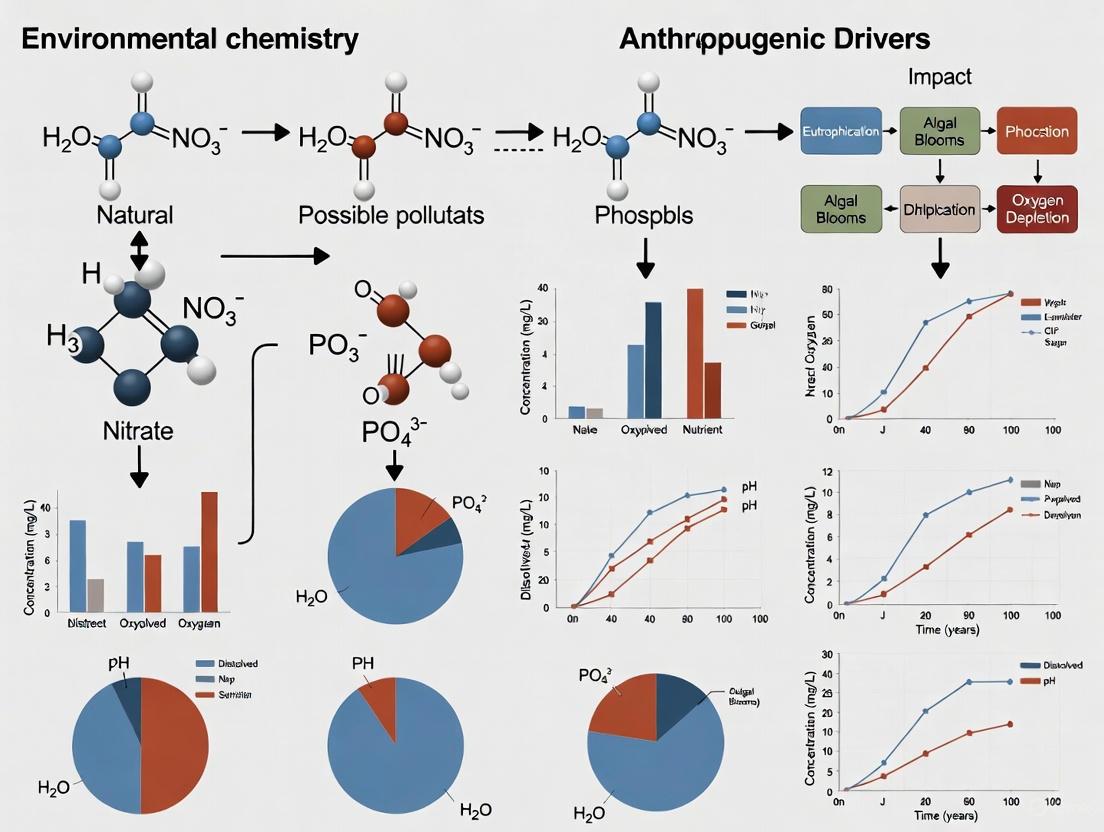
This article provides a comprehensive framework for researchers and scientists tasked with distinguishing between natural geological and human-induced influences on water quality.
Disentangling Sources: A Framework for Separating Natural and Anthropogenic Drivers in Water Quality Data
Abstract
This article provides a comprehensive framework for researchers and scientists tasked with distinguishing between natural geological and human-induced influences on water quality. It covers foundational concepts of natural hydrogeochemical baselines and common anthropogenic contaminants, explores advanced methodological approaches including chemical fingerprinting, isotopic tracing, and machine learning models, addresses critical troubleshooting for data quality control and sampling design, and outlines validation techniques through multivariate statistics and case study analysis. The content is tailored to support environmental risk assessment and inform robust water resource management strategies.
Understanding the Baseline: Core Concepts of Natural and Anthropogenic Water Quality Influences
Frequently Asked Questions
FAQ: What is the core challenge in defining a natural hydrogeochemical baseline? The primary challenge is separating the influence of complex natural systems from anthropogenic (human) activities. Natural baselines are not static; they are dynamic and shaped by the interconnected processes of geology, climate, and biogeochemical cycles. Distinguishing these natural background levels from human-induced contamination is essential for accurate risk assessment and environmental management [1] [2].
FAQ: My water samples show elevated levels of certain elements. How can I tell if this is from natural geology or pollution? A combination of methods is needed. You should first characterize the local geology, as certain rock types like limestone can naturally lead to higher concentrations of elements like calcium and bicarbonate [2]. Then, use pollution indices (such as the Contamination Factor or Pollution Index) and ecological risk indices to quantify the likelihood of anthropogenic influence. For example, in a limestone quarry study, while most parameters were within guidelines, elements like As, Cr, Ni, and Pb in some samples were linked to pollution sources [2].
FAQ: How does climate change interfere with establishing a reliable baseline? Climate change alters key natural processes that govern water quality. It can exacerbate regional water scarcity and shift precipitation patterns, which affects how nutrients and contaminants are leached and transported through a watershed [1]. Furthermore, climate change can intensify marine stratification and deoxygenation, driving microbial processes that, for instance, increase the loss of nitrogen to the atmosphere, thereby changing natural biogeochemical cycles [3].
FAQ: What is a common methodological error when trying to separate natural and anthropogenic water consumption? A common error is treating the watershed as homogenous. Some methods use a constant coefficient to estimate natural evapotranspiration (ET), which ignores the significant heterogeneity of climate, terrain, and soil conditions within a basin [1]. Advanced approaches using machine learning and remote sensing at a pixel level are now being developed to reduce this uncertainty and provide a more accurate separation [1].
The table below summarizes key parameters and indices used in a hydrogeochemical baseline and risk assessment study conducted around a limestone quarry [2].
Table 1: Measured Parameter Ranges and Guidelines
| Parameter | Measured Range | WHO Guideline | Notes |
|---|---|---|---|
| pH | 2.61 - 8.16 | - | Indicates acidic to slightly alkaline conditions. |
| Dominant Ions | Ca²⁺, HCO₃⁻ | - | Mg-HCO₃ was the prevailing water type. |
| Arsenic (As) | Some samples exceeded | WHO limits | Identified as a carcinogenic risk. |
| Lead (Pb) | Some samples exceeded | WHO limits | Identified as a neurotoxic risk. |
Table 2: Irrigation Suitability Indices and Interpretation
| Index Name | Acronym | Measured Range | Suitability Interpretation |
|---|---|---|---|
| Sodium Adsorption Ratio | SAR | < 10 | Suitable for irrigation. |
| Magnesium Adsorption Ratio | MAR | 4.37 – 25.89% | Values within acceptable range. |
| Kelly's Ratio | KR | 0.06 – 0.37% | Suitable for irrigation. |
| Soluble Sodium Percentage | Na% | 5.16 – 16.57 | Suitable for irrigation. |
| Potential Salinity | PS | 43.38 – 162.75 | Elevated values suggest possible long-term soil salinization. |
Table 3: Pollution and Risk Assessment Indices
| Index Name | Acronym | Finding | Risk Classification |
|---|---|---|---|
| Pollution Index | PN | Low to Moderate | Low to moderate contamination. |
| Potential Ecological Risk Index | PERI | 39.45 | Low ecological risk. |
Detailed Experimental Protocol: Hydrogeochemical Characterization and Risk Assessment
This protocol outlines the methodology for assessing water quality, establishing baselines, and evaluating human health risks, as derived from current research [2].
Objective: To determine the natural hydrogeochemical baseline of a watershed, assess its suitability for irrigation, and evaluate pollution levels and associated human health risks.
Step 1: Field Sampling and Laboratory Analysis
- Sample Collection: Collect water samples from various sources in the study area (e.g., rivers, groundwater wells, runoff).
- In-situ Measurements: Measure physical parameters like pH and temperature on-site using calibrated portable meters.
- Laboratory Analysis: Analyze samples using standard methods (e.g., ICP-MS) for major ions (Ca²⁺, Mg²⁺, Na⁺, K⁺, HCO₃⁻, Cl⁻, SO₄²⁻) and Potentially Toxic Elements (PTEs) such as As, Cr, Ni, and Pb.
Step 2: Data Integrity and Organization
- Data Cleaning: Organize data in a spreadsheet, ensuring sample names are correct and units are consistent. Check for geologically unreasonable values (e.g., negative concentrations) and label them as "below detection." [4]
- Initial Assessment: Compare all measured parameters against World Health Organization (WHO) guidelines to identify immediate exceedances [2].
Step 3: Hydrochemical Classification and Irrigation Suitability
- Water Type Classification: Create a Piper or Durov diagram to classify the dominant water type (e.g., Mg-HCO₃).
- Calculate Indices: Compute irrigation suitability indices (SAR, MAR, KR, Na%, PS) using their standard formulas to assess potential impacts on soil [2].
Step 4: Pollution and Risk Assessment
- Pollution Evaluation: Calculate pollution indices (Contamination Factor - CF, Pollution Index - PN) to quantify the level of contamination from PTEs [2].
- Ecological Risk Assessment: Determine the Potential Ecological Risk Index (PERI) to evaluate risk to the local ecosystem [2].
- Human Health Risk Assessment:
- Exposure Pathways: Model exposure through ingestion, inhalation, and dermal contact. Ingestion is typically the dominant pathway [2].
- Risk Quantification: Calculate non-carcinogenic (hazard quotient) and carcinogenic risks for identified PTEs like As and Pb.
Step 5: Interpretation and Governance
- Synthesize Findings: Integrate all hydrochemical, pollution, and risk data to differentiate natural background levels from anthropogenic contributions.
- Recommend Actions: Propose management strategies, such as continuous monitoring, wastewater treatment at pollution sources (e.g., quarries), and community health surveillance [2].
- Support SDGs: Frame the findings within the context of Sustainable Development Goals (SDG 6 - Clean Water and Sanitation) [2].
Workflow Diagram
The Scientist's Toolkit: Essential Research Reagents and Materials
Table 4: Essential Reagents and Materials for Hydrogeochemical Analysis
| Item | Function / Application |
|---|---|
| Standard Reference Materials | Certified materials with known element concentrations used to calibrate analytical instruments and ensure the accuracy and precision of data [4]. |
| Acids (e.g., HNO₃) | High-purity acids are used to preserve water samples and digest solid samples to prevent precipitation and keep metals in solution for analysis. |
| Ion Chromatography System | Used for the quantitative analysis of major anions (e.g., Cl⁻, SO₄²⁻, NO₃⁻) and cations (e.g., Na⁺, K⁺, Ca²⁺, Mg²⁺) in water samples. |
| ICP-MS (Inductively Coupled Plasma Mass Spectrometry) | An analytical technique that provides extremely low detection limits for a wide range of elements, essential for measuring trace levels of Potentially Toxic Elements (PTEs) [4]. |
| XRF (X-Ray Fluorescence) | An instrumental method used for the non-destructive elemental analysis of solid samples like rocks and soils, providing data on major and trace elements [4]. |
| Geochemical Database & Plotting Software | Specialized software (e.g., IoGas, GCDkit) is used to manage large datasets, create standard classification plots, tectonic discrimination diagrams, and model geochemical processes [4]. |
Troubleshooting Guide: Identifying Anthropogenic Pollution Signatures
This guide helps researchers diagnose the dominant anthropogenic drivers in water quality datasets by providing characteristic signatures and diagnostic steps.
Q1: My water quality data shows elevated nitrogen and phosphorus levels. How can I determine if the source is agricultural?
A1: Nutrient pollution is a hallmark of agricultural runoff. Follow these steps to confirm an agricultural signature:
- Step 1: Check for Seasonal Patterns: Analyze your data for seasonal spikes. Concentrations of nitrate (NO₃⁻) and phosphorus are often highest during the wet, agricultural growing season or following fertilizer application periods [5] [6]. In contrast, a study in China found high nitrogen levels in the dry season in some managed watersheds, highlighting the importance of local context [5].
- Step 2: Correlate with Land Use: Cross-reference your sampling sites with land use maps. A strong positive correlation between nutrient levels and the proportion of upstream farmland, particularly within a 500-meter buffer zone, is a key indicator [7].
- Step 3: Look for Co-pollutants: Check for the presence of pesticides or herbicides in your samples, which are commonly associated with agricultural activities [8].
- Expected Data Signature: You will likely see a correlation between nutrient loads and specific agricultural land use types. For example, paddy fields and dryland farms are strongly correlated with nutrient and Chlorophyll-a concentrations [6].
Q2: I have detected E. coli and chloride spikes in an urban stream. What is the likely cause?
A2: This combination is characteristic of urban water pollution.
- Step 1: Analyze Temporal Trends: Examine the timing of the spikes. E. coli concentrations often peak following rainfall events due to combined sewer overflows (CSOs) or stormwater runoff washing waste from impervious surfaces into waterways [7]. Chloride (Cl⁻) spikes are typically highest in winter and early spring, coinciding with the application and subsequent runoff of road de-icing salts [7].
- Step 2: Correlate with Impervious Surfaces: Determine the relationship between pollutant concentrations and the extent of urban built-up land. Research shows a positive correlation between E. coli levels and the percentage of urban land cover within a 1000-meter buffer around sampling sites [7].
- Step 3: Review Local Infrastructure: Investigate whether the area has a combined sewer system, which is common in older cities and prone to overflows during heavy precipitation [7].
- Expected Data Signature: You will typically find that urban built-up land is a primary driver for these pollutants, while green spaces with higher NDVI (Normalized Difference Vegetation Index) are negatively correlated with them [7].
Q3: My analysis shows a mix of heavy metals in the water. How do I distinguish industrial influence from other sources?
A3: Heavy metals like arsenic, lead, and mercury are often indicators of industrial activity or mining.
- Step 1: Identify the Metal Portfolio: The specific metals present can point to particular industries. For example, arsenic is a frequent byproduct of industrial processes and a primary contributor to carcinogenic risk [6].
- Step 2: Conduct Spatial Analysis: Map the contamination against point sources. Unlike diffuse agricultural runoff, industrial pollution often shows a strong point-source gradient, with concentrations decreasing significantly with distance from a known discharge point, such as a factory or wastewater outfall [6].
- Step 3: Perform a Health Risk Assessment: Calculate the carcinogenic and non-carcinogenic risk to human health. A study in the Naoli River found the heavy metal risk for children exceeded acceptable limits, primarily driven by industrial-related arsenic [6].
- Expected Data Signature: Redundancy Analysis (RDA) will often show a strong association between heavy metal concentrations and specific industrial land use types [6].
Data Presentation: Characteristic Signatures of Anthropogenic Drivers
The table below summarizes key indicators and data patterns for different anthropogenic pollution sources.
Table 1: Characteristic Signatures of Major Anthropogenic Drivers
| Anthropogenic Driver | Key Indicator Parameters | Typical Spatial Pattern | Typical Temporal Pattern |
|---|---|---|---|
| Agricultural Runoff | Nitrate (NO₃⁻), Phosphorus, Pesticides, Sediment [8] | Non-point source; correlates with upstream farmland area, especially paddy fields and dry land [6] | Peaks during wet seasons and/or following fertilizer application; high nitrogen can also occur in dry seasons [5] [7] |
| Urban Runoff | E. coli, Chloride (Cl⁻), Heavy Metals [7] | Non-point source; correlates with impervious surface cover (e.g., built-up areas) [7] | E. coli peaks after rainfall; Chloride peaks in winter/spring from de-icing salts [7] |
| Industrial Effluent | Heavy Metals (e.g., Arsenic, Lead), Sulfate (SO₄²⁻), specific industrial chemicals [6] | Often a point-source; shows a steep gradient from discharge location [6] | Can be continuous or intermittent, depending on production cycles and wastewater treatment |
Experimental Protocols for Driver Identification
Protocol 1: Land Use and Water Quality Correlation Analysis
This methodology is used to quantitatively link water quality parameters to watershed land use.
- Watershed Delineation: For each water quality sampling point, delineate the corresponding drainage area (watershed) using GIS hydrological tools based on a Digital Elevation Model (DEM) [6].
- Land Use Quantification: Using land use/cover data (e.g., from ESA World Cover or national datasets), calculate the percentage of each land use type (e.g., urban, agricultural, forest) within the delineated watersheds and within multiple circular buffer zones (e.g., 500 m, 1000 m) around each sampling site [6] [7].
- Statistical Analysis: Perform Redundancy Analysis (RDA) or linear regression to quantify the relationship between land use percentages and measured water quality parameters (e.g., NO₃⁻, E. coli, heavy metals) [6] [7]. This identifies which land uses are the strongest predictors of pollution.
Protocol 2: Trend-Based Metric for Isolating Human Impact
This method separates climatic effects from anthropogenic pressures on water quality trends.
- Data Collection: Compile long-term, seasonal water quality data (e.g., COD, DO) for both natural (minimally disturbed) and managed (human-impacted) watersheds that share similar climatic conditions [5].
- Trend Analysis: Calculate seasonal trends (e.g., slope of concentration over time) for each water quality parameter in both watershed types [5].
- Calculate T-NM Index: Compute the Trend-based Natural-Managed (T-NM) index. This index compares trends in managed watersheds to those in nearby natural watersheds, quantifying the extent to which human activities amplify or suppress natural climatic trends [5]. The formula is:
- T-NM index = (Trendmanaged - Trendnatural) / |Trend_natural| [5].
- A positive value indicates human amplification of a trend, while a negative value indicates human suppression.
Diagnostic Workflow for Anthropogenic Driver Analysis
The diagram below outlines a logical workflow for diagnosing primary anthropogenic drivers based on water quality data.
The Scientist's Toolkit: Key Research Reagents & Materials
Table 2: Essential Reagents and Materials for Water Quality Source Analysis
| Item | Function in Analysis | Example Application |
|---|---|---|
| Ion Chromatography System | Quantifies concentrations of anions and cations in water samples [7]. | Measuring nitrate (NO₃⁻), sulfate (SO₄²⁻), and chloride (Cl⁻) ions to identify fertilizer or road salt contamination [7]. |
| ICP-MS (Inductively Coupled Plasma Mass Spectrometry) | Detects and quantifies trace heavy metals and elements at very low concentrations [6]. | Identifying and sourcing industrial pollution by analyzing for metals like arsenic, lead, and mercury [6]. |
| Colilert Test Kits / IDEXX | Provides a standardized method for quantifying Escherichia coli (E. coli) bacteria in water samples [7]. | Detecting fecal contamination from sewage or animal waste in urban and agricultural settings [7]. |
| Multiparameter Water Quality Probe | Measures physico-chemical parameters in situ (on-site) at the time of sampling [7]. | Recording dissolved oxygen (DO), pH, temperature, and total dissolved solids (TDS), which provide context for other chemical analyses [7]. |
| GIS (Geographic Information System) Software | Used for watershed delineation, land use classification, and spatial analysis of pollution patterns [6]. | Correlating land use types (urban, agricultural) with water quality measurements at sampling sites [6] [7]. |
Frequently Asked Questions (FAQs)
Q: What is the most effective statistical method for linking land use to water quality? A: Multivariate techniques like Redundancy Analysis (RDA) are highly effective. RDA can quantify how much of the variation in your water quality data (e.g., nutrients, metals) is explained by different land use types (e.g., percentage of urban, agricultural, or forested land) in the watershed [6] [7].
Q: Why is it crucial to analyze seasonal water quality trends? A: Seasonal analysis helps disentangle natural climatic effects from human impacts. For example, a study found that human activities amplified decreasing COD (Chemical Oxygen Demand) trends in 22-158% of watersheds in the summer, a season heavily influenced by agricultural and urban runoff [5]. Understanding these patterns is key to accurate source identification.
Q: How can I account for natural background variability in my data? A: Use a reference or "natural watershed" as a control. By comparing trends in your study area to those in a nearby, minimally disturbed watershed with similar climate, you can isolate the human-induced signal. The T-NM index is a metric designed specifically for this purpose [5].
Frequently Asked Questions (FAQs)
FAQ 1: What are the primary indicators of anthropogenic influence on groundwater quality in urban areas like Kano? Anthropogenic influence is often indicated by elevated levels of specific chemical parameters. Key indicators include increased concentrations of nitrate (NO₃⁻), chloride (Cl⁻), and sulfate (SO₄²⁻), which are often linked to human activities [9]. In the Kano study, elevated levels of Electrical Conductivity, Total Dissolved Solids (TDS), Hardness, and certain major ions in urban and peri-urban districts were strong indicators of human impact, contrasting with areas dominated by natural geology [10]. The presence of these constituents, especially when correlated with known urban or agricultural land use, helps distinguish human pollution from natural background levels.
FAQ 2: Which statistical methods are most effective for differentiating natural and anthropogenic sources in water quality data? Multivariate statistical methods are highly effective for this purpose [11].
- Principal Component Analysis (PCA): Helps reduce data dimensionality and identify underlying factors (e.g., a "hardness" factor from natural geology vs. a "pollution" factor from sewage) that control water chemistry [10] [11].
- Correlation Analysis: Reveates relationships between parameters (e.g., a strong correlation between sodium and chloride may point to sewage contamination) [10] [9].
- Redundancy Analysis (RDA): A powerful method to quantitatively link water quality parameters (response variables) to specific environmental factors (explanatory variables) like land use or hydrogeology, directly testing hypotheses about driving forces [11].
FAQ 3: My data shows high spatial variability. How can I model this to understand plume behavior? For spatially variable data, especially from large monitoring networks, spatiotemporal modeling tools are more accurate than analyzing trends at individual wells or single-time contour maps [12] [13]. The GroundWater Spatiotemporal Data Analysis Tool (GWSDAT) applies a spatiotemporal solute concentration smoother using penalized splines. This method simultaneously estimates spatial distribution and temporal trends, providing a coherent picture of dynamic contamination plumes, their stability, and migration pathways [12] [13]. This approach is less biased by missing data points or irregular sampling rounds.
FAQ 4: What are the best color scheme practices for creating clear and accessible groundwater quality maps? Effective color choices are crucial for accurate interpretation [14].
- Sequential Data: Use a single-hue sequential color bar (e.g., light to dark blue) for data like concentration levels, as it allows easy identification of high and low values [14].
- Diverging Data: Use a diverging color bar (e.g., blue to red) for anomaly maps, such as showing parameter levels against a background standard [14].
- Avoid Rainbows: Traditional rainbow color schemes increase the error rate in identifying values and should be replaced with more intuitive sequential or diverging schemes [14].
Troubleshooting Common Experimental & Data Analysis Issues
Problem 1: Inconsistent or "noisy" trends in time-series data from monitoring wells.
- Potential Cause: Natural hydrological fluctuations, seasonal effects, or sampling inconsistencies.
- Solution: Apply a nonparametric smoother to the time-series data for individual wells. This technique, available in tools like GWSDAT, estimates trends without assuming a fixed shape (linear or logarithmic), allowing the true direction—increasing, decreasing, or stable—to emerge from noisy data [12] [13].
Problem 2: Difficulty in visualizing the evolution of a contamination plume over both space and time.
- Potential Cause: Relying on independent contour maps for each sampling event, which can be disjointed and difficult to compare.
- Solution: Use a spatiotemporal modeling approach. This method creates a smooth, continuous model of solute concentrations that changes over time, providing a more accurate and interpretable visualization of plume dynamics, including migration and dilution [13].
Problem 3: Uncertainty in health risk assessment due to variability in exposure parameters.
- Potential Cause: Deterministic health risk models that use single, fixed values for exposure parameters can over- or underestimate true risk.
- Solution: Employ a probabilistic health risk assessment using Monte Carlo simulation. This method runs thousands of simulations with variable input parameters (e.g., ingestion rate, body weight) to generate a probability distribution of risk, providing a more realistic and robust risk quantification [11] [9].
Problem 4: A chart or map is cluttered and the key message is not clear.
- Potential Cause: Excessive "chartjunk"—gridlines, labels, or decorative elements that do not convey information.
- Solution: Adhere to the principle of maximizing the data-ink ratio. Remove any non-essential elements from the visualization. Use annotations and highlight the most important data story, keeping other contextual data in the background for comparison [15].
The following table summarizes key physicochemical parameters and their implications for distinguishing water quality drivers, based on the research in Kano [10].
Table 1: Summary of Key Groundwater Quality Parameters and Their Interpretations from the Kano Study
| Parameter | Observed Range / Characteristics in Kano | Interpretation / Implication |
|---|---|---|
| pH | Slightly acidic to slightly alkaline | Indicates the corrosivity of water and influences chemical reaction rates. |
| Dissolved Oxygen (DO₂) | Generally poor levels | Suggests possible impact of organic pollutants or eutrophication (anthropogenic). |
| Major Hydrochemical Facies | Sodium-Chloride (Na-Cl) and Calcium-Magnesium Bicarbonate (Ca-Mg HCO₃) | Na-Cl facies often linked to anthropogenic urban pollution (e.g., sewage); Ca-Mg HCO₃ is more typical of natural water-rock interactions [10]. |
| Trace Metals (e.g., Fe, Zn) | Generally low, but with localized elevations | Suggests overall low acute risk; sporadic increases point to localized contamination sources. |
| Spatial Variability | High heterogeneity across the five studied sites | Confirms the combined and varying influence of local geology (natural) and human activities (anthropogenic) across the region. |
Essential Experimental Protocols & Methodologies
Protocol for Multivariate Hydrochemical Characterization
This protocol outlines the steps for collecting and analyzing groundwater samples to characterize hydrochemistry and identify influencing factors [10].
- Site Selection & Sampling: Select monitoring points (wells) across different geological units and land use types (e.g., urban, agricultural, natural). In the Kano study, 51 samples were collected from five principal sites [10].
- Field Measurements: Measure field parameters in situ using a multiparameter probe: pH, Temperature, Electrical Conductivity (EC), Dissolved Oxygen (DO), and Turbidity [10].
- Sample Collection & Preservation: Collect water samples in clean, appropriate bottles. Preserve samples for lab analysis (e.g., refrigeration at 4°C for metals and ions) [9].
- Laboratory Analysis: Analyze for major cations (Na⁺, K⁺, Mg²⁺, Ca²⁺), major anions (Cl⁻, SO₄²⁻, HCO₃⁻), and trace metals (Cr, As, Fe, Zn, Cu, Ni, Pb, Cd). Ensure charge balance error is <5% for data validity [10].
- Data Analysis & Interpretation:
- Construct Piper Diagrams to identify dominant hydrochemical facies [10].
- Perform Correlation Analysis and Principal Component Analysis (PCA) to identify groups of related parameters and potential sources [10] [11].
- Use ionic ratios (e.g., Na⁺/Cl⁻, Ca²⁺/Mg²⁺) and stable isotope analysis (δ¹⁵N-NO₃⁻, δ¹⁸O-NO₃⁻) to pinpoint specific geochemical processes and nitrate sources [9].
Protocol for Probabilistic Health Risk Assessment (HRA)
This protocol uses Monte Carlo simulation to quantify the uncertainty in non-carcinogenic health risks from contaminants like nitrate [11] [9].
- Hazard Identification: Identify the contaminant of concern (e.g., nitrate).
- Dose-Response Assessment: Obtain the reference dose (RfD) for the contaminant from relevant authorities (e.g., US EPA).
- Exposure Assessment: Calculate the chronic daily intake (CDI). The formula for ingestion is: CDI = (C × IR × EF × ED) / (BW × AT), where:
- C = Concentration of contaminant in water (mg/L)
- IR = Ingestion rate (L/day)
- EF = Exposure frequency (days/year)
- ED = Exposure duration (years)
- BW = Body weight (kg)
- AT = Averaging time (days)
- Monte Carlo Simulation:
- Define probability distributions (e.g., log-normal, normal) for the variable exposure parameters (IR, BW, ED) instead of using single values.
- Run a large number of simulations (e.g., 10,000) to compute a probability distribution for the Hazard Quotient (HQ = CDI / RfD).
- Risk Characterization: Interpret the results. An HQ > 1 indicates potential non-carcinogenic risk. Report the probability (percentage) of the population exceeding an HQ of 1 for different demographic groups (e.g., children, adults) [9].
Analytical Workflow for Source Separation
The following diagram illustrates the logical workflow for separating natural and anthropogenic drivers in a groundwater quality study.
Figure 1: Workflow for separating natural and anthropogenic drivers in groundwater quality studies.
The Scientist's Toolkit: Key Research Reagent Solutions
Table 2: Essential Materials and Tools for Groundwater Quality and Source Separation Research
| Item / Solution | Function / Application |
|---|---|
| Multiparameter Field Probe | For in-situ measurement of critical physical parameters like pH, Electrical Conductivity (EC), Temperature, Dissolved Oxygen (DO), and Turbidity [10]. |
| Inductively Coupled Plasma Mass Spectrometry (ICP-MS) | Highly sensitive analytical technique for accurate determination of trace metal concentrations (e.g., Cr, As, Pb, Cd) in water samples [9]. |
| Ion Chromatography (IC) | Used for the simultaneous quantification of major anions (Cl⁻, SO₄²⁻, NO₃⁻) and cations (Na⁺, K⁺, Ca²⁺, Mg²⁺) in water samples [9]. |
| Stable Isotope Ratio Mass Spectrometer (IRMS) | For analyzing stable isotopes of water (δ²H-H₂O, δ¹⁸O-H₂O) and nitrate (δ¹⁵N-NO₃⁻, δ¹⁸O-NO₃⁻) to identify water sources and trace the origin of nitrate contamination [9]. |
| GWSDAT (GroundWater Spatiotemporal Data Analysis Tool) | User-friendly, open-source software for the visualization and spatiotemporal analysis of groundwater monitoring data, including trend analysis and plume diagnostics [12] [13]. |
| R / Python with Statistical Packages | Programming environments for performing advanced multivariate statistics (PCA, RDA), generating custom visualizations, and running probabilistic risk assessments with Monte Carlo simulation [11] [12]. |
Troubleshooting Guide: Common Data Interpretation Challenges
FAQ: Why do two lakes in the same region show diverging water quality trends despite similar external pressures?
The Problem Researchers often observe that adjacent lakes exhibit different eutrophication trajectories, which can complicate the attribution of causes. This divergence suggests that local factors and internal lake processes may be overriding regional anthropogenic pressures.
Diagnosis and Solution
- Compare Trophic State Indices: Calculate and track multiple water quality indicators over time to identify which parameters are driving the divergence.
- Analyze Dominant Pollutants: Different primary pollutants (e.g., phosphorus vs. organic matter) indicate different pollution sources and pathways.
- Assess Historical Trajectories: Examine whether systems are on recovery trajectories or continuing to degrade, as this reveals the effectiveness of management interventions.
Table: Comparative Water Quality Trends in Macrophytic Lakes
| Water Quality Parameter | East Taihu Lake Trend (2005-2023) | Liangzi Lake Trend (2005-2022) | Primary Driver Identification |
|---|---|---|---|
| Trophic State Index (TSI) | Initial increase pre-2018, then gradual decline; remains eutrophic (TSI >50) | Consistent upward trend; mesotrophic (30< TSI <50) | Anthropogenic nutrient loading [16] |
| Total Phosphorus (TP) | Increase identified | Increase identified | Primary pollution driver in East Taihu Lake (p<0.01) [16] |
| Chlorophyll α | Increase identified | Upward trend | Indicator of algal biomass response [16] |
| Chemical Oxygen Demand (CODMn) | Decline observed | Upward trend; dominant pollution parameter | Primary pollution driver in Liangzi Lake (p<0.01) [16] |
| Ammonia-Nitrogen (NH₃-N) | Increase identified | Upward trend | Indicator of wastewater and agricultural inputs [16] |
| Secchi Depth (SD) | Decline observed | Upward trend | Indicator of water clarity and suspended solids [16] |
| Comprehensive Pollution Index (Pw) | Higher than Liangzi Lake | Lower than East Taihu Lake | Overall pollution burden indicator [16] |
FAQ: How can researchers distinguish between natural hydrological changes and anthropogenic impacts in floodplain lakes?
The Problem Paleolimnological records often show asynchronous changes in different biological proxies, making it difficult to identify primary drivers and leading to conflicting interpretations of ecosystem responses.
Diagnosis and Solution
- Multi-Proxy Analysis: Employ complementary biological proxies (pigments, chironomids, cladocera) to detect phased ecosystem responses.
- Historical Timeline Reconstruction: Correlate ecosystem changes with documented anthropogenic events and hydrological modifications.
- Hydrological Connectivity Assessment: Evaluate how connection to main river channels mediates both natural and anthropogenic impacts.
Table: Asynchronous Responses to Hydrological Alteration in Luhu Lake
| Time Period | Chironomid Community Response | Algal/Pigment Response | Identified Primary Driver |
|---|---|---|---|
| Pre-1970 | Stable community dominated by Microchironomus tener-type | Low and stable algal production | Relatively natural conditions [17] |
| 1970-2000 | Major shift to Tanytarsus marmoratus-type dominance (~80%) | Gradual increase beginning | Hydrological alteration from dam construction [17] |
| Post-2000 | Community remains stable | Rapid increase in algal production | Combined effect of hydrological alteration AND increased nutrient influx [17] |
Experimental Protocols for Driver Separation
Water Quality Monitoring and Trophic State Assessment
Purpose: To systematically track water quality parameters that differentiate natural seasonal variations from anthropogenic pollution trends.
Methodology:
- Sample Collection: Collect water samples seasonally from standardized locations and depths
- Parameter Analysis:
- Nutrients: Analyze Total Phosphorus (TP), Total Nitrogen (TN), and Ammonia-Nitrogen (NH₃-N) using standard spectrophotometric methods
- Biological Response: Measure Chlorophyll α as a proxy for algal biomass
- Physical Parameters: Record Secchi Depth (SD) for water clarity and calculate Chemical Oxygen Demand (CODMn) for organic pollution
- Index Calculation:
- Compute Trophic State Index (TSI) and Comprehensive Pollution Index (Pw) using established formulas [16]
- Conduct correlation analysis between water quality parameters and anthropogenic activity data
Troubleshooting Tip: When parameters show conflicting trends (e.g., decreasing TN but increasing TP), investigate specific anthropogenic sources such as wastewater discharge patterns or agricultural runoff composition [16].
Multi-Proxy Paleolimnological Reconstruction
Purpose: To disentangle long-term anthropogenic impacts from natural variability using sediment cores.
Methodology:
- Core Collection: Extract sediment cores using gravity or piston coring devices from accumulation zones
- Dating: Establish chronology using ²¹⁰Pb, ¹³⁷Cs, or ¹⁴C dating methods
- Proxy Analysis:
- Pigments: Extract and analyze chlorophyll and carotenoid pigments to reconstruct primary production history [17]
- Chironomids: Isplicate, identify, and count chironomid head capsules to infer bottom-up food web changes [17]
- Statistical Analysis: Use CONISS (constrained incremental sum of squares) to identify significant zones of change in biological communities
- Historical Correlation: Compare proxy changes with documented historical events (dam construction, land use changes)
Troubleshooting Tip: When proxies show asynchronous responses (e.g., chironomid changes preceding algal responses), consider differential sensitivity to various stressors—chironomids may respond more directly to hydrological change while algae respond more to nutrient inputs [17].
The Scientist's Toolkit: Essential Research Reagents & Materials
Table: Key Reagents and Materials for Lake Ecosystem Research
| Item | Function/Application | Technical Specifications |
|---|---|---|
| Water Quality Sampling Kit | Collection and preservation of water samples for nutrient analysis | Includes acid-washed bottles, preservatives (H₂SO₄ for nutrients), cold chain equipment [16] |
| Secchi Disk | Measurement of water transparency | Standard 20cm diameter disk with alternating black/white quadrants; deployment apparatus with calibrated line [16] |
| Filtration Apparatus | Chlorophyll α extraction and analysis | Glass fiber filters (0.7μm pore size), vacuum pump, acetone for extraction, spectrophotometer/fluorometer [16] |
| Sediment Corer | Collection of undisturbed sediment sequences for paleolimnological study | Gravity corer, piston corer, or freeze corer; core extrusion equipment [17] |
| Microscope with Counting Chamber | Identification and enumeration of biological indicators | Compound microscope with 100-400x magnification; Sedgewick-Rafter or similar counting chamber for chironomids/diatoms [17] |
Research Workflow: Separating Natural and Anthropogenic Drivers
Decision Framework for Management Interventions
Troubleshooting Guide: Isolating Natural Climate Signals in Water Quality Data
This guide helps researchers diagnose and correct for the influence of natural climate variability in water quality datasets, ensuring a clearer identification of anthropogenic signals.
Problem 1: Unexplained Seasonal or Decadal Shifts in Water Quality Parameters You observe cyclical fluctuations in parameters like Chemical Oxygen Demand (COD) or Dissolved Oxygen (DO) that do not correlate with known human activities.
| Observed Anomaly | Potential Natural Driver | Diagnostic Experiment & Data to Collect |
|---|---|---|
| Rapid, short-term cooling; increased water turbidity; altered pH [18]. | Volcanic Eruptions (sulfate aerosols, ash) [18] [19]. | Verify: Cross-reference event timing with the Smithsonian Global Volcanism Program database. Analyze satellite data for aerosol optical depth (AOD) and local temperature records. |
| Multi-year warming or cooling trends correlating with ~11-year cycles [18]. | Solar Cycles (variation in solar irradiance) [18] [19]. | Verify: Obtain time-series data for total solar irradiance (TSI) and sunspot numbers from NASA. Perform spectral analysis on your water quality data to detect matching periodicities. |
| Multi-decadal to millennial-scale trends in temperature and hydrological patterns [20] [19]. | Orbital Forcings (Milankovitch Cycles: eccentricity, obliquity, precession) [18] [19]. | Verify: Use paleoclimatic proxy data (ice cores, ocean sediments) to establish long-term baselines. Statistical detrending of datasets to remove these very low-frequency oscillations. |
| Periodic warming (El Niño) or cooling (La Niña) altering precipitation, runoff, and river flow [18]. | El Niño-Southern Oscillation (ENSO) [18]. | Verify: Monitor oceanic Niño index (ONI). Correlate with local precipitation and discharge data to understand impacts on pollutant concentration and dilution [5]. |
Problem 2: Failure to Statistically Separate Natural and Anthropogenic Influences Your model cannot confidently attribute water quality changes (e.g., COD/DO trends) to specific causes.
- Step 1 – Identify the Problem: Define whether the issue is with interannual trends or specific seasonal patterns (e.g., summer DO reductions) [5].
- Step 2 – List All Possible Explanations: Create a comprehensive list of drivers, including both natural (e.g., seasonal rainfall, geological background) and anthropogenic factors (e.g., land use changes, point source pollution) [21].
- Step 3 – Collect Baseline Data: Gather data from nearby natural watersheds with minimal human impact. Consistent trends in these areas suggest climatic dominance, providing a baseline for natural variability [5].
- Step 4 – Eliminate Explanations: Use controlled models (e.g., the T-NM index) to quantify the human amplification or suppression effect on the natural baseline trend [5].
- Step 5 – Check with Experimentation: Implement multivariable analysis. In natural watersheds, factors like rainfall and slope may explain most variation, while in managed watersheds, landscape metrics (e.g., Shannon Diversity Index) may dominate, clarifying the primary driver [5].
- Step 6 – Identify the Cause: The remaining unexplained variance, after accounting for the natural baseline, can be attributed to anthropogenic activities.
Diagnostic Workflow Diagram
This diagram outlines the logical process for diagnosing the influence of natural climate drivers on water quality data.
Frequently Asked Questions (FAQs)
Q1: What are the most significant natural climate forcings I need to account for in my water quality models? The most significant forcings are orbital changes (Milankovitch cycles affecting long-term climate over thousands of years), volcanic eruptions (injecting aerosols that cause short-term global cooling), and solar radiation variations (linked to the ~11-year sunspot cycle) [18] [19]. Attribution analysis shows that seasonal factors and rainfall can account for over 70% of water quality variation in natural watersheds, highlighting their primary role [5].
Q2: How can a volcanic eruption on the other side of the world affect local water quality data? Large volcanic eruptions at low latitudes can inject sulfur dioxide (SO₂) high into the stratosphere, where winds distribute it globally [18]. These gases form sulfate aerosols that scatter incoming solar radiation, leading to a measurable drop in surface temperature for 1-2 years [18] [19]. This can alter local precipitation patterns, reduce photosynthetic activity in water bodies, and change runoff dynamics, thereby affecting parameters like COD and DO.
Q3: What is a practical method to disentangle the impact of natural climate variability from human pollution in a specific river basin? A robust method involves using a paired watershed approach [5]. Compare long-term seasonal water quality trends from a managed watershed against those from a nearby natural watershed with similar climate but minimal human impact. Consistent trends in both suggest climatic dominance. The difference in the magnitude and direction of trends can then be quantified as the human impact using a metric like the T-NM index [5].
Q4: Why is there a time lag between a climate forcing and its full impact on surface temperature or water systems? This lag is primarily due to the immense heat capacity of the global ocean [20]. The oceans absorb vast amounts of heat, giving the climate system a "thermal inertia" [20]. This means that even after a radiative imbalance occurs (e.g., from increased greenhouse gases or volcanic aerosols), it may take years or decades for the full surface temperature response to be realized, which in turn gradually influences aquatic systems [20].
Experimental Protocol: Attributing DO Fluctuations to Climatic vs. Anthropogenic Drivers
Objective: To determine the primary driver(s) of dissolved oxygen (DO) depletion in a freshwater system during summer months.
1. Hypothesis Development:
- Null Hypothesis (H₀): Summer DO variations are not significantly influenced by natural climate drivers.
- Alternative Hypothesis (H₁): Natural climate drivers (e.g., temperature from solar cycles, runoff patterns from ENSO) are a significant factor in summer DO variations.
2. Data Collection Protocol:
- Water Quality Data: Obtain high-frequency (daily/weekly) time-series data for DO, water temperature, COD, and pH for at least a 15-year period from monitoring stations [5].
- Climate Data: Collect concurrent local air temperature, solar irradiance, and precipitation data.
- Large-Scale Climate Indices: Compile data for the Oceanic Niño Index (ONI) and Total Solar Irradiance (TSI) records.
- Anthropogenic Data: Gather data on seasonal wastewater discharge volumes, agricultural fertilizer application schedules, and land-use changes.
3. Controlled Data Analysis:
- Trend Analysis: Perform seasonal Mann-Kendall trend analysis on DO concentrations to identify significant increasing or decreasing patterns, separately for natural and managed watersheds [5].
- Correlation Analysis: Calculate correlation coefficients between DO levels and potential drivers (water temperature, ONI, TSI, fertilizer use).
- Multivariable Modeling: Build regression models (e.g., multiple linear regression or machine learning models) with DO as the dependent variable. Use climate indices and anthropogenic data as independent variables. The relative contribution of each variable reveals the primary drivers [5].
Experimental Attribution Workflow
This diagram details the key steps in the experimental protocol for attributing causes of water quality changes.
The Scientist's Toolkit: Research Reagent Solutions
| Item / Solution | Function in Research |
|---|---|
| T-NM Index | A trend-based metric used to isolate and quantify the asymmetric amplification or suppression effects of human activities on natural climatic water quality trends [5]. |
| Multivariable Regression Models | Statistical models that simulate water quality parameters (e.g., COD, DO) using multiple explanatory variables (climate and human) to partition the variance and attribute causes [5]. |
| Paired Watershed Study Design | A methodological framework comparing a "natural" watershed (climate control) with a "managed" watershed to isolate the impact of human activities from background natural variability [5]. |
| Oceanic Niño Index (ONI) | A primary indicator for monitoring the El Niño-Southern Oscillation (ENSO), used to correlate large-scale climate patterns with local hydrological and water quality data [18]. |
| Total Solar Irradiance (TSI) Data | A key dataset from satellite observations used to correlate periodic changes in the sun's energy output with long-term trends in water temperature and ecosystem productivity [18]. |
Advanced Techniques for Source Separation: From Chemical Tracers to Machine Learning
Chemical Fingerprinting and Isotopic Tracers for Source Identification
Frequently Asked Questions (FAQs)
Q1: What is the core principle behind using isotopic tracers for source identification? Isotopic tracers operate on the principle that different sources of pollutants often have distinct isotopic "fingerprints." For example, nitrate from manure and sewage has a different isotopic composition (δ¹⁵N) than nitrate from synthetic fertilizers. By measuring these ratios in environmental samples, researchers can trace the pollutant back to its origin [22].
Q2: When should I use a multi-isotope approach versus a single isotope? A multi-isotope approach (e.g., combining δ¹⁵N-NO₃, δ¹⁸O-NO₃, δ¹³C) is highly recommended for complex systems. While a single isotope can provide clues, multiple isotopes provide convergent lines of evidence, greatly increasing the accuracy of your source apportionment and helping to account for overlapping signatures or isotopic fractionation during biogeochemical processes [22] [23].
Q3: My isotopic data is ambiguous. What could be the cause? Ambiguity often arises from isotopic fractionation, where physical or biological processes alter the original isotopic signature. Alternatively, you might be dealing with mixed sources that have overlapping signatures. To resolve this, consider:
- Using Compound-Specific Isotope Analysis (CSIA): This provides isotopic data for individual compounds, reducing ambiguity from bulk sample analysis [23].
- Incorporating Molecular Markers: Combine isotopic data with molecular biomarkers like n-alkanes or PAHs to strengthen your conclusions [23].
- Applying Statistical Models: Use models like End-Member Mixing Analysis (EMMA) to quantitatively apportion sources [22].
Q4: How do I distinguish anthropogenic organic matter from natural sources in sediments? An integrated approach is most effective. This involves measuring bulk elemental contents (TOC, TN) and their stable isotopes (δ¹³C, δ¹⁵N), and then refining the analysis with molecular markers and their CSIA. For instance, aliphatic hydrocarbons (n-alkanes) can indicate natural plant waxes, while polycyclic aromatic hydrocarbons (PAHs) are often markers for anthropogenic combustion [23].
Troubleshooting Guides
Issue: Low Signal-to-Noise Ratio in Complex Environmental Samples
Problem: It is difficult to detect the target isotopic signal against a high background of natural organic matter.
| Step | Action | Rationale |
|---|---|---|
| 1 | Pre-concentration | Use solid-phase extraction (SPE) or similar techniques to concentrate the target analytes, improving detectability. |
| 2 | Purification | Employ chromatographic methods to separate the compound of interest from interfering substances in the sample matrix. |
| 3 | Switch to CSIA | Move from bulk isotope analysis to Compound-Specific Isotope Analysis to isolate the signal of the specific compound [23]. |
Problem: Two or more potential pollution sources have similar or overlapping isotopic values, making them impossible to distinguish.
| Step | Action | Rationale |
|---|---|---|
| 1 | Expand the Isotopic Suite | Incorporate additional isotopes. For nitrate, adding δ¹⁸O to δ¹⁵N can help separate soil nitrogen from fertilizer nitrate [22]. |
| 2 | Integrate Complementary Tracers | Use chemical or molecular markers. For organic matter, combining δ¹³C with n-alkane distributions provides a more robust source identification [23]. |
| 3 | Apply Advanced Statistical Models | Implement multivariate statistical methods or machine learning models to quantitatively apportion contributions from multiple sources [22] [5]. |
Experimental Protocols
This protocol is adapted from a study on shallow groundwater in a large irrigation area [22].
1. Sample Collection:
- Collect groundwater samples from monitoring wells or springs in clean, acid-washed HDPE bottles.
- Filter samples immediately in the field through a 0.45 μm membrane filter.
- For nitrate isotope analysis, preserve samples by freezing until analysis.
2. Chemical and Isotopic Analysis:
- Major Ions: Analyze cations (Ca²⁺, Mg²⁺, Na⁺, K⁺) and anions (Cl⁻, SO₄²⁻, HCO₃⁻, NO₃⁻) using Ion Chromatography (IC) or Inductively Coupled Plasma Optical Emission Spectrometry (ICP-OES). This helps classify water type and understand geochemical background [22].
- Nitrate Isotopes (δ¹⁵N-NO₃ and δ¹⁸O-NO₃): Analyze using the denitrifier method or by chemical conversion, followed by Isotope Ratio Mass Spectrometry (IRMS).
3. Data Interpretation:
- Source Identification: Plot δ¹⁵N-NO₃ against δ¹⁸O-NO₃. Different nitrate sources (e.g., manure & sewage, soil nitrogen, chemical fertilizer) often cluster in distinct regions of the cross-plot [22].
- Quantitative Apportionment: Use a model like End-Member Mixing Analysis (EMMA) to calculate the proportional contribution of each identified source to the total nitrate concentration.
Protocol 2: Apportioning Natural and Anthropogenic Organic Matter in Sediments
This protocol is based on an integrated approach used for lake sediments [23].
1. Sample Collection and Preparation:
- Collect surface sediment samples (e.g., top 2 cm) using a grab sampler or corer.
- Freeze-dry the samples and homogenize them with a mortar and pestle.
- Sieve the dried sediment to a consistent particle size (e.g., < 63 μm) for analysis.
2. Bulk Analysis:
- Total Organic Carbon (TOC) and Total Nitrogen (TN): Determine using an elemental analyzer.
- Bulk Stable Isotopes (δ¹³C and δ¹⁵N): Analyze the stable isotope ratios of the bulk sediment using an Elemental Analyzer coupled to an IRMS.
3. Molecular Marker and CSIA Analysis:
- Lipid Extraction: Extract aliphatic and aromatic hydrocarbons from the sediment using a Soxhlet apparatus or accelerated solvent extractor with a dichloromethane/methanol solvent mixture.
- Fractionation: Separate the total extract into different fractions (e.g., aliphatic hydrocarbons, aromatic hydrocarbons) using silica gel column chromatography.
- Molecular Analysis:
- Analyze n-alkanes and Polycyclic Aromatic Hydrocarbons (PAHs) using Gas Chromatography-Mass Spectrometry (GC-MS).
- Perform Compound-Specific Isotope Analysis (CSIA) on target compounds (e.g., n-alkanes) using GC-Isotope Ratio Mass Spectrometry (GC-IRMS) to obtain δ¹³C values for individual molecules [23].
4. Data Interpretation:
- Use molecular ratios (e.g., Carbon Preference Index for n-alkanes, PAH isomer ratios) to differentiate between natural (terrestrial, aquatic) and anthropogenic (petrogenic, pyrogenic) sources.
- Combine the molecular data with the CSIA data to quantitatively constrain the contributions of the different organic matter sources.
Workflow Visualization
Diagram 1: Isotopic Source Identification Workflow
Diagram 2: Multi-Method Approach for Organic Matter
Key Research Reagent Solutions
The following table details essential materials and reagents used in chemical fingerprinting and isotopic tracer studies.
| Reagent/Material | Function in Experiment | Key Considerations |
|---|---|---|
| Reference Isotopic Standards | Calibrate the isotope ratio mass spectrometer (IRMS) and ensure data accuracy and comparability. | Must be certified for specific isotopes (e.g., USGS standards for δ¹⁵N, IAEA standards for δ¹⁸O). |
| Solid-Phase Extraction (SPE) Cartridges | Pre-concentrate and purify target analytes (e.g., nitrate, organic compounds) from complex water samples. | Select sorbent phase based on target analyte chemistry (e.g., anion exchange for nitrate, C18 for organic compounds). |
| Organic Solvents (Dichloromethane, Methanol) | Extract lipid biomarkers (e.g., n-alkanes, PAHs) from solid samples like sediments. | High purity (GC-MS grade) is critical to avoid contamination and interfering signals. |
| Silica Gel | Separate complex total lipid extracts into fractions (e.g., aliphatic, aromatic) via column chromatography. | Must be activated by heating before use to remove moisture and ensure consistent performance. |
| Chemical Denitrifiers | Convert aqueous nitrate into N₂O gas for δ¹⁵N and δ¹⁸O analysis via IRMS. | Requires specific denitrifying bacteria (e.g., Pseudomonas aureofaciens) or chemical methods. |
| Nitrate Source | Approximate Contribution (%) | Key Identifying Isotopic Tracer(s) |
|---|---|---|
| Manure and Sewage | Largest Contributor | δ¹⁵N (typically enriched) |
| Soil Organic Nitrogen (SON) | Significant Contributor | δ¹⁵N, δ¹⁸O |
| NH₄⁺-based Fertilizer | Significant Contributor | δ¹⁵N (typically depleted), δ¹⁸O |
| Land-Use Type | TOC (%) | TN (%) | δ¹³C (‰) | δ¹⁵N (‰) |
|---|---|---|---|---|
| Urban Areas | 3.9 ± 3.2 | 0.1 ± 0.1 | -25.6 ± 1.1 | Data Not Specified |
| Old Industrial Complexes | 6.3 ± 6.8 | 2.3 ± 6.1 | -25.9 ± 1.7 | Data Not Specified |
| Lake Sediment | 0.7 ± 0.3 | < 0.1 | -24.5 ± 2.2 | 4.2 ± 2.7 |
Leveraging Water Quality Indices (CWQI) to Track Anthropogenic Impact
Troubleshooting Guides and FAQs
Frequently Asked Questions
Q1: My CWQI results show water quality deterioration, but I cannot identify if the cause is anthropogenic or natural. What analytical steps should I take?
A: We recommend implementing a T-NM index framework to decouple these influences [5]. This trend-based metric isolates asymmetric human amplification and suppression effects by comparing watersheds under managed conditions with nearby natural watersheds sharing similar climatic backgrounds. Calculate seasonal trends for parameters like COD and DO across both watershed types. Human activities typically intensify or attenuate natural trends by 22–158% and 14–56%, respectively, with strongest effects observed during summer months [5].
Q2: How can I account for seasonal variability when using CWQI to track long-term anthropogenic impact?
A: Seasonal factors can explain up to 47.08% of water quality variation [5]. Implement these approaches:
- Collect high-resolution data across multiple seasons, especially summer when anthropogenic effects are most pronounced [5]
- Apply multivariable models that separately analyze seasonal trends
- Use remote sensing data (e.g., Sentinel-2) to capture spatial and temporal patterns at higher resolution [24]
Q3: What parameters should I include in my CWQI to best detect anthropogenic influence?
A: Beyond conventional parameters (DO, BOD, COD, TSS, ammonia, pH), consider including:
- Chloride and sulfate: Key indicators of urban and industrial contamination [25]
- Nitrogen and phosphorus compounds: Indicators of agricultural runoff [26]
- Petroleum hydrocarbons (∑n-Alks, ∑PAHs): Critical for rivers affected by shipping and industrial activity [26] Prioritize parameters based on likely pollution sources in your study area.
Q4: How can I address data scarcity when calculating CWQI for anthropogenic impact assessment?
A: Implement computational approaches:
- Apply Monte Carlo simulation to your CWQI model to generate probability distributions of water quality status from limited samples [26]
- Use remote sensing retrieval with Sentinel-2 data to estimate parameters like NH4+-N and TP across broader areas [24]
- Leverage machine learning frameworks to identify patterns in incomplete datasets [5]
Q5: My CWQI shows "good" water quality, but biological indicators suggest ecosystem impairment. Why this discrepancy?
A: This common issue arises because CWQI primarily reflects chemical parameters. To resolve:
- Integrate biological indicators with your CWQI assessment [25]
- Analyze individual parameter excursions rather than just the final index value [27]
- Examine the F3 (amplitude) component of CCME WQI, which quantifies how much guidelines are exceeded [27]
Common CWQI Calculation Issues and Solutions
| Problem | Possible Causes | Solutions |
|---|---|---|
| Inconsistent trend interpretation | Failure to separate natural and anthropogenic drivers | Apply T-NM index to compare managed vs. natural watersheds [5] |
| High seasonal variability | Single-season sampling or analysis | Collect multi-season data; use seasonal trend analysis [5] |
| Insufficient parameter selection | Over-reliance on conventional parameters only | Include specific anthropogenic markers (e.g., hydrocarbons, chloride) [25] [26] |
| Limited data confidence | Small sample size | Implement Monte Carlo simulation to estimate probabilities [26] |
| Spatial resolution limitations | Point sampling missing spatial patterns | Incorporate remote sensing data (e.g., Sentinel-2) [24] |
Experimental Protocols for CWQI-Based Anthropogenic Impact Assessment
Protocol 1: Isolating Anthropogenic Influence Using the T-NM Index Framework
Purpose: To quantitatively separate natural and anthropogenic influences on water quality trends.
Materials:
- Water quality monitoring data (15+ years recommended)
- Watershed classification data (natural vs. managed)
- Climatic data (precipitation, temperature)
Methodology:
- Watershed Classification: Classify watersheds as "natural" (minimal human impact) and "managed" (significant human activities) [5]
- Parameter Selection: Focus on COD and DO as key indicators of organic pollution and ecosystem health [5]
- Trend Analysis: Calculate seasonal trends for both watershed types over the study period
- T-NM Index Calculation: Compute the T-NM index to quantify human amplification or suppression of natural trends:
- Compare trends between matched natural and managed watershed pairs
- Calculate the direction and strength of human intervention
- Attribution Analysis: Use multivariable models to attribute variation to natural vs. anthropogenic factors
Expected Outcomes:
- Quantification of human amplification/attenuation effects (typically 22-158% intensification or 14-56% attenuation) [5]
- Identification of seasons with strongest anthropogenic influence (typically summer) [5]
Protocol 2: Monte Carlo-CWQI for Data-Limited Situations
Purpose: To generate robust water quality assessments from limited monitoring data.
Materials:
- Limited water quality monitoring data (minimum 20 sampling points recommended)
- Parameter-specific water quality guidelines
- Computational resources for simulation
Methodology:
- Data Collection: Conduct monitoring for key parameters (TN, NH4+-N, TP, ∑n-Alks, ∑PAHs recommended) [26]
- Single Factor Pollution Index Calculation: For each parameter, calculate Pi = Ci/C0, where Ci is measured value and C0 is guideline value [26]
- CWQI Calculation: Compute baseline CWQI = (1/n)∑Pi for n parameters [26]
- Monte Carlo Simulation:
- Set Pi values as random variables
- Perform thousands of iterations (recommended: 10,000+)
- Generate probability distribution of possible CWQI values
- Interpretation: Classify water quality based on CWQI probability distribution:
- 0-0.4: Clean; 0.4-0.7: Slight pollution; 0.7-1.0: Moderate pollution; 1.0-2.0: Serious pollution; >2.0: Very serious pollution [26]
Expected Outcomes:
- Probability-based CWQI values with significantly higher statistical confidence [26]
- Identification of main pollutants through Spearman rank correlation analysis [26]
Protocol 3: Remote Sensing-Enhanced CWQI Monitoring
Purpose: To overcome spatial and temporal limitations of point sampling.
Materials:
- Sentinel-2 multispectral imagery
- Field validation data for water quality parameters
- Image processing software (e.g., GIS, Python/R with appropriate libraries)
Methodology:
- Field Data Collection: Collect simultaneous field measurements and satellite imagery acquisitions [24]
- Model Development: Establish regression relationships between satellite band reflectances and water quality parameters [24]
- Parameter Retrieval: Develop algorithms for:
- Comprehensive Water Quality Index (CWQI)
- NH4+-N concentrations
- Total Phosphorus (TP) concentrations [24]
- Model Validation: Compare remote sensing estimates with field measurements
- Spatial Application: Apply models to entire water body using satellite imagery
Expected Outcomes:
- Spatial maps of CWQI and key parameters across entire water bodies [24]
- Average relative errors of ~9.8% for CWQI, 19.4% for NH4+-N, and 24.7% for TP [24]
Methodological Workflows
Methodological Framework for CWQI-Based Anthropogenic Impact Assessment
Monte Carlo-CWQI Framework for Data-Limited Situations
Research Reagent Solutions and Essential Materials
Key Analytical Methods for CWQI-Based Research
| Method/Technique | Primary Function | Key Parameters | Applicability to Anthropogenic Impact Studies |
|---|---|---|---|
| CCME WQI Framework [27] | Standardized water quality assessment | F1 (Scope), F2 (Frequency), F3 (Amplitude) | Baseline method; allows comparison across regions |
| T-NM Index [5] | Separates natural vs. anthropogenic trends | Seasonal COD/DO trends, amplification/attenuation factors | Critical for attribution studies; quantifies human influence |
| Monte Carlo Simulation [26] | Handles data uncertainty | Probability distributions, confidence intervals | Essential for data-limited environments |
| Remote Sensing Retrieval [24] | Spatial water quality assessment | CWQI, NH4+-N, TP from satellite imagery | Overcomes point sampling limitations |
| Structural Equation Modeling [28] | Tests complex driver relationships | Pathway coefficients, model fit indices | Identifies indirect and direct anthropogenic effects |
| Spearman Rank Correlation [26] | Identifies main polluting factors | Correlation coefficients, significance levels | Prioritizes management actions on key pollutants |
Essential Parameters for Anthropogenic Impact Detection
| Parameter Category | Specific Parameters | Anthropogenic Linkages | Detection Methods |
|---|---|---|---|
| Conventional Indicators | DO, BOD, COD, pH, TSS | General pollution assessment | Field sensors, lab analysis [29] |
| Nutrient Indicators | TN, NH4+-N, TP | Agricultural runoff, wastewater | Spectrophotometry, chromatography [26] |
| Industrial Markers | Chloride, sulfate | Industrial discharge, urban runoff | Ion chromatography, field sensors [25] |
| Emerging Concerns | ∑PAHs, ∑n-Alks | Petroleum contamination, shipping | HPLC, GC-MS [26] |
| Biological Indicators | Fecal coliforms | Sewage contamination | Culturing, molecular methods [27] |
Data Presentation and Analysis Tables
Table 1: Seasonal Anthropogenic Influence on Water Quality Parameters Across China (2006-2020)
| Season | Watersheds with Significant COD Reduction | Watersheds with Significant DO Increase | Watersheds with Significant DO Reduction (Summer) | Strength of Human Influence |
|---|---|---|---|---|
| Spring | 17.9% | 13.3% | <3% | Moderate |
| Summer | 12.3% | Not specified | 9.2% | Strongest (22-158% intensification) |
| Fall | 22.2% | 19.7% | <3% | Moderate |
| Winter | 22.5% | 25.5% | <3% | Weakest |
Data synthesized from national-scale analysis of 195 natural and 1540 managed watersheds [5]
Table 2: CWQI Classification Schemes and Interpretation Guidelines
| Index System | Quality Categories | Value Ranges | Key Applications | Anthropogenic Sensitivity |
|---|---|---|---|---|
| CCME WQI [27] | Excellent (95-100), Good (80-94.9), Fair (65-79.9), Marginal (45-64.9), Poor (0-44.9) | 0-100 | General aquatic ecosystem protection | Moderate (depends on parameter selection) |
| Monte Carlo-CWQI [26] | Clean (0-0.4), Slight Pollution (0.4-0.7), Moderate Pollution (0.7-1.0), Serious Pollution (1.0-2.0), Very Serious (>2.0) | 0+ | Data-limited environments, specific pollution studies | High (when including anthropogenic markers) |
| Custom CWQI [25] | Context-dependent classification | Variable | Targeted studies, regional adaptations | customizable based on local anthropogenic pressures |
Table 3: Attribution of Water Quality Variation to Different Driver Categories
| Watershed Type | Seasonal Factors | Climate (Rainfall) | Topography (Slope) | Land Use Patterns | Human Management |
|---|---|---|---|---|---|
| Natural Watersheds | 47.08% | 25.37% | 17.40% | Not dominant | Minimal |
| Managed Watersheds | Secondary influence | Modified by human activities | Modified by human activities | 11.58-10.66%* | Primary driver |
As measured by Shannon Diversity Index (11.58%) and Largest Patch Index (10.66%) of land use [5]
Machine Learning and AI Models for Pattern Recognition and Anomaly Detection
Frequently Asked Questions (FAQs)
Q1: My anomaly detection job has failed and is stuck in a 'failed' state. What steps should I take to recover it?
A1: To recover from a failed state, follow this three-step recovery procedure [30]:
- Force stop the datafeed using the Stop Datafeed API with the
forceparameter set totrue.- Example:
POST _ml/datafeeds/my_datafeed/_stop { "force": "true" }
- Example:
- Force close the job using the Close Anomaly Detection Job API with the
forceparameter set totrue.- Example:
POST _ml/anomaly_detectors/my_job/_close?force=true
- Example:
- Restart the job via your machine learning application's job management interface. If the job fails again immediately, inspect the node logs for persistent errors related to the specific job ID [30].
Q2: What is the minimum amount of data required to build an effective anomaly detection model?
A2: Data requirements vary by metric type [30]:
- For sampled metrics (e.g.,
mean,min,max): A minimum of eight non-empty bucket spans or two hours of data, whichever is greater. - For count-based metrics (e.g.,
count,sum): The same as sampled metrics—eight buckets or two hours. - For other non-zero/null metrics: A minimum of four non-empty bucket spans or two hours. As a general rule of thumb, for reliable modeling, aim for more than three weeks of data for periodic patterns or a few hundred buckets for non-periodic data [30].
Q3: How can I evaluate the performance of my unsupervised anomaly detection model when I lack labeled data?
A3: For unsupervised models, conventional accuracy metrics can be misleading. Instead, focus on [30]:
- Operational Correlation: Track real-world incidents and see how well they correlate with the model's anomaly predictions.
- Score Ranking: Evaluate if the model successfully ranks periods where known anomalies occurred higher than normal periods. When labeled data is available, use metrics suitable for imbalanced datasets, such as precision, recall, and the F1-score, rather than pure accuracy [31].
Q4: My model struggles with high false positive rates. How can I improve it?
A4: High false positives often stem from an inability to distinguish normal environmental variations from true anomalies. To address this [31]:
- Incorporate Context: Use models that account for seasonal patterns (e.g., higher turbidity after storms) to prevent contextually normal events from being flagged.
- Leverage Machine Learning: ML models can learn complex, normal patterns from historical data, reducing alerts for harmless variations that rule-based systems would flag.
- Model Retraining: Implement continuous learning or periodic retraining to allow the model to adapt to slow drifts in normal behavior, such as gradual land-use changes [30].
Troubleshooting Guides
Issue: Model Fails to Adapt to Seasonal Changes and Sudden Shifts in Water Quality Data
Problem Description: The model's performance degrades over time, failing to account for seasonal hydrological patterns (like monsoon-related nutrient runoff) or sudden, persistent shifts in baseline water quality parameters, leading to inaccurate anomaly detection [5].
Diagnosis Steps:
- Visualize Temporal Trends: Plot the specific parameter (e.g., nitrate concentration) over a multi-year period. Look for recurring seasonal patterns or a definitive step-change that the model has not captured.
- Analyze Model Residuals: Check if the errors (differences between model predictions and actual values) show a non-random pattern over time, indicating unlearned systematic trends.
- Check Model Update Mechanisms: Review whether the model employs online learning or if it was trained on a static, outdated dataset that doesn't reflect current conditions.
Resolution Methods: Modern ML frameworks manage this trade-off through several adaptive techniques [30]:
- Dynamic Pattern Recognition: The algorithm runs continuous hypothesis tests on various time windows to detect significant evidence of new or changed periodic patterns, updating the model when changes are confirmed.
- Error Monitoring: The model learns an optimal decay rate by monitoring forecast bias and error distribution, allowing it to gradually adapt to slow drifts.
- Change Point Detection: For sudden shifts, hypothesis testing is used to detect changes in scaling, value shifting, or large time shifts (e.g., daylight saving time effects), triggering a model update.
Preventive Measures:
- Implement a scheduled retraining pipeline using a rolling window of the most recent data (e.g., the last 24-36 months).
- Ensure your training dataset encompasses at least two full annual cycles to capture seasonal variability effectively [30].
- Utilize models specifically designed for non-stationary data, such as Temporal Convolutional Networks (TCN) or LSTM networks, which are adept at learning temporal dependencies [32] [33].
Issue: Differentiating Natural vs. Anthropogenic Patterns in Water Quality Data
Problem Description: A researcher cannot determine whether a rising trend in riverine total nitrogen (TN) is due to increased fertilizer use (anthropogenic) or changes in precipitation patterns (natural), which is crucial for informing policy decisions [34].
Diagnosis Steps:
- Data Segmentation: Analyze trends separately in natural (minimally disturbed) watersheds and heavily managed watersheds. Consistent trends across both types suggest a dominant climatic driver [5].
- Calculate the T-NM Index: Employ a trend-based metric like the T-NM index to quantify human amplification or suppression effects on natural trends. This index isolates asymmetric human impacts, which are often most pronounced in summer [5].
- Attribution Analysis: Use explainable machine learning models (e.g., SHAP analysis on Random Forest models) to quantify the relative contribution of factors like rainfall (natural) versus land-use indices (anthropogenic) to the observed variation [5] [34].
Resolution Protocol:
- Compile a Multivariable Dataset: Gather data on climate (precipitation, temperature), watershed attributes (slope, soil type), socio-economic factors (fertilizer application, population density), and landscape metrics (e.g., Shannon Diversity Index, Largest Patch Index) [5] [34].
- Train Separate Models: Develop one model for natural watersheds and another for managed watersheds.
- Compare Driver Importance: The attribution analysis will reveal that in natural watersheds, factors like rainfall and slope dominate, while in managed watersheds, landscape and socio-economic factors are more influential [5]. For example, one study found seasonal factors explained 47.08% of variation, with rainfall (25.37%) and slope (17.40%) dominating in natural watersheds, while the Shannon Diversity Index (11.58%) and Largest Patch Index (10.66%) were key in managed watersheds [5].
Issue: Detecting Pattern Anomalies in Multivariate Sensor Data
Problem Description: Standard point anomaly detection methods are failing to identify complex, multi-sensor pattern anomalies, such as a distorted peak in dissolved organic carbon that spans multiple time steps, potentially indicating a sensor malfunction or a significant hydrological event [33].
Diagnosis Steps:
- Data Visualization: Manually inspect the time series data for specific, recurring anomalous shapes (e.g., "flat peaks," "double peaks") that have been documented by domain scientists but are not being caught by existing rules [33].
- Review Model Type: Confirm that you are using a model capable of learning sequential dependencies. Traditional methods like mean/standard deviation or models that only look at single data points are unsuitable for pattern anomaly detection [35] [33].
Resolution Methods: Adopt a deep learning-based framework designed for multivariate time series:
- Model Selection: Employ architectures like Multivariate Multiple Convolutional Networks with LSTM (MCN-LSTM) or Temporal Convolutional Networks (TCN). These models excel at capturing spatial (across sensors) and temporal (over time) relationships within the data [32] [33].
- Automated Machine Learning (AutoML) Pipeline: For complex pattern anomalies, consider an end-to-end AutoML framework like HF-PPAD. This framework [33]:
- Uses Time-Series Generative Adversarial Networks (TimeGAN) to synthesize realistic, labeled time series data with injected peak-pattern anomalies, solving the problem of scarce ground-truth labels.
- Automatically selects and optimizes the best model from a pool (e.g., TCN, InceptionTime, LSTM, ResNet, MiniRocket) based on your preference for accuracy versus computational cost.
Experimental Protocols & Data
Table 1: Performance Metrics of Selected Anomaly Detection Models
This table compares the performance of different machine learning models as reported in recent studies for water quality monitoring tasks.
| Model Name | Application Context | Key Performance Metrics | Reference |
|---|---|---|---|
| MCN-LSTM (Multivariate Multiple Convolutional Networks with LSTM) | Real-time water quality sensor monitoring | Accuracy: 92.3% [32] | Sensors 2023 |
| Modified QI with Encoder-Decoder | Water treatment plant anomaly detection | Accuracy: 89.18%, Precision: 85.54%, Recall: 94.02% [36] | Scientific Reports 2025 |
| HF-PPAD Framework (Best Model Instance) | Watershed peak-pattern anomaly detection | Automatically selects the best model from a pool (e.g., TCN, InceptionTime, LSTM) based on user-defined accuracy/cost trade-offs [33] | arXiv 2023 |
Table 2: Key Drivers of Seasonal Water Quality Variation (China Study)
Attribution analysis from a national study showing the relative influence of different factors on seasonal COD and DO variations [5].
| Factor Category | Specific Factor | Contribution in Natural Watersheds | Contribution in Managed Watersheds |
|---|---|---|---|
| Overall Seasonal Factor | Seasonality | 47.08% | 47.08% |
| Natural Drivers | Rainfall | 25.37% | - |
| Slope | 17.40% | - | |
| Anthropogenic Drivers | Shannon Diversity Index (Land Use) | - | 11.58% |
| Largest Patch Index (Land Use) | - | 10.66% |
Detailed Methodology: The T-NM Index for Isolating Anthropogenic Effects
This protocol is designed to quantify the human amplification or suppression of natural water quality trends [5].
Watershed Classification: Classify your study watersheds into two groups:
- Natural Watersheds: Minimally disturbed by human activities (e.g., 195 watersheds used in the reference study).
- Managed Watersheds: Subject to significant human influence (e.g., 1540 watersheds used in the reference study).
Trend Analysis:
- Calculate seasonal trends (e.g., for COD and DO concentrations) for each watershed over your study period (e.g., 2006-2020).
- Use a non-parametric trend test like the Mann-Kendall test to determine the statistical significance of trends.
Compute the T-NM Index:
- For each managed watershed, identify a nearby natural watershed with a similar climate to serve as a reference.
- The T-NM index is calculated based on the differences between the trend observed in the managed watershed (Tmanaged) and the trend in its paired natural watershed (Tnatural).
- A positive T-NM value indicates human activity is amplifying the natural trend, while a negative value indicates human activity is suppressing it. The magnitude quantifies the strength of this effect.
Interpretation:
- Consistent trends across 52-89% of all watersheds suggest climatic dominance.
- Anthropogenic drivers were found to intensify or attenuate trends by 22-158% and 14-56%, respectively, with effects being most pronounced in the summer [5].
Detailed Methodology: AutoML for Peak-Pattern Anomaly Detection (HF-PPAD)
This protocol outlines the HF-PPAD framework for automatically detecting complex pattern anomalies in watershed data without requiring extensive machine learning expertise [33].
Data Preparation and Synthesis:
- Input: Raw, unlabeled watershed time series data (e.g., FDOM, turbidity).
- Synthesis: Use a Time-Series Generative Adversarial Network (TimeGAN) to generate a large synthetic time series dataset. Inject synthetic peak patterns into this data that mimic real-world anomalies, creating a fully labeled dataset for supervised learning.
Model Pool and Optimization:
- Define Model Pool: Select a set of five powerful and lightweight deep learning models suitable for time series: Temporal Convolutional Network (TCN), InceptionTime, MiniRocket, Residual Networks (ResNet), and Long Short-Term Memory (LSTM).
- Hyperparameter Optimization: For each model in the pool, run an automated hyperparameter optimization (e.g., using Bayesian optimization or HyperBand) to generate an optimized "model instance."
Model Instance Selection:
- User Preference: Define your relative preference as a trade-off between high anomaly detection accuracy and low computational cost (model size, training time).
- Automated Selection: The framework evaluates all optimized model instances using a combined metric of accuracy and computational cost, finally selecting the single best model instance that aligns with your stated preference.
The Scientist's Toolkit
Table 3: Essential Research Reagents & Computational Tools
| Item Name | Function/Benefit | Example Application in Research |
|---|---|---|
| T-NM Index | A trend-based metric to isolate and quantify the asymmetric effect of human activities on water quality trends by comparing managed and natural watersheds [5]. | Quantifying that agricultural intensification amplifies nutrient loading trends in summer by a specific percentage. |
| TimeGAN (Time-series Generative Adversarial Networks) | Generates realistic, synthetic time series data, which can be labeled with synthetic anomalies. Solves the problem of scarce ground-truth data for training supervised models [33]. | Creating a large, labeled dataset of anomalous DOC peaks to train a deep learning classifier without manual labeling. |
| Multivariate Deep Learning Models (e.g., MCN-LSTM, TCN) | Capable of learning complex spatiotemporal relationships in multi-sensor data, making them highly effective for detecting pattern anomalies that unfold over time [32] [33]. | Detecting a correlated anomalous pattern across pH, dissolved oxygen, and conductivity sensors that indicates a chemical spill. |
| Explainable AI (XAI) Methods | Provides post-hoc explanations for model predictions, helping to build trust and understand the driving factors behind an anomaly [5]. | Identifying which specific sensor variable (e.g., a sudden nitrate spike) was most influential in triggering an anomaly alert. |
| AutoML Frameworks (e.g., HF-PPAD) | Automates the complex process of model selection and hyperparameter tuning, making advanced ML accessible to domain scientists without deep ML expertise [33]. | Allowing a hydrologist to automatically find the best anomaly detection model for their specific watershed dataset. |
Workflow Diagrams
Dot Script for T-NM Index Calculation
Dot Script for Automated Pattern Anomaly Detection
Frequently Asked Questions (FAQs)
Q1: Why are my chemical contamination measurements showing high variability between samples from the same manufacturer lot? High variability in contamination measurements, such as particle counts in hydrogen peroxide, can occur due to differences in packaging and storage conditions. Research has shown that chemicals from the same manufacturer lot but packaged in different containers can show significant variation—for example, particle counts (>30 nm) measured at ∼500k particles/mL in one bottle versus ∼900k particles/mL in another [37]. This is often due to container interactions. Ensure you are using identical, chemically compatible packaging (e.g., specific HDPE types) and control storage conditions. Implement a hybrid metrology approach using multiple techniques (LPC, SMPS, ICP-MS) to develop a complete contaminant profile [37].
Q2: How can I separate the influence of human activities from natural factors when analyzing water quality data? Separating natural (ETn) and anthropogenic (ETh) contributions to environmental variables like evapotranspiration (ET) in a watershed requires a structured framework. Use a machine learning model trained on land cover data. The model uses natural land covers (e.g., forests, wetlands) to predict the expected natural baseline (ETn). The difference between total measured ET and this predicted ETn is the human contribution (ETh) [1]. This data-driven method helps quantify the impact of specific human-managed land covers like agriculture and urban areas on water consumption.
Q3: My collaborative filtering model for drug repurposing is performing poorly. How can I improve its predictions? Poor performance in drug-disease association prediction can stem from the inherent challenges of implicit feedback datasets, such as the lack of negative examples and high sparsity. To improve your model, consider moving from a pure collaborative filtering approach to a hybrid semantic recommender system. This integrates collaborative-filtering algorithms (like Alternating Least Squares) with content-based filtering that uses the semantic similarity between chemical compounds from ontologies like ChEBI [38]. This hybrid model has been shown to improve results by more than ten percentage points across various evaluation metrics by leveraging both user-item interactions and the rich semantic relationships in chemical data [38].
Q4: What is a systematic way to troubleshoot a failed experimental protocol? A structured troubleshooting protocol is essential. The following workflow provides a general guide for diagnosing issues, such as an unexpected result in an immunohistochemistry experiment [39].
Detailed Experimental Protocols
Protocol 1: Hybrid Metrology for Chemical Contamination Analysis
This protocol details the procedure for identifying native contaminants in process chemicals like semiconductor-grade hydrogen peroxide (H₂O₂) and testing filter efficacy [37].
Objective: To develop a holistic understanding of contaminants in a chemical and the performance of filtration solutions.
Materials & Instrumentation:
- Materials: Semiconductor Grade 30% H₂O₂ in HDPE containers, 90 mm PTFE membrane filters, syringe sampler, Ultra-Pure Water (UPW), 2L PFA tank, 25 nm Polystyrene Latex (PSL) nanoparticles, 5 nm Gold (Au) nanoparticles.
- Instrumentation: Liquid Particle Counter (LPC), Scanning Mobility Particle Sizer (SMPS), Inductively Coupled Plasma Mass Spectrometry (ICP-MS), prepFAST CARBON TOF-MS.
Part 1: Profiling Native Contaminants
- Sample Preparation: Obtain chemical samples (e.g., 30% H₂O₂) from the same manufacturer lot but different packaging.
- Particle Analysis: Analyze samples using LPC to measure particle counts and sizes (e.g., >30 nm). Use a dilution model if necessary for high-concentration chemicals.
- Gel/Fine Particle Analysis: Use SMPS to detect and size finer particles and gels in the nanoscale range.
- Inorganic Analysis: Use ICP-MS to detect and quantify dissolved cationic and anionic metal contaminants.
- Organic Analysis: Use techniques like prepFAST CARBON TOF-MS to profile organic carbon contaminants.
Part 2: Evaluating Filtration Efficacy
- Filter Setup: Pass the chemical through a chosen filter membrane (e.g., PTFE).
- Challenge Testing: Test the filter's retention properties by challenging it with standard particles like PSL and Au nanoparticles.
- Post-Filtration Analysis: Analyze the filtered chemical using the same battery of metrology tools (LPC, SMPS, ICP-MS) from Part 1.
- Data Integration: Compare pre- and post-filtration contamination profiles to determine the filter's effectiveness against the diverse native contaminants identified.
Protocol 2: Machine Learning Framework for Separating Natural and Anthropogenic Water Consumption
This protocol outlines a data-driven method to separate natural and anthropogenic contributions to evapotranspiration (ET) in a watershed [1].
Objective: To quantify the amount of water consumption (ET) attributable to human-managed land covers.
Materials & Data Sources:
- Software: Google Earth Engine (GEE) cloud platform for data processing.
- Data: Remote sensing ET products (e.g., SSEBop, PML), land cover maps, precipitation data, climate data.
Methodology:
- Data Compilation: Within GEE, compile total ET data and high-resolution land cover data for your study area and time period.
- Model Training: Train a machine learning model (e.g., a regression model) using data from pixels of natural land covers (e.g., forest, wetland, natural grassland). The model uses climatic and geographical factors (precipitation, temperature, topography) to predict the expected natural ET (ETn).
- Prediction: Use the trained model to predict the natural ET (ETn) for all pixels in the watershed, including those under human management (e.g., croplands, urban areas).
- Calculation: Calculate the anthropogenic ET (ETh) for each pixel by subtracting the predicted natural ET (ETn) from the total observed ET.
ETh = Total Observed ET - Predicted ETn
- Validation & Analysis: Aggregate ETh values by land cover type to quantify the water consumption attributable to different human activities like irrigation.
The Scientist's Toolkit: Research Reagent Solutions
Table: Key materials and instruments for hybrid chemical analysis [37].
| Item | Function/Brief Explanation |
|---|---|
| Semiconductor Grade 30% H₂O₂ | High-purity process chemical used in wet etch/clean and CMP. The subject of contamination control studies. |
| HDPE Containers | High-density polyethylene packaging for chemical storage and transport. The material can influence contamination levels. |
| PTFE Membrane Filters | Polytetrafluoroethylene membranes used for filtering aggressive chemicals like H₂O₂ to remove particulate contaminants. |
| Gold (Au) & Polystyrene Latex (PSL) Nanoparticles | Standardized particles of known size (e.g., 5 nm Au, 25 nm PSL) used for filter challenge tests to validate retention performance. |
| Liquid Particle Counter (LPC) | Measures the concentration and size distribution of particles in a liquid, typically for particles >30 nm. |
| Scanning Mobility Particle Sizer (SMPS) | Analyzes the size distribution of fine particles and gels in the nanoscale range, complementing LPC data. |
| ICP-MS | Detects and quantifies trace levels of dissolved metallic and elemental impurities in the parts-per-trillion or lower range. |
Table: Summary of experimental contamination data from hydrogen peroxide study [37].
| Analysis Type | Technique | Key Finding / Measurement |
|---|---|---|
| Particle Counting | LPC | Significant variation between bottles: ~500k vs. ~900k particles/mL (>30 nm) in same manufacturer lot. |
| Gel/Fine Particle Analysis | SMPS | Detected a dominant mode of ~200 nm contaminants, identified as gels, not captured by LPC alone. |
| Inorganic Analysis | ICP-MS | Identified leaching of specific elements (e.g., Ti, Ca, Cr) from HDPE container walls into the chemical. |
| Filtration Efficacy | LPC/SMPS/ICP-MS | Post-filtration analysis showed PTFE membrane effectively removed the dominant ~200 nm gel mode. |
Geospatial Analysis (GIS) for Visualizing Spatial Patterns and Hotspots
FAQ: Core Concepts and Setup
What is the primary objective of using GIS to separate natural and anthropogenic drivers in water quality? The primary objective is to quantitatively distinguish between water quality changes caused by human activities (anthropogenic drivers, such as industrial discharge or agricultural runoff) and those caused by natural processes (natural drivers, such as seasonal climatic variations or geological background). This separation is critical for developing effective, targeted water quality management policies and for accurately assessing the human impact on freshwater ecosystems [5].
Which water quality parameters are most indicative of anthropogenic influence? Chemical Oxygen Demand (COD) and Dissolved Oxygen (DO) are highly representative parameters for identifying pollution levels and assessing aquatic ecosystem health [5]. Contaminants of Emerging Concern (CECs), such as pharmaceuticals and personal care products, are also strong indicators of human activity, as they originate primarily from domestic and industrial wastewater [40].
My study area contains a river network. How does spatial autocorrelation affect my analysis? In river networks, the assumption of data point independence is violated because upstream sites directly influence downstream sites [40]. This spatial autocorrelation must be accounted for to avoid biased results. Statistical methods like Moran's I (for global spatial autocorrelation) and LISA (Local Indicators of Spatial Association) or Getis-Ord Gi* statistics (for identifying local hotspots and coldspots) are essential tools to overcome this limitation and correctly identify clustered patterns of pollutants [40].
What are the key advantages of Sentinel-2 satellite data for water quality monitoring? Sentinel-2 data is particularly valuable for monitoring small inland water bodies due to its fine spatial resolution (10–20 meters) and high revisit time (every 5 days). This allows for frequent and detailed monitoring of dynamic water quality parameters in lakes, dams, and rivers, which is often not feasible with traditional, costly field sampling alone [41].
Troubleshooting Common Analytical Challenges
Inconsistent Spatial Patterns
- Problem: Expected spatial trends (e.g., a smooth pollution gradient) are not observed; results appear random or patchy.
- Solution:
- Check for Spatial Autocorrelation: Use global statistics like Moran's I to confirm whether your data exhibits a spatially random pattern or a clustered/dispersed one [40].
- Conduct Hotspot Analysis: Apply Getis-Ord Gi* or LISA statistics to identify statistically significant local clusters of high values (hotspots) and low values (coldspots). This can reveal patterns not visible through visual inspection alone [40].
- Investigate Spatial Heterogeneity: If patterns are complex, use spatial regression models (like Spatial Lag Model or Spatial Error Model) or a Geodetector model to quantify the influence of various driving factors and their interactions across the landscape [40].
Difficulty Disentangling Human and Natural Influences
- Problem: It is unclear whether observed water quality trends are driven by climate, human activity, or both.
- Solution:
- Apply a Comparative Framework: Use a trend-based metric like the T-NM index to compare seasonal water quality trends in managed watersheds against those in nearby natural watersheds with similar climates. Consistent trends suggest climatic dominance, while divergences indicate anthropogenic amplification or suppression [5].
- Perform Attribution Analysis: Build multivariable models using a machine learning framework that incorporates data on seasonal factors, meteorology, land use, and socio-economic variables. The relative importance of these factors in natural versus managed watersheds will help decouple their influences [5].
Poor Prediction of Non-Optically Active Parameters
- Problem: Satellite models work well for parameters like chlorophyll-a but perform poorly for non-optically active parameters like dissolved oxygen (DO) or pH.
- Solution:
- Leverage Machine Learning: Move beyond simple linear regression. Employ Random Forest regression or other ensemble models, which can capture complex, non-linear relationships between spectral data and water quality parameters [41].
- Incorporate Spectral Indices: Enhance your model by using derived spectral indices (e.g., NDCI for chlorophyll-a, NDTI for turbidity) as input features alongside raw spectral bands. This can significantly improve prediction accuracy for both optically active and non-optically active parameters [41].
Low Accuracy in Small Water Bodies
- Problem: Satellite-derived water quality estimates for small lakes or rivers are inaccurate.
- Solution:
- Verify Pixel Resolution: Ensure you are using high-resolution imagery (e.g., Sentinel-2 at 10m/20m). Coarser sensors like MODIS (500m) are unsuitable for small water bodies due to over-pixelation and mixed land-water signals [41].
- Mask Land Pixels: Apply a precise water mask to exclude pixels along the shoreline that may contain a mixture of land and water, which can contaminate the spectral signature.
Experimental Protocols for Driver Separation
Protocol 1: Hotspot Analysis Using Spatial Autocorrelation
This protocol is designed to identify statistically significant clusters of pollution.
- Data Preparation: Compile point data of contaminant concentrations from river water samples, noting their geographic coordinates.
- Spatial Interpolation: Use a method like Inverse Distance Weighting (IDW) or Kriging to create a continuous surface of contaminant distribution from the point samples [40].
- Global Spatial Autocorrelation: Calculate Moran's I for the entire dataset to determine if the spatial pattern is clustered, dispersed, or random.
- Local Hotspot Identification: Perform Getis-Ord Gi* analysis to pinpoint the exact locations of hotspots (high-value clusters) and coldspots (low-value clusters) [40].
- Driver Investigation: Overlay the hotspot map with layers of potential driving factors (e.g., land use, population density, precipitation) in a Geodetector model to assess which factors significantly explain the spatial heterogeneity of the contaminants [40].
Protocol 2: Seasonal Trend Analysis for Driver Attribution
This protocol uses seasonal dynamics to separate climate-driven and human-driven water quality changes [5].
- Data Collection: Gather long-term, seasonal water quality data (e.g., for COD and DO) for both managed watersheds and nearby natural (reference) watersheds.
- Trend Calculation: Compute seasonal trends (e.g., slope of concentration change over time) for each watershed.
- Calculate T-NM Index: For each managed watershed, compute the T-NM index by comparing its seasonal water quality trend to that of its paired natural watershed. This index quantifies the direction and strength of human intervention.
- Machine Learning Modeling: Build separate models for natural and managed watersheds using a dataset that includes:
- Variable Importance Analysis: Analyze the machine learning models to identify which categories of drivers (e.g., climate vs. land use) have the highest explanatory power in different watershed types.
The workflow for this analytical approach is summarized below.
Research Reagent Solutions & Essential Materials
Table 1: Key datasets, software, and analytical tools for spatial water quality research.
| Item Name | Type/Function | Specific Application in Research |
|---|---|---|
| Sentinel-2 MSI Imagery | Satellite Remote Sensing Data | Provides high-resolution (10-20m), frequent (5-day) multispectral data for synoptic water quality monitoring and trend analysis over time [41]. |
| In-Situ Water Quality Sampler | Field Measurement Device | Collects water samples for laboratory analysis of key parameters (e.g., COD, DO, CECs), providing ground-truth data for calibrating and validating satellite models [41] [40]. |
| Random Forest Regressor | Machine Learning Algorithm | Models complex, non-linear relationships between satellite spectral data and in-situ measurements to predict both optically active and non-optically active water quality parameters [41]. |
| Spectral Indices (e.g., NDCI, NDTI) | Analytical Formula | Mathematical combinations of satellite spectral bands that enhance sensitivity to specific water constituents like chlorophyll-a or turbidity, improving model accuracy [41]. |
| Spatial Statistics (Moran's I, Getis-Ord Gi*) | Statistical Software Tools | Quantifies spatial autocorrelation and identifies statistically significant hotspots and coldspots of contamination within a river network [40]. |
| Geodetector Model | Statistical Software Tool | Quantifies the power of various driving factors (e.g., land use, rainfall) and their interactions to explain the spatial heterogeneity of a water quality parameter [40]. |
Table 2: Summary of key quantitative findings from recent spatial water quality studies.
| Study Focus | Key Parameter | Result / Accuracy | Key Finding / Context |
|---|---|---|---|
| Predicting Non-Optically Active Parameters [41] | Dissolved Oxygen (DO) | R² = 0.88, RMSE = 1.37 (Low-flow) | Accuracy is highest under low-flow conditions using a model with spectral bands and indices. |
| Electrical Conductivity (EC) | R² = 0.63, RMSE = 291.48 (Low-flow) | Demonstrates the feasibility of estimating non-optically active parameters via satellite. | |
| Decadal Water Quality Trends in China (2006–2020) [5] | COD Concentration | -1.57 mg L⁻¹ per decade | A dominant decreasing trend, indicating overall water quality improvement. |
| DO Concentration | +0.93 mg L⁻¹ per decade | A dominant increasing trend, supporting improved ecosystem health at a national scale. | |
| Spatial Analysis of Contaminants [40] | Contaminants of Emerging Concern (CECs) | Hotspots identified via Getis-Ord Gi* | Spatial clustering of specific CECs (e.g., Diclofenac) was linked to wastewater discharge and agricultural land use. |
Overcoming Data Challenges: Quality Control, Sampling Design, and Model Optimization
Troubleshooting Guide: Common Field QC Issues
This guide addresses specific issues you might encounter with Quality Control (QC) samples during environmental water analysis, helping to ensure your data can reliably separate natural from anthropogenic influences.
Symptom: Unclear whether a poor QC result is due to the sample's matrix or a laboratory performance issue.
- Question: Should I run both a Matrix Spike (MS) and a Laboratory Control Sample (LCS), and what do each of them tell me?
- Answer: Yes, running both is crucial for isolating the cause of problems. The Matrix Spike (MS) measures the performance of the analytical method relative to the specific environmental sample matrix (e.g., river water, groundwater) and is key for identifying "matrix effects" that can mask or mimic anthropogenic signals [42]. The Laboratory Control Sample (LCS) demonstrates that the laboratory can perform the analytical procedure correctly in a clean, interference-free matrix, isolating laboratory performance [42]. Using both helps determine if a failure is due to the sample itself (a natural or anthropogenic matrix effect) or an error in the lab process [42].
Symptom: Inconsistent or failed recoveries for target analytes in a complex environmental sample.
- Question: A Matrix Spike failed, but the LCS was acceptable. What does this mean, and what should I do?
- Answer: This pattern strongly indicates a "matrix effect" where the physical or chemical properties of your specific field sample are interfering with the analysis [42]. This interference could be from natural organic matter or other anthropogenic contaminants. Troubleshooting steps include:
- Confirm the LCS Result: A passing LCS confirms the laboratory method is in control.
- Investigate Sample Pre-treatment: The sample may require additional clean-up steps or dilution to mitigate the interference.
- Consult Your QAPP: Follow the guidelines in your Quality Assurance Project Plan for handling matrix effects, which may include reporting data with qualifiers or using a different analytical method.
Symptom: The method's Lower Limit of Quantitation (LLOQ) is higher than the regulatory limit or the level you need to detect.
- Question: What is the procedure when matrix interference causes a reporting limit above the level of concern?
- Answer: This is a common challenge when measuring trace-level anthropogenic contaminants. According to SW-846 guidance, for certain specified analytes, the quantitation limit itself can become the effective regulatory level [42]. However, the laboratory must first take every possible step to lower the reporting limit, such as avoiding unnecessary high sample dilutions, using a clean-up method, or concentrating the sample [42]. For analytes not covered by this specific footnote, the laboratory is expected to use procedures that achieve quantitation limits at or below the required level [42].
Symptom: Uncertainty about how often to run QC samples during a large field study.
- Question: Why do many protocols require QC samples like blanks, MS, and duplicates once for every 20 samples?
- Answer: The "1 per 20" (5%) frequency is a typical benchmark used across many EPA programs to ensure adequate data quality and statistical coverage [42]. However, this frequency can be adjusted. For long-term monitoring projects where the sample matrix is consistent and well-understood, running MS/MSD analyses less frequently may be justified. Any deviation from the standard frequency must be clearly documented and approved in a sampling and analysis plan by the relevant regulatory authority [42].
Symptom: A surrogate spike is added to a sample, but recovery is low, suggesting potential loss.
- Question: Can I modify the spiking procedure for liquid/liquid extraction (e.g., SW-846 Methods 3510C/3520C) to minimize analyte loss?
- Answer: Yes, to minimize transfers and potential for cross-contamination, it is acceptable to add surrogate spiking solutions directly to the separatory funnel rather than to the initial graduated cylinder or sample bottle [42]. This change can improve accuracy and is a good practice for ensuring data integrity.
Frequently Asked Questions (FAQs)
Can I use a Matrix Spike (MS) in place of a Laboratory Control Sample (LCS) for accuracy checks? While performance-based methods may allow this in specific cases, it is not recommended as a routine practice [42]. The MS exists in a real, complex matrix and may not provide a clear check of pure laboratory accuracy, especially if the native sample already contains the analyte or has strong matrix effects. Relying solely on MS data can leave you with no accuracy check for parameters where the MS recovery cannot be calculated. Using both provides a more complete picture of data quality [42].
For a method requiring quadruplicate analysis, how should QC samples be handled? QC samples must be treated identically to field samples. If your protocol requires four replicate injections for a single field sample, then the LCS, MS/MSD, and calibration verification standards must also be analyzed in quadruplicate [42]. The mean concentration of the four injections is reported, and the standard deviation is used as a QC diagnostic [42].
How do I define an "analytical batch" for QC purposes when using methods like 5030/8260? For volatile analyses where sample preparation is tied directly to the analytical instrument, the "analytical batch" is often defined as the group of samples (including all QC aliquots) analyzed within a single instrument tune window [42]. This batch must include all required QC samples (method blank, LCS, MS/MSD) and is typically limited to fewer than 20 total samples [42]. You should confirm how your regulating body or Quality Assurance Project Plan (QAPP) defines the batch.
The Scientist's Toolkit: Key Research Reagent Solutions
The following table details essential materials and their functions in implementing a robust field QC program.
| Reagent/Material | Function in QC Program |
|---|---|
| Matrix Spike (MS) / Matrix Spike Duplicate (MSD) | Spiked into the actual field sample to monitor the effect of the sample matrix on analytical accuracy and precision, crucial for identifying interference from natural or anthropogenic sources [42]. |
| Laboratory Control Sample (LCS) | A clean matrix spiked with known analytes, used to verify that the analytical method and laboratory performance are in control, isolated from field matrix effects [42]. |
| Surrogate Spikes | Compounds, not expected in the sample, added to every sample prior to extraction to monitor the efficiency of the sample preparation and analytical process for each individual sample [42]. |
| Method Blank | A contaminant-free matrix carried through the entire sample preparation and analytical process. Used to identify and quantify contamination from the laboratory environment or reagents [42]. |
| Calibration Verification Standard | An independently prepared standard used to verify the initial calibration throughout an analytical batch, ensuring the continued accuracy of the instrument's response [42]. |
This table summarizes key quantitative criteria and parameters from regulatory guidance to aid in program design.
| QC Parameter | Typical Frequency / Criteria | Purpose & Notes |
|---|---|---|
| MS, MSD, LCS, Blanks | 1 per 20 samples (5%) is typical [42] | Ensures ongoing data quality. Frequency can be adjusted with proper documentation and regulatory approval [42]. |
| Calibration Verification | Every 15 samples [42] | Frequency is based on the number of unique samples, not injections. After 15 field and QC samples, a verification standard must be run [42]. |
| Enhanced Contrast (Text) | 7:1 for normal text; 4.5:1 for large text [43] | A rule for visual accessibility, ensuring text in diagrams and reports is readable against its background. |
Experimental Protocol: Executing a Matrix Spike and LCS
Objective: To validate analytical method performance for a specific sample matrix and separate matrix effects from laboratory error.
Materials Needed:
- Field sample
- Certified analyte spike solution
- Certified surrogate spike solution
- Clean reference matrix (e.g., reagent water)
- Method Blank
Procedure:
- Sample Splitting: For each batch of samples, split one field sample into three aliquots.
- Aliquot 1 (Native): Analyze without modification to determine the background concentration.
- Aliquot 2 (Matrix Spike - MS): Spike with a known quantity of the target analytes.
- Aliquot 3 (Matrix Spike Duplicate - MSD): Spike identically to the MS to measure precision.
- Spike Addition: Add the spike solutions to the MS, MSD, and the LCS immediately prior to sample preparation.
- Laboratory Control Sample (LCS): In parallel, prepare a LCS by spiking the clean reference matrix with the same known quantity of target analytes.
- Method Blank: Process a clean matrix through the entire procedure.
- Analysis: Process and analyze all samples (Field, MS, MSD, LCS, Blank) within the same analytical batch.
- Calculation:
- Percent Recovery (%): Calculate for MS and LCS using the formula:
(Measured Concentration - Native Concentration) / Spiked Concentration * 100. - Relative Percent Difference (RPD): Calculate for the MS/MSD pair to assess precision.
- Percent Recovery (%): Calculate for MS and LCS using the formula:
Workflow Diagram: QC for Isolving Matrix Effects
Mitigating Bias and Variability in Environmental Data Collection
Troubleshooting Guides
Guide 1: Addressing Swings and Oscillations in Environmental Sensor Data
Q: My environmental sensors are showing large, seemingly erratic swings in parameters like temperature and humidity. How can I diagnose and fix this?
Unusual oscillations in sensor data can compromise your dataset. Follow this systematic troubleshooting process to identify and resolve the root cause [44].
Step 1: Validate Sensor Readings Begin by verifying the accuracy of your sensor readings with a calibrated, third-party handheld sensor. Place the reference sensor in the same location as your installed sensor to check for discrepancies. This confirms whether the swings are real or an instrument error, and can also reveal micro-climates around the sensor [44].
Step 2: Analyze Historical Data Patterns Examine the historical data from your sensor to identify patterns in the swings. Common patterns include [44]:
- Swings correlated with specific equipment activation (e.g., HVAC cycles).
- Swings occurring only during daytime hours due to heat and humidity loads.
- Gradual increases in swing amplitude as a system nears the end of an operational cycle (e.g., in a growth chamber).
Step 3: Identify Controlling Devices Determine all the devices responsible for controlling the environmental parameter showing swings. For temperature, this includes HVAC cooling and heating stages. For humidity, this includes dehumidifiers, humidifiers, and HVAC systems, as cooling can also remove moisture [44].
Step 4: Confirm Control Sequences and Setpoints Review the control logic (sequence of operations) for the devices identified in Step 3. Check if opposing devices (e.g., a heater and an air conditioner) are activating simultaneously or in rapid succession due to an overly narrow "deadband" (the acceptable range where no control action is taken). Widening the deadband between device activation setpoints is often an effective solution to smooth out oscillations [44].
Step 5: Isolate Impactful Devices If multiple devices control the same parameter, systematically remove them from the control sequence one at a time to determine their individual impact. For example, disabling a second-stage HVAC cooling unit can reveal if its activation causes rapid cooling and subsequent swings. This helps isolate the primary drivers of the instability [44].
Guide 2: Mitigating Bias from Missing Satellite Data
Q: When using satellite-derived data (e.g., for water quality proxies), significant portions are missing due to clouds, leading to biased analyses. How can this be mitigated?
Missing data in satellite records, such as those from geostationary instruments like GEMS, can introduce significant bias, as data gaps are often not random and can disproportionately occur during certain times of day or in specific regions [45].
Step 1: Quantify Sample Size Availability First, conduct a spatial and temporal analysis of your dataset's sample size availability. Calculate the percentage of successful retrievals for each location and time slot (e.g., hourly). This will reveal if biases exist, such as systematically lower data availability in the early morning or afternoon, which could skew diurnal trend analyses [45].
Step 2: Implement a Machine Learning Gap-Filling Technique Apply a machine learning model to reconstruct missing data. For instance, a Random Forest model or Missing Extra Trees model can be trained using the available satellite data, ground-based measurements, and ancillary data like meteorological variables or land use information. This model can then predict values for the missing spatio-temporal points, creating a continuous dataset [45].
Step 3: Convert to Ground-Level Values (If Applicable) If your research requires ground-level concentrations rather than satellite column amounts, perform a column-to-ground conversion. This can be done using a nested machine learning model (e.g., Random Forest, Extreme Gradient Boosting) that incorporates local ground-based monitoring data to convert the gap-filled satellite column data into estimated ground-level concentrations [45].
Step 4: Evaluate Bias Mitigation Compare your final, gap-filled dataset against the original, incomplete data. The performance of the gap-filling should be evaluated by its ability to reduce underestimation, particularly during hours and in regions that previously had high proportions of missing data [45].
Guide 3: Managing Bias and Variability When Downscaling Large-Scale Estimates
Q: I am applying a large-scale forest or water quality model to a smaller watershed (a subdomain). How do I account for the increased bias and variability at this smaller scale?
Applying large-scale estimates to smaller subdomains inherently increases the risk of bias and loss of precision. An empirical discounting method can be used to conservatively adjust the estimates [46].
Step 1: Establish an Independent Reference Dataset Obtain a set of high-quality, independent measurements of the variable of interest (e.g., forest carbon stocks, water nutrient levels) within your subdomain. This dataset will serve as the "ground truth" for evaluating the large-scale model's error [46].
Step 2: Calculate the Error Distribution At multiple locations within your study area, calculate the error by comparing the large-scale model's estimate to the independent reference measurement. This will give you a distribution of errors (Residuals = ReferenceValue - Large-ScaleEstimate) [46].
Step 3: Determine a Conservative Discount Factor Based on the distribution of errors and your required level of statistical confidence (e.g., 90%, 95%), calculate a conservative discount factor. This factor intentionally reduces the large-scale estimate for the subdomain to account for the potential variability and bias. The method uses percentiles of the error distribution, informed by user-defined risk tolerance, to ensure the final applied estimate is robust and not overstated [46].
Step 4: Apply the Discount to Subdomain Estimates Multiply the original large-scale estimates for your subdomain by the discount factor derived in Step 3 to generate a final, conservatively adjusted value for reporting or further analysis [46].
Frequently Asked Questions (FAQs)
Q: What are the core principles for assessing the Risk of Bias (RoB) in environmental studies? A systematic approach to RoB assessment should be FEAT: Focused, Extensive, Applied, and Transparent [47].
- Focused on internal validity (systematic error), not conflated with other constructs like precision or reporting quality.
- Extensive enough to cover all key sources of bias relevant to the study designs and review question.
- Applied directly to the synthesis and interpretation of the evidence, for example, by weighting studies in an analysis based on their RoB.
- Transparent in the methods, criteria, and judgments made, allowing for reproducibility [47].
Q: What is the difference between bias (systematic error) and variability (random error) in data collection? Bias is a consistent deviation from the true value, causing under- or over-estimation. It arises from flaws in the design or conduct of a study and cannot be reduced by simply increasing sample size. Variability (or random error) is the unpredictable scatter of data points around the true value, which can be reduced by increasing sample size to improve precision [47]. The relationship is summarized below:
| Feature | Bias (Systematic Error) | Variability (Random Error) |
|---|---|---|
| Nature | Consistent, directional deviation | Unpredictable scatter |
| Impact on Accuracy | Reduces accuracy | Reduces precision |
| Reduced by | Improving methods & design | Increasing sample size |
Q: What are the best practices for placing environmental sensors to minimize bias?
- Site Selection: Choose locations that are representative of the area of interest. Avoid external walls, air ducts, direct sunlight, and windows, which can create microclimates [48] [49].
- Number of Sensors: One sensor per room is often sufficient, but use multiple sensors in large rooms or if you suspect vertical stratification or microclimates [49].
- Placement: For room-level conditions, place loggers 4-6 feet above the floor. To assess specific micro-environments, place loggers inside cabinets or exhibit cases [49].
- Validation: Before finalizing placement, use multiple sensors in a room for a short time to identify any unexpected environmental gradients [48].
Q: How can I integrate physical knowledge into machine learning models to reduce bias in prediction? A knowledge-informed deep learning approach integrates physical equations (e.g., advection-diffusion models for pollutant transport) directly into the neural network's architecture. This constrains the model to learn patterns that are physically plausible, which reduces systematic bias compared to purely data-driven models. This method has been shown to reduce bias in air pollutant predictions by 16-42% compared to standard deep learning models [50].
Experimental Protocols & Data Summaries
Protocol 1: Machine Learning Framework for Bias Mitigation in Satellite Data
This protocol outlines the methodology for mitigating bias in geostationary satellite monitoring of ground-level pollutants, adapted for a water quality research context [45].
1. Objective: To generate continuous, bias-reduced, ground-level environmental data from satellite data with significant missing values. 2. Materials: * Geostationary satellite data (e.g., GEMS, TEMPO) with native gaps. * Ground-based monitoring station data for the target variable. * Covariate data: Meteorological data (e.g., wind speed, temperature), land use data, temporal variables (e.g., hour of day). * Computing environment with machine learning libraries (e.g., Scikit-learn for Random Forest). 3. Procedure: * Data Preprocessing: Spatially and temporally collocate all datasets. The satellite data and ground data are the target variables. The covariate data are the model features. * Model Training for Gap-Filling: * Train a Random Forest model using data points where satellite retrievals are available. * Features: Covariate data for the times/locations of good satellite retrievals. * Target: The original satellite data value. * Use the trained model to predict values for the times/locations where satellite data is missing. * Model Training for Column-to-Ground Conversion: * Train a second Random Forest model. * Features: The gap-filled satellite data and covariate data, for times/locations where ground data is available. * Target: Ground-based monitoring data. * Use this model to convert the entire gap-filled satellite dataset into a ground-level dataset. 4. Validation: Validate the final ground-level estimates against hold-out ground-based monitoring data not used in model training.
Protocol 2: Conservative Discounting for Subdomain Estimates
This protocol provides a method to conservatively adjust a large-scale environmental estimate when applying it to a smaller subdomain (e.g., a single watershed) [46].
1. Objective: To calculate a discount factor that accounts for increased bias and variability when downscaling a large-scale model.
2. Materials:
* Large-scale estimate (e.g., a national water quality model grid).
* Independent, high-quality measurements of the same variable within the target subdomain.
3. Procedure:
* Error Calculation: At numerous locations where both the large-scale estimate and independent measurement exist, calculate the error: Error = Independent_Measurement - Large-Scale_Estimate.
* Define Risk and Confidence: Set the desired statistical confidence level (e.g., 90%) and the acceptable risk of over-estimation.
* Calculate Discount Factor: Based on the distribution of errors and the chosen confidence level, calculate a discount factor. This often involves using a specific percentile of the error distribution (e.g., a lower percentile for a conservative estimate) to ensure the final estimate is not overstated.
* Application: Apply the discount factor to the large-scale estimate for your subdomain: Conservative_Subdomain_Estimate = Original_Subdomain_Estimate × Discount_Factor.
Research Workflows and Signaling Pathways
Workflow for Environmental Data Bias Mitigation
This diagram illustrates a high-level, systematic workflow for managing bias and variability in environmental data, from collection to application.
Knowledge-Informed ML for Bias Reduction
This diagram outlines the architecture of a knowledge-informed deep learning model that integrates physical constraints to mitigate systematic prediction bias.
The Scientist's Toolkit: Research Reagent Solutions
This table details key computational and methodological "reagents" for mitigating bias in environmental data analysis.
| Research Reagent | Function & Application | Key Considerations |
|---|---|---|
| Random Forest / Extra Trees | A machine learning algorithm used for gap-filling missing satellite data and for converting satellite column data to ground-level concentrations [45]. | Robust to overfitting, handles non-linear relationships well. Requires a good set of covariate data for training. |
| Knowledge-Informed Deep Learning | A deep learning framework that integrates physical equations (e.g., fluid dynamics) as constraints to reduce systematic bias in predictions [50]. | Reduces bias by ensuring physically plausible outputs. More complex to implement than standard ML models. |
| Conservative Discount Factor | An empirical adjustment factor applied to large-scale estimates when used for subdomains to account for increased bias and variability [46]. | Based on the observed error distribution and user-defined risk tolerance. Essential for ensuring the conservatism of downscaled estimates. |
| Risk of Bias (RoB) Tool | A structured framework (following FEAT principles) to assess the internal validity of individual studies included in a systematic review or meta-analysis [47]. | Must be focused on systematic error, extensive, applied to the synthesis, and transparently reported. |
| Sensor Validation Kit | A calibrated, third-party handheld sensor used to verify the accuracy of installed environmental sensors and diagnose microclimates or instrument drift [44]. | The first line of defense against collecting erroneous field data. Critical for troubleshooting data swings. |
Optimizing Models to Avoid Overfitting and Improve Interpretability
Troubleshooting Guide: FAQs on Model Performance
How can I tell if my water quality model is overfitting?
You can identify overfitting by monitoring key performance metrics during training and validation. Look for these tell-tale signs:
- Performance Discrepancy: The model performs well on training data but poorly on unseen test data [51] [52]. For instance, you might observe high accuracy on your training dataset but significantly lower accuracy on your validation or test set.
- Loss Divergence: A widening gap between training loss and validation loss as training progresses [53]. The training loss may continue to decrease while the validation loss stops improving or begins to increase.
- Excessive Complexity: The model has learned the noise and random fluctuations in the training data rather than the underlying patterns [51]. This is particularly problematic with water quality data where distinguishing between natural variations and anthropogenic signals is crucial.
What are the most effective techniques to prevent overfitting in environmental models?
Multiple proven techniques exist to prevent overfitting, each addressing different aspects of the modeling process:
- Data-Centered Approaches: Increase your dataset size through collection or artificial data augmentation to help the model learn true patterns rather than memorizing examples [51] [52].
- Model Simplification: Reduce model complexity by removing layers or neurons (in neural networks) or pruning decision trees to match the true complexity of the underlying phenomena [51] [54].
- Regularization Methods: Apply techniques like L1/L2 regularization that add penalty terms to the loss function to discourage over-complex models [51] [54], or use dropout which randomly ignores subsets of neurons during training to prevent co-adaptation [52].
- Training Controls: Implement early stopping to halt training when validation performance stops improving, preventing the model from over-optimizing on training data [51] [52].
My model shows high error on both training and test data. What's wrong?
This pattern typically indicates underfitting, where your model is too simple to capture the underlying relationships in the data [51] [52]. In the context of water quality research, this might mean your model cannot adequately separate the complex interplay between natural and anthropogenic factors.
Solutions to try:
- Increase model complexity by adding more layers, neurons, or parameters
- Add more relevant features through feature engineering
- Reduce regularization strength, which may be overly constraining the model
- Increase training time or improve data quality [51]
How can I make my "black box" water quality model more interpretable?
Interpretable machine learning methods help explain model decisions, which is essential for understanding the separate influences of natural and anthropogenic drivers:
- SHAP (SHapley Additive exPlanations): Quantifies the contribution of each feature to individual predictions, allowing researchers to understand which factors (e.g., land use, seasonal patterns, industrial inputs) most influence water quality predictions [55] [56].
- Feature Importance Analysis: Identifies which input variables have the greatest overall impact on model outputs, helping prioritize monitoring efforts and understand key drivers [57].
- Local Interpretation: Explains individual predictions to understand specific cases, such as why a particular watershed segment was classified as anthropogenically influenced [55].
Table: Common Model Issues and Immediate Solutions
| Problem | Symptoms | Immediate Actions |
|---|---|---|
| Overfitting [51] | High training performance, low test performance | Simplify model, add regularization, collect more data |
| Underfitting [51] | Poor performance on both training and test data | Increase model complexity, add features, train longer |
| High Variance [52] | Model highly sensitive to small data changes | Apply dropout, use ensemble methods, regularize |
| High Bias [52] | Consistent errors across different datasets | Reduce regularization, use more complex model |
Experimental Protocols for Robust Water Quality Modeling
Protocol 1: K-Fold Cross-Validation for Reliable Performance Estimation
Purpose: To obtain a robust estimate of model performance while using all available data for training and validation.
Methodology:
- Split your entire dataset into k equally sized subsets (folds) [52]
- Iteratively train your model on k-1 folds while using the remaining fold as validation
- Repeat this process k times, with each fold serving as the validation set exactly once
- Calculate the final performance metrics as the average across all k iterations
Application in Water Quality Research: This approach is particularly valuable when working with limited water quality data, as it provides a more reliable estimate of how your model will generalize to new watersheds or time periods while maintaining the ability to distinguish natural from anthropogenic patterns.
Protocol 2: Implementing Early Stopping
Purpose: To prevent overfitting by automatically determining the optimal number of training epochs.
Methodology:
- Split your data into training and validation sets [54]
- Monitor the model's performance on the validation set at the end of each training epoch
- Stop training when validation performance has not improved for a predefined number of epochs (patience parameter)
- Restore the model weights from the epoch with the best validation performance [52]
Application in Water Quality Research: Early stopping helps prevent your model from overfitting to seasonal patterns or specific geographic characteristics in your training data, ensuring it maintains ability to generalize across different temporal and spatial contexts.
Protocol 3: SHAP Analysis for Model Interpretation
Purpose: To understand and explain how different natural and anthropogenic factors contribute to water quality predictions.
Methodology:
- Train your model using standard procedures
- Calculate SHAP values for each prediction in your dataset [55]
- Analyze global feature importance by averaging absolute SHAP values across all samples
- Examine individual predictions to understand specific cases of interest
- Identify interaction effects between features (e.g., between seasonal factors and land use) [56]
Application in Water Quality Research: SHAP analysis can reveal how much of the prediction is driven by natural factors (e.g., rainfall, slope) versus anthropogenic influences (e.g., agricultural runoff, urban development), supporting the core thesis of separating these drivers [5] [55].
Table: Quantitative Results from Water Quality Modeling Studies
| Study Focus | Algorithm Used | Key Performance Metrics | Interpretability Method |
|---|---|---|---|
| Groundwater Quality Assessment [55] | XGBoost | Feature weights: Zinc (0.183), Nitrate (0.159), Chloride (0.136) | SHAP analysis: Zinc (34.62%), Nitrate (17.65%), Chloride (16.98%) contribution |
| Coagulation Control in Water Treatment [57] | Random Forest | MAPE: 2.53%, R²: 0.9922 | Feature importance: TURIN-P (33.92%), TP (28.95%), TURP (17.21%) |
| River Nutrient Export Prediction [56] | Random Forest | R²: 0.79-0.99 (training), 0.82-0.99 (testing) | SHAP method for land use threshold effects |
The Scientist's Toolkit: Essential Research Reagents & Solutions
Table: Computational Tools for Model Optimization and Interpretation
| Tool/Solution | Function | Application in Water Quality Research |
|---|---|---|
| SHAP (SHapley Additive exPlanations) [55] | Explains model predictions by quantifying feature contributions | Identifying key natural and anthropogenic factors affecting water quality parameters |
| Cross-Validation (K-Fold) [52] | Robust model validation technique | Reliable performance estimation with limited water quality monitoring data |
| L1/L2 Regularization [51] [54] | Prevents overfitting by penalizing model complexity | Maintaining generalizable models that work across different watersheds and seasons |
| Random Forest with Feature Importance [57] [56] | Ensemble method with built-in interpretability | Ranking importance of environmental drivers on water quality outcomes |
| Data Augmentation [51] [52] | Artificially increases dataset size | Enhancing models when water quality monitoring data is sparse or costly to collect |
| Early Stopping [51] [54] | Halts training when validation performance degrades | Preventing overfitting to specific temporal patterns in seasonal water quality data |
Workflow Visualization
Model Optimization Workflow: This workflow illustrates the iterative process of developing robust water quality models, with specific checkpoints for identifying and addressing overfitting and underfitting while maintaining focus on the core research objective of separating natural and anthropogenic drivers.
Bias-Variance Tradeoff: This diagram illustrates the fundamental relationship between model complexity and performance, showing the optimal balance point where models capture true patterns without overfitting—particularly crucial for distinguishing persistent anthropogenic impacts from natural variations in water quality data.
Addressing Data Gaps and Integrating High-Frequency Sensor Data
Troubleshooting Guides
Q1: My sensor data shows inconsistent spikes and drift. How can I determine if this is a technical fault or a real water quality event?
Answer: Disentangling sensor malfunctions from genuine environmental signals is a fundamental challenge. Follow this diagnostic workflow to systematically identify the root cause.
Step 1: Verify Sensor Calibration and Physical State First, confirm your sensor is functioning correctly. Recalibrate the sensor according to the manufacturer's instructions, as improper calibration is a leading cause of inaccurate readings [58]. Physically inspect the sensor for biofouling—the accumulation of algae, bacteria, or other organisms on the sensor surface—which is a common source of signal drift and performance issues [59] [60]. Clean the sensor membrane or components with appropriate cleaning solutions as recommended by the manufacturer [58].
Step 2: Check for Environmental Interference Various substances in the water can interfere with sensor readings. For example, chlorine can affect pH electrodes, and oils can coat sensor membranes [61]. If interference is suspected, consider pre-treating water samples or using sensors with built-in features to minimize these effects [58].
Step 3: Correlate with Hydrological and Meteorological Data If the sensor passes technical checks, the signal may be real. Cross-reference your high-frequency data with other continuous datasets.
- Discharge/Flow Data: Real environmental events often correlate with hydrological changes. For instance, an extreme summer low-flow event was shown to cause significant shifts in parameters like dissolved oxygen and nitrate [62].
- Precipitation Data: Runoff from storms can cause rapid changes in turbidity, temperature, and nutrient levels.
- Upstream Sensor Data: If available, data from a sensor further upstream can confirm if a water quality "wave" is moving through the system.
Step 4: Analyze Diel Patterns for Biological Plausibility High-frequency data allows you to observe diel (24-hour) cycles. Dissolved oxygen, for example, typically rises during the day with photosynthesis and falls at night with respiration. During an extreme low-flow event, these diel fluctuations can become more pronounced due to increased biological activity [62]. If your data shows a biologically implausible pattern (e.g., dissolved oxygen peaking at midnight), it strongly indicates a sensor fault.
The diagram below illustrates this structured troubleshooting workflow:
Q2: During long-term deployments, how can I maintain data quality and fill gaps caused by sensor maintenance or failure?
Answer: Proactive planning and robust protocols are key to managing data gaps.
- Implement Redundant Data Logging: Use systems that store data internally on the instrument and transmit it to a remote server or cloud platform in near-real-time [60]. This provides a backup if the physical instrument is lost or fails.
- Adopt a Factory Preventative Service Program: To reduce long-term repair costs and unexpected failures, consider a service plan from your manufacturer. These programs often include regular maintenance and parts replacement, helping to regulate costs and prevent data gaps from equipment downtime [60].
- Establish a Rigorous Cleaning and Calibration Schedule: The frequency depends on the specific water body (e.g., high-nutrient environments foul faster). The U.S. Geological Survey (USGS) recommends careful field operation, cleaning, and calibration as part of the required quality assurance for producing accurate high-frequency records [63].
- Use Statistical and Modeling Techniques to Interpolate Gaps: For small gaps, simple linear interpolation may suffice. For larger gaps or to understand the impact of missing data, you can use:
- Data from Co-located Sensors: Parameters like water temperature and conductivity often correlate. Use data from a functioning sensor to model the missing data from the faulty one.
- Machine Learning Models: Train models on your complete dataset to predict values during gap periods based on other known parameters (e.g., time of day, flow, temperature) [5].
Frequently Asked Questions (FAQs)
Q1: What are the most critical parameters to monitor when trying to distinguish agricultural runoff from other anthropogenic disturbances?
Answer: Nitrogen and phosphorus species are key indicators, as excess nutrients are a primary effect of agricultural activities [64] [5]. Your monitoring strategy should include:
- Nitrate (NO₃⁻): Often shows sharp increases following fertilizer application and rainfall.
- Dissolved Oxygen (DO): Can decrease due to the microbial decomposition of organic matter from manure or wastewater.
- Turbidity: Can increase due to soil erosion from farmland.
It is crucial to monitor these parameters at high frequency because agricultural pollution is often episodic, tied to seasonal fertilization and precipitation events [5]. A study across Chinese watersheds found that anthropogenic drivers, including agriculture, intensified seasonal trends by 22-158%, particularly in summer [5].
Q2: How can high-frequency data reveal the impact of an extreme drought, which is a natural event, versus the impact of a point-source discharge?
Answer: High-frequency data captures the different "fingerprints" of these drivers over time.
| Driver | Characteristic Temporal Pattern | Key Affected Parameters |
|---|---|---|
| Extreme Drought (Natural) | Sustained, long-term shift (e.g., over weeks or months) in baseline conditions [62]. | • Increased Water Temperature, Chlorophyll-a [62]• Decreased Dissolved Oxygen, Nitrate [62]• Amplified Diel DO cycles [62] |
| Point-Source Discharge (Anthropogenic) | Short, sharp, and intermittent pulses that coincide with discharge events. | • Spikes in specific contaminants (e.g., ammonia, conductivity)• Possible decrease in DO downstream of discharge |
For example, research on the 2018 European drought showed that extreme low flow led to a sustained increase in water temperature and gross primary productivity, while decreasing dissolved oxygen and nitrate concentrations over the entire season [62]. A sudden industrial or wastewater discharge, however, would cause a brief, sharp pulse in parameters like conductivity or ammonia that returns to baseline relatively quickly.
Q3: What is the role of ecosystem metabolism metrics derived from high-frequency data in source separation?
Answer: Ecosystem metabolism—comprising Gross Primary Production (GPP) and Ecosystem Respiration (ER)—is a powerful integrator of ecosystem function that responds distinctly to different stressors.
- Natural Stressors (e.g., Drought): Can force a shift in the base metabolism. During an extreme low-flow event, one study found that GPP and ER both increased significantly, shifting the stream to a less heterotrophic state [62]. This change was driven by benthic algae, which accounted for 95% of the GPP increase [62].
- Anthropogenic Stressors (e.g., Organic Pollution): Often cause a massive spike in ER due to the breakdown of introduced organic waste, without a corresponding increase in GPP. This can push the system towards a more heterotrophic state, potentially leading to oxygen depletion.
The following diagram illustrates the logical process of using sensor data and external information to attribute changes to natural or human causes:
The Scientist's Toolkit: Essential Research Reagents and Materials
The following table details key materials and solutions essential for conducting reliable high-frequency water quality monitoring research.
| Item | Function in Research |
|---|---|
| Multi-Parameter Sonde | A core instrument for continuous, simultaneous measurement of key parameters like temperature, pH, dissolved oxygen, conductivity, turbidity, and specific ions [63] [59]. |
| Calibration Standards | Certified solutions used to calibrate sensors (e.g., pH buffer solutions, conductivity standards) to ensure measurement accuracy and traceability [58] [63]. |
| Anti-Fouling Solutions | Materials or devices (e.g., copper shutters, wiper systems, specialized polymers) used to minimize biofouling, which is a major source of data drift and sensor malfunction [59] [60]. |
| Data Management Platform | Software and hardware for storing, processing, and visualizing high-volume, high-frequency time-series data. Systems like the USGS's standard procedures are critical for quality assurance [63]. |
| Nutrient Analyzers | Specialized sensors or lab equipment for measuring concentrations of nitrogen and phosphorus species (nitrate, nitrite, ammonia, orthophosphate), crucial for identifying agricultural and urban runoff [5] [59]. |
Frequently Asked Questions (FAQs)
What is the core goal of the AWOP? The Area-Wide Optimization Program (AWOP) is a voluntary program that helps drinking water systems achieve water quality that is more stringent than EPA regulatory requirements. Its goal is to provide an increased and sustainable level of public health protection by optimizing existing treatment processes and distribution system operations [65] [66].
Our water system is compliant with regulations. Why should we pursue optimization? Optimization helps you move beyond mere compliance to achieve enhanced public health protection. Benefits include improved technical capability of staff, more effective use of resources, better long-term performance of treatment plants, and increased consumer confidence. It can also be a cost-effective approach to maintain compliance and identify future infrastructure needs proactively [65].
How can a program focused on treatment plant performance help our research on natural and anthropogenic sources? AWOP's framework for enhancing surveillance and targeting performance improvements is directly applicable to research. The program’s approach to using extensive performance data (e.g., on turbidity or disinfection byproducts) to diagnose issues in a complex system mirrors the process of disentangling natural and human-made influences in watersheds. The methodologies emphasize data integrity and systematic analysis, which are foundational to robust environmental research [65].
What are common data-related challenges when trying to separate natural and anthropogenic influences? Key challenges include the scarcity and inconsistent frequency of data collection across different sites, the difficulty in accounting for external variables like seasonal climate effects, and the presence of confounding factors where natural and human influences produce similar signals in the data [5] [67]. Ensuring data accuracy and reliability from instruments is also a critical first step [65].
Troubleshooting Guides
Problem: Inconsistent or Unreliable Water Quality Data
| Step | Action | Rationale & Technical Details |
|---|---|---|
| 1 | Verify Instrumentation | Use checklists to ensure the accuracy and reliability of data from instruments measuring parameters like turbidity. High-quality data is the non-negotiable foundation of any analysis [65]. |
| 2 | Control External Variables | Document and control for environmental conditions (e.g., temperature, humidity) and timing (e.g., seasonal effects) that can affect sample integrity and instrument performance [67]. |
| 3 | Implement a Sampling Protocol | Follow standardized approaches for collecting water samples to ensure consistency and comparability of data over time and across different locations [65]. |
Problem: Inability to Distinguish Human Impact from Natural Background Variation
| Step | Action | Rationale & Technical Details |
|---|---|---|
| 1 | Establish a Baseline with a Reference | Use nearby natural watersheds or pre-impact historical data as a reference to represent conditions without significant anthropogenic pressure. This creates a benchmark against which managed watersheds can be compared [5]. |
| 2 | Apply a Quantitative Index | Use a metric like the T-NM index [5] or a Decision-Making Trial and Evaluation Laboratory (DEMATEL)-based Water Quality Index (De-WQI) [68] to systematically quantify and separate the human influence from the natural state. |
| 3 | Employ Machine Learning (ML) Models | Train ML classifiers (e.g., Random Forest) on data from both natural and managed sites. These models can identify complex, non-linear patterns that characterize anthropogenic pollution, providing a powerful tool for source apportionment [68] [1]. |
Experimental Protocols for Source Apportionment
1. Integrated Water Quality Assessment Using DEMATEL and Machine Learning
This protocol provides a detailed methodology for assessing water quality and identifying pollution sources by combining a robust water quality index with machine learning classification [68].
| Step | Procedure | Technical Specifications & Notes |
|---|---|---|
| 1 | Site Selection & Sample Collection | Select sampling sites across gradients of human activity (e.g., agricultural, urban, natural). Collect water samples from multiple locations (e.g., 19 sites) and during different seasons to account for temporal variation [68]. |
| 2 | Laboratory Analysis | Analyze samples for a comprehensive set of 20+ physicochemical and bacteriological parameters. Critical indicators include Total Kjeldahl Nitrogen (TKN) and Total Coliform (TC), which often signal anthropogenic influence [68]. |
| 3 | Calculate the DEMATEL-based WQI (De-WQI) | Use the DEMATEL method to assign objective weights to each water quality parameter, reducing expert bias. Then, compute the De-WQI to classify water into categories from "excellent" to "unsuitable" [68]. |
| 4 | Spatial Interpolation | Use Geospatial approaches like Inverse Distance Weighted (IDW) to create interpolated maps for different water quality parameters, providing a visual representation of pollution hotspots across the study region [68]. |
| 5 | Train and Validate ML Models | Execute hyperparameters for models like Random Forest (RF), Decision Tree (DT), and Naïve Bayes (NB). Use the labeled dataset to train these models to classify water quality and identify the primary drivers of pollution. The model with the highest accuracy, sensitivity, and specificity (e.g., RF in the cited study) should be selected for final analysis [68]. |
2. Quantifying Anthropogenic Contribution Using the T-NM Index
This protocol uses a trend-based metric to isolate the human amplification or suppression effect on seasonal water quality trends [5].
| Step | Procedure | Technical Specifications & Notes |
|---|---|---|
| 1 | Define Paired Watersheds | Identify and collect long-term data for two types of watersheds: natural (reference) watersheds and managed watersheds with similar climatic conditions. This controls for natural variability [5]. |
| 2 | Analyze Seasonal Trends | Calculate seasonal trends (e.g., for COD and DO concentrations) over a multi-year period (e.g., 2006–2020) for both watershed types. Look for consistent trends (suggesting climatic dominance) and divergent trends (suggesting human influence) [5]. |
| 3 | Compute the T-NM Index | Calculate the T-NM index to quantify the asymmetric effect of human activities. The index measures how much anthropogenic drivers have amplified (22–158%) or attenuated (14–56%) the natural seasonal trends, with significant impacts often observed in summer [5]. |
| 4 | Conduct Attribution Analysis | Build multivariable models to simulate seasonal water quality. Analyze the relative contribution of driving factors. In natural watersheds, factors like rainfall (25.37%) and slope (17.40%) may dominate, while in managed watersheds, landscape metrics like the Shannon Diversity Index (11.58%) become more influential [5]. |
The Scientist's Toolkit: Essential Research Reagents & Materials
| Item | Function in Research |
|---|---|
| Water Sampling Kits | For the acquisition of primary field data. Includes sterile bottles, preservatives, and cold chains to maintain sample integrity for later laboratory analysis of physicochemical and bacteriological properties [68]. |
| DEMATEL Algorithm | A decision-making method used to establish the complex cause-effect relationships between water quality parameters and to calculate objective weights for them within a Water Quality Index (WQI), minimizing subjective bias [68]. |
| T-NM Index | A novel, trend-based metric used to isolate and quantify the direction and strength of human intervention (amplification or suppression) on seasonal water quality trends when comparing natural and managed watersheds [5]. |
| Machine Learning Classifiers (e.g., Random Forest) | Used to mine complex datasets, classify water quality status, and identify the primary features (pollutants/sources) responsible for degradation. Valued for high accuracy and ability to handle non-linear relationships [68] [1]. |
| Inverse Distance Weighted (IDW) Interpolation | A geospatial technique used to create continuous surface maps (e.g., for pollutant concentrations) from point data collected at sampling sites, allowing for visualization of pollution plumes and hotspots [68]. |
AWOP Principles for Research Workflow
The following diagram illustrates how the core principles of the EPA's AWOP can be structured into a research workflow for separating natural and anthropogenic influences on water quality.
Machine Learning Framework for Source Separation
This diagram outlines the data-driven machine learning framework for separating natural and anthropogenic contributions to water quality parameters, such as evapotranspiration (ET) or pollutant concentrations.
Validating and Benchmarking Approaches for Robust Conclusions
A technical guide for environmental researchers separating natural and anthropogenic influences in water quality data.
This resource provides troubleshooting guides and FAQs for statistical validation methods, helping you ensure the robustness of your analyses when distinguishing natural variability from human-induced changes in environmental data.
Frequently Asked Questions (FAQs)
Understanding Confidence Intervals
Q: What does a 95% confidence interval actually mean? A: A 95% confidence interval provides a range of values that you expect your estimate to fall between if you redo your experiment or resample the population in the same way multiple times. Specifically, if you were to repeat your study numerous times with new samples from the same population, approximately 95% of the calculated confidence intervals would contain the true population value [69] [70]. It does not mean there is a 95% probability that the specific interval you calculated contains the true value [70].
Q: Why is my confidence interval so wide? A: Wide confidence intervals typically indicate high variability in your data or a small sample size. With increased variability or smaller samples, there's more uncertainty about your estimate's precision, which the confidence interval reflects by being wider. To narrow your confidence interval, consider increasing your sample size or investigating sources of excessive variability in your measurements.
Q: How do I interpret a confidence interval that includes zero (for mean differences) or one (for risk ratios)? A: When a confidence interval for an effect estimate includes the null value (zero for differences, one for ratios), it indicates that your result is not statistically significant at your chosen confidence level. For example, if a 95% CI for a mean difference between groups is [-2, 5], the result isn't statistically significant at the α=0.05 level because the interval includes zero (suggesting no difference is plausible) [69].
Principal Component Analysis (PCA) Validation
Q: How many principal components should I retain in my water quality analysis? A: Avoid relying solely on traditional rules like "eigenvalues >1" as they can be subjective. Instead, use these validated approaches:
- Permutation tests: Use the
PCAtestR package to perform statistical tests comparing your eigenvalues to those from permuted datasets [71] - Parallel analysis: Retain components whose eigenvalues exceed those from uncorrelated data [71]
- Scree test: Look for the "elbow" in the scree plot where eigenvalues level off, but use this as a preliminary guide rather than a definitive rule [72]
- Confidence intervals for eigenvalues: Calculate 95% CIs using the formula in the Experimental Protocols section; overlapping intervals suggest components may not represent distinct dimensions [72]
Q: How can I test if my PCA results are statistically significant and not just random noise?
A: Use permutation-based testing implemented in the PCAtest R package [71]. This approach:
- Shuffles values within each variable to break correlations while preserving distributions
- Builds null distributions for eigenvalues and other statistics
- Provides p-values for the overall PCA, individual axes, and variable loadings
- Helps ensure you're interpreting meaningful patterns rather than random noise in your water quality data
Q: My PCA results seem unstable between similar datasets. How can I improve stability? A: PCA instability often stems from:
- Insufficient sample size relative to the number of variables
- Variables with vastly different scales - always standardize your water quality data
- Outliers disproportionately influencing components
- High measurement error in certain parameters
Address this by assessing stability via bootstrap resampling (available in PCAtest) [71] or data perturbation methods [72], ensuring proper data pre-treatment, and removing or winsorizing outliers.
Correlation Matrix Interpretation
Q: How do I identify meaningful relationships in a correlation matrix for many water quality parameters? A: Follow these guidelines:
- Focus on correlation coefficients > |0.7| for strong relationships, though the specific threshold depends on your field and sample size [73] [74]
- Look for consistent patterns across multiple related variables
- Ignore the diagonal (all 1s, variables perfectly correlated with themselves) [73]
- Note that correlation does not imply causation - correlated water quality parameters may both be influenced by a third unmeasured variable
Q: What does the significance of a correlation coefficient depend on? A: Statistical significance of correlation depends on both the effect size (correlation strength) and sample size. With large datasets, even trivial correlations (e.g., r = 0.1) can be statistically significant but may not be environmentally meaningful. Always consider both statistical significance and practical significance in your domain context.
Q: How can I visualize a correlation matrix effectively? A: Use these visualization methods:
- Heatmaps with color gradients (red for positive, blue for negative correlations) [73]
- Half-matrices to avoid redundancy since correlation matrices are symmetrical [73]
- Numbers formatted to 2-3 decimal places within cells
- Clustering to group highly correlated variables together
Troubleshooting Common Problems
Confidence Interval Issues
| Problem | Possible Causes | Solutions |
|---|---|---|
| Interval too wide | Small sample size, high variability | Increase sample size, control measurement error, use more precise instruments |
| Interval includes null value | No true effect, underpowered study | Check power analysis, consider if clinically/environmentally meaningful effect exists |
| Intervals inconsistent | Violated assumptions, outliers | Check normality, homogeneous variance, remove influential outliers |
PCA Interpretation Challenges
| Problem | Diagnostic Steps | Resolution Approaches |
|---|---|---|
| First PC dominates | Check variable scaling; examine if one variable has much larger variance | Standardize variables; consider if this represents a real "size effect" in your data [72] |
| Unstable loadings | Bootstrap resampling of loadings; data perturbation tests [72] | Focus on stable variables; increase sample size; report loadings with confidence intervals |
| Difficult interpretation | Check variable correlations; examine loading patterns | Consider rotation (varimax) for simple structure; focus on variables with significant loadings |
Correlation Matrix Pitfalls
| Problem | Why It Occurs | How to Address |
|---|---|---|
| Spurious correlations | Multiple testing, hidden confounding variables | Adjust for multiple comparisons; include known covariates; confirm with domain knowledge |
| Non-linear relationships | Pearson's r only captures linear relationships | Use scatterplots; consider rank correlations (Spearman's) for monotonic relationships |
| Missing data patterns | Systematic missingness creating artificial relationships | Examine missing data mechanisms; use appropriate imputation methods |
Experimental Protocols & Methodologies
Permutation Testing for PCA Significance
Purpose: To statistically validate that PCA components represent true data structure rather than random noise.
Procedure:
- Calculate observed PCA statistics:
- Perform PCA on your standardized water quality dataset
- Record eigenvalues, percentage of variance explained, and variable loadings
Generate permuted datasets:
- For each variable, shuffle values independently to break correlations
- Repeat this process 1,000+ times to create null distributions [71]
Compare observed vs. permuted data:
- For each PC axis, calculate the proportion of permuted eigenvalues that exceed your observed eigenvalue
- This proportion represents the p-value for that component [71]
Interpret results:
- Retain components with p-values below your significance threshold (typically 0.05)
- Report significant variable loadings based on permutation tests
R Implementation:
Calculating Confidence Intervals for Eigenvalues
Purpose: To assess the stability and significance of principal components.
Formula for 95% CI of eigenvalues:
Where λₐ is the α-th eigenvalue and n is the sample size [72].
Interpretation:
- Non-overlapping CIs suggest distinct components worth interpreting
- Substantially overlapping CIs indicate components that may not represent unique dimensions
- Use these intervals alongside other validation methods like permutation tests
Assessing Correlation Matrix Reliability
Purpose: To ensure correlation patterns are robust and not unduly influenced by outliers or sampling variability.
Procedure:
- Visual inspection: Create a heatmap to identify overall patterns [73]
- Bootstrap correlations: Resample with replacement to estimate confidence intervals for key correlations
- Sensitivity analysis: Check how correlations change with outlier removal
- Multiple testing correction: Apply false discovery rate (FDR) correction when testing many correlations
Diagnostic for Multicollinearity:
- Calculate Variance Inflation Factors (VIF) for regression
- If VIF > 10, consider combining highly correlated variables or using dimensionality reduction
Statistical Workflows & Relationships
PCA Validation Workflow
Statistical Decision Pathway
Research Reagent Solutions: Statistical Tools for Environmental Data
| Tool/Package | Primary Function | Application in Water Quality Research |
|---|---|---|
| PCAtest (R) | Permutation testing for PCA | Validates whether PCA components represent true structure versus random noise in water parameter datasets [71] |
| nFactors (R) | Parallel analysis for component retention | Determines how many principal components to retain based on random data comparisons [71] |
| Boot (R) | Bootstrap resampling | Estimates confidence intervals for correlations, loadings, and other statistics |
| corrplot (R) | Correlation matrix visualization | Creates heatmap visualizations of relationships between water quality parameters [73] |
| ggplot2 (R) | Confidence interval plotting | Creates publication-ready graphs with error bars and confidence intervals |
Key Statistical Reporting Standards
When publishing water quality research distinguishing natural and anthropogenic influences, report these essential validation metrics:
For Confidence Intervals:
- Point estimate and 95% CI for key parameters
- Method used (e.g., bootstrap, parametric)
- Assumptions checked (normality, homogeneity of variance)
For PCA:
- Results of permutation tests (p-values for components)
- Percentage of variance explained by significant components
- Variable loadings with significance indicators
- Evidence of stability (bootstrap or perturbation results)
For Correlation Matrices:
- Sample size for each correlation pair if missing data present
- Multiple testing correction method applied
- Visualization (heatmap recommended)
By implementing these validation procedures, you substantially strengthen the evidentiary value of your statistical analyses when determining the influences of natural processes versus human activities on water quality parameters.
FAQs: Core Metrics Explained
Q1: What is the practical difference between accuracy, precision, and recall?
Accuracy, precision, and recall are fundamental metrics for evaluating classification models, each providing a different perspective on model performance. Their applications and interpretations vary significantly, especially when dealing with imbalanced datasets common in scientific research, such as identifying contaminated water samples.
The table below summarizes their core definitions, formulas, and primary use cases.
| Metric | Definition | Formula | Primary Use Case |
|---|---|---|---|
| Accuracy | The overall proportion of correct predictions (both positive and negative) made by the model. [75] | (TP + TN) / (TP + TN + FP + FN) [75] | A coarse-grained measure for balanced datasets where false positives and false negatives are equally costly. [75] |
| Precision | The proportion of positive predictions that are actually correct. [75] | TP / (TP + FP) [75] | When the cost of a false positive (FP) is high. Use when it's critical that your positive predictions are trustworthy. [75] |
| Recall | The proportion of actual positive cases that were correctly identified. [75] | TP / (TP + FN) [75] | When the cost of a false negative (FN) is high. Use for detecting critical events where missing a positive is unacceptable. [75] |
Q2: Why is high accuracy sometimes misleading in environmental data analysis?
High accuracy can be deceptive in imbalanced datasets, a phenomenon known as the Accuracy Paradox. [76] This occurs when one class vastly outnumbers the other.
For instance, in a water quality dataset where 95% of samples are "clean" and only 5% are "contaminated," a model that simply predicts "clean" for every sample would achieve 95% accuracy. This score seems impressive but fails completely at its primary task: identifying contaminated samples. [75] [76] This is a critical concern in research aiming to separate natural background conditions from anthropogenic pollution, as the signals of human impact are often rare events within larger natural datasets. [5] In such cases, precision and recall provide a more truthful picture of model performance.
Troubleshooting Guides
Problem 1: My model has high accuracy but poor performance in identifying the critical minority class (e.g., anthropogenic contamination hotspots).
This is a classic sign of the accuracy paradox affecting an imbalanced dataset. [76]
Diagnosis Steps:
- Check Class Distribution: Calculate the percentage of samples belonging to each class in your dataset. A severe imbalance (e.g., 98%/2%) is a strong indicator.
- Generate a Confusion Matrix: This matrix will reveal a high number of false negatives (FN), showing that the model is missing the minority class. [76]
- Calculate Recall: You will find the recall for the minority class is low, confirming the model's inability to detect positive cases. [75]
Solution:
- Shift Your Evaluation Metric: Stop optimizing for accuracy. Instead, focus on metrics that handle imbalance better.
- Prioritize Recall if missing a positive case (e.g., a contamination hotspot) is the primary concern. [75]
- Use the F1 Score, which is the harmonic mean of precision and recall, to balance the two concerns. [75]
- Analyze the Precision-Recall (PR) Curve instead of the ROC curve, as it is more informative for imbalanced data. [76]
- Technical Adjustments: Explore techniques like resampling (oversampling the minority class or undersampling the majority class) or using algorithm-specific class weights to make the model more sensitive to the minority class.
Problem 2: I need to evaluate a multiclass model that classifies water quality into multiple categories (e.g., "Natural," "Agricultural Impact," "Urban Industrial Impact").
Accuracy can be extended to multiclass problems but remains susceptible to the same imbalances. [76]
Diagnosis Steps:
- Calculate Overall Accuracy: The formula generalizes to the number of all correct predictions across all classes divided by the total number of predictions. [76]
- Examine a Multiclass Confusion Matrix: This is essential. Overall accuracy might be high, but the model could be performing poorly on one or more specific classes. [76]
Solution:
- Drill Down with Per-Class Metrics: Calculate precision, recall, and F1 score for each individual class (e.g., treat "Agricultural Impact" as the positive class and all others as negative, then repeat for "Urban Industrial Impact"). [76] This reveals which specific types of anthropogenic drivers your model struggles to identify.
- Report a Summary of Metrics: Present the per-class metrics in a table and consider macro-averaged or weighted-averaged F1 scores for a single summary statistic that accounts for class imbalance.
Experimental Protocol: Evaluating a Binary Classifier for Contaminant Detection
This protocol outlines the steps to rigorously evaluate a machine learning model designed to detect the presence of a specific contaminant of emerging concern (CEC) in water samples, a typical task in separating natural from anthropogenic influences. [77]
1. Hypothesis: A trained binary classifier can effectively distinguish between water samples with and without a specific anthropogenic CEC above a defined concentration threshold.
2. Materials and Reagents:
- Dataset: A labeled dataset of water quality analyses, including the target CEC concentrations and other relevant physicochemical parameters (e.g., COD, DO, pH, turbidity). [5]
- Software: Python environment with libraries (scikit-learn for models and metrics, Matplotlib/Seaborn for visualization). [78] [76]
- Computing Resources: Standard computer capable of running the chosen machine learning algorithms.
3. Methodology:
- Data Preprocessing: Clean the data, handle missing values, and split the dataset into a training set (e.g., 70%) and a hold-out test set (e.g., 30%).
- Model Training: Train a chosen classification algorithm (e.g., Decision Tree, Logistic Regression) on the training set.
- Prediction: Use the trained model to generate class predictions (e.g., "Contaminated"/"Not Contaminated") and optionally probability scores for the test set.
- Performance Calculation: Compute accuracy, precision, recall, and F1 score using the true labels and the model's predictions on the test set. [75] [76] Generate a confusion matrix for detailed error analysis. [76]
| Item Name | Function/Explanation |
|---|---|
| Chemical Water Quality Index (CWQI) | A flexible methodological framework for quantifying overall water quality by integrating multiple chemical parameters, useful for creating a target variable for models. [25] |
| Contaminants of Emerging Concern (CECs) | A broad class of pollutants, including pharmaceuticals, personal care products, and pesticides, which are key indicators of anthropogenic activity on water systems. [77] |
| Decision Tree Classifier | A transparent, interpretable machine learning algorithm often used for establishing baseline performance in classification tasks. [76] |
| Precision-Recall (PR) Curve | A diagnostic plot that illustrates the trade-off between precision and recall across different classification thresholds, highly recommended for imbalanced datasets. [76] |
| Dimensionality Reduction (PCA/t-SNE) | Techniques like Principal Component Analysis (PCA) and t-distributed Stochastic Neighbor Embedding (t-SNE) project high-dimensional data into 2D/3D for visualization, helping to identify natural clusters or outliers. [78] |
Workflow Diagram: Model Evaluation Logic
The following diagram outlines the logical process for evaluating a machine learning model, emphasizing the critical decision point regarding dataset balance.
Workflow Diagram: Metric Selection Based on Cost of Error
This diagram provides a guideline for selecting the most appropriate metric based on the real-world cost of different types of classification errors, a crucial consideration for environmental impact studies.
Troubleshooting Guide: Common Experimental Challenges
Q1: My water quality data shows unexpected seasonal spikes in COD. How can I determine if they are natural or human-caused? A1: Unexpected spikes require disentangling natural climatic patterns from anthropogenic influences. Follow this diagnostic protocol:
- Step 1 - Trend Asymmetry Analysis: Calculate the T-NM index, a trend-based metric designed to isolate human amplification or suppression effects on seasonal patterns. An index value significantly different from zero in a managed watershed indicates a strong anthropogenic driver [5].
- Step 2 - Comparative Watershed Assessment: Compare the seasonal trend in your managed watershed with data from a nearby natural watershed with a similar climate. Consistent trends (52-89% of cases) suggest climatic dominance, while divergences point to human activity [5].
- Step 3 - Attribution Modeling: Use a multivariable machine learning model. If factors like rainfall and slope account for most variation, the cause is likely natural. If landscape metrics like the Shannon Diversity Index or Largest Patch Index dominate, anthropogenic land use changes are the probable driver [5].
Q2: The AI model for anomaly detection in my treatment plant has high accuracy but low precision, causing many false alarms. How can I improve it? A2: A high rate of false positives (low precision) indicates the model is overly sensitive. Implement the following:
- Retrain with a Modified Quality Index (QI): Integrate a revised, adaptive QI that dynamically assigns weights to water quality parameters based on their importance. This provides a more nuanced evaluation than raw data, reducing misclassification [36].
- Validate with Multiple Metrics: Do not rely on accuracy alone. Optimize your model for a combination of metrics. For benchmark comparison, one study achieved a precision of 85.54% alongside a recall of 94.02% and an Fowlkes-Mallows Index of 89.47% [36].
- Adopt a Case Allocation Model: Instead of full automation, use a triage system. Only cases with high-confidence AI predictions are automated; the rest are escalated for researcher review. This clear role separation prevents over-reliance on a fallible AI [79].
Q3: When separating complex mixtures, which traditional technique should I choose for optimal purity and recovery? A3: The choice depends on the physical properties of the mixture's components. The following table summarizes the primary techniques [80]:
| Technique | Principle | Best For Separating | Key Consideration |
|---|---|---|---|
| Filtration | Difference in particle size | An insoluble solid from a liquid (e.g., sand from water) | Use vacuum filtration for fine solids that clog paper [80]. |
| Crystallisation | Difference in solubility | A dissolved solid from a solution (e.g., copper(II) sulfate) | Do not boil to dryness; cool slowly for larger crystals [80]. |
| Recrystallisation | Differential solubility in hot vs. cold solvent | Purifying an impure solid (e.g., benzoic acid) | Use the minimum amount of hot solvent to avoid product loss [80]. |
| Simple Distillation | Difference in boiling point | A solvent from a solute (e.g., water from salt) | Ideal for components with a large difference in boiling points [80]. |
| Fractional Distillation | Difference in boiling point | Miscible liquids with similar boiling points (e.g., ethanol & water) | Requires a fractionating column for more effective separation [80]. |
| Chromatography | Difference in solubility/adsorption | Dissolved substances from one another (e.g., ink dyes) | Substances more soluble in the mobile phase travel further [80]. |
Frequently Asked Questions (FAQs)
Q1: What is the core difference between a "Hybrid" and an "AI-Driven" separation approach in data analysis? A1: The distinction lies in the role of AI:
- Hybrid Approach: Focuses on workflow architecture. It combines traditional statistical methods with AI, often in a sequential or triage model (e.g., AI processes data first, then a researcher interprets the output). The goal is to leverage the strengths of both, with clear role separation to avoid over-reliance [79].
- AI-Driven Approach: Focuses on core analytical function. Here, AI (like an encoder-decoder model) is the primary engine for tasks like anomaly detection and pattern recognition, directly generating insights such as a dynamic Water Quality Index [36].
Q2: What are the key performance metrics for validating an AI-driven water quality model? A2: Beyond simple accuracy, a robust validation should include a suite of metrics. A comparative analysis of machine learning models reported the following performance benchmarks for a high-performing anomaly detection system [36]:
- Accuracy: 89.18%
- Precision: 85.54%
- Recall: 94.02%
- Matthews Correlation Coefficient (MCC): 88.40%
- Fowlkes-Mallows Index: 89.47%
Q3: How can I visually communicate the logical workflow of a hybrid AI-human research methodology? A3: Using a standardized diagram is the most effective method. The following workflow, created with the specified color palette, illustrates a proposed framework for AI-human collaboration in research [79].
The Scientist's Toolkit: Essential Research Reagents & Materials
The following table details key solutions and computational tools essential for experiments in this field.
| Item Name | Type/Function | Specific Application in Research |
|---|---|---|
| Adaptive Quality Index (QI) | Computational Metric | A dynamic, weighted index computed from real-time sensor data to provide a holistic and interpretable measure of water quality for anomaly detection [36]. |
| T-NM Index | Analytical Metric | A trend-based metric used to quantify the direction and strength of human intervention (amplification or suppression) on seasonal water quality trends in managed watersheds [5]. |
| Multivariable Machine Learning Models | Computational Tool | Used for attribution analysis to decouple the influence of natural factors (e.g., rainfall) from anthropogenic factors (e.g., land use) on seasonal water quality variations [5]. |
| Encoder-Decoder Architecture | AI Model Architecture | A machine learning framework used for real-time anomaly detection in water treatment plants, often integrated with adaptive QI computation [36]. |
| Büchner Filtration Apparatus | Laboratory Equipment | Provides faster and more effective solid-liquid separation under reduced pressure, crucial for techniques like recrystallisation to collect purified crystals [80]. |
This technical support center provides resources for researchers conducting long-term trend analysis on water quality data. A primary challenge in this field is distinguishing the effects of natural processes from anthropogenic (human) activities to accurately evaluate the effectiveness of regulatory measures [21]. This guide offers troubleshooting advice, experimental protocols, and key methodological insights to support your research.
Common Research Challenges & Troubleshooting Guides
Interpreting Confounding Seasonal Trends
- Problem: Observed water quality improvements (e.g., decreasing COD) are strong in three seasons but absent or reversed during summer, making the annual trend unclear.
- Diagnosis: This is a classic sign of strong seasonal natural drivers (e.g., high summer rainfall increasing pollutant runoff) masking or counteracting the positive effects of regulatory measures [5].
- Solution: Adopt a seasonal trend analysis. Calculate trends for each season separately rather than relying solely on annual averages. This isolates the season where anthropogenic suppression is most active [5].
Disentangling Climatic vs. Regulatory Impacts
- Problem: It is difficult to determine whether improving Dissolved Oxygen (DO) trends are due to successful wastewater treatment regulations or favorable climatic conditions.
- Diagnosis: Consistent trends across both natural (undeveloped) and managed watersheds suggest climatic dominance. A strong divergence, especially an accelerated improvement in managed watersheds, indicates a successful regulatory impact [5].
- Solution: Implement a comparative watershed approach. Use nearby natural watersheds as climatic baselines. The difference in trends between a managed watershed and a natural one provides a clearer measure of the regulatory effect [5].
Managing Inconsistent Data Across Jurisdictions
- Problem: Data collection frequencies, parameters, and methods are inconsistent across different regulatory regions, complicating large-scale, long-term analysis.
- Diagnosis: This is a common issue in transboundary water quality assessments and is often cited as a constraint on systematic national-scale attribution analysis [5].
- Solution: Develop a robust data harmonization protocol as a first step. Use statistical techniques to account for different monitoring frequencies and focus analysis on a core set of universally available parameters like COD and DO [5].
Frequently Asked Questions (FAQs)
Q1: What are the most representative water quality parameters for identifying pollution levels and assessing regulatory effectiveness over time? A1: Chemical Oxygen Demand (COD) and Dissolved Oxygen (DO) are widely considered the most nationally representative parameters for identifying pollution levels and assessing the health status of water bodies in long-term studies. Their trends provide a clear indication of organic pollutant load and ecosystem health [5].
Q2: In a watershed analysis, what landscape metrics are most sensitive to anthropogenic pressures? A2: In managed watersheds, landscape pattern metrics such as the Shannon Diversity Index (11.58%) and the Largest Patch Index (10.66%) have been identified as dominant factors explaining changes in seasonal water quality parameters like COD and DO. These metrics quantify land-use fragmentation and consolidation, which are strongly tied to human activity [5].
Q3: How can I quantify the specific impact of human activities on a water quality trend? A3: Researchers have proposed a trend-based metric called the T-NM index. This index is designed to isolate the asymmetric amplification and suppression effects of human activities by comparing seasonal trends in managed watersheds against baselines from natural watersheds, allowing for a quantitative measure of the anthropogenic contribution [5].
Q4: What is the difference between point-source and non-point-source pollution in the context of regulation? A4: The United States Environmental Protection Agency (EPA) defines these as two major types. Point-source pollution originates from a single, identifiable source like a pipe from a wastewater treatment plant or a factory. Non-point-source pollution is diffuse, coming from a large area rather than a single location, such as agricultural runoff or urban stormwater, making it more challenging to regulate [21].
Experimental Protocols for Key Analyses
Protocol for Comparative Watershed Analysis
- Objective: To separate climatic and anthropogenic influences on water quality trends.
- Methodology:
- Watershed Selection: Identify pairs of watersheds—one managed (impacted by human activity) and one natural (minimally impacted)—within similar climatic zones [5].
- Data Collection: Compile long-term (e.g., 15-year) seasonal data for key water quality parameters (COD, DO) and meteorological variables (e.g., rainfall) [5].
- Trend Calculation: Calculate seasonal and interannual trends for each parameter in both watershed types using statistical methods like the Mann-Kendall test or Sen's slope estimator.
- Attribution Analysis: The difference in trends between the managed and natural watersheds is attributed to anthropogenic activities. The T-NM index can be applied here to quantify the direction and strength of human intervention [5].
Protocol for Attribution Analysis Using Multivariable Models
- Objective: To determine the relative contribution of natural factors versus human-driven landscape changes to water quality variations.
- Methodology:
- Variable Compilation: Assemble a comprehensive dataset spanning six major categories: seasonal elements, meteorology, watershed attributes, socioeconomics, land use, and landscape metrics [5].
- Model Construction: Use a machine learning framework (e.g., Random Forest or multiple linear regression) to build models that simulate seasonal water quality concentrations.
- Attribution Calculation: Perform an attribution analysis on the trained models. The relative importance of each variable or category is calculated, showing, for instance, that seasonal factors may explain 47% of variation in natural watersheds, while landscape diversity indices dominate in managed watersheds [5].
Table 1: National Water Quality Trends (2006-2020) in Chinese River Basins This table summarizes decadal trends in key water quality parameters, providing a benchmark for evaluating regulatory effectiveness at a national scale [5].
| River Basin | COD Trend (mg L⁻¹ per decade) | DO Trend (mg L⁻¹ per decade) | Dominant Trajectory Type |
|---|---|---|---|
| National Average | -1.57 | +0.93 | Q2 (COD Reduction, DO Increase) |
| Songhua River (ShR) | < -1.43 | > +1.34 | Q2 (COD Reduction, DO Increase) |
| Liao River (LiR) | < -1.43 | > +1.34 | Q2 (COD Reduction, DO Increase) |
| Pearl River (PeR) | Increasing Trend | Slower Improvement | Q1 (COD Increase, DO Increase) |
Table 2: Driver Attribution in Seasonal Water Quality Variations This table breaks down the relative contribution of different factors to water quality changes, highlighting the shift from natural to anthropogenic drivers between watershed types [5].
| Driver Category | Specific Factor | Contribution in Natural Watersheds | Contribution in Managed Watersheds |
|---|---|---|---|
| Seasonal Factors | Seasonality | 47.08% | Not Dominant |
| Meteorology | Rainfall | 25.37% | Not Dominant |
| Watershed Attributes | Slope | 17.40% | Not Dominant |
| Landscape Patterns | Shannon Diversity Index | Not Dominant | 11.58% |
| Landscape Patterns | Largest Patch Index | Not Dominant | 10.66% |
The Researcher's Toolkit: Essential Reagent Solutions
Table 3: Key Research Reagent Solutions for Water Quality Analysis This table lists essential reagents and materials used in standard protocols for analyzing the key water quality parameters discussed.
| Research Reagent / Material | Function in Analysis |
|---|---|
| COD Digestion Vials | Pre-mixed vials containing potassium dichromate, sulfuric acid, and catalysts. Used for oxidizing organic compounds under high heat to determine Chemical Oxygen Demand. |
| DO Electrode (Membrane-Covered) | An electrochemical sensor that measures the diffusion of oxygen across a membrane to determine Dissolved Oxygen concentration in water. |
| Winkler Reagents (MnSO₄, Alkali-Iodide-Azide, H₂SO₄) | Used in the classic titration method for determining Dissolved Oxygen. Forms a titratable iodine solution proportional to the oxygen content. |
| Nutrient Analysis Kits (e.g., for Nitrate, Phosphate) | Pre-formulated reagent packs (often involving cadmium reduction or ascorbic acid methods) for colorimetric determination of nutrient concentrations. |
| Standard pH Buffers | Calibration solutions of known pH (e.g., 4.01, 7.00, 10.01) required to calibrate pH meters before measuring water sample acidity/alkalinity. |
Workflow and Signaling Pathway Visualizations
Research Workflow for Driver Separation
Conceptual Model of Driver Influence and Separation
Interpreting Conflicting Results from Multiple Methodologies
Troubleshooting Guides
Guide 1: Resolving Discrepancies Between Water Quality Index Scores and Sensor Data
Q: My continuous water quality sensor shows a sudden spike in pollutants, but the calculated Water Quality Index (WQI) for the same period appears normal. How should I troubleshoot this conflict?
A: This discrepancy often arises from differences in temporal scale, data aggregation methods, or the specific parameters measured. Follow these steps to investigate:
Verify the Temporal Alignment: The WQI is often calculated from periodic grab samples (e.g., monthly), while sensors provide continuous data [25]. Confirm that the time stamps for the WQI calculation and the sensor spike are aligned. A short-duration pollution event captured by a sensor can be diluted or missed in a composite or infrequent sample used for the WQI.
Audit the WQI Parameter Set: The Chemical Water Quality Index (CWQI) may not include the specific pollutant your sensor detected [25]. Review the parameters used in your WQI calculation (e.g., chloride, sodium, sulphate) and cross-reference them with your sensor's readings. A key contaminant might be missing from the index.
Check for Sensor Malfunction: Sensor fouling, calibration drift, or electrical interference can cause false spikes [81].
- Inspect for Fouling: Biofilm or debris on the sensor can lead to inaccurate readings. Clean the sensor according to manufacturer guidelines [81].
- Review Calibration Data: Check the sensor's calibration logs to ensure it was recently and properly calibrated. Using expired calibration solutions is a common source of error [81].
- Investigate Electrical Interference: Ensure the sensor is properly grounded and uses shielded cables to prevent noise from nearby electrical equipment [81].
Analyze Data Quality: Perform a verification and validation check on both datasets [82]. For the sensor data, look for fault flags or quality control indicators. For the lab data used in the WQI, review the PARCCS (Precision, Accuracy, Representativeness, Completeness, Comparability, Sensitivity) criteria to ensure data quality objectives were met [82].
Guide 2: Decoupling Natural and Anthropogenic Influences on Water Quality Trends
Q: My analysis shows a long-term decline in water quality. How can I determine if this is due to human activities or natural climate variations?
A: Separating these drivers is a core challenge in environmental science. A methodological framework using statistical and spatial analysis is required.
Conduct a Trend Analysis with Statistical Rigor:
- Use non-parametric trend tests like the Theil-Sen slope estimator and Mann-Kendall test to quantify the direction and magnitude of change over time [83].
- Account for Autocorrelation: In time-series data, successive measurements are often correlated. Use models like the Univariate Stationary First-order Gaussian Autoregressive (AR1) model to avoid overestimating the significance of trends [84].
Employ a Spatial Attribution Analysis:
- Use a Geodetector model (or Geographical Detector Model - GDM) to quantify the explanatory power of various driving factors [83] [84]. This model helps identify which factors best explain the spatial pattern of your water quality data.
- Prepare your data by classifying continuous variables (e.g., precipitation, population density) into discrete intervals or strata.
- The model will output a q-statistic (between 0 and 1) for each factor, where a higher value indicates a stronger influence on the water quality parameter's spatial distribution [84].
Analyze the Interactions: The Geodetector model can also test for interactions between factors. This reveals whether the combination of a natural factor (e.g., low rainfall) and an anthropogenic factor (e.g., high agricultural land use) has a stronger synergistic effect on water quality than either factor alone [84].
The following workflow diagram illustrates this multi-step process:
Guide 3: Addressing Conflicting Data Interpretations in a Research Team
Q: Different members of my research team have interpreted the same dataset in conflicting ways. What is a structured process to resolve this?
A: Conflicting interpretations often stem from hidden biases, different assumptions, or data quality issues [85].
Trace the Data Provenance: Go back to the raw data and jointly map its origin, transformations, and processing steps. Conflicts can arise from outdated data or undocumented transformations [85].
Check for Underlying Biases: Examine the data collection process for potential sampling biases (e.g., location of monitoring stations, time of sampling) [85]. Run bias detection models if applicable.
Analyze Temporal Shifts: Do not analyze data from a single time point. Compare trends over time to reveal patterns that might be missed in a static analysis [85].
Establish a Common Framework for Data Usability: Before using data for decision-making, perform a formal data usability assessment [82]. This involves:
- Reviewing project objectives and sampling design.
- Evaluating data conformance to performance criteria (PARCCS) via verification and validation.
- Documenting the usability of the data for the specific intended use.
Frequently Asked Questions (FAQs)
Q: What are the most critical parameters for distinguishing urban anthropogenic impact from natural background variations in a river basin? A: Key indicators of urban impact include chloride, sodium, and sulphate, which are often linked to urban, industrial, and agricultural activities [25]. To separate these from natural background, also monitor parameters like temperature, background ionic composition, and soil salinity, which are natural drivers identified in spatial studies [83].
Q: My monitoring equipment is aging and I face frequent maintenance issues. What should I look for in newer systems? A: Seek modern systems with:
- Modularity and Flexibility: A single platform that allows you to customize sensor configurations for different parameters as project needs change [86].
- Durability: Sensors made with advanced materials like polymers or titanium, especially for harsh environments, and wet-mate connectors for moisture-proof connections [86].
- Smart Sensors: These store their own calibration data, automatically configure the instrument, and can flag fault conditions, reducing user error and uncertainty [86].
Q: How can I improve the efficiency of my water quality monitoring and data collection process? A: Adopt technologies that introduce operational efficiencies:
- Use smart sensors that can be calibrated in the lab and easily swapped in the field without additional hardware [86].
- Utilize concurrent calibration features that allow multiple sensors to be calibrated at once, saving time and reagents [86].
- Implement online water quality monitors for continuous, real-time data, which provides a more complete picture than periodic manual sampling and allows for immediate corrective actions [87].
The Scientist's Toolkit: Essential Research Reagents and Materials
The following table details key reagents, tools, and software essential for conducting robust water quality research and analysis.
| Item Name | Category | Brief Explanation of Function |
|---|---|---|
| Calibration Standards (pH, DO, etc.) | Chemical Reagent | Certified solutions used to calibrate sensors to ensure measurement accuracy. Must be fresh and unexpired [81]. |
| Smart Sensor Systems | Monitoring Equipment | Advanced sensors with embedded microprocessors that store calibration data and self-configure, reducing error and setup time [86]. |
| Geodetector (GDM) Software | Analytical Software | A statistical tool for quantifying the spatial stratified heterogeneity of a variable and identifying the driving factors behind it [83] [84]. |
| Quality Assurance Project Plan (QAPP) | Documentation | A formal document outlining data quality objectives (DQOs) and the procedures to achieve them, ensuring data is fit for its intended use [82]. |
| Antifouling Solutions/Coatings | Maintenance Supply | Materials or technologies (e.g., wipers, copper-based elements) used to prevent biofilm and debris buildup on sensors, maintaining data quality [86] [81]. |
| Online Water Quality Monitor | Monitoring Equipment | Instruments that provide continuous, real-time measurement of parameters like pH, turbidity, and dissolved oxygen, enabling proactive management [87]. |
The table below summarizes core quantitative findings and methodological insights from recent studies on separating natural and anthropogenic drivers.
| Study Focus / Location | Key Quantitative Findings | Core Methodology & Statistical Tools | Identified Dominant Drivers |
|---|---|---|---|
| Arno River Basin, Italy [25] | Water quality remained stable over three decades despite increasing anthropogenic pressure. | Chemical Water Quality Index (CWQI) applied to long-term geochemical data (1988-2017). | Anthropogenic: Chloride, sodium, sulphate (downstream of urban areas). |
| Rangelands, NE Iran [83] | Significant portions of rangelands experienced a downward trend in Net Primary Production (NPP). | Theil-Sen slope, Mann-Kendall test, Geodetector (GDM) on 20-year NPP data. | Natural: Soil salinity, soil moisture. Anthropogenic: Vegetation density (linked to land use). |
| Huaihe River Basin, China [84] | Mean annual NDVI increased by 0.00152 yr⁻¹ (p < 0.05), a significant greening trend. | AR1 modeling for temporal autocorrelation, Geodetector (GDM) on NDVI data (2000-2022). | Anthropogenic: Land use type (q = 0.35–0.42). Natural: Extreme climate events (temporal anomalies). |
Detailed Experimental Protocol: Geodetector Analysis
This protocol outlines the steps for implementing a Geodetector analysis to disentangle the influences of natural and anthropogenic factors on an environmental variable like water quality or vegetation cover [83] [84].
1. Objective Definition and Hypothesis Formulation:
- Clearly define the dependent variable (Y), such as concentration of a pollutant, WQI score, or NDVI value.
- Formulate hypotheses about potential driving factors (X), both natural (e.g., precipitation, soil type, slope) and anthropogenic (e.g., land use type, population density, distance to industrial areas).
2. Data Collection and Preprocessing:
- Dependent Variable (Y): Compile spatial data for your dependent variable, ensuring it covers the entire study area uniformly.
- Independent Factors (X): Compile spatial datasets for all hypothesized driving factors. These must be aligned geographically and have the same spatial resolution as the Y variable.
- Discretization: A critical step for the Geodetector model. Convert all continuous factor data (e.g., precipitation amount) into discrete strata or intervals. This can be done using expert knowledge, natural breaks (Jenks), or quantile classification.
3. Model Execution:
- Use a software package that implements the Geodetector model (e.g., the
gdpackage in R). - The core of the model calculates a q-statistic for each factor:
- q = 1 - (∑{h=1 to L} Nh * σ²h) / (N * σ²)
- Where L is the number of strata for the factor, Nh and σ²h are the number of samples and variance of Y within stratum h, and N and σ² are the total number of samples and variance of Y in the entire region.
- The q-value ranges from 0 to 1 and indicates the proportion of the dependent variable's variance explained by the independent factor.
4. Interaction Detection:
- Use the model's interaction detector to test whether two factors (X1 and X2) interact to enhance the explanation of Y.
- The output will indicate if the combined influence is weaker, single-factor dominant, bi-enhanced, nonlinearly enhanced, or independent.
5. Interpretation and Validation:
- Rank the factors by their q-values to identify the most influential drivers.
- Interpret the interaction results to understand the complex relationships between natural and human systems.
- Validate the findings against known field observations or other independent studies.
The logical relationships and data flow in this analysis are shown below:
Conclusion
Successfully separating natural from anthropogenic drivers is paramount for accurate environmental diagnostics and effective policy intervention. The synthesis of advanced methodologies—from hybrid separation techniques and adaptive quality indices to machine learning—provides a powerful, multi-faceted toolkit. Future efforts must focus on integrating these approaches with high-resolution, long-term datasets and leveraging AI not just for detection but for predictive modeling. This will enable proactive water resource management, ultimately safeguarding public health and ecosystem integrity against escalating anthropogenic pressures. The frameworks and case studies discussed provide a actionable roadmap for researchers to attribute water quality changes accurately and develop targeted restoration strategies.
References
- 1. A framework for separating natural and anthropogenic ... [https://www.sciencedirect.com/science/article/abs/pii/S004896972200818X]
- 2. Hydrogeochemical Characterization and Risk Assessment ... [https://www.sciencedirect.com/science/article/pii/S2950263225001140]
- 3. Biogeochemical cycle [https://en.wikipedia.org/wiki/Biogeochemical_cycle]
- 4. You've Got Geochemical Data—Now What? [https://serc.carleton.edu/research_education/geochemsheets/usinggeochemdata.html]
- 5. Natural and anthropogenic imprints on seasonal river ... [https://www.nature.com/articles/s41545-025-00481-3]
- 6. Spatial–temporal variations of river water quality under ... [https://www.nature.com/articles/s41598-025-20876-z]
- 7. Water-Quality Spatiotemporal Characteristics and Their ... [https://www.mdpi.com/2073-4441/17/8/1225]
- 8. Nonpoint Source: Agriculture | US EPA [https://www.epa.gov/nps/nonpoint-source-agriculture]
- 9. Identification of driving factors and water quality evaluation ... [https://www.nature.com/articles/s41598-025-23651-2]
- 10. Insights into Natural Geology and Anthropogenic Influence [https://sciety-labs.elifesciences.org/articles/by?article_doi=10.20944/preprints202508.2043.v1]
- 11. Driving mechanism of groundwater quality and ... [https://www.sciencedirect.com/science/article/abs/pii/S0013935124016335]
- 12. GWSDAT [https://www.api.org/GWSDAT]
- 13. Analyzing Groundwater Quality Data and Contamination ... [https://pmc.ncbi.nlm.nih.gov/articles/PMC4682477/]
- 14. Making Better Color Choices for Data Visualization [https://coastwatch.noaa.gov/cwn/news/2021-09-23/colors-and-confusion-making-better-color-choices-data-visualization.html]
- 15. Dos and don'ts of data visualisation — European Environment ... [https://www.eea.europa.eu/data-and-maps/daviz/learn-more/chart-dos-and-donts]
- 16. a case study of East Taihu Lake and Liangzi Lake [https://www.frontiersin.org/journals/ecology-and-evolution/articles/10.3389/fevo.2025.1575255/full]
- 17. Divergent sensitivity of primary producers and benthic ... [https://www.sciencedirect.com/science/article/abs/pii/S2213305424000183]
- 18. Natural Causes of Climate Change [https://www.ces.fau.edu/nasa/module-4/causes-2.php]
- 19. What causes the Earth's climate to change? [https://www.bgs.ac.uk/discovering-geology/climate-change/what-causes-the-earths-climate-to-change/]
- 20. Climate Forcings and Global Warming [https://earthobservatory.nasa.gov/features/EnergyBalance/page7.php]
- 21. Various Natural and Anthropogenic Factors Responsible ... [https://www.mdpi.com/2073-4441/13/19/2660]
- 22. Multi- isotope for tracer nitrate identifying in shallow... sources [https://pubmed.ncbi.nlm.nih.gov/39923628/]
- 23. Apportioning sources of natural and anthropogenic organic ... [https://www.sciencedirect.com/science/article/pii/S0025326X24011974?via%3Dihub]
- 24. Monitoring Water Quality Parameters Using Sentinel-2 Data [https://www.mdpi.com/2071-1050/16/16/6881]
- 25. A quality index-based methodological perspective to ... [https://www.sciencedirect.com/science/article/pii/S0013935125024028]
- 26. Water quality assessment of east Tiaoxi River, China ... [https://www.nature.com/articles/s41598-022-14293-9]
- 27. Canadian Council of Ministers of the Environment Water ... [https://www150.statcan.gc.ca/n1/pub/16-001-m/2007003/4053419-eng.htm]
- 28. Natural and anthropogenic controls on lake water-level ... [https://pmc.ncbi.nlm.nih.gov/articles/PMC9533913/]
- 29. Advancements in Monitoring Water Quality Based on Various ... [https://pmc.ncbi.nlm.nih.gov/articles/PMC9653618/]
- 30. Troubleshooting and FAQ [https://www.elastic.co/docs/explore-analyze/machine-learning/anomaly-detection/ml-ad-troubleshooting]
- 31. Advanced Data Anomaly Detection with Machine Learning [https://www.acceldata.io/blog/advanced-data-anomaly-detection-with-machine-learning-a-step-by-step-guide]
- 32. Real-Time Anomaly Detection for Water Quality Sensor ... [https://www.mdpi.com/1424-8220/23/20/8613]
- 33. An Automated Machine Learning Approach for Detecting ... [https://arxiv.org/html/2309.07992v2]
- 34. Quantifying natural and anthropogenic impacts on riverine ... [https://www.sciencedirect.com/science/article/abs/pii/S0269749125010140]
- 35. A Beginner's Guide to Anomaly Detection [https://medium.com/data-science-collective/a-beginners-guide-to-anomaly-detection-cdebe88fc985]
- 36. Comparative analysis of machine learning models for ... [https://www.nature.com/articles/s41598-025-15517-4]
- 37. Use of a hybrid metrology approach to develop holistic ... [https://www.sciencedirect.com/science/article/abs/pii/S016793172500070X]
- 38. Hybrid semantic recommender system for chemical ... [https://jcheminf.biomedcentral.com/articles/10.1186/s13321-021-00495-2]
- 39. Troubleshooting Protocols - Biological Sciences: Summer ... [https://guides.library.cmu.edu/biologicalsciencesSRI/troubleshooting]
- 40. Spatial distribution patterns, hotspots of contaminants ... [https://www.sciencedirect.com/science/article/abs/pii/S001393512500115X]
- 41. Characterising the spatio-temporal patterns of water quality ... [https://www.frontiersin.org/journals/remote-sensing/articles/10.3389/frsen.2025.1631403/full]
- 42. Quality Assurance (QA) - Quality Control (QC) [https://www.epa.gov/hw-sw846/quality-assurance-qa-quality-control-qc]
- 43. Text has enhanced contrast | ACT Rule | WAI [https://www.w3.org/WAI/standards-guidelines/act/rules/09o5cg/]
- 44. Swings in Environmental Sensor Data [https://knowledgebase.growlink.com/knowledge/troubleshooting-guide-swings-in-environmental-sensor-data]
- 45. Mitigating bias induced by missing data in new-generation ... [https://www.sciencedirect.com/science/article/abs/pii/S0269749125009650]
- 46. Quantifying and mitigating bias and increased variability ... [https://www.frontiersin.org/journals/forests-and-global-change/articles/10.3389/ffgc.2025.1501303/full]
- 47. Principles and framework for assessing the risk of bias for ... [https://environmentalevidencejournal.biomedcentral.com/articles/10.1186/s13750-022-00264-0]
- 48. Data collection: 8 best practices to avoid costly surprises [https://metergroup.com/expertise-library/data-collection-8-best-practices-to-avoid-costly-surprises/?srsltid=AfmBOorX6QSGoIgy7KU8xj4Wg5xaICqcWfDhp6uQCp3Y1O5kBpXpgWoF]
- 49. Environmental Data Collection For Collections Care [https://conserv.io/blog/environmental-data-collection/?srsltid=AfmBOoq_LBfxIbol6hEfCMwU-kaqzxlCI-AB4NBPAqhDNP6fdpzFaEX0]
- 50. Knowledge-informed deep learning to mitigate bias in joint ... [https://pubmed.ncbi.nlm.nih.gov/41260014/]
- 51. Underfitting vs. Overfitting in Machine Learning [https://www.ayadata.ai/a-guide-to-overfitting-and-underfitting-in-machine-learning/]
- 52. What is Overfitting in Deep Learning [+10 Ways to Avoid It] [https://www.v7labs.com/blog/overfitting]
- 53. Overfitting? Prevent it in Computer Vision [https://www.ultralytics.com/blog/what-is-overfitting-in-computer-vision-how-to-prevent-it]
- 54. 8 Simple Techniques to Prevent Overfitting [https://medium.com/data-science/8-simple-techniques-to-prevent-overfitting-4d443da2ef7d]
- 55. Interpretable Machine Learning Based Quantification of the ... [https://www.mdpi.com/2073-4441/17/6/905]
- 56. Use of interpretable machine learning to identify the factors ... [https://www.sciencedirect.com/science/article/pii/S1470160X22004484]
- 57. Knowledge embedding and interpretable machine learning ... [https://www.nature.com/articles/s41545-025-00510-1]
- 58. Troubleshooting Common Issues with Water Quality Sensors [https://www.boquinstrument.com/a-news-troubleshooting-common-issues-with-water-quality-sensors.html]
- 59. Water Sensors Toolbox | US EPA [https://www.epa.gov/water-research/water-sensors-toolbox]
- 60. How to Overcome 5 Water Quality Monitoring Challenges [https://www.ysi.com/ysi-blog/water-blogged-blog/2019/02/how-to-overcome-5-water-quality-monitoring-challenges?srsltid=AfmBOorKfVYkY_nnhdgdvJl9Nxk_qshfkTbg20AEzXUGvVrAj6tQsGHv]
- 61. Troubleshooting Common Issues with Water Quality Sensors [https://www.boquwater.com/a-troubleshooting-common-issues-with-water-quality-sensors.html]
- 62. Changes in water quality and ecosystem processes at ... - HESS [https://hess.copernicus.org/articles/29/5835/2025/]
- 63. Guidelines and standard procedures for high-frequency ... [https://pubs.usgs.gov/publication/tm1D7]
- 64. Effects of different types of anthropogenic disturbances and ... [https://www.sciencedirect.com/science/article/pii/S1470160X2200084X]
- 65. Drinking Water Optimization Program [https://www.epa.gov/sdwa/drinking-water-optimization-program]
- 66. Drinking Water Optimization Program Goals and Guidelines [https://www.epa.gov/sdwa/drinking-water-optimization-program-goals-and-guidelines]
- 67. A Guide to Effective Troubleshooting in Experimental Design ... [https://www.bioprecisioncrafted.ca/post/uncovering-the-root-causes-a-guide-to-effective-troubleshooting-in-experimental-design-failures]
- 68. An optimization based framework for water quality ... [https://link.springer.com/article/10.1007/s44274-025-00327-2]
- 69. Confidence Intervals - Finding and Using Health Statistics - NIH [https://www.nlm.nih.gov/oet/ed/stats/02-950.html]
- 70. Understanding Confidence Intervals | Easy Examples & ... [https://www.scribbr.com/statistics/confidence-interval/]
- 71. PCAtest: testing the statistical significance of Principal ... [https://pmc.ncbi.nlm.nih.gov/articles/PMC8858582/]
- 72. 3.3 Validation: stability and significance | Principal Component ... [https://pca4ds.github.io/validation-stability-and-significance.html]
- 73. How to Read a Correlation Matrix [https://www.statology.org/how-to-read-a-correlation-matrix/]
- 74. How to Read a Correlation Matrix? [https://www.quanthub.com/how-to-read-a-correlation-matrix/]
- 75. Classification: Accuracy, recall, precision, and related metrics [https://developers.google.com/machine-learning/crash-course/classification/accuracy-precision-recall]
- 76. How to Check the Accuracy of Your Machine Learning ... [https://www.deepchecks.com/how-to-check-the-accuracy-of-your-machine-learning-model/]
- 77. Addressing the global data imbalance of contaminants of ... [https://pubs.rsc.org/en/content/articlehtml/2025/su/d5su00144g]
- 78. Data Visualizations for Machine Learning [https://cycle.io/learn/data-visualization-for-machine-learning]
- 79. Researchers Advocate for Separate Roles Between AI and ... [https://www.rsna.org/news/2025/july/researchers-advocate-separate-roles-between-ai-and-humans]
- 80. Separating Mixtures | DP IB Chemistry Revision Notes 2023 [https://www.savemyexams.com/dp/chemistry/ib/23/sl/revision-notes/models-of-the-particulate-nature-of-matter/introduction-to-the-particulate-nature-of-matter/separating-mixtures/]
- 81. Troubleshooting Common Issues with Water Quality ... [https://www.boquinstrument.com/a-news-troubleshooting-common-issues-with-water-quality-analyzers.html]
- 82. Analytical Data Quality Review: Verification, Validation ... - EDM [https://edm-1.itrcweb.org/analytical-data-quality-review/]
- 83. Analyzing the Impacts of Natural and Anthropogenic ... [https://www.sciencedirect.com/science/article/abs/pii/S221330542500044X]
- 84. Decoupling anthropogenic and climate impacts on ... [https://www.nature.com/articles/s41598-025-24198-y]
- 85. Solving Data Interpretation Conflicts in Data Science [https://www.linkedin.com/advice/1/struggling-conflicting-data-interpretations-your-science-rimoc]
- 86. How to Overcome 5 Water Quality Monitoring Challenges [https://www.ysi.com/ysi-blog/water-blogged-blog/2019/02/how-to-overcome-5-water-quality-monitoring-challenges?srsltid=AfmBOoqogcHuDvttyO2i__7qOgka19shYAAq1UU_TP-LEt_KsA2Mi0cv]
- 87. 5 Common Water Quality Problems and How Online ... [https://sperdirect.com/blogs/news/5-common-water-quality-problems-and-how-inline-monitors-can-solve-them?srsltid=AfmBOopcSVWhgXpc23Mgf87cQLbbdZ_9uu8lJw31NfFSZxylsGvqPLWI]