Emerging Organic Pollutants: Tracking Their Occurrence and Fate Across Environmental Compartments
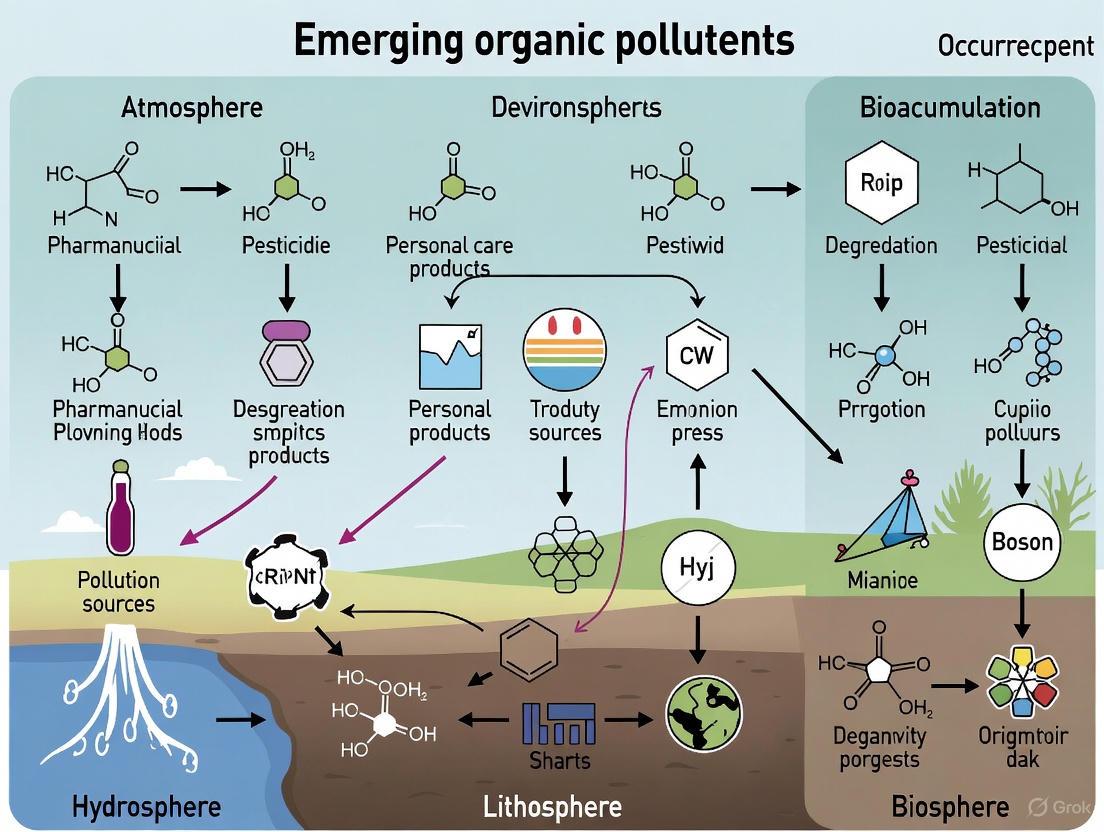
This article comprehensively reviews the occurrence, distribution, and environmental fate of emerging organic pollutants (EOPs), a diverse class of unregulated or inadequately regulated chemicals of growing concern.
Emerging Organic Pollutants: Tracking Their Occurrence and Fate Across Environmental Compartments
Abstract
This article comprehensively reviews the occurrence, distribution, and environmental fate of emerging organic pollutants (EOPs), a diverse class of unregulated or inadequately regulated chemicals of growing concern. Drawing upon recent scientific advances, we examine the presence of EOPs—including pharmaceuticals, endocrine disruptors, flame retardants, and microplastics—in complex matrices such as water, soil, biosolids, and sediments. The scope extends to advanced analytical and sensing methodologies for detection, critical evaluation of their transport and transformation mechanisms, and rigorous assessment of associated ecological and human health risks. Furthermore, we compare the efficacy of conventional versus innovative remediation technologies and discuss the implications of persistent, bioaccumulative pollutants for environmental regulation and future biomedical research, providing a foundational framework for researchers, scientists, and drug development professionals engaged in environmental chemistry and toxicology.
Defining the Contaminant Landscape: Sources, Distribution, and Prevalence of Emerging Organic Pollutants
Emerging organic pollutants (EOPs) represent a diverse group of unregulated synthetic chemicals that are increasingly detected in global environmental compartments, raising concerns due to their persistence, bioaccumulation potential, and adverse ecological and human health effects [1] [2]. The rise of EOPs is intrinsically linked to industrialization, urbanization, and the dramatic increase in global synthetic chemical production, which has escalated from 1 million tons annually in 1930 to approximately 500 million tons today [3]. These contaminants continuously enter the environment through multiple pathways, including wastewater treatment plant (WWTP) effluents, agricultural runoff, industrial discharge, and urban runoff, thereby contaminating water, soil, and air [4] [3]. Despite their name, "emerging" does not always signify newly discovered chemicals; it also encompasses substances previously unknown or unrecognized as hazardous, whose impacts are only now being elucidated through advanced analytical technologies [4] [5].
Framed within the broader context of research on the occurrence and fate of emerging organic pollutants in environmental compartments, this review systematically categorizes key pollutant classes, summarizes their detection frequencies and concentrations, and explores the complex processes governing their distribution, transformation, and ultimate environmental fate. Understanding these dynamics is crucial for developing effective monitoring strategies and remediation technologies to mitigate the risks posed by these pervasive contaminants.
Classification and Occurrence of Key Pollutant Classes
Emerging organic pollutants can be broadly classified into several categories based on their origin and use. The table below summarizes the major classes, their specific examples, primary sources, and documented occurrence in environmental matrices.
Table 1: Key Classes of Emerging Organic Pollutants, Their Sources, and Occurrence
| Pollutant Class | Representative Compounds | Primary Sources | Environmental Occurrence & Concentration Ranges |
|---|---|---|---|
| Pharmaceuticals | Carbamazepine, Diclofenac, Ibuprofen, Sulfamethoxazole, Erythromycin [6] [1] [7] | Wastewater effluent, aquaculture, agricultural runoff [4] | Detected in WWTP influents up to hundreds of µg/L; frequently found in surface waters at ng/L to low µg/L levels [6] [1] [7] |
| Personal Care Products (PCPs) | Triclosan, Parabens, UV filters (e.g., BP3), Fragrances [4] [6] | Domestic wastewater, leaching from personal care products [4] | Ubiquitous in wastewater; BP3 and other UV filters detected in ng/L range in WWTP influents [6] |
| Endocrine Disrupting Compounds (EDCs) | Bisphenol A (BPA), Bisphenol S (BPS), Natural & Synthetic Estrogens (E2, EE2) [6] [1] [8] | Plastic leachates, epoxy resins, e-waste dismantling, WWTP effluents [1] | BPA median concentration in e-waste soils: 6970 ng/g; Estrogens (E2, EE2) removed efficiently in hybrid constructed wetlands [6] [1] |
| Industrial Chemicals | Organophosphate Flame Retardants (OPFRs), Per- and Polyfluoroalkyl Substances (PFAS), 1,4-Dioxane [4] [1] [9] | Industrial discharge, leaching from consumer products, WWTPs [4] [9] | OPFRs like TCPP detected in air, water, and sediment; high concentrations in indoor dust [9] |
| Pesticides | Atrazine, Acetochlor, Neonicotinoids, Chlorpyrifos [6] [1] | Agricultural runoff, drainage from farmlands [1] | 57 pesticides detected in farmland soil and water; peak contamination in water during vegetative period [1] |
| Plasticizers | Di(2-ethylhexyl) phthalate (DEHP), Butyl benzyl phthalate (BBzP) [8] | Plastic products, biosolid-amended soils [8] | Dominant CEC in biosolids, accounting for >97% of total weight of investigated CECs [8] |
The environmental impact of these pollutants is significant. Pharmaceuticals and endocrine-disrupting compounds, even at trace concentrations (ng/L), can induce biological responses in non-target organisms, including endocrine disruption, antibiotic resistance, and sub-lethal toxic effects [6] [3]. For instance, synthetic estrogens from contraceptives have been linked to the feminization of male fish, while antibiotics in the environment contribute to the development and spread of antibiotic-resistant bacteria [4] [3].
Environmental Fate and Distribution Mechanisms
The fate and transport of emerging organic pollutants in environmental compartments are governed by their physicochemical properties and complex inter-media transfer processes.
Partitioning and Key Physicochemical Properties
The distribution of an EOP between air, water, and solid phases is controlled by its intrinsic physicochemical properties [8] [5]. The following dot code illustrates the primary partitioning processes and the key properties that govern them.
The ultimate environmental destination of a pollutant is determined by the interplay of these properties. For example, compounds with high vapor pressure readily volatilize into the atmosphere, while those with high octanol-water partition coefficients (Kow) tend to sorb to organic matter in soils and sediments and potentially bioaccumulate in aquatic organisms [8] [5]. The surrounding environmental conditions, such as temperature, pH, soil composition, and microbial activity, further modulate these partitioning behaviors [8].
Pathways into the Environment and Inter-Compartmental Transfer
EOPs enter the environment through well-defined pathways and are subsequently distributed across various compartments. The primary sources and fate routes are visualized below.
As illustrated, wastewater treatment plants (WWTPs) are a major point source for EOPs in developed regions [4] [5]. Conventional WWTPs are often ineffective at completely removing many of these complex synthetic compounds, leading to their discharge into surface waters via treated effluent [6] [3]. Biosolids (treated sewage sludge) from WWTPs, when applied to agricultural land, represent another significant pathway for EOPs to enter soils and potentially leach into groundwater [8]. From there, contaminants can be taken up by crops, volatilized into the air, or transported via runoff back to surface waters. This inter-compartmental mobility, including long-range atmospheric transport, means that EOPs generated in one geographic location can become a global concern, with some even detected in pristine polar regions [3] [9].
Analytical Methodologies for Detection and Quantification
Accurately determining the occurrence and concentration of EOPs at trace levels (ng/L to µg/L) in complex environmental matrices requires sophisticated analytical techniques and rigorous sample preparation.
Sample Preparation and Extraction
Sample pre-treatment is crucial for isolating target analytes from interfering substances and pre-concentrating them to detectable levels [5]. The general workflow for solid samples (e.g., soil, sludge) is outlined below.
Table 2: Key Sample Preparation and Analytical Techniques
| Step | Technique | Function & Key Details |
|---|---|---|
| Extraction | Accelerated Solvent Extraction (ASE) [5] | Uses high pressure and temperature for efficient and selective extraction of solid samples with solvent mixtures. |
| Clean-up & Concentration | Solid Phase Extraction (SPE) [5] | Removes matrix interferences and concentrates the analytes using a solid sorbent cartridge. |
| Derivatization | Chemical Derivatization | For Gas Chromatography (GC) analysis, this step increases analyte volatility and thermal stability. |
| Separation & Detection | Gas Chromatography-Mass Spectrometry (GC-MS) [5] | Separates volatile/p derivatized compounds; ideal for pesticides, some PPCPs, and industrial chemicals. |
| Liquid Chromatography-Mass Spectrometry (LC-MS) [4] [5] | Separates non-volatile, thermally labile, and polar compounds; workhorse for pharmaceuticals, polar pesticides, etc. | |
| Advanced Detection | Triple Quadrupole Mass Spectrometry (MS/MS) [5] | Provides high selectivity and sensitivity by monitoring specific precursor-to-product ion transitions. |
| Matrix-Assisted Laser Desorption/Ionization Mass Spectrometry Imaging (MALDI-MSI) [8] | Enables spatial visualization of contaminant distribution within a solid sample (e.g., biosolids). |
Experimental Protocol: Analysis of EOPs in Wastewater by LC-MS/MS
The following detailed methodology, adapted from a suspect screening study of wastewater treatment plants, provides a template for EOP analysis [7].
- Sample Collection: Collect 24-hour composite samples of wastewater influent and effluent from various treatment stages (e.g., after primary settling, biological treatment, nitrification, and final discharge) using automated samplers. Collect samples in pre-cleaned glass bottles and acidify to pH ~2-3 to inhibit microbial activity.
- Sample Pre-concentration and Clean-up:
- Pass a known volume of water sample (e.g., 500 mL) through a pre-conditioned Solid Phase Extraction (SPE) cartridge (e.g., Oasis HLB or equivalent).
- Dry the cartridge under vacuum or with nitrogen gas to remove residual water.
- Elute the trapped analytes with a small volume of an organic solvent (e.g., 10 mL methanol followed by 10 mL of acetonitrile).
- Gently evaporate the combined eluate to near dryness under a stream of nitrogen and reconstitute the residue in a small volume (e.g., 1 mL) of a methanol/water mixture compatible with the LC mobile phase.
- Instrumental Analysis:
- Chromatographic Separation: Inject the extract into a High-Performance Liquid Chromatography (HPLC) system. Separate the compounds using a reversed-phase C18 column with a binary mobile phase gradient (e.g., water and methanol, both with 0.1% formic acid) to enhance ionization.
- Mass Spectrometric Detection: Analyze the column effluent using a triple quadrupole mass spectrometer (MS/MS) operating in multiple reaction monitoring (MRM) mode for targeted analysis, or in high-resolution full-scan mode for suspect screening. Electrospray ionization (ESI) in both positive and negative modes is typically used.
- Data Processing and Quantification:
- For suspect screening, use a comprehensive suspect list (e.g., 1225 EOCs across pharmaceuticals, PCPs, pesticides, etc.) [7]. Identify compounds by matching the accurate mass of the molecular ion and the isotopic pattern against the database.
- For quantification, use an internal standard method with isotope-labeled analogs of the target analytes to correct for matrix effects and recovery losses. Report concentrations in ng/L.
Treatment and Removal Technologies
The removal of EOPs in engineered and natural systems is highly variable and compound-specific. The following table compares the performance of conventional and advanced treatment systems.
Table 3: Performance of Treatment Technologies for EOP Removal
| Technology | Key Mechanism(s) | Typical Removal Efficiency & Notes |
|---|---|---|
| Conventional WWTP (Activated Sludge) [6] [5] | Biological degradation, sorption to sludge | Varies widely; ineffective for many EOPs (e.g., Carbamazepine, Diclofenac). Removal depends on compound's biodegradability and sorption potential. |
| Enhanced Nitrification [7] | Specialized microbial degradation | Substantially removes a subset of EOCs; performance depends on sludge age and microbial community. |
| Constructed Wetlands (CWs) & Hybrid CWs (HCWs) [6] | Microbial degradation, plant uptake, sorption to substrate, photodegradation | Promising nature-based solution; HCWs showed >80% removal for BP3, Ketoprofen, EE2, and others. Seasonal variability exists. |
| Membrane Filtration (NF, RO) [6] | Physical size exclusion, charge repulsion | High removal efficiency for many EOPs. Drawbacks include high energy consumption, brine disposal issues, and cost. |
| Adsorption (Activated Carbon) [6] [3] | Sorption onto porous material | Effective for a wide range of apolar compounds; efficiency depends on carbon type and contaminant properties. |
| Advanced Oxidation Processes (AOPs) [6] [1] | Chemical destruction by highly reactive radicals (e.g., •OH) | Highly efficient degradation; can be energy-intensive and may produce unknown transformation products. |
The Scientist's Toolkit: Essential Research Reagents and Materials
Research into the occurrence and fate of EOPs relies on a suite of specialized reagents, materials, and analytical standards.
Table 4: Essential Reagents and Materials for EOP Research
| Reagent/Material | Function in Research |
|---|---|
| Isotope-Labeled Internal Standards (e.g., ¹³C- or ²H-labeled analogs of target EOPs) | Crucial for accurate quantification in mass spectrometry; corrects for matrix effects and losses during sample preparation. |
| Solid Phase Extraction (SPE) Cartridges (e.g., Oasis HLB, C18, SAM) | Extract, clean-up, and pre-concentrate target EOPs from complex water samples prior to analysis. |
| Chromatography Columns (e.g., Reversed-Phase C18 for LC-MS) | Separate individual EOPs from a complex mixture within the sample extract for isolated detection. |
| High-Purity Solvents (e.g., Methanol, Acetonitrile, Acetone) | Used in sample extraction, SPE, and as mobile phases in chromatography; purity is critical to minimize background noise. |
| Derivatization Reagents (e.g., BSTFA, MSTFA for GC analysis) | Chemically modify non-volatile EOPs to make them volatile and stable for analysis by Gas Chromatography. |
| Certified Reference Materials (CRMs) for soils, sludges, and water | Used for quality control and to validate analytical methods by providing a matrix with known contaminant concentrations. |
| Sorbent Materials for Passive Sampling (e.g., POCIS, SPMD) | Enable time-integrated sampling of EOPs in water, providing a more representative picture of contamination levels than grab samples. |
The multitude of emerging organic pollutants, spanning from pharmaceuticals and personal care products to industrial chemicals and pesticides, presents a complex and persistent challenge to environmental quality and ecosystem health. Their widespread occurrence in water, soil, and biosolids, coupled with their potential for bioaccumulation and ecological harm, underscores the critical need for continued research. Progress in this field hinges on the ongoing development and application of sophisticated analytical techniques, a deep understanding of the physicochemical properties governing their fate and transport, and the implementation of effective treatment technologies. Future efforts must focus on closing knowledge gaps regarding long-term low-dose exposure effects, mixture toxicity, and the environmental impact of transformation products, thereby informing robust regulatory frameworks and mitigation strategies.
Global Hotspots and Distribution Patterns in Air, Water, and Soil
Emerging organic pollutants (EOPs) represent a diverse group of synthetic chemicals that are not yet subject to routine monitoring or regulation but raise significant concerns for ecological and human health [1] [10]. These contaminants include pharmaceuticals and personal care products (PPCPs), endocrine-disrupting chemicals (EDCs), plastic additives, flame retardants, and pesticides, among others [8] [10]. Their presence in environmental compartments—air, water, and soil—stems from various anthropogenic activities, including industrial processes, agricultural practices, and urban wastewater discharge [1] [6]. Understanding the global distribution and hotspots of these pollutants is crucial for assessing environmental risks and developing effective mitigation strategies. This whitepaper synthesizes current research on the occurrence, fate, and distribution patterns of EOPs across environmental compartments, providing a technical guide for researchers and environmental professionals.
Global Hotspots of Emerging Organic Pollutants
Atmospheric Compartment
Volatile organic compounds (VOCs) and semi-volatile EOPs can become airborne, leading to contamination of the atmospheric compartment. Industrial regions, particularly those with concentrated manufacturing activities, serve as significant atmospheric hotspots.
Table 1: Atmospheric Hotspots and Characteristic Contaminants
| Hotspot Region | Predominant Contaminant Classes | Specific Compounds of Concern | Reported Concentrations | Primary Sources |
|---|---|---|---|---|
| Bao'an District, Shenzhen, China [1] | Volatile Organic Compounds (VOCs) | Toluene, n-hexane, xylene, trichloroethylene | Trichloroethylene and xylene exceeded acceptable health thresholds in air samples [1] | Industrial solvent use in electronics and chemical manufacturing |
| Global Industrial Regions [1] | Cyclic volatile methylsiloxanes | D4-D10 dimethylcyclosiloxanes | Up to 802.2 mg/kg in silicone rubber from consumer devices [1] | Emissions from silicone polymer production and degradation in consumer products |
| Indoor Environments [1] | Organophosphorus Flame Retardants (OPFRs) | Tris(2-butoxyethyl) phosphate, Tris(1-chloro-2-propyl) phosphate | Higher concentrations in dust compared to air [1] | Leaching from furniture, electronics, and building materials |
Industrial monitoring data from Bao'an District, Shenzhen, revealed temporal trends in VOC usage, with a temporary decline during the COVID-19 pandemic followed by a subsequent rebound [1]. Alkanes and aromatic hydrocarbons dominated the VOC profile, with toluene and n-hexane showing the highest detection rates (22.5% and 22.0%, respectively) [1]. Air sampling identified trichloroethylene and xylene as high-risk compounds frequently exceeding acceptable health thresholds, highlighting occupational exposure concerns in industrial settings [1].
Aquatic Compartments
Aquatic systems function as major sinks for EOPs through pathways such as wastewater discharge, agricultural runoff, and atmospheric deposition. Contaminant profiles in water bodies reflect regional anthropogenic activities.
Table 2: Aquatic Compartments Hotspots and Characteristic Contaminants
| Hotspot Region | Water Body Type | Predominant Contaminant Classes | Specific Compounds of Concern | Reported Concentrations |
|---|---|---|---|---|
| China (Gansu, Hebei, Shandong, Guangdong, Hong Kong) [1] | Wastewater Treatment Plant Effluents | Pharmaceuticals, Endocrine Disruptors | Carbamazepine, Ibuprofen, Bisphenol A (BPA) | Up to 706 μg/L; Carbamazepine and BPA frequently exceeded safe thresholds (96.4 ng/L and 288 ng/L, respectively) [1] |
| Xingkai Lake area, China [1] | Lake Water, Drainage Water | Pesticides | Atrazine, Simetryn, Buprofezin | Peak contamination during crop vegetative growth period [1] |
| Nanjing Jiangxinzhou WWTP, China [6] | Constructed Wetland Influents | Pharmaceuticals, PCPs, EDCs | 39 target EOPs identified in spring | Total EOP concentration in influent: 309 ng/L (spring) [6] |
| Global [10] | Surface Water, Groundwater | PPCPs, EDCs, Microplastics | Diverse compounds including antidepressants, blood pressure medications | Typically detected at ng/L to μg/L levels [10] |
In China, wastewater treatment plant (WWTP) effluents contain up to 140 different EOPs, with concentrations varying significantly across regions [1]. Ecological risk assessments have identified eighteen high-risk substances, with carbamazepine, ibuprofen, and BPA being particularly problematic due to their frequent detection above safe thresholds [1]. In the Xingkai Lake area, agricultural pesticides including atrazine, simetryn, and buprofezin peaked in water bodies during the vegetative growth period of crops, with contamination strongly correlated between drainage systems and the lake itself [1].
Terrestrial and Soil Compartments
Soil contamination represents a long-term reservoir for EOPs, with particular concerns around agricultural applications of biosolids and contamination from industrial activities.
Table 3: Terrestrial and Soil Compartments Hotspots and Characteristic Contaminants
| Hotspot Region | Soil Type/Context | Predominant Contaminant Classes | Specific Compounds of Concern | Reported Concentrations |
|---|---|---|---|---|
| E-waste Dismantling Areas, South China [1] | Surface Soil near E-waste Facilities | Bisphenol Analogs | BPA, TBBPA, Bisphenol F | Median: 6970 ng/g in e-waste soil vs. 197 ng/g in surrounding areas [1] |
| Xingkai Lake area, China [1] | Agricultural Soil | Pesticides | Atrazine, Acetochlor, Oxadiazon, Mefenacet | 43 pesticides and 3 degradation products detected [1] |
| Global Agricultural Soils [8] | Biosolid-Amended Soil | Phthalates, Pharmaceuticals, PCPs | DEHP, BBzP, Miconazole, Triclocarban | Phthalates account for >97% of total CECs by weight in biosolids [8] |
| Global [10] | Terrestrial Ecosystems | Microplastics | PVC, PET, PP, PE, LDPE, HDPE | Estimated 80% of manufactured plastics end up in environment [10] |
E-waste dismantling activities create extreme soil contamination hotspots for bisphenol analogs [1]. Soils from these facilities showed median BP concentrations of 6970 ng/g, far exceeding the 197 ng/g found in surrounding areas [1]. Spatial analysis revealed declining concentrations of tetrabromobisphenol A (TBBPA) and its debromination products with increasing distance from e-waste sites, clearly identifying these facilities as primary emission sources [1].
Application of biosolids to agricultural land represents another significant pathway for EOP introduction to soils. Phthalates dominate the contaminant profile in biosolids, accounting for over 97% of the total weight of investigated CECs, followed by pharmaceuticals (1.87%), personal care products (0.57%), and hormones (0.09%) [8].
Experimental Methodologies for EOP Analysis
Analytical Techniques for EOP Identification and Quantification
Advanced analytical techniques are required to detect EOPs at trace concentrations in complex environmental matrices.
Table 4: Analytical Techniques for EOP Assessment
| Technique | Applications | Key Strengths | Limitations |
|---|---|---|---|
| Liquid Chromatography-Mass Spectrometry (LC-MS/MS) [1] [10] | Pharmaceutical analysis, polar compound detection | High sensitivity for polar compounds, suitable for non-volatile EOPs | Matrix effects can suppress ionization |
| Gas Chromatography-Mass Spectrometry (GC-MS) [10] | VOC analysis, flame retardants, pesticides | Excellent separation efficiency, robust compound libraries | Requires derivatization for non-volatile compounds |
| High-Resolution Mass Spectrometry (HRMS) [1] | Non-targeted screening, identification of unknown compounds | Accurate mass measurement, elemental composition determination | Higher cost, complex data interpretation |
| Matrix-Assisted Laser Desorption/Ionization Mass Spectrometry Imaging (MALDI-MSI) [8] | Spatial distribution of CECs in complex matrices | Visualizes spatial distribution in solid samples | Qualitative analysis limitations, specialized equipment |
| Enzyme-Linked Immunosorbent Assay (ELISA) [10] | Rapid screening for specific compound classes | High throughput, cost-effective for targeted analysis | Potential cross-reactivity, less specific than MS |
Liquid chromatography coupled with mass spectrometry (LC-MS) has become the cornerstone technique for analyzing polar EOPs in environmental samples [1]. For instance, enzymatic hydrolysis coupled with LC-MS analysis revealed that 49-96% of bisphenols in aquatic products existed in bound forms, significantly increasing detected concentrations after treatment and highlighting the importance of appropriate sample preparation [1]. Non-targeted screening using high-resolution mass spectrometry has proven valuable for identifying novel structural analogs of known contaminants, such as previously unreported bisphenol analogs in e-waste contaminated soils [1].
Methodological Protocol: Hybrid Constructed Wetlands for EOP Removal
The following protocol summarizes the methodology employed to evaluate the efficiency of hybrid constructed wetlands (HCWs) for removing EOPs from wastewater, as detailed in the research by Zhang et al. [6].
Experimental Objective: To investigate the effects of environmental conditions, plant species, and substrate composition on the efficiency of EOPs removal in HCWs treating WWTP effluent.
Materials and Reagents:
- Influent Source: Municipal wastewater treatment plant effluent
- Target Analytes: 59 EOPs (19 pharmaceuticals, 6 PCPs, 7 EDCs, 6 bactericides, 1 flame retardant)
- Analytical Instruments: LC-MS/MS system
- Sampling Equipment: Grab samplers, composite samplers, refrigeration equipment
Procedure:
- System Design: Establish HCWs consisting of multiple constructed wetland units connected in series, incorporating different plant species and substrate compositions.
- Sampling Campaign: Collect influent and effluent water samples during spring and summer seasons to assess seasonal variability.
- Sample Preparation:
- Filter water samples through 0.7 μm glass fiber filters
- Acidify samples to pH ≈ 2 using hydrochloric acid
- Solid-phase extraction (SPE) using Oasis HLB cartridges
- Elute with methanol and concentrate under gentle nitrogen stream
- Instrumental Analysis:
- Analyze extracts using LC-MS/MS with electrospray ionization (ESI) in both positive and negative modes
- Employ reverse-phase C18 column for chromatographic separation
- Use isotope-labeled internal standards for quantification
- Quality Assurance:
- Implement procedural blanks to monitor contamination
- Analyze matrix spikes to evaluate method performance
- Calculate analyte recoveries (typically 70-120% acceptance range)
Data Analysis:
- Calculate removal efficiency: Removal (%) = (Cin - Cout)/C_in × 100
- Perform statistical analysis to evaluate significant differences between seasons, plant species, and substrate types
- Conduct correlation analysis between EOP properties (e.g., log K_ow) and removal efficiencies
Methodological Protocol: Soil Contamination Assessment at E-waste Sites
This protocol outlines the approach for evaluating soil contamination by bisphenol analogs at e-waste dismantling facilities, based on the research by Zhao et al. [1].
Experimental Objective: To investigate the spatial distribution and health risks of bisphenol chemicals (BPs) in surface soil from e-waste dismantling facilities and surrounding areas.
Materials and Reagents:
- Sampling Equipment: Stainless steel soil corer, amber glass jars, refrigeration equipment
- Extraction Solvents: Acetone, hexane, dichloromethane (HPLC grade)
- Cleanup Materials: Solid-phase extraction cartridges (Florisil, silica)
- Analytical Standards: 14 bisphenol analogs (BPA, TBBPA, bisphenol F, etc.)
- Instrumentation: Liquid chromatography-mass spectrometry system
Procedure:
- Sample Collection:
- Collect surface soil samples (0-5 cm depth) from e-waste dismantling facilities and surrounding areas along a distance gradient
- Collect triplicate samples at each location
- Store samples in amber glass containers at -20°C until analysis
- Sample Preparation:
- Freeze-dry and homogenize soil samples
- Sieve through 2 mm mesh to remove debris
- Extract using accelerated solvent extraction (ASE) with acetone:hexane (1:1, v/v) at 100°C and 1500 psi
- Concentrate extracts using rotary evaporation and nitrogen blow-down
- Cleanup:
- Perform cleanup using Florisil solid-phase extraction cartridges
- Elute with dichloromethane:methanol (9:1, v/v)
- Concentrate to near dryness and reconstitute in methanol for analysis
- Analysis:
- Analyze extracts using liquid chromatography-electrospray ionization-tandem mass spectrometry (LC-ESI-MS/MS)
- Use reverse-phase C18 column with gradient elution
- Employ multiple reaction monitoring (MRM) for quantification
- Use deuterated internal standards for quantification (e.g., d16-BPA)
- Quality Control:
- Analyze procedural blanks with each batch of samples
- Include matrix-spiked samples to monitor recovery (70-130% acceptable range)
- Use continuing calibration verification standards
Spatial Analysis:
- Apply geostatistical methods to model spatial distribution of BPs
- Calculate concentration gradients with distance from e-waste facilities
- Perform correlation analysis between different BP analogs to identify common sources
Risk Assessment:
- Calculate daily intake via soil ingestion for workers and residents
- Compare exposure levels with tolerable daily intake values
- Evaluate cumulative risks from multiple BP analogs
The Scientist's Toolkit: Essential Research Reagents and Materials
Table 5: Essential Research Reagents and Materials for EOP Analysis
| Category | Specific Items | Function/Application | Key Considerations |
|---|---|---|---|
| Sampling Materials | Solid-phase extraction cartridges (Oasis HLB, C18, Florisil) [6] [8] | Extraction and concentration of EOPs from aqueous and solid samples | Selection depends on target analyte polarity; HLB for broad-range extraction |
| Glass fiber filters (0.7 μm, 0.45 μm) [6] | Filtration of particulate matter from water samples | Pre-combustion reduces organic contamination | |
| Analytical Standards | Isotope-labeled internal standards (e.g., d16-BPA, 13C-caffeine) [1] [6] | Quantification accuracy via isotope dilution mass spectrometry | Should be added prior to extraction to correct for matrix effects and recovery |
| Native analytical standards for target EOPs [1] [8] | Compound identification and quantification | Purity >98% recommended; proper storage conditions essential | |
| Extraction Solvents | HPLC-grade methanol, acetone, acetonitrile, hexane [1] [8] | Sample extraction and preparation | Low background contamination crucial for trace analysis |
| Chromatographic Materials | Reverse-phase C18 columns (1.7-2.1 μm particle size) [1] [6] | LC separation of EOPs prior to mass spectrometric detection | Sub-2μm particles provide superior resolution for complex matrices |
| Derivatization Reagents | BSTFA, MTBSTFA, diazomethane [10] | Chemical modification of polar compounds for GC-MS analysis | Enhances volatility and detection sensitivity for GC-amenable compounds |
Visualization of Methodological Workflows
EOP Assessment Workflow in Aquatic Systems
Hybrid Constructed Wetland Treatment System
Global distribution patterns of emerging organic pollutants reveal distinct hotspots associated with specific anthropogenic activities. Industrial regions show elevated levels of VOCs and flame retardants in air; wastewater-impacted aquatic systems accumulate pharmaceuticals and personal care products; and soils receiving biosolids amendments or affected by e-waste recycling show significant contamination with plasticizers and bisphenol analogs [1] [6] [8]. The spatial distribution of these contaminants is influenced by regional industrial activities, agricultural practices, waste management systems, and climatic factors that affect partitioning between environmental compartments.
Advanced analytical methodologies, particularly LC-MS/MS and GC-MS, enable detection and quantification of EOPs at trace concentrations across environmental matrices [1] [10]. Nature-based solutions such as constructed wetlands demonstrate promise for cost-effective EOP removal from wastewater, with performance varying by compound characteristics, season, and system design [6]. Future research priorities should include expanding monitoring efforts in underrepresented regions, developing standardized analytical protocols, elucidating transformation pathways of EOPs in the environment, and establishing evidence-based regulatory frameworks to mitigate the ecological and health risks posed by these contaminants.
The application of treated sewage sludge, commonly referred to as biosolids, to agricultural land represents a critical nexus in the circular economy, transforming waste into a resource for soil improvement. Biosolids are valued for their high organic matter content and essential plant nutrients, including nitrogen, phosphorus, and micronutrients [8]. In the United States alone, approximately 43-56% of the six million dry metric tons of biosolids produced annually are land-applied, with similar practices occurring worldwide [11] [12]. While this practice reduces reliance on energy-intensive synthetic fertilizers and improves soil health, it also introduces a complex mixture of contaminants of emerging concern (CECs) into agricultural systems [8] [11]. These CECs include pharmaceutical products, personal care products, endocrine-disrupting compounds, microplastics, and per- and polyfluoroalkyl substances (PFAS), which persist through wastewater treatment processes and accumulate in biosolids [8] [11] [13]. This review examines the occurrence, environmental fate, and analytical methodologies for detecting CECs within the context of biosolids application, providing researchers with a comprehensive technical assessment of this critical environmental pathway.
Occurrence and Classification of Contaminants in Biosolids
Regulatory Framework and Biosolids Classification
The United States Environmental Protection Agency (USEPA) categorizes biosolids based on pathogen content and pollutant concentrations, defining specific use restrictions for each class [8] [12]:
- Class A: Biosolids that meet strict pathogen reduction standards, allowing for unrestricted public use and application without site restrictions.
- Class B: Biosolids with significant but not complete pathogen reduction, requiring site access restrictions and management practices to protect public health.
- Class A-EQ (Exceptional Quality): Biosolids meeting the most stringent pollutant concentration limits and pathogen reduction requirements, available for public sale without application restrictions [12].
Current USEPA regulations (40 CFR Part 503) establish limits for ten heavy metals and specify requirements for pathogen reduction and vector attraction, but notably lack regulatory standards for synthetic organic contaminants in land-applied biosolids [11] [14]. This regulatory gap is particularly concerning given the diversity and persistence of CECs documented in recent studies.
Quantitative Profile of Emerging Contaminants
Recent research has identified 419 distinct CECs across sewage sludge, biosolids, soils, and dust matrices, with 229 compounds positively detected in at least one study [8]. The compositional profile of these contaminants reveals significant quantitative disparities between contaminant classes.
Table 1: Prevalence of Major Contaminant Classes in Biosolids
| Contaminant Category | Representative Compounds | Percentage of Total CEC Weight |
|---|---|---|
| Phthalates | DEHP, BBzP | >97% |
| Pharmaceuticals | OFL, CPF, TMS, PPF, SA, NPX, SRT, AMT, FNF | 1.87% |
| Personal Care Products | Triclocarban, Triclosan | 0.57% |
| Hormones | Mestranol, Progesterone | 0.09% |
| Rubber Antioxidants | Substituted diphenylamines, para-phenylenediamines | 0.07% |
| Bisphenols | BPA, BPS | 0.05% |
Phthalates dominate the contaminant profile, accounting for over 97% of the total weight of investigated CECs, with di(2-ethylhexyl) phthalate (DEHP) and butyl benzyl phthalate (BBzP) being particularly prevalent [8]. Beyond these major categories, monitoring studies have detected numerous other concerning compounds:
- Per- and polyfluoroalkyl substances (PFAS): Recognized as persistent organic pollutants of critical concern due to their environmental persistence and potential for bioaccumulation [11] [14].
- Microplastics: Plastic particles less than five millimeters in diameter that accumulate in agricultural soils following repeated biosolids applications, with studies demonstrating a positive correlation between application frequency and soil microplastic concentrations [11].
- Neonicotinoid insecticides: Systemic insecticides that have been detected in biosolids-amended soils [8].
Analytical Methodologies for Contaminant Detection
Sample Preparation and Extraction Protocols
Robust sample preparation is essential for accurate contaminant analysis in complex biosolid matrices. The Quick, Easy, Cheap, Effective, Rugged, and Safe (QuEChERS) procedure has been optimized for extracting organic contaminants from biosolids [14].
Table 2: Key Research Reagents for Biosolid Analysis
| Reagent/Category | Specific Examples | Function in Analysis |
|---|---|---|
| Extraction Salts | MgSO₄, NaOAc | Salting-out effect, phase separation |
| dSPE Sorbents | PSA, C₁₈EC | Matrix component removal |
| Organic Solvents | Acetonitrile, Methanol | Compound extraction |
| Mobile Phase Additives | Formic acid, Ammonium fluoride | Chromatographic separation enhancement |
| Internal Standards | Isotopically-labeled analogs | Quantification calibration |
Detailed Extraction Protocol:
- Sample Preparation: Thaw biosolid specimens (7.5 ± 0.3 g) and add internal standard mixture (100 μL of 5 mg/L isotopically-labeled compounds in methanol) [14].
- Solvent Extraction: Add 10 mL Milli-Q water and 10 mL acetonitrile, vortex for 30 seconds, then sonicate for 30 minutes [14].
- Phase Separation: Add salt pouch (6000 mg MgSO₄/1500 mg NaOAc), shake vigorously, vortex for 30 seconds, and centrifuge at 3000g for 20 minutes [14].
- Cleanup: Transfer 8 mL organic phase to dSPE tube (900 mg MgSO₄/300 mg PSA/150 mg C₁₈EC), vortex, and centrifuge [14].
- Concentration: Transfer supernatant, concentrate to 1 mL, add 1 mL Milli-Q water, and concentrate further to remove residual acetonitrile [14].
- Filtration: Centrifuge at 20,000g for 5 minutes, then filter through PTFE membrane (0.22 μm) into HPLC vial [14].
Instrumental Analysis Techniques
Advanced analytical instrumentation enables comprehensive characterization of CECs in biosolid matrices:
- Liquid Chromatography-High Resolution Mass Spectrometry (LC-HRMS): Provides accurate mass measurements for compound identification and quantification, with chromatographic separation typically performed using reversed-phase columns (e.g., Synergi Hydro-RP, 150 mm × 1 mm, 4 μm) [14].
- Matrix-Assisted Laser Desorption/Ionization Mass Spectrometry Imaging (MALDI-MSI): Emerging as a valuable tool for qualitative analysis, allowing for spatial identification of CECs within biosolid matrices [8].
- Nontargeted Analysis (NTA): Enables detection of a broad range of analytes, including metabolites and transformation products, without prior compound selection. A recent study applying NTA to U.S. and Canadian biosolids detected 451 features in at least 80% of samples, with 92 compounds confirmed or assigned probable structures [14].
The following workflow diagram illustrates the comprehensive analytical process from sample preparation to data analysis:
Environmental Fate and Transport Mechanisms
Factors Influencing Contaminant Behavior
The environmental fate and transport dynamics of CECs in biosolids-amended soils are influenced by a complex interplay of contaminant properties and environmental conditions:
- Physicochemical Properties: Water solubility, volatility, degradation half-lives, sorption capacity, and bioaccumulation potential fundamentally determine contaminant mobility and persistence [8].
- Environmental Conditions: Temperature, pH, and moisture content significantly impact degradation rates and transformation pathways of organic contaminants [8].
- Soil Characteristics: Soil composition, organic matter content, and microbial activity play key roles in the adsorption, degradation, and persistence of CECs in soil environments [8].
The following diagram illustrates the primary pathways and transformations of contaminants following land application of biosolids:
Contaminant Prioritization Frameworks
The vast number of detected CECs necessitates sophisticated prioritization approaches to focus research and regulatory efforts. Computational toxicology tools, such as the Cheminformatics Hazard Comparison Module (HCM) from the U.S. EPA, enable systematic hazard assessment and compound ranking [14]. Recent applications of this approach to U.S. and Canadian biosolids have identified:
- Human Health Priority Compounds: p-Cresol and chlorophene were prioritized based on potential human health impacts [14].
- Ecological Health Priority Compounds: Fludioxonil and triclocarban were identified as high priority based on ecological toxicity endpoints [14].
This integrated approach combining nontargeted analysis with computational hazard assessment provides a powerful framework for identifying CECs requiring further fate and transport studies and potential regulatory attention [14].
Treatment Technologies and Removal Efficiencies
Conventional and Advanced Treatment Approaches
Various technologies have been investigated for removing organic contaminants from sewage sludge and biosolids, with varying degrees of effectiveness across different contaminant classes:
- Composting: A cost-effective method for resource recovery that shows potential for removing certain organic contaminants through microbial degradation. Efficiency is influenced by composting material composition, temperature control, ventilation rates, and turning frequency [13].
- Advanced Oxidation Processes (AOPs): Utilize powerful oxidizing agents to degrade persistent organic compounds, showing great potential but facing challenges with energy consumption and operational costs [13] [1].
- Hydrothermal Treatment: Applies elevated temperatures and pressures to facilitate contaminant degradation, particularly effective for certain organic pollutants [13].
- Electrochemical Technologies: Emerging as promising approaches for contaminant removal, though they require development of efficient catalytic materials and face challenges with limited reuse rates [13].
Table 3: Comparison of Biosolids Treatment Technologies for CEC Removal
| Technology | Key Advantages | Limitations/Challenges |
|---|---|---|
| Composting | Cost-effective, suitable for large volumes, resource recovery | Highly variable degradation efficiency, influenced by multiple operational factors |
| Advanced Oxidation Processes | Effective degradation of persistent compounds, mineralizes contaminants | Energy-intensive, can generate toxic byproducts, high operational costs |
| Hydrothermal Treatment | Effective for recalcitrant compounds, versatile applications | High pressure/temperature requirements, scalability challenges |
| Electrochemical | Operates at ambient conditions, modular implementation | Requires specialized catalytic materials, electrode fouling, limited reuse |
Research Gaps and Future Directions
Despite advances in treatment technologies, significant challenges remain in managing CECs in biosolids:
- Analytical Limitations: Need for standardized methods and advanced detection technologies to comprehensively monitor CECs in complex matrices [11] [2].
- Regulatory Gaps: Absence of systematic monitoring programs and defined standards for organic contaminants in land-applied biosolids [11].
- Treatment Efficacy: Many conventional sludge stabilization methods (e.g., anaerobic/aerobic digestion, composting) demonstrate limited effectiveness against highly persistent organic contaminants [13].
- Synergistic Effects: Limited understanding of the combined impacts of multiple organic compounds on their distribution and transport in the environment [11].
Future research should prioritize developing more efficient treatment technologies, establishing science-based regulatory frameworks, and improving understanding of the long-term ecological and health impacts of repeated applications of CEC-containing biosolids to agricultural lands [11] [13].
The land application of biosolids represents a critical pathway for the introduction of contaminants of emerging concern into agricultural ecosystems. Current research has identified numerous CECs, including phthalates, pharmaceuticals, personal care products, and persistent organic pollutants, that persist through wastewater treatment and accumulate in biosolids. Advanced analytical techniques, particularly nontargeted analysis coupled with high-resolution mass spectrometry and computational toxicology tools, have enhanced our ability to detect and prioritize concerning compounds in these complex matrices. The environmental fate of these contaminants is governed by an intricate interplay of compound properties, environmental conditions, and soil characteristics, with potential implications for ecosystem and human health through multiple exposure pathways. While various treatment technologies show promise for removing organic contaminants, significant challenges remain in developing efficient, scalable solutions and establishing protective regulatory frameworks. Addressing these challenges requires continued research investment, development of advanced detection methods, and implementation of evidence-based standards to balance the agronomic benefits of biosolids application with the need to protect environmental and public health.
Electronic waste (e-waste) dismantling and related industrial activities have been identified as significant point sources for the release of bisphenols (BPs) and halogenated compounds into the environment. These emerging organic pollutants, which include bisphenol A (BPA), its structural analogs, and brominated/chlorinated derivatives, are released from the plastic components and flame retardants prevalent in electronic products during informal recycling and disposal processes [15] [16]. The environmental occurrence and fate of these contaminants are of increasing concern within the scientific community due to their persistence, potential for long-range transport, and documented ecological and health risks, including endocrine-disrupting effects [1] [16].
The transformation of these compounds during waste handling processes leads to the formation of complex mixtures whose environmental behavior and toxicological profiles are not fully understood. This technical review synthesizes current research on the emission characteristics, distribution patterns, and advanced methodologies for identifying and quantifying BPs and halogenated compounds from e-waste point sources, providing a foundation for improved environmental monitoring and risk assessment frameworks.
Quantitative Contamination Profiles in Environmental Matrices
Soil Contamination Levels at E-waste Sites
Surface soil samples from e-waste dismantling facilities show significantly elevated concentrations of bisphenol compounds compared to surrounding areas, demonstrating their point source characteristics.
Table 1: Concentrations of Bisphenol Chemicals in Soil from E-waste Dismantling Areas
| Matrix | Location | Compound | Concentration Range | Median Concentration | Citation |
|---|---|---|---|---|---|
| Surface soil | E-waste facilities (South China) | Total BPs | 963 - 47,160 ng/g | 6,970 ng/g | [15] |
| Surface soil | Surrounding areas (South China) | Total BPs | 10 - 7,750 ng/g | 197 ng/g | [15] |
| Grid soil | Guiyu e-waste site | TBBPA | Up to 23,500 ng/g | Not specified | [17] |
| Grid soil | Qingyuan e-waste site | TBBPA | Up to 4,820 ng/g | Not specified | [17] |
The data reveals that e-waste dismantling facilities serve as significant contamination hotspots, with BP concentrations orders of magnitude higher than surrounding areas. BPA, tetrabromobisphenol A (TBBPA), and bisphenol F (BPF) were identified as the dominant compounds in both facility and surrounding area soils [15]. Spatial analysis demonstrates that concentrations of TBBPA and its debromination products significantly decrease with increasing distance from e-waste dismantling facilities, confirming their point source origin [15].
Halogenated Transformation Products as Molecular Markers
Mixed bromine/chlorine transformation products (ClyBrxBPAs) of TBBPA have been proposed as specific molecular markers for identifying pollution from printed circuit board processing in e-waste dismantling areas.
Table 2: Halogenated Transformation Products of TBBPA in E-waste Impacted Soils
| Compound Category | Specific Compounds Detected | Detection Frequency in Guiyu | Detection in Qingyuan/Shouguang | Potential as Specific Marker |
|---|---|---|---|---|
| BrxBPAs (debromination products) | 2-BrBPA, 2,2'-Br2BPA, 2,6-Br2BPA, 2,2',6-Br3BPA | 8.3-100% | Low or not detectable | Moderate |
| ClyBrxBPAs (mixed halogenated products) | 2-Cl-2'-BrBPA, 2-Cl-2',6,6'-Br3BPA, 2-Cl-2',6'-Br2BPA | Detected in specific samples | Not detectable | High |
The distribution of these transformation products was centered on e-waste dismantling parks and extended into surrounding areas, with composition profiles varying between different types of e-waste processing activities [17]. Specifically, TBBPA transformation products were more abundant in areas processing printed circuit boards compared to those recycling wires and cables or flame retardant production bases, highlighting their potential as specific molecular markers for this activity [17].
Experimental Methodologies for Analysis
Non-targeted Screening and Targeted Analysis of BPs in Soil
Sample Collection and Preparation: Surface soil samples (24 from dismantling parks, 34 from surrounding areas) were collected from various locations within two typical large-scale e-waste dismantling parks in South China using pre-cleaned brushes and wrapped in clean aluminum foil [15]. Samples were sieved through a 125 μm stainless sieve to remove large stones and stored at -20°C until analysis [15].
Approximately 50 mg of soil sample was weighted and spiked with 10 μL surrogate standards, then vortexed. Subsequently, 3 mL of acetonitrile (ACN) was added for extraction [15]. After sonication for 15 minutes, the extract was centrifuged at 2500 rpm for 5 minutes. This extraction process was repeated twice, and the combined extract was concentrated to about 100 μL [15].
Derivatization and Instrumental Analysis: The concentrated extract was derivatized with dansyl chloride (DnsCl) to enhance detection sensitivity and accuracy by introducing easily ionizable functional groups to BPs and generating characteristic fragments [15]. Screening of derivatized BPs was performed using ultra-performance liquid chromatography (UPLC) coupled with high-resolution mass spectrometry (HRMS) with Orbitrap Exploris 240 detection [15]. Determination of identified derivatized BPs was conducted using liquid chromatography coupled to a triple quadrupole MS with electrospray ionization in multiple reaction monitoring (MRM) mode [15].
Analysis of TBBPA and Halogenated Transformation Products
Chemical Analysis Protocol: For the analysis of TBBPA and its transformation products, soil samples were freeze-dried, homogenized, and sieved through a 150 μm stainless steel sieve [17]. Approximately 2.0 g of each prepared sample was spiked with internal standards and extracted using accelerated solvent extraction with a hexane/dichloromethane mixture [17].
The extract was concentrated and purified using a silica/silica-sulfoxide column chromatography system, followed by further purification with a concentrated sulfuric acid silica gel column [17]. Final determination was performed using gas chromatography-mass spectrometry (GC-MS) operating in negative chemical ionization mode with selected ion monitoring [17].
Quality Assurance and Control: Method recoveries were measured by spiking target BPs into pooled soil samples, with recoveries ranging from 65.6 ± 3.1% to 85.6 ± 3.6% after subtracting original concentrations [15]. Procedural blanks were processed alongside samples, with no target bisphenol compounds detected in these blanks [15]. Calibration curves for derivatized bisphenol standards exhibited linear regression coefficients >0.99 across concentrations of 10-200 ng/mL [15].
Transformation Pathways and Environmental Fate
Transformation Pathways of TBBPA in E-waste Environments
TBBPA undergoes complex transformation in e-waste impacted soils, leading to both debromination products and mixed bromine/chlorine compounds through various environmental processes.
The transformation pathways illustrate two primary processes: sequential debromination leading to less brominated compounds and eventual formation of BPA, and chlorination processes that result in mixed bromine/chlorine compounds (ClyBrxBPAs) [17]. These mixed halogenated transformation products are of particular concern due to their potential as specific molecular markers for e-waste activities and possibly enhanced persistence and toxicity compared to their parent compounds [17].
Environmental Partitioning and Transport
The environmental fate and transport dynamics of BPs and halogenated compounds are influenced by their physicochemical properties and environmental conditions. Key properties determining their behavior include:
- Partition Coefficients: logKOW (octanol-water) values range from 1.65 for BPS to 3.64 for BPA, indicating moderate hydrophobicity [16]
- Soil Adsorption: logKOC (soil adsorption coefficient) values range from 3.88 for BPS to 4.88 for BPA, suggesting strong adsorption to organic matter [16]
- Water Solubility: Varies from 120 mg/L for BPA to 3518 mg/L for BPS, influencing mobility in aquatic systems [16]
- Persistence: Half-lives in air range from 0.11 to 3.62 days due to atmospheric oxidation by hydroxyl radicals [16]
Soil characteristics, including composition, organic matter content, and microbial activity, play key roles in the adsorption, degradation, and persistence of these compounds in soil environments [8]. The higher water solubility of BPS compared to BPA suggests greater potential for groundwater contamination, despite its lower hydrophobicity [16].
The Researcher's Toolkit: Essential Reagents and Materials
Table 3: Essential Research Reagents and Materials for BP and Halogenated Compound Analysis
| Reagent/Material | Specification/Purity | Application Function | Experimental Notes |
|---|---|---|---|
| Dansyl chloride (DnsCl) | HPLC purity | Derivatization agent for enhanced MS detection sensitivity | Introduces easily ionizable groups; enables positive ESI-HRMS detection [15] |
| Acetonitrile (ACN) | HPLC grade | Extraction solvent for soil samples | Efficient extraction of BPs from soil matrix; used with sonication [15] |
| Bisphenol standards (BPA, BPF, BPS, etc.) | Purity >95% | Quantification and identification reference standards | Required for calibration curves (10-200 ng/mL range) and compound identification [15] |
| Surrogate standards | Isotopically labeled (e.g., d3-TCS) | Internal standards for quality control | Corrects for matrix effects and procedural losses [17] |
| TBBPA and transformation products | Analytical standards | Target compounds for halogenated BP analysis | Includes BrxBPAs and ClyBrxBPAs for comprehensive profiling [17] |
| Silica gel/silica-sulfoxide columns | Chromatography grade | Sample clean-up and purification | Removes interfering matrix components prior to analysis [17] |
| Hexane/Dichloromethane mixture | HPLC grade | Accelerated solvent extraction | Efficient extraction of halogenated compounds from soil [17] |
E-waste dismantling facilities represent significant point sources for bisphenols and halogenated compounds, with soil concentrations in these areas far exceeding those in surrounding environments. The identification of mixed bromine/chlorine transformation products of TBBPA as potential specific molecular markers for printed circuit board processing provides a valuable tool for source apportionment in environmental monitoring. Advanced analytical methodologies combining non-targeted screening with targeted analysis enable comprehensive characterization of these complex contaminant profiles, though challenges remain in understanding the complete environmental fate and toxicological implications of the identified compounds. The data and methodologies presented herein establish a foundation for ongoing environmental surveillance and risk assessment of these emerging contaminants from e-waste point sources.
Agricultural runoff serves as a critical pathway for the dissemination of emerging organic pollutants into freshwater ecosystems, presenting complex challenges for environmental and public health. This phenomenon involves the transport of pesticides, antibiotics, and their transformation products from agricultural landscapes to aquatic systems through irrigation return flow, stormwater discharge, and subsurface drainage. Within the broader research on the occurrence and fate of emerging contaminants in environmental compartments, agricultural runoff represents a significant vector for introducing these biologically active compounds into freshwater environments, where they undergo complex transport, transformation, and bioaccumulation processes.
The interplay between agricultural chemicals and antimicrobial resistance (AMR) has recently emerged as a paramount concern, with evidence suggesting that pesticide exposure can co-select for antibiotic resistance genes in environmental microbial communities [18]. This review synthesizes current understanding of the sources, pathways, occurrence, and ecological impacts of pesticides and antibiotics in freshwater ecosystems influenced by agricultural activities, with particular emphasis on their combined effects and the technological approaches for mitigation.
Primary Pollution Pathways
Agricultural runoff transports contaminants through multiple mechanisms including rainfall, evaporation, sedimentation, percolation, water drift, and surface runoff [19]. These pathways facilitate the movement of pesticides and antibiotics from application sites to adjacent water bodies, with the potential for long-range transport and widespread distribution. Key sources include inappropriate management of pesticides [20], excretion of antibiotics by humans and animals (30-90% of ingested doses) [21], and dissemination through urban wastewater, biosolids, and manures [21]. Fertilization and irrigation with antibiotic-polluted manures, biosolids, sewage sludge, and water further introduce these emerging contaminants into agro-ecosystems [21].
Table 1: Documented Concentrations of Pesticides in Freshwater Systems
| Pesticide Class | Specific Compounds | Location | Concentration Range | Study |
|---|---|---|---|---|
| Herbicides | Ametryn, Diuron, Terbutryn | Peñas Blancas River, Costa Rica | Detected in 100% of water samples | [19] |
| Insecticides | Clothianidin, Chlorpyrifos, Imidacloprid | Peñas Blancas River, Costa Rica | Detected in 100% of water samples | [19] |
| Fungicides | Carbendazim, Metalaxyl, Pyraclostrobin | Peñas Blancas River, Costa Rica | Detected in water samples | [19] |
| Multi-class | Cadusafos, Diazinon, Ethoprophos, Oxamyl | Peñas Blancas River, Costa Rica | Detected in water samples | [19] |
| Herbicides | Atrazine, Acetochlor | Xingkai Lake area, China | Dominant in dry fields | [1] |
| Herbicides | Oxadiazon, Mefenacet | Xingkai Lake area, China | Prevalent in paddy fields | [1] |
Table 2: Documented Concentrations of Antibiotics in Freshwater Systems
| Antibiotic Class | Specific Compounds | Location | Concentration Range | Study |
|---|---|---|---|---|
| Sulfonamides | Sulfamethoxazole | Blantyre, Malawi | 1,400 - 3,100 ng·POCIS⁻¹·day⁻¹ | [22] |
| Macrolides | Erythromycin | Blantyre, Malawi | Prominently detected | [22] |
| Nitroimidazoles | Metronidazole | Blantyre, Malawi | Prominently detected | [22] |
| Diaminopyrimidines | Trimethoprim | Blantyre, Malawi | Prominently detected | [22] |
| Fluoroquinolones | Ciprofloxacin, Ofloxacin | Global biosolids | Detected in monitoring studies | [8] |
Spatial and Temporal Distribution Patterns
Contaminant distribution exhibits significant spatial and temporal variability influenced by application patterns, hydrological conditions, and seasonal agricultural practices. In the Xingkai Lake area in China, water sampling revealed peak pesticide contamination during the vegetative growth period, with atrazine, simetryn, and buprofezin as primary pollutants in drainage and lake water [1]. Correlation analysis (r > 0.8) indicated shared contamination sources between drainage systems and the lake [1]. In Malawi, antibiotic concentrations demonstrated seasonal fluctuations corresponding to rainfall patterns and infectious disease prevalence, with higher levels of sulfonamides and tuberculosis therapies in dense urban communities and elevated macrolide and fluoroquinolone concentrations downstream of hospital facilities [22].
Ecological Impacts and Resistance Development
Toxicological Effects on Aquatic Organisms
Pesticides and antibiotics in freshwater ecosystems elicit a range of toxicological effects across trophic levels. Ecological risk assessments in the Xingkai Lake area identified significant risks from atrazine, chlorpyrifos, and prometryn, with potential affected species fractions exceeding 5% [1]. Pharmaceuticals, including hormones and antibiotics, can induce antimicrobial resistance and endocrine disruption in aquatic organisms [23], while microplastics can act as carriers of heavy metals and persistent organic pollutants, elevating risks of oxidative stress, inflammation, and cellular toxicity [23].
Promotion of Antimicrobial Resistance
A particularly concerning impact of agricultural runoff is its role in promoting antimicrobial resistance (AMR). Herbicide exposure has been demonstrated to significantly increase the abundance and diversity of antibiotic resistance genes (ARGs) in environmental samples [18]. Metagenomic analyses of herbicide-contaminated environments revealed notable increases in ARG subtypes associated with multidrug resistance (bacA) and sulfonamides (sul1) [18]. Pesticides can promote the selection and emergence of multi-drug resistance (MDR), cross-resistance (tolerance to antibiotics and heavy metals), and enhance the acquisition of ARGs by horizontal gene transfer (HGT) through conjugation between bacteria [19].
The mechanisms underlying this phenomenon include:
- Co-selection pressure: Herbicides may enable host microorganisms to acquire ARGs through gene mutations induced by herbicide stress [18].
- Enhanced horizontal gene transfer: Herbicides can increase cell membrane permeability and the content of mobile genetic elements (MGEs) in microorganisms, facilitating the spread of ARGs [18].
- Microbial community shifts: Herbicide exposure leads to a marked reduction in biodiversity and significant down-regulation of specific bacterial genera [18].
Figure 1: Mechanisms of Pesticide-Driven Antimicrobial Resistance
Treatment and Mitigation Technologies
Remediation Approaches for Agricultural Runoff
Various technologies have been developed and implemented to mitigate contaminant loads in agricultural runoff. Among reported technologies for pesticide treatment, constructed wetlands are the most commonly deployed, followed by algal or photobioreactor systems [20]. Advanced oxidation processes, particularly photo-Fenton methods, have been utilized for pesticides remediation including triazine, methyl parathion, fenuron and diuron [20]. Algal bioreactors offer extensive application for a wide range of pesticides treatment, including 2,4-Dichlorophenoxyacetic acid, 2-methyl-4-chlorophenoxyacetic acid, alachlor, diuron, chlorpyrifos, endosulfan, and imidacloprid, especially at lower hydraulic retention times of 2-6 h [20]. Hybrid approaches present promising opportunities for more effective pesticide removal in a viable manner [20].
Table 3: Performance Comparison of Runoff Treatment Technologies
| Technology | Target Contaminants | Efficiency | Conditions | Reference |
|---|---|---|---|---|
| Constructed Wetlands | Various pesticides/antibiotics | Varies by compound | Dependent on design and vegetation | [20] |
| Algal Bioreactors | 2,4-D, MCPA, alachlor, diuron, chlorpyrifos | Effective at low HRT | Hydraulic retention time: 2-6 h | [20] |
| Photo-Fenton Process | Triazine, methyl parathion, fenuron, diuron | Effective degradation | Advanced oxidation parameters | [20] |
| Cyanobacteria-Bacterial Consortium | Tenofovir disoproxil fumarate | 88.7-94.1% removal | Optimal at 25 mg/L, 16 days | [1] |
Source Control and Management Practices
Beyond technological remediation, source control represents a fundamental approach to mitigating agricultural runoff impacts. Reducing antibiotic and pesticide use and lowering environmental release through pretreatments of urban wastes and manures constitutes a feasible way to alleviate negative impacts in agro-ecosystems [21]. Targeted monitoring of high-risk compounds and improved workplace safety measures can further help mitigate occupational hazards in industrial agricultural regions [1].
Methodological Approaches for Assessment
Analytical Techniques for Contaminant Monitoring
Comprehensive assessment of pesticides and antibiotics in freshwater ecosystems requires sophisticated analytical approaches. Chemical sampling utilizing Polar Organic Chemical Integrative Samplers (POCIS) enables longitudinal surveillance of contaminant profiles, with deployment typically ranging from 5-22 days [22]. For complex matrices including sewage sludge, biosolids, and soils, analytical techniques like matrix-assisted laser desorption/ionization mass spectrometry imaging (MALDI-MSI) have emerged as valuable tools for qualitative analysis [8]. Metagenomic analysis employing similarity-based search approaches with BWA and BLASTX (E-value cutoff: 1×10⁻⁷; Identity cutoff: 80%; Query cover cutoff: 75%) enables annotation and classification of antibiotic resistance gene-like sequences in environmental samples [18].
Figure 2: Experimental Workflow for Pollutant Assessment
Ecotoxicological Risk Assessment
Risk assessment methodologies include predicted no-effect concentration (PNEC) thresholds agreed by the AMR Industry Alliance to evaluate ecological risks of AMR selection [22]. Additional approaches include species sensitivity distributions to derive long-term water quality criteria for high-risk emerging pollutants [1]. Correlation analyses and network analyses using Spearman's rank correlations (ρ > 0.9, p < 0.001) help identify co-occurrence patterns between microbial communities and resistomes [18].
The Researcher's Toolkit: Essential Methodologies
Table 4: Key Research Reagents and Methodologies
| Item/Technique | Application | Specifications | Reference |
|---|---|---|---|
| Polar Organic Chemical Integrative Samplers (POCIS) | Passive sampling of antibiotics and pesticides | Deployment: 5-22 days; Analyzes 38 antibiotics, 8 antiretrovirals, 28 herbicides | [22] |
| Metagenomic Analysis | Detection of ARGs and microbial community shifts | BLASTX parameters: E-value 1×10⁻⁷, Identity 80%, Query cover 75% | [18] |
| Kraken 2 Taxonomic Classifier | Microbial community composition | Uses k-mer matching; Confidence: 0; Minimum-hit-groups: 2 | [18] |
| Network Analysis | Co-occurrence patterns between microbes and ARGs | Gephi software; Spearman's correlation (ρ > 0.9, p < 0.001) | [18] |
| Liquid Chromatography-Mass Spectrometry | Quantification of pesticide/antibiotic residues | Enables detection of compounds in ng·POCIS⁻¹·day⁻¹ range | [22] |
| Matrix-Assisted Laser Desorption/Ionization Mass Spectrometry Imaging (MALDI-MSI) | Qualitative analysis of CECs in complex matrices | Applications in biosolids, sewage sludge, and soil analysis | [8] |
Agricultural runoff constitutes a significant vector for the introduction of pesticides and antibiotics into freshwater ecosystems, with demonstrated impacts on ecological health and antimicrobial resistance dissemination. The complex interplay between these contaminants necessitates integrated assessment and mitigation approaches that account for their combined effects and transformation products. Future research priorities should include long-term ecological impact studies, advanced treatment technologies for contaminant removal, and comprehensive regulatory frameworks that address the multifaceted challenges posed by these emerging organic pollutants. Within the broader context of environmental compartment research, understanding the occurrence and fate of these contaminants in agricultural runoff remains essential for developing effective management strategies and safeguarding freshwater resources.
The planetary boundaries framework defines a safe operating space for humanity by quantifying the limits of stability for critical Earth system processes. The "novel entities" boundary, which encompasses synthetic chemicals and other new substances, has been identified as a domain of high risk. This review synthesizes current scientific evidence on the occurrence, fate, and environmental impact of emerging organic pollutants to assess whether this planetary boundary has been transgressed. Evidence from global monitoring studies reveals widespread contamination of environmental compartments—including water, soil, biosolids, and biota—by pharmaceuticals, personal care products, plastic additives, and industrial chemicals. Their persistent, mobile, and toxic properties, coupled with inadequate regulatory oversight and monitoring, indicate that the safe operating space for novel entities has been exceeded, necessitating urgent global action to mitigate further Earth system destabilization.
The planetary boundaries framework establishes quantitative limits for nine critical processes that regulate Earth's stability and resilience [24]. First proposed in 2009 and updated in 2023, this framework identifies the "novel entities" boundary as one of six boundaries that have been transgressed, placing humanity in a zone of increasing risk [24]. Novel entities are defined as "technological developments introduc[ing] novel synthetic chemicals into the environment, mobiliz[ing] materials in wholly new ways, modify[ing] the genetics of living organisms, and otherwise interven[ing] in evolutionary processes and change the functioning of the Earth system" [24]. The amount of synthetic substances released into the environment without adequate safety testing places novel entities in the high-risk zone, with particular concern for persistent organic pollutants, heavy metal compounds, radioactive materials, and plastics [24] [25].
This assessment is supported by evidence that humanity has exceeded the safe operating space for these chemicals, disrupting the planetary boundary [1]. This whitepaper examines the status of the novel entities boundary through the lens of emerging organic pollutants—chemicals not currently regulated but raising ecological or human health concerns [1]. These include endocrine-disrupting compounds, pharmaceutical and personal care products, disinfection by-products, microplastics, and persistent organic chemicals, along with their degradation products [1].
Quantifying the Transgression: Evidence from Global Contamination
Current Status of the Novel Entities Boundary
The planetary boundaries framework provides a science-based analysis of Earth system resilience. According to the 2023 update conducted by the Stockholm Resilience Centre, six of the nine planetary boundaries have been transgressed, with the novel entities boundary firmly in the high-risk zone [24]. This assessment is based on the overwhelming number of synthetic substances released into the environment without adequate safety testing or monitoring.
Table 1: Status of the Planetary Boundaries (2023 Update)
| Earth System Process | Boundary Status | Key Metrics |
|---|---|---|
| Climate Change | Transgressed | CO₂ concentration, energy imbalance |
| Biosphere Integrity | Transgressed | Genetic diversity, functional integrity |
| Land System Change | Transgressed | Global forest area loss |
| Freshwater Change | Transgressed | Blue water, green water alterations |
| Biogeochemical Flows | Transgressed | Nitrogen, phosphorus cycles disruption |
| Novel Entities | High-risk zone | Synthetic chemical production/release |
| Stratospheric Ozone Depletion | Safe | Ozone-depleting substances |
| Atmospheric Aerosol Loading | Safe (but rising) | Interhemispheric aerosol difference |
| Ocean Acidification | Transgressed (2025) | Surface ocean pH decline |
The transgression of the novel entities boundary is particularly concerning due to the irreversible nature of contamination by persistent chemicals and the limited capacity for remediation once these substances are widely dispersed in the environment [24]. The framework highlights that over 13,000 chemicals are currently known to be used in plastics production alone, with many having hazardous properties while thousands lack even basic toxicological data [26].
Global Occurrence of Emerging Organic Pollutants
Recent monitoring studies demonstrate the ubiquitous presence of emerging organic pollutants across diverse environmental compartments, providing tangible evidence of the novel entities boundary transgression.
Table 2: Occurrence of Emerging Organic Pollutants in Environmental Compartments
| Environmental Compartment | Pollutant Classes Detected | Representative Concentrations | Location |
|---|---|---|---|
| Wastewater Treatment Plant Effluents | 140 emerging pollutants including pharmaceuticals, EDCs | Up to 706 μg/L; frequently exceeding safe thresholds for carbamazepine (96.4 ng/L) and BPA (288 ng/L) | China (Gansu, Hebei, Shandong, Guangdong, Hong Kong) [1] |
| E-waste Dismantling Soils | Bisphenol chemicals (BPs) | Median: 6,970 ng/g (e-waste) vs. 197 ng/g (surrounding areas); BPA exceeding worker safety guidelines | South China [1] |
| Biosolids | 229 contaminants of emerging concern (CECs) from 419 investigated | Phthalates (>97% of total CEC weight), pharmaceuticals (1.87%), PCPs (0.57%), hormones (0.09%) | Global assessment [8] |
| Recycled HDPE Plastics | 491 organic compounds detected, 170 tentatively annotated | Pesticides (162), pharmaceuticals (89), industrial chemicals (65), plastic additives (45) | Global South (13 countries) [26] |
| Agricultural Systems | 57 pesticides and degradation products | 43 pesticides + 3 degradation products in soil; peak water contamination during vegetative period | Xingkai Lake, China [1] |
| Aquatic Products | Bisphenols (BPA, BPS, BPF) | High detection rates; 49-96% in bound forms requiring enzymatic hydrolysis for accurate assessment | South China markets [1] |
The data reveal several concerning patterns: (1) the widespread detection of emerging pollutants across all monitored environmental compartments; (2) concentration levels that frequently exceed safety thresholds for specific compounds; and (3) the identification of numerous compounds lacking adequate toxicological assessment.
Environmental Fate and Pathways of Contamination
Source-to-Sink Transportation Mechanisms
The environmental fate and transport dynamics of emerging contaminants are influenced by their physicochemical properties—including water solubility, volatility, degradation time, sorption capacity, and bioaccumulation potential—and environmental conditions such as temperature, pH, and moisture content [8]. Additionally, soil characteristics, particularly composition, organic matter content, and microbial activity, play key roles in their adsorption, degradation, and persistence in soil environments [8].
Figure 1: Environmental pathways and fate of novel entities from source to impact. Yellow nodes represent pollution sources, green nodes indicate environmental compartments, and blue nodes show ultimate consequences.
Critical Transformation Processes in Environmental Compartments
Wastewater treatment processes significantly impact the transformation and removal of emerging contaminants, affecting their degradation and partitioning between treated effluents and sewage sludge [8]. For instance, the biodegradation of tenofovir disoproxil fumarate (TDF) by a cyanobacteria–bacterial consortium occurs in two phases: abiotic and enzymatic de-esterification of TDF into tenofovir monoester (TMF) within 72 hours, followed by intracellular removal of TMF over 16 days [1]. The consortium achieved 88.7–94.1% removal efficiency across TDF concentrations (12.5–50 mg/L), with optimal performance at 25 mg/L [1]. Notably, the persistence of partially active antiviral intermediates like TMF highlights the challenge of incomplete degradation, where transformation products may retain biological activity or toxicity.
In agricultural systems amended with biosolids, the environmental fate of contaminants is further complicated by soil characteristics. Studies show that enzymatic hydrolysis can reveal significant fractions (49–96%) of bisphenols in bound forms within aquatic products, dramatically increasing post-treatment concentrations and altering exposure assessments [1]. This bound fraction represents a reservoir of potential contamination that may be mobilized under changing environmental conditions.
Analytical Methodologies for Novel Entity Assessment
Advanced Analytical Techniques for Detection and Quantification
Cutting-edge analytical approaches are essential for comprehensive monitoring of novel entities in complex environmental matrices. The field has evolved from targeted analysis to include non-targeted screening methods capable of identifying previously unknown contaminants.
Table 3: Essential Analytical Techniques for Novel Entities Research
| Technique | Application | Resolution/Sensitivity | Key Advances |
|---|---|---|---|
| Liquid Chromatography-High Resolution Mass Spectrometry (LC-HRMS) | Targeted and non-targeted screening of polar to semi-polar compounds | High resolution and mass accuracy (<5 ppm) | Comprehensive detection of pharmaceuticals, pesticides, and transformation products [26] |
| Gas Chromatography-High Resolution Mass Spectrometry (GC-HRMS) | Analysis of volatile and semi-volatile organic compounds | High sensitivity for trace-level contaminants | Detection of plastic additives, flame retardants, and industrial chemicals [26] |
| Matrix-Assisted Laser Desorption/Ionization Mass Spectrometry Imaging (MALDI-MSI) | Spatial distribution of contaminants in complex matrices | Qualitative mapping capability | Identification of CECs in biosolids and spatial localization in environmental samples [8] |
| Ultrasound-Assisted Extraction (UAE) | Extraction of organic contaminants from solid matrices | Efficient multi-residue extraction | Sequential extraction using MeOH, ACN:MeOH (2:1), and Hexane for comprehensive analyte coverage [26] |
| Attenuated Total Reflection Fourier Transform Infrared (ATR-FTIR) Spectroscopy | Polymer identification and characterization | ≥90% match with reference spectra | Validation of polymer composition in complex environmental samples [26] |
Experimental Workflow for Comprehensive Analysis
A standardized workflow for the analysis of novel entities in complex matrices ensures comparability across studies and enables meaningful risk assessment.
Figure 2: Comprehensive analytical workflow for novel entities in environmental matrices, showing sequential stages from sampling to risk assessment.
The Researcher's Toolkit: Essential Reagents and Materials
Table 4: Essential Research Reagents and Materials for Novel Entities Analysis
| Reagent/Material | Specifications | Application | Critical Function |
|---|---|---|---|
| LC-MS Grade Solvents | Methanol, acetonitrile, water, ethyl acetate | Mobile phase preparation, sample extraction | High purity minimizes background interference and ion suppression [26] |
| Analytical Standards | Target analyte mixtures (e.g., pharmaceuticals, pesticides, plastic additives) | Quantification and method calibration | Enables precise concentration measurements for risk assessment [8] |
| Internal Standards | Isotope-labeled analogs (e.g., ¹³C, ²H, ¹⁵N) | Correction for matrix effects and recovery | Improves quantification accuracy in complex environmental matrices [26] |
| Solid-Phase Extraction (SPE) Cartridges | Reversed-phase (C18), mixed-mode, hydrophilic-lipophilic balance | Sample cleanup and preconcentration | Reduces matrix interference and enhances detection sensitivity [8] |
| Derivatization Reagents | Silylation, acylation, or esterification agents | GC analysis of non-volatile compounds | Enhances volatility and thermal stability for improved separation [26] |
Implications and Future Directions
Scientific and Regulatory Implications
The evidence for transgression of the novel entities boundary underscores several critical scientific and regulatory challenges. First, the current chemical regulatory framework is inadequate to address the scale and complexity of contamination. With over 13,000 chemicals used in plastics production alone and only 1% subject to international regulation, the vast majority of novel entities enter the environment without comprehensive safety assessment [26]. Second, the transformation products and metabolites of emerging pollutants—such as the tenofovir monoester formed during TDF biodegradation—may retain biological activity, creating "hidden" contamination that standard monitoring approaches overlook [1]. Third, regional variations in contaminant profiles reflect differences in usage patterns and regulations, creating a complex global distribution of chemical risks that transcends national boundaries [1].
Research Priorities for Boundary Management
Addressing the transgression of the novel entities boundary requires strategic research investments in several key areas:
Advanced Monitoring Networks: Implementation of global monitoring programs utilizing harmonized analytical approaches to track priority novel entities across environmental compartments and assess temporal trends.
Transformation Pathway Elucidation: Research to identify critical transformation pathways and persistence mechanisms for emerging contaminants, particularly focusing on bioaccumulation potential and formation of toxic intermediates.
Alternative Treatment Technologies: Development and optimization of advanced treatment systems, such as carbon aerogels for 1,4-dioxane removal [1] and specialized microbial consortia for pharmaceutical degradation, to enhance contaminant removal from waste streams.
Green Chemistry Innovation: Acceleration of safer chemical design and sustainable material development to reduce the introduction of hazardous novel entities into the environment.
Integrated Risk Assessment Frameworks: Development of standardized methodologies that account for mixture effects, transboundary movement, and cumulative impacts across the chemical life cycle.
The weight of evidence from global environmental monitoring confirms that the safe operating space for novel entities has been exceeded. Widespread contamination by emerging organic pollutants across diverse environmental compartments—including wastewater effluents, soils, biosolids, and aquatic ecosystems—demonstrates the pervasive impact of human chemical use on Earth system processes. The transgression of this planetary boundary is characterized by the release of complex chemical mixtures without adequate safety assessment, the persistence and long-range environmental transport of these substances, and their potential to cause irreversible ecological harm. Addressing this challenge requires urgent, coordinated action across scientific, regulatory, and industrial sectors to develop comprehensive monitoring and management strategies that respect Earth system limits while meeting human needs. The stability and resilience of the Earth system—and the human societies that depend on it—require nothing less.
Advanced Analytical and Sensing Technologies for Detection and Monitoring
The study of the occurrence and fate of emerging organic pollutants in environmental compartments is critical to understanding their ecological and public health impacts. Complex solid matrices, such as biosolids and soil, represent significant sinks for these contaminants, making their analysis a central challenge in environmental chemistry. Contaminants of emerging concern (CECs), including pharmaceuticals, personal care products, and plastic-related compounds, are introduced into agricultural soils primarily through the application of treated sewage sludge, or biosolids [8]. Analyzing these pollutants in such complex media requires sophisticated methods to overcome matrix interference and detect trace concentrations. This guide details the advanced analytical techniques and workflows that enable researchers to isolate, identify, and quantify CECs, thereby illuminating their environmental pathways and persistence.
Key Classes of Emerging Contaminants in Solid Matrices
A wide spectrum of CECs has been documented in biosolids and soils. A recent review annotated the occurrence of 419 CECs across these matrices, with 229 being positively detected [8]. The table below summarizes the predominant classes and their representative compounds.
Table 1: Major Classes of Emerging Contaminants Found in Biosolids and Soil
| Contaminant Class | Key Examples | Prevalence Notes |
|---|---|---|
| Phthalates | Di (2-ethylhexyl) phthalate (DEHP), Butyl benzyl phthalate (BBzP) | Dominant class, accounting for over 97% of the total investigated CEC weight in biosolids [8]. |
| Pharmaceuticals | Cardiovascular meds (Telmisartan), Analgesics (Naproxen), Antidepressants (Sertraline), Antibiotics (Ciprofloxacin) | The second most prevalent group, constituting 1.87% of the total CEC weight in biosolids [8]. |
| Personal Care Products | Antimicrobials (Triclocarban, Triclosan), Parabens | Comprise 0.57% of the total CEC weight in biosolids [8]. |
| Hormones | Progesterone, Mestranol | Detected at lower overall quantities (0.09% of CEC weight) but are potent endocrine disruptors [8]. |
| Transformation Products | Carbamazepine-10,11-epoxide, Carbamazepine diol | Metabolites can be as or more persistent than parent compounds; found in biosolids at concentrations up to 600 ng/g [27]. |
Analytical Workflow: From Sample to Data
The analysis of CECs in complex matrices follows a multi-stage workflow designed to purify, separate, and accurately measure target analytes.
Experimental Protocols for Sample Preparation and Extraction
1. Sample Collection and Pre-treatment:
- Collection: Biosolid or soil samples are collected using protocols that ensure representativeness and stored in pre-cleaned containers to avoid contamination.
- Stabilization: Samples are often frozen immediately after collection to halt microbial activity and prevent analyte degradation.
- Pre-treatment: Prior to extraction, samples are typically freeze-dried to remove moisture and then homogenized by grinding into a fine, consistent powder. This step is critical for ensuring a representative sub-sample and efficient extraction [28].
2. Solvent Extraction: The goal is to transfer the target CECs from the solid matrix into a liquid solvent. The Orbital-Shaker Assisted Solvent Extraction method is a common and effective approach.
- Procedure: A measured amount of dried, homogenized sample is combined with an appropriate organic solvent (or solvent mixture) in a sealed vessel. The choice of solvent (e.g., acetone, methanol, acetonitrile, or mixtures) is optimized for the polarity of the target CECs. The vessel is then placed on an orbital shaker for a defined period (e.g., several hours) to facilitate the dissolution and diffusion of analytes into the solvent [28].
- Separation: After shaking, the mixture is centrifuged to separate the solid residue from the solvent extract, which is then carefully decanted and collected.
3. Extract Clean-up: The crude extract contains co-extracted interferents (e.g., lipids, humic acids, pigments) that must be removed to prevent instrument fouling and false positives.
- Principle: Clean-up is typically performed using solid-phase extraction (SPE) cartridges. The extract is passed through a cartridge containing a sorbent material (e.g., C18, silica, florisil) that selectively retains either the interferents or the target analytes.
- Elution: After loading and washing, the analytes of interest are eluted using a small volume of a strong solvent, resulting in a purified and concentrated sample ready for instrumental analysis [27].
Core Instrumental Analysis Techniques
The separation, identification, and quantification of CECs are primarily achieved by coupling powerful chromatographic separation with sensitive mass spectrometric detection.
Table 2: Core Instrumental Techniques for CEC Analysis
| Technique | Acronym | Principle & Application | Key Strength |
|---|---|---|---|
| Gas Chromatography-Mass Spectrometry | GC-MS | Separates volatile and semi-volatile compounds; ideal for PAHs, PCBs, phthalates, and fragrances [28]. | Excellent separation power for complex mixtures; robust and reproducible. |
| Liquid Chromatography-Tandem Mass Spectrometry | LC-MS/MS | Separates polar, thermally labile, and high molecular-weight compounds (e.g., most pharmaceuticals, pesticides) [27]. | Can analyze a wide range of CECs without derivatization; high sensitivity and selectivity. |
| High-Resolution Mass Spectrometry | LC-HRMS / LC-MS/MS | Provides accurate mass measurements for untargeted screening and identifying unknown transformation products [10]. | Enables retrospective data analysis and identification of non-target compounds. |
Detailed LC-MS/MS Protocol for Pharmaceuticals: A study analyzing carbamazepine and its metabolites in biosolids exemplifies a typical LC-MS/MS workflow [27].
- Chromatographic Separation: The purified extract is injected into a High-Performance Liquid Chromatography (HPLC) system. Analytes are separated as they travel through a chromatographic column (e.g., a reverse-phase C18 column) using a gradient of water and an organic solvent like methanol or acetonitrile.
- Mass Spectrometric Detection: The eluting compounds are ionized (commonly using Electrospray Ionization - ESI) and introduced into the mass spectrometer.
- Multiple Reaction Monitoring (MRM): The tandem mass spectrometer (MS/MS) is set to specific MRM transitions. For each analyte, the first mass filter selects the intact molecular ion (precursor ion), which is then fragmented in a collision cell. A second mass filter selects a characteristic fragment ion (product ion). This two-stage filtering provides extremely high selectivity, minimizing background noise from the complex matrix. Quantification is achieved by comparing the peak areas of the MRM transitions in the sample to those from calibration standards [27].
The Scientist's Toolkit: Essential Research Reagent Solutions
Successful analysis requires a suite of specialized reagents and materials. The following table details key items and their functions.
Table 3: Essential Research Reagents and Materials for CEC Analysis
| Item / Reagent | Function & Application |
|---|---|
| Certified Reference Standards | Pure, quantified authentic standards of target analytes and their labeled isotopes (internal standards) are essential for method development, calibration, and accurate quantification. |
| Organic Solvents (HPLC/MS Grade) | High-purity solvents (methanol, acetonitrile, acetone) are used for extraction and mobile phases to minimize background interference and instrument contamination. |
| Solid-Phase Extraction (SPE) Cartridges | Used for sample clean-up and concentration. Different sorbents (C18, HLB, SAX, SCX) are selected based on the chemical properties of the target CECs. |
| Internal Standards (Isotope-Labeled) | Stable isotope-labeled analogs of the target analytes (e.g., Carbamazepine-d₁₀) are added to the sample early in the process to correct for analyte loss during preparation and matrix effects during MS analysis [27]. |
| Matrix-Matched Calibration Standards | Calibration standards are prepared in a cleaned extract of a similar, "blank" matrix to account for the effect of the sample matrix on the instrument's response, ensuring accurate quantification. |
Advanced Techniques and Data Analysis
Addressing Matrix Effects and Green Chemistry
A significant challenge in analyzing complex matrices is the matrix effect, where co-extracted compounds alter the ionization efficiency of the target analytes in the mass spectrometer, leading to signal suppression or enhancement. This is mitigated by using internal standards and matrix-matched calibration [28].
Furthermore, the analytical community is increasingly applying green chemistry principles to assess the environmental impact of their methodologies. This involves evaluating the toxicity, energy consumption, and waste generation of analytical protocols to make them more sustainable [28].
Quantitative Data Analysis and Visualization
After instrumental analysis, quantitative data processing is crucial for interpretation.
- Descriptive Statistics: Initial data analysis involves calculating measures of central tendency (mean, median) and dispersion (standard deviation, range) to summarize concentrations of CECs across different samples [29].
- Inferential Statistics: Researchers use statistical tests (e.g., t-tests, ANOVA) to determine if concentration differences between sites or treatments are statistically significant. Correlation and regression analysis help understand relationships between contaminant levels and environmental variables (e.g., pH, organic carbon) [27] [30].
- Data Visualization: Effective communication of findings relies on clear visualizations.
- Line Graphs show concentration trends over time or across a process [31].
- Bar/Column Charts are ideal for comparing concentrations of different CECs or across different sampling sites [31] [32].
- Heat Maps can visualize the correlation between multiple contaminants and environmental parameters, or show the spatial distribution of contamination across a region [31] [33].
The accurate determination of emerging organic pollutants in complex matrices like biosolids and soil is foundational to research on their occurrence and fate. The analytical pathway—meticulous sample preparation, robust chromatographic separation, and highly selective mass spectrometric detection—provides the data needed to assess the persistence, mobility, and ultimate ecological risk of these contaminants. As the list of CECs continues to grow, the field will be propelled by advancements in high-resolution mass spectrometry for non-target screening, the development of greener analytical methods, and the implementation of sophisticated data analysis tools to decipher the complex story these contaminants tell.
The Rise of Electrochemical Aptasensors for Portable, Sensitive EOP Detection
The pervasive occurrence of Emerging Organic Pollutants (EOPs) in environmental compartments represents a critical challenge for global ecosystems and human health. EOPs encompass a vast array of substances, including pharmaceuticals, personal care products, endocrine-disrupting chemicals, pesticides, and industrial compounds, which are continuously released into the environment through anthropogenic activities [34] [35]. Their presence, even at trace concentrations (pico- to micro-molar), poses significant ecotoxicological risks due to their persistence, bioaccumulation potential, and unknown long-term effects [36] [37]. Conventional analytical methods for EOP detection, such as gas chromatography-mass spectrometry (GC-MS) and liquid chromatography-tandem mass spectrometry (LC-MS/MS), provide accurate identification but are often laboratory-bound, costly, time-consuming, and require skilled personnel and complex sample preparation [34] [38] [35]. These limitations hinder effective large-scale monitoring and timely intervention, creating an urgent demand for alternative tools that are both highly sensitive and amenable to portable, on-site analysis [36].
Electrochemical aptasensors have surfaced as a transformative technology that merges the high sensitivity and potential for portability of electrochemical transduction with the exceptional molecular recognition capabilities of aptamers [34]. These devices are particularly suited for tracking the occurrence and fate of EOPs across environmental compartments—from wastewater to natural water bodies and soil systems—enabling researchers to obtain critical data on pollutant sources, transport, and transformation pathways with unprecedented speed and efficiency [34] [36] [35].
Fundamental Principles of Electrochemical Aptasensors
Aptamers as Biorecognition Elements
Aptamers are short, single-stranded DNA or RNA oligonucleotides (typically 25–90 nucleotides) developed through an in vitro selection process called SELEX (Systematic Evolution of Ligands by Exponential Enrichment) [39] [37]. Unlike antibodies, aptamers are synthetic molecules that fold into specific three-dimensional structures upon association with their target analyte, facilitating high-affinity binding through various molecular interactions such as electrostatic forces, hydrogen bonding, and π-π stacking [36] [37]. Key advantages of aptamers include their high stability, reproducibility, ease of chemical synthesis and modification, low cost, and low toxicity [39] [40]. Their synthetic nature avoids batch-to-batch variability and the use of biological raw materials, making them ideal, robust recognition elements for environmental sensing applications in complex matrices [36].
Electrochemical Transduction Mechanisms
Electrochemical aptasensors convert the specific binding event between an aptamer and its target EOP into a quantifiable electrical signal. The primary transduction mechanisms include:
- Voltammetry: Measures current as a function of applied potential, providing information on the electrochemical reactivity of species at the electrode interface.
- Amperometry: Monitors current over time at a fixed potential, often used for enzymatic or catalytic reactions.
- Impedance Spectroscopy: Probes the resistance and capacitance changes at the electrode surface upon target binding, ideal for label-free detection [34] [40].
- Electrochemiluminescence (ECL) and Photoelectrochemical (PEC): Light-emitting or light-sensitive techniques that combine electrochemical and optical readouts for enhanced sensitivity [35].
These mechanisms can be leveraged in both label-free and label-based assay formats. Label-free aptasensors directly monitor the changes in interfacial electron transfer resistance following aptamer-target complex formation. In contrast, label-based approaches utilize redox-active tags (e.g., methylene blue, ferrocene) or enzymatic labels to generate a measurable signal amplification [37] [40].
The Role of Nanomaterials in Signal Enhancement
The integration of nanomaterials is a cornerstone of modern aptasensor design, dramatically enhancing analytical performance by increasing the electroactive surface area, improving electron transfer kinetics, and providing platforms for efficient aptamer immobilization. Key nanomaterials include:
- Carbon-based nanomaterials: Graphene, carbon nanotubes (SWCNTs/MWCNTs), and carbon quantum dots offer high conductivity and large surface areas [34] [35].
- Metal nanoparticles: Gold nanoparticles (AuNPs) and silver nanoparticles (AgNPs) facilitate electron transfer and allow for easy functionalization with thiol-modified aptamers [39] [35].
- Metal-organic frameworks (MOFs) and other nanostructured materials provide tunable porosity and exceptional loading capacity for signal probes [34].
Table 1: Key Nanomaterials Used in Electrochemical Aptasensors for EOPs
| Nanomaterial Class | Specific Examples | Primary Functions in Aptasensor |
|---|---|---|
| Carbon-Based | Graphene, Single-/Multi-walled Carbon Nanotubes (SWCNTs/MWCNTs) | High conductivity, large surface area, enhanced electron transfer |
| Metal Nanoparticles | Gold Nanoparticles (AuNPs), Silver Nanoparticles (AgNPs) | Signal amplification, facile aptamer immobilization, improved biocompatibility |
| Metal Oxides & MOFs | Metal-Organic Frameworks (MOFs) | Increased surface area, signal probe loading, selectivity |
Experimental Protocols and Sensing Strategies
Aptamer Immobilization Techniques
The method of aptamer attachment to the transducer surface is critical for maintaining biorecognition activity and assay performance. Common immobilization strategies include:
- Covalent Binding: Aptamers functionalized with terminal groups (e.g., thiol, amino) are chemically linked to appropriately modified electrode surfaces (e.g., gold for thiols, carboxylated for amines) via stable bonds. This method provides a robust and reproducible sensing interface [41] [40].
- Avidin-Biotin Interaction: Biotin-tagged aptamers are immobilized onto avidin or streptavidin-coated electrodes. This non-covalent method is highly specific and strong, allowing for controlled orientation of the aptamer [37].
- Physical Adsorption: Aptamers are directly adsorbed onto the electrode surface, often facilitated by nanomaterials like graphene oxide. While simple, this method can lead to less stable and randomly oriented layers [40].
- Self-Assembled Monolayers (SAMs): Thiolated aptamers form organized monolayers on gold surfaces, creating a well-defined and dense recognition layer that is highly effective for label-free electrochemical detection [40].
Representative Experimental Workflow: Label-Free Impedimetric Detection
The following workflow details a common protocol for constructing a label-free impedimetric aptasensor for a small-molecule EOP:
- Electrode Pretreatment: A glassy carbon electrode (GCE) is polished sequentially with alumina slurries (1.0, 0.3, and 0.05 µm) on a microcloth pad, followed by sonication in ethanol and deionized water to create a clean, reproducible surface.
- Nanomaterial Modification: A dispersion of graphene oxide (GO) in DMF is drop-casted onto the clean GCE and dried under an infrared lamp. The GO-modified electrode is then electrochemically reduced in a buffer solution to yield conductive electrochemically reduced graphene oxide (ERGO).
- Aptamer Immobilization: A thiol-modified aptamer specific to the target EOP (e.g., an antibiotic or pesticide) is incubated on the ERGO/GCE surface overnight at 4°C. The electrode is then rinsed with buffer to remove unbound aptamers.
- Blocking: To minimize non-specific adsorption, the electrode is treated with a blocking agent, such as 6-mercapto-1-hexanol (MCH) or bovine serum albumin (BSA), for 1 hour.
- Electrochemical Measurement and Detection: Electrochemical Impedance Spectroscopy (EIS) is performed in a solution containing a redox probe (e.g., [Fe(CN)₆]³⁻/⁴⁻). The charge transfer resistance (Rct) is measured before and after incubating the aptasensor with the sample containing the target EOP. The binding-induced increase in Rct is proportional to the EOP concentration.
Performance and Applications for Key EOP Classes
Electrochemical aptasensors have demonstrated remarkable analytical performance for detecting a wide spectrum of EOPs in environmental and biological matrices. The following table summarizes reported performance metrics for several key pollutant classes.
Table 2: Analytical Performance of Electrochemical Aptasensors for Various EOPs
| Target EOP Class | Specific Analyte | Aptasensor Platform / Nanomaterial | Detection Principle | Limit of Detection (LOD) | Linear Range |
|---|---|---|---|---|---|
| Antibiotics | Kanamycin | MWCNTs–HMIMPF₆ / Nanoporous PtTi Alloy | DPV | 0.17 pM | 0.0005 - 50 nM |
| Endocrine Disruptors | Bisphenol A (BPA) | AuNPs-dotted Graphene / GCE | DPV | 0.6 nM | 1.0 nM - 1.0 μM |
| Pesticides | Acetamiprid | - | EIS | 0.15 pM | 0.5 pM - 1.0 nM |
| Mycotoxins | Ochratoxin A | - | SWV (Two-round Amplification) | 0.28 pM | 1.0 pM - 10 nM |
| Drugs | Cocaine | Aptamer-functionalized AuNPs / Nanocomposite | DPV | 1.0 pM | 5 pM - 5 μM |
| Heavy Metals | Hg²⁺ | - | Exonuclease-assisted Amplification | 0.08 nM | 0.1 - 100 nM |
The Scientist's Toolkit: Essential Research Reagents and Materials
The development and deployment of high-performance electrochemical aptasensors rely on a core set of reagents and materials.
Table 3: Essential Research Reagents and Materials for Aptasensor Development
| Item | Function / Application | Examples / Key Characteristics |
|---|---|---|
| Aptamers | Biorecognition element; binds specifically to the target EOP. | Custom-synthesized DNA/RNA; often thiolated, biotinylated, or amine-modified for immobilization. |
| Screen-Printed Electrodes (SPEs) | Disposable, portable electrochemical cell. | Carbon, gold, or platinum working electrodes; ideal for field deployment [40]. |
| Redox Probes | Generates electrochemical signal for label-free detection. | Potassium ferricyanide/ferrocyanide ([Fe(CN)₆]³⁻/⁴⁻); Methylene Blue. |
| Nanomaterials | Signal amplification and enhanced aptamer loading. | Gold Nanoparticles (AuNPs), Graphene Oxide (GO), Multi-walled Carbon Nanotubes (MWCNTs) [35]. |
| Coupling Agents / Crosslinkers | Covalent immobilization of aptamers on surfaces. | EDC/NHS chemistry for carboxylated surfaces; Streptavidin for biotinylated aptamers [37]. |
| Blocking Agents | Prevents non-specific binding on the sensor surface. | Bovine Serum Albumin (BSA), casein, or 6-Mercapto-1-hexanol (MCH) for gold surfaces. |
Current Challenges and Future Perspectives
Despite significant advancements, the widespread application of electrochemical aptasensors for EOP monitoring faces several challenges. Matrix effects from complex environmental samples (e.g., wastewater, soil extracts) can cause signal suppression or interference due to non-specific binding of other molecules [35]. While the SELEX process is robust, the availability of high-affinity aptamers for a broader range of small-molecule EOPs remains a limiting factor [34]. Furthermore, ensuring the long-term stability and reproducibility of aptasensors outside controlled laboratory conditions is critical for real-world deployment [36] [35].
Future research is directed toward several promising avenues. The development of multiplexed aptasensor platforms capable of simultaneously quantifying multiple EOPs in a single run will provide a more comprehensive pollution profile [35] [40]. The integration of microfluidics and wearable sensor designs could enable continuous, autonomous monitoring in water systems [37]. There is also a growing push to design regenerative aptasensors that can be reused multiple times, thereby reducing the cost per analysis [36]. Finally, the discovery of novel aptamers and the refinement of SELEX techniques for challenging targets will continue to expand the application scope of this powerful technology [34] [35].
Electrochemical aptasensors represent a paradigm shift in environmental analytics, perfectly aligning with the urgent need for portable, sensitive, and cost-effective tools to study the occurrence and fate of Emerging Organic Pollutants. By synergistically combining the molecular specificity of aptamers with the sensitivity and portability of electrochemical transduction, often enhanced by nanomaterials, these devices offer a powerful solution that can transition EOP monitoring from centralized laboratories to the field. As research addresses current challenges related to matrix complexity and sensor robustness, electrochemical aptasensors are poised to become indispensable tools for researchers and environmental professionals, enabling deeper insights into pollutant dynamics and facilitating more effective environmental protection and remediation strategies.
Leveraging Nanomaterials for Enhanced Sensor Performance and Signal Amplification
The escalating challenge of environmental pollutants, particularly emerging organic pollutants (EOPs), represents a serious threat to global ecosystems and human health [42] [6]. These contaminants, which include pharmaceuticals, personal care products, endocrine-disrupting chemicals, and pesticide residues, are characterized by their environmental persistence, resistance to degradation, and facile bioaccumulation [6] [1]. Despite typically being found at trace concentrations (ng/L to μg/L) in aquatic environments, their potent biological activity enables them to pose significant ecological risks even at these low levels [6]. Conventional wastewater treatment plants often prove ineffective at completely removing these recalcitrant compounds, leading to their continuous discharge and accumulation in environmental compartments [6] [1].
The development of reliable, sensitive, and selective analytical methods is therefore paramount for monitoring the occurrence and fate of EOPs across different environmental matrices [42]. Traditional analytical techniques, such as gas chromatography-mass spectrometry (GC-MS) and liquid chromatography-mass spectrometry, while highly accurate, are often hampered by requirements for sophisticated instrumentation, extensive sample preparation, and laboratory-based operation, making them unsuitable for rapid, on-site monitoring [43] [44]. Within this context, electrochemical sensors enhanced with nanomaterials have emerged as promising alternatives, offering the potential for facile, low-cost, field-deployable technology that can provide quantitative understanding of environmental contaminants in a systematic way [45].
Fundamental Principles of Nanomaterial-Enabled Sensors
Nanomaterial-enabled sensors represent a suite of technologies developed over recent decades for the highly specific and sensitive detection of environmental contaminants [45]. These sensors typically consist of three fundamental components: (1) a nanomaterial that serves as the transduction element; (2) a recognition element that provides specificity toward the target analyte; and (3) a signal transduction method that relays the presence of the analyte [45]. The exceptional properties of nanomaterials—including their high surface area-to-volume ratios, unique optical and electronic characteristics, and facile surface functionalization—make them highly sensitive to changes in surface chemistry, thereby enabling extremely low detection limits [42] [45].
Signal Amplification Mechanisms
The enhanced sensitivity of nanostructured electrochemical sensors primarily stems from improvements in both mass transfer and electron transfer at the electrode-solution interface [42]. Nanoelectrodes can generate extraordinarily high electric fields (up to 10⁸ V cm⁻¹) at the nanometer scale interphase, enabling the detection of fast reaction kinetics and even single-molecule electrochemistry, achievements that remain beyond the reach of conventional microelectrodes [42]. The signal amplification strategies can be conceptually divided into three domains:
- Electronic Conductor Region: Enhancing the conductivity and electron transfer kinetics through the strategic selection of nanomaterial composition and atomic arrangement [42]
- Ionic Conductor Region: Optimizing the interface between the electrode and the analyte solution to improve mass transport of target species [42]
- Interface Region: Engineering the electrochemical double layer to maximize interaction between the target analyte and the sensing surface [42]
The introduction of nanomaterials in electrochemical sensors significantly improves analytical performance by leveraging these interconnected amplification mechanisms, ultimately yielding substantial improvements in sensitivity, selectivity, and detection limits for environmental pollutant monitoring [42].
Classes of Nanomaterials for Sensor Applications
The selection of appropriate nanomaterials is crucial for developing high-performance sensors for environmental monitoring. The table below summarizes the primary classes of nanomaterials employed in sensing applications, their key properties, and their specific roles in enhancing sensor performance.
Table 1: Nanomaterial Classes for Environmental Sensors
| Nanomaterial Class | Key Properties | Representative Examples | Role in Sensor Enhancement |
|---|---|---|---|
| Quantum Dots (QDs) | Narrow fluorescence emission bands, broad absorption spectra, size-tunable optical properties [45] | CdSe, CdTe, ZnS, ZnSe/ZnS core/shell structures [45] | Optical transducers for multiplex detection; signal labels through fluorescence emission [45] |
| Metal Nanoparticles | High extinction coefficients, localized surface plasmon resonance (LSPR), facile surface functionalization [45] | Gold nanoparticles (AuNPs), silver nanoparticles (AgNPs) [45] | Colorimetric detection through aggregation-induced color changes; enhancement of Raman signals (SERS) [45] |
| Carbon-Based Nanomaterials | Large surface area, excellent electrical conductivity, high mechanical strength, fluorescence quenching capability [45] | Carbon nanotubes (CNTs), graphene, graphene oxide [45] | Electrode modification for enhanced electron transfer; quenchers in fluorescence-based assays [45] |
| Metal Oxide Nanoparticles | Variable oxidation states, catalytic activity, magnetic properties (iron oxides) [45] | Fe₃O₄, γ-Fe₂O₃, TiO₂, ZnO [45] | Facilitated separation processes (magnetic NPs); photocatalytic degradation; electrode modification [45] |
Dimensionality and Atomic Arrangement Effects
The performance of nanomaterial-based sensors is profoundly influenced by the dimensionality and atomic arrangement of the constituent nanomaterials [42]. Low-dimensional nanomaterials, particularly two-dimensional (2D) materials such as graphene and transition metal dichalcogenides (e.g., MoS₂), have demonstrated exceptional promise for constructing high-performance electrochemical sensors due to their unique physicochemical properties [42]. These materials provide abundant active sites for adsorption and electrochemical reactions, significantly enhancing sensitivity as the Faradaic current typically scales linearly with electrode area [42].
Furthermore, manipulation of atomic arrangement, such as phase engineering in MoS₂ to create mixed 1T (metallic) and 2H (semiconducting) phases, can optimize the electron transfer characteristics of the sensing interface [42]. The 1T phase exhibits substantially higher electrical conductivity compared to the 2H phase, thereby improving charge transfer kinetics and sensor response [42]. Such strategic engineering of nanomaterial properties at the atomic level represents a powerful approach for enhancing sensor performance for environmental monitoring applications.
Recognition Elements and Signal Transduction Mechanisms
Recognition Elements for Target Specificity
The selective detection of specific environmental pollutants requires the integration of sophisticated recognition elements that can selectively bind to target analytes amidst complex environmental matrices [45]. The two most prominent recognition elements employed in nanosensor design are antibodies and aptamers:
- Antibodies: These immune proteins exhibit highly specific binding to a single antigen and are widely used for capturing and labeling microorganisms and other immunogenic analytes [45]. While antibodies offer exceptional specificity, they suffer from drawbacks including high development costs, temperature and pH sensitivity, batch-to-batch variation, and limited shelf-lives [45].
- Aptamers: These short, flexible oligonucleotide strands (RNA or single-stranded DNA) are developed through Systematic Evolution of Ligands by EXponential enrichment (SELEX) to bind specific molecules with high affinity [45]. Aptamers offer significant advantages over antibodies, including lower production costs (approximately 10–50× less expensive), minimal batch-to-batch variability, extended shelf-lives, and superior thermal stability [45].
Signal Transduction Methods
The interaction between the recognition element and the target analyte must be converted into a measurable signal through appropriate transduction mechanisms. The three primary transduction methods employed in nano-enabled sensors are optical, electrochemical, and magnetic:
- Optical Transduction: Includes colorimetric, fluorescence, and surface plasmon resonance (SPR)-based techniques [45]. Colorimetric sensors are particularly desirable for field deployment as they provide visually interpretable signals without requiring sophisticated instrumentation [45].
- Electrochemical Transduction: Leverages changes in electrical properties (current, potential, impedance) resulting from the binding event [42] [45]. Nanomaterials enhance electrochemical sensors by improving electron transfer kinetics and providing higher surface area for immobilization of recognition elements [42].
- Magnetic Transduction: Utilizes magnetic nanoparticles, typically iron oxides, whose magnetic properties change upon binding with target analytes [45]. Magnetic nanoparticles also enable facilitated separation and concentration of analytes from complex matrices [45].
Experimental Protocols for Nanomaterial-Based Sensors
General Workflow for Sensor Development and Implementation
The development and application of nanomaterial-based sensors for environmental monitoring follows a systematic workflow encompassing material synthesis, sensor fabrication, characterization, and application to real-world samples. The following diagram illustrates this comprehensive process:
Protocol 1: Synthesis of Gold Nanoparticles (AuNPs) for Colorimetric Detection
Objective: To prepare stable, colloidal AuNPs for use in colorimetric sensors for heavy metal detection [45].
Materials:
- Chloroauric acid (HAuCl₄) : Gold precursor salt
- Trisodium citrate (Na₃C₆H₅O₇) : Reducing and stabilizing agent
- Ultrapure water (18.2 MΩ·cm) : Reaction medium
- Heating mantle with magnetic stirrer : For controlled heating and mixing
- Thermometer : For temperature monitoring
Procedure:
- Prepare a 1 mM HAuCl₄ solution by dissolving 0.0395 g of HAuCl₄·3H₂O in 100 mL of ultrapure water.
- Transfer 100 mL of the HAuCl₄ solution to a 250 mL round-bottom flask equipped with a magnetic stir bar.
- Heat the solution to boiling with vigorous stirring using a heating mantle.
- Rapidly add 10 mL of 38.8 mM trisodium citrate solution to the boiling solution.
- Continue heating and stirring for an additional 15 minutes until the solution develops a deep red color, indicating AuNP formation.
- Remove from heat and continue stirring until the solution reaches room temperature.
- Characterize the AuNPs by UV-Vis spectroscopy (should exhibit surface plasmon resonance peak at ~520 nm) and transmission electron microscopy (should show spherical particles of ~15 nm diameter).
Application: The synthesized AuNPs can be functionalized with thiol-modified aptamers specific for heavy metals such as lead or mercury. Upon target binding, the AuNPs aggregate, causing a color change from red to blue that can be quantified spectrophotometrically or visually observed [45].
Protocol 2: Fabrication of Graphene Oxide-Based Electrochemical Sensor for Pharmaceutical Pollutants
Objective: To construct a glassy carbon electrode (GCE) modified with graphene oxide and molecularly imprinted polymers for selective detection of pharmaceutical pollutants such as ibuprofen or carbamazepine [45].
Materials:
- Glassy carbon electrode (GCE) : Working electrode substrate
- Graphene oxide (GO) suspension (2 mg/mL in DMF) : Conductive nanomaterial
- Target pharmaceutical analyte (e.g., carbamazepine) : Template molecule
- Functional monomer (e.g., acrylamide) : Polymer building block
- Cross-linker (e.g., N,N'-methylenebisacrylamide) : For polymer stabilization
- Electrochemical workstation : For characterization and measurements
Procedure:
- Polish the GCE sequentially with 1.0, 0.3, and 0.05 μm alumina slurry on a microcloth to create a mirror-like finish.
- Rinse thoroughly with ultrapure water and dry under nitrogen stream.
- Drop-cast 10 μL of GO suspension onto the GCE surface and allow to dry at room temperature.
- Prepare a pre-polymerization mixture containing the target analyte (template), functional monomer, and cross-linker in appropriate stoichiometric ratios.
- Deposit the pre-polymerization mixture onto the GO-modified GCE and initiate polymerization thermally or photochemically.
- Extract the template molecules by washing with appropriate solvent to create specific recognition cavities.
- Characterize the modified electrode using cyclic voltammetry and electrochemical impedance spectroscopy in standard redox probes such as [Fe(CN)₆]³⁻/⁴⁻.
- Perform calibration with standard solutions of the target pharmaceutical and evaluate sensitivity, detection limit, and selectivity against potential interferents.
Application: The fabricated sensor can be applied to wastewater samples for monitoring pharmaceutical pollutants. Sample pretreatment may include filtration and dilution, with standard addition method recommended for quantifying analyte concentration in complex matrices [6] [1].
Research Reagent Solutions for Sensor Development
The successful development and implementation of nanomaterial-enabled sensors requires access to specialized reagents and materials. The following table catalogs essential research reagents and their specific functions in sensor fabrication and application.
Table 2: Essential Research Reagents for Nanomaterial-Enabled Sensor Development
| Reagent Category | Specific Examples | Function in Sensor Development |
|---|---|---|
| Nanomaterial Precursors | HAuCl₄, AgNO₃, CdSe/ZnS core/shell precursors, graphene oxide [45] | Foundation materials for synthesizing the nanomaterial backbone of the sensor platform [45] |
| Surface Functionalization Agents | Thioglycolic acid (TGA), 3-mercaptopropionic acid (MPA), (3-aminopropyl)triethoxysilane (APTES) [45] | Provide colloidal stability and chemical functionality for subsequent attachment of recognition elements [45] |
| Recognition Elements | Antibodies (pAbs, mAbs), aptamers (ssDNA, RNA), molecularly imprinted polymers [45] | Confer specificity toward target analytes through high-affinity binding interactions [45] |
| Signal Transduction Reagents | Electrochemical redox probes ([Fe(CN)₆]³⁻/⁴⁻, [Ru(NH₃)₆]³⁺), fluorescent dyes, enzyme substrates [42] [45] | Generate measurable signals in response to binding events; amplify detection signals [42] [45] |
| Sample Preparation Materials | Solid-phase extraction cartridges, filtration membranes, pH buffers [43] | Extract, concentrate, and purify target analytes from complex environmental matrices [43] |
Signal Amplification Pathways in Nanostructured Sensors
The exceptional sensitivity of nanomaterial-enabled sensors arises from sophisticated signal amplification pathways that operate at the nanoscale. The following diagram illustrates the primary signal amplification mechanisms in nanostructured electrochemical sensors:
Mass Transfer Enhancement
Nanostructured electrodes significantly enhance mass transport to and from the electrode surface [42]. As the electrode dimensions decrease to the nanoscale, the rate of mass transport increases substantially, leading to higher Faradaic currents and improved detection sensitivity [42]. This enhanced mass transfer is particularly beneficial for detecting environmental pollutants present at ultratrace concentrations, as it increases the flux of analyte molecules to the sensing surface, thereby improving the signal-to-noise ratio [42].
Electron Transfer Enhancement
The unique electronic properties of nanomaterials directly enhance electron transfer kinetics at the electrode-solution interface [42]. Low-dimensional nanomaterials, such as graphene and transition metal dichalcogenides, exhibit exceptional electrical conductivity and favorable electronic band structures that facilitate rapid electron transfer between the analyte and electrode [42]. Additionally, strategic manipulation of atomic arrangement, such as phase engineering in MoS₂ to create metallic 1T phases, can further optimize electron transfer characteristics, leading to substantial improvements in sensor response times and sensitivity [42].
Application to Emerging Organic Pollutants Monitoring
The deployment of nanomaterial-enabled sensors for monitoring emerging organic pollutants (EOPs) in environmental compartments addresses a critical analytical need for understanding the occurrence and fate of these contaminants [6] [1]. Recent monitoring studies have identified numerous EOPs in wastewater treatment plant effluents, including pharmaceuticals (carbamazepine, ibuprofen, sulfamethoxazole), personal care products (triclosan, UV filters), endocrine-disrupting chemicals (bisphenol A, synthetic estrogens), and pesticide residues [6] [1]. The concentrations of these contaminants typically range from undetected levels to 706 μg/L, with certain regions exhibiting particularly high contamination profiles [1].
Nanomaterial-enabled sensors offer distinct advantages for EOPs monitoring compared to conventional analytical techniques:
- Field-Deployability: Enable on-site monitoring without the need for sample transport and preservation [45]
- Rapid Analysis: Provide results in minutes rather than hours or days required for laboratory-based methods [45]
- Cost-Effectiveness: Significantly reduce per-analysis costs compared to GC-MS or LC-MS techniques [43] [45]
- High Sensitivity: Achieve detection limits approaching or exceeding those of conventional methods for certain analyte classes [42] [45]
Specific applications include the detection of pesticides using AuNP-based colorimetric sensors, heavy metals using QD-based fluorescent sensors, and pharmaceutical residues using graphene-based electrochemical sensors [45]. The continuous monitoring capability of these sensor platforms facilitates a more comprehensive understanding of the temporal variations in EOP concentrations, which is essential for elucidating their environmental fate and transport mechanisms [6].
The integration of nanomaterials in sensor design has revolutionized environmental monitoring capabilities, particularly for tracking emerging organic pollutants across various environmental compartments. By leveraging the unique properties of nanomaterials—including their high surface area, tunable optical and electronic characteristics, and facile functionalization—these advanced sensors achieve exceptional sensitivity and selectivity while offering the potential for field-deployable, cost-effective analysis [42] [45].
Despite significant progress, challenges remain in the widespread implementation of nanomaterial-enabled sensors for environmental monitoring. The reproducibility of sensor fabrication, long-term stability under field conditions, and matrix effects in complex environmental samples represent ongoing research priorities [42]. Future developments will likely focus on multiplex detection platforms capable of simultaneously monitoring multiple pollutant classes, autonomous sensing systems for continuous environmental surveillance, and advanced data analytics for converting sensor signals into actionable environmental intelligence [45].
As research continues to advance, nanomaterial-enabled sensors are poised to become indispensable tools for understanding the occurrence, fate, and transport of emerging organic pollutants, ultimately contributing to more effective environmental management and protection strategies [6] [1]. The integration of these sophisticated sensing technologies with complementary analytical approaches will provide a more comprehensive understanding of pollutant dynamics in environmental systems, supporting evidence-based decision-making for environmental protection and public health preservation.
Non-Targeted Screening and High-Resolution Mass Spectrometry for Identifying Novel Pollutants
The vast and ever-expanding universe of synthetic chemicals presents a profound challenge for environmental science. With over 350,000 chemicals in global use and more than 204 million substances in registration databases, the gap between chemical production and comprehensive environmental monitoring is immense [46]. Conventional targeted analysis, which focuses on a limited set of pre-defined contaminants, captures only a fraction of this chemical landscape, potentially missing substances of significant ecological concern [47].
High-resolution mass spectrometry (HRMS) coupled with non-targeted screening (NTS) has emerged as a powerful paradigm shift, enabling researchers to detect and identify previously unknown or unexpected contaminants in environmental samples [48] [49]. This approach is particularly valuable for investigating the occurrence and fate of emerging organic pollutants—chemicals not yet regulated but capable of posing risks to ecosystem and human health [1]. By providing a comprehensive view of chemical mixtures in environmental compartments, NTS generates critical data for understanding pollutant transformation pathways, exposure routes, and potential ecological impacts, thereby forming an essential component of modern environmental risk assessment [47] [50].
The Analytical Foundation of NTS
Core Instrumentation and Principles
Non-targeted screening relies on chromatography coupled to high-resolution mass spectrometry (HRMS) to separate complex mixtures and detect thousands of organic compounds simultaneously [51] [48]. The two primary chromatographic techniques are liquid chromatography (LC) and gas chromatography (GC), each covering complementary chemical domains [49] [46].
LC is particularly suited for polar, non-volatile, and thermally labile compounds, typically ionizing analytes through soft ionization techniques like electrospray ionization (ESI) or atmospheric pressure chemical ionization (APCI) [46]. In contrast, GC excels at separating volatile and semi-volatile compounds and typically uses electron ionization (EI), which provides reproducible, library-searchable fragmentation spectra [49] [46]. The choice between these techniques significantly influences the "detectable chemical space"—the subset of chemicals that can be identified given the analytical conditions [49].
The HRMS instruments central to NTS, such as Orbitrap and time-of-flight (TOF) mass analyzers, provide two critical advantages: high mass resolving power (≥ 20,000) and high mass accuracy (≤ 5 ppm) [48] [46]. These characteristics enable the determination of precise molecular formulas from detected ions, a foundational step for identifying unknown compounds [47].
Key Research Reagent Solutions
Table 1: Essential Materials and Reagents for NTS Workflows
| Category/Item | Function/Purpose | Examples/Specifics |
|---|---|---|
| Extraction Sorbents | Broad-range extraction of diverse analytes from complex matrices | Solid-phase extraction (SPE) cartridges with mixed-mode chemistry; Organic solvents (methanol, acetonitrile for LC; hexane, acetone for GC) [46] |
| Chromatography Columns | Separation of complex mixtures prior to mass spectrometry | Reversed-phase C18 columns for LC; Phenylmethylpolysiloxane columns for GC [46] |
| Ionization Reagents | Facilitating ion formation for mass analysis | Volatile buffers (ammonium formate, ammonium acetate) for LC-ESI; Derivatization reagents for GC (e.g., for making polar compounds volatile) [46] |
| Mass Calibration Standards | Ensuring mass accuracy and instrument calibration | Standard reference compounds for mass scale calibration (e.g., introduced via infusion or within the mobile phase) [46] |
| Quality Control Materials | Monitoring analytical performance and contamination | Procedural blanks, solvent blanks, reference materials, internal standards (especially isotope-labeled analogs) [46] |
| Data Processing Software | Converting raw data into molecular features and annotations | Vendor software (Compound Discoverer, MassHunter); Open-source platforms (MzMine, MS-DIAL) [49] |
| Chemical Databases | Suspect screening and structure annotation | NIST MS Library (GC-EI-MS); mzCloud; in-house MS/MS libraries; NORMAN Suspect List Exchange [47] [46] |
Comprehensive NTS Workflow: From Sampling to Identification
The successful implementation of NTS requires a meticulously planned multi-step process. The workflow below visualizes the complete pathway from sample collection to final reporting.
Sample Preparation and Analysis
The initial stages of the NTS workflow focus on capturing the broadest possible chemical spectrum while maintaining analytical integrity.
Sample Collection and Preparation: For liquid environmental samples like water, solid-phase extraction (SPE) using cartridges capable of multiple interactions (e.g., ion exchange, Van der Waals forces) is recommended to enrich a wide polarity range of contaminants [46]. Solid matrices (sediment, soil, biota) typically require extraction with organic solvents such as methanol or acetonitrile for LC-HRMS, or hexane/acetone for GC-HRMS [46]. The guiding principle is minimal selective loss, aiming to preserve the sample's chemical complexity [46].
Instrumental Analysis: Chromatographic separation employs generic gradients (e.g., 0-100% methanol in LC, 40-300°C in GC) to elute compounds across a wide hydrophobicity range [46]. HRMS acquisition occurs in data-dependent acquisition (DDA) mode, cycling between full-scan MS (capturing all ions) and MS/MS scans (fragmenting the most intense ions). This generates a rich dataset containing retention time, accurate mass, and fragmentation spectra for features present in the sample [51] [52].
Data Processing and Compound Identification
Data Processing: Raw HRMS data undergoes peak picking, alignment, and deisotoping to define "features" (characteristic m/z, retention time, and intensity) [52] [46]. Computational tools, both vendor-specific (e.g., Compound Discoverer, MassHunter) and open-source (e.g., MzMine, MS-DIAL), are critical for this step [49].
Annotation and Identification: This represents the most challenging bottleneck in NTS. The process typically involves:
- Suspect Screening: Comparing acquired accurate mass and MS/MS spectra against chemical databases (e.g., NORMAN, NIST, mzCloud) [49] [46].
- Molecular Formula Assignment: Using high mass accuracy to generate possible elemental compositions.
- Structure Elucidation: For true unknowns, interpreting fragmentation spectra to propose chemical structures [46].
Confidence in identification is hierarchical, with the highest level (Level 1) requiring confirmation with an authentic analytical standard [46]. This is followed by probable structure (Level 2), tentative candidate (Level 3), and unequivocal molecular formula (Level 4) [46].
Critical Prioritization Strategies for Unidentified Features
The number of features detected in an environmental sample can reach thousands, making intelligent prioritization essential to focus identification efforts on the most environmentally relevant substances [51]. The table below summarizes key prioritization approaches.
Table 2: Key Prioritization Strategies in Non-Targeted Screening
| Strategy | Core Principle | Methodological Approach | Application Context |
|---|---|---|---|
| Chemistry-Driven | Exploits HRMS data properties to flag potentially hazardous compound classes | Prioritization of halogenated substances via mass defect analysis; searching for specific transformation pathways [51] | Early filtering for compounds with high persistence, bioaccumulation potential, or toxicity (e.g., PFAS) [51] |
| Process-Driven | Identifies features showing significant change in intensity across spatial/temporal gradients or technical processes | Comparing samples upstream vs. downstream of pollution sources; pre- vs. post-wastewater treatment [51] | Identifying site-specific pollutants and evaluating removal efficiency in treatment systems [6] |
| Effect-Directed Analysis (EDA) & Virtual EDA (vEDA) | Links chemical features to biological activity or predicted toxicity | EDA: Fractionation followed by biotesting and chemical analysis; vEDA: In silico toxicity prediction using QSAR models [51] | Prioritizing features with potential ecological or human health impacts; bridging the gap between chemical presence and biological effect [51] [47] |
| Prediction-Based | Uses in silico models to estimate properties like concentration or risk | Machine learning (ML) and quantitative structure-property relationships (QSPR) for risk prediction [51] | Handling large feature lists where empirical data is scarce; semi-quantification when standards are unavailable [51] |
| Pixel/Tile-Based Analysis | Uses the 2D chromatographic image to pinpoint regions of interest | Visual comparison of feature patterns across large sample sets without prior peak picking [51] | Quality control and discovering features that differentiate sample groups in large-scale studies [52] |
Advanced Applications: Tracking Transformation Products
A particular strength of NTS is its ability to discover transformation products (TPs) of emerging pollutants, which often differ in persistence, mobility, and toxicity from their parent compounds [50]. These TPs form through abiotic and biotic processes including photolysis, hydrolysis, and microbial metabolism in environmental compartments and during water treatment [50].
For example, NTS studies have revealed that the TP O-desmethyl-venlafaxine and an oxidized form of the drug gemfibrozil are sometimes detected more frequently in the environment than the parent pharmaceuticals themselves [50]. In wastewater, TPs of sulfamethoxazole accounted for up to 86% of the total load in untreated wastewater [50]. Identifying these TPs is crucial for a comprehensive risk assessment, as their environmental prevalence and potential impact would be significantly underestimated by monitoring parent compounds alone [50].
Quality Assurance and Harmonization
As NTS moves toward regulatory application, quality assurance/quality control (QA/QC) and harmonization become paramount [47] [46]. This includes the use of procedural blanks, solvent blanks, and internal standards to account for contamination and matrix effects [46]. Collaborative trials organized by the NORMAN network and others have highlighted the need for standardized reporting and common criteria for identification confidence [47] [46]. Initiatives like the NORMAN Suspect List Exchange and guidance documents aim to promote data comparability and open science in the NTS community [46].
Non-targeted screening with high-resolution mass spectrometry represents a transformative approach for investigating the occurrence and fate of emerging organic pollutants. By moving beyond a pre-defined list of target analytes, NTS provides a more realistic and comprehensive picture of the complex chemical mixtures present in environmental compartments. The integration of advanced prioritization strategies, robust QA/QC, and computational tools for data analysis enables researchers to identify previously overlooked contaminants and their transformation products, thereby closing critical knowledge gaps in environmental risk assessment. As methodologies continue to harmonize and databases expand, NTS is poised to become an indispensable tool for supporting evidence-based environmental monitoring and chemicals management, ultimately contributing to the protection of ecosystem and human health.
Matrix-Assisted Laser Desorption/Ionization Mass Spectrometry Imaging (MALDI-MSI) for Spatial Analysis in Solids
Matrix-Assisted Laser Desorption/Ionization Mass Spectrometry Imaging (MALDI-MSI) has emerged as a powerful label-free analytical technique that enables the simultaneous determination of the spatial distribution of numerous molecules directly from solid sample surfaces. Within environmental sciences, this capability provides unique insights into the occurrence and fate of emerging organic pollutants (EOPs) in heterogeneous solid compartments, including soil, sediment, biosolids, and biological tissues from exposed organisms [53] [54]. Unlike conventional extraction-based methods that homogenize samples and lose spatial context, MALDI-MSI preserves the spatial organization of analytes, allowing researchers to visualize pollutant distribution, accumulation hotspots, metabolic transformation zones, and potential associations with specific tissue or matrix structures [55] [56]. This technical guide details the experimental protocols, applications, and analytical considerations for implementing MALDI-MSI in environmental research focused on EOPs.
Fundamental Principles and Workflow of MALDI-MSI
In a typical MALDI-MSI experiment, the sample surface is coated with a light-absorbing organic matrix. A pulsed laser is then systematically rastered across the sample, triggering desorption and ionization of analyte molecules co-crystallized with the matrix. A mass spectrum is acquired at each position (pixel), generating a multidimensional dataset where each pixel contains the full mass spectral information [57] [58]. The signal intensities for any specific mass-to-charge (m/z) value can be extracted and plotted against their spatial coordinates to generate ion images visualizing the distribution of the corresponding analyte across the sample.
The following diagram illustrates the core workflow and fundamental ionization principle of a MALDI-MSI experiment.
Critical Experimental Protocols
Sample Preparation
Proper sample preparation is paramount to preserving the native spatial distribution of analytes and obtaining high-quality data.
Tissue Stabilization and Sectioning: Environmental solid samples (e.g., soil, sediment, invertebrate tissues) require careful handling. For biological tissues from exposed organisms, rapid freezing in liquid nitrogen or over dry ice is essential to halt metabolic activity and prevent molecular degradation [59] [58]. Frozen samples are often embedded in a supporting medium like gelatin or carboxymethylcellulose (CMC), while Optimal Cutting Temperature (OCT) compound should be avoided due to signal interference [57] [58]. Thin sections (typically 10–20 μm) are prepared using a cryostat and thaw-mounted onto conductive glass slides or indium tin oxide (ITO)-coated slides [60] [57]. For non-cohesive environmental matrices like biosolids, a conductive adhesive tape can be used to secure the sample to the target plate, preventing crumbling and ensuring vacuum compatibility [54].
Washing and On-Tissue Derivatization: Washing steps can be employed to remove interfering compounds like salts and highly abundant lipids, thereby reducing ion suppression. The washing protocol must be optimized for the target analytes; for instance, organic solvent washes are suitable for peptides and proteins but would displace many EOPs [59] [58]. A recommended approach for EOPs is to use buffers adjusted to a pH where the pollutant has low solubility to minimize delocalization [58]. Chemical derivatization can enhance the detection of poorly ionizing compounds by attaching a charged tag, improving sensitivity and specificity [53] [57].
Matrix Selection and Application: The choice of matrix is critical and depends on the analyte class. Common matrices include α-cyano-4-hydroxycinnamic acid (CHCA) for peptides and small molecules, and 2,5-dihydroxybenzoic acid (DHB) for metabolites and lipids [59] [57]. The matrix must absorb at the laser wavelength (typically 337 nm) and facilitate co-crystallization with the analyte. Homogeneous application is achieved via automated spraying or sublimation. Spraying can produce larger crystals but may risk analyte delocalization if over-wetted, while sublimation creates a uniform, fine crystalline layer ideal for high spatial resolution [59] [60] [57].
Data Acquisition and Analysis
Instrumental Calibration and Acquisition: Mass spectrometers must be calibrated prior to analysis. The laser is rastered across the sample with a spatial resolution typically between 10–100 μm, determining the level of detail in the final image [56] [57]. High vacuum MALDI systems are common, though atmospheric pressure (AP)-MALDI systems can be beneficial for analyzing volatile compounds [56] [57].
Data Processing and Normalization: The raw data dataset consists of thousands of mass spectra, each associated with an (x,y) coordinate. Processing steps include:
- Spectral Normalization: Total ion count (TIC) normalization is commonly used to correct for pixel-to-pixel variability caused by uneven matrix crystallization or tissue heterogeneity [59] [57].
- Peak Picking and Alignment: Algorithms identify true signal peaks and align them across all pixels to account for minor mass drift.
- Image Generation: Intensity values for a specific m/z are plotted to create ion images. Advanced visualization tools, like QUIMBI, use dynamic spectral similarity pseudocoloring to help identify regions of interest (ROIs) based on their molecular composition rather than a single ion [61]. The TrIQ (Threshold Intensity Quantization) algorithm can be applied to improve image contrast by reducing the impact of intensity outliers [62].
The Scientist's Toolkit: Essential Reagents and Materials
Table 1: Key research reagents and materials for MALDI-MSI in environmental analysis.
| Item Category | Specific Examples | Function in MALDI-MSI Workflow |
|---|---|---|
| MALDI Matrices | CHCA, DHB, 9-Aminoacridine (9-AA), 1,5-Diaminonaphthalene (DAN) | Absorbs laser energy and facilitates soft desorption/ionization of the target analytes. Choice depends on analyte polarity and mass [59] [57]. |
| Sample Support | ITO-coated glass slides, Conductive adhesive tapes | Provides a flat, conductive surface for mounting samples. Conductive tape is crucial for powdery environmental samples [54]. |
| Embedding Media | Gelatin, Carboxymethylcellulose (CMC) | Supports tissue structure during cryosectioning without introducing MS-interfering polymers [58]. |
| Washing Reagents | Ethanol, Carnoy's solution, Ammonium acetate/format buffers | Removes interfering salts and lipids. Buffer pH must be optimized to prevent analyte delocalization [57] [58]. |
| Derivatization Agents | Girard's Reagent T, TMPA, TMAMP | Chemically modifies functional groups (e.g., carbonyl, carboxyl) to enhance ionization efficiency and detectability of EOPs [53] [57]. |
Applications in Environmental Pollutant Research
MALDI-MSI has been successfully applied to study the spatial toxicology of EOPs, providing unprecedented insights into their absorption, distribution, metabolism, and excretion (ADME) within organisms and environmental solids.
Spatial Distribution and Bioaccumulation in Biota: A key application is visualizing the internal distribution of pollutants. A study on the aquatic invertebrate Gammarus pulex exposed to a mixture of pharmaceuticals and pesticides used MALDI-MSI to reveal that the intestinal system was the primary site for the accumulation and biotransformation of these contaminants [55]. This spatial information is crucial for understanding toxicokinetics and target organ toxicity.
Analysis of Complex Environmental Solids: MALDI-MSI offers a streamlined method for screening complex matrices like biosolids intended for agricultural reuse. It can simultaneously detect and map heavy metals (via their characteristic isotopic patterns with chloride adducts) and numerous persistent organic pollutants (POPs) from a single, minimally prepared sample, aiding in rapid ecological risk assessment [54].
Mapping Pollutant Metabolism: A significant advantage of MSI is its ability to colocalize a parent compound and its biotransformation products (BTPs) in situ. For instance, MALDI-MSI has shown differential distribution of a drug and its metabolites in mouse organs, and this approach is directly transferable to studying the environmental metabolism of EOPs in plants or soil organisms [53]. This helps identify major transformation pathways and the potential formation of more toxic metabolites.
Technical Considerations and Data Presentation
Quantitative Analysis (qMSI)
While primarily semi-quantitative, absolute quantification with MALDI-MSI (qMSI) is possible but challenging due to ion suppression effects, matrix heterogeneity, and variable analyte extraction efficiency [59]. Robust qMSI requires:
- Stable Isotope-Labeled Internal Standards (SIL-IS): Spiked homogenously onto the sample to correct for ionization variability.
- Calibration Curves: Generated by spraying standard solutions of the analyte onto control tissue sections [59].
- Careful Normalization: Using the SIL-IS signal for pixel-to-pixel normalization.
Table 2: Comparison of common MSI ionization techniques for environmental analysis [56] [53].
| Technique | Ionization Method | Typical Spatial Resolution | Pressure Conditions | Suitability for EOP Analysis |
|---|---|---|---|---|
| MALDI | Pulsed UV Laser | 5 - 50 μm | Vacuum (AP variants exist) | Excellent for a wide range of ionizable EOPs and metabolites. |
| DESI | Charged Solvent Spray | 50 - 200 μm | Ambient | Good for polar molecules; minimal sample prep. |
| SIMS | Focused Ion Beam | 50 nm - 10 μm | High Vacuum | High resolution; best for elemental and small fragment imaging. |
| LAESI | Mid-IR Laser + Electrospray | 150 - 200 μm | Ambient | Suitable for hydrated samples (e.g., plant tissues). |
Visualization of Complex Data
Effective data visualization is key to interpreting complex MSI datasets. The following diagram outlines a recommended workflow for processing and analyzing MSI data to generate robust spatial conclusions, incorporating key steps like matrix signal subtraction and advanced visualization.
MALDI-MSI represents a transformative technology for spatial analysis in solids, providing a unique lens through which to view the complex interplay between emerging organic pollutants and environmental compartments. Its ability to simultaneously map the distribution of multiple pollutants and their metabolites in situ makes it an indispensable tool for elucidating their environmental fate, bioaccumulation pathways, and ultimate ecological impacts. While challenges in sensitivity at environmentally relevant concentrations and robust quantification remain active areas of development [55] [53], ongoing advancements in instrumentation, matrix chemistry, and data processing promise to further solidify its role in environmental research and risk assessment.
The Role of Enzymatic Hydrolysis in Uncovering Bound Pollutant Fractions in Biological Samples
Emerging organic pollutants (EOPs), including endocrine-disrupting compounds, pharmaceuticals, and personal care products, represent a significant challenge in environmental chemistry and toxicology due to their pervasive occurrence in environmental compartments and potential ecological impacts [1]. A critical aspect complicating their analysis and risk assessment is the presence of bound pollutant fractions in biological samples—conjugates and complexes that evade detection by conventional analytical methods but may hydrolyze back into their active forms under certain conditions [1]. Within the broader research on the occurrence and fate of EOPs, understanding these latent pools of contamination is essential for accurate exposure assessment.
Enzymatic hydrolysis has emerged as a pivotal sample preparation technique that specifically addresses this challenge by cleaving conjugated metabolites and releasing the parent pollutants for quantification [1]. Unlike harsh chemical hydrolysis methods that can degrade target analytes or create artifacts, enzymatic approaches offer selective cleavage under mild conditions, preserving analyte integrity and providing a more accurate representation of the bioavailable pollutant fraction [63]. This technical guide examines the fundamental principles, methodological considerations, and applications of enzymatic hydrolysis in revealing the complete picture of EOP contamination in biological matrices, thereby enabling more precise risk characterization and informing drug development processes where metabolic fate is concerned.
Technical Basis of Enzymatic Hydrolysis for Bound Pollutant Release
The Problem of Bound Pollutant Fractions
Many organic pollutants undergo metabolic transformation in living organisms through conjugation pathways, primarily with glucuronic acid, sulfate, or glutathione, forming polar metabolites that are more readily excreted [1]. These conjugated forms are often not detected by standard analytical methods targeting the parent compounds. However, they can persist in environmental compartments and may be deconjugated to release the biologically active parent pollutant, leading to underestimation of actual exposure levels and potential toxicological effects [1]. The recent detection of high proportions of bound bisphenol analogs in aquatic products—where enzymatic hydrolysis revealed that 49–96% existed in conjugated forms—exemplifies the critical importance of accounting for these hidden contaminant pools in exposure assessments [1].
Fundamental Mechanisms of Enzymatic Deconjugation
Enzymatic hydrolysis facilitates the cleavage of these conjugates through the specific catalytic action of enzymes such as β-glucuronidases, arylsulfatases, and various proteases. These enzymes target the specific bonds in conjugated metabolites:
- β-Glucuronidases catalyze the hydrolysis of β-glucuronidic linkages, releasing glucuronic acid and the aglycone parent compound.
- Arylsulfatases cleave sulfate esters from phenolic compounds, regenerating the hydroxylated pollutant.
- Proteases (e.g., pepsin, trypsin) break peptide bonds in protein-adducted pollutants, releasing the bound contaminants [63].
The selectivity of enzymatic hydrolysis preserves labile functional groups that might be degraded under acidic or alkaline conditions, making it particularly valuable for thermolabile compounds and complex metabolite mixtures [63]. The process leverages the natural function of these enzymes under optimized conditions of pH, temperature, and incubation time to achieve complete deconjugation without compromising analyte stability.
Quantitative Data on Pollutant Release Through Enzymatic Hydrolysis
Efficacy of Enzymatic Hydrolysis for Pollutant Analysis
Table 1: Comparative Analysis of Pollutant Detection With and Without Enzymatic Hydrolysis
| Pollutant Class | Sample Matrix | Without Enzymatic Hydrolysis (ng/g) | With Enzymatic Hydrolysis (ng/g) | Fold Increase | Reference |
|---|---|---|---|---|---|
| Bisphenol A (BPA) | Aquatic Products | 5.2 | 45.8 | 8.8 | [1] |
| Bisphenol F (BPF) | Aquatic Products | 8.7 | 62.3 | 7.2 | [1] |
| Bisphenol S (BPS) | Aquatic Products | 12.1 | 58.9 | 4.9 | [1] |
| Pharmaceutical Metabolites | Wastewater | Varies by compound | Significant increase reported | 2-10 | [1] |
The data presented in Table 1 demonstrates that enzymatic hydrolysis significantly enhances the detection of emerging pollutants across various matrices. For bisphenol compounds in aquatic products, the technique revealed that 49-96% of these contaminants existed in bound forms that would have been undetected in conventional analysis [1]. This dramatic increase in measured concentrations has profound implications for exposure assessments and risk characterization, as the actual body burden may be substantially higher than previously estimated based on free-form analyses alone.
Method Performance Characteristics
Table 2: Performance Metrics of Enzymatic Hydrolysis Methods for Pollutant Analysis
| Parameter | Typical Range | Optimal Conditions | Impact on Analysis |
|---|---|---|---|
| Incubation Time | 2-16 hours | 4-6 hours | Shorter times may yield incomplete hydrolysis; longer times risk microbial growth |
| Temperature | 37-45°C | 37°C | Higher temperatures accelerate reaction but may denature enzymes |
| pH Range | 4.5-7.4 | 5.0-5.5 (glucuronidase) | Enzyme-specific optimum critical for activity |
| Enzyme Concentration | 1-5% (w/w) | 1.5-2% (w/w) | Lower amounts may not complete hydrolysis; excess increases cost |
| Protein Recovery Yield | 75-95% | 89.7% (reported for pepsin) | High recovery indicates efficient hydrolysis process [63] |
The optimization of method parameters detailed in Table 2 is crucial for obtaining accurate and reproducible results. The high protein recovery yield of 89.7% reported for pepsin hydrolysis demonstrates the efficiency of properly optimized enzymatic protocols in releasing bound fractions while maintaining analytical integrity [63].
Experimental Protocols for Enzymatic Hydrolysis in Pollutant Analysis
Standardized Protocol for Enzymatic Hydrolysis of Biological Samples
Materials Required:
- Biological sample (homogenized tissue, body fluids, or environmental biological matrix)
- Enzyme preparation (β-glucuronidase from Helix pomatia or sulfatase from abalone)
- Buffer solution (appropriate for specific enzyme, typically acetate or phosphate buffer)
- Incubation apparatus (water bath or thermal mixer)
- Solid-phase extraction (SPE) cartridges for cleanup
- Analytical instrumentation (LC-MS/MS or GC-MS)
Procedure:
Sample Preparation:
- Homogenize 2 g of biological sample (tissue, aquatic organisms) with 10 mL of appropriate buffer.
- Centrifuge at 10,000 × g for 15 minutes and collect the supernatant.
- Adjust pH of supernatant to optimal range for the specific enzyme (pH 5.0 for β-glucuronidase).
Enzymatic Hydrolysis:
- Add enzyme to sample extract at a concentration of 1.5-2% (w/w) enzyme-to-substrate ratio [63].
- Incubate at 37°C for 4-6 hours with continuous agitation.
- Terminate reaction by heating to 80°C for 10 minutes or through pH adjustment.
Post-Hydrolysis Processing:
- Centrifuge to remove precipitated proteins.
- Apply supernatant to SPE cartridge preconditioned with methanol and buffer.
- Elute target analytes with appropriate solvent (e.g., methanol, acetonitrile).
- Concentrate eluent under gentle nitrogen stream and reconstitute in mobile phase for instrumental analysis.
Quality Control:
- Include procedural blanks to monitor contamination.
- Use matrix spikes with conjugated standards to verify hydrolysis efficiency.
- Implement internal standards to correct for recovery variations.
Specialized Protocol for Bisphenol Analysis in Aquatic Products
Based on recent research detecting bound bisphenol fractions [1]:
Sample Homogenization:
- Precisely weigh 2 g of homogenized aquatic tissue (fish, crustaceans, bivalves).
- Add 10 mL of sodium acetate buffer (0.1 M, pH 5.0) and homogenize thoroughly.
Enzymatic Treatment:
- Add β-glucuronidase/arylsulfatase enzyme mixture (100 µL/mL of sample).
- Incubate at 37°C for 12-16 hours to ensure complete hydrolysis of conjugated forms.
- The extended incubation addresses the particularly high proportion (49-96%) of bound bisphenols in these matrices [1].
Extraction and Analysis:
- Extract hydrolyzed samples with solid-phase extraction using Oasis HLB cartridges.
- Elute with methanol, evaporate to dryness, and reconstitute in methanol:water (1:1).
- Analyze by liquid chromatography with tandem mass spectrometry (LC-MS/MS).
Visualization of Experimental Workflows
Enzymatic Hydrolysis Workflow for Bound Pollutant Analysis
Diagram Title: Bound Pollutant Analysis Workflow
Enzymatic Mechanism of Conjugate Hydrolysis
Diagram Title: Enzymatic Deconjugation Mechanism
The Scientist's Toolkit: Research Reagent Solutions
Table 3: Essential Research Reagents for Enzymatic Hydrolysis Studies
| Reagent/Enzyme | Source | Optimal Activity Conditions | Primary Function in Analysis |
|---|---|---|---|
| β-Glucuronidase | Helix pomatia | pH 5.0, 37°C | Hydrolyzes glucuronide conjugates of pollutants and pharmaceuticals |
| Arylsulfatase | Abalone | pH 5.0-5.5, 37-45°C | Cleaves sulfate esters from phenolic pollutants |
| Pepsin | Porcine gastric mucosa | pH 1.5-3.5, 37°C | Digests protein-bound pollutants; preferentially cleaves hydrophobic and aromatic amino acids [63] |
| Proteinase K | Tritirachium album | pH 7.5-8.0, 50-65°C | Broad-spectrum serine protease for tissue digestion and protein-adducted pollutant release |
| β-Glucuronidase/Sulfatase Mixture | Recombinant sources | pH 5.0-5.5, 37°C | Combined activity for comprehensive deconjugation of mixed metabolites |
| Acetate Buffer | Laboratory preparation | 0.1-0.5 M, pH 4.5-5.5 | Maintains optimal pH for glucuronidase and sulfatase activity |
| Phosphate Buffer | Laboratory preparation | 0.1 M, pH 6.0-7.5 | Suitable for neutral to slightly acidic enzyme preparations |
The selection of appropriate enzymes is critical for successful hydrolysis of target pollutant conjugates. Pepsin, for instance, offers unique advantages due to its specificity for hydrophobic and aromatic amino acids, cost-effectiveness, and low production of bitter hydrolysate tastes compared to other proteases [63]. Enzyme mixtures combining glucuronidase and sulfatase activities provide a comprehensive approach for dealing with diversely conjugated metabolites in complex biological samples.
Enzymatic hydrolysis represents an indispensable methodology in the accurate quantification of emerging organic pollutants within biological and environmental samples. By effectively revealing the substantial bound fractions that conventional methods miss—as demonstrated by the 49-96% of bisphenols found in conjugated forms in aquatic products—this technique enables researchers to develop more comprehensive exposure assessments and understand the complete fate of pollutants in environmental compartments [1]. The selective nature of enzymatic deconjugation preserves analyte integrity while providing high recovery yields, as evidenced by the 89.7% protein recovery achieved with pepsin hydrolysis [63].
For researchers and drug development professionals, incorporating robust enzymatic hydrolysis protocols into analytical workflows is essential for accurate risk characterization of EOPs. Future methodological developments will likely focus on enzyme immobilization techniques for reusability, genetically engineered enzymes with enhanced stability and specificity, and multiplexed hydrolysis approaches for high-throughput analysis [64]. As the field advances, enzymatic hydrolysis will continue to play a pivotal role in elucidating the complete biogeochemical cycling of organic pollutants and their potential impacts on human and ecosystem health.
Assessing Environmental Fate, Transformation, and Associated Risks
The environmental impact of emerging organic pollutants (EOPs) is determined not merely by their presence but by their complex journey and transformation within ecological compartments. This technical guide provides a comprehensive analysis of the fundamental mechanisms governing the fate and transport of EOPs, focusing on the critical interplay between intrinsic physicochemical properties and extrinsic environmental conditions. Drawing upon recent research and modeling advancements, we detail the pathways of contaminants of emerging concern—including pharmaceuticals, endocrine-disrupting compounds, and persistent industrial chemicals—through air, water, soil, and biota. The whitepaper integrates quantitative occurrence data, standardized experimental protocols for fate assessment, and predictive modeling frameworks to equip researchers and drug development professionals with the tools necessary for proactive environmental risk evaluation and mitigation.
The occurrence and fate of emerging organic pollutants in environmental compartments represents a critical frontier in environmental chemistry and public health research. EOPs encompass a diverse array of substances not currently subject to regulatory monitoring but which raise concerns for ecological and human health, including pharmaceuticals, personal care products, endocrine-disrupting compounds, and fluorinated polymers [1]. Their environmental behavior is governed by a dynamic and interconnected set of processes: release from point and non-point sources, advective and diffusive transport, partitioning between environmental media, and transformation into daughter compounds which may exhibit altered toxicity and mobility. Understanding these processes requires a systems-level approach that simultaneously considers molecular properties and ecosystem characteristics.
Fundamental Concepts: Properties and Conditions Governing Fate
The environmental trajectory of any organic pollutant is determined by the continuous interaction between its inherent chemical characteristics and the conditions of the surrounding environment.
Critical Physicochemical Properties
Key molecular properties that dictate environmental behavior include:
- Water Solubility/Hydrophobicity: Determines the compound's affinity for aqueous versus organic phases, often quantified by the octanol-water partition coefficient (KOW). Hydrophobic compounds (high KOW) tend to sorb to organic matter in soils and sediments [8].
- Volatility: Governs the compound's tendency to transition into the gaseous phase, influencing atmospheric transport potential. This is measured via vapor pressure or the air-water partition coefficient (Henry's Law constant) [8].
- Degradation Kinetics: Includes both abiotic (hydrolysis, photolysis) and biotic (microbial metabolism) transformation pathways, determining the compound's environmental persistence [8].
- Sorption Capacity: The propensity to bind to soil, sediment, or particulate matter, which retards transport and may influence bioavailability for degradation [8].
Influential Environmental Conditions
External factors that modulate the expression of chemical properties include:
- Temperature: Affects reaction rates for degradation, the magnitude of partition coefficients, and the metabolic activity of degradative microbes [8].
- pH: Influences the speciation of ionizable compounds, dramatically altering their solubility, sorption, and reactivity [8].
- Organic Matter Content: Serves as a primary sorbent for hydrophobic contaminants in soils and sediments, directly impacting mobility and bioavailability [8].
- Microbial Activity: The presence, abundance, and metabolic capability of microbial communities are crucial for the biodegradation of many EOPs [8].
- Hydrological Conditions: Water flow regimes in soils and aquifers control the advective transport of dissolved contaminants, while wind patterns influence the atmospheric transport of volatile and particle-bound species [65] [66].
Key Pollutant Classes and Quantitative Occurrence Data
Recent monitoring studies have quantified the presence of diverse EOPs across environmental matrices, revealing significant concentrations and distinct distribution patterns.
Table 1: Occurrence of Selected Emerging Organic Pollutants in Various Environmental Compartments
| Pollutant Class | Example Compounds | Environmental Matrix | Concentration Range | Key Findings |
|---|---|---|---|---|
| Bisphenol Analogs (BPs) [1] | BPA, TBBPA, BPS, BPF | E-waste Surface Soil | Median: 6,970 ng/g | BPA, TBBPA, and BPF dominant; concentrations decline with distance from source. |
| Bisphenol Analogs (BPs) [1] | BPS, BPF | Aquatic Products (South China) | Detected in 245 samples | BPS highest detection rate; 49-96% exist in bound (conjugated) forms. |
| Pharmaceuticals & EDCs [1] | 140 various pollutants | Wastewater Treatment Plant Effluents (China) | up to 706 μg/L | 18 identified as high-risk; carbamazepine and BPA frequently exceed safe thresholds. |
| Dimethylcyclosiloxanes [1] | D5-D9 | Silicone Rubber in Electronics | up to 802.2 mg/kg | D5-D9 prevalent; annual emissions from silicone rubber in China >5000 tons. |
| Pesticides [1] | Atrazine, Acetochlor | Farmland Soil (Xingkai Lake) | 57 pesticides detected | Peak water contamination during vegetative period; atrazine and chlorpyrifos pose significant ecological risks. |
| Organophosphorus Flame Retardants (OPFRs) [1] | TBOEP, TCPP, TDCIPP | Indoor Dust | Higher in dust than air | Regional variations reflect usage patterns; toddler exposure via dust ingestion is a concern. |
| Contaminants of Emerging Concern (CECs) [8] | Phthalates, Pharmaceuticals, PCPs | Biosolids | 229 of 419 CECs detected | Phthalates dominate (>97% of total CEC weight); followed by pharmaceuticals (1.87%) and PCPs (0.57%). |
Table 2: Key Physicochemical Properties and Fate Indicators for Selected EOPs
| Compound/Class | Primary Use | Persistence | Mobility Potential | Key Transformation Pathways | Bioaccumulation Potential |
|---|---|---|---|---|---|
| Carbamazepine [1] | Pharmaceutical | High | High (Aquatic) | Resistant to conventional wastewater treatment | Low |
| Bisphenol A (BPA) [1] | Plasticizer | Moderate | Moderate | Microbial degradation, photo-degradation | Low to Moderate |
| Di(2-ethylhexyl) phthalate (DEHP) [8] | Plasticizer | High | Low (Sorbs to solids) | Microbial degradation under aerobic/anaerobic conditions | High |
| Per- and Polyfluoroalkyl Substances (PFAS) [66] | Surfacetants, etc. | Very High | High (Aquatic) | Resistant to degradation; long-range atmospheric transport | High |
| Triclocarban (TCC) [8] | Antimicrobial | High | Low (Sorbs to solids) | Microbial degradation | High |
Experimental Protocols for Fate and Transport Assessment
Protocol for Non-Targeted Screening and Prioritization in Complex Matrices
Objective: To identify and prioritize unknown EOPs in complex solid matrices (e.g., sewage sludge, biosolids, soil).
- Sample Collection and Preparation: Collect representative solid samples. Conduct freeze-drying, homogenization, and sieving (<2 mm).
- Extraction: Perform pressurized liquid extraction (PLE) or ultrasonic extraction with a solvent mixture (e.g., methanol/dichloromethane 1:1 v/v).
- Clean-up: Use solid-phase extraction (SPE) cartridges (e.g., silica, Florisil) to remove interfering matrix components.
- Analysis:
- Instrumentation: Liquid Chromatography coupled to high-resolution mass spectrometry.
- Conditions: Reverse-phase C18 column; electrospray ionization (ESI) in positive and negative modes.
- Data Processing: Use non-targeted data analysis software (e.g., with peak picking, alignment, and componentization). Screen against commercial and custom databases (e.g., NIST, PubChem).
- Prioritization: Rank tentatively identified compounds based on frequency of detection, concentration estimates, and in silico toxicity predictions [1] [8].
Protocol for Assessing Soil-Water Partitioning and Leaching Potential
Objective: To determine the sorption coefficient (Kd) of an EOP in a specific soil, a key parameter for predicting its groundwater contamination potential.
- Soil Characterization: Analyze the soil for pH, organic carbon content (fOC), cation exchange capacity, and texture.
- Batch Sorption Experiment:
- Prepare a solution of the EOP at an environmentally relevant concentration in a background electrolyte (e.g., 0.01M CaCl2).
- Add the soil to a series of centrifuge tubes containing the solution, using varying soil-to-solution ratios. Include controls without soil.
- Equilibrate on a shaker for 24 hours at a constant temperature.
- Centrifuge and analyze the supernatant for the EOP concentration.
- Data Analysis: The sorption coefficient Kd (L/kg) is calculated as (Ci - Ceq)/Ceq * V/m, where Ci is the initial concentration, Ceq is the equilibrium concentration in water, V is the solution volume, and m is the soil mass. The organic carbon-normalized sorption coefficient KOC is calculated as Kd / fOC [8].
Protocol for Aerobic Biodegradation in Soil
Objective: To determine the persistence and degradation half-life of an EOP under aerobic soil conditions.
- Soil Incubation Setup: Use a pristine, biologically active soil. Pre-incubate to stabilize microbial activity. Spike the soil with the EOP.
- Experimental Design: Set up multiple incubation vessels in parallel. Maintain at a constant temperature (e.g., 20°C) and moisture holding capacity. Include sterile controls (e.g., autoclaved or poisoned with NaN3) to account for abiotic losses.
- Sampling and Extraction: Sacrifice replicate vessels at predetermined time intervals (e.g., 0, 1, 3, 7, 14, 30, 60 days). Extract the EOP and any major suspected transformation products from the soil.
- Analysis: Quantify concentrations using LC-MS/MS or GC-MS.
- Kinetic Modeling: Plot the natural logarithm of concentration versus time. The slope of the linear regression is the degradation rate constant (k). The half-life (t1/2) is calculated as ln(2)/k [8].
Visualization of Fate and Transport Pathways
Conceptual Framework for Pollutant Fate
Environmental Compartment Modeling Workflow
The Scientist's Toolkit: Key Reagents and Materials
Table 3: Essential Research Reagents and Materials for Fate and Transport Studies
| Item | Function/Application |
|---|---|
| Liquid Chromatography-Mass Spectrometry (LC-MS/MS) | High-sensitivity quantification and identification of EOPs and their polar transformation products in complex environmental extracts [1] [8]. |
| Gas Chromatography-Mass Spectrometry (GC-MS) | Analysis of volatile and semi-volatile EOPs, suitable for pesticides, siloxanes, and certain flame retardants [1]. |
| Solid-Phase Extraction (SPE) Cartridges | Sample clean-up and pre-concentration of analytes from aqueous samples (e.g., surface water, wastewater) prior to instrumental analysis [8]. |
| Matrix-Assisted Laser Desorption/Ionization Mass Spectrometry Imaging (MALDI-MSI) | A powerful tool for the qualitative analysis and spatial visualization of the distribution of CECs within complex solid matrices, such as biosolids and soil sections [8]. |
| Stable Isotope-Labeled Analogs | Used as internal standards in mass spectrometry to correct for matrix effects and analyte loss during sample preparation, ensuring quantitative accuracy [8]. |
| Community Multiscale Air Quality Modeling System (CMAQ) | A sophisticated computational modeling framework used to simulate the emission, atmospheric transport, chemical transformation, and deposition of air pollutants, including PFAS [66]. |
| OCEANFILMS Parameterization | A modeling approach implemented in global aerosol-climate models to represent the emission and transport of primary marine organic aerosols, accounting for the selective transfer of biomolecules from ocean to atmosphere [65]. |
The fate and transport of emerging organic pollutants in the environment is a multifaceted process decipherable only through the integrated analysis of physicochemical properties and environmental conditions. This guide has outlined the primary mechanisms, presented quantitative occurrence data, detailed standardized experimental protocols, and introduced advanced modeling tools that constitute the modern researcher's arsenal. The path forward requires a commitment to interdisciplinary research that bridges molecular chemistry, environmental microbiology, and computational modeling. By advancing our predictive understanding of how pollutants move and change in the environment, researchers and drug development professionals can contribute to the design of safer chemicals, more effective wastewater treatment technologies, and robust regulatory frameworks that protect ecosystem and human health proactively.
The pervasive presence of emerging organic pollutants (EOCs) in aquatic environments represents a critical challenge for modern water treatment. A particular concern is incomplete degradation, a process wherein parent compounds are transformed into persistent and bioactive metabolites that often retain ecological toxicity despite the removal of the original contaminant [67]. These metabolites, including transformation products and recalcitrant intermediates, originate from a wide range of sources such as pharmaceuticals, personal care products, and industrial chemicals [67] [1]. Their continuous release into the environment, primarily through wastewater treatment plant (WWTP) effluents, creates a scenario of long-term exposure for aquatic organisms, even at trace concentrations [68].
Conventional wastewater treatment plants, typically employing mechanical-biological processes with activated sludge, were fundamentally designed to reduce organic matter and nutrients rather than to target complex synthetic micro-pollutants [68]. Consequently, many EOCs pass through these systems with limited removal, while others undergo partial transformation into structurally similar compounds [67]. Research confirms that ineffective removal is widespread; for instance, a study of Polish WWTPs found that most investigated pharmaceuticals were released back into the environment, with compounds like fluoxetine and loratadine posing significant risks to aquatic life [68]. This underscores the critical gap between traditional treatment objectives and the need to address the complete lifecycle of EOCs, including the formation and fate of their transformation products.
Analytical Methodologies for Tracking Incomplete Degradation
Detecting and quantifying persistent metabolites requires sophisticated analytical techniques capable of identifying unknown compounds at trace concentrations within complex environmental matrices.
High-Resolution Chemical Analytics
The advent of high-resolution mass spectrometry (HRMS) has revolutionized transformation product research. This technology enables the detection and quantification of individual contaminants at concentrations as low as a few nanograms per liter, even in complex mixtures and without the need for pre-selected analytical standards [69]. HRMS workflows, particularly non-targeted screening, allow researchers to identify previously unknown transformation products with reasonable certainty [69].
Compound-specific isotope analysis (CSIA) provides complementary information by measuring changes in the stable isotope ratios of elements within a contaminant molecule. As microorganisms typically react more readily with bonds containing lighter isotopes, this enrichment in heavier isotopes in the remaining parent compound serves as robust evidence of transformation, regardless of the formation of specific products [69].
Bioanalytical Tools for Assessing Biological Activity
While chemical analytics identify and quantify compounds, in vitro bioassays are essential for evaluating the cumulative biological potency of whole water samples, including both known and unknown bioactive metabolites [70]. These effect-based methods use human or animal cell lines engineered to respond to specific toxicity mechanisms, providing a direct measure of potential environmental and human health impacts.
The table below summarizes key bioassays relevant for monitoring treatment efficacy and metabolite toxicity:
Table 1: Key Bioassays for Effect-Based Monitoring of Wastewater
| Toxicity Endpoint | Biological Significance | Example Bioactive Contaminants | Reported Removal Efficiency in WWTPs |
|---|---|---|---|
| Estrogenicity | Endocrine disruption, reproductive effects | Natural hormones, synthetic estrogens | >90% for most plants [70] |
| Androgenicity | Endocrine disruption, developmental effects | Androgens, anti-androgens | >99% (2 plants) to 50-60% (2 plants) [70] |
| Aryl Hydrocarbon Receptor (AhR) Activity | Xenobiotic metabolism, potential toxicity | Dioxin-like compounds, polycyclic aromatic hydrocarbons (PAHs) | 50-60% for most plants; as low as 16% [70] |
| Oxidative Stress Response (Nrf2) | Cellular damage, inflammation | Broad range of chemicals (e.g., metals, organic pollutants) | Variable and often low [70] |
| Cytotoxicity | General cell damage/death | Broad range of toxic chemicals | Highly variable [70] |
Experimental Workflow for Metabolite Identification
The following diagram illustrates a comprehensive experimental workflow for identifying and assessing bioactive metabolites formed during water treatment:
Microbial Transformation and the Co-metabolic Dilemma
In biological wastewater treatment, microbial communities are the primary drivers of contaminant breakdown. However, the mechanisms of transformation at the low contaminant concentrations (ng/L to µg/L) typical of EOCs differ significantly from those observed in classic bioremediation of highly concentrated spills [69].
Metabolic versus Co-metabolic Transformation
Metabolic degradation occurs when a contaminant serves as a primary source of carbon and energy for specialized microorganisms. This process is highly efficient for susceptible compounds but becomes less competitive at low concentrations because the energy yield is insufficient to support degrader metabolism [69].
In contrast, co-metabolic transformation occurs when microbial enzymes, expressed for other metabolic purposes, fortuitously react with a contaminant. The contaminant does not support growth, and the process often yields partial degradation products rather than complete mineralization [69]. This is a major pathway for the formation of persistent metabolites, as the enzymes may not possess the specificity or the cell may lack the subsequent enzymatic steps to fully degrade the molecule.
Structure-Function Relationships in Co-metabolism
Recent multi-omics studies (integrating metagenomics, metaproteomics, and metabolomics) have begun to elucidate the links between specific contaminant functional groups and the microbial enzymes responsible for their co-metabolic transformation [71].
Table 2: Microbial Enzymes and Pathways for Key Pollutant Functional Groups
| Contaminant Functional Group | Example Compound | Primary Enzyme Class | Involved Microbial Metabolism | Key Microbial Phyla |
|---|---|---|---|---|
| Halogen Groups (-Cl, -F) | Diuron, Fluoxetine | Oxidoreductases (Cytochrome P450, Peroxidases) | Not specified | Actinobacteria, Bacteroidetes, Proteobacteria [71] |
| Amide Group (-CONH₂) | Carbamazepine, Bezafibrate | Hydrolases (e.g., Amidases) | Not specified | Actinobacteria, Bacteroidetes, Proteobacteria [71] |
| Amine Group (-NH₂) | Metoprolol, Citalopram | Various | Amino Acid Metabolism | Actinobacteria, Bacteroidetes, Proteobacteria [71] |
| Carboxylic Acid (-COOH) | Bezafibrate, Naproxen | Various | Lipid Metabolism (Fatty Acids) | Actinobacteria, Bacteroidetes, Proteobacteria [71] |
The following diagram summarizes the contrasting microbial processes governing the fate of contaminants at high and low concentrations, leading to complete or incomplete degradation:
The Scientist's Toolkit: Research Reagent Solutions
Advancing research on incomplete degradation requires a suite of specialized reagents and analytical materials. The following table details key solutions for experimental work in this field.
Table 3: Essential Research Reagents and Materials for Metabolite Studies
| Reagent/Material | Function/Application | Example Use Case |
|---|---|---|
| HLB Solid Phase Extraction Disks | Concentration and cleanup of broad-spectrum polar and non-polar organics from water samples. | Extracting pharmaceuticals and metabolites from wastewater for HRMS analysis [70]. |
| Stable Isotope-Labeled Analogs | Internal standards for mass spectrometry; tracking degradation pathways. | Using ¹³C-labeled carbamazepine to distinguish transformation products from background matrix. |
| Recombinant Cell Lines | Effect-based bioanalysis of specific toxicity endpoints. | VM7Luc4E2 cells for detecting estrogenic activity in treated wastewater extracts [70]. |
| Enzyme Cofactors (e.g., NADH) | Supporting in vitro enzyme activity studies for biotransformation. | Investigating the kinetics of cytochrome P450-mediated degradation of pharmaceuticals [71]. |
| Defined Microbial Consortia | Studying structured community interactions in biodegradation. | Evaluating the role of Actinobacteria in the co-metabolic degradation of halogenated pollutants [71]. |
| Chemical Inhibitors | Probing the contribution of specific enzymatic pathways. | Using acetylene to inhibit ammonia monooxygenase and its co-metabolic activity. |
The challenge of incomplete degradation and the formation of persistent, bioactive metabolites underscores a fundamental limitation of conventional water treatment paradigms. Addressing this issue requires a multi-faceted approach that integrates advanced analytical chemistry for comprehensive metabolite identification, effect-based bioassays for monitoring cumulative biological impacts, and a deeper mechanistic understanding of the microbial processes that govern co-metabolic transformations. Moving forward, optimizing biological treatment to minimize the formation of toxic metabolites, alongside the targeted application of advanced oxidation processes that can achieve more complete degradation, will be crucial. Ultimately, protecting aquatic ecosystems and human health will depend on evolving regulatory and treatment frameworks to confront not just the parent pollutants, but their entire lineage of transformation products.
The extensive use of anthropogenic chemicals has led to the exceeding of a safe operating space for these substances, raising significant concerns for both planetary health and human well-being [1]. Emerging organic pollutants (EOPs)—including endocrine-disrupting compounds, pharmaceuticals, personal care products, and persistent organic chemicals—are now routinely detected in air, water, soil, and food sources, yet they often fall outside regulatory frameworks [1]. Understanding their occurrence and fate in environmental compartments is critical, as their movement and transformation determine eventual exposure. This whitepaper provides an in-depth technical guide for researchers on the quantitative frameworks used to assess the ecological and human health risks posed by these pollutants, bridging the gap between environmental concentration data and actionable risk assessment.
Quantitative Data on Emerging Pollutants
Data on the occurrence of EOPs across different environmental matrices is fundamental for risk quantification. The following tables summarize measured concentrations of key pollutant classes, providing a basis for exposure and risk assessment.
Table 1: Concentrations of Emerging Organic Pollutants in Soil Compartments
| Pollutant Class | Specific Compound(s) | Median Concentration (Matrix) | Location / Context | Key Risk Finding |
|---|---|---|---|---|
| Bisphenol Chemicals (BPs) | BPA, TBBPA, Bisphenol F | 6970 ng/g (Soil) [1] | E-waste dismantling facilities, South China | BPA intake for workers exceeded stricter health guidelines [1]. |
| Bisphenol Chemicals (BPs) | BPA, BPS, Bisphenol F | 197 ng/g (Soil) [1] | Areas surrounding e-waste sites, South China | Daily intake for residents below current tolerable thresholds [1]. |
| Pesticides | Atrazine, Acetochlor | Dominant compounds (Soil) [1] | Dry fields, Xingkai Lake area, China | --- |
| Pesticides | Oxadiazon, Mefenacet, Chlorpyrifos | Dominant compounds (Soil) [1] | Paddy fields, Xingkai Lake area, China | --- |
Table 2: Concentrations and Risks in Aquatic Systems and Biota
| Pollutant Class | Specific Compound(s) | Concentration Range (Matrix) | Location / Context | Key Risk Finding |
|---|---|---|---|---|
| Pharmaceuticals & EDCs | 140 various pollutants | up to 706 μg/L (WWTP Effluent) [1] | China (2012-2022) | 18 compounds identified as high-risk; Carbamazepine and BPA frequently exceeded safe thresholds [1]. |
| Bisphenol Chemicals (BPs) | BPS, Bisphenol F | Detected in 245 samples (Aquatic Products) [1] | Fish, crustaceans, bivalves, South China | 49-96% of BPs in bound forms; low human exposure risk, females slightly higher [1]. |
| Pesticides | Atrazine, Simetryn, Buprofezin | Peak contamination (Water) [1] | Drainage & lake water, Xingkai Lake (Vegetative period) | Significant ecological risk (Affected Species Fraction >5%) from Atrazine, Chlorpyrifos, Prometryn [1]. |
Methodologies for Risk Quantification
Ecological Risk Assessment Using Species Sensitivity Distributions (SSD)
Experimental Protocol: The SSD approach is a statistical technique used to derive a Predicted No Effect Concentration (PNEC) for an environmental compartment [72].
- Toxicity Data Collection: Gather at least eight acute (e.g., LC50/EC50) or chronic (e.g., NOEC) toxicity endpoints from a diverse set of species representing a minimum of three trophic levels (e.g., fish, invertebrates, algae) [72].
- Data Sorting: Rank the collected toxicity values from lowest to highest.
- Statistical Fitting: Fit a cumulative distribution function (e.g., log-normal, log-logistic) to the ranked data. The concentration (x-axis) is typically plotted against the cumulative probability of species affected (y-axis).
- HC5 Derivation: From the fitted distribution, calculate the Hazardous Concentration for 5% of species (HC5). This is the concentration at which 5% of species are expected to be affected [72].
- PNEC Derivation: Apply an Assessment Factor (AF) to the HC5 to account for uncertainties and extrapolate from laboratory to field conditions. The PNEC is calculated as PNEC = HC5 / AF. The AF typically ranges from 1 to 5, depending on the quality and quantity of the underlying data [72].
Diagram: Species Sensitivity Distribution Workflow
Human Health Risk Assessment Using Daily Intake and Pharmacokinetic Modeling
Experimental Protocol: This framework connects external exposure to internal dose to characterize human health risks, particularly for pollutants like phthalates [73].
Exposure Assessment:
- Multi-Route Analysis: Quantify exposure via ingestion (food, water), inhalation (air), and dermal contact. For phthalates, key exposure sources include Food Contact Materials (FCMs) and Personal Care Products (PCPs) [73].
- Probabilistic Modeling: Develop a probabilistic exposure model using data on pollutant concentrations in products, chemical properties, and human activity patterns. This generates a population distribution of daily exposure.
Pharmacokinetic (PK) Modeling:
- Model Development: Construct a physiologically based pharmacokinetic (PBPK) model to simulate the absorption, distribution, metabolism, and excretion (ADME) of the chemical in the human body [73].
- Parameterization: Use Bayesian analysis via Markov Chain Monte Carlo (MCMC) methods to calibrate the model parameters against existing biomonitoring data (e.g., urinary metabolite concentrations from NHANES) [73].
Risk Characterization:
- Internal Dosimetry: Integrate the exposure and PK models to predict the population distribution of internal plasma or tissue concentrations [73].
- Comparison to Bioactivity: Compare the upper bounds of the predicted plasma concentrations with in vitro bioactivity data (e.g., from ToxCast) to determine a margin of safety [73].
- Sensitivity Analysis: Perform "source-to-outcome" local sensitivity analysis to identify which exposure pathways (e.g., FCMs, PCPs) have the greatest impact on the internal body burden [73].
Diagram: Integrated Exposure and Pharmacokinetic Modeling
The Scientist's Toolkit: Essential Research Reagents and Materials
Table 3: Key Reagents and Materials for Pollutant Risk Assessment Research
| Item | Function / Application |
|---|---|
| Liquid Chromatography-Mass Spectrometry (LC-MS/MS) | High-sensitivity identification and quantification of target emerging pollutants (e.g., BPs, pharmaceuticals) and their metabolites in complex environmental and biological matrices [1] [73]. |
| Enzymatic Hydrolysis Reagents (e.g., β-glucuronidase/sulfatase) | Crucial for deconjugating bound (phase II) metabolites in biological samples. Omitting this step can lead to significant underestimation (e.g., 49-96% for BPs) of internal exposure in biomonitoring studies [1]. |
| Species Toxicity Data (Chronic NOEC/LC50) | Standardized toxicity endpoints for representative species (algae, daphnia, fish) are the fundamental input for constructing Species Sensitivity Distributions (SSDs) and deriving HC5 values [72]. |
| Probabilistic Exposure Modeling Software | Software platforms (e.g., R, @RISK) used to integrate frequency distributions of concentration, exposure parameters, and behavior to simulate population-level exposure variability [73]. |
| Markov Chain Monte Carlo (MCMC) Algorithms | Computational tools for Bayesian calibration of PBPK model parameters, characterizing uncertainty, and improving model fit to observed biomonitoring data [73]. |
The sheer volume of synthetic chemicals in modern commerce presents a profound challenge for global regulatory systems. Current data indicates that approximately 350,000 widely used chemical substances may enter the environment through their production and application, with this number continuously growing [74]. Despite this overwhelming chemical footprint, the number of contaminants regulated by international conventions and environmental standards is only about 500-1,000 substances, representing less than 1% of those present in the environment [74]. This regulatory gap represents what scientists have termed merely the "tip of the iceberg" in environmental contaminant governance [74].
The absence of a well-established framework for investigating, screening, and regulating environmental contaminants has led to a dangerously protracted process for identifying high-risk contaminants—from their initial occurrence in the environment to toxic hazard recognition and formal regulation [74]. Historical examples demonstrate the consequences of this delay. For instance, polychlorinated biphenyls (PCBs) were valued for their insulating properties for nearly a century before being fully recognized as endocrine disruptors and carcinogens, ultimately leading to tragic poisoning incidents like the Yusho and Yucheng rice oil cases [74]. The latency period between exposure and manifestation of health effects further complicates regulation; for example, lung cancer resulting from exposure to polycyclic aromatic hydrocarbons may take 10 to 30 years to manifest, effectively delaying population-level disease burdens by approximately two decades [74].
The economic implications of unregulated contaminants further underscore the need for effective prioritization frameworks. The estimated social cost of managing per- and polyfluoroalkyl substances (PFASs) alone reaches approximately EUR 16 trillion—roughly 4,000 times the net annual profit of the global PFAS industry [74]. Similarly, antibiotic resistance, exacerbated by environmental contamination, could result in 10 million deaths annually by 2050 alongside a global GDP loss of USD 3.4 trillion each year [74]. These staggering figures highlight the critical importance of developing systematic approaches to identify high-risk contaminants before they precipitate irreversible ecological and public health crises.
Defining the Scope: Emerging Contaminants of Concern
Within the vast landscape of unregulated chemicals, "emerging contaminants" represent a particularly challenging category for regulatory prioritization. The term encompasses synthetic or naturally occurring chemicals that are not commonly monitored in the environment but have the potential to enter the environment and cause known or suspected adverse ecological and/or human health effects [75]. More formally, emerging environmental contaminants (ENCs) are defined by five key criteria: they are (i) directly or indirectly driven by anthropogenic activities; (ii) ubiquitous in the environment; (iii) pose adverse effects to ecosystem and/or human health; (iv) remain unregulated under existing governance systems; and (v) may be challenging to manage and control [74].
This broad category includes diverse substance classes with varying properties and sources, as illustrated in Table 1. It is crucial to recognize that ENCs constitute an open and dynamic concept that continues to evolve with analytical capabilities and scientific understanding [74].
Table 1: Major Categories of Emerging Contaminants and Representative Examples
| Contaminant Category | Representative Examples | Primary Sources |
|---|---|---|
| Pharmaceuticals & Personal Care Products (PPCPs) | Carbamazepine, diclofenac, triclosan, ibuprofen, parabens [6] [1] | Wastewater effluent, septic systems, agricultural runoff [76] |
| Endocrine Disrupting Compounds (EDCs) | Bisphenol A (BPA), bisphenol S, natural and synthetic hormones [6] [1] | Plastic leaching, industrial discharges, e-waste dismantling [1] |
| Per- and Polyfluoroalkyl Substances (PFAS) | PFOA, PFOS, newer replacement compounds [74] | Industrial manufacturing, fire-fighting foams, consumer products [74] |
| Organophosphorus Flame Retardants (OPFRs) | Tris(2-butoxyethyl) phosphate, tris(1-chloro-2-propyl) phosphate [1] | Furniture, electronics, building materials [1] |
| Microplastics and Nanomaterials | Plastic fragments, fibers, beads, engineered nanoparticles [74] | Consumer products, breakdown of larger plastics, industrial applications [74] |
| Antibiotic Resistance Genes | Genes conferring resistance to common antibiotics [74] | Agricultural operations, wastewater effluent, pharmaceutical manufacturing [74] |
A key characteristic of many emerging contaminants is their persistence and mobility across environmental compartments. These contaminants are often ubiquitous in the environment and within living organisms, found everywhere from the deepest ocean trenches to the highest mountain peaks, and present in plants, animals, and even the human body [74]. For example, contaminants such as organophosphate esters (OPEs), PFASs, and phenolic compounds are widespread, appearing in lakes, oceans, soils, dust, and air, even in remote polar regions [74]. Microplastics have been documented in various human organs, including the brain, placenta, liver, kidneys, lungs, and blood [74].
The pseudo-persistence of these compounds—where continuous introduction leads to perpetual presence despite potentially short half-lives—combined with their potential for bioaccumulation creates complex exposure scenarios that challenge traditional risk assessment paradigms. Furthermore, their occurrence at trace concentrations (ng/L to μg/L) does not necessarily correlate with reduced risk, as many exhibit potent biological activity at these levels [6] [76].
Established Prioritization Frameworks: Global Approaches
Regulatory Frameworks Across Jurisdictions
Various countries and regions have developed distinct approaches to prioritizing chemicals for regulatory attention, reflecting different philosophical and methodological frameworks. The European Union's REACH regulation (Registration, Evaluation, Authorization, and Restriction of Chemicals) adopts a precautionary approach, mandating that chemical substances placed on the EU market be registered and assessed. REACH innovatively shifts the burden of proof for chemical safety from governments to manufacturers and importers, requiring them to demonstrate hazard identification, risk mitigation, and safety assurance [74].
In contrast, the United States' Toxic Substances Control Act (TSCA) employs a risk-based regulatory approach, aiming to identify, assess, and control the risks of toxic chemicals to safeguard public health and ecosystems [74]. The U.S. Environmental Protection Agency (EPA) has also developed the Priority Pollutant List, derived from the broader Toxic Pollutant List, which uses four main criteria to prioritize specific pollutants: (1) being specifically named on the list of toxic pollutants; (2) having a chemical standard available to allow testing; (3) being reported as found in water with an occurrence frequency of at least 2.5%; and (4) being produced in largely significant quantities [77]. This approach has yielded a list of 126 priority pollutants divided into metals, pesticides, and volatile & non-volatile organics [77].
Meanwhile, China has designated the management of emerging contaminants as a key area of national basic research and technological innovation, using scientific research and governmental investigation as entry points to systematically screen, assess, manage, and control these substances [74]. However, most countries still lack a systematic and effective regulatory framework for emerging contaminants, particularly a comprehensive system for screening and identifying high-risk substances for monitoring, risk assessment, and control [74].
Prioritization Criteria and Methodologies
Effective prioritization frameworks typically integrate multiple criteria across several domains to identify contaminants warranting regulatory attention. These criteria generally fall into three broad categories: exposure potential, hazard potential, and persistence/bioaccumulation attributes.
Table 2: Key Criteria for Prioritizing Emerging Contaminants
| Criterion Category | Specific Metrics | Measurement Approaches |
|---|---|---|
| Exposure Potential | - Production volume- Usage patterns- Environmental detection frequency- Environmental concentrations- Multi-media occurrence | - Industrial surveys- Environmental monitoring- Modeling predictions [8] [76] |
| Hazard Potential | - Acute and chronic toxicity- Carcinogenicity- Endocrine disruption potential- Specific molecular mechanisms- Sensitive species impacts | - In vitro assays- In vivo testing- QSAR modeling- High-throughput screening [74] [1] |
| Persistence & Mobility | - Environmental half-lives- Biodegradability- Bioaccumulation factors- Long-range transport potential- Treatment resistance | - Laboratory studies- Field measurements- Model ecosystems- Wastewater treatment studies [6] [76] |
The exposure potential of a contaminant is frequently assessed through a combination of production volume data, usage patterns, and, most importantly, environmental monitoring data. For instance, broad-spectrum reconnaissance studies using high-resolution mass spectrometry have identified hundreds of emerging organic contaminants in wastewater influents with concentrations ranging from several ng/L to less than a hundred μg/L [7]. Frequently detected compounds like paracetamol, caffeine, benzotriazole, and certain pharmaceuticals provide indicators of widespread use and environmental release [7].
The hazard assessment component has been transformed by advances in toxicological testing methods. The U.S. EPA's Safer Chemicals Research program has pioneered innovative approaches including high-throughput toxicology (HTT), rapid exposure and dosimetry (RED), and virtual tissue models (VTM) to generate sufficient information on chemicals needed for informed, risk-based decision-making [74]. These methods enable screening of thousands of chemicals across multiple toxicity endpoints more rapidly and cost-effectively than traditional testing protocols.
The integration of these criteria enables the development of risk-based ranking systems that prioritize contaminants based on the intersection of exposure and hazard. For example, a study of wastewater treatment plant effluents in China identified 140 emerging pollutants, with concentrations ranging from undetected levels to 706 μg/L [1]. Through risk assessment methods, eighteen high-risk emerging pollutants were prioritized, though only carbamazepine, ibuprofen, and BPA met the conditions needed to derive long-term water quality criteria via species sensitivity distribution [1].
Experimental Protocols for Contaminant Assessment
Analytical Methods for Identification and Quantification
The foundation of any prioritization framework rests on robust analytical methods capable of identifying and quantifying emerging contaminants at environmentally relevant concentrations. Advanced liquid chromatography coupled with high-resolution mass spectrometry (LC-HRMS) has become the cornerstone technique for comprehensive contaminant screening [7]. The typical workflow begins with sample preparation using solid-phase extraction (SPE) to concentrate analytes from water, soil, or biological matrices, followed by chromatographic separation and accurate mass analysis.
A powerful approach is suspect screening, where samples are analyzed against a comprehensive, self-compiled suspect list. One recent study employed a list of 1,225 emerging organic contaminants across five categories: pharmaceuticals, personal care products, pesticides, industrial chemicals, and metabolites [7]. This methodology enabled the identification of 292-341 suspect hits in wastewater samples, with 56 of 86 selected suspects subsequently validated through rigorous confirmation [7]. For complex solid matrices like sewage sludge, biosolids, and soils, techniques such as matrix-assisted laser desorption/ionization mass spectrometry imaging (MALDI-MSI) have emerged as valuable tools for qualitative analysis, allowing for spatial identification of contaminants in these challenging matrices [8].
The limit of detection (LOD) for most emerging contaminants using these advanced methods typically ranges from ng/L to low μg/L for aqueous samples, sufficiently sensitive to detect environmentally relevant concentrations. However, quality assurance and quality control measures, including the use of surrogate standards, blank samples, and replicate analyses, are essential to ensure data reliability given the complex matrices and low concentrations involved.
Toxicity Assessment and High-Throughput Methods
Traditional toxicity testing approaches are impractical for the vast number of unregulated contaminants, necessitating innovative methods for rapid hazard assessment. The economic and temporal constraints of conventional testing are significant; recent estimates suggest that traditional ecotoxicity tests for a single chemical would cost approximately USD 118,000 on average, meaning testing 10,000 chemicals would approach USD 1.18 billion [74]. In terms of time, generating toxicity data that meets the requirements of current chemical regulatory frameworks for a single substance would take considerable time [74].
To address this challenge, high-throughput toxicology (HTT) platforms have been developed that utilize in vitro assays and computational modeling to rapidly screen large numbers of chemicals across multiple toxicity pathways. These systems employ cell-based assays targeting critical toxicity endpoints such as endocrine disruption, neurotoxicity, genotoxicity, and developmental toxicity. When combined with in silico approaches like quantitative structure-activity relationship (QSAR) modeling, these methods enable preliminary hazard classification for thousands of chemicals simultaneously.
For assessment of complex environmental mixtures and identification of unknown toxicants, effect-directed analysis (EDA) has emerged as a powerful methodology. EDA combines fractionation techniques with bioassay testing to isolate and identify causative agents responsible for observed toxic effects. This approach is particularly valuable for identifying previously unrecognized toxic contaminants in environmental samples.
Figure 1: Effect-Directed Analysis Workflow for Identifying Bioactive Contaminants
Treatment and Transformation Assessment
Understanding the removal efficiency and transformation pathways of emerging contaminants during wastewater treatment and in natural environments provides critical data for prioritization. Constructed wetlands (CWs) and other nature-based solutions (NBS) have demonstrated promising removal capabilities for various contaminant classes, with efficiencies reaching up to 88% for some compounds [75]. The key removal mechanisms include sorption, photodegradation, microbial biodegradation, and phytoremediation, with their relative importance influenced by factors such as hydrology, substrate composition, vegetation type, and the physicochemical properties of the contaminants (particularly Log Kow) [75].
Experimental protocols for assessing contaminant fate typically involve laboratory-scale simulation systems and pilot-scale field studies. For instance, hybrid constructed wetlands (HCWs) have been systematically evaluated for their effectiveness in removing emerging organic pollutants from municipal effluents, with sampling conducted across different seasons to assess temporal variability [6]. These studies measure contaminant concentrations at various treatment stages, identifying removal efficiencies for specific compounds and revealing important patterns—such as the superior removal of certain contaminants during summer months when microbial activity and plant growth are enhanced [6].
Advanced treatment technologies, including ozonation, advanced oxidation processes (AOPs), membrane filtration, and activated carbon adsorption, provide additional data on contaminant treatability. The persistence of contaminants through conventional and advanced treatment processes represents a key criterion for prioritization, as resistant compounds are more likely to accumulate in water resources and food chains.
The Scientist's Toolkit: Essential Research Reagents and Materials
Table 3: Essential Research Materials for Emerging Contaminant Analysis
| Category/Item | Specific Examples | Primary Function/Application |
|---|---|---|
| Sample Preparation | Solid-phase extraction (SPE) cartridges (C18, HLB, ion-exchange); internal standards (deuterated analogs); purification reagents (Florisil, silica gel) | Concentration and cleanup of samples; quantification accuracy through isotope dilution [7] |
| Separation Techniques | HPLC/UPLC columns (C18, HILIC, chiral); mobile phase modifiers (ammonium acetate, formic acid); guard columns | Chromatographic separation of complex environmental mixtures [7] |
| Detection Systems | High-resolution mass spectrometers (QTOF, Orbitrap); triple quadrupole MS (QqQ); tandem mass spectrometry | Accurate mass measurement; structural elucidation; sensitive quantification [8] [7] |
| Bioassay Components | Cell lines (yeast estrogen screen, human cell lines); enzyme preparations; test organisms (Daphnia, algae, fish) | Toxicity screening; endocrine disruption assessment; ecotoxicity testing [74] |
| Quality Assurance | Certified reference materials; procedural blanks; matrix spikes; surrogate recovery standards | Method validation; quality control; uncertainty estimation [7] |
The selection of appropriate analytical standards is particularly critical for accurate quantification, with stable isotope-labeled analogs serving as ideal internal standards to correct for matrix effects and recovery variations. For comprehensive screening approaches, curated chemical databases containing accurate mass information, retention times, and fragmentation patterns are essential for suspect screening and non-target analysis [7].
For fate and transport studies, radiolabeled compounds (e.g., 14C-labeled contaminants) provide the most definitive approach for tracking transformation pathways and mass balance determinations, though their use requires specialized facilities and safety protocols. Alternatively, stable isotope-labeled compounds (13C, 15N, 2H) offer safer alternatives for studying environmental behavior and transformation products.
Implementation Framework: From Identification to Regulation
The transition from scientific identification to regulatory action requires a systematic framework that integrates multiple data streams and stakeholder perspectives. An effective implementation pathway involves sequential stages of assessment and decision-making, as illustrated below.
Figure 2: Implementation Framework for Regulatory Prioritization
The initial environmental surveillance phase employs both targeted monitoring for known contaminants and non-targeted screening to identify previously unrecognized substances. This stage benefits from coordinated monitoring programs that track contaminants across multiple environmental compartments (water, soil, air, biota) and geographical regions to establish occurrence patterns and trends.
The exposure assessment phase integrates monitoring data with predictive modeling to estimate population-level exposures, considering multiple pathways including drinking water, food, air, and consumer products. For many emerging contaminants, the relative importance of different exposure routes remains poorly characterized, necessitating focused exposure studies.
Parallel hazard assessment utilizes both traditional toxicity testing and higher-throughput approaches to characterize dose-response relationships and identify sensitive endpoints. The advent of adverse outcome pathway (AOP) frameworks has enhanced our ability to extrapolate from limited data to potential human and ecological health impacts.
Risk characterization combines exposure and hazard information to quantify potential risks, while considering uncertainties and variability. This stage increasingly employs probabilistic approaches to better characterize population risks and identify susceptible subpopulations.
The prioritization ranking synthesizes risk information with practical considerations such as analytical feasibility, treatability, and potential for risk management to generate ordered lists for regulatory attention. Transparent documentation of ranking criteria and weighting factors is essential for stakeholder acceptance.
Finally, regulatory action involves the selection of appropriate control measures, which may include use restrictions, emission limits, monitoring requirements, or water quality criteria. The effectiveness of these measures should be verified through ongoing monitoring, creating an iterative feedback loop for continuous improvement.
The current reactive approach to chemical regulation—where contaminants are typically added to regulatory lists only after exposure and ecological harm have been demonstrated through extensive environmental and laboratory studies—has proven inadequate to address the escalating challenge of emerging contaminants [74]. The transition to a proactive, preventative paradigm represents an urgent necessity for environmental and public health protection.
Effective prioritization frameworks must balance scientific rigor with practical implementation constraints, leveraging advances in analytical chemistry, computational toxicology, and systems biology. The integration of high-throughput screening methods with intelligent testing strategies offers a pathway to substantially increase throughput while reducing animal use and costs [74]. Similarly, the development of adverse outcome pathway networks enables more efficient extrapolation from limited data to potential real-world impacts.
International collaboration is essential to address the transnational nature of chemical pollution. The significant disparities in monitoring, management, and regulatory capacity among nations and regions creates critical gaps in the global safety net [74]. Harmonization of testing protocols, data requirements, and risk assessment methodologies would facilitate more efficient prioritization and prevent the redistribution of hazardous substances from regulated to less-regulated markets.
Finally, addressing the challenge of emerging contaminants requires cross-sectoral coordination among agencies responsible for environmental protection, agriculture, health, customs, science, and finance [74]. The integration of environmental contaminant prioritization with broader chemical management policies creates opportunities for more efficient and comprehensive risk reduction. By adopting a proactive, collaborative, and science-based approach to prioritization, the global community can work toward closing the critical regulatory gap and ensuring a safer, healthier environment for future generations.
The Impact of Soil Characteristics on Pollutant Adsorption, Degradation, and Long-Term Persistence
Soil serves as a critical interface in the environment, acting as both a primary sink and a secondary source for a wide spectrum of organic pollutants. The fate and persistence of these contaminants—ranging from legacy persistent organic pollutants (POPs) to contaminants of emerging concern (CECs)—are not predetermined by their chemical structure alone but are profoundly influenced by the physical, chemical, and biological characteristics of the soil itself [78]. Understanding the dynamic interplay between soil properties and pollutants is essential for accurately predicting environmental risk, designing effective monitoring strategies, and developing targeted remediation techniques for contaminated sites.
The intrinsic heterogeneity of soil, evident across scales from landscape to aggregate, creates a complex matrix that governs the ultimate environmental fate of organic contaminants. Key processes such as sorption-desorption, mobility, bioavailability, and microbial degradation are controlled by a soil's specific composition and environmental conditions [79] [78]. Furthermore, human activities such as wastewater irrigation and the application of biosolids introduce emerging organic contaminants (EOCs) including pharmaceuticals, personal care products (PPCPs), and endocrine disruptors into soil systems, making it a focal point for environmental contamination research [8] [3]. This guide provides a comprehensive technical examination of the mechanisms through which soil characteristics influence the adsorption, degradation, and long-term persistence of organic pollutants, with a specific focus on data presentation, experimental methodologies, and visual conceptualization for researchers and scientific professionals.
Fundamental Soil Properties Governing Pollutant Fate
The behavior of organic pollutants in soil is governed by a complex interplay of several fundamental soil properties. These properties collectively determine whether a contaminant will be rapidly degraded, persist for decades, or be transported to other environmental compartments like groundwater.
Soil Organic Matter (SOM) and Soil Organic Carbon (SOC)
Soil organic matter is arguably the most significant solid-phase constituent affecting the sorption of hydrophobic organic contaminants [80]. SOM influences POPs behavior through dual mechanisms: surface adsorption via porous structures and enhanced solubility via micelle formation [80]. The composition of SOM, particularly the balance between "glassy" (e.g., aromatic compounds) and "rubbery" (e.g., aliphatic compounds) components, further modulates pollutant mobility through disparate mechanisms [80]. The glassy components exhibit unique pore structures where organic molecules accumulate via surface adsorption, while rubbery components operate through a partitioning mechanism [80].
Soil Texture and Aggregate Architecture
Soil texture—the relative proportions of sand, silt, and clay particles—directly influences the specific surface area available for contaminant adsorption. Fine-grained soils with high clay content provide greater specific surface area and cation exchange capacity, enhancing the retention of contaminants [79]. The architecture of soil aggregates creates a hierarchy of microenvironments that regulate redox gradients and microbial niches, thereby directly controlling degradation pathways [80]. Approximately 90% of SOC is sequestered within soil aggregates, with their hierarchical structure creating physical barriers that limit contaminant accessibility to degradative enzymes and microorganisms [80].
Soil pH and Redox Potential
Soil pH is a critical master variable that affects a wide range of chemical and biological processes influencing contaminant speciation, solubility, and sorption behavior [79]. Under acidic conditions, the mobility of many heavy metals increases due to enhanced solubility and reduced sorption [79]. The oxidation-reduction potential (redox) determines the aerobic/anaerobic conditions in soil, which significantly influences the transformation and degradation rates of various organic contaminants [78]. Redox conditions can alter the speciation and toxicity of elements like arsenic, chromium, and selenium [78].
Table 1: Key Soil Properties and Their Influence on Pollutant Dynamics
| Soil Property | Key Influence on Pollutants | Underlying Mechanisms | Typical Experimental Measurements |
|---|---|---|---|
| Soil Organic Matter | Primary sorbent for hydrophobic organic pollutants | Hydrophobic partitioning; surface adsorption; pore-filling | SOC content via elemental analysis; SOM fractionation |
| Clay Content & Mineralogy | Retention of ionic and polar compounds | Cation exchange; surface complexation; ligand exchange | X-ray diffraction; specific surface area analysis; CEC measurements |
| Soil pH | Controls speciation, solubility, and sorption of ionizable compounds | Protonation/deprotonation; dissolution/precipitation | Potentiometric measurement in soil:water suspension |
| Aggregate Structure | Creates physical barriers; regulates microbial access | Spatial segregation; pore connectivity; oxygen diffusion | Aggregate size fractionation; mercury intrusion porosimetry |
| Redox Potential (Eh) | Determines degradation pathways for redox-sensitive compounds | Aerobic/anaerobic metabolism; abiotic redox reactions | Platinum electrode measurement in saturated conditions |
Mechanisms of Pollutant Interaction with Soil Components
Sorption and Sequestration
The initial interaction between pollutants and soil components occurs through sorption processes, which effectively reduce contaminant mobility and bioavailability. The primary mechanisms include:
- Hydrophobic Partitioning: Nonpolar organic compounds preferentially partition into the hydrophobic domains of soil organic matter, with the extent of sorption correlating strongly with the compound's octanol-water partition coefficient (Kow) and the soil's organic carbon content [80].
- Surface Adsorption: Polar and ionic contaminants interact with charged surfaces on clay minerals and metal oxides through electrostatic attraction, complexation, ligand exchange, and ion exchange reactions [79] [78].
- Pore Filling: Nanoscale pores within glassy SOM components and clay aggregates can trap contaminant molecules, leading to slow desorption kinetics and long-term sequestration [80].
The spatial segregation of pollutants within aggregates determined their accessibility to degradative enzymes, creating a double-edged effect where physical sequestration can either protect POPs from microbial attack or enhance localized enzymatic degradation depending on aggregate-scale spatial organization [80].
Chemical and Biological Degradation
Once incorporated into the soil matrix, organic pollutants are subject to various degradation pathways:
- Microbial Metabolism: Specialized microorganisms can utilize organic contaminants as carbon and energy sources through metabolic or co-metabolic processes [80] [78]. The distribution of these degradative organisms is heterogeneous across aggregate size classes, with macroaggregates (>0.25 mm) often harboring fungal-dominated consortia capable of oxidative degradation, while microaggregates foster bacterial communities adapted to anaerobic reductive pathways [80].
- Enzymatic Transformation: Extracellular enzymes secreted by microorganisms and plant roots can cleave specific bonds in organic contaminants, forming less-toxic intermediates that are further degraded [80].
- Abiotic Degradation: Chemical reactions such as hydrolysis, photolysis, and redox transformations with soil minerals can contribute to contaminant breakdown, with rates often dependent on soil pH and mineral composition [79] [78].
The degradation capacity is partitioned across aggregate sizes, creating a hierarchy of degradation microenvironments that ultimately controls POPs persistence [80].
Diagram 1: Soil Aggregate Impact on Pollutant Fate. This diagram illustrates how soil aggregate hierarchy creates distinct microbial habitats that drive different pollutant degradation pathways and fate outcomes.
Experimental Approaches and Methodologies
Aggregate-Scale Investigation Protocol
Understanding pollutant dynamics at the aggregate scale provides critical insights into sequestration and biodegradation processes. The following protocol outlines a standardized approach for fractionating soil aggregates and analyzing pollutant distribution:
Sample Collection and Preparation: Collect intact soil cores from the field to preserve aggregate structure. Avoid destructive sampling techniques. Air-dry samples slowly at room temperature to prevent artificial aggregation.
Dry-Sieving Procedure: Gently sieve air-dried soil through a nest of sieves with mesh sizes of 2 mm, 0.25 mm, and 0.053 mm according to USDA Soil Texture Classification standards [80]. This separates aggregates into large macroaggregates (>2 mm), macroaggregates (0.25-2 mm), microaggregates (0.053-0.25 mm), and silt+clay fractions (<0.053 mm).
Contaminant Analysis: Extract pollutants from each aggregate fraction using appropriate solvents (e.g., accelerated solvent extraction for POPs). Analyze extracts using GC-MS or LC-MS/MS depending on target compounds.
Microbial Community Characterization: Extract DNA from each aggregate fraction and perform 16S rRNA gene sequencing (bacteria) and ITS sequencing (fungi) to characterize microbial community composition.
Statistical Analysis: Correlate pollutant concentrations with SOC content, microbial diversity metrics, and enzyme activities across aggregate size classes to identify key drivers of pollutant fate.
Table 2: Distribution of Soil Components Across Aggregate Fractions
| Aggregate Size Fraction | SOC Distribution | Microbial Abundance/Diversity | Common Pollutant Associations | Dominant Degradation Processes |
|---|---|---|---|---|
| Large Macroaggregates (>2 mm) | High in particulate organic matter | Moderate fungal abundance | Freshly incorporated pesticides; low-molecular weight PAHs | Rapid aerobic degradation by fungal communities |
| Macroaggregates (0.25-2 mm) | Highest SOC content; active carbon cycling | High fungal and bacterial diversity | Medium-weight PAHs; PPCPs | Oxidative transformation; co-metabolism |
| Microaggregates (0.053-0.25 mm) | Stable SOC associated with minerals | High bacterial density | PCBs; heavier PAHs; DDT metabolites | Anaerobic reductive dechlorination |
| Silt+Clay Fractions (<0.053 mm) | Recalcitrant SOC; mineral-associated | Highest microbial density but lower diversity | Highly persistent compounds; DDE; PFAS | Limited degradation; long-term sequestration |
Bioaccessibility Assessment Methodology
The bioaccessibility of soil contaminants, defined as the fraction that is potentially available for absorption by organisms, can be modeled based on the contaminant's speciation coefficients and desorption free energy [81]. The experimental approach includes:
In Vitro Gastro-Intestinal Simulation: Prepare soil samples (<250 μm) and incubate in simulated gastric and intestinal solutions (e.g., containing pepsin, pancreatin, bile salts) at physiological temperature (37°C) and pH.
Contaminant Speciation Analysis: Determine the distribution of contaminants between freely dissolved, adsorbed, and sequestered phases using sequential extraction techniques.
Desorption Free Energy Calculation: Calculate the free energy of desorption (ΔGdes) using the relationship: ΔGdes = -RT ln(Kd), where Kd is the soil-water distribution coefficient.
Model Application: Apply a multi-phase pseudo-zero order rate law to predict bioaccessibility coefficients based on the contaminant's speciation in the sample matrix, desorption free energy, and temperature [81].
This methodology has been successfully applied to predict bioaccessibility coefficients of p,p'-DDT and p,p'-DDE in tropical soils, with mean values of 0.30 ± 0.21 and 0.43 ± 0.05, respectively [81].
The Researcher's Toolkit: Essential Reagents and Materials
Table 3: Essential Research Reagents and Materials for Soil Pollutant Studies
| Reagent/Material | Function/Application | Technical Specifications | Key Considerations |
|---|---|---|---|
| Sodium Azide | Microbial activity inhibition in abiotic controls | 0.1-1% (w/w) in soil | Can affect soil structure; may interfere with some chemical analyses |
| Polycarbonate Sieves | Aggregate size fractionation | 2 mm, 0.25 mm, 0.053 mm mesh sizes | USDA standard sizes for aggregate classification [80] |
| Accelerated Solvent Extraction Cells | Efficient extraction of non-polar organic contaminants | 11-33 mL cell volume; 100°C, 1500 psi | Suitable for PAHs, PCBs, OCPs; reduced solvent consumption vs. Soxhlet |
| Simulated Gastro-Intestinal Fluids | Bioaccessibility assessment | Contains pepsin (gastric) & pancreatin/bile (intestinal) | Standardized recipes exist for human and ecological risk assessment [81] |
| Internal Standards | Quantification correction in mass spectrometry | Deuterated analogs of target compounds (e.g., D10-phenanthrene) | Should be added prior to extraction to account for procedural losses |
| DNA Extraction Kits for Soil | Microbial community analysis | Typically includes bead-beating for cell lysis | Different kits optimized for different soil types (e.g., high-clay vs. sandy) |
| Enzyme Activity Assays | Functional microbial capacity | Fluorogenic substrates (MUB/MUC derivatives) | Measures potential activity, not in situ rates; sensitive to storage conditions |
Diagram 2: Experimental Workflow for Soil Pollutant Studies. This workflow outlines the comprehensive approach from soil sampling through data integration for predicting pollutant fate.
Implications for Remediation and Risk Assessment
Understanding the impact of soil characteristics on pollutant behavior has direct applications in remediation strategy selection and environmental risk assessment. The sequestration of pollutants within soil aggregates creates distinct challenges for remediation, as access to contaminants by degradative microorganisms, plants, or chemical reagents is physically constrained [80]. This knowledge informs the development of targeted approaches:
- Biostimulation: Adjusting soil conditions (pH, moisture, nutrient status) to enhance the activity of indigenous degradative microorganisms, particularly in aggregate size classes with high degradation potential [79].
- Bioaugmentation: Introducing specialized microbial strains with catabolic capabilities for specific contaminants, with consideration of their ability to colonize the aggregate microenvironments where target pollutants are sequestered [79] [3].
- Phytoremediation: Selecting plant species with root architectures that can penetrate different aggregate classes and facilitate the degradation of associated contaminants through rhizosphere effects [79].
- Chemical Remediation: Designing amendments that can access aggregate interiors where pollutants are sequestered, such as surfactants that enhance desorption or chemical oxidants that degrade contaminants in situ [79].
Risk assessment models must incorporate soil-specific parameters to accurately predict the long-term fate and bioavailability of organic pollutants. The integration of aggregate-scale distribution data, bioaccessibility measurements, and site-specific soil characteristics enables more accurate prediction of contaminant persistence and potential for trophic transfer [80] [81].
Soil characteristics exert profound control over the adsorption, degradation, and long-term persistence of organic pollutants in terrestrial environments. The hierarchical organization of soil aggregates creates distinct microenvironments that regulate the spatial distribution of soil organic carbon, microbial communities, and enzymes, ultimately determining contaminant fate. The physical sequestration of pollutants within aggregate architectures can either protect them from microbial attack or enhance localized enzymatic degradation depending on the specific spatial organization and connectivity of pores. As emerging organic contaminants continue to be introduced into soil systems through wastewater irrigation and biosolids application, understanding these fundamental relationships becomes increasingly critical for predicting environmental fate, assessing ecological and human health risks, and designing effective remediation strategies. Future research should focus on quantitative models that integrate soil properties with contaminant characteristics to predict long-term behavior across diverse soil types and environmental conditions.
Addressing Mixture Toxicity and Cumulative Exposure for Real-World Risk Assessment
The study of emerging organic pollutants (EOCs) has traditionally focused on the occurrence, fate, and individual toxicity of single substances in environmental compartments. However, this siloed approach fails to capture the complex reality of human and ecological exposure to multiple chemical stressors simultaneously [1] [82]. Mixture toxicity refers to the combined toxic effect of exposure to multiple chemicals, while cumulative exposure encompasses combined exposures to multiple environmental and social stressors over time [83]. The environmental scientific community is increasingly recognizing that the traditional single-compound risk assessment paradigm may significantly underestimate real-world health risks [84].
The challenge is particularly acute for EOCs—substances not yet routinely monitored or regulated—which include pharmaceuticals, personal care products, endocrine-disrupting compounds, and their transformation products [1] [8]. These pollutants are detected in diverse environmental matrices including wastewater, biosolids, soil, and agricultural products, creating multiple potential exposure pathways [85] [8]. This technical guide examines current frameworks, methodologies, and research priorities for assessing the combined effects of complex chemical mixtures, with particular emphasis on their relevance to EOCs research in environmental compartments.
Fundamental Concepts of Mixture Toxicity
Established Mechanistic Concepts
Two primary mechanistic concepts explain how substances in mixtures interact to cause adverse effects:
The "Multi-Headed Dragon" Concept: Several substances act through the same molecular mechanism or mechanisms converging on the same key molecular event within a common target cell [86]. For example, dioxin-like compounds act additively by affecting the same molecular pathway. In this concept, adequate risk management of individual substances can reliably prevent adverse effects.
The "Synergy of Evil" Concept: One substance enhances the toxic effect of another, either by increasing the target site concentration (toxicokinetic synergy) or by indirectly enhancing different mechanisms (toxicodynamic synergy) [86]. An example includes inhibition of metabolic detoxification enzymes, thereby aggravating the adverse effect of a "driver substance."
The "Revolting Dwarfs" Hypothesis
A prevalent but unproven assumption suggests that large numbers of substances, each at very low individually harmless doses, may compound to cause significant adverse effects [86]. This "revolting dwarfs" hypothesis lacks both experimental evidence and plausible mechanism according to current scientific understanding. Consequently, targeted approaches focusing on compounds with small ratios between human exposure and effect thresholds may be more scientifically justified than generic protective factors applied universally to all substances [86].
Occurrence and Fate of EOCs in Environmental Compartments
Environmental Distribution and Pathways
EOCs enter environmental compartments through multiple pathways, with wastewater treatment plants (WWTPs) serving as critical points of entry [1] [8]. Treated sewage sludge (biosolids) applied to agricultural lands introduces concentrated EOCs into soil systems, creating potential for uptake into food crops [85] [8]. Key sources include domestic and industrial discharges, hospital outflows, landfill leachate, and agricultural runoff [8].
Table 1: Concentrations of Selected Emerging Organic Pollutants in Environmental Compartments
| Pollutant Class | Specific Compound | Environmental Matrix | Concentration Range | Location | Study |
|---|---|---|---|---|---|
| Bisphenol chemicals | BPA, TBBPA, BPS | E-waste soil | Median: 6970 ng/g | South China | Zhao et al. |
| Bisphenol chemicals | BPs | Agricultural soil | Median: 197 ng/g | South China | Zhao et al. |
| Pharmaceuticals | Carbamazepine | WWTP effluents | Up to 706 μg/L | Multiple regions China | Yang et al. |
| Dimethylcyclosiloxanes | D5-D9 | Silicone rubber | Up to 802.2 mg/kg | China | Xing et al. |
| Pesticides | Atrazine, acetochlor | Farmland soil | Detected in 43 pesticides | Xingkai Lake | Wang et al. |
| Organophosphorus FRs | TCIPP, TDCIPP | Indoor dust | Varies regionally | Japan, Europe | Song et al. |
Factors Influencing Fate and Transport
The environmental fate and transport dynamics of EOCs are influenced by both their intrinsic physicochemical properties and external environmental conditions [8]:
- Physicochemical Properties: Water solubility, volatility, degradation half-life, sorption capacity, and bioaccumulation potential.
- Environmental Conditions: Temperature, pH, moisture content, and microbial activity.
- Soil Characteristics: Composition, organic matter content, and cation exchange capacity.
Wastewater treatment processes significantly impact EOC transformation and removal, affecting their degradation and partitioning between treated effluents and sewage sludge [8]. Understanding these factors is essential for predicting mixture exposures and designing targeted risk assessment strategies.
Methodologies for Cumulative Risk Assessment
Analytical Methods for EOC Detection
Advanced analytical techniques enable comprehensive characterization of EOCs in complex environmental matrices:
- Liquid Chromatography-Mass Spectrometry (LC-MS): Effectively detects and quantifies bisphenol compounds, pharmaceuticals, and their metabolites in environmental samples [1].
- Non-Targeted Screening: Combined with targeted analysis to identify both known and novel structural analogs of emerging contaminants [1].
- Matrix-Assisted Laser Desorption/Ionization Mass Spectrometry Imaging (MALDI-MSI): Emerging as a valuable tool for qualitative analysis, allowing identification of EOCs in complex matrices like biosolids [8].
- Enzymatic Hydrolysis Protocols: Essential for accurate detection of bound contaminant forms; studies show 49-96% of bisphenols exist in bound forms in aquatic products [1].
Cumulative Risk Modeling Approaches
Table 2: Statistical Models for Cumulative Risk Assessment
| Model Category | Specific Methods | Application Context | Key Features | Limitations |
|---|---|---|---|---|
| Supervised Regression | Multivariable linear/non-linear regression | Evaluating combined effects of multiple environmental and social stressors | Established methodology, interpretable results | Assumes linear relationships |
| Generalized Linear Models (GLM) | Risk assessment of chemical mixtures | Handles non-normal response variables | Requires predefined response variables | |
| Multilevel models | Assessing community-wise and individual-level exposures | Accounts for nested data structures | Increased complexity | |
| Spatial regression | Geographic analysis of cumulative impacts | Incorporates spatial dependencies | Requires geocoded data | |
| Dose-Addition Methods | Relative Potency Factors | Cumulative risk of chemicals from single classes | Uses toxic equivalency factors | Limited to similar modes of action |
| Hazard Index | Cumulative non-cancer risks for chemicals with reference doses | Simple additive approach | Does not account for interactions | |
| Unsupervised Methods | Association rule mining | Identifying co-occurrence patterns between social factors and environmental chemicals | Data-driven pattern discovery | Correlation does not imply causation |
| Cluster analysis | Grouping similar exposure profiles | Identifies latent patterns | Results may be difficult to interpret |
Experimental Workflow for Mixture Toxicity Assessment
The following diagram illustrates a comprehensive experimental workflow for assessing mixture toxicity and cumulative exposure:
Regulatory Frameworks and Current Initiatives
Evolving Regulatory Landscape
Regulatory agencies worldwide are developing frameworks to address mixture toxicity and cumulative risk assessment:
- U.S. Environmental Protection Agency: Released new Cumulative Risk Assessment (CRA) guidance in 2025 and applied it in a draft assessment for five phthalates, considering combined exposures from multiple sources including "non-TSCA exposures" such as dietary intake [87].
- European Chemicals Strategy for Sustainability: Proposed a generic "Mixture Assessment/Allocation Factor" (MAF) to reduce acceptable exposure limits for all substances, regardless of individual potential to contribute to mixture effects [86].
- International Society of Exposure Science (ISES Europe): Developing a European Exposure Science Strategy 2020-2030 with exposure modeling as a priority area, creating inventories of exposure models and best-practice handbooks [88].
The Scientist's Toolkit: Key Research Reagents and Materials
Table 3: Essential Research Materials for Mixture Toxicity Studies
| Tool/Reagent | Function | Application Example | Key Features |
|---|---|---|---|
| Liquid Chromatography-Mass Spectrometry (LC-MS/MS) | Quantitative analysis of target EOCs | Detection of pharmaceutical residues in wastewater | High sensitivity and specificity for trace contaminants |
| Matrix-Assisted Laser Desorption/Ionization Mass Spectrometry Imaging (MALDI-MSI) | Spatial localization of compounds in complex matrices | Identifying EOC distribution in biosolids and soils | Preserves spatial information, minimal sample preparation |
| Cyanobacteria-Bacterial Consortia | Biodegradation of persistent EOCs | Removal of tenofovir disoproxil fumarate from wastewater | 88.7-94.1% removal efficiency achieved [1] |
| Enzymatic Hydrolysis Reagents | Liberation of bound contaminant fractions | Detection of conjugated bisphenols in aquatic products | Reveals 49-96% of BPs in bound forms [1] |
| Carbon Aerogels | Adsorption of water-soluble EOCs | Removal of 1,4-dioxane from water | Sustainable alternative to advanced oxidation processes |
| PBK Modeling Software | Predicting internal doses from external exposures | Lifetime exposure profiles across different life stages | Accounts for metabolic and physiological differences |
Research Gaps and Future Directions
Despite advances in mixture toxicity research, significant knowledge gaps remain:
- Geographical Disparities: Studies show imbalance in geographical distribution, with 49% of relevant studies conducted in Asia, 30% in Europe, and only 13% in Africa [85].
- Exposure Data Limitations: Absence of reliable human exposure data and missing accessibility of ratios of current human exposure to threshold values [86].
- Analytical Standardization: Lack of standardization in assessment and quantification protocols, particularly for microplastics and novel EOCs [85].
- Matrix Limitations: While leachate (47 studies) and soils (45 studies) are relatively well-studied, only five articles focused on crops growing on dumpsites, limiting understanding of food chain contamination [85].
- Non-Chemical Stressors: Limited incorporation of psychosocial stressors and socioeconomic factors into cumulative risk assessment frameworks [83].
Future research should prioritize:
- Developing comprehensive overviews of substances regulated under different regulatory silos
- Establishing molecular mechanism databases for most susceptible target cells
- Creating integrated models that incorporate both chemical and non-chemical stressors
- Advancing whole-mixture testing approaches alongside component-based methods
- Standardizing analytical protocols and reporting requirements for EOCs across matrices
Addressing mixture toxicity and cumulative exposure requires a paradigm shift from single-substance risk assessment to integrated approaches that reflect real-world exposure scenarios. For researchers studying the occurrence and fate of emerging organic pollutants in environmental compartments, this necessitates incorporating mixture considerations at every stage—from study design and chemical analysis to risk characterization and regulatory decision-making. While scientific understanding of mixture toxicity mechanisms and assessment methodologies continues to advance, translation of this knowledge into protective regulatory frameworks remains challenging. Targeted approaches focusing on compounds with small ratios between human exposure and effect thresholds, combined with whole-mixture evaluation strategies, offer the most promising path forward for comprehensive environmental and public health protection.
Evaluating and Comparing Remediation Technologies and Regulatory Frameworks
Emerging organic pollutants (EOPs), encompassing pharmaceuticals, personal care products (PPCPs), endocrine-disrupting chemicals (EDCs), and other synthetic compounds, represent a significant challenge for global water quality management [10]. These contaminants are increasingly detected in various environmental matrices due to anthropogenic activities and possess characteristics such as environmental persistence, resistance to degradation, and potential for bioaccumulation, raising substantial ecological and human health concerns [6] [1]. Conventional wastewater treatment plants (WWTPs) are primarily designed to reduce organic load and nutrients but were not engineered to remove trace organic contaminants [89] [6]. Consequently, WWTPs effluents become a primary pathway for EOPs entering aquatic ecosystems [89] [1]. This technical guide provides a comprehensive benchmarking analysis of conventional versus advanced treatment technologies for removing EOPs, framed within the broader context of understanding their occurrence and fate in environmental compartments.
Occurrence and Fate of Emerging Organic Pollutants
Emerging organic pollutants detected in aquatic environments originate from diverse sources including domestic wastewater, industrial discharge, agricultural runoff, and improper disposal [10] [8]. Studies report EOP concentrations in WWTP influents ranging from undetectable levels to several hundred micrograms per liter, with analgesics, antibiotics, and non-steroidal anti-inflammatory drugs (NSAIDs) often detected at high concentrations with 100% frequency in some regions [89]. Once released into the environment, EOPs undergo complex fate processes including sorption, biodegradation, photolysis, and volatilization, with their transport dynamics influenced by physicochemical properties (water solubility, volatility, sorption capacity) and environmental conditions (temperature, pH, microbial activity) [6] [8]. Understanding these occurrence and fate patterns is crucial for selecting and optimizing treatment technologies.
Conventional Biological Treatment Technologies
Activated Sludge Process (ASP)
The activated sludge process is a widely implemented biological treatment method relying on microbial communities to degrade organic pollutants. Typical operational parameters include hydraulic retention times (HRT) of 4-8 hours and sludge retention times (SRT) of 5-15 days [89]. While effective for conventional parameters like BOD and nitrogen, ASP shows variable removal for EOPs, ranging from highly effective (>90% for compounds like ibuprofen) to poor (<20% for persistent compounds like carbamazepine) [89]. Performance depends on redox conditions, HRT, and the specific physicochemical properties of each contaminant.
Constructed Wetlands
Constructed wetlands (CWs) provide a nature-based solution utilizing physical, chemical, and biological processes involving wetland plants, substrates, and associated microorganisms [6]. They offer low energy consumption, minimal investment, and effective treatment outcomes, though they require relatively large land areas [6]. Hybrid constructed wetlands (HCWs) interconnect conventional CW units in series, providing long hydraulic retention times and coexisting aerobic-anaerobic conditions conducive to reducing certain EOPs [6]. Studies demonstrate HCWs successfully remove various EOPs including BP3, ketoprofen, trimethoprim, and steroid hormones [6].
Advanced Treatment Technologies
Membrane Filtration Technologies
Membrane processes, particularly nanofiltration (NF) and reverse osmosis (RO), provide high levels of treatment for both microbial and chemical pollutants [90] [91]. These technologies employ semi-permeable membranes to separate contaminants based on size exclusion and electrostatic interactions. NF and RO membranes demonstrate exceptional removal efficiencies (>95%) for a broad spectrum of EOPs, though they generate concentrated brine streams requiring further management [90]. Membrane bioreactors (MBRs) integrate biological treatment with membrane filtration, offering superior performance compared to conventional ASP, particularly for higher molecular weight compounds [89].
Advanced Oxidation Processes (AOPs)
AOPs generate highly reactive oxidizing species, primarily hydroxyl radicals, under specific conditions to degrade organic pollutants [6] [92]. These processes are highly effective for destroying recalcitrant EOPs that resist conventional biological treatment. Common AOPs include ozonation, UV/H₂O₂, Fenton reactions, and photocatalytic oxidation. While offering high efficiency, AOPs can be energy-intensive and potentially generate transformation products requiring further assessment [6].
Adsorption-Based Technologies
Adsorption employs porous materials to capture contaminants through physicochemical interactions. Activated carbon (granular or powdered) is the most widely used adsorbent, with emerging alternatives including carbon nanotubes, graphene oxide, and bio-based adsorbents [6] [90]. Adsorption effectively removes diverse EOPs, with performance dependent on adsorbent characteristics, contaminant properties, and water chemistry. Recent developments include adsorption-based filters incorporating natural, synthetic, or hybrid adsorbents as appealing alternatives to conventional approaches [90].
Benchmarking Treatment Performance
Comparative Removal Efficiencies
Table 1: Benchmarking Removal Efficiencies (%) of Selected Emerging Pollutants Across Treatment Technologies
| Contaminant | Activated Sludge | Constructed Wetlands | Membrane Bioreactor | Advanced Oxidation | Adsorption |
|---|---|---|---|---|---|
| Ibuprofen | >90% [89] | 64-100% [6] | >95% [89] | >90% [92] | 70-95% [90] |
| Carbamazepine | 10-30% [89] | 20-60% [6] | 40-80% [89] | >95% [92] | 60-90% [90] |
| Diclofenac | 20-50% [89] | 30-70% [6] | 60-85% [89] | >90% [92] | 65-95% [90] |
| Triclosan | 70-95% [89] | 75-98% [6] | >95% [89] | >95% [92] | >90% [90] |
| EE2 | 40-80% [89] | >90% [6] | >95% [89] | >95% [92] | >90% [90] |
| Bisphenol A | 50-85% [89] | 60-95% [6] | 80-95% [89] | >90% [92] | 80-98% [90] |
Table 2: Technology Comparison Based on Operational Parameters and Sustainability
| Parameter | Activated Sludge | Constructed Wetlands | Membrane Bioreactor | Advanced Oxidation | Adsorption |
|---|---|---|---|---|---|
| Capital Cost | Medium | Low-Medium | High | High | Medium |
| Operational Cost | Medium | Low | High | High | Medium |
| Energy Demand | Medium | Low | High | Very High | Medium |
| Footprint | Large | Very Large | Compact | Compact | Compact |
| Sludge Production | High | Low | Medium | Low | Low (if regenerated) |
| Operator Skill | High | Low | High | High | Medium |
Technology Selection Framework
Technology Selection Decision Framework
Experimental Protocols for Technology Assessment
Wastewater Sampling and Analysis Protocol
Sample Collection: Collect 24-hour composite samples from treatment system influent and effluent streams using automated refrigerated samplers. Collect grab samples for parameters susceptible to transformation during storage [89].
Sample Preservation: Immediately preserve samples according to analyte requirements: pH adjustment to 2 for acid-stable compounds, addition of sodium azide to inhibit microbial activity, and storage at 4°C until extraction [89].
Solid Phase Extraction (SPE): Pass 1-liter water samples through preconditioned SPE cartridges (Oasis HLB or equivalent) under vacuum. Condition cartridges with 6 mL methanol followed by 6 mL ultrapure water at pH 2. Elute analytes with 2×4 mL methanol into collection tubes [89].
Instrumental Analysis: Concentrate extracts under gentle nitrogen stream to near dryness, reconstitute in appropriate solvent, and analyze using LC-MS/MS with electrospray ionization in both positive and negative modes. Use isotope-labeled internal standards for quantification [89] [8].
Laboratory-Scale Treatment Assessment
Biodegradation Studies: Set up bioreactors with activated sludge inoculum from full-scale plants. Maintain controlled conditions: temperature 20±2°C, dissolved oxygen >2 mg/L, pH 6.5-7.5. Spike with target EOPs at environmentally relevant concentrations (1-100 μg/L). Monitor concentration decline over time to determine biodegradation kinetics [89].
Adsorption Experiments: Conduct batch experiments with selected adsorbents (e.g., activated carbon, biochar) at varying doses (0.1-2 g/L) in EOP solutions. Agitate in temperature-controlled shakers until equilibrium (typically 24 hours). Separate solid phase by centrifugation and analyze supernatant. Fit data to Langmuir/Freundlich isotherm models [90].
Advanced Oxidation Studies: Set up bench-scale AOP systems (e.g., UV reactor with H₂O₂ addition). Determine optimal oxidant dose and contact time. Monitor residual oxidant quenching before analysis. Identify transformation products using high-resolution mass spectrometry [92].
The Researcher's Toolkit
Table 3: Essential Research Reagents and Materials for EOP Treatment Studies
| Reagent/Material | Function/Application | Examples/Specifications |
|---|---|---|
| Solid Phase Extraction Cartridges | Pre-concentration and clean-up of EOPs from aqueous samples | Oasis HLB, C18, Strata-X; 60-500 mg sorbent beds [89] |
| Isotope-Labeled Internal Standards | Quantification accuracy and correction for matrix effects | ¹³C- or ²H-labeled analogs of target EOPs [89] |
| LC-MS/MS Grade Solvents | Mobile phase preparation and sample reconstitution | Methanol, acetonitrile, water with low UV absorbance and particulate matter [8] |
| Reference Standards | Target compound identification and quantification | Pharmaceutical grade (>95% purity) for each EOP of interest [89] |
| Activated Carbon | Adsorption studies and treatment performance assessment | Powdered (PAC: <100 μm) or granular (GAC: 0.4-2.5 mm) forms [90] |
| Membrane Filters | Physical separation studies and sample preparation | NF/RO membranes with specific molecular weight cut-offs [90] [91] |
| Advanced Oxidation Reagents | Generation of reactive oxygen species for EOP degradation | Hydrogen peroxide, persulfate, titanium dioxide, ozone [92] |
| Biologically Active Media | Biological treatment and biodegradation assessment | Activated sludge, biofilm carriers, wetland plant species [89] [6] |
Analytical Workflow for EOP Assessment
Benchmarking studies consistently demonstrate that conventional biological treatment processes provide variable and often incomplete removal of emerging organic pollutants, while advanced technologies offer superior and more reliable treatment performance. The selection of appropriate treatment technology must consider specific EOP characteristics, required removal efficiencies, available resources, and sustainability metrics. Distinct redox conditions and higher hydraulic retention times in biological systems exhibit favorable impacts on EOP removal, with technologies like membrane bioreactors and biological nutrient removal systems generally outperforming conventional activated sludge [89]. Advanced processes including membrane filtration, advanced oxidation, and adsorption provide robust removal for recalcitrant compounds but often at higher operational costs and energy demands [90] [92]. Hybrid treatment trains that combine multiple technologies represent the most promising approach for comprehensive EOP management, leveraging the strengths of individual processes while mitigating their limitations. Future research should focus on optimizing these integrated systems, reducing operational costs of advanced technologies, and investigating the formation and fate of transformation products to ensure comprehensive contaminant mitigation.
The extensive use of pharmaceutical products (PPs) has become a cornerstone of modern healthcare, yet it presents a formidable environmental challenge. Pharmaceutical contaminants are now recognized as pseudo-persistent pollutants due to their continual introduction into ecosystems via multiple pathways, including discharges from wastewater treatment plants (WWTPs), agricultural runoff, landfill leachates, and improper disposal of unused medicines [93]. These compounds, designed for biological activity, evade conventional treatment processes and persist in environmental compartments, where they pose significant risks to aquatic life and human health [93] [1]. The limitations of physical and chemical remediation methods—including high cost, potential for secondary pollution, and limited effectiveness—have accelerated interest in biological solutions [93].
Bioremediation, particularly using microbial consortia, represents a promising, sustainable, and cost-effective strategy for mitigating pharmaceutical pollution [93] [94]. Unlike single-strain approaches, consortia leverage synergistic interactions between diverse microorganisms, enabling them to tackle complex chemical structures that would resist degradation by individual species [94] [95]. This in-depth technical guide explores the efficacy of these consortia, framing the discussion within broader research on the occurrence and fate of emerging organic pollutants.
Pharmaceutical Contaminants: Environmental Occurrence and Risks
Pharmaceutical contaminants encompass a diverse range of therapeutic classes, each with distinct chemical properties and environmental behaviors. Major categories include antibiotics, non-steroidal anti-inflammatory drugs (NSAIDs), antivirals, hormones, β-blockers, and lipid regulators [93] [96]. These compounds enter the environment through several well-documented pathways:
- Human Excretion: After administration, pharmaceuticals are often partially metabolized and excreted via urine and feces, eventually reaching sewage treatment plants [93].
- Industrial Discharge: Effluents from pharmaceutical manufacturing units can contain high concentrations of active ingredients [96].
- Agricultural Runoff: Veterinary drugs and antibiotics used in livestock operations can contaminate soil and water systems [8].
- Improper Disposal: Unused or expired medicines disposed of in landfills or through sewage systems contribute to environmental loads [93].
A recent global study analyzing river samples from 104 countries detected 61 different pharmaceutical ingredients, with the highest concentrations found in South Asia, Saharan Africa, and South America [93]. Metformin, carbamazepine, and caffeine were among the most frequently detected compounds.
Ecological and Health Impacts
The persistent nature of pharmaceuticals allows for bioaccumulation and chronic exposure, leading to various toxicological effects:
- Antibiotics in the environment drive the development and propagation of antimicrobial resistance (AMR), a grave threat to global public health [93].
- NSAIDs like diclofenac and its metabolites can interact synergistically with other pollutants, creating high-risk mixtures that cause genotoxicity in aquatic organisms [93].
- Hormones and endocrine-disrupting compounds can interfere with the reproductive and developmental systems of wildlife at very low concentrations [1].
- Anticancer drugs possess potential for chronic genotoxicity, affecting non-target organisms [93].
Table 1: Common Pharmaceutical Pollutants and Their Documented Impacts
| Pharmaceutical Class | Example Compounds | Primary Environmental Sources | Documented Ecological Impacts |
|---|---|---|---|
| Antibiotics | Ofloxacin, Ciprofloxacin | Human excretion, veterinary use, manufacturing waste | Promotion of antimicrobial resistance (AMR) [93] |
| Non-Steroidal Anti-Inflammatory Drugs (NSAIDs) | Ibuprofen, Diclofenac, Naproxen | Human excretion, improper disposal | Genotoxicity in fish; malformations and apoptosis in zebrafish embryos [93] |
| Lipid Regulators | Fenofibrate | Human excretion, WWTP effluent | Chronic effects on aquatic organisms; persistence in biosolids [8] |
| Antivirals | Acyclovir, Adefovir | Human excretion, manufacturing waste | Partial degradation leads to persistent metabolites [96] |
| Hormones | Progesterone, Mestranol | Human and veterinary excretion | Endocrine disruption in aquatic wildlife [93] [8] |
Microbial Consortia in Bioremediation: Mechanisms and Synergistic Actions
Superiority of Consortia over Single Strains
Microbial consortia exhibit significant functional advantages over single-strain cultures in bioremediation applications. The synergistic relationships within a consortium enable the division of labor, where different microbial species specialize in various steps of the degradation pathway of a complex pollutant [94] [95]. This cooperation allows the consortium to undertake metabolic tasks that would be energetically untenable for a single organism. Furthermore, consortia demonstrate enhanced functional resilience to environmental fluctuations, such as changes in pH, temperature, or contaminant concentration, ensuring more stable and reliable degradation performance [94].
The interaction mechanism between microbes and pharmaceutical pollutants often involves syntrophy, a form of metabolic cooperation where the metabolic products of one species serve as substrates for another [94]. Additionally, co-metabolism plays a crucial role, where microbes degrading a primary substrate simultaneously transform a pharmaceutical compound without deriving energy from it, thereby expanding the range of pollutants that can be remediated [94].
Molecular Degradation Mechanisms
The biochemical pathways for pharmaceutical degradation are primarily driven by microbial enzymes that catalyze specific transformations. Under aerobic conditions, the initial attack on aromatic pharmaceutical compounds is often facilitated by oxygenase enzymes, including monooxygenases and dioxygenases, which incorporate oxygen atoms into the stable aromatic ring, initiating ring cleavage [96]. This process increases the compound's hydrophilicity and prepares it for further breakdown.
In anaerobic environments, microbial consortia employ different enzymatic strategies, such as reductive dehalogenation for halogenated pharmaceuticals and anaerobic respiration where pharmaceuticals serve as alternative electron acceptors [94]. Laccases and peroxidases, produced by fungi and some bacteria, also contribute to the degradation of a wide spectrum of pharmaceutical compounds through oxidative coupling [94].
The following diagram illustrates the synergistic relationship within a microbial consortium during the degradation of a complex pharmaceutical pollutant.
Case Study: Analysis of a High-Efficiency Phenanthrene-Degrading Consortium
Isolation and Composition of Consortium HJ-SH
A notable example of consortium efficacy is the isolation and characterization of a natural microbial consortium, HJ-SH, with exceptionally high degradation efficiency for phenanthrene (PHE), a model polycyclic aromatic hydrocarbon (PAH) with a structure relevant to many pharmaceutical compounds [95]. This consortium was isolated from soil with long-term PHE contamination through multiple rounds of domestication and screening in Mineral Salt Medium (MSM) supplemented with PHE as the sole carbon source [95].
The consortium HJ-SH was found to comprise seven dominating strains, each identified via morphological observation and 16S rDNA sequencing [95]:
- SH-1: Pseudomonas sp.
- SH-2: Stenotrophomonas sp.
- SH-3: Delftia sp.
- SH-4: Pseudomonas sp. (identified as the strongest PHE degrader)
- SH-5: Brevundimonas sp.
- SH-6: Curtobacterium sp.
- SH-7: Microbacterium sp.
Experimental Protocol for Degradation Assessment
Materials and Culture Conditions [95]:
- Culture Medium: Mineral Salt Medium (MSM) was used, containing NaCl, NH₄NO₃, K₂HPO₄, KH₂PO₄, MgSO₄·7H₂O, FeSO₄, and CaCl₂.
- Carbon Source: Phenanthrene (PHE) was dissolved in n-hexane as a mother liquor and added to the MSM. After n-hexane volatilized completely, PHE formed fine white crystals.
- Nutrient Supplement: A minimal amount of yeast extract (0.02 g/L) was added to MSM to facilitate initial bacterial growth without significantly interfering with the enrichment of PHE-degrading organisms.
- Incubation: Cultures were maintained in 250 mL conical flasks at 30°C with shaking at 220 rpm.
Analytical Method:
- The degradation of PHE was monitored using Gas Chromatography (GC).
- The residual PHE was extracted with dichloromethane, and the extracts were filtered and analyzed via GC to quantify the remaining substrate [95].
Performance and Results
The consortium HJ-SH demonstrated exceptional degradation capabilities [95]:
- It degraded 98% of 100 mg/L PHE within 3 days.
- It maintained high efficiency with higher concentrations, degrading 93% of 1000 mg/L PHE in 5 days.
- This performance surpasses most reported natural consortia and even many engineered strains.
- The consortium also exhibited a remarkable tolerance for PHE, surviving concentrations up to 4.5 g/L.
- Beyond PHE, HJ-SH effectively degraded other organic pollutants, including biphenyl (93%), anthracene (92%), and n-hexadecane (70%) at 100 mg/L initial concentration within 5 days.
A critical finding was that the high degradation efficiency was dependent on the co-existence of all seven strains. While SH-4 contributed the most significantly to degradation as a single strain, the complete consortium was necessary for optimal performance, underscoring the importance of synergistic interactions [95]. An artificial consortium, HJ-7, reconstructed from the seven isolated strains, successfully mirrored the natural consortium's performance, offering a reproducible tool with significant application potential [95].
Table 2: Quantitative Degradation Performance of Microbial Consortium HJ-SH
| Pollutant | Initial Concentration (mg/L) | Degradation Time (days) | Degradation Efficiency (%) | Key Microbial Degraders |
|---|---|---|---|---|
| Phenanthrene | 100 | 3 | 98 | Pseudomonas sp. (SH-4), Delftia sp. (SH-3) |
| Phenanthrene | 1000 | 5 | 93 | Consortium-dependent |
| Biphenyl | 100 | 5 | 93 | Consortium HJ-SH |
| Anthracene | 100 | 5 | 92 | Consortium HJ-SH |
| n-Hexadecane | 100 | 5 | 70 | Consortium HJ-SH |
Advanced Methodologies and The Researcher's Toolkit
Experimental Workflow for Consortium Development
The process of developing and applying an effective microbial consortium for bioremediation involves a series of methodical steps, from isolation to performance validation, as demonstrated in the HJ-SH case study.
Essential Research Reagent Solutions
The following table details key reagents and materials essential for conducting research on microbial consortia for pharmaceutical degradation, based on protocols from the cited studies.
Table 3: Research Reagent Solutions for Microbial Bioremediation Studies
| Reagent/Material | Function/Application | Example from Case Study |
|---|---|---|
| Mineral Salt Medium (MSM) | Provides essential inorganic nutrients while forcing microbes to utilize the target pollutant as a carbon source. | Used for enrichment and degradation experiments with consortium HJ-SH [95]. |
| Target Pharmaceutical Pollutant | Serves as the primary substrate for microbial growth and degradation activity assessment. | Phenanthrene was used as a model pollutant; other pharmaceuticals (e.g., diclofenac, ibuprofen) can be targeted [95]. |
| Yeast Extract (in trace amounts) | Supplies vitamins and growth factors to support initial microbial growth without supplanting the target pollutant. | Added at 0.02 g/L to MSM to facilitate growth of HJ-SH consortium [95]. |
| Solvents for Pollutant Delivery | Used to dissolve hydrophobic pharmaceutical compounds for even distribution in aqueous media. | n-Hexane was used to dissolve PHE before adding to MSM [95]. |
| Analytical Standards | Essential for calibrating instrumentation and quantifying residual pollutant concentrations. | Certified reference standards are required for GC or LC quantification of specific pharmaceuticals [95]. |
| DNA Extraction Kits & PCR Reagents | For molecular identification of consortium members and analysis of microbial community structure. | 16S rDNA sequencing was used to identify the seven strains in consortium HJ-SH [95]. |
Technological Advancements and Future Prospects
Enhancing Bioremediation through Biotechnology
Emerging biotechnologies are pushing the boundaries of what microbial consortia can achieve in pharmaceutical bioremediation:
Genetic Engineering and Synthetic Biology: The use of recombinant DNA technology allows for the design of bacteria with enhanced enzymatic capabilities or entirely new degradation pathways for specific, recalcitrant pharmaceutical compounds [94] [96]. For instance, genes encoding specific oxygenases can be introduced into robust host strains to create genetically engineered microorganisms (GEMs) for targeted bioremediation [93] [94].
CRISPR-Cas9 Applications: This powerful gene-editing tool enables precise modifications of microbial genomes to knock out inefficient genes, modulate regulatory pathways, or insert entire operons responsible for the degradation of complex pollutants, thereby optimizing consortium member performance [94].
Enzyme Immobilization: Immobilizing key degradative enzymes (e.g., laccases, peroxidases) onto solid supports enhances their stability, allows for reuse, and protects them from inactivation, making the degradation process more efficient and economically viable for continuous treatment systems [96].
Nanobioremediation: The integration of nanotechnology with bioremediation involves using nanoparticles as carriers for enzymes or to facilitate microbial electron transfer processes, thereby accelerating the breakdown of pollutants. Nanoparticles can also be used to deliver nutrients (biostimulation) or even engineered microbes (bioaugmentation) directly to contaminated sites [94].
Kinetic Modeling in Bioremediation
Understanding the kinetics of microbial degradation is crucial for predicting the fate of pharmaceuticals in the environment and for designing effective bioremediation strategies. Kinetic models help in determining the rate of pollutant removal, the half-life of the compound under specific conditions, and the optimal microbial density required for efficient cleanup [96]. Common models applied include:
- Monod Kinetics: Describes the relationship between pollutant concentration and microbial growth rate.
- First-Order Kinetics: Often used when the degradation rate is proportional to the contaminant concentration.
- Haldane Kinetics: Applicable for substrates that inhibit microbial growth at high concentrations.
These models require careful determination of parameters such as the maximum specific growth rate (μₘₐₓ), the half-saturation constant (Kₛ), and the inhibition constant (Kᵢ) through controlled laboratory experiments [96].
Microbial consortia represent a powerful and sophisticated tool in the arsenal against pharmaceutical pollution. Their inherent diversity and synergistic interactions enable them to effectively degrade a wide spectrum of structurally complex and persistent pharmaceutical compounds, often exceeding the capabilities of single-strain approaches. The documented efficacy of consortia like HJ-SH, combined with advanced biotechnological interventions such as genetic engineering, enzyme immobilization, and nanobioremediation, heralds a promising future for scalable and sustainable environmental decontamination. As research progresses, the integration of carefully designed consortia into wastewater treatment regimes and in-situ bioremediation strategies will be critical for mitigating the impact of emerging organic pollutants and safeguarding ecosystem and public health.
The discharge of emerging organic pollutants (EOCs), including pharmaceuticals, endocrine-disrupting chemicals, and pesticides, into environmental compartments represents a critical challenge for global water security. These contaminants, detected in concentrations from ng/L to μg/L in wastewater effluents, pose significant ecological and human health risks due to their persistence, toxicity, and low removal efficiency by conventional treatment processes [1]. The occurrence and fate of these pollutants in aquatic systems necessitate the development of advanced remediation technologies. Among these, adsorption has emerged as a preferred technique, providing benefits like simple operation, low expense, and minimal risk of secondary pollution [97] [98]. This whitepaper explores the latest innovations in adsorbent materials, particularly carbon aerogels and other novel materials, framing their development within the urgent need to manage the environmental fate of EOCs.
Material Innovations in Adsorption Technology
Carbon and Chitosan Aerogels
Aerogels, three-dimensional solid materials characterized by high porosity, low density, and high specific surface area, are at the forefront of adsorption innovation. Carbon aerogels, derived from various precursors, show exceptional promise for removing organic contaminants from water.
Microalgae-Derived Hydrochars: A 2025 study demonstrated that hydrochars produced from microalgae native to northern Sweden via Hydrothermal Carbonisation (HTC) are effective for a multi-component contaminant system [99]. The research found that HTC processing temperature (180–260 °C) directly influences surface functionality, which in turn dictates adsorption selectivity. Hydrochars produced at 180°C exhibited peak adsorption for bisphenol A (25.8 mg g⁻¹) and triclosan (58.8 mg g⁻¹), while lower carbonisation temperatures benefited the adsorption of positively charged molecules like trimethoprim due to a higher density of oxygen-containing functional groups [99].
Chitosan-Based Aerogels: As a natural biopolymer, chitosan (CS) is abundant, biodegradable, and non-toxic. Its structure, rich in amino (–NH₂) and hydroxyl (–OH) groups, facilitates pollutant removal through electrostatic interactions, hydrogen bonding, and chelation [98]. However, pure CS aerogels often suffer from low mechanical strength and high hydrophilicity. To address this, researchers have developed composite aerogels. For instance, a CS/cellulose filament/citric acid composite aerogel achieved a methylene blue adsorption capacity of 619 mg g⁻¹, attributed to the enhanced diversity of surface functional groups [98]. Similarly, a CS/quinoa polysaccharide composite aerogel showed high adsorption for Congo red (342 mg g⁻¹) [98].
Leaf-Vein-Inspired Biomass Aerogels
Inspired by the robust network of leaf veins, researchers have developed a full-biomass aerogel composed of chitosan (CS), carboxymethyl chitosan (CMC), and dialdehyde cellulose (DAC) [97]. In this design, the oxidized cellulose (DAC) serves as a rigid, network skeleton that mimics the main leaf vein, providing mechanical support and preventing structural collapse. The CS and CMC form a three-dimensional network that simulates the mesophyll matrix, offering abundant active sites (amino, hydroxyl, and carboxylic groups) for pollutant adsorption [97]. This biomimetic approach results in an aerogel with excellent structural stability and environmental friendliness, eliminating the need for harmful cross-linking agents. The aerogel demonstrated high efficiency in adsorbing heavy metal ions like Cr(VI) and herbicides such as 2,4-D, while also being applicable for oil-water separation [97].
Metal-Organic Frameworks and Zeolites
Beyond carbonaceous materials, other novel adsorbents and catalysts are being engineered for specific pollutant targets.
Metal-Organic Frameworks (MOFs): These synthetic materials, known for their high surface area and tunable porosity, are increasingly being explored for environmental applications. Their integration into composite aerogels is a key innovation trend [100] [101].
Copper Zeolites (Cu-SSZ-39): While primarily used as catalysts for selective catalytic reduction (SCR) of NOx, the quantitative study of their adsorption sites and mechanisms provides a valuable model for understanding adsorption processes on porous materials [102]. Research has quantified the high adsorption capacity of Cu-SSZ-39 for ammonia (2653 μmol·g⁻¹), underscoring the potential of tailored porous materials [102].
Table 1: Adsorption Performance of Novel Materials for Various Pollutants
| Material | Pollutant Class | Specific Pollutant | Adsorption Capacity | Key Mechanism |
|---|---|---|---|---|
| Microalgae Hydrochar (180°C) [99] | EOCs | Bisphenol A | 25.8 mg g⁻¹ | Hydrophobic interaction |
| Microalgae Hydrochar (180°C) [99] | EOCs | Triclosan | 58.8 mg g⁻¹ | Hydrophobic interaction |
| CS/CF/CA Composite Aerogel [98] | Cationic Dye | Methylene Blue | 619 mg g⁻¹ | Electrostatic attraction |
| CS/QS Composite Aerogel [98] | Anionic Dye | Congo Red | 342 mg g⁻¹ | Electrostatic attraction |
| Cu-SSZ-39 [102] | Inorganic Gas | Ammonia (NH₃) | 2653 μmol·g⁻¹ | Ion exchange |
Experimental Protocols for Adsorbent Synthesis and Evaluation
This protocol outlines the preparation of full-biomass CS/CMC/DAC aerogels (CCDAs) using an ice-templating method.
- Materials: Chitosan (CS), Carboxymethyl Chitosan (CMC), Dialdehyde Cellulose (DAC), Acetic acid (2%, v/v), Deionized water.
- Instrumentation: Freeze-dryer, Mechanical stirrer, Moulds.
- Step-by-Step Procedure:
- Solution Preparation: Dissolve stoichiometric amounts of CS and CMC in a 2% (v/v) acetic acid solution under constant stirring.
- DAC Dispersion: Disperse a predetermined mass of DAC into deionized water and stir for 30 minutes.
- Mixing: Slowly pour the DAC aqueous solution into the CS/CMC mixture while stirring to form a homogeneous sol.
- Moulding and Freezing: Pour the resulting sol into moulds and freeze. This step uses ice crystals as a template to create porous channels.
- Freeze-Drying: Subject the frozen samples to freeze-drying to obtain the final porous CCDAs.
This method employs both chemical and ionic crosslinkers to enhance the stability of chitosan aerogels.
- Materials: Chitosan (CS), Epichlorohydrin (ECH), Itaconic Acid (IA), 1-butyl-3-methylimidazolium chloride (BmimCl), Sodium hydroxide (NaOH), Distilled water.
- Instrumentation: Freeze-dryer, Vacuum oven, Dialysis equipment.
- Step-by-Step Procedure:
- Chitosan Dissolution: Dissolve chitosan in BmimCl ionic liquid solvent and stir for 3 hours at 120°C.
- Crosslinking: Add Epichlorohydrin (chemical crosslinker) and, for dual crosslinking, Itaconic Acid (ionic crosslinker) to the solution.
- Gelation and Washing: Immerse and agitate the solutions in a 0.1 M NaOH solution at ambient temperature for 48 hours. Subsequently, dialyze and rinse the resulting hydrogels with distilled water to eliminate unreacted ECH.
- Drying: Freeze-dry the hydrogels for 24 hours at –95 °C. Finally, maintain the aerogels in a vacuum oven overnight to complete the process.
A standard method for evaluating adsorption capacity is the batch experiment.
- Materials: Adsorbent, Pollutant stock solution, Buffer solutions (for pH study).
- Instrumentation: Shaking incubator, UV-Vis Spectrophotometer or HPLC.
- Step-by-Step Procedure:
- Preparation: Add a known mass of adsorbent (e.g., 10 mg) to a series of vials containing a fixed volume (e.g., 50 mL) of pollutant solution at varying initial concentrations.
- Equilibration: Agitate the vials in a shaker at a constant temperature and speed until adsorption equilibrium is reached.
- Separation: Separate the adsorbent from the solution via filtration or centrifugation.
- Analysis: Measure the equilibrium concentration of the pollutant in the supernatant using analytical techniques like UV-Vis spectroscopy or High-Performance Liquid Chromatography (HPLC).
- Calculation: The adsorption capacity at equilibrium (qₑ, mg g⁻¹) is calculated as: ( qe = \frac{(C0 - C_e)V}{m} ), where C₀ and Cₑ are the initial and equilibrium concentrations (mg L⁻¹), V is the solution volume (L), and m is the mass of the adsorbent (g).
Adsorption Mechanisms and Material Pathways
The removal of pollutants by novel adsorbents involves multiple mechanisms, often working in concert. The following diagram synthesizes the primary pathways and material functions for a biomimetic aerogel.
The Scientist's Toolkit: Essential Research Reagents and Materials
Table 2: Key Reagents and Materials for Adsorbent Research and Development
| Item | Function/Application | Example Use in Research |
|---|---|---|
| Chitosan (CS) | Natural biopolymer backbone for aerogels; provides amino groups for adsorption and cross-linking. | Primary component in composite aerogels for dye and heavy metal removal [97] [98]. |
| Carboxymethyl Chitosan (CMC) | Chitosan derivative; introduces additional carboxylic groups for enhanced functionality and cross-linking. | Co-polymer with CS and DAC in leaf-vein-inspired aerogels [97]. |
| Dialdehyde Cellulose (DAC) | Oxidized cellulose; acts as a biomass-based cross-linker and rigid structural skeleton. | Provides mechanical strength in full-biomass aerogels, replacing toxic cross-linkers [97]. |
| Epichlorohydrin (ECH) | Chemical cross-linker; forms covalent bonds with polymer chains to improve structural stability. | Used to cross-link chitosan chains in ionic liquid-based aerogel synthesis [98]. |
| Itaconic Acid (IA) | Ionic cross-linker; provides anionic groups for ionic cross-linking and enhances adsorption sites. | Used in dual cross-linking strategies with ECH for robust chitosan aerogels [98]. |
| Metal-Organic Frameworks (MOFs) | Synthetic porous materials; offer ultra-high surface area and tunable chemistry for selective adsorption. | Investigated as novel adsorbents and as components in composite aerogels for gas separation and water treatment [100] [101]. |
| Microalgae Biomass | Renewable feedstock for hydrochar production; valorizes waste and captures CO₂. | Converted to hydrochars via HTC for adsorption of pharmaceuticals and EOCs [99]. |
The development of novel adsorbents like carbon aerogels, chitosan composites, and functionalized hydrochars represents a paradigm shift in addressing the challenge of emerging organic pollutants. By leveraging biomimicry, sustainable biomass sources, and sophisticated chemical functionalization, these materials offer a powerful, versatile, and often eco-friendly toolkit for water remediation. Their high efficiency, driven by multiple synergistic adsorption mechanisms, positions them as critical components for next-generation water treatment technologies. Future research will likely focus on enhancing material selectivity for specific pollutant classes, improving regeneration capabilities for circular economy applications, and scaling up production processes to move these promising innovations from the laboratory to real-world environmental compartments.
Comparative Analysis of International Regulatory Standards and Monitoring Programs
The global presence of emerging organic pollutants (EOCs) in environmental compartments represents a critical challenge for environmental scientists and regulatory bodies. These contaminants, which include substances like pharmaceuticals, personal care products, and industrial chemicals, are characterized by their limited regulatory history and potential for adverse ecological effects [1]. The continuous introduction of new chemical entities into consumer products and industrial processes, coupled with the persistence and mobility of many EOCs, has complicated their environmental management. This whitepaper provides a comparative analysis of international regulatory frameworks and monitoring programs designed to address EOCs, with a specific focus on their occurrence and fate in environmental compartments. Understanding the regulatory divergence between major economic powers and the underlying scientific principles guiding monitoring efforts is essential for advancing global environmental protection strategies and informing future research directions in pollutant dynamics and risk assessment.
Global Regulatory Frameworks for Emerging Organic Pollutants
The European Union's Risk-Based Approach
The European Union has established one of the world's most proactive regulatory systems for controlling persistent organic pollutants (POPs) and EOCs. Centered on Regulation (EU) 2019/1021 (the POP Recast Regulation), the EU framework empowers the European Chemicals Agency (ECHA) to ban or restrict the production and use of specified substances within the EU market [103]. The regulatory approach is characterized by dynamic listing procedures that allow for the continuous addition of new substances of concern based on scientific evidence.
A key strength of the EU system is its implementation of staged restriction timelines for newly identified POPs. For instance, when the UV-328 ultraviolet absorber was added to Annex I in 2025, the regulation established a phased reduction of unintentional trace contaminant (UTC) limits: ≤100 mg/kg upon entry into force (August 2025), tightening to ≤10 mg/kg after two years (August 2027), and further strengthening to ≤1.0 mg/kg after four years (August 2029) [104]. This approach provides industry with a predictable compliance pathway while steadily reducing environmental concentrations.
The EU also employs strategic exemptions for critical applications where immediate substitution is technically challenging. For Dechlorane Plus, another recently added POP, exemptions until 2030 were granted for aerospace, defense, medical imaging, and radiotherapy applications [103]. Similarly, UV-328 exemptions until 2030 cover land-based motor vehicles, industrial coatings for various transportation vehicles, and heavy-duty coatings for large steel structures [104]. These targeted exemptions balance environmental protection with technological feasibility.
Table 1: Recent Additions to the EU POP Regulation
| Substance | Date Added | UTC Limits | Key Exemptions | Compliance Timeline |
|---|---|---|---|---|
| Dechlorane Plus | September 2025 | 1,000 mg/kg until April 2028, then 1 mg/kg | Aerospace, defense, medical imaging until 2030; spare parts until end of service life or 2043 | Staged implementation until 2043 for specific applications |
| UV-328 | July 2025 | 100 mg/kg (2025), 10 mg/kg (2027), 1 mg/kg (2029) | Land-based motor vehicles, industrial coatings, photographic paper until 2030; spare parts until 2043 | Phased UTC reduction over 4-year period |
| PFOS | June 2025 | 0.025 mg/kg for PFOS salts; 1 mg/kg for related compounds | Removal of previous exemption for hard chromium (VI) plating inhibitors | Updated standards effective December 2025 |
The United States' Fragmentary Regulatory Landscape
In contrast to the EU's centralized approach, the United States employs a decentralized regulatory framework characterized by significant variation between federal and state-level standards. The U.S. Environmental Protection Agency (EPA) addresses EOCs primarily through the Unregulated Contaminant Monitoring Rule (UCMR), which requires public water systems to monitor for a maximum of 30 specified contaminants every five years [105]. This approach provides valuable occurrence data but lacks the binding regulatory force of the EU's POP Regulation.
The U.S. framework is complicated by disparate state-level actions that create a patchwork of regulations. This inconsistency presents substantial challenges for industries operating across multiple jurisdictions and for municipalities seeking to maintain public trust in drinking water safety [105]. The scientific foundation of the U.S. approach is strengthened by robust monitoring programs from the U.S. Geological Survey (USGS) and the Centers for Disease Control and Prevention (CDC). The USGS Emerging Contaminant Program develops analytical methods, assesses environmental occurrence, and researches fate and transport of EOCs [105], while the CDC's National Health and Nutrition Examination Survey (NHANES) provides critical data on human exposure to environmental chemicals [105].
A significant distinction of the U.S. system is its categorization of EOCs into two types: Type 1 EOCs lack any federal regulatory standards, while Type 2 EOCs have regulatory standards with threshold values that are inconsistent and changing based on new science, detection capabilities, pathways, or policies [105]. This classification system helps risk managers prioritize resources and actions based on the maturity of the regulatory framework for each contaminant.
International Governance: The Stockholm Convention
The Stockholm Convention on Persistent Organic Pollutants represents the cornerstone of international efforts to control EOCs. This legally binding international treaty, finalized in 2001, establishes a framework for participating governments to reduce or eliminate the production, use, and release of persistent organic pollutants [106]. The Convention initially focused on the "Dirty Dozen" chemicals, including aldrin, chlordane, DDT, dieldrin, and polychlorinated biphenyls, but has since expanded through a scientific review process to include additional POPs of global concern [106].
The Stockholm Convention is particularly significant because it addresses the transboundary nature of POPs contamination. These substances can be transported by wind and water over long distances, affecting regions far from their original sources of production and use [106]. This phenomenon was a major impetus for the Convention, driven by findings of POPs contamination in relatively pristine Arctic regions thousands of miles from any known source [106]. While the United States is not yet a Party to the Stockholm Convention, the agreement has significantly influenced both national and global chemical control efforts [106].
Table 2: Comparison of International Regulatory Approaches to Emerging Organic Pollutants
| Regulatory Aspect | European Union | United States | Stockholm Convention |
|---|---|---|---|
| Primary Mechanism | Regulation (EU) 2019/1021 (POP Recast) with direct effect in member states | Combination of federal rules (e.g., UCMR) and state-specific regulations | International treaty with national implementation plans |
| Standard Setting | Precautionary principle with staged implementation timelines | Risk-based assessment with significant state-level variation | Scientific review process with global consensus building |
| Monitoring Requirements | Member State reporting to ECHA on POPs use in articles and mixtures | UCMR mandates monitoring for up to 30 contaminants every 5 years | National implementation plans with varying monitoring capacity |
| Chemical Prioritization | ECHA coordinates network to identify and propose new POPs | EPA UCMR listing process; state-specific prioritization | Review Committee evaluates candidate substances |
| Enforcement Mechanisms | Binding on all member states with coordinated enforcement | Fragmented across federal and state authorities with compliance variations | Dependent on national legislation and enforcement capacity |
Monitoring Methodologies and Environmental Tracking
Advanced Analytical Techniques for EOC Detection
The accurate monitoring of EOCs in environmental compartments requires sophisticated analytical methods capable of detecting contaminants at trace concentrations (typically ng/L to μg/L) in complex matrices [75]. Liquid chromatography-mass spectrometry (LC-MS) has emerged as a cornerstone technology for EOC analysis, enabling the identification and quantification of pharmaceuticals, personal care products, and endocrine-disrupting compounds in water, soil, and biota samples [1]. The development of non-target screening (NTS) approaches using high-resolution mass spectrometry represents a significant advancement, allowing researchers to identify previously unknown contaminants without analytical standards [107].
The international scientific community has established dedicated platforms to advance these methodologies, such as the "Nontarget2026" conference scheduled for April 2026 in Switzerland, which focuses exclusively on non-target screening of organic chemicals in the environment [107]. These efforts support comprehensive chemical risk assessment by improving the detection and identification of EOCs that may be absent from current monitoring programs. Additional specialized conferences, including the International Conference on Non-Target Screening (ICNTS 25) in October 2025 and the 6th Edition of ENSOr on Emerging Contaminants in Soils and Groundwater, facilitate knowledge exchange on the latest developments in EOC monitoring and analysis [107].
Environmental Compartment Monitoring Strategies
Understanding the fate and transport of EOCs requires integrated monitoring across multiple environmental compartments. In aquatic systems, monitoring programs typically assess contaminants in water, sediment, and biota to evaluate exposure pathways and bioaccumulation potential [108]. Research has demonstrated that EOCs are frequently detected in surface and subsurface waters at varying concentrations based on sampling locations, seasons, and streamflow volume [75]. Pharmaceutical compounds, for instance, are typically quantified at ng/L levels but are among the most frequently detected EOCs in surface waters globally [75].
Terrestrial monitoring focuses on soil contamination, particularly in areas receiving biosolids or wastewater irrigation. Studies have shown that EOCs can disrupt soil microbiota, reduce fertility, and affect plant growth [108]. Bioaccumulation assessments in terrestrial ecosystems often employ sentinel species, such as earthworms (Eisenia fetida), to evaluate contaminant uptake and biological effects [108]. The multi-compartment approach to monitoring provides critical data on the behavior of EOCs across ecosystem boundaries and their potential for long-range transport.
Table 3: Selected Monitoring Approaches for Emerging Organic Contaminants
| Monitoring Approach | Key Technologies | Target Matrices | Representative Applications |
|---|---|---|---|
| Non-Target Screening | High-resolution mass spectrometry, Computational tools | Water, sediment, biota | Identification of unknown transformants and persistent, mobile, toxic substances [107] |
| Passive Sampling | Polymer-based samplers, Time-integrated sampling | Water, porewater, air | In-situ monitoring of contaminant trends in environmental waters [107] |
| Biomonitoring | Tissue analysis, Biomonitoring equivalent guidance | Human serum, urine, aquatic and terrestrial organisms | CDC NHANES program; ecological sentinel species [105] [108] |
| Biosolids Analysis | LC-MS/MS, GC-MS, Database mining | Sewage sludge, biosolids | National sewage sludge surveys; contaminant fate during wastewater treatment [109] |
Experimental Protocols for EOC Analysis
Protocol 1: Non-Target Screening of Organic Chemicals in Water Samples
Principle: This protocol uses high-resolution mass spectrometry (HRMS) coupled with liquid chromatography separation to detect and identify unknown organic chemicals in water samples without prior targeting of specific analytes [107].
Materials:
- Water samples (1L, collected in pre-cleaned amber glass bottles)
- Solid-phase extraction (SPE) system
- SPE cartridges (e.g., hydrophilic-lipophilic balanced polymer)
- High-performance liquid chromatography system coupled to HRMS instrument
- Analytical column (e.g., C18 reversed-phase, 100 × 2.1 mm, 1.8 μm particle size)
- Reference standards for retention time alignment and confirmation
- Data processing software (e.g., XCMS, CAMERA, MetFrag)
Procedure:
- Sample Collection and Preservation: Collect water samples in pre-cleaned containers, adjust pH to neutral if necessary, and store at 4°C until extraction (preferably within 24 hours).
- Sample Preparation: Condition SPE cartridges with methanol and ultrapure water. Pass 500-1000 mL water sample through cartridges at controlled flow rate (5-10 mL/min). Dry cartridges under vacuum for 30 minutes.
- Compound Elution: Elute retained compounds with 6-10 mL of methanol followed by 6-10 mL of acetone. Concentrate eluate to near dryness under gentle nitrogen stream and reconstitute in 100-200 μL methanol.
- Instrumental Analysis: Inject 5-10 μL onto LC-HRMS system. Use gradient elution with mobile phase A (water with 0.1% formic acid) and B (methanol with 0.1% formic acid). Apply mass spectrometry in data-dependent acquisition mode, switching between full-scan MS and MS/MS fragmentation.
- Data Processing: Convert raw data to open formats (e.g., mzML). Perform peak picking, retention time alignment, and compound annotation using specialized software. Search resulting features against chemical databases (e.g., CompTox Chemicals Dashboard) for identification.
- Quality Control: Include procedural blanks, replicate samples, and quality control samples spiked with reference compounds to monitor contamination and analytical performance.
Protocol 2: Analysis of Emerging Contaminants in Sewage Sludge
Principle: This protocol employs accelerated solvent extraction (ASE) followed by comprehensive chemical analysis to characterize organic contaminants in sewage sludge and biosolids, supporting contamination tracking and risk assessment for land application [109].
Materials:
- Freeze-dried sewage sludge samples (homogenized)
- Accelerated solvent extraction system
- Extraction cells and disposables
- Silica gel or other adsorbents for clean-up
- Gel permeation chromatography (GPC) system for lipid removal
- Gas chromatograph or liquid chromatograph coupled to mass spectrometer
- Internal standards (e.g., isotopically labeled analogs of target compounds)
Procedure:
- Sample Preparation: Lyophilize sludge samples and homogenize using ball mill. Sieve to obtain uniform particle size (e.g., <0.5 mm).
- Sample Extraction: Weigh 0.5-1 g dried sample into ASE extraction cell mixed with inert dispersion medium (e.g., diatomaceous earth). Add appropriate internal standards. Perform extraction at elevated temperature (e.g., 100°C) and pressure (e.g., 1500 psi) using suitable solvent mixture (e.g., dichloromethane:acetone or hexane:acetone).
- Extract Clean-up: Concentrate extracts and subject to GPC for lipid removal. Alternatively, use column chromatography with silica gel or other adsorbents. Further clean-up may include solid-phase extraction depending on target analytes.
- Concentration and Reconstitution: Concentrate cleaned extracts under gentle nitrogen stream to near dryness. Reconstitute in appropriate solvent compatible with instrumental analysis.
- Instrumental Analysis: Analyze using GC-MS or LC-MS/MS depending on analyte properties. Use internal standard calibration for quantification. Include quality control samples (blanks, spikes, reference materials) with each batch.
- Data Analysis: Quantify against calibration curves. Apply correction based on recovery of internal standards. Report results in μg/kg dry weight with method detection limits.
Visualizing Regulatory and Monitoring Frameworks
International Regulatory Framework for Emerging Organic Pollutants
The Researcher's Toolkit: Essential Reagents and Materials
Table 4: Essential Research Reagents and Materials for EOC Analysis
| Reagent/Material | Function | Application Examples |
|---|---|---|
| HLB SPE Cartridges | Extraction of broad spectrum of polar and non-polar organic compounds from water samples | Pharmaceutical and personal care product analysis in wastewater [75] |
| Isotopically Labeled Internal Standards | Quantification correction for analyte loss during sample preparation and matrix effects | Precise quantification of target EOCs in complex environmental matrices [109] |
| C18 LC Columns | Separation of complex mixtures of organic compounds prior to mass spectrometric detection | Reverse-phase separation of EOCs with diverse physicochemical properties [1] |
| Reference Standards | Compound identification and method calibration | Confirmation of EOC identity in non-target screening; creation of calibration curves [107] |
| ASE Extraction Cells | High-pressure, high-temperature extraction of solid samples | Efficient extraction of EOCs from sewage sludge, soil, and sediment samples [109] |
| Silica Gel and Sorbents | Clean-up of sample extracts to remove interfering matrix components | Purification of environmental extracts prior to instrumental analysis [109] |
The comparative analysis presented in this whitepaper reveals substantial structural differences in how major economies regulate and monitor emerging organic pollutants. The European Union's centralized, precautionary approach contrasts sharply with the United States' fragmented system, while international agreements like the Stockholm Convention provide an overarching framework that influences but does not fully harmonize national efforts. These regulatory divergences create challenges for global chemical management but also offer opportunities for comparative learning and policy innovation.
For researchers investigating the occurrence and fate of EOCs in environmental compartments, understanding these regulatory landscapes is essential for contextualizing research questions and ensuring the relevance of findings to policy development. Future research priorities should include: (1) advancing non-target screening methodologies to expand the scope of identifiable contaminants; (2) developing more sophisticated monitoring approaches that capture EOC fate across environmental compartments; and (3) strengthening international collaboration to harmonize regulatory standards and monitoring practices. As the production and use of novel chemicals continues to grow, robust scientific research coupled with adaptive regulatory frameworks will be essential for protecting environmental and human health from emerging organic pollutants.
Validation of Long-Term Water Quality Criteria for High-Priority Emerging Pollutants
The continuous introduction of emerging pollutants (EPs) into aquatic environments represents a significant challenge for global water quality management. These substances, which include pharmaceuticals, endocrine-disrupting compounds, and industrial chemicals, are not yet subject to comprehensive regulation but raise considerable ecological and human health concerns [1]. Their uncontrolled release and environmental persistence have contributed to humanity exceeding the planetary boundary for chemical pollutants [1]. Establishing scientifically defensible, long-term water quality criteria (WQC) is therefore paramount for mitigating the ecological risks posed by these contaminants.
This technical guide examines the validation of long-term WQC for high-priority emerging pollutants within the broader context of researching the occurrence and fate of emerging organic pollutants in environmental compartments. The complex journey of EPs from source to receptor involves multiple environmental processes including transport, transformation, and bioaccumulation, all of which must be considered in criteria development [110] [3]. Recent studies have identified specific high-risk EPs in Chinese wastewater treatment plant effluents, with concentrations ranging from undetected levels to 706 μg/L, highlighting the critical need for validated, science-based discharge limits [1].
Emerging Pollutants of Concern: Occurrence and Fate
Definition and Classification
Emerging pollutants encompass a diverse group of unregulated substances of human or natural origin that are increasingly detected in environmental matrices [2]. The United States Environmental Protection Agency defines EPs as "a chemical or material that, because of a recent source from which it originates or because of a new pathway that has developed, and for which a lack of published health standards exists, poses a perceived, potential, or real threat to human health or the environment" [110]. These contaminants include pharmaceuticals and personal care products (PPCPs), endocrine-disrupting compounds (EDCs), perfluoroalkyl and polyfluoroalkyl substances (PFASs), microplastics (MPs), brominated flame-retardants (BFRs), and disinfection byproducts (DBPs) [110].
Environmental Pathways and Compartmentalization
EPs enter aquatic environments through multiple pathways, with wastewater treatment plants (WWTPs) serving as critical entry points [110] [3]. Despite treatment processes, many EPs resist degradation and are released into receiving waters where they can undergo complex fate processes:
- Phase Distribution: The distribution of EPs between dissolved and particulate fractions is governed by their hydrophobicity, typically measured by the log-organic carbon adsorption coefficient (Log KOC) [110]. Hydrophobic chemicals (Log KOC > 4) predominantly associate with organic matter in sediments, while hydrophilic compounds remain in the water column.
- Long-Range Transport: Similar to persistent organic pollutants (POPs), certain EPs can undergo long-range transport via atmospheric and oceanic currents, reaching remote polar regions [3].
- Bioaccumulation and Biomagnification: Many EPs possess the ability to accumulate in aquatic organisms and magnify through food webs, resulting in higher concentrations at higher trophic levels [110] [3].
Table 1: Key Classes of Emerging Pollutants and Their Characteristics
| Pollutant Class | Primary Sources | Environmental Persistence | Bioaccumulation Potential |
|---|---|---|---|
| Pharmaceuticals | WWTPs, agricultural runoff, hospital effluents | Moderate to High | Low to Moderate |
| PFASs | Industrial discharges, fire-fighting foams | Very High | High |
| Microplastics | Plastic fragmentation, personal care products | Very High | Low (but can adsorb other EPs) |
| BFRs | Electronic waste, plastics, textiles | High | High |
| Disinfection Byproducts | Water treatment processes | Variable | Low |
Methodological Framework for Water Quality Criteria Derivation
Species Sensitivity Distribution (SSD) Approach
The derivation of long-term WQC for EPs primarily utilizes the species sensitivity distribution (SSD) methodology, a statistical approach that models the variation in sensitivity of different species to a contaminant. This approach requires high-quality toxicity data for multiple species across different taxonomic groups to generate a protective concentration for aquatic ecosystems [1].
The fundamental steps in SSD development include:
- Data Collection: Compiling chronic toxicity values (NOEC, EC10, LC50) for at least 8-10 species from minimum 3 different taxonomic groups
- Distribution Fitting: Fitting a statistical distribution (typically log-logistic or log-normal) to the toxicity data
- HC5 Derivation: Calculating the hazardous concentration for 5% of species (HC5), representing the concentration predicted to protect 95% of species
- Assessment Factor Application: Applying an appropriate assessment factor to the HC5 to account for uncertainty
Experimental Protocols for Toxicity Testing
Chronic Aquatic Toxicity Bioassay
Objective: To determine the chronic toxicity of emerging pollutants to aquatic organisms using standardized test protocols.
Materials and Reagents:
- Test chemical (high-purity analytical standard)
- Reconstituted dilution water (following ASTM standards)
- Test organisms (e.g., Daphnia magna, Pimephales promelas, Ceriodaphnia dubia)
- Culture media and appropriate food sources
- Environmental chambers with controlled temperature and light cycles
- Water quality measurement equipment (DO, pH, conductivity, hardness)
Procedure:
- Acclimation: Acclimate test organisms to laboratory conditions for at least 7 days prior to testing
- Range-Finding: Conduct preliminary range-finding tests to determine appropriate concentration ranges
- Definitive Test:
- Prepare at least 5 concentrations plus controls in quadruplicate
- Use logarithmic spacing for test concentrations
- Maintain constant temperature (±1°C) and photoperiod (16h:8h light:dark)
- Renew test solutions every 24-48 hours to maintain chemical concentration and water quality
- Feed organisms appropriately during test period
- Endpoint Measurement:
- For fish: measure survival, growth (weight/length), and reproduction over 28-60 day exposure
- For invertebrates: measure survival, growth, and reproduction over 21-28 day exposure
- For algae: measure growth inhibition over 72-96 hours
- Statistical Analysis:
- Calculate EC10/EC20 values using appropriate statistical models (probit, logit, or nonlinear regression)
- Determine NOEC/LOEC using hypothesis testing (Dunnett's test or Williams test)
Quality Assurance:
- Maintain dissolved oxygen ≥60% saturation
- Document water quality parameters (temperature, pH, hardness, alkalinity) daily
- Verify test concentrations through analytical chemistry (minimum at test initiation and termination)
- Demonstrate control survival ≥90% for test validity
Bioaccumulation Assessment
Objective: To determine the bioconcentration factor (BCF) of emerging pollutants in aquatic organisms.
Materials and Reagents:
- Radiolabeled test compound (¹⁴C or ³H) or analytical standard
- Flow-through or semi-static exposure system
- Tissue homogenization equipment
- Liquid scintillation counter or LC-MS/MS for chemical analysis
Procedure:
- Expose organisms to constant concentration of test substance for 28 days (uptake phase)
- Transfer organisms to clean water for additional 14 days (depuration phase)
- Sample organisms and water at regular intervals throughout both phases
- Analyze chemical concentrations in tissue and water samples
- Calculate BCF using kinetic or steady-state approach
Case Study: Validation of WQC for Priority Emerging Pollutants in China
Recent research has demonstrated the application of the SSD methodology to derive long-term WQC for emerging pollutants detected in Chinese wastewater treatment plant effluents [1]. The study identified 140 emerging pollutants in effluents, with concentrations ranging from undetected to 706 μg/L, and prioritized 18 compounds as high-risk substances.
Validated WQC for Select Emerging Pollutants
Table 2: Derived Long-Term Water Quality Criteria for High-Priority Emerging Pollutants
| Emerging Pollutant | Chemical Category | Long-Term WQC (ng/L) | SSD Model Fit (R²) | Frequency of Exceedance in Field Samples |
|---|---|---|---|---|
| Carbamazepine | Pharmaceutical | 96.4 | >0.90 | Frequent |
| Ibuprofen | Pharmaceutical | 1010 | >0.90 | Occasional |
| Bisphenol A (BPA) | Endocrine Disruptor | 288 | >0.90 | Frequent |
| Triclosan | Antimicrobial | Under development | - | - |
| 17α-Ethinylestradiol | Synthetic Hormone | Under development | - | - |
The derivation process revealed that only three pollutants—carbamazepine, ibuprofen, and BPA—had sufficient toxicity data to meet the conditions for rigorous WQC derivation using SSD [1]. Notably, monitoring data demonstrated that concentrations of carbamazepine and BPA frequently exceeded their derived WQC values, highlighting critical regulatory gaps and the urgent need for implementation of science-based standards.
Spatial Distribution of High-Risk Regions
Geospatial analysis identified several high-risk regions in China where EP concentrations consistently exceeded protective thresholds [1]. These areas included:
- Gansu Province: High detection frequencies for pharmaceutical compounds
- Hebei and Shandong Provinces: Elevated concentrations of industrial chemicals and EDCs
- Guangdong and Hong Kong: Complex mixtures of pharmaceuticals, personal care products, and industrial chemicals
The heterogeneity in contamination patterns underscores the importance of developing region-specific implementation strategies for WQC.
The Researcher's Toolkit: Essential Methods and Reagents
Table 3: Essential Research Tools for Emerging Pollutant Analysis and Toxicity Testing
| Tool/Category | Specific Examples | Primary Function | Technical Considerations |
|---|---|---|---|
| Analytical Instrumentation | LC-MS/MS, GC-MS, HPLC-UV | Quantification of EP concentrations in environmental matrices | Method detection limits, matrix effects, ionization suppression/enhancement |
| Bioassay Organisms | Daphnia magna, Pimephales promelas, Pseudokirchneriella subcapitata | Assessment of acute and chronic toxicity | Culturing requirements, life history characteristics, sensitivity to reference toxicants |
| Sample Preparation | Solid-phase extraction (SPE), QuEChERS, Liquid-liquid extraction | Extraction and concentration of EPs from complex matrices | Recovery efficiency, selectivity, potential for artifact formation |
| Chemical Standards | Isotope-labeled internal standards, certified reference materials | Quantification accuracy and quality control | Stability, purity, availability |
| Molecular Tools | qPCR, RNA sequencing, protein assays | Mechanism of action studies and biomarker development | Specificity, sensitivity, biological relevance |
Advanced Validation Techniques
Mixture Toxicity Assessment
The real-world scenario of complex contaminant mixtures necessitates advanced validation approaches beyond single-compound assessment. The concentration addition (CA) and independent action (IA) models represent two established frameworks for predicting mixture toxicity [110]. Recent studies have documented combined pollution effects between different EPs, which can increase overall bioaccumulation and ecological risk [110].
Mesocosm and Field Validation
Laboratory-derived WQC require validation through higher-tier testing using mesocosms, microcosms, or field monitoring. These systems provide greater environmental realism by incorporating:
- Natural environmental gradients and fluctuations
- Biotic interactions and community-level responses
- Environmental fate processes (degradation, sorption, bioavailability)
- Multiple stressor scenarios
A proposed validation framework includes:
- Laboratory-to-Field Extrapolation: Comparing laboratory SSDs with field-based species sensitivity
- Community-Level Metrics: Assessing structural (species richness, diversity) and functional (primary production, decomposition) endpoints
- Biomarker Responses: Measuring molecular, biochemical, and physiological indicators of exposure and effect
The validation of long-term water quality criteria for emerging pollutants requires integration of advanced analytical methods, robust toxicological assessment, and environmental fate modeling. The case studies presented demonstrate that sufficient data exists to derive defensible WQC for some high-priority EPs like carbamazepine, ibuprofen, and BPA, but significant data gaps remain for many other emerging contaminants.
Priority research needs include:
- Expanded Toxicity Databases: Systematic testing of data-poor EPs across multiple trophic levels and taxonomic groups
- Improved Analytical Methods: Enhanced sensitivity and selectivity for detection of EPs at environmentally relevant concentrations
- Mixture Toxicity Evaluation: Development of predictive models and assessment frameworks for complex environmental mixtures
- Climate Change Considerations: Investigation of how changing environmental conditions (temperature, pH, salinity) alter the toxicity and bioavailability of EPs
- Advanced Monitoring Techniques: Implementation of passive sampling, effect-directed analysis, and bioanalytical tools for comprehensive risk assessment
The establishment of validated, scientifically sound WQC for emerging pollutants represents a critical step toward protecting aquatic ecosystem integrity and human health in the face of continuous chemical innovation and environmental release.
The effective management of environmental health and the protection of ecosystems from emerging organic pollutants depend on robust global research and monitoring data. However, the generation of this critical information is not uniformly distributed across the world. Significant geographical disparities exist in research output, monitoring infrastructure, and data availability, creating a fragmented understanding of pollutant occurrence and fate. These disparities hinder the development of effective global and regional policies, as risk assessments and regulatory decisions are often based on incomplete data that does not fully represent conditions in understudied regions. This article examines the quantitative evidence of these disparities, explores their implications for environmental science and public health, and outlines the methodologies and tools essential for building a more equitable and comprehensive global monitoring network. The focus is set within the broader context of a thesis on the occurrence and fate of emerging organic pollutants in environmental compartments, addressing a critical bottleneck in the field.
Quantitative Evidence of Global Disparities
Empirical data from recent scientific literature and reports reveal pronounced imbalances in the geographical distribution of environmental research and monitoring efforts.
Table 1: Geographical Distribution of Studies on Pollutants in Dumpsite Ecosystems
| Region | Percentage of Global Studies | Primary Research Focus Areas |
|---|---|---|
| Asia | 49% | Dumpsite leachate and soils; microplastics, PAHs, phthalate esters [85] |
| Europe | 30% | Dumpsite leachate and soils; microplastics, PAHs, phthalate esters [85] |
| Africa | 13% | Limited studies on dumpsites as food production areas [85] |
| North & South America | 6% | Limited regional data [85] |
| Australia | 2% | Limited regional data [85] |
A review of 86 studies on pollutants in dumpsites highlighted a significant concentration of research in Asia and Europe, which together account for nearly 80% of all publications [85]. This leaves critical knowledge gaps in other parts of the world, particularly in Africa and the Americas, where the practice of "dumpsite farming" is common but the understanding of associated pollutant transfer into the food chain is limited [85].
Table 2: Disparities in Air Quality Monitoring and Research Leadership
| Aspect | High-Income Countries | Low- and Middle-Income Countries (LMICs) |
|---|---|---|
| Air Quality Monitors | Dense sensor networks (e.g., North America, Europe) [111] | Sparse sensor distribution; "the least covered" in measurement [111] |
| Compliance with WHO AQI | 49% of cities with >100,000 population do not meet guidelines [111] | 97% of cities with >100,000 population do not meet guidelines [111] |
| Research Contribution (e.g., PLC & Pollution) | The United States is a leading contributor [112] | China is a leading contributor; other LMICs are underrepresented [112] |
The disparity extends beyond academic publishing to fundamental monitoring infrastructure. For air quality, the World Health Organization (WHO) notes that "People living in lower and middle-income countries are the most exposed to air pollution. They are also the least covered in terms of air quality measurement" [111]. This lack of data prevents accurate health risk assessments and the formulation of effective mitigation policies in regions that often experience the highest pollution levels [111]. A similar pattern is observed in specific research domains, such as the study of environmental pollution's link to Primary Liver Cancer (PLC), where China and the United States emerge as the dominant contributors to the scientific literature [112].
Methodologies for Assessing Research Landscapes and Monitoring Pollutants
Bibliometric Analysis for Research Trend Mapping
Bibliometric analysis serves as a powerful quantitative method to evaluate research productivity and identify global trends and collaborations.
- Data Source and Search Strategy: The analysis is typically conducted using authoritative databases like the Web of Science Core Collection (WoSCC). A comprehensive search strategy is developed using a structured query. For example, to study the link between pollution and liver cancer, the search query may include terms like
("Environmental pollution" OR "Air pollution" OR "Heavy metals"...)combined with("Liver Cancer" OR "HCC" OR "Hepatocellular Carcinoma")[112]. The search is often restricted to a specific timeframe and document type (e.g., articles and reviews). - Data Analysis and Visualization: Tools like CiteSpace are used to analyze bibliographic metadata. Parameters are set for time slicing, node selection (e.g., g-index), and pruning (e.g., Minimum Spanning Tree). The software generates network visualizations of co-authorship (countries, institutions), keyword co-occurrence, and reference co-citations. Metrics like modularity Q and silhouette scores evaluate the structural validity of the generated networks [112].
- Output: This methodology produces quantitative data on annual publication trends, leading contributing countries/institutions, and the evolution of research hotspots, directly revealing geographical and thematic concentrations within a field [112].
Remote Sensing for Large-Scale Water Quality Monitoring
Remote sensing technology overcomes the spatial and temporal limitations of traditional point-based water quality monitoring.
- Principle: This approach is based on bio-optical and radiative transfer models that simulate light transmission through the atmosphere and water. The inherent optical properties (IOPs) of water constituents, including organic pollutants, influence the reflectance (water-leaving radiance) captured by satellite sensors [113].
- Data Acquisition and Processing: Satellite data, such as from Sentinel-2 with its high spatial resolution and multispectral capabilities, is acquired for the study area. The data undergoes atmospheric correction to retrieve accurate water surface reflectance [113].
- Inversion Algorithm: A physically constrained algorithm is applied to the reflectance data to quantitatively estimate organic pollution levels. The algorithm is designed to separate the signal of organic pollutants from other water components like chlorophyll-a and suspended solids. The performance is validated using synchronized in situ measurements, such as the permanganate index (CODMn) [113].
- Output: This method generates spatial distribution maps of organic pollutant concentrations over large water bodies, enabling the analysis of seasonal variation patterns and pollution trends that would be impractical to assess through traditional sampling alone [113].
Systematic Review Methodology for Contaminant Analysis
Systematic reviews provide a structured and reproducible framework for synthesizing existing research on pollutant occurrence.
- Search Protocol: A comprehensive search is performed across multiple academic databases (e.g., Web of Science, PubMed, Reaxys, SciFinder) using a pre-defined set of keywords clustered by matrix, pollutant class, and research theme. The search is often limited by date range, and results are deduplicated [8] [114].
- Screening and Eligibility: Identified records are screened in stages, first by title and abstract, then by full text, against strict eligibility criteria (e.g., must report detected concentrations and scientific names of studied species) [114].
- Data Extraction and Synthesis: Key data is extracted from selected studies, including location, matrix (e.g., sludge, soil, biota), analyte names, and concentrations. Data may be standardized (e.g., unit conversion to μg/g wet weight) to allow for comparative analysis. This process allows for the identification of prevalent contaminants and critical data gaps [8] [114].
The Researcher's Toolkit: Essential Reagents and Materials
Table 3: Key Research Reagent Solutions and Essential Materials
| Item | Function/Application |
|---|---|
| Sentinel-2 Satellite Imagery | Provides high-resolution, multi-spectral data for remote sensing-based monitoring of water quality parameters over large spatial scales and with frequent revisit times [113]. |
| Chromatography-Mass Spectrometry (e.g., GC-MS/LC-MS) | The cornerstone analytical technique for the separation, identification, and quantification of complex mixtures of emerging organic pollutants in environmental samples (e.g., sludge, biota) [8] [115]. |
| Matrix-Assisted Laser Desorption/Ionization Mass Spectrometry Imaging (MALDI-MSI) | An emerging tool for the qualitative analysis and spatial visualization of the distribution of contaminants of emerging concern (CECs) within complex solid matrices like biosolids [8]. |
| Standardized Reference Materials | Certified reference materials (CRMs) are used for quality assurance/quality control (QA/QC) to validate analytical methods, ensure accuracy, and enable comparability of data across different laboratories and monitoring networks [115]. |
| Low-Cost Air Quality Sensors | A potential tool for decentralizing air quality monitoring and improving spatial data coverage in regions that cannot afford traditional, expensive monitoring stations [111]. |
Visualizing the Global Monitoring and Research Framework
The following diagram illustrates the logical workflow and key components of a comprehensive global monitoring and research framework for persistent organic pollutants, highlighting the role of international cooperation.
Global POPs Framework Flow. This diagram outlines the iterative, multi-stakeholder process for regulating Persistent Organic Pollutants (POPs) under international agreements like the Stockholm Convention, demonstrating how monitoring and research feed into policy [115].
The evidence presented confirms that profound geographical disparities characterize global research and monitoring efforts for emerging organic pollutants. These imbalances, evident in the distribution of scientific publications, monitoring infrastructure, and data accessibility, prevent a holistic understanding of global contamination and its health impacts. Addressing this inequity requires a concerted, multi-faceted approach. Key recommendations include the targeted funding of research in underrepresented regions, the promotion of technological transfer and capacity building for local monitoring, and the strengthening of international cooperative frameworks like the Stockholm Convention. By adopting standardized methodologies and leveraging both advanced and low-cost technologies, the global scientific community can work towards a more equitable and comprehensive system for tracking pollutants, which is a fundamental prerequisite for effective environmental protection and public health safeguarding worldwide.
Conclusion
The pervasive occurrence and complex fate of emerging organic pollutants across environmental compartments underscore a critical challenge that transcends single-discipline solutions. Foundational research has unequivocally identified a vast array of EOPs, from pharmaceuticals to industrial additives, whose pathways—particularly through wastewater, biosolids, and agricultural practices—lead to widespread environmental dissemination. While methodological advancements, especially in sensor technology and non-targeted analysis, have dramatically improved our detection capabilities, troubleshooting efforts reveal significant gaps in our understanding of transformation products, mixture toxicities, and long-term ecological impacts. The validation of remediation technologies and regulatory frameworks remains uneven, highlighting an urgent need for science-based, universally applicable water quality criteria and treatment standards. Future directions for biomedical and clinical research must prioritize the investigation of low-dose, chronic exposure effects, particularly for endocrine-disrupting compounds and their potential role in non-communicable diseases. Furthermore, embracing a 'One Health' perspective that integrates environmental monitoring with human biomonitoring and toxicological research is paramount to mitigating risks and safeguarding ecosystem and public health for future generations.
References
- 1. Emerging Pollutants in the Environment: Occurrence, Fate ... [https://pmc.ncbi.nlm.nih.gov/articles/PMC12300031/]
- 2. Comprehensive review of emerging contaminants [https://www.sciencedirect.com/science/article/pii/S0147651324004962]
- 3. Persistent and Emerging Organic Contaminants in Natural ... [https://www.mdpi.com/2073-4441/17/3/436]
- 4. Contaminants of emerging concern [https://en.wikipedia.org/wiki/Contaminants_of_emerging_concern]
- 5. Emerging Organic Contaminants [https://www.envchemgroup.com/emerging-organic-contaminants.html]
- 6. Occurrence, fate and distribution of emerging organic ... [https://www.sciencedirect.com/science/article/abs/pii/S2214714424005233]
- 7. occurrence and fate of emerging organic contaminants in ... [https://pubs.rsc.org/en/content/articlelanding/2018/ew/c8ew00278a]
- 8. A review of properties, occurrence, fate, and transportation ... [https://www.frontiersin.org/journals/environmental-chemistry/articles/10.3389/fenvc.2025.1547596/full]
- 9. A Review of a Class of Emerging Contaminants [https://pmc.ncbi.nlm.nih.gov/articles/PMC6627825/]
- 10. A comprehensive review of emerging environmental ... [https://link.springer.com/article/10.1007/s44274-025-00259-x]
- 11. Emerging environmental health risks associated with the land ... [https://ehjournal.biomedcentral.com/articles/10.1186/s12940-023-01008-4]
- 12. Land Application of Biosolids [https://www.epa.gov/biosolids/land-application-biosolids]
- 13. Emerging organic contaminants in sewage sludge [https://www.sciencedirect.com/science/article/abs/pii/S0048969724073911]
- 14. Combining Nontargeted Analysis with Computer-Based ... [https://pmc.ncbi.nlm.nih.gov/articles/PMC11381038/]
- 15. Bisphenol Chemicals in Surface Soil from E-Waste ... [https://pmc.ncbi.nlm.nih.gov/articles/PMC11209086/]
- 16. Bisphenols—A Threat to the Natural Environment - PMC [https://pmc.ncbi.nlm.nih.gov/articles/PMC10573430/]
- 17. Potential specific molecular markers in e-waste dismantling ... [https://www.sciencedirect.com/science/article/abs/pii/S030438942102094X]
- 18. Exploring the Ecological Impacts of Herbicides on Antibiotic ... [https://pmc.ncbi.nlm.nih.gov/articles/PMC12028981/]
- 19. Pesticide contamination and antimicrobial resistance [https://www.sciencedirect.com/science/article/abs/pii/S1382668925001188]
- 20. of Fate in pesticides treatment systems... agricultural runoff [https://pubmed.ncbi.nlm.nih.gov/37689336/]
- 21. , Occurrence , and ecotoxicity of fate in agro- antibiotics . ecosystems [https://link.springer.com/article/10.1007/s13593-011-0062-9]
- 22. Environmental hazards from pollution of antibiotics and ... [https://www.nature.com/articles/s44259-025-00149-5]
- 23. Pharmaceuticals and Microplastics in Aquatic... | Preprints.org [https://www.preprints.org/manuscript/202503.1194/v1]
- 24. Planetary boundaries [https://www.stockholmresilience.org/research/planetary-boundaries.html]
- 25. Planetary boundaries [https://www.circularity-gap.world/planetary-boundaries]
- 26. A dataset of organic pollutants identified and quantified in ... [https://pmc.ncbi.nlm.nih.gov/articles/PMC10641591/]
- 27. Occurrence, distribution, and risk assessment of selected ... [https://www.nature.com/articles/s41598-025-29215-8]
- 28. Simultaneous determination of persistent and emerging ... [https://pubmed.ncbi.nlm.nih.gov/40840323/]
- 29. Quantitative Data Analysis. A Complete Guide [2025] [https://www.6sigma.us/six-sigma-in-focus/quantitative-data-analysis/]
- 30. Top 6 Visualizations for Quantitative Data Analysis Methods [https://chartexpo.com/blog/quantitative-data-analysis-methods]
- 31. Top 10 Types of Data Visualization of 2025 (Updated) [https://www.yellowfinbi.com/blog/10-essential-types-of-data-visualization]
- 32. Data Visualization Techniques Guide: Charts That Drive ... [https://sranalytics.io/blog/data-visualization-techniques/]
- 33. Data Visualization Techniques for Complex Datasets [https://medium.com/@fospertisebiz/data-visualization-techniques-for-complex-datasets-77d473651fec]
- 34. Electrochemical aptasensing strategies for emerging organic ... [https://pubs.rsc.org/en/content/articlepdf/2025/ay/d5ay01084e?page=search]
- 35. Advancements in nanomaterial-based aptasensors for the ... [https://www.sciencedirect.com/science/article/abs/pii/S0734975023000630]
- 36. Aptasensors for the Detection of Environmental ... [https://www.mdpi.com/2227-9040/12/4/59]
- 37. Detection of Emerging Pollutants Using Aptamer-Based ... [https://pmc.ncbi.nlm.nih.gov/articles/PMC9775161/]
- 38. Analytical methods for determining environmental ... [https://www.sciencedirect.com/science/article/pii/S2215016124000360]
- 39. Recent Advances in Electrochemical Aptasensors for ... [https://pmc.ncbi.nlm.nih.gov/articles/PMC9412480/]
- 40. Electrochemical aptasensors for contaminants detection in ... [https://www.sciencedirect.com/science/article/abs/pii/S1567539417301044]
- 41. Electrochemical and photoelectrochemical aptasensors for ... [https://www.sciencedirect.com/science/article/pii/S0013468625007571]
- 42. Understanding signal amplification strategies of ... [https://www.sciencedirect.com/science/article/abs/pii/S2451910319300250]
- 43. Gas Chromatography Mass Spectrometry (GC-MS) ... [https://www.thermofisher.com/us/en/home/industrial/mass-spectrometry/mass-spectrometry-learning-center/gas-chromatography-mass-spectrometry-gc-ms-information.html]
- 44. Gas chromatography–mass spectrometry [https://en.wikipedia.org/wiki/Gas_chromatography%E2%80%93mass_spectrometry]
- 45. Nanomaterial enabled sensors for environmental ... [https://pmc.ncbi.nlm.nih.gov/articles/PMC6249933/]
- 46. NORMAN guidance on suspect and non-target screening in ... [https://enveurope.springeropen.com/articles/10.1186/s12302-023-00779-4]
- 47. High resolution mass spectrometry-based non-target ... [https://enveurope.springeropen.com/articles/10.1186/s12302-019-0225-x]
- 48. Current use of high-resolution mass spectrometry in the ... [https://pubmed.ncbi.nlm.nih.gov/22362279/]
- 49. Non-targeted analysis (NTA) and suspect screening ... [https://www.nature.com/articles/s41370-023-00574-6]
- 50. Transformation Products of Emerging Pollutants Explored ... [https://pmc.ncbi.nlm.nih.gov/articles/PMC8874687/]
- 51. Prioritization strategies for non-target screening in ... [https://www.sciencedirect.com/science/article/pii/S0021967325002924]
- 52. Streaming visualisation of quantitative mass spectrometry data ... [https://pmc.ncbi.nlm.nih.gov/articles/PMC4405052/]
- 53. Mass Spectrometry Imaging for Spatial Toxicology Research [https://pmc.ncbi.nlm.nih.gov/articles/PMC11612705/]
- 54. Mass spectrometry imaging for biosolids characterization to ... [https://www.nature.com/articles/s41467-023-40051-0]
- 55. Elucidating the spatial distribution of organic contaminants ... [https://www.sciencedirect.com/science/article/pii/S0147651323009727]
- 56. Mass Spectrometry Imaging for Spatial Chemical Profiling of ... [https://pmc.ncbi.nlm.nih.gov/articles/PMC9102225/]
- 57. Intro to Mass Spectrometry Imaging (MSI) [https://www.ssi.shimadzu.com/service-support/faq/maldi/intro-to-ms-imaging/index.html]
- 58. MALDI Imaging Mass Spectrometry—A Mini Review of ... [https://pmc.ncbi.nlm.nih.gov/articles/PMC3809716/]
- 59. Considerations for MALDI-Based Quantitative Mass ... [https://pmc.ncbi.nlm.nih.gov/articles/PMC8221076/]
- 60. MALDI imaging [https://en.wikipedia.org/wiki/MALDI_imaging]
- 61. Fast visual exploration of mass spectrometry images with ... [https://www.nature.com/articles/s41598-021-84049-4]
- 62. Contrast optimization of mass spectrometry imaging (MSI ... [https://pmc.ncbi.nlm.nih.gov/articles/PMC8205298/]
- 63. Enzymatic Hydrolysis With Pepsin Enhanced the Nutrient ... [https://pmc.ncbi.nlm.nih.gov/articles/PMC12618858/]
- 64. Review Emerging contaminants bioremediation by enzyme ... [https://www.sciencedirect.com/science/article/pii/S2589004223008623]
- 65. Modelling emission and transport of key components of ... - GMD [https://gmd.copernicus.org/articles/18/4183/2025/]
- 66. Simulating PFAS Fate and Transport in Air with CMAQ [https://www.epa.gov/cmaq/simulating-pfas-fate-and-transport-air-cmaq]
- 67. Understanding emerging contaminants in water and ... [https://www.sciencedirect.com/science/article/pii/S2772416625001664]
- 68. Removal efficiency of pharmaceuticals during the wastewater ... [https://journals.plos.org/plosone/article?id=10.1371/journal.pone.0331211]
- 69. Methodological Advances to Study Contaminant ... [https://pmc.ncbi.nlm.nih.gov/articles/PMC8276273/]
- 70. In vitro bioanalytical evaluation of removal efficiency for ... [https://pmc.ncbi.nlm.nih.gov/articles/PMC6509133/]
- 71. Microbial metabolic enzymes, pathways and ... [https://www.sciencedirect.com/science/article/pii/S0043135425001435]
- 72. Introduction to Species Sensitivity Distributions (SSD) and ... [https://www.chemsafetypro.com/Topics/CRA/Species_Sensitivity_Distributions_SSD_and_HC5.html]
- 73. An integrated exposure and pharmacokinetic modeling ... [https://www.sciencedirect.com/science/article/pii/S0160412021003731]
- 74. Time to strengthen the governance of new contaminants in ... [https://pmc.ncbi.nlm.nih.gov/articles/PMC12367988/]
- 75. A Review of Sources, Worldwide Legislative Measures and ... [https://link.springer.com/article/10.1007/s40726-025-00357-7]
- 76. Emerging organic contaminants in groundwater: A review ... [https://www.sciencedirect.com/science/article/pii/S0269749111007044]
- 77. What Are The 13 Priority Pollutant Metals? [https://leadlab.com/what-are-the-13-priority-pollutant-metals/]
- 78. The role of soils in the disposition, sequestration and ... [https://pmc.ncbi.nlm.nih.gov/articles/PMC8349635/]
- 79. A Review of Persistent Soil Contaminants: Assessment and ... [https://www.mdpi.com/2076-3298/12/7/229]
- 80. The potential degradability of persistent organic pollutants ... [https://www.sciencedirect.com/science/article/abs/pii/S0269749125008346]
- 81. DDT and p,p'-DDE in tropical soil ecosystems: a model ... [https://pubmed.ncbi.nlm.nih.gov/40014165/]
- 82. Evaluating Combined Chemical Exposures and Cumulative ... [https://assessments.epa.gov/risk/document/&deid%3D359638]
- 83. Cumulative Risk and Impact Modeling on Environmental ... [https://pmc.ncbi.nlm.nih.gov/articles/PMC5876145/]
- 84. Combined Exposures and Mixtures [https://www.niehs.nih.gov/research/atniehs/dtt/strategic-plan/exposure/combined]
- 85. Occurrence of emerging and persistent organic pollutants ... [https://www.sciencedirect.com/science/article/pii/S2667010025000149]
- 86. Basic concepts of mixture toxicity and relevance for risk ... [https://pmc.ncbi.nlm.nih.gov/articles/PMC10504116/]
- 87. Growing Need for Cumulative Exposure and ... [https://toxstrategies.com/2025/08/growing-need-for-cumulative-exposure-and-cumulative-risk-assessment/]
- 88. Exposure modelling in Europe: how to pave the road for ... [https://www.nature.com/articles/s41370-022-00455-4]
- 89. Removal of emerging contaminants in conventional and ... [https://www.sciencedirect.com/science/article/abs/pii/S0013935122023398]
- 90. Comparing Conventional and Advanced Approaches for ... [https://pmc.ncbi.nlm.nih.gov/articles/PMC11280771/]
- 91. New Techniques, Tools, and Validation Protocols for ... [https://www.waterrf.org/research/projects/new-techniques-tools-and-validation-protocols-achieving-log-removal-credit-across]
- 92. Comparative Analysis of Conventional and Advanced Water ... [https://journals.mriindia.com/index.php/ijraet/article/view/500]
- 93. Pharmaceutical waste management through microbial ... [https://pmc.ncbi.nlm.nih.gov/articles/PMC11958392/]
- 94. Harnessing bacterial consortia for effective bioremediation ... [https://enveurope.springeropen.com/articles/10.1186/s12302-025-01103-y]
- 95. Microbial Consortium HJ-SH with Very High Degradation ... [https://www.mdpi.com/2076-2607/11/10/2383]
- 96. Promising approaches and kinetic prospects of the microbial ... [https://pubs.rsc.org/en/content/articlehtml/2023/va/d3va00194f]
- 97. Adsorption of Multiple Pollutants and Oil-Water Separation [https://www.sciencedirect.com/science/article/abs/pii/S0043135425018081]
- 98. Recent progress in adsorptive removal of different ... [https://pmc.ncbi.nlm.nih.gov/articles/PMC12376910/]
- 99. Adsorption of organic contaminants of emerging concern ... [https://www.nature.com/articles/s41598-025-92717-y]
- 100. Adsorption Equipment Market Size & Share 2025-2032 [https://www.360iresearch.com/library/intelligence/adsorption-equipment]
- 101. Adsorption Equipment Analysis 2025 and Forecasts 2033 [https://www.datainsightsmarket.com/reports/adsorption-equipment-1007721]
- 102. Quantitative study of the adsorption sites and reaction ... [https://www.sciencedirect.com/science/article/abs/pii/S0926860X2300337X]
- 103. What is the EU POPs Regulation? [https://blog.sourceintelligence.com/pops-regulation]
- 104. EU Regulates UV-328 under POP Recast Regulation | SGS [https://www.sgs.com/en/news/2025/07/safeguards-10825-eu-regulates-uv-328-under-pop-recast-regulation]
- 105. Emerging Contaminants: An Analysis of Inconsistent U.S. ... [https://news.bloomberglaw.com/environment-and-energy/emerging-contaminants-an-analysis-of-inconsistent-us-regulations]
- 106. Persistent Organic Pollutants: A Global Issue, A ... [https://www.epa.gov/international-cooperation/persistent-organic-pollutants-global-issue-global-response]
- 107. Other events in the field of emerging substances [https://www.norman-network.net/?q=node/23]
- 108. Legacy and Emerging Pollutants and Their Effects Through ... [https://pmc.ncbi.nlm.nih.gov/articles/PMC12194408/]
- 109. Comparative meta-analysis of organic contaminants in ... [https://pmc.ncbi.nlm.nih.gov/articles/PMC8930529/]
- 110. Occurrence, bioaccumulation, fate, and risk assessment of ... [https://www.sciencedirect.com/science/article/abs/pii/S0048969724015298]
- 111. Data Gaps and Dirty Skies: Global Disparities in Air Quality ... [https://climatehub.emory.edu/blog/data-gaps-and-dirty-skies-global-disparities-air-quality-monitoring]
- 112. Global research trends and hotspots on environmental ... [https://pmc.ncbi.nlm.nih.gov/articles/PMC12574309/]
- 113. Quantitative Estimation of Organic Pollution in Inland Water ... [https://pmc.ncbi.nlm.nih.gov/articles/PMC12074346/]
- 114. Is banning Persistent Organic Pollutants efficient? A ... [https://perspectecolconserv.com/en-is-banning-persistent-organic-pollutants-articulo-S253006442400035X]
- 115. Global monitoring of persistent organic pollutants (POPs) in ... [https://pubs.rsc.org/en/content/articlehtml/2024/va/d4va00023d]