Extending Shelf Life of Lab-on-a-Chip Reagents for Reliable Field Deployment
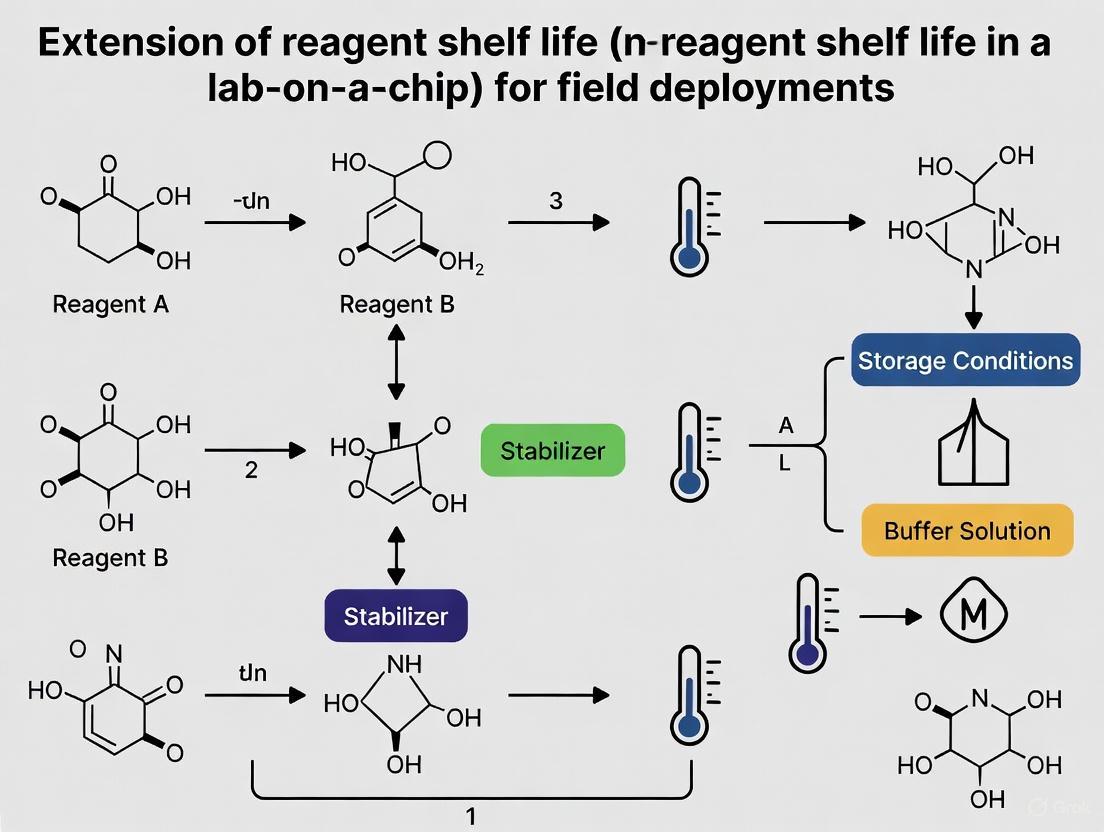
Lab-on-a-chip (LoC) devices are revolutionizing point-of-care testing and field-deployable diagnostics.
Extending Shelf Life of Lab-on-a-Chip Reagents for Reliable Field Deployment
Abstract
Lab-on-a-chip (LoC) devices are revolutionizing point-of-care testing and field-deployable diagnostics. However, their widespread adoption, particularly in resource-limited settings, is hindered by the rapid degradation of immobilized reagents in liquid environments. This article provides a comprehensive analysis for researchers and developers on the foundational challenges, innovative preservation methodologies like freeze-drying, practical optimization strategies, and rigorous validation frameworks essential for extending the functional shelf life of LoC devices. By synthesizing recent advances, we outline a path toward creating robust, long-lasting, and effective diagnostic tools for real-world deployment.
The Critical Challenge: Why Reagent Degradation Limits LoC Field Deployment
The Critical Need for Stable POCT in Resource-Limited Settings
Point-of-Care Testing (POCT) brings laboratory testing close to patients, offering rapid results that enable faster clinical decision-making and treatment [1]. In resource-limited settings, characterized by a lack of laboratory infrastructure, unreliable cold chains, and challenging environmental conditions, the stability and shelf-life of POCT reagents and devices become paramount [2] [3]. This technical support center addresses the critical challenges and solutions related to reagent stability in lab-on-a-chip devices, providing researchers and scientists with practical troubleshooting guides, FAQs, and detailed protocols to advance field-deployable diagnostic technologies.
Troubleshooting Guides
Common Issues and Solutions for Reagent Stability
| Symptom | Potential Cause | Solution | Preventive Measures |
|---|---|---|---|
| Reduced assay sensitivity or false-negative results [3] | Degradation of immobilized antibodies on the chip surface. | Implement a freeze-drying protocol for long-term storage of antibody-conjugated particles [3]. | Optimize antibody coverage on solid matrices (e.g., 50-100% for model proteins) [4]. |
| High background noise or non-specific binding [3] | Unstable surface chemistry or protein conformation changes due to heat/humidity. | Use lyophilized reagents and ensure proper sealing of microfluidic chips to block moisture [3]. | Conduct stability testing under simulated field conditions (e.g., high temperature, humidity) [3]. |
| Inconsistent results between production batches [4] | Variable conjugation efficiency of antibodies to particles. | Establish a standardized covalent binding protocol and validate antibody coverage [4]. | Implement rigorous quality control (QC) tests for each reagent batch [5]. |
| Device failure in tropical climates [3] | Exposure to high temperatures and moisture during storage or transport. | Pre-treat devices using a freeze-dry sublimation process before deployment [3]. | Utilize drying reagents like trehalose and ensure packaging is moisture-proof [3]. |
| Short shelf-life in liquid environments [3] | Hydrolysis or microbial growth in liquid reagents. | Transition from liquid-based systems to an all-in-one dry chemistry microfluidic chip [3]. | Store reagents in lyophilized powder form at room temperature when possible [4]. |
Pre-Analytical and Operational Challenges
| Challenge | Impact | Mitigation Strategy |
|---|---|---|
| Lack of trained phlebotomists [2] | Inability to obtain sufficient venous blood samples. | Design tests that work with finger-prick or heel-stick blood samples (<5% the volume of venipuncture) [2]. |
| User error [5] [6] | Inaccurate results and reduced confidence in POCT. | Establish ongoing operator training and competency assessment programs [5]. |
| Improper sample handling [1] | Pre-analytical errors compromising test integrity. | Adhere strictly to manufacturer's instructions for use (MIFU) for sample preparation [1]. |
| Complex regulatory landscape [6] | Barriers to device deployment and market access. | Engage an interdisciplinary committee to ensure local and national regulatory requirements are met [5]. |
Frequently Asked Questions (FAQs)
1. What are the most critical factors causing reagent degradation in lab-on-a-chip devices? The primary factors are exposure to high temperatures and humidity, which are common in tropical, resource-limited settings [3]. These conditions can denature proteins, alter antibody conformations, and reduce the functionality of immobilized biological components on the chip surface.
2. How can we significantly extend the shelf-life of immunoassay-based microfluidic chips? Applying a freeze-drying (lyophilization) sublimation process is a groundbreaking method. This technique involves immersing the functionalized chip in liquid nitrogen to solidify the buffer, then sublimating the ice under a low-pressure vacuum. This process removes water, preserving the bioactivity of antibodies and allowing for long-term, room-temperature storage [3].
3. What is an alternative to freeze-drying for stabilizing reagent particles? Antibody-conjugated submicron particles can be lyophilized into a powder form for room-temperature storage. Research on a lab-on-a-chip for E. coli detection showed that reagents stored in this way maintained functionality [4].
4. Why is a "bottom-up" design philosophy essential for POCT in resource-limited settings? In contrast to designing for maximum performance with the best biomarker, a bottom-up approach starts with the available infrastructure. This means creating tests that use easily acquired samples (e.g., finger-prick blood, urine, sputum) and do not require complex equipment, stable electricity, or highly trained personnel [2] [1]. This philosophy is encapsulated in the WHO ASSURED criteria (Affordable, Sensitive, Specific, User-friendly, Rapid, Robust, Equipment-free, and Delivered) [1].
5. How does an interdisciplinary committee improve POCT quality? An interdisciplinary committee brings together laboratory experts, physicians, nurses, IT staff, and supply chain managers. This collaboration ensures that POCT devices are clinically appropriate, user-friendly, and supported by robust quality assurance, training, and procurement processes, ultimately leading to fewer pre-analytical errors and more reliable testing outcomes [5].
Experimental Protocols for Shelf-Life Extension
Detailed Methodology: Freeze-Drying of Immunoassay Microfluidic Chips
This protocol is adapted from research aimed at extending the shelf-life of microfluidic chips used for capturing CD4+ T cells [3].
1. Chip Functionalization:
- Immobilize the target antibodies (e.g., anti-CD4) onto the surface of the microfluidic channels using your established surface chemistry protocol (e.g., on PMMA, glass, or silicon) [3].
2. Freezing:
- Upon completion of functionalization, immerse the entire microfluidic chip in liquid nitrogen.
- Hold until the buffer solution within the channels is completely solidified. This typically takes a few minutes.
3. Primary Drying (Sublimation):
- Transfer the frozen chip to a lyophilizer (freeze-dryer).
- Reduce the chamber pressure to a low vacuum (e.g., below 610 Pa for pure water).
- Maintain a low temperature to keep the frozen content in a solid state.
- The sublimation process, where solid ice transitions directly to water vapor, will begin. Monitor the process until all ice has sublimated from the chip channels.
4. Sealing and Storage:
- Once the freeze-drying cycle is complete, immediately seal the microfluidic chip in a moisture-proof package (e.g, an aluminum foil pouch with a desiccant) to prevent reabsorption of atmospheric moisture.
- The sealed chip can now be stored at ambient temperatures for extended periods until needed.
5. Reconstitution:
- When ready for use, open the package and reconstitute the reagents by introducing the liquid sample (e.g., whole blood) directly into the chip's inlet port. The sample will rehydrate the freeze-dried antibodies, restoring their functionality.
Workflow Visualization: Freeze-Dry Sublimation Process
The following diagram illustrates the key stages of the freeze-drying protocol for preserving microfluidic chips.
The Scientist's Toolkit: Key Research Reagent Solutions
The table below details essential materials and their functions for developing stable POCT reagents for resource-limited settings.
| Item | Function & Application | Key Consideration |
|---|---|---|
| Freeze-Dryer (Lyophilizer) | Preserves biological activity of antibodies and reagents by removing water via sublimation for room-temperature storage and shipping [3]. | Requires optimization of pressure and temperature cycles for specific chip and reagent geometry. |
| Lyoprotectants (e.g., Trehalose) | Stabilizes proteins and antibodies during the freeze-drying process and in dry state, preventing denaturation and aggregation [3]. | Sugar-based matrices can replace water molecules around proteins, maintaining native structure. |
| Submicron Particles/Latex Beads | Solid matrices for covalent antibody immobilization; used as reporters in agglutination assays (e.g., for E. coli detection) [4]. | Antibody coverage on particles (e.g., 50-100%) must be optimized for both assay sensitivity and long-term stability [4]. |
| Moisture-Proof Packaging | Protects freeze-dried chips and reagents from humidity during storage and transport, which is critical for tropical environments [3]. | Sealed packaging with desiccants is essential to maintain the dry state achieved by lyophilization. |
| 3-Mercaptopropyl-trimethoxysilane | A common silane used for surface modification of glass or silicon substrates to enable covalent antibody attachment [3]. | Creates a stable chemical bond between the surface and the antibody, enhancing immobilization strength. |
| Blocking Solution (e.g., BSA) | Used to cover unused surface areas on the chip to minimize non-specific binding of sample components, reducing background noise [3]. | Must be compatible with the freeze-drying process to retain its blocking function after reconstitution. |
Frequently Asked Questions (FAQs)
1. How do temperature and humidity specifically cause reagent degradation in Lab-on-a-Chip devices? Temperature and humidity are primary environmental stressors that accelerate the degradation of biological reagents, such as antibodies and proteins, immobilized on LoC devices. Elevated temperature increases the kinetic energy of molecules, leading to faster chemical reaction rates for degradation processes like deamidation and covalent aggregation [7]. Humidity provides water molecules that can participate in and facilitate these degradation reactions. The effect of humidity is often temperature-dependent; for instance, moisture-induced degradation can become a critical factor at higher temperatures (e.g., 60 °C), potentially by altering the nature of the interaction between the reagent and the absorbed water [7]. In resource-limited settings, exposure to high temperatures and moisture-rich conditions is a common cause of premature device failure [3].
2. What are the most effective methods to stabilize reagents for long-term, non-refrigerated storage? Research points to two highly effective stabilization methods: lyophilization (freeze-drying) and trehalose-based preservation.
- Freeze-Drying: This process involves freezing the liquid reagent and then sublimating the ice under a vacuum, removing water that is essential for many degradation reactions. A specialized protocol for microfluidic chips includes immersing the device in liquid nitrogen to solidify the solution, then sublimating under low pressure [3]. This method can preserve the functionality of immunoassay components like antibody-coated magnetic beads.
- Trehalose Stabilization: Trehalose is a sugar that acts as a natural biopreservative. It stabilizes proteins by forming a glassy matrix that immobilizes them, preventing conformational changes and aggregation. For multi-layer immuno-functionalized surfaces in microfluidics, a 2.5% (w/v) trehalose solution has been shown to be optimal, maintaining high CD4+ T cell capture efficiency and specificity for up to 4 months at room temperature [8].
3. My stabilized reagents have been stored for 6 months. How can I test if they are still functional? To validate functionality, you need to perform a performance assay that the reagent was designed for. A detailed experimental protocol involves:
- Reactivation: If the reagent was dried, first reconstitute it according to the preservation protocol (e.g., a PBS wash to rehydrate the surface) [8].
- Functional Assay: Run the LoC device with a known standard or control sample. For example, for a chip functionalized with anti-CD4 antibodies, test it by capturing CD4+ T cells from a whole blood sample of known cell count [8].
- Quantitative Analysis: Compare the device's performance (e.g., cell capture efficiency, specificity, or signal intensity) against the performance of a freshly prepared device or a device stored in refrigerated conditions. A significant drop in performance (e.g., capture efficiency falling below 60%) indicates degradation [8].
4. Can I use kinetic modeling to predict my reagent's shelf life under different conditions? Yes, kinetic modeling based on the Arrhenius equation is a powerful tool for predicting shelf life. By stressing the reagent at elevated temperatures and measuring the rate of degradation product formation, you can build a model. This model can then be used to extrapolate the degradation rates at lower, real-world storage temperatures. Advanced models also incorporate the effect of relative humidity, providing a more comprehensive prediction of stability under various environmental conditions [7] [9].
Troubleshooting Guides
Problem: Loss of Assay Sensitivity or Specificity After Room-Temperature Storage
Potential Cause: Degradation of immobilized capture antibodies (e.g., through deamidation, aggregation, or denaturation) due to exposure to temperature fluctuations and ambient humidity [7] [8].
Solution:
- Prevention: Implement a preservation method immediately after device fabrication.
- Step 1: Treat the functionalized microfluidic channels with a 2.5% (w/w) trehalose solution [8].
- Step 2: Dry the devices efficiently using a combined method of centrifugation (6600 rpm for 5 seconds) to remove bulk fluid, followed by drying under vacuum at 37 °C for 30 minutes [8].
- Step 3: For long-term storage, seal the dried devices in vacuum-sealed plastic bags with desiccant packs (e.g., silica gel) to control residual moisture [8].
- Corrective Action: If sensitivity loss is suspected, test the device with a control sample. If performance is unacceptable, the device batch must be replaced. Optimization of the trehalose concentration or freeze-drying protocol may be required for future batches.
Problem: Inconsistent Results Between Different Batches of Stored Lab-on-a-Chip Devices
Potential Cause: Inconsistent drying during the preservation process or batch-to-batch variation in the residual moisture content inside the sealed packaging [8] [9].
Solution:
- Standardize Drying Protocol: Ensure the drying protocol (centrifugation speed/time, vacuum pressure, and temperature) is strictly adhered to for all devices. Visually inspect or use software (e.g., ImageJ) to quantify dried device area consistency [8].
- Control Packaging Environment: Implement quality control for the sealing process. Use humidity indicator cards in the packaging to monitor for leaks or excessive moisture over time.
- Quality Control Testing: Perform spot-check functional assays on random devices from each manufacturing and preservation batch before large-scale deployment.
Data Presentation: Stability Studies
Table 1: Impact of Storage Conditions on Reagent Stability
| Reagent / System | Stress Condition | Key Degradation Pathway(s) | Observation Period | Impact on Functionality |
|---|---|---|---|---|
| Human Insulin (Solid-State) [7] | 60°C / 75% RH | Deamidation, Covalent Aggregation | 6 months | Significant increase in degradation product formation rates. |
| Human Insulin (Solid-State) [7] | 25°C / 33% RH | Deamidation, Covalent Aggregation | 6 months | Minimal degradation; lower humidity reduces reaction rates. |
| Anti-CD4 Ab on Microfluidic Chip [8] | Room Temp / Vacuum w Trehalose | Loss of antibody binding function | 24 weeks | Capture efficiency dropped to ~43%; specificity remained high (~89%). |
| Anti-CD4 Ab on Microfluidic Chip [8] | 50°C / 85% RH for 24h (after 5 wks RT) | Loss of antibody binding function | 5 weeks + 1 day | Maintained ~80% capture efficiency and specificity post-stress. |
Table 2: Comparison of Reagent Preservation Strategies
| Preservation Method | Mechanism of Action | Optimal Conditions / Formulation | Pros | Cons |
|---|---|---|---|---|
| Freeze-Drying (Lyophilization) [3] | Removal of water via sublimation, halting hydrolysis-driven reactions. | Liquid nitrogen immersion, followed by sublimation under low pressure. | Extends shelf-life significantly; eliminates need for cold chain. | Requires specialized equipment; process optimization can be time-consuming. |
| Trehalose Stabilization [8] | Forms a stable glassy matrix, immobilizing proteins. | 2.5% (w/v) trehalose solution, dried via centrifugation + vacuum at 37°C. | Effective at room temperature; uses naturally occurring, biocompatible sugar. | High concentrations (>5%) can interfere with antibody-epitope recognition. |
| Vacuum Sealing with Desiccant [8] | Creates a low-humidity micro-environment. | Sealed with silica gel desiccant bags. | Simple, low-cost adjunct to other methods. | Does not prevent thermal degradation on its own; packaging integrity is critical. |
Experimental Protocols
Protocol 1: Trehalose-Based Stabilization of Immuno-Functionalized Microfluidic Chips
Objective: To preserve antibody-coated microfluidic chips for room-temperature storage. Materials:
- Functionalized microfluidic chip [8]
- Trehalose solution (2.5% w/v in purified water) [8]
- Centrifuge
- Vacuum oven or desiccator
- Vacuum sealer and plastic bags
- Silica gel desiccant
Methodology:
- Treatment: After surface functionalization, flush the microchannels with the 2.5% trehalose solution to ensure complete coverage [8].
- Fluid Removal: Centrifuge the entire microfluidic device at 6600 rpm for 5 seconds to remove the majority of the liquid from the channels [8].
- Drying: Place the device in a vacuum oven at 37°C and -761 mmHg for 30 minutes to complete the drying process [8].
- Packaging: Immediately transfer the dried chip to a vacuum-sealable bag along with a sachet of silica gel desiccant. Evacuate the air and seal the bag [8].
- Storage and Reactivation: Store the sealed device at room temperature, protected from light. To use, open the bag, and reactivate the chip by washing the channels with PBS to remove the trehalose matrix [8].
Protocol 2: Freeze-Drying for Antibody-Immobilized Microfluidic Chips
Objective: To extend the shelf-life of liquid-based immunoassay chips via sublimation. Materials:
- Antibody-immobilized microfluidic chip [3]
- Liquid nitrogen
- Freeze-dryer (lyophilizer) with a vacuum chamber [3]
Methodology:
- Freezing: Immerse the functionalized microfluidic chip in liquid nitrogen to rapidly freeze the buffer solution solid [3].
- Primary Drying (Sublimation): Transfer the chip to a freeze-dryer. Reduce the ambient pressure and maintain a low temperature to allow the solid ice to sublime directly into water vapor without passing through a liquid phase [3].
- Sealing and Storage: Once the sublimation is complete, seal the chip under inert gas or vacuum for long-term storage [3].
The Scientist's Toolkit: Essential Research Reagent Solutions
Table 3: Key Materials for Reagent Stabilization in Lab-on-a-Chip Devices
| Material | Function in Stabilization | Example Application |
|---|---|---|
| Trehalose [8] | Natural biopreservative; forms a glassy matrix to prevent protein denaturation and aggregation. | Stabilizing multi-layer antibody surfaces in microfluidic channels for cell capture assays. |
| Polyethylene Glycol (PEG) [9] | Common excipient and plasticizer; can influence micro-environmental pH and generate/degrade into reactive impurities that affect drug substance stability. | Used in film-coat formulations for active tablet coating; its degradation products can impact peptide stability. |
| Silica Gel Desiccant [8] | Adsorbs moisture to maintain a low-humidity environment within sealed packaging. | Included in vacuum-sealed bags with preserved microfluidic chips to prevent moisture-induced degradation. |
| Poly(dimethylsiloxane) (PDMS) [10] | A common, gas-permeable elastomer for fabricating microfluidic devices. | Used for organ-on-a-chip models; its hydrophobicity and biocompatibility make it a versatile platform material. |
Workflow and Pathway Visualizations
Experimental Workflow for Stabilization
Reagent Degradation Pathways
In the development of deployable lab-on-a-chip (LoC) devices for diagnostic and research applications, the stability of integrated reagents is paramount for ensuring analytical reliability, particularly between manufacturing and field use. The chip substrate—the base material forming the microfluidic architecture—is not a passive container but an active interface that can significantly influence the chemical integrity of stored reagents through various physicochemical interactions. Understanding these material-reagent interactions is fundamental to extending the shelf life and enhancing the field-readiness of these miniaturized systems [11] [12].
This technical support guide addresses the specific challenges researchers and professionals face regarding reagent stability in LoC devices. By exploring the underlying mechanisms of material-induced degradation and providing evidence-based troubleshooting strategies, this resource aims to support the development of robust, long-lasting microfluidic diagnostic tools.
FAQ: Understanding Substrate-Reagent Interactions
Q1: What are the primary mechanisms by which a chip substrate affects reagent stability?
A chip substrate can compromise reagent stability through several direct and indirect mechanisms:
- Adsorption: Reagent molecules (e.g., proteins, enzymes) can physically adsorb onto the channel walls, effectively reducing their available concentration for the assay [11] [13].
- Absorption: Porous or polymer-based materials like PDMS can absorb small molecules and hydrophobic analytes, sequestering them from the reaction [11] [14].
- Chemical Incompatibility: Some polymers can be degraded by organic solvents, or they can leach unreacted monomers or additives (e.g., plasticizers) into the stored reagents, inhibiting their function [14] [13].
- Surface Chemistry: The inherent hydrophobicity or charge of a material can denature sensitive biomolecules like antibodies or enzymes, leading to a loss of activity [14].
Q2: For a field-deployable nitrite sensor intended for long-term environmental monitoring, which substrate would you recommend to maximize reagent shelf life?
For a deployable colorimetric nitrite sensor, as described in research, PMMA (Poly-methyl-methacrylate) is a suitable candidate. A published study on a deployable nitrite LoC sensor used a PMMA chip created via micro-milling and solvent bonding [15]. While PMMA has limited resistance to alcohols and organic solvents, it is slightly hydrophilic, which aids in wetting aqueous-based reagent solutions and is generally compatible with many aqueous colorimetric assays. For enhanced chemical resistance to a broader range of solvents in similar applications, Cyclic Olefin Copolymer (COC) is often preferred due to its excellent UV transparency, low water absorption, and good resistance to acids, bases, and polar organic solvents [14] [13].
Q3: We are observing high background noise in our fluorescent LoC assays. Could the substrate be a factor?
Yes, absolutely. Substrate autofluorescence is a common source of background noise in fluorescent detection. Materials like Polycarbonate (PC) are known to exhibit autofluorescence, which can interfere with sensitive detection [14]. For fluorescence-based assays, opt for materials with low autofluorescence, such as Cyclic Olefin Copolymer/Polymer (COC/COP) or specific grades of PMMA. These materials provide high optical clarity and minimal interference in the visible and UV range, thereby improving the signal-to-noise ratio [14] [13].
Q4: How can we rapidly test for small-molecule absorption into PDMS before committing to a full device fabrication?
A simple lab-scale test can be performed:
- Prepare PDMS Samples: Cure small, flat slabs of PDMS using your standard protocol.
- Incubate with Analyte: Immerse the PDMS slabs in a solution containing your reagent or a representative small molecule at a known concentration.
- Quantify Absorption: After incubation (e.g., 24 hours), measure the concentration of the solution remaining. A significant decrease suggests absorption. Alternatively, for fluorescent molecules, observe the PDMS slab under a microscope to see if it has absorbed the fluorophore [14] [13].
Troubleshooting Guide: Common Reagent Stability Issues
Problem 1: Gradual Loss of Assay Sensitivity
- Potential Cause: Slow adsorption of proteins or enzymes onto the channel walls.
- Solution:
- Surface Passivation: Prior to reagent loading, passivate the microchannels with a blocking agent. Common passivation reagents include Bovine Serum Albumin (BSA), pluronic surfactants, or silane-based chemistries that create a non-fouling layer [12].
- Material Change: Consider switching from a hydrophobic material like PDMS to a more inert material like glass or COC/COP, which have lower nonspecific adsorption tendencies [11] [13].
Problem 2: Inconsistent Reaction Kinetics or Precipitate Formation
- Potential Cause: Leaching of unreacted oligomers, stabilizers, or plasticizers from the polymer substrate into the reagent reservoir.
- Solution:
- Post-Processing: Implement a rigorous cleaning and post-curing protocol after fabrication. For thermoplastics, this may involve solvent rinsing and thermal annealing.
- Material Selection: Use high-purity polymer grades designed for medical or analytical applications. Thermoset polymers like epoxy resins or thiol-enes can offer higher chemical stability and reduced leaching compared to standard PDMS [11] [13].
Problem 3: Rapid Evaporation or Gas Permeability Issues
- Potential Cause: High water vapor or gas permeability of the substrate material. While gas permeability (e.g., of PDMS) is beneficial for cell culture, it is detrimental to reagent storage.
- Solution:
- Barrier Layers: Apply a thin, impermeable coating (e.g., parylene) to the interior of the channels or the exterior of the chip.
- Lamination: Use a composite material structure where the reagent storage layer is sealed with an impermeable film [15].
- Alternative Materials: Choose a low-permeability material like COC, COP, or glass for the reagent storage compartment [14].
Material Selection Data and Comparison
Table 1: Chemical Compatibility of Common LoC Substrate Materials with Various Reagent Types
| Material | Aqueous Solutions | Acids & Bases | Polar Organic Solvents (e.g., Acetone, Methanol) | Non-Polar Organic Solvents (e.g., Toluene, Hexane) | Key Considerations for Reagent Stability |
|---|---|---|---|---|---|
| PDMS | Good [13] | Good to Fair [13] | Poor (Swelling) [14] [13] | Poor (Swelling) [13] | High absorption of small hydrophobic molecules; gas permeable. |
| PMMA | Good [14] | Good [13] | Poor (Crazing/Dissolves) [14] [13] | Poor [13] | Good for aqueous assays; hydrophilic surface aids wetting. |
| COC/COP | Good [14] | Good [13] | Good [14] [13] | Poor [13] | Excellent optical properties; low autofluorescence; inert. |
| PC | Good [14] | Good [13] | Poor (to Alcohols) [14] | Poor [13] | High temperature resistance; can exhibit autofluorescence. |
| Glass | Excellent [11] [13] | Excellent [13] | Excellent [13] | Excellent [13] | The gold standard for chemical inertness; costly to fabricate. |
| Thiol-Ene | Good [13] | Good [13] | Excellent [13] | Good (Low Swelling) [13] | Emerging material with superior solvent resistance. |
Table 2: Key Properties Influencing Reagent Stability in LoC Substrates
| Property | Impact on Reagent Stability | Best-In-Class Material(s) |
|---|---|---|
| Chemical Inertness | Precludes leaching and destructive interactions. | Glass, Thiol-Ene, COC/COP [13] |
| Low Absorption/Absorption | Prevents loss of assay reagents, especially small molecules. | Glass, COC/COP, PS [11] [14] |
| Low Autofluorescence | Critical for high-sensitivity fluorescence detection. | COC/COP, specific grades of PMMA [14] |
| Low Gas Permeability | Prevents evaporation and oxidation of sensitive reagents. | COC/COP, Glass, PS [14] |
| Ease of Surface Modification | Allows for functionalization to prevent biomolecule adsorption. | Glass, PDMS, Silicon [11] |
Experimental Protocols for Stability Assessment
Protocol 1: Quantifying Analyte Absorption in Polymer Substrates
This method is adapted from established practices for evaluating material compatibility [14] [13].
- Sample Preparation: Fabricate uniform discs or squares (e.g., 2 mm x 2 mm) of the polymer substrate under investigation.
- Initial Weighing: Precisely weigh each sample (Weight, W_initial) using an analytical balance.
- Solvent Immersion: Immerse the samples in vials containing the solvent or reagent solution of interest. Ensure the samples are fully submerged.
- Incubation: Seal the vials and incubate them at a controlled temperature (e.g., 25°C or 40°C to accelerate aging) for a set period (e.g., 24 hours, 1 week).
- Final Weighing: After incubation, remove the samples, quickly blot away excess surface liquid, and immediately weigh them again (Weight, W_final).
- Calculation: Calculate the percentage swelling or weight increase using the formula: % Swelling = [(W_final - W_initial) / W_initial] × 100% A significant positive percentage indicates absorption/swelling, which is undesirable for reagent storage [13].
Protocol 2: Accelerated Aging Study for Shelf-Life Determination
- Device Preparation: Prepare a batch of identical LoC devices filled with the critical reagent(s).
- Storage Conditions: Divide the devices into groups and store them at different, elevated temperatures (e.g., 4°C, 25°C, 37°C, 50°C). Control devices should be stored at the intended storage temperature (e.g., -20°C or 4°C).
- Periodic Sampling: At predetermined time intervals (e.g., 1 week, 2 weeks, 1 month), retrieve devices from each storage condition.
- Functional Testing: Run the devices using a standardized sample with a known concentration.
- Data Analysis: Measure the assay's key performance parameters (e.g., signal intensity, detection limit, reaction rate). Plot the degradation of performance over time and at different temperatures. This data can be used to model and predict shelf life at the intended storage temperature using the Arrhenius equation.
Decision Support and Workflow Visualization
Substrate Selection Workflow
The Scientist's Toolkit: Essential Research Reagent Solutions
Table 3: Key Materials and Reagents for LoC Reagent Stabilization Research
| Item | Function in R&D | Example Application |
|---|---|---|
| BSA or Pluronic F-127 | Surface passivation agent to reduce nonspecific protein adsorption. | Coating microchannels to prevent enzyme or antibody denaturation [12]. |
| Silane Coupling Agents | Modify surface chemistry (e.g., create hydrophilic or hydrophobic layers). | Introducing specific functional groups to glass or silicon surfaces for controlled reagent immobilization [11]. |
| Cyclic Olefin Copolymer (COC) | High-performance thermoplastic substrate. | Fabricating chips for UV-detection or assays requiring high chemical resistance to polar solvents [14] [13]. |
| Thiol-Ene Resins | UV-curable polymer for solvent-resistant devices. | Creating microreactors for organic synthesis or nanoparticle formation where solvent compatibility is critical [13]. |
| Parylene-C | Vapor-deposited, biocompatible, inert barrier coating. | Coating PDMS chips to reduce permeability and prevent absorption of small molecules [13]. |
Economic and Logistical Barriers of Short Shelf-Life Reagents
Technical Support Center: Troubleshooting Guides and FAQs
Frequently Asked Questions (FAQs)
Q1: What are the primary economic challenges posed by short reagent shelf-life in lab-on-a-chip devices?
The short shelf-life of reagents, particularly in liquid form, creates significant economic burdens. These include the high costs of continuous cold chain logistics, which require refrigerated storage and transport [3] [16]. Furthermore, devices that degrade quickly lead to substantial material waste and necessitate frequent repurchasing, which is especially problematic for resource-limited settings [3] [8]. The operational costs are also increased by the need for highly trained personnel and climate-controlled laboratories to handle traditional equipment [3].
Q2: How can I significantly extend the shelf-life of my biofunctionalized microfluidic chips without refrigeration?
The most documented and effective method is freeze-drying (lyophilization). This process involves controlled freezing of the chip, followed by ice sublimation under a vacuum, which removes water and preserves the immobilized biological components in a dry state [3] [17]. An alternative approach is chemical stabilization using sugars like trehalose, which forms a stable glassy matrix that protects antibodies and proteins from denaturation, allowing room-temperature storage [8]. Both methods require the dried chips to be sealed in moisture-proof packaging, often with desiccants like silica gel, to prevent rehydration [8].
Q3: What is a typical protocol for freeze-drying an antibody-immobilized microfluidic chip?
The following workflow is adapted from published research on preserving immunoassay chips [3]:
Table: Step-by-Step Freeze-Drying Protocol
| Step | Action | Key Parameters | Purpose |
|---|---|---|---|
| 1. Freezing | Immerse the functionalized chip in liquid nitrogen. | Rapid cooling to solidify the aqueous buffer. | Solidifies the liquid phase without forming large ice crystals that could damage the bio-layer. |
| 2. Primary Drying | Place the frozen chip in a vacuum chamber at low pressure. | Maintain low temperature and pressure below the triple point of water. | Initiates sublimation, converting solid ice directly to vapor without passing through a liquid phase. |
| 3. Secondary Drying | Gradually increase the temperature under sustained vacuum. | Carefully controlled temperature ramp. | Removes bound water molecules from the biological material, achieving a very low moisture content. |
| 4. Sealing | Vacuum-seal the dried chip in a moisture-proof bag with desiccant. | Use high-barrier packaging materials. | Prevents moisture and oxygen from degrading the chip during storage, which is critical for long-term stability. |
Q4: My freeze-dried chip shows low activity after rehydration. What could have gone wrong?
Low activity post-rehydration can stem from several issues in the preservation process. Here is a troubleshooting guide:
Table: Troubleshooting Low Activity in Freeze-Dried Chips
| Problem | Potential Cause | Solution |
|---|---|---|
| Low Capture Efficiency | Damage to antibodies during freezing (ice crystal formation). | Optimize the freezing rate. Introduce cryoprotectants (e.g., sucrose, trehalose) to the buffer before freeze-drying [17]. |
| Inconsistent Results | Incomplete or non-uniform drying across the microfluidic channel. | Ensure the chip geometry allows for efficient vapor flow during lyophilization. Model the sublimation process to identify and eliminate "dead zones" [3]. |
| Rapid Performance Decline | Packaging failure, allowing moisture ingress during storage. | Use high-quality, impermeable materials for sealing. Include oxygen and moisture scavengers inside the final package [8]. |
| Poor Fluidics Post-Reconstitution | Failure to properly re-suspend the dried reagents. | Optimize the reconstitution buffer and protocol (e.g., flow rate, incubation time) to ensure the dried film is fully and evenly dissolved [18]. |
The Scientist's Toolkit: Key Reagent Preservation Solutions
Table: Essential Materials and Methods for Extending Reagent Shelf-Life
| Solution/Material | Function | Application Example |
|---|---|---|
| Freeze-Dryer (Lyophilizer) | Preserves biological activity by removing water via sublimation under vacuum. | Extending the shelf-life of human liver microsomes (HLMs) immobilized in thiol–ene micropillar arrays from weeks to over a year [17]. |
| Trehalose | A disaccharide that stabilizes proteins in a dry state by forming a glassy matrix, replacing water molecules. | Preserving multi-layer antibody surfaces on PMMA/glass microfluidic chips for CD4+ T cell counting for up to 6 months at room temperature [8]. |
| Cryoprotectants (e.g., Sucrose, BSA) | Protect biological structures from the stresses of freezing and drying. | Added to reagent mixtures before freeze-drying to maintain the functionality of enzymes like Cytochrome P450 [17]. |
| High-Barrier Packaging | Seals the dried chip from environmental moisture and oxygen, which are primary drivers of degradation. | Vacuum-sealing dried chips in plastic bags with silica gel desiccant packets for storage and transport [8]. |
| Solvent-Selective Membranes | On-disc storage of liquid reagents that are released upon a rotational stimulus, avoiding drying. | Used in Lab-on-a-Disc systems for reliable, long-term storage and release of liquid buffers [19]. |
Experimental Workflow for Shelf-Life Extension
The following diagram illustrates a generalized experimental workflow for developing a shelf-life extension protocol for a lab-on-a-chip device, integrating key steps from the cited research.
Experimental Workflow for LOC Shelf-Life Extension
Key Performance Data from Research
The following table summarizes quantitative findings from recent studies on shelf-life extension, providing benchmarks for expected outcomes.
Table: Summary of Experimental Shelf-Life Extension Results
| Device / Bio-component | Preservation Method | Storage Condition | Extended Shelf-Life | Performance Post-Storage | Source |
|---|---|---|---|---|---|
| HLM Chip (CYPs/UGTs) | Freeze-Drying | Room Temperature (dark, dry) | At least 9 months, up to 16 months | Enzyme activities recovered at 60-120% of non-freeze-dried control. | [17] |
| Immunoassay Chip (CD4+ T cell capture) | Freeze-Drying | Sealed, room temperature | Significant extension demonstrated | Cell capture efficiency maintained vs. non-freeze-dried chips. | [3] |
| Multi-layer Immunoassay | Trehalose (2.5% w/v) | Vacuum-sealed, room temperature | 4 months (>60% efficiency) / 6 months (42.8% efficiency) | Capture specificity remained stable at ~89% over 6 months. | [8] |
Preservation Breakthroughs: From Freeze-Drying to Advanced Formulations
The Principle of Freeze-Drying
Freeze-drying, also known as lyophilization, is a low-temperature dehydration process that involves freezing a product, lowering pressure, and then removing the frozen water by sublimation (the direct transition of water from solid ice to vapor, omitting the liquid phase) [20] [21] [22]. This process preserves the physical structure and biological activity of sensitive materials, making it ideal for extending the shelf life of reagents in lab-on-a-chip (LoC) devices, particularly for field deployment where refrigeration is unreliable [23] [3].
The process occurs in three main phases [20]:
- Freezing: The product is cooled below its triple point to ensure sublimation occurs.
- Primary Drying (Sublimation): Pressure is reduced, and heat is applied to allow the frozen ice to sublimate.
- Secondary Drying (Desorption): The temperature is raised to remove unfrozen, bound water molecules.
For LoCs, this technique can transform perishable, liquid-based reagents into a stable, dry state, extending shelf life from a few weeks to over a year at room temperature [23] [3].
Key Freeze-Drying Terminology
| Term | Definition | Relevance to LoCs |
|---|---|---|
| Sublimation | The direct transition of water from a solid (ice) to a vapor, bypassing the liquid phase [20] [21]. | The core mechanism of water removal during primary drying. |
| Eutectic Point | The minimum temperature at which a crystalline material only exists in its solid phase [20]. | The product temperature must remain below this point during primary drying to prevent melt-back. |
| Critical Temperature | For amorphous materials, the maximum temperature before the product softens and loses its structure (collapse) [20]. | Exceeding this temperature can degrade the microfluidic chip's functionality. |
| Annealing | A thermal cycling process that promotes the growth of larger ice crystals [20] [22]. | Can be used to optimize the pore structure of the dried matrix for better reagent stability. |
| Collapse | The loss of physical structure in the product due to excessive heat, leading to poor rehydration and stability [20]. | A critical failure mode that must be avoided to maintain LoC performance. |
Step-by-Step Freeze-Drying Protocol for LoCs
This protocol is optimized for biofunctionalized microfluidic chips, such as those with immobilized enzymes or antibodies [23] [3].
Phase 1: Freezing
Objective: Immobilize the product by freezing all free water and creating an optimal ice crystal structure for sublimation [20] [21].
- Preparation: Ensure the microfluidic channels are fully loaded with the reagent solution.
- Freezing Method:
- For biological materials where preserving fine structures (like cell walls or protein conformations) is critical, use rapid freezing. This can be achieved by immersing the chip in a chilled bath (e.g., a shell freezer) or liquid nitrogen (down to -80 °C) [22] [3]. Rapid freezing creates small ice crystals that minimize damage to sensitive biological structures [20].
- For simpler solutions where maximizing sublimation rate is the priority, slow freezing or annealing can be used. Annealing involves freezing rapidly, then raising the temperature to allow small ice crystals to grow into larger ones, which creates larger pores for more efficient vapor transport during primary drying [20].
Critical Parameter: The product must be cooled below its triple point and, for amorphous materials, below its glass transition temperature (T'g) to ensure proper sublimation and prevent collapse [20] [22].
Phase 2: Primary Drying (Sublimation)
Objective: Remove ~95% of the frozen water via sublimation [20].
- Establish Vacuum: Lower the pressure in the freeze-drying chamber to a range of 0.01 to 1 mbar (a few millibars) [20] [24].
- Apply Controlled Heat: Gradually apply heat to the product shelves to provide the energy required for sublimation (latent heat of sublimation is ~2885 kJ/kg) [20] [21]. The heat must be carefully controlled to avoid exceeding the product's critical temperature.
- Condense Vapor: A cold condenser (typically below -40 °C) provides a surface for the water vapor to re-solidify, maintaining the low pressure required for sublimation and protecting the vacuum pump [20].
Critical Parameter: The product temperature must remain below the eutectic point (for crystalline materials) or below the collapse temperature (Tg') (for amorphous materials) throughout this phase [20].
Phase 3: Secondary Drying (Desorption)
Objective: Remove the unfrozen, bound water molecules that are adsorbed to the material [20] [22].
- Increase Temperature: Raise the shelf temperature higher than in the primary drying phase (can be above 0 °C) [20] [22].
- Further Reduce Pressure: In some cases, the pressure is lowered further into the microbar range to encourage desorption [22].
- Duration: This phase continues until the residual moisture content reaches the desired low level, typically 1-5% for stable long-term storage [20].
Phase 4: Post-Process Sealing
Objective: Protect the freeze-dried chip from moisture and oxygen.
- Break Vacuum: After drying is complete, break the vacuum with an inert gas like nitrogen [20] [22].
- Seal Immediately: The LoC device must be hermetically sealed under a protective atmosphere, often within an aluminum pouch with desiccant, to prevent rehydration [3] [24].
Troubleshooting Guide
Common Issues and Solutions
| Problem | Symptoms | Possible Causes | Solutions |
|---|---|---|---|
| Melt-Back / Collapse | Loss of porous structure; sticky appearance; poor rehydration; loss of bioactivity [20] [21]. | Product temperature exceeded the eutectic or collapse temperature during primary drying [20]. | - Reduce shelf temperature during primary drying.- Ensure product is fully frozen below its critical temperature before starting drying [20] [21]. |
| Incomplete Drying | High residual moisture; clumping; reduced shelf-life [20]. | - Insufficient primary or secondary drying time.- Overly small ice crystals creating high resistance to vapor flow [20] [21]. | - Extend secondary drying time and/or increase temperature (within safe limits).- Optimize freezing step to create larger ice crystals (e.g., via annealing) [20]. |
| Poor Reconstitution | Slow or incomplete rehydration; loss of function [21]. | - Collapse of the porous matrix.- Over-drying during secondary drying [20]. | - Avoid collapse by controlling temperature.- Optimize secondary drying parameters to avoid excessive removal of bound water. |
| Chamber Pressure Rise | Chamber pressure is higher than set point; process slows or stalls [20]. | Vapor Choking: Vapor is produced faster than it can be removed through the vapor port [20]. | - Reduce the shelf temperature to slow the sublimation rate.- Ensure the condenser is operating at full capacity. |
| Loss of Bioactivity | Chip fails to function after rehydration (e.g., low enzyme activity) [23] [3]. | - Denaturation during freezing or drying.- Overheating during primary drying [23]. | - Incorporate cryoprotectants (e.g., trehalose, sucrose) in the reagent formulation [3].- Strictly control temperatures during all process phases. |
Troubleshooting Logic Flow
Frequently Asked Questions (FAQs)
Q1: How much can freeze-drying extend the shelf life of my lab-on-a-chip device? Research demonstrates significant improvements. One study on human liver microsome (HLM) chips showed that freeze-drying extended their functional shelf life from only 2–3 weeks with cold storage to at least 9 months, and up to 16 months, at room temperature while retaining 60-120% of original enzyme activity [23]. Similarly, immunoassay-based chips have shown vastly improved stability for point-of-care testing in resource-limited settings [3].
Q2: What is the fundamental difference between shelf life and expiration date for reagents? These terms are distinct in laboratory practice. Shelf life refers to the total time an unopened, properly stored reagent will last without degrading. The expiration date (often noted as "after opening") is the time an opened reagent remains usable [25]. For example, acetic acid has a 3-year shelf life unopened, but must be disposed of 3 months after opening [25]. Freeze-drying primarily extends the overall shelf life.
Q3: Why is the freezing stage considered the most critical? The conditions of freezing determine the size and morphology of the ice crystals, which directly defines the structure of the porous network left behind after sublimation [20] [21]. This structure impacts:
- The speed and efficiency of primary drying.
- The resistance to vapor flow.
- The final texture and specific surface area of the dried product.
- The success of secondary drying and the stability of the final product [20] [26].
Q4: My reagent is amorphous and doesn't have a eutectic point. What temperature should I use as a limit? For amorphous materials (which form a "glass" when frozen), you must dry the product below its glass transition temperature (T'g). If the product temperature exceeds T'g, the viscous glass will soften, leading to collapse of the structure [20].
Q5: Are there official programs for verifying extended shelf life? Yes. For stockpiled drugs, the U.S. FDA administers the Shelf-Life Extension Program (SLEP), which can extend the expiration dates of certain products based on stability testing data [26]. While this program is primarily for federal stockpiles, it underscores the scientific and regulatory recognition that properly preserved products can remain stable beyond their labeled expiration dates.
The Scientist's Toolkit: Key Reagent Solutions
This table lists common solutions used in the freeze-drying process, particularly for stabilizing biological reagents in LoCs.
| Item | Function | Application Notes |
|---|---|---|
| Cryoprotectants (e.g., Trehalose, Sucrose) | Protect proteins and cells from denaturation and mechanical stress during freezing and drying by stabilizing their native structure [3]. | Often added to reagent formulations at 1-5% (w/v). They form a stable glassy matrix upon freeze-drying. |
| Bulking Agents (e.g., Mannitol, Glycine) | Provide a structural framework (cake) for the dried product, preventing blow-away and ensuring uniform drying. Mannitol is crystalline, while glycine can be both [20]. | Used when the active reagent does not form a solid matrix on its own. Critical for elegant cake appearance and stability. |
| Buffers | Maintain pH during freezing and drying, which is critical for preserving biological activity. | Avoid phosphate buffers with potassium, as they can cause pH shifts. Use buffers with good cryoprotectant properties (e.g., Histidine). |
| Inert Gas (Nitrogen) | Used to break the vacuum at the end of the cycle before sealing [20] [22]. | Prevents oxidation of sensitive reagents and avoids moisture ingress from the air during packaging. |
| Moisture Barrier Packaging | Protects the hygroscopic freeze-dried product from reabsorbing atmospheric moisture during storage [24]. | Typically involves sealing in glass vials with rubber stoppers or using aluminum pouches with desiccant for LoCs. |
FAQs: Core Principles and Troubleshooting
Q1: What are the critical temperature benchmarks I need to determine for my formulation before starting lyophilization?
Before lyophilization, you must determine your product's critical temperature to prevent collapse and loss of structure. For amorphous formulations, this is the glass transition temperature (Tg') of the frozen concentrate. For formulations containing crystalline components, it is the eutectic melting temperature (Teu). Exceeding these temperatures during primary drying can cause product collapse. Techniques for characterization include Modulated Differential Scanning Calorimetry (mDSC) and Freeze-Dry Microscopy (FDM) to observe collapse onset directly [27].
Q2: During primary drying, the chamber pressure is rising despite a constant shelf temperature. What could be the cause?
A rising chamber pressure during primary drying, with a constant or decreasing condenser temperature, is often due to the release of permanent gases (e.g., air) that were dissolved or trapped in the frozen ice. As sublimation proceeds, these gases are released. If the vacuum pump's capacity is insufficient to handle this gas load at the desired pressure, the gases accumulate in the condenser. This reduces the condenser's efficiency for water vapor and causes a gradual pressure increase [28].
Q3: Why do vials in the center of the shelf dry slower than vials at the edges?
This common issue, known as the "edge vial effect," has two primary causes:
- Radiation Heat Transfer: Vials at the shelf periphery receive additional radiant heat from the warmer chamber walls and door, leading to higher heat transfer and faster sublimation [29].
- Packing Density: The number of "competitive" vials surrounding a given vial impacts its heat supply. A central vial is surrounded by other cold vials, all drawing heat from the shelf. A vial with inactive neighbors (e.g., empty vials) has less competition for heat and will dry faster, even if it's not at the edge [29].
Q4: How can I control the ice nucleation temperature to improve batch uniformity?
Standard freezing has a stochastic nucleation process, leading to vial-to-vial heterogeneity. Controlled Ice Nucleation (CIN) techniques can be employed to initiate freezing at a higher, more consistent temperature. Methods include:
- Ice Fog: Introducing a stream of fine ice crystals into the chamber.
- Vacuum-Induced Nucleation: Briefly reducing the chamber pressure to induce freezing.
- Pressurization/Depressurization: Using a rapid pressure shift to trigger nucleation [30]. CIN promotes the formation of larger ice crystals, resulting in a dried product with larger pores, lower resistance to vapor flow, and faster, more uniform primary drying [30].
Troubleshooting Guides
Table 1: Troubleshooting Common Lyophilization Issues
| Problem | Possible Cause | Recommended Solution |
|---|---|---|
| Prolonged Evacuation Time [28] | Ice condensed on pre-cooled shelves during loading. | Slowly increase shelf temperature to sublimate the excess ice before starting the main cycle. Prevent by loading under a low pressure of dry gas or minimizing chamber open time. |
| Stoppers "Pop Out" or Slide into Vials [28] | Product not fully frozen; explosive evaporation under vacuum. | Ensure product is completely frozen before applying vacuum. Test stopper dimensions for shrinkage at low temperatures. |
| Different Dried Product Structure in Center vs. Border Vials [28] [29] | Temperature gradient across the shelf due to radiation from chamber walls. | Use radiation shields (e.g., empty vials) around the shelf perimeter to create a more uniform heating environment for all vials. |
| Slow Pressure Increase in Chamber [28] | Release of non-condensable (permanent) gases from the product or a misplaced vacuum suction pipe. | Check condenser temperature and vacuum pump capacity. Verify the vacuum suction line is at the lowest point in the condenser for efficient gas removal. |
| Scale-Up Failure (Different performance in production vs. R&D) [31] | Differences in heat transfer dynamics (e.g., more radiation in lab dryers), freezing behavior, or chamber pressure control. | Characterize the heat transfer coefficient (Kv) and dried product resistance (Rp) in both scales. Use mathematical modeling to adjust the shelf temperature recipe for the production-scale dryer. |
This table summarizes experimental data on how the arrangement of vials on a shelf affects sublimation rates. "Active" vials contain product; "Inactive" vials are empty.
| Vial Location on Shelf | Packing Density | Relative Sublimation Rate | Explanation |
|---|---|---|---|
| Corner Vial | Low | Highest | Benefits from maximum radiation from adjacent walls and has fewer competitive vials for heat. |
| Center Vial (Full Load) | High | Lowest | Shielded from radiation and surrounded by many competitive vials that draw heat away. |
| Center Vial (Sparse Load) | Low | High | Despite no radiation benefit, it has minimal competition for heat from the shelf, leading to faster drying. |
The Scientist's Toolkit: Research Reagent Solutions
Table 3: Essential Materials and Reagents for Lyophilization of Lab-on-a-Chip Reagents
| Item | Function | Application Example in LoC |
|---|---|---|
| Cryoprotectants (e.g., Sugars, Polyols) | Protect active ingredients (e.g., antibodies, proteins) from freezing and drying stresses by forming an amorphous stabilizing matrix [27] [3]. | Preserving the conformation and functionality of immobilized antibodies in immunoassay channels during freeze-drying [3]. |
| Bulking Agents (e.g., Mannitol, Glycine) | Provide structural support and form an elegant cake; critical for low-concentration formulations to prevent vial collapse. Some can crystallize [27]. | Ensuring a porous, mechanically stable solid structure within microfluidic chambers after lyophilization. |
| Stabilizing Sugars (e.g., Trehalose, Sucrose) | Act as cryoprotectants and lyoprotectants. They replace water molecules around proteins, preserving their native structure during drying and long-term storage [3]. | Key component in the formulation to maintain the bioactivity of reagents in a dry state for extended shelf life in the field [3]. |
| Controlled Ice Nucleation Additives | Certain additives can facilitate nucleation at higher temperatures, though the most common approaches are equipment-based [30]. | Promoting uniform pore structure across all microfluidic channels on a chip by standardizing the initial freezing step. |
Experimental Protocols & Data Presentation
This protocol details the method for preserving antibody-functionalized microfluidic chips.
- Functionalization: Immobilize the target antibodies (e.g., anti-CD4) onto the surface of the microfluidic channels using standard surface chemistry techniques.
- Loading: Fill the functionalized channels with a suitable stabilizing buffer solution containing cryoprotectants like trehalose.
- Flash Freezing: Immerse the entire microfluidic chip in liquid nitrogen to rapidly solidify the buffer solution. Critical Step: Ensure complete and rapid freezing.
- Transfer to Lyophilizer: Quickly transfer the frozen chip to a pre-cooled shelf in the freeze-dryer.
- Primary Drying (Sublimation):
- Apply a vacuum to reduce the chamber pressure.
- Maintain the shelf temperature at a low level (e.g., -30°C to -10°C, depending on formulation).
- The frozen solvent sublimes under low pressure. Monitor the process until the majority of the ice is removed.
- Secondary Drying (Desorption):
- Gradually increase the shelf temperature (e.g., to 20-30°C).
- Maintain the vacuum to desorb the unfrozen, bound water from the product matrix.
- This phase continues until the target residual moisture (e.g., 1-3%) is achieved.
- Sealing: After drying, backfill the chamber with an inert gas (e.g., nitrogen) and hermetically seal the microfluidic chip ports to prevent moisture ingress during storage.
Workflow Diagram: Freeze-Drying of a Lab-on-a-Chip Device
Mathematical modeling is key to predicting and optimizing the primary drying phase. A simplified model can be built using heat and mass transfer principles. The following equation describes heat conduction in both ice and vapor phases during sublimation:
ρCp ∂T/∂t = ∇ · (k ∇T)
- ρ: Density of the material (ice or vapor)
- Cp: Specific heat capacity
- k: Thermal conductivity
- T: Temperature
- t: Time
This equation, coupled with mass balance for vapor transport, can be solved numerically (e.g., using COMSOL Multiphysics) to model the moving sublimation front and predict product temperature and drying time.
Stabilizing excipients are crucial for extending the shelf life of reagents, particularly in lab-on-a-chip devices destined for field deployment where refrigeration may be unavailable. Among these, trehalose and other protective sugars play a pivotal role by preserving the structural integrity and functionality of biological reagents like antibodies and enzymes against stresses such as desiccation and heat. This technical support center provides targeted guidance to help researchers effectively implement these stabilization strategies in their microfluidic systems.
Scientific Background and Mechanisms
Key Protective Mechanisms of Trehalose
Trehalose, a non-reducing disaccharide, functions through several well-established mechanisms to protect biomolecules [32]:
- Water Replacement Hypothesis: Trehalose replaces water molecules by forming hydrogen bonds with polar residues of lipids and proteins, preventing denaturation and aggregation during dehydration [32].
- Vitrification (Glass Formation): Trehalose forms an amorphous, glassy state that immobilizes biomolecules, drastically reducing molecular mobility and slowing down degradation reactions [32]. This glassy matrix provides a stable, solid environment.
- Chemical Chaperone Activity: It acts as a chemical chaperone, protecting proteins against loss of activity, preventing thermal denaturation, and assisting in the refolding of unfolded polypeptides [32].
- Osmoprotectant and Free Radical Scavenger: Trehalose helps cells and biomolecules withstand osmotic stress and can also function as a scavenger of free radicals, mitigating oxidative damage [32].
Comparison of Common Stabilizing Excipients
The table below summarizes the properties and applications of common sugars used in stabilizing lab-on-a-chip reagents.
Table 1: Comparison of Common Stabilizing Excipients for Reagents
| Excipient | Type | Key Stabilizing Mechanism | Common Applications in Microfluidics | Notable Advantages |
|---|---|---|---|---|
| Trehalose | Disaccharide | Water replacement, Vitrification [32] | Antibody immobilization, Cell preservation [8] [33] | High glass transition temperature, exceptional stability, chemical chaperone [32] |
| Sucrose | Disaccharide | Vitrification | Protein stabilization, Lyoprotectant for MPs [34] | Well-characterized, widely available |
| Mannitol | Sugar Alcohol | Crystallization, Bulking agent | Lyoprotectant for polymeric Microparticles (MPs) [34] | Improves cake structure in lyophilization |
| Sorbitol | Sugar Alcohol | Preferential exclusion | Protein formulations | Humectant properties |
Experimental Protocols and Workflows
Protocol 1: Stabilizing an Antibody-Functionalized Microfluidic Chip using Trehalose
This protocol is adapted from methods used to preserve microfluidic devices for CD4+ T cell capture, enabling room-temperature storage for up to 6 months [8].
Workflow Overview:
Diagram 1: Trehalose Chip Stabilization Workflow
Materials:
- Trehalose Solution: 2.5% (w/v) in deionized water [8].
- Microfluidic Device: Functionalized with your target antibody [8].
- Drying Equipment: Centrifuge, vacuum desiccator, and/or oven.
- Packaging: Vacuum-sealable bags, silica gel desiccant packs [8].
Step-by-Step Method:
- Surface Functionalization: First, complete the standard immobilization of your capture antibodies (e.g., anti-CD4) onto the surface of the microfluidic channels [8].
- Trehalose Loading: Flush the functionalized channels with the 2.5% (w/v) trehalose solution. This concentration has been shown to optimize both capture efficiency and specificity [8].
- Drying:
- Remove Excess Fluid: Centrifuge the device at 6600 rpm for ~5 seconds to remove most of the liquid [8].
- Complete Drying: Place the device in a vacuum chamber (e.g., -761 mmHg) with heating (e.g., 37°C) for approximately 30 minutes to achieve complete dryness. The combination of vacuum and heat is more effective than either method alone [8].
- Packaging and Storage: Immediately transfer the dried device to a vacuum-sealed plastic bag containing a silica gel desiccant pack to prevent moisture uptake. The devices can now be stored at room temperature [8].
- Reactivation for Use: To use the device, open the package, flush the channels with phosphate-buffered saline (PBS) to rehydrate and remove the trehalose, restoring antibody functionality [8].
Protocol 2: Lyophilization of Reagents with Trehalose for On-Chip Storage
Freeze-drying (lyophilization) is a powerful technique for long-term storage. This protocol outlines how to lyophilize reagents, using the example of stabilizing polymeric microparticles (MPs) [34].
Workflow Overview:
Diagram 2: Lyophilization Process Overview
Materials:
- Lyoprotectant Solution: Trehalose, sucrose, or mannitol at 1-10% (w/v) [34].
- Reagent: The biological material to be preserved (e.g., enzyme, antibody, or synthesized polymeric MPs).
- Equipment: Freezer or liquid nitrogen, lyophilizer.
Step-by-Step Method:
- Formulation with Excipient: Mix your reagent with the lyoprotectant solution. The excipient can be encapsulated within the reagent matrix or added externally to the suspension [34]. A concentration range of 1% to 10% (w/v) is common for polymers like PLGA [34].
- Freezing: Load the mixture into vials or directly into the microfluidic chip reservoir. Freeze the samples rapidly, for example by immersing in liquid nitrogen. This step solidifies the water [3].
- Primary Drying (Sublimation): Transfer the frozen samples to a lyophilizer. Apply a vacuum to lower the pressure, facilitating the sublimation of ice directly into vapor without passing through a liquid phase. This step removes the majority of the water [3] [34].
- Secondary Drying (Desorption): Gently increase the temperature under continued vacuum to remove unfrozen, bound water molecules. This step ensures the product is thoroughly dry [34].
- Sealing and Storage: Back-fill the lyophilizer with an inert gas like argon or nitrogen, seal the vials or chip reservoirs under this atmosphere, and store at room temperature [35].
Troubleshooting Guides
FAQ: Trehalose Stabilization for Microfluidics
Q: What is the optimal concentration of trehalose for stabilizing antibody-coated channels?
- A: Research on CD4+ antibody chips indicates that 2.5% (w/v) trehalose provides an excellent balance, yielding high capture efficiency and specificity. Higher concentrations (e.g., 5%) can begin to interfere with antibody-epitope recognition, reducing efficiency [8].
Q: My dried-down chip shows low capture efficiency after rehydration. What went wrong?
- A: This could be due to several factors:
- Incomplete Drying: Residual moisture can lead to degradation during storage. Ensure your drying protocol (centrifugation + vacuum/heat) is thorough and consistent [8].
- Antibody Degradation During Drying: The drying process itself can be stressful. Optimize the ramp rates and ensure trehalose is uniformly present before drying to form a protective matrix [3] [32].
- Inadequate Rehydration: Ensure the PBS flush is complete and the surface is fully rehydrated before introducing the sample.
- A: This could be due to several factors:
Q: How long can I expect a trehalose-stabilized chip to remain functional at room temperature?
- A: With proper drying and vacuum-sealed packaging with desiccant, functionality can be maintained for at least 6 months at room temperature, with only a moderate decrease in capture efficiency observed between 4 and 6 months [8].
Q: Can I use trehalose to stabilize other reagents, like enzymes, in my chip?
- A: Yes. Trehalose is widely used to stabilize enzymes in diagnostics, such as in glucose sensors, where it helps maintain the activity of enzymes like glucose dehydrogenase (GDH) for over 24 months. The principles of vitrification and water replacement are universally applicable to proteins [35].
FAQ: Lyophilization Process
Q: My lyophilized cake has collapsed or melted. How can I prevent this?
- A: Collapse typically occurs if the temperature during primary drying exceeds the glass transition temperature (Tg') of the formulation. To prevent this, ensure the freezing and primary drying temperatures are well below the Tg' of your excipient-reagent mixture. Using excipients like trehalose, which has a high Tg', is beneficial [35] [34].
Q: After reconstitution, my reagent is inactive or shows aggregation. What are the likely causes?
- A: This indicates damage during freezing or drying.
- Insufficient Lyoprotectant: The concentration of trehalose or sucrose may be too low to provide adequate protection. Test a range of concentrations (e.g., 1%, 5%, 10%) [34].
- Fast Freezing Rate: Very rapid freezing can lead to small ice crystals that damage delicate structures. Optimize the freezing cycle.
- Over-stabilization: In some cases, very high concentrations of trehalose can "over-stabilize" proteins in a rigid conformation, leading to aggregation upon reconstitution [32].
- A: This indicates damage during freezing or drying.
The Scientist's Toolkit: Essential Research Reagent Solutions
Table 2: Key Materials and Reagents for Stabilization Experiments
| Item | Function/Description | Example Application |
|---|---|---|
| D-(+)-Trehalose dihydrate | A non-reducing disaccharide that serves as a superior bioprotectant due to its high glass transition temperature and chemical stability [32]. | Primary excipient for antibody and enzyme stabilization in microchannels [8]. |
| Poly(lactide-co-glycolide) (PLGA) | A biodegradable polymer used to fabricate microparticles for drug and reagent delivery [34]. | Carrier for immunomodulatory cargo (e.g., antigens, drugs) in tolerogenic vaccines [34]. |
| Polyvinyl Alcohol (PVA) | A surfactant used in the synthesis of microparticles via double emulsion methods [34]. | Stabilizing the emulsion during PLGA MP fabrication [34]. |
| Silica Gel Desiccant Packs | Adsorb moisture from the internal atmosphere of a storage package, maintaining a low-humidity environment. | Included in vacuum-sealed bags with dried microfluidic chips to prevent moisture-induced degradation [8]. |
| Mannitol | A sugar alcohol often used as a bulking agent and lyoprotectant that tends to crystallize [34]. | Provides a good cake structure in lyophilized MP formulations [34]. |
| Sucrose | A disaccharide that acts as an effective lyoprotectant by forming a glassy matrix [34]. | Used as an alternative to trehalose for stabilizing PLGA MPs during freeze-drying [34]. |
Troubleshooting Guides
Reduced Assay Sensitivity After Prolonged Storage
Problem: Immunoassay chips stored for 4+ weeks show decreased signal intensity and higher limits of detection.
Possible Causes & Solutions:
- Antibody Degradation: Fluorescently-labeled antibodies can aggregate or denature over time.
- Solution: Incorporate trehalose (0.5-1.0 M) as a stabilizing excipient in the reagent formulation. Prepare aliquots and store at -20°C if long-term storage is needed [36].
- Evaporation: Even in sealed chips, slow evaporation can concentrate reagents and alter assay kinetics.
- Solution: Store chips with integrated humidifying pads in hermetically sealed foil pouches with oxygen scavengers [37].
- Surface Passivation Failure: The blocking agent on the chip's microchannels loses effectiveness, leading to non-specific binding.
- Solution: Implement a dual-blocking protocol during fabrication using BSA (1% w/v) followed by a sucrose solution (5% w/v) to create a more stable passivation layer.
Inconsistent Fluidic Flow in Field-Stored Chips
Problem: Chips deployed in variable temperature environments exhibit erratic fluid flow, causing incomplete filling of reaction chambers.
Possible Causes & Solutions:
- Material Warping: Polymer substrates (e.g., PMMA) can warp under field temperature cycles, altering microchannel geometry.
- Solution: Use cyclic olefin copolymer (COC) for chip fabrication, which offers higher thermal stability and lower water absorption than PMMA or PDMS [36].
- Quality Control: Perform a visual inspection under magnification for any channel deformation before use.
- Clogging from Precipitated Reagents: Lyophilized reagents can form insoluble aggregates upon rehydration.
- Solution: Include surfactants (e.g., 0.05% Tween 20) in the lyophilization buffer and ensure a controlled, slow rehydration process during the assay [38].
Failure of Integrated On-Chip Reagents
Problem: Pre-loaded and lyophilized reagents in a fully integrated chip fail to reconstitute or show no activity.
Possible Causes & Solutions:
- Lyophilization Cake Collapse: An unstable matrix leads to loss of enzyme or antibody activity.
- Solution: Optimize the cryoprotectant-to-reagent ratio. A formulation of 5% Trehalose with 1% Dextran is often effective for stabilizing a wide range of proteins [39].
- Protocol: Ensure the chip is stored in a stable, horizontal position to prevent physical stress on the lyophilized pellet.
- Moisture Ingress: Ambient humidity degrades lyophilized reagents during storage.
- Solution: Use laminated foil packaging with a desiccant pouch. Verify the integrity of the packaging seal before deployment [37].
Frequently Asked Questions (FAQs)
Q1: What are the optimal storage conditions to maximize the shelf-life of my immunoassay microfluidic chips? For maximum shelf-life (target: 12 months), store chips at 4°C in a dark, desiccated environment. Chips should be packaged in hermetically sealed, foil-lined pouches with desiccant. Avoid freeze-thaw cycles, as they can compromise chip integrity and reagent stability [37] [36].
Q2: Can I use a regular refrigerator, or do I need a specialized medical-grade unit? For research and development purposes, a standard laboratory refrigerator with consistent temperature control and minimal door-opening cycles is sufficient. For clinical or regulated field deployments, a pharmaceutical-grade refrigerator with continuous temperature monitoring and logging is mandatory to comply with quality standards.
Q3: How can I verify the performance and remaining shelf-life of a chip that has been in storage? Perform a quality control check using a standardized control solution or a calibrated analyte sample. Compare the signal intensity and the limit of detection (LOD) against the performance specifications of a freshly manufactured chip batch. A drop in sensitivity greater than 20% typically indicates the chip has exceeded its usable shelf-life [39].
Q4: What materials are best for fabricating chips intended for long-term storage and field use? For high optical clarity and stability: Glass or Cyclic Olefin Copolymer (COC). For flexibility and rapid prototyping: PDMS. However, note that PDMS is porous and can lead to reagent evaporation or absorption; therefore, it requires more robust sealing for long-term storage [40] [36].
Q5: Our assays use enzymatic amplification. How can we stabilize these enzymes on the chip? Lyophilization is the most effective method. Formulate the enzyme with stabilizing buffers containing saccharides like trehalose or sucrose (typically 0.5-1.0 M) and inert carrier proteins like BSA (0.1-1.0%) to protect enzymatic activity during drying and storage [39].
Experimental Protocols for Shelf-Life Studies
Protocol: Accelerated Shelf-Life Testing
Purpose: To rapidly predict the long-term stability of reagents within a microfluidic chip by exposing them to elevated temperatures.
Materials:
- Microfluidic chips from the same production batch.
- High-precision analytical scale.
- Controlled temperature ovens or incubators (e.g., set to 4°C, 25°C, 37°C, and 45°C).
- Positive control samples of known concentration.
- Equipment for chip reading and data analysis (e.g., fluorescence microscope, plate reader).
Methodology:
- Baseline Measurement: On Day 0, run the assay on 5 chips using the positive control and record the initial signal intensity (e.g., fluorescence units) and background noise.
- Storage: Place a minimum of 20 chips at each of the accelerated storage temperatures (25°C, 37°C, 45°C) and a control set at the recommended 4°C.
- Sampling: At predetermined time points (e.g., 1, 2, 4, and 8 weeks), remove 5 chips from each temperature condition.
- Testing: Perform the assay identically to the baseline measurement.
- Data Analysis: Calculate the percentage of remaining activity for each chip compared to the Day 0 baseline. Use the Arrhenius equation to model the degradation rate and extrapolate stability at the recommended 4°C storage condition.
Protocol: Lyophilization of On-Chip Reagents
Purpose: To remove water from liquid reagents under vacuum to create a stable, dry matrix for long-term storage at room temperature.
Materials:
- Microfluidic chips with pre-loaded liquid reagents.
- Lyophilizer (freeze-dryer).
- Stabilizing formulation (e.g., 1M Trehalose, 1% BSA in appropriate buffer).
- Sealing jig or heat sealer for the chip.
Methodology:
- Formulation: Mix the active reagent (e.g., antibody, enzyme) with the cryoprotectant/stabilizer formulation.
- Loading: Precisely pipette the formulated reagent into the designated reservoir on the microfluidic chip.
- Freezing: Rapidly freeze the chips to -40°C or below. This can be done in a deep freezer or with liquid nitrogen.
- Primary Drying: Place the frozen chips in the lyophilizer. Apply a vacuum and gradually increase the shelf temperature to sublime the ice (typically -20°C to 20°C over 24 hours).
- Secondary Drying: Further increase the shelf temperature (to 25-30°C) under deep vacuum to remove bound water.
- Back-filling & Sealing: Break the vacuum with an inert gas like nitrogen or argon. Immediately seal the chip's reagent inlet/outlet ports and package the chip in a foil pouch with a desiccant [39].
Table 1: Performance Metrics of a Stabilized Microfluidic Nucleic Acid Diagnostic Device [39]
| Parameter | Value | Context / Notes |
|---|---|---|
| Sensitivity | 94.1% (32/34) | Demonstrates high true positive rate. |
| Specificity | 97.7% (42/43) | Demonstrates high true negative rate. |
| Accuracy | 96.1% (74/77) | Overall assay reliability. |
| Detection Limit | 10² copies/μL | Suitable for detecting low analyte levels. |
| Production Cost | ~$69.1 USD | Highlights potential for low-cost deployment. |
| Device Weight | 2 kg | Confirms portability for field use. |
Table 2: Comparison of Common Microfluidic Chip Materials for Field Deployment [40] [36]
| Material | Key Advantages | Key Disadvantages for Shelf-Life | Suitability for Long-Term Field Storage |
|---|---|---|---|
| PDMS | Excellent optical clarity, flexible, gas permeable (good for cells). | Porous (leading to evaporation and absorption of small molecules), can swell with solvents. | Low to Moderate. Requires very robust sealing. |
| PMMA | Rigid, low cost, good optical clarity. | Can warp at higher temperatures, susceptible to some solvents. | Moderate. |
| Glass | Excellent chemical stability, high optical clarity, non-porous. | Brittle, higher cost, more complex fabrication. | High. Inert and impermeable. |
| COC | High rigidity, low water absorption, excellent optical clarity, biocompatible. | Higher cost than PMMA, requires specific bonding techniques. | High. Superior moisture and temperature resistance. |
| Paper | Very low cost, portable, drives flow by capillary action. | Difficult to control long-term reagent stability, sensitive to humidity. | Low. |
Signaling Pathways and Workflows
The Scientist's Toolkit: Research Reagent Solutions
Table 3: Essential Materials and Reagents for Shelf-Life Extension
| Item / Reagent | Function / Role | Application Notes |
|---|---|---|
| Trehalose | Stabilizing excipient that forms a glassy matrix during lyophilization, protecting proteins from denaturation and aggregation. | Use at 0.5-1.0 M concentration in reagent formulation. Effective for antibodies and enzymes [39]. |
| Cyclic Olefin Copolymer (COC) | Polymer substrate for chip fabrication. Offers low water absorption and high thermal stability. | Superior to PDMS and PMMA for preventing evaporation and withstanding temperature fluctuations during field storage and transport [36]. |
| Hermetic Sealing Pouch | Aluminum foil-lined pouch that provides a barrier against moisture, oxygen, and light. | Critical for maintaining a stable internal microenvironment for the packaged chip. Always use with a desiccant pack [37]. |
| Oxygen Scavenger Sachets | Removes residual oxygen from the packaging headspace to prevent oxidative degradation of sensitive reagents. | Place inside the hermetic pouch alongside the chip to extend the shelf-life of oxygen-sensitive components [37]. |
| Polydimethylsiloxane (PDMS) | Elastomeric polymer used for rapid prototyping of microfluidic chips. | Note on Limitation: Its porosity makes it suboptimal for long-term storage without advanced sealing strategies [40] [36]. |
| Computer Numerical Control (CNC) Milling / 3D Printing | Fabrication technologies for producing precise microfluidic chip masters and devices. | Enables rapid, low-cost prototyping of chips from materials like PMMA and COC, facilitating iterative design for stability [39]. |
Technical Support & Troubleshooting Center
Frequently Asked Questions (FAQs)
Q1: What are the primary methods for extending the shelf-life of immunoassay-based microfluidic chips? A leading method is the application of a freeze-drying sublimation process. This technique removes water from the chip's liquid environment after antibody immobilization, which significantly reduces the degradation of the biological components that occurs during storage, especially in non-refrigerated conditions [3].
Q2: How does the freeze-drying process work for these chips? The process involves three key steps [3]:
- Freezing: The antibody-immobilized microfluidic chip is immersed in liquid nitrogen to solidify the buffer solution.
- Pressure Reduction: The ambient pressure is reduced under low-temperature conditions.
- Sublimation: The pressure is incrementally increased, causing the solid ice to transition directly into a gaseous phase, bypassing the liquid state entirely.
Q3: What is the expected shelf-life for reagents used in these detection platforms? Shelf-life is highly reagent-specific. For instance, various Dextramer reagents, when stored in the dark at 2-8°C, have an expected shelf-life of at least 6 months from the date of manufacture. In contrast, some MHC peptide monomers require storage at -80°C for a 12-month shelf-life [41]. Freeze-drying aims to achieve similar or longer stability at room temperature.
Q4: How can I troubleshoot a suspected loss of reagent functionality in my chip? To assess reagent status, use a reference cell line or sample to check performance over time. Signs of degradation include [41]:
- Lower Mean Fluorescence Intensity (MFI)
- Increased background noise
- Lower detection or complete loss of detection of the target population
Q5: Why is it critical to avoid freeze-thaw cycles with some reagents? Repeated freezing and thawing can degrade sensitive biological components. For example, freeze-thaw cycles of Dextramer reagents will decrease or completely eradicate their staining efficacy and are therefore not recommended [41].
Q6: What are the key advantages of making chips room-temperature stable? This eliminates the need for refrigerated storage and transportation (cold chain), reducing costs and complexity. It makes the technology more robust and adaptable for point-of-care testing (POCT) in resource-limited settings, which often experience high temperatures and moisture [3].
Experimental Protocol: Freeze-Drying for Shelf-Life Extension
The following table summarizes a detailed methodology for applying a freeze-drying process to immunoassay-based microfluidic chips, based on current research [3].
| Protocol Step | Details & Parameters | Purpose & Rationale |
|---|---|---|
| 1. Chip Functionalization | Immobilize target antibodies (e.g., for CD4+ cell capture) on the chip substrate (e.g., polymer, glass) using standard surface chemistry protocols. | To prepare the chip for its specific diagnostic function. |
| 2. Rapid Freezing | Immerse the entire functionalized microfluidic chip in liquid nitrogen. | To rapidly solidify the aqueous buffer solution within the microchannels, forming ice. |
| 3. Primary Drying (Sublimation) | Transfer the chip to a lyophilizer. Maintain low temperature and reduce pressure to below the triple point of water (e.g., 0.01°C, 0.006 atm). | To sublime the ice directly from a solid to a gas, removing the bulk of the water without liquefaction. |
| 4. Seal for Storage | After sublimation, hermetically seal the chip in a moisture-proof package. | To prevent reabsorption of ambient moisture during storage, which is critical for long-term stability. |
| 5. Reconstitution | To use the chip, introduce a reconstitution buffer (e.g., PBS) or the sample (e.g., whole blood) directly into the microfluidic channel. | To rehydrate the immobilized antibodies and restore their functionality for the assay. |
Workflow Diagram: Freeze-Drying Microfluidic Chips
The diagram below illustrates the logical workflow for creating a room-temperature stable diagnostic chip.
The Scientist's Toolkit: Key Research Reagent Solutions
The table below details essential materials and their functions in developing and using room-temperature stable detection chips.
| Reagent / Material | Function / Application |
|---|---|
| Freeze-Dryer (Lyophilizer) | Equipment used to perform the sublimation process by creating a vacuum and controlling temperature to dry the chip [3]. |
| Antibody-Coated Magnetic Beads | Solid matrices used for immunocapture of specific pathogens or cells (e.g., CD4+ cells) within the microfluidic chip [3]. |
| Dextramer Reagents | MHC multimers used for the direct detection and analysis of antigen-specific T cells by flow cytometry, crucial for immune response monitoring [41]. |
| 3-Mercaptopropyl-trimethoxysilane | A silane compound used for surface modification of glass or silicon substrates to facilitate the immobilization of antibodies [3]. |
| Blocking Solution (e.g., BSA) | Used to cover non-specific binding sites on the chip surface after antibody immobilization, reducing background noise and improving assay specificity [3]. |
| Lysis Buffer | A reagent used to break open cells or viral particles to release internal components (like nucleic acids or proteins) for subsequent detection or analysis [3]. |
| PCR Mix | A prepared mixture of enzymes, nucleotides, and buffers for performing Polymerase Chain Reaction, used for nucleic acid amplification to identify pathogens [3]. |
| Trehalose | A sugar often used as a stabilizing agent in lyophilized reagents. It forms a glassy matrix that protects proteins (like antibodies) during the freeze-drying process and storage [3]. |
Overcoming Implementation Hurdles: A Guide to Process Optimization
Transitioning a lab-on-a-chip (LOC) device from a research prototype to a commercially viable product presents significant challenges, particularly when ensuring the long-term shelf life of integrated liquid reagents. For researchers and drug development professionals, this scaling process requires careful consideration of materials, manufacturing methods, and preservation techniques to maintain reagent viability from production through to field deployment. This technical support center provides targeted troubleshooting guidance and proven methodologies to overcome the most common obstacles in making LOC devices with integrated reagents field-ready.
Frequently Asked Questions (FAQs)
Q1: What are the primary factors that degrade liquid reagents in stored microfluidic devices? The main degradation pathways are evaporation, temperature fluctuations, and contamination [18]. Even minimal moisture loss through permeable materials like PDMS can alter reagent concentration, while temperature variations accelerate chemical degradation. Contamination risks increase with complex channel architectures and long storage periods.
Q2: Which manufacturing methods best support mass production while protecting reagent integrity? Methods that enable high-volume production and integrated sealing are crucial. These include injection molding, reel-to-reel processing, and embossing [42]. For reagent integration, consider micro reservoirs with controlled release mechanisms and encapsulation within solid matrices to enhance stability [18].
Q3: How can I validate the shelf life of my LOC device for regulatory submissions? Implement accelerated shelf-life testing combining high-humidity chambers with thermal cycling [43]. Monitor both sensor output (if present) and packet saturation to establish a correlation between accelerated and real-time aging. A robust design should show failure warnings before complete functionality loss.
Troubleshooting Guides
Problem: Reagent Evaporation in Sealed Devices
Symptoms: Increased reagent concentration, failed assays, inconsistent results between production batches.
Solutions:
- Material Selection: Switch to high-barrier materials like cyclic olefin copolymer (COC) instead of gas-permeable PDMS for the reagent storage layer [11].
- Seal Integrity: Implement vacuum decay testing per ASTM standards to detect micro-leaks undetectable visually [44].
- Internal Desiccants: Integrate moisture-control sachets within secondary packaging to manage residual headspace humidity [43].
Experimental Protocol: Seal Integrity Validation
- Submerge the sealed LOC device in a distilled water bath.
- Gradually apply vacuum to reach 0.5 bar below atmospheric pressure.
- Observe for 30 seconds for any bubble streams indicating leak paths [44].
- Document leak locations and correlate with seal pressure parameters.
Problem: Reagent Degradation During Storage
Symptoms: Reduced assay sensitivity, precipitation in reagent channels, decreased device efficacy before expiration date.
Solutions:
- Anhydrous Preservation: Investigate anhydrous vitrification techniques that convert liquid reagents to stable amorphous solids [45].
- Cryoprotectants: Formulate reagents with trehalose-based cryoprotectant agents (CPAs) that stabilize biomolecules during freezing and drying phases [45].
- Smart Packaging: Implement color-shift sachets that provide visual indication of excessive moisture exposure before device use [43].
Problem: Manufacturing Inconsistencies at Scale
Symptoms: Variable device performance, inconsistent filling volumes, high rejection rates during quality control.
Solutions:
- Process Control: Establish clear acceptance criteria for seal strength and integrity testing at multiple production checkpoints [44].
- Automated Inspection: Integrate vision systems to detect filling inconsistencies and seal defects in real-time during manufacturing.
- Design for Manufacturing: Simplify reagent reservoir geometries to improve filling reliability while maintaining functionality.
Research Reagent Solutions Toolkit
| Item | Function | Application Notes |
|---|---|---|
| Trehalose-based CPA | Stabilizes biomolecules during drying/freezing | DMSO-free alternative; reduces epigenetic effects on sensitive cells [45]. |
| Color-shift Sachets | Visual humidity indicator | Provides immediate quality status; integrates into packaging [43]. |
| Cyclic Olefin Copolymer | High-barrier substrate material | Superior moisture protection vs. PDMS; suitable for injection molding [11]. |
| Micro Reservoirs | On-chip liquid storage | Designed for controlled release; volume range 0.1-100µL [18]. |
| Encapsulation Matrices | Solid-phase reagent storage | Traps reagents in stable polymers; activated by sample fluid [18]. |
| Flexible Printed Electronics | Real-time condition monitoring | NFC-based sensors log RH/temperature during storage [43]. |
Table 1. Material Properties for Extended Reagent Shelf Life
| Material | Water Vapor Transmission Rate (g/m²/day) | Biocompatibility | Scalability for Manufacturing |
|---|---|---|---|
| PDMS | High (~100-500) | Excellent | Moderate (molding) |
| Glass | Negligible | Excellent | Low (bonding challenges) |
| COP/COC | Low (~5-15) | Good | High (injection molding) |
| Paper | Variable (capillary-driven) | Good | High (reel-to-reel) |
| Epoxy Resin | Moderate (~20-50) | Excellent | High (thermoforming) |
Table 2. Preservation Method Comparison
| Method | Shelf Life Extension | Implementation Complexity | Suitable Biomolecules |
|---|---|---|---|
| Refrigeration (4°C) | 3-6 months | Low | Proteins, some enzymes |
| Freezing (-20°C) | 6-12 months | Low | Antibodies, buffers |
| Cryopreservation (-80°C) | 1-2 years | Moderate | Cells, sensitive proteins |
| Lyophilization | 2-3 years | High | Enzymes, PCR reagents |
| Anhydrous Vitrification | 3-5 years (projected) | High | Complex assays [45] |
Experimental Workflows
Workflow 1: Device and Reagent Stability Validation
Workflow 2: Manufacturing Scale-Up Decision Tree
Advanced Techniques for Field Deployment
For LOC devices destined for remote or low-resource settings, consider these advanced approaches:
Digital Microfluidics (DMF): Emerging as a solution for reagent management, DMF enables precise manipulation of discrete droplets without complex channel networks, potentially extending reagent stability by minimizing exposure to environmental factors [46].
Intelligent Packaging Systems: Next-generation solutions combine desiccant technologies with sensor systems that provide real-time monitoring of internal conditions. These can include:
- QR-code labels with embedded humidity history [43]
- NFC-based sensors that transmit temperature and RH data to smartphones [43]
- Shape-shifting films that automatically seal micro-leaks when humidity rises [43]
Regulatory Pathway Planning: Early engagement with regulatory bodies is essential. Document all preservation methodologies, shelf-life testing protocols, and manufacturing controls according to FDA (21 CFR 820) or ISO 13485 standards, particularly for devices used in clinical diagnostics or drug development [44] [11].
Lab-on-a-chip (LoC) technology has revolutionized biomedical research and drug development by miniaturizing and automating complex laboratory processes onto a single device that processes small fluid volumes, typically from 100 nL to 10 μL [11]. While this miniaturization offers tremendous advantages in reduced sample size, cost-effectiveness, and portability, it introduces significant challenges for maintaining reagent bioactivity, especially in field deployment scenarios [12] [3]. The core of the problem lies in the fundamental vulnerability of biological reagents—including antibodies, enzymes, and proteins—to degradation when removed from controlled laboratory environments.
For researchers and drug development professionals working with point-of-care diagnostics or field-deployable LoC systems, post-reconstitution efficiency represents a critical bottleneck. Biological materials in liquid environments are particularly susceptible to degradation under field conditions characterized by temperature fluctuations, humidity exposure, and prolonged storage times [3]. The degradation of immobilized antibodies or proteins on microfluidic chips directly compromises analytical performance through reduced capture efficiency, increased background noise, and diminished detection sensitivity. Addressing these challenges requires a multidisciplinary approach combining advanced preservation technologies, optimized handling protocols, and innovative device engineering.
The broader thesis context of extending reagent shelf-life in lab-on-a-chip systems for field deployment research demands strategies that go beyond conventional refrigeration. Success hinges on understanding the mechanisms of bioactivity loss and implementing robust countermeasures that maintain functional integrity from reagent manufacture through final application. This technical support center provides actionable guidance to achieve these objectives, with specific troubleshooting methodologies for the most common post-reconstitution challenges faced by scientists working at the intersection of microfluidics and field-deployable diagnostic systems.
Fundamental Mechanisms of Bioactivity Loss
Understanding the physical and chemical pathways through which reagents lose activity is essential for developing effective mitigation strategies. Bioactivity loss in reconstituted reagents occurs through several interconnected mechanisms, each requiring specific countermeasures.
Primary Degradation Pathways
- Protein Denaturation and Aggregation: Changes in tertiary protein structure, often triggered by temperature stress or surface adsorption, lead to irreversible loss of function. In microfluidic environments, the high surface-to-volume ratio exacerbates this issue through increased interaction with channel walls [18].
- Chemical Degradation: Hydrolysis and oxidation reactions alter functional groups essential for biorecognition. These processes accelerate under field conditions where temperature control is suboptimal [47].
- Molecular Adsorption: Proteins and antibodies can nonspecifically adsorb to container surfaces or microfluidic channel walls, effectively reducing the concentration of active molecules available for intended reactions [48].
- Enzymatic Activity Loss: For enzyme-based reagents, the active site conformation is sensitive to environmental conditions, particularly pH shifts and ionic strength variations that may occur during storage or handling [47].
The following diagram illustrates the interconnected nature of these degradation pathways and their impact on final experimental outcomes:
Environmental Factors Accelerating Degradation
Field deployment introduces specific environmental challenges that dramatically accelerate bioactivity loss compared to controlled laboratory settings. The table below quantifies the impact of key environmental factors on reagent stability:
Table: Environmental Factors Affecting Reagent Stability in Field Conditions
| Environmental Factor | Effect on Reagents | Accelerated Degradation Mechanisms | Vulnerable Reagent Types |
|---|---|---|---|
| Temperature Fluctuations | 2-4x faster degradation for each 10°C increase [47] | Protein denaturation, increased chemical reaction rates | Enzymes, antibodies, nucleic acids |
| Humidity Exposure | Up to 5x faster hydrolysis reactions at >70% RH [3] | Hydrolytic cleavage, microbial growth | Lyophilized powders, diagnostic strips |
| Freeze-Thaw Cycling | Up to 40% activity loss after 3-5 cycles [48] | Protein aggregation, phase separation | Protein solutions, antibody conjugates |
| Light Exposure | Variable based on chromophore sensitivity | Photo-oxidation, radical formation | Fluorescent dyes, light-sensitive chemicals |
Preservation Strategies for Field-Deployable Systems
Freeze-Drying (Lyophilization) Protocols
Freeze-drying represents the gold standard for extending the shelf-life of bio-reagents in microfluidic devices destined for field deployment. This process removes water from frozen samples through sublimation, effectively halting degradation pathways that require aqueous environments [3]. The following protocol has been specifically optimized for antibody-functionalized microfluidic chips used in point-of-care diagnostics:
Comprehensive Freeze-Drying Protocol for Immunoassay Microfluidic Chips
Step 1: Pre-treatment and Formulation
- Prepare antibodies or proteins in a stabilizing buffer containing 1-5% (w/v) trehalose or sucrose as cryoprotectants.
- For magnetic bead-conjugated antibodies, maintain a concentration of 1-10 mg/mL in PBS with 1% BSA as carrier protein [3].
Step 2: Device Loading and Freezing
- Introduce reagent solutions into microfluidic channels using precision pipetting or vacuum filling.
- Rapidly freeze the functionalized device by immersing in liquid nitrogen for 2-5 minutes until complete solidification is achieved [3].
Step 3: Primary Drying (Sublimation)
- Transfer frozen devices to a pre-cooled lyophilizer chamber (-40°C to -50°C).
- Apply vacuum to reduce chamber pressure to 0.1-0.01 mBar.
- Maintain shelf temperature at -30°C for 4-12 hours (duration depends on device geometry and reagent volume) [3].
Step 4: Secondary Drying (Desorption)
- Gradually increase shelf temperature to 20-25°C over 2-4 hours while maintaining vacuum.
- Hold at final temperature for 1-2 hours to reduce residual moisture to <1% [3].
Step 5: Packaging and Sealing
- Back-fill lyophilizer with dry nitrogen or argon gas before opening.
- Immediately seal devices in moisture-proof foil pouches with desiccant packs.
- Store at 4°C or room temperature, protected from light [3].
Validation Methods: Confirm preservation efficacy by comparing cell capture efficiency (for CD4+ T cell counters) or antigen binding capacity (for immunoassays) before and after freeze-drying, and again after accelerated aging tests. Successful preservation should maintain >90% of original functionality [3].
Advanced Stabilization Formulations
Beyond physical removal of water, chemical stabilization plays a crucial role in maintaining bioactivity during storage and after reconstitution. The following table summarizes key stabilization approaches and their applications:
Table: Stabilization Formulations for Microfluidic Reagents
| Stabilization Approach | Mechanism of Action | Recommended Concentration | Compatible Reagent Types |
|---|---|---|---|
| Sugar-Based Cryoprotectants (Trehalose) | Forms glassy matrix that immobilizes biomolecules; replaces water in hydrogen bonding | 0.5-2.0 M in reconstitution buffer | Antibodies, enzymes, nucleic acids |
| Carrier Proteins (BSA, HSA) | Reduces surface adsorption, provides molecular crowding | 0.1-1.0% (w/v) in storage solution | Low-concentration proteins, growth factors |
| Antioxidant Systems | Scavenges reactive oxygen species, prevents oxidation | 1-5 mM (e.g., ascorbate, uric acid) | Light-sensitive reagents, fluorescent probes |
| Protease Inhibitor Cocktails | Inhibits residual proteolytic activity | Manufacturer-recommended dilution | Cell lysates, protein extracts |
For specific applications like TGF-β family growth factors and other cytokines prone to precipitation, specialized reconstitution in 10 mM HCl (pH ≈ 2) is recommended to maintain solubility and prevent adsorption to container walls [48].
Experimental Protocols for Stability Assessment
Accelerated Aging Studies
Accelerated stability testing enables researchers to predict long-term performance under field conditions without requiring real-time studies. The following protocol establishes a standardized approach for evaluating LoC reagent stability:
Accelerated Aging Protocol for Microfluidic Reagents
Objective: Determine shelf-life stability of preserved reagents in microfluidic formats under simulated field conditions.
Materials:
- Functionalized microfluidic devices (lyophilized or liquid-stored)
- Environmental chambers with temperature and humidity control
- relevant biological samples for functional testing
- Appropriate detection instrumentation (microscopes, plate readers, potentiostats)
Methodology:
- Place test devices in environmental chambers set at multiple stress conditions:
- 25°C/60% RH (room temperature storage)
- 37°C/75% RH (accelerated tropical conditions)
- 45°C/75% RH (highly accelerated)
- Include control devices stored at -20°C or 4°C as reference.
- Remove devices at predetermined timepoints (1, 2, 4, 8, 12 weeks) for functional assessment.
- Reconstitute lyophilized reagents according to standard protocols if applicable.
- Perform functional assays comparing aged devices to fresh controls.
- Place test devices in environmental chambers set at multiple stress conditions:
Data Analysis:
- Calculate percentage activity retention compared to reference controls.
- Use Arrhenius modeling to extrapolate real-time stability from accelerated conditions.
- Establish failure thresholds based on clinical or analytical requirements (typically >80% initial activity).
Research indicates that properly preserved microfluidic devices can maintain functionality for at least 12 months at room temperature when protected from moisture and light [49].
Real-Time Functional Validation
While accelerated studies provide valuable predictions, real-time functional validation remains essential for confirming assay performance. The following workflow demonstrates an integrated approach to stability assessment:
For electrochemical LoC systems like those used in bacterial detection [50], functional validation should include:
- Signal-to-noise ratio measurements
- Limit of detection comparisons
- Assay reproducibility across multiple devices
- Correlation with reference methods
Troubleshooting Guide: Common Post-Reconstitution Issues
Frequently Asked Questions
Q1: After reconstituting our lyophilized antibody-coated microfluidic chip, we observe significantly reduced capture efficiency. What are the potential causes and solutions?
A1: Reduced capture efficiency typically indicates antibody denaturation or improper reconstitution:
- Cause: Incomplete or too-rapid reconstitution that doesn't allow proper rehydration of antibody structures.
- Solution: Ensure slow, controlled reconstitution using appropriate buffer. Allow the reconstituted sample to stand at room temperature for >1 minute before gentle agitation. Avoid vortexing and foaming [3] [48].
- Cause: Residual moisture in lyophilized devices leading to gradual degradation during storage.
- Solution: Verify lyophilization protocol achieves <1% residual moisture. Use proper desiccant in storage packaging. Check packaging integrity before use [3].
- Cause: Nonspecific binding to microfluidic channel walls reducing available antibody concentration.
- Solution: Include carrier protein (0.1-1% BSA) in reconstitution buffer. Consider surface passivation of channels before antibody immobilization [48].
Q2: Our protein reagents consistently precipitate upon reconstitution in physiological buffers. How can we prevent this?
A2: Precipitation often occurs when moving proteins from reconstitution buffer to physiological conditions:
- Recommended Protocol: Reconstitute lyophilized proteins in 10 mM HCl (pH ≈ 2) rather than physiological buffers, especially for TGF-β family proteins and other cytokines prone to precipitation. Keep protein concentration at 50 μg/mL or above during reconstitution to minimize surface adsorption losses. After reconstitution in acidic buffer, gradually transition to working concentration in cell culture media or final buffer [48].
Q3: What is the maximum number of freeze-thaw cycles recommended for reconstituted reagents in LoC systems?
A3: Strictly limit freeze-thaw cycles to preserve bioactivity:
- General Guidance: Prepare single-use aliquots whenever possible. Most proteins experience significant activity reduction after 3-5 freeze-thaw cycles [48].
- Best Practice: Aliquot reconstituted reagents into use-sized portions before initial freezing. Store at -80°C for long-term preservation or -20°C for short-term use. For proteins stored at concentrations <50 μg/mL, add carrier protein (1% w/v high purity BSA) to minimize surface adsorption during freeze-thaw cycles [48].
Q4: How can we verify that an expired reagent is still suitable for use in our lab-on-a-chip applications?
A4: Systematic verification is essential for using reagents beyond stated expiration:
- Assessment Protocol: Perform simple functional tests comparing expired reagents with fresh controls using known samples. For immunoassays, test with control antigens at known concentrations. For enzymatic reagents, measure reaction kinetics compared to reference [47].
- Risk Evaluation: Consider application criticality. Expired reagents may be acceptable for preliminary experiments but avoid for definitive studies or diagnostic applications. Always document use of expired reagents in experimental records [47].
- Visual Inspection: Check for precipitation, discoloration, or turbidity that suggests degradation. For lyophilized reagents, ensure powder remains free-flowing and hasn't collapsed [47].
The Scientist's Toolkit: Essential Materials for Reagent Stabilization
Successful implementation of reagent preservation strategies requires specific materials and formulations optimized for microfluidic environments. The following table catalogues key solutions and their applications:
Table: Research Reagent Solutions for Enhanced Stability
| Solution/Material | Composition | Primary Function | Application Notes |
|---|---|---|---|
| Reconstitution Solution A | 10 mM HCl (1:1000 dilution of concentrated HCl) | Acidic reconstitution medium prevents precipitation | Essential for TGF-β family proteins (Activins, BMPs, GDF-15); maintains correct disulfide structure [48] |
| Carrier Protein Solution | 1% (w/v) high purity BSA in physiological buffer | Reduces surface adsorption, improves stability | Critical for low-concentration proteins (<50 μg/mL); sterile filter before use [48] |
| Lyophilization Stabilizer | 1-5% trehalose in appropriate buffer | Forms protective matrix during freeze-drying | Superior to sucrose for long-term room temperature storage; compatible with antibody functionality [3] |
| Electrochemical Storage Buffer | PBS with antioxidant additives | Maintains electrode functionality in biosensors | Prevents oxidation of electrode surfaces; contains stabilizers for biological recognition elements [50] |
Mitigating bioactivity loss in lab-on-a-chip systems requires a comprehensive approach addressing preservation technologies, optimized reconstitution protocols, and rigorous stability assessment. The strategies outlined in this technical support center provide researchers with evidence-based methodologies to extend reagent functionality under challenging field conditions. By implementing these protocols and troubleshooting guides, scientists can enhance the reliability and deployment capability of their microfluidic diagnostic and research platforms, ultimately advancing the translation of LoC technologies from laboratory prototypes to field-ready solutions.
As the field progresses, integration of emerging stabilization technologies with innovative microfluidic designs will further enhance the robustness of these systems. The ongoing development of shelf-stable reagents capable of withstanding extreme environmental conditions (-20°C to 55°C) while maintaining extended shelf lives of 12 months or more represents the next frontier in field-deployable diagnostic technologies [49]. Through continued refinement of these preservation strategies, the promise of lab-on-a-chip systems as versatile tools for research, clinical diagnostics, and environmental monitoring in resource-limited settings will be fully realized.
For researchers deploying lab-on-a-chip (LoC) devices in field settings, maintaining reagent functionality is a significant hurdle. The conventional approach of using one-size-fits-all protocols can lead to device failure, especially in resource-limited environments with high temperatures and humidity [3]. This technical support center outlines the critical need for tailored formulations and provides targeted troubleshooting to help scientists extend the shelf-life and enhance the reliability of their microfluidic systems.
Troubleshooting Guides
Common Issues and Solutions for Reagent and Chip Stability
| Problem Area | Specific Problem | Possible Cause | Recommended Solution |
|---|---|---|---|
| Reagent Degradation | Loss of antibody activity on chips during storage | Degradation of immobilized antibodies in liquid environments; exposure to high temperatures [3] | Implement a chip-specific freeze-dry sublimation process: immerse chip in liquid nitrogen, then lyophilize under low pressure to sublime water content [3]. |
| Low signal or high background in immunoassays | Nonspecific antibody binding; cross-reactivity with similar epitopes [51]. | Use highly specific antibodies validated for the application. For epigenetics, ensure antibodies distinguish between methylation states (e.g., H3K9me2 vs. H3K9me3) [51]. | |
| Chip Fabrication & Material | Poor chip performance or cell capture | Incompatibility between the chip material (e.g., PDMS, glass) and the assay chemistry or biological sample [11]. | Tailate material choice to the application: use PDMS for gas-permeable cell cultures, glass for low background fluorescence, or silicon for integrated electronics [11]. |
| Scalability issues for mass production | Reliance on materials like PDMS, which are difficult to scale for large-scale production [11]. | Consider alternative, more scalable polymers like epoxy resins, which offer excellent mechanical strength and chemical resistance [11]. | |
| Protocol Execution | Inefficient chromatin shearing for ChIP-seq | Suboptimal or inconsistent sonication conditions; variable enzymatic digestion with Micrococcal Nuclease (MNase) [51]. | Optimize shearing conditions for each cell or tissue type. Perform a time course experiment to determine the ideal sonication pulses or MNase incubation time [51]. |
| Inconsistent crosslinking in ChIP | Too little crosslinking fails to stabilize complexes; too much crosslinking makes chromatin difficult to shear and can mask epitopes [51] [52]. | Optimize formaldehyde concentration and incubation time for your specific protein-DNA complex. For higher-order interactions, consider longer crosslinkers like EGS [51]. |
Frequently Asked Questions (FAQs)
Q1: Why can't I use a standard, off-the-shelf protocol for my lab-on-a-chip device? The performance and stability of reagents are highly sensitive to their microenvironment. Factors like the chip's base material (polymer, silicon, glass), surface chemistry, and the specific immobilized antibody or protein require a tailored approach to preserve functionality during storage, especially outside liquid environments [11] [3]. A one-size-fits-all protocol often fails to account for these variables.
Q2: What is the most critical factor in extending the shelf-life of an immunoassay-based microfluidic chip? Transitioning from a liquid to a dry state is crucial. A novel freeze-dry sublimation process has been shown to significantly extend shelf-life by removing water, which prevents degradation. This process involves flash-freezing the chip in liquid nitrogen and then applying a vacuum to sublimate the ice, preserving the activity of the immobilized antibodies [3].
Q3: How do I choose the right antibody for a sensitive application like chromatin immunoprecipitation (ChIP)? The two main considerations are application suitability and specificity. The antibody must recognize its target in a cross-linked, chromatin-bound state. Polyclonal antibodies often perform well as they recognize multiple epitopes. Most critically, the antibody must be highly specific to your target (e.g., a specific histone methylation mark) and not cross-react with similar structures [51].
Q4: What are the essential controls for a successful ChIP experiment? Always include a "no-antibody control" (mock IP) to identify background DNA binding. You should also have both a positive control (a known genomic region where your target is enriched) and a negative control (a region where your target is absent) to validate that your immunoprecipitation worked and is specific [51].
The Scientist's Toolkit: Research Reagent Solutions
| Item | Function | Key Considerations |
|---|---|---|
| Freeze-Dryer (Lyophilizer) | Preserves reagent functionality on chips by removing water via sublimation under low pressure, critical for field deployment [3]. | The process must be optimized for the specific reagents and chip materials to avoid damage. |
| Specific Antibodies | Binds selectively to the target of interest (e.g., a protein, modified histone) for pull-down in assays like ChIP or capture on LoCs [51]. | Specificity is paramount. Validate to ensure no cross-reactivity with similar epitopes or proteins. |
| Micrococcal Nuclease (MNase) | Enzymatically digests chromatin to release mononucleosomes for high-resolution studies in techniques like ChIP [51]. | More reproducible than sonication for some samples but can have sequence bias. |
| Polymer Substrates (e.g., PDMS) | Common material for fabricating microfluidic chips; gas-permeable, optically transparent, and flexible [11]. | Hydrophobic and can absorb small molecules; not ideal for all chemicals or high-pressure applications. |
| Formaldehyde | A reversible crosslinker that stabilizes protein-DNA interactions in live cells, capturing a snapshot for ChIP assays [51] [52]. | Crosslinking time must be optimized; too little or too much can compromise results. |
Experimental Workflow & Signaling Pathways
Workflow for Tailoring a Freeze-Drying Protocol
The following diagram illustrates the critical steps and decision points in developing a customized freeze-drying protocol to extend the shelf-life of a lab-on-a-chip device.
Pathway to Shelf-Life Failure
This diagram maps the logical relationship between common root causes and the ultimate failure of a reagent-functionalized chip, highlighting points for intervention.
Integrating AI and Machine Learning for Predictive Stability Modeling
Lab-on-a-chip (LoC) devices are revolutionizing point-of-care diagnostics and field deployment research by integrating multiple laboratory functions onto a single, miniaturized platform that processes small fluid volumes [11]. However, a significant barrier to their widespread adoption in resource-limited settings is the limited shelf-life of onboard reagents, particularly immobilized antibodies and proteins, which degrade when exposed to harsh field conditions like high temperatures and humidity [3]. This degradation leads to unreliable results and device failure.
AI and Machine Learning (ML) offer a transformative solution by enabling predictive stability modeling. These computational approaches can forecast reagent degradation under various conditions, optimize stabilizing formulations, and accelerate the development of robust, field-ready LoC devices, ultimately extending their functional shelf-life and reliability.
AI/ML Model Architectures for Stability Prediction
Selecting the appropriate AI/ML model is crucial for accurate stability predictions. The following table summarizes architectures commonly used for analyzing data from microfluidic systems and their relevance to stability modeling.
| Model Architecture | Best Suited For | Key Advantages | Notable Use Case in Microfluidics |
|---|---|---|---|
| Convolutional Neural Networks (CNNs) [53] [54] | Image/video analysis of fluid flow, reagent dispersion, or colorimetric changes. | Excellent at recognizing spatial patterns and features; ideal for automated analysis. | AI-CMCA Framework: Used a U-Net CNN to automate fluid path segmentation in capillary microfluidic chips, achieving a 99.56% F1-score and analysis 100x faster than manual tracking [53]. |
| Encoder-Decoder Networks (e.g., U-Net) [53] | Semantic segmentation; pixel-wise classification of images to monitor specific regions. | Preserves spatial information; works well with limited training data. | As above; the U-Net architecture was specifically highlighted for its high performance in microfluidic image analysis [53]. |
| Transfer Learning [53] | Leveraging pre-trained models for new tasks with small, domain-specific datasets. | Reduces training time and data requirements; improves generalization. | The AI-CMCA framework employed transfer learning for feature initialization, enhancing model robustness [53]. |
| Generative Adversarial Networks (GANs) [55] | Generating novel molecular structures or simulating long-term degradation data. | Can create synthetic data to augment limited experimental datasets. | Used in a lab-on-a-chip context as a generative network to create novel SARS-CoV-2 inhibitor compounds [55]. |
Core Methodology: An Experimental Protocol for Model Development and Validation
This protocol outlines the key steps for developing and validating a predictive stability model for LoC reagents.
Phase 1: Data Acquisition and Preprocessing
- Accelerated Stability Studies: Subject multiple batches of the LoC device to controlled stress conditions (e.g., elevated temperature, humidity, and light) in an environmental chamber. The specific conditions used in the freeze-drying study were high temperatures and moisture exposure [3].
- High-Resolution Monitoring: Use automated imaging systems (e.g., high-speed cameras) to capture video or images of the reagent zones at regular intervals. For instance, one microfluidics study recorded data at 240 frames per second [56].
- Functional Assay: Periodically perform a functional test (e.g., a calibration assay) on a subset of devices to quantitatively measure reagent performance degradation over time.
- Data Labeling: Correlate the extracted image features (e.g., changes in color, texture, or flow properties) with the functional assay results to create a labeled dataset for supervised learning.
Phase 2: Model Training and Optimization
- Feature Engineering: Select, modify, or create new features from raw data to improve model performance. This is a crucial step because well-chosen features significantly enhance a model's ability to learn patterns [57].
- Model Selection & Hyperparameter Tuning: Train different model architectures (see Section 2) on the acquired dataset. Use hyperparameter tuning to find the optimal model settings and cross-validation to select the best model based on a bias-variance tradeoff, ensuring it generalizes well to new data [58].
- Performance Evaluation: Assess the final model using metrics such as accuracy, precision, recall, and F1-score [57]. For regression tasks (e.g., predicting remaining shelf-life), use metrics like Mean Absolute Error or R-squared.
The following workflow diagram illustrates the complete process from data collection to a deployed predictive model.
Essential Research Reagent Solutions for Stability
The following table details key materials and methods critical to developing stable, field-deployable LoC devices.
| Solution / Material | Function | Relevance to Stability & Field Deployment |
|---|---|---|
| Freeze-Drying (Lyophilization) [3] | A preservation method that removes water from reagents under vacuum after freezing. | Mitigates degradation by immobilizing reagents in a dry state, dramatically extending shelf-life without refrigeration. |
| Trehalose [3] | A sugar used as a cryoprotectant during lyophilization. | Helps to stabilize protein structure and prevent aggregation during the freeze-drying process and subsequent storage. |
| 3-Mercaptopropyl-trimethoxysilane [3] | A silane-based compound used for surface functionalization. | Used to create covalent bonds between the chip substrate (e.g., glass) and biomolecules, enhancing immobilization stability. |
| Bovine Serum Albumin (BSA) [3] | A protein used in blocking buffers. | Coats unused surface areas on the chip to minimize nonspecific binding, which improves assay signal-to-noise ratio over time. |
| Polydimethylsiloxane (PDMS) [11] | A common polymer for fabricating microfluidic chips. | Biocompatible, gas-permeable, and optically transparent, but its hydrophobic nature can cause non-specific absorption of analytes. |
| Paper Substrate [11] | A porous material used in microfluidics. | Enables capillary-driven flow without pumps; intrinsic porosity is leveraged for passive fluid transport. |
Troubleshooting Guide: Common AI/ML and Experimental Issues
FAQ 1: My model performs well on training data but poorly on new stability data. What is happening?
This is a classic sign of overfitting [58] [57].
- Problem: The model has learned the training data too closely, including its noise and outliers, and fails to generalize to unseen data [57].
- Solutions:
- Apply Regularization: Techniques like L1 and L2 regularization penalize complex models to reduce overfitting [57].
- Increase Training Data: Use data augmentation (e.g., rotating, flipping, adjusting contrast of images) to create a more robust dataset [53].
- Simplify the Model: Reduce model complexity or use feature selection to choose only the most relevant input features [58].
- Use Cross-Validation: As shown in the workflow, this technique helps ensure the model is evaluated on different subsets of data, confirming its generalizability [58].
FAQ 2: The experimental data extracted from my LoC device is inconsistent, leading to poor model performance.
This is often caused by issues during data preprocessing [58].
- Problem: Raw data from experiments is often messy and requires cleaning before it can be used for modeling.
- Solutions:
- Handle Missing Data: Identify and either remove or replace (impute) missing values using statistical measures (mean, median, or mode) [58].
- Check for Outliers: Use visualization tools like box plots to identify outliers that can skew the model and remove them [58].
- Feature Normalization/Standardization: Ensure all input features are on the same scale. This prevents features with larger magnitudes from disproportionately influencing the model [58].
- Automate Data Extraction: Manual tracking of fluid paths or reagent changes is prone to human error and inconsistency. Implement a deep learning-based segmentation framework (like AI-CMCA) to automate analysis, which can be 100 times faster and 10 times more consistent than manual methods [53].
FAQ 3: How can I validate that my predictive model is accurate for long-term shelf-life estimation?
Use a rigorous validation strategy combining computational and experimental methods.
- Problem: Models need to be trusted to predict stability over months or years based on short-term accelerated studies.
- Solutions:
- Real-Time Stability Correlation: Reserve a set of devices for real-time aging under standard storage conditions. Periodically test these devices and compare the results to your model's predictions to validate its long-term accuracy.
- Use a Hold-Out Test Set: During model development, always use a completely unseen portion of your data (the test set) for the final evaluation to get an unbiased estimate of performance [58].
The following diagram maps common problems to their solutions, providing a quick-reference troubleshooting flowchart.
FAQs: Reconstitution and Operation of Lyophilized Lab-on-a-Chip Devices
Q1: What is the purpose of the freeze-drying process for these lab-on-a-chip devices? The freeze-drying (or lyophilization) process is used to extend the shelf-life of immunoassay-based microfluidic chips, particularly for deployment in resource-limited settings. This process removes water from the device's reagents and immobilized antibodies under a vacuum via sublimation, converting ice directly into vapor. This preserves the bioactivity of sensitive biological components like antibodies by preventing degradation that would normally occur in liquid environments or under harsh conditions like high temperatures and humidity [3].
Q2: I am having trouble reconstituting my device. The fluid is not flowing properly through the microchannels after adding the buffer. What should I do? Improper fluid flow is often related to the formation of bubbles during the reconstitution process or issues with the surface properties of the microchannels.
- Action: Ensure you are introducing the reconstitution buffer slowly and at the designated inlet port. If you suspect bubbles are obstructing flow, you can try priming the chip by introducing a small amount of buffer, pausing for a few seconds to allow capillary action to draw the liquid in, and then continuing. If the problem persists, check the storage conditions of the chip, as excessive heat exposure can alter the hydrophilicity of the polymer channels [11] [3].
Q3: After successful reconstitution, my device is showing high background noise or non-specific binding in my assay. What could be the cause? High background noise can occur if the blocking step was inadequate or if the reconstituted antibodies have lost some specificity.
- Action: First, verify that you used the correct type and concentration of blocking agent (e.g., BSA) as specified in the protocol. Secondly, ensure that the freeze-dried chip was stored in a sealed, moisture-proof package until use. Exposure to ambient humidity during storage can compromise the integrity of the surface chemistry [3].
Q4: The control line on my diagnostic chip is not appearing, even with a positive control sample. What does this indicate? A missing control line typically suggests a failure in the fluidics or the chemistry of the control region itself.
- Troubleshooting Steps:
- Confirm Fluid Flow: Check visually that the sample has flowed across the entire detection window and that the waste chamber is filling up.
- Check Reconstitution: If the control reagents were also lyophilized, their failure to reconstitute properly is a likely cause. Ensure you used the correct volume of buffer and allowed adequate time for reconstitution before adding the sample.
- Review Storage Conditions: Investigate if the chip was exposed to extreme temperatures or direct sunlight, which can permanently denature the control antibodies [3].
Troubleshooting Guide: Common Issues and Solutions
Problem Category: Reconstitution and Priming
| Problem | Possible Root Cause | Solution Steps | Prevention for Future Use |
|---|---|---|---|
| Incomplete or Slow Reconstitution | Buffer introduced too quickly; chip not at room temperature; clogged inlet. | 1. Allow device to equilibrate to ambient temperature before use.2. Pipette the reconstitution buffer slowly and directly into the inlet port.3. Visually inspect the inlet for obstructions. | Store devices in a cool, dry place as per manufacturer's instructions. Always handle with clean gloves. |
| Air Bubbles Obstructing Microchannels | Turbulent introduction of buffer; damage to the microfluidic structure. | 1. Gently tap the side of the chip to dislodge small bubbles.2. If available, use a dedicated bubble removal port or apply a brief, low-pressure pulse with a syringe.3. If obstruction persists, the device may be faulty. | Practice slow and steady pipetting techniques during the reconstitution process. |
Problem Category: Assay Performance and Detection
| Problem | Possible Root Cause | Solution Steps | Prevention for Future Use |
|---|---|---|---|
| Low Signal Sensitivity | Antibody degradation due to improper storage; incorrect sample volume; expired device. | 1. Verify the device is within its validated shelf-life and has been stored with desiccant.2. Confirm the sample volume and concentration meet the device's specifications.3. Test with a known positive control to confirm device functionality. | Maintain a strict inventory log with expiration dates. Store devices in a consistent, climate-controlled environment if possible. |
| Erratic or Inconsistent Results | Inconsistent reconstitution; variations in ambient temperature; user error in timing. | 1. Strictly adhere to the recommended reconstitution and incubation times.2. Perform assays in a stable temperature environment (e.g., 20-25°C).3. Follow the step-by-step protocol precisely without deviations. | Train all users on the standardized protocol. Use a timer for critical incubation steps. |
Experimental Protocol: Shelf-Life Validation via Freeze-Drying
This protocol outlines the methodology for extending the shelf-life of antibody-functionalized microfluidic chips using a freeze-drying sublimation process [3].
Objectives
To preserve the functionality of immobilized antibodies on a microfluidic chip through lyophilization, enabling long-term, room-temperature storage without significant loss of bioactivity, as measured by post-reconstitution cell-capture efficiency.
Key Research Reagent Solutions
| Item | Function in the Experiment |
|---|---|
| Antibody-Coated Magnetic Beads | Serves as the primary capture agent for the target analyte (e.g., CD4+ cells). Their preserved functionality is the key metric for success. |
| Lysis Buffer | Used for sample preparation (if applicable). Its enzymatic or chemical activity must be preserved during lyophilization. |
| PCR Mix | For downstream nucleic acid amplification and detection. The activity of polymerase enzymes must be maintained. |
| Blocking Solution (e.g., BSA) | Prevents non-specific binding to the chip's surface. Must be compatible with the freeze-drying process. |
| 3-Mercaptopropyl-trimethoxysilane | A common surface modification agent used to create functional groups for covalent antibody immobilization. |
| Liquid Nitrogen | Used for rapid freezing of the microfluidic chip to form a solid, vitrified state for subsequent sublimation. |
| Trehalose | A disaccharide sugar used as a cryoprotectant to stabilize proteins and prevent damage during the freezing and drying stages. |
Methodology
Step 1: Device Preparation and Freezing
- Functionalize the microfluidic chip with your target antibodies using your standard surface chemistry protocol (e.g., silanization).
- Introduce the necessary reagents (e.g., antibodies, beads, cryoprotectants like trehalose) into the microfluidic channels.
- Rapid Freezing: Immediately immerse the entire prepared microfluidic chip into liquid nitrogen for a minimum of 2 minutes. This rapid freezing step solidifies the liquid content into a glassy, amorphous ice phase, preventing the formation of large ice crystals that can damage biological structures [3].
Step 2: Primary Drying (Sublimation)
- Quickly transfer the frozen chip to a pre-cooled lyophilizer (freeze-dryer) chamber.
- Reduce the chamber pressure to a low vacuum (typically below 0.1 mBar).
- Gradually increase the temperature slightly (while maintaining a frozen state) to initiate sublimation. In this phase, the solid ice in the chip transitions directly into water vapor without passing through a liquid phase. This process removes over 95% of the water content and is the most critical step for preserving antibody structure [3].
Step 3: Secondary Drying (Desorption)
- After primary drying, raise the shelf temperature slightly (e.g., to 25-30°C) while maintaining the vacuum.
- This step removes unfrozen, bound water molecules from the amorphous solid matrix, further stabilizing the reagents for long-term storage.
- Once the cycle is complete, backfill the chamber with an inert gas (e.g., dry nitrogen or argon) and hermetically seal the chip in a moisture-proof foil pouch with desiccant.
Step 4: Quality Control and Reconstitution
- To test the success of the process, reconstitute a sample of chips by adding the specified volume of distilled water or buffer.
- Gently agitate to ensure complete dissolution and homogeneous mixing.
- Perform a functional assay (e.g., a cell-capture efficiency test using CD4+ cells from whole blood) and compare the performance against a fresh, non-lyophilized control chip. A successful preservation will show minimal loss in capture efficiency (>90% of control) [3].
Workflow Visualization
Freeze-Dry Process for LoC
Troubleshooting Decision Path
Proving Long-Term Efficacy: Validation Metrics and Comparative Analysis
Frequently Asked Questions (FAQs)
Q1: What are the most critical Key Performance Indicators (KPIs) for evaluating a lab-on-a-chip (LoC) device's analytical performance? The most critical KPIs are Capture Efficiency and Diagnostic Accuracy [59]. Capture efficiency quantifies the device's ability to isolate the target analyte (e.g., a specific cell type) from a complex sample like blood. Diagnostic accuracy encompasses sensitivity (ability to correctly identify true positives) and specificity (ability to correctly identify true negatives) [59].
Q2: Why is shelf-life a major concern for LoC devices, especially for field deployment? The biological components of LoC devices, such as immobilized antibodies, are often sensitive to their environment and can degrade over time, particularly when exposed to high temperatures and humidity common in field settings [3]. This degradation directly compromises the device's core KPIs—capture efficiency and diagnostic accuracy [3].
Q3: How can the shelf-life of immunoassay-based LoC devices be extended? Research demonstrates that a freeze-drying (lyophilization) sublimation process can significantly extend shelf-life by preserving the functionality of immobilized antibodies [3]. This process removes water from the system under low pressure, converting it directly from solid to gas, which helps maintain protein conformation and bioactivity during storage [3].
Q4: What are common experimental issues that lead to low capture efficiency? Common issues include:
- Antibody Degradation: Loss of antibody functionality due to improper storage conditions [3].
- Insufficient Starting Sample: Using too few cells, especially for low-abundance targets [60].
- Incomplete Cell Lysis: Failure to properly break open cells to access the target [60].
- Over- or Under-Crosslinking: In fixation steps, incorrect crosslinking times can mask epitopes or fail to preserve protein-DNA interactions [60].
Q5: What factors can negatively impact the diagnostic accuracy of an LoC device? Key factors include:
- Non-specific Binding: Antibodies or other capture agents binding to non-target molecules, reducing specificity [60].
- Sample Degradation: Protease or nuclease activity degrading the sample if not kept on ice or if inhibitors are omitted [60].
- Insufficient Washing: Failure to remove unbound materials, leading to high background noise [60].
- Poor DNA Fragmentation: In nucleic acid-based assays, inefficient fragmentation can lead to poor resolution and precipitation [60].
Troubleshooting Guides
Problem: Low Capture Efficiency of Target Cells
Potential Causes and Solutions:
| Potential Cause | Recommended Solution | Underlying Principle |
|---|---|---|
| Degraded immobilized antibodies [3] | Implement a freeze-dry sublimation process for long-term storage [3]. | Lyophilization removes water, preserving antibody conformation and preventing aggregation or denaturation over time. |
| Insufficient starting sample [60] | Accurately determine cell count and increase the number of cells used for low-abundance targets [60]. | Ensures a sufficient number of target analytes are present for detection, improving the signal-to-noise ratio. |
| Incomplete cell lysis [60] | Use lysis buffers with higher detergent concentrations; include mechanical force (e.g., Dounce homogenizer); check lysis under a microscope [60]. | Effective lysis is required to release intracellular targets or make them accessible to surface-immobilized capture agents. |
| Low affinity of capture antibody [60] | Use antibodies validated for the specific application; increase antibody concentration or incubation time; try a polyclonal antibody [60]. | Ensures a strong and specific interaction between the capture molecule and the target analyte. |
Problem: Reduced Diagnostic Accuracy (Low Sensitivity/Specificity)
Potential Causes and Solutions:
| Potential Cause | Recommended Solution | Underlying Principle |
|---|---|---|
| Non-specific binding to beads or substrate [60] | Include a pre-clearing step; block with BSA and salmon sperm DNA; use magnetic beads [60]. | Blocking agents occupy non-specific binding sites, reducing background and improving assay specificity. |
| Sample degradation during processing [60] | Perform steps on ice or at 4°C; include protease and/or phosphatase inhibitors in buffers [60]. | Inhibitors prevent the enzymatic breakdown of proteins and nucleic acids, preserving target integrity. |
| Insufficient washing [60] | Increase the number or stringency of washes by optimizing salt and detergent concentrations [60]. | Effective washing removes unbound reagents and contaminants, which lowers background and reduces false positives. |
| Over- or under-fragmentation of chromatin/DNA [60] | Optimize sonication parameters or MNase concentration to achieve fragments of 200-750 bp; analyze results on an agarose gel [60]. | Proper fragment size is critical for resolution in downstream analysis and efficient immunoprecipitation. |
Experimental Protocols
Detailed Methodology: Freeze-Dry Sublimation for Shelf-Life Extension
This protocol is designed to extend the functional shelf-life of antibody-immobilized LoC devices for field deployment [3].
1. Sample Preparation:
- Begin with a fully assembled and functionalized microfluidic chip. The channels should be coated with the target antibody and filled with an appropriate preservation buffer.
2. Flash Freezing:
- Immerse the entire microfluidic chip in liquid nitrogen until the buffer solution is completely solidified. This rapid freezing minimizes the formation of large ice crystals that could damage the antibody structure.
3. Primary Drying (Sublimation):
- Transfer the frozen chip to a lyophilizer (freeze-dryer).
- Reduce the chamber pressure to a low vacuum (typically below 0.5 mBar) while maintaining a low temperature.
- The sublimation process, where solid ice transitions directly to water vapor, will begin. This step removes the bulk of the water from the system.
4. Secondary Drying (Desorption):
- Gradually increase the temperature slightly (while maintaining vacuum) to remove any remaining bound water molecules from the antibody and substrate.
- Once the process is complete, immediately seal the device in a moisture-proof package to prevent rehydration during storage.
Validation: After reconstitution with buffer, the device's performance should be validated against a non-freeze-dried control by comparing the capture efficiency of target cells (e.g., CD4+ cells from whole blood) [3].
Workflow: Shelf-Life Extension and KPI Assessment
The following diagram illustrates the logical workflow for extending a chip's shelf-life and assessing its key performance indicators.
Key Performance Indicators for LoC Devices
| KPI | Definition | Formula / Measurement Method | Target Value |
|---|---|---|---|
| Capture Efficiency [59] [3] | The proportion of target analytes successfully isolated by the device. | (Number of targets captured / Total number of targets input) × 100% | > 90% (Device-specific) |
| Diagnostic Sensitivity [59] | The ability to correctly identify true positive samples. | True Positives / (True Positives + False Negatives) | > 95% |
| Diagnostic Specificity [59] | The ability to correctly identify true negative samples. | True Negatives / (True Negatives + False Positives) | > 95% |
| Assay Time [59] | Time from sample loading to result. | Measured in minutes or hours. | Minutes to a few hours [59] |
Freeze-Drying Process Parameters
| Parameter | Typical Range | Function |
|---|---|---|
| Freezing Temperature | Liquid Nitrogen (-196°C) [3] | Rapidly solidifies the aqueous phase to form amorphous ice. |
| Chamber Pressure | < 0.5 mBar [3] | Creates a vacuum environment necessary for sublimation. |
| Primary Drying Time | Device-specific (Several hours) [3] | Duration for sublimation of the bulk ice content. |
| Secondary Drying Temp | Slight increase from primary drying [3] | Removes unfrozen, bound water molecules from the product. |
The Scientist's Toolkit: Research Reagent Solutions
| Material / Reagent | Function in LoC Experiments |
|---|---|
| 3-Mercaptopropyl-trimethoxysilane [3] | A silane compound used to functionalize glass and silicon surfaces, creating a reactive layer for covalent antibody immobilization. |
| Bovine Serum Albumin (BSA) [3] [60] | Used as a blocking agent to passivate unused surface areas on the chip, thereby reducing non-specific binding of proteins or cells. |
| Protease Inhibitors [60] | Added to buffers to prevent the degradation of protein targets (including immobilized antibodies) by proteases during processing or storage. |
| Magnetic Beads [60] | Microbeads coated with Protein A/G or specific antibodies used to isolate and concentrate target analytes, often facilitating washing steps within microchannels. |
| Trehalose | A non-reducing sugar often used as a stabilizer in lyophilization protocols to protect proteins from denaturation and aggregation during the freeze-drying process. |
Technical Support Center
Frequently Asked Questions (FAQs)
Q1: What are the primary advantages of using freeze-dried reagents in lab-on-a-chip devices for field deployment?
Freeze-dried reagents offer significant benefits for field-deployed lab-on-a-chip devices, primarily extended shelf life and enhanced stability. The removal of water through lyophilization minimizes degradation pathways, allowing these reagents to be stored and transported at room temperature without a cold chain. This makes them ideal for resource-limited settings. They also demonstrate increased stability against temperature fluctuations and are less susceptible to microbial contamination compared to their liquid counterparts [3] [61].
Q2: What are the common pitfalls during the reconstitution of freeze-dried reagents, and how can they be avoided?
Common pitfalls include incorrect reconstitution time, using water of inappropriate quality, and inaccurate measurement practices. These errors can lead to variable results and reduced assay performance. To avoid them:
- Follow Manufacturer Protocols: Always adhere to the specified reconstitution time and procedure.
- Use High-Quality Water: Use the recommended grade of water (e.g., molecular biology grade) to prevent contamination.
- Employ Proper Technique: Use calibrated pipettes and ensure the lyophilized pellet is fully dissolved by gently vortexing or pipetting to avoid foam formation [62].
Q3: How does the choice between freeze-dried and liquid reagents impact the operational cost and logistics of a field study?
The choice involves a trade-off between upfront costs and long-term logistical simplicity.
- Freeze-Dried Reagents: Have a higher initial production cost and a longer preparation time (lyophilization can take 18-24 hours). However, they eliminate the need for expensive cold-chain storage and transport, significantly reducing logistical complexity and cost for field deployment. Their long shelf life also minimizes waste [63] [64].
- Liquid Reagents: Are typically lower cost initially and are ready-to-use, saving preparation time. However, they require an unbroken cold chain (refrigeration or freezing), which is costly and challenging to maintain in the field. Their shorter shelf life can also lead to more frequent replacement and potential waste [62] [61].
Q4: For which specific diagnostic applications are freeze-dried reagents most critical?
Freeze-dried reagents are particularly critical for molecular diagnostics in point-of-care testing (POCT). This includes applications like:
- Infectious Disease Testing: Detection of pathogens such as HIV, SARS-CoV-2, Ebola, and malaria using techniques like RT-qPCR or isothermal amplification (e.g., LAMP/RT-LAMP) [3] [64].
- Nucleic Acid Amplification Tests: Any assay that requires the stabilization of enzymes like reverse transcriptase, DNA polymerase, or master mixes for nucleic acid amplification in non-laboratory settings benefits immensely from lyophilization [3] [42].
Troubleshooting Guides
Issue: Inconsistent experimental results after switching from liquid to freeze-dried reagents.
| Potential Cause | Solution |
|---|---|
| Incomplete or improper reconstitution | Ensure the lyophilized pellet is fully dissolved in the correct volume of recommended buffer. Gently vortex and visually inspect for any undissolved material. |
| Degradation of the freeze-dried pellet | Verify storage conditions. Although stable at room temperature, pellets should be protected from moisture and excessive heat. Check the expiration date. |
| Human error during manual reconstitution | Implement standardized protocols and training for all personnel. Use calibrated pipettes and consider single-use, pre-measured formats to minimize error [62]. |
Issue: Reduced sensitivity or failed amplification in a freeze-dried PCR assay.
| Potential Cause | Solution |
|---|---|
| Component inactivation during lyophilization | Not all reagents are amenable to freeze-drying. Use commercially available, lyophilization-optimized (lyo-ready) reagents that include specialized stabilizers and excipients [64]. |
| Incompatible lyophilization protocol | The freeze-drying process (freezing rate, temperature, duration) must be optimized for the specific reagent formulation. Follow the manufacturer's recommended lyophilization cycle or consult a custom solutions provider [3] [64]. |
| Moisture ingress during storage | Store lyophilized reagents in airtight, desiccated conditions. Use sealed foil pouches with desiccant packs for long-term storage [63]. |
Issue: Low cell capture efficiency on a freeze-dried immunoassay chip.
| Potential Cause | Solution |
|---|---|
| Loss of antibody functionality | The freeze-drying process can be harsh on proteins. Optimize the lyophilization protocol to include cryoprotectants (e.g., trehalose) that preserve the tertiary structure and binding sites of immobilized antibodies [3]. |
| Surface hardening of the reagent matrix | Freeze-drying can create a porous, stable structure that rehydrates easily, unlike air-dried reagents which can form a viscous, hardened layer. Ensure the lyophilization process is correctly performed to avoid collapse of the cake structure [63]. |
Data Presentation: Comparative Analysis
| Parameter | Freeze-Dried Reagents | Liquid Reagents |
|---|---|---|
| Shelf Life (at room temp) | Extended (e.g., 24 months) | Short (requires cold storage) |
| Storage Temperature | 2°C to 8°C (refrigerated) or room temperature* | -20°C to -80°C (frozen) or 2°C to 8°C |
| Preparation for Use | Requires reconstitution (≥30 min) | Ready-to-use or simple thawing (<5 min) |
| Risk of Handling Error | Moderate to High (during reconstitution) | Low |
| Stability to Temp Fluctuations | High | Low |
| Transport Logistics | Simple and flexible (no cold chain) | Complex (strict cold chain required) |
| Production Cost | High | Low |
| *After lyophilization, many reagents can be stored at room temperature for extended periods, though refrigerated storage is often recommended for maximum longevity. |
| Metric | Freeze-Dried Reagents | Liquid Reagents |
|---|---|---|
| Typical Preparation Time | 30 minutes to 24 hours (lyophilization) | < 5 minutes (thawing) |
| Moisture Content | ~2% | ~100% (aqueous solution) |
| Demonstrated Shelf Life | >18 months with full functionality | Varies; degrades without cold chain |
| Waste from Dead Volume | Higher (less cost-effective) | Highly optimized (minimal waste) |
| Rehydration Capability | Fast and complete | Not Applicable |
Experimental Protocols
Protocol 1: Accelerated Shelf-Life Study for Lyophilized Reagents
This methodology is used to predict the long-term stability of lyophilized reagents by subjecting them to elevated temperatures.
1. Materials and Methods
- Reagents: Lyophilized reagent of interest (e.g., an RT-qPCR master mix).
- Equipment: Thermostatically controlled incubators or ovens, real-time PCR instrument, standard laboratory equipment (pipettes, microcentrifuge tubes).
- Storage Conditions: Store identical aliquots of the lyophilized reagent at different temperatures. Typical conditions include:
- -20°C (Control): Optimal storage condition.
- 4°C: Refrigerated storage.
- 25°C: Room temperature.
- 37°C (Accelerated): Stress condition to simulate long-term aging.
- Duration: Sample and test the reagents at predetermined time points (e.g., 0, 1, 2, 3, 4 weeks, etc.) [65].
2. Functional Assay (Example: qPCR Efficiency)
- Reconstitution: Reconstitute all reagent aliquots according to the manufacturer's protocol at each time point.
- Performance Test: Run a standardized qPCR assay using a control DNA template and primer set.
- Data Analysis: Compare the amplification efficiency, Cq (quantification cycle) values, and signal intensity of the reagents stored at elevated temperatures against the -20°C control. A significant deviation in performance (e.g., increase in Cq) indicates degradation [65] [63].
Protocol 2: Functional Testing of a Freeze-Dried Immunoassay Microfluidic Chip
This protocol assesses the preservation of antibody functionality on a lab-on-a-chip device after lyophilization.
1. Lyophilization of the Microfluidic Chip
- Step 1: Freezing. Immerse the antibody-immobilized microfluidic chip in liquid nitrogen to rapidly solidify the aqueous solution within the channels [3].
- Step 2: Primary Drying. Place the frozen chip in a lyophilizer. Apply a vacuum and maintain a low temperature (e.g., -10°C) for several hours (e.g., 16 hours) to allow for sublimation of the ice [3].
- Step 3: Secondary Drying. Gradually increase the temperature (e.g., to 20°C) for a shorter period (e.g., 2 hours) to remove any remaining bound water. The chip can then be sealed for storage [3].
2. Functional Assay (Cell Capture Efficiency)
- Reconstitution: Introduce an appropriate buffer into the channels of the freeze-dried chip to rehydrate the immobilized antibodies.
- Sample Application: Flow a characterized sample (e.g., whole blood with a known count of target cells, such as CD4+ T cells) through the microfluidic channel.
- Analysis and Comparison: Quantify the number of target cells captured on the chip surface using microscopy or an integrated detection method. Compare the capture efficiency of the freeze-dried chip against a control chip that was used immediately without lyophilization [3].
Workflow and Relationship Visualization
Freeze-Dried Chip Workflow
Reagent Decision Logic
The Scientist's Toolkit: Research Reagent Solutions
| Item | Function & Application |
|---|---|
| Lyo-Compatible Master Mixes | Glycerol-free, optimized enzymatic mixes (e.g., for PCR, RT-PCR, LAMP) designed to withstand the stresses of freeze-drying without losing activity [64]. |
| Cryoprotectants & Excipients | Compounds like trehalose, sucrose, or specialized commercial formulations (e.g., "Lyoprotect") that protect proteins and biological structures during freezing and drying by forming a stable glassy matrix [3] [63]. |
| Freeze-Drying Indicators | Colorimetric solutions that change color (e.g., pink to blue) upon complete sublimation, providing a visual confirmation of a successful lyophilization cycle [65]. |
| Custom Lyophilization Services | Provider services (e.g., from companies like New England Biolabs) that offer expertise in formulating and lyophilizing custom assays, reducing development time and risk [64]. |
| Penicillin Bottles & Vials | Primary packaging for lyophilized reagents. Glass vials with PTFE-lined caps are standard for maintaining a sterile, moisture-free environment for long-term storage [65]. |
Technical Support and Troubleshooting Hub
Frequently Asked Questions (FAQs)
Q1: Our reagents are degrading faster than expected during accelerated shelf-life testing. What are the primary environmental factors we should investigate? Temperature fluctuations and humidity are the most critical factors to investigate [66]. We recommend you first verify the calibration of your environmental chamber and ensure the thermal cycling profile accurately reflects the intended deployment conditions, as rapid thermal cycling can cause significant material stress and premature reagent failure [67].
Q2: We observe inconsistent reagent performance across different chips from the same production batch after environmental testing. What could be the cause? This often points to issues with material compatibility or sealing integrity [67]. We recommend a systematic approach: (1) Check for delamination of chip layers under a microscope after thermal cycling. (2) Run a dye test to validate the sealing against humidity ingress. (3) Review your manufacturing process to ensure consistent application of any barrier coatings.
Q3: What is the most effective way to simulate long-term storage in a variable climate within a compressed testing timeline? The most effective method is accelerated aging through elevated temperature studies combined with controlled humidity stress tests [66]. The standard protocol involves storing reagents at multiple elevated temperatures (e.g., 4°C, 25°C, 40°C) and relative humidity levels (e.g., 40% RH, 60% RH, 75% RH) and periodically testing functionality to model degradation over time [66].
Q4: How can we validate that our simulated environmental tests accurately predict real-world performance? Validation requires correlating accelerated test data with real-time aging data. We recommend establishing a correlation curve by simultaneously running accelerated tests on one batch of reagents while storing another batch under expected real-world conditions and comparing the degradation rates of a key performance indicator, such as enzymatic activity [67].
Troubleshooting Guides
Problem: Loss of Assay Sensitivity After Thermal Cycling
Step 1: Understand the Problem
- Ask: Which specific assay is affected? What is the magnitude of signal loss? Does the loss correlate with a specific temperature extreme in the cycle?
- Gather: Data logs from the environmental chamber showing the exact temperature profile.
- Reproduce: Run a simplified version of the assay on a test chip that has undergone the same thermal cycling.
Step 2: Isolate the Issue
- Change one variable at a time [68]. First, test the assay with fresh reagents on a cycled chip to isolate if the problem is with the chip substrate or the reagents themselves.
- If the chip is not the issue, test the thermally-cycled reagents on a new, unused chip.
- Compare the UV-Vis spectra of cycled versus non-cycled reagents to check for chemical degradation [67].
Step 3: Find a Fix or Workaround
- Workaround: If the reagents are stable at a slightly different storage temperature, propose a formulation adjustment with stabilizers.
- Solution: If the chip material is absorbing a key analyte, involve engineering to evaluate an alternative polymer or an internal coating.
Problem: Microfluidic Channel Failure During Vibration Testing
Step 1: Understand the Problem
- Ask: Does the failure occur immediately or after a number of cycles? What is the mode of failure (e.g., crack, clog, delamination)?
- Gather: High-speed camera footage of the chip during vibration testing, if possible.
- Reproduce: Inspect the failed chip under SEM to identify the failure initiation point.
Step 2: Isolate the Issue
- Remove complexity [68]. Run the vibration test with a neutral buffer instead of the actual reagents to see if the failure is fluid-dependent.
- Check if the failure location is consistent and correlates with a known stress concentration point in the chip design (e.g., a sharp corner in a channel).
Step 3: Find a Fix or Workaround
- Workaround: Implement softer mounting materials in the device housing to dampen vibrations transmitted to the chip.
- Solution: Redesign the chip layout to eliminate sharp corners and reinforce critical channel sections. Increase the bonding strength between chip layers.
Experimental Protocols for Stability Validation
Protocol 1: Accelerated Thermal Aging for Reagent Stability
Objective: To predict the long-term stability of lab-on-a-chip reagents under field storage conditions using elevated temperature studies.
Methodology:
- Sample Preparation: Aliquot the reagent into the microfluidic reservoirs of the test chips. Prepare a minimum of 15 chips per test condition for statistical significance.
- Environmental Chamber Setup: Place chips in environmental chambers set to the following accelerated conditions [66]:
- Condition A: 4°C (Control)
- Condition B: 25°C / 60% Relative Humidity
- Condition C: 40°C / 75% Relative Humidity
- Time-Point Sampling: Remove three chips from each condition at predefined intervals (e.g., 1, 2, 4, 8, 12 weeks) for functional testing.
- Functional Assay: Run the standard assay protocol for which the reagent is intended. Measure key performance metrics (e.g., fluorescence intensity, absorbance, reaction kinetics).
- Data Analysis: Plot performance metrics over time for each condition. Use the Arrhenius equation to model degradation rates and extrapolate shelf life at the intended storage temperature (e.g., 4°C).
Table 1: Key Performance Metrics for Accelerated Thermal Aging Study
| Time Point (Weeks) | Condition A (4°C) - Activity (%) | Condition B (25°C/60% RH) - Activity (%) | Condition C (40°C/75% RH) - Activity (%) | Notes |
|---|---|---|---|---|
| Baseline (0) | 100 | 100 | 100 | Pre-study calibration |
| 1 | 99.5 ± 0.5 | 98.1 ± 1.2 | 95.3 ± 2.1 | -- |
| 2 | 99.2 ± 0.7 | 96.5 ± 1.5 | 90.1 ± 3.0 | -- |
| 4 | 98.8 ± 0.8 | 92.8 ± 2.1 | 78.5 ± 4.2 | Significant drop in Condition C |
| 8 | 98.0 ± 1.0 | 85.4 ± 3.0 | 55.2 ± 5.5 | -- |
| 12 | 97.5 ± 1.2 | 75.1 ± 4.1 | 30.8 ± 6.1 | -- |
Protocol 2: Combined Temperature and Vibration Stress Testing
Objective: To evaluate the physical and functional integrity of the fully integrated lab-on-a-chip device under simulated transportation and field handling conditions.
Methodology:
- Test Setup: Mount populated chips onto a vibration table inside a combined environmental chamber [66] [67].
- Profile Definition: Define a test profile that combines:
- Thermal Cycling: Between -20°C and 50°C, with a ramp rate of 5°C/min, holding at extremes for 30 minutes.
- Vibration Profile: Random vibration per MIL-STD-810 [67], 5-500 Hz, 0.5 g RMS, applied for 30 minutes at the high-temperature peak of each thermal cycle.
- Test Execution: Run the device through a defined number of cycles (e.g., 50 cycles) to simulate accelerated wear.
- Post-Test Inspection:
- Visual: Inspect for cracks, delamination, or leaks.
- Functional: Run a control assay to verify performance against pre-test baselines.
- Microscopic: Use microscopy to inspect microchannels for blockages or deformations.
Table 2: Post-Stress Test Inspection Checklist
| Inspection Item | Acceptance Criterion | Result (Pass/Fail) | Observations |
|---|---|---|---|
| Chip Substrate Integrity | No visible cracks or fractures | ||
| Layer Bonding/Sealing | No delamination or leakage under pressure test | ||
| Microchannel Clogging | No blockages; dye flows uniformly | ||
| Reagent Reservoir Integrity | No rupture or leakage | ||
| Assay Performance | Within 10% of pre-test baseline signal |
Experimental Workflow and Material Toolkit
Stability Testing Workflow
The Scientist's Toolkit: Key Research Reagent Solutions
Table 3: Essential Materials for Reagent Stability and Testing
| Item | Function in Experiment |
|---|---|
| Programmable Environmental Chamber | Precisely controls temperature and humidity to simulate field storage and accelerate aging [66]. |
| Vibration and Shock Test System | Simulates physical stresses encountered during transportation and handling to test device robustness [66] [67]. |
| Fluidic Flow Characterization Setup | Measures consistency of flow rates and identifies channel blockages or failures post-stress testing [69]. |
| Fluorescence Spectrophotometer | Quantifies the activity of fluorescently-labeled reagents and enzymes, a key metric for functional stability. |
| Barrier Coating Materials | Used to coat reagent reservoirs or chip channels to protect against moisture ingress and improve shelf life [67]. |
| Stabilizer Formulations | Chemical additives (e.g., sugars, polyols) mixed with reagents to protect active components from denaturation under stress [67]. |
What is the primary obstacle to achieving long shelf life in immunoassay-based Lab-on-a-Chip (LoC) devices? The primary obstacle is the degradation of immobilized antibodies in liquid environments, which drastically reduces the device's functionality and signal strength over time, especially under the field conditions (e.g., high temperatures, humidity) common in resource-limited settings [3].
Troubleshooting Guides
Guide 1: Addressing Signal Attenuation Exceeding 8%
| Symptom | Potential Root Cause | Solution & Verification Method |
|---|---|---|
| Gradual signal loss during assay readout after storage. | Degradation of immobilized antibodies due to interaction with moisture or elevated temperature [3]. | Implement a freeze-dry sublimation process. Verify by comparing post-storage cell capture efficiency against a fresh control chip [3]. |
| High background noise or inconsistent results between replicates. | Non-specific binding or breakdown of assay chemistry components [3]. | 1. Optimize the blocking solution (e.g., BSA concentration).2. Ensure complete removal of unbound reagents pre-freeze-drying.3. Use tailored lyophilization protocols for different reagents (e.g., antibody-coated magnetic beads, lysis buffer) [3]. |
| Complete assay failure after months of storage. | Material incompatibility or physical damage to microfluidic channels during the preservation process [3]. | 1. Test material compatibility (PMMA, glass, adhesives) with the freeze-drying cycle.2. Inspect channels for delamination or cracks post-lyophilization.3. Ensure proper sealing after freeze-drying to prevent moisture ingress [3]. |
Guide 2: Mitigating Shortened Shelf Life
| Symptom | Potential Root Cause | Solution & Verification Method |
|---|---|---|
| Device performance degrades within weeks, not months. | Inadequate preservation of the liquid chemical environment within the chip [3]. | Transition from liquid-based to all-in-one dry chemistry via freeze-drying. Perform accelerated aging studies (e.g., storage at elevated temperatures) to model long-term stability [3]. |
| Performance varies significantly between different production batches. | Inconsistent fabrication or lyophilization conditions leading to variability in reagent stability [3]. | 1. Standardize the freeze-drying protocol (freezing rate, vacuum pressure, duration).2. Implement quality control checks (e.g., visual inspection, functional spot-testing) on a subset of each batch [3]. |
| Only specific reagents in the multiplexed assay lose function. | Certain reagents (e.g., enzymes, specific antibodies) are more sensitive to lyophilization stress [3]. | Develop individualized freeze-drying protocols for each sensitive reagent. Incorporate lyoprotectants like trehalose into the reagent formulation to stabilize proteins during drying [3]. |
Frequently Asked Questions (FAQs)
Q1: What is the most effective method for achieving a shelf life of over 6 months with minimal signal loss? The most effective method documented is the freeze-dry sublimation process (lyophilization). This technique involves solidifying the liquid reagents in the microfluidic chip using liquid nitrogen and then sublimating the ice under a low-pressure vacuum. This process removes water without damaging the delicate immobilized antibodies, preserving their functionality for over six months with demonstrated signal attenuation of less than 8% [3].
Q2: Are there specific materials for microfluidic chips that are better suited for long-term storage? Yes, material selection is critical. Key considerations include:
- Glass: Offers excellent chemical resistance and low nonspecific binding, making it highly compatible with biological samples and various reagents [11].
- Polymers (e.g., PDMS, PMMA): PDMS is gas-permeable and flexible, but its hydrophobic nature can lead to analyte absorption. Its compatibility with freeze-drying processes must be validated [11] [3]. When selecting a material, factors like optical transparency, biocompatibility, and solvent resistance must be balanced against the intended preservation method and assay chemistry [11].
Q3: How can I validate that my shelf-life extension protocol is successful? Validation requires a multi-faceted approach:
- Functional Testing: Compare the performance of preserved chips against fresh controls using the intended biological sample (e.g., whole blood). Key metrics include cell capture efficiency or target detection sensitivity/specificity [3].
- Quantitative Analysis: Measure signal intensity and calculate percent attenuation to ensure it remains below the 8% threshold [3].
- Accelerated Aging: Subject devices to elevated temperatures to simulate long-term storage and predict stability, though final validation should always include real-time studies [26].
Q4: Our reagents degrade when stored on the chip. Can we pre-store them separately? Yes, this is a viable strategy. Reagents can be pre-lyophilized and stored on the chip surface or in integrated compartments. The key is to use surface fixation to matrices and ensure the reagents can be reliably reconstituted when the sample is introduced. This approach has been used for storing PCR mixes and lyophilized antibodies for immunocapture [3].
Experimental Protocols & Data
Protocol: Freeze-Dry Sublimation for Shelf-Life Extension
This protocol is adapted from research focused on preserving antibody-based microfluidic chips for CD4+ cell counting [3].
Objective: To remove water from the functionalized microfluidic chip via sublimation, transitioning the assay chemistry from a liquid to a stable solid state for long-term storage.
Materials:
- Functionalized immunoassay microfluidic chip
- Liquid nitrogen
- Lyophilizer (Freeze-dryer)
- Vacuum-sealable packaging
Step-by-Step Workflow:
Rapid Freezing:
- Carefully immerse the entire functionalized microfluidic chip into liquid nitrogen.
- Hold until the liquid solution inside the channels is completely solidified (typically a few minutes).
- Rationale: Rapid freezing forms small ice crystals, minimizing damage to the immobilized proteins [3].
Primary Drying (Sublimation):
- Quickly transfer the frozen chip to a pre-cooled shelf in the lyophilizer.
- Initiate the vacuum. Under low pressure and controlled low temperature, the solid ice in the channels will sublimate directly into water vapor.
- Maintain these conditions for a duration sufficient to remove all free water (typically several hours, optimized for your specific chip architecture and reagent volume) [3].
Sealing for Storage:
- Once the cycle is complete, release the vacuum and immediately place the dried chip into a vacuum-sealable, moisture-proof package.
- Seal the package to prevent any moisture from re-entering during storage.
- Note: The chip remains in this dry state until ready for use, at which point it is reconstituted by introducing the liquid sample [3].
The table below summarizes key quantitative results from the implementation of the freeze-dry sublimation protocol [3].
Table 1: Quantitative Performance Metrics of Freeze-Dried vs. Regular Chips
| Metric | Freeze-Dried Chip | Regular (Liquid) Chip | Measurement Context |
|---|---|---|---|
| Shelf Life | >6 months | Degrades in weeks | Demonstrated functional preservation after storage [3]. |
| Signal Attenuation | <8% | Often >50% | Measured as loss in cell capture efficiency after storage [3]. |
| Cell Capture Efficiency | Maintained high efficiency comparable to fresh chips | Significant drop after storage | Compared using blood samples from HIV patients for CD4+ cell capture [3]. |
The Scientist's Toolkit: Research Reagent Solutions
Table 2: Essential Materials and Reagents for Extending LoC Shelf Life
| Item | Function & Role in Shelf-Life Extension |
|---|---|
| Lyoprotectants (e.g., Trehalose) | Stabilize proteins (antibodies, enzymes) during the freeze-drying process by forming a glassy matrix that protects their native structure [3]. |
| Blocking Solutions (e.g., BSA) | Reduce non-specific binding on the chip surface and can also contribute to stabilizing immobilized antibodies during drying and storage [3]. |
| Genetically Encoded Affinity Reagents (GEARs) | Short, stable epitope tags and their cognate binders (nanobodies, scFvs). Their small size and robustness can offer advantages for creating stable, functional surfaces in LoCs [70]. |
| Specialized Adhesives & Substrates | Selected for compatibility with lyophilization (no cracking, delamination, or off-gassing). Materials like glass and certain treated polymers provide stable, low-binding surfaces [11] [3]. |
| Liquid Nitrogen & Lyophilizer | Critical infrastructure for executing the rapid freezing and controlled sublimation steps of the preservation protocol [3]. |
Frequently Asked Questions (FAQs)
Q1: Why is extending the shelf-life of reagents so critical for lab-on-a-chip (LoC) devices in field deployment?
In resource-limited settings, traditional medical equipment and liquid-based reagent storage are often unavailable. These settings typically lack climate-controlled laboratories, refrigerated storage, stable electrical power, and highly trained personnel. [3] Immunoassay-based microfluidic chips are highly specific but degrade in liquid environments, particularly when exposed to high temperatures and humidity. [3] Extending shelf-life through techniques like freeze-drying makes LoC devices more robust, portable, and practical for point-of-care testing (POCT) outside of central laboratories. [11] [3]
Q2: What are the primary cost advantages of microfluidic systems over traditional laboratory methods?
Microfluidic systems offer significant cost savings primarily through the miniaturization of processes. They consume vastly smaller volumes of often expensive samples and reagents, lowering the cost per test. [11] [71] Furthermore, their compact size reduces reliance on bulky, costly laboratory instrumentation and can be mass-produced, making them more accessible. [11] [72]
Q3: How does the speed of microfluidic analysis compare to conventional techniques?
LoC devices consolidate multiple laboratory processes like sampling, reaction, and detection onto a single chip, which drastically reduces assay times. [11] [72] The following table benchmarks the speed of various microfluidic and traditional methods.
Table 1: Speed Comparison of Traditional vs. Microfluidic Methods for Various Applications
| Application / Target | Traditional Method | Traditional Test Time | Microfluidic Method | Microfluidic Test Time | Source |
|---|---|---|---|---|---|
| Viral Detection (General) | Cell Culture, ELISA, PCR | Hours to Days | Integrated LOC (Sample-to-Answer) | Significantly Reduced | [72] |
| Microalgae Separation | Antibiotic Treatment | 15 days for 100% efficiency | Spiral Microchannel | Minutes (89% efficiency) | [73] |
| General Diagnostic Assays | Conventional Lab Analysis | Time-consuming | Lab-on-a-Chip | Significantly Shorter | [11] |
Q4: What sensitivity gains can be achieved with lab-on-a-chip technology?
LoC devices integrate advanced biosensing technologies, enabling unprecedented accuracies and simultaneous analysis of different analytes. [11] Their precision in manipulating tiny fluid volumes enhances detection capabilities. The table below compares the sensitivity (Limit of Detection - LOD) for detecting various viruses.
Table 2: Sensitivity Comparison for Viral Detection Methods
| Target Virus | Traditional Method | Traditional LOD | Microfluidic/Molecular Method | Microfluidic LOD | Source |
|---|---|---|---|---|---|
| Lassa Fever | IgM ELISA | 230 PFU µL⁻¹ | RT-LAMP | 4 copies µL⁻¹ | [72] |
| Ebola | IgM/IgG ELISA | 6.8 PFU µL⁻¹ | RT-PCR | 10 copies µL⁻¹ | [72] |
| AIDS | ELISA | 1 ng mL⁻¹ | dPCR | 0.05 copies µL⁻¹ | [72] |
| Zika Fever | MAC-ELISA | 0.1 ng µL⁻¹ | RT-PCR | 10 copies µL⁻¹ | [72] |
Troubleshooting Guides
Issue 1: Rapid Degradation of Immobilized Antibodies on Chips Stored for Field Use
- Problem: The functionality of immunoassay chips decreases over time during storage or transportation, especially in non-refrigerated conditions.
- Solution: Implement a freeze-drying (lyophilization) sublimation process.
- Experimental Protocol:
- Functionalize: Prepare the microfluidic chip with immobilized antibodies in its liquid buffer solution as required by the assay. [3]
- Flash-Freeze: Immerse the entire antibody-immobilized microfluidic chip in liquid nitrogen to rapidly solidify the buffer solution. [3]
- Primary Drying (Sublimation): Transfer the chip to a lyophilizer. Reduce the ambient pressure while maintaining a low temperature. This causes the frozen solvent to sublimate (transition directly from solid to gas), removing water without damaging the antibody's delicate structure. [3]
- Storage: Once lyophilized, the chip should be sealed in a moisture-proof package to prevent rehydration until ready for use. [3]
- Reconstitution: Before use, reintroduce the liquid sample (e.g., blood, buffer) to the chip to rehydrate and reactivate the immobilized antibodies. [3]
Issue 2: Low Separation Efficiency or Purity in Cell Isolation Protocols
- Problem: When isolating target cells (e.g., CD4+ cells, microalgae), the chip does not achieve the expected purity or recovery rate.
- Solution: Optimize microchannel geometry and flow parameters. The design of the microchannel is a critical factor for separation efficiency based on physical properties like size and density. [73]
- Experimental Protocol (Based on Microalgae Separation):
- Chip Selection: Choose a microchannel configuration suited to your target. Studies show spiral channels can achieve up to 89% efficiency, outperforming curvilinear (76%) and multi-stage (56%) designs for certain applications. [73]
- Parameter Calibration: Use numerical simulation software (e.g., COMSOL Multiphysics) to model fluid dynamics and particle paths. Key parameters to optimize include:
- Validation: Run a sample and measure separation efficiency and purity. Efficiency is calculated as (Number of target cells in outlet / Number of target cells in inlet) × 100. Purity is (Number of target cells in outlet / Total cells in outlet) × 100. [73]
Experimental Workflow and Signaling Pathways
The following diagram illustrates the logical workflow for developing and validating a shelf-life-extended LoC device, from fabrication to performance benchmarking.
The Scientist's Toolkit: Research Reagent & Material Solutions
Table 3: Key Materials and Reagents for LoC Development and Preservation
| Item / Reagent | Function / Explanation | Relevance to Shelf-Life Extension |
|---|---|---|
| Polymer (PDMS) | A common, biocompatible, gas-permeable, and optically transparent material for rapid prototyping of microfluidic chips. [11] | The base substrate for immobilizing antibodies; its properties must withstand freeze-drying stresses. [3] |
| Silicon & Glass | Materials offering high design flexibility (Si) and low fluorescence background (Glass) for specific diagnostic applications. [11] | Alternative substrates that may offer different stability profiles during long-term storage. |
| Antibodies | Biological recognition elements immobilized on the chip surface to capture specific target cells or proteins. [3] | The primary component whose functionality must be preserved. Degradation limits shelf-life. |
| Freeze-Dryer (Lyophilizer) | Equipment that removes water from the functionalized chip via sublimation under vacuum and low temperature. [3] | The core instrument for implementing the shelf-life extension protocol. |
| Liquid Nitrogen | Used for the rapid flash-freezing step of the lyophilization protocol. [3] | Ensures the formation of small ice crystals, preserving the structure of immobilized biomolecules. |
| Moisture-Proof Packaging | Sealed barrier bags or containers to protect the freeze-dried chip from environmental humidity. [3] | Critical for maintaining the stability of the dried chip during storage and transportation. |
Conclusion
Extending the shelf life of lab-on-a-chip reagents is no longer an insurmountable challenge but a tangible goal achievable through methodical application of preservation science. The convergence of freeze-drying techniques, smart material selection, and data-driven optimization paves the way for creating truly robust and deployable diagnostic platforms. Success in this area will directly translate to more accessible healthcare, responsive environmental monitoring, and efficient pharmaceutical development, particularly in the world's most vulnerable regions. Future progress will depend on interdisciplinary collaboration, focusing on standardizing validation protocols and further integrating AI to predict and enhance long-term reagent stability, ultimately fulfilling the promise of lab-on-a-chip technology as a ubiquitous tool for global health and safety.
References
- 1. Point-of-Care Testing - StatPearls - NCBI Bookshelf [https://www.ncbi.nlm.nih.gov/books/NBK592387/]
- 2. Point of Care Diagnostics in Resource-Limited Settings [https://pmc.ncbi.nlm.nih.gov/articles/PMC7598644/]
- 3. Extending the Shelf-Life of Immunoassay-Based ... [https://pmc.ncbi.nlm.nih.gov/articles/PMC10610996/]
- 4. Lab-on-a-Chip for Field Escherichia Coli Assays [https://www.sciencedirect.com/science/article/pii/S1535553510000122]
- 5. AACC Guidance Document on Management of Point-of- ... [https://myadlm.org/science-and-research/academy-guidance/management-of-point-of-care-testing]
- 6. Point-of-care testing: a critical analysis of the market and ... [https://www.frontiersin.org/journals/lab-on-a-chip-technologies/articles/10.3389/frlct.2024.1394752/full]
- 7. Kinetics of human insulin degradation in the solid-state [https://www.sciencedirect.com/science/article/pii/S0022354924006099]
- 8. Engineering long shelf life multi-layer biologically active ... [https://www.nature.com/articles/srep21163]
- 9. Understanding and Kinetic Modeling of Complex ... [https://pmc.ncbi.nlm.nih.gov/articles/PMC6781548/]
- 10. Lab-on-a-Chip Platforms as Tools for Drug Screening in ... [https://pmc.ncbi.nlm.nih.gov/articles/PMC8235582/]
- 11. Lab on chip for medical and clinical applications [https://pubs.rsc.org/en/content/articlehtml/2025/sd/d5sd00096c]
- 12. Revisiting lab-on-a-chip technology for drug discovery - PMC [https://pmc.ncbi.nlm.nih.gov/articles/PMC6493334/]
- 13. Chemical resistance of microfluidic materials [https://elveflow.com/microfluidic-reviews/chemical-resistance-of-microfluidic-materials/]
- 14. Material selection for microfluidic devices [https://www.parallelfluidics.com/resources/knowledge-base/material-selection-for-microfluidic-devices]
- 15. Deployable Lab-on-a-Chip Sensor for Colorimetric ... [https://pmc.ncbi.nlm.nih.gov/articles/PMC10673530/]
- 16. Atlas Logistique | HI - Handicap International [https://www.hi.org/en/atlas-logistique]
- 17. Extending the shelf life of HLM chips through freeze-drying of ... [https://pubs.rsc.org/en/content/articlehtml/2024/lc/d4lc00429a]
- 18. Liquid Reagent Storage On Microfluidic Devices [https://www.alineinc.com/liquid-reagent-storage-on-microfluidic-devices/]
- 19. On-board reagent storage and release by solvent-selective ... [https://link.springer.com/article/10.1007/s10404-022-02519-1]
- 20. What is Freeze Drying? How Does it Work? ... [https://www.millrocktech.com/lyosight/lyobrary/what-is-freeze-drying/]
- 21. The Freeze-Drying of Foods—The Characteristic ... [https://pmc.ncbi.nlm.nih.gov/articles/PMC7603155/]
- 22. Freeze drying [https://en.wikipedia.org/wiki/Freeze_drying]
- 23. Extending the shelf life of HLM chips through freeze-drying ... [https://pubs.rsc.org/en/content/articlelanding/2024/lc/d4lc00429a]
- 24. Freeze-drying preservation, everything you need to know [https://www.barnalab.com/en/how-we-freeze-dry/]
- 25. Shelf Lives of Common Chemical Reagents [https://www.onepointesolutions.com/blog/chemical-shelf-life/]
- 26. Expiration Dating Extension [https://www.fda.gov/emergency-preparedness-and-response/mcm-legal-regulatory-and-policy-framework/expiration-dating-extension]
- 27. Lyo 101: Challenges & Solutions in Lyophilization Cycle ... [https://drug-dev.com/lyophilization-lyo-101-challenges-solutions-in-lyophilization-cycle-development/]
- 28. Overcoming Common Issues during Lyophilization [https://www.austarunion.com/index.php?c=news&a=center&id=153]
- 29. Impact of the vials packing density [https://www.sciencedirect.com/science/article/abs/pii/S1773224722004610]
- 30. Practical Advice on Scientific Design of Freeze-Drying Process [https://pmc.ncbi.nlm.nih.gov/articles/PMC10661802/]
- 31. Overcoming Common Lyophilization Scale-Up Issues [https://www.pharmtech.com/view/overcoming-common-lyophilization-scale-issues]
- 32. Intracellular Protective Functions and Therapeutical ... [https://www.mdpi.com/1420-3049/29/9/2088]
- 33. Rapid and continuous on-chip loading of trehalose into ... [https://pubmed.ncbi.nlm.nih.gov/30607639/]
- 34. Impact of Excipients on Stability of Polymer Microparticles ... [https://www.frontiersin.org/journals/bioengineering-and-biotechnology/articles/10.3389/fbioe.2020.609577/full]
- 35. Double Your Shelf Life: Long Lasting Fast Glucose Enzymes [https://bbisolutions.com/insights/news/enzyme-stabilization-glucose-sensors/]
- 36. Microfluidic Sensors Integrated with Smartphones for ... [https://pmc.ncbi.nlm.nih.gov/articles/PMC12298308/]
- 37. CN110139953B - 集成消耗品数据管理系统和平台 [https://patents.google.com/patent/CN110139953B/zh]
- 38. CN103540517B - 处理样本的系统及方法 [https://patents.google.com/patent/CN103540517B/zh]
- 39. Design and Fabrication of Microfluidic Chip and Integrated ... [https://www.sciencedirect.com/science/article/pii/S2666831925001833]
- 40. 微流控芯片技术原创 [https://blog.csdn.net/perfectzxiny/article/details/136902601]
- 41. FAQs [https://www.immudex.com/resources/faqs/]
- 42. Challenges in lab-on-a-chip technology [https://www.frontiersin.org/journals/lab-on-a-chip-technologies/articles/10.3389/frlct.2022.979398/full]
- 43. All About Moisture Sensitive Packaging [https://www.multisorb.com/blog/desiccants-in-smart-packaging/]
- 44. Packaging Seal Integrity Testing: Why It Matters [https://www.carepac.com/blog/packaging-seal-integrity/?srsltid=AfmBOooGDQL7ZjTvkNyzZma8RUjrFooKRBGzlqNoJceAHCl0pshlogeF]
- 45. Synergistic Development of Biochips and Cell Preservation ... [https://pmc.ncbi.nlm.nih.gov/articles/PMC5619239/]
- 46. Lab-on-a-Chip and Microfluidics World Congress 2025 [https://www.selectbioconferences.com/loacwc2025]
- 47. How to Handle Expired Lab Reagents: Tips for Safe and ... [https://www.labmanager.com/how-to-handle-lab-reagents-after-their-expiration-date-907]
- 48. Reconstitution solution A (Qk1001) | Qkine [https://qkine.com/product/reconstitution-solution-a-qk1001/]
- 49. Shelf-Stable Nucleic Acid Synthesis Reagents Field- ... [https://www.highergov.com/contract-opportunity/shelf-stable-nucleic-acid-synthesis-reagents-for-f-cbd254-010-pre-release-sbir-dc499/]
- 50. Article A lab-on-chip platform for simultaneous culture and ... [https://www.sciencedirect.com/science/article/pii/S2589004222016601]
- 51. A Step-by-Step Guide to Successful Chromatin ... [https://www.thermofisher.com/us/en/home/life-science/antibodies/antibodies-learning-center/antibodies-resource-library/antibody-application-notes/step-by-step-guide-successful-chip-assays.html]
- 52. Chromatin preparation from tissues for ChIP [https://www.abcam.com/en-us/technical-resources/protocols/chromatin-preparation-from-tissues]
- 53. AI-CMCA: a deep learning-based segmentation framework ... [https://www.nature.com/articles/s41598-025-11508-7]
- 54. Machine Learning Models Help: Learn How to Fix It Yourself. [https://www.ifixit.com/Device/Machine_Learning_Models]
- 55. Artificial intelligence-aiding lab-on-a-chip workforce ... [https://pmc.ncbi.nlm.nih.gov/articles/PMC11347926/]
- 56. Universal and economical experimental platform for ... [https://www.nature.com/articles/s41598-025-04368-8]
- 57. Your Essential FAQ Guide to understand ML and AI [https://www.kenility.com/blog/faq-guide-ml/]
- 58. The Lazy Data Scientist's Guide to AI/ML Troubleshooting [https://odsc.medium.com/the-lazy-data-scientists-guide-to-ai-ml-troubleshooting-abaf20479317?source=post_internal_links---------0----------------------------]
- 59. Advancing healthcare through laboratory on a chip technology [https://pmc.ncbi.nlm.nih.gov/articles/PMC11577522/]
- 60. Chromatin Immunoprecipitation (ChIP) Troubleshooting [https://www.antibodies.com/applications/chromatin-immunoprecipitation/chip-troubleshooting]
- 61. Lyophilized vs. Liquid Biochemical Reagents: Storage and ... [https://synapse.patsnap.com/article/lyophilized-vs-liquid-biochemical-reagents-storage-and-stability]
- 62. Lyophilized vs. Frozen Reagents – Complete Comparison Guide [https://www.cryopep.com/our-news/lyophilized-frozen-reagents-comparison-guide/]
- 63. How to choose drying reagents, Air Drying or Lyophilization? [https://www.yeasenbio.com/blogs/lyophilization/how-to-choose-drying-reagents-air-drying-or-lyophilization]
- 64. Solutions for Lyophilization [https://www.neb.com/en-us/custom-solutions/lyophilization-solutions?srsltid=AfmBOoo-_s29gefmJRDi-VhbnS2JgKScvJqHg1Q4JrnyLnSS4UGszlSS]
- 65. Lyophilization Reagents Shelf Life Study [https://opsdiagnostics.com/notes/lyoshelflife.htm]
- 66. Environmental Simulation Testing: A Key Tool in Modern ... [https://contractlaboratory.com/environmental-simulation-studies/]
- 67. Environmental Simulations [https://www.elementdefense.com/services/environmental-testing]
- 68. The Art of Troubleshooting for Customer Support ... [https://www.helpscout.com/helpu/art-of-troubleshooting-support/]
- 69. Microfluidics 2025 | September 15-16 | Paris, France ... [https://microfluidics.insightconferences.com/]
- 70. Genetically encoded affinity reagents are a toolkit for ... [https://www.nature.com/articles/s41467-025-61003-w]
- 71. Guide to Microfluidics and Millifluidics, and Lab-on-a-Chip ... [https://formlabs.com/blog/microfluidics-millifluidics-lab-on-a-chip-manufacturing/?srsltid=AfmBOorb3u2SNPyn6kzbNE40Dc7CgGQ3FsBIrtu2X4PSlOb1soN-5Qso]
- 72. Recent advances in lab-on-a-chip technologies for viral ... [https://pmc.ncbi.nlm.nih.gov/articles/PMC7126858/]
- 73. Comparison of microfluidic and traditional methods for ... [https://www.sciencedirect.com/science/article/pii/S2213343725047141]