Flame Ionization Detection for Residual Solvents: A Comprehensive Guide for Pharmaceutical Scientists
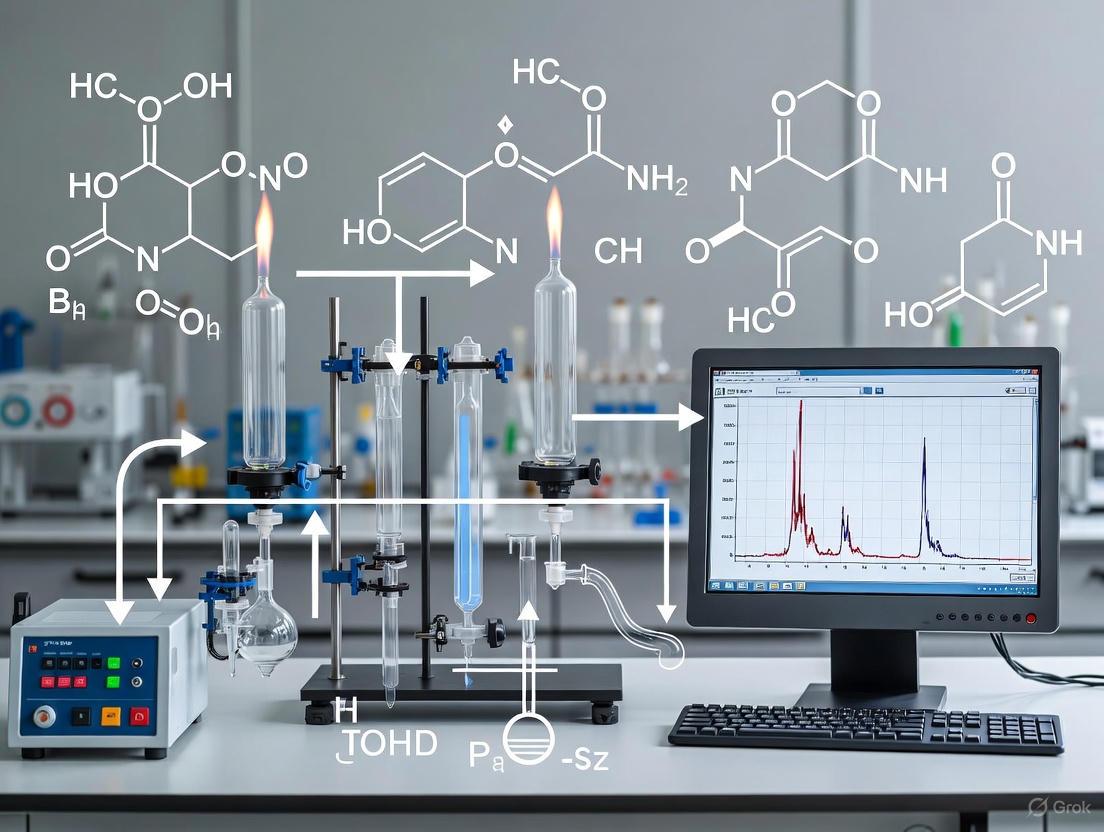
This article provides a thorough examination of Flame Ionization Detection (FID) in gas chromatography (GC) for the analysis of residual solvents in pharmaceuticals and related industries.
Flame Ionization Detection for Residual Solvents: A Comprehensive Guide for Pharmaceutical Scientists
Abstract
This article provides a thorough examination of Flame Ionization Detection (FID) in gas chromatography (GC) for the analysis of residual solvents in pharmaceuticals and related industries. It covers the fundamental principles of the FID mechanism, explores established and emerging methodological applications including static headspace sampling and generic methods, and offers practical troubleshooting and optimization strategies to enhance sensitivity and throughput. Furthermore, the content details method validation requirements per ICH guidelines and compares GC-FID performance against alternative techniques like SIFT-MS, delivering a complete resource for researchers and drug development professionals tasked with ensuring product quality and safety.
The Core Principle: Understanding How FID Detects and Quantifies Residual Solvents
Flame Ionization Detection (FID) stands as one of the most widely utilized detection techniques in gas chromatography (GC), particularly valued in pharmaceutical and food safety sectors for analyzing residual solvents. Its operation hinges on a fundamental principle: the conversion of carbon-containing compounds into measurable electrical signals within a hydrogen-air flame. This process enables the detection and quantitation of organic solvents at concentrations ranging from percent levels to parts per billion (ppb), making it indispensable for quality control in drug development and manufacturing processes [1] [2]. The detector's reputation for reliability, versatility, and ease of use has cemented its position as a cornerstone technique for analysts requiring precise measurement of volatile organic impurities [1].
Within the pharmaceutical industry, the determination of residual solvents by GC-FID represents a highly utilized analytical test critical for ensuring product safety and compliance with regulatory standards [3] [2]. The technique's relevance stems from its exceptional response to carbon-based compounds, which constitute the majority of residual solvents encountered in pharmaceutical synthesis and processing.
The Fundamental Ionization Mechanism
Combustion Zone Chemistry
The ionization mechanism within a hydrogen-air flame represents a sophisticated series of chemical reactions that transform organic molecules into detectable ions. When an organic compound enters the high-temperature environment (typically exceeding 2000°C) of the hydrogen-air flame, it undergoes rapid and complex pyrolytic breakdown. The initial stage involves thermal decomposition, where complex organic molecules fragment into simpler hydrocarbons and carbon intermediates. These fragments then enter a critical chemi-ionization pathway.
The predominant chemi-ionization reaction, widely accepted in combustion literature, involves methyl radicals and carbon monoxide in the flame front:
CH• + O• → CHO+ + e-
This reaction generates a positively charged ion (CHO+) and a free electron. The methyl radicals (CH•) originate from the fragmentation of larger hydrocarbon molecules, while oxygen radicals (O•) derive from the combustion air. The formation of CHO+ represents the primary ionization step that initiates the detection process. The resulting ions and electrons then become the charge carriers that enable current flow between the detector's electrodes.
Ion Collection and Signal Generation
Following ion formation, the detection mechanism relies on the physical collection of these charged particles. A high-voltage electrical field (typically 200-300 V) is maintained between the detector's jet tip (where combustion occurs) and a collector electrode positioned above the flame [4]. This electric field causes the positive ions (such as CHO+) to migrate toward the negatively charged collector electrode, while electrons move toward the positive electrode (the jet tip).
Upon reaching the collector electrode, the ions transfer their charge, generating a small electrical current in the nanoampere to picoampere range. This ion current is directly proportional to the number of carbon atoms entering the flame per unit time, which forms the fundamental quantitative relationship in FID. The electronic signal processing system then amplifies this minute current, converts it to a voltage signal, and processes it into the chromatographic peaks that represent analyte concentration [4]. The exceptional sensitivity of FID, with detection limits reaching 10⁻¹² to 10⁻¹³ g/s, stems from the efficiency of this ion generation and collection process [4].
Table 1: Key Ionization Reactions in Hydrogen-Air Flame
| Reaction Stage | Chemical Process | Species Involved | Significance |
|---|---|---|---|
| Pyrolysis | Thermal fragmentation | Organic molecules (R-CH₃) | Produces small hydrocarbon fragments |
| Chemi-ionization | Ion formation | CH•, O• radicals | Generates CHO+ ions and electrons |
| Charge migration | Ion movement | CHO+, e⁻ | Creates potential for current flow |
| Charge collection | Ion neutralization | Collector electrode | Generates measurable electrical signal |
FID Instrumentation and Component Functions
Critical Hardware Components
The flame ionization detector comprises several integrated components that collectively enable its operation:
Jet and Combustion Chamber: The jet, typically constructed of stainless steel or fused silica, serves as the platform where the hydrogen-air flame burns and where column effluent is introduced into the detector [4]. This component must withstand high temperatures while maintaining structural integrity. The combustion chamber encloses the flame, providing a controlled environment for the ionization process while safely containing the combustion gases.
Gas Delivery System: The FID requires precisely controlled flows of hydrogen (as fuel gas), air (as oxidizer), and carrier gas (typically helium or nitrogen) that transports the analytes from the GC column. High-purity gases are essential, as hydrocarbon impurities in these gases create elevated background signals and noise that compromise detection limits [5]. Specialized gas purification technologies, such as Air Products' BIP technology delivering hydrogen with total hydrocarbon content below 10 ppb, are often employed to maintain optimal detector performance [5].
Electrode System: The detector incorporates a polarizing electrode that establishes the high-voltage field (typically 200-300 V) necessary for ion collection [4]. Positioned above the flame, the collector electrode captures ions generated in the flame, functioning as the primary signal transduction element that converts chemical events into electrical signals.
Signal Processing Electronics: This subsystem amplifies the minute electrical current (often as small as 10⁻¹² to 10⁻¹⁵ A) generated by ion collection, converts it to a digital signal, and transmits it to the data system for display and analysis as chromatographic peaks [4]. Modern FIDs feature auto-ranging capabilities that enable detection and quantitation across wide concentration ranges (from percent to ppb levels) in a single injection [1].
Hydrogen Source Innovations
Traditional FID operation relies on hydrogen cylinders or laboratory generators, which require regular maintenance and pose potential safety risks due to hydrogen accumulation. Recent innovations address these limitations through integrated safety and recycling systems. One patent describes a hydrogen source provision apparatus that incorporates tail gas collection, condensation, and hydrogen removal systems to enable safe, long-term operation [6].
This system includes a hydrogen generator that electrolyzes water to produce hydrogen and oxygen, with the hydrogen directed to the FID and the oxygen conveyed to a water storage tank. A tail gas collection device captures gases or water vapor from the FID, while a condenser tube processes these captured gases—either condensing water vapor back to liquid water or directing residual hydrogen to the storage tank. The storage tank contains a hydrogen removal device that safely eliminates residual hydrogen through combustion with oxygen, and the regenerated water is reused by the hydrogen generator, creating a nearly closed-loop system [6]. This innovation demonstrates the ongoing evolution of FID technology toward greater safety and autonomy, particularly valuable for unattended monitoring applications.
Quantitative Performance in Residual Solvents Analysis
Analytical Performance Metrics
The application of GC-FID for residual solvent analysis demonstrates exceptional quantitative performance across multiple studies. In pharmaceutical applications, a universal GC-FID method using hydrogen as carrier gas achieved baseline resolution of over 30 commonly used solvents in under eight minutes, offering a high-throughput solution for quality control laboratories [3]. Method validation data showed excellent performance across five different diluents, confirming method flexibility and robustness.
In food ingredient analysis, a static headspace GC-FID and MSD method validated for botanicals showed strong recovery rates. Coffeeberry extract supplemented with 10 μg/g of Residual Solvents Class 3 Mix showed FID recoveries of 77-110%, while at the 100 μg/g level, recoveries improved to 87-112% [7]. Precision, as measured by relative standard deviations (RSDs), was generally below 12% for residual solvents in both water and dimethyl sulfoxide matrices, demonstrating acceptable method reproducibility for quality control applications [7].
Table 2: Quantitative Performance of GC-FID in Residual Solvent Analysis
| Application Matrix | Spike Level (μg/g) | Recovery Range (%) | Precision (RSD) | Reference |
|---|---|---|---|---|
| Coffeeberry extract | 10 | 77-110 | <12% | [7] |
| Coffeeberry extract | 100 | 87-112 | <12% | [7] |
| Pomegranate powder | 10 | 72-151 | <12% | [7] |
| Pomegranate powder | 100 | 97-127 | <12% | [7] |
| Pharmaceutical drugs/intermediates | Not specified | >97% (after 31 months) | <5% | [2] |
Green Chemistry and High-Throughput Innovations
Recent methodological advances have addressed both efficiency and environmental concerns in residual solvents testing. A notable GC-FID approach for pharmaceutical drugs and intermediates achieved a 290-fold reduction in solvent consumption and hazardous waste disposal while maintaining analytical performance [2]. This method demonstrated remarkable standard mixture stability, with crimped HPLC vials maintaining over 97% recovery for all 25 solvents after 31 months of storage at -10°C, with overall relative standard deviation below 5% [2].
The carrier gas landscape in GC-FID is also evolving in response to supply chain and environmental considerations. Hydrogen is increasingly advocated as a replacement for helium in routine GC analysis, with studies demonstrating comparable separation efficiency for residual solvent analysis [3]. This transition supports green chromatography initiatives while addressing concerns about helium scarcity as a non-renewable resource.
Experimental Protocols for Residual Solvents Analysis
Proper sample preparation is critical for accurate residual solvent analysis using GC-FID. The static headspace technique represents the most common approach for volatile compounds:
Weighing: Precisely weigh approximately 100-500 mg of sample (botanical extract, pharmaceutical material, or synthetic intermediate) into a headspace vial. For solid samples, particle size reduction may be necessary to ensure efficient solvent release.
Internal Standard Addition: Add appropriate internal standard solutions if required by the analytical method. This step corrects for potential variability in sample injection and matrix effects.
Diluent Addition: Add suitable diluent (typically water, dimethyl sulfoxide, or N,N-dimethylformamide) to achieve a consistent matrix and enhance volatile partitioning into the headspace. The choice of diluent depends on the solubility of the sample and the solvents of interest.
Vial Capping: Immediately cap the vial with a septum and crimp seal to prevent volatile loss. Ensure consistent seal tightness across all samples to maintain headspace integrity.
Equilibration: Place samples in the headspace autosampler and heat to the specified temperature (typically 80-150°C) for a defined equilibration period (usually 15-60 minutes) with constant agitation to promote partitioning of volatile solvents into the headspace.
For the analysis of natural food ingredients like Coffeeberry extract or pomegranate powder, studies have successfully employed this static headspace approach followed by GC-FID analysis, demonstrating its applicability to complex matrices [7].
Instrumental Parameters and Method Validation
A validated generic GC-FID method for pharmaceutical residual solvents analysis employs the following parameters:
- GC System Configuration: Agilent 7890, 8890, or equivalent GC system equipped with FID [1] [3]
- Column: 30m × 0.32mm ID × 3.0μm G16 stationary phase or equivalent
- Carrier Gas: Hydrogen at 3.5 mL/min constant flow [3]
- Injector: Split mode (10:1 to 20:1 ratio) at 200°C
- Oven Program: 40°C (hold 1.5 min), ramp at 25°C/min to 220°C (hold 1.5 min)
- FID Parameters: 250°C detector temperature, hydrogen flow 30 mL/min, air flow 400 mL/min, make-up gas (nitrogen) 25 mL/min [3] [4]
Method validation should establish key performance characteristics including:
- Linearity: Across the expected concentration range (typically 1-150% of specification limit)
- Accuracy: Via spike recovery experiments (target 80-120% recovery)
- Precision: Repeatability (≤10% RSD) and intermediate precision
- Specificity: Resolution from potential interferents
- Limit of Detection/Quantitation: Typically low ppm or ppb levels depending on application
Diagram 1: Experimental workflow for GC-FID residual solvents analysis.
Research Reagent Solutions for Optimal FID Performance
Table 3: Essential Research Reagents and Materials for GC-FID Analysis
| Reagent/Material | Specification Requirements | Functional Role | Performance Impact |
|---|---|---|---|
| Hydrogen Fuel Gas | Total hydrocarbons <0.1 ppm [5] | Flame sustainment and ionization | High purity reduces background noise |
| Zero Air | Total hydrocarbons <50 ppb [5] | Oxidizer for combustion | Impurities cause baseline drift |
| Carrier Gas (He/H₂) | High purity, hydrocarbon-free | Transport mobile phase | Affects efficiency and detection |
| Residual Solvent Standards | Certified reference materials | Quantitation calibration | Direct impact on accuracy |
| Diluents (DMSO/Water) | Low volatile impurities | Sample matrix | Reduces contamination risk |
| Column Stationary Phase | G16 or equivalent mid-polarity | Compound separation | Resolution of solvent mixtures |
The combustion chemistry underlying flame ionization detection represents an elegant synergy of fundamental physical principles and practical analytical application. The transformation of organic compounds into measurable ions within a hydrogen-air flame provides a robust, sensitive, and quantitative means of detecting residual solvents critical to pharmaceutical and food safety. Ongoing innovations in hydrogen source technology [6], carrier gas alternatives [3], and high-throughput methodologies [2] continue to expand the capabilities and applications of this foundational analytical technique. As the pharmaceutical industry advances toward more complex molecules and formulations, the role of GC-FID in ensuring product quality and safety remains secure, supported by its proven reliability, wide linear range, and exceptional sensitivity for carbon-containing compounds.
In the pharmaceutical industry, ensuring the safety of drug products requires stringent control of residual solvents, which may remain from the manufacturing process. Gas Chromatography with a Flame Ionization Detector (GC-FID) stands as a cornerstone technique for this analysis, prized for its reliability, sensitivity, and broad dynamic range. At the heart of this method lies a critical transduction process: the conversion of hydrocarbon molecules into a quantifiable electrical signal. This article provides an in-depth technical examination of this process, focusing on the pivotal role of the collector electrode in generating the electronic signal that underpins quantitative analysis in residual solvents research, such as in the quality control of active pharmaceutical ingredients (APIs) like paliperidone nanocrystals [8].
The Core Mechanism: From Combustion to Ion Current
The operation of an FID can be conceptualized in several key stages: combustion, ionization, ion collection, and signal processing. The process begins when the analytes eluting from the GC column are introduced into a hydrogen-air flame [9].
Ionization in the Hydrogen Flame
Within the high-temperature (exceeding 1500 K) hydrogen-rich flame, organic molecules (CH) are pyrolyzed and undergo a complex series of oxidation reactions [10]. For hydrocarbons, this results in the production of charged species, primarily CHO+ ions and electrons (e-) [10] [11]. The fundamental ionization reaction can be summarized as: [CH \xrightarrow[(O)]{\text{Oxidation}} CHO^+ + e^-] The rate of ion formation is directly proportional to the number of carbon atoms entering the flame per unit time, which forms the basis of the FID's quantitative capability [10] [11]. It is noteworthy that the detector exhibits little or no response to many common inorganic compounds, including water, carbon dioxide, carbon monoxide, sulfur dioxide, and ammonia, making it exceptionally selective for organic analysis [11].
The Function of the Collector Electrode
Positioned directly above the flame is the collector electrode, a key component for signal generation. A high polarizing voltage (typically around 200 V) is applied between the jet tip (which acts as one electrode) and the collector electrode [12] [11]. This electric field establishes a potential difference across the flame.
The positive ions (e.g., CHO+) generated in the flame are attracted to the negatively charged collector electrode, while the highly mobile electrons are drawn toward the positive jet tip [13] [12]. This movement of charged particles constitutes a minute electrical current flowing between the electrodes. The magnitude of this ion current is directly proportional to the number of carbon atoms being combusted, which in turn is proportional to the mass of the analyte in the flame [10] [11].
The following diagram illustrates the signal pathway from ionization to data output.
Experimental Protocol: Validating the Signal Path in Residual Solvent Analysis
To ground the theoretical principles in a practical context, consider a recent study detailing the development and validation of a green GC-FID method for quantifying dimethyl sulfoxide (DMSO) in paliperidone nanocrystal formulations [8]. The experimental workflow and the role of the FID signal are outlined below.
Chromatographic Conditions
- Column: An Rtx column (30.0 mm x 0.25 mm) was used for separation [8].
- Carrier Gas: Nitrogen [8].
- Oven Program: The initial temperature was held at 50 °C for 3 minutes, then ramped at 10 °C per minute to 100 °C, which was held for 3 minutes [8].
- Detector Temperature: The FID was maintained at a constant 250 °C to prevent condensation of the eluted analytes and water vapor produced by combustion [8] [12].
- Gas Flow Rates: The method utilized a hydrogen flow rate of 28 mL/min as fuel, with air acting as the oxidant. Optimal flow rates are critical for stable flame conditions and maximum sensitivity [8] [12].
Signal Generation and Quantification
Under the described conditions, DMSO eluted at a retention time of 1.819 minutes. As the DMSO entered the FID, the process described in Section 2 was initiated. The resulting ion current was captured by the collector electrode, amplified by the detector's electrometer, and converted into a peak in the chromatogram [12]. The area under this peak is proportional to the mass of DMSO that was ionized.
Table 1: Key Validation Parameters for the GC-FID Method for DMSO Quantification [8]
| Validation Parameter | Result | Acceptance Criteria (Typical ICH Q2(R1)) |
|---|---|---|
| Linearity Range | 2 – 10 µL/mL | Linear relationship with correlation coefficient (r²) > 0.99 |
| Limit of Detection (LOD) | 0.0047 µL/mL | Signal-to-Noise ratio ~ 3:1 |
| Limit of Quantification (LOQ) | 0.0136 µL/mL | Signal-to-Noise ratio ~ 10:1 |
| Specificity | Demonstrated | Peak resolution from other potential components |
The method's performance, as evidenced by the low LOD and LOQ, confirms the high sensitivity of the FID system. This sensitivity is a direct result of an efficient ionization process and a well-designed collector system that minimizes signal loss.
Application to Real-World Quality Control
The validated method was successfully applied to a real paliperidone nanocrystal sample. The residual solvent DMSO was quantified at 21.91 ppm in a 1 mg sample, demonstrating the method's practical application in ensuring drug product safety and compliance with regulatory guidelines such as ICH Q3C on residual solvents [8] [14].
The Scientist's Toolkit: Essential Components for GC-FID Analysis
Successful implementation of a GC-FID method for residual solvent analysis relies on a well-optimized system and high-quality consumables. The following table lists key reagents, materials, and their functions based on the cited research and general FID practice.
Table 2: Key Research Reagent Solutions and Essential Materials for GC-FID
| Item | Function / Purpose | Example from Literature |
|---|---|---|
| Hydrogen Gas (H₂) | High-purity fuel gas for the FID flame. Flow must be optimized for sensitivity. | Used at 28 mL/min [8]. |
| Zero Air | Oxidant gas to support combustion in the FID flame. | Required for hydrocarbon combustion [10] [9]. |
| Nitrogen or Helium | High-purity carrier gas to transport vaporized sample through the column. | Nitrogen used as carrier gas [8]. |
| Diluent Solvent | A solvent (e.g., methanol) to dissolve the sample; should not co-elute with analytes. | Methanol used as diluent [8]. |
| Standard Solutions | Certified reference materials of target solvents for calibration and quantification. | Used for linearity study from 2–10 µL/mL [8]. |
| FID Jet & Collector | Critical detector components; proper geometry and cleanliness are vital for signal stability. | Specific assemblies available (e.g., 0.01 ID or 0.02 ID Flame Tip) [9]. |
| Column Ferrule | Consumable fitting to create a leak-free connection between column and detector. | 15% Graphite/85% Vespel ferrules specified for high-temperature sealing [9]. |
The journey from an organic molecule to a quantifiable electrical signal in GC-FID is a precise and well-understood process. The collector electrode plays an indispensable role as the central transducer in this system, capturing the ionic products of combustion and enabling the generation of a current that is faithfully converted into the chromatographic data relied upon by scientists. The validated application of this principle in monitoring residual DMSO in a sophisticated pharmaceutical formulation underscores its critical importance in modern drug development and quality control. By mastering the underlying mechanism—from ions to current—researchers can better optimize methods, troubleshoot issues, and ensure the safety and efficacy of pharmaceutical products.
Flame Ionization Detection (FID) coupled with Gas Chromatography (GC) represents a cornerstone analytical technique for the analysis of residual solvents, particularly within the pharmaceutical industry. This whitepaper delineates the core principles underpinning FID's operation and explicates its singular suitability for solvent monitoring based on its universality, sensitivity, and robustness. Framed within the context of residual solvents research for drug development, we present technical data, experimental protocols, and key resources that empower scientists to leverage GC-FID effectively, ensuring compliance with international regulatory standards and enhancing laboratory safety and efficiency.
The control of residual solvents in active pharmaceutical ingredients (APIs) and finished drug products is a mandatory requirement governed by the International Council for Harmonisation (ICH Q3C) guidelines. Among the analytical techniques employed for this purpose, Gas Chromatography with Flame Ionization Detection (GC-FID) has emerged as the premier methodology. The technique's preeminence stems from its fundamental compatibility with the volatile nature of organic solvents, the high separation efficiency of capillary GC columns, and the exceptional detection characteristics of the FID itself [15]. The FID is a mass-sensitive detector that responds to virtually all organic compounds, generating a minimal signal for common carrier gases, which makes it exceptionally suited for detecting trace-level solvents in complex matrices [16]. Its reliability, versatility, and ease of use have cemented its status as the most widely used detector in gas chromatography for this application [17] [16].
Fundamental Operating Principles of FID
Mechanism of Ionization
The operational principle of the FID is founded on the detection of ions formed during the combustion of organic compounds in a hydrogen-rich flame. After separation in the GC column, the analytes enter the FID detector and are mixed with hydrogen (fuel) and air (oxidant) [17] [10]. This mixture is ignited at the tip of a jet nozzle, producing a high-temperature flame (>1500 K). Within this flame, hydrocarbon molecules are pyrolyzed and undergo an ionization reaction [10]. The generally accepted ionization process for a hydrocarbon can be summarized by the following reaction, producing a CHO+ ion and an electron (e-) [10]: [CH \xrightarrow[(O)]{\text{Oxidation}} CHO^+ + e^-] The generation of these ions is proportional to the number of carbon atoms in the organic molecule that enter the flame per unit time [18].
Signal Generation and Measurement
The ions and electrons generated in the hydrogen flame are attracted to a collector electrode positioned above the flame, thanks to an applied potential difference. The positively charged ions are drawn to the negative collector electrode, while the electrons move toward the positive base of the flame jet [18]. This movement of charged particles creates a small electrical current. This current is collected and measured by a high-impedance picoammeter [17] [18]. The resulting signal is then converted into an electrical output in picoamperes (pA) or millivolts (mV), which is proportional to the mass of the carbon-containing compound entering the detector [17]. This signal is subsequently processed and recorded as a peak on a chromatogram, with the peak area or height used for quantitative analysis.
The Critical Role of Make-up Gas
An inert make-up gas, typically nitrogen, is often introduced into the detector to optimize performance. This gas serves two critical functions: it provides additional gas flow to efficiently sweep the sample ions through the detector, improving peak shape and response, and it helps maintain a stable baseline [17] [19]. Nitrogen is often preferred over helium for this purpose due to its cost-effectiveness and its ability to improve the signal-to-noise ratio, owing to its higher molecular weight which aids in analyte ionization and fragmentation [17] [19]. A constant make-up gas flow rate, for instance 30 mL/min, is recommended for optimal results [19].
The following diagram illustrates the typical workflow and ionization process within a GC-FID system:
Quantitative Advantages of FID for Solvent Analysis
The performance characteristics of FID make it exceptionally suitable for the quantitative analysis of residual solvents. Its key attributes can be summarized in the following table:
Table 1: Key Performance Metrics of a GC-FID System
| Performance Characteristic | Specification | Significance in Residual Solvents Analysis |
|---|---|---|
| Universality | Responds to virtually all organic compounds [16] | Single method can detect a wide range of solvent chemistries without method modification. |
| Sensitivity | Detection levels as low as 10$^{-13}$ g/s [18] | Enables reliable detection of trace-level solvents at ppm/ppb concentrations as required by ICH Q3C. |
| Wide Dynamic Range | Linear response range of 10$^7$ g/s [18] | Allows for accurate quantification of solvents from low ppm to percent levels in a single injection [16]. |
| Robustness | Resistant to minor gas flow variations [19] | Provides high reproducibility and reliability for high-throughput quality control environments. |
Furthermore, the FID's response is roughly proportional to the number of reducible carbon atoms in a molecule, making quantification relatively straightforward [18]. Measurements are often reported "as methane," meaning as the quantity of methane that would produce the same response, though it is crucial to note that response factors can vary for different chemical classes, particularly for oxygenated species which tend to have a lower response factor [10] [18]. Carbon monoxide and carbon dioxide are not detectable by a standard FID, though they can be analyzed using a methanizer, which is a bed of Ni catalyst that reduces them to methane [18]. An advanced version, the Polyarc reactor, oxidizes compounds before reducing them to methane, allowing for a uniform response for all carbon-containing compounds and eliminating the need for individual calibrations [20] [18].
Experimental Protocol: A Universal GC-FID Method for Pharmaceutical Solvents
The following validated method exemplifies the application of GC-FID for residual solvent analysis, highlighting the industry's move towards hydrogen as a sustainable carrier gas.
Materials and Equipment
- Gas Chromatograph: Agilent 7890, 8890, or equivalent, equipped with an FID [16].
- Column: Capillary column, appropriate for volatile separations (e.g., DB-624, 30 m x 0.32 mm ID, 1.8 µm film thickness).
- Carrier Gas: Hydrogen (H₂), generated on-demand (≥99.999% purity). Hydrogen is increasingly adopted as a superior, greener alternative to helium due to its lower viscosity and higher diffusivity, which enables faster analysis times [15].
- Gases for FID: Hydrogen (≥99.999%) as fuel gas and purified air as the oxidant [17].
- Make-up Gas: Nitrogen (N₂) or Helium (He), with nitrogen being more cost-effective [17] [19].
- Standards and Samples: Certified reference standards of target solvents in appropriate diluents such as N,N-Dimethylformamide (DMF) or water [15].
Detailed Methodology
- Sample Preparation: Prepare samples by weighing an appropriate amount of the drug substance or intermediate into a headspace vial. Add a suitable diluent (e.g., DMF, water, or dimethyl sulfoxide) to a known volume. Seal the vial immediately with a crimp cap [15].
- Instrumental Parameters:
- Carrier Gas Flow: Hydrogen, constant flow mode (e.g., 2.0 mL/min) [15].
- Injector Temperature: 200°C - 250°C, in split mode (split ratio 10:1 to 30:1) [19] [15].
- Oven Temperature Program: Initial temperature 40°C (hold 1 min), ramp at 20°C/min to 240°C (hold 2 min). Total run time: ~12 minutes [15].
- FID Parameters: Temperature 250°C - 300°C; Hydrogen Flow: 30-40 mL/min; Air Flow: 300-400 mL/min. Optimize flow rates to achieve a stable flame, often with an air-to-hydrogen ratio of approximately 10:1 [19].
- Make-up Gas: Nitrogen at 30 mL/min [19].
- Data Acquisition and Analysis: The generated current from the FID is processed by data acquisition software. Quantification is performed by constructing calibration curves using the peak areas of the external standards.
This generic method has been demonstrated to achieve baseline resolution of over 30 common processing solvents (including methanol, acetone, dichloromethane, toluene, tetrahydrofuran, and DMF) in a single sub-8-minute run, providing a powerful tool for fast-paced drug development workflows [15].
The Scientist's Toolkit: Essential Reagents and Consumables
Successful and reliable GC-FID analysis depends on the quality and consistency of gases and consumables. The following table details key components of the FID system.
Table 2: Essential Research Reagent Solutions for GC-FID
| Item | Function / Purpose | Technical Notes |
|---|---|---|
| Hydrogen (H₂) Gas | Fuel for the FID flame. | Can be supplied via generator for on-demand, continuous supply, enhancing safety and convenience [17]. |
| Zero Air | Oxidant for combustion in the FID. | Must be hydrocarbon-free to prevent elevated baselines and noise [17]. |
| Nitrogen (N₂) Make-up Gas | Improves analyte transport to detector and signal-to-noise ratio. | A cost-effective alternative to helium; flow rate typically ~30 mL/min [17] [19]. |
| Hydrogen Carrier Gas | Mobile phase for GC separation. | A green, sustainable, and high-performance alternative to helium [15]. |
| FID Jet / Flame Tip | Component where flame combustion occurs. | Available in different internal diameters (e.g., 0.01 ID, 0.02 ID); a clogged jet is a common source of issues [19] [9]. |
| Graphite/Vespel Ferrules | Provide leak-free seals for column connections. | Available with various hole sizes (e.g., 0.4 mm, 0.5 mm) to match column dimensions [9]. |
Troubleshooting for Optimal FID Performance
Maintaining peak FID performance requires attention to common operational issues. Key tactics include:
- Signal Fade or Unstable Flame: This can be caused by incorrect gas flow ratios, a clogged FID jet, or gas leaks. Verify and adjust hydrogen and air flows to maintain a stable 10:1 ratio (e.g., 45 mL/min H₂ and 450 mL/min air). Check for secure column connections and clean the FID jet if necessary [19].
- Peak Tailing or Fronting: This may indicate an overloaded detector or issues with the injector liner/split ratio. Adjust the split ratio to balance sensitivity and column longevity. Experiment with different split ratios to find the optimal setting for your analytes [19].
- High Baseline Noise: Impurities in the gas supplies (especially air) are a common cause. Ensure the use of high-purity gases and effective gas filters. The use of a make-up gas like nitrogen can also help stabilize the baseline [17] [19].
The Flame Ionization Detector remains an indispensable tool in the analytical scientist's arsenal, particularly for the critical task of residual solvent analysis in pharmaceutical research and quality control. Its universality in detecting a vast spectrum of organic compounds, exceptional sensitivity capable of reaching part-per-billion levels, and renowned robustness and cost-effectiveness solidify its position as the ideal detector for this application. The ongoing development of faster, greener generic methods—such as those utilizing hydrogen carrier gas—ensures that GC-FID will continue to be a vital, forward-looking technology for ensuring drug safety and efficacy in compliance with global regulatory standards.
In the pharmaceutical industry, the control of residual solvents is a critical aspect of ensuring drug safety and quality. These organic volatile chemicals, used or produced in the manufacture of drug substances or products, offer no therapeutic benefit and may pose safety risks to patients. The International Council for Harmonisation (ICH) Q3C guideline establishes permitted daily exposures for these solvents, categorizing them based on their risk toxicity [21]. Gas Chromatography with Flame Ionization Detection (GC-FID), particularly when coupled with headspace (HS) sampling, has emerged as the cornerstone technique for residual solvent analysis. This integrated system provides a robust, sensitive, and reliable platform for quantifying volatile organic impurities in pharmaceutical compounds, enabling manufacturers to comply with stringent global regulatory standards from agencies like the FDA and EMA, as well as pharmacopeial methods such as USP 〈467〉 [22] [21].
The synergy between headspace sampling, GC separation, and FID detection creates a complete analytical system that efficiently handles complex matrices. Headspace sampling introduces only volatile components into the chromatographic system, protecting the instrument from non-volatile contaminants that could degrade performance [22]. GC separation then resolves complex solvent mixtures, while FID provides universal, sensitive detection for hydrocarbons with exceptional linearity across a wide concentration range. This technical guide explores the fundamental principles, optimization parameters, and practical implementation of the integrated HS-GC-FID system specifically for residual solvents research in pharmaceutical development.
Fundamental Principles of Flame Ionization Detection
FID Operating Mechanism
The Flame Ionization Detector (FID) operates on the principle of combusting organic compounds in a hydrogen/air flame to generate ions. As column effluent enters the detector base, it mixes with hydrogen fuel and optional makeup gas before combining with air for combustion at the jet tip [12]. The combustion process for hydrocarbons proceeds through a series of reactions in the reducing zone of the flame:
These reactions form formyl cations and free electrons [23]. A polarizing voltage (typically 200-300 V) applied between the jet tip and a collector electrode creates an electric field that accelerates the electrons across the jet tip-collector gap. This minute current, on the order of picoamps (10-12 A), is converted to a voltage by an electrometer, amplified, and filtered to produce the chromatographic signal [12]. The resulting signal is directly proportional to the number of carbon atoms entering the flame, making FID a mass-sensitive detector ideal for quantifying organic compounds.
FID Response Characteristics
The FID exhibits nearly universal response to organic compounds containing carbon-hydrogen bonds, with sensitivity varying by chemical structure [12]. Its key performance characteristics include:
- Broad Dynamic Range: Typically 10^6 to 10^7, allowing quantification of both major and trace components
- Low Detection Limits: Generally 0.1-10 ppm for most hydrocarbons [23]
- High Sensitivity: Responds to most carbon-containing compounds with notable exceptions including:
This combination of characteristics makes FID particularly suitable for residual solvent analysis, where it must detect and quantify diverse organic solvents across wide concentration ranges as mandated by ICH Q3C classification [22].
System Components and Operational Principles
Headspace Sampler: Design and Function
The headspace sampler serves as the sample introduction interface, designed to efficiently transfer volatile analytes from the sample matrix into the GC system. In static headspace analysis, samples are sealed in vials and heated to equilibrium between the sample matrix and the vapor phase [22]. The fundamental principle involves Henry's Law, where the concentration of a volatile compound in the gas phase above a solution is proportional to its concentration in the solution at equilibrium.
Critical headspace parameters include:
- Oven Temperature: Typically 90-120°C, optimized for efficient volatilization without decomposition [24] [22]
- Equilibration Time: Usually 10-30 minutes to establish equilibrium
- Loop/Mixing Parameters: Pressurization, loop fill, and injection times control sample transfer
The headspace approach provides significant advantages for residual solvent analysis in pharmaceutical matrices, as only volatile components are introduced into the GC system, minimizing contamination and enhancing method robustness [22].
Gas Chromatograph: Separation Fundamentals
The gas chromatograph performs the critical separation function, resolving complex solvent mixtures through differential partitioning between mobile (carrier gas) and stationary phases. Key GC components and parameters include:
- Injector/Inlet: Maintained at 200-220°C for rapid vaporization of introduced analytes [22]
- Carrier Gas: Typically helium or hydrogen at constant flow (2.0 mL/min) or pressure
- Column Selection: DB-624 (6% cyanopropylphenyl/94% dimethyl polysiloxane) is widely used for solvent separation [25] [22]
- Oven Program: Temperature optimization is critical; a typical program includes:
The combination of stationary phase chemistry and temperature programming enables resolution of complex solvent mixtures commonly encountered in pharmaceutical analysis.
Flame Ionization Detector: Operational Parameters
The FID provides sensitive detection of eluted hydrocarbons through combustion and ionization. Optimal FID operation requires precise control of several parameters:
- Detector Temperature: Maintained at 250-300°C to prevent condensation of eluting compounds and water vapor produced by combustion [8] [12] [22]
- Gas Flow Rates: Critical for stable flame and maximum sensitivity:
- Polarizing Voltage: 200-300V applied between jet and collector electrodes
The detector's performance is highly dependent on maintaining proper gas ratios, with sensitivity dropping significantly if hydrogen flow deviates above or below optimum levels [12].
Table 1: Typical HS-GC-FID Operating Conditions for Residual Solvent Analysis
| Parameter | Typical Setting | Function/Impact |
|---|---|---|
| Headspace Oven Temp | 90-120°C | Volatilizes solvents, establishes equilibrium |
| GC Inlet Temperature | 200-220°C | Vaporizes analytes upon injection |
| Carrier Gas & Flow | Helium/Hydrogen, 2.0 mL/min | Mobile phase for analyte transport |
| Column | DB-624, 30m × 0.32mm, 1.8µm | Stationary phase for compound separation |
| Oven Program | 50°C (3min) to 230°C at 5-30°C/min | Controls separation efficiency & runtime |
| FID Temperature | 250-300°C | Prevents condensation, maintains sensitivity |
| Hydrogen Flow | 30-45 mL/min | Fuel for combustion and ionization |
| Air Flow | 300-450 mL/min | Oxidizer for sustained combustion |
Integrated System Workflow and Signaling Pathway
The complete HS-GC-FID analytical process follows a defined pathway from sample preparation to data reporting. The workflow integrates all system components into a coordinated sequence that ensures accurate and reproducible results for residual solvent determination.
Diagram 1: HS-GC-FID Analytical Workflow
The signaling pathway within the FID itself converts chemical information into an electrical signal through a series of coordinated processes. Understanding this pathway is essential for troubleshooting and optimizing detection sensitivity.
Diagram 2: FID Signal Generation Pathway
Experimental Protocols and Methodologies
Method Development and Validation Protocols
Developing a robust HS-GC-FID method for residual solvents requires systematic optimization and validation according to regulatory guidelines. The Analytical Quality by Design (AQbD) approach, aligned with ICH Q14 guidelines, employs risk assessment to identify Critical Method Variables (CMVs) including split ratio, agitator temperature, and ion source temperature [24]. Method validation must demonstrate:
- Specificity: Resolution (R ≥ 2) between all target solvents [24]
- Linearity: Correlation coefficient (R² > 0.990) across the validated range [26] [24]
- Accuracy: Average spike recoveries between 85-115% [26]
- Precision: Relative standard deviation (RSD) < 5.0% for repeated measurements [26]
- Sensitivity: LOD and LOQ determined for each solvent
A recent application of this approach successfully developed a method for simultaneous analysis of 11 residual solvent impurities in pharmaceutical drug substances [24].
Quantitative Analysis Approaches
Two primary quantification methods are employed in residual solvent analysis:
1. External Standard Method
- Uses reference standards containing target solvents
- Requires frequent standard preparation
- More time-consuming but highly accurate and selective [22]
2. Relative Response Factor (RRF) Method
- Employs predetermined RRFs against an internal standard (e.g., decane)
- Single injection quantifies multiple solvents
- Significantly improves efficiency (saves >75% preparation time) [22]
- Calculation: RRF = (Ssolvent/SIS) or (RFsolvent/RFIS)
- Quantification: Csolvent (ppm) = (As × Cdecane)/(Adecane × C_s × RRF) × 10⁶ [22]
The RRF approach has been successfully validated under GMP conditions and implemented for routine analysis of up to 25 solvents simultaneously [22].
Table 2: Method Validation Parameters and Acceptance Criteria from Recent Studies
| Validation Parameter | Experimental Design | Acceptance Criteria | Exemplary Results |
|---|---|---|---|
| Specificity & Resolution | Baseline separation of all solvents | Resolution Factor R ≥ 1.5 [26] | R > 2.0 for 8 solvents in suvorexant [26] |
| Linearity | 10-200% of ICH Q3C limit | Correlation coefficient r > 0.990 [26] | R² > 0.98 for 11 solvents [24] |
| Accuracy | Spiked recovery at multiple levels | Average recovery 85-115% [26] | 85-115% for 8 solvents [26] |
| Precision | Repeat injections (n=6) | RSD < 5.0% [26] | RSD < 5.0% for all solvents [26] |
| Sensitivity (LOD/LOQ) | Signal-to-noise approach | LOD: 0.0047 µL/mL, LOQ: 0.0136 µL/mL for DMSO [8] | Specific to compound/matrix |
Research Reagent Solutions and Essential Materials
Successful implementation of HS-GC-FID methodology requires specific high-quality reagents and materials optimized for residual solvent analysis. The following toolkit represents essential components for establishing a robust analytical system.
Table 3: Essential Research Reagent Solutions for HS-GC-FID Analysis
| Reagent/Material | Specification/Purpose | Application Example |
|---|---|---|
| Internal Standard | Decane in NMP (0.05 mg/mL) | Quantification by RRF method [22] |
| Dilution Solvent | N-Methyl-2-pyrrolidone (NMP) | High boiling point, dissolves diverse APIs [22] |
| Reference Standards | USP/PhEur grade target solvents | System calibration and RRF determination [22] |
| GC Column | DB-624, 30m × 0.32mm, 1.8µm | Preferred stationary phase for solvents [22] |
| Carrier Gas | Helium or Hydrogen (>99.999% purity) | Mobile phase, minimizes baseline noise [12] [23] |
| Combustion Gases | Zero-air generators, H₂ generators | FID flame stability and sensitivity [12] |
| Headspace Vials | 20mL with Teflon-lined septa | Containment for equilibrium [22] |
Recent Applications in Pharmaceutical Research
The HS-GC-FID platform continues to demonstrate its value across diverse pharmaceutical applications, with recent studies highlighting its versatility and performance:
Paliperidone Nanocrystal Formulations
- Analysis: DMSO residual solvent
- Method: Green GC-FID with method validation per ICH Q2(R1)
- Results: LOD: 0.0047 µL/mL, LOQ: 0.0136 µL/mL
- Significance: Method demonstrated excellent sensitivity and compliance with green analytical chemistry principles [8]
Suvorexant Synthetic Pathway Optimization
- Analysis: Eight residual solvents including n-heptane
- Method: Headspace GC-FID with DB-624 column
- Results: Resolution (R > 1.5), linearity (r > 0.990), RSD < 5.0%
- Significance: Supported development of industrial-scale synthesis with rigorous quality control [26]
Generic Residual Solvent Screening
- Analysis: 25 solvents simultaneously
- Method: RRF-based HS-GC with decane internal standard
- Results: >60% time and cost savings compared to external standard methods
- Significance: LEAN approach implemented under GMP for high-throughput testing [22]
These applications demonstrate how HS-GC-FID methodology continues to evolve, addressing emerging challenges in pharmaceutical development while maintaining regulatory compliance.
The integrated Headspace GC-FID system represents a mature yet continually advancing analytical platform for residual solvent analysis in pharmaceutical research and quality control. Its robustness stems from the synergistic combination of three specialized components: headspace sampling for clean introduction of volatile analytes, gas chromatography for high-resolution separation, and flame ionization detection for sensitive, universal hydrocarbon detection. As pharmaceutical manufacturing processes become more complex and regulatory standards more stringent, this integrated approach provides the reliability, sensitivity, and efficiency required for modern drug development. The ongoing development of green methods [8], LEAN approaches [22], and implementation of AQbD principles [24] ensures that HS-GC-FID methodology will remain essential for pharmaceutical quality assessment, continuing to protect patient safety by ensuring the control of potentially harmful solvent residues in medicinal products.
From Theory to Practice: Implementing HS-GC-FID Methods for Residual Solvent Analysis
Static Headspace Gas Chromatography coupled with Flame Ionization Detection (HS-GC-FID) stands as the predominant analytical technique for the identification and quantification of volatile impurities, particularly residual solvents, in pharmaceutical products [27]. The technique's preeminence stems from its exceptional sensitivity, robustness, and compatibility with complex sample matrices. Within the stringent framework of pharmaceutical quality control, where organic volatile impurities (OVIs) represent a critical risk to patient safety, HS-GC-FID provides the reliability required to meet international regulatory standards set forth by the International Council for Harmonisation (ICH) and various pharmacopoeias [28] [29]. This technical guide examines the fundamental principles of HS-GC-FID, detailing its operation and application, and underscores its pivotal role in ensuring the safety and efficacy of pharmaceutical products.
Fundamental Principles and Instrumentation
The Headspace Sampling Technique
Static headspace sampling is a preparation technique designed for the analysis of volatile compounds in solid or liquid samples. The process involves placing the sample in a sealed vial, heating it to a controlled temperature, and allowing the volatile analytes to partition between the sample matrix and the gas phase (headspace) until equilibrium is established [30]. This equilibrium is governed by the partition coefficient (K), defined as K = CS/CG, where CS is the analyte concentration in the sample phase and CG is the analyte concentration in the gas phase [30]. A key advantage of headspace sampling is that only the gas phase is introduced into the GC instrument, thereby protecting the inlet, column, and detector from non-volatile sample components that could cause contamination or damage [30].
The fundamental relationship in headspace analysis is expressed as: A ∝ CG = C0/(K + β), where A is the detector response area, CG is the gas phase concentration, and C0 is the original analyte concentration in the sample [30]. The phase ratio (β) represents the ratio of the gas volume to the sample volume in the vial. To maximize detector response, the sum of K and β must be minimized, which is typically achieved by optimizing incubation temperature and sample volume [30].
Flame Ionization Detection (FID) Mechanism
The Flame Ionization Detector operates on the principle of combusting organic carbon-containing compounds in a hydrogen/air flame to generate ions. The working mechanism can be summarized in a few key steps [27]:
- Combustion: Effluent from the GC column is directed into a hydrogen/air flame, which is maintained between a jet tip and a collector electrode.
- Pyrolysis and Ion Formation: Organic molecules are pyrolyzed in the flame, producing intermediates that form ions and electrons during combustion. The primary ion-producing reaction is believed to involve chemod ionization of carbon atoms from the analyte.
- Ion Collection: A voltage applied between the jet and the collector electrode creates an electrical field, causing the ions to move toward the collector and generating a measurable current.
- Signal Amplification: This minute current is amplified by a high-impedance electrometer, producing a signal proportional to the mass of carbon entering the detector per unit time.
FID is renowned for its excellent sensitivity, with a wide linear dynamic range typically exceeding 10^7, and its minimal response to common carrier gases and water, making it exceptionally suitable for residual solvent analysis [27]. However, a notable limitation is that FID responds exclusively to combustible organic compounds and produces no signal for non-combustible species such as water, carbon dioxide, or ammonia [27].
Figure 1: FID Detection Mechanism. This diagram illustrates the process of ion formation and detection within a Flame Ionization Detector.
Experimental Protocols and Methodologies
Generic HS-GC-FID Method for Pharmaceutical Analysis
A robust, high-throughput HS-GC-FID method capable of resolving over 30 common residual solvents in under eight minutes has been documented [3]. This method exemplifies the efficiency required in modern pharmaceutical quality control laboratories.
Chromatographic Conditions:
- Column: DB-624 capillary column (30 m × 0.53 mm ID, 3.0 μm film thickness) or equivalent [31].
- Carrier Gas: Hydrogen (H2), increasingly adopted as a sustainable and efficient alternative to helium, at a constant flow rate [3] [31].
- Oven Program: Initial temperature 40°C (held for 5 min), ramped to 160°C at 10°C/min, then to 240°C at 30°C/min, and held for 8 minutes [31].
- Inlet/Detector Temperature: 190°C and 260°C, respectively [31].
- Split Ratio: 1:5 [31].
Headspace Conditions:
- Diluent: Dimethyl sulfoxide (DMSO) or N,N-Dimethylacetamide (DMA) for water-insoluble samples; water for water-soluble samples [27] [28].
- Incubation Temperature/Time: 100°C for 30 minutes [31].
- Syringe/Transfer Line Temperature: 105°C and 110°C, respectively [31].
Sample and Standard Preparation
The selection of an appropriate diluent is critical for method success. DMSO is frequently chosen for its high boiling point, high purity, and excellent solubility for a wide range of pharmaceutical compounds [27] [28]. The use of specially purified "headspace-grade" solvents is recommended to minimize interfering background peaks [28].
Standard Solution Preparation [31]:
- Prepare stock solutions of each target residual solvent.
- Dilute the stocks in DMSO to create a working standard mixture. The final concentrations should be based on ICH limits, for example: Methanol (600 μg/mL), Isopropyl Alcohol (1000 μg/mL), Ethyl Acetate (1000 μg/mL), Chloroform (12 μg/mL), Triethylamine (1000 μg/mL), Toluene (178 μg/mL).
- Transfer 5.0 mL of this solution to a 20 mL headspace vial and seal immediately with a crimp cap.
Sample Solution Preparation [31]:
- Accurately weigh approximately 200 mg of the drug substance (API) or product.
- Dissolve the sample in 5.0 mL of DMSO within a 20 mL headspace vial.
- Cap the vial immediately and homogenize using a vortex shaker for 1 minute.
Figure 2: HS-GC-FID Experimental Workflow. This diagram outlines the key steps from sample preparation to final detection.
Performance Data and Validation
Method validation is mandatory to demonstrate that the HS-GC-FID procedure is suitable for its intended purpose. Validation is performed in accordance with ICH or other regional guidelines (e.g., ANVISA RDC 166/2017, EMA) [32] [31].
Table 1: Typical HS-GC-FID Method Validation Parameters and Outcomes
| Validation Parameter | Experimental Procedure | Acceptance Criteria | Exemplary Results from Literature |
|---|---|---|---|
| Selectivity/Specificity | Analysis of diluent blank, individual standards, and spiked API. | No interference from blank or sample matrix at the retention times of the analytes. | Baseline resolution of all target solvents confirmed [31]. |
| Linearity | Analysis of standard solutions at 6 concentration levels (e.g., from LQ to 120% of specification). | Correlation coefficient (r) ≥ 0.999 [31]. | r ≥ 0.999 for all solvents in a losartan potassium method [31]. |
| Precision (Repeatability) | Six replicate analyses of a sample at 100% concentration level. | Relative Standard Deviation (RSD) ≤ 10.0% [31]. | RSD ≤ 10.0% for all solvents [31]. |
| Accuracy | Recovery test by spiking known quantities of solvents into the API at three levels (low, middle, high). | Average recoveries between 80–115% [31]. | Recoveries between 95.98% and 109.40% reported [31]. |
| Limit of Quantification (LOQ) | Preparation of decreasing concentrations and observation of signal-to-noise (S/N). | S/N ≥ 10 [31]. | LOQs below 10% of the ICH specification limit [31]. |
| Robustness | Deliberate, small modifications to parameters (e.g., oven temp ±5°C, gas velocity). | RSD of results comparable to nominal conditions. | Method proved robust under tested modifications [31]. |
Table 2: Analysis of Residual Solvents in a Losartan Potassium API Batch [31]
| Residual Solvent | ICH Classification | Concentration Found (μg/mL) | Specification Limit (μg/mL) per ICH |
|---|---|---|---|
| Isopropyl Alcohol (IPA) | Class 3 | Detected | 5000 |
| Triethylamine | Class 2 | Detected | 1000 |
| Methanol | Class 2 | Not Detected | 3000 |
| Ethyl Acetate | Class 3 | Not Detected | 5000 |
| Chloroform | Class 2 | Not Detected | 60 |
| Toluene | Class 2 | Not Detected | 890 |
The Scientist's Toolkit: Essential Research Reagents and Materials
The reliability of HS-GC-FID analysis is heavily dependent on the quality and appropriateness of the consumables and reagents used.
Table 3: Essential Materials for HS-GC-FID Analysis of Residual Solvents
| Item | Function/Purpose | Key Considerations |
|---|---|---|
| Headspace-Grade DMSO | High-purity diluent for dissolving samples and standards. | Minimizes background interference; high boiling point prevents over-pressurization of vials [27] [28]. |
| DB-624 (or equivalent) GC Column | A mid-polarity 6% cyanopropyl / 94% dimethyl polysiloxane stationary phase for separating volatile mixtures. | The USP/EP primary column for residual solvent analysis; offers excellent separation of a wide range of volatiles [29] [31]. |
| Certified Reference Standards | Used for peak identification (retention time) and quantitation (calibration curve). | Must be traceable to a recognized standard body (e.g., USP); purity is critical for accurate results [29]. |
| Sealed Headspace Vials and Caps | Containers for sample equilibration and introduction. | Must provide a hermetic seal to prevent loss of volatile analytes; 20 mL vials are common [30]. |
| Hydrogen Gas Generator | Source for FID flame and can be used as a carrier gas. | Offers excellent chromatographic efficiency and is a green, cost-effective alternative to helium [3]. |
Static Headspace-GC-FID remains the undisputed gold standard for the analysis of volatile impurities in pharmaceuticals. Its combination of robust separation science, highly sensitive and reliable detection, and minimal sample preparation provides an unparalleled solution for ensuring drug product safety and compliance with global regulatory requirements. The technique's well-established principles, continuously refined methodologies, and proven performance in countless laboratories worldwide cement its status as an indispensable tool for researchers, scientists, and drug development professionals dedicated to quality and patient safety.
Residual solvent analysis (RSA) is a critical quality control procedure in the pharmaceutical and food industries, ensuring that harmful solvents used in manufacturing are removed from final products. For decades, gas chromatography (GC) coupled with a flame ionization detector (FID) has been the cornerstone technique for this analysis. The FID is prized for its broad dynamic range, robustness, and high sensitivity to carbon-containing compounds—the fundamental building blocks of organic solvents. When analyte molecules eluting from the GC column are introduced into the FID's hydrogen-air flame, they undergo pyrolysis and produce ions. The resulting current is proportional to the mass of carbon entering the detector, enabling both qualitative and quantitative analysis [20] [7].
However, traditional GC-FID methods face significant challenges when developing a universal method capable of separating over 30 solvents in a single run. These challenges include the wide range of polarities and boiling points of common solvents, potential co-elution, and the fact that a standard FID exhibits varying response factors for different solvent functionalities, complicating quantitative accuracy. This technical guide outlines a modern, integrated approach that overcomes these limitations through innovative sample introduction and detection enhancement, providing researchers with a robust generic method for comprehensive residual solvent profiling.
Core Principles: Overcoming Traditional FID Limitations
The fundamental challenge in creating a universal method lies in the inherent properties of both the solvents and the detection system. A standard FID responds differently to various chemical functionalities; for instance, its response to hydrocarbons differs from its response to chlorinated solvents or alcohols. This necessitates creating multiple calibration curves, which is impractical for a method targeting over 30 analytes [20].
A groundbreaking solution to this problem is the integration of a methanizer placed inline between the GC column and the FID. This device converts all carbon-containing species into methane through a catalytic hydrogenation process before they reach the detector. Since the FID's response is now exclusively to methane molecules, the detector provides a uniform response for all solvents, regardless of their original heteroatom content or functional groups. This innovation allows scientists to use a single response factor for quantitative calculations across a vast range of solvents, dramatically simplifying method development and validation while improving quantitative accuracy [20].
For sample introduction, the full evaporative technique (FET) has proven superior to conventional static headspace for such a wide scope of analytes. This technique involves heating the sample at a high temperature (e.g., 130°C) in a headspace vial to ensure complete transfer of all volatile compounds into the gas phase, thereby minimizing the matrix effects that often plague analyses of complex solid or liquid samples [20].
Table 1: Key Challenges and Technological Solutions for Universal Solvent Analysis
| Analysis Challenge | Traditional Approach | Advanced Universal Solution |
|---|---|---|
| Varying FID Response | Multiple calibration curves | Inline methanizer for uniform methane response [20] |
| Sample Introduction | Conventional headspace or liquid injection | Full Evaporative Technique (FET) [20] |
| Method Optimization | One-factor-at-a-time (OFAT) testing | Design of Experiments (DoE) for robustness [33] |
| Analyte Identification | Confirmatory run on different GC column | Mass Spectrometric Detection (MSD) or VUV detection [7] [34] |
Developing the Universal Method: A Step-by-Step Technical Guide
Instrumentation and Configuration
The foundation of this generic method is a properly configured GC system. The core components are:
- Gas Chromatograph: A modern GC capable of precise temperature and flow control. The PerkinElmer GC 2400 system is one platform documented for high-performance residual solvent analysis [35] [36].
- Detection System: A Flame Ionization Detector coupled with a methanizer. The methanizer typically contains a nickel catalyst and operates at ~350°C to facilitate the hydrogenation reaction: CO~2~ + 4H~2~ → CH~4~ + 2H~2~O (and analogous reactions for other functionalities) [20].
- Sample Introduction: An automated Headspace Sampler (e.g., PerkinElmer HS 2400) is recommended for its reproducibility and ability to be optimized for the FET parameters [36].
- Data System: Software capable of controlling the instrument and processing complex chromatographic data.
Optimized Chromatographic Conditions
While the specific column and temperature program will depend on the exact solvent list, a method capable of resolving over 30 components requires a mid-polarity stationary phase. The following conditions, derived from published methods, serve as an excellent starting point:
- GC Column: 30 m × 0.25 mm ID × 1.4 µm film thickness, Rxi-624Sil MS or equivalent [34].
- Carrier Gas: Helium, constant flow mode at 4.0 mL/min [34].
- Oven Temperature Program: Initial temperature 40°C (hold 2 min), ramp at 30°C/min to 240°C (hold 2 min). The aggressive ramp rate is key to achieving fast separation without sacrificing resolution [34].
- Injection Details: Split mode, split ratio 2.5:1 [34]. Headspace sampler temperature: 130°C [20].
- FID & Methanizer: FID temperature 250°C; Methanizer temperature 350°C [20].
Sample Preparation via Full Evaporative Technique
The FET is critical for universal application to both solids and liquids [20]:
- Weigh an appropriate amount of sample (e.g., 10-100 mg for solids, 10-50 µL for liquids) into a headspace vial.
- Seal the vial immediately with a crimp cap.
- For solid samples, the use of water as a dilution medium has been identified as crucial for optimal sensitivity and recovery, regardless of the sample's solubility [33].
- The sealed vial is then placed in the headspace autosampler and heated at a high temperature (e.g., 130°C) to ensure complete vaporization of all residual solvents.
Experimental Workflow for Method Development
The following diagram visualizes the integrated workflow from sample to result, highlighting the key steps that differentiate this universal method.
Performance and Validation Data
Rigorous validation is essential to prove the method's reliability. Data from recent studies demonstrates the efficacy of the combined FET and methanized-FID approach.
- Repeatability: The method demonstrates excellent precision, with repeatability of <4% Relative Standard Deviation (RSD) for the tested solvents, meeting stringent analytical criteria [20].
- Accuracy and Recovery: Spike-and-recovery experiments on various matrices yield outstanding results. For solid samples spiked with approximately 2 μg of each analyte, recovery rates between 95% and 105% have been reported for the tested solvents, confirming minimal matrix interference and high quantitative accuracy [20].
- Linearity: The uniform response provided by the methanized FID produces a consistent, linear relationship across the calibrated range for all solvents, simplifying the initial calibration [20].
Table 2: Quantitative Performance Metrics of the Universal GC-FID Method
| Performance Parameter | Result | Matrix/Solvents Tested | Implication |
|---|---|---|---|
| Repeatability (Precision) | < 4% RSD [20] | Various solvents in solids/liquids | High reliability and method robustness |
| Accuracy (Recovery) | 95 - 105% [20] | Spiked solid samples | Excellent quantitative accuracy with minimal matrix effects |
| FID Response Uniformity | Single response factor applicable [20] | Solvents of various heteroatoms/functionalities | Drastically simplified quantification and calibration |
| Throughput Gain | ~67% reduction in runtime [36] | Class 1, 2, and 3 solvents | 160% increase in samples analyzed per day |
The Scientist's Toolkit: Essential Research Reagents and Materials
Successful implementation of this generic method requires specific reagents and materials. The following table details the key components of the analytical toolkit.
Table 3: Essential Research Reagents and Materials for Universal Solvent Analysis
| Item | Specification / Function |
|---|---|
| GC System with FID | Platform with precise oven and flow control (e.g., PerkinElmer GC 2400) [36]. |
| Headspace Autosampler | For automated, reproducible sample introduction (e.g., PerkinElmer HS 2400) [36]. |
| Methanizer Accessory | Inline device with nickel catalyst to convert eluents to methane for uniform FID response [20]. |
| Mid-Polarity GC Column | e.g., 30m x 0.25mm ID, 1.4µm Rxi-624Sil MS; for separation of diverse solvent functionalities [34]. |
| Residual Solvent Standards | Certified reference materials for Class 1, 2, and 3 solvents for calibration and identification [7]. |
| Water (Ultra-pure) | Primary dilution medium for sample preparation, crucial for sensitivity [33]. |
| Dimethyl Sulfoxide (DMSO) | Alternative solvent for sample preparation, as referenced in validation studies [7] [37]. |
Complementary and Emerging Techniques
While the GC-FID is the workhorse for quantitation, other powerful detection techniques can be integrated for enhanced capabilities.
Mass Spectrometric Detection (MSD): Coupling GC with MSD provides an additional level of identification confidence. It is particularly valuable for confirming the identity of unknown or co-eluting peaks without the need for a second confirmatory GC run on a different stationary phase [7] [33] [37]. Studies on food ingredients like Coffeeberry extract have successfully used GC-MS to complement and confirm FID results [37].
Vacuum Ultraviolet (VUV) Detection: As an emerging alternative, GC-VUV offers unique advantages. The VUV detector provides characteristic gas-phase absorption spectra for every analyte, enabling deconvolution of co-eluting peaks and high-confidence identification within a single run. This can potentially eliminate the need for confirmatory methods and further reduce total analysis time [34].
The development of a generic, universal method for separating over 30 residual solvents in a single GC run is now an achievable goal for modern laboratories. By integrating a full evaporative technique for sample introduction with a methanizer to normalize detector response, the longstanding challenges of matrix effects and variable FID responsivity are effectively overcome. This method, validated with high precision (<4% RSD) and accuracy (95-105% recovery), provides a robust framework for quality control across pharmaceuticals, foods, and industrial goods. For the researcher, this translates to a powerful, simplified, and high-throughput tool that ensures product safety and compliance while maximizing laboratory efficiency.
Flame Ionization Detection (FID) is the most prevalent detection system paired with gas chromatography (GC) for the analysis of residual solvents in pharmaceuticals and other chemical products [17]. The operational principle of FID is relatively straightforward: organic compounds containing carbon are introduced into a hydrogen-air flame, where they are ionized through oxidative processes [17] [10]. These ions are then collected by an electrode, creating a current that is proportional to the number of carbon atoms in the analyte [9]. This fundamental relationship makes FID exceptionally suitable for quantifying residual solvents, as the detector response correlates directly with the mass of carbon-containing compounds entering the detector [18].
The critical importance of residual solvents analysis stems from stringent regulatory requirements governing pharmaceutical products. International guidelines, such as the ICH Q3C, classify residual solvents based on their toxicity and establish Permitted Daily Exposure (PDE) limits to ensure patient safety [14]. Consequently, analytical methods must demonstrate high sensitivity, accuracy, and precision to detect and quantify these solvents at levels often as low as ppm (μg/g) [38]. Within this analytical framework, the choice of diluent and the management of ubiquitous contaminants like water emerge as pivotal factors influencing method performance, particularly sensitivity.
The following diagram illustrates the fundamental working principle of a GC-FID system and the critical points where diluent choice and water management impact analytical sensitivity:
Figure 1: GC-FID System Workflow Showing Critical Diluent Impact Points
The Critical Role of Diluent Selection in HS-GC-FID
In headspace gas chromatography (HS-GC), the diluent serves multiple crucial functions beyond simply dissolving the sample. It significantly influences analyte partitioning into the headspace, chemical activity, and ultimately, detector response [39] [27]. A well-chosen diluent must satisfy several competing requirements: it must adequately dissolve the sample matrix (often a complex active pharmaceutical ingredient or natural product), exhibit a high boiling point to avoid interference with early-eluting analytes, and demonstrate minimal reactivity with both the analytes of interest and the sample matrix [27].
N,N-Dimethylacetamide (DMA) has emerged as a preferred diluent for many residual solvents applications due to its favorable physicochemical properties [27]. Its high boiling point (165°C) ensures that the solvent peak does not co-elute with common residual solvents, while its polar aprotic nature provides excellent solubility for a wide range of pharmaceutical compounds [27]. However, DMA is highly hygroscopic, readily absorbing moisture from the atmosphere during sample preparation [27]. This hygroscopicity introduces a significant variable that can compromise analytical sensitivity if not properly managed.
The presence of water in DMA-based methods creates a complex three-phase system (solid sample, liquid diluent, and gas headspace) that profoundly affects partitioning behavior. Water can compete with analytes for vapor space, modify the activity coefficients of volatile compounds, and in some cases, participate in specific chemical interactions with analytes or the sample matrix [27]. For analytes that hydrogen-bond or exhibit pH-dependent volatility, even minor variations in water content can dramatically impact headspace concentration and subsequent detector response [39].
The Water-DMA Interaction: A Fundamental Challenge
The interaction between water and DMA creates a particular challenge for sensitive FID analysis. Research has demonstrated that DMA can absorb significant amounts of water from the atmosphere during standard sample preparation workflows [27]. One study investigating simultaneous analysis of water and residual solvents found that uncontrolled humidity conditions led to substantial variations in background water levels, directly impacting the reproducibility of solvent quantitation [27].
The mechanism of this interference operates through several pathways:
- Partitioning Competition: Water vapor competes with target analytes for the available headspace volume, potentially reducing the concentration of volatile solvents entering the GC system [27].
- Activity Coefficient Modification: The presence of water alters the activity coefficients of organic solvents in the DMA matrix, changing their equilibrium partitioning between liquid and vapor phases [27].
- Chemical Interactions: For certain solvent classes, particularly volatile amines and other hydrogen-bonding compounds, water can form molecular complexes that reduce their effective volatility [39].
- Baseline Instability: Fluctuating water content contributes to baseline noise and drift in FID signals, reducing the signal-to-noise ratio and raising detection limits [40].
Experimental Approaches to Diluent Optimization and Water Management
Systematic Investigation of Water Interference
A comprehensive study designed to evaluate the impact of water absorption in DMA employed a controlled sample preparation environment to quantify this effect [27]. Researchers prepared residual solvent standards in DMA under varying humidity conditions and compared the results to those obtained using a meticulously controlled moisture management strategy.
Table 1: Experimental Parameters for Water-DMA Interaction Study
| Experimental Parameter | Standard Protocol | Controlled Protocol |
|---|---|---|
| Sample Preparation Environment | Ambient laboratory conditions | Humidity-controlled glove box (<10% RH) |
| DMA Source | Freshly opened bottle | Freshly opened bottle with aliquot transfer under dry atmosphere |
| Water Spiking | Not controlled | Known quantities of water added (0.1-5% v/v) for calibration |
| Headspace Vial Sealing | Immediate crimping after pipetting | Immediate crimping in controlled atmosphere |
| GC Detection | TCD (for water) and FID (for solvents) | TCD (for water) and FID (for solvents) |
The methodology employed a 7.5-minute fast GC method capable of separating over 25 common residual solvents and water [27]. The thermal conductivity detector (TCD) provided universal detection for water, while FID delivered sensitive detection of carbon-containing solvents. This dual-detector approach enabled direct correlation between water content and solvent response.
DBU Additive Strategy for Challenging Matrices
For particularly problematic matrices such as acidic active pharmaceutical ingredients (APIs), researchers have developed an innovative chemical mitigation strategy using 1,8-diazabicyclo[5.4.0]undec-7-ene (DBU) as a additive [39]. In a study focused on quantifying volatile amines in pharmaceuticals, DBU was added to DMA at concentrations of 0.1%, 5%, and 10% (v/v) to evaluate its effectiveness in improving analyte recovery [39].
The experimental workflow for this approach involved:
- Preparing stock standard solutions of 14 volatile amines at 2.5 mg/mL in DMA with varying DBU concentrations [39].
- Treating acidic API samples (Ketoprofen) with the DBU/DMA mixtures [39].
- Employing a Restek Rtx-Volatile Amine column (30 m × 0.32 mm, 5.0 μm) for separation [39].
- Comparing analyte recovery between DBU-modified and traditional DMA preparations [39].
The results demonstrated that DBU addition "significantly improved method sensitivity, accuracy, and precision of the residual volatile amines in the acidic API" by effectively passivating the API sample matrix and reducing interfacial adsorption to GC components [39].
Quantitative Impact on Analytical Sensitivity
The effect of diluent selection and water management on analytical sensitivity can be quantified through several key performance metrics. The following table summarizes experimental data from published studies investigating these relationships:
Table 2: Quantitative Impact of Diluent Conditions on Analytical Sensitivity
| Diluent Condition | Analyte Class | Effect on Sensitivity | Method Performance Change |
|---|---|---|---|
| DMA (uncontrolled humidity) | Various residual solvents | Up to 25% signal reduction for early eluting peaks | RSD increases to >15% for hydrophilic solvents [27] |
| DMA (humidity-controlled) | Various residual solvents | Consistent response at theoretical maximum | RSD <5% across solvent classes [27] |
| DMA with 5% DBU | Volatile amines in acidic API | 72-151% recovery improvement | Recovery: 87-112% (with DBU) vs. 30-70% (without DBU) [39] |
| NMP (alternative to DMA) | Hydrophobic solvents | Comparable to dry DMA | Improved for non-polar compounds; less hygroscopic [39] |
| DMF with humidity control | Broad residual solvent panel | <5% variance from theoretical | Acceptable for most applications but lower bp than DMA [38] |
The data reveal that proper water management in DMA can reduce relative standard deviations (RSD) from unacceptable levels (>15%) to pharmaceutically acceptable precision (<5%) [27]. For challenging analytes like volatile amines in acidic matrices, the DBU-modified DMA approach dramatically improved recoveries from potentially as low as 30% to the acceptable range of 87-112% [39].
The following diagram illustrates the experimental workflow for evaluating and mitigating water-DMA interactions in GC-FID methods:
Figure 2: Experimental Workflow for Evaluating Diluent and Water Impact
Practical Implementation Strategies
Optimized Sample Preparation Protocols
Based on the experimental evidence, the following sample preparation protocols are recommended for maximizing sensitivity in residual solvents analysis using DMA as diluent:
Humidity-Controlled DMA Preparation
- Perform all sample weighing and diluent transfers in a humidity-controlled environment (<20% relative humidity) [27].
- Use freshly opened DMA aliquots or store diluent under anhydrous conditions (molecular sieves) [27].
- Transfer DMA to headspace vials using positive-pressure pipetting to minimize atmospheric exposure.
- Crimp vials immediately after sample introduction to create a sealed system [27].
- Include system suitability tests with humidity-sensitive markers (e.g., methanol) in each batch to verify water control [27].
DBU-Modified DMA for Problematic Matrices
- Prepare DBU/DMA mixtures at 5% (v/v) concentration in a controlled atmosphere [39].
- For acidic APIs, pre-treat samples with DBU/DMA mixture and allow 15-30 minutes for matrix passivation before analysis [39].
- Employ a column conditioning step with DBU-containing solutions to deactivate adsorption sites in the GC system [39].
- Validate method recovery for specific analyte-matrix combinations, as response improvements are compound-dependent [39].
Instrumental Configuration for Enhanced Sensitivity
Beyond sample preparation, several instrumental parameters can be optimized to maximize FID sensitivity when working with DMA and managing water interference:
GC Inlet Configuration
- Utilize high head-pressure injection (up to 60 psi) during the splitless period to accommodate larger injection volumes without backflash [40].
- Optimize splitless time to ensure complete transfer of analytes while preventing broad solvent tails [40].
- Set initial oven temperature 20°C below the boiling point of DMA to ensure effective solvent trapping and focusing at the column head [40].
FID Optimization
- Maintain hydrogen/air ratios at approximately 10:1 as a starting point, with fine-tuning based on specific analyte response [40].
- Use nitrogen as makeup gas at a flow rate creating a 1:1 ratio with carrier gas flow, adjusting in 10% increments for optimal response [17] [40].
- Ensure high-purity gases (99.999%) with appropriate filtration to remove moisture, oxygen, and hydrocarbons that contribute to baseline noise [40].
The Scientist's Toolkit: Essential Research Reagent Solutions
Table 3: Key Reagents and Materials for Diluent-Optimized GC-FID
| Reagent/Material | Specification | Function in Analysis | Critical Considerations |
|---|---|---|---|
| N,N-Dimethylacetamide (DMA) | HPLC/GC grade, low water content (<50 ppm) | Primary diluent for sample dissolution | High boiling point (165°C); highly hygroscopic - requires controlled handling [27] |
| 1,8-Diazabicyclo[5.4.0]undec-7-ene (DBU) | High purity (>99%) | Chemical additive for matrix passivation | Particularly effective for acidic APIs and volatile amines; use at 0.1-10% (v/v) in DMA [39] |
| N-Methyl-2-pyrrolidone (NMP) | HPLC/GC grade, low water content | Alternative high-boiling diluent | Less hygroscopic than DMA; suitable for non-polar compounds [39] |
| Molecular Sieves | 3Å or 4Å, activated | Diluent drying agent | Maintain anhydrous conditions in diluent stocks; regenerate periodically by heating [27] |
| Hydrogen Gas | 99.999% purity with hydrocarbon trap | FID fuel gas | High purity essential for low baseline noise; hydrocarbon traps prevent contamination [40] |
| Zero Air | Hydrocarbon-free (<0.1 ppm THC) | FID oxidizer gas | Contaminants contribute to baseline noise and erratic flame performance [17] |
| Nitrogen Gas | 99.999% purity with oxygen/moisture traps | FID makeup gas | Higher molecular weight improves analyte collection efficiency; purity critical [17] |
The selection of an appropriate diluent and management of its water content are far from trivial considerations in GC-FID analysis of residual solvents. As demonstrated through systematic studies, DMA represents an excellent diluent choice due to its solvating power and high boiling point, but its hygroscopic nature introduces significant analytical challenges that must be addressed through controlled sample preparation protocols [27]. For particularly challenging matrices such as acidic APIs, the innovative use of DBU as a chemical additive has proven effective in mitigating matrix interactions and dramatically improving analyte recovery [39].
The experimental data presented in this technical guide confirms that uncontrolled water in DMA-based methods can reduce analyte sensitivity by up to 25% and increase relative standard deviations beyond pharmaceutically acceptable limits [27]. By implementing the humidity control strategies and chemical modification approaches detailed herein, analysts can achieve the method robustness, sensitivity, and precision required for regulatory compliance in pharmaceutical development [14]. These diluent optimization strategies represent critical components in a comprehensive approach to residual solvents analysis, ensuring both patient safety and product quality throughout the drug development lifecycle.
Flame Ionization Detection (FID) is a predominant analytical technique in the analysis of residual solvents in both Active Pharmaceutical Ingredients (APIs) and natural food ingredients. Its widespread adoption stems from its exceptional sensitivity to organic compounds, universal response to carbon-containing substances, and robust performance in quantitative analysis. The core principle of FID operation involves the pyrolytic cleavage of organic molecules in a hydrogen-air flame, producing charged intermediates that generate a measurable current proportional to the mass of carbon entering the detector. This detection mechanism provides the foundational capability for quantifying trace-level volatile organic impurities that must be controlled to ensure product safety and regulatory compliance across pharmaceutical and food industries.
The regulatory framework governing residual solvents analysis is primarily defined by the International Council for Harmonisation (ICH) Q3C guideline, which classifies solvents based on their toxicity and sets Permitted Daily Exposure (PDE) limits [41]. Similarly, in the food industry, quality control mandates the monitoring of solvent residues in various ingredients and final products. Within this context, FID has emerged as the detection system of choice when coupled with gas chromatography (GC), particularly in static headspace configurations (HS-GC-FID) that minimize matrix interference and extend instrument lifetime by introducing only volatile components into the chromatographic system [42].
Technical Foundations of FID for Residual Solvents
Fundamental Operating Principles
The analytical power of FID resides in its detection mechanism, which effectively functions as a carbon mass sensor. The process begins when column effluent containing separated organic compounds enters the detector base, where it is mixed with hydrogen (typically 30-40 mL/min) and air (400 mL/min) [22]. This mixture is ignited to produce a high-temperature flame (~2100°C) that pyrolyzes organic molecules, producing intermediates that ultimately form chemi-ionized species. The primary ionization reaction involves the formation of CHO+ ions from the combustion of organic compounds:
[ \text{CH}_2\text{O} + \text{O} \rightarrow \text{CHO}^+ + \text{e}^- ]
These charged species are collected by applying a potential difference (typically 150-300 V) between the jet tip and collector electrode, generating a measurable current that is amplified and converted to a digital signal. The resulting signal is directly proportional to the mass of carbon entering the detector, providing the fundamental basis for quantification. The FID demonstrates several advantageous characteristics for residual solvents analysis: high sensitivity (detection limits typically in the low ppm range), a wide linear dynamic range (up to 10^7), minimal response to water and permanent gases, and robust operation with minimal maintenance requirements.
Critical Method Parameters and Optimization
Optimal FID performance for residual solvents analysis requires careful optimization of several critical parameters. Gas flow rates must be precisely controlled, with hydrogen flow typically maintained at 35-45 mL/min and air flow at 350-450 mL/min to ensure complete combustion while minimizing flame-out risk [22]. A make-up gas (usually nitrogen or helium) at 25-30 mL/min is often employed to maintain carrier gas velocity through the detector and enhance sensitivity. The detector temperature is typically maintained between 250-300°C to prevent condensation of analytes while avoiding thermal degradation [22] [43]. Proper electrometer operation and regular collector electrode cleaning are essential maintenance activities to prevent signal drift and maintain baseline stability, particularly when analyzing complex matrices that may produce non-volatile deposits.
Analytical Methodologies and Workflows
Static headspace sampling has emerged as the predominant technique for residual solvents analysis in both pharmaceutical and food matrices due to its ability to introduce only volatile components into the GC system, thereby minimizing contamination and matrix effects [42]. This technique involves thermostating sealed vials containing the sample until equilibrium is established between the sample matrix and the vapor phase, followed by injection of the vapor aliquot into the GC system. Headspace parameters requiring optimization include oven temperature (typically 100-120°C), equilibration time (10-45 minutes), vial pressurization, and transfer line temperatures [22] [42]. For complex matrices, multiple headspace extraction (MHE) may be employed to address matrix effects, while full evaporation technique (FET) enhances sensitivity for high-boiling solvents.
Direct injection, though less common for complex matrices, offers simplified implementation and potentially better sensitivity for certain solvent combinations [22]. Solid-phase microextraction (SPME) represents an alternative approach that provides preconcentration capabilities, though it is less frequently employed in regulated environments due to potential fiber variability and additional method development requirements.
Chromatographic Separation Considerations
Effective separation of residual solvents necessitates careful selection of chromatographic conditions. Column selection typically involves mid-polarity stationary phases such as 6% cyanopropylphenyl/94% dimethyl polysiloxane (e.g., DB-624, ZB-624) that provide balanced separation characteristics for diverse solvent polarities [22] [42]. Column dimensions generally range from 30-60 m in length, with 0.32-0.53 mm internal diameters and 1.8-5.0 μm film thicknesses. Carrier gas selection has evolved with hydrogen increasingly replacing helium due to its superior efficiency at higher linear velocities and renewable nature [15]. Temperature programming typically employs moderate initial temperatures (35-50°C) with controlled ramping (5-10°C/min) to final temperatures of 230-250°C to effectively separate diverse solvent mixtures within practical analysis times [22] [43].
Research Reagent Solutions and Materials
Table 1: Essential Reagents and Materials for Residual Solvents Analysis by GC-FID
| Item | Function/Purpose | Examples/Specifications |
|---|---|---|
| GC Column | Chromatographic separation of solvents | DB-624, 30 m × 0.32 mm, 1.8 µm [22] |
| Carrier Gas | Mobile phase for chromatographic transport | Hydrogen (preferred) or Helium [15] [22] |
| Internal Standards | Quantitation reference and system performance monitoring | Decane [22] or 1,4-dioxane [42] |
| Dilution Solvents | Sample dissolution and matrix preparation | N-Methyl-2-pyrrolidone (NMP), Dimethylformamide (DMF) [22] [42] |
| Reference Standards | Method calibration and compound identification | Certified residual solvent mixtures (Class 1, 2, 3) [43] |
Application Case Studies
Pharmaceutical Case Study: Generic GC-FID Method for APIs
A landmark study demonstrated the development and validation of a generic GC-FID method capable of analyzing over 30 common processing solvents used in pharmaceutical development and manufacturing [15]. The method employed hydrogen as carrier gas—a more sustainable alternative to helium—and achieved baseline resolution of all target analytes within an 8-minute runtime, representing significant efficiency improvements over conventional methods requiring 30-60 minutes. Method validation encompassed specificity (resolution of all peaks), linearity (r² > 0.998 across 10-200% of specification limits), precision (RSD < 5% for retention times), accuracy (recovery 95-105%), and robustness across five different diluents [15]. This comprehensive validation approach supported the method's implementation in regulated quality control environments for API testing.
The significance of this methodology extends beyond analytical efficiency to address broader industry challenges, including the impending helium shortage and the need for greener analytical techniques. The authors specifically recommended updates to compendial methods (USP, Ph. Eur.) to formally include hydrogen as an acceptable carrier gas, reflecting its viability as a helium replacement with potentially superior chromatographic performance [15].
LEAN Approach for Pharmaceutical Analysis
A comprehensive study at AstraZeneca R&D demonstrated a LEAN approach utilizing predetermined Relative Response Factors (RRFs) against an internal standard (decane) for quantifying 25 residual solvents with only a single injection [22]. This methodology eliminated the need for multiple reference standard preparations, reducing sample preparation time by approximately 75% compared to conventional external standard methods (from 90 minutes to 5 minutes per sample) while maintaining regulatory compliance [22]. The RRF values were determined using two complementary approaches: comparison of slopes from linearity experiments (RRF1) and response factors at ICH Q3C limits (RRF2), with the average value used for calculations [22].
The validation demonstrated excellent specificity (resolution from diluent and internal standard), linearity across 10-200% of specification limits, precision (RSD < 12%), and accuracy (recoveries 91-121% across different solvent classes) [22]. This approach significantly enhanced laboratory efficiency and instrument utilization, achieving time and cost savings exceeding 60% compared to conventional HS-GC methods since its implementation in 2014, making it particularly valuable for dynamic R&D environments with rapidly changing analytical needs [22].
Food Ingredient Case Study: Botanicals Analysis
A robust HS-GC-FID method was developed and validated for residual solvents determination in natural food ingredients, specifically targeting Coffeeberry extract and pomegranate powder as representative botanical matrices [37]. The method successfully addressed complex matrix challenges through optimized sample preparation and headspace parameters, achieving relative standard deviations of less than 12% for residual solvents in both aqueous and dimethyl sulfoxide sample preparations [37]. Recovery studies demonstrated method accuracy across different spike levels, with FID recoveries ranging from 77-110% at 10 μg/g fortification levels and 87-127% at 100 μg/g levels, confirming method suitability for quality control applications in food manufacturing [37].
The developed procedure highlighted the applicability of HS-GC-FID for complex natural product matrices where co-extractives could potentially interfere with analysis, demonstrating that proper method optimization can effectively overcome these challenges. The authors noted the method's expected utility for numerous industrial applications, including process control and impurity detection in final products throughout the food supply chain [37].
Trace Analysis Case Study: Carbon Tetrachloride in APIs
A highly sensitive HS-GC-FID method was developed for trace-level determination of carbon tetrachloride (Class 1 solvent) in Flunixin Meglumine and other APIs, achieving a remarkable LOQ of 0.8 ppm despite using FID instead of the more conventional electron capture detection (ECD) typically employed for halogenated compounds [42]. Method innovations included the use of dimethylformamide as diluent (superior to dimethyl sulfoxide for this application), implementation of 1,4-dioxane as internal standard to enhance reproducibility, and optimization of headspace conditions (130°C incubation temperature, 45-minute equilibration) to maximize vaporization and response [42].
Complete validation per ICH guidelines demonstrated linearity (R > 0.998 across 2-140% of specification limit), precision (RSD < 10%), and specificity (resolution > 4 between carbon tetrachloride and internal standard) [42]. This methodology provided a cost-effective alternative to GC-ECD or GC-MS while maintaining the sensitivity required for Class 1 solvent monitoring, with successful implementation across various APIs in quality control settings [42].
Method Validation and Regulatory Compliance
Table 2: Method Validation Parameters and Performance Characteristics from Case Studies
| Validation Parameter | Target Acceptance Criteria | Reported Performance |
|---|---|---|
| Linearity | Correlation coefficient (r²) ≥ 0.998 | r² ≥ 0.998 [15] [42] [44] |
| Precision | Relative Standard Deviation (RSD) ≤ 15% | RSD 0.4-4.4% (intra-day) [44]; <12% [37] |
| Accuracy | Recovery 80-120% | 91-121% (MSD), 77-110% (FID) [37]; 99.3-103.8% [44] |
| Limit of Quantitation (LOQ) | Signal-to-noise ≥ 10 | 0.42-4.35 mg/L for various solvents [44]; 0.8 ppm for CCl₄ [42] |
| Specificity | Baseline resolution of all analytes | Resolution (Rs) > 2.0 [44]; Rs > 4 for CCl₄/IS [42] |
Comprehensive method validation is essential for regulatory compliance in both pharmaceutical and food testing laboratories. The case studies demonstrate alignment with ICH Q3C guidelines for residual solvents classification and limits, USP <467> methodologies for pharmaceutical testing, and appropriate food regulatory standards [41]. The validation parameters consistently assessed across studies include specificity, linearity, accuracy, precision, limit of detection (LOD), limit of quantitation (LOQ), and robustness [15] [37] [42].
For pharmaceutical applications, regulatory submissions must include complete method validation data, system suitability reports, and certificates of analysis to demonstrate control over potential solvent impurities throughout the manufacturing process [41]. The case studies highlight successful regulatory submissions, including ANDA approvals, based on comprehensive validation packages that met FDA and EMA expectations [41].
Comparative Data Analysis
Table 3: Analytical Performance Comparison Across Different Application Domains
| Application Domain | Key Solvents Analyzed | Sample Preparation | Analysis Time | Sensitivity (LOQ) |
|---|---|---|---|---|
| Pharmaceutical APIs | Methanol, Acetonitrile, Toluene, Hexane [15] [43] | Dissolution in NMP or DMF [22] | 8-23 minutes [15] [22] | ~0.5-4 ppm [44] |
| Food Ingredients | Class 3 solvent mixtures [37] | Aqueous suspension or DMSO dissolution [37] | Not specified | 10-100 μg/g [37] |
| Radiopharmaceuticals | Ethanol, Acetonitrile, DMSO, Deanol [44] | Direct dissolution [44] | 12 minutes [44] | 0.42-4.35 mg/L [44] |
| Trace Toxic Solvents | Carbon tetrachloride [42] | Dissolution in DMF with IS [42] | 48 minutes [42] | 0.8 ppm [42] |
Advanced Applications and Emerging Trends
Green Analytical Chemistry Initiatives
The pharmaceutical case studies demonstrate a growing emphasis on green analytical chemistry principles, particularly through the substitution of helium with hydrogen as carrier gas [15]. Hydrogen offers both environmental advantages (generated on-demand from water electrolysis) and chromatographic benefits (superior efficiency at higher linear velocities), positioning it as a sustainable alternative without compromising analytical performance [15]. Additional green chemistry aspects include method miniaturization (reduced solvent consumption), shortened analysis times (reduced energy consumption), and development of direct immersion techniques that eliminate derivative reaction steps.
Method Harmonization and Compendial Updates
A significant trend identified across the case studies is the movement toward harmonized testing methodologies that satisfy multiple regulatory frameworks (ICH Q3C, USP <467>, Ph. Eur.) [41]. The development of generic methods capable of analyzing broad solvent panels supports this harmonization while reducing method development burdens. The authors of the pharmaceutical case study specifically recommended updates to compendial methods to formally include hydrogen as a carrier gas, reflecting evolving industry practices and sustainability considerations [15].
The application case studies presented demonstrate the robust capabilities of GC-FID methodologies for residual solvents analysis across pharmaceutical and food ingredient matrices. The technique combines high sensitivity, reliability, and quantitative precision with relatively straightforward implementation, justifying its predominant position in quality control laboratories. Future developments will likely focus on further automation, miniaturization, and integration with complementary detection techniques (e.g., mass spectrometry) for enhanced confirmation capabilities, while maintaining the fundamental advantages that have established FID as the cornerstone technique for residual solvents analysis.
In the field of residual solvents analysis, gas chromatography with flame ionization detection (GC-FID) stands as a cornerstone technique for quality control in pharmaceutical development and manufacturing. Residual solvents—volatile organic compounds used in drug substance synthesis—provide no therapeutic benefit but can pose significant safety risks, necessitating strict control per regulatory guidelines such as ICH Q3C and USP <467> [22]. For decades, helium has been the default carrier gas for these analyses, but global helium shortages and rising costs have compelled scientists to seek sustainable alternatives [45]. Hydrogen carrier gas emerges as a technically superior, economically viable, and environmentally sustainable solution that aligns with green chemistry principles while maintaining the rigorous analytical performance required for pharmaceutical quality control.
This technical guide examines the implementation of hydrogen as a carrier gas within the context of residual solvents analysis using GC-FID. We explore the fundamental principles that make hydrogen an effective mobile phase, provide validated methodologies for method transition, and demonstrate how this green alternative enhances analytical performance while reducing operational costs and environmental impact.
Fundamental Principles: Hydrogen in the GC-FID System
The Role of Carrier Gas in GC-FID
In gas chromatography, the carrier gas serves as the mobile phase that transports vaporized analytes through the chromatographic column. The efficiency of this transport significantly impacts separation quality, analysis time, and detection sensitivity. The flame ionization detector operates on the principle of combusting organic compounds in a hydrogen-air flame, producing ions that generate an electrical signal proportional to the number of carbon atoms entering the detector [46] [17]. The detector requires hydrogen fuel gas (typically 30-45 mL/min) and zero air (300-450 mL/min) to maintain a stable flame, with nitrogen often employed as a make-up gas to optimize analyte transfer to the detector [12] [17].
Physicochemical Advantages of Hydrogen
Hydrogen possesses distinct physicochemical properties that make it chromatographically superior to helium for GC-FID applications:
- Lower Viscosity: Hydrogen has significantly lower viscosity than helium, particularly at elevated temperatures, resulting in reduced resistance to flow through the chromatographic column [45].
- Superior Efficiency: The lower viscosity of hydrogen enables faster optimal linear velocities, allowing for superior chromatographic separation efficiency and shorter analysis times without compromising resolution [45].
- Rapid Analysis: Methods using hydrogen carrier gas can achieve analysis time reductions of up to 45% compared to equivalent helium methods while maintaining baseline separation of critical analyte pairs [45].
Table 1: Comparison of Physical Properties Between Hydrogen and Helium Carrier Gases
| Property | Hydrogen | Helium | Impact on Chromatographic Performance |
|---|---|---|---|
| Viscosity at 30°C (μPa·s) | 8.9 | 19.9 | Lower viscosity enables higher flow rates with lower pressure drop |
| Optimal Linear Velocity (cm/s) | 30-50 | 20-30 | Faster separation without loss of efficiency |
| Van Deemter Curve Minimum | Broader, shallower | Narrower, steeper | Maintains efficiency over wider flow rate range |
| Analysis Time Reduction | Up to 45% faster | Baseline | Significant throughput improvement |
| Detection Sensitivity | Equivalent or superior | Reference | Maintains quantitative performance |
Method Implementation: Transitioning to Hydrogen Carrier Gas
Systematic Method Conversion Protocol
Transitioning from helium to hydrogen requires a systematic approach to ensure analytical performance is maintained or enhanced. The following protocol outlines a validated conversion process:
Initial System Configuration: Begin by installing a hydrogen-specific inlet liner packed with base deactivated fused silica wool to ensure inertness and prevent active sites that could cause analyte degradation [44].
Carrier Gas Source Transition: Connect a hydrogen generator to the GC system, ensuring a consistent supply of high-purity gas (99.999% or higher). Hydrogen generators provide a safer alternative to gas cylinders by producing gas on-demand and eliminating storage of large volumes of highly pressurized gas [17].
Flow Rate Optimization: Initially set hydrogen carrier gas flow rates 1.5-2 times higher than previous helium flows. For a standard 30 m × 0.32 mm ID column, begin with approximately 2.0 mL/min constant flow [22].
Method Translation: Utilize method translation software or empirically adjust temperature programs to maintain resolution. Typically, hydrogen methods can employ the same temperature program as helium methods while achieving faster run times [45].
Detector Re-optimization: When using hydrogen as carrier gas, reduce the hydrogen fuel gas flow rate proportionally to maintain the total hydrogen flow through the FID jet at the optimum level (typically 30-45 mL/min) [12].
System Suitability Verification: Analyze a standard mixture containing critical solvent pairs to confirm resolution, peak symmetry, and retention time stability before processing samples.
Experimental Parameters for Residual Solvents Analysis
The following experimental setup has been validated for determination of residual solvents in pharmaceutical compounds using hydrogen carrier gas:
Table 2: Optimized GC-FID Parameters for Residual Solvents Analysis with Hydrogen Carrier Gas
| Parameter | Configuration | Notes |
|---|---|---|
| Column | 30 m × 0.32 mm, 1.8 μm DB-624 (6% cyanopropylphenyl, 94% dimethyl polysiloxane) | Suitable for volatile organic compounds |
| Inlet Temperature | 200°C | Split mode (20:1 ratio) |
| Carrier Gas | Hydrogen, constant flow mode: 2.0 mL/min | |
| Oven Program | 50°C (hold 3 min), ramp to 80°C at 5°C/min, then to 230°C at 30°C/min (hold 2 min) | Total run time: <15 minutes |
| Detection | FID at 300°C | Hydrogen flow: 40 mL/min, Air flow: 400 mL/min |
| Make-up Gas | Nitrogen at 30 mL/min | Improves peak shape and detection limits |
| Sample Introduction | Headspace autosampler: 120°C oven, 10 min equilibration | Vial size: 20 mL |
This configuration has demonstrated excellent performance for simultaneous determination of Class 1, 2, and 3 residual solvents as defined in ICH Q3C guidelines, with linearity (r² ≥ 0.9998) across concentration ranges from 10-120% of specification limits [22] [44].
Analytical Performance and Validation
Quantitative Performance Metrics
Comprehensive method validation studies demonstrate that GC-FID with hydrogen carrier gas meets or exceeds all acceptance criteria for regulatory compliance in pharmaceutical analysis:
- Linearity and Range: Methods show excellent linearity (r² ≥ 0.9998) across concentration ranges from 10% to at least 120% of specification limits for residual solvents including methanol, ethanol, acetone, acetonitrile, tetrahydrofuran, and toluene [44].
- Precision: Inter-day and intra-day precision studies show relative standard deviations (RSD) typically between 0.4-4.4% for most residual solvents, well within acceptable limits for quantitative analysis [44].
- Accuracy: Recovery studies demonstrate accuracy ranging from 99.3% to 103.8% across various solvent classes, confirming minimal bias in quantification [44].
- Detection Limits: Method sensitivity remains excellent with limits of detection for most residual solvents below 0.5 mg/L, sufficient for monitoring solvents at ICH Q3C limit concentrations [44].
Case Study: Simultaneous Determination of Toxic Alcohols and Glycols
A validated clinical method for simultaneous quantification of toxic alcohols (methanol, ethanol, isopropanol) and glycols (ethylene glycol, propylene glycol) in human plasma demonstrates the practical advantages of hydrogen carrier gas:
- Reduced Analysis Time: Implementation of hydrogen carrier gas reduced injection-to-injection time from 15 minutes to 8.3 minutes (45% reduction) while maintaining baseline resolution of all analytes [45].
- Maintained Resolution: Critical analyte pairs, including ethanol/isopropanol and ethylene glycol/propylene glycol, demonstrated resolution factors >2.0, ensuring accurate integration and quantification [45].
- Enhanced Throughput: The reduced analysis time enabled significantly higher sample throughput without compromising data quality, particularly valuable in emergency clinical settings and high-volume quality control laboratories [45].
The Scientist's Toolkit: Essential Reagent Solutions
Successful implementation of hydrogen carrier gas GC-FID methods requires specific reagents and materials optimized for residual solvents analysis:
Table 3: Essential Research Reagent Solutions for Hydrogen Carrier Gas GC-FID
| Reagent/Material | Function | Application Notes |
|---|---|---|
| High-Purity Hydrogen Generator | Provides consistent, high-purity carrier gas | Eliminates cylinder handling; ensures gas purity >99.999% |
| DB-624 Capillary Column | Stationary phase for VOC separation | 6% cyanopropylphenyl/94% dimethyl polysiloxane; ideal for solvent separation |
| Base-Deactivated Inlet Liner | Sample vaporization chamber | Prevents degradation of active compounds; essential for high-temperature injection |
| N-Methyl-2-pyrrolidone (NMP) | Sample solvent | High boiling point (202°C) minimizes solvent interference |
| Decane Internal Standard | Quantitative reference | Used in relative response factor calculations for multiple solvents |
| Certified Residual Solvents Mix | System calibration | Contains Class 1, 2, and 3 solvents at known concentrations |
Safety Considerations and Risk Mitigation
While hydrogen is flammable and poses safety considerations, modern GC systems and proper laboratory practices effectively mitigate these risks:
- Hydrogen Generators: On-demand hydrogen generators produce minimal gas volumes, eliminating the risks associated with high-pressure cylinder storage. Modern generators incorporate multiple safety features including automatic shutdown and leak detection [17].
- Adequate Ventilation: Laboratory spaces should ensure proper ventilation, particularly near ceiling areas where hydrogen may accumulate due to its low density [47].
- Leak Detection:
- Ignition Source Management: Implement strict controls on potential ignition sources in areas where hydrogen is used, including proper hazardous area classification for electrical equipment [47].
Economic and Environmental Impact
The adoption of hydrogen carrier gas presents significant economic and sustainability advantages:
- Cost Reduction: Hydrogen generators reduce operational costs by 60% or more compared to helium cylinder rentals, with particularly dramatic savings in regions experiencing helium scarcity [22] [45].
- Supply Stability: Hydrogen can be produced on-demand from deionized water, eliminating supply chain vulnerabilities associated with finite helium reserves [45].
- Sustainability: On-demand hydrogen generation minimizes the environmental impact associated with gas cylinder production, transportation, and disposal [17].
The implementation of hydrogen as a sustainable carrier gas for GC-FID analysis of residual solvents represents a convergence of technical excellence, economic pragmatism, and environmental responsibility. The fundamental physicochemical properties of hydrogen enable faster analysis times without sacrificing chromatographic resolution, addressing the increasing throughput demands of modern pharmaceutical laboratories. With proper method optimization and adherence to safety protocols, hydrogen carrier gas provides a robust, reliable, and reproducible platform for compliance with regulatory requirements for residual solvents monitoring.
As the pharmaceutical industry continues to embrace green chemistry principles, the transition to hydrogen carrier gas stands as a clear opportunity to enhance analytical efficiency while reducing environmental impact and operational costs. The methodologies and validation data presented in this guide provide a framework for successful implementation, empowering researchers and quality control professionals to adopt this superior alternative to helium-based chromatography.
Enhancing Performance: A LEAN Approach to Method Optimization and Problem-Solving
In the analysis of residual solvents for pharmaceutical quality control, headspace gas chromatography coupled with flame ionization detection (HS-GC-FID) has emerged as the benchmark technique for its specificity and sensitivity. The optimization of equilibration temperature and time represents the most critical pre-analytical variables directly governing method sensitivity, accuracy, and throughput. This technical guide examines the thermodynamic principles and practical methodologies for parameter optimization, supported by contemporary case studies and experimental data. When properly optimized, these parameters enable robust quantification of residual solvents at parts-per-million (ppm) levels, ensuring compliance with International Council for Harmonisation (ICH) Q3C guidelines and safeguarding patient safety.
Flame Ionization Detection (FID) is the detection system of choice for residual solvent analysis due to its broad dynamic range, high sensitivity, and uniform response to carbon-hydrogen bonds in organic molecules. In HS-GC-FID, the analytical process is bifurcated: the headspace sampler thermally equilibrates the sample in a sealed vial to partition volatile solvents between the sample matrix and the gas phase, while the GC-FID system separates and detects these volatiles. The FID's operation involves several key processes:
- Combustion: The column effluent is mixed with hydrogen and combusted in a hydrogen-air flame.
- Ionization: Organic compounds pyrolyze in the flame, producing ions and electrons.
- Detection: A polarized collector electrode captures the resulting current, which is proportional to the mass of carbon entering the detector.
This detection mechanism provides a fundamentally consistent response for most volatile organic solvents, making it exceptionally suitable for multi-residual analysis where solvents exhibit diverse polarities and functional groups. However, the reliability of FID data is entirely dependent on the effective transfer of solvents from the sample to the headspace, a process governed predominantly by the equilibration temperature and time.
Theoretical Foundations of Headspace Equilibration
The fundamental principle of static headspace analysis is described by the phase distribution equilibrium, where an analyte partitions between the sample (liquid or solid) and the gas phase in a sealed vial. At equilibrium, the relationship is expressed by the partition coefficient (K), defined as K = C~S~/C~G~, where C~S~ is the analyte concentration in the sample phase and C~G~ is the concentration in the gas phase.
The headspace sensitivity is inversely proportional to (K + β), where β is the phase ratio (V~G~/V~S~). A high K value indicates strong retention of the analyte in the sample matrix, necessitating more vigorous conditions for its release into the headspace. The partition coefficient is highly dependent on temperature; increasing the equilibration temperature generally decreases K for volatile solvents, thereby increasing their concentration in the gas phase and enhancing detection sensitivity [48] [49].
The selection of an appropriate sample diluent is intrinsically linked to the effective optimization of temperature. High-boiling-point solvents like Dimethyl sulfoxide (DMSO, b.p. 189°C) or N,N-Dimethylformamide (DMF, b.p. 153°C) allow for the use of higher equilibration temperatures (e.g., 120-140°C) without risking over-pressurization, thereby facilitating more complete transfer of high-boiling-point solvents like toluene (b.p. 110.6°C) to the headspace [31] [49]. In contrast, when water is used as a diluent, the equilibration temperature is limited to below 100°C, often requiring longer equilibration times to achieve satisfactory sensitivity [49].
Optimizing Equilibration Temperature and Time: Parameters and Procedures
Systematic Parameter Optimization
A systematic approach to optimization involves evaluating analyte response across a range of temperatures and times. The following table summarizes optimized parameters from recent pharmaceutical applications:
Table 1: Optimized Headspace Parameters from Recent Pharmaceutical Studies
| Active Pharmaceutical Ingredient (API) | Number of Solvents | Sample Diluent | Optimized Equilibration Temperature (°C) | Optimized Equilibration Time (min) | Reference |
|---|---|---|---|---|---|
| Suvorexant | 8 | Not Specified | Programmed | Programmed | [26] |
| Losartan Potassium | 6 | DMSO | 100 | 30 | [31] |
| Avibactam Sodium | 12 | N-methylpyrrolidone (NMP) | 80 | 30 | [50] |
| Letermovir | 4 | Not Specified | Temperature Gradient | Not Specified | [51] |
| Generic Drug Substances | 44 | DMSO | 140 | 10 | [49] |
Experimental Protocol for Parameter Screening
The following workflow provides a generalized methodology for experimentally determining the optimal equilibration temperature and time for a new drug substance.
Title: HS Parameter Optimization Workflow
Step-by-Step Procedure:
- Sample Preparation: Accurately weigh approximately 100-200 mg of the drug substance into a headspace vial. Add 1-2 mL of a suitable high-boiling-point diluent (e.g., DMSO or DMF). Seal the vial immediately with a PTFE-lined crimp cap [48] [49].
- Temperature Screening: Prepare multiple replicates of a standard solution containing target solvents at concentrations near their specification limits. Equilibrate these vials in the headspace sampler at different temperatures (e.g., 80, 100, 120, and 140°C) while maintaining a constant equilibration time (e.g., 30 minutes). Analyze the samples and record the peak areas for each solvent.
- Time Screening: Using the optimal temperature identified in the previous step, now screen different equilibration times (e.g., 10, 20, 30, 45, and 60 minutes). Analyze the samples and record the peak areas and calculate the relative standard deviation (RSD) of replicates for each time point.
- Data Analysis: Plot the peak response (area) of each key solvent against temperature and time. The optimal conditions are typically identified as the point beyond which further increases in temperature or time yield negligible gains in response, and where precision (RSD) is consistently below 5% [26] [31] [49].
The Scientist's Toolkit: Essential Research Reagents and Materials
Table 2: Key Reagents and Materials for HS-GC-FID Method Development
| Item | Function/Role | Specific Examples & Notes |
|---|---|---|
| High-Boiling-Point Diluent | Dissolves the API, enables high equilibration temperatures without volatility issues. | DMSO (b.p. 189°C), DMF (b.p. 153°C), NMP (b.p. 202°C). DMSO is preferred for its high stability and boiling point [31] [49]. |
| DB-624 Capillary Column | The standard stationary phase for separating a wide range of volatile solvents. | USP G43 equivalent; 6% cyanopropylphenyl / 94% dimethylpolysiloxane; common dimensions: 30 m x 0.32/0.53 mm ID, 1.8-3.0 µm film [26] [31] [51]. |
| Reference Standards | For instrument calibration and quantification; ensure accuracy of results. | Individual or mixed solvents of GC/HPLC grade purity. Used to prepare stock and working standard solutions in the selected diluent [48] [50]. |
| Headspace Vials & Seals | Provide an inert, sealed environment for controlled sample equilibration. | 10-20 mL vials with aluminum crimp caps and PTFE/silicone septa to prevent solvent loss and contamination [48]. |
Advanced Considerations and Method Validation
Addressing Complex Matrices and Solvent Interactions
Some drug substances may not fully dissolve, even in powerful diluents. In such cases, analysis is performed on a suspension. This makes the optimization of equilibration conditions even more critical, as the diffusion of solvents from the solid matrix becomes the rate-limiting step. Using a finer particle size for the API, vigorous shaking, and potentially longer equilibration times can help ensure quantitative recovery [48]. Furthermore, the drug matrix itself can interact with certain solvents, potentially affecting their partitioning behavior. This is evaluated through spiked recovery experiments during method validation [49].
Integrating Parameters into a Validated Method
Once optimal temperature and time are established, the method must be validated per ICH guidelines to prove its reliability. Key validation parameters and their acceptance criteria, as demonstrated in recent studies, include:
Table 3: Typical Validation Outcomes for Optimized HS-GC-FID Methods
| Validation Parameter | Target Performance | Demonstrated Example |
|---|---|---|
| Accuracy (Recovery) | 85-115% for most solvents | 85-115% average recovery for 44 solvents in a generic method [49]; 95.98-109.40% for losartan potassium solvents [31]. |
| Precision (Repeatability) | RSD ≤ 5-10% | RSD < 5.0% for suvorexant solvents [26]; RSD ≤ 10.0% for losartan potassium solvents [31]. |
| Linearity | Correlation coefficient (r) > 0.990 | r > 0.990 for suvorexant [26]; r ≥ 0.999 for losartan potassium and avibactam sodium [31] [50]. |
| Sensitivity (LOQ) | Sufficiently below specification limits | LOQs below 10% of the ICH specification limit for losartan potassium solvents [31]. |
The meticulous optimization of headspace equilibration temperature and time is a foundational step in developing a robust, sensitive, and efficient HS-GC-FID method for residual solvent analysis. As demonstrated by contemporary studies, there is no universal setting; parameters must be tailored to the specific drug-diluent-solvent system. A systematic experimental approach, guided by thermodynamic principles and leveraging high-boiling-point diluents like DMSO, enables scientists to achieve the phase equilibrium necessary for precise and accurate quantification. Ultimately, this optimization ensures that pharmaceutical products meet the stringent safety and quality standards mandated by global regulatory bodies, thereby protecting patient health and upholding the integrity of the drug development process.
The Flame Ionization Detector (FID) is a cornerstone analytical instrument in pharmaceutical research and quality control laboratories, particularly for the analysis of residual solvents. Its operation principle involves measuring ions formed during the combustion of organic compounds in a hydrogen-air flame [18]. As solutes elute from the gas chromatography (GC) column and are burned, they generate ions. These ions are collected by an electrode, producing a current proportional to the amount of carbon-containing compound present [12]. This mechanism makes FID exceptionally sensitive to hydrocarbons and most organic molecules, though it cannot detect inorganic substances or highly oxygenated species without specialized accessories [18].
Within the pharmaceutical industry, the determination of residual solvents by Gas Chromatography Flame Ionization Detection (GC-FID) is a highly utilized analytical test, mandated by the International Council for Harmonisation (ICH) Q3C guideline [15] [14]. This guideline classifies solvents based on their toxicity and sets permissible limits (Permitted Daily Exposure, or PDE) to ensure patient safety [14]. The analytical challenge lies in the fact that drug development and manufacturing processes can involve over 30 different processing solvents [15]. Each time the synthetic route is optimized, analytical chemists must develop and validate suitable chromatographic methods to quantify the new solvent profile, which can easily become a bottleneck.
This is where the Relative Response Factor (RRF) strategy becomes critical. In the absence of pure impurity standards, RRF provides a reliable means to quantify impurities, including residual solvents [52]. By implementing a robust RRF approach, laboratories can significantly reduce the time spent on calibration curve generation for every analyte, thereby accelerating method development and validation, and ultimately boosting throughput in compliance with regulatory standards.
Theoretical Foundations of the Relative Response Factor (RRF)
Definition and Mathematical Formalism
The Relative Response Factor (RRF) is an instrumental parameter that allows for the accurate quantification of an impurity using the active pharmaceutical ingredient (API) itself as a reference standard. This is particularly valuable when a certified reference material for the impurity is unavailable or prohibitively expensive [52].
The RRF is derived from the individual Response Factors (RF) of the impurity and the API. The fundamental calculations are as follows:
Response Factor (RF): For any analyte, the Response Factor is the ratio of the detector's peak area response to its concentration.
RF = Peak Area / Concentration (in mg/mL)[52]Relative Response Factor (RRF): This is the ratio of the Response Factor of the impurity to the Response Factor of the API.
RRF = Response Factor of Impurity / Response Factor of API[52]
In practice, this translates to a direct method for calculating the actual amount of an impurity in a sample. The peak areas of both the API and the impurity are obtained from the chromatogram under identical analytical conditions. The concentration of the impurity is then calculated using the formula:
Concentration of Impurity = (Peak Area of Impurity / Peak Area of API) * (1 / RRF) * Concentration of API
RRF in the Context of Flame Ionization Detection
The FID has specific response characteristics that make the RRF a crucial tool. The FID's response is generally proportional to the number of carbon atoms entering the flame per unit time, making it a mass-sensitive detector [18]. However, the response factor for different chemicals varies based on their elemental composition. For instance, hydrocarbons typically have a high response factor, while oxygenated species tend to have a lower one [18]. This variation means that equating peak area directly to concentration without a correction factor leads to significant quantitative errors.
The RRF corrects for these intrinsic differences in detector response between the API and the solvent impurity, ensuring accurate quantification. It is critical to note that an RRF value determined on one type of detector (e.g., FID) cannot be applied to analyses performed on another detector (e.g., UV), as different detectors have fundamentally different response mechanisms for the same compound [52].
Workflow for RRF Determination
The following diagram illustrates the critical steps for determining a reliable Relative Response Factor.
Implementing a High-Throughput GC-FID Method with RRF
A Generic GC-FID Method for Maximum Efficiency
A significant advancement in high-throughput residual solvent analysis is the adoption of generic or universal GC-FID methods. Such a method, capable of separating over 30 commonly used solvents in a single run of less than eight minutes, has been demonstrated [15] [3]. A key innovation in modernizing these methods is the replacement of traditional helium carrier gas with hydrogen (H₂).
Using hydrogen as a carrier gas offers dual advantages:
- Sustainability and Cost: Hydrogen is a greener alternative that can be generated on-demand from water, eliminating the need for non-renewable and increasingly scarce helium [15].
- Performance: Hydrogen's lower viscosity and high diffusivity allow for superior chromatographic performance at higher linear velocities, contributing to faster analysis times without compromising resolution [15]. This method has been fully validated according to GMP standards, confirming its robustness for pharmaceutical analysis [15].
Experimental Protocol: RRF Determination for Residual Solvents
The following protocol provides a detailed, step-by-step methodology for determining the RRF of a residual solvent relative to an API.
- Instrumentation: Gas Chromatograph equipped with an FID, autosampler, and data acquisition system.
Chromatographic Conditions:
- Column: Appropriate capillary column (e.g., DB-624 or equivalent).
- Carrier Gas: Hydrogen, at a constant flow rate.
- Injection Mode: Split or splitless, per method requirements.
- Injection Volume: 1.0 µL.
- Oven Program: A optimized temperature gradient to resolve all solvents of interest (e.g., from 40°C to 240°C at a defined rate) [15].
- FID Temperatures: Detector base at 250°C; Air flow: 400 mL/min; H₂ flow: 40 mL/min [12].
Procedure:
- Solution Preparation: Independently prepare at least three standard solutions of the API and three standard solutions of the target residual solvent, covering a range of concentrations (e.g., 80%, 100%, 120% of the target level).
- Chromatographic Analysis: Inject each solution in triplicate into the GC-FID system.
- Data Collection: Record the peak areas for the API and the solvent from each chromatogram.
- Calculation:
a. Calculate the Response Factor (RF) for the API and the solvent at each concentration level.
RF_solvent = (Peak Area_solvent) / (Concentration_solvent)RF_API = (Peak Area_API) / (Concentration_API)b. Calculate the RRF at each concentration level.RRF = RF_solvent / RF_APIc. Determine the final RRF value by calculating the mean and relative standard deviation (RSD) of all individual RRF determinations. The RSD should be within 2% to demonstrate precision and reliability [52].
Essential Research Reagent Solutions
The table below catalogs the key materials and reagents required for implementing this RRF strategy in residual solvents analysis.
Table 1: Key Research Reagent Solutions for GC-FID Residual Solvent Analysis
| Item | Function/Description | High-Throughput Consideration |
|---|---|---|
| Hydrogen (H₂) Generator | Provides on-demand, high-purity carrier gas; a sustainable and cost-effective alternative to helium cylinders [15]. | Eliminates gas supply bottlenecks and ensures continuous operation. |
| Certified Solvent Standards | High-purity reference materials for API and residual solvents for accurate calibration and RRF determination. | Pre-mixed multi-component standard solutions can save preparation time. |
| Appropriate GC Column | e.g., 6%-cyanopropyl-phenyl-94%-dimethylpolysiloxane phase column for separating a wide range of solvent polarities [15]. | A robust, universal column minimizes method development time for new solvent profiles. |
| Suitable Diluents | Solvents like N,N-Dimethylacetamide (DMA) or water used to dissolve samples [15]. | Method validation with multiple diluents (e.g., 5 different ones) increases analytical flexibility [15]. |
| Automated Liquid Handler | Robotics system for precise and rapid preparation of standard solutions and sample plates. | Critical for ensuring reproducibility and freeing scientist time from repetitive tasks [53]. |
| Data Management Platform | Software (e.g., an HTE data management platform) to centralize and process large volumes of chromatographic data [53]. | Automates data retrieval and analysis, reducing errors and accelerating report generation. |
Integrating RRF with High-Throughput Workflow Architecture
To fully leverage the efficiency gains from the RRF strategy, it must be integrated into a streamlined, high-throughput laboratory workflow. The primary bottlenecks in such environments often include manual data entry, fragmented data systems, and slow data retrieval [53].
A modern high-throughput lab utilizes a centralized data management platform that automates data flow from the GC-FID instrument directly to a database. This eliminates manual transcription errors and allows for instant data retrieval and processing [53]. Furthermore, automated liquid handling robots can be employed to prepare the calibration and sample solutions, ensuring maximum precision and reproducibility while drastically reducing hands-on technician time [53]. Studies have shown that such automation can lead to an 80% reduction in manual data entry and potentially double the experiment throughput [53].
The architecture of this integrated system is visualized below, showing how data and materials flow seamlessly from sample preparation to final reporting.
The combination of a validated, generic GC-FID method using hydrogen carrier gas and a strategically implemented Relative Response Factor (RRF) approach presents a powerful formula for boosting laboratory efficiency. This synergy allows pharmaceutical laboratories to rapidly respond to changing synthetic processes, accurately quantify a wide array of residual solvents without the need for exhaustive calibration, and significantly reduce analytical turnaround times. By further embedding this technical strategy within an automated, data-driven workflow architecture that includes liquid handling robots and centralized data management, research and development teams can achieve a truly high-throughput operation. This not only accelerates drug development timelines but also ensures the highest standards of quality and compliance with international regulatory guidelines.
In the pharmaceutical industry, ensuring the safety and quality of drug products requires precise quantification of residual solvents, which are volatile organic compounds used in the manufacturing process. Gas Chromatography with Flame Ionization Detection (GC-FID) is a cornerstone technique for this analysis, valued for its high sensitivity, broad dynamic range, and reliability for quantifying organic compounds containing carbon-hydrogen bonds [54]. However, analysts frequently encounter technical challenges that can compromise data accuracy and reliability. This guide addresses three common hurdles in GC-FID analysis for residual solvents—carryover, matrix effects, and peak resolution—providing researchers with in-depth strategies and protocols to ensure robust and compliant results.
How GC-FID Works: A Brief Refresher
Understanding the fundamental principle of GC-FID is crucial for troubleshooting. The operational principle is relatively straightforward: separated analytes exiting the chromatographic column are directed into a hydrogen/air flame [54] [9]. Within this flame, the combustion process ionizes organic compounds, producing ions and electrons [9]. A collector electrode, positioned above the flame and maintained at an electrical potential, attracts these charged particles, generating a current [55]. This current is proportional to the number of carbon atoms in the analyte (with some exceptions for certain bonded carbons), forming the basis for quantification [54] [9]. The detector's performance is highly dependent on optimized gas flow rates (hydrogen, air, and carrier/make-up gas), a clean and properly aligned jet, and a temperature maintained above 150°C to prevent water vapor condensation [55].
Challenge 1: Matrix Effects
Understanding the Problem
The matrix effect is a phenomenon where components of the sample other than the target analytes (the matrix) alter the chromatographic response, leading to inaccurate quantification [56]. In GC-FID, this often manifests as a matrix-induced enhancement effect, where co-extracted matrix components block active sites in the GC injection port. These active sites would otherwise adsorb or decompose analytes, reducing the amount that reaches the column. When blocked, more analyte is transferred, resulting in a higher signal than for the same analyte in a pure solvent standard [57]. This can cause significant overestimation of analyte concentrations, a critical error in residual solvent testing.
Experimental Protocol for Assessing Matrix Effects
A standard addition method can be used to evaluate and correct for matrix effects.
- Sample Preparation: Prepare multiple aliquots of your sample matrix (e.g., a drug substance).
- Standard Spiking: Spike these aliquots with known and varying concentrations of the target residual solvent standards.
- Analysis: Analyze all spiked samples using the GC-FID method.
- Data Analysis: Plot the peak area of the target analyte against the spiked concentration. The slope of this matrix-matched calibration curve is compared to the slope of a calibration curve prepared in pure solvent.
- Interpretation: A significant difference in slopes indicates a matrix effect. The standard addition plot can be used for direct quantification: the absolute value of the x-intercept (where the peak area is zero) represents the concentration of the analyte in the original, unspiked sample.
Mitigation Strategies
- Matrix-Matched Calibration: The most effective approach is to prepare calibration standards in a solution that mimics the sample matrix [57]. This ensures that the calibration and sample experience the same matrix-induced enhancements or suppressions.
- Internal Standard (IS) Method: Using a deuterated or structurally similar compound as an internal standard can correct for variations in sample preparation and injection, as well as some matrix effects [56]. The IS is added to all samples and calibration standards, and the analyte/IS peak area ratio is used for quantification.
- Improved Sample Cleanup: Optimizing sample preparation, such as employing solid-phase extraction (SPE), can remove interfering matrix components, thereby reducing the effect [57].
- Use of Analyte Protectants: Adding specific compounds to all samples and standards can help shield analytes from active sites in the injection port, though this can be challenging to implement for a wide range of solvent volatilities [57].
Challenge 2: Carryover
Understanding the Problem
Carryover occurs when residues from a previous sample injection are detected in subsequent chromatographic runs. This can lead to ghost peaks, inaccurate quantification, and cross-contamination of samples. In residual solvent analysis, carryover is often caused by the adsorption of analytes onto active sites within the flow path, such as the syringe, injection liner, or column.
Mitigation Strategies and Experimental Protocol
A robust system suitability test should include a carryover assessment.
- Solvent Blank Injection: Immediately following the analysis of a high-concentration standard, inject a pure solvent blank.
- Evaluation: In the resulting chromatogram of the blank, check for any peaks corresponding to the analytes from the previous injection.
- Acceptance Criterion: The peak area in the blank should be less than a predefined threshold, typically 0.1% of the peak area in the high standard.
Strategies to Minimize Carryover:
- Thorough Solvent Rinsing: Implement an effective syringe washing routine with a strong solvent between injections.
- Liner Maintenance: Regularly replace or clean the injection liner. Using a deactivated liner with glass wool can help trap non-volatile residues.
- Column Conditioning and Trimming: If carryover is persistent, conditioning the column at its maximum temperature or trimming the first few centimeters can remove adsorbed contaminants.
- Method Optimization: Increase the injector temperature or use a different injection technique (e.g., pulsed splitless) to ensure complete vaporization and transfer of analytes.
Challenge 3: Peak Resolution
Understanding the Problem
Adequate peak resolution (Rs) is critical for accurately identifying and quantifying individual residual solvents, especially in complex mixtures. Poor resolution can lead to integrated peak areas that do not reflect the true concentration of individual components, causing errors in quantification and potential misidentification.
Mitigation Strategies and Experimental Protocol
Method development should systematically optimize parameters to achieve baseline resolution (Rs > 1.5) for all critical peak pairs.
- Column Selection: The choice of column is paramount. For a generic residual solvent method, a mid-polarity column (e.g., 35%-50% phenyl polysilphenylene-siloxane) often provides the best compromise for separating a wide range of solvents with different polarities [3].
- Oven Temperature Program: This is the primary tool for optimizing resolution. A protocol from a validated method for pharmaceutical solvents uses the following ramp [8]:
- Initial Oven Temp.: 50 °C
- Initial Hold: 3 minutes
- Ramp Rate: 10 °C/minute
- Final Temp.: 100 °C
- Final Hold: 3 minutes Adjusting the starting temperature, hold times, and ramp rates can significantly impact the separation.
- Carrier Gas and Flow Rate: Using hydrogen as a carrier gas can provide faster analysis and better efficiency compared to helium, allowing for shorter run times without sacrificing resolution [3]. Fine-tuning the linear velocity of the carrier gas can further enhance separation.
Quantitative Data and Method Performance
The following table summarizes key performance metrics from recent GC-FID studies, illustrating achievable sensitivity and precision in different applications.
Table 1: Performance Metrics of GC-FID Methods in Various Applications
| Application / Analyte | LOD | LOQ | Linear Range | Measurement Uncertainty | Key Parameter | Citation |
|---|---|---|---|---|---|---|
| DMSO in Pharmaceuticals | 0.0047 µL/mL | 0.0136 µL/mL | 2–10 µL/mL | N/R | Detector Temp: 250°C | [8] |
| Compressor Oil Carryover | N/R | N/R | 0.1 - 6 mg/mL | ~30% relative | Validated for complex mixtures | [58] |
| Generic Pharmaceutical Solvents | N/R | N/R | < 8 minutes runtime | N/R | Hydrogen Carrier Gas | [3] |
LOD: Limit of Detection; LOQ: Limit of Quantification; N/R: Not Reported in search results
The Scientist's Toolkit: Essential Research Reagents and Materials
Table 2: Key Consumables and Reagents for GC-FID Analysis of Residual Solvents
| Item | Function | Example / Specification |
|---|---|---|
| GC Column | Separates solvent mixtures. | Rtx-VMS, 30m x 0.25mm ID, 1.4µm [8] |
| Carrier Gas | Transports vapors through the system. | Hydrogen (H₂) or Helium (He), high purity [3] |
| Hydrogen Gas | Fuel for the FID flame. | High purity, generated from water or cylinders [55] |
| Zero-Air Gas | Oxidizer for the FID flame. | High purity, hydrocarbon-free [55] |
| FID Jet Assembly | Site of combustion and ionization. | Various internal diameters (e.g., 0.01" ID, 0.02" ID) [9] |
| Injection Liners | Vaporization chamber for the sample. | Deactivated, single or double taper, with/without wool |
| Seals & Ferrules | Maintain gas-tight connections. | Graphite/Vespel ferrules, tower seals [9] |
Successfully navigating the challenges of carryover, matrix effects, and peak resolution is fundamental to generating reliable GC-FID data for residual solvent analysis. By understanding the underlying mechanisms and implementing the detailed strategies and protocols outlined in this guide—such as matrix-matched calibration, rigorous system suitability tests, and methodical temperature programming—scientists and drug development professionals can ensure their methods are accurate, robust, and compliant with regulatory standards. This rigorous approach is essential for guaranteeing the safety and quality of pharmaceutical products.
In the quality control of pharmaceuticals, the analysis of residual solvents is a non-negotiable safety requirement. Gas chromatography with flame ionization detection (GC-FID) stands as the regulatory-recognized workhorse for this task. However, traditional compendial methods, such as USP <467>, are often plagued by long run times that hinder laboratory efficiency. This whitepaper details a proven strategy that achieves a 67% reduction in analytical run time—cutting it from 70 minutes to just 27 minutes per sample—while maintaining strict data quality and compliance. We explore the technical underpinnings of this approach, provide validated experimental protocols, and frame these advancements within the core principle of how flame ionization detection delivers reliable data for safeguarding pharmaceutical quality and patient safety [36].
The Critical Role of Flame Ionization Detection in Residual Solvents Analysis
Residual solvents, classified as organic volatile impurities in active pharmaceutical ingredients (APIs) and finished drug products, are a critical quality attribute. Their presence must be monitored and controlled to comply with international regulations, such as ICH Q3C and USP <467>, due to their potential toxicological risks [59] [48]. Among the available analytical techniques, static headspace sampling coupled with gas chromatography and flame ionization detection (HS-GC-FID) has emerged as the gold standard for this specific application [26] [59].
The supremacy of GC-FID for residual solvent testing is rooted in the fundamental workings of the detector itself. The FID operates on the principle of combusting organic carbon in a hydrogen-air flame. As separated solvent molecules exit the GC column, they are pyrolyzed in this flame. This process generates ions and electrons, which create a small but measurable electrical current. The key strengths of this mechanism are:
- Universal Responsiveness: The FID responds to virtually all organic compounds, making it ideal for detecting a wide range of residual solvents.
- High Sensitivity: It can detect solvents at parts-per-million (ppm) and even parts-per-billion (ppb) levels, which is essential for meeting strict regulatory limits [59].
- Robustness and Reliability: The detector is relatively insensitive to minor fluctuations in flow rates and temperature, making it exceptionally robust for routine quality control environments [59] [48].
This combination of universal response, high sensitivity, and operational robustness is why HS-GC-FID is the specified method in pharmacopeial chapters and is heavily relied upon by pharmaceutical quality assurance teams for batch release testing [59].
The Bottleneck: Long Analysis Times in Compendial Methods
The USP <467> method provides a standardized framework for residual solvent analysis. However, a significant drawback of this and similar compendial methods is their lengthy analysis time. The standard USP <467> method can require over 70 minutes per sample, creating a substantial bottleneck for high-throughput laboratories [36].
This long cycle time directly limits the number of samples a laboratory can analyze per day, potentially slowing the release of finished pharmaceutical products from manufacturing. Furthermore, the method's lengthy equilibration and analysis phases consume more carrier gas and energy, increasing the operational costs per sample. The challenge, therefore, is to accelerate this process dramatically without compromising the resolution, sensitivity, or regulatory compliance that the original method provides.
A Detailed Strategy for Reducing Run Time by 67%
The core strategy for achieving a dramatic reduction in run time revolves around the intelligent optimization of chromatographic parameters while leveraging modern instrument capabilities. The following section outlines the specific experimental protocols and data that demonstrate this achievement.
Optimized Experimental Protocol
The following protocol is adapted from a successful application that reduced the total GC run time from 70 minutes to 27 minutes—a 67% decrease—which in turn allowed for a 160% increase in daily sample throughput [36].
1. Instrumentation and Reagents:
- GC System: PerkinElmer GC 2400 System (or equivalent modern GC with fast temperature ramping capabilities).
- Headspace Sampler: PerkinElmer HS 2400 Headspace Sampler (or equivalent).
- Data System: Chromatography data system (CDS) software.
- GC Column: DB-624 capillary column (30 m × 0.53 mm, 3.0 µm film thickness) or equivalent USP G43 phase column [26] [48].
- Diluent: ( N,N )-Dimethylacetamide (DMA), suitable for residual solvent analysis [48].
- Standards: Certified reference standards of target residual solvents (e.g., Class 1, 2, and 3 solvents as per ICH Q3C).
2. Sample Preparation:
- Standard Solution: Prepare a working standard solution in DMA containing the target residual solvents at concentrations relevant to their ICH limits [48].
- API/Sample Solution: Accurately weigh approximately 100 mg of the API or drug product into a headspace vial. Pipette 1.0 mL of DMA into the vial and immediately crimp-seal it. Vortex the vial to ensure complete dissolution or a homogeneous suspension [48].
3. Headspace Conditions:
- Vial Thermostat Temperature: 80-120°C (optimize for complete volatile release).
- Needle Temperature: 10-20°C above vial temperature.
- Transfer Line Temperature: 10-20°C above vial temperature.
- Vial Equilibration Time: 15-30 minutes with high-speed shaking.
- Carrier Gas: Helium or Nitrogen.
- Pressurization Time: 1-2 minutes.
4. GC-FID Conditions (Optimized Method):
- Injector Temperature: 220°C [26]
- Injection Mode: Split (split ratio optimized as needed).
- Carrier Gas Flow Rate: 1.5 - 3.0 mL/min (optimized for the specific column).
- Oven Temperature Program: This is the most critical parameter for time reduction.
- Initial Temperature: 40°C (hold for 1-5 min)
- Ramp 1: Increase at a rate of 15-25°C/min to 150°C
- Ramp 2: Increase at a rate of 30-50°C/min to 240°C (hold for 1-5 min)
- Total Run Time: ~27 minutes [36]
- FID Temperature: 280°C [26]
- Hydrogen Flow: ~30 mL/min
- Air Flow: ~300 mL/min
- Make-up Gas (if needed): Nitrogen ~30 mL/min
Quantitative Data and Performance Comparison
The table below summarizes the key performance metrics that demonstrate the optimized method maintains data quality despite the faster analysis.
Table 1: Comparison of Compendial and Optimized Fast GC Methods
| Parameter | Traditional USP <467> Method | Optimized Fast GC Method | Improvement/Equivalency |
|---|---|---|---|
| Total Run Time | 70 minutes [36] | 27 minutes [36] | 67% Reduction |
| Sample Throughput | Baseline | 160% increase [36] | More batches released per day |
| System Suitability | |||
| • Resolution (R) | As per USP criteria | > 1.5 for critical pairs [26] | Maintained or improved |
| • Precision (RSD) | RSD ≤ 15% [48] | RSD < 5.0% [26] | Maintained or improved |
| Linearity | Correlation coefficient (r) > 0.990 [26] | Correlation coefficient (r) > 0.990 [26] | Maintained |
| Accuracy (Recovery) | 70-150% for low-level spikes [37] | 85-115% [26] | Well within acceptable limits |
Visualizing the HS-GC-FID Workflow and Optimization Logic
The following diagram illustrates the complete analytical workflow, highlighting the critical control points for method optimization.
Diagram 1: HS-GC-FID workflow with optimization points.
The Scientist's Toolkit: Essential Research Reagent Solutions
Successful implementation of a fast GC method relies on the use of specific, high-quality materials and reagents. The table below details the essential components.
Table 2: Key Reagents and Materials for Fast Residual Solvent Analysis
| Item | Function/Description | Critical Considerations |
|---|---|---|
| DB-624 Capillary Column | A mid-polarity 6% cyanopropylphenyl / 94% dimethyl polysiloxane column; the workhorse for residual solvent separation [48]. | USP Phase G43 equivalent. Robust and provides an optimal balance of efficiency and stability for fast GC. |
| N,N-Dimethylacetamide (DMA) | A high-boiling-point, dipolar aprotic solvent used to dissolve samples [48]. | Preferred over water/DMF for its ability to dissolve a wide range of APIs and its favorable partitioning behavior for volatiles. |
| Certified Reference Standards | Neat or pre-mixed solutions of target residual solvents with certified purity and concentration. | Essential for accurate calibration. Use Class A pipettes and account for density to avoid preparation errors [48]. |
| Headspace Vials & Seals | Specially designed glass vials with PTFE-lined septa and aluminum crimp caps. | Must be chemically inert and maintain a perfect seal under pressure and temperature to prevent volatile loss. |
| High-Purity Gases | Hydrogen (FID fuel), Zero Air (FID oxidant), and Helium/Nitrogen (carrier gas). | Impurities can cause high baseline noise and detector contamination, reducing sensitivity. |
The imperative for efficiency in pharmaceutical analysis must never come at the cost of data integrity. The strategy outlined herein—centered on accelerating the GC temperature program and optimizing gas flows—provides a validated, practical path to a 67% reduction in run time, transforming laboratory throughput without compromising quality. This approach is firmly grounded in the proven, robust detection mechanism of the FID, ensuring that the accelerated methods remain compliant with global regulatory standards. For researchers and QA professionals, adopting these fast GC principles is not merely an operational improvement but a strategic enhancement to a critical drug safety checkpoint.
Utilizing Design of Experiments (DoE) for Robust Systematic Method Development
The analysis of residual solvents in Active Pharmaceutical Ingredients (APIs) and drug products is a critical quality control requirement in pharmaceutical development, mandated by regulatory guidelines such as ICH Q3C. Gas Chromatography with Flame Ionization Detection (GC-FID) has emerged as a predominant technique for this application due to its sensitivity, reliability, and broad dynamic range for detecting organic compounds [60]. A Flame Ionization Detector operates on the principle of burning organic compounds in a hydrogen/air flame, which ionizes carbon atoms. These ions are collected by an electrode, generating a current proportional to the carbon number in the analyte, thus allowing for quantification [17] [9]. The evolving regulatory landscape, as reflected in ICH Q14, encourages an enhanced approach to analytical procedure development, emphasizing foundational concepts like the Analytical Target Profile (ATP) and Method Operable Design Region (MODR) [61]. This whitepaper details the application of Design of Experiments (DoE) to develop robust, efficient GC-FID methods for residual solvent analysis, providing drug development professionals with a structured framework to enhance method quality and regulatory flexibility.
The Foundation of Systematic Method Development
Defining the Analytical Target Profile (ATP)
The Analytical Target Profile forms the cornerstone of systematic method development. For residual solvent analysis, the ATP is a predefined statement that outlines the procedural requirements necessary for the method to be fit-for-purpose. It defines the quality attributes the method must measure and the required performance characteristics [61]. A well-constructed ATP for a residual solvent method typically includes the scope of solvents to be quantified, required specificity (including resolution of critical pairs), desired linearity and range, and the necessary sensitivity (Limit of Quantitation) aligned with ICH Q3C limits [61]. The ATP drives the selection of the analytical technology—in this case, establishing that GC-FID is suitable due to its proven capability for sensitive, robust quantification of volatile organic compounds.
Risk Assessment and Knowledge Management
Prior to experimental design, a thorough risk assessment is essential to identify variables with potential impact on the ATP. Tools such as Ishikawa diagrams (fishbone diagrams) are invaluable for visualizing potential risks associated with the analytical procedure [61]. For a GC-FID method, key risk areas typically include:
- Instrumental Parameters: Oven temperature program, injector temperature, detector temperature, carrier gas type and flow rate.
- Sample Preparation: Diluent choice, solubility, and headspace incubation conditions if using headspace sampling.
- Chromatographic Factors: Column selection (stationary phase, dimensions, film thickness), and the potential for matrix effects [61]. This risk assessment directly informs which factors to include in the subsequent DoE, ensuring development efforts focus on the most critical variables.
Implementing Design of Experiments (DoE) for GC-FID
Identifying Critical Method Parameters
Through initial risk assessment and screening experiments, the critical method parameters for GC-FID residual solvent analysis can be identified. The following parameters are frequently identified as high-impact factors based on published platform procedures [61] [8] [3].
Table 1: Critical Method Parameters for GC-FID Residual Solvent Analysis
| Parameter Category | Specific Factor | Typical Range/Options | Impact on Performance |
|---|---|---|---|
| Oven Temperature | Initial Temperature, Hold Time, Ramp Rate, Final Temperature | e.g., 40-50°C initial, 5-20°C/min ramp [8] | Affects retention, resolution, and total run time |
| Carrier Gas | Type (H₂, N₂, He), Flow Rate/Pressure | e.g., H₂ at 1.0-3.0 mL/min [3] | Impacts efficiency (Van Deemter curve) and analysis time |
| Column Selection | Stationary Phase, Length, Inner Diameter, Film Thickness | e.g., Rtx-624, 30m x 0.25mm x 1.4µm [8] | Primary driver of selectivity and separation |
| Detector Conditions | FID Temperature, H₂/Air Flow Rates | e.g., 250°C, H₂: 30-40 mL/min, Air: 300-400 mL/min [8] [60] | Influences sensitivity, signal-to-noise ratio, and baseline stability |
Designing the Experiment
A Quality-by-Design (QbD) approach is recommended for establishing the MODR. A typical workflow involves:
- Factor Selection: Choosing the critical parameters from Table 1.
- Experimental Design: Employing fractional factorial or Plackett-Burman designs for screening, followed by Response Surface Methodology (e.g., Central Composite Design) for optimization.
- Response Definition: Setting measurable outcomes based on the ATP, such as resolution of a critical peak pair (e.g., a known co-eluting solvent pair), total run time, and peak symmetry [61].
For instance, a central composite design could be applied to model the relationship between oven ramp rate, initial oven temperature, and carrier gas flow rate on the key response: the resolution between two critical solvents.
Data Analysis and MODR Establishment
The data collected from the DoE is analyzed using statistical software to generate mathematical models and contour plots. These plots visualize how changes in factors affect the critical responses. The MODR is defined as the multi-dimensional space of controlled operational factors where the method meets all the ATP-defined criteria with a high degree of statistical assurance [61]. Operating within the MODR offers significant regulatory flexibility, as changes within this space are not considered significant from a regulatory standpoint, thereby streamlining post-approval changes.
Experimental Protocol: A Case Study for DoE in GC-FID
This protocol provides a detailed methodology for developing a GC-FID method for residual solvents, incorporating DoE principles.
Table 2: Key Research Reagent Solutions for GC-FID Residual Solvent Analysis
| Item | Function/Description | Example/Technical Note |
|---|---|---|
| GC-FID System | Instrumentation for separation and detection | Must be equipped with a headspace autosampler if using HS-GC [61] |
| Chromatographic Column | Medium for separating solvent mixtures | Low-polarity 6% cyanopropyl phenyl polysiloxane column (e.g., Rtx-624, 30 m x 0.25 mm x 1.4 µm) is common [8] |
| Carrier Gas | Mobile phase for transporting analytes | Hydrogen (H₂) is a green, efficient alternative to Helium [3] |
| Fuel Gases | Sustains the FID flame | High-purity Hydrogen (H₂) and Zero Air are required [17] [60] |
| Diluent | Solvent for dissolving the sample | Should adequately dissolve the API and be compatible with the analysis (e.g., N-Methyl-2-pyrrolidone, Dimethyl sulfoxide, Water) [61] [7] |
| Reference Standards | For identification and quantification | Certified mixtures of target residual solvents (e.g., USP Class 1, 2, and 3 solvents) [61] |
Materials and Equipment:
- Gas Chromatograph equipped with FID and headspace autosampler.
- Analytical column as specified in Table 2.
- High-purity gases: Hydrogen (carrier and fuel), Nitrogen (make-up gas, optional), Zero Air [17] [60].
- Reference standards of target residual solvents and appropriate diluent [61].
Procedure:
- Sample Preparation: Prepare standard solutions by spiking a known concentration of residual solvent mix into the selected diluent. The sample concentration should be within the linear range of the detector. For API testing, dissolve the API in the diluent at the target concentration [61] [7].
- Instrumental Setup - Defining Factors and Ranges:
- Install the selected chromatographic column.
- Set the FID temperature to a standard range of 250-300°C [8] [60].
- Set the hydrogen flow for the flame to ~30-40 mL/min and air flow to ~300-400 mL/min [60].
- The initial oven temperature, ramp rate(s), and carrier gas flow rate are the critical factors to be varied according to the DoE plan (see Table 1 for ranges).
- System Suitability Testing: Prior to the DoE runs, ensure the system meets basic performance criteria, such as baseline stability and acceptable peak shape for a standard.
- Executing the DoE: Run the standard and sample solutions according to the randomized sequence provided by the experimental design.
- Data Collection: For each run, record the retention times, resolution of critical peak pairs, peak symmetry (tailing factor), and total run time.
- Analysis and MODR Definition: Use statistical software to analyze the data, build models for each response, and generate overlay contour plots. The area where all responses meet the ATP criteria defines the MODR.
The workflow below visualizes the integration of DoE into the GC-FID method development lifecycle.
Diagram 1: The integrated DoE workflow for GC-FID method development, from defining the Analytical Target Profile (ATP) to establishing a control strategy.
Method Validation and Lifecycle Management
Once the MODR is established and optimal conditions are selected, the method must be validated as per ICH Q2(R1) guidelines. Key performance characteristics to validate include specificity, linearity, accuracy, precision (repeatability), LOD, LOQ, and robustness [8] [61]. The validation data for a well-developed GC-FID method typically demonstrates excellent performance, as shown in the table below.
Table 3: Typical Validation Parameters for a GC-FID Residual Solvent Method
| Validation Parameter | Target Outcome | Exemplary Data from Literature |
|---|---|---|
| Specificity | Baseline resolution of all solvents | Resolution of a critical pair (e.g., >1.5) [61] |
| Linearity & Range | Correlation coefficient (R²) > 0.998 | Linear range of 2–10 µL/mL for DMSO [8] |
| LOD/LOQ | Sufficient sensitivity | LOD: 0.0047 µL/mL, LOQ: 0.0136 µL/mL for DMSO [8] |
| Accuracy (Recovery) | 90-110% | Recoveries of 91-121% (MSD) and 77-110% (FID) in botanicals [7] |
| Precision (Repeatability) | RSD < 5% for area | RSD < 12% for residual solvents in water and DMSO [7] |
The control strategy for the lifecycle management of the method should include a system suitability test (SST) to ensure the method remains in a state of control whenever used. The enhanced approach outlined in ICH Q14 provides a framework for managing post-approval changes within the MODR with minimal regulatory burden, ensuring the method remains robust and adaptable throughout the product lifecycle [61].
The application of Design of Experiments in GC-FID method development for residual solvent analysis represents a paradigm shift from traditional, univariate approaches to a systematic, science-based framework. By defining an ATP, conducting thorough risk assessments, and employing DoE to establish a MODR, pharmaceutical scientists can develop more robust, reliable, and transferable methods. This approach not only aligns with regulatory encouragement for enhanced methodologies but also delivers significant operational efficiencies in drug development. The resulting methods are demonstrably fit-for-purpose, ensuring the safety and quality of pharmaceutical products while providing the flexibility needed for continuous improvement throughout the product lifecycle.
Ensuring Data Integrity: Method Validation and Comparative Analysis with Emerging Techniques
The development of robust analytical methods is a cornerstone of pharmaceutical development and manufacturing, ensuring the identity, potency, purity, and performance of drug substances and products. Within this framework, the International Council for Harmonisation (ICH) Q2(R2) guideline provides the fundamental principles for validating analytical procedures, establishing a common standard for regulatory submissions across member authorities. This technical guide examines the core validation parameters of specificity, linearity, accuracy, and precision within the context of residual solvent analysis using Gas Chromatography with Flame Ionization Detection (GC-FID). As residual solvents are classified as impurities in drug substances under ICH Q3A(R2), their control and quantification represent a critical aspect of pharmaceutical quality control systems [62]. The validation approaches discussed herein provide a template for demonstrating that analytical methods are suitable for their intended purpose, from research and development through commercial quality control.
The determination of residual solvents represents one of the most frequently performed analytical tests in the pharmaceutical industry, with GC-FID emerging as the predominant technique due to its sensitivity, selectivity, and robustness for volatile organic compounds. As the industry moves toward more sustainable practices, recent research has demonstrated the successful substitution of helium carrier gas with hydrogen in GC-FID methods without compromising analytical performance, highlighting the evolving nature of these established techniques [3]. Such methodological advances must still be underpinned by comprehensive validation according to ICH Q2(R2) to ensure data integrity and regulatory compliance.
ICH Q2(R2) Regulatory Framework and Scope
The ICH Q2(R2) guideline, effective December 2023, provides a comprehensive framework for the validation of analytical procedures used in the pharmaceutical industry. This guideline applies specifically to analytical procedures included in registration applications for both chemical and biological/biotechnological drug substances and products, with particular relevance to release and stability testing. According to the scope defined by the European Medicines Agency, ICH Q2(R2) "provides guidance and recommendations on how to derive and evaluate the various validation tests for each analytical procedure and serves as a collection of terms, and their definitions" [63]. The guideline addresses the most common purposes of analytical procedures, including assay/potency, purity, impurities, identity, and other quantitative or qualitative measurements, establishing a unified standard for regulatory submissions across ICH member regions.
The principles outlined in ICH Q2(R2) work in concert with other ICH guidelines to form a comprehensive control strategy for pharmaceutical products. Specifically for impurities including residual solvents, ICH Q3A(R2) provides complementary guidance on the content and qualification of impurities in new drug substances, establishing reporting, identification, and qualification thresholds that directly influence analytical method validation requirements [62]. This interconnected regulatory framework ensures that analytical methods are validated to appropriate standards based on the critical quality attributes they are intended to measure, with impurities such as residual solvents requiring particular attention to specificity and sensitivity parameters to ensure patient safety.
Core Validation Parameters: Principles and Methodologies
Specificity
Specificity is the analytical procedure's ability to assess unequivocally the analyte in the presence of components that may be expected to be present, such as impurities, degradation products, and matrix components. In the context of GC-FID analysis of residual solvents, specificity demonstrates that the method can accurately measure target solvents without interference from the drug substance, excipients, or other process-related impurities.
Experimental Protocol for Specificity Validation:
- Preparation of Solutions: Prepare individual solutions of all target residual solvents at the specification limit concentration. Prepare a solution of the drug substance or product matrix at the expected test concentration. Prepare a spiked solution containing all target solvents in the drug substance/product matrix.
- Chromatographic Analysis: Inject all solutions using the proposed GC-FID method. A representative method might use hydrogen carrier gas at 3.0 mL/min with a temperature gradient from 40°C to 240°C over 8 minutes, as demonstrated in high-throughput approaches [64].
- Data Analysis: Examine chromatograms to ensure that all target solvent peaks are baseline resolved (resolution > 1.5) from each other and from any matrix-related peaks. No interference should be observed at the retention times of the target solvents in the blank matrix solution.
- Documentation: Report representative chromatograms of blank diluent, unspiked sample, spiked sample, and individual solvents to demonstrate specificity.
Linearity
Linearity of an analytical procedure is its ability to obtain test results that are directly proportional to the concentration of analyte in the sample within a given range. For residual solvents analysis, this establishes that the GC-FID response changes proportionally with solvent concentration.
Experimental Protocol for Linearity Validation:
- Standard Preparation: Prepare a minimum of five concentrations of each residual solvent spanning the validated range (typically from reporting threshold to at least 120% of specification limit).
- Analysis: Inject each concentration in triplicate using the GC-FID method.
- Data Analysis: Plot peak area versus concentration for each solvent. Calculate the correlation coefficient, y-intercept, slope of the regression line, and residual sum of squares. The correlation coefficient (r) should typically be greater than 0.999 for quantitative methods.
- Documentation: Report the regression analysis data, including the line equation, correlation coefficient, and graphical representation of the linearity plot.
Table 1: Example Linearity Data for Residual Solvents in GC-FID Analysis
| Solvent | Concentration Range (ppm) | Correlation Coefficient (r) | Slope | Y-Intercept |
|---|---|---|---|---|
| Methanol | 5-500 | 0.9995 | 12545.2 | 850.3 |
| Acetonitrile | 5-500 | 0.9998 | 14210.7 | 620.5 |
| Toluene | 5-500 | 0.9993 | 10585.4 | 420.8 |
| Hexane | 5-500 | 0.9996 | 9850.2 | 350.6 |
| THF | 5-500 | 0.9994 | 11540.9 | 580.2 |
Accuracy
Accuracy expresses the closeness of agreement between the value that is accepted as a conventional true value or an accepted reference value and the value found. For residual solvents analysis, this demonstrates that the method can recover known amounts of solvents spiked into the sample matrix.
Experimental Protocol for Accuracy Validation:
- Sample Preparation: Prepare the drug substance or product matrix at the target test concentration. Spike known quantities of residual solvents into the matrix at three concentration levels (e.g., 50%, 100%, and 150% of specification limit) with a minimum of three replicates at each level.
- Analysis: Analyze all samples using the validated GC-FID method.
- Data Analysis: Calculate the percentage recovery for each solvent at each concentration level using the formula: % Recovery = (Measured Concentration / Spiked Concentration) × 100.
- Acceptance Criteria: Typically, recovery should be within 80-115% for each solvent at all concentration levels, with overall mean recovery within 85-110% [3].
Table 2: Example Accuracy Data for Residual Solvents in GC-FID Analysis
| Solvent | Spiked Concentration (ppm) | Mean Recovery (%) | RSD (%) |
|---|---|---|---|
| Acetone | 250 | 98.5 | 1.8 |
| Acetone | 500 | 99.2 | 1.5 |
| Acetone | 750 | 101.5 | 1.9 |
| DCM | 250 | 97.8 | 2.1 |
| DCM | 500 | 102.3 | 1.7 |
| DCM | 750 | 99.7 | 2.0 |
Precision
Precision expresses the closeness of agreement between a series of measurements obtained from multiple sampling of the same homogeneous sample under the prescribed conditions. Precision should be considered at multiple levels: repeatability (intra-assay), intermediate precision, and reproducibility.
Experimental Protocol for Precision Validation:
- Repeatability: Prepare six independent samples spiked with residual solvents at 100% of specification limit. Analyze all samples by the same analyst, using the same instrument, on the same day.
- Intermediate Precision: Repeat the repeatability study on a different day, with a different analyst, and using a different instrument if available.
- Data Analysis: Calculate the mean, standard deviation, and relative standard deviation (RSD) for each solvent at each concentration level. For residual solvents analysis, the RSD should typically be ≤10% for repeatability and intermediate precision [64].
Table 3: Example Precision Data for Residual Solvents in GC-FID Analysis
| Solvent | Concentration (ppm) | Repeatability RSD (%) | Intermediate Precision RSD (%) | Overall Mean (ppm) |
|---|---|---|---|---|
| Methanol | 500 | 1.5 | 2.8 | 498.5 |
| Ethanol | 500 | 1.8 | 3.2 | 501.2 |
| IPA | 500 | 1.2 | 2.5 | 499.8 |
| Acetone | 500 | 1.6 | 3.1 | 502.1 |
Figure 1: ICH Q2(R2) Core Validation Workflow. This diagram illustrates the sequential relationship between the primary validation parameters for analytical procedures.
Case Study: Validation of GC-FID for Residual Solvents
The application of ICH Q2(R2) principles to GC-FID methods for residual solvent analysis demonstrates the practical implementation of these validation parameters. Recent advancements in this field have focused on developing high-throughput methods that maintain regulatory compliance while improving efficiency and sustainability.
Method Development and Sustainability Considerations
A significant development in GC-FID analysis for residual solvents is the transition from helium to hydrogen as a carrier gas. As Bernardoni et al. demonstrated, hydrogen serves as a suitable replacement for helium, with the authors recommending that "the current compendia for residual solvent analysis be updated to allow for hydrogen as a carrier gas" [3]. This transition addresses both supply chain limitations associated with helium and environmental concerns, aligning with green chemistry principles while maintaining analytical performance.
The validation of such methods follows ICH Q2(R2) principles, with studies demonstrating that hydrogen carrier gas methods achieve baseline resolution of over 30 commonly used pharmaceutical solvents with a method runtime of less than eight minutes [3]. This high-throughput approach has been further optimized through the use of multi-solvent standard mixtures that demonstrate exceptional long-term stability, with studies showing "over 97% recovery for all 25 solvents, with overall relative standard deviation below 5%" after 31 months of storage at -10°C [64]. This stability data provides robust support for the accuracy and precision of these standardized approaches.
Experimental Protocol: GC-FID Residual Solvents Method
Materials and Instrumentation:
- Gas Chromatograph: Agilent 8890 or equivalent GC system with flame ionization detector
- Column: DB-624 UI (30 m × 0.32 mm ID, 1.8 μm film thickness) or equivalent
- Carrier Gas: Hydrogen, grade 5.0 or higher (>99.999% purity)
- Injection System: Split/splitless injector with 10:1 split ratio
- Injection Volume: 1.0 μL
- Liner: 4.0 mm ID single taper ultra-inert liner
Chromatographic Conditions:
- Carrier Gas Flow: 3.0 mL/min constant flow mode
- Injector Temperature: 220°C
- Detector Temperature: 260°C
- Oven Temperature Program:
- Initial temperature: 40°C held for 1.5 minutes
- Ramp 1: 25°C/min to 130°C
- Ramp 2: 35°C/min to 240°C held for 1.5 minutes
- Total Run Time: 8.0 minutes
Sample Preparation:
- Standard Solution: Accurately weigh reference standards of target residual solvents into a volumetric flask. Dilute to volume with appropriate diluent (typically DMSO, DMF, or water).
- Test Solution: Weigh an appropriate amount of drug substance or product into a headspace vial. Add diluent and seal immediately with a crimp cap.
- System Suitability: A system suitability test should be performed before sample analysis to ensure adequate resolution, sensitivity, and reproducibility.
Figure 2: GC-FID Residual Solvents Analysis Workflow. This diagram outlines the key steps in the analytical process for determining residual solvents using gas chromatography with flame ionization detection.
The Scientist's Toolkit: Essential Materials for GC-FID Analysis
Table 4: Key Research Reagent Solutions and Materials for GC-FID Residual Solvents Analysis
| Item | Function/Purpose | Specification/Notes |
|---|---|---|
| Hydrogen Carrier Gas | Mobile phase for chromatographic separation | ≥99.999% purity; provides comparable performance to helium with better sustainability [3] |
| DB-624 UI Column | Stationary phase for separation of volatile compounds | 30m × 0.32mm ID, 1.8μm film thickness; provides baseline resolution of 30+ solvents |
| Certified Reference Standards | Quantitation and identification of target solvents | USP/EP grade with certified purity and concentration |
| Diluent | Solvent for sample and standard preparation | DMSO, DMF, or water; appropriate for analytes of interest [64] |
| Multi-solvent Standard Mixtures | System suitability and calibration | Stable for up to 31 months at -10°C; enables high-throughput analysis [64] |
| Crimped Headspace Vials | Sample containment and introduction | Certified clean vials with PTFE/silicone septa |
The validation of analytical procedures according to ICH Q2(R2) provides a critical foundation for ensuring the reliability, accuracy, and robustness of pharmaceutical analysis. For GC-FID methods used in residual solvents testing, the core parameters of specificity, linearity, accuracy, and precision form the essential framework for demonstrating method suitability. As the field advances with innovations such as hydrogen carrier gas and high-throughput methodologies, the fundamental principles of ICH Q2(R2) remain constant, ensuring that analytical data supporting pharmaceutical quality decisions is scientifically sound and regulatory compliant. By adhering to these validation principles and implementing the detailed protocols outlined in this guide, scientists can develop robust analytical methods that not only meet regulatory standards but also enhance efficiency and sustainability in pharmaceutical analysis.
In the pharmaceutical industry, the determination of residual solvents in active pharmaceutical ingredients (APIs) and drug products is a mandatory requirement governed by the International Council for Harmonisation (ICH) Q3C guideline [14]. These organic volatile chemicals, used or produced during manufacturing, must be controlled to safe levels to ensure patient safety. Gas Chromatography with Flame Ionization Detection (GC-FID) has emerged as the foremost analytical technique for this purpose due to its exceptional compatibility with the volatile nature of residual solvents, the efficiency of modern capillary columns, and the universality and sensitivity of FID detection [15].
The flame ionization detector operates on the principle of combusting organic compounds in a hydrogen-air flame to generate charged ions. As the column effluent, mixed with hydrogen, is burned, organic solute molecules are pyrolyzed into ions and electrons [65]. A polarizing voltage applied across the flame (typically between the jet tip and a collector electrode) accelerates these charged particles, producing a small electrical current [12]. This current, proportional to the mass of carbon atoms entering the flame per unit time, is amplified and recorded as the detector signal [65]. The FID is exceptionally sensitive to hydrocarbons (with a minimum detectable amount on the order of 10−12 g/s) and responds poorly to inorganic gases and water, making it ideal for tracking organic solvents [65]. The following diagram illustrates the core signaling pathway of a Flame Ionization Detector.
Diagram 1: The FID detection process for organic solvents.
A critical yet often overlooked component of this analytical system is the carrier gas, which transports the vaporized sample through the chromatographic column. For decades, helium (He) has been the default choice for GC-FID due to its inertness and favorable chromatographic properties [15]. However, the global helium supply is a non-renewable resource facing progressive depletion, price volatility, and geopolitical supply chain instability [66]. This has prompted the scientific community to seriously reconsider hydrogen (H2) as a sustainable, on-demand alternative that offers several performance advantages [15]. This whitepaper provides an in-depth technical comparison of hydrogen versus helium as carrier gases, focusing on their performance within the context of compendial methods for residual solvent analysis.
Fundamental Principles of Flame Ionization Detection and Carrier Gas Function
The Operational Mechanism of an FID
The flame ionization detector's design and operation are optimized for reliable detection of carbon-containing compounds. A cross-sectional view of a typical FID reveals key components [12]:
- Jet Tip: Where the hydrogen-carrier gas mixture combusts with air.
- Collector Electrode: Positioned above the flame to collect ions.
- Polarizing Voltage: Creates an electric field (approximately 200 V) between the jet and collector.
- Air Diffuser: Supplies oxidant for stable combustion.
The operational sequence begins when the column effluent is mixed with pure hydrogen (and optional makeup gas) and introduced into the base of the detector [65]. This mixture combines with air and ignites, creating a small, intense flame. When organic molecules from a residual solvent enter this flame, they undergo pyrolysis and are ionized, generating a population of ions and electrons [65]. The electric field impels these charged particles toward the collector electrode, producing a minute electrical current on the order of picoamps (10⁻¹² A) [12]. This current is converted to a voltage, filtered to remove high-frequency noise, and amplified to produce the final chromatographic signal [12].
The Critical Role of Carrier Gas
The carrier gas serves as the mobile phase, moving the analyte through the column. Its properties directly impact analytical outcomes [66]:
- Efficiency: Governed by the van Deemter curve, which plots theoretical plate height (a measure of separation efficiency) against linear velocity of the gas.
- Analysis Speed: Determined by the optimal linear velocity for a given gas.
- Peak Shape: Influenced by gas diffusivity, affecting band broadening.
While the FID itself is a "carbon counter" [65], its ultimate performance—its ability to resolve and quantify a complex mixture of solvents quickly and reliably—is profoundly affected by the choice of carrier gas. Hydrogen, with its lower viscosity and high diffusivity compared to helium, provides a flatter van Deemter curve, meaning it can maintain high separation efficiency over a wider range of linear velocities [15]. This fundamental property enables faster analysis times without sacrificing resolution.
Performance Comparison: Hydrogen vs. Helium in GC-FID
Quantitative Performance Data
The following tables summarize key performance metrics for hydrogen and helium as carrier gases in GC-FID applications, particularly for residual solvent analysis.
Table 1: Physicochemical Properties and Chromatographic Performance
| Parameter | Hydrogen (H₂) | Helium (He) | Analysis Context |
|---|---|---|---|
| Optimal Linear Velocity | 40–60 cm/s [66] | ~20-30 cm/s (estimated) | Hydrogen allows faster analysis while maintaining efficiency [66]. |
| Van Deemter Minimum | Broad, flat plateau [66] | Sharper minimum at lower velocity [66] | H₂ maintains efficiency over a wider flow range, offering method flexibility. |
| Viscosity | Lower [66] | Higher [66] | Lower H₂ viscosity reduces column head pressure, especially with long or narrow-bore columns. |
| Diffusivity | Higher [66] | Lower [66] | Higher H₂ diffusivity reduces resistance to mass transfer, contributing to sharper peaks. |
| Analysis Time (for 30+ solvents) | < 8 minutes [15] | Not explicitly stated, but inferred to be longer | A direct application showing H₂'s speed advantage for universal methods [15]. |
Table 2: Application-Based Comparison from Peer-Reviewed Studies
| Aspect | Hydrogen (H₂) | Helium (He) | Study Details |
|---|---|---|---|
| Separation Capability | Baseline resolution of >30 common pharmaceutical solvents in a single run [15] | Similar separation capability achieved, but method not detailed [15] | Method validated for pharmaceuticals; H₂ performance was found to be equivalent to He [15] [3]. |
| Sensitivity | Viable for routine analysis [67] | Consistently higher, especially at trace levels (e.g., <2 µg/kg) [67] | In GC-MS/MS pesticide analysis, He enabled identification of >90% of compounds at low levels vs. <55% for H₂ [67]. |
| Sustainability & Supply | Green, sustainable; generated on-demand from water electrolysis [15] [66] | Non-renewable resource; supply chain issues and price volatility [15] [66] | H₂ eliminates dependency on finite He reserves and cylinder logistics [15]. |
Experimental Protocol for a Generic GC-FID Method
A seminal study developed and validated a generic GC-FID method using hydrogen as the carrier gas specifically for pharmaceutical residual solvent analysis [15]. The detailed methodology is as follows:
- Instrumentation: Standard GC system equipped with an FID.
- Column: A generic method typically uses a capillary column, though the specific phase and dimensions for this 8-minute method are detailed in the primary literature [15].
- Carrier Gas: Hydrogen.
- Flow Rate: Optimized according to the van Deemter equation for hydrogen to achieve a linear velocity within the 40-60 cm/s range for maximum efficiency.
- Injection: Split or splitless injection, depending on the sample concentration and matrix.
- Oven Program: A rapid temperature gradient was optimized to elute and baseline-resolve a mixture of over 30 solvents, including methanol, acetone, dichloromethane, toluene, ethyl acetate, tetrahydrofuran, and dimethyl sulfoxide, within 8 minutes [15].
- Detection: FID temperature maintained at least at 150°C (and 20–50°C above the max column temperature) to prevent water vapor condensation [12].
- Gas Flows: Hydrogen combustion gas flow optimized to ~30-45 mL/min with an air flow of ~300-450 mL/min (a ~10:1 ratio) for maximum response [12].
- Validation: The method was fully validated according to ICH and GMP guidelines, demonstrating performance in the analysis of solvents across five different diluents to prove robustness and flexibility [15].
The experimental workflow for this method, from sample preparation to final analysis, is visualized below.
Diagram 2: Generic GC-FID method workflow for residual solvents.
The Scientist's Toolkit: Essential Reagents and Materials
Table 3: Key Research Reagent Solutions for GC-FID Residual Solvent Analysis
| Item | Function in Analysis | Application Note |
|---|---|---|
| Hydrogen Gas Generator | Provides on-demand, high-purity hydrogen carrier and FID fuel gas. | Eliminates cylinder logistics; built-in safety features prevent gas accumulation [66]. |
| Certified Residual Solvent Mixtures | Ready-to-use calibration standards for method setup, calibration, and system suitability testing. | Essential for complying with ICH Q3C guidelines; includes Class 1, 2, and 3 solvents [14]. |
| Appropriate Diluents | Solvents used to dissolve the sample (API). Common ones include DMSO, DMF, and water. | Method should be validated with multiple diluents for flexibility; choice depends on sample solubility [15]. |
| GC Capillary Column | The stationary phase for separating volatile solvent mixtures. | Selection of phase (e.g., 6% cyanopropyl phenyl) is critical for the specific separation [15]. |
| Method Translation Software | Software tools from instrument/column vendors to adapt existing He methods for H₂. | Adjusts method parameters (pressure, flow, temperature) to maintain resolution when switching gases [66]. |
Practical Implementation and Regulatory Considerations
Translating Methods from Helium to Hydrogen
Switching an existing GC method from helium to hydrogen carrier gas is not a simple substitution of gases. It requires method translation to account for differences in viscosity and diffusivity. The primary parameters that must be adjusted are [66]:
- Column Dimensions: To maintain resolution and optimal pressure, shorter columns or columns with smaller internal diameters may be needed when using hydrogen.
- Flow Rates and Pressures: Hydrogen's lower viscosity requires adjustments to achieve the optimal linear velocity.
- Oven Temperature Program: The faster elution on hydrogen may necessitate optimization of the temperature ramp to maintain baseline resolution of all critical peak pairs.
Modern GC systems often include method translation software that can automatically calculate the new set of parameters, making this process significantly less daunting for the analyst [66].
Safety, Economic, and Regulatory Outlook
- Safety: Hydrogen's flammability is a valid concern, but modern GC instruments and hydrogen generators are engineered with multiple safety features. These include flow-limiting frits, pressure alarms, automatic shutdown protocols, and leak detection, effectively mitigating risks [66].
- Economic & Sustainability: A key driver for switching is economic. The return on investment for a hydrogen generator is typically achieved within two to three years compared to the ongoing and rising cost of helium cylinders [66]. Furthermore, hydrogen generation in the lab eliminates emissions associated with cylinder transportation and helium production, supporting greener laboratory initiatives [15] [66].
- Regulatory Context: Current pharmacopeial methods (USP, EP) for residual solvents are written for helium. However, recent research strongly recommends that these compendia be updated to include hydrogen as a permitted carrier gas, given the demonstrated equivalence in performance for solvent analysis [15] [3]. This change is crucial for formal, widespread adoption in regulated laboratories.
The comparative analysis of carrier gases for GC-FID in residual solvents testing reveals a compelling case for hydrogen. While helium remains a reliable gas, particularly where ultimate sensitivity is required [67], hydrogen demonstrates equivalent, and in some cases superior, chromatographic performance for the separation of complex solvent mixtures, enabling significantly faster analysis times [15]. When combined with its advantages in cost-effectiveness, supply stability, and sustainability, hydrogen emerges as a viable and strategic alternative. The pharmaceutical industry is thus encouraged to build internal competency in using hydrogen carrier gas, to actively validate methods with hydrogen, and to support revisions to compendial guidelines, thereby future-proofing this essential analytical technique against helium scarcity and advancing toward more sustainable laboratory practices.
In the pharmaceutical industry, the synthesis and formulation of drug substances and products often involve the use of organic solvents. While these solvents are typically removed during manufacturing processes, trace amounts may persist as residual solvents in the final dosage forms. Their presence is strictly regulated due to potential toxicological concerns, making accurate quantification essential for ensuring patient safety and meeting regulatory requirements from bodies like the International Council for Harmonisation (ICH) and the United States Pharmacopeia (USP) [8] [68]. For decades, Gas Chromatography with Flame Ionization Detection (GC-FID) has been the established workhorse for this analytical task. However, emerging technologies like Selected Ion Flow Tube Mass Spectrometry (SIFT-MS) are challenging the status quo by offering paradigm-shifting improvements in speed and workflow simplicity. This whitepaper provides a head-to-head comparison of these two techniques, evaluating their throughput, sensitivity, and overall workflow within the context of modern pharmaceutical analysis.
Analytical Fundamentals: How GC-FID and SIFT-MS Work
The Mechanism of Flame Ionization Detection
The Flame Ionization Detector (FID) is a highly reliable and sensitive detector that has become the cornerstone of residual solvent analysis via gas chromatography. Its operating principle is elegantly straightforward: it functions as a carbon counter for organic compounds [65].
The process begins as the column effluent, carrying the separated analytes, is mixed with hydrogen fuel and introduced into a small, controlled flame burning in an atmosphere of purified air [65] [17]. Within the high-temperature environment of the flame (exceeding 1500 K), organic molecules containing C-C and C-H bonds are pyrolyzed and undergo a complex series of chemical reactions that ultimately generate charged ions and electrons [65] [10]. A high electrical potential is applied between the jet tip (which acts as one electrode) and a collector electrode positioned above the flame. This potential difference attracts the ions, creating a small but measurable electrical current [65]. The magnitude of this ion current is directly proportional to the number of carbon atoms entering the flame per unit time, making the FID a mass-sensitive detector [65]. This current is then converted into the peak signals that form a chromatogram.
Key attributes of the FID include:
- High Sensitivity: Capable of detecting amounts as low as 10-12 g/s [65].
- Wide Linear Dynamic Range: Typically linear over six orders of magnitude [65].
- Selectivity: It responds excellently to most hydrocarbons and organic solvents but gives little to no signal for common inorganic gases, water, carbon dioxide, or carbon monoxide, which is a significant advantage for analyzing volatile organics in complex matrices [65].
The Principle of Selected Ion Flow Tube Mass Spectrometry
SIFT-MS represents a fundamentally different approach. It is a direct-injection mass spectrometry technique that eliminates the need for chromatographic separation, enabling real-time, quantitative analysis of volatile organic compounds (VOCs) [68] [69].
The SIFT-MS process can be broken down into several key stages:
- Reagent Ion Generation: A microwave discharge in humidified air produces a precise mixture of precursor positive and negative ions, including H3O+, NO+, and O2+ [70] [69].
- Ion Selection: Quadrupole mass filters select a single reagent ion species to introduce into the flow tube, allowing precise control over the ionization chemistry [69].
- Sample Introduction and Reaction: The sample gas or headspace is directly injected into the flow tube, where it mixes with the selected reagent ions. The volatile analytes undergo soft chemical ionization via well-understood ion-molecule reactions [71] [69].
- Product Ion Detection and Quantification: A second quadrupole mass spectrometer separates and counts the product ions formed from the analyte molecules. Concentration is calculated in real-time using known reaction rate coefficients, without the need for external calibration in many applications [69].
The technique's strength lies in its speed and selectivity. By rapidly switching between different reagent ions, SIFT-MS can analyze complex mixtures of VOCs in seconds, as each analyte produces multiple independent measurements from the different ion chemistries [68] [69].
Visualizing the Core Analytical Workflows
The fundamental difference between the two techniques is their approach to separation and detection. The following diagrams illustrate the core workflows for each method.
Figure 1: The GC-FID workflow involves a headspace injection into the gas chromatograph, where compounds are vaporized and temporally separated by a capillary column before reaching the FID for detection.
Figure 2: The SIFT-MS workflow directly injects the sample into a flow tube where it reacts with mass-selected reagent ions. The resulting product ions are separated and counted by a mass spectrometer for immediate quantitation.
Head-to-Head Comparative Data
When selecting an analytical technique, direct comparison of key performance parameters is essential. The following tables summarize quantitative data on throughput, sensitivity, and other critical factors for GC-FID and SIFT-MS, drawing from recent application studies.
Table 1: Comparison of Analytical Throughput and Speed
| Parameter | GC-FID | SIFT-MS | Context and Application |
|---|---|---|---|
| Cycle Time per Sample | ~38 minutes [70] | ~145 seconds (2.4 minutes) [70] | Analysis of ethylene oxide in Polysorbate 80 |
| Time to First Result | ~6 hours (incl. prep) [70] | ~85 minutes (incl. prep) [70] | Includes calibration and system suitability test |
| Daily Sample Throughput | ~16-25 samples [70] | ~224 samples [70] | Analysis of ethylene oxide; 9- to 14-fold increase for SIFT-MS |
| USP <467> Analysis | Long run times per sample [72] | Rapid, high-throughput analysis [68] [71] | SIFT-MS described as an alternative procedure |
Table 2: Comparison of Sensitivity and Analytical Performance
| Parameter | GC-FID | SIFT-MS | Context and Application |
|---|---|---|---|
| Typical Sensitivity | LOD: ~0.0047 µL/mL (DMSO) [8] | pptV (part-per-trillion) range [69] | Direct analysis of air/headspace |
| Linear Range | Wide (e.g., 2–10 µL/mL validated) [8] | Wide linearity range [68] | Suitable for residual solvent levels |
| Key Strength | Excellent for routine hydrocarbon solvents [65] | Superior for polar, challenging compounds (e.g., formaldehyde) [68] [71] | Analysis without derivatization |
Table 3: Comparison of Practical Workflow and Operational Factors
| Parameter | GC-FID | SIFT-MS | Notes and Implications |
|---|---|---|---|
| Sample Preparation | Often requires matrix-matching, lengthy purification [70] | Greatly simplified; high dilution eliminates matrix matching [70] | SIFT-MS reduces prep from hours to minutes |
| Solvent Compatibility | High flexibility with various organic solvents [69] | Limited; primarily aqueous, some solvents at low % [69] | GC-FID handles insoluble APIs better |
| Selectivity Source | Chromatographic retention time [8] | Multiple reagent ions & mass spectra [68] [69] | SIFT-MS excels for co-eluting compounds |
| Data Reporting Speed | Post-run data processing | Real-time quantitation [68] | SIFT-MS enables faster decision-making |
Experimental Protocols in Practice
A Validated GC-FID Method for Nanocrystal Formulations
A recent study developed and validated a green GC-FID method for quantifying residual Dimethyl Sulfoxide (DMSO) in paliperidone nanocrystal formulations, exemplifying a robust, standards-compliant protocol [8].
Key Method Parameters:
- Column: Rtx-type (30.0 m × 0.25 mm) [8]
- Carrier Gas: Nitrogen [8]
- Oven Program: Initial temperature 50 °C (held for 3 min), ramped at 10 °C/min to 100 °C (held for 3 min) [8]
- Detector Temperature: 250 °C (FID) [8]
- Injection & Flow: Split injection mode; column flow 1.5 mL/min; total flow 28 mL/min [8]
Validation Outcomes:
- Linearity: Excellent over the 2–10 µL/mL range [8]
- Sensitivity: LOD and LOQ of 0.0047 µL/mL and 0.0136 µL/mL, respectively [8]
- Application: Successfully quantified DMSO at 21.91 ppm in the nanocrystal sample [8]
This protocol highlights the specificity of GC-FID, where the DMSO peak was clearly resolved at a retention time of 1.819 minutes, and underscores the technique's suitability for rigorous quality control [8].
A High-Throughput SIFT-MS Method for a Challenging Analyte
An application note on ethylene oxide (EtO) analysis in Polysorbate 80 (Tween 80) demonstrates the dramatic workflow advantages of SIFT-MS [70].
Key Method Parameters:
- Sample Preparation: 10 mg of Tween 80 diluted in 1 mL of water. This high dilution eliminates the need for the 6-hour PEG purification required in the compendial GC-FID method [70].
- Incubation: 45 minutes at 80 °C in an agitator [70].
- Analysis: Headspace injection into the SIFT-MS instrument (Voice200ultra) with an analysis time of 145 seconds per sample [70].
- Quantitation: EtO was effectively discriminated from potential interferents like acetaldehyde by using multiple reagent ions (H3O+ and NO+) and a subtraction approach [70].
Performance Outcomes:
- Throughput: Daily throughput of up to 224 samples, a 9- to 14-fold increase over GC-FID [70].
- Sensitivity: EtO was detected in samples containing as little as 5 mg of Tween 80, demonstrating the high sensitivity needed for such trace analysis [70].
The Scientist's Toolkit: Essential Research Reagents and Materials
Successful implementation of either technique requires specific gases, solvents, and consumables. The following table details key items and their functions.
Table 4: Essential Research Reagent Solutions and Materials
| Item | Function | Technique |
|---|---|---|
| High-Purity Hydrogen Gas | Fuel for the FID flame. | GC-FID [17] [10] |
| Zero Air (Hydrocarbon-free) | Oxidant for the FID flame. | GC-FID [17] [10] |
| Inert Make-up Gas (e.g., N₂) | Improves peak shape and transport efficiency to the FID detector. | GC-FID [17] |
| SIFT-MS Reagent Ions (H₃O⁺, NO⁺, O₂⁺) | React with VOCs for soft chemical ionization; rapid switching provides high selectivity. | SIFT-MS [69] |
| Dilution Solvents (DMAC, DMSO, DMI) | Dissolve water-insoluble active pharmaceutical ingredients (APIs) for headspace analysis. | GC-FID, SIFT-MS [69] |
| Calibration Standard Gases | Instrument calibration for quantitative accuracy (e.g., propane for FID). | GC-FID, SIFT-MS [10] |
The choice between GC-FID and SIFT-MS is not a matter of declaring one technology universally superior, but rather of selecting the right tool for the specific analytical challenge and operational context.
GC-FID remains the robust, proven choice for standard residual solvent analysis. Its strengths are its reliability, wide solvent compatibility, and well-understood principles, making it ideal for labs with a high volume of routine samples where chromatographic separation is sufficient. Its compliance with established pharmacopeial methods like USP <467> ensures its continued relevance in quality control laboratories [72].
SIFT-MS emerges as a transformative technology for laboratories where speed, high throughput, and the analysis of chromatographically challenging compounds are paramount. Its ability to deliver results in minutes instead of hours, drastically simplify sample preparation, and handle compounds like formaldehyde and ethylene oxide with ease, positions it as a powerful tool for accelerating drug development and monitoring [68] [71] [70].
In conclusion, GC-FID continues to be the dependable workhorse for many applications, while SIFT-MS offers a compelling, high-speed alternative that can overcome specific analytical bottlenecks. The decision hinges on a careful evaluation of the required throughput, the nature of the target analytes, and the desired workflow efficiency within the broader pharmaceutical development and quality control pipeline.
Gas chromatography with flame ionization detection (GC-FID) stands as a cornerstone analytical technique for the determination of residual solvents across multiple industries, including pharmaceuticals, radiopharmaceuticals, and food ingredients. Residual solvents, classified as organic volatile impurities, often remain in products after manufacturing processes where solvents are used in synthesis, purification, or extraction [22] [48]. Their presence must be controlled and quantified to meet stringent regulatory requirements, as they provide no therapeutic benefit and may pose safety risks to consumers or impact product stability and quality [22] [31]. The exceptional sensitivity of FID toward carbon-hydrogen bonds, its wide linear dynamic range, and its robust performance make it particularly suited for this application, providing reliable quantification of diverse solvent classes as stipulated by international guidelines like ICH Q3C and USP <467> [22] [61] [48].
This technical guide explores the performance and application of GC-FID across different sectors, highlighting method developments, validation parameters, and industry-specific adaptations. The fundamentals of FID detection underlie its widespread applicability: organic compounds eluting from the GC column are pyrolyzed in a hydrogen/air flame, generating ions that produce an electrical signal proportional to the mass of carbon atoms [73]. This mechanism offers a nearly universal response for organic molecules, making FID an ideal detector for the diverse chemical structures of residual solvents, from low-boiling methanol to high-boiling dimethyl sulfoxide (DMSO) [73] [74].
Fundamental Principles of GC-FID Operation
Flame Ionization Detection Mechanism
The flame ionization detector operates on the principle of pyrolytic ionization of organic molecules. As separated analytes elute from the chromatography column, they are introduced into a hydrogen-air flame burning within the FID jet. The high temperature of the flame (typically exceeding 2000°C) pyrolyzes the organic molecules, breaking them down into constituent components and generating ions and electrons [73]. A voltage gradient (typically 200-300 V) applied between the jet tip and a collector electrode positioned above the flame causes the movement of these charged particles, generating a measurable electrical current [73].
The ion current produced is proportional to the number of reduced carbon atoms entering the flame per unit time, making the FID response fundamentally a mass-sensitive detection method. This current is relatively weak (in the picoampere to nanoampere range) and requires amplification by an electrometer before being converted to a digital signal for data processing [73]. The resulting chromatograms display peaks where the area under the curve directly corresponds to the quantity of the analyte, enabling both identification (based on retention time) and quantification (based on peak area) [73] [32].
GC-FID System Configuration
A typical GC-FID system for residual solvents analysis consists of several key components: an autosampler (often headspace), an injection port, a chromatographic column housed in a temperature-programmable oven, the FID detector, and a data processing system. The headspace sampler is particularly valuable for residual solvents analysis as it introduces only volatile components into the GC system, reducing potential contamination and enhancing method robustness [22] [48]. This technique involves heating the sample in a sealed vial to equilibrium, then injecting the vapor phase above the sample, effectively minimizing the introduction of non-volatile matrix components that could degrade column performance [22].
The separation column, typically a mid-polarity stationary phase such as 6% cyanopropylphenyl/94% dimethyl polysiloxane (e.g., DB-624, USP G43), provides optimal resolution for a wide range of volatile organic compounds [22] [48]. Method parameters including carrier gas type (helium or hydrogen), flow rate, oven temperature program, and detector temperatures must be optimized for each application to ensure complete separation of target analytes with appropriate sensitivity and analysis time [22] [73] [38].
GC-FID in Pharmaceutical Analysis
Regulatory Framework and Methodologies
Pharmaceutical applications of GC-FID for residual solvents testing operate within a well-defined regulatory framework established by ICH Q3C guidelines and pharmacopeial methods (USP <467>, European Pharmacopoeia) [22] [61] [48]. These regulations classify solvents into three categories based on toxicity: Class 1 (solvents to be avoided), Class 2 (solvents to be limited), and Class 3 (solvents with low toxic potential), each with specific permitted daily exposure (PDE) limits and concentration limits in pharmaceutical products [22] [48]. The primary objective is to ensure patient safety by controlling potentially harmful solvent residues in active pharmaceutical ingredients (APIs), excipients, and finished drug products.
The conventional approach to residual solvents analysis involves external standard methodology using reference standards containing the solvents of interest [22]. While selective and accurate, this approach requires frequent preparation of multiple standard solutions, making it time-consuming and resource-intensive. To address these limitations, the pharmaceutical industry has increasingly adopted innovative approaches such as relative response factor (RRF) methods and platform analytical procedures that significantly enhance laboratory efficiency without compromising data quality [22] [61].
Advanced Pharmaceutical Applications
LEAN Approach with Relative Response Factors
A transformative methodology known as the "LEAN approach" utilizes predetermined relative response factors (RRFs) against an internal standard (typically decane) to simultaneously quantify multiple residual solvents with only a single injection [22]. This approach demonstrates how GC-FID's consistent response factors can be leveraged for significant efficiency gains. In one implementation, 25 solvents were simultaneously determined using RRFs predetermined against an internal standard, with validation successfully covering specificity, linearity, sensitivity, precision, accuracy, stability, and robustness [22].
The RRF values are determined using two complementary approaches: comparison of slope from linearity experiments (RRF1) and comparison of response factors at the ICH Q3C limit concentration (RRF2), with the average value used for calculations [22]. The quantification formula follows this principle:
[ C{solvent} (ppm) = (As \times C{decane})/(A{decane} \times C_s \times RRF) \times 10^6 ]
Where (As) is the peak area of the solvent in the sample solution, (C{decane}) is the concentration of decane, (A{decane}) is the peak area of decane, (Cs) is the sample concentration, and RRF is the predetermined relative response factor [22]. This methodology has demonstrated time and cost savings exceeding 60% compared to conventional external standard methods, with net working time reduced from approximately 90 minutes to just 5 minutes for a sample with three solvents of interest [22].
Platform Analytical Procedures
Following ICH Q14 enhanced approach guidelines, platform analytical procedures have been developed for residual solvents determination in APIs [61]. These platforms integrate an Analytical Target Profile (ATP) defining the intended purpose and performance criteria, risk assessment using tools like Ishikawa diagrams, and establishment of a Method Operable Design Region (MODR) that provides flexibility in method parameters without compromising performance [61].
One such platform procedure successfully quantified 18 residual solvents, with validation focusing on performance characteristics not requiring sample matrix (specificity, range, reference solution stability) [61]. This approach demonstrates how GC-FID methods can be standardized across multiple products while maintaining regulatory compliance, with the MODR allowing adjustments to headspace parameters like equilibration temperature and time to accommodate different API properties without requiring full revalidation [61].
Table 1: GC-FID Conditions for Pharmaceutical Residual Solvents Analysis
| Parameter | Typical Setting | Alternative/Notes |
|---|---|---|
| Column | DB-624, 30 m × 0.32 mm, 1.8 µm | 6% cyanopropylphenyl/94% dimethyl polysiloxane [22] |
| Carrier Gas | Helium, 2.0 mL/min | Hydrogen provides comparable performance [22] [38] |
| Inlet Temperature | 200°C | Split mode (20:1) [22] |
| Oven Program | 50°C (3 min), 5°C/min to 80°C, 30°C/min to 230°C (2 min) | Adapt to separate critical pairs [22] [31] |
| Detector Temperature | 300°C | FID [22] |
| Headspace Equilibration | 10-30 min at 100-120°C | Matrix-dependent [22] [31] |
Case Study: Losartan Potassium Analysis
A specific application of GC-FID in pharmaceutical analysis involved the development and validation of a method for determining six residual solvents (methanol, ethyl acetate, isopropyl alcohol, triethylamine, chloroform, and toluene) in losartan potassium raw material [31]. Method development evaluated critical parameters including sample diluent selection (comparing DMSO and water), optimization of headspace conditions, and chromatographic conditions [31].
DMSO was selected as the diluent due to its higher boiling point (189°C), which reduced interference in solvent analysis and provided more precise and sensitive results with higher recoveries compared to water [31]. The finalized method employed an DB-624 capillary column with a temperature program from 40°C (5 min) to 160°C at 10°C/min, then to 240°C at 30°C/min, with a total run time of 28 minutes [31]. Validation demonstrated the method was selective, sensitive (LOQs below 10% of specification limits), precise (RSD ≤ 10.0%), linear (r ≥ 0.999), accurate (average recoveries 95.98-109.40%), and robust [31].
GC-FID in Radiopharmaceutical Analysis
Unique Challenges and Methodologies
Radiopharmaceutical analysis presents unique challenges for GC-FID applications due to the short half-lives of radionuclides used in positron emission tomography (PET), such as fluorine-18 (t½ = 109.7 min) and carbon-11 (t½ = 20.4 min) [73]. This necessitates extremely rapid quality control testing to ensure patient safety while minimizing product loss due to radioactive decay. Additionally, the solvents commonly used in radiotracer production (e.g., acetonitrile, DMSO, DMF, ethanol, acetone) have diverse polarities and concentration limits, requiring methods capable of resolving these analytes quickly and reliably [73] [74].
To address these challenges, high-speed GC methods have been developed specifically for PET radiopharmaceuticals. The "OMNI" (Omniscient Methodology for Novel Injections) method represents one such approach, analyzing seven common analytes (methanol, ethanol, acetone, acetonitrile, triethylamine, DMF, and DMSO) in less than 5 minutes of acquisition time, compared to 13 minutes with conventional methods [73]. This method additionally includes a 3-minute bakeout at elevated temperature to remove higher-boiling impurities and minimize carryover between injections [73].
Performance Characteristics in Radiopharmaceutical Quality Control
Validation data for radiopharmaceutical GC-FID methods demonstrates exceptional performance suitable for this critical application. The OMNI method showed relative standard deviations for each solvent no greater than 1.6%, with method limits of detection and quantification ranging from 0.053-0.163 mg/mL and 0.000-0.520 mg/mL, respectively [73]. Another recently developed method for PET radiopharmaceuticals exhibited excellent linearity (r² ≥ 0.9998) across concentrations from 10% to 120% of specification limits, with accuracy determined as recovery of concentrations ranging from 99.3% to 103.8% [74].
The inter-day and intra-day precision for this method showed RSD values of 0.5-4.2% and 0.4-4.4%, respectively, demonstrating remarkable consistency [74]. The limit of quantitation for common solvents included 0.48 mg/L for ethanol, 0.42 mg/L for acetone, 0.43 mg/L for acetonitrile, and 0.50 mg/L for DMSO [74]. These validation parameters confirm that GC-FID methods can meet the rigorous demands of radiopharmaceutical quality control, where results must be generated rapidly without compromising accuracy or reliability.
Table 2: GC-FID Methods for Radiopharmaceuticals vs. Traditional Pharmaceuticals
| Parameter | Radiopharmaceutical Methods | Traditional Pharmaceutical Methods |
|---|---|---|
| Analysis Time | <5 minutes [73] | 25-28 minutes [22] [31] |
| Typical Solvents | MeOH, EtOH, acetone, MeCN, Et₃N, DMF, DMSO [73] | Up to 28 solvents including various classes [48] |
| Sample Concentration | Adapted for radioactive matrices [73] [74] | Typically 50-100 mg/mL [22] [48] |
| Carryover Prevention | 3-minute high-temperature bakeout [73] | Standard cleaning procedures |
| Validation Emphasis | Speed, precision for short-lived isotopes [73] [74] | Comprehensive validation per ICH guidelines [22] [61] |
Diagram: GC-FID analysis workflow for residual solvents showing sample preparation through data analysis.
GC-FID in Food Ingredients and Chemical Products
Regulatory Requirements and Method Adaptations
Beyond pharmaceuticals, GC-FID finds important applications in the analysis of residual solvents in food ingredients and chemical products such as pesticides. For these products, regulatory bodies like Canada's Pest Management Regulatory Agency (PMRA) establish generally acceptable limits for residual solvents in technical-grade active ingredients [38]. These limits typically range from 100 ppm for solvents like cyclohexane, hexane, acetonitrile, and methanol to 1000 ppm for toluene and m-xylene [38].
Methodologies for these applications often incorporate internal standardization to ensure quantification accuracy. For example, one validated method for analyzing eugenol (a clove-derived insecticide) uses limonene as an internal standard due to its similar response factor to the target analytes and lack of interference with the active ingredient or impurities [38]. Sample preparation involves dissolving the technical material in appropriate solvents like DMF, with careful preparation of calibration standards spanning the expected concentration range.
Hydrogen as a Carrier Gas Alternative
A significant development in GC-FID analysis across all sectors is the transition from helium to hydrogen as a carrier gas, driven by global helium shortages and sustainability considerations [38]. Hydrogen offers several advantages, including faster analysis times due to optimal efficiency at higher linear velocities, and the potential for production from renewable sources [38]. When using hydrogen as a carrier gas, method parameters may require adjustment as retention times shift slightly compared to helium, but separation quality and detection sensitivity remain excellent [22] [38].
Validation data for hydrogen-based methods demonstrates performance comparable to traditional helium methods. One study reported correlation coefficients (r²) exceeding 0.998 for all residual solvents, greatly surpassing the acceptance criteria of >0.98 defined by regulatory guidance documents [38]. Accuracy and precision results at both 0.01% w/w and 0.1% w/w concentration levels comfortably met acceptance criteria, with recoveries within appropriate ranges and Horwitz ratios (a measure of precision) ≤1, confirming acceptability [38].
Experimental Protocols and Method Validation
Standard Operating Procedure for Residual Solvents Analysis
A generic static headspace GC-FID method for determining residual solvents typically follows this protocol [48]:
Sample Preparation: Accurately weigh approximately 50-100 mg of sample into a headspace vial. Add 1 mL of appropriate diluent (NMP, DMSO, or DMA) containing internal standard if used. Seal immediately with a crimp cap and mix thoroughly.
Standard Preparation: Prepare stock standard solution by pipetting appropriate volumes of each solvent into a volumetric flask containing diluent. Prepare working standards through serial dilution to concentrations based on ICH limits or product specifications.
Instrument Conditions:
- Column: DB-624 or equivalent (30 m × 0.32 mm, 1.8 µm)
- Carrier Gas: Helium or hydrogen, constant flow 1.5-2.0 mL/min
- Oven Program: 40-50°C initial, ramp to 230-240°C
- Injector: Split mode (20:1), 200°C
- FID: 250-300°C
- Headspace: Equilibration 10-30 min at 100-120°C
System Suitability: Prior to sample analysis, verify system performance through resolution checks between critical pairs (e.g., methyl ethyl ketone–ethyl acetate) and precision of repeated injections (RSD ≤ 15.0%).
Method Validation Parameters
Comprehensive validation of GC-FID methods for residual solvents analysis typically assesses these critical parameters [32] [31] [75]:
Specificity/Selectivity: Ability to determine unequivocally the analyte in the presence of other components. Verified by analyzing blank solutions, individual solvents, and mixtures to demonstrate baseine separation of all peaks of interest.
Linearity and Range: Prepared using at least five concentration levels from the reporting limit to 120-200% of the specification limit. Correlation coefficients (r) should typically be ≥0.999 [31].
Accuracy: Determined through recovery studies by spiking known amounts of residual solvents into sample matrix at three concentration levels (low, medium, high). Average recoveries should be 80-115% [31] [38].
Precision: Includes repeatability (intra-day precision, RSD ≤ 10.0%) and intermediate precision (inter-day, different analysts/instruments, RSD ≤ 15.0%) [31].
Sensitivity: Determined by establishing Limit of Detection (LOD) and Limit of Quantitation (LOQ), typically at concentrations where signal-to-noise ratios are 3:1 and 10:1, respectively. LOQs should be below 10-30% of the specification limit [31].
Robustness: Evaluates method capacity to remain unaffected by small, deliberate variations in method parameters (e.g., temperature ±5°C, flow rate ±10%).
Table 3: Typical Validation Parameters for GC-FID Residual Solvents Methods
| Validation Parameter | Acceptance Criteria | Industry Application |
|---|---|---|
| Specificity | No interference from blank; resolution ≥1.5 between critical pairs | Universal [48] [31] |
| Linearity | Correlation coefficient r ≥ 0.999 | Universal [31] |
| Accuracy | Recovery 80-115% | Universal [31] [38] |
| Precision | RSD ≤ 10.0% (repeatability), ≤15.0% (intermediate) | Universal [31] |
| LOQ | Typically ≤10-30% of specification limit | Pharmaceuticals [31] |
| LOD | Signal-to-noise ratio ≥ 3:1 | Universal [32] |
| Robustness | RSD ≤ 10.0% under modified conditions | Universal [31] |
The Scientist's Toolkit: Essential Research Reagents and Materials
Successful GC-FID analysis of residual solvents requires specific reagents, materials, and instrumentation carefully selected for each application:
Internal Standards: Compounds like decane [22] or n-propanol [32] with similar vapor pressure and response characteristics to target analytes, used for quantification in internal standard methods. Limonene serves as an effective internal standard for pesticide analysis [38].
Diluents: High-purity solvents with high boiling points and low volatility, including N-Methyl-2-pyrrolidone (NMP) [22], dimethyl sulfoxide (DMSO) [31], N,N-dimethylacetamide (DMA), and 1,3-dimethyl-2-imidazolidinone (DMI) [48]. Selected based on sample solubility and minimal interference with early eluting peaks.
Reference Standards: Certified reference materials of target solvents in highest available purity (GC-, HPLC-, or ACS-grade) for calibration curve preparation [48]. Prepared by accurate pipetting or weighing, considering solvent densities.
GC Columns: Mid-polarity stationary phases such as DB-624 (6% cyanopropylphenyl/94% dimethyl polysiloxane) [22] [31], Rtx-BAC1 [75], or equivalent USP G43 phase columns, typically 30m length, 0.32-0.53mm internal diameter, 1.8-3.0μm film thickness.
Headspace Vials: 10-20mL glass vials with Teflon-lined septa and aluminum crimp caps to maintain seal integrity during heating and pressurization [22] [48].
Carrier Gases: Ultra-high purity helium (traditional) or hydrogen (increasingly common), with appropriate gas generators or tanks, plus detector gases (hydrogen and zero air for FID) [38].
Diagram: FID detection mechanism showing the transformation of organic compounds into measurable signals.
GC-FID remains an indispensable analytical technique for residual solvents determination across pharmaceuticals, radiopharmaceuticals, food ingredients, and chemical products. Its robust performance, excellent sensitivity, and wide linear dynamic range make it ideally suited for compliance with stringent regulatory requirements. Recent advancements including LEAN approaches with relative response factors, platform analytical procedures, ultra-fast methods for radiopharmaceuticals, and the transition to hydrogen carrier gas demonstrate the continuing evolution of this technology to meet modern analytical demands.
The consistent fundamental principles of FID detection – based on the proportional response to carbon atoms in organic molecules – provide a reliable foundation for method development and validation across diverse applications. As regulatory frameworks continue to emphasize product safety and quality, GC-FID methodology will undoubtedly continue to adapt, offering researchers and quality control professionals powerful tools for residual solvents analysis with the precision, accuracy, and efficiency required in contemporary manufacturing environments.
In the pharmaceutical industry, residual solvents are classified as organic volatile impurities that require stringent control to ensure drug safety and efficacy. Gas Chromatography with Flame Ionization Detection (GC-FID) has emerged as a cornerstone technique for this analysis due to its high sensitivity, robust performance, and exceptional quantitative capabilities for organic compounds containing C-H bonds [76] [59]. The reliability of any GC-FID method for residual solvent analysis hinges on properly established system suitability criteria, which verify that the total analytical system—comprising the instrument, reagents, and operator—is functioning correctly at the time of the test. System suitability provides confidence that the data generated will meet the requisite standards for accuracy, precision, and selectivity. This guide details the core criteria of resolution, repeatability, and signal-to-noise, framing them within the context of regulatory guidelines such as ICH Q3C and USP <467> [59], and provides practical protocols for their implementation in pharmaceutical research and quality control.
Core Principles of GC-FID for Residual Solvents
The FID Detection Mechanism
The flame ionization detector operates on a simple yet powerful principle: the analytes eluting from the GC column are burned in a hydrogen/air flame. This combustion process generates ions and free electrons from the hydrocarbon backbone of the organic compounds. An electrode collects these charged particles, producing an electrical signal that is proportional to the mass of the carbon atoms entering the flame [76]. This mechanism gives FID several key advantages:
- Broad Dynamic Range: It responds linearly to a wide concentration range of analytes.
- High Sensitivity: It can detect compounds at parts-per-million (ppm) or even parts-per-billion (ppb) levels [59].
- Robustness: The detector is relatively simple, stable, and requires low maintenance [76].
The Critical Role of System Suitability
System suitability testing is a mandatory pharmacopeial requirement. It is a quality control benchmark that ensures a specific analytical method will produce reliable and reproducible results in the hands of the intended user. For residual solvent analysis by GC-FID, failure to meet system suitability criteria can lead to inaccurate quantification of potentially toxic solvents, jeopardizing patient safety and regulatory submission. The criteria are designed to challenge the system's selectivity (via resolution), precision (via repeatability), and sensitivity (via signal-to-noise ratio) before any sample analysis proceeds [59] [48].
Establishing System Suitability Criteria
Resolution (R)
Purpose: Resolution measures the degree of separation between two adjacent chromatographic peaks. Baseline resolution (R ≥ 1.5) is critical for accurately integrating and quantifying individual solvents in a mixture, preventing misidentification and quantification errors due to co-elution.
Regulatory and Experimental Basis: The USP <467> method and related scientific literature often specify critical peak pairs that must be adequately resolved to demonstrate system performance. A study on a generic GC-FID method for over 30 solvents specified that the resolution between methyl ethyl ketone and ethyl acetate, and between isopropyl acetate and 2-methyl tetrahydrofuran, must be ≥ 0.9 for system suitability [48]. Another study on a green GC-FID method for DMSO in paliperidone nanocrystals relied on the sharp, baseline-separated peak of DMSO at 1.819 minutes to confirm specificity [8].
Experimental Protocol:
- Preparation: Inject a system suitability mixture containing the critical solvent pairs relevant to your method. For a generic method, this might include Methyl Ethyl Ketone/Ethyl Acetate and Isopropyl Acetate/2-Methyl Tetrahydrofuran [48].
- Chromatographic Analysis: Run the mixture using the validated GC-FID method.
- Calculation: For the target peak pair, measure the retention times (tR1 and tR2) and the peak widths at baseline (w1 and w2). Calculate resolution (R) using the formula: ( R = \frac{2(t{R2} - t{R1})}{w1 + w2} )
- Acceptance Criterion: The calculated R must meet or exceed the method-defined limit, typically R ≥ 1.5 for baseline separation, or R ≥ 0.9 as specified in some compendial methods [48].
Repeatability (Precision)
Purpose: Repeatability assesses the precision of the analytical system by measuring the agreement between consecutive injections of the same standard solution. It confirms that the system is stable and performing reproducibly.
Regulatory and Experimental Basis: This is typically expressed as the percent Relative Standard Deviation (%RSD) of the peak areas (or retention times) for multiple injections. The ICH Q2(R1) guideline and related validation protocols set strict limits for this parameter. In a study determining residual solvents in Linezolid, the method demonstrated excellent run-to-run precision with RSDs below 0.8% for all seven solvents, confirming high system stability [77]. Similarly, a generic GC-FID method set an acceptance criterion of RSD ≤ 15.0% for six replicate injections of a working standard [48].
Experimental Protocol:
- Preparation: Prepare a standard solution containing the target solvents at a concentration near the 100% limit concentration (the permitted level) [48].
- Analysis: Perform six consecutive injections of this standard solution using the same instrument, column, and analyst.
- Calculation: For each target solvent, calculate the peak area for each of the six injections. Compute the average and standard deviation of these areas, then determine the %RSD: ( \%RSD = \frac{\text{Standard Deviation}}{\text{Average}} \times 100 )
- Acceptance Criterion: The %RSD for each solvent's peak area must not exceed the predefined limit, commonly 5.0% for active ingredients, though a limit of ≤ 15.0% may be acceptable for a multi-component system suitability check [77] [48].
Signal-to-Noise (S/N)
Purpose: The Signal-to-Noise ratio evaluates the sensitivity of the method. It ensures the system can reliably detect and quantify analytes at low concentrations, particularly those near the Limit of Quantitation (LOQ).
Regulatory and Experimental Basis: The LOQ is the lowest concentration of an analyte that can be quantified with acceptable accuracy and precision, typically defined by a S/N ratio of 10:1 [59]. A sensitivity check solution is used to verify that the system can achieve this at the required level. For instance, a green GC-FID method for DMSO achieved an LOQ of 0.0136 µL/mL, confirming the system's sensitivity was suitable for detecting trace-level residues [8].
Experimental Protocol:
- Preparation: Prepare a sensitivity check solution at the LOQ concentration or at the permitted limit concentration for the solvent of interest [48].
- Analysis: Inject this solution.
- Calculation: Measure the height of the analyte peak (S) and the amplitude of the baseline noise (N) in a region close to the peak. Calculate the ratio: ( S/N = \frac{S}{N} )
- Acceptance Criterion: The S/N for the analyte peak in the sensitivity solution must be ≥ 10:1 to confirm the system is sufficiently sensitive for precise quantification at the target level [48].
The table below summarizes these key criteria and their acceptance benchmarks based on documented methods.
Table 1: System Suitability Criteria and Acceptance Benchmarks for GC-FID Residual Solvent Analysis
| Suitability Parameter | Purpose | Experimental Measurement | Typical Acceptance Criterion | Source Example |
|---|---|---|---|---|
| Resolution (R) | Measures peak separation | Critical pair (e.g., Methyl ethyl ketone/Ethyl acetate) | R ≥ 0.9 - 1.5 | [48] |
| Repeatability (%RSD) | Measures injection precision | 6 replicate injections of a standard | %RSD ≤ 5.0% - 15.0% | [77] [48] |
| Signal-to-Noise (S/N) | Assesses method sensitivity | Injection of a low-level standard | S/N ≥ 10:1 (at LOQ) | [48] |
Experimental Protocols for System Suitability Testing
The following diagram illustrates the end-to-end workflow for conducting system suitability testing in GC-FID, from preparation to final acceptance for sample analysis.
Detailed Methodology
Chemicals and Reagents:
- Reference Standards: USP Residual Solvents Mixture–Class 1, Class 2–Mixture A, Class 2–Mixture B, or custom mixtures tailored to the process solvents [29] [48].
- Diluents: High-purity solvents such as N,N-Dimethylacetamide (DMA), Dimethyl sulfoxide (DMSO), or water [77] [48]. The diluent must dissolve the analytes and be compatible with the sample matrix.
- Gases: Ultra-high-purity hydrogen (as carrier or fuel gas), air (for the FID flame), and nitrogen or helium (as makeup or carrier gas) [15] [76].
Instrumental Conditions:
- GC-FID System: An Agilent 7890 or equivalent system equipped with a headspace autosampler (e.g., G1888) is commonly used [48].
- Column: A mid-polarity capillary column such as DB-624 (6% cyanopropylphenyl / 94% dimethylpolysiloxane, 30 m x 0.32 mm, 1.8 µm) is standard for separating a wide range of solvents [29] [48].
- Carrier Gas: Hydrogen is increasingly used as a greener and more efficient carrier gas compared to helium, offering superior performance for fast analysis [15].
- Oven Program: A typical temperature program starts at a low temperature (e.g., 40°C), holds for a few minutes, then ramps (e.g., 10°C/min) to a final temperature of 200-240°C to elute higher-boiling solvents [8] [48].
- Detector Temperature: The FID is maintained at a high temperature, typically 250°C - 280°C, to prevent condensation of analytes [8] [77].
Step-by-Step Procedure:
- Solution Preparation: Precisely prepare the system suitability standard mixture and the sensitivity check solution in the chosen diluent. Use Class A pipettes and volumetric flasks to ensure accuracy, as procedural errors can significantly impact results [48].
- System Equilibration: Ensure the GC-FID system is stabilized at the initial method conditions, with a stable FID baseline.
- Injection Sequence: Perform injections in the following sequence [48]:
- Blank: To confirm the system is free from contaminants.
- Sensitivity Check Solution: To verify S/N ratio.
- Six Replicates of System Suitability Standard: To assess resolution and repeatability.
- Data Analysis: Process the chromatographic data, integrating all peaks of interest. Perform the calculations for resolution, %RSD, and S/N as described in Section 3.
- Acceptance Decision: Compare the calculated values against the pre-defined acceptance criteria. The system is only deemed suitable if all parameters for all relevant analytes pass. If any parameter fails, troubleshooting must be performed before re-testing.
The Scientist's Toolkit: Key Research Reagent Solutions
The following table lists essential materials and their critical functions in GC-FID residual solvent analysis, as derived from the cited research.
Table 2: Essential Reagents and Materials for GC-FID Residual Solvent Analysis
| Item | Function / Purpose | Example from Literature |
|---|---|---|
| DB-624 Capillary Column | A mid-polarity stationary phase for separating a wide range of volatile solvents; USP G43 phase equivalent. | Used as the standard column in generic methods for separating over 30 solvents [29] [48]. |
| Hydrogen (H₂) Gas | Used as a green and efficient carrier gas or as fuel gas for the FID. Offers superior performance over helium. | Implemented as a sustainable carrier gas alternative for a generic method analyzing >30 solvents [15]. |
| High-Purity Diluents (DMA, DMSO) | Dissolves the sample matrix, standardizes the headspace partitioning, and must be free of volatile impurities. | DMA and DMSO used as primary diluents for sample preparation in generic methods [77] [48]. |
| USP Reference Standards | Certified mixtures of Class 1 and Class 2 solvents used for method validation, calibration, and system suitability. | USP Residual Solvents Mixture–Class 1 and Class 2 standards used for identification and quantitation [29]. |
| Headspace Vials & Septa | Sealed vials with PTFE-lined septa for volatile sample introduction, preventing solvent loss and ensuring result integrity. | 10-mL headspace vials with aluminum crimp caps and PTFE-lined septa are specified for analysis [48]. |
Advanced Considerations
Carrier Gas Selection: Hydrogen vs. Helium
The choice of carrier gas directly impacts efficiency and sustainability. Hydrogen (H₂) is gaining prominence as a green alternative to helium. Helium is a non-renewable resource with sourcing concerns, whereas hydrogen can be generated on-demand. From a performance perspective, hydrogen's lower viscosity and high diffusivity allow for faster analysis (e.g., separating over 30 solvents in under 8 minutes) without sacrificing resolution, making it suitable for high-throughput laboratories [15].
Method Validation and Regulatory Compliance
System suitability is one component of a comprehensive method validation package required by regulatory bodies. The overall method must be validated for parameters including specificity, linearity, accuracy, and range as per ICH Q2(R1) guidelines [8] [59]. Adherence to pharmacopeial methods like USP <467> is mandatory for market release, and system suitability tests are explicitly required by these guidelines to ensure ongoing method and system performance [59].
Establishing and rigorously applying system suitability criteria is a non-negotiable practice in the GC-FID analysis of residual solvents. The three pillars of resolution, repeatability, and signal-to-noise provide a proven framework for ensuring that the analytical system produces reliable, accurate, and regulatory-compliant data. As the field moves towards greener and more efficient practices—such as adopting hydrogen carrier gas and miniaturized methods [8] [15]—the fundamental principles of system suitability remain constant. By integrating the protocols and criteria outlined in this guide, scientists and drug development professionals can confidently control volatile impurities, thereby safeguarding product quality and ultimately, patient health.
Conclusion
Flame Ionization Detection remains a cornerstone of residual solvent analysis due to its exceptional reliability, universality, and sensitivity, solidly supporting quality control in pharmaceutical manufacturing. The ongoing development of generic methods, the successful adoption of hydrogen as a sustainable carrier gas, and the implementation of LEAN approaches like RRF quantification have significantly enhanced efficiency and reduced analytical bottlenecks. Looking forward, while techniques like SIFT-MS offer compelling advantages for ultra-high-throughput screening, GC-FID's robust performance, well-understood validation pathways, and direct alignment with global pharmacopeias ensure its continued dominance for definitive, regulatory-compliant analysis. Future directions will likely focus on further integration of automation, advanced data analytics for method optimization, and the continuous expansion of generic methods to cover new solvent chemistries.
References
- 1. Flame ionization detector (FID), most popular GC ... [https://www.agilent.com/en/product/gas-chromatography/gc-detectors/flame-ionization-detector?srsltid=AfmBOoqL8U5E7Jzc2LuSfSh1LaPrrNHe1kUM2ob1RvTH-Yler-Enea9J]
- 2. GC-FID method for high-throughput analysis of residual ... [https://pubs.rsc.org/en/content/articlehtml/2016/gc/c6gc01210h]
- 3. Generic gas chromatography flame ionization detection ... [https://pubmed.ncbi.nlm.nih.gov/30580085/]
- 4. Detailed Explanation Of Flame Ionization Detector (FID) in ... [https://www.alwsci.com/news/detailed-explanation-of-flame-ionization-detec-84949164.html]
- 5. 火焰离子化检测器(FID) [https://www.airproducts.com.cn/applications/flame-ionization-detector]
- 6. 一种氢火焰离子化检测器的氢气源提供装置及方法 [https://patents.google.com/patent/CN114674968B/zh]
- 7. Determination and Quantitation of Residual Solvents in ... [https://www.sciencedirect.com/science/article/pii/S0362028X22087531]
- 8. Development of a green GC-FID method for residual ... [http://www.sciencedirect.com/science/article/pii/S2666831925001225]
- 9. GC-FID | Gas Chromatography Flame Ionization Detector [https://scioninstruments.com/blog/gc-fid-gas-chromatography-flame-ionization-detector/]
- 10. Hydrogen Flame Ionization Detection Method (FID) [https://www.horiba.com/usa/process-and-environmental/measuring-principles/fid/]
- 11. Flame Ionization Detector - an overview [https://www.sciencedirect.com/topics/biochemistry-genetics-and-molecular-biology/flame-ionization-detector]
- 12. The Flame Ionization Detector | LCGC International [https://www.chromatographyonline.com/view/flame-ionization-detector]
- 13. Flame Ionization - an overview [https://www.sciencedirect.com/topics/earth-and-planetary-sciences/flame-ionization]
- 14. ICH Q3C (R9) Residual - Scientific guideline | European... solvents [https://www.ema.europa.eu/en/ich-q3c-r9-residual-solvents-scientific-guideline]
- 15. Generic gas chromatography flame ionization detection ... [https://www.sciencedirect.com/science/article/abs/pii/S0731708518316649]
- 16. Flame ionization detector (FID), most popular GC ... [https://www.agilent.com/en/product/gas-chromatography/gc-detectors/flame-ionization-detector?srsltid=AfmBOopZAiAnWRwN1Jf78MQkazdUBNuZXQf2WMDXL1XbcE8lbStZfdck]
- 17. How does a Flame Ionization Detector FID work? [https://www.peakscientific.com/discover/news/how-does-an-fid-work/]
- 18. Flame ionization detector [https://en.wikipedia.org/wiki/Flame_ionization_detector]
- 19. GC-FID: 5 Must-Know Tactics For Optimal Performance [https://www.sepscience.com/gc-fid-5-must-know-tactics-for-optimal-performance-9386]
- 20. A Universal Quantitative Residual Solvent Analysis of ... [https://pubmed.ncbi.nlm.nih.gov/40152014/]
- 21. Top 20 Companies in Residual Solvents Market 2025 [https://www.sphericalinsights.com/blogs/top-20-companies-in-residual-solvents-market-2025-strategic-overview-and-future-trends-2024-2035]
- 22. A LEAN Approach for the Determination of Residual ... [https://www.chromatographyonline.com/view/lean-approach-determination-residual-solvents-using-headspace-gas-chromatography-relative-response-f]
- 23. GC with Flame Ionization Detector (FID) [https://www.phenomenex.com/knowledge-center/gc-knowledge-center/gc-with-flame-ionization-detector?srsltid=AfmBOorBbxlNXthGQifARywUgRcJf5q6an6GQRh26kZxoPgF_rtRwtK7]
- 24. AQbD-based Headspace GC-MS/MS method development ... [https://pubs.rsc.org/en/content/articlelanding/2025/an/d5an00653h]
- 25. Headspace gas chromatography-flame ionization detector ... [https://pubmed.ncbi.nlm.nih.gov/17225592/]
- 26. Optimized synthesis of suvorexant and determination of eight ... [https://pubs.rsc.org/en/content/articlehtml/2025/ra/d5ra06779k]
- 27. Simultaneous quantitation of water and residual solvents in ... [https://www.sciencedirect.com/science/article/abs/pii/S0731708520316824]
- 28. The Utility of Headspace Grade Solvents for the Analysis ... [https://www.sigmaaldrich.com/US/en/technical-documents/technical-article/analytical-chemistry/gas-chromatography/the-utility-of-headspace?srsltid=AfmBOopDlWTBOzXfsTqbtajtNe_z3cy_B8Olbskp9Oz8w9y3BE08DjAq]
- 29. Static Headspace GC–MS Detection of Residual Solvents ... [https://www.chromatographyonline.com/view/static-headspace-gc-ms-detection-residual-solvents-possible-simultaneous-identification-and-quantita]
- 30. Headspace Sampling Fundamentals [https://www.agilent.com/en/product/gas-chromatography/gc-sample-preparation-introduction/what-is-headspace?srsltid=AfmBOopyIr_jK24XCAovf5NTv4UDHUz0YFUUReKKHbSCDxVodcNsZqhy]
- 31. Analytical Method by Headspace‐Gas Chromatography for ... [https://pmc.ncbi.nlm.nih.gov/articles/PMC12614197/]
- 32. Development and validation of headspace gas ... [https://pmc.ncbi.nlm.nih.gov/articles/PMC11737362/]
- 33. Optimization of HS-GC-FID-MS Method for Residual ... [https://pubmed.ncbi.nlm.nih.gov/26290585/]
- 34. Fast Residual Solvent Analysis by GC-VUV [https://vuvanalytics.com/knowledge-base/chromatographic-compression-enhanced-productivity-for-residual-solvents-analysis/]
- 35. Analyzing Residual Solvents and Monomers (June 2025) [https://www.chromatographyonline.com/view/gc-fid-analyzing-residual-solvents-and-monomers-june-2025]
- 36. HS-GC-FID: Optimized Approach for Fast and Efficient ... [https://www.perkinelmer.com/library/app-hs-gc-fid-optimized-approach-for-fast-and-efficient-analysis-of-class-1-residual-solvents.html]
- 37. Determination and Quantitation of Residual Solvents in ... [https://pubmed.ncbi.nlm.nih.gov/30160526/]
- 38. Residual Solvent Analysis of Chemical Products by GC-FID [https://scioninstruments.com/residual-solvent-analysis-of-chemical-products-by-gc-fid-with-hydrogen-as-a-carrier-gas/]
- 39. A simple and universal headspace GC-FID method for ... [https://pubs.rsc.org/en/content/articlehtml/2023/ay/d3ay00956d]
- 40. Optimizing Sensitivity in Splitless Capillary GC with FID ... [https://www.chromatographyonline.com/view/lcgc-blog-optimizing-sensitivity-splitless-capillary-gc-fid-detection]
- 41. ICH Q3C Residual Solvents Case Study: Generic Drug ... [https://resolvemass.ca/ich-q3c-residual-solvents-case-study-generic-drug-project/]
- 42. Analyzing Trace Levels of Carbon Tetrachloride in a Drug ... [https://www.chromatographyonline.com/view/analyzing-trace-levels-carbon-tetrachloride-drug-substance-headspace-gc-flame-ionization-detection]
- 43. Analysis of 29 Residual Solvents-Impurities in Five ... [https://revues.imist.ma/index.php/RHAZES/article/view/42362]
- 44. A generic gas chromatography method for determination of ... [https://www.sciencedirect.com/science/article/pii/S0731708521005367]
- 45. Rising above helium: A hydrogen carrier gas ... [https://www.sciencedirect.com/science/article/abs/pii/S0009912019306320]
- 46. GC with Flame Ionization Detector (FID) [https://www.phenomenex.com/knowledge-center/gc-knowledge-center/gc-with-flame-ionization-detector?srsltid=AfmBOorpoMnTf-AAp2wj8UF8_5bNAUIBFqEv0zagfdT8wuQUug4mfSKs]
- 47. Hydrogen safety [https://en.wikipedia.org/wiki/Hydrogen_safety]
- 48. A Generic Headspace GC Method for Residual Solvents in ... [https://www.chromatographyonline.com/view/generic-headspace-gc-method-residual-solvents-pharmaceutical-benefits-rationale-and-adaptations-new]
- 49. A generic static headspace gas chromatography method ... [https://www.sciencedirect.com/science/article/abs/pii/S002196731001068X]
- 50. Development and Validation of a Headspace Gas... | Research Square [https://www.researchsquare.com/article/rs-7203829/v1]
- 51. RJPT - Development and Validation of Head-Space Gas... [https://rjptonline.org/AbstractView.aspx?PID=2022-15-3-14]
- 52. Relative Response Factor (RRF) and its Calculation in ... [https://www.pharmaguideline.com/2013/12/relative-response-factor-and-its-calculation-in-hplc-analysis.html]
- 53. How High-throughput Labs Can Improve Data ... [https://www.scispot.com/blog/how-high-throughput-labs-can-improve-data-management-and-automation]
- 54. GC with Flame Ionization Detector (FID) [https://www.phenomenex.com/knowledge-center/gc-knowledge-center/gc-with-flame-ionization-detector?srsltid=AfmBOoopoHxQ5Yx4ZsheHR57UYlo4_q3ikCm40THmwOXbAz7OkZWNMXE]
- 55. The Flame Ionization Detector | LCGC International [https://www.chromatographyonline.com/view/flame-ionization-detector-0]
- 56. Matrix Effects on Quantitation in Liquid Chromatography [https://www.chromatographyonline.com/view/matrix-effects-on-quantitation-in-liquid-chromatography-sources-and-solutions]
- 57. Effect of sample matrix on the determination of total ... [https://www.sciencedirect.com/science/article/abs/pii/S0026265X0700080X]
- 58. Analytical methods for the determination of oil carryover ... [https://pmc.ncbi.nlm.nih.gov/articles/PMC9050890/]
- 59. Headspace GCFID Testing in Pharma: A QA Team's Guide [https://resolvemass.ca/headspace-gcfid-testing-in-pharma-a-qa-teams-guide/]
- 60. GC with Flame Ionization Detector (FID) [https://www.phenomenex.com/knowledge-center/gc-knowledge-center/gc-with-flame-ionization-detector?srsltid=AfmBOoqKFqtTS6ZUOTDtBEvnHCOTHmbU0ohOT_5XJ0ivuRY0Xc6cAL1H]
- 61. Platform analytical procedure for the analysis of residual ... [https://www.sciencedirect.com/science/article/abs/pii/S0731708525005849]
- 62. ICH Q3A (R2) Impurities in new drug substances [https://www.ema.europa.eu/en/ich-q3a-r2-impurities-new-drug-substances-scientific-guideline]
- 63. ICH Q2(R2) Validation of analytical procedures - Scientific guideline | European Medicines Agency (EMA) [https://www.ema.europa.eu/en/ich-q2r2-validation-analytical-procedures-scientific-guideline]
- 64. GC-FID method for high-throughput analysis of residual ... [https://pubs.rsc.org/en/content/articlelanding/2016/gc/c6gc01210h]
- 65. Flame Ionization Detector - an overview [https://www.sciencedirect.com/topics/engineering/flame-ionization-detector]
- 66. Switching from Helium as a Carrier Gas: Can You Afford ... [https://www.chromatographyonline.com/view/switching-from-helium-as-a-carrier-gas-can-you-afford-not-to-]
- 67. Hydrogen vs. Helium as Carrier Gases in GC-MS ... [https://www.sciencedirect.com/science/article/pii/S2772577425000965]
- 68. Residual Solvent Analysis - Pharmaceutical [https://syft.com/industries/pharmaceutical/residual-solvent-analysis/]
- 69. Evaluation of Solvent Compatibilities for Headspace-SIFT ... [https://www.mdpi.com/2673-4532/4/3/24]
- 70. Rapid Ethylene Oxide Detection in Polysorbate 80 [https://www.news-medical.net/whitepaper/20241106/Rapid-Ethylene-Oxide-Detection-in-Polysorbate-80-Using-SIFT-MS.aspx]
- 71. Rapid, Simplified Residual Solvent and Volatile Impurity ... [https://syft.com/rapid-simplified-residual-solvent-and-volatile-impurity-analysis-using-sift-ms-2/]
- 72. 2400 Platform GC | PerkinElmer Workflows [https://www.perkinelmer.com/be/category/gc-2400-platform-workflows]
- 73. OMNI: Gas Chromatograph Captures Seven Common PET ... [https://pmc.ncbi.nlm.nih.gov/articles/PMC10675356/]
- 74. A generic gas chromatography method for determination of ... [https://pubmed.ncbi.nlm.nih.gov/34656936/]
- 75. Validation of a Headspace Gas Chromatography with ... [https://www.mdpi.com/2227-9040/12/7/133]
- 76. GC with Flame Ionization Detector (FID) [https://www.phenomenex.com/knowledge-center/gc-knowledge-center/gc-with-flame-ionization-detector?srsltid=AfmBOoqHMwj4nGgRnkLpYCLPe1xoOPx9YVGaCLBRciIZ5NvfJrzOB6fH]
- 77. Determination of Residual Solvents in Linezolid by Static ... [https://pmc.ncbi.nlm.nih.gov/articles/PMC4885383/]