From Correlation to Causation: How Mechanistic AOP Models and Machine Learning Are Reshaping Drug Discovery
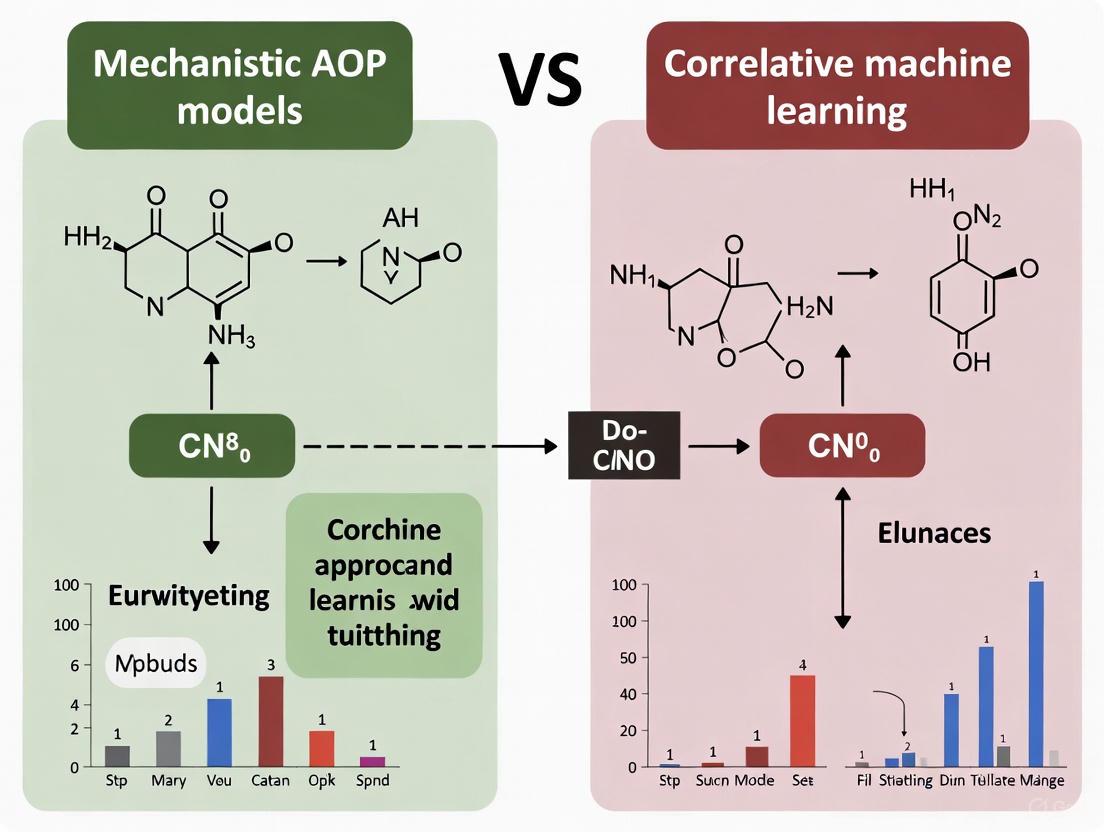
This article explores the paradigm shift from correlative machine learning to causal, mechanistic models in biomedical research and drug development.
From Correlation to Causation: How Mechanistic AOP Models and Machine Learning Are Reshaping Drug Discovery
Abstract
This article explores the paradigm shift from correlative machine learning to causal, mechanistic models in biomedical research and drug development. We examine the fundamental limitations of traditional correlation-based AI, which identifies patterns without understanding underlying causes, leading to fragile predictions and poor generalization. The piece introduces Adverse Outcome Pathways (AOPs) as a structured framework for representing mechanistic knowledge and demonstrates how they provide causal, interpretable models of disease pathways. Through comparative analysis and real-world case studies across toxicology, oncology, and therapeutic development, we illustrate how integrating mechanistic AOPs with machine learning's predictive power creates robust, reliable models that can predict intervention effects and answer counterfactual questions, ultimately enabling more efficient and successful drug discovery pipelines.
The Fundamental Shift: Why Correlation Is No Longer Enough in Biomedical AI
For decades, the machine learning revolution has been built on the foundation of correlation-based models, which excel at identifying statistical relationships and patterns in historical data [1]. These models learn from vast datasets to determine how certain inputs align with specific outputs, enabling predictions that have driven billions in economic value and transformed entire industries [1]. In drug discovery and development, correlation-based artificial intelligence (AI) has become particularly influential for predicting toxicity, estimating key variables in bioprocesses, and identifying potential drug candidates [2] [3].
However, these models operate primarily at the level of statistical association—they can identify that variables move together but cannot explain the underlying mechanisms or causal relationships [1]. This fundamental limitation becomes critically important in fields like pharmaceutical development, where understanding why a compound exhibits toxicity is as important as knowing that it does. As we enter an era demanding more interpretable and reliable AI systems, the scientific community is increasingly examining the trade-offs between correlation-based pattern recognition and mechanistic models built on understanding causal biological pathways [1].
Comparative Analysis: Correlation-Based vs. Mechanistic AOP Models
The table below summarizes the fundamental distinctions between these two approaches in toxicological prediction.
Table 1: Fundamental characteristics of correlation-based and mechanistic models
| Characteristic | Correlation-Based Models | Mechanistic AOP Models |
|---|---|---|
| Primary Focus | Identifying statistical patterns and associations in data [1] | Understanding cause-effect relationships and biological pathways [3] [4] |
| Core Question | "What" is happening? [1] | "Why" is it happening? [1] |
| Data Foundation | Historical datasets, often large-scale (e.g., Tox21, ToxCast) [3] | Biological knowledge of pathways (e.g., Adverse Outcome Pathways framework) [3] |
| Interpretability | Often "black box"; limited explanation capabilities [1] | High; built on transparent biological mechanisms [4] |
| Handling Novel Compounds | Limited to chemical space similar to training data | Potentially broader application based on mechanistic understanding |
| Regulatory Acceptance | Growing for early screening, but may require supplementary data [3] | Established for specific contexts (e.g., QSP, PBPK) [4] |
Experimental Comparison: Predictive Performance in Toxicity Assessment
To quantitatively evaluate both approaches, researchers conduct benchmarking studies using standardized datasets and experimental protocols. The following table summarizes typical performance metrics reported in the literature.
Table 2: Experimental performance comparison for toxicity prediction
| Model Type | Representative Endpoint | Reported AUROC | Key Strengths | Principal Limitations |
|---|---|---|---|---|
| Correlation-Based ML (Graph Neural Networks) | Hepatotoxicity, Cardiotoxicity (hERG) [3] | 0.75 - 0.90 [3] | High throughput, cost-effective for early screening [3] | Vulnerable to dataset bias; poor generalizability [1] |
| Correlation-Based ML (Random Forest, SVM) | Nuclear receptor signaling (Tox21) [3] | 0.70 - 0.85 [3] | Handles complex, high-dimensional data [3] | Cannot predict intervention effects [1] |
| Mechanistic AOP/QSP | Drug-Induced Liver Injury (DILI) [4] | Qualitative/Mechanistic Insight | Human-relevant predictions; explores "what-if" scenarios [4] | Model development can be resource-intensive [4] |
Detailed Experimental Protocol for Correlation-Based Models
Objective: To train and evaluate a correlation-based machine learning model for predicting compound hepatotoxicity using a public benchmark dataset.
Data Collection & Preprocessing:
- Data Source: Curate a dataset from public sources such as the DILIrank dataset (contains 475 compounds with annotated hepatotoxic potential) or Tox21 (8,249 compounds across 12 targets) [3].
- Molecular Representation: Encode chemical structures using one or more of: SMILES strings, molecular descriptors (e.g., molecular weight, clogP), or molecular fingerprints [3].
- Data Splitting: Split data into training (~80%) and test (~20%) sets using scaffold-based splitting to evaluate generalizability to novel chemical structures and prevent data leakage [3].
Model Training & Evaluation:
- Algorithm Selection: Implement multiple algorithms for comparison, including Random Forest, XGBoost, and a Graph Neural Network (GNN) [3].
- Model Training: Train each model on the training set, using techniques like cross-validation to optimize hyperparameters.
- Performance Assessment: Evaluate models on the held-out test set using metrics including Accuracy, Precision, Recall, F1-score, and Area Under the ROC Curve (AUROC) [3].
- Interpretability Analysis: Apply post-hoc interpretability tools like SHAP (SHapley Additive exPlanations) to identify molecular substructures influencing predictions [3].
Detailed Experimental Protocol for Mechanistic AOP Models
Objective: To develop a Quantitative Systems Pharmacology (QSP) model that simulates a known Adverse Outcome Pathway (AOP) for drug-induced liver injury.
Model Construction:
- AOP Framework Definition: Establish the AOP using a molecular initiating event (e.g., chemical binding to a receptor), a series of causally connected key events, and an adverse outcome at the organism level [3].
- Mathematical Formalization: Translate the AOP into a set of ordinary differential equations (ODEs) or rule-based systems that describe the dynamics of each key event [4].
- Parameterization: Populate the model with kinetic parameters and quantitative relationships obtained from relevant in vitro assays, scientific literature, and comparator molecule data [4].
Simulation & Validation:
- Virtual Population: Generate a population of in silico patients reflecting human physiological variability [4].
- Intervention Simulation: Simulate the administration of different drug doses to the virtual population and observe the progression through the AOP [4].
- Model Qualification: Validate the model's predictions by comparing its output against independent clinical or experimental data not used during model building [4].
Successful implementation of both modeling paradigms requires specific data resources and computational tools. The table below details key components of the modern computational toxicologist's toolkit.
Table 3: Essential research reagents and resources for predictive toxicology
| Resource Name | Type/Function | Application Context |
|---|---|---|
| Tox21 Dataset [3] | Publicly available benchmark dataset with qualitative toxicity measurements for 8,249 compounds across 12 biological targets. | Training and validation data for correlation-based ML models predicting nuclear receptor and stress response pathway activity. |
| DILIrank Dataset [3] | Curated dataset of 475 compounds annotated for their potential to cause Drug-Induced Liver Injury. | Critical for building and benchmarking both correlation-based and mechanistic models of hepatotoxicity. |
| hERG Central [3] | Extensive database containing over 300,000 experimental records on hERG channel blockade, linked to cardiotoxicity. | Supports classification and regression tasks for predicting compound cardiotoxicity risk. |
| Adverse Outcome Pathway (AOP) Framework [3] | Conceptual framework that organizes knowledge linking a Molecular Initiating Event (MIE) to an Adverse Outcome (AO) via Key Events (KEs). | Provides the structural backbone for developing mechanistic QSP and AOP models. |
| SHAP (SHapley Additive exPlanations) [3] | A game theory-based method to explain the output of any machine learning model. | Used for interpreting "black box" correlation-based models and identifying features driving predictions. |
The "age of correlation-based models" has provided powerful pattern recognition capabilities that continue to deliver significant value in high-throughput screening applications [3] [1]. However, their inherent limitation of recognizing patterns without understanding mechanisms presents critical challenges for drug development, where predicting the effects of interventions and generalizing to novel chemical spaces is paramount [1].
The future of predictive toxicology and drug development lies not in choosing one paradigm over the other, but in strategically integrating them. Correlation-based models can efficiently prioritize candidates and generate hypotheses, while mechanistic AOP and QSP models can provide deeper biological understanding and predict outcomes in uncharted territories [4]. This synergistic approach, leveraging the scale of AI-driven correlation with the explanatory power of mechanistic models, promises to enhance the efficiency, success rate, and human-relevance of the entire drug discovery pipeline [3] [4].
In the data-driven landscape of modern scientific research, correlation-based models, particularly those powered by machine learning (ML), have become indispensable for identifying patterns and making predictions from large datasets. These models excel at uncovering statistical relationships between variables, enabling tasks from image recognition to predictive analytics in drug discovery [1]. However, this reliance on correlation presents a fundamental challenge for scientific inquiry, which ultimately seeks to understand causal mechanisms. The core limitations of correlation—its susceptibility to confounding factors, its tendency to detect spurious links, and its resulting fragility in predictive power when applied to new contexts—pose significant risks in research and development, where decisions based on flawed inferences can lead to costly failures [1] [5].
This guide objectively compares correlative machine learning approaches with mechanistic models and the emerging paradigm of Causal AI within the specific context of Advanced Oxidation Process (AOP) research for environmental science and drug development. By framing this comparison through experimental data and methodological rigor, we aim to equip researchers with a clear understanding of when and why moving beyond mere correlation is not just beneficial, but necessary for robust and reliable scientific outcomes.
The Fundamental Limitations of Correlation-Based Analysis
Correlation is a measure of statistical association, but it does not imply causation. This foundational principle is often the first casualty in the rush to derive insights from big data. The inherent constraints of correlation-based analysis can be categorized into three critical areas, each with profound implications for scientific research.
Confounding and Spurious Links
A confounder is an unmeasured or hidden variable that influences both the independent and dependent variables, creating a non-causal, spurious correlation between them [6]. Traditional ML models, which primarily operate on the first rung of Judea Pearl's "Ladder of Causation" (Association), are exceptionally adept at detecting these spurious links but incapable of distinguishing them from genuine causal relationships [1].
- Classic Example: The observed correlation between ice cream sales and shark attacks is not causal but is driven by a confounding variable—warm weather—which independently increases both swimming activity and ice cream consumption [1] [6].
- Research Implication: In AOP research, a correlation might be found between a specific catalyst property (e.g., surface area) and pollutant degradation efficiency. However, a confounder, such as the simultaneous presence of a specific functional group on the catalyst, could be the true causal driver. A correlation-based model would misleadingly attribute the effect to surface area, leading to inefficient catalyst optimization [7].
Fragile Predictions and Poor Generalization
Correlation-based models learn patterns from their training data. When the underlying data distribution changes—a phenomenon known as distribution shift—the model's predictions often become unreliable due to poor external validity [1].
- The Problem of Distribution Shifts: A model trained on pre-pandemic data might fail dramatically when consumer behavior suddenly shifts. Similarly, an AOP prediction model trained on laboratory-grade water might perform poorly when predicting efficiency in real wastewater with complex, variable matrices [1] [7]. These models are brittle because they describe "what is" in a specific dataset rather than "what must be" due to underlying mechanisms.
- Inability to Handle Interventions: Correlative systems show what usually happens but cannot reliably predict the effects of deliberate changes or new interventions [1]. For instance, they can predict the degradation rate under historical conditions but cannot accurately forecast what would happen if a entirely new type of catalyst is introduced, as this represents a shift outside the observed data [8].
The Black Box and Bias Perpetuation
Correlation-based ML models often function as "black boxes," providing predictions without transparent explanations [1]. This opacity makes it difficult for researchers to audit results, spot flawed logic, or understand the model's failure modes. Furthermore, these models can inadvertently amplify existing biases in the training data. A stark example is a US healthcare algorithm that used healthcare spending as a proxy for medical needs. Due to historical inequities in access, Black patients had lower past spending, leading the algorithm to systematically underestimate their care needs, thus perpetuating the very bias it should have helped to eliminate [1].
Table 1: Core Limitations of Correlation-Based Models in Research
| Limitation | Description | Impact on Research & Development |
|---|---|---|
| Confounding | Inability to distinguish causal links from spurious correlations caused by a third, unobserved variable. | Leads to incorrect identification of key drivers, misdirecting R&D efforts and resource allocation. |
| Fragility under Distribution Shift | Poor performance when applied to data that differs from the training set (low external validity). | Models fail in real-world conditions or with new material classes, requiring constant retraining and validation. |
| Inability to Model Interventions | Cannot answer "what if" questions about actions or changes not present in the historical data. | Hinders the design of novel experiments, new molecules, or innovative catalyst structures. |
| Lack of Counterfactual Reasoning | Cannot reason about what would have happened under different circumstances for a specific case. | Prevents root-cause analysis, personalized treatment optimization, and true understanding of individual outcomes. |
Beyond Correlation: Paradigms for Causal Understanding
To overcome the limitations of correlation, scientific modeling must advance to higher levels of causal reasoning. This involves both established mechanistic approaches and innovative Causal AI frameworks.
Mechanistic Models: Deductive Reasoning from First Principles
Mechanistic models, also known as process-based or white-box models, seek to emulate the underlying physical, chemical, or biological processes governing a system. They are built on deductive reasoning from established scientific principles [8].
- Core Philosophy: These models start with a hypothesis about the causal mechanisms (e.g., reaction pathways, enzyme kinetics, fluid dynamics) and translate them into mathematical equations. They are calibrated and validated with experimental data, but their structure is based on causality [8].
- Exemplar: The Hodgkin-Huxley model of the nerve action potential is a paradigm of mechanistic modeling. It mathematically represents the causal mechanisms of ion channel dynamics to explain and predict neuronal electrical activity, a feat for which its creators won a Nobel Prize [8].
- Application to AOPs: A mechanistic model of an AOP would be based on chemical kinetics, representing the causal chain of reactions: catalyst activation, radical generation (
•OH,SO4•-), and the subsequent oxidation of pollutant molecules [8].
Causal AI: A Framework for Inference and Intervention
Causal AI represents a revolutionary paradigm that integrates causal inference with machine learning. It aims to move beyond pattern recognition to model cause-and-effect relationships explicitly [1]. This approach operates on all three rungs of Pearl's Ladder of Causation:
- Association: Seeing/observing (What is?).
- Intervention: Doing/intervening (What if I do X?).
- Counterfactuals: Imagining (What would have happened if?).
Key methodologies include:
- Directed Acyclic Graphs (DAGs): Visual representations of assumed causal relationships between variables, which help identify confounding paths and guide analysis [1].
- Structural Causal Models (SCMs): A mathematical framework that combines DAGs with functional equations to formalize causal relationships, enabling the simulation of interventions and counterfactuals [1].
- Causal Inference Methods: Techniques like instrumental variables, difference-in-differences, and doubly robust estimation are designed to isolate causal effects from observational data, even in the presence of confounders [1] [6].
Diagram 1: The Hierarchy of Causal Reasoning
Comparative Analysis: Mechanistic AOP Models vs. Correlative ML
The distinction between mechanistic and correlative approaches becomes stark when applied to a concrete research problem, such as predicting the efficiency of an Advanced Oxidation Process.
Experimental Protocol for an AOP ML Model
A recent study provides a clear protocol for a correlation-based ML approach to predicting organic pollutant degradation kinetics in a Fe-carbon catalyst/PMS system [7].
- Data Collection: A database was constructed from 27 published articles, collating data on:
- Catalyst Properties: Specific surface area, pore volume, Fe-Nx content, graphitic N content.
- Pollutant Properties: Parameters from the Linear Solvation Energy Relationship (LSER) model.
- Environmental Factors & Dosages: pH, temperature, catalyst dosage, pollutant concentration.
- Target Variable: The kinetic constant (k) of pollutant degradation.
- Data Preprocessing: Missing catalyst property data were imputed using a specialized ANN model (R² = 0.9151) to create a complete dataset.
- Model Building & Training: An Artificial Neural Network (ANN) was constructed. The model's hyperparameters were tuned, and its performance was evaluated using the coefficient of determination (R²) between simulated and experimental k values.
- Feature Importance Analysis: The trained model was analyzed to rank the importance of all input variables in predicting the kinetic constant.
Performance and Limitations of the Correlative ML Model
The ANN model achieved a high R² value of 0.9272, indicating a strong correlation between the model's inputs and the output [7]. Feature analysis identified the top five influential variables as:
- Catalyst dosage (12.41%)
- Pore volume (7.06%)
- Pollutant dosage (6.36%)
- S value of LSER (5.35%)
- B value of LSER (4.24%)
While powerful for prediction within the scope of its training data, this approach has inherent limitations. It identifies statistical associations but does not confirm that catalyst dosage causes a change in the kinetic constant; an unmeasured confounder could be at play. Furthermore, its performance is contingent on the data distribution. If a novel catalyst with properties outside the training set is introduced, the model's predictions may fail, demonstrating its fragility [7].
Contrasting with a Mechanistic AOP Model Approach
A mechanistic model for the same AOP system would be constructed differently, focusing on representing the causal chain of events [8]:
- Hypothesis Formulation: Define the proposed reaction mechanism (e.g., radical vs. non-radical pathways).
- Equation Building: Translate the mechanism into a system of differential equations based on mass-action kinetics and adsorption isotherms (e.g.,
d[Pollutant]/dt = -k_OH • [•OH][Pollutant] - k_SO4 • [SO4•-][Pollutant]). - Parameter Estimation: Use experimental data to estimate unknown parameters (e.g., rate constants
k_OH,k_SO4). - Validation and Prediction: Test the model's predictions against independent experimental results. Once validated, the model can be used to simulate the effects of entirely new interventions.
Table 2: Mechanistic vs. Machine Learning Modeling Approaches [8]
| Aspect | Mechanistic Modeling | Machine Learning (Correlative) |
|---|---|---|
| Primary Goal | Establish causal, mechanistic relationships between inputs and outputs. | Establish statistical relationships and correlations between inputs and outputs. |
| Data Requirements | Capable of handling small datasets. | Requires large datasets for training. |
| Handling Novelty | Once validated, can be used as a predictive tool for scenarios not present in the original data (e.g., new treatments). | Can only make predictions related to patterns within the data supplied; struggles with novelty. |
| Interpretability | High (White-box); provides understanding of the "why". | Low (Black-box); provides an answer without a mechanistic explanation. |
| Scalability | Difficult to scale and incorporate multiple space and time scales. | Excellent at tackling problems with multiple scales and high dimensionality. |
| Inductive/Deductive | Deductive: Reasons from general principles to specific predictions. | Inductive: Infers general patterns from specific data examples. |
Diagram 2: Contrasting Methodological Workflows
The Scientist's Toolkit: Research Reagent Solutions for AOP Studies
Table 3: Essential Materials and Reagents for AOP Catalyst and Efficiency Studies
| Reagent/Material | Function in AOP Research | Research Context |
|---|---|---|
| Fe-carbon Catalysts | Serves as the heterogeneous catalyst to activate peroxymonosulfate (PMS) and generate reactive oxygen species. | The core material under investigation; properties like Fe-Nx content and pore volume are key variables [7]. |
| Peroxymonosulfate (PMS) | The oxidant precursor activated by the catalyst to generate powerful sulfate (SO4•-) and hydroxyl (•OH) radicals. |
A standard oxidant in AOP studies; its dosage is a critical experimental factor [7]. |
| Target Organic Pollutants | Model compounds (e.g., pharmaceuticals, dyes) used to quantify the degradation efficiency of the AOP system. | Pollutant properties (LSER parameters) are key inputs for predictive models [7]. |
| Artificial Neural Network (ANN) | A machine learning algorithm used to model complex, non-linear relationships between catalyst properties, conditions, and degradation kinetics. | Used as a correlative predictive tool to analyze variable importance and predict kinetic constants from a database [7]. |
| Linear Solvation Energy Relationship (LSER) | A model that describes the physicochemical properties of pollutants using parameters (S, B, etc.) related to solubility and polarity. | Provides quantitative descriptors for pollutant molecules as inputs for ML models [7]. |
The limitations of correlation—confounding, spurious links, and fragile predictions—are not merely statistical curiosities but fundamental obstacles to scientific progress. While correlative ML models offer powerful predictive capabilities within their training domain, they lack the causal understanding required for true scientific insight and reliable extrapolation to novel situations.
The future of robust research, particularly in complex fields like AOP optimization and drug development, lies in a synergistic approach. Mechanistic models provide the indispensable causal backbone and deductive power. Causal AI offers a rigorous framework for reasoning about interventions and counterfactuals from data. Correlative ML serves as a powerful tool for pattern detection and initial hypothesis generation from large-scale datasets. By integrating these paradigms, researchers can move beyond asking "what is correlated?" to the more profound and actionable questions of "why does it happen?" and "how can we effectively intervene?"
In the complex landscape of modern biological research, particularly in drug development, two distinct approaches have emerged for understanding and predicting compound effects: correlative machine learning and mechanistic reasoning. Correlative machine learning models, particularly those using deep learning algorithms, identify statistical patterns in large datasets to predict outcomes such as drug toxicity [9]. While these models can achieve high predictive accuracy, they often function as "black boxes" with limited transparency into the underlying biological causality. In contrast, mechanistic reasoning seeks to elucidate the causal chain of molecular events—from initial interaction to cellular and tissue-level responses—that explain how and why a biological effect occurs [10]. This comparative guide objectively examines both approaches through the lens of drug-induced toxicity prediction, providing researchers with experimental data and methodologies to inform their investigative strategies.
Theoretical Foundations: AOP Models vs. Correlative ML
Correlative Machine Learning in Toxicology
Machine learning approaches in toxicology leverage chemical structure data and biological activity profiles to build predictive models. These models utilize various algorithms including traditional methods like Random Forest (RF) and Support Vector Machine (SVM), alongside deep learning approaches such as Graph Neural Networks (GNN) and Transformers [9]. The predictive capability stems from identifying patterns in molecular descriptors, fingerprints, or graph-based representations that correlate with toxic outcomes. However, these models typically lack explicit biological pathway information, instead relying on statistical associations between chemical features and observed effects.
A significant limitation of purely correlative ML approaches is their limited performance when training data is scarce. Deep learning models particularly "often achieve suboptimal performance compared to traditional ML models when trained on small toxicity datasets, as DL models typically require large amounts of data for effective training" [9]. This data dependency restricts their applicability in early-stage drug development where novel compounds may have little analogous toxicity data.
Mechanistic Reasoning in Biological Systems
Mechanistic reasoning represents a fundamentally different approach that focuses on constructing causal explanations for biological phenomena. According to research on biology undergraduates' reasoning processes, mechanistic reasoning involves "identifying entities across levels of organization and their relevant activities" and "exploring how processes interact and connect in a complex system" [10]. In the context of toxicology, this translates to building Adverse Outcome Pathways (AOPs) that describe sequential events from molecular initiating event to organism-level response.
Studies of student learning indicate that effective mechanistic models require connecting entities across biological organization levels with specific causal relationships. However, researchers often struggle with this integration, as "most connections were considered nonnormative and lacked important entities, leading to an abundance of unspecified causal connections" [10]. This highlights the challenge of building complete mechanistic understanding even when the goal is explicit causal explanation.
Experimental Comparison: Methodologies & Protocols
Experimental Design for Model Validation
Robust experimental design is critical for comparative evaluation of correlative ML and mechanistic approaches. The Design of Experiments (DOE) framework provides a systematic methodology for simultaneously investigating multiple factors and their interactions, offering significant advantages over traditional one-factor-at-a-time (OFAT) approaches [11]. DOE "requires fewer resources for the amount of information obtained, saving on time and materials" while providing "deeper insight into complex systems" [11].
For toxicity prediction studies, key experimental design principles include:
- Adequate replication: Ensuring sufficient biological replicates rather than just large feature datasets
- Appropriate controls: Including both positive and negative controls for assay validation
- Noise reduction: Using blocking strategies and covariates to minimize experimental variability
- Randomization: Preventing confounding factors and enabling rigorous interaction testing [12]
Power analysis should be conducted prior to experimentation to optimize sample size and ensure statistically valid comparisons between modeling approaches.
Protocol for Mechanistic Model Construction
Building a mechanistic model of drug-induced toxicity requires systematic investigation of causal pathways:
- Entity Identification: Identify relevant biological entities across organizational levels (molecular, cellular, tissue, organ)
- Activity Characterization: Determine the specific activities and interactions between entities
- Connection Mapping: Establish causal relationships between activities across biological levels
- Validation Testing: Design experiments to test predicted causal relationships [10]
This protocol emphasizes the importance of explicit causal connections rather than merely associative relationships. For example, a complete mechanistic model of hepatotoxicity would identify specific metabolic enzymes, reactive intermediates, cellular stress pathways, and tissue damage markers in a connected causal sequence.
Protocol for Correlative ML Model Development
Developing correlative ML models for toxicity prediction follows a standardized workflow:
- Data Collection: Compile toxicity data from sources like TOXRIC, EPA DSSTox, or PubChem [9]
- Molecular Representation: Encode compounds using fingerprints (Morgan, MACCS), molecular descriptors, or graph-based representations
- Model Selection: Choose appropriate algorithms based on dataset size—traditional ML (RF, SVM, XGB) for smaller datasets, deep learning (GNN, Transformers) for large datasets
- Interpretability Analysis: Apply post-hoc interpretation methods like SHAP or counterfactual analysis to identify features driving predictions [9]
This protocol prioritizes predictive accuracy while acknowledging the need for interpretability methods to gain limited insights into potential mechanisms.
Comparative Performance Data
Table 1: Performance Comparison of Modeling Approaches for Toxicity Prediction
| Metric | Correlative ML (Random Forest) | Correlative ML (Deep Learning) | Mechanistic AOP Models |
|---|---|---|---|
| Prediction Accuracy (Acute Toxicity) | ~80% (rat LD50) [9] | Varies significantly with data size [9] | Dependent on pathway completeness |
| Data Requirements | Medium to Large datasets | Large datasets (>10,000 compounds) | Can work with smaller, focused datasets |
| Interpretability | Medium (requires SHAP/LIME) | Low (black box) | High (explicit pathways) |
| Domain Transferability | Limited to chemical space of training data | Limited without transfer learning | Higher when mechanisms are conserved |
| Handling Novel Compounds | Poor for structurally unique compounds | Limited without analogous training data | Possible if mechanism is understood |
| Experimental Validation Cost | High (requires wet-lab testing) | High (requires wet-lab testing) | Targeted (hypothesis-driven testing) |
| Regulatory Acceptance | Growing for screening | Emerging for specific endpoints | Well-established for risk assessment |
Table 2: Analysis of Model Strengths and Limitations
| Aspect | Correlative ML | Mechanistic AOP Models |
|---|---|---|
| Primary Strength | High predictive accuracy for data-rich domains | Causal understanding and biological insight |
| Key Limitation | Limited insight into biological mechanisms | Often incomplete knowledge of pathways |
| Resource Intensity | Computational resources | Domain expertise and experimental validation |
| Time to Implementation | Rapid once data is available | Lengthy pathway construction and validation |
| Error Analysis | Difficult to diagnose failure modes | Clear identification of knowledge gaps |
| Integration with Existing Knowledge | Data-driven, may contradict established knowledge | Builds upon established biological knowledge |
Visualizing Workflows and Pathways
Correlative ML Workflow for Toxicity Prediction
Mechanistic AOP Model Construction
Integrated Approach Combining Both Paradigms
Table 3: Key Research Resources for Toxicity Modeling
| Resource Type | Specific Tools/Databases | Function & Application |
|---|---|---|
| Toxicity Databases | TOXRIC, EPA DSSTox, ICE, ChemIDplus | Provide curated toxicity data for model training and validation [9] |
| Chemical Databases | PubChem, eChemPortal, NITE CRIP | Offer chemical structure information and properties [9] |
| Omics Databases | Various transcriptomics, proteomics databases | Supply mechanistic pathway information for AOP development [9] |
| Benchmark Databases | Specific toxicity benchmark datasets | Enable standardized model comparison and performance assessment [9] |
| Experimental Design Tools | JMP, R DOE packages | Facilitate statistical experimental design for model validation [11] [12] |
| Interpretability Tools | SHAP, Counterfactual Analysis | Provide post-hoc interpretation of ML model predictions [9] |
The comparative analysis reveals that correlative ML and mechanistic AOP models offer complementary rather than competing approaches to biological understanding. Correlative ML excels in rapid prediction and pattern recognition across large chemical spaces, while mechanistic models provide causal understanding and biological insight that is critical for interpreting unexpected results and extrapolating beyond training data. The most promising path forward involves integrating both approaches—using ML to identify patterns and generate mechanistic hypotheses, then employing targeted experiments to validate causal pathways, ultimately creating mechanism-informed ML models with enhanced predictive capability and interpretability. This integrated framework represents the most robust approach for addressing the complex challenge of drug-induced toxicity prediction and advancing the broader quest for causal understanding in biology.
Adverse Outcome Pathways (AOPs) represent a conceptual framework that organizes existing knowledge about biologically plausible and empirically-supported links between molecular-level perturbation of a biological system and an adverse outcome of regulatory relevance [13]. This framework has emerged as a critical tool in toxicology for addressing contemporary challenges, including the need to assess tens of thousands of chemicals while reducing animal testing, costs, and time required for chemical safety assessment [14] [13]. The AOP framework provides a structured approach to describing toxicological mechanisms that is not chemical-specific but rather focuses on the sequence of biological events that can be triggered by any stressor acting on a particular molecular target [14].
At its core, an AOP is a linear sequence that begins with a Molecular Initiating Event (MIE), where a chemical stressor directly interacts with a biomolecule, progresses through a series of measurable Key Events (KEs) at different levels of biological organization, and culminates in an Adverse Outcome (AO) at the individual or population level [15] [14] [13]. The relationships between these key events are described as Key Event Relationships (KERs), which detail the causal linkages between an upstream and downstream key event [13]. This structured approach provides the biological context for developing Integrated Approaches to Testing and Assessment (IATA) for regulatory decision-making [16].
Core Components of the AOP Framework
The Structural Elements of an AOP
The AOP framework is built upon specific, well-defined components that together describe the progression of toxicity from molecular interaction to adverse outcome:
Molecular Initiating Event (MIE): The initial point of interaction between a stressor (chemical or non-chemical) and a biological target at the molecular level. Examples include a chemical binding to a specific receptor, inhibiting an enzyme, or directly damaging DNA [14] [17]. The MIE represents the first "biological domino" in the sequence [14].
Key Events (KEs): Measurable biological changes at cellular, tissue, or organ levels that are essential to the progression from the MIE to the AO [14] [13]. These events represent intermediate steps in the pathway and must be both measurable and essential for progression toward the adverse outcome [13].
Key Event Relationships (KERs): Descriptions of the causal relationships between pairs of KEs, explaining how an upstream KE leads to a downstream KE [14] [13]. KERs are supported by three types of evidence: biological plausibility, empirical support, and quantitative understanding of the conditions under which the relationship holds [14].
Adverse Outcome (AO): A biological change at the level of the individual organism or population that is considered relevant for risk assessment or regulatory decision-making [14] [17]. Examples include impaired development, reduced reproduction, tumor formation, or population-level impacts [15] [14].
Foundational Principles of AOP Development
The development and application of AOPs are guided by five fundamental principles that ensure consistency and utility across the toxicological community:
AOPs are not chemical-specific: They depict generalized sequences of biological effects that can be initiated by any stressor acting on a particular molecular target [14] [13].
AOPs are modular and composed of reusable components: Key Events and Key Event Relationships can be shared across multiple AOPs, preventing redundancy and building interconnected networks [14] [13].
An individual AOP is a pragmatic unit of development: A single sequence of KEs and KERs linking one MIE to one AO represents a manageable unit for development and evaluation [13].
AOP networks are the functional unit of prediction: Most real-world scenarios involve multiple AOPs connected through shared KEs and KERs, providing a more comprehensive understanding of complex toxicity [14] [13].
AOPs are living documents: They evolve as new knowledge emerges, allowing for continuous refinement and expansion of the framework [14] [13].
AOPs in Practice: Applications and Workflows
Experimental Design and Workflow for AOP Development
The process of developing and applying an AOP follows a systematic workflow that integrates computational, in vitro, and in vivo approaches. The diagram below illustrates this iterative process.
AOP Development Workflow
The development process begins with problem formulation and extensive literature review to identify potential MIEs and KEs [13]. Researchers then systematically map the sequence of events from MIE to AO, establishing KERs supported by biological plausibility and empirical evidence [14] [13]. A formal weight-of-evidence assessment is conducted to evaluate the confidence in the AOP, followed by integration of the AOP into broader networks [13]. The process is iterative, with AOPs continually refined as new data emerges [14].
Essential Research Reagents and Tools for AOP Development
AOP research utilizes specific reagents, tools, and platforms that enable the construction, visualization, and application of pathways. The table below details these essential resources.
Table 1: Essential Research Tools for AOP Development
| Tool/Reagent Category | Specific Examples | Function in AOP Development |
|---|---|---|
| Knowledge Assembly Platforms | AOP-Wiki, Effectopedia, AOP Xplorer | Collaborative development of AOP descriptions; semantic annotation of knowledge; graphical representation of AOP networks [13] [18] |
| Data Repositories | Intermediate Effects Database | Host chemical-related data from non-apical endpoints; links empirical observations with AOP descriptions [18] |
| In Vitro Assay Systems | High-throughput screening assays, receptor binding assays, transcriptional activation assays | Measure Molecular Initiating Events and early Key Events; generate mechanistic data for AOP development [15] [14] |
| Analytical Tools | OECD Harmonised Templates, SeqAPASS | Standardized data reporting; cross-species conservation analysis of molecular targets [14] [13] |
| Computational Modeling Tools | Quantitative Structure-Activity Relationship (QSAR) models, kinetic models | Predict chemical interactions with biological targets; quantify relationships between Key Events [14] [13] |
AOPs vs. Correlative Machine Learning: A Comparative Analysis
Foundational Differences in Approach and Application
While both AOPs and correlative machine learning (ML) approaches aim to enhance predictive capabilities in toxicology, they differ fundamentally in their methodology, interpretability, and application. The table below systematically compares these approaches across multiple dimensions.
Table 2: Comparison of AOP and Correlative Machine Learning Approaches
| Feature | Adverse Outcome Pathways (AOPs) | Correlative Machine Learning |
|---|---|---|
| Primary Basis | Mechanistic understanding of biological pathways [15] [13] | Statistical patterns in data [19] |
| Interpretability | High (explicit biological events and relationships) [14] [13] | Variable (model-dependent; often "black box") [19] |
| Data Requirements | Curated biological knowledge from diverse sources [13] | Large, structured datasets for training [19] |
| Regulatory Acceptance | Established in international programs (OECD) [13] [18] | Emerging, with validation challenges [19] |
| Extrapolation Capability | Biologically-informed across species and conditions [14] | Limited to training data domains [19] |
| Chemical Applicability | Chemical-agnostic (applicable to any stressor acting on the MIE) [14] [13] | Dependent on chemical space of training data [19] |
| Temporal Resolution | Explicit sequence of events with causal relationships [15] [13] | Typically static correlations without temporal dynamics |
| Uncertainty Characterization | Qualitative strength of evidence for each KER [14] [13] | Quantitative confidence intervals based on model performance [19] |
Case Study: Thyroid Disruption and Developmental Neurotoxicity
The application of AOPs to thyroid disruption-mediated developmental neurotoxicity provides an illustrative example of the framework's utility. This AOP begins with the Molecular Initiating Event of chemical binding to and inhibition of thyroid peroxidase, leading to reduced synthesis of thyroid hormones (T4/T3) [17]. Key Events progress through: decreased circulating thyroxine levels; reduced thyroid hormone availability in developing brain tissue; altered neural cell differentiation/migration; and finally the Adverse Outcome of impaired cognitive function and neurodevelopmental deficits [17].
The strength of this AOP lies in its biological plausibility and strong empirical support, including evidence from epidemiological studies, experimental animal models, and in vitro systems [17]. This pathway has directly informed testing strategies for the Endocrine Disruptor Screening Program, highlighting how AOPs can guide targeted, mechanistic testing that reduces reliance on apical endpoint animal studies [17]. The diagram below visualizes this pathway.
Thyroid Disruption AOP
Quantitative AOPs: Bridging Mechanistic Understanding and Prediction
From Qualitative to Quantitative Frameworks
The evolution from qualitative to quantitative AOPs (qAOPs) represents a significant advancement in the field, enhancing the predictive power and regulatory utility of the framework [14]. Quantitative AOPs incorporate mathematical relationships that describe the dose-response, temporal, and incidence characteristics of Key Event Relationships [14]. This quantitative understanding enables prediction of the conditions under which a change in an upstream KE will cause a change in downstream KEs, ultimately allowing forecasting of the probability and severity of the Adverse Outcome based on early key events [14].
The transition to qAOPs requires systematic collection of data on the dynamics of key events, including understanding of threshold effects, response thresholds, and timing relationships between events [14]. This quantitative framework supports more confident extrapolation across species, as demonstrated by tools like EPA's SeqAPASS, which evaluates conservation of molecular targets across species to inform cross-species applicability of AOPs [14]. The diagram below illustrates the structure of a quantitative AOP network.
Quantitative AOP Network
AOPs in Chemical Prioritization and Risk Assessment
AOPs provide a scientifically robust foundation for chemical prioritization and risk assessment by organizing mechanistic data into formats directly applicable to regulatory decision-making [14]. The framework enhances the use of data from New Approach Methodologies (NAMs) by providing biological context for interpreting in vitro and high-throughput screening data [14] [17]. For example, a chemical causing a specific DNA mutation in an in vitro screening assay can be evaluated in the context of an AOP for liver cancer, where that DNA mutation serves as the Molecular Initiating Event [14].
The utility of AOPs extends to evaluating complex mixtures, where AOP networks can identify shared KEs across chemicals, informing hypothesis-driven testing of additive or synergistic effects [14]. This application is particularly relevant for contaminants of emerging concern, such as per- and polyfluoroalkyl substances (PFAS), where EPA researchers are developing AOPs relevant to human health and ecological impacts across a range of adverse outcomes including reproductive impairment, developmental toxicity, and metabolic disorders [17].
The Adverse Outcome Pathway framework represents a transformative approach in toxicology, shifting the paradigm from observational toxicology to mechanistic, pathway-based understanding of chemical effects on living systems. As a framework for organizing mechanistic knowledge, AOPs provide the biological context necessary to interpret data from New Approach Methodologies, supporting more human-relevant, efficient chemical safety assessment [15] [17]. The ongoing development of quantitative AOPs and AOP networks further enhances the predictive power of this framework, enabling more confident extrapolation from mechanistic data to adverse outcomes of regulatory concern.
While correlative machine learning approaches offer advantages in processing large datasets and identifying complex patterns, their "black box" nature and limited biological interpretability present challenges for regulatory decision-making [19]. The integration of ML techniques with AOP frameworks represents a promising direction for the field, where ML can identify potential key events and relationships from large datasets, while AOPs provide the mechanistic context and biological plausibility needed for regulatory acceptance. This synergistic approach leverages the strengths of both methodologies, advancing the ultimate goal of more efficient, human-relevant chemical safety assessment that reduces reliance on traditional animal testing while enhancing protection of human health and the environment.
The "Ladder of Causation," a conceptual framework introduced by Judea Pearl, describes a three-level hierarchy of causal reasoning that distinguishes between different types of questions and the capabilities required to answer them. This hierarchy is particularly relevant in scientific research and drug development, as it provides a lens through which to evaluate the limitations of purely correlative machine learning models and the necessity of mechanistic, causal models for robust scientific discovery. While traditional machine learning excels at finding patterns and associations (the first rung), it falls short in answering questions about interventions or hypothetical scenarios, which are the bedrock of experimental science and therapeutic development [20].
This framework is crucial for understanding the paradigm shift from correlative approaches to causal models. Correlative machine learning, which includes most deep learning applications, operates primarily on the first rung. Pearl characterizes this as "curve fitting"—associating a set of input variables (X) with an outcome (y) without underlying causal information [20]. In contrast, mechanistic Adverse Outcome Pathway (AOP) models aim to explicitly represent cause-effect relationships within a biological system, operating on the second and third rungs of the ladder. This allows researchers not only to predict what will happen under observation but also to anticipate the consequences of specific interventions and reason about why a particular outcome occurred.
The Three Rungs of Causal Reasoning
The Ladder of Causation consists of three distinct levels, each building upon the capabilities of the previous one. The following diagram illustrates this hierarchy and the typical questions asked at each level.
Rung 1: Association (Seeing)
The bottom rung of the ladder is Association, which involves reasoning about observations and correlations. At this level, one can answer questions based solely on passive observation of data, such as "How would seeing X change my belief about Y?" This is the domain of traditional statistics and most machine learning, including deep learning. A model operating at this level might identify that patients taking a certain drug have a lower incidence of a disease, but it cannot determine if the drug caused the improvement. The model merely recognizes a pattern or association in the available data. Pearl notes that while this "curve fitting" is powerful, it does not constitute genuine machine intelligence, as it lacks understanding of the underlying mechanisms [20].
Rung 2: Intervention (Doing)
The middle rung is Intervention, which involves asking "What if?" questions about active interventions. This requires understanding what would happen to a variable Y if we were to forcibly set another variable X to a specific value, denoted as do(X). This is the language of randomized controlled trials (RCTs) in drug development, where researchers actively administer a treatment to isolate its causal effect from confounding factors. A model operating at this level can predict the effect of a novel drug or therapy, even if that specific intervention has never been observed in the historical data. Moving from Rung 1 to Rung 2 requires a causal model that represents how variables influence one another.
Rung 3: Counterfactuals (Imagining)
The highest rung is Counterfactuals, which deals with retrospective questions and reasoning about "what might have been." It involves answering questions like "What would Y have been if X had been different?" Counterfactual reasoning is essential for assigning blame or credit, understanding the root cause of an outcome, and personalizing treatments. In drug development, a counterfactual question might be: "For this patient who recovered after taking the drug, would they have still recovered if they had not taken it?" Answering such questions requires a fully specified structural causal model, as it involves reasoning about a world that did not actually happen, but could have under different circumstances. Pearl emphasizes that this ability to imagine alternatives that aren't factual is a crucial component of causal reasoning [20].
Mechanistic AOP Models vs. Correlative ML: An Experimental Comparison
The fundamental distinction between mechanistic AOP models and correlative machine learning lies in their position on the Ladder of Causation. The following table summarizes their core differences across several key dimensions relevant to biomedical research.
Table 1: Quantitative Comparison of Mechanistic AOP Models and Correlative Machine Learning
| Feature | Mechanistic AOP Models | Correlative Machine Learning |
|---|---|---|
| Primary Rung of Causation | Rung 2 (Intervention) & Rung 3 (Counterfactuals) | Rung 1 (Association) |
| Core Function | Encode explicit cause-effect relationships; represent underlying biological mechanisms [21]. | Identify patterns, correlations, and associations from data without underlying causal information [20]. |
| Representation of Knowledge | Causal diagrams with directed arrows showing causal flow [21]. | Statistical models (e.g., neural networks, decision trees) mapping inputs to outputs. |
| Handling of Novel Interventions | High. Can predict outcomes of new treatments by modifying the model structure. | Low. Can only extrapolate based on patterns in past data. |
| Interpretability | High. The model structure is transparent and reflects biological understanding. | Low to Medium. Often a "black box," making it difficult to explain predictions. |
| Data Requirement | Can integrate diverse data types (in vitro, in vivo, in silico) to inform model parameters. | Requires large, high-quality datasets for training, which can be biased or incomplete. |
| Typical Experimental Use | Hypothesis generation, trial design, risk assessment, and understanding system-level effects. | Pattern recognition, classification, and prediction from observed data. |
Experimental Evidence Supporting Causal Diagrams
The superiority of causal models for understanding complex relationships is supported by empirical research. In a controlled study, participants who studied a causal diagram while reading an expository science text demonstrated a better understanding of the five causal sequences in the text compared to those who only read the text, even when study time was controlled [21]. This supports the causal explication hypothesis, which posits that causal diagrams improve comprehension by making the implicit causal structure of a system explicit in a visual format [21].
The experimental protocol for such a study typically involves:
- Participant Assignment: Randomly assigning participants to one of two groups: an experimental group (text-and-diagram) and a control group (text-only) [21].
- Material Presentation: Providing the experimental group with both the expository text and a causal diagram that visually represents the cause-effect relationships described. The control group receives only the text [21].
- Controlled Study Time: Allowing participants a fixed amount of time (e.g., 10 minutes) to study the materials to ensure that any differences in outcomes are not due to unequal study effort [21].
- Assessment: Administering tests to measure comprehension, specifically focusing on the understanding of causal sequences and interrelationships among steps in a cause-and-effect chain [21].
This protocol provides a template for evaluating the utility of causal models in specific research contexts, such as predicting drug toxicity or efficacy.
Implementing Causal Reasoning: A Toolkit for Researchers
A Generic Causal AOP Workflow
Implementing a causal modeling approach involves a specific workflow that moves from knowledge assembly to simulation and validation. The following diagram outlines a generalized protocol for building and testing a mechanistic AOP model, which can be adapted for various research scenarios in drug development.
The Scientist's Toolkit: Essential Reagents for Causal Research
Building and testing causal models requires a combination of conceptual frameworks and practical tools. The following table details key "research reagents" essential for work in this field.
Table 2: Essential Reagents for Causal Model-Based Research
| Item/Tool | Function/Benefit | Causal Rung Addressed |
|---|---|---|
| Causal Diagrams (DAGs) | Visual maps that make implicit causal assumptions explicit, aiding in identifying confounders and sources of bias [21]. | Rung 1 & 2 |
| Structural Causal Models (SCMs) | A mathematical framework combining graphical models and structural equations to formalize causal relationships, enabling counterfactual analysis. | Rung 2 & 3 |
| Do-Calculus | A set of mathematical rules that allow researchers to determine if a causal effect can be estimated from observational data, bridging Rung 1 and Rung 2. | Rung 2 |
| Randomized Controlled Trials (RCTs) | The gold-standard experimental protocol for establishing causal effects (the do operator) by actively intervening on a treatment variable. |
Rung 2 |
| Causal Inference Software (e.g., DoWhy, CausalML) | Open-source libraries that implement algorithms for causal effect estimation from data using SCMs and DAGs. | Rung 2 & 3 |
| High-Throughput Screening (HTS) Data | Large-scale experimental data used to inform key relationships and parameters within a mechanistic AOP model. | Rung 1 |
| 'What-If' Simulation Platforms | Computational environments that allow researchers to simulate interventions and counterfactuals using a validated causal model. | Rung 2 & 3 |
Judea Pearl's Ladder of Causation provides a powerful framework for evaluating analytical approaches in scientific research. It clearly demonstrates that correlative machine learning, while useful for prediction, is fundamentally limited to the first rung of association. In contrast, mechanistic AOP models, which explicitly represent cause-effect relationships, operate on the higher rungs of intervention and counterfactuals. This allows them to answer the critical "what if" and "why" questions that are essential for reliable drug development and safety assessment. The experimental evidence confirms that making causal structure explicit enhances understanding of complex systems. For researchers and drug development professionals, embracing the tools and methodologies of causal modeling is not merely an technical improvement, but a necessary step toward achieving truly explainable, robust, and predictive science.
Building Causal Models: Methodologies and Real-World Applications in Drug Development
The Adverse Outcome Pathway (AOP) framework is a conceptual structure designed to organize and communicate knowledge concerning the sequence of measurable biological events that link a direct, molecular-level initial interaction of a chemical stressor (the Molecular Initiating Event, or MIE) to an Adverse Outcome (AO) of regulatory relevance at the organism or population level [22] [17]. AOPs serve as a foundational tool for translating mechanistic data from in silico models, in vitro assays, and high-throughput testing into predictions relevant for human health and ecological risk assessment [22]. This framework is inherently chemically-agnostic, meaning it describes biological response pathways that can be initiated by any number of chemical or non-chemical stressors, thereby facilitating a shift away from traditional, resource-intensive animal testing towards more efficient, pathway-based safety assessments [22] [17].
The core structure of an AOP is modular, consisting of a series of causally linked Key Events (KEs). These events are connected by Key Event Relationships (KERs), which describe the evidence supporting the causal inference from one key event to the next [22] [23]. This modular design allows for the re-use of key events across different AOPs, enabling the construction of more complex AOP networks that capture the pleiotropic and interactive effects common in real-world exposure scenarios [23]. The AOP framework does not seek to capture the full complexity of biology but provides a simplified, pragmatic scaffold to support prediction and decision-making [23].
Core Components of an AOP: From MIE to AO
An AOP provides a standardized and structured description of the progression of toxicity along a defined pathway. The following diagram illustrates the logical flow and core components of a generalized AOP, showing the cascade from the initial molecular interaction to the adverse outcome at the organism level.
The individual components of this pathway are:
- Molecular Initiating Event (MIE): The MIE is the initial point of interaction between a chemical stressor and a specific biological molecule within an organism [17] [18]. This event triggers the cascade of subsequent key events. Examples include a chemical binding to a specific receptor (e.g., estrogen receptor), inhibiting a critical enzyme (e.g., aromatase), or directly damaging DNA [22] [17].
- Key Events (KEs): Key Events are measurable, essential changes in biological state that occur between the MIE and the AO [17]. They represent a progression of toxicity across different levels of biological organization, from molecular and cellular changes to effects on tissues and organs. The causal linkage between these KEs is a defining feature of an AOP.
- Key Event Relationships (KERs): A KER describes the causal or mechanistic relationship between two adjacent Key Events [22] [23]. The KER documents the scientific evidence that supports the claim that a change in one key event is likely to lead to a change in the next. This evidence can be based on biological plausibility, empirical observations, or quantitative understanding.
- Adverse Outcome (AO): The AO is an adverse effect of direct regulatory significance at the individual level (e.g., cancer, organ failure, reduced fertility) or the population level (e.g., reduced population sustainability) [17] [18]. The AO is the endpoint that risk assessment aims to prevent, and the AOP framework provides the mechanistic justification for using data from earlier KEs to predict this outcome.
AOPs in Action: From Linear Pathways to Complex Networks
While individual AOPs are often presented as linear chains for clarity, real-world biological systems involve significant interconnectivity. The AOP framework accommodates this complexity through the concept of AOP networks, which are assemblages of individual AOPs that share one or more Key Events [23]. These networks provide a more realistic and holistic view of how different stressors can interact and lead to multiple or synergistic adverse outcomes.
The following diagram illustrates a simplified AOP network, demonstrating how shared Key Events can connect different pathways and create a more complex predictive model.
Quantitative AOPs (qAOPs)
To move beyond qualitative descriptions, the field is advancing towards the development of Quantitative AOPs (qAOPs). A qAOP formalizes the relationships between KEs using mathematical models that define the dose-response and time-course behaviors [22]. For example, a qAOP might use a feedback-controlled model of the hypothalamic-pituitary-gonadal axis to predict how a chemical that inhibits steroid synthesis leads to quantifiable reductions in reproductive capacity in fish [22]. These quantitative models are critical for defining the dynamic thresholds and modulating factors that determine whether a perturbation at the molecular level will ultimately propagate to an adverse outcome.
AOPs vs. Machine Learning: A Comparative Analysis of Mechanistic and Correlative Approaches
Within the context of modern toxicology and drug development, the mechanistic, hypothesis-driven AOP framework presents a distinct paradigm compared to data-driven, correlative machine learning (ML) approaches. The following table provides a structured comparison of these two methodologies, highlighting their complementary strengths and limitations.
Table 1: Comparative analysis of Adverse Outcome Pathway (AOP) and Machine Learning (ML) approaches.
| Feature | Adverse Outcome Pathway (AOP) | Machine Learning (ML) |
|---|---|---|
| Primary Objective | Establish causal, mechanistic relationships between a molecular perturbation and an adverse outcome [8]. | Establish statistical relationships and correlations between inputs and outputs from large datasets [8]. |
| Underlying Logic | Deductive reasoning: Uses established biological principles to make predictions about new scenarios, even those not present in the original data [8]. | Inductive reasoning: Identifies patterns and learns from past data to make predictions, but is limited to the scope and quality of the data supplied [8]. |
| Data Requirements | Can be developed and applied with small, targeted datasets focused on specific pathway components [8]. | Requires large, extensive datasets for training and validation to build accurate predictive models [8]. |
| Handling of Complexity | Can struggle with multi-scale complexity; AOP networks are used to manage interconnected pathways [23]. | Excels at tackling problems with multiple space and time scales by identifying complex, non-linear patterns [8]. |
| Interpretability & Insight | High interpretability; provides biological understanding and insight into mechanisms of action, which can inform intervention strategies [22] [8]. | Often operates as a "black box"; high predictive power but may offer limited mechanistic insight or understanding of causality [8]. |
| Regulatory Application | Directly supports mechanism-based risk assessment and the use of alternative testing methods (NAMs) by providing a biological rationale [22] [17]. | Primarily used for prioritization and screening of chemicals or for predicting properties based on structural similarities [8]. |
As the table illustrates, AOPs and ML are not inherently competitive but rather complementary. A synergistic approach, where ML models are used to analyze high-throughput data to identify potential MIEs or KEs, and AOPs provide the causal framework to validate and interpret these findings, represents the future of predictive toxicology [8]. Mechanistic models can provide the "why" that underpins the "what" predicted by machine learning.
Case Studies and Experimental Applications of AOPs
Case Study 1: Development of a Defined Approach for Skin Sensitization
The AOP for skin sensitization is one of the most developed and successfully applied examples in the framework. This AOP describes how electrophilic chemicals (stressor) covalently bind to skin proteins (MIE), leading to a cascade of KEs including inflammatory cytokine release and T-cell proliferation, ultimately resulting in the allergic response (AO) [22].
- Experimental Protocol: The testing strategy leverages a suite of in vitro and in chemico assays, each designed to measure a specific KE within the AOP [22]:
- Direct Peptide Reactivity Assay (DPRA): Measures the MIE (covalent binding to proteins).
- KeratinoSens or LuSens Assay: Measures the KE of keratinocyte activation and antioxidant response element pathway activation.
- Human Cell Line Activation Test (h-CLAT): Measures the KE of dendritic cell activation and specific surface marker expression.
- Data Integration and Outcome: Data from these individual assays are integrated using Bayesian networks or other defined approaches to generate a categorical prediction (e.g., sensitizer/non-sensitizer) [22]. This AOP-based testing strategy has been formally adopted by the OECD, enabling the replacement of traditional in vivo tests for skin sensitization [22].
Case Study 2: Prioritizing Endocrine Disrupting Chemicals
The US EPA's Endocrine Disruptor Screening Program faces the challenge of prioritizing over 10,000 chemicals for potential endocrine activity. AOPs provide the necessary linkage between high-throughput screening (HTS) data and adverse outcomes.
- Experimental Protocol: This approach relies on HTS assays to identify chemicals that interact with specific MIEs of concern [22]:
- ToxCast/Tox21 HTS Assays: A battery of in vitro assays used to screen chemicals for MIEs such as estrogen receptor (ER) and androgen receptor (AR) binding, activation, and antagonism.
- AOP Anchoring: The AOP framework "anchors" the HTS data by providing the biological context that links receptor activation (MIE) to adverse outcomes like reproductive dysfunction [22]. For example, AOP 25 explicitly describes the pathway from aromatase inhibition to reproductive failure in fish.
- Data Integration and Outcome: The HTS output is used to prioritize chemicals for those most likely to act via endocrine MIEs. The associated AOPs provide the mechanistic evidence that supports the use of these in vitro bioactivity data for prioritization, significantly increasing the efficiency of the screening program [22] [17].
Successfully building and applying AOPs requires a combination of bioinformatics tools, experimental reagents, and data resources. The following table details key components of the AOP researcher's toolkit.
Table 2: Key research reagents, tools, and resources for AOP development and application.
| Tool/Resource Category | Specific Examples & Functions |
|---|---|
| AOP Knowledge Bases | AOP-Wiki [22] [18]: Central repository for collaborative AOP development. Effectopedia [18]: Platform for building quantitative, modular AOPs. Intermediate Effects DB [18]: Links chemical data to MIEs and KEs. |
| In Vitro Assay Systems | Cell-based assays (e.g., KeratinoSens, h-CLAT) [22]: Measure key events like cell activation. Receptor binding & transactivation assays: Quantify Molecular Initiating Events (MIEs) for endocrine pathways. High-Throughput Screening (HTS) platforms: Enable rapid testing of thousands of chemicals. |
| 'Omics Technologies | Transcriptomics (RNA-seq): Identifies gene expression changes as potential key events. Proteomics: Measures alterations in protein expression and modification. Metabolomics: Profiles changes in metabolite levels, linking molecular events to tissue/organ responses. |
| Computational Modeling Tools | Quantitative AOP (qAOP) models [22]: Mathematical models describing quantitative relationships between KEs. AOP Xplorer [18]: Computational tool for graphical representation of AOP networks. Bayesian Network Models [22]: Integrate data from multiple assays for probabilistic prediction. |
| Reference Chemicals | Potent agonists/antagonists (e.g., 17β-estradiol, flutamide): Used as positive controls in assay validation. Chemicals with known adverse outcomes: Essential for establishing and testing Key Event Relationships (KERs). |
The Adverse Outcome Pathway framework provides a powerful, structured, and mechanistic foundation for modernizing toxicology and risk assessment. By explicitly linking molecular perturbations to adverse outcomes through a series of causally connected key events, AOPs facilitate the use of mechanistic data in safety decisions, support the development of non-animal testing methods, and enable a more efficient and informative evaluation of chemicals. While distinct from correlative machine learning approaches, AOPs are highly complementary to them. The future of predictive toxicology lies in a synergistic paradigm where high-throughput, data-rich ML models are used to generate hypotheses and prioritize chemicals, and mechanism-rich AOPs are used to validate predictions, establish causality, and provide the biological context essential for credible and protective risk assessment.
In the context of mechanistic Adverse Outcome Pathways (AOPs) versus correlative machine learning (ML) research, Directed Acyclic Graphs (DAGs) and Structural Causal Models (SCMs) provide a formal framework for moving beyond prediction to causal understanding. While ML models excel at identifying correlative patterns from high-dimensional data, they inherently face challenges in establishing causality, a limitation particularly problematic in drug development where interventions are planned [24]. DAGs and SCMs address this gap by explicitly encoding causal assumptions, enabling researchers to identify confounders, guide data collection, and estimate causal effects—capabilities essential for translating mechanistic AOP models into reliable safety assessments [25] [24].
Directed Acyclic Graphs (DAGs)
A Directed Acyclic Graph (DAG) is a graphical causal model consisting of nodes (representing variables) and directed edges (arrows) showing the assumed causal influences between them, with no directed cycles [25]. DAGs encode qualitative causal knowledge, illustrating which variables are presumed to affect others [26].
Structural Causal Models (SCMs)
A Structural Causal Model (SCM) is a mathematical framework that formalizes the qualitative assumptions of a DAG [27]. An SCM is a tuple (V, F, N, Pₙ) where V represents endogenous variables, F is a collection of functions (structural equations) defining how each variable is caused by others, N represents exogenous (noise) variables, and Pₙ is their probability distribution [27]. The SCM framework provides the do-calculus, a set of rules for computing causal effects from observational data under the model's assumptions [24].
The logical relationship between a DAG and an SCM is that a DAG provides the qualitative structure, while the SCM provides the quantitative, functional form of the causal relationships.
Comparative Analysis: DAGs/SCMs vs. Correlative Machine Learning
This analysis objectively compares the performance of causal frameworks (DAGs/SCMs) against standard correlative ML approaches across capabilities critical for drug development.
Table 1: Performance Comparison of Causal Frameworks vs. Correlative ML
| Performance Metric | DAGs/SCMs | Correlative ML |
|---|---|---|
| Causal Effect Identification | Explicitly models and identifies causal effects using do-calculus [24] | Limited to detecting associations; prone to confounding [24] |
| Handling of Confounders | Graphically identifies confounders for adjustment via backdoor criterion [25] | No inherent mechanism; confounders can bias predictions [24] |
| Interpretability & Mechanism | High; provides transparent, interpretable causal structure [26] | Often low; "black box" models obscure reasoning [24] |
| Prediction Under Intervention | Can predict effects of interventions (do-operator) [25] |
Predicts based on observed data; performance degrades under intervention [24] |
| Data Requirement Assumptions | Requires causal assumptions (often untestable) and domain knowledge [27] [24] | Primarily requires large, representative datasets for correlation |
| Handling of Unobserved Confounding | Acknowledges threat; some extensions (e.g., IV) can address it [24] | Highly vulnerable; leads to spurious correlations and flawed predictions [24] |
Experimental Protocols and Validation
Protocol 1: Bounding Causal Effects under DAG Uncertainty
A critical experimental protocol addresses the common critique that an assumed DAG may be incorrect [27].
- Objective: To compute bounds for causal queries, such as the Average Treatment Effect (ATE), over a collection of plausible DAGs compatible with imperfect prior knowledge, without enumerating all graphs exhaustively [27].
- Methodology: An efficient, gradient-based optimization method is employed. The method operates within the SCM framework, considering a set of plausible graphs
Gcompatible with available knowledge. The optimization finds the minimum and maximum possible value for a target causal query across all SCMs compatible with any DAG inGand the observed data distribution [27]. - Validation: The method is validated using synthetic data (both linear and non-linear) and real-world data. Performance is assessed based on coverage (whether the true effect lies within the bounds) and sharpness (width of the bounds) [27].
The workflow for this protocol involves defining a set of plausible graphs and then using an optimization procedure to find the bounds on the causal effect.
Protocol 2: Integrating Causal and Statistical Models in Social Network Analysis
This protocol from behavioral ecology illustrates a full Bayesian workflow for estimating causal drivers from noisy data, analogous to inferring network effects in biological systems [26].
- Objective: To estimate the causal effects of individual-, dyad-, and group-level features (network structuring features) on a latent social interaction network, which is only partially observed through behavioral samples [26].
- Methodology:
- Causal Encoding: Causal effects are encoded using a DAG and a corresponding SCM, defining the causal estimands [26].
- Statistical Estimation: Bayesian multilevel extensions of the Social Relations Model are developed to act as estimators. These models account for the high dependency in network data (edges are not independent) and uncertainty from sampling [26].
- Causal Recovery: The structural parameters of the SCM are recovered from the joint posterior distribution of the statistical model, mapping statistical estimates back to the underlying causal structure [26].
- Validation: The framework is validated through simulation studies where the true data-generating process (SCM) is known, allowing for verification that the method can accurately recover the true causal effects [26].
Table 2: Key Research Reagent Solutions for Causal Inference
| Reagent / Method | Function in Causal Analysis |
|---|---|
| Do-Calculus [24] | A set of mathematical rules for transforming causal expressions containing the do-operator into statistical expressions based on observed data. |
| Backdoor Criterion [26] | A graphical test to identify a sufficient set of variables Z to adjust for in order to estimate the causal effect of X on Y without bias. |
| Instrumental Variables (IV) [24] | A quasi-experimental method that uses a variable (the instrument) that influences the treatment but is independent of the outcome except through the treatment, to estimate causal effects under unobserved confounding. |
| Gradient-Based Optimization [27] | An efficient computational method for finding bounds on causal queries over large collections of plausible causal graphs. |
| Bayesian Multilevel Models [26] | Statistical models that act as estimators for SCM parameters, handling complex data dependencies and providing full posterior distributions for causal quantities. |
Application in Toxicity Prediction and Drug Development
The integration of DAGs and SCMs addresses key limitations of correlative ML in toxicity prediction. While ML QSAR/QSPR models can screen compounds for potential toxicity, they risk learning spurious correlations from biased training data, leading to inaccurate predictions and poor decision-making [28]. A causal framework improves this process.
The diagram below illustrates how a DAG can frame the problem of predicting human-relevant toxicity from preclinical data, highlighting common challenges like species differences and unobserved confounders.
Table 3: Quantitative Outcomes of Causal vs. Correlative Approaches in Drug Discovery
| Application Context | Correlative ML Outcome / Limitation | Causal Framework Improvement |
|---|---|---|
| Pneumonia Mortality Prediction | Model incorrectly concluded asthma reduces risk due to unobserved confounding (aggressive care) [24] | DAGs identify confounding; IV methods (e.g., using hospital distance) can yield unbiased estimates [24] |
| In Vitro to In Vivo Translation | High failure rates; in vitro assays detect only 50-60% of human drug-induced liver injury [28] | SCMs explicitly model the causal pathway from in vitro assay to human outcome, accounting for mediating and confounding factors [28] |
| Toxicity Model Generalization | Models often fail prospectively due to narrow chemical space in training data and miscalibration [28] | Causal understanding of structural features linked to mechanisms (e.g., AOPs) creates more robust models with a defined domain of applicability [28] |
DAGs and SCMs are not merely alternatives to correlative ML but are foundational tools for establishing causality in the presence of complexity and uncertainty. For drug development professionals, these tools provide a structured approach to overcome critical challenges such as unobserved confounding, uncertainty in causal structures, and the translation of preclinical findings. By moving from associative patterns to causal models, researchers can build more reliable toxicity prediction models, better prioritize compounds, and ultimately improve the success rate of drug development pipelines.
The application of artificial intelligence (AI) in scientific discovery has created a paradigm shift, introducing powerful alternatives to traditional research methodologies. This transformation is particularly evident in two seemingly disparate fields: environmental pollutant degradation and bioactive peptide discovery. In both domains, a fundamental tension exists between mechanistic models rooted in first principles and correlative machine learning (ML) approaches that identify patterns directly from data.
Mechanistic models, including Advanced Oxidation Processes (AOPs) for pollutant degradation and quantum chemical calculations for peptide activity, are built upon established scientific principles. They offer interpretable insights into underlying processes but often struggle with complexity and computational demands. In contrast, purely data-driven ML models excel at identifying complex, nonlinear relationships from large datasets, achieving high predictive accuracy but often operating as "black boxes" with limited mechanistic interpretability [29] [28].
This comparison guide examines how these complementary approaches are being implemented, optimized, and integrated across scientific domains. By analyzing experimental data, protocols, and performance metrics from recent studies, we provide researchers with a framework for selecting and combining these methodologies to accelerate discovery while enhancing predictive reliability.
Comparative Performance Analysis: Quantitative Benchmarking
The table below summarizes experimental performance data for ML and mechanistic models across environmental and pharmaceutical applications, based on recent peer-reviewed studies.
Table 1: Performance Comparison of ML vs. Mechanistic Models in Environmental Science
| Application Domain | Model Type | Key Performance Metrics | Mechanistic Insight Provided | Reference |
|---|---|---|---|---|
| Sludge Dewatering via AOP | Bayesian-optimized XGBoost | Test R² = 0.87 | SHAP analysis identified radical donor dosage, catalyst loading, and pH as pivotal parameters. | [19] |
| Sludge Dewatering via AOP | AdaBoost-based Model | Test R² = 0.81 | Identified soluble EPS (S-EPS) as dominating dewaterability control, while tightly bound EPS showed negligible impact. | [19] |
| HVI Contamination Classification | Decision Tree Models | Accuracy > 98%, significantly faster training | Classified contamination levels (high, moderate, low) from leakage current signals under varying humidity/temperature. | [30] |
| HVI Contamination Classification | Neural Network Models | Accuracy > 98%, longer optimization times | Classified contamination levels from leakage current signals using time, frequency, and time-frequency domain features. | [30] |
Table 2: Performance Comparison of ML vs. Hybrid Models in Antioxidant Peptide Discovery
| Application Domain | Model Type | Key Performance Metrics | Mechanistic Insight Provided | Reference |
|---|---|---|---|---|
| Antioxidant Peptide Identification | Bi-LSTM (AOPP) | Accuracy: 0.9043-0.9267, Precision: 0.9767-0.9847, MCC: 0.818-0.859 | Quantum chemical calculations (HOMO-LUMO gap) identified key active sites; 4.67% accuracy improvement over XGBoost/LightGBM. | [31] |
| Antioxidant Peptide Screening | Multimodal Deep Learning | Accuracy & AUROC > 0.90, MCC > 0.80 | SHAP analysis identified Pro, Leu, Ala, Tyr, Gly as activity-enhancing residues; Met, Cys, Trp, Asn, Thr as negative influencers. | [32] |
| Antioxidant Peptide Screening | Ensemble ML (XGBoost, SVC) | Predictive Accuracy > 92% for four antioxidant assays | Led to identification and validation of SYLDL peptide; in vitro assays confirmed antioxidant activity via Nrf2/Keap-1 pathway. | [33] |
| Grass Growth Prediction | Pure Machine Learning | High accuracy with clean data | Performed well under temporary climate fluctuations but less robust to disruptive events or out-of-distribution data. | [34] |
| Grass Growth Prediction | Hybrid (ML + Mechanistic) | Optimal stable accuracy | Combined strengths: ML handled fluctuations, mechanistic model handled out-of-distribution events for trustworthy deployment. | [34] |
Experimental Protocols and Methodologies
Machine Learning-Optimized Advanced Oxidation for Sludge Dewatering
Objective: To develop an ML-optimized AOP framework for enhancing sludge dewatering by predicting optimal operational parameters and providing mechanistic insights into extracellular polymeric substances (EPS) disruption [19].
Workflow Overview: The procedure integrated machine learning with experimental AOP optimization through several key stages: data collection and preprocessing, data visualization and correlation analysis, model development, and feature importance analysis.
Figure 1: ML-Optimized AOP Experimental Workflow
Detailed Methodology:
Data Collection and Preprocessing: Researchers compiled a dataset from AOP experiments targeting EPS disruption. Input features included:
- Radical donor concentration (e.g., H₂O₂)
- Catalyst loading
- pH levels
- Sludge characteristics (e.g., Volatile Solids/Total Solids ratio (VS/TS))
- Reaction time The target variable was dewatering efficiency [19].
Feature Encoding and Model Selection: Three encoding strategies were evaluated for categorical variables: one-hot encoding, label encoding, and target encoding. Multiple ML algorithms were trained, including XGBoost and AdaBoost, with Bayesian optimization used for hyperparameter tuning. A 70/30 train-test split validated model generalizability [19].
Mechanistic Interpretation: SHapley Additive exPlanations (SHAP) analysis quantified the contribution of each input parameter to the model's predictions, identifying radical donor dosage, catalyst loading, and pH as the most critical operational parameters. The analysis revealed that acidic conditions enhanced EPS disruption and that soluble EPS (S-EPS) dominated dewaterability control [19].
Integrated ML and Quantum Chemistry for Antioxidant Peptide Discovery
Objective: To accelerate the discovery of antioxidant peptides (AOPs) from macadamia nut protein using a hybrid framework that combines machine learning screening with experimental validation and quantum chemical analysis for mechanistic insights [33] [31].
Workflow Overview: This methodology creates a closed-loop discovery pipeline, moving from in silico prediction to experimental validation and mechanistic explanation.
Figure 2: Antioxidant Peptide Discovery Pipeline
Detailed Methodology:
Data Curation and Feature Engineering: A curated dataset of known antioxidant and non-antioxidant peptides was assembled. For model input, peptide sequences were converted into numerical representations using ESM-2 sequence embeddings, which capture rich contextual and structural information [33] [32].
Model Training and Validation: Ten different ML algorithms (including XGBoost and SVC) were trained to construct binary classification models for four antioxidant assays: ABTS, DPPH, ORAC, and FRAP [33]. Deep learning models, such as Bi-LSTM (AOPP), were also employed, leveraging architectures that capture long-range dependencies in peptide sequences [31] [32]. Model performance was rigorously assessed using accuracy, precision, and Matthews Correlation Coefficient (MCC).
Virtual Screening and Peptide Synthesis: The top-performing models screened in silico hydrolysates from macadamia nut protein, predicting novel antioxidant peptides like SYLDL [33]. High-confidence candidates were chemically synthesized with ≥95% purity for experimental testing.
In Vitro Experimental Validation: The antioxidant activity of synthesized peptides was evaluated using multiple assays:
- Chemical assays: DPPH, ABTS, FRAP, and ORAC assays quantified radical scavenging capacity and reducing power [33] [31].
- Cellular assays: A hydrogen peroxide-induced oxidative stress model in HepaRG cells (a human hepatic cell line) assessed bioactivity. Measured endpoints included:
- Cell viability (MTT assay)
- Intracellular Reactive Oxygen Species (ROS) levels
- Malondialdehyde (MDA) levels (lipid peroxidation marker)
- Glutathione (GSH) levels and Catalase (CAT) activity [33].
Mechanistic Elucidation via Quantum Chemistry and Western Blot:
- Quantum Chemical Calculations: Density Functional Theory (DFT) computations determined quantum descriptors like the Highest Occupied Molecular Orbital (HOMO) energy, Lowest Unoccupied Molecular Orbital (LUMO) energy, and the HOMO-LUMO gap. A smaller gap (e.g., 0.26 eV for peptide LLA) indicates higher reactivity and superior electron-donating potential, pinpointing key active sites [33] [31].
- Molecular Pathway Analysis: Western blot analysis measured the expression of key antioxidant proteins (e.g., Nrf2, Keap1, HO-1, NQO1) in peptide-treated cells to confirm activation of the Nrf2/Keap-1 signaling pathway [33].
The Scientist's Toolkit: Essential Research Reagents and Materials
This section details key reagents, computational tools, and materials essential for implementing the experimental protocols discussed in this guide.
Table 3: Essential Research Reagents and Computational Tools
| Item Name | Specification / Function | Application Context |
|---|---|---|
| HepaRG Cell Line | Human hepatic cell line retaining cytochrome P450 enzymes and liver-specific functions. | In vitro modeling of hydrogen peroxide-induced oxidative stress for validating antioxidant peptide activity [33] [28]. |
| DPPH Radical | (2,2-Diphenyl-1-picrylhydrazyl); Stable free radical used to assess radical scavenging activity. | Standard in vitro chemical assay for determining the antioxidant capacity of peptides or compounds [33] [31]. |
| ABTS Cation | (2,2'-Azino-bis(3-ethylbenzothiazoline-6-sulfonic acid)); Generates a radical cation for antioxidant activity measurement. | Standard in vitro chemical assay for determining the antioxidant capacity of peptides or compounds [33]. |
| XGBoost Algorithm | Scalable, tree-based ensemble ML algorithm effective for structured/tabular data. | Predictive modeling for AOP parameter optimization [19] and antioxidant peptide classification [33]. |
| SHAP (SHapley Additive exPlanations) | Game theory-based method for interpreting complex ML model predictions. | Explaining the output of ML models by quantifying feature importance (e.g., identifying key AOP parameters or influential amino acids) [19] [32]. |
| Bayesian Optimization | Sequential design strategy for the global optimization of black-box functions. | Efficient hyperparameter tuning for machine learning models [30] [19]. |
| Density Functional Theory (DFT) | Computational quantum mechanical method for investigating electronic structure. | Calculating quantum chemical descriptors (HOMO, LUMO) to interpret peptide reactivity and antioxidant mechanisms [33] [31]. |
| ESM-2 Embeddings | State-of-the-art protein language model that provides contextual sequence representations. | Converting peptide sequences into informative feature vectors for machine learning models [33]. |
The comparative analysis presented in this guide demonstrates that the dichotomy between mechanistic and correlative ML models is increasingly giving way to a powerful synergy. In environmental science, ML models like Bayesian-optimized XGBoost excel at optimizing complex processes such as AOPs for sludge dewatering, while SHAP analysis provides the mechanistic interpretability needed for scientific validation and insight [19]. Similarly, in peptide discovery, deep learning models (Bi-LSTM, CNN, Transformer) achieve high predictive accuracy in virtual screening, while quantum chemical calculations unveil the electronic underpinnings of antioxidant activity, and Western blotting confirms the activation of specific cellular pathways like Nrf2/Keap-1 [33] [31] [32].
The most robust and trustworthy predictive frameworks, as seen in grass growth modeling, are hybrid systems that intelligently leverage the strengths of both approaches [34]. The future of predictive modeling in science lies not in choosing between mechanistic understanding and data-driven correlation, but in architecting integrated systems that harness the power of both to accelerate discovery across diverse scientific domains.
The field of toxicology is undergoing a fundamental transformation, moving away from traditional animal-based testing toward a new paradigm centered on New Approach Methodologies (NAMs). This shift is driven by ethical imperatives to reduce animal testing, regulatory changes like the FDA Modernization Act 2.0, and the pressing need to evaluate thousands of chemicals in commerce that lack sufficient safety data [35] [36]. Predictive toxicology now stands at a crossroads, with two complementary approaches emerging: mechanistic models built on adverse outcome pathways (AOPs) that map biological cascades from molecular initiation to organism-level effects, and correlative machine learning (ML) approaches that identify patterns in complex chemical and biological data [37] [35].
This comparison guide examines the integration of these approaches through actual case studies in environmental risk assessment and drug development. We objectively evaluate their performance, experimental requirements, and applications to help researchers select appropriate strategies for specific safety assessment scenarios. By comparing their respective strengths and limitations, we aim to provide a practical framework for implementing these innovative methodologies in regulatory and research contexts.
Theoretical Foundations: Contrasting Approaches
Mechanistic AOP Models: Biology-Driven Prediction
Adverse Outcome Pathway (AOP) frameworks provide a structured, biological context for understanding toxicity mechanisms. They organize existing knowledge into sequential events beginning with molecular initiating events (MIEs), progressing through key biological relationships, and culminating in adverse outcomes relevant to risk assessment [35]. This approach is particularly valuable for:
- Regulatory acceptance: AOPs provide biological plausibility that aligns with current risk assessment paradigms
- Data integration: They facilitate organization of diverse data sources into a coherent biological narrative
- Extrapolation: Mechanistic understanding supports predictions across species and exposure scenarios
- Hypothesis generation: AOP frameworks guide targeted testing to reduce uncertainty
The Organisation for Economic Co-operation and Development (OECD) has endorsed AOP development as part of integrated approaches for testing and assessment (IATA), recognizing their value in supporting regulatory decision-making [35].
Correlative Machine Learning: Data-Driven Prediction
Machine learning approaches in toxicology leverage computational power to identify complex patterns in chemical structures, bioactivity data, and toxicological outcomes without requiring complete mechanistic understanding [37]. These methods excel at:
- High-throughput screening: Rapid evaluation of thousands of chemicals
- Pattern recognition: Identifying subtle relationships across diverse datasets
- Quantitative Structure-Activity Relationship (QSAR) modeling: Predicting toxicity based on chemical structural features
- Data integration: Combining multiple data streams into unified prediction models
The U.S. Environmental Protection Agency's ToxCast program exemplifies this approach, using high-throughput screening data to develop toxicological prioritization indexes (ToxPi) that inform risk assessment [38].
Table 1: Fundamental Characteristics of Mechanistic AOP and Correlative ML Approaches
| Characteristic | Mechanistic AOP Models | Correlative Machine Learning |
|---|---|---|
| Primary basis | Biological pathway knowledge | Statistical patterns in data |
| Data requirements | Curated in vitro/vivo effects data | Large, diverse training datasets |
| Interpretability | High biological transparency | Variable (model-dependent) |
| Regulatory acceptance | Growing through OECD IATA | Emerging for specific applications |
| Strengths | Biological plausibility, hypothesis testing | High-throughput, pattern detection |
| Limitations | Knowledge gaps in pathways | Black box concerns, data dependency |
Case Study Analysis: Comparative Performance
Environmental Chemical Assessment Framework
A 2025 framework for environmental safety assessment demonstrates the integration of mechanistic data for environmental decision-making [39]. The approach was evaluated using three case studies with different modes of action:
Table 2: Environmental Chemical Assessment Case Study Results
| Chemical | Mode of Action | Approaches Integrated | Key Outcomes |
|---|---|---|---|
| 17α-Ethinyl Estradiol | Endocrine disruption | In vivo data, in vitro assays, computational tools | Identified most sensitive species through evolutionary conservation |
| Chlorpyrifos | Acetylcholinesterase inhibition | Historical in vivo data, functional assays, in silico tools | Enhanced confidence in safety decision-making |
| Tebufenozide | Ecdysone receptor agonist | Mechanistic data across species, computational tools | Agreement between toxicological outcomes and biological target conservation |
The study demonstrated that integrating historical in vivo data with in vitro functional assays and in silico computational tools strengthened safety decision-making by identifying the most sensitive species where evolutionary conservation of biological targets and toxicological outcomes aligned [39]. This framework successfully supported the application of NAMs in environmental risk assessment without generating additional animal data.
Children's Consumer Product Safety Assessment
A practical application of predictive toxicology tools examined alternatives assessment for hazardous chemicals in children's consumer products [40] [38]. The study evaluated phthalates, bisphenol A (BPA), and parabens, along with their alternatives, using both authoritative lists and EPA's predictive toxicology tools:
Table 3: Predictive Toxicology Tools in Alternatives Assessment
| Chemical Class | Authoritative List Findings | Predictive Tool Results | Safer Alternative Determination |
|---|---|---|---|
| BPA Alternatives | Limited inclusion | Similar toxicity profiles to BPA | No alternatives on EPA Safer Chemical Ingredients List |
| Paraben Alternatives | Rarely included | Reduced hazard potential | All four alternatives on EPA Safer Chemical Ingredients List |
| Phthalate Alternatives | Incomplete classification | Lower toxicity concerns | Potential safer alternatives identified |
The research utilized multiple predictive tools including ToxCast/ToxPi scores, QSAR models from the Toxicity Estimation Software Tool, and exposure predictions from ExpoCast [38]. This case study demonstrated how predictive toxicology tools can fill critical data gaps when existing authoritative classifications are incomplete, enabling more informed alternatives assessments for chemicals of concern in children's products.
Read-Across Framework for Data-Poor Chemicals
The U.S. EPA developed an advanced read-across framework that incorporates both mechanistic understanding and computational approaches for evaluating data-poor chemicals [41]. This methodology relies on inference by analogy from suitably tested source analogues to a target chemical based on structural, toxicokinetic, and toxicodynamic similarity. The framework includes:
- Problem formulation to define assessment goals
- Systematic review of existing evidence
- Target chemical analysis to identify data needs
- Analogue identification using computational similarity methods
- Analogue evaluation through biological and toxicological comparison
- Incorporation of NAMs to address data gaps
The read-across approach has been successfully applied in dose-response assessment of data-poor chemicals relevant to the EPA's Superfund program, demonstrating how systematic methods and alternative toxicity testing data can inform regulatory decision-making [41].
Experimental Protocols and Methodologies
Integrated Testing Strategy Workflow
The following workflow diagram illustrates the experimental protocol for integrating AOP and ML approaches in predictive toxicology:
Detailed Methodological Components
AOP Development Protocol
The development of Adverse Outcome Pathways follows a standardized methodology:
Molecular Initiating Event (MIE) Identification
- Use molecular docking and in vitro binding assays to identify chemical-biological interactions
- Apply high-content screening to detect early cellular perturbations
- Confirm MIE relevance through gene knockout/knockdown studies
Key Event (KE) Characterization
- Employ transcriptomics, proteomics, and metabolomics to map intermediate events
- Utilize engineered cell lines to isolate specific pathway components
- Implement time-course studies to establish temporal relationships
Adverse Outcome (AO) Verification
- Conduct targeted in vivo studies to confirm organism-level effects
- Apply pathological and physiological measurements
- Use epidemiological data to validate human relevance
Machine Learning Model Development
The correlative ML approach follows a rigorous computational protocol:
Data Curation and Preprocessing
- Collect chemical structures and standardize representation
- Curate toxicological endpoints from reliable sources
- Apply quality control measures to remove erroneous data
- Split data into training, validation, and test sets
Feature Generation and Selection
- Calculate chemical descriptors (topological, electronic, geometric)
- Generate fingerprints and molecular representations
- Apply feature selection algorithms to reduce dimensionality
- Use domain knowledge to incorporate biologically relevant features
Model Training and Validation
- Implement multiple algorithms (random forest, neural networks, SVM)
- Apply cross-validation to optimize hyperparameters
- Use external validation sets to assess predictive performance
- Calculate uncertainty metrics for predictions
Successful implementation of integrated predictive toxicology requires specific computational and experimental resources:
Table 4: Essential Research Tools for Predictive Toxicology
| Tool/Resource | Function | Application Context |
|---|---|---|
| OECD QSAR Toolbox | Chemical categorization and read-across | Grouping of structurally similar compounds |
| EPA CompTox Chemistry Dashboard | Chemical data integration and curation | Access to physicochemical and toxicological data |
| ToxCast/Tox21 Database | High-throughput screening data | Bioactivity profiling for prioritization |
| AOP-Wiki | Collaborative AOP development | Knowledge assembly for mechanistic modeling |
| Quantitative Structure-Activity Relationship (QSAR) | Toxicity prediction from chemical structure | Early screening and prioritization |
| Physiologically Based Kinetic (PBK) Models | In vitro to in vivo extrapolation (IVIVE) | Translation of bioactivity to human exposure context |
| Toxicological Prioritization Index (ToxPi) | Integrated data visualization and prioritization | Multi-dimensional chemical ranking |
| Microphysiological Systems (MPS) | Organ-specific toxicity assessment | Human-relevant tissue modeling |
Performance Comparison and Applications
Quantitative Performance Metrics
Recent studies provide comparative performance data for mechanistic and correlative approaches:
Table 5: Performance Metrics of Predictive Toxicology Approaches
| Metric | Mechanistic AOP Models | Correlative ML Models | Integrated Approach |
|---|---|---|---|
| Accuracy for endocrine disruption | 70-80% (varies by pathway completeness) | 75-85% (depends on training data quality) | 82-90% (enhanced through consensus) |
| Chemical space coverage | Limited to established mechanisms | Broad coverage across structures | Moderate to broad (mechanism-informed) |
| Interpretability | High (explicit biological pathways) | Variable (model-dependent) | Moderate to high (depends on implementation) |
| Regulatory acceptance | Growing through OECD IATA | Emerging for specific endpoints | Developing through case studies |
| Data requirements | Moderate (curated pathway data) | High (large training datasets) | Moderate to high (multiple data streams) |
| Development time | Long (knowledge assembly intensive) | Short to moderate (automation possible) | Moderate (integration required) |
Integrated Approach Workflow
The most effective strategy combines both approaches, as illustrated in this decision framework:
Based on comparative analysis of case studies and performance metrics, strategic implementation of predictive toxicology approaches should consider:
Use correlative ML models when dealing with large chemical inventories for prioritization, when mechanisms are poorly understood, and when rapid screening is needed.
Apply mechanistic AOP approaches when biological plausibility is critical for regulatory acceptance, when extrapolating across species or exposure scenarios, and when designing safer chemicals.
Implement integrated frameworks for high-stakes decisions, when multiple data sources are available, and when both scientific understanding and regulatory acceptance are important.
The field continues to evolve with advancements in microphysiological systems, AI-enabled literature mining, and quantitative in vitro to in vivo extrapolation (QIVIVE) strengthening both approaches [37] [36]. Successful integration of mechanistic AOP models and correlative ML approaches will accelerate the transition to next-generation risk assessment paradigms that are more human-relevant, efficient, and predictive of chemical safety.
The escalating costs and high failure rates of traditional drug development have catalyzed a paradigm shift toward computational approaches that can de-risk the discovery pipeline. Central to this transformation are clinical phenotype-driven models, which use observable patient characteristics to predict therapeutic outcomes. These models sit at a critical intersection, bridging two distinct methodological philosophies: mechanistic modeling, grounded in established biological principles, and correlative machine learning (ML), which identifies patterns from large-scale data. Mechanistic models, such as those based on the Adverse Outcome Pathway (AOP) framework, offer interpretable, hypothesis-driven insights by mapping the causal sequence of events from a molecular initiating event to an adverse outcome [42] [3]. In contrast, ML models excel at finding complex, non-linear relationships within high-dimensional clinical and molecular data [43] [44]. This guide provides a comparative analysis of these approaches, offering experimental data and protocols to inform their application in target validation and efficacy prediction.
Comparative Analysis of Modeling Approaches
The table below summarizes the core characteristics, strengths, and limitations of mechanistic and machine learning approaches, highlighting their complementary nature.
Table 1: Comparison of Mechanistic and Machine Learning Modeling Approaches
| Feature | Mechanistic Models (e.g., AOP, PBPK) | Correlative Machine Learning Models |
|---|---|---|
| Primary Foundation | Established principles of biology, chemistry, and physics [45] | Statistical patterns and relationships learned from data [45] |
| Data Requirements | Lower volume; relies on high-quality, system-specific parameters [46] [45] | Large volumes of training data; performance scales with data quantity and quality [45] |
| Interpretability | High; models are constructed from causal relationships, providing clear "how" and "why" explanations [45] | Often low ("black box"); requires post-hoc tools (e.g., SHAP) for interpretation [46] [3] |
| Generalizability & Extrapolation | Strong ability to simulate scenarios beyond available data, given valid principles [45] | Limited to the chemical or biological space represented in the training data; risk of poor extrapolation [45] |
| Key Advantage | Causal insight and reliability in data-scarce environments [46] | Automation, speed, and ability to capture complex, non-linear interactions from large datasets [46] |
| Primary Limitation | Can be incredibly complex to develop, requiring deep subject expertise [45] | Limited interpretability and risk of overfitting, especially with small datasets [45] |
Experimental Protocols and Performance Data
Protocol: Developing an ML Model for Clinical Event Prediction
This protocol is based on a study that developed ML models to predict gastrointestinal bleeding (GIB) in patients on antithrombotic therapy [44].
- Cohort Definition: A retrospective cohort of 306,463 patients with a history of atrial fibrillation, ischemic heart disease, or venous thromboembolism who were prescribed oral anticoagulants and/or antiplatelet agents was identified from a claims database.
- Data Splitting: The cohort was divided into development and validation sets based on the date of the index prescription.
- Model Training: Three ML models were trained on the development cohort to predict GIB at 6 and 12 months:
- Regularized Cox Proportional Hazards Regression (RegCox)
- Random Survival Forests (RSF)
- eXtreme Gradient Boosting (XGBoost)
- Model Evaluation: Performance was assessed on the held-out validation cohort using the Area Under the Receiver Operating Characteristic Curve (AUC), sensitivity, and specificity. The models were benchmarked against the standard HAS-BLED clinical risk score.
Performance Data: ML vs. Traditional Clinical Score
The following table quantifies the performance of the ML models compared to the established clinical score, demonstrating a modest but consistent improvement [44].
Table 2: Predictive Performance for Gastrointestinal Bleeding at 6 and 12 Months
| Model | AUC at 6 Months | AUC at 12 Months |
|---|---|---|
| HAS-BLED (Benchmark) | 0.60 | 0.59 |
| Regularized Cox (RegCox) | 0.67 | 0.66 |
| XGBoost (XGBoost) | 0.67 | 0.66 |
| Random Survival Forests (RSF) | 0.62 | 0.60 |
The most influential variables in the top-performing RegCox model were a prior GI bleed, the specific cardiovascular condition (atrial fibrillation, ischemic heart disease, venous thromboembolism), and the use of gastroprotective agents [44].
Protocol: Phenotype Extraction for Rare Disease Modeling
For rare diseases, relevant phenotypes are often locked in unstructured clinical notes. The following protocol details a comparison of methods for extracting these phenotypes [47].
- Phenotype Selection: 32 NF1 (Neurofibromatosis type 1)-related phenotypes were selected based on physician assessment of their prognostic importance and frequency of documentation.
- Gold-Standard Annotation: Subject matter experts manually reviewed clinical notes to create a gold-standard dataset for evaluation.
- Pipeline Development and Refinement: Four extraction pipelines were built and iteratively refined:
- One rule-based NLP pipeline using MedSpaCy for sentence splitting and concept/context matching.
- Three LLM-based pipelines (using GPT-4, Gemma3-27B, and DeepSeek-14B) with tailored prompts for entity extraction.
- Generalizability Testing: The refined pipelines were tested on notes from a second, unseen physician to assess performance portability.
Performance Data: Rule-Based NLP vs. LLMs for Phenotyping
The study highlighted a key trade-off: rule-based models achieved higher peak performance after refinement for a specific context, while LLMs showed better initial generalizability across different clinical writers [47].
Table 3: Comparison of Phenotype Extraction Pipelines from Clinical Notes
| Pipeline Type | Key Strengths | Key Limitations | Generalizability (Performance Drop on Unseen Data) |
|---|---|---|---|
| Rule-Based NLP | High effectiveness (F1 score) after refinement for a specific context (e.g., a single physician's notes) [47] | Performance is highly dependent on manually crafted rules; time-consuming to develop and adapt [47] | Lower; performance decreased by 8.8% before adaptation [47] |
| Large Language Models (LLMs) | Better out-of-the-box generalizability and easier implementation [47] | Lower peak performance after extensive rule refinement; can be a "black box" [47] | Higher; performance decreased by only 4.4%-5.1% before adaptation [47] |
Integrated Workflows and Hybrid Models
The dichotomy between mechanistic and ML approaches is increasingly being bridged by hybrid models that leverage the strengths of both. For instance, a study on predicting patient survival under immune checkpoint inhibitor therapy combined mechanistic insights with ML on clinical data, achieving higher predictive accuracy than either method alone [45].
The workflow below illustrates how phenotype-driven analysis integrates various data sources and modeling techniques to inform target evaluation and efficacy prediction.
Table 4: Key Resources for Clinical Phenotype-Driven In Silico Research
| Resource Category | Specific Tool / Database | Function and Application |
|---|---|---|
| Public Toxicity & Bioactivity Data | Tox21, ToxCast, ChEMBL, DrugBank, BindingDB [3] | Provides large-scale, public datasets for training and benchmarking predictive models for toxicity and drug-target interactions. |
| Structured Biological Knowledge | AOP-Wiki, STRING, Cytoscape [42] [48] | Offers structured, mechanistic knowledge about biological pathways and protein-protein interactions to inform mechanistic model building. |
| Natural Language Processing (NLP) Tools | MedSpaCy, GPT-4, Gemma3 [47] | Enables the extraction of structured phenotype data from unstructured clinical notes and scientific literature. |
| Machine Learning Frameworks | Random Forest, XGBoost, Graph Neural Networks (GNNs), Transformers [43] [44] [3] | Provides algorithms for building correlative prediction models from complex biological and chemical data. |
| Mechanistic Modeling Platforms | Physiologically-Based Pharmacokinetic (PBPK), Quantitative Systems Pharmacology (QSP) models [46] [48] | Simulates drug pharmacokinetics and pharmacodynamics based on human physiology and drug properties. |
| Model Interpretation Aids | SHAP (SHapley Additive exPlanations), Attention Mechanisms [43] [3] | Provides post-hoc interpretation of "black box" ML models, identifying features driving predictions. |
The in silico evaluation of therapeutic targets and clinical efficacy is best served by a pragmatic, integrated approach. Mechanistic AOP models provide the causal, interpretable backbone essential for understanding disease biology and generating testable hypotheses, particularly in data-scarce environments. Correlative ML models offer powerful pattern recognition capabilities, capable of uncovering complex signals from large-scale clinical and omics data. The most effective modern pipelines, as evidenced by the performance of hybrid models, do not treat these as competing philosophies but as complementary technologies. The future of clinical phenotype-driven discovery lies in strategically combining these approaches to build more predictive, reliable, and translatable models for drug development.
Overcoming Implementation Challenges: Data, Interpretability, and Model Optimization
In the evolving landscape of computational biology and pharmacology, researchers are perpetually navigating a complex triad of data limitations: high-dimensional data from modern omics technologies, prohibitively small sample sizes common in low-throughput biomedical experiments, and pervasive missing data in real-world datasets. These challenges sit at the heart of a critical methodological debate: the integration of detailed, mechanistic Adverse Outcome Pathway (AOP) models against the application of powerful, correlative machine learning (ML) approaches [37] [49].
Mechanistic AOP models are grounded in systems biology and seek to represent the underlying biological processes mathematically, offering interpretability and a foundation in established science [37]. In contrast, modern correlative ML, and particularly deep learning, utilizes a hypothesis-agnostic approach to integrate multimodal data—including phenomic, omics, and clinical information—to construct comprehensive representations of biology and identify complex patterns [49]. The choice between these paradigms is not merely technical but fundamentally influences how research questions are framed and what types of insights can be gleaned, especially when data are imperfect. This guide provides a structured comparison of how these approaches perform when confronted with common yet critical data limitations, offering experimental protocols and resources to inform the design of robust computational research.
Comparative Performance on Core Data Challenges
The table below summarizes how mechanistic AOP modeling and correlative ML approaches address fundamental data challenges, highlighting their respective strengths and weaknesses.
Table 1: Performance Comparison of Modeling Approaches on Core Data Challenges
| Data Challenge | Mechanistic AOP Models | Correlative Machine Learning |
|---|---|---|
| High Dimensionality | Struggles; model complexity increases intractably with system scale [37]. | Excels; Designed to identify patterns in high-dimensional spaces (e.g., 65PB datasets) [49]. |
| Small Sample Sizes | More Robust; Leverages prior biological knowledge to inform model structure, reducing reliance on data volume alone [37] [50]. | Vulnerable; High risk of overfitting; requires large datasets for stable pattern recognition [50] [49]. |
| Missing Data | Context-Dependent; Can sometimes interpolate via mechanistic relationships; sensitive to missing key system variables. | Specialized Solutions; Can employ sophisticated imputation algorithms (e.g., enhancing classifier accuracy by up to 19.8%) [51]. |
| Interpretability | High; Model components and dynamics map directly to biological entities and processes [37]. | Low (Black Box); Predictions are often not traceable to clear biological mechanisms [49]. |
| Translational Power | Hypothesis-Driven; Powerful for exploring "what-if" scenarios and understanding causal relationships [37]. | Prediction-Driven; Excels at identifying novel biomarkers, targets, and candidate molecules from data [49]. |
Experimental Data and Methodologies
Protocol for a Comparison of Methods Experiment
A "Comparison of Methods" experiment is a foundational approach for benchmarking a new model or analytical method against an established one, directly estimating systematic error or inaccuracy [52].
- Purpose: To estimate the systematic error (bias) between a new test method and a established comparative method using real patient specimens [52].
- Comparative Method: An ideal comparative method is a reference method with well-documented correctness. When using a routine method for comparison, large differences require additional experiments to identify which method is inaccurate [52].
- Specimen Requirements: A minimum of 40 carefully selected patient specimens is recommended, covering the entire working range of the method and representing the spectrum of expected diseases. Quality and range are more critical than a large number of specimens [52].
- Experimental Execution: Specimens should be analyzed by both methods within a short time frame (e.g., 2 hours) to maintain stability. The experiment should span multiple days (minimum of 5) to capture routine variability [52].
- Data Analysis: Data should be graphed immediately, using a difference plot (test result minus comparative result vs. comparative result) to visually inspect for errors and outliers. For data covering a wide analytical range, use linear regression (
Y = a + bX) to estimate systematic error (SE = Yc - Xc) at critical medical decision concentrations (Xc). For a narrow range, calculate the average difference (bias) and standard deviation of the differences [52].
Protocol for Optimal Data Imputation Selection
Missing data reduces the accuracy and reliability of AI models. The following algorithm systematically selects an optimal imputation technique based on dataset characteristics, eliminating the need for exhaustive experimentation [51].
- Step 1: Characterize the Dataset. Quantify key intrinsic characteristics of the dataset with missing values, such as data types, missingness mechanism (e.g., Missing Completely at Random), correlation structures, and the amount and pattern of missingness.
- Step 2: Generate a Characteristics Chart (C-Chart). Create a standardized profile that associates the dataset's specific characteristics with the known performance of various data imputation (DI) algorithms.
- Step 3: Algorithm Selection. The C-chart is used to recommend the optimal DI technique. A DI method that performs well on one dataset will remain valid and optimal for another dataset with a similar C-chart profile.
- Step 4: Validation. The performance of the recommended DI algorithm can be evaluated using metrics like Normalized Root Mean Square Error (NRMSE) and Jensen Shannon Distance (JSD). This approach has been shown to improve machine learning classifier accuracy by up to 19.8% [51].
Diagram 1: Optimal data imputation selection workflow.
The Scientist's Toolkit: Essential Research Reagents and Materials
Beyond computational algorithms, robust experimental validation is key. The following table details essential reagents and materials used in the wet-lab validation of computational predictions in drug discovery [50] [49].
Table 2: Key Research Reagent Solutions for Experimental Validation
| Reagent/Material | Function in Research | Key Considerations |
|---|---|---|
| Patient-Derived Biological Samples | Provides human-relevant data for target validation and compound testing; crucial for translational relevance [49]. | Requires informed consent; handling (e.g., serum separation, freezing) must be systematized to avoid introducing variability [52]. |
| Cell Lines & Tissue Cultures | In vitro models for high-content phenotypic screening and initial toxicity/efficacy assessment [49]. | Choice of model (primary vs. immortalized) significantly impacts how well results translate to human biology. |
| Omics Kits & Reagents | Generate high-dimensional data (transcriptomics, proteomics) to feed and validate computational models [49]. | Kits must be selected for compatibility and data quality; raw data files are often proprietary and should be exported to open formats (e.g., CSV) [50]. |
| Validated Chemical Compounds | Used as positive/negative controls in assays to benchmark the performance of novel AI-generated candidates [49]. | Purity and stability are critical. Their known mechanisms help anchor mechanistic models. |
| Calibration Standards | Reference materials used to calibrate laboratory instruments, ensuring measurement accuracy and traceability [50]. | Essential for accounting for instrumental variations and systematic errors in raw data interpretation [50]. |
Workflow Integration: From Data to Discovery
Modern AI-driven drug discovery platforms exemplify the closed-loop integration of computational and experimental workflows to overcome data limitations. These systems use multimodal data to build holistic models, generate novel hypotheses (e.g., new drug candidates), and then use automated wet-lab experiments to validate predictions, creating a self-improving cycle [49].
Diagram 2: Closed-loop R&D workflow integrating AI and experiments.
The confrontation with high dimensionality, small sample sizes, and missing data is a defining challenge in computational biomedicine. Mechanistic AOP models and correlative ML approaches offer complementary strengths: the former provides interpretability and resilience with limited data, while the latter unlocks pattern recognition in complex, high-dimensional datasets. The emerging paradigm is not a choice of one over the other, but rather their strategic integration. As evidenced by modern AI drug discovery platforms, the most powerful strategy involves creating closed-loop workflows where correlative ML identifies novel patterns from vast data, and mechanistic models help interpret and validate these findings, ultimately leading to more robust, reliable, and translatable scientific discoveries.
In the evolving landscape of computational drug discovery, the tension between detailed, mechanistic Adverse Outcome Pathway (AOP) models and broad, correlative machine learning (ML) approaches is a central theme. Mechanistic models offer deep biological insights but can struggle with the immense complexity and scale of modern biological data. In contrast, correlative ML models excel at identifying patterns within large datasets but often operate as "black boxes," making their predictions difficult to trust and validate for critical tasks like toxicity forecasting or target identification [53] [54].
Explainable AI (XAI) methods, particularly SHapley Additive exPlanations (SHAP), have emerged as a crucial bridge between these two paradigms. SHAP provides a consistent and mathematically grounded framework to interpret black-box models, thereby enhancing trust, facilitating debugging, and supporting regulatory acceptance by clarifying the contribution of individual features to a model's predictions [53] [55]. This guide offers a comparative analysis of SHAP against other interpretability techniques, providing drug development professionals with the data and protocols needed to integrate robust model interpretability into their research.
Methodological Comparison of Interpretability Techniques
The following table summarizes the core characteristics of SHAP against other prominent interpretability methods, highlighting its unique position in the XAI toolkit.
| Method | Core Principle | Scope | Model Agnostic | Key Output | Primary Use Case in Drug Discovery |
|---|---|---|---|---|---|
| SHAP | Game theory; distributes prediction payout fairly among features [56] [55]. | Local & Global | Yes [55] | Feature importance values for each prediction [55]. | Identifying key molecular descriptors for toxicity, potency, or ADMET properties [53]. |
| LIME | Approximates black-box model locally with an interpretable surrogate model [57]. | Local | Yes [57] | Explanation for a single prediction. | Debugging individual, high-stakes predictions (e.g., a specific lead compound's predicted efficacy). |
| Grad-CAM | Uses gradients in a neural network to highlight important regions in input data [56]. | Local | No (primarily for CNNs) | Heatmap highlighting salient regions [56]. | Interpreting models that analyze histopathology images or protein structures [56]. |
| Permutation Importance | Measures performance drop when a feature's values are randomly shuffled [58]. | Global | Yes | Global feature importance ranking. | Understanding overall model behavior and feature selection for QSAR models. |
| Partial Dependence Plots (PDP) | Plots marginal effect of a feature on the prediction [59]. | Global | Yes | Line plot showing relationship. | Visualizing the relationship between a molecular feature (e.g., lipophilicity) and a predicted outcome (e.g., solubility). |
As shown, SHAP's combination of local and global interpretability, model-agnostic nature, and foundation in cooperative game theory makes it a uniquely powerful and versatile tool for drug discovery applications [53] [55].
Performance and Experimental Data
Quantitative Performance in Predictive Tasks
The practical value of an interpretability method is often validated through its application in high-performance predictive models. The table below summarizes experimental data from diverse studies, demonstrating the predictive accuracy achievable with models that can be explained using SHAP.
Table: Predictive Performance of Models in Various Domains
| Field of Study | Model Used | Key Performance Metrics | Interpretability Method |
|---|---|---|---|
| Worker Safety Monitoring [60] | XGBoost | Accuracy: 97.78%, Recall: 98.25%, F1-Score: 97.86% | SHAP |
| Precipitation Attribution [59] | XGBoost & FFNN | GW dominant in >60% of stations; SHAP/PDP agreement in 89% of stations. | SHAP, PDP, Gain-based |
| hERG Toxicity Prediction [61] | Attentive FP (AttenhERG) | Achieved highest accuracy in external benchmarking. | Model-specific attention scores |
In the climate science study, SHAP analysis was pivotal in quantifying the relative contributions of global warming (GW) and the Interdecadal Pacific Oscillation (IPO) to precipitation changes. The analysis revealed that GW contributed approximately 15% more than IPO on average, and SHAP values helped confirm the increasing dominance of GW in recent decades [59]. This demonstrates SHAP's power not just in explaining single predictions, but in uncovering temporal dynamics in feature importance.
Comparative Analysis of Interpretability Methods
A direct comparison of different interpretability techniques reveals their relative strengths and weaknesses. The following table synthesizes findings from a climate science study that performed a comparative analysis, results which are highly relevant to the complex, correlated data found in drug discovery (e.g., multi-omics data).
Table: Comparative Analysis of Feature Importance Methods [59]
| Method | Key Strengths | Key Limitations / Uncertainties | Consensus with SHAP |
|---|---|---|---|
| SHAP | Robust, theoretically sound feature ranking; provides local and global explanations [59]. | Feature importance can vary depending on the underlying model (e.g., FFNN vs. XGBoost) [59]. | - |
| PDP | Visualizes marginal effect of a feature; shows monotonicity (e.g., ρ=0.94 for GW vs. precipitation) [59]. | Struggles to account for feature interactions [59]. | 89% of stations |
| Gain-based (XGBoost) | Built-in, computationally efficient [59]. | Can be biased towards features with more potential split points [59]. | Information Not Available |
This comparative analysis underscores a critical insight: no single interpretability method is universally superior. The study highlights the value of an ensemble framework that combines multiple techniques to account for methodological uncertainties and provide more robust, consensus-driven insights into model behavior [59].
Experimental Protocols for SHAP Analysis
Implementing SHAP analysis requires a structured workflow to ensure reliable and interpretable results. The following protocol and diagram outline the key steps from model training to explanation.
SHAP Analysis Workflow
Step 1: Train and Validate a Predictive Model
Before any explanation can be generated, a high-performing model must be trained. For instance, using a dataset of molecular structures and associated ADMET properties [53] [61]:
- Data Preparation: Load the dataset (e.g., Abalone dataset, molecular data) and preprocess features (e.g., one-hot encoding categorical variables, normalization) [55].
- Model Training: Split data into training and test sets (e.g., 80/20). Train a model such as an XGBoost regressor/classifier or a deep neural network on the training data [55] [59].
- Model Validation: Evaluate the model's performance on the held-out test set using relevant metrics (e.g., MSE, Accuracy, F1-Score) to ensure its predictive reliability [60] [59].
Step 2: Initialize the SHAP Explainer
SHAP is model-agnostic, but the explainer must be matched to the model type [55].
- Code Example:
explainer = shap.Explainer(model)[55] - For tree-based models (e.g., XGBoost, Random Forest),
shap.TreeExplaineris often optimized for speed and accuracy. For neural networks or other models,shap.KernelExplainerorshap.DeepExplainermay be used.
Step 3: Calculate SHAP Values
Compute the SHAP values for the instances you wish to explain, typically the test set.
- Code Example:
shap_values = explainer(X_test)[55] - This generates a matrix of SHAP values where each row corresponds to a prediction and each column corresponds to the SHAP value for a feature.
Step 4: Visualize and Interpret Results
Use SHAP's plotting functions to extract meaningful insights [55]:
- Summary Plot (
shap.summary_plot): Provides a global view of feature importance and impact. It shows which features are most important and how their values (high vs. low) affect the prediction [55]. - Force Plot (
shap.force_plot): Offers a local explanation for a single prediction, showing how each feature pushed the model's output from the base value to the final prediction [55]. - Dependence Plot (
shap.dependence_plot): Shows the effect of a single feature across the entire dataset, potentially colored by a second feature to reveal interactions [55].
The Scientist's Toolkit: Key Reagents and Computational Solutions
This table details essential software and libraries required to implement SHAP analysis in a drug discovery research environment.
Table: Essential Research Reagents & Computational Solutions
| Item / Software | Function / Purpose | Example in Use |
|---|---|---|
| SHAP Python Library | Core library for computing SHAP values and generating visualizations [55]. | Calculating feature contributions for an XGBoost model predicting hERG toxicity [61]. |
| XGBoost / scikit-learn | ML libraries for building high-performance predictive models (tree-based, neural networks, etc.). | Training a regression model to predict molecular properties like solubility or binding affinity [55] [59]. |
| Jupyter Notebook / Lab | Interactive computing environment for developing code, visualizing data, and presenting analyses. | Creating a reproducible workflow that combines model training, SHAP analysis, and visualization in a single document. |
| Pandas / NumPy | Foundational Python libraries for data manipulation and numerical computation. | Loading, cleaning, and preprocessing structured chemical and biological data before model training. |
| Molecular Descriptors/Fingerprints | Numerical representations of chemical structures (e.g., ECFP, Mordred descriptors) [61]. | Serving as input features (X) for models predicting biological activity or physicochemical properties. |
| ADMET Datasets | Curated experimental data for Absorption, Distribution, Metabolism, Excretion, and Toxicity. | Serving as the target variables (y) for training and validating predictive models in a drug development context [53] [61]. |
In the critical endeavor of drug discovery, the choice between mechanistic AOP models and correlative ML is not necessarily binary. The future lies in a synergistic approach where correlative ML models, empowered by robust interpretability tools like SHAP, handle the heavy lifting of pattern recognition in high-dimensional data. The insights generated can then be mapped back to and inform our understanding of mechanistic pathways [53].
As demonstrated, SHAP provides a powerful, versatile, and theoretically sound framework for demystifying black-box models. By following the outlined protocols and leveraging the appropriate computational toolkit, researchers can move beyond mere prediction to gain actionable insights, build trust in their models, and ultimately accelerate the development of safe and effective therapeutics.
In modern drug development, particularly in toxicity prediction, two distinct computational philosophies have emerged: mechanistic models and correlative machine learning (ML) approaches. Mechanistic Adverse Outcome Pathway (AOP) models frame toxicity within a structured sequence of biologically measurable key events, from initial molecular interactions to adverse organism-level outcomes. In contrast, correlative ML models identify statistical relationships between chemical structure data and toxicological endpoints without necessarily requiring pre-defined biological pathways [28].
The integration of advanced optimization strategies—specifically, hyperparameter tuning and feature encoding techniques—has become crucial for bridging these paradigms. Properly tuned ML models can approximate complex biological pathways from high-dimensional data, while sophisticated encoding techniques can transform discrete molecular structures into meaningful numerical representations that capture essential properties relevant to mechanistic toxicity pathways [28].
Hyperparameter Tuning: Methodologies and Comparative Performance
Hyperparameter tuning is the systematic process of selecting optimal values for a machine learning model's hyperparameters, which are set before the training process begins and control the learning algorithm's behavior [62]. Effective tuning helps models learn better patterns, avoid overfitting or underfitting, and achieve higher accuracy on unseen data [62].
Core Tuning Techniques
Grid Search employs a brute-force approach, training models with all possible combinations of specified hyperparameter values to find the best-performing setup [62]. For example, tuning two hyperparameters with five and four possible values respectively creates 20 different models [62]. While thorough, this method becomes computationally prohibitive with complex models or large hyperparameter spaces.
Randomized Search improves efficiency by randomly sampling combinations from defined distributions over a fixed number of iterations [62]. This approach often finds near-optimal configurations faster than Grid Search by exploring the parameter space more broadly rather than exhaustively [63].
Bayesian Optimization represents a more intelligent approach that builds a probabilistic model (surrogate function) of the objective function and uses it to direct the search toward promising configurations [62] [63]. Unlike the parallel training of Grid or Random Search, Bayesian optimization trains models sequentially, balancing exploration of new parameter regions with exploitation of known promising areas [63].
Quantitative Comparison of Tuning Methods
Table 1: Comparative analysis of hyperparameter tuning techniques
| Technique | Search Strategy | Computational Efficiency | Best For | Key Advantages | Key Limitations |
|---|---|---|---|---|---|
| Grid Search [62] | Exhaustive brute-force | Low | Small parameter spaces, parallel computing | Guaranteed to find best combination in grid | Becomes intractable with many parameters |
| Random Search [62] [63] | Random sampling from distributions | Medium | Medium to large parameter spaces | Better coverage of high-dimensional spaces | May miss optimal narrow regions |
| Bayesian Optimization [62] [63] | Sequential model-based optimization | High (fewer evaluations) | Expensive-to-evaluate models | Learns from past evaluations; smart sampling | Sequential nature increases wall-clock time |
Experimental Protocol for Hyperparameter Tuning
A robust tuning protocol involves multiple stages:
Define Hyperparameter Space: Establish ranges for critical parameters. For neural networks, this includes learning rate (typically 1e-5 to 0.1), batch size (powers of 2 from 16 to 512), dropout rate (0.1 to 0.5), and optimizer-specific parameters [63].
Implement Cross-Validation: Use k-fold cross-validation (typically k=5 or 10) to evaluate each hyperparameter combination, ensuring performance estimates reflect generalization capability rather than fitting peculiarities of a single train-test split [62] [64].
Execute Search Strategy: Based on computational constraints and parameter space dimensionality, implement Grid Search, Random Search, or Bayesian Optimization.
Validate Best Configuration: Retrain the model with the optimal hyperparameters on the complete training set and evaluate on a held-out test set that wasn't involved in the tuning process.
Diagram 1: Hyperparameter tuning workflow
Advanced Encoding Techniques for Molecular Representation
In toxicity prediction, encoding techniques transform discrete chemical structures into numerical representations that machine learning models can process. The choice of encoding significantly impacts a model's ability to capture structurally relevant features that may align with mechanistic toxicity pathways [28].
Comparative Evaluation of Encoding Techniques
Recent research has systematically evaluated encoding techniques for temporal data in predictive workflows, with implications for molecular representation. One comprehensive study compared five state-of-the-art encoding techniques across nine prediction models using eight real-world datasets [65].
Table 2: Performance comparison of encoding techniques across multiple models
| Encoding Technique | Core Methodology | Best-Performing Model | Key Characteristics | Toxicity Modeling Relevance |
|---|---|---|---|---|
| GloVe [65] | Global Vectors for word representation | LSTM-based models | Captures global statistical information; consistently superior accuracy | Effectively represents molecular substructure co-occurrence |
| One-Hot [65] | Binary vector representation | QRNN-based models | Simple implementation; minimal information capture | Basic molecular descriptor representation |
| Skip-Gram [65] | Predicts context from target word | GRU-based models | Captures fine-grained semantic relationships | Identifies functional group relationships |
| CBOW [65] | Predicts target word from context | LSTM-based models | Efficient training; smoothed representation | Captures common molecular contexts |
| FastText [65] | Character n-gram extensions | GRU-based models | Handles out-of-vocabulary words via subword information | Recognizes novel molecular substructures |
The evaluation demonstrated that the GloVe (Global Vectors for Word Representation) encoding technique consistently yielded superior prediction accuracy across the majority of prediction models and datasets [65]. This suggests that encodings capturing global statistical information in addition to local context may be particularly valuable for complex predictive tasks where contextual relationships matter.
Experimental Protocol for Encoding Evaluation
A standardized protocol for evaluating encoding techniques in toxicity prediction includes:
Data Preparation: Curate toxicity datasets with known endpoints (e.g., DILI - Drug-Induced Liver Injury) from sources like EPA's ToxCast or ChEMBL. Ensure structural diversity and defined applicability domains [28].
Molecular Standardization: Standardize chemical structures (neutralization, salt removal, tautomer standardization) to ensure consistent representation.
Encoding Generation: Apply each encoding technique (One-Hot, Skip-Gram, CBOW, FastText, GloVe) to generate molecular representations.
Model Training and Evaluation: Train identical model architectures (e.g., LSTM, GRU, QRNN) using each encoding type. Evaluate using stratified k-fold cross-validation with consistent evaluation metrics (BA, MCC, ROC-AUC).
Statistical Analysis: Perform pairwise statistical tests (e.g., Student's t-test) to determine if performance differences are statistically significant [64].
Diagram 2: Encoding technique evaluation protocol
Integration Framework: Connecting Optimization Strategies to AOP and ML Paradigms
The relationship between optimization strategies and the two primary modeling paradigms reveals how technical enhancements bridge conceptual approaches in computational toxicology.
Diagram 3: Integration of optimization strategies across modeling paradigms
Table 3: Key research reagents and computational tools for optimization experiments
| Resource Category | Specific Tools/Libraries | Primary Function | Application Context |
|---|---|---|---|
| Hyperparameter Optimization Frameworks [62] [63] | Scikit-learn (GridSearchCV, RandomizedSearchCV), Optuna, BayesianOptimization | Automated hyperparameter search | Model-agnostic optimization for both AOP-informed and pure ML models |
| Molecular Encoding Libraries | RDKit, DeepChem, Gensim | Molecular representation generation | Converting SMILES or structural data to encoded representations |
| Deep Learning Architectures [63] [65] | TensorFlow, PyTorch, Keras | Flexible model implementation | Building LSTM, GRU, CNN architectures for toxicity prediction |
| Toxicity Datasets [28] | ToxCast, ChEMBL, PubChem | Curated experimental data | Training and validating predictive models |
| Model Interpretation Tools | SHAP, LIME, model-specific attention mechanisms | Explaining model predictions | Bridging correlative predictions with mechanistic insights |
The systematic comparison of optimization strategies reveals several critical insights for computational toxicology. First, Bayesian optimization consistently delivers superior computational efficiency for complex models, making it particularly valuable for resource-intensive deep learning architectures in toxicity prediction [62] [63]. Second, advanced encoding techniques like GloVe demonstrate that representations capturing global statistical patterns alongside local context enhance predictive performance across diverse model architectures [65].
For the ongoing mechanistic AOP versus correlative ML debate, these optimization strategies offer a practical bridge: properly tuned ML models with sophisticated encodings can identify complex, non-obvious relationships in high-dimensional toxicity data that may inform or validate key events in AOP frameworks [28]. This suggests a synergistic rather than competitive relationship between the paradigms, where mechanistic understanding guides feature selection and model interpretation, while correlative approaches efficiently explore complex chemical spaces for potential toxicity liabilities.
The integration of these optimization strategies represents a maturation in computational toxicology methodology, moving beyond simple model comparisons toward systematic optimization frameworks that enhance both predictive accuracy and biological interpretability—ultimately supporting more reliable toxicity predictions in drug development.
In modern toxicology and drug development, the validation of safety assessments hinges on two complementary frameworks: the Weight of Evidence (WoE) approach and the assessment of Biological Plausibility. The WoE is a systematic methodology that integrates all available data to form a robust, science-based conclusion, preventing overreactions to isolated findings by emphasizing high-quality, reproducible studies [66]. Biological Plausibility, often structured through Adverse Outcome Pathways (AOPs), provides the mechanistic understanding, linking a molecular initiating event to an adverse outcome through a documented chain of key events [67]. These frameworks are foundational to a broader thesis contrasting mechanistic AOP models with correlative machine learning (ML) approaches. While AOP models offer causal, biologically-grounded explanations, correlative ML identifies patterns from complex datasets without necessarily revealing underlying mechanisms. This guide objectively compares these paradigms, underpinned by experimental data and practical protocols.
Conceptual Foundations: WoE and Biological Plausibility
The Weight of Evidence (WoE) Framework
The WoE process is analogous to a jury deliberation, where all testimony and exhibits are considered and weighed for reliability before a verdict is reached [66]. It is a critical tool in ingredient safety and toxicology for resolving inconsistencies across complex and sometimes contradictory data [66].
The methodology follows a structured, multi-stage process [66]:
- Gather all available data from diverse sources, including human studies, animal testing, in vitro assays, New Approach Methodologies (NAMs), and environmental exposure data.
- Evaluate each study’s quality based on experimental design, sample size, statistical robustness, and reproducibility.
- Assess relevance to real-world exposure, considering route, dose, duration, and species-specific differences.
- Look for consistency and patterns across different studies and laboratories.
- Reach a science-based conclusion regarding safety, risk, or the need for more data.
A key tenet of WoE is that a single study is not sufficient for a safety determination [66]. It ensures conclusions are grounded in the totality of credible evidence, not isolated or sensationalized findings.
Biological Plausibility and Adverse Outcome Pathways
Biological plausibility is established through mechanistic toxicology, which explains how toxic effects occur at a biological and molecular level [67]. The AOP framework provides a structured model to capture this mechanistic understanding.
An AOP is a linear sequence that links:
- Molecular Initiating Event (MIE): The initial interaction of a chemical with a biomolecule.
- Key Events (KEs): Measurable, essential steps leading to the adverse outcome.
- Key Event Relationships (KERs): The causal linkages between key events.
- Adverse Outcome (AO): A regulatory-relevant harm occurring at the organism or population level [67].
AOPs are the scaffolding for next-generation risk assessment, enabling the use of non-animal New Approach Methodologies (NAMs) by providing context for in vitro and in silico data [67]. For example, the well-established skin sensitization AOP has allowed the replacement of traditional animal tests with mechanistically relevant in vitro assays that measure key events like protein binding [67].
Comparative Analysis: Mechanistic AOP Models vs. Correlative Machine Learning
The table below summarizes the core characteristics, applications, and validation requirements of these two approaches.
Table 1: Comparison of Mechanistic AOP Models and Correlative Machine Learning
| Aspect | Mechanistic AOP Models | Correlative Machine Learning |
|---|---|---|
| Primary Basis | Biological causality and predefined pathways [67] | Statistical patterns and correlations in data [68] |
| Core Strength | High interpretability, strong biological plausibility, supports regulatory acceptance [67] | High predictive power for complex endpoints, ability to analyze large, multimodal datasets [68] [69] |
| Key Limitation | Can be incomplete; manual curation is time-intensive [68] | "Black box" nature; risk of predicting correlation without causation [69] |
| Ideal Application | Hypothesis-driven safety assessment; constructing biological narratives [67] | Data-driven prediction; analyzing high-dimensional -omics or imaging data [68] [69] |
| Validation Need | Empirical evidence for KERs; quantitative confidence assessment [67] | Rigorous internal/external validation; techniques for model interpretability (e.g., feature importance) [69] |
| Data Integration | Integrates data (e.g., from NAMs) within a structured biological framework [39] [67] | Uses fusion strategies (early, intermediate, late) to combine multimodal data [69] |
| Regulatory Alignment | Promoted by OECD, EPA, ECHA for mechanism-informed assessments [67] | Emerging; requires demonstration of robustness and relevance to gain trust [68] |
Synergistic Applications
The most powerful applications emerge from combining both paradigms. For instance, an AI-assisted approach was used to optimize a cholestasis AOP, identifying 38 Key Events and 135 Key Event Relationships through automated data mining and a quantitative confidence assessment [68]. Subsequently, machine learning models applied to human in vitro toxicogenomics data identified a 13-gene signature for predicting drug-induced cholestasis. The identified genes exhibited mechanistic relevance to KEs within the optimized AOP, thereby improving the interpretability and generalizability of the ML prediction [68]. This demonstrates a synergistic loop where ML enhances AOP development, and the AOP provides biological context for ML outputs.
Experimental Protocols and Data Presentation
Protocol for a WoE Assessment: Case Study of Rodent Convulsions
This protocol outlines a WoE approach to distinguish drug-induced epileptiform seizures (ES) from stress-induced psychogenic nonepileptic seizures (PNES) in rodent toxicology studies [70].
1. Problem Definition:
- Objective: Differentiate true pharmacologic seizure risk from stress-related convulsive artifacts in rodent general toxicology studies.
- Background: Rodents have a high intrinsic sensitivity to stress-induced convulsions due to neuroanatomical and neuroendocrine differences compared to primates (e.g., lissencephalic cortex, differences in GABAergic interneurons, potent HPA axis response) [70].
2. Evidence Gathering: Collect data from the following lines of evidence (LoEs):
- In vivo findings: Incidence and context of convulsions (e.g., correlation with environmental triggers like handling or noise) [70].
- Higher Species Data: Presence or absence of convulsions in non-rodent species (e.g., dog, non-human primate) [70].
- Cross-Facility Consistency: Reproducibility of convulsive findings across different research facilities and study designs [70].
- Neuropathology: Histopathological examination of brain tissues for evidence of neuronal damage associated with true seizures [70].
- Electroencephalography (EEG): The definitive LoE; presence of cortical paroxysms confirms ES, while their absence suggests PNES [70].
3. Evidence Weighing & Integration: Evaluate the consistency and quality of each LoE. A WoE matrix can be constructed to summarize binary interactions and directions of effect [71]. The following diagram illustrates the decision-making workflow.
WoE Decision Workflow for Rodent Convulsions
4. Conclusion: The collective WoE determines the most plausible cause of convulsions, guiding regulatory decisions on compound seizure liability [70].
Protocol for an AI-Driven AOP Workflow
This protocol describes the integration of AI/ML to develop and quantitatively validate an AOP, using chemical-induced cholestasis as an example [68].
1. AOP Optimization with AI:
- Objective: Systematically curate and refine an existing AOP network.
- Methods:
- Apply automated data mining (e.g., natural language processing) of scientific literature to identify potential Key Events (KEs) and Key Event Relationships (KERs).
- Implement a quantitative confidence assessment based on the Bradford-Hill criteria to evaluate the strength and evidence for each KER.
- Output: A refined AOP with defined KEs and KERs, each with an associated confidence level. For cholestasis, this process identified 38 KEs and 135 KERs, highlighting transporter alterations as a critical KE [68].
2. Predictive Model Development with ML:
- Objective: Build a human-relevant predictive model for the adverse outcome (e.g., drug-induced cholestasis).
- Data: Use human in vitro toxicogenomics data from sources like Open TG-GATEs and GEO databases.
- Methods:
- Apply multiple classification algorithms (e.g., Support Vector Machine, Gaussian Process, Adaptive Boosting, Neural Network MLP Classifier).
- Employ feature selection strategies (e.g., Recursive Feature Elimination, Sequential Forward/Backward Selection) to identify a minimal, predictive gene signature.
- Train and validate models using robust internal/external validation splits to ensure generalizability and avoid overfitting [69].
- Output: A validated predictive model. For cholestasis, a 13-gene signature was identified with 95.8% internal and 71% external validation accuracy [68].
3. Mechanistic Integration & Interpretation:
- Objective: Bridge the correlative ML model with the mechanistic AOP.
- Methods: Map the features of the predictive model (e.g., the 13-gene signature) back to the KEs in the optimized AOP.
- Output: An interpretable, mechanism-informed model. The cholestasis gene signature was mechanistically relevant to KEs like bile flow disruption, oxidative stress, and inflammation [68].
The following diagram visualizes this integrated AI-AOP workflow.
AI-Driven AOP Development Workflow
Quantitative WoE in Environmental Risk Assessment
A quantitative WoE approach was applied to assess the risk of dredged sediments in the Venice Lagoon, integrating five Lines of Evidence (LoEs) and explicitly addressing uncertainty [72].
Methodology:
- LoE Collection: Data included chemical analyses, ecotoxicological bioassays, bioaccumulation tests, biomarker responses, and a novel transcriptomics LoE [72].
- Hazard Index (HI) Calculation: Data from each LoE were processed using mathematical algorithms to generate synthetic Hazard Indices, classified from absent to severe [72].
- Probabilistic Integration: HIs from all LoEs were integrated probabilistically to quantify confidence in the final risk classification and account for uncertainty [72].
Results: The quantitative integration revealed a spatial gradient of sediment quality. Crucially, biological data (bioassays, transcriptomics) indicated potential toxicity in sediments where chemical analysis alone showed no significant hazard, demonstrating the power of a multi-LoE WoE approach over single-method assessments [72].
Table 2: Synthetic Hazard Indices from a Quantitative WoE for Sediment Risk [72]
| Sampling Site | Chemistry LoE | Bioassay LoE | Bioaccumulation LoE | Biomarker LoE | Transcriptomics LoE | Integrated Risk (with Uncertainty) |
|---|---|---|---|---|---|---|
| S1 (Historic Centre) | Low | Moderate | Low | Low | Moderate | Moderate |
| S5 (Industrial Area) | Severe | Severe | High | Severe | Severe | Severe (High Confidence) |
| S6 (Reference Site) | Absent | Low | Absent | Absent | Absent | Absent (High Confidence) |
The Scientist's Toolkit: Essential Research Reagents and Solutions
The following table details key reagents, technologies, and methodologies essential for implementing WoE and biological plausibility assessments.
Table 3: Research Reagent Solutions for Validation Frameworks
| Tool Category | Specific Examples | Function in WoE/Biological Plausibility |
|---|---|---|
| In Vitro NAMs | Organ-on-a-chip systems, 3D organoids, high-content screening assays [67]. | Generate human-relevant mechanistic data on Key Events; reduce reliance on animal studies [66] [67]. |
| Omics Technologies | Transcriptomics, proteomics, metabolomics platforms [67]. | Provide systems-level data for discovering biomarkers of toxicity and enriching AOP networks [72]. |
| Computational & AI Tools | QSAR models, AI-assisted data mining, PBPK/IVIVE modeling [67], ML classifiers (SVM, AdaBoost, Neural Networks) [68]. | Predict toxicity, optimize AOPs, extrapolate in vitro doses to in vivo, and develop predictive signatures [68] [67]. |
| AOP Framework Resources | OECD AOP Knowledge Base (AOP-Wiki) [67]. | Provide curated, structured frameworks for organizing mechanistic data and guiding testing strategies. |
| Data Fusion & Analysis | Late fusion ML pipelines [69], probabilistic uncertainty analysis [72]. | Integrate multimodal data (clinical, genomic, imaging) and quantify confidence in WoE conclusions [69] [72]. |
The Weight of Evidence and Biological Plausibility Assessment frameworks are not mutually exclusive but are intrinsically connected pillars of modern scientific validation. The WoE provides the structured process for transparently integrating diverse data streams, while biological plausibility, articulated through AOPs, provides the causal narrative that gives meaning to the evidence.
The dichotomy between mechanistic AOP models and correlative machine learning is a false one. The future of predictive toxicology and safety assessment lies in their strategic integration. Correlative ML excels at distilling complex, high-dimensional data into powerful predictors, while mechanistic models provide the biological context that makes these predictions interpretable and trustworthy for regulators. As demonstrated by the reviewed experimental data, AI can build better AOPs, and AOPs can, in turn, build more reliable AI. Embracing this synergy, underpinned by a rigorous WoE approach, is key to advancing human-relevant risk assessment and accelerating the development of safer drugs and chemicals.
The rapid generation of complex biological and clinical data has created a pivotal dichotomy in scientific approaches: mechanistic modeling versus correlative machine learning. Mechanistic models seek to establish causal relationships between inputs and outputs, functioning effectively with small datasets and providing explanatory insights into biological processes. In contrast, machine learning models identify statistical relationships and correlations from large-scale datasets, offering powerful predictive capabilities without requiring explicit understanding of underlying mechanisms [8]. This fundamental tension is particularly pronounced in multimodal data fusion, where researchers aim to integrate diverse data sources—from genomics and medical imaging to electronic health records and wearable device outputs—to gain a more comprehensive understanding of patient health [73]. The integration of these complementary biological and clinical data sources provides a multidimensional perspective that enhances diagnosis, treatment, and management of various medical conditions, yet presents substantial challenges regarding data standardization, computational bottlenecks, and model interpretability [73].
Comparative Performance: Experimental Data and Fusion Strategies
Quantitative Analysis of Multimodal Integration Performance
Table 1: Performance Comparison of Data Fusion Approaches in Predictive Modeling
| Study Application | Data Modalities Integrated | Fusion Strategy | Key Performance Metrics | Comparative Improvement |
|---|---|---|---|---|
| Oncology (Anti-HER2 Therapy) [73] | Radiology, Pathology, Clinical Information | Late Fusion | AUC = 0.91 | Significant improvement over single-modality predictors |
| TCGA Pan-Cancer Analysis [69] | Transcripts, Proteins, Metabolites, Clinical Factors | Late Fusion | Higher C-index | Consistently outperformed single-modality approaches |
| Coronary Artery Disease Risk Prediction [74] | Imaging, Genomics, EHR, Wearables | Late Fusion | Average 6.4% accuracy improvement | Enhanced risk stratification over traditional scores |
| Breast Cancer Subtyping [73] | Pathological Images, Genomic & Other Omics Data | Intermediate Fusion | Accurate molecular subtype prediction | Complementary information from different modalities |
Methodological Approaches to Data Fusion
The experimental protocols for multimodal data fusion typically involve several critical methodological considerations. Dimensionality reduction techniques are essential for managing the high feature space to sample size ratio common in bioinformatics datasets. These include feature selection methods (univariate Cox PH models, Lasso regression) and feature extraction techniques (principal component analysis, autoencoders) [69]. For survival prediction in cancer patients, researchers have developed specialized pipelines that incorporate various data modalities while managing challenges like high dimensionality, small sample sizes, and data heterogeneity [69].
The fusion strategies themselves can be categorized into three main approaches:
- Early Fusion (Data-Level): Integrating raw data from multiple modalities at the beginning of the analysis pipeline
- Intermediate Fusion (Feature-Level): Combining features extracted separately from each modality
- Late Fusion (Decision-Level): Combining predictions or decisions from modality-specific models [69]
In oncology applications, late fusion models have demonstrated particular effectiveness, consistently outperforming single-modality approaches in TCGA lung, breast, and pan-cancer datasets by offering higher accuracy and robustness [69]. Similarly, in coronary artery disease risk prediction, integrating imaging biomarkers with clinical data robustly enhances risk discrimination and reclassification, while adding polygenic risk scores typically provides incremental value via late-fusion models [74].
Visualizing Methodological Frameworks and Workflows
Conceptual Relationship Between Modeling Approaches
Multimodal Data Fusion Workflow in Precision Oncology
Table 2: Key Research Reagent Solutions for Multimodal Data Integration
| Tool/Resource | Function | Application Context |
|---|---|---|
| TCGA Datasets | Provides standardized multi-omics and clinical data | Pan-cancer analysis; survival prediction; biomarker discovery |
| AstraZeneca-AI Multimodal Pipeline [69] | Python library for multimodal feature integration and survival prediction | Preprocessing, dimensionality reduction, fusion strategy implementation |
| Late Fusion Models | Decision-level integration of modality-specific predictions | Scenarios with high dimensionality and low sample size |
| Feature Selection Methods (Pearson/Spearman) | Dimensionality reduction for high-throughput data | Identifying most relevant features from large omics datasets |
| Ensemble Survival Models | Combining multiple algorithms for improved prediction | Overcoming limitations of single model approaches |
| Color Contrast Analysis Tools [75] [76] | Ensuring accessibility of data visualizations | Creating inclusive research presentations and publications |
Challenges and Future Directions in Multimodal Data Integration
Substantial challenges remain in the field of multimodal data fusion, particularly regarding data standardization, model interpretability, and clinical deployment [73]. The heterogeneity of medical data—encompassing different types, formats, and scales—creates significant obstacles for integration. Furthermore, model training and deployment face computational bottlenecks when processing large-scale and potentially biased multimodal datasets [73]. Perhaps most critically for clinical adoption, model interpretability must be enhanced to provide clinically meaningful explanations that gain physician trust [73].
Future directions point toward several promising developments. The expansion of multimodal integration to additional disease domains, including neurological and otolaryngological diseases, represents a key frontier [73]. Similarly, the trend toward large-scale multimodal models that enhance predictive accuracy while potentially incorporating elements of both mechanistic understanding and correlation-based prediction shows significant promise [73] [74]. The complementary strengths of mechanistic modeling and machine learning suggest that research efforts should be directed toward enabling a symbiotic relationship between both approaches, potentially through frameworks where machine learning helps overcome scalability limitations of mechanistic modeling while mechanistic models provide causal validation for correlative findings [8]. As these technologies evolve, the innovative potential of multimodal integration is expected to further revolutionize the health care industry, providing more comprehensive and personalized solutions for disease management [73].
Comparative Analysis: Validating Performance Across Domains and Modalities
In computational drug discovery, the transition from experimental models to real-world clinical applications hinges on a model's performance across three critical metrics: accuracy, robustness, and generalization. While accuracy measures performance on known data, robustness assesses stability against perturbations, and generalization evaluates performance on new, unseen data [77]. The fundamental challenge lies in the fact that models can achieve high training accuracy yet fail catastrophically in production environments when exposed to distribution shifts or novel conditions [78]. This comparison guide objectively analyzes these performance dimensions across different modeling approaches, with particular emphasis on the emerging consensus that generalization, not mere accuracy, should be the primary criterion for evaluating model utility in real-world drug development pipelines [77].
The distinction between mechanistic Adverse Outcome Pathway (AOP) models and correlative machine learning approaches represents a fundamental divide in computational toxicology and drug discovery. Mechanistic AOP models are grounded in biological pathway understanding, while correlative ML approaches identify statistical patterns in high-dimensional data without requiring explicit biological knowledge [79]. This guide systematically compares these paradigms through standardized experimental protocols and quantitative benchmarking to provide researchers with evidence-based selection criteria.
Quantitative Comparison of Modeling Approaches
Performance Benchmarking Across Domains
Table 1: Comparative performance of computational models across drug discovery applications
| Application Domain | Model Type | Reported Accuracy | Generalization Gap | Key Limitations |
|---|---|---|---|---|
| Drug-Indication Prediction [79] | CANDO Platform | 7.4-12.1% (Top 10 ranking) | Weak correlation (ρ > 0.3) with drug-indication count | Performance depends on database source (CTD vs TTD) |
| Drug-Drug Interaction Prediction [78] | Structure-based Deep Learning | High on known drugs | Poor generalization to unseen drugs | Fails on novel drug structures without augmentation |
| Android Malware Detection [80] | GIT-GuardNet Multi-modal | 99.85% | Robust to obfuscation | Requires multiple feature modalities |
| Drug Response Prediction [81] | Cross-dataset Benchmarking | Variable across datasets | Significant performance drops (15-30%) | No single model dominates all datasets |
Cross-Dataset Generalization Analysis
Table 2: Cross-dataset generalization performance in drug response prediction (DRP) models [81]
| Model Architecture | Source Dataset | Target Dataset | Performance Drop | Relative Generalization Score |
|---|---|---|---|---|
| Graph Neural Networks | CTRPv2 | GDSC | 12.3% | 0.87 |
| Random Forests | CTRPv2 | NCI-60 | 18.7% | 0.76 |
| Deep Neural Networks | GDSC | CTRPv2 | 24.1% | 0.68 |
| Ensemble Methods | NCI-60 | GDSC | 15.9% | 0.81 |
Experimental Protocols for Rigorous Benchmarking
Standardized Evaluation Framework for Drug Discovery Platforms
Comprehensive benchmarking requires standardized protocols to enable fair model comparisons [79]. The following methodology outlines key considerations:
Data Splitting Strategies:
- K-fold cross-validation: Most commonly employed, but risks optimistic estimates if data splits are not representative of real-world distribution shifts [79]
- Temporal splitting: Splits based on drug approval dates to simulate real-world deployment where models predict for newer drugs [79]
- Leave-one-out protocols: Tests model performance when specific drug classes are withheld during training [79]
Evaluation Metrics:
- Area Under Receiver Operating Characteristic (AUROC): Common but potentially misleading for imbalanced drug discovery datasets [79] [78]
- Area Under Precision-Recall Curve (AUPRC): More informative for imbalanced datasets where positive cases are rare [79]
- Top-k Recall: Measures ability to rank true drugs highly among candidates (e.g., top 10), particularly relevant for virtual screening [79]
Ground Truth Considerations:
- Database selection significantly impacts perceived performance (e.g., CTD vs TTD drug-indication associations) [79]
- Static benchmarking datasets (Cdataset, PREDICT, LRSSL) versus continuously updated databases (DrugBank, CTD, TTD) present different advantages and limitations [79]
Robustness Testing Protocols
Adversarial Validation:
- Statistical Indistinguishability Attack (SIA): Optimizes adversarial examples to follow the same distribution as natural inputs across all DNN layers, providing rigorous robustness testing [82]
- Distributional Adversarial Examples: Test model stability against inputs designed to evade statistical detectors [82]
Data Augmentation for Improved Generalization:
- Selective Augmentation (LISA): Selectively interpolates samples with same labels but different domains or same domain but different labels to learn invariant predictors [82]
- Multi-task Learning: Tests whether joint training on related tasks improves robustness to distribution shifts [78]
Mechanistic AOP Models vs. Correlative ML Approaches
Fundamental Philosophical Differences
Mechanistic AOP models and correlative machine learning approaches represent fundamentally different paradigms for modeling biological systems and predicting compound effects:
Mechanistic AOP Models:
- Built on established biological pathway knowledge
- Explicitly model causal relationships from molecular initiating events to adverse outcomes
- Typically more interpretable and grounded in biological plausibility
- Require significant domain expertise to construct
- May struggle with emergent properties and complex system interactions
Correlative ML Approaches:
- Identify statistical patterns in high-dimensional data without requiring explicit mechanistic understanding
- Can discover novel relationships not previously described in literature
- Often achieve higher accuracy on training data and similar distributions
- Risk learning spurious correlations that fail to generalize
- Can incorporate mechanistic knowledge as constraints or priors [83]
Performance Trade-offs in Real-World Settings
Table 3: Performance comparison between mechanistic and correlative approaches
| Performance Dimension | Mechanistic AOP Models | Correlative ML Models |
|---|---|---|
| Accuracy on Training Data | Moderate | High |
| Generalization to Novel Chemistries | More consistent | Variable, often poor |
| Robustness to Distribution Shifts | High | Low without specialized techniques |
| Interpretability | High | Variable (model-dependent) |
| Data Requirements | Lower | Substantial |
| Domain Knowledge Integration | Native | Requires specialized architectures [83] |
| Handling of Sparse Data | Better through biological constraints | Prone to overfitting |
Visualization of Evaluation Frameworks
Multi-Objective Model Evaluation Workflow
Model Evaluation and Selection Workflow
Cross-Dataset Generalization Assessment
Cross-Dataset Generalization Assessment
The Scientist's Toolkit: Essential Research Reagents
Table 4: Key datasets, tools, and metrics for rigorous model evaluation
| Resource Category | Specific Examples | Function in Evaluation |
|---|---|---|
| Benchmark Datasets | Cdataset, PREDICT, LRSSL [79] | Static datasets for controlled benchmarking |
| Continuous Databases | DrugBank, CTD, TTD [79] | Continuously updated ground truth sources |
| Drug Response Data | CTRPv2, GDSC, NCI-60 [81] | Cross-dataset generalization assessment |
| Evaluation Metrics | AUROC, AUPRC, Top-k Recall [79] | Quantifying different performance aspects |
| Generalization Metrics | Cross-dataset performance drop, Relative generalization score [81] | Measuring transfer capability |
| Multi-Objective Tools | COPA framework [84] | Comparing incomparable objectives (accuracy, robustness, fairness) |
| Robustness Tests | Statistical Indistinguishability Attack (SIA) [82] | Stress-testing model stability |
The evidence from systematic benchmarking reveals that no single modeling approach dominates across all performance dimensions. Mechanistic AOP models generally provide more consistent generalization and better robustness, while correlative ML approaches can achieve higher accuracy on specific datasets but often suffer from significant performance drops on novel data distributions [78] [81]. The critical insight for researchers is that generalization capability should be the primary evaluation criterion for models intended for real-world deployment, with accuracy and robustness serving as necessary but insufficient conditions for practical utility [77].
Future directions should focus on hybrid approaches that incorporate mechanistic constraints into correlative models [83], standardized cross-dataset benchmarking protocols [81], and multi-objective optimization frameworks that explicitly balance the competing demands of accuracy, robustness, and generalization [84]. By adopting the rigorous evaluation methodologies outlined in this guide, drug development professionals can make more informed decisions when selecting computational approaches for their specific applications, ultimately accelerating the development of safer and more effective therapeutics.
In modern predictive toxicology, two distinct computational approaches have emerged: mechanistic modeling, exemplified by quantitative Adverse Outcome Pathways (qAOPs), and correlative modeling, driven by machine learning (ML). Mechanistic models seek to establish causal, biologically plausible relationships between inputs and outputs, building on a foundation of understood toxicity mechanisms [8]. In contrast, ML-correlative models identify complex statistical patterns within large datasets to make predictions without requiring pre-existing mechanistic understanding [8]. This comparison guide objectively examines the performance characteristics, experimental protocols, and optimal applications of each paradigm to inform researchers' selection and implementation of these powerful tools.
Core Conceptual Frameworks and Workflows
The Mechanistic qAOP Framework
The quantitative Adverse Outcome Pathway (qAOP) framework provides a structured approach to predictive toxicology by organizing known mechanistic data across multiple biological levels [85]. A qAOP is a toxicodynamic model that builds upon the conceptual AOP construct by adding quantitative, mathematical relationships between key events along the pathway from molecular initiating event to adverse organism-level outcome [85].
The ML-Correlative Modeling Framework
ML-based correlative models employ statistical learning algorithms to identify complex patterns in large-scale toxicological datasets without requiring pre-specified mechanistic relationships [8]. These models learn exclusively from input-output relationships present in the data, making them particularly suited for high-dimensional problems where numerous potential predictors exist [86].
Experimental Protocols and Methodologies
qAOP Development Protocol
The development of a quantitative AOP follows a systematic, evidence-driven workflow [85]:
Step 1: AOP Framework Establishment - Define the conceptual AOP structure with identified Key Events (KEs) and the relationships between them based on existing biological knowledge.
Step 2: Data Collection and Curation - Gather reliable experimental data from in vitro assays, in silico predictions, and in vivo studies to support quantitative modeling. Key data types include dose-response relationships, temporal patterns, and inter-individual variability data.
Step 3: Model Structure Definition - Specify mathematical relationships between KEs, typically using ordinary differential equations or Bayesian networks to capture the dynamic progression from molecular initiating event to adverse outcome.
Step 4: Parameter Estimation - Calibrate model parameters using experimental data, often employing maximum likelihood estimation or Bayesian calibration methods.
Step 5: Model Validation - Evaluate model performance against independent datasets not used in parameter estimation, assessing predictive accuracy and biological plausibility.
Step 6: Uncertainty Quantification - Characterize uncertainty in model predictions arising from parameter uncertainty, model structure uncertainty, and experimental variability.
ML Model Development Protocol
Machine learning model development follows a rigorous data-driven pipeline optimized for predictive accuracy [87] [88]:
Step 1: Dataset Curation - Compile high-quality toxicity data from public databases (e.g., ToxCast, PubChem) or experimental studies. Critical considerations include data balancing (addressing class imbalance) and dataset redundancy removal (eliminating compounds with high sequence similarity).
Step 2: Feature Engineering - Compute molecular descriptors (e.g., PaDEL, MOE descriptors) or use deep learning approaches that automatically extract features from molecular structures (e.g., SMILES strings).
Step 3: Feature Selection - Apply dimensionality reduction techniques such as Principal Component Analysis (PCA) or filter methods (ANOVA, correlation-based) to identify the most predictive features and mitigate overfitting [87].
Step 4: Model Training with Resampling - Implement resampling techniques like Synthetic Minority Oversampling Technique (SMOTE) to address class imbalance and prevent model bias toward majority classes [89].
Step 5: Hyperparameter Optimization - Utilize Bayesian optimization or grid search to identify optimal model hyperparameters, significantly enhancing predictive performance [19].
Step 6: Rigorous Validation - Employ 10-fold cross-validation and external validation sets to obtain realistic performance estimates and ensure model generalizability [87].
Performance Comparison and Experimental Data
Predictive Performance Across Toxicity Endpoints
Table 1: Performance Comparison of Modeling Approaches Across Toxicity Endpoints
| Toxicity Endpoint | Best-Performing ML Algorithm | Reported Balanced Accuracy | qAOP Strengths | Key References |
|---|---|---|---|---|
| Carcinogenicity | Random Forest (RF) | 78.2% (CV), 58.0% (External) | Dose-response characterization | [88] |
| Cardiotoxicity (hERG) | Support Vector Machine (SVM) | 77.0% (Cross-validation) | Mechanism-based extrapolation | [88] |
| Hepatotoxicity | Ensemble Learning | 82.4% (Holdout) | Species translation | [88] |
| Acute Toxicity | Deep Neural Networks | 89.3% (External) | Temporal progression prediction | [90] |
| Biodegradation Half-life | XGBoost | R² = 0.87 (Test set) | Chemical domain definition | [19] |
Operational Characteristics and Model Attributes
Table 2: Operational Characteristics of qAOP vs. ML-Correlative Models
| Characteristic | ML-Correlative Models | qAOP Models |
|---|---|---|
| Data Requirements | Large datasets (>1000 compounds ideal) | Smaller, focused datasets sufficient |
| Interpretability | Lower (black-box); requires SHAP/LIME | Higher (mechanistically transparent) |
| Extrapolation Capability | Limited to chemical space of training data | Possible to new mechanisms/conditions |
| Domain of Applicability | Defined by training data diversity | Defined by mechanistic understanding |
| Computational Demand | High during training, low for prediction | Variable (can be high for complex systems) |
| Handling of Novel Compounds | Limited to structural analogs in training set | Possible if mechanistic understanding exists |
| Regulatory Acceptance | Growing, with validation | Well-established for certain applications |
| Development Timeline | Weeks to months (data-dependent) | Months to years (mechanism-dependent) |
Synergistic Integration: Hybrid Approaches
The most advanced applications in predictive toxicology now leverage hybrid approaches that combine the strengths of both paradigms [8] [91]. Two primary integration strategies have emerged:
Mechanistically-Guided Machine Learning
In this approach, mechanistic models inform feature selection and model structure for ML algorithms [8]. For example:
- Using PBPK models to generate simulated concentration-time profiles as input features for toxicity classification models [86]
- Incorporating AOP key events as privileged features in neural network architectures
- Applying mechanistic constraints to ML models to ensure biological plausibility
Machine Learning-Augmented Mechanistic Modeling
This strategy employs ML to overcome scalability limitations of traditional mechanistic modeling [8]:
- Using surrogate ML models (e.g., neural networks) to approximate complex mechanistic model components, significantly reducing computational time for parameter estimation and uncertainty analysis
- Applying natural language processing to automatically extract kinetic parameters from literature for qAOP development
- Utilizing clustering algorithms to identify patterns in high-dimensional omics data to inform AOP development
A notable example of this integration demonstrated that a hybrid 1D-CNN and ANN architecture incorporating both process parameters and catalyst characterization data achieved superior predictive performance (R² = 0.99) compared to either approach alone [91].
The Scientist's Toolkit: Essential Research Reagents
Table 3: Essential Computational Tools for Predictive Toxicology
| Tool/Category | Specific Examples | Function | Primary Application |
|---|---|---|---|
| Molecular Descriptors | PaDEL, MOE, MACCS | Quantify structural and physicochemical properties | Feature generation for QSAR/ML |
| Machine Learning Algorithms | Random Forest, XGBoost, SVM, ANN | Identify complex patterns in toxicity data | ML-correlative modeling |
| Mechanistic Modeling Platforms | MATLAB, R, Berkeley Madonna, Copasi | Solve differential equations for dynamical systems | qAOP development |
| Model Interpretation Tools | SHAP, LIME, Partial Dependence Plots | Explain model predictions and identify key drivers | Both approaches (emphasis on ML) |
| Toxicological Databases | ToxCast, PubChem, ChEMBL, UniProt | Source of experimental data for training/validation | Both approaches |
| Validation Frameworks | k-Fold Cross-Validation, Bootstrap, Y-Randomization | Assess model robustness and chance correlation | Both approaches |
The choice between ML-optimized AOPs and traditional correlation models depends on multiple factors:
Select ML-correlative models when:
- Working with large, diverse datasets (>1000 compounds)
- Predictive accuracy is the primary objective
- The mechanistic understanding is limited or incomplete
- Rapid prototyping and iteration are required
- The application involves high-dimensional data (e.g., omics, high-content screening)
Select qAOP/mechanistic models when:
- Mechanistic understanding and interpretability are critical
- Extrapolation beyond available data is required (e.g., new chemical spaces, different exposure scenarios)
- Regulatory acceptance benefits from biological plausibility
- The research aims to understand toxicity pathways rather than just predict outcomes
- Species extrapolation (in vitro to in vivo, animal to human) is needed
The most powerful modern approaches leverage hybrid strategies that combine the predictive power of ML with the biological plausibility and extrapolation capability of mechanistic modeling, representing the cutting edge of predictive toxicology research [8] [91].
Accurate survival prediction is a critical component of oncology research and clinical practice, directly influencing treatment decisions and patient care strategies. The emergence of diverse high-throughput molecular assays and increasingly rich clinical data sources has transformed cancer research, creating opportunities for more precise prognostic models. These technological advancements have shifted the paradigm from single-modality analysis to multimodal data integration, which combines information from various sources such as genomic, transcriptomic, proteomic, and clinical data.
A key challenge in this domain lies in determining the optimal method for fusing these heterogeneous data types. While early and intermediate fusion strategies have shown promise in some applications, recent evidence consistently demonstrates that late fusion models consistently outperform both single-modality approaches and other fusion strategies for cancer survival prediction. This superiority is particularly evident in the complex landscape of oncology data, characterized by high dimensionality, relatively small sample sizes, and significant data heterogeneity.
This comparative guide examines the performance advantages of late fusion models, provides detailed experimental methodologies, and situates these data-driven approaches within the broader context of mechanistic versus correlative modeling in cancer research.
Performance Comparison: Late Fusion vs. Alternative Approaches
Quantitative Performance Metrics Across Studies
Multiple independent studies have systematically evaluated the performance of late fusion strategies against single-modality baselines and alternative fusion methods. The consistent finding across cancer types and datasets is that late fusion provides superior predictive accuracy as measured by the concordance index (C-index), a key metric for survival model performance.
Table 1: Performance Comparison of Fusion Strategies Across Cancer Types
| Cancer Type | Best Unimodal C-index | Late Fusion C-index | Performance Gain | Early Fusion C-index | Reference |
|---|---|---|---|---|---|
| TCGA LUAD | Baseline | +0.0273 | +0.0273 | +0.0072 | [92] |
| TCGA Pan-Cancer | Baseline | +0.0143 | +0.0143 | +0.0072 | [92] |
| Breast Cancer | Baseline | Highest | Significant | Lower | [93] |
| Multiple Cancers | Baseline | Consistent improvement | Robust advantage | Variable performance | [69] |
The performance advantage of late fusion is not merely incremental but represents a substantial improvement in prognostic accuracy. For instance, the Robust Multimodal Survival Model (RMSurv) demonstrated a C-index improvement of 0.0273 over the best unimodal model on the 6-modal TCGA Lung Adenocarcinoma (LUAD) dataset, whereas existing early fusion methods improved the C-index by only 0.0072 [92]. This pattern of late fusion superiority holds across diverse cancer types, including breast cancer, where late integration strategies "consistently outperformed early fusion approaches" according to a comparative deep learning study [93].
Advantages of Late Fusion in High-Dimensional Settings
The performance superiority of late fusion models becomes particularly pronounced in scenarios characteristic of cancer omics data, where high-dimensional features meet relatively small sample sizes.
Table 2: Late Fusion Advantages in Different Data Scenarios
| Scenario Characteristic | Impact on Late Fusion Performance | Underlying Mechanism |
|---|---|---|
| High-dimensional features (10³-10⁵) | Maintains performance where early fusion struggles | Prevents overfitting by separate modality training [69] |
| Small sample sizes (10-10³ patients) | More robust performance | Reduces compounded overfitting risk [69] [92] |
| Heterogeneous data modalities | Handles data heterogeneity effectively | Modular architecture accommodates different data types [69] |
| Missing modalities | Graceful degradation | Independent models allow exclusion of missing modalities [92] [94] |
| Weak or noisy modalities | Robust incorporation | Validation-set weighting prevents performance dilution [92] |
The fundamental advantage of late fusion lies in its resistance to overfitting, which is a critical concern when working with the low sample-size-to-feature-space ratios typical of cancer omics data from sources like The Cancer Genome Atlas (TCGA) [69]. By training separate models for each modality and combining their predictions, late fusion avoids the "compounded overfitting" that plagues early and intermediate fusion approaches when multiple weak modalities are added [92].
Experimental Protocols and Methodologies
Common Experimental Framework
Across studies, researchers have employed standardized experimental protocols to ensure fair comparison between fusion strategies. The general workflow encompasses data acquisition, preprocessing, feature selection, model training, and evaluation.
Data Acquisition and Preprocessing
The majority of studies utilize publicly available cancer datasets, primarily from TCGA, which provides comprehensive molecular characterization of various cancer types [69] [92] [93]. Additional datasets like METABRIC for breast cancer are also commonly employed [95]. The typical preprocessing pipeline includes:
- Data Cleaning: Filtering out samples with excessive missing values (e.g., >20% missingness) and features with high missing rates across samples [95].
- Imputation: Estimating remaining missing values using methods like k-nearest neighbors algorithm [95].
- Normalization: Standardizing gene expression features and digitizing non-numerical clinical data through one-hot encoding [95].
- Discretization: Processing gene expression into categories (under-expression, normal, over-expression) based on variance-dependent thresholds [95].
Feature Selection Strategies
Dimensionality reduction is critical given the high-dimensional nature of omics data. Common approaches include:
- Modified minimum Redundancy Maximum Relevance (mRMR): Selects features that have high relevance to the target but low redundancy between themselves [95].
- Correlation-based methods: Using Pearson or Spearman correlation to identify features most associated with survival outcomes [69].
- Univariate Cox models: Traditional survival analysis methods adapted for feature selection [69].
Model Training and Evaluation
Robust evaluation strategies are essential for fair comparison:
- Data Splitting: Typically 80% for training, 10% for validation, and 10% for testing, with multiple random splits to account for variability [95].
- Performance Metrics:
- Concordance Index (C-index): Measures the fraction of pairs of predicted risk scores that match the ground truth; the primary metric for survival model performance [92] [94].
- Integrated Brier Score (IBS): Evaluates the accuracy of predicted probabilities at all time points, with lower values indicating better performance [94].
- Cross-Validation: Repeated cross-validation to ensure results are not dependent on specific data splits [69] [92].
Technical Implementation of Late Fusion
Late fusion, also known as prediction-level fusion, employs a distinct modular architecture where each modality is processed independently before combining predictions.
Advanced Late Fusion Techniques
RMSurv: Robust Multimodal Survival Model
RMSurv introduces several innovations to basic late fusion:
- Time-Dependent Weighting: Calculates modality-specific weights that vary over time, recognizing that different data types may have varying prognostic value at different disease stages [92].
- Synthetic Data Generation: Uses synthetically generated datasets to empirically optimize weighting schemes, enhancing robustness [92].
- Statistical Normalization: Implements novel normalization techniques to improve interpretability and accuracy of discrete survival predictions [92].
MultiSurv: Multimodal Deep Learning Approach
MultiSurv exemplifies a sophisticated deep learning implementation of late fusion:
- Dedicated Modality Submodels: Each data modality is processed by a specialized submodel (fully-connected networks for clinical/omics data, ResNeXt-50 CNN for imaging data) [94].
- Element-Wise Maximum Fusion: The fusion layer takes element-wise maxima across modality representation vectors, reducing them to a single fusion vector [94].
- Discrete-Time Survival Prediction: Outputs conditional survival probabilities for predefined follow-up time intervals (e.g., 30 one-year intervals), overcoming proportionality constraints of traditional Cox models [94].
The Scientist's Toolkit: Essential Research Reagents
Table 3: Key Experimental Resources for Multimodal Survival Prediction Research
| Resource Category | Specific Examples | Function/Purpose | Implementation Notes |
|---|---|---|---|
| Data Sources | The Cancer Genome Atlas (TCGA), METABRIC | Provides comprehensive multimodal cancer data | Publicly accessible; includes clinical, genomic, transcriptomic, epigenomic, proteomic data [69] [95] |
| Computational Frameworks | AZ-AI Multimodal Pipeline, RMSurv, MultiSurv | Reusable codebase for model development | Python-based; customizable for different fusion strategies [69] [92] [94] |
| Feature Selection Tools | fast-MRMR, Correlation methods, Cox-based selection | Dimensionality reduction for high-dimensional data | Critical for managing 10³-10⁵ features typical in omics data [69] [95] |
| Survival Models | Random survival forests, Gradient boosting, Cox models, Deep neural networks | Core prediction algorithms | Ensemble methods generally outperform single models [69] |
| Evaluation Metrics | Concordance Index (C-index), Integrated Brier Score (IBS) | Performance assessment | C-index is primary metric; IBS provides complementary information [92] [94] |
Theoretical Context: Correlative ML vs. Mechanistic Modeling
The advancement of late fusion models represents significant progress within the broader paradigm of correlative machine learning approaches, which can be contrasted with mechanistic modeling strategies.
Contrasting Paradigms
Mechanistic Modeling aims to simulate biological processes using mathematical representations of known or hypothesized mechanisms. These models, including agent-based models (ABM) and finite element models (FEM), are characterized by:
- Causal Interpretation: Based on established biological knowledge and physical principles [96].
- Biological Plausibility: Parameters typically correspond to measurable biological quantities [96].
- High Computational Cost: Simulations can be resource-intensive, particularly for complex systems [96].
Correlative Machine Learning (including late fusion models) discovers patterns and associations from data without requiring explicit mechanistic understanding:
- Data-Driven Discovery: Identifies predictive features without pre-specified biological mechanisms [69] [94].
- High-Dimensional Capability: Effectively handles datasets with thousands of features [69].
- Black-Box Limitations: Limited inherent interpretability of predictions [69] [96].
Emerging Hybrid Approaches
The distinction between these paradigms is blurring with emerging hybrid approaches that integrate their strengths:
- Physics-Informed ML: Incorporates physical constraints or equations into machine learning models [97].
- Mechanistically-Guided Feature Engineering: Uses biological knowledge to inform feature selection [96].
- Model Integration: Using mechanistic models to generate synthetic data for training ML models [96].
Late fusion models represent the current state-of-the-art within the correlative ML paradigm, demonstrating that sophisticated integration of multiple data sources can yield significant performance advantages even without explicit mechanistic understanding.
Late fusion models establish a new benchmark for cancer survival prediction, consistently outperforming single-modality approaches and alternative fusion strategies across diverse cancer types. The performance advantage of late fusion stems from its inherent resistance to overfitting, modular architecture that accommodates data heterogeneity, and ability to naturally weight modalities based on their predictive value.
These technical advancements in correlative machine learning should be viewed as complementary to, rather than competitive with, mechanistic modeling approaches. While late fusion models excel at extracting predictive signals from complex multimodal data, mechanistic models provide causal interpretation and biological plausibility. The most promising future direction lies in hybrid approaches that leverage the strengths of both paradigms, potentially leading to more accurate, interpretable, and clinically actionable survival prediction models that can meaningfully impact cancer care and drug development.
The field of quantitative systems pharmacology (QSP) is undergoing a significant transformation, driven by the integration of artificial intelligence and machine learning (AI/ML). Traditionally, mechanistic models, which are built on established biological, physiological, and clinical knowledge, have been the cornerstone of QSP. These models provide a structured understanding of complex biological systems and drug interactions, enabling hypothesis generation and in-silico testing of scenarios that are difficult to perform in the real world [37]. In contrast, correlative machine learning approaches excel at identifying complex, non-linear patterns directly from large datasets without requiring pre-specified mechanistic relationships. The central thesis of modern pharmacological research is no longer a question of choosing one approach over the other, but rather determining how to best integrate them. The combination of mechanistic advanced oxidation processes (AOP) models with data-driven ML offers a path toward more predictive, robust, and insightful models that leverage the strengths of both paradigms: the causal understanding of mechanism and the predictive power of correlation [37].
This guide objectively compares the performance of these two approaches and their hybrids, providing researchers and drug development professionals with a clear, data-driven framework for selecting and validating modeling strategies. By quantifying improvements in accuracy, predictive power, and error reduction, we can illuminate the path toward a more efficient and innovative future for drug development.
Quantitative Performance Comparison: Mechanistic vs. Machine Learning Models
The evaluation of modeling approaches requires a multi-faceted view of performance. The following tables summarize key quantitative metrics that highlight the strengths and limitations of different methodologies.
Table 1: Comparative Model Performance Across Methodologies
| Model Type | Primary Strength | Typical Accuracy/Performance Metrics | Interpretability | Data Requirements |
|---|---|---|---|---|
| Mechanistic AOP Models | Causal understanding, regulatory acceptance | Foundation for hypothesis testing; qualitative insights | High | Lower (relies on prior knowledge) |
| Correlative ML (e.g., XGBoost) | Predictive accuracy on structured data | R² = 0.87 on parameter prediction tasks [19] | Medium (requires SHAP/SHAP analysis) | High (large, labeled datasets) |
| Correlative ML (e.g., AdaBoost) | Predictive accuracy with mechanistic insights | R² = 0.81 on mechanistic insight tasks [19] | Medium (requires SHAP/SHAP analysis) | High (large, labeled datasets) |
| Deep Learning (e.g., LSTM) | Capturing temporal/spatial patterns | Up to 18% RMSE reduction in time-series forecasting [98] | Low ("black box" nature) | Very High (massive datasets) |
| Hybrid Mechanistic/ML | Balanced performance & insight | Combines high R² of ML with explanatory power of mechanistic models | Medium-High | Medium-High |
Table 2: Error Rate Reduction and Efficiency Gains from AI/ML Integration
| Metric Category | Specific Metric | Reported Improvement | Context |
|---|---|---|---|
| Quality & Accuracy | Defect Detection Accuracy | >30% improvement [99] | AI-powered quality control |
| Operational Efficiency | Process Cycle Time | Up to 50% reduction [99] | AI-driven automation |
| Cost Efficiency | Operational Cost Savings | Up to 30% reduction [99] | Supply chain management AI |
| Predictive Performance | AUC for Credit Scoring | 91% AUC achieved [98] | ML models in finance |
Experimental Protocols and Methodologies
To ensure reproducibility and provide a clear understanding of how the quantitative data is generated, this section details the experimental protocols cited in this guide.
Protocol: Benchmarking ML Models for Tabular Data in Scientific Applications
This protocol is adapted from a comprehensive benchmark study evaluating 20 different models on 111 structured datasets for regression and classification tasks, a context highly relevant to pharmacological data analysis [100].
- Dataset Curation: Assemble a diverse collection of 111 tabular datasets. These should vary in scale and include datasets both with and without categorical variables to ensure broad applicability.
- Model Selection: Select a representative set of 20 models, including both traditional machine learning models (e.g., Gradient Boosting Machines like XGBoost) and deep learning models.
- Training and Evaluation:
- For each dataset, partition the data into training and test sets using a standardized split (e.g., 70/30 or 80/20).
- Train each model on the training set. For tree-based models like XGBoost, employ hyperparameter optimization techniques such as Bayesian optimization to maximize performance [19].
- Evaluate models on the held-out test set using predefined metrics such as R-squared (R²) for regression tasks.
- Statistical Analysis: Filter the results to include only datasets where performance differences between model classes (e.g., DL vs. GBMs) are statistically significant. This allows for a rigorous characterization of the conditions under which specific models excel.
Protocol: Developing a Hybrid ML-Optimized AOP Framework
This protocol outlines the development of an integrated framework that uses machine learning to optimize a mechanistic Advanced Oxidation Process, providing a template for hybrid modeling in complex biological or chemical systems [19].
- Data Collection and Preprocessing:
- Data Collection: Gather experimental data from AOP trials. Key features include radical donor concentration, catalyst loading, pH, and reaction time.
- Target Variable: Define the target variable, such as sludge dewatering efficiency, which is influenced by the degradation of extracellular polymeric substances (EPS).
- Feature Encoding: Evaluate encoding strategies (e.g., One-Hot Encoding, Label Encoding) for categorical variables to determine the method that yields the best predictive performance for the chosen model.
- Model Development and Training:
- Algorithm Selection: Train and compare multiple algorithms, including XGBoost and AdaBoost.
- Hyperparameter Optimization: Use Bayesian optimization to fine-tune the hyperparameters of the selected models (e.g., XGBoost) to achieve optimal performance, as measured by R² on a test set.
- Model Interpretation: Apply explainability frameworks like SHAP (SHapley Additive exPlanations) to identify pivotal operational parameters (e.g., radical donor dosage, catalyst loading, pH) and gain mechanistic insights into the system.
- Validation: Validate the model's predictions against a hold-out test set to ensure its reliability and generalizability for optimizing AOP configurations.
Visualizing Pathways and Workflows
The Hybrid Modeling Paradigm
This diagram illustrates the synergistic workflow of a hybrid mechanistic ML model, where data-driven components enhance a knowledge-driven framework.
Workflow for ML-Optimized Experimental Frameworks
This diagram details the step-by-step workflow for developing a predictive, ML-optimized framework for a complex process like sludge dewatering, which is analogous to optimizing a pharmacological process.
The Scientist's Toolkit: Essential Research Reagents and Solutions
The following table details key computational and experimental "reagents" essential for implementing the hybrid modeling approaches discussed in this guide.
Table 3: Key Research Reagent Solutions for Hybrid Modeling
| Item Name | Function/Brief Explanation | Example Use Case |
|---|---|---|
| Bayesian Optimization | An efficient algorithm for hyperparameter tuning that builds a probabilistic model of the function mapping parameters to model performance. | Optimizing XGBoost parameters to achieve highest R² [19]. |
| SHAP (SHapley Additive exPlanations) | A game-theoretic method to explain the output of any machine learning model, quantifying the contribution of each feature to a prediction. | Identifying radical donor dosage and pH as pivotal parameters in an AOP [19]. |
| XGBoost (Extreme Gradient Boosting) | A scalable, high-performance implementation of gradient boosted decision trees, often a top performer on structured/tabular data. | Predicting optimal AOP configurations (R² = 0.87) [19]. |
| LSTM (Long Short-Term Memory) | A type of recurrent neural network (RNN) capable of learning long-term dependencies, ideal for sequential or time-series data. | Forecasting temporal trends in air quality data or pharmacological response [101] [102]. |
| Pre-trained Foundation Models | Large models pre-trained on vast datasets that can be adapted (fine-tuned) to specific tasks with limited additional data. | Automated literature mining to extract PK/PD parameters for model building [37]. |
| Synthetic Data Generators | Algorithms that create artificial data to augment real datasets, useful for training models when experimental data is scarce or imbalanced. | Generating realistic EV driving data for battery performance modeling [102]. |
| Real-Time Analytics Dashboards | Visualization tools that provide immediate insights into model performance, operational efficiency, and system stability. | Continuous monitoring of AI-driven experimentation or production workflows [99]. |
In the evolving landscape of computational toxicology and pharmacology, two distinct paradigms have emerged for predicting chemical effects: mechanism-driven Adverse Outcome Pathway (AOP) models and correlative machine learning (ML) approaches. The AOP framework provides a structured biological context for toxicological effects, describing the sequence of measurable events from a Molecular Initiating Event (MIE) through intermediate Key Events to an Adverse Outcome (AO) [15]. In contrast, correlative ML approaches identify statistical patterns in data without requiring pre-specified biological pathways, using algorithms that learn directly from chemical structures and experimental results [86]. This guide objectively compares the application and validation of these approaches across three critical therapeutic areas—oncology, metabolic diseases, and neuroscience—by synthesizing current experimental data and performance metrics.
Comparative Performance Across Therapeutic Areas
Table 1: Performance comparison of AOP vs. ML approaches across therapeutic areas
| Therapeutic Area | Approach | Key Predictive Features | Reported Performance | Validation Scale |
|---|---|---|---|---|
| Oncology | AOP Model (Hepatotoxicity) | Structural alerts, ARE assay activation [103] | Accuracy = 0.82, PPV = 0.82 [103] | 869 compounds with DILIrank data [103] |
| Correlative ML (OncoSeek MCED Test) | 7 protein tumor markers, clinical data [104] | AUC = 0.829, Sensitivity = 58.4%, Specificity = 92.0% [104] | 15,122 participants across 7 centers [104] | |
| Metabolic Diseases | Correlative ML (MetS Prediction) | Liver function tests (ALT, AST), hs-CRP, bilirubin [105] | Error rate = 27%, Specificity = 77-83% [105] | 8,972 individuals from MASHAD study [105] |
| Correlative ML (Non-invasive MetS Prediction) | Body composition data [106] | AUC = 0.80-0.84, HR for CVD = 1.51 [106] | Multicohort validation [106] | |
| Neuroscience | Correlative ML (AD Progression) | MRI volumetrics, NP tests, APOE ε4 status [107] | Accuracy = 61.3%, Sensitivity = 65.5%, PPV = 80.8% [107] | 279 participants across ADNI and LFAN studies [107] |
| AOP-based (Neurotoxicity) | Not specified in available literature | Performance metrics not available | Limited validation data available |
Table 2: Methodological comparison of featured studies
| Study | Therapeutic Area | Algorithm/Model Type | Experimental Design | Key Limitations |
|---|---|---|---|---|
| Jia et al. [103] | Oncology (Hepatotoxicity) | QSAR + AOP framework | Retrospective case-control | Limited to oxidative stress mechanism |
| OncoSeek [104] | Oncology (MCED) | AI-empowered protein marker analysis | Multi-center, multi-platform validation | Sensitivity varies by cancer type (38.9-83.3%) |
| MetS Liver Function Study [105] | Metabolic Diseases | Gradient Boosting, CNN | Large-scale cohort (MASHAD) | Limited to Iranian population |
| Non-invasive MetS Model [106] | Metabolic Diseases | Multiple ML algorithms | Multicohort validation | Lacks mechanistic insight |
| AD Progression Prediction [107] | Neuroscience | k-Nearest Neighbors | Training on ADNI, validation on clinical trial data | Modest accuracy (61.3%) |
Oncology Applications
Mechanistic AOP Approach for Hepatotoxicity Prediction
Experimental Protocol: The mechanistic hepatotoxicity model integrated structural alerts with an in vitro antioxidant response element (ARE) assay within an AOP framework [103]. The Molecular Initiating Event was defined as chemical interaction leading to oxidative stress, with Key Events including ARE pathway activation and cellular stress responses, culminating in hepatotoxicity as the Adverse Outcome [103]. The model was trained on 869 compounds with known drug-induced liver injury (DILI) classifications from the DILIrank dataset. Quantitative Structure-Activity Relationship (QSAR) models predicted ARE activation for compounds lacking experimental data. Experimental validation was performed using an ARE-luciferase assay in HepG2-C8 cells for 28 compounds (16 from modeling set, 12 new compounds) [103].
Performance Analysis: The integrated model achieved 82% accuracy in predicting hepatotoxicity, successfully correcting potential false positives from ARE results alone by incorporating structural alerts [103]. The ARE assay alone showed a positive predictive value of 0.82 for hepatotoxicity, confirming oxidative stress as a key mechanism in chemical-induced liver injury [103].
AOP Workflow for Hepatotoxicity Prediction
Correlative ML for Multi-Cancer Early Detection
Experimental Protocol: The OncoSeek multi-cancer early detection (MCED) test employed a correlative ML approach integrating seven protein tumor markers (PTMs) with clinical data using an artificial intelligence algorithm [104]. The study validated performance across 15,122 participants (3,029 cancer patients, 12,093 non-cancer individuals) from seven centers across three countries, using four analytical platforms and two sample types (serum and plasma) [104]. The test was designed to detect 14 common cancer types representing over 72% of global cancer deaths.
Performance Analysis: The correlative ML approach demonstrated robust performance with an area under the curve (AUC) of 0.829, overall sensitivity of 58.4%, and specificity of 92.0% [104]. Sensitivity varied substantially by cancer type, ranging from 38.9% for breast cancer to 83.3% for bile duct cancer [104]. In a symptomatic patient cohort, the test achieved higher sensitivity (73.1%) at 90.6% specificity, indicating potential for early cancer diagnosis [104].
Metabolic Disease Applications
Correlative ML for Metabolic Syndrome Prediction
Experimental Protocol: The metabolic syndrome (MetS) prediction study implemented a machine learning framework using serum liver function tests and high-sensitivity C-reactive protein (hs-CRP) [105]. The analysis included 8,972 participants from the Mashhad Stroke and Heart Atherosclerotic Disorder (MASHAD) study, with algorithms including Linear Regression, Decision Trees, Support Vector Machine, Random Forest, Balanced Bagging, Gradient Boosting, and Convolutional Neural Networks [105]. Model performance was evaluated using specificity, error rate, and SHAP analysis for feature importance.
Performance Analysis: Gradient Boosting and Convolutional Neural Networks demonstrated superior performance, with specificity rates of 77% and 83% respectively [105]. The Gradient Boosting model achieved the lowest error rate of 27%. SHAP analysis identified hs-CRP, direct bilirubin, ALT, and sex as the most influential predictors of metabolic syndrome [105].
Correlative ML Workflow for Metabolic Syndrome Prediction
Non-Invasive Metabolic Syndrome Prediction
Experimental Protocol: A separate metabolic syndrome study developed a non-invasive predictive model using body composition data from two nationally representative Korean cohorts [106]. The model was trained using dual-energy X-ray absorptiometry data and validated internally with bioelectrical impedance analysis data, with external validation conducted using follow-up datasets. Five machine learning algorithms were compared, with the best-performing model selected based on AUC values. Cox proportional hazards regression assessed the model's ability to predict long-term cardiovascular disease risk [106].
Performance Analysis: The non-invasive model demonstrated strong predictive performance with AUC values ranging from 0.8039 to 0.8447 across validation cohorts [106]. The model's predictions were significantly associated with future cardiovascular risk, with individuals classified as having metabolic syndrome showing a 1.51-fold higher risk of developing cardiovascular disease (hazard ratio 1.51, 95% CI 1.32-1.73) [106].
Neuroscience Applications
Correlative ML for Alzheimer's Disease Progression
Experimental Protocol: The Alzheimer's disease progression prediction study employed machine learning classifiers to differentiate between individuals with declining versus stable cognitive function [107]. Data from 202 participants with AD diagnosis from the Alzheimer's Disease Neuroimaging Initiative (ADNI) was used to train k-nearest neighbors (kNN) classifiers. Cognitive decline was defined as any downward change in the Alzheimer's Disease Assessment Scale cognitive subscale (ADAS-cog) score over 12 months of follow-up [107]. The trained model was applied to 77 participants from the placebo arm of the phase III Semagacestat trial (LFAN study) to identify subgroups with different progression trajectories.
Performance Analysis: The kNN classifier achieved an accuracy of 68.3%, sensitivity of 80.1%, and specificity of 33.3% for identifying decliners in the ADNI training sample [107]. In the LFAN validation sample, the model showed an overall accuracy of 61.3%, sensitivity of 65.5%, and specificity of 47.0% [107]. The model had a positive predictive value of 80.8%, which was 17.2% higher than the base prevalence of decliners, demonstrating potential utility for clinical trial enrichment [107].
Behavioral Neuroscience Paradigm Validation
Experimental Protocol: While not employing AOP or ML approaches directly, the novel object recognition (NOR) paradigm validation study in young pigs addressed fundamental aspects of behavioral neuroscience assay development [108]. The study tested potential confounding factors including task habituation and sex differences through two experiments with standardized testing protocols. The testing arena was specifically designed with non-reflective surfaces and slatted flooring to minimize confounding variables, with careful attention to habituation procedures and environmental consistency [108].
Performance Analysis: Results indicated that pigs may habituate to the NOR task itself after one day of testing, with recognition index values not differing significantly from chance on subsequent test days [108]. The study also identified sex differences in investigative behaviors despite both sexes producing recognition index values different from chance, highlighting the importance of accounting for sex as a biological variable in neuroscience research [108].
The Scientist's Toolkit
Table 3: Essential research reagents and materials for AOP and ML approaches
| Category | Reagent/Material | Application/Function | Therapeutic Area |
|---|---|---|---|
| In Vitro Assays | ARE-luciferase assay (HepG2-C8 cells) | Measures oxidative stress response for hepatotoxicity assessment [103] | Oncology |
| High-throughput screening assays | Provides data for QSAR model training and validation [86] | Cross-therapeutic | |
| Biomarkers | Protein tumor markers (OncoSeek panel) | Seven protein markers for multi-cancer early detection [104] | Oncology |
| Liver function tests (ALT, AST, bilirubin) | Biochemical markers for metabolic syndrome prediction [105] | Metabolic Diseases | |
| hs-CRP | Inflammation marker for metabolic syndrome prediction [105] | Metabolic Diseases | |
| Computational Tools | QSAR modeling software | Predicts chemical properties and biological activities [86] [103] | Cross-therapeutic |
| SHAP analysis framework | Explains machine learning model predictions [105] | Cross-therapeutic | |
| Data Resources | DILIrank dataset | Reference dataset for drug-induced liver injury [103] | Oncology |
| ADNI database | Neuroimaging, biomarker & clinical data for Alzheimer's disease [107] | Neuroscience | |
| MASHAD study data | Large-scale cohort data for metabolic disease research [105] | Metabolic Diseases |
The validation studies across therapeutic areas demonstrate distinct advantages for both mechanistic AOP and correlative ML approaches. Mechanistic AOP models provide biological interpretability and targeted hypothesis testing, as evidenced by the hepatotoxicity model with defined key events [103]. In contrast, correlative ML approaches excel at integrating diverse data types and identifying complex patterns without pre-specified mechanisms, demonstrated by the multi-cancer detection test [104] and metabolic syndrome predictors [105] [106].
Future development should focus on hybrid approaches that incorporate mechanistic insights into machine learning frameworks, potentially enhancing both predictive performance and biological interpretability. The hallmarks of predictive oncology models—including data relevance, expressive architecture, standardized benchmarking, generalizability, interpretability, and fairness [109]—provide a valuable framework for validating models across all therapeutic areas. As these computational approaches mature, rigorous multi-center validation across diverse populations remains essential for clinical translation and regulatory acceptance.
Conclusion
The integration of mechanistic AOP models with machine learning represents a fundamental advancement beyond purely correlative approaches, enabling true causal reasoning in drug discovery and biomedical research. This synthesis addresses critical limitations of traditional AI—including poor handling of interventions, inability to conduct counterfactual reasoning, and fragility under changing conditions—by providing interpretable, biologically grounded models that predict the effects of deliberate changes. The future of pharmaceutical research lies in hybrid approaches that leverage ML's pattern recognition capabilities while being guided by mechanistic understanding of disease pathways. This will accelerate target validation, improve clinical trial success rates, and enable more personalized therapeutic strategies through robust in silico evaluation of drug candidates before costly clinical investment.
References
- 1. How Causal AI is Moving Beyond Correlation-Based Models [https://medium.com/@byanalytixlabs/how-causal-ai-is-moving-beyond-correlation-based-models-323987568dfa]
- 2. Correlation-Based Pattern Recognition and Its Application ... [https://www.sciencedirect.com/science/article/pii/S1474667015303505]
- 3. Recent advances in AI-based toxicity prediction for drug ... [https://www.frontiersin.org/journals/chemistry/articles/10.3389/fchem.2025.1632046/full]
- 4. Animal-free drug discovery is closer with QSP [https://www.drugtargetreview.com/article/184788/animal-free-drug-discovery-is-closer-with-qsp/]
- 5. 4.7: Understanding Limitations of Correlation Analysis [https://biz.libretexts.org/Workbench/OER_Textbook_for_Data_Analytics/04%3A_Correlation_Analysis/4.07%3A_Understanding_Limitations_of_Correlation_Analysis]
- 6. Causal AI Foundational Concepts [https://causalai.causalens.com/resources/knowledge-hub/causal-ai-foundational-concepts/]
- 7. Using machine learning methods to predict the ... [https://www.sciencedirect.com/science/article/abs/pii/S0009250923006255]
- 8. Mechanistic models versus machine learning, a fight worth ... [https://pmc.ncbi.nlm.nih.gov/articles/PMC6012710/]
- 9. Machine Learning‐Enabled Drug‐Induced Toxicity Prediction [https://pmc.ncbi.nlm.nih.gov/articles/PMC12021114/]
- 10. Here Is the Biology, Now What is the Mechanism? ... [https://pubmed.ncbi.nlm.nih.gov/37614873/]
- 11. A Biologist's Guide to Design of Experiments [https://www.synthace.com/blog/a-biologists-guide-to-design-of-experiments]
- 12. How thoughtful experimental design can empower biologists ... [https://pmc.ncbi.nlm.nih.gov/articles/PMC12328601/]
- 13. Adverse Outcome Pathway (AOP) Development I [https://pmc.ncbi.nlm.nih.gov/articles/PMC4318923/]
- 14. Adverse Outcome Pathway (AOP) Research Brief [https://www.epa.gov/chemical-research/adverse-outcome-pathway-aop-research-brief]
- 15. Adverse Outcome Pathways - National Toxicology Program [https://ntp.niehs.nih.gov/whatwestudy/niceatm/comptox/ct-aop/aop]
- 16. Adverse Outcome Pathway - an overview [https://www.sciencedirect.com/topics/pharmacology-toxicology-and-pharmaceutical-science/adverse-outcome-pathway]
- 17. Adverse Outcome Pathways | US EPA [https://www.epa.gov/chemical-research/adverse-outcome-pathways]
- 18. Adverse Outcome Pathway Knowledge Base (AOP-KB) [https://aopkb.oecd.org/background.html]
- 19. EPS mechanistic insights and predictive modeling [https://www.sciencedirect.com/science/article/abs/pii/S0043135425007134]
- 20. Judea Pearl's ladder of causation - Moneda [https://lgmoneda.github.io/2018/06/01/the-book-of-why.html]
- 21. The effect of causal diagrams on text learning [https://www.sciencedirect.com/science/article/abs/pii/S0361476X05000652]
- 22. The Adverse Outcome Pathway: A Multifaceted Framework ... [https://pmc.ncbi.nlm.nih.gov/articles/PMC5906804/]
- 23. Adverse Outcome Pathway Networks II: Network Analytics - PMC [https://pmc.ncbi.nlm.nih.gov/articles/PMC6010347/]
- 24. Quantifying causality in data science with quasi-experiments [https://pmc.ncbi.nlm.nih.gov/articles/PMC9165615/]
- 25. DAGs(Directed Acyclic Graphs) — Untangling the Web of ... [https://medium.com/@yukims19/dags-directed-acyclic-graphs-untangling-the-web-of-data-e4e9b2c2727b]
- 26. A causal framework for the drivers of animal social network ... [https://pmc.ncbi.nlm.nih.gov/articles/PMC12459825/]
- 27. Your Assumed DAG is Wrong And Here's How To Deal With It [https://arxiv.org/html/2502.17030v1]
- 28. Machine Learning for Toxicity Prediction Using Chemical ... [https://pmc.ncbi.nlm.nih.gov/articles/PMC12093382/]
- 29. Artificial intelligence technology in environmental research ... [https://www.sciencedirect.com/science/article/pii/S0160412025005392]
- 30. Experimental validation of machine learning for ... [https://www.nature.com/articles/s41598-025-97646-4]
- 31. High-Accuracy Identification and Structure-Activity Analysis ... [https://pubmed.ncbi.nlm.nih.gov/39772654/]
- 32. Accurate structure-activity relationship prediction of ... [https://jcheminf.biomedcentral.com/articles/10.1186/s13321-025-01102-4]
- 33. Machine learning-driven screening of antioxidant peptides ... [https://www.sciencedirect.com/science/article/abs/pii/S0963996925016540]
- 34. A Hybrid Model that Combines Machine Learning and ... [https://www.sciencedirect.com/science/article/pii/S0168169924001960]
- 35. Advancing human health risk assessment: the role of new ... [https://pmc.ncbi.nlm.nih.gov/articles/PMC12537679/]
- 36. Advances in and applications of predictive toxicology: 2022 [https://www.frontiersin.org/journals/pharmacology/articles/10.3389/fphar.2023.1257423/full]
- 37. The dawn of a new era: can machine learning and large ... [https://pmc.ncbi.nlm.nih.gov/articles/PMC12170689/]
- 38. A Case study on the utility of predictive toxicology tools in ... [https://pmc.ncbi.nlm.nih.gov/articles/PMC6917906/]
- 39. Unlocking the future of environmental safety: a framework ... [https://www.sciencedirect.com/science/article/pii/S3050620425000235]
- 40. A Case study on the utility of predictive toxicology tools in ... [https://assessments.epa.gov/risk/document/&deid%3D347852]
- 41. Advancing the science of a read-across framework for ... [https://assessments.epa.gov/risk/document/&deid%3D364080]
- 42. The FAIR AOP Roadmap for 2025: Advancing Findability ... [https://assessments.epa.gov/risk/document/&deid%3D366972]
- 43. In silico methods for drug-target interaction prediction - PMC [https://pmc.ncbi.nlm.nih.gov/articles/PMC12570315/]
- 44. Comparative Effectiveness of Machine Learning Approaches ... [https://pubmed.ncbi.nlm.nih.gov/34019087/]
- 45. Mechanistic Modelling vs Machine Learning [https://www.linkedin.com/pulse/mechanistic-modelling-vs-machine-learning-auxilart-co-ltd-earte]
- 46. Comparing the applications of machine , PBPK, and... learning [https://pubmed.ncbi.nlm.nih.gov/36176050/]
- 47. and large language model-based phenotype extraction from ... [https://pmc.ncbi.nlm.nih.gov/articles/PMC12626218/]
- 48. Advancing the frontier of rare disease modeling: a critical ... [https://www.nature.com/articles/s41746-025-02068-1]
- 49. Beyond Legacy Tools: Defining Modern AI Drug Discovery ... [https://www.biopharmatrend.com/business-intelligence/what-is-ai-drug-discovery/]
- 50. Best practices for data management and sharing in ... [https://pmc.ncbi.nlm.nih.gov/articles/PMC11380994/]
- 51. An optimal imputation algorithm for reducing bias and ... [https://www.sciencedirect.com/science/article/pii/S2772662225000839]
- 52. The Comparison of Methods Experiment [https://www.westgard.com/lessons/basic-method-validation/lesson23.html]
- 53. Explainable Artificial Intelligence: A Perspective on Drug ... [https://pmc.ncbi.nlm.nih.gov/articles/PMC12472777/]
- 54. Artificial Intelligence in Cancer Drug Discovery in 2025 [https://oncodaily.com/oncolibrary/artificial-intelligence-in-cancer-drug-discovery]
- 55. A Comprehensive Guide to SHapley Additive exPlanations [https://www.geeksforgeeks.org/machine-learning/shap-a-comprehensive-guide-to-shapley-additive-explanations/]
- 56. Decoding Machine : Learning vs. GradCAM - Simple Science SHAP [https://scisimple.com/en/articles/2025-02-08-decoding-machine-learning-shap-vs-gradcam--akx0p0r]
- 57. vs LIME: A Comprehensive Guide to Model... | Medium SHAP [https://indiequant.medium.com/shap-vs-lime-a-comprehensive-guide-to-model-interpretability-606bf8ed3d1a]
- 58. GitHub - AbbasPak/ Feature - Importance -in- Machine - Learning ... [https://github.com/AbbasPak/Feature-Importance-in-Machine-Learning]
- 59. Uncertainty in machine for climate... learning feature importance [https://link.springer.com/article/10.1007/s00704-025-05703-9]
- 60. SHAP-driven insights into multimodal data: behavior phase ... [https://www.nature.com/articles/s41598-025-18889-9]
- 61. Advanced machine learning for innovative drug discovery [https://jcheminf.biomedcentral.com/articles/10.1186/s13321-025-01061-w]
- 62. Hyperparameter Tuning [https://www.geeksforgeeks.org/machine-learning/hyperparameter-tuning/]
- 63. The Ultimate Guide to Deep Learning Hyperparameter ... [https://www.blog.trainindata.com/the-ultimate-guide-to-deep-learning-hyperparameter-tuning/]
- 64. How to Compare Machine Learning Models and Algorithms [https://neptune.ai/blog/how-to-compare-machine-learning-models-and-algorithms]
- 65. Comparative evaluation of encoding techniques for workflow ... [https://journalofcloudcomputing.springeropen.com/articles/10.1186/s13677-025-00763-8]
- 66. News from CRIS: Everyday Toxicology - Weight of Evidence [https://iit.msu.edu/news/2025-5-19-CRIS-everyday-toxicology-weight-evidence.html]
- 67. How Mechanistic Toxicology Is Shaping Next-Gen Safety ... [https://resource.ddregpharma.com/insights/how-mechanistic-toxicology-is-shaping-next-gen-safety-evaluation/]
- 68. S25-02 Leveraging artificial intelligence and machine ... [https://www.sciencedirect.com/science/article/pii/S0378427425017126]
- 69. A machine learning approach for multimodal data fusion ... [https://www.nature.com/articles/s41698-025-00917-6]
- 70. Stress convulsions in rodents: within a weight-of-evidence ... [https://www.frontiersin.org/journals/toxicology/articles/10.3389/ftox.2025.1600816/full]
- 71. Weight-of-Evidence - an overview [https://www.sciencedirect.com/topics/agricultural-and-biological-sciences/weight-of-evidence]
- 72. An extended quantitative weight of evidence with uncertainty ... [https://enveurope.springeropen.com/articles/10.1186/s12302-025-01225-3]
- 73. Multimodal Integration in Health Care - PubMed Central - NIH [https://pmc.ncbi.nlm.nih.gov/articles/PMC12370271/]
- 74. A Narrative Review of Multimodal Data Fusion Strategies ... [https://www.rmmj.org.il/issues/68/4008/manuscript]
- 75. Use sufficient color contrast - Harvard's Digital Accessibility [https://accessibility.huit.harvard.edu/use-sufficient-color-contrast]
- 76. What to consider when choosing colors for data visualization [https://academy.datawrapper.de/article/140-what-to-consider-when-choosing-colors-for-data-visualization]
- 77. Why Generalization, Not Accuracy, Should Be Your North ... [https://medium.com/ai-ml-interview-playbook/why-generalization-not-accuracy-should-be-your-north-star-in-machine-learning-0284b3792894]
- 78. On the robustness of generalization of drug–drug interaction ... [https://bmcbioinformatics.biomedcentral.com/articles/10.1186/s12859-021-04398-9]
- 79. Strategies for robust, accurate, and generalizable ... [https://pmc.ncbi.nlm.nih.gov/articles/PMC12607264/]
- 80. Graph-augmented multi-modal learning framework for ... [https://www.nature.com/articles/s41598-025-22169-x]
- 81. datasets, models, tools, and metrics for cross ... [https://arxiv.org/abs/2503.14356]
- 82. Track: DL: Robustness [https://icml.cc/virtual/2022/session/20092]
- 83. Informed Machine Learning: Excess risk and generalization [https://www.sciencedirect.com/science/article/pii/S0925231225011932]
- 84. Comparing the incomparable in multi-objective model ... [https://arxiv.org/html/2503.14321v3]
- 85. Towards a qAOP framework for predictive toxicology [https://www.sciencedirect.com/science/article/pii/S2468111321000414]
- 86. Machine Learning and Artificial Intelligence in ... [https://pmc.ncbi.nlm.nih.gov/articles/PMC9609874/]
- 87. A robust and statistical analyzed predictive model for drug ... [https://www.nature.com/articles/s41598-025-02333-z]
- 88. Review of machine learning and deep learning models for ... [https://pmc.ncbi.nlm.nih.gov/articles/PMC10798180/]
- 89. Accurate Identification of Antioxidant Proteins Based on a ... [https://pmc.ncbi.nlm.nih.gov/articles/PMC8369162/]
- 90. The role of machine learning in predictive toxicology [https://www.sciencedirect.com/science/article/pii/S0024320525004564]
- 91. Advanced deep learning-based hybrid framework for ... [https://www.sciencedirect.com/science/article/abs/pii/S2214714425020859]
- 92. Robust Multimodal Fusion for Survival Prediction in Cancer ... [https://pmc.ncbi.nlm.nih.gov/articles/PMC12476512/]
- 93. Multimodal Fusion Strategies for Survival Prediction in ... [https://www.sciencedirect.com/science/article/pii/S2001037025004404]
- 94. Long-term cancer survival prediction using multimodal ... [https://www.nature.com/articles/s41598-021-92799-4]
- 95. A Multimodal Affinity Fusion Network for Predicting the ... [https://www.frontiersin.org/journals/genetics/articles/10.3389/fgene.2021.709027/full]
- 96. Editorial: Combining mechanistic modeling with machine ... [https://pmc.ncbi.nlm.nih.gov/articles/PMC12342011/]
- 97. A review on physics-informed machine learning for process ... [https://www.sciencedirect.com/science/article/pii/S1526612524012313]
- 98. Machine Learning Statistics 2025: Market Size, Adoption, ... [https://sqmagazine.co.uk/machine-learning-statistics/]
- 99. How to Measure AI Productivity Gains in 2025: Key Metrics ... [https://www.paradisosolutions.com/blog/measure-ai-productivity-gains-metrics/]
- 100. A comprehensive benchmark of machine and deep ... [https://www.sciencedirect.com/science/article/pii/S0925231225020090]
- 101. Machine learning for air quality prediction and data analysis [https://www.sciencedirect.com/science/article/pii/S0048969725022338]
- 102. Smart Strategies for Improving Electric Vehicle Battery ... [https://www.nature.com/articles/s41598-025-25987-1]
- 103. Mechanism-driven modeling of chemical hepatotoxicity ... [https://www.sciencedirect.com/science/article/abs/pii/S0304389422009839]
- 104. A large-scale, multi-centre validation study of an AI- ... [https://www.nature.com/articles/s41698-025-01105-2]
- 105. A machine learning-based framework for predicting ... [https://www.nature.com/articles/s41598-025-06723-1]
- 106. Development of a Predictive Model for Metabolic ... [https://pubmed.ncbi.nlm.nih.gov/40315452/]
- 107. Machine Learning Predictive Models Can Improve Efficacy ... [https://pmc.ncbi.nlm.nih.gov/articles/PMC7201366/]
- 108. Validating an updated protocol for the novel object ... [https://www.frontiersin.org/journals/behavioral-neuroscience/articles/10.3389/fnbeh.2025.1480389/full]
- 109. The Hallmarks of Predictive Oncology - PMC - PubMed Central [https://pmc.ncbi.nlm.nih.gov/articles/PMC11969157/]