Optical vs. Electrochemical Detection in Smartphone Lab-on-Chip Platforms: A Comparative Analysis for Next-Generation Biosensing
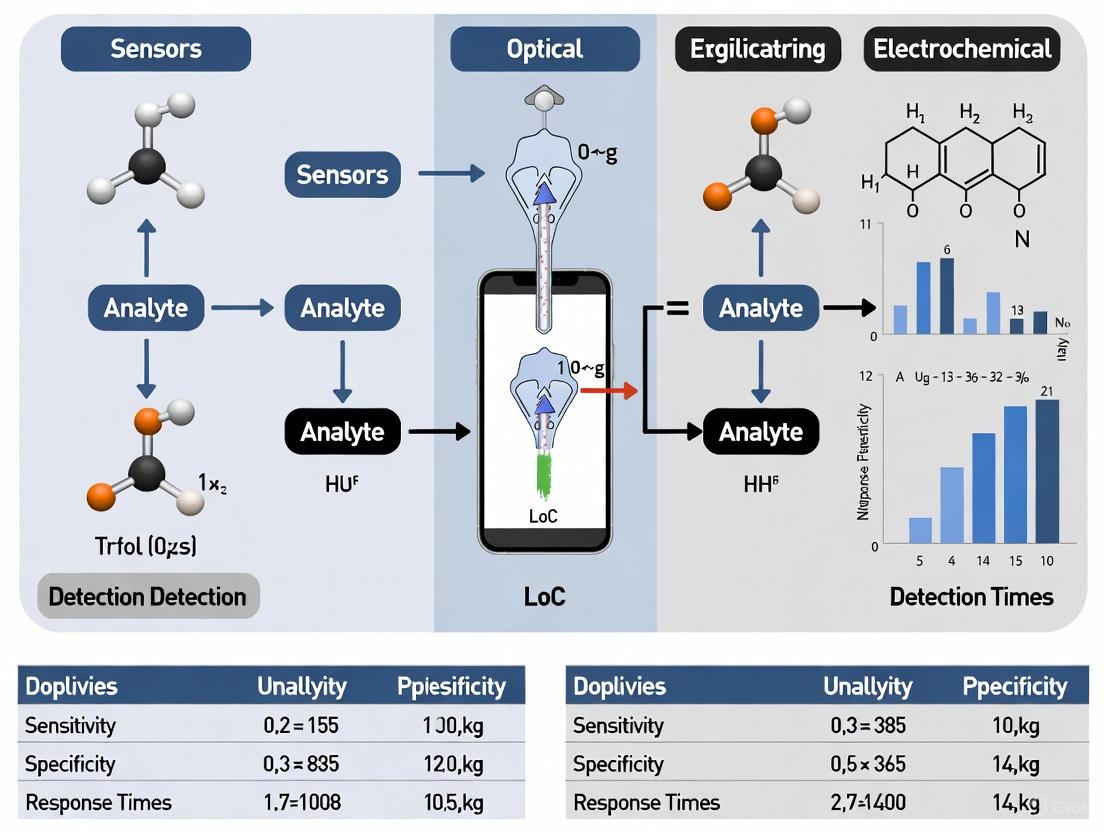
Smartphone-integrated lab-on-chip (LoC) platforms represent a transformative shift towards decentralized, point-of-care diagnostics.
Optical vs. Electrochemical Detection in Smartphone Lab-on-Chip Platforms: A Comparative Analysis for Next-Generation Biosensing
Abstract
Smartphone-integrated lab-on-chip (LoC) platforms represent a transformative shift towards decentralized, point-of-care diagnostics. This article provides a comprehensive comparative analysis of the two dominant sensing modalities—optical and electrochemical detection—within these integrated systems. Tailored for researchers and drug development professionals, it explores the fundamental principles, material requirements, and distinct advantages of each method. The review delves into their methodological applications across healthcare, food safety, and environmental monitoring, addressing key technical and scalability challenges. By presenting a validated, side-by-side comparison of analytical performance, cost, and real-world applicability, this study serves as a strategic guide for selecting the optimal detection technology to advance portable biosensing and accelerate its translation into clinical and commercial settings.
Core Principles and the Smartphone LoC Revolution
The escalating demand for accessible and timely diagnostic solutions is driving a paradigm shift from centralized laboratories to point-of-care (POC) testing. Within this transformative landscape, smartphone-integrated biosensors have emerged as transformative tools poised to democratize clinical diagnostics, environmental monitoring, and food safety analysis [1] [2]. These systems leverage the ubiquitous connectivity, computational power, and high-resolution cameras of modern smartphones to interface with advanced lab-on-a-chip (LoC) and biosensing technologies [1] [3]. A central research focus in this field involves the comparative evaluation of two primary detection paradigms: optical and electrochemical transduction. This guide provides a systematic comparison of these methodologies, framing the analysis within the broader vision of decentralized testing and supported by experimental data and protocols pertinent to ongoing smartphone LoC research.
Technical Comparison of Optical vs. Electrochemical Biosensing
The performance of optical and electrochemical biosensors varies significantly across key parameters, influencing their suitability for specific decentralized applications. The table below provides a comparative summary based on recent implementations in smartphone-integrated systems.
Table 1: Performance Comparison of Smartphone-Integrated Optical and Electrochemical Biosensors
| Feature | Optical Biosensors | Electrochemical Biosensors |
|---|---|---|
| Detection Principle | Colorimetric, Fluorescence, Chemiluminescence, SERS [4] | Amperometry, Potentiometry, Impedimetry, Voltammetry (DPV, EIS) [4] [5] |
| Typical Sensitivity | Picomolar (pM) to nanomolar (nM) range; CRISPR/Cas systems can achieve femtogram (fg) levels [6] | Attogram (ag)/mL to picogram (pg)/mL range demonstrated for viral proteins [5] |
| Key Advantage | Multiplexing capability, compatibility with well-established assays (e.g., LFIAs) [4] [7] | High sensitivity in complex samples, low power requirement, minimal optical components [4] [3] |
| Key Limitation | Susceptible to light scattering and sample autofluorescence; can require complex optical alignment [4] | Susceptible to surface fouling and non-specific adsorption [3] |
| Smartphone Integration | Uses built-in camera as detector; may require simple attachments (LEDs, filters) [1] | Requires external potentiostat module connected to the phone [3] [5] |
| Example Application | LFIA for pregnancy or infectious diseases (e.g., SARS-CoV-2) [4] | Ultrasensitive detection of SARS-CoV-2 S1 protein in saliva [5] |
The choice between optical and electrochemical sensing is application-dependent. Optical methods, particularly colorimetric Lateral Flow Immunoassays (LFIAs), are well-suited for qualitative or semi-quantitative tests where simplicity and low cost are paramount [4]. In contrast, electrochemical biosensors are ideal for applications demanding ultra-high sensitivity and quantitative results in complex matrices like blood or saliva, even though they require an additional electronic interface [3] [5].
Experimental Protocols for Biosensor Development and Validation
To ensure reliability and performance, the development of smartphone-integrated biosensors follows rigorous experimental protocols. The following workflows outline the general process for biosensor integration and the specific selection criteria between optical and electrochemical methods.
Smartphone Biosensor Development Workflow
Transducer Selection Logic
Development of an Electrochemical Aptasensor for Viral Detection
A representative protocol for developing a high-sensitivity electrochemical biosensor, as detailed for SARS-CoV-2 S1 protein detection, is outlined below [5]:
- Bioreceptor Immobilization: An amino-modified aptamer (Optimer), specifically selected for the SARS-CoV-2 S1 protein, is prepared in a binding buffer. The aptamer-protein complex is pre-formed in solution and then immobilized onto the surface of a disposable pencil graphite electrode (PGE).
- Electrochemical Measurement: The functionalized PGE is connected to a portable potentiostat, which interfaces with a smartphone. Differential Pulse Voltammetry (DPV) measurements are performed in a solution containing the ferro/ferricyanide redox probe.
- Signal Transduction: The binding of the target S1 protein to the immobilized aptamer causes a conformational change or steric hindrance, altering the electron transfer kinetics of the redox probe at the electrode interface. This change is measured as a decrease in the DPV peak current.
- Parameter Optimization: Critical parameters are systematically optimized, including:
- Aptamer concentration
- Aptamer-protein interaction time
- Redox probe concentration
- Electrode immobilization time
- Data Acquisition and Analysis: The smartphone-operated potentiostat records the DPV data. A dedicated mobile application can perform data analysis, correlating the signal change to the target concentration, and display the result to the user.
Validation of Biosensor Performance
Robust validation is critical for assessing the real-world applicability of these devices. Key performance metrics include:
- Sensitivity and Limit of Detection (LOD): The biosensor's LOD is calculated from the calibration curve. The reported electrochemical aptasensor achieved an ultralow LOD of 18.80 attograms/mL (ag/mL) in buffer and 14.42 ag/mL in artificial saliva [5]. For comparison, optical biosensors using CRISPR/Cas12a have reported LODs as low as 40 femtograms (fg) per reaction [6].
- Selectivity: The sensor is challenged against structurally similar non-target proteins (e.g., MERS-CoV-S1, Hemagglutinin) to confirm specificity. A high-performance biosensor should show minimal cross-reactivity [5].
- Stability and Reproducibility: The sensor's performance is evaluated over time (e.g., maintaining >80% sensitivity over 5 weeks) and across different batches to ensure reliability [8]. Reproducibility is often reported as a Coefficient of Variation (CV), with gold nanoparticle-enhanced electrochemical sensors showing inter-batch CV below 5% [6].
- Real Sample Analysis: Recovery tests in spiked real-world samples (e.g., tap water, saliva, food matrices) are essential. Recovery rates close to 100% (e.g., 93.10–107.52%) indicate minimal matrix interference and practical utility [8] [5].
The Scientist's Toolkit: Essential Research Reagents and Materials
Successful implementation of smartphone-integrated biosensors relies on a suite of specialized reagents and materials.
Table 2: Key Research Reagent Solutions for Biosensor Development
| Item | Function/Description | Example Application |
|---|---|---|
| Bioreceptors | Molecular recognition elements that bind specifically to the target analyte. | |
| Aptamers (Optimers) | Single-stranded DNA/RNA oligonucleotides with high affinity and specificity; offer advantages over antibodies in stability and reproducibility [5]. | SARS-CoV-2 S1 protein detection [5]. |
| Antibodies | Immunoglobulin proteins with high specificity; commonly used in immunoassays like ELISA and LFIAs [3]. | Pathogen detection (e.g., E. coli) [8]. |
| CRISPR/Cas Systems | RNA-guided gene editing tools repurposed for nucleic acid detection; provide high specificity and sensitivity [6]. | Ultrasensitive DNA target detection. |
| Nanomaterials | Enhance signal transduction and improve sensor performance. | |
| Gold Nanoparticles (AuNPs) | Provide high surface-to-volume ratio for bioreceptor immobilization; enhance electrical conductivity and catalytic activity [3]. | Signal amplification in electrochemical sensors [6]. |
| Graphene/Graphene Oxide (GO) | Offers a large surface area with functional groups for stable probe immobilization; high conductivity when reduced (rGO) [3]. | Electrode modification for sensitive detection [3]. |
| Metal-Organic Frameworks (MOFs) | Porous materials with ultra-high surface area; can be doped with metals to enhance electron transfer and catalytic properties [8]. | Mn-doped ZIF-67 for E. coli sensing [8]. |
| Electrode Materials | Serve as the solid support for the sensing chemistry and transducer. | |
| Pencil Graphite Electrodes (PGEs) | Disposable, low-cost, and suitable for voltammetric measurements [5]. | Disposable platform for aptasensors [5]. |
| Screen-Printed Electrodes (SPEs) | Patterned electrodes mass-produced for single-use; ideal for portability [3]. | Compact lab-on-a-chip systems. |
| Instrumentation | Hardware required for signal readout and processing. | |
| Smartphone-compatible Potentiostat | Portable electronic module that applies potential and measures current; connects to smartphone via Bluetooth or USB [5]. | Enabling on-site electrochemical detection [5]. |
| LED Attachments | Simple, external light sources for excitation in fluorescence-based optical detection [1]. | Smartphone-based fluorescence microscopy. |
The vision of decentralized testing is being progressively realized through advanced smartphone-integrated biosensors. Both optical and electrochemical detection methods offer distinct pathways toward this goal, with the optimal choice being a function of the specific application's requirements for sensitivity, cost, simplicity, and the nature of the sample matrix. Optical biosensors, particularly colorimetric LFIAs, currently lead in user-friendliness and immediate deployment for qualitative assessments. In contrast, electrochemical biosensors demonstrate superior performance for quantitative, ultra-sensitive detection of biomarkers in complex fluids, a critical capability for advanced medical diagnostics and environmental monitoring. Future progress in this field hinges on interdisciplinary collaboration, focusing on overcoming challenges related to standardization, manufacturing scalability, and seamless integration with healthcare infrastructure to fully realize the potential of decentralized, connected diagnostics.
{#anatomy-smartphone-loc}
Anatomy of a Smartphone LoC: Harnessing Built-in Features for Analysis
Smartphone-based Lab-on-a-Chip (LoC) systems represent a paradigm shift in portable chemical and biological analysis. By leveraging the powerful, ubiquitous hardware of smartphones, these platforms merge microfluidic technologies with built-in sensors to create compact, efficient, and highly accessible analytical devices. This guide provides a comparative analysis of the two predominant detection methodologies in smartphone LoC research: optical and electrochemical sensing. We evaluate their performance, detail experimental protocols, and outline the essential toolkit for researchers and development professionals in the field of portable diagnostics.
Comparative Analysis: Optical vs. Electrochemical Detection
The core of a smartphone LoC system is its detection mechanism. The following table summarizes the fundamental characteristics, advantages, and limitations of optical and electrochemical methods.
| Feature | Optical Detection | Electrochemical Detection |
|---|---|---|
| Primary Principle | Measurement of light properties (e.g., intensity, wavelength) from a biochemical reaction [4]. | Measurement of electrical signals (e.g., current, impedance) from redox reactions at a functionalized electrode [3] [4]. |
| Common Modalities | Colorimetry, Fluorescence (FL), Chemiluminescence (CL), Surface-Enhanced Raman Spectroscopy (SERS) [4] [9]. | Amperometry, Potentiometry, Impedance Spectroscopy [3] [4]. |
| Typical LOD | Variable; can achieve pico- to femtomolar levels with advanced labels (e.g., SERS) [4]. | Can achieve pico- to femtomolar levels with nanomaterial-enhanced electrodes [3]. |
| Sensitivity | Very high, especially in fluorescence and CL modes [4]. | Very high; enhanced by nanomaterials like AuNPs and graphene oxide [3]. |
| Selectivity | Achieved via biological recognition elements (antibodies, aptamers) [3] [4]. | Achieved via biological recognition elements (enzymes, aptamers, antibodies) [3]. |
| Sample Matrix Effect | Can be affected by light absorption, scattering, or autofluorescence in turbid samples [3] [4]. | Susceptible to fouling and non-specific adsorption on the electrode surface [3]. |
| Hardware Needs | May require external light sources, filters, or lenses, though smartphones provide excellent detectors [4] [9]. | Requires a potentiostat; can be miniaturized and integrated, often needing fewer optical components [3] [4]. |
| Portability & Cost | Generally good; colorimetry can be very low-cost, while advanced methods (SERS) may be more complex [4]. | Excellent; low power needs and inherently compact electronics favor portability and low cost [3] [4]. |
| Key Advantage | Versatility; wide range of well-established assays and direct visual readout potential [4]. | Simplicity; low cost, miniaturization potential, and insensitivity to sample turbidity [3] [4]. |
| Key Disadvantage | Some methods require complex external optical setups and are sensitive to ambient light [4]. | Sensor surface can be prone to fouling, degrading performance over time [3]. |
Experimental Protocols for Key Methodologies
To implement the detection strategies summarized above, robust and reproducible experimental protocols are essential. The following sections provide detailed methodologies for representative optical and electrochemical assays in smartphone LoC formats.
Smartphone-based Colorimetric Immunoassay
This protocol is adapted from common Lateral Flow Immunoassay (LFIA) principles and quantitative analysis using a smartphone camera [4].
- Objective: To detect and quantify a target analyte (e.g., a pathogen or biomarker) in a liquid sample using a colorimetric readout.
- Materials:
- Smartphone with a high-resolution camera and a dedicated app for color analysis.
- Custom 3D-printed cradle to hold the assay strip and block ambient light.
- Lateral Flow Immunoassay (LFIA) strip containing a Test line and Control line.
- Liquid sample (e.g., serum, urine, water).
- Procedure:
- Sample Application: Apply the liquid sample to the sample pad of the LFIA strip.
- Capillary Flow: Allow the sample to migrate via capillary action along the strip for a specified time (typically 10-15 minutes).
- Image Capture: Place the developed LFIA strip into the 3D-printed cradle. Using the smartphone app, capture an image of the strip under controlled lighting conditions (often provided by the smartphone's own flash or an integrated LED).
- Data Analysis: The app analyzes the color intensity (e.g., in the RGB color space) of the Test line relative to the Control line. The intensity is correlated to the analyte concentration using a pre-established calibration curve.
- Data Interpretation: A positive result is indicated by the appearance of both the Test and Control lines. The concentration of the analyte is proportional to the color intensity of the Test line.
Smartphone-based Amperometric Biosensor
This protocol details the use of a smartphone to power and read out an electrochemical biosensor, often for detecting small molecules or ions [3].
- Objective: To detect an analyte by measuring the electrical current generated from a specific redox reaction catalyzed by an enzyme.
- Materials:
- Smartphone with a custom app for controlling the potentiostat and receiving data.
- Miniaturized potentiostat (can be a peripheral device connected via USB or wirelessly).
- Screen-printed or microfabricated electrochemical cell (working, counter, and reference electrodes).
- Electrode functionalized with a biological recognition element (e.g., glucose oxidase for glucose detection).
- Procedure:
- System Connection: Connect the electrochemical cell to the miniaturized potentiostat, which is in turn connected to or controlled by the smartphone.
- Sample Introduction: Introduce the sample to the electrochemical cell containing the functionalized electrodes.
- Potential Application: The smartphone app directs the potentiostat to apply a constant potential between the working and reference electrodes.
- Current Measurement: The resulting current, generated from the oxidation or reduction of an electroactive species involved in the biorecognition event, is measured over time.
- Signal Processing: The current signal is processed by the smartphone app. The steady-state current or the rate of current change is used for quantification.
- Data Interpretation: The magnitude of the measured current is directly proportional to the concentration of the target analyte in the sample.
The Scientist's Toolkit: Essential Research Reagents & Materials
Successful development of a smartphone LoC relies on a suite of specialized materials and reagents. The table below lists key components and their functions in assay development.
| Item | Function in Smartphone LoC |
|---|---|
| Gold Nanoparticles (AuNPs) | Commonly used as colorimetric labels in optical LFIAs or to enhance conductivity and immobilize biomolecules in electrochemical sensors [3] [4]. |
| Graphene Oxide (GO) | Used in electrochemical sensors for its large surface area and excellent electrical properties, boosting sensitivity and stability [3]. |
| Antibodies | Provide high specificity and affinity for target proteins or pathogens in both optical and electrochemical immunoassays [3] [4]. |
| Aptamers | Synthetic single-stranded DNA/RNA molecules that bind specific targets; stable and customizable alternatives to antibodies [3]. |
| Microfluidic Chip | The "Lab-on-a-Chip" itself; a miniaturized device that automates fluid handling, mixing, and analysis using very small sample volumes [3] [9]. |
| 3D-Printed Cradle | A custom holder that ensures precise alignment between the phone, the assay, and any external components like lenses or LEDs [9]. |
System Architecture and Workflow Visualization
The integration of components into a functional system is critical. The following diagrams, generated using DOT language, illustrate the core architectures and workflows for both optical and electrochemical smartphone LoC platforms.
Smartphone LoC System Architecture
Optical vs. Electrochemical Workflow
The convergence of smartphones with LoC technologies is democratizing molecular analysis, enabling powerful, portable, and cost-effective detection. The choice between optical and electrochemical detection is not a matter of which is universally superior, but which is more appropriate for a specific application. Optical methods, particularly colorimetry, offer intuitive readouts and leverage the smartphone's most advanced component—its camera. Electrochemical methods excel in portability, cost, and minimalism, often requiring simpler external hardware. The future of this field lies in the intelligent fusion of these technologies with advanced nanomaterials, machine learning, and robust microfluidic design to create truly integrated and impactful analytical devices for research, clinical, and field use.
The exponential growth of smartphone-based point-of-care testing (POCT) platforms has ignited tremendous interest in developing mobile biosensors for clinical diagnostics, environmental monitoring, and food safety applications [10]. These systems aim to transform clinical diagnostics into non-clinical self-testing by providing rapid, accurate, and quantitative profiling of metabolic biomarkers and pathogens [10]. Within this innovative landscape, optical detection methods—particularly colorimetric, fluorescent, and chemiluminescent techniques—have emerged as cornerstone technologies enabling quantitative measurement of analytes in blood and other biological samples [10]. This guide provides a comprehensive comparison of these three fundamental optical biosensing modalities, with special emphasis on their integration into smartphone-based lab-on-chip (LoC) platforms and their performance relative to electrochemical alternatives.
The drive toward miniaturization and portability has positioned optical biosensing at the forefront of mobile health solutions. Smartphone-based intelligent POCT represents a paradigm shift from traditional laboratory-based testing to on-site analysis, offering advantages of rapid response, reliability, cost-effectiveness, and multi-analyte detection capability [10]. Understanding the principles, performance characteristics, and implementation requirements of each optical detection method is therefore essential for researchers and drug development professionals working at the intersection of biomedical engineering, analytical chemistry, and mobile health technology.
Fundamental Principles and Signaling Pathways
Colorimetric Detection
Colorimetric detection is a classical analytical technique that determines analyte concentration by measuring absorbance of light at specific wavelengths in the ultraviolet and visible spectra [11]. The method leverages two fundamental absorption laws: Lambert's law, which states that absorption by a solution of constant concentration is proportional to the path length of the light through the solution, and Beer's law, which establishes that absorption is proportional to the concentration of the solution when the path length remains constant [11]. Together, these principles form the Beer-Lambert law, the quantitative foundation for colorimetric analysis.
In practice, colorimetric assays rely on chemical reactions that produce a visible color change whose intensity correlates with analyte concentration. The analyte itself may possess inherent chromogenic properties or, more commonly, participates in reactions with specific reagents to generate colored products [11]. This color change can be assessed visually for qualitative analysis or measured instrumentally using colorimeters or spectrophotometers for precise quantification [11]. The technique has found widespread application across diverse fields including petroleum refining, wastewater treatment, and medical diagnostics, where it enables rapid detection of ammonia, phenols, chlorine, phosphate, and various biomarkers including cortisol [11] [12].
Fluorescent Detection
Fluorescence is a photoluminescence process involving three distinct stages: excitation, excited-state lifetime, and emission [13]. The process begins when a photon of energy (hνEX) supplied by an external source such as a laser or lamp is absorbed by a fluorophore, creating an excited electronic singlet state (S1') [13]. During the excited-state lifetime (typically 1-10 nanoseconds), the fluorophore undergoes conformational changes and interacts with its molecular environment, resulting in a relaxed singlet excited state (S1) from which fluorescence emission originates [13]. Finally, a photon of lower energy (hνEM) is emitted as the fluorophore returns to its ground state (S0).
A fundamental characteristic of fluorescence is the Stokes shift—the difference in energy or wavelength between the excitation and emission photons (hνEX – hνEM) [13]. This shift is crucial for analytical sensitivity because it allows emission photons to be detected against a low background, isolated from excitation photons [13]. The entire fluorescence process is cyclical, with a single fluorophore capable of generating many thousands of detectable photons, forming the basis for the exceptional sensitivity of fluorescence detection techniques [13]. Fluorescence detection systems require four essential components: an excitation light source, a fluorophore, wavelength filters to isolate emission from excitation photons, and a detector that registers emission photons [13].
Chemiluminescent Detection
Chemiluminescence represents a distinct detection paradigm in which light emission is generated directly from a chemical reaction without the need for an external light source [14] [15]. This phenomenon occurs when a chemical reaction produces an excited electronic state that subsequently decays to the ground state through photon emission [15]. The absence of an excitation light source significantly reduces background noise, enabling exceptional detection sensitivity that often surpasses both colorimetric and fluorescent methods.
Two primary mechanisms govern chemiluminescence reactions. In direct chemiluminescence, the excited product of the chemical reaction itself emits light [15]. A classic example is luminol, which emits blue light (425 nm) in the presence of strong alkalinity, oxidizing agents like hydrogen peroxide, and metallic catalysts [15]. In indirect chemiluminescence, the energy from the chemical reaction excites a separate fluorescent compound, which then emits light [15]. This approach is exemplified by the combination of oxalic acid diester and hydrogen peroxide, where the active intermediate (1,2-dioxetanedione) transfers excitation energy to a fluorescent emitter during its decomposition [15]. Chemiluminescence detection is particularly valuable in immunoassays and high-performance liquid chromatography (HPLC), where it enables detection at ultra-high sensitivities—in some cases reaching the attomole (10⁻¹⁸ mol) range [15].
Experimental Protocols and Methodologies
Colorimetric Cortisol Detection Protocol
Recent advances in colorimetric biosensing have demonstrated its utility for detecting biomarkers like cortisol in biofluids. A comprehensive comparison of four colorimetric methods for cortisol detection—using sulfuric acid, Porter-Silber reagent, Prussian blue, and blue tetrazolium—revealed distinct performance characteristics [12]. The experimental protocol for the blue tetrazolium method, which exhibited superior performance, involves specific steps. First, cortisol standards and samples are prepared in appropriate solvents, typically ethanol or methanol. The blue tetrazolium reagent is then added to each sample, followed by incubation under alkaline conditions. The reaction proceeds at room temperature, with color development occurring within 5-10 minutes [12]. The resulting magenta-colored formazan product exhibits an absorption peak at 510 nm, with intensity proportional to cortisol concentration [12].
Critical experimental parameters include reaction time, pH, temperature, and solvent composition. For wearable sensor applications, the blue tetrazolium method demonstrated a limit of detection (LoD) of 97 ng/mL, a broad dynamic range (0.05–2 μg/mL), and rapid color development, meeting requirements for detecting physiological cortisol levels in human sweat (8-142 ng/mL) and saliva (1-11 ng/mL) [12]. The method also showed excellent color stability, remaining measurable for at least one week, significantly longer than the Porter-Silber method (stable up to 24 hours) or the sulfuric acid method (highly unstable) [12].
Fluorescence-Based Aptamer Sensing Protocol
Fluorescence detection protocols often employ sophisticated molecular constructs such as aptamer-functionalized platforms. A representative experiment for thrombin detection using a fluorescence-quenching graphene oxide (GO) platform illustrates a modern approach [16]. The protocol begins with preparation of a fluorescein phosphoramidite (FAM)-labeled thrombin-binding aptamer (TBA), with sequence 5'-FAM-GGTTGGTGTGGTTGG-3' [16]. The aptamer is incubated with GO, which quenches the FAM fluorescence through energy transfer. Upon introduction of the target analyte (thrombin), the aptamer undergoes conformational change, binding to thrombin and dissociating from the GO surface, resulting in fluorescence recovery proportional to thrombin concentration [16].
This fluorescence-based aptamer sensing approach achieved sensitive thrombin detection at yields as low as 5 nM using a fluorescent dye-linked aptamer concentration of 100 nM [16]. The method offers advantages in specificity, rapid response (within minutes), and compatibility with miniaturized platforms. However, it requires conjugation of fluorescent dyes to recognition elements and careful optimization of quenching efficiency to maximize signal-to-background ratio.
Chemiluminescence Immunoassay Protocol
Chemiluminescence immunoassay (CLIA) represents one of the most sensitive applications of chemiluminescence detection. A comparative study of CLIA versus enzyme-linked immunosorbent assay (ELISA) for detecting phospholipase A2 receptor (PLA2R) autoantibody demonstrates a standard CLIA protocol [17]. The procedure begins with coating solid surfaces (typically magnetic microparticles) with antigen (PLA2R). Serum samples are then incubated with the coated particles, allowing specific binding of autoantibodies to the immobilized antigen. After washing, a chemiluminescence-labeled secondary antibody is added, forming an antigen-antibody complex. Finally, trigger solutions (typically containing hydrogen peroxide and sodium hydroxide) are added to initiate the chemiluminescence reaction, with light emission measured immediately by a photomultiplier tube [17].
This CLIA protocol demonstrated performance comparable to ELISA, with 64.83% sensitivity and 76.96% accuracy for PLA2R autoantibody detection, but with significant advantages in automation and processing time [17]. Notably, CLIA exhibited substantial time-saving advantages, particularly for smaller sample sizes (less than 200, and especially less than 20 samples), making it highly suitable for low-throughput clinical settings and stat testing [17].
Performance Comparison and Experimental Data
Quantitative Comparison of Detection Modalities
Table 1: Performance comparison of colorimetric, fluorescent, and chemiluminescent detection methods
| Parameter | Colorimetric | Fluorescent | Chemiluminescent |
|---|---|---|---|
| Limit of Detection | ~97 ng/mL (cortisol via blue tetrazolium) [12] | ~5 nM (thrombin via GO-aptamer) [16] | Attomole range (10⁻¹⁸ mol) for HPLC applications [15] |
| Dynamic Range | 0.05–2 μg/mL (cortisol via blue tetrazolium) [12] | Not specified in results | Wide dynamic ranges reported [14] |
| Signal-to-Noise Ratio | Lower than fluorescence for comparable compounds [18] | 6289 (IPMP standard) [18] | Highest due to no excitation light source [15] |
| Analysis Time | 5-10 min (color development for blue tetrazolium) [12] | <5 min (thrombin detection) [16] | Rapid (significant time savings vs. ELISA) [17] |
| Instrument Complexity | Low (colorimeter or smartphone camera sufficient) [10] [11] | Moderate (requires specific wavelength filters) [13] | Moderate (requires reagent delivery system) [15] |
| Key Advantages | Simplicity, cost-effectiveness, visual readout possible [11] [12] | High sensitivity, spatial resolution, multiplexing capability [13] | Ultra-high sensitivity, no background from excitation light [14] [15] |
| Major Limitations | Moderate sensitivity, potential interference from colored compounds [12] | Photobleaching, potential background fluorescence [13] | Requires specific chemical reagents, limited multiplexing [14] |
Table 2: Comparison of colorimetric methods for cortisol detection
| Method of Detection | Characteristic Absorption Peak (nm) | Experimental LoD (μg/mL) | Dynamic Range (μg/mL) | Time to Color Development (min) | Color Stability |
|---|---|---|---|---|---|
| Pure Concentrated Sulfuric Acid | 290, 394, and 480 | 1.03 | 0–100 | Immediate | Unstable |
| Porter-Silber Reagent with AuNPs | 410 | 0.401 | 0–70 | 60 | Stable up to 24 h |
| Prussian Blue | 300 and 669 | 0.320 | Undetermined | 45 | Stable for at least 1 week |
| Blue Tetrazolium | 510 | 0.214 | 0–1.5 | 5–10 | Stable for at least 1 week |
Comparison with Electrochanical Detection in Smartphone Platforms
In smartphone-based lab-on-chip research, optical and electrical biosensors represent competing paradigms with complementary strengths. A direct comparison of graphene oxide-based electrical and optical aptamer sensors revealed that field-effect transistor (FET)-based electrical detection achieved lower limits of detection (250 pM for thrombin using 100 pM aptamer) compared to the fluorescence approach (5 nM detection using 100 nM aptamer) [16]. However, the electrical approach required more complex fabrication and electrode integration, while the fluorescence method offered simpler implementation in microfluidic formats [16].
Smartphone-based colorimetric detection has emerged as particularly attractive for resource-limited settings due to minimal hardware requirements—essentially utilizing the built-in camera and flash with potential add-ons like simple filters or diffusers [10]. Fluorescence detection on smartphone platforms typically requires additional optical components such as excitation filters, emission filters, and dedicated light sources (e.g., LEDs or lasers), increasing complexity but offering superior sensitivity [10] [13]. Chemiluminescence detection aligns favorably with smartphone integration since it eliminates the need for excitation light sources, potentially simplifying hardware requirements while maintaining exceptional sensitivity, though it depends on consistent reagent delivery systems [14] [15].
Essential Research Reagents and Materials
Table 3: Key research reagents and materials for optical biosensing
| Reagent/Material | Function | Example Applications |
|---|---|---|
| Blue Tetrazolium | Chromogenic reagent that forms magenta formazan product when reduced by corticosteroids | Colorimetric cortisol detection in sweat and saliva [12] |
| Luminol | Direct chemiluminescence reagent that emits blue light (425 nm) when oxidized in alkaline conditions with peroxide catalyst | Detection of peroxides, metal-containing compounds, and blood identification [15] |
| TCPO (bis(2,4,6-trichlorophenyl) oxalate) | Indirect chemiluminescence reagent that generates 1,2-dioxetanedione intermediate when reacted with hydrogen peroxide | Ultra-high sensitivity detection of fluorescent compounds in HPLC [15] |
| FAM (Fluorescein Amidite) | Fluorescent dye used to label biomolecules for fluorescence detection | Aptamer labeling in graphene oxide-based thrombin sensors [16] |
| Graphene Oxide (GO) | 2D nanomaterial with fluorescence quenching properties and high adsorption capacity for biomolecules | Fluorescence quenching platform for aptamer-based sensors [16] |
| Gold Nanoparticles (AuNPs) | Catalytic nanoparticles that enhance colorimetric reaction rates | Acceleration of Porter-Silber reaction for cortisol detection [12] |
| Thrombin-Binding Aptamer (TBA) | Single-stranded DNA molecule that specifically binds thrombin with sequence 5'-GGTTGGTGTGGTTGG-3' | Recognition element in thrombin sensors [16] |
The comparative analysis of colorimetric, fluorescent, and chemiluminescent detection methods reveals a complex landscape where no single technique universally outperforms others across all application domains. Each method presents distinct advantages that render it suitable for specific scenarios in smartphone-based point-of-care testing. Colorimetric detection offers unparalleled simplicity and cost-effectiveness, making it ideal for resource-limited settings and disposable sensors [11] [12]. Fluorescence detection provides superior sensitivity and spatial resolution, enabling sophisticated multiplexed assays [13] [18]. Chemiluminescence achieves the ultimate sensitivity thresholds, potentially reaching attomole detection levels, through elimination of background noise from excitation sources [14] [15].
Future research directions will likely focus on hybrid approaches that combine the strengths of multiple detection modalities while addressing their individual limitations. Integration of these optical methods with complementary electrochemical detection in multi-modal smartphone platforms represents a promising frontier [10] [16]. Additionally, ongoing developments in nanomaterials, such as graphene oxide and gold nanoparticles, continue to enhance sensitivity and specificity across all optical detection paradigms [16] [12]. As smartphone technology evolves with improved cameras, processing capabilities, and connectivity, the integration of sophisticated optical biosensing modalities into accessible point-of-care devices will increasingly transform clinical diagnostics into decentralized, personalized health monitoring solutions [10].
Electrochemical biosensors represent a powerful class of analytical devices that combine the specificity of biological recognition elements with the sensitivity of electrochemical transducers. These devices convert biological interactions into quantifiable electrical signals, enabling the detection of target analytes in various samples including body fluids, food samples, and environmental samples [19]. The field has experienced explosive growth over the past decades, driven by the success of commercial applications like the glucose sensor and ongoing research into increasingly sophisticated detection platforms [19]. The significance of electrochemical biosensors lies in their ability to provide rapid, accurate, and cost-effective analysis, making them particularly valuable for point-of-care testing, environmental monitoring, and food safety applications [20].
A typical electrochemical biosensor consists of several key components: (1) bioreceptors that specifically bind to the analyte, (2) an interface architecture where the biological event occurs, (3) a transducer element that converts the biological interaction into an electrical signal, and (4) electronic systems for signal processing and presentation [19]. The biological recognition elements can include enzymes, antibodies, nucleic acids, whole cells, or receptors, with enzymes being among the most common due to their specific binding capabilities and biocatalytic activity [19]. The operational principle involves the bioreceptor selectively interacting with the target analyte, which then modulates the electrochemical properties at the electrode-solution interface, resulting in measurable changes in electrical parameters.
When compared to optical detection methods in the context of smartphone-based lab-on-chip research, electrochemical biosensors offer distinct advantages including robustness, easy miniaturization, excellent detection limits with small analyte volumes, and the ability to function in turbid biofluids with optically absorbing and fluorescing compounds [19] [4]. Their close link to developments in microelectronic circuit production enables cost-effective manufacturing and easy interfacing with normal electronic read-out systems, including smartphones [19]. This compatibility with smartphone technology positions electrochemical biosensors as ideal candidates for decentralized diagnostic platforms, particularly in resource-limited settings where sophisticated laboratory infrastructure is unavailable.
Fundamental Principles of Electrochemical Sensing
Electrochemical biosensing operates on the principle of detecting electrical signals generated from biochemical reactions or binding events occurring at the electrode-solution interface. These sensors typically employ a three-electrode system consisting of a working electrode (where the reaction of interest occurs), a reference electrode (maintaining a known, stable potential), and a counter electrode (completing the electrical circuit) [19]. The working electrode serves as both the platform for immobilizing biological recognition elements and the transduction element, where electrochemical reactions generate measurable signals correlated to analyte concentration.
The core mechanism involves the specific binding of target analytes to bioreceptors immobilized on the electrode surface, which subsequently alters the electrochemical properties of the interface. This change can manifest as variations in current, potential, impedance, or conductivity, depending on the transduction method employed. For enzymatic biosensors, the catalytic reaction often produces or consumes electroactive species, generating measurable currents. In contrast, affinity-based sensors (e.g., immunosensors or DNA sensors) typically detect the binding event itself through changes in interfacial properties that affect electron transfer kinetics or capacitance [19].
The surface architecture of electrochemical biosensors plays a critical role in their performance, as reactions are generally detected only in close proximity to the electrode surface [19]. Nanotechnology has significantly advanced the field by enabling engineered surface architectures that enhance sensitivity and specificity. The precise control over the delicate interplay between surface nano-architectures, surface functionalization, and the chosen sensor transducer principle determines the ultimate sensitivity and performance of the biosensor [19]. Recent approaches include the use of engineered ion-channels in lipid bilayers, encapsulation of enzymes into vesicles, polymersomes, or polyelectrolyte capsules, which provide additional possibilities for signal amplification [19].
Key Electrochemical Techniques
Electroanalytical methods used in biosensing can be categorized based on the measured electrical property:
- Potentiometric sensors measure the potential difference between working and reference electrodes at zero current, following the Nernst equation relationship with analyte concentration [21].
- Amperometric sensors monitor current resulting from electrochemical oxidation or reduction of electroactive species at a constant applied potential [19] [21].
- Voltammetric sensors measure current while systematically varying the applied potential, providing information about reaction kinetics and mechanisms [21].
- Impedimetric sensors analyze the impedance (resistance to alternating current) of the electrochemical cell, which is sensitive to surface binding events and interfacial properties [21].
- Conductometric sensors detect changes in the electrical conductivity of the solution resulting from biochemical reactions [19].
Each technique offers distinct advantages for specific applications, with amperometry and impedance spectroscopy being particularly prominent in biosensing due to their high sensitivity and label-free detection capabilities, respectively.
Detailed Analysis of Core Techniques
Voltammetry
Voltammetry encompasses a group of electrochemical techniques where current is measured as a function of applied potential. The potential is systematically varied over time, inducing oxidation or reduction of electroactive species at the working electrode surface. The resulting current-potential relationship (voltammogram) provides quantitative and qualitative information about the analyte, including its concentration, identity through characteristic redox potentials, and insights into reaction kinetics [21]. The most common voltammetric technique is cyclic voltammetry (CV), where the potential is scanned linearly between two set values and then reversed, creating a cyclical pattern.
In CV, key parameters include the scan rate (rate of potential change), initial and switching potentials, and the number of cycles. The resulting voltammogram typically displays characteristic peaks corresponding to oxidation and reduction processes. The peak current (ip) is proportional to analyte concentration, following the Randles-Ševčík equation for diffusion-controlled processes: ip = (2.69×10^5)n^(3/2)AD^(1/2)Cv^(1/2), where n is the number of electrons, A is electrode area, D is diffusion coefficient, C is concentration, and v is scan rate. The peak separation (ΔEp) between anodic and cathodic peaks provides information about electron transfer kinetics, with ideal reversible systems showing ΔEp of 59 mV/n [19].
Voltammetry finds extensive application in biosensing, particularly for enzymatic systems where the enzymatic reaction generates or consumes electroactive products. For instance, glucose oxidase-based sensors measure the current from hydrogen peroxide oxidation or oxygen reduction coupled to glucose oxidation. The technique's versatility allows detection of various biomolecules including neurotransmitters, hormones, DNA, and proteins through appropriate bioreceptor integration and electrode modification strategies.
Experimental Protocol: Cyclic Voltammetry for Enzyme-Based Biosensor Characterization
- Electrode Preparation: Clean and polish the working electrode (typically glassy carbon, gold, or platinum) to a mirror finish using alumina slurry. Rinse thoroughly with deionized water.
- Electrode Modification: Immobilize the biorecognition element (enzyme, antibody, DNA probe) onto the electrode surface using appropriate methods (e.g., physical adsorption, covalent binding, entrapment in polymers, or composite matrices).
- Buffer Preparation: Prepare a degassed electrochemical buffer solution (e.g., 0.1 M phosphate buffer, pH 7.4) with supporting electrolyte to ensure sufficient conductivity.
- Instrument Setup: Configure the potentiostat with a three-electrode system (working, reference, and counter electrodes) in an electrochemical cell. Set initial parameters: potential window appropriate for the redox species, scan rate (typically 10-100 mV/s), and number of cycles.
- Background Measurement: Record CV curves in pure buffer solution to establish baseline and assess background current.
- Analyte Measurement: Add incremental concentrations of the target analyte to the cell and record CV responses after each addition.
- Data Analysis: Determine peak currents and potentials from the voltammograms. Plot peak current versus analyte concentration to establish calibration curves and calculate detection limits.
Amperometry
Amperometry involves measuring the current generated from electrochemical oxidation or reduction of an analyte at a constant applied potential. Unlike voltammetry, where potential is varied, amperometry maintains a fixed potential selected to drive the specific Faradaic reaction of interest while monitoring current changes over time. The measured current is directly proportional to the concentration of the electroactive species, following the Cottrell equation for diffusion-controlled processes: i = nFAC√(D/πt), where F is Faraday's constant, and t is time [19] [21].
The key advantage of amperometry lies in its simplicity and high sensitivity, making it ideal for continuous monitoring applications. The fixed potential minimizes charging currents and simplifies instrumentation compared to potential sweep techniques. Selective detection is achieved by choosing an appropriate working potential where the target analyte undergoes electrolysis while interfering species remain electroinactive. Common working electrodes include platinum, gold, and carbon-based materials, with surface modifications often employed to enhance selectivity and minimize fouling.
The most successful commercial application of amperometry is in glucose biosensors, where glucose oxidase catalyzes the oxidation of glucose to gluconolactone, producing hydrogen peroxide as a byproduct. The subsequent oxidation of H2O2 at the electrode surface (typically at +0.6 to +0.7 V vs. Ag/AgCl) generates a current proportional to glucose concentration. Recent advancements incorporate electron mediators to lower the operating potential, reducing interference from other electroactive species in complex samples like blood [19].
Experimental Protocol: Amperometric Detection for Glucose Biosensing
- Electrode System Setup: Assemble a three-electrode system with platinum working and counter electrodes and Ag/AgCl reference electrode.
- Enzyme Immobilization: Immobilize glucose oxidase onto the working electrode surface using cross-linking with glutaraldehyde or entrapment in a polymer matrix (e.g., Nafion or polypyrrole).
- Potential Optimization: Apply a constant potential of +0.65 V vs. Ag/AgCl for direct H2O2 detection or a lower potential (e.g., +0.2 to +0.4 V) when using mediators.
- Background Stabilization: Immerse the electrode system in stirred buffer solution (0.1 M phosphate buffer, pH 7.4) and allow the background current to stabilize.
- Standard Additions: Add known concentrations of glucose standard solutions to the electrochemical cell and record the steady-state current after each addition.
- Calibration Curve: Plot the steady-state current values against glucose concentrations to establish a calibration curve.
- Sample Measurement: Introduce unknown samples and determine glucose concentration from the calibration curve.
Impedance Spectroscopy
Electrochemical Impedance Spectroscopy (EIS) is a powerful technique that measures the impedance of an electrochemical system over a range of frequencies. Unlike DC techniques, EIS applies a small amplitude AC potential (typically 5-10 mV) and measures the current response, determining both magnitude and phase shift of the impedance [21]. The impedance (Z) is defined as Z = Z₀·e^(iΦ) = Z₀(cosΦ + i·sinΦ), where Z₀ is the magnitude, Φ is the phase angle, and i is the imaginary unit [21].
EIS data is commonly presented in two formats: Nyquist plots (imaginary vs. real impedance components) and Bode plots (magnitude and phase vs. frequency). In a typical Nyquist plot for an electrochemical system, key features include a semicircle at high frequencies representing the charge transfer process and a linear region at low frequencies corresponding to mass transfer limitations (Warburg impedance) [21]. The diameter of the semicircle equals the charge transfer resistance (Rct), which is particularly sensitive to surface binding events in biosensing applications.
In biosensors, EIS typically operates in Faradaic mode, where a redox probe (e.g., [Fe(CN)₆]³⁻/⁴⁻) is added to the solution, and changes in Rct are monitored following biorecognition events. When target analytes bind to surface-immobilized receptors, they create a barrier to electron transfer, increasing Rct in proportion to analyte concentration. This label-free detection principle makes EIS particularly valuable for monitoring binding events without the need for enzymatic or other labels, enabling direct detection of proteins, DNA, and whole cells [21].
Experimental Protocol: Faradaic EIS for Immunosensing
- Electrode Modification: Clean and functionalize the gold working electrode. Immobilize capture antibodies using self-assembled monolayers (e.g., via thiol chemistry) followed by blocking with BSA to prevent nonspecific binding.
- Redox Probe Preparation: Prepare a solution containing 5 mM K₃[Fe(CN)₆]/K₄[Fe(CN)₆] (1:1 mixture) in suitable buffer with 0.1 M KCl as supporting electrolyte.
- Initial EIS Measurement: Record impedance spectrum in the frequency range of 0.1 Hz to 100 kHz with AC amplitude of 5-10 mV at the formal potential of the redox couple.
- Sample Incubation: Expose the functionalized electrode to sample containing target antigen for a predetermined incubation time (typically 15-60 minutes).
- Post-Incubation EIS: Wash the electrode gently and record impedance spectrum in fresh redox probe solution under identical conditions.
- Data Analysis: Fit impedance data to an appropriate equivalent circuit (typically Randles circuit) to extract Rct values. Calculate the change in Rct (ΔRct) relative to baseline.
- Quantification: Construct calibration curve by plotting ΔRct/Rct,initial versus analyte concentration for standard solutions.
Table 1: Comparative Analysis of Electrochemical Biosensing Techniques
| Parameter | Voltammetry | Amperometry | Impedance Spectroscopy |
|---|---|---|---|
| Measured Signal | Current vs. applied potential | Current at fixed potential | Impedance magnitude and phase vs. frequency |
| Detection Limit | nM-pM range | nM-μM range | pM-fM range |
| Analysis Time | Seconds to minutes | Seconds to minutes | Minutes |
| Label Requirement | Often requires labels | Often requires labels | Label-free |
| Information Content | Qualitative and quantitative | Quantitative | Quantitative, interfacial properties |
| Technique Complexity | Moderate | Low | High |
| Miniaturization Potential | High | High | Moderate |
| Cost | Moderate | Low | High |
Comparative Performance Analysis
Technical Comparison of Sensing Modalities
When selecting an electrochemical technique for biosensing applications, researchers must consider multiple performance characteristics. Voltammetric techniques offer the advantage of providing both qualitative information (through redox potentials) and quantitative data, making them valuable for method development and fundamental studies of electron transfer processes. The ability to characterize reaction mechanisms comes at the cost of more complex data interpretation and potentially longer analysis times compared to amperometry [19].
Amperometry excels in applications requiring continuous monitoring and simple quantification, with the glucose biosensor being the paradigmatic example of its successful implementation. Its straightforward principle of operation and instrumentation make it particularly suitable for disposable sensor strips and point-of-care devices. However, amperometric sensors often suffer from interference by other electroactive species in complex matrices, requiring careful electrode design or additional membranes to ensure selectivity [19].
EIS stands out for its exceptional sensitivity and label-free operation, enabling direct detection of binding events without secondary labels. This makes it ideal for monitoring biomolecular interactions in real-time and detecting targets that lack intrinsic redox activity. The technique's main limitations include longer measurement times (especially at low frequencies), complex data interpretation requiring equivalent circuit modeling, and greater susceptibility to environmental factors such as temperature fluctuations [21].
Table 2: Application-Based Selection Guide for Electrochemical Techniques
| Application Scenario | Recommended Technique | Rationale | Typical Performance |
|---|---|---|---|
| Enzyme-Based Sensing | Amperometry | Simple, continuous monitoring of enzyme products | Glucose detection: LOD ~μM [19] |
| DNA Hybridization Detection | EIS | Label-free, sensitive to surface charge changes | DNA detection: LOD ~fM-pM [21] |
| Antibody-Antigen Detection | EIS or Voltammetry | EIS for label-free; Voltammetry with enzyme labels | Cardiac troponin: LOD ~pg/mL [22] |
| Neurotransmitter Monitoring | Fast-Scan Cyclic Voltammetry | High temporal resolution for in vivo studies | Dopamine detection: LOD ~nM [19] |
| Heavy Metal Detection | Stripping Voltammetry | Preconcentration step enhances sensitivity | Heavy metals: LOD ~ppb [21] |
| Whole Cell Detection | EIS | Sensitive to interfacial changes from cell capture | Bacterial detection: LOD ~10²-10³ CFU/mL [21] |
Comparison with Optical Detection Methods
In the context of smartphone-integrated lab-on-chip platforms, electrochemical detection offers several distinct advantages over optical methods. Electrochemical sensors do not suffer from optical path length requirements or interference from turbid or colored samples, making them suitable for complex biological matrices like whole blood [4]. Their inherent compatibility with miniaturization and microfabrication processes aligns well with the development of portable diagnostic systems, as they can be seamlessly integrated into microfluidic platforms without bulky optical components [19] [4].
Optical detection methods, including colorimetric, fluorescence, and chemiluminescence, benefit from well-established protocols and visual readouts that sometimes enable instrument-free operation (e.g., lateral flow assays). However, they typically require more complex instrumentation when quantification is needed, including light sources, wavelength selection elements, and detectors [4]. Fluorescence and chemiluminescence offer excellent sensitivity but may suffer from photobleaching or require sophisticated labeling steps.
The integration of electrochemical detection with smartphones typically involves interfacing the sensor with a miniaturized potentiostat that can be connected to the phone via USB or wirelessly, with the smartphone providing control, data processing, and display capabilities [23] [24]. This approach has been successfully demonstrated for various applications, including electrochemical lateral flow assays that combine the simplicity of lateral flow platforms with quantitative electrochemical readouts [23]. In contrast, optical smartphone-based detection relies on the built-in camera, which may require additional accessories like controlled lighting chambers or lenses to ensure reproducible quantification [24].
Experimental Protocols and Implementation
Standardized Experimental Setup
Implementing electrochemical biosensing requires careful attention to experimental setup to ensure reproducible and reliable results. A basic electrochemical workstation should include a potentiostat capable of performing the desired techniques, a Faraday cage to minimize electrical noise, and a computer with appropriate software for instrument control and data analysis. The three-electrode system remains standard, with material selection critical for optimal performance:
- Working Electrodes: Common materials include glassy carbon for wide potential window, gold for surface functionalization, platinum for oxidation reactions, and screen-printed carbon for disposable sensors. Electrode pretreatment (polishing, electrochemical cleaning) is essential for reproducible surfaces.
- Reference Electrodes: Ag/AgCl (3M KCl) electrodes provide stable potential while pseudo-reference electrodes (e.g., Ag/AgCl ink) suit disposable sensors. All potentials are reported relative to the reference electrode.
- Counter Electrodes: Typically made from inert materials like platinum wire or carbon, with sufficient surface area to avoid limiting the current.
Solution conditions significantly impact electrochemical responses. Supporting electrolytes (e.g., PBS, KCl) at 0.1-1.0 M concentrations minimize solution resistance and ensure dominant Faradaic processes. Buffer selection should maintain pH optimal for biorecognition element stability and activity. Temperature control is recommended for quantitative work, as diffusion coefficients and reaction rates are temperature-dependent.
Signal Enhancement Strategies
Enhancing the sensitivity of electrochemical biosensors has been a major research focus, with nanotechnology playing a pivotal role. Nanomaterials improve sensor performance through various mechanisms:
- Increased Surface Area: Nanoparticles, nanotubes, and porous nanostructures provide higher surface area for bioreceptor immobilization, increasing binding capacity and signal generation [19] [21].
- Enhanced Electron Transfer: Carbon nanotubes, graphene, and metal nanoparticles facilitate electron transfer between redox centers and electrode surfaces, improving signal-to-noise ratios [19].
- Catalytic Activity: Certain nanomaterials (e.g., Pt nanoparticles, nanozymes) exhibit catalytic properties that amplify electrochemical signals [19].
- Labeling Strategies: Enzyme labels (e.g., horseradish peroxidase, alkaline phosphatase) provide catalytic amplification, while metal nanoparticles enable sensitive stripping voltammetry detection [21].
Recent innovative approaches include the use of dendritic mesoporous silica nanoparticles for quantum dot encapsulation, significantly enhancing signal intensity in fluorescence-based lateral flow assays, with potential applications in electrochemical systems [22]. Similarly, the integration of wireless and battery-free readout platforms with electrochemical lateral flow assays represents a promising direction for point-of-care diagnostics [23].
The Scientist's Toolkit: Essential Research Reagents and Materials
Table 3: Essential Research Reagents for Electrochemical Biosensor Development
| Reagent/Material | Function | Examples & Applications |
|---|---|---|
| Biorecognition Elements | Molecular recognition of target analytes | Enzymes (glucose oxidase), antibodies, DNA probes, aptamers, whole cells [19] |
| Electrode Materials | Signal transduction platform | Glassy carbon, gold, platinum, screen-printed electrodes, indium tin oxide [19] |
| Redox Probes | Facilitate electron transfer in EIS and voltammetry | Ferricyanide/ferrocyanide, ruthenium hexamine, hydroquinone [21] |
| Nanomaterials | Signal amplification and enhanced immobilization | Gold nanoparticles, carbon nanotubes, graphene, mesoporous silica, quantum dots [21] [22] |
| Immobilization Matrices | Stabilize bioreceptors on electrode surfaces | Nafion, chitosan, polypyrrole, sol-gels, self-assembled monolayers [19] |
| Blocking Agents | Minimize nonspecific binding | Bovine serum albumin (BSA), casein, polyethylene glycol, Tween 20 [22] |
| Electrochemical Cells | Contain solution and electrode assembly | Conventional cells, microfluidic chips, lateral flow strips [23] [25] |
Visualizing Electrochemical Biosensing Principles
The following diagrams illustrate the fundamental principles and experimental workflows for the three core electrochemical techniques discussed in this article.
Diagram 1: Voltammetry principles and experimental workflow showing the relationship between different voltammetric techniques, measurement steps, and data interpretation.
Diagram 2: Amperometric sensing principles illustrating the measurement setup, signal generation mechanisms, and continuous monitoring capability.
Diagram 3: Electrochemical impedance spectroscopy (EIS) fundamentals showing measurement principles, equivalent circuit models, and biosensing applications.
Electrochemical biosensing techniques offer a versatile toolkit for researchers developing next-generation diagnostic platforms, particularly in the context of smartphone-integrated lab-on-chip systems. Voltammetry provides comprehensive information about redox processes and reaction mechanisms, amperometry excels in simple, continuous monitoring applications, and impedance spectroscopy enables highly sensitive, label-free detection of biomolecular interactions. The choice of technique depends on the specific application requirements, including needed sensitivity, analysis time, complexity, and whether qualitative or purely quantitative information is desired.
The ongoing convergence of electrochemical sensing with nanotechnology, microfluidics, and smartphone technology promises to further enhance the capabilities and accessibility of these analytical platforms. As research continues to address challenges related to sensor stability, reproducibility in complex matrices, and multiplexing capabilities, electrochemical biosensors are poised to play an increasingly important role in personalized medicine, environmental monitoring, and food safety. Their unique combination of sensitivity, miniaturization potential, and compatibility with point-of-care testing aligns perfectly with the growing demand for decentralized diagnostic solutions that can deliver laboratory-quality results outside traditional clinical settings.
The integration of two-dimensional (2D) nanomaterials and nanoparticles represents a transformative advancement in the field of biosensing, particularly for smartphone-based lab-on-chip (LoC) platforms. These advanced materials serve as the critical interface between biological recognition events and transducers that convert these events into measurable signals. Their unique physicochemical properties—including exceptionally high surface-to-volume ratios, tunable electronic structures, and versatile surface chemistry—directly address the core challenge of detecting ultralow biomarker concentrations in complex biological matrices [26] [27]. This comparative analysis examines how these material enhancements function across optical and electrochemical detection paradigms, providing researchers with experimental data and performance metrics to guide sensor development choices.
The fundamental advantage of 2D nanomaterials like graphene, transition metal dichalcogenides (TMDs), and MXenes lies in their ability to provide extra features including structural color, ordered morphological features, and the capacity to detect and react to external stimuli [26]. When decorated with metal nanoparticles such as gold (Au) or quantum dots, these hybrid structures create synergistic effects that significantly amplify detection signals, thereby improving sensitivity, lowering detection limits, and enhancing overall biosensor robustness [28] [29]. For point-of-care (POC) diagnostics targeting applications from disease biomarkers to environmental contaminants, these material-enabled enhancements make the critical difference between laboratory prototypes and viable field-deployable devices.
Comparative Detection Platforms: Operational Principles and Material Requirements
Optical Detection Mechanisms
Optical biosensing platforms leveraging 2D nanomaterials primarily operate through fluorescence, photoluminescence, and colorimetric mechanisms. In these systems, 2D materials and nanoparticles function as signal amplifiers, quenchers, or reporters. For instance, quantum dots (QDs) loaded onto SiO₂ nanocarriers to form quantum nanobeads (QBs) demonstrate significantly enhanced luminescent properties compared to single QDs, directly improving detection sensitivity [28]. A recent implementation for glaucoma biomarker detection achieved remarkable limits of detection (LOD) of 3.39 pg mL⁻¹ for TNF-α and 4.13 pg mL⁻¹ for BDNF in tear fluid using this QB-based approach in a lateral flow format [28].
The experimental protocol for such optical systems typically involves:
- Material Synthesis: Fabrication of signal-enhancing nanomaterials (e.g., microwave-assisted synthesis of nitrogen-doped carbon dots [30] or layer-by-layer assembly of QDs on SiO₂ spheres [28]).
- Bioconjugation: Covalent attachment of recognition elements (antibodies, aptamers) to nanomaterials using chemistry such as EDC/NHS coupling [30] [28].
- Assay Assembly: Integration of conjugated materials into detection platforms (lateral flow strips, microfluidic chips).
- Signal Acquisition: Measurement of fluorescent or colorimetric signals using smartphone cameras with customized accessories (e.g., 3D-printed dark boxes with LED excitation sources and filters) [30] [28].
- Data Processing: Image analysis using software like ImageJ to quantify biomarker concentrations based on signal intensity [28].
Electrochemical Detection Mechanisms
Electrochemical biosensors utilize 2D nanomaterials and nanoparticles to enhance electron transfer kinetics, increase electrode surface area, and improve biocompatibility for biomolecule immobilization. MXenes—2D transition metal carbides and nitrides—have emerged as particularly promising materials due to their high electrical conductivity, hydrophilicity, and tunable surface chemistry [31]. When decorated with metal nanoparticles like Au, these composites create ideal platforms for anchoring antibodies while simultaneously accelerating redox electron transfer processes [29] [31].
Standard experimental methodologies for electrochemical sensors include:
- Electrode Modification: Drop-casting, electrodeposition, or spin-coating of 2D nanomaterial suspensions onto electrode surfaces (glassy carbon electrodes, screen-printed electrodes) [29].
- Surface Functionalization: Formation of self-assembled monolayers (e.g., 3-mercaptopropionic acid) and activation with EDC/NHS for antibody immobilization [29].
- Blocking: Application of blocking agents like bovine serum albumin (BSA) to minimize nonspecific binding [29].
- Electrochemical Measurement: Implementation of techniques including cyclic voltammetry (CV), differential pulse voltammetry (DPV), and electrochemical impedance spectroscopy (EIS) to detect binding events [29] [31].
- Data Analysis: Calculation of biomarker concentrations from changes in current, potential, or charge transfer resistance.
Diagram 1: Material-Platform Relationships in Advanced Biosensing. This diagram visualizes how different classes of 2D nanomaterials and nanoparticles are preferentially integrated with specific detection platforms and mechanisms to enhance biosensing performance.
Performance Comparison: Quantitative Data Analysis
Table 1: Performance Comparison of Optical vs. Electrochemical Detection Platforms Enhanced with 2D Nanomaterials
| Detection Platform | Biomarker Target | 2D Material/Nanoparticle System | Limit of Detection (LOD) | Linear Range | Detection Time | Reference |
|---|---|---|---|---|---|---|
| Optical (Fluorescence) | SHBG (PCOS) | Nitrogen-doped carbon dots | 2.68 ng/mL | 80-4000 ng/mL | <30 min | [30] |
| Optical (Fluorescence) | TNF-α (Glaucoma) | Quantum nanobeads (SiO₂@QD) | 3.39 pg/mL | Not specified | ~15 min | [28] |
| Optical (Fluorescence) | BDNF (Glaucoma) | Quantum nanobeads (SiO₂@QD) | 4.13 pg/mL | Not specified | ~15 min | [28] |
| Electrochemical (EIS) | CD44 (Breast cancer) | Au-RGO-Ionic liquid nanocomposite | 2.7 fg/mL (serum) | 5 fg/mL - 50 μg/mL | ~30 min | [29] |
| Electrochemical (EIS) | C-reactive protein | rGO-Au nanoparticles | Not specified | Not specified | ~30 min | [29] |
| Electrochemical (DPV) | Pharmaceuticals/Pesticides | MXene composites | Varies by analyte | Varies by analyte | Minutes to hours | [31] |
Table 2: Advantages and Limitations of Material-Enhanced Detection Platforms
| Parameter | Optical Detection | Electrochemical Detection |
|---|---|---|
| Sensitivity | High (pg/mL range) [28] | Exceptional (fg/mL range) [29] |
| Selectivity | High with appropriate surface functionalization [28] | Excellent, particularly with EIS [29] |
| Instrumentation Complexity | Moderate (smartphone + accessories) [30] [28] | Low to moderate (potentiostat) [31] |
| Multiplexing Capability | Excellent (multiple test lines, different QDs) [28] | Moderate (requires multiple electrode arrays) |
| Sample Matrix Effects | Moderate (can be affected by turbidity) | Significant (requires careful interface design) [29] |
| Cost per Test | Low (lateral flow format) [30] [28] | Low to moderate (disposable electrodes) |
| Integration with Smartphones | Straightforward (camera-based detection) [30] [28] | Requires additional hardware (portable potentiostats) |
Experimental Protocols: Detailed Methodologies
Protocol 1: Quantum Nanobead-based Fluorescent Lateral Flow Assay
This protocol details the development of a dual-testing LFA for simultaneous detection of glaucoma biomarkers BDNF and TNF-α [28]:
QB Synthesis:
- Prepare SiO₂ nanoparticles (100-200 nm) and treat with branched polyethyleneimine (PEI) under sonication to create a positively charged surface.
- Incubate with carboxyl-functionalized QDs (emission 525 nm and 625 nm) to allow electrostatic adsorption, forming SiO₂@QD.
- Repeat PEI coating and QD adsorption to create double-layer QBs (SiO₂@DQD) for enhanced fluorescence.
Antibody Conjugation:
- Activate QB surface with EDC/NHS chemistry for 30 minutes at room temperature.
- Conjugate with mouse anti-human BDNF and TNF-α antibodies separately via amine coupling.
- Purify conjugates using centrifugation and resuspend in storage buffer.
LFA Assembly:
- Dispense QB-antibody conjugates on glass fiber conjugate pad.
- Print capture antibodies (anti-BDNF and anti-TNF-α) as separate test lines on nitrocellulose membrane.
- Dispense goat anti-mouse IgG as control line.
- Assemble with sample pad and absorbent pad in cassette.
Sample Analysis:
- Apply 80 μL tear sample to sample pad.
- Allow 15-minute lateral flow development.
- Insert strip into 3D-printed readout box with 365 nm UV LED excitation.
- Capture fluorescence image with smartphone camera.
- Analyze intensity using ImageJ software.
Protocol 2: MXene-Based Electrochemical Sensor for Pharmaceutical Compounds
This protocol outlines the development of MXene-based sensors for detection of pharmaceuticals and pesticides [31]:
MXene Synthesis:
- Selective etching of Al layer from Ti₃AlC₂ MAX phase using HF or LiF/HCl solution.
- Delaminate multilayer MXene using intercalation and sonication.
- Centrifuge to obtain single/few-layer Ti₃C₂Tₛ MXene dispersion.
Electrode Modification:
- Drop-cast 5-10 μL MXene suspension (1-5 mg/mL) on glassy carbon electrode.
- Dry at room temperature or mild heating (40-60°C).
- Electrodeposit Au nanoparticles by cycling potential in HAuCl₄ solution.
Biorecognition Immobilization:
- Form self-assembled monolayer of capture probes (antibodies, aptamers).
- Activate with EDC/NHS for covalent antibody immobilization.
- Block nonspecific sites with BSA (1% w/v).
Electrochemical Detection:
- Incubate modified electrode with sample for 10-15 minutes.
- Perform DPV measurements in electrochemical cell with PBS.
- Record current changes at specific oxidation/reduction potentials.
- Use standard curve to quantify analyte concentration.
Diagram 2: Comparative Workflow of Optical and Electrochemical Detection Pathways. This diagram illustrates the parallel experimental workflows for material-enhanced optical and electrochemical detection platforms, highlighting the critical enhancement points where 2D nanomaterials and nanoparticles improve performance.
The Scientist's Toolkit: Essential Research Reagents and Materials
Table 3: Essential Research Reagents and Materials for Developing Advanced Biosensors
| Material/Reagent | Function | Example Applications | Key Properties |
|---|---|---|---|
| Graphene Oxide (GO)/Reduced GO | Electrode modifier, signal amplifier | CD44 detection in breast cancer [29] | High conductivity, large surface area, tunable chemistry |
| MXenes (Ti₃C₂Tₓ) | Electrode material, signal enhancer | Pharmaceutical and pesticide detection [31] | Excellent electrical conductivity, hydrophilicity, functional groups |
| Transition Metal Dichalcogenides (MoS₂, WS₂) | Fluorescence quencher, charge transfer facilitator | Photodetectors, gas sensors [32] [27] | Tunable bandgap, strong light-matter interaction |
| Gold Nanoparticles (AuNPs) | Antibody anchoring, signal amplification | C-reactive protein detection [29] | Biocompatibility, surface plasmon resonance, conductivity |
| Quantum Dots (QDs) | Fluorescent labels, signal reporters | Glaucoma biomarker detection [28] | Narrow emission, broad excitation, high brightness |
| Quantum Nanobeads (QBs) | Enhanced fluorescent labels | TNF-α and BDNF detection [28] | Superior luminescence vs single QDs, stability |
| Nitrogen-doped Carbon Dots | Fluorescent probes | SHBG detection for PCOS diagnosis [30] | Good biocompatibility, tunable fluorescence |
| EDC/NHS Chemistry | Bioconjugation crosslinker | Antibody immobilization on nanomaterials [30] [29] | Carboxyl-to-amine coupling, high efficiency |
| Polyethyleneimine (PEI) | Cationic polymer for layer-by-layer assembly | QB synthesis [28] | Positive charge density, molecular glue |
| SiO₂ Nanoparticles | Nanocarriers for signal enhancement | QB core material [28] | Easy surface modification, stability |
The strategic integration of 2D nanomaterials with nanoparticles consistently enhances biosensor performance across both optical and electrochemical detection platforms, albeit through different mechanistic pathways. Optical systems benefit primarily from the superior luminescent properties of quantum nanobeads and carbon dots, enabling sensitive detection in portable lateral flow formats compatible with smartphone readout [30] [28]. Electrochemical platforms leverage the exceptional electrical properties of MXenes and graphene composites decorated with metal nanoparticles to achieve remarkable sensitivity down to fg/mL levels [29] [31].
Future developments in this field will likely focus on several key areas: (1) creating increasingly sophisticated heterostructures that combine the advantages of multiple 2D materials; (2) improving stability and reproducibility through better material processing and functionalization protocols; (3) enhancing multiplexing capabilities for parallel detection of biomarker panels; and (4) integrating machine learning algorithms with sensor data for improved analytical outcomes [27]. As these material technologies mature, they will accelerate the translation of laboratory biosensing prototypes into robust, field-deployable devices that expand access to precision diagnostics and environmental monitoring capabilities.
For researchers selecting between optical and electrochemical approaches, the decision involves trade-offs between ultimate sensitivity (favoring electrochemical) and ease of integration with smartphone platforms (favoring optical). In both cases, the strategic selection and engineering of 2D nanomaterial-nanoparticle composites remains the decisive factor in determining final biosensor performance.
Deployment and Real-World Applications in Healthcare and Beyond
Lab-on-a-Chip (LoC) technology has revolutionized diagnostic testing by miniaturizing and integrating complex laboratory functions onto a single, portable device [3] [33]. These systems are particularly powerful when combined with optical sensing methods, which convert biological interactions into measurable optical signals such as color changes, fluorescence, or spectral shifts [34] [4]. The synergy of LoC and optical detection enables rapid, sensitive, and on-site analysis, making it invaluable for applications ranging from medical diagnostics to food safety [35].
This guide explores how optical LoC devices are being applied in two critical areas: monitoring biomarkers in chronic wounds and detecting pathogenic contaminants in food. We will examine the experimental protocols, performance data, and key technologies that make these advanced sensing systems possible, providing a practical resource for researchers and development professionals working in the field of point-of-care diagnostics.
Optical LoC for Chronic Wound Biomarker Monitoring
The Clinical Need and Technological Approach
Chronic wounds, which fail to proceed through the normal healing process, affect millions globally and present a significant healthcare challenge [36]. The standard practice of visual inspection by clinicians is subjective and often leads to delayed intervention. The wound micro-environment contains specific biomarkers that provide quantitative information on healing status and infection [37]. Optical LoC sensors integrated into smart dressings can continually monitor these biomarkers, enabling personalized treatment and improved patient outcomes [36].
Key Biomarkers and Detection Modalities
Table 1: Key Biomarkers for Chronic Wound Monitoring Using Optical LoC Sensors
| Biomarker | Physiological Significance | Optical Detection Method | Typical Sensing Range/Response |
|---|---|---|---|
| pH | Acute wounds are acidic (pH 4-6); chronic/infected wounds become alkaline (pH up to 10) [36]. | Colorimetric dyes [36] [37] | Qualitative color change or quantitative shift in absorbance/reflectance. |
| Temperature | Elevated local temperature indicates inflammation and infection [36]. | Thermochromic liquid crystals (colorimetric) [36] | Color change across a range from 4 °C to 80 °C [36]. |
| Oxygen (O₂) | Poor vascularization leads to hypoxic conditions in chronic wounds [36] [37]. | Colorimetric sensors (e.g., methylene blue) [36] | Two-dimensional mapping of tissue oxygenation [36]. |
Experimental Workflow for Integrated Smart Dressing
The following diagram illustrates the standard experimental workflow for developing and applying an optical LoC smart dressing for wound monitoring.
Figure 1: Workflow for optical LoC-based chronic wound monitoring.
Detailed Experimental Protocol:
Sensor Fabrication and Integration: Colorimetric pH sensors are typically fabricated by embedding pH-sensitive dyes (e.g., bromocresol green, phenol red) into a hydrogel or directly immobilizing them on cellulose beads within a wound dressing material to prevent leaching [36]. For oxygen sensing, indicators like methylene blue that change color or fluorescence in response to oxygen levels are used [36].
In Vitro Calibration: The sensor-embedded dressing is calibrated using standard buffer solutions (for pH) or environments with controlled oxygen concentrations. A smartphone camera or a portable spectrophotometer captures the optical response to establish a calibration curve [36].
In Vivo Application and Data Acquisition: The smart dressing is applied to the patient's wound. Over time, the sensors interact with the wound exudate. Changes in biomarker levels induce a visual color change in the dressing [36] [37].
Signal Readout and Analysis: The patient or clinician captures an image of the dressing using a smartphone camera. A dedicated mobile application processes the image, compares the color values to the pre-established calibration, and provides a quantitative readout of the biomarker levels [36]. This data can be used to track the wound's healing progress and flag potential infections.
Performance Data and Limitations
Optical LoC sensors for wounds offer the advantage of intuitive naked-eye estimation and low-cost fabrication [37]. However, they can face challenges such as dye biocompatibility, potential leaching, and the need for specialized algorithms for accurate smartphone-based analysis [37]. Some oxygen sensors also require expensive and complex optical systems for readout [36].
Optical LoC for Food Pathogen Detection
The Food Safety Challenge and Technological Solution
Contaminated fresh produce is a leading cause of food-borne illness outbreaks. Traditional lab-based pathogen detection methods are time-consuming, taking days to yield results, which can lead to widespread contamination events [38]. Optical LoC systems provide a platform for rapid, on-site screening of pathogens, significantly reducing the risk to public health [3] [38].
Detection Mechanisms and Integration with Machine Learning
Table 2: Optical Techniques for Food Pathogen Detection in LoC Systems
| Optical Technique | Detection Principle | LoC Integration Format | Typical Targets |
|---|---|---|---|
| Fluorescence | Measures light emitted by a fluorophore after excitation at a specific wavelength [34]. | Microfluidic chips with integrated light sources and detectors [4]. | E. coli, Salmonella [38]. |
| Surface-Enhanced Raman Scattering (SERS) | Enhances the weak Raman signal of molecules adsorbed on nanostructured metal surfaces, providing a unique spectral fingerprint [38] [34]. | Lateral Flow Assay (LFA) strips or microfluidic channels with embedded plasmonic nanostructures [4]. | Pathogenic bacteria, toxins [38]. |
| Colorimetry | Detects a color change due to pathogen presence, often using enzyme-linked reactions or nanoparticle aggregation [34]. | Paper-based microfluidics or LFAs [4]. | Various food-borne pathogens [38]. |
Experimental Workflow for Pathogen Detection
The following diagram outlines the process of detecting food-borne pathogens using a photonics-based LoC sensor combined with machine learning.
Figure 2: Workflow for machine learning-enhanced optical LoC pathogen detection.
Detailed Experimental Protocol:
Sensor System Design: The core of the system is a photonics-based sensing module designed to generate an optical signal (e.g., fluorescence, SERS spectrum) in response to the presence of a target pathogen [38]. This module is integrated with a microfluidic chip for sample handling.
Sample Preparation and Data Collection: Fresh produce samples are spiked with known concentrations of pathogens (e.g., E. coli, Salmonella). The liquid sample is introduced into the LoC device, where it interacts with biological recognition elements (e.g., antibodies, aptamers) immobilized in the detection zone [38]. The resulting optical signals are captured by a data acquisition system.
Machine Learning for Pathogen Identification: The raw optical data is processed using machine learning algorithms [38]. Features are extracted from the signals, and algorithms like Convolutional Neural Networks (CNNs) are trained on this data to identify patterns unique to specific pathogens. This approach has been shown to achieve detection accuracies of up to 95%, surpassing traditional methods in speed and accuracy [38].
Performance Data and Limitations
This integrated approach demonstrates significant advantages, including real-time capabilities, heightened accuracy, and cost-effectiveness [38]. The main challenges lie in optimizing the system for portability, broadening the range of detectable pathogens, and ensuring the stability of biological recognition elements in a shelf-ready product [38].
The Scientist's Toolkit: Essential Research Reagents and Materials
Table 3: Key Reagent Solutions for Optical LoC Development
| Reagent/Material | Function | Example Use Cases |
|---|---|---|
| Gold Nanoparticles (AuNPs) | Plasmonic nanoparticles that enhance optical signals via LSPR; used for colorimetric detection and SERS [3] [34]. | SERS-based detection of bacteria; colorimetric LFAs [4]. |
| pH-Sensitive Dyes | Change color in response to hydrogen ion concentration changes [36]. | Integrated into hydrogels for monitoring wound pH [36] [37]. |
| Fluorescent Dyes/Labels | Emit light at a specific wavelength upon excitation; provide high-sensitivity detection [34] [4]. | Tagging antibodies or aptamers for fluorescence-based pathogen detection in microfluidics [38]. |
| Molecular Recognition Elements (Antibodies, Aptamers) | Provide high specificity by binding to target biomarkers or pathogens [3] [35]. | Immobilized on sensor surfaces to capture target analytes in both wound and food safety sensors [3] [38]. |
| Nylon Flocked Swabs (e.g., FLOQSwabs) | Minimally invasive sample collection with high absorption and release efficiency [39]. | Standardized collection of biomolecules from the wound micro-environment for analysis [39]. |
The convergence of electrochemical detection and lab-on-a-chip (LoC) technologies has ushered in a new era for decentralized analytical science, particularly in the critical fields of clinical diagnostics and environmental monitoring. These portable systems represent a significant shift from conventional laboratory-based methods, offering rapid, sensitive, and cost-effective analysis at the point of need [40]. This review objectively examines the deployment of electrochemical LoC (eLoC) devices for two distinct yet equally vital applications: the detection of cancer biomarkers and the analysis of pesticide contaminants.
Framed within a broader comparative study on optical versus electrochemical detection in smartphone-LoC research, this guide provides a side-by-side evaluation of the technology's performance. It summarizes experimental data, details methodological protocols, and delineates the specific advantages that electrochemical sensing offers in real-world settings, providing researchers and development professionals with a clear assessment of its current capabilities and practical implementation.
Performance Comparison: Electrochemical vs. Optical Sensing in LoC Platforms
Selecting an appropriate detection modality is a fundamental step in the design of a LoC system. The table below provides a comparative analysis of electrochemical and optical techniques, highlighting their suitability for point-of-care applications.
Table 1: Comparative Analysis of Electrochemical and Optical Biosensors for Point-of-Care LoC Applications
| Feature | Electrochemical Biosensors | Optical Biosensors (Colorimetric/LFIA) | Optical Biosensors (Fluorescence/Chemiluminescence) |
|---|---|---|---|
| Sensitivity | Very high (e.g., sub-nanogram per mL for biomarkers) [41] | Moderate to low | Very high |
| Specificity | High, enhanced by specific biorecognition elements [42] | High | High |
| Portability & Cost | High; compact, low-power electronics, low-cost electrodes [4] | Very high; often equipment-free, low-cost | Moderate; requires light sources/detectors, which can be miniaturized (e.g., smartphones) [4] |
| Ease of Miniaturization | Excellent; easily integrated with microfluidics and electrodes [3] | Excellent | Good, but optical alignment can be challenging |
| Sample Matrix Tolerance | Susceptible to fouling and non-specific adsorption [3] | Generally robust | Can be affected by turbidity and autofluorescence [4] |
| Quantification | Inherently quantitative with portable readers | Mainly qualitative/semi-quantitative (naked eye); can be quantitative with scanners | Inherently quantitative with detectors |
| Key Advantages | Low cost, high sensitivity, miniaturization, low power needs [4] | Simplicity, rapidity, cost-effectiveness, no requirement for equipment [4] | High sensitivity, multiplexing capabilities |
| Key Limitations | Surface fouling, potential for electrode passivation [3] | Lower sensitivity, limited quantitative application | May require complex instrumentation, sample interference |
Deployment in Cancer Biomarker Detection
The early detection of cancer biomarkers is crucial for improving patient survival rates. Electrochemical LoC devices have emerged as a powerful technology for this purpose, demonstrating exceptional performance in sensitive, multiplexed detection.
Experimental Data and Performance
Recent research showcases the advanced capabilities of eLoC platforms. A seminal study developed a disposable electrochemical biosensor for the simultaneous dual detection of ovarian cancer biomarkers, CA-125 and HE4, on a single screen-printed electrode (SPE) [41]. The platform incorporated a nanocomposite of chitosan-functionalized tungsten disulfide and gold nanoparticles (f-WS₂@AuNPs) to enhance sensitivity.
Table 2: Performance Summary of a Smartphone-Enabled eLoC for Simultaneous Cancer Biomarker Detection [41]
| Parameter | Cancer Antigen 125 (CA-125) | Human Epididymis Protein 4 (HE4) |
|---|---|---|
| Detection Technique | Differential Pulse Voltammetry (DPV) | Differential Pulse Voltammetry (DPV) |
| Linear Detection Range | 0.001 – 25 μg mL⁻¹ | 0.001 – 10 ng mL⁻¹ |
| Limit of Detection (LOD) | 0.001 μg mL⁻¹ | 0.001 ng mL⁻¹ |
| Sensitivity | 1.43 μA (log μg mL⁻¹)⁻¹ cm⁻² | 1.092 μA (log ng mL⁻¹)⁻¹ cm⁻² |
| Assay Medium | Clinical ovarian patient serum samples | Clinical ovarian patient serum samples |
| Comparison Standard | Commercial immunoassay kit | Commercial immunoassay kit |
| Reported Performance | Effective in terms of sensitivity, selectivity, accuracy, and faster response | Effective in terms of sensitivity, selectivity, accuracy, and faster response |
This platform's success is attributed to the synergistic effects of the nanomaterial composite. The f-WS₂ provides a high surface area for antibody immobilization, while the AuNPs enhance electron transfer, significantly boosting the electrochemical signal [41]. The integration of this sensor with a smartphone for data acquisition and processing underscores its potential as a point-of-care tool for rapid clinical decision-making [40] [41].
Detailed Experimental Protocol
Protocol: Simultaneous Detection of CA-125 and HE4 on a Smartphone-Integrated eLoC Platform [41]
1. Sensor Fabrication:
- Substrate Preparation: Use a custom-designed screen-printed electrode (SPE) with a four-electrode system featuring two distinct working electrodes on a single substrate.
- Nanocomposite Synthesis: Prepare a composite of chitosan-functionalized 1T-phase tungsten disulfide (f-WS₂) and gold nanoparticles (AuNPs).
- Working Electrode 1 (for CA-125): Decorate the first working electrode with the f-WS₂@AuNPs composite. Subsequently, immobilize activated antibodies of tagged Cancer Antigen 125 (ab-tg-CA-125) onto this modified surface.
- Working Electrode 2 (for HE4): Decorate the second working electrode with the f-WS₂@AuNPs composite. Immobilize antibodies of Human Epididymis Protein 4 (ab-HE4) onto this surface.
- Passivation: Treat both working electrodes with Bovine Serum Albumin (BSA) to block non-specific binding sites and minimize background signals.
2. Measurement and Analysis:
- Sample Introduction: Apply the clinical serum sample to the sensor, allowing the antigens (CA-125 and HE4) to bind specifically to their respective antibodies.
- Electrochemical Measurement: Employ the Differential Pulse Voltammetry (DPV) technique. Record the DPV signals corresponding to the immunoreaction at each working electrode.
- Smartphone Integration: Connect the eLoC sensor to a smartphone. The smartphone provides the computational power for controlling the potentiostat, acquiring the DPV data, and processing the results to display the concentration of each biomarker.
- Data Interpretation: Quantify the biomarker levels based on the calibrated electrochemical response. The results obtained from the smartphone-integrated system can be directly compared to those from standard immunoassay kits for validation.
Deployment in Pesticide Analysis
In the agricultural and food safety sector, the on-site monitoring of pesticides is essential for public health. Smartphone-integrated electrochemical LoC devices have been developed as a robust alternative to complex laboratory techniques like UPLC-MS/MS.
Experimental Data and Performance
These devices are designed to detect a wide range of food contaminants, including pesticides, heavy metals, pathogens, and chemical additives directly at farms, markets, and processing facilities [43]. The core of these systems relies on electrochemical biosensors that use biological recognition elements like enzymes, antibodies, or aptamers [3]. When the target pesticide interacts with the biorecognition element, it induces a biochemical reaction that is converted into a measurable electrical signal [43].
The performance of these platforms is enhanced by the use of advanced nanomaterials and microfluidic components. For instance, incorporating nanomaterials like gold nanoparticles (AuNPs) and graphene oxide (GO) significantly amplifies the sensor's signal by improving electron transfer and providing a large surface area for probe immobilization, enabling detection at trace levels [3].
Table 3: Performance Overview of Smartphone-Integrated eLoC for Pesticide and Contaminant Analysis [43] [3]
| Parameter | Typical Performance/Characteristics |
|---|---|
| Target Analytes | Pesticides (e.g., organophosphates), heavy metals, pathogens (E. coli, Salmonella), chemical additives |
| Detection Techniques | Voltammetry, Amperometry, Impedance Spectroscopy |
| Recognition Elements | Enzymes, antibodies, aptamers, molecularly imprinted polymers (MIPs) |
| Key Nanomaterials | Gold nanoparticles (AuNPs), graphene oxide (GO), reduced graphene oxide (rGO) |
| Reported Advantages | Rapid and accurate on-site detection; reduced need for traditional labs; minimal sample and reagent requirements; cost-effective and user-friendly |
| Integration | Smartphone provides computational power, wireless connectivity, and high-resolution imaging for data acquisition. |
Detailed Experimental Protocol
Protocol: On-Site Detection of Pesticides using a Smartphone-Integrated eLoC [43] [3]
1. Device and Assay Preparation:
- Chip Design: Fabricate a microfluidic LoC device that integrates sample preparation, mixing, and detection channels. The device should include embedded working, reference, and counter electrodes, often made of screen-printed carbon or gold.
- Biosensor Functionalization: Modify the working electrode surface with a suitable biorecognition element. For example:
- Enzyme-based: Immobilize acetylcholinesterase (AChE), whose activity is inhibited by organophosphate pesticides.
- Aptamer-based: Immobilize a DNA/RNA aptamer with high specificity for the target pesticide.
- Nanomaterial Enhancement: To boost sensitivity, modify the electrode with nanomaterials (e.g., drop-coating with AuNPs or GO suspensions) prior to biorecognition element immobilization.
2. On-Site Measurement Procedure:
- Sample Introduction: Load a minimally processed liquid sample (e.g., water extract from food) into the device's inlet. Microfluidic structures guide the sample to the sensing chamber.
- Incubation and Reaction: Allow time for the target pesticide in the sample to interact with the immobilized biorecognition element on the electrode surface.
- Electrochemical Transduction: Apply an appropriate electrochemical technique:
- For enzyme-based sensors, use amperometry to measure the reduction in enzymatic reaction current due to pesticide inhibition.
- For affinity-based sensors (antibodies/aptamers), use electrochemical impedance spectroscopy (EIS) to measure the increase in charge-transfer resistance upon pesticide binding.
- Smartphone Data Acquisition and Analysis: Connect the eLoC device to a smartphone via a custom-made miniaturized potentiostat or a direct audio jack interface. The smartphone app runs the measurement protocol, collects the electrochemical signal, and analyzes it against a pre-loaded calibration curve to display the pesticide concentration in near real-time.
The Scientist's Toolkit: Essential Research Reagents and Materials
The development and operation of high-performance electrochemical LoCs rely on a suite of specialized materials and reagents. The following table details key components for fabricating and using these devices.
Table 4: Essential Research Reagent Solutions for Electrochemical LoC Development
| Item | Function in eLoC Development |
|---|---|
| Screen-Printed Electrodes (SPEs) | Low-cost, disposable substrates that integrate working, counter, and reference electrodes; ideal for mass-produced, single-use sensors [41]. |
| Gold Nanoparticles (AuNPs) | Nanomaterial used to modify electrode surfaces; enhances electrical conductivity, provides a large surface area for biomolecule immobilization, and can catalyze reactions [3] [44]. |
| Graphene Oxide (GO) & Reduced GO (rGO) | 2D nanomaterial with high surface area and excellent conductivity (rGO); used for electrode modification to improve sensitivity and signal-to-noise ratio [3]. |
| Chitosan | A biopolymer used for functionalizing nanomaterials (e.g., f-WS₂) and immobilizing biorecognition elements; improves biocompatibility and stability of the sensing interface [41]. |
| Specific Biorecognition Elements |
|
| Bovine Serum Albumin (BSA) | A common blocking agent used to passivate unused electrode surface areas after biorecognition element immobilization, thereby reducing non-specific binding [41]. |
Conceptual Workflows and Signaling Pathways
The integration of various components and the flow of information in an electrochemical LoC system can be visualized through the following conceptual diagrams, which illustrate the comparative analysis framework and the general experimental workflow.
Diagram 1: A conceptual framework for the comparative analysis of sensing technologies across different applications, guiding the structure of this review.
Diagram 2: A generalized experimental workflow for developing and deploying a smartphone-integrated electrochemical LoC device, from sensor fabrication to result readout.
Electrochemical LoC devices have proven their mettle as formidable tools for in-field analysis, demonstrating distinct advantages in sensitivity, cost, and portability for both cancer biomarker detection and pesticide monitoring. The experimental data and protocols outlined in this guide provide a clear testament to their capability to deliver laboratory-grade analytical performance in decentralized, resource-limited settings. While optical methods retain specific strengths, particularly in qualitative rapid testing, the quantitative prowess, miniaturization potential, and seamless integration with digital technologies like smartphones firmly establish the electrochemical approach as a cornerstone of modern point-of-care and point-of-need diagnostic strategies. For researchers and drug development professionals, the continued refinement of these platforms—focusing on multiplexing, reagent stability, and user-friendly design—promises to further bridge the gap between the central laboratory and the field.
The convergence of microfluidic technology with advanced detection systems is revolutionizing diagnostic and analytical applications, particularly in point-of-care testing (POCT) and resource-limited settings. This integration enables the automation of complex sample processing steps—including purification, preconcentration, and reaction—within miniaturized "lab-on-a-chip" (LoC) devices [45] [46]. By significantly reducing reagent consumption, analysis time, and required sample volumes while improving precision, automated microfluidic systems present a powerful platform for modern bioanalysis [45] [47].
The dominant detection paradigms integrated with these automated systems are optical and electrochemical methods, each with distinct characteristics and applications. This comparison guide provides an objective analysis of both approaches within the specific context of smartphone-based LoC research, offering performance data, experimental methodologies, and implementation frameworks to inform researchers, scientists, and drug development professionals.
Core Detection Modalities: Operational Principles and Integration
Optical Detection Systems
Optical detection in microfluidics encompasses methods that measure light-matter interactions. These systems typically consist of a light source (LEDs, lasers, diodes), optical components (lenses, filters, waveguides), and a detector (CMOS, CCD sensors, photomultiplier tubes) [48]. Smartphone-based platforms leverage the built-in CMOS camera as a detector, often with additional attachments for optical control [49].
Fluorescence and colorimetric detection are the most common techniques. Fluorescence offers high sensitivity through background reduction, while colorimetric methods provide simplicity and ease of implementation [49] [48]. Lensless imaging techniques, including shadow imaging and digital inline holography, provide wide field-of-view and reduced system complexity by eliminating bulky optical components [48].
Optical systems can be configured as off-chip (free-space) where components are not integrated, or on-chip (integrated) where optical elements are embedded within the microfluidic device [48]. Recent advances include nanoparticle labels (quantum dots) and nanoengineered materials to enhance signal intensity and stability [48].
Electrochemical Detection Systems
Electrochemical detection transduces chemical information into an electrical signal by measuring current (amperometry), potential (potentiometry), or impedance (impedimetry) changes resulting from redox reactions [50]. These systems typically integrate working, reference, and counter electrodes directly into the microfluidic device [51] [50].
The primary advantage of electrochemical detection lies in its inherent compatibility with miniaturization, portability, and low-power operation [50]. Unlike optical methods, electrochemical sensors are generally unaffected by optical path length or sample turbidity, making them suitable for complex matrices like blood or soil samples [50]. Recent innovations include nanostructured electrode materials (e.g., MoS₂@CeO₂/PVA composites) that enhance sensitivity and specificity through increased surface area and catalytic activity [51].
Integration with digital microfluidics (DMF) enables precise droplet manipulation via electric fields (electrowetting) followed by electrochemical analysis within the same platform [50]. Magnetic DMF systems have also been developed that manipulate droplets using magnetic fields, eliminating the need for complex electrode fabrication and high driving voltages [51].
Comparative Performance Analysis
Table 1: Performance comparison of optical and electrochemical detection methods for microfluidic systems
| Performance Parameter | Optical Detection | Electrochemical Detection |
|---|---|---|
| Detection Limit | ~10 PFU/mL for influenza (SPR) [52] | 6.5 μM for glucose [51] |
| Sensitivity | Quantum dot fluorescence: 3.45 nM for H1N1 DNA [52] | 7833.54 μA·mM⁻¹·cm⁻² for glucose [51] |
| Assay Time | 5 min for influenza detection (SPR) [52] | Rapid (seconds to minutes) [50] |
| Sample Volume | Nanoliter to picoliter [45] | Nanoliter to picoliter [50] |
| Multiplexing Capability | High (imaging multiple channels) [49] | Moderate (array electrodes) [50] |
| Portability | Moderate (requires optical components) [48] | High (minimal external components) [50] |
| Complex Media Compatibility | Moderate (affected by turbidity) [48] | High (minimal matrix interference) [50] |
| Cost per Test | Low (for colorimetric) to High (for fluorescence) [53] | Low (printed electrodes) [50] |
Table 2: Smartphone integration compatibility assessment
| Integration Aspect | Optical-Smartphone Systems | Electrochemical-Smartphone Systems |
|---|---|---|
| Hardware Requirements | Lenses, light sources, adapters [49] | Minimal (potentiostat circuit) [50] |
| Signal Processing | Image analysis, color intensity measurement [49] | Current/potential measurement algorithms |
| Power Consumption | High (flash, screen, processing) [49] | Low [50] |
| Data Transfer | Direct image upload [49] | Processed numerical data |
| Field Deployment | Moderate [53] | High [50] |
Experimental Protocols for System Implementation
Automated Magnetic Digital Microfluidic Platform with Electrochemical Detection
This protocol details the implementation of a programmable magnetic digital microfluidic (PMDMF) platform integrated with electrochemical detection for glucose monitoring [51].
Materials and Reagents:
- N52 permanent magnet (4 × 2 mm)
- Magnetic nanoparticles (Fe₃O₄) solution
- Superhydrophobic coating reagent (NC306)
- 3D printing resin for microfluidic chip fabrication
- Polyvinyl alcohol (PVA), MoS₂, CeO₂ for electrode modification
- Phosphate buffer saline (PBS) and glucose standards
Fabrication Procedure:
- Magnetic Control System: Design microcoil array (2.737 × 2.737 mm) using PCB design software and fabricate through standard PCB processes. Integrate with Arduino UNO controller module for programmable control.
- Microfluidic Chip: Design chip using SOLIDWORKS and fabricate through 3D printing (Form3+). Apply superhydrophobic coating by spray coating 204S reagent to reduce droplet movement resistance.
- Electrochemical Detection System: Fabricate electrodes (11 × 9 mm) with working electrode area of 0.00817 cm² via PCB processing. Modify working electrode with MoS₂@CeO₂/PVA hydrogel composite. Apply silver paste for reference electrode and carbon paste for counter electrode.
Experimental Workflow:
- Prepare magnetic droplets by mixing sample with magnetic nanoparticles.
- Program Arduino controller to actuate specific coils, generating induced magnetic fields to drive permanent magnet.
- Transport droplets to electrochemical detection chamber at average velocity of 3.9 cm/s.
- Perform amperometric measurements with applied potential.
- Quantify glucose concentration based on current response.
Validation:
- Linear detection range: 0.01–0.25 mM
- Limit of detection: 6.5 μM
- Sensitivity: 7833.54 μA·mM⁻¹·cm⁻²
- Recovery rate: 88.1–113.5% in sweat samples [51]
Smartphone-Based Microfluidic Platform with Optical Detection
This protocol describes the implementation of a smartphone-based microfluidic platform for colorimetric and fluorescence detection [49] [53].
Materials and Reagents:
- Microcapillary film (MCF) with 200 μm diameter channels
- Fluoropolymer substrate (Teflon-FEP)
- Colorimetric dye: 2,3-Diaminophenazine (DAP)
- Fluorescent dye: Fluorescein standard
- Polyvinyl alcohol (PVOH) for surface coating
- Blocking buffer (Superblock with fetal bovine and goat sera)
Device Fabrication:
- Microfluidic Substrate: Utilize melt-extruded fluoropolymer microcapillary film (4.3mm width, 10 capillaries) with inherent optical transparency.
- Surface Treatment: Coat inner capillary surfaces with PVOH solution to render them hydrophilic.
- Imaging Setup: Develop 3D-printed adapter to align microfluidic device with smartphone camera. Ensure uniform LED illumination for colorimetric assays or specific wavelength excitation for fluorescence.
Experimental Workflow:
- Fill microcapillaries with dye solutions or assay mixtures.
- Mount microfluidic device in imaging adapter attached to smartphone.
- Capture images using automatic settings for consumer smartphones or manual settings (ISO 3200, fixed F-stop) for higher consistency.
- Analyze images using built-in applications or cloud-based processing:
- For colorimetric assays, measure intensity in RGB channels
- For fluorescence, quantify green channel intensity
- For lateral flow assays, apply deep learning algorithms for classification
Performance Validation:
- Resolution assessment: Ability to resolve individual 200μm microchannels
- Quantification range: Similar dye concentration ranges across camera grades
- Clinical correlation: Antibody titration against dengue and SARS-CoV-2 antigens comparable to standard methods [53]
Implementation Frameworks and Material Requirements
Research Reagent Solutions and Essential Materials
Table 3: Essential research reagents and materials for microfluidic detection systems
| Category | Specific Materials | Function | Compatible Detection Method |
|---|---|---|---|
| Substrate Materials | PDMS, PMMA, PS, PC, Glass [45] | Microfluidic chip fabrication | Optical & Electrochemical |
| Paper Substrates | Whatman chromatography paper, Nitrocellulose membranes [45] | Sample transport & reaction matrix | Primarily Optical |
| Electrode Materials | MoS₂@CeO₂/PVA, Graphene foam, Carbon paste [51] | Electrochemical sensing & transduction | Electrochemical |
| Optical Labels | Quantum dots, Fluorescein, DAP [48] [53] | Signal generation & amplification | Optical |
| Surface Modifiers | PVOH, Superhydrophobic coatings [51] | Control surface wettability & properties | Optical & Electrochemical |
| Magnetic Components | Fe₃O₄ nanoparticles, N52 magnets [51] | Droplet actuation & manipulation | Optical & Electrochemical |
Smartphone Integration Architecture
The integration of automated sample processing microfluidics with both optical and electrochemical detection methods presents a powerful paradigm for advancing point-of-care diagnostics and analytical measurements. Optical methods, particularly when coupled with smartphone-based imaging, offer excellent multiplexing capabilities and compatibility with established biochemical assays [49] [53]. Electrochemical approaches provide superior portability, minimal power requirements, and enhanced performance in complex sample matrices [51] [50].
Future research directions should focus on several key areas: (1) development of hybrid systems that leverage the complementary advantages of both detection modalities; (2) creation of standardized interfaces for smartphone connectivity to improve reproducibility across platforms; (3) implementation of advanced machine learning algorithms for data interpretation to enhance analytical accuracy; and (4) refinement of manufacturing techniques to reduce costs while maintaining performance [49] [50] [53].
The selection between optical and electrochemical detection for specific applications should be guided by the particular requirements of the analytical scenario, including the target analyte, sample matrix, required sensitivity, portability needs, and available resources. Both technologies continue to evolve rapidly, driven by innovations in materials science, micro fabrication, and data analytics, promising increasingly sophisticated and accessible diagnostic platforms for researchers and healthcare providers worldwide.
The integration of advanced detection technologies with mobile platforms represents one of the most transformative developments in modern diagnostic science. By coupling laboratory-grade analytical capabilities with the ubiquitous smartphone, researchers have created powerful portable sensing systems that are revolutionizing point-of-care testing, environmental monitoring, and personalized medicine. At the heart of this revolution lies the competition between two fundamental sensing paradigms: optical and electrochemical detection. Each approach offers distinct advantages and limitations in sensitivity, specificity, cost, and field applicability [7].
The convergence of artificial intelligence and advanced data analytics with these mobile diagnostic platforms has further enhanced their capabilities, enabling automated interpretation of complex signals, multivariate analysis, and real-time decision support. This comparative analysis examines the performance characteristics, experimental methodologies, and technological trajectories of optical versus electrochemical detection modalities within smartphone-based lab-on-chip (LoC) platforms, providing researchers with a comprehensive framework for selecting appropriate sensing strategies for specific diagnostic applications.
Fundamental Principles: Optical vs. Electrochemical Sensing Modalities
Optical Detection Systems
Smartphone-based optical detection leverages the embedded camera and various light sources to quantify analyte concentration through measurable changes in optical properties. These systems typically function by analyzing colorimetric, fluorescent, luminescent, or scattering signals generated by specific binding events between target molecules and recognition elements [54] [55].
The underlying mechanism involves the interaction between light and matter, where photons emitted, absorbed, or scattered by the sample are captured by the smartphone camera and converted into digital signals. Modern smartphones employ sophisticated CMOS sensors with red, green, and blue filters arranged in a Bayer pattern, enabling full-color image reconstruction through demosaicing algorithms. While smartphone cameras are naturally limited to the visible spectrum (400-700 nm) due to built-in infrared filters, their high resolution (now exceeding 100 megapixels) and sensitivity make them excellent detectors for quantitative analysis [55].
Key optical detection variants include:
- Colorimetric systems: Measure color intensity changes at test lines
- Fluorescence systems: Detect light emission from excited fluorophores
- Surface plasmon resonance (SPR): Monitor refractive index changes near metal surfaces
- Surface-enhanced Raman spectroscopy (SERS): Amplify vibrational spectroscopy signals
Electrochemical Detection Systems
Electrochemical biosensors transduce biological recognition events into measurable electrical signals by leveraging the principles of electrochemistry. These systems typically employ a biological recognition element (enzyme, antibody, aptamer) immobilized on an electrode surface that interacts specifically with the target analyte, producing an electrical response proportional to analyte concentration [56] [57].
The primary electrochemical transduction mechanisms include:
- Amperometry: Measures current resulting from electrochemical oxidation/reduction at constant potential
- Potentiometry: Monitors potential difference between electrodes at zero current
- Impedance spectroscopy: Characterizes resistance to charge transfer across electrode interfaces
Smartphone-based electrochemical systems typically incorporate a portable potentiostat interface that connects to the mobile device, which provides power, control, and data processing capabilities. The smartphone serves as the interface for initiating measurements, processing data, and displaying results, effectively creating a complete laboratory in a pocket [56] [57].
Performance Comparison: Quantitative Analysis of Sensing Platforms
Analytical Performance Metrics
Table 1: Performance comparison of representative smartphone-based optical and electrochemical detection platforms
| Analyte | Detection Method | Linear Range | Limit of Detection | Assay Time | Reference |
|---|---|---|---|---|---|
| Creatinine | Electrochemical (Ti2C2Tx@poly(L-Arg)) | 1-200 μM | 0.05 μM | <15 minutes | [56] [57] |
| Vitamin D | Optical (Lateral Flow) | 5-100 ng/mL | ~1 ng/mL | ~15 minutes | [58] |
| Fumonisin B1 | Fluorescence Aptasensor | 0.5-20 ng/mL | 0.15 ng/mL | ~30 minutes | [59] |
| SARS-CoV-2 | Optical (Colorimetric LFA) | N/A | ~10-100 copies/μL | 15-20 minutes | [24] |
| General toxins | Electrochemical (aptamer-based) | Varies by analyte | 0.1-1 nM | 10-30 minutes | [7] |
Table 2: Methodological advantages and limitations of optical vs. electrochemical smartphone platforms
| Parameter | Optical Systems | Electrochemical Systems |
|---|---|---|
| Sensitivity | Moderate to high (pM-nM) | High to exceptional (fM-pM) |
| Multiplexing Capability | Excellent (color/space resolution) | Moderate (electrode arrays) |
| Sample Requirements | Minimal processing often needed | May require sample pretreatment |
| Cost per Test | Low to moderate | Very low |
| Portability | Excellent (smartphone only) | Good (requires interface) |
| Environmental Robustness | Moderate (light sensitive) | High (minimal interference) |
| Instrument Complexity | Low | Moderate (interface needed) |
| Power Consumption | Low | Low to moderate |
Operational Characteristics in Field Settings
The practical utility of smartphone-based diagnostic platforms extends beyond raw analytical performance to encompass operational considerations that determine their real-world applicability. Optical systems, particularly colorimetric lateral flow assays, benefit from simplified instrumentation and intuitive result interpretation, making them ideal for untrained users in resource-limited settings. The direct visual readout provides immediate qualitative assessment, while smartphone-based quantification enables precise measurement [54] [24].
Electrochemical systems typically demonstrate superior sensitivity and lower limits of detection, making them suitable for measuring trace analytes in complex matrices like blood, serum, or environmental samples. Their capacity for continuous monitoring and real-time measurement provides advantages for dynamic process tracking, though this often comes at the cost of increased system complexity and the need for electrode surface regeneration between measurements [7] [56].
Environmental robustness represents another critical differentiator. Optical systems can suffer from interference due to ambient light conditions, sample turbidity, or autofluorescence in biological matrices. Electrochemical systems are generally less affected by such interferents but may require careful calibration and can experience signal drift over extended operation [7].
Experimental Protocols: Methodologies for Platform Development
Smartphone-Based Electrochemical Creatinine Sensor
The development of a smartphone-based electrochemical sensor for creatinine detection exemplifies the sophisticated methodologies being employed in mobile diagnostic platforms [56] [57]:
Materials and Reagents:
- Ti3AlC2 MAX phase precursor for MXene synthesis
- L-Arginine monomer for molecular imprinting
- Creatinine standard (Sisco Research Laboratories)
- Copper standard solution for atomic absorption spectrometry
- Phosphate buffer solution (PBS, pH 7.4)
- Screen-printed electrodes (SPE)
Sensor Fabrication Protocol:
- MXene Synthesis: Etch Ti3AlC2 powder using 9M HCl and LiF at room temperature for 24 hours with magnetic stirring
- Nanocomposite Preparation: Mix Ti3C2Tx MXene with poly(L-arginine) via electrostatic self-assembly
- Electrode Modification: Drop-cast Ti3C2Tx@poly(L-Arg) nanocomposite onto SPE surface and dry at room temperature
- Sensor Characterization: Employ cyclic voltammetry, electrochemical impedance spectroscopy, SEM, XRD, and FTIR for performance validation
Measurement Procedure:
- Mix 50μL serum sample with 50μL copper standard solution to form creatinine-copper complex
- Apply 10μL mixture to modified SPE and incubate for 2 minutes
- Perform differential pulse voltammetry from 0 to 0.8V
- Smartphone application controls parameters and analyzes current response
- Quantify creatinine concentration based on oxidation peak current at ~0.35V
This protocol demonstrates the sophisticated material science approaches being integrated with mobile sensing platforms, where nanomaterial engineering significantly enhances analytical performance.
Smartphone-Based Optical Vitamin D Immunoassay
The development of a sandwich-type lateral flow immunoassay (LFA) for 25-hydroxyvitamin D quantification illustrates advanced optical detection methodology [58]:
Materials and Reagents:
- Sheep monoclonal anti-25(OH)D antibody
- Anti-idiotype sheep antibody (detection)
- Colloidal gold nanoparticles (40nm, AuNPs)
- Nitrocellulose membrane
- Chicken IgY antibodies (control line)
- Tris-HCl based reaction buffer with MES hydrate, Tween 20, casein, BSA
Assay Fabrication Protocol:
- Conjugate Pad Preparation: Passively adsorb capture antibody to AuNPs, block with 10% BSA, centrifuge at 10,000 rpm for 10 minutes
- Membrane Modification: Directionally immobilize detection antibody onto nitrocellulose via Protein A/G for proper orientation
- Assembly: Integrate sample pad, conjugate pad, nitrocellulose membrane, and absorbent pad in cassette format
- Buffer Optimization: Formulate Tris-HCl based running buffer with surfactants and blocking agents
Measurement Procedure:
- Apply 50μL serum or capillary blood to sample port
- Add 100μL running buffer to facilitate capillary flow
- Incubate for 15 minutes at room temperature
- Capture test line image using smartphone camera with consistent lighting
- Application performs perspective/rotation correction and white balance adjustment
- Server-based AI analyzes region of interest and classifies vitamin D status as deficient (<20 ng/mL), insufficient (20-30 ng/mL), or sufficient (>30 ng/mL)
This methodology highlights the sophisticated immunoassay design and computational analysis being deployed in smartphone-based optical platforms to overcome traditional limitations in small molecule detection.
Visualization: Detection Pathways and Experimental Workflows
Detection Pathways Comparison
This diagram illustrates the fundamental workflows for smartphone-based optical (yellow/green) and electrochemical (blue/red) detection pathways, highlighting the sequential processes from sample application to result interpretation.
The Scientist's Toolkit: Essential Research Reagent Solutions
Table 3: Essential research reagents and materials for smartphone-based diagnostic development
| Reagent/Material | Function | Example Applications |
|---|---|---|
| Colloidal Gold NPs | Colorimetric label for optical detection | Lateral flow immunoassays [58] [24] |
| MXene (Ti3C2Tx) | 2D conductive nanomaterial for electrode modification | Electrochemical creatinine sensor [56] [57] |
| Aptamers | Synthetic nucleic acid recognition elements | Target-specific biosensing [59] |
| Screen-Printed Electrodes | Disposable electrochemical platforms | Point-of-care testing systems [56] |
| Nitrocullulose Membranes | Porous substrate for capillary flow | Lateral flow assays [58] [24] |
| Polymeric Nanocomposites | Enhanced sensitivity and selectivity | Sensor surface modification [56] |
| Fluorescent Dyes/Dots | Signal generation in fluorescence assays | Quantum dot-based detection [59] |
| Anti-Idiotype Antibodies | Recognition of antibody-antigen complexes | Sandwich assays for small molecules [58] |
AI-Enhanced Data Analytics: Transforming Signal Interpretation
The integration of artificial intelligence and machine learning algorithms represents the most significant advancement in smartphone-based diagnostic interpretation, substantially enhancing the capabilities of both optical and electrochemical platforms.
Optical Signal Processing
AI-driven image analysis has revolutionized optical signal interpretation by automating and standardizing the reading process while extracting subtle patterns imperceptible to human observation. Modern implementations employ sophisticated computational pipelines that incorporate:
Region of Interest (ROI) Extraction: Automated identification and isolation of test and control lines under varying imaging conditions Perspective and Rotation Correction: Geometric transformation to standardize assay orientation and minimize parallax error Color Calibration and White Balance Adjustment: Compensation for variable lighting conditions using reference standards Intensity Quantification: Pixel-value analysis for semi-quantitative and quantitative measurements Pattern Recognition: Classification algorithms for categorical result interpretation (e.g., deficient/insufficient/sufficient) [58]
Advanced systems implement server-side AI inference structures where smartphone applications preprocess images and transmit only anonymized ROI patches to cloud-based analysis services, enabling sophisticated processing without burdening mobile hardware [58].
Electrochemical Data Analytics
AI-enhanced electrochemical signal processing focuses on improving measurement accuracy, detecting anomalies, and compensating for environmental variables through:
Signal Denoising: Filtering algorithms to remove high-frequency noise while preserving analytical signals Peak Detection and Integration: Automated identification of oxidation/reduction peaks in voltammetric measurements Multivariate Calibration: Machine learning models that correlate complex signal patterns with analyte concentration Interference Compensation: Algorithms that recognize and correct for common electrochemical interferents Quality Control Assessment: Real-time evaluation of measurement validity based on signal characteristics [56]
The synergy between AI analytics and smartphone-based sensing has enabled the development of increasingly sophisticated diagnostic platforms that approach laboratory-grade performance while maintaining the convenience and accessibility of point-of-care devices.
Future Perspectives: Emerging Trends and Development Opportunities
The evolution of smartphone-based diagnostic platforms continues to accelerate, driven by advancements in nanomaterials, artificial intelligence, and device engineering. Several emerging trends are particularly noteworthy:
Hybrid Sensing Approaches: Integrating multiple detection modalities within a single platform leverages the complementary advantages of optical and electrochemical methods, enabling more comprehensive analytical characterization and enhanced verification of results [24].
Multi-analyte Detection: Advanced multiplexing strategies allow simultaneous quantification of multiple biomarkers from a single sample, facilitated by sophisticated pattern recognition algorithms that deconvolve complex signal patterns [7] [59].
Decentralized AI Models: The migration of analytical algorithms from cloud-based servers to on-device processing enhances data privacy, reduces latency, and enables functionality in connectivity-limited environments [60].
Sustainable Materials: Growing emphasis on environmentally friendly sensor components, including biodegradable substrates and reduced precious metal usage, addresses sustainability concerns without compromising analytical performance [7].
Enhanced Connectivity: Integration with broader digital health ecosystems enables seamless data transfer to electronic health records, remote monitoring platforms, and public health surveillance systems, transforming discrete measurements into continuous health insights [58] [60].
As these technologies mature, standardization of validation protocols and rigorous real-world performance assessment will be critical for clinical adoption. Additionally, addressing challenges related to regulatory approval, quality control, and equitable access will determine the ultimate impact of these transformative diagnostic platforms on global healthcare.
The convergence of smartphone technology with lab-on-a-chip (LoC) platforms is driving a paradigm shift in portable diagnostic testing, enabling rapid, on-site analysis across diverse sectors. At the heart of these systems lie two principal detection paradigms: optical sensing and electrochemical sensing. Each offers distinct advantages and limitations in terms of sensitivity, selectivity, cost, and suitability for different sample matrices. This comparative guide objectively analyzes the performance characteristics and real-world application of optical versus electrochemical detection methods integrated with smartphone platforms in clinical diagnostics, environmental monitoring, and food safety. By synthesizing recent experimental data and methodological approaches, this review provides researchers and developers with a structured framework for selecting appropriate sensing modalities based on specific analytical requirements and application contexts.
Performance Comparison Across Application Sectors
The tables below summarize key performance metrics and characteristics of optical and electrochemical smartphone-based sensors across the three primary application sectors, based on recent experimental studies.
Table 1: Clinical Diagnostics Sector Performance Comparison
| Analyte | Detection Method | LoD | Linear Range | Sample Matrix | Key Advantages |
|---|---|---|---|---|---|
| Creatinine | Electrochemical [56] | 0.05 μM | 1–200 μM | Human blood serum | High sensitivity, portable, low cost |
| Breast Lesions | DOSI (Optical) [61] | - | AUC: 0.904 | Breast tissue | Non-invasive, strong diagnostic performance |
| Tissue Oxygenation | NIRS (Optical) [62] | - | - | Human tissue | Non-invasive, real-time monitoring |
| Paracetamol | Electrochemical MIP [63] | 0.72 pM | - | Environmental water | Extreme sensitivity, selective in complex matrices |
Table 2: Environmental and Food Safety Sector Performance Comparison
| Analyte | Detection Method | LoD | Linear Range | Sample Matrix | Key Advantages |
|---|---|---|---|---|---|
| Chloride Ions | Electrochemical ML-enhanced [64] | - | 15–250 mM | Aqueous solutions | Reusable sensor, rapid detection (0.1s) |
| Foodborne Pathogens | Electrochemical AI-enhanced [65] | - | - | Food matrices | High sensitivity, multiplexed detection |
| Paracetamol | Electrochemical MIP [63] | 0.72 pM | - | Seawastewater, hospital effluent | High selectivity in complex environments |
| Food Contaminants | Electrochemical Nanosensors [66] | Attomolar levels | - | Turbid food matrices | Resistant to matrix interference, no pretreatment |
Table 3: Methodological Characteristics Comparison
| Characteristic | Optical Sensing | Electrochemical Sensing |
|---|---|---|
| Sensitivity | Variable (moderate to high) | Very high (pM to fM) |
| Selectivity | Dependent on contrast agents | Dependent on recognition elements |
| Sample Prep | Often minimal for in vivo applications | May require extraction for complex matrices |
| Cost | Moderate to high (specialized components) | Low to moderate |
| Portability | Good (with miniaturized components) | Excellent |
| Multiplexing Capability | High (spectral separation) | Moderate (potential with electrode arrays) |
| Tolerance to Matrix Effects | Moderate (affected by turbidity) | High (minimal interference from turbidity) |
Detailed Experimental Protocols
Clinical Sector: Smartphone-Based Creatinine Detection
Objective: To quantify creatinine levels in human blood serum using a smartphone-based electrochemical sensor [56].
Materials and Reagents:
- Ti(3)C(2)T(_x) MXene nanocomposite
- Poly(L-arginine)
- Phosphate buffer solution (PBS, pH 7.4)
- Standard copper solution (atomic absorption spectrometry grade)
- Human blood serum samples
- Screen-printed electrodes (SPEs)
Methodology:
- Sensor Preparation: Modify SPEs with Ti(3)C(2)T(_x)@poly(L-Arg) nanocomposite via electropolymerization.
- Sample Pretreatment: Mix serum samples with standard copper solution to form electrochemically active creatinine-copper complexes.
- Electrochemical Measurement: Using a smartphone-controlled potentiostat, perform differential pulse voltammetry (DPV) in PBS (pH 7.4) with parameters: potential range from -0.2 to 0.6 V, pulse amplitude 50 mV, pulse width 50 ms.
- Data Acquisition: Smartphone application records current response at oxidation peak of creatinine-copper complex (~0.35 V).
- Quantification: Compare response against calibration curve generated with creatinine standards (1-200 μM).
Validation: Compare results with standard Jaffe method; assess interference from common serum components (glucose, uric acid, ascorbic acid).
Environmental Sector: Paracetamol Detection in Water
Objective: To detect trace paracetamol in environmental water samples using molecularly imprinted polymer (MIP)-based electrochemical sensor [63].
Materials and Reagents:
- Dopamine hydrochloride (monomer)
- Paracetamol (template)
- Gold working electrode (Cr/Au on Kapton substrate)
- Phosphate buffer saline (PBS) tablets
- Ethanol (eluent)
- Water samples (seawater, wastewater, hospital effluent)
Methodology:
- MIP Fabrication:
- Clean gold electrode surface with acetone, ethanol, and piranha solution.
- Electropolymerize dopamine in presence of paracetamol template using cyclic voltammetry (-0.5 to 0.5 V, 28 cycles).
- Remove template molecules by ethanolic washing to create recognition cavities.
Electrochemical Measurement:
- Perform square wave voltammetry (SWV) with parameters: increment = 4 mV, amplitude = 25 mV, frequency = 25 Hz.
- Measure paracetamol oxidation current at ~0.45 V.
Selectivity Assessment:
- Test against structurally similar molecules (tyrosine, proline, 4-nitrophenol, vitamin B3).
- Perform competitive adsorption tests in mixed solutions.
Validation: Spike recovery tests in real environmental water samples; comparison with HPLC where feasible.
Food Safety Sector: Pathogen Detection with AI-Enhanced Electrochemical Sensing
Objective: To detect foodborne pathogens (E. coli, Salmonella, S. aureus) using AI-enhanced electrochemical biosensing [65].
Materials and Reagents:
- Screen-printed carbon electrodes (SPCEs)
- Gold nanoparticles (AuNPs) or graphene-based nanocomposites
- Biorecognition elements (aptamers, antibodies)
- Food samples (meat, dairy, vegetables)
- Redox mediators (e.g., ferricyanide)
Methodology:
- Sensor Modification:
- Nanomaterial deposition on SPCEs (e.g., drop-casting of AuNPs).
- Immobilization of biorecognition elements via covalent bonding or physical adsorption.
Sample Preparation:
- Homogenize food samples in appropriate buffer.
- Enrich pathogens if necessary (short incubation).
Electrochemical Measurement:
- Employ electrochemical impedance spectroscopy (EIS) or differential pulse voltammetry (DPV).
- For EIS: measure charge transfer resistance (R(_{ct})) changes before and after pathogen binding.
- For DPV: monitor current changes of redox probes.
AI-Enhanced Signal Processing:
- Collect electrochemical data and extract multiple features (peak current, potential, charge, etc.).
- Train machine learning models (Random Forest, SVM, or neural networks) on labeled dataset.
- Optimize model using cross-validation; deploy for pathogen identification and quantification.
Validation: Compare with standard culture methods or PCR; assess sensitivity, specificity, and false positive/negative rates.
Signaling Pathways and Experimental Workflows
Figure 1. Generalized Signaling Pathways for Optical and Electrochemical Sensing
Figure 2. Experimental Workflow for Sensor Development and Application
The Scientist's Toolkit: Essential Research Reagents and Materials
Table 4: Essential Research Reagents and Materials for Smartphone-Based Sensing
| Category | Specific Material/Reagent | Function/Application | Example Use-Case |
|---|---|---|---|
| Nanomaterials | Ti(3)C(2)T(_x) MXene | Electrode modification, enhances electron transfer | Creatinine sensor [56] |
| Gold nanoparticles (AuNPs) | Signal amplification, biocompatible substrate | Pathogen detection [65] | |
| Graphene/CNTs | High surface area, excellent conductivity | Food contaminant detection [66] | |
| Recognition Elements | Molecularly imprinted polymers (MIPs) | Synthetic recognition cavities for specific analytes | Paracetamol detection [63] |
| Aptamers | Nucleic acid-based recognition elements | Pathogen detection [65] | |
| Enzymes | Biological recognition with catalytic activity | Glucose/creatinine sensors [56] | |
| Electrochemical Materials | Screen-printed electrodes | Disposable, reproducible electrode platforms | Portable creatinine sensing [56] |
| Redox mediators (Ferrocene, Methylene Blue) | Facilitate electron transfer in redox reactions | Food pathogen sensors [66] | |
| Phosphate buffer saline (PBS) | Maintain optimal pH and ionic strength | Most biological assays [56] | |
| Optical Materials | Chromophores (HbO(_2), HHb) | Light-absorbing compounds for tissue spectroscopy | Breast cancer diagnosis [61] |
| Fluorophores | Emission-based detection molecules | Fluorescence-based assays [67] | |
| Quantum dots | Bright, photostable fluorescent nanomaterials | Potential for advanced optical sensing | |
| Smartphone Integration | 3D-printed adapters | Interface between phone and sensing components | Custom device integration [9] |
| Microcontrollers (Arduino) | Interface between sensors and smartphone | Data acquisition control [9] | |
| Dedicated mobile applications | Data processing, visualization, and storage | All smartphone-based sensing platforms |
This comparative analysis demonstrates that both optical and electrochemical sensing modalities offer distinct advantages for smartphone-integrated LoC platforms across clinical, environmental, and food safety applications. Electrochemical sensors generally provide superior sensitivity and are less affected by matrix effects in complex samples, making them particularly suitable for detecting low-abundance analytes in turbid food matrices or environmental waters. The integration of machine learning approaches with electrochemical sensing has further enhanced performance by enabling rapid analysis and compensating for sensor fouling or environmental variability [64] [65].
Optical sensing methods excel in non-invasive clinical applications and when spatial or spectral information is valuable, as demonstrated in breast lesion characterization using diffuse optical spectroscopic imaging [61]. However, optical approaches can be limited by sample turbidity and may require more complex instrumentation.
The choice between these sensing paradigms ultimately depends on the specific application requirements, including needed sensitivity, sample matrix characteristics, portability needs, and cost constraints. Future developments will likely focus on multimodal sensing platforms that combine the strengths of both approaches, along with increased integration of AI for data analysis and interpretation, ultimately making sophisticated diagnostic capabilities more accessible across diverse settings and applications.
Navigating Technical Hurdles and Optimization Strategies
The integration of optical and electrochemical detection methods into smartphone-based lab-on-chip (LoC) platforms is revolutionizing point-of-care diagnostics and field-deployable sensing. These systems leverage the ubiquitous connectivity, sophisticated imaging capabilities, and computational power of smartphones to create portable analytical devices. However, researchers face significant integration challenges related to calibration inconsistencies and signal variability that can compromise data reliability and hinder translational applications.
Optical biosensors, including those based on surface plasmon resonance (SPR), fluorescence, colorimetric, and electrochemiluminescence (ECL) mechanisms, transform biological interactions into measurable light signals [68]. Electrochemical biosensors, in contrast, detect electrical signals resulting from biochemical reactions, such as changes in current, potential, or impedance. While both approaches can be miniaturized for LoC platforms, they present distinct technical challenges that must be addressed through sophisticated engineering and data processing strategies, including the emerging integration of artificial intelligence (AI) and machine learning (ML) algorithms to enhance signal processing and interpretation [69] [70].
This comparative guide objectively evaluates the performance of optical versus electrochemical detection systems within smartphone-LoC platforms, focusing specifically on their characteristic calibration inconsistencies and signal variability. We present experimental data, detailed methodologies, and analytical frameworks to guide researchers in selecting and optimizing appropriate detection modalities for their specific applications.
Performance Comparison: Optical vs. Electrochemical Detection
Table 1: Quantitative Performance Comparison of Optical and Electrochemical Detection Methods
| Performance Parameter | Optical Detection | Electrochemical Detection |
|---|---|---|
| Typical Sensitivity | Sub-nanomolar to picomolar [68] | Nanomolar to picomolar [70] |
| Signal Variability Sources | Ambient light interference, LED intensity fluctuations, lens focusing inconsistencies, pixel-to-pixel sensor variations [71] | Electrode fouling, reference potential drift, capacitive current fluctuations, supporting electrolyte composition variations |
| Calibration Frequency Requirement | High (per experimental run) due to light source aging and environmental factors [71] | Medium to high (daily to per run) depending on electrode stability and surface reproducibility |
| Impact of Sample Matrix | High (turbidity, color interference, refractive index changes) [70] | Medium to high (conductivity changes, competitive adsorption, fouling agents) |
| Multiplexing Capability | High (spatially resolved detection with different probes) [68] | Medium (multiple working electrodes with different potentials) |
| Detection Dynamic Range | 3-4 orders of magnitude [71] | 3-6 orders of magnitude |
| Integration Complexity with Smartphones | Medium to high (requires precise alignment, external optical components) | Low to medium (direct electrical connection possible) |
| Power Consumption | Medium to high (LEDs/light sources) | Low (microvoltages/currents) |
Table 2: Experimental Data Comparison for Glucose Detection Using Different Modalities
| Detection Method | Specific Technique | Linear Range | Limit of Detection | Reported Accuracy | Signal CV* |
|---|---|---|---|---|---|
| Optical | Smartphone-based ECL (ECLStat) [71] | 0.1-10 mM | 0.035 mM | >95% | 4.8% |
| Optical | Fluorescence with ML processing [69] | 0.01-1 mM | 0.008 mM | >97% | 3.2% |
| Electrochemical | Amperometric with bare electrodes | 0.05-5 mM | 0.025 mM | 92% | 7.5% |
| Electrochemical | Impedimetric with nanostructured electrodes | 0.01-8 mM | 0.005 mM | 95% | 5.1% |
*CV = Coefficient of Variation
Experimental Protocols for Performance Validation
Protocol for Assessing Signal Variability in Optical Detection
This protocol evaluates temporal signal stability in smartphone-based electrochemiluminescence detection, based on the ECLStat methodology [71].
Materials Required:
- Smartphone with high-resolution camera (≥12 MP)
- Custom dark box to eliminate ambient light
- LED light source with constant current driver
- Microfluidic chip with ITO electrodes
- Luminol-based ECL reagents (luminol, H₂O₂, buffer)
- Standard analyte solutions (e.g., glucose, H₂O₂)
Procedure:
- Setup Configuration: Place the microfluidic chip in the dark box with fixed smartphone position (10 cm from chip). Ensure the camera is focused on the electrode region.
- System Initialization: Activate the LED light source and allow 30 minutes for thermal stabilization.
- Data Acquisition: Introduce 100 μL of luminol/H₂O₂ solution into the microfluidic chip. Apply 3V potential to electrodes. Capture ECL images at 5-second intervals for 10 minutes using the smartphone camera.
- Image Processing: Use automated region of interest (ROI) selection in ECLStat software to analyze mean pixel intensity.
- Variability Calculation: Process 10 replicate measurements of the same analyte concentration. Calculate coefficient of variation (CV) across replicates.
Expected Outcomes: The protocol typically reveals 3-8% signal variability primarily due to LED intensity fluctuations, slight camera focus shifts, and microfluidic bubble formation. AI-based ROI selection can reduce variability by 40% compared to manual selection [71].
Protocol for Assessing Calibration Drift in Electrochemical Detection
This protocol quantifies calibration stability in smartphone-based amperometric detection systems.
Materials Required:
- Smartphone with audio jack or USB-C connection
- Potentiostat circuit (commercial or custom-designed)
- Screen-printed carbon electrodes (SPCEs)
- Potassium ferricyanide solution (1-10 mM in PBS)
- Standard buffer solutions (pH 4, 7, 10)
Procedure:
- Initial Calibration: Perform cyclic voltammetry (0-0.5V, 50 mV/s) for ferricyanide standards (0.1, 0.5, 1, 5 mM). Record peak currents.
- Stability Testing: In 30-minute intervals over 4 hours, retest the 1 mM standard without recalibration.
- Data Analysis: Plot peak current versus time to determine signal drift rate.
- Environmental Testing: Repeat at different temperatures (20°C, 25°C, 30°C) to assess thermal effects.
Expected Outcomes: Typical calibration drift of 5-12% over 4 hours, primarily due to reference electrode potential shifts and electrode fouling. Temperature variations of ±5°C can cause additional 3-7% signal deviation.
The Scientist's Toolkit: Essential Research Reagent Solutions
Table 3: Key Research Reagents and Materials for Signal Stabilization
| Reagent/Material | Function | Application in Detection Modalities |
|---|---|---|
| Luminol-based ECL cocktails | Light emission through electrochemical excitation | Optical/ECL detection; provides high-intensity, stable light signal with low background [71] |
| Metal-organic frameworks (MOFs) | Signal amplification nanostructures | Both optical and electrochemical; enhance sensor sensitivity and specificity [69] |
| Stable reference electrode solutions | Maintain consistent potential | Electrochemical; reduces calibration drift through stable reference potential |
| Anti-fouling monolayers (e.g., PEG) | Prevent non-specific adsorption | Both modalities; reduce signal variability from sample matrix effects |
| RGB calibration standards | Color and intensity reference | Optical; correct for daily light source and camera variations [71] |
| Nafion membranes | Cation-selective coating | Electrochemical; reduce interferent effects in complex samples |
| Aptamer-based recognition elements | Target-specific binding | Both modalities; offer superior stability over antibodies in variable environments [70] |
Workflow Visualization for Signal Processing and Calibration
Optical Signal Processing with Machine Learning
Optical Signal Processing with Machine Learning
Electrochemical Signal Stabilization Workflow
Electrochemical Signal Stabilization Workflow
The comparative analysis reveals that both optical and electrochemical detection methods present characteristic integration pitfalls in smartphone-LoC platforms, though with distinct manifestations and mitigation strategies. Optical systems predominantly suffer from environmental interference and component variability, while electrochemical systems are more susceptible to interfacial phenomena and electrochemical drift.
Successful implementation requires careful consideration of the application environment, required precision, and available resources for calibration. Optical methods generally offer superior multiplexing capabilities and sensitivity in controlled environments, while electrochemical approaches provide advantages in power-constrained settings and with complex sample matrices. The integration of AI and machine learning algorithms presents a promising pathway for both modalities, enabling real-time compensation of signal variability and reduction of calibration frequency [69] [70].
Future developments in standardized calibration protocols, stable reference materials, and adaptive algorithms will further enhance the reliability of both detection approaches, accelerating the translation of smartphone-LoC platforms from research laboratories to real-world applications in clinical diagnostics, environmental monitoring, and point-of-care testing.
Confronting Environmental and Sample Matrix Effects on Sensor Performance
The advancement of smartphone-based lab-on-chip (LoC) technologies is revolutionizing point-of-care (POC) diagnostics by providing portable, cost-effective, and accessible analytical capabilities. A critical decision in developing these platforms lies in the selection of a detection method, with optical and electrochemical sensing emerging as the two predominant transducers. However, the performance and reliability of these biosensors are profoundly influenced by environmental conditions and the complex composition of sample matrices, which can alter sensor signals and lead to inaccurate readings. This guide provides a comparative study of optical and electrochemical detection methods within smartphone LoC research, focusing on their resilience to these challenging factors. By examining experimental data and fundamental principles, this analysis aims to equip researchers and drug development professionals with the knowledge to select and optimize the appropriate sensing modality for their specific diagnostic applications.
Fundamental Principles and Comparative Mechanisms
Optical and electrochemical biosensors, while sharing the common goal of transducing a biological recognition event into a quantifiable signal, operate on fundamentally different physical principles. Understanding these mechanisms is key to evaluating their susceptibility to environmental and matrix effects.
Optical Biosensors: These sensors rely on the measurement of light. In smartphone-based systems, the built-in components like the camera, ambient light sensor (ALS), or white LED flash are typically used as detectors or light sources [72]. The detection can be based on various phenomena:
- Colorimetry/Lateral Flow Immunoassays (LFIAs): This common approach uses labeled probes (e.g., gold nanoparticles) that accumulate on test lines, producing a visible color change readable by a smartphone camera [4].
- Fluorescence (FL) and Chemiluminescence (CL): FL measures the light emitted by a label after being excited by an external light source, while CL generates light as a by-product of a chemical reaction. Smartphone cameras or CMOS sensors can detect these photon emissions [4].
- Surface-Enhanced Raman Spectroscopy (SERS): This technique enhances the weak Raman scattering signal of molecules adsorbed on nanostructured metal surfaces, providing a highly specific fingerprint for the analyte. The signals can be read with portable Raman equipment or adapted smartphone systems [4].
Electrochemical Biosensors: These sensors transduce a biological event into an electrical signal. Smartphones can interface with electrochemical sensors via the micro-USB port, which can apply analog voltage and receive signals [72] [73]. The primary techniques include:
- Amperometry/Potentiometry: Amperometric sensors measure the current generated from the oxidation or reduction of an electroactive species at a constant applied potential. Potentiometric sensors measure the potential difference between electrodes at zero current [4].
- Impedimetry/Conductometry: These methods measure changes in electrical impedance or conductivity at the sensor surface, often label-free, which occurs due to the binding of analytes [4].
The table below summarizes the core characteristics and smartphone integration of these two sensing modalities.
Table 1: Fundamental Comparison of Optical and Electrochemical Biosensing Modalities
| Feature | Optical Biosensors | Electrochemical Biosensors |
|---|---|---|
| Transduction Principle | Measurement of light (absorbance, emission, scattering) | Measurement of electrical parameters (current, potential, impedance) |
| Typical Smartphone Integration | Built-in camera, ambient light sensor, LED flash [72] | Micro-USB port for voltage application and data acquisition [72] [73] |
| Key Advantages | Versatility, suitability for multiplexing, visual readout (in some cases) | High sensitivity, low power requirements, miniaturization potential, low cost [4] |
| Inherent Challenges | Potential interference from ambient light, autofluorescence in complex samples [4] | Susceptibility to electrode fouling, interference from other electroactive species |
Experimental Data and Performance Comparison
Direct comparisons and experimental data from the literature highlight how optical and electrochemical sensors perform under various conditions, particularly in the face of environmental and matrix effects.
Performance in Complex Matrices
A critical challenge for POC sensors is achieving high sensitivity and specificity in complex biological fluids like blood, serum, or sputum. Both sensing modalities have demonstrated success, albeit with different considerations.
Table 2: Experimental Performance of Select Biosensors in Complex Matrices
| Detection Technique | Target Pathogen / Analyte | Level of Detection (LOD) | Sample Matrix | Key Findings |
|---|---|---|---|---|
| Fluorescence Polarization [52] | Salmonella spp. | 1 CFU | Blood | Capable of differentiating between bacterial species directly in blood samples. |
| Localized Surface Plasmon Resonance (LSPR) [52] | Influenza Virus (H1N1) | 0.03 pg/mL (in water); 0.4 pg/mL (in human serum) | Water and Human Serum | Demonstrated high sensitivity, though the LOD slightly decreased in the complex serum matrix, indicating a matrix effect. |
| Quantum Dot Barcode + Smartphone [52] | HIV / Hepatitis B | 1000 viral genetic copies/mL | Not Specified (requires sample prep for DNA amplification) | Shows potential for multi-analyte detection, but relies on upstream sample processing. |
| Electrochemical (Smartphone Potentiostat) [73] | Potassium Ferro-/Ferricyanide (Model Analyte) | Functionally matched lab-grade equipment | Buffer Solution | Proof-of-concept demonstrated excellent accuracy in a controlled matrix, but real-sample testing is needed. |
Impact of Environmental Factors
Environmental conditions such as temperature and humidity are major sources of signal drift and calibration error, especially for low-cost sensors deployed in the field.
Temperature Fluctuations: Temperature changes can directly affect the physicochemical properties of sensor materials and the kinetics of biological reactions. For instance, air quality sensors based on optical or electrochemical principles can experience drift, with metal-oxide semiconductor (MOS) sensors being particularly temperature-sensitive [74]. Electrochemical sensors may also exhibit altered performance, as temperature can influence the rate of electrochemical reactions and the stability of the reference electrode [75].
Humidity and Particulate Exposure: Studies on low-cost PM2.5 sensors have shown that higher humidity significantly alters sensor calibration slopes, while the duration of deployment and the mean concentration of the target analyte (PM2.5) strongly affect calibration intercepts [76]. This is because humidity can cause particle aggregation or alter the light scattering properties measured by optical sensors [76]. For electrochemical gas sensors, humidity can interfere with the electrolyte layer, leading to inaccurate readings.
The following diagram illustrates the logical relationship between environmental factors and their primary effects on sensor components and data.
Methodologies for Mitigating Matrix and Environmental Effects
Several advanced experimental and computational protocols have been developed to enhance sensor robustness.
Matrix Matching and Calibration Strategies
A powerful approach to combat matrix effects is to ensure the calibration set closely mirrors the composition of the unknown sample. A novel matrix-matching strategy using Multivariate Curve Resolution–Alternating Least Squares (MCR-ALS) has been developed for this purpose [77]. This procedure assesses both spectral matching (for optical sensors) and concentration profile matching to select the optimal calibration subset, thereby minimizing prediction errors caused by matrix variability.
- Protocol Summary: The method involves decomposing the data matrix D from multiple calibration sets and the unknown sample into concentration (C) and spectral (S) profiles using the MCR-ALS bilinear model (D = CS^T + E). The similarity between the unknown sample and each calibration set is then evaluated based on the alignment of their respective C and S profiles in the resolved space. The calibration set with the highest similarity is selected for predicting the analyte in the unknown sample, leading to significantly improved accuracy in complex matrices like biological fluids [77].
Smartphone-Based Electrochemical Sensing Protocol
The development of a low-cost, smartphone-based potentiostat exemplifies the miniaturization of electrochemical sensing and provides a specific protocol for POC deployment [73].
Experimental Setup: The module harvests power from the smartphone's audio jack and interfaces with disposable screen-printed electrodes (SPEs). The hardware consists of four main blocks:
- Power Harvester: Rectifies a 22 kHz tone from the audio jack's left channel to create a regulated 4V DC supply.
- Controller & Integrator: A microcontroller generates a PWM signal, which an op-amp integrator converts into the voltage waveform (e.g., for cyclic voltammetry).
- Potentiostat: Can be implemented via a transimpedance amplifier (TIA) or an instrumentation amplifier (IA) topology to control the potential and measure the resulting current.
- Communication Block: A voltage-controlled oscillator (VCO) converts the measured current into an audio frequency signal, which is sent back to the phone via the microphone input for signal processing and recovery [73].
Key Consideration: This design, while powerful, consumes 4.3-5.7 mW and must operate within the limited power budget (5-10 mW) available from a smartphone's audio jack [73].
The workflow for this smartphone-based electrochemical sensing is outlined below.
The Scientist's Toolkit: Essential Research Reagents and Materials
Developing robust biosensors requires a suite of specialized reagents and materials. The following table details key components used in the featured experiments and their general functions in mitigating matrix and environmental effects.
Table 3: Key Reagent Solutions and Materials for Sensor Development
| Item | Function / Description | Relevance to Matrix/Environmental Effects |
|---|---|---|
| Screen-Printed Electrodes (SPEs) | Disposable, mass-producible electrodes that form the core of miniaturized electrochemical sensors [73]. | Enable single-use, preventing cross-contamination and mitigating fouling from complex samples. |
| MCR-ALS Software | Chemometric tool for resolving complex data and implementing advanced matrix-matching protocols [77]. | Directly addresses sample matrix effects by mathematically selecting optimal calibration models. |
| Reference Instrument (e.g., TSI DustTrak, Lab Potentiostat) | High-grade laboratory equipment used for co-location studies and sensor calibration [76] [73]. | Essential for establishing a ground truth and correcting for environmental drift in low-cost sensors. |
| Protective / NEMA-Rated Enclosures | Housings that protect sensor electronics from liquid ingress, dust, and corrosive atmospheres [75]. | Directly mitigates physical environmental effects like humidity, condensation, and corrosive gases. |
| Specific Biorecognition Elements (Antibodies, Aptamers, Enzymes) | Molecules that provide high specificity and selectivity for the target analyte (e.g., used in LFIAs or enzymatic assays) [4] [78]. | The primary defense against chemical interferents in the sample matrix. Aptamers and engineered enzymes can offer improved stability over temperature fluctuations. |
The confrontation with environmental and sample matrix effects is a central challenge in the development of reliable smartphone-based biosensors. Both optical and electrochemical sensing modalities offer distinct paths forward, with neither holding an absolute advantage. Optical sensors provide versatility and are often less susceptible to certain electrochemical interferents, but can be hampered by ambient light and autofluorescence. Electrochemical sensors excel in sensitivity and miniaturization potential but are vulnerable to electrode fouling and unpredictable electroactive compounds in samples. The choice between them must be guided by the specific application, the nature of the sample matrix, and the expected environmental conditions. The future of robust POC diagnostics lies not in a single technology, but in the intelligent integration of these sensing principles with advanced materials, protective designs, sophisticated data correction algorithms like MCR-ALS, and rigorous real-world calibration protocols. This multifaceted approach is key to building diagnostic tools that perform reliably outside the controlled confines of a laboratory.
Microfluidic technology, particularly in the form of lab-on-a-chip (LoC) devices, holds immense promise for revolutionizing point-of-care (POC) diagnostics and biomedical research. A core focus in this field is the comparative evaluation of optical versus electrochemical detection methods, especially when integrated with smartphones for data acquisition and analysis [4]. However, the reliable performance of these advanced detection systems is fundamentally constrained by upstream challenges in fluidic management. The precise control of minute fluid volumes and the mitigation of user-error during sample introduction represent critical integration hurdles that can compromise data integrity, assay reproducibility, and the usability of these systems for non-specialists [79] [80]. This guide objectively compares the primary fluid control technologies and their impact on system performance, providing experimental data and methodologies relevant to researchers and developers in the field.
Comparative Analysis of Microfluidic Flow Control Technologies
The choice of fluid actuation method directly influences key performance metrics such as signal stability, response time, and operational simplicity. The following section provides a data-driven comparison of the most common technologies.
Technology Performance Comparison
Table 1: Quantitative comparison of microfluidic flow control technologies. Data synthesized from experimental performance reports [80].
| Performance Metric | Syringe Pump | Peristaltic Pump | Pressure-Driven Pump |
|---|---|---|---|
| Flow Stability | Medium | Bad | Excellent (0.005% CV) |
| Response Time | Low (Long settling times) | High | Excellent (Settling times down to 100ms) |
| Flow Precision | Medium | Bad | Excellent (0.03% full-scale resolution) |
| Pulsation | Pulsatile | Pulsatile due to rollers | Pulse-free |
| Flow Rate Control | Yes (Direct) | Yes (Requires calibration) | No (Requires a flow sensor) |
| Pressure Control & Monitoring | No | No | Yes |
| Maximum Pressure | High (Limited by syringe material) | Low | Limited to ~8 bars |
| Suitability for Small Volumes (<10 µL) | Good | Bad | Medium |
Impact on Detection Modalities
The choice of fluid control system can have a direct effect on the performance of optical and electrochemical detection modules in a smartphone-LoC system.
- Optical Detection (e.g., Fluorescence, SERS): These methods often require high spatial and temporal stability. Pressure-driven controllers provide pulse-free flow, which minimizes background noise and signal fluctuations, leading to a higher signal-to-noise ratio for quantitative measurements [80]. Syringe and peristaltic pumps introduce pulsations, which can create varying signal intensities that are misinterpreted by optical sensors.
- Electrochemical Detection (e.g., Amperometry): These sensors measure current from redox reactions. Highly stable flow provided by pressure-driven systems ensures a consistent supply of analyte to the electrode surface, resulting in more stable and reproducible current readings [4]. Unstable or pulsatile flow from displacement pumps can cause significant signal drift and noise.
Experimental Protocols for Flow Control Assessment
To objectively compare fluid control technologies in the context of your research, the following experimental protocols are recommended.
Protocol 1: Assessing Flow Stability and Signal-to-Noise Ratio
Objective: To quantify the impact of flow control technology on the signal stability of an integrated optical or electrochemical detector.
Materials:
- Microfluidic chip with integrated optical cuvette or electrochemical cell
- Test solutions: Fluorescent dye (e.g., Fluorescein) for optical detection; Potassium ferrocyanide for electrochemical detection
- Syringe pump, peristaltic pump, and pressure-driven flow controller
- Spectrophotometer/CMOS sensor or potentiostat for detection
- Data acquisition system
Methodology:
- System Setup: Connect the fluidic output of each pump type to the microfluidic chip.
- Flow Rate Calibration: Set all pumps to the same nominal flow rate (e.g., 10 µL/min). Use a calibrated flow sensor to verify and adjust the pressure-driven system to match the volumetric output.
- Data Acquisition:
- For Optical Detection: Perfuse the fluorescent dye solution continuously. Record the fluorescence intensity at a fixed wavelength over 30 minutes using a photodetector or smartphone camera.
- For Electrochemical Detection: Perfuse the ferrocyanide solution. Apply a constant potential and record the amperometric current for 30 minutes.
- Data Analysis: Calculate the signal-to-noise ratio (SNR) and the coefficient of variation (CV) of the signal over the test period for each pump type.
Objective: To measure the variability in assay results introduced by manual sample loading versus automated, pump-driven loading.
Materials:
- Microfluidic chip designed for a colorimetric lateral flow immunoassay (LFIA)
- Sample solution with a target analyte (e.g., protein antigen)
- Pipettes (for manual introduction)
- Pressure-driven flow controller with pre-programmed injection profile
- Smartphone with colorimetric analysis app
Methodology:
- User Testing: Recruit a cohort of users with varying levels of laboratory experience (n≥10).
- Sample Loading:
- Manual Group: Each user is instructed to pipette a defined volume (e.g., 50 µL) of the sample into the chip's inlet reservoir.
- Automated Group: The same sample is loaded using the pressure-driven controller with a fixed volume and flow rate.
- Assay Execution: Run the LFIA for all chips under identical conditions.
- Data Acquisition: Use a smartphone to capture images of the test and control lines post-assay.
- Data Analysis: Quantify the color intensity of the test line using image analysis software. Calculate the inter-user and intra-group variability (standard deviation) for the manual and automated groups, respectively.
The Scientist's Toolkit: Essential Research Reagent Solutions
Table 2: Key materials and reagents for microfluidic biosensor development, particularly in cancer biomarker detection [79].
| Reagent/Material | Function in Microfluidic Biosensors |
|---|---|
| Gold Nanoparticles (AuNPs) | Signal amplification in electrochemical and optical (e.g., SERS) sensors due to high conductivity and unique plasmonic properties [79]. |
| Graphene & Carbon Nanotubes (CNTs) | Enhance electrochemical sensor sensitivity and stability by providing a high surface-area-to-volume ratio and facilitating electron transfer [79]. |
| Quantum Dots (QDs) | Serve as fluorescent labels with high photostability and size-tunable emission, enabling highly sensitive and multiplexed optical detection [79]. |
| Polydimethylsiloxane (PDMS) | The most common elastomer for rapid prototyping of microfluidic chips due to its transparency, gas permeability, and flexibility [81]. |
| Specific Antibodies & Molecular Probes | Immobilized within microchannels to provide specific capture and detection of target biomarkers (e.g., ctDNA, proteins) via affinity binding [79]. |
| PLGA-PEG Polymers | Used in the microfluidic synthesis of targeted nanoparticles for drug delivery and diagnostic applications [82]. |
System Integration and Signaling Workflows
The successful integration of fluid control, microfluidic manipulation, and detection is paramount. The following diagram illustrates the core workflow and logical relationships in a sensor-integrated microfluidic platform.
Figure 1: Integrated microfluidic control and signaling workflow. The diagram outlines the primary signal pathway (green) from sample to result, highlighting critical control points (yellow) and potential failure modes (red) related to fluid control and user operation. Feedback from integrated sensors and automated valves is crucial for mitigating these errors [81].
The integration of optical and electrochemical detection methods into smartphone-based lab-on-a-chip (LoC) devices represents a promising frontier in portable diagnostics, environmental monitoring, and food safety testing. While laboratory prototypes demonstrate impressive analytical capabilities, their translation to commercially viable products faces significant scalability and manufacturing hurdles. The convergence of microfluidics, nanotechnology, and consumer electronics in these systems creates unique production challenges that differ substantially between optical and electrochemical approaches. Economic barriers consistently emerge as a primary obstacle, particularly for small and medium-sized enterprises in emerging economies seeking to implement Industry 4.0 smart solutions [83]. Furthermore, infrastructure limitations and knowledge gaps in digital technology deployment exacerbate these challenges, creating a complex landscape for manufacturers attempting to scale production of sophisticated diagnostic platforms [83].
This comparison guide examines the manufacturing readiness of optical versus electrochemical detection systems for smartphone LoC platforms, focusing on technical implementation barriers, material requirements, and production scalability. We present experimental data and analytical frameworks to objectively evaluate both approaches for specific application contexts, providing researchers and product developers with practical insights for technology selection and development pathway optimization.
Comparative Technical Foundations: Operational Principles and Manufacturing Implications
Fundamental Detection Mechanisms
Optical detection systems for smartphone LoC platforms typically rely on measuring light intensity, color variation, fluorescence, or absorbance changes resulting from analyte-sensor interactions. Recent innovations include arrayed light-dependent resistors (LDRs) with waveguides that direct light beams from narrow apertures onto the LDR surface, enabling precise photodetection at sub-millimeter intervals [84]. These systems transform biochemical reactions into quantifiable optical signals detected by smartphone cameras or integrated photodetectors.
Electrochemical detection systems utilize biological recognition elements immobilized on transducer surfaces to generate electrical signals during biochemical reactions. These systems typically employ a three-electrode configuration (working, reference, and counter electrodes) where oxidation or reduction reactions produce measurable currents when target analytes are present [85]. Electrode surfaces are often modified with nanomaterials like gold nanoparticles (AuNPs) or graphene oxide (GO) to enhance signal production and analyte detection sensitivity [3].
Manufacturing Workflows and System Architecture
The fundamental differences in detection principles between optical and electrochemical systems create divergent manufacturing workflows and architectural considerations. The diagram below illustrates the core signaling pathways and manufacturing sequences for both approaches.
Figure 1: Detection pathways and manufacturing sequences for optical and electrochemical smartphone LoC systems. Optical systems require precision optical component alignment, while electrochemical systems depend on reproducible electrode functionalization and stabilization processes.
Experimental Performance Data and Manufacturing Implications
Direct Performance Comparison
The table below summarizes experimental data from recent studies comparing optical and electrochemical detection methods for various analytes, highlighting performance characteristics with direct manufacturing implications.
Table 1: Comparative analytical performance of optical versus electrochemical detection methods for smartphone LoC platforms
| Target Analyte | Detection Method | Limit of Detection | Dynamic Range | Analysis Time | Key Manufacturing Consideration |
|---|---|---|---|---|---|
| PCA3 (Prostate cancer biomarker) | Electrochemical Impedance [86] | 83 pM | Not specified | <30 minutes | Requires stable electrode nanostructuring with AuNPs and chondroitin sulfate |
| PCA3 (Prostate cancer biomarker) | UV-Vis Spectroscopy [86] | 900 pM | Not specified | <30 minutes | Dependent on optical path consistency and light source stability |
| Nitrate in water | Electrochemical (Cu-nanomaterial electrodes) [85] | <1 mg/L | Up to regulatory limits | Real-time (continuous) | Cu electrode fouling requires protective membranes or regeneration protocols |
| Nitrate in water | Optical (Colorimetric/ Spectroscopic) [85] | Varies by method | Up to regulatory limits | Minutes to hours | Susceptible to environmental light interference and turbidity |
| Influenza (H1N1) | Optical (Localized SPR) [52] | 0.03 pg/mL (in water) | Not specified | 5 minutes | Requires precise AuNP-alloyed quantum dot fabrication and placement |
| M. tuberculosis | Optical (Fluorescence polarization) [52] | 1 genome | Not specified | 20 minutes-3 hours | Dependent on consistent fluorescent probe binding and thermal stability |
Scalability Assessment by Manufacturing Parameter
The manufacturing scalability of detection systems can be evaluated across multiple parameters that directly impact production volume capabilities and cost structures.
Table 2: Scalability assessment of optical versus electrochemical detection methods for high-volume production
| Manufacturing Parameter | Optical Detection Systems | Electrochemical Detection Systems |
|---|---|---|
| Component Integration Complexity | High (requires precise optical alignment, waveguides, light sources) [84] | Moderate (electrode patterning and surface functionalization) [85] |
| Nanomaterial Requirements | Quantum dots, fluorescent nanoparticles, AuNPs for signal enhancement [52] | AuNPs, graphene derivatives, carbon nanotubes for electrode modification [3] |
| Microfabrication Compatibility | Moderate (geometric constraints for optical paths) | High (compatible with standard electrode patterning processes) |
| Assembly Automation Potential | Low to moderate (precision alignment challenges) | Moderate to high (standardized electrode assembly) |
| Calibration Requirements | High (regular calibration against reference standards) | Moderate (primarily electrode conditioning) |
| Signal Stability Over Shelf Life | Moderate (photo-bleaching of labels, light source decay) | Variable (electrode passivation, reference electrode drift) [85] |
| Production Scale-Up Cost Factor | 1.5-2.5x (optics drive costs) | 1.2-1.8x (nanomaterials drive costs) |
Detailed Experimental Protocols for Performance Validation
Optical Detection Protocol: LDR Array with Waveguides for Centrifugal Microfluidics
Background: This protocol adapts the innovative waveguide-LDR detection system developed for centrifugal microfluidic platforms [84] for general smartphone LoC applications, focusing on manufacturing reproducibility.
Materials and Equipment:
- Cadmium sulfide (CdS) light-dependent resistors (LDRs), diameter ≈5 mm
- 3D-printed or injection-molded conical waveguides (top aperture D1 = 0.2-1.0 mm, bottom aperture D2 = 5 mm)
- LED light sources (wavelength appropriate for application)
- Microfluidic chip with detection channels
- Smartphone with camera or dedicated photodetection circuitry
- Precision alignment jig for waveguide-LDR assembly
Methodology:
- Waveguide Manufacturing: Fabricate waveguides using high-resolution 3D printing (for prototypes) or injection molding (for mass production) with optical-grade polymers. Polish waveguide surfaces to minimize light scattering.
- Sensor Assembly: Precisely align waveguides above LDR surfaces using mechanical jigs, ensuring consistent light conduction from microfluidic channel to LDR. Secure with optical adhesive.
- System Integration: Position LED light source opposite waveguide-LDR array. Integrate with microfluidic channels containing sample.
- Signal Measurement: Measure LDR resistance changes (response time: 8-12 ms) as analytes pass through detection zone. For colored fluids, resistance increases as light absorption reduces intensity reaching LDR.
- Smartphone Interface: Connect LDR array to microcontroller with Bluetooth transmission to smartphone for data visualization and analysis.
Manufacturing Quality Control Checks:
- Verify waveguide-LDR alignment tolerance (<0.1 mm deviation)
- Test response consistency across LDR array (≤5% variation)
- Validate light intensity uniformity across detection zones
- Confirm minimal optical crosstalk between adjacent sensors
Electrochemical Detection Protocol: Nanomaterial-Modified Electrodes for Biomarker Detection
Background: This protocol details the fabrication of nanomaterial-modified electrodes for electrochemical detection, based on approaches used for prostate cancer biomarker (PCA3) detection [86] and nitrate sensing [85], with emphasis on manufacturing reproducibility.
Materials and Equipment:
- Screen-printed carbon electrodes or fabricated gold electrodes
- Gold nanoparticles (AuNPs, 10-20 nm diameter)
- Graphene oxide (GO) dispersion
- Chondroitin sulfate solution
- Target-specific capture probes (DNA, antibodies, or aptamers)
- Potentiostat system (can be miniaturized for smartphone integration)
- Precision dispensing system for nanomaterial deposition
Methodology:
- Electrode Preparation: Clean electrode surfaces using plasma treatment or electrochemical activation.
- Nanomaterial Deposition: Apply GO dispersion to electrode surface using precision dispensing or electrochemical deposition. Dry at controlled temperature.
- AuNP Functionalization: Immobilize AuNPs on GO-modified surface through electrostatic interactions or chemical bonding.
- Biorecognition Layer Formation: Deposit chondroitin sulfate layer followed by specific capture probes (e.g., DNA sequences complementary to PCA3 biomarker).
- System Integration: Incorporate modified electrodes into microfluidic cartridge with reference and counter electrodes.
- Electrochemical Measurement: Perform electrochemical impedance spectroscopy (EIS) or cyclic voltammetry (CV) measurements using smartphone-connected potentiostat.
- Signal Processing: Translate electrochemical signals to analyte concentration using smartphone algorithms.
Manufacturing Quality Control Checks:
- Verify electrode surface uniformity via microscopy
- Test electrochemical activity using standard redox probes
- Validate batch-to-batch consistency using control samples
- Confirm biorecognition element activity with positive controls
Research Reagent Solutions and Material Considerations
The selection and consistent quality of research reagents and materials significantly impact manufacturing scalability and product performance. The table below details essential materials for both detection approaches.
Table 3: Essential research reagents and materials for optical and electrochemical smartphone LoC systems
| Material Category | Specific Examples | Function in System | Scalability Considerations | Cost Impact |
|---|---|---|---|---|
| Optical Materials | CdS light-dependent resistors [84] | Photodetection component | Established manufacturing supply chain | Low |
| Quantum dots (e.g., AuNP-alloyed) [52] | Fluorescence labeling | Specialized synthesis requires quality control | High | |
| Optical waveguides (polymer-based) [84] | Light conduction from sample to detector | Precision molding/printing required | Moderate | |
| Electrode Materials | Gold nanoparticles (AuNPs) [86] [3] | Enhance electron transfer, immobilize biomolecules | Batch-to-batch consistency critical | High |
| Graphene oxide (GO) and reduced GO [3] | High surface area for biomolecule immobilization | Quality varies by supplier | Moderate to High | |
| Copper nanoparticles and nanostructures [85] | Nitrate reduction catalysis | Prone to oxidation, requires protective packaging | Low to Moderate | |
| Biological Recognition Elements | DNA probes (e.g., PCA3 complementary sequence) [86] | Target-specific molecular recognition | Stability during storage and incorporation | High |
| Aptamers [3] | Target binding as antibody alternatives | Synthetic production scalable | Moderate | |
| Enzymes (e.g., for metabolite detection) [3] | Biological catalysis for signal generation | Sensitivity to environmental conditions | Variable | |
| Polymer & Membrane Materials | Chondroitin sulfate [86] | Film formation for biomolecule immobilization | Natural product with potential variability | Moderate |
| Molecularly imprinted polymers (MIPs) [3] | Synthetic recognition elements | Reproducible synthesis challenging | Low to Moderate | |
| Permselective membranes [85] | Interference rejection in electrochemical sensors | Thickness uniformity critical for performance | Low |
Implementation Challenges and Scalability Solutions
Technical Implementation Workflows
The transition from laboratory prototypes to mass production involves addressing multiple technical challenges specific to each detection methodology. The diagram below illustrates key implementation hurdles and potential solutions throughout the manufacturing workflow.
Figure 2: Manufacturing implementation challenges and scalability solutions for optical and electrochemical smartphone LoC systems. Cross-cutting economic, infrastructure, and knowledge barriers significantly impact both approaches, requiring targeted solutions throughout the production workflow.
Strategic Implementation Recommendations
Based on comparative analysis of both detection methodologies, the following strategic recommendations emerge for scaling manufacturing:
For Applications Prioritizing High Sensitivity: Electrochemical systems generally offer superior sensitivity (e.g., 83 pM for PCA3 detection [86]) and may be preferred despite more complex electrode manufacturing requirements.
For Cost-Sensitive High-Volume Applications: Optical detection systems using LDR arrays [84] may provide better scalability once initial tooling for optical component alignment is established.
For Field Deployment in Resource-Limited Settings: Electrochemical systems demonstrate advantages in turbid samples [3] and can be implemented with disposable electrode cartridges, though reference electrode drift remains a manufacturing challenge.
For Multi-Analyte Panel Testing: Optical detection systems using arrayed sensors with different recognition elements provide advantages in parallel detection capabilities [84].
The manufacturing scalability of both optical and electrochemical smartphone LoC systems continues to improve with advancements in nanomaterials synthesis, microfluidic fabrication technologies, and quality control methodologies. Successful mass production will likely incorporate hybrid approaches that leverage the advantages of both detection methodologies while implementing robust design-for-manufacturing principles to overcome current scalability limitations.
The integration of biosensors with smartphone technology represents a transformative advancement in point-of-care (POC) diagnostics and lab-on-chip (LoC) applications. This comparative analysis examines two principal detection methodologies—optical and electrochemical—within the context of smartphone-based LoC platforms. As these systems transition from laboratory settings to real-world applications, their performance hinges on three critical parameters: signal-to-noise ratio (SNR), stability, and usability. Optical biosensors, including colorimetric, fluorescence, and chemiluminescence systems, transduce biological interactions into measurable light signals. In contrast, electrochemical biosensors convert these interactions into electrical signals such as current or impedance. Both approaches employ distinct mechanisms to enhance sensitivity and specificity, particularly when integrated with smartphones for data acquisition and analysis. This review systematically evaluates optimization pathways for both detection paradigms, providing researchers with experimental protocols, performance comparisons, and practical implementation strategies to guide the development of next-generation POC diagnostic systems.
Fundamental Principles and Signaling Pathways
Optical Detection Mechanisms
Optical biosensors function by transducing biorecognition events into quantifiable optical signals. These systems primarily exploit various phenomena including surface plasmon resonance, fluorescence emission, chemiluminescence, and colorimetric changes. In smartphone-integrated LoC platforms, the fundamental pathway involves light interaction with the biorecognition element, followed by signal capture through the smartphone's camera or complementary optical sensors.
The core signaling pathway for optical detection begins with (1) light source excitation, which can be internal (smartphone LED) or external (UV lamp, laser diode), (2) interaction with the recognition element (antibodies, aptamers, or enzymes) typically conjugated with labels like gold nanoparticles, quantum dots, or fluorescent tags, (3) modulation of optical properties (absorbance, emission, or scattering) upon target binding, and (4) signal capture via smartphone optics. Recent advancements incorporate plasmonic nanoparticles and nanozymes to amplify signals, thereby improving SNR in complex biological matrices [87] [4].
Electrochemical Detection Mechanisms
Electrochemical biosensors operate on fundamentally different principles, translating biochemical interactions into electrical signals measurable through voltammetric, amperometric, or impedimetric techniques. The core pathway involves (1) biorecognition at the electrode-solution interface, (2) subsequent alteration of electrochemical properties, and (3) signal transduction into measurable current, potential, or impedance changes.
In smartphone-based electrochemical LoC platforms, the signaling pathway initiates with (1) target binding to the recognition element (aptamer, antibody, or enzyme) immobilized on the electrode surface, (2) perturbation of electron transfer kinetics between the solution-phase redox probe and electrode interface, (3) signal conversion through a portable potentiostat (often smartphone-connected), and (4) data processing via smartphone applications. Recent innovations employ redox-based signal amplification and nanomaterial-modified electrodes to significantly enhance sensitivity and stability while reducing background interference [23] [5] [4].
The diagram below illustrates the core signaling pathways for both detection modalities in smartphone-LoC integration.
Comparative Performance Analysis
Signal-to-Noise Ratio Enhancement Strategies
Optical Biosensors: SNR optimization in optical systems primarily focuses on signal amplification and background reduction. Nanomaterial-based enhancement has demonstrated remarkable improvements; for instance, dendritic mesoporous silica nanoparticles (DMSNs) with tailored pore sizes significantly increase quantum dot loading capacity to 1.427 g QD/g silica, resulting in intensified fluorescence signals and an achieved detection limit of 42.6 ng/L for cardiac troponin I [88]. Noble metal nanoparticles, particularly gold nanoparticles (AuNPs), leverage their strong surface plasmon resonance properties for colorimetric assays, enabling visual detection without sophisticated equipment. Furthermore, paper-based fluidic controls minimize nonspecific binding and background interference through optimized membrane porosity and capillary flow dynamics [87] [25].
Advanced smartphone imaging algorithms substantially contribute to optical SNR optimization. The "AdaptiScan" system employs adaptive detection algorithms to automatically extract and analyze fluorescence signals, effectively distinguishing faint test lines from background autofluorescence [88]. Additional approaches include controlled lighting conditions using 3D-printed accessories, image preprocessing techniques (background subtraction, contrast enhancement), and machine learning-based pattern recognition to mitigate environmental variability and improve quantification accuracy [89] [88].
Electrochemical Biosensors: Electrochemical platforms excel in SNR optimization through redox cycling techniques, nanomaterial-enhanced electrodes, and interface engineering. Recent developments in electrochemical lateral flow assays (eLFAs) demonstrate that electrode integration combined with redox-based signal amplification achieves detection limits as low as 0.01 pg/mL—a 100-fold improvement over conventional colorimetric methods [23]. Aptamer-based platforms show exceptional performance; for SARS-CoV-2 S1 protein detection, optimized aptamers (Optimers) on pencil graphite electrodes achieved ultralow detection limits of 18.80 ag/mL in buffer and 14.42 ag/mL in artificial saliva, highlighting remarkable specificity against interfering proteins [5].
Key to electrochemical SNR enhancement is the minimization of fouling effects through anti-fouling coatings and surface modifications. DNA-based scaffold sensors create "switchable" interfaces where target binding induces conformational changes, significantly reducing non-specific adsorption in complex media like whole blood [90]. Nanomaterial integration, including carbon nanotubes and gold nanoparticles, increases electroactive surface area and electron transfer kinetics, further improving SNR by amplifying faradaic currents while suppressing capacitive background [5] [4].
Table 1: Signal-to-Noise Ratio Enhancement Strategies
| Strategy | Optical Biosensors | Electrochemical Biosensors |
|---|---|---|
| Nanomaterial Enhancement | DMSNs increase QD loading (1.427 g QD/g silica) [88] | CNT-AuNP composites increase surface area 3-5x [5] |
| Signal Amplification | Nanozymes, plasmonic NPs [87] | Redox cycling, enzymatic amplification [23] |
| Background Reduction | Adaptive algorithms, spectral filters [88] | Anti-fouling coatings, DNA scaffolds [90] |
| Detection Limit | 42.6 ng/L (cTnI) [88] | 18.80 ag/mL (SARS-CoV-2 S1) [5] |
| Matrix Effect Resistance | Moderate (requires sample pretreatment) [87] | High (effective in whole blood, saliva) [5] [90] |
Stability Optimization Approaches
Optical Biosensors: Long-term stability of optical platforms is challenged by photobleaching of fluorophores, nanoparticle aggregation, and reagent degradation. Encapsulation strategies have proven effective where quantum dots embedded within dendritic mesoporous silica nanoparticles (DMSNs) demonstrate significantly improved photostability and environmental resistance, maintaining >90% signal integrity after 8 weeks of storage [88]. Lateral flow assay components benefit from optimized immobilization techniques, including photochemical immobilization that enhances antibody stability on nitrocellulose membranes. Additionally, lyophilization of reagents in conjugate pads preserves bioactivity during storage and enables rapid reconstitution during use [25] [89].
Electrochemical Biosensors: Stability in electrochemical systems primarily addresses electrode fouling, bioreceptor denaturation, and signal drift. Aptamer-based recognition elements offer superior stability over protein-based receptors, maintaining functionality after prolonged storage and under variable temperature conditions [5]. Nanomaterial-modified electrodes demonstrate exceptional stability; carbon nanotube-based sensors show <5% signal variation over 100 measurement cycles in biological fluids [90]. Solid-state reference electrodes and stable redox systems like ferri/ferrocyanide significantly reduce potential drift, enhancing measurement reproducibility. Recent eLFA designs incorporate innovative strategies to control contact pressure and maintain device stability, further improving inter-assay reproducibility [23].
Table 2: Stability Optimization Approaches
| Parameter | Optical Biosensors | Electrochemical Biosensors |
|---|---|---|
| Bioreceptor Stability | Antibodies: ModerateLyophilization improves stability [25] | Aptamers: HighWithstand temperature variations [5] |
| Signal Probe Stability | QDs: Moderate (improved with encapsulation) [88] | Redox probes: HighStable in optimized electrolytes [23] |
| Storage Stability | >90% signal after 8 weeks (DMSN-QDs) [88] | <5% signal variation over 100 cycles (CNT electrodes) [90] |
| Environmental Stability | Sensitive to humidity and light [87] | Robust under various conditions [23] |
| Fouling Resistance | Moderate (membrane blocking required) [25] | High (anti-fouling coatings effective) [90] |
Usability and Integration Considerations
Optical Biosensors: Usability advantages of optical systems include minimal equipment requirements for qualitative assessment and intuitive result interpretation via color changes discernible to the naked eye. Smartphone integration leverages ubiquitous technology, where applications utilizing image processing algorithms can achieve quantitative results with 40% reduced interpretation errors in low-contrast conditions [25]. However, challenges persist in standardizing imaging conditions—including lighting angles, camera distance, and background interference—which impact measurement reproducibility. The ASSURED criteria (Affordable, Sensitive, Specific, User-friendly, Rapid and robust, Equipment-free, and Deliverable) provide a framework for optimizing optical biosensor usability, particularly in resource-limited settings [89].
Electrochemical Biosensors: Usability strengths of electrochemical platforms center on inherent quantitation capabilities, minimal sample preparation, and resistance to optical interferences like sample turbidity. Recent systems integrate smartphone-connected portable potentiosts that are compact, low-cost, and user-friendly [5]. eLFAs demonstrate particular usability advantages through wireless data transmission and battery-free operation in some advanced platforms [23]. The primary usability challenges involve maintaining consistent electrode quality and establishing standardized measurement protocols across different platforms. However, the simple connection interfaces and intuitive smartphone applications make modern electrochemical biosensors increasingly accessible to non-specialist users [5] [4].
Table 3: Usability Comparison in Point-of-Care Settings
| Feature | Optical Biosensors | Electrochemical Biosensors |
|---|---|---|
| Equipment Needs | Minimal for qualitative;Smartphone for quantitative [89] | Portable potentiostat required;Smartphone-connected [5] |
| Analysis Time | Rapid (typically <20 min) [25] | Very rapid (often <10 min) [5] |
| Sample Volume | Low (50-100 μL) [87] | Very low (10-50 μL) [5] |
| User Training | Minimal for qualitative;Required for quantitative [89] | Minimal with integrated systems [23] |
| Quantification | Semi-quantitative by eye;Quantitative with reader [88] | Inherently quantitative [4] |
| Multiplexing | Well-establishedMultiple test lines [25] | EmergingMulti-electrode arrays [23] |
Experimental Protocols and Methodologies
Optical Biosensor Protocol: Quantum Dot-Based Lateral Flow Immunoassay
Objective: To detect cardiac troponin I (cTnI) using quantum dot-encapsulated dendritic mesoporous silica nanoparticles (DMSN-QDs) in a lateral flow immunoassay integrated with smartphone detection.
Materials:
- Small-sized, large-pore dendritic mesoporous silica nanoparticles (DMSN-2, 122.3 nm diameter, 22.9 nm pore size)
- CdSe/ZnS quantum dots (620 nm emission)
- Nitrocellulose membrane (CN140), sample pad, conjugate pad, absorbent pad
- cTnI antigen and antibodies (capture and detection)
- Smartphone with "AdaptiScan" application or similar imaging software
- UV lamp (365 nm) and light-shielding box
Methodology:
- DMSN Functionalization: Suspend 1 mg DMSN-2 in 1 mL ethanol, add 50 μL (3-mercaptopropyl)trimethoxysilane (MPTMS), and stir for 6 hours at room temperature for thiol functionalization.
- QD Loading: Mix thiol-functionalized DMSN-2 with QDs (QD:silica mass ratio 1.5:1) in chloroform, stir for 12 hours, and recover by centrifugation (10,000 rpm, 10 minutes).
- Antibody Conjugation: Resuspend DMSN-QDs in PBS (pH 7.4), add anti-cTnI detection antibody (20 μg/mg nanoparticles), and incubate for 2 hours with gentle shaking.
- Strip Assembly: Dispense capture antibody (1 mg/mL) and control antibody (0.5 mg/mL) on nitrocellulose membrane as test and control lines, respectively. Assemble with conjugate pad containing lyophilized DMSN-QD-antibody conjugates, sample pad, and absorbent pad on PVC backing card.
- Assay Procedure: Apply 80 μL sample to sample pad and allow to migrate for 15 minutes.
- Signal Detection: Place strip in light-shielding box, illuminate with UV lamp (365 nm), and capture image using smartphone camera with fixed parameters (F1.5 aperture, ISO 640).
- Image Analysis: Process using "AdaptiScan" algorithm or ImageJ with background subtraction and intensity quantification.
Validation: Calibrate with cTnI standards (0-500 ng/L) in human serum. Calculate limit of detection (LOD) based on 3SD of zero calibrator signal [88].
Electrochemical Biosensor Protocol: Aptamer-Based SARS-CoV-2 S1 Protein Detection
Objective: To detect SARS-CoV-2 S1 protein using optimized aptamers (Optimers) on pencil graphite electrodes with smartphone-connected potentiostat.
Materials:
- Pencil graphite electrodes (PGEs)
- Amino-modified optimized aptamer specific for SARS-CoV-2 S1 protein
- SARS-CoV-2 S1 protein, MERS-CoV-S1 protein (negative control)
- Redox probe: 5 mM [Fe(CN)₆]³⁻/⁴⁻ in PBS (pH 7.4)
- Smartphone-connected portable potentiostat
- Binding buffer: MES monohydrate with MgCl₂, CaCl₂, NaCl, KCl, and BSA
Methodology:
- Electrode Pretreatment: Apply +1.4 V to PGE in PBS for 30 seconds, then cycle between -0.6 V and +1.4 V at 100 mV/s until stable voltammogram is obtained.
- Aptamer Immobilization: Incubate 5 μL of 1 μM amino-modified aptamer in binding buffer on PGE for 30 minutes at room temperature.
- Target Binding: Mix varying concentrations of S1 protein with aptamer (1:1 molar ratio) in solution for 15 minutes to form aptamer-protein complexes.
- Complex Immobilization: Transfer the mixture to electrode surface and immobilize for 10 minutes.
- Electrochemical Measurement: Measure using differential pulse voltammetry (DPV) in redox probe solution with parameters: potential range -0.2 V to +0.6 V, pulse amplitude 25 mV, pulse width 50 ms.
- Smartphone Integration: Connect potentiostat to smartphone via Bluetooth, use custom application to control parameters and record measurements.
- Data Analysis: Monitor current decrease proportional to S1 protein concentration due to hindered electron transfer upon protein binding.
Optimization Notes: Critical parameters include aptamer concentration (0.5-2 μM), interaction time (10-20 minutes), and immobilization time (5-15 minutes). Selectivity should be verified against related proteins (MERS-CoV-S1, hemagglutinin) [5].
The Scientist's Toolkit: Essential Research Reagents and Materials
Table 4: Essential Research Reagents and Materials for Biosensor Development
| Category | Specific Examples | Function | Key Considerations |
|---|---|---|---|
| Nanomaterials | Dendritic mesoporous silica nanoparticles (DMSNs) [88] | Signal enhancement carrier | Pore size (11-23 nm) affects loading capacity |
| Gold nanoparticles (AuNPs) [87] | Colorimetric label/electrode modifier | Size (10-40 nm) affects color intensity/sensitivity | |
| Carbon nanotubes [5] | Electrode modification | Increases surface area and electron transfer | |
| Recognition Elements | Optimized aptamers (Optimers) [5] | Target-specific recognition | Higher stability than antibodies; modifiable |
| Monoclonal antibodies [88] | Target capture and detection | Specificity; require careful immobilization | |
| Electrode Systems | Pencil graphite electrodes [5] | Disposable electrochemical platform | Low-cost; renewable surface |
| Screen-printed electrodes [4] | Customizable electrode designs | Reproducible mass production | |
| Signal Probes | Quantum dots [88] | Fluorescent labels | High quantum yield; narrow emission |
| Ferri/ferrocyanide [5] | Electrochemical redox probe | Reversible electron transfer; stable | |
| Membranes & Substrates | Nitrocellulose membranes [25] | Lateral flow platform | Pore size affects flow rate and capture efficiency |
| Sample/conjugate pads [25] | Sample application and conjugate storage | Pretreatment minimizes non-specific binding | |
| Instrumentation | Smartphone-based readers [89] | Signal detection and processing | Camera quality affects optical sensitivity |
| Portable potentiostats [5] | Electrochemical measurement | Smartphone connectivity enables POC use |
The comparative analysis of optical and electrochemical biosensors for smartphone-integrated LoC applications reveals distinct optimization pathways for enhancing SNR, stability, and usability. Optical biosensors benefit significantly from advanced nanomaterials that amplify signals and sophisticated image processing algorithms that extract meaningful data from complex backgrounds. Electrochemical platforms achieve exceptional sensitivity through interface engineering and redox amplification strategies, demonstrating superior performance in complex biological matrices. Stability optimization requires careful selection of recognition elements and appropriate encapsulation or surface modification techniques tailored to each detection modality. From a usability perspective, optical systems offer advantages in equipment-free operation for qualitative assessment, while electrochemical systems provide inherent quantitative capabilities with minimal sample preparation. The continuing convergence of both technologies with smartphone platforms and artificial intelligence promises to further blur the distinctions between these approaches, ultimately enabling the development of increasingly sophisticated, yet accessible, diagnostic systems for both clinical and resource-limited settings.
Performance Benchmarking and Strategic Technology Selection
The evolution of point-of-care (POC) diagnostics and smartphone-integrated lab-on-chip (LoC) platforms has intensified the need for robust detection technologies that balance analytical performance with practical implementation requirements. Within this landscape, optical and electrochemical detection methods have emerged as the leading transduction principles, each with distinct advantages and limitations for decentralized testing environments. This comparison guide provides an objective, data-driven evaluation of these competing technologies, focusing on the core performance metrics of sensitivity, limit of detection (LOD), and specificity that directly inform assay selection for research and clinical applications. The analysis is framed within the context of advancing smartphone-based LoC systems, where detection modality selection critically impacts device portability, cost, and operational complexity. We present quantitative performance data from head-to-head comparative studies and real-world implementations across infectious disease, cancer genomics, and environmental monitoring applications to establish a evidence-based framework for technology selection.
Performance Metrics Comparison
The comparative performance of optical and electrochemical biosensors varies significantly across applications, with each modality demonstrating distinct strengths in sensitivity, LOD, and specificity depending on the target analyte and detection platform.
Table 1: Overall Comparison of Optical vs. Electrochemical Detection Modalities
| Performance Metric | Optical Detection | Electrochemical Detection |
|---|---|---|
| Typical Sensitivity Range | Variable (50-88% for serological assays [91]); High for fluorescence/SERS | Generally high; Enables detection of SNVs at 0.15% VAF in liquid biopsy [92] |
| Representative LOD Values | Influenza H1N1: 0.03 pg/mL in water, 0.4 pg/mL in serum [52]; M. tuberculosis: 10 genomes in 20 min [52] | SNVs: 0.15% VAF; CNV amplifications: 2.1 copies; CNV losses: 1.8 copies [93] |
| Specificity Performance | Variable (62-100% for serological assays [91]); High for SERS/fluorescence | Typically >99.9% for advanced assays [92]; Less prone to matrix interference than colorimetric methods |
| Technology Examples | Fluorescence polarization, SERS, LFIA, CLIA [52] [4] | Amperometric, impedimetric, potentiometric sensors [4]; eLFA [23] |
| Key Advantages | High selectivity and stability; Remote sensing capability; Well-established for multiplexing [4] [78] | High sensitivity in complex media; Low cost; Easy miniaturization; Low power requirements [4] [78] |
| Major Limitations | High cost for some formats; Large size for some systems; Complex operation for advanced methods [78] | Interference from other electroactive species; Need for frequent calibration; Limited stability for some designs [78] |
Table 2: Head-to-Head Performance Data from Comparative Studies
| Application Area | Detection Technology | Sensitivity | Specificity | LOD | Study Context |
|---|---|---|---|---|---|
| Echinococcosis Serology [91] | 9 Commercial Serological Assays (ELISA, WB, CLIA, LFA) | 50-88% | 62-100% | Not reported | 50 patients, 50 controls; Combined screening + confirmatory testing |
| Liquid Biopsy for Solid Tumors [92] [93] | Northstar Select (smNGS) | Detected 51% more SNVs/Indels and 109% more CNVs vs. comparators | >99.9% | SNV: 0.15% VAF; CNV amp: 2.1 copies; CNV loss: 1.8 copies | 182 patients, 17+ tumor types vs. 6 commercial assays |
| Influenza Virus Detection [52] | Localized SPR-based AuNP-alloyed quantum dot | Not specified | Differentiated between influenza strains | H1N1: 0.03 pg/mL (water), 0.4 pg/mL (serum); H3N2: 10 PFU/mL | Detection in water and human serum |
| Fentanyl Drug Checking [94] | Fentanyl Test Strips (colorimetric) | 96.3% (3.7% false negative) | 90.4% (9.6% false positive) | 0.100 mcg/mL | 210 street-acquired samples (106 fentanyl-positive) |
| M. tuberculosis Detection [52] | Strand displacement + fluorescence polarization | Not specified | Not specified | 10 genomes | 20-minute detection from cultured DNA |
The data reveal that electrochemical methods generally achieve superior sensitivity for low-abundance targets, particularly in complex matrices like blood, with the Northstar Select liquid biopsy assay demonstrating unprecedented LOD of 0.15% variant allele frequency for single nucleotide variants [92] [93]. Optical approaches show more variable performance, with techniques like surface-enhanced Raman spectroscopy (SERS) and fluorescence achieving excellent sensitivity and specificity for pathogen detection, while conventional colorimetric lateral flow assays exhibit more moderate performance [91] [94]. This performance variability underscores the importance of matching detection technology to specific application requirements, particularly in resource-limited settings where the ASSURED (Affordable, Sensitive, Specific, User-friendly, Rapid and robust, Equipment-free, Deliverable) criteria framework applies [52].
Experimental Protocols and Methodologies
Protocol for Diagnostic Assay Comparison Studies
Comprehensive diagnostic evaluation studies require standardized methodologies to enable valid head-to-head comparisons. The validation of nine serological assays for echinococcosis detection followed a rigorous protocol [91]:
Sample Collection and Preparation: Researchers obtained serum samples from 50 patients with echinococcosis (categorized as confirmed, probable, or possible according to WHO-IWGE criteria) and 50 age- and sex-matched control subjects. All samples were processed anonymously, with clinical information withheld from assay performers to prevent bias.
Assay Implementation: Five ELISA formats, two line blots, one chemiluminescence immunoassay (CLIA), and one lateral flow assay (LFA) were tested according to manufacturers' instructions. The ELISAs were processed manually (except one using an EUROIMMUN Analyzer I system), with optical readout performed using the EUROIMMUN Analyzer I. CLIA testing utilized the Thunderbolt Analyzer platform, and blot results were assessed using manufacturer's scanning systems or independent visual evaluation by multiple examiners.
Data Analysis: Sensitivity and specificity were calculated as fractions of true-positive results in the case group and true-negative results in the control group, respectively. For assays producing borderline results, performance metrics were calculated twice—once with borderline interpreted as positive and once as negative. Statistical analysis included 95% confidence intervals using GraphPad Prism 9 and Excel.
Protocol for Biosensor Performance Evaluation
The assessment of electrochemical and optical biosensors follows distinct methodological considerations tailored to their transduction principles [4]:
Electrochemical Biosensor Characterization:
- Analytical Setup: Standard measurements utilize a three-electrode system (working, reference, and counter electrodes) integrated into microfluidic or lateral flow platforms. Measurements are performed using portable potentiostats capable of amperometric, impedimetric, or voltammetric detection.
- Performance Validation: LOD is determined by measuring serial dilutions of target analytes, calculating the concentration corresponding to the signal from blank samples plus three standard deviations. Sensitivity is established from the slope of the calibration curve. Specificity is validated against potentially interfering substances with similar chemical structures or present in complex sample matrices.
Optical Biosensor Characterization:
- Colorimetric/SERS Platforms: Lateral flow immunoassays (LFIAs) and SERS-based sensors are evaluated using dedicated reader systems or smartphone-based detection. For LFIAs, intensity of test and control lines is quantified using reflectance measurements. SERS platforms measure the intensity of characteristic Raman peaks of reporter molecules.
- Fluorescence/Chemiluminescence Systems: Detection utilizes photodiodes, CCD, or CMOS sensors, including smartphone cameras integrated with adapters and filters. LOD is determined from the lowest concentration producing signals significantly above background noise, with specificity validated through cross-reactivity testing.
Signaling Pathways and Experimental Workflows
The conceptual and experimental framework for comparing detection modalities involves standardized evaluation pathways and decision trees to ensure unbiased assessment.
The experimental workflow for diagnostic evaluation begins with study population definition, proceeds through parallel testing with index and comparator technologies, incorporates blinded assessment to eliminate bias, and culminates in statistical analysis of performance metrics [91] [94]. This standardized approach ensures that sensitivity, specificity, and LOD determinations reflect true analytical performance rather than methodological artifacts. The pathway highlights critical decision points, particularly for resolving discordant results through predefined arbitration protocols such as third-examiner review or additional orthogonal testing [91].
Research Reagent Solutions and Essential Materials
The implementation of optical and electrochemical detection systems requires specialized reagents and materials tailored to each transduction mechanism.
Table 3: Essential Research Reagents and Materials for Detection Systems
| Reagent/Material | Function | Application Context |
|---|---|---|
| Metal Nanoparticles (Gold, Silver) | Signal generation via surface plasmon resonance; electrochemical catalysts | Optical LFIAs [4]; SERS substrates [52] |
| Enzymatic Tracers (HRP, ALP) | Signal amplification through substrate conversion | Colorimetric/CL ELISAs [4]; Electrochemical biosensors |
| Redox Reporters (Ferrocene, Methylene Blue) | Electron transfer mediators for signal generation | Electrochemical sensors [4]; eLFAs [23] |
| Specific Capture Probes (Antibodies, Aptamers) | Target recognition and binding | All immunoassays [91] [4]; Molecular biosensors |
| Quantum Dots & Fluorophores | Fluorescent signal generation | Fluorescence polarization assays [52]; Smartphone detection |
| Porous Membranes (Nitrocellulose) | Fluidics platform for lateral flow | LFAs [94] [4]; eLFAs [23] |
| Screen-Printed Electrodes | Miniaturized electrochemical sensing | eLFAs [23]; Portable electrochemical sensors [4] |
The selection of appropriate reagents directly impacts assay performance, with nanoparticle labels significantly enhancing sensitivity in optical detection, while specialized redox reporters enable ultrasensitive electrochemical measurements [4]. The trend toward multiplexed detection further necessitates carefully selected reagent combinations that enable parallel measurement without cross-talk, particularly for smartphone-based LoC platforms where minimal sample volume and rapid analysis are paramount [52] [23].
The direct comparison of optical and electrochemical detection technologies reveals a complex performance landscape where neither modality universally outperforms the other across all metrics. Electrochemical biosensors demonstrate superior sensitivity for challenging targets like low-frequency genetic variants in liquid biopsy, achieving LOD values as low as 0.15% VAF [92] [93]. These systems offer significant advantages in miniaturization, cost, and power requirements, making them ideally suited for resource-limited POC applications [4] [78]. Conversely, optical detection methods provide robust performance across diverse applications, with techniques like fluorescence polarization and SERS offering excellent specificity and stability, albeit often requiring more complex instrumentation [52] [4].
The selection between these technologies for smartphone LoC research ultimately depends on the specific application requirements, with electrochemical methods preferable for maximum sensitivity in complex matrices, and optical approaches advantageous when high specificity and established multiplexing capabilities are prioritized. Future developments will likely focus on hybrid approaches that combine the strengths of both detection principles, along with continued innovation in signal amplification strategies to further enhance sensitivity while maintaining the portability and ease-of-use required for next-generation decentralized diagnostics.
The integration of detection technologies with smartphone-based lab-on-a-chip (LoC) systems represents a paradigm shift in point-of-care (POC) diagnostics, environmental monitoring, and food safety testing. Within this innovative framework, optical and electrochemical detection methods have emerged as the two principal transduction mechanisms, each with distinct operational advantages and limitations. This comparative analysis objectively evaluates these two sensing modalities against critical operational factors—cost, portability, ease of use, and power requirements—which are paramount for the development of effective field-deployable devices, especially in resource-limited settings. The ASSURED criteria (Affordable, Sensitive, Specific, User-friendly, Rapid and robust, Equipment-free, and Deliverable to end-users), established by the World Health Organization, provide a foundational benchmark for this evaluation [52]. As these technologies evolve to meet the demands of real-world applications, a clear understanding of their operational characteristics is essential for researchers, scientists, and drug development professionals to make informed design choices.
Comparative Analysis of Operational Factors
The following table provides a systematic comparison of optical and electrochemical detectors based on key operational factors relevant to smartphone-LoC research.
Table 1: Comparative analysis of operational factors for optical and electrochemical detection in smartphone-LoC systems
| Operational Factor | Optical Detection | Electrochemical Detection |
|---|---|---|
| Overall Cost | Generally higher; requires optical components like lasers, lenses, and filters [95]. | Generally lower; minimal electronic components, lower-cost instrumentation [4] [3]. |
| Portability & Size | Traditionally bulky microscopes; newer smartphone-based designs are highly portable (e.g., 1.2 kg, shoe-box size) [96]. | Inherently compact and easy to miniaturize; ideal for compact LoC systems [4] [3]. |
| Ease of Use & Operation | Can be complex (e.g., precise optical alignment needed); simplified in consumer formats like Lateral Flow Immunoassays (LFIAs) [4]. | Generally user-friendly; often designed for minimal training; susceptible to surface fouling [4] [3]. |
| Power Requirements | Higher; requires power for light sources (lasers, LEDs) [95]. | Very low power needs; a significant advantage in resource-limited settings [3]. |
| Sensitivity | Extremely high; capable of direct single-molecule detection without amplification [96]. | Very high; can detect targets at pico- to femtomolar levels with nanomaterial-enhanced electrodes [3]. |
| Susceptibility to Environmental Interference | Affected by ambient light and sample turbidity [3]. | Susceptible to non-specific adsorption and surface fouling in complex matrices [3]. |
Experimental Protocols and Methodologies
Protocol for Smartphone-Based Optical Single-Molecule Detection
The protocol for constructing and operating a low-cost smartphone fluorescence microscope demonstrates the advanced capabilities of miniaturized optical sensing [96].
- Core Components: The setup is a standalone unit comprising a protective case, laser stage, objective stage, and sample stage. It uses a laser diode for excitation, a low-numerical aperture air objective, an emission filter, and the smartphone's CMOS sensor as the detector.
- Assembly & Alignment:
- The laser stage is mounted with alignment screws for translation (xy-plane) and fine-tuning of the incidence angle (θ) to achieve Highly Inclined and Laminated Optical sheet (HILO) or Total Internal Reflection (TIR) illumination, which minimizes background signal.
- The objective stage, holding the objective and emission filter, is aligned with the illuminated sample area using alignment screws for focusing (z-axis) and positioning (xy-plane).
- The sample is mounted on a movable stage with a prism holder. Immersion oil is applied between the prism holder and the sample substrate to match refractive indices for TIR.
- Operation & Data Acquisition: The smartphone is secured on silicone supports. The laser illuminates the sample, and emitted fluorescence is collected by the objective, filtered, and focused onto the smartphone camera. Videos or image sequences are recorded for analysis, such as single-molecule localization or tracking.
This methodology has been successfully used for single-molecule detection on DNA origami structures and super-resolution imaging of cellular microtubule networks, achieving a localization precision of 84 nm [96].
Protocol for a Typical Smartphone-Integrated Electrochemical LoC System
A standard methodology for detecting contaminants (e.g., pathogens, pesticides) using an electrochemical LoC integrated with a smartphone is outlined below, synthesizing common approaches from the literature [3].
- Chip Fabrication & Modification: Microfluidic channels are fabricated on a substrate (e.g., PDMS, plastic). The working electrode within the chip is modified with nanomaterials (e.g., graphene oxide, gold nanoparticles) and biorecognition elements (e.g., aptamers, antibodies).
- Experimental Workflow:
- The liquid sample is introduced into the microfluidic chip, where it flows to the detection chamber.
- Target analytes bind to the biorecognition elements on the working electrode surface, altering the electrochemical properties at the interface.
- The smartphone, connected to a portable potentiostat, applies a potential (for amperometry/voltammetry) or an AC signal (for impedance spectroscopy).
- The resulting current or impedance change is measured, transduced to a digital signal, and processed by an application on the smartphone.
- Data Analysis: The smartphone app can perform quantitative analysis by comparing the signal to a calibration curve, display the results in a user-friendly interface, and transmit data via cloud connectivity.
This protocol has been widely applied for the sensitive and specific detection of various targets in complex matrices like food samples and clinical fluids [3].
Signaling Pathways and Experimental Workflows
The fundamental operational principles of optical and electrochemical detection in smartphone-LoC platforms are illustrated below.
The Scientist's Toolkit: Key Research Reagent Solutions
The development and operation of advanced smartphone-LoC sensors rely on specialized materials and reagents. The following table details essential components and their functions in these systems.
Table 2: Key reagents and materials for smartphone-integrated LoC sensors
| Reagent/Material | Function in LoC Systems | Detection Modality |
|---|---|---|
| Gold Nanoparticles (AuNPs) | Signal amplification; immobilization platform for biorecognition elements due to high surface area and conductivity [4] [3]. | Both |
| Graphene Oxide (GO) & Reduced GO (rGO) | Electrode modification to enhance surface area and electron transfer, improving sensitivity [3]. | Electrochemical |
| Aptamers | Synthetic biorecognition elements (DNA/RNA oligonucleotides) with high specificity and stability for target binding [4] [3]. | Both |
| Quantum Dots (QDs) | Fluorescent nanomaterials used as robust, bright labels for optical detection and imaging [52] [95]. | Optical |
| DNA Origami Structures | Precisely engineered nanostructures used as scaffolds or in digital assays for ultra-sensitive detection [96]. | Optical |
| Specific Dyes (e.g., ATTO 542, ATTO 647N) | Fluorescent reporters for tagging biomolecules in single-molecule and super-resolution microscopy [96]. | Optical |
| Ion-Selective Membranes | Coating for electrodes to enable selective detection of specific ions (e.g., in nitrate sensors) [97]. | Electrochemical |
The choice between optical and electrochemical detection for smartphone-integrated LoC research is not a matter of declaring one superior to the other, but rather of aligning their inherent strengths with the specific requirements of the application. Electrochemical sensors excel in operational simplicity, offering low-cost, low-power, and highly portable solutions that are readily deployable for a wide range of quantitative POC tests. In contrast, optical sensors, while historically more complex and costly, have achieved remarkable miniaturization and sensitivity, as evidenced by smartphone-based microscopes capable of single-molecule detection and super-resolution imaging. Their strength lies in applications demanding extreme sensitivity or spatial information. Ultimately, the convergence of these technologies with advancements in nanomaterials, microfluidics, and smartphone computational power is creating a new generation of sophisticated, accessible, and robust diagnostic tools. Researchers must therefore weigh the operational factors detailed in this guide—cost, portability, ease of use, and power—against the sensitivity, specificity, and informational depth required for their specific diagnostic challenges.
The advancement of lab-on-a-chip (LoC) technologies is fundamentally transforming molecular analysis, enabling the miniaturization of complex laboratory functions into portable, self-contained devices. A critical design choice in developing these systems, particularly for smartphone-integrated platforms, is the selection of an appropriate detection modality. Optical and electrochemical methods have emerged as the two predominant sensing approaches, each with distinct operating principles, performance characteristics, and implementation requirements. This guide provides a structured, objective comparison of optical and electrochemical sensors, framing the analysis within the context of smartphone-based LoC research for applications in point-of-care diagnostics, environmental monitoring, and food safety. The comparison is supported by experimental data and detailed methodologies to inform researchers, scientists, and drug development professionals.
Core Principles and Comparative Analysis
Optical sensors transduce analyte recognition into a measurable optical signal, such as a change in color (colorimetric), light emission (fluorescence, chemiluminescence), or refractive index (Surface Plasmon Resonance). [87] [4] In smartphone-based LoC systems, the built-in high-resolution camera and flash LED are typically employed as the detector and light source, respectively. [9]
Electrochemical sensors convert a biochemical reaction into an electrical signal (e.g., current, voltage, impedance). [98] [99] They typically involve a biorecognition element (e.g., enzyme, antibody) immobilized on a working electrode. When the target analyte interacts with this element, it induces a redox reaction, generating or altering an electrical signal that is measured by a potentiostat, which can be a miniaturized, smartphone-connected device. [3] [99]
The table below summarizes the key characteristics of both sensor types, highlighting their suitability for smartphone-LoC integration.
Table 1: Comparative Analysis of Optical and Electrochemical Sensors for Smartphone-Lab-on-a-Chip Applications
| Characteristic | Optical Sensors | Electrochemical Sensors |
|---|---|---|
| Fundamental Principle | Measurement of light properties (absorbance, fluorescence, luminescence, refractive index). [4] | Measurement of electrical properties (current, potential, impedance) from chemical reactions. [98] [99] |
| Typical Sensitivity | High (e.g., fM-pM for SPR-based sensors). [100] | Very High (e.g., fM level for antibiotic detection; often picomolar to femtomolar LODs). [99] [100] |
| Selectivity | Achieved via specific biorecognition elements (antibodies, aptamers). [4] | Achieved via specific biorecognition elements and electrode surface modification. [3] [99] |
| Sample Requirement | Can be affected by turbidity or autofluorescence in complex matrices. [3] [4] | Generally robust in turbid samples; performance can be affected by fouling or interfering electroactive species. [3] [99] |
| Ease of Miniaturization | Good, but often requires external optical components (LEDs, filters). [101] [4] | Excellent, easily integrated with microelectrodes and microfluidic systems. [3] [99] |
| Portability & Smartphone Integration | High; camera serves as a powerful, built-in detector. [9] | High; requires a compact, external potentiostat circuit to interface with the smartphone. [3] |
| User-Friendliness & Equipment Needs | Colorimetric assays can be equipment-free for qualitative analysis. Quantitative analysis requires a camera and app. [87] [4] | Requires electrodes and a potentiostat. No complex optical alignment is needed. [3] [99] |
| Cost & Fabrication | Cost varies; paper-based colorimetric strips are very low-cost. [87] SPR platforms are more complex. | Generally low-cost and simple to fabricate, especially with screen-printed electrodes. [3] [99] |
| Key Advantages | - Visual, intuitive readout (colorimetric)- Multiplexing via different colors/ wavelengths- Suits multiple detection modes (SPR, fluorescence) [87] [4] | - High sensitivity and low detection limits- Low power consumption- Insensitive to optical path or sample turbidity [3] [99] |
| Primary Limitations | - Susceptible to ambient light interference- Can require complex optical alignment- Sample turbidity/color may interfere [3] [4] | - Surface fouling can degrade performance- May require frequent calibration- Can be susceptible to interfering electroactive species [3] [98] |
Experimental Protocols for Sensor Evaluation
To objectively compare sensor performance, standardized experimental protocols are essential. The following section outlines a representative high-sensitivity experiment for each sensor type and a hybrid approach that combines both principles.
Protocol 1: Fluorimetric Smartphone Sensing for Ionic Species
This protocol is adapted from methods used in the development of smartphone-based fluorimetric sensors for ionic analysis. [102]
- Objective: To quantify the concentration of a target ionic species using a smartphone-based fluorimeter.
- Materials:
- Smartphone with a camera and a dedicated sensor app.
- A dark enclosure to exclude ambient light.
- LED (wavelength specific to the fluorophore's excitation).
- Emission filter.
- Sample containing the target analyte and a fluorescent probe.
- Procedure:
- Probe Incubation: The sample is mixed with a fluorescent probe that changes its emission intensity upon binding to the target ion.
- Optical Setup: The sample is placed in the dark enclosure. The LED excites the fluorophore, and the smartphone camera, equipped with an emission filter, captures the resulting fluorescence.
- Image Acquisition & Processing: The smartphone app acquires an image of the fluorescent signal. The color intensity or RGB values of the image are analyzed by the app.
- Quantification: The analyzed signal is correlated to the analyte concentration using a pre-loaded calibration curve.
- Key Measurements: Limit of Detection (LOD), linear dynamic range, and specificity against interfering ions.
Protocol 2: Electrochemical Detection of Ciprofloxacin via Anodic Stripping Voltammetry
This protocol is based on a highly sensitive electrochemical sensor for the antibiotic Ciprofloxacin (CIP). [100]
- Objective: To detect trace levels of CIP in an aqueous sample using an indirect electrochemical method.
- Materials:
- Three-electrode system: Gold-film fiber sensor (Working Electrode), Ag/AgCl (Reference Electrode), Pt wire (Counter Electrode).
- Potentiostat (e.g., CHI 760E).
- Copper (Cu²⁺) standard solution.
- Test samples containing CIP.
- Procedure:
- Complex Formation: The sample is mixed with a known concentration of Cu²⁺ ions. CIP chelates with Cu²⁺ to form a stable complex, reducing the concentration of free Cu²⁺. [100]
- Pre-concentration (Deposition): A constant negative potential is applied to the working electrode, reducing the free Cu²⁺ to Cu(0) and depositing it onto the electrode surface. This step pre-concentrates the analyte, enhancing sensitivity.
- Stripping & Measurement (Detection): A differential pulse anodic potential scan is applied, oxidizing the deposited Cu(0) back to Cu²⁺ and stripping it from the electrode. The resulting current peak is measured. [100]
- Indirect Quantification: The height of the Cu²⁺ stripping peak is inversely proportional to the CIP concentration, as more CIP leads to more complexation and less free Cu²⁺ available for deposition and stripping. [100]
- Key Measurements: The peak stripping current of Cu²⁺ is used to calculate the CIP concentration, achieving LODs as low as the femtomolar (fM) level. [100]
Protocol 3: Hybrid Optical & Electrochemical Fiber-Optic Sensor
This advanced protocol demonstrates the synergy of both techniques for in-situ monitoring. [100]
- Objective: To simultaneously monitor an electrochemical process using both electrical and optical signals for ultrasensitive, real-time detection.
- Materials:
- Optical & Electrochemical Fiber Sensor (MMF-SMF with gold nanofilm acting as both SPR platform and working electrode).
- Broadband light source and spectrometer.
- Potentiostat and three-electrode system.
- Procedure:
- System Setup: The gold-coated fiber sensor is connected to both the optical system (light source and spectrometer) and the electrochemical workstation.
- Simultaneous Measurement: While performing the electrochemical DPASV protocol (as in 3.2), the SPR spectrum of the gold film on the fiber is monitored in real-time.
- Multi-Modal Detection: The electrochemical workstation records the Faradaic current from the Cu stripping, while the optical system records shifts in the SPR wavelength caused by changes in the refractive index at the electrode surface during the deposition and stripping processes. [100]
- Data Correlation: The kinetic process of the electrochemical reaction is monitored optically, providing complementary information that can enhance sensitivity and reliability.
Diagram 1: Signal Transduction Workflows. This diagram visualizes the distinct and convergent pathways for optical, electrochemical, and hybrid sensing modalities within a smartphone-LoC framework.
The Scientist's Toolkit: Essential Research Reagents and Materials
The development and operation of smartphone-based sensors rely on a suite of specialized materials and reagents. The following table details key components and their functions in typical experimental setups.
Table 2: Key Research Reagent Solutions for Sensor Development
| Item | Function in Assay | Example Use Case |
|---|---|---|
| Gold Nanoparticles (AuNPs) | Colorimetric probe; signal amplification due to high surface-to-volume ratio and tunable plasmonic properties. [3] [87] | Reduction of Au(III) to Au(0) by antioxidants, causing a visible color change from pale yellow to red. [87] |
| Graphene Oxide (GO) & Reduced GO (rGO) | Electrode modifier; provides a large surface area for biomolecule immobilization and enhances electron transfer. [3] | Modifying working electrodes in electrochemical sensors to lower detection limits for toxins and pollutants. [3] |
| Specific Bioreceptors | Provide high selectivity for the target analyte. | Antibodies for immunoassays; aptamers for small molecules; enzymes for catalytic reactions. [3] [4] |
| Luminescent Dyes / Fluorophores | Generate optical signal upon excitation. Used in fluorescence and fluorescence quenching assays. [101] | A luminescent dye in an optical oxygen sensor whose emission is quenched by collisions with oxygen molecules. [101] |
| Screen-Printed Electrodes (SPEs) | Disposable, low-cost, mass-producible electrochemical cell (WE, RE, CE integrated). [100] | Enabling single-use, portable electrochemical detection for point-of-care testing. |
| Smartphone with Camera & App | Serves as a portable detector, data processor, and user interface for the sensor. [9] | Capturing colorimetric changes or fluorescence signals and converting them to quantitative data. [9] [102] |
Both optical and electrochemical sensing modalities offer powerful pathways for integrating sophisticated analytical capabilities into smartphone-based LoC devices. The choice between them is not a matter of superiority but of strategic alignment with the application's specific requirements.
Optical sensors are highly advantageous for applications where visual readouts, multiplexing, and leveraging the smartphone's built-in camera are priorities. Their potential limitations in complex, turbid matrices must be considered. Electrochemical sensors excel where ultimate sensitivity, minimal sample preparation, and operation in optically challenging samples are critical. Their need for electrode integration and potential for surface fouling are key design considerations.
The future of sensing in smartphone-LoC research is increasingly moving toward hybrid systems, as exemplified by the optical & electrochemical fiber sensor. [100] Combining the strengths of both technologies can overcome their individual limitations, paving the way for a new generation of robust, ultrasensitive, and multi-modal analytical devices for decentralized testing across healthcare, environmental monitoring, and food safety.
The integration of diagnostic technologies into modern healthcare ecosystems hinges on their compatibility with existing infrastructure and interoperability with Electronic Health Records (EHRs). For smartphone-based Lab-on-Chip (LoC) platforms, this requirement is paramount, as seamless data flow from patient to clinical record is essential for diagnostic utility. Within this paradigm, biosensing modalities—primarily optical and electrochemical detection—present distinct integration profiles. This guide provides an objective, data-driven comparison of these technologies, evaluating their performance and compatibility for deployment within contemporary healthcare data systems. The analysis is framed by a critical thesis: while electrochemical sensors often excel in miniaturization and cost-effectiveness, optical sensors frequently offer superior multiplexing capabilities and easier integration with smartphone optical hardware, creating a fundamental trade-off that influences their healthcare interoperability.
Performance Comparison: Optical vs. Electrochemical Sensing
The choice between optical and electrochemical detection significantly impacts the design, performance, and ultimate integration pathway of a smartphone LoC device. The table below summarizes key performance metrics from contemporary research, providing a basis for objective comparison.
Table 1: Performance Comparison of Optical and Electrochemical Biosensors in Diagnostic Applications
| Performance Metric | Optical Biosensors | Electrochemical Biosensors | Comparative Analysis & Healthcare Impact |
|---|---|---|---|
| Typical Sensitivity & Limit of Detection (LOD) | Demonstrated LOD of 0.15 ng/mL for Fumonisin B1 using fluorescent aptasensors [59]. For prostate cancer biomarker PCA3, LOD of 900 pM with UV-vis spectroscopy [86]. | Superior sensitivity for PCA3 detection with LOD of 83 pM using electrochemical impedance spectroscopy [86]. High sensitivity for 8-OHdG biomarker in urine (0.001–5.00 ng.mL⁻¹) [103]. | Electrochemical methods generally offer higher sensitivity and lower LODs, crucial for detecting low-abundance biomarkers in early disease stages. This can reduce false negatives in point-of-care screening. |
| Multiplexing Capability | Exceptional for multi-analyte detection (e.g., simultaneous detection of AFB1 and FB1 mycotoxins) [59]. High spatial resolution allows for parallel assay design. | Limited by the number of distinct electrodes or redox probes on a single chip. Primarily suited for single-analyte detection without complex design [7]. | Optical sensors are superior for comprehensive diagnostic panels. This aligns with EHR data structuring, which often accommodates multi-result test panels, enhancing data richness for clinical decision support. |
| Portability & Miniaturization | Can be hindered by the need for components like light sources and spectrometers, though smartphones integrate these naturally [7]. | Inherently compact due to simple transducer design; highly compatible with miniaturized, portable LoC systems [7] [104]. | Electrochemical sensors have a natural advantage in miniaturization for compact, pocket-sized devices. Optical systems leverage smartphone hardware, but may require external accessories. |
| Cost & Manufacturing | Can be higher due to optical components and labeling requirements (e.g., fluorophores) [59]. | Noted for low cost, cost-effectiveness, and suitability for large-scale manufacturing using PCB technology [7] [103]. | Electrochemical sensors are more amenable to mass production of low-cost disposable chips, reducing the per-test cost for widespread screening programs. |
| Compatibility with Smartphone Hardware | Native compatibility with built-in high-resolution cameras, flash LEDs, and processors for image analysis and colorimetry [86] [59]. | Requires an external potentiostat circuit to apply potentials and measure currents. Must interface via audio jack, USB-C, or Bluetooth, adding complexity [104]. | Optical sensing offers a more direct and simplified hardware integration path, leveraging the smartphone's core functionalities with minimal external hardware. |
Experimental Protocols for Performance Validation
To ensure the reliability of data intended for clinical use and EHR entry, standardized experimental validation is critical. Below are detailed methodologies for key experiments cited in the performance comparison.
Protocol for High-Sensitivity Electrochemical Impedance Spectroscopy (EIS)
This protocol is adapted from genosensor studies for the detection of the prostate cancer biomarker PCA3, which achieved an LOD of 83 pM [86].
- Sensor Fabrication: Fabricate a carbon-printed electrode or quartz substrate coated with a layer-by-layer (LbL) film. The film is composed of gold nanoparticles and chondroitin sulfate, followed by immobilization of a layer of DNA probes complementary to the PCA3 target sequence [86].
- Sample Preparation: Prepare serial dilutions of the target PCA3 DNA sequence in a suitable buffer matrix to create a calibration curve. Include negative controls (blank buffer) and potential interferent solutions.
- Measurement Setup: Interface the fabricated genosensor with a potentiostat. The measurement is performed in a solution containing a redox probe, typically 10 mM K₃[Fe(CN)₆]/K₄[Fe(CN)₆] in 0.5 M NaNO₃ [103].
- EIS Acquisition: Apply a DC potential at the formal potential of the redox couple with a small AC voltage perturbation (e.g., 5-10 mV) over a frequency range from 100 kHz to 0.1 Hz. Record the impedance spectra (Nyquist plot) for each sample.
- Data Analysis: Fit the EIS spectra to an equivalent circuit model. The charge transfer resistance (Rₑₜ) is the key parameter that increases upon target hybridization. Plot Rₑₜ against the logarithm of the PCA3 concentration to generate the calibration curve and determine the LOD.
Protocol for Fluorescent Aptasensor Detection with Smartphone Readout
This protocol is based on a "signal-on" fluorescent biosensor for Fumonisin B1 (FB1) mycotoxin, utilizing graphene oxide (GO) and a nuclease for signal amplification [59].
- Bioreceptor Preparation: Synthesize or procure a nucleic acid aptamer specific to the target (FB1). Label the aptamer at one end with a fluorophore (e.g., Carboxy-X-rhodamine, ROX).
- Assay Setup: In a detection vial, mix the ROX-labeled aptamer with a solution of GO. The π–π stacking interaction will adsorb the aptamer onto the GO surface, quenching the ROX fluorescence.
- Target Incubation: Introduce the sample containing FB1 into the vial. The aptamer will preferentially bind to FB1, folding into a specific conformation that separates the fluorophore from the GO surface, thereby restoring fluorescence.
- Signal Amplification (Optional): To enhance sensitivity, add a nuclease enzyme that digests the aptamer-FB1 complex. This releases FB1 to bind another aptamer and cleaves the DNA, freeing the fluorophore to re-adsorb to GO and quench, enabling cyclical signal amplification [59].
- Smartphone Detection: Place the detection vial in a dark box with a consistent excitation source (e.g., the smartphone's LED flash filtered to the correct wavelength). Use the smartphone camera, fitted with an emission filter, to capture an image of the fluorescence. Analyze the image intensity using a dedicated app to correlate pixel value to analyte concentration.
Signaling Pathways and Experimental Workflows
The following diagrams, generated using Graphviz DOT language, illustrate the core signaling principles and experimental workflows for the two primary detection modalities.
Optical Aptasensor Signaling Pathway
Electrochemical Genosensor Workflow
The Scientist's Toolkit: Key Research Reagent Solutions
The development and implementation of smartphone LoC biosensors rely on a core set of materials and reagents. The table below details these essential components, highlighting their specific functions in creating effective diagnostic platforms.
Table 2: Essential Research Reagents and Materials for Biosensor Development
| Reagent/Material | Function in Biosensor Development | Common Examples & Notes |
|---|---|---|
| Biorecognition Elements | Provides high specificity and selectivity for the target analyte; the core of the sensor's analytical performance. | Aptamers (single-stranded DNA/RNA): Offer advantages over antibodies, including extended shelf life, low immunogenicity, and flexibility in modification [59]. Antibodies: Traditional bioreceptor with high affinity; used in immunosensors for 8-OHdG [103] and vitamins [105]. |
| Nanomaterial Enhancers | Used to modify the transducer surface to increase surface area, improve electron transfer (electrochemical), or enhance optical signals (quenching/plasmonics). | Gold Nanoparticles (AuNPs): Excellent for antibody immobilization and enhancing conductivity [86]. Graphene Oxide (GO): Effective fluorescence quencher in optical aptasensors [59]. Zinc Oxide Nanorods (ZnO NRs): Aid biomolecule immobilization and electron transfer in electrochemical sensors [103]. |
| Electrode & Transducer Substrates | Forms the physical platform for the sensing event. The choice dictates manufacturing scalability and sensor reproducibility. | Printed Circuit Boards (PCB): Enable precise, low-cost, large-scale manufacturing of electrode boards [103]. Screen-Printed Electrodes (SPE): Disposable, mass-producible electrodes ideal for point-of-care devices. Quartz Crystal Microbalance (QCM): Used in mass-sensitive transducers. |
| Signal Transduction Probes | Generates a measurable signal in response to the biorecognition event. | Redox Probes (Electrochemical): e.g., Ferricyanide/K₄[Fe(CN)₆], used in EIS and voltammetry to monitor electron transfer efficiency [103]. Fluorophores (Optical): e.g., FAM, ROX; emit light upon excitation, used in FRET-based assays [59]. |
| Immobilization Matrices | Provides a stable scaffold for attaching biorecognition elements to the transducer surface. | Layer-by-Layer (LbL) Films: Allow for precise control over film composition and thickness, used for building genosensors [86]. Chitosan (CHIT), Chondroitin Sulfate: Natural polymers that provide functional groups for biomolecule attachment [86] [105]. |
The integration of smartphone LoC platforms into healthcare infrastructure is not merely a technical challenge but a strategic choice between two compelling sensing paradigms. Electrochemical biosensors, with their superior sensitivity, ease of miniaturization, and low-cost manufacturability, present a robust pathway for decentralized, rapid diagnostic tests. Their primary challenge lies in the need for additional hardware to interface with smartphones. Conversely, optical biosensors leverage the native capabilities of smartphone cameras for a more direct hardware integration and offer powerful multiplexing capabilities, making them ideal for complex diagnostic panels. The decision matrix for researchers and developers ultimately revolves around the specific clinical application: whether the paramount need is for the ultimate sensitivity of electrochemical detection or the streamlined, information-rich data acquisition of optical sensing to feed into modern EHR systems. Future work should focus on hybrid approaches and standardized data communication protocols to further dissolve the barriers between point-of-care diagnostics and the digital health record.
The integration of optical and electrochemical detection methods with smartphone-based lab-on-a-chip (LoC) systems represents a transformative advancement in analytical science, particularly for point-of-care (POC) testing, environmental monitoring, and food safety. These hybrid platforms leverage the computational power, connectivity, and imaging capabilities of smartphones to create mobile laboratories capable of highly sensitive and specific detection of pathogens, toxins, and other analytes. Electrochemical biosensors convert biochemical interactions into measurable electrical signals (current, potential, impedance) and are prized for their portability, low cost, and low power requirements. Optical biosensors, in contrast, detect changes in light properties (absorbance, fluorescence, surface plasmon resonance) and offer high sensitivity and potential for multiplexing. Selecting the optimal sensing modality requires a systematic framework that considers application-specific needs, performance requirements, and operational constraints. This guide provides a structured comparison of these technologies, supported by experimental data and methodologies, to inform researchers and development professionals in selecting the appropriate detection method for their specific smartphone LoC application.
Comparative Analysis of Sensing Modalities
Core Characteristics and Performance Metrics
The choice between optical and electrochemical transduction fundamentally shapes the design, capabilities, and implementation of a biosensing platform. The table below summarizes their core characteristics.
Table 1: Core Characteristics of Optical and Electrochemical Biosensors
| Feature | Optical Biosensors | Electrochemical Biosensors |
|---|---|---|
| Transduction Signal | Light (absorbance, fluorescence, SPR, SERS) [104] [59] | Electrical (current, potential, impedance) [104] [3] |
| Typical Sensitivity | Very High (e.g., pM-fM for fluorescent aptasensors) [59] | High (e.g., pM-nM for electrochemical aptasensors) [59] [3] |
| Multiplexing Capability | High (e.g., multiple wavelengths/colors) [7] | Moderate (e.g., multiple electrode arrays) [3] |
| Portability & Cost | Moderate; can be miniaturized but may need optical components [3] | High; inherently miniaturizable, low-cost electronics [3] [7] |
| Sample Tolerance | Can be affected by turbidity and color [3] | Suitable for turbid/opaque samples; susceptible to surface fouling [3] |
| Key Advantage | Exceptional sensitivity, visual readout potential [104] [106] | Simplicity, low power, excellent portability [104] [7] |
| Primary Limitation | Potential for complex alignment, portability challenges [7] | Susceptibility to non-specific adsorption and fouling [3] |
Quantitative Performance Comparison in Real-World Applications
Theoretical advantages must be validated with experimental performance. The following table compiles key metrics from recent studies for direct comparison.
Table 2: Experimental Performance Metrics from Recent Studies
| Target Analyte | Sensor Type | Detection Mechanism | Limit of Detection (LOD) | Dynamic Range | Reference |
|---|---|---|---|---|---|
| Methicillin-Resistant Staphylococcus aureus (MRSA) | Electrochemical/Optical (Dual) | Smartphone e-LFIA / Colorimetric | 9 CFU/10 mL | Not Specified | [107] |
| Fumonisin B1 (FB1) | Optical | Fluorescent Aptasensor (GO, Nuclease) | 0.15 ng/mL | 0.5 - 20 ng/mL | [59] |
| Fumonisin B1 (FB1) | Optical | Fluorescent Aptasensor (CRISPR-Cas12a) | 3.6 pg/mL | 0.01 - 50 ng/mL | [59] |
| Pathogens (General) | Electrochemical | Smartphone LoC (General) | pM-fM levels (with nanomaterials) | Varies by analyte | [3] |
Experimental Protocols for Key Studies
Protocol 1: Smartphone-Based Dual-Readout Biosensor for MRSA
This protocol details the pioneering work on a dual-mode sensor combining electrochemical and visible light detection for MRSA, ideal for POC applications [107].
- Principle: The assay uses the antimicrobial peptide Nisin, which self-assembles with gold nanoparticles (AuNPs) via electrostatic interactions to form the recognition complex (AuNPs@Nisin). This complex specifically captures MRSA on a lateral flow immunoassay (LFIA) strip.
- Materials:
- Recognition Element: Nisin (a food-grade antimicrobial peptide).
- Label: Gold Nanoparticles (AuNPs).
- Transducer: Screen-printed carbon electrode (SPCE) modified with ZIF-8/GO composite.
- Detection Platform: Smartphone with camera and portable electrochemical workstation.
- Procedure:
- Bioprobe Formation: Incubate AuNPs with Nisin to form AuNPs@Nisin complexes through simple self-assembly.
- Sample Incubation: Mix the sample with the AuNPs@Nisin bioprobe and run it on an LFIA strip. MRSA is captured at the test line (T-line).
- Dual-Mode Readout:
- Optical Readout: Place the strip in a portable dark box. Use the smartphone camera to capture an image of the T-line and extract the G-value for colorimetric quantification.
- Electrochemical Readout: Attach the LFIA membrane with the captured MRSA and AuNPs@Nisin to the ZIF-8/GO-modified SPCE. Connect the electrode to a portable potentiostat. Use the smartphone to record the electrochemical signal (e.g., via amperometry or impedance).
- Data Analysis: The smartphone processes the color intensity (G-value) or the electrochemical signal to quantify MRSA concentration. The dual-readout provides a built-in verification mechanism, with the electrochemical mode offering higher sensitivity.
Protocol 2: Fluorescent Aptasensor for Fumonisin B1 (FB1) with Signal Amplification
This protocol outlines a highly sensitive "signal-on" fluorescent aptasensor for the mycotoxin FB1, incorporating enzyme-assisted amplification [59].
- Principle: A carboxy-X-rhodamine (ROX)-labeled aptamer adsorbs onto graphene oxide (GO), quenching its fluorescence. Upon FB1 binding, the aptamer undergoes a conformational change, desorbs from GO, and restores fluorescence. Nucleases then digest the aptamer-FB1 complex, releasing FB1 to initiate a new cycle and provide signal amplification.
- Materials:
- Biorecognition Element: ROX-labeled DNA aptamer specific to FB1.
- Nanomaterial: Graphene Oxide (GO) as a fluorescence quencher.
- Enzyme: Nuclease for signal amplification.
- Detection Instrument: Fluorometer.
- Procedure:
- Assay Setup: Mix the ROX-labeled aptamer with GO in a buffer solution to form an aptamer/GO complex, resulting in initial fluorescence quenching.
- Target Binding: Introduce the sample containing FB1 to the mixture. Incubate to allow FB1 binding, which causes the aptamer to detach from GO and restore fluorescence.
- Signal Amplification: Add nuclease to the solution. The enzyme specifically digests the DNA in the aptamer-FB1 complex, releasing FB1 and the fluorophore. The free FB1 can then bind to another intact aptamer on GO, initiating another round of desorption and digestion, thereby amplifying the fluorescence signal.
- Signal Measurement: Measure the fluorescence intensity after a fixed incubation time.
- Data Analysis: Plot the fluorescence intensity against the logarithm of FB1 concentration. The signal is proportional to the FB1 concentration in the sample, allowing for quantification with a very low LOD.
The Scientist's Toolkit: Essential Research Reagent Solutions
The performance of modern biosensors is heavily dependent on the materials used in their construction. The following table details key reagents and their functions.
Table 3: Key Reagents and Materials in Optical and Electrochemical Biosensors
| Material/Reagent | Function in Biosensing | Example Application |
|---|---|---|
| Gold Nanoparticles (AuNPs) | Electrochemical signal catalyst; colorimetric label for optical readout [107] [3]. | MRSA detection as a tracer in LFIA [107]. |
| Graphene Oxide (GO) | Fluorescence quencher in FRET-based sensors; platform for biomolecule immobilization [59] [3]. | FB1 detection via fluorescent aptasensor [59]. |
| Aptamers | Synthetic biorecognition elements with high specificity and stability; alternatives to antibodies [59] [3]. | Specific capture of FB1 mycotoxin [59]. |
| Zeolitic Imidazolate Frameworks (ZIF-8) | Nano-porous material for high-efficiency loading of biomolecules [107]. | Electrode modifier in MRSA sensor to enhance sensitivity [107]. |
| Metal Nanoclusters (MNCs) | Fluorescent probes with high photostability; electrocatalysts [106]. | Fluorescent and colorimetric detection of pathogens [106]. |
| Nisin | Antimicrobial peptide used as a biorecognition element for bacteria [107]. | Specific capture of MRSA in a dual-readout biosensor [107]. |
| CRISPR-Cas12a | Enzyme for specific nucleic acid recognition and signal amplification [59]. | Ultra-sensitive detection of FB1 in an aptasensor [59]. |
Visualizing the Selection Framework and Experimental Workflows
Decision Framework for Sensor Selection
The following diagram outlines a logical pathway for selecting between optical and electrochemical detection methods based on application requirements.
Workflow of a Smartphone-Integrated Dual-Readout Biosensor
This diagram illustrates the experimental workflow of the dual-readout biosensor for MRSA detection, showcasing the integration of both modalities with a smartphone.
The decision between optical and electrochemical detection for smartphone LoC platforms is multifaceted, with no single solution universally superior. Electrochemical sensors excel in applications demanding extreme portability, low cost, and simple instrumentation, making them ideal for field-deployable POC devices. Optical sensors are the preferred choice when the highest possible sensitivity and inherent multiplexing capabilities are the primary goals, albeit often with a trade-off in system complexity. The emergence of dual-readout and hybrid systems effectively bridges this technological divide, offering verification and leveraging the strengths of both modalities. The optimal choice is ultimately dictated by a careful weighting of the target analyte, the required sensitivity, the sample matrix, and the constraints of the operational environment. This framework provides a structured approach for researchers and developers to navigate this critical design choice.
Conclusion
The comparative analysis underscores that the choice between optical and electrochemical detection in smartphone LoCs is not about a universal winner, but about strategic alignment with application-specific requirements. Optical sensors often excel in user-friendliness and visual readouts, while electrochemical methods typically offer superior sensitivity and miniaturization potential in complex samples. The successful translation of these technologies from promising prototypes to widespread clinical and commercial use hinges on overcoming persistent challenges in standardization, manufacturing scalability, and robust integration with existing digital health infrastructure. Future progress will be driven by the convergence of smarter AI-powered analytics, novel nanomaterials for enhanced signal amplification, and user-centered design, ultimately paving the way for a new era of democratized, powerful, and accessible molecular diagnostics.
References
- 1. Smartphone‐based clinical diagnostics - PubMed Central - NIH [https://pmc.ncbi.nlm.nih.gov/articles/PMC6334517/]
- 2. Recent Advances in Smart Phone-Based Biosensors for ... [https://www.mdpi.com/2227-9040/13/7/221]
- 3. Smartphone-Integrated Electrochemical Devices for ... [https://pmc.ncbi.nlm.nih.gov/articles/PMC12467198/]
- 4. Electrochemical vs. Optical Biosensors for Point-of-Care ... [https://www.mdpi.com/2227-9040/11/10/546]
- 5. Smartphone-Integrated User-Friendly Electrochemical ... [https://pmc.ncbi.nlm.nih.gov/articles/PMC12610881/]
- 6. Smartphone-Based Biosensors: Current Trends ... [https://www.mdpi.com/2673-4591/106/1/10]
- 7. The role of electrochemical and optical biosensors in ... [https://pubmed.ncbi.nlm.nih.gov/41128785/]
- 8. High-performance electrochemical biosensor comprising ... [https://www.nature.com/articles/s42004-025-01703-y]
- 9. Smartphones as a platform for molecular analysis [https://pubs.rsc.org/en/content/articlehtml/2025/lc/d4lc00966e]
- 10. Smartphone-based mobile biosensors for the point-of-care testing of human metabolites - ScienceDirect [https://www.sciencedirect.com/science/article/pii/S2590006422000527]
- 11. Colorimetric Test for Analytes Determination [https://wetchem.bocsci.com/technologies/colorimetric-test-for-analytes-determination.html]
- 12. Comparison of Colorimetric Analyses to Determine Cortisol ... [https://pmc.ncbi.nlm.nih.gov/articles/PMC7161047/]
- 13. Fluorescence Fundamentals | Thermo Fisher Scientific - US [https://www.thermofisher.com/us/en/home/references/molecular-probes-the-handbook/introduction-to-fluorescence-techniques.html]
- 14. principles and analytical applications in flowing streams ... [https://pubmed.ncbi.nlm.nih.gov/9884186/]
- 15. About Chemiluminescence Detection [https://www.shimadzu.com/an/service-support/technical-support/analysis-basics/basic/chemiluminescence_detection.html]
- 16. Comparison of Optical and Electrical Sensor ... [https://pmc.ncbi.nlm.nih.gov/articles/PMC9688426/]
- 17. A comparison of chemiluminescent immunoassay and ... [https://pmc.ncbi.nlm.nih.gov/articles/PMC10940994/]
- 18. Fluorescence Detection [https://www.shimadzu.com/an/service-support/technical-support/analysis-basics/basic/fluorescence_detection.html]
- 19. Electrochemical Biosensors - Sensor Principles and ... [https://pmc.ncbi.nlm.nih.gov/articles/PMC3663003/]
- 20. Fundamentals of bio-electrochemical sensing [https://www.sciencedirect.com/science/article/pii/S266682112300073X]
- 21. Electrochemical Impedance Spectroscopy (EIS): Principles, ... [https://www.mdpi.com/1424-8220/21/19/6578]
- 22. Enhancing lateral flow immunoassay performance for cardiac ... [https://pmc.ncbi.nlm.nih.gov/articles/PMC11978842/]
- 23. Electrochemical lateral flow assays: A new frontier for rapid ... [https://www.sciencedirect.com/science/article/pii/S2451910325001097]
- 24. Smartphone based lateral flow immunoassay quantifications [https://www.sciencedirect.com/science/article/abs/pii/S0022175924001303]
- 25. Advancements and Applications of Lateral Flow Assays ... [https://www.mdpi.com/1424-8220/25/17/5414]
- 26. 2D nanomaterials in biosensing: Synthesis ... [https://www.sciencedirect.com/science/article/pii/S2590137025000421]
- 27. Advances in Two-Dimensional Nanomaterials for Intelligent ... [https://link-springer-com.demo.remotlog.com/article/10.1007/s11220-025-00686-3]
- 28. Dual lateral flow assay using quantum nanobeads for ... [https://pubs.rsc.org/en/content/articlehtml/2025/lc/d4lc01045k]
- 29. Recent Trends in Metal Nanoparticles Decorated 2D ... [https://www.mdpi.com/2079-6374/13/1/91]
- 30. Design and fabrication of smartphone based single paper ... [https://www.sciencedirect.com/science/article/pii/S2590137025000998]
- 31. MXenes and their composites for high-performance ... [https://www.sciencedirect.com/science/article/pii/S1359836825004226]
- 32. Recent advances of 2D materials in semiconductor ... [https://www.sciencedirect.com/science/article/pii/S2773045X25000287]
- 33. Lab-on-a-chip systems for cancer biomarker diagnosis [https://www.sciencedirect.com/science/article/abs/pii/S0731708523000353]
- 34. Multiplexed Optical Nanobiosensing Technologies for ... [https://pmc.ncbi.nlm.nih.gov/articles/PMC12562344/]
- 35. Advances in optical devices for the detection of ... [https://www.sciencedirect.com/science/article/pii/S016599362500007X]
- 36. Recent advances in biosensors for real time monitoring ... [https://pmc.ncbi.nlm.nih.gov/articles/PMC10477692/]
- 37. Wearable Sensors for the Detection of Biomarkers ... [https://pmc.ncbi.nlm.nih.gov/articles/PMC8773884/]
- 38. Optical sensing for real-time detection of food-borne ... [https://pmc.ncbi.nlm.nih.gov/articles/PMC11113042/]
- 39. Assessment and Monitoring of the Wound Micro ... [https://www.mdpi.com/2227-9059/12/10/2187]
- 40. a next-gen technology in cancer biomarker detection [https://pubs.rsc.org/en/content/articlelanding/2025/nr/d5nr01675d]
- 41. Smartphone-Enabled Electrochemical Biosensor for ... [https://pubmed.ncbi.nlm.nih.gov/41184081/]
- 42. Next-generation clinically relevant antibody detection [https://www.sciencedirect.com/science/article/pii/S2211383525005672]
- 43. Smartphone-Integrated Electrochemical Devices for ... [https://pubmed.ncbi.nlm.nih.gov/41002314/]
- 44. Electrochemical detection techniques and usage of ... [https://link.springer.com/article/10.1007/s44373-025-00066-2]
- 45. Microfluidic Devices and Microfluidics-Integrated Electrochemical and Optical (Bio)Sensors for Pollution Analysis: A Review [https://www.mdpi.com/2071-1050/14/19/12844]
- 46. Recent Advances in Microfluidic Sample Preparation and ... [https://pmc.ncbi.nlm.nih.gov/articles/PMC5657502/]
- 47. High-throughput automated microfluidic sample ... [https://www.nature.com/articles/ncomms13919]
- 48. OPTICAL DETECTION TECHNIQUES FOR MICROFLUIDICS - Elveflow [https://www.elveflow.com/microfluidic-reviews/general-microfluidics/optical-detection-techniques-microfluidics/]
- 49. Smartphone-based platforms implementing microfluidic ... [https://www.nature.com/articles/s41467-023-36017-x]
- 50. A review of electrochemical sensing in droplet systems [https://www.sciencedirect.com/science/article/pii/S0003267025001382]
- 51. A programmable magnetic digital microfluidic platform ... [https://www.nature.com/articles/s41378-025-00914-6]
- 52. A comparison of optical, electrochemical, magnetic, and ... [https://pmc.ncbi.nlm.nih.gov/articles/PMC6736529/]
- 53. Affordable mobile microfluidic diagnostics [https://pmc.ncbi.nlm.nih.gov/articles/PMC9614285/]
- 54. Smartphones as Optical Detectors in Pharmaceutical ... [https://www.sciencedirect.com/science/article/abs/pii/S0026265X2500671X]
- 55. Smartphone-based optical spectroscopic platforms for ... [https://pmc.ncbi.nlm.nih.gov/articles/PMC8086480/]
- 56. A portable smartphone-based electrochemical sensing ... [https://pmc.ncbi.nlm.nih.gov/articles/PMC12261076/]
- 57. A portable smartphone-based electrochemical sensing ... [https://pubs.rsc.org/en/content/articlelanding/2025/ra/d5ra03128a]
- 58. Development and Evaluation of a Smartphone App-Based ... [https://pmc.ncbi.nlm.nih.gov/articles/PMC12651333/]
- 59. A comprehensive review on optical and electrochemical ... [https://www.frontiersin.org/journals/nutrition/articles/10.3389/fnut.2025.1596673/full]
- 60. Integrating Artificial Intelligence Into Telemedicine [https://pmc.ncbi.nlm.nih.gov/articles/PMC12453293/]
- 61. Impact of clinical factors on the diagnostic performance ... [https://www.nature.com/articles/s41598-025-98519-6]
- 62. Optical Diagnostics and Sensing XXV: Toward Point-of-Care ... [https://lux.spie.org/Publications/Proceedings/Volume/13316]
- 63. Molecularly imprinted polydopamine-based sensor for ... [https://link.springer.com/article/10.1007/s42247-025-01039-2]
- 64. Enhancing the electrochemical detection of chloride using ... [https://www.sciencedirect.com/science/article/pii/S0925400525009694]
- 65. AI-Enhanced Electrochemical Sensing Systems: A Paradigm ... [https://pmc.ncbi.nlm.nih.gov/articles/PMC12467342/]
- 66. Electrochemical Biosensors Driving Model Transformation ... [https://www.mdpi.com/2304-8158/14/15/2669]
- 67. Optical Imaging Technologies and Clinical Applications in ... [https://www.mdpi.com/2075-4418/15/20/2625]
- 68. Emerging trends in AI-integrated optical biosensors for point ... [https://pubs.rsc.org/en/content/articlehtml/2025/cc/d5cc04899k]
- 69. The Role of Artificial Intelligence in Advancing Biosensor ... [https://pmc.ncbi.nlm.nih.gov/articles/PMC12392873/]
- 70. Integration of Artificial Intelligence in Biosensors for ... [https://www.mdpi.com/2079-6374/15/10/690]
- 71. ECLStat: A robust machine learning based visual imaging ... [https://www.sciencedirect.com/science/article/abs/pii/S0010482524016317]
- 72. Smartphone-Based Portable Bio-Chemical Sensors [https://www.mdpi.com/2227-9040/11/9/468]
- 73. A Low-Cost Smartphone-Based Electrochemical Biosensor for ... [https://pmc.ncbi.nlm.nih.gov/articles/PMC4474602/]
- 74. How do temperature fluctuations impact air quality sensors ... [https://www.clarity.io/blog/how-do-temperature-fluctuations-impact-air-quality-sensors-over-time]
- 75. Environmental Factors Affecting Sensors [https://support.monnit.com/article/295-environmental-factors-affecting-sensors]
- 76. Assessing the impact of real-world environmental factors ... [https://www.sciencedirect.com/science/article/pii/S0048969725017462?dgcid=rss_sd_all]
- 77. Matrix Effect Assessment via Matrix Matching Strategy ... [https://www.sciencedirect.com/science/article/abs/pii/S0003267025010864]
- 78. Photochemical... - Dart Sensors Electrochemical vs Optical vs [https://www.dart-sensors.com/electrochemical-vs-optical-vs-photochemical-formaldehyde-sensors/]
- 79. biosensors for biomarker detection in body Microfluidic : a key... fluids [https://biomarkerres.biomedcentral.com/articles/10.1186/s40364-024-00697-4]
- 80. Microfluidic Flow Control: A Flow Controller Comparison [https://www.fluigent.com/resources-support/expertise/expertise-reviews/advantages-of-pressure-based-microfluidics/flow-control-technologies/]
- 81. of Microfluidics – Application in Integrated ... | IntechOpen Control Fluid [https://www.intechopen.com/chapters/51594]
- 82. Experimental and Computational Study on the Microfluidic ... [https://pmc.ncbi.nlm.nih.gov/articles/PMC8444197/]
- 83. The Four Smarts of Industry 4.0 and barriers for technology ... [https://www.sciencedirect.com/science/article/abs/pii/S0360835224004662]
- 84. Low-cost optical sensors in electrified lab-on-a-disc platforms [https://www.nature.com/articles/s41378-025-00896-5]
- 85. Electrochemical and Optical Sensors for Real-Time Detection ... [https://pmc.ncbi.nlm.nih.gov/articles/PMC10457996/]
- 86. Electrochemical and optical detection and machine ... [https://www.sciencedirect.com/science/article/pii/S0039914020307359]
- 87. An Overview of Optical and Electrochemical Sensors and ... [https://pmc.ncbi.nlm.nih.gov/articles/PMC7915219/]
- 88. Enhancing lateral flow immunoassay performance for ... [https://www.frontiersin.org/journals/bioengineering-and-biotechnology/articles/10.3389/fbioe.2025.1568719/full]
- 89. Toward Next Generation Lateral Flow Assays - PubMed Central [https://pmc.ncbi.nlm.nih.gov/articles/PMC9523712/]
- 90. Recent Developments of Electrochemical and Optical ... [https://pmc.ncbi.nlm.nih.gov/articles/PMC6981776/]
- 91. Head-to-Head Comparison of Nine Assays for the Detection of ... [https://pmc.ncbi.nlm.nih.gov/articles/PMC10628756/]
- 92. BillionToOne's Northstar Select® Demonstrates Superior ... [https://www.billiontoone.com/news-media/billiontoones-northstar-select-r-demonstrates-superior-sensitivity-in-prospective-head-to-head-validation-study-publication]
- 93. Liquid Biopsy Assay Shows Superior Sensitivity in Head-to ... [https://clpmag.com/diagnostic-technologies/molecular-diagnostics/sequencing-systems/liquid-biopsy-assay-shows-superior-sensitivity-head-head-study/]
- 94. An assessment of the limits of detection, sensitivity and ... [https://www.sciencedirect.com/science/article/pii/S0955395920300025]
- 95. OPTICAL DETECTION TECHNIQUES FOR MICROFLUIDICS [https://elveflow.com/microfluidic-reviews/optical-detection-techniques-microfluidics/]
- 96. Direct single-molecule detection and super-resolution ... [https://www.nature.com/articles/s41467-025-63993-z]
- 97. Electrochemical and Optical Sensors for Real-Time ... [https://www.mdpi.com/1424-8220/23/16/7099]
- 98. How Electrochemical Sensors Work: Principles & ... [https://www.processsensing.com/en-us/blog/how-do-electrochemical-sensors-work.htm]
- 99. Electrochemical Sensors and Their Applications: A Review [https://www.mdpi.com/2227-9040/10/9/363]
- 100. Optical & electrochemical fiber-optic sensor: in situ detection ... [https://pubs.rsc.org/en/content/articlehtml/2023/sd/d3sd00198a]
- 101. Optical vs Electrochemical Oxygen Sensors - Why switch? [https://www.ohiolumex.com/company/articles-resources/optical-vs-electrochemical-oxygen-sensors-why-switch/]
- 102. Recent developments in smartphone-based sensors for the ... [https://ui.adsabs.harvard.edu/abs/2025ChPap.tmp..513V/abstract]
- 103. Controlling parameters and characteristics of ... [https://www.nature.com/articles/s41598-019-43680-y]
- 104. Comparative analysis of electrochemical and optical ... [https://www.sciencedirect.com/science/article/pii/S095656632400099X]
- 105. Advances in electrochemical and optical sensing ... [https://pmc.ncbi.nlm.nih.gov/articles/PMC8639297/]
- 106. Optical and Electrochemical Biosensors for Detection of ... [https://www.mdpi.com/2079-6374/15/7/460]
- 107. A smartphone based electrochemical/visible light dual ... [https://www.sciencedirect.com/science/article/abs/pii/S0925400524017301]