Portable Smartphone-Based Lab-on-Chip Platforms for On-Site Antibiotic Detection in Wastewater
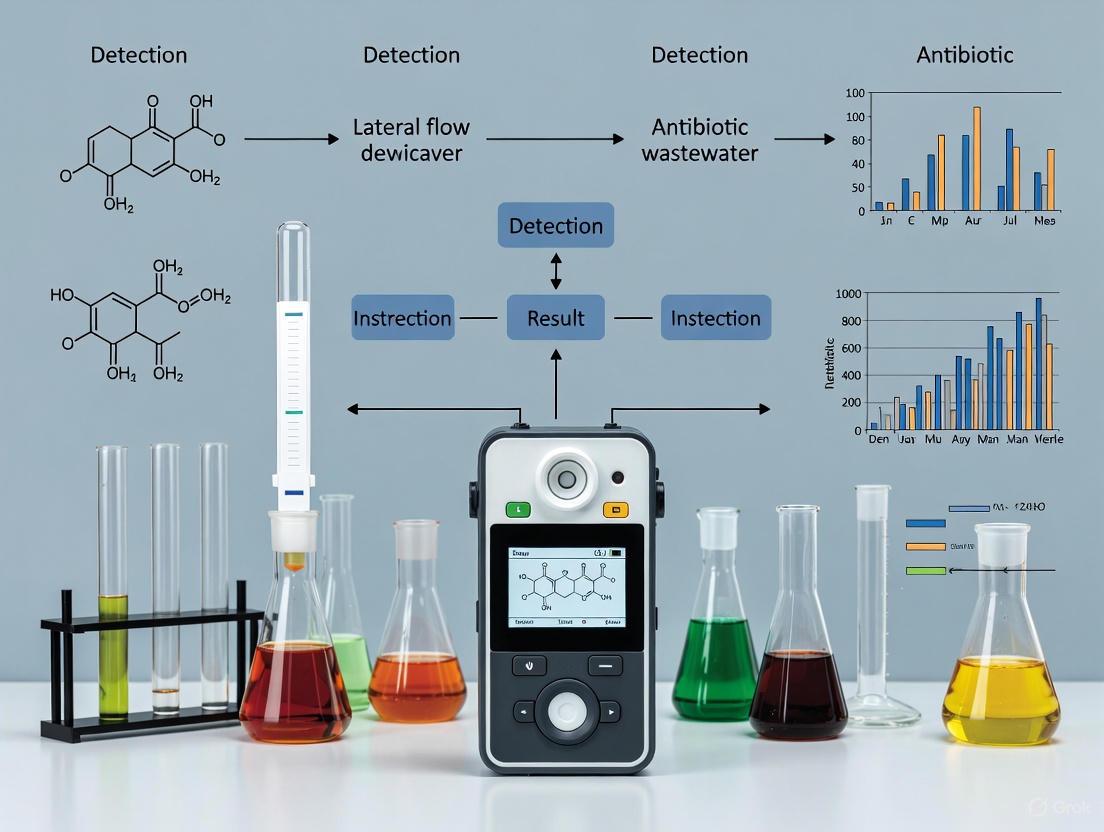
The overuse of antibiotics and the subsequent rise of antimicrobial resistance (AMR) present a critical global health threat.
Portable Smartphone-Based Lab-on-Chip Platforms for On-Site Antibiotic Detection in Wastewater
Abstract
The overuse of antibiotics and the subsequent rise of antimicrobial resistance (AMR) present a critical global health threat. Wastewater is a significant reservoir for antibiotic residues and resistance genes, necessitating robust environmental monitoring. This article explores the development and application of portable, smartphone-based Lab-on-Chip (LoC) platforms as transformative tools for the on-site detection of antibiotics in wastewater. We cover the foundational principles of these biosensors, including optical and electrochemical mechanisms. The discussion extends to methodological integration with microfluidics, troubleshooting complex matrix effects, and a comparative validation against gold-standard laboratory techniques. Aimed at researchers, scientists, and drug development professionals, this review highlights how these portable, cost-effective systems can enable real-time surveillance, inform public health decisions, and combat the spread of AMR.
The Urgent Need and Core Principles of Portable Antibiotic Surveillance
Antimicrobial resistance (AMR) represents one of the most pressing global public health threats of the 21st century, directly causing 1.27 million deaths annually and contributing to nearly 5 million additional deaths [1]. The emergence and spread of drug-resistant pathogens is significantly accelerated by environmental contamination with antimicrobial agents, particularly through pharmaceutical manufacturing effluent and community wastewater systems. Recent surveillance data reveals that antibiotic concentrations in pharmaceutical manufacturing wastewater reach 82-1,663 mg/L – orders of magnitude higher than the micrograms per liter typically found in municipal wastewater [2]. This profound environmental contamination creates ideal conditions for selecting resistant bacteria and promoting horizontal gene transfer of resistance determinants.
The development of portable, smartphone-based lab-on-chip (LoC) systems for on-site antibiotic detection represents a transformative approach to AMR surveillance. These technologies enable researchers and public health officials to identify contamination hotspots, monitor temporal trends in antibiotic pollution, and implement timely interventions to curb the environmental drivers of AMR. This Application Note provides detailed methodologies for integrating smartphone-based detection platforms into wastewater surveillance programs, offering researchers standardized protocols for quantifying antibiotic pollution in field settings.
Quantitative Profiling of Antibiotics in Wastewater: Current Data Landscape
Systematic monitoring of wastewater streams provides crucial data on the magnitude of antibiotic pollution contributing to the AMR crisis. The following tables summarize current concentration ranges observed across different waste streams and the analytical methods employed for their detection.
Table 1: Antibiotic Concentrations Across Different Waste Streams
| Waste Stream Type | Antibiotic Class | Concentration Range | Sample Origin |
|---|---|---|---|
| Pharmaceutical Wastewater | Tetracyclines | 1,000 - 1,500 mg/L | Manufacturing facilities [2] |
| Pharmaceutical Wastewater | Aminoglycosides | 1,200 - 1,663 mg/L | Manufacturing facilities [2] |
| Fermentation Residues | Macrolides | 1,000 - 10,182 mg/kg DM | Antibiotic production [2] |
| Treated Wastewater | Multiple classes | < 5.0 mg/L | Post-treatment effluent [2] |
| Municipal Wastewater | Multiple classes | μg/L levels | Urban treatment plants [2] |
Table 2: Detection Methodologies for Antibiotics in Wastewater
| Detection Method | Target Antibiotics | Sensitivity Range | Application Context |
|---|---|---|---|
| LC-MS/MS | Macrolides, Tetracyclines, Aminoglycosides | High (ng/L - mg/L) | Laboratory quantification [2] |
| HPLC | β-lactams | Moderate to High | Laboratory quantification [2] |
| Smartphone Colorimetry | Chemical Oxygen Demand | 0-150 mg/L | Field deployment [3] |
| Optical Fiber Sensors | SARS-CoV-2 antibodies | 10⁻¹² - 10⁻¹ mg/mL | Real-time remote monitoring [4] |
| Potency Assay (EQ) | Mixed antibacterial activity | Varies | Comprehensive activity assessment [2] |
The data reveals that antibiotic manufacturing facilities represent critical point sources of environmental contamination, with concentrations several orders of magnitude higher than municipal wastewater. This contamination profile underscores the urgent need for targeted surveillance and intervention at pharmaceutical production sites.
Experimental Protocols for Wastewater-Based AMR Surveillance
Protocol 1: Smartphone-Based Chemical Oxygen Demand (COD) Analysis for Antibiotic Manufacturing Wastewater
Principle: This method utilizes smartphone digital image colorimetry to quantify COD levels as a proxy for organic pollutant load, including oxidizable antibiotic compounds [3].
Materials and Reagents:
- Smartphone with Android OS and Color Grab application
- COD tube tests (HANNA HI93754F-25, range 0-150 mg/L)
- Potassium hydrogen phthalate (KHP) analytical standard
- Digestor block (150°C capability)
- Translucent glass vials, volumetric flasks, pipettes
- White background and consistent artificial light source
Procedure:
- Preparation of Standard Solutions: Create a stock solution of 500 mg/L KHP (250 mg in 500 mL distilled water). Prepare calibration standards as detailed in Table 3.
Table 3: Calibration Standards for Smartphone COD Analysis
| KHP Stock Volume (mL) | Final Volume (mL) | Theoretical COD (mg O₂/L) |
|---|---|---|
| 12.0 | 50 | 140.5 |
| 10.5 | 50 | 123.0 |
| 9.0 | 50 | 105.4 |
| 7.5 | 50 | 87.8 |
| 6.0 | 50 | 70.3 |
| 4.5 | 50 | 52.7 |
| 3.0 | 50 | 35.1 |
| 1.5 | 50 | 17.6 |
| 0.0 (distilled water) | 50 | 0.0 |
Sample Digestion: Transfer 2 mL of each standard and wastewater samples to COD tubes. Digest at 150°C for 2 hours, then cool to room temperature.
Image Acquisition: Clean vial surfaces and camera lens. Position samples against a white background with consistent artificial illumination. Maintain fixed distance (e.g., 15 cm) between smartphone and samples.
Color Analysis: Using the Color Grab application, capture the hue, saturation, and value (HSV) for each sample. Focus specifically on saturation (S) values, which show linear correlation with COD concentration.
Calibration and Quantification: Plot saturation values against theoretical COD concentrations to generate a calibration curve. Use the linear equation to calculate COD values for unknown samples.
Validation Parameters:
- Coefficient of determination (R²): >0.99
- Average accuracy: 97% for 0-150 mg/L range
- Required sample dilution for values exceeding 150 mg/L
Protocol 2: Wastewater-Based Epidemiology for Monitoring Community Antimicrobial Usage
Principle: This approach quantifies antimicrobial consumption patterns at the community level through analysis of parent compounds and metabolites in wastewater influent [5].
Materials and Reagents:
- Automated solid-phase extraction system
- LC-MS/MS system with electrospray ionization
- Mixed-mode SPE cartridges
- Isotopically-labeled internal standards for target antimicrobials
- Stable reference antibiotics: sulfonamides, trimethoprim, quinolones, cyclines
Procedure:
- Sample Collection: Collect 24-hour composite wastewater influent samples from targeted catchment areas. Preserve immediately with sodium azide (0.1% w/v) and store at 4°C.
Sample Preparation: Centrifuge samples at 10,000 × g for 15 minutes. Filter supernatant through 0.7 μm glass fiber filters, then through 0.45 μm nylon membranes.
Solid-Phase Extraction: Acidify samples to pH 3.0. Load onto preconditioned SPE cartridges. Wash with 5 mL 5% methanol, elute with 2 × 4 mL methanol containing 2% formic acid.
LC-MS/MS Analysis:
- Chromatography: C18 column (100 × 2.1 mm, 1.8 μm)
- Mobile phase: (A) 0.1% formic acid, (B) methanol with 0.1% formic acid
- Flow rate: 0.3 mL/min, injection volume: 10 μL
- MS detection: Multiple reaction monitoring (MRM) mode
Data Analysis: Apply correction factors for human excretion rates and metabolic transformation. Calculate community-wide drug consumption using wastewater flow data and population estimates.
Key Biomarkers:
- Acetyl-sulfonamides, trimethoprim, hydroxy-metronidazole
- Clarithromycin, ciprofloxacin, ofloxacin
- Tetracycline, oxytetracycline
Protocol 3: Optical Sensor Deployment for Real-Time Wastewater Monitoring
Principle: Biofunctionalized fiber-optic sensors enable remote, real-time detection of antimicrobial compounds through antibody-based recognition [4].
Materials and Reagents:
- Optical fiber sensor platform with remote communication capability
- Biofunctionalized sensing probes with immobilized antibodies
- Reference antibiotics for calibration
- Buffer solutions (PBS, pH 7.4)
- Machine learning-assisted signal processing software
Procedure:
- Sensor Calibration: Immerse sensor in standard solutions with known antibiotic concentrations (10⁻¹² to 10⁻¹ mg/mL). Record response curves for each concentration.
Field Deployment: Install sensors at strategic monitoring points (influent channels, treatment units, effluent streams). Establish continuous or on-demand monitoring mode.
Signal Acquisition: Monitor wavelength shifts or intensity changes corresponding to antibody-antigen binding events. Transmit data remotely for real-time analysis.
Data Processing: Apply machine learning algorithms (KNeighbors classifier) to interpret sensor signals. Validate with periodic grab samples analyzed by reference methods.
Performance Metrics:
- Measurement range: 10⁻¹² to 10⁻¹ mg/mL
- Balanced Accuracy: 92.97%
- F1-score: 94.19%
Visualizing Wastewater Surveillance Strategies
The following diagrams illustrate key experimental workflows and technological approaches for wastewater-based AMR surveillance.
Diagram 1: Wastewater-Based Epidemiology Workflow for Monitoring Community-Wide Antimicrobial Usage
Diagram 2: Smartphone-Based COD Analysis Protocol for Field Deployment
The Scientist's Toolkit: Essential Research Reagent Solutions
Table 4: Key Reagents and Materials for Wastewater-Based AMR Research
| Item | Function | Application Notes |
|---|---|---|
| COD Tube Tests (HI93754F-25) | Sample digestion and color development | Low range (0-150 mg/L); essential for smartphone method [3] |
| Potassium Hydrogen Phthalate | COD calibration standard | 1 mg KHP = 1.171 mg COD theoretical relationship [3] |
| Mixed-mode SPE Cartridges | Analyte enrichment and cleanup | Suitable for broad-spectrum antibiotic extraction [5] |
| Isotopically-labeled Standards | Internal standards for quantification | Correct for matrix effects and recovery variations [5] |
| Biofunctionalized Sensors | Real-time antigen detection | Antibody immobilization for specific compound recognition [4] |
| HSV Color Analysis App | Digital image colorimetry | Android-based (Color Grab); converts color to saturation values [3] |
Implementation Framework and Data Integration
Successful implementation of wastewater surveillance for AMR requires careful consideration of several practical aspects:
Site Selection Strategy:
- Prioritize pharmaceutical manufacturing facilities with known fermentation-based production
- Target wastewater treatment plants receiving industrial or hospital effluent
- Include appropriate background sites for comparison
Temporal Sampling Design:
- 24-hour composite samples for consumption estimates
- High-frequency sampling (e.g., hourly) for treatment process optimization
- Longitudinal sampling to track interventions and seasonal variations
Data Integration and Interpretation:
- Correlate wastewater data with prescription records and clinical resistance patterns
- Apply population normalization using catchment-specific census data
- Implement mass balance approaches to account for transformation products
Quality Assurance Measures:
- Include field blanks, duplicates, and spiked samples in each batch
- Participate in inter-laboratory comparison programs
- Validate smartphone methods against reference LC-MS/MS analysis
The integration of smartphone-based LoC systems into this framework enables decentralized monitoring capacity, particularly valuable in resource-limited settings where AMR burden is often highest. These technologies empower local authorities to identify contamination sources, evaluate intervention effectiveness, and contribute to global AMR surveillance networks without requiring sophisticated laboratory infrastructure.
Wastewater surveillance represents a powerful approach to quantifying the environmental dimension of the AMR crisis. The protocols detailed in this Application Note provide researchers with standardized methodologies for tracking antibiotic pollution using emerging smartphone-based technologies that offer cost-effective, deployable alternatives to conventional laboratory methods. As the field advances, integration of multi-omics approaches, enhanced sensor technologies, and machine learning-assisted data analysis will further strengthen the capacity to link wastewater data to public health action.
The global dimension of AMR necessitates coordinated surveillance networks that transcend national boundaries. Standardized wastewater monitoring, employing the methods described herein, can provide comparable data across regions to identify transmission hotspots, evaluate the impact of policy interventions, and ultimately mitigate the public health impact of antimicrobial resistance.
Liquid chromatography coupled with tandem mass spectrometry (LC-MS/MS) represents the undisputed gold standard for the trace-level detection of multiclass antibiotics in complex environmental matrices like wastewater [6]. This technique, along with related methods such as HPLC, provides unparalleled sensitivity, specificity, and the ability to quantify a wide range of analytes simultaneously. The typical workflow involves robust sample pre-treatment, most commonly solid-phase extraction (SPE), to isolate target antibiotics and mitigate matrix effects, followed by sophisticated instrumental analysis [6] [7]. However, the very factors that make these methods so powerful for laboratory research—their complexity, cost, and operational demands—also render them fundamentally unsuitable for the growing need for rapid, on-site, and widespread antibiotic monitoring in wastewater. As antibiotic resistance (AMR) escalates into a global health crisis, this paper critiques the limitations of traditional methods and frames the development of portable, smartphone-based lab-on-chip (LoC) systems not merely as a complementary technology, but as a necessary evolution for proactive environmental surveillance.
A Critical Examination of Traditional Method Limitations
The application of LC-MS/MS and HPLC for antibiotic detection in wastewater is fraught with logistical and technical challenges that restrict their utility for rapid response and large-scale screening.
- Procedural Complexity and Lack of Standardization: The efficacy of LC-MS/MS is critically dependent on sample pre-treatment. A major hurdle is the significant inconsistency in sample preparation protocols across different laboratories. For instance, a critical review of SPE methods highlighted a "significant inconsistency in sample pH adjustment protocols," despite evidence that adjusting sample pH to approximately 3 experimentally improves antibiotic recovery across diverse water matrices [6]. This lack of standardization complicates method development and hinders the direct comparability of data between different studies and monitoring programs.
- High Operational Costs and Resource Intensity: These methods require expensive instrumentation (mass spectrometers, chromatographs) and high-purity reagents, placing them out of reach for many field applications or resource-limited settings [8] [9]. Furthermore, they demand skilled personnel for operation, maintenance, and data interpretation, increasing the overall cost and limiting their deployability [10].
- Limited Suitability for On-Site and Real-Time Monitoring: The entire workflow, from sample preparation to analysis, is inherently time-consuming and confined to a central laboratory. This creates a significant lag between sample collection and the availability of results, preventing real-time assessment and immediate intervention in the event of a contamination event [10] [8].
Table 1: Key Limitations of Traditional LC-MS/MS for Antibiotic Detection in Wastewater
| Limitation Category | Specific Challenge | Impact on Monitoring Efforts |
|---|---|---|
| Technical Complexity | Inconsistent sample pre-treatment (e.g., pH adjustment) [6] | Reduces data comparability and reliability; complicates method development |
| Significant matrix effects in complex wastewater [6] [8] | Requires extensive calibration and can compromise accuracy | |
| Resource Demand | High cost of instrumentation and maintenance [9] | Prohibitive for widespread, decentralized deployment |
| Requirement for highly trained technicians and engineers [10] | Increases operational costs and limits use in low-resource settings | |
| Operational Logistics | Time-consuming multi-step procedures [10] | Precludes rapid screening and real-time decision-making |
| Laboratory-bound, non-portable systems [8] | Necessitates sample transport, risking degradation and increasing turnaround time |
Emerging Paradigms: The Rise of Smartphone-Based and Portable Sensing
In direct response to the constraints of traditional methods, a new generation of detection technologies is emerging. These platforms prioritize portability, user-friendliness, and on-site analysis, often leveraging the ubiquitous smartphone as a core component. The underlying principle involves translating the presence of an antibiotic into a measurable optical or electrochemical signal.
One innovative approach is an all-in-one paper biosensor that immobilizes the bioluminescent bacteria Aliivibrio fischeri. The presence of toxic substances, including certain antibiotics, causes a decrease in bioluminescence. This system integrates a full calibration curve and uses a customized artificial intelligence (AI) application on a smartphone to convert the picture of the bioluminescent signals into a quantitative, user-friendly result within 15 minutes [10]. This integration of both analytical and post-analytical steps into a simple workflow is a significant leap toward field-based testing.
Another paradigm is exemplified by an electrochemical aptasensor built using a tailored nanomaterial derived from fluorographene. The sensor uses "click chemistry" to immobilize an aptamer specific to an antibiotic like ampicillin. In a proof-of-concept, this biosensor was connected to a mobile phone, allowing for immediate detection of ampicillin residues in tap water, dairy products, and human saliva. The device detected levels lower than the EU limit for drinking water, demonstrating a path toward quick, simple, and disposable antibiotic monitoring [9].
The following diagram illustrates the core workflow and advantages of these smartphone-based detection systems, contrasting them with the traditional laboratory pathway.
Experimental Protocols: From Traditional Benchmarks to Novel Sensors
Protocol 1: Standardized SPE-LC-MS/MS Method for Reserve Antibiotics
This protocol, adapted from a recent study monitoring WHO AWaRe Reserve antibiotics, outlines the intricate steps required for laboratory-based analysis [7].
1. Sample Collection and Pre-treatment:
- Collect wastewater as grab samples from hospital outflow points.
- Immediately transport samples to the laboratory on ice.
- Centrifuge samples to remove large particulates.
- Filter the supernatant through 0.7 μm glass fiber filters.
2. Solid-Phase Extraction (SPE):
- Condition the Oasis HLB SPE cartridge (500 mg, 6 mL) with 5 mL of methanol followed by 5 mL of ultrapure water.
- Acidify the filtered wastewater sample to pH 3.0 using formic acid or hydrochloric acid to optimize recovery [6].
- Load the sample onto the conditioned cartridge at a flow rate of 5-10 mL/min.
- Wash the cartridge with 5 mL of a 5% methanol solution in water.
- Elute the target antibiotics with 5 mL of methanol. Evaporate the eluent to dryness under a gentle stream of nitrogen.
- Reconstitute the dry residue in 200 μL of initial mobile phase for LC-MS/MS analysis.
3. LC-MS/MS Analysis:
- Chromatographic Column: Kinetex C18 (2.1 x 50 mm, 2.6 μm).
- Mobile Phase: (A) 0.1% Formic acid in water and (B) Acetonitrile.
- Gradient: Program from 5% B to 95% B over a 10-minute runtime.
- Flow Rate: 0.3 mL/min.
- Mass Spectrometer: Operate in multiple reaction monitoring (MRM) mode with electrospray ionization (ESI). Optimize source and compound-dependent parameters (e.g., DP, CE) for each target antibiotic.
Protocol 2: Smartphone-Based Bioluminescence Toxicity Assay
This protocol describes a simplified, on-site method using a paper biosensor and smartphone, representing a shift towards decentralized testing [10].
1. Preparation of Bioluminescent Paper Sensor:
- Culture Aliivibrio fischeri bacteria in lysogeny broth with high salinity (30 g/L NaCl) at 19°C with shaking.
- Design a wax-printed paper substrate to create hydrophobic barriers and defined hydrophilic wells.
- Immobilize the bacteria by mixing the cell suspension (OD600 = 5.0) with a 0.5% w/v agarose hydrogel at approximately 30°C.
- Dispense 20 μL of the bacteria-agarose mixture into each well and allow it to solidify at room temperature for 30 minutes.
2. On-Site Assay Procedure:
- Dispense a 30 μL volume of the standard (for calibration) or wastewater sample into the designated wells.
- Incubate the sensor for 15 minutes at room temperature.
- Place the sensor inside a portable dark box to avoid ambient light interference.
- Capture an image of the sensor using a smartphone camera with settings at a 30-second integration time and ISO 1600.
3. Data Analysis with Smartphone App:
- Use a custom Android application (e.g., "Scentinel") with an integrated AI algorithm.
- The app automatically interpolates the bioluminescent signal from the sample against the on-sensor calibration curve.
- The result is displayed in user-friendly terms, such as toxicity equivalents, directly on the smartphone interface.
The Scientist's Toolkit: Essential Reagents and Materials
Table 2: Key Research Reagent Solutions for Antibiotic Detection
| Item | Function/Description | Example Use Case |
|---|---|---|
| Oasis HLB SPE Cartridge | A hydrophilic-lipophilic balanced sorbent for extracting a wide range of polar and non-polar analytes from water samples. | Pre-concentration of multi-class antibiotics from wastewater prior to LC-MS/MS analysis [7]. |
| Aptamer (e.g., anti-ampicillin) | A single-stranded DNA or RNA molecule that binds to a specific target molecule (antibiotic) with high affinity, acting as a recognition element. | Used as the biorecognition element in a fluorographene-based electrochemical biosensor [9]. |
| Aliivibrio fischeri | A naturally bioluminescent bacterium whose light output decreases upon exposure to toxic substances. | Immobilized in a paper hydrogel as the core sensing element for a broad-toxicity biosensor [10]. |
| Fluorographene-based Nanomaterial | A graphene derivative functionalized with alkyne groups, providing a platform for immobilizing biorecognition elements via click chemistry. | Serves as the transducer material in a disposable electrochemical aptasensor for antibiotics [9]. |
| Chromatography Column (C18) | A reverse-phase column with C18-functionalized silica used to separate compounds based on hydrophobicity. | Core component in LC-MS/MS for separating different antibiotic compounds (e.g., Kinetex C18) [7]. |
The following diagram maps the logical relationship between the core limitations of traditional methods and the specific technological solutions enabled by smartphone-based platforms.
While LC-MS/MS remains the benchmark for confirmatory, high-sensitivity analysis of antibiotics in wastewater, its inherent limitations—complexity, cost, and centralization—severely restrict its capacity to meet the growing demand for pervasive environmental monitoring. The protocols and data presented herein underscore the critical need for a paradigm shift. The emergence of smartphone-based biosensors and portable aptasensors represents a disruptive technological trend, offering a viable path toward decentralized, rapid, and cost-effective screening. The future of antibiotic resistance mitigation lies in the strategic integration of these portable systems for wide-scale screening and early warning, with traditional methods reserved for targeted, confirmatory analysis, thereby creating a more responsive and comprehensive environmental surveillance network.
| Category | Item | Function in Smartphone-Based Analysis |
|---|---|---|
| Core Sensor | Smartphone with Camera | Acts as the primary optical detector; requires a camera capable of capturing high-resolution images and an operating system (e.g., Android, iOS) that supports relevant analytical apps [3] [11]. |
| Colorimetry App | Color Grab App (or equivalent) | A free application that converts captured images into quantitative color space values, such as Hue, Saturation, and Value (HSV) or Red, Green, Blue (RGB) [3] [12]. |
| Calibration Standard | Potassium Hydrogen Phthalate (KHP) | A stable, pure compound used to prepare standard solutions for generating a calibration curve in Chemical Oxygen Demand (COD) analysis; theoretical COD conversion is 1 mg KHP = 1.171 mg O₂ [3] [12]. |
| Test Kits/Reagents | Commercial COD Tube Tests (e.g., HANNA HI93754F-25) | Pre-mixed reagent vials containing potassium dichromate and sulfuric acid for digesting samples. The color change after digestion (yellowish Cr(VI) to greenish Cr(III)) is proportional to the oxidizable organic content [3]. |
| Sample Processing | Digital Dry Bath/Block Heater | Provides the controlled high-temperature (e.g., 150 °C) environment required for the 2-hour sample digestion step in COD analysis [3] [12]. |
| Accessory | White Background & Ruler | The white background standardizes lighting conditions for image capture, while a ruler ensures a fixed and reproducible distance between the smartphone, sample, and background [3]. |
| Accessory | Artificial Light Source | Provides consistent, uniform illumination that is not subject to the variations of ambient light, which is critical for reproducible color measurements [3] [12]. |
{#title: Smartphone Colorimetric Analysis Workflow}
Application Note: Quantitative Colorimetric Detection with Smartphones
This protocol details the use of a smartphone as a quantitative colorimeter, a foundational technique for assays like Chemical Oxygen Demand (COD) that can be adapted for antibiotic detection. The method leverages the smartphone camera and a color analysis application to measure analyte concentration based on color intensity [3] [12].
Experimental Protocol: Smartphone-Based COD Analysis
Apparatus and Reagents: Translucent glass vials (COD tubes), digital dry bath heater, smartphone (Android or iOS), analytical balance, volumetric flasks, white background, and artificial light source. Required reagents include potassium hydrogen phthalate (KHP) and commercial low-range COD digestion kits (e.g., HANNA HI93754F-25, range 0–150 mg L⁻¹) [3].
Calibration Curve Preparation:
- Prepare a stock solution of 500 mg L⁻¹ KHP.
- Create a series of standard solutions by diluting the stock solution to cover the expected concentration range (e.g., 0 to 140.5 mg O₂ L⁻¹ theoretical COD) [3].
- Transfer 2 mL of each standard into COD reagent vials.
- Digest the vials at 150 °C for 2 hours in a block heater, then cool to room temperature [3] [12].
Image Acquisition and Analysis:
- Clean the outside of the cooled vials to remove fingerprints or smudges [3].
- Position the vial on a stable platform with a white background 5 cm behind it and a fixed artificial light source overhead to avoid shadows [3] [12].
- Place the smartphone 10 cm from the vial, ensuring the camera lens is clean [3].
- Using the Color Grab app (or equivalent), capture an image of the vial. The app will output values for Hue, Saturation, and Value (HSV) [3] [12].
- Record the Saturation (S) value for each standard. Saturation demonstrates a linear relationship with COD concentration because it represents the purity and intensity of the color developed during digestion [3] [13].
Data Processing:
- Plot the Saturation values against the theoretical COD concentrations of the KHP standards.
- A typical calibration curve will show a high coefficient of determination (R² > 0.99), confirming the method's linearity and reliability [3] [12].
- For analysis, unknown samples are processed identically, and their measured Saturation values are interpolated from the calibration curve to determine COD concentration.
Performance Data: This smartphone-based method has been validated against standard spectrophotometric methods, achieving an average accuracy of 97% for COD analysis in wastewater samples, making it a viable, cost-effective alternative [3] [13] [12].
Advanced Data Processing: Machine Learning for Enhanced Detection
While simple color space analysis is effective, machine learning (ML) classifiers significantly improve robustness, especially for complex colorimetric tests like antibiotic detection strips where multiple colors or subtle gradients are present [14].
Experimental Protocol: ML-Based Analysis with 'ChemTrainer' App
Concept: A custom app (e.g., 'ChemTrainer') captures an image of a test strip. The image is cropped to the active region, and color features (mean RGB, HSV, LAB values) are extracted. These features are sent to a cloud-based ML model for classification, which returns the analyte concentration [14].
Model Training:
- Data Collection: Capture a large set of test strip images (e.g., for different antibiotic concentrations) using multiple smartphones and under various lighting conditions to ensure model generalizability [14].
- Feature Extraction: Extract color space parameters from the images. Applying a grey-world color constancy algorithm during pre-processing can improve accuracy by normalizing the image colors [14].
- Classifier Training: Train binary or multi-class classifiers (e.g., Least-Squares Support-Vector Machines (LS-SVM) or Random Forest) using the extracted color data. The model learns to associate specific color patterns with known concentrations [14].
Deployment: The trained model is hosted on a remote server. The smartphone app sends processed image data to this server and receives a classification result (e.g., "high," "medium," "low," or a specific concentration range) with reported accuracy exceeding 90% [14].
{#title: Machine Learning Colorimetry Pathway}
Integration into a Broader Research Context
The protocols above form the analytical core for a portable smartphone-based Lab-on-a-Chip (LoC) system targeting on-site antibiotic detection in wastewater. This approach directly supports the decentralization of water quality monitoring, a key objective for achieving Sustainable Development Goal 6 (clean water and sanitation) [3] [13].
Wastewater is a complex matrix containing various antibiotics from domestic, medical, and industrial sources, such as sulfonamides, tetracyclines, fluoroquinolones, and macrolides [15]. These compounds can be detected by adapting the colorimetric principles described. For instance, an LoC device could integrate:
- Microfluidic Channels: To introduce and mix the wastewater sample with specific colorimetric reagents that react with a target antibiotic.
- On-Chip Reaction Chamber: Where the color develops.
- Smartphone Readout: The final colored solution is imaged by the smartphone, and the color data is quantified using either a direct calibration curve or a pre-trained ML model, as detailed in the protocols [11].
This integrated system provides a powerful, affordable, and portable solution for researchers and environmental professionals to monitor antibiotic pollution in the field, enabling rapid interventions and contributing to the fight against antimicrobial resistance (AMR) [16].
{#topic}
Lab-on-Chip Fundamentals: Miniaturization and Microfluidics for Wastewater Analysis
This application note provides a foundational overview of lab-on-a-chip (LOC) technology for the analysis of antibiotics in wastewater. Framed within research for portable, smartphone-based detection systems, we detail the core principles of miniaturization and microfluidics, experimental protocols for a model biosensor, and the essential toolkit required for development. The integration of these systems with smartphones is poised to revolutionize on-site environmental monitoring by providing rapid, sensitive, and cost-effective analytical capabilities.
Lab-on-a-chip (LOC) technology, also referred to as micro-total analysis systems (μTAS), involves the miniaturization and integration of one or multiple laboratory functions onto a single device ranging from millimeters to a few square centimeters in size [17]. These systems manipulate fluid volumes as small as picoliters within networks of microchannels, enabling automation and high-throughput screening [17]. The underlying science of microfluidics exploits the unique physical phenomena that occur at the microscale to control fluid flow, mixing, and reactions with high precision [18].
For wastewater analysis, LOCs present a paradigm shift from conventional methods, which often rely on large, laboratory-bound instrumentation such as liquid chromatography tandem mass spectrometry (LC/MS/MS) and require trained personnel [19] [20]. These traditional techniques, while highly accurate, are ill-suited for rapid, on-site detection. LOC systems address these limitations by offering portability, reduced consumption of samples and reagents, faster analysis times, and lower costs, making them ideal for point-of-need testing [18] [19] [21]. The growing need to monitor antibiotics in wastewater—driven by concerns over antimicrobial resistance and environmental impact—makes this application particularly critical [20] [22].
Core Principles: Miniaturization and Microfluidics
The Advantages of Miniaturization
Shrinking analytical processes to the chip format yields several fundamental advantages, summarized in the table below.
Table 1: Key Advantages of LOC Miniaturization for Wastewater Analysis
| Advantage | Description | Impact on Wastewater Analysis |
|---|---|---|
| Reduced Consumption | Extremely small volumes of samples, reagents, and solvents are required [17]. | Lowers cost per test and minimizes waste generation. |
| High-Speed Analysis | Short diffusion distances and large surface-to-volume ratios enable rapid heat transfer and reactions [18] [17]. | Enables near real-time monitoring of antibiotic concentrations. |
| Enhanced Process Control | Fast system response allows for precise thermal and fluidic control [17]. | Improves the reproducibility and reliability of assays. |
| System Compactness | Integration of multiple functional components (mixers, valves, detectors) onto a monolithic platform [18]. | Enables the development of portable, handheld field devices. |
| High-Throughput | Massive parallelization due to compactness allows many analyses to be run simultaneously [17]. | Facilitates screening of multiple antibiotic residues or samples in a single run. |
Microfluidic Flow and Material Selection
The behavior of fluids in microchannels is governed by low Reynolds numbers (Re), a dimensionless quantity representing the ratio of inertial to viscous forces. In microfluidics, Re is typically low, resulting in laminar flow, where fluids flow in parallel streams without turbulent mixing [19]. This principle allows for precise fluid handling but also necessitates the design of specific micromixers that rely on diffusion or chaotic advection to combine reagents [18] [21].
The choice of chip material is paramount and depends on the application, detection method, and fabrication constraints.
Table 2: Common Materials for Fabricating Lab-on-a-Chip Devices
| Material | Key Properties | Advantages | Disadvantages |
|---|---|---|---|
| Polydimethylsiloxane (PDMS) | Elastomer, gas-permeable, transparent, biocompatible [18] [23]. | Easy prototyping, low cost, suitable for cell cultures. | Absorbs hydrophobic molecules; not ideal for industrial mass production [24]. |
| Polymethylmethacrylate (PMMA) | Thermoplastic polymer, rigid, transparent [18]. | Simple fabrication, good optical clarity, chemically versatile. | Less chemically resistant than glass [24]. |
| Glass | Optically transparent, chemically inert, low non-specific adsorption [24]. | Excellent for optical detection, high chemical resistance, reusable. | Expensive fabrication, requires cleanroom facilities [24]. |
| Paper | Porous cellulose matrix, wicks fluids via capillary action [24]. | Ultra-low cost, simple operation, no external pumps needed. | Lower sensitivity and resolution compared to other materials. |
| Silicon | High thermal conductivity, mechanically robust [24] [17]. | High fabrication precision, mature manufacturing. | Opaque, expensive, and complex processing [24]. |
Application Protocol: Smartphone-Based Bioluminescent Detection of Ciprofloxacin
The following protocol is adapted from published research on an integrated smartphone biosensor, "LumiCellSense" (LCS), for detecting the fluoroquinolone antibiotic ciprofloxacin (CIP) in complex samples like milk [23]. This serves as an excellent model for adapting the technology to wastewater analysis.
Principle
The assay employs a genetically engineered Escherichia coli bioreporter strain. The bacterial cells harbor a plasmid with the recA gene promoter fused to the Photorhabdus luminescens luxCDABE bioluminescence gene cassette. The presence of CIP, which causes DNA damage, induces the recA promoter, leading to the expression of the lux genes and the subsequent emission of visible light. This bioluminescent signal is then quantified using a smartphone's camera [23].
Experimental Workflow
The diagram below illustrates the key steps in the biosensing process, from sample introduction to result analysis.
Materials and Reagents
Table 3: Research Reagent Solutions and Essential Materials
| Item | Function/Description | Notes |
|---|---|---|
| Bioluminescent E. coli Bioreporter | Genetically modified sensor cells that emit light in response to target antibiotics. | Strain with recA promoter fused to luxCDABE operon [23]. |
| Polydimethylsiloxane (PDMS) | Fabrication of the microfluidic chip and oxygen-permeable membrane. | Sylgard 184 is commonly used [23]. |
| Alginic Acid (Sodium Alginate) | Polymer for immobilizing bacterial cells within the chip's microwells. | Forms a hydrogel with Ca²⁺ ions, trapping cells [23]. |
| Calcium Chloride (CaCl₂) | Cross-linking agent for solidifying the alginate hydrogel. | A 2.5% solution is typically used [23]. |
| Lysogeny Broth (LB) Media | Culture medium for growing and maintaining the bioreporter bacteria. | Supplemented with appropriate antibiotics for plasmid selection. |
| Smartphone with Dedicated App | Optical detection device and data processor. | Requires a light-tight case, macro lens, and an app for photon calculation [23]. |
| Miniature Heater & Controller | Maintains optimal temperature for bacterial metabolic and luminescent activity. | Critical for consistent performance; set to 37.1 ± 0.6 °C [23]. |
Step-by-Step Procedure
Chip Fabrication (PDMS Coating):
- Prepare a mixture of Sylgard 184 elastomer base and curing agent at a 10:1 ratio. Degas under vacuum for 20 minutes to remove bubbles.
- Smear the uncured PDMS onto a clean PMMA base plate and cover with the metal BacChip, using a 0.26 mm spacer to ensure a uniform layer.
- Incubate at 85°C for 2 hours to cure. Separate the PDMS-coated BacChip and treat the surface with oxygen plasma (100 W, 20 min) to render it hydrophilic [23].
Bioreporter Preparation and Immobilization:
- Culture the bioluminescent E. coli bioreporter overnight in LB with ampicillin (100 µg/mL) at 37°C with agitation.
- Centrifuge the culture, resuspend the bacterial pellet in LB containing 0.4% alginic acid to a density of ~2.4 × 10⁹ cells/mL.
- Load 5.5 µL of the bacterial/alginate suspension into each of the 16 wells of the BacChip.
- Add 0.5 µL of 2.5% CaCl₂ to each well to cross-link and solidify the alginate. Allow to set for 20 minutes [23].
System Assembly and Measurement:
- Place the prepared BacChip into the metal heater tray within the smartphone biosensor case.
- Introduce the wastewater sample (pre-filtered if necessary) to the chip.
- Seal the case to ensure a light-impermeable environment and initiate the heater to maintain 37°C.
- Launch the dedicated smartphone application (e.g., LCS_Logger). The app will automatically capture images and calculate the photon emission intensity from each well over time (e.g., 20-80 minutes).
- The application provides an alert when the light intensity increases significantly above the baseline, indicating the presence of the target antibiotic [23].
Data Analysis and Performance
In the model study, the LCS system detected CIP in milk with a threshold of 7.2 ng/mL, which is below the maximum residue limit set by the European Union [23]. The smartphone application is responsible for calculating the photon count and plotting the signal in real-time. For quantitative analysis, a dose-response curve can be generated by testing a series of known CIP concentrations, allowing for the interpolation of antibiotic levels in unknown wastewater samples.
The Scientist's Toolkit: Key Components of an Integrated LOC System
Developing a fully functional, smartphone-based LOC system for on-site use requires the integration of several key components beyond the chip itself.
Table 4: Essential Components of a Smartphone-Based LOC System
| System Component | Function | Implementation Examples |
|---|---|---|
| Fluidic Handling | Controls the movement and metering of samples and reagents. | Micro-syringe pumps, electrochemical pumps, or passive capillary forces [21]. |
| On-Chip Reactor | The chamber where the biochemical recognition and reaction occurs. | Microwells containing immobilized bioreporter cells [23]. |
| Temperature Control | Maintains optimal temperature for biological or chemical reactions. | Miniature metal heater tray with a PID controller and battery power [23]. |
| Optical Detection | Transduces the biological signal (e.g., light) into a digital output. | Smartphone CMOS camera, coupled with a macro lens and light-tight enclosure [23] [25]. |
| Data Processing & Control | Analyzes the signal, interprets the data, and displays the result. | Smartphone-embedded application (e.g., LCS_Logger) [23]. |
| Power Supply | Provides energy to all active components. | Rechargeable lithium battery (e.g., 12V, 1800 mAh) for portability [23]. |
LOC technology, grounded in the principles of miniaturization and microfluidics, offers a powerful and disruptive approach to environmental monitoring. The integration of these systems with smartphones, as demonstrated by the protocol for antibiotic detection, paves the way for highly portable, sensitive, and cost-effective tools for on-site wastewater analysis. This empowers researchers and environmental professionals to conduct rapid, high-frequency screening of antibiotic residues, ultimately contributing to better management of water resources and public health. Future developments will likely focus on multiplexing for simultaneous detection of multiple antibiotic classes, enhancing sensor stability and longevity, and streamlining sample pre-treatment steps for direct application in complex wastewater matrices.
The widespread detection of antibiotic residues in municipal wastewater represents a critical environmental challenge, driving the selection for antimicrobial resistance (AMR) [26]. Norfloxacin, ciprofloxacin, and tetracyclines are among the most concerning antibiotic classes due to their extensive clinical use and persistence in wastewater systems [27] [26]. Recent global studies reveal that untreated municipal wastewater from numerous countries demonstrates significant selection pressure for resistance to fluoroquinolones like ciprofloxacin [26]. The development of portable, smartphone-integrated Lab-on-a-Chip (LoC) detection systems provides researchers with powerful tools for on-site monitoring of these key antibiotic targets, enabling rapid surveillance and intervention [28] [29]. This application note details the analytical protocols and technological frameworks for detecting these priority antibiotics in wastewater matrices, supporting the broader thesis that decentralized monitoring platforms are essential for combating AMR dissemination.
Antibiotic Targets: Properties and Resistance Significance
Table 1: Key Characteristics of Target Antibiotics in Wastewater Surveillance
| Antibiotic | Chemical Formula | Molecular Weight (g/mol) | Primary Mechanism of Action | Key Resistance Mechanisms | Clinical Significance |
|---|---|---|---|---|---|
| Ciprofloxacin | C₁₇H₁₈FN₃O₃ [27] [30] | 331.34 [27] [30] | Inhibits DNA gyrase (topoisomerase II) and topoisomerase IV [27] [30] | Chromosomal mutations in gyrA/gyrB and parC/parE genes; Efflux pump overexpression; Plasmid-mediated resistance [27] [31] | Broad-spectrum fluoroquinolone; Used for respiratory, urinary, GI infections; Increasing resistance in Salmonella, E. coli, Pseudomonas [27] |
| Norfloxacin | C₁₆H₁₈FN₃O₃ | 319.33 | Inhibits DNA gyrase and topoisomerase IV [31] | Similar to ciprofloxacin; Target site modifications; Reduced permeability [31] | Second-generation fluoroquinolone; Primarily for urinary tract infections; Emerging resistance in Vibrio cholerae and other enteric pathogens [31] |
| Tetracyclines | Varies by specific compound | Varies by specific compound | Binds to 30S ribosomal subunit, inhibiting protein synthesis [32] | Ribosomal protection; Efflux pumps; Enzymatic inactivation | Broad-spectrum; Used for respiratory, skin, atypical pathogens; Widespread resistance across multiple bacterial species |
Figure 1: Antibiotic Mechanisms of Action and Bacterial Resistance Pathways
Global wastewater surveillance data indicates that ciprofloxacin resistance is particularly widespread, with samples from 14 countries showing significant selection for resistant E. coli strains [26]. The functional selection assay using 340 mixed E. coli strains demonstrated that sterile-filtered wastewater samples can select for resistance to ciprofloxacin and related antibiotics compared to baseline levels [26]. This environmental selection pressure creates an urgent need for monitoring technologies that can track antibiotic concentrations and resistance gene abundance in wastewater systems.
Smartphone-Based LoC Detection Platform
System Architecture and Working Principle
Smartphone-integrated electrochemical LoC systems combine microfluidic sample processing, electrochemical detection, and smartphone-based data analysis into a portable platform [28]. These systems leverage the computational power, connectivity, and imaging capabilities of smartphones to create field-deployable diagnostic tools [28] [29]. The core architecture typically consists of three integrated components: (1) a disposable microfluidic chip containing electrochemical sensors and fluidic channels; (2) an interface module with potentiostat electronics for signal control and processing; and (3) a smartphone with dedicated application software for system control, data analysis, and result reporting [28].
Figure 2: Smartphone-LoC Platform Architecture for Antibiotic Detection
The analytical principle relies on electrochemical biosensors that convert specific biochemical reactions into measurable electrical signals [28]. For antibiotic detection, recognition elements such as antibodies, aptamers, enzymes, or molecularly imprinted polymers (MIPs) are immobilized on electrode surfaces to provide target specificity [28]. When target antibiotics bind to these recognition elements, changes in electrical properties (current, potential, or impedance) occur and are quantified using techniques like voltammetry, amperometry, or impedance spectroscopy [28]. Advanced nanomaterials including gold nanoparticles (AuNPs) and graphene oxide (GO) enhance sensor sensitivity by improving electron transfer and providing high surface areas for bioreceptor immobilization [28].
Research Reagent Solutions
Table 2: Essential Research Reagents and Materials for Smartphone-Based Antibiotic Detection
| Category | Specific Items | Function/Purpose | Example Applications |
|---|---|---|---|
| Recognition Elements | DNA aptamers; Antibodies; Molecularly imprinted polymers (MIPs); Enzymes | Target capture and specificity; Selective binding to antibiotic molecules | Ciprofloxacin-specific aptamers; Tetracycline antibodies; Norfloxacin MIPs [28] |
| Nanomaterials | Gold nanoparticles (AuNPs); Graphene oxide (GO); Reduced graphene oxide (rGO); Carbon nanotubes | Signal amplification; Enhanced electron transfer; Increased surface area for bioreceptor immobilization | AuNP-modified electrodes for signal enhancement; GO-based sensor surfaces [28] |
| Electrochemical Components | Screen-printed electrodes; Gold/platinum working electrodes; Ag/AgCl reference electrodes; Electrolyte solutions | Signal transduction; Current measurement; Reference potential; Ionic conduction | Commercial screen-printed electrodes; Phosphate buffer solutions [28] |
| Microfluidic Components | PDMS chips; PMMA substrates; Microfluidic channels; Micropumps/mixers | Sample transport; Fluid handling; Miniaturized reaction chambers | PDMS-based LoC devices; Integrated sample preconcentration [28] |
| Signal Processing | Miniature potentiostats; Wireless transmitters; Signal amplifiers | Electrical signal control; Data transmission; Signal optimization | Bluetooth-enabled potentiostats; Smartphone interface circuits [28] [29] |
Experimental Protocols
Protocol 1: CRISPR-Enhanced Metagenomic Detection of Antibiotic Resistance Genes
This protocol enables enhanced surveillance of antibiotic resistance genes (ARGs) in wastewater samples using CRISPR-Cas9 enrichment followed by metagenomic sequencing, significantly improving detection sensitivity for low-abundance targets [33].
Reagents and Equipment:
- Wastewater sample (50-100 mL)
- DNA extraction kit (commercial)
- CRISPR-Cas9 enzyme (commercial)
- Custom guide RNA pool (6,010 guides targeting ARGs)
- Next-generation sequencing platform
- DNA purification magnetic beads
- Tris-EDTA buffer
Procedure:
- Sample Collection and Processing: Collect wastewater samples in sterile containers. Pre-filter through 5 μm filters to remove large particulates. Concentrate microbial biomass via centrifugation at 8,000 × g for 15 minutes.
DNA Extraction: Extract total genomic DNA using commercial kits according to manufacturer protocols. Quantify DNA concentration using fluorometric methods. Ensure minimum yield of 10 ng/μL for optimal results.
CRISPR-Cas9 Enrichment:
- Prepare reaction mixture: 1 μg genomic DNA, 500 ng Cas9 enzyme, 200 nM pooled guide RNAs, 1× reaction buffer.
- Incubate at 37°C for 60 minutes to allow targeted cleavage of ARG sequences.
- Purify fragmented DNA using magnetic bead-based clean-up.
Library Preparation and Sequencing:
- Prepare sequencing libraries using standard metagenomic protocols.
- Amplify enriched fragments with 10-12 PCR cycles.
- Quality check libraries using bioanalyzer or tape station.
- Sequence on Illumina or comparable platform (minimum 5 million reads per sample).
Bioinformatic Analysis:
- Process raw reads: quality filtering, adapter trimming.
- Assemble reads into contigs using metaSPAdes or comparable assembler.
- Align contigs to ARG reference databases (e.g., ResFinder, CARD).
- Quantify ARG abundance as reads per kilobase per million (RPKM).
Validation: Compare results with standard metagenomics and qPCR to verify enhanced sensitivity. The CRISPR-enriched method lowers detection limits by an order of magnitude (from 10⁻⁴ to 10⁻⁵) compared to standard metagenomics [33].
Protocol 2: Smartphone-Based Voltammetric Detection of Fluoroquinolones
This protocol details the quantitative detection of ciprofloxacin and norfloxacin in wastewater using smartphone-based differential pulse voltammetry with aptamer-functionalized sensors.
Reagents and Equipment:
- Screen-printed carbon electrodes (SPCEs)
- Ciprofloxacin-specific DNA aptamer (5'-GGG GTT GGG TCG GGT TGG GT-3')
- Gold nanoparticle (AuNP) solution (10 nm diameter)
- Methylene blue redox probe
- Phosphate buffer saline (PBS, 0.1 M, pH 7.4)
- Smartphone-integrated potentiostat
- Microfluidic mixing chamber
Procedure:
- Electrode Modification:
- Clean SPCEs by cycling in 0.5 M H₂SO₄ from 0 to +1.2 V until stable voltammogram.
- Deposit 10 μL AuNP solution on working electrode, dry at room temperature.
- Immobilize thiol-modified aptamer by incubating 5 μM solution on AuNP/SPCE overnight at 4°C.
- Block non-specific sites with 1 mM 6-mercapto-1-hexanol for 1 hour.
Sample Preparation:
- Filter wastewater samples through 0.22 μm membrane.
- Adjust pH to 7.4 using dilute NaOH or HCl.
- For concentrated samples, employ solid-phase extraction with C18 cartridges.
Electrochemical Measurement:
- Connect modified electrode to smartphone potentiostat.
- Apply 100 μL sample to electrode surface.
- Incubate for 15 minutes for aptamer-antibiotic binding.
- Add methylene blue to final concentration of 50 μM.
- Record differential pulse voltammetry from -0.5 to -0.1 V with pulse amplitude 50 mV.
- Measure current decrease at -0.3 V relative to baseline.
Data Analysis:
- Smartphone application calculates antibiotic concentration based on current suppression.
- Generate calibration curve with standard solutions (0.1-100 μg/L).
- Report results with confidence intervals based on triplicate measurements.
Performance Parameters: Typical detection limit: 0.05 μg/L; Linear range: 0.1-50 μg/L; Total analysis time: <25 minutes [28].
Protocol 3: Functional Selection Assay for Resistance Selection Potential
This protocol assesses the potential of wastewater samples to select for antibiotic-resistant bacteria using a synthetic community of E. coli strains, providing functional data on selection pressures [26].
Reagents and Equipment:
- Synthetic community of 340 E. coli strains with diverse resistance profiles
- Wastewater samples, sterile-filtered
- LB broth medium
- Selective agar plates containing antibiotics (ciprofloxacin, norfloxacin, tetracyclines)
- Saline control
- Incubator shaker
- Colony counting system
Procedure:
- Sample Preparation:
- Collect wastewater samples in sterile containers.
- Sterile-filter through 0.22 μm filters to remove native bacteria while retaining soluble factors.
- Prepare 10% LB medium with 90% filtered wastewater.
Inoculation and Passaging:
- Inoculate wastewater-LB medium with synthetic E. coli community (initial OD₆₀₀ = 0.02).
- Incubate at 37°C with shaking at 200 rpm for 24 hours (first passage).
- Transfer 1% culture to fresh wastewater-LB medium, repeat for three total passages (72 hours).
Resistance Quantification:
- Plate serial dilutions of culture at 0-hour and 72-hour timepoints on selective agar containing target antibiotics.
- Simultaneously plate on non-selective agar for total bacterial counts.
- Incubate plates at 37°C for 24 hours, then enumerate colonies.
Data Analysis:
- Calculate % resistance = (CFU on selective agar / CFU on non-selective agar) × 100
- Determine selection potential = log₁₀(% resistance at 72h / % resistance at 0h)
- Statistical analysis using two-sided Wald test with Benjamini-Hochberg adjustment [26]
Interpretation: Significant positive selection (p < 0.05) indicates wastewater components promote antibiotic resistance. Significant deselection indicates resistant strains have impaired fitness [26].
Data Analysis and Interpretation
Table 3: Expected Concentration Ranges and Regulatory Guidelines for Target Antibiotics
| Antibiotic | Typical Wastewater Concentrations | Reported Resistance Selection Concentrations | Detection Limits of Smartphone-LoC | Public Health Concern Level |
|---|---|---|---|---|
| Ciprofloxacin | Varies globally; ng/L to μg/L range | Significant selection at environmental concentrations [26] | 0.05 μg/L (electrochemical) [28] | High (increasing resistance) [27] |
| Norfloxacin | Similar to ciprofloxacin | Selection demonstrated in functional assays [26] | 0.1 μg/L (estimated) | High (cross-resistance with other FQs) |
| Tetracyclines | Often higher than FQs in agricultural regions | Frequently exceeds predicted no-effect concentrations [26] | 0.2 μg/L (estimated) | Moderate-High (persistent in environment) |
When interpreting data from smartphone-based LoC platforms, researchers should consider the complex mixture effects in wastewater, as chemical constituents alone often correlate weakly with observed selection pressures [26]. The integration of chemical detection (antibiotic concentrations) with functional assays (resistance selection potential) and genetic analyses (ARG abundance) provides the most comprehensive assessment of AMR risks.
Data should be contextualized within global patterns, where acquired resistance genes show higher abundance in sub-Saharan Africa, South Asia, and Middle East/North Africa regions, while latent resistance is widespread across all continents [34]. This geographical variation highlights the importance of global surveillance networks using standardized protocols.
The development of smartphone-integrated LoC platforms for detecting key antibiotic targets in wastewater represents a transformative approach to AMR surveillance. These systems enable researchers to monitor norfloxacin, ciprofloxacin, and tetracyclines with sensitivity comparable to laboratory methods, while providing the portability needed for decentralized monitoring [28]. The protocols detailed in this application note—spanning chemical detection, functional selection assays, and CRISPR-enhanced metagenomics—provide researchers with comprehensive tools for assessing both antibiotic contamination and its impact on resistance selection.
Future developments should focus on multiplexed detection platforms that simultaneously quantify multiple antibiotic classes, resistance genes, and selection potentials in integrated assays. Advances in nanomaterials, microfluidics, and smartphone technology will continue to improve detection sensitivity, portability, and affordability. Furthermore, the integration of artificial intelligence for data analysis and prediction of resistance emergence will enhance the public health utility of these monitoring platforms. As wastewater surveillance expands globally, standardized protocols for antibiotic detection and resistance assessment will be essential for tracking AMR trends and implementing effective interventions.
Biosensing Mechanisms and Integrated Platform Design for Real-World Application
The rapid and accurate detection of antibiotic residues in wastewater is a critical challenge in environmental monitoring and public health. The rise of antimicrobial resistance (AMR), fueled by the environmental dissemination of antibiotics, underscores the urgent need for efficient surveillance tools [35]. Traditional laboratory methods, such as high-performance liquid chromatography (HPLC) and mass spectrometry, are precise but often impractical for widespread, on-site testing due to their cost, time-consuming procedures, and requirement for skilled operators [36] [37] [35].
The integration of optical sensing modalities with portable smartphone-based Lab-on-a-Chip (LoC) platforms presents a transformative solution for decentralized analysis. These systems leverage the ubiquitous nature of smartphones, which are equipped with high-resolution cameras, powerful processors, and connectivity, to function as portable spectrophotometers and data analysis hubs [36] [38]. This article provides detailed application notes and protocols for three principal optical sensing techniques—Fluorescence, Colorimetry, and UV-VIS Spectrometry—within the context of developing robust, smartphone-based LoC devices for on-site antibiotic detection in wastewater. The aim is to equip researchers and scientists with the foundational knowledge and practical methodologies to advance this rapidly evolving field.
Optical Sensing Techniques: Principles and Applications
Comparative Analysis of Sensing Modalities
The table below summarizes the core characteristics, advantages, and limitations of the three optical sensing techniques for antibiotic detection in portable applications.
Table 1: Comparison of Optical Sensing Modalities for Portable Antibiotic Detection
| Feature | Fluorescence | Colorimetry | UV-VIS Spectrometry |
|---|---|---|---|
| Principle | Measurement of light emission from an excited state | Measurement of solution color intensity change via absorbance | Measurement of light absorption at specific wavelengths |
| Typical LOD | Very Low (ng/mL range) [39] | Moderate (0.5–1 μg/mL) [36] | Varies with path length (e.g., µg/L to mg/L) [37] |
| Sensitivity | Very High | Moderate to High | High (depends on optical path) [37] |
| Selectivity | High (with engineered probes) | High (with array-based approaches) [36] | Moderate (can require chemometrics) [37] |
| Complexity | Moderate | Low | Moderate to High |
| Cost | Low to Moderate | Very Low | Moderate |
| Suitability for Smartphone Integration | High (camera as detector) | Very High (camera & flash) | High (requires light source & dispersion) |
Signaling Pathways and Mechanisms
The following diagrams illustrate the fundamental working principles and signaling pathways for each optical sensing modality.
Diagram 1: Fluorescence sensing pathway. Antibiotic binding modulates emission intensity.
Diagram 2: Colorimetric sensing pathway. Antibiotic presence inhibits metabolism, preventing acidification and color change.
Diagram 3: UV-VIS spectrometry pathway. Antibiotic concentration is proportional to absorbed light.
Experimental Protocols for Antibiotic Detection
Protocol 1: Smartphone-Integrated Colorimetric Microbial Assay
This protocol uses bacterial glucose metabolism to detect antibiotics that inhibit metabolic activity, with a pH indicator visualizing the response [36].
Workflow Overview:
Diagram 4: Colorimetric microbial assay workflow.
Detailed Methodology:
Materials & Reagents:
- Bacterial Strains: Four distinct species (e.g., E. coli, B. subtilis, S. aureus, P. aeruginosa) to create a response array.
- Culture Media: Luria-Bertani (LB) broth or Tryptic Soy Broth (TSB).
- Indicator Solution: Phenol red (0.5% w/v).
- Glucose Solution: 20% (w/v) in deionized water.
- Antibiotic Standards: Stock solutions of target antibiotics.
- Sensor Platform: 96-well microplate or custom microfluidic chip.
- Smartphone: With a dedicated application for color analysis.
Procedure:
- Culture Preparation: Inoculate each of the four bacterial strains in separate tubes containing 5 mL of LB broth. Incubate at 37°C with shaking (200 rpm) until the optical density at 600 nm (OD₆₀₀) reaches 0.4 (mid-log phase).
- Sensor Inoculation: Prepare the sensor solution for each strain by mixing:
- 100 μL of bacterial culture.
- 50 μL of phenol red solution.
- 10 μL of glucose solution.
- 40 μL of phosphate-buffered saline (PBS). Dispense 200 μL of each mixture into individual wells of a 96-well plate.
- Antibiotic Exposure: Add 10 μL of the standard antibiotic solution or wastewater sample (pre-filtered through a 0.22 μm filter) to the test wells. Include a positive control (no antibiotic) and a negative control (no bacteria).
- Incubation: Incubate the plate at 37°C for 2–3 hours. In the absence of antibiotics, bacterial metabolism acidifies the medium, turning the phenol red from red to yellow. Antibiotics inhibit this change.
- Image Acquisition: Place the microplate on a custom-designed, uniformly lit imaging box. Use a smartphone mount to ensure consistent distance and angle. Capture an image using the smartphone camera with the flash disabled.
- Data Analysis: Use a smartphone application to extract the Red, Green, and Blue (RGB) values from each well. Calculate the differential RGB values (ΔR, ΔG, ΔB) between test and control wells. Use pre-calibrated standard curves to quantify antibiotic concentration.
Protocol 2: Fluorescent Detection using Doped Carbon Dots
This protocol details the synthesis of nitrogen-doped carbon dots (ADCDs) and their application for detecting antibiotics like ampicillin via fluorescence quenching [39].
Workflow Overview:
Diagram 5: Fluorescent carbon dot assay workflow.
Detailed Methodology:
Materials & Reagents:
- Precursors: l-arginine (≥98%) and diethylenetriamine (DETA, ≥99%).
- Solvent: Deionized water.
- Antibiotic Standard: Ampicillin sodium salt.
- Dialysis Tubing: Molecular weight cutoff of 500-1000 Da.
- Smartphone Fluorimeter: A 3D-printed accessory containing a UV LED (excitation source) and an appropriate emission filter.
ADCDs Synthesis Procedure:
- Dissolve 1.0 g of l-arginine in 20 mL of deionized water under vigorous stirring.
- Add 1.0 mL of DETA dropwise to the solution and stir for 30 minutes to ensure homogeneity.
- Transfer the solution to a 50 mL Teflon-lined stainless-steel autoclave and heat at 160°C for 12 hours.
- Allow the autoclave to cool to room temperature naturally. The resulting brown solution contains the ADCDs.
- Purify the solution by dialysis against deionized water for 24 hours to remove unreacted precursors.
- Lyophilize the purified solution at -40°C to obtain a solid powder of ADCDs for long-term storage.
Detection Procedure:
- Prepare a stock solution of ADCDs (1 mg/mL) in deionized water.
- In a 1.5 mL microcentrifuge tube, mix:
- 50 μL of ADCDs stock solution.
- 50 μL of standard ampicillin solution or filtered wastewater sample.
- 400 μL of buffer (e.g., 10 mM PBS, pH 7.4).
- Incubate the mixture at room temperature for 10 minutes.
- Transfer the mixture to a quartz cuvette or a microfluidic channel. Using the smartphone fluorimeter, excite the solution at 360 nm and measure the fluorescence emission intensity at 450 nm.
- The presence of ampicillin will quench the fluorescence intensity of the ADCDs. Plot the quenching efficiency (I₀/I) against the logarithm of ampicillin concentration to generate a calibration curve.
Protocol 3: Real-Time UV-VIS Spectrometric Analysis
This protocol outlines the use of in-situ UV-VIS sensors for monitoring antibiotics in wastewater, highlighting the critical role of optical path length [37].
Workflow Overview:
Diagram 6: UV-VIS spectrometry analysis workflow.
Detailed Methodology:
Materials & Instrumentation:
- UV-VIS Spectrometer: In-situ immersion probe (e.g., spectro::lyser) or a portable spectrophotometer with variable path length cells (e.g., 1 mm to 10 cm).
- Antibiotic Standards: Tetracycline, ofloxacin, chloramphenicol.
- Chemometrics Software: MATLAB, R, or Python with PLS toolbox.
Procedure:
- Sensor Configuration: Select an appropriate optical path length based on the expected antibiotic concentration. A longer path (e.g., 10 cm) is required for low concentrations (μg/L), while a shorter path (e.g., 0.5 mm) is suitable for highly concentrated wastewater [37].
- Calibration: Prepare a series of standard solutions (e.g., 0–5 mg/L for tetracycline with a 10 cm path) in a matrix simulating treated wastewater. Collect the full absorbance spectrum (e.g., 200–750 nm) for each standard.
- Sample Measurement: For in-situ sensors, immerse the probe directly into the wastewater stream. For benchtop validation, filter the wastewater sample (0.45 μm filter) and place it in a cuvette. Acquire the absorbance spectrum.
- Data Preprocessing and Modeling:
- Preprocess the spectral data using techniques like the first or second derivative to enhance peaks and reduce baseline drift.
- Use wavelength selection algorithms (e.g., Competitive Adaptive Reweighted Sampling - CARS) to identify the most informative wavelengths for the target antibiotic.
- Develop a Partial Least Squares (PLS) regression model using the calibration standards. Validate the model's predictive ability for antibiotic concentration in unknown samples using cross-validation.
Performance Data and Validation
Quantitative Performance of Sensing Modalities
The following tables consolidate key performance metrics from recent studies for each detection method.
Table 2: Performance Metrics for Featured Detection Methods
| Detection Method | Target Antibiotic(s) | Linear Range | Limit of Detection (LOD) | Matrix | Reference |
|---|---|---|---|---|---|
| Colorimetric Microbial Assay | 8 antibiotics (e.g., Enrofloxacin, Tetracycline) | Not specified | 0.5 - 1 μg/mL | Milk, Chicken, Pork, Beef | [36] |
| Fluorescent Carbon Dots (ADCDs) | Ampicillin | 0.05 - 20 μM | 8.9 nM (≈ 3 ng/mL) | Milk, Tap Water | [39] |
| UV-VIS Spectrometry (10 cm path) | Tetracycline, Ofloxacin, Chloramphenicol | Varies by compound | Down to μg/L order | Wastewater | [37] |
Table 3: Impact of Optical Path Length on UV-VIS Detection Limits [37]
| Optical Path Length | Impact on Limit of Detection (LOD) | Suitable Application Context |
|---|---|---|
| Short (e.g., 0.5 mm) | Higher LOD (e.g., mg/L range) | Concentrated streams (e.g., pharmaceutical wastewater) |
| Long (e.g., 10 cm) | LOD up to 300 times lower | Low-concentration environmental monitoring |
The Scientist's Toolkit: Essential Research Reagents and Materials
Table 4: Key Reagents and Materials for On-Site Antibiotic Detection
| Item | Function/Application | Example/Citation |
|---|---|---|
| Nitrogen-Doped Carbon Dots (ADCDs) | Fluorescent probe; electron transfer with antibiotics causes quenching. | Synthesized from l-arginine and diethylenetriamine [39]. |
| Phenol Red | pH-sensitive colorimetric indicator; visualizes bacterial metabolic activity. | Used in microbial assay to detect acidification [36]. |
| Aptamer-Functionalized Nanoparticles | Biological recognition element; high affinity and selectivity for target antibiotics. | Used in various biosensor designs (colorimetric, fluorescent) [35]. |
| In-situ UV-VIS Sensor | Real-time, continuous monitoring of absorbance spectra in wastewater. | spectro::lyser; used with variable path lengths [37]. |
| Smartphone with RGB Analysis App | Portable detector and data processor for colorimetric and fluorescent signals. | Used to capture images and quantify color/fluorescence changes [36]. |
| Microfluidic Chip (LoC) | Miniaturized platform for automating fluid handling and reactions. | Ideal form factor for integrating with smartphone-based sensors. |
| Chemometric Model (e.g., PLS) | Multivariate data analysis tool for quantifying antibiotics from complex spectra. | Used with UV-VIS data to predict concentration [37]. |
The global challenge of antibiotic resistance is a pressing public health threat, with antimicrobial resistance (AMR) causing an estimated 1.14 million deaths annually [40]. A key driver of AMR is the selection pressure exerted by antibiotics and other chemicals present in environmental matrices such as municipal wastewater [26]. Wastewaters are plausible arenas for antibiotic resistance evolution and transmission, where many pathogens and other human-adapted bacteria meet diverse environmental species in the presence of a mixture of antibiotics [26]. Recent genetic evidence identifies municipal wastewater as a plausible arena both for the mobilization and the horizontal transfer of antibiotic resistance genes (ARGs) [26].
Traditional methods for antibiotic detection, such as high-performance liquid chromatography (HPLC) or mass spectrometry, are often confined to central laboratories, requiring sophisticated equipment, skilled personnel, and complex sample preparation, which lead to long turnaround times [41] [42]. This limits the ability for rapid, widespread monitoring. There is, therefore, an urgent and pressing need for diagnostic technologies that are not only rapid and sensitive but also deployable at the point of care [43]. The rising demand for portable, accurate, and accessible pharmaceutical monitoring technologies has been driven by significant progress in electrochemical device development [41].
Electrochemical biosensors are particularly attractive because of their ease of miniaturization, low power requirements, compatibility with modern microfabrication techniques, and the potential for cost-effective mass production [43]. This document provides detailed application notes and protocols for the use of three key electrochemical techniques—Voltammetry, Impedance, and Electrochemiluminescence—within the context of portable, smartphone-based Lab-on-Chip (LoC) platforms for the on-site detection of antibiotics in wastewater.
Electchemical biosensors integrate a biological recognition element with a physicochemical transducer that converts a biological interaction into a measurable electrical signal [43]. For antibiotic detection in complex wastewater matrices, the choice of transduction technique is critical.
Voltammetry encompasses a set of techniques that measure the current resulting from the application of a potential waveform. The resulting current-potential profile provides quantitative and qualitative information about the analyte. Common techniques include Cyclic Voltammetry (CV), Differential Pulse Voltammetry (DPV), and Square Wave Voltammetry (SWV). DPV and SWV are particularly valued for their high sensitivity and low detection limits, as they minimize contributions from capacitive current.
Electrochemical Impedance Spectroscopy (EIS) is a non-destructive, label-free technique that probes the complex impedance of an electrochemical system by applying a small-amplitude sinusoidal alternating current (AC) voltage over a wide range of frequencies and measuring the corresponding current response [43]. The fundamental strength of EIS lies in its exceptional sensitivity to subtle changes occurring at the electrode–electrolyite interface, where biorecognition events take place [43]. In label-free biosensing, the binding of target antibiotics to bioreceptors immobilized on the electrode surface alters the local electrical properties, manifesting as changes in interfacial capacitance or charge transfer resistance [43]. EIS can precisely measure these changes without the need for labeling steps, thereby simplifying the assay [43]. EIS can be operated in either Faradaic mode, which uses a redox probe added to the solution, or non-Faradaic mode, which relies on measuring changes in the intrinsic capacitance of the electrode-electrolyte double layer [42].
Electrochemiluminescence (ECL) is a technique where electrochemical reactions generate excited states that then emit light. It combines the advantages of electrochemical control with the high sensitivity of optical detection. ECL assays typically involve a luminophore (e.g., ruthenium complexes) and a co-reactant. The application of a specific voltage triggers light emission, the intensity of which is correlated with the concentration of the analyte. ECL offers extremely low background signals, leading to very high sensitivity.
Table 1: Comparison of Key Electrochemical Techniques for Antibiotic Detection
| Technique | Typical Detection Limit | Key Advantage | Key Disadvantage | Suitability for Wastewater |
|---|---|---|---|---|
| Voltammetry (DPV/SWV) | Pico- to Nanomolar | High sensitivity, excellent quantification | Signal can be affected by electrode fouling | High (with adequate surface passivation) |
| Impedance Spectroscopy (EIS) | Nano- to Micromolar | Label-free, real-time kinetic monitoring, low power | Susceptible to non-specific binding in complex matrices | Moderate to High (requires robust biorecognition elements) |
| Electrochemiluminescence (ECL) | Femto- to Picomolar | Ultra-high sensitivity, low background | Requires transparent electrode and optical detection | High (if optical system is miniaturized) |
Integration with Smartphone-Based LoC Platforms
The convergence of advanced sensing hardware with intelligent data processing is a promising avenue toward sustainable and scalable pharmaceutical monitoring [41]. A portable smartphone-based LoC platform for antibiotic detection integrates several key components:
- Microfluidic Chip: Manages the introduction, processing, and containment of the wastewater sample. It is fabricated from polymers (e.g., PDMS, PMMA) or glass and incorporates features for mixing, separation, and reaction.
- Miniaturized Electrochemical Cell: The core sensing element, often fabricated using screen-printing, inkjet printing, or laser ablation to create working, counter, and reference electrodes on a rigid or flexible substrate [41]. Emerging platforms based on laser-induced graphene and printed electrodes on flexible substrates contribute to improved portability, sensitivity, and mechanical stability [41].
- Portable Potentiostat: A miniaturized electronic circuit that applies the desired potential (for voltammetry/ECL) or frequency sweep (for EIS) and measures the resulting current, impedance, or light signal. Advances have led to compact, low-cost, and low-power potentiostats.
- Smartphone Interface: The smartphone serves multiple roles: it powers and controls the potentiostat via a USB-On-The-Go (OTG) cable or wirelessly (Bluetooth), provides a user interface for initiating tests, and acts as a data processing hub. Wireless communication via Bluetooth, Wi-Fi, and near-field communication (NFC) enables data transfer and real-time analytics [41]. For ECL, the smartphone's camera is used as a highly sensitive photodetector.
- Data Processing and App: A custom mobile application guides the user, controls the experiment parameters, collects raw data, and uses built-in algorithms to calculate and display the antibiotic concentration. The integration of chemometric tools like principal component analysis (PCA), partial least squares (PLS) regression, and artificial neural networks (ANNs) has proven indispensable for processing high-dimensional electrochemical data with improved accuracy and selectivity in complex matrices [41].
Diagram 1: Workflow of a smartphone-based LoC sensor for antibiotic detection.
Experimental Protocols
Protocol: Label-Free EIS-Based Detection of Antibiotics
This protocol details the procedure for developing a biosensor for the detection of a specific antibiotic (e.g., a macrolide or sulfonamide) using a non-Faradaic EIS approach on a screen-printed electrode (SPE) [43] [42].
I. Principle The sensor leverages antibodies specific to a target antibiotic. Immobilization of the antibody on the electrode surface changes the dielectric properties at the interface. The specific binding of the antibiotic antigen to the antibody further alters the interfacial capacitance, leading to a measurable change in impedance, which can be correlated to the antibiotic concentration.
II. Materials and Reagents
- Screen-Printed Electrodes (SPEs): Gold, carbon, or laser-induced graphene electrodes.
- Target-specific Antibody: e.g., Anti-sulfamethoxazole antibody.
- Crosslinker: e.g., DTSSP (3,3′-dithiobis(sulfosuccinimidyl propionate)) for amine coupling.
- Phosphate Buffered Saline (PBS), pH 7.4: For washing and as a buffer.
- Blocking Buffer: e.g., 1% BSA in PBS or commercial superblock solution.
- Antibiotic Standards: Pure analytical standards for calibration.
- Wastewater Samples: Collected and filtered through a 0.45 µm membrane.
- Portable Impedance Analyzer or Potentiostat.
III. Step-by-Step Procedure
- Electrode Pretreatment: Clean the working electrode of the SPE according to manufacturer's instructions (e.g., electrochemical cycling in sulfuric acid for gold SPEs).
- Surface Functionalization: Apply a solution of 6 mM DTSSP crosslinker onto the electrode surface. Incubate at room temperature for 30 minutes protected from light.
- Antibody Immobilization: Aspirate the crosslinker solution and wash the electrode with PBS. Apply a solution of the specific antibody (e.g., 10 µg/mL in PBS) onto the crosslinker-modified surface. Incubate at 4°C for 30 minutes.
- Blocking: Aspirate the antibody solution and wash with PBS. Apply a blocking buffer (e.g., superblock) to cover the electrode surface. Incubate at room temperature for 1 hour to passivate any remaining non-specific binding sites.
- Baseline Impedance Measurement: Wash the functionalized electrode with PBS. Place it in a fresh PBS solution. Using the portable potentiostat, perform an EIS scan (e.g., from 100 kHz to 0.1 Hz with a 10 mV AC amplitude). Record the baseline impedance spectrum.
- Sample Incubation and Detection: Incubate the functionalized electrode with the prepared wastewater sample or antibiotic standard for a fixed time (e.g., 5-10 minutes).
- Post-Incubation Impedance Measurement: Wash the electrode gently with PBS to remove unbound molecules. Perform a second EIS scan under identical conditions to step 5.
- Data Analysis: The change in charge-transfer resistance (Rct) or interfacial capacitance is calculated. A standard curve is constructed by plotting the normalized change in signal (ΔRct/Rctinitial or ΔC/Cinitial) against the logarithm of the antibiotic concentration.
Table 2: Key Research Reagent Solutions
| Reagent / Material | Function / Explanation |
|---|---|
| Screen-Printed Electrodes (SPEs) | Disposable, miniaturized electrochemical cells ideal for field use; provide a reproducible sensing platform. |
| Specific Antibodies | Biorecognition elements that provide high specificity and selectivity for the target antibiotic. |
| Crosslinkers (e.g., DTSSP) | Facilitate the stable and oriented immobilization of bioreceptors (antibodies) onto the electrode surface. |
| Blocking Buffers (e.g., BSA, Superblock) | Passivate the electrode surface to minimize non-specific adsorption of non-target molecules from complex samples, improving signal-to-noise ratio. |
| Portable Potentiostat | The core hardware that applies the electrical signals and measures the micro-scale currents or impedance from the sensor. |
Protocol: Voltammetric Detection via a Competitive Assay
This protocol describes a competitive voltammetry assay, which is highly effective for detecting small molecules like antibiotics.
I. Principle A known amount of an antibiotic-enzyme conjugate (e.g., antibiotic-HRP) competes with the free antibiotic in the sample for binding sites on an immobilized antibody. The amount of conjugate bound to the surface is inversely proportional to the antibiotic concentration. The enzyme catalyzes a reaction with a substrate, producing an electroactive product (e.g., o-aminophenol), which is then detected via DPV.
II. Procedure Overview
- Functionalize and block the SPE as described in the EIS protocol (Steps 1-4).
- Incubate the prepared sensor with a mixture containing the wastewater sample and a fixed concentration of the antibiotic-enzyme conjugate.
- Wash thoroughly to remove unbound conjugate.
- Add an enzyme substrate (e.g., hydrogen peroxide and hydroquinone).
- After a fixed incubation time, measure the DPV signal of the electroactive product.
- The measured current decreases with increasing antibiotic concentration in the sample.
Data Analysis, Chemometrics, and Validation
Raw data from portable sensors must be processed intelligently to extract meaningful information, especially in a complex matrix like wastewater.
Signal Processing: Basic steps include smoothing (e.g., Savitzky-Golay filter), baseline correction, and normalization to account for sensor-to-sensor variability.
Chemometrics: The application of multivariate statistical analysis is crucial.
- Principal Component Analysis (PCA): An unsupervised method used to explore data, identify patterns, and detect outliers among different wastewater samples.
- Partial Least Squares (PLS) Regression: A supervised method that builds a model to predict the concentration of an antibiotic from a multi-frequency EIS spectrum or a full voltammogram, effectively handling co-linear variables.
- Artificial Neural Networks (ANNs): Can model complex, non-linear relationships between sensor signals and analyte concentration, improving prediction accuracy in the presence of interfering species.
Validation: Sensor performance must be validated against standard laboratory methods like LC-MS/MS. Key validation parameters include:
- Limit of Detection (LOD) and Quantification (LOQ)
- Dynamic Range
- Accuracy and Precision (Intra- and Inter-assay %CV)
- Specificity against common interferents (e.g., other antibiotics, ions, organic matter)
Diagram 2: Data analysis and validation workflow.
Ratiometric Probes and 'On-Off-On' Mechanisms for Enhanced Accuracy
Ratiometric optical probes represent a significant advancement in biosensing, providing a built-in self-calibration capability that corrects for signal fluctuations caused by factors independent of the target analyte. These probes function by measuring the intensity change of two emission bands, which creates an efficient internal reference system that significantly enhances detection sensitivity and reliability. This is particularly crucial for applications requiring high precision, such as the on-site detection of antibiotic residues in complex matrices like wastewater [44].
Conventional optical probes that rely on a single sensing signal are prone to inaccuracies from target-independent variables, including excitation source fluctuations, the specific microenvironment surrounding the probes, and variations in the local probe concentration. Ratiometric probes overcome these limitations by incorporating both an analyte-insensitive reference signal and an analyte-responsive sensing signal into a single measurement, or by utilizing reversible signal variations in response to the analyte. This self-calibrating nature makes them indispensable tools for fundamental applications and clinical research in biomedical and environmental fields [44].
Principles of 'On-Off-On' Sensing Mechanisms
The 'On-Off-On' mechanism is a sophisticated sensing strategy often employed in ratiometric detection to achieve high specificity and signal-to-noise ratios. This mechanism typically involves a fluorescent probe that is initially in an "on" state (fluorescent). Upon interaction with a specific quenching agent or environmental factor, the fluorescence is turned "off." The subsequent introduction of the target analyte then displaces the quencher or alters the probe's environment, restoring the fluorescence to an "on" state [45].
This sequential response provides a dual layer of selectivity. The first "on-off" transition confirms the system's responsiveness, while the final "off-on" transition is specifically triggered by the target analyte, minimizing false positives. For instance, in a fluorescent turn-off nanosensor for the antibiotic teicoplanin, the fluorescence quenching process is primarily controlled by a static quenching mechanism via a non-radiative electron-transfer process between quantum dots and specific boronate esters. The presence of the target analyte facilitates this electron transfer, leading to a measurable decrease in fluorescence intensity [45].
Applications in Smartphone-Based LoC for Antibiotic Detection
The integration of ratiometric probes and 'On-Off-On' mechanisms with smartphone-based Lab-on-Chip (LoC) platforms has created powerful, portable systems for on-site antibiotic detection. These systems leverage the advanced optical capabilities, software adaptability, and computing power of smartphones to transduce biological signals into quantitative data, making laboratory-grade analysis possible in field settings [23] [46].
Whole-Cell Biosensor Array
One demonstrated approach, termed LumiCellSense (LCS), incorporates a 16-well biochip with an oxygen-permeable coating that harbors bioluminescent Escherichia coli bioreporter cells. These cells are genetically engineered to generate a quantifiable bioluminescent signal in the presence of target antibiotics, such as ciprofloxacin (CIP). The luminescence emitted in response to the chemical threat is imaged by the smartphone's camera, and a dedicated phone-embedded application calculates the photon emission intensity in real-time. This system has successfully detected ciprofloxacin residues in whole milk with a detection threshold of 7.2 ng/mL, which is below the maximum residue level allowed by European Union regulations [23].
Ratiometric Fluorescent Sensing with UOFs
Another innovative platform utilizes a two-step dynamic ratiometric sensing test (DRST) employing heterometallic uranium-organic frameworks (UOFs) as fluorescent probes. This method uses the change in fluorescence intensity at two different emission wavelengths, creating a self-calibrated signal that minimizes environmental noise and enhances precision. The incorporation of uranium centers and a heterometallic design results in enhanced rigidity, more defined pore structures, and strong luminescence, allowing the sensors to rapidly distinguish between structurally similar antibiotic molecules. A key feature of this system is its remarkable speed, with an initial emission response occurring within 10 seconds of exposure to the target analyte, enabling ultra-fast preliminary screening [46].
Table 1: Performance Comparison of Smartphone-Based Biosensors for Antibiotic Detection
| Detection Platform | Target Analyte | Sample Matrix | Detection Mechanism | Detection Limit | Response Time |
|---|---|---|---|---|---|
| LumiCellSense (Whole-Cell) [23] | Ciprofloxacin | Milk | Bioluminescence | 7.2 ng/mL | 20-80 min |
| Heterometallic UOFs [46] | Various Antibiotics & Pesticides | Food Samples | Ratiometric Fluorescence | Below regulatory thresholds | 10 seconds |
Experimental Protocols
Protocol 1: Smartphone-Based Whole-Cell Biosensor for Ciprofloxacin Detection
This protocol outlines the procedure for detecting antibiotic residues using bioluminescent bacterial bioreporters immobilized on a microfluidic chip integrated with a smartphone [23].
Key Research Reagent Solutions:
- Bioluminescent E. coli Bioreporter: Genetically engineered strain with a plasmid-borne fusion of the E. coli recA gene promoter to the Photorhabdus luminescens luxCDABE gene cassette. Generates light signal upon exposure to target antibiotics.
- Lysogeny Broth (LB): Standard bacterial growth medium.
- Alginic Acid (0.4% in LB): Polysaccharide polymer used for immobilizing bacterial cells.
- Calcium Chloride (2.5% solution): Cross-linking agent for solidifying alginate.
- Polydimethylsiloxane (PDMS): Elastic, oxygen-permeable material used to coat the BacChip, preventing evaporation while maintaining bacterial activity.
Procedure:
- Chip Preparation: A PDMS layer is attached to a metal BacChip (16 wells, 2 mm diameter, 6 mm depth) and treated with oxygen plasma to render the surface hydrophilic.
- Bioreporter Culture: Inoculate the bioluminescent E. coli bioreporter strain into LB medium containing 100 µg/mL ampicillin. Culture overnight with agitation at 37°C.
- Cell Immobilization: Centrifuge the overnight culture and resuspend the bacterial pellet in LB containing 0.4% alginic acid to a final density of 2.4 × 10^9 cells/mL.
- Chip Loading: Aliquot 5.5 µL of the bacterial/alginate suspension (containing ~1.32 × 10^7 cells) into individual wells of the BacChip. Add 0.5 µL of 2.5% CaCl₂ to each well to solidify the alginate. Allow 20 minutes for complete solidification.
- Sample Introduction & Sealing: Introduce the wastewater sample (5 µL volume) into the wells. Seal the BacChip with a layer of MicroAmp optical adhesive film.
- Incubation and Detection: Place the sealed BacChip into the smartphone-based LCS device, which maintains a temperature of 37.1 ± 0.6°C. The smartphone's camera images the luminescence, and the embedded app (LCS_Logger) calculates photon emission intensity in real-time.
- Data Analysis: An alert is automatically given when the light intensity increases above the baseline, indicating the presence of the target antibiotic.
Protocol 2: Ratiometric Fluorescent Detection using Uranium-Organic Frameworks (UOFs)
This protocol describes a rapid method for detecting contaminants using a smartphone-integrated fluorescent probe based on heterometallic UOFs [46].
Key Research Reagent Solutions:
- Heterometallic UOFs: Synthesized uranium-organic frameworks with distinct structural and luminescent properties, tailored for specific analytes. Provide the ratiometric fluorescence response.
- Sample Extraction Solvent: Appropriate buffer or solvent for extracting antibiotics from wastewater samples.
Procedure:
- Probe Preparation: Synthesize and characterize three heterometallic UOFs according to published literature.
- Sample Preparation: Extract and pre-treat the wastewater sample to ensure compatibility with the UOF-based sensor.
- Reaction: Mix the UOF probe with the prepared sample.
- Image Acquisition: Use a simple attachment and app interface on a standard smartphone to record the fluorescence changes of the mixture in real-time. The reaction-time-oriented dual-step ratiometric fluorescence sensing strategy is employed.
- Data Interpretation: The smartphone app interprets the fluorescence changes at two emission wavelengths. The unique time-dependent response patterns and emission shifts allow for the identification and quantification of different antibiotic contaminants.
The Scientist's Toolkit: Essential Research Reagents
Table 2: Key Research Reagent Solutions for Ratiometric Probe-Based Antibiotic Detection
| Reagent / Material | Function / Description | Example Application |
|---|---|---|
| Bioluminescent Bioreporter Cells | Genetically engineered bacterial cells (e.g., E. coli with luxCDABE genes) that emit light upon exposure to a target antibiotic. | Whole-cell biosensor for ciprofloxacin detection [23]. |
| Molecularly Imprinted Polymers (MIPs) | Synthetic polymers with tailor-made recognition sites complementary to the target molecule, enhancing selectivity. | Fluorescent turn-off nanosensor for teicoplanin [45]. |
| Heterometallic UOFs | Uranium-Organic Frameworks serving as highly sensitive and selective fluorescent probes for ratiometric sensing. | Rapid detection of antibiotics and pesticides in food [46]. |
| Alginate Hydrogel | A biocompatible polymer used to immobilize and maintain the viability of whole-cell bioreporters on sensor chips. | Cell encapsulation in the LumiCellSense BacChip [23]. |
| Polydimethylsiloxane (PDMS) | An oxygen-permeable elastomer used in microfluidic chips to prevent water evaporation while allowing gas exchange for cells. | Coating for the BacChip in whole-cell biosensors [23]. |
Signaling Pathways and Workflow Diagrams
Diagram 1: Core workflow for smartphone-based antibiotic detection.
Diagram 2: Conceptual 'On-Off-On' fluorescence sensing mechanism.
Ratiometric probes utilizing 'On-Off-On' mechanisms provide a robust framework for enhancing the accuracy of biosensing platforms. Their integration into portable, smartphone-based LoC systems represents a paradigm shift in environmental monitoring, offering a viable solution for the rapid, sensitive, and on-site detection of antibiotic contaminants in wastewater. The continuous development of novel probe designs, such as UOFs and advanced whole-cell systems, coupled with standardized protocols, will further empower researchers and professionals in the fields of public health and environmental science.
For researchers developing portable smartphone-based lab-on-a-chip (LoC) systems for on-site antibiotic detection in wastewater, the design of core functional zones is paramount. These systems integrate microfluidic technology with smartphone-based electrochemical or optical detection to create portable, sensitive, and cost-effective platforms [28] [29]. The architecture of a microfluidic chip directly dictates its analytical performance, determining its mixing efficiency, reaction yield, and ultimately, the sensitivity and reliability of the detection assay. This document provides detailed application notes and protocols for designing the sample introduction, mixing, and reaction zones, specifically contextualized for antibiotic sensing in wastewater matrices.
The sample introduction zone is the interface between the external world and the microfluidic chip, responsible for delivering the wastewater sample and reagents into the system.
Design Considerations
- Inlet Ports: Design multiple inlets for parallel introduction of wastewater samples, biosensing reagents (e.g., aptamers, enzymes), and buffer solutions. Precise channel geometry at confluence points minimizes back-pressure and prevents cross-contamination.
- Fluid Propulsion: For passive systems, capillary action or syringe pumps provide controlled flow. For active systems, integrated micropumps offer programmable flow rates, crucial for handling the variable viscosity of environmental samples [47].
- Wastewater Pre-filtration: Integrate on-chip filters (e.g., weir-type, pillar-based) immediately after the sample inlet to remove particulate matter that could clog microchannels or interfere with detection.
Experimental Protocol: Chip Priming and Sample Loading
Objective: To ensure bubble-free filling of the microfluidic network and precise volumetric loading of the wastewater sample. Materials: Fabricated microfluidic chip, syringe pump with calibrated syringe, wastewater sample, phosphate-buffered saline (PBS), surfactant (e.g., 0.1% Tween 20). Procedure:
- Connect the syringe filled with priming buffer (PBS with 0.1% Tween 20) to the chip's main inlet via flexible tubing.
- Place the syringe on the pump and set a low, constant flow rate (e.g., 5 µL/min).
- Activate the pump, observing the fluid front through the microscope until all channels are filled and no bubbles remain.
- Switch the tubing to the syringe containing the filtered wastewater sample.
- Flush the sample through the system at a predetermined flow rate (e.g., 10 µL/min) for a set duration to ensure the reaction zones are uniformly coated with sample.
- The chip is now ready for the mixing and reaction steps.
Microfluidic Mixing Zone
Efficient mixing is critical for initiating the bio-recognition event between antibiotic targets and sensing elements. At the microscale, flow is typically laminar (low Reynolds number, Re < 100), where mixing relies primarily on slow molecular diffusion unless enhanced [47].
Mixing Methodologies: Active vs. Passive
Microfluidic mixing methods are broadly classified into two categories, each with distinct advantages for antibiotic detection.
Table 1: Comparison of Microfluidic Mixing Methods
| Feature | Passive Mixing | Active Mixing |
|---|---|---|
| Principle | Relies on channel geometry to induce chaotic advection [47] | Uses external energy to perturb the fluid [47] |
| Mechanisms | Serpentine channels, staggered herringbone structures, embedded obstacles [47] | Acoustic agitation, magnetic stirring, electrokinetic turbulence [47] |
| Energy Input | None (except for fluid propulsion) | Requires external power (e.g., piezoelectric actuator, magnetic field) |
| Fabrication Complexity | Low to Moderate | High |
| Mixing Efficiency | High (>90%) with optimized designs [47] | Very High (>95%), can be dynamically controlled [47] |
| Suitability for LoC | Excellent for low-cost, disposable chips | Better for sophisticated, multi-use platforms |
For portable, low-power smartphone-based devices, passive mixers are often preferred due to their simplicity and reliability [28].
Quantitative Analysis of Mixing Performance
The efficiency of a mixing design is quantitatively evaluated using the mixing index (M), calculated from micrograph grayscale values [47].
Table 2: Quantitative Metrics for Mixing Performance
| Parameter | Formula | Description & Target Value |
|---|---|---|
| Standard Deviation (σ) | ( \sigma^2 = \frac{1}{n}\sum{i=1}^{n}(Ii - I_m)^2 ) | Measures intensity variation across a channel cross-section; a lower σ indicates better mixing. |
| Mixing Index (M) | ( M = 1 - \frac{\sigma}{\sigma_0} ) | ( \sigma_0 ): standard deviation at the inlet. M ranges from 0 (unmixed) to 1 (perfectly mixed). A reliable design requires M > 0.9 at the outlet [47]. |
Experimental Protocol: Evaluating Mixing Efficiency
Objective: To quantitatively determine the mixing index of a microfluidic mixer. Materials: Microfluidic mixer chip, syringe pump, two syringes containing deionized water and a colored dye (e.g., methylene blue), microscope with camera, image processing software (e.g., ImageJ). Procedure:
- Connect the syringes (water and dye) to the two inlets of the mixer chip.
- Set the syringe pump to deliver equal flow rates to both inlets (e.g., 5 µL/min each).
- After flow stabilization, capture a high-resolution micrograph of the channel at the outlet.
- Convert the image to grayscale and extract the grayscale intensity (I~i~) profile across the entire width of the channel.
- Calculate the mean intensity (I~m~) and standard deviation (σ) for the outlet cross-section.
- Calculate the standard deviation for the inlet cross-section (σ~0~), where the two streams are separate.
- Compute the mixing index (M) using the formula above. Perform this analysis at different flow rates to characterize performance.
Reaction Zone and Detection Integration
The reaction zone hosts the specific biochemical interaction between the antibiotic analyte and the immobilized biorecognition element, transducing this event into a measurable signal compatible with smartphone detection.
Functionalization and Assay Chemistry
- Biorecognition Elements: Immobilize aptamers, antibodies, or molecularly imprinted polymers (MIPs) specific to target antibiotics (e.g., sulfonamides, tetracyclines) onto the channel surface or electrode within the reaction zone [28].
- Signal Transduction: The reaction zone must be designed in proximity to or as part of the detector.
- For Electrochemical Detection: The zone contains functionalized working, counter, and reference electrodes. Antibiotic binding changes interfacial properties, measurable via voltammetry or impedance spectroscopy [28].
- For Optical Detection: The zone is a transparent chamber where binding causes a colorimetric or fluorescent change, which the smartphone camera captures [29].
Experimental Protocol: Functionalizing an Electrochemical Reaction Zone
Objective: To immobilize aptamer probes on a gold working electrode within the microfluidic reaction zone for electrochemical antibiotic detection. Materials: Microfluidic chip with integrated gold electrodes, thiolated aptamer solution (1 µM in PBS), 6-mercapto-1-hexanol (MCH) solution (1 mM in PBS), PBS buffer (pH 7.4). Procedure:
- Clean the electrode surfaces with oxygen plasma for 1 minute.
- Flush the reaction zone with an aqueous solution of thiolated aptamers for 1 hour at room temperature. The thiol groups will form self-assembled monolayers on the gold surface.
- Rinse the channel with PBS to remove unbound aptamers.
- Flush the channel with MCH solution for 30 minutes to backfill any vacant sites on the gold electrode, minimizing non-specific adsorption.
- Rinse thoroughly with PBS. The chip is now functionalized and ready for the assay.
The Scientist's Toolkit: Research Reagent Solutions
Table 3: Essential Materials for LoC-based Antibiotic Detection
| Item | Function in the Assay |
|---|---|
| Aptamers / Antibodies | Biorecognition elements that bind specifically to target antibiotic molecules [28]. |
| Electrochemical Redox Probes | Molecules like ([Fe(CN)_6]^{3-/4-}) whose electron transfer efficiency is modulated by the binding event, generating the detection signal [28]. |
| Gold Nanoparticles (AuNPs) | Nanomaterials used to modify electrodes, enhancing surface area and electron transfer kinetics, thereby boosting electrochemical signal [28]. |
| Reduced Graphene Oxide (rGO) | A nanomaterial used in electrode modification for its high electrical conductivity and large surface area, improving sensor sensitivity [28]. |
| Carbodiimide Chemistry Reagents | A mixture like EDC/NHS used to covalently immobilize biorecognition elements onto chip surfaces (e.g., glass, polymers) [48]. |
| Blocking Agents (BSA, Casein) | Proteins used to passivate unused surface areas on the chip after functionalization, preventing non-specific binding of sample components [28]. |
Integrated Workflow for On-Site Antibiotic Detection
The following diagram illustrates the complete integrated process from sample introduction to result visualization on a smartphone.
The detection of antibiotics in wastewater requires sensitive, portable, and high-throughput methods to enable on-site monitoring. Smartphone-based analyzers emerge as a powerful solution, functioning as a central platform for data acquisition and analysis. These systems leverage the smartphone's built-in capabilities—such as high-resolution cameras, powerful processors, and connectivity—integrated with specialized hardware and software to perform sophisticated assays previously confined to laboratory settings. This approach is particularly suited for resonance light scattering (RLS) assays and imaging techniques, allowing for the detection of multiple antibiotic targets simultaneously in water samples with high sensitivity and minimal cost [49] [50].
Hardware Attachments for Optical Detection
The core of a smartphone-based optical detector is an optomechanical attachment that interfaces with the phone's camera. For antibiotic detection via RLS or fluorescence, specific optical configurations are required.
Key Hardware Components
The table below details the essential components for constructing a three-channel RLS sensor for multiplexed antibiotic detection [49]:
Table 1: Key Hardware Components for a Smartphone-Based RLS Sensor
| Component | Specification / Function |
|---|---|
| Optical Attachment | Custom 3D-printed or modular enclosure that aligns optical components with the smartphone camera. |
| Light Source | Array of Light-Emitting Diodes (LEDs). White LEDs for RLS; specific wavelengths (e.g., ~470 nm) for fluorescence [50]. |
| Sample Holder | Multi-well cartridge or a microfluidic chip designed to hold water samples and reagents, positioned in the optical path. |
| Optical Filters | Bandpass or emission filters placed in front of the camera lens to selectively transmit the RLS or fluorescence signal and block excitation light. |
| External GPS Receiver (Optional) | A 10Hz Bluetooth GPS unit can be integrated for precise geotagging of sample collection locations, enhancing data traceability [51]. |
Smartphone-Based Aptamer Sensor Configuration
A proven configuration for antibiotic detection is a three-channel smartphone-based aptamer sensor. This system uses unlabeled aptamers that recognize specific antibiotic targets (e.g., tobramycin (TOB), kanamycin (KANA), and alternariol (AOH)). Upon binding, the aptamers cause the aggregation of gold nanoparticles (AuNPs), which generates a strong RLS signal. The smartphone, with its attachment, captures this signal simultaneously from three separate samples [49].
The performance of such a sensor, as demonstrated in recent research, is summarized below [49]:
Table 2: Performance Metrics of a Smartphone-Based Aptamer Sensor for Antibiotics
| Antibiotic Target | Linear Detection Range | Limit of Detection (LOD) |
|---|---|---|
| Tobramycin (TOB) | 50 – 300 ng/mL | 24.23 ng/mL |
| Kanamycin (KANA) | 200 – 1000 ng/mL | 58.03 ng/mL |
| Alternariol (AOH) | 0.75 – 3.5 μg/mL | 0.18 μg/mL |
This sensor achieved recovery rates for TOB between 91.6% and 105.4% with a coefficient of variation of less than 10%, confirming its accuracy and reliability for environmental water analysis [49].
Software and Data Acquisition Protocols
The smartphone's software is responsible for image capture, data processing, and result visualization. While general-purpose data acquisition apps exist, custom solutions are often developed for specific assays.
Protocol: RLS-Based Multiplexed Antibiotic Detection
Objective: To quantitatively detect multiple antibiotics in a water sample using a smartphone-based RLS aptamer sensor.
Materials:
- Smartphone with camera and custom optical attachment.
- Target-specific aptamers for TOB, KANA, and AOH.
- Gold nanoparticle (AuNP) solution.
- Water samples (filtered, if necessary).
- Multi-channel microfluidic chip or multi-well plate.
- Buffer solutions.
Procedure:
- Sample Preparation: Mix the water sample with aptamers and AuNPs in separate chambers of the chip/plate dedicated to each antibiotic target. Include a control chamber with no antibiotic.
- Incubation: Allow the mixture to incubate for a predetermined time (e.g., 10-15 minutes) to facilitate aptamer-target binding and subsequent AuNP aggregation.
- Data Acquisition: Place the chip/plate into the smartphone attachment. Using a custom application, capture an image of the three channels under uniform LED illumination.
- Image Analysis: The software processes the image by: a. Color Channel Separation: Isolating the red, green, and blue (RGB) color channels from the image. b. Region of Interest (ROI) Definition: Selecting the area corresponding to each sample chamber. c. Intensity Calculation: Calculating the average RLS signal intensity within each ROI.
- Quantification: The intensity values are compared against a pre-loaded calibration curve to determine the concentration of each antibiotic in the sample.
- Data Logging: The results, along with timestamp and optional GPS coordinates, are saved and can be transmitted for further analysis [49] [50].
Data Analysis and Machine Learning Integration
For complex image analysis, such as in histopathology or cell counting, smartphone systems can be integrated with deep learning algorithms. These models can be trained to automatically identify and count specific cells or patterns, increasing the analysis's throughput, sensitivity, and objectivity. This approach is highly valuable for high-throughput screening applications in wastewater monitoring [50].
Experimental Workflow and Signaling Pathways
The following diagram illustrates the complete experimental workflow, from sample preparation to data analysis, for smartphone-based antibiotic detection.
Diagram 1: Workflow for smartphone-based antibiotic detection.
The Scientist's Toolkit: Research Reagent Solutions
The following reagents and materials are essential for conducting smartphone-based antibiotic detection assays, particularly those relying on aptamer-based RLS.
Table 3: Essential Research Reagents and Materials
| Item | Function / Explanation |
|---|---|
| Specific Aptamers | Single-stranded DNA or RNA molecules that bind to a target antibiotic (e.g., TOB, KANA) with high specificity, acting as the recognition element [49]. |
| Gold Nanoparticles (AuNPs) | The signal probe in RLS assays. Aggregation of AuNPs, induced by aptamer conformation change upon target binding, enhances the RLS signal [49]. |
| Nucleic Acid Extraction Kit | For isolating microbial DNA from wastewater concentrates when profiling antibiotic resistance genes (ARGs) via PCR, enabling correlation with antibiotic levels [52]. |
| Polyethylene Glycol (PEG) & NaCl | Used in the precipitation and concentration of microbial cells from large-volume wastewater samples, increasing the sensitivity of downstream analysis [52]. |
| Buffer Solutions (e.g., TE Buffer) | To maintain stable pH and ionic conditions during aptamer binding and AuNP aggregation, ensuring assay reproducibility [52]. |
Implementation and Best Practices
For successful implementation, mount the smartphone and its attachment on a stable platform to minimize vibration during image capture. Validate the system's performance by comparing results with standard laboratory techniques like quantitative PCR (for ARGs) or ELISA (for proteins). Ensure consistent lighting conditions within the attachment, as fluctuations can significantly affect the quantitative results. For data presentation, adhere to scientific standards by ensuring all figures and tables are self-explanatory with clear titles and legends [53] [54].
Overcoming Matrix Effects and Technical Hurdles in Complex Wastewater Samples
The accurate detection of antibiotics in wastewater is crucial for monitoring environmental contamination and combating antibiotic resistance. However, the reliable operation of portable smartphone-based Lab-on-Chip (LoC) systems for on-site analysis is severely hampered by the complex wastewater matrix, particularly dissolved organic matter (DOM). DOM exhibits notable absorption characteristics in the ultraviolet region, overlapping with the absorption spectra of common antibiotics and other analytes, leading to biased prediction results [55]. This interference originates from the passivation of sensor interfaces and the formation of complexes with target analytes, which reduces electron transfer rates and diminishes signal integrity [56]. This Application Note details proven strategies, including sample pretreatment, mathematical correction, and surfactant-based suppression, integrated into experimental protocols to mitigate DOM interference, thereby enhancing the accuracy and reliability of smartphone-based LoC platforms for on-site antibiotic detection.
Theoretical Background: DOM Interference Mechanisms
Dissolved Organic Matter (DOM) in wastewater, including humic acid (HA) and fulvic acid (FA), interferes with detection through two primary mechanisms:
- Electrode Fouling and Passivation: Macromolecular components of DOM adsorb onto electrode surfaces in electrochemical sensors, causing fouling and passivation. This adsorption adversely affects electrode functionality by hampering electron transfer rates [56].
- Analyte Complexation: DOM forms complexes with metal ions and potentially with antibiotic molecules, notably disrupting the signal integrity during the detection phase. The complexation constants of heavy metal ions with different types of DOM can be on the order of 10^5, demonstrating DOM's potent complexing properties [56].
In optical sensing, which is common in smartphone-based detection, DOM presents a significant challenge because it exhibits notable absorption characteristics in the ultraviolet region, often overlapping its absorption spectra with those of nitrates and antibiotics. This spectral overlap leads to biased prediction results when directly measuring analytes [55].
Established Mitigation Strategies and Protocols
This section outlines three core strategies for countering DOM interference, presenting them as detailed, actionable protocols.
Strategy 1: Surfactant-Based Interference Suppression
The introduction of anionic surfactants, such as Sodium Dodecyl Sulfate (SDS), has been demonstrated as a potent strategy for countering DOM interference in electrochemical detection. The mechanism involves micelle formation, which reduces the passivation of the electrode by DOM and enhances the diffusion of target ions through homogenization of the solution [56].
Protocol 1: Using SDS to Mitigate DOM Interference in Electrochemical Detection
- Objective: To suppress interference from Humic Acid (HA) and Fulvic Acid (FA) in the electrochemical detection of analytes.
- Principle: SDS micelles scavenge interfering DOM, reducing electrode fouling and competing for complexation with target analytes.
- Materials:
- Sodium Dodecyl Sulfate (SDS), analytical grade.
- Acetate buffer (0.1 M, pH 4.6).
- Standard solutions of target antibiotics or other analytes.
- Water samples filtered through a 0.22 µm filter membrane.
- Bismuth-based working electrode, Ag/AgCl reference electrode, and platinum counter electrode.
- Portable potentiostat or smartphone-integrated electrochemical sensor.
- Procedure:
- Sample Pre-treatment: Filter all water samples using a 0.22 µm filter to remove particulate matter.
- SDS Addition: To the filtered sample, add SDS to a final concentration of 0.5% w/v. Vortex thoroughly for 1 minute to ensure homogenization.
- Incubation: Allow the mixture to stand for 5 minutes at room temperature to facilitate micelle formation.
- Analysis: Perform electrochemical analysis (e.g., Anodic Stripping Voltammetry) immediately after incubation. The addition of SDS has been shown to recover up to 96.3% of the original signal in lake water samples spiked with Pb²⁺ [56].
- Data Interpretation: Compare the peak current and shape with and without SDS treatment. A significant increase in peak current and improved peak symmetry indicate successful mitigation of DOM interference.
Strategy 2: Mathematical Correction for Spectral Interference
For optical detection methods, the spectral overlap between DOM and target analytes can be corrected computationally. The Equivalent Concentration Offset Method is a powerful approach that models and subtracts the DOM contribution from the measured signal [55].
Protocol 2: Equivalent Concentration Offset Method for Optical Sensing
- Objective: To correct for DOM-induced deviations in optical absorption measurements of target analytes.
- Principle: The interference from DOM is quantified as an equivalent concentration offset of the target analyte. This offset is modeled against the absorbance at DOM-characteristic wavelengths and used for correction.
- Materials:
- UV-Vis spectrophotometer or a smartphone-based micro-volume absorption spectrometer.
- Potassium nitrate (for calibration).
- Potassium hydrogen phthalate (as a source of DOC for model development).
- Deionized water.
- Software for multivariate analysis (e.g., R, Python with PLS toolbox).
- Procedure:
- Model Calibration: a. Prepare a series of standard solutions of the target analyte (e.g., nitrate) within the expected concentration range (e.g., 0.1–5 mg L⁻¹). b. Record the full absorption spectrum of each standard. c. Use Partial Least Squares (PLS) regression on the spectral data to build a calibration model that predicts analyte concentration.
- Determine DOM Characteristic Wavelengths: a. Prepare standard DOC solutions. b. Calculate the first-order derivative of their absorption spectra. The characteristic wavelengths of DOC are identified as peaks in the derivative spectrum [55].
- Establish Offset Correction Model: a. Prepare mixed solutions with known concentrations of the analyte and DOC. b. Obtain the absorption spectra and calculate the concentration offset by subtracting the known concentration from the PLS-predicted concentration. c. Establish a binary linear regression model between the absorbance values at the pre-determined DOM characteristic wavelengths and the calculated concentration offset.
- Sample Analysis:
a. For an unknown sample, measure its absorption spectrum.
b. Use the PLS model to get an initial, biased concentration prediction.
c. Use the offset correction model with the sample's absorbance at the DOM wavelengths to calculate the concentration offset.
d. Obtain the corrected concentration:
Corrected Concentration = Predicted Concentration - Calculated Offset.
- Validation: This method has been shown to reduce the relative error of nitrate prediction in the presence of DOC from 94.44% to 3.36% [55].
Strategy 3: Sample Pretreatment via Solid-Phase Extraction
Solid-Phase Extraction (SPE) is a widely used sample preparation technique for the pre-concentration of target analytes and the removal of matrix interferences, including DOM, from complex water samples [15].
Protocol 3: Solid-Phase Extraction for Sample Clean-up
- Objective: To isolate and concentrate target antibiotics from wastewater while removing a majority of DOM.
- Principle: Antibiotics are retained on a solid sorbent based on hydrophobic, polar, or ionic interactions, while a significant portion of DOM is washed away. The antibiotics are then eluted with a suitable solvent.
- Materials:
- Solid-Phase Extraction system (manual or automated).
- SPE cartridges (e.g., Oasis HLB, C18).
- Methanol, acetonitrile, acetone (HPLC grade).
- Water (HPLC grade).
- Acidic and basic buffers for pH adjustment.
- Procedure:
- Conditioning: Condition the SPE sorbent with 5-10 mL of methanol, followed by 5-10 mL of reagent water or a buffer at a pH optimized for the target antibiotics.
- Loading: Acidify or adjust the pH of the water sample as required. Pass the sample through the cartridge at a controlled flow rate (e.g., 5-10 mL/min).
- Washing: Wash the cartridge with 5-10 mL of a weak solvent (e.g., 5% methanol in water) to remove weakly retained interferents like salts and some hydrophilic DOM components.
- Drying: Dry the cartridge under vacuum or by passing air for 10-30 minutes to remove residual water.
- Elution: Elute the target antibiotics with 5-10 mL of a strong organic solvent (e.g., methanol, acetonitrile, or acetone).
- Analysis: The eluate can be gently evaporated to dryness under a stream of nitrogen and reconstituted in a solvent compatible with the final detection method (e.g., a mobile phase for LC-MS). This protocol has been successfully used in methods for analyzing quinolone antibiotics in wastewater [15].
The Scientist's Toolkit: Research Reagent Solutions
Table 1: Essential reagents and materials for mitigating DOM interference.
| Reagent/Material | Function/Benefit | Example Application |
|---|---|---|
| Sodium Dodecyl Sulfate (SDS) | Anionic surfactant that forms micelles to reduce electrode passivation and homogenize solution, countering DOM interference [56]. | Electrochemical detection of antibiotics and heavy metals. |
| Solid-Phase Extraction (SPE) Cartridges | For sample clean-up and pre-concentration; retains target analytes while removing a majority of the DOM matrix [15]. | Pre-treatment of wastewater samples prior to LC-MS or optical analysis. |
| Humic Acid (HA) & Fulvic Acid (FA) | Standardized DOM substances for creating controlled interference models to test and validate mitigation strategies [56]. | Method development and calibration. |
| Potassium Hydrogen Phthalate | Standard for preparing known concentrations of Dissolved Organic Carbon (DOC) for calibration models [55]. | Calibration of optical correction algorithms. |
| Partial Least Squares (PLS) Software | Multivariate statistical tool for building calibration models that relate spectral data to analyte concentration and correct for spectral overlap [55]. | Mathematical correction of DOM interference in optical sensing. |
Workflow Visualization
The following diagram illustrates the integrated logical workflow for selecting and applying the appropriate DOM mitigation strategy based on the primary detection principle of the LoC system.
Integrated DOM Mitigation Workflow
The interference from Dissolved Organic Matter presents a significant but surmountable challenge for the deployment of robust smartphone-based LoC systems for antibiotic detection in wastewater. The strategies outlined herein—surfactant-based suppression, mathematical correction, and sample pre-treatment—provide a toolkit for researchers to enhance analytical accuracy. By integrating these protocols into the development and operation of portable sensors, scientists can generate more reliable field data, which is essential for effective environmental monitoring and safeguarding public health against the threat of antibiotic resistance.
The rapid and accurate detection of antibiotics in wastewater is critical for mitigating environmental contamination and combating the rise of antimicrobial resistance. This Application Note provides detailed protocols for the development of highly sensitive and specific sensor platforms, framed within the context of portable, smartphone-based Lab-on-Chip (LoC) systems for on-site analysis. We focus on two cornerstone strategies: the rational design of molecular probes and the functionalization of sensor surfaces with advanced nanomaterials. The methodologies outlined herein are designed to enable researchers to construct robust detection assays that achieve low limits of detection and high selectivity in complex wastewater matrices, leveraging the ubiquity and processing power of smartphones for field-deployable analysis.
Probe Design for Enhanced Specificity
The molecular probe is the primary interface for target recognition, and its design dictates the fundamental specificity of the sensor.
Multivalent Oligonucleotide Probes for Bacterial DNA Detection
Principle: Superselectivity through multivalent binding significantly enhances specificity by leveraging the cooperative effect of multiple weak interactions between a long genomic DNA target and a surface coated with short oligonucleotide probes [57].
Protocol: Computational Design of Multivalent Probes
- Input: Full genome sequence of the target bacterial pathogen (e.g., Escherichia coli).
- Step 1: Probe Candidate Generation. Generate all possible oligonucleotide sequences of length
l(typicallyl= 10 to 20 nucleotides) present within the target genome. - Step 2: Multiplicity Score Calculation. For each candidate sequence
i, compute a multiplicity scoreS_iusing the formula:S_i = log( Σ (from a=1 to l) [ 4^a * n_i a ] )wheren_i ais the number of continuous regions of complementarity of lengthabetween sequenceiand the entire pathogen genome [57]. This score prioritizes sequences with long and frequent matches to the target. - Step 3: Probe Selection. Select the top-ranking probe sequences (or a mixture thereof) for surface functionalization. Probes designed with this method have demonstrated a 40-fold increase in specificity for target (E. coli) over non-target (B. subtilis) DNA compared to monovalent probes [57].
Antibiotic-Derived Fluorescent Probes
Principle: Modifying a clinically relevant antibiotic to create a fluorescent probe retains the inherent binding specificity of the parent molecule for its biological target, enabling the detection of specific bacteria or resistance enzymes [58] [59].
Protocol: Synthesis of Vancomycin Fluorescent Probes
- Materials:
- Vancomycin hydrochloride
N-Hydroxysuccinimide (NHS)N-(3-Dimethylaminopropyl)-N'-ethylcarbodiimide (EDC)N-Boc-1,3-diaminopropane (or other linkers: 1,8-diaminooctane,N-Boc-3,6,9-trioxaundecanediamine)- Trifluoroacetic acid (TFA)
- Alkyne-derivatized fluorophore (e.g., BODIPY FL alkyne)
- Copper(II) sulfate pentahydrate (CuSO₄)
- Sodium ascorbate
- Procedure:
- Synthesis of Azido-Vancomycin Intermediate:
a. Activate the C-terminal carboxyl group of vancomycin (50 mg, ~34 μmol) using EDC and NHS in DMF at room temperature for 1 hour.
b. Add the
N-Boc-diamine linker (5 equiv.). React for 16 hours at room temperature. c. Deprotect the Boc group with 50% TFA in DCM for 1 hour. d. Convert the terminal amine to an azide by reacting with triflic azide (3 equiv.) in a water/DMSO mixture [59]. e. Purify the azido-vancomycin intermediate (e.g., compound 3 with an 8-carbon linker) via HPLC. - Conjugation via CuAAC "Click" Reaction:
a. Dissolve the azido-vancomycin intermediate (5 mg) and alkyne-fluorophore (1.5 equiv.) in a 1:1
t-BuOH/H₂O mixture. b. Add CuSO₄ (0.2 equiv.) and sodium ascorbate (1.0 equiv.). c. Stir the reaction mixture at 37°C for 4-6 hours. d. Purify the fluorescent vancomycin conjugate (e.g., BODIPY-Van) using reverse-phase HPLC.
- Synthesis of Azido-Vancomycin Intermediate:
a. Activate the C-terminal carboxyl group of vancomycin (50 mg, ~34 μmol) using EDC and NHS in DMF at room temperature for 1 hour.
b. Add the
- Validation: Confirm retained antimicrobial activity against Gram-positive bacteria (e.g., S. aureus) using broth microdilution MIC assays. Probes should exhibit MIC values comparable to the parent vancomycin (e.g., 0.5-2 µg/mL) [59].
Surface Functionalization for Enhanced Sensitivity
The transducer surface must be engineered to maximize probe loading, improve charge transfer, and facilitate target capture, directly impacting signal strength and sensitivity.
Nanomaterial-Enhanced Electrode Surfaces
Principle: Nanocomposites increase the effective surface area of electrodes and enhance electron transfer kinetics, leading to significant signal amplification for electrochemical sensors [60].
Protocol: Fabrication of a NiO/MWCNT-Modified Glassy Carbon Electrode (GCE)
- Materials:
- Glassy carbon electrode (GCE, 3 mm diameter)
- Multi-walled carbon nanotubes (MWCNTs)
- Nickel (II) sulfate hexahydrate (NiSO₄·6H₂O)
- Sodium hydroxide (NaOH)
- Alumina polishing slurry (1.0, 0.3, and 0.05 µm)
N,N-Dimethylformamide (DMF)- Nafion perfluorinated resin solution
- Procedure:
- Green Synthesis of NiO Nanoparticles: a. Prepare a 0.1 M aqueous solution of NiSO₄·6H₂O. b. Under vigorous stirring, add 1.0 M NaOH solution dropwise until the solution pH reaches 12. c. A green precipitate of Ni(OH)₂ will form. Continue stirring for 4 hours at 80°C. d. Centrifuge the product, wash repeatedly with deionized water and ethanol, and dry at 100°C. e. Calcinate the dried powder at 400°C for 4 hours to obtain NiO nanoparticles [60].
- Electrode Modification: a. Polish the bare GCE sequentially with 1.0, 0.3, and 0.05 µm alumina slurry. Sonicate in ethanol and deionized water each time to remove adsorbed particles. b. Prepare a dispersion of 1 mg/mL MWCNTs and 1 mg/mL NiO nanoparticles in DMF. Sonicate for 60 minutes to achieve a homogeneous suspension. c. Deposit 8 µL of the NiO/MWCNT dispersion onto the clean GCE surface. d. Allow the solvent to evaporate at room temperature. e. To secure the film, deposit 2 µL of 0.05% Nafion solution over the modified surface and dry [60].
- Performance: This NiO/MWCNTs/GCE platform demonstrated an eightfold increase in peak current intensity for the antibiotic Cefoperazone Sodium Sulbactam Sodium (CSSS) compared to the unmodified GCE, achieving a limit of detection of 3.31 nM [60].
Functionalized Magnetic Nanoparticles for Sample Preparation
Principle: Magnetic nanoparticles (MNPs) functionalized with specific adsorbents enable rapid extraction, purification, and pre-concentration of target antibiotics from complex wastewater samples, dramatically improving sensitivity by reducing matrix interference [61].
Protocol: Preparation of Polydopamine-coated Magnetic Imprinted Nanoparticles (PDA@GO/Fe₃O₄)
- Materials:
- FeCl₃·6H₂O and FeCl₂·4H₂O
- Ammonium hydroxide (NH₄OH, 28%)
- Graphene Oxide (GO)
- Dopamine hydrochloride
- Tris-HCl buffer (10 mM, pH 8.5)
- Target antibiotic molecule (e.g., Sarafloxacin) for imprinting
- Methacrylic acid (MAA) and ethylene glycol dimethacrylate (EGDMA) as functional monomer and crosslinker.
- Procedure:
- Synthesis of Fe₃O₄ MNPs: Use the chemical co-precipitation method. Dissolve Fe³⁺ and Fe²⁺ salts in a 2:1 molar ratio in deoxygenated water under a nitrogen atmosphere. Add NH₄OH rapidly under vigorous stirring. Stir for 1 hour, then collect the black Fe₃O₄ precipitate with a magnet, wash, and dry [61].
- Preparation of GO/Fe₃O₄ Composite: Disperse the prepared Fe₃O₄ MNPs and GO in water via sonication to form a stable composite.
- Polydopamine Coating and Imprinting: a. Disperse the GO/Fe₃O₄ composite in Tris-HCl buffer. b. Add the template antibiotic (Sarafloxacin) and dopamine hydrochloride (2 mg/mL). c. Allow the self-polymerization of dopamine to proceed for 6 hours with shaking. A polydopamine (PDA) film will form on the composite surface, simultaneously incorporating the template molecules. d. Remove the template molecules by washing with a methanol/acetic acid (9:1, v/v) solution to create specific binding cavities [61].
- Application: For antibiotic extraction, add the PDA@GO/Fe₃O₄ nanoparticles to the wastewater sample. After incubation, separate them using a magnet. Elute the captured antibiotics with a suitable solvent for subsequent analysis. This method has shown removal efficiencies greater than 95% for fluoroquinolone antibiotics [61].
Integration with Smartphone-Based LoC Detection
The final component involves integrating the optimized sensor with a portable readout system.
Protocol: Assembly of a Smartphone-Based Fluorimeter
- Materials:
- Smartphone (e.g., Huawei P30 Pro)
- ͏3D-printed photo box (design files available from [62])
- UV-LED light source (365 nm)
- Power supply (350 mA)
- Procedure:
- Hardware Assembly: 3D-print the photo box according to the provided design. Install the UV-LED light source and the smartphone adapter tailored to your phone model [62].
- Image Acquisition: Place the assay strip (e.g., a lateral flow assay or a microfluidic chip with a detection zone containing the functionalized sensor) inside the photo box. Use the smartphone camera to capture an image under standardized UV illumination.
- Quantitative Analysis with R Shiny App (LFApp):
a. Use the open-source
LFAppR package [62]. b. Upload the captured image. c. Use the application's modules to crop the image, select the analysis channel (e.g., green channel for BODIPY fluorescence), and perform background correction (e.g., using the Otsu method). d. The software will quantify the signal intensity, which can be correlated to the target concentration via a pre-established calibration curve fitted with a linear (lm) or local polynomial (loess) model [62].
Performance Data and Reagent Solutions
Table 1: Performance Comparison of Sensor Functionalization Strategies
| Functionalization Strategy | Target Analyte | Detection Method | Limit of Detection (LOD) | Key Performance Metric | Reference |
|---|---|---|---|---|---|
| NiO/MWCNTs on GCE | Cefoperazone Sodium Sulbactam Sodium (CSSS) | Square Wave Voltammetry | 3.31 nM | 8x peak current increase vs. bare GCE | [60] |
| Polydopamine-coated GO/Fe₃O₄ MNPs | Sarafloxacin (Extraction) | Magnetic Separation / HPLC | Not Specified | >95% Extraction Efficiency | [61] |
| Fe₃O₄@G Magnetic Nanocomposites | Oxytetracycline & Tetracycline | Adsorption / Analysis | Not Specified | >95% Removal in tap water | [61] |
| Uranium-Organic Frameworks (UOFs) | Various Antibiotics | Ratiometric Fluorescence / Smartphone | Below regulatory thresholds | Detection in <10 seconds | [46] |
Table 2: Research Reagent Solutions Toolkit
| Reagent / Material | Function in Sensor Development | Example Application / Note |
|---|---|---|
| NiO Nanoparticles | Enhances electron transfer and electrocatalytic activity on electrode surfaces. | Used with MWCNTs for electrochemical detection of β-lactam antibiotics [60]. |
| Multi-Walled Carbon Nanotubes (MWCNTs) | Provides high surface area and excellent electrical conductivity for signal amplification. | Component of nanocomposite electrode coatings [60]. |
| Fe₃O₄ Magnetic Nanoparticles (MNPs) | Core for solid-phase extraction; enables magnetic separation and pre-concentration of targets. | Must be surface-functionalized to prevent agglomeration [61]. |
| Polydopamine (PDA) Coating | Versatile bio-adhesive for surface functionalization; can be used for molecular imprinting. | Creates selective binding sites on MNP surfaces for specific antibiotics [61]. |
| Azido-Vancomycin Intermediate | Enables modular "click" chemistry to attach various fluorophores while retaining bioactivity. | Used to create specific fluorescent probes for Gram-positive bacteria [59]. |
| Oligonucleotide Probes (Multivalent) | Designed for superselective binding to long, specific DNA sequences (e.g., bacterial genomes). | Increases detection specificity for pathogen DNA in complex samples [57]. |
In the development of portable smartphone-based Lab-on-Chip (LoC) platforms for on-site antibiotic detection in wastewater, sample pre-concentration represents a critical first step that directly determines analytical sensitivity and accuracy. Wastewater matrices contain antibiotic residues and resistance biomarkers at exceptionally low concentrations, necessitating effective concentration to enable detection by compact, portable systems. Within this context, two methodologies—Filtration-Centrifugation (FC) and Precipitation-based techniques—emerge as prominent approaches with distinct operational profiles. This application note provides a detailed comparative analysis of these methods, supported by quantitative data and standardized protocols, to guide researchers in selecting and implementing optimal pre-concentration strategies for portable antibiotic detection systems.
Comparative Analysis of Concentration Methods
The selection between Filtration-Centrifugation and Precipitation methods involves trade-offs between recovery efficiency, processing time, cost, and compatibility with downstream smartphone-based detection platforms. The following table summarizes the key performance characteristics based on current research:
Table 1: Comparative Performance of Pre-concentration Methods for Wastewater Analysis
| Parameter | Filtration-Centrifugation (FC) | Aluminum-based Precipitation (AP) |
|---|---|---|
| General Principle | Sequential size-based separation followed by centrifugal force [63] | Chemical adsorption and sedimentation of contaminants [63] [64] |
| Typical Recovery Efficiency | Lower comparative yield for targets like ARGs [63] | Higher recovery yields for antibiotic resistance genes (ARGs) [63] |
| Processing Volume | Effective for standard volumes (e.g., 200 mL) [63] | Handles large volumes effectively [64] [65] |
| Processing Time | Moderate (involves multiple steps: filtration, sonication, centrifugation) [63] | Moderate to High (involves chemical reaction, mixing, and settling time) [63] [64] |
| Cost Implications | Moderate (equipment and consumables) | Low to Moderate (reagent costs) |
| Key Advantages | • No chemical additives• Scalable | • High concentration factor• Effective for diverse contaminants including viruses and genes [63] [65] |
| Key Limitations | • Potential for membrane clogging• Lower recovery for some targets [63] | • Chemical additives required• Generates chemical sludge [64] |
| Compatibility with LoC/Smartphone Detection | High (clean sample, minimal inhibitors) | Moderate (may require purification to remove inhibitors) |
Detailed Experimental Protocols
Protocol 1: Filtration-Centrifugation (FC) Method
This protocol is adapted from procedures used for concentrating antibiotic resistance genes (ARGs) from secondary treated wastewater [63].
- Application: Concentration of bacterial cells and associated biomarkers from wastewater samples.
Primary Materials:
- Vacuum filtration system
- 0.45 µm sterile cellulose nitrate filters (e.g., MicroFunnel Filter Funnel, Pall Corporation)
- Centrifuge and compatible tubes
- Buffered Peptone Water (2 g/L + 0.1% Tween 80)
- Phosphate-Buffered Saline (PBS)
- Ultrasonic bath or sonicator
Step-by-Step Procedure:
- Filtration: Filter 200 mL of wastewater sample through a 0.45 µm sterile cellulose nitrate filter under vacuum pressure [63].
- Elution: Aseptically transfer the filter into a 50 mL centrifuge tube containing 20 mL of Buffered Peptone Water. Agitate the tube vigorously and then subject it to sonication for 7 minutes (e.g., at 45 kHz) to dislodge captured material [63].
- Primary Clarification: Remove the filter and centrifuge the eluent at 3,000 × g for 10 minutes. This pellets large, unwanted particulate matter.
- Target Concentration: Carefully transfer the supernatant to a fresh centrifuge tube. Centrifuge at 9,000 × g for 10 minutes to pellet the target cells and particles [63].
- Final Resuspension: Discard the final supernatant and resuspend the pellet in 1 mL of PBS for immediate analysis or downstream processing [63].
Protocol 2: Aluminum-based Precipitation (AP) Method
This protocol is effective for concentrating a broad spectrum of targets, including viruses and free DNA like ARGs, and is suitable for larger sample volumes [63] [65].
- Application: Broad-spectrum concentration of dissolved and particulate contaminants, including antibiotic residues and genetic markers.
Primary Materials:
- Aluminum Chloride (AlCl₃) solution (0.9 N)
- pH meter and adjusters (e.g., HCl, NaOH)
- Orbital shaker
- Centrifuge
- 3% Beef Extract solution, pH 7.4
- Phosphate-Buffered Saline (PBS)
Step-by-Step Procedure:
- pH Adjustment: Adjust the pH of a 200 mL wastewater sample to 6.0 [63].
- Chemical Addition & Mixing: Add 2 mL of 0.9 N AlCl₃ solution (1 part per 100 parts sample). Mix the solution on an orbital shaker at 150 rpm for 15 minutes to ensure uniform floc formation [63].
- Primary Sedimentation: Centrifuge the sample at 1,700 × g for 20 minutes. Discard the supernatant [63].
- Pellet Elution: Resuspend the pellet in 10 mL of 3% Beef Extract (pH 7.4). Shake at 150 rpm for 10 minutes at room temperature to dissociate targets from the precipitate [63].
- Secondary Clarification: Centrifuge the suspension at 1,900 × g for 30 minutes to pellet insoluble debris [63].
- Final Concentration: Collect the supernatant, which contains the concentrated targets, or if a pellet is the target, resuspend it in 1 mL of PBS [63].
Workflow Integration for On-Site Detection
The pre-concentration step must be seamlessly integrated into a complete workflow that culminates in detection via a smartphone-based LoC device. The following diagram illustrates this logical pathway from sample collection to result interpretation.
The Scientist's Toolkit: Essential Research Reagents and Materials
Successful implementation of pre-concentration protocols requires specific reagents and materials. The following table details key items and their functions.
Table 2: Essential Research Reagent Solutions for Pre-concentration
| Item | Function/Application |
|---|---|
| Cellulose Nitrate Membranes (0.45 µm) | Size-based capture of bacterial cells and particulates during Filtration-Centrifugation [63]. |
| Aluminum Chloride (AlCl₃) | Precipitating agent used in aluminum-based methods to adsorb and flocculate dissolved contaminants [63] [64]. |
| Buffered Peptone Water + Tween 80 | Elution buffer for resuspending and dislodging material from filters; surfactants aid in recovery [63]. |
| Beef Extract Solution (3%) | Eluting reagent used to dissociate viruses or biomarkers from chemical precipitates like aluminum flocs [63]. |
| Phosphate-Buffered Saline (PBS) | Universal buffer for final resuspension of concentrates, ensuring compatibility with downstream assays [63]. |
| Chloroform | Used in purification steps to remove organic contaminants and for lipid-enveloped virus inactivation in some protocols [63]. |
| Polyethylene Glycol (PEG) | An alternative precipitating agent used in PEG-based separation methods for concentrating viruses and nucleic acids [65]. |
Both Filtration-Centrifugation and Precipitation methods offer viable paths for sample pre-concentration in portable antibiotic detection systems. The Filtration-Centrifugation method provides a cleaner concentrate with fewer chemical additives, which is beneficial for direct integration with sensitive LoC sensors. In contrast, the Aluminum-based Precipitation method demonstrates superior recovery efficiency for critical targets like antibiotic resistance genes, making it suitable for detecting low-abundance biomarkers, albeit with a potential need for additional purification. The choice of method should be guided by the specific targets, the required sensitivity of the smartphone-based detection platform, and operational constraints in the field.
The increasing global crisis of antimicrobial resistance (AMR) demands innovative solutions for monitoring environmental contaminants, particularly antibiotics in wastewater. A less recognized driver of AMR is pollution from pharmaceutical manufacturing and agricultural runoff, which creates hotspots of resistance in water systems and soil [66] [67]. Effective management of this crisis requires technologies capable of rapid, on-site detection of antibiotic residues at trace concentrations. In this context, portable smartphone-based Lab-on-Chip (LoC) systems have emerged as a promising approach for point-of-care (POC) testing, offering affordability, portability, and ease of use without requiring specialized training [68]. However, the overall sensitivity of these devices often remains a limitation for detecting low analyte concentrations in complex matrices like wastewater [69].
Two fundamental strategies for enhancing the sensitivity of these biosensing platforms are optical path length engineering and advanced signal amplification. Optical path length manipulation directly influences the signal-to-noise (S/N) ratio by increasing the light-analyte interaction, thereby improving the limit of detection (LOD) [70]. Concurrently, signal amplification strategies, which can be classified as either target-based or signal-based, increase the measurable output either by amplifying the number of detectable analytes or by enhancing the signal generated per recognition event [71]. This application note details practical protocols and experimental methodologies for leveraging these strategies to significantly improve the detection capabilities of smartphone-based LoC systems, with a specific focus on applications for antibiotic detection in wastewater research.
Optical Path Length Enhancement
Principles and Impact on Detection Limits
The optical path length is a critical parameter in absorption-based and luminescent detection systems. According to the Beer-Lambert law, the absorbance of light by an analyte is directly proportional to both the concentration of the analyte and the path length of the light through the sample. In aqueous solutions, such as wastewater samples, the broad absorption bands of water can dominate the spectrum. Strategic selection of a path length within a spectral window where water is relatively transparent can maximize the signal from the target analyte while minimizing solvent interference [70]. Research on Near Infrared (NIR) spectroscopy for aqueous solutions has demonstrated that the path length strongly influences the S/N ratio, which directly governs the LOD [70].
Experimental studies on quantifying potassium hydrogen phthalate (KHP) in water have systematically evaluated this relationship. The findings indicate that an optimal path length exists for a given spectroscopic system and wavenumber region, balancing sufficient analyte signal against excessive solvent absorption and noise [70]. For instance, in NIR spectrometry using a fiber-optic cable attachment, path lengths of 1, 2, 5, and 10 mm were evaluated to determine the optimal LOD for KHP [70]. Beyond simple transmissive path lengths, advanced configurations can further enhance the effective interaction length. A novel balloon-type photoacoustic cell (BTPAC), for example, employs multiple optical path length reflections within an ellipsoidal cavity, strategically directing the laser to traverse the focal point upon each reflection from the interior walls. This design dramatically increases the effective gas absorption path length and improves the efficiency of the laser-gas interaction process, achieving a detection limit of 3.86 parts per billion (ppb) for acetylene gas [72]. This principle of multiple reflections can be adapted for liquid-phase sensing in custom-designed microfluidic cuvettes.
Table 1: Impact of Optical Path Length on Detection Limits in Aqueous Solutions
| Analyte | Detection Technique | Path Length | Optical Configuration | Achieved LOD | Reference |
|---|---|---|---|---|---|
| Potassium Hydrogen Phthalate (KHP) | FT-NIR Spectroscopy | 1, 2, 5, 10 mm | Fiber-optic transmittance cell | ~150 ppm (lowest) | [70] |
| Acetylene (C₂H₂) Gas | Photoacoustic Spectroscopy | Multiple reflections (BTPAC) | Ellipsoidal reflection cavity | 3.86 ppb | [72] |
| Biogenic Amines | Electrochemiluminescence (ECL) | N/A (cell-based) | 3D-printed light-tight housing | ~130 µM (spermidine) | [73] |
Protocol: Optimizing Path Length for Smartphone-Based Detection
This protocol describes a general method for determining the optimal optical path length for a smartphone-based absorbance or luminescence sensor designed for aqueous antibiotics.
Materials and Reagents
- Smartphone with a camera and a custom-built sensing app.
- Portable spectrometer or a 3D-printed light-tight detection housing [73] [74].
- A set of microcuvettes or a variable path length flow cell (e.g., with path lengths of 1 mm, 2 mm, 5 mm, and 10 mm).
- Target antibiotic standard (e.g., a common fluoroquinolone).
- Deionized water or synthetic wastewater matrix.
- A stable light source (e.g., LED at a wavelength where the antibiotic absorbs).
Procedure
- Sample Preparation: Prepare a series of standard solutions of the target antibiotic in deionized water (or a relevant matrix like diluted wastewater) across a concentration range expected in environmental samples (e.g., 0.1 µg/L to 1000 µg/L).
- Baseline Measurement: Fill each cuvette (with different path lengths) with the blank matrix (without antibiotic) and measure the absorbance or background luminescence intensity using the smartphone detector. This establishes the baseline and background noise (N) for each path length.
- Sample Measurement: Fill the cuvettes with a standard solution at a concentration near the expected LOD. Measure the signal intensity (S) for each path length.
- S/N Ratio Calculation: For each path length, calculate the S/N ratio. The path length yielding the highest S/N ratio is considered optimal for that specific analyte-solvent-system.
- LOD Verification: Using the optimal path length, run a calibration curve with low-concentration standards. The LOD can be calculated as the concentration corresponding to a signal that is three times the standard deviation of the blank signal.
Diagram: Optical Path Length Configurations
Signal Amplification Strategies
Classification and Mechanisms
Signal amplification is essential for improving the LOD and selectivity of biosensors, particularly in complex samples. These strategies can be broadly classified into two categories [71]:
Target-based Amplification: This approach increases the number of detectable target molecules before the actual sensing event. Isothermal nucleic acid amplification methods like Loop-Mediated Isothermal Amplification (LAMP) and Rolling Circle Amplification (RCA) are prominent examples. They are particularly suitable for POC diagnostics as they do not require expensive thermocyclers [71]. For non-nucleic acid targets, such as small-molecule antibiotics, this can involve using enzymes that generate multiple copies of a reporter molecule (e.g., H₂O₂) per binding event.
Signal-based Amplification: This approach increases the detectable signal generated per recognition event without increasing the number of target molecules. Techniques include:
- Nanomaterial Enhancement: Using noble metal nanoparticles (e.g., gold or silver) that catalyze the deposition of additional metals, leading to a visible color change or enhanced electrochemical signal [69]. For instance, the formation of a copper nanoshell on gold nanoparticles (AuNPs) can significantly amplify signal intensity in colorimetric assays [69].
- Enzymatic Catalysis: Employing enzymes like horseradish peroxidase (HRP) or glucose oxidase that convert a substrate into a colored, fluorescent, or electrochemically active product in large quantities.
- Redox Cycling: Using systems where an electroactive mediator is continuously cycled between its oxidized and reduced forms, generating a recyclable signal [71].
Table 2: Signal Amplification Strategies for Enhanced Biosensing
| Strategy Type | Specific Technique | Mechanism | Example Application/LOD | Reference |
|---|---|---|---|---|
| Target-Based | Loop-Mediated Isothermal Amplification (LAMP) | Isothermal amplification of target nucleic acids with multiple primers. | SARS-CoV-2 detection; LOD: 38x10⁻⁶ ng/µL | [71] |
| Target-Based | Rolling Circle Amplification (RCA) | Isothermal amplification using a circular template to generate long ssDNA. | Parvovirus B19 DNA; LOD: 0.52 aM | [71] |
| Signal-Based | Metal Nanoshell Amplification | Catalytic deposition of metal (e.g., Cu, Ag) on nanoparticle labels. | M. tuberculosis antigen; LOD: 7.6 pg/mL | [69] |
| Signal-Based | Enzyme Catalysis (e.g., LOx) | Enzyme generates multiple reporter molecules (H₂O₂) per target. | Lactate sensing; LOD: 5.14 µM | [74] |
| Signal-Based | Electrochemiluminescence (ECL) | Potentiostatic control triggers light emission from luminophores. | Spermidine detection; LOD: ~130 µM | [73] |
Protocol: Signal Amplification via Metal Nanoshells for Colorimetric Detection
This protocol details a signal amplification method using copper nanoshell growth on gold nanoparticle (AuNP) labels, adapted for a paper-based analytical device (PAD) for antibiotic detection.
Materials and Reagents
- AuNP-antibody conjugates: Gold nanoparticles conjugated with an antibody specific to the target antibiotic (or a hapten).
- Nitrocellulose membrane for constructing the PAD.
- Capture reagent: Antibiotic-protein conjugate or aptamer immobilized on the test zone.
- Copper enhancement solution: Contains Cu²⁺ ions, polyethyleneimine (PEI) as a capping agent, and sodium ascorbate (SA) as a reducing agent [69].
- Smartphone for colorimetric readout.
Procedure
- PAD Fabrication and Assay: Fabricate a lateral flow or dipstick assay by immobilizing the capture reagent on a nitrocellulose strip. The sample containing the target antibiotic is applied, and it competes with the immobilized capture reagent for binding to the AuNP-antibody conjugate.
- Initial Signal Formation: After the immunoreaction, the presence of the AuNP-antibody conjugate in the test zone will form a visible red line, though it may be faint at low concentrations.
- Signal Amplification: Apply the copper enhancement solution (Cu²⁺-PEI-SA) to the test zone. The AuNPs catalyze the reduction of Cu²⁺ to metallic copper on their surface, forming a well-defined copper nanoshell.
- Detection and Quantification: The formation of the copper nanoshell causes a significant color change (from red to a distinct color of the Cu polyhedron) and an enlargement of the nanoparticle size, drastically amplifying the signal. Capture an image of the strip with a smartphone after amplification. The color intensity can be quantified using a smartphone app (e.g., by analyzing grayscale values) and correlated with the antibiotic concentration.
Diagram: Metal Nanoshell Signal Amplification Workflow
Integrated Protocol for Smartphone-Based LoC
This section provides a detailed integrated protocol for constructing a portable smartphone-based electrochemiluminescence (ECL) biosensor, incorporating both a 3D-printed light-tight housing (path length control) and enzymatic signal amplification for the detection of analytes in wastewater.
Research Reagent Solutions and Materials Table 3: Essential Materials for Smartphone-Based ECL Biosensor
| Item | Function/Description | Example/Reference |
|---|---|---|
| 3D Printer | Fabrication of portable black box housing and sensor substrates. Provides a light-tight environment and aligns the sensor with the smartphone detector. | Fused deposition modeling (FDM) or stereolithography (SLA) plastics [73] |
| Screen-Printed Electrodes | Miniaturized, disposable electrochemical cell. Serves as the transducer for the ECL reaction. | Carbon ink electrodes (SPCE's) on 3D-printed substrate [73] |
| Smartphone with App | Detector, data processor, and user interface. Captures ECL images, processes data, and displays results. | Custom Android app for image capture and analysis [74] |
| USB Power Supply | Portable power source for the ECL reaction. Replaces bulky potentiostats, enhancing portability. | USB-powered buck-boost converter [73] [74] |
| ECL Luminophores | Light-emitting compounds for signal generation. | Ru(bpy)₃²⁺ or Luminol/H₂O₂ systems [73] [74] |
| Enzymes (e.g., LOx) | Biorecognition and signal amplification. Generates H₂O₂ as a reporter molecule in the presence of the target. | Lactate oxidase for lactate sensing [74] |
| Deep Learning Model | Data analysis and concentration prediction. Trained on ECL images to enhance accuracy and expedite diagnostics. | AI model integrated into smartphone app [74] |
Procedure
- Fabricate the ECL Sensor Chip:
- Use a 3D printer to create a substrate from a suitable plastic (e.g., via FDM).
- Fabricate stencil-printed carbon ink electrodes (SPCEs) onto the 3D-printed substrate to form the electrochemical cell [73].
- Functionalize the working electrode with a biorecognition element (e.g., an aptamer or antibody specific to the target antibiotic).
Construct the Detection Housing:
Assay Procedure:
- Apply the wastewater sample (pre-treated if necessary) to the sensor chip.
- If using an enzymatic system (e.g., for an antibiotic that is a substrate for an enzyme), the specific binding or reaction will produce a reporter molecule like H₂O₂.
- Insert the chip into the 3D-printed housing and connect the USB power supply to apply the necessary voltage to initiate the ECL reaction. For a Luminol/H₂O₂ system, the generated H₂O₂ will react with luminol at the anode, producing a blue light emission [74].
Signal Detection and Analysis:
- The smartphone, securely aligned within the housing, captures the emitted ECL light using its camera.
- A pre-developed smartphone application (e.g., an Android app) processes the captured image. The app can crop the image and use an integrated deep learning model, pre-trained on thousands of ECL images, to predict the concentration of the target analyte with high accuracy [74].
- Results can be displayed on the screen and stored or shared via cloud services.
Diagram: Integrated Smartphone-Based ECL Biosensor Workflow
For researchers developing portable smartphone-based Lab-on-Chip (LoC) platforms for on-site antibiotic detection in wastewater, achieving analytical performance in the lab is only the first step. The ultimate utility of these devices in real-world scenarios hinges on their platform stability and deployability, specifically concerning sensor regeneration, operational shelf-life, and robustness against complex wastewater matrices. These parameters determine whether a promising laboratory prototype can transition to a reliable field-deployable tool for monitoring antibiotic resistance drivers [75] [16].
This document provides detailed application notes and protocols for evaluating these critical, often overlooked, aspects. It is structured to guide scientists through the essential experiments and quantitative assessments needed to validate their sensing platforms for use in non-laboratory settings, directly supporting the broader thesis of creating effective portable sensors for wastewater-based epidemiology (WBE).
Sensor Regeneration and Reusability
A key advantage of biosensors is their potential for reusability, which reduces cost-per-test and enables continuous monitoring. Regeneration involves returning the sensor's active surface to its native state after analyte binding.
Regeneration Methodologies
The appropriate regeneration strategy depends on the biorecognition element and the physico-chemical nature of the analyte- receptor interaction.
- Low-pH Buffers: Commonly used for disrupting antibody-antigen or aptamer-analyte interactions. A typical protocol involves rinsing the sensor with a 10-100 mM Glycine-HCl buffer (pH 2.0-3.0) for 30-60 seconds, followed by re-equilibration with the original running buffer (e.g., PBS, pH 7.4).
- High-pH Buffers: Effective for certain affinity complexes. A 10-50 mM Glycine-NaOH or NaOH solution (pH 8.5-12.0) can be applied for short durations (15-60 seconds).
- Chaotropic Agents: Chemicals like urea (4-8 M), guanidine-HCl (4-6 M), or MgCl₂ (1-5 M) disrupt hydrogen bonding and hydrophobic interactions, efficiently eluting bound analytes.
- Ionic Strength Changes: Using high-concentration salt solutions (e.g., 1-5 M NaCl) or deionized water can dissociate complexes based on electrostatic interactions.
- Surfactants: Mild surfactants (e.g., 0.1-1% SDS) can remove non-specifically bound components, though they may denature some biological elements.
Protocol: Assessing Sensor Regeneration and Reusability
Objective: To determine the number of times a sensor can be regenerated and reused without significant loss of signal.
Materials:
- Functionalized sensor platform.
- Target antibiotic stock solution at a known concentration (e.g., 10x Limit of Detection (LOD)).
- Appropriate assay buffer (e.g., 0.1 M PBS, pH 7.4).
- Regeneration buffer (selected based on biorecognition element).
- Data acquisition system (e.g., potentiostat for electrochemical sensors, smartphone optical setup).
Procedure:
- Initial Measurement: Record the baseline signal (e.g., current, absorbance, fluorescence) of the sensor in the assay buffer.
- Analyte Binding: Expose the sensor to the target antibiotic solution for a fixed period (e.g., 5-10 minutes) to achieve saturated binding. Record the signal response (S₁).
- Regeneration Cycle: Rinse the sensor with the regeneration buffer for a predetermined time.
- Re-equilibration: Wash the sensor with the assay buffer until the signal returns to the original baseline.
- Repeat: Conduct steps 1-4 for a minimum of 5-10 cycles.
- Data Analysis: Calculate the signal response for each cycle (Sₙ) and express it as a percentage of the initial response (S₁). A sensor is typically considered reusable if it retains >80-90% of its original signal after multiple cycles.
Table 1: Example Reusability Data for Electrochemical Sensor [76]
| Cycle Number | Signal Response (µA) | % of Initial Signal |
|---|---|---|
| 1 | 1.00 | 100% |
| 2 | 0.98 | 98% |
| 3 | 0.96 | 96% |
| 4 | 0.94 | 94% |
| 5 | 0.90 | 90% |
Shelf-Life and Storage Stability
Shelf-life defines the period a sensor remains functional when stored under defined conditions. It is a critical parameter for commercial viability and practical deployment, especially in resource-limited settings [77].
Protocol: Accelerated Shelf-Life Testing (ASLT)
Objective: To predict the long-term storage stability of sensors over a short timeframe by employing elevated stress conditions.
Theory: The Arrhenius model is commonly used, which relates the degradation rate (k) to the storage temperature (T): k = A e^(-Ea/RT), where Ea is the activation energy for the degradation process. By measuring degradation at higher temperatures, the rate at ambient temperature can be extrapolated.
Materials:
- Multiple batches of identically fabricated sensors.
- Controlled temperature environments (e.g., refrigerators, incubators).
Procedure:
- Storage: Divide the sensors into groups and store them at different elevated temperatures (e.g., 4°C, 25°C, 37°C, 50°C). A control group is stored at the recommended storage temperature (e.g., -20°C or 4°C).
- Sampling: At predetermined time intervals (e.g., 0, 1, 2, 4, 8 weeks), retrieve a minimum of three sensors from each storage condition.
- Performance Testing: Measure the sensor's response to a standard concentration of the target antibiotic.
- Data Analysis:
- Plot the normalized signal response (%) against time for each temperature.
- Determine the degradation rate constant (k) at each temperature from the slope of the semi-log plot.
- Use the Arrhenius equation to extrapolate k at the desired ambient storage temperature (e.g., 25°C).
- Estimate the time for the signal to decay to 90% or 80% of its initial value.
Table 2: Exemplar Shelf-Life Data for a Nanoparticle-based Absorbance Sensor [78]
| Storage Condition | Storage Time (Weeks) | Signal Response (a.u.) | % Initial Activity |
|---|---|---|---|
| 4°C | 0 | 0.450 | 100% |
| 4°C | 4 | 0.448 | 99.6% |
| 4°C | 8 | 0.445 | 98.9% |
| 25°C | 0 | 0.450 | 100% |
| 25°C | 4 | 0.440 | 97.8% |
| 25°C | 8 | 0.432 | 96.0% |
| 37°C | 0 | 0.450 | 100% |
| 37°C | 4 | 0.430 | 95.6% |
| 37°C | 8 | 0.418 | 92.9% |
Robustness and Interference Analysis
Wastewater is a complex matrix containing inorganic ions, organic matter, suspended solids, and other micropollutants that can interfere with sensor performance [79] [8]. Robustness testing is essential to validate the sensor's selectivity and stability in such environments.
Protocol: Evaluating Matrix Interference and Robustness
Objective: To assess the impact of common wastewater interferents and matrix components on sensor accuracy and signal response.
Materials:
- Functionalized sensor.
- Standard solutions of the target antibiotic prepared in:
- Deionized water (control).
- Synthetic wastewater (recipe below).
- Filtered real wastewater samples.
- Potential interfering substances (e.g., heavy metal ions, other antibiotics, humic acid).
Synthetic Wastewater Recipe (per liter):
- 160 mg Peptone
- 110 mg Beef extract
- 30 mg Urea
- 28 mg K₂HPO₄
- 7 mg NaCl
- 4 mg CaCl₂·2H₂O
- 2 mg MgSO₄·7H₂O
- Optionally, add common ions (e.g., 10-100 µM of Cd²⁺, Cu²⁺, As³⁺) [79].
Procedure:
- Spiking: Spike the target antibiotic at low, medium, and high concentrations (e.g., 1x, 5x, 10x LOD) into the different matrices (DI water, synthetic wastewater, real wastewater).
- Measurement: Analyze each spiked sample using the sensor platform (n=3).
- Interference Study: Measure the sensor's response to a fixed concentration of the target antibiotic in the presence of a high concentration (e.g., 10-100 fold excess) of potential interferents, one at a time and in a mixture.
- Data Analysis:
- Calculate the recovery rate for each matrix: Recovery (%) = (Measured Concentration / Spiked Concentration) × 100.
- Acceptable recovery typically falls between 80-120%.
- A signal change of < ±5% in the presence of an interferent indicates good selectivity.
Table 3: Recovery Data for an Electrochemical Sensor in Food Samples (Analogous to Complex Matrices) [76]
| Analyte | Sample Matrix | Spiked Concentration (μM) | Recovery (%) | RSD (%) (n=3) |
|---|---|---|---|---|
| CHL | Egg | 1.00 | 98.30 | 2.43 |
| CHL | Egg | 10.00 | 106.00 | - |
| CHL | Orange Juice | 1.00 | 96.00 | 2.12 |
| CHL | Orange Juice | 10.00 | 102.00 | - |
| SMZ | Egg | 1.00 | 96.00 | 2.73 |
| SMZ | Egg | 10.00 | 112.30 | - |
| SMZ | Orange Juice | 1.00 | 94.00 | 2.81 |
| SMZ | Orange Juice | 10.00 | 103.00 | - |
The Scientist's Toolkit: Key Research Reagent Solutions
Table 4: Essential Materials for Sensor Development and Stability Testing
| Item | Function/Benefit | Example in Context |
|---|---|---|
| Enzymes (e.g., β-lactamase) | Biorecognition element for catalytic biosensors; hydrolyzes specific antibiotics. | Used in optical biosensors for penicillin-type antibiotics; stability is a key concern [75]. |
| Aptamers | Single-stranded DNA/RNA oligonucleotides with high affinity for specific targets; more stable than antibodies. | Can be selected for antibiotics like tetracycline or chloramphenicol for use in affinity biosensors [75]. |
| Metal-Organic Frameworks (MOFs) | Porous crystalline materials offering high surface area; enhance pre-concentration and catalytic activity. | ZIF-67 used in electrochemical sensors to boost sensitivity for chloramphenicol and sulfamethoxazole [80] [76]. |
| Doped Nanomaterials (e.g., ZnS:Mn) | Provide unique optical/electrical properties; can enable enzyme-free, stable sensing platforms. | Chitosan-capped ZnS:Mn nanoparticles used for absorbance-based doxycycline detection, avoiding enzyme instability [78]. |
| Molecularly Imprinted Polymers (MIPs) | Synthetic polymers with tailor-made recognition sites; highly robust to pH/temperature. | Serve as artificial antibodies in chemical sensors for heavy metals or antibiotics in wastewater [79]. |
| Chitosan | A natural biopolymer; used as a stabilizing coating for nanoparticles and for biomolecule immobilization. | Improves dispersion and biocompatibility of ZnS:Mn nanoparticles, enhancing sensor performance [78]. |
Rigorous assessment of regeneration potential, shelf-life, and robustness is not merely a supplementary exercise but a fundamental requirement for advancing smartphone-based LoC platforms from laboratory prototypes to deployable tools for on-site antibiotic detection. The protocols and data presentation frameworks outlined here provide a standardized approach for researchers to benchmark their systems, identify failure points, and demonstrate true field-readiness. By systematically addressing these practical challenges, the scientific community can accelerate the development of reliable wastewater-based epidemiology tools essential for combating the global antimicrobial resistance crisis.
Benchmarking Performance: Validation, Comparative Analysis, and Future Pathways
The growing crisis of antimicrobial resistance (AMR), driven in part by antibiotic pollution in wastewater, necessitates the development of advanced portable detection technologies [81] [66] [26]. For researchers developing portable smartphone-based Lab-on-Chip (LoC) systems for on-site antibiotic detection in wastewater, rigorous validation using core analytical performance metrics is paramount. These metrics—Limit of Detection (LOD), Linear Range, and Selectivity—serve as the foundational framework for assessing sensor reliability, sensitivity, and practical applicability in complex environmental matrices like wastewater [82] [83]. This document provides detailed application notes and protocols for establishing these metrics within the specific context of a thesis on portable antibiotic sensing.
Core Definitions and Performance Targets
The table below defines the key analytical metrics and summarizes typical performance targets for smartphone-based LoC antibiotic sensors, based on recent research.
Table 1: Key Analytical Performance Metrics and Targets for Antibiotic Detection
| Metric | Definition | Importance for On-Site Wastewater Analysis | Exemplary Performance from Recent Research |
|---|---|---|---|
| Limit of Detection (LOD) | The lowest concentration of an antibiotic that can be reliably distinguished from a blank sample [83]. | Must be sensitive enough to detect sub-inhibitory and trace environmental concentrations that contribute to AMR [81] [26]. | Ciprofloxacin aptasensor: 3 nM [84]. Nanomaterial-based sensors achieve LODs sufficient for environmental and clinical samples [82]. |
| Linear Range | The concentration interval over which the sensor's response has a linear relationship with the analyte concentration. | Allows for quantitative analysis across expected concentration ranges found in wastewater, which can vary significantly [82]. | Ciprofloxacin aptasensor: 10 nM to 100 µM [84]. |
| Selectivity/Specificity | The sensor's ability to respond exclusively to the target antibiotic in the presence of interfering substances. | Wastewater contains myriad interfering compounds (e.g., other antibiotics, biocides, humic substances); selectivity is critical for accurate reporting [82] [26] [84]. | A ciprofloxacin aptasensor showed high specificity against tobramycin, ofloxacin, norfloxacin, and ceftriaxone [84]. |
Experimental Protocols for Metric Determination
This section provides a detailed, step-by-step protocol for determining LOD, Linear Range, and Selectivity, using an aptamer-based electrochemical biosensor as a model system [84].
Protocol: Determining LOD and Linear Range for an Antibiotic Aptasensor
This protocol is adapted from research on a ciprofloxacin aptasensor, which can be integrated with a portable potentiostat and smartphone for on-site analysis [84].
1. Sensor Preparation and Functionalization
- Materials: Screen-printed carbon electrodes (SPCEs), portable potentiostat, ciprofloxacin-specific DNA aptamer (amine-modified), carboxymethylaniline (CMA), EDC/NHS reagents, phosphate buffered saline (PBS), ethanolamine [84].
- Workflow:
- Electrode Activation: Clean the SPCE surface according to manufacturer specifications.
- Diazonium Modification: Electrochemically deposit a layer of CMA onto the SPCE to create a carboxyl-functionalized surface for aptamer immobilization [84].
- Aptamer Immobilization:
- Activate the carboxyl groups on the modified electrode using a fresh mixture of EDC and NHS.
- Incubate the electrode with the amine-modified ciprofloxacin aptamer solution, allowing covalent bonding to occur.
- Block non-specific sites on the electrode surface by incubating with ethanolamine.
2. Calibration Curve and Linear Range Determination
- Procedure:
- Standard Solution Preparation: Prepare a series of ciprofloxacin standard solutions in PBS or synthetic wastewater, spanning a concentration range from below the expected LOD to the point of signal saturation (e.g., 1 nM to 500 µM) [84].
- Measurement: For each standard concentration, incubate the functionalized aptasensor and perform the electrochemical measurement (e.g., Electrochemical Impedance Spectroscopy, EIS). The change in charge transfer resistance (∆Rct) is a common signal output.
- Data Analysis:
- Plot the sensor signal (e.g., ∆Rct) against the logarithm of the antibiotic concentration.
- Perform linear regression on the linear portion of the plot. The linear range is defined by the concentrations where the R² value of the linear fit is >0.99.
- The slope of this linear calibration curve is used in the LOD calculation.
3. Limit of Detection (LOD) Calculation
- Method: The LOD is typically calculated based on the standard deviation of the response of the blank (σ) and the slope of the calibration curve (S). A common formula is: LOD = 3.3 × (σ / S) [83] [84].
- σ: The standard deviation of the signal from multiple measurements (e.g., n≥10) of a blank solution (without antibiotic).
- S: The slope of the calibration curve within the linear range.
Figure 1: Experimental workflow for sensor calibration and LOD determination.
Protocol: Assessing Sensor Selectivity
Objective: To verify that the sensor's response to the target antibiotic is not significantly affected by other compounds commonly found in wastewater.
Procedure:
- Prepare Interferent Solutions: Select a panel of potential interfering substances. These should include:
- Measurement: Measure the sensor response for solutions containing each potential interferent at a concentration typical for wastewater. Also, measure the response for a mixture of all interferents.
- Data Analysis: Compare the signal generated by the interfering substances to the signal generated by the target antibiotic at its LOD concentration. A sensor is considered selective if the response to interferents is less than 5-10% of the response to the target analyte [84].
The Scientist's Toolkit: Essential Research Reagents and Materials
The development and validation of a portable antibiotic LoC platform require specific reagents and materials. The following table details key components and their functions.
Table 2: Essential Research Reagent Solutions for Portable Antibiotic Aptasensors
| Category | Item | Specific Function/Example |
|---|---|---|
| Biorecognition Element | DNA Aptamer (amine-modified) | A short, single-stranded DNA molecule that binds to a specific antibiotic target (e.g., ciprofloxacin) with high affinity and selectivity, acting as the sensor's capture element [84]. |
| Electrode & Transducer | Screen-Printed Carbon Electrodes (SPCEs) | Low-cost, disposable, and mass-producible electrodes that form the core of the portable electrochemical cell, compatible with portable potentiostats [84]. |
| Portable Instrumentation | Smartphone Potentiostat | A compact, handheld device that applies potential and measures current/impedance, connecting to a smartphone for data acquisition, analysis, and visualization, enabling true on-site analysis [84]. |
| Surface Chemistry | Diazonium Salt (e.g., CMA), EDC/NHS | Used to create a stable, functional organic layer on the electrode for covalent immobilization of the aptamer, enhancing sensor stability and reproducibility [84]. |
| Sample Prep & Buffer | Phosphate Buffered Saline (PBS), Ethanolamine | PBS provides a stable pH and ionic strength environment for assays. Ethanolamine is used to block remaining active sites on the electrode to minimize non-specific binding [84]. |
Figure 2: Logical pathway for achieving sensor selectivity against interferents.
Within the research on portable smartphone-based Lab-on-Chip (LoC) systems for on-site antibiotic detection, validating the method's performance with real-world samples is a critical step. Recovery studies from complex matrices such as environmental water, milk, and serum demonstrate the method's accuracy, precision, and robustness by quantifying the efficiency with which known concentrations of analytes can be identified and measured despite potential interferents [85] [28]. This document details standardized protocols and presents recovery data for the detection of selected cephalosporin antibiotics (cefradine, cefuroxime, and cefotaxime) across these matrices, aligning sample preparation with the constraints and capabilities of microfluidic LoC platforms [86].
Experimental Protocols
The following protocols are adapted for processing prior to analysis on a microfluidic LoC device. The core sample preparation leverages solid-phase extraction (SPE) for clean-up and preconcentration, a technique amenable to miniaturization and integration into microfluidic systems [85] [86].
Sample Collection and Storage
- Environmental Water: Collect wastewater samples from the target source (e.g., hospital outfall drains) in clean, amber glass bottles. Filter samples through a 0.45 µm membrane filter immediately after collection to remove particulate matter. Store at 4°C and process within 24 hours [85].
- Raw Milk: Obtain raw milk samples from local sources. Store at 4°C and process within 12 hours to prevent spoilage and protein degradation.
- Human Serum: Collect venous blood from patients (e.g., 2 hours post-drug administration for those under treatment) into serum separator tubes. Centrifuge at 3500 rpm for 25 minutes to separate the serum. Aliquot and store at -20°C until analysis [85].
Sample Preparation and Clean-up Procedures
Protocol for Environmental Water Samples
This protocol is designed to concentrate analytes and remove interferents from large-volume water samples.
- Pre-concentration: Transfer 200 mL of filtered wastewater to a round-bottom flask. Evaporate to approximately 10 mL using a rotary evaporator at 50°C under reduced pressure [85].
- Solid-Phase Extraction (SPE): a. Conditioning: Sequentially condition an Oasis HLB cartridge (60 mg, 3 mL) and a C-18 cartridge (50 mg, 1 mL) by passing through 10 mL of a 1:1 (v/v) methanol/water mixture [85]. b. Loading: Load the 10 mL pre-concentrated sample onto the conditioned cartridges connected in series at a flow rate of 1.0 mL/min. c. Washing: Wash the cartridges with 5 mL of Millipore water to remove impurities. Air-dry the cartridges for 5-10 minutes. d. Elution: Elute analytes first with 10 mL of acetone from the Oasis HLB cartridge, followed by 10 mL of a 55:45 (v/v) mixture of methanol and aqueous formic acid (0.05%) from the C-18 cartridge. Pool both eluents [85].
- Post-Extraction Concentration: Evaporate the pooled eluent under a gentle stream of nitrogen gas at room temperature until the volume is reduced to 2.0 mL. The sample is now ready for injection into the LoC system [85].
Protocol for Milk Samples
This protocol focuses on protein precipitation and subsequent clean-up.
- Protein Precipitation: Add 2 mL of acetonitrile to 10 mL of raw milk sample in a centrifuge tube. Vortex mix vigorously for 1 minute and then centrifuge at 10,000 rpm for 30 minutes [85].
- Solid-Phase Extraction (SPE): a. Conditioning: Condition an Oasis HLB cartridge (60 mg, 3 mL) with 2 mL of methanol, followed by 2 mL of phosphate buffer (pH 5.5) [85]. b. Loading: Load the supernatant from the precipitation step onto the conditioned cartridge. c. Washing: Wash the cartridge with 3 mL of water to remove residual salts and solvents. Air-dry the cartridge for 45 minutes. d. Elution: Elute the target antibiotics with 8 mL of acetone [85].
- Post-Extraction Concentration: Evaporate the eluent to complete dryness under a nitrogen stream. Reconstitute the dry residue with 2 mL of mobile phase (or appropriate running buffer for the LoC system) [85].
Protocol for Human Serum Samples
This protocol is optimized for low-volume biological fluids.
- Protein Precipitation: To 2.5 mL of serum, add 5 mL of acetonitrile. Vortex mix for 2 minutes and then centrifuge at 10,000 rpm for 20 minutes to pellet the precipitated proteins [85].
- Liquid-Liquid Extraction (LLE): Transfer the clear supernatant to a new tube. Add 5 mL of a 1:1 (v/v) mixture of ethyl acetate and hexane. Shake for 5 minutes and allow phases to separate. Collect the upper organic layer.
- Post-Extraction Concentration: Combine the organic layers from multiple extractions (if performed) and evaporate to dryness under a nitrogen stream. Reconstitute the dry residue in 500 µL of mobile phase or LoC running buffer for analysis [85].
Recovery Study Data and Performance
The following table summarizes quantitative recovery data for the three cephalosporins from spiked real samples, obtained using a reference HPLC-UV method, which serves as a benchmark for LoC system validation [85].
Table 1: Recovery Data for Cephalosporins from Spiked Real Samples
| Matrix | Antibiotic | Spiked Concentration Range (µg/mL) | Average Recovery (%) | Limit of Detection (LOD) after Preconcentration |
|---|---|---|---|---|
| Environmental Water | Cefradine | 5 - 20 | 85 - 95% | 0.10 µg/mL |
| Cefuroxime | 0.5 - 15 | 88 - 98% | 0.05 µg/mL | |
| Cefotaxime | 1.0 - 20 | 90 - 102% | 0.05 µg/mL | |
| Milk | Cefradine | 5 - 20 | 82 - 92% | 0.10 µg/mL |
| Cefuroxime | 0.5 - 15 | 85 - 95% | 0.05 µg/mL | |
| Cefotaxime | 1.0 - 20 | 88 - 96% | 0.05 µg/mL | |
| Human Serum | Cefradine | 5 - 20 | 80 - 90% | 0.15 µg/mL |
| Cefuroxime | 0.5 - 15 | 83 - 93% | 0.08 µg/mL | |
| Cefotaxime | 1.0 - 20 | 85 - 94% | 0.08 µg/mL |
Data adapted from [85]. LODs can be further improved with optimized LoC design and nanomaterials [28].
The Scientist's Toolkit: Essential Research Reagent Solutions
Table 2: Key Reagents and Materials for Sample Preparation and Analysis
| Item | Function/Application |
|---|---|
| Oasis HLB SPE Cartridges | A hydrophilic-lipophilic balanced sorbent for broad-spectrum extraction of antibiotics from aqueous matrices like water, milk, and serum. Essential for clean-up and preconcentration [85]. |
| C-18 SPE Cartridges | Octadecyl-silane bonded silica sorbents used for reversed-phase extraction, often in series with HLB for enhanced clean-up of complex environmental samples [85]. |
| Methanol & Acetonitrile (HPLC Grade) | High-purity organic solvents used for protein precipitation, SPE conditioning, and elution of analytes [85]. |
| Formic Acid | Used as a mobile phase additive in LC methods (e.g., 0.05% aqueous) to improve chromatographic peak shape for acidic analytes like cephalosporins [85]. |
| Phosphate Buffer (pH 5.5) | Used in milk sample preparation to condition the SPE cartridge and maintain a stable pH environment for optimal analyte retention [85]. |
| Acetone | An effective elution solvent for recovering cephalosporins from Oasis HLB sorbents during SPE [85]. |
| Gold Nanoparticles (AuNPs) / Graphene Oxide (GO) | Advanced nanomaterials used to modify electrodes in electrochemical LoC devices. They enhance electrical conductivity, provide a large surface area for bioreceptor immobilization, and lower detection limits [28]. |
| Antibodies, Aptamers, or Enzymes | Biological recognition elements that provide specificity to the biosensor. They are immobilized on the LoC to selectively bind target antibiotics [28]. |
Workflow for On-Site Sample Analysis
The diagram below illustrates the integrated workflow from sample collection to result visualization using a smartphone-based LoC system.
On-Site Analysis Workflow
Signaling and Data Flow in Smartphone-LoC Platform
This diagram outlines the key components and data flow within the smartphone-integrated electrochemical sensing platform.
Smartphone-LoC Data Flow
The escalating crisis of antimicrobial resistance (AMR) has intensified the need for robust environmental monitoring, particularly for detecting antibiotic residues in wastewater. Conventional laboratory-based techniques, while highly accurate, are often ill-suited for the rapid, on-site analysis required for timely public health interventions. This application note provides a detailed, side-by-side evaluation of three core analytical platforms—Smartphone-based Lab-on-a-Chip (LoC), High-Performance Liquid Chromatography-Mass Spectrometry (HPLC-MS), and Enzyme-Linked Immunosorbent Assay (ELISA)—for the detection of antibiotics in wastewater. Framed within a broader thesis on portable diagnostics, this document summarizes quantitative performance data, provides detailed experimental protocols, and highlights the essential toolkit for researchers embarking on wastewater-based epidemiology (WBE) for AMR surveillance.
Technology Comparison and Performance Data
The selection of an analytical platform involves balancing factors such as sensitivity, speed, cost, and operational complexity. The table below provides a quantitative comparison of these three technologies for the specific application of antibiotic detection.
Table 1: Head-to-Head Technology Comparison for Antibiotic Detection in Wastewater
| Parameter | Smartphone-based LoC | HPLC-MS | ELISA |
|---|---|---|---|
| Typical Detection Principle | Colorimetric/Fluorescent imaging on microfluidic chips [87] [88] | Chromatographic separation with mass-based detection [89] | Antibody-antigen interaction with enzymatic color development |
| Limit of Detection (LOD) | Varies; nanoparticle-enhanced LFAs can achieve LODs as low as 0.01 pg/mL [90] | Very low (ppt-ppb); superior for trace-level quantification [89] | Moderate (ppb); suitable for screening but less sensitive than HPLC-MS |
| Analysis Time | Minutes to <2 hours [88] [91] | 10-60 minutes per sample [89] | 2-4 hours (including incubation steps) |
| Portability | High: Compact, field-deployable systems [87] [11] | None: Confined to a laboratory setting | Low to Moderate: Typically lab-based, though some lateral flow formats exist |
| Sample Volume | Microliters (µL) [88] | Microliters to milliliters (µL-mL) [89] | 50-100 µL |
| Multiplexing Capability | High: Designed for simultaneous detection of multiple analytes on a single chip [88] [90] | Low: Typically single-analyte or targeted panel; requires method re-development | Moderate: Can be designed for multiple targets, but may require separate wells |
| Operator Skill Level | Low; designed for point-of-care use [87] [92] | High; requires specialized training | Moderate; requires technical expertise for precise liquid handling |
| Cost per Sample | Low [87] [90] | High (instrument purchase, maintenance, solvents) [89] | Moderate (reagent costs) |
| Data Richness | Quantitative for specific targets; ideal for yes/no or concentration thresholds | Highly quantitative; provides definitive identification and structural information | Semi-quantitative; provides concentration based on a standard curve |
Detailed Experimental Protocols
Smartphone-Based LoC for On-Site Tetracycline Detection
This protocol outlines the steps for using a microfluidic chip integrated with a smartphone for the rapid detection of tetracycline in wastewater samples.
Key Reagents & Materials:
- PDMS Microfluidic Chip: Contains microchannels and pre-immobilized capture probes.
- Tetracycline-Specific Aptamer: Functionalized with gold nanoparticles (AuNPs) for colorimetric signal generation [87].
- Smartphone in a Darkbox: A 3D-printed enclosure to eliminate ambient light, containing a sample holder and an LED for uniform illumination [88] [11].
- Sample Preparation Buffer (PBS): For diluting and pH-adjustment of wastewater samples.
Step-by-Step Workflow:
- Sample Pre-treatment: Centrifuge the wastewater sample at 10,000 × g for 10 minutes. Filter the supernatant through a 0.22 µm membrane to remove particulates.
- Chip Priming: Introduce 50 µL of running buffer through the chip's inlet to prime the microchannels.
- Sample Incubation: Mix 10 µL of the pre-treated sample with 10 µL of the AuNP-aptamer conjugate. Pipette the mixture into the chip's sample inlet.
- Lateral Flow and Reaction: Allow the sample-conjugate mixture to flow via capillary action across the detection zone containing immobilized antibodies for 10 minutes.
- Signal Capture: Place the chip in the smartphone darkbox. Using a dedicated app, capture an image of the detection zone under LED illumination.
- Data Analysis: The smartphone app converts the color intensity (RGB values) of the test line into a tetracycline concentration, using an onboard calibration curve [87] [11].
HPLC-MS Protocol for Confirmatory Analysis of Multiple Antibiotics
This method is used for the sensitive, confirmatory quantification of multiple antibiotic classes in wastewater.
Key Reagents & Materials:
- LC System: UHPLC system capable of handling micro-flow rates.
- Mass Spectrometer: Triple quadrupole MS with electrospray ionization (ESI).
- Analytical Column: C18 reversed-phase column (e.g., 2.1 x 100 mm, 1.7 µm).
- Solid Phase Extraction (SPE) Cartridges: For sample clean-up and pre-concentration.
Step-by-Step Workflow:
- Solid Phase Extraction (SPE): Acidify 100 mL of filtered wastewater. Pass the sample through a pre-conditioned SPE cartridge. Wash with water and elute antibiotics with methanol.
- Sample Concentration: Gently evaporate the eluent under a nitrogen stream and reconstitute the residue in 1 mL of initial mobile phase.
- HPLC-MS Analysis:
- Injection: Inject 5 µL of the reconstituted sample.
- Chromatography: Use a gradient elution with water (A) and methanol (B), both containing 0.1% formic acid, at a flow rate of 0.3 mL/min.
- MS Detection: Operate the MS in Multiple Reaction Monitoring (MRM) mode for high specificity and sensitivity. Monitor specific precursor-to-product ion transitions for each target antibiotic.
- Data Processing: Integrate chromatographic peaks and quantify concentrations against a matrix-matched external calibration curve.
ELISA for High-Throughput Screening of Sulfonamides
This protocol describes a microtiter plate-based ELISA for screening a large batch of samples for a specific antibiotic class.
Key Reagents & Materials:
- Coated ELISA Plate: 96-well plate pre-coated with a sulfonamide antigen.
- Primary Antibody: Anti-sulfonamide antibody.
- Enzyme Conjugate: Horseradish peroxidase (HRP)-labeled secondary antibody.
- Substrate Solution: TMB (3,3',5,5'-Tetramethylbenzidine).
Step-by-Step Workflow:
- Sample & Antibody Incubation: Add 50 µL of pre-treated wastewater sample (or standard) to each well. Immediately add 50 µL of the primary antibody solution. Incubate for 1 hour at room temperature with gentle shaking.
- Washing: Discard the liquid and wash the plate 4 times with PBS-Tween wash buffer to remove unbound components.
- Enzyme Conjugate Incubation: Add 100 µL of the HRP-conjugated secondary antibody to each well. Incubate for 30 minutes at room temperature.
- Washing: Repeat the washing step as before.
- Signal Development: Add 100 µL of TMB substrate to each well. Incubate in the dark for 15 minutes for color development (blue).
- Reaction Stop: Add 50 µL of stop solution (e.g., 1M sulfuric acid) to each well, which changes the color from blue to yellow.
- Absorbance Measurement: Immediately measure the absorbance at 450 nm using a microplate reader.
- Data Analysis: Generate a standard curve of absorbance vs. log concentration of the standards and interpolate the concentration of the unknown samples.
The Scientist's Toolkit: Essential Research Reagents & Materials
Successful implementation of these detection strategies requires a suite of specialized reagents and materials. The following table details key components for the featured smartphone-LoC experiment and the broader field.
Table 2: Essential Research Reagent Solutions for Smartphone-LoC Development
| Item Name | Function / Application | Key Characteristics |
|---|---|---|
| Polydimethylsiloxane (PDMS) | Fabrication of microfluidic chips via soft lithography [88] | Optical transparency, gas permeability, flexibility, and biocompatibility. |
| Gold Nanoparticles (AuNPs) | Colorimetric label in lateral flow and microfluidic assays [87] [90] | Strong surface plasmon resonance, easily functionalized with biomolecules (e.g., aptamers). |
| Target-Specific Aptamers | Molecular recognition elements for antibiotics [87] | High stability, synthetic production, and selectivity for a specific target analyte. |
| Nitrocellulose Membrane | Porous substrate in lateral flow strips for immobilizing capture molecules [90] | High protein-binding capacity and consistent capillary flow. |
| Smartphone Darkbox | A portable, controlled imaging environment [88] [11] | Eliminates ambient light variability, includes uniform LED illumination for reproducible imaging. |
| Antibiotic Standards | For creating calibration curves and assessing assay performance. | Certified Reference Materials (CRMs) of high purity for accurate quantification. |
The choice between Smartphone-LoC, HPLC-MS, and ELISA is not a matter of identifying a single superior technology, but of selecting the right tool for the specific research question and context. For rapid, on-site screening and mapping of antibiotic contamination in wastewater, the Smartphone-LoC platform offers an unparalleled combination of speed, portability, and cost-effectiveness. For definitive, sensitive, and multi-residue confirmatory analysis, HPLC-MS remains the gold standard. ELISA serves as a robust and efficient workhorse for high-throughput screening in a centralized laboratory. An integrated approach, using Smartphone-LoC for widespread field screening and HPLC-MS for confirmatory analysis, represents a powerful strategy for comprehensive wastewater-based epidemiology of antibiotic resistance.
The spread of antibiotic resistance genes (ARGs) in environmental matrices, such as wastewater, is a critical global health challenge. Effective surveillance relies on advanced molecular detection techniques that can deliver precise and reliable data. Quantitative PCR (qPCR) has long been the gold standard for nucleic acid quantification. However, the emergence of Droplet Digital PCR (ddPCR) offers a novel approach for absolute quantification without the need for standard curves. This application note provides a structured comparison of these two technologies, framed within the innovative context of portable, smartphone-based Lab-on-Chip (LoC) systems for on-site antibiotic resistance detection. We summarize key performance data, detail experimental protocols, and visualize workflows to guide researchers in selecting the appropriate method for their environmental surveillance objectives.
Technical Comparison: ddPCR vs. qPCR
The table below summarizes a direct comparison of key performance characteristics between ddPCR and qPCR, based on experimental data from recent studies.
Table 1: Comparative Performance of ddPCR and qPCR for Nucleic Acid Quantification
| Characteristic | Droplet Digital PCR (ddPCR) | Quantitative PCR (qPCR) |
|---|---|---|
| Principle of Quantification | Absolute quantification by end-point counting of positive/negative partitions [93] [94] | Relative quantification based on cycle threshold (Cq) relative to a standard curve [93] |
| Sensitivity (Limit of Detection) | 10-fold higher sensitivity than qPCR in some applications [94] | Standard sensitivity, may miss low-abundance targets [93] |
| Effect of Reaction Efficiency | Robust to variations in PCR efficiency; provides accurate data even with sub-optimal efficiency [93] [95] | Highly dependent on consistent, high reaction efficiency (90-110%); efficiency affected by inhibitors [93] |
| Performance with Inhibitors (e.g., in wastewater) | More tolerant of inhibitors commonly found in complex samples like wastewater [93] [96] | Susceptible to inhibition, leading to artifactual Cq values and data misinterpretation [93] [97] |
| Precision at Low Target Levels | High precision and reproducibility for low-abundance targets (Cq ≥ 29) [93] | High variability and non-reproducible results for low-abundance targets [93] |
| Dynamic Range | May have limitations in quantifying high bacterial concentrations (>10^6 CFU/mL) [94] | Broad dynamic range [94] |
| Cost & Processing Time | Higher cost per sample; requires specialized equipment [95] | More cost-effective and shorter processing time [95] |
Experimental Protocols for ARG Detection
This section outlines detailed methodologies for quantifying antibiotic resistance genes using both ddPCR and qPCR, adaptable for use in conventional labs or integrated into portable systems.
Sample Preparation and Nucleic Acid Extraction
The initial steps are critical for success, especially for complex matrices like wastewater.
- Wastewater Concentration: For water samples, concentrate the targets using methods such as filtration-centrifugation (FC) or aluminum-based precipitation (AP). Studies have shown that the AP method can yield higher ARG concentrations in wastewater samples [97].
- Nucleic Acid Extraction: Extract total nucleic acids (DNA and/or RNA) from concentrated samples or other matrices (e.g., biosolids, fermented food) using commercial kits. Assess the concentration and purity of the extracted nucleic acids via spectrophotometry [94] [96].
- Reverse Transcription: For RNA targets (e.g., gene expression), perform reverse transcription to generate complementary DNA (cDNA). Note that reverse transcription mix can inhibit downstream PCR reactions if not adequately diluted [93].
Protocol for Droplet Digital PCR (ddPCR)
The following protocol is adapted from studies detecting ARGs in water and lactic acid bacteria in food [94] [96].
Reaction Mixture Preparation:
- Prepare a 20-22 µL PCR reaction mix containing:
- 1x ddPCR Supermix (commercial formulations are available).
- Forward and reverse primers at optimized concentrations (e.g., 900 nM each).
- Target DNA template (typically 1-100 ng).
- Note: The reaction mix is similar to qPCR, but optimized for droplet stability.
- Prepare a 20-22 µL PCR reaction mix containing:
Droplet Generation:
- Load the reaction mix into a droplet generator cartridge along with droplet generation oil.
- Use a droplet generator to partition each sample into thousands of nanoliter-sized droplets. The instrument will produce a water-in-oil emulsion where droplets contain zero, one, or more target DNA molecules.
PCR Amplification:
- Transfer the droplets to a 96-well PCR plate.
- Seal the plate and perform PCR amplification on a thermal cycler using optimized cycling conditions for your target.
- Example cycling conditions: Initial denaturation at 95°C for 10 minutes; 40 cycles of 94°C for 30 seconds and 55-60°C (primer-specific) for 60 seconds; final enzyme deactivation at 98°C for 10 minutes. A ramp rate of 2°C/second is standard.
Droplet Reading and Analysis:
- Place the PCR plate in a droplet reader, which counts the number of positive and negative droplets for each sample.
- Use the instrument's software to calculate the absolute concentration of the target gene in copies/µL based on Poisson statistics.
Protocol for Quantitative PCR (qPCR)
This protocol is based on standard practices and comparative studies [93] [95].
Reaction Mixture Preparation:
- Prepare a 20-25 µL reaction mix containing:
- 1x qPCR Master Mix (includes DNA polymerase, dNTPs, MgCl₂).
- Forward and reverse primers at optimized concentrations.
- Fluorescent probe (e.g., TaqMan) or DNA-binding dye (e.g., SYBR Green).
- Template DNA.
- Prepare a 20-25 µL reaction mix containing:
Standard Curve Preparation (for absolute quantification):
- Serially dilute a known concentration of the target DNA (e.g., 10^2 to 10^8 copies/µL) to create a standard curve in duplicate or triplicate.
PCR Amplification and Data Acquisition:
- Load the plate into a real-time PCR instrument.
- Run the thermocycling protocol (e.g., 95°C for 10 min, followed by 40 cycles of 95°C for 15 sec and 60°C for 60 sec).
- The instrument collects fluorescent data during each cycle and determines the quantification cycle (Cq) for each reaction.
Data Analysis:
- For absolute quantification, plot the Cq values of the standards against the log of their known concentrations to generate a standard curve. The concentration of unknown samples is interpolated from this curve.
- For relative quantification (e.g., gene expression), the ΔΔCq method is used, which requires a reference gene for normalization [93].
Integration with Portable Smartphone-Based LoC Systems
The future of on-site wastewater surveillance lies in the development of integrated, portable detection systems. Research is advancing towards smartphone-based mobile digital PCR devices for DNA quantitative analysis. These systems are designed to be highly integrated, cost-effective (costing around $320 excluding the smartphone), and robust, making them suitable for resource-limited settings [98]. A key enabling technology is microfluidics, which allows for the "Lab-on-a-Chip" (LoC) miniaturization of entire diagnostic workflows, including sample preparation, nucleic acid amplification, and detection [99] [100].
The diagram below illustrates how ddPCR and qPCR workflows can be adapted from a conventional lab setting to a portable, smartphone-based LoC platform for on-site analysis.
The Scientist's Toolkit: Key Reagents and Materials
Successful detection of resistance genes requires a suite of specific reagents and materials. The following table details essential components for these experiments.
Table 2: Essential Research Reagent Solutions for ARG Detection via PCR
| Item | Function/Application | Examples / Notes |
|---|---|---|
| Nucleic Acid Extraction Kit | Isolation of DNA/RNA from complex matrices (wastewater, biosolids, food). | DNeasy Blood & Tissue Kit (Qiagen) [94]. Optimization for inhibitor removal is critical. |
| PCR Master Mix | Provides enzymes, buffers, and dNTPs for amplification. | ddPCR Supermix for ddPCR; qPCR Master Mix (with probe or dye) for qPCR. |
| Primers & Probes | Sequence-specific detection of target ARGs (e.g., sul1, blaCTX-M). | Designed for high specificity and efficiency. Pre-validated assays are recommended [93] [97] [96]. |
| Standard Reference DNA | Absolute quantification in qPCR; assay validation in ddPCR. | Purified synthetic DNA [93] or genomic DNA from a known quantity of bacteria [94]. |
| Droplet Generation Oil | Creates the water-in-oil emulsion for partitioning in ddPCR. | A critical consumable specific to the ddPCR system used. |
| Inhibitor-Removal Reagents | To improve PCR efficiency in complex samples like wastewater. | Bovine Serum Albumin (BSA), T4 gene 32 protein, or commercial additive kits. |
| Microfluidic Chip/Cartridge | The core of portable systems, enabling sample partitioning and reaction. | Self-priming dPCR chips [98] or electrodes for ECL detection [100]. |
Both ddPCR and qPCR are powerful tools for antibiotic resistance gene analysis. The choice between them depends on the specific requirements of the study. ddPCR is superior for applications demanding high precision in quantifying low-abundance targets and when analyzing complex, inhibitor-containing samples like wastewater without extensive dilution. Conversely, qPCR remains a robust, cost-effective choice for high-throughput applications where target abundance is sufficient and sample quality is high. The ongoing development of smartphone-based, microfluidic LoC systems is poised to revolutionize environmental surveillance by translating the advantages of these laboratory techniques—particularly the absolute quantification and inhibitor tolerance of ddPCR—into portable, user-friendly devices for rapid, on-site decision-making in the global effort to combat antimicrobial resistance.
The reliable detection of antibiotics in environmental waters is fundamentally challenged by their trace-level concentrations and the complex, interfering nature of water matrices such as wastewater and surface water [101]. While solid-phase extraction (SPE) coupled with liquid chromatography–tandem mass spectrometry (LC–MS/MS) is considered the gold standard for trace analysis of multiclass antibiotics, the efficacy of this technique is critically dependent on robust sample pretreatment [101]. Inconsistent methodological approaches, particularly in sample preparation, lead to significant variability in recovery efficiencies, undermining the comparability of data across different studies and monitoring programs [15] [101]. This application note, framed within the broader thesis on portable smartphone-based Lab-on-a-Chip (LoC) systems, delineates the path to standardization through certified reference materials (CRMs) and standardized protocols, which are equally vital for the development and validation of next-generation, on-site detection platforms [102].
The Critical Role of Certified Reference Materials (CRMs)
Certified Reference Materials (CRMs) are the cornerstone of reliable Quality Assurance and Quality Control (QA/QC) in analytical chemistry. They are used for the calibration of instruments, validation of methods, and providing traceability to international measurement standards. A current compilation from major suppliers and national metrology institutes reveals significant gaps in the availability of CRMs for antibiotics in environmental matrices [101]. These gaps are particularly acute for:
- Matrix-specific CRMs: Especially for complex water samples like wastewater.
- Isotope-labeled internal standards: Crucial for compensating for matrix effects and losses during sample preparation in LC-MS/MS analysis [101].
- Transformation products: Reference materials for antibiotic metabolites and degradation products are largely unavailable.
The absence of these materials hinders the ability to achieve accurate, comparable, and legally defensible results, impacting both laboratory-based methods and the calibration of emerging portable sensors [101].
Standardizing Solid-Phase Extraction (SPE) Protocols
Solid-Phase Extraction is the most prevalent sample pre-concentration technique for antibiotics in water. However, a critical review of procedural protocols has identified significant inconsistencies, with sample pH adjustment being a major source of variation [101].
Impact of Sample pH on Analyte Recovery
Evaluation of over 90 antibiotics across surface water, wastewater, and groundwater demonstrates that adjusting the sample pH to approximately 3.0 significantly improves recovery efficiencies for the majority of analytes [101]. This optimized pH condition enhances the interaction between the target antibiotics and the SPE sorbent, leading to more consistent and reproducible results. The table below summarizes the effect of pH on the recovery of major antibiotic classes.
Table 1: Effect of Sample pH Adjustment on SPE Recovery Efficiencies for Different Antibiotic Classes
| Antibiotic Class | Representative Analytes | Impact of pH ~3 on Recovery | Notes |
|---|---|---|---|
| Sulfonamides | Sulfamethoxazole | Improves | Enhanced protonation and retention on sorbent [101]. |
| Tetracyclines | Doxycycline, Oxytetracycline | Improves | Increased stability and reduced complexation [101]. |
| Macrolides | Azithromycin, Clarithromycin | Improves | Optimized ionic form for extraction [101]. |
| Quinolones/Fluoroquinolones | Ciprofloxacin, Ofloxacin | Improves | Protonation of functional groups boosts recovery [101]. |
| β-Lactams | Penicillins | Variable | Requires careful pH control due to stability issues [101]. |
Detailed SPE Protocol for Aqueous Environmental Samples
This protocol is optimized for the extraction of a broad spectrum of antibiotics from wastewater and surface water, compatible with subsequent LC-MS/MS analysis.
Materials:
- Water samples (e.g., wastewater effluent, surface water)
- SPE cartridges: Oasis HLB (60 mg, 3 cc) or equivalent
- Vacuum manifold for SPE
- Solvents: HPLC-grade Methanol, Acetonitrile, Water
- Ammonium acetate buffer (pH ~3.0)
- Formic acid
Procedure:
- Sample Collection and Preservation: Collect water samples in pre-cleaned amber glass bottles. Preserve samples by adjusting pH to ~3.0 with sulfuric acid or formic acid immediately upon collection, and store at 4°C until extraction (ideally within 24-48 hours).
- Sample Pre-filtration: Filter samples through 0.7 μm glass fiber filters to remove suspended particulate matter.
- SPE Cartridge Conditioning: Condition the HLB cartridge with 3-5 mL of methanol, followed by 3-5 mL of acidified water (pH ~3.0). Do not allow the sorbent bed to dry out.
- Sample Loading: Load the filtered and acidified water sample (typically 100-1000 mL) onto the conditioned cartridge at a steady flow rate of 5-10 mL/min.
- Cartridge Washing: After sample loading, wash the cartridge with 3-5 mL of a 5% methanol solution in acidified water (pH ~3.0) to remove weakly retained interferences.
- Analyte Elution: Elute the target antibiotics into a clean collection tube using 2 x 5 mL of methanol. Ensure the eluent is collected completely.
- Extract Concentration and Reconstitution: Evaporate the combined eluent to near dryness under a gentle stream of nitrogen at 40°C. Reconstitute the dry extract in 1.0 mL of a methanol/water (e.g., 20:80, v/v) mixture compatible with the initial mobile phase of the LC-MS/MS method. Vortex thoroughly.
- Analysis: Inject the reconstituted extract into the LC-MS/MS system.
Workflow Visualization: From Sample to Certified Result
The following diagram illustrates the integrated workflow, highlighting how standardized protocols and CRMs underpin reliable antibiotic detection, from traditional lab-based methods to emerging smartphone-LoC platforms.
Integrated Antibiotic Detection Workflow
The Scientist's Toolkit: Essential Research Reagent Solutions
The following table details key reagents and materials critical for conducting reliable antibiotic detection analysis in environmental waters.
Table 2: Essential Research Reagents and Materials for Antibiotic Detection Analysis
| Reagent/Material | Function/Purpose | Application Notes |
|---|---|---|
| Certified Reference Materials (CRMs) | Calibration and verification of method accuracy; provides metrological traceability [101]. | Prioritize matrix-matched CRMs where available. Critical for QA/QC. |
| Isotope-Labeled Internal Standards | Compensates for analyte loss during sample prep and matrix effects during MS analysis [101]. | e.g., ¹³C- or ²H-labeled antibiotics. Should be added to sample prior to extraction. |
| Mixed-Amode SPE Sorbents (e.g., Oasis HLB) | Broad-spectrum extraction of acidic, basic, and neutral antibiotics from water samples [15] [101]. | Provides high and reproducible recovery for multi-class methods. |
| LC-MS/MS Mobile Phase Additives | Ion-pairing and pH control for optimal chromatographic separation and MS ionization [15] [101]. | e.g., Formic acid, Ammonium acetate, Ammonium formate. |
| Enzymatic Reagents (e.g., β-glucuronidase) | Hydrolysis of antibiotic conjugates (e.g., glucuronides) in urine or wastewater to measure total load [103]. | Essential for human exposure studies using urine matrices [103]. |
| Advanced Nanomaterials (e.g., AuNPs, GO) | Enhances sensor sensitivity and specificity in electrochemical and optical biosensors [102]. | Used in transducer modification for smartphone-LoC platforms [102]. |
The path to standardization in environmental antibiotic monitoring is unequivocally dependent on resolving the critical gaps in Certified Reference Materials and establishing robust, universally accepted protocols, starting with fundamental procedures like SPE. Addressing the inconsistency in sample preparation, particularly pH adjustment, and filling the CRM gaps for isotope-labeled standards and transformation products are immediate priorities [101]. These foundational elements are not only prerequisites for the gold-standard LC-MS/MS methods but are also indispensable for the rigorous development, calibration, and validation of the next generation of portable, smartphone-based LoC devices [102]. Achieving this standardization will enable reliable, comparable, and actionable data on antibiotic contamination, which is vital for safeguarding public health and ecological integrity on a global scale.
Conclusion
Portable smartphone-based LoC systems represent a paradigm shift in environmental monitoring, moving antibiotic detection from centralized laboratories to the field. This synthesis confirms that these platforms offer a powerful combination of high sensitivity, cost-effectiveness, and rapid, on-site analysis, making them indispensable for large-scale wastewater surveillance and AMR mitigation. Key takeaways include the maturity of ratiometric fluorescence and electrochemical biosensors, the critical importance of optimizing for complex wastewater matrices, and their validated performance comparable to traditional methods. For biomedical and clinical research, the future lies in integrating these devices with AI and deep learning for automated analysis, developing multiplexed platforms for simultaneous antibiotic and resistance gene detection, and creating comprehensive digital twins for public health decision-support. Ultimately, the widespread adoption of this technology can serve as an early warning system, safeguarding public health and guiding antibiotic stewardship policies on a global scale.
References
- 1. Antimicrobial resistance [https://www.who.int/news-room/fact-sheets/detail/antimicrobial-resistance]
- 2. A Database on Antibiotics and Antibiotic Resistance in ... [https://pmc.ncbi.nlm.nih.gov/articles/PMC11757902/]
- 3. Cost-effective smartphone-based method for low range ... [https://pmc.ncbi.nlm.nih.gov/articles/PMC10415782/]
- 4. Remote real-time wastewater surveillance by the optical ... [https://www.sciencedirect.com/science/article/pii/S2666053925000645]
- 5. Quantifying community-wide antimicrobials usage via ... [https://www.sciencedirect.com/science/article/pii/S0304389422007907]
- 6. Advancing antibiotic detection in environmental waters ... [https://www.sciencedirect.com/science/article/pii/S2772737825000239]
- 7. Development SPE-LC-MS/MS method for determination of ... [https://www.nature.com/articles/s41598-025-04951-z]
- 8. Review Emerging technologies for detecting antibiotics in ... [https://www.sciencedirect.com/science/article/pii/S266649842500050X]
- 9. Thanks to this new nanomaterial, the detection of antibiotic ... [https://graphene-flagship.eu/materials/news/thanks-to-this-new-nanomaterial-the-detection-of-antibiotic-residues-in-water-can-be-quick-and-simple/]
- 10. An All-in-One Sustainable Smartphone Paper Biosensor for ... [https://pmc.ncbi.nlm.nih.gov/articles/PMC12392259/]
- 11. Smartphones as a platform for molecular analysis [https://pubs.rsc.org/en/content/articlehtml/2025/lc/d4lc00966e]
- 12. Decentralized environmental applications of a smartphone ... [https://www.nature.com/articles/s41598-023-37126-9]
- 13. Environmental application of a cost-effective smartphone ... [https://www.sciencedirect.com/science/article/abs/pii/S0048969722059150]
- 14. Quantifying colorimetric tests using a smartphone app ... [https://www.sciencedirect.com/science/article/abs/pii/S0925400517316519]
- 15. Emerging technologies for detecting antibiotics in aquaculture ... [https://pmc.ncbi.nlm.nih.gov/articles/PMC12149589/]
- 16. Use of Wastewater to Monitor Antimicrobial Resistance ... [https://www.mdpi.com/2076-2607/13/9/2073]
- 17. Lab-on-a-chip [https://en.wikipedia.org/wiki/Lab-on-a-chip]
- 18. Recent Progress in Lab-on-a-Chip Technology and Its ... [https://pmc.ncbi.nlm.nih.gov/articles/PMC3627994/]
- 19. Simple microfluidic devices for in situ detection of water ... - PMC [https://pmc.ncbi.nlm.nih.gov/articles/PMC10869488/]
- 20. Detection methods for antibiotics in wastewater: a review [https://pubmed.ncbi.nlm.nih.gov/38907838/]
- 21. Application of Lab-on-a-Chip Technology in Water Analysis [https://chemyx.com/resources/knowledge-base/general-syringe-pump-info/application-of-lab-on-a-chip-technology-in-water-analysis/?srsltid=AfmBOor1xO4OWXoEDBwTZ3siouVTYp0nfbvDHdEgv1q7Vx24zRMmyHME]
- 22. Microfluidics and materials for smart water monitoring [https://www.sciencedirect.com/science/article/pii/S000326702100218X]
- 23. A Smartphone-Based Whole-Cell Array Sensor for Detection ... [https://pmc.ncbi.nlm.nih.gov/articles/PMC6767005/]
- 24. Introduction to lab-on-a-chip 2024: review, history and future [https://elveflow.com/microfluidic-reviews/introduction-to-lab-on-a-chip-review-history-and-future/]
- 25. The smartphone biosensors for point-of-care detection ... [https://www.sciencedirect.com/science/article/pii/S2451910321002398]
- 26. Antibiotic resistance selection and deselection in municipal ... [https://www.nature.com/articles/s41467-025-65670-7]
- 27. The resistance mechanisms of bacteria against ... [https://pmc.ncbi.nlm.nih.gov/articles/PMC9815622/]
- 28. Smartphone-Integrated Electrochemical Devices for ... [https://pmc.ncbi.nlm.nih.gov/articles/PMC12467198/]
- 29. Smartphone-based diagnostics for biosensing infectious ... [https://www.sciencedirect.com/science/article/abs/pii/S0079610723000469]
- 30. Ciprofloxacin: Uses, Interactions, Mechanism of Action [https://go.drugbank.com/drugs/DB00537]
- 31. Antibiotic Resistance Mechanisms Focusing on ... [https://brieflands.com/journals/iji/articles/15140]
- 32. Antibiotic Classification & Mechanism - Basic Science [https://www.orthobullets.com/basic-science/9059/antibiotic-classification-and-mechanism]
- 33. Researchers develop enhanced method for wastewater ... [https://cee.illinois.edu/news/researchers-develop-enhanced-method-for-wastewater-surveillance-of-antibiotic-resistance]
- 34. Global study reveals widespread latent antimicrobial ... [https://www.news-medical.net/news/20251127/Global-study-reveals-widespread-latent-antimicrobial-resistance-in-wastewater.aspx]
- 35. revolutionizing antibiotic detection with aptamer-based ... [https://pubs.rsc.org/en/content/articlehtml/2025/ra/d5ra02100f?page=search]
- 36. A smartphone-integrated colorimetric microbial assay ... [https://www.sciencedirect.com/science/article/abs/pii/S0308814625033163]
- 37. Detection Limits of Antibiotics in Wastewater by Real-Time ... [https://www.mdpi.com/2227-9717/10/12/2614]
- 38. Point-of-care biosensors for infectious disease diagnosis [https://pubs.rsc.org/en/content/articlehtml/2025/ra/d5ra03897a?page=search]
- 39. Fluorescent Detection of Antibiotics in Dairy Products and ... [https://www.sciencedirect.com/science/article/abs/pii/S0025540825005033]
- 40. Could wastewater-based surveillance be key to combating ... [https://pmc.ncbi.nlm.nih.gov/articles/PMC12607910/]
- 41. Portable electrochemical sensing, chemometrics, and data- ... [https://www.sciencedirect.com/science/article/abs/pii/S0013468625021164]
- 42. Electrochemical Sensor Platform for Rapid Detection of ... [https://pmc.ncbi.nlm.nih.gov/articles/PMC12191336/]
- 43. Electrochemical Impedance Spectroscopy-Based ... [https://www.mdpi.com/2079-6374/15/7/443]
- 44. Ratiometric optical probes for biosensing - PMC [https://pmc.ncbi.nlm.nih.gov/articles/PMC10196834/]
- 45. A Highly Efficient Fluorescent Turn-Off Nanosensor ... [https://pmc.ncbi.nlm.nih.gov/articles/PMC11397723/]
- 46. Scientists Develop Smartphone Test to Detect Pesticides ... [https://www.spectroscopyonline.com/view/scientists-develop-smartphone-test-to-detect-pesticides-and-antibiotics-in-food]
- 47. Microfluidic Mixing - an overview [https://www.sciencedirect.com/topics/engineering/microfluidic-mixing]
- 48. Custom microfluidic chip design enables cost-effective ... [https://www.nature.com/articles/s41588-024-01906-4]
- 49. Three-channel smartphone-based aptamer sensor for ... [https://www.sciencedirect.com/science/article/pii/S2214180422000629]
- 50. Recent trends in smartphone-based detection for biomedical ... [https://pmc.ncbi.nlm.nih.gov/articles/PMC7882471/]
- 51. Turn a smartphone into a data acquisition system [https://grassrootsmotorsports.com/articles/phone-data-acquisition-apps/]
- 52. Monitoring Antibiotic Resistance in Wastewater [https://pmc.ncbi.nlm.nih.gov/articles/PMC11942589/]
- 53. Presenting data in tables and charts - PMC [https://pmc.ncbi.nlm.nih.gov/articles/PMC4008059/]
- 54. Figures and Charts - UNC Writing Center [https://writingcenter.unc.edu/tips-and-tools/figures-and-charts/]
- 55. Effective correction of dissolved organic carbon ... [https://pmc.ncbi.nlm.nih.gov/articles/PMC10859732/]
- 56. Suppression of interference from dissolved organic matter ... [https://www.sciencedirect.com/science/article/abs/pii/S0013468625000040]
- 57. Computational design of probes to detect bacterial genomes ... [https://pmc.ncbi.nlm.nih.gov/articles/PMC7183166/]
- 58. Surface-Bound Antibiotic for the Detection of β-Lactamases [https://pmc.ncbi.nlm.nih.gov/articles/PMC7007045/]
- 59. Synthesis of vancomycin fluorescent probes that retain ... [https://www.nature.com/articles/s42003-023-04745-x]
- 60. An electroanalytical sensor for the detection of antibiotic ... [https://pubs.rsc.org/en/content/articlelanding/2025/ra/d4ra08139k]
- 61. Modification of Fe3O4 magnetic nanoparticles for antibiotic ... [https://www.nature.com/articles/s41598-025-87901-z]
- 62. Open-Source, Adaptable, All-in-One Smartphone-Based ... [https://pmc.ncbi.nlm.nih.gov/articles/PMC8947044/]
- 63. Comparative Analysis of Concentration and Quantification ... [https://pmc.ncbi.nlm.nih.gov/articles/PMC12566704/]
- 64. Chemical Precipitation: Wastewater Treatment Explained [https://www.racoman.com/blog/chemical-precipitation-wastewater-treatment-explained?srsltid=AfmBOorbnntucgFlSEdfEN4bXbFR92ynimcaCneSGpefcIgo8OsLr8ri]
- 65. The critical step in implementing the wastewater based ... [https://pmc.ncbi.nlm.nih.gov/articles/PMC7382349/]
- 66. ReAct Policy Brief: Sustainable antibiotic production – 2025 [https://www.reactgroup.org/news-and-views/news-and-opinions/year-2025/react-policy-brief-sustainable-antibiotic-production/]
- 67. What Clinicians Should Know about AMR in Our Environment [https://blog.unmc.edu/infectious-disease/2025/11/23/antibiotic-awareness-week-what-clinicians-should-know-about-amr-in-our-environment/]
- 68. Smartphone-Based Multiplexed Biosensing Tools for Health ... [https://pmc.ncbi.nlm.nih.gov/articles/PMC9406027/]
- 69. Advanced Signal-Amplification Strategies for Paper-Based ... [https://pmc.ncbi.nlm.nih.gov/articles/PMC8150371/]
- 70. The effect of path length, light intensity and co ... [https://pmc.ncbi.nlm.nih.gov/articles/PMC5417568/]
- 71. Recent Advances in Signal Amplification to Improve ... [https://www.frontiersin.org/journals/chemistry/articles/10.3389/fchem.2022.911678/full]
- 72. Multiple optical path length reflections enhancement based ... [https://www.sciencedirect.com/science/article/pii/S2213597924000983]
- 73. Portable Electrochemiluminescent Detection System with ... [https://www.sciencedirect.com/science/article/pii/S2666831925001377]
- 74. Deep Learning-Assisted Smartphone-Based ... [https://www.mdpi.com/2072-666X/15/8/1059]
- 75. Recent Trends in Enzyme‐Based Biosensors for On‐Site ... [https://pmc.ncbi.nlm.nih.gov/articles/PMC12498194/]
- 76. Synergistic Electrochemical Sensing Platform for ... [https://www.sciencedirect.com/science/article/pii/S0023643825011466]
- 77. Biosensors at the crossroads of food safety and ... [https://link.springer.com/article/10.1007/s44373-025-00061-7]
- 78. A non-enzymatic doxycycline absorbance sensor based on ... [https://pmc.ncbi.nlm.nih.gov/articles/PMC12258549/]
- 79. A Strategy to Limit the Spread of Antibiotic-Resistant Bacteria [https://www.mdpi.com/2227-9040/13/9/352]
- 80. Emerging MOF-based antibiotic detection methods in water ... [https://www.sciencedirect.com/science/article/pii/S2666445325000091]
- 81. Methods for field measurement of antibiotic concentrations [https://pubmed.ncbi.nlm.nih.gov/29931290/]
- 82. Recent advances in nanomaterial-based biosensors for ... [https://www.sciencedirect.com/science/article/abs/pii/S0026265X25022696]
- 83. Methods for Estimating the Detection and Quantification Limits ... [https://pmc.ncbi.nlm.nih.gov/articles/PMC11175341/]
- 84. Enhancing antibiotic detection via an aptasensor: the case of ... [https://bmcchem.biomedcentral.com/articles/10.1186/s13065-025-01425-1]
- 85. LC/UV determination of cefradine, cefuroxime, and cefotaxime in dairy... [https://springerplus.springeropen.com/articles/10.1186/2193-1801-2-575]
- 86. Recent Advances in Microfluidics-Based Monitoring of ... [https://www.mdpi.com/2072-666X/16/4/462]
- 87. Recent progress in smartphone-based techniques for food ... [https://www.sciencedirect.com/science/article/abs/pii/S0045653521005658]
- 88. Microfluidic Sensors Integrated with Smartphones for ... [https://pmc.ncbi.nlm.nih.gov/articles/PMC12298308/]
- 89. Advances in Miniaturized Liquid Chromatography for the ... [https://www.mdpi.com/2297-8739/12/11/312]
- 90. Advancements and Applications of Lateral Flow Assays ... [https://www.mdpi.com/1424-8220/25/17/5414]
- 91. Waterborne pathogens detection technologies - PubMed Central [https://pmc.ncbi.nlm.nih.gov/articles/PMC10708915/]
- 92. Diagnostic Innovations to Combat Antibiotic Resistance in ... [https://pmc.ncbi.nlm.nih.gov/articles/PMC12428289/]
- 93. Droplet Digital PCR versus qPCR for gene expression ... [https://www.nature.com/articles/s41598-017-02217-x]
- 94. Comparison of Real-Time PCR and Droplet Digital PCR for ... [https://pmc.ncbi.nlm.nih.gov/articles/PMC9105557/]
- 95. Comparison between droplet digital PCR and reverse ... [https://www.sciencedirect.com/science/article/pii/S0025326X23002606]
- 96. Digital PCR-based assessment of pathogens in ... [https://www.sciencedirect.com/science/article/pii/S0301479725020961]
- 97. Comparative Analysis of Concentration and Quantification ... [https://pubmed.ncbi.nlm.nih.gov/41156661/]
- 98. Smartphone-based mobile digital PCR device for DNA ... [https://pubmed.ncbi.nlm.nih.gov/30173010/]
- 99. 便携式抗菌素耐药性检测技术:AI赋能精准医疗,应对全球挑战 [https://www.forwardpathway.com/193569]
- 100. 易长青 [https://bme.sysu.edu.cn/teacher/teacher01/1409716.htm]
- 101. Advancing antibiotic detection in environmental waters [https://ui.adsabs.harvard.edu/abs/2025SusHo..1500153W/abstract]
- 102. Smartphone-Integrated Electrochemical Devices for ... [https://www.mdpi.com/2079-6374/15/9/574]
- 103. 青少年体内35种抗生素和4种β-受体激动剂的测定及暴露 ... [https://pmc.ncbi.nlm.nih.gov/articles/PMC10877500/]