Smartphone-Integrated Lab-on-a-Chip Devices: Revolutionizing Pharmaceutical Analysis in Environmental Samples
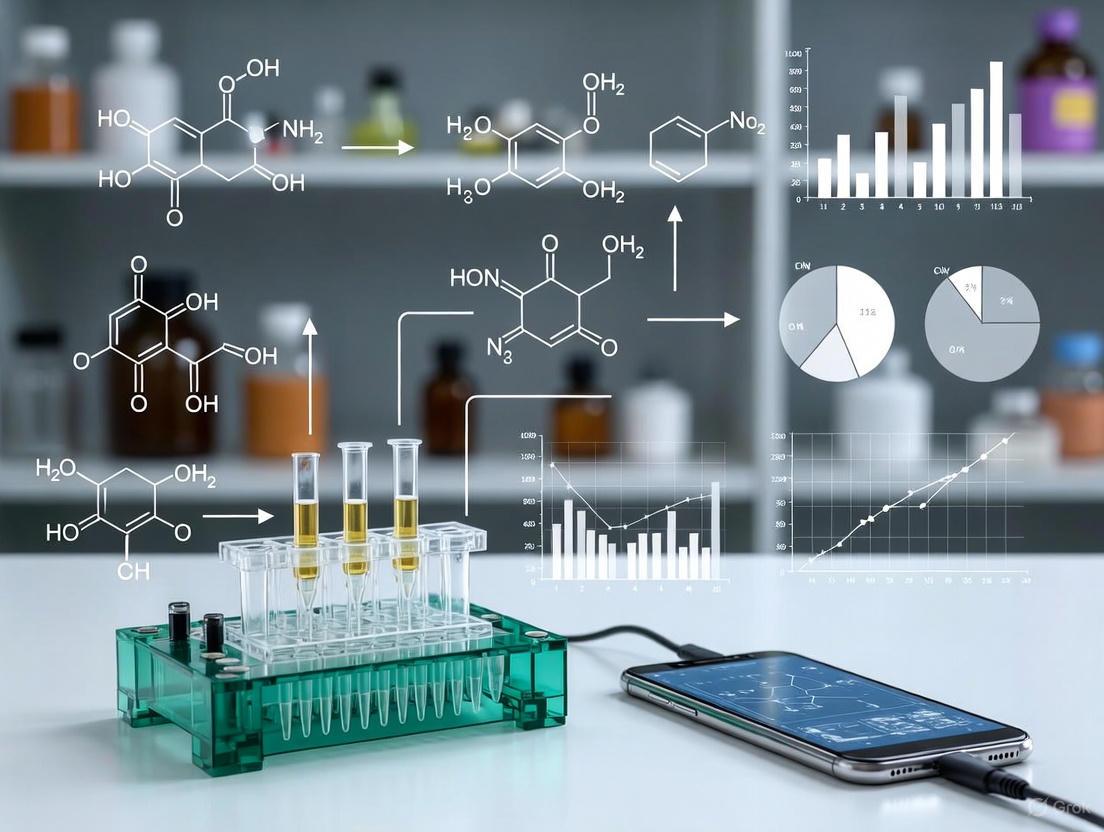
This article explores the convergence of Lab-on-a-Chip (LOC) technology and smartphone-based detection as a transformative approach for monitoring pharmaceutical residues in environmental samples.
Smartphone-Integrated Lab-on-a-Chip Devices: Revolutionizing Pharmaceutical Analysis in Environmental Samples
Abstract
This article explores the convergence of Lab-on-a-Chip (LOC) technology and smartphone-based detection as a transformative approach for monitoring pharmaceutical residues in environmental samples. Aimed at researchers, scientists, and drug development professionals, it provides a comprehensive overview of the foundational principles of microfluidic biosensors, detailing advanced methodologies for detecting contaminants like heavy metals, pesticides, and drugs. The scope extends to practical troubleshooting for on-site deployment, optimization of detection modalities (electrochemical, colorimetric, fluorescent), and rigorous validation against conventional techniques such as HPLC and MS. By synthesizing current advancements and addressing existing challenges, this review serves as a critical resource for advancing portable, efficient, and accessible environmental pharmaceutical analysis.
The New Frontier in Environmental Monitoring: Principles of Lab-on-a-Chip and Smartphone Imaging
Core Principles of Microfluidic Devices for Environmental Analysis
Microfluidics, often referred to as Lab-on-a-Chip (LoC) technology, is the science and engineering of manipulating small volumes of fluids typically in the microliter to picoliter range within networks of channels with dimensions less than 1 millimeter [1]. When applied to environmental analysis, this technology enables the miniaturization of complex laboratory processes onto a single, portable device, allowing for rapid, on-site detection of pollutants and contaminants with minimal reagent consumption and waste generation [2]. The core advantage of microfluidic devices lies in their ability to provide precise control over fluidic operations at the microscale, where unique physical phenomena dominate, leading to faster analysis times, enhanced sensitivity, and significant cost reductions compared to conventional methods [1] [3].
The integration of these devices with smartphone-based detection creates a powerful platform for environmental monitoring. Smartphones act as versatile analytical hubs, providing built-in cameras for optical detection, significant processing power for data analysis, and connectivity for data transmission, thereby supporting the principles of Green Analytical Chemistry [4] [5]. This combination is particularly transformative for environmental science, bringing sophisticated analytical capabilities from centralized laboratories directly to the field.
Core Principles of Microfluidic Operation
The behavior of fluids within microfluidic devices is governed by distinct physical principles that differ significantly from macroscale flows. Understanding these principles is essential for designing effective devices for environmental analysis.
Laminar Flow: At the microscale, fluid flow is characterized by low Reynolds numbers, resulting in smooth, parallel streams of fluid without turbulence. This laminar flow allows for predictable fluid motion and enables operations such as precise spatial control of reagents within a channel [1] [3].
Diffusion-Based Mixing: In the absence of turbulence, mixing between adjacent fluid streams occurs primarily through molecular diffusion. This principle can be harnessed for controlled chemical reactions and gradient formation, which is useful for quantifying analyte concentrations [1].
Capillarity and Surface Tension: Surface forces dominate over gravitational forces at small scales. Capillary action, the spontaneous wicking of fluid into narrow channels or porous materials, can be used to move fluids without the need for external pumps, simplifying device design and operation [1]. This is the fundamental principle behind paper-based microfluidic devices [6].
Electrokinetics: The application of an electric field can induce fluid motion (electroosmosis) or particle migration (electrophoresis). This voltage-driven flow is ideal for creating pump-less systems and is highly effective for the separation and analysis of charged species, such as ions or DNA fragments [1].
The following diagram illustrates the logical workflow of a typical smartphone-integrated microfluidic sensor for environmental analysis, from sample introduction to result delivery.
Smartphone Integration as an Optical Detector
The smartphone serves as the analytical brain of the system, transforming a microfluidic chip into a portable quantitative instrument. Two primary optical approaches are employed for detection.
Smartphone-based Digital Image Analysis (SBDIA): This approach involves capturing a digital image of the detection zone (e.g., a colorimetric reaction chamber) using the smartphone's built-in camera. Smartphone applications then analyze the image's color intensity, pixel counts, or other concentration-dependent characteristics to quantify the analyte [4]. This method is widely used for its simplicity and low cost.
Smartphone-based Direct Colorimetric Analysis: This method involves the direct measurement of light intensity. Here, the smartphone's ambient light sensor or camera measures the absorbance or fluorescence emitted when a light source (which can be the smartphone's own flash or an external LED) interacts with the sample [4]. This can provide highly sensitive and quantitative results.
The synergy between microfluidic sample processing and smartphone-based detection creates a robust "sample-in-answer-out" system ideal for field deployment. The smartphone's processing power enables real-time data interpretation using machine learning algorithms, while its connectivity allows for immediate reporting and geotagging of environmental data [4] [5].
Applications in Environmental Analysis
Microfluidic devices integrated with smartphones are being deployed for a wide range of environmental monitoring applications, offering a rapid and portable alternative to traditional, lab-bound methods.
Table 1: Key Application Areas for Smartphone-Integrated Microfluidic Sensors in Environmental Analysis
| Application Area | Target Analytes | Detection Method | Reported Performance |
|---|---|---|---|
| Water Quality Monitoring | Heavy metals (Cu(II), Pb(II)), nitrates, phosphates, organic pollutants, microplastics [5] [2] | Colorimetric, electrochemical | Detection limit for Cu(II): 0.3 ppm within 8 seconds of sample insertion [2] |
| Soil & Agriculture | Soil nutrients (N, P, K), pesticides, crop pathogens [1] [5] | Colorimetric, fluorescence | On-site detection of organophosphate pesticides in crops and water samples [4] [5] |
| Air Pollution Monitoring | Particulate matter (PM), nitrogen dioxide (NO₂), volatile organic compounds (VOCs) [5] | Light scattering, colorimetric | Portable multi-channel sensor for metals in airborne particulate matter [2] |
Experimental Protocol: Colorimetric Detection of Heavy Metals in Water
This protocol details the procedure for using a capillary-driven, paper-based microfluidic device to detect heavy metals, such as copper (Cu(II)), in a water sample [2].
1. Principle: The assay is based on a colorimetric reaction. A chelating agent (e.g., bathocuproine for Cu(II)) is pre-deposited in the detection zone of the paper chip. When a water sample containing the target metal ion is introduced, it complexes with the agent, resulting in a distinct color change whose intensity is proportional to the ion concentration.
2. Materials and Reagents:
- Microfluidic Device: Disposable paper-based microfluidic chip with hydrophobic barriers defining the flow path.
- Smartphone: Any model with a camera and a dedicated color analysis app (e.g., Color Grab, ImageJ mobile, or a custom-developed app).
- Sample: Water sample (e.g., from a river, lake, or tap).
- Standards: Calibration standards of known Cu(II) concentrations (e.g., 0, 0.5, 1, 2 ppm).
- Control: Negative control (deionized water).
3. Procedure: 1. Device Preparation: Place the paper microfluidic chip on a flat, well-lit surface. Avoid direct shadows. 2. Calibration: Using a micropipette, spot 10 µL of each calibration standard onto the sample inlet of separate chips. Allow the fluid to wick through the channel via capillary action and reach the detection zone. 3. Sample Analysis: Similarly, apply 10 µL of the unknown water sample to a new chip. 4. Image Acquisition: Wait 8 seconds for color development [2]. Using the smartphone mounted on a fixed stand (to minimize shaking), capture an image of the detection zone of each chip under consistent lighting conditions. It is critical to include a white background in the image for color balance. 5. Data Processing: Open the images in the analytical app. The app will analyze the RGB (Red, Green, Blue) values or the grayscale intensity of the detection zone. 6. Quantification: Generate a calibration curve by plotting the measured signal intensity (e.g., G-value or intensity) against the logarithm of the known standard concentrations. Use the linear equation from this curve to calculate the concentration of the unknown sample.
The Scientist's Toolkit: Essential Research Reagent Solutions
Table 2: Key Reagents and Materials for Microfluidic Environmental Sensors
| Item | Function in the Experiment | Example Application |
|---|---|---|
| Paper Substrate (Chromatography/Filter Paper) | Serves as the microfluidic platform; facilitates capillary-driven fluid transport without external pumps [6] [5]. | Low-cost, disposable chips for field testing of water metals [2]. |
| Polydimethylsiloxane (PDMS) | An elastomeric polymer used to fabricate flexible, transparent microchannels via soft lithography; allows for oxygen permeation for cellular assays [3] [5]. | Organ-on-chip models for toxicity screening of environmental pollutants [1] [3]. |
| Colorimetric Chelating Probes | Organic compounds that selectively bind to target metal ions, producing a measurable color change [2]. | Bathocuproine for copper detection; dimethylglyoxime for nickel [2]. |
| Fluorescent Dyes/Tags | Molecules that emit light at a specific wavelength upon excitation; used as labels for highly sensitive detection of biological analytes. | Labeling antibodies for pathogen detection or tags for enzymatic activity related to soil health [4]. |
| Gold Nanoparticles/Conductive Inks | Used to fabricate electrodes within microchips for electrochemical sensing; can also be used as colorimetric labels due to their surface plasmon resonance. | Electrochemical detection of nitrates or pesticides with high sensitivity [5]. |
Device Fabrication and Material Selection
The performance of a microfluidic environmental sensor is heavily influenced by the choice of fabrication material, which involves trade-offs between cost, functionality, and manufacturability.
Table 3: Common Materials for Microfluidic Device Fabrication
| Material | Pros | Cons | Suitability for Environmental Analysis |
|---|---|---|---|
| Polymers (e.g., PDMS, PMMA) | Low cost, optically transparent, flexible (PDMS), biocompatible, rapid prototyping [3] [5]. | PDMS can absorb small hydrophobic molecules; may have limited chemical resistance [3] [5]. | Excellent for prototyping and biological assays; PMMA is good for cost-effective mass production of sensors. |
| Paper | Extremely low cost, portable, disposable, pump-free fluid transport by capillarity [6] [3]. | Lower analytical sensitivity and resolution compared to polymer chips [6]. | Ideal for single-use, low-cost field test kits in resource-limited settings. |
| Glass | Excellent optical transparency, high chemical resistance, low auto-fluorescence. | Expensive, fragile, more complex fabrication process [3] [5]. | Best for applications requiring harsh chemicals or high-precision optical detection. |
The fabrication workflow for a typical device begins with chip design using software like AutoCAD or COMSOL Multiphysics for fluid dynamics simulation [5]. For polymer chips like PDMS, the standard method is soft lithography, where a master mold is created and used to cast the polymer. For paper-based devices, fabrication techniques include wax printing or plotting, which create hydrophobic barriers to define hydrophilic channels [6] [3]. Emerging techniques such as 3D printing are also gaining traction for rapid prototyping of complex microfluidic architectures without the need for cleanroom facilities [1] [6].
Microfluidic devices, underpinned by the core principles of laminar flow, diffusion, and capillarity, represent a paradigm shift in environmental analysis. Their miniaturization, portability, and low reagent consumption align perfectly with the goals of modern, sustainable analytical science. The integration with smartphones, leveraging their ubiquitous cameras and computational power, creates a powerful and accessible platform for real-time, on-site detection of environmental contaminants. While challenges in scaling up production and ensuring reliability in diverse field conditions remain, the continued convergence of microfluidics with advanced materials, artificial intelligence, and digital health platforms promises a future where comprehensive environmental monitoring is faster, cheaper, and more widely available than ever before.
Lab-on-a-Chip (LOC) technology represents a revolutionary approach in analytical sciences, particularly for pharmaceutical analysis in environmental samples. By integrating one or multiple laboratory functions onto a single chip measuring mere millimeters to a few square centimeters, LOC devices leverage the science of microfluidics—the manipulation of fluids in channels tens to hundreds of micrometers wide [7]. This miniaturization offers a transformative toolkit for researchers and drug development professionals addressing the complex challenge of detecting pharmaceutical residues in environmental matrices like water and soil. The core advantages of this technology—miniaturization, rapid analysis, and portability—enable highly sensitive, on-site screening that was previously confined to central laboratories [8] [7] [9]. When coupled with smartphone-based imaging and data analysis, as explored in this thesis, LOC systems become powerful, accessible platforms for decentralized environmental monitoring.
Core Advantages of LOC Technology
The operational benefits of LOC technology can be summarized quantitatively, demonstrating its clear advantages over conventional methods.
Table 1: Quantitative Advantages of LOC Technology over Conventional Methods
| Aspect | Laboratory-on-a-Chip | Traditional Methods |
|---|---|---|
| Analysis Speed | Rapid results within minutes to hours [7]. Micro-PCR allows ten times faster DNA amplification [10]. | Longer turnaround time, from hours to days for culture-based methods [7]. |
| Sample & Reagent Consumption | Minimal volumes required (nanoliters to picoliters) [10] [8]. ~200 times lower consumption than a 96-well plate in droplet platforms [8]. | Larger sample and reagent volumes typically needed [7]. |
| Sensitivity | High sensitivity; capable of detecting as low as 100 copies per μL of viral RNA [10]. | Variable sensitivity, often lower than LOC-based molecular methods [7]. |
| Portability | Compact, portable devices enabling point-of-care testing [7]. | Laboratory-based equipment requiring specialized, fixed facilities [7]. |
| Integration & Automation | Automated processes for streamlined workflow; integrates sample prep, reaction, and detection [10] [7]. | Often requires extensive manual handling of samples [7]. |
Miniaturization and Its Impacts
Miniaturization is the foundational principle of LOC technology. The fabrication of micrometer-sized channels and chambers allows for the handling of fluid volumes in the nanoliter to picoliter range [10] [8]. This drastic reduction in scale directly leads to several key benefits:
- Reduced Consumption and Waste: The minimal usage of samples, reagents, and solvents makes analyses more cost-effective and aligns with the principles of green analytical chemistry by significantly reducing waste generation [8] [11].
- Enhanced Analytical Performance: The small dimensions lead to high surface-to-volume ratios, which improve the efficiency of heat transfer (e.g., enabling faster thermal cycling for PCR) and mass transfer, leading to shorter reaction times and faster analysis [10].
- High-Throughput Screening: Through multichannel and array designs, LOC devices can process hundreds to thousands of reactions in parallel, dramatically accelerating processes like drug screening [8].
Rapid Analysis and High Efficiency
The integration of laboratory processes such as sample preparation, biochemical reaction, and detection onto a single, automated platform eliminates the need for time-consuming manual transfer steps [7]. This streamlined workflow is a key factor in reducing total analysis time from days to minutes. Furthermore, microfluidic operations such as droplet-based microreactors can reduce reaction times from hours to just minutes due to enhanced mixing and rapid thermal shifts [10] [8]. This speed is critical for applications requiring quick results, such as in outbreak response or rapid environmental contamination assessment.
Portability and Point-of-Care Application
The compact and integrated nature of LOC devices makes them inherently portable. This facilitates the transition of analytical capabilities from centralized laboratories to the field [7]. Researchers can perform complex analyses on-site at environmental sampling locations, in field hospitals, or in resource-limited settings. This portability, combined with minimal power requirements, enables real-time, in-situ monitoring and decision-making, which is a significant advancement for environmental surveillance and epidemiology [7] [9].
Application Notes: LOC for Pharmaceutical Analysis in Environmental Samples
LOC technology is particularly suited for detecting the low concentrations of active pharmaceutical ingredients (APIs) and other contaminants found in environmental samples.
Key Application Areas
- Drug Screening and Metabolite Detection: LOC systems, especially droplet-based platforms and those coupled with mass spectrometry, are used for high-throughput screening of pharmaceutical compounds and their metabolites in water samples, achieving high sensitivity with minimal sample volumes [8].
- Pathogen and Toxin Monitoring: Integrating molecular techniques like PCR and immunoassays into LOCs allows for the rapid, sensitive, and specific detection of waterborne and foodborne pathogens and microbial toxins, which is vital for public health safety [7] [9].
- On-Site TLC Analysis with Smartphone Quantification: The combination of Thin-Layer Chromatography (TLC)—a core technique in the GPHF Minilab toolkit—with smartphone imaging and analysis apps provides a simple, low-cost, and portable method for quantifying APIs. This approach addresses the limitation of visual TLC assessment by enabling quantitative, digital analysis of spots, improving the detection of substandard pharmaceuticals in the field [12].
The Scientist's Toolkit: Essential Research Reagent Solutions
Table 2: Key Reagents and Materials for LOC-Based Pharmaceutical Analysis
| Item | Function in LOC Experiments |
|---|---|
| PDMS (Polydimethylsiloxane) | A transparent, flexible elastomer widely used for rapid prototyping of LOC devices via soft-lithography due to its low cost and gas permeability [10]. |
| Thermoplastic Polymers (PMMA, PS) | Transparent polymers used for more robust and chemically inert chip fabrication, often via hot embossing or injection molding, making them suitable for industrial production [10]. |
| Green Solvents (e.g., Ionic Liquids, Deep Eutectic Solvents) | Environmentally friendly alternatives to conventional toxic solvents used in sample preparation and extraction steps on-chip, enhancing the greenness of the analytical process [11]. |
| CRISPR/Cas Reagents | Integrated into LOC devices for next-generation diagnostics, enabling ultrasensitive and specific detection of pathogen-specific DNA/RNA sequences through specific cleavage and signal amplification [10]. |
| Hydrogels (e.g., Alginate) | Used to create 3D cell cultures within microchannels, mimicking natural tissue environments for advanced toxicity studies and environmental impact assessments of pharmaceuticals [8]. |
Detailed Experimental Protocols
Protocol 1: Droplet-Based Microfluidic Screening for Pharmaceutical Compounds
Objective: To perform high-throughput screening of multiple pharmaceutical compounds in water samples using a droplet microfluidics platform.
- Chip Priming: Flush the droplet generation chip with a continuous phase oil (e.g., fluorinated oil with surfactant) to stabilize droplets.
- Sample and Reagent Loading: Introduce the aqueous environmental water sample and the assay reagents (e.g., enzymes, substrates) into separate inlet channels.
- Droplet Generation: Use a pressure-driven pump or syringe pumps to co-flow the aqueous and oil phases through a narrow junction (e.g., flow-focusing geometry), generating monodisperse water-in-oil droplets (picoliter to nanoliter volume).
- Incubation and Reaction: Guide the emulsion through a serpentine or coiled channel on the chip to act as an incubation delay line, allowing the encapsulated biochemical reaction to proceed.
- On-Chip Detection: As droplets pass through a detection window, measure the fluorescence or chemiluminescence signal using an integrated optical sensor or a smartphone-based detector.
- Data Analysis: Analyze the signal intensity from individual droplets to quantify the presence and concentration of the target pharmaceutical compounds [8].
Diagram 1: Droplet-based screening workflow.
Protocol 2: Smartphone-Enabled Quantitative TLC Analysis of APIs
Objective: To quantify active pharmaceutical ingredients extracted from environmental samples using TLC and a smartphone-based imaging app.
- Sample Preparation: Extract and concentrate target APIs from water or soil samples using a miniaturized method like solid-phase microextraction (SPME) or liquid-phase microextraction.
- TLC Spotting: Using a capillary, spot the processed sample alongside reference standards (e.g., 80% and 100% of expected concentration) on a TLC plate.
- Chromatogram Development: Develop the plate in an appropriate mobile phase chamber as per established methods (e.g., GPHF Minilab manual).
- Visualization and Imaging: Place the dried TLC plate under UV illumination (e.g., 254 nm) in a standardized, light-shielded photography box. Capture an image using a smartphone camera with fixed settings.
- Image Analysis with TLCyzer App:
- Open the TLC image in the open-source "TLCyzer" app.
- Manually crop the image to define the four corners of the TLC plate area.
- The app automatically identifies spots, measures their intensity, and compares sample spot intensity to the reference standards.
- Result Interpretation: The app calculates and reports the relative concentration of the API in the sample based on the calibration from the reference spots [12].
Diagram 2: Smartphone TLC analysis workflow.
Integration with Smartphone Imaging and Data Analytics
The fusion of LOC technology with smartphones creates a powerful synergy for field-deployable analytical systems. The smartphone serves as a detector, data processor, and communication hub.
- Detection and Imaging: Smartphone cameras, coupled with simple accessories (e.g., LED lights, lenses), can perform various optical detections like fluorescence, absorbance, and chemiluminescence from LOC devices [12].
- Data Processing and AI: Smartphone apps can run sophisticated algorithms for image analysis, data quantification, and even machine learning models to improve accuracy and distinguish between complex sample signatures. The "TLCyzer" app is a prime example, transforming a qualitative TLC result into quantitative data [12].
- Connectivity: Results can be instantly shared via messaging apps, email, or uploaded to cloud storage, facilitating real-time data reporting and collaboration among researchers and health authorities [12]. This integration is a cornerstone of developing intelligent, connected diagnostic and monitoring platforms for environmental pharmaceutical analysis.
LOC technology, underscored by its core advantages of miniaturization, rapid analysis, and portability, is a transformative force in pharmaceutical analysis for environmental samples. Its ability to deliver high-quality analytical data in the field, especially when combined with the ubiquitous power of smartphone imaging and analytics, as outlined in this thesis, promises to enhance the monitoring and management of pharmaceutical pollutants. Future developments will likely focus on increasing system integration, developing fully biodegradable chips [11], and leveraging artificial intelligence to create even smarter, more autonomous analytical devices capable of providing actionable insights for environmental and public health protection.
The convergence of smartphone technology and analytical science is revolutionizing point-of-need chemical and biological analysis. Smartphones, with their powerful built-in sensors, sophisticated processors, and global connectivity, are being transformed into portable, cost-effective detection platforms [4] [13]. This paradigm shift is particularly impactful for pharmaceutical analysis in environmental samples, where it enables rapid, decentralized monitoring outside traditional laboratory settings [14]. By leveraging the smartphone's camera and other sensors, researchers can perform quantitative colorimetric, fluorescence, and label-free analyses, aligning with the principles of Green Analytical Chemistry by reducing energy consumption, hazardous chemical use, and waste generation [4]. This document provides detailed application notes and protocols for employing smartphone imaging as a universal detection platform within Lab-on-a-Chip (LOC) systems for environmental pharmaceutical analysis.
Core Detection Methodologies
The smartphone camera is the primary sensor for optical detection. Its application in analysis generally follows two distinct approaches: smartphone-based digital image analysis (SBDIA) and smartphone-based direct colorimetric analysis [4].
Smartphone-based Digital Image Analysis (SBDIA) involves capturing a digital image of the assay result, such as a color change in a microfluidic channel or a lateral flow assay strip. The image is then processed using software that quantifies concentration-dependent characteristics like color intensity (in RGB or HSV scales), pixel counts, or luminescence [4] [15]. This method is highly versatile and can be used with various assay formats.
Smartphone-based Direct Colorimetric Analysis functions more like a traditional spectrophotometer. It involves measuring the light intensity (absorbance or fluorescence) emitted from a sample after illumination by an external light source. The smartphone's light sensor or camera directly measures this intensity, which is quantitatively related to the analyte concentration [4].
The workflow common to both methodologies is outlined in the diagram below.
Figure 1: A generalized workflow for smartphone imaging-based analysis, from sample preparation to quantitative result.
Application Note: Quantifying Chemical Oxygen Demand (COD) in Water
Background and Principle
Chemical Oxygen Demand (COD) is a critical parameter for assessing organic pollution in water bodies, including potential contamination from pharmaceutical waste [14]. The standard spectrophotometric method for COD is based on the color change of the solution after digestion, as chromium(VI) is reduced to chromium(III). This application note details a decentralized method using a smartphone camera to digitize this color change, achieving accuracy superior to traditional spectrophotometry in some cases [14].
Detailed Experimental Protocol
Materials and Reagents
- Water Samples: Environmental water samples, filtered to remove particulate matter.
- COD Digestion Kits: Low-range commercial kits (e.g., HANNA HI839800) containing pre-mixed reagents.
- Potassium Biphthalate Standard Solutions: For generating the calibration curve (e.g., 0–150 mg O₂ L⁻¹).
- Smartphone: Any model with a camera (e.g., 13 MP or higher). A Motorola Moto G5S Plus was used in the referenced study [14].
- Smartphone Application: A color detection app (e.g., "Color Grab" v3.7.7 by Loomatix).
- Photo Box: A custom 3D-printed or constructed chamber to provide consistent, shadow-free illumination. An artificial cold light source is mounted at the top.
Procedure
- Calibration Curve:
- Prepare standard solutions of potassium biphthalate across the desired concentration range.
- Digest the standards and a blank (distilled water) in a thermal reactor at 150 °C for 2 hours using the COD digestion kits [14].
- Allow the tubes to cool completely before analysis.
Sample Digestion:
- Treat environmental water samples identically to the calibration standards.
Image Acquisition:
- Place the digested sample tube in the photo box against a clean white background, positioned 5 cm behind the sample.
- Secure the smartphone on a stand so the camera lens is 10 cm from the sample and pointed at its midline.
- Ensure the external cold light is on and the smartphone flash is disabled.
- Using the color analysis app, capture an image of the sample. Ensure the focus and lighting are consistent for every sample [14].
Data Processing:
- In the color analysis app, select a uniform area of the sample.
- Record the average values for the Red (R), Green (G), and Blue (B) channels.
- Convert the RGB values to a single grayscale intensity (I) using the standard weighting formula [14]:
- I = 0.299R + 0.587G + 0.114B
- Convert the grayscale intensity to Absorbance (A) using the Lambert-Beer relationship [14]:
- A = -log (I / I₀)
- Where I is the sample intensity and I₀ is the blank intensity.
Quantification:
- Plot the absorbance (A) against the known COD concentrations of the standards to generate a calibration curve.
- Use the linear equation of the calibration curve to calculate the COD of unknown environmental samples.
Research Reagent Solutions
Table 1: Essential materials and reagents for smartphone-based COD analysis.
| Item | Function/Description | Example |
|---|---|---|
| COD Digestion Kits | Contains pre-mixed chemical oxidants (dichromate) and catalysts for digesting organic matter at high temperature. | HANNA HI839800 (low-range) [14] |
| Potassium Biphthalate | An organic compound used as a standard reference material for validating and calibrating the COD method. | Certified standard, ~204.22 g mol⁻¹ [14] |
| Color Analysis App | Smartphone application that captures images and extracts average RGB or HSV values from a selected area. | Color Grab (Loomatix) [14] |
| Photo Box | A simple, portable enclosure with a fixed light source and smartphone mount to ensure uniform, reproducible imaging conditions. | Custom 3D-printed box with cold LED light [14] [15] |
Advanced Integration: Microfluidics and Artificial Intelligence
The true potential of smartphone sensing is unlocked through integration with microfluidic Lab-on-a-Chip (LOC) devices and artificial intelligence (AI). LOC devices miniaturize and automate complex laboratory procedures like sample preparation, separation, and mixing of reagents and analytes within tiny channels and chambers [4] [13]. When paired with a smartphone, these systems form a complete, portable analytical tool. AI and machine learning algorithms further enhance this by improving diagnostic accuracy through automated image analysis, noise reduction, and advanced pattern recognition, moving beyond simple colorimetric analysis [16]. The relationship between these components is illustrated below.
Figure 2: The integration cycle of microfluidic devices, smartphone imaging, and AI-powered analysis for advanced diagnostic applications.
Performance Data and Comparison
The performance of smartphone-based methods has been quantitatively evaluated against traditional instrumentation for various analytes.
Table 2: Quantitative performance of smartphone-based optical detection methods for different analytes.
| Analyte | Sample Matrix | Detection Method | Key Performance Metric | Reference |
|---|---|---|---|---|
| Chemical Oxygen Demand (COD) | Synthetic & real wastewater | SBDIA (Grayscale/RGB) | Accuracy: >98.3%; Linearity up to 50 mg L⁻¹ for dyes | [14] |
| Methylene Blue (Color) | Treated water | SBDIA (HSV Saturation) | Superior linearity vs. spectrophotometer at high concentrations (>10 mg L⁻¹) | [14] |
| Lateral Flow Assays (LFAs) | Clinical samples (e.g., COVID-19) | SBDIA & Open-Source App | Quantitative analysis with low-cost, open-source hardware and software | [15] |
Smartphone imaging, particularly when integrated with microfluidic LOC devices and AI, presents a robust, universal, and decentralized platform for pharmaceutical analysis in environmental samples. The detailed protocol for COD analysis demonstrates that these methods are not merely conceptual but are capable of delivering accuracy that meets or exceeds that of conventional benchtop instruments in certain applications [14]. As smartphone technology continues to advance, its role as the central hub for portable, low-cost, and connected analytical science is set to expand, making sophisticated pharmaceutical and environmental monitoring accessible in resource-limited and field settings.
Key Pharmaceutical Pollutants in Water, Soil, and Air Matrices
Pharmaceutical contamination in water, soil, and air has become a critical environmental concern due to its widespread sources, complex behavior, and long-lasting ecological impacts [17]. A wide range of drug classes, including antibiotics, analgesics, non-steroidal anti-inflammatory drugs (NSAIDs), antidepressants, anticancer drugs, and hormones, have been identified in environmental matrices worldwide [17] [18]. These Active Pharmaceutical Ingredients (APIs) are released into the environment through multiple pathways: agricultural application of sewage sludge, pharmaceutical manufacturing waste, discharges from hospitals and households, irrigation with contaminated water, and atmospheric deposition [17] [19] [20]. Between 30% and 90% of an orally administered drug can be excreted in urine as an active substance, leading to persistent environmental contamination even from routine use [20].
The continuous infusion of these pharmaceutically active compounds into ecosystems makes them "pseudo-persistent," meaning that even those with short environmental lifetimes are continually replenished [19]. This persistence raises significant ecological and health concerns, including the alteration of soil microbial communities, reduction in biodiversity, disruption of plant growth and crop productivity, and physiological and behavioral disturbances in terrestrial animals and wildlife [17]. Furthermore, the presence of antibiotics in the environment contributes significantly to the development of antimicrobial resistance (AMR), one of the major emerging threats to human health today [21] [20].
Quantitative Analysis of Environmental Pharmaceutical Contaminants
Concentrations in Global Water Bodies
Table 1: Maximum detected concentrations of common pharmaceutical pollutants in surface and wastewater worldwide.
| Pharmaceutical Type | Specific Compound | Max Concentration (ng/L) | Location | Citation |
|---|---|---|---|---|
| NSAIDs & Analgesics | Ibuprofen | 143,000 | Spain | [18] |
| Acetaminophen | 12,430 | Nigeria | [18] | |
| Naproxen | 13,100 | United States/California | [18] | |
| Diclofenac | 10,221 | Saudi Arabia | [18] | |
| Ketoprofen | 2,100 | Spain | [18] | |
| Various Pharmaceuticals | Ofloxacin & Ciprofloxacin | 1,000-2,200 (influent) | Not Specified | [19] |
Physicochemical Properties Governing Environmental Fate
Table 2: Key physicochemical properties of frequently detected pharmaceutical pollutants that influence their environmental behavior and analysis.
| Pharmaceutical Name | Water Solubility at 25°C (mg/mL) | pKa | Log Kow | Log Koc |
|---|---|---|---|---|
| Ciprofloxacin | 36 | 6.09; 8.74 | 0.28 | 4.78 |
| Metoprolol | >1000 | 9.7 | 1.88 | 1.79 |
| Tramadol | 0.036 | 9.23 | 3.01 | 2.79 |
| Ibuprofen | 0.021 | 4.91 | 3.97 | 3.53* |
| Triclosan | 0.01 | 7.9 | 4.76 | 3.54 |
| Galaxolide | 0.00175 | -6.9 | 5.90 | 4.30* |
Note: *Estimated values based on provided data. Ka = Acid dissociation constant; Kow = Octanol-water partition coefficient; Koc = Organic carbon partition coefficient. Data sourced from [19].
Detection Methodologies and Technological Platforms
Conventional Analytical Approaches
The current techniques of choice for analyzing pharmaceutical pollutants in environmental samples are liquid chromatography coupled to mass spectrometry (LC-MS) or tandem mass spectrometry (LC-MS/MS) [19]. These methods offer high sensitivity and selectivity but require sophisticated, expensive instrumentation typically confined to laboratory settings. Solid-phase extraction (SPE) with different sorbents is the predominant method for extracting and pre-concentrating PPCPs from complex environmental matrices like wastewater, surface water, sediments, and soils before instrumental analysis [19]. The complexity of these matrices and the trace levels of target analytes (typically nanograms per liter) present significant analytical challenges, including matrix effects that can suppress or enhance ionization in mass spectrometry, necessitating advanced sample clean-up procedures [19].
Emerging Lab-on-a-Chip and Smartphone-Based Detection
Microfluidic lab-on-a-chip (LOC) devices coupled with smartphone detection represent a promising technological advancement for field-deployable pharmaceutical analysis [22] [4] [23]. These systems integrate complex laboratory processes like enzyme-linked immunosorbent assay (ELISA) into miniaturized platforms that can be powered and controlled by smartphones [22]. For instance, researchers have developed a USB-interfaced mobile platform performing microfluidic ELISA operations to detect environmental contaminants like BDE-47 with a sensitivity comparable to standard laboratory protocols [22].
Smartphones serve as effective analytical detectors due to their high-resolution cameras, significant processing power, and multiple connectivity options (Bluetooth, USB, Wi-Fi) [4]. Two primary approaches are employed in smartphone-based detection:
- Smartphone-based digital image analysis (SBDIA): The smartphone camera captures digital images of the assay result, and applications analyze concentration-dependent characteristics like color, luminescence, or pixel counts [4].
- Smartphone-based direct colorimetric analysis: The smartphone measures absorbance or fluorescence created when light is applied to the sample, converting radiation intensity into quantifiable values [4].
These approaches align with the principles of Green Analytical Chemistry (GAC) by minimizing hazardous chemical use, reducing waste generation, and enabling on-site testing with lower energy consumption compared to traditional methods [4].
Experimental Protocols
Protocol 1: Smartphone-Interfaced Microfluidic ELISA for Contaminant Detection
This protocol details the procedure for detecting pharmaceutical contaminants using a competitive ELISA on a microfluidic chip powered and imaged by a smartphone, based on the system described in [22].
Materials and Reagents
- Microfluidic Chip: Fabricated from polydimethylsiloxane (PDMS) with integrated carbon black composite electrodes and microchannels for reagent transport.
- Smartphone with a high-resolution camera and custom application for image capture and analysis.
- USB Microcontroller: (e.g., Arduino) uploaded with a script to control voltage inputs to the electrodes.
- Antigen: Target pharmaceutical hapten conjugated to bovine serum albumin (e.g., BDE-C2-BSA).
- Detection Reagent: Variable domain of heavy chain antibodies (VHH) directly labeled with horseradish peroxidase (HRP).
- Buffer Solutions: Phosphate buffered saline (PBS), washing buffers.
- Enzyme Substrate: Appropriate substrate for HRP that produces a colorimetric or chemiluminescent signal.
Procedure
- Chip Preparation: The microfluidic chip is designed with a sample chamber, reaction chambers (pre-coated with capture antigen), and waste chambers, all connected by microchannels.
- Sample Introduction: Load the sample (e.g., contaminated water extract) and all necessary reagents (labeled antibody, wash buffer, substrate) into their respective inlets on the chip.
- Electrolytic Pumping Activation: Initiate the smartphone application to send power via the USB interface to the microcontroller. The controller applies a programmed voltage sequence to the interdigitated carbon black electrodes, generating oxygen and hydrogen gas bubbles via electrolysis of water. The bubble expansion acts as a micropump, displacing liquids and sequentially transporting the sample and reagents through the microchannels for the competitive immunoassay.
- Incubation and Washing: The pumping system ensures the sample and reagents incubate in the detection chamber for a predetermined time, followed by automated washing steps to remove unbound components.
- Signal Detection: After addition and reaction with the enzyme substrate, use the smartphone camera to capture an image of the detection chamber. The color intensity is quantitatively related to the contaminant concentration.
- Data Analysis: The smartphone application processes the image, calculating pixel values or color coordinates. The concentration of the target pharmaceutical is determined by comparing the signal to a pre-loaded calibration curve.
Protocol 2: Sample Preparation and Solid-Phase Extraction for LC-MS Analysis
This protocol outlines the sample preparation required for the sensitive detection of multi-class pharmaceuticals in water samples prior to confirmatory analysis by LC-MS, as derived from [19].
Materials and Reagents
- Water Samples: Collect representative samples (wastewater, surface water) in clean glass or polypropylene containers. Preserve with sodium azide (0.1% w/v) and store at 4°C until extraction (preferably within 24-48 hours).
- Solid-Phase Extraction Cartridges: Oasis HLB (Hydrophilic-Lipophilic Balance) or equivalent sorbent (60 mg, 3 mL volume).
- Solvents: High-purity methanol, acetonitrile, acetone, and reagent water for HPLC.
- Internal Standards: Deuterated or fluorinated analogs of the target pharmaceuticals.
- Equipment: Vacuum manifold for SPE, positive pressure nitrogen evaporation system, pH meter, calibrated pipettes.
Procedure
- Sample Filtration and pH Adjustment: Filter the water sample through a 0.7 μm glass fiber filter to remove suspended particulates. Adjust the pH of the sample to 7.0 ± 0.5 using dilute NaOH or HCl.
- Internal Standard Addition: Add a known amount of internal standard mixture to the filtered sample (e.g., 100 μL of a 100 μg/L solution per 100 mL sample) to correct for variability during extraction and analysis.
- SPE Cartridge Conditioning: Condition the Oasis HLB cartridge sequentially with 5 mL of methanol followed by 5 mL of reagent water (pH 7). Do not allow the sorbent bed to dry.
- Sample Loading: Pass the entire prepared water sample (100-1000 mL, depending on expected concentration) through the conditioned SPE cartridge at a controlled flow rate of 5-10 mL/min using a vacuum manifold.
- Cartridge Washing: After sample loading, wash the cartridge with 5 mL of a 5% methanol in water solution to remove interfering polar matrix components. Dry the cartridge completely under vacuum for 15-20 minutes.
- Analyte Elution: Elute the target pharmaceuticals from the sorbent bed into a collection tube using 2 × 5 mL aliquots of methanol. Apply a gentle vacuum or use positive pressure to ensure complete solvent transfer.
- Extract Concentration: Evaporate the combined methanolic eluate to near dryness under a gentle stream of nitrogen at 30-40°C. Reconstitute the residue in 200 μL of a 50:50 (v/v) methanol/water mixture suitable for LC-MS injection.
- LC-MS Analysis: Inject the final extract into the LC-MS/MS system for separation, identification, and quantification of individual pharmaceutical compounds.
The Scientist's Toolkit: Essential Research Reagents and Materials
Table 3: Key reagents, materials, and instruments essential for research on pharmaceutical pollutant analysis, particularly using advanced LOC and smartphone platforms.
| Item Name | Function/Application | Key Characteristics |
|---|---|---|
| Polydimethylsiloxane (PDMS) | Primary material for fabricating microfluidic chips via soft lithography [22]. | Biocompatible, transparent, gas-permeable, flexible. |
| Carbon Black-PDMS Composite | Material for on-chip electrolytic micropumps [22]. | Conductive, low-cost, disposable, less susceptible to electrochemical degradation than metal electrodes. |
| Variable Domain of Heavy Chain Antibodies (VHH/Nanobodies) | Bio-recognition element in microfluidic immunoassays [22]. | Small size, high stability, good solubility, high affinity and specificity for targets. |
| Oasis HLB Solid-Phase Extraction Cartridge | Extraction and pre-concentration of multi-class pharmaceuticals from water samples [19]. | Hydrophilic-lipophilic balanced copolymer, retains acidic, basic, and neutral compounds. |
| Smartphone with CMOS Camera & App | Optical detector, data processor, and controller for mHealth platforms [4] [23]. | High-resolution sensor, significant processing power, portability, connectivity (USB/Bluetooth). |
| Horseradish Peroxidase (HRP) | Enzyme label for colorimetric or chemiluminescent detection in ELISA [22]. | High turnover rate, stable, common conjugated enzyme for antibodies. |
System Workflow and Technology Integration
The following diagram illustrates the integrated workflow of a smartphone-based Lab-on-a-Chip platform for environmental pharmaceutical analysis.
The Growing Market and Commercial Landscape for LOC Devices
Lab-on-a-Chip (LOC) technology, which miniaturizes and integrates one or several laboratory functions onto a single integrated circuit, is fundamentally reshaping diagnostics, pharmaceutical research, and environmental monitoring [1] [3]. By processing fluid samples in microchannels at a microscale level, LOC devices offer profound advantages including minimal reagent consumption, rapid analysis, portability, and the potential for high-throughput screening [1]. The commercial landscape for this technology is experiencing robust growth, driven by the converging trends of point-of-care diagnostics, personalized medicine, and the demand for greener analytical technologies [4] [24]. This growth is further amplified by the integration of LOC systems with ubiquitous technology platforms, most notably smartphones, which act as powerful, portable optical detectors, creating a new paradigm for decentralized testing in pharmaceutical and environmental analysis [4] [14]. This article examines the current market dynamics, key commercial players, and emerging applications of LOC devices, with a specific focus on the synergistic role of smartphone imaging.
The global LOC market is on a strong growth trajectory, characterized by significant expansion in value, diverse application segments, and distinct regional leaders. The market's momentum is underpinned by technological advancements, rising disease prevalence, and a shift towards decentralized diagnostic solutions [24] [25].
Table 1: Global LOC Market Size and Growth Projections
| Market Size Value in 2023/2024 | Projected Market Size Value | Projected CAGR | Forecast Period | Source |
|---|---|---|---|---|
| Approx. $2 Billion [26] | Nearly $8 Billion by 2030 [26] | ~15% [26] | 2025-2030 [26] | STATS N DATA |
| N/A | $560.3 Million by 2034 (Heart Failure segment only) [25] | 19.96% (Heart Failure segment only) [25] | 2024-2034 [25] | Research and Markets |
| $1.90 Billion (Heart Failure POC & LOC segment) [27] | $3.73 Billion by 2031 (Heart Failure POC & LOC segment) [27] | 10.10% (Heart Failure POC & LOC segment) [27] | 2025-2031 [27] | ReportPrime |
The market's growth is not uniform across all regions or segments. North America currently holds the dominant market share, estimated at around 40%, due to its advanced healthcare infrastructure, high adoption rates of innovative medical technologies, and significant research and development activities [25] [27]. However, the Asia-Pacific region is predicted to grow at the fastest compound annual growth rate (CAGR), driven by a rapidly expanding healthcare sector, increasing awareness, and a growing aging population [25] [27].
Table 2: LOC Market Segmentation and Characteristics
| Segment | Characteristics & Key Drivers | Noteworthy Trends |
|---|---|---|
| By Application | ||
| Diagnostics [24] [26] | The largest and fastest-growing segment; driven by demand for rapid, point-of-care testing for infectious diseases, chronic conditions (e.g., heart failure), and home-based monitoring [24] [25]. | Emergence of wearable and implantable monitoring devices; integration with AI for enhanced diagnostics [27]. |
| Drug Discovery [24] [26] | LOC systems accelerate pharmaceutical R&D by enabling high-throughput screening and miniaturized reaction volumes [1] [3]. | Use of organ-on-a-chip platforms for more physiologically relevant drug toxicity testing and disease modeling [1] [3]. |
| Genomics and Proteomics [24] [26] | Relies on high-throughput screening and analysis capabilities offered by LOC platforms. | Advancements in droplet-based microfluidics for single-cell analysis [3]. |
| By Technology | ||
| Microfluidics [25] [27] | The dominant technology; enables rapid, high-throughput analysis with minimal sample volumes and integration of multiple assays [25]. | Development of new materials (e.g., Flexdym, advanced polymers) and cleanroom-free fabrication methods like 3D printing [1]. |
| By End-user | ||
| Clinics & Hospitals [25] [27] | Major end-users for point-of-care diagnostic devices; driven by the need for convenient testing and comprehensive patient management. | Increasing adoption in outpatient and acute care settings to reduce hospital readmissions [25]. |
| Home Healthcare [27] | A rapidly growing segment fueled by the trend towards self-monitoring and remote patient management. | Proliferation of user-friendly, portable LOC devices connected to digital health platforms [25] [27]. |
The Commercial Landscape: Key Players and Strategic Focus
The LOC market features a moderately concentrated landscape with several established multinational corporations dominating, alongside specialized companies driving innovation in niche areas. The competitive environment is characterized by vigorous R&D, strategic mergers and acquisitions, and a focus on forming partnerships with healthcare providers and research institutions [24] [26] [28].
Table 3: Key Companies in the LOC Market and Their Focus Areas
| Company | Strategic Focus & Representative Products |
|---|---|
| Abbott Laboratories [25] [27] [28] | A leader in point-of-care diagnostics; products like the i-STAT system provide rapid results for cardiac biomarkers, aiding in heart failure diagnosis. |
| Roche Diagnostics [25] [27] | Focuses on integrated diagnostic solutions; offers POC and LOC devices for diagnosing heart failure, including the Elecsys Troponin T test. |
| Thermo Fisher Scientific [24] [26] | Provides a broad portfolio of instruments, reagents, and consumables for life sciences research, including LOC technology applied in genomics and proteomics. |
| Danaher Corporation [24] [26] [27] | Through subsidiaries like Beckman Coulter, offers clinical laboratory equipment and services for diagnosing and monitoring disease progression. |
| Fluidigm Corporation [24] [26] | Specializes in high-throughput microfluidics for single-cell analysis and genomics, catering primarily to research and biotech customers. |
| PerkinElmer [24] [26] | Provides solutions for diagnostics, life science research, and applied markets, including LOC technologies for environmental testing and high-throughput screening. |
Vendor selection for end-users depends heavily on specific needs. Healthcare providers seeking rapid, validated diagnostics are likely to turn to established players like Abbott or Roche, while researchers needing customizable chips might prefer specialists like Dolomite Microfluidics or Microfluidic ChipShop [28]. A key trend is the integration of artificial intelligence and machine learning into LOC platforms to enhance diagnostic precision, automate workflows, and enable predictive analytics [24] [3].
Application Note: Smartphone-Integrated LOC for Pharmaceutical and Environmental Analysis
The integration of smartphones with LOC devices represents a transformative advancement, particularly for pharmaceutical analysis and environmental monitoring. This synergy effectively creates a "pocket science lab," leveraging the smartphone's high-resolution camera, powerful processor, and connectivity to function as a portable, cost-effective optical detector [4]. This approach aligns strongly with the principles of Green Analytical Chemistry by minimizing hazardous chemical use, reducing energy consumption, and enabling on-site analysis that eliminates the need for sample transport [4].
Experimental Protocol: Smartphone-Based Colorimetric Analysis for Water Quality Assessment
This protocol details a method for quantifying chemical oxygen demand (COD), a key parameter for assessing water quality, using a smartphone as a detector. The method is adapted from published research that successfully applied this technique to monitor the electrochemical treatment of dye pollutants [14].
1. Principle: The method is based on digital image colorimetry (DIC). The conventional COD test involves the oxidation of organic matter in a sample, resulting in a color change proportional to the organic content. Instead of using a traditional spectrophotometer, a smartphone camera captures an image of the colored solution. The image color data (RGB values) are then extracted and converted into a quantitative value correlating to COD concentration [4] [14].
2. Materials and Reagents:
- LOC/Test Device: Standard COD digestion vials (e.g., low-range HANNA kits) [14].
- Smartphone: Any modern smartphone with a camera (≥13 MP used in reference study) and a dedicated color analysis application (e.g., Color Grab) installed [14].
- Sample: Pre-digested COD calibration standards (e.g., potassium biphthalate) and environmental water samples (e.g., wastewater effluent) [14].
- Smartphone Imaging Setup: A fixed, stable platform to maintain consistent distance (e.g., 10 cm) between the smartphone camera and the sample vial. A clean white background and a consistent, artificial cold light source are critical to minimize shadows and ambient light variation [14].
Table 4: Research Reagent Solutions for Smartphone-Based COD Analysis
| Item | Function/Description | Application Note |
|---|---|---|
| COD Digestion Vials | Pre-mixed reagent vials for sample digestion. Contains oxidizing agent (dichromate) in acidic medium. | Low-range vials (0-150 mg O₂ L⁻¹) are suitable for many wastewater applications. Handling of strong acids and toxic chromium compounds requires care [14]. |
| Potassium Biphthalate | Certified reference material used for preparing calibration standards of known COD values. | Provides the primary standard for constructing the analytical calibration curve [14]. |
| Color Analysis App | Smartphone application (e.g., Color Grab) that extracts average RGB and/or HSV values from a selected image area. | The app should provide numerical output for Red, Green, Blue, and/or Hue, Saturation, Value. The "saturation" value in HSV model is often used directly [14]. |
| Standardized Imaging Setup | A simple rig to hold the smartphone and sample at a fixed distance and orientation under controlled lighting. | This is critical for reproducibility. It eliminates variables such as focal distance, ambient light color, and camera angle, which can affect the measured color values [14]. |
3. Procedure:
- Step 1: Calibration. Prepare a series of COD standards of known concentration using potassium biphthalate. Digest the standards according to the vial manufacturer's protocol (e.g., at 150°C for 2 hours) [14].
- Step 2: Image Acquisition. After the vials cool, place them in the standardized imaging setup. Capture images of each calibration standard and the blank (digested distilled water) using the smartphone camera. Ensure the use of a white background and consistent, shadow-free lighting. Do not use flash [14].
- Step 3: Data Extraction. For each image, use the color analysis application to select a uniform area of the solution and record the average values for the R, G, and B channels. Convert these RGB values to a single grayscale intensity (I) using the formula:
I = 0.299R + 0.587G + 0.114B[14]. - Step 4: Calibration Curve. Convert the grayscale intensity (I) to absorbance (A) using the formula
A = -log (I / I₀), where I₀ is the intensity of the blank. Plot the absorbance against the known COD concentration to generate a linear calibration curve [14]. - Step 5: Sample Analysis. Process the unknown environmental samples identically to the standards (digestion and image capture). Use the extracted absorbance value and the calibration curve to determine the COD concentration of the unknown.
The following workflow diagram summarizes the key steps of this protocol:
Challenges and Future Outlook
Despite the promising growth, the LOC industry faces several challenges. Regulatory hurdles for medical device approval can delay market entry, while high initial investment costs for development and manufacturing remain a barrier [24] [26]. Other restraints include a lack of standardized manufacturing processes, material limitations, and the need for specialized technical knowledge to operate some advanced systems [24] [3].
The future of LOC technology will be shaped by key trends. The integration of Artificial Intelligence (AI) and machine learning is set to enhance diagnostic accuracy, automate data analysis, and enable predictive modeling [24] [3]. Innovations in materials science, such as the development of biodegradable and more chemically resistant polymers, will expand application possibilities [1]. Furthermore, the push for open-source design and cloud collaboration platforms will democratize innovation and accelerate development cycles [1]. As these trends converge, LOC devices, especially when paired with smartphone technology, are poised to become even more integral to decentralized healthcare, personalized medicine, and real-time environmental monitoring.
Building Your Sensor: Methodologies and Real-World Applications for Pharmaceutical Detection
Microfluidic technology, which manipulates fluids at the microscale, has become an indispensable tool in modern laboratories, particularly for pharmaceutical analysis in environmental samples [1]. These lab-on-a-chip (LOC) devices integrate complex laboratory functions onto a single miniaturized platform, enabling automated, high-throughput screening with minimal reagent consumption [29]. The fusion of microfluidics with smartphone imaging creates powerful, portable analytical systems ideal for point-of-need environmental monitoring [1] [30]. This application note details the materials, fabrication techniques, and practical protocols essential for developing microfluidic chips tailored to this specialized research context, providing a concrete foundation for thesis work focused on detecting pharmaceutical residues in environmental matrices.
Microfluidic Chip Materials: Properties and Selection Criteria
Selecting an appropriate substrate material is paramount, as it directly influences the device's optical clarity, chemical resistance, biocompatibility, fabrication complexity, and cost—all critical factors for pharmaceutical analysis in environmental samples [31] [6].
Material Properties Comparison
The following table summarizes key properties of common materials used in the fabrication of microfluidic chips for analytical applications.
Table 1: Comparison of Microfluidic Chip Materials
| Material | Key Properties | Advantages | Disadvantages | Suitability for Smartphone Imaging |
|---|---|---|---|---|
| Polydimethylsiloxane (PDMS) | Biocompatible, gas-permeable, flexible [31] | Excellent for cell cultures; rapid prototyping [31] [1] | Swells with organic solvents; can absorb small molecules [31] | High (Good optical clarity) [31] |
| Polymethyl Methacrylate (PMMA) | Good optical clarity, mechanically stable [31] | Low cost; excellent for replication methods like injection molding [31] | Moderate chemical resistance [31] | High [31] |
| Glass | High chemical resistance, excellent optical transparency [31] [6] | Ideal for harsh solvents; superior imaging quality [31] | High cost; complex fabrication [31] [6] | Very High [31] |
| Silicon | High thermal conductivity, mechanically strong [6] | Excellent for PCR due to heat transfer [31] | Opaque; expensive and complex fabrication [6] | Low (Opaque to visible light) [6] |
| Paper | Capillary-driven flow, cost-effective [31] [6] | Ultra-low-cost; simple fabrication; pump-free [31] [6] | Low fabrication precision; limited fluidic control [31] | Moderate (Can require specific assay design) [1] |
For research combining LOC with smartphone imaging, optical properties are a primary concern. PDMS, PMMA, and glass are the most suitable candidates due to their high transparency, which allows for clear optical detection using a smartphone camera. If the analytical process involves thermal cycling, such as on-chip polymerase chain reaction (PCR) for detecting drug-resistant genes, the high thermal conductivity of silicon-glass chips is beneficial, though their cost and opacity are drawbacks [31]. For applications using aggressive organic solvents to extract pharmaceuticals from environmental samples, glass is the superior material.
Microfluidic Fabrication Techniques
Fabrication techniques are broadly classified as traditional, suitable for cleanrooms, and non-traditional, more accessible for rapid prototyping.
Traditional Cleanroom-Based Techniques
These methods offer high precision but require specialized equipment and facilities.
- Soft Lithography for PDMS: This is a cornerstone technique for rapid prototyping of PDMS chips [31] [1]. The process involves creating a master mold, typically via photolithography, and then casting and curing PDMS on this mold to create the channel network.
- Photolithography and Etching for Silicon/Glass: Derived from the semiconductor industry, this process uses light-sensitive resists and masks to pattern substrates, followed by wet or dry etching to create microchannels [29]. It allows for high-resolution features but is complex and costly [6].
- Injection Molding and Hot Embossing for Plastics: These are high-throughput methods ideal for mass production of chips from thermoplastics like PMMA, COC, and COP [31]. While initial mold costs are high, the per-unit cost is very low, making it economical for large-scale studies [31].
Non-Traditional and Rapid Prototyping Techniques
These methods have democratized access to microfluidic fabrication, making it feasible for laboratories without a cleanroom.
- CNC Machining: A subtractive process where a computer-controlled mill carves microchannels directly into a substrate like PMMA [31] [30]. It offers great flexibility for prototyping but may produce channels with higher surface roughness.
- 3D Printing: An additive manufacturing technique that builds chip layer-by-layer, allowing for complex 3D channel architectures that are impossible with other methods [1] [30]. Resolution limitations are continually improving, making it a powerful tool for prototyping [30].
Table 2: Comparison of Key Fabrication Techniques
| Fabrication Technique | Resolution | Cost | Speed | Best-Suited Materials | Primary Use Case |
|---|---|---|---|---|---|
| Soft Lithography | High [31] | Low (after master) [31] | Fast (after master) [31] | PDMS [31] | Rapid prototyping, biological studies [31] |
| Photolithography/Etching | Very High [29] | High [6] | Slow [6] | Silicon, Glass [29] | High-precision, R&D, MEMS [29] |
| Injection Molding | High [31] | Low (per unit) [31] | Very Fast (mass production) [31] | PMMA, COC, COP [31] | Mass production [31] |
| CNC Machining | Medium [31] | Medium [31] | Medium [31] | PMMA, PC [31] | Rapid prototyping of plastics [31] [30] |
| 3D Printing | Low-Medium [30] | Low (per chip) [30] | Medium (serial process) [6] | Resins, Polymers [30] | Complex 3D prototypes [1] [30] |
Experimental Protocols
Protocol 1: Rapid Prototyping of a PDMS-PMMA Hybrid Chip via Soft Lithography
This protocol is ideal for creating a device with a PDMS fluidic layer bonded to a PMMA base, combining the benefits of both materials for smartphone imaging.
The Scientist's Toolkit: Research Reagent Solutions
- SYLGARD 184 Silicone Elastomer Kit (PDMS): A two-part prepolymer used to create the flexible, optically clear microfluidic channel layer [31].
- Silicon Wafer: Serves as a base for the photoresist master mold.
- SU-8 Photoresist: A high-contrast, negative-tone photoresist used to create the master mold with high aspect ratios.
- PMMA Sheet: Provides a rigid, transparent base for bonding the PDMS layer.
- Oxygen Plasma: Used to activate the PDMS and PMMA surfaces, creating irreversible bonds between the two layers [31].
- (Tridecafluoro-1,1,2,2-tetrahydrooctyl)trichlorosilane: A vapor-phase silanizing agent used to treat the master mold, preventing PDMS adhesion during casting.
Methodology:
- Master Mold Fabrication: Clean a silicon wafer. Spin-coat SU-8 photoresist to the desired thickness (e.g., 100 µm). Soft bake, expose to UV light through a photomask defining your channel design, and post-exposure bake. Develop the wafer to reveal the SU-8 mold, which will form the inverse of your microchannels. Silanize the mold in a vacuum desiccator to facilitate PDMS release [31].
- PDMS Casting and Curing: Mix the PDMS base and curing agent at a 10:1 weight ratio. Degas the mixture in a vacuum desiccator until all bubbles are removed. Pour the degassed PDMS over the master mold and cure at 65°C for 2 hours [31].
- Bonding to PMMA Substrate: Carefully peel the cured PDMS from the mold. Use a biopsy punch to create inlet and outlet ports. Activate the PDMS slab and a flat PMMA sheet in an oxygen plasma cleaner. Immediately after treatment, bring the activated surfaces into conformal contact to create an irreversible seal. Post-bake the assembled chip at 80°C for 10 minutes to strengthen the bond [31].
Chip Fabrication Workflow: This diagram outlines the key steps for creating a PDMS-PMMA hybrid microfluidic chip.
Protocol 2: Fabricating a Millifluidic Chip via CNC Machining
For applications where smaller channel sizes are not critical, millifluidic chips (with channels >100 µm) offer a robust and easily manufacturable alternative.
Methodology:
- Design and File Preparation: Create a 2D design of your channel network using CAD software. Export the design as a DXF file. Convert this file into G-code, the programming language that controls the CNC machine [31].
- CNC Milling: Secure a PMMA blank securely to the CNC machine bed. Use an end-mill bit of the required diameter (e.g., 500 µm) to mill the channels. Optimize the feed rate and spindle speed to achieve a smooth channel surface. After milling, thoroughly clean the PMMA slab with isopropanol and deionized water to remove all debris.
- Thermal Bonding: Place the milled PMMA slab on a hotplate alongside a flat PMMA cover sheet. Apply even pressure and heat the assembly to a temperature just above the glass transition temperature of PMMA (∼105°C) for a set time. Allow the chip to cool slowly to room temperature to minimize internal stresses and ensure a strong bond.
Integration with Smartphone Imaging for Pharmaceutical Analysis
The true power for point-of-need analysis lies in coupling the fabricated microfluidic chip with a smartphone-based detection system.
System Setup
- Chip Integration: The microfluidic chip is placed in a custom 3D-printed holder that ensures stability and aligns the detection zone (e.g., a reaction chamber) with the smartphone's camera.
- Optical Configuration: To enhance detection sensitivity, the holder can incorporate miniature lenses to magnify the image, and light-emitting diodes (LEDs) of specific wavelengths to excite fluorescent labels. For colorimetric assays, uniform white light illumination is key.
- Data Acquisition and Processing: The smartphone camera captures images or video of the analytical reaction within the chip. Dedicated mobile applications are used to process this data, quantifying intensity, color change, or other relevant metrics to determine the concentration of the target pharmaceutical analyte [1].
Smartphone Analysis Workflow: This diagram shows the core process of analyzing a sample using a microfluidic chip and smartphone.
Application Example: Detecting Antibiotics in Water
- Chip Design: Use a design with a serpentine mixer for sample and reagents, leading to a detection chamber.
- Assay Principle: Implement a competitive immunoassay. The chip is pre-loaded with fluorescently-labeled antibodies. The environmental sample is introduced. Any antibiotic present (e.g., tetracycline) competes with an antibiotic-conjugated antigen for antibody binding sites.
- On-Chip Execution and Readout: The mixture flows to the detection chamber. The smartphone system, with an appropriate LED, excites the fluorescence, and the camera captures the signal. The intensity is inversely proportional to the antibiotic concentration in the sample, allowing for quantification.
The strategic selection of materials and fabrication techniques is fundamental to developing effective lab-on-a-chip devices for pharmaceutical analysis in environmental samples. PDMS and PMMA, fabricated via soft lithography and CNC machining respectively, offer excellent starting points for research prototypes destined for use with smartphone imaging due to their balance of optical properties, fabrication ease, and cost. By following the detailed protocols and integration strategies outlined in this document, researchers can create robust, field-deployable analytical systems that leverage the ubiquity and power of smartphones, advancing the capabilities of environmental monitoring and pharmaceutical analysis.
Application Notes
The integration of electrochemical, colorimetric, and fluorescent sensing modalities into unified platforms represents a significant advancement for Lab-on-a-Chip (LoC) and smartphone-based imaging systems. This multi-modal approach is particularly powerful for the analysis of pharmaceuticals in complex environmental samples, enhancing reliability, providing cross-validation, and enabling multiplexed detection [32] [33].
Triple-mode sensors are highly suited to point-of-care testing (POCT) and environmental monitoring in resource-limited settings. Their portability, cost-effectiveness, and user-friendliness facilitate rapid, on-site analysis, moving beyond traditional, centralized laboratory methods [33] [2]. A prominent example is the "HELEN-DR" system, a homogeneous biosensor that simultaneously provides electrochemical, fluorescent, and colorimetric signals for detecting pathogens like Influenza A, Influenza B, and SARS-CoV-2, demonstrating the practical power of this integrated approach [32].
Smartphones act as the central analytical processor in these systems. They are equipped with high-resolution cameras for colorimetric and fluorescent image capture, powerful processors for data analysis, and connectivity for data transmission. Techniques such as Smartphone-Based Digital Image Analysis (SBDIA) are used for quantifying analytes by measuring concentration-dependent color changes, while the smartphone's ambient light sensor can be employed for direct colorimetric analysis [4]. This makes smartphones function as pocket science labs, aligning with the principles of Green Analytical Chemistry (GAC) by promoting in-situ analysis, reducing waste, and minimizing energy consumption [4].
Advantages of Integrated Multi-Modal Detection
- Cross-Validation: Multiple detection signals from a single assay can verify results, significantly improving analytical confidence [32].
- Wide Dynamic Range: Combining highly sensitive methods (e.g., fluorescence, electrochemistry) with simpler, rapid methods (e.g., colorimetry) creates a broader effective detection range [32] [33].
- Multiplexing Capability: Different modalities can be used to detect different target analytes simultaneously within a single microfluidic device, which is crucial for comprehensive environmental and pharmaceutical screening [32].
- Robustness and Flexibility: The platform remains functional even if one detection method is compromised or unsuitable for a particular sample matrix [32].
Experimental Protocols
Protocol 1: Homogeneous Triple-Mode Detection of Pathogenic Nucleic Acids (HELEN-DR Method)
This protocol outlines the procedure for detecting specific nucleic acid sequences (e.g., from viruses) using a homogeneous assay that generates electrochemical, fluorescent, and colorimetric signals without the need for probe immobilization [32].
Principle
The assay is based on a custom-designed reporter probe (FAM-RNA-MB), which contains an RNA sequence flanked by a fluorophore (FAM) and an electroactive tag (Methylene Blue, MB). Hybridization of the target DNA to the probe's RNA sequence forms a DNA-RNA duplex. The enzyme RNase H then specifically digests the RNA strand in the duplex, releasing FAM and MB reporters, which produces a measurable signal in all three modalities [32].
Materials and Reagents
- FAM-RNA-MB Reporter Probe: Synthesized to be complementary to the target DNA sequence.
- RNase H Enzyme and Buffer: For specific RNA cleavage in DNA-RNA hybrids.
- λ-exonuclease: For generating single-stranded DNA targets from amplification products.
- Recombinase Polymerase Amplification (RPA) Kit: For isothermal nucleic acid amplification.
- Phosphate-Buffered Saline (PBS) or Tris-EDTA Buffer: For reaction preparation.
- Microfluidic Chip: Designed with separate channels for multiplexed detection.
- Portable Potentiostat: For electrochemical measurement.
- Smartphone with Color Grab application or equivalent: For colorimetric and fluorescence imaging [32] [34].
Procedure
Sample Preparation and Amplification:
- Extract nucleic acids from the environmental or clinical sample.
- Perform RPA amplification using 5'-phosphorylated primers to generate double-stranded DNA (dsDNA) amplicons.
Generation of Single-Stranded DNA Target:
- Digest the RPA product with λ-exonuclease. This enzyme hydrolyzes the phosphorylated strand, producing single-stranded DNA (ssDNA) targets for detection.
Triple-Mode Detection Reaction:
- Prepare the homogeneous reaction mixture containing:
- The ssDNA target from step 2.
- The FAM-RNA-MB reporter probe.
- RNase H in its appropriate buffer.
- Incubate the reaction at 37°C for 20-60 minutes to allow for hybridization and RNase H-mediated cleavage.
- Prepare the homogeneous reaction mixture containing:
Signal Measurement:
- Electrochemical Detection: Transfer an aliquot of the reaction mixture to a portable potentiostat. Measure the differential pulse voltammetry (DPV) signal of the released Methylene Blue.
- Fluorescence Detection: Use the smartphone camera with a blue LED excitation source and an appropriate emission filter. Capture the image and analyze the green fluorescence intensity from the released FAM.
- Colorimetric Detection: Using the same smartphone under uniform white light illumination, capture an image of the solution. Analyze the RGB values, particularly the blue channel intensity, as the release of Methylene Blue causes a visible color change [32].
Protocol 2: Smartphone-Based Colorimetric Quantification of a Pharmaceutical Compound
This protocol details the use of a smartphone for the quantitative colorimetric analysis of a pharmaceutical compound, such as lidocaine hydrochloride, in a formulation [34].
Principle
The analyte (e.g., lidocaine) reacts with a metal ion (e.g., copper) in an alkaline medium to form a colored complex. The intensity of the color, which is proportional to the analyte concentration, is captured by a smartphone camera and converted into RGB values. The intensity values are then used to calculate absorbance, enabling quantification [34].
Materials and Reagents
- Smartphone with a High-Resolution Camera: (e.g., Galaxy A03 Core).
- Image Acquisition Device: A custom-built, light-shielded chamber with uniform LED lighting to ensure consistent imaging conditions.
- Color Grab Application: For RGB value extraction.
- Lidocaine Hydrochloride Standard Solution.
- Copper Ion Solution.
- Sodium Hydroxide (NaOH) Solution: To maintain pH > 11.5.
- Analytical Software/Spreadsheet: For data calculation and analysis [34].
Procedure
Calibration Curve Preparation:
- Prepare a series of standard solutions of lidocaine hydrochloride with known concentrations.
- To each standard, add copper ion solution and NaOH solution to raise the pH above 11.5.
- Allow the color to develop fully.
Image Capture:
- Place each standard solution in the custom imaging device under uniform illumination.
- Using the smartphone, capture an image of each solution against a white background. Ensure all images are taken with fixed camera settings (ISO, exposure, white balance).
Image and Data Analysis:
- Use the Color Grab app to select a consistent region of interest (ROI) for each solution and record the average Red, Green, and Blue (RGB) intensity values.
- For each standard, calculate the absorbance (A) using the intensity value (I) from the most responsive color channel (e.g., Blue) and the intensity of the blank (I₀): A = log(I₀/I).
- Plot the calculated absorbance against the known concentration to generate a calibration curve.
Sample Analysis:
- Process the unknown pharmaceutical sample (e.g., an injectable solution) identically to the standards.
- Capture its image, calculate its absorbance from the RGB values, and determine its concentration from the calibration curve [34].
Data Presentation
Performance Comparison of Integrated Sensor Modalities
Table 1: Key analytical figures of merit for the triple-mode HELEN-DR biosensor and a smartphone-based colorimetric method.
| Detection Method | Target Analyte | Limit of Detection (LOD) | Dynamic Range | Analysis Time | Key Advantage |
|---|---|---|---|---|---|
| Homogeneous Electrochemical | Pathogen DNA (SARS-CoV-2) | Comparable to or lower than 0.1 ng/μL [33] | > 3 orders of magnitude [32] | 20-60 min [32] | High sensitivity, quantitative, portable |
| Fluorescence | Pathogen DNA (SARS-CoV-2) | High (single-molecule level possible) | > 3 orders of magnitude [32] | 20-60 min [32] | Extremely sensitive, specific, multiplexable |
| Colorimetric (Smartphone) | Pathogen DNA / Lidocaine HCl | ~0.3 ppm for metals [2] / Pharmaceutical grade [34] | Clinically relevant range [32] | < 60 sec [2] / Fast [34] | Simple, low-cost, ideal for POC |
| Triple-Mode (HELEN-DR) | Influenza A, B, SARS-CoV-2 | High sensitivity for all targets [32] | Wide for all three signals [32] | ~60 min (total assay) [32] | Data redundancy, cross-validation, wide applicability |
Visualization of Workflows
Triple-Mode Homogeneous Biosensor (HELEN-DR) Workflow
Smartphone-Based Colorimetric Analysis Workflow
The Scientist's Toolkit: Essential Research Reagent Solutions
Table 2: Key reagents and materials for developing integrated electrochemical, colorimetric, and fluorescent sensors.
| Item | Function/Application | Examples/Specifications |
|---|---|---|
| FAM-RNA-MB Probe | Core reporter probe for homogeneous triple-mode detection; RNA segment for target binding, FAM for fluorescence, MB for electrochemistry/color. | Custom-synthesized; RNA sequence complementary to target; 5'-FAM, 3'-MB [32]. |
| RNase H Enzyme | Signal amplification enzyme; specifically cleaves RNA in DNA-RNA hybrids, releasing reporters. | Requires specific buffer; critical for HELEN-DR assay sensitivity [32]. |
| Isothermal Amplification Kits (RPA) | Rapid, low-temperature nucleic acid amplification to prepare detectable targets for LoC systems. | RPA Basic Kit; uses 5'-phosphorylated primers [32]. |
| λ-Exonuclease | Generates single-stranded DNA (ssDNA) targets from double-stranded amplicons for hybridization. | Used post-RPA to digest phosphorylated DNA strand [32]. |
| Smartphone with Analytical App | Serves as optical detector (camera), data processor, and result display for colorimetric/fluorescent assays. | Galaxy A03 Core; Color Grab app for RGB; MATLAB for advanced analysis [4] [34]. |
| Microfluidic Chip Substrates | Platform for fluidic handling, reaction containment, and multiplexing. | PDMS (flexibility, transparency), PET, PMMA, paper-based [32] [33]. |
| Colorimetric Reagent Kits | Form colored complexes with specific analytes (pharmaceuticals, metals) for smartphone detection. | Copper ion solution in alkaline buffer for lidocaine [34]; specific chelators for heavy metals [2]. |
The convergence of smartphone-based imaging, microfluidic detection, and artificial intelligence (AI) is creating powerful, portable tools for pharmaceutical analysis in environmental samples. These mobile health (mHealth) platforms leverage the sophisticated cameras and processing power of modern smartphones to perform laboratory-grade assays in field settings, offering a solution for rapid, on-site monitoring of pharmaceutical contaminants [23]. This document details the essential hardware components and image analysis algorithms that form the foundation of these systems, providing application notes and protocols for researchers and development professionals working at the intersection of lab-on-a-chip (LoC) technology and environmental science.
Core Hardware Adaptations
Transforming a smartphone into a quantitative analytical instrument requires specific hardware adaptations to interface with microfluidic chips and ensure high-quality image acquisition.
Imaging Modalities
The choice of imaging modality is dictated by the assay chemistry and the required sensitivity. The following table compares the primary modalities used in mHealth platforms.
Table 1: Comparison of Smartphone-Based Imaging Modalities for LoC Detection
| Imaging Modality | Key Principle | Advantages | Disadvantages | Typical Applications in Pharmaceutical/Environmental Analysis |
|---|---|---|---|---|
| Bright Field (Lensed) [23] | Uses lenses for optical magnification; illumination light passes through the sample. | High resolution, large field of view, simple optical setup. | Limited imaging depth, lower signal-to-noise ratio for faint targets. | Colorimetric assays (e.g., ELISA), cell counting, particle analysis. |
| Lens-Free Imaging [23] | Relies on holographic principles without magnification lenses. | Very large field of view, compact form factor, cost-effective. | Lower resolution, requires complex reconstruction algorithms. | Detection of large cells, parasites, or aggregate formation. |
| Fluorescence Imaging [23] | Detects light emitted by fluorescent labels upon excitation. | High sensitivity and specificity, low background signal. | Requires specific excitation light sources and emission filters, more complex hardware. | High-sensitivity immunoassays, nucleic acid detection, viability staining. |
Essential Supporting Components
A functional mHealth platform integrates several key components around the smartphone and microfluidic chip.
- Optical Magnification: External lenses are often necessary to achieve the microscopic resolution needed to image cells or small features on a chip. These can be simple ball lenses or more complex multi-element lens systems [23].
- Controlled Illumination: Consistent, dedicated light sources are critical for reproducible imaging. These include:
- 3D-Printed Adapters: Custom-designed adapters are used to precisely align the smartphone camera with the microfluidic chip, illumination source, and optical components, creating a stable and reproducible imaging platform [23].
- On-Chip Fluid Handling: For automated assays, integrated micropumps eliminate the need for bulky external equipment. Electrolytic pumps that generate gas bubbles to move fluids are particularly suitable due to their low power consumption and compatibility with smartphone power output [22].
The Scientist's Toolkit: Key Research Reagent Solutions
The following reagents and materials are essential for developing and running smartphone-based LoC assays for pharmaceutical analysis.
Table 2: Essential Research Reagents and Materials for Smartphone-Based LoC Assays
| Item | Function/Description | Example in Protocol |
|---|---|---|
| Polydimethylsiloxane (PDMS) [3] [22] | A silicone-based organic polymer used to fabricate transparent, gas-permeable, and biocompatible microfluidic chips via soft lithography. | Standard material for building the microfluidic device containing channels and chambers. |
| Carbon Black-PDMS Composite Electrodes [22] | A low-cost, disposable electrode material integrated into microfluidic chips to function as an electrolytic micropump. | Used to create on-chip pumps for fluid movement, powered by the smartphone. |
| Variable Domain of Heavy Chain Antibodies (VHH/Nanobodies) [22] | Single-domain antibodies known for high stability and specificity, used as capture or detection reagents in immunoassays. | Serve as the detection antibody in a competitive ELISA for an environmental contaminant (e.g., BDE-47). |
| Enzyme-Labeled Conjugates (e.g., HRP) [22] | Enzymes conjugated to detection molecules (e.g., antibodies) to catalyze a colorimetric or chemiluminescent reaction for signal generation. | Horseradish peroxidase (HRP) linked to a Nanobody for signal amplification in an ELISA. |
| Colorimetric Enzyme Substrates (e.g., TMB) | Chromogenic substances that produce a visible color change when catalyzed by an enzyme like HRP. | The resulting color change is quantified by the smartphone camera. |
Image Analysis Algorithms
The acquired images are processed using sophisticated algorithms to convert visual data into quantitative results.
From Pixels to Data: The Analytical Workflow
The image analysis pipeline typically involves multiple steps to extract a reliable analytical signal.
The Role of Artificial Intelligence
AI, particularly deep learning, has dramatically enhanced the capabilities of mHealth platforms.
- Convolutional Neural Networks (CNNs) are used for complex tasks such as classifying rapid diagnostic test results (e.g., HIV status) from images taken in the field with sensitivity and specificity rivaling human experts [23]. These algorithms can be trained on a library of thousands of images to recognize subtle patterns and are deployed as mobile applications for real-time analysis [23].
- Machine Learning for Spectral Data: Algorithms like Partial Least Squares (PLS) regression are employed to extract quantitative information from complex spectral data, such as near-infrared (NIR) signals, enabling the determination of active pharmaceutical ingredient concentrations in mixtures without extensive sample preparation [35].
Integrated Application Protocol: Competitive ELISA for Environmental Contaminants
This protocol details the steps to perform a microfluidic competitive Enzyme-Linked Immunosorbent Assay (ELISA) for detecting a pharmaceutical or environmental contaminant, using a smartphone for control and analysis.
Experimental Workflow
The following diagram outlines the complete process from sample introduction to result analysis.
Materials and Reagents
- Microfluidic Chip: Fabricated from PDMS, featuring a reaction chamber and integrated carbon black-PDMS electrolytic pumps [22].
- Smartphone Interface: A 3D-printed adapter holding the chip, with a printed circuit board (PCB) that connects the smartphone's USB port to the on-chip electrodes [22].
- Assay Reagents:
- Antigen conjugated to a carrier protein for immobilization.
- Variable Domain of Heavy Chain Antibody (VHH) directly labeled with Horseradish Peroxidase (HRP) [22].
- Colorimetric substrate for HRP (e.g., TMB).
- Washing buffer (e.g., Phosphate Buffered Saline with Tween).
- Software: A smartphone application to control the pump and a dedicated app or connection to a cloud server for running the image analysis algorithm [22] [23].
Step-by-Step Procedure
- Chip Preparation: Pre-load the reaction chamber of the microfluidic chip with the antigen conjugate (e.g., BDE-C2-BSA for detecting BDE-47) and allow it to immobilize on the surface. The chip can be stored dry until use [22].
- Sample Introduction: Introduce the environmental sample (e.g., water extract) and the HRP-labeled VHH detector antibody into the chip's sample chamber.
- Assay Incubation: Allow the competitive binding to proceed. The analyte in the sample and the immobilized antigen compete for binding sites on the HRP-labeled VHH.
- Fluid Control (Washing): Activate the on-chip electrolytic pumps via the smartphone-powered PCB. The pumps move the washing buffer through the reaction chamber to remove unbound antibodies and other matrix components. The pump operation is automated by a script uploaded to a microcontroller (e.g., Arduino) [22].
- Signal Development: Pump the colorimetric substrate into the reaction chamber. The HRP enzyme bound to the captured VHH catalyzes a reaction, producing a color change inversely proportional to the analyte concentration.
- Image Acquisition: Place the chip into the 3D-printed imaging adapter attached to the smartphone. Use the smartphone camera to capture an image of the reaction chamber under consistent lighting conditions.
- Data Analysis: The image is processed by the smartphone app or transmitted to a server. The app performs color space conversion (e.g., to HSV), selects the Region of Interest (ROI), and extracts the mean color intensity. This value is compared against a pre-loaded calibration curve to determine the analyte concentration.
Data Interpretation and Analysis
The assay output is a color intensity value. A standard curve is generated using known concentrations of the analyte, with the signal intensity decreasing as the analyte concentration increases. The unknown concentration in the environmental sample is interpolated from this curve. The integration of AI for image classification can further enhance the reliability of result interpretation, especially in cases of faint color changes or complex backgrounds [23].
The contamination of water resources by pharmaceuticals, particularly antibiotics and hormones, poses a significant threat to environmental ecosystems and human health. Conventional methods for detecting these contaminants often rely on laboratory-bound instruments such as high-performance liquid chromatography and mass spectrometry, which are expensive, time-consuming, and require skilled operators [4]. Within the broader context of lab-on-a-chip (LoC) and smartphone imaging for pharmaceutical analysis in environmental samples, this application note presents innovative solutions that leverage the portability, affordability, and analytical capabilities of integrated LoC and smartphone technologies.
Lab-on-a-chip devices miniaturize and integrate multiple laboratory functions onto a single chip, processing small fluid volumes with minimal reagent consumption [3]. When combined with smartphone-based detection, these systems enable rapid, on-site screening of water pollutants, making advanced analytical techniques accessible outside traditional laboratory settings [36]. This case study focuses on the application of these technologies for monitoring antibiotic and hormone contaminants in water, detailing specific methodologies, performance metrics, and experimental protocols.
Lab-on-a-Chip Platforms for Environmental Analysis
LoC devices for environmental monitoring offer numerous advantages over conventional systems, including reduced sample and reagent consumption (typically microliter to nanoliter volumes), faster analysis times, and potential for high-throughput screening [36]. These microfluidic platforms manipulate fluids through networks of microchannels, enabling precise control over chemical and biological processes. For water quality analysis, LoC devices can be fabricated from various materials, including:
- Polydimethylsiloxane (PDMS): Prized for its optical transparency, gas permeability, and ease of fabrication, though limited by potential absorption of hydrophobic analytes [3].
- Glass: Offers excellent optical properties and chemical resistance but requires higher bonding temperatures during fabrication [3].
- Paper: Utilizes capillary action for fluid transport without external pumping, making it ideal for low-cost, disposable tests [3].
- Biodegradable polymers: Emerging sustainable alternatives such as polylactide (PLA) and polyDL-lactic-co-glycolide (PLGA) help reduce environmental impact [37].
These miniaturized systems can incorporate various sample preparation steps, including filtration, concentration, and separation, directly on-chip, significantly simplifying the analytical workflow for complex environmental matrices like water samples [36].
Smartphone-Based Detection Modalities
Smartphones serve as powerful detection platforms in analytical chemistry due to their advanced imaging capabilities, processing power, and connectivity [4]. Two primary approaches are employed for pharmaceutical analysis in environmental samples:
- Smartphone-based digital image analysis (SBDIA): Utilizes the smartphone camera to capture digital images of analytical reactions (e.g., color changes, fluorescence) with subsequent quantification using image processing algorithms that analyze color intensity, pixel counts, or other image characteristics [4].
- Direct colorimetric/fluorometric analysis: Involves direct measurement of light intensity (absorbance, fluorescence) emitted from the analyte after excitation, with the smartphone's light sensors converting this into quantitative data [4].
Advanced smartphone systems can also function as compact spectrometers. For instance, smartphone-based Raman spectrometers have been developed using periodic arrays of bandpass filters placed over the camera sensor, enabling molecular fingerprinting of pharmaceuticals [38]. These systems can distinguish between different drug compounds with high accuracy (up to 99.0% in controlled studies) when combined with machine learning algorithms [38].
Case Study: Multiplexed Detection of Antibiotics in Water
Sensor Design and Operating Principle
A representative example of an integrated LoC-smartphone platform for antibiotic detection employs a three-channel smartphone-based aptamer sensor utilizing resonance light scattering (RLS) for multiplexed antibiotic detection in water [39]. This system uses aptamers (single-stranded DNA or RNA molecules that bind specific targets with high affinity) as recognition elements, providing superior stability and modification flexibility compared to traditional antibodies.
The operating principle relies on RLS signal changes induced by target-aptamer interactions. When aptamers specifically bind to their antibiotic targets, the assembly of nanoparticles or molecular complexes leads to enhanced light scattering signals. The smartphone camera detects these RLS changes through colorimetric analysis, enabling quantitative determination of antibiotic concentrations [39].
Table 1: Key Performance Metrics for Antibiotic Detection Using LoC-Smartphone Platforms
| Analyte Class | Specific Analytes | Detection Mechanism | Limit of Detection | Linear Range | Analysis Time |
|---|---|---|---|---|---|
| Antibiotics | Multiple classes | Aptamer-based RLS | Not specified | Not specified | Rapid [39] |
| Pharmaceutical substances | Various drugs | Smartphone Raman spectrometer | Compound-dependent | Compound-dependent | Minutes [38] |
| Pharmaceutical compounds | Loperamide, Bisacodyl | TLC-Smartphone colorimetry | 0.10-0.57 μg/mL | 1.00-10.00 μg/mL | <15 minutes [40] |
Experimental Protocol
Materials and Reagent Preparation
- Aptamer probes: Design and synthesize DNA aptamers specific to target antibiotics (e.g., fluoroquinolones, sulfonamides, tetracyclines) with appropriate modifications for surface immobilization or signal transduction.
- Nanoparticle solution: Prepare gold or silver nanoparticle suspensions (20-40 nm diameter) for RLS signal enhancement.
- Buffer solutions: Prepare appropriate binding buffers (typically PBS with Mg²⁺ for aptamer folding) and washing solutions.
- Chip fabrication: Fabricate microfluidic chips with multiple parallel detection channels using PDMS or PMMA via soft lithography or micromachining techniques. Incorporate specific capture zones for different antibiotics in separate channels.
- Smartphone attachment: 3D-print or assemble an optical attachment containing uniform illumination (LED array) and optical filters to minimize background interference.
Sample Processing and Analysis
- Water sample preparation: Collect water samples and filter through 0.45μm membranes to remove particulate matter. Adjust pH to neutral if necessary.
- Aptamer-analyte incubation: Mix pre-treated water samples with aptamer-functionalized nanoparticles in microfluidic chambers and incubate for 10-15 minutes to facilitate specific binding.
- On-chip separation: Apply sample mixture to LoC device. Utilize microfluidic controls to direct the solution through parallel detection channels, each functionalized for specific antibiotic classes.
- Signal development: After binding events, introduce enhancement reagents (if required) to amplify RLS signals in proportion to target concentration.
- Image acquisition: Place LoC device in the smartphone attachment. Capture images of all detection channels simultaneously under uniform illumination.
- Data analysis: Process acquired images using smartphone applications that convert RLS intensity to quantitative data based on pre-established calibration curves. Implement machine learning algorithms (e.g., convolutional neural networks) for improved classification accuracy when dealing with multiple contaminants [38].
Diagram 1: Antibiotic detection workflow using aptamer-based LoC smartphone platform.
Detection Strategies for Hormones in Water
Adaptation of LoC-Smartphone Platforms
While the search results provide limited specific information on hormone detection, the same fundamental principles used for antibiotic detection can be adapted for monitoring hormonal contaminants in water. Hormones such as estrogens (estrone, 17β-estradiol, estriol), androgens (testosterone), and synthetic hormones (ethinylestradiol) present in water sources at trace levels (ng/L to μg/L) can be targeted using similar LoC-smartphone platforms with appropriate recognition elements.
Potential detection strategies include:
- Immunoassay-based LoC devices: Utilize antibody-antigen interactions with enzymatic or fluorescent reporters detected via smartphone cameras.
- Aptamer-based sensors: Employ hormone-specific aptamers with optical or electrochemical transduction.
- Molecularly imprinted polymers (MIPs): Synthetic receptors with high stability that can be integrated into microfluidic systems for hormone recognition [4].
Table 2: Research Reagent Solutions for Pharmaceutical Detection in Water
| Reagent/Material | Function | Application Example |
|---|---|---|
| Specific DNA Aptamers | Molecular recognition elements that bind target analytes with high specificity | Antibiotic detection via RLS signals [39] |
| Gold/Silver Nanoparticles | Enhance resonance light scattering signals and improve detection sensitivity | Signal amplification in aptamer-based assays [39] |
| Fluorescent Dyes/Tags | Generate measurable signals upon binding events or chemical reactions | Fluorescence-based detection of contaminants [41] |
| Microfluidic Chip (PDMS/Glass) | Miniaturized platform for fluid handling, mixing, and reactions | Lab-on-a-chip sample processing and analysis [3] |
| Smartphone with Camera | Detection device for capturing optical signals and data processing | Portable detector for colorimetric, fluorescence, or RLS measurements [4] [40] |
| Raman Filters/Spectrometer | Enable molecular fingerprinting through Raman spectroscopy | Drug classification and identification [38] |
Protocol for Hormone Detection
The general protocol for hormone detection follows similar principles to antibiotic detection, with modifications to recognition elements and assay conditions:
- Recognition element immobilization: Functionalize specific regions of microfluidic channels with hormone-specific antibodies, aptamers, or MIPs.
- Sample preparation and introduction: Pre-concentrate water samples if necessary due to low hormone concentrations. Introduce samples into the LoC device.
- Binding and washing: Allow hormones to bind to recognition elements, followed by washing steps to remove non-specifically bound materials.
- Signal development: Add enzyme substrates (for immunoassays) or labeling agents that generate colorimetric, fluorescent, or chemiluminescent signals proportional to hormone concentration.
- Detection and quantification: Capture signals using smartphone cameras and analyze with dedicated applications.
Diagram 2: LoC-smartphone detection mechanism for pharmaceuticals in water.
Analytical Performance and Validation
Sensitivity and Specificity
LoC-smartphone platforms for pharmaceutical detection demonstrate competitive analytical performance compared to conventional methods. For instance:
- Detection limits: These platforms can achieve detection limits in the μg/L to ng/L range, suitable for environmental monitoring of priority pharmaceuticals.
- Specificity: Incorporation of specific recognition elements (aptamers, antibodies) provides high selectivity for target analytes, even in complex water matrices.
- Multiplexing capability: Multi-channel designs enable simultaneous detection of multiple contaminants in a single assay, significantly improving analysis efficiency [39].
Validation and Quality Control
To ensure reliable results, implement comprehensive validation protocols:
- Calibration curves: Generate daily calibration curves using standard solutions of target analytes across expected concentration ranges.
- Quality control samples: Include positive and negative controls in each analysis batch to verify assay performance.
- Matrix effects: Evaluate potential interference from water sample matrices by comparing results in purified water versus environmental samples.
- Method comparison: Validate LoC-smartphone methods against reference techniques (e.g., LC-MS/MS) for a subset of samples to establish correlation.
Advantages and Limitations
Benefits of Integrated LoC-Smartphone Platforms
The combination of LoC and smartphone technologies offers numerous advantages for environmental pharmaceutical monitoring:
- Portability and field deployment: Enables on-site testing without transporting samples to central laboratories [36].
- Rapid analysis: Reduces analysis time from days to minutes, allowing immediate decision-making [40].
- Cost-effectiveness: Lower equipment costs compared to conventional instrumentation [4].
- User-friendly operation: Simplified procedures require minimal technical training [40].
- Connectivity: Direct data transmission for remote monitoring and management [4].
- Green analytical chemistry: Reduced reagent consumption and waste generation align with sustainable practices [4] [37].
Current Challenges and Future Perspectives
Despite significant advances, several challenges remain:
- Detection sensitivity: Further improvements needed to meet regulatory requirements for some contaminants.
- Matrix interference: Complex environmental samples may affect assay performance, requiring robust sample preparation.
- Platform standardization: Lack of standardized devices and protocols hinders widespread adoption.
- Multiplexing capacity: Expanding the number of simultaneously detectable analytes while maintaining performance.
Future development directions include integration of advanced nanomaterials for signal enhancement, implementation of machine learning algorithms for improved data analysis, development of fully automated sample-to-answer systems, and creation of biodegradable LoC devices to enhance environmental sustainability [37] [38].
The integration of lab-on-a-chip platforms with smartphone-based detection represents a transformative approach for monitoring antibiotic and hormone contaminants in water resources. These technologies provide rapid, sensitive, and cost-effective solutions that complement traditional analytical methods, particularly for screening applications and field testing. As research advances, these systems are poised to play an increasingly important role in environmental monitoring programs, water quality assessment, and public health protection worldwide. The protocols and case studies presented herein provide researchers and environmental professionals with practical frameworks for implementing these innovative technologies in their monitoring workflows.
The increasing prevalence of industrial and agricultural pollutants poses a significant threat to environmental safety and public health. Among these contaminants, pesticides and per- and polyfluoroalkyl substances (PFAS) are particularly concerning due to their persistence, mobility, and potential for bioaccumulation [42]. Traditional laboratory-based methods for detecting these substances, such as liquid chromatography-mass spectrometry, offer high sensitivity but are often time-consuming, expensive, and impractical for rapid on-site screening [42] [43].
Recent advancements in Lab-on-a-Chip (LoC) and smartphone-based sensing technologies have opened new frontiers in environmental monitoring. These platforms integrate microfluidic devices with high-resolution smartphone cameras and computational power, enabling rapid, cost-effective, and decentralized analysis of environmental samples [44] [4]. When applied to soil screening, these systems miniaturize complex laboratory workflows onto a single, portable device, significantly reducing analysis time and reagent consumption while allowing for real-time, on-site data acquisition and sharing [42] [14].
This application note details the use of an integrated LoC and smartphone colorimetric platform for the simultaneous detection of organophosphate pesticides and PFAS in soil samples. The methodology aligns with the principles of Green Analytical Chemistry (GAC) by minimizing waste generation and energy consumption [4].
The on-site screening platform combines three core technologies: microfluidics for sample handling and processing, nanomaterial-based sensors for target recognition and signal transduction, and smartphone imaging for data acquisition and analysis.
- Microfluidic Lab-on-a-Chip: The platform utilizes a compact LoC device, typically fabricated from polydimethylsiloxane (PDMS) or paper, featuring micro-scale channels and chambers. This design automates and integrates several analytical steps—including sample introduction, filtration, reagent mixing, and reaction—onto a single chip, drastically reducing the required sample and reagent volumes to microliters [44] [42].
- Smartphone-Based Detection: The smartphone serves as a versatile analytical detector. Its high-resolution camera captures colorimetric or fluorescent signals generated on the LoC device. Dedicated mobile applications then process these images, converting color intensity or other visual features into quantitative analyte concentrations using built-in algorithms [4] [14]. The smartphone's connectivity further enables real-time data transmission to cloud storage or central laboratories for further analysis [44].
- Sensing Mechanisms: For pesticide detection, the platform often employs enzyme-based biosensors. The inhibition of enzymes like acetylcholinesterase (AChE) by organophosphate pesticides leads to a decrease in enzymatic activity, which can be measured electrochemically or through a colorimetric reaction [44]. For PFAS, which lack inherent chromogenic properties, detection relies on immunoassays using specific antibodies or aptamer-based sensors immobilized within the microfluidic channels. The binding of PFAS molecules to these recognition elements causes a measurable change in the optical or electrochemical signal [45] [42]. The incorporation of advanced nanomaterials, such as gold nanoparticles (AuNPs) and graphene oxide (GO), enhances sensitivity by providing a high surface area for biorecognition element immobilization and improving electron transfer in electrochemical detection [44].
Materials and Reagents
Table 1: Essential Research Reagent Solutions and Materials
| Item | Function/Description |
|---|---|
| Polydimethylsiloxane (PDMS) | A silicone-based organic polymer used to fabricate transparent, gas-permeable, and biocompatible microfluidic chips via soft lithography [42] [43]. |
| Screen-Printed Electrodes (SPEs) | Disposable electrochemical sensors integrated into LoC devices for voltammetric or amperometric detection of electroactive species [43]. |
| Gold Nanoparticles (AuNPs) | Nanomaterials that serve as colorimetric reporters or signal amplifiers due to their surface plasmon resonance properties and high catalytic activity [44] [46]. |
| Molecularly Imprinted Polymers (MIPs) | Synthetic polymer matrices with tailor-made recognition sites for specific target molecules (e.g., PFOS), acting as robust artificial antibodies [44] [42]. |
| Acetylcholinesterase (AChE) Enzyme | A biological recognition element used in biosensors for organophosphate pesticide detection; pesticide inhibition of AChE is measured as the analytical signal [44]. |
| PFAS-Specific Aptamers | Short, single-stranded DNA or RNA oligonucleotides that bind to specific PFAS molecules with high affinity and selectivity, used as synthetic recognition elements [44] [42]. |
| PhotoMetrix or Similar App | A smartphone application that captures images of the sensor and uses colorimetric data (RGB, HSV values) to quantify analyte concentration [14] [46]. |
Results and Performance Data
The developed LoC-smartphone platform was validated for the detection of organophosphate pesticides (e.g., parathion) and perfluorooctanesulfonic acid (PFOS) in spiked soil samples. The following tables summarize the key performance metrics.
Table 2: Analytical Performance for Target Analytes
| Analyte | Detection Method | Linear Range | Limit of Detection (LOD) | Analysis Time |
|---|---|---|---|---|
| Organophosphate Pesticides | Smartphone Colorimetric (Enzyme Inhibition) | 0.1 - 10 ppm | 0.05 ppm | < 15 min |
| PFOS | Electrochemical Impedance (Aptamer-based) | 0.5 - 50 ppb | 0.1 ppb | < 20 min |
| PFOS | Smartphone Colorimetric (MIP-based) | 0.5 - 100 ppt | 0.5 ppt [45] | ~ 10 min |
Table 3: Method Validation in Spiked Soil Samples (n=5)
| Analyte | Spiked Concentration | Measured Concentration (Mean ± SD) | Recovery (%) | RSD (%) |
|---|---|---|---|---|
| Parathion | 1.0 ppm | 0.97 ± 0.08 ppm | 97.0 | 8.2 |
| Parathion | 5.0 ppm | 4.89 ± 0.35 ppm | 97.8 | 7.2 |
| PFOS | 10 ppt | 10.4 ± 1.1 ppt | 104.0 | 10.6 |
| PFOS | 50 ppt | 48.2 ± 3.8 ppt | 96.4 | 7.9 |
The platform demonstrated high sensitivity, successfully detecting PFOS at concentrations as low as 0.5 parts per trillion (ppt), which is significantly below the U.S. federal health advisory level [45]. The accuracy, indicated by percent recovery, and precision, indicated by the relative standard deviation (RSD), were within acceptable limits for on-site screening methods.
Experimental Protocol
Sensor Fabrication and Workflow
The following diagram illustrates the complete experimental workflow for on-site soil analysis, from sample preparation to result acquisition.
Step-by-Step Procedure
Soil Sample Preparation and Extraction
- Collection: Collect approximately 10 g of homogenized soil from the target site using a clean spatula.
- Extraction: Transfer the soil to a 50 mL centrifuge tube and add 25 mL of 0.0125 M calcium chloride (CaCl₂) solution. Shake vigorously for 1 minute.
- Incubation: Allow the soil slurry to settle for 15 minutes to facilitate extraction of target analytes into the aqueous phase [47].
- Filtration: Filter the supernatant through a 0.45 μm syringe filter to remove residual particulate matter, obtaining a clear liquid extract for analysis.
Lab-on-a-Chip Analysis and Smartphone Detection
- Chip Priming: If using a paper-based microfluidic device, ensure it is stored in a dry environment. For polymer-based chips (e.g., PDMS), rinse the channels with a suitable buffer solution.
- Sample Introduction: Pipette 50 μL of the filtered soil extract onto the sample inlet zone of the microfluidic chip.
- On-Chip Reaction: Allow the sample to wick through the microfluidic channels via capillary action. It will rehydrate and mix with pre-stored reagents (e.g., enzymes, aptamers, or MIPs functionalized with AuNPs) in the detection zone. The entire process from sample loading to signal stabilization takes 5-10 minutes.
- Image Capture: Place the chip in a standardized imaging box to control lighting conditions and eliminate ambient light interference. Using a smartphone (e.g., Samsung Galaxy A32 with a 48-megapixel camera), capture a high-resolution image of the detection zone. Ensure the smartphone flash is turned off to prevent glare [46].
- Data Analysis: Open the color analysis application (e.g., PhotoMetrix or Color Grab). Select the region of interest (ROI) corresponding to the detection zone. The application will automatically analyze the color channels (e.g., Red, Green, Blue, or Hue, Saturation, Value) and convert the color information into an analyte concentration based on a pre-loaded calibration curve [14] [46].
- Data Management: The results are automatically stored, timestamped, and geotagged within the application. They can be exported, visualized, or shared via cloud platforms for further reporting and regulatory action.
Discussion
The integration of LoC and smartphone technologies presents a transformative approach for the decentralized monitoring of soil contaminants. The primary advantages of this platform are its portability, rapid analysis speed, and low cost, making it accessible for use in resource-limited settings [44] [14]. The use of smartphones as detectors leverages their ubiquitous nature, advanced processors, and connectivity, effectively creating a "pocket laboratory" for environmental surveillance [4].
The exceptional sensitivity for PFAS detection, achieving LODs in the parts-per-trillion range, is made possible by the use of highly specific recognition elements like aptamers and Molecularly Imprinted Polymers (MIPs), combined with the signal amplification properties of nanomaterials [45] [42]. Similarly, the enzyme inhibition-based assay for pesticides provides a reliable and rapid screening tool for a class of compounds that are acutely toxic.
Despite its promise, the platform faces challenges that require further research. Biofouling and non-specific adsorption in complex soil matrices can interfere with sensor accuracy [44]. Future work should focus on developing more robust surface coatings and antifouling strategies. Furthermore, enhancing the multiplexing capability of the LoC devices to simultaneously screen for a wider panel of pesticides, PFAS congeners, and other contaminants would greatly increase operational efficiency [42] [43]. The integration of artificial intelligence (AI) for advanced image analysis and data interpretation represents another exciting direction for improving the autonomy and reliability of these systems [42].
This application study demonstrates that the combination of Lab-on-a-Chip technology and smartphone-based detection creates a powerful, field-deployable tool for the on-site screening of pesticides and PFAS in soil. The methodology provides a rapid, sensitive, and user-friendly alternative to conventional techniques, enabling timely decision-making for environmental protection and public health safety. As these technologies continue to mature, they hold immense potential to become standard tools for environmental monitoring, supporting the goals of sustainable agriculture and a safer ecosystem.
From Lab to Field: Overcoming Challenges and Optimizing Performance
Addressing Sample Matrix Interference in Complex Environmental Samples
The analysis of pharmaceutical residues in complex environmental samples, such as wastewater, surface water, and soil, is critical for monitoring public health and ecosystem impacts. However, these samples present a significant analytical challenge due to sample matrix interference, where co-extracted substances like humic acids, inorganic ions, and organic matter can inhibit detection, reduce accuracy, and lower method sensitivity [14] [5]. Modern analytical chemistry is increasingly focused on green, portable solutions that can deliver reliable results outside traditional laboratory settings.
The convergence of Lab-on-a-Chip (LoC) microfluidics with smartphone-based detection creates a powerful platform for addressing these challenges. LoC devices enable the miniaturization and automation of complex sample preparation and separation processes, allowing for the precise handling of small fluid volumes to reduce interference effects [5] [37]. When paired with the imaging, processing power, and connectivity of smartphones, these systems provide portable, sensitive, and cost-effective quantitative analysis suitable for field deployment [4] [13]. This application note details protocols and strategies within this technological framework to overcome matrix effects, enabling robust pharmaceutical analysis in environmental matrices.
The Research Toolkit: Key Reagents and Materials
Successful implementation of LoC-smartphone platforms for environmental analysis requires specific reagents and materials. The table below summarizes the essential components and their functions for the protocols described in this note.
Table 1: Key Research Reagent Solutions and Materials
| Item | Function/Application | Examples & Notes |
|---|---|---|
| Silver Nanoparticles (AgNPs) | Colorimetric sensing probe; aggregation induced by target analytes provides a concentration-dependent signal [46] [48]. | Synthesized with gallic acid as a natural stabilizer; PVP-capped Ag nanoplates for specific drug detection [46] [48]. |
| Microfluidic Chip Substrates | Foundation for the miniaturized analytical device; defines fluidic pathways and reaction chambers [5] [37]. | PDMS (common, transparent), PMMA (rigid, cost-effective), Paper (low-cost, disposable, capillary-driven flow) [5] [37]. |
| Smartphone with Camera & App | Optical detector, data processor, and result interface; captures and quantifies colorimetric changes [4] [13]. | Camera resolution >12MP; Apps like Color Grab or PhotoMetrix for RGB/HSV analysis [14] [48]. |
| Image Analysis Software | Converts digital images (color, intensity) into quantitative analytical data [4] [46]. | Utilizes color models (RGB, HSV); can be a standalone app or custom algorithm for intensity/absorbance calculation [14] [48]. |
| Internal Standard | Accounts for sample-to-sample variation and matrix effects during quantitative analysis [49]. | A stable, non-interfering compound added in a constant amount to all samples and calibration standards. |
Experimental Protocols for Mitigating Matrix Effects
Protocol 1: Internal Standard Calibration for Thin-Layer Chromatography (TLC)
This protocol uses a smartphone-based TLC method to separate the target analyte from interfering matrix components, with an internal standard correcting for procedural variances [49].
1. Materials and Equipment
- TLC plates (e.g., silica gel 60 F254)
- Mobile phase (optimized for the target pharmaceutical)
- Smartphone with camera stand and a controlled lighting environment (e.g., a lightbox)
- Image analysis software (e.g., ImageJ or a custom RGB tool)
- Micropipettes
- Standard solutions of the target analyte and the internal standard
2. Procedure
- Step 1: Sample Preparation. Add a fixed, known concentration of a suitable internal standard to all environmental samples (e.g., wastewater extracts), calibration standards, and quality control samples.
- Step 2: Application. Spot the prepared samples and standards onto the TLC plate using a micropipette.
- Step 3: Development. Place the plate in a developing chamber saturated with the mobile phase and allow the solvent front to migrate the appropriate distance.
- Step 4: Imaging. After development and drying, place the TLC plate under uniform illumination. Capture an image using the smartphone mounted on a stand to maintain a fixed distance and angle.
- Step 5: Digital Analysis. Use the smartphone application to analyze the captured image. Measure the intensity (e.g., in grayscale or a specific RGB channel) of both the analyte spot and the internal standard spot for all samples.
- Step 6: Quantification. For each sample and standard, calculate the ratio of the analyte spot intensity to the internal standard spot intensity. Plot this ratio against the known concentration of the calibration standards to create the calibration curve. Determine the unknown concentration from this curve.
The following workflow diagram illustrates the key steps of this protocol:
Protocol 2: Smartphone-Based Colorimetric Detection with Nanoparticle Probes
This protocol leverages the aggregation of silver nanoparticles (AgNPs) for direct detection, where the smartphone quantifies the associated color change. Sample dilution is a simple yet effective first step for managing matrix interference [46] [48].
1. Materials and Equipment
- Synthesized AgNPs (e.g., gallic acid-capped) [48]
- Smartphone with color analysis application (e.g., PhotoMetrix)
- A stable, uniformly lit imaging box
- Microcentrifuge tubes and a vortex mixer
- Spectrophotometer (for method validation, optional)
2. Procedure
- Step 1: Synthesis of AgNPs. Reduce silver nitrate (AgNO₃) using gallic acid in an alkaline medium. Heat the mixture with continuous stirring until a color change (to dark brown) indicates nanoparticle formation. Characterize the AgNPs using UV-Vis spectroscopy to confirm a peak absorption at ~415 nm [48].
- Step 2: Sample Pre-treatment. Dilute the complex environmental sample (e.g., soil extract or surface water) with a suitable buffer. A series of dilution factors (e.g., 1:2, 1:5, 1:10) should be tested to find the optimal level that minimizes interference without losing the target analyte.
- Step 3: Aggregation Reaction. In a microcentrifuge tube, mix a fixed volume of the synthesized AgNPs probe with the diluted sample. The target pharmaceutical (e.g., gentamicin) will induce AgNPs aggregation. Include a blank (buffer only) and calibration standards.
- Step 4: Incubation and Imaging. Allow the reaction to proceed for a fixed time (e.g., 15 minutes). Then, transfer the solution to a well in a microplate or a small cuvette placed inside the imaging box. Capture an image with the smartphone.
- Step 5: Data Processing. Use the smartphone application (e.g., PhotoMetrix) to analyze the image. Select the color channel that provides the best analytical signal (e.g., the Red channel in RGB or the Saturation in HSV). The application will output a numerical value (e.g., intensity, R/G/B value) corresponding to the color.
- Step 6: Calibration and Analysis. Convert the smartphone output to absorbance using the formula: ( A = - \log(I/I0) ), where ( I ) is the value for the sample and ( I0 ) is the value for the blank [14]. Plot the absorbance against the concentration of calibration standards to generate a curve and interpolate the concentration of unknown samples.
The logical workflow and decision points for this protocol are summarized below:
Data Presentation and Analysis
The following tables present quantitative data from studies that successfully applied smartphone-based detection to complex samples, demonstrating the effectiveness of these approaches against matrix interference.
Table 2: Performance Data of Smartphone-Based Detection in Complex Matrices
| Analytical Method | Target Analyte | Sample Matrix | Linear Range | Limit of Quantification (LOQ) | Accuracy / Recovery | Reference Technique |
|---|---|---|---|---|---|---|
| Smartphone TLC with IS | Molnupiravir & Metabolite | Spiked Rat Plasma | Not specified | High sensitivity reported | Identity and quantity verified | HPTLC, UV [49] |
| Smartphone Colorimetry (AgNPs) | Gentamicin | Eye Drops | 30.00–90.00 µg dm⁻³ | 30.00 µg dm⁻³ | Successfully applied | Spectrophotometry [48] |
| Smartphone Colorimetry (HSV/RGB) | Chemical Oxygen Demand (COD) | Wastewater, Beauty Salon Effluent | Up to 50 mg L⁻¹ (dye) | Not specified | Avg. Accuracy: >98.3%; SD: 3-40 mg/L for COD ~2000 | Spectrophotometer [14] |
| Smartphone Colorimetry (Ag nanoplates) | Doxorubicin | Spiked Plasma | 0.5–5.0 µg/mL | 0.5 µg/mL | Mean Accuracy: 88.7% | Spectrophotometry [46] |
Table 3: Strategies for Managing Matrix Interference in Environmental Samples
| Strategy | Mechanism of Action | Advantages | Limitations |
|---|---|---|---|
| Sample Dilution | Reduces concentration of interferents below a critical threshold. | Simple, fast, no additional reagents or steps required. | May dilute analyte below LOD; not effective for all interferent types [14]. |
| Internal Standardization | Corrects for losses and signal variations by referencing a known added compound. | Improves precision and accuracy of quantification. | Requires a compound that behaves like the analyte but does not interfere [49]. |
| On-Chip Separation (TLC, Microfluidics) | Physically separates analyte from interferents prior to detection. | Can remove a wide range of unknown interferents. | Adds complexity to device design and operation [5] [49]. |
| Nanoparticle Probe Tuning | Functionalizing nanoparticles for selective binding to the target analyte. | Enhances selectivity, reducing response to non-target molecules. | Requires probe synthesis and optimization for each analyte [46] [48]. |
Enhancing Sensitivity and Specificity with Nanomaterials (AuNPs, CNTs, QDs)
The analysis of pharmaceutical compounds in environmental samples presents a significant challenge due to the complex matrices and typically low analyte concentrations. Lab-on-a-Chip (LoC) and smartphone-based detection systems have emerged as powerful, portable, and cost-effective solutions for field-based analysis [10] [4]. The integration of functional nanomaterials such as Gold Nanoparticles (AuNPs), Carbon Nanotubes (CNTs), and Quantum Dots (QDs) into these platforms is pivotal for enhancing the sensitivity and specificity required for reliable detection [50] [51]. These nanomaterials provide unique optical, electrical, and surface properties that significantly improve assay performance, enabling the detection of target analytes at ultralow concentrations, often in complex sample backgrounds [51] [52]. This document outlines detailed application notes and experimental protocols for employing these nanomaterials within LoC and smartphone imaging systems, framed within a research context aimed at monitoring pharmaceutical residues in environmental samples.
Nanomaterial Properties and Selection
The strategic selection of nanomaterials is fundamental to assay design. Each nanomaterial offers a distinct set of properties that can be harnessed to enhance different aspects of sensing platforms, from signal generation to sample preparation.
Table 1: Key Nanomaterials and Their Functional Properties in Sensing
| Nanomaterial | Key Properties | Role in Enhancing Assays | Exemplary Performance |
|---|---|---|---|
| Gold Nanoparticles (AuNPs) | Strong surface plasmon resonance (SPR), biocompatibility, facile surface functionalization [50] [51]. | Colorimetric signal generation, excellent quenching ability in fluorescence assays (signal-off) [52]. | Detection of ovarian cancer biomarkers at femtomolar concentrations [50]. |
| Quantum Dots (QDs) | Size-tunable fluorescence, high quantum yield, broad excitation and narrow emission spectra [50] [51]. | Highly sensitive labels for fluorescence-based detection and imaging [50]. | Improved imaging for tumor visualization and biomarker detection [50]. |
| Carbon Nanotubes (CNTs) | High surface-to-volume ratio, excellent electrical conductivity, strong adsorption capacity for biomolecules [51]. | Platform for biomolecule immobilization, enhancement of electrochemical signals, sample preconcentration [51]. | -- |
| Upconversion Nanoparticles (UCNPs) | Convert near-infrared light to visible light, minimal background fluorescence, high photostability [50]. | Superior signal-to-background ratios in immunoassays, enables earlier detection [50]. | Used in immunoassays for significant biomarkers with high sensitivity [50]. |
Experimental Protocols
The following protocols provide detailed methodologies for leveraging nanomaterials in conjunction with smartphone detection for the analysis of pharmaceutical compounds.
Protocol 1: AuNP-based Colorimetric Detection with Smartphone Readout
This protocol is adapted for the detection of small molecules or proteins using the aggregation of AuNPs, which results in a visible color change from red to blue, quantifiable via a smartphone.
Research Reagent Solutions:
- Citrate-capped AuNPs (15 nm): Synthesized by the Turkevich method.
- Salt Aggregation Agent: 1M Sodium Chloride (NaCl) solution.
- Stabilization Buffer: 10 mM Phosphate Buffered Saline (PBS), pH 7.4.
- Analyte-Specific Probe: Thiolated or carboxylated aptamer/antibody specific to the target pharmaceutical residue (e.g., an antibiotic or endocrine disruptor).
Methodology:
- Functionalization: Incubate the citrate-capped AuNPs with the thiolated aptamer probe (e.g., at a 1:100 ratio) in stabilization buffer for 16 hours at room temperature. Purify the aptamer-AuNP conjugates via centrifugation (14,000 rpm, 20 minutes) to remove unbound aptamers.
- Sample Incubation: Mix 50 µL of the environmental water sample (pre-filtered through a 0.22 µm membrane) with 50 µL of the functionalized AuNP solution in a well of a 96-well plate or a microfluidic chamber. Allow the mixture to incubate for 15 minutes.
- Salt Challenge: Add 20 µL of the 1M NaCl solution to the mixture. A positive sample (containing the target) will remain red, while a negative sample will turn blue-purple due to salt-induced aggregation.
- Smartphone Imaging and Analysis: Place the plate or chip on a uniform white LED illumination source ( [53]). Using a smartphone in a fixed holder, capture an image of the wells. Use a colorimetry application (e.g., Color Grab) or custom software (e.g., Python with OpenCV) to analyze the Red/Blue (R/B) intensity ratio or other color space values (e.g., Hue) of each well. The R/B ratio is inversely proportional to the degree of aggregation and thus directly proportional to the target concentration.
The workflow for this protocol is summarized in the following diagram:
Protocol 2: QD-Labeled Fluorescent Immunoassay on a LoC Device
This protocol describes a sensitive, quantitative assay for detecting specific pharmaceutical antigens using QD-tagged antibodies in a microfluidic immunoassay format.
Research Reagent Solutions:
- Capture Antibody: Monoclonal antibody specific to the target analyte.
- Detection Antibody: Polyclonal antibody specific to a different epitope of the target, conjugated to CdSe/ZnS core-shell QDs.
- Blocking Buffer: 1% Bovine Serum Albumin (BSA) in PBS.
- Washing Buffer: PBS with 0.05% Tween-20 (PBST).
- Running Buffer: PBS, pH 7.4.
Methodology:
- LoC Functionalization: Fabricate a microfluidic chip with designated detection chambers from PDMS or PMMA using soft lithography or hot embossing [10]. Immobilize the capture antibody onto the surface of the detection chamber via physical adsorption or covalent chemistry (e.g., EDC/NHS for carboxylated surfaces) [52]. Block the chamber with 1% BSA for 1 hour to prevent non-specific binding.
- Sample and Detection Incubation: Introduce the filtered environmental sample into the microfluidic channel and allow it to flow over the capture antibody-coated chamber for 20 minutes (or as optimized). Follow with a wash step using PBST. Then, introduce the QD-conjugated detection antibody and incubate for 20 minutes, forming a "sandwich" complex on the surface. Perform a final wash with PBST to remove unbound QD-antibody conjugates.
- Smartphone Fluorescence Detection: Use a compact, external module containing a low-power UV or blue LED (excitation source) and an appropriate emission filter, which can be attached to the smartphone camera [53] [38]. Place the LoC device in the module and excite the QDs. The smartphone camera, with its rolling shutter mechanism, can capture the emitted fluorescence. Analyze the resulting image by quantifying the green channel intensity (or corresponding channel for the QD emission wavelength) using image analysis software. The intensity is directly proportional to the amount of captured target analyte.
The workflow for this protocol is summarized in the following diagram:
Protocol 3: CNT-enhanced Sample Preconcentration and SERS Detection
This protocol utilizes the high surface area of CNTs for efficient extraction and preconcentration of analytes from large sample volumes, coupled with Surface-Enhanced Raman Spectroscopy (SERS) for highly specific detection.
Research Reagent Solutions:
- CNT Suspension: Carboxylated multi-walled CNTs (1 mg/mL) in deionized water.
- Elution Buffer: Methanol or Acetonitrile with 1% Acetic Acid.
- SERS Substrate: Silver or Gold nanoparticles (AgNPs/AuNPs) for signal enhancement.
Methodology:
- Preconcentration with CNTs: Add 1 mL of the CNT suspension to 100 mL of the environmental water sample. Stir the mixture vigorously for 1 hour to allow adsorption of the target pharmaceutical compounds onto the CNT surfaces. Filter the mixture through a 0.45 µm membrane to collect the CNTs with adsorbed analytes.
- Elution: Wash the CNT-loaded filter with 2 mL of deionized water to remove salts and other interferents. Then, elute the concentrated analytes from the CNTs using 200 µL of elution buffer, resulting in a 500-fold preconcentration.
- SERS Detection: Mix 5 µL of the eluent with 5 µL of concentrated AgNP or AuNP colloid on a glass slide or a LoC SERS chamber. Allow the mixture to dry. Use a smartphone Raman spectrometer, which consists of a compact external module with a laser diode (e.g., 785 nm) and a periodic array of bandpass filters placed over the smartphone's CMOS sensor [38]. Acquire the Raman spectral barcode. Analyze the barcode using a pre-trained Convolutional Neural Network (CNN) model embedded in the smartphone application to identify and classify the pharmaceutical compound based on its unique molecular fingerprint, achieving high specificity even among structurally similar compounds [38].
The Scientist's Toolkit
Table 2: Essential Research Reagent Solutions and Materials
| Item | Function/Application | Key Characteristics |
|---|---|---|
| Citrate-capped AuNPs | Core material for colorimetric assays and SERS substrates. | ~15 nm diameter, stable suspension, surface modifiable. |
| CdSe/ZnS QDs | Fluorescent labels for highly sensitive detection. | Emission wavelength tuned by size (e.g., 525 nm, 655 nm), high photostability. |
| Carboxylated CNTs | Solid-phase extraction adsorbent for sample preconcentration. | High surface area, strong affinity for aromatic organics. |
| Thiolated Aptamers | Target-specific recognition elements for AuNP functionalization. | High specificity and stability, facile Au-S bond formation. |
| EDC/NHS Crosslinker | Covalent conjugation of biomolecules (antibodies, DNA) to nanomaterial surfaces. | Activates carboxyl groups for stable amide bond formation [52]. |
| Polydimethylsiloxane (PDMS) | Primary material for rapid prototyping of LoC devices. | Optically transparent, gas-permeable, flexible [10]. |
| Smartphone with RGB/CMOS Sensor | Portable detector for colorimetric, fluorescent, and spectral analysis. | High-resolution camera, powerful processor for on-device analysis [4]. |
Strategies for Long-Term Sensor Stability and Reagent Storage
The integration of Lab-on-a-Chip (LoC) platforms with smartphone-based detection creates powerful tools for pharmaceutical analysis and environmental monitoring [4]. The analytical performance of these decentralized systems critically depends on the long-term stability of their integrated biosensors and the proper storage of associated reagents [54]. Sensor stability directly influences measurement accuracy, operational lifetime, and reliability for field-deployment in environmental sampling and pharmaceutical quality control. This application note details practical strategies and protocols to enhance sensor longevity and preserve reagent integrity, specifically framed within the context of LoC and smartphone imaging research.
Core Strategies for Sensor Stability
Achieving long-term sensor stability requires a multi-faceted approach, addressing material selection, storage conditions, and operational parameters.
Material Selection and Membrane Engineering
The materials encapsulating the biosensor's biological recognition element (e.g., enzymes) are paramount for stability.
- Membrane Functionality: The outer membrane of a biosensor regulates the mass transport of analytes (like glucose or lactate) and oxygen, protects the enzyme from the biological matrix, and minimizes biofouling [55]. An ideal membrane provides good biocompatibility, prevents enzyme leakage, and offers mechanical stability.
- Advanced Material Blends: Recent research demonstrates that blend membranes can significantly improve performance. For instance, a combination of polydimethylsiloxane (PDMS) and a thermoplastic polyurethane (HydroThane) has been used to create an outer membrane for continuous glucose monitoring (CGM) sensors [55]. PDMS offers high oxygen permeability, crucial for oxidase-based enzymes, while HydroThane provides hydrophilicity for glucose diffusion and enhanced biocompatibility. Sensors with this PDMS/HydroThane membrane demonstrated stable performance in vivo for 28 days, a notable improvement for implantable devices [55].
- Containment Nets for Enzymes: The method of enzyme immobilization on the sensor surface is a critical determinant of stability. Studies on amperometric biosensors have compared different containment strategies, such as using a polyurethane (PU) net versus a glutaraldehyde (GTA) cross-linked bovine serum albumin (BSA) net [54]. The choice of containment impacts how kinetic parameters like VMAX (indicating the number of active enzyme molecules) and KM (indicating enzyme-substrate affinity) change over time under different storage conditions [54].
Optimal Storage Conditions
Storage temperature is a dominant factor in preserving biosensor activity and reagent potency.
- Low-Temperature Storage: A comprehensive study on glucose and lactate biosensors revealed that storage at -80°C yielded the best long-term (120 days) preservation of sensor performance [54]. Surprisingly, this condition led to a long-lasting increase in VMAX and the linear region slope (LRS, a measure of sensitivity), suggesting an improvement in enzyme performance and stability over time [54].
- Comparative Storage Temperatures: The same study systematically compared +4°C, -20°C, and -80°C [54]. While -80°C was superior, the performance difference between these temperatures was influenced by the type of containment net (PU vs. GTA/BSA) used on the biosensor, highlighting that the optimal storage protocol can be sensor-specific [54].
- Simulated Shipment: The study also evaluated a short-period storage in dry ice to simulate preparation-conservation-shipment conditions, confirming the viability of ultra-low temperature logistics for distributing sensitive LoC devices [54].
Table 1: Impact of Storage Temperature on Biosensor Kinetic Parameters Over 120 Days
| Storage Temperature | Impact on VMAX | Impact on KM | Impact on LRS (Sensitivity) | Recommended Use Case |
|---|---|---|---|---|
| +4°C | Significant decrease over time | Variable changes | Significant decrease | Short-term storage (days) |
| -20°C | Moderate decrease | Variable changes | Moderate decrease | Medium-term storage (weeks) |
| -80°C | Maintained or increased | Stable | Maintained or increased | Long-term storage & shipment |
Reagent Storage and Green Chemistry
Maintaining reagent integrity from manufacturing to point-of-use is essential for reproducible LoC operation.
Storage Protocols for Common Reagents
Proper preparation and storage of common biochemical reagents extend their useful life and ensure analytical consistency [54].
- Enzyme Solutions (e.g., Glucose Oxidase, Lactate Oxidase): Prepare aliquots in phosphate-buffered saline (PBS) at the required concentration (e.g., 180 units in 10 µL for GOx) and store at +4°C when in use. For long-term storage, freeze aliquots at -20°C or -80°C and avoid freeze-thaw cycles.
- Polymer Solutions (e.g., PEI, BSA, GTA, PU): Prepare stocks (e.g., PEI 1%, BSA 2%, GTA 1%) in bidistilled water. PU (5%) is typically dissolved in tetrahydrofuran (THF). These solutions should be kept at +4°C when not in use [54].
- Substrate Stocks (e.g., Glucose, Lactate): Concentrated solutions (e.g., 1 M) can be prepared in water. Glucose solutions should be prepared 24 hours before use to allow for anomer equilibration and then stored at +4°C [54]. Lactate solutions are prepared immediately before use.
Green Solvent Alternatives
Adhering to the principles of Green Analytical Chemistry (GAC) is increasingly important. When developing new LoC assays, consider replacing hazardous solvents with greener alternatives to reduce environmental impact and potential toxicity [11] [37].
- Ionic Liquids (ILs): Salts in the liquid state at room temperature, used as non-volatile and tunable solvents.
- Deep Eutectic Solvents (DESs): Low-cost, biodegradable solvents formed from a mixture of compounds with a high melting point depression [11].
- Supercritical Fluids (SCFs): Such as supercritical CO2, used for extraction and as a reaction medium [11].
Table 2: Research Reagent Solutions for LoC Sensor Development
| Reagent/Material | Function in Experiment | Key Storage Consideration |
|---|---|---|
| Glucose Oxidase (GOx) / Lactate Oxidase (LOx) | Biological recognition element for analyte-specific biosensors [54]. | Aliquot and store at -20°C or -80°C; avoid repeated freeze-thaw cycles [54]. |
| Polyurethane (PU) | Forms a containment net on biosensor surface to immobilize enzyme [54]. | Store solution in THF at +4°C [54]. |
| Glutaraldehyde (GTA) & BSA | Used together as a cross-linking containment net for enzyme immobilization [54]. | Store aqueous solutions at +4°C [54]. |
| Polydimethylsiloxane (PDMS) | Elastomer for chip fabrication or as a component in blend membranes for high O₂ permeability [55] [10]. | Store as a base polymer and cross-linker at room temperature. |
| HydroThane | Thermoplastic polyurethane used in blend membranes for biocompatibility and hydrophilicity [55]. | Follow manufacturer's specifications for polymer resin storage. |
| Persistent Luminescent Phosphors | Reporter labels (e.g., Strontium Aluminate nanoparticles) for highly sensitive smartphone detection [56]. | Store as a dry powder, protected from moisture and light. |
| Green Solvents (e.g., DES, ILs) | Environmentally friendly alternatives to conventional toxic solvents for extractions and reactions [11]. | Storage conditions vary; generally stable at room temperature. |
Integration with Smartphone-Based Detection
Smartphone-based readout introduces specific stability considerations, particularly for optical assays.
Time-Gated Luminescence Detection
A powerful strategy to improve sensitivity and stability in smartphone imaging is the use of persistent luminescent phosphors as reporters in assays like lateral flow tests [56].
- Principle: These inorganic phosphors (e.g., Strontium Aluminate nanoparticles) continue emitting light for long durations (minutes to hours) after the excitation light is turned off.
- Time-Gated Imaging: A smartphone application briefly activates the camera flash (LED) to excite the phosphors. The flash is then switched off, and after a short delay (~100 ms) to allow ambient light and autofluorescence to decay, the camera captures an image of the phosphors' persistent luminescence [56]. This simple time-gating dramatically improves the signal-to-noise ratio without complex optical filters.
- Stability Advantage: This method is less susceptible to background interference from the sample matrix or ambient light fluctuations, leading to more stable and reliable quantitative results in field settings [56].
Diagram 1: Smartphone time-gated imaging workflow.
Detailed Experimental Protocols
Protocol: Evaluating Biosensor Storage Stability
This protocol is adapted from studies on amperometric biosensors to systematically assess the impact of different storage conditions [54].
Objective: To monitor the changes in kinetic (VMAX, KM) and analytical (LRS) parameters of an LoC biosensor over time under various storage temperatures.
Materials:
- Fabricated biosensors (e.g., glucose or lactate oxidase-based).
- PBS (50 mM, pH 7.4).
- Analyte stock solution (e.g., 1 M Glucose).
- Electrochemical potentiostat or smartphone-based readout system.
- Storage environments: +4°C fridge, -20°C freezer, -80°C freezer.
Procedure:
- Initial Calibration (Day 0): Perform a full calibration of each biosensor by measuring the amperometric response in standard solutions with increasing analyte concentrations (e.g., 0-20 mM). Fit the data to a Michaelis-Menten model to calculate initial VMAX, KM, and LRS.
- Storage Group Allocation: Divide sensors into groups (n=4 per group) and store them in the different temperature environments (+4°C, -20°C, -80°C) in sealed, dry containers to prevent humidity damage.
- Long-Term Monitoring: At predetermined intervals (e.g., 7, 14, 21, 28 days, then monthly for 4 months), retrieve sensors from storage.
- Allow sensors to equilibrate at room temperature for 30 minutes.
- Re-calibrate each sensor as in Step 1.
- Record the calculated parameters.
- Data Analysis: Plot VMAX, KM, and LRS against time for each storage group. Use statistical analysis to determine the condition that best preserves the original sensor performance.
Protocol: Sensor Fabrication with PDMS/HydroThane Blend Membrane
This protocol outlines the process of applying a advanced blend membrane to enhance the in vivo stability of an electrochemical sensor [55].
Objective: To coat a biosensor with a PDMS/HydroThane blend membrane to improve its biocompatibility and operational lifetime.
Materials:
- PDMS (medical grade).
- HydroThane 80A.
- Tetrahydrofuran (THF).
- Fabricated sensor base (with working electrode and immobilized enzyme layer).
Procedure:
- Membrane Solution Preparation: Prepare the blend membrane solution by dissolving PDMS and HydroThane in THF at a specific weight ratio (e.g., 5:50 or 10:50 PDMS:HydroThane). Stir thoroughly until fully dissolved.
- Sensor Coating: Dip-coat the fabricated sensor into the polymer solution. Use a controlled withdrawal speed to ensure a uniform membrane thickness.
- Drying and Curing: Allow the solvent (THF) to evaporate at room temperature, followed by a final cure (parameters may vary based on polymer specifications).
- Characterization: The coated sensor can be characterized for membrane thickness, surface morphology (via SEM), water sorption rate, and glucose/oxygen permeability before functional testing [55].
Diagram 2: Biosensor blend membrane coating process.
Optimizing Fluidics and Assay Time for Rapid, High-Throughput Analysis
The convergence of lab-on-a-chip (LoC) technology and smartphone-based detection is revolutionizing pharmaceutical and environmental analysis by enabling rapid, high-throughput measurements with exceptional efficiency. These integrated systems leverage the miniaturization and automation of microfluidics with the ubiquity and analytical power of modern smartphones, creating portable laboratories capable of performing complex analyses outside traditional lab settings [4]. The fundamental advantage lies in the profound miniaturization of fluidic pathways, which drastically reduces reagent consumption and analysis time while allowing parallel processing of multiple samples [57] [58]. For researchers investigating pharmaceutical compounds in environmental samples, this technological synergy offers unprecedented capabilities for on-site monitoring and real-time data generation, which are crucial for tracking pollutant dynamics and assessing environmental health risks.
The optimization of these systems revolves around two interdependent core parameters: fluidics and assay time. Fluidic architecture determines mixing efficiency, reaction kinetics, and sample integrity, while assay time encompasses the total duration from sample introduction to result acquisition. This application note provides a detailed experimental framework for optimizing these parameters, supported by specific protocols and quantitative data from cutting-edge research, with particular emphasis on applications in environmental pharmaceutical analysis.
Key Optimization Parameters and Quantitative Performance
Performance Metrics for Microfluidic Systems
Table 1: Key Optimization Parameters and Performance Ranges in Microfluidic Analysis
| Parameter | Impact on Assay | Optimal Range | Effect on Throughput |
|---|---|---|---|
| Channel Geometry | Determines flow resistance, mixing efficiency, and shear stress on samples. | 50-200 µm width; varied cross-sections for enhanced mixing [57] | Low-resistance designs enable faster flow rates and parallel channel operation. |
| Flow Rate | Influences reagent interaction time and detection signal strength. | 1-100 µL/min, system-dependent [59] | Higher rates reduce incubation times but may compromise binding efficiency; requires balancing. |
| Surface Modification | Critical for reducing analyte adsorption and controlling biofouling in environmental samples. | Polydopamine coating improves reproducibility (8.2x signal enhancement) [60] | Improves assay yield and reliability, reducing repeat measurements and failures. |
| Bubble Mitigation | Prevents signal artifacts and flow disruptions in microchannels. | Combined degassing, plasma treatment, and surfactant pre-wetting [60] | Significantly increases assay yield by preventing failures caused by bubble occlusion. |
| Detection Integration | Determines sensitivity and limits of detection for target analytes. | Smartphone cameras with 48MP resolution and colorimetric analysis apps [46] | Enables immediate analysis at point-of-need, eliminating transport to central labs. |
Analytical Performance of Optimized Systems
Table 2: Achieved Analytical Performance in Recent Microfluidic and Smartphone-Based Assays
| Application | Detection Method | Assay Time | Dynamic Range | Limit of Detection |
|---|---|---|---|---|
| Doxorubicin in Plasma [46] | Smartphone colorimetry (Ag nanoplates) | Fast (specific time not given) | 0.5–5.0 µg/mL | LLOQ: 0.5 µg/mL |
| Chemical Oxygen Demand (COD) [14] | Smartphone imaging (RGB/HSV) | Rapid (digestion is main time cost) | Up to 2000 mg O₂ L⁻¹ (theoretical) | Accuracy: >98.3% |
| Single-Cell Motility [61] | Brightfield microscopy (nanowell-in-microwell) | High-throughput | N/A (phenotypic identification) | Single-cell resolution |
| Phenolic Compounds [59] | On-chip colorimetric/fluorescence | Minutes (vs. hours for conventional) | µM-nM range | High sensitivity with minimal sample volume |
| Spike Protein Detection [60] | Silicon Photonic Biosensor | N/A | Tested at 1 µg mL⁻¹ | CV <20% for immunoassay |
Experimental Protocols for System Optimization
Protocol 1: Smartphone-Based Colorimetric Detection of Pharmaceutical Compounds
This protocol adapts a method for detecting doxorubicin using silver nanoplates and smartphone imaging for the analysis of pharmaceuticals in water samples [46].
Reagents and Materials
- Polyvinylpyrrolidone (PVP)-capped Silver Nanoplates: Synthesized as the primary colorimetric probe.
- Acetate Buffer (7.5 mM, pH 6.0): Provides optimal pH conditions for the etching reaction.
- Environmental Water Samples: Filtered through a 0.45 µm membrane to remove particulate matter.
- Smartphone with PhotoMetrix App: For image capture and data analysis (Samsung Galaxy A32 used in original study).
- Standardized Imaging Box: A homemade, uniformly lit chamber (8 × 15 × 8 cm with white background) to ensure consistent imaging conditions.
Step-by-Step Procedure
- Sample Preparation: Mix 100 µL of the filtered water sample with 100 µL of acetate buffer and 200 µL of the PVP-capped silver nanoplates solution in a 1.5 mL glass vial.
- Reaction Incubation: Allow the mixture to react at room temperature for 5 minutes. Observe the color change from blue to yellow/green-yellow, indicating the etching of nanoplates due to the presence of the target pharmaceutical.
- Image Acquisition: Place the vial in the standardized imaging box. Using the smartphone fixed in the dedicated port, capture an image with the flash turned off to avoid reflections.
- Data Analysis: Open the image in the PhotoMetrix application. Select an 8x8 pixel area of interest (AOI) within the solution. The application automatically generates RGB histograms for univariate analysis, correlating the color values to the analyte concentration via a pre-established calibration curve.
Optimization Notes
- Fluidics: While the original protocol uses vial-based mixing, this can be adapted to a continuous-flow microfluidic chip with a serpentine mixer to enhance reproducibility and enable sequential analysis of multiple samples.
- Assay Time: The 5-minute reaction is a significant improvement over conventional methods. Time can be further reduced by optimizing the flow rate and channel length in a microfluidic device to control the reaction incubation period precisely.
Protocol 2: High-Throughput Single-Cell Analysis in Nanowell-in-Microwell Platforms
This protocol describes the use of a nanowell-in-microwell platform for high-throughput single-cell motility analysis, a key phenotype in toxicological screening of environmental pharmaceuticals [61].
Reagents and Materials
- Nanowell-in-Microwell Plates: Fabricated from PDMS or other biocompatible polymers.
- Cell Suspension: Prepared at an appropriate density for single-cell confinement.
- Cell Culture Media: Suitable for maintaining cell viability during the assay.
- Time-Lapse Imaging System: An automated microscope or an integrated smartphone-based imaging system.
Step-by-Step Procedure
- Device Priming: Pre-wet the microfluidic device with a surfactant solution (e.g., 0.1% Pluronic F-68) to mitigate bubble formation and prevent non-specific cell adhesion [60].
- Cell Loading: Introduce the cell suspension into the device. The design of the nanowells will physically confine individual cells, eliminating cell-cell interactions and simplifying tracking.
- Environmental Control: Place the device in a controlled environment (37°C, 5% CO₂ if required) for the duration of the experiment.
- Image Acquisition: Initiate time-lapse imaging. The frequency (e.g., every 10 minutes over 24 hours) depends on the expected motility of the cell type.
- Trajectory Analysis: Use automated cell tracking software to analyze the acquired images. Generate parameters such as migration speed, directional persistence, and mean squared displacement for each individual cell.
Optimization Notes
- Fluidics: The physical confinement in nanowells is a passive fluidic method that eliminates the need for complex active sorting mechanisms, simplifying operation and increasing robustness.
- Assay Time & Throughput: This platform enables the simultaneous tracking of hundreds to thousands of single cells in parallel, generating a massive dataset on population heterogeneity in a single experiment that would be prohibitively time-consuming using traditional methods.
Protocol 3: Microfluidic Extraction and On-Chip Analysis of Phenolic Compounds
This protocol outlines an integrated approach for extracting and analyzing phenolic compounds—a model for many organic pharmaceuticals—from water samples using a continuous-flow microfluidic device [59].
Reagents and Materials
- PDMS Microfluidic Chip: Featuring a co-flow or droplet-based design for liquid-liquid extraction.
- Extraction Solvent: Ethyl acetate or another organic solvent immiscible with water.
- Detection Reagents: e.g., DPPH or ABTS for antioxidant activity assays, or Folin-Ciocalteu reagent for total phenolic content.
Step-by-Step Procedure
- On-Chip Extraction: Pump the aqueous environmental sample and the organic extraction solvent as separate, parallel streams into the microfluidic chip. The large surface-to-volume ratio at the liquid-liquid interface enables rapid partitioning of phenolic compounds from the water into the solvent.
- Phase Separation: Use an integrated membrane or gravitational separation unit to isolate the organic phase containing the extracted analytes.
- On-Chip Detection: Mix the organic phase with a colorimetric detection reagent (e.g., DPPH) in a downstream mixing zone. The resulting color change, proportional to the phenolic content, is measured by an integrated smartphone-based colorimeter using the principles described in Protocol 1.
- Quantification: The smartphone application converts the color intensity (in RGB or HSV) into a concentration value based on a pre-loaded calibration curve.
Optimization Notes
- Fluidics: The co-flow laminar design is critical for efficient extraction. Flow rates must be optimized to maximize the interfacial area for mass transfer while ensuring stable flow profiles.
- Assay Time: Integrating extraction and detection into a single, continuous process reduces the total analysis time from hours (required in conventional maceration and separate analysis) to minutes.
Visualizing Workflows and System Architecture
High-Throughput Analysis Workflow
Fluidic-Imaging System Integration
The Scientist's Toolkit: Essential Research Reagents and Materials
Table 3: Key Research Reagent Solutions for Microfluidic Smartphone Analysis
| Material/Reagent | Function in the Workflow | Application Example |
|---|---|---|
| PVP-capped Silver Nanoplates [46] | Colorimetric probe that undergoes an etching reaction (color change from blue to yellow) in the presence of specific analytes. | Detection of doxorubicin and other pharmaceutical compounds. |
| Polydopamine Coating [60] | Surface chemistry for functionalizing sensor surfaces and microfluidic channels; improves bioreceptor immobilization and enhances signal. | Increasing reproducibility and signal (8.2x) in biosensors for protein detection. |
| Pluronic F-68 Surfactant [60] | Added to solutions to reduce surface tension, preventing bubble formation and clogging in microchannels during operation. | Bubble mitigation in continuous-flow microfluidic biosensors to improve assay yield. |
| Folin-Ciocalteu Reagent [59] | Classical colorimetric reagent used for the quantification of total phenolic content in on-chip assays. | Integrated detection of phenolic compounds in food and environmental samples on microfluidic devices. |
| PDMS (Polydimethylsiloxane) [57] [61] | The most common elastomer for rapid prototyping of microfluidic chips; biocompatible, gas-permeable, and transparent. | Fabrication of nanowell-in-microwell plates for single-cell analysis and organ-on-a-chip models. |
| PhotoMetrix App [46] | Smartphone application that captures images and converts color information (RGB histograms) into quantitative analytical data. | Central processing unit for smartphone-based colorimetry, used in pharmaceutical and environmental analysis. |
The strategic optimization of fluidics and assay time is fundamental to unlocking the full potential of lab-on-a-chip and smartphone imaging platforms for high-throughput analysis. The protocols and data presented herein demonstrate that through careful design of channel geometries, surface properties, and detection methodologies, researchers can achieve rapid, sensitive, and quantitative analysis of pharmaceuticals in complex environmental matrices. The integration of microfluidic automation with the portability and computational power of smartphones creates a powerful paradigm for decentralized testing, which is essential for widespread environmental monitoring and point-of-need diagnostics.
Future advancements in this field will likely focus on increasing the level of integration, incorporating machine learning for image analysis and data interpretation, and further miniaturizing components to create even more compact and user-friendly systems [58]. The ongoing development of novel materials and surface chemistries will continue to improve the reliability and reproducibility of these systems, pushing them from research laboratories into routine field use [60]. For the thesis context of pharmaceutical analysis in environmental samples, this work provides a robust methodological foundation and a clear path toward developing faster, more efficient, and more accessible analytical tools.
Mitigating the Impact of Ambient Conditions on Smartphone Imaging
The integration of smartphone-based imaging with Lab-on-a-Chip (LoC) platforms presents a transformative opportunity for the pharmaceutical analysis of environmental samples, enabling on-site, rapid, and cost-effective diagnostics [62] [63]. A typical smartphone-based LoC setup is illustrated below.
However, the transition from controlled laboratory settings to real-world environmental monitoring introduces significant challenges related to ambient conditions. Fluctuations in lighting, temperature, and humidity can substantially degrade image quality and analytical accuracy, threatening the reliability of the data [62] [64]. This application note provides detailed protocols and strategies to mitigate these effects, ensuring robust and reproducible results for researchers and drug development professionals.
Quantifying Ambient Impacts on Imaging Quality
Understanding the specific impact of environmental variables is the first step in developing effective mitigation strategies. The following table summarizes the primary ambient factors and their measurable effects on smartphone-based LoC analysis.
Table 1: Impact of Ambient Conditions on Smartphone-LoC Imaging Quality
| Ambient Factor | Primary Effect on Assay | Impact on Quantitative Data | Typical Performance Degradation |
|---|---|---|---|
| Lighting (Intensity & Angle) | Alters color balance, induces glare/shadow, increases noise. | High coefficient of variation (CV > 15%) in colorimetric analysis; reduced signal-to-noise ratio [62]. | Up to 50% deviation in intensity measurements under non-uniform illumination. |
| Temperature | Affects reaction kinetics in LoC, sensor dark noise, and fluidic properties (viscosity) [3]. | Shift in calibration curve; can lead to ~10% change in assay signal per 5°C shift outside optimal range [3]. | Can reduce detection sensitivity by over 30% at temperature extremes. |
| Humidity | Can cause condensation on optical components or chip surface, blurring images [64]. | Inconsistent focus, leading to inaccurate particle counting or morphological analysis. | Potential for complete assay failure due to optical obstruction. |
Experimental Protocols for Mitigation
Protocol: Standardized Imaging Chamber Fabrication
This protocol describes the construction of a portable, light-tight imaging chamber to ensure consistent lighting and minimize external optical interference.
Objective: To fabricate a low-cost, portable chamber that provides uniform, controlled illumination for smartphone-based capture of LoC device signals.
Materials:
- Smartphone
- Black, opaque cardboard or 3D printer filament (ABS/PLA).
- LED strip (White, 5500K color temperature recommended).
- DC power source (e.g., USB power bank).
- Diffuser sheet (e.g., tracing paper or acrylic diffuser).
- Adhesive (glue or double-sided tape).
- Cutter or 3D printer.
Procedure:
- Design Chamber: Create a box-like design with one open side for smartphone insertion and an internal platform to hold the LoC device at a fixed distance from the smartphone camera.
- Fabricate Structure: Cut the cardboard or 3D-print the chamber body. Ensure all seams are light-proof.
- Install Lighting:
- Attach the LED strip along the top interior edges of the chamber.
- Cover the LEDs with the diffuser sheet to create uniform, shadow-free illumination across the LoC device.
- Connect the LEDs to the external power source.
- Validate Uniformity: Place a uniform white card on the sample platform and capture an image. Use image analysis software (e.g., ImageJ) to confirm intensity variation is less than 10% across the field of view.
Protocol: Software-Based Image Correction and Calibration
This protocol utilizes a standardized color and spatial reference card to correct for persistent lighting artifacts and color shifts during post-processing.
Objective: To apply post-processing algorithms that normalize images for variations in color and illumination intensity.
Materials:
- Image with a color reference card (e.g., X-Rite ColorChecker Classic) included in the field of view.
- Image analysis software (e.g., Python with OpenCV/Scikit-image, MATLAB, or ImageJ).
Procedure:
- Image Acquisition: In every imaging session, include a standard color reference card within the field of view, next to the LoC device.
- Color Correction:
- Identify the reference color patches in the image.
- Calculate a color transformation matrix that maps the captured colors to the reference card's known values.
- Apply this transformation matrix to the entire image, including the LoC assay region.
- Flat-Field Correction:
- Capture a "flat-field" image by imaging a uniformly lit, blank reference.
- Capture a "dark-field" image by capping the camera lens.
- Normalize the assay image using the formula:
Corrected Image = (Assay Image - Dark Image) / (Flat Image - Dark Image).
Protocol: On-Chip Environmental Monitoring and Data Normalization
This protocol leverages smartphone sensor data to monitor ambient conditions and correct for temperature-related assay variations.
Objective: To utilize smartphone sensors and calibrated on-chip sensors to record ambient data for normalizing analytical results.
Materials:
- Smartphone with environmental sensors (e.g., temperature).
- LoC device with an integrated temperature-sensitive dye or reference region.
- Data analysis software (e.g., Python, R).
Procedure:
- Data Collection:
- During LoC image capture, simultaneously record the ambient temperature using the smartphone's internal sensors or a connected external probe via Bluetooth [64].
- Alternatively, fabricate LoC devices with a reference well containing a temperature-sensitive dye.
- Calibration Curve:
- For the specific assay, establish a calibration curve that correlates the analytical signal with analyte concentration at multiple controlled temperatures.
- Data Normalization:
- For each test, use the recorded temperature to select the appropriate calibration curve or apply a correction factor derived from the pre-established temperature-dependence model.
The Scientist's Toolkit: Essential Research Reagent Solutions
Table 2: Key Reagents and Materials for Ambient-Stable Smartphone-LoC Analysis
| Item | Function in Mitigating Ambient Impact | Example Application |
|---|---|---|
| Optically Clear, Stable Substrates (e.g., PDMS, PMMA) | Provide a consistent, non-fluorescent background for imaging. Resistant to environmental humidity [3]. | Fabrication of the microfluidic chip body to ensure image clarity. |
| Color Reference Card (e.g., X-Rite ColorChecker) | Serves as an internal standard for post-hoc color correction and white balance in software protocols [62]. | Placed adjacent to the LoC device during imaging to normalize for lighting color temperature. |
| Temperature-Sensitive Fluorophores (e.g., Rhodamine B) | Integrated into a reference channel on the LoC to provide a real-time, internal readout of local temperature [3]. | Normalizing assay results for kinetic variations due to ambient temperature fluctuations. |
| Light-Blocking, 3D-Printed Polymer Resins | Used to fabricate portable imaging chambers that eliminate the effect of variable external light [62]. | Creating a standardized, dark box for reproducible smartphone image capture. |
| AI-Based Denoising Software (e.g., CNN models) | Algorithmically reduces image noise (e.g., graininess) that is exacerbated by low-light conditions, improving signal clarity [65] [62]. | Post-processing of images captured in sub-optimal lighting to enhance feature detection. |
Integrated Workflow for Robust Field Analysis
The following diagram synthesizes the mitigation strategies discussed in the protocols into a single, logical workflow for reliable field analysis, from sample collection to data reporting.
The viability of smartphone-LoC platforms for sensitive pharmaceutical analysis in variable environmental settings is contingent on robust strategies to counter ambient conditions. By implementing the detailed protocols for hardware control (standardized imaging chambers), software correction (reference-based normalization), and data integration (on-chip environmental monitoring), researchers can significantly enhance the reliability of their data. These application notes provide a foundational framework for developing standardized practices, ultimately accelerating the adoption of these powerful, decentralized diagnostic tools in environmental and pharmaceutical research.
Proving Efficacy: Validation Strategies and Comparative Analysis with Gold Standards
Cross-validation is a critical process in bioanalysis, ensuring that analytical methods produce reliable, comparable, and reproducible data across different laboratories, instruments, and experimental conditions. For pharmaceutical analysis—particularly in emerging fields like Lab-on-a-Chip (LOC) and smartphone-based imaging—establishing robust cross-validation protocols bridges the gap between conventional laboratory techniques and innovative, field-deployable technologies. As global clinical trials and environmental monitoring require data comparability across multiple sites, cross-validation confirms that different analytical methods, such as Liquid Chromatography-Tandem Mass Spectrometry (LC-MS/MS) and High-Performance Liquid Chromatography (HPLC), yield equivalent results for the same analytes [66]. This document outlines detailed application notes and protocols for cross-validation, contextualized within the advancing framework of LOC and smartphone detection systems for analyzing pharmaceuticals in environmental samples.
Core Principles of Cross-Validation
Cross-validation directly compares the performance of two or more bioanalytical methods. Typically, one method is designated the "reference" (e.g., a well-established LC-MS/MS or ELISA protocol), while the other is the "test" method (which could be a new HPLC assay or a smartphone-based LOC detection system) [67] [68]. The objective is to demonstrate that the test method is as reliable and accurate as the reference method. The process involves analyzing a statistically significant set of patient or spiked samples using both methods and comparing the calculated analyte concentrations. Acceptance criteria are usually defined a priori; for instance, a mean absolute bias of less than 15-20% between methods is often considered acceptable [67] [68] [66].
Detailed Experimental Protocols
Protocol 1: Cross-Validation of a Multiplex LC-MS/MS Method for Monoclonal Antibodies (mAbs)
This protocol is adapted from a study that cross-validated a multiplex LC-MS/MS method for simultaneously quantifying seven mAbs in patient plasma [67] [69].
Research Reagent Solutions and Materials
Table 1: Key Research Reagents and Materials for LC-MS/MS mAb Assay
| Reagent/Material | Function/Description |
|---|---|
| mAbXmise Kit | Ready-to-use kit for standardized extraction of monoclonal antibodies from plasma [67]. |
| Stable-Isotope-Labeled Full-Length Antibodies | Serves as Internal Standards (IS); corrects for variability in sample preparation and ionization [67]. |
| Human Plasma Samples | Matrix for analysis; sourced from cancer patients for real-world validation [67] [69]. |
| LC-MS/MS System | Analytical platform for separation (liquid chromatography) and detection (tandem mass spectrometry) [67]. |
| Reference Methods | Validated ELISA or LC-MS/MS methods used as a benchmark for comparison [67]. |
Methodology and Workflow
The experimental workflow for the extraction, analysis, and data comparison is outlined below.
Step-by-Step Procedure:
- Sample Preparation: Extract monoclonal antibodies from 16-28 patient plasma samples using the mAbXmise kit according to the manufacturer's instructions. During extraction, add a mixture of full-length, stable-isotope-labeled internal standards for each target mAb [67].
- Multiplex LC-MS/MS Analysis (Test Method):
- Chromatography: Separate the extracted digest peptides using a reversed-phase LC column.
- Mass Spectrometry: Operate the mass spectrometer in positive ion mode with multiple reaction monitoring (MRM) for specific peptide transitions for each mAb (e.g., bevacizumab, cetuximab, ipilimumab, nivolumab, pembrolizumab, rituximab, trastuzumab) [67].
- Calibration: Use a linear calibration curve ranging from 2 to 100 µg/mL for all mAbs [67].
- Reference Method Analysis: In parallel, assay the same set of patient plasma samples using the pre-validated reference methods (ELISA or other LC-MS/MS methods specific to each mAb) [67].
- Data Analysis: For each sample and each mAb, calculate the concentration using both the multiplex LC-MS/MS method and the reference method. Perform statistical comparison using Bland-Altman analysis, Deming regression, and calculation of the mean absolute bias [67] [68].
Key Validation Parameters and Results
The method was validated according to EMA guidelines. The following table summarizes the key performance data and cross-validation results.
Table 2: Validation and Cross-Validation Data for Multiplex LC-MS/MS mAb Assay [67]
| Parameter | Result for Multiplex LC-MS/MS Method | Acceptance Criteria |
|---|---|---|
| Linear Range | 2 - 100 µg/mL (for all 7 mAbs) | - |
| Inter-Assay Precision | < 14.6% (CV) | ≤ 15% (20% for LLOQ) |
| Inter-Assay Accuracy | 90.1 - 111.1% | 85-115% (80-120% for LLOQ) |
| Intra-Assay Precision | < 14.6% (CV) | ≤ 15% (20% for LLOQ) |
| Intra-Assay Accuracy | 90.1 - 111.1% | 85-115% (80-120% for LLOQ) |
| Cross-Validation Mean Absolute Bias | 10.6% (range: 3.0 - 19.9%) | Typically ≤ 15-20% |
Protocol 2: Cross-Validation of an HPLC-UV Method for Nevirapine
This protocol is based on an inter-laboratory cross-validation of an HPLC-UV method for quantifying the antiretroviral drug nevirapine in human plasma [68].
Research Reagent Solutions and Materials
Table 3: Key Research Reagents and Materials for HPLC Nevirapine Assay
| Reagent/Material | Function/Description |
|---|---|
| Nevirapine Standard | Analytic of interest for method calibration and validation. |
| Internal Standard | Compound with similar properties to nevirapine for signal normalization (specific compound not named) [68]. |
| Human Plasma (K₂EDTA) | Biological matrix from study participants (e.g., AIDS Clinical Trials Group) [68]. |
| Solid-Phase Extraction (SPE) Cartridges | For sample clean-up and pre-concentration of nevirapine from plasma [68]. |
| HPLC System with UV Detector | Analytical platform for separation and detection (e.g., Waters e2695 or Shimadzu LC20A) [68]. |
Methodology and Workflow
The workflow for the cross-laboratory study is depicted below.
Step-by-Step Procedure:
- Sample Collection and Processing: Collect blood from study participants into K₂EDTA tubes. Centrifuge within one hour (1200 × g, 10 min, 4°C) to separate plasma. Store plasma aliquots at -70°C until analysis [68].
- Sample Preparation (Solid-Phase Extraction):
- Thaw plasma samples.
- Perform solid-phase extraction on samples to clean up and concentrate nevirapine.
- Add the appropriate internal standard to the samples before extraction [68].
- HPLC-UV Analysis:
- Chromatography: Use a reverse-phase HPLC column with a gradient-elution method for separation.
- Detection: Use an ultraviolet (UV) detector set at the appropriate wavelength for nevirapine detection.
- Calibration: Quantify nevirapine using a calibration curve. The range for the reference laboratory (UNMC-PSL) was 25 - 10,000 ng/mL, and for the test laboratory (UZ-IPSL) was 500 - 15,000 ng/mL. Samples above the upper limit of quantification (ULOQ) are diluted and reanalyzed [68].
- Cross-Validation Data Comparison: Ship replicate plasma aliquots (n=95) from the same clinical trial to both laboratories for blinded analysis. Submit the resulting concentration data to an independent data management center for statistical comparison [68].
Key Validation Parameters and Results
The cross-validation results demonstrated the comparability of the two HPLC-UV methods.
Table 4: Cross-Validation Results for Nevirapine HPLC-UV Assay [68]
| Statistical Metric | Result | Interpretation |
|---|---|---|
| Percentage of Results within ±20% Difference | 87% | Indicates good agreement between labs. |
| Paired T-test (Mean of Differences) | +430.1 ng/mL (UZ-IPSL – UNMC-PSL) | Slight positive bias in the test lab's results. |
| Deming Regression Slope | 1.155 | Suggests a proportional difference between methods. |
| Bland-Altman Analysis (Bias) | -4.488% | The test lab's results were, on average, 4.5% lower when considering % difference. |
The Scientist's Toolkit: Cross-Validation for Lab-on-a-Chip and Smartphone Imaging
The principles of cross-validation are directly transferable to the validation of novel, miniaturized analytical systems. For Lab-on-a-Chip (LOC) devices and smartphone-based detectors to be adopted in pharmaceutical and environmental analysis, their data must be cross-validated against reference methods like LC-MS/MS or HPLC [4] [22].
Essential Materials for LOC and Smartphone Analysis
Table 5: Key Research Reagents and Materials for LOC/Smartphone Platforms
| Reagent/Material | Function/Description |
|---|---|
| Microfluidic Chip (e.g., PDMS) | The "lab" where miniaturized analytical processes (e.g., ELISA, chemical reactions) occur [22]. |
| Smartphone with High-Resolution Camera/Sensors | Acts as an optical detector (e.g., for colorimetry, fluorescence) and a data processor [4]. |
| Electrolyte Solution (for Electrolytic Pumps) | Used in electrolytic bubble micropumps integrated into LOCs for fluid propulsion [22]. |
| Colorimetric or Fluorescent Reagents | Produce an analyte-dependent optical signal detectable by the smartphone camera [4] [22]. |
| Nanobodies (VHH) or other Biorecognition Elements | Used as sensitive and stable capture/detection agents in microfluidic immunoassays [22]. |
Application in Environmental Pharmaceutical Analysis
A proven application involves using a smartphone-interfaced LOC device to perform a competitive ELISA for detecting environmental contaminants like BDE-47 (a polybrominated diphenyl ether) in a field setting [22]. The workflow and its connection to cross-validation are shown below.
In this context, the LOC/smartphone system is the "test method." Its performance, including sensitivity for a BDE-47 concentration range of 10⁻³–10⁴ μg/l, must be cross-validated against a standard laboratory ELISA or LC-MS/MS protocol to confirm its reliability for environmental monitoring [22]. The same statistical tools used in the LC-MS/MS and HPLC examples—such as Bland-Altman analysis and Deming regression—are applied to quantify the agreement between the innovative field method and the established gold standard.
This application note provides a standardized framework for benchmarking the key performance metrics of Limit of Detection (LoD), sensitivity, and reproducibility in the context of Lab-on-a-Chip (LoC) and smartphone-based optical sensing platforms. Designed for researchers and drug development professionals, it details experimental protocols and presents quantitative benchmarking data from recent studies. The focus is on applications for pharmaceutical analysis in complex environmental samples, emphasizing the critical role of these metrics in validating portable, cost-effective analytical devices for field use.
The convergence of Lab-on-a-Chip (LoC) technology and smartphone-based detection is revolutionizing pharmaceutical and environmental analysis by offering portable, affordable, and rapid alternatives to conventional laboratory instrumentation [3] [4]. These systems are particularly vital for environmental monitoring, where they can detect pharmaceutical contaminants in water sources at the point-of-need, especially in resource-limited settings [43]. However, the translation of these technologies from academic proof-of-concept to reliable field-deployable tools requires rigorous and standardized benchmarking of their analytical performance. The core metrics of this validation are the Limit of Detection (LoD), which defines the lowest detectable concentration of an analyte; sensitivity, which reflects the method's ability to distinguish small concentration differences; and reproducibility, which ensures consistent results across different devices, operators, and experimental runs. This document outlines detailed protocols and presents benchmark data to guide the evaluation of these critical parameters.
Benchmarking Data from Contemporary Studies
The following tables summarize the performance metrics achieved by recent LoC and smartphone-based assays, providing a benchmark for expected performance in pharmaceutical and environmental analysis.
Table 1: Performance Metrics of Smartphone-Based Assays for Pharmaceutical Analysis
| Analyte | Technology Platform | Limit of Detection (LoD) | Linear Range | Reproducibility | Reference |
|---|---|---|---|---|---|
| Metformin HCl | Smartphone-assisted TLC (TLC Analyzer App) | Not explicitly stated | 0.5 - 4 mg/mL | Results consistent with ImageJ and UV-Vis for 15/16 samples [70] | [70] |
| Human Chorionic Gonadotropin (hCG) | Glow LFA (Chemi-excited Fluorescence) | 39 pg/mL | Not specified | Demonstrated via clear intensity differentiation in test lines [71] | [71] |
| SARS-CoV-2 Nucleoprotein | Glow LFA (Chemi-excited Fluorescence) | 100 pg/mL | Not specified | Successful detection in nasal swab extract matrix [71] | [71] |
Table 2: Key Performance Metrics of Detection Methods Used in Microfluidic Devices
| Detection Method | Typical Applications in LoC | Key Advantages for Benchmarking | Reported Challenges |
|---|---|---|---|
| Electrochemical | Heavy metals, nutrients [43] | Very low LoD (can reach picomole range), high sensitivity, portability [43] | Sensor fouling in complex matrices, requires stable electrode surface [43] |
| Fluorescence | Microorganisms, proteins, cellular metabolites [72] [43] | High sensitivity and specificity, low background signal [43] | Can require complex optics; may suffer from photobleaching [43] |
| Colorimetric | Pathogens, pesticides, clinical biomarkers [43] [73] | Low cost, simplicity, easily integrated with smartphone camera readout [4] [43] | Generally higher LoD compared to electrochemical and fluorescence methods [43] |
Detailed Experimental Protocols
Protocol: Smartphone-Assisted Thin-Layer Chromatography (TLC) for Pharmaceutical Quantification
This protocol, adapted from a study on metformin analysis, details how to benchmark a smartphone-based TLC system [70].
3.1.1 Research Reagent Solutions
- Stationary Phase: Pre-coated silica gel 60 F254 TLC plates [70].
- Mobile Phase: Acetic acid-methanol-water in a ratio of 0.25:7:4 (v/v) [70].
- Standard and Sample Solutions: Prepare in 50% ethanol. For calibration, use working standard solutions in the range of 0.5 - 4 mg/mL [70].
- Imaging Box: A custom-built, UV-lit (237 nm) box to visualize spots, with a hole for a smartphone camera [70].
- Software: A smartphone application (e.g., "TLC Analyzer" using OpenCV library) or ImageJ for analysis [70].
3.1.2 Experimental Workflow
- Spotting: Apply 4 µL of standard and sample solutions to the TLC plate.
- Development: Develop the plate in a presaturated chamber using the prepared mobile phase via linear ascending development until the solvent front migrates to 1 cm from the top.
- Imaging: Air-dry the plate and place it inside the UV imaging box. Capture an image using the smartphone camera, ensuring consistent positioning and lighting.
- Image Analysis:
- Open the image in the analysis software.
- Crop the image to the region between the solvent fronts.
- The software should split the RGB image, extract the green channel, and apply inversion, normalization, and a 2D Gaussian filter to reduce noise.
- Subsequent steps include image dilation, binary thresholding, and contour detection to identify the center and boundaries of each spot.
- The software automatically calculates the retention factor (Rf) and quantifies the spot intensity.
- Quantification and Benchmarking:
- Generate a calibration curve by plotting the spot intensity (or area) against the concentration of the standard solutions.
- Determine the LoD and LoQ from the calibration data (e.g., 3.3σ/slope and 10σ/slope, respectively).
- Assess reproducibility by analyzing multiple replicates (n≥3) of the same sample on the same day (intra-day) and on different days (inter-day), calculating the relative standard deviation (RSD%) of the measured concentration.
The workflow for this protocol is summarized in the diagram below.
Protocol: "Glow LFA" for High-Sensitivity Multiplexed Detection
This protocol describes benchmarking a highly sensitive Lateral Flow Immunoassay (LFA) that uses chemi-excitation instead of optical excitation, read by a smartphone [71].
3.2.1 Research Reagent Solutions
- Glow Excitation Solution:
- Solution A (Oxalate): 15 mM bis(2,4,6-trichlorophenyl) oxalate (TCPO) dissolved in a solvent mixture of 33.3% butyl benzoate and 66.6% tributyl citrate.
- Solution B (Peroxide): 3% hydrogen peroxide (H₂O₂) in tert-butanol, with 1 mM tetrabutylammonium hydrogen sulfate as a base catalyst.
- Fluorescent Reporters: Fluorescent polystyrene nanoparticles (e.g., FluoSpheres) functionalized with specific capture antibodies.
- LFA Strips: Standard nitrocellulose strips with test and control lines.
- Imaging Setup: A simple 3D-printed dark box to house the LFA strip and smartphone, eliminating ambient light.
- Glow Excitation Solution:
3.2.2 Experimental Workflow
- Assay Execution: Run the sample along the LFA strip following standard lateral flow procedures. The target analyte is captured by the functionalized fluorescent reporters at the test line.
- Chemical Excitation: After the flow is complete, apply a 1:1 mixture of Solution A and Solution B directly to the test and control lines.
- Signal Acquisition: Immediately place the strip inside the dark box and use an unmodified smartphone camera to capture an image within 60 seconds of reagent application.
- Image Analysis:
- Use the smartphone's built-in RGB color analysis or a dedicated app to measure the intensity of the color channels corresponding to the fluorescent reporters at the test line.
- Calculate the signal intensity by subtracting the local background intensity.
- Benchmarking Sensitivity and LoD:
- Run a series of samples with known analyte concentrations, including a zero-concentration blank.
- The LoD can be determined as the concentration corresponding to a signal that is three times the standard deviation of the blank signal.
- For multiplexing, use reporters with different fluorescent colors (e.g., red, green, blue) conjugated to different antibodies on the same strip. The smartphone camera's RGB sensors can distinguish these signals simultaneously.
The underlying chemical excitation principle is illustrated below.
The Scientist's Toolkit: Essential Research Reagents
Table 3: Key Reagents and Materials for LoC/Smartphone Assay Development
| Item | Function in the Assay | Example from Protocols |
|---|---|---|
| Fluorescent Nanoparticles | Serve as the primary signal reporter; sensitivity is directly linked to their brightness and stability. | FluoSpheres; 9,10-diphenylanthracene-dyed polystyrene particles [71]. |
| Peroxyoxalate Chemiluminescence Reagents | Provides chemical excitation for fluorescence, eliminating the need for complex optical components like LEDs or lasers. | TCPO (Oxalate) and H₂O₂ (Peroxide) in optimized solvent mixtures [71]. |
| Smartphone Imaging Dark Box | Provides a controlled, dark environment for consistent image capture, minimizing background noise and variability. | Custom 3D-printed box [71] or cardboard box [70]. |
| Open-Source Image Analysis Libraries | Enable custom processing of captured images for spot detection, contour analysis, and intensity quantification. | OpenCV library used in TLC Analyzer app [70]. |
| Microfluidic Substrate Materials | Form the physical platform for the assay, guiding fluid flow and hosting capture molecules. | Nitrocellulose membrane (LFA), PDMS, glass, paper [3] [73]. |
This application note establishes that LoC and smartphone-based imaging platforms can achieve performance metrics that make them viable for sophisticated pharmaceutical and environmental analysis. The protocols for smartphone-assisted TLC and glow LFA demonstrate that rigorous benchmarking of LoD, sensitivity, and reproducibility is not only possible but essential for validating these technologies. As the field progresses, the adoption of such standardized benchmarking practices will accelerate the development of reliable, sensitive, and multiplexed diagnostic tools for environmental and pharmaceutical monitoring.
Multivariate analysis (MVA) refers to statistical techniques that simultaneously analyze three or more variables to identify and clarify relationships between them [74]. In the context of Lab-on-a-Chip (LOC) and smartphone imaging for pharmaceutical analysis in environmental samples, MVA transforms complex instrumental data into meaningful information about contaminant identity, concentration, and source [75] [63]. These techniques are particularly valuable for interpreting the rich datasets generated by modern microfluidic sensors and smartphone-based detection platforms, where multiple variables influence the analytical signal [22].
LOC devices miniaturize laboratory processes onto chip-based platforms, enabling field-deployable analysis of environmental pharmaceuticals with minimal reagent consumption [63]. When combined with smartphone imaging for data acquisition, these systems generate multidimensional data that benefit tremendously from multivariate modeling for accurate validation and interpretation. This application note details the implementation of three key multivariate techniques—PCA, PLS-DA, and OPLS-DA—specifically for validating data from LOC-pharmaceutical analysis workflows.
Theoretical Foundations of Key Multivariate Techniques
Principal Component Analysis (PCA)
Principal Component Analysis is an unsupervised multivariate statistical method that transforms potentially correlated variables into a smaller set of uncorrelated variables called principal components [76]. This dimensionality reduction technique compresses raw data into principal components that describe the most salient characteristics of the original dataset, with PC1 capturing the most significant feature, PC2 the next most significant, and so forth [76]. PCA operates without prior knowledge of sample classes or groups, making it ideal for exploratory data analysis and quality control of LOC datasets before proceeding to more advanced supervised techniques.
Partial Least Squares Discriminant Analysis (PLS-DA)
Partial Least-Squares Discriminant Analysis is a supervised multivariate dimensionality reduction tool that can be considered a "supervised version" of PCA [76]. PLS-DA combines dimensionality reduction with group information consideration, serving not only for dimensionality reduction but also for feature selection and classification [76]. In PLS-DA, a regression model is calculated between the multivariate data and a response variable containing class information, enabling researchers to focus on variables that contribute to class separation [77].
Orthogonal Partial Least Squares Discriminant Analysis (OPLS-DA)
Orthogonal Partial Least Squares-Discriminant Analysis integrates orthogonal signal correction and PLS-DA methods to separate biologically relevant variation from irrelevant variation [76]. OPLS-DA decomposes the X matrix into Y-related and unrelated information, streamlining the selection of differential variables [76]. Unlike PCA, OPLS-DA is a supervised discriminant analysis statistical method with a focus on the predictive component, making it particularly useful for identifying potential biomarkers in pharmaceutical and environmental analysis [78].
Table 1: Comparison of Multivariate Analysis Techniques for LOC Data Validation
| Feature | PCA | PLS-DA | OPLS-DA |
|---|---|---|---|
| Analysis Type | Unsupervised | Supervised | Supervised |
| Primary Use | Exploratory analysis, outliers detection, data quality control | Classification, identification of differential features | Improved model interpretability, removal of orthogonal variation |
| Advantages | Data visualization, evaluation of biological replicates, no need for prior class information | Identifies differential metabolites, builds classification models | Improves accuracy of differential analysis, filters non-experimental variation |
| Disadvantages | Unable to identify differential metabolites | May be affected by noise | Higher computational complexity, risk of overfitting without proper validation |
| Risk of Overfitting | Low | Medium | Medium–High |
| Suitable Applications | Exploration of dataset structure, quality assessment of LOC replicates | Classification of environmental samples, drug contaminant screening | Precise biomarker identification, spectral data analysis |
Experimental Protocols for Multivariate Analysis
Protocol 1: Data Preprocessing for LOC and Smartphone Imaging Data
Purpose: To prepare raw data from LOC-smartphone platforms for multivariate analysis by addressing technical variations and enhancing biological relevance.
Materials:
- Raw data from LOC-smartphone imaging (e.g., pixel intensities, color values, electrochemical readings)
- Statistical software with multivariate analysis capabilities (R, Python, SIMCA, Metware Cloud)
- Computing hardware capable of handling multivariate calculations
Procedure:
- Data Export: Export raw data from smartphone-LOC interface in matrix format with samples as rows and variables as columns [22].
- Missing Value Imputation: Identify and address missing values using appropriate methods (e.g., mean substitution, k-nearest neighbors imputation).
- Data Scaling: Apply appropriate scaling method based on data structure:
- Unit Variance (UV) Scaling: Standardize each variable to mean=0 and variance=1 [75].
- Pareto Scaling: Divide each variable by the square root of its standard deviation.
- Data Transformation: Apply logarithmic or power transformations if data shows severe skewness.
- Data Validation: Check for outliers using PCA and Mahalanobis distance before proceeding to supervised analysis.
Protocol 2: PCA for Quality Control of LOC Replicates
Purpose: To assess the reproducibility and quality of LOC-smartphone data before differential analysis.
Materials:
- Preprocessed data matrix from Protocol 1
- Multivariate software with PCA capability
Procedure:
- Data Input: Import preprocessed data into PCA software.
- Model Building: Construct PCA model using singular value decomposition or NIPALS algorithm.
- Score Plot Examination: Visualize PC1 vs. PC2 score plot to assess:
- Tight clustering of technical replicates
- Presence of outliers distant from main sample clusters
- Natural grouping patterns in data
- Loading Analysis: Examine loadings plot to identify variables contributing most to observed variance.
- Model Validation: Calculate explained variance (R²X) and predictive ability (Q²) parameters.
- Outlier Handling: Remove samples with significant technical issues before supervised analysis.
Protocol 3: PLS-DA for Classification of Pharmaceutical Contaminants
Purpose: To build a classification model for identifying and categorizing pharmaceutical compounds in environmental samples.
Materials:
- Preprocessed and quality-checked data from Protocols 1 and 2
- Known class labels for training samples
- Multivariate software with PLS-DA capability
Procedure:
- Class Assignment: Assign samples to predetermined classes based on pharmaceutical identity or concentration.
- Model Training: Build PLS-DA model using training set with cross-validation.
- Component Selection: Determine optimal number of components using cross-validation to avoid overfitting.
- Model Interpretation:
- Examine score plots for class separation
- Analyze variable importance in projection (VIP) to identify discriminatory features
- Check regression coefficients for direction and magnitude of variable influence
- Model Validation: Use permutation testing (typically >100 permutations) to assess statistical significance.
- Prediction: Apply validated model to unknown samples for classification.
Protocol 4: OPLS-DA for Enhanced Biomarker Identification
Purpose: To separate biologically relevant variation from technical noise for improved biomarker discovery in pharmaceutical contamination studies.
Materials:
- Preprocessed data matrix with class assignments
- Multivariate software with OPLS-DA capability
Procedure:
- Model Specification: Define OPLS-DA model with single predictive component for two-class problems.
- Model Training: Construct OPLS-DA model with orthogonal component selection.
- Model Interpretation:
- Analyze predictive component for between-class differences
- Examine orthogonal components for within-class variation
- Generate S-plot to identify potential biomarkers with high covariance and correlation
- Model Validation: Perform internal cross-validation and external validation with test set.
- Biomarker Identification: Select variables with both high magnitude and reliability for further investigation.
Figure 1: MVA Workflow for LOC-Pharmaceutical Analysis
Applications in LOC-Smartphone Pharmaceutical Analysis
Case Study: Detection of BDE-47 Using LOC-Smartphone ELISA
A practical application of multivariate analysis in LOC-smartphone platforms involves the detection of 2,2′,4,4′-tetrabromodiphenyl ether (BDE-47), an environmental contaminant found in food supplies with adverse health impacts [22]. Researchers developed a USB-interfaced mobile platform controlling a microfluidic device performing competitive ELISA operations. The system utilized interdigitated carbon electrodes to generate gas bubbles through electrolysis for fluid propulsion, entirely powered by a mobile phone.
Multivariate Analysis Implementation:
- Data Acquisition: Smartphone captured colorimetric images of competitive ELISA results in microfluidic chambers.
- Data Preprocessing: Images converted to numerical matrices representing color intensity across detection zones.
- PCA Application: Initial PCA identified technical variations in color development due to slight lighting differences.
- PLS-DA Implementation: Built classification model to categorize BDE-47 concentration ranges (10⁻³–10⁴ μg/l).
- OPLS-DA Application: Refined the model to remove orthogonal variation from non-experimental factors, enhancing prediction accuracy.
This integrated approach demonstrated comparable performance to standard laboratory ELISA protocols while providing field-deployable capability, with multivariate analysis essential for validating the smartphone-generated data [22].
Pharmaceutical Contaminant Screening in Water Samples
LOC systems combined with smartphone detection offer promising approaches for screening pharmaceutical contaminants in environmental water samples. Multivariate analysis plays a crucial role in differentiating between similar compounds and quantifying concentrations in complex matrices.
Implementation Strategy:
- Sample Preparation: Water samples concentrated using solid-phase extraction cartridges.
- LOC Separation: Microfluidic chromatography or electrophoresis separation of pharmaceutical compounds.
- Smartphone Detection: Colorimetric, fluorescence, or electrochemical detection using smartphone sensors.
- Multivariate Modeling:
- PCA for assessing run-to-run reproducibility of LOC separations
- PLS-DA for classifying compounds based on retention/migration time and detection signal
- OPLS-DA for identifying minimal biomarker combinations for specific pharmaceutical identification
Table 2: Research Reagent Solutions for LOC-Pharmaceutical Analysis
| Reagent/Material | Function | Application Example |
|---|---|---|
| Polydimethylsiloxane (PDMS) | Microfluidic chip fabrication | Primary material for soft lithography of LOC devices [22] |
| Carbon-PDMS Composite | Electrode material for electrolytic pumps | On-chip fluid propulsion through gas generation [22] |
| Variable Domain of Heavy Chain Antibodies (VHH) | Recognition element for contaminants | Specific binding to target analytes in micro-ELISA [22] |
| Horseradish Peroxidase (HRP) | Enzyme label for detection | Signal generation in colorimetric assays [22] |
| BDE-C2-BSA Conjugate | Immobilized antigen for competitive ELISA | Capture surface for BDE-47 detection [22] |
Implementation Considerations for LOC Environments
Data Quality Challenges in Miniaturized Systems
Implementing multivariate analysis for LOC-smartphone platforms requires addressing several unique challenges:
Small Sample Volumes: LOC devices typically handle microliter to nanoliter volumes, which can increase relative measurement error. Multivariate models must be robust to this increased variability [63].
Detection Limitations: Smartphone sensors, while convenient, may have lower sensitivity than laboratory instruments. PCA can help identify when measurement noise approaches signal magnitude, guiding protocol adjustments [22].
Environmental Factors: Field-based analysis introduces environmental variables (temperature, humidity) that can affect results. OPLS-DA is particularly valuable for separating these environmental effects from biologically relevant patterns [76].
Model Validation Strategies
Robust validation is essential for multivariate models in pharmaceutical analysis, particularly given the regulatory implications:
Internal Validation: Use cross-validation techniques such as leave-one-out or venetian blinds to assess model robustness [75].
External Validation: Always validate models with completely independent sample sets not used in model building [75].
Permutation Testing: Perform significance testing through random permutation of class labels to ensure models capture real biological patterns rather than random noise [77].
Figures of Merit: Establish multivariate figures of merit including sensitivity, specificity, classification rate, and AUC for discriminant models [75].
Figure 2: MVA Technique Relationships
Multivariate analysis techniques provide powerful approaches for validating data from emerging LOC-smartphone platforms for pharmaceutical analysis in environmental samples. When implemented according to the protocols outlined in this application note, PCA, PLS-DA, and OPLS-DA transform complex multidimensional data into reliable, interpretable information about pharmaceutical contaminants. The sequential workflow of quality control (PCA), classification (PLS-DA), and biomarker identification (OPLS-DA) ensures rigorous validation of analytical results obtained from miniaturized field-deployable systems. As LOC and smartphone technologies continue to advance, multivariate analysis will play an increasingly critical role in ensuring data quality and regulatory compliance for environmental pharmaceutical monitoring.
This application note provides a comparative analysis of Lab-on-a-Chip (LoC) platforms integrated with smartphones against traditional laboratory equipment for pharmaceutical analysis in environmental samples. With the global LoC market projected to grow from USD 7.21 billion in 2025 to USD 13.87 billion by 2032 at a 9.8% CAGR, these integrated systems are transforming analytical capabilities for field-based research [79]. We present structured quantitative comparisons, detailed experimental protocols for common applications, and resource guidance to help researchers select appropriate platforms based on their analytical requirements, operational constraints, and resource availability.
Quantitative Cost-Benefit Comparison
The selection between integrated and traditional platforms involves trade-offs across multiple parameters. The following tables provide a structured comparison to inform decision-making.
Table 1: Performance and Operational Characteristics Comparison
| Parameter | LOC/Smartphone Platforms | Traditional Laboratory Equipment |
|---|---|---|
| Sample Volume | Microliter to nanoliter (100 nL - 10 μL) [3] | Milliliter range |
| Analysis Time | Minutes to tens of minutes [10] [4] | Hours to days |
| Portability | High (handheld, field-deployable) [80] | Low (benchtop, fixed location) |
| Energy Consumption | Low (battery-operated options) [4] | High (mains power required) |
| Assay Cost per Test | Low (reduced reagent consumption) [3] | High (significant reagent volumes) |
| Capital Equipment Cost | Moderate (increasingly affordable) [81] | High (specialized instruments) |
| Multiplexing Capability | Developing (microarray technology holds 45.3% share) [79] | Established (well-developed systems) |
| Data Connectivity | Native (cloud, telemedicine capabilities) [80] | Limited (often requires separate systems) |
Table 2: Analytical Performance Comparison for Pharmaceutical Compounds
| Analysis Type | LOC/Smartphone Platform Performance | Traditional Method Performance |
|---|---|---|
| Colorimetric Detection | Smartphone-based digital image analysis (SBDIA) provides sufficient accuracy for many field applications [4] | Spectrophotometers offer high precision and accuracy |
| Fluorescence Detection | Emerging capability with smartphone cameras [4] | Standard method with dedicated fluorometers |
| Chromatographic Separation | Limited on-chip capability (developing) | Gold standard (HPLC, GC) [4] |
| DNA/RNA Analysis | Micro PCR enables ten times faster DNA amplification [10] | Conventional thermal cyclers (standard speed) |
| Protein Analysis | Integrated extraction, separation, and analysis in minutes [10] | Multi-step process requiring hours |
Detailed Experimental Protocols
Protocol: Smartphone-Based Colorimetric Detection of Pharmaceutical Compounds in Water Samples
This protocol adapts the Smartphone-based Digital Image Analysis (SBDIA) approach for detecting pharmaceutical contaminants in environmental water samples [4].
Research Reagent Solutions
Table 3: Essential Materials and Reagents
| Item | Function/Brief Explanation |
|---|---|
| Paper-based Microfluidic Chips | Low-cost substrate for capillary-driven fluid transport and reaction zone [3] [80] |
| Colorimetric Reagent Assay Kits | Target-specific reagents that produce concentration-dependent color change (e.g., for nitrite, antibiotics) |
| Smartphone with Camera | Image capture device and analysis computer; minimum 12MP camera recommended [4] |
| Color Calibration Card | Provides reference for white balance and color correction across different lighting conditions |
| Image Analysis Software | Converts color intensity from images to quantitative data (e.g., ImageJ, proprietary apps) |
| Portable Filtration Unit | Removes particulate matter from environmental water samples prior to analysis |
Step-by-Step Procedure
- Chip Preparation: Use commercial paper-based microfluidic chips or fabricate using wax printing methods. Pre-load specific colorimetric reagents into detection zones if required [80].
- Sample Pretreatment: Filter 1-10 mL of environmental water sample (river, lake, or wastewater) through a portable filtration unit to remove suspended particulates.
- Sample Application: Precisely pipette 10-50 μL of filtered sample onto the chip's sample inlet zone. Allow capillary action to transport the sample to the reaction and detection zones (typically 1-5 minutes).
- Color Development: Incubate the chip for a predetermined time (5-15 minutes) for complete color development at room temperature.
- Image Capture: Place the chip on the color calibration card in a consistent lighting environment (a simple light-shielded box is recommended). Capture an image using the smartphone camera, ensuring the entire detection zone and color references are in frame.
- Image Analysis:
- Transfer the image to analysis software or use an integrated smartphone application.
- Select the region of interest (ROI) corresponding to the detection zone.
- Convert the image to an appropriate color space (e.g., RGB, HSV) and extract intensity values.
- Use the calibration card in the image to normalize color values and correct for lighting variations.
- Quantification: Compare the normalized color values to a pre-established calibration curve to determine the target analyte concentration.
Data Interpretation
- The intensity of the color developed in the detection zone is quantitatively related to the analyte concentration.
- A standard curve must be generated for each specific analyte and imaging condition.
- Results from this method should be validated against standard laboratory methods for initial verification.
Protocol: On-Chip Microbial Detection for Water Quality Assessment
This protocol utilizes Loop-Mediated Isothermal Amplification (LAMP) integrated with smartphone detection for rapid, field-based pathogen monitoring [80].
Research Reagent Solutions
Table 4: Essential Materials and Reagents for On-Chip LAMP
| Item | Function/Brief Explanation |
|---|---|
| Polymer Microfluidic Chip with Reaction Chambers | Provides contained environment for nucleic acid amplification; often PMMA or COC [82] |
| LAMP Primer Mix | Specific primers targeting pathogen DNA/RNA (e.g., for E. coli, Salmonella) |
| Isothermal Amplification Master Mix | Contains Bst DNA polymerase and nucleotides for DNA amplification at constant temperature |
| Intercalating Fluorescent Dye | Binds to amplified DNA and produces fluorescence signal (e.g., SYBR Green) |
| Portable Heater Block | Maintains constant temperature (60-65°C) required for LAMP reaction |
| Smartphone with UV/Blue LED Attachment | Excitation source and fluorescence detector; simple LED attachments can be used |
Step-by-Step Procedure
- Chip Priming: Load the LAMP reaction mix (including primers, master mix, and fluorescent dye) into the designated chamber of the microfluidic chip.
- Sample Introduction: Introduce the processed environmental water sample (after nucleic acid extraction if required) into the sample chamber.
- On-Chip Mixing and Sealing: Activate any integrated valves or use centrifugal force to mix the sample and reaction mix. Ensure the reaction chamber is properly sealed to prevent evaporation.
- Isothermal Amplification: Place the chip on a portable heater block pre-heated to 65°C for 20-30 minutes for the LAMP reaction.
- Fluorescence Detection:
- After amplification, illuminate the reaction chamber with the appropriate wavelength LED (e.g., blue light for SYBR Green).
- Use the smartphone camera (with any necessary emission filters) to capture the fluorescence image.
- Image and Data Analysis:
- Use a smartphone application to quantify the fluorescence intensity from the reaction chamber.
- Compare the intensity to positive and negative controls to determine the presence/absence of the target pathogen.
Data Interpretation
- A significant increase in fluorescence signal compared to the negative control indicates the presence of the target microbial DNA/RNA.
- The entire process, from sample to result, can be completed in under 45 minutes, compared to several hours for traditional lab-based PCR and gel electrophoresis [80].
Technology Integration and Workflow
The synergy between LoC and smartphone technologies creates an efficient analytical pathway. The following diagram visualizes the integrated workflow and its comparative advantage.
Integrated LOC/Smartphone vs. Traditional Workflow
The diagram illustrates the streamlined workflow of integrated LOC/smartphone platforms (solid lines) versus the more complex traditional laboratory path (dashed lines). The integrated system enables rapid on-site analysis and data transmission, significantly reducing the time from sample collection to remote decision-making [80].
LOC/smartphone platforms offer compelling advantages for pharmaceutical analysis in environmental samples where speed, portability, and cost efficiency are prioritized. These systems are particularly valuable for initial screening, field studies, and resource-limited settings. Traditional laboratory equipment remains essential for applications requiring the highest analytical precision, regulatory compliance, and complex separations.
Researchers should consider implementing integrated platforms for:
- Routine environmental monitoring of known pharmaceutical contaminants
- Rapid field screening to identify contamination hotspots
- Educational and citizen science applications where cost and accessibility are primary concerns
- Complementary testing alongside traditional methods to increase throughput
The ongoing integration of Artificial Intelligence for data analysis and the development of more sophisticated multi-analyte chips are further enhancing the capabilities of these integrated systems, suggesting an increasingly important role in environmental pharmaceutical analysis [79].
Regulatory Hurdles and Pathways to Commercialization
The convergence of Lab-on-a-Chip (LoC) technology with smartphone-based imaging presents a transformative paradigm for pharmaceutical analysis in environmental samples. These portable, cost-effective systems enable rapid, on-site detection of pharmaceutical residues, empowering researchers and environmental professionals with real-time data. However, the path from a promising prototype in an academic lab to a fully commercialized product, especially for use in the highly regulated pharmaceutical industry, is complex. Successful commercialization requires navigating a stringent regulatory landscape, implementing robust quality control from the outset, and designing devices that are not only analytically sound but also user-friendly and manufacturable at scale. This document outlines the key regulatory considerations and provides a detailed experimental protocol to guide the development of such integrated systems, ensuring they meet the rigorous standards required for environmental pharmaceutical analysis.
Navigating the Regulatory Landscape
For any LoC/smartphone device intended for pharmaceutical environmental monitoring, understanding and planning for regulatory compliance is not a final step but a foundational component of the design process. The following table summarizes the core regulatory frameworks and quality standards that must be addressed.
Table 1: Key Regulatory and Quality Guidelines for LoC/Smartphone Pharmaceutical Analysis Devices
| Guideline/Standard | Issuing Body | Core Focus | Implication for LoC/Smartphone Device Development |
|---|---|---|---|
| Good Manufacturing Practice (GMP) [83] | FDA, EMA, others | Ensures products are consistently produced and controlled according to quality standards. | Mandates quality assurance in every stage of device manufacturing, from raw material sourcing to final product assembly. |
| 21 CFR Part 11 [83] [84] | U.S. Food and Drug Administration (FDA) | Governs electronic records and electronic signatures. | Requires that all data generated by the smartphone app (images, results, metadata) is trustworthy, reliable, and secure from tampering. |
| EU GMP Annex 11 [83] | European Medicines Agency (EMA) | Specifies requirements for computerized systems used in GMP-regulated environments. | Demands validated software, data integrity checks, audit trails, and clear user access management for the smartphone application and any connected data systems. |
| Good Automated Manufacturing Practice (GAMP 5) [83] | International Society for Pharmaceutical Engineering (ISPE) | Provides a framework for validating automated systems to ensure they are fit for purpose. | Offers a risk-based approach for validating the entire system—hardware (LoC, smartphone peripherals) and software (app, analytics)—streamlining the compliance process. |
The overarching theme across these regulations is Data Integrity, often summarized by the ALCOA+ principles: data must be Attributable, Legible, Contemporaneous, Original, and Accurate, plus Complete, Consistent, Enduring, and Available [83]. For a smartphone-based system, this means:
- Audit Trails: The software must automatically record who performed an analysis, when, and any changes made to the data.
- Data Security: Measures must prevent unauthorized access or manipulation of results.
- Validation: The entire analytical process—from sample introduction on the chip to the final result calculated by the app—must be rigorously validated to prove accuracy, precision, and robustness.
Strategic Pathways to Commercialization
A structured, phase-gate approach is critical for de-risking development and ensuring regulatory compliance is built into the product, not added on later. The following workflow diagram illustrates this strategic pathway.
Phase 1: Concept and Feasibility
- Define User Requirements (S1): Create a detailed User Requirement Specification (URS) document. This is the foundation for all subsequent design and validation activities [83]. It should specify analytical performance (sensitivity, detection limit for target pharmaceuticals), environmental operating conditions, and sample type.
- Conduct Initial Risk Assessment (R1): Identify potential technical and regulatory risks early. For instance, a key risk is the variability between different smartphone camera models, which must be controlled or compensated for by the software.
Phase 2: Prototype and Analytical Validation
- Develop Proof-of-Concept (S2): Focus on the core analytical chemistry—the assay on the LoC—and the imaging modality using the smartphone camera. Select materials for the LoC (e.g., PDMS, glass, polymers) that are compatible with the pharmaceutical analytes and suitable for mass production [3].
- Validate against Reference Methods (R2): Correlate the results from your smartphone-LoC system with established laboratory techniques like High-Performance Liquid Chromatography (HPLC) or spectrometry [14] [46]. This generates the initial data required for regulatory submissions.
Phase 3: System and Software Lock
- Establish Design Controls (S3): Formalize the process for managing design changes. Any modification to the chip design, assay chemistry, or software algorithm must be documented and validated.
- Implement GAMP 5 for Software (R3): This is critical. The smartphone application must be developed under a quality management system. Key features include user access control, encryption of electronic records, and an immutable audit trail to comply with 21 CFR Part 11 and Annex 11 [83] [84].
Phase 4: Commercial Readiness
- Scale-Up Manufacturing (S4): Transition from lab-scale fabrication to mass production. This involves selecting manufacturing partners with GMP experience and validating that the production process consistently yields devices that meet all specifications.
- Compile Regulatory Submission (R4): Prepare the final submission dossier for relevant regulatory bodies (e.g., FDA, EMA). This will include all design history, risk management files, and validation data (software, analytical, and process).
Detailed Experimental Protocol: Smartphone-Based Colorimetric Detection of Pharmaceutical Analytes
This protocol provides a detailed methodology for using a smartphone and a custom LoC device for the colorimetric detection of pharmaceutical compounds in water samples, based on published research [14] [46]. The model analyte is doxorubicin, but the principles can be adapted for other pharmaceuticals that undergo a colorimetric reaction.
The Scientist's Toolkit: Research Reagent Solutions
Table 2: Essential Materials and Reagents for Smartphone-Based Colorimetric Detection
| Item | Function/Description | Example/Specification |
|---|---|---|
| Smartphone | Detection Platform | Any model with a high-resolution camera (e.g., >12 MP). Must run an app for color analysis (e.g., PhotoMetrix [46]). |
| Imaging Box | Standardizes Lighting | A light-tight box with consistent, cool-white LED illumination to eliminate ambient light variability [46]. |
| Lab-on-a-Chip (LoC) | Microfluidic Reactor | Can be a paper-based microfluidic pad [3] or a polymer/glass chip with micro-wells to contain the reaction mixture. |
| Silver Nanoplates (Ag NPs) | Colorimetric Probe | PVP-capped silver nanoplates. Etching by the pharmaceutical analyte (e.g., doxorubicin) causes a visible color change from blue to yellow/green [46]. |
| Sample Plates/Tubes | Reaction Vessel | Transparent, low-volume (1.5-2.0 mL) glass or plastic vials or a custom LoC with integrated wells. |
| Reference Spectrophotometer | Validation Tool | A bench-top UV-Vis spectrophotometer to validate the colorimetric response and create a reference calibration curve [46]. |
| Buffer Solutions | pH Control | Acetate buffer (e.g., pH 6.0) to maintain a consistent reaction environment [46]. |
Step-by-Step Workflow
The analytical process, from sample preparation to result generation, is outlined below.
Step 1: Sample Preparation
- Prepare a standard solution of the target pharmaceutical (e.g., doxorubicin) in a concentration range relevant to environmental monitoring (e.g., 0.5 – 5.0 µg/mL) [46].
- For real-world application, spike the pharmaceutical into a filtered environmental water sample (e.g., from a river or wastewater effluent) to account for matrix effects.
- In each well of the LoC or a glass vial, mix a fixed volume of the sample (e.g., 100 µL) with the colorimetric probe (e.g., Ag NP solution) and a suitable buffer to stabilize the pH.
Step 2: Colorimetric Reaction
- Allow the reaction mixture to incubate at room temperature for a predetermined time (e.g., 10-15 minutes) to ensure the color change is complete. The blue color of the Ag nanoplates will shift towards yellow in the presence of doxorubicin [46].
Step 3: Standardized Image Acquisition
- Place the reacted LoC or vial into the standardized imaging box. This is a critical step to ensure consistent, reproducible lighting and positioning, minimizing external variables [14] [46].
- Using the smartphone application (e.g., PhotoMetrix), capture an image of the reaction wells. The app should use fixed camera settings (focus, exposure, white balance) and the flash must be disabled to prevent glare.
Step 4: Data Processing within the App
- The application should allow the user to select a specific Region of Interest (ROI) within each well.
- The app automatically extracts the average Red, Green, and Blue (RGB) intensity values for the pixels within the ROI.
- The RGB values are converted into a single grayscale intensity value (I) using the formula:
I = 0.299*R + 0.587*G + 0.114*B[14]. - The grayscale intensity is converted into an apparent absorbance (A) using the Lambert-Beer law:
A = -log(I / I₀), whereI₀is the grayscale intensity of a blank (negative control) sample [14].
Step 5: Quantification and Result Reporting
- The absorbance value is automatically interpolated from a calibration curve (concentration vs. absorbance) that is pre-loaded and validated during the device's development phase.
- The final concentration of the pharmaceutical in the sample is displayed on the smartphone screen.
Step 6: Data Integrity and Management
- Upon finalizing the analysis, the application must automatically save the result, the raw image, and all relevant metadata (e.g., timestamp, user ID, ROI coordinates, calibration curve ID) to a secure, encrypted record, creating a complete and tamper-evident audit trail as required by 21 CFR Part 11 [83].
Validation and Quality Control
- Calibration: The system must be calibrated with standard solutions across the intended dynamic range. This curve should be re-validated periodically as per a predefined SOP.
- Controls: Each run should include a blank and at least one quality control sample (low and high concentration) to ensure the system is performing within established parameters.
- Parallel Testing: During the development and validation phase, results should be benchmarked against a gold-standard method like HPLC to establish correlation and determine the accuracy and precision of the smartphone-LoC method [46].
The integration of Lab-on-a-Chip technology with smartphone imaging holds immense promise for decentralizing pharmaceutical analysis in environmental samples. The pathway to commercialization, while challenging, can be successfully navigated by adopting a strategic, phased approach that prioritizes regulatory compliance and data integrity from the earliest stages of development. By following structured protocols, implementing robust design controls, and leveraging frameworks like GAMP 5 for software validation, developers can transform innovative prototypes into reliable, commercially successful, and regulatory-compliant products that meet the critical needs of environmental monitoring and public health protection.
Conclusion
The integration of Lab-on-a-Chip technology with smartphone imaging presents a paradigm shift for pharmaceutical analysis in environmental samples, moving potent analytical capabilities from the central lab to the point-of-need. This synthesis confirms that these portable systems offer a powerful combination of speed, cost-effectiveness, and user-friendliness without significantly compromising on sensitivity or specificity when properly optimized and validated. Key takeaways include the critical role of nanomaterials for signal enhancement, the importance of robust design to handle complex sample matrices, and the necessity of rigorous cross-validation with established chromatographic and spectroscopic methods. Future directions should focus on developing multi-analyte detection panels, incorporating machine learning for automated data interpretation, achieving greater manufacturing scalability to reduce costs, and navigating the regulatory landscape to bring these innovative diagnostic tools from research prototypes to widely deployed environmental monitoring solutions. This evolution will profoundly impact biomedical and clinical research by providing real-time data on environmental pharmaceutical exposure, ultimately informing public health policies and personalized medicine strategies.
References
- 1. Microfluidics in 2025: Applications, Trends & How It Work [https://eden-microfluidics.com/news-events/microfluidics-overview/]
- 2. Embracing microfluidics to advance environmental science ... [https://www.sciencedirect.com/science/article/abs/pii/S0048969724037446]
- 3. Lab on chip for medical and clinical applications [https://pubs.rsc.org/en/content/articlehtml/2025/sd/d5sd00096c]
- 4. Smartphones as Optical Detectors in Pharmaceutical ... [https://www.sciencedirect.com/science/article/abs/pii/S0026265X2500671X]
- 5. Microfluidic Sensors Integrated with Smartphones for ... [https://pmc.ncbi.nlm.nih.gov/articles/PMC12298308/]
- 6. Emerging Trends in Microfluidics [https://elveflow.com/microfluidic-reviews/emerging-trends-in-microfluidics/]
- 7. Advancing healthcare through laboratory on a chip technology [https://pmc.ncbi.nlm.nih.gov/articles/PMC11577522/]
- 8. Application of microfluidic chip technology in pharmaceutical ... [https://pmc.ncbi.nlm.nih.gov/articles/PMC6704040/]
- 9. Emerging Bioanalytical Devices and Platforms for Rapid ... [https://pmc.ncbi.nlm.nih.gov/articles/PMC9321031/]
- 10. Introduction to lab-on-a-chip 2024: review, history and future [https://elveflow.com/microfluidic-reviews/introduction-to-lab-on-a-chip-review-history-and-future/]
- 11. Greenness of lab-on-a-chip devices for analytical processes [https://www.sciencedirect.com/science/article/abs/pii/S0731708522003351]
- 12. An open-source smartphone app for the quantitative ... [https://www.nature.com/articles/s41598-022-17527-y]
- 13. Smartphones as a platform for molecular analysis [https://pubs.rsc.org/en/content/articlehtml/2025/lc/d4lc00966e]
- 14. Decentralized environmental applications of a smartphone ... [https://www.nature.com/articles/s41598-023-37126-9]
- 15. Open-Source, Adaptable, All-in-One Smartphone-Based ... [https://pubmed.ncbi.nlm.nih.gov/35328142/]
- 16. Smartphone-based biosensing: a review of optical imaging ... [https://pubmed.ncbi.nlm.nih.gov/41184410/]
- 17. A critical review of pharmaceutical pollutants in soil and air [https://www.sciencedirect.com/science/article/pii/S2950305125000312]
- 18. Pharmaceutical Pollution in Aquatic Environments: A Concise ... [https://pmc.ncbi.nlm.nih.gov/articles/PMC9087044/]
- 19. Analytical Methods for the Determination of ... [https://pmc.ncbi.nlm.nih.gov/articles/PMC11357415/]
- 20. The problem of pharmaceutical pollution [https://eeb.org/the-problem-of-pharmaceutical-pollution/]
- 21. The Impact of Pharmaceuticals Released to the Environment [https://www.epa.gov/household-medication-disposal/impact-pharmaceuticals-released-environment]
- 22. Smartphone-interfaced lab-on-a-chip devices for field- ... [https://pmc.ncbi.nlm.nih.gov/articles/PMC4241779/]
- 23. Smartphone-based platforms implementing microfluidic ... [https://www.nature.com/articles/s41467-023-36017-x]
- 24. Lab-on-a-chip (LOC) Future-proof Strategies [https://www.datainsightsmarket.com/reports/lab-on-a-chip-loc-1465998]
- 25. Heart Failure POC and LOC Devices Market to Quadruple in [https://www.globenewswire.com/news-release/2025/01/10/3007601/28124/en/Heart-Failure-POC-and-LOC-Devices-Market-to-Quadruple-in-Size-Reaching-560-Million-by-2034-An-Assessment-of-the-Global-Industry.html]
- 26. Global Lab-on-a-chip (LOC) Market Future Projections ... [https://www.statsndata.org/report/lab-on-a-chip-loc-market-43113]
- 27. Heart Failure POC And LOC Devices Market Size, Growth, ... [https://www.reportprime.com/heart-failure-poc-and-loc-devices-r11300]
- 28. Top Lab-on-a-chip (LOC) Companies & How to Compare ... [https://www.linkedin.com/pulse/top-lab-on-a-chip-loc-companies-how-compare-them-mpujc/]
- 29. Lab-on-a-chip - Wikipedia [https://en.wikipedia.org/wiki/Lab-on-a-chip]
- 30. Guide to Microfluidics and Millifluidics, and Lab-on-a-Chip Manufacturing | Formlabs [https://formlabs.com/blog/microfluidics-millifluidics-lab-on-a-chip-manufacturing/]
- 31. Microfluidics chips fabrication techniques comparison | Scientific Reports [https://www.nature.com/articles/s41598-024-80332-2]
- 32. An electrochemical, fluorescent, and colorimetric triple ... [https://www.sciencedirect.com/science/article/abs/pii/S0925400524004520]
- 33. Flexible Biosensors Based on Colorimetry, Fluorescence, ... [https://pmc.ncbi.nlm.nih.gov/articles/PMC8505690/]
- 34. A simple, fast, and cost-effective smartphone-based digital ... [https://pubmed.ncbi.nlm.nih.gov/37625529/?utm_source=FeedFetcher&utm_medium=rss&utm_campaign=pubmed-2&utm_content=1fgJURi2yzL9sGmXbwcyPtaNovqHTlNxYiKFYYJpQR9J93lY5m&fc=20230328041640&ff=20230826063518&v=2.17.9.post6+86293ac]
- 35. Resolving Analytical Challenges in Pharmaceutical ... [https://www.spectroscopyonline.com/view/resolving-analytical-challenges-in-pharmaceutical-process-monitoring-using-multivariate-analysis-methods-applications-in-process-understanding-control-and-improvement]
- 36. Microfluidics in environmental analysis [https://pubs.rsc.org/en/content/articlelanding/2024/lc/d3lc00871a]
- 37. Lab-on-a-chip—fostering a sustainable future [https://www.frontiersin.org/journals/lab-on-a-chip-technologies/articles/10.3389/frlct.2023.1239134/full]
- 38. Drug classification with a spectral barcode obtained ... [https://www.nature.com/articles/s41467-023-40925-3]
- 39. Three-channel smartphone-based aptamer sensor for ... [https://www.sciencedirect.com/science/article/pii/S2214180422000629]
- 40. Smartphone as a Portable Detector for Thin-Layer ... [https://pmc.ncbi.nlm.nih.gov/articles/PMC9281327/]
- 41. Recent trends in smartphone-based detection for biomedical ... [https://pmc.ncbi.nlm.nih.gov/articles/PMC7882471/]
- 42. Microfluidic Sensors for Micropollutant Detection in ... [https://www.mdpi.com/2079-6374/15/8/474]
- 43. Microfluidics in environmental analysis - RSC Publishing [https://pubs.rsc.org/en/content/articlehtml/2024/lc/d3lc00871a]
- 44. Smartphone-Integrated Electrochemical Devices for ... [https://pmc.ncbi.nlm.nih.gov/articles/PMC12467198/]
- 45. Detecting Toxic PFAS with a Chip-Sized Sensor | Feature [https://www.pnnl.gov/news-media/detecting-toxic-pfas-chip-sized-sensor]
- 46. Spectrophotometric and smartphone-based colorimetric ... [https://pmc.ncbi.nlm.nih.gov/articles/PMC12034750/]
- 47. What can smartphone technology offer environmental ... [https://www.sepscience.com/what-can-smartphone-technology-offer-environmental-analysis-7156]
- 48. Gentamicin determination using silver nanoparticles and ... [https://link.springer.com/article/10.1007/s00706-025-03359-9]
- 49. A sustainable smartphone-based TLC approach for onsite ... [https://www.sciencedirect.com/science/article/abs/pii/S0026265X25012275]
- 50. Emerging nanotechnologies and their role in early ovarian ... [https://pmc.ncbi.nlm.nih.gov/articles/PMC12057071/]
- 51. Current advance of nanotechnology in diagnosis and ... [https://www.nature.com/articles/s41392-024-01889-y]
- 52. The nucleic acid reactions on the nanomaterials surface for ... [https://jnanobiotechnology.biomedcentral.com/articles/10.1186/s12951-025-03374-2]
- 53. A commentary on the development and use of smartphone ... [https://pmc.ncbi.nlm.nih.gov/articles/PMC11078910/]
- 54. Low-Temperature Storage Improves the Over-Time ... [https://pmc.ncbi.nlm.nih.gov/articles/PMC6359396/]
- 55. Improving the in vivo stability and sensor lifetime with new ... [https://pubs.rsc.org/en/content/articlehtml/2024/lp/d4lp00123k]
- 56. A Low-Cost Smartphone-Based Platform for Highly ... [https://pmc.ncbi.nlm.nih.gov/articles/PMC5476460/]
- 57. Microfluidics 2025 | September 15-16 | Paris, France ... [https://microfluidics.insightconferences.com/]
- 58. Lab on Chips Market Size, Global Report 2025-2034 [https://www.gminsights.com/industry-analysis/lab-on-chips-market]
- 59. Microfluidic Approaches in Phenolic Extraction and ... [https://www.sciencedirect.com/science/article/abs/pii/S088915752501052X]
- 60. factors shaping assay yield and variability in microfluidics ... [https://pubmed.ncbi.nlm.nih.gov/41078097/]
- 61. High-throughput single cell motility analysis using ... [https://pubs.rsc.org/en/content/articlelanding/2025/lc/d5lc00478k]
- 62. Integrating artificial intelligence with smartphone-based ... [https://www.sciencedirect.com/science/article/abs/pii/S0956566324009898]
- 63. Lab-on-a-Chip Biosensors for Drug Safety and Health [https://esmed.org/lab-on-a-chip-biosensors-for-drug-safety-and-health/]
- 64. Smartphones can alert us to wildfires and extreme weather ... [https://www.eurekalert.org/news-releases/1067196]
- 65. AI-Driven Advances in Low-Dose Imaging and Enhancement ... [https://pmc.ncbi.nlm.nih.gov/articles/PMC11941271/]
- 66. Method validation studies and an inter-laboratory cross ... [https://www.sciencedirect.com/science/article/pii/S2352551718300258]
- 67. Cross-Validation of a Multiplex LC-MS/MS Method for ... [https://pmc.ncbi.nlm.nih.gov/articles/PMC8401780/]
- 68. Cross-validation of a high-performance liquid ... [https://pmc.ncbi.nlm.nih.gov/articles/PMC8335789/]
- 69. Cross-Validation of a Multiplex LC-MS/MS Method for ... [https://pubmed.ncbi.nlm.nih.gov/34451893/]
- 70. Smartphone-Assisted Thin-Layer Chromatography for Rapid ... [https://pmc.ncbi.nlm.nih.gov/articles/PMC12197440/]
- 71. Glowstick-inspired smartphone-readable reporters for ... [https://www.nature.com/articles/s44172-023-00075-2]
- 72. Recent Progress in Lab-On-a-Chip Systems for the Monitoring ... [https://pmc.ncbi.nlm.nih.gov/articles/PMC6891382/]
- 73. Polymeric and Paper-Based Lab-on-a-Chip Devices in ... [https://www.mdpi.com/2072-666X/14/5/986]
- 74. Biostatistics Series Module 10: Brief Overview of ... [https://pmc.ncbi.nlm.nih.gov/articles/PMC5527714/]
- 75. Multivariate data analysis in pharmaceutics: A tutorial review [https://www.sciencedirect.com/science/article/abs/pii/S0378517311001359]
- 76. PCA vs PLS-DA vs OPLS-DA: Which One to Choose for ... [https://www.metwarebio.com/metabolomic-analyses-comparison-of-pca-pls-da-and-opls-da/]
- 77. Multivariate paired data analysis: multilevel PLSDA versus ... [https://pmc.ncbi.nlm.nih.gov/articles/PMC2834771/]
- 78. OPLS vs PCA: Explaining Differences or Grouping Data? [https://www.sartorius.com/en/knowledge/science-snippets/explaining-differences-or-grouping-data-opls-da-vs-pca-data-analysis-507204]
- 79. Lab on Chip Market Size, Trends & Forecast, 2025-2032 [https://www.coherentmarketinsights.com/industry-reports/lab-on-chip-market]
- 80. Novel Developments of Mobile Sensing Based on the ... [https://pmc.ncbi.nlm.nih.gov/articles/PMC5142836/]
- 81. Lab on Chip Market Report 2025 [https://www.researchandmarkets.com/reports/6178257/lab-on-chip-market-report?srsltid=AfmBOorb50YuWvp2Wb-ykGDzR-PilMNlGp7LlTmiA8xTCOxl1te1Kkio]
- 82. Microfluidic Sensors Integrated with Smartphones for ... [https://www.mdpi.com/2072-666X/16/7/835]
- 83. Elevating Pharmaceutical Quality: Navigating Regulatory ... [https://www.golighthouse.com/en/knowledge-center/elevating-pharmaceutical-quality-navigating-regulatory-compliance-and-environmental-monitoring-systems-ems/]
- 84. Navigating Environmental Monitoring Challenges in Highly ... [https://www.linkedin.com/pulse/navigating-environmental-monitoring-challenges-highly-tcjif]