Smartphone-Paper Microfluidics: Revolutionizing Field Water Quality Monitoring
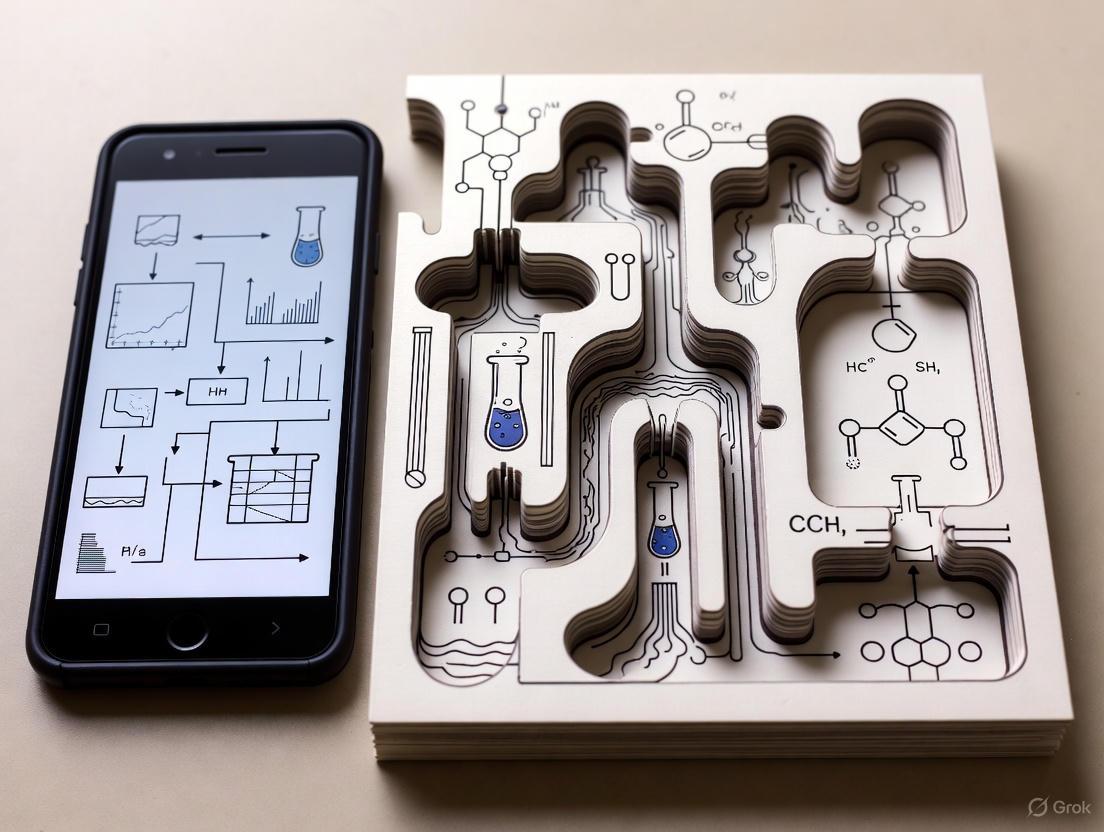
This article explores the integration of paper-based microfluidic devices (μPADs) with smartphone technology as a transformative approach for on-site water testing.
Smartphone-Paper Microfluidics: Revolutionizing Field Water Quality Monitoring
Abstract
This article explores the integration of paper-based microfluidic devices (μPADs) with smartphone technology as a transformative approach for on-site water testing. It covers the foundational principles of μPADs, including fabrication methods like wax and label printing. The manuscript details methodological advances such as colorimetric and fluorescent assays for detecting heavy metals, pathogens, and other contaminants, enhanced by AI and machine learning for data analysis. It addresses critical challenges including sensitivity, specificity, and environmental interference, providing optimization strategies. The content further validates these systems through performance comparisons with standard laboratory instruments and discusses their application in real-world environmental monitoring. Aimed at researchers and professionals, this review synthesizes current innovations to highlight the potential of these portable, cost-effective systems for decentralized water quality assessment and public health protection.
The Principles and Evolution of Paper Microfluidics for Water Analysis
This document outlines the fundamental principles and practical protocols for developing paper-based microfluidic devices, with a specific focus on applications for field water testing. These devices leverage capillary action to passively transport fluids, hydrophilic/hydrophobic patterning to create defined fluidic pathways, and power-free fluidics to enable operation in resource-limited settings. When integrated with smartphones for readout, these systems form a powerful, portable platform for on-site analysis, aligning with the REASSURED criteria (Real-time connectivity, Ease of sample collection, Affordable, Sensitive, Specific, User-friendly, Rapid and robust, Equipment-free, and Deliverable to end-users) for advanced point-of-care diagnostics [1].
Fundamental Scientific Concepts
Capillary Action in Porous Media
Fluid flow in paper-based microfluidics is governed by capillary action within the porous cellulose matrix.
- Governing Equations: The flow during the initial wetting phase can be approximated by Washburn's equation, where the average flow velocity (v) is inversely proportional to the distance traveled (L). The equation is expressed as
v = (γ cos θ) / (4η) * 1/L, whereγis the liquid-air surface tension,θis the liquid-solid contact angle, andηis the liquid viscosity [2]. - Flow Dynamics: Once the porous medium is fully wetted, subsequent flow becomes laminar and follows Darcy's law, where the average velocity is given by
v = - (K/η) * ▽P. Here,Kis the permeability of the porous medium, and▽Pis the pressure gradient [2]. - Flow Control: The flow velocity and timing in these devices can be controlled by altering the channel geometry, using flow resistors to increase fluid residence time, or modifying the wettability and surface energy of the paper [2].
Hydrophilicity, Hydrophobicity, and Patterning
The strategic creation of hydrophilic regions surrounded by hydrophobic barriers is the foundation of fluidic control in paper-based devices.
- Surface Wettability: Surfaces are classified based on their water contact angle (WCA). Superhydrophilic surfaces have a WCA < 10°, causing water to spread and adhere, while superhydrophobic surfaces have a WCA > 160°, causing water to bead up and roll off [3] [4].
- Natural Inspiration: This dual-wettability patterning is inspired by natural systems, such as the shell of the Namib desert beetle, which uses alternating hydrophilic and hydrophobic regions to collect water from fog [3].
- Pattern Fabrication: The core objective of fabrication is to create well-defined, hydrophobic physical barriers that extend through the entire thickness of the paper substrate, thereby confining aqueous solutions to the desired hydrophilic pathways [2].
Fabrication Methods and Experimental Protocols
A variety of techniques exist for patterning hydrophobic barriers onto paper substrates. The table below summarizes the most common methods.
Table 1: Comparison of Fabrication Techniques for Paper-Based Microfluidics
| Fabrication Technique | Equipment Needed | Reagents/Materials | Key Advantages | Key Limitations | Approx. Resolution |
|---|---|---|---|---|---|
| Wax Printing [5] [2] | Wax printer, hot plate | Solid wax | Simple, fast, and low-cost process | Low resolution due to isotropic wax spreading | ~100-500 μm |
| Photolithography [5] [6] | UV light source, hot plate, photomask | Photoresist (e.g., SU-8) | High-resolution features | Requires multiple steps, more expensive | ~100 μm |
| Inkjet Printing [5] [2] | Inkjet printer | Hydrophobic polymer, etching ink | Low cost, high resolution | Slow, as it deposits one droplet at a time | ~50-100 μm |
| Plasma Treatment [5] [2] | Vacuum plasma reactor, masks | Alkyl ketene dimer (AKD), fluorocarbon | Enables complex designs (e.g., semi-enclosed channels) | High equipment cost | ~100 μm |
| Flexographic Printing [5] | Customized printing equipment | Polystyrene, PDMS | Suitable for roll-to-roll mass production | High cost, complex preparation | ~100-200 μm |
| Laser Treatment/Cutting [5] | Laser cutting machine | None (or hydrophobic agent) | Rapid, highly reproducible | Susceptible to contamination | Varies with laser |
Detailed Protocol: FLASH (Fast Lithographic Activation of Sheets)
The FLASH method is a specific photolithographic technique designed for accessibility and speed, requiring no cleanroom facilities [6].
Materials & Reagents
- Substrate: Whatman Chromatography Paper No. 1 or similar.
- Photoresist: A homemade, epoxy-based negative photoresist (e.g., SU-8).
- Masking Materials: Adhesive transparency film, black construction paper.
- Equipment: UV lamp (or sunlight), hotplate, inkjet printer.
- Washing Reagents: Acetone, isopropyl alcohol (70%).
Step-by-Step Procedure
- Photoresist Application: Pour the photoresist onto the paper and spread it evenly using a rolling pin [6].
- Drying (Pre-bake): Bake the impregnated paper on a hotplate at 130°C for 5-10 minutes to evaporate the solvent [6].
- Mask Preparation: Cover one face of the dried paper with an adhesive transparency film and the other with black construction paper. The black paper acts as an optical filter to minimize reflected UV light [6].
- Patterning: Print the desired microfluidic channel pattern onto the transparency film using a standard inkjet printer. The black ink will act as the photomask [6].
- UV Exposure: Expose the masked paper to UV light. With a 600 W lamp, this typically takes 8-14 seconds. Sunlight can be used as an alternative (e.g., 6 minutes in direct sun) [6].
- Post-Exposure Bake: Remove the transparency and construction paper, then heat the paper again on the hotplate at 130°C for 5 minutes to crosslink the exposed photoresist [6].
- Development: Soak the paper in acetone for 1 minute, then rinse with fresh acetone and 70% isopropyl alcohol to remove the unexposed, unpolymerized photoresist, revealing the hydrophilic channels [6].
- Drying: Allow the device to dry completely at ambient temperature. It is now ready for use [6].
The Scientist's Toolkit: Research Reagent Solutions
Table 2: Essential Materials for Device Fabrication and Operation
| Item Name | Function/Application | Specific Examples |
|---|---|---|
| Cellulose Filter Paper | Hydrophilic substrate for fluid transport via capillary action. | Whatman Chromatography Paper No. 1 [6] |
| Negative Photoresist | Forms hydrophobic barriers when exposed to UV light. | SU-8, AZ nLOF 2020 [6] [7] |
| Fluorinated Silanes | Applied as a vapor or solution to create low-energy, hydrophobic surfaces. | Trichloro(1H,1H,2H,2H-perfluorooctyl)silane (PFOCTS) [7] |
| Solid Wax | Used in wax printing to create hydrophobic barriers upon melting. | Commercial wax for printers [5] |
| Alkyl Ketene Dimer (AKD) | A common hydrophobizing agent used in plasma treatment methods. | AKD in heptane solution [5] |
Smartphone Integration for Detection and Analysis
Smartphones are ideal partners for paper-based microfluidics, providing power, control, and analytical capabilities in a portable, ubiquitous package [1] [8].
Smartphone Capabilities
Modern smartphones integrate multiple features that can be harnessed for analytical devices [8]:
- High-Resolution Cameras: For colorimetric, fluorometric, and microscopic imaging of assay results.
- Processing Power: Enables on-device image analysis and data processing via custom apps.
- Connectivity: Allows for transmission of results to healthcare providers or central databases.
- Onboard Sensors: Sensors like magnetometers and gyroscopes can be repurposed for device control.
- Wireless Power: Capabilities like Near-Field Communication (NFC) can wirelessly power low-voltage microfluidic actuators [9].
Implementation Workflow
The following diagram illustrates a typical workflow for a smartphone-powered, pump-free diagnostic system.
Implementation Notes:
- Power-Free Fluidics: The microfluidic chip can be designed to operate without pumps. Fluid movement can be driven passively by capillary action alone [2], or by using gravity-driven flow by adjusting the height of the sample reservoir [10].
- Smartphone Control: The smartphone can supply electrical power via its USB On-The-Go (OTG) cable to spin a centrifugal microfluidic disc or to power other low-energy components [1]. Its embedded sensors can also be used for functions like rotational speed control via magnetic or acoustic tachometry [1].
- Quantitative Analysis: The smartphone's camera captures an image of the colorimetric or fluorescent assay on the µPAD. A custom application then processes the image, performing color intensity analysis or cell counting to provide a quantitative result [1] [10].
This document provides detailed application notes and protocols for key fabrication techniques relevant to the development of paper-based microfluidic devices for field water testing. The focus is on two primary methods: wax printing, a low-cost and accessible method ideal for rapid prototyping in resource-limited settings, and photolithography, a high-resolution technique for creating precise microstructures. A review of emerging label printing methods is also included for their potential in mass production. The content is structured to provide researchers with quantitative data, step-by-step experimental protocols, and visual workflows to facilitate the integration of these fabrication processes into research on portable water-quality monitoring systems coupled with smartphone detection.
Wax Printing for Microfluidic Paper-Based Analytical Devices (µPADs)
Wax printing is a solid-ink printing process used to create hydrophobic barriers on paper, defining hydrophilic channels and test zones for fluidic transport via capillary action [11]. This technique is particularly suited for field applications in water testing due to its low cost, rapid prototyping capability, and compliance with the ASSURED (Affordable, Specific, Sensitive, User-friendly, Rapid, Equipment-free, and Deliverable) criteria for point-of-care diagnostics [11]. A significant advantage is its minimal material cost, which can be as low as \$0.001 per device, not including the printer and energy costs [11]. The fabrication process can be completed in less than 5 minutes, making it highly efficient for prototyping and small-scale production [11].
Detailed Experimental Protocol
Protocol: Fabrication of a µPAD via Wax Printing
- Objective: To create a functional microfluidic paper-based analytical device (µPAD) with defined hydrophilic channels and test zones.
- Principle: A solid ink printer deposits wax onto paper in a predefined pattern. Subsequent heating melts the wax, causing it to permeate the paper's thickness and form hydrophobic barriers.
Materials and Equipment:
- Solid ink printer (e.g., Xerox Phaser 8650) [12]
- Hydrophilic paper substrate (e.g., Whatman No. 1 CHR chromatography paper) [12]
- Wax printing ink
- Design software (e.g., Adobe Illustrator)
- Convection oven or thermal laminator
- Forceps or tweezers for handling
Procedure:
- Device Design: Design the microfluidic pattern (channels, reservoirs, and test zones) using vector graphic software (e.g., Adobe Illustrator). Ensure that the line widths for hydrophobic barriers are designed to account for lateral spreading during heating; a minimum final width of 387 µm is achievable after a miniaturization process [12].
- Wax Printing: Print the design onto the paper substrate using the solid ink printer.
- Heating/Reblocking: Place the printed paper in a convection oven at 195 °C for 2 minutes to melt the wax, allowing it to wick through the paper and form complete hydrophobic barriers [12]. Alternatively, a thermal laminator can be used for a brief heating cycle to achieve higher-resolution patterns [11].
- Cooling and Finishing: Remove the paper from the heat source and allow it to cool to room temperature. Individual devices can then be cut out with scissors or a craft cutter.
Miniaturization Protocol for Enhanced Resolution: To achieve sub-millimeter features, wax-printed devices can be miniaturized via periodate oxidation [12].
- Immerse the wax-printed µPAD in a 0.5 M aqueous sodium periodate (NaIO₄) solution. The minimum volume required for effective miniaturization is approximately 2 mL per device [12].
- Shield the reaction from light and allow it to proceed for 48 hours at room temperature.
- Remove the device and wash it in deionized water for 15 minutes with rocking to remove residual chemicals.
- Dry the device for 1 hour in a gel dryer at 60 °C and 300 torr [12].
- This treatment can miniaturize the device by up to 78% in surface area, producing functional hydrophilic channels as narrow as 301 µm [12].
Performance Data and Specifications
Table 1: Performance Specifications of Wax-Printed µPADs
| Parameter | Standard Wax Printing | With Miniaturization | Measurement Method |
|---|---|---|---|
| Minimum Hydrophilic Channel Width | ~500-800 µm [11] | 301 µm [12] | Microscopic measurement of dye wicking |
| Minimum Hydrophobic Barrier Width | ~1000 µm [11] | 387 µm [12] | Microscopic measurement; defined by dye leakage prevention |
| Device Miniaturization | Not Applicable | Up to 78% surface area reduction [12] | Physical measurement after oxidation |
| Fabrication Time | < 5 minutes [11] | + 48 hours (oxidation) [12] | - |
| Estimated Cost per Device | ~\$0.001 (material cost) [11] | Slightly higher (chemical cost) | - |
Photolithography for Microfluidic Mold Fabrication
Photolithography is a high-resolution patterning technique that uses light to transfer a geometric pattern from a photomask to a light-sensitive chemical photoresist on a substrate [13]. In microfluidics, it is predominantly used to create master molds, typically from a thick SU-8 photoresist on a silicon wafer. These molds are then used in soft lithography to produce polydimethylsiloxane (PDMS) chips [13]. While more complex and expensive than wax printing, photolithography offers superior resolution and precision, enabling the creation of complex microchannel architectures essential for advanced lab-on-a-chip water sensors that may integrate multiple analytical functions.
Detailed Experimental Protocol
Protocol: Fabrication of an SU-8 Master Mold for PDMS Chip Replication
- Objective: To create a high-resolution master mold on a silicon wafer for replicating PDMS microfluidic devices.
- Principle: A silicon wafer coated with a photosensitive SU-8 resin is exposed to UV light through a photomask. Exposed areas cross-link and become insoluble, while unexposed areas are dissolved in a developer solution, creating a relief pattern.
Materials and Equipment:
- Silicon wafer
- SU-8 photoresist series (e.g., SU-8 2050 for ~150 µm channels)
- Spin coater
- Hotplate
- UV light source (e.g., mask aligner)
- Photomask with the desired channel pattern
- SU-8 developer solution
Procedure:
- Wafer Preparation: Clean a silicon wafer to remove contaminants and ensure good adhesion. Dehydrate on a hotplate at 150-200 °C for 5-10 minutes [13].
- Photoresist Coating: Apply SU-8 photoresist to the wafer and spin-coat at a predetermined speed (e.g., 1750 rpm for 30 seconds) to achieve the desired uniform thickness, which defines the channel height [13].
- Soft Bake: Transfer the coated wafer to a hotplate for a soft bake. A typical two-stage soft bake involves 65 °C for 1-5 minutes followed by 95 °C for 3-7 minutes to evaporate solvents [13].
- UV Exposure: Align the photomask with the wafer and expose the photoresist to UV light. The exposure dose (e.g., 175-225 mJ/cm²) is critical for achieving vertical sidewalls and must be calibrated [13].
- Post-Exposure Bake (PEB): Bake the wafer again on a hotplate, typically at 95 °C for 3-5 minutes, to complete the cross-linking reaction in the exposed areas [13].
- Development: Immerse the wafer in SU-8 developer solution with gentle agitation for ~5-10 minutes to dissolve the unexposed photoresist, revealing the patterned mold.
- Hard Bake and Inspection: Optionally hard bake the mold to improve its mechanical and chemical resistance. Inspect the final mold under a microscope for defects and measure critical dimensions [13].
Performance Data and Specifications
Table 2: Key Parameters in Photolithography for Microfluidics
| Parameter | Typical Range/Value | Impact on Fabrication |
|---|---|---|
| Resolution | ~1-100 µm [14] | Determines minimum feature size of microchannels. |
| Aspect Ratio | High (e.g., >10:1 for SU-8) [13] | Allows for tall, narrow channel walls. |
| Spin Speed | 500-3000 rpm [13] | Inversely controls photoresist and final channel height. |
| Soft Bake Temperature | 65-95 °C [13] | Removes solvent; critical for adhesion and defect prevention. |
| UV Exposure Dose | 100-500 mJ/cm² (process-dependent) [13] | Controls cross-linking depth and sidewall profile. |
| Post-Exposure Bake Temperature | 95-115 °C [13] | Finalizes cross-linking, reduces stress, improves resolution. |
Comparative Analysis and Workflow Visualization
Technique Selection Guide
The choice between wax printing and photolithography depends on the application requirements. The following diagram illustrates the decision-making workflow for selecting a fabrication method within the context of water-quality sensor development.
Side-by-Side Technique Comparison
Table 3: Comparative Analysis of Fabrication Techniques for Microfluidics
| Feature | Wax Printing | Photolithography | Emerging Label Printing |
|---|---|---|---|
| Typical Resolution | 300 - 1000 µm [12] [11] | 1 - 100 µm [14] | 50 - 200 µm (estimated) |
| Cost | Very Low (\$0.001/device) [11] | High (equipment, cleanroom) | Low for mass production [15] |
| Throughput | High (minutes/device) [11] | Low (hours/process cycle) | Very High [15] |
| Equipment Needs | Commercial printer, oven | Spin coater, mask aligner, cleanroom | Industrial print press [15] |
| Best For | Field-deployable µPADs, prototyping | High-precision R&D, complex LOC | Scaling production, functional inks |
| Material | Chromatography paper [12] | SU-8 photoresist, Silicon wafer | Polymer films, label stocks [15] |
| Key Advantage | Accessibility, speed, low cost | Ultra-high resolution and precision | Scalability, roll-to-roll production [15] |
The Scientist's Toolkit: Essential Research Reagent Solutions
Table 4: Key Materials and Reagents for Microfluidic Device Fabrication
| Item | Function/Application | Exemplary Specifications |
|---|---|---|
| Whatman No. 1 CHR Paper | Hydrophilic substrate for wax-printed µPADs; consistent flow properties. | Pore size ~11 µm, thickness ~180 µm [12]. |
| Solid Wax Ink | Forms hydrophobic barriers to define microfluidic channels. | Compatible with solid-ink printers (e.g., Xerox Phaser). |
| Sodium Periodate (NaIO₄) | Paper miniaturization agent; oxidizes cellulose to shrink fibers and enhance resolution. | 0.5 M solution for 48-hour immersion [12]. |
| SU-8 Photoresist | Negative tone, epoxy-based photoresist for creating high-aspect-ratio microfluidic molds. | Viscosity determines layer thickness (e.g., SU-8 2050 for ~150 µm) [13]. |
| SU-8 Developer | Solvent to dissolve unexposed, non-cross-linked SU-8 photoresist after UV exposure. | Propylene glycol monomethyl ether acetate (PGMEA)-based solution [13]. |
| Photomask | Quartz or glass plate with a chrome pattern; defines the geometry of microfluidic channels during UV exposure. | High optical density (>3) in opaque regions for clean pattern transfer [14]. |
| Polydimethylsiloxane (PDMS) | Elastomeric polymer used to cast microfluidic devices from SU-8 master molds. | Sylgard 184 kit (base & curing agent), mix 10:1 ratio. |
Emerging Label Printing Methods
While traditional for product labels, high-resolution flexographic and digital printing methods used in the label industry offer valuable insights for mass-producing functional components of water-testing devices [15]. These methods are highly scalable and compatible with roll-to-roll processing, which could lower the per-unit cost of sensors dramatically.
The label printing process involves several stages that can be adapted for microfluidic manufacturing:
- Prepress and Proofing: Artwork is finalized and color separation is performed using a PDF workflow to produce digital files for plate production [16].
- Plate Production: Computer-to-Plate (CtP) systems use lasers to image digital designs onto photopolymer printing plates, eliminating film and enabling high-resolution patterning [16].
- Printing: Flexographic printing is efficient for large-volume orders, using water-based inks and plates, while digital printing is ideal for short runs and multiple designs without the need for plates [15].
- Finishing: This includes the application of protective laminates or varnishes and precise die-cutting, which could be adapted to define the final shape of a microfluidic card [15].
These established industrial processes represent a promising pathway for transitioning laboratory-based microfluidic sensors to commercially viable, mass-produced products for widespread environmental monitoring.
Microfluidic paper-based analytical devices (μPADs) represent a transformative technology for field water testing, aligning with the World Health Organization's ASSURED (Affordable, Sensitive, Specific, User-friendly, Rapid and Robust, Equipment-free, and Deliverable to end-users) principles for diagnostic tools [17]. These devices leverage the intrinsic properties of paper to create microfluidic channels via hydrophobic patterning, enabling precise fluid control through capillary action without external power requirements [18]. The integration of µPADs with smartphone technology creates a powerful diagnostic platform that combines the ultra-low cost and disposability of paper substrates with the computational power, high-resolution cameras, and connectivity of ubiquitous mobile devices [19]. This combination is particularly valuable for water quality monitoring in resource-limited settings, where access to traditional laboratory instrumentation is constrained. This application note details the material advantages, experimental protocols, and implementation frameworks that make paper-based microfluidic sensors with smartphone readout a revolutionary approach for field-based water contaminant detection.
Material Advantages and Performance Metrics
The core material advantages of µPADs stem from the use of cellulose paper as a substrate, which provides a low-cost, disposable, and portable platform for analytical testing.
Quantitative Advantages of Paper-Based Platforms
Table 1: Comparative Analysis of Sensor Platforms for Water Testing
| Platform Characteristic | Traditional Lab Equipment | Paper-Based Microfluidic (μPAD) |
|---|---|---|
| Device Cost | Hundreds to thousands of dollars (e.g., ICP-MS, HPLC) [20] | Less than \$1 (substrate cost) [17] |
| Analysis Time | Several hours to days (including sample transport) [20] | 1–15 minutes for full analysis [21] |
| Portability | Requires dedicated laboratory space | Handheld, lightweight, and deployable in field settings [21] [19] |
| Fluid Handling | External pumps and power sources required | Passive capillary flow; equipment-free [17] [18] |
| Disposability | Reusable or complex waste stream | Incineration possible; minimal waste [18] |
| Fabrication Methods | Precision machining; high cost | Wax printing, photolithography; low cost and rapid prototyping [17] |
Performance of Recent µPAD and Smartphone Systems
Recent research demonstrates that the material advantages of µPADs do not compromise analytical performance.
Table 2: Performance Metrics of Smartphone-Integrated µPADs for Water Contaminant Detection
| Target Analyte | Detection Mechanism | Linear Range | Limit of Detection (LOD) | Assay Time | Smartphone Function |
|---|---|---|---|---|---|
| Fluoride Ions (F⁻) | Colorimetric (DCMSi probe) | 0.04–0.25 mM | 5 μM | Rapid (specific time not given) | Image capture and quantification [22] |
| Arsenic (As) | Colorimetric | 2.5 ppb – 1 ppm | 2.5 ppb | 4–10 minutes | Data processing in multi-analyte device [21] |
| E. coli | Wax-printed ELISA | Not specified | 10⁴ CFU/mL | 3 hours | Potential for image analysis [20] |
| Blood Glucose | Colorimetric (enzymatic) | 45–630 mg/dL | Not specified | Minutes (wicking time) | RGB analysis with custom app [23] |
Experimental Protocols
Fabrication of µPADs via Wax Printing
Wax printing is a dominant fabrication method due to its low cost, ease of use, and rapid prototyping capabilities [17].
Procedure:
- Design: Create the device layout using design software (e.g., AutoCAD, CorelDRAW) or specialized open-source tools like AutoPAD [24]. The design should define the hydrophilic test zones and connection channels.
- Printing: Print the design onto chromatographic or filter paper using a solid ink (wax) printer.
- Heating: Place the printed paper on a hotplate or in an oven at 100–150°C for 1–2 minutes. The heat causes the wax to melt and permeate the paper thickness, forming a complete hydrophobic barrier.
- Cooling: Allow the device to cool to room temperature, solidifying the wax and finalizing the hydrophobic patterns.
- Reagent Deposition: Pipette and deposit specific reagent solutions (e.g., DCMSi for fluoride) onto the designated hydrophilic test zones and allow them to dry at room temperature [22].
Colorimetric Detection of Fluoride Ions
This protocol details the detection of fluoride using a specific chromogenic probe, as presented in recent literature [22].
Reagents:
- Styryl-dihydropyranylidenemalononitrile derivative with a silyl ether group (DCMSi)
- Standard fluoride solutions (e.g., NaF in deionized water) for calibration
- Water samples (filtered if turbid)
Procedure:
- Device Preparation: Use a wax-printed µPAD with the DCMSi probe pre-immobilized in the test zone.
- Sample Introduction: Pipette a precise volume (e.g., 5–10 μL) of the standard or unknown water sample onto the device's sample inlet.
- Reaction and Development: Allow the sample to wick through the channel via capillary action to the test zone containing the DCMSi probe. The fluoride ion triggers a desilylation reaction, forming a phenolate ion and inducing a visible color change due to an intramolecular charge transfer (ICT) mechanism.
- Image Capture: Place the developed µPAD in a 3D-printed cassette to standardize imaging conditions. Use a smartphone to capture an image of the test zone under consistent lighting, optionally provided by integrated LEDs [23].
- Quantification: Analyze the captured image using a smartphone app or image processing software (e.g., ImageJ) to measure the RGB or grayscale intensity. Correlate the intensity to fluoride concentration using a pre-established calibration curve.
The signaling pathway for this fluoride detection method is as follows:
Smartphone Integration and Data Processing
The workflow for integrating smartphone analysis with a µPAD is critical for quantitative field deployment.
Procedure:
- Standardized Imaging: Design a 3D-printed cassette that holds the smartphone in a fixed position relative to the µPAD. Incorporate LED lights to provide uniform, consistent illumination, mitigating ambient light variations [23].
- Application Development: Develop a smartphone application capable of:
- Capturing an image of the test zone.
- Selecting the region of interest (ROI).
- Deconvoluting the color signal into RGB or HSV channels.
- Comparing the intensity to a stored calibration curve.
- Outputting the analyte concentration.
The Scientist's Toolkit: Research Reagent Solutions
Table 3: Essential Materials and Reagents for µPAD Development for Water Testing
| Item | Function/Description | Application Example |
|---|---|---|
| Chromatography Paper (Whatman Grade 1) | High-purity cellulose substrate; consistent capillary flow | Base material for fabricating µPADs [17] |
| Solid Ink (Wax) Printer | Creates hydrophobic barriers on paper via printing and heating | Patterning microfluidic channels in µPADs [17] |
| DCMSi Probe | Chromogenic chemosensor; reacts with F⁻ via desilylation, causing a color shift | Selective colorimetric detection of fluoride ions in water [22] |
| 3D-Printing Filament (PLA, ABS) | Fabrication of custom cassettes and holders for smartphones | Creating a standardized imaging environment to minimize optical noise [23] |
| Smartphone with Camera | Integrated sensor, processor, and display for data acquisition and analysis | Capturing colorimetric data and running analysis apps for on-site quantification [22] [19] |
| ImageJ / RGB Analysis App | Software for quantifying color intensity from digital images | Translating visual color changes into quantitative analyte concentrations [22] [23] |
The integration of smartphone technology with paper-based microfluidic devices has created a powerful paradigm shift in field-deployable water quality testing. This "lab-in-a-phone" approach leverages the sophisticated cameras, computational power, and connectivity of modern smartphones to transform traditional laboratory analyses into portable, user-friendly, and cost-effective diagnostic tools. This application note details the implementation of smartphone-based analytical platforms, providing detailed protocols for the simultaneous detection of chemical contaminants and waterborne pathogens. We present comprehensive performance data and standardized methodologies to support researchers and development professionals in adapting these technologies for environmental monitoring, public health protection, and point-of-care diagnostics in resource-limited settings.
Application Notes: Capabilities and Performance
Smartphone-based microfluidic systems combine the principles of microfluidics—manipulating small fluid volumes in miniaturized channels—with the imaging, processing, and communication capabilities of smartphones. These systems typically utilize the smartphone's camera as a sensor to capture colorimetric, fluorescent, or morphological changes in a sample, while onboard or cloud-based applications perform quantitative analysis [25] [26]. The resulting platforms are characterized by their portability, rapid analysis time, and ability to operate in non-laboratory settings.
Chemical Parameter Detection
Paper-based analytical devices (PADs) are particularly well-suited for colorimetric detection of chemical parameters. A representative flower-shaped PAD has been developed for the simultaneous detection of five key water quality parameters: total hardness, chloride, nitrate, nitrite, and fluoride [27]. The device utilizes specific chromogenic reagents impregnated in different zones, producing visible color changes upon reaction with target analytes. The performance metrics for this multiplexed detection system are summarized in Table 1.
Table 1: Performance metrics of a smartphone-integrated PAD for chemical contaminant detection [27].
| Analyte | Detection Principle | Limit of Detection (LOD) | Linear Range | Analysis Time |
|---|---|---|---|---|
| Total Hardness | Eriochrome Black T complexation | 4.85 mg L⁻¹ | 20-500 mg L⁻¹ | < 2 minutes |
| Chloride (Cl⁻) | Mohr method (precipitation) | 2.63 mg L⁻¹ | 5-250 mg L⁻¹ | < 2 minutes |
| Nitrate (NO₃⁻) | Griess reaction (azo dye formation) | 0.25 mg L⁻¹ | 0.5-50 mg L⁻¹ | < 2 minutes |
| Nitrite (NO₂⁻) | Griess reaction (azo dye formation) | 0.045 mg L⁻¹ | 0.1-10 mg L⁻¹ | < 2 minutes |
| Fluoride (F⁻) | Lanthanum nitrate–alizarin complexone | 0.004 mg L⁻¹ | 0.01-2 mg L⁻¹ | < 2 minutes |
Another system focused on copper ion (Cu²⁺) detection employs a synthesized rhodamine derivative (RBCl) immobilized on a multi-channel paper device. This compound undergoes a structural change from a colorless spirolactam to a pink open-ring amide in the presence of Cu²⁺, allowing for highly sensitive detection with a limit of 1.51 ng/mL, well below the USEPA regulatory limit of 1.30 mg/L [28].
Biological Pathogen Detection
The detection of waterborne pathogens like Giardia lamblia and Cryptosporidium parvum is also feasible through smartphone-based fluorescence microscopy. This involves a 3D-printed attachment that provides a narrow-band light source to excite fluorescent labels in commercial test kits [29]. The smartphone camera, often fitted with an inexpensive clip-on lens (e.g., DotLens), then captures the resulting fluorescence, making pathogens visible under magnification. This approach provides a low-cost alternative to laboratory-grade fluorescent microscopes for field use [29].
More advanced microfluidic systems can automate the entire pathogen detection process. For instance, digital microfluidic (DMF) platforms can be controlled via a smartphone using a Bluetooth module to manipulate discrete droplets containing the sample and reagents. The smartphone can also serve as an image analysis station for colorimetric or morphological assays performed on the chip [30].
Experimental Protocols
Protocol 1: Fabrication and Use of a Multiplexed Chemical PAD
This protocol describes the creation and operation of a flower-shaped PAD for the simultaneous detection of hardness, chloride, nitrate, nitrite, and fluoride [27].
Research Reagent Solutions & Materials Table 2: Key reagents for the multiplexed chemical PAD.
| Reagent/Material | Function | Target Analyte |
|---|---|---|
| Eriochrome Black T | Chromogenic reagent forming colored complex with Ca²⁺/Mg²⁺ | Total Hardness |
| Silver Nitrate & Potassium Chromate | Reagents for Mohr method precipitation reaction | Chloride (Cl⁻) |
| Griess Reagents (Sulfanilamide & N-(1-Naphthyl)ethylenediamine) | Form a pink-red azo dye with nitrite (direct) and nitrate (after reduction) | Nitrite (NO₂⁻) & Nitrate (NO₃⁻) |
| Lanthanum Nitrate & Alizarin Complexone | Form a colored complex with fluoride ions | Fluoride (F⁻) |
| Whatman Chromatography Paper | Substrate for the microfluidic device and reagent impregnation | N/A |
| Wax Printer | Used to create hydrophobic barriers defining fluidic channels | N/A |
Procedure
- Device Fabrication: Create a flower-shaped design with a central sample zone and five protruding test zones. Print this pattern onto Whatman chromatography paper using a wax printer to create hydrophobic boundaries. Heat the paper to allow the wax to penetrate and create a robust barrier.
- Reagent Immobilization: Impregnate each of the five test zones with 0.5 µL of the specific colorimetric reagent for each analyte at its optimized concentration (e.g., 0.030% w/v Eriochrome Black T for hardness). Allow the device to dry completely and store in a desiccator and light-proof container until use.
- Sample Analysis: Pipette 50 µL of the water sample onto the central zone of the PAD. Allow the sample to wick via capillary action into all five test zones.
- Image Acquisition and Analysis: After 2 minutes, place the PAD in a standardized, uniform lighting enclosure. Use a smartphone to capture an image of the device. A custom smartphone application then analyzes the Red-Green-Blue (RGB) values of each test zone, converting the color intensity into a quantitative concentration value using pre-loaded calibration curves.
Protocol 2: Smartphone-based Detection of Copper Ions
This protocol outlines a highly specific method for detecting Cu²⁺ using a rhodamine derivative-based paper sensor [28].
Research Reagent Solutions & Materials
- RBCl Reagent: Synthesized 1-(N,N-dichloromethine) amino-4-rhodamine B hydrazine-benzimide. This compound is highly selective and sensitive to Cu²⁺, undergoing a color change from colorless to pink.
- Ethanol (99.8%): Solvent for preparing the RBCl stock solution.
- Multi-channel paper microfluidic device: Fabricated via wax printing, featuring eight detection zones for high-throughput analysis.
- 3D-printed smartphone colorimetric reader: An attachment to hold the phone and sensor, ensuring consistent imaging conditions.
Procedure
- Sensor Preparation: Prepare a stock solution of RBCl at 1 mg/mL in ethanol. Dilute this to a working concentration (e.g., 10⁻⁵ mol/L) before use. Spot 1 µL of the working RBCl solution onto each detection zone of the paper device and allow it to dry.
- Sample Introduction: Apply 10 µL aliquots of the water sample (or standard Cu²⁺ solution for calibration) to each of the eight detection zones.
- Color Development: Allow the reaction to proceed for 2 minutes. A pink color will develop in the presence of Cu²⁺, with intensity proportional to the concentration.
- Reading and Quantification: Place the device into the 3D-printed reader. Use the smartphone to capture an image, which is analyzed by a dedicated app to quantify the Cu²⁺ concentration based on the color intensity, achieving detection limits as low as 1.51 ng/mL.
Protocol 3: Fluorescent Detection of Waterborne Pathogens
This protocol utilizes a smartphone-based fluorescence microscope attachment to detect protozoan pathogens like Giardia and Cryptosporidium [29].
Research Reagent Solutions & Materials
- Commercial Water Testing Kit: A kit containing fluorescently labeled antibodies specific to the target pathogens (e.g., Giardia lamblia, Cryptosporidium parvum).
- DotLens or similar clip-on lens: An inexpensive, inkjet-printed lens that attaches to the smartphone's main camera to provide microscopic magnification.
- 3D-printed fluorescent attachment: A modular accessory that provides a narrow-band (e.g., LED) light source for exciting the fluorescent labels.
Procedure
- Sample Preparation and Staining: Follow the manufacturer's instructions for the commercial test kit. This typically involves concentrating a water sample via filtration and then incubating it with the fluorescent antibodies.
- Microscopy Setup: Attach the DotLens to the smartphone camera. Clip the 3D-printed attachment onto the phone, ensuring the narrow-band light source is aligned for epi-illumination.
- Image Acquisition: Place the prepared sample slide into the attachment. Using a custom smartphone application, capture an image or video of the sample. The application may control the light source's spectrum and intensity.
- Pathogen Identification: In a positive test, target pathogens will be visible as bright, fluorescent objects against a dark background. The image can be analyzed manually or using on-phone AI algorithms to count and identify pathogens based on their size and morphology.
The Scientist's Toolkit
Successful implementation of a lab-in-a-phone system requires a synergistic combination of hardware, software, and biochemical reagents.
Table 3: Essential components of a smartphone-based water testing toolkit.
| Component | Category | Description & Function |
|---|---|---|
| Smartphone | Hardware | Provides camera for sensing, processor for analysis, display for results, and connectivity for data sharing. |
| Custom Mobile Application | Software | Performs RGB analysis, runs calibration algorithms, manages data, and controls external hardware (e.g., via Bluetooth). |
| Paper-based Microfluidic Device | Consumable | Low-cost substrate with hydrophobic channels for controlled fluid movement and zones for reagent storage and reactions. |
| 3D-Printed Enclosure | Hardware | Provides standardized, reproducible imaging conditions and integrates optical components (lenses, lights) and sample holders. |
| Chromogenic/Fluorogenic Reagents | Chemistry | Compounds that undergo a measurable color or fluorescence change upon binding with the specific target analyte. |
| Digital Microfluidic (DMF) Controller | Hardware (Advanced) | A portable, smartphone-controlled electronic system that generates high voltages for precise droplet manipulation on a DMF chip [30]. |
The field of analytical chemistry has been revolutionized by the development of microfluidic paper-based analytical devices (μPADs), which represent a convergence of simple paper-based assays with advanced microfluidic principles. This evolution has transformed traditional laboratory-based analytical processes into portable, affordable, and user-friendly tools, particularly for field water testing. The journey began with simple paper-strip tests and has progressed to sophisticated hybrid systems that integrate smartphones for digital analysis, enabling precise detection of contaminants like toxic metals, pathogens, and organic pollutants in water samples. The historical progression from early paper diagnostics to modern μPAD systems demonstrates a significant paradigm shift in analytical sciences, moving from centralized laboratories to decentralized, point-of-need testing, which is especially crucial for environmental monitoring and public health protection in resource-limited areas [31] [32].
The conceptual foundation for paper-based diagnostics dates back further than often recognized. In 1938, Ukrainian scientists Izmailov and Shraiber developed what is now regarded as a precursor to modern paper-based analysis by using adsorbent-coated microscope slides for separations, observing sample components as concentric rings under UV light [31]. This "spot chromatographic method" established the basic principle of using porous substrates for analytical separations. Later, in the 1940s, Müller and Clegg advanced this technology by creating wax barriers on filter paper to restrict fluid flow and speed up pigment separation, demonstrating early recognition of pattern-based fluid control [31]. These innovations laid the essential groundwork for what would eventually become sophisticated paper-based microfluidic devices.
A pivotal moment in the field occurred in 2007 when the Whitesides Group at Harvard University formally introduced the first purpose-built microfluidic paper-based analytical devices (μPADs) [33]. These devices leveraged the innate capillary action of paper to transport liquids without requiring external power sources, creating self-powered microfluidic systems. The Whitesides group demonstrated that hydrophobic materials could be patterned onto paper to create well-defined hydrophilic channels and detection zones, enabling simultaneous analysis of multiple analytes [33]. This breakthrough established the core principles that would drive subsequent innovations in the field, particularly for environmental water monitoring applications where portability, cost-effectiveness, and ease of use are critical requirements.
The Transition to Modern Hybrid μPAD Systems
The integration of smartphones with μPADs represents the most transformative advancement in paper-based diagnostics, creating powerful hybrid systems that combine the convenience of paper-based fluid handling with the computational power and connectivity of mobile technology. The first prototype system combining paper-based microfluidic devices with camera phones for quantifying bioassays and digitally exchanging results with off-site physicians was demonstrated in 2008 [34]. This early system used paper devices patterned with hydrophobic polymer walls to create hydrophilic channels functionalized with colorimetric assay reagents, with camera phones or portable scanners digitizing the color intensity for analysis [34].
Modern smartphone-based μPAD systems leverage the powerful embedded features of smartphones, including high-resolution cameras, sensors, processors, and communication capabilities, transforming them into versatile analytical tools [35] [19]. These hybrid systems provide an integrated solution for the new generation of mobile sensing applications (MS2), offering significant advantages over traditional platforms in terms of test speed and control, low cost, mobility, ease-of-operation, and data management [36]. The implications of such integration extend beyond telecommunications and microfluidics, enabling revolutionary applications in environmental monitoring, healthcare, and food safety testing [19] [36].
For water quality testing specifically, these hybrid systems have enabled detection of various contaminants including heavy metals, nutrients, organic pollutants, and pathogens. The marriage of smartphones and microfluidic devices offers a powerful on-chip operating platform that enables various biochemical tests, remote sensing, and data analysis in a mobile fashion, making them ideally suited for field water testing in resource-limited environments [36].
Key Technological Advancements in μPAD Systems
Fabrication Techniques
The evolution of fabrication methods has been crucial in advancing μPAD capabilities from simple dipsticks to sophisticated analytical devices:
- Photolithography: Early µPADs used photolithography to pattern hydrophobic polymer barriers on paper, creating precise microfluidic channels [34].
- Wax Printing: This simpler and more accessible method emerged as a popular alternative, where solid wax is printed and melted to create hydrophobic barriers [33].
- Screen Printing: Enabled integration of electrodes for electrochemical detection, expanding analytical capabilities beyond colorimetric methods [33].
- Laser Etching and Cutting: Provided high-resolution patterning for more complex microfluidic designs [33].
These fabrication advancements have allowed creation of increasingly complex fluidic pathways, including three-dimensional configurations that enable sophisticated fluid manipulations and multi-step analytical processes previously only possible in traditional laboratories [33].
Detection Mechanisms
Modern hybrid μPAD systems incorporate multiple detection modalities to enhance sensitivity and expand analytical applications:
- Colorimetric Detection: The most common method, where analyte-specific color changes are quantified using smartphone cameras [34] [37].
- Electrochemical Detection: Offers higher sensitivity and selectivity for specific analytes, with screen-printed electrodes integrated into paper substrates [33].
- Fluorescence Detection: Provides enhanced sensitivity for low-concentration analytes, using smartphone cameras with appropriate optical filters [33].
- Distance-Based Detection: Utilizes the length of color development in paper channels as a quantitative measure, requiring no digital interpretation [33].
The following table summarizes the evolution of detection capabilities in hybrid μPAD systems for water testing applications:
Table 1: Evolution of Detection Capabilities in Hybrid μPAD Systems for Water Testing
| Detection Method | Analytes Detected | Sensitivity Range | Smartphone Integration | References |
|---|---|---|---|---|
| Colorimetric | Toxic metals (Cu, Ni, Cd, Cr), nutrients (nitrite, nitrate) | LOD: 0.19-0.35 ppm for metals; 0.52 mg/L for nitrite | Camera-based color intensity analysis | [37] [36] |
| Electrochemical | Heavy metals (Arsenic), pesticides, organic pollutants | LOD: 1 ppb for Arsenic; 10 ppb for ketamine | Potentiometric or amperometric measurements | [33] [36] |
| Fluorescence | Heavy metals (Pb²⁺, Hg²⁺, Cd²⁺, As³⁺), bacteria | LOD in ppb range for metals; 5-10 CFU/mL for E. coli | Camera with LED excitation and filters | [33] [36] |
| Distance-Based | Glucose, proteins, electrolytes | Qualitative and semi-quantitative results | Visual inspection or camera measurement | [33] |
Nanoparticle Enhancement
Recent advancements have significantly improved μPAD performance through nanoparticle integration, particularly for water contaminant detection:
- Gold and Silver Nanoparticles: Utilize their unique optical properties for colorimetric sensing, enhancing sensitivity and selectivity for toxic metals [37].
- Fluorescent Nanocomposites: Metal-organic frameworks (MOFs) combined with fluorescent compounds enable highly sensitive simultaneous detection of multiple heavy metals [33].
- Magnetic Nanoparticles: Facilitate sample preparation and concentration of target analytes within μPADs, improving detection limits [37].
These nanomaterial enhancements have addressed earlier limitations in sensitivity and selectivity, making μPADs increasingly competitive with traditional laboratory instruments for water quality monitoring [37].
Experimental Protocols for Hybrid μPAD Water Testing
Protocol 1: Colorimetric Detection of Heavy Metals Using Nanoparticle-Based μPADs
Principle: Functionalized nanoparticles undergo color changes upon interaction with specific metal ions, enabling visual and smartphone-based quantification [37].
Materials and Reagents:
- Whatman No. 1 filter paper or chromatography paper
- Wax printer or wax pen for patterning
- Gold nanoparticles (functionalized with specific ligands)
- Buffer solutions (pH-specific for target metals)
- Standard metal solutions for calibration
- Smartphone with camera and color analysis app
Procedure:
- Device Fabrication:
- Design microfluidic pattern with defined detection zones
- Print wax pattern using wax printer or draw manually with wax pen
- Heat device at 100°C for 2 minutes to melt wax and create hydrophobic barriers
- Cool to room temperature before use
Nanoparticle Functionalization:
- Prepare gold nanoparticle solution (15-20 nm diameter)
- Functionalize with specific chelating agents (e.g., dithiocarbamates for copper)
- Centrifuge and resuspend in buffer to optimal concentration
Device Preparation:
- Deposit 5-10 μL functionalized nanoparticle solution in detection zones
- Air dry for 30 minutes at room temperature
- Store in desiccator until use
Sample Testing:
- Apply 50-100 μL water sample to device inlet
- Allow sample to wick through device completely (2-5 minutes)
- Capture image of detection zones using smartphone camera
- Analyze color intensity using color analysis application
- Compare with calibration curve for quantification
Calibration:
- Prepare standard solutions of target metals at known concentrations
- Test each standard following same procedure
- Generate calibration curve of color intensity vs. concentration
- Validate with quality control standards
Table 2: Performance Characteristics for Heavy Metal Detection Using Nanoparticle-Enhanced μPADs
| Metal Ion | Nanoparticle System | Linear Range (ppm) | Limit of Detection (ppm) | Color Change Observation | Interference Management |
|---|---|---|---|---|---|
| Lead (Pb²⁺) | AuNPs with rhodamine | 0.1-10 | 0.05 | Red to purple | EDTA masking of other cations |
| Mercury (Hg²⁺) | AgNPs with glutathione | 0.05-5 | 0.02 | Yellow to colorless | Citrate buffer to reduce Cu²⁺ interference |
| Copper (Cu²⁺) | AuNPs with dithiocarbamate | 0.2-20 | 0.1 | Red to blue | pH control to minimize Fe³⁺ interference |
| Arsenic (As³⁺) | AgNPs with citrate | 0.1-15 | 0.08 | Yellow to brown | Pre-reduction with ascorbic acid |
Protocol 2: Electrochemical Detection of Water Pollutants
Principle: Electrochemical μPADs (ePADs) measure electrical signals (current, potential) resulting from redox reactions of target analytes, offering high sensitivity for organic pollutants and pesticides [33] [36].
Materials and Reagents:
- Screen-printed carbon or metal electrodes on paper substrate
- Potentiostat or simple voltage measurement circuit
- Reference and counter electrodes integrated into device
- Electrolyte solutions (e.g., phosphate buffer)
- Enzyme solutions (for enzymatic assays)
- Smartphone with data acquisition interface
Procedure:
- Device Fabrication:
- Design electrode pattern with working, reference, and counter electrodes
- Screen-print conductive inks (carbon, silver/silver chloride) onto paper
- Cure electrodes according to ink specifications
- Add hydrophobic barriers to define fluidic paths
Electrode Modification:
- Apply specific recognition elements (enzymes, antibodies, aptamers)
- Use cross-linking agents (e.g., glutaraldehyde) for biomolecule immobilization
- Dry and store at appropriate conditions
Sample Preparation:
- Mix water sample with supporting electrolyte (if required)
- Filter if necessary to remove particulates
- Adjust pH if critical for detection
Measurement:
- Connect ePAD to smartphone via appropriate interface
- Apply 50-100 μL prepared sample to device
- Apply specific potential sequence for target analyte
- Measure current response or potential change
- Record data using smartphone application
Data Analysis:
- Calculate analyte concentration from calibration curve
- Store results with GPS location data for mapping
- Transmit data to central database if required
Protocol 3: Smartphone-Based Fluorometric Detection
Principle: This method utilizes fluorescent compounds or quantum dots whose emission intensity changes upon binding with target analytes, with smartphone cameras capturing fluorescence signals [33].
Materials and Reagents:
- Paper substrate with low background fluorescence
- Fluorescent probes (organic dyes, quantum dots, MOFs)
- LED light source for excitation (appropriate wavelength)
- Emission filters compatible with smartphone camera
- Reference fluorescence standards
Procedure:
- Device Preparation:
- Pattern paper to create detection zones
- Functionalize with fluorescent probes specific to target analytes
- Dry and store protected from light
Optical Attachment Setup:
- Design 3D-printed attachment to align smartphone camera with device
- Incorporate LED excitation source with appropriate wavelength
- Include emission filters to block excitation light
- Ensure light-tight enclosure to exclude ambient light
Measurement:
- Place prepared μPAD in measurement chamber
- Apply water sample to device
- Allow reaction to proceed (typically 5-10 minutes)
- Activate LED excitation and capture image with smartphone
- Analyze fluorescence intensity using dedicated app
Quantification:
- Use reference standards for intensity normalization
- Calculate concentration from calibration curve
- Account for potential quenching or enhancement effects
The Scientist's Toolkit: Essential Research Reagent Solutions
Successful development and implementation of hybrid μPAD systems for water testing requires specific materials and reagents optimized for paper-based microfluidics and detection mechanisms.
Table 3: Essential Research Reagent Solutions for Hybrid μPAD Development
| Category | Specific Examples | Function in μPAD Systems | Performance Considerations |
|---|---|---|---|
| Paper Substrates | Whatman filter papers (No. 1, 4), chromatography paper, nitrocellulose membrane | Provide capillary-driven fluid transport, substrate for assay immobilization | Pore size affects wicking speed and resolution; thickness impacts capacity and mechanical strength |
| Hydrophobic Barriers | Wax, PDMS, polystyrene, acrylic polymers | Create defined fluidic channels and containment zones | Melting point, viscosity, and chemical compatibility determine patterning resolution and stability |
| Nanoparticles | Gold nanoparticles, silver nanoparticles, quantum dots, magnetic nanoparticles | Enhance detection sensitivity through optical, electrochemical, or concentrating effects | Size, shape, and surface functionalization determine specificity and signal amplification |
| Recognition Elements | Enzymes (GOx, HRP), antibodies, aptamers, molecularly imprinted polymers (MIPs) | Provide specificity for target analytes through biochemical recognition | Stability on paper, binding affinity, and cross-reactivity affect assay reliability |
| Signal Transduction Reagents | Chromogenic substrates (TMB, NBT-BCIP), fluorogenic substrates, redox mediators | Generate measurable signals from biochemical recognition events | Conversion rate, stability, background signal, and compatibility with detection method |
| Buffer Systems | Phosphate buffer, Tris buffer, carbonate-bicarbonate buffer | Maintain optimal pH and ionic conditions for biochemical reactions | Buffer capacity, compatibility with paper, and effect on wicking behavior |
| Polymeric Enhancers | Chitosan, Nafion, polyvinyl alcohol, hydrogels | Improve reagent immobilization, stability, and signal intensity | Viscosity, porosity, and chemical compatibility with paper and reagents |
Workflow Visualization: From Sample to Result
The following diagram illustrates the integrated workflow of a modern hybrid μPAD system for water testing, highlighting the seamless transition from physical sample handling to digital data analysis:
Water Testing Workflow Using Hybrid μPAD System
The historical progression from early paper diagnostics to modern hybrid μPAD systems represents a remarkable convergence of microfluidics, materials science, nanotechnology, and mobile digital technology. This evolution has transformed simple qualitative paper tests into sophisticated quantitative analytical platforms capable of detecting a wide range of water contaminants with sensitivity approaching traditional laboratory methods. The integration of smartphones has been particularly transformative, adding digital quantification, data management, and connectivity to the inherent advantages of paper-based microfluidics.
Future developments in hybrid μPAD technology are likely to focus on several key areas. Artificial intelligence and machine learning algorithms will enhance data analysis, pattern recognition, and result interpretation. Improved multiplexing capabilities will enable simultaneous detection of multiple contaminants from a single water sample. Enhanced connectivity through Internet of Things (IoT) platforms will facilitate real-time monitoring and large-scale water quality mapping. Additionally, advancements in sustainable materials and manufacturing will further reduce costs and environmental impact.
For researchers and scientists working in field water testing, modern hybrid μPAD systems offer powerful tools that combine the best attributes of simple paper tests and sophisticated instrumentation. These systems continue to bridge the gap between laboratory-based analytical chemistry and field-deployable environmental monitoring, making vital water quality information more accessible across diverse settings, from remote rural communities to complex urban environments. As this technology continues to evolve, it holds significant promise for addressing global water safety challenges through decentralized, affordable, and reliable testing solutions.
Designing and Deploying Smartphone-μPADs for Target Water Contaminants
Colorimetric Detection Schemes for Heavy Metals (e.g., Copper, Arsenic, Chromium, Iron)
The growing global concern over water security has accelerated the need for rapid, on-site testing methods for heavy metal contaminants [38]. Paper-based microfluidic analytical devices (μPADs or PADs) have emerged as a powerful platform for environmental monitoring, offering a compact, cost-effective, and user-friendly alternative to traditional laboratory techniques [39] [40]. These devices miniaturize and integrate complex laboratory procedures, such as sample collection, preparation, and chemical reaction, onto a single, portable chip [39] [38]. The principle of operation leverages the capillary action within the hydrophilic microchannels of the paper, which controls the movement of tiny fluid volumes without requiring external power [38]. This technology is particularly suited for colorimetric detection, where the presence of a target analyte induces a visible color change that can be quantified, often using a smartphone camera, to determine concentration [38] [41]. When integrated with smartphones, these devices create a potent system for field-deployable water quality monitoring, enabling data collection, analysis, and sharing in real-time [40].
The following diagram illustrates the typical workflow for a foldable paper-based microfluidic device integrating colorimetric and smartphone detection.
Colorimetric Detection Schemes for Specific Heavy Metals
Colorimetric detection on μPADs relies on the selective reaction between a target heavy metal ion and an immobilized chromogenic reagent, resulting in a distinct color change. The intensity of this color is proportional to the concentration of the metal ion. Below is a summary of the key performance metrics for the detection of various heavy metals as reported in recent literature. It should be noted that while specific, high-performance data for Arsenic and Iron is not explicitly detailed in the provided search results, the table includes information for other relevant metals to illustrate typical device capabilities.
Table 1: Performance Metrics of Colorimetric Detection for Heavy Metals on Paper-Based Platforms
| Heavy Metal | Detection Method | Linear Range (μg/L) | Limit of Detection (LoD) (μg/L) | Key Performance Indicators | Compatibility with Smartphone Analysis |
|---|---|---|---|---|---|
| Copper (Cu) | Colorimetric / LIBS | N/A | 924 (via LIBS) | R² = 0.999; Relative Error < 5% vs. ICP-MS [39] | Yes, for semi-quantitative colorimetric readout [39] |
| Manganese (Mn) | Colorimetric / LIBS | N/A | 890 (via LIBS) | R² = 0.999; Relative Error < 5% vs. ICP-MS [39] | Yes, for semi-quantitative colorimetric readout [39] |
| Lead (Pb) | Electrochemical / Optical | Varies by study | Varies by study (e.g., sub-μg/L possible) | High sensitivity and selectivity with nanomaterials [42] | Yes, for optical methods [42] |
| Cadmium (Cd) | Electrochemical / Optical | Varies by study | Varies by study | Good sensitivity with engineered sensors [42] | Yes, for optical methods [42] |
| Arsenic (As) | Not Specified | Not Specified | Not Specified | Not Specified | Principle applicable [42] |
| Iron (Fe) | Not Specified | Not Specified | Not Specified | Not Specified | Principle applicable [42] |
The signaling mechanism for colorimetric detection involves a specific chemical reaction pathway for each metal. The following diagram generalizes this pathway and its integration with the sensing platform.
Detailed Experimental Protocol
This protocol provides a step-by-step methodology for fabricating a paper-based microfluidic device and using it for the colorimetric detection of heavy metals, adapted from recent research [39].
Device Fabrication and Preparation
Materials Required:
- Whatman Grade 1 Chromatography Paper or similar pure cellulose paper.
- Hydrophobic Barrier Agent: Wax printer or hydrophobic polymer solution (e.g., PDMS).
- Chromogenic Reagents: Specific to target metals (e.g., reagents for Cu, Mn).
- Standard Solutions: 1000 mg/L stock solutions of target heavy metals (e.g., Cu, Mn).
- Deionized Water.
- Pipettes and tips for liquid handling.
Procedure:
- Design: Create a digital design of the microfluidic device featuring a central sample inlet, branching microchannels for concentration gradient generation, and distinct detection zones for colorimetric reactions.
- Patterning: Print the designed pattern onto the paper using a wax printer. Alternatively, use a plotting cutter to create a mask and impregnate the paper with a hydrophobic polymer.
- Heating: Heat the printed paper on a hotplate (e.g., 100°C for 2 minutes) to allow the wax to melt and spread vertically and horizontally, creating a complete hydrophobic barrier.
- Reagent Immobilization: Pipette a small, precise volume (e.g., 0.5 - 2 μL) of the specific chromogenic reagent for each target metal onto the designated detection zones. Allow the reagents to dry and immobilize completely at room temperature.
Sample Analysis and Smartphone Detection
Materials Required:
- Fabricated μPAD.
- Water sample.
- Smartphone with camera and dedicated analysis app (e.g., Color Grab, ImageJ with mobile interface, or a custom-developed app).
- A simple imaging box with consistent LED lighting to minimize ambient light variation.
Procedure:
- Sample Introduction: Pipette a controlled volume (e.g., 50 - 100 μL) of the water sample onto the sample inlet of the μPAD.
- Capillary Flow: Allow the sample to wick through the microfluidic channels via capillary action until all detection zones are fully wetted.
- Incubation: Wait a predetermined time (e.g., 30 seconds to 5 minutes) for the colorimetric reaction between the heavy metals and the chromogenic reagents to complete and stabilize.
- Image Acquisition: Place the μPAD inside the imaging box with consistent lighting. Use the smartphone camera, held at a fixed distance and angle, to capture an image of the detection zones. Ensure the image is in focus and evenly illuminated.
- Color Intensity Analysis:
- Transfer the image to a analysis software (on the phone or computer).
- Convert the image to an appropriate color space (e.g., RGB, HSV).
- Measure the intensity of the color channel (e.g., Red, Green, Blue, or Value) that shows the greatest change in response to the analyte concentration.
- Compare the intensity values from the sample to a calibration curve generated from standard solutions of known concentration.
Table 2: Research Reagent Solutions and Essential Materials
| Item Name | Function / Role in the Experiment |
|---|---|
| Chromatography Paper | Serves as the hydrophilic substrate for the microfluidic network, transporting liquids via capillary action [39] [38]. |
| Chromogenic Reagents | Selective chemicals that undergo a color change upon binding with specific heavy metal ions, enabling visual detection [39]. |
| Heavy Metal Standard Solutions | Used for device calibration, performance validation, and generating standard addition curves for accurate quantification [39]. |
| Wax or Hydrophobic Polymer | Creates a physical barrier to define microchannels and contain fluid flow within specific paths on the paper [39]. |
| Smartphone with Camera | Acts as a portable detector and data processor, capturing images of color changes and analyzing color intensity [41] [40]. |
Performance Data and Validation
The integration of colorimetric detection with other quantitative methods like Laser-Induced Breakdown Spectroscopy (LIBS) in a single platform demonstrates the high performance achievable. One study on a foldable LIBS-assisted PAD (LaPAD) showed that the colorimetric detection of Copper and Manganese was consistent with expected concentrations, providing a reliable semi-quantitative readout [39]. Subsequent LIBS quantification on the same device achieved exceptional accuracy, with coefficients of determination (R²) of 0.999 for both Cu and Mn, and limits of detection (LoD) of 924 μg/L and 890 μg/L, respectively [39]. When validated against the gold standard method of Inductively Coupled Plasma Mass Spectrometry (ICP-MS), the LaPAD-LIBS system showed relative errors of less than 5%, confirming its high accuracy for in-situ analysis [39].
Table 3: Comparison of On-Site Heavy Metal Detection Techniques
| Technique | Detection Speed | Sensitivity | Anti-Interference Capacity | Multiplex Detection (Multiple Metals) | Cost |
|---|---|---|---|---|---|
| Paper-based Microfluidics with Smartphone | High | Moderate to High | Moderate | High | Low |
| Test Strips | High | Low | Low | Low | Very Low [39] |
| Electrochemical Sensors | High | High | Moderate | Low | Moderate [39] [42] |
| Handheld XRF | Moderate | Moderate | Lower | High | High [39] |
Smartphone Integration and Data Processing
The smartphone is the cornerstone of modern μPAD systems, transforming it from a simple imaging tool into a comprehensive analytical platform. The process involves image capture under controlled lighting, color space transformation (e.g., from RGB to HSV), and pixel intensity analysis to correlate color intensity with analyte concentration [41]. Future advancements are focused on integrating Artificial Intelligence (AI) and Internet of Things (IoT) technologies with paper sensors [40]. AI can improve pattern recognition for more accurate concentration predictions, especially in complex samples, while IoT connectivity allows for real-time geo-tagged data streaming to cloud servers, enabling large-scale water quality mapping and rapid response to contamination events [40].
Fluorescent Assays and Immunoassays for Sensitive Pathogen and Protein Biomarker Detection
The detection of pathogenic microorganisms and specific protein biomarkers is crucial for public health, environmental monitoring, and clinical diagnostics. Traditional laboratory methods, while sensitive, often require sophisticated equipment, trained personnel, and are time-consuming, making them unsuitable for rapid field testing. The integration of fluorescent assays and immunoassays with paper-based microfluidic devices and smartphone detection creates a powerful, portable platform for on-site analysis. This approach is particularly transformative for water quality testing in resource-limited settings, enabling real-time, sensitive detection of contaminants [43] [44].
This application note details the principles and protocols for two advanced detection methodologies suited for this platform: a CRISPR-Cas12a-based fluorescent assay for pathogen nucleic acid detection and a temperature-responsive liposome-linked immunoassay (TLip-LISA) for protein biomarkers. These methods leverage the miniaturization and capillarity-driven flow of paper-based microfluidics, combined with the processing power and imaging capabilities of smartphones, to create sensitive, quantitative, and field-deployable diagnostic tools [45] [46].
Application Note 1: CRISPR-Cas12a Hybridization Chain Reaction (HCR) Assay for Pathogen Detection
The CRISPR-Cas12a system, when coupled with an enzyme-free hybridization chain reaction (HCR), provides a versatile and highly sensitive platform for detecting pathogen-specific nucleic acids. This method is ideal for identifying bacterial contaminants, such as Salmonella or E. coli, in water samples.
Principle and Workflow
The assay employs a two-step signal amplification strategy. First, the presence of the target pathogen DNA initiates HCR, creating long double-stranded DNA polymers. Second, these polymers activate the trans-cleavage activity of the CRISPR-Cas12a system, which then non-specifically cleaves a fluorescent reporter probe, generating a measurable signal [47].
Key Reagents and Materials
Table 1: Essential Reagents for CRISPR-Cas12a HCR Assay
| Reagent/Material | Function | Specifications/Notes |
|---|---|---|
| LbCas12a Enzyme | CRISPR-associated protein; provides trans-cleavage activity | Requires NEBuffer 2.1 [47] |
| crRNA | Guides Cas12a to specific target sequence | Designed to be complementary to target pathogen DNA [47] |
| HCR Hairpin Probes (H1 & H2) | Enzyme-free DNA amplification | Designed to self-assemble into long chains upon target initiation [47] |
| Poly T-Cu Reporter Probe | Fluorescent signal generation | Cost-effective alternative to dye-quencher probes; emits fluorescence upon binding Cu²⁺ [47] |
| Paper-based Microfluidic Chip | Platform for reagent storage and fluidic handling | Often uses wax-printed or laminated channels [48] [46] |
| Smartphone with Camera | Signal acquisition and data analysis | Requires a dedicated app for colorimetric/fluorometric analysis [43] [46] |
Detailed Experimental Protocol
- Device Fabrication: Create a paper-based microfluidic device using wax printing or laser cutting to define hydrophilic channels and reaction zones on chromatography or filter paper. Pre-load the HCR hairpin probes (H1 and H2) and the Poly T-Cu reporter into specific zones on the paper device. The Cas12a/crRNA complex can be pre-stored or added separately [48] [47].
- Sample Preparation and Nucleic Acid Extraction:
- Collect water samples and concentrate pathogens if necessary via filtration.
- Lyse the pathogens to release genomic DNA using a thermal or chemical lysis method suitable for a field setting. Simple heating at 95°C for 5-10 minutes can be sufficient for many bacteria [49].
- Assay Execution:
- Apply the prepared sample (containing target DNA) to the inlet of the paper-based device.
- Allow the sample to rehydrate and mobilize the pre-stored reagents via capillary action.
- Incubate the device at room temperature (25-37°C) for 30-60 minutes to allow for HCR amplification and Cas12a-mediated cleavage to occur [47].
- Signal Detection and Analysis:
- Place the device in a portable, dark box equipped with a UV or blue LED light source to excite the fluorescence.
- Use the smartphone camera to capture an image of the fluorescent signal in the detection zone.
- Analyze the image intensity using a smartphone application (e.g., ImageJ-based mobile app or custom-developed software) to quantify the signal, which is proportional to the target pathogen concentration [43] [46].
Performance Data
Table 2: Analytical Performance of Featured Fluorescent Assays
| Assay Method | Target | Limit of Detection (LOD) | Assay Time | Key Advantage |
|---|---|---|---|---|
| CRISPR-Cas12a HCR [47] | S. aureus DNA | 4.17 CFU/mL | ~60 min | High sensitivity, enzyme-free amplification |
| Target amplification-free CRISPR-CasΦ (TCC) [49] | Pathogen DNA (e.g., S. aureus) | 0.11 copies/μL (0.18 aM) | 40 min | Ultra-sensitive, no pre-amplification needed |
| LAMP-CRISPR Paper System [45] | Pathogenic Bacteria | 1 copy/μL | < 60 min | Fully automated, long-term reagent storage |
Application Note 2: Temperature-Responsive Liposome-Linked Immunosorbent Assay (TLip-LISA) for Protein Biomarkers
For the detection of specific protein biomarkers, the TLip-LISA offers an ultra-sensitive alternative to traditional enzyme-linked immunosorbent assays (ELISAs), making it suitable for detecting low-abundance contaminants or biomarkers in water.
Principle and Workflow
This assay is a sandwich immunoassay format. A capture antibody immobilized on a surface (e.g., a membrane in a microfluidic device) binds the target protein. A biotinylated detection antibody then binds to the captured target. Finally, streptavidin-conjugated temperature-responsive liposomes (TLips) loaded with a fluorescent squaraine dye (SQR) are added. Unbound liposomes are washed away. Upon heating, only the bound liposomes undergo a phase transition, releasing a strong fluorescent signal that is quantified [50].
Key Reagents and Materials
Table 3: Essential Reagents for TLip-LISA
| Reagent/Material | Function | Specifications/Notes |
|---|---|---|
| Capture Antibody | Immobilized on paper/membrane to capture target protein | Specific to the protein biomarker of interest [50] |
| Biotinylated Detection Antibody | Binds to captured target for signal generation | Specific to a different epitope of the target protein [50] |
| Temperature-Responsive Liposomes (TLips) | Signal amplification probe | Composed of DPPC lipids and SQR22 dye; phase transition at ~41°C [50] |
| Biotinylated Lipid (e.g., Biotin-PEG-DSPE) | Incorporated into TLip for streptavidin conjugation | Enables binding to the detection antibody [50] |
| Portable Heater | For controlled thermal activation | Must precisely control temperature to 41-45°C [50] |
| Blocking Buffer (e.g., BSA) | Prevents non-specific binding | Critical for reducing background noise [50] |
Detailed Experimental Protocol
- Device Preparation: Functionalize a specific zone of a nitrocellulose paper membrane with the capture antibody. Block the remaining surface with a blocking buffer (e.g., 1% BSA) to prevent non-specific adsorption.
- Assay Execution:
- Apply the water sample to the antibody-functionalized zone and incubate to allow the target protein to be captured.
- Wash the device with a buffer solution to remove unbound materials.
- Apply the biotinylated detection antibody and incubate.
- Wash again to remove excess detection antibody.
- Apply the streptavidin-conjugated TLips and incubate.
- Perform a final wash step stringently to remove all unbound liposomes. This step is critical for low background [50].
- Signal Activation and Detection:
- Use an integrated, portable Peltier heater to uniformly heat the detection zone to 42°C. This triggers the phase transition of the bound liposomes, activating the fluorescence.
- Immediately capture an image of the fluorescent signal using the smartphone camera in a dark environment.
- The fluorescence intensity, analyzed via a smartphone app, is directly correlated with the concentration of the target protein. The entire detection process after the final wash takes less than 5 minutes [50].
Performance Data
Table 4: Analytical Performance of Featured Immunoassays
| Assay Method | Target | Limit of Detection (LOD) | Assay Time | Key Advantage |
|---|---|---|---|---|
| Temperature-Responsive Liposome-LISA (TLip-LISA) [50] | Prostate Specific Antigen (PSA) | 0.97 aM (27.6 ag/mL) | < 5 min (after wash) | Ultra-sensitive, rapid signal readout |
| Novel ELISA for Soluble PD-1/PD-L1 [51] | Soluble PD-1, PD-L1, PD-L2 | Precise measurements in pg/mL range | Not specified | Broad dynamic range, high precision |
| Smartphone-based Heavy Metal/Nutrient Sensor [46] | Ni²⁺, Fe²⁺, Cu²⁺, NO²⁻, PO₄³⁻ | 0.2 - 1.3 ppm | < 5 min | Multiplexed detection, single-dip format |
The Scientist's Toolkit
Table 5: Key Research Reagent Solutions
| Item | Function in Assay | Application Context |
|---|---|---|
| CRISPR-Cas Proteins (Cas12a, CasΦ) | Programmable nucleic acid recognition and trans-cleavage | Core component for specific pathogen DNA/RNA detection [49] [47] |
| Hairpin DNA Probes (for HCR) | Enzyme-free, isothermal nucleic acid amplification | Signal amplification to enhance detection sensitivity [47] |
| Temperature-Responsive Liposomes | High-density fluorescent dye encapsulation and signal release upon heating | Signal amplification probe for ultra-sensitive immunoassays [50] |
| Paper-based Substrates (Nitrocellulose, Filter Paper) | Porous matrix for fluidic transport and reagent immobilization | Core material for building low-cost, disposable microfluidic devices [48] [44] |
| Biotin-Streptavidin System | High-affinity linkage between detection molecules and signal probes | Universal coupling strategy for antibodies and nucleic acids to labels [50] |
| Smartphone with Analysis App | Portable imaging device and data processor | On-site signal capture, quantification, and user interface [43] [46] |
The monitoring of water pollutants is a critical global challenge for public health and ecosystem protection. Traditional methods relying on heavy instrumentation are often unsuitable for rapid, on-site detection. Paper-based microfluidic devices (μPADs) have emerged as a powerful alternative, offering portability, low cost, and minimal reagent consumption [38]. A pivotal aspect of their performance is the effective immobilization of selective molecular probes onto the paper substrate, which enables the specific recognition and sensitive detection of target analytes. This document provides detailed application notes and protocols for the synthesis of a novel chromogenic reagent, its immobilization onto paper, and its application within a μPAD for the selective detection of fluoride ions in water, utilizing a smartphone for result quantification. This work is situated within a broader thesis focused on developing robust, field-deployable tools for water quality testing [22].
Literature Review & Data Presentation
Recent advancements in μPADs highlight a trend towards integrating novel chemistries with simple, portable readout systems. The following table summarizes key recent studies on probe immobilization for environmental water testing.
Table 1: Recent Studies on Probe Immobilization for Water Contaminant Detection
| Target Analyte | Immobilized Probe/Reagent | Immobilization Method | Detection Method | Linear Range | Limit of Detection (LOD) | Ref. |
|---|---|---|---|---|---|---|
| Fluoride (F⁻) | Styryl-dihydropyranylidenemalononitrile derivative (DCMSi) | Physical adsorption on paper | Colorimetric (Smartphone) | 0.04 – 0.25 mM | 5 μM | [22] |
| Peroxynitrite (ONOO⁻) | Coumarin-based probe (CB-IMP) | Activation-triggered covalent binding | Fluorescence | N/A | 9 nM | [52] |
| Japanese Encephalitis Virus Antigen | Serum Antibodies | Covalent via APTES/Glutaraldehyde/Protein A on interdigitated sensor | Electrochemical (Impedance) | 1 – 10 μg/mL | 0.75 μg/mL | [53] |
| Core Research Gaps & Opportunities | ||||||
| 1. Simplified Fabrication: Many sensor platforms require complex surface functionalization (e.g., silanization). There is a need for probes that can be immobilized via simpler methods like physical adsorption without sacrificing performance [22] [53]. | ||||||
| 2. Multiplexing: The development of μPADs capable of simultaneously detecting multiple inorganic and organic pollutants on a single device is a key future direction [38]. | ||||||
| 3. Signal Stability: "Always-on" immobilized probes can suffer from stability and specificity issues. "Activation-triggered" immobilization, where the probe covalently binds to the substrate only upon analyte recognition, can enhance fidelity [52]. |
Experimental Protocols
Synthesis of the Chromogenic Probe (DCMSi)
The probe DCMSi is a styryl-dihydropyranylidenemalononitrile derivative bearing a tert-butyldimethylsilyl (TBDMS) ether group [22].
Reagents:
- p-Hydroxybenzaldehyde
- Malononitrile
- Acetic anhydride
- Piperidine
- Acetonitrile
- tert-Butyldimethylsilyl chloride (TBDMS-Cl)
- Imidazole
- Diethyl ether, Dichloromethane, Hexane
Procedure:
- Synthesis of Intermediate Dye: Dissolve p-hydroxybenzaldehyde (1.0 equiv) and malononitrile (1.2 equiv) in acetonitrile. Add a catalytic amount of piperidine and stir the reaction mixture at room temperature for 4-6 hours. Monitor the reaction by TLC. Upon completion, concentrate the mixture under reduced pressure and wash the resulting solid with cold diethyl ether to obtain the intermediate hydroxystilbene derivative.
- Silyl Ether Protection (DCMSi): Dissolve the intermediate hydroxy compound (1.0 equiv) and imidazole (1.5 equiv) in dry N,N-dimethylformamide (DMF). Add tert-butyldimethylsilyl chloride (1.2 equiv) slowly and stir the reaction at room temperature for 12 hours. Pour the mixture into ice water and extract with diethyl ether. Wash the organic layer with water and brine, dry over anhydrous magnesium sulfate, and concentrate. Purify the crude product (DCMSi) by column chromatography using hexane/ethyl acetate as the eluent.
- Characterization: Confirm the structure of DCMSi using ( ^1 \text{H} ) NMR and mass spectrometry.
Fabrication of the μPAD and Probe Immobilization
Reagents & Materials:
- Whatman Grade 1 filter paper or similar chromatography paper
- DCMSi stock solution (1 mM in ethanol)
- Hydrophobic barrier material (e.g., wax printer or permanent marker)
- Micropipettes
Procedure:
- Device Design: Create a simple microfluidic design with a central detection zone. This can be done by drawing a hydrophobic barrier (e.g., a circle ~5 mm in diameter) on the paper using a wax printer or a permanent marker to define the reaction zone.
- Probe Immobilization: Pipette 5 μL of the DCMSi stock solution (1 mM in ethanol) directly onto the center of the detection zone.
- Drying: Allow the device to air-dry completely at room temperature for 15-20 minutes. The DCMSi reagent will be physically adsorbed onto the paper fibers, forming the ready-to-use sensor. The fabricated μPADs can be stored in a desiccator in the dark for several weeks.
Fluoride Detection and Smartphone Readout
Equipment:
- Smartphone with a camera
- Smartphone holder or stand
- Small light box or consistent light source (optional, to minimize shadow)
- Image processing software (e.g., ImageJ, ColorGrab app, or a custom script)
Procedure:
- Sample Application: Pipette 10 μL of the standard or water sample to be tested onto the detection zone of the μPAD.
- Color Development: Allow the reaction to proceed for 2-5 minutes at room temperature. A visible color change from colorless/yellow to a pink/purple hue will occur in the presence of fluoride ions.
- Image Capture: Place the μPAD on a white background inside the light box. Using the smartphone holder to maintain a fixed distance and angle, capture an image of the device. Ensure the flash is turned off.
- Color Quantification:
- Transfer the image to a computer or use an on-device app.
- Using software like ImageJ, select the detection zone and measure the mean intensity of the Red, Green, and Blue (RGB) channels.
- The Blue channel value (or the ratio of R/B, G/B) typically shows the highest correlation with fluoride concentration [22].
- Calibration: Prepare a calibration curve by analyzing standard solutions of fluoride ion (e.g., 0, 0.05, 0.10, 0.15, 0.20, 0.25 mM) following the same procedure. Plot the measured color intensity (or channel value) against the fluoride concentration to generate a linear calibration plot.
The Scientist's Toolkit
Table 2: Essential Research Reagent Solutions and Materials
| Item | Function/Description | Application in Protocol |
|---|---|---|
| DCMSi Probe | Chromogenic reagent; silyl ether group is cleaved by F⁻, generating a phenolate ion and causing a bathochromic shift. | The core recognition element immobilized on paper. |
| Microfluidic Paper | Porous cellulose matrix; wicks fluids via capillary action and provides a substrate for reagent immobilization. | The platform for the sensor device. |
| Hydrophobic Barrier | Defines fluidic pathways and confines the reaction to a specific zone. | Created with wax to form the detection zone. |
| Smartphone & Imaging Software | Portable detection system; camera captures color change, and software quantifies it. | Used for on-site, quantitative readout of the assay. |
| Protein A / Glutaraldehyde / APTES | Common chemical linkers for covalent immobilization of biomolecules like antibodies on surfaces. | Not used in the DCMSi protocol, but essential for biosensors targeting biological contaminants [53]. |
Workflow and Signaling Pathway Visualization
Fluoride Ion Detection Workflow
Molecular Signaling Mechanism of DCMSi
The protocols detailed herein demonstrate a straightforward and effective methodology for synthesizing and immobilizing the novel DCMSi reagent on a paper-based microfluidic platform. This system enables the sensitive, selective, and quantitative detection of fluoride ions in water, leveraging the ubiquity of smartphones for field-portable analysis. The core principle of designing a probe whose interaction with the analyte produces a measurable color change is widely applicable. Future work within this thesis will focus on extending this immobilization strategy to create multiplexed sensors for simultaneous detection of other critical water contaminants, such as heavy metals and nutrients, further enhancing the utility of μPADs in environmental monitoring [38].
Multi-Channel and Origami μPAD Designs for Simultaneous Multiplexed Analysis
Microfluidic Paper-Based Analytical Devices (µPADs) represent a significant advancement in point-of-care (POC) and on-site testing platforms, aligning with the World Health Organization's ASSURED criteria (Affordable, Sensitive, Specific, User-friendly, Rapid and robust, Equipment-free, and Deliverable) [54] [35]. The evolution from simple dipstick tests to sophisticated multi-channel and origami (foldable) µPADs has unlocked the potential for simultaneous multiplexed analysis of diverse analytes. These designs facilitate complex, multi-step analytical procedures on a compact, pump-free platform, making them particularly valuable for field testing [55] [56]. When integrated with smartphones for readout and analysis, these devices leverage the connectivity, computational power, and high-resolution cameras of mobile devices to create powerful, portable diagnostic tools [35] [25]. This application note details the design, fabrication, and application of these advanced µPADs within a research program focused on field water testing.
Device Design and Operating Principles
Multi-Channel µPADs
Multi-channel µPADs are characterized by a design that splits a single sample into multiple, distinct detection zones. This architecture allows for the parallel quantification of different analytes from one sample application. A common configuration features a central sample inlet zone connected to several detection zones, each pre-loaded with specific reagents for a particular analyte [56] [57]. Fluid transport is driven by capillary action through the porous paper matrix, eliminating the need for external pumps.
Origami µPADs
Origami µPADs utilize a three-dimensional, foldable paper architecture to execute complex, multi-step analytical protocols that are difficult to perform on a single, planar layer. By folding and unfolding the paper device, different functional layers are brought into contact, allowing for steps such as sample pre-treatment, reagent mixing, reaction incubation, and final detection to be performed in a specific, user-controlled sequence [55] [58]. This "lab-on-paper" approach is crucial for implementing sensitive detection methods like chemiluminescence, where the precise timing of reagent mixing is essential [55].
The diagram below illustrates the typical workflow and architecture of a multiplexed origami µPAD for environmental water analysis.
Performance Data and Applications
The tables below summarize the performance characteristics of multi-channel and origami µPADs as reported in recent research for environmental and bio-chemical analysis.
Table 1: Performance of Multiplexed Colorimetric µPADs for Environmental Analysis
| Target Analytes | Detection Mechanism | Linear Range | Limit of Detection (LOD) | Assay Time | Reference Application |
|---|---|---|---|---|---|
| Phosphate, Nitrate, pH | Colorimetric | Phosphate: 1–22.5 mg L⁻¹Nitrate: 10–100 mg L⁻¹pH: 5.0–8.5 | Not Specified | < 20 min (total analysis) | Soil Nutrient Analysis [56] |
| Fe(III), Ni(II), Bovine Serum Albumin (BSA) | Colorimetric | Not Specified | Fe(III): 0.1 mMNi(II): 0.5 mMBSA: 1 µM | ~15 min | Model for Cross-Type Analyte Detection [57] |
Table 2: Performance of Smartphone-Assisted Origami µPADs with Advanced Detection
| Target Analyte | Detection Mechanism | Linear Range | Limit of Detection (LOD) | Assay Time | Key Feature |
|---|---|---|---|---|---|
| Glucose in Blood | Chemiluminescence (Smartphone) | Not Specified | 10 µmol L⁻¹ | < 20 min | Pre-loaded reagents, 30-day shelf-life [55] |
| Tau Protein (Alzheimer's Biomarker) | Chemiluminescence Immunoassay (Smartphone) | Not Specified | 26.1 pg/mL | Fully Automated | "Sample-in, answer-out" automation [59] |
| Rabbit IgG (Model Protein) | Chemiluminescence Immunoassay (Smartphone) | Not Specified | 62.4 pg/mL | Fully Automated | Improved sensitivity vs. colorimetric ELISA [59] |
Experimental Protocols
Fabrication of Multi-Channel µPADs via Wax Printing
This protocol describes the creation of hydrophobic barriers to define hydrophilic microfluidic channels on paper, suitable for multiplexed detection zones [56] [60].
Research Reagent Solutions & Materials:
- Substrate: Whatman Chromatography Paper (Grade 1 or similar).
- Hydrophobic Agent: Solid wax for printing (e.g., Xerox Phaser solid ink).
- Equipment: Wax printer (e.g., Xerox Phaser 8560DN or ColorQube series), hot plate or oven.
Step-by-Step Procedure:
- Design: Create the device layout using graphic design software (e.g., Adobe Illustrator, CorelDRAW). The design should consist of black lines representing the hydrophobic wax barriers, forming a central sample zone connected to multiple, isolated detection zones.
- Printing: Print the design directly onto the chromatography paper using the wax printer.
- Heating: Place the printed paper on a pre-heated hot plate at 100–150°C for 60–120 seconds, or in an oven at a similar temperature. This step melts the wax, allowing it to penetrate through the paper thickness and form complete hydrophobic barriers.
- Cooling: Allow the device to cool to room temperature. The µPAD is now ready for reagent deposition.
Fabrication and Assay Protocol for an Origami Chemiluminescence µPAD
This protocol outlines the creation and use of a foldable device for sensitive, multi-step chemiluminescence detection, adaptable for water contaminants like heavy metals [55].
Research Reagent Solutions & Materials:
- Device Substrate: Whatman CHR 1 chromatographic paper.
- Reagents:
- Recognition Enzyme/Bio-receptor: e.g., Glucose Oxidase (GOx, 50 U/mL in pH 5.5 phosphate buffer with pullulan stabilizer).
- Chemiluminescence System: Luminol (0.2 mol L⁻¹) and Potassium Hexacyanoferrate(III) (0.02 mol L⁻¹) solutions.
- Transport Buffer: Carbonate buffer.
- Equipment: Wax printer, manual rotary perforating blade, 3D-printed smartphone assay device (dark box with biosensor holder).
Step-by-Step Assay Procedure:
- Device Fabrication: a. Print the intricate pattern of hydrophobic barriers and fold lines on paper using a wax printer and heat as in Protocol 4.1. b. Use a perforating blade to score the fold lines for easy manipulation. c. Pre-load reagents into specific hydrophilic areas on different layers of the unfolded device: - Load GOx solution onto the level intended for the enzymatic reaction. - Load Hexacyanoferrate(III) and Luminol solutions onto separate zones on the detection layer. d. Air-dry the device in the dark and vacuum-seal for storage if not used immediately.
Assay Execution: a. Apply the pre-processed water sample to the sample zone. Capillary action wicks the sample, initiating the enzymatic reaction (e.g., generation of H₂O₂). b. Allow the reaction to proceed for a defined accumulation period (e.g., several minutes). c. Fold the device along the pre-defined lines. This action brings the generated product (e.g., H₂O₂) into contact with the CL reagents (Luminol and catalyst). d. Immediately add the transport buffer to initiate the CL reaction. e. Place the folded device into the 3D-printed smartphone holder within the dark box and initiate image capture using the smartphone camera.
Data Analysis: a. Capture the CL emission using the smartphone's CMOS camera in video or timed-exposure mode. b. Use a custom smartphone application or image analysis software (e.g., ImageJ) to quantify the intensity of the emitted light. c. Correlate the light intensity to analyte concentration using a pre-established calibration curve.
The following diagram summarizes the key reagents and their functional roles in a typical µPAD assay.
Discussion and Outlook
Multi-channel and origami µPADs significantly enhance the capabilities of paper-based analytics. The multi-channel format is ideal for spatially multiplexed tests, providing a simple, visual output for several analytes simultaneously [56] [57]. In contrast, origami µPADs enable procedurally multiplexed assays, where complex, multi-step laboratory protocols are miniaturized onto a foldable paper platform [55] [58]. The integration of smartphones brings data processing, connectivity, and high-sensitivity imaging to these devices, creating a powerful mHealth platform that is particularly suited for field water testing in resource-limited environments [35] [25].
Future research in this field will focus on increasing the level of automation to achieve true "sample-to-answer" systems [59], further improving quantitative accuracy through advanced image processing and artificial intelligence [25], and expanding the library of pre-loaded, stable reagents to detect a wider range of water contaminants, including pathogens and emerging organic pollutants. The convergence of innovative device design, stable chemistry, and mobile technology will continue to drive the development of robust, field-deployable water monitoring solutions.
Integrating AI and Machine Learning for Automated Image Analysis and Quantification
Application Note
The integration of artificial intelligence (AI) with paper-based microfluidic devices and smartphone readers is revolutionizing field water testing by enabling rapid, intelligent, and quantitative analysis of waterborne pathogens. This application note details a methodology that combines a portable 3D-printed detection system with a deep learning model to achieve automated image analysis and quantification, significantly enhancing the speed and accuracy of on-site water quality monitoring [61] [28].
This AI-aided approach addresses critical limitations of traditional detection methods, such as long turnaround times, the need for specialized laboratory equipment, and the subjectivity of manual result interpretation. By leveraging a smartphone-based colorimetric reader and an attention-based deep learning model, the system transforms a paper microfluidic device into an intelligent sensor capable of early prediction of pathogen presence, reducing the required analysis time by up to 45% while maintaining high sensitivity and specificity [61].
Key Performance Metrics
The table below summarizes the quantitative performance of the AI-integrated system for pathogen detection, demonstrating its efficacy for field deployment.
Table 1: Performance Metrics of the AI-Integrated Paper Microfluidic System
| Performance Parameter | Reported Result | Methodology / Notes |
|---|---|---|
| Analysis Time Reduction | Up to 45% | Compared to standard 40-cycle NAATs; prediction achieved by the 22nd cycle [61] |
| Detection Accuracy | 98.1% | Achieved on clinical datasets using an attention-based GRU model [61] |
| Detection Sensitivity | 97.6% | Performance on clinical SARS-CoV-2 datasets [61] |
| Detection Specificity | 98.6% | Performance on clinical SARS-CoV-2 datasets [61] |
| Power Consumption | 6.4 W | For the portable optoelectronic reader [61] |
| Reagent Cost Reduction | 89% | Per run, compared to conventional assays [61] |
| Detection Limit (Copper Ions) | 1.51 ng/mL | For a smartphone-based colorimetric paper microfluidic system [28] |
Protocol: AI-Augmented Detection of Waterborne Pathogens
This protocol provides a step-by-step procedure for fabricating a multi-channel paper microfluidic device, setting up a portable smartphone reader, and executing an AI-powered analysis for waterborne pathogen detection.
Materials and Reagents
- Filter Paper: Whatman Chromatography paper, Grade 1 [28].
- Fabrication Equipment: Wax printer (e.g., Xerox Phaser 8560DN) [28].
- Hotplate or Oven: For wax penetration to create hydrophobic barriers.
- Recognition Reagents: Specific to the target analyte. For copper ions, a synthesized rhodamine derivative (RBCl) is used [28]. For nucleic acid-based pathogen detection (e.g., RT-LAMP), primers targeting specific genes (ORF1ab, N, E), Bst polymerase, dNTPs, and a fluorescence dye like calcein are required [61].
- Smartphone: With a camera and custom software for image capture and processing.
- 3D-Printed Reader: A portable, low-power device housing a ceramic heater for temperature control and an optical module with LEDs and a filter for excitation/emission [61] [28].
- Software: LabVIEW and MATLAB for image processing, and Python-based deep learning frameworks (e.g., TensorFlow, PyTorch) for model deployment.
Experimental Procedure
Device Fabrication
- Design: Design the layout of the multi-channel paper microfluidic device using standard vector graphics software. The design should include a central sample introduction zone connected to multiple detection zones via microfluidic channels.
- Wax Printing: Print the design onto the Whatman filter paper using the wax printer. The wax lines define the hydrophobic barriers that form the channels and chambers.
- Heating: Place the printed paper on a hotplate or in an oven at a predetermined temperature (e.g., 100-150°C) for 1-2 minutes. This melts the wax, allowing it to penetrate through the paper and create complete hydrophobic barriers.
- Reagent Deposition: Pipette the recognition reagent (e.g., RBCl for metal ions or LAMP reagent mix for pathogens) onto each detection zone and allow it to dry at room temperature. The device is now ready for use or can be stored in a desiccator for future use.
Sample Processing and On-Chip Assay
- Sample Introduction: Apply the liquid water sample (typically 2-2.5 µL per channel) to the sample introduction zone of the paper device [61] [28].
- Capillary Flow: Allow the sample to wick through the paper channels via capillary action, reaching the detection zones where it rehydrates the pre-deposited reagents.
- Incubation and Reaction: Place the device into the 3D-printed reader, which maintains a constant temperature (e.g., 65°C for LAMP amplification) [61]. The reaction proceeds, producing a colorimetric or fluorescent signal proportional to the analyte concentration.
- Image Acquisition: The smartphone camera, integrated into the reader, captures time-lapse images of the detection zones at regular intervals (e.g., every 1 second) throughout the reaction.
AI-Powered Image Analysis and Quantification
- Image Pre-processing: The acquired images are automatically processed using a control program (e.g., in LabVIEW). This step involves:
- Circular Area Recognition: Identifying the coordinates and radius of each detection zone.
- Color Conversion: Converting the RGB image to a grayscale array.
- Signal Calculation: Computing the average grayscale value (0-255) for each detection zone in every frame [61].
- Data Feeding: The time-series data of the signal intensity from the early stages of the reaction is streamed in real-time to the pre-trained deep learning model.
- Prediction and Quantification: The attention-based Gated Recurrent Unit (GRU) neural network analyzes the early reaction dynamics to predict the entire amplification curve and provide a qualitative (positive/negative) and quantitative (analyte concentration) result long before the reaction is complete [61].
The Scientist's Toolkit: Essential Research Reagents and Materials
The table below catalogs the key reagents, materials, and software components essential for successfully executing the described AI-integrated water testing protocol.
Table 2: Essential Research Reagent Solutions and Materials
| Item | Function / Role | Specific Example / Note |
|---|---|---|
| Whatman Grade 1 Paper | Porous substrate for the microfluidic device; enables capillary action without external pumps [28]. | High purity and consistent flow rate are critical. |
| Wax Printer | Fabricates hydrophobic barriers on the paper to define channels and detection zones [28]. | Enables rapid prototyping and low-cost production. |
| Recognition Reagent | Selectively interacts with the target analyte to produce a measurable signal. | Rhodamine derivative (RBCl) for Cu²⁺ [28]; Primers and enzymes for pathogen NAATs [61]. |
| 3D-Printed Reader | Portable platform providing consistent thermal control and optical excitation/detection. | Integrates a ceramic heater and LED light source [61] [28]. |
| Smartphone | Acts as the image sensor, data processor, and user interface for the system. | Custom software apps are needed for image control and data transfer [61]. |
| Deep Learning Model (GRU) | The AI engine that analyzes early time-series data to predict final assay results, drastically reducing time-to-answer [61]. | An attention-mechanism based model shows high accuracy (98.1%) and can adapt to clinical datasets. |
Paper-based microfluidic analytical devices (µPADs), integrated with smartphone technology, represent a transformative approach for the rapid, cost-effective, and on-site monitoring of water quality. This platform is particularly vital for field testing in resource-limited areas, where conventional laboratory methods are inaccessible due to their dependence on expensive equipment and skilled personnel [62]. The convergence of microfluidic precision, the paper substrate's passive pumping capability, and the smartphone's computational power and connectivity enables a powerful "sample-in, answer-out" system for environmental surveillance [63] [43]. These devices are engineered to detect a broad spectrum of water contaminants, from biological pathogens to chemical ions, providing a versatile tool for safeguarding public health. The following application notes detail specific case studies and methodologies for detecting pathogens, copper ions, and multiple water quality parameters, underscoring the practical application of this technology within a broader thesis on deployable water-testing solutions.
Detection of Waterborne Pathogens
Application Note
Pathogens in water sources pose a significant global public health threat, causing high morbidity and mortality. The µPAD platform enables sensitive and specific in-field detection of various biochemical markers from molecules to whole organisms, which is crucial for effective treatment and intervention in low- and middle-income countries (LMICs) [62]. Traditional detection methods, such as culture and molecular techniques, are unsuitable for remote settings, creating a pressing need for portable, low-cost alternatives. Recent developments in µPADs for pathogen sensing leverage multidisciplinary insights, including the application of deep learning and the Internet of Things (IoT), to enhance the capabilities of environmental monitoring and clinical diagnostics [62].
Experimental Protocol
- Device Fabrication: Create hydrophilic channels and zones bounded by hydrophobic barriers on a paper substrate (e.g., Whatman filter paper) using a fabrication method such as wax printing [64] [65].
- Assay Design: Functionalize the detection zone with specific capture elements, such as antibodies or nucleic acid probes, tailored to the target pathogen [62].
- Sample Introduction: Apply the liquid water sample to the device's sample pad. Capillary action drives the sample through the device without external pumps.
- Signal Generation and Readout: As the sample interacts with the capture elements, a signal is generated. This is typically a colorimetric change detectable by the naked eye or, more quantitatively, via a smartphone camera.
- Data Analysis: Use a dedicated smartphone application to capture an image of the detection zone. The app performs analysis, such as color intensity measurement, to provide a quantitative result. The data can be stored locally, shared via cloud storage, or mapped geographically for spatial analysis of contamination [63].
Key Research Reagent Solutions
| Reagent/Material | Function in Experiment |
|---|---|
| Whatman Filter Paper | Porous cellulose substrate for microfluidic channels via capillary action [65]. |
| Hydrophobic Wax | Printed to form barriers that define hydrophilic flow paths and reaction zones [64]. |
| Specific Antibodies | Immobilized in detection zone to capture target pathogens for immunoassays [62]. |
| Nucleic Acid Probes | Used for molecular detection of pathogen-specific DNA/RNA sequences [62]. |
| Smartphone with Dedicated App | For image capture, data analysis, result interpretation, and data sharing [63] [43]. |
Detection of Cu²⁺ Ions
Application Note
Heavy metal contamination, such as from copper ions (Cu²⁺), is a critical environmental concern due to its toxicity. A paper-based microfluidic device coated with Bovine Serum Albumin–Gold Nanoclusters (BSA-Au NCs) has been developed as a highly specific and sensitive biosensor for the rapid detection of Cu²⁺ [66]. This device operates on the principle of fluorescence quenching, where the presence of Cu²⁺ causes a visible reduction in the fluorescence intensity of the BSA-Au NCs. The sensor is designed for point-of-care testing (POCT), providing both qualitative (visual) and semi-quantitative results without the need for advanced instruments. The detection limit of this sensor can be tuned by modifying the water-absorbing capacity of the paper device [66].
Experimental Protocol
- Device Fabrication and Coating: Fabricate a µPAD using a suitable method. Subsequently, coat the detection zone of the paper with a solution of BSA-Au nanoclusters and allow it to dry.
- Sample Preparation and Introduction: Collect the water sample and, if necessary, filter to remove particulates. Introduce a defined volume of the sample to the device's sample pad.
- Incubation and Reaction: Allow the sample to migrate via capillary action to the detection zone coated with BSA-Au NCs. Incubate for a few minutes to permit the interaction between Cu²⁺ ions and the nanoclusters, leading to fluorescence quenching.
- Signal Detection: Observe the detection zone under a UV light source. The degree of fluorescence quenching is correlated with the concentration of Cu²⁺ ions.
- Smartphone Quantification: Use a smartphone equipped with a camera to capture an image of the detection zone. A dedicated application analyzes the fluorescence intensity (or the reduction thereof) to provide a semi-quantitative estimate of the Cu²⁺ concentration. The app can be calibrated using standards of known concentration.
Performance Data for Cu²⁺ Detection
| Detection Method | Target Analyte | Detection Principle | Detection Limit | Key Features |
|---|---|---|---|---|
| BSA-Au Nanoclusters on µPAD [66] | Cu²⁺ | Fluorescence Quenching | Adjustable via device design | High specificity, rapid test, suitable for POCT |
| Smartphone-based Embedded System [63] | pH, TDS, Temperature | Electrochemical / Conductivity | Not specified for Cu²⁺ | Derives salinity, ORP, conductivity; provides water quality index |
dot Cu²⁺ Detection with BSA-Au Nanoclusters
Multi-Parameter Water Quality Analysis
Application Note
Comprehensive water quality assessment requires the measurement of multiple physical and chemical parameters. A smartphone-based, battery-operated embedded system has been developed to measure pH, Total Dissolved Salt (TDS), and temperature simultaneously [63]. This portable system uses off-the-shelf sensors and a custom-designed readout circuit interfaced with a microcontroller. Measured data is transmitted to a smartphone via Bluetooth. The smartphone application not only logs the data but also uses mathematical models to derive additional parameters such as salinity, oxygen reduction potential (ORP), and conductivity. It further analyzes the data using statistical and artificial neural network-based techniques to compute a single Water Quality Index (WQI) for easy and rapid judgment, and can map results geographically [63].
Experimental Protocol
- System Setup: Assemble the embedded system comprising pH, TDS, and temperature sensors connected to a signal conditioning unit and a microcontroller (e.g., an 8-bit MCU). Pair the system's Bluetooth module (e.g., HC-05) with the smartphone.
- Sensor Calibration: Perform an auto-calibration of the pH and TDS sensors using standard solutions through the smartphone application.
- Sample Measurement: Immerse the sensors directly into the water sample. The microcontroller acquires the data from the sensors.
- Data Transmission and Processing: The measured data is sent wirelessly to the smartphone. The dedicated application calculates derived parameters (salinity, ORP, conductivity) using standard mathematical relationships.
- Water Quality Indexing and Visualization: The application processes the multiple parameters using a trained model to generate a single WQI. The results, along with location information, can be displayed on a map within the app for spatial analysis and shared via email, SMS, or other platforms [63].
Quantitative Water Quality Parameters
| Measured Parameter | Sensor/Method | Derived Parameter | Calculation Method |
|---|---|---|---|
| pH | Electrochemical Sensor (with AFE LMP91200) | Oxygen Reduction Potential (ORP) | Standard Mathematical Relationships [63] |
| Total Dissolved Salt (TDS) | Resistance-based Sensor | Conductivity, Salinity | Statistical & ANN-based Modeling [63] |
| Temperature | Thermistor | - | - |
| - | - | Single Water Quality Index (WQI) | Statistical & ANN-based Modeling [63] |
dot Multi-Parameter Water Analysis
The Scientist's Toolkit
Research Reagent Solutions for Paper-Based Water Sensors
| Item | Function |
|---|---|
| Paper Substrates (Whatman Filter Paper) | Serves as the core microfluidic platform; its porosity enables capillary-driven fluid transport without external power [65] [43]. |
| Wax Printing | A common method for defining hydrophobic barriers to create precise hydrophilic channels and detection zones on paper [64]. |
| BSA-Au Nanoclusters | A fluorescence-based sensing probe specifically used for the detection of metal ions like Cu²⁺ via a quenching mechanism [66]. |
| Antibodies & Nucleic Acid Probes | Biological recognition elements immobilized on the device to specifically capture and detect pathogens or specific biomarkers [62]. |
| Smartphone with Custom App | Acts as the primary interface for user control, data acquisition, image analysis, result interpretation, and data sharing [63] [67]. |
| Microcontroller (e.g., 8-bit MCU) | The processing unit in embedded sensor systems that acquires and conditions signals from electronic sensors before transmitting them [63]. |
Overcoming Field Deployment Challenges: Sensitivity, Specificity, and Usability
Strategies for Enhancing Detection Limits and Signal-to-Noise Ratio
In the development of paper-based microfluidic devices (μPADs) for field water testing, two of the most critical performance parameters are the detection limit (the lowest concentration of an analyte that can be reliably detected) and the signal-to-noise ratio (SNR, which measures the strength of the target signal relative to background interference). Enhancing these parameters is essential for enabling precise, reliable, and early detection of water contaminants in real-world conditions. This application note details established and emerging strategies to optimize these key analytical figures of merit, with a specific focus on systems integrated with smartphones for on-site analysis.
Strategic Approaches and Quantitative Performance
The synergy between advanced material science, innovative device engineering, and sophisticated data processing has led to significant improvements in μPAD performance. The following table summarizes the core strategies and their documented impact on detection limits and SNR.
Table 1: Strategies for Enhancing Detection Limits and Signal-to-Noise Ratio in μPADs
| Strategy Category | Specific Technique | Reported Impact on Performance | Example Application |
|---|---|---|---|
| Chemical Probe & Recognition Element | Use of DCMSi derivative as a chromogenic probe [22] | LOD for F⁻: 5 μM (0.095 mg/L); Linear range: 0.04–0.25 mM [22] | Fluoride detection in water [22] |
| Hydrogel microspheres with antibodies [68] | LOD for Chloramphenicol: 0.05 ng/mL; Dynamic range: 0.05–8 ng/mL [68] | Antibiotic detection in milk [68] | |
| Device Engineering & Physics | Mechanical deformation of hydrogel microspheres [68] | Reduced incubation time from 60 min to 25 min, accelerating analyte uptake [68] | Acceleration of antigen-antibody reaction [68] |
| Microfluidic paper-based design (μPAD) [22] [27] | Enables reagent minimization and straightforward sample handling [22] | Multi-parameter water quality testing [27] | |
| Signal Processing & Data Analysis | Smartphone Fourier analysis [68] | Optimizes signal-to-noise ratio adaptively for precise concentration detection [68] | Fluorescence detection of chloramphenicol [68] |
| Smartphone RGB analysis with custom app [27] | Achieved LOD for F⁻: 0.004 mg/L; NO₂⁻: 0.045 mg/L [27] | Colorimetric detection of water contaminants [27] | |
| Machine Learning/Advanced Chemometrics [43] [69] | Identifies hidden patterns and correlations; enables high-throughput annotation [69] | Non-target screening (NTS) and data analysis [69] |
Detailed Experimental Protocols
Protocol: Colorimetric Detection of Fluoride Using a DCMSi-Based μPAD
This protocol describes the fabrication and use of a μPAD for fluoride detection employing a highly selective chromogenic probe [22].
- Principle: The styryl-dihydropyranylidenemalononitrile derivative bearing a silyl ether group (DCMSi) reacts selectively with fluoride ions. The fluoride-induced cleavage of the silyl ether forms a phenoxide, creating a strong donor-acceptor system that produces a visible bathochromic shift (colour change) [22].
Reagents and Materials:
Procedure:
- Device Fabrication:
- Create a hydrophobic barrier on the paper substrate using photolithography or wax printing to define the hydrophilic test zones [22] [70].
- Prepare a 1 mM solution of the DCMSi probe in anhydrous acetonitrile.
- Spot a precise volume (e.g., 2 µL) of the DCMSi solution onto the center of each test zone.
- Allow the solvent to evaporate completely in a desiccator, immobilizing the probe on the paper.
- Sample Analysis:
- Pipette a measured volume (e.g., 10 µL) of the standard or unknown water sample onto the test zone containing the immobilized DCMSi.
- Allow the colorimetric reaction to proceed for a fixed time (e.g., 2-5 minutes) [27].
- Under consistent lighting conditions, capture an image of the device using the smartphone camera.
- Using the smartphone application, analyze the color intensity (e.g., in RGB, HSV, or grayscale) of the test zone.
- Quantification:
- The application converts the color intensity into a quantitative concentration value using a pre-established calibration curve based on standard solutions [27].
- Device Fabrication:
Performance Validation:
- The method exhibits a linear response in the 0.04–0.25 mM range for fluoride, with a documented LOD of 5 μM. The device performs well in real water samples [22].
Protocol: Enhancing SNR via Smartphone Fourier Analysis for Fluorescence Detection
This protocol outlines a method for detecting low-concentration analytes, such as antibiotics, by using mechanical deformation to accelerate analysis and Fourier analysis to improve SNR [68].
Principle: Hydrogel microspheres provide a biocompatible matrix for immobilizing antibodies. Mechanical squeezing of the microspheres deforms their cross-linking lattice, dramatically accelerating the diffusion and binding of the analyte to the capture antibodies. A smartphone then performs a Fourier analysis on the fluorescence image to filter out noise and enhance the signal quality [68].
Reagents and Materials:
- Polyethylene glycol diacrylate (PEGDA) hydrogel microspheres
- Specific capture antibodies (e.g., anti-Chloramphenicol antibodies)
- Fluorescently labelled tracer (e.g., CAP-Cy5)
- Optofluidic chip with a mechanism for mechanical compression
- Smartphone with a custom Fourier analysis application
Procedure:
- Microsphere Preparation and Loading:
- Synthesize PEGDA hydrogel microspheres (∼100 μm diameter) using droplet microfluidics.
- Functionalize the microspheres with the specific capture antibodies.
- Load the antibody-coated microspheres into the designated chamber of the optofluidic chip.
- Assay with Mechanical Acceleration:
- Introduce the sample (e.g., milk supernatant) containing the analyte and the fluorescent tracer into the chip.
- Activate the mechanical squeezing mechanism to compress the hydrogel microspheres cyclically for a defined period (e.g., 25 minutes total incubation) [68].
- This deformation enhances mass transport, forcing the analyte and tracer into the microsphere matrix for faster immunoreaction.
- Signal Acquisition and Processing:
- After incubation and washing, capture a fluorescence image of the microspheres using the smartphone.
- The smartphone application applies a Fourier transform to the image, converting it from the spatial domain to the frequency domain.
- In the frequency domain, the algorithm applies a filter to suppress background noise (which typically occupies different frequencies than the true signal) and then performs an inverse Fourier transform to reconstruct a "cleaned" image with a significantly improved SNR [68].
- The fluorescence intensity in the processed image is quantified and correlated with analyte concentration via a calibration curve.
- Microsphere Preparation and Loading:
Performance Validation:
- This method decreased the incubation time from 60 minutes to 25 minutes while achieving a LOD of 0.05 ng/mL for chloramphenicol, demonstrating the dual benefit of speed and sensitivity [68].
Workflow and Signaling Pathways
The following diagram illustrates the logical workflow and decision-making process for selecting and applying the appropriate enhancement strategies based on the nature of the target analyte and the detection modality.
Diagram 1: A strategic workflow for selecting enhancement techniques based on analyte and detection method.
The Scientist's Toolkit: Essential Research Reagent Solutions
Successful implementation of the aforementioned strategies relies on a set of key materials and reagents. The following table details these essential components and their functions in developing high-performance μPADs.
Table 2: Key Research Reagent Solutions for Advanced μPAD Development
| Category | Reagent/Material | Function and Rationale | Application Example |
|---|---|---|---|
| Advanced Chemosensors | DCMSi and similar derivatives [22] | Acts as a highly selective chromogenic probe; reacts with F⁻ to induce a visible color change via an intramolecular charge transfer (ICT) mechanism. | Selective fluoride ion detection [22] |
| Biorecognition Elements | Antibodies (e.g., anti-CAP) [68] | Provide high specificity and affinity for target biomolecules or small molecules in immunoassays. | Detection of antibiotics (e.g., chloramphenicol) [68] |
| Aptamers [71] | Single-stranded DNA/RNA molecules acting as synthetic antibodies; offer high stability and selectivity for targets. | Detection of pharmaceuticals and heavy metals [71] | |
| Smart Materials | PEGDA Hydrogel Microspheres [68] | 3D porous network with excellent biocompatibility and mechanical properties; can be deformed to enhance analyte uptake. | Acceleration of immunoreactions [68] |
| Substrate Materials | Whatman Filter/Chromatography Paper [27] [70] | Standard cellulose-based substrate for μPADs; offers capillarity, biocompatibility, and a high surface area for reagent immobilization. | General μPAD fabrication [27] |
| Nitrocellulose Membrane [70] | High protein-binding capacity makes it ideal for immobilizing antibodies and other biorecognition elements in lateral flow assays. | Immunoassay-based μPADs [70] | |
| Signal Amplification | Enzyme-Labeled Conjugates [70] | Enzymes (e.g., HRP) catalyze reactions to generate amplified colorimetric, chemiluminescent, or electrochemical signals. | Enhancing sensitivity in immunoassays [70] |
| Data Processing | Custom Smartphone Applications [68] [27] | Perform real-time image analysis (RGB, Fourier analysis), data processing, and quantification, replacing bulky instruments. | Portable quantitative readout [68] [27] |
For paper-based microfluidic devices coupled with smartphone analysis, achieving consistent and accurate colorimetric readouts is paramount. Optical interference from ambient lighting conditions poses a significant challenge for quantitative analysis in field water testing. This document details the implementation of 3D-printed enclosures and controlled lighting to mitigate these effects, ensuring reproducible, clinical-grade data.
The core of this approach involves creating a portable, standardized imaging environment that neutralizes variable external light. Research demonstrates that combining a smartphone with a purpose-built microfluidic platform enables precise liver biomarker quantification, achieving a coefficient of determination (R²) of 0.997, a performance that hinges on controlled imaging conditions [72]. Similarly, the integration of microfluidics with smartphone processing power is recognized as a transformative tool for on-site environmental monitoring, where reliable data collection is critical [43].
Key Research Reagent Solutions and Materials
The table below catalogues the essential materials and reagents for developing a robust sensing platform for field water testing.
Table 1: Essential Materials and Reagents for Smartphone-Based Water Testing Platform
| Item Name | Function/Explanation |
|---|---|
| Stereolithography (SLA) 3D Printer | Fabricates high-resolution, optically clear microfluidic flow cells and light-tight enclosure components. Ideal for creating complex channel geometries [72] [73]. |
| Polydimethylsiloxane (PDMS) | A transparent, flexible, and gas-permeable polymer commonly used for microfluidic chip fabrication, suitable for biological applications [43]. |
| Paper-Based Substrate (µPAD) | Serves as a low-cost, portable platform for microfluidic assays, enabling capillary-driven fluid transport for in-field pathogen detection [62]. |
| Chromogenic Reagents | Chemicals that undergo a specific color change in the presence of the target analyte (e.g., pathogens, chemical contaminants), enabling visual and smartphone-based detection [72]. |
| Deep Learning Model (CNN) | A Convolutional Neural Network analyzes the captured colorimetric images within the smartphone app, providing a regression-based approach for quantitative estimation of analyte concentration [72]. |
| Peristaltic Pump | Provides precise fluid handling within the microfluidic system, controlling the flow rate of the sample-reagent mixture (e.g., at 50 µL/s) [72]. |
| Controlled LED Light Source | Provides consistent, uniform illumination within the enclosure, eliminating shadows and variations in ambient light that cause analytical interference. |
Quantitative Performance Metrics of Smartphone-Based Platforms
The following table summarizes the demonstrated analytical performance of an integrated smartphone-microfluidic system for biomarker detection, which serves as a benchmark for water testing applications.
Table 2: Analytical Performance of a Smartphone-Integrated Colorimetric Platform [72]
| Parameter | Bilirubin (Direct & Total) | Alanine Aminotransferase (ALT) | Aspartate Aminotransferase (AST) |
|---|---|---|---|
| Clinically Relevant Detection Range | 0.1 – 20 mg/dL | 10 – 300 U/L | 10 – 300 U/L |
| Limit of Detection (LOD) | 0.1 mg/dL & 0.05 mg/dL | 2.97 U/L | 2.5 U/L |
| Key Performance Metrics | Average coefficient of determination (R²) of 0.997 for all biomarkers; coefficients of variation under 3% [72]. | ||
| Cross-Device Compatibility | A two-point smartphone adaptability framework ensures robust performance across multiple smartphone models without retraining [72]. |
Experimental Protocol for Enclosure Fabrication and Testing
Protocol 1: Fabrication of a 3D-Printed Optically Controlled Enclosure
This protocol describes the steps to create a portable, light-tight enclosure for consistent smartphone imaging of paper-based microfluidic devices.
Materials:
- SLA 3D Printer
- Opaque (e.g., black) photopolymer resin
- Controlled LED light source (e.g., white, diffused)
- Smartphone mounting bracket
- Paper-based microfluidic device (µPAD)
Procedure:
- Enclosure Design: Using CAD software (e.g., SolidWorks), design a two-part enclosure that fully encompasses the smartphone camera and the µPAD.
- Incorporate a dedicated slot to firmly seat the µPAD.
- Include an integrated, diffused LED light source powered by a USB battery pack to illuminate the µPAD from a 45-degree angle to minimize glare.
- Design a mounting system for a removable smartphone adapter that aligns the camera lens directly over the µPAD.
- Ensure all interior surfaces are matte black to absorb stray light.
- 3D Printing: Fabricate the enclosure parts using an SLA 3D printer with opaque black resin. SLA printing is recommended for its high resolution and ability to produce parts with excellent optical clarity for windows if needed [72] [73].
- Assembly: Assemble the printed parts. Install the LED light source and smartphone mount. Verify that when closed, the enclosure is completely light-tight.
- Software Integration: Utilize a smartphone application that can capture images in a standardized, automatic mode (or manual mode with locked focus, white balance, ISO, and exposure), and integrate the deep learning model for analysis [72].
Protocol 2: Validating Optical Performance and Assay Workflow
This protocol outlines the process to validate the enclosure's effectiveness and run a sample water test.
Materials:
- Assembled 3D-printed enclosure
- Smartphone with dedicated app
- Calibration standards (e.g., solutions with known pathogen concentrations)
- Water sample
- Chromogenic assay reagents specific to the target waterborne pathogen [62]
Procedure:
- System Calibration:
- Prepare a series of calibration standards with known concentrations of the target analyte.
- Pipette each standard onto separate zones of the µPAD and allow the chromogenic reaction to complete.
- Place the µPAD into the enclosure and capture an image using the smartphone app for each standard.
- The integrated CNN model will use these images to build a calibration curve, correlating color intensity to analyte concentration [72].
- Sample Testing:
- Apply the prepared water sample to the designated inlet on the µPAD.
- Allow the sample to wick through the paper and the chromogenic reaction to proceed for the predetermined time.
- Image Acquisition and Analysis:
- Place the reacted µPAD into the enclosure and close the lid.
- Capture an image using the smartphone app. The controlled lighting and fixed geometry ensure the image is consistent with the calibration set.
- The onboard deep learning model processes the image and provides a quantitative estimate of the analyte concentration.
- Performance Validation:
- Test the system's repeatability by analyzing the same sample multiple times (n≥3) and calculating the coefficient of variation (aim for <5%).
- Verify the limit of detection by running blanks and low-concentration samples, confirming the LOD is comparable to established benchmarks for your target analyte [72].
System Workflow and Signaling Pathway Diagrams
The following diagram illustrates the complete integrated workflow, from sample introduction to quantitative result, highlighting the role of the controlled optical environment.
Diagram 1: Integrated workflow for smartphone-based water testing with controlled optics.
The signaling pathway of the colorimetric detection mechanism, central to the assay's function, is shown below.
Diagram 2: Colorimetric detection signaling pathway.
Addressing Matrix Effects and Chemical Interferences in Complex Water Samples
The accurate detection of analytes in complex water samples is a significant challenge in environmental monitoring. Matrix effects and chemical interferences from co-existing substances can severely compromise analytical accuracy, leading to false positives or underestimated concentrations [39]. Paper-based microfluidic devices (µPADs) present a promising solution for field-deployable water testing, but their effectiveness depends on integrated strategies to mitigate these interferences.
This application note details protocols for utilizing advanced µPAD designs to overcome these challenges, focusing on practical extraction and detection methods validated for heavy metals in real water samples. The content supports research frameworks aimed at developing robust, smartphone-compatible water testing platforms.
Theoretical Framework: Interference Mechanisms and Mitigation Strategies
Common Interferences in Water Samples
Complex water matrices contain various substances that interfere with analytical detection:
- Organic matter (e.g., humic acids) can foul detection surfaces or compete for binding sites [39].
- Suspended particulate matter alters fluidic properties and quenches optical signals [74].
- Ionic compounds cause background interference in electrochemical and spectroscopic methods [39].
Integrated Mitigation Approach in µPADs
Modern µPADs incorporate multiple mitigation strategies directly into their design:
- On-device sample preparation separates analytes from interferents [65] [75].
- Selective capture agents (e.g., Metal-Organic Frameworks) provide target-specific extraction [75].
- Dual-mode detection combines complementary techniques to verify results [39].
The following workflow diagram illustrates the integrated process for handling complex samples in a foldable paper-based device.
Experimental Protocols
Protocol 1: Fabrication of a Foldable LaPAD for Heavy Metal Detection
This protocol adapts the LIBS-assisted Paper-based Analytical Device (LaPAD) for detecting heavy metals like copper (Cu) and manganese (Mn) in water [39].
Materials and Equipment
| Category | Item | Specification | Purpose |
|---|---|---|---|
| Substrate | Whatman filter paper | Grade 1 | Microfluidic substrate |
| Patterning | Wax printer | or wax pen | Creating hydrophobic barriers |
| Assembly | Hot plate | ~100°C | Wax melting and penetration |
| Detection | Smartphone | With camera | Colorimetric analysis |
| Reagents | Standard solutions | Cu, Mn (1000 mg/L) | Calibration |
| Colorimetric reagents | Metal-specific | Semi-quantitative detection |
Device Fabrication Steps
Design Microfluidic Pattern: Create a design with:
- Sample introduction zone
- Microfluidic channels (1-2 mm width)
- Pre-concentration zone
- Detection zones for colorimetric reaction and LIBS analysis
Print Hydrophobic Barriers:
- Use a wax printer to transfer the pattern onto filter paper
- Alternatively, draw patterns manually using a wax pen
- Heat on a hot plate at 100°C for 2 minutes to allow wax penetration
Integrate Chemical Modifications:
- Apply colorimetric reagents to detection zones
- Allow to dry completely before use
- For enhanced extraction, modify zones with Metal-Organic Frameworks (MOFs) [75]
Protocol 2: On-Device Solid-Phase Extraction Using MOFs
This protocol details the integration of Metal-Organic Frameworks (MOFs) for selective extraction, adapted from methods used for phenolic compounds in olive oil [75].
Materials and Reagents
| Material | Function | Specific Example |
|---|---|---|
| MOF-74(Zn) | Matrix retention | Retains oil/organic components in sampling zone |
| Bimetallic MOF | Detection catalyst | Co0.8Ce0.2-BTC0.9PyDC0.1 |
| Elution solvent | Analyte mobilization | Methanol/water mixtures |
MOF Integration and Extraction Procedure
In-situ MOF Synthesis on Paper:
- Prepare precursor solutions of metal salts and organic linkers
- Apply solutions sequentially to designated zones on the µPAD
- Allow coordination reaction to proceed at room temperature for 4 hours
- Rinse gently to remove unreacted precursors
Sample Processing:
- Introduce 50-100 µL of water sample to the sampling zone
- Allow matrix components to interact with MOF structures
- Apply elution solvent to mobilize target analytes toward detection zone
- Wait 30-60 seconds for complete migration
Protocol 3: Dual-Mode Detection and Smartphone Analysis
This protocol combines colorimetric screening with confirmatory analysis, adapted from the LaPAD system [39].
Colorimetric Detection
Image Acquisition:
- Place the µPAD in a standardized lighting environment
- Capture image using smartphone camera with fixed settings
- Include color reference standards in the frame
Analysis:
- Use color analysis applications (e.g., Color Grab, HydroColor)
- Convert color intensity to concentration using pre-established calibration curves
LIBS Quantification
Laser Alignment:
- Position folded LaPAD for LIBS analysis
- Focus laser pulse on the pre-concentrated analyte spot
Spectral Analysis:
- Collect emission spectra using portable spectrometer
- Identify characteristic elemental peaks (Cu: 324.7/327.4 nm; Mn: 403.3 nm)
- Quantify using standard addition method with integrated concentration gradients
Research Reagent Solutions
Essential materials for implementing these protocols in water testing research.
| Reagent/Material | Function | Application Note |
|---|---|---|
| MOF-74(Zn) | Matrix retention effect | Effectively retains organic components while allowing analyte passage [75] |
| Bimetallic MOFs | Signal amplification | Enhanced catalytic activity for chemiluminescence detection [75] |
| Colorimetric reagents | Semi-quantitative screening | Metal-specific indicators (e.g., porphyrins for Cu) [39] |
| Wax patterning | Hydrophobic barriers | Creates microfluidic channels without complex equipment [39] |
| Standard solutions | Calibration references | Enables quantitative analysis via standard addition method [39] |
Performance Data and Validation
The following table summarizes performance metrics achieved with the described protocols for heavy metal detection in water samples.
| Analyte | Detection Method | Linear Range (µg/L) | Limit of Detection (µg/L) | Correlation (R²) | Relative Error vs. ICP-MS |
|---|---|---|---|---|---|
| Copper (Cu) | LIBS | 0-5000 | 924 | 0.999 | < 5% |
| Manganese (Mn) | LIBS | 0-5000 | 890 | 0.999 | < 5% |
| Phenolic Compounds | Chemiluminescence | 2-500 µg/mL | 1.02-1.26 µg/mL | >0.99 | N/A [75] |
Troubleshooting Guide
Common challenges and solutions when working with µPADs for complex water samples.
| Issue | Possible Cause | Solution |
|---|---|---|
| Poor colorimetric signal | Insufficient analyte concentration | Incorporate pre-concentration zone in device design |
| High background interference | Incomplete matrix separation | Optimize MOF modification density in extraction zone |
| Non-uniform flow | Inconsistent channel patterning | Verify wax penetration with uniform heating |
| High device-to-device variation | Inconsistent reagent application | Implement quantitative pipetting for all modifications |
The integration of advanced materials like MOFs with paper-based microfluidics creates powerful platforms for addressing matrix effects in complex water samples. The protocols outlined here provide researchers with practical methods for developing robust, field-deployable water testing systems that combine the convenience of smartphone detection with laboratory-grade accuracy. These approaches enable sample preparation, extraction, and detection in a single device, effectively mitigating interferences while maintaining portability and accessibility for environmental monitoring applications.
Ensuring Reagent Stability and Assay Reproducibility under Varying Field Conditions
The deployment of paper-based microfluidic analytical devices (µPADs) for field water testing represents a paradigm shift in environmental monitoring, offering the potential for rapid, on-site detection of contaminants. These devices are celebrated for their cost-effectiveness, portability, and ability to function without sophisticated equipment or external power sources, leveraging capillary action to wick fluids [54] [76]. However, a significant technical hurdle impedes their reliable translation from controlled laboratory settings to variable field conditions: ensuring the stability of pre-loaded reagents and the consequent reproducibility of assay results. Factors such as fluctuating temperatures, humidity, and extended storage times between device fabrication and use can degrade biological and chemical reagents, leading to diminished sensitivity and unreliable quantitative readings [77]. This application note details specialized materials and robust protocols designed to overcome these challenges, with a specific focus on applications within field-deployable water testing platforms that utilize smartphone-based detection.
Key Research Reagent Solutions for Enhanced Stability
The choice of materials and stabilization strategies is fundamental to developing reliable field-ready µPADs. The table below summarizes essential solutions for maintaining reagent integrity.
Table 1: Key Research Reagent Solutions for Field-Ready µPADs
| Solution/Material | Primary Function | Application in µPADs |
|---|---|---|
| Paper Stack Configuration [77] | Enables uniform rehydration and mixing of dried reagents with the liquid sample, minimizing concentration gradients. | A slow-wicking paper (e.g., Whatman filter paper) for reagent storage is paired with a fast-wicking distributor layer (e.g., Standard 17 glass fiber) to deliver fluid simultaneously across the entire reagent zone. |
| Hydrophobic Barriers [54] [18] | Defines microfluidic channels and confines reagents to specific zones, preventing premature spreading or cross-contamination. | Fabricated using wax printing, photolithography, or inkjet printing to create precise, inert boundaries on the paper substrate. |
| Dried Reagent Storage [54] [77] | Stabilizes sensitive reagents (enzymes, antibodies, dyes) for long-term storage at ambient temperatures. | Reagents are pre-deposited and dried within the cellulose fiber network of the paper substrate, where they remain stable until rehydrated by the sample. |
| Cellulose Fiber Network [18] [78] | Serves as a biocompatible scaffold that can store chemical components in an active form and facilitate passive fluid transport. | The high surface-area-to-volume ratio of paper enhances detection limits and provides a matrix for reagent entrapment. |
Core Experimental Protocol: A Workflow for Robust µPAD Fabrication and Testing
This section provides a detailed methodology for constructing and validating a paper-based microfluidic device with enhanced reagent stability, suitable for field water testing.
Device Fabrication and Reagent Integration
The process begins with the creation of the microfluidic device itself and the incorporation of assay reagents.
Device Design and Patterning:
- Design the microfluidic pattern using graphic design software, defining hydrophilic detection zones connected by channels and surrounded by hydrophobic barriers.
- Wax Printing Method: Print the pattern onto chromatography paper (e.g., Whatman No. 1) using a solid wax printer. Place the printed paper on a hotplate at 150°C for 120 seconds to melt the wax, allowing it to penetrate the paper and form complete hydrophobic barriers [79] [18].
- Alternatively, use photolithography with photoresist or other patterning methods to define the channels [54].
Reagent Deposition and Drying:
- Prepare the assay-specific reagent solution (e.g., an enzymatic mix for a colorimetric reaction).
- Using a precision micropipette, spot a defined volume (typically 0.5 - 2 µL) of the reagent solution onto the center of the designated detection zones.
- Dry the reagents under ambient conditions for 30 minutes, or for highly sensitive reagents, use a vacuum desiccator for 60 minutes to ensure gentle and complete drying without denaturation.
Assembly of Paper Stack for Uniform Rehydration [77]:
- Cut a layer of fast-wicking material (e.g., Standard 17 glass fiber) to the same dimensions as the reagent-patterned paper. This will act as the surface distributor.
- Align and stack the distributor layer directly on top of the reagent-loaded detection layer.
- Secure the stack using adhesive tape or laminate sheets with pre-cut inlet ports, ensuring the layers are in intimate contact.
Assay Execution and Data Acquisition
Once the device is fabricated, the following protocol ensures consistent assay performance.
Sample Introduction:
- Apply a controlled volume of the water sample (50 - 100 µL, depending on device capacity) to the sample inlet of the distributor layer.
- The fluid will rapidly wick through the distributor and uniformly rehydrate the dried reagents from the entire top surface of the collector layer, minimizing the "coffee-ring" effect.
Incubation and Reaction:
- Allow the device to incubate under ambient conditions for a predetermined time (5 - 15 minutes) to permit the colorimetric reaction to proceed to completion.
- Shield the device from direct wind and dust during incubation to prevent evaporation or contamination.
Smartphone-Based Readout:
- Place the reacted µPAD in a simple, 3D-printed light-isolating box with a consistent LED light source to standardize imaging conditions.
- Capture an image of the detection zones using a smartphone camera.
- Use an image analysis application (e.g., ImageJ) or a custom smartphone app to convert the color intensity of the detection zones into RGB values or grayscale intensity for quantification.
Validation and Troubleshooting: Ensuring Reproducibility
Experimental Validation of Performance
To quantitatively validate the improvement granted by the paper stack configuration, a comparative study was performed against a conventional single-layer device. A colored dye was used as a model reagent, and the uniformity of its rehydration was measured.
Table 2: Quantitative Comparison of Rehydration Uniformity: Single-Layer vs. Paper Stack µPAD
| Parameter | Single-Layer µPAD | Paper Stack µPAD | Improvement |
|---|---|---|---|
| Total Fluid Capacity | 255 µL | 895 µL | ~3.5x increase [77] |
| Time to Full Rehydration | 118 seconds | 12 seconds | ~90% reduction [77] |
| Non-Reactive Area | 70.4% | 1.6% | ~97% reduction [77] |
| Key Limitation | Severe reagent compaction at edges, leading to large unreactive zones and high signal variance. | Highly uniform dye distribution, enabling consistent signal across the entire detection zone. | Significant enhancement in assay reproducibility. |
Troubleshooting Common Field Deployment Issues
Problem: Inconsistent Color Development Between Devices.
- Potential Cause: Incomplete or non-uniform reagent drying during fabrication, leading to varying initial reagent activity.
- Solution: Standardize the drying process using a vacuum desiccator. Ensure consistent ambient temperature and humidity in the fabrication environment.
Problem: Slow Wicking or Failure of Sample to Flow.
- Potential Cause: Hydrophobic barriers are incomplete or the paper stack is not properly aligned and secured.
- Solution: Verify wax melting temperature and duration during patterning. Check the alignment of the paper stack and ensure layers are firmly pressed together.
Problem: High Background Signal or Low Contrast.
- Potential Cause: Contamination of the paper substrate or reagents during fabrication or storage.
- Solution: Handle devices with gloves, store in sealed desiccant-containing bags, and use high-purity reagents and water.
Workflow and Logic Diagrams
The following diagram illustrates the optimized experimental workflow for fabricating and utilizing a stable, paper stack-based µPAD, highlighting the critical steps that ensure reagent stability and assay reproducibility.
Diagram 1: Experimental workflow for a robust paper-stack µPAD assay.
The core logical principle for achieving reproducibility hinges on the paper stack configuration, which fundamentally changes the fluid dynamics to prevent reagent segregation. The following diagram outlines this cause-and-effect relationship.
Diagram 2: Logic of how the paper stack design overcomes a key reproducibility challenge.
In the field of paper-based microfluidic (μPAD) device research for field water testing, the smartphone camera serves as a critical analytical instrument. Consistent and high-quality image capture is a fundamental prerequisite for reliable colorimetric analysis, as variations in imaging conditions can directly impact the quantification of analytes like fluoride ions [22]. This document provides detailed application notes and protocols for optimizing key smartphone camera settings—Shutter Speed, ISO, and Focus—to ensure the reproducibility and accuracy of data derived from μPADs in field conditions.
Core Camera Settings and Their Impact on μPAD Imaging
The quality of images captured for colorimetric analysis is governed by three primary camera settings: Shutter Speed, ISO, and Focus. Understanding their individual functions and interactions is essential for optimizing image-based data.
Table 1: Core Camera Settings and Their Analytical Impact on μPAD Imaging
| Camera Setting | Function & Definition | Impact on Image Quality | Impact on Colorimetric Analysis |
|---|---|---|---|
| Shutter Speed | Duration the camera sensor is exposed to light, measured in seconds or fractions of a second (e.g., 1/30s, 1/125s) [80] [81]. | A slow shutter speed can cause motion blur, while a fast speed can produce a darker image [80] [81]. | Blurred images lead to inaccurate color value extraction and increased analytical error. |
| ISO | The sensitivity of the camera's image sensor to light [80] [81]. | A lower ISO (e.g., 100) produces a cleaner image; a higher ISO (e.g., 800+) introduces digital noise or grain [80] [81]. | Image noise can skew the average RGB values calculated from the region of interest (ROI). |
| Focus | Determines the sharpness and clarity of an image by adjusting the lens position [80]. | Manual focus ensures the μPAD reaction zone is sharp; auto-focus may hunt or focus on an incorrect plane, especially in low light [80]. | Incorrect focus results in blurred color boundaries and incorrect pixel intensity measurements. |
Experimental Protocol for Standardized Image Acquisition
This protocol establishes a standardized workflow for imaging paper-based microfluidic devices to ensure consistent and comparable results across different tests and operators.
Materials and Equipment
- Smartphone with a camera application that allows manual control (Pro or Manual mode) over shutter speed, ISO, and focus.
- Stable Imaging Platform: A tripod or fixed stand to eliminate camera shake.
- Consistent Lighting Enclosure: A light-box or a custom-built enclosure with fixed, uniform LED lighting to eliminate shadows and variable ambient light.
- Reference Color Card: A standardized color chart (e.g., X-Rite ColorChecker) for post-processing color calibration.
- Sample Mount: A fixed frame to hold the μPAD at a consistent distance and angle relative to the camera.
Pre-Imaging Setup and Calibration
- Assemble the Imaging Station: Place the light-box on a stable surface. Position the tripod and smartphone above it. Ensure all external light sources are blocked to maintain consistent illumination.
- Position the Sample and Reference: Securely place the μPAD within the field of view. Position the reference color card adjacent to the μPAD without obstructing the detection zone.
- Frame the Shot: Adjust the camera to ensure the entire μPAD detection zone and the reference card are in frame and fill the majority of the image sensor.
Camera Configuration Workflow
The following workflow outlines the logical sequence for optimizing camera settings to achieve a stable and consistent imaging configuration.
Step-by-Step Configuration:
- Stabilize the Camera: Mount the smartphone securely on a tripod. This is non-negotiable for eliminating motion blur and allows the use of slower shutter speeds without image degradation [80].
- Select Manual Control Mode: Open the camera application and select "Pro," "Manual," or "M" mode to gain independent control over all settings.
- Set ISO to Minimum: Manually set the ISO to its lowest native value (typically ISO 100 or 200). This minimizes sensor noise and ensures the cleanest possible image data [80] [81].
- Set Manual Focus: Tap on the screen to focus on the μPAD's detection zone, then lock the focus. If the application allows manual focus via a slider, use it to achieve maximum sharpness. This prevents the auto-focus from refocusing between captures [80].
- Set and Adjust Shutter Speed:
- Begin with a baseline shutter speed of 1/60 second.
- Capture a test image.
- If the image is too dark, progressively slow the shutter speed (e.g., to 1/30s, then 1/15s) until the image is correctly exposed. The stable tripod prevents blur at these slower speeds.
- If the image is too bright, use a faster shutter speed, but ensure the image remains properly exposed.
- Capture and Archive: Once the optimal settings are determined, capture the image. It is critical to document all camera settings (ISO, Shutter Speed, White Balance) as part of the experimental metadata for full reproducibility.
The Scientist's Toolkit: Essential Research Reagent Solutions
The development and operation of a smartphone-based μPAD system require specific chemical and material components.
Table 2: Essential Research Reagents and Materials for Smartphone-based μPADs
| Item | Function/Description | Example in Fluoride Detection [22] |
|---|---|---|
| Chromogenic Probe | A molecule that undergoes a selective color change upon reaction with the target analyte. | Styryl-dihydropyranylidenemalononitrile derivative with a silyl ether group (DCMSi). It reacts with F- to form a fluorosilane, triggering a visible colour change. |
| Paper Substrate | The microfluidic platform that transports the liquid sample via capillary action and houses the immobilized reagent. | Whatman filter paper or similar chromatographic paper. |
| Sample Mount | A fixed frame to hold the μPAD at a consistent distance and angle relative to the camera. | A 3D-printed or machined holder that ensures reproducible positioning. |
| Controlled Light Source | Provides uniform, consistent illumination to eliminate shadows and variable ambient light, which is critical for color consistency. | An array of white LEDs housed in a diffusive enclosure or a commercial light box. |
| Color Reference Card | A standardized set of color patches used to calibrate colors in the image during post-processing, correcting for minor lighting variations. | X-Rite ColorChecker Classic or equivalent. |
The meticulous optimization of smartphone camera settings is not a mere photographic exercise but a critical step in the analytical workflow for paper-based microfluidic sensors. By adhering to the protocols outlined in this document—prioritizing a low ISO, a stable shutter speed, and locked manual focus within a controlled imaging environment—researchers can significantly enhance the reliability and reproducibility of their quantitative colorimetric data, thereby strengthening the validity of field-deployable water testing results.
The deployment of analytical diagnostics in resource-limited settings, such as field-based water quality testing, demands a paradigm shift from complex laboratory procedures to simple, automated, and robust systems. 'Sample-in, answer-out' (SIAO) operation represents the pinnacle of this evolution, where a user can input a raw sample and receive a processed result with minimal intervention. For paper-based microfluidic devices, often lauded for their low cost and portability, achieving this level of automation is critical for empowering non-expert users and ensuring reliable data collection in the field. This application note details the principles and protocols for integrating user-centric design to create fully automated SIAO systems for environmental water monitoring, with a specific focus on leveraging smartphone-based readout.
Key Principles and System Components
A fully automated SIAO system seamlessly integrates three core functions: sample preparation, analyte-specific reaction, and signal detection with analysis. The design must eliminate all manual transfer, mixing, or timing steps that require user expertise.
Core Design Principles:
- Fluid Handling Autonomy: The device must control the precise sequence and timing of fluid movement using built-in mechanisms.
- Reagent Stabilization: All necessary reagents must be pre-stored within the device in a stable, ready-to-use form.
- Intuitive User Interface: The process must be initiated through a single step, such as sample application, with clear instructions for the smartphone interface.
- Robust Data Processing: The smartphone application must automatically capture data, process it using pre-loaded calibration algorithms, and present a clear, interpreted result.
Exemplary Automated Systems: The following table summarizes the performance of recently developed automated microfluidic systems relevant to environmental testing.
Table 1: Comparison of Automated Microfluidic Systems for Diagnostic Applications
| System Description | Target Analytes / Pathogens | Key Automated Functions | Time-to-Answer | Limit of Detection (LOD) | Citation |
|---|---|---|---|---|---|
| Paper-based PAD with smartphone app | Hardness, Cl-, NO3-, NO2-, F- in water | Colorimetric reaction, RGB analysis via app | < 2 minutes | 0.004 mg/L (F-) to 4.85 mg/L (Hardness) | [27] |
| Polystyrene cartridge (CARD) system | 24 HPV genotypes | Cell lysis, DNA extraction, PCR, reverse dot blot hybridization | ~4.5 hours | 200 copies/test | [82] |
| 3D-printed reader with paper microfluidic | Copper ions (Cu²⁺) in water | Colorimetric detection with smartphone quantification | ~2 minutes | 1.51 ng/mL | [28] |
| Integrated microfluidic & optical sensor | Pathogens (e.g., SARS-CoV-2, Q fever) | Pathogen concentration, NA extraction, isothermal amplification, detection | ~80 minutes | 0.96 x 10¹ PFU | [83] |
Experimental Protocols for SIAO Operation
The following protocols outline the key experimental procedures for developing and validating a fully automated SIAO device for water testing, drawing from established methodologies in the literature.
Protocol: Fabrication of a Multi-Parameter Paper Microfluidic Device
This protocol is adapted from the development of a flower-shaped paper-based analytical device (PAD) for simultaneous water quality detection [27].
Objective: To create a paper device with multiple test zones pre-loaded with colorimetric reagents for specific water contaminants.
Materials:
- Substrate: Whatman Grade 1 chromatography filter paper.
- Hydrophobic Barrier Material: Wax printer or wax pen.
- Punch-and-Cut Tool: Custom-made cutter or laser cutter.
- Reagents:
- Eriochrome Black T (0.030% w/v for total hardness)
- Reagents for Griess reaction (for nitrate/nitrite)
- Lanthanum nitrate–alizarin complexone (for fluoride)
- Silver nitrate and potassium chromate (for chloride via Mohr method) [27].
Procedure:
- Design: Create a "flower-shaped" design with a central sample zone connected by microfluidic channels to five peripheral test zones.
- Patterning: Print the hydrophobic wax pattern onto the filter paper using a wax printer. Alternatively, draw the boundaries using a wax pen.
- Heating: Heat the paper in an oven at 100°C for 2 minutes to allow the wax to melt and penetrate through the paper, creating complete hydrophobic barriers.
- Punching: Cut the final device shape using a punch-and-cut tool.
- Reagent Deposition: Impregnate each test zone with 1-2 µL of the specific colorimetric reagent solution. For example, deposit Eriochrome Black T in one zone for hardness detection [27].
- Drying and Storage: Air-dry the device completely and store it in a sealed, light-proof bag with desiccant until use.
Protocol: Integrated Smartphone Colorimetric Analysis
This protocol describes the setup for a smartphone-based reader and application to quantify results from the PAD [27] [28].
Objective: To quantitatively analyze color changes on the PAD using a smartphone camera and a custom application.
Materials:
- Smartphone: With a high-resolution camera and running a custom analysis application (or a generic color analysis app).
- 3D-Printed Reader: A portable, light-shielded enclosure to ensure consistent imaging conditions. The design should include a slot for the PAD and standardized LED lighting for illumination [28].
- Calibration Standards: Solutions with known concentrations of the target analytes for generating a standard curve.
Procedure:
- Device Imaging: After the assay is complete (e.g., after 2 minutes of sample wicking), place the PAD into the 3D-printed reader.
- Image Capture: Use the smartphone app to capture an image of the PAD under standardized lighting conditions. The app should automatically identify each test zone.
- Color Analysis: The application converts the color in each zone to RGB (Red, Green, Blue) values. The intensity of the color (e.g., the G-value for a pink-red Griess reaction) is used for quantification [27].
- Concentration Calculation: The app compares the measured intensity against a pre-established calibration curve stored in its algorithm.
- Result Reporting: The concentration of each analyte is displayed on the smartphone screen, achieving the "answer-out" step.
Protocol: Automating Fluid Control in a Microfluidic Cartridge
For more complex assays involving liquid reagents, automated internal fluid control is essential. This protocol is based on a polystyrene cartridge (CARD) system [82].
Objective: To control the movement and mixing of multiple reagents within a sealed microfluidic cartridge without user intervention.
Materials:
- Microfluidic Cartridge (CARD): Fabricated from polystyrene (PS) with integrated diaphragm pumps, valves, and microchannels.
- Pneumatic Control Platform: A custom-made operating platform with a pneumatic drive system to control the CARD's pumps and valves [82].
Procedure:
- Sample Introduction: The user injects the water sample into the designated input port on the CARD.
- Pneumatic Actuation: The CARD is placed into the operating platform. The platform's software sequentially applies negative/positive pressure to the CARD's diaphragm pumps and valves.
- Process Execution: This pneumatic peristalsis automatically moves the sample and on-board reagents through different chambers for processes like:
- Cell Lysis: Mixing sample with chemical lysis buffers.
- Analyte Capture: Passing the lysate over a zone with magnetic silica beads for DNA binding.
- Washing and Elution: Moving wash buffers and elution buffer to purify the DNA.
- Amplification & Detection: Transferring the eluted DNA to a reaction chamber for PCR or isothermal amplification [82] [83].
- Result Output: The platform's optical sensor or integrated smartphone camera reads the final signal (e.g., fluorescence, colorimetric change), and the result is displayed.
Workflow Visualization
The following diagram illustrates the integrated workflow of a fully automated 'sample-in, answer-out' system, from user input to final result.
SIAO System Workflow
The Scientist's Toolkit: Research Reagent Solutions
Successful implementation of a SIAO system relies on the careful selection and integration of key reagents and materials. The following table details essential components for a paper-based microfluidic device targeting water contaminants.
Table 2: Essential Research Reagents and Materials for Paper-Based Water Testing
| Item | Function / Role in Assay | Exemplary Use Case | Citation |
|---|---|---|---|
| Eriochrome Black T | Chromogenic reagent for complexometric titration; changes color in presence of Ca²⁺/Mg²⁺ ions. | Detection of total water hardness. | [27] |
| Griess Reagents (Sulfanilamide & N-(1-naphthyl)-ethylenediamine) | Forms a pink-red azo dye in the presence of nitrite (NO₂⁻). Can be coupled with cadmium for nitrate (NO₃⁻) reduction. | Simultaneous detection of nitrate and nitrite in drinking water. | [27] |
| Lanthanum nitrate–Alizarin complexone | Forms a colored complex whose intensity varies with fluoride ion concentration. | Fluoride detection in groundwater. | [27] |
| Rhodamine Derivative (RBCl) | Fluorescent probe that undergoes structural change from colorless to pink upon binding to Cu²⁺. | Highly specific colorimetric/fluorometric detection of copper ions. | [28] |
| Magnetic Silica Beads | Solid-phase support for binding and purifying nucleic acids (DNA/RNA) from complex samples. | Extraction of pathogen DNA for molecular detection in water. | [82] [20] |
| Whatman Grade 1 Filter Paper | Substrate for microfluidic device; provides capillary action for fluid transport and a medium for reagent storage. | Base material for fabricating the paper-based analytical device (PAD). | [28] |
| Adipic Acid Dihydrazide (ADH) | A homobifunctional hydrazide that binds to negatively charged pathogens and nucleic acids for concentration and extraction. | Pathogen enrichment and NA extraction in a microfluidic chip. | [83] |
Achieving fully automated, 'sample-in, answer-out' operation in paper-based microfluidic devices is a critical step toward making robust environmental monitoring accessible to non-experts. By integrating user-centric design principles—such as autonomous fluid control, pre-stored stabilized reagents, and smartphone-based data processing—researchers can develop powerful diagnostic tools. The protocols and components outlined herein provide a framework for building such systems, enabling rapid, on-site detection of water contaminants and pathogens with laboratory-level accuracy. This approach holds significant promise for safeguarding public health and managing water resources, particularly in remote and resource-limited settings.
Benchmarking Performance: Validation Against Gold-Standard Methods
The need for rapid, on-site water quality monitoring has driven the development of paper-based microfluidic analytical devices (μPADs) coupled with smartphone detection. These portable, low-cost systems offer a promising alternative to conventional laboratory-based instruments for field deployment in environmental monitoring, public health protection, and drug development research. However, validating the analytical performance of these emerging technologies against established standard methods is crucial for their acceptance in scientific and regulatory communities. This application note details experimental protocols and presents correlation data comparing paper-based microfluidic devices with standard instruments including Inductively Coupled Plasma Mass Spectrometry (ICP-MS), UV-Vis Spectrophotometry, and High-Performance Liquid Chromatography (HPLC). The data presented herein provides researchers with validated methodologies for cross-platform analytical verification, enabling the confident adoption of μPADs for field water testing applications.
Experimental Protocols
Fabrication of Paper-Based Microfluidic Devices (μPADs)
Wax Printing Method
The wax printing method provides a rapid and accessible approach for device fabrication [84]. Begin by designing the microfluidic pattern using graphic design software, featuring hydrophilic channels and detection zones bounded by hydrophobic barriers. Print the design onto chromatographic paper (Whatman No. 1) using a wax printer. Heat the printed paper at 100°C for 120 seconds on a hotplate to melt the wax, allowing it to penetrate through the paper thickness and create complete hydrophobic barriers. After cooling to room temperature, the devices are ready for use. This method creates well-defined channels with widths ranging from 500-1000 μm, suitable for most colorimetric applications.
Beeswax Screen-Printing Method
For resource-limited settings, beeswax screen-printing offers a low-cost alternative [85]. Prepare a lacquer emulsion by mixing 40 mL of Fotolack TR-88 with 5 mL of diazo F sensitizer and allow it to mature for 12 hours in a light-protected environment. Coat a fine mesh screen (75 μm) stretched on a wooden frame with the emulsion and air-dry in darkness. Place the transparency film with the printed design on top of the coated mesh and expose to a fluorescence light source (2500 lux intensity at 30 cm distance) for polymerization. Wash away unexposed emulsion with pressurized water to reveal the pattern. Position filter paper beneath the patterned screen and apply molten beeswax, pressing it through the mesh apertures using a squeegee. Heat the patterned paper at 80°C for 60 seconds to ensure complete wax penetration.
Analytic Detection Methodologies
Colorimetric Detection of Heavy Metals
For heavy metal detection (e.g., Hg²⁺, Cu²⁺, Mn²⁺), synthesize silver nanoparticles (AgNPs) as colorimetric probes [86]. Combine 80 μL of 0.1 M AgNO₃ with 8 mL of aqueous solution containing ascorbic acid (6 × 10⁻⁴ M) as reductant and trisodium citrate (3 × 10⁻³ M) as stabilizing agent at pH 7.0 with constant stirring at 30°C. The yellowish-brown AgNPs colloid forms within 15 minutes, characterized by UV-Vis spectroscopy with absorbance peak at 420 nm. For mercury detection, the mechanism relies on redox reaction where Hg²⁺ oxidizes Ag(0) to Ag(I), causing color change from brown to colorless [84]. For copper and manganese detection, integrate pre-treatment zones and standard addition channels on a foldable LaPAD device for concentration gradient generation [39].
Pharmaceutical Compound Detection
For paracetamol detection in water samples, prepare reagent solutions of potassium hexacyanoferrate (0.002 M), ferric chloride (0.1 M), and hydrochloric acid (5 M) [85]. Apply 10 μL of reagent mixture to the detection zone of the μPAD. Introduce 5 ppm paracetamol sample solution to the inlet zone and allow capillary flow for 10 minutes through a 2 cm channel length. The colorimetric reaction between paracetamol and ferric hexacyanoferrate produces a blue color with intensity proportional to concentration.
Phosphate Detection with Preconcentration
For phosphate determination, utilize the molybdenum blue method on μPADs [87]. Implement solid-phase extraction (SPE) preconcentration using an anion exchange resin for 10-fold enrichment. Dip the μPAD into the preconcentrated sample for 5 seconds, then capture images after 10 minutes of reaction time. The device achieves a detection range of 0.05 to 1 mg L⁻¹ with optimal performance using Whatman No. 1 paper.
Smartphone-Based Colorimetric Analysis
Develop a smartphone application for color intensity quantification using Android Studio software [86]. Maintain consistent imaging conditions using a custom-made photo box with uniform LED lighting. Set camera parameters to ISO 200, aperture f/2.0, fixed focus, and constant white balance. Capture images including both samples and standards in a single frame to minimize external variations. Extract RGB values from the detection zones and convert to logarithmic scale according to the derivation of Lambert-Beer law: IR = log(R₀/Rs), IG = log(G₀/Gs), IB = log(B₀/Bs), where R₀, G₀, B₀ represent blank color values and Rs, Gs, B_s represent sample color values [86]. The resulting intensity values show direct proportionality to analyte concentration.
Reference Instrument Analysis
ICP-MS Analysis
For heavy metal validation, analyze samples using ICP-MS with the following parameters [39]: employ a standard addition method for quantification, use argon plasma at 1500 W, nebulizer flow of 0.85 L min⁻¹, and acquisition time of 30 seconds per isotope. Monitor relevant isotopes (e.g., Cu⁶³, Mn⁵⁵, Hg²⁰²) with three replicates per sample.
UV-Vis Spectrophotometry
For pharmaceutical compound validation, utilize UV-Vis spectrophotometry with 1 cm pathlength cuvettes [85]. Scan absorbance from 200-800 nm, with paracetamol quantification at 243 nm. Prepare standard calibrations in the range of 2-12 ppm with correlation coefficient (R²) ≥ 0.995.
HPLC Analysis
For pharmaceutical compounds, apply HPLC with C18 column (250 × 4.6 mm, 5 μm particle size) [85]. Use mobile phase of methanol:phosphate buffer (pH 6.8) in 40:60 ratio with flow rate of 1.0 mL min⁻¹, injection volume of 20 μL, and UV detection at 243 nm.
Results and Correlation Data
Quantitative Comparison of Analytical Performance
Table 1: Correlation data between paper-based microfluidic devices and standard instruments for heavy metal detection
| Analyte | μPAD Detection Method | LOD (μPAD) | Reference Method | LOD (Reference) | Linear Range | Correlation (R²) | Relative Error |
|---|---|---|---|---|---|---|---|
| Cu²⁺ | LaPAD-LIBS [39] | 924 μg/L | ICP-MS | - | 1-20 mg/L | 0.999 | < 5% |
| Mn²⁺ | LaPAD-LIBS [39] | 890 μg/L | ICP-MS | - | 1-20 mg/L | 0.999 | < 5% |
| Hg²⁺ | AgNPs-colorimetric [86] | 0.86 μg/L | ICP-OES | - | 2-100 μg/L | > 0.99 | 2.4% |
| Hg²⁺ | AgNPs-colorimetric [84] | 1.0 μg/L | ICP-MS | - | 1-100 μg/L | > 0.99 | - |
| Fe³⁺ | AgNPs/CTAB [88] | 20 μg/L | AAS | - | 50-900 μg/L | > 0.99 | - |
Table 2: Correlation data for pharmaceutical compounds and nutrients detection
| Analyte | μPAD Detection Method | LOD (μPAD) | Reference Method | LOD (Reference) | Linear Range | Correlation (R²) | Relative Error |
|---|---|---|---|---|---|---|---|
| Paracetamol | Colorimetric [85] | 0.03 μg/mL | UV-Vis | 0.01 μg/mL | 2-12 ppm | > 0.99 | < 2% |
| Phosphate | Molybdenum blue [87] | 0.089 mg/L | Spectrophotometry | - | 0.05-1 mg/L | > 0.99 | - |
Statistical Analysis and Validation
Statistical evaluation of the correlation data demonstrates strong agreement between μPADs and reference methods. For heavy metal detection, the foldable LaPAD-LIBS system showed exceptional correlation (R² = 0.999) with ICP-MS for both copper and manganese, with relative errors below 5% across various water matrices including river water, groundwater, and reservoir water [39]. For mercury detection, the smartphone-based AgNPs colorimetric method achieved excellent accuracy (2.4%) and precision (2.5%) compared to ICP-OES, with detection limits of 0.86 ppb, sufficiently sensitive for the US EPA drinking water standard of 2 ppb [86].
Pharmaceutical compound detection using μPADs showed comparable precision to conventional methods, with relative standard deviations below 2% for paracetamol determination [85]. A paired t-test confirmed no statistically significant difference between the μPAD and UV-Vis methods (p > 0.05), validating the paper-based approach for trace-level pharmaceutical quantification in water samples.
The Scientist's Toolkit: Research Reagent Solutions
Table 3: Essential research reagents and materials for μPAD fabrication and detection
| Reagent/Material | Function | Application Example | Optimal Concentration |
|---|---|---|---|
| Silver nanoparticles (AgNPs) | Colorimetric probe | Hg²⁺, Fe³⁺ detection [86] [88] | 6 × 10⁻⁴ M AgNO₃ precursor |
| Trisodium citrate | Nanoparticle stabilizer | Prevents AgNPs aggregation [86] | 3 × 10⁻³ M |
| Ascorbic acid | Reducing agent | AgNPs synthesis [86] | 6 × 10⁻⁴ M |
| Beeswax | Hydrophobic barrier | Device fabrication [85] | 100% solid wax |
| Whatman filter paper No. 1 | Microfluidic substrate | Device fabrication [85] [84] | Pore size 11 μm |
| Potassium hexacyanoferrate | Colorimetric reagent | Paracetamol detection [85] | 0.002 M |
| Ferric chloride | Colorimetric reagent | Paracetamol detection [85] | 0.1 M |
| Molybdenum blue reagent | Colorimetric reagent | Phosphate detection [87] | Optimized for 10 μL volume |
| Anion exchange resin | Solid-phase extraction | Phosphate preconcentration [87] | 10-fold enrichment |
Workflow and Signaling Pathways
Experimental Validation Workflow
Smartphone Detection Mechanism
The comprehensive correlation studies presented in this application note demonstrate that paper-based microfluidic devices coupled with smartphone detection provide analytically valid results comparable to standard laboratory instruments including ICP-MS, UV-Vis spectrophotometry, and HPLC. The experimental protocols outlined enable researchers to implement these validation studies for various water contaminants including heavy metals, pharmaceutical compounds, and nutrients. The strong statistical correlation (R² > 0.99) and low relative errors (< 5%) across multiple analyte classes support the use of μPADs as reliable tools for field water testing. The integration of sample preparation, preconcentration techniques, and smartphone-based detection creates a robust platform for decentralized water quality monitoring applicable in environmental research, public health protection, and drug development contexts.
The development of paper-based microfluidic analytical devices (μPADs) integrated with smartphones represents a transformative advancement in environmental monitoring, particularly for field water testing. These systems merge the portability and low cost of paper microfluidics with the computational power and connectivity of consumer smartphones, creating powerful diagnostic tools for resource-limited settings. For researchers and scientists developing these platforms, a critical understanding of three core performance metrics—Limit of Detection (LOD), Accuracy, and Dynamic Range—is essential for evaluating analytical capability and practical utility. This protocol provides a standardized framework for quantifying these metrics, using recent innovations in water quality monitoring as illustrative examples. The integration of smartphone-based readout systems has enhanced the quantitative potential of these devices, enabling precise colorimetric analysis, data processing, and remote reporting, which is vital for comprehensive water safety assessment [22] [8] [19].
Performance Metrics in Water Testing μPADs
Data from recent studies on smartphone-based μPADs for water testing are summarized in the table below, highlighting the performance metrics for detecting various water contaminants.
Table 1: Performance Metrics of Smartphone-Based μPADs for Water Contaminant Detection
| Target Analyte | Detection Mechanism | Linear Range | Limit of Detection (LOD) | Reported Accuracy (Recovery %) | Reference |
|---|---|---|---|---|---|
| Fluoride (F⁻) | Colorimetric (DCMSi probe) | 0.04 - 0.25 mM | 5 μM | N/R | [22] |
| Fluoride (F⁻) | Colorimetric (Lanthanum complexone) | Multi-parameter | 0.004 mg/L | N/R | [27] |
| Copper (Cu²⁺) | Colorimetric (Rhodamine derivative RBCl) | N/R | 1.51 ng/mL | 92-108% (in various water and biological fluids) | [28] |
| Heavy Metals & Nutrients (Ni, Fe, Cu, NO₂⁻, PO₄³⁻) | Colorimetric (Multiplexed) | N/R | 0.2 ppm (Cu) - 1.3 ppm (Ni) | 86-112% (in river, tap, pond water) | [89] |
| Paracetamol | Colorimetric (Ferric chloride/potassium hexacyanoferrate) | 2-12 ppm | 0.03 μg/mL | 86.8-99.6% | [85] |
| Total Hardness | Colorimetric (Eriochrome Black T) | Multi-parameter | 4.85 mg/L | N/R | [27] |
| Chloride (Cl⁻) | Colorimetric (Mohr method) | Multi-parameter | 2.63 mg/L | N/R | [27] |
| Nitrite (NO₂⁻) | Colorimetric (Griess reaction) | Multi-parameter | 0.045 mg/L | N/R | [27] |
| Nitrate (NO₃⁻) | Colorimetric (Griess reaction) | Multi-parameter | 0.25 mg/L | N/R | [27] |
N/R: Not explicitly Reported in the sourced context.
Key Metric Definitions and Significance
- Limit of Detection (LOD): The lowest analyte concentration that can be reliably distinguished from a blank sample. It is a crucial parameter for assessing a device's capability to detect contaminants at or below regulatory limits. For instance, the LOD for fluoride achieved by some µPADs (0.004 mg/L [27] and 5 μM (~0.095 mg/L) [22]) is significantly below the WHO guideline of 1.5 mg/L, confirming high sensitivity for this analyte.
- Accuracy: Typically expressed as a percentage recovery of a known quantity of analyte spiked into a real sample. It indicates the closeness of agreement between the measured value and the true value. Recoveries between 85% and 115% are generally considered excellent for analytical methods in complex matrices like environmental water [89] [85] [28].
- Dynamic Range: The concentration interval over which the device's response (e.g., color intensity) is linearly proportional to the analyte concentration, allowing for quantitative analysis. This range must encompass the relevant regulatory and physiological concentrations for the intended application [22] [27].
Experimental Protocols for Performance Evaluation
This section outlines detailed protocols for determining the LOD, accuracy, and dynamic range of a smartphone-based μPAD, using a colorimetric device for copper ion (Cu²⁺) detection as a model system [28].
Protocol 1: Determination of Dynamic Range and LOD
Principle: The colorimetric response of the Rhodamine B derivative (RBCl) to Cu²⁺ induces a structural change from a colorless spirolactam to a pink, open-ring amide. The intensity of the pink color, quantified via smartphone imaging, is proportional to the Cu²⁺ concentration [28].
Materials & Reagents:
- Synthesized RBCl chemosensor solution
- Whatman chromatography paper (Grade 1)
- Wax printer (e.g., Xerox Phaser 8560DN) for μPAD fabrication
- Standard solutions of Cu²⁺ (e.g., Cu(NO₃)₂) at known concentrations
- 3D-printed smartphone holder for fixed imaging
- Smartphone with a custom image capture and analysis app
Procedure:
- Device Fabrication: Fabricate the multi-channel paper microfluidic device using a wax printing method to create hydrophobic barriers defining the hydrophilic detection zones [28] [78].
- Reagent Immobilization: Impregnate each detection zone with a precise volume (e.g., 1-2 μL) of the RBCl solution and allow it to dry under ambient conditions.
- Sample Preparation and Application:
- Prepare a series of standard Cu²⁺ solutions spanning a concentration range (e.g., 0, 5, 10, 50, 100, 500, 1000 μg/L).
- Apply a fixed volume (e.g., 5-10 μL) of each standard solution to separate detection zones on the μPAD.
- Allow the reaction to proceed for a fixed time (e.g., 2 minutes) [28].
- Image Acquisition:
- Place the μPAD in the 3D-printed imaging box to ensure consistent lighting and distance.
- Use the smartphone app to capture an image of the detection zones under standardized flash and white balance settings.
- Data Analysis:
- The smartphone app converts the captured image to a standard color space (e.g., RGB, HSV).
- Measure the intensity of the color channel (e.g., Red or Value) that shows the greatest change.
- Plot the measured intensity (or a function of it, like
(I - I₀) / I₀where I₀ is the blank intensity) against the logarithm of the Cu²⁺ concentration. - Perform linear regression on the linear portion of the plot to establish the dynamic range.
- Calculate the LOD using the formula:
LOD = 3.3 * σ / S, whereσis the standard deviation of the blank's response, andSis the slope of the calibration curve.
Protocol 2: Determination of Accuracy via Spike-and-Recovery
Principle: The accuracy of the μPAD is validated by spiking a known amount of analyte into a real-world sample matrix and measuring the recovery percentage [89] [85] [28].
Procedure:
- Real Sample Collection: Collect real water samples (e.g., tap water, river water). These samples should be analyzed via a reference method first to determine the native concentration of the target analyte, if any.
- Sample Spiking:
- Divide the sample into aliquots.
- Spike known concentrations of the target analyte (e.g., low, medium, and high within the dynamic range) into the aliquots. Keep one aliquot unspiked as a control.
- Measurement:
- Process both the spiked and unspiked samples using the μPAD, following the exact procedure outlined in Protocol 1.
- Each concentration should be tested in replicate (e.g., n=3) to assess precision.
- Recovery Calculation:
- For each spike level, calculate the percentage recovery using the formula:
Recovery (%) = [(Measured Concentration - Native Concentration) / Spiked Concentration] * 100 - Report the mean recovery and relative standard deviation (RSD) across all replicates and spike levels. A method is generally considered accurate if mean recoveries fall within the 85-115% range.
- For each spike level, calculate the percentage recovery using the formula:
The Scientist's Toolkit: Essential Research Reagents and Materials
Table 2: Key Reagents and Materials for μPAD-based Water Testing
| Item | Function/Description | Example Use Case |
|---|---|---|
| Chromogenic Probe (e.g., DCMSi) | A molecule that undergoes a specific color change upon reaction with the target analyte. | Selective fluoride ion detection [22]. |
| Rhodamine-derived Probe (e.g., RBCl) | A chemodosimeter that changes from colorless to pink upon binding specific metal ions. | Highly sensitive and selective Cu²⁺ detection [28]. |
| Cellulose-based Paper Substrate | The platform for the microfluidic device; provides capillary-driven fluid transport. | Whatman filter/chromatography paper is most common [78]. |
| Wax Printing | A common method for creating hydrophobic barriers to define microfluidic channels on paper. | Device fabrication for multiplexed analyte detection [27] [28]. |
| Smartphone with Custom App | The detection and analysis platform. The camera captures colorimetric data, and the app performs quantitative analysis. | On-site quantification and data processing for all cited studies [27] [8]. |
| 3D-Printed Imaging Accessory | A dark box or holder that standardizes imaging conditions by minimizing ambient light interference. | Essential for obtaining reproducible color intensity measurements [28]. |
Workflow for Performance Evaluation of a μPAD
The following diagram illustrates the logical workflow for the development and performance evaluation of a smartphone-integrated μPAD, from initial setup to final metric calculation.
The economic analysis of analytical methods is crucial for their adoption, particularly in resource-limited settings. Paper-based microfluidic devices (µPADs) integrated with smartphones represent a paradigm shift in field water testing, offering a compelling economic alternative to traditional laboratory techniques. This analysis quantitatively compares the device economics and consumable costs of these emerging platforms against established lab-based methods, providing a framework for researchers and development professionals to evaluate their implementation.
Economic Comparison: µPADs vs. Traditional Lab Testing
The cost-benefit proposition of µPADs is anchored in significantly lower capital investment and consumable expenses. The following table summarizes the key economic differentiators.
Table 1: Economic Comparison of Water Testing Methods
| Parameter | Paper-Based Microfluidic Device (with Smartphone) | Traditional Lab Testing (Spectrophotometry/Chromatography) |
|---|---|---|
| Initial Device/Equipment Cost | Low-cost; 3D-printed holder and smartphone [90]. | High (e.g., HPLC, GC-MS, spectrophotometers) [65]. |
| Cost per Device/Test | Disposable, low-cost µPADs fabricated from filter paper [90] [65]. | High-cost consumables (e.g., chromatography columns, solvents) [65]. |
| Sample Volume | Microliters (µL) [90]. | Milliliters (mL) [65]. |
| Reagent Consumption | Minimal volumes [90] [65]. | Large volumes of often toxic and expensive reagents [65]. |
| Labor & Operational Costs | Minimal training; simple operation suitable for point-of-use [90] [65]. | Requires skilled personnel and centralized facilities, increasing cost [65]. |
| Portability & Deployment | High; designed for field use [90] [91]. | Low; confined to laboratory settings [65]. |
| Analysis Time | Rapid (minutes to a short incubation) [90]. | Time-consuming (can take hours), including sample transport [65]. |
Experimental Protocol: µPAD Fabrication and Analysis for Water Quality Index
This protocol details the fabrication of a 3D-printed smartphone-based platform and a µPAD for the colorimetric determination of key water quality parameters: pH, water hardness (Ca²⁺/Mg²⁺), and total phenols [90].
Materials and Reagents (Research Reagent Solutions)
Table 2: Essential Materials and Reagents
| Item | Function/Description |
|---|---|
| Whatman Grade 1 Filter Paper | Substrate for the microfluidic device [90] [65]. |
| Wax Printer or Cutter Printer | Used to create hydrophobic barriers defining microfluidic channels [90]. |
| Polylactic Acid (PLA) Filament | Material for 3D-printing the device holder and smartphone attachment [90]. |
| Smartphone with Camera | Instrument for colorimetric quantification and data capture [90]. |
| Bromothymol Blue | Colorimetric indicator for pH detection [90]. |
| Eriochrome Black T | Colorimetric reagent for complexometric detection of water hardness (Ca²⁺/Mg²⁺) [90]. |
| 4-Aminoantipyrine | Reagent for the enzymatic-like colorimetric detection of phenolic compounds (e.g., catechol) [90]. |
| Standard Solutions | Solutions of known concentration for calibration (e.g., Ca²⁺, Mg²⁺, catechol, pH buffers) [90]. |
Step-by-Step Procedure
Device Fabrication:
- µPAD Patterning: Design a µPAD with distinct detection zones for each analyte. Print the hydrophobic barrier pattern (e.g., wax) onto the filter paper using a wax or cutter printer. Heat the paper to allow the wax to permeate the paper and create a complete hydrophobic barrier [90].
- Reagent Deposition: Apply specific reagent cocktails to each detection zone:
- pH Zone: Bromothymol Blue solution.
- Hardness Zone: Eriochrome Black T solution in an ammonium hydroxide/ammonium chloride buffer.
- Total Phenols Zone: 4-Aminoanthipyrine and potassium ferricyanide solutions.
- Holder Printing: Design and 3D-print a holder to secure the smartphone in a fixed position above a slot for inserting the µPAD. This ensures consistent imaging conditions [90].
Sample Analysis:
- Calibration: Prepare a series of standard solutions for each analyte. Apply a known volume of each standard to its respective detection zone on separate µPADs. Capture images using the smartphone after color development.
- Sample Testing: Apply the water sample to the detection zones of a new µPAD in the same manner as the standards.
- Color Development & Image Capture: Allow the color reaction to proceed for a predetermined time (e.g., 5-10 minutes). Place the µPAD into the 3D-printed holder and capture an image under controlled lighting conditions [90].
Data Processing:
- Use a color analysis application on the smartphone or transfer the image to computer software.
- Measure the intensity or RGB values of each detection zone.
- Generate a calibration curve by plotting the signal intensity against the concentration of the standard solutions.
- Determine the concentration of the analytes in the unknown sample by interpolating its signal intensity from the calibration curve [90].
Workflow Diagram
Analytical Performance and Validation
The described µPAD method demonstrates performance comparable to traditional techniques for targeted analytes, validating its suitability for field deployment.
Table 3: Analytical Performance of the Smartphone-based µPAD [90]
| Analyte | Linear Range | Limit of Detection (LOD) |
|---|---|---|
| Water Hardness (as Ca²⁺ and Mg²⁺) | 20 – 560 mg L⁻¹ | 0.083 mg L⁻¹ |
| Total Phenols (as Catechol) | 0.20 – 16 mg L⁻¹ | 0.124 mg L⁻¹ |
| pH | 4.7 – 12.0 (value) | 0.262 (value) |
Advanced Application: Integrated Extraction and Detection (µPAEDs)
A significant advancement is the integration of extraction with detection in a single device, known as a microfluidic paper-based analytical extraction device (µPAED). This all-in-one approach further reduces analysis time and complexity.
- Protocol for Solid-Phase Extraction (SPE) on Paper: A µPAED can incorporate a zone functionalized with a sorbent material (e.g., molecularly imprinted polymers - MIPs) specific to a target analyte, such as a cancer biomarker or chemical contaminant [65]. The sample is applied, and the analyte is selectively captured and pre-concentrated on this zone while interfering matrix components are washed away. Subsequently, a solvent elutes the purified analyte to a detection zone on the same device for electrochemical or colorimetric readout [65]. This eliminates the need for separate, bulky extraction equipment.
µPAED Workflow Diagram
The cost-benefit analysis conclusively demonstrates that paper-based microfluidic devices integrated with smartphones offer a radically more economical model for field water testing compared to traditional lab-based methods. The significant reductions in initial capital expenditure, consumable costs, reagent usage, and operational dependencies, coupled with portability and rapid results, present a compelling case for their adoption. While traditional methods remain indispensable for complex, multi-analyte profiling, µPADs and µPAEDs are established as a cost-effective, reliable, and powerful platform for routine monitoring of critical water quality parameters at the point-of-need.
Microfluidic paper-based analytical devices (μPADs) integrated with smartphones represent a transformative approach to environmental water testing, particularly in resource-limited settings. These systems combine the capillary action of paper substrates with the computational power and imaging capabilities of smartphones to create portable, rapid, and user-friendly diagnostic platforms [43] [25]. For researchers and scientists developing field-deployable water testing solutions, understanding the operational parameters of these systems is crucial for method selection and optimization. This application note provides a detailed assessment of the speed, portability, and user expertise requirements of smartphone-based μPADs, supported by quantitative data from recent research and standardized experimental protocols for water quality monitoring.
Operational Advantages: Comparative Analysis
The integration of μPADs with smartphone technology creates a synergistic effect that enhances key operational characteristics compared to conventional laboratory methods. The table below provides a quantitative comparison of these advantages across multiple demonstrated applications.
Table 1: Operational Performance Metrics of Smartphone-based μPADs for Water Testing
| Target Analyte | Detection Principle | Analysis Time | Detection Limit | Linear Range | Reference Method Comparison |
|---|---|---|---|---|---|
| Fluoride (F⁻) | Colorimetric (DCMSi probe) | < 10 minutes | 5 μM | 0.04 - 0.25 mM | Ion chromatography, potentiometry [22] |
| Lead (Pb²⁺) | LSPR (MTZ-AgNPs) | ~2 minutes | 0.018 μM (3.73 ppb) | Not specified | AAS, ICP-OES, HPLC [92] |
| Copper (Cu²⁺) | Colorimetric (Rhodamine derivative) | ~2 minutes | 1.51 ng/mL | Meets water standards | AAS, ICP-MS [28] |
| Paracetamol | Colorimetric (Folin-Ciocalteu) | 10 minutes | 0.03 μg/mL | 2-12 ppm | UV-Vis spectrophotometry [85] |
| Water Quality Index | Multiplexed colorimetric | Rapid (single step) | Hardness: 0.083 mg/L | pH: 4.7-12.0 | Titration, spectrophotometry [90] |
The operational advantages extend beyond these analytical performance metrics to encompass practical field deployment considerations.
Table 2: Comparative Assessment of Portability and Expertise Requirements
| Operational Characteristic | Smartphone-based μPADs | Conventional Laboratory Methods |
|---|---|---|
| Equipment Portability | Fully portable (pocket-sized to hand-held) | Benchtop instruments requiring stable power |
| Power Requirements | Smartphone battery or external power bank | Mains electricity |
| Sample Volume | Microliter volumes (1-50 μL) | Milliliter volumes (1-50 mL) |
| User Expertise | Minimal training required | Skilled technicians |
| Data Analysis | Automated smartphone algorithms | Manual interpretation by experts |
| Per-test Cost | Low-cost materials (paper, wax) | High reagent and consumable costs |
| Environmental Footprint | Biodegradable paper substrates | Plastic consumables, chemical waste |
Detailed Experimental Protocols
Protocol 1: Fluoride Ion Detection in Water
Principle: A styryl-dihydropyranylidenemalononitrile derivative bearing a silyl ether group (DCMSi) reacts selectively with fluoride ions to form a fluorosilane, triggering a visible color change due to donor-acceptor interactions [22].
Materials:
- Whatman filter paper No. 1
- DCMSi compound (synthesized as described [22])
- Wax printer or screen-printing setup
- Smartphone with camera (≥12 MP)
- Image analysis software (e.g., ImageJ, ColorGrab)
- Standard fluoride solutions (0.04-0.25 mM)
Procedure:
- Device Fabrication: Create hydrophobic barriers on filter paper using wax printing or screen printing to define hydrophilic detection zones.
- Reagent Immobilization: Apply 5 μL of DCMSi solution (1 mM in acetonitrile) to each detection zone and allow to dry completely.
- Sample Application: Apply 10 μL of water sample or standard to the detection zone.
- Incubation: Allow the reaction to proceed for 8-10 minutes at room temperature.
- Image Capture: Place the μPAD in a 3D-printed imaging box with consistent lighting and capture an image using the smartphone camera.
- Quantification: Analyze the RGB color values using smartphone image analysis software and compare to the standard curve.
Validation: The method demonstrates excellent correlation with ion chromatography (R² > 0.98) with relative standard deviation <5% for replicate analyses [22].
Protocol 2: Heavy Metal Detection (Lead and Copper)
Principle: Functionalized nanoparticles provide selective colorimetric responses to heavy metal ions through aggregation or structural changes [92] [28].
Table 3: Nanoparticle-based Sensing Systems for Heavy Metals
| Nanoparticle System | Target Analyte | Recognition Element | Color Change | Mechanism |
|---|---|---|---|---|
| MTZ-AgNPs | Pb²⁺ | Metronidazole | Yellow to Red | LSPR shift via aggregation [92] |
| RBCl Probe | Cu²⁺ | Rhodamine derivative | Colorless to Pink | Spirolactam ring opening [28] |
Materials:
- Whatman chromatography paper
- Metronidazole-functionalized AgNPs (for Pb²⁺) or RBCl reagent (for Cu²⁺)
- Wax printing system
- 3D-printed smartphone holder with LED illumination
- Standard metal ion solutions
Procedure:
- Device Fabrication: Create multi-channel μPAD designs with wax printing to enable simultaneous analysis of multiple samples or standards.
- Reagent Deposition: Spot 2 μL of nanoparticle solution or RBCl reagent onto each detection zone and dry.
- Sample Introduction: Apply 5-10 μL of water sample to the sample inlet zone.
- Detection: Allow capillary flow to transport sample to detection zone (1-2 minutes).
- Dual Readout: For Pb²⁺ detection, measure both color intensity and wicking distance changes [92].
- Imaging and Analysis: Capture image under controlled lighting and quantify using RGB analysis.
Performance: The Pb²⁺ sensor achieves detection limits of 0.05 μM (color) and 0.1 μM (distance) in the μPAD format, sufficient for environmental monitoring of WHO limits [92].
The Scientist's Toolkit: Essential Research Reagent Solutions
Successful development of smartphone-based μPADs requires careful selection of materials and reagents. The following table details key components and their functions for researchers in this field.
Table 4: Essential Research Reagents and Materials for μPAD Development
| Component | Specific Examples | Function/Application | Research Considerations |
|---|---|---|---|
| Paper Substrate | Whatman filter paper No. 1, Chromatography paper | Microfluidic transport via capillary action | Pore size affects flow rate and biomolecule immobilization [85] [28] |
| Hydrophobic Barrier Agents | Beeswax, Paraffin wax, Photoresist | Define microfluidic channels and containment zones | Beeswax offers biodegradable alternative with screen printing compatibility [85] |
| Colorimetric Probes | DCMSi (F⁻), MTZ-AgNPs (Pb²⁺), Rhodamine derivatives (Cu²⁺) | Analyte recognition and signal generation | Selectivity, stability upon immobilization, and color change visibility are critical [22] [92] [28] |
| Smartphone Components | CMOS camera, LED flash, processing unit | Signal detection, data processing, and result display | Camera resolution, color accuracy, and computational power vary between models [25] |
| 3D-Printed Accessories | PLA filament for cassettes and holders | Standardize imaging conditions and device alignment | Minimizes ambient light interference, improving quantification accuracy [23] [90] |
Workflow and Signaling Pathways
The operational workflow for smartphone-based μPAD water testing involves a coordinated sequence of fabrication, analysis, and detection steps. The following diagram illustrates the integrated process from device preparation to result interpretation.
The detection mechanism for colorimetric μPADs relies on specific chemical interactions between target analytes and immobilized probes. The following diagram illustrates the signaling pathways for representative water contaminants.
Smartphone-based μPADs represent a significant advancement in field-deployable water testing technology, offering compelling operational advantages in speed, portability, and reduced user expertise requirements. The documented protocols and performance metrics demonstrate that these systems can achieve detection limits comparable to conventional laboratory methods while dramatically reducing analysis time from hours to minutes. The integration of 3D-printed accessories and automated image analysis algorithms further enhances reproducibility and ease of use, making these platforms particularly suitable for resource-limited settings.
For researchers developing these systems, ongoing challenges include expanding multiplexing capabilities, improving quantification accuracy, and validating performance across diverse environmental conditions. Future development directions highlighted in the literature focus on enhanced AI integration for data analysis [43] [25], novel sensing chemistries for expanded analyte panels [22] [92], and sustainable fabrication methods to reduce environmental impact [85]. The continued maturation of these technologies promises to make reliable water quality monitoring more accessible worldwide, addressing critical needs in environmental protection and public health.
The increasing global concern over water security has intensified the need for rapid, on-site detection of contaminants in water sources [38]. Traditional methods for water quality analysis, such as atomic absorption spectrometry and chromatography, are equipment-intensive, require centralized laboratories, and are unsuitable for rapid field deployment [38] [28]. Paper-based microfluidic devices, integrated with smartphone detection, have emerged as a transformative technology for environmental monitoring, offering portability, low cost, minimal reagent consumption, and rapid sample-to-answer capabilities [43] [28]. However, for these novel devices to transition from laboratory prototypes to trusted analytical tools, rigorous field validation across diverse natural water matrices is imperative. This application note provides a detailed protocol for validating the reliability of paper-based microfluidic sensors with smartphone readout when deployed for testing a variety of real-world water sources.
The following tables summarize key performance metrics for paper-based microfluidic devices, as demonstrated in recent literature, providing benchmarks for validation studies.
Table 1: Performance Metrics for a Smartphone-Based Paper Microfluidic Sensor for Copper Ion Detection [28]
| Parameter | Value | Details |
|---|---|---|
| Target Analyte | Copper ions (Cu²⁺) | - |
| Detection Mechanism | Colorimetric | Rhodamine derivative (RBCl) |
| Detection Time | < 2 minutes | From sample application to result |
| Limit of Detection (LOD) | 1.51 ng/mL | - |
| Linear Range | Not specified | Meets standards of most countries |
| Sample Types Validated | Tap water, River water, Blood serum, Urine diluent | Demonstrated excellent recoveries |
Table 2: General Advantages of Microfluidic Sensors for Field Water Monitoring [43] [38] [93]
| Characteristic | Traditional Lab Methods | Paper-based Microfluidic Sensors |
|---|---|---|
| Analysis Time | Hours to days | Minutes |
| Portability | Low | High |
| Cost per Test | High | Low |
| Sample Volume | Millilitres | Microlitres |
| Operator Skill Required | High | Low |
| On-Site Capability | No | Yes |
Experimental Protocol for Field Validation
This protocol outlines a systematic approach for validating paper-based microfluidic devices using natural water samples, with a smartphone as the primary analytical readout device.
Materials and Equipment
- Paper Microfluidic Devices: Fabricated using wax printing on Whatman Grade 1 chromatography paper [28].
- Smartphone: Any model with a high-resolution camera and constant, controllable light source (e.g., built-in flash).
- 3D-Printed Reader: A portable, light-shielded enclosure to ensure consistent imaging conditions [28].
- Chemical Reagents: Specific to the target analyte (e.g., synthesized rhodamine derivative RBCl for Cu²⁺ detection) [28].
- Sample Collection Vials: Clean, sterile containers for water sampling.
- Micropipettes: For precise application of sample and reagent volumes.
The Scientist's Toolkit: Essential Research Reagents and Materials
Table 3: Key Reagent Solutions and Essential Materials for Field Testing
| Item | Function/Description | Application in Protocol |
|---|---|---|
| Rhodamine Derivative (RBCl) | Recognition element; undergoes color change from colorless to pink upon binding Cu²⁺ [28]. | Colorimetric detection of target metal ions. |
| Whatman Grade 1 Filter Paper | Substrate for the microfluidic device; defines capillary flow paths [28]. | Core material for fabricating the paper-based sensor. |
| Wax Printer | Creates hydrophobic barriers on the paper substrate to define microchannels [28]. | Device fabrication. |
| Smartphone with Colorimetry App | Portable detector; captures colorimetric signal and converts it to quantitative data [43] [28]. | On-site result readout and analysis. |
| Portable 3D-Printed Enclosure | Provides consistent, shielded lighting conditions for the smartphone camera [28]. | Eliminates ambient light interference during measurement. |
| Standard Solutions | Solutions with known concentrations of the target analyte. | Device calibration and generation of a standard curve. |
Step-by-Step Validation Procedure
Step 1: Device Preparation and Calibration
- Fabricate paper microfluidic devices using wax printing to create multi-channel designs [28].
- Functionalize the device's detection zones by depositing the specific recognition reagent (e.g., RBCl for copper) [28].
- Prepare a series of standard solutions with known analyte concentrations.
- Apply standard solutions to separate detection zones on the device.
- Image the results using the smartphone in the 3D-printed reader and use a colorimetry application to measure the color intensity (e.g., RGB values) [28].
- Construct a calibration curve by plotting the measured color intensity against the known concentration for each standard.
Step 2: Field Sample Collection and Preparation
- Collect water samples from diverse natural sources (e.g., rivers, lakes, groundwater) and engineered sources (e.g., tap water, wastewater effluent) in clean vials [94].
- If necessary, filter samples to remove large particulates that could clog microchannels.
- For complex matrices, a simple dilution step may be required to minimize matrix interference.
Step 3: On-Site Testing and Data Acquisition
- Apply a precise volume (typically a few microlitres) of the prepared field sample to the device's inlet.
- Wait for the sample to wick through the paper and reach the detection zone, allowing the reaction to proceed for a predetermined time (< 2 minutes for Cu²⁺ [28]).
- Place the device inside the portable 3D-printed reader.
- Capture an image of the detection zone using the smartphone under consistent lighting conditions.
Step 4: Data Analysis and Validation
- Analyze the captured image using the smartphone app to quantify the colorimetric signal.
- Interpolate the analyte concentration in the field sample using the pre-established calibration curve.
- Validate the result by comparing it to measurements obtained from the same sample using a standard laboratory reference method (e.g., ICP-MS) [28]. Calculate recovery rates to assess accuracy.
Workflow Diagram
The following diagram illustrates the logical workflow for the field validation process, from sample collection to result verification.
Discussion
Successful field validation hinges on overcoming several key challenges. The diversity of natural water matrices introduces potential interferents that can affect assay specificity and sensitivity [93]. Validation across a wide range of water types (soft, hard, high organic content) is therefore non-negotiable. Furthermore, environmental conditions such as variable temperature and humidity can impact both fluidic flow in the paper substrate and the reaction kinetics of the assay. The use of a controlled, portable reader mitigates some of these variables [28].
The integration of artificial intelligence (AI) and machine learning with smartphone-based analysis presents a powerful future direction. AI algorithms can improve diagnostic accuracy by automating signal processing, compensating for matrix effects, and enabling adaptive calibration, thereby enhancing the reliability of the data generated in the field [93]. Finally, for widespread adoption, these validated devices must undergo a transition from laboratory prototypes to scalable, manufactured products, ensuring consistency and robustness across production batches [93].
Conclusion
The fusion of paper-based microfluidics and smartphone technology represents a paradigm shift in water quality monitoring, offering a powerful, decentralized alternative to traditional lab-bound methods. This synthesis confirms that these systems are not merely conceptual but are validated platforms capable of sensitive, multiplexed detection of critical contaminants like heavy metals and pathogens. The integration of AI and advanced fabrication has overcome initial hurdles of sensitivity and user-operation, paving the way for robust field applications. For researchers and drug development professionals, this technology opens new avenues for rapid environmental surveillance, epidemiological studies, and point-of-need diagnostic development. Future directions should focus on expanding multiplexing capabilities, integrating wireless data transfer for global monitoring networks, and further miniaturizing system components to create even more accessible tools for safeguarding public and environmental health worldwide.
References
- 1. Smartphone-driven centrifugal microfluidics for diagnostics in ... [https://pmc.ncbi.nlm.nih.gov/articles/PMC11512838/]
- 2. Paper-based microfluidics [https://en.wikipedia.org/wiki/Paper-based_microfluidics]
- 3. Super-hydrophobic/hydrophilic patterning on three- ... [https://www.sciencedirect.com/science/article/abs/pii/S0169433221028920]
- 4. Hydrophilic and Hydrophobic Surfaces: Features of ... [https://pmc.ncbi.nlm.nih.gov/articles/PMC10488358/]
- 5. Fabrication, Flow Control, and Applications of Microfluidic ... [https://pmc.ncbi.nlm.nih.gov/articles/PMC6721703/]
- 6. FLASH: A rapid method for prototyping paper-based ... [https://pmc.ncbi.nlm.nih.gov/articles/PMC3065062/]
- 7. Accessible, fast and easy fabrication of hydrophilic-in ... [https://journals.plos.org/plosone/article?id=10.1371/journal.pone.0263282]
- 8. Smartphones as a platform for molecular analysis [https://pubs.rsc.org/en/content/articlehtml/2025/lc/d4lc00966e]
- 9. Smartphone-driven microfluidics for at-home diagnostics [https://cse.umn.edu/ece/news/smartphone-driven-microfluidics-home-diagnostics]
- 10. Pump-Free Microfluidics for Cell Concentration Analysis on ... [https://biomedeng.jmir.org/2024/1/e62770]
- 11. A review on wax printed microfluidic paper-based devices ... [https://pmc.ncbi.nlm.nih.gov/articles/PMC5577007/]
- 12. Fabrication of Miniaturized Paper-Based Microfluidic ... [https://www.nature.com/articles/s41598-018-37029-0]
- 13. Photolithography Guide for Microfluidic Mold Fabrication [https://elveflow.com/blog/the-complete-guide-to-photolithography-for-microfluidic-mold-fabrication/]
- 14. Photolithography Process in Semiconductor Manufacturing ... [https://averroes.ai/blog/photolithography-process-in-semiconductor-manufacturing]
- 15. Label Printing Process: A Step-by-Step Guide [https://columbinelabel.com/what-is-the-process-of-product-label-printing/]
- 16. Preparation for printing [http://www.labelsandlabeling.com/label-academy/article/preparation-printing]
- 17. Paper based microfluidic devices: a review of fabrication ... [https://pmc.ncbi.nlm.nih.gov/articles/PMC9743133/]
- 18. Advancements and challenges in microfluidic paper-based ... [https://www.frontiersin.org/journals/lab-on-a-chip-technologies/articles/10.3389/frlct.2024.1467423/full]
- 19. Microfluidic Sensors Integrated with Smartphones for ... [https://www.mdpi.com/2072-666X/16/7/835]
- 20. Recent Advances in Microfluidics-Based Monitoring of ... [https://pmc.ncbi.nlm.nih.gov/articles/PMC12029729/]
- 21. A New Multitracker Device for Rapid, in-field Detection of ... [https://www.sciencedirect.com/science/article/abs/pii/S0039914025016285]
- 22. Microfluidic paper-based analytical device for colorimetric ... [https://www.sciencedirect.com/science/article/abs/pii/S0026265X25030231]
- 23. Paper-Based Microfluidic Analytical Device Patterned by ... [https://www.mdpi.com/1424-8220/24/15/4792]
- 24. An Open Software Platform for the Automated Design of ... [https://www.nature.com/articles/s41598-017-16542-8]
- 25. Smartphone-based platforms implementing microfluidic ... [https://www.nature.com/articles/s41467-023-36017-x]
- 26. Smartphone-based sensors for water quality [https://www.sciencedirect.com/science/article/abs/pii/S0166526X23000247]
- 27. Development of a Paper-Based Analytical Device ... [https://www.sciencedirect.com/science/article/abs/pii/S0039914025014481]
- 28. Portable 3D-Printed Paper Microfluidic System with a ... [https://www.mdpi.com/2227-9040/13/2/51]
- 29. Technology Allows Smartphone-Based Water Testing [https://www.labmanager.com/technology-allows-smartphone-based-water-testing-8675]
- 30. Ultra-Portable Smartphone Controlled Integrated Digital ... [https://www.mdpi.com/2072-666X/6/9/1289]
- 31. Microfluidic Paper-Based Analytical Devices (μPADs) and ... [https://pmc.ncbi.nlm.nih.gov/articles/PMC3779795/]
- 32. A brief history of paper-based sensors [https://www.sciencedirect.com/science/article/abs/pii/B9780443133565000069]
- 33. Microfluidic Paper-Based Devices [https://www.mdpi.com/2072-666X/16/3/307]
- 34. Camera Phones and Paper-Based Microfluidic Devices for ... [https://pmc.ncbi.nlm.nih.gov/articles/PMC3761971/]
- 35. Smartphone‐based clinical diagnostics - PubMed Central - NIH [https://pmc.ncbi.nlm.nih.gov/articles/PMC6334517/]
- 36. Novel Developments of Mobile Sensing Based on the ... [https://pmc.ncbi.nlm.nih.gov/articles/PMC5142836/]
- 37. Advances in nanoparticle-enhanced paper sensor for ... [https://www.sciencedirect.com/science/article/pii/S0039914025006368]
- 38. Simple microfluidic devices for in situ detection of water ... - PMC [https://pmc.ncbi.nlm.nih.gov/articles/PMC10869488/]
- 39. A Foldable and paper-based Microfluidic Device integrated ... [https://www.sciencedirect.com/science/article/abs/pii/S0925400525018179]
- 40. Paper-based devices for rapid diagnosis and wastewater ... [https://www.sciencedirect.com/science/article/pii/S0165993622002436]
- 41. Liquid Testing with Your Smartphone [https://people.csail.mit.edu/scyue/projects/capcam/]
- 42. Microfluidic Devices for Heavy Metal Ions Detection [https://pmc.ncbi.nlm.nih.gov/articles/PMC10456312/]
- 43. Microfluidic Sensors Integrated with Smartphones for ... [https://pmc.ncbi.nlm.nih.gov/articles/PMC12298308/]
- 44. Simple microfluidic devices for in situ detection of water ... [https://www.frontiersin.org/journals/bioengineering-and-biotechnology/articles/10.3389/fbioe.2024.1355768/full]
- 45. An integrated and paper-based microfluidic system ... [https://pubmed.ncbi.nlm.nih.gov/39710780/]
- 46. Smartphone-assisted dual-sided capillary microfluidic ... [https://www.sciencedirect.com/science/article/abs/pii/S0003267025004258]
- 47. A programmable sensitive platform for pathogen detection ... [https://www.sciencedirect.com/science/article/abs/pii/S0003267024006895]
- 48. Programmable Paper-Based Microfluidic Devices for ... [https://pmc.ncbi.nlm.nih.gov/articles/PMC6722603/]
- 49. Ultrasensitive detection of clinical pathogens through a ... [https://www.nature.com/articles/s41467-025-59219-x]
- 50. A rapid and highly sensitive biomarker detection platform ... [https://www.nature.com/articles/s41598-020-75011-x]
- 51. High Quality Performance of Novel Immunoassays for the ... [https://pmc.ncbi.nlm.nih.gov/articles/PMC9598350/]
- 52. A novel activation-triggered-immobilizing fluorescent probe ... [https://www.sciencedirect.com/science/article/abs/pii/S0925400525005490]
- 53. A novel biosensor based on serum antibody immobilization for ... [https://pmc.ncbi.nlm.nih.gov/articles/PMC7111752/]
- 54. Paper-based microfluidics: Simplified fabrication and assay ... [https://www.sciencedirect.com/science/article/pii/S0925400521002495]
- 55. Smartphone-Based Chemiluminescent Origami µPAD for ... [https://pmc.ncbi.nlm.nih.gov/articles/PMC8533763/]
- 56. A paper-based analytical device for the on-site multiplexed ... [https://www.sciencedirect.com/science/article/pii/S0925400524016113]
- 57. Simultaneous Multiplexed Detection of Protein and Metal ... [https://link.springer.com/article/10.1007/s13206-020-4407-9]
- 58. Multilayered Microfluidic Paper-Based Devices [https://pmc.ncbi.nlm.nih.gov/articles/PMC7653499/]
- 59. A fully automated paper-based smartphone-assisted ... [https://www.sciencedirect.com/science/article/abs/pii/S0003267025004076]
- 60. How to make paper microfluidic devices [https://simplemicrofluidics.com/diy-microfluidics-prototyping/paper-based-microfluidics/]
- 61. Paper microfluidics with deep learning for portable intelligent ... [https://pmc.ncbi.nlm.nih.gov/articles/PMC10027307/]
- 62. Review of paper-based microfluidic analytical devices for ... [https://www.sciencedirect.com/science/article/pii/S0003267023008358]
- 63. Smartphone-based System for water quality analysis [https://link.springer.com/article/10.1007/s13201-018-0780-0]
- 64. Recent advancements in paper microfluidics for blood ... [https://www.sciencedirect.com/science/article/abs/pii/S0165993625001578]
- 65. Microfluidic paper–based analytical extraction devices ... [https://pmc.ncbi.nlm.nih.gov/articles/PMC12228674/]
- 66. Rapid detection of Cu2+ by a paper-based microfluidic ... [https://pubs.rsc.org/en/content/articlelanding/2015/an/c5an01016k]
- 67. Colorimetric water quality sensing with mobile smart phones [https://open.library.ubc.ca/soa/cIRcle/collections/ubctheses/24/items/1.0074338]
- 68. Point-of-care monitoring of milk quality by rapid ... [https://www.sciencedirect.com/science/article/abs/pii/S0925400524008906]
- 69. Non-target screening in water analysis: recent trends of ... [https://link.springer.com/article/10.1007/s00216-024-05153-8]
- 70. Advances in paper-based analytical devices relying on ... [https://link.springer.com/article/10.1007/s42114-025-01333-x]
- 71. Biosensor Technologies for Water Quality - PubMed Central [https://pmc.ncbi.nlm.nih.gov/articles/PMC11940157/]
- 72. Smartphone-integrated portable microfluidic platform for ... [https://www.nature.com/articles/s41598-025-29431-2]
- 73. : enablers and barriers 3 D printed microfluidic devices [https://pubmed.ncbi.nlm.nih.gov/27146365/]
- 74. Calibration and validation of the HydroColor and Citclops ... [https://www.sciencedirect.com/science/article/pii/S2405844024061310]
- 75. Fully integrated microfluidic paper-based analytical device ... [https://www.sciencedirect.com/science/article/abs/pii/S0925400525001947]
- 76. Paper-Based Analytical Devices for Environmental Analysis [https://pmc.ncbi.nlm.nih.gov/articles/PMC9423764/]
- 77. Paper Stacks for Uniform Rehydration of Dried Reagents in ... [https://www.nature.com/articles/s41598-019-52202-9]
- 78. Advances in Microfluidic Paper-Based Analytical Devices ... [https://www.mdpi.com/2072-666X/7/5/86]
- 79. Recent Advances in Microfluidic Paper-Based Analytical ... [https://pmc.ncbi.nlm.nih.gov/articles/PMC7412548/]
- 80. Smartphone Camera Settings – How to Use Your ... [https://theprincientist.com/smartphone-camera-settings/]
- 81. UNDERSTANDING EXPOSURE : ISO, APERTURE AND ... [https://thephototeacher.wordpress.com/2017/01/09/understanding-exposure-iso-aperture-and-shutter-speed/]
- 82. A Sample-In-Answer-Out Microfluidic System for the Molecular ... [https://pmc.ncbi.nlm.nih.gov/articles/PMC8000143/]
- 83. Automated sample-to-answer system for rapid and ... [https://www.sciencedirect.com/science/article/abs/pii/S0925400523000977]
- 84. Design of an Integrated Microfluidic Paper-Based Chip and ... [https://pmc.ncbi.nlm.nih.gov/articles/PMC8699263/]
- 85. Development of paper-based microfluidic analytical device ... [https://link.springer.com/article/10.1007/s13201-024-02307-y]
- 86. Smartphone Coupled with a Paper-Based Colorimetric ... [https://www.mdpi.com/2227-9040/7/2/25]
- 87. Using a microfluidic paper-based analytical device and ... [https://www.sciencedirect.com/science/article/pii/S0039914025007933]
- 88. Smartphone coupled with paper-based chemical sensor for ... [https://pubmed.ncbi.nlm.nih.gov/31932862/]
- 89. Smartphone-assisted dual-sided capillary microfluidic ... [https://pubmed.ncbi.nlm.nih.gov/40288872/]
- 90. Microfluidic paper-based device integrated with ... [https://www.sciencedirect.com/science/article/abs/pii/S0263224120306230]
- 91. Paper-based analytical devices for point-of-need applications [https://link.springer.com/article/10.1007/s00604-023-05764-5]
- 92. Integration of LSPR-based colorimetric sensing and ... [https://www.sciencedirect.com/science/article/abs/pii/S0263224124014040]
- 93. Microfluidic Sensors for Micropollutant Detection in ... [https://www.mdpi.com/2079-6374/15/8/474]
- 94. Diversity analysis of water sources, uses, and flows from ... [https://www.sciencedirect.com/science/article/abs/pii/S0048969718342359]