Standard Analytical Methods for PFAS in Environmental Waters: A Comprehensive Guide for Researchers and Scientists
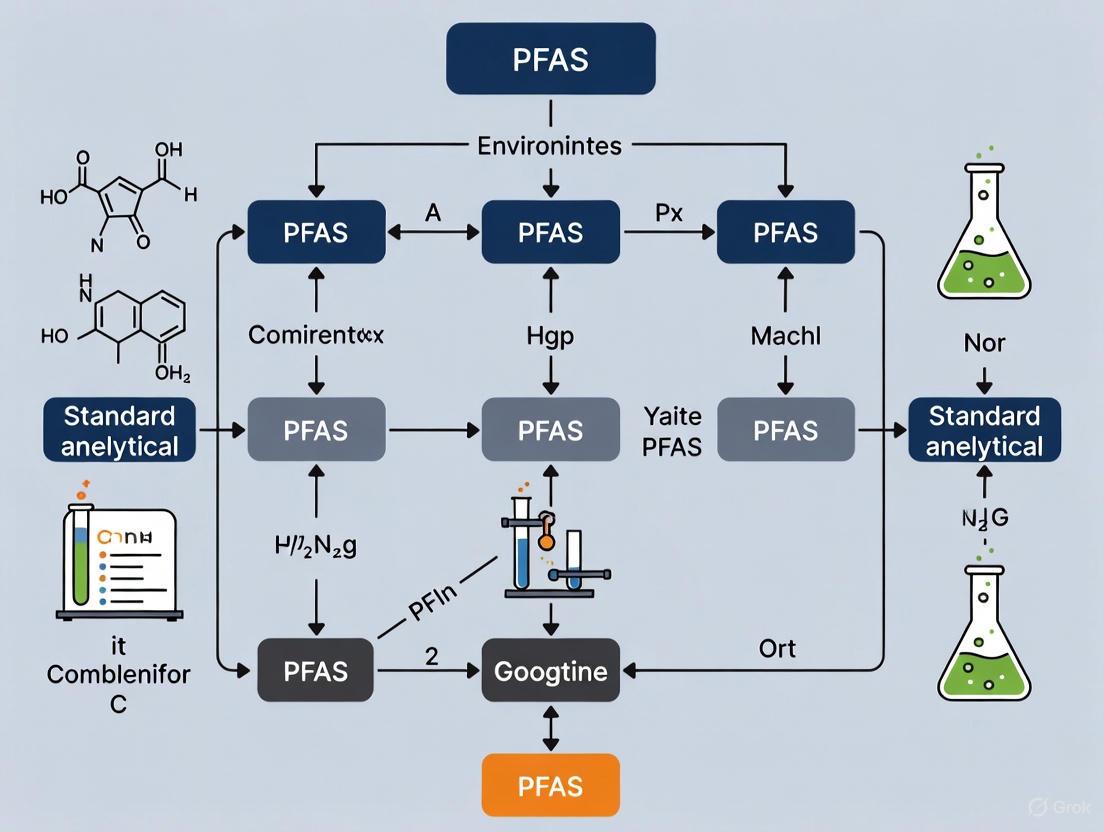
This article provides a comprehensive overview of standard analytical methods for detecting and quantifying per- and polyfluoroalkyl substances (PFAS) in environmental waters.
Standard Analytical Methods for PFAS in Environmental Waters: A Comprehensive Guide for Researchers and Scientists
Abstract
This article provides a comprehensive overview of standard analytical methods for detecting and quantifying per- and polyfluoroalkyl substances (PFAS) in environmental waters. It covers foundational principles of PFAS chemistry and regulation, detailed methodologies including EPA-approved techniques and emerging approaches, troubleshooting for common analytical challenges, and validation protocols for data quality assurance. Aimed at researchers, scientists, and environmental professionals, this review synthesizes current standards and technological advancements to support accurate PFAS monitoring in compliance with stringent global regulations, which now require detection at parts-per-trillion levels and below.
Understanding PFAS: Chemistry, Regulations, and Environmental Significance
PFAS Structural Diversity and Analytical Challenges
Per- and polyfluoroalkyl substances (PFAS) represent a large class of synthetic chemicals characterized by their exceptional persistence and bioaccumulative potential, earning them the colloquial name "forever chemicals" [1]. The structural diversity of PFAS, encompassing thousands of compounds with varying chain lengths, functional groups, and architectures, presents profound analytical challenges [2] [1]. This application note examines the core aspects of PFAS structural diversity, the subsequent methodological challenges for environmental analysis, and the advanced techniques developed to address them, all within the context of standard analytical methods for environmental waters.
PFAS Structural Diversity and Classification
The term "PFAS" encompasses a vast array of human-made chemicals, all featuring carbon-fluorine bonds, which are among the strongest in organic chemistry, conferring extreme environmental stability [1]. This chemical class can be broadly categorized based on chain length, functional groups, and architectural features.
Table 1: Classification of Select PFAS Compounds
| Category | Representative Compounds | Structural Characteristics | Example CASRN |
|---|---|---|---|
| Legacy PFAS (Long-Chain) | Perfluorooctanoic Acid (PFOA), Perfluorooctanesulfonic Acid (PFOS) | Long perfluoroalkyl chain (C≥7 for PFCAs; C≥6 for PFSAs) [3] | - |
| Emerging PFAS (Short-Chain) | Short-chain PFCAs, Short-chain PFSAs | Shorter perfluoroalkyl chain (C2-C5 for PFCAs; C2-C5 for PFSAs) [3] | - |
| Polyfluoroether Replacements | HFPO-DA (GenX), Nafion Byproduct 2 (NBP2) | Introduction of ether linkages (e.g., -OCF(CF3)CF2-) into the backbone [2] [3] | 13252-13-6 [3] |
| Other Precursors | 6:2 FTS, PFOSA, EtFOSAA | Contain functional groups that can transform into terminal perfluoroalkyl acids [3] | 27619-97-2, 754-91-6, 2991-50-6 [3] |
This structural diversity is further complicated by the presence of linear and branched isomers for many PFAS, which can exhibit different environmental behaviors and toxicological profiles [4] [1]. The shift from legacy long-chain PFAS like PFOA and PFOS to shorter-chain and polyfluoroether-based alternatives has been driven by regulatory actions, but these emerging PFAS often present new and poorly understood analytical and environmental challenges [2] [3].
Analytical Challenges in PFAS Determination
The unique physicochemical properties of PFAS create several significant hurdles for accurate environmental monitoring, particularly at the low parts-per-trillion (ppt) levels required by regulations [1].
Ubiquity and Contamination Control
The widespread use of PFAS in consumer and industrial products means they are ubiquitous in laboratory environments and sampling equipment [5]. Common materials like PTFE (Teflon), found in tubing, vial caps, and instrument components, can be a significant source of background contamination. This necessitates a highly conservative approach to sampling, requiring rigorous空白 procedures and the use of documented PFAS-free materials and water for quality control [4] [5].
Limitations of Targeted Analysis
Targeted methods, such as EPA Methods 533 and 537.1, are designed to detect a specific, predefined list of analytes using liquid chromatography-tandem mass spectrometry (LC-MS/MS) [4] [6]. While highly sensitive and precise for known compounds, these methods are fundamentally static. They cannot identify PFAS outside their target list, leading to an incomplete picture of the total PFAS burden [2]. This is a critical gap, as the vast majority of the thousands of PFAS on the global market are not covered by standard targeted methods [1].
Instrumental and Matrix Challenges
The lack of chromophores or electroactive groups in most PFAS renders traditional optical or electrochemical detection methods ineffective [1]. Furthermore, co-eluting matrix components in complex environmental water samples can cause ion suppression or enhancement during MS analysis, compromising quantitative accuracy [2]. The analysis is also complicated by the diverse chemical nature of PFAS, which includes anionic, neutral, volatile, and high-molecular-weight compounds, making it impossible for a single analytical technique to capture the entire spectrum [2] [1].
Standard Analytical Methods for Environmental Waters
For the analysis of PFAS in water, several methods have been validated and established by regulatory bodies. The following table summarizes the key EPA methods for drinking water and other aqueous media.
Table 2: Standard EPA Analytical Methods for PFAS in Water
| Method | Applicable Matrices | Target Analytes | Key Analytical Technique |
|---|---|---|---|
| EPA Method 533 | Drinking Water | 25 PFAS [4] | Isotope Dilution Anion Exchange Solid Phase Extraction (SPE) and LC/MS/MS [4] |
| EPA Method 537.1 | Drinking Water | 18 PFAS [4] | Solid Phase Extraction (SPE) and LC/MS/MS [4] |
| EPA Method 1633 | Wastewater, Surface Water, Groundwater, Soil, Sediment, Biosolids, Tissue | 40 PFAS [4] | Isotope Dilution SPE and LC/MS/MS [4] [5] |
| EPA Method 8327 | Groundwater, Surface Water, Wastewater | 24 PFAS [4] | Liquid Chromatography/Tandem Mass Spectrometry (LC/MS/MS) using External Standard Calibration [4] |
These methods are prescriptive and must be followed precisely for compliance monitoring under regulations like the UCMR 5 and the PFAS National Primary Drinking Water Regulation [6]. They have been developed with particular attention to accuracy, precision, and robustness through multi-lab validation [6].
Detailed Protocol: Sample Collection and Preparation for PFAS in Water (Based on EPA Method 1633)
Scope: This protocol describes the procedure for collecting, preserving, and shipping aqueous samples for the analysis of PFAS by EPA Method 1633 or equivalent.
1. Pre-Sampling Planning:
- Communication with Laboratory: Consult with the analytical laboratory prior to sampling. Inform them if samples are suspected to be highly contaminated to prevent cross-contamination of laboratory equipment [5].
- Blank Water: Arrange for the laboratory to supply PFAS-free water for the preparation of field blanks. Documentation verifying the water is PFAS-free must be reviewed [5].
2. Materials and Equipment:
- Sample Bottles: Use high-density polyethylene (HDPE) or polypropylene containers that have been verified to be free of PFAS interference. Do not use containers or caps containing fluoropolymers [5].
- Personal Protective Equipment (PPE): Wear powder-free nitrile gloves. Avoid clothing treated with fabric protectors (e.g., Gore-Tex) [5].
- Sampling Equipment: Use materials that have been screened for PFAS (e.g., polyethylene tubing, stainless-steel well pumps). Review Safety Data Sheets (SDSs) for all materials; if PFAS or terms like "fluoro" are listed, do not use them [5].
3. Sample Collection:
- Rinse Procedure: Rinse sample bottles and caps three times with the sample water before collection.
- Preservation: Aqueous samples must be preserved with methanol or ammonium acetate (as specified by the method) and chilled to 2-6°C immediately after collection [5].
- Avoid Contamination: During collection, keep samples covered and away from potential contamination sources such as sunscreen, insect repellent, food, or dust.
4. Quality Control (QC) Samples:
- Field Blanks: Prepare a field blank at a frequency of one per sampling event or per 20 samples, using the PFAS-free water supplied by the laboratory. This blank is used to identify any contamination introduced during sampling or handling [5].
- Trip Blanks: Include a trip blank that remains sealed for the duration of the trip to assess potential contamination during transport.
5. Sample Storage and Shipping:
- Holding Time: Extract samples within 28 days of collection and analyze within 90 days of extraction, as specified in Method 1633 [5].
- Temperature Control: Ship samples on ice or frozen ice packs to maintain a temperature of 2-6°C [5].
Advanced and Emerging Analytical Techniques
To overcome the limitations of targeted analysis, advanced techniques are being developed and implemented.
Non-Targeted Analysis (NTA) using High-Resolution Mass Spectrometry (HRMS)
NTA employs HRMS instruments, such as Quadrupole Time-of-Flight (QTOF) or Orbitrap mass spectrometers, to detect both known and unknown analytes in a sample [4] [2]. The high mass accuracy and resolving power of these instruments allow for the tentative identification of previously uncharacterized PFAS. Data can be archived and re-interrogated as new PFAS are identified [4] [2].
Complementary Techniques: GC-MS and Computational Tools
Gas Chromatography-Mass Spectrometry (GC-MS) plays a crucial role by covering a complementary chemical space to LC-MS, particularly for volatile and semivolatile PFAS, such as fluorotelomer alcohols [1]. It is estimated that less than 10% of known PFAS are amenable to typical LC-MS analysis, highlighting the need for multiple analytical platforms [1].
Advanced computational approaches, such as molecular networking, create visual maps of mass spectral data, clustering structurally related compounds and facilitating the discovery of unknown PFAS within the same chemical family [1]. Software tools like FluoroMatch use algorithms and databases to automatically annotate unknown PFAS features in complex samples by leveraging characteristics like homologous series and characteristic fragmentation [1].
The following diagram illustrates the integrated workflow for a comprehensive PFAS analysis strategy, combining both targeted and non-targeted approaches.
The Scientist's Toolkit: Key Research Reagent Solutions
Table 3: Essential Materials and Reagents for PFAS Analysis
| Item | Function/Description | Critical Consideration |
|---|---|---|
| Isotope-Labeled Internal Standards | Chemical standards (e.g., ¹³C- or ¹⁸O-labeled PFAS) added to the sample for quantification via isotope dilution. | Corrects for matrix effects and losses during sample preparation; essential for accurate quantitation in EPA Methods 533 and 1633 [4] [2]. |
| PFAS-Free Water | Ultra-pure water verified to be free of PFAS interference. | Used for preparing calibration standards, blanks, and mobile phases. Must be supplied and documented by the laboratory to ensure data integrity [5]. |
| Solid Phase Extraction (SPE) Cartridges | Sorbent materials (e.g., WAX, C18) used to isolate and concentrate PFAS from water samples. | Selection is method-prescribed (e.g., anion exchange for EPA 533). Must be screened for PFAS background [4] [5]. |
| PFAS Calibration Mix | A solution containing a known concentration of native PFAS analytes. | Used to establish the instrument calibration curve. The mix should be tailored to the target list of the analytical method used [4]. |
| Quality Control Materials | Includes laboratory control samples (LCS), continuing calibration verification (CCV), and blank materials. | Monitors the ongoing performance and accuracy of the analytical method throughout a batch of samples [5]. |
Global Regulatory Landscape and Evolving Compliance Limits
Per- and polyfluoroalkyl substances (PFAS) represent a large class of synthetic chemicals containing carbon-fluorine bonds, one of the strongest bonds in organic chemistry, which confers environmental persistence and leads to their characterization as "forever chemicals" [7]. These compounds have been frequently observed to contaminate groundwater, surface water, and soil, with certain PFAS known to accumulate in people, animals, and plants and cause toxic effects, including reproductive toxicity, cancer, and potential endocrine disruption [7]. The global regulatory landscape for PFAS is rapidly evolving, with significant developments in 2025 establishing stricter compliance limits and more comprehensive monitoring requirements for environmental waters.
This application note provides researchers and scientists with current analytical methodologies, updated regulatory frameworks, and standardized protocols for PFAS detection and quantification in environmental waters. The technical content is framed within the broader context of advancing PFAS research and supporting regulatory compliance through precise, reliable analytical data.
Global Regulatory Framework
United States Regulations
The U.S. Environmental Protection Agency (EPA) has established a multi-pronged regulatory approach to address PFAS contamination through drinking water standards, comprehensive reporting requirements, and chemical substance reviews.
Drinking Water Standards: The PFAS National Primary Drinking Water Regulation (NPDWR) establishes monitoring requirements using EPA Methods 533 and 537.1, which collectively measure 29 PFAS compounds in drinking water [6]. These methods have undergone rigorous multi-lab validation and peer review to ensure accuracy, precision, and robustness for compliance monitoring.
TSCA Reporting Requirements: Under TSCA section 8(a)(7), the EPA requires manufacturers (including importers) of PFAS in any year between 2011-2022 to report data related to chemical identity, production volume, use, exposure, and health effects [8]. The reporting period begins on April 13, 2026, with a final deadline of October 13, 2026, for most manufacturers and importers [9]. Recent amendments have proposed exemptions for de minimis concentrations (≤0.1%), imported articles, byproducts, impurities, and research and development chemicals to reduce regulatory burden while maintaining data quality [10] [8].
Significant New Use Rules: In 2024, the EPA finalized a SNUR preventing the manufacture or processing of 329 inactive PFAS without prior EPA review and risk determination [9]. This rule ensures that any new uses of historically discontinued PFAS undergo rigorous safety evaluation before resumption.
State-Level Regulations: Multiple U.S. states have implemented PFAS restrictions, with significant regulations taking effect in 2025:
- Minnesota (Amara's Law): Restricts sales of products with intentionally added PFAS in carpets, cleaning products, cookware, cosmetics, and other consumer categories [9].
- Colorado: Extends PFAS bans to cosmetics, indoor textile furnishings, and indoor upholstered furniture [9].
- California (AB-1817): Prohibits manufacture and sale of new textile articles containing regulated PFAS, requiring certificates of compliance [9].
European Union Regulations
The European Union has established comprehensive PFAS regulations through multiple legislative frameworks with particularly stringent drinking water standards.
Drinking Water Directive: Effective January 2021, the recast Drinking Water Directive includes a limit of 0.5 µg/L for all PFAS [7]. This grouping approach represents one of the most comprehensive regulatory thresholds globally.
REACH Restrictions: The EU continues to expand PFAS restrictions under REACH, with:
POPs Regulation: Implements Stockholm Convention commitments, having banned PFOA in 2020 and adding PFHxS in August 2023 [7].
Table 1: Global PFAS Regulatory Limits for Water (2025)
| Region/Country | Regulatory Body | PFAS Compounds | Limit (Concentration) | Effective Date |
|---|---|---|---|---|
| European Union | European Commission | All PFAS | 0.5 µg/L | January 12, 2021 [7] |
| United States | U.S. EPA | 29 PFAS (via Methods 533 & 537.1) | Varies by compound | Promulgated with NPDWR [6] |
| United States | Multiple States | PFOA, PFOS, other specific PFAS | Varies by state (ppt levels) | 2024-2025 [9] |
Analytical Methods for PFAS in Environmental Waters
Standardized EPA Methods
EPA has developed and validated specific analytical methods for PFAS detection in various environmental matrices, with particular methods approved for regulatory compliance monitoring.
Table 2: EPA-Approved Analytical Methods for PFAS in Water (2025)
| Method Name | Target Matrices | Number of PFAS | Key Analytical Technique | Prescriptive Requirements |
|---|---|---|---|---|
| EPA Method 537.1 | Drinking Water | 18 | Solid-Phase Extraction (SPE) + LC/MS/MS | Yes - prohibits changes to preservation, extraction [6] [5] |
| EPA Method 533 | Drinking Water | 25 | Isotope Dilution Anion Exchange SPE + LC/MS/MS | Yes - mandated for NPDWR compliance [6] |
| EPA Method 1633A | Wastewater, Surface Water, Groundwater, Soil, Sediment, Biosolids, Tissue | 40 | SPE + LC/MS/MS | Multi-media applicability [4] |
| EPA Method 8327 | Groundwater, Surface Water, Wastewater | 24 | Liquid Chromatography/Tandem Mass Spectrometry (LC/MS/MS) | External Standard Calibration [4] |
Method Selection Considerations
Researchers must consider several critical factors when selecting analytical methods for PFAS research:
Targeted vs. Non-Targeted Analysis: Most regulatory methods employ targeted analysis using specific analytical standards for known PFAS compounds [4]. Non-targeted analysis using high-resolution mass spectrometry (HRMS) can identify unknown PFAS but requires specialized instrumentation and data analysis capabilities [4].
Method Modifications: The EPA notes that "modified EPA PFAS methods" (e.g., "Modified Method 537") have not undergone multi-laboratory validation and are not approved for compliance monitoring under UCMR 5 or the PFAS NPDWR [6]. Researchers should carefully validate any method modifications against project-specific data quality objectives.
Sample Preservation and Holding Times: Approved methods specify strict requirements for sample preservation (typically with ammonium acetate) and holding times to maintain sample integrity [5]. Method 537.1 explicitly prohibits changes to preservation techniques, requiring strict adherence to published protocols [6].
Experimental Protocol: PFAS Analysis in Environmental Waters
The following protocol outlines the standardized methodology for sampling and analysis of PFAS in environmental waters based on EPA-approved methods and technical guidance from ITRC [5].
Sampling Procedures
Diagram 1: PFAS Sampling Workflow
Pre-Sampling Preparation
- Laboratory Coordination: Contact analytical laboratory before sampling to confirm project-specific requirements, obtain PFAS-free water for field blanks, and discuss potential high-concentration samples [5].
- Container Selection: Use only polypropylene or polyethylene containers; avoid fluoropolymer materials [5]. Review Safety Data Sheets for all sampling materials to exclude items containing fluorinated compounds [5].
- Blank Water Verification: Obtain laboratory-certified PFAS-free water for field blanks with documentation verifying PFAS content below detection limits [5].
Field Sampling Collection
- Personal Protective Equipment: Use nitrile gloves and avoid clothing with fabric protectors that may contain PFAS [5].
- Sample Collection: Collect samples without introducing air bubbles, filling containers completely to minimize headspace [5].
- Preservation: Immediately preserve samples with ammonium acetate according to method specifications (e.g., Method 537.1) [5].
- Quality Control: Collect field blanks, trip blanks, and equipment blanks at a frequency of at least 5% of total samples to monitor potential cross-contamination [5].
Sample Handling and Shipping
- Temperature Control: Maintain samples at 2-6°C during transport and storage [5].
- Holding Times: Adhere to method-specified holding times (typically 14 days from collection to extraction for Method 537.1) [5].
- Documentation: Complete chain-of-custody forms noting any potential high-concentration samples or unusual field conditions [5].
Laboratory Analysis Procedures
Diagram 2: PFAS Laboratory Analysis
Sample Preparation
- Solid-Phase Extraction: Process 250 mL water samples through SPE cartridges (typically polystyrene-divinylbenzene) following method-specific protocols [6] [4].
- Extraction: Elute PFAS compounds from cartridges using methanol or ammonium hydroxide in methanol [6].
- Concentration: Concentrate extracts under gentle nitrogen evaporation to near dryness [6].
- Reconstitution: Reconstitute samples in appropriate injection solvent (typically methanol/water mixtures) for LC/MS/MS analysis [6].
Instrumental Analysis
- Chromatographic Separation: Employ reverse-phase liquid chromatography with C18 or similar columns to separate PFAS compounds [6] [4].
- Mass Spectrometric Detection: Utilize tandem mass spectrometry with electrospray ionization in negative mode (ESI-) for detection and quantification [6] [4].
- Isotope Dilution Quantification: Use mass-labeled internal standards for precise quantification, correcting for matrix effects and recovery variations [6].
Quality Assurance/Quality Control
- Laboratory Controls: Include method blanks, laboratory control samples, matrix spikes, and duplicate analyses with each batch (typically 20 samples or fewer) [6] [5].
- Continuing Calibration: Verify calibration standards every 12 hours during analysis [6].
- Extraction Efficiency: Monitor surrogate standard recovery for each sample to assess method performance [6].
The Scientist's Toolkit: Research Reagent Solutions
Table 3: Essential Materials for PFAS Research in Environmental Waters
| Research Reagent | Function in PFAS Analysis | Technical Specifications |
|---|---|---|
| Solid-Phase Extraction Cartridges | Extract and concentrate PFAS from water matrices | Polystyrene-divinylbenzene polymer; 500 mg bed weight [6] |
| Mass-Labeled Internal Standards | Quantification via isotope dilution; correct for matrix effects | Carbon-13 or nitrogen-15 labeled PFAS (e.g., ¹³C₄-PFOS, ¹³C₅-PFOA) [6] |
| PFAS-Free Water | Preparation of calibration standards, blanks, and QC samples | Documented PFAS content below method detection limits [5] |
| LC/MS/MS Mobile Phase Additives | Chromatographic separation and ionization efficiency | Ammonium acetate, ammonium hydroxide, methanol, acetonitrile [6] |
| Reference Standards | Target compound identification and quantification | Certified reference materials for 29+ PFAS compounds [6] |
The global regulatory landscape for PFAS continues to evolve rapidly, with 2025 marking significant advancements in both compliance limits and analytical methodologies. Researchers must remain current with updated EPA methods, expanded reporting requirements, and increasingly stringent state and international regulations. The protocols and technical guidance presented in this application note provide a foundation for robust PFAS analysis in environmental waters, supporting both research objectives and regulatory compliance. As PFAS science advances, researchers should anticipate continued method refinements, expanded compound lists, and lower detection limits to address these persistent environmental contaminants.
Per- and polyfluoroalkyl substances (PFAS) constitute a large group of synthetic chemicals characterized by strong carbon-fluorine bonds, which contribute to their exceptional environmental persistence and resistance to degradation [11]. These compounds have seen widespread use in industrial and consumer products since the mid-20th century due to their unique water- and grease-resistant properties [12] [13]. Their structural diversity encompasses both polymeric and non-polymeric classifications, with non-polymeric PFAS further subdivided into perfluoroalkyl (fully fluorinated) and polyfluoroalkyl (partially fluorinated) substances containing various functional groups [13]. The environmental presence of PFAS was first documented in the early 2000s, and since then, numerous studies have detected these persistent compounds in aquatic systems globally, including remote polar regions [12] [13]. This application note examines the sources, transport pathways, and analytical methodologies for PFAS contamination in aquatic environments within the context of standard analytical methods research.
PFAS Chemistry and Classification
PFAS are defined by the presence of at least one fully fluorinated methyl (-CF3) or methylene (-CF2-) group, with no hydrogen, chlorine, bromine, or iodine atoms attached to these carbon atoms [12]. Their amphipathic nature, featuring a hydrophilic functional "head" group and a hydrophobic fluorinated carbon chain "tail," provides emulsifying properties that make them excellent surface-active compounds [12]. The carbon chain length significantly influences their physicochemical behavior, with shorter-chain PFAS (fewer than six carbons for perfluoroalkyl sulfonic acids [PFSAs] and fewer than eight for perfluoroalkyl carboxylic acids [PFCAs]) exhibiting higher hydrophilicity and water solubility compared to their longer-chain counterparts [13].
Table 1: Major Classes of PFAS and Their Characteristics
| PFAS Class | Representative Compounds | Chain Length Classification | Key Properties |
|---|---|---|---|
| Perfluoroalkyl Carboxylic Acids (PFCAs) | PFOA, PFNA, PFHxA | Long-chain (≥C8), Short-chain ( | High water solubility, particularly for short-chain |
| Perfluoroalkyl Sulfonic Acids (PFSAs) | PFOS, PFHxS | Long-chain (≥C6), Short-chain ( | Strong surfactant properties, bioaccumulative |
| Fluorotelomer-based Compounds | FTOHs, FTSAs | Variable | Precursors that degrade to PFCAs and PFSAs |
| Perfluoroalkyl Ether Acids | GenX, HFPO-DA | Variable | Emerging replacements for legacy PFAS |
PFAS enter aquatic environments through multiple pathways, with contamination originating from both point and non-point sources. Industrial discharges have historically been significant contributors, particularly from chemical manufacturing facilities producing fluoropolymers and from sites utilizing PFAS in processing [12] [13]. Firefighting activities using aqueous film-forming foams (AFFFs) represent another major source, especially at military bases, airports, and fire training facilities [14] [5]. Landfill leachate, wastewater treatment plant effluents, and urban runoff further contribute to the pervasive presence of PFAS in surface water, groundwater, and drinking water sources worldwide [11] [13].
The environmental distribution of PFAS reflects a complex interplay between source strength and transport mechanisms. A recent global compilation of PFAS concentrations in water samples indicates elevated levels in North America, Europe, and Australia, with known AFFF and non-AFFF sources circled as hotspots on spatial distribution maps [13]. Even remote regions like the Arctic and Antarctica show detectable PFAS concentrations, demonstrating the efficiency of long-range transport mechanisms [12].
Transport Pathways and Environmental Fate
The transport of PFAS to aquatic systems occurs through multiple interconnected pathways:
Atmospheric Transport and Deposition
Volatile PFAS precursors undergo long-range atmospheric transport, during which they can be oxidized to form more stable PFAS compounds that deposit onto land and water surfaces via precipitation or dry deposition [12] [15]. This mechanism explains PFAS detection in remote cryosphere environments, where subsequent incorporation into snow and ice creates temporary reservoirs that release PFAS during melting events [12]. Atmospheric modeling approaches, such as EPA's Community Multiscale Air Quality (CMAQ) model, have been adapted to simulate the transport and fate of PFAS suites, incorporating species-specific physicochemical properties to predict partitioning behavior [15].
Hydrological Transport
Surface runoff and groundwater flow transport PFAS from contaminated sites to receiving water bodies. A study of Lake Ekoln in Sweden demonstrated that river systems (particularly the Fyrisån River) served as the primary PFAS source to the lake, which supplies drinking water to the Stockholm region [16]. Similarly, site-specific differences in PFAS contamination profiles in Massachusetts waterbodies reflected localized source contributions, with Ashumet Pond showing distinct contamination patterns compared to reference sites [17]. Ocean currents and sea spray aerosol formation represent additional transport vectors that contribute to PFAS distribution across marine environments [12].
In-System Transport and Partitioning
Within aquatic systems, PFAS behavior depends on their physicochemical properties, including solubility, vapor pressure, and partitioning coefficients. Longer-chain PFAS tend to associate with particulate matter and sediments, while shorter-chain compounds remain predominantly in the water column [13]. This differential partitioning influences bioavailability, ecosystem exposure, and ultimate environmental fate. Three-dimensional hydrodynamic modeling has proven valuable for simulating PFAS fate and transport in lake systems, capturing seasonal variations that inform drinking water management strategies [16].
Analytical Methodologies for PFAS Detection
Standardized Analytical Methods
EPA has developed validated analytical methods for PFAS detection in various environmental matrices. For drinking water analysis, Methods 533 and 537.1 are approved for compliance monitoring under the PFAS National Primary Drinking Water Regulation (NPDWR), collectively targeting 29 PFAS compounds [6]. These methods employ solid-phase extraction (SPE) followed by liquid chromatography/tandem mass spectrometry (LC-MS/MS), achieving detection limits in the ng/L range [4] [6].
For non-potable water and other environmental media, EPA Method 1633 measures 40 PFAS in wastewater, surface water, groundwater, soil, biosolids, sediment, landfill leachate, and fish tissue [4]. Similarly, Method 8327 determines 24 PFAS in non-drinking water aqueous samples, including groundwater, surface water, and wastewater [4]. These methods underwent rigorous multi-laboratory validation to ensure accuracy, precision, and robustness at low concentration levels.
Table 2: Standardized Analytical Methods for PFAS in Water Matrices
| Method | Applicable Matrices | Target PFAS | Key Technique | Performance Characteristics |
|---|---|---|---|---|
| EPA Method 533 | Drinking Water | 25 PFAS | Isotope Dilution Anion Exchange SPE and LC/MS/MS | Validated for UCMR 5 and NPDWR compliance |
| EPA Method 537.1 | Drinking Water | 18 PFAS | SPE and LC/MS/MS | Includes HFPO-DA (GenX); approved for compliance monitoring |
| EPA Method 1633 | Wastewater, Surface Water, Groundwater, Soil, Sediment, Biosolids, Tissue | 40 PFAS | SPE and LC/MS/MS | Multi-matrix method developed in collaboration with DOD |
| EPA Method 8327 | Groundwater, Surface Water, Wastewater | 24 PFAS | External Standard Calibration and MRM LC/MS/MS | Developed under RCRA for non-potable water |
| ISO 21675 | Water | >30 PFAS classes | SPE and LC/MS/MS | LOQ of 0.0002 mg/L or lower for most listed PFAS |
Targeted vs. Non-Targeted Analysis
Targeted analysis methods are applicable to specific defined sets of known analytes, using analytical standards for quantification. These methods only measure analytes on the predetermined list and cannot retrospectively identify additional compounds [4]. In contrast, non-targeted analysis employs high-resolution mass spectrometry (HRMS) to identify both known and unknown analytes in a sample. This approach allows for suspect screening against compound libraries and can discover novel PFAS, with data storage enabling retrospective analysis as new compounds are identified [4].
Sampling Considerations and Quality Assurance
PFAS sampling requires heightened rigor to avoid cross-contamination and achieve the necessary accuracy and precision for defensible project decisions [5]. Critical considerations include:
- Equipment and Supplies: Many sampling materials can potentially contain PFAS. A conservative approach excludes materials known to contain target PFAS, with review of Safety Data Sheets to identify fluorinated compounds [5].
- Blank Samples: Field and equipment blanks are needed in greater frequency and volume than for other analyses due to the potential for ambient PFAS contamination and low action levels [5].
- Sample Preservation and Holding Times: Methods specify requirements for sample containers, preservation (typically refrigeration), and holding times (generally 14 days for water samples) to maintain sample integrity [5].
- PFAS-Free Water: Water used for field quality control blanks must be supplied by the analytical laboratory with documentation verifying it is PFAS-free, defined as below project-specific thresholds [5].
Experimental Protocols
Water Sampling Protocol for PFAS Analysis
This protocol outlines procedures for collecting surface water samples for PFAS analysis using EPA Method 1633 or equivalent approaches:
Pre-sampling Preparation:
- Obtain PFAS-free water from the analytical laboratory for field blanks
- Document all sampling materials and equipment, reviewing SDS sheets to exclude fluorinated materials
- Prepare decontamination station using PFAS-free water and isopropanol
- Pre-label sample containers with unique identifiers
Sample Collection:
- Wear appropriate personal protective equipment (nitrile gloves, polyethylene aprons)
- Collect samples in polyethylene or polypropylene containers per method specifications
- Avoid sampling equipment containing fluoropolymers (e.g., PTFE)
- Collect field replicates (at least 10% of samples) and trip blanks (at least one per sampling event)
Sample Preservation and Shipment:
- Refrigerate samples at 4°C immediately after collection
- Maintain chain-of-custody documentation
- Ship samples to laboratory within 24 hours of collection
- Ensure laboratory analysis begins within 14-day holding time
Analytical Quality Control Protocol
Laboratory analysis should incorporate these quality control elements:
Initial Demonstration of Capability:
- Establish method detection limits (MDLs) for each target analyte
- Demonstrate precision and accuracy through replicate analyses
- Verify calibration linearity over the working range
Ongoing Quality Control:
- Analyze laboratory control samples with each batch
- Include continuing calibration verification standards
- Monitor internal standard responses for each analysis
- Perform matrix spike and matrix spike duplicate analyses
The Researcher's Toolkit
Table 3: Essential Research Reagents and Materials for PFAS Analysis
| Item | Specification | Function | Application Notes |
|---|---|---|---|
| SPE Cartridges | WAX (Weak Anion Exchange) or Carbon-based | Extraction and concentration of PFAS from water matrices | Compatible with EPA Methods 533, 537.1, and 1633; provides clean-up and pre-concentration |
| LC-MS/MS System | High-sensitivity triple quadrupole mass spectrometer | Separation, detection, and quantification of target PFAS | MRM (Multiple Reaction Monitoring) mode provides selectivity and sensitivity at ng/L levels |
| Analytical Standards | Isotope-labeled internal standards (e.g., ^13C- or ^18O-labeled PFAS) | Quantification via isotope dilution mass spectrometry | Corrects for matrix effects and recovery variations; essential for accurate quantification |
| Mobile Phase Additives | Ammonium acetate/ammonium hydroxide in methanol and water | LC-MS/MS mobile phase for chromatographic separation | Maintains pH and promotes ionization; specific compositions vary by method |
| PFAS-Free Water | Laboratory-certified blank water | Preparation of standards, blanks, and method blanks | Must be documented as PFAS-free; typically supplied by analytical laboratory |
| Sample Containers | Polyethylene or polypropylene | Sample collection and storage | Avoid fluoropolymer-containing materials; pre-cleaned to minimize contamination |
Understanding the complex sources and pathways of aquatic PFAS contamination requires integrated approaches combining rigorous sampling protocols, sensitive analytical methods, and sophisticated modeling tools. The transport mechanisms—spanning atmospheric, hydrological, and in-system processes—distribute PFAS far from original sources, necessitating comprehensive assessment strategies. Standardized EPA methods (533, 537.1, and 1633) provide validated approaches for generating comparable data across studies and monitoring programs. Continued method development remains essential, particularly for addressing analytical challenges posed by short-chain PFAS and transformation products. This foundation supports informed risk assessment and management strategies targeting PFAS contamination in global water resources.
Health and Ecological Risks Driving Analytical Needs
Per- and polyfluoroalkyl substances (PFAS) represent a large class of synthetic chemicals containing thousands of compounds, characterized by extremely persistent environmental contamination and documented risks to human and ecological health [18]. Often called "forever chemicals," PFAS are linked to numerous adverse health outcomes including kidney and testicular cancer, liver and kidney damage, changes in hormone and lipid levels, and harm to the nervous and reproductive systems [19]. Their extensive use in consumer, commercial, and industrial products for stain, water, and fire resistance has led to global contamination of water resources [20].
The environmental persistence and low (parts-per-trillion) health-based advisory levels for PFAS like PFOA and PFOS create critical analytical challenges. This necessitates highly sensitive, selective, and robust methods capable of detecting these contaminants at trace levels across diverse water matrices—from finished drinking water to complex industrial wastewater [5]. This application note details the standardized analytical methodologies and emerging techniques developed to meet these demanding analytical needs for PFAS in environmental waters.
Regulatory Framework and Standardized Methods
In response to the significant health risks posed by PFAS, regulatory agencies have established stringent drinking water standards. The U.S. Environmental Protection Agency (EPA) has set legally enforceable Maximum Contaminant Levels for six PFAS, acknowledging there is no safe level of exposure to PFOA and PFOS [20] [19].
Table 1: EPA National Primary Drinking Water Regulation for PFAS (2024)
| Compound | MCLG (Health-Based Goal) | MCL (Enforceable Level) |
|---|---|---|
| PFOA | Zero | 4.0 parts per trillion (ppt) |
| PFOS | Zero | 4.0 ppt |
| PFHxS | 10 ppt | 10 ppt |
| PFNA | 10 ppt | 10 ppt |
| HFPO-DA (GenX) | 10 ppt | 10 ppt |
| Mixtures of PFHxS, PFNA, HFPO-DA, PFBS | 1 (unitless Hazard Index) | 1 (unitless Hazard Index) |
Compliance monitoring for these regulations requires the use of specific, validated analytical methods. The EPA has developed and approved two primary methods for analyzing PFAS in drinking water, which are mandatory for compliance monitoring under the Unregulated Contaminant Monitoring Rule (UCMR 5) and the PFAS National Primary Drinking Water Regulation (NPDWR) [6].
Table 2: Standardized EPA Analytical Methods for PFAS in Water
| Method | Target Matrices | Scope | Key Analytes |
|---|---|---|---|
| EPA Method 537.1 | Drinking Water | 18 PFAS | Includes HFPO-DA (GenX) |
| EPA Method 533 | Drinking Water | 25 PFAS | Includes short-chain PFAS |
| EPA Method 1633A | Wastewater, Surface Water, Groundwater, Soil, Sediment, Biosolids, Landfill Leachate, Fish Tissue | 40 PFAS | Most comprehensive method for non-potable water |
| EPA Method 8327 | Groundwater, Surface Water, Wastewater | 24 PFAS | For non-drinking water applications |
| EPA Method 1621 | Aqueous Matrices | Adsorbable Organic Fluorine (AOF) | Non-targeted screening for organofluorines |
For non-potable water matrices under the Clean Water Act, EPA Method 1633A has emerged as the most comprehensive standardized procedure. It can test for 40 PFAS compounds in wastewater, surface water, groundwater, soil, biosolids, sediment, landfill leachate, and fish tissue [21]. While not yet nationally mandated for CWA compliance until formal rulemaking is complete, the EPA recommends its use for individual National Pollutant Discharge Elimination System (NPDES) permits to ensure consistent data quality [21].
Detailed Analytical Protocols
Protocol for Drinking Water Analysis: EPA Method 533
Principle: This method determines trace concentrations of PFAS in drinking water using isotope dilution anion exchange solid phase extraction (SPE) and liquid chromatography/tandem mass spectrometry (LC-MS/MS). The isotope dilution technique ensures high accuracy by accounting for analyte losses during sample preparation [6] [4].
Sample Collection and Preservation:
- Container: 250 mL high-density polyethylene (HDPE) or polypropylene (PP) bottle.
- Preservative: Add 1 mL of 10% (w/v) sodium azide solution to the sample bottle prior to shipment to inhibit microbial activity. Adjust to pH ≥ 9 using ammonium hydroxide (e.g., 250 µL of 28–30% NH₄OH per 250 mL sample).
- Holding Time: 28 days from collection to extraction. Extracted samples must be analyzed within 28 days of extraction [5].
Sample Preparation (Solid Phase Extraction):
- Sample Loading: Load 250 mL of preserved water sample onto a conditioned weak-anion exchange SPE cartridge (e.g., Waters Oasis WAX).
- Cartridge Conditioning: Condition cartridge with 5 mL of 0.1% NH₄OH in methanol followed by 5 mL of methanol and 5 mL of reagent water. Maintain wetness.
- Interference Removal: After loading, wash with 5 mL of 25 mM acetate buffer (pH 4) to remove interferences.
- Analyte Elution: Elute PFAS analytes with 5 mL of 0.1% NH₄OH in methanol into a polypropylene tube.
- Concentration: Evaporate the eluate to dryness under a gentle stream of nitrogen at 40°C. Reconstitute the residue in 500 µL of 1:9 (v/v) methanol/water mixture, vortex mix, and transfer to an LC autosampler vial for analysis.
Instrumental Analysis (LC-MS/MS):
- Chromatography: Reverse-phase LC column (e.g., C18). Mobile phase A: 10 mM ammonium acetate in water. Mobile phase B: Methanol. Use a gradient elution from 10% B to 100% B over 20 minutes.
- Mass Spectrometry: Tandem mass spectrometer with electrospray ionization (ESI) in negative mode. Multiple Reaction Monitoring (MRM) is used for detection and quantification, monitoring two specific transitions per analyte.
Quality Control: The method requires laboratory-fortified blanks, laboratory-fortified matrix samples, internal standards, and initial and ongoing demonstration of capability to ensure precision and accuracy [6].
Protocol for Non-Potable Water Analysis: EPA Method 1633A
Principle: This method is applicable to a wide range of aqueous and solid environmental samples. It uses solid phase extraction (for aqueous samples) or liquid extraction (for solid samples) followed by LC-MS/MS analysis [21].
Sample Collection for Aqueous Matrices:
- Container: 250 mL or 1 L HDPE or PP bottle.
- Preservation: Refrigerate at ≤ 6°C. For non-drinking water matrices, preserve with 1 mL of 10% sodium azide and adjust to pH ≥ 9 with ammonium hydroxide.
- Holding Time: 28 days to extraction for aqueous samples; 14 days to extraction for soil, sediment, and biosolids.
Sample Preparation for Aqueous Samples:
- Filtration: Filter the sample if necessary using a glass fiber filter.
- Internal Standard Addition: Add isotope-labeled internal standards to the sample.
- Solid Phase Extraction: Use a weak-anion exchange SPE cartridge. Condition with methanol and reagent water. Load sample, wash, and elute with methanol containing 0.1% NH₄OH.
- Concentration and Reconstitution: Concentrate the eluate under nitrogen, and reconstitute in a methanol/water mixture for LC-MS/MS analysis.
Instrumental Analysis (LC-MS/MS):
- Similar to Method 533 but optimized for a broader range of 40 PFAS analytes and more complex matrices. Requires careful calibration and quality control checks specific to the sample matrix (e.g., wastewater vs. groundwater).
Workflow Diagram: Targeted PFAS Analysis in Environmental Waters
The following diagram illustrates the generalized workflow for the targeted analysis of PFAS in water samples, from collection to final reporting.
Advanced and Emerging Methodologies
Non-Targeted Analysis and Suspect Screening
While standardized methods like 533 and 1633A are essential for regulatory compliance, they are limited to a specific set of known PFAS (targeted analysis). To address the vast number of unknown PFAS, non-targeted analysis (NTA) using high-resolution mass spectrometry (HRMS) is employed [4].
- Liquid Chromatography-HRMS (LC-HRMS): The most common NTA approach, capable of identifying known suspects and discovering unknown PFAS not included in targeted lists. HRMS data can be archived and re-analyzed as new PFAS are identified [4] [22].
- Gas Chromatography-HRMS (GC-HRMS): An underutilized but complementary technique to LC-HRMS, particularly useful for volatile and semi-volatile PFAS (e.g., fluorotelomer alcohols, acrylates) and for identifying transformation products from processes like incineration [22]. A 2023 study developed a custom GC-HRMS database and workflow for 141 diverse PFAS, significantly advancing NTA capabilities for these compounds [22].
Addressing Analytical Gaps: Short-Chain and Ultrashort-Chain PFAS
A significant limitation of conventional LC-MS/MS methods is the poor separation and detection of short-chain (C4-C7) and ultrashort-chain (≤C3) PFAS. These highly polar compounds often co-elute or show minimal retention on standard reverse-phase LC columns, leading to potential underestimation of total PFAS burden [23].
Emerging Solution: Supercritical Fluid Chromatography (SFC)-MS/MS
- Principle: SFC uses supercritical carbon dioxide as the primary mobile phase, which behaves as a hybrid between a gas and a liquid. This provides different separation mechanics compared to LC.
- Advantages: Offers improved separation for short and ultrashort-chain PFAS that are missed by LC-MS. The technique is faster, uses less organic solvent, and is more environmentally friendly [23].
- Application: When used alongside LC-MS/MS, SFC-MS/MS provides a more comprehensive picture of the diverse PFAS present in environmental water samples, ensuring critical contaminants are not overlooked [23].
Aggregate Parameter Methods: Adsorbable Organic Fluorine (AOF)
For a broad screening of organofluorine pollution, EPA Method 1621 measures Adsorbable Organic Fluorine (AOF). This method does not identify specific PFAS but quantifies the total concentration of adsorbable organofluorines, providing an indicator of total PFAS contamination that can include thousands of known and unknown PFAS compounds [21].
The Scientist's Toolkit: Essential Research Reagents and Materials
Table 3: Key Research Reagent Solutions for PFAS Analysis
| Reagent / Material | Function | Application Notes |
|---|---|---|
| Isotope-Labeled Internal Standards (e.g., ¹³C-PFOA, ¹⁸O-PFOS) | Corrects for analyte loss during sample preparation and matrix effects during ionization in MS; essential for accurate quantification. | Required for isotope dilution techniques in Methods 533 and 1633A. |
| Weak-Anion Exchange (WAX) SPE Cartridges | Extracts and concentrates anionic PFAS from water samples; removes matrix interferences. | Standardized for EPA Methods 533, 537.1, and 1633A. |
| LC-MS/MS Grade Methanol and Acetonitrile | Mobile phase and extraction solvents; high purity is critical to minimize background contamination. | Must be PFAS-free. Vendor certification is recommended. |
| Ammonium Hydroxide and Acetate Buffers | pH adjustment for sample preservation and SPE; used in elution solvents to efficiently recover PFAS from SPE cartridges. | Ensures optimal extraction efficiency and analyte stability. |
| PFAS-Free Water | Used for preparing blanks, standards, and mobile phases; essential for quality control. | Must be verified to be free of target PFAS analytes. |
| PFAS-Free Polypropylene Labware | Sample bottles, tubes, and vials to prevent leaching of PFAS from containers and introduction of background contamination. | HDPE and PP are preferred. Avoid Teflon or other fluoropolymers. |
The significant health and ecological risks posed by PFAS contamination in water resources have been the primary driver for advancing analytical science. This has resulted in a multi-tiered analytical strategy: highly sensitive and standardized methods like EPA 533, 537.1, and 1633A for targeted regulatory compliance; non-targeted HRMS methods for discovery and suspect screening; and innovative approaches like SFC-MS/MS and AOF analysis to close critical gaps for short-chain and unknown PFAS. As regulatory standards tighten and the understanding of PFAS toxicity evolves, the continued development and refinement of these analytical protocols remain paramount for protecting public health and the environment.
The Persistence of 'Forever Chemicals' in Water Systems
Per- and polyfluoroalkyl substances (PFAS) represent a class of more than 15,000 synthetic chemicals characterized by their extreme persistence in the environment and exceptional resistance to degradation, earning them the colloquial name "forever chemicals" [24]. Their unique amphiphilic structure, featuring a hydrophobic fluorinated alkyl chain and a hydrophilic functional group, imparts the surface-tension lowering properties and chemical stability that make them valuable for industrial and consumer applications [25]. This same stability creates significant analytical challenges, as PFAS occur in environmental waters at trace concentrations (ng/L to μg/L) amid complex matrices that can interfere with detection and quantification [26] [25].
The analysis of PFAS in water systems requires sophisticated instrumentation and meticulous sampling protocols to achieve the low parts-per-trillion (ppt) detection levels necessary for meaningful environmental monitoring and risk assessment. A substantial complication arises from the fact that targeted analytical methods typically identify less than 1% of known PFAS, leaving a significant fraction of total PFAS burden uncharacterized in most studies [27]. This application note details standardized methodologies for the comprehensive analysis of PFAS in environmental waters, supporting robust environmental monitoring and defensible regulatory decision-making.
Analytical Frameworks for PFAS
Two complementary analytical philosophies govern PFAS assessment: targeted analysis for specific known compounds and total parameter analysis for comprehensive PFAS burden.
Targeted vs. Non-Targeted Analysis
Targeted Analysis methods are applicable to a specific defined set of known analytes. Using analytical standards for quantitation, these methods exclusively measure compounds on a predefined list; once analysis is complete, investigators cannot retrospectively look for other analytes [4]. Common targeted methods include EPA 533, 537.1, and 1633, which utilize liquid chromatography/tandem mass spectrometry (LC-MS/MS) [4].
Non-Targeted Analysis (NTA) employs high-resolution mass spectrometry (HRMS) to identify known, unknown, and suspect PFAS in a sample. This approach enables retrospective data analysis as new PFAS are identified and can discover novel contaminants without predefined standards, though quantification may require structurally similar analytes for semi-quantitation [4].
Total PFAS and Fluorine Mass Balance
The fluorine mass balance approach is critical for understanding the comprehensive PFAS profile in a sample by reconciling measurements of total fluorine with identified individual PFAS [28]. This methodology reveals the substantial fraction of unknown organofluorine that often remains unaccounted for in targeted analyses alone [26].
Table 1: Total PFAS Analytical Parameters and Their Applications
| Parameter | Acronym | Analytical Method | Typical Reporting Units | Key Applications | Limitations |
|---|---|---|---|---|---|
| Total Fluorine | TF | Combustion Ion Chromatography (CIC), Particle-Induced Gamma-Ray Emission (PIGE) | μg F/g, μg F/L, % | Comprehensive measurement of all fluorine in sample | Includes inorganic and organic fluorine |
| Total Organic Fluorine | TOF | CIC after removal of inorganic F | μg F/g, μg F/L | Estimates organofluorine content | May overestimate PFAS if other organofluorine present |
| Extractable Organic Fluorine | EOF | CIC of solvent extracts | μg F/g, μg F/L | Measures organofluorine extractable by specific solvents | Dependent on extraction efficiency |
| Absorbable Organic Fluorine | AOF | CIC after concentration on activated carbon | μg F/L | Designed for water samples | Potential for incomplete adsorption |
| Total Oxidizable Precursors | TOP | Oxidation followed by targeted analysis | μg/L, ng/L | Estimates precursor compounds that transform to perfluoroalkyl acids | May over/underestimate depending on precursors |
Fluorine Mass Balance Workflow: This diagram illustrates the integrated analytical approach for comprehensive PFAS characterization in water samples, highlighting the relationship between total fluorine measurements and specific compound identification.
Standardized Analytical Methods for Water
Regulatory agencies have established validated methods for PFAS analysis in various water matrices, with specific preservation, holding time, and quality control requirements.
Table 2: EPA Validated Methods for PFAS Analysis in Water Matrices
| Method | Target Matrices | Analytical Technique | Number of PFAS | Reporting Limits | Key Characteristics |
|---|---|---|---|---|---|
| EPA Method 533 | Drinking Water | Isotope Dilution Anion Exchange SPE & LC-MS/MS | 25 | ng/L (ppt) | Includes short-chain PFAS and HFPO-DA (GenX) |
| EPA Method 537.1 | Drinking Water | SPE & LC-MS/MS | 18 | ng/L (ppt) | Includes HFPO-DA (GenX); Updated 2020 |
| EPA Method 1633 | Groundwater, Surface Water, Wastewater, Soil, Sediment, Biosolids, Tissue | LC-MS/MS | 40 | ng/L (ppt) | Multi-media method; DOD collaboration |
| EPA Method 8327 | Groundwater, Surface Water, Wastewater | External Standard Calibration & MRM LC-MS/MS | 24 | ng/L (ppt) | Non-potable water applications |
| OTM-45 | Air Emissions | LC-MS/MS | 50 | μg/m³ | Stationary source semivolatile and particulate-bound PFAS |
Protocol: Sampling PFAS in Environmental Waters
Scope: This protocol details the procedure for collecting water samples from groundwater, surface water, and wastewater for PFAS analysis using EPA Methods 1633, 533, or 537.1.
Materials and Equipment:
- PFAS-free water (supplied by analytical laboratory for blanks)
- High-density polyethylene (HDPE) or polypropylene sample containers (as specified by method)
- Nitrile or polyethylene gloves (powder-free)
- Polypropylene or stainless steel field gear
- Clean ice or refrigerated cooler
- Chain-of-custody forms
- Field notebook for documentation
Procedure:
Pre-Sampling Preparation:
- Obtain all sampling materials well in advance and screen Safety Data Sheets (SDSs) to exclude items containing fluoropolymers or "fluoro" compounds [5].
- Complete a pre-sampling equipment blank by filling a sample container with PFAS-free water at the office to verify decontamination procedures.
- Communicate with the laboratory regarding any known or suspected highly contaminated samples to prevent cross-contamination of laboratory equipment [5].
Sample Collection:
- Wear appropriate personal protective equipment (nitrile or polyethylene gloves, avoiding any products containing PFAS such as certain bug sprays or sunscreens) [5].
- Collect samples without headspace in the specified containers, using appropriate sampling apparatus (e.g., non-fluoropolymer tubing for groundwater).
- For running water, collect in the main flow; for still water, collect below surface avoiding surface microlayer where PFAS may concentrate.
- Preserve samples as required by the specific analytical method (typically refrigeration at 4°C).
Quality Control Samples:
- Collect field blanks (10% of samples or minimum of one per sampling event) using PFAS-free water exposed to sampling environment and equipment [5].
- Collect trip blanks that remain sealed until analysis to identify potential contamination during transport.
- For equipment decontamination, use PFAS-free water and avoid fluorinated surfactants or solvents.
Sample Handling and Shipment:
- Place samples immediately on ice or refrigerate at 4°C.
- Complete chain-of-custody documentation, noting any potentially high-concentration samples.
- Ship samples to laboratory within the method-specified holding time (typically 14 days for PFAS analysis).
Technical Notes:
- The potential for cross-contamination from commonly used sampling materials is extremely low but difficult to document; a conservative approach excluding known PFAS-containing materials is recommended [5].
- Documentation should include details of sampling equipment, preservation methods, and any deviations from the protocol.
Protocol: Targeted Analysis by LC-MS/MS
Scope: This protocol describes the procedure for targeted analysis of specific PFAS compounds in water samples using LC-MS/MS, consistent with EPA Methods 533, 537.1, and 1633.
Principles: Targeted LC-MS/MS analysis utilizes isotope-dilution or internal standard calibration for precise quantification of specific PFAS compounds. The method relies on solid-phase extraction (SPE) for concentration and matrix cleanup, followed by reversed-phase liquid chromatography separation and detection with tandem mass spectrometry using multiple reaction monitoring (MRM).
Materials and Equipment:
- HPLC system with binary or quaternary pump and autosampler
- Tandem mass spectrometer with electrospray ionization (ESI) source
- C18 or equivalent reversed-phase analytical column (e.g., 2.1 × 100 mm, 1.7-1.8 μm)
- Solid-phase extraction apparatus and cartridges (specified by method)
- Certified PFAS analytical standards and corresponding isotopically labeled internal standards
- HPLC-grade solvents (methanol, acetonitrile, ammonium acetate/acetate buffer)
- PFAS-free vials and consumables
Procedure:
Sample Preparation:
- Thaw samples if frozen and allow to reach room temperature.
- Precisely add isotopically labeled internal standards to each sample and quality control materials.
- For EPA Method 533, condition weak anion-exchange (WAX) SPE cartridges with sequential methanol, pH 4 buffer, and reagent water.
- Load samples at 5-10 mL/min flow rate.
- Dry cartridges under vacuum for 10-15 minutes.
- Elute with sequential basic methanol (0.1% NH4OH) and methanol into polypropylene tubes.
- Concentrate extracts under gentle nitrogen stream to near dryness.
- Reconstitute in initial mobile phase for LC-MS/MS analysis.
LC-MS/MS Analysis:
- Chromatographic Separation:
- Mobile Phase A: 2mM ammonium acetate in water
- Mobile Phase B: Methanol or 95% methanol/5% water with 2mM ammonium acetate
- Column Temperature: 30-40°C
- Flow Rate: 0.3-0.6 mL/min
- Injection Volume: 1-10 μL
- Gradient Program: Begin at 10-20% B, increase to 98-100% B over 10-20 minutes
- Mass Spectrometric Detection:
- Ionization Mode: Electrospray Ionization (ESI) Negative
- Source Temperature: 300-500°C
- Ion Spray Voltage: -2500 to -4500 V
- MRM Transitions: Monitor at least two transitions per analyte (quantifier and qualifier)
- Dwell Time: 10-100 msec per transition
- Chromatographic Separation:
Quantification:
- Prepare 5-8 point calibration curve using authentic standards (e.g., 0.5-500 ng/L)
- Include continuing calibration verification standards every 10-20 samples
- Calculate concentrations using internal standard method with isotopically labeled analogs
Technical Notes:
- Maintain strict contamination control: dedicate glassware, use PFAS-free solvents, and avoid Teflon-containing materials throughout the procedure.
- Monitor for instrumental carryover by injecting solvent blanks between samples.
- Confirm compound identities using retention time matching (±0.1 min) and qualifier/quantifier ion ratio criteria (±20-30% of standard).
Advanced Methods for Total PFAS Assessment
While targeted methods are essential for regulatory compliance, comprehensive PFAS assessment requires complementary techniques to capture the extensive fraction of unidentified PFAS.
Protocol: Combustion Ion Chromatography for Total Fluorine
Scope: This protocol describes the determination of total fluorine (TF) and extractable organic fluorine (EOF) in water samples using combustion ion chromatography (CIC), the most utilized method (>50% of studies) for total PFAS analysis [26].
Principles: Sample combustion at 900-1100°C converts organofluorine to hydrogen fluoride, which is absorbed in solution and quantified by ion chromatography. For EOF analysis, samples undergo solvent extraction prior to combustion to isolate organic fluorine.
Materials and Equipment:
- Combustion ion chromatograph system (combustion module + ion chromatograph)
- Quartz combustion boat or sample cups
- Oxygen purification system
- Absorbing solution (typically deionized water or alkaline solution)
- Ion chromatography system with conductivity detector
- AS14, AS15, or equivalent anion-exchange column
- Sodium carbonate/bicarbonate eluent
- Methanol (HPLC grade) for EOF extraction
Procedure:
Total Fluorine Analysis:
- Piper 1-100 μL of water sample (volume depends on expected F concentration) into pre-combusted quartz sample boat.
- For solid samples, accurately weigh 2-10 mg into sample boat.
- Introduce sample into combustion tube maintained at 1000-1100°C under oxygen flow (150-200 mL/min).
- Combust for 5-10 minutes to ensure complete decomposition.
- Transport combustion gases through absorption solution (deionized water).
- Analyze absorbed solution by ion chromatography with conductivity detection.
- Quantify fluoride concentration against external calibration standards (typically 0.01-10 mg F/L).
Extractable Organic Fluorine Analysis:
- Extract 100-500 mL water sample with equal volume of methanol or specified solvent.
- For solid samples, perform accelerated solvent extraction or sonication with methanol/water.
- Evaporate extract to near dryness under gentle nitrogen stream.
- Reconstitute in small volume of methanol for CIC analysis.
- Analyze via CIC as described above.
- Calculate EOF by subtracting inorganic fluoride (determined by direct IC analysis of uncombusted extract) from total fluorine in extract.
Technical Notes:
- Method detection limits for TF in water are typically 1-10 μg F/L, requiring preconcentration for low-level environmental samples.
- Include certified reference materials where available (e.g., NIST SRM 1957, 1958) for quality control.
- Potential interferences include aluminum and other cations that can complex fluoride; these are typically minimized by the combustion process.
- Between analyses, run blank samples to monitor for memory effects and carryover.
Table 3: Comparative Performance of Total PFAS Analytical Methods
| Method | Detection Principle | Approximate MDL | Sample Throughput | Key Advantages | Key Limitations |
|---|---|---|---|---|---|
| Combustion Ion Chromatography (CIC) | Sample combustion + IC detection | 1-10 μg F/L (water), 1-10 μg F/g (solid) | 10-20 samples/day | Comprehensive TF measurement; No compound-specific standards needed | Does not differentiate PFAS from other organofluorine |
| Particle-Induced Gamma-Ray Emission (PIGE) | Nuclear reaction analysis | 100 μg F/g (solid) | Minutes per sample | Non-destructive; Direct analysis of solids | Higher detection limits; Limited to solid samples |
| High-Resolution-Continuum Source GF-MAS | Molecular absorption spectrometry | 0.1-1 μg F/L | 15-30 minutes/sample | High sensitivity for liquids; Minimal sample prep | Limited to liquid samples; Matrix interferences possible |
| Instrumental Neutron Activation Analysis (INAA) | Neutron activation + gamma spectroscopy | 10-100 μg F/g | Requires neutron source | Non-destructive; Multi-element capability | Limited accessibility; Requires nuclear reactor |
| 19F Nuclear Magnetic Resonance (NMR) | Nuclear magnetic resonance | 10-100 μg F/g | Hours per sample | Structural information; Non-destructive | Low sensitivity; Requires high concentrations |
PFAS Analytical Decision Framework: This diagram outlines the strategic selection of complementary analytical techniques based on research objectives, emphasizing how targeted and total parameter methods converge in a comprehensive fluorine mass balance.
The Scientist's Toolkit: Essential Research Reagents and Materials
Table 4: Essential Research Reagents and Materials for PFAS Analysis
| Item | Function/Application | Technical Specifications | Quality Control Considerations |
|---|---|---|---|
| Certified PFAS Analytical Standards | Quantification and identification of target analytes | Purity >95%, concentration-certified solutions in methanol | Verify purity and concentration; monitor for degradation |
| Isotopically Labeled Internal Standards (13C, 18O) | Correction for extraction efficiency and matrix effects | Isotopic purity >98%, representative of target analytes | Use at beginning of extraction; monitor for cross-talk |
| PFAS-Free Water | Blanks, dilution, mobile phase preparation | Documented <1 ng/L total PFAS, resistivity >18 MΩ·cm | Analyze certificate of analysis; run method blanks regularly |
| SPE Cartridges (WAX, C18, GCB) | Sample extraction and cleanup | 60-150 mg sorbent mass, polypropylene housings | Pre-lot test recovery; avoid fluoropolymer components |
| HPLC-Grade Solvents | Extraction, mobile phases | LC-MS grade, low PFAS background, in glass containers | Lot-test for PFAS contamination; monitor system blanks |
| Nitrogen Gas (High Purity) | Solvent evaporation, instrument operation | >99.995% purity, PFAS-free, with proper filtration | Verify purity certification; monitor for contamination |
| Sample Vials and Containers | Sample storage, analysis | HDPE or polypropylene, certified PFAS-free, pre-cleaned | Conduct pre-use testing; avoid fluoropolymer caps/septa |
| Quality Control Materials | Method validation, ongoing QC | Certified reference materials, laboratory control samples | Include with each batch; verify within acceptance criteria |
Data Interpretation and Reporting
Effective PFAS data interpretation requires understanding the complementary nature of different analytical approaches and their respective limitations. The fluorine mass balance concept is fundamental, wherein the measured total fluorine (TF) is reconciled with the sum of identified individual PFAS and other fluorine sources [28]. Recent studies demonstrate that targeted PFAS typically account for only a minute fraction (0.01-1.0%) of extractable organic fluorine (EOF), which itself may represent just 3-8.8% of total fluorine in commercial products [28]. This substantial gap highlights the vast unknown fraction of organofluorine in environmental samples and the critical need for complementary analytical approaches.
Reported PFAS concentrations in global surface waters range from 0.01 ng/L to 311.25 ng/L, with perfluoroalkyl carboxylic acids (PFCAs) being the most commonly occurring class [25]. Meta-analysis reveals that perfluorohexanoic acid (PFHxA) has the highest meta-synthesized median concentration of 3.6 ng/L in surface waters [25]. Environmental risk assessment using hazard quotient values indicates high risk for certain pharmaceuticals and moderate risk for longer-chain PFAS like perfluorododecanoic acid (PFDoA) [25].
Inter-laboratory comparisons face challenges due to inconsistent reporting units (e.g., mg/L, μg/m3, %) across studies [26]. Standardization of reporting in consistent units (preferably μg F/L or ng F/L for total parameters) would significantly improve data comparability and meta-analysis capabilities. Furthermore, substantial geographic biases exist in the current literature, with 69% of studies originating from just four countries: United States (33%), Sweden (12%), China (12%), and Germany (11%) [26] [29], highlighting significant data gaps for South America, Africa, and atmospheric PFAS.
Standardized PFAS Analytical Methods: From Sampling to Quantification
Per- and polyfluoroalkyl substances (PFAS) represent a large class of synthetic chemicals that present significant analytical challenges due to their widespread presence in environmental samples and their persistence in the environment [4]. The United States Environmental Protection Agency (EPA) has developed and validated several analytical methods to support the accurate measurement of PFAS in different water matrices. Among these, EPA Methods 533, 537.1, and 8327 have emerged as critical tools for researchers and environmental scientists conducting targeted analysis of specific PFAS compounds [6] [4]. These methods were developed with particular attention to accuracy, precision, and robustness through multi-lab validation and peer review processes [6].
The evolution of PFAS analytical methods reflects the growing understanding of these complex compounds and the need for reliable data to support regulatory decisions and environmental monitoring. While Method 537 was the first EPA method for PFAS in drinking water (measuring 14 compounds), it has been superseded by Methods 537.1 and 533, which together can measure 29 PFAS in drinking water [6]. Method 8327, meanwhile, addresses the need for PFAS analysis in non-potable water matrices, filling a critical gap in environmental monitoring capabilities [4].
Scope and Application
The three EPA methods discussed herein are designed for specific applications and water matrices, making proper method selection crucial for research quality and data defensibility.
EPA Method 533: Determination of Per- and Polyfluoroalkyl Substances in Drinking Water by Isotope Dilution Anion Exchange Solid Phase Extraction and Liquid Chromatography/Tandem Mass Spectrometry is a solid phase extraction (SPE) liquid chromatography-tandem mass spectrometry (LC-MS/MS) method for determining select PFAS in drinking water [30]. Published in 2019, it measures 25 PFAS compounds and incorporates isotope dilution standards to minimize matrix effects and improve data quality [31] [32].
EPA Method 537.1: Determination of Selected PFAS in Drinking Water by Solid Phase Extraction and Liquid Chromatography/Tandem Mass Spectrometry is the updated version of the original Method 537. This method can quantitate 18 PFAS in drinking water, including HFPO-DA (a component of GenX processing aid technology) and three additional PFAS not included in the original Method 537 [32]. The 2020 update to Version 2.0 contained only editorial revisions without technical changes [4].
EPA Method 8327: PFAS Using External Standard Calibration and MRM LC/MS/MS is designed for analyzing 24 PFAS in non-potable water matrices, including groundwater, surface water, and wastewater [4]. Unlike Methods 533 and 537.1, it is not approved for drinking water compliance monitoring but serves important roles in environmental characterization and remediation studies.
Comparative Method Specifications
Table 1: Comparative Specifications of EPA PFAS Analytical Methods
| Parameter | EPA Method 533 | EPA Method 537.1 | EPA Method 8327 |
|---|---|---|---|
| Primary Matrix | Drinking Water | Drinking Water | Non-Potable Water (Groundwater, Surface Water, Wastewater) |
| Total Analytes | 25 PFAS | 18 PFAS | 24 PFAS |
| Key Analytical Approach | Isotope Dilution Anion Exchange SPE and LC/MS/MS | Solid Phase Extraction and LC/MS/MS | External Standard Calibration and MRM LC/MS/MS |
| Chain Length Coverage | Includes shorter-chain PFAS | Broader range of long-chain PFAS | Varied chain lengths |
| Regulatory Status | Approved for UCMR 5 and NPDWR compliance [6] | Approved for UCMR 5 and NPDWR compliance [6] | Not approved for drinking water compliance |
| Unique Capabilities | Can detect some shorter-chain PFAS not covered by 537.1; Uses stable isotope dilution standards [33] [31] | Includes HFPO-DA (GenX) and other replacement PFAS [32] | Applicable to challenging water matrices; Faster turnaround possible [34] |
Analyte Coverage Comparison
Table 2: Select PFAS Analytes Detected by Each Method
| PFAS Analyte | Abbreviation | Method 533 | Method 537.1 | Method 8327 |
|---|---|---|---|---|
| Perfluorobutanoic acid | PFBA | ✓ | ✓ | ✓ |
| Perfluoropentanoic acid | PFPeA | ✓ | ✓ | ✓ |
| Perfluorohexanoic acid | PFHxA | ✓ | ✓ | ✓ |
| Perfluoroheptanoic acid | PFHpA | ✓ | ✓ | ✓ |
| Perfluorooctanoic acid | PFOA | ✓ | ✓ | ✓ |
| Perfluorononanoic acid | PFNA | ✓ | ✓ | ✓ |
| Perfluorodecanoic acid | PFDA | ✓ | ✓ | ✓ |
| Perfluoroundecanoic acid | PFUnA | ✓ | ✓ | |
| Perfluorododecanoic acid | PFDoA | ✓ | ✓ | |
| Perfluorotetradecanoic acid | PFTeDA | ✓ | ||
| Perfluorobutanesulfonic acid | PFBS | ✓ | ✓ | ✓ |
| Perfluorohexanesulfonic acid | PFHxS | ✓ | ✓ | ✓ |
| Perfluoroheptanesulfonic acid | PFHpS | ✓ | ||
| Perfluorooctanesulfonic acid | PFOS | ✓ | ✓ | ✓ |
| Perfluorodecanesulfonic acid | PFDS | ✓ | ||
| HFPO-DA (GenX) | HFPO-DA | ✓ | ✓ | |
| 9Cl-PF3ONS | 9Cl-PF3ONS | ✓ | ✓ | |
| 11Cl-PF3OUdS | 11Cl-PF3OUdS | ✓ | ✓ | |
| ADONA | ADONA | ✓ |
Detailed Methodologies
EPA Method 533: Experimental Protocol
3.1.1 Principle and Scope EPA Method 533 employs isotope dilution anion exchange solid phase extraction followed by liquid chromatography/tandem mass spectrometry (LC-MS/MS) [30]. The method builds upon previous EPA Methods 537 and 537.1 but with several notable differences, including the addition of several odd-chain perfluorinated sulfonic acids (PFSAs), short-chain perfluorinated carboxylic acids (PFCAs), fluorotelomer sulfonates (FTS compounds), and novel perfluoroether carboxylates and sulfonates [31].
3.1.2 Sample Preparation Workflow
- Preservation and Fortification: Add ammonium chloride buffer to drinking water samples immediately upon collection or within 48 hours of collection. Spike with isotope dilution standards (EPA-533ES) to correct for matrix effects and extraction efficiency [31].
- Solid Phase Extraction: Pass 100-250 mL of sample through 500 mg Phenomenex Strata-X-AW or equivalent SPE cartridges. The method provides flexibility in cartridge selection compared to previous methods [31].
- Elution and Concentration: Elute analytes with methanol followed by a mixture of ammonium hydroxide in methanol. Evaporate the eluent to near dryness using a gentle nitrogen stream.
- Reconstitution: Reconstitute the extract in 1 mL of 80:20 methanol:water and spike with instrument performance standard (EPA-533IS) [31].
3.1.3 Instrumental Analysis
- Chromatography: Utilize a Phenomenex Gemini C18 column (50 × 2 mm, 3 μm particle size) or equivalent with gradient separation using water (with 20 mM ammonium acetate) and methanol as mobile phases at 0.6 mL/min flow rate [31].
- Mass Spectrometry: Employ LC-MS/MS with electrospray ionization in negative ion mode using scheduled MRM (Multiple Reaction Monitoring) for optimal sensitivity and specificity [31].
- Quality Control: Include calibration standards, laboratory control samples, method blanks, and quality control checks to ensure isotope dilution standard recovery between 50-200% and instrument performance standard recovery between 50-150% of the average area measured during initial calibration [31].
EPA Method 537.1: Experimental Protocol
3.2.1 Principle and Scope Method 537.1 employs solid phase extraction followed by liquid chromatography/tandem mass spectrometry (LC-MS/MS) for the determination of 18 selected PFAS compounds in drinking water [32]. This method was developed as an update to the original Method 537 to address additional PFAS that have the potential to contaminate drinking water, particularly PFOA/PFOS alternatives used in manufacturing [32].
3.2.2 Sample Collection and Preservation
- Collect samples in high-density polyethylene or polypropylene containers.
- Preserve with ammonium hydroxide to increase pH to >9 and refrigerate at 2-6°C.
- Maintain holding times of 14 days from collection to extraction and 28 days from collection to analysis.
3.2.3 Sample Extraction and Analysis
- Extract 250 mL of water sample using polystyrene-divinylbenzene-based SPE cartridges.
- Elute with methanol into autosampler vials.
- Analyze by LC-MS/MS using electrospray ionization in negative mode.
- Utilize internal standard calibration for quantification.
EPA Method 8327: Experimental Protocol
3.3.1 Principle and Scope Method 8327 employs external standard calibration and multiple reaction monitoring (MRM) LC/MS/MS for determining PFAS in non-potable water matrices, including groundwater, surface water, and wastewater [4]. The method is not approved for drinking water compliance monitoring but is valuable for site characterization and remediation studies.
3.3.2 Sample Preparation and Analysis
- Use direct injection or minimal sample preparation depending on matrix complexity.
- Employ external standard calibration rather than isotope dilution.
- Utilize LC-MS/MS with electrospray ionization in negative mode.
- The method requires only 15 mL of water volume, providing advantages in field collection and shipping compared to methods requiring larger volumes [34].
Workflow Visualization
EPA Method 533 Workflow
Diagram 1: EPA Method 533 Workflow
Comparative Method Selection Algorithm
Diagram 2: PFAS Method Selection Guide
The Scientist's Toolkit: Essential Research Reagents and Materials
Table 3: Essential Research Reagents and Materials for PFAS Analysis
| Reagent/Material | Function | Method Applications |
|---|---|---|
| Isotope Dilution Standards (EPA-533ES) | Correct for matrix effects and extraction efficiency; improve data quality and accuracy | Method 533 |
| Instrument Performance Standard (EPA-533IS) | Monitor instrument performance; correct for instrumental variability | Method 533 |
| Strata-X-AW SPE Cartridges (500 mg) | Anion exchange solid phase extraction; concentration and cleanup of PFAS analytes | Method 533 |
| Polystyrene-divinylbenzene SPE Cartridges | Reversed-phase solid phase extraction; concentration of PFAS from water samples | Method 537.1 |
| Ammonium Hydroxide (Optima Grade) | Sample preservation; adjustment of pH to prevent absorption and degradation | Methods 533, 537.1 |
| Methanol (LC-MS Grade) | Extraction solvent; mobile phase component; sample reconstitution | All Methods |
| Ammonium Acetate (Optima Grade) | Mobile phase additive; improves ionization efficiency and chromatographic separation | Methods 533, 8327 |
| C18 Chromatography Columns | Reverse-phase separation of PFAS compounds; analytical separation prior to MS detection | All Methods |
| High-Density Polyethylene/ Polypropylene Containers | Sample collection and storage; prevent adsorption and contamination | All Methods |
| Certified PFAS Reference Standards | Calibration, quantification, and method validation; ensure accurate identification and measurement | All Methods |
Analytical Performance and Data Quality
Sensitivity and Detection Limits
EPA Method 533 demonstrates excellent sensitivity with minimum reporting levels (MRL) of 2 ng/L for most analytes and 4 ng/L for PFHpA, significantly below the EPA drinking water guidelines of 70 ng/L for PFOA and PFOS [31]. The method exhibits good accuracy (generally 100% ± 5%) and precision (CV% of ~5% at 0.5 ng/mL and ~2% at 25 ng/mL) [31].
Method 533 has shown excellent linear dynamic range with r² values greater than 0.999 for most PFAS compounds over the 0.5-100 ng/mL standard range [31]. This wide linear range is particularly important for environmental samples that may contain wide variations in PFAS concentrations, reducing the need for sample dilution and reanalysis.
Quality Control Requirements
Robust quality control procedures are essential for generating defensible PFAS data. Key QC elements across these methods include:
- Isotope Dilution Standards Recovery: Method 533 requires isotope dilution standard recovery between 50-200% for data acceptability [31].
- Instrument Performance Checks: Regular analysis of continuing calibration verification standards to monitor instrument performance.
- Method Blanks: Essential to identify and quantify potential contamination from reagents, equipment, or laboratory environment.
- Laboratory Control Samples: Monitor analytical accuracy and precision through the analysis of fortified samples.
- Matrix Spikes: Assess method performance in specific sample matrices and identify potential matrix effects.
Advanced Methodological Considerations
Complementary and Emerging Techniques
While Methods 533, 537.1, and 8327 represent standardized approaches for targeted PFAS analysis, researchers should be aware of complementary and emerging techniques:
Total Oxidizable Precursor (TOP) Assay: This approach oxidizes PFAS precursors, most of which are not measured by targeted techniques, converting them into terminal PFAS compounds that can be measured. The increase in PFAS concentration after TOP Assay oxidation provides an estimate of total PFAS precursors present in a sample [34].
Adsorbable Organic Fluorine (AOF) by EPA 1621: This screening method measures adsorbable organic fluorine in non-potable water using combustion ion chromatography (CIC). EPA 1621 serves as a valuable screening tool to assess organic fluorine concentrations in samples that may contain many PFAS compounds not detectable by targeted methods [34].
Supercritical Fluid Chromatography (SFC): Emerging research demonstrates that SFC with carbon dioxide as the mobile phase can overcome limitations of traditional LC-MS/MS for separating short and ultrashort-chain PFAS. This technique shows promise as a complementary approach to analyze a wider range of PFAS using a single method [23].
Method Selection Guidance
Choosing the appropriate PFAS analytical method requires careful consideration of research objectives and data quality requirements:
- Drinking Water Compliance Monitoring: Methods 533 and 537.1 are approved for UCMR 5 and NPDWR compliance monitoring [6]. Using both methods provides comprehensive coverage of 29 PFAS compounds.
- Non-Potable Water Characterization: Method 8327 is designed for groundwater, surface water, and wastewater analysis, while the newer EPA Method 1633 offers expanded capability for various environmental matrices [4] [33].
- Research Requiring Highest Data Quality: Method 533's isotope dilution approach provides superior accuracy and compensation for matrix effects, particularly at trace concentrations [31].
- Short-chain PFAS Analysis: Method 533 provides better coverage of shorter-chain PFAS, which are increasingly important due to their mobility and persistence [33].
Researchers should note that modified EPA methods, sometimes offered by commercial laboratories, may not have undergone multi-laboratory validation and their performance characteristics may not be fully established [6]. For non-regulatory applications, these modified methods may offer advantages in analyte coverage or cost efficiency, but their limitations should be carefully considered relative to research objectives and data quality requirements.
Solid-Phase Extraction Techniques for Sample Concentration
In the analysis of per- and polyfluoroalkyl substances (PFAS) in environmental waters, sample preparation is a critical step for achieving accurate and sensitive results. Solid-phase extraction (SPE) and related microextraction techniques enable researchers to isolate, clean up, and concentrate trace-level PFAS from complex aqueous matrices, thereby facilitating reliable quantification even at parts-per-trillion levels. This application note details established and emerging solid-phase extraction methodologies, providing standardized protocols and performance data to support environmental monitoring efforts and regulatory compliance, particularly in the context of EPA Method 1633 [35].
Solid-Phase Extraction Techniques: Principles and Applications
Solid-phase extraction encompasses several related techniques that utilize a solid sorbent to capture analytes from solution. The choice of technique depends on the analytical goals, sample matrix, and target analytes.
Solid-Phase Extraction (SPE) is a well-established sample preparation technique that uses a cartridge packed with sorbent material to extract and concentrate analytes from liquid samples. For PFAS analysis in waters, weak anion exchange (WAX) SPE cartridges are commonly employed due to their strong retention of anionic PFAS compounds [36] [35]. Automated SPE systems have been developed to improve reproducibility and reduce processing time. One study demonstrated that automation reduced sample preparation time from 3-4 hours to approximately 2 hours per batch while meeting all quality control criteria for EPA Method 1633 [35].
Dispersive Solid-Phase Extraction (dSPE) represents a simplified approach where sorbent material is directly added to the sample extract. This method offers a larger surface area for extraction and eliminates potential issues with cartridge clogging, making it suitable for complex matrices [37]. A recent advancement involves the use of metal-organic frameworks (MOFs), such as NH2-UiO-66, as dSPE sorbents for PFAS extraction from environmental waters, demonstrating high efficiency and reusability [38].
Solid-Phase Microextraction (SPME) is a solvent-free technique that integrates sampling, extraction, and concentration into a single step. SPME fibers with specialized coatings are exposed to the sample (via direct immersion or headspace), and the absorbed analytes are subsequently desorbed chromatographically for analysis [39] [40] [41]. Recent geometries, such as thin-film SPME (TFME) and recessed SPME devices, offer larger surface areas and enhanced mechanical robustness for in-situ applications [42] [41] [43].
Table 1: Comparison of Solid-Phase Extraction Techniques for PFAS Analysis in Aqueous Matrices
| Technique | Principle | Best Suited For | Key Advantages | Typical LOQs for PFAS |
|---|---|---|---|---|
| SPE (WAX) | Cartridge-based retention | EPA Method 1633 compliance; Quantitative targeted analysis | Excellent cleanup; High precision; Regulatory acceptance | Low ng/L to pg/g levels [36] [35] [37] |
| dSPE | Sorbent dispersed in extract | Rapid screening; Complex matrices | Fast; Simple operation; No cartridge clogging | Variable (ng/L range); Matrix-dependent [37] [38] |
| SPME | Fiber coating equilibrium | Volatile PFAS; Green chemistry; In-situ sampling | Solvent-free; Minimal sample volume; High sensitivity for volatile species | ng/L range for volatile PFAS (e.g., FTOHs, FOSAs) [40] |
Experimental Protocols
Automated Solid-Phase Extraction Following EPA Method 1633
This protocol describes the automated SPE procedure for extracting 40 PFAS compounds from environmental waters, adapted from EPA Method 1633 [35].
Materials and Equipment:
- Promochrom SPE-03 Gen 4 Automated SPE System or equivalent
- Oasis WAX/GCB bilayer dual-phase SPE cartridges (weak anion exchange/graphitized carbon black)
- High-density polypropylene bottles (250 mL)
- Internal standards: Extracted Internal Standard (EIS) and Non-Extracted Internal Standard (NIS) mixes
- LC-MS/MS system for analysis
Procedure:
- Sample Collection and Preservation: Collect 250 mL water samples in high-density polypropylene bottles. Freeze samples immediately if not processed within holding times specified in EPA Method 1633.
- Sample Preparation: Thaw samples if frozen. Spike with 5 ng/L (final concentration) of EIS mixture. Weigh sample bottles before and after processing to determine exact sample volume.
- Automated SPE Extraction:
- Condition WAX/GCB cartridge with appropriate solvent (e.g., methanol, pH-adjusted water).
- Load 250 mL sample onto cartridge at controlled flow rate (e.g., 5-10 mL/min).
- Wash cartridge with appropriate buffer to remove interferences.
- Elute PFAS with specialized elution solvent (e.g., methanol with ammonium hydroxide).
- For wastewater samples with high suspended solids, pre-filter or pack glass wool into SPE cartridge to prevent clogging.
- Post-Extraction Processing: Evaporate eluate to near dryness under gentle nitrogen stream. Reconstitute in appropriate volume (e.g., 100-500 µL) of initial mobile phase for LC-MS/MS analysis. Spike with 5 ng/L NIS mixture.
Quality Control:
- Include method blanks with each batch to monitor contamination.
- Process ongoing precision and recovery (OPR) samples and certified reference materials (CRMs) to verify method performance.
- Acceptable EIS recoveries should fall within EPA Method 1633 specified ranges (typically 70-130%) [35].
Dispersive Solid-Phase Extraction Using MOF Sorbents
This protocol describes a green analytical method using NH2-UiO-66 metal-organic framework for dSPE of PFAS from environmental waters [38].
Materials and Equipment:
- NH2-UiO-66 MOF sorbent
- Centrifuge and vortex mixer
- Solvents: methanol, ammonium acetate buffer
- LC-HRMS system for analysis
Procedure:
- Sample Preparation: Measure 10 mL water sample into centrifuge tube.
- dSPE Extraction: Add optimized amount of NH2-UiO-66 sorbent (e.g., 10-20 mg) to sample. Vortex for 15 minutes to facilitate PFAS adsorption.
- Separation: Centrifuge at 5000 rpm for 5 minutes to separate sorbent from solution. Carefully decant supernatant.
- Elution: Add 1 mL elution solvent (e.g., methanol with 0.1% formic acid) to sorbent pellet. Vortex for 5 minutes to desorb PFAS.
- Analysis: Centrifuge again and transfer supernatant to autosampler vial for LC-HRMS analysis.
Optimization Notes:
- The MOF sorbent can be reused up to three times after proper cleaning without significant efficiency loss.
- Method greenness evaluated using ComplexMoGAPI index scored >75, categorizing it as eco-friendly [38].
Solid-Phase Microextraction for Volatile PFAS
This protocol describes SPME methods for extracting neutral, volatile PFAS (fluorotelomer alcohols, sulfonamides) from water samples using GC-MS analysis [40].
Materials and Equipment:
- SPME fibers with appropriate coating (e.g., PDMS/DVB, CAR/PDMS)
- SPME holder and heating/stirring module
- GC-MS system
- Internal standards (e.g., isotopically labeled volatile PFAS)
Procedure:
- Sample Preparation: Transfer 10-15 mL water sample to SPME vial. Add magnetic stir bar and internal standards.
- Extraction:
- For Direct Immersion (DI-SPME): Condition SPME fiber according to manufacturer instructions. Immerse fiber directly into sample with continuous stirring. Extract for optimized time (typically 30-60 minutes) at controlled temperature.
- For Headspace (HS-SPME): Condition SPME fiber. Expose fiber to headspace above sample with continuous stirring. Heat sample to optimized temperature (typically 40-80°C) for 30-60 minutes.
- Desorption and Analysis: Insert SPME fiber into GC injector port for thermal desorption (typically 250-280°C for 2-5 minutes). Analyze via GC-MS.
Optimization Notes:
- HS-SPME generally provides lower LOQs and broader linearity ranges for volatile PFAS compared to DI-SPME.
- Temperature optimization is critical: higher temperatures improve extraction efficiency for less volatile PFAS but may reduce recovery for highly volatile species [40].
Workflow Visualization
Research Reagent Solutions
Table 2: Essential Materials for Solid-Phase Extraction of PFAS in Environmental Waters
| Reagent/Consumable | Function/Application | Key Considerations |
|---|---|---|
| Oasis WAX/GCB SPE Cartridges | Retention and cleanup of anionic PFAS following EPA Method 1633 | Bilayer design combines weak anion exchange and graphitized carbon black for comprehensive extraction [35] |
| NH2-UiO-66 MOF Sorbent | dSPE material for efficient PFAS extraction | Amino-functionalized Zr(IV) MOF; reusable up to 3 times; enables green methodology [38] |
| SPME Fibers (PDMS/DVB/CAR) | Solventless microextraction of volatile PFAS | Selection depends on target PFAS volatility; CAR/PDMS effective for FTOHs, FOSAs [40] |
| Isotopically Labeled Internal Standards | Quantification and recovery correction | Essential for accounting for matrix effects and procedural losses; required by EPA Method 1633 [35] |
| PFAS-Free Polypropylene Containers | Sample collection and storage | Critical to prevent contamination from background PFAS in plastics [35] |
| Ammonium Acetate/Methanol Solutions | Mobile phase components for LC-MS/MS | 2 mM ammonium acetate in water and acetonitrile recommended for PFAS separation [35] |
Solid-phase extraction techniques provide powerful tools for concentrating trace-level PFAS in environmental waters, each offering distinct advantages for specific applications. Automated SPE with WAX/GCB cartridges delivers regulatory compliance for EPA Method 1633, while emerging dSPE approaches with MOF sorbents offer greener alternatives with good efficiency. SPME techniques complement these methods by enabling sensitive detection of volatile PFAS precursors with minimal solvent consumption. The protocols and data presented herein provide researchers with practical guidance for implementing these techniques in environmental monitoring programs focused on PFAS contamination.
Liquid Chromatography-Tandem Mass Spectrometry (LC-MS/MS) Fundamentals
Liquid Chromatography-Tandem Mass Spectrometry (LC-MS/MS) is a powerful hybrid analytical technique that combines the physical separation capabilities of liquid chromatography (LC) with the mass analysis and structural elucidation powers of tandem mass spectrometry (MS/MS). This technique has become a cornerstone of modern analytical science, finding extensive applications in proteomics, metabolomics, pharmaceutical research, and environmental monitoring [44]. For environmental analysis of per- and polyfluoroalkyl substances (PFAS) in water matrices, LC-MS/MS provides the sensitivity, specificity, and robustness required for detecting these persistent organic pollutants at trace concentrations.
The fundamental operating principle involves first separating complex mixture components by liquid chromatography based on their chemical interactions with chromatographic phases, then ionizing these separated components for mass analysis. The tandem mass spectrometer subsequently selects specific precursor ions, fragments them through collision-induced processes, and analyzes the resulting product ions to provide structural information [44]. This two-dimensional separation—first by chromatographic retention time and then by mass-to-charge ratio—delivers high specificity even for complex environmental samples like surface waters, groundwater, and wastewater effluents.
Critical Instrumentation and Research Reagent Solutions
Successful LC-MS/MS analysis, particularly for challenging analytes like PFAS in environmental waters, requires carefully selected instrumentation and reagents. The following table details essential components of the LC-MS/MS workflow and their specific functions:
Table 1: Essential Research Reagent Solutions and Materials for LC-MS/MS Analysis of PFAS in Environmental Waters
| Component Category | Specific Examples | Function & Importance |
|---|---|---|
| Chromatographic Columns | C18 reversed-phase columns (e.g., 2.1 x 100 mm, 1.8-2.7 µm) | Separates PFAS homologues based on hydrophobicity; column chemistry and particle size critically impact resolution and sensitivity [6] [44]. |
| Mobile Phase Additives | Ammonium acetate/formate, acetic acid, methanol, acetonitrile | Enables efficient chromatographic separation and ionization; choice of buffer and pH affects peak shape and ionization efficiency for various PFAS compounds [6]. |
| Sample Preparation Consumables | Solid-phase extraction (SPE) cartridges (e.g., WAX, GCB), filtration units (0.45 µm) | Isolates, pre-concentrates, and cleans up target PFAS from complex water matrices; reduces ion suppression and removes particulates [6]. |
| Internal Standards | Mass-labeled PFAS isotopes (e.g., ¹³C-PFOA, ¹⁸O-PFOS) | Critical for quantification accuracy; corrects for matrix effects, recovery losses, and instrument variability [6]. |
| Calibration Standards | Native PFAS analytical standards | Enables instrument calibration and quantification; purity and concentration certification are essential for data reliability [6] [44]. |
Regulatory-Approved Protocols for PFAS Analysis in Water
For the analysis of PFAS in drinking water, the U.S. Environmental Protection Agency (EPA) has established validated methods that laboratories must use for compliance monitoring. These methods have undergone rigorous multi-laboratory validation to ensure accuracy, precision, and robustness at low nanogram-per-liter (ng/L) concentrations [6].
Table 2: EPA-Approved LC-MS/MS Methods for PFAS Analysis in Drinking Water
| Method | Target PFAS | Key Principle | Sample Volume | Reporting Limits |
|---|---|---|---|---|
| EPA Method 533 | 25 PFAS compounds, including short-chain and GenX | Isotope Dilution Anion Exchange Solid-Phase Extraction | ~250 mL | Low ng/L (ppt) range [6] |
| EPA Method 537.1 | 18 PFAS compounds, including PFOA & PFOS | Solid-Phase Extraction followed by LC-MS/MS | ~250 mL | Low ng/L (ppt) range [6] |
These methods are specifically validated for finished drinking water from both groundwater and surface water sources, including challenging matrices with high total dissolved solids (TDS) up to 300 mg/L [6]. The protocols involve sample preservation, solid-phase extraction for concentration and cleanup, chromatographic separation typically using reversed-phase LC with gradient elution, and detection with tandem mass spectrometry operating in multiple reaction monitoring (MRM) mode for maximum sensitivity and selectivity.
Detailed Experimental Protocol: PFAS Analysis in Environmental Waters
Sample Collection and Preservation
- Collect water samples using high-density polyethylene (HDPE) or polypropylene (PP) containers pre-cleaned to avoid contamination.
- Preserve samples by refrigeration at 4°C and add appropriate antimicrobial agents if extended holding times are anticipated.
- Process samples within 14 days of collection as specified in EPA methods to ensure analytical integrity [6].
Sample Preparation and Extraction
- Filtration: Filter samples through 0.45 µm glass fiber filters to remove suspended particulates.
- Internal Standard Addition: Add known quantities of mass-labeled PFAS internal standards to all samples, calibration standards, and quality control samples.
- Solid-Phase Extraction (SPE):
- Condition SPE cartridges (typically weak anion exchange) with methanol and pH-adjusted reagent water.
- Load samples at controlled flow rates (5-10 mL/minute).
- Dry cartridges under vacuum or with nitrogen gas to remove residual water.
- Elute PFAS compounds using specialized solvent mixtures (e.g., methanol with ammonium hydroxide).
- Concentration: Gently evaporate extracts under a stream of nitrogen gas and reconstitute in an appropriate injection solvent compatible with the LC mobile phase [6].
Liquid Chromatography Conditions
- Column: C18 reversed-phase column (e.g., 2.1 × 100 mm, 1.8 µm particle size)
- Mobile Phase A: Aqueous component (e.g., water with 2 mM ammonium acetate)
- Mobile Phase B: Organic component (e.g., methanol with 2 mM ammonium acetate)
- Gradient Program: Begin at 10-20% B, increase to 95-100% B over 10-20 minutes, hold for 2-5 minutes, then re-equilibrate
- Flow Rate: 0.2-0.4 mL/minute
- Column Temperature: 40-50°C
- Injection Volume: 1-10 µL [6]
Tandem Mass Spectrometry Detection
- Ionization Source: Electrospray Ionization (ESI) operating in negative ion mode for most PFAS compounds
- Source Parameters: Optimize source temperature, desolvation gas flow, and voltages for maximum sensitivity
- Mass Analyzer: Triple quadrupole mass spectrometer
- Detection Mode: Multiple Reaction Monitoring (MRM) with optimized transitions (precursor ion → product ion) for each target PFAS compound and corresponding internal standard
- Collision Energy: Optimize for each compound to achieve characteristic fragmentation [6]
Quality Assurance and Quality Control
- Calibration Standards: Prepare a minimum of 5-point calibration curve with internal standard correction.
- Laboratory Reagent Blanks: Analyze to monitor for background contamination.
- Matrix Spikes: Analyze duplicate samples spiked with known PFAS concentrations to determine method accuracy and precision.
- Continuing Calibration Verification: Analyze calibration standards periodically throughout the analytical sequence to ensure instrument response stability [6].
Data Acquisition and Processing Workflows
The LC-MS/MS workflow for untargeted and targeted analyses follows distinct pathways as illustrated below:
Data Acquisition Strategies
LC-MS/MS data acquisition operates in two primary modes, each with distinct advantages:
Targeted Analysis: Using Multiple Reaction Monitoring (MRM), this approach focuses on specific precursor ion → product ion transitions for known PFAS compounds, providing maximum sensitivity and quantitative precision for compounds with available reference standards [44]. This is the preferred approach for regulatory compliance monitoring of PFAS [6].
Untargeted Analysis: Employing Data-Dependent Acquisition (DDA) or Data-Independent Acquisition (DIA), this discovery-oriented approach aims to detect both known and unknown compounds. In DDA, the most intense precursor ions from MS1 scans are automatically selected for fragmentation. DIA (including SWATH - Sequential Window Acquisition of all Theoretical fragment-ion spectra) fragments all ions within sequential m/z windows, providing comprehensive MS2 data but requiring sophisticated deconvolution algorithms for data processing [44].
Feature Detection and Alignment
Following data acquisition, specialized software tools detect "features" - defined as unique ions characterized by their mass-to-charge ratio (m/z) and retention time [44]. For large-scale studies, retention time alignment across multiple samples becomes critical, as retention time drift can occur due to chromatographic column aging, temperature fluctuations, or mobile phase variations [45]. Advanced algorithms like ncGTW (neighbor-wise compound-specific Graphical Time Warping) address this challenge by applying individualized warping functions for different compounds and incorporating constraints from neighboring samples in the analytical sequence, significantly improving alignment accuracy for large datasets [45].
Structural Elucidation Strategies for Unknown Compounds
Structural identification of unknown compounds in environmental samples represents a significant challenge in LC-MS/MS analysis. The following diagram illustrates the tiered approach to confidence in compound identification:
Several complementary strategies exist for structural elucidation, each with varying levels of confidence:
Authentic Standard Comparison (Level 1): The most confident identification occurs when both retention time and MS/MS spectrum of an unknown compound match an authentic analytical standard analyzed under identical experimental conditions [44]. This approach is definitive but limited by the availability of purified standards.
Spectral Library Matching (Level 2): Comparison of acquired MS/MS spectra against reference spectral libraries (e.g., NIST, MassBank) provides probable structural identification. The confidence level depends on spectral similarity and library comprehensiveness [44].
In-silico Prediction (Level 3): When reference spectra are unavailable, computational approaches including quantum chemistry calculations, heuristic algorithms, and machine learning models can predict fragmentation patterns and propose tentative structural candidates [44].
For PFAS analysis in environmental waters, the identification process typically relies on Level 1 confirmation using authentic standards for target compounds, complemented by Level 3 approaches for suspect screening of novel PFAS compounds not included in standard monitoring methods.
Targeted vs. Non-Targeted Analysis Strategies
Per- and polyfluoroalkyl substances (PFAS) represent a large class of synthetic chemicals that have become widespread environmental contaminants due to their extreme persistence and mobility [46]. The analysis of PFAS in environmental waters presents significant challenges due to the vast number of existing compounds (over 14,000 substances are listed in EPA's CompTox Chemicals Dashboard) and their diverse chemical properties [47] [4]. Two complementary analytical approaches have emerged to address these challenges: targeted analysis, which focuses on specific known PFAS compounds, and non-targeted analysis (NTA), which aims to comprehensively detect both known and unknown PFAS [4]. This application note provides a detailed comparison of these strategies, including standardized protocols, data processing workflows, and practical implementation guidance for researchers and scientists working in environmental water analysis.
Table 1: Fundamental Characteristics of Targeted vs. Non-Targeted PFAS Analysis
| Characteristic | Targeted Analysis | Non-Targeted Analysis (NTA) |
|---|---|---|
| Primary Objective | Quantification of specific, predefined PFAS compounds | Comprehensive detection and identification of known and unknown PFAS |
| Number of Analytes | Limited to method-specific compounds (e.g., 18-40 PFAS) | Can theoretically detect thousands of compounds [48] |
| Quantitation Approach | Absolute quantification using analytical standards | Semi-quantitation or relative comparison; requires standards for absolute quantification [4] |
| Instrumentation | Triple quadrupole LC-MS/MS (MRM mode) | High-Resolution Accurate Mass Spectrometry (HRAMS; e.g., Orbitrap, Q-TOF) [49] [50] |
| Standardization | Well-established, validated EPA methods (e.g., 533, 537.1, 1633) [33] [4] | Emerging protocols; workflows remain highly subjective in many laboratories [48] |
| Data Acquisition | Selective monitoring of predefined transitions | Data-independent acquisition (DIA) or data-dependent acquisition (DDA) of full-scan spectra |
| Key Applications | Regulatory compliance, routine monitoring, exposure assessment | Discovery of novel PFAS, source tracking, comprehensive environmental characterization [48] [50] |
| Major Limitation | Cannot detect PFAS outside predefined list | Complex data processing, limited quantitative capability without standards |
Targeted Analysis Methodologies
Targeted PFAS analysis employs methods specifically designed to detect and quantify a defined set of compounds using analytical reference standards [4]. These methods are essential for regulatory compliance and have been validated through rigorous interlaboratory testing.
Standardized EPA Methods for Water Matrices
Table 2: EPA Targeted Methods for PFAS Analysis in Environmental Waters
| Method | Applicable Matrices | Number of PFAS | Key Analytes | Sample Volume | Extraction Technique | LC-MS/MS Instrumentation |
|---|---|---|---|---|---|---|
| EPA 537.1 [33] [4] | Drinking Water | 18 | HFPO-DA (GenX), PFOA, PFOS, PFNA, PFHxS | 250 mL | Solid Phase Extraction (SPE) | LC-MS/MS (Negative ESI) |
| EPA 533 [33] [4] | Drinking Water | 25 | Shorter-chain PFAS (e.g., PFBA, PFPeA), PFBS | 250 mL | Isotope Dilution Anion Exchange SPE | LC-MS/MS (Negative ESI) |
| EPA 1633 [33] [4] | Wastewater, Surface Water, Groundwater, Soil, Sediment, Biosolids | 40 | Broad range including PFCAs, PFSAs, precursors | 150 mL (water); 2g (solid) | Isotope Dilution SPE (water); QuEChERS (solids) | LC-MS/MS (Negative ESI) |
| EPA 8327 [33] [4] | Groundwater, Surface Water, Wastewater | 24 | PFOA, PFOS, PFHxS, PFBS | 250 mL | Solid Phase Extraction | LC-MS/MS (Negative ESI) |
Detailed Protocol: EPA Method 533 for Drinking Water
Principle: Isotope dilution anion exchange solid phase extraction followed by liquid chromatography tandem mass spectrometry [4].
Sample Collection:
- Collect samples in polypropylene bottles
- Maintain samples at 4°C during shipment and storage
- Preserve with ammonium acetate (pH ~6)
- Analyze within 14 days of collection
Sample Preparation:
- Isotope-Labeled Internal Standards: Add isotope-labeled analog internal standards to 250 mL sample
- Solid Phase Extraction: Use weak anion exchange SPE cartridges
- Conditioning: Condition cartridge with methanol followed by reagent water at pH 6
- Loading: Pass sample through cartridge at 10-15 mL/minute
- Washing: Wash with 10 mL ammonium acetate buffer (pH 4)
- Elution: Elute analytes with 8 mL of 0.3% ammonium hydroxide in methanol
- Concentration: Concentrate extract to near dryness under nitrogen at 40°C
- Reconstitution: Reconstitute in 500 µL of 50:50 methanol:water
Instrumental Analysis:
- HPLC Conditions:
- Column: C18 reversed-phase (2.1 × 150 mm, 3.5 µm)
- Mobile Phase A: 10 mM ammonium acetate in water
- Mobile Phase B: 10 mM ammonium acetate in 90:10 methanol:acetonitrile
- Flow Rate: 0.3 mL/min
- Injection Volume: 5 µL
- Gradient: 10% B to 90% B over 20 minutes
- MS/MS Conditions:
- Ionization: Negative electrospray (ESI-)
- Detection: Multiple Reaction Monitoring (MRM)
- Source Temperature: 500°C
- Ion Spray Voltage: -4500 V
Quality Control:
- Laboratory Reagent Blank
- Ongoing Precision and Recovery
- Matrix Spike and Matrix Spike Duplicate
- Internal Standard recovery (70-130%)
Non-Targeted Analysis Methodologies
Non-targeted analysis employs high-resolution mass spectrometry to comprehensively detect both known and unknown PFAS compounds without predefined analyte lists [48] [49]. This approach is particularly valuable for discovering novel PFAS and transformation products that are not included in targeted methods.
NTA Workflow Components
The following workflow diagram illustrates the comprehensive process for non-targeted PFAS analysis, from sample preparation through data interpretation:
Diagram 1: Non-Targeted Analysis Workflow for PFAS
Detailed Protocol: HRMS-Based NTA for Water Samples
Principle: Comprehensive detection of PFAS using liquid chromatography coupled to high-resolution mass spectrometry with advanced data processing techniques [49] [50].
Sample Preparation:
- Broad-Range Extraction:
- Use multi-sorbent SPE approaches (e.g., Oasis HLB + ISOLUTE ENV+ + Strata WAX/WCX) [50]
- Alternatively, apply modified QuEChERS for improved efficiency
- Employ isotope-labeled internal standards when available
- Extract Cleanup:
- Use graphitized carbon black or C18 for matrix removal
- Consider dispersive SPE for complex matrices
HRMS Data Acquisition:
- Instrumentation: Q-TOF or Orbitrap mass spectrometer
- LC Conditions:
- Column: C18 reversed-phase (2.1 × 100 mm, 1.7-1.9 µm)
- Mobile Phase: Methanol/water or acetonitrile/water with ammonium buffers
- Gradient: 5% to 95% organic over 20-30 minutes
- MS Acquisition Parameters:
- Resolution: >50,000 FWHM
- Mass Range: 100-1200 m/z
- Polarity: Negative ESI (primary), Positive ESI (secondary)
- Collision Energies: Low (10 eV) and ramped (20-50 eV) for fragmentation
Data Processing Workflow:
- Peak Detection:
- Use software (e.g., XCMS, MS-DIAL, Thermo Compound Discoverer)
- Parameters: S/N threshold >3, mass tolerance <5 ppm
Componentization:
- Group related features (adducts, isotopes, fragments)
- Apply retention time alignment across samples
Feature Prioritization:
- Kendrick Mass Defect (KMD) Filtering: Plot KMD vs. Kendrick Mass to identify PFAS homologues [49]
- Statistical Filtering: Use Principal Component Analysis (PCA) and Volcano plots to identify significant features
- Mass Defect Filtering: Target characteristic PFAS mass defects (~0.1-0.2 Da for CF2 series)
Compound Annotation:
- Query suspect lists (EPA CompTox PFAS list, NORMAN)
- Evaluate fragmentation patterns for diagnostic ions (e.g., m/z 118.992, C2F4O2; m/z 168.989, C3F5O2)
- Apply confidence levels using Schymanski scale [49]:
- Level 1: Confirmed by reference standard
- Level 2: Probable structure by diagnostic evidence
- Level 3: Tentative candidate
- Level 4: Unequivocal molecular formula
- Level 5: Exact mass only
Machine Learning Integration:
- Apply supervised learning (Random Forest, SVM) for source classification [50]
- Use feature selection algorithms to identify source-specific markers
- Implement tiered validation with reference materials and environmental context [50]
The Scientist's Toolkit: Essential Research Reagents and Materials
Table 3: Essential Research Reagents and Materials for PFAS Analysis
| Category | Specific Items | Function and Application Notes |
|---|---|---|
| Analytical Standards | Native PFAS standards (PFOA, PFOS, GenX, etc.) | Target quantification and method calibration |
| Isotope-labeled internal standards (¹³C, ¹⁸O, ¹⁵N) | Quantification by isotope dilution; account for matrix effects and recovery | |
| Sample Preparation | SPE cartridges (WAX, WCX, HLB, mixed-mode) | PFAS extraction and concentration from water matrices [50] |
| QuEChERS kits | Efficient extraction from solid and complex matrices [50] | |
| Ammonium acetate, ammonium hydroxide | Mobile phase and elution additives for improved ionization | |
| Chromatography | HPLC-grade methanol, acetonitrile, water | Mobile phase components |
| C18 reversed-phase columns (1.7-3.5 µm) | PFAS separation; recommended with guard columns | |
| Quality Control | Method blanks | Monitor background contamination |
| Matrix spikes, duplicates | Assess method accuracy and precision | |
| Proficiency test samples | Interlaboratory method validation | |
| Data Processing | PFAS suspect lists (EPA CompTox, NORMAN) | Compound annotation in NTA [49] [47] |
| Spectral libraries (mzCloud, MassBank) | MS/MS spectral matching | |
| Computational tools (XCMS, MS-DIAL) | HRMS data processing and feature detection |
Strategic Implementation Guidance
Method Selection Criteria
The choice between targeted and non-targeted approaches depends on specific research objectives:
- Regulatory Compliance: Use EPA 533, 537.1, or 1633 for compliance monitoring [33] [4]
- Comprehensive Characterization: Implement NTA for discovery of novel PFAS and precursors [48]
- Source Tracking: Combine NTA with machine learning for contamination source identification [50]
- Routine Monitoring: Deploy targeted methods for cost-effective analysis of known PFAS
Emerging Trends and Future Directions
The field of PFAS analysis continues to evolve with several significant developments:
- Machine Learning Integration: Advanced pattern recognition for source attribution and risk assessment [50]
- Total Oxidizable Precursor (TOP) Assay: Conversion of precursors to measurable perfluoroalkyl acids [46]
- High-Throughput Methods: Reduced analysis time and increased sample throughput
- Standardization of NTA: Efforts to harmonize NTA workflows and data reporting [48]
Targeted and non-targeted analysis strategies offer complementary approaches for PFAS characterization in environmental waters. Targeted methods provide precise quantification of specific regulated compounds essential for compliance monitoring, while non-targeted approaches enable comprehensive discovery of novel PFAS and transformation products. The integration of high-resolution mass spectrometry with advanced data processing techniques, including machine learning algorithms, represents the cutting edge of PFAS analytical science. As the regulatory landscape evolves and new PFAS continue to be discovered, the strategic combination of these approaches will be essential for comprehensive environmental assessment and effective risk management.
High-Resolution Mass Spectrometry for Suspect Screening
Per- and polyfluoroalkyl substances (PFAS) represent a formidable challenge in environmental analysis due to their structural diversity, persistence, and complex isomeric profiles. Traditional targeted methods, while robust for specific analytes, fail to capture the broad spectrum of PFAS contaminants in environmental waters [51]. High-Resolution Mass Spectrometry (HRMS) has emerged as a pivotal technology for suspect screening, enabling researchers to identify known and unknown PFAS without pure analytical standards [52]. This application note details integrated methodologies that combine liquid chromatography (LC), ion mobility spectrometry (IMS), and HRMS within a comprehensive workflow for advanced PFAS analysis in water matrices, supporting the broader thesis of standardizing analytical methods for environmental PFAS research.
Technological Foundations of HRMS
Modern HRMS instruments, including Quadrupole Time-of-Flight (Q-TOF) and Orbitrap systems, provide the mass accuracy and resolution necessary to distinguish PFAS from complex environmental matrices. Unlike traditional triple-quadrupole MS (QQQ-MS) that operates in a "narrow-minded" targeted mode, HRMS acquires full-scan data, recording virtually all ions within a specified mass range (e.g., m/z 80-1000) [53]. This capability enables retrospective data mining and provides a global picture of sample composition, which is essential for both routine and research analyses [53].
The key advantage of HRMS lies in its versatility to perform quantitative, qualitative, simultaneous quantitative/qualitative (quan/qual), and omics (untargeted) assays [53]. Studies have demonstrated that current HRMS instruments show equal quantitative performance to QQQ-MS while additionally enabling untargeted analyses crucial for systems biology and personalized medicine approaches [53].
Table 1: Comparison of Mass Spectrometry Technologies for PFAS Analysis
| Technology | Resolution | Acquisition Mode | Primary Applications | Strengths for PFAS Analysis |
|---|---|---|---|---|
| Triple Quadrupole (QQQ) | <10,000 (LRMS) | Selected Reaction Monitoring (SRM) | Targeted quantification | Excellent sensitivity and reproducibility for known compounds |
| Q-TOF-MS | >10,000 (HRMS) | Full-scan | Suspect screening, quant/qual, nontargeted | Accurate mass, retrospective analysis, unknown identification |
| Orbitrap-MS | >10,000 (HRMS) | Full-scan | Suspect screening, quant/qual, nontargeted | High mass accuracy, resolving power >100,000 |
Advanced HRMS Workflows for PFAS
Integrated LC-IMS-HRMS Approaches
The combination of liquid chromatography with high-resolution ion mobility spectrometry and mass spectrometry (LC-HRIMS-MS) represents a powerful multidimensional approach for PFAS analysis. Ion mobility separation occurs post-ionization on the millisecond timescale, providing a nested time structure that integrates effectively with LC-QTOF-MS configurations [51]. This arrangement functions analogously to comprehensive two-dimensional LC while eliminating major analytical limitations associated with traditional 2D separations [51].
Structures for Lossless Ion Manipulation (SLIM) technology represents a recent advancement in IMS, using printed circuit boards with DC and AC electrodes to confine and transmit ions over considerably longer distances (13 meters) to maximize resolving power [51]. This extended path length enables the resolution of isomers with collision cross-section (CCS) differences as small as 0.5%, which is particularly valuable for characterizing complex PFAS mixtures [51].
Experimental Protocol: Comprehensive PFAS Screening
Materials and Reagents
- Water Samples: Environmental water samples (surface water, groundwater, drinking water)
- SPE Cartridges: Weak anion-exchange polymeric sorbent for online SPE [54]
- Mobile Phase A: 2.5 mM ammonium acetate in 95:5 deionized water-methanol [51]
- Mobile Phase B: 2.5 mM ammonium acetate in 95:5 methanol-deionized water [51]
- Reference Standards: PFAS stable isotope-labeled internal standards
Instrumentation
- UHPLC System: Agilent 1290 Infinity II or equivalent with column heater
- Analytical Column: 50 mm × 2.1 mm, 1.9-µm Poroshell 120 EC-C18 or equivalent
- HRMS System: Q-TOF mass spectrometer (e.g., Agilent 6546) equipped with Dual AJS ESI Ion Source
- Ion Mobility System: High-resolution IMS device (e.g., Mobie IMS system)
Sample Preparation Protocol
- Protein Precipitation (for serum-containing water samples): Add 150 µL of cold acetonitrile to 50 µL of sample, vortex for 30 seconds, and centrifuge at 14,000 × g for 10 minutes [54].
- Pellet Rinsing: Critical step for improving PFAS recovery. Resuspend protein pellet in 100 µL of methanol-water (50:50, v/v), vortex, and recentrifuge [54].
- Online SPE Preconcentration: Load samples onto weak anion-exchange polymeric sorbent, wash with 2 mL ammonium acetate buffer (pH 4), and elute directly to analytical column [54].
- Chromatographic Separation:
- Column Temperature: 50°C
- Flow Rate: 400 µL/min
- Gradient Program: 25% B to 75% B at 3 min, 100% B at 8 min, hold until 12 min [51]
- Injection Volume: 5-10 µL
HRMS Acquisition Parameters
- Ionization Mode: Electrospray ionization (ESI) negative mode
- Mass Range: m/z 80-1200
- Resolution: >25,000 FWHM
- Collision Energies: 10, 20, and 40 eV for MS/MS spectral acquisition
- Ion Mobility Parameters (when applicable):
- Buffer Gas: Nitrogen
- Fill Time: 100 ms
- Frame Length: 450 ms
- Traveling Wave: 24 kHz and 45V [51]
Data Analysis Techniques
Feature Prioritization Strategies
Effective data reduction is crucial in PFAS suspect screening due to the immense number of features detected in environmental samples. The mass defect (MD) normalized to the number of carbons (MD/C) versus mass normalized to the number of carbons (m/C) plot has emerged as a powerful prioritization approach [52]. This technique capitalizes on the unique elemental composition of PFAS, where compounds with high fluorine content (approximately: F/C > 0.8, H/F < 0.8, mass percent of fluorine > 55%) separate effectively from matrix components [52].
The underlying principle leverages the fact that compounds with high fluorine content have much lower carbon numbers compared to hydrocarbon-dominated compounds at similar masses. For CF₂ units, m/C ≈ 50, while for CH₂ units, m/C ≈ 14, creating clear separation criteria [52]. The carbon number can be determined from HRMS data using the abundance of the ¹³C isotope [M+1] according to the equation: C = I₍M+1₎/I₍M₎/0.011145, where I₍M+1₎ and I₍M₎ correspond to the intensities of the first isotopic and monoisotopic peaks, respectively [52].
Table 2: Data Processing Tools for PFAS Suspect Screening
| Software Tool | Functionality | Application in Workflow | Data Format Compatibility |
|---|---|---|---|
| FluoroMatch | Interactive visualization of CCS, DT, m/z | Nontarget analysis with IMS data | Vendor-specific and open formats |
| Skyline | Targeted quantitation with IMS library support | Suspect screening with mobility validation | .d, .mzML, .raw |
| PNNL PreProcessor | Converts 4D IMS data to 3D format | High-throughput screening workflow | .mbi to .d conversion |
| MS-DIAL | Peak picking, alignment, compound identification | Feature extraction from raw data | Multivendor MS data support |
Two-Layer Homolog Network Approach
A recently developed two-layer homolog network approach significantly improves the efficiency and accuracy of PFAS nontarget screening [55]. This method integrates:
First Layer - Internal Network:
- Constructs networks between homologs using both MS1 and MS/MS information
- Filters 94% of false candidates compared to traditional homolog screening
- Identifies 332 PFAS candidates from 71 classes in complex samples [55]
Second Layer - External Network:
- Builds networks between classes based on spectral similarity
- Enables simultaneous identification of structurally similar PFAS
- Groups nodes into communities using Louvain community detection algorithms [55]
This approach has demonstrated exceptional capability in identifying novel PFAS, with 36 previously unreported compounds detected in waterproof products and related industrial sludges [55].
Research Reagent Solutions
Table 3: Essential Materials for PFAS Suspect Screening
| Reagent/Material | Function | Application Notes |
|---|---|---|
| Weak Anion-Exchange SPE Sorbent | Online preconcentration and cleanup | Essential for achieving low ng/L detection limits; compatible with diverse PFAS chemistries [54] |
| Ammonium Acetate Mobile Phase | LC-MS compatibility | Provides consistent ionization efficiency; 2.5 mM concentration optimal for ESI negative mode [51] |
| Reference Standard Mixtures | Quantitation and identification | Include legacy and emerging PFAS; stable isotope-labeled standards crucial for accurate quantification [6] |
| PFAS IMS Library | Collision cross-section database | Enables confirmation using CCS values; essential for distinguishing isomeric compounds [51] |
Analytical Performance
The online SPE-UHPLC-HRMS method demonstrates exceptional sensitivity for PFAS analysis, with limits of quantification ranging from 8.9 to 27 ng/L, representing 5 to 15 times improvement over previously reported methods [54]. Method validation shows excellent precision with intraday relative standard deviation of 2.6-14.0% and interday RSD of 1.3-11.0%, alongside accuracy demonstrating recoveries of 72.7-106% [54].
For regulatory compliance monitoring, EPA Methods 533 and 537.1 have been validated for 29 PFAS in drinking water and are approved for monitoring under the Unregulated Contaminant Monitoring Rule (UCMR 5) and the PFAS National Primary Drinking Water Regulation [6]. These methods undergo rigorous multi-lab validation and peer review to ensure accuracy, precision, and robustness [6].
High-Resolution Mass Spectrometry, particularly when integrated with ion mobility separation, provides an unparalleled platform for comprehensive PFAS suspect screening in environmental waters. The methodologies detailed in this application note enable researchers to address the analytical challenges posed by complex PFAS mixtures, including isomeric discrimination and identification of novel compounds. As PFAS regulations evolve and the number of concerned compounds expands, these HRMS-based approaches will play an increasingly critical role in environmental monitoring, exposure assessment, and regulatory compliance.
Overcoming Analytical Challenges in PFAS Testing
Addressing Background Contamination and Carryover
Accurate measurement of per- and polyfluoroalkyl substances (PFAS) in environmental waters at parts-per-trillion (ppt) levels is critically dependent on controlling two significant analytical challenges: background contamination and instrumental carryover [56]. The ubiquitous presence of PFAS in laboratory environments, combined with their persistent nature, can lead to background contamination that compromises data quality at the low concentrations relevant to regulatory standards [56]. Similarly, carryover from high-concentration samples to subsequent blanks can produce false positives and inaccurate quantification [56] [5]. For researchers analyzing environmental waters, implementing robust protocols to minimize these artifacts is essential for generating defensible data, particularly when working near the stringent Maximum Contaminant Levels (MCLs) established in the PFAS National Primary Drinking Water Regulation (NPDWR), which are as low as 4.0 ppt for PFOA and PFOS [20].
Laboratory Background Contamination
Background contamination originates from PFAS present in the laboratory environment, reagents, and equipment. Common sources include:
- Laboratory Materials: PFAS are present in many common lab supplies [56]. Polytetrafluoroethylene (PTFE) found in tubing, seal caps, and vial lids is a well-known source.
- Solvents and Reagents: HPLC-grade methanol, water, and ammonium acetate buffers can contain trace-level PFAS impurities [56].
- Instrumental Systems: The liquid chromatography (LC) system's flow path, including pump seals, mixing chambers, and tubing, can leach PFAS or retain contamination from previous analyses.
Sample Carryover
Carryover occurs when PFAS analytes from a high-concentration sample are retained within the analytical instrument (particularly the autosampler needle and injection valve) and are detected in a subsequent injection [56]. This is a significant concern in environmental analysis where samples with exceptionally high PFAS concentrations (e.g., from a contaminated site) may be analyzed alongside clean environmental samples. In one technical note, the area of carryover peaks was measured at <0.012% of the highest standard peak area (5000 ppt) [56]. While this percentage seems small, it can still result in concentrations in blanks that exceed regulatory thresholds if not properly managed.
Systematic Workflow for Contamination and Carryover Control
The following workflow provides a systematic approach for obtaining reliable PFAS data in environmental water analysis. It integrates steps from sample collection to instrumental analysis to mitigate contamination risks at every stage.
Experimental Protocols for Minimizing Background and Carryover
Sample Collection and Handling Protocol
Adherence to strict sampling procedures is the first defense against introducing contamination [5].
- Pre-Sampling Planning: Develop a project-specific Quality Assurance Project Plan (QAPP). Review Safety Data Sheets (SDS) for all sampling materials; avoid any products listing "fluoro" compounds [5].
- Materials Selection:
- Use polypropylene or high-density polyethylene bottles pre-cleaned by the laboratory.
- Avoid Teflon/PTFE-containing materials.
- Use stainless steel or peristaltic pumps with non-fluorinated tubing for groundwater sampling.
- Field Blanks: Collect field blanks using PFAS-free water supplied by the analytical laboratory. The definition of "PFAS-free" should be project-defined, typically as less than the detection limit or less than half the limit of quantitation (LOQ) [5]. Document the verification from the laboratory.
- Decontamination: If equipment decontamination is needed, use PFAS-free water and avoid commercial detergents that may contain fluorosurfactants.
Laboratory Preparation Protocol
- Sample Preparation Area: Maintain a dedicated, clean area for PFAS sample preparation with positive air pressure and HEPA filtration to reduce airborne contamination.
- Solid Phase Extraction (SPE): For methods like EPA 533 and 537.1, use the specified SPE cartridges (e.g., Weak Anion Exchange (WAX) or styrene-divinylbenzene-based) [6] [4]. Process laboratory reagent blanks (LRBs) through the entire extraction and analysis procedure to verify the cleanliness of the laboratory environment and all reagents.
Liquid Chromatography System Configuration
The LC system is a major potential source of background and carryover. The following configuration, as demonstrated in a technical note, has proven effective [56].
- Tubing Replacement: Replace all fluoropolymer tubing (e.g., PTFE) with polyether ether ketone (PEEK) tubing. This includes tubing from the solvent bottles to the degasser, the degasser to the pump, and within the autosampler [56].
- Delay Column Installation: Install a PFAS delay column (e.g., Phenomenex Luna Omega PS C18, 5 µm, 50 x 3 mm) between the mixer and the autosampler. This column separates PFAS contamination inherent in the mobile phases from the analytical peaks of the target compounds, significantly reducing background signals [56].
- Needle Wash Optimization: Configure the autosampler to wash the needle with a strong solvent (e.g., methanol) extensively both inside and out. The technical note used methanol as a needle wash solvent to minimize carryover to <0.012% of a 5000 ppt standard [56].
Analysis Sequence Design
A strategically designed analytical sequence is critical for monitoring and controlling carryover.
- Initial System Blank: Start the sequence with an injection of a pure solvent blank to assess and confirm a clean system state.
- Calibration Curve: Follow the initial blank with the calibration standards.
- Sample Ordering: Analyze samples in an order of increasing expected concentration to reduce the risk of high-concentration samples contaminating low-level ones.
- Quality Control Placement: Inject laboratory control samples (LCS), matrix spikes, and method blanks at a frequency defined by the QAPP (e.g., every 20 samples or once per batch).
- Carryover Monitoring: Immediately follow the highest concentration standard or any suspected high-concentration sample with a method blank to quantify carryover.
Performance Metrics and Validation
Rigorous quality control is required to validate that background and carryover are controlled to acceptable levels. Performance criteria from EPA methods and technical applications provide concrete targets.
Table 1: Acceptance Criteria for Background and Carryover Control
| Quality Control Measure | Performance Target | Method/Rationale |
|---|---|---|
| Laboratory Reagent Blank (LRB) | < 1/3 of the lowest calibration standard or the Method Detection Limit (MDL) [56] | Ensures system background does not bias low-end quantitation. |
| Carryover in Blank after High Standard | < 1/3 of the MDL or < 0.012% of the high standard area [56] | Prevents false positives and ensures carryover does not impact data quality. |
| Retention Time Stability | %CV < 0.4% across all analytes [56] | Confirms chromatographic stability, critical for peak integration and identification. |
| Injection Reproducibility | Area %CV < 5% for most analytes [56] | Demonstrates analytical precision and system stability over a run. |
Quantifying Method Performance
The following quantitative data, adapted from a technical validation study, illustrates achievable performance using the described protocols [56]. The study used an ExionLC AE system paired with a SCIEX 7500 mass spectrometer.
Table 2: Quantitative Performance Data for PFAS Analysis [56]
| PFAS Compound | Method Detection Limit (ppt) | Carryover Concentration (ppt) after 5000 ppt standard | Background Level vs. 1 ppt Standard |
|---|---|---|---|
| PFOS | 1.1 | < 0.33 | < 1/3 |
| PFOA | 1.2 | < 0.33 | < 1/3 |
| PFHxS | 1.0 | < 0.33 | < 1/3 |
| PFBS | 1.3 | < 0.33 | < 1/3 |
| 6:2 FTS | 1.5 | < 0.33 | < 1/3 |
The study further demonstrated excellent analytical stability, with an average area %CV of 3.1% across 34 PFAS compounds over 55 consecutive injections, and retention time precision with a mean %CV of 0.25% for all compounds [56].
The Scientist's Toolkit: Essential Research Reagents and Materials
Selecting the appropriate materials is foundational to successful PFAS analysis. The following table details key solutions and items required to implement the protocols described in this document.
Table 3: Research Reagent Solutions for PFAS Analysis
| Item | Function/Description | Critical Considerations |
|---|---|---|
| PFAS-Free Water | Used for preparing calibration standards, blanks, and for needle wash. Must be certified PFAS-free. | The laboratory should supply and document the PFAS-free nature of the water; it is also used for field blanks [5]. |
| HPLC-Grade Methanol | Mobile phase component and needle wash solvent. | A significant potential source of contamination; must be sourced from a reliable supplier and lot-tested for PFAS. |
| Ammonium Acetate Buffer | Mobile phase additive (e.g., 10 mM) to improve ionization efficiency and chromatographic separation in LC-MS/MS. | Should be prepared using PFAS-free water and high-purity reagents. |
| Native and Isotopically Labelled PFAS Standards | For calibration, quantitation, and monitoring internal standard recovery. | Required for EPA Methods 533 and 537.1 [6]. Isotopically labelled standards are used for isotope dilution to correct for matrix effects and losses. |
| PEEK Tubing | Replaces standard LC tubing throughout the flow path. | Inert and non-fluorinated, essential for eliminating a major source of background contamination from the LC system [56]. |
| Delay Column | A column installed post-mixer to retain and separate PFAS contaminants from the mobile phases. | Shifts the retention time of background contamination away from target analytes, dramatically reducing background noise [56]. |
| SPE Cartridges (e.g., WAX) | For extracting and concentrating PFAS from water samples in methods like EPA 537.1 and 533. | Required by the prescribed EPA methods for drinking water [6]. |
Controlling background contamination and carryover is a non-negotiable prerequisite for generating accurate and defensible PFAS data in environmental waters. The protocols detailed herein—encompassing meticulous sample collection, judicious selection of laboratory materials, strategic reconfiguration of the LC system, and a rigorous QC sequence—provide a comprehensive framework for researchers. By adhering to these practices and validating performance against established criteria, scientists can reliably achieve the stringent detection limits required by current regulations and advance our understanding of PFAS occurrence and fate in the environment. As analytical methods evolve to encompass a broader range of PFAS, including short-chain and ultrashort-chain compounds [23], these foundational principles of contamination control will remain paramount.
Matrix Effects in Complex Water Samples and Mitigation Strategies
The accurate analysis of Per- and Polyfluoroalkyl Substances (PFAS) in environmental waters is critically important due to their persistence, bioaccumulation potential, and associated health risks. However, the reliability of these analyses is significantly challenged by matrix effects (MEs), which can alter instrumental response and lead to inaccurate quantification [57]. Matrix effects occur when co-extracted constituents from complex water samples interfere with the analysis of target PFAS compounds, primarily causing ion suppression or, less commonly, ion enhancement in liquid chromatography-tandem mass spectrometry (LC-MS/MS) systems [58].
In environmental water analysis, matrix effects originate from various sources including dissolved organic matter, inorganic ions, humic substances, and other organic contaminants that co-elute with the target PFAS [59]. The composition and concentration of these interfering constituents vary significantly across different water bodies—from relatively clean groundwater to highly complex wastewater and urban runoff—creating sample-specific challenges for analytical chemists [58]. Urban runoff presents particularly variable matrix effects, with samples collected after prolonged dry periods ("dirty" samples) showing substantially different behavior compared to those collected after rainfall events ("clean" samples) [58].
Understanding and mitigating these matrix effects is essential for generating defensible data that supports regulatory decisions, site remediation, and scientific research on PFAS occurrence and fate in the environment.
Impact of Water Matrix on PFAS Analysis
Mechanisms of Matrix Interference
Matrix effects manifest primarily through three mechanisms in PFAS analysis: ion suppression in the MS ion source, chromatographic interference, and surface competition during sample preparation. In LC-MS/MS systems using electrospray ionization (ESI), matrix components co-eluting with target PFAS can alter droplet formation and desorption efficiency, leading to reduced (suppression) or increased (enhancement) analyte signals [57]. The extent of suppression varies significantly; studies of urban runoff have documented median signal suppression ranging from 0–67% at 50× relative enrichment factor (REF), with dirtier samples requiring lower enrichment factors to avoid suppression exceeding 50% [58].
Chromatographic interference occurs when matrix components co-elute with PFAS compounds, potentially causing peak broadening, retention time shifts, or baseline elevation. Additionally, during sample preparation using solid-phase extraction (SPE), matrix components can compete with PFAS for binding sites on the sorbent material, potentially reducing extraction efficiency and method recovery [60].
Factors Influencing Matrix Effects
The magnitude and type of matrix effects depend on several factors related to both the water sample and the target PFAS compounds:
- Organic Matter Content: Samples with higher dissolved organic carbon (DOC) and total organic carbon (TOC) typically exhibit more pronounced matrix effects. The characteristics of organic matter, including molecular weight, aromaticity, and functional groups, further influence the extent of interference [59].
- Inorganic Ions: The presence of ions such as chloride, sulfate, and carbonate can contribute to matrix effects, particularly through the formation of adducts or by affecting ionization efficiency [59].
- PFAS Properties: The chain length and functional groups of PFAS affect their susceptibility to matrix effects. Short-chain PFAS often experience different matrix effects compared to long-chain homologs [59].
- Operational Parameters: Analytical conditions including SPE sorbent type, LC column chemistry, mobile phase composition, and MS interface design significantly influence the manifestation of matrix effects [59] [60].
Table 1: Factors Influencing Matrix Effects in PFAS Analysis
| Factor Category | Specific Parameters | Impact on Matrix Effects |
|---|---|---|
| Sample Characteristics | DOC/TOC content | Higher levels typically increase ion suppression |
| Inorganic ion concentration | Can cause adduct formation and altered ionization | |
| Sample turbidity | May indicate particulate-bound interferents | |
| PFAS Properties | Chain length | Affects retention and susceptibility to interference |
| Functional group | Influences ionization efficiency and retention | |
| Analytical Parameters | SPE sorbent type | Determines selectivity against matrix components |
| LC gradient | Affects separation of PFAS from matrix peaks | |
| Ionization mode | ESI typically more susceptible than APCI |
Analytical Techniques and Methodologies
Standard Analytical Methods for PFAS
Several standardized methods have been developed for PFAS analysis in environmental waters, each with specific approaches to address matrix effects:
EPA Method 1633 is a comprehensive procedure for measuring PFAS in various matrices including groundwater, surface water, and wastewater. This method employs solid-phase extraction followed by LC-MS/MS analysis and includes quality control requirements to monitor matrix effects [5]. Similarly, EPA Methods 533 and 537.1 focus on drinking water analysis, providing validated protocols for sample preservation, extraction, and instrumental analysis [5].
The Chinese national standard GB 5750.8-2023 specifies methods for determining 11 PFAS compounds in drinking water, requiring a limit of quantification (LOQ) of 5 ng/L and excellent linearity (R² > 0.9950) in the range of 5-200 ng/L [60]. This method uses weak anion exchange (WAX) SPE for sample preparation and includes a delay column in the LC system to retain PFAS originating from the mobile phase, thus reducing background interference [60].
Sample Preparation Protocols
Solid-Phase Extraction Using WAX Cartridges
The following protocol is adapted from GB 5750.8-2023 for the analysis of 27 PFAS compounds in drinking water [60]:
- Sample Pretreatment: Dissolve 4.625 g ammonium acetate in 1 L of water sample and mix well until pH reaches 6.8-7.0.
- SPE Cartridge Conditioning:
- Condition the WAX cartridge (500 mg/6 mL) with 5 mL of 0.1% ammonia-methanol solution.
- Follow with 7 mL methanol for equilibration.
- Re-equilibrate with 10 mL water.
- Sample Loading: Load the pretreated sample (1 L) onto the SPE cartridge at a flow rate not exceeding 8 mL/min to maintain optimal recovery.
- Washing: After sample loading, wash with 5 mL of 0.025 mol/L ammonium acetate solution (pH 4) followed by 12 mL water.
- Drying: Apply vacuum for 15 minutes to dry the SPE cartridge completely.
- Elution: Elute PFAS with 5 mL methanol followed by 7 mL of 0.1% ammonia-methanol solution, collecting the eluate in a 15 mL polypropylene centrifuge tube.
- Concentration: Evaporate the eluate to near dryness under a gentle nitrogen stream at ≤40°C, then reconstitute in 1 mL of 30% aqueous methanol (v/v), achieving a 1000-fold enrichment factor.
Modified SPE for Complex Matrices
For highly complex matrices such as wastewater or urban runoff, a modified multilayer SPE approach has been developed [58]:
- Sample Filtration: Adjust sample pH to 6.5 with formic acid, then filter through 0.7 μm glass fiber filters.
- Multilayer SPE: Use a combination of 250 mg Supelclean ENVI-Carb with 550 mg of 1:1 Oasis HLB and Isolute ENV+ sorbents.
- Elution and Concentration: Elute with 11 mL methanol, then concentrate to a final volume of 2 mL using a TurboVap system at 40°C with nitrogen flow (~0.5 L/min), achieving variable enrichment factors (REF 50-500) based on sample cleanliness.
LC-MS/MS Analysis Conditions
The following instrumental conditions provide optimal separation and detection of PFAS while minimizing matrix interference [60]:
Table 2: LC-MS/MS Conditions for PFAS Analysis
| Parameter | Specification | Details |
|---|---|---|
| Chromatography | Column | Fused-Core Ascentis Express PFAS (100 × 2.1 mm, 1.7 μm) |
| Delay Column | Ascentis Express PFAS Delay Column | |
| Mobile Phase A | 5 mM Ammonium Acetate in Water | |
| Mobile Phase B | Methanol | |
| Gradient | 1% B (0-1 min), 1-30% B (1-3 min), 30-99% B (3-16 min), 99% B (16-21 min) | |
| Flow Rate | 0.3 mL/min | |
| Injection Volume | 2 μL | |
| Mass Spectrometry | Ionization | Electrospray Ionization (ESI) Negative Mode |
| Capillary Voltage | 2.5 kV | |
| Data Acquisition | Multiple Reaction Monitoring (MRM) | |
| Collision Energy | Optimized for each PFAS compound |
Mitigation Strategies for Matrix Effects
Sample Preparation Approaches
Effective mitigation of matrix effects begins with appropriate sample preparation techniques:
- Sample Dilution: Diluting sample extracts is the simplest approach to reduce matrix effects, though it must be balanced against sensitivity requirements. For urban runoff, "dirty" samples (after dry periods) typically require greater dilution (REF <50) than "clean" samples (REF up to 100) to maintain suppression below 50% [58].
- Enhanced Cleanup: Incorporating additional cleanup steps, such as the multilayer SPE approach using carbon and polymer-based sorbents, effectively removes interfering compounds while maintaining PFAS recovery [58].
- Selective Sorbents: Using selective sorbents like WAX cartridges provides excellent retention of anionic PFAS while allowing many interfering compounds to pass through during the washing steps [60].
Instrumental Compensation Techniques
Internal Standardization Methods
The use of internal standards is crucial for compensating matrix effects in PFAS analysis:
- Isotope-Labeled Internal Standards: Ideally, each target PFAS should have a corresponding isotope-labeled analog (e.g., ¹³C or ²H-labeled) as these compounds experience nearly identical matrix effects as their native counterparts [58].
- Individual Sample-Matched Internal Standard (IS-MIS): This novel approach matches internal standards to individual samples by analyzing them at multiple dilution levels, achieving <20% RSD for 80% of features compared to 70% with conventional internal standard matching [58]. Although requiring approximately 59% more analytical runs, this method provides superior accuracy for heterogeneous samples like urban runoff.
- Best-Matched Internal Standard (B-MIS): For less variable matrices, B-MIS normalization using replicate injections of a pooled sample can effectively correct matrix effects with fewer analytical resources [58].
Chromatographic Solutions
- Delay Column Implementation: Installing a PFAS-specific delay column before the injector captures PFAS contaminants originating from the LC system mobile phases and components, preventing these background interferences from co-eluting with sample analytes [60].
- Gradient Optimization: Adjusting the LC gradient to increase separation between matrix components and target PFAS reduces co-elution and subsequent ionization effects [57].
Quality Control Measures
Comprehensive quality control is essential for monitoring and correcting matrix effects:
- Method Blanks: Regular analysis of method blanks identifies contamination originating from reagents, equipment, or the laboratory environment [5].
- Matrix-Matched Calibration: Preparing calibration standards in matrix-matched solutions helps account for suppression/enhancement effects during quantification [57].
- Standard Addition: For particularly challenging matrices, the method of standard addition can directly compensate for matrix effects by spiking samples with known concentrations of analytes [57].
- Extraction Blanks: Field and equipment blanks verify that sampling procedures do not introduce PFAS contamination or matrix interferents [5].
Experimental Workflows and Signaling Pathways
The following diagram illustrates the complete analytical workflow for PFAS analysis in complex water samples, highlighting critical points for matrix effect control:
PFAS Analysis Workflow with Matrix Control
The decision pathway for selecting appropriate matrix effect mitigation strategies based on sample characteristics is shown below:
Matrix Mitigation Strategy Selection
The Scientist's Toolkit: Essential Research Reagents and Materials
Table 3: Essential Research Reagents and Materials for PFAS Analysis
| Item | Specification | Function/Purpose |
|---|---|---|
| SPE Cartridges | Weak Anion Exchange (WAX), 500 mg/6 mL | Selective retention of anionic PFAS compounds |
| SPE Sorbents | Multilayer: ENVI-Carb + Oasis HLB + ENV+ | Comprehensive extraction for complex matrices |
| LC Column | Fused-Core C18 PFAS-specific (100 × 2.1 mm, 1.7 μm) | Efficient chromatographic separation of PFAS |
| Delay Column | PFAS delay column | Traps background PFAS from LC system |
| Internal Standards | Isotope-labeled PFAS (¹³C or ²H) | Compensation of matrix effects and quantification |
| Ammonium Acetate | LC-MS grade, ≥99.0% | Mobile phase additive for improved ionization |
| Methanol | LC-MS grade, ≥99.9% | Extraction solvent and mobile phase component |
| Ammonia Solution | 28-30% NH₃, LC-MS grade | SPE elution solvent component |
| Formic Acid | LC-MS grade, ≥98% | pH adjustment for sample pretreatment |
| Water | LC-MS grade, ≥18.2 MΩ·cm | Blank water and solvent preparation |
Matrix effects present significant challenges in the analysis of PFAS in complex water samples, but systematic approaches can effectively mitigate these interferences. The strategies outlined in this document—including appropriate sample preparation, instrumental modifications, and advanced data correction techniques—provide a comprehensive framework for generating accurate and reliable PFAS data. The implementation of quality control measures, particularly the use of isotope-labeled internal standards and the novel IS-MIS approach for highly variable samples, ensures defensible results that support informed decision-making in environmental monitoring and regulatory compliance. As PFAS analysis continues to evolve with increasing sensitivity requirements and expanding compound lists, the fundamental principles of matrix effect identification and compensation remain essential for analytical success.
Analyzing Short-Chain and Ultra-Short-Chain PFAS
The analysis of short-chain (C4-C6) and ultrashort-chain (C1-C3) per- and polyfluoroalkyl substances (PFAS) in environmental waters presents distinct analytical challenges compared to their long-chain counterparts. These highly polar, water-soluble compounds have emerged as a critical environmental concern due to their increased mobility in groundwater, persistence following the phase-out of longer-chain PFAS, and difficulty in removal by conventional water treatment technologies [61]. Current standardized methods, such as those based on reversed-phase liquid chromatography (RPLC), struggle to adequately retain and separate these small molecules, creating significant data gaps in environmental monitoring and risk assessment [23] [62]. This application note details optimized protocols for the comprehensive analysis of C1-C6 PFAS in water matrices, providing researchers with robust methodologies to address these challenging compounds.
Environmental Occurrence and Significance
Recent monitoring data reveal the ubiquitous presence of ultrashort-chain PFAS in various water matrices, often at concentrations surpassing those of regulated long-chain PFAS. Table 1 summarizes key findings from a study of water samples from the U.S. Midwest, highlighting the environmental prevalence of these compounds [63].
Table 1: Occurrence of Ultrashort-Chain PFAS in Water Samples from the U.S. Midwest
| Analyte | Rainwater (ng/L) | Drinking Water (ng/L) | Surface Water (ng/L) | Wastewater Effluent (ng/L) |
|---|---|---|---|---|
| Trifluoroacetic Acid (TFA) | 91 | 51 - 123 | 41 - 315 | 89 - 387 |
| Perfluoropropanoic Acid (PFPrA) | Not Detected | 5 - 144 (Estimated) | 5 - 144 (Estimated) | 5 - 144 (Estimated) |
| Trifluoromethanesulfonic Acid (TFMS) | Not Quantified | Not Quantified | Not Quantified | 179 (Estimated) |
The environmental significance of these compounds is multifaceted. Their high mobility allows them to travel rapidly through subsurface environments, potentially contaminating drinking water sources more readily than long-chain PFAS [61]. Furthermore, many existing water treatment systems, designed to capture longer-chain PFAS, demonstrate limited effectiveness against these smaller molecules, leading to their persistence in finished drinking water [63] [61]. The phase-out of long-chain PFAS has in some cases led to their intentional replacement with short-chain alternatives, contributing to increased environmental loading, though the environmental fate and health effects of many ultrashort-chain PFAS remain inadequately characterized [61] [62].
Analytical Methodologies
Liquid Chromatography-Tandem Mass Spectrometry (LC-MS/MS) with HILIC/ Ion-Exchange
Principle: This method uses a Raptor Polar X column with hybrid HILIC/ion-exchange functionality to achieve sufficient retention and separation of the highly polar C1-C4 PFAS, which typically elute too quickly or produce poor peak shapes in standard RPLC methods [62].
Protocol:
Sample Preparation:
- Collect water samples (e.g., tap, bottled, wastewater) in polypropylene containers.
- For wastewater, filter samples using a 0.45 µm nylon syringe filter.
- For direct injection, transfer a 0.4 mL aliquot to a polypropylene HPLC vial.
- Fortify with 4 µL of a 10 ng/mL internal standard (IS) working solution. 13C4-PFBA is recommended for PFCAs and 13C3-PFBS for PFSAs to correct for matrix effects [62].
LC Conditions:
- Column: Raptor Polar X (2.7 µm, 50 mm x 2.1 mm)
- Mobile Phase A: 10 mM ammonium formate + 0.1% formic acid in RO water
- Mobile Phase B: 0.1% formic acid in acetonitrile:isopropanol (95:5)
- Elution: Isocratic at 85% B for 7 minutes
- Flow Rate: 0.3 mL/min
- Column Temperature: 40 °C
- Injection Volume: 10 µL [62]
MS/MS Conditions (Waters Xevo TQ-S):
- Ionization Mode: Negative Electrospray Ionization (ESI-)
- Acquisition Mode: Multiple Reaction Monitoring (MRM)
- Table 2 details the MRM transitions and instrument parameters for target analytes [62].
Table 2: MS/MS Parameters for C1-C4 PFAS Analysis
| Compound | Retention Time (min) | Precursor Ion ([M-H]-) | Product Ions (Quantifier/Qualifier) | Cone Voltage (V) | Collision Energy (V) |
|---|---|---|---|---|---|
| PFBS | 1.01 | 298.97 | 79.97 / 98.89 | 2 | 26 |
| PFPrS | 1.06 | 248.97 | 79.91 / 98.91 | 2 | 24 |
| PFEtS | 1.12 | 198.90 | 79.92 / 98.91 | 38 | 22 |
| TFMS | 1.25 | 148.97 | 79.93 / 98.92 | 62 | 18 |
| PFBA | 1.93 | 213.03 | 168.98 | 14 | 8 |
| PFPrA | 2.23 | 162.97 | 119.02 | 22 | 10 |
| TFA | 3.05 | 113.03 | 69.01 | 10 | 10 |
Performance Notes: This method simplifies the workflow by enabling direct injection of samples, thereby avoiding potential contamination or analyte loss during extraction. A key challenge is managing background contamination, as TFA, PFPrA, and PFBA are often present in laboratory solvents and water. It is critical to source and test solvents for minimal PFAS background [62].
Supercritical Fluid Chromatography-Mass Spectrometry (SFC-MS/MS)
Principle: SFC utilizes supercritical carbon dioxide as the primary mobile phase, offering a complementary separation mechanism to LC. It effectively separates short and ultrashort-chain PFAS that do not interact sufficiently with traditional LC columns [23].
Protocol Overview:
- Sample Preparation: Requires similar pre-concentration and clean-up steps as LC methods, tailored for compatibility with the SFC system.
- SFC Conditions:
- Mobile Phase: Supercritical CO₂ with modifiers (e.g., methanol, acetonitrile) containing additives like ammonium salts.
- Column: Specialized columns (e.g., packed with diol, cyanopropyl, or 2-ethylpyridine stationary phases) are used to achieve the desired separation.
- MS/MS Conditions: Coupled to a tandem mass spectrometer operating in negative ESI mode with MRM.
Advantages: SFC is promoted as a more environmentally friendly technique that uses less organic solvent. It also provides a comprehensive analytical profile when used alongside LC-MS/MS, potentially capturing a wider range of PFAS, including those missed by standard methods [23].
High-Resolution Mass Spectrometry (HRMS) for Non-Targeted Analysis
Principle: Non-targeted analysis (NTA) using HRMS instruments (e.g., QTOF, Orbitrap) allows for the discovery of novel PFAS not included in targeted panels. This is critical given the thousands of PFAS in commercial use [2].
Workflow:
- Sample Preparation: Broad-range extraction to capture a wide spectrum of PFAS.
- LC-HRMS Analysis: Chromatographic separation coupled with full-scan HRMS data acquisition.
- Data Processing: Use of tell-tale PFAS characteristics for discovery:
- Characteristic Mass Defect: PFAS occupy a distinct region in mass defect space.
- Homologous Series: Identification of repeating -CF₂- units (mass difference of 49.9968 Da).
- Diagnostic Fragments: Searching for common fragments like CF₃⁻ (m/z 68.9952), C₂F₅⁻ (m/z 118.9926), and SO₃F⁻ (m/z 82.9602) [2].
Impact: NTA is indispensable for identifying emerging PFAS, closing the fluorine mass balance in environmental samples, and informing the development of future targeted methods [2].
The Scientist's Toolkit
Table 3: Essential Research Reagent Solutions and Materials
| Item | Function/Description | Example/Note |
|---|---|---|
| HILIC/Ion-Exchange LC Column | Retains highly polar ultrashort-chain PFAS not held by RPLC. | Raptor Polar X column [62]. |
| SFC System | Provides complementary separation for PFAS using supercritical CO₂. | Effective for short/ultrashort-chain PFAS that elute quickly in LC [23]. |
| High-Resolution Mass Spectrometer | Enables non-targeted discovery of unknown PFAS via accurate mass. | Quadrupole Time-of-Flight (QTOF) or Orbitrap instruments [2]. |
| Tandem Quadrupole Mass Spectrometer | Provides highly sensitive, selective quantification of known PFAS. | Waters Xevo TQ-S or Xevo TQ Absolute for regulated methods [64] [62]. |
| Isotopically Labeled Standards | Internal standards for quantitative accuracy; correct for matrix effects. | 13C4-PFBA for PFCAs; 13C3-PFBS for PFSAs [62]. |
| PFAS-Free Solvents & Materials | Critical to minimize background contamination from ubiquitous analytes. | Test water, acetonitrile, methanol; use polypropylene containers [62]. |
| Solid Phase Extraction (SPE) | Pre-concentrates samples and reduces matrix interference. | Oasis WAX SPE cartridges are commonly used for PFAS [64]. |
Method Visualization
HILIC-MS/MS Workflow for Ultrashort-Chain PFAS
The following diagram illustrates the optimized protocol for analyzing C1-C4 PFAS using HILIC-MS/MS:
Contamination Control Protocol
The following diagram outlines critical steps to manage background contamination during analysis:
Regulatory Context and Future Directions
The regulatory landscape for PFAS is rapidly evolving. The U.S. Environmental Protection Agency (EPA) has demonstrated a commitment to regulating PFAS, particularly PFOA and PFOS, which are now designated as hazardous substances under CERCLA [65]. While the EPA has moved to maintain Maximum Contaminant Levels for PFOA and PFOS in drinking water, it has scaled back regulations for some other PFAS, indicating a more targeted regulatory approach [65]. Future regulatory expansions are anticipated, with ongoing activities including potential updates to Clean Water Act permitting requirements and the Effluent Guidelines Program [65].
The development of robust analytical methods for short-chain and ultrashort-chain PFAS is fundamental to supporting these regulatory efforts and advancing scientific understanding. The methodologies detailed in this application note—particularly the HILIC-MS/MS and SFC-MS/MS protocols—provide researchers with the tools necessary to monitor these pervasive contaminants, thereby contributing to more accurate risk assessments and effective remediation strategies.
Within the framework of standard analytical methods for per- and polyfluoroalkyl substances (PFAS) in environmental waters, robust quality control (QC) is the cornerstone of data integrity. The ubiquitous presence of PFAS in the laboratory environment and consumables presents a unique challenge, making stringent QC practices not just beneficial but essential for obtaining accurate and defensible results. This document details the application and protocols for three critical QC measures—blanks, surrogates, and internal standards—as mandated by leading EPA methods such as Method 537.1 for drinking water and Method 1633 for a broader range of environmental matrices including wastewater, surface water, and groundwater [6] [21]. These measures collectively control for contamination, monitor procedural performance, and correct for analytical variability.
The Scientist's Toolkit: Essential Research Reagents and Materials
A contaminant-free workflow requires carefully selected materials to prevent the introduction of background PFAS that compromise data quality. The following table catalogs essential items and their functions based on established EPA methods [66].
Table 1: Key Research Reagent Solutions and Essential Materials for PFAS Analysis
| Item Name | Function / Purpose |
|---|---|
| S-DVB Solid Phase Extraction (SPE) Cartridges | The mandated sorbent for extracting PFAS from water samples in EPA Method 537.1. Must be demonstrated to be free of background PFAS contamination [66]. |
| Internal Standards (IS) | Isotopically labeled PFAS analogs added to the final extract prior to analysis. They correct for instrument response variability and matrix effects during LC-MS/MS analysis [66]. |
| Surrogate Standards (SS) | Isotopically labeled PFAS analogs added to every sample (including blanks) prior to any processing. They monitor the efficiency and accuracy of the entire sample preparation and analytical procedure [66]. |
| Polypropylene Collection Vessels/Reservoirs | Used for sample collection and processing to avoid background contamination from materials like PTFE, which are known to leach or adsorb PFAS [66]. |
| Methanol & Reagent Water (Ultrapure) | High-purity solvents required for sample preparation, including SPE cartridge conditioning and elution. Must be verified to be free of PFAS interferences [66]. |
| Ammonium Acetate Solution | A mobile phase additive used in the LC-MS/MS analysis to promote consistent ionization of target PFAS compounds [66]. |
| PFAS Delay Column | A specialized liquid chromatography column installed before the injector. It traps PFAS contaminants leaching from the LC system itself, preventing them from interfering with the analysis of sample analytes [66]. |
Quantitative Performance Data for Quality Control Measures
Rigorous QC requires meeting predefined quantitative performance criteria for accuracy and precision. The following tables summarize benchmark values from validated methods.
Table 2: Laboratory Fortified Blank (LFB) Recovery Criteria for PFAS Analysis
| QC Parameter | Spiking Concentration | Acceptance Criteria for Accuracy | Acceptance Criteria for Precision |
|---|---|---|---|
| Laboratory Fortified Blank (LFB) | 40 parts-per-trillion (ppt) | Average recovery within ±30% of true value [66]. | Percent Relative Standard Deviation (%RSD) < 20% across replicates [66]. |
Table 3: Summary of QC Blank Types and Their Functions
| Blank Type | Purpose | Acceptance Criteria |
|---|---|---|
| Laboratory Reagent Blank (LRB) | Checks all reagents, solvents, and labware for contamination. Prepared by processing reagent water through entire procedure [66]. | All target PFAS compounds must be below the method detection limit [66]. |
| Laboratory Fortified Blank (LFB) | Assesses method accuracy and precision in a clean matrix. An LRB spiked with known amounts of target PFAS and surrogates [66]. | Meet recovery and precision criteria shown in Table 2 [66]. |
Experimental Protocols for Key QC Experiments
Protocol: Preparation and Analysis of Laboratory Reagent and Fortified Blanks
1. Principle: The Laboratory Reagent Blank (LRB) demonstrates that the analytical system is free from contamination, while the Laboratory Fortified Blank (LFB) establishes that the method can accurately recover target analytes in a clean matrix [66].
2. Scope: This protocol applies to the analysis of PFAS in drinking water and other environmental waters as per EPA Methods 537.1 and 1633.
3. Reagents and Materials:
- Ultrapure reagent water (18.3 MΩ·cm)
- Native PFAS analytical standards
- Isotopically labeled surrogate and internal standards
- Methanol (HPLC grade)
- Ammonium acetate
- Polypropylene sample bottles, vials, and pipettes
- S-DVB SPE cartridges (6 mL, 500 mg) and vacuum manifold [66]
4. Procedure:
- LRB Preparation: Measure 250 mL of ultrapure reagent water into a polypropylene container. Add the required surrogate standard solution. Process this sample identically to all other samples through the entire extraction and analysis procedure [66].
- LFB Preparation: Measure 250 mL of ultrapure reagent water into a polypropylene container. Fortify it with a known concentration (e.g., 40 ppt) of native PFAS analytical standards and the required surrogate standard solution. Process this sample identically to all other samples [66].
- Sample Preparation (Extraction):
- Condition the S-DVB SPE cartridge with 15 mL of methanol followed by 18 mL of reagent water, ensuring the bed does not dry.
- Pass the 250 mL sample through the conditioned cartridge at a flow rate of 10-15 mL/min.
- Rinse the sample bottle with two 7.5 mL aliquots of reagent water and pass these through the cartridge.
- Dry the cartridge by drawing air through it for several minutes.
- Elute the PFAS from the cartridge using two 4 mL aliquots of methanol into a collection tube.
- Concentrate the combined eluent to dryness under a gentle stream of nitrogen at 65°C.
- Reconstitute the dry extract in 1.0 mL of a 96:4 (v/v) methanol:water solution containing the internal standard. Vortex to mix and transfer to an autosampler vial for analysis [66].
- LC-MS/MS Analysis:
- Analyze the extracts using LC-MS/MS with an electrospray ionization (ESI) source in negative mode.
- Use a C18 analytical column (e.g., 50 mm x 2.1 mm, 2.7 µm) maintained at 40°C.
- Employ a mobile phase gradient from 70% aqueous (5 mM ammonium acetate) / 30% methanol to 10% aqueous / 90% methanol over 8 minutes.
- Utilize a PFAS delay column installed before the injector to capture system contaminants [66].
5. Quality Control:
- Analyze one LRB and one LFB with every batch of 20 samples or less.
- The LRB must not contain any target PFAS above the reporting limit.
- The LFB must meet the recovery and precision criteria outlined in Table 2.
Protocol: Use of Surrogate and Internal Standards
1. Principle: Surrogate Standards (SS) are added to every sample prior to processing to monitor method performance from extraction to analysis. Internal Standards (IS) are added to the final extract to correct for instrumental variability and matrix effects [66].
2. Procedure:
- Surrogate Standard Addition: To each sample (including all blanks), add a known, constant amount of isotopically labeled surrogate standard solution immediately before extraction begins. Common surrogates include ^13^C- or ^18^O-labeled versions of the target PFAS.
- Internal Standard Addition: After the sample extract has been reconstituted in the final volume of methanol:water, add a known, constant amount of isotopically labeled internal standard solution. The internal standard should be a different compound or isotope from the surrogates.
- Calculation and Acceptance:
- Surrogate Recovery: Calculate the percent recovery for each surrogate by comparing the measured concentration to the known amount added. Recoveries should be within method-specified limits (e.g., 70-130%), indicating the extraction process was effective and free from significant matrix interference [66].
- Internal Standard Response: Monitor the peak area of the internal standard. Significant fluctuations can indicate instrument instability or strong matrix suppression/enhancement, and the data can be normalized using the IS response for quantification.
Workflow and Pathway Visualizations
Diagram 1: Overall PFAS analysis workflow with QC additions.
Diagram 2: Protocol for preparing and evaluating QC blanks.
Sample Preservation and Stability Considerations
The accurate analysis of per- and polyfluoroalkyl substances (PFAS) in environmental waters is critically dependent on appropriate sample handling procedures prior to analysis. These synthetic chemicals, characterized by strong carbon-fluorine bonds, present unique challenges for environmental monitoring due to their persistence and potential for sample loss or contamination during collection, storage, and processing [67] [68]. This document details essential preservation techniques and stability considerations to maintain sample integrity within the framework of standard analytical methods such as EPA Method 1633 [69] [70], ensuring data reliability for researchers and scientists.
The fundamental goal of sample preservation is to maintain the concentration and distribution of target PFAS analytes from the moment of collection until instrumental analysis. Key challenges include preventing adsorption to container walls, minimizing microbial degradation, and avoiding contamination from equipment or the ambient environment. The following sections provide detailed protocols and data-driven guidance to address these challenges.
Sample Preservation Guidelines
Effective preservation begins at the point of sample collection. The following table summarizes the recommended conditions for various sample types, derived from established EPA methods and research findings [70].
Table 1: Recommended Sample Preservation and Holding Conditions for PFAS Analysis in Water Matrices
| Parameter | Recommended Condition | Rationale & Supporting Evidence |
|---|---|---|
| Sample Container | Polypropylene (recommended), High-Density Polyethylene | Minimizes adsorption of PFAS; demonstrated compatibility in EPA methods [70]. |
| Preservative | 0.1% Ascorbic Acid (for chlorine removal) | Quenches residual chlorine that can degrade certain PFAS compounds [70]. |
| Storage Temperature | ≤ 6°C during transit; ≤ -20°C for long-term (>7 days) | Slows microbial and chemical degradation processes. Stability data validates this approach (see Table 2) [70]. |
| Holding Time | 28 days from collection to extraction (for most PFAS) | Based on stability studies; some precursors may have shorter stability windows [70]. |
| Light Exposure | Store in the dark (amber bottles or wrapped) | Prevents potential photodegradation of light-sensitive PFAS species. |
Analyte Stability Data
Understanding the temporal stability of target analytes is crucial for defining project holding times and interpreting data. The following table compiles stability information for selected PFAS under recommended storage conditions.
Table 2: Documented Stability of Select PFAS in Aqueous Matrices
| PFAS Compound | Abbreviation | Documented Stability (at ≤ 6°C) | Notes |
|---|---|---|---|
| Perfluorooctanoic acid | PFOA | > 28 days | One of the most stable compounds; used as a benchmark [70]. |
| Perfluorooctanesulfonic acid | PFOS | > 28 days | Highly stable; minimal loss observed over 28 days [70]. |
| Perfluorohexanoic acid | PFHxA | > 28 days | Shorter-chain acid showing good stability under refrigeration [70]. |
| Perfluorononanoic acid | PFNA | > 28 days | Long-chain acid with demonstrated stability [70]. |
| 6:2 Fluorotelomer sulfonate | 6:2 FTS | > 14 days | Some precursors may show decreased stability over longer periods. |
| 8:2 Fluorotelomer sulfonate | 8:2 FTS | > 21 days | -- |
| N-ethyl perfluorooctane sulfonamidoacetic acid | EtFOSAA | Monitor closely | Can degrade to PFOS; check method-specific guidance [71]. |
Detailed Experimental Protocol for Sample Handling
This protocol is adapted from procedures validated for EPA Method 1633 and related research methods for the determination of PFAS in aqueous samples [70] [71].
Materials and Equipment
- Sample Bottles: Pre-cleaned 50 mL, 250 mL, or 500 mL polypropylene centrifuge tubes or bottles [70].
- Preservative: Ascorbic acid (ACS reagent grade).
- Coolers and Ice Packs: For maintaining temperature at or below 6°C during shipment.
- Freezer: Capable of maintaining -20°C for archived samples.
- Class A Volumetric Pipettes and Disposable Polypropylene Pipette Tips.
- Laboratory Notebook and Chain-of-Custody Forms.
Step-by-Step Procedure
Pre-Sampling Preparation:
- Container Preparation: Ensure all sampling containers are certified pre-cleaned for PFAS analysis. Rinse containers with sample water if a site-specific standard operating procedure requires it.
- Preservative Addition: Prior to sampling, add a pre-weighed amount of ascorbic acid to the sample container to achieve a 0.1% (w/v) concentration upon filling. For a 250 mL sample, this is 0.25 g of ascorbic acid [70].
Sample Collection:
- Collect a representative sample using appropriate field sampling techniques.
- Fill the container to the designated volume, leaving minimal headspace to minimize volatilization, though most PFAS are non-volatile.
- Cap the container securely and invert several times to dissolve the preservative.
Sample Labeling and Shipment:
- Label the container immediately with a unique sample identifier, date, time, and location.
- Place samples in a cooler with ice packs immediately after collection. Confirm that the cooler environment maintains a temperature of ≤ 6°C.
- Complete a chain-of-custody form to document all sample handling.
- Ship samples to the laboratory within 24 hours of collection.
Laboratory Receipt and Storage:
- Upon receipt, the laboratory should verify the sample temperature and condition.
- If extraction is not to be performed within 7 days, samples should be transferred to a freezer and stored at -20°C [70].
- Record the date of receipt and storage conditions in the laboratory information management system (LIMS).
Sample Preparation Workflow (SPE for EPA Method 1633)
The following diagram illustrates the core sample preparation workflow using Solid Phase Extraction (SPE), a common technique for PFAS analysis in water.
Sample Preparation Workflow for PFAS in Water
Detailed Steps for SPE (e.g., using WAX cartridge):
- Internal Standard Addition: Spike all samples, blanks, and calibration standards with a suite of mass-labeled PFAS internal standards prior to extraction to correct for procedural losses and matrix effects [70].
- Solid Phase Extraction:
- Condition the WAX cartridge with sequential rinses of methanol and pH 4 buffer.
- Load the sample (e.g., 50 mL - 500 mL) at a controlled, slow flow rate (e.g., 5-10 mL/minute).
- After loading, dry the cartridge under vacuum for ~15 minutes to remove residual water.
- Cartridge Wash: Wash the cartridge with a weak solvent (e.g., ammonium acetate buffer, pH 4) to remove interfering compounds without eluting the target PFAS.
- Analyte Elution: Elute the PFAS from the cartridge using an organic solvent such as methanol or acetonitrile, possibly with a basic modifier (e.g., ammonium hydroxide) to ensure high recovery for all analyte classes [71] [70].
- Extract Concentration: Gently evaporate the eluate to near dryness under a stream of nitrogen and then reconstitute in a smaller volume of a compatible solvent (e.g., 90:10 water:methanol) to preconcentrate the analytes for instrumental analysis.
The Scientist's Toolkit: Essential Research Reagent Solutions
Table 3: Key Reagents and Materials for PFAS Analysis in Water
| Item | Function/Application | Example & Notes |
|---|---|---|
| Mass-Labeled Internal Standards | Quantification & Quality Control | 13C4-PFOA, 13C4-PFOS; Corrects for matrix effects & recovery; essential for accurate data [71] [70]. |
| Solid Phase Extraction Cartridges | Sample Clean-up & Preconcentration | Weak Anion Exchange (WAX) or mixed-mode WAX/GCB; Required for EPA Method 1633 [70]. |
| High-Purity Solvents | Extraction & Mobile Phase | LC-MS Grade Methanol, Acetonitrile, Ammonium Acetate; Minimizes background contamination. |
| Polymeric Materials | Sample Contact | Polypropylene labware (tubes, pipette tips); Prevents adsorption and introduction of background PFAS [70]. |
| Certified Reference Materials | Method Validation & QC | Waters ERA PFAS in Wastewater CRM; Verifies method accuracy and precision [70]. |
Method Validation, Performance Assessment, and Emerging Alternatives
The accurate and reliable measurement of per- and polyfluoroalkyl substances (PFAS) in environmental waters is fundamental to environmental research and regulatory compliance. Within the context of a broader thesis on standard analytical methods, this document details the application of critical validation parameters—sensitivity, precision, and accuracy—specifically for PFAS analysis. The low regulatory limits for PFAS, often in the parts-per-trillion range, demand rigorous method validation to ensure data quality and defensibility for research and drug development applications [6] [5]. This note provides a detailed protocol for evaluating these parameters, aligned with U.S. Environmental Protection Agency (EPA) methodologies, which serve as benchmarks for environmental water analysis.
Validation Parameters: Quantitative Benchmarks for PFAS Analysis
Validation parameters provide objective evidence that an analytical method is fit for its intended purpose. For PFAS in environmental waters, key parameters must be established using approved methods such as EPA 533, 537.1, and 1633 [6] [21]. The following sections and tables summarize the acceptance criteria for these parameters based on multi-laboratory validated methods.
Table 1: Sensitivity Benchmarks for EPA-Approved PFAS Methods in Water Analysis
| Method | Target Matrices | Number of PFAS Analytes | Typical LOQ Range (ng/L) | Key Sensitivity Parameter |
|---|---|---|---|---|
| EPA 533 | Drinking Water | 29 | Low ng/L [6] | Lowest Concentration Minimum Reporting Level |
| EPA 537.1 | Drinking Water | 29 | Low ng/L [6] | Lowest Concentration Minimum Reporting Level |
| EPA 1633 | Wastewater, Surface Water, Groundwater, Soil, etc. | 40 | Varies by matrix [21] | Method Detection Limit (MDL) |
Sensitivity
Sensitivity refers to a method's ability to detect and quantify analytes at low concentrations. It is primarily defined by the Limit of Detection (LOD) and Limit of Quantification (LOQ). For PFAS methods, the LOQ must be sufficiently low to detect contaminants at or below regulatory thresholds, which are often in the ng/L range [6]. The LOQs achieved must be documented for each target PFAS compound.
Precision
Precision describes the closeness of agreement between independent test results obtained under stipulated conditions. It is measured as repeatability (intra-laboratory precision) and reproducibility (inter-laboratory precision), expressed as the relative standard deviation (RSD%) of multiple measurements.
Table 2: Precision and Accuracy Criteria from EPA Method Validation
| Validation Parameter | Measurement | Typical Acceptance Criterion (for PFAS Methods) |
|---|---|---|
| Precision | Relative Standard Deviation (RSD%) | ≤20-30% for ongoing precision [72] |
| Accuracy | Percent Recovery (%) | 70-130% (matrix-dependent) [72] |
Accuracy
Accuracy reflects the closeness of agreement between a test result and the accepted reference value. For PFAS analysis, accuracy is typically assessed through percent recovery experiments, where a sample is spiked with a known concentration of the target analytes [72]. The calculated recovery should fall within predefined control limits, often 70-130%, though specific limits can vary based on the method and matrix [72].
Experimental Protocol: Establishing Validation Parameters
This protocol is adapted from EPA Methods 537.1 and 1633 for the analysis of PFAS in aqueous environmental samples.
Scope and Application
This procedure is designed for the determination of selected PFAS in finished drinking water, groundwater, surface water, and wastewater. The method relies on solid phase extraction (SPE) followed by liquid chromatography/tandem mass spectrometry (LC-MS/MS) [6] [21].
Required Materials and Reagents
Table 3: Research Reagent Solutions and Essential Materials
| Item | Function/Description |
|---|---|
| Solid Phase Extraction (SPE) Cartridges | For extracting and concentrating PFAS from the water sample. |
| LC-MS/MS System | For chromatographic separation and highly sensitive, selective detection. |
| Mass-Labelled PFAS Internal Standards | Corrects for matrix effects and losses during sample preparation [72]. |
| PFAS-Free Water | Used for preparing calibration standards, blanks, and control samples. Must be rigorously tested [5]. |
| Certified PFAS Reference Standards | For instrument calibration and preparation of quality control samples. |
Detailed Procedure
Step 1: Sample Collection and Preservation
- Bottles: Use polypropylene or HDPE containers. Avoid materials containing fluoropolymers [5].
- Preservation: Cool samples to 4°C immediately after collection. Preserve with ammonium acetate (for 537.1) or other specified agents. Adhere to method-specified holding times [5].
Step 2: Sample Preparation (Solid Phase Extraction)
- Fortification: Add a known amount of mass-labelled internal standard solution to each sample and quality control (QC) sample.
- Extraction: Pass the sample through a conditioned SPE cartridge. The cartridge retains the PFAS compounds.
- Elution: Elute the PFAS from the cartridge into a collection tube using a suitable solvent like methanol.
- Concentration: Gently evaporate the eluent to near dryness under a stream of nitrogen and reconstitute in a solvent compatible with LC-MS/MS injection.
Step 3: LC-MS/MS Analysis
- Chromatography: Inject the extract onto a reverse-phase LC column to separate the different PFAS compounds.
- Detection: Use tandem mass spectrometry (MS/MS) in Multiple Reaction Monitoring (MRM) mode for specific and sensitive detection.
Step 4: Determination of Validation Parameters
- Sensitivity (LOD/LOQ):
- LOD: Typically determined as 3 times the signal-to-noise ratio.
- LOQ: The lowest concentration on the calibration curve that can be quantified with acceptable precision and accuracy (e.g., ≤20% RSD and 80-120% recovery) [6].
- Precision:
- Analyze at least seven replicates of a QC sample at a mid-range concentration within a single batch (repeatability).
- Calculate the relative standard deviation (RSD%). The result should meet method-specific criteria (e.g., ≤20% RSD) [72].
- Accuracy:
- Prepare matrix spikes by adding a known amount of PFAS standard to a sample matrix.
- Calculate percent recovery:
(Measured Concentration / Spiked Concentration) * 100. - Compare the recovery to method-specified control limits (e.g., 70-130%) [72].
Quality Assurance/Quality Control (QA/QC)
- Blanks: Include laboratory reagent blanks and field blanks to monitor for contamination.
- QC Check Standards: Analyze after initial calibration to verify instrument performance.
- Continuing Calibration Verification: Analyze after every 10-20 samples to ensure ongoing calibration integrity.
- Matrix Spikes/Duplicates: Required to assess accuracy and precision in the sample matrix itself.
Workflow and Logical Relationships
The following diagram illustrates the logical workflow for the validation of an analytical method for PFAS, from initial setup to the final assessment of its performance.
Comparative Analysis of Official EPA Methods
Per- and polyfluoroalkyl substances (PFAS) represent a large class of synthetic chemicals that present significant analytical challenges due to their widespread presence, persistence, and low regulatory limits [4]. Within the framework of environmental waters research, the United States Environmental Protection Agency (EPA) has developed and validated specific analytical methods to support accurate measurement and regulatory compliance. This analysis focuses on the official EPA methods approved for the analysis of PFAS in drinking water and other environmental matrices, providing researchers with a detailed comparison of their capabilities, operational parameters, and applications.
The development of these methods represents a critical advancement in environmental analytical chemistry, enabling the detection of these persistent contaminants at parts-per-trillion levels required for meaningful risk assessment. This application note provides a comprehensive technical overview of these methods, their comparative strengths, and detailed experimental protocols to guide researchers in method selection and implementation.
The EPA has established multiple analytical methods for PFAS determination across different environmental media. For drinking water analysis, three primary methods have been developed: Methods 533, 537.1, and the historical Method 537 [6]. These methods employ solid phase extraction (SPE) followed by liquid chromatography tandem mass spectrometry (LC/MS/MS), providing the sensitivity and selectivity required to achieve low parts-per-trillion detection limits.
For non-potable water and other environmental media including wastewater, groundwater, surface water, soils, sediments, and biosolids, Method 1633 and Method 8327 have been developed [4]. These methods accommodate more complex matrices and expand the list of target PFAS analytes. Additionally, Method 1633 has been validated for a wide range of environmental matrices including tissue samples, making it particularly valuable for comprehensive environmental fate and transport studies [4].
A fundamental distinction in analytical approach exists between targeted and non-targeted analysis. The approved EPA methods utilize targeted analysis, which is applicable to a specific defined set of known analytes with existing analytical standards for quantitation [4]. In contrast, non-targeted analysis employs high-resolution mass spectrometry (HRMS) to identify both known and unknown analytes in a sample, which is particularly valuable for discovery and research applications where the complete PFAS profile is unknown [4].
Table 1: EPA Approved Analytical Methods for PFAS in Water Matrices
| Method | Applicable Matrices | Number of Target PFAS | Key Analytes | Regulatory Status |
|---|---|---|---|---|
| 537.1 | Drinking Water | 18 | HFPO-DA (GenX) | Approved for UCMR 5 & NPDWR [6] |
| 533 | Drinking Water | 25 | Includes short-chain PFAS | Approved for UCMR 5 & NPDWR [6] |
| 1633 | Wastewater, Surface Water, Groundwater, Soil, Sediment, Biosolids, Tissue | 40 | Broad spectrum of PFAS | Validated for multiple environmental matrices [4] |
| 8327 | Groundwater, Surface Water, Wastewater | 24 | Selected PFAS | For non-potable water [4] |
Detailed Method Comparisons
Drinking Water Methods
The combined use of EPA Methods 533 and 537.1 enables laboratories to effectively measure 29 unique PFAS compounds in drinking water [73] [6]. While both methods utilize solid phase extraction followed by LC/MS/MS analysis, they employ different technical approaches that provide complementary capabilities.
Method 537.1, originally published in 2018 and updated to Version 2.0 in 2020, measures 18 PFAS compounds including HFPO-DA (a component of GenX technology) [4]. This method supersedes the historical Method 537, which measured only 14 PFAS and is now referenced primarily for historical purposes [4]. The updates in Version 2.0 were primarily editorial without technical revisions.
Method 533, published in 2019, employs isotope dilution anion exchange solid phase extraction and LC/MS/MS to measure 25 PFAS compounds [4]. A key distinction of Method 533 is its inclusion of additional short-chain PFAS and different analytical techniques that provide complementary analysis to Method 537.1 [6].
Table 2: Technical Comparison of EPA Drinking Water Methods
| Parameter | Method 537.1 | Method 533 |
|---|---|---|
| Publication Year | 2018/2020 (Version 2.0) | 2019 |
| Extraction Technique | Solid Phase Extraction (SPE) | Isotope Dilution Anion Exchange SPE |
| Detection Method | LC/MS/MS | LC/MS/MS |
| Number of Target PFAS | 18 | 25 |
| Unique Capabilities | Includes HFPO-DA (GenX) | Better coverage of short-chain PFAS |
| Regulatory Application | UCMR 5 & NPDWR | UCMR 5 & NPDWR |
Method Selection Considerations
Researchers must consider several critical factors when selecting an appropriate PFAS method for their specific research objectives:
- Analytical Scope: Method 533 provides broader coverage of short-chain PFAS, while Method 537.1 includes specific compounds like GenX [4] [6].
- Matrix Effects: While both methods were validated for drinking water from both groundwater and surface water sources, Method 1633 is more appropriate for complex matrices including wastewater, soils, sediments, and tissue [4] [6].
- Data Quality Objectives: The required precision, accuracy, and detection limits should align with method capabilities. EPA methods have undergone multi-laboratory validation with defined quality control criteria [6].
- Regulatory Requirements: For compliance monitoring under the Unregulated Contaminant Monitoring Rule (UCMR 5) or National Primary Drinking Water Regulation (NPDWR), Methods 533 and 537.1 are specifically approved [6].
For research applications beyond regulatory compliance, Method 1633 offers the most comprehensive analyte coverage across diverse environmental matrices, making it particularly valuable for environmental fate and transport studies [4].
Experimental Protocols
Sample Collection and Preservation
Proper sample collection and preservation are critical for accurate PFAS analysis due to the ubiquity of these compounds in common materials and their potential for transformation during storage:
- Sample Containers: Use polypropylene or high-density polyethylene containers that have been thoroughly tested for PFAS background [5]. Avoid polytetrafluoroethylene (PTFE) and other fluoropolymer materials.
- Preservation: Refrigerate samples at 4°C and adjust pH according to method specifications. For Method 537.1, add ammonium acetate to the sample [5].
- Holding Time: The maximum holding time for samples is generally 14 days from collection to extraction, and 28 days from extraction to analysis [5].
- Blank Controls: Implement comprehensive blank controls including trip blanks, field blanks, and equipment blanks to monitor potential contamination [5]. All blank water should be demonstrated to be PFAS-free through laboratory verification.
Analytical Procedures
The general analytical workflow for EPA PFAS methods follows these key steps, with specific variations between methods:
Solid Phase Extraction Procedure:
- Condition SPE cartridges with methanol followed by reagent water at pH-neutral conditions.
- Load samples at controlled flow rates (typically 5-15 mL/min).
- Dry cartridges completely using nitrogen gas or vacuum application.
- Elute analytes using appropriate solvents (methanol or acetonitrile-based eluents).
- Concentrate extracts under gentle nitrogen evaporation and reconstitute in injection solvent.
LC/MS/MS Analysis:
- Chromatographic Separation: Utilize C18 or similar reverse-phase columns with methanol/water or acetonitrile/water mobile phases containing ammonium acetate or formate as modifiers.
- Mass Spectrometric Detection: Employ negative electrospray ionization (ESI-) with multiple reaction monitoring (MRM) for specific transition ions.
- Quantification: Use isotope-labeled internal standards for each target analyte to correct for matrix effects and recovery variations.
Quality Assurance and Quality Control
Rigorous QA/QC procedures are essential for generating defensible PFAS data:
- Laboratory Reagent Blanks: Analyze with each batch of samples to monitor laboratory contamination.
- Matrix Spikes: Assess method performance in the specific sample matrix.
- Surrogate Standards: Monitor extraction efficiency for each sample using isotope-labeled analogs.
- Continuing Calibration Verification: Verify instrument calibration throughout analytical sequences.
- Minimum Reporting Limits: Establish based on signal-to-noise ratios of lowest calibration standards.
The Scientist's Toolkit: Essential Research Reagents and Materials
Table 3: Essential Research Reagents and Materials for PFAS Analysis
| Item | Function | Method Specifications |
|---|---|---|
| Isotope-Labeled Internal Standards | Quantification and recovery correction | Required for each target analyte; 13C or 2H labeled [4] |
| Solid Phase Extraction Cartridges | Extraction and concentration of analytes | Anion exchange or mixed-mode polymers [5] |
| LC/MS/MS Grade Solvents | Mobile phase preparation and sample processing | Low PFAS background methanol, acetonitrile, water |
| Ammonium Acetate/Formate | Mobile phase modifier | Enhances ionization efficiency; typically 5-20 mM concentration |
| PFAS-Free Water | Blank preparation and dilutions | Documented absence of target PFAS [5] |
| Native PFAS Standards | Calibration and identification | Certified reference materials for target compounds |
Regulatory Context and Method Performance
The EPA has established Maximum Contaminant Levels (MCLs) for several PFAS in drinking water, including PFOA and PFOS at 4 parts per trillion (ppt) individually, with compliance monitoring required using approved methods [74]. Methods 533 and 537.1 are specifically approved for monitoring under the fifth Unregulated Contaminant Monitoring Rule (UCMR 5) and the PFAS National Primary Drinking Water Regulation (NPDWR) [6].
Recent research comparing PFAS mixture assessment approaches has demonstrated that methodological choices significantly influence risk evaluation outcomes [75]. Studies applying different assessment approaches to over 1700 water samples found "significantly divergent outcomes" depending on the approach used, highlighting the importance of standardized methods for consistent risk characterization [75].
Laboratories conducting compliance monitoring must be certified according to state-specific programs that implement the PFAS NPDWR requirements [6]. The EPA is aware that some states currently offer certification/accreditation programs for PFAS analysis, and all primacy states will be establishing PFAS laboratory certification programs to support required monitoring [6].
The comparative analysis of official EPA methods for PFAS analysis reveals a sophisticated analytical framework capable of detecting these persistent contaminants at the stringent levels required for modern regulatory standards and research applications. Methods 533 and 537.1 provide complementary approaches for drinking water analysis, while Method 1633 offers expanded capability for diverse environmental matrices.
Researchers should select methods based on specific data quality objectives, considering the target analyte list, required detection limits, matrix complexity, and intended data use. The continuing evolution of PFAS analytical methods underscores the importance of method validation and standardization to ensure data quality and comparability across studies. As regulatory frameworks continue to develop and analytical technologies advance, these established methods provide the foundation for reliable PFAS quantification in environmental waters research.
The comprehensive analysis of per- and polyfluoroalkyl substances (PFAS) in environmental waters requires complementary techniques that address the limitations of standard targeted methods. This application note details four advanced methodologies: the Total Oxidizable Precursor (TOP) assay for assessing precursor compounds, Total Fluorescence (TF) as a surrogate for organic carbon measurement, Time-of-Flight (TOF) mass spectrometry for non-targeted analysis, and Empirical Orthogonal Function (EOF) analysis for multidimensional data interpretation. We provide detailed protocols, experimental workflows, and analytical performance data to facilitate implementation of these techniques in environmental monitoring programs, research institutions, and regulatory frameworks for a more complete assessment of PFAS contamination.
Per- and polyfluoroalkyl substances (PFAS) represent a class of over 12,000 synthetic chemicals characterized by strong carbon-fluorine bonds that confer exceptional environmental persistence, earning them the designation "forever chemicals" [76] [13]. Traditional analytical methods for PFAS in water primarily target specific perfluoroalkyl acids (PFAAs) using liquid chromatography coupled with tandem mass spectrometry (LC-MS/MS) but often overlook precursor compounds that can transform into persistent terminal products [77]. This significant limitation in standard methods necessitates complementary techniques that provide a more comprehensive understanding of the total PFAS burden, organic carbon content, and complex multivariate patterns in environmental data.
The techniques detailed in this application note address critical gaps in standard PFAS analysis. The TOP assay enables quantification of oxidizable precursor compounds, TF spectroscopy offers rapid assessment of organic carbon content as a potential indicator of PFAS loading, high-resolution TOF mass spectrometry facilitates non-targeted identification of novel PFAS compounds, and EOF analysis provides powerful multivariate pattern extraction from complex environmental datasets. When integrated with standard methods, these approaches provide researchers with a more complete analytical toolkit for addressing the challenges posed by PFAS contamination in water systems, including complex matrix effects, extremely low regulatory limits, and the continuous emergence of replacement compounds [76].
Theoretical Background
PFAS Analytical Challenges
PFAS analysis presents unique challenges due to the compounds' diverse chemical structures, extremely low regulatory limits (e.g., 0.0004 mg/L for individual PFAS in US EPA guidelines), and complex environmental matrices [13]. Traditional methods targeting 20-40 specific PFAS compounds capture only a fraction of the total PFAS burden, with studies indicating that targeted analyses may account for less than 1% of the total organofluorine in environmental samples [77]. The presence of natural organic matter (NOM) and other matrix components further complicates analysis through interference effects, necessitating robust sample preparation and data interpretation techniques [76].
Complementary Technique Rationale
The complementary techniques addressed in this application note function synergistically to overcome these challenges. The TOP assay addresses the "precursor gap" in targeted methods by converting polyfluoroalkyl substances into measurable perfluoroalkyl carboxylic acids (PFCAs) through oxidative digestion [77]. Total fluorescence provides a rapid screening tool for organic carbon content that may correlate with PFAS loading and treatment effectiveness [78]. Time-of-flight mass spectrometry enables accurate mass measurements for identifying novel PFAS compounds without analytical standards [76]. EOF analysis offers dimensional reduction for interpreting complex spatiotemporal patterns in large PFAS monitoring datasets [79]. Together, these methods provide orthogonal data streams that enhance the comprehensiveness of PFAS assessment in environmental waters.
Methodologies and Protocols
Total Oxidizable Precursor (TOP) Assay
Principle and Applications
The TOP assay is a sample preparation technique that converts polyfluoroalkyl precursor compounds (e.g., fluorotelomer alcohols, sulfonamides) into measurable perfluoroalkyl carboxylic acids (PFCAs) through heat-activated persulfate oxidation, enabling indirect quantification of precursors by measuring the increase in PFCAs after oxidation [77]. This approach addresses a critical limitation of standard targeted methods that focus primarily on perfluoroalkyl acids while missing significant proportions of the total PFAS burden. The method is particularly valuable for environmental waters impacted by wastewater treatment plant effluent, firefighting foam, and industrial discharges where precursor compounds constitute a substantial fraction of total PFAS [77].
Detailed Experimental Protocol
Reagents and Materials:
- Potassium persulfate (K₂S₂O₈, reagent grade)
- Sodium hydroxide (NaOH, 1N and 0.1N solutions)
- HPLC-grade methanol and water
- PFAS-free polyethylene or polypropylene containers
- Solid-phase extraction (SPE) cartridges (Oasis WAX/GCB, 200 mg/50 mg)
- Internal standards (e.g., ADONA, MPFAC-MXA)
- Calibration standards (PFCA mixture including PFBA, PFPeA, PFHxA, PFHpA, PFOA, PFNA)
Oxidation Procedure:
- Sample Preservation: Collect 2L water samples in pre-cleaned HDPE containers, filtered through 0.7μm glass fiber filters, and store at 4°C until analysis (within 60 days).
- Oxidation Setup: Transfer 100mL aliquots to 125mL HDPE bottles. Add 1mL of 0.1N NaOH and 1g of potassium persulfate to each sample.
- Oxidation Reaction: Heat samples at 85°C for 6 hours in a water bath, then cool to room temperature.
- pH Adjustment: Adjust pH to 7.0±0.5 using 1N NaOH or HCl.
- Internal Standard Addition: Spike all samples with internal standard mixture (e.g., ADONA at 50 ng/L) to monitor method efficiency.
- Solid-Phase Extraction:
- Condition SPE cartridges with 5mL methanol followed by 5mL pH-adjusted water.
- Load samples at 5-10mL/min flow rate.
- Wash with 5mL 25mM ammonium acetate (pH=4).
- Dry cartridges under vacuum for 30 minutes.
- Elute with 5mL methanol followed by 5mL 0.1% NH₄OH in methanol.
- Concentration: Evaporate extracts to near dryness under gentle nitrogen stream and reconstitute in 1mL methanol for LC-MS analysis.
Quality Control:
- Include method blanks (Milli-Q water), laboratory control samples, and matrix spikes with each batch.
- Monitor oxidation efficiency through complete disappearance of ADONA in amended samples.
- Analyze samples in triplicate to assess precision.
- Use recovery standards to correct for matrix effects and extraction efficiency.
Data Interpretation and Analysis
Compare PFCA concentrations before and after oxidation to determine oxidizable precursor content. Calculate the total precursor concentration as the sum of the increases in individual PFCAs, typically reporting as equivalent concentrations of specific PFCAs (e.g., PFOA equivalents). In a recent study of surface waters, the TOP assay demonstrated a marked increase (65-106%) in summed PFCA concentrations after oxidation, revealing significant precursor contamination not detected by standard methods [77].
Figure 1: TOP Assay Workflow. The diagram outlines the key steps in the Total Oxidizable Precursor assay procedure from sample collection to data interpretation.
Total Fluorescence (TF) as Surrogate for Organic Carbon
Principle and Applications
Total fluorescence spectroscopy measures the fluorescence intensity of organic matter across excitation-emission wavelength pairs, providing a rapid, sensitive alternative to traditional organic carbon measurements. The technique exploits the natural fluorescence properties of dissolved organic matter (DOM), including humic-like, fulvic-like, and protein-like fluorophores that correlate with organic carbon content [78]. TF offers particular utility for rapid screening of water treatment efficiency, tracking organic contamination events, and monitoring spatial-temporal patterns in watersheds where traditional TOC analysis may be impractical due to cost, time, or infrastructure limitations.
Detailed Experimental Protocol
Instrumentation:
- Three-dimensional excitation-emission matrix (EEM) fluorescence spectrometer
- Total organic carbon (TOC) analyzer (reference method)
- Quartz cuvettes (10mm path length)
- 0.45μm syringe filters (pre-combusted)
Analysis Procedure:
- Sample Preparation: Filter samples through 0.45μm membrane filters. Dilute highly colored or concentrated samples with Milli-Q water to ensure fluorescence measurements fall within linear range.
- Instrument Calibration:
- Calibrate TOC analyzer using potassium hydrogen phthalate standards (0.1-10 mg/L).
- Calibrate fluorometer using quinine sulfate standard (0.1-100 μg/L in 0.05M H₂SO₄).
- EEM Acquisition:
- Set excitation wavelengths: 240-450 nm (5nm increments)
- Set emission wavelengths: 300-550 nm (2nm increments)
- Scan speed: 1200-2400 nm/min
- Photomultiplier tube voltage: 700V (adjust to avoid saturation)
- Blank Subtraction: Subtract Milli-Q water blank EEM from sample EEMs.
- Inner-Filter Correction: Apply appropriate correction for highly absorbing samples.
- Total Fluorescence Calculation: Integrate fluorescence intensity across all excitation-emission pairs or select specific regions of interest (e.g., humic-like region: Ex 330-350 nm, Em 420-460 nm).
Quality Control:
- Analyze certified reference materials (Suwannee River Fulvic Acid).
- Monitor instrument stability with daily standard checks.
- Maintain consistent temperature during analysis (±1°C).
- Analyze samples in duplicate with relative percent difference <10%.
Data Interpretation and Applications
Calculate total fluorescence as the integrated volume under the EEM landscape after blank subtraction and appropriate corrections. Establish site-specific correlations between TF and TOC/DOC through linear regression analysis. Studies demonstrate a robust linear relationship (R² = 0.997) between TF and DOC for concentrations exceeding 0.5 mg/L, though TF may underestimate DOC at lower concentrations due to sensitivity limitations [78]. Clustering analysis of fluorescence data can distinguish water types based on organic matter characteristics, providing insights into contamination sources and treatment effectiveness.
Table 1: Performance Characteristics of Total Fluorescence versus DOC Measurement
| Parameter | Total Fluorescence | Traditional DOC |
|---|---|---|
| Detection Limit | 0.05 mg/L (matrix-dependent) | 0.01 mg/L |
| Analysis Time | 5-10 minutes | 20-30 minutes |
| Precision (RSD) | 2-5% | 1-3% |
| Linear Range | 0.5-100 mg/L | 0.1-100 mg/L |
| Matrix Effects | Moderate (inner-filter effects) | Low |
| Correlation with DOC | R² = 0.997 (>0.5 mg/L) | Reference method |
Time-of-Flight (TOF) Mass Spectrometry
Principle and Applications
Time-of-flight mass spectrometry measures the mass-to-charge ratio (m/z) of ions based on their flight time through a field-free drift region, achieving high mass accuracy (<5 ppm) and resolution (>20,000) essential for non-targeted PFAS analysis [76]. The technique enables comprehensive screening of known and unknown PFAS compounds without pre-selection of target analytes, making it particularly valuable for identifying novel PFAS, transformation products, and homologous series that may be missed by targeted methods. TOF-MS coupled with liquid chromatography provides four-dimensional data (retention time, exact mass, intensity, and isotopic pattern) for confident compound identification.
Detailed Experimental Protocol
Instrumentation:
- Liquid chromatograph with binary pump and autosampler
- High-resolution time-of-flight mass spectrometer
- Analytical column: C18 column (100 × 2.1 mm, 1.7μm)
- Guard column or delay column for PFAS background reduction
LC-TOF-MS Conditions:
- Mobile Phase A: 2 mM ammonium acetate in water
- Mobile Phase B: 2 mM ammonium acetate in methanol
- Flow Rate: 0.3 mL/min
- Injection Volume: 10-100 μL
- Column Temperature: 50°C
- Gradient Program:
- 0-2 min: 5% B
- 2-15 min: 5-95% B
- 15-20 min: 95% B
- 20-22 min: 95-5% B
- Ionization Mode: Negative electrospray ionization (ESI-)
- Source Temperature: 120°C
- Desolvation Temperature: 350°C
- Capillary Voltage: 0.55 kV
- Mass Range: 50-1200 m/z
- Acquisition Rate: 1-2 spectra/second
Data Processing:
- Mass Accuracy Calibration: Calibrate using reference standard (e.g., TFA anion, PFACs mixture).
- Peak Detection: Extract chromatographic peaks using intensity (>1000 counts) and shape thresholds.
- Background Subtraction: Subtract procedural blanks to identify contamination.
- Molecular Feature Detection: Group correlated ions (adducts, isotopes, fragments).
- Compound Identification:
- Match exact mass against PFAS databases (±5 ppm)
- Evaluate isotopic patterns for fluorine signature
- Confirm fragmentation patterns when using tandem MS
- Verify retention time consistency with homologous series
Quality Control:
- Analyze continuing calibration verification standards every 10 samples.
- Monitor mass accuracy drift (<2 ppm between calibrations).
- Assess retention time stability (<0.2 min variation).
- Use internal standards to correct for matrix suppression.
Empirical Orthogonal Function (EOF) Analysis
Principle and Applications
Empirical Orthogonal Function analysis, equivalent to Principal Component Analysis (PCA) in climate science, is a multivariate statistical technique that identifies dominant patterns of variability in large spatiotemporal datasets by decomposing the data matrix into orthogonal eigenvectors (EOFs) and corresponding principal component (PC) time series [79]. In PFAS research, EOF analysis helps identify contamination sources, transport pathways, and temporal trends by reducing complex multidimensional data into interpretable patterns that explain maximal variance. The technique is particularly valuable for analyzing long-term monitoring data, spatial survey results, and complex mixture profiles where multiple PFAS compounds exhibit correlated behavior.
Detailed Computational Protocol
Data Preparation:
- Data Matrix Construction: Organize data into matrix X with dimensions [M × N], where M represents temporal samples and N represents spatial locations or PFAS compounds.
- Data Centering: Subtract temporal means from each variable to create anomaly values.
- Weighting: Apply appropriate weighting (e.g., area-weighting for spatial data, variance normalization for compound data).
EOF Computation:
- Covariance Matrix: Compute covariance matrix C = (1/(M-1)) × XᵀX
- Eigenanalysis: Perform eigenanalysis of C to obtain eigenvalues (λ) and eigenvectors (e):
- Ce = λe
- EOF Ordering: Sort EOFs in descending order of explained variance (λ₁ > λ₂ > ... > λₙ)
- PC Calculation: Compute principal component time series through projection:
- Z = XE where E is the matrix of EOFs
Interpretation:
- Variance Explanation: Calculate fraction of variance explained by j-th EOF as λj/Σλi
- Pattern Recognition: Interpret EOF spatial patterns as dominant contamination signatures
- Temporal Evolution: Analyze PC time series for trends, cycles, and anomalies
- Statistical Significance: Assess significance of EOFs using North's rule of thumb or bootstrap methods
Software Implementation:
Research Reagent Solutions
Table 2: Essential Research Reagents and Materials for PFAS Analysis
| Reagent/Material | Function/Application | Key Considerations |
|---|---|---|
| Potassium Persulfate | Oxidizing agent in TOP assay | Heat-activated; must be fresh for optimal performance |
| Oasis WAX/GCB SPE Cartridges | PFAS extraction and cleanup | Combined weak anion exchange/graphitized carbon black; effective for diverse PFAS |
| LC-MS Grade Methanol | Mobile phase and extraction solvent | Low PFAS background critical; dedicated PFAS-free supply |
| Ammonium Acetate | Mobile phase additive | Enhances ionization; LC-MS grade preferred |
| Native PFAS Standards | Quantification and identification | Include legacy and emerging compounds (PFOA, PFOS, GenX, ADONA) |
| Isotopically Labeled Standards | Internal standards for quantification | Correct for matrix effects and recovery (e.g., ¹³C-PFOA, ¹⁸O-PFOS) |
| Quinine Sulfate | Fluorescence calibration and standardization | Primary standard for instrument calibration |
| Milli-Q Water | Blank preparation and dilutions | PFAS-free water source essential |
Integrated Data Analysis Framework
The complementary nature of these techniques enables a comprehensive assessment of PFAS contamination that extends beyond traditional targeted analysis. The TOP assay addresses the precursor gap, TF provides rapid organic matter characterization, TOF-MS enables comprehensive suspect screening, and EOF analysis extracts meaningful patterns from complex datasets. When integrated, these methods provide orthogonal lines of evidence for understanding PFAS occurrence, transformation, and transport in environmental waters.
Figure 2: Integrated PFAS Assessment Framework. Complementary techniques provide orthogonal data streams that collectively address limitations of standard targeted analysis.
The analytical techniques detailed in this application note—TOP assay, total fluorescence, time-of-flight mass spectrometry, and empirical orthogonal function analysis—provide powerful complementary approaches to standard PFAS methods in environmental waters. Each technique addresses specific limitations in traditional targeted analysis, from the precursor gap (TOP assay) and organic carbon assessment (TF) to comprehensive compound screening (TOF-MS) and multivariate pattern recognition (EOF analysis). Implementation of these methods enables researchers and environmental professionals to obtain a more complete understanding of PFAS occurrence, behavior, and treatment in water systems. As regulatory scrutiny intensifies and new PFAS compounds continue to emerge, these complementary approaches will play an increasingly vital role in comprehensive environmental assessment and protection.
Evaluating Emerging Sensor Technologies and Field-Deployable Tools
The analysis of per- and polyfluoroalkyl substances (PFAS) in environmental waters represents a significant analytical challenge due to the compounds' persistence, low regulatory limits, and the complexity of environmental matrices. While traditional laboratory methods like liquid chromatography with tandem mass spectrometry (LC-MS/MS) provide gold-standard quantification, they are ill-suited for rapid screening and on-site assessment. This creates a critical technology gap in environmental monitoring programs. Emerging sensor technologies are addressing this need through innovations in electrochemistry, biosensing, and nanotechnology, enabling rapid, field-deployable PFAS detection at environmentally relevant concentrations. This application note evaluates these emerging technologies against standard methods and provides detailed protocols for their implementation within a comprehensive PFAS research framework.
Established Analytical Methods: LC-MS/MS
Liquid chromatography coupled with tandem mass spectrometry remains the established reference method for compliant PFAS testing in environmental waters, offering high sensitivity and selectivity for multiple analytes simultaneously.
Detailed Protocol: LC-MS/MS Analysis of 27 PFAS in Drinking Water
Principle: PFAS compounds are extracted from water samples via solid-phase extraction (SPE), concentrated, separated by ultra-high performance liquid chromatography (UHPLC), and detected and quantified using tandem mass spectrometry operated in multiple reaction monitoring (MRM) mode [80].
Materials and Reagents:
- Analytical Standards: Certified reference materials for 27 target PFAS compounds (e.g., PFBA, PFPeA, PFOA, PFOS, etc.)
- SPE Cartridges: Weak anion exchange (WAX) sorbent, 500 mg/6 mL bed (e.g., Supelclean ENVI-WAX) [80]
- Chromatography:
- Solvents: High-purity methanol, ammonium hydroxide (28-30% NH₃), ammonium acetate, acetic acid (≥99.8%) [80]
- Equipment: UHPLC system coupled to a triple quadrupole mass spectrometer, Visiprep SPE vacuum manifold, nitrogen evaporator [80]
Procedure:
- Sample Preparation: Dissolve 4.625 g of ammonium acetate in 1 L of the water sample and mix. The resulting pH should be 6.8-7.0 [80].
- SPE Extraction:
- Conditioning: Condition the WAX SPE cartridge with 5 mL of 0.1% ammonia-methanol solution, 7 mL methanol, and re-equilibrate with 10 mL water [80].
- Loading: Load the 1 L pre-treated sample onto the SPE cartridge at a flow rate not exceeding 8 mL/min [80].
- Washing: Wash with 5 mL of 0.025 mol/L ammonium acetate aqueous solution (pH 4) followed by 12 mL water [80].
- Elution: Elute PFAS with 5 mL methanol followed by 7 mL of 0.1% ammonia solution in methanol. Collect the eluate [80].
- Concentration: Evaporate the eluate to near dryness under a gentle nitrogen stream at ≤40°C. Reconstitute the residue in 1 mL of 30/70 (v/v) aqueous methanol, resulting in a 1000-fold sample enrichment [80].
- LC-MS/MS Analysis:
- Chromatography: Utilize a gradient elution program with mobile phases A (0.005 mol/L ammonium acetate in water) and B (methanol). The PFAS delay column should be installed between the mobile phase mixer and the autosampler [80].
- MS Detection: Operate the mass spectrometer in negative electrospray ionization (ESI-) mode with MRM for specific quantifier and qualifier ion transitions for each PFAS compound [80].
- Quantification: Use an external calibration curve spanning 5-200 µg/L (equivalent to 5-200 ng/L in the original water sample after accounting for the 1000-fold enrichment) [80].
Performance Metrics: This method demonstrates a limit of quantification (LOQ) of 2.97-4.92 ng/L, recoveries of 79.0-83.4%, and relative standard deviations (precision) of 1.6-4.6% for the 27 PFAS compounds [80].
Emerging Sensor Technologies
The following table summarizes the operational characteristics of emerging field-deployable PFAS sensors against the traditional LC-MS/MS method.
Table 1: Comparison of PFAS Detection Technologies
| Technology | Detection Principle | Key Features | Reported Sensitivity | Analysis Time | Approx. Cost |
|---|---|---|---|---|---|
| LC-MS/MS (Gold Standard) | Chromatographic separation with mass spectrometric detection [80] | Lab-based; multi-analyte; high accuracy & precision [80] | Low ppt (ng/L) range [80] | Weeks (incl. shipping) [81] | ~$400/sample [81] |
| Electrochemical Sensor | PFAS binding alters electrical conductivity on a functionalized silicon chip [82] | Portable, handheld device; uses AI-designed molecular probes [82] | 250 ppq for PFOS (0.25 ppt) [82] | Minutes [82] | N/A |
| Protein-based Biosensor (PFASense) | Engineered bacterial transcription factors change shape upon PFAS binding, activating a synthetic biology circuit coupled to an electrochemical readout [81] | Portable, field-ready; uses engineered proteins & eRapid platform [81] | Parts-per-trillion levels [81] | Minutes [81] | Target: <$100/device [83] |
| Multimodal Nanosensor | Nanosensors using redox reporters detectable by electrochemistry & Raman spectroscopy; integrated with nanocatalysts for degradation [84] | In-situ capable; combines detection & degradation potential [84] | Designed for regulatory limits [84] | Rapid / Real-time [84] | N/A |
Detailed Protocol: Field-Deployable Electrochemical Sensor Operation
Principle: A silicon chip-based sensor is functionalized with computationally designed molecular probes that selectively bind to target PFAS molecules (e.g., PFOS). The binding event changes the electrical conductivity across the sensor surface, which is measured and correlated to PFAS concentration [82].
Materials and Reagents:
- Sensor Device: Portable, handheld electrochemical sensor unit with a disposable/reusable functionalized chip [82].
- Probes: Chip-specific molecular probes (e.g., for PFOS) selected via machine learning for high specificity [82].
- Consumables: Sample vials, deionized water for rinsing.
- Calibration Standards: (If required by device) Manufacturer-provided standard solutions for calibration.
Procedure:
- Sensor Initialization: Power on the handheld device and allow it to initialize. Insert the functionalized sensor chip according to manufacturer instructions [82].
- Baseline Measurement: Introduce a PFAS-free water blank to the sensor to establish a baseline electrical conductivity reading [82].
- Sample Analysis:
- Replace the blank with the prepared water sample.
- Allow the sample to flow over the sensor chip. PFAS molecules present in the sample will bind to the specific probes on the chip surface [82].
- Monitor the change in electrical conductivity in real-time. The magnitude of change is proportional to the concentration of the target PFAS [82].
- Regeneration: After measurement, rinse the sensor with an appropriate buffer or solvent to desorb the bound PFAS, regenerating the sensor surface for subsequent measurements. Research devices have demonstrated the ability to maintain accuracy through multiple detection and rinsing cycles [82].
- Data Readout: The concentration of the target PFAS is displayed directly on the device screen, typically within minutes [82].
Performance Metrics: The University of Chicago/Argonne National Laboratory sensor demonstrated reversible detection of PFOS at 250 parts per quadrillion (ppq), high selectivity even in the presence of common tap water contaminants, and stable performance over multiple use cycles [82].
Signaling Pathways and Workflows
The following diagrams illustrate the fundamental operational principles of the featured emerging sensor technologies.
Electrochemical PFAS Sensing Mechanism
Biosensor (PFASense) Operational Workflow
Research Reagent Solutions and Essential Materials
The following table details key reagents and materials essential for implementing the PFAS analysis methods discussed.
Table 2: Essential Research Reagents and Materials for PFAS Analysis
| Item | Function / Application | Example / Specification |
|---|---|---|
| Weak Anion Exchange (WAX) SPE Cartridge | Extraction and concentration of anionic PFAS from water samples prior to LC-MS/MS analysis [80]. | Supelclean ENVI-WAX, 500 mg/6 mL [80]. |
| PFAS-Analytical HPLC Column | Chromatographic separation of PFAS compounds; designed to handle PFAS-specific analytical challenges [80]. | Fused-Core Ascentis Express PFAS Column [80]. |
| PFAS Delay Column | Placed pre-injector to retain and delay PFAS background contamination from the LC system itself, preventing interference with the sample peaks [80]. | Ascentis Express PFAS Delay Column [80]. |
| Certified PFAS Reference Standards | Used for instrument calibration (external standard curve), quantification, and quality control (e.g., surrogate recovery) [80]. | Individual or mixed solutions of target analytes (e.g., PFOA, PFOS, PFHxS) at certified concentrations [80]. |
| AI-Designed Molecular Probe | Serves as the recognition element on electrochemical sensors, providing high specificity for target PFAS molecules (e.g., PFOS) [82]. | Probe structures identified via machine learning algorithms to optimize binding [82]. |
| Engineered Biosensor Protein | The core recognition element in biosensors; a tailored bacterial transcription factor that undergoes conformational change upon PFAS binding [81]. | Protein engineered from natural bacterial proteins for high affinity and selectivity [81]. |
| Functionalized Nanosensor | The sensing platform in multimodal systems; uses nanostructured materials and redox reporters for high-sensitivity electrochemical and optical detection [84]. | Nanomaterial-based sensor functionalized with specific receptors for PFAS [84]. |
The field of PFAS analysis is undergoing a significant transformation, driven by the need for rapid, on-site data to complement traditional laboratory methods. While LC-MS/MS remains the definitive method for regulatory compliance, emerging electrochemical, biosensor, and nanosensor technologies show immense promise for screening, mapping, and monitoring applications. These field-deployable tools can deliver results in minutes rather than weeks, potentially empowering a broader range of stakeholders to assess water quality. Future development will focus on improving multi-analyte selectivity, robustness in complex environmental matrices, and seamless integration into portable, user-friendly devices to enable widespread adoption for environmental monitoring [82] [81] [85].
Laboratory Certification and Data Quality Objectives
The accurate measurement of per- and polyfluoroalkyl substances (PFAS) in environmental waters presents significant analytical challenges due to their trace-level concentrations (often parts-per-trillion) and ubiquitous presence in laboratory environments. For researchers analyzing environmental waters, establishing robust Data Quality Objectives (DQOs) and utilizing properly certified laboratories are foundational requirements for producing scientifically defensible data. The United States Environmental Protection Agency (EPA) has developed, validated, and published specific methods for PFAS analysis, with Methods 533 and 537.1 being approved for compliance monitoring under the PFAS National Primary Drinking Water Regulation (NPDWR) and the Fifth Unregulated Contaminant Monitoring Rule (UCMR 5) [6]. These methods were developed with particular attention to accuracy, precision, and robustness through multi-lab validation and peer review. For research outside compliance contexts, understanding the framework of these certified methods provides a critical benchmark for quality, even when modified methods are employed for expanded analytical goals.
Regulatory and Methodological Framework
Approved EPA Analytical Methods
The EPA has established specific analytical methods for PFAS testing in drinking water, which are also applicable to ambient groundwater and surface water samples that may be used as drinking water sources [6]. The following table summarizes the key EPA methods for analyzing PFAS in water:
Table 1: EPA-Approved Analytical Methods for PFAS in Drinking Water
| Method | Description | Key Analytes | Approved Use |
|---|---|---|---|
| EPA Method 537.1 | Determination of Selected Per- and Polyfluorinated Alkyl Substances in Drinking Water by Solid Phase Extraction and Liquid Chromatography/Tandem Mass Spectrometry (LC/MS/MS) [6] [86] | Targets a specific list of PFAS compounds | UCMR 5 and PFAS NPDWR Compliance [6] |
| EPA Method 533 | Determination of Per- and Polyfluoroalkyl Substances in Drinking Water by Isotope Dilution Anion Exchange Solid Phase Extraction and Liquid Chromatography/Tandem Mass Spectrometry (LC/MS/MS) [6] | Targets a specific list of PFAS compounds, including short-chain compounds | UCMR 5 and PFAS NPDWR Compliance [6] |
| EPA Method 1633 | Analysis of Per- and Polyfluoroalkyl Substances (PFAS) in Aqueous, Solid, Biosolids, and Tissue Samples by LC-MS/MS [5] | Broad range of PFAS compounds | Non-potable water, wastewater, soil, sediment, biosolids, and tissue [5] |
These methods are prescriptive, prohibiting changes to preservation, sample extraction steps, and quality control requirements without proper validation [5]. For research on environmental waters not intended for regulatory compliance, other methods like EPA 1633 or modified techniques may be appropriate, but their performance should be rigorously evaluated against project-specific DQOs [6].
Laboratory Certification Requirements
For regulatory compliance monitoring under the Safe Drinking Water Act, laboratories must be certified by state primacy agencies [6]. The EPA is aware that some states currently offer certification/accreditation programs for the analysis of drinking water samples using EPA PFAS methods, and all primacy states will be establishing PFAS laboratory certification programs to support the required monitoring [6].
Beyond state-specific certifications, researchers should look for laboratories with the following credentials to ensure data quality and defensibility:
Table 2: Key Laboratory Accreditations for PFAS Analysis
| Accreditation | Significance |
|---|---|
| NELAP (National Environmental Laboratory Accreditation Program) | Confirms the lab meets national standards for data quality objectives, documentation, and analytical performance across diverse environmental matrices [87]. |
| EPA Method Certifications (e.g., 537.1, 533, 8327, 1633) | Demonstrates the lab's ability to perform targeted analysis using approved test methods for PFAS in various matrices [87]. |
| DoD/DOE Programs (e.g., DOECAP) | Indicates the lab meets stringent Department of Defense or Energy standards for PFAS analysis, often required for work at federal sites [87]. |
Establishing Data Quality Objectives (DQOs) for PFAS Research
Data Quality Objectives are qualitative and quantitative statements that define the appropriate type, quality, and amount of data needed to support research decisions. For PFAS analysis in environmental waters, DQOs must be established with a heightened level of rigor to avoid cross-contamination and achieve the accuracy and precision required to support defensible project decisions [5].
Key Elements of DQOs for PFAS Analysis
- Accuracy and Precision Requirements: Define acceptable limits for method accuracy (e.g., percent recovery) and precision (e.g., relative percent difference) based on the intended use of the data and relevant regulatory thresholds, if applicable.
- Detection Limit Requirements: Establish required Method Detection Limits (MDLs) and Reporting Limits (RLs) that are sufficient to detect PFAS at concentrations relevant to environmental and health-based benchmarks, often in the parts-per-trillion range.
- Sample Handling and Preservation Protocols: Specify requirements for sample containers, preservation techniques (e.g., cooling, use of Trizma preservative), and holding times as defined by the selected analytical method [5] [86].
- Quality Control (QC) Requirements: Define the type, frequency, and acceptance criteria for all QC samples, including blanks, matrix spikes, duplicates, and laboratory control samples.
Contamination Control and Blanking Strategies
Due to the widespread use of PFAS in common laboratory and sampling materials, an aggressive blanking program is essential. The potential for cross-contamination from sampling materials or field equipment, while potentially low, necessitates a conservative approach [5]. A comprehensive blanking strategy should include:
- Field Blanks: To assess contamination introduced during sample collection.
- Trip Blanks: To assess contamination during transport and handling.
- Equipment Blanks: To assess contamination from sampling equipment.
- Laboratory Reagent Blanks: To assess contamination in the analytical process.
Water used for field QC blanks should be supplied by the laboratory performing the analysis, with documentation verifying that the supplied water is PFAS-free according to the project's defined concentration threshold [5].
Experimental Protocols: Sampling and Analysis Workflow
The following workflow outlines the critical steps for collecting and analyzing PFAS samples in environmental waters, integrating quality assurance measures at each stage.
Detailed Sampling Protocol
Pre-Sampling Preparation: Review Safety Data Sheets (SDSs) for all sampling materials; if PFAS or the terms "fluoro" or "halo" are listed, do not use that equipment [5]. Secure PFAS-free water from the analytical laboratory for blank preparation and obtain documentation verifying its PFAS-free status [5].
Sample Collection: Use sampling kits specifically prepared for PFAS analysis to minimize contamination risk. Follow method-specific preservation requirements. For example, EPA Method 537.1 specifies the use of Trizma preservative, with variations in the preparation of the Field Reagent Blank (FRB) between different versions of the method [86].
Quality Control Sampling: Collect field blanks, trip blanks, and equipment blanks at a frequency sufficient to meet project DQOs, typically at a higher frequency than for other environmental contaminants [5]. Document all blank results and investigate any unexplained PFAS detection in blanks.
Laboratory Analysis Protocol
Sample Preparation: Following an approved method such as EPA 533 or 537.1, samples undergo solid phase extraction (SPE). The methods are prescriptive regarding the sorbents used; for instance, Method 537.1 Version 2.0 specifies the use of solid phase extraction cartridge sorbents containing a styrene divinylbenzene polymeric sorbent phase that may not be modified with monomers other than SDVB [86].
Instrumental Analysis: Analysis is performed using Liquid Chromatography/Tandem Mass Spectrometry (LC/MS/MS). This technique provides the sensitivity and selectivity required to detect and quantify numerous PFAS compounds at parts-per-trillion levels [87] [88].
Quality Assurance/Quality Control (QA/QC): The laboratory must implement rigorous QA/QC procedures including analysis of method blanks, laboratory control samples, matrix spikes, and duplicates. The acceptance criteria for these QC measures are typically defined within the analytical method and should be aligned with the project's DQOs.
The Scientist's Toolkit: Essential Research Reagent Solutions
Successful PFAS analysis requires carefully selected reagents and materials to prevent contamination and ensure analytical accuracy. The following table details essential components of the PFAS researcher's toolkit.
Table 3: Essential Research Reagents and Materials for PFAS Analysis
| Item | Function | Technical Considerations |
|---|---|---|
| PFAS-Free Water | Used for preparation of blanks, standards, and reagent solutions [5]. | Must be supplied by the analytical laboratory with verification documentation. "PFAS-free" should be defined per project DQOs (e.g., < detection limit) [5]. |
| Trizma Preservative | Used to preserve water samples for analysis by EPA Methods 537.1 and 533 [86]. | Required for maintaining sample integrity. The specific process of combining with reagent water for FRBs may differ between method versions [86]. |
| SPE Cartridges (Styrene Divinylbenzene) | Used for solid phase extraction and concentration of PFAS analytes from water samples [86]. | EPA Method 537.1, Version 2.0 specifies sorbents containing a styrene divinylbenzene (SDVB) polymeric phase that is not modified with other monomers [86]. |
| LC-MS/MS Grade Solvents | Used for sample extraction, cleanup, and mobile phase preparation in LC-MS/MS analysis. | High-purity solvents are critical to minimize background interference and maintain instrument sensitivity for trace-level detection [87]. |
| Isotopically Labeled PFAS Standards | Used as internal standards for quantification in isotope dilution techniques (e.g., EPA Method 533) [88]. | Correct for analyte loss during sample preparation and matrix effects during analysis, improving data accuracy and precision. |
| Native PFAS Analytical Standards | Used for instrument calibration and preparation of calibration curves. | A comprehensive PFAS compound library is essential for accurate identification and quantification [87]. |
Within the broader context of standard analytical methods for PFAS in environmental waters, laboratory certification and well-defined Data Quality Objectives are not merely administrative checkboxes but scientific necessities. The extreme sensitivity required for PFAS detection, combined with the potential for background contamination, demands a rigorously controlled framework from sample collection through data reporting. Adherence to EPA-approved methods such as 533 and 537.1 provides a validated foundation for laboratories, while a robust DQO process ensures the resulting data is fit for its intended research purpose. As analytical techniques continue to evolve with advancements in high-resolution mass spectrometry and non-targeted analysis, the principles of certification, quality control, and clear objective-setting will remain the cornerstones of defensible PFAS research in environmental waters.
Conclusion
The accurate analysis of PFAS in environmental waters is fundamental to understanding exposure risks and developing effective remediation strategies. Standard methods, primarily based on LC-MS/MS, provide the sensitivity and selectivity needed to meet stringent regulatory limits, but challenges remain in analyzing the full spectrum of PFAS compounds, particularly short-chain variants and unknown precursors. Future directions must focus on developing more accessible, high-throughput techniques, improving non-targeted analysis capabilities, and creating standardized protocols for emerging technologies. As regulatory frameworks continue to evolve toward lower detection limits and broader compound inclusion, the analytical community must advance harmonized approaches that balance rigorous scientific standards with practical applicability for comprehensive environmental monitoring and public health protection.
References
- 1. PFAS Analysis: Challenges in Detecting Forever Chemicals [https://www.arome-science.com/research/pfas-analysis-challenges-in-detecting-forever-chemicals/]
- 2. Practical application guide for the discovery of novel PFAS ... [https://pmc.ncbi.nlm.nih.gov/articles/PMC10561087/]
- 3. Hunting Metabolic Biomarkers for Exposure to Per [https://pmc.ncbi.nlm.nih.gov/articles/PMC11278593/]
- 4. PFAS Analytical Methods Development and Sampling ... [https://www.epa.gov/water-research/pfas-analytical-methods-development-and-sampling-research]
- 5. 11 Sampling and Analytical Methods [https://pfas-1.itrcweb.org/11-sampling-and-analytical-methods/]
- 6. EPA PFAS Drinking Water Laboratory Methods | US EPA [https://www.epa.gov/pfas/epa-pfas-drinking-water-laboratory-methods]
- 7. Per- and polyfluoroalkyl substances (PFAS) - ECHA [https://echa.europa.eu/hot-topics/perfluoroalkyl-chemicals-pfas]
- 8. Perfluoroalkyl and Polyfluoroalkyl Substances (PFAS) Data ... [https://www.federalregister.gov/documents/2025/11/13/2025-19882/perfluoroalkyl-and-polyfluoroalkyl-substances-pfas-data-reporting-and-recordkeeping-under-the-toxic]
- 9. New Global PFAS Regulations: How to Remain Compliant in ... [https://blog.sourceintelligence.com/pfas-regulations-how-to-remain-compliant]
- 10. EPA Proposes Changes to Make PFAS Reporting ... [https://www.epa.gov/newsreleases/epa-proposes-changes-make-pfas-reporting-requirements-more-practical-and-0]
- 11. and polyfluoroalkyl substances in drinking water ... [https://www.sciencedirect.com/science/article/pii/S2590123025032244]
- 12. Frontiers | Per- and polyfluoroalkyl substances (PFAS) in the cryosphere – occurrence, organismic accumulation, ecotoxicological impacts, transformation, and management strategies [https://www.frontiersin.org/journals/environmental-science/articles/10.3389/fenvs.2025.1559941/full]
- 13. PFAS in water environments: recent progress and challenges ... [https://environmentalsystemsresearch.springeropen.com/articles/10.1186/s40068-025-00411-9]
- 14. A critical review of their global occurrence and distribution [https://www.sciencedirect.com/science/article/pii/S0048969721060812]
- 15. Simulating PFAS Fate and Transport in Air with CMAQ [https://www.epa.gov/cmaq/simulating-pfas-fate-and-transport-air-cmaq]
- 16. Modelling PFAS transport in Lake Ekoln: Implications for ... [https://www.sciencedirect.com/science/article/pii/S026974912402298X]
- 17. Occurrence and tissue distribution of per- and polyfluoroalkyl substances (PFAS) in fishes from waterbodies with point and non-point sources in Massachusetts, USA [https://pubs.usgs.gov/publication/70269443]
- 18. and Polyfluoroalkyl Substances (PFAS) using Gas ... [https://pmc.ncbi.nlm.nih.gov/articles/PMC10223284/]
- 19. EPA Seeks to Eliminate Critical PFAS Drinking Water ... [https://earthjustice.org/press/2025/epa-seeks-to-roll-back-pfas-drinking-water-rules-keeping-millions-exposed-to-toxic-forever-chemicals-in-tap-water]
- 20. Per- and Polyfluoroalkyl Substances (PFAS) | US EPA [https://www.epa.gov/sdwa/and-polyfluoroalkyl-substances-pfas]
- 21. CWA Analytical Methods for Per- and Polyfluorinated Alkyl ... [https://www.epa.gov/cwa-methods/cwa-analytical-methods-and-polyfluorinated-alkyl-substances-pfas]
- 22. The use of gas chromatography – high resolution mass ... [https://www.sciencedirect.com/science/article/abs/pii/S0021967323001127]
- 23. Researchers investigate a new method to detect PFAS ... [https://www.niehs.nih.gov/news/factor/2025/5/feature/3-feature-pfas-short-chain-detection]
- 24. Rice leads breakthrough in eco-friendly removal of toxic ... [https://news.rice.edu/news/2025/rice-leads-breakthrough-eco-friendly-removal-toxic-forever-chemicals-water]
- 25. Occurrence of pharmaceuticals, illicit drugs and PFAS in ... [https://www.sciencedirect.com/science/article/abs/pii/S0269749125007857]
- 26. A systematic review of methods for the analysis of total per [https://www.sciencedirect.com/science/article/pii/S0048969725002785]
- 27. Analysis of per- and polyfluoroalkyl substances (PFAS) in ... [https://pubmed.ncbi.nlm.nih.gov/38530104/]
- 28. and polyfluoroalkyl substances (PFAS) and fluorine mass ... [https://www.sciencedirect.com/science/article/pii/S0003267024005555]
- 29. A systematic review of methods for the analysis of total per [https://pubmed.ncbi.nlm.nih.gov/39946899/]
- 30. Method 533: Determination of Per- and Polyfluoroalkyl ... [https://www.epa.gov/dwanalyticalmethods/method-533-determination-and-polyfluoroalkyl-substances-drinking-water-isotope]
- 31. EPA method 533 for PFAS analysis in drinking water at low ... [https://sciex.com/tech-notes/environmental-industrial/water-and-soil/epa-method-533-for-pfas-analysis-in-drinking-water-at-low-parts]
- 32. EPA Drinking Water Research Methods | US EPA [https://www.epa.gov/water-research/epa-drinking-water-research-methods]
- 33. EPA PFAS Testing: 533 vs 537.1 vs 1633 Method ... [https://www.alsglobal.com/en/news-and-publications/2024/09/pfas-sampling-methods-epa-533-vs-537_1-vs-1633]
- 34. PFAS Testing Methods - PFAS.com [https://www.pfas.com/pfas-testing/]
- 35. Automating the Sample Preparation Workflow for Per [https://www.waters.com/nextgen/us/en/library/application-notes/2025/automating-the-sample-preparation-workflow-for-per-and-polyfluoroalkyl-substances-pfas-in-aqueous-samples-following-epa-method-1633.html?srsltid=AfmBOoo-mGzJhC3R4kkevFsQy-qLWmJAAV5ZKuPH6X8qwuwIduOoE38e]
- 36. Determination of PFAS in wastewaters and natural waters ... [https://www.sciencedirect.com/science/article/pii/S2666016423002104]
- 37. Dispersive Solid-Phase Extraction and ... [https://www.chromatographyonline.com/view/dispersive-solid-phase-extraction-and-solid-phase-extraction-for-ppt-level-pfas-analysis-in-apples-a-comparison]
- 38. Dispersive solid phase extraction using MOF NH2-UiO-66 ... [https://www.sciencedirect.com/science/article/pii/S277257742500031X]
- 39. Headspace solid-phase microextraction: Fundamentals ... [https://www.sciencedirect.com/science/article/pii/S2772582022000328]
- 40. The Role of SPME Combined with GC–MS for PFAS Analysis [https://www.chromatographyonline.com/view/the-role-of-spme-combined-with-gc-ms-for-pfas-analysis]
- 41. In Vivo Solid-Phase Microextraction and Applications ... [https://pmc.ncbi.nlm.nih.gov/articles/PMC10114724/]
- 42. Solid-phase microextraction with recessed matrix ... [https://www.sciencedirect.com/science/article/pii/S0308814625011422]
- 43. Recent advances in solid phase microextraction with various ... [https://pubs.rsc.org/en/content/articlehtml/2024/ra/d4ra03251a]
- 44. Strategies for structure elucidation of small molecules ... [https://pmc.ncbi.nlm.nih.gov/articles/PMC9489805/]
- 45. Targeted realignment of LC-MS profiles by neighbor-wise ... [https://pmc.ncbi.nlm.nih.gov/articles/PMC7203744/]
- 46. in the PFAS : Environment & Analysis Methodology [https://www.merieuxnutrisciences.com/eu/pfas-in-the-environment]
- 47. PFAS Analytic Tools | ECHO | US EPA [https://echo.epa.gov/trends/pfas-tools]
- 48. A systematic review for non-targeted analysis of per [https://www.sciencedirect.com/science/article/pii/S0048969724083980]
- 49. A Deeper Look at PFAS: Eurofins' Non-Targeted Approach [https://www.eurofinsus.com/environment-testing/resources/recent-news/a-deeper-look-at-pfas-eurofins-non-targeted-approach/]
- 50. Integrating non-target analysis and machine learning [https://www.nature.com/articles/s41545-025-00504-z]
- 51. Addressing PFAS Challenges with Modern High ... [https://www.chromatographyonline.com/view/addressing-pfas-challenges-with-modern-high-resolution-ims-ms-methods]
- 52. Efficient PFAS prioritization in non-target HRMS data [https://pmc.ncbi.nlm.nih.gov/articles/PMC10049945/]
- 53. and Qualitative LC-High-Resolution MS... | IntechOpen Quantitative [https://www.intechopen.com/chapters/63893]
- 54. Sensitive and accurate determination of 32 PFAS in human ... [https://www.sciencedirect.com/science/article/pii/S0304389424033612]
- 55. Two-layer homolog network approach for PFAS nontarget ... [https://www.nature.com/articles/s41467-025-56035-1]
- 56. Controlling carryover and background contamination in ... [https://sciex.com/tech-notes/environmental-industrial/water-and-soil/controlling-carryover-and-background-contamination-in-pfas-analy]
- 57. Matrix effects demystified: Strategies for resolving ... [https://pubmed.ncbi.nlm.nih.gov/37897324/]
- 58. Overcoming Matrix Effects in Non-Target Screening [https://pmc.ncbi.nlm.nih.gov/articles/PMC12224152/]
- 59. Effects of water matrix on per- and poly-fluoroalkyl ... [https://www.sciencedirect.com/science/article/pii/S2772416623000931]
- 60. Quantitative Analysis of PFAS in Drinking Water by LCMS [https://www.sigmaaldrich.com/US/en/technical-documents/technical-article/environmental-testing-and-industrial-hygiene/drinking-water-testing/quantitative-analysis-of-pfas-in-drinking-water-by-lcms?srsltid=AfmBOooyFPFEWt3njTGmW6vRbQVt_7ehhNvnLsWLnT-v8ZdrawmVwnGh]
- 61. Ultrashort Chain PFAS: The Next PFAS Concern? [https://www.eurofinsus.com/environment-testing/resources/recent-news/ultrashort-chain-pfas-the-next-pfas-concern/]
- 62. Analysis of Ultrashort-Chain and Short-Chain (C1 to C4) ... [https://www.restek.com/articles/analysis-of-ultrashort-chain-and-short-chain-c1-to-c4-pfas-in-water-samples?srsltid=AfmBOoqflq08JGpZPk2AhrC1sEJe2jwvrBiDdtrE6HCw2sLgYNCNNtd2]
- 63. Occurrence of Ultrashort-chain Per- and Polyfluoroalkyl ... [https://www.sciencedirect.com/science/article/pii/S3051059725000065]
- 64. PFAS Analysis Solutions for PFAS Contamination Testing | Waters [https://www.waters.com/nextgen/us/en/applications/environmental/pfas-analysis-solutions.html]
- 65. EPA Sharpens the Focus of Its PFAS Regulatory Framework ... [https://pfas.pillsburylaw.com/epa-pfas-regulatory-framework-october-2025-update/]
- 66. Meet Requirements of EPA Method 537.1 PFAS Analysis ... [https://www.restek.com/articles/meet-requirements-of-epa-method-537.1-pfas-analysis-with-contaminant-free-workflow?srsltid=AfmBOooep3haMT8KlBvj48FEHuHduIsEiYi2tpSuxnH6qkncy8sCPNfz]
- 67. Perfluoroalkyl and Polyfluoroalkyl Substances (PFAS) [https://www.niehs.nih.gov/health/topics/agents/pfc]
- 68. Per- and Polyfluoroalkyl Substances (PFAS) [https://www.fda.gov/food/environmental-contaminants-food/and-polyfluoroalkyl-substances-pfas]
- 69. Key EPA Actions to Address PFAS | US EPA [https://www.epa.gov/pfas/key-epa-actions-address-pfas]
- 70. Simplifying the Analysis of PFAS in Aqueous Samples ... [https://www.waters.com/nextgen/be/en/library/application-notes/2025/simplifying-the-analysis-of-pfas-in-aqueous-samples-for-epa-method-1633-by-reducing-sample-volume.html?srsltid=AfmBOoqA6oVk2-hY8cfjaMcQoVq5sOxyoRxTYMV6SaogQ4khQeAX-R8E]
- 71. and polyfluoroalkyl substances (PFAS) in human serum ... [https://pmc.ncbi.nlm.nih.gov/articles/PMC7809006/]
- 72. Method validation and geochemical modelling of chromium ... [https://www.nature.com/articles/s41598-024-77425-3]
- 73. Analytical Methods for Drinking Water [https://www.epa.gov/dwanalyticalmethods/comparing-epa-analytical-methods-pfas-drinking-water]
- 74. EPA Announces Plan to Modify PFAS Drinking Water Rule ... [https://bbklaw.com/resources/la-051525-epa-announces-plan-to-modify-pfas-drinking-water-rule-and-extend-compliance-deadline]
- 75. Comparison of Four PFAS Mixtures Assessment ... [https://www.sciencedirect.com/science/article/pii/S0269749125015519]
- 76. Recent Advancement and Understanding on the “Forever ... [https://link.springer.com/article/10.1007/s11270-025-08636-1]
- 77. Routine PFAS Testing in Surface Water Using TOP Assay ... [https://www.waters.com/nextgen/us/en/library/application-notes/2024/routine-pfas-testing-in-surface-water-using-top-assay-and-acquity-qda-ii-mass-detector.html?srsltid=AfmBOoqYe0JP_QzqXlhZrpY1TjvF4dB-OHh0R-ul3GQRjmVDcGNpr5wS]
- 78. Total fluorescence as a surrogate for organic carbon measurement [https://experts.arizona.edu/en/publications/total-fluorescence-as-a-surrogate-for-organic-carbon-measurement--2/]
- 79. EOFs via Eigenanalysis — Climate and Geophysical Data ... [https://kls2177.github.io/Climate-and-Geophysical-Data-Analysis/chapters/Week7/eofs.html]
- 80. Quantitative Analysis of PFAS in Drinking Water by LCMS [https://www.sigmaaldrich.com/US/en/technical-documents/technical-article/environmental-testing-and-industrial-hygiene/drinking-water-testing/quantitative-analysis-of-pfas-in-drinking-water-by-lcms?srsltid=AfmBOookf960GW0ogGoOEy9olW08MU4c4Na69r3e8ed1Cu4nXvlSi16K]
- 81. PFASense: Fast, In-Field Testing for Forever Chemicals [https://wyss.harvard.edu/technology/pfasense-fast-in-field-testing-for-forever-chemicals/]
- 82. Tiny sensors rapidly detect “forever chemicals” in water [https://pme.uchicago.edu/news/tiny-sensors-rapidly-detect-forever-chemicals-water]
- 83. NSF backs research on low-cost sensor to detect PFAS in water [https://today.rowan.edu/news/2025/10/nsf-backs-research-on-low-cost-sensor-to-detect-pfas-in-water.html]
- 84. Developing and Demonstrating Nanosensor Technology to ... [https://www.epa.gov/research-grants/developing-and-demonstrating-nanosensor-technology-detect-monitor-and-degrade-3]
- 85. Portable electrochemical sensors for per- and ... [https://www.sciencedirect.com/science/article/abs/pii/S2451910325000845]
- 86. Expedited Approval of Alternative Test Procedures for the ... [https://www.federalregister.gov/documents/2025/01/16/2025-00464/expedited-approval-of-alternative-test-procedures-for-the-analysis-of-contaminants-under-the-safe]
- 87. 4 Key Qualities to Look for In A PFAS Laboratory Testing Partner [https://inside.battelle.org/blog-details/4-key-qualities-to-look-for-in-a-pfas-laboratory-testing-partner]
- 88. PFAS Analytical Methods – A Practical Guide [https://www.sciencedirect.com/science/article/abs/pii/S0022113925000569]